TURNIP
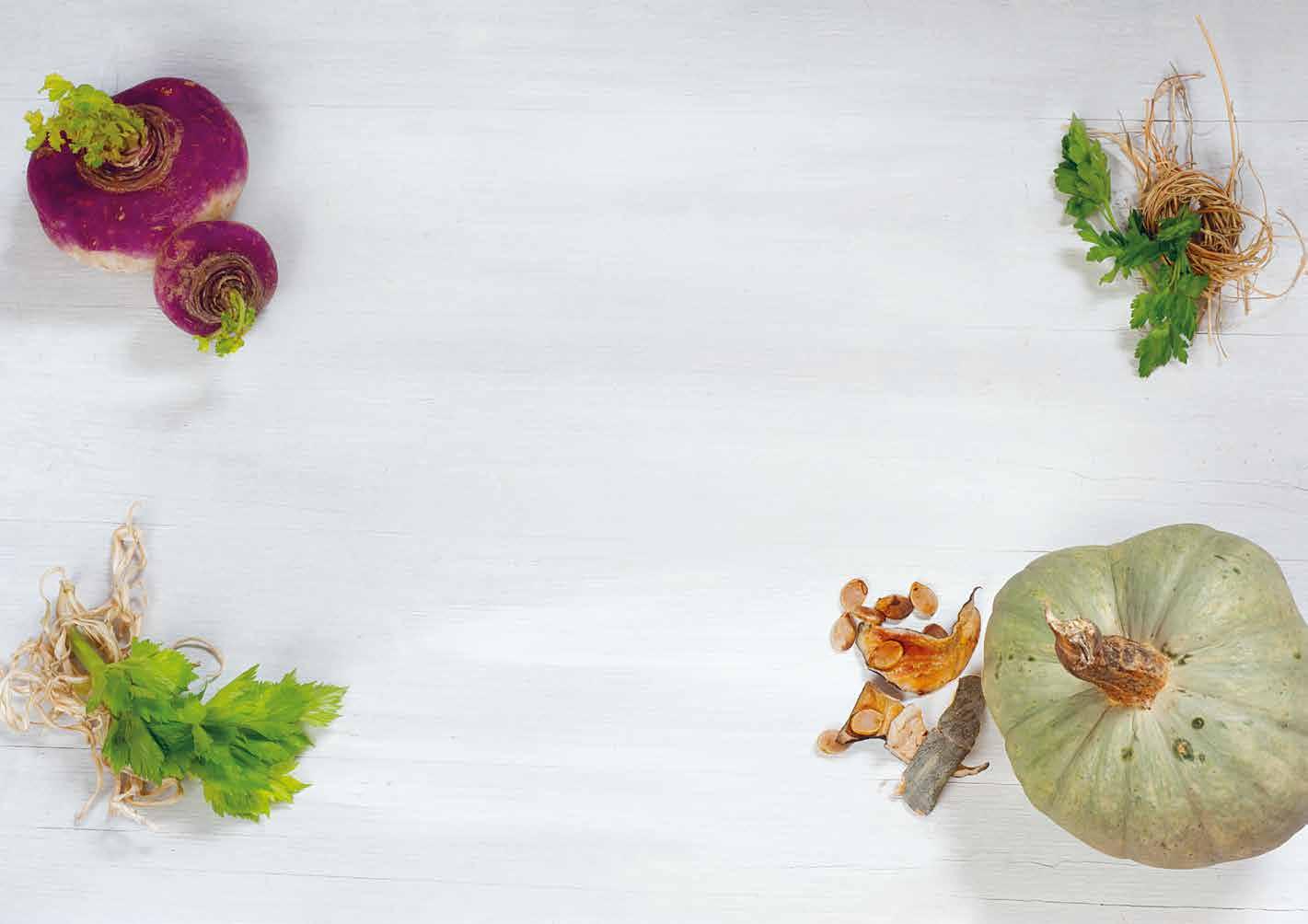
Brassica campestris, commonly known as turnip, is rich in potassium and low in calories. Its slightly spicy skin contains potassium, phosphorus, vitamin C, folic acid, calcium, and sodium. Furthermore, the leaves you can find sold in bunches, such as turnip tops, can be used both cooked and — if very small and tender — raw in salads. If you keep a turnip for a while, it will sprout, and the tasty leaves can be used in salads.
CELERY
Often, only the center of a celery plant is eaten, but when finely sliced and dried, even the hardest outer leaves are a surprising resource. They can be used to make mirepoix, for example, if you don’t have any fresh celery on hand.
Celery, including the leaves and strings, can be used in soups, stews, and salads, as it maintains its strong aromatic flavor. You can store it whole or finely chopped, to use on its own or with other vegetables when you need it.
The leftover stems of this aromatic herb can be dried and used with other ingredients to season mirepoix, soups, and stews. Parsley has diuretic and digestive properties, and is a valuable ingredient for our well-being. Its components include a lot of potassium, phosphorus, calcium, vitamin C, folic acid, and retinol. It can be stored in sprigs or ground, preferably in a glass jar.
PARSLEY PUMPKIN
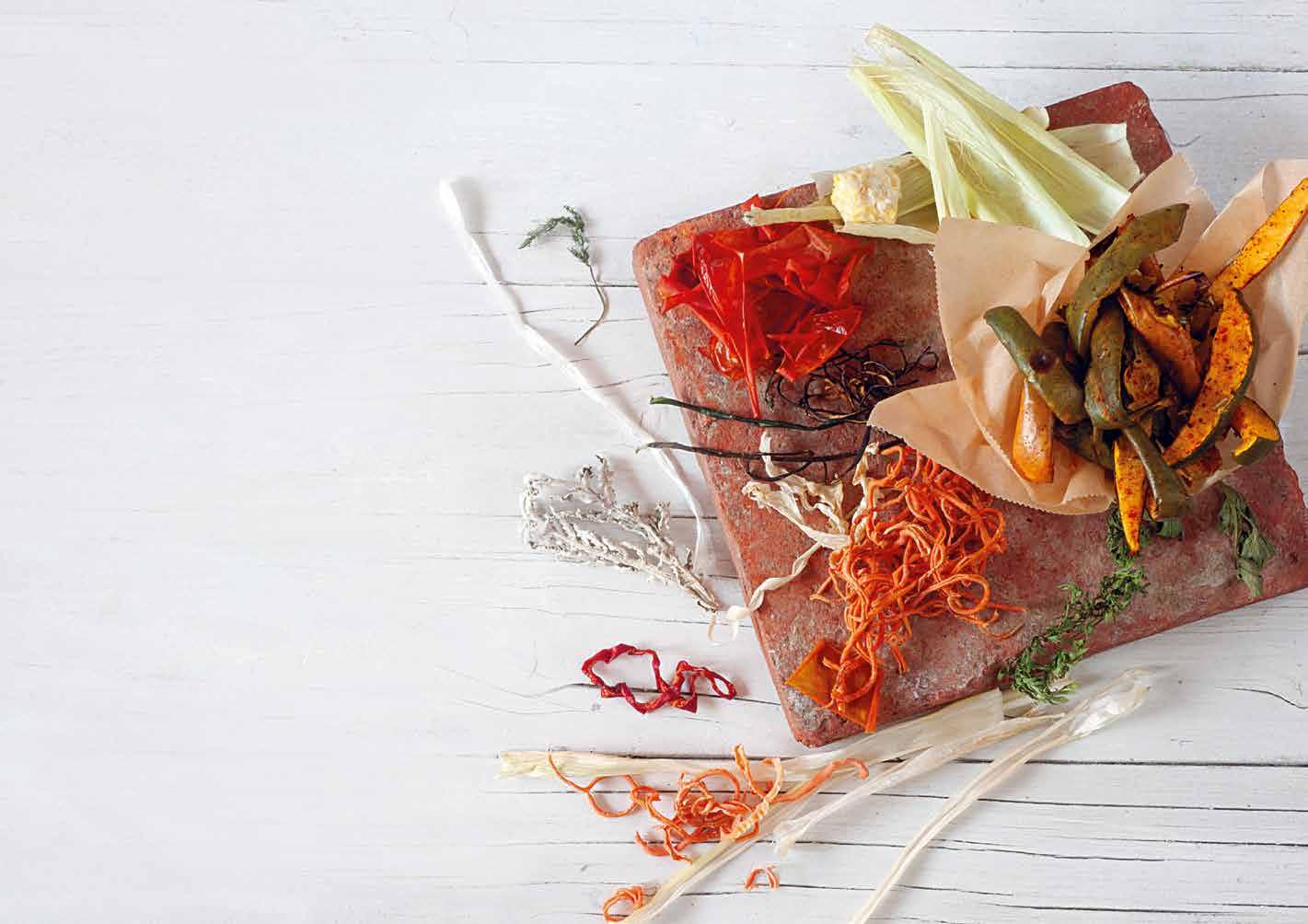
Pumpkin is covered with a tough, leathery skin. If you dry it in the oven for a few hours at low temperature, together with the seeds, and then chop it up, it is a delicious ingredient for making breading, for flavoring soups or meatballs, and for a variety of other dishes.
The fresh skin is also really tasty when baked or fried. It should be noted that to make the most of the skins, they must be thoroughly washed before being used: once dried, skins can be eaten or stored.
Vegetable-Based Dishes
Vegetables constitute one of the most important pillars of a healthy diet. Low in calories and rich in minerals, vitamins, and fiber, they should be a part of all meals. Each season offers us different flavors, textures, and colors, and it is impossible to imagine a dish without vegetables as a wonderful accompaniment. When cooking, we are used to sometimes wasting food, but the current trend is to re-evaluate the parts that we once threw away: leaves, roots, cores, skins.
Not only should every part of a vegetable be used for its undisputed nutritional properties, but also for ethical reasons. The truth of the matter is that we often only discard the outer leaves of cabbage, fennel, celery, or artichoke — to name but a few — out of habit. From an early age, we watched our parents remove the skin and seeds of a pumpkin or throw away melon skins: more often than not, the only thing these parts were used for was to make compost. This section contains easy recipes for resurrecting what we have long, and mistakenly, considered “scraps.” Both their taste and texture will reveal unexpected qualities, and — last but not least — scientific research tells us that most of the time the nutrients are concentrated in the outer part of the vegetable, the part that we often throw away. So, let’s welcome cucumber, eggplant, and tomato skins into our kitchens, and use them to enrich appetizers, soups, and broths. Let’s embrace new and original combinations of color and flavor, and incredibly imaginative and appetizing food made with particular respect for the environment!
10 minutes
2 days
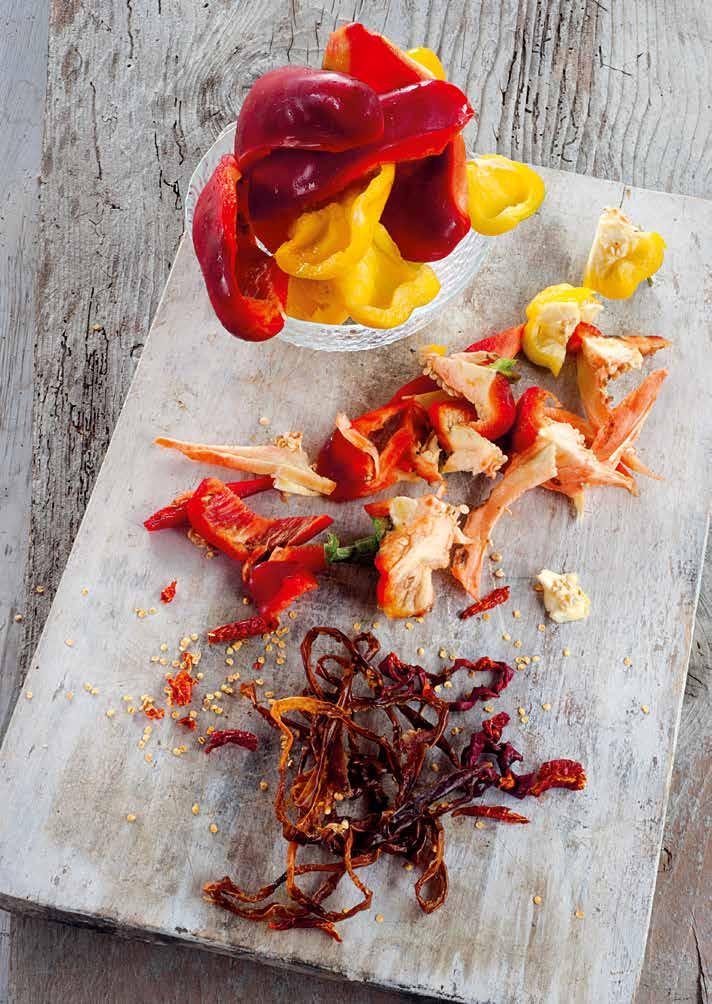
DRIED BELL PEPPER SCRAPS
• the scraps of 2 bell peppers
Wash the bell peppers and remove their stalks.
Take all the parts that are usually discarded: placenta, seeds, and the flesh near the stalk. Cut them into small pieces, and place them on a piece of parchment paper.
Put them to dry in the sun for a couple of days, turning them over regularly. Once dried, finely chop them, and then put them in a glass jar.
You can use these scraps together with bell pepper or tomato peels to flavor oil, or to add a special finishing touch to omelets, condiments, and sauces for pasta, risotto, and vegetables.
DRIED
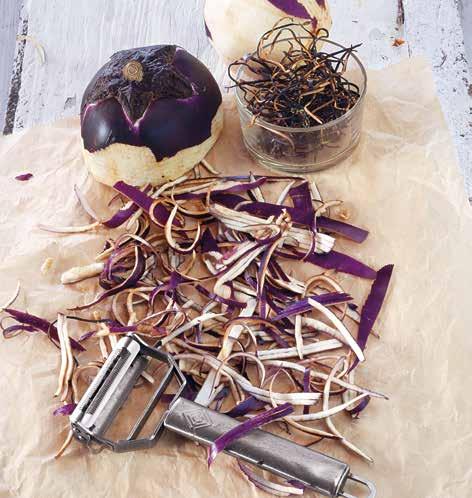
Whenever a recipe requires you to remove the skin of an eggplant, use a potato peeler to create ribbons, and then put them to one side. In this way, they will dry quickly, and you can use them for decorating dishes and to flavor or add a special touch to sauces and condiments.
During the summer, it takes only a few hours for the skins to dry in the sun, while for the rest of the year, you can leave them in the oven at low temperature for about an hour.
You can use the skins to flavor sauces, condiments, salads, and soups, or to make a delicious crunchy snack by adding a pinch of salt and pepper, and cooking them in the oven.
DRIED CUCUMBER PEELS
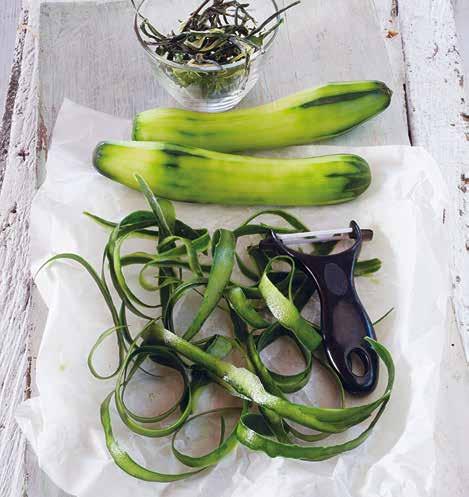
The peel is often removed from cucumber because it is difficult to digest, but when it is dried, it causes less problems. As cucumber is very watery, it has to be left to dry in the sun for at least one day for the liquid to evaporate, and for you to be able to preserve it (if the season doesn’t permit this, you can leave it in the oven for about two hours). The dried skin is really good when crumbled in yogurt or salads, for example, and it adds a summery touch to winter dishes.
For a tasty snack, add salt, or a pinch of spices, and cook the skins in the oven.
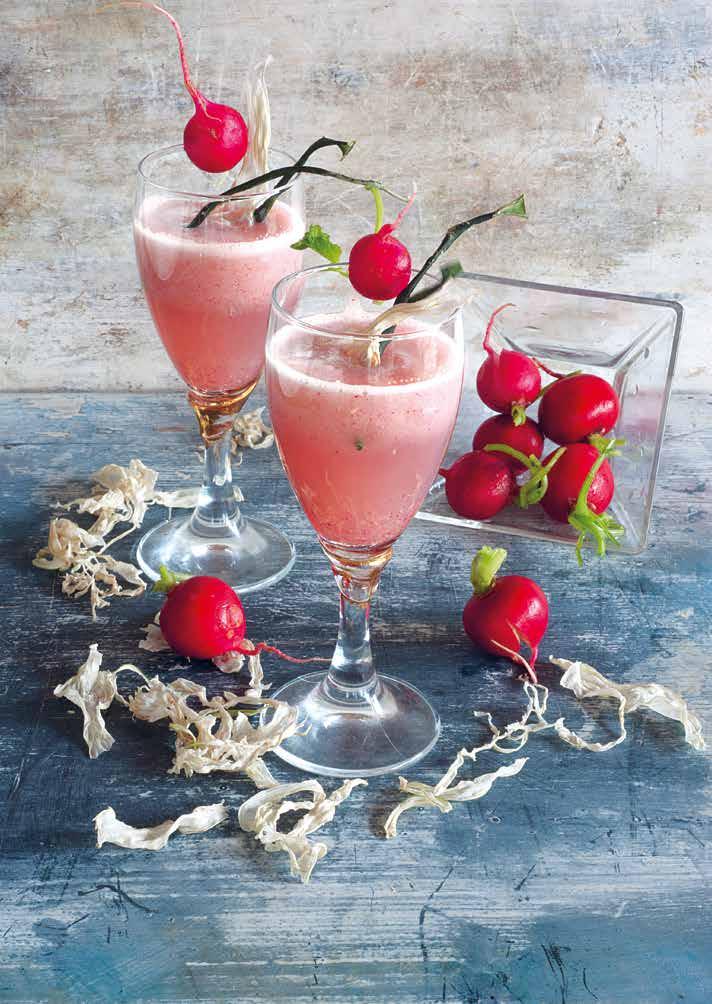
RADISH AND FENNEL APERITIF
• the skins of 4 fresh organic radishes
• 2 tbsp dried fennel leaves
• salt and pepper
For decorating:
• pieces of dried fennel
• dried cucumber peel
• 2 radishes
Put the radish skins, fennel leaves, 5 ice cubes, and 1/2 cup (1 dl) of water in a blender, then season with salt and pepper.
Blend until the mixture is perfectly smooth.
Pour into glasses, and decorate each glass with pieces of fennel, cucumber peel sticks, and 1 radish.
Serve immediately to enjoy the drink’s refreshing effect to the fullest.
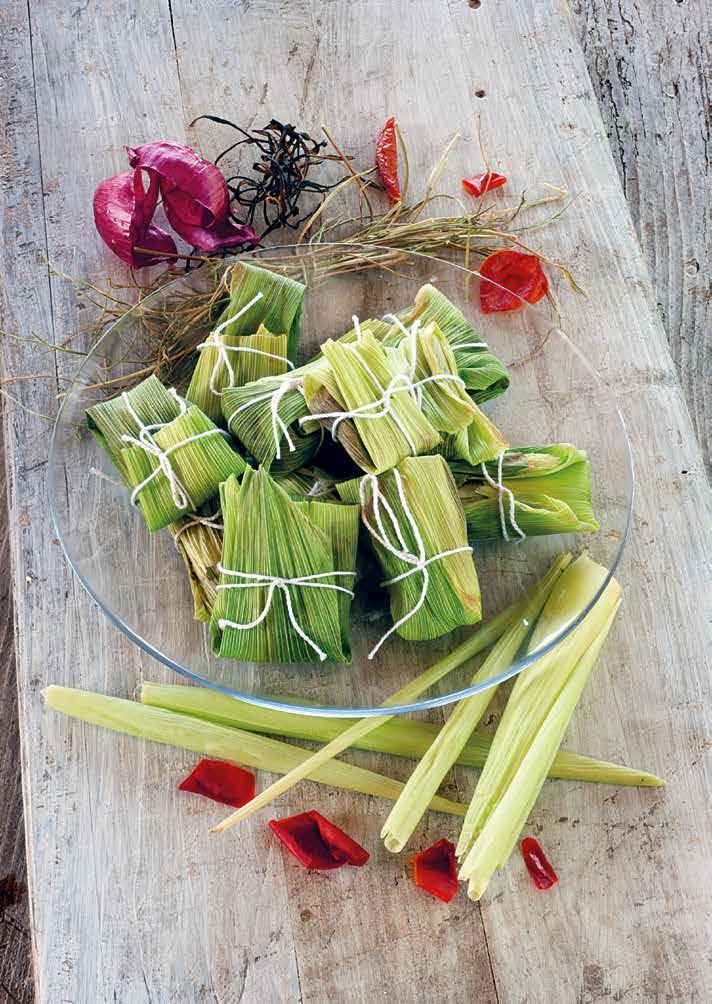
CORN HUSK PARCELS FILLED WITH POTATO, EGGPLANT, AND PARSLEY
15 minutes 4
• the skins of 2 potatoes
• 1/4 cup (50 g) millet
• 2 tbsp dried tomato and eggplant skins
• the skin of 1 red onion
• 10 dried parsley stalks
• 7 oz (200 g) finely chopped tofu
• 16 green corn husks
• 4 tbsp extra virgin olive oil
• salt and pepper
• kitchen twine or string
20 minutes
20 minuti
10 minutes
10 minuti
For this recipe, use only the skins of fresh or well-preserved potatoes, free of shoots and green spots, and with a smooth surface. Wash them, and then cook them in 2 1/4 cups (1/2 l) of water over low heat, with the lid on, together with the millet, salt, and pepper.
Drain them after 20 minutes, then add the tomato, eggplant, and onion skins, and finally the parsley. Blend all the ingredients. Pour the mixture into a bowl, add the tofu, and season with salt and pepper.
Put a tablespoon of the filling onto each of the corn husks, then fold them into parcels and secure them with kitchen string.
Preheat the oven to 425°F (220°C). Brush the parcels with oil, and place them on a baking tray lined with parchment paper.
Cook for 5 minutes on each side. Once cooked, arrange the parcels on a serving plate.
Protein-Based Recipes
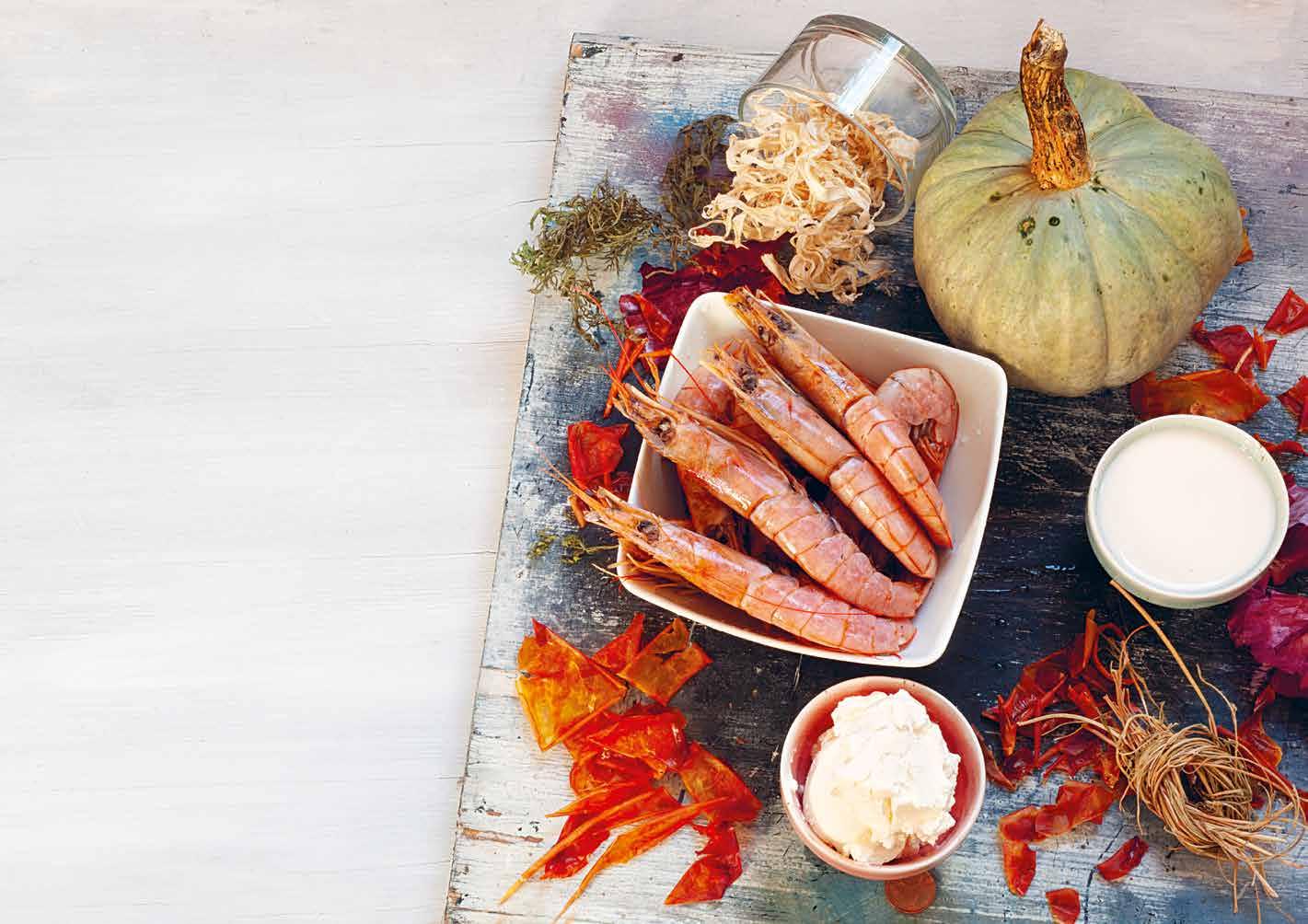
It might seem like a gamble to make stock with shrimp shells and fish heads, but when you sip that tasty tablespoonful when it’s ready, all your doubts will be dispelled! So, after having filleted a fish, don’t throw away the scraps: put everything in a pot, together with some aromatic herbs, garlic, and lemon peel, and when the stock’s ready you can make an amazing risotto. This advice also applies to the crusts of some types of cheese, such as Parmigiano Reggiano, which is naturally free of preservatives. A small piece of crust added to the stock gives it a wonderful aroma and flavor. In general, you can use the scraps of anything to create surprisingly good dishes: for example, with the scraps of the vegetables used for making juices, you can make scrumptious medallions coated in crunchy flour made with pumpkin seeds and skins, or a delicious soup with the hard petals of artichokes. As our grandmothers used to tell us, leftovers can be turned into new dishes that can taste even better! And let’s not forget salmon skin. Here we can learn from the Japanese culinary tradition of transforming many types of grilled fish skins into delicious rolls. Just remove the scales from the skin, and leave it under the grill for a few minutes, to create a delicious and original dish that will amaze with its intense flavor and wonderful texture. For a healthy, balanced, and nutritious result, you must always buy foods that have not been treated with preservatives.
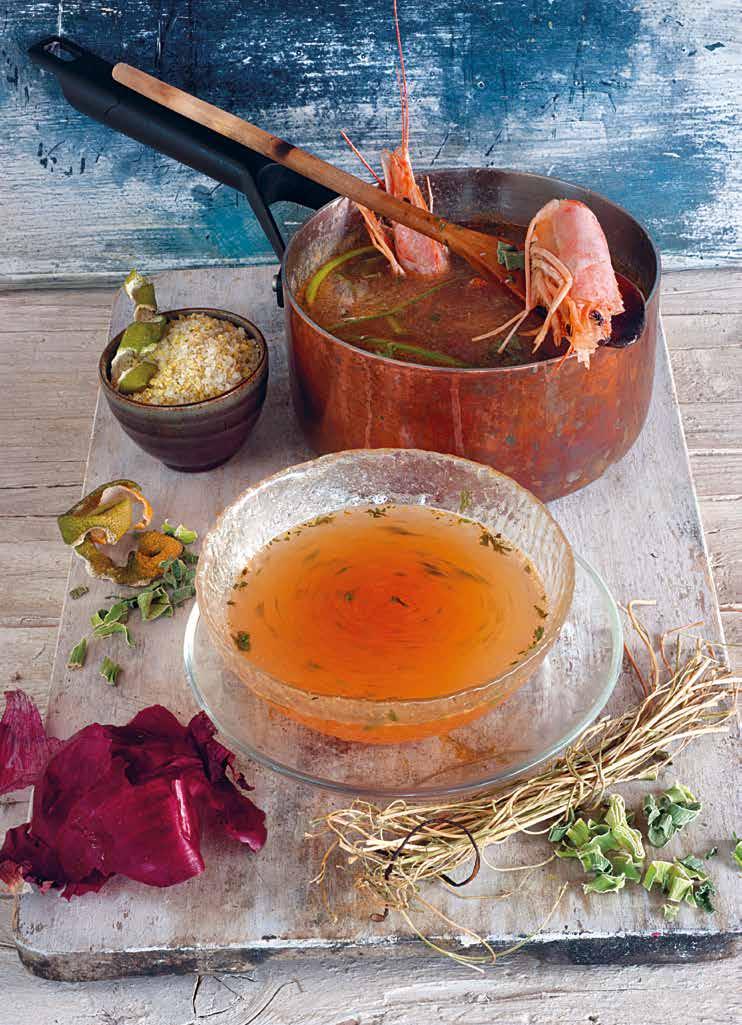
SHRIMP STOCK
5 minutes 2 40 minutes
• 10 shrimp heads and shells
• 1 tbsp dried leek scraps
• 2 pieces of lemon peel
• 1 garlic clove
• the skin of 1 onion
• 1 bunch of dried parsley stalks
• 1 tsp finely chopped carrot tops
• lemon flavored salt (see recipe on p. 138)
• pepper
Boil the shrimp heads and shells in 4 1/4 cups (1 l) of water, then add the dried leek, lemon peel, garlic, onion, and the bunch of parsley.
Cook for about 30 minutes, with the lid on.
Strain and boil for a further 10 minutes over high heat, without the lid, to reduce the stock.
Season with salt and pepper to taste.
Before serving, sprinkle with the chopped carrot tops.
The stock can be used to make sauces and soups, or served on its own. You can also use the leftovers to make risottos.
15 minutes 4
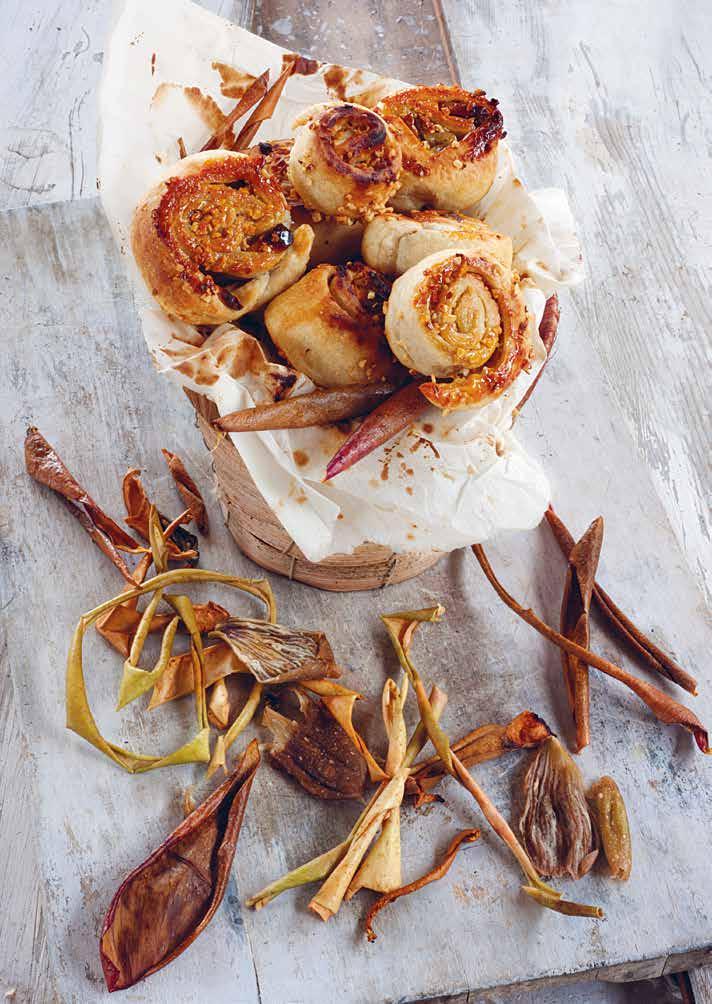
FRUIT AND ALMOND BUNS
20 minutes
• 1 oz (30 g) mixed dried skins: fig, apple, mango, pear, and peach
• 9 oz (250 g) ready-made puff pastry
• 1/3 cup (30 g) ground almonds
• 2 tbsp (40 g) honey
Roughly break up the dried fruit skins. Put the puff pastry on a work surface, and cut into ribbons about 1 in (2.5 cm) wide.
Divide the dried fruit between the pastry ribbons, and then roll each one up.
Preheat the oven to 350°F (180°C), and line a baking tray with parchment paper.
Pour the ground almonds onto a plate, brush the rolls with honey, and then coat them with almonds.
Put the rolls on the baking tray, and bake for 20 minutes, checking every now and then that they aren’t burning.
20 minutes
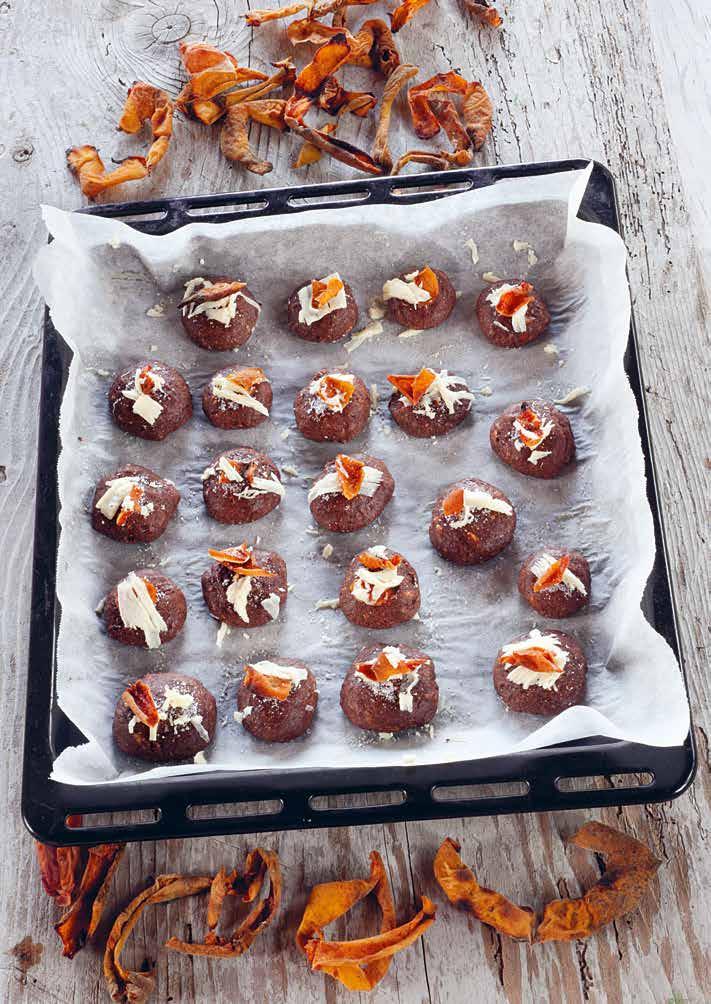
PEACH SKIN COOKIES
17 minutes
• 1 1/2 cups (200 g) whole-wheat flour
• the dried skins of 3 peaches
• 1 egg yolk
• 1/4 cup (50 g) granulated sugar
• 1.8 fl oz (50 g) butter melted over a bain-marie
• 2 tsp (5 g) cake yeast
• 0.8 oz (20 g) white chocolate
For decorating: 1 tbsp granulated sugar
Finely chop the peach skins, putting aside about 1/5 for decorating. Mix the yolk with the sugar, then add all the other ingredients apart from the white chocolate.
Preheat the oven to 350°F (180°C).
Knead the dough thoroughly until it is soft. Make little balls, cut them in half, and place them on a baking tray lined with parchment paper. Bake for 15 minutes. Cut the chocolate into the same number of pieces as the number of cookies, and do the same with the remaining peach skins.
Take the cookies out of the oven, decorate with a sprinkling of sugar, pieces of chocolate, and peach skins. Put back in the oven for a few minutes, and then leave to cool before serving.