#WeToo
Preface
by Joan Ockman
The symposium at the University of Pennsylvania School of Design that gave rise to this book, “[RE]Form: The Framework, Fallout, and Future of Women in Design,” took place in April 2017. As it turned out, it was a pivotal moment for feminism. Six months earlier the first female candidate for the United States presidency had lost to an opponent who not only was unqualified for the job by any conventional standards but, by his own admission in a videotape that surfaced a month before the election, was a sexual predator. A year later, six months after the symposium at Penn, the #MeToo movement was born when, following revelations about the abusive behavior of a powerful Hollywood mogul, a stream of women began coming forward to add their names to a growing list of victims. The hashtag went viral as the shocking litany of exploitation came to light, from the boardroom to the locker room, from the corridors of Congress to the halls of academe, wherever men exercised their prerogatives with impunity. What was so disturbing was not just the universality of the women’s trauma but the ubiquity of the misconduct. Reports of new scandals seemed to surface every week. Things came to a head in fall 2018 when a female professor agreed to give public testimony at a Congressional hearing about a nominee to the Supreme Court who, she alleged, had tried to rape her when they were in high school. The nominee prevailed, but not without a divisive and wrenching spectacle that played out on national television. Meanwhile new disclosures about hush money paid by the now sitting president shortly before the election, to a porn star and a Playboy bunny, continued to trickle out.
All of this is more than well known, yet it is worth rehearsing the chronology of events in relation to the architecture profession and, in doing so, to place the present publication into a larger picture. Oddly enough, architecture was late to the public reckoning. At another academic conference, this one held in early 2018 at Yale School of Architecture, titled “Rebuilding Architecture,” the speakers in a closing panel devoted to architecture and the media responded to a question from a woman in the audience who demanded to know why architects, notorious for bad behavior toward women, had escaped being implicated in the current publicity. Reacting sympathetically, the speakers—including three seasoned journalists—expressed frustration about how difficult it was to get the story out: women architects were reluctant to go on record, fearful of the impact on their careers and the scrutiny it would bring to their personal lives. Finally, however, #MeToo found its way to architecture when, in March 2018, a reporter for the New York Times broke a story on the front page titled “5 Women Accuse the Architect Richard Meier of Sexual Harassment.” The women interviewed described incidents spanning four decades in which the now eighty-four-year-old architect had assaulted them. The immediate result was that Meier took a leave of absence from his firm, and the New York Chapter of the AIA quickly stripped him of a 2018 design award; seven months later Meier’s firm announced that his departure was permanent. Also around the time the Times article appeared a “Shitty Architecture Men” list—a crowdsourced spreadsheet containing allegations from anonymous accusers of sexual and other misconduct against more than 100 men (and a couple women) in architecture—began circulating on the internet. Modeled on a “Shitty Media Men” list that had debuted six months earlier, the
BUILDING OUR VOICE
Ramona Adlakha & Ramune Bartuskaite
A little over three years ago, as is typical of the architecture student’s experience, we found ourselves engaged in a rather spirited discussion on the pros and cons of our first completed year of graduate school. Having both worked at design firms before enrolling in the Master of Architecture program at the University of Pennsylvania, we chatted about the vastly different lives we had led prior to graduate school. We were keenly aware of the differences in our experiences as young designers working at a firm versus graduate students in architecture, and just how much our worlds had shifted from being employed in the field to pursuing our academic endeavors. Graduate school opened up a world of opportunities, many of which were not as apparent in the workplace. Speaking with classmates, we realized that our views resonated with many of our female peers who had worked in the field before going back to school. It was not lost on us that while a fifty/fifty distribution of men and women existed in our graduate school, in the field only thirty-two percent of practitioners are female, and a mere seven percent are in positions of leadership (as reported in our Equity by Design article by Annelise Pitts). Why have these metrics of women students not carried over to the profession? What is happening between graduation and licensure that leads to the decline of women practicing architecture? This disparity between the academic world and the working environment is an issue we became interested to understand further. Moreover, why did our years as undergraduate students in design programs not prepare us for the demands and inherent biases of the workplace? Would our graduate education better prepare us? What could we do to ensure this?
As noted, there was no quantitative gender disparity at school, yet the skills and tools required to thrive at work were fundamentally missing from our graduate education. Those of us who had previously worked in the field understood the challenges that women faced in the profession. We were concerned that there were too few female architects to look up to and learn from. The few practicing role models we attained over the years struggled on their journeys to the top. Given available statistical evidence, our firsthand experiences, and the stories we heard from our colleagues, it became clear that women in architecture were not getting the recognition, respect, and opportunities for advancement as quickly as their male counterparts. We learned the working environment was not accommodating to women with children and families, often forcing them to choose between excelling at work and spending time with their loved ones. Too few firms allowed for the flexibility to excel in both. This is concerning, for architectural excellence can only be as good as the diverse body of people who practice it. By not providing equal opportunities to support the fifty percent of female graduate students, we face the risk of losing a tremendously talented, strong, and dedicated workforce who could greatly contribute to the advancement of our field.
Marion Weiss was the keynote speaker at Penn Design’s 2017 Women in Architecture symposium “[RE]Form: The Framework, Fallout, and Future of Women in Design.” Following the event, she was interviewed by Ramona Adlakha and Ramune Bartuskaite, who asked Marion to further discuss some of the major points she made during her presentation regarding her background, experience, and hopes for the future of women in the field of design.
When did you decide that you wanted to study architecture and to be an architect?
As a child, I had parallel dreams of being a concert pianist, film director, and an architect. While I was mostly focused on becoming a concert pianist, I was also inspired by our Danish uncle—really a close family friend— who designed modernist homes on the steep hillsides of the Bay Area in California, where I grew up. His collection of Habitat publications inspired me to build a series of doll houses—really more like stackable modules—that could be configured to shape linear parks, define courtyard housing, or become high rise towers. By seventh grade I had built twentyone units. Parallels between music and architecture are endless, but my own experience has made me appreciate the enduring impact that form—both explicit and implicit—can have to support infinite freedom and creative expression.
QShortly after winning the Women’s Memorial competition in 1989, you were quoted in the Los Angeles Times regarding the experience of women in the profession, as stating, “I wish I could say it was easier, but it is difficult for women to get ahead…I’m optimistic that there are more and more role models for women.” Do you think things are different now? To that end, do you identify yourself as a “feminist”? If so, how?
AThings are profoundly different now. The number of women doing extraordinary and inspiring work has grown with intensity and, in part, this is because the media has brought visibility to their work. You could argue that the media was less interested in their accomplishments before, and there were fewer opportunities for them to achieve legible impact. And feminism, effectively, articulates the agency and capacity women have to lead and invent.
You have been a longstanding faculty member at Penn Design. What else have you taught in addition to design studios?
AATeaching has had a profound impact on our professional projects. Both Michael Manfredi and I have been simultaneously teaching and practicing since we began doing competitions together as young faculty members. Teaching ensured that we had the opportunity to ask more compelling questions than those afforded by the early commissions we were able to get. We found the conceptual inquiry afforded in the academic setting offered the necessary preparation to create work that has yet to be conceived of. Without the intensity of academic inquiry, the work itself could not take on both territorial ambition and depth.
Q A Q
I have also taught seminars on modes of representation and the impact of overlapping media: these are parallel interests in my coursework. Research studios are opportunities to combine all these preoccupations in the creative act of design. I am especially interested in graduate level design research studios that have provided the forum to explore with both intensity and depth, the potential for architecture to cross the traditional disciplinary boundaries of architecture and landscape.
QIn what ways has teaching informed your professional projects?
You titled a previous talk at Penn’s 1995 “Inherited Ideologies” conference focused on the Women’s Memorial project as “The Politics of Underestimation.” Can you expand on this?
It’s a very interesting story. Our client for the Women’s Memorial, General Wilma Vaught, was a retired General. She had a dream of creating a memorial that honored all the women who had served in the military and with her board of directors, was in search of a site to do this. One day, she was driven around the Washington, D.C. area by the director of the
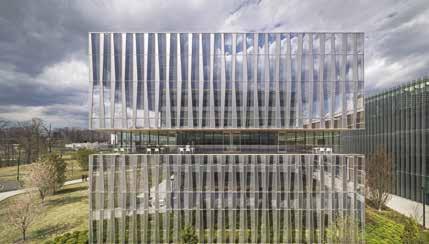
FIGURE 1. Novartis Office Building. Photography by Paul Warchol.
and educator, do you find these roles easily co-exist, or do you think one influences the other more deeply? And if so, to what extent?
AI think they absolutely overlap. I’ve been fortunate that our practice has grown from a seed. What started out as nothing but teaching and competitions turned into something that’s more robust and comprehensive. It used to be that academia was informing practice exclusively, but I would say now there’s a reciprocity. Practice is also informing teaching. The incredibly complex problems that we’re interested in require an enormous amount of strategic thinking to be realized in real life. I don’t want students to be off the hook on that. Their ambitions are nourished directly through academic inquiry. One of the most important things about being an educator is that we need to be clear about what’s at stake, how we may get there both independently and together, and why it matters.
QAt the [RE]Form symposium, it was particularly interesting when you featured two images side by side, one of Ayn Rand’s Howard Roark and the other of Denise Scott Brown from LearningfromLasVegas Citing Scott
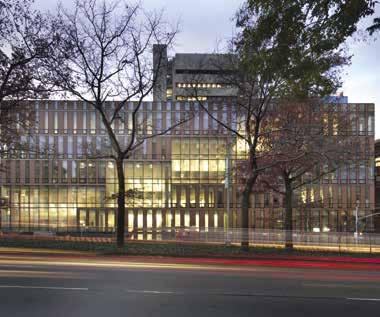
Brown’s role as an active collaborator versus Roark’s depiction as a singular author, you emphasized the idea of standing on the shoulders of those who came before as well as side by side with those who are here today—both in our education and engagement. Do you feel that the future of women in architecture needs more collaboration? And if yes, what are some strategies for this to occur?
AI think they’re not mutually exclusive. I think that we do stand on the shoulders of those who come before us and the view to the horizon
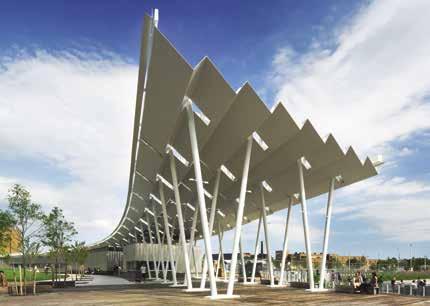
is so much better because of this. I met Denise Scott Brown when we were struggling to get the Women’s Memorial approved by the multiple agencies in Washington, D.C. We were a year and a half into the process with little success when Denise shared a similar experience she and Bob had for the park and plaza they had designed in Washington. She was familiar with the agency roadblocks we were facing and gave me a copy of Learning from Las Vegas, where she inscribed the words “stand on my shoulders so you can reach for the stars.” She continues to be an inspiration and embodies the long distance run that architecture truly is.
When I mentioned the collaborative act, the fact is that architects draw—they create designs. It takes a legion of people to realize it, to see it built, to fund it, to engineer it, to collaborate, to push it, to advance it. To think otherwise is profoundly arrogant. If we can learn from those who invest in it from all the different places, including our collective offices, consultants, contractors, subcontractors, and owners—if we can all keep our sights on the same horizon, but bring different strengths to the table, I think magic is possible.
QYou mentioned your interest in historic sites, studying what came before us, and what marks were left behind. How do you make sure that
FIGURE 4. Diana Center at Barnard College. Photography by Albert Vecerka/Esto.
FIGURE 5. Hunter’s Point South Waterfront Park. Photography by Albert Vecerka/Esto.
BEYOND EQUALITY
RE-GENDERING ARCHITECTURAL EDUCATION
Ila Berman
When asked what is the role that architectural education plays in the forming of women practitioners, an immediate response might simply be “to educate them—with all the means that we have available—to be successful architects.” However, as not only an architect, educator, and dean, but also a feminist, I am fully aware that this response is seemingly inadequate given that it acknowledges neither the implicit and explicit forms of sexism that still exist within academia and the profession, nor the gender-biased ideological frameworks underpinning the architectural discipline in general. We have too often assumed that the issues that women are confronted with at school and the workplace are solely centered around questions of equality—that is, the equal right and opportunity for women to compete and succeed within an existing system—without questioning the biased value system that is deeply embedded within what is presented as a ‘gender-neutral’ education, profession, or environment.
If we, therefore, examine our current struggles against the backdrop of more than a century’s efforts of women’s activism, it becomes clear that, despite all that we have achieved, we are still fundamentally operating within a theoretical context reminiscent
of the first wave of liberal and pragmatic feminisms of the eighteenth, nineteenth, and early twentieth centuries.1 From this era onward, women’s efforts have been primarily centered around the issue of their equality based on the argument that the only fundamental differences between men and women have been artificially and socially constructed, and that women should be granted the same educational and professional opportunities as men. The women’s rights movement was thus directed toward increasing women’s presence within the public realm by liberating them from gender oppression, and in many cases, overtly negating gender roles, while simultaneously transforming the institutions that historically kept women in disadvantaged positions through sex-role socialization, sexual discrimination, lack of access to education and job training, unequal wages, and lack of recognition and advancement within the workplace, among other tactics. Progress on this front has been accomplished by ensuring that our social and political institutions and their structures are vigilant in warranting equal access to education, legal rights, and professional advancement not only by intensifying awareness of these issues, but more importantly through legal instruments, policy, and direct action.
UNFORGETTING WOMEN ARCHITECTS: A CONFRONTATION WITH HISTORY AND WIKIPEDIA
Despina Stratigakos
History is not a simple meritocracy: it is a narrative of the past written and revised—or not written at all—by people with agendas. This is nothing new; about 3,500 years ago, Thutmose III tried to erase the memory of his dead co-regent, Hatshepsut, one of Egypt’s most successful pharaohs and prolific builders, in the most literal of ways: by hacking and scratching her name and image off of her monuments. His motives appear less passionate than political; he may have acted to protect his son, the future Amenhotep II, from rivals to the throne. Amenhotep II, in turn, seized the opportunity during his own reign to expand his legacy by claiming to be the creator of Hatshepsut’s defaced works.1 Many centuries later, such acts of erasure would become known as damnatio memoriae after the ancient Roman judgment passed on a person who was condemned not to be remembered. It was a dishonorable fate that the Roman Senate reserved for traitors and tyrants. Today, in modern architectural history, it is simply what we do to women architects.
The reasons we forget women architects are varied and complex. Until recently, historians assumed that there were no
female practitioners before the mid-twentieth century, so they did not bother to look for them. Nor was it likely that they would stumble upon these designers by chance, given that traditional research methods focus on archives and libraries, institutions that have been slow to collect women’s work.
The International Archive of Women in Architecture, housed at Virginia Tech University in Blacksburg, Virginia, was created in 1985 by Bulgarian architect Milka Bliznakov out of frustration at the enormous loss of material from the first generations of women architects.2 Few archives wanted their papers, and as these women passed away, decades of drawings, plans, and records ended up in the trash. As a result, anyone seeking to learn about their lives and careers has had to be inventive and eclectic in the use of sources in order to supplement the archival documentation conventionally understood as the historian’s primary materials.
Forgetting women architects has also been imbedded in the very models we use for writing architectural history. The monograph format,
AA XX 100 was a project to celebrate the centenary of women at the Architectural Association (AA) in London, England from 1917-2017. The culmination of this project took place in autumn 2017 with a major exhibition about contributions by AA women to the profession, a collection of historical and critical writings, and an international conference organized by the AA in collaboration with the Paul Mellon Centre at the AA. The following conversation between Samantha Hardingham and Sadie Morgan was the opening keynote of the conference. Titled “Being First,” the conversation reflected on the fact that Hardingham and Morgan have been pioneers in their achievements, breaking new ground for women in architecture. While this is exciting and something to be celebrated, it also makes us question why it has taken so long for women to be able to contribute and be recognized in such varied ways within architecture and its related disciplines. (Introduction by Manijeh Verghese)
SHWhen Sadie and I had the conversation about what we might talk about, it was apparent that one of the things we have in common is that we both grew up in Kent. We are both Good Women of Kent, the Garden of England. So yes, this is a very international school, but we happen to come from a very small part of England, which I thought was quite interesting. And so, I thought, being in the mode of having just finished my book on Cedric Price which was arranged chronologically, I am in a chronological frame of mind. So this is where we will begin, particularly in one of the comments you’ve made Sadie, about advocating for the importance of design that connects people back to place. And so, I wanted to start by connecting you back to the place where you grew up. How formative was your childhood?
SMI was brought up in a commune in Sevenoaks, of all places. This was sort of an anathema because my communist grandfather picked the most Tory stronghold in the whole of the United Kingdom. I spent a long time thinking it didn’t have much to do with the way I formed my career and my thinking, but actually it was totally fundamental. And the interesting thing about being brought up in a place where your parents don’t have to be responsible for everything, is that you learn very quickly that you need a group of people around you with different perspectives. If you can learn from those different perspectives, then you come out feeling much better about yourself because you can generally pick the person who’s going to teach you the things that you want to learn. You also have a very clear sense of the importance of looking after each other. A sense of responsibility towards others. The commune was set up by three professional families who decided that they would put all their money into one large house and they would all live and eat together. So, the rule was one room per person and my grandfather was a psychiatrist who had a lot of gay and single mothers who he would look after. Throughout his career, we would have his patients come and live within the community and he believed very
strongly that women should be able to go out to work. He had a nursery and I went to that nursery while my mother went out to work. As I grew up, I was surrounded by a nuclear physicist who lived above me and who I would chat with if had a problem with my homework: if I needed to smoke a cigarette and talk about sex I would go to the barmaid who lived in the flat across the way. I also had a huge sense of responsibility because from the age of five or six, I would come home after school and look after my great grandmother who by the time she died, was 111—the oldest woman in Great Britain and not thanks to my care. You know, I still feed the very elderly lady who lives across the way every Sunday night. My children have grown up understanding this, and I have the most extraordinary independent young women who judge nobody. They are completely capable of having a conversation with an older person or a young person. And it’s a very special way of growing up I think.
So, you continue to live in that way in the commune with your own family?
Yes, I never left. Many people keep pointing to the fact that I never left home. I would say it is a really interesting social model as we
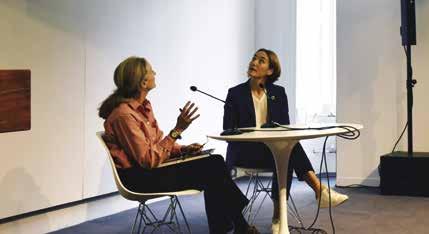
FIGURE 1. Samantha Hardingham and Sadie Morgan in conversation at the AA XX 100 keynote. Photography courtesy of the Architectural Association Photo Library.
STATUS QUO
Lori Brown
When I think about the discipline of architecture, status quo is one of the first descriptors that comes to mind. According to the Oxford English Dictionary, status quo is defined as “the existing state of affairs ‘that maintains, or is committed to maintaining, the existing state of affairs.’”1 Architecture has an ongoing slowness, even unwillingness to change. Clearly there are those within architectural education and practice who are invested in maintaining the status quo, keeping things the way they are. If the discipline seriously wanted to change, it would have done so by now. We can look to other male dominated disciplines, for example medicine and law, that have made greater inroads with diversifying their ranks than architecture.2
However, there are many of us that are working to create change within the discipline of architecture. This text discusses several aspects of my work that challenge the status quo and seek to change the discipline and its engagement with broader social and political issues. I work to expand the discipline to be more politically engaged and relevant to the broader public and raise awareness about our built environment, and the influences directly shaping it. My work in the academy and out in the world disrupts the status quo and seeks to create a different discipline.
I am a feminist, architect, academic, and activist. I use feminist methods to both disrupt power structures and reveal power inequalities.3
I question what is assumed architectural ‘universal’ knowledge and who produces this knowledge. What may first appear as neutral knowledge, is generally not neutral. Knowledge production is shaped by an individual’s own education, cultural influences, and social and political positioning. Feminist methods consider larger forces that influence one’s positionality. Feminist methods work to re-contextualize and repoliticize knowledge and knowledge production.4 Feminist scholarship is interested in issues of subjectivity, identity, and the body, as well as how sexual difference reflects power relations. As feminist geographer Linda McDowell has written, people are “culturally shaped and historically and spatially positioned.”5
I would like to take a moment and discuss what I mean by feminist because there is often confusion around this word.
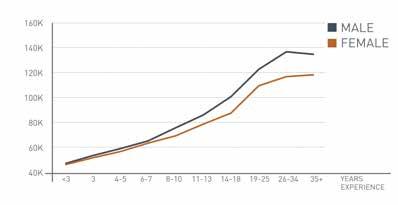
In both the 2014 and 2016 surveys, one of biggest reasons that respondents—both those who left positions for another position in architecture and those who left the field entirely—cited for leaving their last job in architecture was “low pay.” Findings from the 2016 survey indicate that within the profession, average pay is relatively low overall—but especially low for women. At every level of experience, male respondents made more, on average, than their female counterparts—with the largest differences amongst those with the most experience.
A potential explanation for this is the very different roles that mothers and fathers within the sample reported taking in their children’s upbringing. Mothers were almost ten times as likely as fathers to report being their children’s primary caregiver. In order to better support working mothers, the architectural profession and society at large need to take steps to encourage the equitable distribution of parenting responsibility.
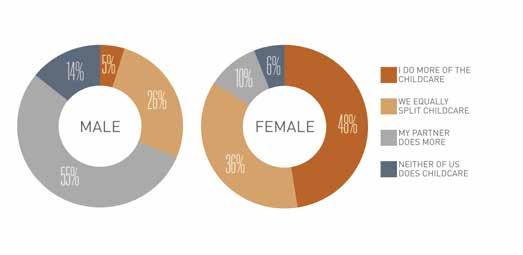
FIGURE 4. Childcare Responsibilities by Gender.
FIGURE 3. Average Salary by Years of Experience.
Billie Tsien, partner of Tod Williams Billie Tsien Architects (TWBTA), was the keynote speaker at the 2017 AIA Philadelphia Women in Architecture scholarship fundraiser, proceeds of which went to a graduating female student from the Charter High School for Architecture + Design in pursuit of the student’s design degree. Following Billie’s lecture, interviewers Franca Trubiano and Ramona Adlakha continued the conversation in discussing her design values, growth as an architect, and the importance of partnerships in practice.
QWhen did you decide you wanted to study architecture and wanted to be an architect?
AUnlike many people who have been very clear about an interest in architecture, I think I’ve always been very unclear. I would say that I sidestepped into the study of architecture. I had actually wanted to be a graphic designer because I liked the idea of creating order.
I was in California and somebody said, “Well UCLA is really cheap. They don’t have a graphic design program but you could study architecture.” So, it was completely a fluke. I went to the first architecture meeting where they bring in all the students and where they used to ask you to look to the left and look to the right, while saying that the person beside you probably wouldn’t be there in another six months. But, instead of doing that, they handed out a piece of paper and with all these prospective students, they said, “Put the paper behind your backs and tear an elephant.” So, we’re all doing this, tearing an elephant out of paper.
The message was that with architecture you have a kind of idea but you’re not completely in control of how it’s actually made or produced. It’s
not about the singular control that you learn about when you’re in art school, because I had studied art as an undergraduate. Rather, it is something that is both in your control and out of your control. And I found that very interesting. And so, I went to architecture school at UCLA where I also realized that I love studio culture. I loved the camaraderie; I loved being in the studio late at night with people. I sidestepped into architecture not really having it as a particular goal and finished architecture school. I still wasn’t totally sure I wanted to be an architect.
It took me probably about five or six years of working, maybe even more, before I felt completely committed to architecture. The thing that I didn’t like in practice was that things always seemed to be coming undone even as you felt like you were finishing them up. The great thing in school is that you work really hard on a project and it’s done. But in practice, even as we’re finishing up a project, there are things that previously seemed right, that now need adjusting. That was a hard thing to get used to, until I started to understand that the resultant of architecture is not only a sort of object or thing, it is also the process of making that thing happen. So, when I began to accept that the process was
also equally important, then it was easier for me to accept the idea that when you’re done, you’re not really done.
QYou have worked with your husband Tod Williams since 1977 and have been in a professional partnership since 1986. How would you characterize this partnership? Do you each practice differently?
AIn 1977, I came to New York and got a job with Tod, who had graduated from Princeton in 1965 and worked for Richard’s office for about six to seven years, after which he started his own practice. Tod had been working at his own practice for about four years before I came into the office as a temporary employee to do renderings for a young architect’s competition. There I was, in the peak of summer with no air conditioning and with colored pencils as my main tools. It was truly another time.
I had never worked in an architect’s office before. I really came in knowing nothing but having this sort of freedom of not knowing a whole lot. At that time Tod had a partner and a couple of other people who were working for him. Over time we became personally involved, married in 1983, and became partners in 1986. I would
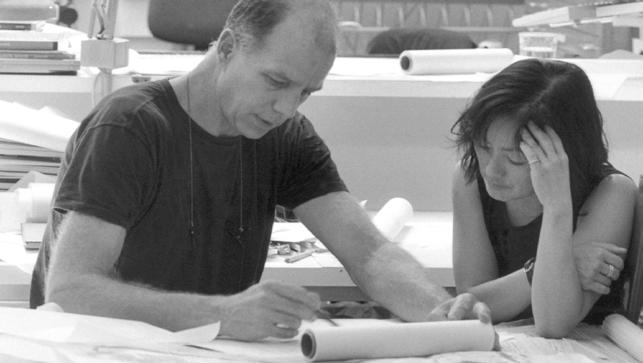
FIGURE 1. Tod Williams & Billie Tsien in their Central Park Studio, 2007. © Michael Moran
BEYOND THE CORPORATE LADDER
Nicole Dosso
Status Quo
Discussions concerning the underrepresentation of women in the field of architecture are not new. Research, surveys, and analyses covering this topic have been gathered and documented over the last decade. Concern with work-life balance, lack of role models, pay disparity, and challenges in career advancement are some of the key findings reported by women.
In 2016, the National Architectural Accrediting Board (NAAB), responsible for developing a system of accreditation for professional architecture programs, released an annual report incorporating statistics on gender.1 The breakdown of degrees awarded was reported as forty-three percent female compared to fifty-seven percent male. This statistic represents significant improvement in the number of women graduates since the time I was a student more than two decades ago, but still requires improvement.
Around the same time, the National Council of Architectural Registration Board (NCARB), responsible for the development of standards for licensure, issued their report “NCARB by the Numbers.” Their findings indicate that only thirty-
five percent of newly licensed architects are women. In comparison to gender statistics of degrees awarded in the field of architecture, this represents a significant reduction. However, the statistics become even more alarming as you further analyze the findings and realize that only fifteen percent of female licensed architects are in positions that involve supervising emerging professionals preparing for their license.2 The rapid decline of women as their role shifts from mentee to mentor directly correlates to the steadily diminishing number of women in positions of senior leadership.
These analyses prove there is a lack of representation of women in the field of architecture; starting in academia, in entrylevel positions in the workplace, becoming a licensed architect, and subsequently culminating in a lack of women in leadership roles.
Gender Imbalance Across Disciplines
In 2006, the New York Times published an article titled, “Why Do So Few Women Reach the Top of Big Law Firms?” It noted:
Although the nation’s law schools for years have been graduating classes that are almost evenly split between men and women, and although firms are absorbing new associates in numbers that largely reflect that balance, something unusual happens to most women after they begin to climb into the upper tiers of law firms. They disappear.3
In 2016, McKinsey & Company published the report, “Women in the Workplace.” As part of their analysis, they indicated that women represent approximately forty-eight percent of the workforce filling entry-level positions. However, this figure steadily decreases across industries as women proceed into positions of senior leadership in corporate America at large.4 I question why it is that when women begin to climb the corporate ladder they suddenly disappear? Perhaps, even more importantly, I ask what is being done to change this phenomenon, eliminate roadblocks, and pave a path for success? In September 2014, Fast Company published an article titled, “The Tallest Tower In The U.S. Is Being Built By A Woman.” The opening line read:
Forget about the starchitects—Daniel Libeskind and David Childs—who dueled incessantly over 1 World Trade Center’s formal qualities and its poetic language. The architect who finally got the damned thing built is someone you’ve probably never heard of … In other words, North America’s tallest tower—which could easily have been the world’s tallest—is being built by a woman.5
The article continued:
The day I met her at SOM’s offices on Wall Street ... She was effortlessly chic—more Paris than New York—in a brightly patterned Diane von Furstenberg wrap dress, steeply pitched white patent leather heels, and a string of silvery pearls.6
I was stunned on the initial read of the article that in 2014 the fact that I was a woman and the detailed description of what I was wearing was somehow newsworthy.
If I were to author an article about myself, I would highlight that I was junior in my career, I was leading a team of forty architects and pioneering head-on the most visible and politically charged project in the nation at that time. What I was wearing was irrelevant. I am certain the comment was unintentional and I was grateful for the recognition, but in a time where women are still underrepresented in the profession, I found the description of my choice of dress wear distracting.
I began working at the World Trade Center site within weeks of the events of September 11. In 2006, 7WTC became the first office building to be rebuilt in lower Manhattan. On the eve of the opening, I was ten years into my career and had been involved in only three projects. During those years, there were many professional lessons learned, perhaps the most telling for my career; tall
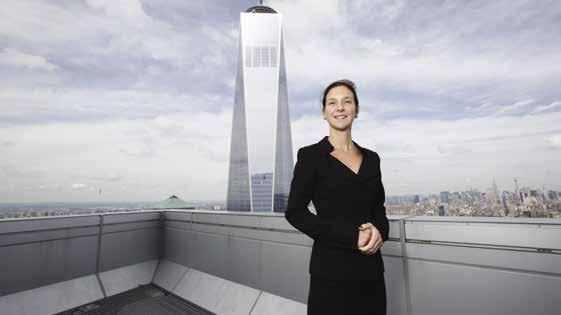
FIGURE 1. Nicole Dosso’s photograph featured in the FastCompanyarticle “The Tallest Tower In The U.S. Is Being Built By A Woman.” Photography by Celine Grouard.
Margaret Cavenagh, principal of Interior Architecture at Studio Gang, was a speaker at Penn Design’s 2017 Women in Architecture symposium, “[RE]Form: The Framework, Fallout, and Future of Women in Design.” Following the event, Margaret and Jeanne Gang—Studio Gang’s founding Principal—continued the conversation in a discussion, which evaluated the symposium’s resonant themes with Studio Gang’s organization, design process, and projects.
MC
At Studio Gang, we think of ourselves as a collective of practitioners with different talents and perspectives, capable of discovering and creating more together than we could individually. We evolve and change as we need to. We play to our interests and strengths. This kind of diversity of experience and thought is really important, especially in architecture, which can be very homogeneous.
JG
In architecture and elsewhere, we often see that a group of people with the same background and upbringing have a smaller chance of coming up with an innovative solution. A number of studies have demonstrated this, and I’ve found it to be true as well—the most interesting ideas come from a diverse group of people with different experiences all thinking about the same issue. Here in the Studio, we’re deliberately cultivating that approach toward solving problems and identifying new ways of looking at the world.
It really does make the work much richer, and it’s been exciting to see our teams, and the ideas they bring, develop. Their responses are varied, but they’re all raising thought-provoking questions. Seeing them flourish shows the importance of giving everyone the support they need, of fostering the internal diversity that makes projects better.
Ideally you also foster a stronger debate. I think that one issue we face in architecture is that because we share strong cultural ties, we tend to agree with one another even though we may come from different backgrounds. So, it’s especially important to make an environment in which it’s comfortable for healthy debates to surface. Just bringing together a diverse group of people is not enough. There will still be barriers to drawing out those differences. You have to create an environment where it’s okay to say what you think.
And to disagree.
Exactly—that’s key. It’s about encouraging a diversity of thought with a pluralistic approach. We work hard to create an office culture where everyone, even if it’s their first day, feels comfortable sharing an idea. It doesn’t matter where you are in the Studio structure, how long you’ve been here, or what position you might have. What we want to do is elevate the strongest idea, which can come from anyone. I’ve seen it happen, for example, when the newest person on the team has a really strong thought that’s then built upon by everyone else. As the idea is adopted, pursued, and developed together, it comes to belong to the group. In this
way, the authorship of the project is shared because we’ve all contributed at different times to advance it further. Making it clear that we’re equally called upon to participate and progress the work might entail a more thorough critique of an idea proposed by someone who has been with the Studio for a long time, like me. It also involves actively recognizing when someone has a brilliant idea. To create the best work you have to make it open to anyone to advance the idea, advance the project.
And we’ve always said, use whatever means are best to convey your idea. We have graphic standards, but we don’t impose a rigid way of drawing or sketching. Instead, we encourage everyone to communicate in simple, straightforward ways that continue the conversation and progress it—like a simple paper model or a pencil sketch. We don’t want to be constrained by always using digital tools or by “the way the Studio does something.” We want to be free to convey the idea and move it forward, move it further.
That brings up a good point, because you always want to pick up the best tool in the toolbox. That could mean sophisticated, digital tools—it could also mean bond paper or colored pencil. Or it could mean conducting
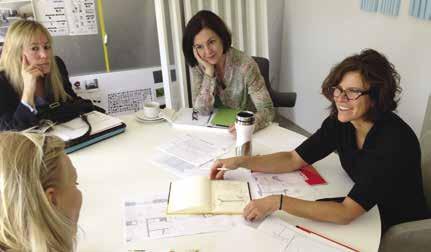
FIGURE 1. Jeanne Gang and Margaret Cavenagh in dialogue with a client during a design meeting. Photography courtesy of Studio Gang.