ORO Editions
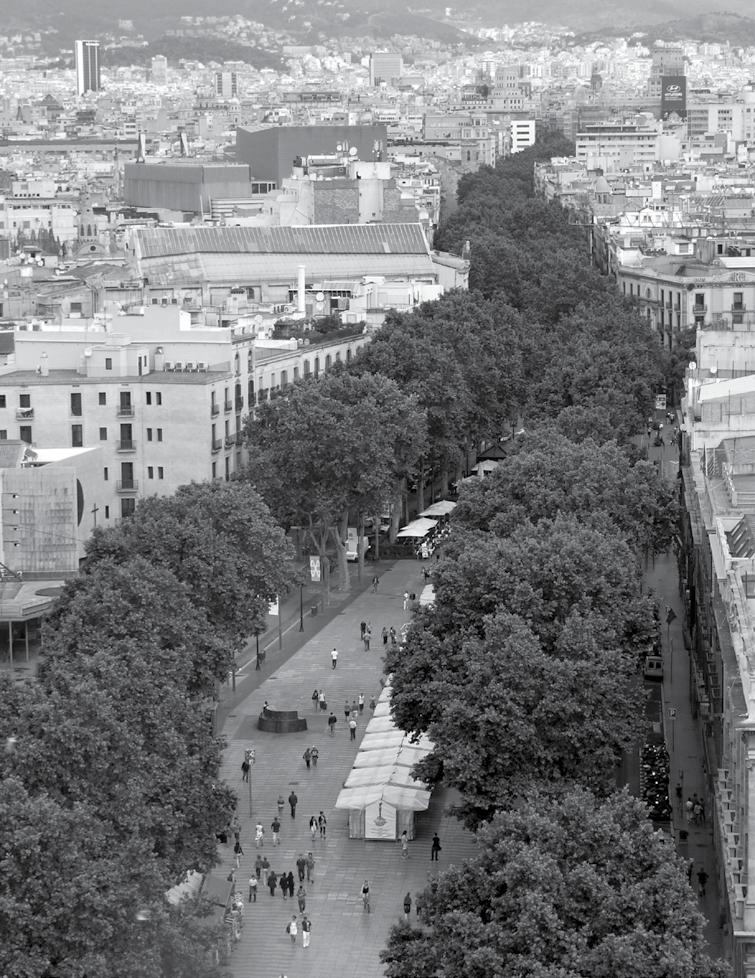
Figure 2.1 Aerial view of the 1.2 kilometer-long pedestrian street, La Rambla, in Barcelona, Spain. Source: Nikos Roussos (see Image Credits for details)
The Forest and the City 02
Thehuman activity lull during the COVID-19 pandemic lockdowns is a period of replenishment, restoration and healing for nature. The onslaught that we continue to inflict on our planet’s natural resources is unthinkable. Per the Ocean Conservancy, eight million metric tons of plastic are dumped into our oceans each year, and this is on top of the estimated 150 million metric tons that currently circulate in our marine environments. We have caused the greatest rate of species extinction in the last 65-million years. And our oceans are acidifying faster than they have in more than 300 million years.
Forests still cover about 30 percent of our planet’s land area, but they are disappearing at an alarming rate. Per the World Wildlife Fund (WWF), the tropics lost close to 30 soccer fields’ worth of trees every single minute in 2019. And according to the World Bank, we have lost 1.3 million square kilometers of forest (larger than the area of South Africa) between 1990 and 2016. In light of this pandemic, herein lies a cause for serious concern - because studies suggest that forest loss is related to the spread of disease from animals to humans.
Recent analysis published in the flagship journal Landscape Ecology by Laura S. P. Bloomfield, Tyler L. McIntosh & Eric F. Lambin has analyzed how forest depletion can increase
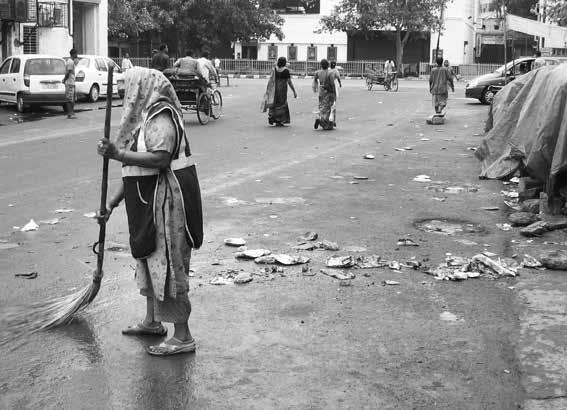
Figure 4.1
Street Sweeper, New Delhi, India.
Source: Author
4.2
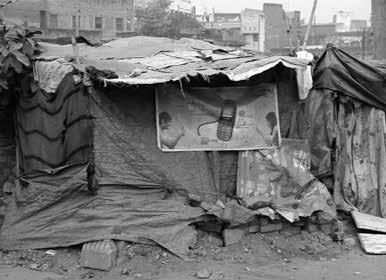
Temporary squatter dwelling made of canvas and other gathered material, New Delhi, India
Source: Author
Figure
The Unfair City
Heartbreaking images of rural migrants in India fleeing cities to return to their villages, of families with children walking on foot, have shown us the degree to which this pandemic affects us all differently. Following the impositions of the COVID-19 lockdowns, thousands, forced out of jobs and with no means of earning a daily living, have been left with little choice. As we endure the harsh impacts of the pandemic, those that are being hit the hardest are the millions of underserved with no access to adequate housing. For them, the “safe at home” idea is meaningless. As United Nations chief António Guterres noted in a recent address, the impacts of the pandemic are falling “disproportionately on the most vulnerable: people living in poverty, the working poor, women and children, persons with disabilities, and other marginalized groups.”
We live in unjust, unfair cities. We are the ingredients of a socio-economic system that is not able to treat everyone equally. How wonderful would it be if the right to the city was equitable for one and all? If the wealth of public places, access to jobs, and privilege of easy mobility was available to everyone, irrespective of social class or income level. But this is not the case. All cities have economic polarizations, some more stark than others, and between them is a mundane middle that sustains both extremes. The nuances
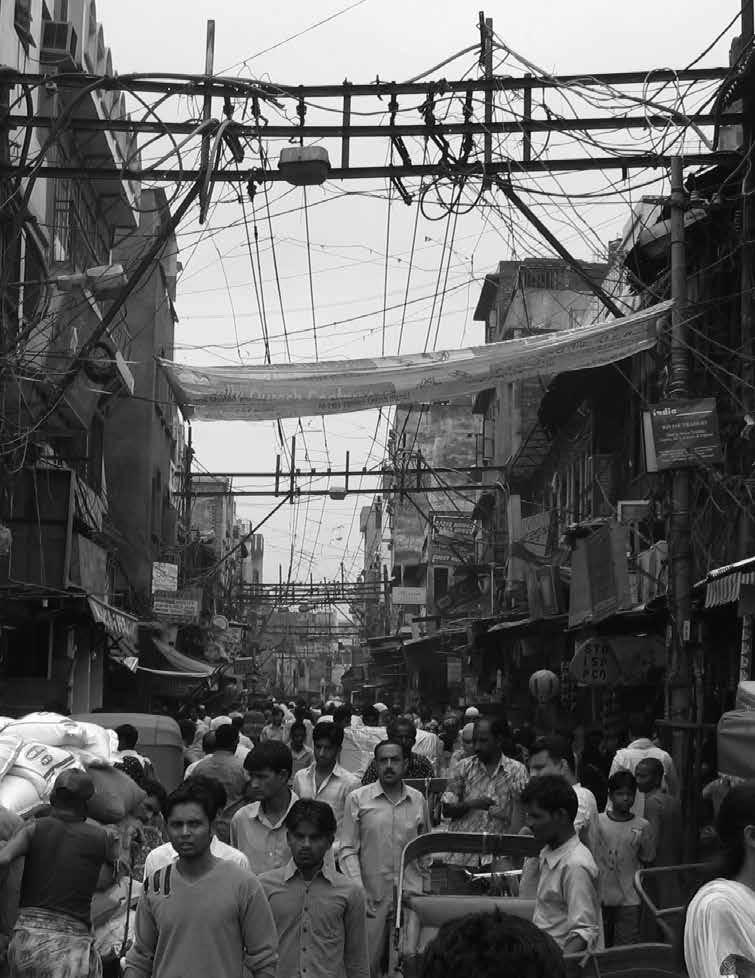
Figure 5.1 Street in Shahajanabad, India. Source: Author
The Informal City 05
As of 2020, per the International Labor Organization, over two billion people, constituting more than 60% of the world’s employed population, are earning their livelihoods in the informal economy - that is, commercial activities occurring outside a governing body’s observation and regulation. The informal economy supplies our cities with a vast labor pool - from housemaids to street vendors to rag pickers - for the many “unpleasant” jobs that organized labor continues to evade. Because these denizens need to work on a daily basis to earn their livelihood, lockdowns and other containment measures stemming from this pandemic are exacerbating their vulnerabilities. On the one hand, they are susceptible to greater health and safety risks due to inappropriate protection measures. On the other, they have no guaranteed access to medical care, employment benefits or income security were they to fall sick. For members of our informal economy, the pandemic is a double-edged sword.
The relationship between the informal economy and our cities is a dominant subject in urbanism and architecture today. Aspects such as slums, squatters, urban villages, bazaars, street food, roadside vending, and hawking are being increasingly recognized for the uncanny entrepreneurship and economic resourcefulness of the underprivileged, and also as counterpoints to the notion of the city as
Consider for instance Diwali, Hindu India’s archetypal festival. In my native city, Panaji, in Goa, something magical happens during this festival each year. Each neighborhood, precinct, locality, building complex, or micro-community is represented by a Narakasura (demon effigy symbolizing evil) in various forms and sizes enabled by communal contributions. Their specific locations offer clarity on the perceived territorial boundaries of various communities otherwise difficult to trace within the urban matrix. Preparations begin weeks in advance - first a skeleton of bamboo or metal, then a buff body of hay and old clothes stuffed with firecrackers, followed by a coat of thick glued paper and oil paint, and, finally, a meticulously made papier-mâché face. Narakasura is the much-awaited annual offspring of a Goan Diwali, only to be burnt and destroyed at the crack of dawn.
In the southwestern regions of India, three months prior to the Ganesh Festival in August, artistic clay models of the deity, varying anywhere from an inch to over 25 feet, are made for sale by skilled artisans. The festivities begin with the installation of small Ganesh statues within homes, and larger ones within the public domain housed in temporary structures called pandals. On the eleventh day, the statues are paraded through streets and immersed in the sea - symbolizing a ritualistic send-off to the deity on his journey toward his abode, taking with him the misfortunes of his devotees.
The idea of a public domain free for the populist expression of hundreds of erected Narakasuras, or the massive religious processions of the Ganesh Festival, is testimony to the unique workings of an urban engine. Events like these are not just performances of religious ritual, but annual experiments in community management and civic pride. For example, during Diwali, houses and entire complexes are decorated with lights and lamps, and cultural activities are accompanied by public singing, theater, and orchestra performances. There are philanthropic activities like free medical checkups, blood donation camps, and charity for the underprivileged. There is economic exchange, with people buying new
clothes, gifts, and artifacts, with malls and stores well stocked, and with street vendors, taxis, and rickshas all remaining busy. Be it the Carnaval gathering in Venice, the Saint Patrick’s Day parade in Ireland, or the Harvest Moon celebration in China, festivals are cultural catalysts that recharge our cities and communities with a renewed social and economic energy.
How are such events playing out in the COVID-19 world? The Gion Matsuri, one of Japan’s most famous festivals held in July in the city of Kyoto, was cancelled in 2020 due to the pandemic. Ironically, the festival had an even greater symbolic significance in 2020, because its origins trace back to an epidemic in 869 CE. Kyoto was founded in Enryaku 19 (by Western count 800 CE, the year of Charlemagne’s coronation). A hundred years after the capital had moved from Nara to Kyoto, a plague spread throughout the city killing thousands of people. The crisis was seen as an expression of the gods’ anger toward humans not living a clean and hygienic life. The emperor petitioned for rituals to appease the kami (spirits). It included the use of 62 hoko spears each representing one of the country’s provinces, along with parading the main deity of the Gion Shrine (now Yasaka Shrine) to purify the city. While some may argue that the Gion Festival ought to have been celebrated on an even grander scale to pray for the expulsion of the pandemic just as it did centuries ago, concerns of the coronavirus spreading obviously took precedence.
Editions
Meanwhile, Holi was celebrated on March 9, 2020, in several states across India with people wearing masks as they smeared color while avoiding mass gatherings. In Sevilla, Spain, in late March, the city’s streets normally crowded with ornate Semana Santa (celebration of Holy Week leading up to Easter) processions and floats, were eerily quiet, with people celebrating in the confines of their homes. In Japan, for Kyoto’s annual Aoi Matsuri held on May 15, the colorful procession that attracted thousands of spectators in 2019 was cancelled. However, Shinto priests gave offerings at the Shimogamo Shrine and prayed for peace and an end
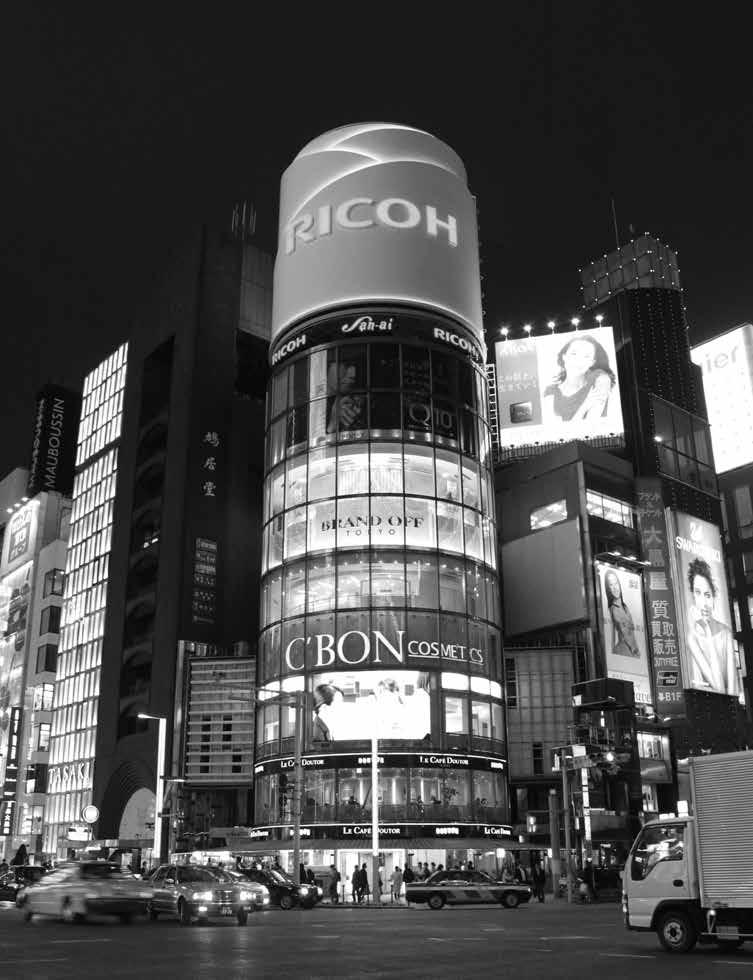
11.1 Retail streetscape in Ginza, Japan. Source: Author
Figure
Rethinking Retail
Thepandemic has affirmed how much we consume our cities. It has changed the way we look at our daily needs and instigated rethinking on how little we need compared to how much we spend. This has had an immediate impact on the retail industry, and with restaurant dining and shopping in indoor malls coming to an abrupt halt during the lockdowns the impact on non-essential retail such as non-food and fashion products has been particularly severe. Customers have remained focused on essential retailers, while retailers in turn have responded with no-touch practices such as curbside pickups and home deliveries. Amidst numerous store closures, employee furloughs, and the psychological impact the lockdowns and physical distancing have had on us all, the retail industry as we know it may see a new normal in the coming future.
What this simply means is that the retail industry will have to reinvent itself once again. It will have to generate new experiences to lure customers within the realities of the pandemic. This is not a unique thing. Retail across the world has always been an experiential phenomenon constantly adapting to changing consumer tastes and market trends. For example, over recent decades, across the United States, regional indoor mega malls have increasingly fallen victim to failed retail chains and changing demographics. Shifting customer tastes prefer outdoor shopping and dining,
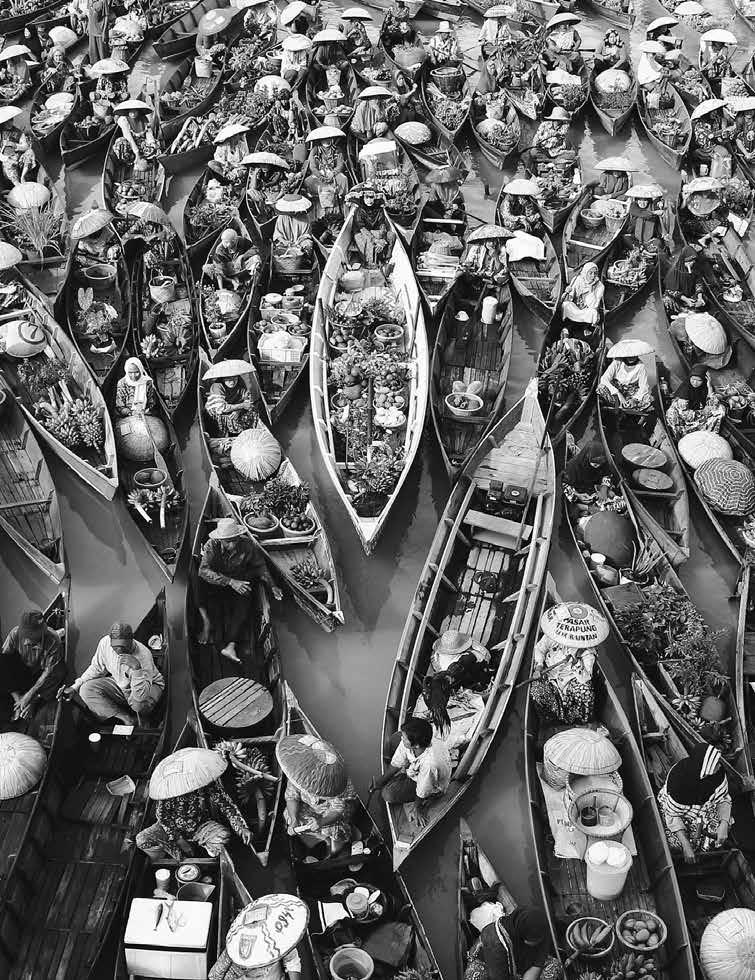
Figure 12.1 Floating market in the village of Lok
ORO
Source: Muhammad Haris (see Image Credits for details)
Baintan, South Kalimantan, Indonesia.
Saving Vernacular Urbanisms
Even before the COVID-19 pandemic outbreak, more than 800-million people across the planet have been grappling with another serious global crisis - the lack of access to clean water. But unlike the virus behind the pandemic, the reasons for the water crisis vary significantly across climatic and geo-political boundaries. They range from issues of extreme water scarcity in arid regions to those of inefficient infrastructure and inadequate distribution even in places blessed with abundant rainfall. From villages to megacities, millions across the world struggle to access water for drinking, cooking, cleaning, and growing food.
With the pandemic outbreak, the gravity of the looming water crisis is becoming even more pronounced. An insightful recent paper titled “COVID-19 pandemic as a further driver of water scarcity in Africa” by Alberto Boretti has elaborated on why the pandemic “has dramatically changed the time frame” of the water crisis. The pandemic coupled with a suffering economy, is shifting priorities from ensuring water and food availability to all. Due to the lockdowns, people in several parts of the world are unable to leave their homes to access water even as they lack the financial means to purchase it.
This not only highlights the socio-economic inequalities we have generated as societies, but points to the limitations
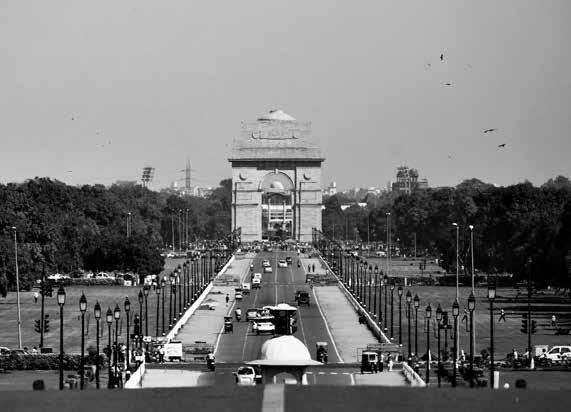
Figure 13.1
India Gate terminating Raj Path, New Delhi, India Source: Gughanbose (see Image Credits for details)
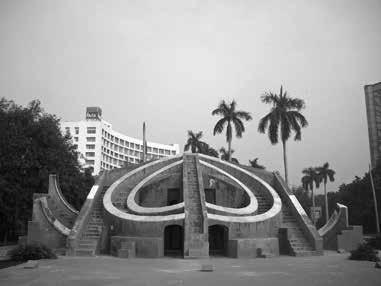
Figure 13.2
Jantar Mantar, New Delhi, India
Source: Abhijit Jawanjal (see Image Credits for details)
Narratives of Protest
Inany discussion on urbanism and the pandemic, one cannot afford to miss the numerous performances of protest. Amidst the COVID-19 lockdowns, these events seem like ostensible contradictions intent on revealing a darker hidden truth. In a time when we are confined to our dwellings due to the apparent risk to our own lives, the act of stepping out in droves to raise a voice against perceived injustice is far more than a mode of political expression. It is evidence that even something as seemingly daunting as a global pandemic can hardly interrupt people’s ability to claim their cities in the wake of perceived institutional and administrative underperformance.
New Delhi, the capital of the world’s most populous democracy, was one of the major global cities where mass protests were in full play just before the pandemic outbreak. On December 14, 2019, the Shaheen Bagh sit-in peaceful protest had begun in response to the passing of the Citizenship (Amendment) Act. Protestors continued to block a city road using non-violent resistance for 101 days, until March 24, 2020, when the Delhi Police vacated the site due to the pandemic.
In early March 2020, civil unrest broke throughout Chile in response to the increasing economic inequality in the country. On April 27, Lebanese citizens took to the streets
Source: Author
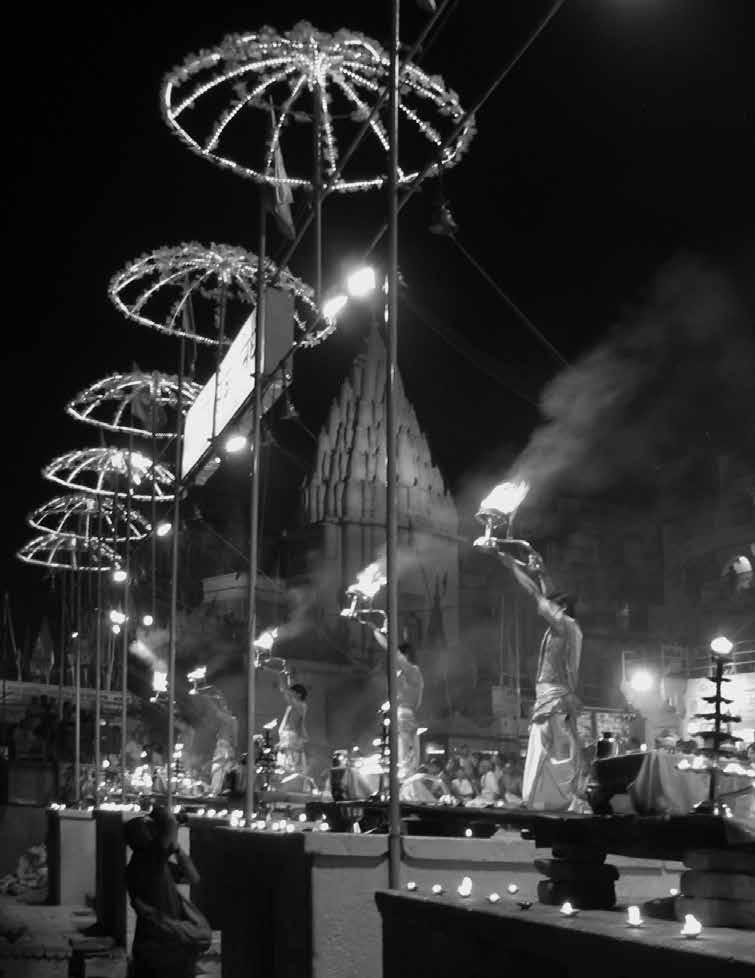
Figure 19.1 Daily Ganga Puja (ritual worship of Ganga River), Banaras, India.
Learning from Banaras
During this pandemic, I find it particularly meaningful to reflect on the Indian city of Banaras. One of the things this pandemic has done is overturned many aspects of our cities that we take for granted. Who would have thought that we would spend more than a year sitting six feet apart from each other? Or go for months largely confined to our homes? Across continents and nations, the pandemic has expanded our perspective on cities, and Banaras, more than any other city in the world, has in a different way done exactly this for me - challenged my preconceptions of what cities are and ought to be.
All streets in Banaras lead ultimately to the eastern bank of the Ganga River, which is today the sixth-most polluted river in the world, largely due to toxic industrial waste. During India’s pandemic lockdown in 2020, with factories closed, and daily worship and cremations stopped, the river was cleaner than it has been in decades. Over the years, numerous deliberations had concluded that cleaning the river would be possible only with consensus from all users and stakeholders - a difficult task considering their varying interests and priorities. The pandemic made possible what none of us could.