introduction page 6
1830–1880 the railroad is born page 12
1880–1900 from the orient express to the trans-siberian page 68
1900–1930 the record-breaking trains page 104
1930–1945 the railroads and the war page 160
1945–1980 from reconstruction to the new european network page 176
from high-speed trains to the future of sustainability page 220
traveling for pleasure and for tourism page 282
index and photographic credits page 322
Text F ranco T anel
Editorial Director V aleria M an F er T o D e F abianis
Editorial Coordinators l aura a cco M azzo G ior G io F errero
Graphic Designer M aria c ucchi
© 2007, 2013, 2022 White Star s.r.l. Piazzale Luigi Cadorna, 6 20123 Milan, Italy www.whitestar.it
Translation: Davide Arnold Lamagni, Glenn Debattista, TperTradurre srl
Editing: Phillip Gaskill New updated edition

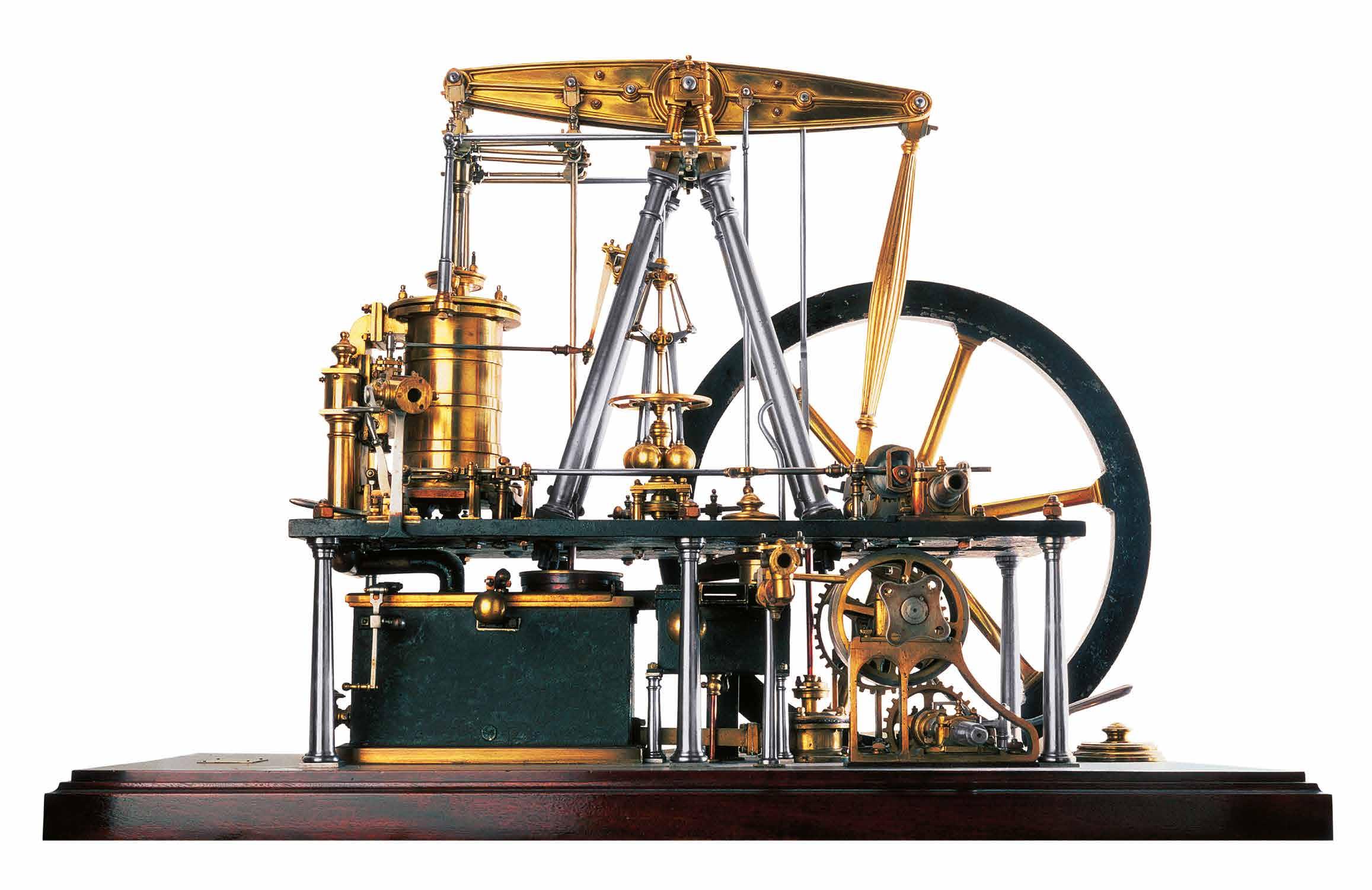
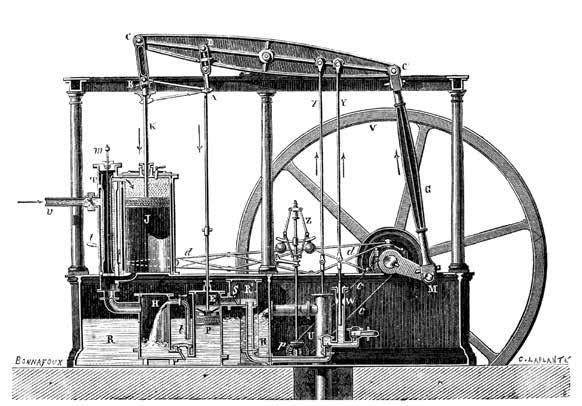
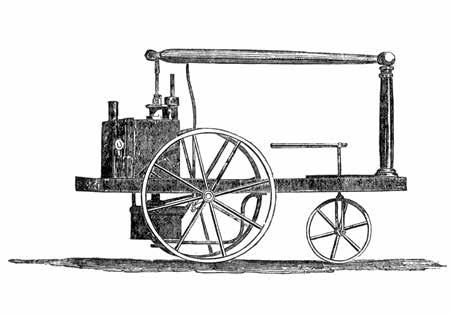
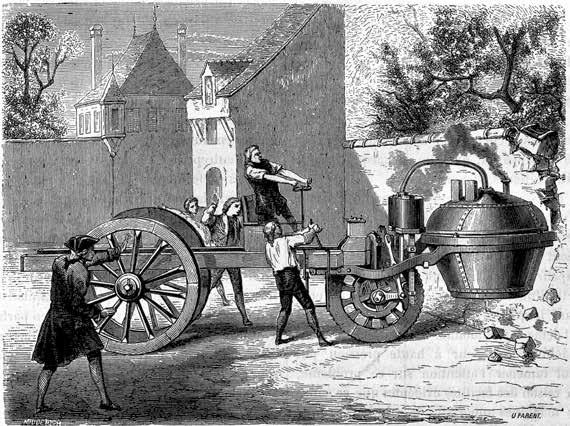
20–21 anD 21 These Three sTeaM Machines were builT in The MiDDle oF The 18Th cenTury by newcoMen anD waTT inTeresTinGly, shown aboVe is one oF The FirsT sTuDies waTT coMpleTeD For his DesiGn oF a sTeaM enGine For a roaD Vehicle in 1751.
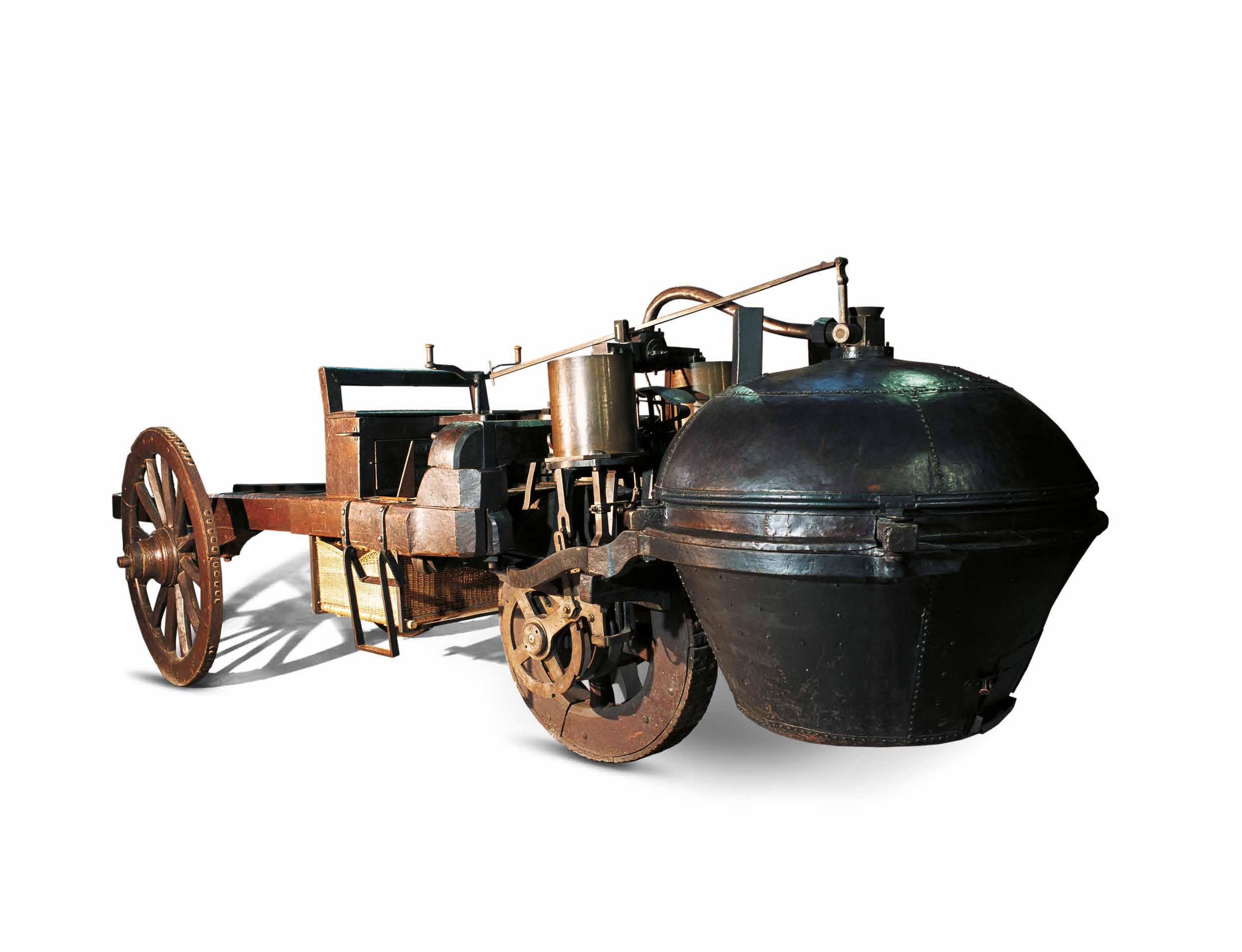
“
The application of the steam motor to a vehicle was the turning point toward the first locomotives ”
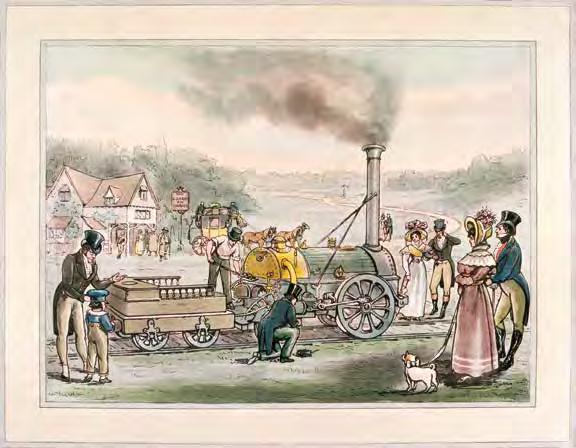
40 Top a color liThoGraph oF ThaT era shows “rockeT,” GeorGe sTephenson s sTeaM locoMoTiVe, winner oF The rainhill Trials which Took place in 1829, surrounDeD by curious anD aDMirinG specTaTors
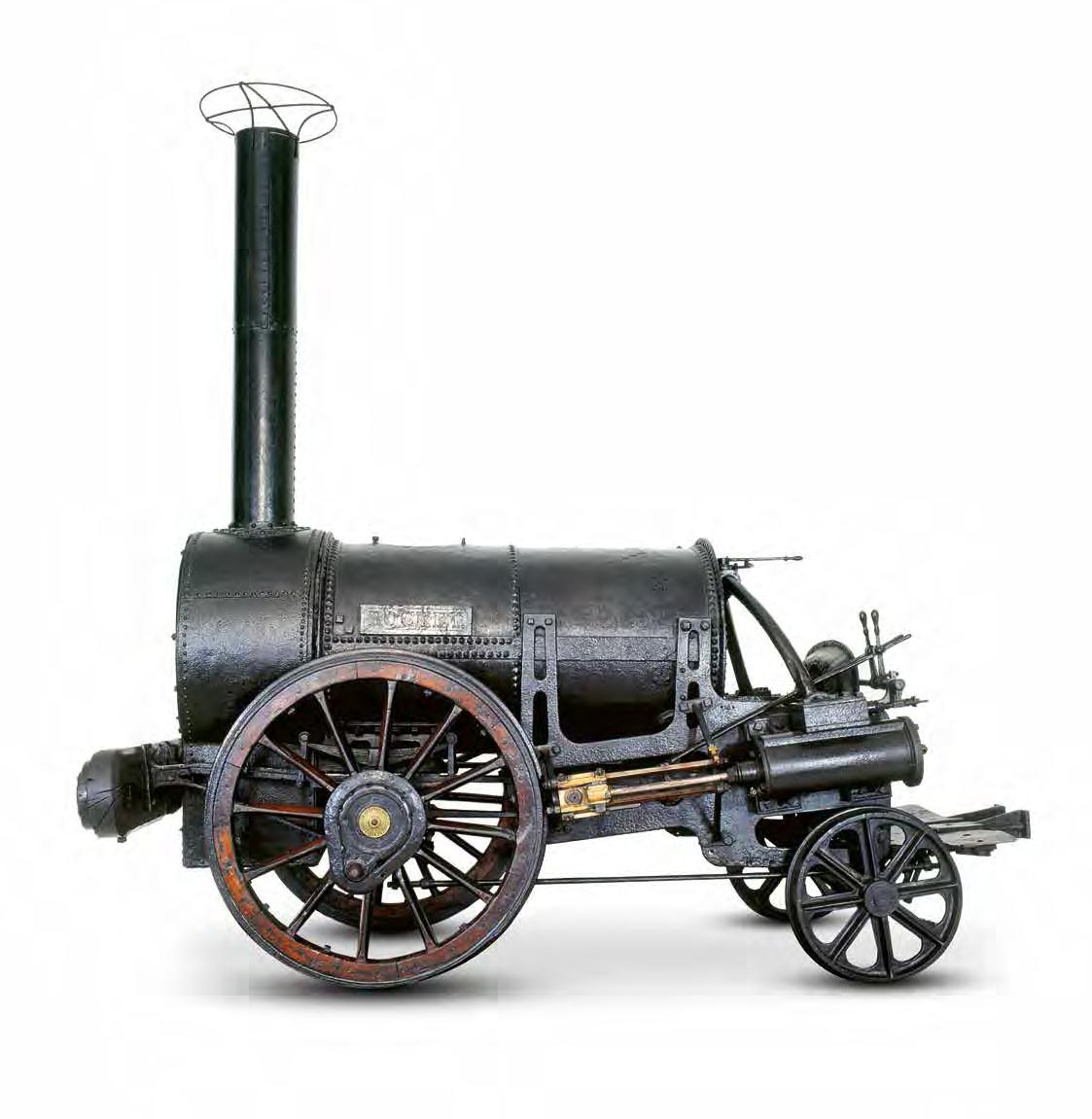
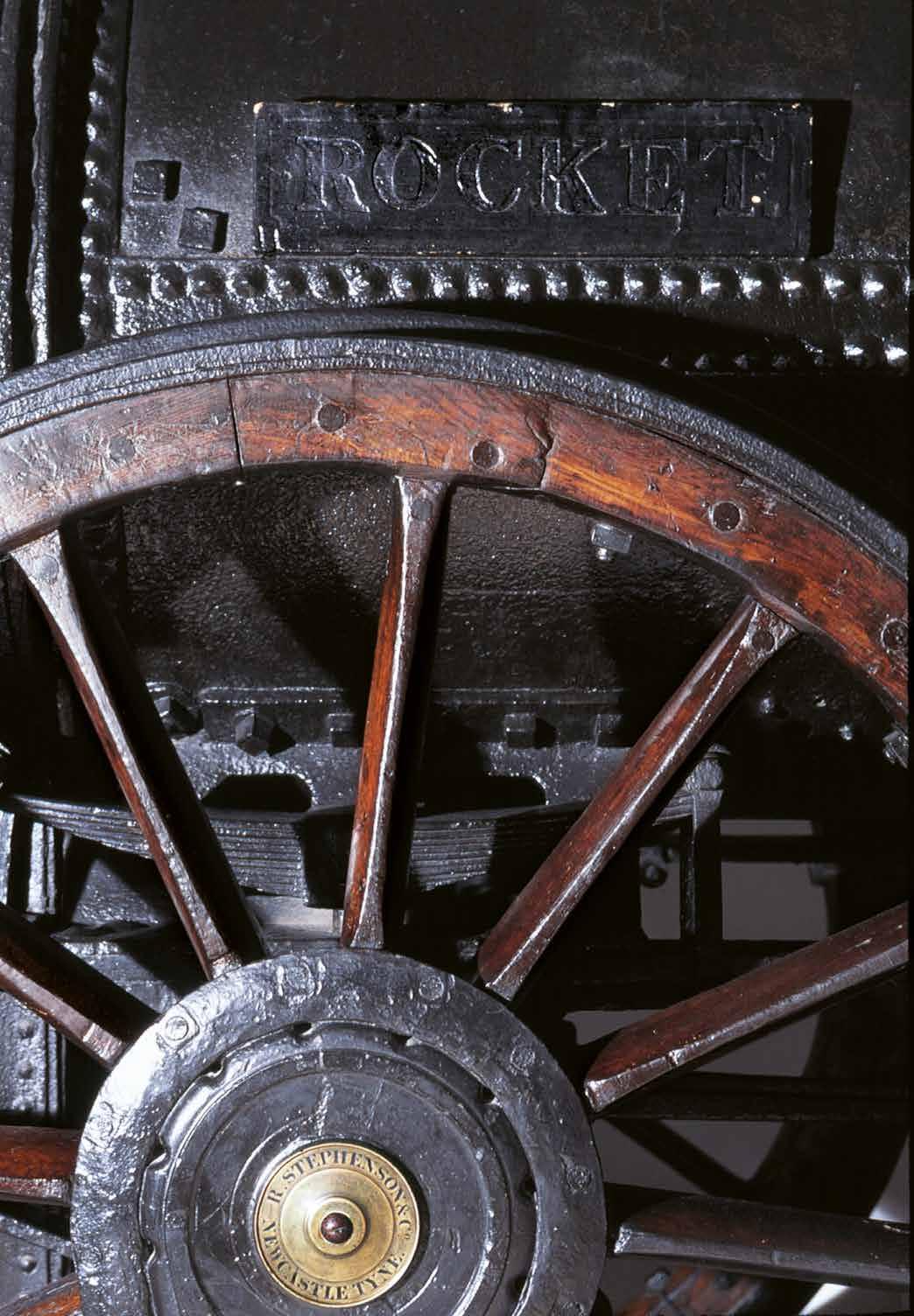
40 boTToM anD 41 The oriGinal 1829 “rockeT” is now preserVeD in The naTional railway MuseuM oF york; unForTunaTely aFTer iT was saVeD FroM scrappinG in 1862, The hisToric relic was in poor General conD Tion, anD iTs TenDer anD seVeral oTher parTs were MissinG
George Stephenson—helped by his son Robert—entered his new invention called the Rocket. John Braithwaite and John Ericsson participated with the Novelty; Timothy Hackworth with his Sans Pareil; Timothy Burstall with Perseverance; and Thomas Shaw Brandreth with his Cycloped, which was a strange machine using two horses on a kind of rolling carpet.
Both the Cycloped and the Perseverance didn’t meet the required speed, while the Sans Pareil was over the permitted weight. That left only the Novelty and the Rocket. The latter was slower but it won the competition by proving to be far more reliable. The Rocket became the real forerunner of all steam locomotives, being the first to use all their fundamental mechanisms: the tubular boiler, the forced draught activated by the vapor exhaust, and the distribution of vapor to the cylinders with a system of cams.
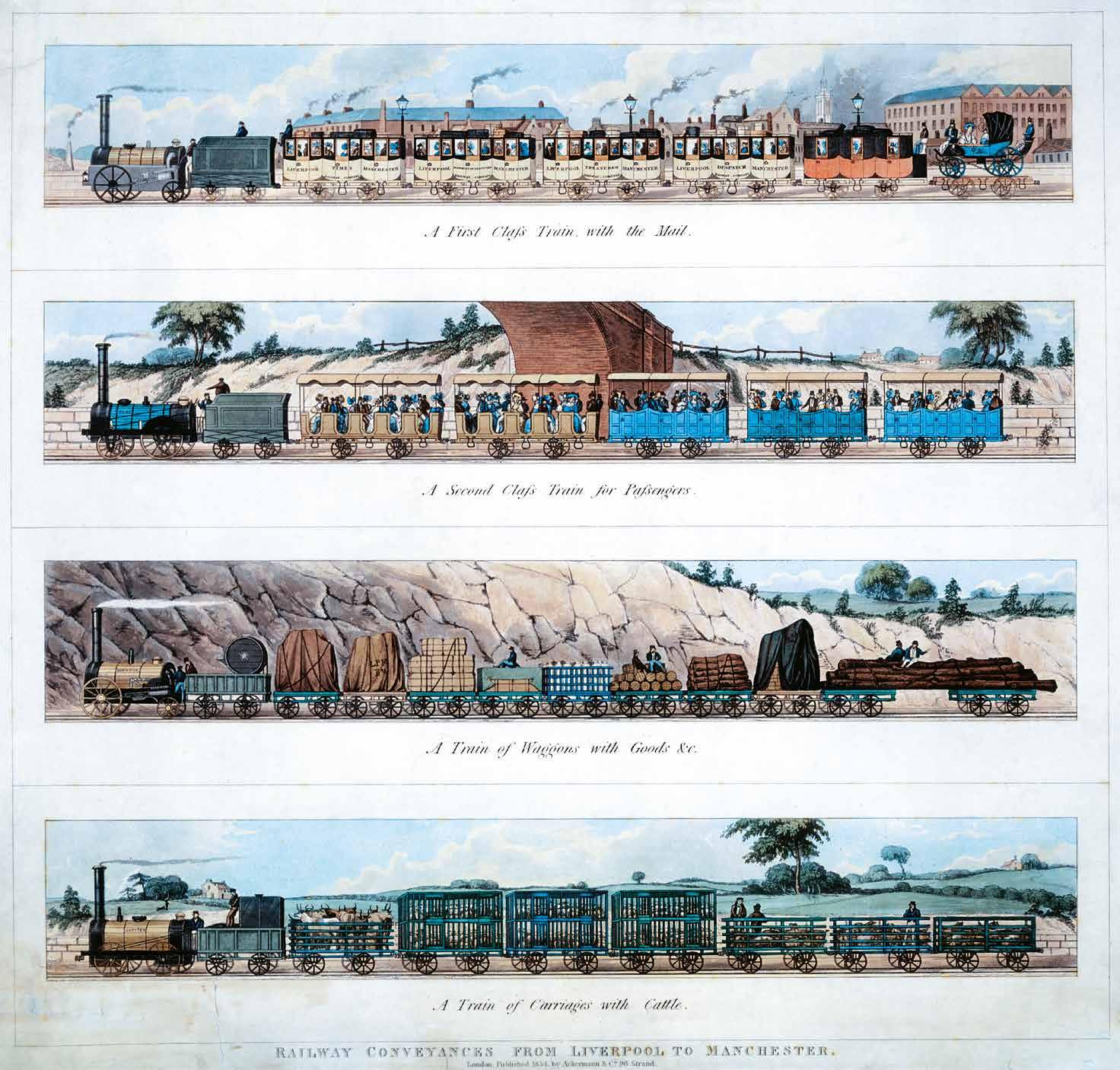
The Liverpool–Manchester line, inaugurated about a year after the Rainhill trials on September 15, 1830, was also the prototype of modern railroad lines. The Stephensons were asked to design the route. This was made with extremely advanced techniques for the time: big stations, 63 bridges and viaducts, grades of less than 0.3%, and even a tunnel 2 miles (3.2 km) long. Unfortunately, the day of the inauguration was marred by the first fatal accident in the history of railroads: distracted by all the enthusiasm, a Member of Parliament, William Huskisson, crossed the track to speak to the Duke of Wellington just as the Rocket was arriving. He died in the accident.
After just one year of service, the number of passengers was ten times more than expected, earning its builders a good £14,000. All doubts about the future of railroads vanished, and in the space of just four years, 33 railroad companies had been set up. By 1844, there were nearly 2,500 miles (4,000 km) of railroads in Great Britain, with another 5,000 miles (8,000 km) laid down in 1846 alone. By the end of the 1880s, there were about 18,640 miles (30,000 km) of railroads in Great Britain.
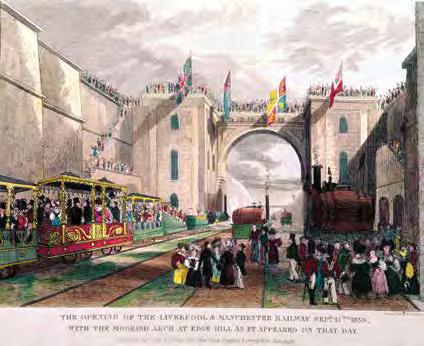
45 in a color picTure publisheD in January 1, 1831, a curious crowD is seen aTTenDinG
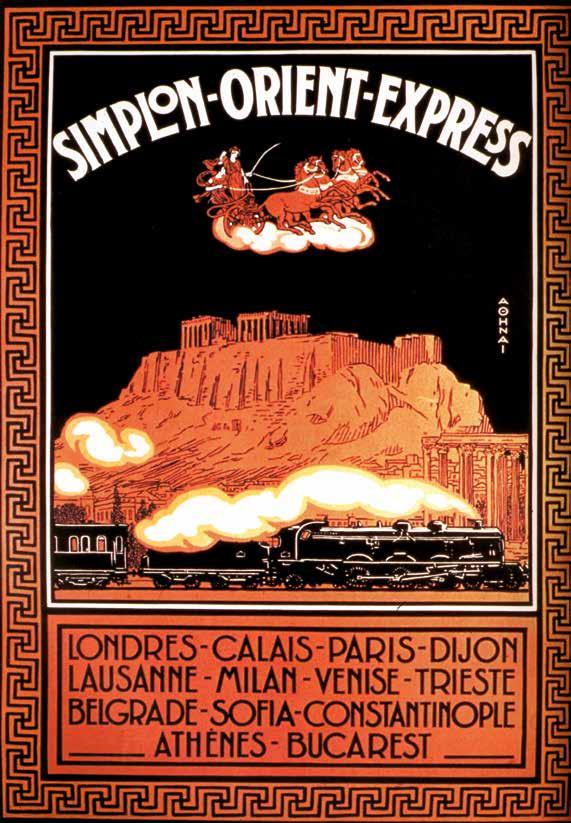
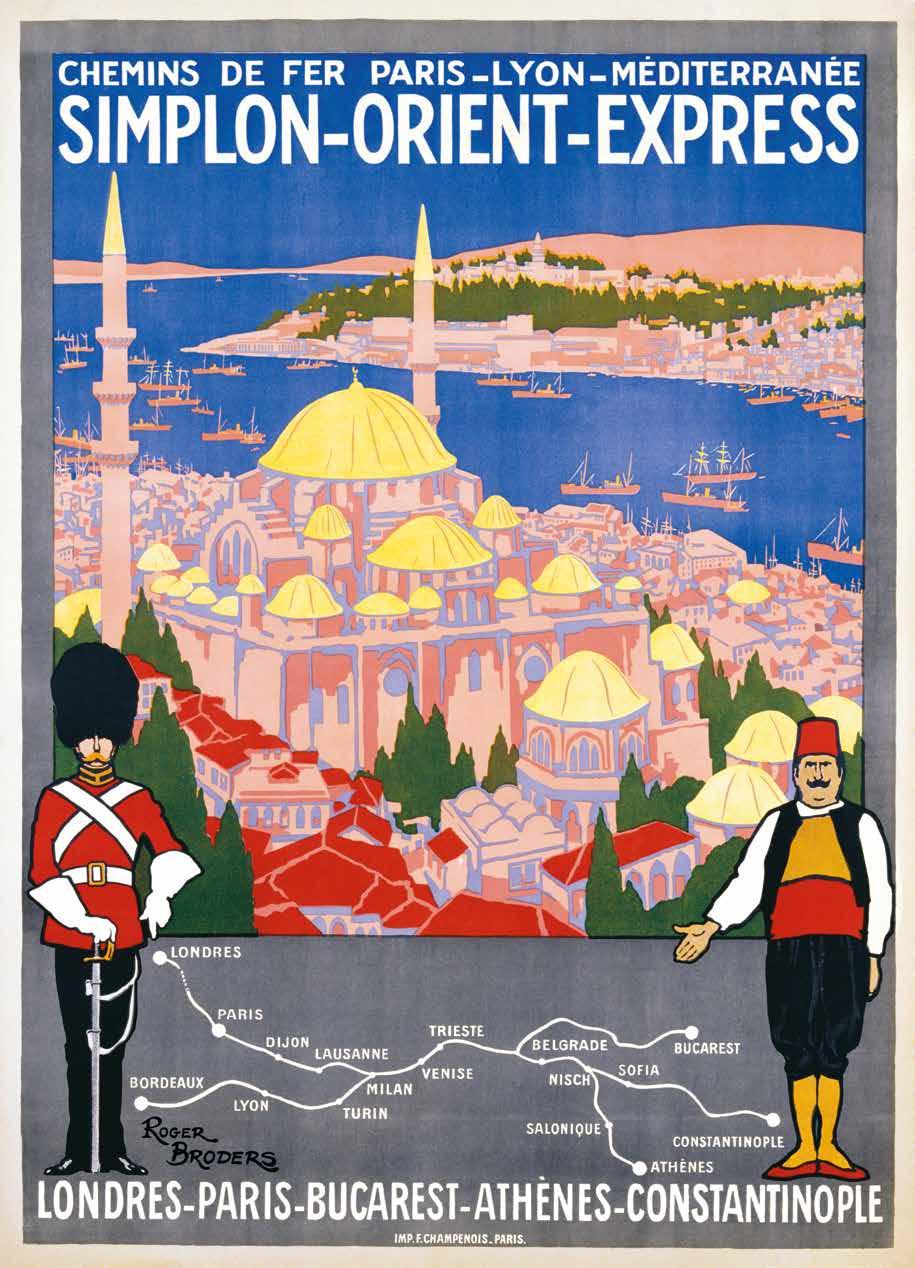
On October 4 of the same year, 1883, the train Express d’Orient was inaugurated, which became the Orient Express, a whole train created and managed by CIWL and pulled by different locomotives in the different countries crossed. The Orient Express connected Paris’s Gare de l’Est to Istanbul. Initially, the route from Paris touched Munich and Vienna before reaching Giurgiu in Romania. Here, passengers were taken by ship down the Danube to Ruse in Bulgaria, where they would get on another train headed for Varna. The last segment of the journey to Constantinople (as it was still known by many) was by ferry. A first variation on the route was introduced in 1885, deviating from Vienna for Belgrade and Philippopolis (now Plovdiv, the second biggest city of Bulgaria, in the region of Thrace). The route was finally completed in 1889 with the completion of the direct line to Istanbul. In those years, the Orient Express was a daily service from Paris to Budapest, three times a week from Budapest to Belgrade and Istanbul, and weekly from Belgrade to Bucharest and Constanta, on the Black Sea. The service all the way to Istanbul ended nearly a century later, on May 19, 1977.
The history of this legendary train was varied and complex: the First World War caused a suspension of the service until the end of the hostilities in 1918. In the meantime, however, the Simplon Tunnel had been opened and the service resumed using this more southern and faster route. The new route went through Lausanne, Milan, Venice, and Trieste, completely bypassing Vienna.
90 This 1920s posTer aDVerTiseD The siMplon orienT express anD Ts MulTiple DesTinaTions
91 This aDVerTisinG posTer For The siMplon orienT express, which connecTeD paris To consTanTinople (ToDay isTanbul), was MaDe by roGer broDers in 1922, For The French coMpany plM, paris-lyon-MeDiTerranée
To distinguish this new route, the train was baptized the Simplon Orient Express. Not until the 1930s did the Orient Express service reach its peak with three parallel connections working simultaneously: The Orient Express, The Simplon Orient Express, and the Arlberg Orient Express, which went through Zurich, Innsbruck, and Budapest, from where some carriages went to Bucharest and Athens.
In those years of relative peace and prosperity before the Second World War, the train reached its highest level of comfort and luxury. Air connections were still scarce and uncomfortable, so businessmen and diplomats would regularly use these trains. The CIWL soon added a connection between Paris and Calais, thus extending the service to London and Great Britain. The golden period ended when war broke out and the service was suspended in 1939. In 1945 the service began again, but amidst great difficulties: Athens was no longer reachable because of the closing of the border between Yugoslavia and Greece, which lasted until 1951. In the following year, it was Istanbul’s turn to remain isolated because of the dispute between Turkey and Bulgaria.
In 1962, the Orient Express, Arlberg Orient Express, and Simplon Orient Express services were downsized, with fewer trains running and fewer destinations reached. The service was renamed the Direct Orient Express, and its control was passed from CIWL to the national railroads in 1971. The last journey from Paris to Istanbul was on May 19, 1977. Naturally, we cannot omit to mention that since 1982 the Venice Simplon Orient Express continues to run as a private tourist service, using carriages from the 1920s and 1930s, connecting Venice to London and Paris.
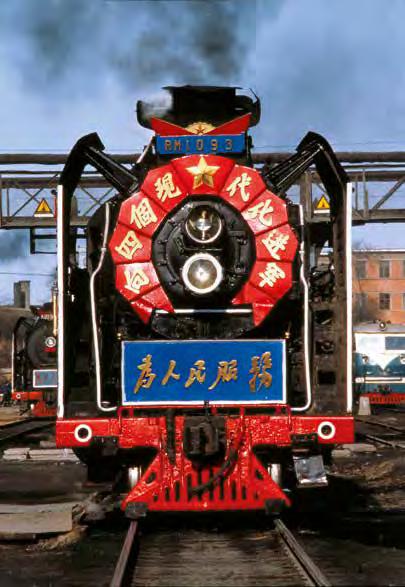
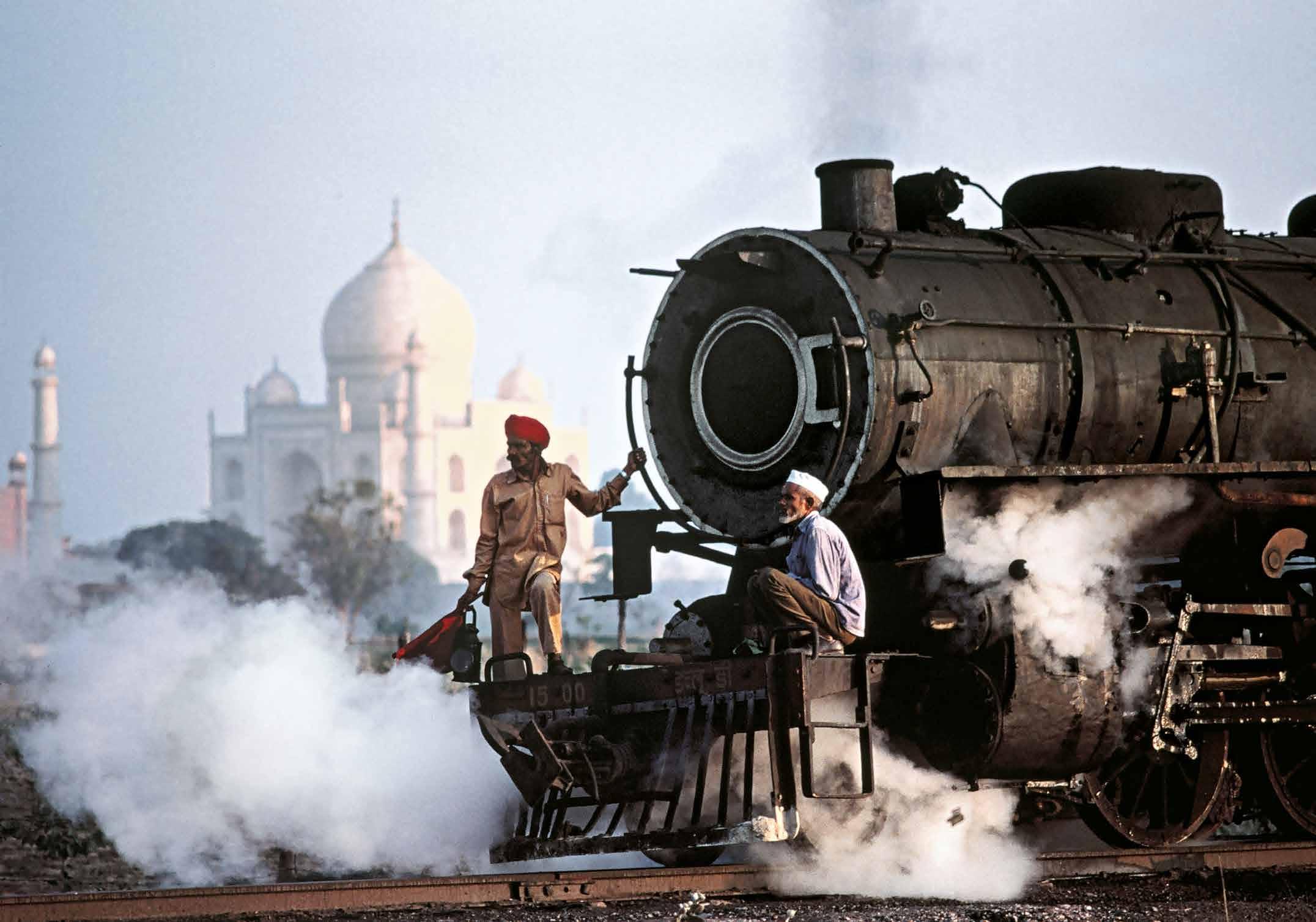
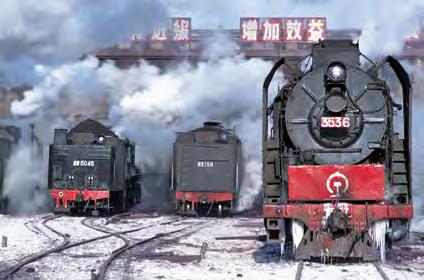
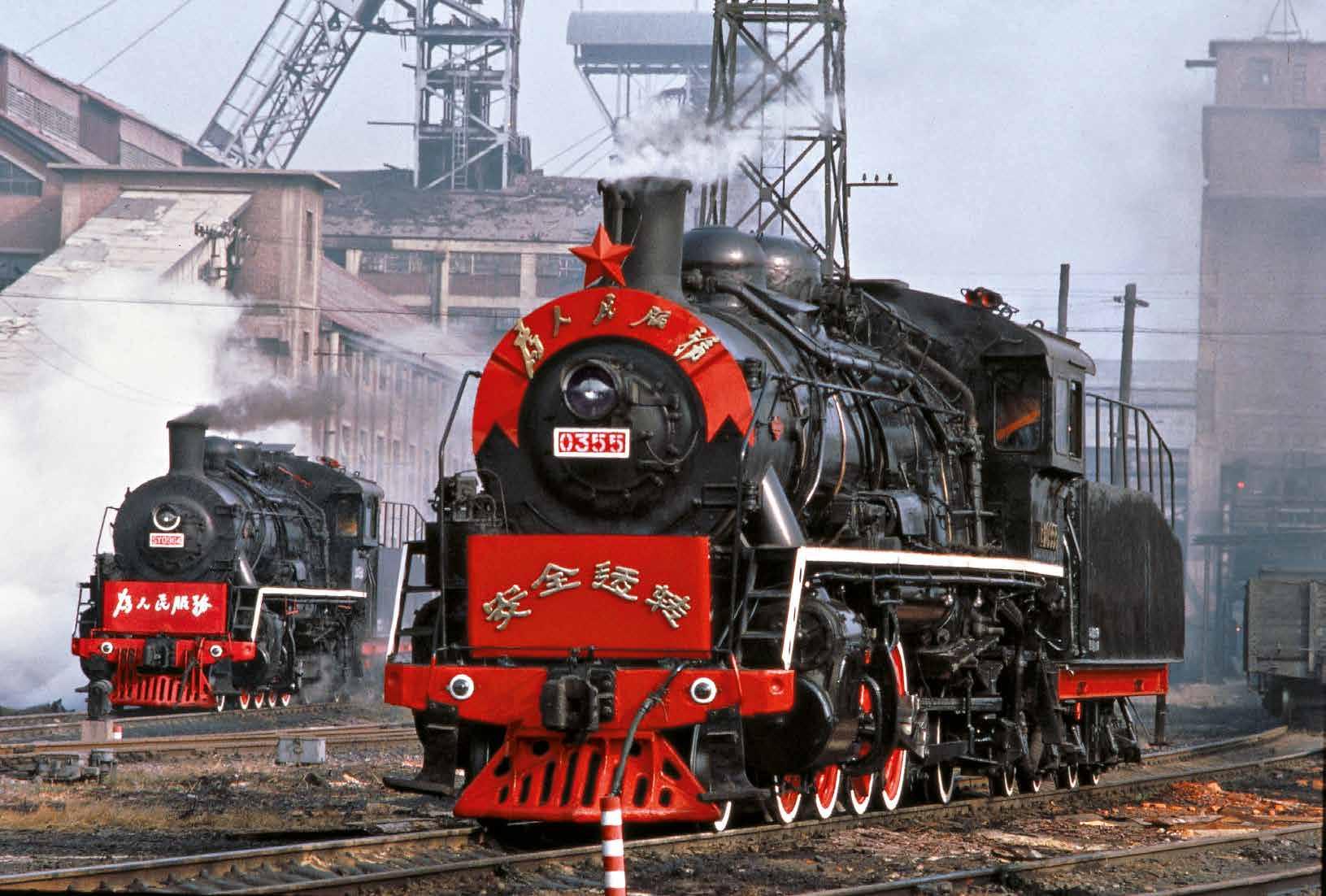
To understand what a great railroad network run entirely on steam means, you only have to go back to 1985, for example, when the locomotive depot of Harbin, in Northern China, had 100 steam engines in regular service.
These were very big machines by European standards. They would wait in line for their turn to fill up with coal under a huge wooden hopper and then on to fill the tender with water.
A little further on, the machines at the end of their tour of duty, after having cleaned their fireboxes and checked the lubrication of bearings and wheels, would mount on a huge rotating platform which would direct them to one of the free stalls in the huge circular depot, images and practices which in Europe and the United States had disappeared almost 40 years earlier.
A depot of steam locomotives, due to all the care and attention these machines need, pulsates with a life unknown in the sheds of diesel or electric locomotives, which are little more than simple parking areas between one run and the next.
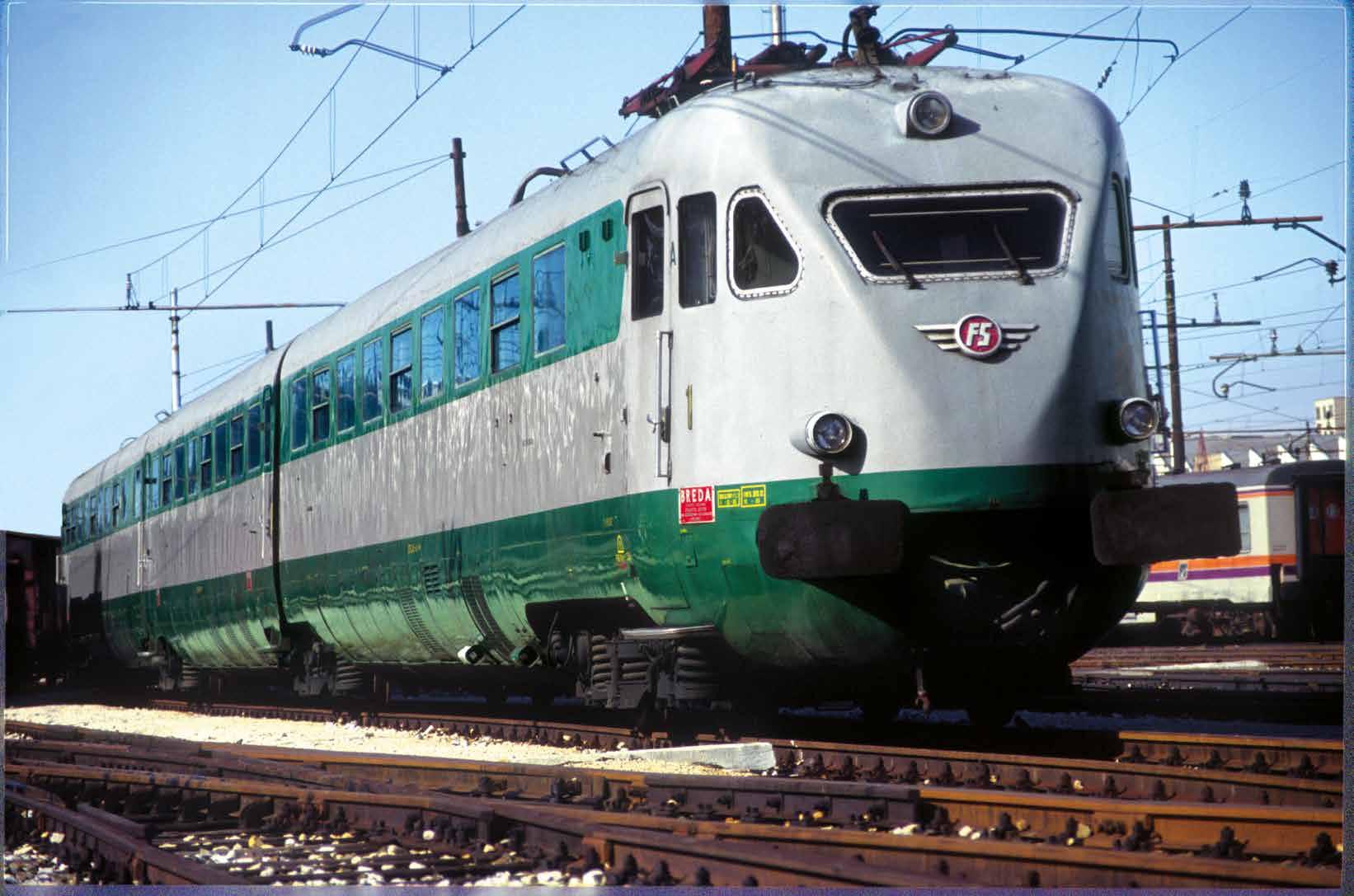
The 16 trains built from 1936 (in total, 18 were commissioned, but two were destroyed by bombing in the war before going into service) made the most of the technological innovations available at the time. The new steels allowed for robust but light structure, and the traction engines had reached an excellent efficiency. Engineers of the Material and Traction Service of the FS thus thought of a light and fast train for the new electrified lines. The success of the first model built by Breda, which immediately reached 108 mph (170 km/h), attracted the attention of the Fascist regime. The train (which was originally to have had first- and second-class seating) thus became a luxury train capable of traveling at exceptional speed for the time, therefore constituting a propaganda gloss for Fascism. But besides this historical and political aspect, the ETR 200 was a exceptional train from both an aesthetic and technical point of view. It was designed by two renowned architects, Giuseppe Pagano and Giò Ponti, and the aerodynamic front, called “viper head,” was tested in the wind tunnel of the Turin Polytechnic. The air resistance coefficient obtained, 0.32, was truly exceptional, as it was half the figure achieved by usual electric locomotives. The train was made up of three elements resting on four trolleys for a length of 206 ft (62 m) and over 100 tons in weight. To improve the aerodynamic performance, the three elements were connected to each other with mantles in line with the body, as well as with the normal corridors. Its lower part was completely streamlined.
The ETR had air-conditioning, a real luxury for the time, and unique internal salons. It was set to reach a top speed of 100 mph (160 km/h), much less than it could have reached and maintained in regular service. World fame, however, was achieved on July 20, 1939, when the ETR 212 between Pontenure and Piacenza established the world speed record on rails, touching 126 mph (202 km/h). On that day, the 196 miles (315 km) between Milan and Florence were covered in just 1 hour and 55 minutes at the incredible average speed of 102.5 mph (165 km/h). For the sake of history, it is right to remember that the record was established with some adjustments: the voltage of the line was increased, and the exchanges on the line had been blocked, but the train was a standard one. The ETR 200s may be considered the first high-speed trains in history, precursors of the famous Japanese Shinkansen of 1964 and the French TGV of 1978.
“ The Italian electric trains have always distinguished themselves for their design and innovative technology. ”
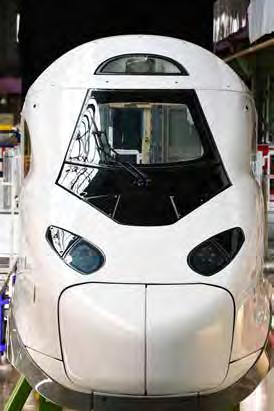
In 1996, the double-decker TGV Duplex trains were also introduced, increasing the seating capacity of each train from 386 to 516. The Eurostar trains connecting Paris and Brussels to London via the Channel Tunnel are also derived from the TGVs, and since 2000, a fleet of four-voltage versions of the TGV Thalys has been operating on the line between Paris–Brussels–Amsterdam–Cologne. The fleet is divided between the French, Belgian, and Dutch railroads. Here are some approximate figures: in 2005 alone, TGV trains transported over 80 million passengers in France and a further 20 million in Europe, thanks to the 650 daily trains serving the network’s 957 miles (1,540 km) of railroad lines and 250 stations. Since June 2007, the TGV Est Européen has been connecting Paris to around thirty cities east of the capital, including a few in Germany and Luxembourg. In December 2010, the Perpignan–Figueres railroad section was inaugurated, linking the Spanish and French networks, while on December 11, 2011, the TGV Rhin-Rhone line was opened, connecting Lyon-Dijon and Mulhouse. In July 2016, the TGV Est high-speed line to Strasbourg was completed, with the construction of the missing section between Baudrecourt and Vendenheim, while on July 2, 2017, the ToursBordeaux line, an extension of the TGV Atlantique, and Le Mans–Rennes, commonly known as TGV Bretagne–Pays de la Loire, were inaugurated. There are also plans for other lines, such as the one between Lyon and Turin, and the one going to the Spanish border, but work on them has been pushed back to a later date. As far as rolling stock is concerned, a new TGV2N2, also known as Euroduplex, entered into service in 2013. The engines are driven by asynchronous traction motors and the European ERTMS/ ETCS cab-signaling system, while the double-decker carriages have been redesigned to offer greater comfort, especially on the upper deck. The next-generation TGV train, the TGV-M (“M” being for modern and modular) was presented by SNCF and Alstom in May 2021. The train is based on Alstom’s Avelia Horizon platform, and its modular design makes it possible to adjust the number of carriages between 7, 8, and 9, as well as the number of seats in First or Second Class, according to market demand. They will enter into service in 2024, and it is predicted that by 2030 the 100 TGV-M trains will make up a third of the French high-speed train fleet, which at the same time will be reduced from 400 train sets to 300.
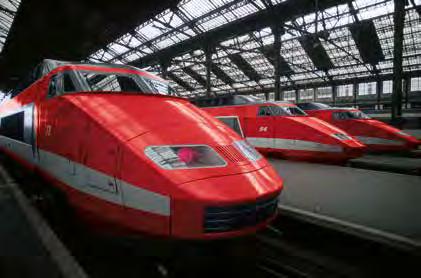
233 left three pse (parIs sud est) tgvs awaIt the green lIght these traIns were the fIrst to be buIlt n 1978 for the parIs–lyon servIce and were offIc ally Inaugurated on september 27, 1981.
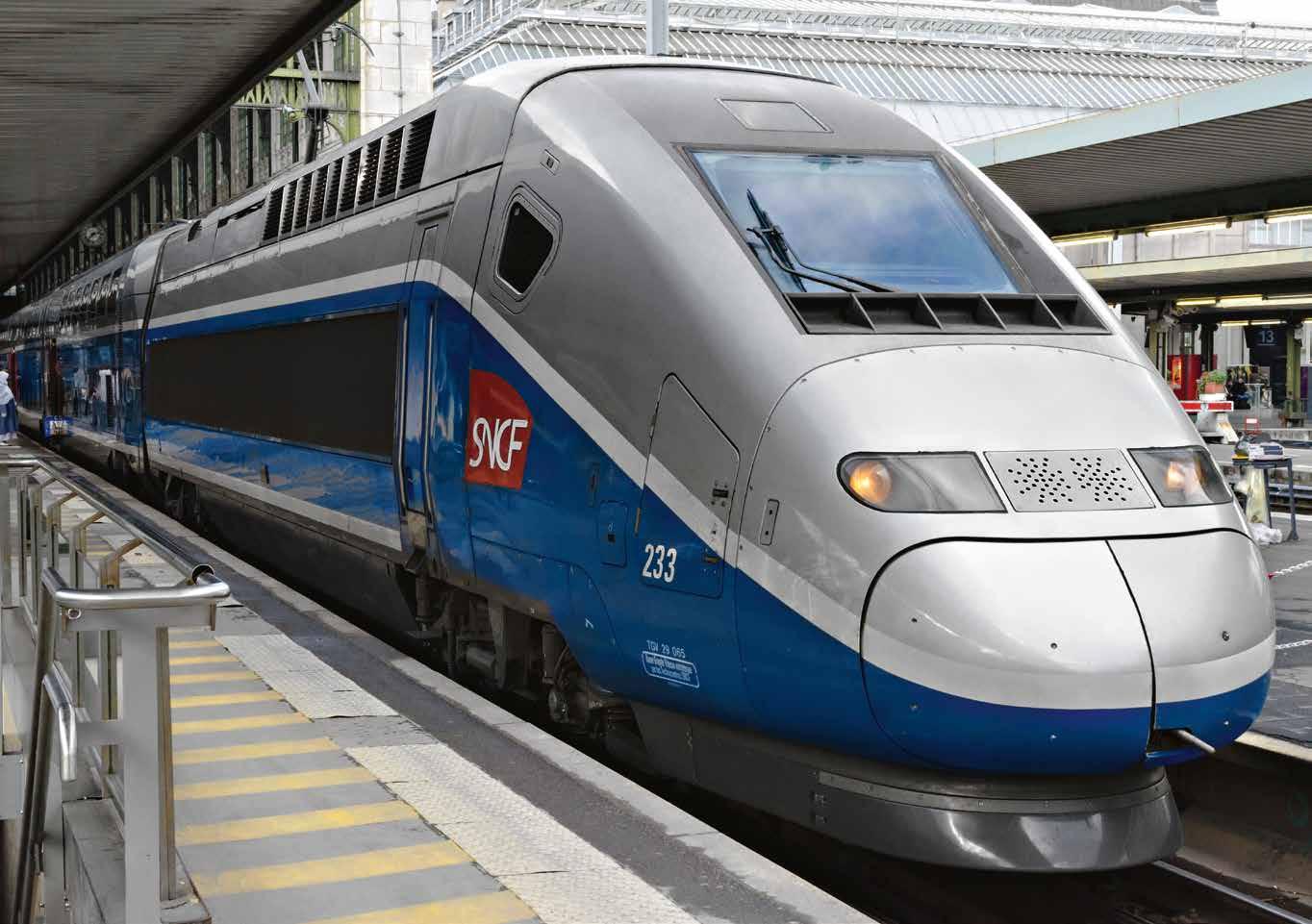
233 rIght the tgv euroduplex Is the thIrd generatIon of doubledecker tgv traIns, and s nteroperable thanks to beIng multI-system and hav ng an ertms sIgnalIng and speed-control system
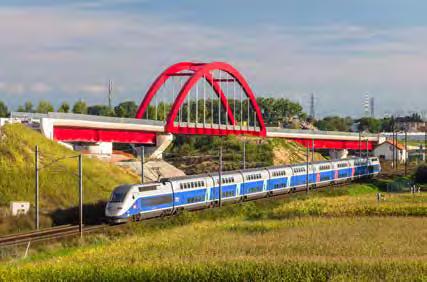
234–235 a tgv atlant que passes a fIeld of sunflowers whIle travel ng on the l ne that connects parIs to brIttany and normandy thIs connectIon was opened In 1988 and Is served by 105 gray-and-blue tgv-a traIns
232 bottom the nosecone of the new tgv-m the fourth generat on of french h gh-speed tra ns at the alstom factory the f rst traIn sets wIll enter Into serv ce In 2024, and constructIon w ll contInue untIl 2030.
232–233 the locomot ve of a tgv duplex (wIth double-decker carrIages) at the parIs gare de lyon statIon the 10-unIt traIn has 508 seats and reaches 200 mph (320 km/h).
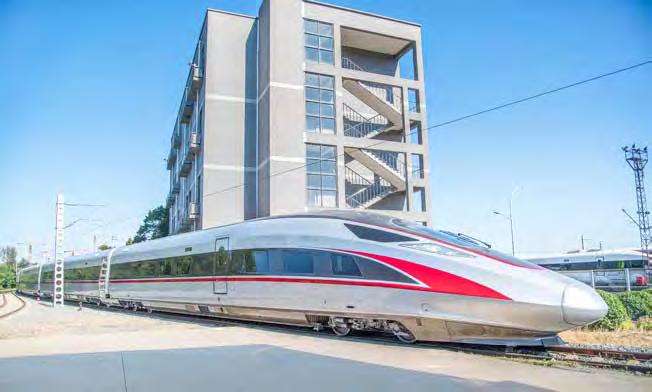
pleting the offer of “turnkey” high-speed railroads which are part of the Asian giant’s economic expansion policy in other continents, starting with Africa and South America.
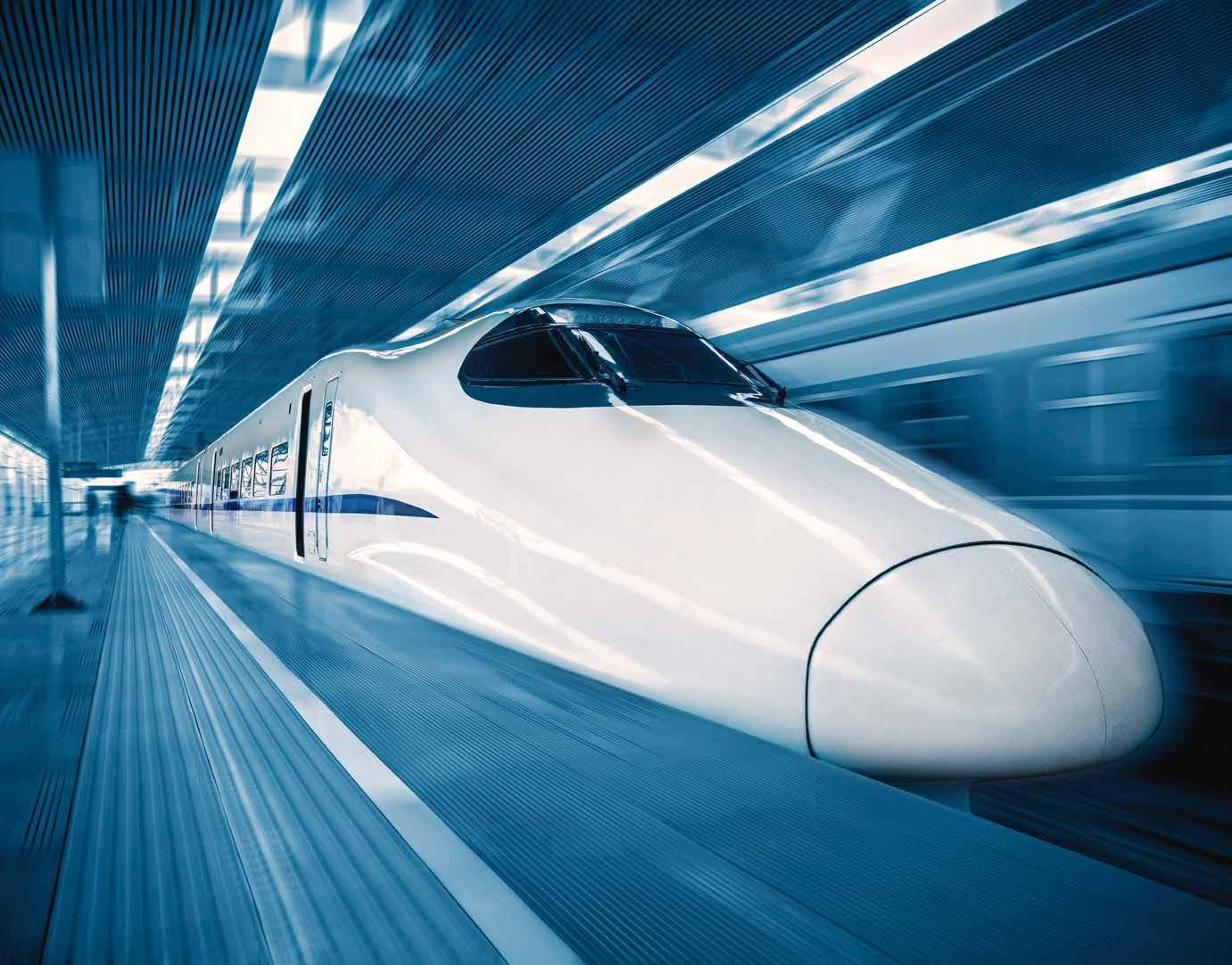
In order to emphasize their newly acquired technological independence, the numerous trains in service on Chinese railroads have been divided into two large families: Hexie Hao (“Harmony”), which includes train sets built in collaboration with foreign companies; and Fuxing Hao (“Renaissance”), which includes those whose technological and intellectual property are 100% Chinese. Among these more recent train sets, there is the CR400AF, nicknamed “Blue/Red Dolphin,” and the CR400BF, or “Golden Phoenix.” These are the two fastest high-speed trains developed for regular commercial use in the world, traveling at an incredible 2171 ⁄2 mph (350 km/h). The development of these train sets, which are considered the standardized platform for China’s high and ultra-high speed trains, started in 2012, under the supervision of the CRC (China Railway Corporation), and involved a large group of companies, research institutes, and universities. The general technical specifications were defined in 2013, and the final design was approved in September 2014. The first train set of this new generation of Chinese high-speed trains left the factory on June 30, 2015. The incredibly short time it took from making the decision to develop such a complex new train from scratch, to it actually being put into service, is a clear indication of the high level of the Chinese railroad industry’s design and production capabilities. During a test run in July 2016, two of these trains, going in opposite directions, safely passed each other at 261 mph (420 km/h), with their relative speeds doubled to 522 mph (840 km/h). The first train entered into regular service on August 15, 2016, on the Harbin–Dalian line in northern China. The standard train set of the CR400 Fuxing series is composed of 8 carriages and is a total of 686 feet (209 m) long, 11 feet (3360 mm) wide, and 131⁄3 feet (4060 mm) high, with a maximum axle load of 17 tons. This configuration can seat up to 556 passengers (10 in Business Class, 28 in First, and 518 in Second), but this increases greatly for the other versions, which can have as many as 17 carriages and a length of up to 1,473 feet (449 m). To date, there are 19 versions, including the basic configuration, 3 of which have been designed specifically for extreme weather conditions, such as sand and snow storms.