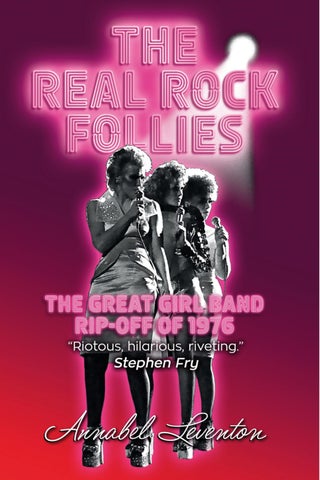
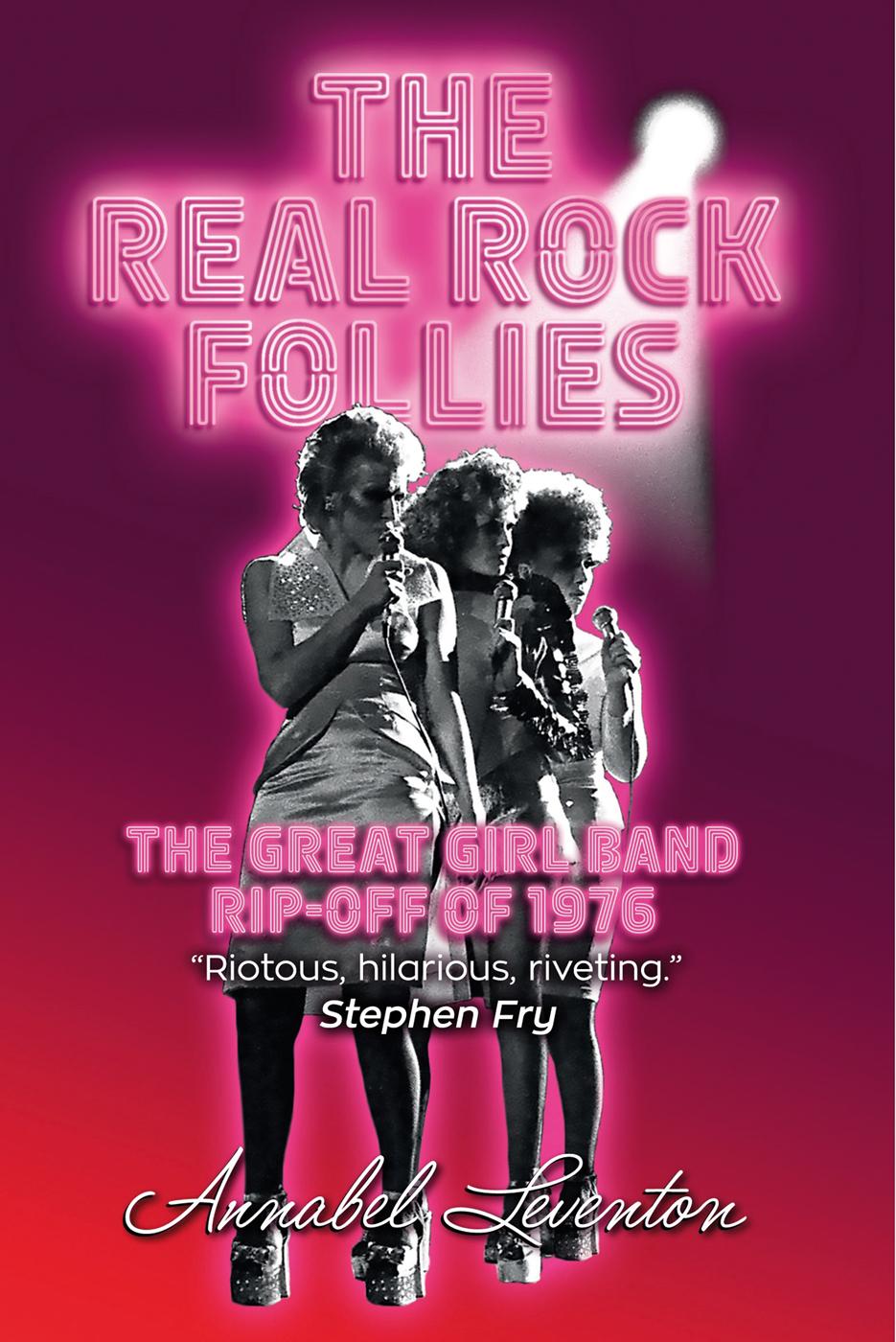
Prologue
Kilburn, London, 2004
Before she rang, I was settled. Before she rang, I hardly ever thought of her. Twenty years is long enough, even for me. Okay, I’m not good at letting things go, saying goodbye. I tend to cling to the drifwood of a failed romance, for instance, treading water, believing the boat will right itself, given time. It hardly ever does, of course. It ’s more practical to strike out for land, swim away before it drags you down with it. With friends, it ’s a different matter, I haven’t lost many of those. We might drif apart from circumstance, like going to another school or of to live in Australia. But most of the time, a friend is a friend. Tat ’s that.
Settled, did I say? Yes, to my surprise, that ’s the right word. Afer a disastrous two years living in the country, I ’d found a place to live in North London for me, my son Harry and Purdey the dog. I feel cast adrif anywhere else. A little maisonette on the Horton Gardens Housing Estate in Swiss Cottage. Technically Kilburn but it ’s closer to Swiss Cottage. I could do my weekly shop at Waitrose on the Finchley Road just as I always had. John Barnes, it was called once.
Horton Gardens Estate is on the wrong side of the Finchley Road, where the roads all take a sudden lurch downhill. I prefer to be a bit higher up. But as homes go, mine was fne. Tiny, but with a pretty, west-facing, walled garden and behind that, a little enclosed park just for residents. No-one ever went there till I moved in. A fox or two. Quite a few birds. Tere was no way in
2) Start when teenagers. You’re over the hill by 30.
3) Be sisters or look as if you’re sisters.
4) Be black and American, look alike, dress alike, sound alike.
5) Do as you’re told. Shut up.
6) Don’t write your own material. You have nothing to say. Shut up.
7) Look sexy and keep your mouth shut.
8) When your frst and only brilliant idea gets stolen, accept it and move on.
9) Shut up.
Tough. We broke every single one. We didn’t mean to, it’s the way it worked out. It all seemed random at the time. Random and inevitable, glorious and new. Looking back now, it doesn’t seem so accidental. I needed a group, for reasons I didn’t then know. I never liked being a solo singer. Gaye and Di gave me strength. Tey were both huge personalities. On stage I felt I was being pulled apart by two horses galloping in opposite directions. But that’s what a middle child does—hold things together. So I had my role.
As a child I always sang. It was natural, my mother always sang. Hummed when she was annoyed, sang full out when she was happy. I sang too. I never thought about it, certainly not as a possible career. I knew what I wanted to be—I was going to be an actress. I never thought of anything else.
Life afer the war was tough, especially if you had no money. We lived outside London, we never went to musicals or pantos, we had no television. So when my aunt took me to see Peter Pan on stage one Christmas when I was fve, and took me backstage aferwards to meet the actress playing Peter, I was awestruck. Bowled over. Hooked. Acting was what I was born to do.
I was lucky. I somehow passed the eleven-plus and went to grammar school. And when I was fourteen, something momentous
happened: I fell in love. It was my frst teenage party, in someone’s front room. Te lights dimmed, someone put a record on and a boy asked me to dance. I no longer remember who he was, but I’ll never forget what we danced to: Dream, Dream, Dream by Te Everly Brothers. It was the very frst pop song I ’d ever heard. I fell in love with it and all their other songs. And Buddy Holly, Elvis Presley, Little Eva, Edith Piaf, Carole King …
Now I had two passions—acting and pop-singing. Pop was banned in our house, my mother loathed it, so the singing stayed secret till I got to Oxford.
Till I got to Oxford. It sounds so easy, doesn’t it? How did that happen? Nobody in my family had ever been to university. I don’t think I would have tried very hard, or at all, if it hadn’t been for my headmistress.
‘You?’ she said, head fung back, prominent front teeth bared. ‘Oxford? Cambridge? Te best you ’d get is a place at London.’
Tat did it. I discovered a stubborn streak. And I got lucky again. St Anne’s College believed in my potential enough to give me a minor scholarship.
Once there, I acted in everything I could—Chekhov, Shakespeare, Brecht, revue. And I sang. Sang with a student dance band, Te Fourbeats, sang anything and everything on the Top 20 and the jukebox—Elvis, Buddy Holly, Piaf, Cilla Black, the Beatles. Acting gave me, to my astonishment, national reviews in all the main papers, while singing was the best fun I ’d ever had and paid my way through university. I forged life-long friendships with other grammar-school kids who also couldn’t believe their luck.
And when that was over, I went to drama school to learn to be a proper actress. I still loved pop, but it was another world. You couldn’t do both, it seemed. Never the twain would meet.
Till one day in 1968, along came a new show into the West End, the American Tribal Love-rock Musical Hair! My two passions rolled into one—acting and rock-singing. I got the female
overawed. He managed to get an album deal for us with an ofshoot of Decca Records and then proceeded to spend so much money on backing tracks they pulled the deal before I began the vocals. I was relieved. I couldn’t match up to what he wanted. I ’d loved singing with my Oxford dance band and then with twentyseven other people in Hair! It was too scary being a solo singer.
When Julie Covington, a friend of ours, asked him to produce Day By Day, her song from Godspell, I did backing vocals for them, which I loved. It was a great relief not to be on my own in the recording booth.
Aferwards, I say to Don, ‘ Tat was fun. I think I’ll ask Julie to form a double act.’
Don: Won’t work.
Annie: (chin out, toast halfway to mouth) Why not?
Don: Got to be three.
Annie: Why?
Don: For the harmonies.
Annie: Oh.
I could have mentioned Te Everly Brothers (all two of them), Simon and Garfunkel (ditto), Nina and Frederick …
Actually, I didn’t even think of it. Don was the musician, I deferred to him on anything to do with music. And in this he was clearly right. Girl groups were in a category all their own. Tree girls, almost invariably American and black, identical clothes, identical wigs, identical make-up. Te Ronettes, the Shirelles, the Crystals. Play around with that at your peril.
But the seed of the idea was planted right there, waiting to be ripened. Tree girls singing together. What a great thought. Tat was in April. Some seeds ripen fast. Tis one did. It was fully formed by September.
July, 1973
We walk to the stage door of Her Majesty’s Teatre to fnd the place heaving with bodies. Hundreds of performers line the stairs, up past the stage door, spilling out onto the pavement, a cattle market. Joining the queue behind us, Wayne Sleep, the brilliant, diminutive ballet dancer. We hug.
A shriek from outside makes me jump. ‘Oh Christ, Annie!’
My eardrums split. No wonder I’m deaf, it’s not just the rock ’n’ roll.
Gaye Brown is big. Not just tall—big. Big mouth, bravura personality, the best one-liners. Te confdence of the truly posh. She towers over Wayne, lipstick on her teeth, laughing like an upper-crust hyena.
‘Fat chance we’ve got, darling! Di Langton’s already got the lead.’
‘Di Langton? Oh my God, we were in Hair! together, Don. She played Jeannie, the pregnant one. She’s wonderful.’
I introduce Gaye to Don, who’s playing for me.
‘We’ll cheer them up, darling, they’re probably bored out of their minds already.’
Gaye, ever generous, is happy just to give them a good laugh. At nearly six foot, she knows she’s unlikely to match up to anyone’s appearance in the original show. Her philosophy is simple: ‘Have fun, make ’em laugh and then go for lunch.’
My turn frst. I’m nervous, worse than usual, because I’m singing a song Don and I just wrote—its frst public outing. You’re never supposed to sing pop for a musical theatre audition. But he wants me to try it out. When I fnish there’s a silence and then, in the wings behind me, everyone applauds. I’m shocked, this never happens at auditions. I glance over at Don, who grins. Tey give me a scene to look at and I’m asked to wait. It’s hard to prepare with Wayne Sleep auditioning next. In a small, true voice and with irresistible charm, he sings When I’m Sixty-four
adding a spectacular dance sequence in the middle. Another spontaneous round of applause.
Ten it’s Gaye. She strides out to the middle of the stage and sings Won’t You Come Home, Bill Bailey with enormous aplomb, a noduled croak and deafening volume. For someone who never smokes or drinks, she creates an extraordinary impression of a gin-soaked jazz singer in the last stages of terminal nicotine poisoning and too much sex. She too gets a round of applause from the wings. It’s turning into a good day. Te producer adores her performance and tells her there’s nothing in the show for her. Tey call me back to read my scene. One of them comes up to the edge of the stage, wiping tears from his eyes.
‘ Tank you so much. Tat was hilarious. Wonderful reading. Te lead’s already cast, I’m sorry we haven’t anything else for you. Good luck.’
Don and Gaye wait for me.
‘Yes?’ says GB.
‘Course not. You’re too tall. I’m too blonde and curly.’
‘Shouldn’t have had that perm. I suppose they wanted long straight hair?’
‘Yup. Just what I had till this week.’
‘Serve you right.’
We storm of for lunch, arm in arm. Don, hunched from playing piano, slopes behind us, frowning. I know what he’s doing, he’s got a sixty-piece orchestra in his head, he’s composing. He’s always hungry, though, he’ll fnd where we are if he gets too far behind. He’ll hear us, that’s for sure, even if we’re a mile away. Gaye’s always loud, I have to match her or give up, so I match her. Same thing on stage. She’ll trample all over me once she gets in front of an audience. So I raise my game. It’s fun. I’m diferent with Gaye. For some reason I cannot fathom, I don’t feel unconfdent with her. She shouts me down, bosses me about, weeps at my jokes and I love her for it. She’s my theatrical older sister. Together we’re a double act.
In the cafe she tells Don about when she was in the States, doing a revue I would have done if I hadn’t gone to drama school. Her American accent is New York Jewish, plus a bit black. She ’d got to know every stand-up comic there, it appeared. Probably slept with them all, defnitely nicked their material. She tries it out on Don, who’s stunned but appreciative. It’s an education. He’s always wanted to go to New York but he’s hardly started his career and money is tight. Non-existent, mostly.
‘You two girls were great,’ he says between mouthfuls of chips. ‘I don’t know why you waste your time on these idiots. You’re far too good for their lousy show.’
‘We know that, darling,’ says GB, ‘but you’ve got to pay the rent, you know.’
‘You’re thinking too small,’ says Don. ‘You got to be independent of this lot. Tere’s no money in theatre, anyhow.’
Light bulb.
A thousand-watt light bulb.
Time stops still.
I stare at GB, whisper in Don’s ear. He comes back into the present from his internal recording session. I repeat myself. He nods vigorously, spilling his wine.
I turn to GB. ‘Don and me—’ I announce.
GB splutters. ‘Frightful grammar, darling! You’re the Oxford graduate, aren’t you?’
‘All right, Don and I, then—we’re forming a band. A threewoman rock group.’
GB blinks. ‘What?’
‘I’m fed up of going for jobs I’ll never get just because I don’t look like the girl who played it on Broadway.’
‘I’m fed up of being too tall to play anything but dykes, darling.’
Te contents of the cafe look round, goggle-eyed. Tis is 1973, remember, they haven’t got used to Julian Clary, or Miriam
Hair! London, 1968
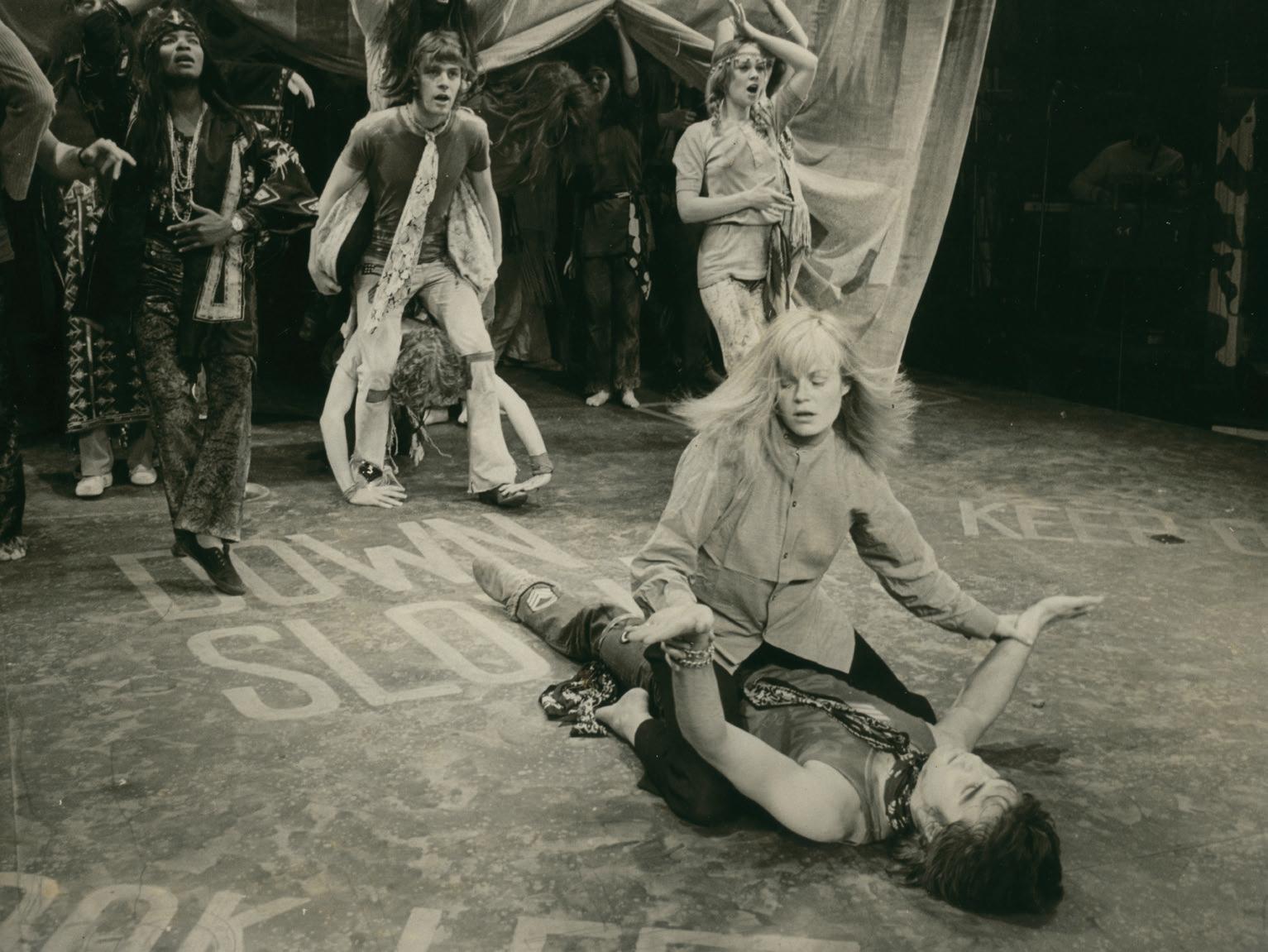
Hair!
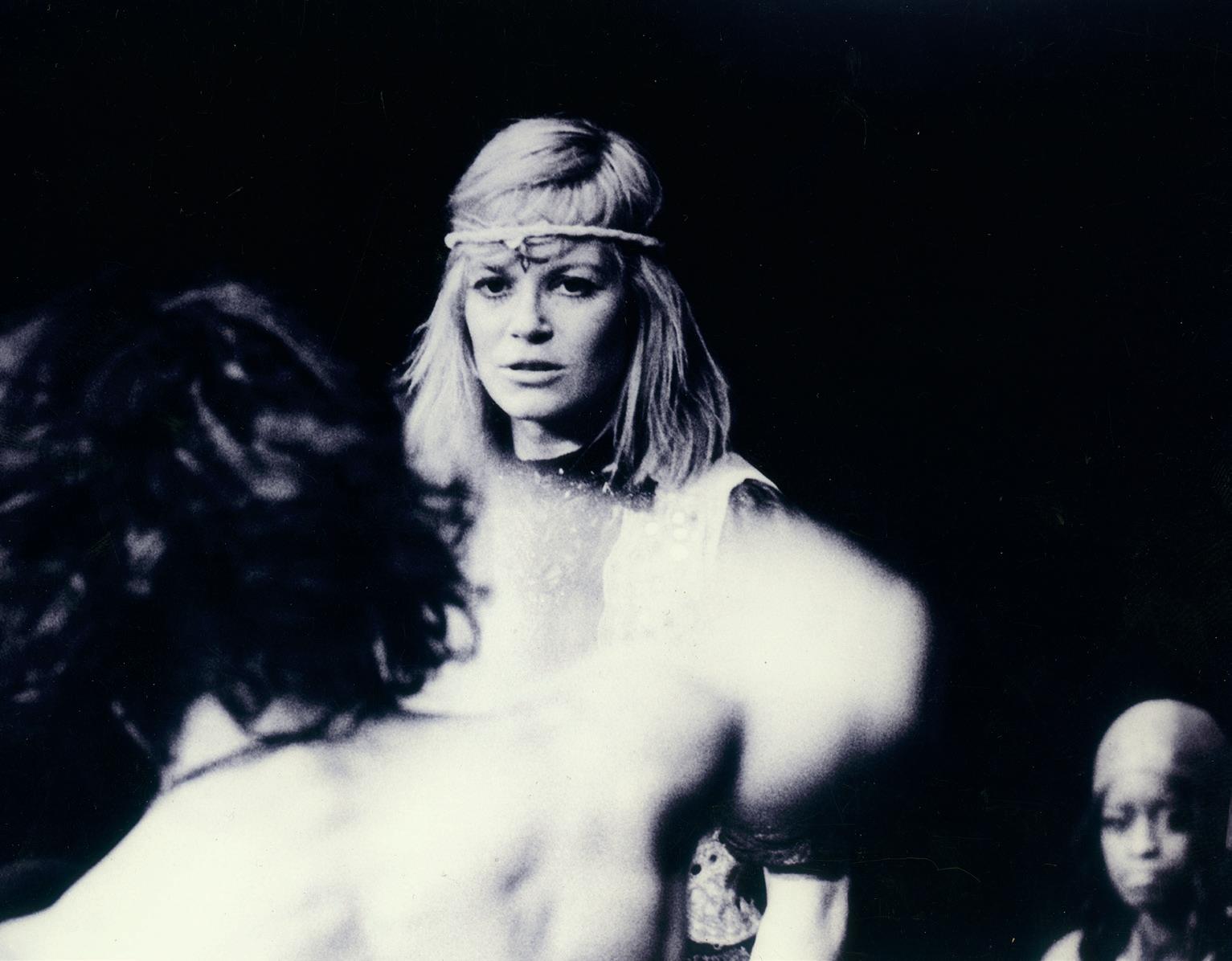
Téatre de la Porte St Martin, Paris, 1969
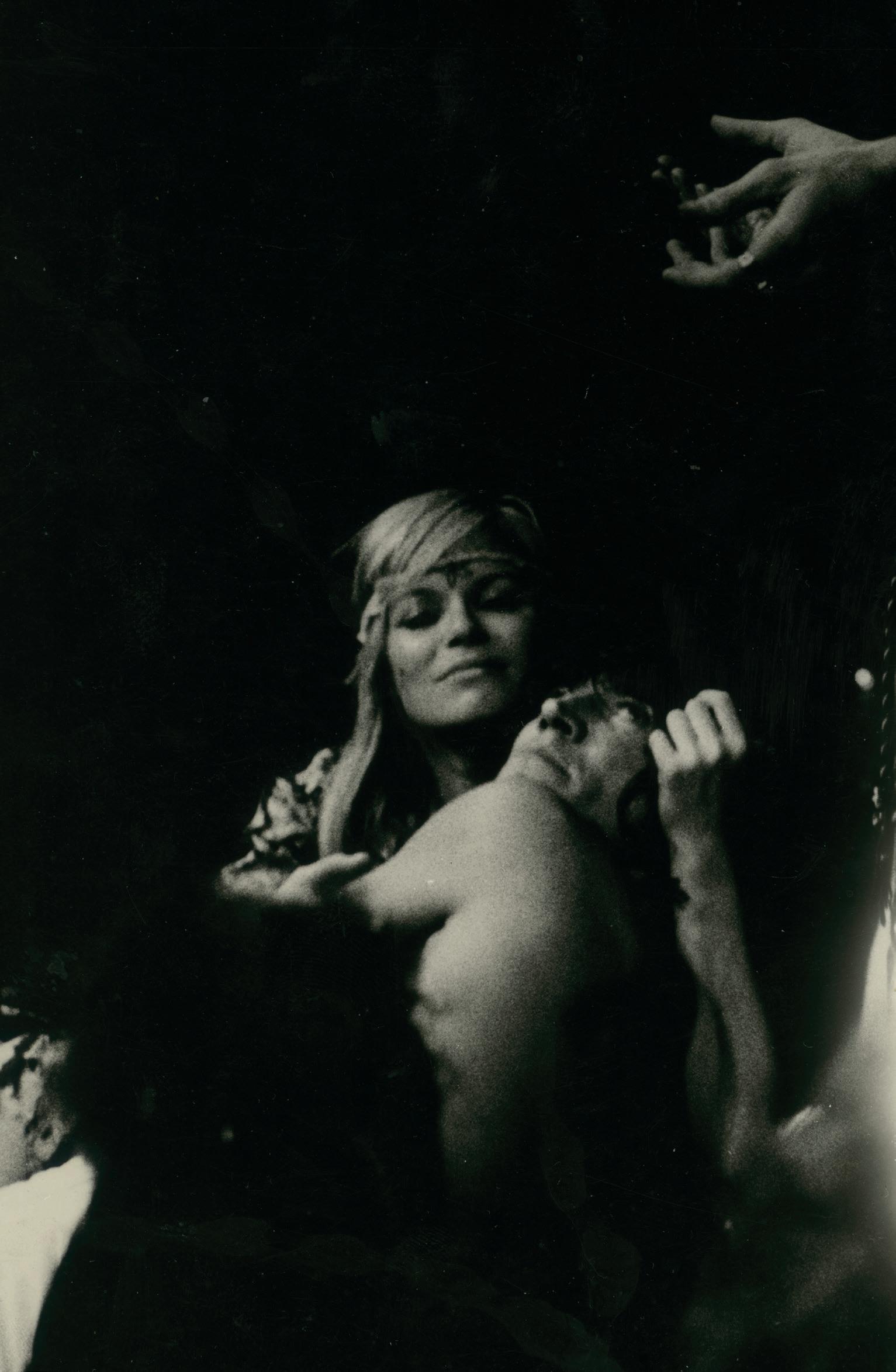
Hair! Paris, 1969
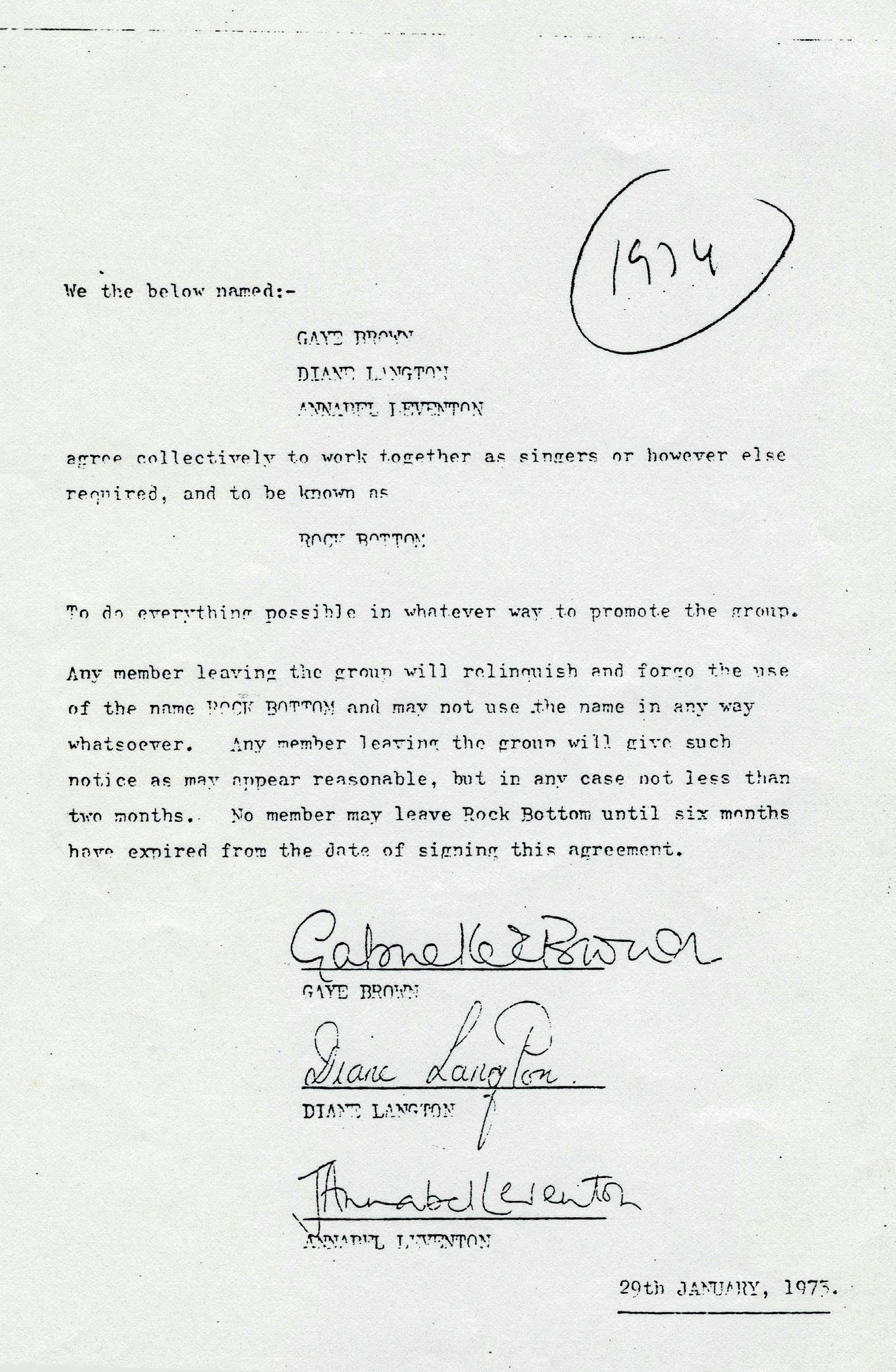
Our frst agreement, January 1974, dated January 1973
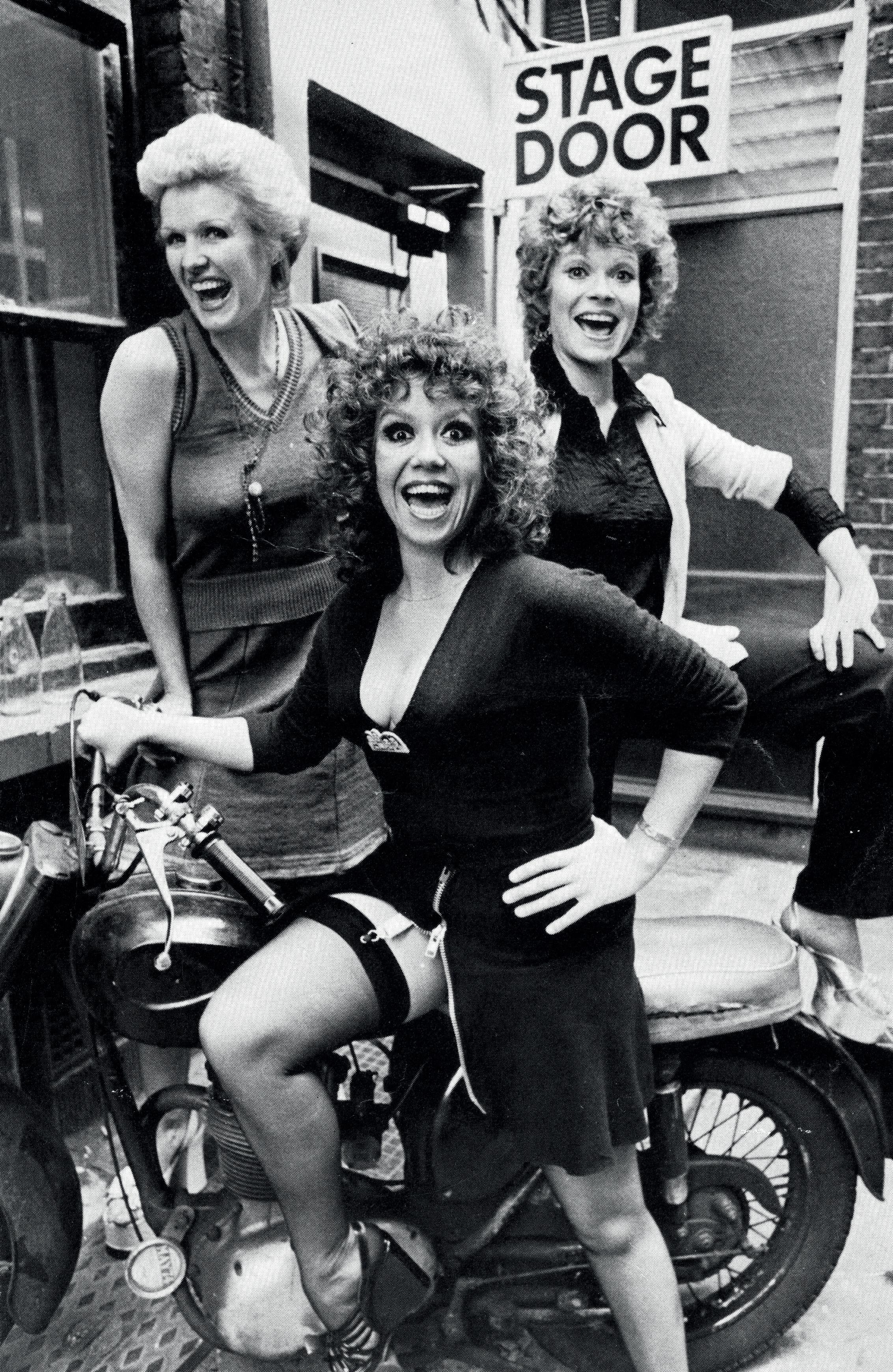
Rock Bottom, Evening Standard, June 1974
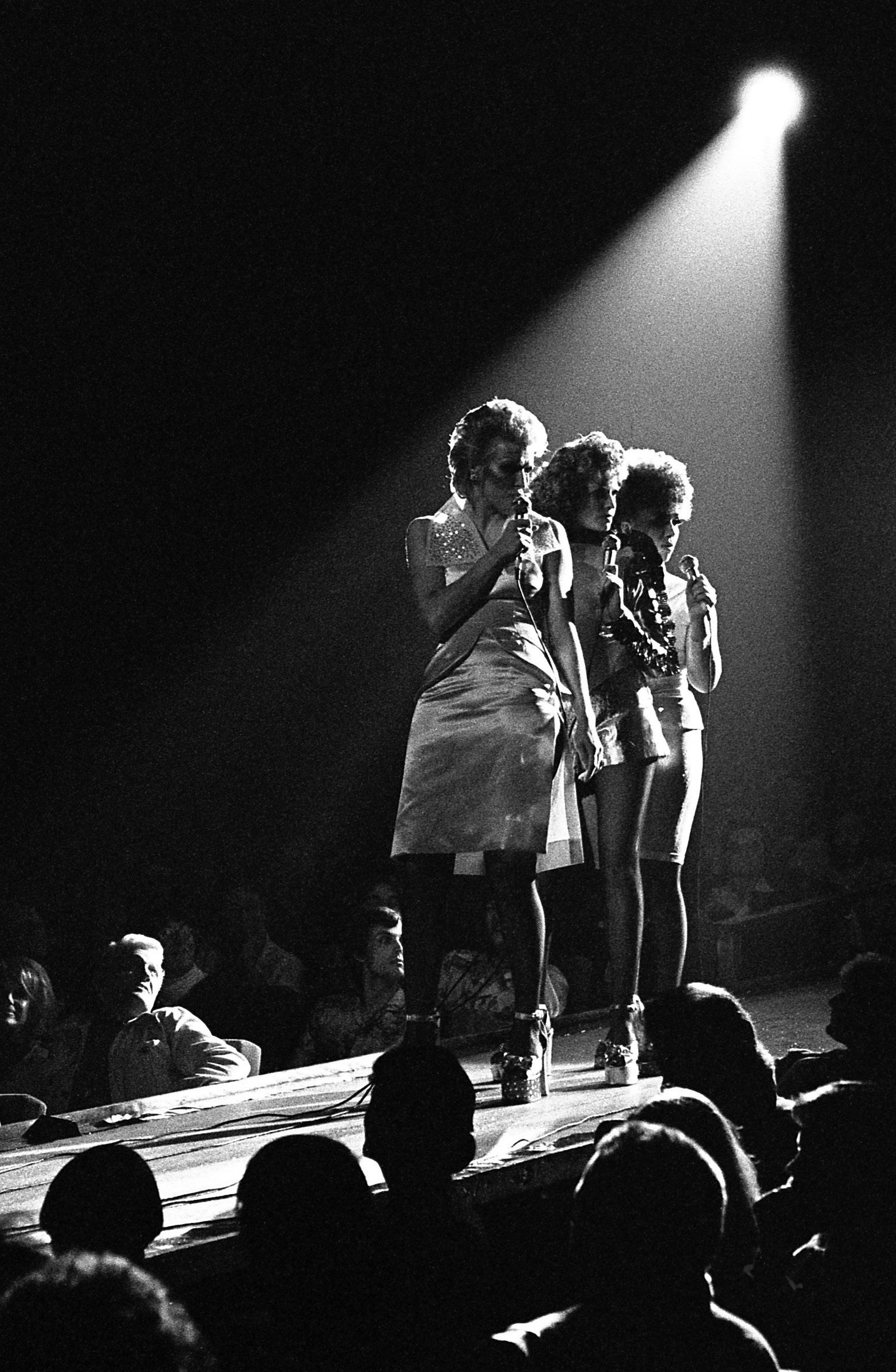
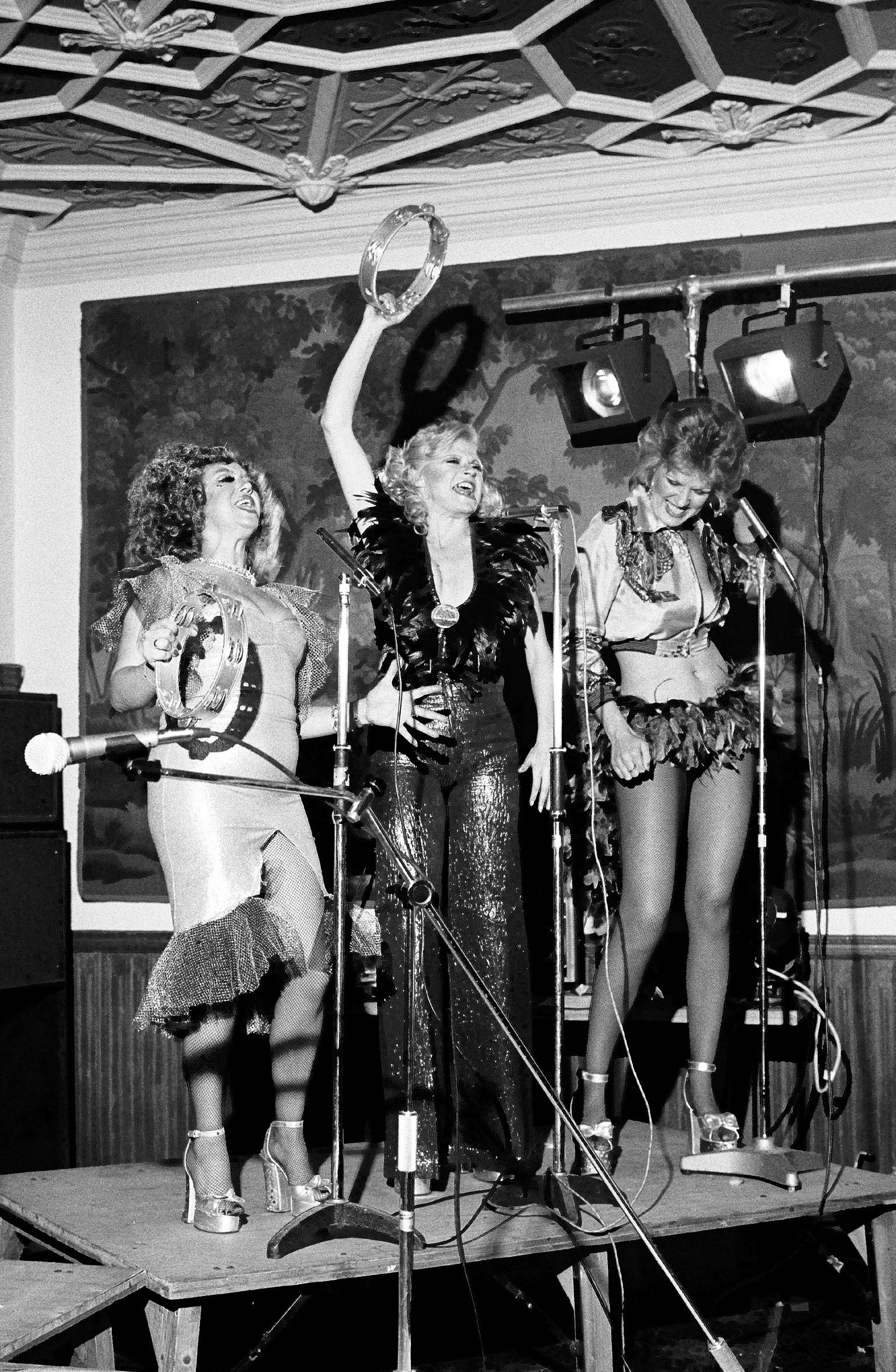
Our frst concert, Kings Road Teatre, July 14, 1974 (photography: Straker Welds)
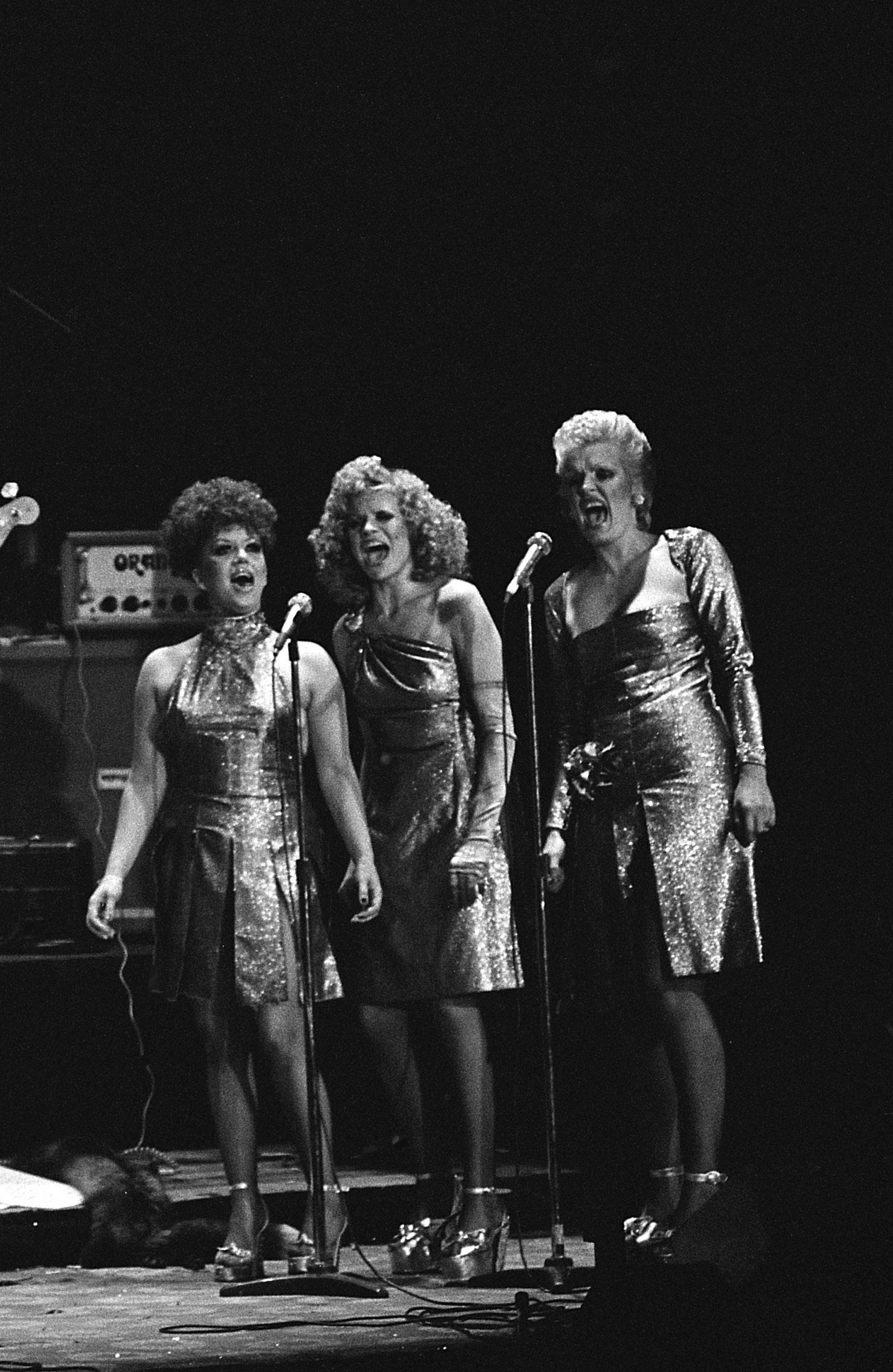
As Straker’s backing singers, the Strakettes
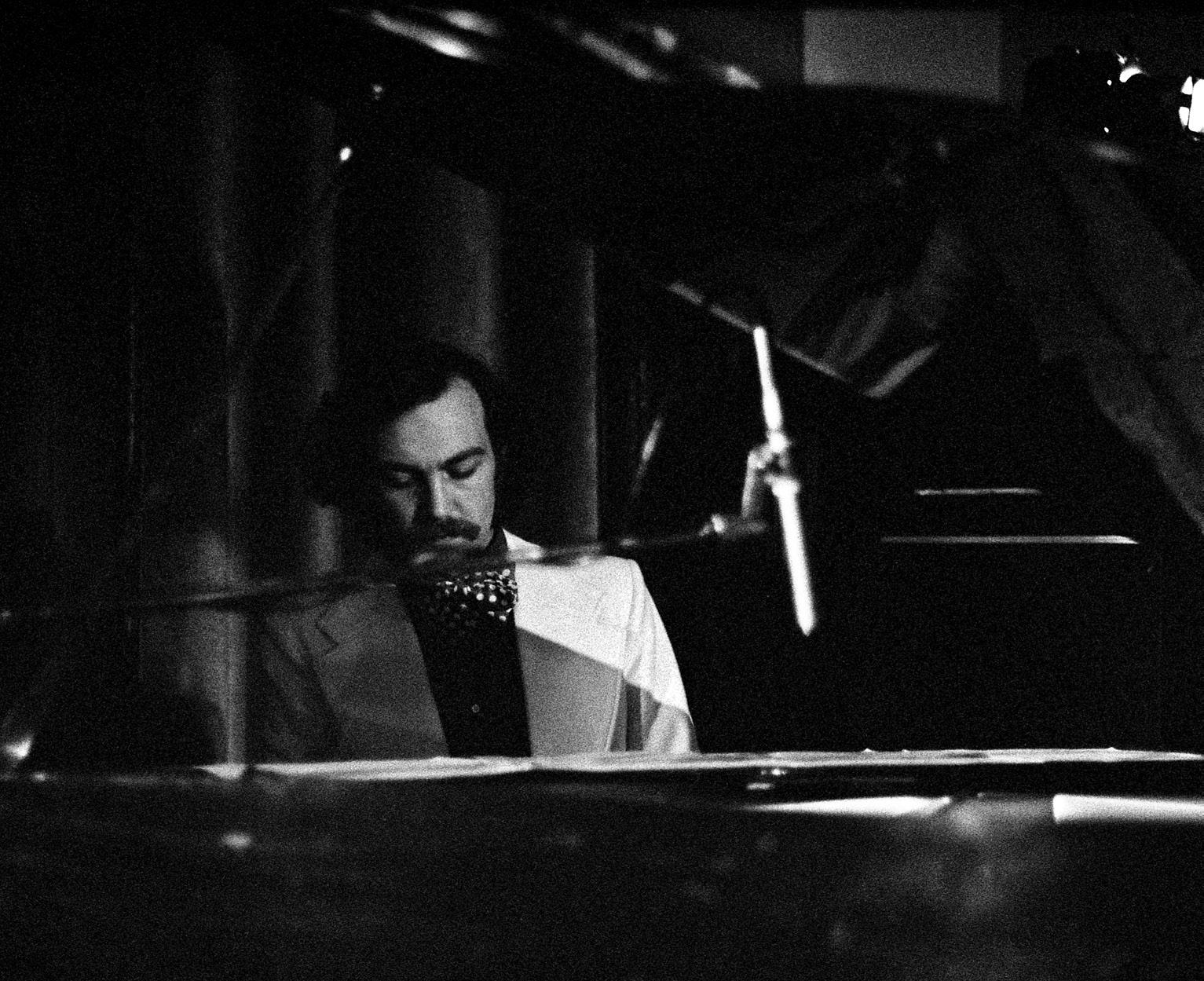
Don at the piano, in his regulation white jacket
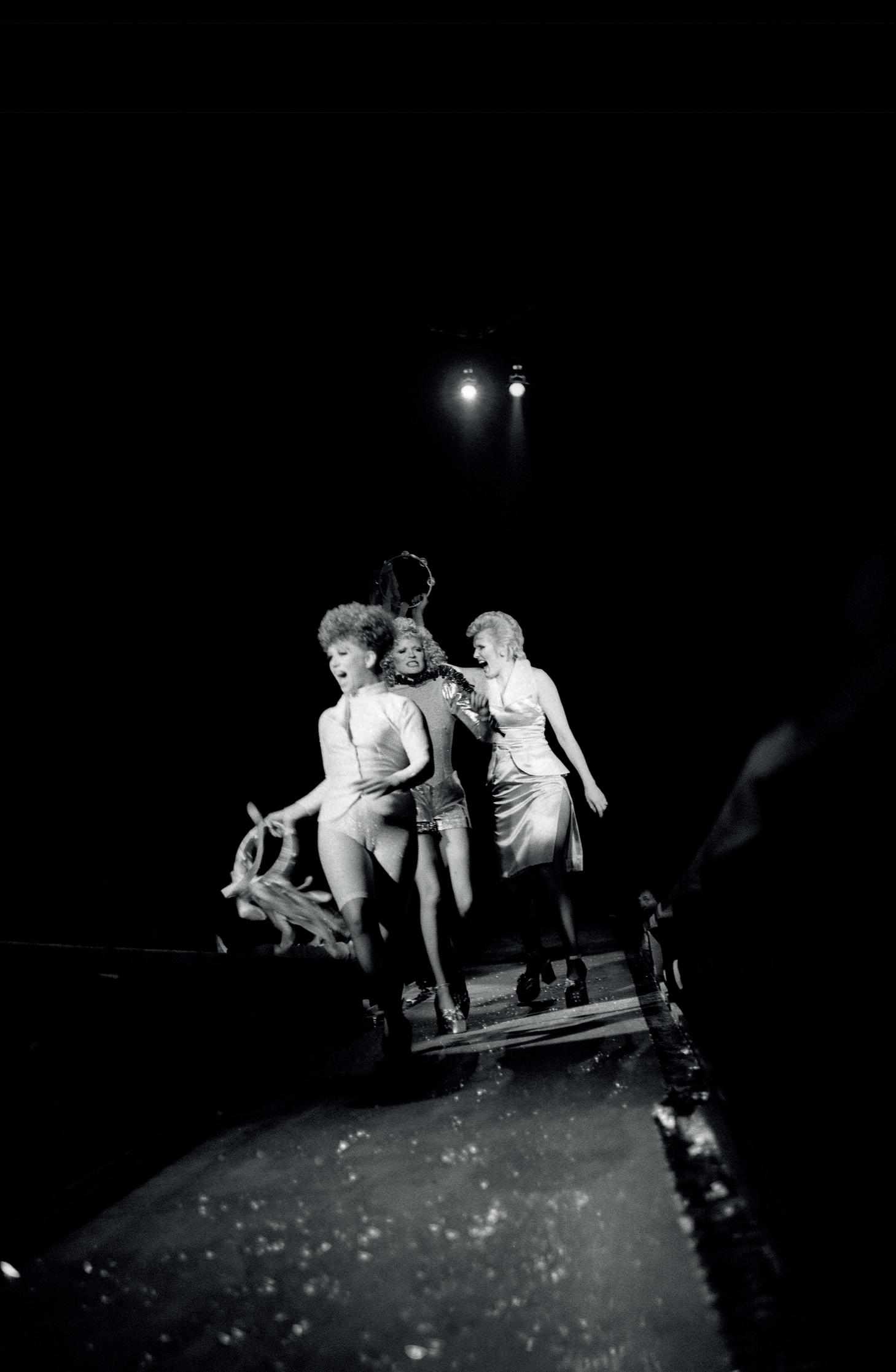
As
Rock Bottom
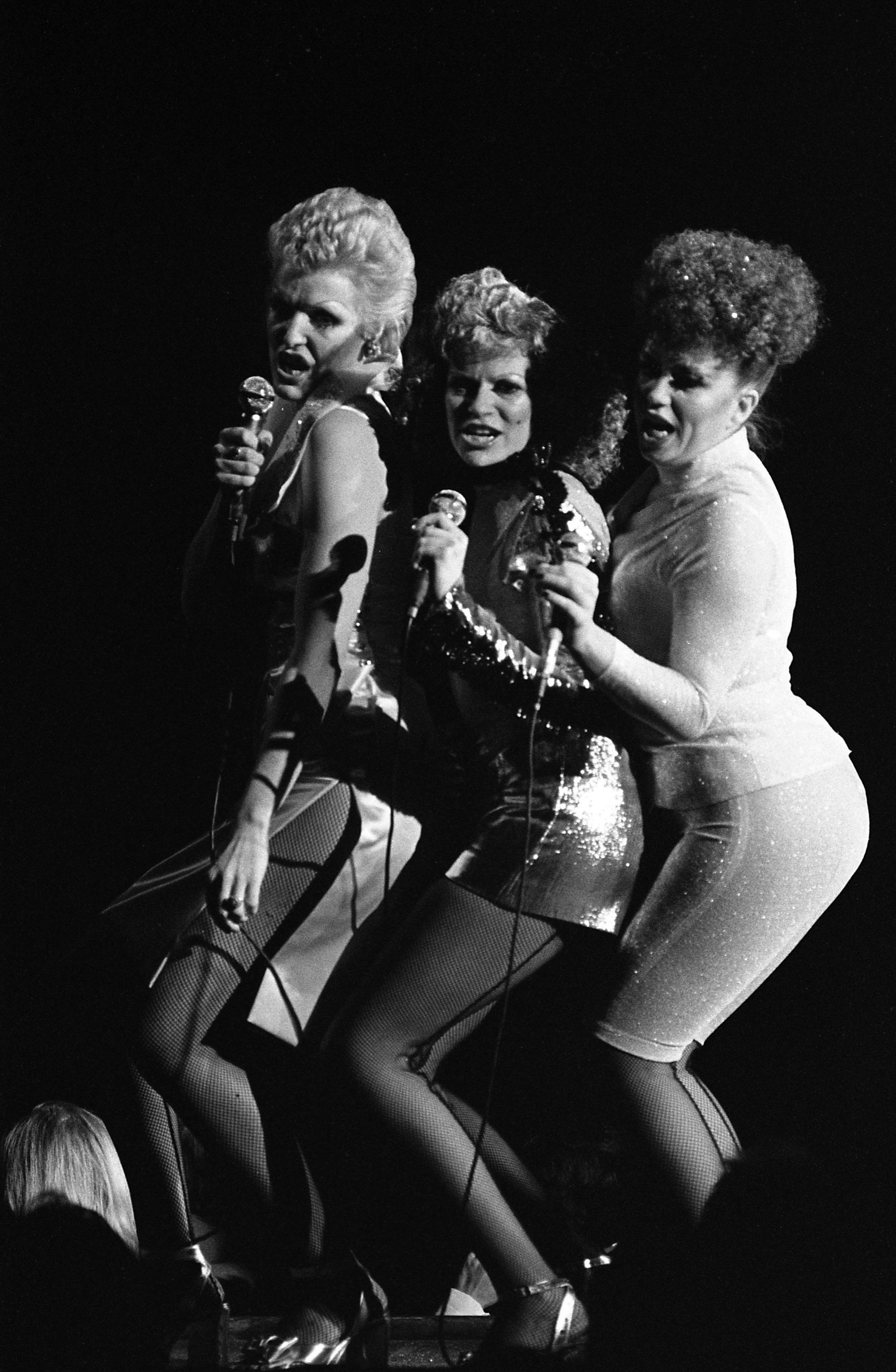
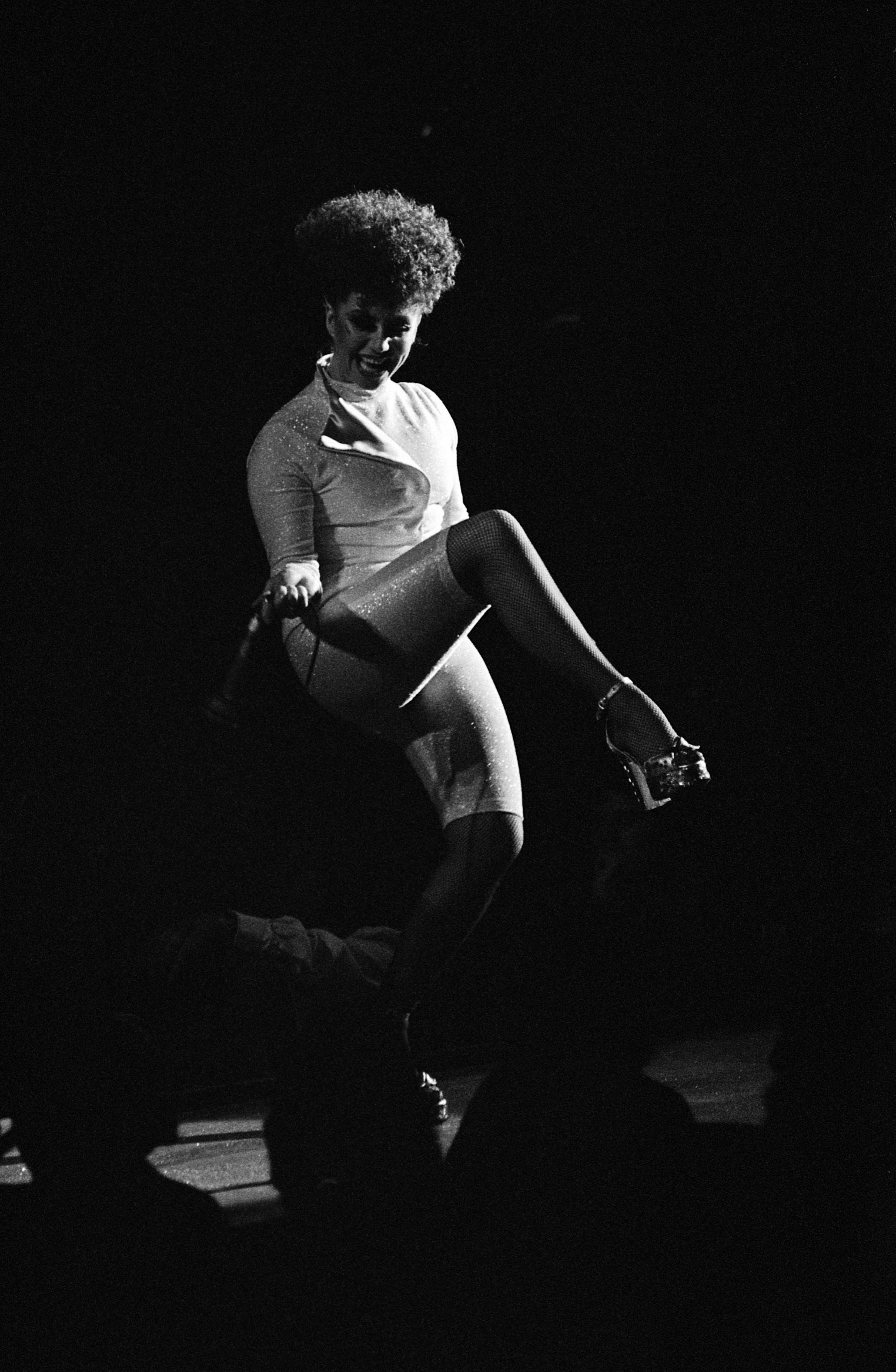
Di-Di, solo
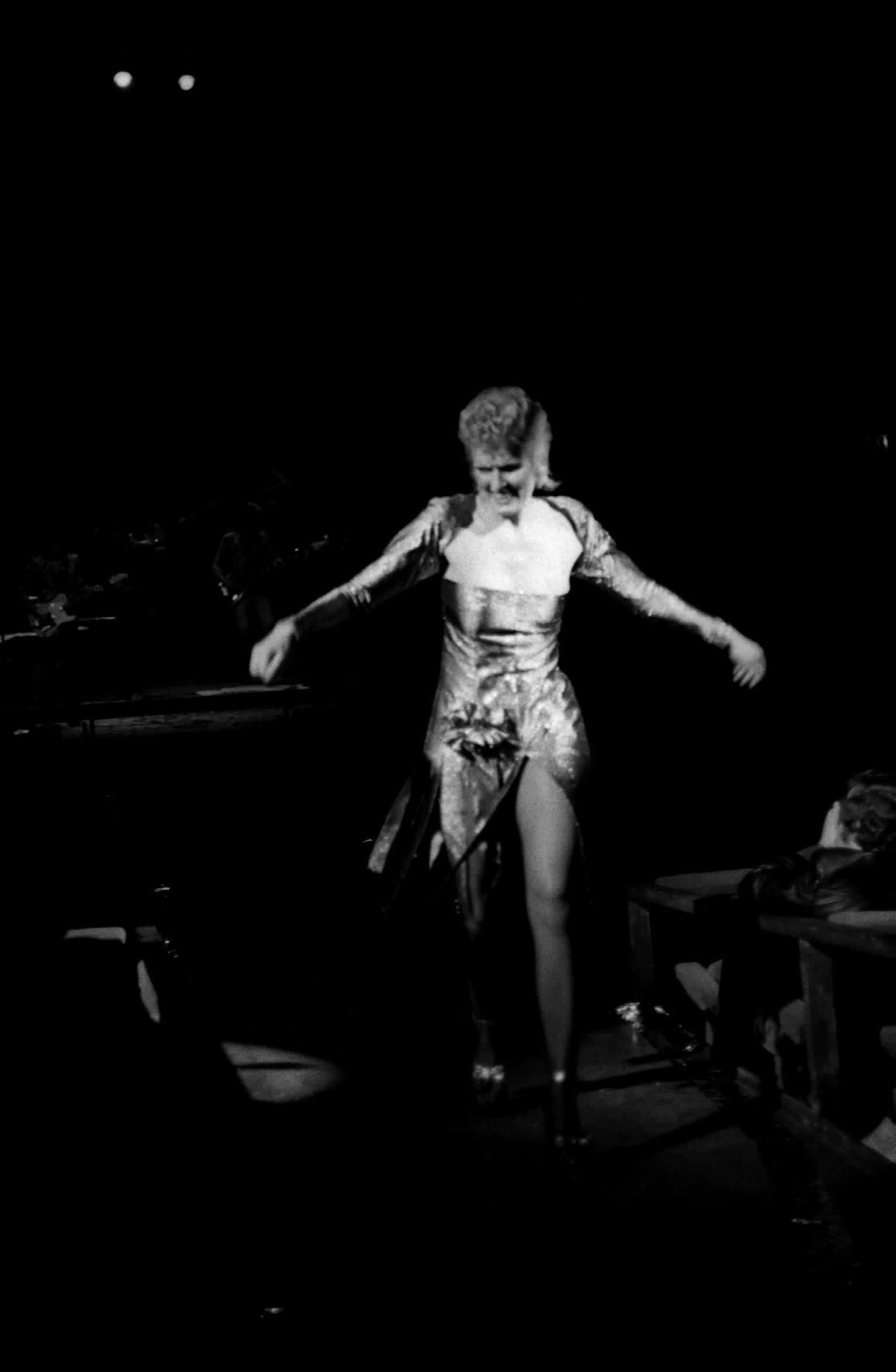
GB, solo
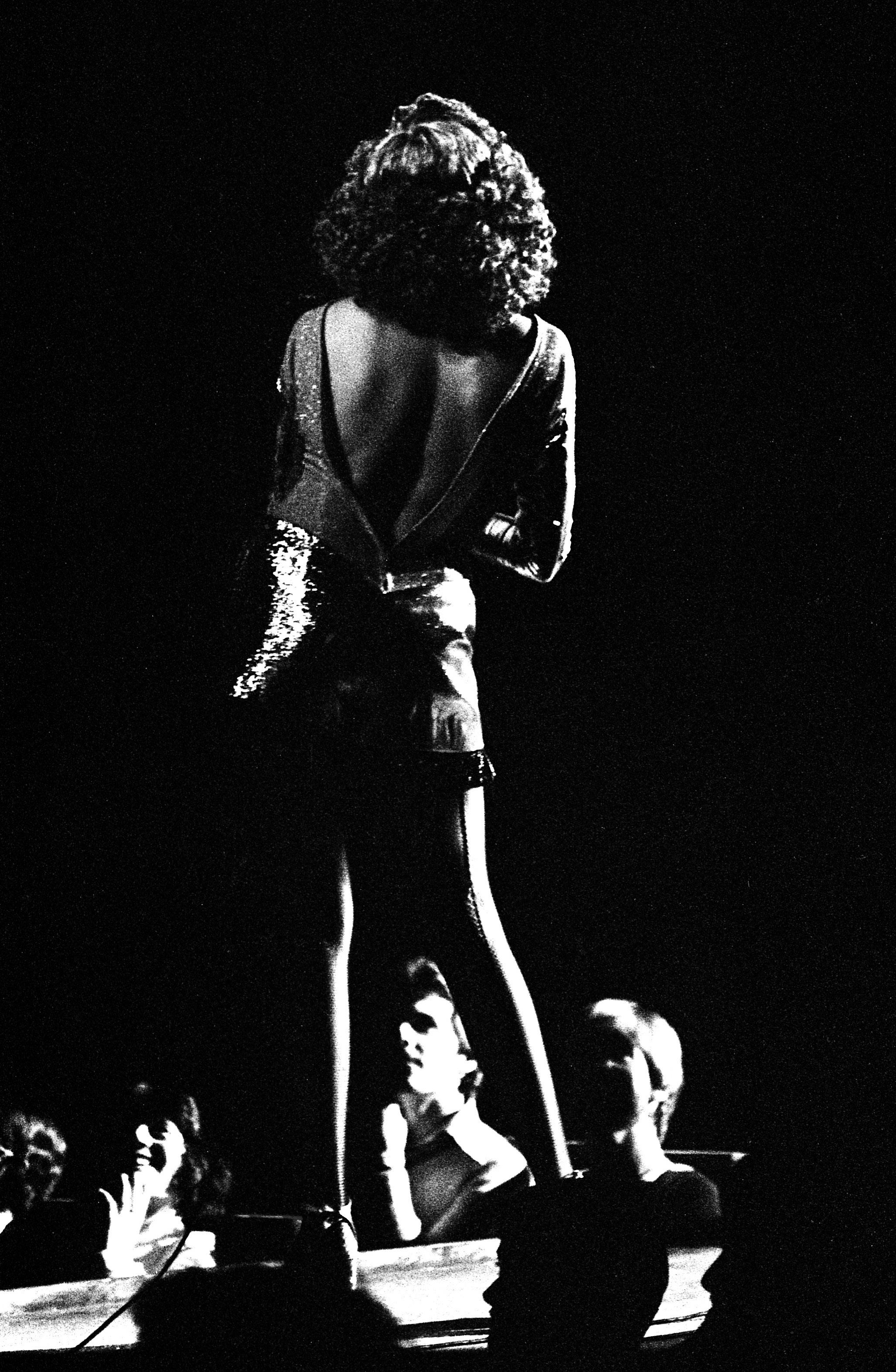
Annie, solo
In our silks and our fnes
Selsdon Park concert for RCA, September 1974 (photography: Straker Welds)
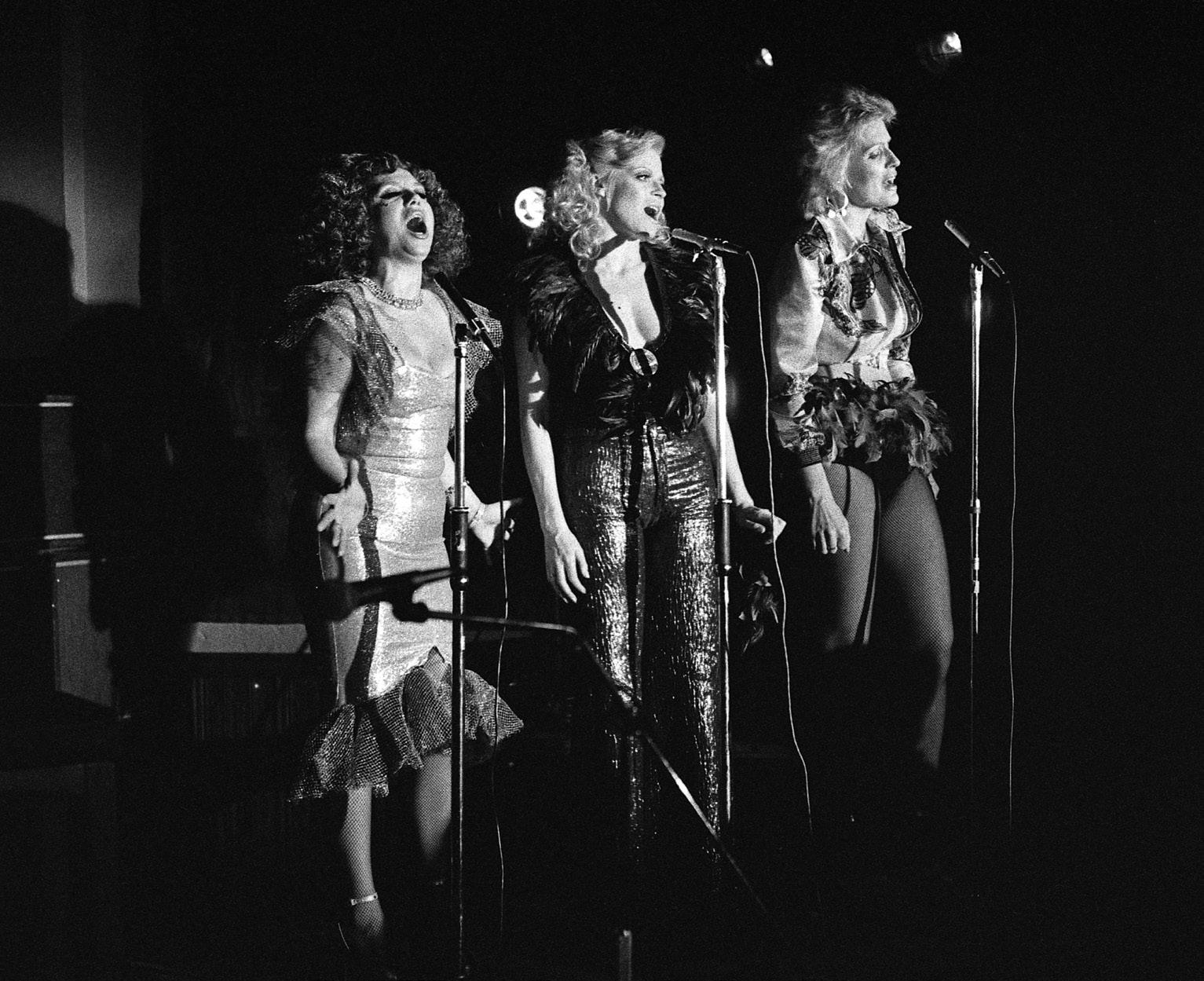
In our improvised costumes…
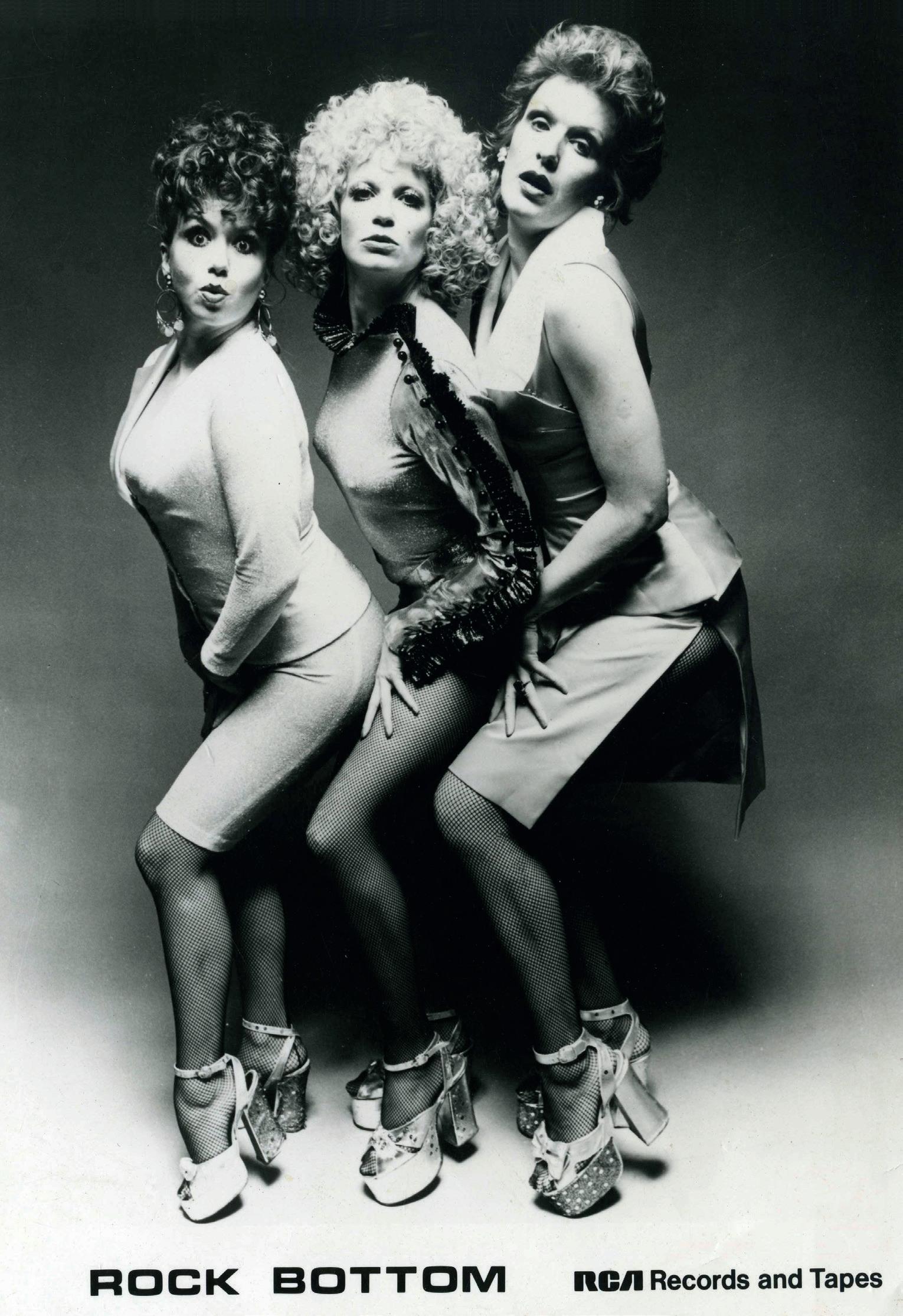
Rock Bottom publicity shot for RCA (John Haynes)
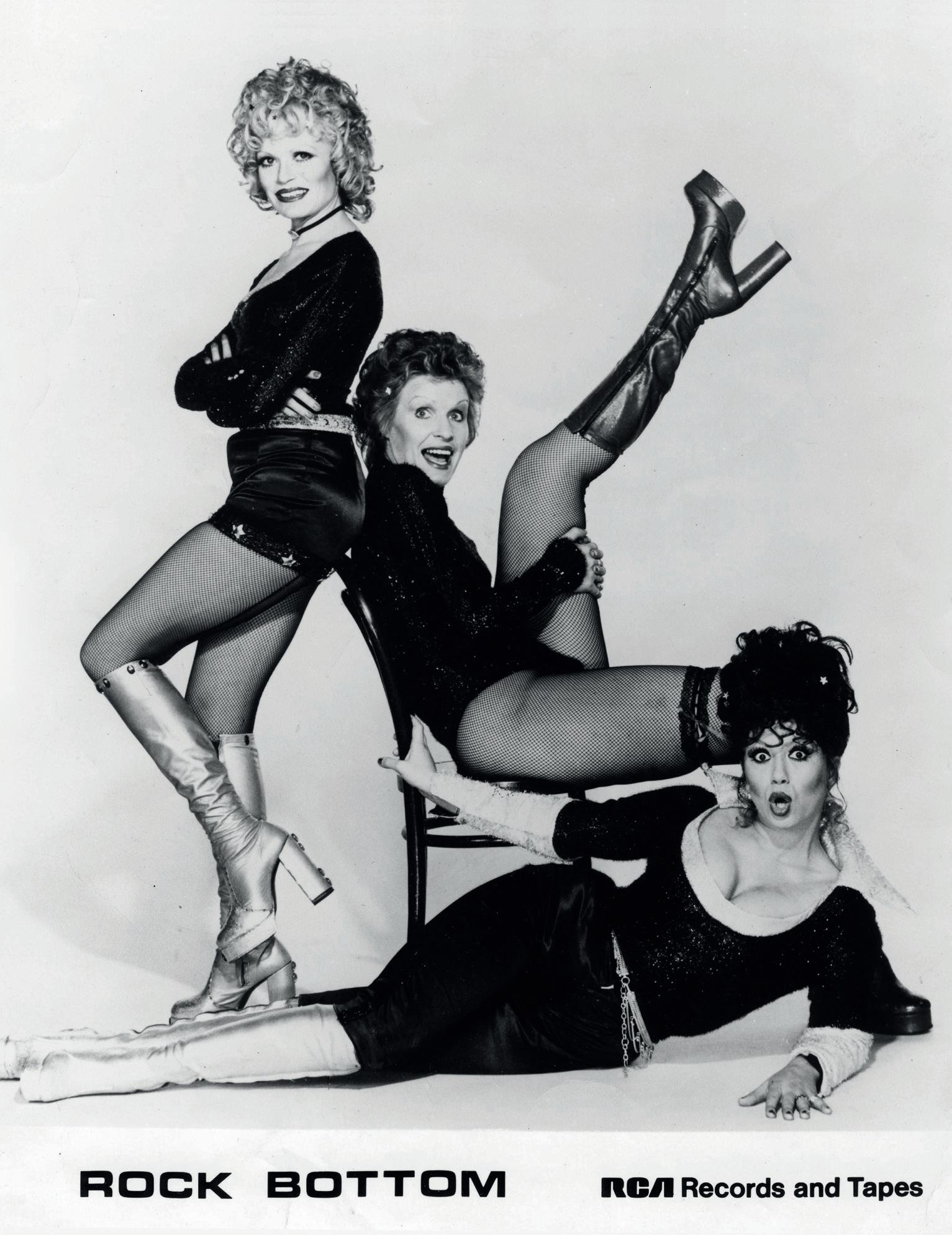
Rock Bottom publicity shot for RCA (John Haynes)