We dedicate this book to our kids, Mateo, Mia and Leo.
May it help transform the way our organisations work so that your generation can work with more joy, pride, meaning, and alignment.
That’s the future we want to help build, for you.
We dedicate this book to our kids, Mateo, Mia and Leo.
May it help transform the way our organisations work so that your generation can work with more joy, pride, meaning, and alignment.
That’s the future we want to help build, for you.
Build a future-fit organisation that connects purpose, people, planet and places
Anouk van Oordt & Coline Lescot
‘If you have an apple and I have an apple and we exchange apples, we still each have one apple. But if you have an idea and I have an idea and we exchange ideas, we each have two ideas.’
george bernard shaw
Let’s be honest. We’re living in a time of disconnectedness. You can feel it the moment you step into most organisations; that quiet dissonance between what’s written on the wall and what’s whispered in the hallway – between what the managers say and the reality experienced by the staff. And when you’ve spent about three decades observing, listening and sensing the atmosphere in a wide range of organisations, a pattern emerges. We’ve seen the signals for years now. Quiet Quitting, the Great Resignation, the Great Detachment, the Lying Flat movement in China, the war for talent, bullshit jobs, chronically low engagement, rising workplace conflict, burnout and cynicism. These are not isolated issues. They are connected signals of something deeper, of incoherent business cultures. We may respond to each signal, to each sign, but the fire keeps spreading. Cultural incoherence costs organisations employee engagement and innovation and, ultimately, talent and revenue.
As Zach Mercurio wrote, ‘Many employees don’t feel that they matter to their employers, bosses, and colleagues. Mattering, a mainstay concept in psychology, is the experience of feeling significant to those around us because we feel valued and know that we add value.’ In many of today’s workplaces, filled with transactional leadership and digital shortcuts, this sense of mattering has almost disappeared. And here’s the irony: soft skills that make people feel they matter, such as listening, acknowledging and connecting, are on the decline though they are what makes organisations strong. At the same time, a new pressure is emerging: the rise of AIfirst companies. Duolingo, Klarna, Shopify, and Fiverr have all publicly announced their shift to prioritising AI over human workers. Some are phasing out people entirely where tasks can be automated. The backlash has already begun. Klarna, for
example, had to partially reverse the course of their AI strategy and rehire. Still, the message is clear: human value is being redefined. At Spotify, teams must now prove that a job can’t be done by AI before hiring someone. If humans are seen as valuable only when they outperform machines, we are heading down a dangerous path, one where human uniqueness, nuance and care are treated as expendable.
When we enter an organisation, we observe, we listen and we feel. Signals of incoherent business practices are often most obvious at reception. As you enter, and before anyone greets you, you already sense the culture. Sometimes you step into a space that makes you feel like you’ve arrived somewhere human, alive, connected. But more often, what you feel is ... nothing; a kind of indifference, a hollow politeness.
It is striking and, frankly, worrying that in many organisations the receptionists, the people who hold the door, offer coffee, answer the phone – the first face your visitors see or the first voice they hear – are temporary hires. They don’t know your organisation’s vision, value or strategy; they do not attend internal meetings. Yet these people are your real-time brand experience for visitors and callers to your company. If there is a disconnect, people sense it instantly. The level of employee engagement can be felt from the first moment of contact. The way someone says hello, the way they look up or don’t, the way they say your name. When the first impression feels cold, hesitant, or indifferent, it’s not the receptionist’s fault. It’s the result of a broken chain of coherence – one that starts at the top.
This book is a call for connectedness, for coherence. Not just between strategy and culture, but also with how people are seen, heard and valued. Because strategy alone isn’t enough. It must be lived, felt, experienced and anchored in your culture, your systems, your ways of working, and it needs to be reflected in the places where your people come together. After 25 years of working with many organisations, big and small, public and private, innovative and traditional, we’ve seen one truth over and over again: people don’t resist change, they resist incoherence. We’ve been guiding organisations to bring their strategies and values to life, to be transmitted from paper to behaviour, culture and workspaces. Our work demonstrates that workplace design is more than aesthetics: it’s the catalyst for the transformation and the cohesiveness of your organisation. It’s about revealing and amplifying the unique identity of who you are.
There are two main foundations upon which our work is based: systems thinking and the power of connection.
Systems Thinking. We see organisations as living ecosystems, interconnected, dynamic, and constantly evolving. Focusing on a single element, like efficiency or profit, while neglecting culture, people or the planet weakens the system over time. The same holds true for space and culture: designing beautiful offices without addressing human behaviour or investing in culture without shaping environments that support it leads to friction and fragmentation.
‘The biggest crisis in leadership today is not technology, productivity, or innovation. It’s disconnection from people, from purpose, and from place.’
The Power of Connection. We believe in connecting people to purpose, people to people, people to places and people to the planet. It’s through these connections that visions become reality and real impact starts to grow. As Peter Hinssen, a friend and an expert in the field of technological evolution said, ‘The network always wins.’ The organisations that will thrive tomorrow are not those that rigidly control from the top down, but those that think in networks, build for change, and nurture deep connections. They are those that dare to be honest today, that build from the inside out, that design with their people, not for them, and that stop pretending and start becoming the culture they believe in. This book is written for those leaders, from executive teams to change managers, who truly want to anchor their strategy and unique identity in their culture, who recognise that business as usual no longer works and feel those tensions, and who are tired of cosmetic change and ready for something deeper and coherent. They understand that building future-fit organisations requires the courage to look honestly at where they are today and to confront the incoherences that have crept in over the years.
‘In the middle of difficulty lies opportunity.’
albert einstein
The title of this book is more than a promise; it reflects our commitment to help you create real impact: the kind that lasts, that’s felt and that’s shared. Impact becomes possible when purpose, people, planet, places and profit are not treated as separate agendas but brought into alignment … when culture moves beyond words and becomes lived. To support that journey, this book offers a structured process, from revealing the invisible cracks in the connectedness of your organisation to building a coherent, future-fit culture with empowered people, authentic work styles, radical honesty and leadership that truly walks its talk. This book offers a mirror, a philosophy and a method to support you on this journey.
To guide that journey, we work with a clear five-step process: Analyse, Define, Co-create, Realise, and Learn. These steps form the backbone of our participative approach, a practical structure that helps organisations move from insight to impact.
In Analyse, we uncover the often invisible fractures in coherence across culture, space, and leadership.
In Define, we give language to what is truly happening, identify what matters most, and set clear intentions.
In Co-create, we design with your people, not for them – working across functions and levels to shape shared solutions.
In Realise, we bring ideas to life through concrete actions, rituals, and spatial interventions that embed change.
And in Learn, we create feedback loops, reflect, and recalibrate so that progress becomes continuous, not a one-off.
This process is not linear. It is cyclical and adaptive – allowing you to start where the energy is and go deeper as you build momentum. It provides the insights, the language, the structure, and the tools to define what’s really going on in your organisation, so that you can lead with truth and design with intention. We do not aim for perfection but rather for authenticity that resonates with the members of your company and drives them to reconnect. People are more productive when their work is meaningful.
WE START HERE
1
2
WE ANALYSE WE DEFINE
See the cracks Choose with clarity
1
OBSERVE WHAT’S BROKEN
◦ Create awareness and emotional insight
◦ Ask what energises people and listen
◦ Expose misalignments using the Coherence Compass®
→ Ask yourself: What no longer serves us and needs to go? THE OOO TRANSFORMATION SPIRAL®
2
ANCHOR YOUR CHOICES
◦ Listen to the voice of the company
◦ Redesign systems through real user experiences
◦ Design spaces, rituals, and tools that re ect your strategy
→ Ask yourself: Are we walking our talk?
Throughout this book, you will find and get inspired by real transformation stories that illustrate what the journey towards becoming more future-fit truly looks like. Examples drawn from large corporations to SMEs, including start-ups, NGOs, social enterprises, family offices and public institutions show the messy middle, what went well, what was hard, and how barriers were overcome. For privacy reasons, the names of the organisations have been changed, but the stories are real. They offer a concrete lens to understand the cracks, the shifts, and the patterns that emerge across very different contexts. Change doesn’t happen through reading; it happens through doing. That’s why this book is not just a reflection but also a toolkit. A place
WE DESIGN IN SUPPORT OF TRANSFORMATION
WE GO LIVE
3
WE CO-CREATE
4
WE REALISE
Build with others Make it real
5
WE LEARN
Grow your impact
4 3 5
SETTLE WITH YOUR PEOPLE SET YOUR STRATEGY IN MOTION
◦ Translate purpose into daily routines
◦ Involve all stakeholders in shaping the future
◦ Build shared ownership across teams and roles
→ Ask yourself: Who is not in the room, but should be?
◦ Imagine rituals that bring your values to life
◦ Use space to reinforce culture and change
◦ Lead with consistency – in words and details
→ Ask yourself: What do people see, hear, and feel on day one?
AMPLIFY AND EVOLVE
◦ Measure what truly matters
◦ Create feedback loops that drive action
◦ Embed rituals that embrace failure and success
→ Ask yourself: What must we unlearn to stay open, curious and future- t?
to start and a space to choose direction. Because becoming a future-fit organisation comes from daily choices, shared moments and conscious design. To make the impact real, every chapter includes a reflection block with activating questions to bring the insight to life immediately. In chapter 6, you’ll find the key to your success with the Coherence Compass®, and a link to the scorecard to begin shifting your culture and becoming a future-fit organisation. This matters because most change efforts fail not from lack of insight but from a lack of action, rhythm and shared ownership. This book isn’t here to give you answers. It’s here to help you ask better questions together.
‘Every organisation tells a story. The question is: does yours match the one your people experience?’
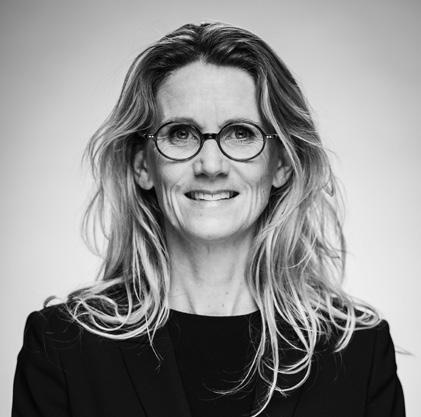
Ihave been sensitive to the energy in a room since I was very young, although I didn’t realise what it meant at the time. I could feel the underlying dynamics between people, what mattered, what was held back before anyone spoke. Some spaces made me feel safe, curious, uneasy, or energised though I wouldn’t have been able to explain it in these terms back then. Being highly sensitive in the 70s wasn’t exactly easy. The world around me leaned heavily on logic, structure, and rationality. So, I learned early on to navigate between what was felt and what was said, between the energy in the room and the words that filled it.
However, my brother Christiaan, sister Marjolijn and I had a funny ritual: we swapped rooms from time to time. I don’t remember whose idea this was, and I can’t imagine my own kids doing the same today but back then it made complete sense to us. Each time we changed rooms, we moved the furniture, redecorated and created a new atmosphere for our rooms. One room had a rooftop terrace where you could lie in in the sun with friends in the summer, another had a view over the driveway so you could see who was arriving before they even rang the bell and the third room was big and offered endless possibilities for shifting the bed, the desk and the cupboards. These changes energised us and somehow gave us a new way of being.
But that sense of freedom and self-discovery didn’t follow me into my study years. I grew up in a family where everyone held a university title. Going to the student club – ‘het corps,’ as we say in Dutch – was the usual path followed. At the end of
high school, all my friends followed in these footsteps, almost without question. But for me, something felt off. That world didn’t feel like mine. It didn’t spark my curiosity or joy. So, I took a different route, I moved to France for a year, in search of my own rhythm, a place where I could think freely and ask different questions.
Looking back, I realise what I missed at that age was a simple, essential conversation: ‘What are your talents? Who are you, really? And what kind of environment will help you grow?’ After France, I decided to study in Belgium, started my first job in Italy, and finally settled back in Belgium, where I still live today. It took time, but along this journey of exploration, I carved out a path that felt more like mine. And gradually, I came to see that what once felt like a struggle, being highly sensitive to atmospheres, people, and meaning was – in fact, became – my strength, my natural talent.
My early interest in creating atmospheres in living spaces led me to study interior architecture at the École Supérieure des Arts Saint-Luc in Brussels but only after two weeks at the Solvay Brussels School of Economics & Management. I had to go all the way there to realise that what I’d been sensing all along wasn’t wrong, it was simply pointing me in a different direction. One of the courses at Saint-Luc I enjoyed most was philosophy. Its inclusion in the curriculum made perfect sense to me. From a young age, I’ve been fascinated by human behaviour: how people move, react, get motivated, make decisions, and relate to one another. At Saint-Luc, we students could sit for hours after class, philosophising about the meaning of work, freedom, identity and what really drives us. In more than 25 years of consulting to companies in the field of new ways of working, my concepts have been created in response to my observations of systems and the stories of staff who work in those spaces. As I imagine concepts, I ask myself: Is this coherent? Is it human? Does it reflect the vision and the values of my client’s organisation?
My curiosity to find answers to these questions, both for my clients and myself, has never left me. I keep learning every day, driven by an insatiable curiosity and a love for growth. I follow a variety of coaching, training programmes, masterclasses or inspirational trips, always looking for new ways to stretch my thinking. And 33 years after I first enrolled at the Solvay Brussels School of Economics & Management, I went back last year for another year of learning. One Friday a month, we sat in a room where a CEO and a philosopher debated a topic of our time. I loved every
minute of it. The questions we explored felt surprisingly close to the existential questions I face in my daily work: What does it mean to be free in a system? Can a manager be resistant to change? Who is the other person in an organisation? Do we always need to aim for outcomes that are applicable? And perhaps the most important one: What’s the real reason for a company to exist? Existential questions don’t have easy answers but pondering them helps me to articulate things I have felt for years. A philosophical lens gives me words for what I sense in rooms, in rituals and in leadership behaviours. Philosophising about these topics is not abstract. It is a tool one can use to slow down, reconnect with one’s essential needs and rethink what we do and why. You’ll find traces of that lens throughout this book.
‘Culture is what people feel the moment they walk in. Alignment between words, behaviour, and space.’
One of my first jobs was at a company that sold office furniture. Day in, day out, I tried to sell the same desks and chairs to different clients. After a few months, I started to feel it in my bones: this wasn’t right for me, nor for them. I kept asking myself how it was possible that we were offering the same set-up, the same catalogue pieces to companies that were fundamentally different. Different stories, different cultures, different people and yet the same layouts, the same carpets, the same cold glass walls.
It felt like we were feeding every company the same version of something tasteless; in Dutch we’d call it ‘eenheidsworst’ – a generic sausage of uniformity. I couldn’t do it anymore. I wasn’t selling much either, which didn’t surprise me. I talked to a friend and told him I wanted to help organisations shape something more personal, something that really fitted who they were. He gave me a book about a pioneering Dutch company on the ‘new ways of working’. This was the year 2001. I read the book in one evening. I knew instantly: this is what I want to do. The next morning, I sent them my CV and motivation letter, and not long after, I joined their team. I had the chance to work on beautiful, complex projects, learning everything about
activity-based working, flexible teams, adaptive spaces, and systems. I stayed for eight years, working mostly in the Netherlands.
Looking back, I think something else had quietly shaped that decision too: the entrepreneurial mindset of my mother, and my father Rob’s first job. He was a partner at McKinsey for 15 years. Even though our paths were very different, the way he approached problems with structure, curiosity, and ambition left its mark on me. I didn’t realise it at the time, but it had planted a seed. When I was living in Brussels, with my husband, Jean Leclercq, and our very young kids, Mateo, who was two at the time, and Mia, who was just six months, I felt it was time to take the leap, to step into something of my own. So, in 2009, I started my business.
My first client had visited company after company to get inspired but nothing triggered their imagination. One day I met the project manager, who was managing their transformation project. When she asked what I did, I explained that I had worked at a consultancy firm in the Netherlands, but left to start my own company because I felt the firm had stopped innovating. She nodded and told me they were experiencing the same feeling. Then she asked if I liked challenges. ‘Oh yes,’ I said, ‘though of course it depends what kind’. She told me they were one month away from their final deadline to present the new office layout but the company they were working with then couldn’t deliver what they were looking for. Could I design something entirely new, in that one month and was I willing to take over?
I told her I needed to sleep on it. The next morning, I called her and said, ‘Let’s do it!’
That was the beginning of a journey of almost sixteen years to date. We worked with our first client for three years and helped 1,000 employees move from four buildings, each with a distinct way of working, into two buildings with one shared culture. I clearly remember the day we presented our concept to the core team and the project sponsor, their CFO. After hearing our proposal, he asked, ‘As-tu fumé de la moquette?’ (‘Are you nuts?’). Still, we went ahead and the original concept never changed. We stretched them, but that’s what they were looking for.
Then came another moment I’ll never forget. Their CEO was ahead of his time. He wanted our concept to be validated by a feng shui master. With construction deadlines coming up fast and pressure from all sides, I remember feeling nervous about what she might ask us to change. I walked into that room, full of stress. I presented our ideas, our vision for a human-centric design, the kind of energy and movement we wanted to create. She listened calmly. Then she said, ‘You know, Anouk, you already design with more feng shui than you realise. We may have two small suggestions, but this concept is really going to make a difference for the people working there.’ That moment shifted something in me. I walked in full of tension and came out with pride and clarity. From then on, I started to trust what I had sensed all those years before: atmosphere, tension, unspoken dynamics in teams and spaces. I started naming them and I realised it was my role to do so. I also understood that not everyone feels those things and that most people just move within the systems that are offered to them. It might not be their job to question those systems, but it was becoming clear that it was mine.
Now, at the start of each project, I always tell my clients two things.
The first is: I’m not here just to give you what you ask for. I’m here to point out what you might not yet see. To name the unspoken contradictions, tensions, and invisible layers that are shaping your culture. I will be radically honest, and together, we will start peeling the onion, layer by layer. It’s not always comfortable, but it’s always worth it. That’s where real transformation begins. As Brené Brown, a research professor at the University of Houston, says, ‘Clear is kind.’ Not because it sounds nice, but because it’s necessary. Without clarity, good people get lost, trust fades, and culture breaks down quietly. We’re inspired by the idea of Radical Candor, as described by management consultant Kim Scott: the balance of caring personally while challenging directly. It’s not about being tough. It’s about being clear, human, and constructive. That same spirit lives in animation studio Pixar’s Braintrust meetings, where creators meet regularly to give each other honest, thoughtful feedback. They do it with psychological safety, empathy, and a shared focus on making the work better, not criticising the person. That’s the kind of feedback culture we try to build, both with our clients and within our own team.
The second thing I tell clients is this: we won’t start with a fixed solution, because the story will reveal itself as we go. I ask them to trust the journey, to slow down, and allow the process to unfold, because real growth doesn’t happen in one leap. It happens in small shifts, in moments of clarity, in conversations that stretch us. If we stay present and work through each phase with care, I promise we’ll get there, on time, within budget and, most importantly, in the right harbour.
At the beginning, we only did consultancy and change management in the first two years. We designed the layouts but did not materialise them. That was then done by external partners. But I soon noticed that I kept giving advice during implementation. I’d say, ‘What if you tried this?’ or ‘What if we shifted that detail?’ but they didn’t see what I meant, they didn’t feel it like I did. So that summer, I decided that we would start materialising our own plans from then on and that is when OOO became what it is today. (OOO stands for Out Of Office – a wink to the classic holiday reply, but redefined: we are out of the old office and working, meeting, creating in spaces that energise us. Because your office should give you the same spark as when you’re away on holiday.) Sixteen years later, I realise that many of our clients have become our ambassadors, not just because of what we deliver, but because of how we travel together. We teach along the way, we co-discover. And slowly they begin to see their organisation with new eyes, not only for what it is, but for what it wants to become. We stay in touch, often years later, because the bond that forms during that journey is real. What connects us isn’t just the end result, but the fact that we’ve both grown along the way. That spark of shared discovery has also shaped the way our own team came together.
Shortly after deciding to start materialising our own designs, I was out for dinner with Jean Leclerq, my husband, and our friend Lakhdar Lakhdar-Hamina introduced us to Coline Lescot. I didn’t know that he had already told her, ‘I really have to introduce you to this Dutch friend of mine.’ As we talked, something clicked naturally, instantly. At some point, Coline turned to Lakhdar with a smile and asked, ‘Is this the Dutch lady you told me about?’ That was the beginning of thirteen years of collaboration and ten years of partnership. That obvious click was there at the moment I met with the first people who joined our team, Frank Geers, Veerle Pappaert, and Hugo Chico. We talked, we connected, there was that spark and we are still moving forward together. Of course, it’s not all smooth sailing.