INTRODUCING A ROADMAP FROM BI TO ARCHITECTURAL CREATIVITY
BI: BIOLOGICAL INTELLIGENCE
SIX PRINCIPLES OF BIOLOGICAL INTELLIGENCE
ICE: FUNDAMENTALS OF LIFE
IPA: STRATEGIES FOR SUSTAINABILITY
16 PATTERNS OF LIFE AND ARCHITECTURE
30 site
Taipei Flora Expo Pavilions
Songshan Public Housing
Huwei Arts Center and Leisure Park
58 program
Aboriginal Gallery and Innovative Incubation Center
Taijiang National Park and Visitor Center
Zhongshan Public Housing
86 natural force
Public Library: Beitou Branch
Shalun Green Energy Demonstration Campus
Shimen Circular Village
122 circulation
Central Taiwan Innovation Campus
MOXA Headquarters
National Central Library and Repository: Southern Branch
144 structural system
Minquan Elementary School
Aboriginal Gallery and Handicraft Shops
Chenggong Market Reconstruction
166 building material
Tamsui Art Gallery
Taming High School of the Applied Art
LCY Industrial Center R&D
Songshan Public Housing
Amba Hotel Renovation
Fengtay Agriculture R&D Center
202 INTERFACE
204 hard interface
National Archives
NTHU Green Energy Research and Education Building
Green Energy Technologies and Joint Research Center
Wanhua Public Housing
Taoyuan Waste to Energy Plant
238 soft interface
ITRI Southern Taiwan Campus Dormitory
Taipei Flora Expo Pavilions
Chiayi Industrial Innovation Center
Taoyuan Funeral Home
264 social interface
Miaoli Train Station
Fengshan Train Station
Art and Arch Museum
National Central Library and Repository: Southern Branch
290 CIRCULAR
temporal – Taipei Flora Expo Entrance Pavillion
city – TaiSugar Circular Village
nature – Shimen Circular Village
interior – BaF’s Workplace
FOREWORD
For the last 20 years, Bio-architecture Formosana (BaF) has produced an incredible body of work within Taiwan’s architecture scene. It has become one of the country’s most prestigious architecture firms and one of the forerunners for international recognition in Taiwanese contemporary architecture. The partnership was penned in 1999 by Ching Hwa Chang and Ying Chao Kuo; both experienced academicians, talented creative architects, and recipients of several individual and collective architecture awards.
Sustainable practice is their leading priority and it is this concern for sustainability that lead them to spearhead buildings such as the Beitou Public Library, the Pavilions for the Flora Expo both in Taipei, and the Taijiang Visitor Center.
This publication explores the concept of Biological Intelligence: which can be defined as an attempt at understanding nature’s life forms systems and replicating them within the architectural realm. The goal here is to create a sustainable cycle of design by first learning the way life works in the natural world in order to achieve a circular design.
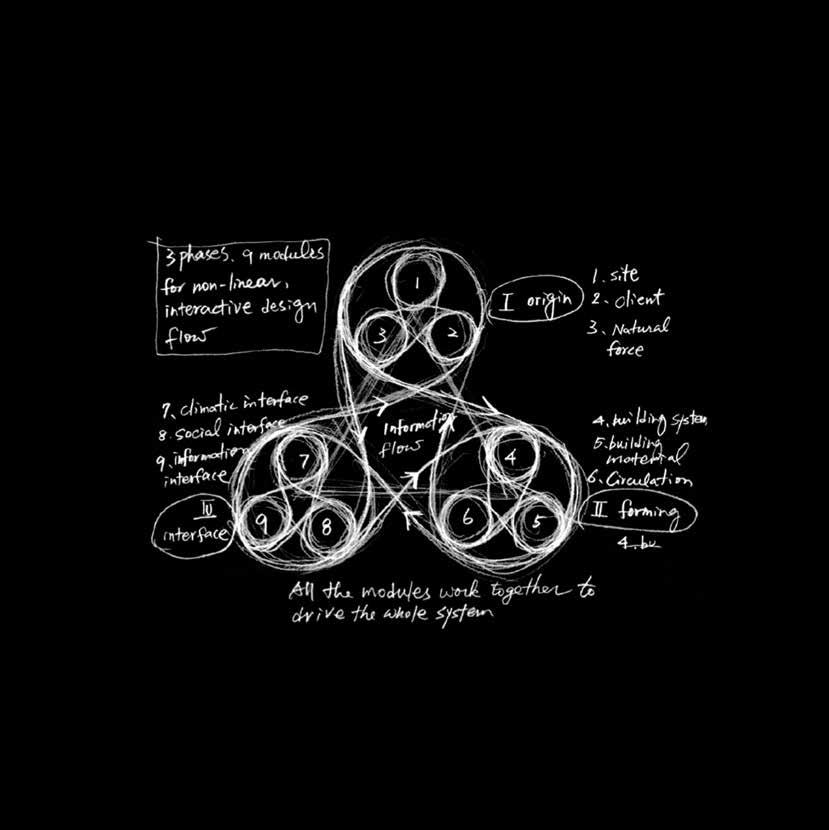
BaF’s creative flow is a design process inspired by Biological Intelligence based on three key elements: origin, form, and interface, which in total contain nine different modules. Although it seems to be a complex system it is actually a simple, straightforward, and efficient design methodology. It is a structured design approach where the nonlinear connections between its simple modules leads to an information flow shelled by a circular design envelope that uplifts the standards for creative architectural design.
At the core of the practice’s principles there is a devotion to high-quality international standards in architectural environmental and sustainable design, in order to ensure that the buildings are places that are welcoming to everyone. This devotion disseminates throughout all their projects and acts as a sort of motto for BaF.
On the whole, this book is a celebration of a fresh approach to new ideas and explorations into sustainable, responsible design that can be a useful teaching tool for other architects, professors, or architecture students. It naturally stands out as a perfect example that good practices lead to excellent buildings.
Tiago Costa, DArch Assistant Professor, NTUST
Initial draft of the modules that determine the design process.
SONGSHAN PUBLIC HOUSING TAIPEI,
2017
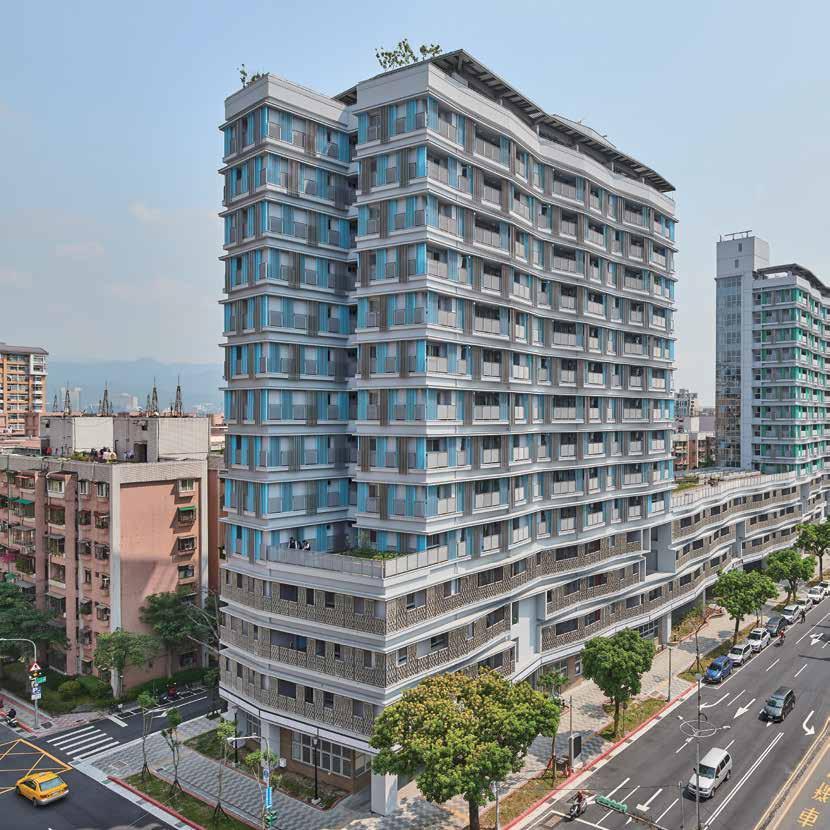
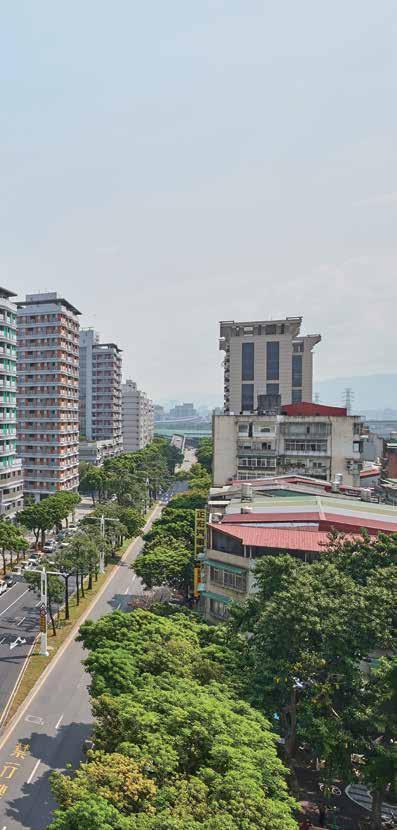
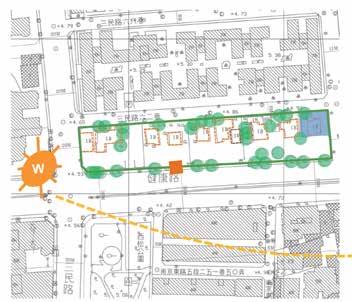
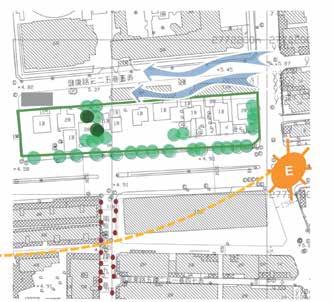
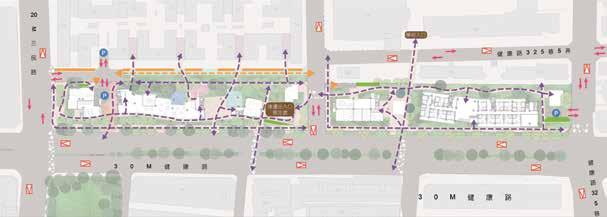
This site was originally the home for Fulian Village 5; a village reserved for military veterans and their relatives. An essential design proposal sought to combine both existing architectural elements with the new building design; thereby, not only express due respect and protect this historical place as well as its past identity but also achieve a good understanding of the current urban context.
The linear site, extremely elongated and narrow, raised a challenge from the design perspective. The idea of building a long, massive block would break the community in two. In order to avoid that, the design allows and even encourages a permeable connection between both sides of the site. The building responds to this need by having a porous-pierced ground floor followed by a low, three-story main volume that acts as the base for the four towers that peacefully interact with their surroundings and allow more sunlight into the community at the northside of the site.
The preservation and implementation of green spaces back into the community was always a priority as was the usage of on-site resources. This sustainable design used recycledbuilding materials and prefabricated construction methods.
The final design is a combination of distinct horizontal and vertical movements, set in a proportional manner in order to preserve the surrounding community views, the southern sunlight, and the green areas, thus acting as a linking mechanism between the building and its surrounding urban environment.
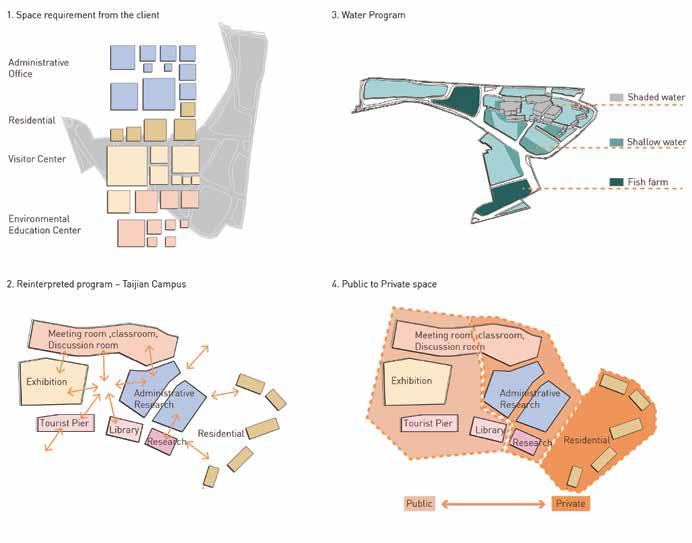
The spatial requirements from the client were regrouped and rearranged to form a village like Taijiang Campus.
from local farms provide a porous habitat for very small birds and insects.
Above:
Left: Façade made of white oyster shell waste
PUBLIC LIBRARY: BEITOU BRANCH
TAIPEI, 2003
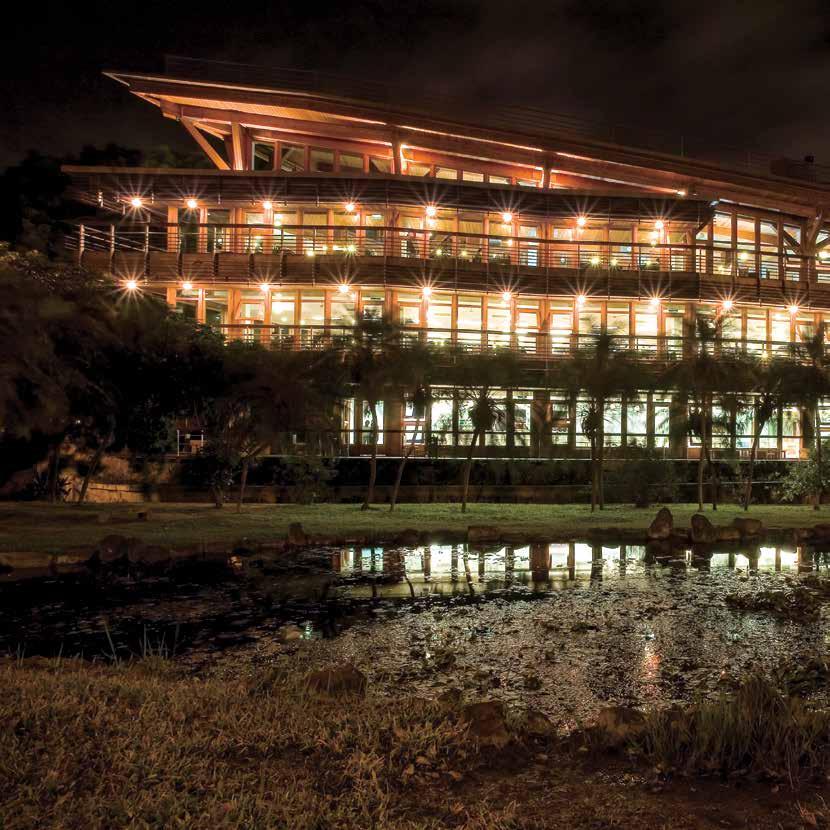
The site of Beitou Library is on the western end of Beitou Thermal Valley with Beitou Creek running through the north side of the site, the water from the creek is rich in sulfur, which can cause serious erosion to steel, which is why timber seems to be an obvious choice for building material.
The Beitou Park is rich in nature and history, mainly due to its renowned Hot Springs phenomenon. Hence Beitou Public Library's design approach respects the importance of the site by achieving harmony with nature and consideration of the local ecological environment.
This strategy was meant to make the least impact to the natural environment of the park and to adapt an eco-friendly design approach. The form of this design was the result of considering the natural forces and is strategically positioned on a north-south axis. The lowest and least façade surface was turned toward the west where it houses the equipment space to avoid heat exposure. The façade on the east bears the most openings and utilizes the surrounding trees for shade. The north-side façade connects to nature by opening itself to the park. Encompassing the building is the balcony which permits windows to be opened freely allowing natural ventilation and shade in order to reduce solar-heat radiation.
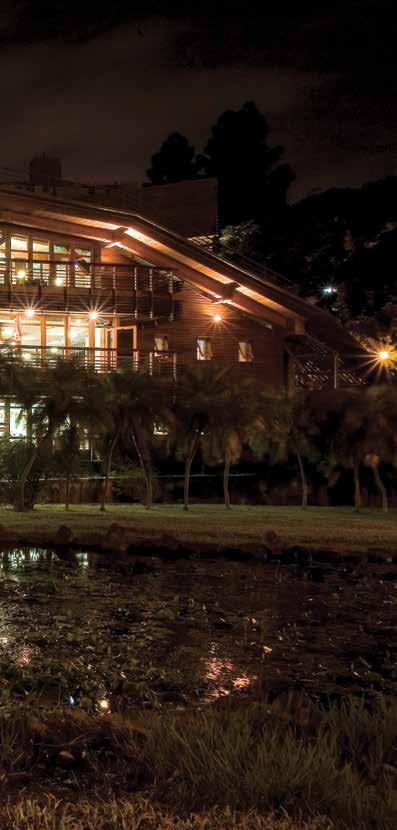
The selection of timber for the building structure not only efficiently withstands the sulfur water from the creek that crosses the whole linear park but also helps create a warm and welcoming atmosphere into the inside reading space.
The green roof also does a great job at blending the entire building in with the surrounding natural environment. Last but not least, the materials used for the outdoor pavement were carefully selected in order to allow permeability.
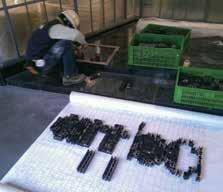
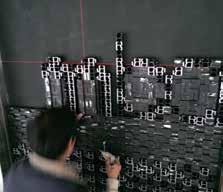
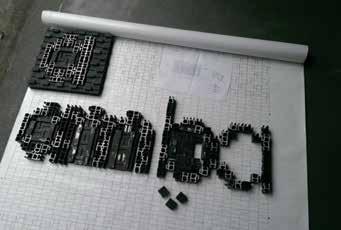
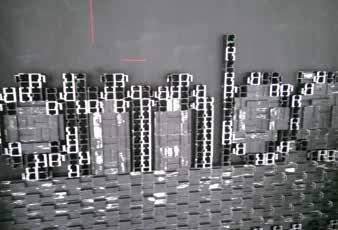
In order to save on-site assembly time, the assembling was made in a modular way. When the factory cuts the aluminum material, it assembles a certain size first, for example: 6x6 or 8x8, which can reduce time and quality. It is also easy to control, but it is still necessary to calculate the quantity beforehand to avoid miscalculation.
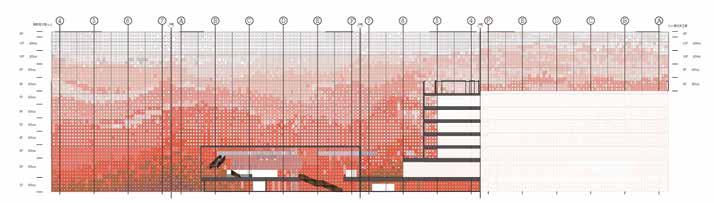
Above: Detailed drawing of the color-schemed façade which helps to reduce the visual impact of the building mass.
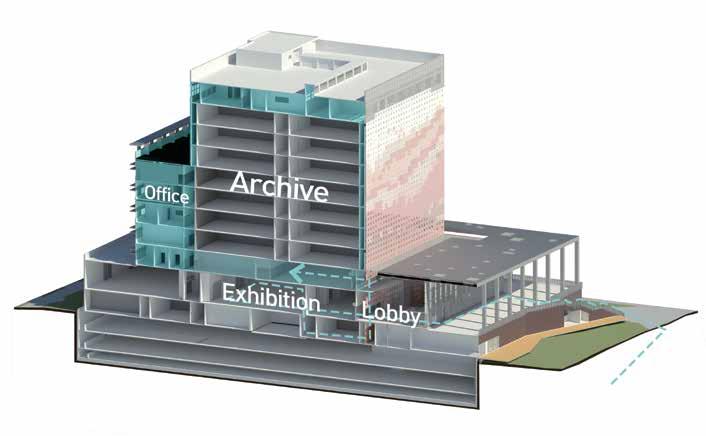
Below: Perspective section showing the protective hard interface surrounding the building’s depository space.
Left: Rendering view of the entrance canopy and overall building.