Introduction
Every day millions of people around the world use cell phones to document their daily lives. They photograph important moments—a baby’s first steps, a birthday party, a family reunion; and special events like first communions, bar mitzvahs, quinceañeras, graduations, and proms. They create visual reminders of holidays, trips, and visits; or record natural phenomena like rainbows, sunsets, eclipses, full moons, and autumn leaves. Then they “post” these “photographs” to social media outlets like Facebook, Snapchat, or Instagram, to name a few.
But this habit of digitally documenting and publicizing one’s life is a very recent development. Before that, taking photographs required a camera and a roll of film that had to be developed in a lab. Taking pictures included the cost of the camera, the cost of the film, and the cost of having film developed. And let’s say you wanted to send one of those pictures to your six cousins. Then, you would have to pay extra for duplicates.
But worse still, you might get your processed film back only to discover that in ten of the images your thumb was in the way, and seven were “overexposed” (which means there was too much light), so the photo is very pale, and a few were “underexposed” (or too dark), so that you can’t see any faces, and in the last picture you cut your uncle’s head off at the top! You would not have any way to edit these pictures to make them lighter or darker, or to “crop” out your thumb or to zoom in on your uncle’s face. And, too, it would not be so easy to publish these images.
But what if (as was true a hundred years ago), in order to create a photograph, you needed 50–100 pounds of very expensive equipment, including a giant camera and metal or glass plates instead of film? What if you couldn’t send those plates out to a lab, but had to develop them yourself with special chemicals in a darkened room? What if the people whose pictures you wanted to capture had to sit for long stretches without moving? And what if traveling around to document historical events or important people was considered “man’s work”? These were the conditions for making high-quality photographs from the time the camera was invented in 1839, well into the twentieth century.
Each of the women in this series stepped out of the bounds of physical and social expectations to pursue her personal vision through photography. Some were fortunate to have come from wealthy families who fostered their interests; others had to make their way by supporting themselves, or they found encouragement from other, more established photographers.
All were pioneers in extending the purposes, applications, and scope of making photographs, whether as an art form, a tool for recording, or as a commercial resource. Some were better known for portraiture; others for documenting poverty and hardship, the horrors of war, or the lives of “marginal” people. Various women found joy in photographing the buildings and bustle of city life, including that of recent immigrants and Harlem residents; while some explored the vast terrain and Native American culture of
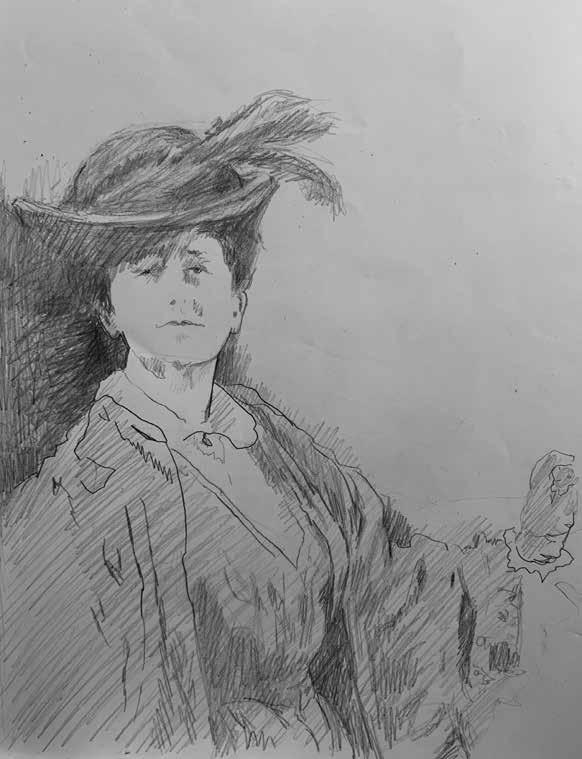
Gertrude Käsebier
Gertrude Käsebier (1852–1934)
Blessed Art Thou Among Women 1
Gertrude Käsebier was born in Des Moines, Iowa, in 1852.
During the 1859 Pike’s Peak Gold Rush, her father traveled west to make money in the construction business, and would later become the first mayor of the Colorado mining town where he settled. When she was eight, Käsebier’s family joined her father. Käsebier made friends with her Native American neighbors, and often she was content to play alone.
Living in a mining town was hard on Gertrude Käsebier’s family, though, and after her father’s sudden death, the family relocated to Brooklyn when she was twelve where her mother operated a boarding house to support the family.
Käsebier spent a few years living with her maternal grandmother in Bethlehem, Pennsylvania, where she attended the Bethlehem
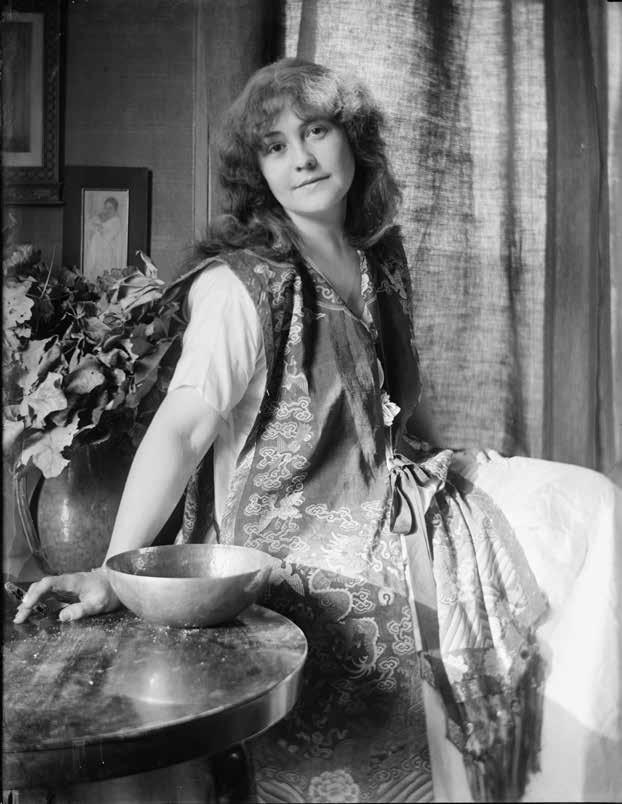
Rose O’Neill, Originator of the Kewpie Doll, 1907
Käsebier brought an artist’s sensitivity to portraiture that was uncommon during her time. She encouraged a natural pose for Rose O’Neill, who smiles comfortably at the viewer, surrounded by simple objects of beauty—a bowl, a pitcher containing foliage, and a framed photograph. Active in the women’s suffrage movement, Rose O’Neill was an American cartoonist, illustrator, artist, and writer. She earned a fortune by creating Kewpie, a brand of dolls that appeared as baby cupid characters. O’Neill would become the best-known and highest-paid female commercial illustrator in the United States.
She was also one of the photographers featured in Frances Benjamin Johnston’s exhibit of female photographers for the 1900 Paris Exposition (World’s Fair). The oldest of all the photographers featured in that show, Käsebier was considered to be the most inventive, versatile, and prolific.
Gertrude Käsebier, like Frances Benjamin Johnston, encouraged other women to become photographers. As she explained, “The key to artistic photography is to work out your own thoughts by yourselves. Imitation leads to certain disaster. New ideas are always antagonized. Do not mind that. If a thing is good it will survive.” Imogen Cunningham and Laura Gilpin were particularly inspired by Käsebier’s art.
Due to failing health, Käsebier closed her studio in 1929, and died five years later. A major collection of her work is located at the University of Delaware and at the Library of Congress.
One of the first American women to elevate photography as an art and have a successful career as a photographer, Käsebier helped shape the way we all photograph today, especially with her timeless images of mothers and children. She was one of the first photographers to focus on the family. Interested in the individual personalities of her subjects rather than in anthropological or symbolic types, Käsebier is also known for her images of Native Americans. Besides inspiring the careers of Imogen Cunningham and Laura Gilpin, Käsebier influenced many photographers today, whether they are aware of her or not.
READING LIST
Delaney, Michelle. Buffalo Bill’s Wild West Warriors: A Photographic History. Washington, D.C.: Smithsonian, 2007.
Homer, William Innes. A Pictorial Heritage: The Photographs of Gertrude Käsebier. Wilmington: Delaware Art Museum, 1979.
Michaels, Barbara L. Gertrude Käsebier: The Photographer and Her Photographs. New York: Abrams, 1992.
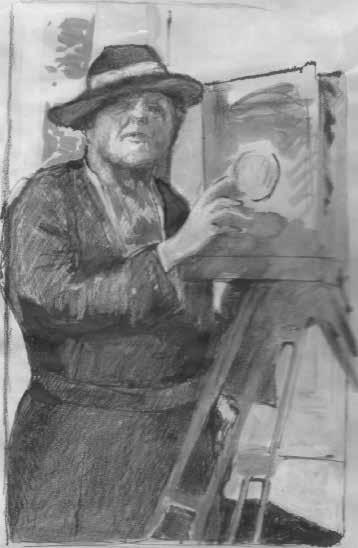
Frances Benjamin Johnston
Frances Benjamin Johnston (1864–1952)
Photographer
of Historic Architecture
Frances benjamin johnston was born in West Virginia during the Civil War. She grew up to become one of America’s most famous photographers of her day. She is known for her portraits, news photography, garden pictures, and most of all, her documentation of historic buildings.
Johnston was fortunate to have been brought up in Washington, D.C., as part of a wealthy and encouraging family. Her father worked for the Treasury Department and her mother, Johnston’s most important role model, was one of the nation’s first political reporters and one of the first American women to write on national affairs.
From an early age, Johnston knew she wanted to be a writer, but that was not all. When she showed an interest in art, her parents
One year later, and without formal training, Ben-Yusuf began her photography career. She began to be known as a photographer when she promoted her work in magazines and exhibitions. She also got to know other photographers, who helped promote her career. For example, Alfred Stieglitz, the leader of the art photography movement in America, published her photographs in his journal, Camera Notes. In 1898, she held a two-woman show with Frances Benjamin Johnston at the Camera Club of New York.
Ben-Yusuf took portraits of people at her fashionable Fifth Avenue studio, one of the busiest of more than two hundred in New York.
Alone and far from her family, Ben-Yusuf’s work allowed her to meet lots of entertaining people. Her portraits included wealthy and famous artists, politicians, actors, and writers, such as Robert Henri, Theodore Roosevelt, Jacob Riis, and Edith Wharton. Robert Henri (1865–1929) was one of the most influential art teachers in the United States in the early twentieth century. Jacob Riis (1849–1914) was a social reformer who wrote and took photographs to help the poor living in New York City. Edith Wharton (1862–1937) was a writer known for many novels, including The Age of Innocence and The House of Mirth. (Some say that the heroine of Edith Wharton’s The House of Mirth was modeled on Ben-Yusuf.)
The key to Ben-Yusuf’s success in artistic portraiture was how she made each of her sitters look attractive, unique, and full of personality.
Ben-Yusuf considered her photography art. She exhibited her photographs in over fifteen shows and was a member of prestigious photographic societies in England as well as the United States.
Notable photojournalist Frances Benjamin Johnston featured Ben-Yusuf’s work in her exhibit of women photographers at the 1900 World’s Fair in Paris, known as the Paris Exposition. Ben-Yusuf was also one of the photographers that Frances Benjamin Johnston promoted in one of her 1901 Ladies Home Journal articles, entitled, “The Foremost Women Photographers in America.”
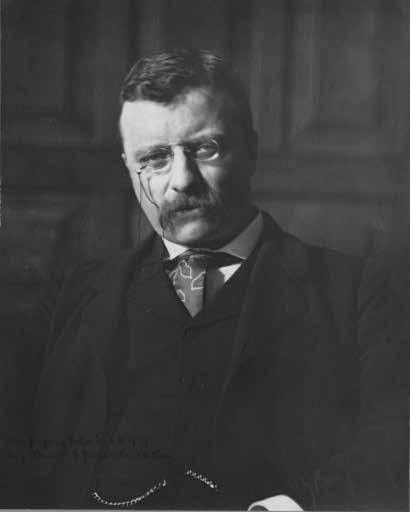
Theodore
Roosevelt, 1899
No other American figure was more popular at the turn of the twentieth century than Theodore Roosevelt. A national hero, Roosevelt is known for the break-up of corporate trusts, the building of the Panama Canal, and the conservation of wilderness areas through the formation of the National Park Service. He was the governor of New York when this picture was taken.
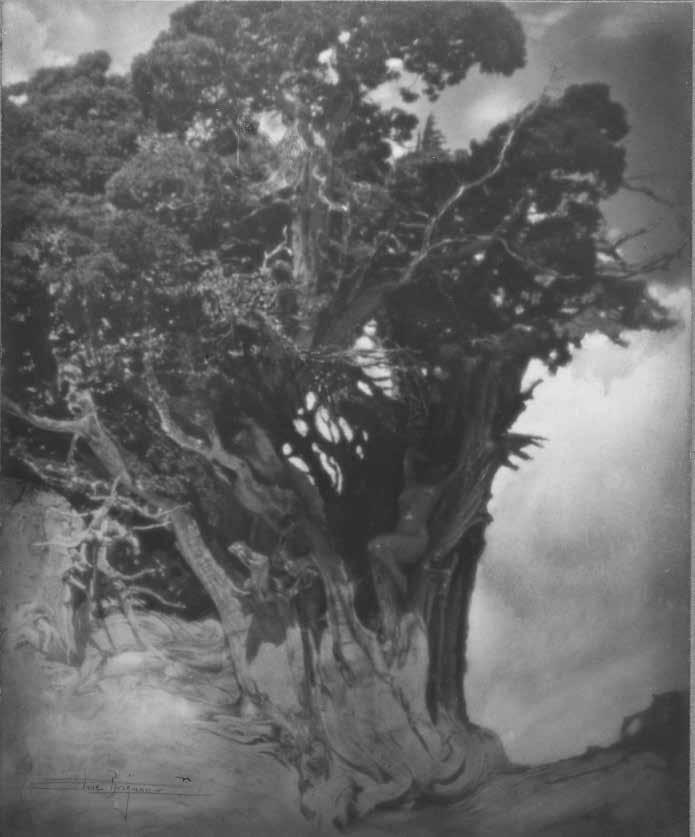
The Hamadryads, 1913
In Greek mythology, a hamadryad is a nymph whose life begins and ends with a specific tree. Here, two females represent wood nymphs basking among the flowing forms of a massive, old tree in the Sierra Nevada mountains.
the bank by the wood and become undisguised and naked.” Quoting from Walt Whitman’s “Song of the Open Road,” Brigman said she has “a hunger for the clean, high, silent places, up near the sun and the stars.” Her photographs remind us that our nation’s natural resources are irreplaceable and deserve to be treasured.
During her excursions, Brigman developed relationships with specific trees and rock formations and returned many times to visit and see how her old “friends” were doing. She considered them sacred sites, full of life and power.
Although she often journeyed with others, Brigman was not afraid of being alone in the mountains. Nor did it bother her that the journeys she made were difficult, with dusty stagecoach rides, pack mules, and heavy camera gear. It was more important for her to be free. She said, “Fear is the great chain which binds women and prevents their development, and fear is the one apparently big thing which has no foundation in life.”
Brigman used images of trees to express freedom from social constraints. For example, “The Dying Cedar” shows a woman reaching from a gnarled tree to the sky. This image is a reference to a Roman myth about Daphne, a beautiful young nymph being pursued by Apollo, the sun god. She tries to evade his advances, and just before he can catch her, she pleads with the other gods to save her. The gods respond by transforming her into a tree.
Hiking in the mountains made Brigman a stronger and more independent person and changed her forever. She described her experience: “You remember too, the long steep trails that lead zigzag, mile after mile, away from trees and brooks, up into the heat of rocks blessed by the sun, where your lungs ache and your heart hurts from the struggle—and then you find it—the Vision!—the glory of the things beyond. The memory and the wonder of it goes with you to the lowlands, into the daily life, and you are glad you had the courage.”
At the height of her career, Brigman operated a teaching studio, gave lectures, and staged artistic salons where photographers,
Jessie Tarbox Beals
(1870–1942)
The Greenwich Village Scene
Jessie tarbox beals was born in 1870 in Ontario, Canada. Her parents owned a Victorian mansion surrounded by landscaped grounds in one of the best residential sections of the city. Due to her father’s financial misfortunes, creditors took the mansion, and the family moved to a smaller, more modest home. Jessie’s father became an alcoholic and eventually left.
A precocious child, Beals did well in school, and when she was fourteen years old, she was admitted to a prestigious school, the Collegiate Institute of Ontario. Two years later, when faced with making a living, Jessie asked the Board of Education for a nonprofessional examination to allow her to apply for certification as a teacher.
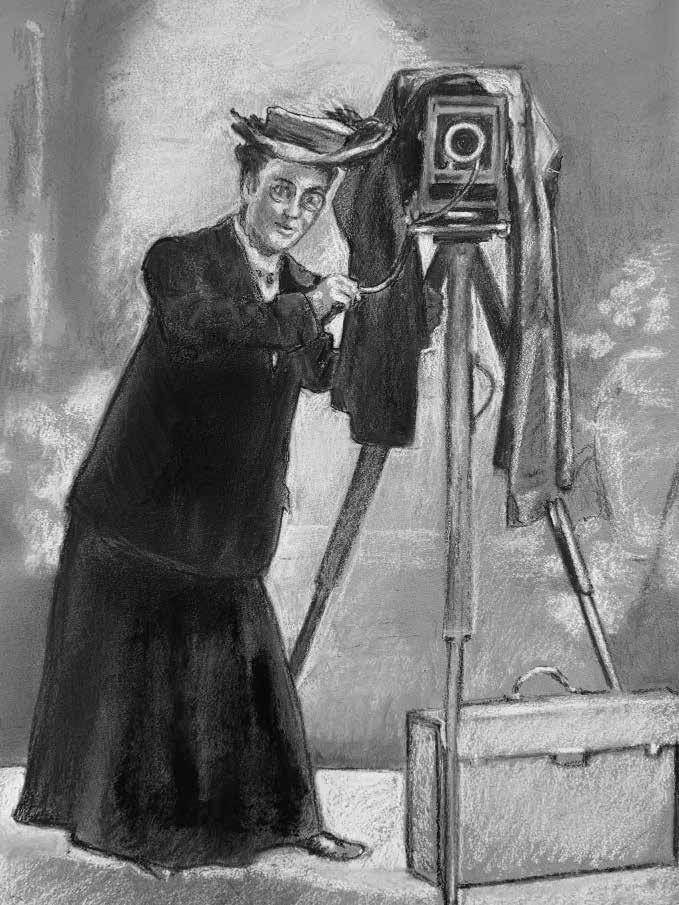
Jessie Tarbox Beals
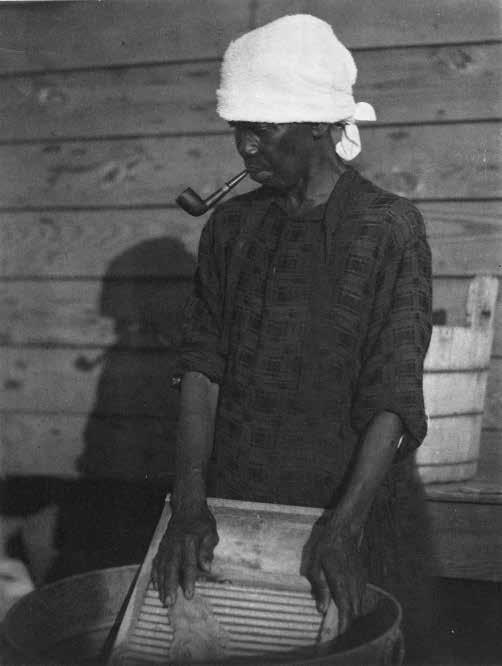
A woman wearing a darkly patterned dress and white turban smokes a pipe as she washes with a scrub board. Her shadow projects onto the unpainted clapboard wall behind her. A wooden pail on the table can be partially seen.
Katie Jones, 1930
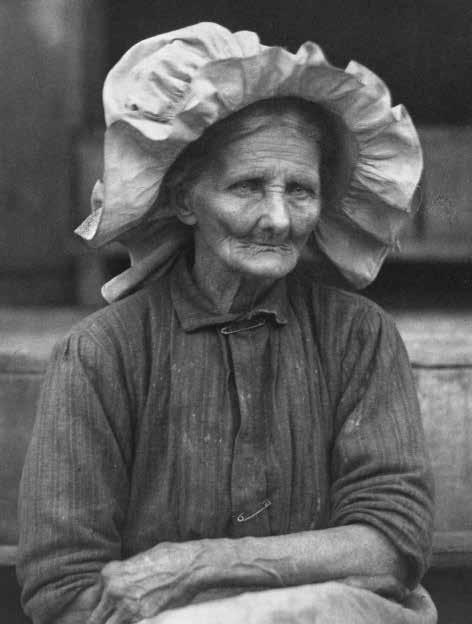
Woman in a Sun Bonnet, 1930
Ulmann brought to her task a profound respect for her sitters, as exhibited in this portrait of an elderly woman whose face has been lined and hardened by a life of poverty and relentless hard work. Although she lacks teeth and her shirt is held together with giant safety pins, she presents a stoic and dignified self-containment which Ulmann documents with sensitivity and compassion.
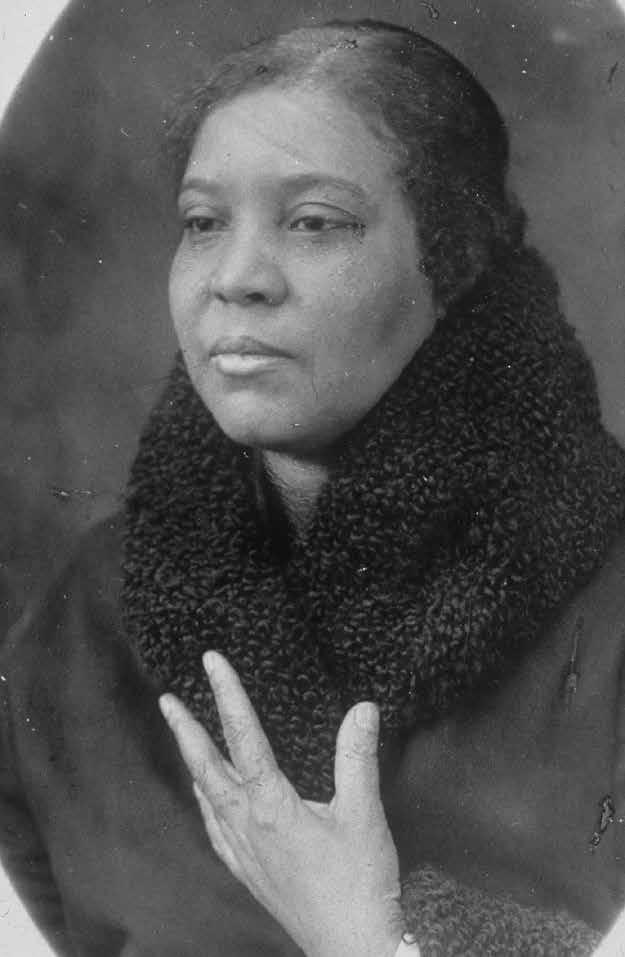
Rosalie Mickey was Edwin Harleston’s first cousin and the daughter of Hannah Harleston and Edward H. Mickey, owners of the Mickey Funeral Home in Charleston. She and Elise Harleston both were members of the Phyllis Wheatley Literary and Social Club. The hand of the family member holding onto the fur collar of her coat balances the composition of this carefully composed portrait.
118 Elise Forrest Harleston
Rosalie Mickey, c. 1922–1931
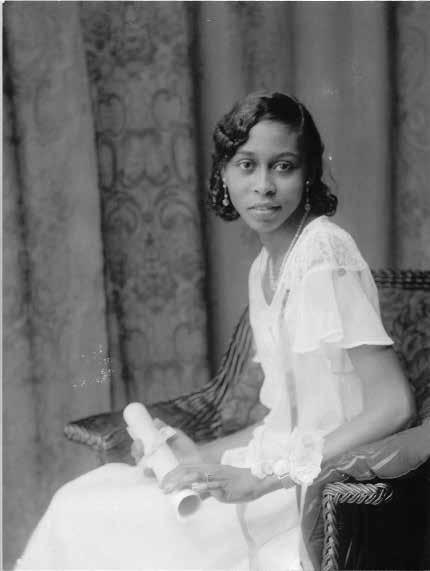
Girl with Diploma, c. 1922–1931
The elegantly dressed high school graduate holds her diploma and wears her class ring. She was likely a graduate of Avery Normal Institute, a college-preparatory school established by the American Missionary Association after the Civil War. Because public schools for African American students in Charleston went only to eighth grade, parents who could afford it sent their children to the private Avery Institute. That the girl posed with her diploma indicates the importance of education to Chareston’s African American middle class in the early twentieth century.
There she sat in that lean-to tent with her children huddled around her, and seemed to know that my pictures might help her, and so she helped me. There was a sort of equality about it.”
When they finished taking pictures of the effects of the Great Depression along the West Coast, Lange and her husband took long trips into the South to document struggling farmworkers.
World War II began in the United States in 1942 when Japanese military planes attacked the American naval base at Pearl Harbor in Hawaii. Innocent Japanese Americans were forced to move from their comfortable homes along the West Coast, leaving behind many possessions to settle into internment camps in the desert. Large families were housed in cramped quarters with only tar paper covering the exterior walls. Without any privacy, life was very hard and depressing. For example, there were no partitions between toilets. Residents had to wait in long lines for meals in communal dining halls. Lange’s photographs of these temporary settlements document what is now considered one of the worst violations of American civil rights.
After the war, photographer Ansel Adams invited Lange to teach art photography at what is now called the San Francisco Art Institute.2
Her health had already declined over the last two decades of her life, but she never gave up. Lange co-founded Aperture, a photography magazine, in 1952. Two years later, she was a staff photographer for Life magazine.
Sadly, she died of cancer in 1965 at the age of 70. The year of her death, the Museum of Modern Art mounted a large exhibit of her photographs that she had helped organize. Although she was shy about sharing her most personal pictures for the world to see, she wanted to display her most important work because of its strong
2. The San Francisco Art Institute, formed in 1871, is one of America’s oldest art schools.
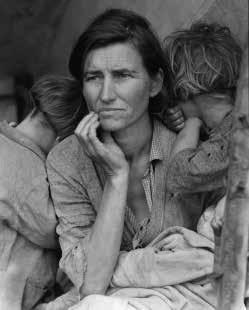
Migrant Mother, Nipomo, California, 1936
Lange took this photograph while employed by the United States Farm Security Administration, formed during the Great Depression to raise awareness and provide aid to impoverished farmers. At the center of this portrait is a mother’s worried face. On either side of her are two young children who turn away from the camera and rest their weary heads on her shoulders. The mother looks older than she really is. She touches the side of her mouth with one hand as she is thinking. This picture, more than any other, humanized the cost of the Great Depression by focusing on the suffering mother’s face.
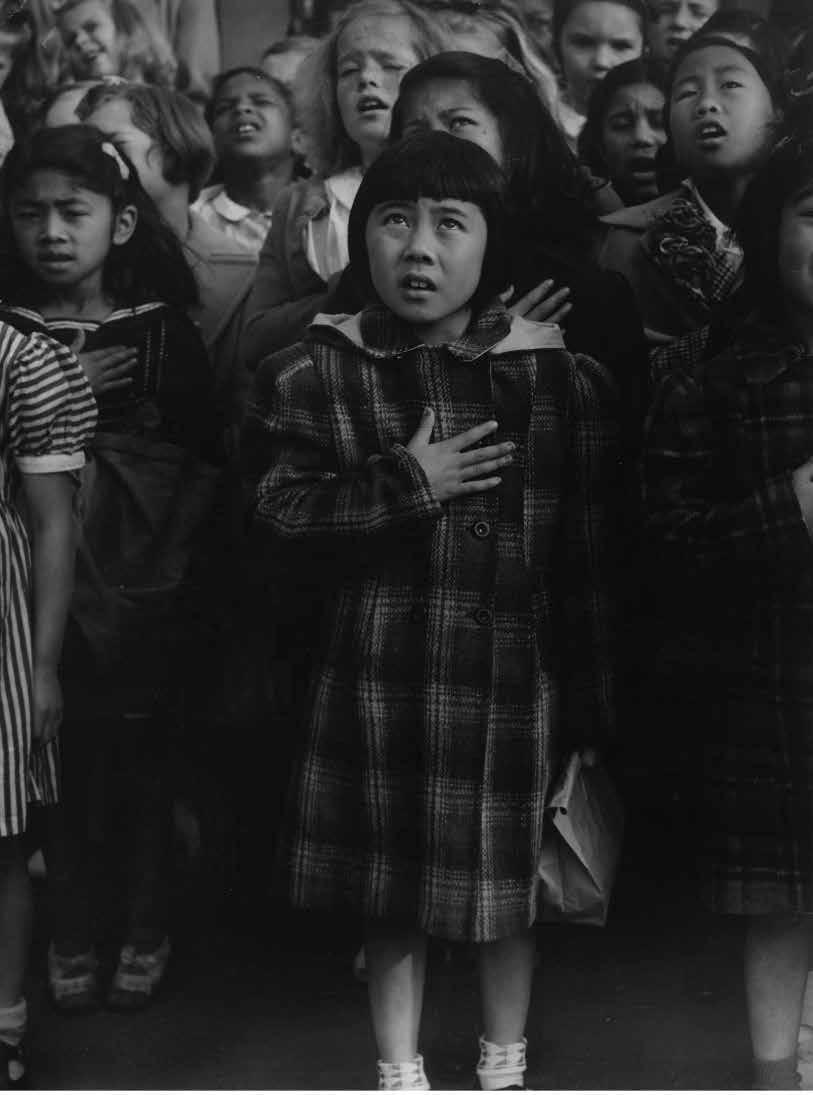
One Nation Indivisible, 1942
Dorothea Lange focuses on one girl who is standing in front of a group of children, all of whom are respectfully pledging allegiance to the American flag at the Rafael Weill Elementary School in San Francisco. The young child holds her right hand over her chest while clutching her paper lunch bag with her left hand. We the viewers, at her eye level, can see that she means what she says. She is sweet and innocent and obviously no threat to anyone, and yet she is about to be taken away and put into an internment camp due to her supposed risk to national security.
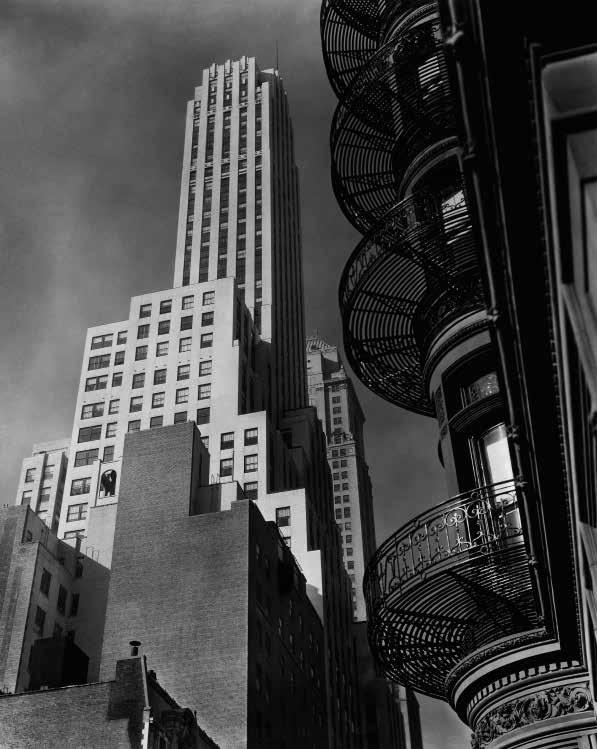
Abbott documents the contrasting geometric shapes created by the contours of New York City buildings. She uses an unusual camera angle, looking upward in such a way that the viewer’s eye sweeps up on an exciting journey and then tumbles down the jagged step shapes of what would have been a small skyscraper at that time. These forms are juxtaposed against the curvy wrought-iron balconies of an older building across the street, creating a jazzy interplay of disparate elements and a visual metaphor for the essence of New York City.
Murray Hill Hotel, Spiral, 112 Park Avenue, 1935