Meschede
Istanbul-born curator Fulya Erdemci held positions in her career that dealt with art in public spaces. Both at SKOR in Amsterdam, Netherlands (2008–2012) and later at KOS in Køge, Denmark (2020–2022), she was responsible for developing projects with artists who were engaging with specific places in cityscapes and landscapes beyond the protected confines of museums. In addition, she directed exhibitions in the spectacular mountains of Cappadocia, Turkey, in 2015, 2016, 2017, and 2018, and artistic interventions in specific districts of Istanbul that seemed almost ephemeral amid the visually overpowering metropolis. It therefore makes sense to take up Fulya’s idea from 2022 to prepare an exhibition and publication that brings together all of the unrealised projects of Ayşe Erkmen, her partner in conversation for many years. Ayşe and Fulya met around 1990 when Fulya returned to Istanbul after studying with Arthur C. Danto (1924–2013) at Columbia University in New York. In Fulya Erdemci, Ayşe Erkmen found an intellectual partner with whom she could discuss art and its significance together from their respective positions as art historian and artist. Istanbul is a large city, but its intellectual world is very much tied to tradition where contemporary art is concerned. Ultimately, Fulya Erdemci sought to organise an
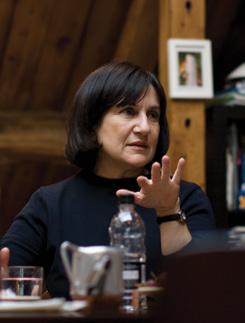
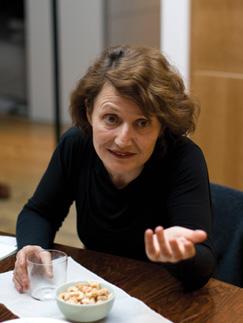
⯄ Ayşe Erkmen & Fulya Erdemci during the preparations for Plan B, March 2011.
Olive Tree
A newly established city called Rieselfeld
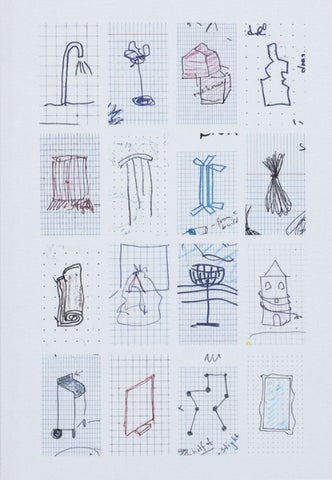
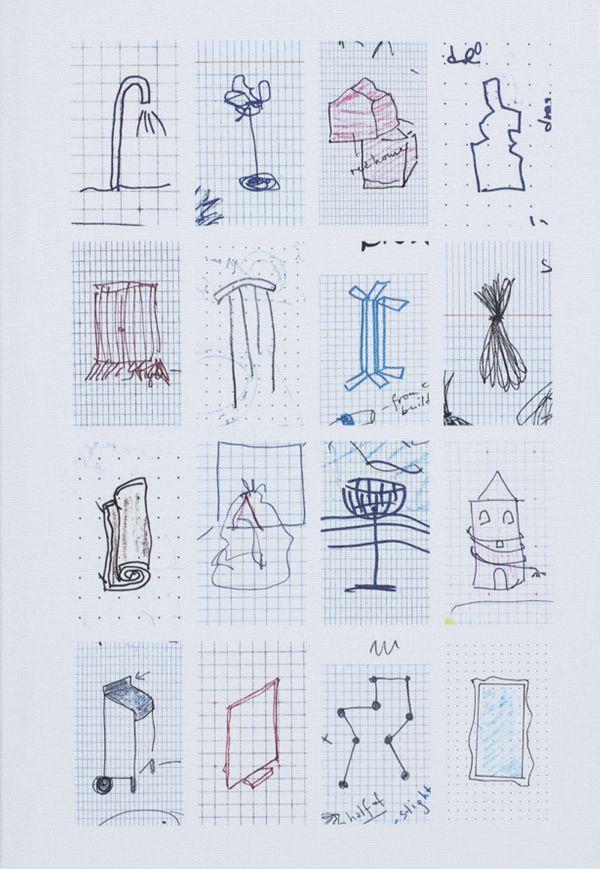
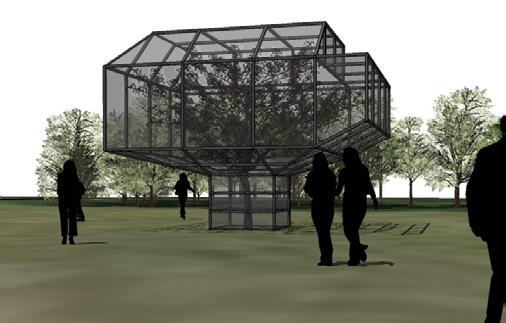
A lonely olive tree will be planted in the middle of the open lawn at the entrance of the district. This will be a tree to be brought from a town in Turkey where olive production is at a high level, which could be from Ayvalık or Edremit.
The tree will be young in age but mature enough (about 20 years old) to have reached its normal height (an olive tree can live up to between 400 and 1000 years).
The tree will be accompanied by its own greenhouse which will be built according to the ‘size’ and ‘shape’ of the tree.
The architectural design of the greenhouse must be remade according to the form of the specific olive tree and the technical, functional components of the greenhouse will be determined and added.
The Olive Tree here will be like a guest worker (Gastarbeiter) from nature, who will live and work in Rieselfeld to produce olives and hopefully other fellow trees will follow and make Rieselfeld an Olive Town.
149 Ayşe Erkmen Undone
How I Did Not Do Certain of My Works
In 2018, I was invited by Norgunk to interpret, rearrange and create performance pieces based on the content of a collection of artist books.* My objective was to trace the idea of making an impossible book, a fragmented one, which was to be positioned among the rest of the books; consisting of fragments, anecdotes, book reviews, editorial suggestions, instructions, reading guidelines and quotations; to explore, inside and on the margins of the books in the collection. The project was called ‘How I Did Not Write Certain of My Books’. The location could be visited by appointment only, and very few visitors came; and the project was shelved, only to take its place in the eponymous book, which was to consist of ideas that could not be realised. When I started to think about the possible meaning of ‘unrealised works’ in the oeuvre of Ayşe Erkmen, I remembered this project. An essay that begins with Erkmen’s unrealised works, regarding the entirety of the oeuvre from this angle, and which tries to understand and analyse the ‘realisation/un-realisation’ relationship, could only have this title: ‘How I Did Not Do Certain of My Works.’
Ayşe Erkmen’s catalogue raisonné titled All So Far** was designed, on the one hand, just as emphasised by its title, to be an annotated,
263
Ayşe Erkmen Undone
motivated, reasonable, logical, given, completed, accomplished, classified, critical, complete whole, by collecting the entire oeuvre of the artist, ‘all that was realised so far’ in a chronological, periodical order; on the other hand, again, just as emphasised by its title, to create a sort of catalogue irraisonné, a random, extra-logical, unclassifiable one, which presented all that was done so far in a new manner, by pushing the chronology, context and content to the background. The book you are reading at the moment, Undone, as emphasised by its title, consists only of ideas, projects and designs that were prepared for public competitions in different countries where Erkmen was directly invited to participate along with a limited number of competitors. These could not
* The idea had come from Alpagut Gültekin as part of the Large Meadow exhibitions and was hosted by the ‘Artists’ Books’ collection at BAS. He had co-founded the Norgunk publishing house with Ayşe Orhun Gültekin and he was the one who made it possible for me to form an intense relationship with Ayşe Erkmen’s oeuvre, thanks to the projects we realised together. We lost him in 2024. We also lost the curator Fulya Erdemci in 2022; it was she who created the conceptual framework of the book you are holding. She was a close friend of Ayşe Erkmen. I remember both of them, who left us too soon, with respect and longing.
** Ayşe Orhun Gültekin, ed. Ayşe Erkmen: All So Far. Cologne and Istanbul: Verlag der Buchhandlung Walther König & Dirimart, 2019.