
“If you really know what things you want out of life, it’s amazing how opportunities will come to enable you to carry them out.” —John M. Goddard

“If you really know what things you want out of life, it’s amazing how opportunities will come to enable you to carry them out.” —John M. Goddard
Rica
by Lance H. Hegland
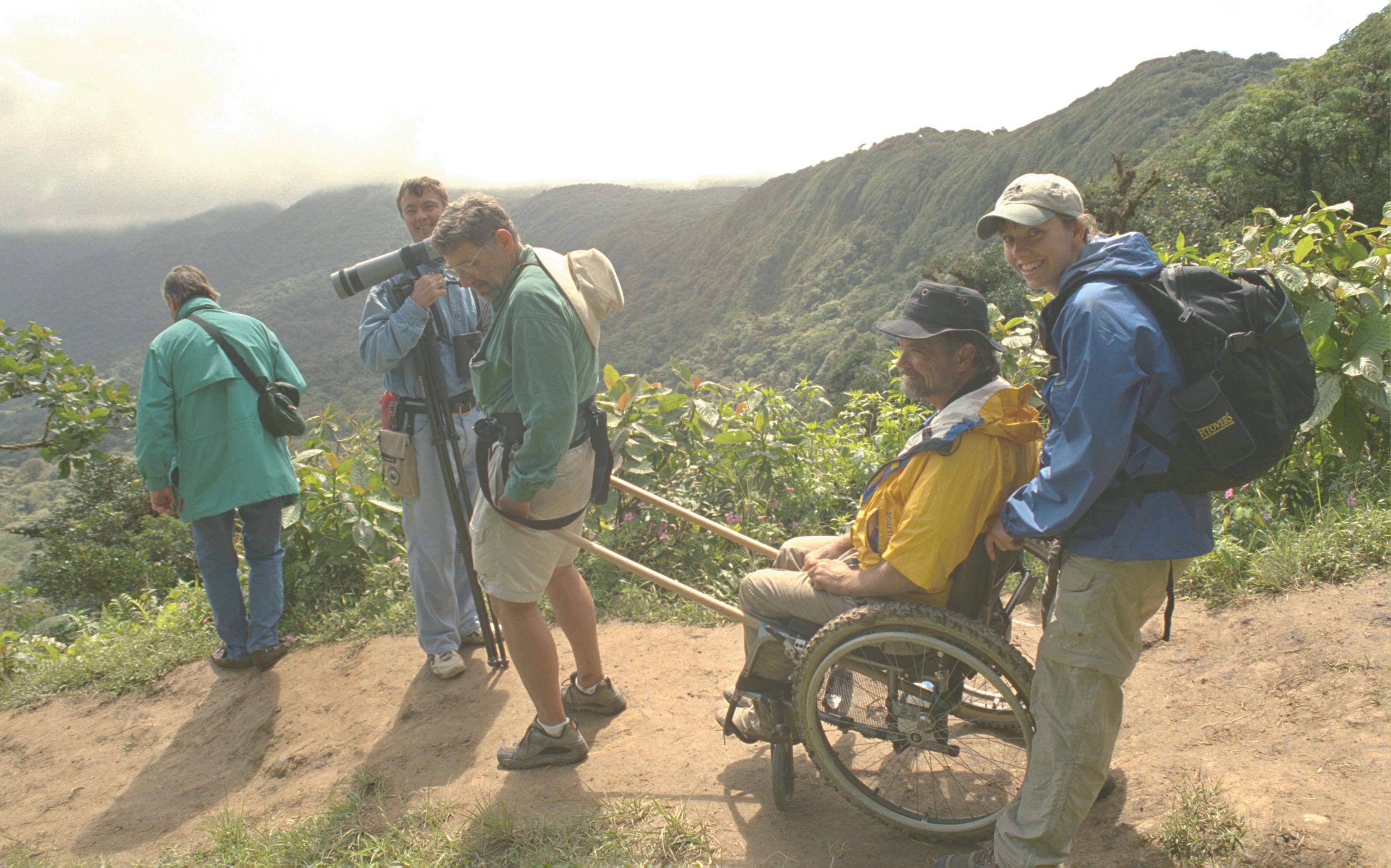
When my friends talked of their outdoor adventures, I listened with envy. I imagined what it must be like to actually co-exist for a night, or a week, with the diverse creatures throughout nature’s paradise. Viewing beautiful cliff walls while canoeing the St. Croix. Hearing distant wolves sing campers to sleep. Waking to the call of loons. But, I dismissed the idea as too difficult because I rely upon a wheelchair for mobility. However, a local wilderness organization’s activities have proved me wrong.
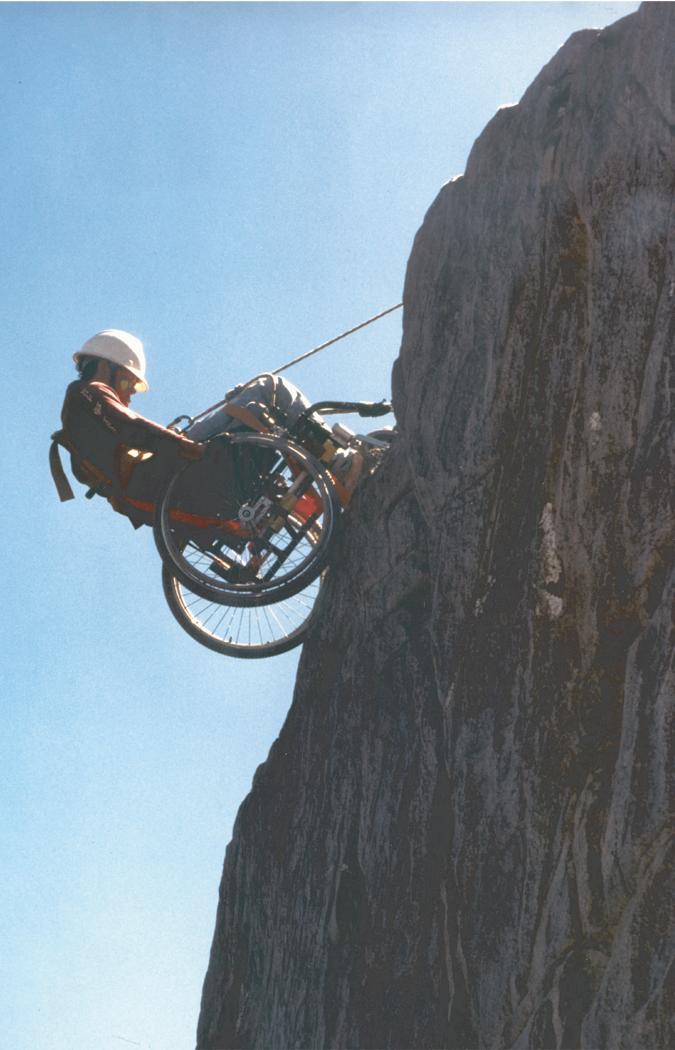
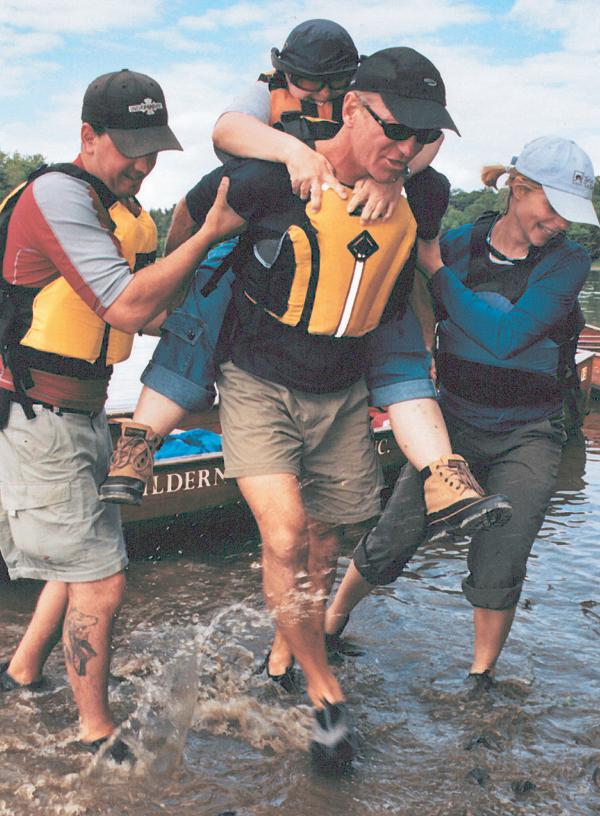
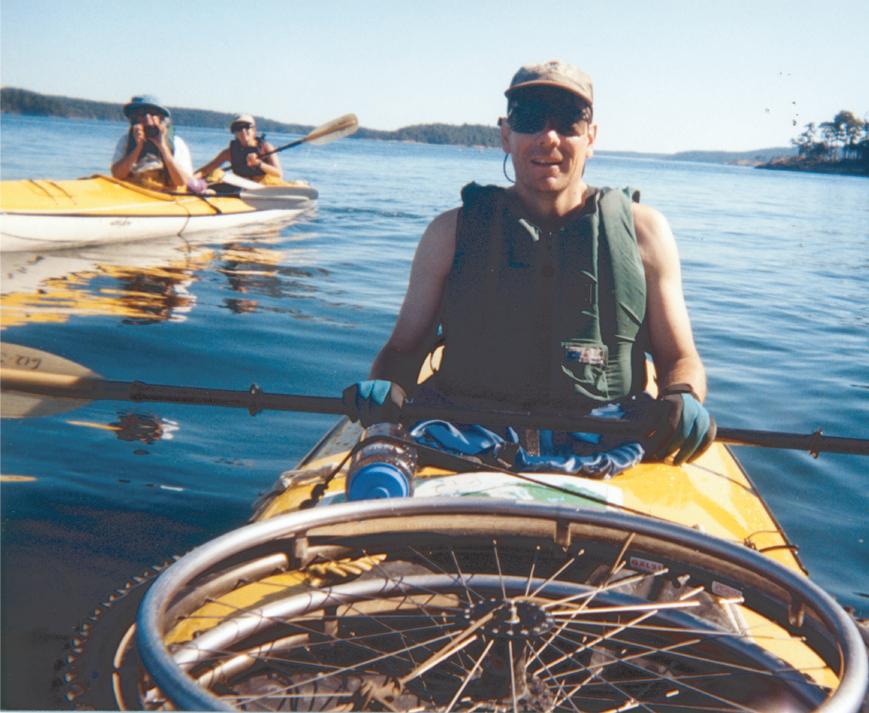
Wilderness Inquiry (WI), a nonprofit organization founded in 1978, provides opportunities that integrate people of all ages, backgrounds, and abilities through outdoor education and experiences. From the beginning, they have designed adventures to inspire personal growth and instill confidence. They have served
over 80,000 people of all abilities on trips throughout the Americas, Europe, Australia, and Africa. As part of their cooperative outdoor adventures, participants canoe, sea-kayak, backpack, horsepack and dogsled, often with equipment specially adapted by WI staff.
The organization operates on four fronts. First, they lead participants on integrated outdoor adventures and day events. Next, they offer training for outdoor recreation service providers regarding how to make their programs more accessible. One of their tools is the www.accessoutdoors.org website, a clearinghouse for accessible outdoor recreation resources. Third, they coordinate environmental learning experiences. And finally, they survey parks, trails and outdoor park facilities for accessibility features. As a result of their manypronged approach, WI has become an international
leader in the development and implementation of universally-designed outdoor adventure programs.
“WI helped break down my belief that I will be sitting in my chair, watching others do what I no longer can do”, said Nancy, a 50-year-old woman experiencing paraplegia. She continued, “I was afraid before the trip that I was going to be the ‘disabled’ needing lots of help. No one on this trip ever made me feel anything like that.”
WI realizes that “disability” is a very relative term. In fact, thousands of people with a wide variety of challenges have traveled with them. Each individual’s attitude and willingness to get out and explore is what matters most. If a participant has that, WI does whatever it takes to make trips accessible.
The organization provides adapted equipment as needed,
by Anne L. Henry, MN Disability Law Center
The state budget deficit for the next biennium worsened with the announcement that the November Revenue Forecast shows a shortfall of $700 million, $1.4 billion counting inflation, for the next biennium. The budget deficit is much higher than the $300 million deficit projected last February. Because the Governor has recently stated that Minnesota has a “health care spending problem,” services for persons with disabilities may be especially at risk.
The spotlight is definitely on the Department of Human Services with a growth rate from this biennium to the next biennium of 19.9 percent. There are a number of areas where disability services are expected to grow, including the number of people eligible for Medical Assistance due to disability and increases in the disability home and community waiver programs. In addition, health care costs are going up for everyone across the nation, an average of 11.6 percent last year.
including but not limited to canoe and kayak seating, mobility aids, and accessible bathroom facilities. The gear helps people of all abilities participate, but it is not what makes WI so accessible. Rather, the organization’s attitude that everyone is equal, therefore can and should experience adventure, makes the difference. They team with participants to help figure out what needs to be done to maximize full participation in a straightforward, non-condescending manner. Actually, probably the most challenging hurdle for participants is figuring out where to go!
The new state budget deficit is even more troubling when one considers that painful cuts made during 2003 to close a $4.5 billion deficit have yet to be remedied because the Legislature did not pass a supplemental budget bill before adjournment last spring. Although both the House and the Senate passed a variety of proposals to reduce the harsh impact of the 2003 cuts such as co-payments, the $500 limit on dental care for adults on Medical Assistance and the sharp increase in parent fees, making progress on these matters during the 2005 Session is made much more difficult by the increased budget deficit.
During the 2003 Session, the Legislature eliminated all new waiver slots for persons with developmental disabilities using the MR/RC waiver and limited caseload growth for those who would otherwise be in a nursing home under the 65 years of age (CADI) to 95 new people a month and the waiver for those with traumatic brain injury (TBI) to 150 per year.
The November 2004 forecast does project significant increases for these programs because the caseload limits are not in effect for the 200607 biennium. However, because increases are projected, the waiver programs are particularly vulnerable to be targeted for cuts in the Governor’s 2006-07 budget, which is expected in late January. Every increase in health care spending is at risk because of the Governor’s position of “no new taxes” and his commitment to increase funding for education. The money has to come from somewhere; the state constitution requires a balanced budget.
Nonetheless, disability groups are organizing to propose a comprehensive package of changes to improve Minnesota’s policies and services for persons with disabilities as Joel Ulland reported last month on these pages. The issue of raising taxes is being discussed by groups as divergent as the Chamber of Commerce, the Minnesota Medical Association and the Minnesota Council of Nonprofits. Because of Minnesota’s dire revenue picture, any increases in spending will undoubtedly lead to discussions of increases in revenue: taxes.
Persons with disabilities can stay connected to action at the Legislature by involvement with a disability advocacy group with an Action Alert capacity such as the Consortium for Citizens with Disabilities, the Arc of Minnesota, and National Alliance for the Mentally IllMinnesota, Multiple Sclerosis and PACER. Information about these organizations can be found at: www.c-c-d.org; www.arcminnesota.com; www.mn.nami.org; www. nationalmssociety.org; www. pacer.org.
Because of the many cuts to health and human services needed by persons with disabilities during the 2003 Session, failure to pass a budget bill during 2004 and the daunting shortfall facing the 2005 Legislature, it is vitally important that persons with disabilities using publicly-funded services in Minnesota personally meet their state representative and state senator and keep in close contact with them during the 2005 Session. Information about your legislators and how to contact them can be found at www.leg.state. mn.us ■
Tim Benjamin, Editor
We want your thoughts and new plan’s for 2005. One thing we would really like is to have a better understanding of our demographics and what, you the readers like about the paper. What would you like to see changed or added. So, in the next few months you’ll be seeing surveys and questionnaires that need to be filled out. Please take the
time to fill them out. There will be gifts giving for participation. We will all benefit in the long run.
It seems as though Mai Thor shorted her people for outreach count by about 400 in last month voting article. Mai said, “It’s really not a big deal, but the work was important, and it would be good for the public to know the actual numbers.”
Anne Henry reminded us in her article that the governor believes we have a “health care spending problem.” We may have a health care spending problem but cutting programs a is not the answer. It will take looking far beyond the next two years and into the next 20 years. It will take years before we’ll see the real ramifications of cutting many of these health-care spending programs. How do we want to treat our most vulnerable? How are we going to treat the newly disabled veterans?
Recently I took a class that focused on the question “what is the meaning of an educated person”. One of the assets that most of the class believed necessary was the ability to undergo critical thinking processes. What is critical think-
ing? There is no one right answer to this question; critical thinking is a combination of many thought processes that result in an improvement or deterioration in the state of affairs. It is the ability to take in new information, analyzes and determining the quality and validity of the new information. A critical thinker would then synthesizes that information and uses it as a comparable for use in other circumstances. Was the effects of using this new gained knowledge an upgrading or downgrade in the state of affairs and was the upgrade or improvement large enough to warrant the time, energy and expense of this process? The next step in critical thinking is determining whether the improvement or upgrade in the understanding, circumstances or incident would benefit the whole society. If not ethically
by Don Lavin
People with disabilities don’t need to be “fixed”—they need opportunities and access to customized supports
I am about to commit an act of heresy. And quite likely, I am about to raise a few eyebrows from my colleagues. After 30 years of work in the field of rehabilitation, it’s time for me to come out of the closet. Here it is: I have never really liked using the term “rehabilitation.” I believe we must eliminate its message from the important work we do. And yes, this means dropping the use of “habilitation” as well.
According to Webster’s dictionary, the word rehabilitation means “to restore rank, privileges, rights, etc. lost or forfeited; to vindicate or restore the reputation of; to restore something damaged or decayed to its previous
good condition (e.g., disabled person or a criminal) to physical or mental health through training.” Does this definition accurately describe the work we do today? I don’t think so.
A short history lesson is in order here. The word “rehabilitation” found its way into federal legislation after World War I when the United States acted to support thousands of military veterans returning with war injuries. Public efforts to “rehabilitate” veterans with disabilities were eventually expanded to the general population so other citizens with disabilities had the opportunity to go to work and support themselves. The term “rehabilitation” was probably the best description of services being carried out in the 1920s. Sure, it may still describe some restorative, therapeutic, and medical treat-
ments that some people with disabilities need to go to work and live more independently. It is not, however, suitable for the vocational or employment area. Further, I believe it is misleading in describing the attitudes and services the most progressive community rehabilitation providers embrace today.
Simply said, we need to adopt service approaches that accept people with disabilities for who they are. And we need to leave behind any archaic notion that people with disabilities are “damaged” or “broken” people needing to be “fixed.” I believe the word “rehabilitation” communicates and reinforces the wrong message. We need to eliminate any veiled message we may be sending to the public and people closely associated with the work we do.
Co-Founder/Publisher (1990-1996).............................................................Wm. A. Smith, Jr.
Co-Founder/Publisher/Editor-in-Chief (1990-2001)..................................Charles F. Smith
Board of Directors....................................... JoAnn Cardenas Enos, Mike Chevrette, Mary Kay Kennedy, Kelly Matter, Tom Squire, Peg Thomas, & Kay Willshire
Editor ....................................................................................................................Tim Benjamin
Financial Manager/Editorial Assistant...................................................................Terri Ricci
Cartoonist ................................................................................................................Scott Adams
Production .................................................................Ellen Houghton at Presentation Images
Access Press is a monthly tabloid newspaper published for persons with disabilities by Access Press, Ltd. Circulation is 11,000, distributed the 10th of each month through more than 200 locations statewide. Approximately 650 copies are mailed directly to political, business, institutional and civic leaders. Subscriptions are available for $25/yr.
Editorial submissions and news releases on topics of interest to persons with disabilities, or persons serving those with disabilities, are welcomed.
Paid advertising is available at rates ranging from $16 to $20.70/column inch, depending on size and frequency of run. Classified ads are $10, plus 45¢ per word over 12 words.
Advertising and editorial deadlines are the last day of the month preceding publication, except for employment ads which are due by the 25th Access Press is available on disk. Call MN State Services for the Blind, 651-642-0500 or 800-652-9000.
Inquiries should be directed to: Access Press • 1821 University Ave. W. • Suite 104S • St. Paul, Minnesota 55104 • (651)
one should not proceed but if it is proven to be the improvement for all society ethically one must proceed. Now, I bet your wondering where am I going with this? Well, I was think that are legislators are educated people and are good critical thinkers way do they have such a hard time getting it right?
Detroit Medical Center will be opening a rehab center this summer unlike any other center in the United States.
Dr. Steven Hinderer, director of the new recovery center will almost exclusively be doing follow-up research on surgeries being done in China and Portugal. Both countries are doing different approaches with olfactory cells, harvested from above the inner ridge of the nasal passages, which have shown to be capable of rejuvenating the spinal cord.
In an article in the Detroit Free Press by Patricia Anstett dated Dec.13th; two Detroiters have already had this procedure and according to Dr. Hinderer, “Their progress way exceeds my expectations. Both procedures are new and promising, but are not yet studied well enough to understand the benefits and risks of the operations.”
Is this just another “get your hopes up for a miracle we have all heard a million times”. I don’t know? I would like to see some of these studies talking about increasing hand and dexterity function, control of incontinence or stem cell for healing pressure sores. We will keep you updated on the results of these new procedures. ■
Think about these questions: What are we saying to prospective employers about job candidates we are representing for hire? What are we communicating to prospective and existing staff about their roles in delivering professional services (i.e., consultants vs. caretakers)? What message are we sending to coworkers, neighbors, and other community members about their roles as partners in our work? Finally, what are we communicating to the valued people we are privileged to serve about themselves? When you get down to the basics, this is no small matter. The message of rehabilitation is counterproductive and it must be changed.
New way of thinking about our work
No, I am not suggesting a clever maneuver to circumvent realities or “sugar coat” the challenges associated with the work we do. Instead, I think we need a new way of thinking and communicating about our work. Let’s consider these questions instead: Who among us does not have daily challenges in their lives? Who among us does not need to grow as individuals, develop new skills, or dedicate themselves to lifelong learning? And who among us does not need regular or intermittent support from family members, co-workers, supervisors, and others to do our chosen work? Fundamentally, we are ALL interdependent and need some level of customized support


by Lance H. Hegland
Rise, Inc., along with funding support from AmeriCorps, has launched an innovative service assisting participants experiencing disabilities overcome employment barriers. This isn’t a traditional rehabilitation service, but their desired outcome is the same: good paying jobs at no cost to the participant or the employer. The service, referred to as “The I-Team,” draws its name from four typical obstacles: impossibility, invisibility, inaccessibility, and inactivity.
The I-Team points out that, due to the perception that people with significant disabilities face such major challenges, they are unable to efficiently work. Therefore, their employment goals are dismissed as too challenging or “impossible”.
Employers may lack recruiting and retention strategies targeting individuals with disabilities. Employers may be unaware of accommodations assisting this population during hiring, training, and employment processes. Consequently, employers may also fear legal liability under the Americans with Disabilities Act (ADA). These factors could cause such individuals “invisibility” from employers.
Some individuals may not qualify for adequate services, funding, expertise, or other supportive resources under federal, state, and local vocational rehabilitation systems. For that reason, these individuals’ efforts to search, secure, and retain suitable employment may be difficult, or worse, unsuccessful. Essentially, they suffer “inaccessibility” to adequate supports, causing “inaccessibil-
ity” to suitable employment.
Even if individuals are granted access to the supportive resources, they may be placed on long waiting lists, thereby encountering “inactivity.”
The self-directed I-Team was assembled to break down those barriers through flexible, courteous, and respectful services. They hope to assist participants lacking access to, or success with, more traditional funding or job placement programs. Participants typically have a disability or other barrier to employment, are unemployed, desire to work, and want to actively participate with the I-Team to achieve their goals. Each participant is essential member of the team; demonstrating alignment with the “not for us without us” and independent living philosophies. Some of those concepts are as follows:
•Freedom to dream and plan employment with necessary support rather than a preplanned program;
•Support of resources and personnel, both formal and informal, assisting in employment;
•Authority to direct, with a social or support network if necessary, the planning and application of resources; and,
•Responsibility to be a valuable component in the community through competitive employment as well as accountability for using resources in ways that are life-enhancing.
After meeting the team, I was pleasantly surprised for two reasons. First, the service has very few eligibility criteria and operating guidelines, rules, policies, or procedures. Instead, the I-Team staff have
the freedom, authority, and management support to do whatever they think is reasonable and necessary to assist participants achieve employment. Second, the I-Team did not intentionally develop their service based on the concepts mentioned above. The service was designed solely around a passionate goal, recognition that everyone is unique, and belief that individuals desiring employment must be actively involved in the employment process. The flexible, common-sense, and active-participant framework that emerged naturally reflected these core independence concepts.
Service participants can expect regular meetings with the I-Team to do the following: Perform person-centered career planning; engage in creative problem-solving; consult with disability and employment experts; develop customized employment solutions; connect with job and community supports; obtain job-training and coaching; receive mentor support; resolve disability benefit issues; and, communicate with employers.
The I-Team points out that, as with any successful planning process, patience and determination are essential. It takes time and hard work to get to know each participant, build a plan, and work through the steps. To aid the process, the team is developing networks with other social service experts, employers, and business leaders so they can share ideas regarding hiring and employment practices as well as education concerning disabilities and accommodations.
Rise - cont. on p. 3
We are currently accepting applications for our waiting list at Diamond Hill Townhomes, a great property located near the Minneapolis International Airport.
We have two and three bedroom townhomes that are HUD subsidized and rent is 30% of the total household's adjusted gross income.
We have a large number of mobility impaired accessible units and we are scheduling appointments for persons in need of a mobility impaired accessible unit immediately.
To schedule an appointment please call (612) 726-9341
by Pete Feigal
never think about you anymore, but I was going through some old boxes and found a card you’d sent me for my 19th birthday back in May of '74. The last thing I ever got from you. The only thing. It was like finding a message in a bottle. A plea for help that nobody found, nobody answered, and is still floating around even after the castaway is gone. You didn’t leave a note. We all die, and one way or another, we all have some hand in our own deaths. Maybe in some ways, everything we write is a suicide note.
Somebody once told me that when you absolutely decide to kill yourself, there is a seven minute window of opportunity to shake them out of it, seven minutes where if the process is interrupted, it takes a while to reset the “internal mechanism.” So if you can get to them in that seven minutes, you have a chance to save them. I didn’t save you. There was no phone call, no knock on the door, no favorite song on the radio, no second thought of hope or future to save you. I often find myself measuring out everything in seven minute increments. It’s not a long time. About as long as it takes to wash your face and brush your teeth at bedtime. About as long as it takes to pump your car full of gas. As long as it takes to listen to “Stairway To Heaven.”
The Unit, the mental hospital where we first met in ‘71 is gone. They bulldozed it over. It took two decades but The Doc finally lost his license to practice psychiatry in Minnesota, so he took his millions and bought his way into another adolescent psych unit in California where I heard he continued abusing his pa-
tients. His kids. The place is a park now about a block from the Mayo Clinic. Statues of children dancing hand in hand. Thirty years later to the week, I did Grand Rounds to the Mayo shrinks, the first consumer to ever do so. One of the retired doctors from The Unit came to hear me, to apologize to me after thirty years. He didn’t think I’d forgotten. He thought that he’d forgotten. I’ll forgive them all if they don’t forget, and thirty years would restore even Judas to good company these days. But Jesus died for our sins.
At a college party we were all sitting around talking about the movie “The Big Chill” where old college friends are brought together at the funeral of their friend, Alex, who had killed himself. We were all trying to figure out which character in the movie we were most like. They all told me I was most like Alex.
The police said that it appeared you had been sitting in the dark for some time in the basement, then turned on the light and pulled the trigger. I don’t know how they could know that, but I believe it. Nobody wants to die in the dark. It took a full day and cost your mom and dad five thousand dollars for the forensic team to clean up. Your mom tried to make a joke and said why didn’t you do it in the garage as they’d just put in new carpet and paneling in the basement. We’re all still cleaning up the mess.
Why is it that you’re the one who died, and I feel like the one left for dead? When I talk in public about suicide I speak politely and say how I hate the disease, the despair, but don’t hate the person. I never use the word “commit.” “People
commit sins and crimes, but don’t commit suicide.” But I do hate. I hate your weakness and your laziness and your impulsiveness. I hate it that the chaplain told me “God never gives you any more than you can handle.” And I asked him,” Does that mean that if I were a weaker person, John would still be alive?” I hate that by doing it, you made suicide real, a viable option for me. You always hear about crimes without victims. What about victims without crimes? Who do I blame? Who do I strike at for retribution? How will I ever really know if it was my fault, or something I did or didn’t do, something I said or didn’t say? How do I stop grieving for parts of my life that I lost or never had because of what you did. I hate your selfishness. When is it enough?
When will it be over? It only took Ulysses twenty years to get home from the Trojan War. I’m like those Japanese soldiers still hiding out on remote Pacific islands, still fighting WWII. When do I get to go home? When is the war over? I’m at thirty years and still counting.
I never think about you anymore. It doesn’t hurt as bad. I do feel sorry that you never got to hear Bruce Springsteen, or see the “Lord Of The Rings” movies, or visit the Redwoods, or fall in love or have kids or ride a Harley-Davidson through The West like you always dreamed about. Sometimes I think I’m living your life, trying to make your dreams a reality, that I’m trying to somehow let your ghost live vicariously through me. But that isn’t true. The truth is, if there is any, I’m living vicariously through you.
Feigal - cont. on p. 5
by Xxxxxx
Icould be your neighbor, your co-worker, or your friend. I could live down the street, or across town. I get up and work every day, and come home every night. I go to church on Sundays, and talk about the weather with others. I drive safely, pay my bills on time and vote. You see me everywhere, and I seem to be just like you. But there is something you may not know about me. I am a member of an exclusive club. This is not a club any one wants join, but when they become members, they are members for life. It is not a club one can join by invitation, but by divine providence. You see, I have a child with a disability.
I have a child who was born with Spina Bifida. She was born over four years ago. My wife and I did not find out about the disability until the 35th week of her pregnancy. With all the stress this information brought, Grace was born five days later. At that time, I had been working with people with disabilities in one fashion or another for over eight years, but I never expected to be the parent of one. It took a couple of years for my father to realize that this was a lifelong issue. After every specialist appointment, he kept asking if she would be all right now. “No, dad, she will never be all right.”
I have two other children. They do not have disabilities (other than having me as a father). Grace is just like them. She laughs, cries, and loves, just like the other two. She eats, sleeps, plays, goes to school, and gets upset when things do not go her way, just like her brother and sister. She is also different. She has a personality all her own. She has red hair, blue eyes, and a smile that just melts hearts. She is also stubborn beyond reason. I am constantly amazed by her fierce determination to not give up, and her ability to make those around her forget she has a disability. Reality is never far away. There are days when I sit and wonder why this happened. There are days I feel sorry for myself. But then I remember, I am not the one with the disability, she is. Mostly, I wonder how I will answer her questions as she grows older. How will I tell her she will never be just like other kids? How will I tell her that she will never go to the bathroom like other kids? How can I tell her she may never run like other children? With my other children, it was not a matter of
by Bret Hesla
if, but when. With Gracie, it’s different. Because of this, every milestone she reaches is a bit more significant, and the everyday accomplishments are met with a bittersweet smile.
Other parents save their children’s first pair of shoes. We save her braces. Other parents look forward to not having to buy diapers. We look forward to Gracie being able to change hers by herself.
When we are out, I see the stares and hear the whispers. It’s okay to be curious. I am not offended. I would feel better if you just came up and asked your questions, and listen without judgment. Better yet, just ask Gracie. She can speak. Sometimes, more than she should. Through my years at work, I have seen the best and the worst society has to offer those who seem to be different. Now, it hits a bit closer to home. Yes, she is different. But all of us are different, aren’t we? It is just that her differences are a bit easier to see that our own. But even though our differences are far outweighed by the similarities, society seems to focus on the things that separate us instead of what binds us together.
I have no idea what the future holds for Gracie. Heck, I don’t know what tomorrow holds! All I know is that she is loved. I would like to be there the rest of her life to take care of her, but I cannot. She is being raised to be independent and determined. These are qualities I am sure will serve her well in her life, but can be a bit of a hassle for her mom and I right now. Sometimes, I want to fast forward 20 years to see how things turn out for her. I would love to be a fly on the wall at that time. Will there be medical advances that will allow her some level of freedom from her disability? Will society have changed to the extent where she is seen for who she is and not for her disability? I don’t know.
On second thought, I do not want to fast forward at all. I want to be part of all of her life, and I want to be there to cheer her accomplishments and dry her tears. I want what every other parent wants for his or her child: Happiness. ■
Most of us forget that there are many types of power. We only think of the harmful power: getting what you want by force or the threat of force. The author Starhawk has come up with a very helpful way to understand power. She writes about three different kinds of power: power over, power with and power from within. The last two of these are the twin engines that drive all social change movements: people working together and believing in themselves.
We’re all very familiar with this kind of power. It’s like bullying. One person is able to shove another person around, for whatever reason—because s/he is larger, because s/he has more money, because s/he is the boss, because s/he has more education. Power over is what many consumers feel the service system has. Power over them, power to meet its needs, which may be very different from the needs of the consumer. Power over always has someone under, and that doesn’t feel good.
This is the power of working together, of strength in numbers. Even when we aren’t very large or we don’t have much money or we aren’t the
boss or we don’t have as much education, we can still have power when we work with other people. Power with is available for all of us to use, but it takes planning and imagination to use it. We need to practice ways to use power with in our lives. Using it feels good and makes us strong.
This is the power we get from believing in ourselves, from knowing that other people will help us, and from knowing that we have something important to say or to do. When we know we’re in the right, we have a tremendous power: the power from within. This power is like a deep well within each of us. As we encourage one another, as we share and listen to each other’s stories, as we build up our positive visions and beliefs, as we learn from those who have gone before, we fill up the well inside of us and we become powerful.
Learn to recognize the different kinds of power and begin using the healthy forms of power using the self-led workshop, Reach for the Power Switch: How Ordinary People Can Use Power to Make Change. Visit ACT’s web site at www.selfadvocacy. org and follow links for a description of this workshop or call ACT at 651-641-0297 for more information. ■
by Xxxxxx
Iam often asked to describe the experience of raising a child with a disability—to try to help people who have not shared that unique experience to understand it, to imagine how it would feel. Well, it’s like this…
When you are going to have a baby, it’s like planning a fabulous vacation trip—to Italy. You buy a bunch of guide books and make your wonderful plans. The Coliseum. The Michelangelo David. The gondolas in Venice. You may learn some handy phrases in Italian. It’s all very exciting. After months of eager anticipation the day finally arrives. You pack your bags, and off you go. Several hours later, the plane lands. The flight attendant comes in and says, “Welcome to Holland.”
“Holland?!?” you say, “What do you mean Holland? I signed up for Italy! I’m supposed to be in Italy. All my life I’ve dreamed of going to Italy.” But there has been a change in the flight plan. They’ve landed in Holland, and there you must stay.
The important thing is that they haven’t taken you to a horrible disgusting, filthy place, full of pestilence, famine and disease. It’s just a
different place. So you must go out and buy new guide books. And you must learn a whole new language. And you will meet a whole new group of people you would never have met. It’s just a different place. It’s slowerpaced than Italy, less flashy than Italy. But after you’ve been there for awhile and you catch your breath, you look around … and you begin to notice that Holland has windmills…and Holland has tulips. Holland even has Rembrandts.
But everyone you know is busy coming and going from Italy…and they’re all bragging about what a wonderful time they had there. And for the rest of your life, you will say, “Yes, that is where I was supposed to go. That’s what I planned.”
And the pain of that will never, ever go away…because the loss of that dream is a very, very significant loss. But…if you spend your life mourning the fact that you didn’t get to Italy, you may never be free to enjoy the special, the very lovely things…about Holland.
Source: Emily Perie Kingsley From a Reprint in “Family Resource Committee” Newsletter ■
Check us out at accesspress.org or call Access Press at 651/644-2133
Please support your Access Press advertisers — and tell them where you heard about them. They bring you your paper.
by Xxxxxx
Epilepsy is a disorder of the brain (central nervous system) resulting in seizures. One seizure is not considered epilepsy. Epilepsy is “more than one seizure.” A seizure is a change in sensation, awareness, behavior brought about by abnormal discharges in neurons in the brain. Normally, neurons carrying electrical impulses form a network allowing communication between the brain and the rest of the body. Neurons “fire” or send electrical impulses toward surrounding cells, stimulating neighboring cells to fire. In people with epilepsy, too many neurons fire at one time, causing an “electrical storm” within the brain. There are more than 20 different types of seizures.
According to the Epilepsy Foundation, the following symptoms may indicate someone has epilepsy and a medical exam is advised if one or more of these symptoms are present. The symptoms include:
•short periods of blackout or confused memory
•occasional “fainting spells” in which bladder or bowel control is lost, followed by extreme fatigue
•episodes of blank staring in children
•brief periods of no response to questions or instructions sudden falls in a child for no apparent reason
•episodes of blinking or chewing at inappropriate times
•a convulsion with or without a fever.
How Common Is Epilepsy And How Many Are Affected?
Epilepsy can strike at any time in one’s life. About 2.5 million people in the USA have epilepsy—including more than 60,000 people in Minnesota. Approximately, 125,000 new cases are diag-
nosed annually. Anyone can develop epilepsy at any age, but 30% of epilepsy cases are children under 18 years of age and 20% develop epilepsy before the age of 5. Each year, 120,000 children seek medical attention because of a first or newly diagnosed seizure. Of these children, about 37,000 go on to develop recurring seizures or epilepsy.
What Are The Different Kinds Of Epilepsy?
•Generalized Tonic Clonic (also called Grand Mal)
•Absence (also called petit mal)
•Complex Partial (also called psychomotor or temporal lobe)
•Atonic Seizures (also called drop attacks)
•Myoclonic Seizures
What Are The Myths That Lead To A Misunderstanding About Epilepsy?
There are many common myths and misconceptions about epilepsy which serve to illustrate the widespread misunderstanding about epilepsy. The Epilepsy Foundation and others seek to dispel myths about epilepsy by increasing awareness and understanding. Here are a few of the myths. Test yourself. Which did you think were true?
Myth #1
Epilepsy is rare and not very many people have epilepsy.
There are more than twice as many people with epilepsy in the USA than the combined number of people with cerebral palsy (500,000), muscular dystrophy (250,000), multiple sclerosis (350,000), and cystic fibrosis (30,000). Epilepsy can occur as a single condition or may accompany other conditions affecting the brain, such as cerebral palsy, mental retardation, autism, Alzheimer’s disease, and traumatic brain injury.
Myth #2
Epilepsy is contagious.
You simply cannot catch epilepsy from another person.
Myth #3
Only kids get epilepsy.
Epilepsy happens to people over age 65 almost as often as it does to children under 10 years of age. Seizures in the elderly are often the aftereffect of other health problems like stroke and heart disease.
Myth #4
People with epilepsy are disabled and cannot work.
People with epilepsy have the same range of abilities and intelligence as the rest of us. Some have severe seizures and cannot work; others are successful and productive in challenging careers.
Myth #5
You should force something into the mouth of someone having a seizure.
Absolutely not! That’s a good way to chip teeth, puncture gums, or even break someone’s jaw. The correct first aid is simple. Just gently roll the person on one side and put something soft under the head to protect from injury.
Myth #6
You should restrain someone having a seizure.
Never use restraint. The seizure will run its course and you cannot stop it.
Myth #7
With today’s medications, epilepsy is largely a solved problem.
Epilepsy is a chronic medical problem that for many people can be successfully treated. Unfortunately, treatment does not work for everyone and there is a critical need for
Accessible Space, Inc. (ASI) offers subsidized one and two bedroom apartments for individuals with physical disabilities. We have housing in the Twin Cities metropolitan area, St. Cloud, Brainerd, Grand Rapids, Hibbing, Austin, Marshall, Willmar, and Duluth. The apartments are fully wheelchair accessible and each building has a central laundry room, large community room, secured entry and an on-site caretaker.
ASI also offers shared personal care services 24 hours a day, at most locations, for adults with a physical disability and/or traumatic brain injury who qualify for Medical Assistance. For more information call (651) 645-7271 or (800) 466-7722. For services or housing call Cami, for employment as a personal care attendant call Al or Angie. Accessible Space, Inc.
more research to treat and cure the epilepsies.
Myth #8
You cannot tell what a person might do during a seizure.
Seizures commonly take a characteristic form and the individual will do much the same thing during each seizure episode. The behavior may be inappropriate for the time and place, but it is unlikely to cause harm to anyone.
Myth #9
You can die from epilepsy.
People rarely die as a direct result of an epileptic seizure. Death can result from serious medical conditions that cause epilepsy. Some examples of these serious medical conditions are strokes, severe head trauma, or malignant brain tumor.
Prolonged seizure attacks (status epilepticus) can result in death.
Also, there is the phenomenon of sudden unexplained death (SUDEP) that occurs infrequently in persons with uncontrolled epilepsy.
Myth #10
If I have epilepsy, I should not get pregnant.
The overwhelming majority of women with epilepsy have normal, healthy babies. Although the risk of birth defects is increased over the general population, the overall risks are low, and can be minimized by working with your neurologist and obstetrician.
What Does The Epilepsy Foundation Of Minnesota Offer Those Affected By Seizures?
Celebrating 50 years of service to Minnesota—the Epilepsy Foundation of Minnesota works to enhance the
quality of life of those affected by seizures. The Foundation delivers on this mission by educating, connecting and empowering people. A variety of programs are available, many free of charge:
•Seizure First Aid & Recognition Training
•Classroom Education for Students & Teachers
•Workshops & Conferences
•Adult Peer Groups
•Family Fun Events
•Shining Star Program –recognizing children with seizures.
•Camp Oz – especially for kids and teens with seizures.
•Free Information & Referral Services
•Special Events
For more information about epilepsy and the Epilepsy Foundation of Minnesota please call 1-800-779-0777 or online at www.efmn.org. ■
- Cont. from p. 3
I still have a relationship with you. A 12 gauge can end a lot of things but not that. That doesn’t die. I still talk to you.
I can’t believe a 19 year old kid could teach me so much, and I’m still learning. About The Will To Live vs. The Will To Not Die. There’s a difference. I’m 49, old enough to be your father now, crawling death-quick into middle age, and you’ll always be 19. I’m a mess now, you would laugh. MS and depression and kidney stones. Elizabethians believed kidney stones were the residue of unshed tears. I wish I could cry more and care less.
19 is so young, too young. I still remember where I was when I heard you were dead. Still remember who I was. In those last few months you seemed to be doing better. You had a small, constant smile on your face, a glow around you. We sat in Country Kitchen in the middle of the night, shoved quarters into the little jukebox at our table and played ”Born To Be Wild,” twenty eight times in a row. Thirty years of experience later, I understand you had the grace of someone who had surrendered, and the smile was the private joke that you were beyond all pain. On dark nights I’ve asked: “Please, God. Give me that smile.” But the price is too
high, not just for me, for all of us. So I carry it, and try to find some peace even in the weight. Learning that the demons come out at night, but so do the muses. But please, God. No more nights like those. I wanted to do the same over the years. Take the easy way out. Tried in different ways to “catch up.” I always felt left behind. I came close more than once. One of my friends said: “If we started digging your grave every time we thought you were gonna die, we’d be eating chop suey in China.” But I’m still here. Jimi Hendrix said: “If I’m free it’s only because I keep running.”
It’s easy to die, everybody dies. It’s harder to live. You left me in it, up to my neck. But you’re still my friend and I miss you. I’ve searched but can’t find any photos and I’ve forgetten what you looked like. I never got to say “goodbye.”
And even though I sometimes don’t know why, except that you would want me to, I will keep getting up every morning, and keep making decisions, even if they’re the wrong ones. I’ll keep reaching through the flames, keep living every day in spite of you, because of you, for you. ■


ACT-UP MN, Robert Halfhill, 612-870-8026
Advocating Change Together (ACT), Kathy Sanders, 651-641-0297 www.selfadvocacy.com
ARC - Anoka/Ramsey Co.s, Marianne Reich, 763-783-4958
ARC - Great Rivers - 952-890-3057
ARC - Hennepin/Carver County, 952-9200855, www.archennepincarver.org
ARC - MN, Bob Brick, 651-523-0823, 1800-582-5256, www.archminnesota.org, mail@arcminnesota.com
Assoc. of Residential Resources in MN, (ARRM), Bruce Nelson, 651-291-1086, 1-800-582-5256, www.arrm.org, eanderson@arrm.org
Justice for All, 1-202-488-7684, Yoshiko Dart, www.justiceforall.org
MN Consortium for Citizens With Disabilities, Tom Brick, 651-296-3478
MN Developmental Achievement Ctr Assoc., (MNDACA),Jerry Mueller, 651-647-9200
National Alliance for Mentally Ill of MN, (NAMI), 651-645-2948
National Alliance for Mentally Ill - Anoka County, 763-571-6060
National Alliance for Mentally Ill - Carver County, 952-442-4357
National Alliance for Mentally Ill - Dakota County, 651-454-7035
National Alliance for Mentally IllHennepin Cty, Pete Feigal, 651-310-9923, 952-894-9109
National Alliance for Mentally Ill - Ramsey County, 651-730-8434
National Alliance for Mentally Ill - Scott County, 952-890-1669
National Alliance for Mentally Ill - Washington Co., Bob Rafferty, 651-439-3800
North Suburban Consumer Advocates for the Handicapped, (NSCAH), Jesse Ellingsworth, 763-783-4708, 763-783-4724 TTY
Ombudsman for Mental Health & Mental Retardation, Brian Ralay, 651-296-3848, 612-296-1021TTY, 1-800-657-3506, www.ombudmhmr.state.mn.us
A Chance to Grow, Bob DeBour, 612-5212266, 612-789-1236 , www.actg.org, newvisions@mail.actg.org
Brain Injury Assoc. of MN, Stephanie Weiss Lake, 612-378-2742, 800-669-6442, www.braininjurymn.org, info@brainin jurymn.org
Restart, Inc. - Residential Prog., 612-825-4287
Traumatic Brain Injury-TBI Metro Services, Richfield Office, Wade, 612-8693995, www.tbi.org
Traumatic Brain Injury - West St. Paul Office, 651-457-4756, www.tbi.org
Community Bridge Consortium, Cheryl Gysbers, 651-748-7437 V/TTY Community Involvement Programs (CIP), Broadway, 612-362-4400, 612-362.9939 Community Involvement Programs (CIP), Crystal, 763-504-1008
Help Yourself, Sara Meyer, 651-646-3662
Metropolitan Center for Independent Living, 651-646-8342 V, 651-603-2001 TTY, www.mcil-mn.org
Restart, Inc.-Outreach Prog., 612-825-4287, x18 SE MN Ctr for Independent Living (SEMCIL), 507-285-1815, 507-285-0616 TTY, 1-888460-1815, www.semicl.uhhc.org
Statewide Independent Living Council (SILC), Bill Bauer, 651-296-5085 V, 651296-3900 TTY, 1-800-657-5159, www.mnsilc.org
Southern MN Independent Living Enterprises & Services (SMILES), Alan Augustin, 507-345-7139 West Hennepin. Community Services, Mary Perkins, 952-988-4177, www.co. hennepin.mn.us/cfasd/developemental disabilties/community.html
Adaptive Recreation & Learning Exchange, Kristen Abel, 612-861-9361 V/ TTY, www.ci.richfield.mn.us,kabel@ci. richfield.mn.us
Adult Basic Ed/Special Needs, Betty Roth, 651-290-4729
Augsburg College, Center for Learning & Adaptive Student Serv. (CLASS), Jim Hunton, 612-330-1648, class@augsburg.edu Fraser, Diane Cross, 612-861-1688, 1-800798-8340, diane@ fraser.org
MN Early Learning Design, (MELD), 612332-7563 V/TTY, info@meld.org
Minneapolis Community and Technical College, Office for Students w/ Disabilities, Jane Larson, 612-659-6730 V/TTY
Mpls Public Schools, Student Placement Services., 612-668-1840, 612-668-0011 TTY
MN Higher Education Services Office, Sarah Beth Mueller, 651-642-0533
PACER Center, Inc., Pat Bill, 952-838-9000 V/TTY, www.pacer.org, tbill@pacer.org
Reuben Lindh Learning Ctr, 612-721-5111
GOVERNMENT SERVICES
Dakota County Social Services, Apple Valley Office, 952-891-7400, 952-8917202 TTY, www.co.dakota.mn.us
Dakota County Social Services, West St. Paul Office, 651-554-6000, 651-544-6053 TTY, www.co.dakota.mn.us
MN Health Dept. Children w/Special Health Needs, 651-215-8956, 1-800-728-5420 V/TTY
MN Dept. of Human Services, Traumatic Brain Injury Program, 651-582-1938, 651-582-1998
MN Gov. Council On Dev. Disabilities, 651296-4018V, 651-296-9962 TTY, 1-877-3480505, www.mnddc.org or www.mncdd.org, www.partnersinpolicy making.com
MN Library for the Blind and Physically Handicpped, 1-507-333-4828, 1-800-7220550 V/TTY, ibph@state.mn.us, mn.mibph @state.mn.us
MN State Council on Disability, (MSCOD), Joan Willshire, 651-296-6785, 1-800-9458913, www.disability.state.mn.us
MN State Services for the Blind, 651-6420500, 651-642-0506 TTY, 1-800-652-9000
Minneapolis Advisory Commitee for People with Disabilities, Margot Imdieke Cross, 651-296-6785, elizabeth.held@ci.minneap olis.mn.us
Social Security, St. Paul PASS Cadre, Joani Werner, 651-290-0304 ext. 3061, 1-800772-1213, www.ssa.gov
HEALTH ORGANIZATIONS
AXIS, Diana MacLennan, 651-556-0865, www.axishealth.com
Children’s United Hospital, 651-220-6000
Gillette Children’s Hospital, Lynn Carpentier, 651-229-3845, www.gilettechildrens.org
Methodist Hosp Center for Senior Services, 952-993-5041
Methodist Hospital Parkinson Center, 952993-5495
Methodist Hospital Stroke Support Group, 952-993-6789
Shriner’s Hospitals for Children, Karen Boyer 612-335-5300
Sister Kenny Rehab. Institute, Access & Referral Dept. 612-863-4657, www.sister kennyinstitute.com
Deaf Blind Services MN, Jean Greener, 612362-8454 V/TTY, info@dbfm.org
MN Assoc. of Deaf Citizens, Inc., Douglas Bahl, 763-757-5998 TTY
MN Dept of Human Services, Deaf & Hard of Hearing Services, Marie Koehler, 651296-3980, 651-297-1506 TTY
MN Dept of Human Services, Commission Serving Deaf & Hard of Hearing People, 651-297-7305 TTY
MN Relay Service, 1-800-627-3509 or 711 V/TTY, 1-800-627-3529, sprint.trscustserv @mail.sprint.com
Self Help for Hard of Hearing (SHHH), Leslie Cotter, 651-772-4931 V/TTY
Sight & Hearing Assoc., Kathi Webb, 651645-2546
New Client Intake, 612-334-5970 V, 612332-4668 TTY
Legal Aid Society of St. Paul, 651-222-5863
MN Disability Law Ctr., new client intake: 612-334-5970; 1-800-292-4150; TTY 612332-6448; www.mndlc.org
The Center for Mental Health Solutions, Tamera, 952-922-6916, www.tcfmhs.org
Hennepin County Mental Health Ctr., Joel Pribnow, 612-348-4947
Mental Health Assoc., 612-331-6840, 1800-862-1799, www.mentalhealthmn.org
Mental Health Consumer/Survivor Network, 651-637-2800, 1-800-383-2007, csnmt@uslink.net
MN Assoc. for Children Mental Health, 651-644-7333, 1-800-528-4511, www. macmh.org, dsaxhaug@macmh.org
MN Depressive & Manic Depressive Assoc., 612-379-7933
People Incorporated, 651-774-0011 V, 651774-6535 TTY, www.peopleincorported.com
Pilot City Mental Health Center, Sy Gross, 612-348-4622
Tasks Unlimited, 612-871-9601, 612-8713320, 651-457-0755, 612-436-0755, www.tasks unlimited.org
American Association of People with Disabilities, www.aapd.com
Americans With Disabilities Act description of employment discrimination , www.eeoc.gov/types/ada.html
The Committee for Purchase From People Who Are Blind or Severely Disabled, an independent federal agency that administers the Javits-Wagner-O’Day Program, www.jwod.gov
Cornucopia of Disability Information as listed by the University of Buffalo, codi.buffalo.edu
Department of Labor’s Office of Disability Employment Policy, www.dol.gov/odep Disabilities Statistics Center maintained by the University of California, San Francisco, dsc.ucsf.edu/main.php
House Government Reform Subcommittee on Wellness and Human Rights; click on “Hearings” on the left to find testimony from June 24 hearing on living with disabilities, reform.house.gov/WHR
National Dissemination Center for Children with Disabilities, www.nichcy.org
National Rehabilitation Association , www.nationalrehab.org
National Organization on Disability , www.nod.org
World Institute on Disability, www.wid.org
Access Outdoors/Wilderness Inquiry, Mike Passo, 612-676-9416, 612-676-9400, 1-800-728-0719V/TTY, www.accessout doors.org or www.wildernessinquiry.org
Achilles Track Club-Uptown , Kay Christianson, 612-822-7872
Boy Scouting for People w/ Special Needs, Jan Bovee, 651-224-1891
Camp for Child. & Teens w/Epilepsy, Deborah McNally, 651-646-8675, 1-800-779-0777
Camp Winnebago, Kathy Geely, 507-7242351, campwinn@means.net
Capable Partners, Jonathan Leslie, 763542-8156
Friendship Ventures (Camp Friendship, EdenWood Center, Ventures Travel Service) GeorgAnn Rumsey, 952-852-0101, www.friendshipventures.org, fv@friend shipventures.org
MN Power Hockey League, Craig McClellan, 763-535-4736, www.powerhockey.com, info@powerhockey.com
Ski for Light, 612-827-3232
Viking Council Boy Scouts of America, Challenger District, 763-545-4550 ext. 1130 V, 763-546-5410 TTY
Courage Center, John Tschida, 763-5200520, 612-520-0245 TTY, www.courage. org, johnt@courage.org
Functional Industries, Don Tribyl, 763-6824336
Lifetrack Resouces, Minneapolis and St. Paul, 651-227-8471 V, 651-337-3779 TTY, www.lifetrackresources.org
Metro Work Center, Inc., Minneapolis, 612-729-7381, mwc@onvoymail.com
Metro Work Ctr, Inc., Richfield, 613-8697814, 612-861-4711, mwc@onvoymail.com
North Memorial Rehabilitation Services, North Memorial Medical Center, 763-5205690, 763-520-5400
Opportunity Partners, 952-938-5511, 952930-4293 TTY
Owobopte, Inc., Laurie Besser, 651-686-0405
Rehabilitation Centers,
MRCI - Burnsville, 952-894-4680
MRCI - Carver/Scott, 952-445-6811
MRCI - Chaska, 952-448-2234
MRCI - Fairmont, 507-238-4388
MRCI - Industrial Operations, 507-386-5600, mrci@mnic.net
MRCI - Lakeville, 952-898-5025
MRCI - New Ulm, 507-233-2700
RESIDENTIAL SERVICES
Accessibility Design, Jane Hampton, 952925-0301, 952-926-7712, www.accessibility design.com, accessdsn@aol.comAccessible Space, Inc., Stephen Vanderschaaf, 651645-7271, 612-645-0541V, 651-209-6623
TTY, www.accessiblespace.org
Accessibility Specialist, Susan Lasoff, OT, 612-872-7520, lasof003@tc.umn.edu
Alternatives for People with Autism, Inc, Mike Amon, 763-560-5330, afpwa@mr.net
Anoka Metro Reg. Treatment Ctr., Judith Krohn, 763-712-4000
Homeward Bound, Inc., 763-566-7860
Nat’l Handicap Housing Inst., Inc., Mike Bjerkesett, 651-639-9799, nhhi74@aol.com
No Place Like Home Communities, 763-5311788, 763-537-2234, nplhclynda@qwest.net
Store to Door, Kris Zierman-Linnell, 651642-1892, www.storetodoor.org, kris@storeto door.org
The Phoenix Residence, Darlene M. Scott, 651-227-7655
Wingspan Life Resources, Patricia Moore, 651-646-3846, www.wingspanlife.org
RESOURCE CENTERS
Access for All, Mike Chevrette, 651-481-4062
ALS Assoc. (Lou Gehrig’s Disease), 612672-0484
Alzheimer’s Assoc., John Kemp, 952-830-0512
Am. Behcet’s Disease Assoc., 1-800-723-4238
Am. Cancer Society-MN Division, 612-9252772, 1-800-227-2345
Am. Cancer Soc. Ramsey Co., 651-644-1224
Am. Diabetes Assoc., Lee Johnson, 763-5935333
American Heart Association Betty Young, 952-835-3300, www.americanheart.org American Lung Association 651-227-8014, 1-800-642-5864 (in MN), info@alamn.org
American Syringomyellia Alliance Project, Inc. (ASAP), 1-800-ASAP-282, www.asap.org Apollo Resource Center, Leah, 651-227-6321
Arthritis Foundation, Deb Dressely, 651644-4108
Catholic Charities, Prog for People with Disabilities, John Schatzlein, 651-222-3001
Chemical Injury Resource Assoc., 651-6470944
Editor’s Note: Please
Chronic Fatigue Syndrome Assoc. of MN, 651-644-4975
Cystic Fibrosis Foundation, Molly Boyum, 651-631-3290, minn@cff.org
Disability Institute, Wendy Brower, 952935-9343
Down Syndrome Assoc. of MN, 651-603-0720, dsam@mm.com
Duluth Consumer/Family Reg'l Resource Ctr, 218-728-3531
ELCA Committee on Disabilities, Linda Larson, 612-788-8064
Epilepsy Found., John Thompson, 651-6468675, 800-779-0777, infoefmn@mr.net
Hemophilia Foundation of MN, 763-323-7406
Independence Crossroads, Rob Olson, 612-8548004, info@independencecrossroads.org
Indian Family Service, Maggie Spears, 612348-5788
KDWB Variety Family Ctr, Elizabeth Latts, 612-626-3087 www.allaboutkids.umn.edu League of Women Voters, 651-224-5445, office@lwvmn.org
Leukemia Society of America, MN Chapter, 952-545-3309
Lupus Foundation of America, MN Chapter, 612-375-1131, mnlupus@aol.com
Lyme Disease Coalition and Lyme Disease Network of MN, Linn Olivier, 651-6447239, lymenet_mn@yahoo.com
MN AIDS Project, (MAP) AIDSLine, 1800-248-2437, 1-888-820-2437 V/TTY, www.mnaidsproject.org
MN Home Care Association, Jeff Bangsberg, 651-635-0607, 1-866-607-0607
MN Stroke Assoc. , 1-800-647-4123, www.strokemn.org
Muscular Dystrophy Assoc., (Mpls. Distr) 952-832-5517, (St. Paul Distr) 952-832-5716
National Ataxia Foundation, Donna Gruetzmacher, 763-553-0020, naf@ataxia.org
National Multiple Sclerosis Society, MN Chapter, 612- 335-7900, 1-800-582-5296 V/TTY, www.mssociety.com
People, Inc. Epilepsy Services, Anne Barnwell, 612-338-9035, www.orgsites.com/mn/epilepsy
Spina Bifida Assoc. of MN, 651-222-6395, www.sbamn.com
Stroke Center, N Memorial Medical Center, 763-520-5900
Twin Cities Autism Society, 651-647-1083
United Cerebral Palsy of MN, JoAnn Erbes, 651-646-7588, 1-800-328-4827, ext.1437, ucpmn@isd.net
Hearing and Service Dogs of MN, Alan Peters, 612-729-5986 V, 1-800-627-3539 TTY, hsdm@bitstream.net
Helping Paws Of MN, 952-988-9359, www. helpingpaws.org, helpingpaws@ens.net
Beacon Community Services, Janelle Langdon, 651-641-0201, ext. 222, jlangdon @beaconcommunityservices.com
Capella Management Group, Gerald Glomb, 651-641-0041
NW Hennepin Human Services Council, Kathleen Roach, 763-493-2802 V/TTY
Brain Injury Support Group, North Memorial Medical Center, Susan Keeney, 763-520-5090
Emotions Anonymous, 651-647-9712, eaisc@mtn.org
Gay/Lesbian Helpline, 612-822-8661 V/TTY
Spinal Cord Support Group, N Memorial Med. Ctr, Twyla Misselhorn, 763-520-1449
Spinal Cord Injuries Help Line, Roger Hoffman, 651-464-7559
Twin Cities Tinnitus Support Group, Robert, 651-771-9948, robberaur@msn.com
Closing the Gap, MaryAnn Harty, 1-507248-3294, www.closingthegap.com, info @closingthegap.com
MN Dept of Human Services, Deaf & Hard of Hearing Services, Equipment Distribution Program, 1-800-657-3663 V, 1-800657-3513 TTY
Telephone Equipment Distribution Program, Lauren Hruska, 651-297-3639, www.tedprogram.org
Complete Mobility Systems, Jolene Bell Makowesky, 651-635-0655, 1-800788- 7479, www.completemobility.com, jolenem@completemobility.com
Metro Mobility,651-602-1111,651-221-9886TTY Northwest Airlines, 1-800-225-252 V, 1800-328-2298 TTY
U of M AFFILIATED PROGRAMS
Institute on Community Integration, Vicki Gaylord,, 612-624-6300, www.ici.umn.edu, info@icimail.education.umn.edu
U of M Disability Services, 612-626-1333 V/TTY, webmaster@disserv.stu.umn.edu
U of M Disabled Stud Cultural Ctr, 612624-2602, 612-626-7003 TTY
VISION IMPAIRMENT SERVICES
Am. Council of Blind Services, James Olsen, 612-332-3242
BLIND, Inc., Joyce Scanlan, 612-872-0100 Candle in the Window, Kathy Szinnyey, 1502-895-0866
Community Center for the Blind, Dave Andrews, 651-642-0513
Deaf Blind Services MN, Jean Greener, 612-3628454 V; 612-362-8422 TTY, info@dbfm.org
State Services for the Blind: Audiotape Transcript Services, Ellie Sevdy, 651-642-0849
Braille Transcript Services, Mary Archer, 651-642-0852
Radio Talking Book/Dial-In News, Stuart Holland, 651-642-0503
Sr Services, Lyle Lundquist, 651-642-0838 Workforce Devlp., Pam Brown, 651-642-0793
Interact Center for the Visual and Performing Arts, 612-339-5145 V, 612339-6465 TTY, interactcenter@aol.com
Tilting at Windmills, Pete Feiga,l, 651-3109923, pfeigal@aol.com
VSA MN, 612-332-3888 V/TTY, www. vsarts.org, info.mn@vsarts.org
AccessAbility, Inc., Darren Mack, 612-3315958, dmack@accessibility.org
Access to Employment, Lori Sterner, 763543-6980V/TTY
Community Involvement Programs (CIP) Bloomington, Jolene Thibedeau, 952-8544007 V, 952-854-0413 F, jolenet@cipmn. org, www.cipmn.org
East Suburban Resources, Sara Hasslen, 651-351-0190, www.eac-mn.org
Goodwill Industries/Easter Seal, Lynette Bergstrom, 651-646-2591 V, goodwill easterseals.org
Henn Cty Vocational Services Program, Kris Roberson-Smith, 612-348-6708, shanna.melton@co.hennepin.mn.us
Kaposia, Inc., Jon Alexander, 651-224-6974, jalexander@kaposia.com
Lifeworks Services, Susan Sczcukowski, 651-365-3732, sks@lifeworks.org Merrick, Inc., Sue Waite-Hanson, 651-7896231, suewh@merrickinc.org
Midway Training Services, Barbara Kale, 651-641-0709
Midwest Special Services, Lynn Hartz, 651778-1000, www.mwsservices.org
MN AgrAbility Project/Rural Rehab Tech., Beth Zabel, 507-354-5380, rrt@newulmtel.net MN Resource Center (MRC) Kim Feller, 612-752-8102, kfeller@resource-mn.org
MN Work Incentives Connection, 651-6325113 or 1-800-976-6728 V; 651-632-5110 (TTY) Rehab Services Branch, 651-296-5616 V, 651-296-3900 TTY, 1-800-328-9095 Rise, Inc., 763-786-8334, bdepoint@rise.org TSE, Inc., Phil Saari, 651-489-2595 Vinland Center, Carol Jackson, 763-4793555 V/TTY, vinland @vinlandcenter.org
Camp and canoe along the historic St. Croix River between Minnesota and Wisconsin. Or, venture a little further from home to canoe and camp the headwaters of the Mighty Mississippi in Minnesota’s Itasca State Park, Minnesota’s border country in Voyageurs National Park, or Yellowstone National Park. These trips’ 24-foot “Voyageur” canoes offer a unique way for participants to familiarize themselves with canoeing. Each boat carries six to eight people and offers enough stability and space for young children to play in the center!
Perhaps the Boundary Waters? Canoe the area’s pristine lakes and rivers in lightweight Kevlar canoes. What about kayaking the
Canyon. Take a series of day hikes and investigate the fascinating culture of the indigenous Raramuri people, and see the effects of missionaries, industrialists, and revolutionaries on the area.
Apostle Islands? Paddle the sea kayakers’ paradise on the south shore of Lake Superior using fast and stable Eddyline sea kayaks. WI offers three or five day trips in this locale to explore wave-sculpted sea caves, sandy beaches, historic lighthouses, and sunken shipwrecks on the world’s largest freshwater lake. If canoeing and kayaking are not your thing, perhaps explore Mexico’s Copper Canyon wilderness via the world renowned Chihuahua-Pacific Railroad. The area is comprised of a series of six massive canyons four times larger than our own Grand
Possibly a safari through East Africa’s Kenya Wilderness or South Africa’s Kruger National Park is more your style. Experience a world others have only seen in pictures: grassy steppes, tall mountains, beautiful people, lions, giraffes, rhinos. At Kruger National Park, the largest wild game park in the world, view animals from foot and fourwheel drive vehicles, watch the sun set over the plains, and camp out under the stars while making friends. These are only a few opportunities. Wilderness Inquiry operates around the globe yearround, from winter canoeing in the Florida Everglades or lodge-tolodge dogsled adventures in the Boundary Waters, virtually unlimited canoeing and kayaking throughout the summer, Hawaiian hikes in the spring, and New Zealand in the fall. The
variety is mind-blowing!
For more information, check out their web site at www. wildernessinquiry.org. The site lists upcoming trip dates, descriptions, and itineraries. If you’ve got questions about trips -- equipment needs, disability issues in the outdoors, the kind of food you’ll be eating, the weather to expect, or the kind of wildlife you’ll see -- the site offers a form that can be completed and submitted to “Ask Janet.”
Ms. Janet Peterson has cerebral palsy, uses a wheelchair, and has been on over 30 trips since 1978, from kayaking in the Apostle Islands to horsepacking in the Colorado Rockies. Or, feel free to give them a call locally at 612-6769400 or toll-free at 800-7280719. ■

by Julie Peters
When you think of summer camp, you usually picture exploring nature and writing letters home—not exploring careers and writing resumes. But a summer program at Opportunity Partners has students in transition studying the world of work—and getting excited about it!
Opportunity Partners, a Twin Cities nonprofit that provides job placement, education and residential services to people with disabilities, launched Career Camp in summer 2004 with the support of several local sponsors. It plans to expand the program to four sessions in summer 2005 with locations in both Hennepin and Anoka counties.
“Teachers and parents indicated to us a need for structured activities for students in transition during the summer break,” said Julie McGinley, manager of transition services at Opportunity Partners. “At Career Camp, we call it ‘Career Training in Disguise’ because you can learn about careers and have fun, too.”
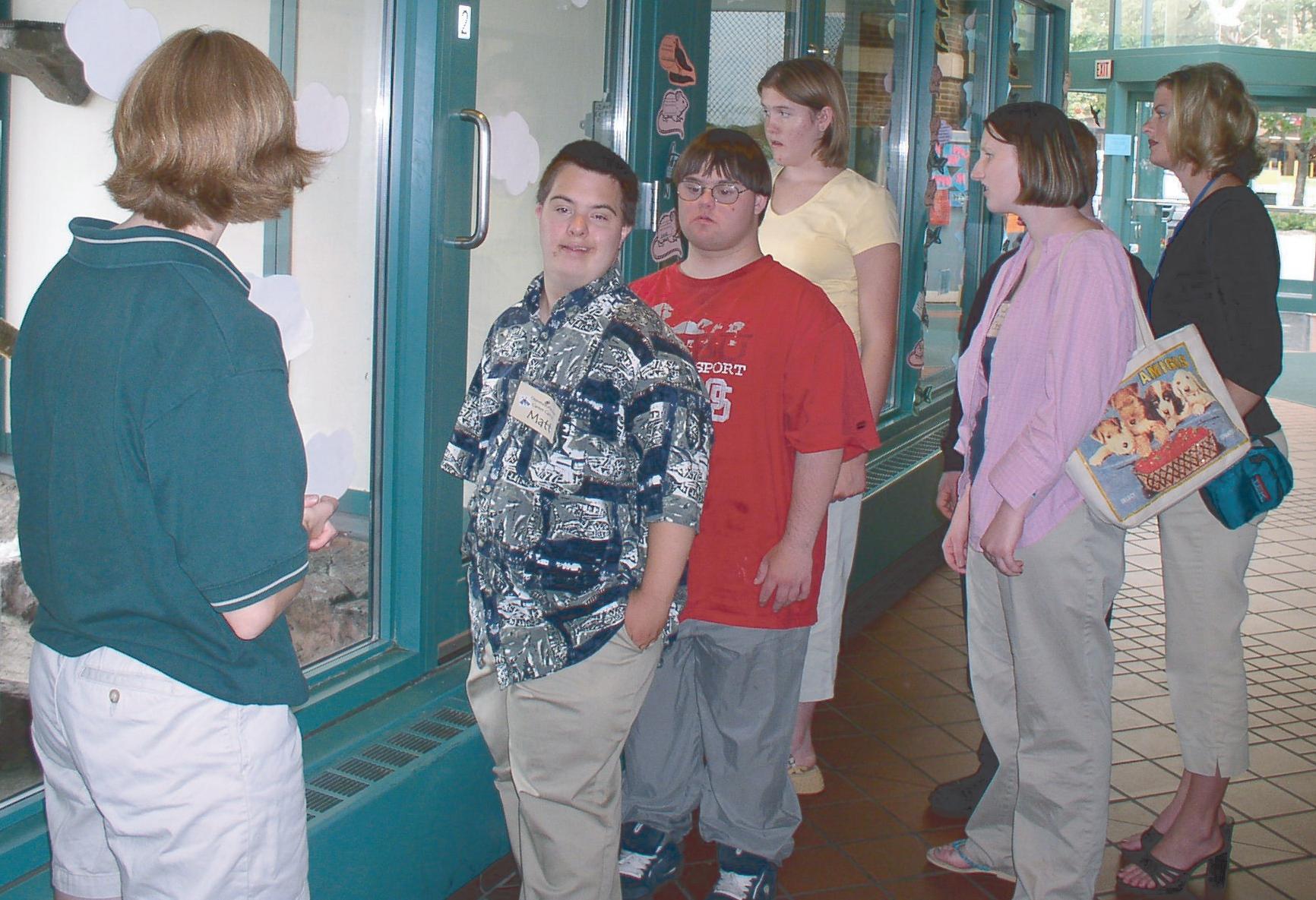
The camp, geared for students ages 16-21, is exciting because it offers something new each day for students. The camp covers many activities such as filling out job applications and interviewing successfully. It also includes tours of companies throughout the community. “The employers share with our students what they are looking for when they make a hiring decision, and how to make the best impression during an interview,” McGinley said.
“We are fortunate to have supportive employers who are eager to help with a project such as this.”
Last summer’s tours included ECMC Group, Seasonal Concepts’ corporate distribution center, Fairview Southdale Hospital, US Bank, Minnesota Public Radio, Classic Provisions, Inc., and the U of M Raptor Center.
Jayne Spain, transition specialist for the Minnesota Department of Education, said, “I believe this is an incredible program for youth and want to support it as best I can.”
In addition to visiting local companies, students discuss what types of jobs appeal to them and their career goals.
“We use a game show model for an activity that teaches job concepts, and we do an exercise where the students play the role of a manager critiquing applicants who are really staff dressed up—some appropriately, some not so appropriately,” McGinley said. “Students learn professional attire is important in making a good impression.”
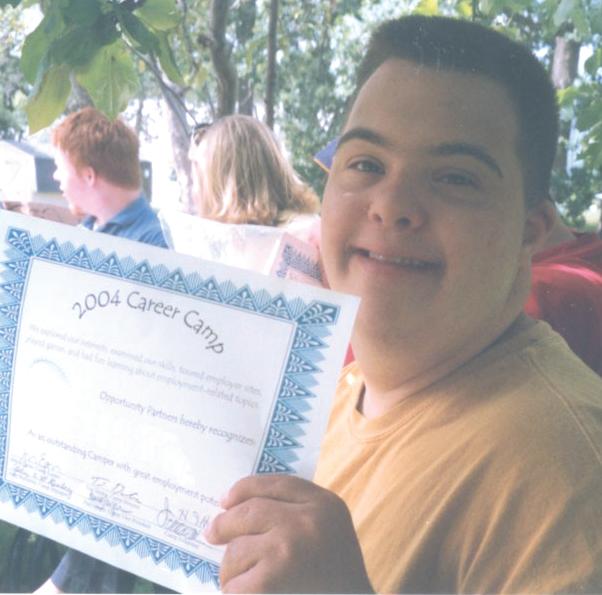
Matt, a participant in Opportunity Partners’ Career Camp, shows off his certificate after completing Career Camp in summer 2004.
field trips. I learned what jobs I might be interested in doing.”
The cost for Career Camp is $400-$600 per session, depending on staff support required. The camps run Monday through Thursday for two weeks (eight days total from 9 a.m. to 3 p.m.) and will be based out of Opportunity Partners in Minnetonka and Crooked Lake Branch Library in Coon Rapids. Transportation options are available.
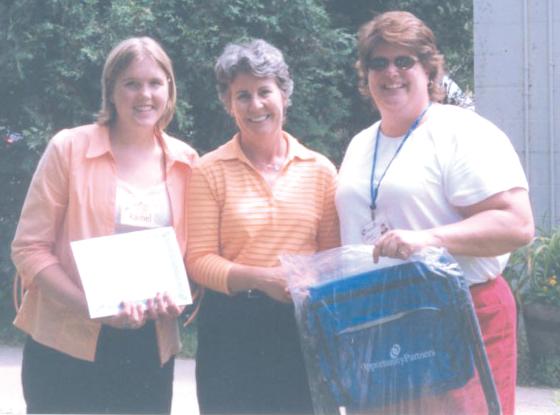
Camp participant Rachel (far left) is congratulated by Kathy Kukielka, Opportunity Partners’ vice president of development, marketing and communications, and Julie McGinley, Opportunity Partners’ manager of transition services.
The students who participated last summer found the experience fun and informative, McGinley said. “My favorite thing at Career Camp is going to other work sites because it gives you some ideas about different jobs,” said Sean Maher, who was a camper last summer. Camper Laura Casey added, “Career Camp was so much fun! I learned so much from going on the different
Sponsors of Career Camp include the Patrick and Alice Rogers Family Fund of the St. Paul Foundation, SUPERVALU Foundation, St. Louis Park Community Foundation, Kopp Family Foundation, Richfield Rotary Foundation, Rosemount, Inc., and LiebermanOkinow Foundation.
Opportunity Partners’ Career Camp will hold an information day with activities for potential campers on Monday, Jan. 17 (Martin Luther King Jr. holiday) from 9:30 a.m. to 1:30 p.m. at Opportunity Partners in Minnetonka. Reservations are required. Contact Julie McGinley at 952-930-4277 or via email at jmcginley @opportunities.org . More information on Opportunity Partners is available at www.opportunitypartners.org
by Xxxxxx
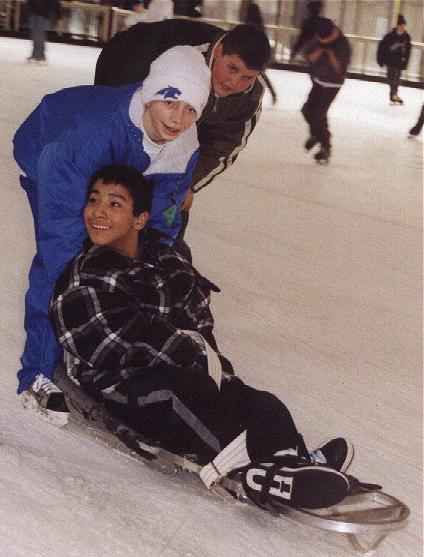
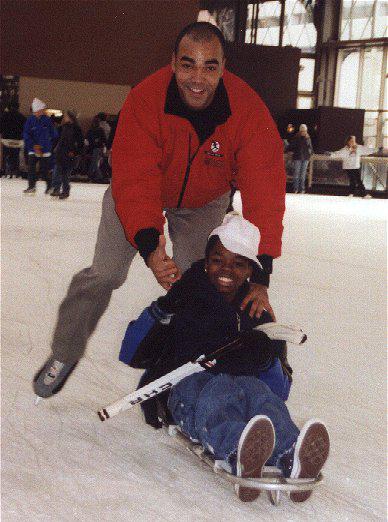
Lloyd Thompson had never used an ice sled before but that didn’t make any difference to the Webster Elementary student. Within minutes after he arrived at The Depot Ice Rink in downtown Minneapolis on Dec. 14, he was out on the ice. Using hand held picks, he skated his way around the rink and never looked back.
Thompson and six other students from an adapted
physical education class were part of an outing arranged by Courage Center and the Minneapolis Public Schools. The children with disabilities ranged in age from kindergarten up through 8th grade from either Harry Davis Academy or Webster Elementary. Also spending the morning at The Depot were some 60 ablebodied students from Dakota Hills Middle School in Eagan, who had made their own arrangement to go ice skating.
“Our kids thoroughly enjoyed the outing and so did our staff and parents,” said Ryan Anderson, a DAPE (Developmental Adapted Physical Education) teacher with the Minneapolis Public Schools.
“We are always looking for new recreational activities for our students and this fit the bill. We don’t have the type
of equipment and experience that Courage Center has for children with disabilities so this was a great opportunity for the kids.
“The interaction with the other school was great, especially when those students started skating with our kids and pushing the ice sleds. After the outing, our students were able to go back to school and tell their peers they went ice skating just like everyone
else. It was a selfconfidence builder and it was empowering.”
For the past few years, Courage Center has been partnering with the Minneapolis Public Schools to bring program opportunities to its students with disabilities, such as archery and downhill
skiing. “This is the first time we had a skating event with the school children,” said Janelle Spoden from Courage Center Sports & Recreation, which supplied the ice sleds.
“The staff at The Depot who helped us out with this event were really phenomenal. They made ice skating a great experi-
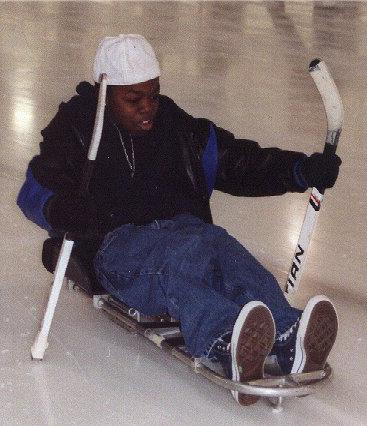
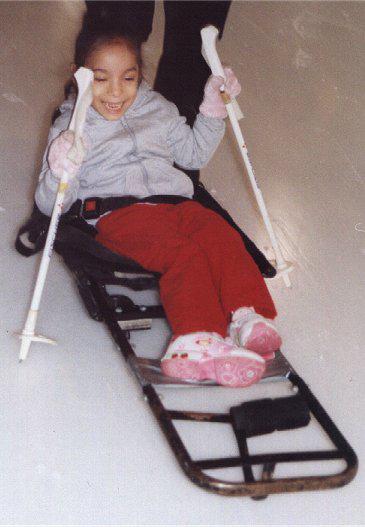
ence for the kids from the Minneapolis Schools as well as the kids from Eagan. And meshing the groups together is just what we like to seeboth groups of kids, all of varying abilities, learning from each other and playing together.” ■

based on our individual circumstances and needs.
People with disabilities are no different. It is largely a question of the type, degree, and frequency of customized support they need to achieve their goals. To say it simply, people with disabilities are navigating life’s journey just like the rest of us.
If you buy my argument, then how shall we communicate about the work we do? My personal preference is that we consider adopting the term customized employment. Why?
Individualizing the employment relationship to meet needs
Customized employment is a new initiative launched by the Department of Labor, Office on Disability and Employment Policy (ODEP). According to ODEP, customized employment means “individualizing the employment relationship between employees and employers in ways that meet the needs of both. It is based on an individual determination of the strengths, interests, and needs of the person with a disability, and is also designed to meet the specific needs of the employer.” This is a simple but accurate description of the core work that needs to be done.
The idea of “customization” is taken from Title I of the federal Work Investment Act (WIA). WIA communicates the importance of “universal design and access” for all Americans who need assistance with their employment preparation and job search. In a similar way, provisions of the Americans with Disabilities Act (ADA) and Individuals with Disabilities Education Act (IDEA) acknowledge a need for “customizing” by identifying rights to reasonable accommodation and
opening access to public services, buildings, employment, and community activities that are enjoyed by all Americans.
In other words, people with disabilities don’t really need to be “fixed.” Rather, they need opportunities and access to customized supports to increase and enhance fuller participation in their communities. The truth is that many of the barriers they encounter have less to do with themselves than obstructive public policies, misguided use of funding, and a lack of universal access to education, recreation and leisure, employment, buildings, and services. We need more than token “cut-out ramps” in our curbs. We need to “ramp up” public attitudes and pursue a new vision.
A recent national study by the University of Massachusetts’s Institute on Community Inclusion (ICI) revealed that only 32 percent of people served by community rehabilitation programs (CRPs) work in integrated jobs. Almost a third of participants served by CRPs nationally are enrolled in non-work programs. We need to give up on this idea that people with disabilities only benefit when they are served by CRPs. We have neither the resources nor expertise to be a one-size-fitsall program for every American who has a disability. We need to stop viewing rehabilitation as an “industry” because this very idea perpetuates unwanted dependency of people with disabilities on our services.
What is our role? Our core objective should be to connect people with their communities and create opportunities so they can obtain the employment, wages, and community integration they want and need.
Challenging employers to be full partners in the process By using this logic, agencies like Rise can liberate themselves from their current roles as CRPs. We can then move forward in new roles as “customized employment providers,” and (re)habilitation programs that do not have an employment emphasis can assume new roles as “customized service providers.” In each instance, we support the idea that people with disabilities belong and should be embedded in their communities. This means creating opportunities for integrated employment in the job market for everyone who wants to work. It also means challenging employers to become full partners in the process. Finally, it means helping people identify and then customizing the supports they need to develop and use their full human potential.
A matter of semantics? The world as we know it will not change because we choose to give up branding our services as “rehabilitation.” And to be sure, such sweeping changes would require laborious language and service amendments in federal legislation as well as state and local funding statutes.
That being said, I believe changing our public message with a new vision is worth the effort. The time has come for us to “rehabilitate” rehabilitation. Let’s begin this transformation by humanizing and changing how we talk about this important work we do. ■
Editor’s note: Don Lavin has been with Rise, Inc. since 1976 and currently serves as its Vice President. He received his master’s degree in vocational rehabilitation from the Minnesota State University, Mankato. His commentary originally appeared in the October 2004 edition of the Rise Reporter.

1/15/2005
Project KITEUsing Visuals and Graphics to Support Inclusion
Sponsor: PACER
This KITE workshop is the third of five in a series for parents and professionals. It teaches learners to use images, graphics, and text to support includive classrooms.
Cost: FREE
To register for the workshop call PACER at 952-838-9000 or 952-838-0190 (TTY).
Loc/Time: PACER Ctr, 8161 Normandale Blvd., Mpls, MN
1/18/2005
Celebrating Iraqi Culture: A Legacy to the World, People, Tradition & Transition
Co-Sponsored by The MultiCultural Development Ctr and The Metropolitan Airports Commission
Keynote presentation by Dr. Abbas Mehdi entitled “A Long Road to Peace: The Future of Iraq.”
Cost: MCDC Mbrs $35; Nonmembers $45; Students $25
Loc/Time: The Landmark Ctr, 75 W Fifth St, St Paul, MN 5:30 to 8:30 pm. For directions, visit http:// www.landmarkcenter.org/ generalmain.html#anchor9718124
For more info contact MCDC at 952-881-6090 or by e-mail at info@mcdc.org
1/20/2005
Ethics, Genetics & Disability
This conference is the third in a series on disability intended to bring together faculty and community representatives who share an interest in disability issues for the purpose of furthering our insights and potentially creating an agenda that will form the basis for ongoing collaboration. See more info in At A Glance on page 9 Loc/ Radisson Hotel Metrodome, 615 Washington Ave S.E., Mpls, MN Time: 9:00am to 3:30pm There is no registration fee for this conference, but registration is required. For info, contact Jake Priester at the Ctr on Aging 612-626-3549.
1/20/2005 - Rescheduled from November 16, 2004 “How I Found Hope on a Harley” or, “How Bowling Saved Me from the Asylum” The Mtka School District is pleased to invite you to a community-wide event featuring Pete Feigal 2004 Courage Ctr Judd Jacobson Memorial Award Winner and nationally-known speaker and trainer.
Pete will share his personal story using humor and heartbreak to examine insights gained from over 30 years of battling depression. “Conflict and struggles are moments that define us. We need to focus not on our wounds, but
on what we LOVE.” Small donation requested. A mental health info resource fair and door prizes of Pete’s spectacular art work will be available. This event is cosponsored by Children’s Mental Health Collaborative, Americana Community Bank, Beacon Bank and First MN Bank. For info contact Janis Wack at janis.wack@minne tonka.k12.mn.us
1/29/2005
Second Annual HOT Party
Sponsored by: PACER, Target, Space150, Rudolph’s Bar-B-Que, Fox 9 KMSP and the MN Twins
There will be dancing & music by the Boogie Wonderland.
Loc/Time: Marquette Plaza in Dwntwn Mpls; 7pm to 12am.
Cost: $50 per person
For more info, contact PACER at 952-838-9000 or visit www.pacer.org.
1/31/2005
Free Poetry Contest Sponsor: www.poetry.com
The Int’l Library of Poetry will be awarding over $58,000 in prizes. Poets from St. Paul esp. beginners are welcome to win over 250 prizes.
Cost: FREE and open to all.
To enter, send ONE original poem: The Int’l Library of Poetry, #19921, 1 Poetry Plaza, Owings Mills, MD 21117.
Loc/Time: Entries must be postmarked or sent via the Internet by January 31, 2005. www.poetry.com
Other Info: The poem should be 20 lines or less, and the poet’s name and address should appear on the top of the page.
2/1/2005 - 2/2/2005
Careers Conference 2005: Developing Careers, Changing Lives
Sponsor: Ctr on Ed. and Work at the U of WI-Madison
Loc: Marriott Madison W. Scholarship funds available for qualified educators. For conference info, including scholarship application, visit http://www.cew.wisc.edu/careers/cc2005/scholarships05. asp
2/7/2005
IBM Web Adaptation Techology
Sponsor: PACER
This workshop offers a handson demonstration of Web software that dynamically manipulates Web content to make websites more accessible to individuals with disabilities.
Cost: FREE - Register early space is limited
To register for the workshop call PACER at 952-838-9000 or 952-838-0190 (TTY).
Loc/Time: PACER Ctr, 8161 Normandale Blvd., Mpls, Mn 55437 Time 6pm to 8pm
2/15/2005
Third Annual Research Dinner and Program
Sponsored by: National Alliance for the Mentally Ill of MN and the University of MN
Loc/Time: Radisson Roseville
Cost: Tickets are $35
For more info contact NamIMN at 651-645-2948 or go to www.nami.org/namimn
3/14 - 15/2005
Call for PresentationsSecond Annual Care and Treatment Education Conference
The conference will be held at Cragun’s Resort and Hotel in Brainerd, MN. For more info contact MaryBeth Schafer at Marybeth.schafer@state.mn.us or 651-582-8818. Proposals are due December 10, 2004.
MAY 9-13, 2005
“Building Brighter Futures for People with Developmental and Learning Disabilities” Sponsored by: YAI/National Institute for People with Disabilities Network
Loc: Crowne Plaza Manhattan Hotel, 1605 Broadway, in New York City. The five-day conference will feature more than 300 prominent speakers from throughout the United States and abroad. More than 150 seminars and workshops will focus on key issues, including:
Advocacy/Self-Advocacy, Aging and Dementia, Challenging Behaviors, Clinical Issues, Day Services, Early Childhood, Employment Training and Placement, Family Support Services, Health Care, Management, Psychopharmacology for Non-Medical Staff, Recreation and Leisure, Residential Services, Sexuality and Social Skills, Special Education, Staff Training, Technology, Transitional Services, Workforce Issues A separate social work conference, focusing on research, practices and new developments in the field, also will be held at the Crowne Plaza from May 911. A full-day post conference workshop focusing on critical issues in developmental and learning disabilities will be held on Friday, May 13. For more info about either conference or to request a brochure, please call Tina Sobel at 212-273-66457 or Aimee Horowitz at 212-2736255. You may also fax your request to 212-629-4113. Beginning in March, you can view the international conference brochure and register for the conference at www.yai.org ■
by Michael Valencia
Medtronic, Inc., headquartered in Minneapolis, had a successful 2004 partnering with the local Business Leadership Network (BLN). The US Business Leadership Network is a national organization that supports the development and expansion of Business Leadership Networks across the country, serving as their collective voice. The USBLN recognizes and promotes best practices in hiring, retaining and marketing to people with disabilities throughout the United States. Local Business Leadership Networks have been developing across the country since the first pilot program was launched in 1994. Presently there are 37 chapters throughout the country, including the Minnesota Chapter that meets monthly at the Medtronic World headquarters facility in Fridley.
Throughout 2004, the MNBLN offered training sessions to businesses on various topics of interest. The Em-
ployers Association provided training on “Disability in the Workplace, A Competitive Advantage.” Attendees gained an understanding of how employing people with disabilities can contribute to an organization’s bottom line in many ways. Participants also learned that the actual costs of reasonable accommodation typically range from zero dollars to a minimal investment. American Express Financial Advisors disAbility Network sponsored a session on “Understanding, Managing and Accommodating Hidden Disabilities,” which addressed the issue of the need to raise awareness and provide more information on disabilities.
Statistics show that the number of people with disabilities is on the rise. In 1994, the census indicated that one in five Americans has a disability. By 2010, the census projects that one in three Americans will have a disability. The session also pointed out that people fre-
quently don’t think about or understand hidden disabilities because of a lack of information and education.
Medtronic hosted “Minnesota Career Development for the 21st Century” in October in conjunction with Disability Employment Awareness month. The event was attended by college students with disabilities as well as representatives from 3M, American Express Finacial, Cargill, Northwest Airlines, Federal Executive Council of Agencies, Minnesota Department of Employment and Economic Development and the State of Minnesota. Senator Debbie Johnson, who was instrumental in securing Governor Pawlenty’s proclamation of Disability Mentoring Day in the state of Minnesota, was a special guest. Keynote speaker Olegario Cantos VII, Special Assistant-to-Assistant Attorney General R. Alexander Acost, presented his thoughts on the “Power of Perseverance.”
The Minnesota BLN is dedicated to the vision of every employer recognizing and benefiting from the best practice of including people with disabilities in their workforce and marketplace. To serve a diverse market, businesses must provide products and services expected by their customers by finding the right combination of employees, products, services and suppliers. Whether an organization wants to maximize tax incentives, develop an employee base with aboveaverage loyalty, take advantage of creative solutions to important business needs, or maintain compliance with an affirmative action plan, employees with disabilities remain a critical resource. Medtronic is proud of its relationship with the Minnesota BLN, the work done in partnership in 2004 and looks forward to continued success throughout 2005.
For more information on becoming involved in the leadership that makes change
occur so that hiring people with disabilities becomes a priority and barriers to employment become dismantled, please contact the Minnesota Business Leadership Network at www.mnbln.org for more information.
Medtronic, Inc., headquartered in Minneapolis, is the world’s leading medical technology company, providing lifelong solutions for people with chronic disease. Medtronic’s internet address is www.medtronic.com ■
The Minnesota Office of the Secretary of State is pleased to announce and cordially invite you to attend a special preview showing of currently available state-of-the-art accessible voting equipment.
The voting equipment demonstrations will be held:
Date: Friday, January, 14, 2005 Time: 10 A.M. to 7 P.M.
Place: Room 181 in the State Office Building 100 Rev. Dr. Martin Luther King Jr. Blvd St. Paul, MN 55155
Interpreter service will be available from 10 AM to noon and again from 5 PM to 7 PM. Please RSVP to Kathy Sibbel at (651) 201-1328 (Phone); 1-800-627-3529 (TTY) or Kathy.Sibbel@state.mn.us if you will be using this service.
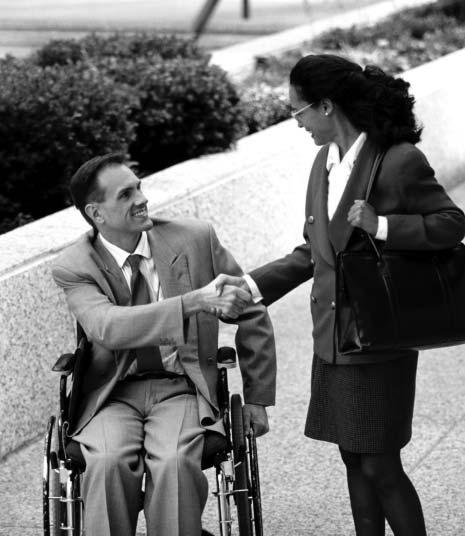

At Medtronic, we provide lifelong solutions to people with chronic disease, impacting a life every 6 seconds.
As one of Fortune magazine’s “Best 100 Companies to Work For in America,” Medtronic is committed to the total well-being of our employees.
We are looking for top talent at all levels in:
• Engineering – Electrical, Software, Firmware, IC Design, Product, Test, Quality, Mechanical, Manufacturing, Biomedical, Biomaterials; Six Sigma certifications a plus
• Information Technology – Managers, Business Systems Project Leaders, Analyst, Programmer/Analyst
• Clinical Studies/Regulatory Affairs
• Finance
• Sales/Marketing
Review openings at www.medtronic.com/employment and select “Apply to this Job” or “Add to Cart” to route your resume directly to the hiring department.
With people like you, who have purpose, potential and passion, we’ll supply physicians and their patients around the world with the means to extend life, restore health and alleviate pain. Medtronic is an equal opportunity employer committed to cultural diversity in the workforce.
Join Medtronic today...and experience a passion for life.

Mark your calendars for Day at the Capitol; look for a brochure by e-mail or mail
Disability Day at the Capitol is set for Thursday, January 27, 2005. The Arc of Minnesota is holding this day of education and advocacy with cosponsors Advocating Change Together, Brain Injury Association of Minnesota, PACER Center, People First of Minnesota, and United Cerebral Palsy of Minnesota. Brochures will be mailed to local chapters and to past attendees this week. The brochure will also be available before Christmas on our web site at www.arc minnesota.com. We have made some changes from last year’s event: cutting the cost in half (from $30 to $15 for Arc members and self-advocates); starting the event at 10 a.m. instead of 9 a.m.; and holding breakout sessions on specific issues later that morning. After lunch, there will be a press conference at the State Office Building, and attendees will have a chance to visit legislators that afternoon. For more info, contact Mike Gude at arcmn113@ yahoo.com.
Free dental care available to those who cannot afford it
Volunteer dentists and other dental professionals across Minnesota will donate time and resources for the “Give Kids a Smile” program on February 4-5, 2005. This effort, coordinated and led by the Minnesota Dental Association, provides dental care to children whose families don’t have the financial resources. All patients must make appointments beforehand to receive these services. After Jan. 1, 2005, parents may call United Way 211 (just dial 2-1-1) or 800-5437709. Operators will help parents find a participating dental office in their area. After Jan. 1, a! list of participating dentists who are taking appointments will be available at www.mndental.org. Children must be under age 18 and can obtain check-ups, sealants, fluoride treatments, fillings, or even more involved care.We understand that appointments are limited and fill quickly. If you know families who have children with disabilities who could benefit, encourage them to call as soon as possible after January 1st. Go to www.mn dental.org for more information.
This grant provided by the Robins, Kaplan, Miller & Ceresi Fund of The Minneapolis Foundation will focus on building an innovative website with valuable information for children in second to sixth grade who are being bullied or those who witness it. Children with disabilities are particularly vulnerable to physical, verbal, and social abuse from their peers. For more info, call PACER at 952-838-9000; toll-free 800-537-2237 or 952-838-0190 (TTY). Or visit the PACER website at www.pacer.org.

Community Forums Through The Minnesota Disability Law Center (MDLC)
MDLC, through Protection and Advocacy for Voting Access, funded by the federal Help America Vote Act (HAVA) will be hosting a series of community forums throughout the next year for the disability community called, “Voting and Policy Issues Community Forum for People with Disabilities”. The purpose of these forums is to provide information on HAVA, address how people with disabilities can access voting, and allow local elected officials to hear concerns from the disability community. The first forum of this series is scheduled for February 23, 2005 at 6:00-8:00 PM. Location/Time: River Hills Mall Community Room, 1850 Adams Street, Mankato, MN. The event is free and open to the public. If would like more information, please contact Diane Winegar at (507)345-7139, or Mai Thor at (612)746-3716, mthor@midmnlegal.org.
The National Alliance for the Mentally Ill in Minnesota (NAMI-MN) will hold two programs to help families whose lives are impacted by mental illness. The programs begin February 8, 2005.
The Visions for Tomorrow program is an eight week class that teaches parents and caregivers about brain biology, mental illness, coping and self-care, problem management and advocacy.
Kidshops supports children ages 7-18 who have a sibling or parent living with a biological brain disorder (mental illness). Through Kidshops children and adolescents will have an opportunity to meet other children and discuss common concerns and joys experienced when a family member has mental illness.
The two programs will be held at the Hancock Recreation Center, which is located at 1610 Hubbard Avenue in St. Paul. For more information contact Shelley White at 651-645-2948 or by e-mail at swhite@nami.org.
The ABCs of Guardianship and Conservatorship helps families make informed decisions about appointing a guardian or conservator for a person with a disability. The three part workshop focuses on Accessing the Need, Navigating the Process and Assuming the Responsibilities.
The Sessions will be help February 1, February 8, and February 15 from 6:30 to 8:30 pm at the Chanhassen Recreation Center at 2310 Coulter Boulevard in Chanhassen. The cost is $5 per person for Arc members and $10 per person for non-members. To register or to get more information, call Arc at 952-920-0855.

Announcing the third in a series of conferences on disability.
Ethics, Genetics and Disability January 20, 2005 9:30AM to 3:30PM (registration at 9:00AM) Radisson Hotel Metrodome 615 Washington Avenue S.E., Mpls, MN
This conference is the third in a series on disability intended to bring together faculty and community representatives who share an interest in disability issues for the purpose of furthering our insights and potentially creating an agenda that will form the basis for ongoing collaboration. This conference will explore: (1) allocating finite disability resources across competing demands; and (2) disability-related ethical issues raised by recent advancements in genetics. Disability needs exceed available resources. Relatively unexplored are the criteria and processes for allocating finite resources across competing disability needs and for balancing disability with other societal needs, as well as the appropriate role of cost considerations in the design of programs to protect the civil rights of persons with disabilities. Genetic advancements may fundamentally alter the concept of disability and what it means to have a disability. Genetic testing can offer a glimpse into someone’s future health and provide unprecedented opportunities for prevention. But predictive information about common diseases could also be misused by insurers, employers, and other third parties. There is no registration fee for this conference, but registration is required. For more info, contact Jake Priester at the Center on Aging 612-626-3549.
The National Alliance for the Mentally Ill in Minnesota (NAMI-MN) is offering classes for Minnesota families who have a relative with a mental illness. The twelve week classes are provided at no cost to the participants. This class is taught by trained family members who can contribute ideas and knowledge from thier own experience and who truly understand the issues faced by families attending the class. Classes are being offered in St. Paul, New Ulm, Maple Grove, Eden Prairie, Duluth, and Red Wing. For info about the upcoming class in your community, contact NAMI-MN at 651-645-2948 or 1-888-473-0237.
The Alliance for Technology Access (ATA) has updated their book entitled Computer Resources for People with Disabilities: A Guide to Assistive Technologies, Tools and Resources for People of All Ages. This book was written to inform, inspire, and empower people with disabilities to obtain equal access, and is also meant for families, friends, employers and professionals. For more information please contact Jillian Steinberger at 510-865-5282 ext. 309 or at publicity@hunter house.com.
News - cont. on p. 13

Goodwill/Easter Seals is not just a retail store, they also offer training programs for people to achieve independence and to achieve their goals. These programs assist people in learning and demonstrating technical skills in the areas of: Automotive Services, Bank Skills, Construction Skills and Retail Skills. If there are any questions, or you would like more information contact Jamie Morrow at 651379-5887 or contact their workforce training hotline at 651379-5997.
The Friends Book Store in the downtown Minneapolis Public Library and the Washburn branch library are looking for friendly, committed volunteers. Volunteers work once a week or twice a month for approximately three hours at a time. For more info, call the Friends of the Mpls Public Library, Volunteer Services at 612-630-6173 or 612-6306170.
Daniel S. Hanson, A National Alliance for the Mentally Ill of Minnesota (NAMI-MN) member has written a book about his sons struggle with a severe mental illness. Room for J is about a families struggle to cope with the unpredictability and unfairness of schizophrenia. For more information contact, Daniel at 763-420-6994 or for a copy of the book contact Beaver’s Pond Press, Inc., at 952-829-8818 or at their website at www.BeaversPondPress.com
The Ms. Wheelchair Minnesota Organization is excited to announce plans for the 2005 pageant. The pageant will take place on March 12, 2005 at the Maple Grove Senior High School.
Women who have resided in Minnesota for at least six months and utilize wheelchairs in daily life, ages 21-60 are encouraged to enter the Ms. Wheelchair 2005 Pageant and compete for the opportunity to represent Minnesota at the Ms. Wheelchair America 2006 Pageant next July in Albany, NY.
Applications to be a contestant in the Ms. Wheelchair Minnesota 2005 Pageant can be obtained by contacting the Ms. Wheelchair State Coordinator, Jen Onsum through the Ms. Wheelchair Minnesota website at www.mswheelchairmn. org
T
he Brain Injury Association of MN provides safety and prevention information at events throughout the year. Resource fair volunteers distribute information on topics like helmet use, Association programs, and resources for persons with brain injury and their family. This is a great opportunity for people who want to volunteer on an occasional basis. A one-year commitment is expected but the number of hours and schedule is flexible. For more information about this or other volunteer opportunities, please contact Kimberly at 612-3782742 or kimberlyf@braininjurymn.org.
Program Helps Young People with Disabilities Gain Social Skills For Adult Life
Becoming People Smart helps students build “make or break” skills for being socially safe and successful when they leave school and begin taking steps such as getting a job, moving away from their family home and pursuing interests of their own. Becoming People Smart is a series of three classes that will be held February 1, March 1, and April 5 at Chaska High School located at 545 Pioneer Trail in Chaska. The cost of the sessions are $5 per session for Arc members and $10 per session for non-members. To register or for more information, contact Arc at 952-920-0855 or visit www.archennepincarver. org
Lifetracks hosted Betty McCollum and the honored employers on December 2, 2004 at their Annual Lifetrack Employer Celebration.In an environment and economy where many applicants are vying for the same position, ten employers demonstrated their ability to improve our community by employing people with disabilities or barriers to employment.
Exceptional Example in Providing Reasonable Accommodations was awarded to Kentucky Fried Chicken on the East Side of St. Paul for demonstrating flexibility, innovation and understanding in providing reasonable accommodations to employees with disabilities.
Embracing Cultural Diversity in the Workplace was awarded to Hyatt Regency Minneapolis for continually hiring employees from other cultures and adapting as an organization to reflect their changing workforce.
Proactive Community Leadership was awarded to Fairview Health Systems and St. Paul Public Libraries for taking proactive strides to improve the lives of people in our community through recruiting, training, retention and advancement.
Civic Involvement to Advance Employment Opportunities for People with Disabilities or Disadvantages was awarded to the Minneapolis Hilton Hotel for significant civic involvement to promote hiring people with disadvantages or disabilities in the workplace.
Diamond Products and Smurfit-Stone Container Corporation were honored for continuously providing Packaging First with subcontract packaging and assembly work.
The Minnesota Employment Center presented Helgeson Enterprises with the Providing Reasonable Accommodations Award and Barbara White with the Civic Involvement to Advance Employment Opportunities for People with Disabilities and Disadvantages Award.
Volunteer Opportunity –Brain Injury Basics Class Volunteers
The BIB class volunteer assists with “Brain Injury Basics” (BIB) classes by preparing refreshments, helping with room set up and greeting participants as they arrive at our office. This volunteer is key to providing a welcoming, helpful environment for class participants, many of whom are persons with brain injury and their family members. If interested, contact the Volunteer Coordinator at 612-378-2742 or kimberlyf@braininjurymn.org.
Volunteer Opportunity –I & R Outreach Volunteer
Looking for a way to volunteer in 2005? Want to help persons with brain injury who are searching for support, resources, information and services? Become an I&R Outreach Volunteer!
I&R Outreach Volunteers contact MN service providers by phone to learn more about their services and resources. They update this information in the Association’s computerized system. This work is key to providing accurate, helpful information and referrals to people with brain injury throughout the state. We offer a flexible schedule but ask for a minimum commitment of 10 hours. This can be a short term or long term volunteer project. Must be detail oriented and enjoy talking on the phone. Pleasant phone personality and strong data entry skills a must. Experience with Excel helpful but not required.
This is a great way to learn about service providers throughout Minnesota and gain or strengthen phone and computer skills. There is free parking at our convenient Northeast Minneapolis location. The Brain Injury Association of Minnesota is committed to providing a friendly, supportive, professional experience for its volunteers. If interested, contact Kimberly Ferencik at 612-378-2742 or kimberlyf@braininjurymn.org.
Thank you.
We are in need of a volunteer receptionist on Thursdays from 4:30 – 6:30 in January. Receptionist is key to creating a welcoming, helpful atmosphere for callers. Duties include answering incoming calls and directing them to the appropriate staff member, creating information packets, and other light clerical projects. This is an opportunity to work with caring, motivated professionals in a congenial environment while helping people affected by brain injury. We’ll provide training and there is free parking. Our office is in Northeast Minneapolis. Preference given to a person available for training on December 23 or 30.
We’re looking for someone with good oral communication skills who can work with minimal supervision. If interested, contact the Volunteer Coordinator at 612-378-2742 or kimberlyf@braininjurymn.org.
Five Secrets to Permanent Weight Loss will be presented at the Roseville Library (Hamline Ave. and County Road B, 2180 Hamline Avenue) on Monday, January 24, at 7pm. It is free to the public, and presented by the Wellness Education Foundation. This is a must attend workshop for anyone who is suffering from weight gain of for those who would like to lose those extra holiday pounds. Start your New Year with a new you! Learn tips and secrets for permanent loss, increased energy, improved metabolism, and for feeling younger. Participants will learn how metabolism and hormones may be the key to permanent weight loss and how you can naturally lose weight without drugs or fad diets. For more information, call 651-235-8200.
The Sports Health and Fitness EXPO is coming to the Minneapolis Convention Center. Mark your calendars, and register on-line to attend FREE! 170 unique exhibitors and three stages of speakers, presentations, demonstrations and healthy entertainment will be strutting their stuff, Saturday, February 5, from 10:00 am-9:00 pm, and Sunday, February 6, from 10:00 am-4:00 pm. Admission is $6 at the door, but free if you pre-register on-line.This event features resources for health conscience individuals and fitness enthusiasts, and well as professional and amateur athletes. Nutrition, exercise, natural products, weight control, strength training, endurance, apparel, fashion and integrated approaches to health and healing are all key components to an active and healthier lifestyle. On the court, or in the stands, if you are into sports, health and fitness, this event is a must. From archery to wrestling and everything in between- it’s all here! Admission is $6 at the door, or free with on-line pre-registration at: www.SPORTSandFITNESSexpo.com See it all at www.Media MaxEvents.com
The National Institute of Diabetes and Digestive and Kidney Diseases reports that just 33.5 percent of American adults are at a healthy weight and the percentage is falling.
In order to help families understand heathy weight options, the Open Cities Health Center will be holding the festival on January 19th from 10 a.m. to 1 p.m. to coincide with National Health Weight Week. The festival will be held at OCHC’s main site at 409 N. Dunlap Street. For more information on the OCHC’s Winter Fitness Festival call 651-290-9200. ■
24 Hour Home Care Services
Skilled nursing care in the privacy of your home.
We Accept All Reimbursement/Payment For More Information contact Daniel at 651-335-9980
The following performances will be Audio Described (AD) for people who are blind or have low vision, or Interpreted in American Sign Language (ASL) for people who are deaf or hard of hearing. Compiled by VSA arts of Minnesota, 612-332-3888 or http://mn.vsarts.org.
Mamma Mia! ASL: Sun, 1/ 16, 6:30 pm
Tix: $23-75; ASL or AD available if requested in adv: 612-339-7007, 612-373-5637, TTY 612-373-5655, hotline 612-373-5650; email acces sible@orpheum.com
Loc: Historic Orpheum Theatre, 910 Hennepin Ave. S., www.hennepintheatredistrict. com/servicesd.asp
Same Time Next Year AD: Sat, 1/22, 8:30 pm; ASL: upon request in advance
Tix: Play-only Reduced to half-price: $8 adults, $4 children; Dinner theatre cost extra; 701-235-6778, 877687-7469 Loc:Avalon Events
Ctr in downtown Fargo www.fmct.org
Scholastic’s “The Magic School Bus--Live” ASL: Fri, 1/28, 10:00 am & 7:30 pm Tix: 320-363-2556 or 320363-5777
Loc: Petters Auditorium, Benedicta Arts Ctr, College of St Benedict, St. Joseph www.csbsju.edu/finearts
Two Rooms AD: Sun, 1/30, 2:00 pm
Tix: $20, discounts for seniors/students; 612-333-3010
Loc: Theatre in the Round, 245 Cedar Ave., Mpls www.theatreintheround.org
Green Gables ASL: Sun, 1/ 30, 2:00 pm
Tix: $14, $11 age 2-17 & 60+; 952-979-1111
Loc: Hopkins Ctr for the Arts Mainstage, 1111 Mainstreet, www.stagestheatre.org
Oedipus ASL: Fri, 2/4, 7:30 pm; AD: Sat, 2/5, 1:00 pm (free tactile tour 11:00, reservation needed); Fri, 2/11, 7:30 pm
Tix: Reduced to $16; 612-3772224, TTY 612-377-6626
Loc: Guthrie Theater, 725 Vineland, Mpls www.guthrietheater. org
Home on the Mornin’ Train
AD/ASL: Sat, 2/5, 7:30 pm
Tix: Reduced to half-price; reg. $10, students 14 & under or seniors $8; please call in advance to confirm the service; 612-623-9080
Loc: Howard Conn Fine Arts Ctr, 1900 Nicollet Ave., Mpls www.youthperformanceco.com
The Violet Hour AD & ASL: Sat, 2/5, 8pm
Tix: Reduced to half-price; 651-291-7005
Loc: Pk Square Theatre, 408 St Peter St, St. Paul www.parksquaretheatre.org
Dancing with the Divine: Arts of India, Tibet, and Southeast Asia ASL: Sun, 2/ 6, 2:00 pm
Tix: admission charged to museum; interpreted tour is free; Visitor and Member Services, 612-870-3131 or TTY 612-870-3132, or email dhegstro@artsmia.org
Loc: Mpls Institute of Art, 2400 Third Ave. S., Mpls www.artsmia.org
A Chorus Line AD: Thur, 2/ 10, 7:30 pm
ASL: Fri, 2/11, 7:30 pm
Tix: Reduced to $17; 952563-8575
Loc: Bloomington Ctr for the Arts, 1800 W. Old Shakopee Rd. www.bloomingtoncivictheatre.org
Dames At Sea ASL: Thur, 2/ 10, 7:30 pm
Tix: $8 in advance (763-4223406); 30 min. before performance at the Box Office Loc: Anoka-Ramsey Com. College, 11200 Mississippi Blvd NW, Coon Rapids www.AnokaRamsey.edu
Joseph & the Amazing Technicolor Dreamcoat by: Andrew Lloyd Webber and Tim Rice; ASL: Fri, 2/11, 7:30 pm; Sat, 2/12, 7:30 pm Tix: $12, $10 students/seniors,
$14 box seats, 763-422-1838
Loc: Lyric Arts Main St Stage, 420 E. Main St., Anoka www.lyricarts.org
Sweet Charity ASL: Sun, 2/ 13, 1pm; AD: Sat, 2/19, 2pm Tix: $23-75 (on sale Dec. 5); ASL or AD offered if req in adv: 612-339-7007, 612-3735637, TTY 612-373-5655, hotline 612-373-5650; email accessible@orpheum.com
Loc: Historic Orpheum Theatre, 910 Hennepin Ave. S., www.hennepintheatredistrict. com/servicesd.asp
Prometheus Bound
ASL: Sun, 2/13, 2:00 pm
Tix: $13, $10 seniors/students, $6 UMD students/ children, 218-726-8564
Loc: Marshall Performing Arts Ctr, UMD Campus, 1215 Ordean Court, Duluth www.d.umn.edu/theatre
Ruby! The Story of Ruby Bridges ASL: Sun, 2/13, 2pm; AD: Tue, 2/15, 11am
Tix: $8, 651-225-9265
Loc: Weyerhaeuser Auditorium in Landmark Ctr, 75 W. 5th St., St. Paul www.steppingstonetheatre.org
The Invisible Man
ASL & AD: Sun, 2/13, 2pm Tix: 320-363-2556 or 320363-5777
Loc: Stephen B. Humphrey Theater, St John’s University, Collegeville www.csbsju.edu/finearts
Brooklyn Bridge
AD & ASL: Wed, 2/16, 10:30 am; Fri, 2/18, 7:30 pm Tix: Reduced; 612-874-0400
Loc: Children’s Theatre Co., 2400 3rd Ave. S., Mpls www.childrenstheatre.org
Queen of the Remote Control by Sujata Bhatt
AD & ASL & Captioning: Fri, 2/18, 8pm
Tix: Access tickets $18; 612338-6131 or boxoffice@ mixedblood.com
Loc: Mixed Blood Theatre, 1501 S. 4th St., Mpls www.mixedblood.com
Jack and Rochelle
ASL: Sun, 2/20, 2:00 pm Tix: $14, $11 children (age 217) & seniors (age 60+); 952979-1111
Loc: Hopkins Ctr for the Arts Mainstage, 1111 Mainstreet, Hopkins Web: www.stagestheatre.org
ARTiculations: A Puppetry Cabaret
ASL: Sat, 2/26, 8:00 pm Tix: $8-14 at 612-624-2345 via MRS or utheatre@ umn.edu
Loc: Nolte Xperimental Theatre at Rarig Ctr, University of Minnesota’s West Bank Arts Quarter, 330 21st Ave. S., Mpls Web: www.cla.umn.edu/theatre/season
Cont. from p. 3
For more information about this program, please feel free to contact I-Team members Nancy Sager, Bethany Campbell, or Jeffrey Nurick via telephone at 612-781-3114.
The I-Team is another Work In Progress (WIP) AmeriCorps Program. The focus of the WIP program is community integration and job placement. Funding for the program ultimately comes through ServeMinnesota, a nonprofit organization that cultivates private partnerships and funding support for Minnesota AmeriCorps and other service programs in education, public safety, human needs, environment and homeland security. WIP is a partnership between five organizations: Rise, Inc., Opportunity Partners, Consumer Survivor Network, AccessAbility, and Lifetrack Resources. Rise, Inc. serves as the legal host of the program.
Rise, Inc. is a private nonprofit corporation dedicated to building a community which is more accepting of all of its citizens. To meet their objectives, they support the development of the creative partnerships with businesses, government agencies, and the general public. Their mission
includes helping people with disabilities and other challenges increase their vocational self-sufficiency and productivity in addition to finding safe affordable housing. The organization offers a variety of programs focused on person-centered career planning, vocational training, job placement, supported employment, and housing support services so that people can work in the community, earn competitive wages, live safely and comfortably, and make a productive contribution to our society. The organization has assisted more than 13,000 Minnesotans since 1971. For more information about Rise, visit www.rise.org
AmeriCorps is a National Service program for adults of all ages, backgrounds, and abilities. It is sometimes referred to as the “domestic Peace Corps.” AmeriCorps members help solve community problems related to education, public safety, the environment, human needs, and homeland security by serving within non-profit and faith-based organizations throughout the country. For more information on the AmeriCorps program, visit www.americorps.org. ■



Multiple Items for Sale
•Suntec Electric Hospital Bed, like new condition, $450
•Pressure Guard Air Mattress, exc. condition, $500
•Versa Form Air Pillow, never used/new in box, $100
•Jazzy Custom Electric Wheelchair, new/never used, new $21,000, Make offer
•Quickie Manual Lightweight Wheelchair, excellent condition, $300
•Combination Commode/ Shower Chair 1 year old, $100
•Electric Hoyer Patient Lift, has new batteries, $300
•Manual Hoyer Patient Lift, one year old, $250
1998 Ford Handicap Conversion Van, 54,000 miles, exc. cond. with maintenance records, $15,000
•Dynamyte 3100 Computer, Augmentive Communication System with all the manuals, $3000
•Manual Hoyer Patient Lifter, very good condition, $150
All offers will be considered. Call Jerry at 612-927-7628 or 612-280-2286.
1989 Ford Econoline 150 van 75,000 miles, really good condition, has a wheelchair lift. Six-way power-seat. No hand-controls. $3,500 or best offer, call Access Press at 651-644-2133.
Minnesota Mobility: We specialize in affordable wheelchair vans. Contact us at 952746-1800.
Accessible 55+ Condo Wheelchair accessible 2 BR apartment in senior (55+ ) building in great Uptown location. Roll-in shower and other modifications all in place; parquet floors, 24-hour security; optional dinners served Tues.-Friday. Fantastic downtown view. Asking $155,000. Call 612-8012630 for appointment to see.
Gigi Pilhofer
Lewis Park Apartments: Barrier-free housing with wheelchair users in mind. Section 8 subsidized. Oneand two- bedroom units. For more information on availability call (651) 488-9923. St. Paul, MN. Equal Opportunity Housing.
Holmes-Greenway Housing: One- and two-bedroom apartments designed for physically handicapped persons. Convenient SE Minneapolis location. Call (612) 378-0331 for availability information. Equal Opportunity Housing.
Seward Square Apartments: We are currently accepting applications for our waiting list for barrier-free housing, in Minneapolis, that is federally subsidized. For an application, please call (612) 3382680. Equal Opportunity Housing.

RESIDENT SERVICES
COORDINATOR –Full-Time
CENTRAL COMMUNITY
HOUSING TRUST OF MINNEAPOLIS (CCHT), a nonprofit leader in providing highquality affordable housing, seeks two Resident Services Coordinators to join our team.
Responsibilities: Team with asset management and supportive housing staff to assist individuals and families in CCHT housing to maintain their housing and strengthen their lives. Responsibilities include: resident organizing, community organizing in various neighborhoods and program/agency collaborations to support resident needs. The specific goals of this position are defined by the issues and needs of residents combined with the strategic direction of CCHT.
Skills and Qualification: Two years related employment experience. Two year working with diverse populations. Skilled in the following: written and verbal communication, conflict resolution, creative problem solving, community organizing, and working with diverse groups and individuals. Demonstrated success in previous work experiences. One of the two candidates hired must be bilingual (Somali).
CCHT offers a professional, mission-driven environment with competitive salary and comprehensive benefit package. Visit us at www.ccht.org.
Please submit cover letter and resume by January 14th, 2005 to: Central Community Housing Trust Human ResourcesEmployment 1625 Park Avenue Mpls, MN 55404-1634 OR E-Mail: ccht@ccht.org Fax : 612-341-4208
Central Community Housing Trust values a diverse work environment. People of color and people with disabilities are strongly encouraged to apply. EOE
The City of Rochester is currently accepting applications to establish an eligibility roster for the position of Police Officer. This roster will be effective for one year. The Rochester Police Department currently has four (4) positions available.
MINIMUM REQUIREMENTS: Applicants must be MN POST licensed or eligible to be licensed as of January 15, 2005. Valid MN driver’s license. Excellent interpersonal communication skills and problem solving and decision making ability. Ability to establish and maintain effective working relationships and to work with citizens from varied ethnic, racial and economic backgrounds. Ability to pass a comprehensive background investigation, medical and psychological examination required as a condition of employment.
Applications will be accepted through January 10, 2005, 5:00 p.m. Written exam will be conducted January 24, 2005. An oral interview, a comprehensive background investigation, a thorough medical examination and psychological evaluation will be scheduled at a later date for qualified candidates. For an application or for additional information contact:
City of Rochester Human Resources Department 201 4th Street SE Rochester, MN 55904 (507) 285-8074 FAX 507/529-4504 www.rochestermn.gov
Equal Opportunity Employer
Regina Medical Center is a comprehensive healthcare facility conveniently located just 20 minutes SE of the metro area. In addition to competitive salary and benefits packages, Regina also offers an environment that encourages professional growth and development of your skills. For information on current openings, please call our Job Line at 651-4804226 or send your resume to: Regina Medical Center, 1175 Nininger Road, Hastings, MN 55033 AA/EOE. www.reginamedical.org

Limited income subscription: $10 I have an idea for editorial coverage. Please call me. I’ve enclosed my check for $25. Start my subscription. Send your advertising rates.
1821 University Ave. W. • #104S • St. Paul, MN 55104
Phone: (651) 644-2133 • Fax: (651) 644-2136 • e-mail: access@mninter.net Your help is crucial if Access Press is to continue being the
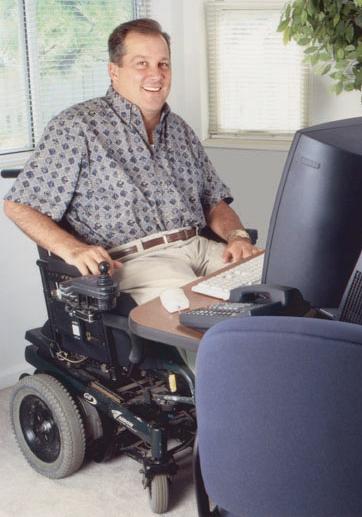

Thanks to the following sponsors for supporting Access Press this year. ---------------------------------- BRONZE SPONSOR ($75 and above) ----------------------
Steven P. Anderson
BASIC SPONSOR ----------------------------------------
AnonymousDorothy Balen
Martha BigalkMary BodnarCarl & Kathie Bryngelson
Daniel CasarMary CollinsLeAnne Dahl
Leroy deBoom Neil DoughtyJesse Ellingworth
Mary Frank-Wawokiyawin Robert GeldertCandace and David Gislason
Florentine Goulet, O.S.B.James GrimmPamela & Cullen Hamilton
Marjorie HammargrenEllie Heller Lois Hietala
David HopkinsDale JaniszeskiBeth Jensen
Karen JothenLuci KennedyKaren Kolodziejcvyk
Sister Jo Lambert
Barbara Larson
Melody Martian Ardis Meyer
Donn Poll Loren Rahn
Sean Leary
Kathy Moran
Kim Rezek
Elizabeth SmithPat ScottJohn Sherman
Gary WenishKatherine Zehringer
Arc Southeastern MinnesotaMN Clipping Service Native American Rainbow Network -------------------------------
FRIEND SPONSOR ($35 and above) ---------------------------
Lynda AdamsPaul AlthoffMary Andresen
AnonymousRick BenjaminVicki & Fred Benjamin
Janet Berndt Patrick Bilbrey
Maynard Bostrom Anita Boucher
Susan Blaylock
Susan Bulger
Denise CadyRick Cardenas Cheryl & Thomas Corcoran
Yoshiko DartTeresa DockBarbara Droher
Melvin & Georgia DuncanJesse EllingworthJo Ann & Steven Erbes
Nancy EustisDonn FeigalTom & Mimi Fogarty
Carla FrieseCraig Dunn & Candy HartMel & Georgia Duncan
Will & Mary EnglundSteven and Jo Ann ErbesLee Ann Erickson
Claudia FuglieMarge GoldbergMolly Gordon
Nadine GrovenJudith Haaversen Cary Hempel
Anne HenryEllen & Skip HoughtonJudy Hunt
Jim Jasper Cindy & Greg Johnson The Joyce Family
Barb KaneMary Kay KennedyCorbin Sherwood Kidder
Marie Wolff and Eric Kloos Anna KookEugene Kook
Ann Kranz Dawn KreutzGari Krogseng
Linda Larson Susan Lasoff Steven Laux
Lorene LeikindJohn MartyKelly Matter
Robert & Ardis MeyerSara & Gary MeyerKristi Michaelson
Steven MilesLiz MorqueDavid & Judona Musselman
Joe & Maureen MusselmanCliff OllilaMark Olson
William & Joen OverbyRichard PetersonMargery Pilhofer
Robert J. Geldert & Roberta PinkoshJulee Quarve-PetersonKelly Rathcke
Brian RogersAnn Roscoe James Ross
Patricia RydeenArthur SauterSue Singer
Diane SpragueJohn Skaalen Gary & LeAnn Taylor
William & Sara TrautzCandace WarneDon & Joanne Westergard
C. L. Wiehle Rachel Wilcox David Wood
Access to Employment All Home CaringAxis Healthcare
Blue Sky Designs Concordia University–Project Exceptional Freedom of Speech, Inc. Kaposia, Inc. MBW CompanyMRC National
Sue AbderholdenStephen AlarikAnonymous
Jeff Bangsberg Scott Bjerkesett Sandi Lane & Monte Blair
J.A. & Mary BlanchardRobert & Ann BrickWendy Brower
Steven BurrillScott Cady Cathy or Bill Carlson
Chernah CoblentzStephanie CunninghamDonn Feigal
Carol FuryM. Therese GockenbergLuther Granquist
Martha Hage Kathleen HagenCraig Dunn & Candace Hart
Roger A. HoffmanDianna KrogstadCarol & David Larson
Gregory Larson Linda LeichtTerri Ricci
Donna McNamara & Paul MonroeChristopher MeyerCliff Miller
Paul MuellerWilliam O’Dowd & George ZilligenAnn & Manley Olson
Scott Rostron Mark ShermanPatricia Siebert
Barb SmithBridget & Diane SmithJohn Smith
Erica SternEric and Caroline Stevens Peg Thomas
Peter Vaill Joani Werner Linda Wolford
Jerry WoodWilliam O’Dowd & George Zilligen
Brain Injury Assn of MNThe College of St. CatherineCommunity Involvement Prog.
Dept. of Occupat’l Therapy-U of M Equity Services of St. Paul Freedom Health Care, Inc.
Jay & Rose Phillips Family Foundation KAL MarketingLifeworks Services
Marketing by DesignMN Work Incentives ConnectionMerrick, Inc. No Place Like HomePat Siebert, MN Dis. Law Ctr.MN Diversified Industries TSE, Inc.US Bancorp Foundation
---------------------------------
SILVER SPONSOR ($150 and above) -----------------------
Jaime BeckerScott Beers Fred & Phyllis Benjamin
Michael BjerkesettLou BurdickRobert Buuck
Mike & Jan Chevrette Chris Duff Robert Gregory
Doris & John Groven Lori GuzmanRon Holstrom
Ronna Linroth Jim & Cindy Musselman Donna McNamara
John & Shelia MeyerPatricia Rogers, Ph.D.Dean Doering & Lisa Scribner
Kathy & Paul West
Arc Hennepin-CarverHousing LinkJoel McGuiggan Foundation
MNDACAMN Independent Living Services, MILSMN Rehabilitation Services MN Work Incentive ConnectionNational Alliance for the Mentally Ill of MN
PACER - Paula Goldberg ServeMinnesota!SW Center for Independent Living (SWCIL) UCare MinnesotaWe Do Care, Inc.
---------------------------------- GOLD SPONSOR ($350 and above) --------------------------
Shirley LarsonMargaret Perryman Kevin & Kathy Sullivan Fairview Tamarack Custom Seating and Home Medical Equipment Lottsa Tax & Accounting Services --------------------------- DIAMOND SPONSOR ($500 and above) ---------------------------
AnonymousMary Lou & Allan Burdick Wilber Frink In Home Personal Care Northwest Airlines Rapit Print Tamarack Habilitation Technologies
BENEFACTOR SPONSOR ($1000 and above) --------------------Bremer Foundation • Catharine C. Reid Fund of Headwaters Foundation for Justice Headwaters Fund • HECUA • Lynda Milne • The Medtronic Foundation Thomas & Lassiter Family Fund of The Minneapolis Foundation