BY LINDSEY
THE BEGINNER’S GUIDE TO
Our must-have field manual for learning the skills you need to stay safe—and have fun— beyond the ropes.
THE DENVER MAGAZINE NOVEMBER 2022 | 5280.com LIVING OFF THE GRID IN THE SAN LUIS VALLEY BY TED CONOVER SOLVING THE MYSTERY OF WHY A DENVER MAN WAS KILLED IN TEXAS 80 YEARS AGO BY ROBERT SANCHEZ AN IN-DEPTH LOOK AT COLORADO’S DEVASTATING FENTANYL CRISIS
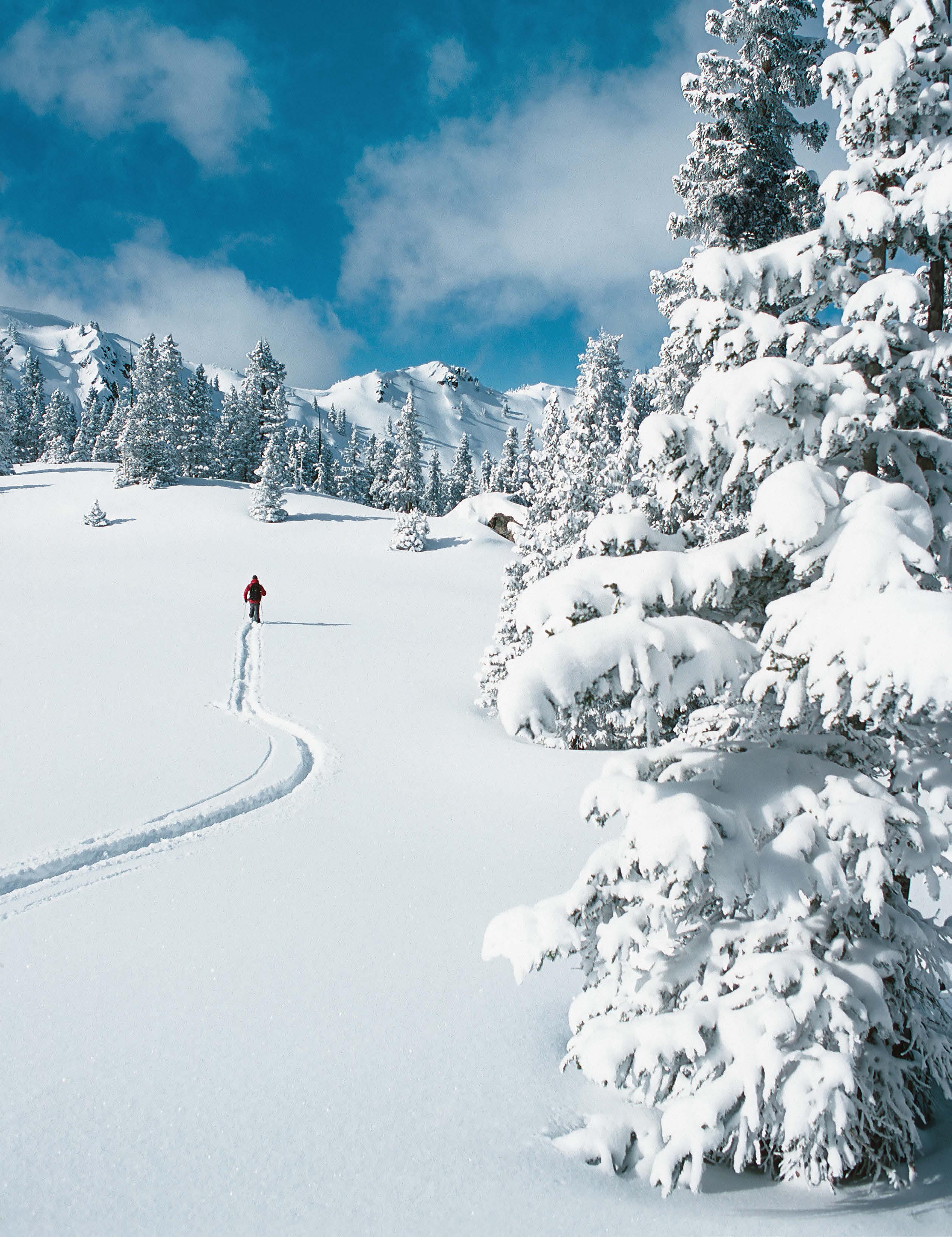
B. KING SKIING BACKCOUNTRY
GEAR GUIDE 30 Essential Adventure Goods From Colorado Companies


FEATURES
91,737 %
The percentage increase in fentanyl seizures in Colorado from 2018 through August 2022
60
Beyond The Boundary
From how to read avalanche forecasts to picking the right partners, here’s how to ski and board Colorado’s backcountry.
BY NICHOLAS HUNT
72
Why Did Walter Springs Die?
When a 24-year-old Denver soldier was killed by military police near his base in Texas in 1942, his family and friends suspected the official story wasn’t complete. They were right.
BY ROBERT SANCHEZ
78
Zoned Out
These 29 Colorado companies make gear for every environment, whether you’re car camping or headed into the high country.
EDITED BY NICHOLAS HUNT
90
One Pill Can Kill You
With more than 900 fentanyl deaths last year, it’s clear that Coloradans aren’t getting the message: This stuff is deadly.
 BY LINDSEY B. KING
102
Cheap Land Colorado
Five-acre homesteads with views of the Sangre de Cristos for $5,000 might sound like a bargain. But offgrid life in the middle of the San Luis Valley has a distinctly rough aspect.
BY TED CONOVER
Joni Schrantz
2 5280 | NOVEMBER 2022 NOVEMBER 2022



DEPTS.
COMPASS
15 ART
Jeffrey Gibson’s “The Spirits Are Laughing” at the Aspen Art Museum forces us to consider our relationship with the land.
16 HEALTH
Why ditching daylight saving time could be good for us.

18 BOOKS
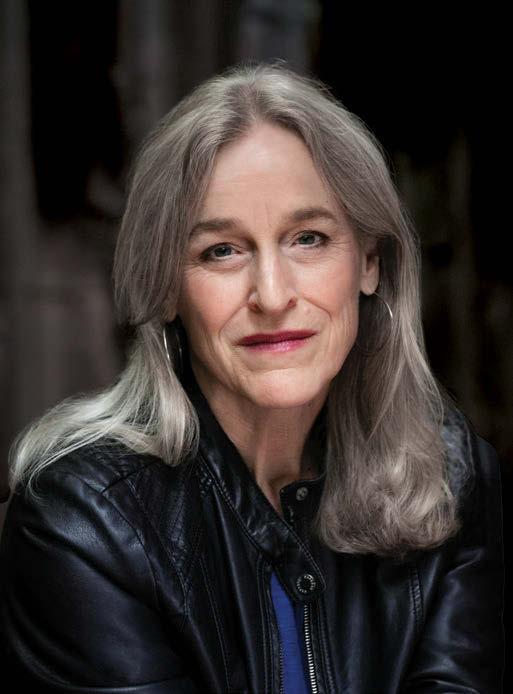
A New York author mines Colorado’s past in her new novel, Gilded Mountain
20 OUTDOORS
Take on-mountain photos as epic as your ski day.
22 STYLE
As versatile as any LBD, Factory Fashion helps fuel the Mile High City garment scene.
24 BUSINESS
Colorado’s cannabis entrepreneurs are struggling as never before.
26 TRAVEL
Flight delay or cancellation leave you with unexpected downtime at DIA? We’ve got you covered.
Photograph by Adventure Photo/Getty Images
Backcountry skiing in the Gore Range
EAT & DRINK
29 WHAT’S HOT
Alberto Hernandez’s seasonally inspired creations at Frasca are (almost) too beautiful to eat.

30 DESTINATIONS
Three all-inclusive dude ranches with excellent culinary programs.
32 HOW TO
A guide to brewing loose-leaf tea via the Chinese ritual of gongfu.

34 REVIEW
An impressive beverage program outshines the plant-based cuisine at Englewood’s Fellow Traveler.
BY ALLYSON REEDY
COLUMNS
38 ENVIRONMENT
A hundred years ago this month, a handful of men tasked with divvying up the Colorado River gravely misjudged its character. Is it too late to fix their mistakes?
BY KRISTA LANGLOIS
48 ESSAY
Turning my parents into sustainable energy, and other tips for managing grief.
BY MARTIN J. SMITH
BACKSTORY
164 WELCOME TO THE META-DENVER-VERSE
Our top picks for the local spots we’d love to visit virtually.
5280 (ISSN 10826815) is published monthly by 5280 Publishing, Inc.,1675 Larimer St., Suite 675, Denver, CO 80202. Subscriptions are $16 for one year (12 issues). Back issues are available for $6.99 plus tax and shipping by visiting shop.5280.com. Periodical postage paid at Denver, CO, and additional mailing offices. POSTMASTER: Send all UAA to CFS (see DMM 707.4.12.5). NONPOSTAL AND MILITARY FACILITIES: Send address corrections to 5280 Publishing, Inc., P.O. Box 3000, Denville, NJ 07834. Canadian Post Publications Mail Agreement No. #40065056 Canadian Return Address: DP Global Mail, 4960-2 Walker Road, Windsor, ON N9A 6J3. 5280® is a federally registered trademark owned by 5280 Publishing, Inc. 5280 also owns trademark registrations for TOP OF THE TOWN, DENVER’S TOP DOCTORS, DENVER MAGAZINE, and COUTURE COLORADO. © 2022 5280 Publishing, Inc. All rights reserved. ON THE COVER
Clockwise from top left: Sarah Banks; Andreina Camejo/EyeEm/Getty Images; Sarah Banks; Gigi Embrechts/Courtesy of Vista Verde Ranch; Courtesy of Beowulf Sheehan
BEHIND THE STORIES 12 DINING GUIDE 120 3218 29
30 16

















Fall in love with your home again. Let Bellwether’s team of window, siding, and door experts take your vision and guide you to a stunning exterior home transformation. bellwetherhomes.com 303-323-8578 Get a free estimate













NOVEMBER 2022 5280 PUBLISHING, INC. CEO & EDITOR-IN-CHIEF Daniel Brogan EDITORIAL DIRECTOR Geoff Van Dyke 1675 Larimer St., Suite 675, Denver, CO 80202 Tel 303-832-5280 Fax 303-832-0470 | 5280.com For subscription questions, please call 1-866-271-5280. EDITOR Lindsey B. King ART DIRECTOR David McKenna DIGITAL DIRECTOR Maren Horjus EDITORIAL MANAGING EDITOR Jessica LaRusso SENIOR STAFF WRITER Robert Sanchez FEATURES EDITOR Spencer Campbell SENIOR EDITOR FOOD EDITOR Patricia Kaowthumrong DIGITAL STRATEGY EDITOR Riane Menardi Morrison ASSOCIATE EDITOR Chris Walker ASSISTANT EDITORS Madi Skahill, Barbara Urzua RESEARCH EDITOR Visvajit Sriramrajan COPY EDITORS Shannon Carroll, Dougald MacDonald CONTRIBUTING WRITERS Kelly Bastone, Laura Beausire, Christine DeOrio, Courtney Holden, Sarah Kuta, Jenny McCoy, Allyson Reedy, Meredith Sell, Daliah Singer, Martin J. Smith, Andy Stein EDITORIAL INTERNS Karyna Balch, Katie Roth, Helen Xu DESIGN & PHOTOGRAPHY PHOTO EDITOR Charli Ornett DEPUTY ART DIRECTOR Sean Parsons DEPUTY PHOTO EDITOR CONTRIBUTING ARTISTS Bea Barros, Jorge Caudal Calle, Shuran Huang, Joni Schrantz, Shout, Studio Muti, Matt ‘Martian’ Williams SAVE 50% Colorado’s own Europtics has over 10,000 designer eyewear frames & sunglasses to choose from. Purchase two pair for yourself, or one for you and another for a friend ! Purchase one pair of complete eyeglasses at the regular price and get the 2nd pair of equal or lesser value for 1/2 price. Sale prices valid on in-stock frames only. Some exclusions apply including Oakley, Maui Jim, Jacques Marie Mage, Cartier, and Chanel. Sale prices may not be combined with any other coupons, discount offers, insurance discounts, or previous purchases. Sale ends 12/31/22. Aspen Grove 303.706.9900 Greenwood Village 303.721.9666 Cherry Creek North 303.321.3000 Colorado Springs 719.473.2020 Eye Exams Available At All Locations 2nd Pair 1/2 Price Sale FLEX DOLLARS & VISION INSURANCE WELCOME
NEW Preston® Closet in Fawn finish


Space for what makes you smile.
©2022 The Container Store Inc. All rights reserved. WF95081 8/22
4 Colorado locations – Cherry Creek, FlatIron Crossing, Park Meadows and Now Open in Colorado Springs 855-827-5623 | CONTAINERSTORE.COM
VICE PRESIDENT & PUBLISHER
Wolfel
VICE PRESIDENT, BRAND STRATEGY
Lambert
ADVERTISING & MARKETING
DIRECTOR
Ben
DIRECTOR
Simegn
SENIOR ADVERTISING EXECUTIVE
Duran
ADVERTISING EXECUTIVES
Duven, Heather Lowe, Angie Lund, Kara Noone
& MARKETING COORDINATOR
Curry
MARKETING COORDINATOR
Thomas
BRAND SERVICES
PRINT OPERATIONS DIRECTOR
Skolak
CREATIVE SERVICES MANAGER
Conrad
DIGITAL OPERATIONS MANAGER
Jackson
GRAPHIC DESIGNER
Brooks
AUDIENCE GROWTH COORDINATOR
Kotova
P RODUCTION COORDINATOR

Chutka
IGN COORDINATOR
Hiraoka
EATIVE SERVICES INTERN
Woodward
STAND CONSULTANT
Centofante
CIRCULATION CONSULTANTS
Clark, Greg
ADMINISTRATION
HUMAN RESOURCES MANAGER
Noyes
OFFICE MANAGER
A.
BILLING & COLLECTIONS MANAGER
McHeard
8 5280 | NOVEMBER 2022 A member of the American Society of Magazine Editors A member of the City and Regional Magazine Association
Zach
Carly
ADVERTISING
Ari
MARKETING
Piniel
Molly
Katie
ADVERTISING
Tamara
Grace
Megan
Chelsea
Shundra
Caitlin
Greta
Alyssa
DES
Mylie
CR
Faith
NEWS
Alan
Meg
Wolfe
Derek
Todd
Black
Jessica




SUBSCRIPTIONS
A one-year subscription to 5280 costs $16 for 12 issues. A two-year subscription costs $32. Special corporate and group rates are available; call 303-832-5280 for details. To start a new subscription, to renew an existing subscription, or to change your address, visit 5280.com/ subscribe; call 1-866-271-5280 from 9 a.m. to 5 p.m. EST Monday through Friday; or send an email to circulation@5280.com.
LETTERS TO THE EDITOR & DINING GUIDE
Letters to the editor must include your name, address, and a daytime phone number (all of which can be withheld from publication upon request). Letters may be submitted via regular mail or email (letters@5280. com). To have a restaurant considered for our Dining Guide, contact us by phone or email (dining@5280.com) to receive a submission form. We also encourage you to contact us if your experience at a restaurant differs significantly from our listing. Information for these sections should be submitted at least six weeks before the issue’s cover date.
WRITER’S GUIDELINES
Writer’s guidelines can be found online at 5280.com/writers-guidelines. To suggest a story idea, email us at news@5280.com.

ADVERTISING
5280 offers businesses the most costeffective way to reach Denver’s upscale consumers. Information about advertising is available on the web at 5280.com/ advertising. Call 303-832-5280 to request a printed media kit.

SPONSORSHIPS

5280 actively supports organizations that make our city a better place to live and work. Submit sponsorship proposals to Piniel Simegn, director of marketing, at sponsorship@5280.com.
5280 Publishing, Inc. adheres to high standards to ensure forestry is practiced in an environmentally responsible, socially beneficial, and economically viable manner. Printed in Denver, Colorado, by Publication Printers Corp. Our printer is certified by the Forest Stewardship Council (FSC).

10 5280 | NOVEMBER 2022
Shop Elevenate at Aktiv Style
Premium Scandinavian Outdoor Clothing

BEHIND THE STORIES
The Impact Of Dogged Reporting
In journalism school, budding news gatherers are taught how to extract the information necessary to build the whowhat-when-where-why-how foundation of any article. Fact-finding is rarely an easy endeavor, but being able to talk to an actual person or access records from a database via the internet makes the pursuit much more manageable. Not every story, however, offers up its details so willingly.
For two years, 5280 senior staff writer Robert Sanchez had been noodling—off and on—about digging into the backstory of a man whose headstone had caught his eye in Denver’s Riverside Cemetery. The grave is located in a section for U.S. military members, and the inscription reads: “His life an idea—his memory an inspiration.” But beyond his dates of birth and death, that was all Sanchez knew about the interred until he began reporting for this issue’s “Why Did Walter Springs Die?” (page 72).
As he delved into what was, he learned, the controversial death of the Army techni cal sergeant in December 1942, Sanchez realized that the facts would not readily reveal themselves. He also understood two things clearly: First, no one alive today knew what really happened the night Springs, a 24-year-old Black soldier from Denver, died in a Texas bar at the hands of white military police. And second, his family deserved the truth.
After interviewing Springs’ relatives and examining military records, photo albums, news clippings, and university archives, Sanchez felt like he better understood who Springs was as a person, but he still didn’t know what could’ve motivated a fellow soldier to shoot him dead. Nearing his deadline but still missing the “why,” Sanchez filed a last-ditch request with the National Personnel Records Center in Spanish Lake, Missouri.
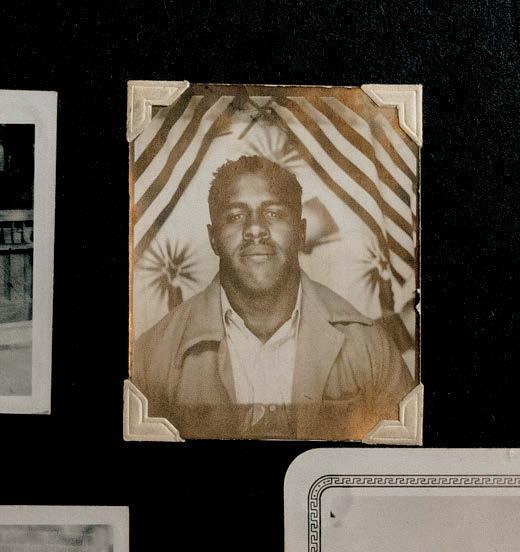
The file Sanchez received was 79 pages long, but the text on page 55 was all he needed. “I closed my computer, and a few tears definitely came out,” Sanchez says. “I called Walter Springs’ niece. After eight decades, her family finally knew what had happened to Walt.”
LINDSEY B. KING

SPOTLIGHT
Ted Conover Author
Readers of Cheap Land Colorado, Conover’s new book (excerpted on page 102) about people living off the grid in the San Luis Valley, will spot a 5280 shoutout: An essay Conover wrote about his love of South Park for the magazine in 2017 helped inspire the project.
ON BEING A COLORADAN IN NYC
“My wife summed it up pretty well one day when explaining the time I spend out here to friends: ‘I’m Jewish. He’s from Colorado.’ ”
HOME AWAY FROM HOME
”I’m now an off-grid landowner in the San Luis Valley myself. Its beauty and open space make the challenges (like keeping warm and staying clean) more manageable.”
GOOD NEIGHBORS
“They’re getting early copies. They probably won’t say that I got everything right, but I hope they’ll give me credit for trying.”
5280.COM
’TIS THE SKISON
It’s time to swap boats and bikes for skis and snowboards. To fire your stoke, head to 5280.com this month to learn what’s new at the resorts this season, where to find the best tune for your planks, and how to turn little ones into powder-devouring groms. (Then pray for snow.)

12 5280 NOVEMBER 2022
Clockwise from top left: Sarah Banks; Margot Guralnick/Courtesy of Alfred A. Knopf; ZargonDesign/Getty Images; Shuran Huang
ON
Email: lindsey@5280.com Twitter: @linzbking
FROM THE EDITOR
Walter Springs as pictured in a family photo album



Saturday Night Lights DEC 3, 10 & 17 5PM-7PM Wander & Win $1,000 Shopping Spree Giveaway NOV 17 – DEC 24 Small Business Weekend NOV 25 – 27 Cherry Creek Holiday Market NOV 17 – DEC 24 OPEN DAILY Chanukah Celebration DEC 18 AT 5PM SPONSORED BY MEDIA PARTNERS Complimentary Horse Drawn Carriage Rides EVERY WEDNESDAY 5PM-8PM SCAN HERE FOR DETAILS
spring




life















The holidays
to
in ICE! at Gaylord Rockies! Our signature attraction is a whimsical masterpiece of scenes from A Charlie Brown Christmas carved out of two million pounds of boldly colored ice. NOV. 18 - JAN. 1 ChristmasAtGaylordRockies.com © 2022 Peanuts Worldwide LLC A GAYLORD HOTELS ORIGINAL EXPERIENCE
CoMPASS
Down To Earth
Jeffrey Gibson’s “The Spirits Are Laughing” at the Aspen Art Museum forces us to consider our relationship with the land.
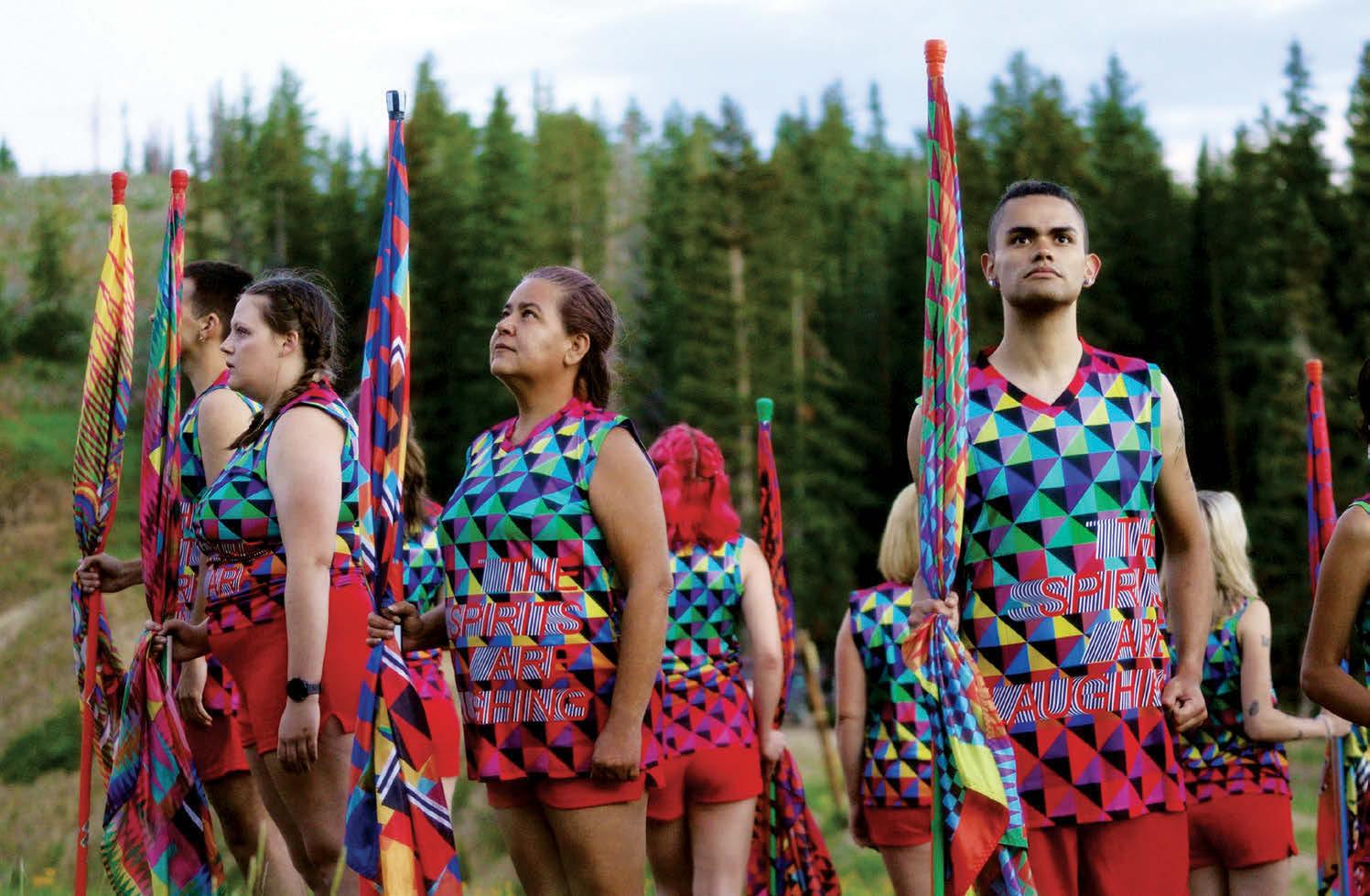
During his lifelong exploration of Indigenous identities, visual artist Jeffrey Gibson has created intricately beaded punching bags, applied modern geometric designs to raw hide canvases, and hung vibrant printed polyester from tepee poles. “The Spirits Are Laughing,” the latest work from the Colorado Springs–born member of the Mississippi Band of Choctaw Indians, examines Indigenous kinship philosophy—“the idea of seeing the land as an extension of one’s own family or oneself,” Gibson says. Gibson invited 15 Native and non-Native color guard performers, all of whom identify as queer, to spin flags and “sing to the mountain and the sun” at the Aspen Institute this past August. Beginning November 4, the Aspen Art Museum will display a recording of the live performance, alongside Gibson’s flags and three busts he sculpted from natural materials, during a yearlong exhibit. “All living life emerged from the same place,” Gib son says, meaning that, despite our differences, we are all connected.




NOVEMBER 2022 | 5280 15
Clockwise from bottom right: Adrianna Glaviano/Courtesy
Aspen Art Museum (Jeffrey Gibson, “The Spirits Are Laughing,” 2022);
Brett Novak/Courtesy of Jeffrey Gibson, Sikkema Jenkins & Co in New York, Kavi Gupta Gallery in Chicago, Roberts Projects in Los Angeles, and Stephen Friedman Gallery in London (Jeffrey Gibson, “The Spirits Are Laughing,” 2022. Video still)
(4) HEALTH BOOKS OUTDOORS STYLE BUSINESS TRAVEL
—BARBARA URZUA
TIME FOR A CHANGE
Why ditching daylight saving time could be good for us.

Scott Yates was just another person who thought switching his clocks in and out of daylight saving time (DST) was annoying—until he discovered how the twice-yearly time changes were harming our well-being. The revelation inspired the Denverite to become an advocate for the #LockTheClock movement, which helped lead to this past June’s passage of House Bill 22-1297, designating Colorado a permanent DST state (see: later sunsets year-round). At press time, Congress was debating whether to institute full-time DST for the entire country, legislation that would trump the Colorado bill. In the meantime, we asked Yates to explain why the change would be welcome news. —BU
36,560
Tons of greenhouse gas emissions saved each day in Turkey after permanent DST was instituted in 2016, according to the Eco nomic Research Forum.
“Some researchers are still torn on whether stay ing in DST can actually save energy,” Yates says.
“But initial findings sug gest that it can reduce air pollution from coal and gas plants.”
10%
Decline in individual moral ity after losing 2.1 hours of sleep, according to the Journal of Sleep Research. The brains behind the paper hypothesized that the time switch could cause exec utives to cut corners on projects and police officers to be less likely to report mistreatment of suspects. Plus, researchers have found that assault rates in some U.S. cities spike in November after DST ends.
UP TO 1,800
Fewer cancer deaths annually in Indiana after the state moved to permanent DST in 2006, according to a study published in the Journal of Population Economics. While the author isn’t certain why staying in DST had such a positive effect, he believes it’s because of the added vitamin D and the lack of stress from time switches.
3.5%
Drop in daily credit card spending per capita following DST. Researchers with the JP Morgan Chase Institute found that shoppers in Los Angeles spent less in the month following the November time change because early dark ness discouraged them from going to the store, potentially harming local retailers and, thus, the economy.
≥ 28
Increase in fatal car accidents per year in the United States after the “spring forward” time change, according to a Current Biology study. (Icy pavement and sleepy drivers are a bad combination.) “If sticking to one time was the norm year-round and some one proposed a time change that would ‘only’ kill 20 or 30 people a year, we would think that’s a preposterous idea,” Yates says. “But since it’s nor malized, we just go with it.”
16 5280 NOVEMBER 2022
Sean Parsons (source photos: Getty Images
[6]) HEALTH











One character who does not make an appearance is J.F. Manning. Turns out, Kate’s great-grandfather didn’t break rock: He was an executive with the marble company who worked to break strikes. “I think a lot of Americans [are] wrestling with that kind of past,” says Manning, whose previous novel, 2013’s My Notorious Life, is about a Victo rian-era midwife who provides abortions. “The way I wrestled with it is to write about it in fiction.”
—SPENCER CAMPBELL
Time Travel
Fiction From Truth
A New York author mines Colorado’s past in her new novel, Gilded Mountain.

Novelist Kate Manning has kept a photograph of 100 men wearing funny hats in her office for years. The pan orama is a group shot from the 1915 National Retail Monument Dealers convention in Marble, and Manning’s great-grandfather was among the attendees. According to family lore, pickax-wielding J.F. Manning helped quarry marble for the Lincoln Memorial. That was all the author knew about her ancestor until, shortly before her father’s death, he encouraged her to unearth the whole story. The investigation would lead to Manning’s latest novel, Gilded Mountain, out on November 1—while also forcing the writer to reckon with her family’s past. In the early 1900s, Marble, in Gunnison County, supplied some of the most pristine slabs in the country for a host of large projects, including the Equitable Building in New York City. Nearby, wealthy coal baron John C. Osgood, who married a rumored Swedish countess and supposedly entertained King Leopold of Belgium at his 42-room castle, founded the town of Redstone. But turn-of-the-20th-century Colorado wasn’t all Champagne and caviar. Difficult working conditions in the Marble mines led to labor disputes, and the 1914 Ludlow Massacre, a battle between authorities and striking coal miners in the southern part of the state, left at least 19 people dead. “I’ve been in a union,” Manning says, “and I understand the history of that movement.”
Gilded Mountain follows Sylvie Pelletier as she leaves her family’s cabin near fictional Moonstone, Colorado, to work for the wealthy family who owns the town’s marble mine. She’s soon swept up in the simmering labor feud stoked by Irish union organizer Mary Harris “Mother” Jones (and her handsome young colleague). Tensions are on the verge of exploding into conflict just as a European aristocrat is expected to visit. “That’s the great thing about being a novelist, as opposed to a reporter,” Manning says. “You can change names and condense time and stretch time and say, Well, what if King Leopold really was there?”
Explore more Colorado history with these reads, picked by Brian Trembath of the Denver Public Library.
CENTENNIAL by James A. Michener
This celebrated historian-author traces the lineage of Centennial, a fictional town in eastern Colorado (i.e., not the Denver suburb), beginning with its Mesozoic Era inhabitants all the way up to the Nixon presidency.
PALE HORSE, PALE RIDER by Katherine Anne Porter

The title story in this collection of three short novels follows the tragic romance of two young Denverites during the 1918 influenza outbreak, when Porter was a reporter at the Rocky Mountain News
SABRINA & CORINA by Kali Fajardo-Anstine
Fajardo-Anstine’s collection of short stories—most of which revolve around Latinas in Denver, where the author was raised—was nominated for a National Book Award in 2019.
18 5280 NOVEMBER 2022
Clockwise from top left: Courtesy of Beowulf Sheehan; Courtesy of Random House; Courtesy of Mariner Books, HarperCollins Publishers; Courtesy of Random House; Courtesy of Scribner
BOOKS



PHOTO BOMB
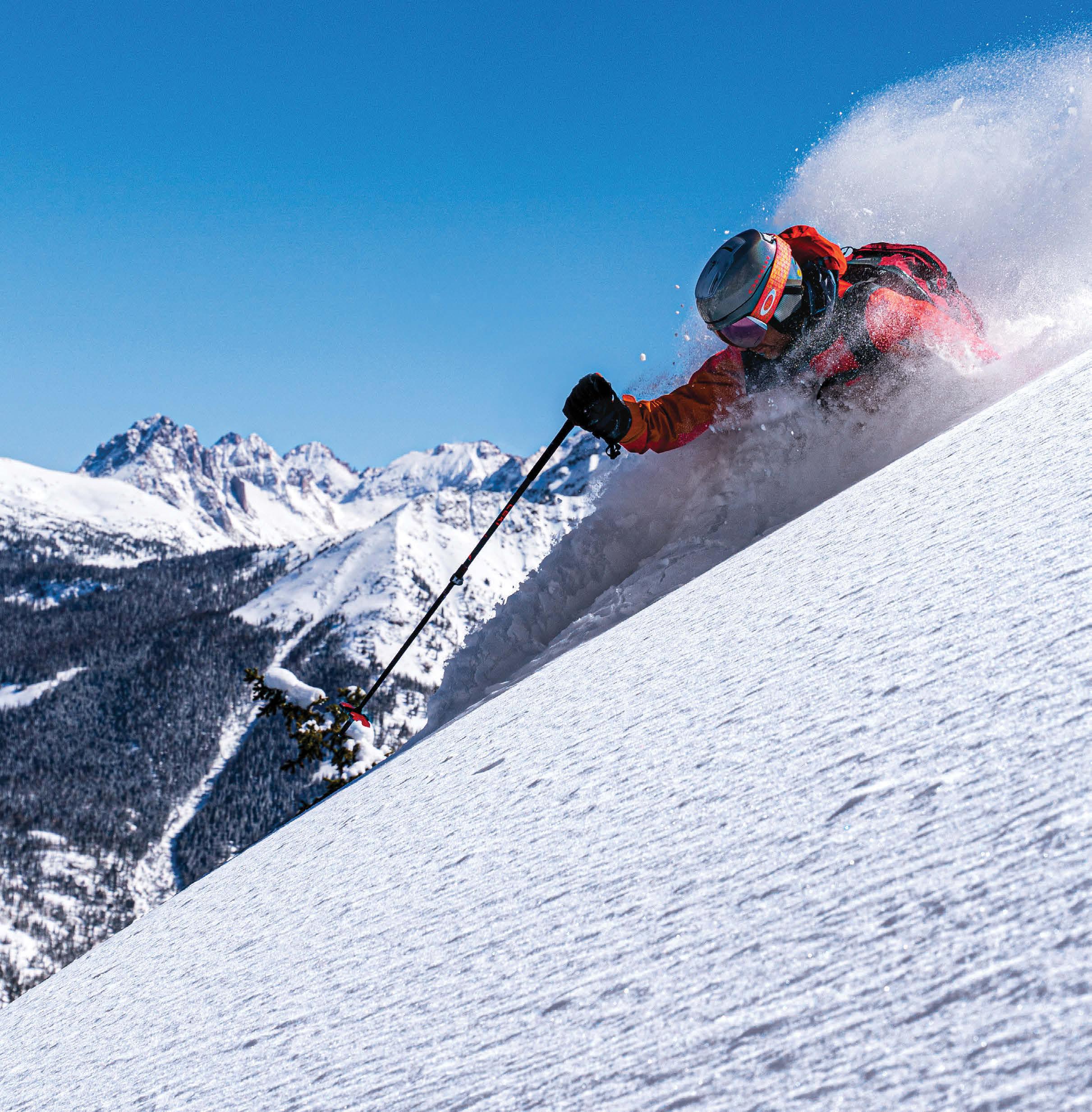
If your friend’s ski line doesn’t look as epic on Instagram as it did in person, don’t blame your phone. Blame yourself. Liam Doran, a Breckenridgebased adventure photographer whose clients include Powder Magazine and Patagonia, may have taken this shot with a fancy camera, but the basic techniques he used to capture the image will make your on-mountain photos look epic, too.
—NICHOLAS HUNT
TIMING
Tell your friend where you want her most aggressive turn or slickest trick to be. Then access your phone’s burst mode—in which it takes a series of images until the shutter button is released. (On recent iPhones, hold down the red shutter button and pull it to the left. The process varies for Androids.)
ANGLE
Setting up with the sun behind you will create a well-lit subject, but the re sulting photo can be boring because everything is well lit. Instead, position the sun to the side of your skier so he is partly in the light and partly in shadow, producing a more dramatic scene.
ENVIRONMENT
“Look for great backgrounds to put your skiers in front of. Distant peaks or a fog-filled valley can be nice,” Doran says. “On a powder day, a dark background will really show off flying snow.”
COMPOSITION
To create a sense of motion, Doran suggests using the rule of thirds. First, divide your phone’s screen into three horizontal and three vertical segments by drawing imagi nary lines, then situate the skier where two of them intersect.
Position the horizon along either of the horizontal lines.
LIGHT
“When the sun is high in the sky,” Doran says, “colors get washed out and can have a bluish cast.” So, plan your snaps for early morning or late afternoon. Not only does the sun give off warmer light at those times, but its low angle also creates deeper shadows that add depth to your images.
20 5280 NOVEMBER 2022
Liam Doran; Sean Parsons (angle, composition, light icons); Getty Images (timing, environment icons)
OUTDOORS

can also enroll in a nine-week fashion prep course in which they design a collection and work with models and hair and makeup artists, culminating in a runway show during DFW. Looks from this fall’s session will be on display on November 13 at 11:30 a.m. at the Sports Castle.
FASHION CHAMPAGNE BAR
Select nights
The sewing machines and rollaway tables are stowed to make way for Factory Fashion’s alter ego: a Champagne bar with a bubbles-based beverage
Run Of Show
As versatile as any LBD, Factory Fashion’s weekly turns help fuel Denver’s garment scene.

When looking for a piano class for her three-year-old, Skye Barker Maa discovered that many local music pro grams had lengthy waitlists or wouldn’t take a student so young. So, in 2012, Barker Maa started Neighborhood Music, a school inside Aurora’s Stanley Marketplace for pupils of any age and ability. That foray launched Barker Maa’s passion for education, and within 10 years, she had opened Factory Five Five, an arts collective, and become executive director of Jk-co dance com pany. In January 2021, Barker Maa added couture to her collection, debuting Factory Fashion, a venue at Stanley that, like a little black dress, transforms effortlessly from day to night. Leading up to Denver Fashion Week (November 12 to 20), we took a tour of Denver’s newest style hub. —RIANE MENARDI MORRISON
SMALL-BATCH PRODUCTION
Weekdays, 9 a.m. to 4 p.m.
The 2,500-foot space—with its 11 industrial sewing machines, nine standing-height worktables, and eight dress forms—operates as a production house for Col orado designers such as Missy Caldwell of Misfitmissy and Darlene C. Ritz of DCR Studios. Factory Fashion employs eight sewers who produce small

runs for these and other local clients, including Barker Maa, who will debut Skye Aire, a line of eccentric, ready-to-wear dresses during a Denver Fash ion Week (DFW) show at the Sports Castle on November 12.
CLASSES
Mondays, Tuesdays, and Wednesdays, 5 to 7 p.m.; Sundays, 1 to 5:30 p.m.
In Little Sewers classes, begin ners as young as six learn basic
sewing skills, while in other courses, advanced sewers of all ages study costuming, illus tration, or fabric design. Pupils
program. Jazz nights feature fizz-forward delights such as the Regent’s Punch: rum, cognac, pineapple, green tea, and a splash of sparkling wine.
IMMERSIVE
PARTY SPACE
Select weekends, 7 p.m. to midnight
On certain weekends, Barker Maa puts her network of cos tumers, actors, set designers, and dancers into action by throwing elaborate par ties. Past iterations have included an immersive James Bond–themed soirée and a disco-fever fundraiser (pictured at top) to support Latin Fash ion Week. Keep an eye on Factory Fashion’s web site and social media for details about future fetes.

22 5280 NOVEMBER 2022
Clockwise from top left: Courtesy of Tony Gallagher Photography; Courtesy of From the Hip Photo (2)
STYLE

After The Green Rush
Colorado’s cannabis entrepreneurs are struggling as never before.
Jonathan Spadafora knew things were bad when April 20, 2022, the high holy day of cannabis, failed to deliver the windfall Colorado’s marijuana retailers were used to. Across the state, dispensary sales fell around 25 percent compared with 4/20 the year before. But it wasn’t until this past May, when demand continued to plunge, that Spadafora, president of Veritas Fine Cannabis, realized the industry was in a free fall.
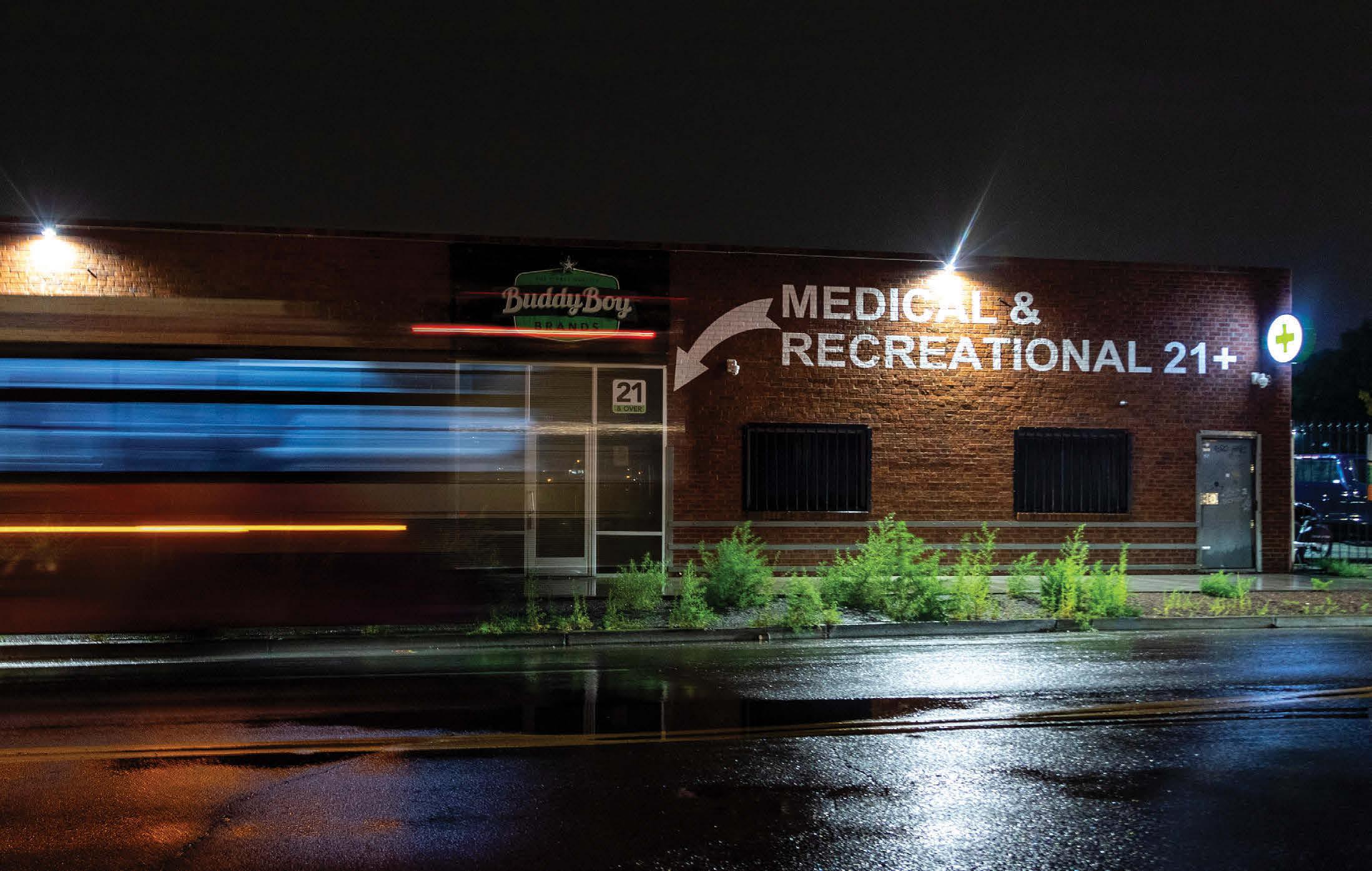
For the first time since licensed recreational weed sales began in Colorado in 2014, two years after legalization, the Centennial State’s cannabis sector is experiencing a prolonged downturn. Mid-2022 saw the fourth consecutive quarter of declining sales, a near reversal of the record-set ting revenues the industry boasted during the early days of the pandemic. (The medical and retail sectors have experienced nearly identical downturns.) In response to waning demand, dispensaries that had stocked up for 4/20 found themselves stuck with excess inventory and slashed purchase orders to growers such as Veritas, which produces flower and pre-rolled joints for stores around the state. Even big companies are struggling; chains Buddy Boy and TweedLeaf shuttered seven stores each during the summer.
Spadafora believes a number of factors have contributed to cannabis’ tail spin. To start, the pandemic boom was likely a bubble driven by the fact that people were stuck at home—and often bored or stressed-out. “People weren’t in the office,” Spadafora says. “They were at home and had the ability to roll a joint and do their emails all day.” Then there were the stimulus checks, which helped fund the run on nugs as total sales reached their annual peak at $2.2 billion in 2021. Fast-forward to today, and people are worried about inflation, Spadafora notes. Plus, nine more states have legalized recreational weed during the past two years, putting a dent in Colorado’s cannabis tour ism trade, says Truman Bradley of Denver-based Marijuana Industry Group, a cannabis trade association. New Mexico’s entrance into the market in 2021 has been especially painful, corresponding with a 40 to 50 percent drop in cannabis sales in Colorado’s southern border towns.
Veritas, one of the state’s larger marijuana producers, couldn’t weather the downturn without downsizing: In June, the company decided to close one of
its three cultivation facilities and lay off 33 staff mem bers—nearly a quarter of its workforce. “It’s tough because these weren’t people who were making mistakes,” Spadafora says. “I think one thing that we’ve learned is Colorado is not a $2.2 bil lion market. It’s probably a $1.8 or $1.7 or $1.6 billion market.” Growers and sell ers alike will simply have to hope the market bottoms out before their companies go up in smoke.
—CHRIS WALKER
24 5280 NOVEMBER 2022
Sarah Banks; Colorado Department of Revenue (graph source)
20 14 $50 $100 $150 $200 $250 $0 20 15 2016 2017 2018 2019 2020 2021 2022
MEDICAL MARIJUANA RETAIL TOTAL
MONTHLY MARIJUANA SALES IN COLORADO
MILLIONS BUSINESS
A shuttered Buddy Boy dispensary in Denver’s Cole neighborhood
Traditions run deep.
SantaFeNMTrue.com
Winging It
Flight delay or cancellation leave you with unexpected downtime at DIA? We’ve got you covered.



The traffic on I-70 to Peña Boulevard was actually moving; you sailed through airport security; and now you’re at your gate early when you get the news: Your flight has been postponed. Delays and outright cancellations have become the norm this year as the airline industry deals with staffing shortages, and that’s not likely to improve during the busy hol iday travel season. Thankfully, Denver International Airport (DIA) offers myriad options for whiling away your newfound free time, no matter how many unaccounted-for hours you suddenly find on your itinerary. —COURTNEY HOLDEN
IF YOU HAVE 2 HOURS
LOCATION CONCOURSES A, B, C & DEN PLAZA DO THIS BREAK A SWEAT
IF YOU HAVE 4+ HOURS LOCATION CONCOURSES A, B, C
DO THIS ENJOY A TASTING TOUR
Begin in Concourse C with the beet and goat cheese salad from Root Down paired with the Beet Down (a gin, Aperol, and beet shrub cocktail) because, hey, you’re not flying the plane. Then hop the train to Concourse A, where James Beard Award–winning chef Alex Seidel opened an outpost of his farm-to-table Union Station staple, Mercantile Dining & Provision, in August. For dessert, finish with the delightful Old Dirty Bastard (chocolate, peanut butter, and Oreo) from Voodoo Doughnuts’ new location in Concourse B.
DIA doesn’t have a fitness center, but there are plenty of ways to feel the burn. For a cardio kick, power-walk the 4,244 feet of Concourse B, DIA’s longest terminal. Aspiring yogis can find a quiet spot to flow through sun salutations in the far reaches and relative serenity near gates A60 through A99 of Concourse A. Did you learn your plane is late before fighting through security? If so, make like Nathan Chen and hit the DEN Plaza seasonal ice rink, located between Jeppesen Terminal and the Westin DIA, which is open through New Year’s Day.
IF YOU HAVE 1 HOUR LOCATION
DO THIS TAKE IN SOME ART
ANSBACHER HALL A Bridge Security
Denverite Ed Dwight’s life-size (and bigger) bronze statues depicting Black culture can be found in city halls, town squares, and the Smith sonian Institution’s permanent collection. DIA’s Ed Dwight: Soaring on the Wings of a Dream exhibit—which runs through February 2023—fea tures 18 of Dwight’s sculptures while recounting his achievements as a pilot, America’s first Black astronaut candidate, and a real estate developer.
IF YOU HAVE 3 HOURS
LOCATION CONCOURSES A & B DO THIS START YOUR HOLIDAY SHOPPING
Save yourself a trip to the mall while supporting local businesses by picking up a jar of the sweet stuff from Björn’s Colorado Honey in Concourse A. In Concourse B, grab Colorado author Erika T. Wurth’s debut horror novel, White Horse, at Tattered Cover Book Store or a backpack (the small-butstill-roomy 10-L Rover Pack Mini is appropriate for kids ages five-ish to 92) from Denver-based Topo Designs

26 5280 NOVEMBER 2022
From top: Getty Images; Courtesy of Denver International Airport; Courtesy of Voodoo Doughnuts; Courtesy of Denver International Airport


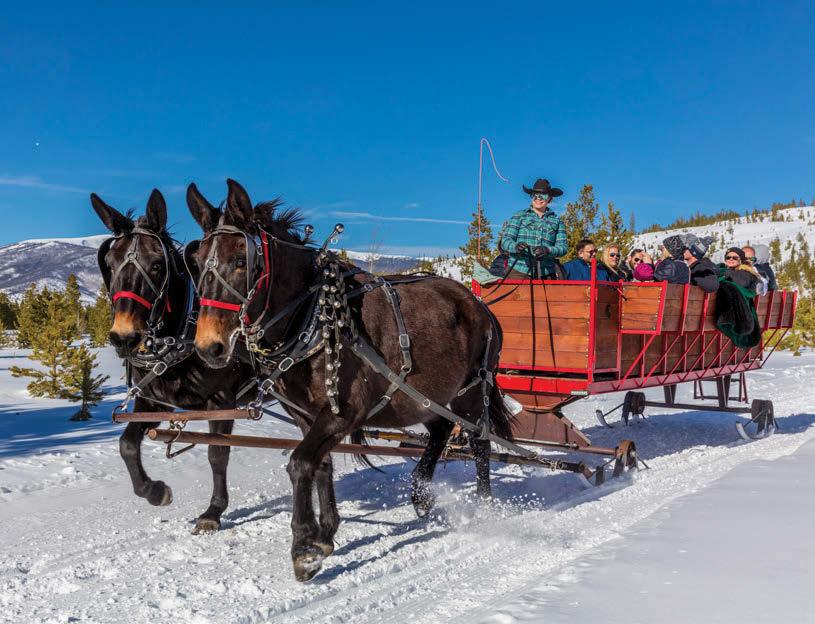

Main Street Of The Rockies
A charming mountain town. With its own Wassail Days holiday festival, tubing hill, Nordic center & sleigh rides. TownofFrisco.com
Finishing Touches
Alberto Hernandez’s sweet creations at Frasca are (almost) too beautiful to eat.

Since it opened in 2004, Boul der’s Frasca Food and Wine has become synonymous with a deep collection of wines, generous hospitality, and divine cuisine from the Friuli region of Italy. But less talked about is the restaurant’s dolci program, led by executive pastry chef Alberto Hernandez since 2016. Hernandez, who grew up in Atotonilco de Tula, Mexico, studied the art of dessert in Italy, France, and Spain before land ing in Boulder. At the foot of the Flatirons, Hernandez spends his days deciding how exactly to put an exclamation point at the end of polished prix-fixe meals composed of hand crafted pastas and seasonal secondi beauties. Hernandez’s visually stunning master pieces include delights such as the Fragola Verde, a ring of creamy, fermented straw berry mousse scented with lemon verbena and topped with a delicate scoop of green strawberry sorbet, as well as the showstopping Miele. The honeycomb-shaped ricotta mousse is dotted with edible flowers, lemon balm, bee pollen, and dollops of plum reduction and crowned with a delicate disc of honeykissed tuile. Snap a picture before you dive in so you can have your dessert and eat it, too.
—RIANE MENARDI MORRISON
PHOTOGRAPH BY SARAH BANKS
EAT DRINK
&
NOVEMBER 2022 | 5280 29 DESTINATIONS HOW TO REVIEW
The Miele dessert is on Frasca’s menu this month.
DESTINATIONS
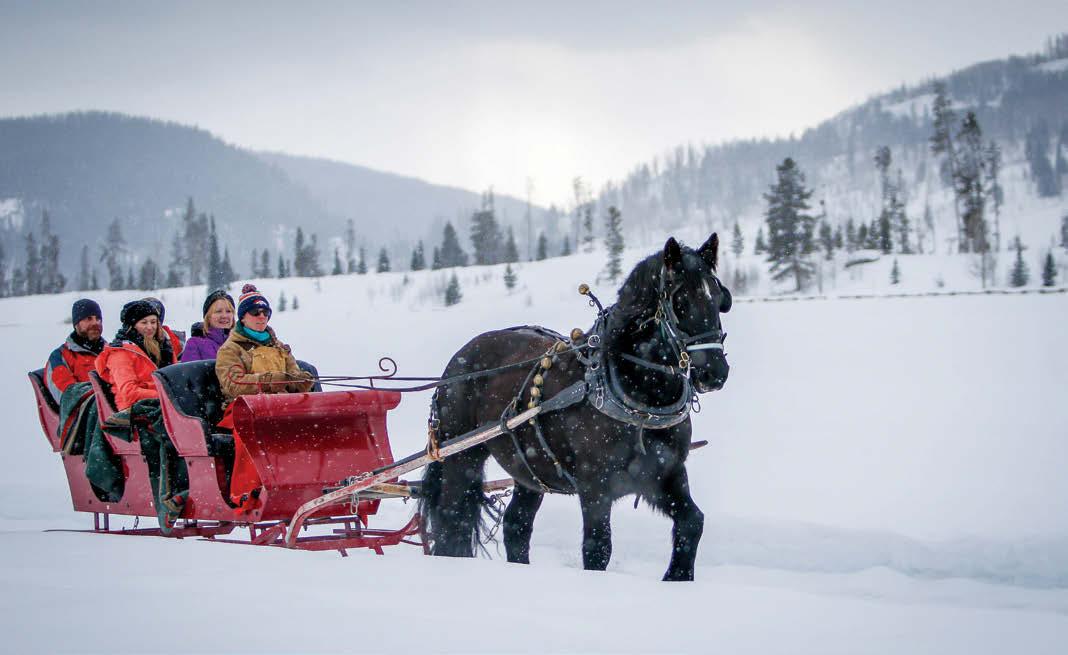
From top: Views and a rib-eye steak at Brush Creek; sleigh rides at Vista Verde; a feast at C Lazy U
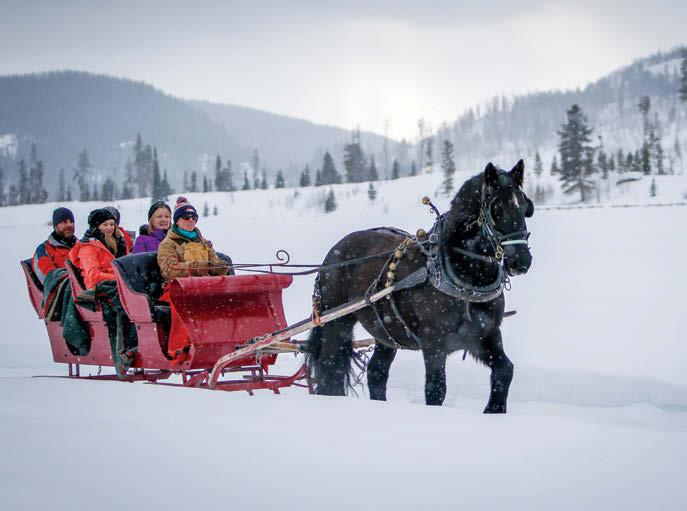
Back At The Ranch
When the temperature cools, the pace slows at many Western dude ranches, where snowy landscapes beckon guests to embrace winter with peaceful sleigh rides, relaxing spa treat ments, and comforting cuisine. “To me, it’s like you’re coming home to your warm, cozy cabin,” says Cory Untch, executive chef of Granby’s C Lazy U Ranch. Here, three all-inclusive properties with stellar culinary programs to visit this holiday season and beyond. —SARAH KUTA
C LAZY U RANCH
Travelers return to 103-year-old C Lazy U Ranch year after year for its high-end but down-home cabins and lodge rooms, horse manship clinics, 8,500 acres of serene Grand County terrain, and polished fare. Start each
morning with a cup of cowboy coffee, prepared in a percolator over an open fire by one of the destination’s hat- and boot-clad wranglers. Then, after a day of private, on-site tubing, crosscountry skiing, or unwinding at the spa, guests can refuel with the ranch’s hearty wood-fired cuisine paired with a deep wine list of sips from around the world. Dishes such as bison-stuffed short rib meatloaf and duck confit are accompanied by decadent family-style sides such as truffled corn casserole and brown butter carrot confit. Starting at $587 per person, per night; clazyu.com
VISTA VERDE RANCH
Each winter, a thick layer of snow blankets nearly 600-acre Vista
Verde Ranch, situated north of Steamboat Springs in the tiny town of Clark. There, executive chef and food and beverage director

and vegetarian stew made with butternut squash and sweet potato. The ranch’s fan-favorite cured salmon—made by mari nating a whole side of salmon in lime zest, coriander, mustard seed, cilantro, brown sugar, and tequila—is so popular that returning guests demand it stays on the menu. The kitchen has an open-door policy, so guests can wander in at any time to glean a few tricks of the trade, and they can also take weekly, rotating cooking classes or simply enjoy beer and wine tastings. Starting at $2,295 per person for three nights; vistaverde.com
BRUSH CREEK RANCH
Epicurean experiences take center stage at this working cattle ranch nestled in southern Wyo
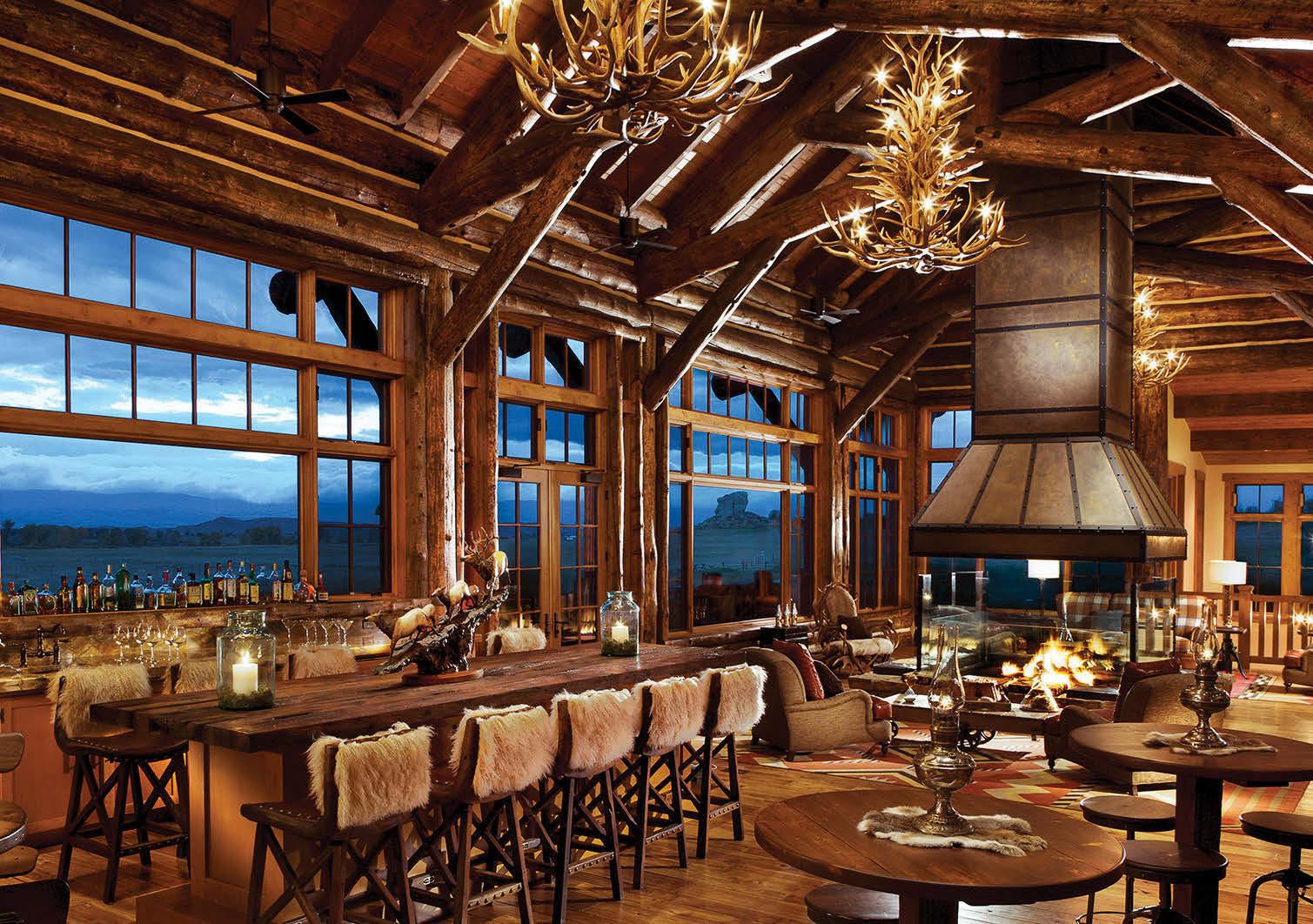
Jonathon Gillespie and his team transform ingredients, many of which are sourced from the Cen tennial State, into soul-warming meals such as short rib ravioli, dry-aged racks of Colorado lamb,
ming’s North Platte River Valley, making it a destination worth crossing state lines to visit. In fact, it is home to a licensed goat dairy and creamery, distillery, 20,000-square-foot greenhouse, 30,000-bottle wine cellar, and subterranean speakeasy. Ranch ers also pamper more than 200 head of wagyu cattle, and when the time is right, chefs dry-age the beef into melt-in-your-mouth steaks. Along with taking powder runs on a private ski mountain and trail rides on horse back, guests can don aprons and learn new culinary skills during cooking and baking classes. Private sommelier-led tastings and cuddle sessions with Alpine, Nubian, and Nigerian goats are also on the menu. Start ing at $1,250 per person, per night; brushcreekranch.com

30 5280 NOVEMBER 2022
Clockwise from top left: Courtesy of Brush Creek Ranch (2); Gigi Embrechts/Courtesy of Vista Verde Ranch; Courtesy of Molly Johnson Photography

Tea Time
It’s been a busy year for Rong Pan, co-owner of 17-year-old Ku Cha House of Tea. In 2022, she and her husband, Qin Liu, expanded their Boulder-born business to include outposts in Denver Pavilions and Park Meadows Mall (they already had locations in Fort Collins and Cherry Creek), and they plan to stock select products at local King Soopers stores by late 2022. The hectic schedule enhanced Pan’s appreciation of gongfu, a Chinese ritual of preparing and drinking tea she regularly enjoys with Liu and her two young children. “Brewing some good looseleaf tea and drinking it with either friends or family, or by ourselves, is a very therapeutic thing to do,” Pan says. Read on for her tips for crafting your own cup of tranquility.
—PATRICIA KAOWTHUMRONG
STEP 1 PICK
Tea bags sold in grocery stores are often filled with tea particles that yield quicker-to-make, stronger brews than their loose-leaf counter parts, but it’s more difficult to ensure the origins and quality of the usually mass-produced sacks, Pan says. Instead, ditch the dunkers for whole leaves, which have more complex flavor profiles. At its five locations and online, Ku Cha sells more than 170 kinds—from robust blacks and wellness-forward greens to versatile oolongs—each hand-selected by Pan and Liu and imported from around the world. The team also carries many varieties of tea-making wares (pictured above).
STEP 2 PREPARE
Although gongfu sets can encompass a draining tray for discarding water, a pot, multiple vessels, and even a ceramic pet (“so you don’t have to drink alone,” Pan says), those aren’t required for everyday consumption. All you need is a kettle for heat ing water, a cup, and a strainer for submerging the tea. To make the besttasting brew, start with one teaspoon of dried leaves for every eight ounces of water, though the amount will differ depending on the product’s density (some are puffier than others) and your preferences. “I tend to use more leaves because I like richer tea,” she says. “As you drink tea, you will know, I like stronger or I like weaker. There is no wrong answer.”

STEP 3 POUR
Pan recommends following the brewing instructions listed on pack ages. (Ku Cha’s products come with directions.) This is easier with an electric kettle that heats contents to specific temperatures. Boiling water can kill the flavors and health benefits of green teas and other more delicate varieties, but pouring the liquid slowly helps cool things down. Before she steeps, Pan warms her cup by adding and discarding hot water, which she also uses to give the leaves a quick, preliminary, fragrance-awakening rinse before making a cup to consume.
STEP 4 PAUSE
Some of Pan’s favorite whole-leaf teas, including earthy White Crescent Puerh (a fermented white tea) and flo ral Tie Guan Yin (a green oolong), are made to be re-steeped multiple times in one sitting. She submerges batches of those leaves for only 10 seconds before enjoying the liquid goodness, though you can adjust that timing to the tea’s specific directions and your liking. The most important step? Sa vor the results without interruption for as long as you can, whether it’s five or 45 minutes. “Tea is an art, not a science,” she says. “Sip the tea rather than just gulping it down.”
PHOTOGRAPH BY SARAH BANKS
32 5280 NOVEMBER 2022 HOW TO
A. Whole tea leaves B. Wood draining tray C. Cast-iron teapot D. Ceramic tea pet E. Two types of metal strainers F. A lidded cup
D
F A B C
E



WWW.NATIVEROOTSCANNABIS.COM Give Danks This Holiday Season To our customers, community and team members… dank you. Twenty locations across Colorado. Order ahead! from our Speer & Grant location Delivery now available
Raising The Bar
Vegans are grateful diners. At least, that’s how it appears from crowd-sourced reviews of vegan restaurants, which are overwhelmingly positive—almost no ven omous, one-star reviews or angry rants there. With food inspiring this sort of praise, you’d wonder why everyone isn’t vegan.

I am not, and neither are 95 percent of eaters in the United States. Which means most of us don’t understand what it’s like to eat out when animal-derived ingredients—such as meat, cheese, milk, and eggs—are off limits. Fortunately, the already meatless friends I brought to Fellow Traveler, an Englewood vegan restau rant that opened in January, enlightened me.
A good portion of omnivores would likely say that one of the most enjoyable parts of eating out is the options, but vegan diners experience a restaurant’s offer ings in a different way. They pore over the ingredient details with the hope that there might be something they can consume. That sanguinity often fades quickly, leaving them relegated to a salad—again.
This is not the case at Fellow Traveler, where every item is a possibility and where my first bite filled me with optimism for mile-high plant-based eaters.
FELLOW TRAVELER
3487 S. Broadway, Englewood; ftbar.com
THE DRAW
An all-vegan menu; great bar setup
THE DRAWBACK
Some dishes fall victim to wellknown pitfalls of vegan cooking

NOISE LEVEL Medium
DON’T MISS
Mexican-inspired plates such as chilaquiles and a smothered burrito; an extensive collection of bitter liqueurs; great nonalcoholic cocktail choices
The menu is divided into entrées and starters, like the shareable, nacholike mound of chilaquiles: fried corn tortilla wedges loaded with ruby serrano rings, scrambled tofu, green chile, slivers of avocado, diced onion, pinto beans, and chipotle crema. It was a bright, balanced blend of spicy, sweet, creamy, and crunchy, and I didn’t miss the eggs or cheese at all.
I was vegan-Yelpreviewer-level happy, until I tasted the cornbread. The baked-then-deep-fried biscotti-size sticks were cloy ingly sweet—a peril of vegan cooking, where sugars can often be overused to make up for the absence of milk and eggs—and their red
PHOTOGRAPHY BY SARAH BANKS
34 5280 NOVEMBER 2022 REVIEW
An impressive beverage program outshines the plant-based cuisine at Englewood’s Fellow Traveler. BY ALLYSON REEDY
From left: Fellow Traveler’s chile garlic cauliflower; the South Broadway eatery’s dining room
Your Gateway to Academic Adventure.
Discover Western
Nestled in the heart of the Rocky Mountains, Western Colorado University delivers small class sizes, engaging faculty, career preparation, and a robust liberal arts and STEM curriculum to 3,000 intellectually curious students. With access to over 2 million acres of public land, 700+ miles of single-track trails and two ski resorts within an hour of the university, you’ll have the chance to pursue your outdoor passions while working toward a degree in one of 100+ academic areas.
High Altitude Partnership

Earn a University of Colorado Boulder engineering or computer science degree while enjoying personal attention from faculty, access to cutting-edge lab facilities and the unbeatable natural surroundings of Western Colorado University.
Head to western.edu/rady to learn more about the partnership program, our unique areas of specialization, and opportunities for program-specific financial aid.

University of Colorado Boulder Partnership Programs 2 Accelerated Degree Programs9 Student to Faculty Ratio 16:1 of Students Receive Financial Aid 80% Mountain Sports Teams8
pepper and tomato jam only added to the saccharine overload.
Other starters, like the falafel and chile garlic cauliflower, were markedly better, though. The five large balls of falafel are bound by potato starch before taking a dip in the fryer, resulting in a light, fluffy texture. The cauliflower is battered in rice flour and black garlic, giving off delightful General Tso’s chicken vibes, and the ranch dipping sauce, made with a vegan mayo base, was all comfort.
The delectable banh mi would have been well executed if the bread—a critical component to any sandwich, vegan or otherwise— hadn’t collapsed under the weight of the miso-, tamari-, lemongrass-, and ginger-marinated tofu, miso aïoli, and pickled sticks of carrots and dai kon. Another entrée, the aloo gobi, a muted version of what can be a gloriously flavorful Indian curry (typically rich with cumin, ginger, and chiles) left me wishing the res taurant would kick up the spices a notch, a task easily completed.
and peppers to beef up the flavor without employing pork) and driz zled with the chipotle crema that made the chilaquiles so tasty.
Unlike many restaurants that use alternative proteins like seitan, tempeh, and processed products, Fellow Traveler prefers to use natu ral ingredients such as vegetables and fruits as the stars of its dishes.

“We don’t use fake meat substi tutes or anything like that,” says co-owner Joe Phillips, who’s a veg etarian but wanted to attract vegans with a 100 percent plant-based program. “If you travel the world, there’s a ton of stuff that’s just acci dentally vegan. That’s what we’ve been trying to dial into: Keep it clean, keep it simple.”
Which is also how one could describe the feel at Fellow Traveler. Phillips is a longtime barman who spent nearly a decade at Sputnik. His first objective was to create an easygoing neighborhood water ing hole—and he did that without intending the business to become known as an eatery. “As time has gone on, I’ve realized I opened a res taurant instead of a bar,” he says.
BOTTOMS UP
A peek behind Fellow Traveler’s extensive bitter liqueurs collection, plus three more places where you can find and enjoy the potent elixirs.
Fellow Traveler’s Joe Phillips wasn’t always an adven turous drinker. But bartending in Chi cago—the home of Jeppson’s Malört, a love-it-or-hate-it wormwood-based digestif—intro duced him to the world of bitters.
The kitchen staff seems most capable cooking Mexican-style fare—something it might want to consider leaning further into. To wit: The satisfying Deep South Broadway Burrito is stuffed with chorizolike spiced cauliflower, potatoes, beans, and tofu, then drenched in green chile (made with an abundance of onions, tomato,
Not that there’s anything wrong with that. But if Fellow Traveler is going to be a restaurant first and a bar second, Phillips and com pany may need to reprioritize. Right now, Phillips’ passion for and skill with adult beverages is appar ent even in the physical space. The sparse, narrow dining area reads as an afterthought compared to the well-considered bar—which fairly gleams with bottle-packed wooden shelves, a menu of expertly mixed cocktails with intriguing ingredients (get the nonalcoholic, pickle-brinezinged Nectar of the Gods), and a 40-strong offering of bitter liqueurs. The food, by comparison, feels underdeveloped and unfocused.
My meatless dining companions had the run of the menu, but they were ultimately split on whether there were enough stellar options on the menu. This omnivore would go back for the drinks and chilaquiles, but I’m not quite ready to write my own gushing Yelp review.
Before that first funky sip, Phillips only drank Mexican lagers and Irish whis key. Now, he carries about 40 bitter liqueurs, including at least 26 amari and other varieties such as Middle Eastern Arak and herbaceous Becherovka, as well as four types of Bäsk (the Swedish liqueur category that encompasses Malört). But Fellow Traveler isn’t the only spot that can put a bitter taste in your mouth. —AR
TRASHHAWK TAVERN
Erin Homburger goes through about a case of Malört a week at her South Broadway bar, but she also recommends the Nomört, a locally made ver sion from Lakewood’s Ballmer Peak Distillery.
RUN FOR THE ROSES
Pull up a stool at this subterranean Dairy Block bar and let the expert bartenders pour you a shot from their collection of bitters, including rare vintage bot tles like a 1960s-era Amaro Montenegro.

THE BLOCK DISTILLING CO.
In December, you’ll be able to take home bottles of this RiNo establishment’s first amaro—ripe with sarsaparilla, cardamom, and star anise—and aperitif, a potion infused with pink peppercorn and bitter orange.
36 5280 NOVEMBER 2022 REVIEW
TREND
Chilaquiles with the nonalcoholic Nectar of the Gods cocktail

Troubled Waters
A hundred years ago this month, a handful of men tasked with divvying up the Colorado River gravely mis judged its character. Is it too late to fix their mistakes?
On November 24, 1922, seven men from Arizona, California, Colorado, Nevada, New Mexico, Utah, and Wyoming signed their names to a four-page document called the Colorado River Compact. Along with a series of subsequent agreements known as the Law of the River, the compact determined the fate of nearly every drop of water flowing through the Southwest and parts of the Inter mountain West—a land of red rock plateaus and sagebrush expanses, of isolated mountain ranges and deep canyons, all connected and sustained by thousands of threads of water that gather into the thundering Colorado.
The compact’s goal was to jumpstart “the expeditious agricultural and industrial development” of this arid country, and in that, it succeeded. On the river’s journey through seven states, two countries, and 30 federally recognized tribal communities, the river irrigates some of North America’s most productive farmland and helps electrify some of its biggest cities. Yet, like the Bible or the U.S. Constitution, the compact was written in a different era, and applying it to our modern lives can be challenging. Population growth has outpaced anything early planners anticipated, while climate change and aridification are shrinking snowpacks and depleting the soil of moisture. “For many years, we’ve been using more water than nature provides,” says Kevin Moran, associate vice president of regional affairs at the Environmen tal Defense Fund. “And now we’re coming to a moment of reckoning.”
Had the men who crafted the compact taken into account either Indigenous knowledge or reliable sci entific data, this reckoning may have been avoidable. But they did not, and
Justin
Sullivan/Getty
Images (2) ENVIRONMENT BY KRISTA LANGLOIS
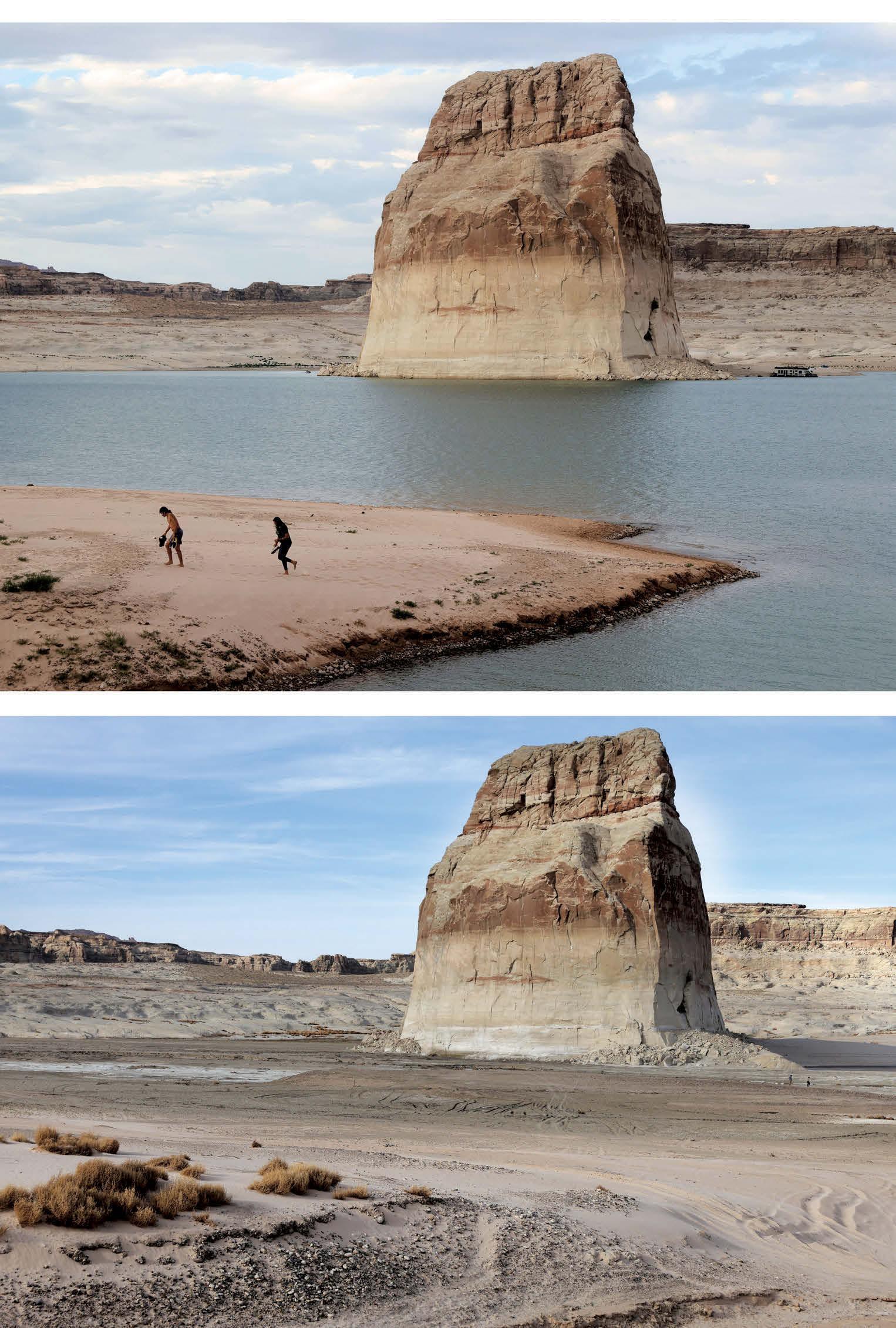
LAKE POWELL,
JUNE 23, 2021 MARCH 27, 2022 38 5280 | NOVEMBER 2022
TOUCH FEEL RELAX
 COLORADO SPRINGS

. .
FORT COLLINS
NORTHGLENNLAKEWOODCENTENNIAL LONGMONT
woodleys.com
ENVIRONMENT
Affordable Certified-Organic in America. Urban Mattress.
Affordable Certified-Organic in America. Urban Mattress.

today the vast, interstate plumbing system for which they laid the groundwork is on the brink of collapse.
The Most Affordable Certified-Organic Mattress in America.
TO HAMMER OUT THE COMPACT, Delph Car penter, Colorado’s brilliant and bullheaded representative, officially met with the other representatives 27 times. The protracted nego tiations were, in part, a result of the fact that each of the men had a specific number of acres he hoped to develop within his state’s borders. To fully and consistently irrigate those acres, each representative asked for a specific quantity of water, rather than a per centage of the river’s annual flow. This was a critical mistake. By allocating fixed quanti ties, the representatives created a system in which, to this day, states can draw the same amount of water from the Colorado in dry years as they can in wet years, and during the megadrought of the past two decades, this has helped drain the river’s reservoirs to historically low levels.
Exclusively at Urban Mattress.
The Most Affordable Certified-Organic Mattress in America. Exclusively at Urban Mattress.
installed in the early 1900s, and the ensu ing decades happened to be abnormally wet. According to popular history, this brief, atypical sample duped the compact’s negotiators into believing the river transported more water than it really did.
River Water Conservation District, dug through archives and learned that, in 1916—seven years before the compact was signed—a California hydrologist named E.C. LaRue had determined there wasn’t enough water to irrigate all the irrigable land within the basin. LaRue was so concerned that, before the compact negotiations even began, he wrote Herbert Hoover, then the secretary of commerce and the future chair of the Colorado River Compact Commission, to offer his expertise to the delegates. He was ignored.
Worse yet, the delegates compounded that blunder when they sought to determine how much water the Colorado River carried in the first place. The gauges they relied on to calculate the river’s flow had only been
The Most Affordable Certified-Organic Mattress in America. Exclusively at Urban Mattress.
The Most Affordable Certified-Organic Mattress in America. Exclusively at Urban Mattress.
Yet Carpenter and the other men were not simply unwitting victims of unsophisticated science, argue John Fleck and Eric Kuhn in their 2019 book, Science Be Dammed. Fleck, the former director of the University of New Mexico’s Water Resources Program, and Kuhn, the retired general manager of the Colorado
“These people came together in 1922 trying to make a deal,” Fleck said in a presentation earlier this year to a Southern California chapter of the League of Women Voters. “They were trying to carve up the river so development could happen, and it was a lot easier to do if they picked a big number.”

The Most Affordable Certified-Organic Exclusively at Urban Mattress.
The Most Affordable Certified-Organic Exclusively at Urban Mattress.
At this systemwide scale, water is measured in acre-feet, the amount needed to cover an acre of land with water one foot deep. (For reference, the average suburban home in the Denver area uses about half an acre-foot of water each year.) The men who signed the
Queen
Queen Denver
The Most Affordable Certified-Organic Mattress in America.
The Most Affordable Certified-Organic Mattress in America. Exclusively at Urban Mattress.

$1,099
Exclusively at Urban Mattress.
Mattress $1,099
Boulder Showrooms www.urbanmattress.com
Boulder Showrooms www.urbanmattress.com
Queen Mattress $1,099
Real Reviews. Always Five-Star.
Queen Mattress $1,099
Queen Mattress $1,099 Denver and Boulder Showrooms www.urbanmattress.com
Real Reviews. Always Five-Star.
Denver and Boulder Showrooms www.urbanmattress.com
Queen Mattress $1,099 Denver and Boulder Showrooms www.urbanmattress.com
Denver and Boulder Showrooms www.urbanmattress.com
Real Reviews. Always Five-Star.
Real Reviews. Always Five-Star.
Real Reviews. Always Five-Star.
Real Reviews. Always Five-Star.
Mattress
Denver
CORBIS/Corbis via Getty Images
40 5280 | NOVEMBER 2022
Herbert Hoover presides over a hearing of the Colorado River Compact Commission in 1922.
For the Snow Revelers & Serenity Seekers


Located 15 Minutes from Winter Park, CO | (970) 726-3773 | devilsthumbranch.com Retreat to 6,500 pristine acres of Rocky Mountain wilderness, perfect for both repose and adventure. Private cabins and cozy lodge rooms set the stage for the perfect snowy escape complete with soaking tubs and crackling fires. Get your fill of adventure across award-winning cross-country ski trails. Ride through crystalline vistas on horseback or on a fat tire bike. Our lovely landscape is your playground. Relax and refill your cup with refined on-site dining, our full-service spa, and our year-round outdoor pool and hot tub. A little wild, a little refined, completely Colorado.
NEW MOUNTAIN HOMES | WINTER PARK, CO | NOW SELLING
ENVIRONMENT
compact chose to believe the river’s average natural flow just upstream of the border with Mexico, at Yuma, Arizona, was more than 20 million acre-feet per year—a figure they arrived at through their own poor understand ing of hydrology and reliance on a single, erroneous Bureau of Reclamation report. The actual annual average, based on long-term tree-ring reconstructions by researchers at the University of Arizona and the University of Colorado Boulder, is about 15.5 million acre-feet. During the drought of the past 20 years, it’s been about 13 million acre-feet.
Equally wrongheaded, Kuhn says, was the men’s belief in stationarity, a concept he defines as “the idea that the river would always be the same as it was.” Modern science shows that the river’s long history is punctu ated with megadroughts—information the Indigenous peoples living within the river basin also could have shared, had the men who wrote the compact consulted them. And while that document may have solved water disputes between Western states, it did so at a great cost—to the canyons and cultural sites that were flooded by reservoirs, to the fish and other aquatic life whose rivers were sucked dry, and to the people who had depended on and stewarded the Colorado River for millennia.
Under the Law of the River, the people or communities with the oldest claims to a river’s water are known as senior rights hold ers and get first dibs. By this logic, Native Americans should control much of the river, but the compact allocated no water to the tribes living within the river basin. Various lawsuits in the 20th century changed that by returning about three million acre-feet to them—just under a quarter of the river’s modern flow—but a long history of antiIndigenous policies have left many tribes without the resources and infrastructure to get that water to their communities. As a result, some 40 percent of homes in the Navajo Nation, which spans northwestern New Mexico, northeastern Arizona, and southeastern Utah, currently lack running water. Yet in Scottsdale, Arizona, 62 percent of homes have private swimming pools.
WITH HUMAN-DRIVEN climate change being added into the Colorado River equation over the past 20-plus years, it should come as no surprise that the system is faltering Hotter summers lead to more water evaporating from reservoirs. Desperately dry soil means that even record snow years fail to fill the region’s waterways or replenish its depleted groundwater. As a result, reservoirs such as Lake Mead and Lake Powell—the linchpins that allow the river system to store water

42 5280 | NOVEMBER 2022

from wet years to use in parched years—are shrinking at an alarming rate. In 2021, Upper Basin reservoirs were partially drained to send emergency water downstream to Lake Powell. Even that wasn’t enough. Unless drastic action is taken soon, the Bureau of Reclamation predicts that, by 2024, Lake Powell could fall to dead pool, the water level at which electricity generation is no longer possible. Lake Mead isn’t far behind.
Although it’s unlikely that Las Vegas will suddenly wake up to dry faucets, rolling black outs may become more frequent. Electricity costs will likely rise. Residents of Page and LeChee, Arizona, stand to lose their drink ing water because the intake for their pipes could soon be above Lake Powell’s waterline, sucking nothing but air. Meanwhile, water levels in Lake Mead fell so low in 2021 that on January 1, 2022, emergency provisions recently added to the Law of the River trig gered automatic cuts for junior water users for the first time, and a second round of cuts has already been announced for 2023. Farm ers in Pinal County, Arizona, were among the first to have their allocations slashed because, in order to secure federal funding for a canal to divert Colorado River water, in
1968, Arizona agreed that the water rights of those using the canal would be subordinate to other states. “Roughly 30 to 40 percent of land in agricultural production [in that county] is being fallowed as we speak,” says the Environmental Defense Fund’s Moran. “That’s the biggest single impact so far in terms of the economy and people’s lives.”
Many communities are also voluntarily reducing their liquid footprints: Nevada has banned water-guzzling ornamental lawns; Los Angeles is working on a recycling system that will allow gray water from baths, show ers, and sinks to be reused as potable water; and in the Denver area, water use dropped 22 percent between 2002 and 2015, thanks in large part to a public relations campaign to change residents’ water use habits. Only about 15 percent of Colorado River water, however, goes to municipalities, while 70 per cent is used by farms—many of which are growing alfalfa for camels in Saudi Arabia and cows in Korea. “We can support a lot of people,” Kuhn says. “What we can’t support is a lot of grass.”
To stave off disaster, the Bureau of Rec lamation told the seven states governed by the compact in June 2022 that they had two
months to come up with a plan to cut the amount of Colorado River water they use by an additional two million to four million acre-feet annually, or it would do it for them. The states failed to meet the deadline, and at press time, the federal government hadn’t forced any cuts upon them
Anne Castle, a senior fellow at the GetchesWilkinson Center for Natural Resources, Energy, and the Environment at the Univer sity of Colorado Law School and a former assistant secretary of the interior, says that although the deadline passed, the pressure to come up with an agreement has not abated. And while states are trying to come up with a compromise, Upper Basin states such as Colorado are “taking the position that the Lower Basin needs to bear the brunt of the responsibility for reductions in overall usage,” Castle says. That reasoning is partially based on the fact that the Lower Basin has histori cally used more water than it is allowed by the compact, while Colorado, Wyoming, New Mexico, and Utah have used less.
Ultimately, though, every state will have to make sacrifices. “The gap between supply and demand is so large that, both mathematically and politically, no one basin, no one state,

ENVIRONMENT
44 5280 | NOVEMBER 2022
HOLIDAYS IN SANTA FE 877.901.7666 | HHandR.com TAOS El Monte Sagrado Resort & Spa Palacio de Marquesa SANTA FE Eldorado Hotel & Spa Inn and Spa at Loretto Hotel St. Francis Hotel Chimayó de Santa Fe ALBUQUERQUE Hotel Chaco Hotel Albuquerque at Old Town The Clyde Hotel LAS CRUCES Hotel Encanto de Las Cruces Inn and Spa at Loretto
ENVIRONMENT
no one sector of the economy can reduce its use sufficiently to fill the gap,” Castle says. “It’s got to be a basinwide agreement, where everybody bears a share of the burden.”
ONE HUNDRED YEARS AGO, the fate of the Colorado River was decided by seven men who ignored scientific evidence and failed to seek out Indigenous knowledge. The centennial anniversary of their effort is “a poignant moment,” Moran says. It’s a time to reflect on what they accomplished and what they got wrong. In 2026, key com ponents of the Law of the River expire, and the federal government is required to replace them with new rules guiding the future of the watershed.

One of the most important changes that can be made, say Kuhn and others, is to rectify the compact’s first mistake and begin allocat ing percentages of the river’s flow instead of fixed amounts. Additionally, water managers must do a better job of incorporating Native American needs and perspectives. “The fact that we have tribes in the Colorado River basin with households that don’t have access to clean drinking water is a huge public health issue,” says Castle, who also serves on the Colorado River Basin Water and Tribes Ini tiative at the University of Montana. “That’s an inequity we need to remedy, and [now is] a good time to ensure that everybody in the basin has that basic human right.”
In an open letter published this past July, a coalition of 14 basin tribes accused the Department of the Interior of leaving them “in the dark” as the states and federal government deliberated over how to save the Colorado River from collapse. And while it’s still too soon to say how inclusive that process will be, many experts are cautiously hopeful that the negotiations surrounding the new 2026 management guidelines will let all of the river’s stakeholders weigh in on its future. Already, towns, cities, environmental advocates, farming groups, Native American tribes, scientists, and other water users are writing letters, submitting comments, con ducting studies, holding forums, and speaking out about how to protect the river, while making sure its people and wildlife thrive.
This is the start of a new century of river management. This time, the states can’t pre tend they can control a river so ancient it wears a path through some of the strongest rocks on Earth. This time, they must listen to the river itself. m
based in Durango, Colorado. Email feedback to letters@5280.com.


 Krista Langlois
is a freelance journalist
Mariachi Alma Del Folklore | Nov. 7 Fareed Haque & Tony Monaco | Nov. 10 Amber Weekes | Nov. 15 Dr. Richard Kogan | Nov. 16 Wil Swindler’s Elevenet | Nov. 28 CU Nutcracker | Dec. 6 Same Cloth | Last Saturday of Each Month, including New Year’s Eve Friday Lunch Bunch: Purnell Steen & the Five Points Ambassadors | Every Friday 11-2PM Ken Walker Sextet, Sarah Mount & the Rushmores | Final Friday of Each Month Additional Shows Holiday Jazz Shows 2022
Acoustic Christmas by El Javi
Tod Dickow & Charged Particles with Randy Brecker NOV. 11/12 DEC. 10 TICKETS AND FULL LINEUP DAZZLEDENVER.COM Charlie
Brown
Christmas with the Annie Booth Trio & Friends LAPOMPE Holiday Show DEC. 19-24 Photo: Adam Cory Photography DEC. 15/16 46 5280 | NOVEMBER 2022



A GAYLORD HOTELS ORIGINAL EXPERIENCE Find everything you’re looking for this holiday season – dozens of Christmas activities, themed dining, and the spectacular acrobatic feats of the all-new Cirque Spirit of Christmas. It’s all part of So. Much. Christmas. at Gaylord Rockies. NOV. 18 - JAN. 1 ChristmasAtGaylordRockies.com
Life After Death
Turning my parents into sustainable energy, and other tips for managing grief.

Grief is like a gaudy hat, in that everyone will wear it a little differently. Wailing was never my style. Moping? Waste of time. Same with self-medication. My warhero older brother attends Mass daily and lights candles for the lost. I respect his faith, but despite my Catholic upbringing, I never really embraced the afterlife thing. It always struck me as a hedge for people uncomfort able with the here and now.
Unfortunately, because of unwelcome repetition, I’ve gotten a chance to refine my grieving style over the past two years. That set me off in search of more creative ideas for remembering the people I’ve loved and lost. Might there be ways to keep them alive not only in my memory, but also more tangibly?
A few years back, I started using my iPhone to keep in touch with the departed. I’d scroll through the nearly 2,000 names in my contacts, pausing to remember whenever I’d run across the listing for someone now gone, like a melancholy elephant sifting and swaying as it sorts the bones of the fallen.
IPhone grief is a surprisingly effective way to remember the dead. For example, under the B’s: Mark Bowling, my
cousin’s son, his body battered by diabetes since childhood, dead at 39 while awaiting a liver transplant. Seeing his name reminds me that diabetes runs in our family; my grandfather, father, and both brothers suffered its ravages, though I’m as yet unaffected. Mark reminds me to keep fit, eat sensibly, and nag my kids to live smart in the long shadow of that condition.
I scroll into the D’s, past Jay Dantry, a supportive bookstore owner in my hometown; on to the H’s and Oakley Hall, who founded a writing workshop that was influential for me; past Jason Samani, a longtime soccer buddy in his early 50s who died by suicide not long after sending his only son off to college. He left behind an angry young man, a lightning-struck wife, and a lesson in how some people hide despair behind their smiles.
But while smartphone sorrow is effective, it’s also ephemeral. A few minutes of screen time just doesn’t seem like enough of a tribute, considering how much some of those people meant to me. So, in 2020—a particularly rough year for me, mortalitywise—I started thinking about more productive ways to grieve. I arrived, eventually, at the idea of converting memories into kilowatts.
I understand if you have questions.
ESSAY BY MARTIN J. SMITH
ILLUSTRATION BY SHOUT 48 5280 | NOVEMBER 2022
Daniel Bard and the Rockies are helping strike out hunger.
A huge thank you to Daniel Bard who made a donation to Amp the Cause’s Fill the Void program for each of his strikeouts in 2022. And many thanks to the Colorado Rockies franchise that matched his contributions, bringing the total to $41,400. Fill the Void: Amp the Cause to End Hunger was created to help alleviate hunger by providing reliable access to food through grocery gift cards. The program offers a dignified alternative to over-run food banks and supplements SNAP benefits. Denver and Aurora Public Schools are critical partners, and together we serve schools with the greatest need, all of which have student populations with over 94% free and reduced lunch eligibility.

Help strike out hunger by donating at fillthevoidcolorado.org
FILL THE VOID
Amp the Cause is a nonprofit that works with over 55 beneficiary organizations to improve the lives of Colorado’s children and families.
THE IDEA BEGAN with my late sister. Lisa died in 2015, after spending the final 18 years of her life on a four-acre patch of paradise along the Colorado River in Granby. I adored her, and our regular visits to see her convinced my wife and me, in 2016, to abandon our California home and move into the house she left behind.


The thing is, in a way, she still lives here. During her nearly two decades on this particular piece of land, Lisa planted a
lot of trees and created a few gardens. She designated each tree she planted or garden she tilled for one of her six children or 12 grandchildren. She called them by name. “Henry had a tough winter,” she might say of the red osier dogwood named after her daughter Allison’s youngest son. Or, “I won der if Garrett will ever straighten out?” she might lament about the hunched blue spruce named for her daughter Beth’s only child. She named the lilac hedge along the front
fence for our then elderly parents and often worried about them, as in, “I don’t think Mom and Dad get enough sun.”
When my sister got a devastating medical diagnosis in spring 2015, she immediately directed me, her executor, to a small box in her living room. It contained a hand-drawn map listing the location of every named tree on her property. Her instructions were very specific: When I’m gone, she said, have me cremated. Then invite my kids and grandkids to Granby for a few days together. While they’re here, I want each of them to take a scoop of my ashes and spread them at the bases of their trees. She never said as much, but her idea was clear: Let me, in death, nourish each tree and help it grow.
Your
HOME awaits.
We did what she asked. It was a circus, of course, and I suspect she knew it would be. There were a few tears, inappropriate jokes, and some whining by those who had to crawl among scratchy, low pine branches to make their deposits. At one point, our dog lifted his leg on a spot where she now lay. We even sprinkled some of her along what we called her “rage wall,” a long barrier she built by hand from river rock during her divorce from a man she had loved deeply.
What ashes we had left went into the nearby river-fed pond, where a shoreline bench bears a brass memorial plaque that includes a short quote chosen by her children. It’s the final line of Shel Silverstein’s classic The Giving Tree: “And the tree was happy.”
IMPROBABLY, MY PARENTS OUTLIVED my sister, their oldest. Lisa was 72 when she died, and it was my parents’ curse to survive her by five years. But then came 2020, the same year I lost my brother Dave and sister-in-law Sue. Dad passed that year at nearly 102; Mom went two months later at 98.
My parents’ burial instructions were more conventional than my sister’s. They were to be cremated, and their ashes were to be lodged in a single urn, then buried on a family plot in their hometown of Birmingham, Ala bama. After a yearlong COVID-19 delay, I joined my brother Bill, my only surviving sibling, and drove them home on a madcap road trip from Granby across the Midwest and into the Deep South. Along the way we did a little sightseeing, taking Mom and Dad to Cadillac Ranch in Amarillo, Texas, and Graceland in Memphis, Tennessee. I like to think they enjoyed it.
Still, it all felt unfinished. They are buried in Alabama, and I am in Colorado, and driving more than 1,400 miles to visit their gravesite seems like it will be a rare occasion. I wanted to follow Lisa’s lead and find a way to make
ccu.org | 303.978.2274 MEMBERSHIP ELIGIBILITY REQUIRED. FEDERALLY INSURED BY NCUA. EQUAL HOUSING OPPORTUNITY.
DREAM
Whether you’re looking to purchase a new home or take advantage of your home’s equity, CCU can help you with your dream home. CALL US TODAY! Mortgages | Home Equity Line of Credit | Fixed Second Mortgage We’ve been in the dream-making business since 1973. ESSAY
50 5280 | NOVEMBER 2022



NOV 18 – DEC 24 • WOLF THEATRE DENVERCENTER.ORG TICKETS START AT $35 ADDITIONAL SUPPORT A CHRISTMAS CAROL The company of A Christmas Carol Photo by Adams VisCom A Christmas Carol By Charles Dickens Adapted by Richard Hellesen Music by David de Berry Directed by Anthony Powell MORE HAPPY, LESS HUMBUG An opulent musical retelling of a timeless Christmas classic! SEASON SPONSOR SHOW SPONSOR
my late parents a constant presence in my life, as my sister has become.

I struggled to come up with a gesture to memorialize them that would be just as meaningful as what Lisa had done. For a year, the modest inheritance they left me sat in a bank account untouched. What could I do with it that might endure?



My breakthrough came this past spring, after a particularly long and difficult winter. I contacted a local solar panel installation company and arranged for an estimate. We struck a deal, I spent some of that money, and since May 15 solar panels have been generating power from the strong highcountry sun that bakes the south-facing roof of our garage. My parents pay our electric bill every month by converting photons into kilowatts, and I sense their presence every time I check the phone app that monitors their productivity.


That’s how I’m choosing to wear the gaudy hat of grief. Those odd memorials are a daily reminder that life is unpredictable in ways both good and bad. Families survive the unthinkable. Tragedies befall honorable people. The good sometimes die young.






So, plant a garlic bed for your mom, whose puttanesca you loved. Fertilize your spruce with Uncle Bruce. Spend your inheritance on something renewable. Surround yourself with tangible memories of the people you’ve loved, so they can remind you daily that the here and now is all we’re guaranteed.










As of this writing, my parents have pre vented about 4,800 pounds of CO2 from entering the atmosphere—the equivalent of planting 36 trees. m








Martin J. Smith lives in Granby. He’s the author of five novels and five nonfiction books, including Going to Trinidad: A Doctor, a Colorado Town, and Stories from an Unlikely Gender Crossroads, which this year was a finalist for a Colorado Book Award.


GIFT SETS OF ALL SIZES,GIFT SETS OF ALL SIZES, SHAPES AND types!SHAPES AND types! THORNTON I-25 104TH AVENUE (303) 280-3800 WESTMINSTER HWY 36 & SHERIDAN (303) 426-4800 YOUR HOLIDAY GIFT DESTINATIONYOUR HOLIDAY GIFT DESTINATIONYOUR HOLIDAY GIFT DESTINATION Visit Us In-Store or Shop Online At: totalbev.comVisit Us In-Store or Shop Online At: totalbev.com ESSAY
Installing Mom and Dad on the roof of the garage
52 5280 | NOVEMBER 2022 Courtesy
of the author
A Tradition We Can All Share

www.enstrom.com
Shop LOCAL
Locally owned businesses are part of the fabric that makes Colorado so great. Which is why this winter, we encourage you to shop local.
From home furnishings to jewelry and everything in between, our wonderful state is home to a variety of retail gems with a long standing history of quality craftsmanship and top-notch customer service. Learn more about what makes these local businesses so unique.

SPECIAL ADVERTISING SECTION
HW HOME
Founded in 1999, HW Home has been serving the Colorado Front Range for over 20 years. Since opening our first store on Boulder’s Pearl Street, our mission has been to serve as a Colorado staple offering unique, fashion forward furnishings and interior design services. We’ve found success by focusing on our core ethos of quality, service, and value.
Our showrooms are designed to be a place of inspiration and comfort for our guests. With our assortment of globally inspired furnishings and designer merchandise, our locally owned stores provide an enormous impact on the way our guests shop. Our wonderful customers and a team of talented professionals have helped us achieve an array of awards including the National Home Furnishings Retailer of the Year award, and the exclusive ARTS Awards Hall of Fame distinction.
HW’s operating model has always been based on amazing merchandise and outstanding service for our customers. Our business model relies heavily on our commitment to inventory and as such, our large Denver warehouse allows for 80% of what we show on our retail floor to be delivered in a day’s notice. HW has successfully tackled the pandemic supply chain crisis and could furnish your entire home today. Co-founder Ron Werner says, “Our commitment to living in the ‘yes’ allows us to do everything in our power to satisfy our customers, and our massive commitment to inventory is our secret sauce competing with anyone in town.”
We pride ourselves on being part of the fabric of our community in every possible way. Our commitment to supporting those in need is a part of our corporate culture, and it is our distinct honor to give back to those who have supported us so warmly for over two decades.
What makes us unique:
hwhome.com @hwhome
Denver: 303.394.9222
199 Clayton Lane Boulder: 303.545.0320
1941 Pearl Street
Fort Collins: 970.632.5957
321 Corbett Drive, Suite 118
HW Home is the local favorite for fresh furnishings and great design, offering quick delivery on countless in-stock items and a true alternative to the national chains.




SPECIAL ADVERTISING SECTION Shop LOCAL Shop LOCAL · November 2022 · 55
RARE FINDS
RUSTIC • RECLAIMED • VINTAGE • INDUSTRIAL

A visit to Rare Finds is nothing short of a treasure hunt that brings the world to you.
From custom tables and benches to high-quality upholstered and top grain leather sofas and chairs, lighting, architectural elements, unique accents and accessories for every space in your home—a visit to Rare Finds engages your senses and your imagination.


We follow design trends, visit trade shows around the world, and listen to our customers, whether they are furnishing a house in town or a mountain getaway.
Our pieces are hand-picked to reflect the kind of ease and individuality that makes Rare Finds Denver’s go-to location for unique furnishings. We especially enjoy seeing how our customers incorporate their rare finds into their everyday living and working spaces.
What makes us unique:
Collaborating with artisans and skilled craftsmen from Colorado to remote villages in India, we have a beautiful collection of handmade one of a kind pieces from around the world.
rarefinds.com
Ranch:
MOLLY’S SPIRITS
At Molly’s, our love language is gift giving (and whiskey)! With over 12,000 products to select from, you’re bound to find something perfect for everyone.
For the wine lover—why not get the gift that keeps on giving? Purchase a subscription box to one of our three wine clubs. Each month, they will receive new wines to explore and think of you every time they open a new bottle.

Have a whiskey hunter in your midst? Molly’s offers an incredible single barrel program. Pick up a bottle just as unique as they are, something they won’t find anywhere else.
In Colorado, beer is as much a part of our landscape as the Rocky Mountains! Build a custom six pack of all the best the front range has to offer. Molly’s has the largest selection of local crafted brews.
For the friends and family that don’t consume alcohol, Molly’s has a huge selection of non-alcoholic beers, wines, and spirits! We also offer cozy holiday sweaters, t-shirts, and other novelty items.

Shop with us at Molly’s for your holiday gift giving needs!
What makes us unique: Our incredible selection of over 12,000 products, knowledgeable staff, and personal touch makes for an amazing experience. Whether you’re shopping for wine to go with tonight’s entree, planning a dinner party, or stocking the bar at your wedding, Molly’s Spirits is the best choice for your everyday needs and special events.
LAKESIDE | 720.807.8670
VILLAGE
5809 W. 44th Ave.
720.740.2446
8557 E. Arapahoe Rd.
Shop LOCAL SPECIAL ADVERTISING SECTION 56 · November 2022 · Shop LOCAL mollysspirits.com
|
GREENWOOD
|
|
Denver: 303.990.9311 6500 E. 44th Avenue, Denver, CO 80216 Highlands
303.237.4470 8575 S. Quebec Street, Highlands Ranch, CO 80130
VISIT AURORA
Enjoy the season of gifts, spice, and everything nice in Aurora, CO.
The holiday season in Aurora has arrived! Discover our go-to shopping guide to ensure your seasonal gift hunting is fun and exactly what you’re looking for. Happy shopping!

For something totally Colorado
Discover a variety of Colorado-themed gifts that are bound to make an impression. From hats and sweatshirts to local foods and jewelry, you can find everything Colorado-made inside the LOCAL. This marketplace truly has a unique gift for everyone on your list.

For the boutique-feel Aurora is home to Stanley Marketplace, an independent indoor center with more than 50 different retailers. Tattered Cover KIDS offers great book options and unique
gifts. Visit Trunk Nouveau for one-of-a-kind jewelry, décor, and so much more.
For the food and drink lovers
Stock up on Aurora roasted coffee beans at Jubilee Roasting Co. or Legends Coffee. Haykin Family Cider, Aurora’s first cidery, lets you discover a cellar of small-batch ciders made from locally sourced apples. Swing by Savory Spice to pick up some tasty spices, sauces, and more.

For truly unique and thoughtful gifts
Stop by Heirlooms Antique Mall for a truly unique selection of vintage jewelry, décor, oddities, and collectibles. Or head to ZERO Market, one of the state’s only sustainable and zero waste stores. They sell all natural and reusable products that will please all your eco-friendly friends.
VisitAurora.com/Holiday-Shopping 720.484.8902 2501 Dallas Street Suite 290 Aurora, CO 80010
What makes us unique: Visit Aurora makes it easy to plan your next getaway in the Gateway to the Rockies. Take the stress out of holiday planning with our exclusive holiday shopping guide. To start browsing, go to VisitAurora.com/ Holiday-Shopping
SPECIAL ADVERTISING SECTION Shop LOCAL Shop LOCAL · November 2022 · 57
COFFEE
Corvus coffee travels the world to find coffees that are defining the new high end of specialty coffee. We are locally owned and operated in Denver, Colorado, where we roast artisanal coffee and offer espresso drinks in stylish, industrial cafes.
Use promo code SHOPLOCAL22 for 30% off at corvuscoffee.com
Discount is good for whole bean coffee only EXPIRES 12/31/22
corvuscoffee.com Denver | DTC | Littleton | Arvada RiNo (coming soon!)
LOVE IS LOVE HAIR SALON


We are a new and inclusive hair salon providing quality genderneutral services for Denver’s progressive Capitol Hill neighborhood and surrounding LGBTQ+ communities. If our mission resonates, we invite you to come sit in the chair of one of our talented stylists and experience what makes our salon so unique.

loveislovehairsalon.com | 303.800.4LOVE 450 E. 17th Ave., Denver, CO 80203
Breckenridge Bourbon Whiskey is the official Bourbon of the Denver Broncos. To honor their partnership, Breckenridge Distillery invited two Denver Broncos legends, Jake Plummer and Karl Mecklenburg, to the Distillery to help produced two limitededition Broncos Bourbon Blends. Shop your local retailer for the Broncos Bourbon Blends.
breckenridgedistillery.com 970.547.WSKY (9759) 1925 Airport Rd., Breckenridge, CO 80424


Shop LOCAL SPECIAL ADVERTISING SECTION 58 · November 2022 · Shop LOCAL
BRECKENRIDGE DISTILLERY
CORVUS
CALL OR EMAIL TO LEARN MORE. Share your story and shine the spotlight on your local business. 303.832.5280 | advertising@5280.com ADVERTISE HERE SHOP LOCAL WILL BE BACK NEXT YEAR!
ALAMO DRAFTHOUSE CINEMA
Merry movie season! Alamo Drafthouse Cinema is here to bring you cheer and fill your holidays with films, food, and fun. Your destination for unique movie experiences in Littleton, Sloans Lake, and Westminster has everything you need to make the season bright, and more importantly, stress free. Need gifts for the whole family? Easy, pick up some Alamo Drafthouse gift cards and give them the best films, food, and drink all in one seat. How about something for the cinephile in your life? A movie every day of the year with a subscription to Season Pass is hard to beat. Need to keep the kids entertained and yourself sane? You’ll love our special events, like our ELF and CHRISTMAS VACATION Movie Parties with fun games and props, or THE HOLIDAY and LITTLE WOMEN Brunch Screenings where you can recharge your cheer with a few mimosas. We’ll deliver food right to your seat, give your kids a show they’ll never forget, and best of all, take care of all the cleanup.

What makes us unique:
Alamo Drafthouse Cinema is committed to providing the highest quality cinema experience possible with the best films, food, and drinks all in one seat. That means better projection, better sound, food delivered to your luxury recliner seat, custom ad-free pre-shows, and no talking or texting.

BOUTIQUE LA VOGA
We are so excited to be a part of the Highlands community! A women-owned business, Boutique La Voga specializes in personal styling to build a perfect wardrobe custom to your personality and taste.
With decades of experience in the industry, Boutique La Voga wants to reach customers in a new way. We work oneon-one, offering more personalized service, and creating a relationship in order to make a special connection with all of our clients. We have a wide selection of gifts and jewelry— perfect for the holiday season! We aim for our customers to leave the store feeling confident.
The team at Boutique La Voga is knowledgeable, skilled, and professional. We are dedicated to excellent customer service. We truly do this because it makes us happy, and we enjoy our profession. We can’t wait to meet you!
What makes us unique:
Boutique La Voga is a women-owned business dedicated to personal styling by working one-on-one with our clients.


303.477.3378
West 32nd Avenue, Denver, CO 80211
SPECIAL ADVERTISING SECTION Shop LOCAL Shop LOCAL · November 2022 · 59 drafthouse.com/denver Littleton | Sloans Lake | Westminster
@shopboutiquelavoga
3640
BEYOND THE

Skinning and schussing in Rocky Mountain National Park
Colorado skiers and boarders are headed into the backcountry in search of wide-open runs, powder days long after the last storm, and significantly fewer people. But getting to this skiing Shangri-La takes a lot more than earning your turns. From how to read avalanche forecasts to picking the right partners, we’ve got you covered with this comprehensive beginner’s guide.

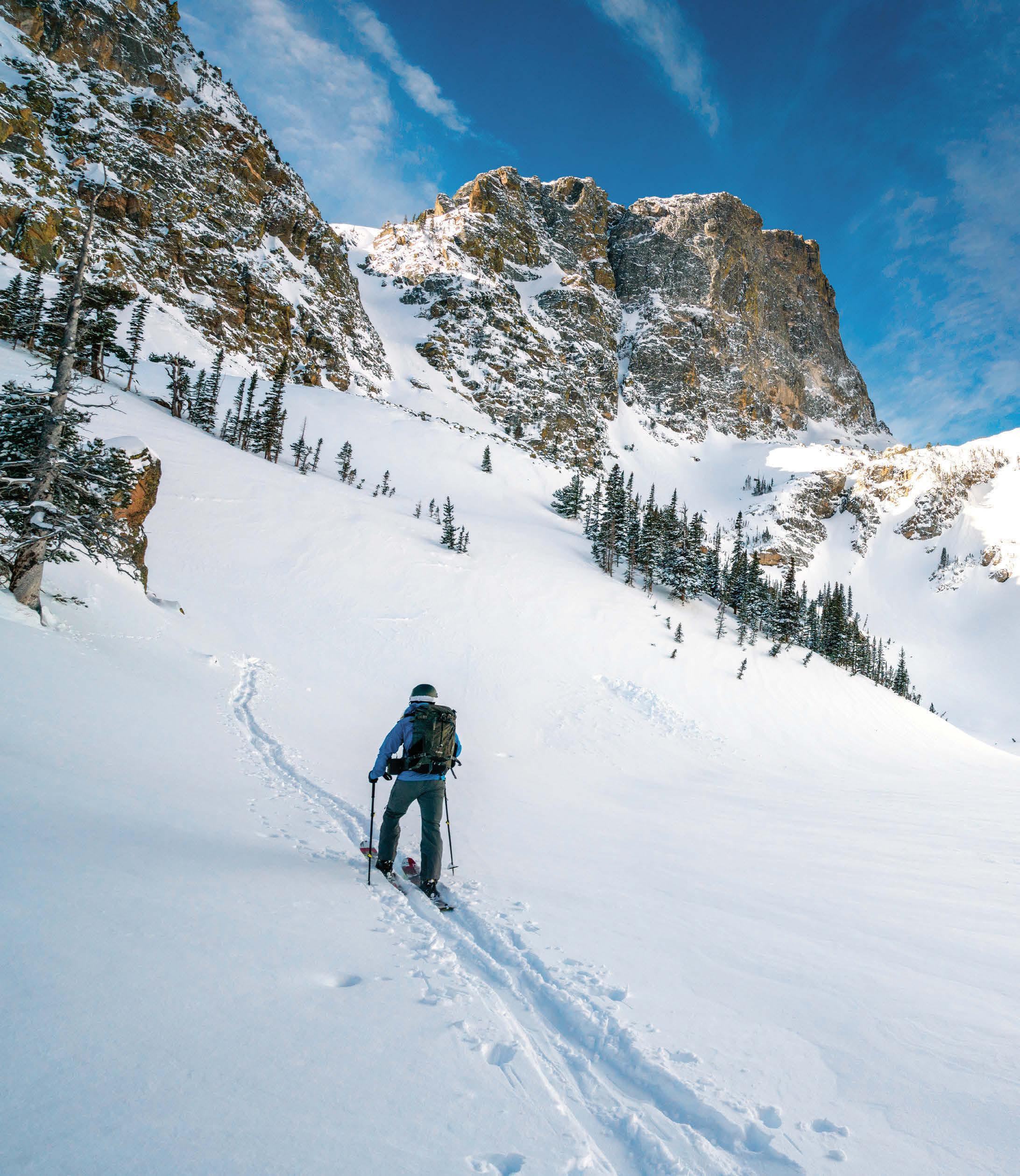 BY NICHOLAS HUNT | PHOTOGRAPHS BY JASON J. HATFIELD

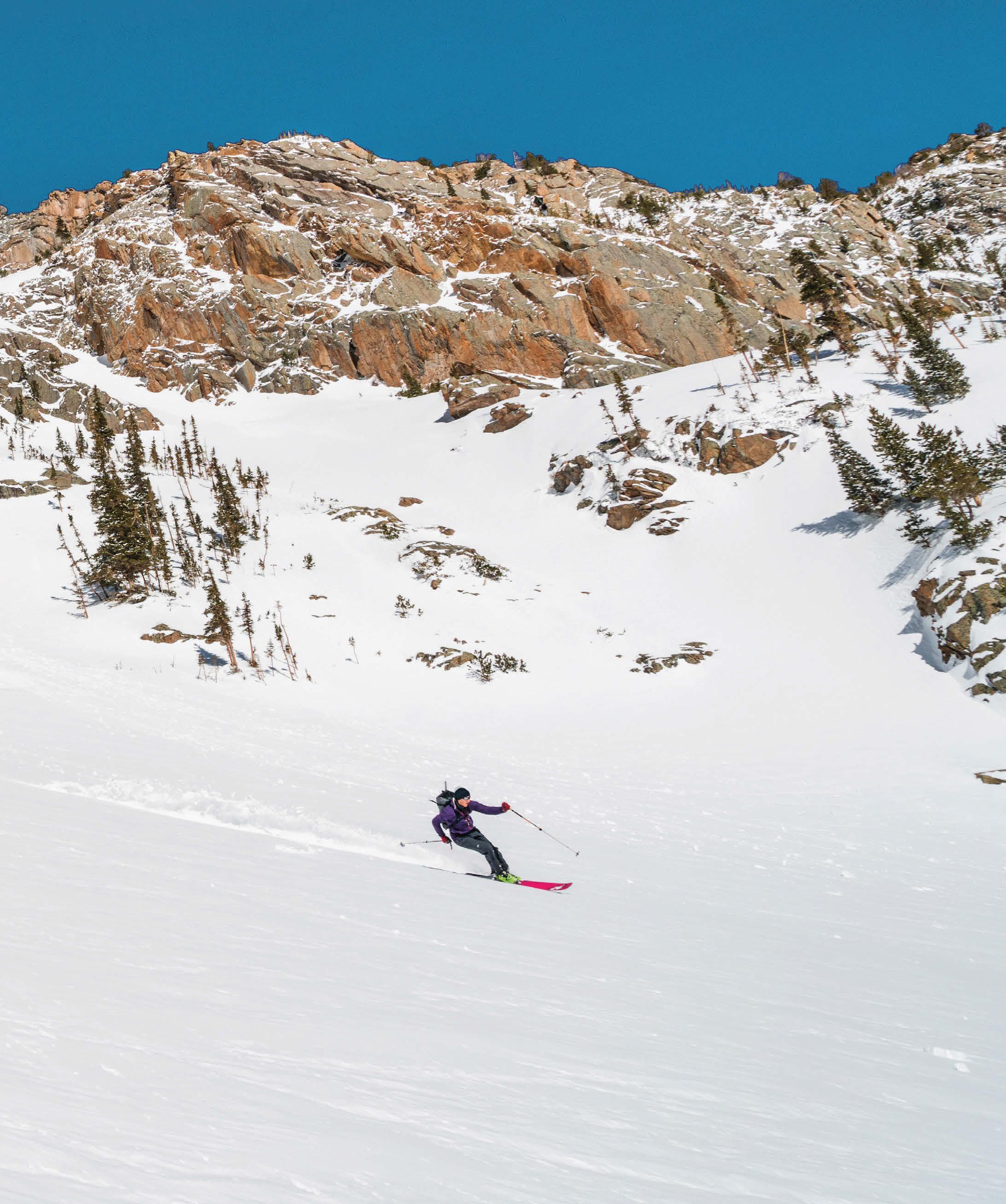

BOUNDARY
snow deposited by the ongoing storm slides down to harmlessly cover his snowboard boots. But that mini-avalanche is a sign of possible danger to come. It’s February, and Dyer, co-owner of Kent Mountain Adventure Center, a ski and rock climbing guide service and education outfit based in Estes Park, is taking me on a tour of Rocky Mountain National Park. He has chosen this small rise for his snow check for a reason: It has nearly the same steepness and faces the same direction as Dream Shots, the steep chutes we’re planning to ski back down to iced-over Dream Lake. That small slide is an indicator that, if we ski that line, there’s a chance we could trigger an avalanche that wouldn’t be described as mini.
“I don’t know where you’re at,” Dyer says, “but after seeing that, I’d rather not take the risk.” Me neither. We’d just glimpsed what’s known as a storm slab, where a layer of fresh snow hasn’t had time to bond with the existing layers below it, making it ripe for an avalanche. Instead, we ski the route we just hoofed up because that terrain is too shallow to slide.
Despite not schussing our intended run—in fact, because we didn’t ski it—this was a textbook backcountry day. There are few other sports that require such a high level of risk assessment, decision-making, and willingness to turn back as ski touring. But despite this barrier to entry, backcountry skiing is an activity that, according to market research firm the NPD Group, has been exploding in popularity since the pandemic temporarily shut down ski resorts and sent us all in search of socially distant ways to get our winter fixes. Although gear sales have cooled somewhat since that first pandemic winter, Dyer doesn’t see the sport’s growth slowing significantly any time soon. “As ski quality continues to go down at the resorts,” he says, “I think more and more people are going to realize they can come out here and ski pretty consistently amazing conditions.”
There’s more to it than good snow, though. Skinning, so called for the removable fabric strips that stick to the bottoms of your





planks and grip the snow so you can ski uphill (and don’t slide downhill), is by far the most efficient form of human-powered win ter transportation. It opens up the snow-covered expanse that is the Colorado high country for half of the year in a way plodding snowshoes never could. And trust me: Traversing a flat, frozen lake surrounded by a cirque of blue-gray mountains is as much a part of the experience as skiing steep powder.
But moving from the resort to the backcountry requires more than just a pair of skins. It takes knowledge and experience, two things no magazine article alone can give you. Instead, if you’re already a strong inbounds skier or boarder, the following pages will serve as your road map to the skills, classes, places, and gear you’ll need to safely skip the lift lines.
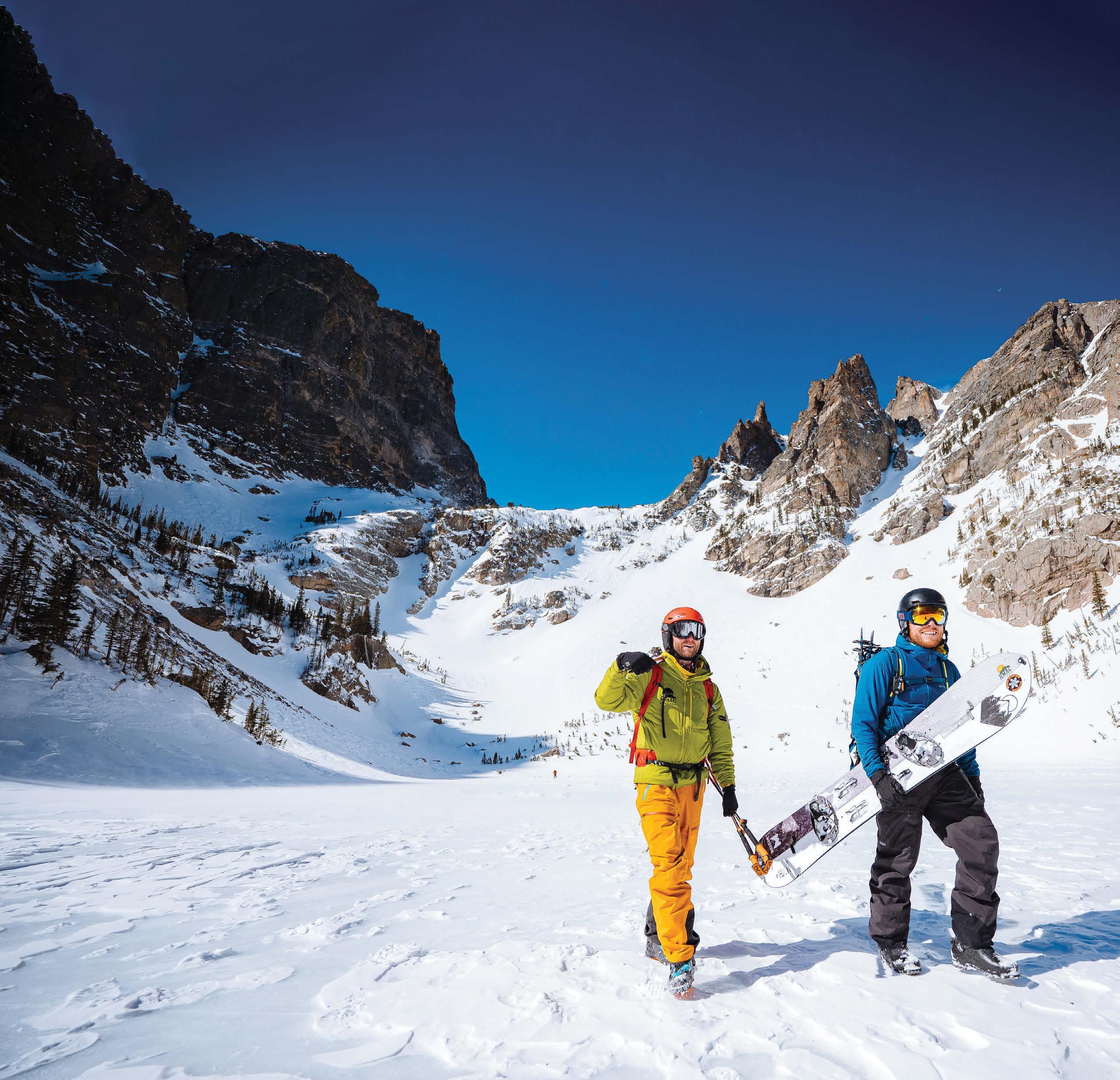
62 5280 | NOVEMBER 2022
Courtesy of John Berry/Visit Estes Park
BEYOND THE
PROJECTION STATION
The first stop of your backcountry trip shouldn’t be the trailhead—it should be the Colorado Avalanche Informa tion Center’s (CAIC) website or app, where you’ll find daily avalanche forecasts for 10 mountain regions across the Centennial State. “Forecasts aren’t the be-all, end-all of back country decision-making,” says Mike Cooperstein, a lead forecaster with the organization. “They’re a tool, and if you don’t know how to use the tool, it doesn’t help that much.” With that in mind, we had Cooperstein break down the different elements of a CAIC forecast.
AVALANCHE PROBLEM
There are nine kinds of avalanches, which are distinguished by how they form and what triggers them. If CAIC thinks a particular type is pos sible, its forecast will include an avalanche “problem,” which uses four graphics to outline where on the mountain you’d potentially find that avalanche type, plus its likelihood and possible size. Depending on con ditions, expect up to three problems, with the most dangerous listed first.
MOUNTAIN GRAPHIC
The first thing you’ll see once you click on a specific region is the area’s predicted avalanche danger broken down into three elevation bands: below treeline, near treeline, and above treeline. There are five danger levels, from low to extreme, and each level is exponen tially more dangerous than its predecessor.
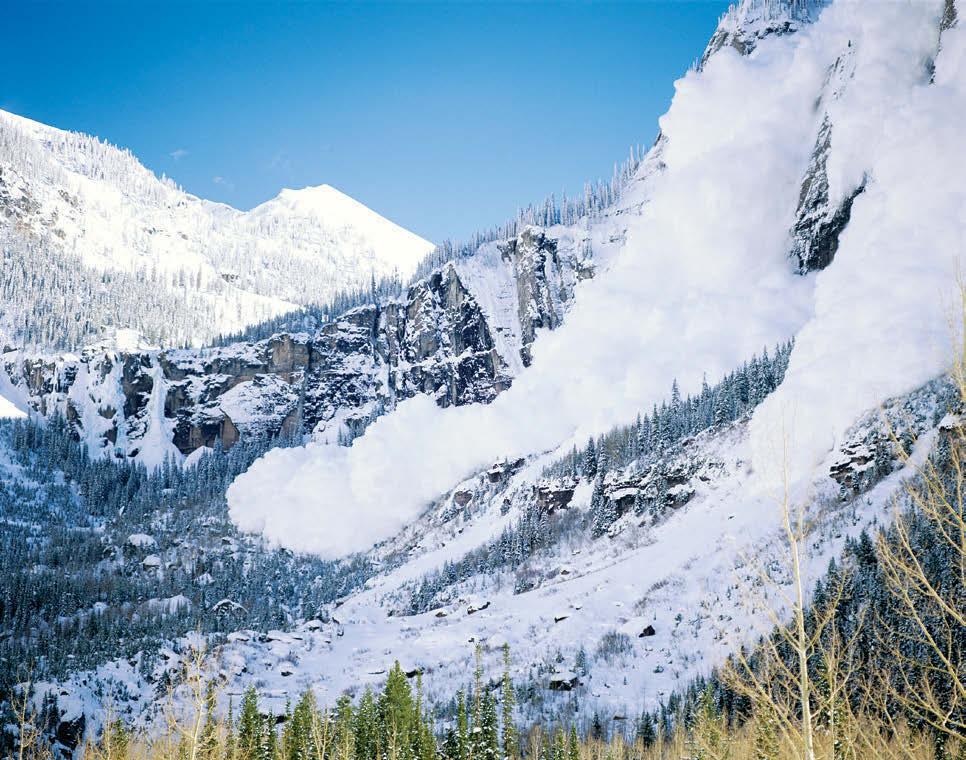
ASPECT/ELEVATION
Think of this octagonal chart as a mountain viewed from above, with each ring repre senting a different elevation band. If the two outermost sections to the top right are shaded, for example, expect to find this problem’s avalanche type on northeastfacing slopes near and below treeline.

SUMMARY
Located
in plain English which types of terrain
safer conditions.
LIKELY
CHARACTER
Knowing the nine types of avalanches—something you’ll learn in a level-one class—will help you choose safer routes and know what warning signs to look for.
UNLIKELY
LIKELIHOOD
This scale projects the chance that you could trigger this avalanche type—or that it will happen naturally.

SIZE
The size of an avalanche is rated by its potential for destruction: Small ava lanches are unlikely to bury you (but can still be disas trous if they, say, sweep you off a cliff); large avalanches can engulf you; very large slides can destroy a house; and historic breaks are about as big as the slope can ever produce.

NOVEMBER 2022 | 5280 63 BOUNDARY
Doug Berry/Getty Images (Telluride); Courtesy of National Avalanche Center (infographics)
below the mountain graphic, this one- to two-paragraph over view of the day’s conditions details
forecasters think could slide and which should offer
N NE
E
SE
S SW
NW W
ABOVE TREELINE NEAR TREELINE
BELOW TREELINE
PERSISTENT SLAB
POSSIBLE LIKELY VERY
CERTAIN SMALL LARGE VERY LARGE HISTORIC HIGH LOW CONSIDERABLE NO RATING EXTREME MODERATE BELOW TREELINE NEAR TREELINE ABOVE TREELINE
TOOLS OF THE TRADE
A dedicated backcountry setup may be expensive, but it’s worth the investment if you’re serious about heading off-piste. Here’s what you’ll need— plus Colorado-made gear for your shopping cart.
1 ADJUSTABLE POLES
While not a necessity, being able to change the length of your poles—longer for more leverage, shorter for more maneuverabil ity—is useful. Larger baskets also stop your poles from plunging into the snow and throwing you off balance.
Cart: Scepter Poles, Backcountry Access; $90


2 SPLITBOARDS
These snowboards break in half lengthwise so boarders can use them like a pair of skis while skinning and snap them back together for the descent.
Cart: Backwoods splitboard, Weston Backcountry; $949


3 ALPINE TOURING BOOTS
Lightweight and designed to click into tech bindings, alpine touring (AT) boots’ best feature is walk mode, which allows your ankles to rotate when you’re going uphill, increasing comfort and range of motion while also minimizing blisters.

Cart: F1 AT boots, Scarpa; $749

4 BEACON, PROBE, AND SHOVEL
The beacon helps you find the general location of your touring partners if they’re buried in an avalanche (and vice versa); the probe is for prodding deep into the snow to find their exact loca tions and depths; and the shovel is for, well, shoveling them out.
Cart: Diract Voice rescue set, Ortovox; $510
5 TOURING SKIS
Just like resort skis, backcoun try planks come in a variety of shapes—skinny for carving hard snow, wider for powder day floating—but the one thing they share is a lighter construction than their inbounds siblings so the climbs won’t exhaust you (as much). A width of around 100 millimeters usually makes for a good all-arounder.
Cart: Natural 101 skis, Icelantic; from $879

6 TECH BINDINGS
Instead of a traditional toe piece, most tech bindings use a pair of pins to clamp the front of your boot in place while allowing the heel to pivot up and down. When it’s time to descend, lock your heel down, switch your boots into ski mode, and send it.
Cart: Speed Turn Binding, Dynafit; $350
7 SKINS
Named for the seal skins they were traditionally made from, these fabric cutouts have direc tional fibers that lie flat when you slide your ski forward, then splay out and lock into the snow, preventing backslide.
Cart: Climbing skins, Backcountry Access; $230


64 5280 | NOVEMBER 2022
Clockwise from center top: Courtesy of Icelantic; Courtesy of Ortovox; Courtesy of Dynafit; Courtesy of Weston; Courtesy of Backcountry Access; Courtesy of Scarpa; Courtesy of Backcountry Access
1
7 3 2
4
6
BOUNDARY BEYOND THE
EXTRACURRICULARS

COMFORT LEVEL
Don’t make the mistake of heading straight from the resort to a level-one recreational avalanche safety class (see “Get Schooled,” page 67) without skiing on your backcountry gear first, says Madeline Bachner Lane, chief education officer at the Colorado Mountain Club (CMC), a Goldenbased education and adventure organization. It’s difficult to absorb everything you need to know to stay safe if you’re struggling with unfamiliar equipment. Mastering these five skills before you plunk down your tuition will ensure you’re ready to learn.
› Know Your Bindings
Clicking in and out of AT skis is a different process than with tra ditional bindings, and it can be tricky on steep slopes and in deep snow—you know, the most fun places to ski—so make sure to test it out on gentle inclines first.

› Perfect Your Glide
Sliding your skis along the surface of the snow (instead of picking them up as you would snowshoe ing) saves energy, allowing you to go farther faster. The slide should feel like running your hand over a smooth bedsheet, says John Morrone, the director of CMC’s ski mountaineering school.
› Practice Your Transitions
Being able to swiftly pack and unpack your skins; switch your
boots and bindings between uphill and ski modes; don and doff a helmet and goggles; and dig through your bag for snacks, an extra layer of clothing, or whatever
› Be Proficient With Your Safety Equipment

Rehearse switching your beacon into search mode, deploying your collapsible probe, and assembling your shovel so you won’t fumble with your gear in an emergency.
› Hone Your Packing Technique
You can polish your basic skills on pretty much any low-angled, snow-covered hill, including at a resort. Or you could sign up for one of these classes designed to get you ready for your levelone avy course.
BACKCOUNTRY 1: INTRO TO BACKCOUNTRY
Bluebird Backcountry, Kremmling; $80
BACKCOUNTRY SKI SCHOOL AND SPLIT BOARDING SCHOOL
Kent Mountain Adventure Center, Estes Park; from $399
else you need will win you kudos for not holding up the group. It will also help you get off the mountain quickly should foul weather roll in or avalanche conditions change.
How you stow your gear is as important as knowing how to use it. Your probe and shovel, for example, should typically be stored inside your pack, not exter nally in unzippered pockets or with straps, lest you crash and lose them in the commotion. But smart packing isn’t just about your safety gear. You’ll pick up lots of personal preferences the more you ski, such as where to store your water bottle to keep it from freezing and where to place your shell for easy access.
INTRO TO BACKCOUNTRY SKI AND SPLITBOARDING SCHOOL
Colorado Mountain Club, Golden; $165 or $95 for members
INTRO TO BACKCOUNTRY SKIING AND SPLITBOARDING
Colorado Mountain School, Longmont; $279
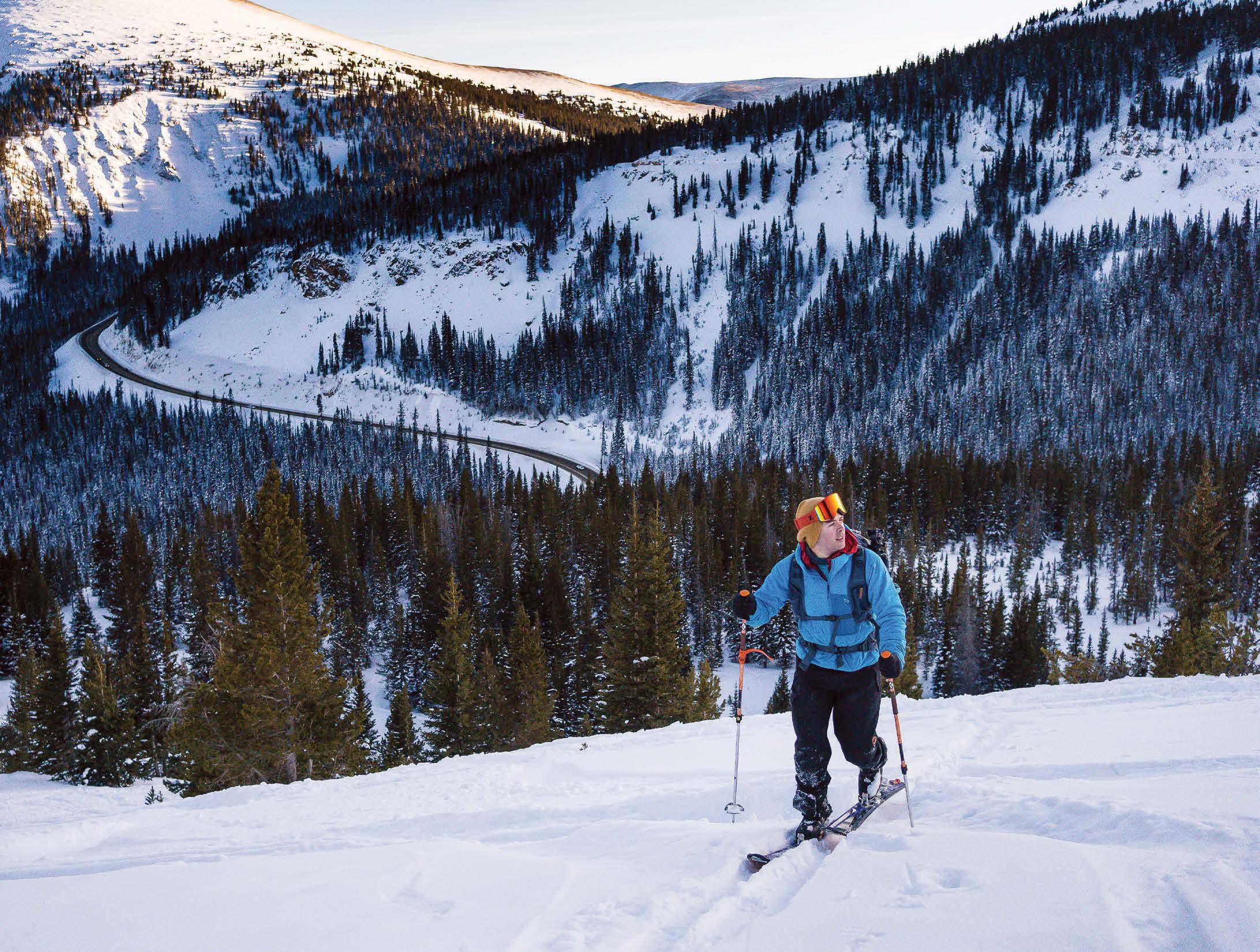
NOVEMBER 2022 | 5280 65 From top: Bergreen Photography; Ascent Xmedia/Getty Images
EASIER ACCESS
Founded in 2018, Bluebird Backcountry is the world’s first (and so far, only) liftless ski resort. We toured its Bear Mountain slopes with co-founder Jeff Woodward and asked him how it fi ts into Colorado’s backcounty skiing ecosystem.
5280: Where’d you come up with the idea for a backcountry resort?

Woodward: In 2016, I took my little brother backcountry skiing for the first time as a Christmas present. That got me thinking about how there weren’t any really good ways to learn the sport. You either bought $1,500 worth of gear and spent money on an ava lanche course and then decided if you liked it, or you skied Loveland Pass and just hoped everything went OK.
Besides the gear and classes, backcountry skiing is free. Did you ever worry no one would pay for the experience?
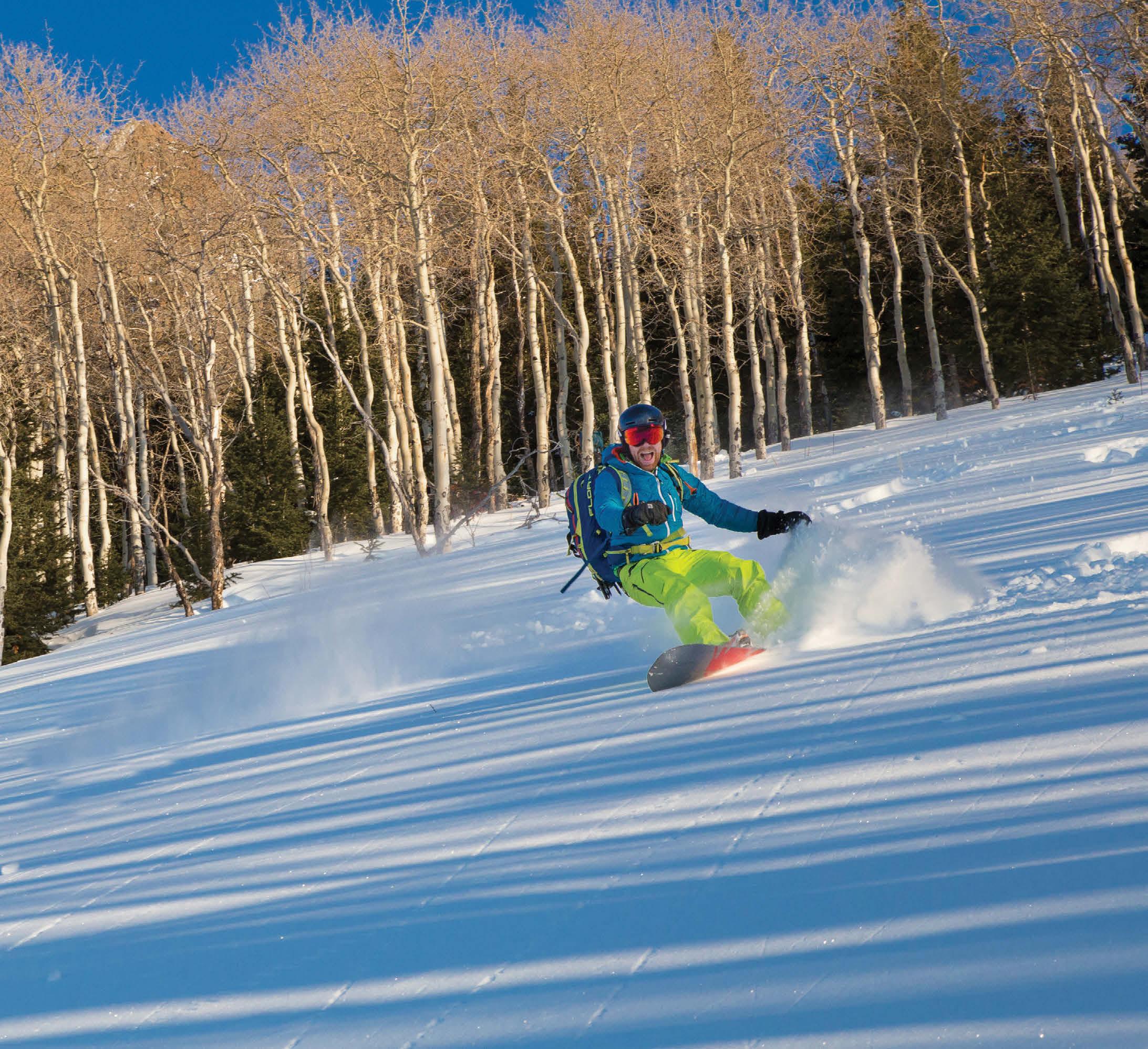
Early on, we put out a sur vey that was just, “Hey, would people want this?” The response blew us away. We expected 300 responses, and we got 2,000. The price people said they were willing to pay was twice what we thought it would be. That
showed us that there was a real need for this.
How did you find Bear Mountain?
We had volunteers looking at U.S. Forest Service permits, at partnerships with exist ing mountains, and at private land, and one of them was like, “My dad’s cousin manages this ranch.” The owners liked the idea because it would help the economic development of Kremmling and pro vide another source of revenue for the ranch.
Who’s your average skier?
There’s a set of people who come here for

education, but a lot of our ski ers just want less risk and more comfort. [Bluebird uses ava lanche mitigation techniques comparable to lift-served resorts.] Some of them want a safer place to ski alone, and we see spikes in attendance on days when the region sees higher avalanche danger.
Now that you’ve had a few successful seasons, what’s next?
I would like Bluebird to be a mecca for the sport. There aren’t many places that have the dedicated backcountry skiing infrastructure we do. To help us be that, this season we’ll have overnight cabins and geodesic domes that guests can access on their skis.
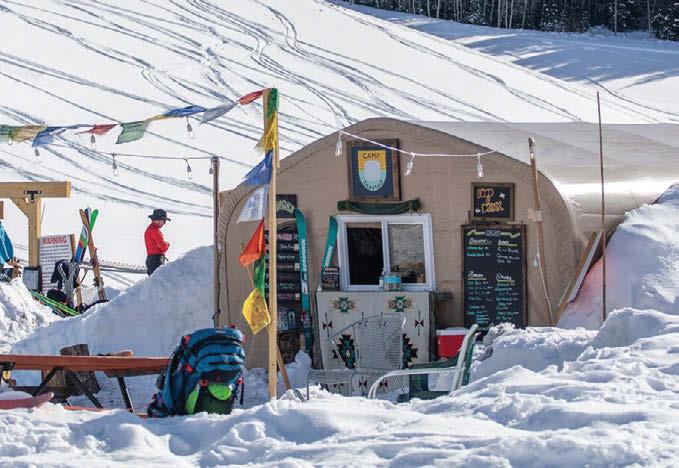
66 5280 | NOVEMBER 2022
From top: Doug McLennan/Courtesy of Bluebird Backcountry; Courtesy of Bluebird Backcountry
From top: Snowboarding through aspens at Bluebird Backcountry; Bluebird’s base lodge
PUMPED UP KICKS
The kick turn—which allows you to make sharp switchbacks as you ascend steep terrain—is as deceptively simple as it is essential. Kahle Toothill, co-director of CMC’s Intro to Backcountry Ski and Splitboarding School, walks us through it.
GET SCHOOLED
There are dozens of levelone avy course providers in the state. This primer will help you pick the right one.
CURRICULUM
All level-one recreational classes are certified by American Ava lanche Association, which sets course guidelines. Over at least 24 hours of course time, usually divided into one day in the class room and two in the field, you’ll learn the different avalanche types plus how to identify ava lanche terrain, plan a trip, test the snowpack, perform a companion rescue, and implement risk man agement strategies. american avalancheassociation.org
Stop slightly uphill of where you want to turn, with both skis facing your current direction of travel. If you need to, make a few good stomps to compact and even out the snow.
Place all your weight on your outside ski, then lift your inside ski and pivot it 90 degrees (or more if you’re flexible) so it’s pointing in the direction you want to turn. Place it on the snow so that your skis don’t overlap at the back. Stomp the inside ski a few times to gain traction.




AMERICAN INSTITUTION FOR AVALANCHE RESEARCH AND EDUCATION (AIARE)
AIARE, the world’s largest avalanche-safety educator, licenses its program to more than 100 providers around the world. The Centennial State is home to 34 of them, including Bluebird Backcountry and the Colorado Mountain Club. The curriculum is based on AIARE’s risk management framework, a decision-making process that encourages skiers to learn from their experiences. avtraining.org
SILVERTON AVALANCHE SCHOOL
Pivot your upper body so that your shoulders are facing your new direction. Plant your inside pole in the snow so the shaft rests against the downhill side of your inside ski, at your boot, so it will catch your ski if it slips. Plant your other pole uphill.
Shift all your weight to the inside ski. Lift your outside boot behind the heel of your inside foot, bending at the knee so the boot toe is pointed down. Then, flick off any excess snow to help the ski tip float up and out of the way, rotate it inside your uphill pole, and place the ski beside its mate. Staying upright and not hunched over will help you avoid slippage. Continue touring.
THE ANGLES
to recognize avalanche terrain.
To slide, snow needs a steep slope, typically around 30 degrees or more. But beware: You can still be in avalanche terrain if there are steep slopes above you. GPS apps such as Fatmap, OnX Backcountry, and Gaia GPS will mark slopes that are inclined enough to produce avalanches, but it’s essential to confirm slope angles in the field. Your iPhone’s Measure app includes a level, and both iOS and Android can access the Avalanche Inclinometer app for $4.

In Colorado, the largest nonAIARE educator is Silverton Avalanche School. Founded in 1962, it’s the nation’s old est avalanche program, and since 2020, it’s been carefully expanding its offerings outside its namesake town, with courses in Taos and Santa Fe, New Mex ico, and partnerships with Estes Park’s Kent Mountain Adventure Center and others. avyschool.org
LOCATION AND TIMING
Courses sell out fast, so it can be smart to sign up for the first open ing you see. However, selecting a class that takes place in the area and during the part of the season you plan to ski most is a good way to quickly gain expe rience with your home terrain.
NOVEMBER 2022 | 5280 67 21 43 Studio Muti (4) BOUNDARY BEYOND THE
PLAYING
How
30◦
OUT OF BOUNDS
It’s rare to find somewhere worth skiing in the backcountry that’s completely free of avalanche danger. Even if you’re on a slope that’s less than 30 degrees, you often have to travel through, under, or near slopes steep enough to slide to get there. Still, there are plenty of lowerrisk zones. We spoke with Dustin Dyer, whose Kent Mountain Adven ture Center specializes in guiding new backcountry skiers, about where to find exactly that.
1 CARIBOU HILL
This low-angled spot just six miles west of Nederland on Caribou Road is so safe that Dyer describes it as a party where you’ll find kids, dogs, and risk-averse skiers who want to dip their toes into the sport. Just don’t accidentally head up Bald Mountain, which shares the trailhead.
2 BERTHOUD PASS
“A lot of times, when other parts of the Front Range get a few inches of snow, Berthoud gets a foot,” Dyer says. That, plus a quick, one-hour drive from Denver makes this the


most popular zone on Dyer’s list. There are plenty of mellow runs, es pecially on the west side of the pass, where an old ski resort once stood, but don’t let the ease of access fool you. Avalanches can—and do— happen in the steeper terrain.
3 VAIL PASS WINTER RECREATION AREA
To avoid the snowmobilers who flock to this National Forest fee area ($10 for a day pass; $65 for a sea son pass), Dyer suggests heading to the slopes below Uneva Peak in the nonmotorized section east of I-70. There, you’ll find a lightly treed bowl known as 100 Turns of Fun due east of the Black Lakes Picnic Site.
4 GENEVA BASIN

This abandoned ski area, located north of the tiny village of Grant along U.S. 285, has the same advantages as Hidden Valley (see number 6)—straightforward runs and a lower risk of slides—but with far fewer people. You’ve gotta earn it, though: Geneva Pass Road closes in winter, so you’ll have to skin about four miles from the winter gate to reach the onetime resort’s terrain.
5 MONTGOMERY BOWL
Not to be confused with nearby North Montgomery Bowl, which
is steeper, this east-facing cirque halfway between Fort Collins and Walden on CO 14 is right at treeline but lacks the sheer, avalancheprone overhead slopes common to many of its rivals. “It’s not a green light all the time,” Dyer says, but if you’ve taken a level-one course, managing the risks should be well within your skill set.
6 HIDDEN VALLEY
While you’ll find some pockets of potential avalanche terrain at this famous abandoned resort in Rocky Mountain National Park, they’re easy to identify, Dyer says. And un like many other backcountry zones, navigation is painless because all the former runs are still there.
WANT MORE?
Gunnison-based Beacon Guidebooks publishes Light Tours of Colorado, a booklet ($30) that’s filled with mel low routes. Powder Project’s free website and app both feature route descriptions, slope angles, and difficulty rat ings for backcountry lines around the country.
68 5280 | NOVEMBER 2022 Bergreen Photography (2)
Rocky Mountain National Park
FORT COLLINS
BOULDER NEDERLAND DENVER GRANT U.S. 40 U.S. 34 CO 14 U.S. 285 I-70 I-25 I-25 1 6 5 3 4 2
CONTINUING ED
A constant refrain among avalanche educators is that too many skiers and boarders treat their level-one certifications like 16-year-olds treat their driver’s licenses. Instead, the certification is just the start of your backcountry education. It’s up to you to learn the best way to use the skills the class gives you—and to keep them sharp.
YOU’RE CERTIFIED, BUT NOW YOU SHOULD… BECAUSE…


Read the CAIC forecast even when you don’t plan to ski
It will give you a deeper understanding of what’s going on in the snow when you do plan to head into the backcountry.
PLUS, THE EXPERT SAYS…
“You want to know what’s happened the last couple of days, what happened last week, and what happened back in Novem ber.” —Madeline Bachner Lane, Colorado Mountain Club
Skiers performing a snow stability test
Bergreen Photography BOUNDARY BEYOND THE
“Are they fun enough to have not just one but two beers with, and are they responsible enough to watch your puppy for a weekend?”
5. Having the same level of fitness is valuable. Not only is having trouble keeping up on the skin track a bum mer, but it can also be dangerous: If you’re sucking air and something hap pens, you’ll be in no position to help your mates.


6. Finding a partner with a flexible schedule is key, because backcountry skiers are at the whims of the weather. “You’ve got to look at the avalanche forecast and understand: Should we go out today and where should we go?” Bachner Lane says.


Avalanche courses are going to put you with people doing the exact same thing you are. Apart from that, my luck on chairlifts is worse than dating, but I have met some pretty cool folks.
—BACHNER LANE
70 5280 | NOVEMBER 2022
Clockwise from left: Studio Muti; Courtesy of Trey Laurence; Courtesy of John Berry/Visit Estes Park; Courtesy of Madeline Bachner Lane
“
POWDER ROOMS
Think of a hut trip as backcountry skiing’s final exam: To pull one off, you’ll need to tap all your touring skills, from kick turns and avalanche safety to quick transitions and the ability to shred. These four beginnerfriendly options can be booked through the 10th Mountain Division Hut Association for less than the cost of a budget Airbnb.
IF YOU WANT
A Quick Trip BROOME HUT
Not only does its location on the west side of Berthoud Pass make this the closest 10th Mountain hut to Denver, but Broome Hut is also only a mile (and some 800 feet of elevation gain) from the trail head. $50 per person
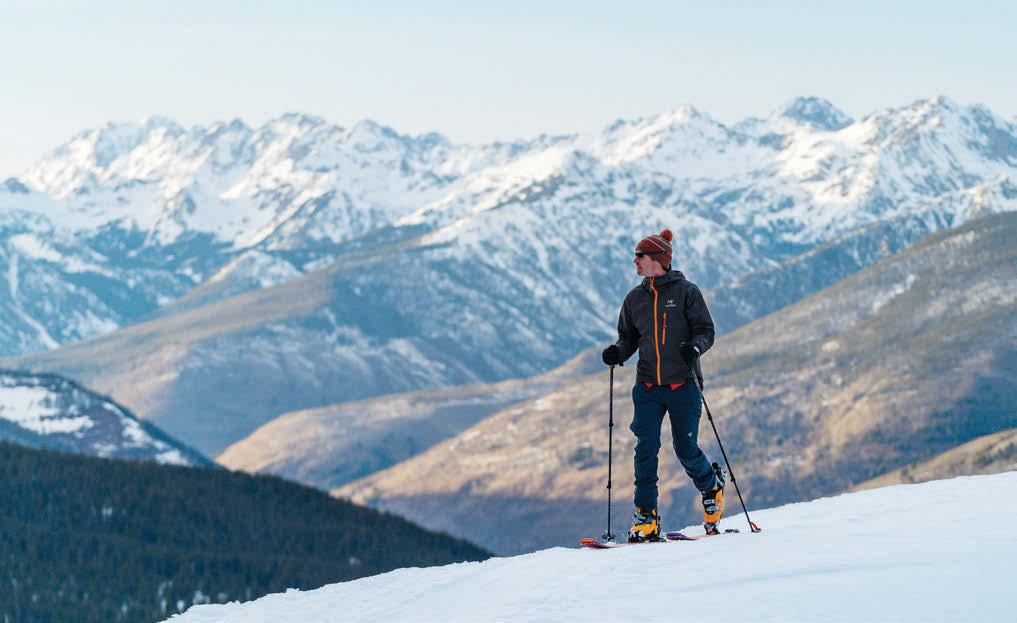
A Bit Of Backcountry “Luxury” SHRINE MOUNTAIN INN
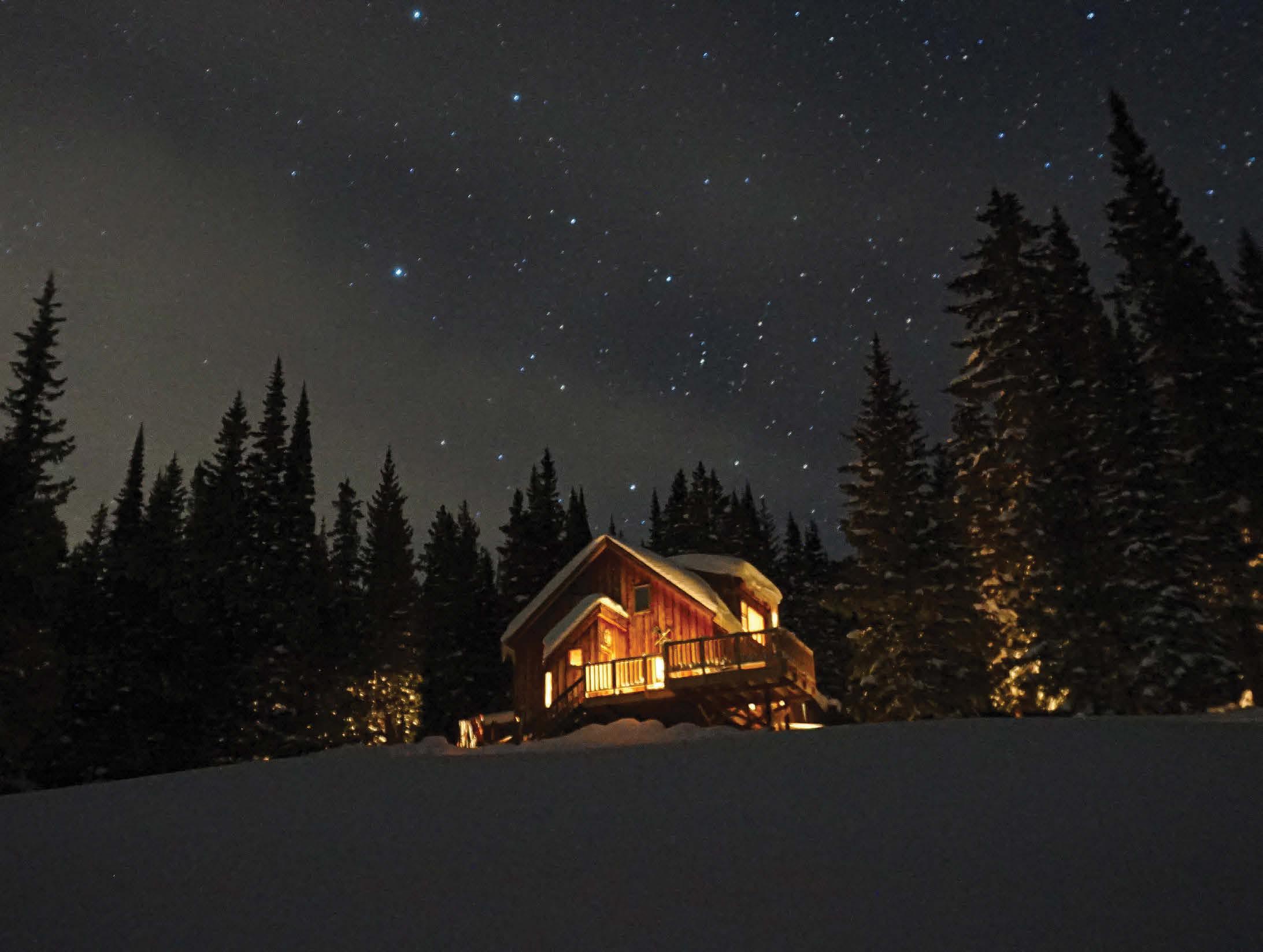
Most huts have an outhouse, and you have to melt and
BEYOND THE
BOUNDARY

boil snow for a drink. Not so at this trio of cab ins on Vail Pass. Each has indoor plumbing and running, potable water. There are also showers, and one cabin even has a claw-foot bathtub. $45 per person
A Spa Treatment FRANCIE’S AND SISTERS CABINS
Both Francie’s and Sisters, located on opposite sides of the Blue River Valley near Breckenridge, feature wood-burning saunas. DIY cold therapy is an easy option, too: Just
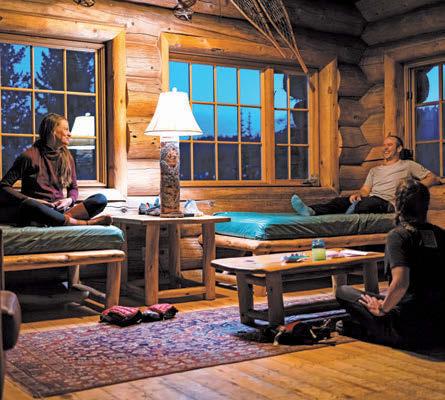
duck out of the door for a 100-plus-degree swing. $50 per person
A Ski Traverse POLAR STAR INN TO PETER ESTIN HUT
If a hut trip is the final exam, then a ski traverse— where you link different huts together for a mul tiday expedition—is like your first post-grad intern ship. Wade into the real world on this 8.2-mile
trek through White River National Forest between Polar Star and Estin. It’s shorter than most other traverses in the 10th Mountain system, and it can be done as a loop so you don’t have to shuttle your car. Polar Star Inn, $47 per person; Peter Estin Hut, $37 per person
For additional information, route planning, reservations, and more, visit huts.org or call 970-925-5775. m
NOVEMBER 2022 | 5280 71 From top: Ben Conners; Bergreen Photography (2)
From top : Polar Star Inn; Shrine Mountain Inn; Vail Pass

WHY DIDWalter
Springs
DIE?

When a 24-year-old Denver soldier was shot and killed by military police near his base in Texas in 1942, his family and friends suspected the official story wasn’t complete. They were right.
BY ROBERT SANCHEZ PHOTOGRAPH BY SHURAN HUANG
NOVEMBER 2022 | 5280 73
Walter Springs died on a wooden barroom floor in a small Texas town,
his final moments in the Jim Crow South witnessed by a crowd who’d heard the shot from a military police officer’s Colt pistol. The bullet entered Springs’ chest and pierced his heart and both lungs. He stag gered a step or two before hitting the ground. He was 24.
When the Bastrop County sheriff arrived at Jackson’s Cafe just after midnight on December 17, 1942, he found Springs, who was Black, facedown on the floor. Springs’ paperwork identified him as an Army technical sergeant from Denver stationed at Camp Swift, just seven miles north. Police took inventory of the room. Tables and chairs were tossed about as if a brawl had occurred. A nearby booth had been destroyed. A half-opened pocketknife, with a blade around three inches long, was in Springs’ right hand.
Local law enforcement and Army investigators questioned Corpo ral Martin Walker, the officer who’d fired the shot. Walker, who was white, was a high school dropout from San Antonio who’d enlisted in the Army three years earlier. On this winter night, the 21-year-old was leading a military police (MP) unit as it patrolled venues in Bastrop, a town of about 2,000 residents located 30 miles southeast of Austin.
Walker was with three other white MPs, and their duties that night included rounding up servicemen who’d broken the camp’s 11:30 cur few. Springs, the corporal told police, had become belligerent during a routine identification check that included a lineup of six other men near the bar’s front door. The sergeant began to argue with one of the MPs, then punched him in the face. The officers drew nightsticks; at least two MPs began to beat Springs, who flung one of the MPs into a booth, badly spraining that man’s ankle.
In the commotion, Walker drew his pistol and yelled for his injured MP to get back. He fired once. There was no other option, the corporal told law enforcement officers. The sergeant needed to be stopped.
The Army completed an investigation quickly and forwarded its report to the Army’s Eighth Service Command, in Dal las. Walker was charged with manslaughter and was court-martialed three weeks later at Camp Swift. The general court-martial proceeding lasted five hours, after which a secret vote was taken. Walker was acquitted and returned to active duty.
Hardly anyone in Bastrop spoke of the killing after that. The local newspaper never mentioned the shooting. The MPs went back to work, and Camp Swift continued training young men to fight the Axis pow ers in Europe.
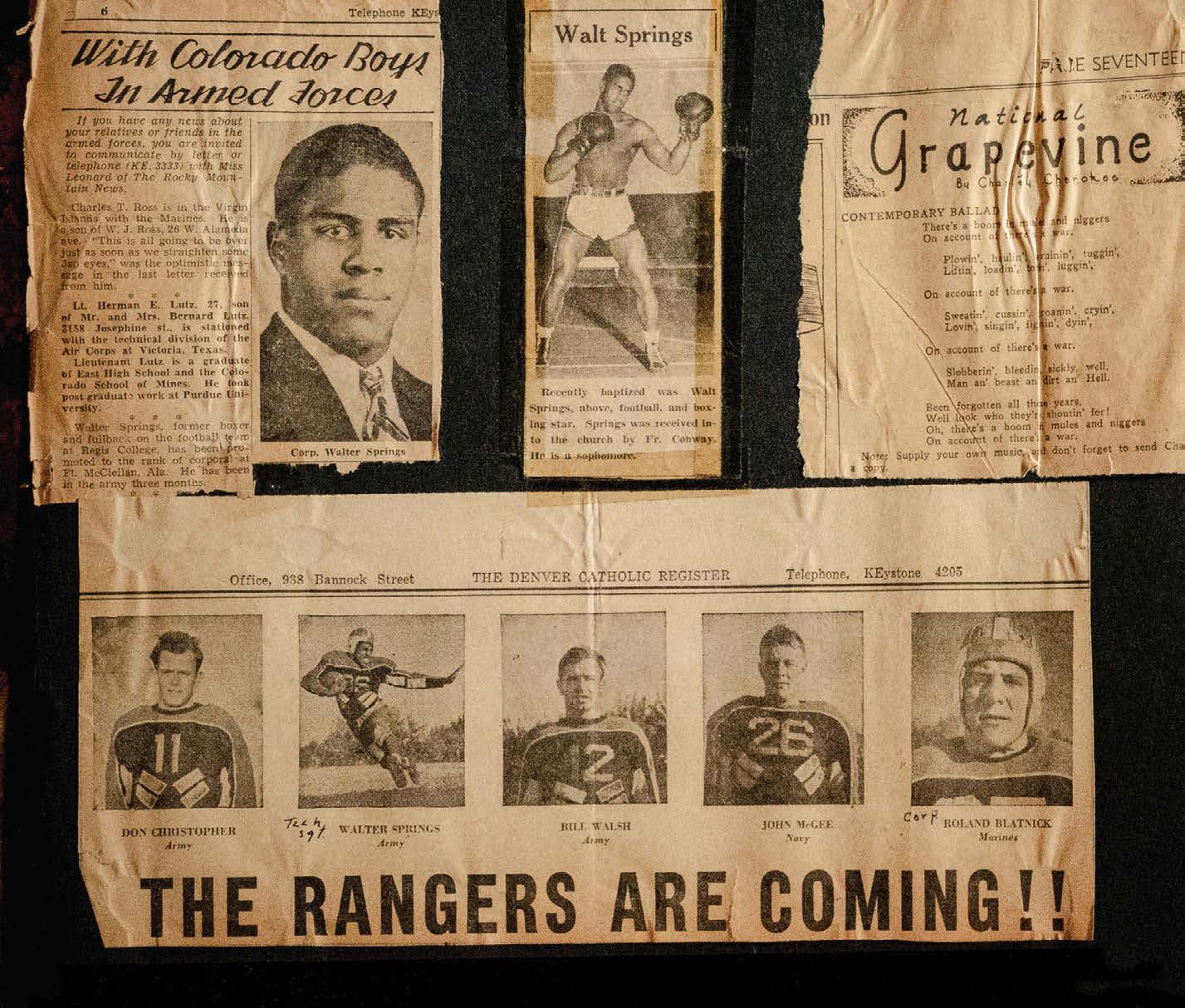
Walter Springs’ body was delivered to a funeral home in Austin and eventually was
returned to Denver for burial. In time, it was almost as if he had never existed at all.
SPRINGS’ FAMILY held his funeral two days before Christmas, at the Sacred Heart Catholic Church in Five Points, where he’d received his First Communion a few months earlier, before shipping out for basic training in Alabama. His nine siblings and his father sat in pews near faculty from Regis Col lege who’d come to mourn the first wartime death among its student class. A Jesuit priest officiated; the college’s president spoke over Springs’ flag-draped casket.
He was unlike anyone they had met, the men told those assembled for the service, a quiet force. The 10th of 11 children, Springs had spent much of his life in poverty before he enrolled at the all-male Regis College in north Denver. School records show he was one of the first— perhaps the first—Black student in Regis’ then 64-year history. Springs was a star boxer in college, and he was a running back on the Regis football team who often led his team in prayer before games. During his sophomore year, he was voted the college’s most popular student.
After the funeral, a Regis history teacher and priest named Joseph P. Donnelly wrote a letter memorializing his former student. Springs had told the professor he’d joined the Army because he hoped his service “would aid in the elimination of race prejudice”; that Black men like him might help create a more fair and equitable society. Donnelly and the rest of the folks at the funeral that day had taken the totality of the events in Texas and compared them to the history of the South, then to the politely driven young man they’d all known.
Walter Springs’ sister collected clippings of him in a photo album, which his niece, Meredith Springs-Levert (pictured at right), now keeps for the family
“Walter didn’t die from a bullet fired from an enemy gun,” Donnelly wrote in the letter, which was reproduced in both Black and Catholic pub lications. “The Axis army neither in Libya nor in the South Seas saw our first casualty. He never got that far. Walter was a Negro. He died from a bullet fired by an American citizen, on American soil.
74 5280 | NOVEMBER 2022 Credits Tk
This spread: Shuran Huang
(2)
The hand which struck him down is owned by a man with a white face, a man in whose favor the principles of democracy work to their fullest extent.”
Springs’ casket was taken to Riverside Cemetery a few miles from Five Points. He was buried in a section reserved for service men, in a plot that has a view of the Front Range. Months later, a white marble head stone was added to the grave. It gave his birth and death dates and included an epitaph: “His life an idea—his memory an inspiration.”
ONE DAY this past summer, Walter Springs’ niece met me on the porch of her home in Gaithersburg, Maryland, 1,600 miles from Denver. Meredith Springs-Levert gave me a hug and invited me inside. She offered me a seat in the family room, which looked over the magnolias and marigolds planted out front.

The 76-year-old had left Colorado decades earlier and now works from home as a man agement consultant. We’d been corresponding and talking on the phone for months about the man she called Uncle Walt.
I’d seen Springs’ grave at Riverside, I told her when we first talked, and learned more about him when Regis University (formerly Regis College) began its own investiga tion into his life and death following the 2020 nationwide protests over police brutal ity against Black Americans. The university had recently taught a class on Springs, part of which included a podcast that used archi val material gleaned mostly from his time at the college. Despite this research, Walter Springs’ life in Denver and death in Bastrop, Texas, were still very much a mystery. “This has haunted my family for the past 80 years,” Springs-Levert told me.
She disappeared for a moment and went into the nearby dining room. She emerged with a thin white album that had a frayed binding. She carried it across the room with both hands, as if it were a relic. She set the album down gently on the coffee table in front of me. The cover was embossed with a floral pattern with the word “Pho tographs” printed in gold lettering. “This is what we have of Walt,” Springs-Levert said, and then she opened the book.
IMMEDIATELY AFTER his son’s body arrived at the funeral home near Five Points, William Springs, Walter’s father, was intent on seeing it. The funeral director was at his side when the casket was opened. A study of the body showed the young man had a two-inch cut along his scalp, which the men assumed had been made by an MP’s club. William looked at his son’s left hand, which included at least one large gash. The funeral director said it appeared to be a defensive wound, as if the young man had been fending off an attack. William stared at his son’s lifeless form for a few minutes trying to imagine those final seconds—the last acts of a man attempting to save his own life.
Inside his rented two-story home on Marion Street in Five Points, William composed a letter to the Army public relations officer at Camp
Swift. He explained the injuries he’d seen on his son; nothing seemed to make sense. “I feel Walter gave his life needlessly,” William wrote.
William Springs had moved from Missouri to Colorado as a teen ager and was 62 at the time his son was killed. A widower, he’d driven a horse-drawn trash trailer in Five Points to make a living early in his life and eventually raised his children on a railroad worker’s salary. The family struggled financially, and everyone was expected to contribute. In the winter, the family heated the house with coal remnants the Springs children found along nearby train tracks.
William had been furious when his son announced he was leav ing school to enlist in the Army. Walter was the sixth Springs child to graduate from high school and the first from his family to attend col lege. Springs’ father couldn’t understand why his son wanted to serve in a segregated military, why he’d willingly give up an education and a partial athletic scholarship so he could fight with men who saw the Springs family as something less than human.
After receiving two responses from the public relations office at Camp Swift, William couldn’t help but feel he’d been correct in his
NOVEMBER 2022 | 5280 75 Credits Tk
skepticism. The missives were clinical and cold; neither acknowledged his loss as a father. Springs was belligerent and drunk, the camp officer wrote. Springs refused to show his furlough pass to an MP who’d asked for it. He started the fight, “severely beating” an MP. He pulled a knife and began “slashing the air.” He was preparing to kill the downed MP when he was shot. There had been several witnesses. The message to William was clear: His son was responsible.
William returned to his typewriter. “I feel that this is just another tribute to the gallant South,” he wrote, this time to an Army officer in Washington, D.C. He’d seen the defensive wounds, and William was certain his son didn’t own a knife. William had raised all of his sons to detest bullies, and it would have been unlike Springs—a trained, collegiate boxer—to win a fight and then re-attack an injured man.
It also seemed absurd that Springs would launch this kind of beat ing against a white military man in the segregated South. “Knowing Walter was at least of average intelligence, having the advantage of a college education, I can’t see how he would ever attempt to attack… armed men with only a pocket knife, if he only had such a stated knife.”
William thought there might be a cover-up. “It grieves me to think that this verdict should be accepted by sensible men in responsible positions and passed on as just another inci dent,” William continued. “I can’t help [but] shudder to think of six other of my sons, all of draft age, and the thousands of other Negro boys, that feel they are in more danger in the South, during their training period, than they would be on foreign soil.”
IN THE SUMMER of 2020, Rose Camp bell, a historian at Regis University and the associate director of the school’s Center for the Study of War Experience, had been tasked with researching Springs’ life when she noticed a plaque outside her office that included the names of 38 Regis students who’d died during World War II. She stopped at number 31 on the list: Walter Springs. “I could not believe I’d never heard this story,” she told me this past summer.
Campbell pulled files from university archives, including photos, yearbooks, and memorials written after Springs’ funeral. At that time, a racial reckoning spurred by the murder of George Floyd was happen ing across the country—including at Jesuit schools like Regis, where social justice is practiced as a cornerstone of Catholic faith. Campbell called Lauren Hirshberg, an assistant history professor at the school who also heads the Center for the Study of War Experience. Since starting at Regis three years earlier, Hirshberg had made it her mission to diversify war stories beyond those from white Americans’ perspectives. She’d been looking for something more nuanced and complicated—something like Springs’ story.
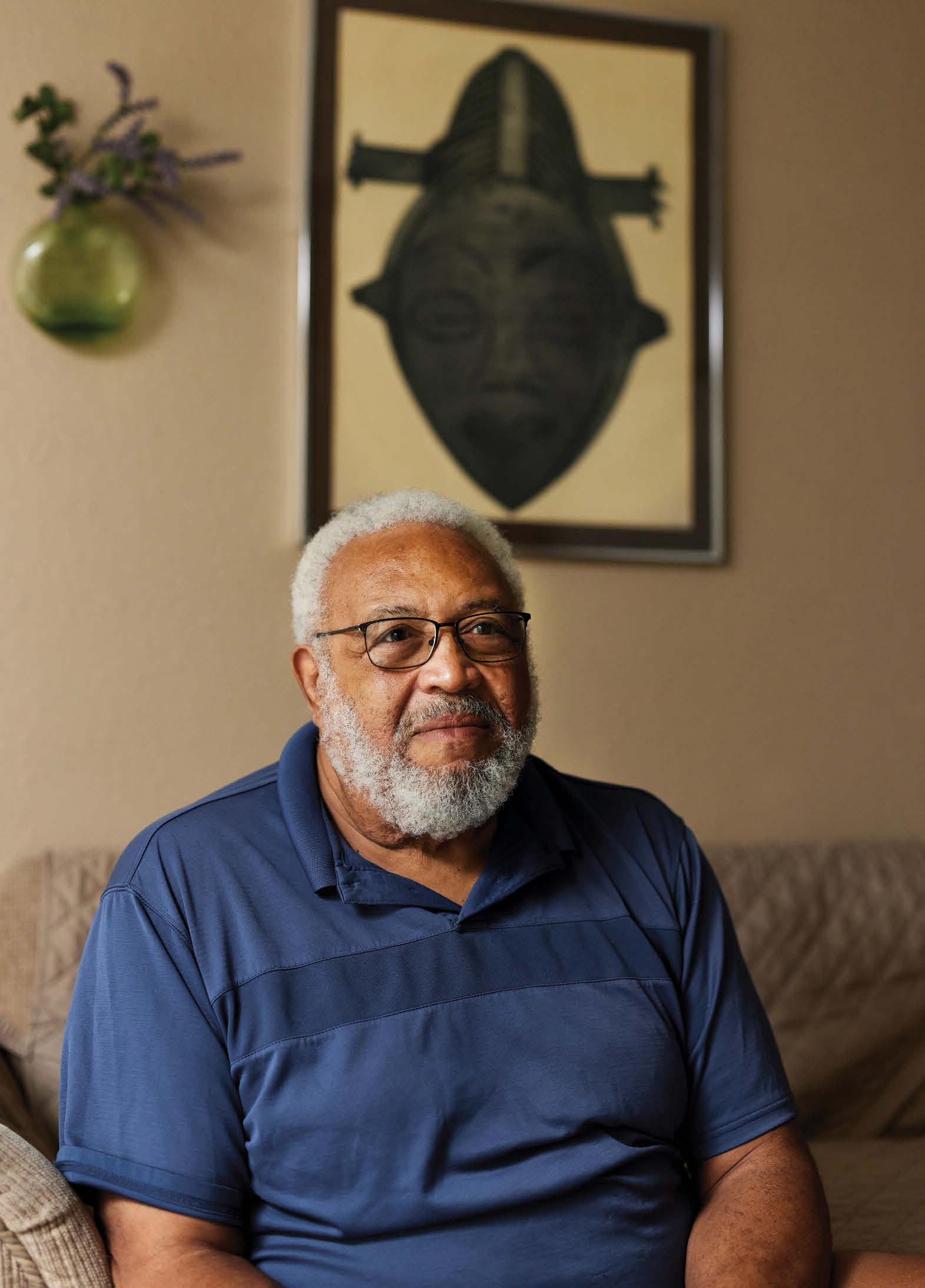
After conducting more research, the pair created a curriculum that told the story of Springs’ time at Regis. They included infor mation they’d found on his time in the military, which wasn’t much. The retelling came mostly through written recollections from campus friends, Regis faculty, and write-ups associated with a short-lived scholarship in Springs’ name that was introduced a decade after his death.
Campbell and Hirshberg wanted Springs’ story to resonate within a larger framework, specifically to introduce the plight of Black Ameri cans in the segregated military. Through Springs, they thought, they could tell the story of a Black man who’d served his country and lost everything. The two tracked down Springs-Levert, her brother, Paul, and several other of Springs’ nieces and nephews and collected family stories. Yearbooks filled in other details: Beyond classrooms and football fields and boxing rings, there was Springs in a theater production, at a school dance, as the emcee at a school event. In one photo, a white classmate has an arm draped around Springs’ neck.
Two years after Campbell came across Springs’ story, his life and death still haunted her. From what she knew of the young man, the Army’s official report about his killing seemed dubious at best. She found the letter Donnelly had written after Springs’ funeral. It included This spread, from left: Matt ‘Martian’ Williams; Shuran Huang
76 5280 | NOVEMBER 2022 Credits Tk
details of a 1941 football trip—likely against what was then called Adams State Normal School, in Alamosa—where Springs was refused a motel room because he was Black. The team was on the verge of tearing the place apart when Springs stepped in. Damaging the motel, he said, would only disgrace the college and its football program. The team found another place to sleep. The next day, Springs scored all three touchdowns in an 18-0 win.
Campbell found it difficult not to feel both awed and frustrated. She’d seen the letters Springs-Levert had from her grandfather, begging the Army for answers. She’d seen the military’s responses. Campbell filed a request for Springs’ service records—and then a follow-up request— but two years had passed without any reply.
“I think of it this way,” she said, “we’re supposed to believe that this guy, a literal pioneer for racial equality, suddenly changed everything about himself and decides to fight a white cop in segregated Texas, for no reason at all?” Campbell said. She laughed bitterly and then said, “I mean, come on.”
SPRINGS-LEVERT and I spoke often as I began my own report ing into her uncle’s life. During my visit to her home in Maryland, she showed me the album that included newspaper clippings and letters. There was a photo of Walter in his pressed military uniform and one of Walt in his Regis football jersey, with the rest of his team—their signatures covering the photograph. There were pin holes in all four corners, as if Walter had just taken it off a bedroom wall. There was a photo of Walter in Five Points, in a baseball jersey that read Welton Dept. Store.
I talked with Paul and to two cousins, both of whom still live in Denver. They each had their own stories about their uncle, many of which were about
From left: Walter Springs’ nephew Paul Springs at his home near Tucson, Arizona; Walter Springs in military dress
how he remained a never-ending topic of family conversation, as if he were in the room with them.
“It’s like there’s this ghost that’s been sitting on our shoulders,” Paul told me over a Zoom call with his sister one day this summer. “Martin Luther King Jr. talked about the long arc of justice. I hope our arc reaches across generations.” His voice rose as he spoke. “Even though 80 years have passed, we’re still asking questions. We will never, ever let Walt go.”
In a search for facts, 80 years presents a significant challenge. Memo ries fail, documents are lost, and photographs fade. What the Springs family wanted, more than anything, was to know why? Why did Walter Springs die the way he did that day in 1942?
The quest for the truth was winding. In the Colorado State Archives, I discovered 18-year-old Walter Springs’ application for Civilian Con servation Corps (CCC) work in Norwood, Colorado. On the yellowed paperwork, Springs reported he’d driven an ash and trash truck as a 17-year-old; under “schooling,” he indicated he’d only finished his sophomore year in high school, perhaps an indication that he’d taken time away to help his family through the Great Depression. When he took the CCC job—it was exceedingly rare for Black men to work in the Conservation Corps—Springs sent one of his brothers $25 a month.
A Manual High School yearbook revealed that Springs had only played organized football his senior year. A researcher at the Denver Public Library’s Western History Collection pulled census records that offered Springs’ various addresses throughout Five Points. The Arch diocese of Denver had a record of his baptism and confirmation. A historian near Bastrop found Springs’ death certificate; another historian in town discovered Springs’ hospital admission card from the night he was killed. Under the header, “Injured in Line of Duty,” it read: “Not in line of duty, misconduct.”
A genealogist in Colorado uncovered Springs’ Army enlistment card and a January 1943 article about Martin Walker’s exoneration published in the Baltimore Afro-American—the only paper that covered the story in any detail. The report mentioned Springs had been arrested several times for larceny and assault and battery. The news hinted at deeper issues at Camp Swift than anyone in his family had known.
The information was exciting and disappointing, sometimes all at once. A picture was emerging of Springs’ life—and death—but signifi cant details were still missing. I wanted to see where Springs had lived, and I invited Jameka Lewis, a senior librarian from Denver’s BlairCaldwell African American Research Library, to join me. We stopped at William Springs’ former house on Marion Street and then walked the neighborhood amid the 120-year-old homes and modern, angu lar townhouses. Five Points, which had once been redlined, now was gentrifying. Springs’ former rental home is currently valued at around $650,000. It was ironic, Lewis said, that a place once so inhospitable to investment because of its Black residents had now become a hotbed for white money. “That’s messed up, right?” she said.
The Springs family story was the narrative of every Black family who’d once called Five Points home, Lewis told me as we stood in front of William Springs’ former house. It was the story of racial pain. “It’s family, community, and survival,” she said. “Ultimately, it’s also erasure.”
SPRINGS’ LIFE in the segregated South spanned just 18 months but had proven far more challenging than anything he’d faced in Denver. His former professors noted at the time the ways he’d changed when he returned home on furlough, how his usual wittiness and sunny demeanor had turned sullen. Springs seemed worried, uneasy.
Donnelly, the Regis history professor, noted that “incidents had happened,” and that Springs had been “innocently involved in one.” He didn’t elaborate. In a letter to his former football coach, Robert “Sarge” MacKenzie, Springs mentioned a confrontation
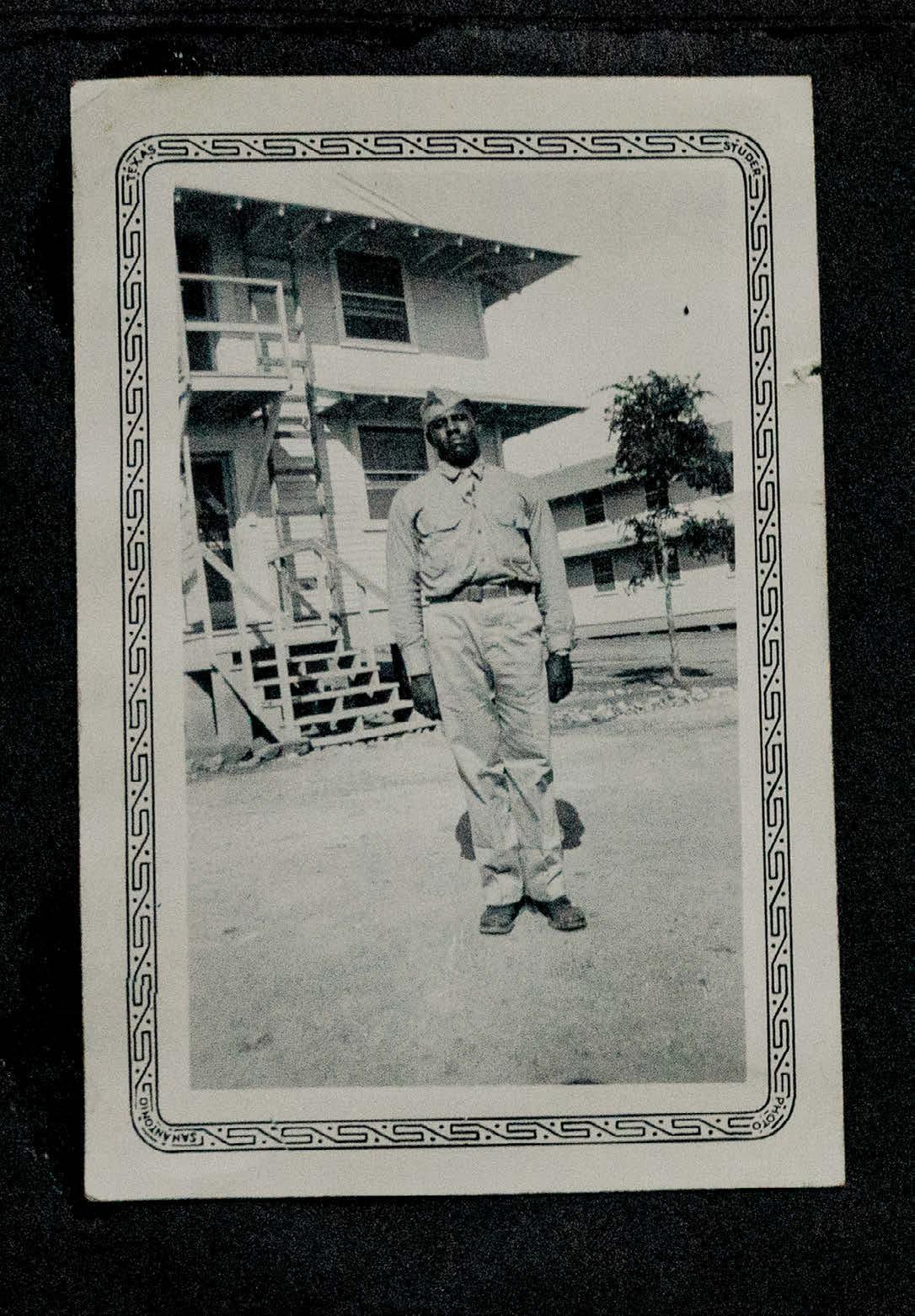
NOVEMBER 2022 | 5280 77 Credits Tk WALTER SPRINGS
CONTINUED ON PAGE 134



78 5280 | NOVEMBER 2022
EDITED BY NICHOLAS HUNT

Zoned Out
THE 5280 GEAR GUIDE
camp BY KELLY BASTONE
ROLLR COOLER RovR
Like many Colorado parents, Tom DeFrancia wanted his kids to love camping, so he routinely packed every conceivable comfort item, only to exhaust himself hauling cargo from car to camp site. But as a passionate amateur photographer who lugs around cumbersome—and expensive— gear, DeFrancia had mastered the art of efficiently relocating heavy loads and resolved to bring that transport savvy to car camping. In 2017, he launched his solution on Kickstarter: a rolling cooler featuring burly, air-filled wheels for floating over rough terrain and a telescoping, motorcycle-style handle so walkers could save their heels by tugging the cooler beside them. A collapsible tote built into the lid stows dry goods, and a removable bin com partmentalizes the interior to keep bottles upright. Optional accessories include the BikR kit, which converts the RollR to a bicycle trailer, a stowable food-prep board, and an umbrella holder. The Boulder-based company says the construction holds ice for up to 10 days and is even grizzlyproof, so, yes, you can take it into bear country. But it was the Jersey Shore that inspired DeFrancia’s latest innovation: balloon-size beach wheels with corrosion-resistant ceramic bearings that positively slay in the sand, whether you’re hitting the Atlantic or Chatfield Reservoir. Available in 45, 60, and 80 liters; from $400

80 5280 | NOVEMBER 2022 zone 1
Sarah Banks (RovR); Getty Images (background)
GEARLINE ORGANIZER

Nite Ize
Most camp tables end up as storage for jackets, headlamps, sunscreen bottles, and backpacks— meaning there’s no possibility of actually eating on them. Reclaim that space with this new clothes line-style organizer from Boulder-based Nite Ize. The four-foot strip of webbing includes colorful S-Biner clips for hanging everything from pots to bags to lanterns and two 12-inch gear ties for attaching the ends to trees (or anything, really).
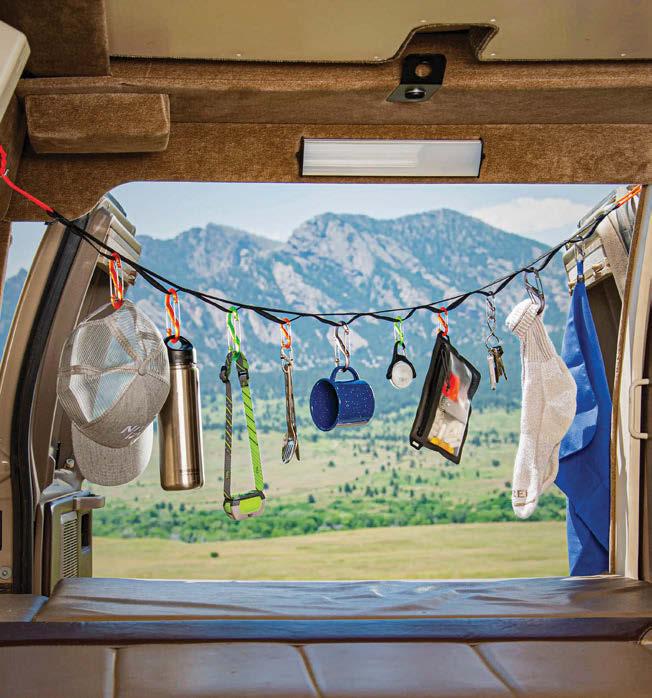
KIKKI BACKPACK Deuter

Now made from 100 percent recycled fabric that’s Bluesign-approved (denoting sustainable textile production), this too-cute kiddie daypack ships from Longmont, home of the U.S. branch of German gear giant Deuter. The eight-liter capacity is big enough for an extra layer plus a plush pal or two; side pouches secure a water bottle and all-important snacks; and the charismatic design will endear this piece of equipment to even the most pack-averse tykes. $50
OUTDOORS BATHROOM KIT Pact
Everybody poops—even when there’s no toi let for miles. So Golden resident Jake Thomas created an all-in-one kit (refills are available) that exploits the power of mushrooms to accelerate the decomposition of human drop pings. In addition to the standard (but cleverly packed) aluminum trowel, hand sanitizer, and biodegradable wipes, the roll-up case includes tabs of noninvasive mycelia, rootlike fungi that can help break down waste in four to six weeks compared with the year it takes for standard cathole burials. $50
and ball caps, youthfully irreverent designs such as psychedelic mountain silhouettes, brashly colorblocked camo patterns, and ’90s throwbacks have become Aksels’ calling cards. This flat-bill snapback hat won’t just bolster your rep around camp with anyone who grew up on Saved by the Bell, but it also stands a good chance of making your kids groan (which we consider a win-win). $30

When Sarah Anderson started embellishing Nalgene’s new Sustain bottles, which are made from 50 percent recycled material, the Fort Collins artist and co-owner of soft goods manu facturer Alpinecho created three hand-drawn designs, including this relief-printed wildlife panel. The process meant sketching the critters in charcoal, transferring the drawing onto a rubber block, and carving away the negative space before digitizing the result. $25
THE BIG IDEA After hand-drawing designs for such companies as United By Blue, a B Corp–certified sustainable apparel company, Sarah Anderson founded what’s now Alpinecho with her husband in February 2019. Not wanting their products to add to the glut of cheap consumer goods, they made the bold decision to manufacture everything in the United States, and today their adventure-inspired stickers, greeting cards, and new-for-2022 trucker hats are ethically made in factories that pay their workers fairly, which raises costs and complicates Alpinecho’s business strategy. “Our profit margins are tricky,” Anderson says with a laugh.

Credits Tk
WILDLIFE WOODCUT WATER BOTTLE Alpinecho
Clockwise from top left: Courtesy of Nite Ize; Courtesy of Deuter; Kirstin Anne/Courtesy of Pact Outdoors; Courtesy of Aksels; Ryan Anderson/Courtesy of Alpinecho. Getty Images (lightbulb icon)
water
BY JEN MURPHY
WAYFARER PADDLEBOARD Badfish SUP
Combine the brains of whitewater park builder Mike Har vey, surfer and board shaper Zack Hughes, and professional freestyle kayaker Luke Hopkins, and you have the hive mind behind Salida’s Badfish SUP. With the Arkansas River as its laboratory, the trio has been perfecting inflatable whitewater paddleboards and river surfers since 2009. Now, the Badfish team has turned its attention to long-distance expeditions with the Wayfarer. Slimmer and slightly longer than your typical float-and-sip lake toys (though it can play the part), this touring board has a smooth, speedy glide for covering water quickly but with more stability than a racing board for confidently carrying gear and tackling moderate rapids. The real game-changer, however, is Badfish’s patented Wiki Rail, a foam extension that squares off the board’s tail to create a clean, efficient release instead of the speed-sucking waves typically produced by the rounded tails on most inflatable boards. “Your day-on-the-lake board is like the townie you ride to the bar,” Harvey says. “The Wayfarer is your gravel bike for adventures.” Tricked out for gear junkies, the board also includes a removable tri-fin system, a GoPro attachment on its nose, a water bottle holder, and a mount for securing a fishing rod, cell phone, or other equipment. All this—plus the collapsible paddle and pump—packs down into a carrying case for weekend camping trips or expe ditions further afield. $1,099
 Courtesy of Badfish SUP (paddleboard); Marnie Griffiths/Getty Images (background)
zone 2
|
ROVE FLY FISHING REEL Abel Reels
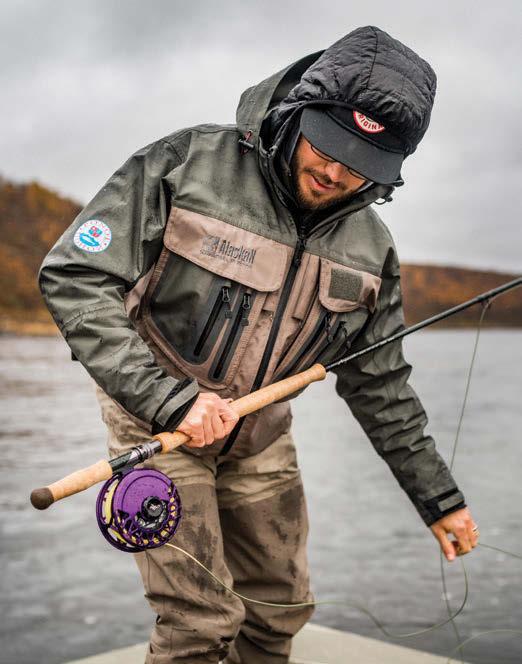
Leave it to Montrose-headquartered Abel, the Ferrari of the fly-fishing world, to create a beat-me-up reel with serious sex appeal. The heft comes from the Rove’s field-serviceable design and drag plate made of aircraft-grade aluminum for slowing down monster trout. The bling comes from the laser-engraved fly designs on the back of that drag plate, which spin as you reel in your line, and Abel’s 100plus signature finishes, each of which is sure to turn as many heads on the water as the Ital ian supercar manufacturer’s iconic red does on the racecourse. From $750
We usually prefer to save long sleeves for the evening, but the Eclipse Sun Hoodie from Boulder’s Himali is designed for long days on the water (and pretty much every where else you need sun protection). Its stretchy, lightweight fabric has a UPF rat ing of 20, meaning it blocks around 96 percent of UV rays. Thumbholes keep the sleeves in place; the clever side pocket is a convenient spot to store keys or snacks; and it dries in about five minutes if you go for a dunk. After first releasing earthy hues such as gray and green, the company debuted bolder colors, including red and lime, earlier this fall. $80

REFUGE PACKRAFT Alpacka Raft
Mancos-based Alpacka Raft was conceived in 2000 after co-founder Thor Tingey hiked and floated Alaska’s Brooks Range using shoddy gear. Since then, he’s been develop ing his own packrafts: inflatable watercraft that can be car ried in a backpack. All of that experience has made its way into the Refuge. Released in January 2022, the 5.5-pound vessel shaves two pounds off Alpacka’s Classic model, in part by sacrificing a bit of car rying capacity and stability. Rafters will happily make that trade when there are miles of trail until the next river. $1,275

THUNDERHEAD SUBMERSIBLE BACKPACK

Fishpond
Whether you’re navigating boat-rolling rapids or cast ing in the rain, your gear will remain bone dry in this fully waterproof pack. Originally crafted out of nylon fragments salvaged from the Denver company’s fac tory floor, the latest iteration goes beyond repurposing scrap material by turning post-consumer, single-use plastic bottles into tough-as-nails fabric. It’s so inde structible that Canadian heli-ski guides have been known to use orange Thunderheads to mark chopper landing zones in gnarly weather. $300
DUSKWING SUNGLASSES
Zeal Optics
Zeal Optics has long made sporty, planet-friendly shades. Now, the Boulder-based sunglass brand is expanding into fashion-forward styles. Launched in May, the Duskwing combines polarized lenses per fect for sunny SUP sessions with butterfly frames chic enough for cocktails in Cherry Creek. Rubber inlays behind the ears and on the nose bridge prevent slip page, making these specs as functional as they are attractive, and just like Zeal Optics’ other models, they’re crafted from plant-based resin rather than petroleum-based plastics. $159

Credits Tk
ECLIPSE SUN HOODIE Himali
THE BIG IDEA A collaboration between recreational climber Dave Schaeffer and Everest mountaineering legends Tendi Sherpa and Ed Viesturs, Himali typically produces technical gear that can withstand the harsh climates of the Seven Summits. But in 2021 they went a step further. The Boulder company outfitted the members of SpaceX’s Inspiration4 team as they trained to become the first space mission crewed entirely by civil ians, which included summiting 14,410-foot, glacier-covered Mt. Rainier to test their teamwork. You might not follow in their footsteps, but you can feel good about your purchase: Five percent of the brand’s profits go toward education and water sanitation projects in the Himalayas.
Clockwise from top left: Courtesy of Flylords; Courtesy of Jack Reis/Fishpond; Courtesy of Zeal Optics; Courtesy of Alpacka Raft; Courtesy of Himali
snow
BY RYAN WICHELNS
MOONBIKE ELECTRIC SNOW BIKE

MoonBikes
Anyone who’s been on a snowmobile knows the machines come with a lot of downsides: They are loud, burn fossil fuels, require frequent upkeep, and are difficult to transport. The MoonBike has none of those issues. Founder Nicolas Muron came up with the idea for this electric snow bike that has a track in the back and a ski up front in 2015 while visiting family in the Alps and opened the French company’s U.S. headquarters in Boulder late last year. “Mobility in the winter seemed too reliant on cars and snowmobiles,” he says. “I always wanted to create a machine to make winter exploration fun and easy.” To that end, the 192-pound MoonBike is small enough to fit on a rack mounted to your SUV’s trailer hitch. And with a top speed of 26 miles per hour and 90 minutes of charge (longer with an optional extended battery), storage-starved Denverites who don’t have space for a full-size snowmobile can use the bike to cruise to their favorite backcountry ski zones or explore Colorado’s myriad winter trails without topping off a jerrycan at the gas station first. An optional fast charger can juice up the battery in just three hours; a heated battery box keeps the cold from sapping your range; and the simple design has fewer than 200 parts with no chain or belt to drive the track, so maintenance is minimal compared to notoriously unreliable snowmobiles. From $8,900
Sarah Banks (MoonBike); Libre de Droit/Getty Images (background)
84 5280 | NOVEMBER 2022 zone 3
RECYCLED SKI POLES

MountainFlow Building the indus try’s first ski pole made from recycled aluminum takes a different skill set than formulating the plantbased ski waxes and bike lubes this Carbondale com pany is known for, but MountainFlow finally mastered it earlier this year with the debut of its repurposed-metal ski poles. There are three models: one for rental fleets, one with a rubber grip called the RE.7+, and one called the Cork Pro, which features a handle made from recycled wine stop pers. To source its materials, Mountain Flow partners with Loveland Ski Area to snatch retired poles from the resort’s rental shop before they hit the landfill. $60
TREELINE HOODIE Voormi

Pagosa Springs–based Voormi levels up the traditional wool ski sweater into a stink-destroying, shape-keeping, water-shedding, stain-resisting powerhouse, thanks to a proprietary technology that hardens the merino wool garment’s outer layer with nylon and then tops it with a water-repellent treatment. On a weeklong ski trip to Breck enridge, it was our go-to après comforter, and it still smelled fresh on the way home. $199
ROCKY TALKIE BACKCOUNTRY RADIO
Rocky Talkie
It gets overlooked in the backcountry in favor of “beacon, probe, and shovel,” but your safety gear is meaningless without good group communication.
Rocky Talkie, based in the Mile High City, takes the radios you played with as a kid and beefs them up for the mountains: They are snowproof, fea ture a range measured in miles, work down to minus 20 degrees Fahrenheit, and stay charged for days. But as essential as they are for conquering big backcountry objectives, they’re just as useful at the ski resort. After all, how many times have you taken the wrong lift and spent the next hour searching for enough cell service to text your ski crew? $110 each

ANTERO VS Apex Ski Boots

There’s no need for skiers to jealously eye snowboarders’ cushy boots. For the past 16 years, Golden-based Apex Ski Boots has been combining a removable soft boot with a stiff exoskeleton to create a two-part system that offers more comfort and walkability than traditional ski footwear without sacrificing the rigidity you need for precise control. The new Antero VS model, released this year, takes that concept and shaves off nearly an entire pound per boot, so now you can concentrate your envy on that boarder’s steezy knee-length coat instead. $899
Skiers and splitboarders with avalanche training are familiar with the so-called blue book—the little pamphlet for log ging the current avalanche forecast and other observations. The Snow Visa, designed in Boulder, is a slimmeddown version that you don’t need to dig around in your pack or pockets to find. The three-by-9.5-inch waterproof, markable, and erasable sticker rides on the tip of your ski or board so it—and the day’s avalanche hazards—are always in sight and in mind. $15
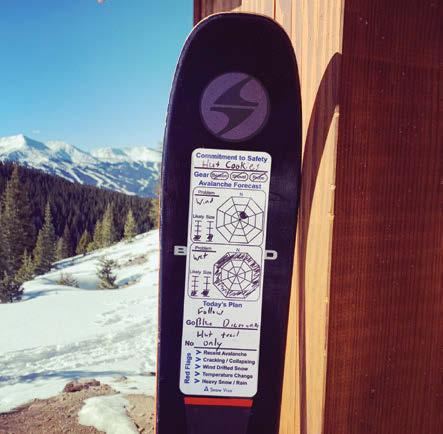
THE BIG IDEA Before his first ski trip to Chamonix, France, Snow Visa creator Tim Morrissey knew the big terrain and powder fever could
dangerous decisions. “When you get into big mountains, you can get really jacked up,” he says, meaning both
reminder
is
version
Morrissey says.
about
and
to the
“The Snow
he duct-taped a small cross on his ski tip. “It’s not all about the skiing,” he says. “The
Credits Tk
SNOW VISA Dual Outdoors
easily lead to
excited and injured. So as a
to keep things in check,
best thing you can do is get home safe.” Eventually, he added other reminders
safety
snow conditions
tape.
Visa
just a reusable
of that,”
Dial in your control with three flex settings.
Clockwise from top left: Sarah Banks; Courtesy of Voormi; Courtesy of Rocky Talkie; Courtesy of Snow Visa; Courtesy of Soona Studios
mountain
BY RYAN WICHELNS
3N1 SLEEPING BAG Big Agnes
Steamboat Springs’ Big Agnes is known for unique backcoun try sleep solutions. It was one of the first gear companies to stitch sleeping bags with sleeves to marry them to your sleep ing pad. It also designs bags specifically for side sleepers, and its ultraplush sleeping pads have won countless awards. All that has turned Big Agnes into a camping juggernaut that might be big enough to survive its next big idea: encouraging people to buy less gear. “[You] don’t need to have a collec tion of different bags,” says Big Agnes product developer Paige Baker. “Instead, invest in a qual ity piece of gear that is going to last a long time and fit all the conditions you’re going to be camping in.” That’s the goal of the 3N1 line. Released in Janu ary, its mummylike inner bag and quiltlike outer sleeve allow sleepers to mix and match for different seasons and regions. The result is about the same weight and size as a single bag but with the flexibility to shed a layer in summer, double up for cold shoulder-season nights, or ship a layer ahead for when the weather along your thru-hike of the Continental Divide Trail turns frigid. The hood on the inner layer feels more like a jacket’s cowl than the claustrophobic headgear on most mummy bags, and a cinching skirt mates to pretty much any sleeping pad so you won’t slide off in the night. From $330
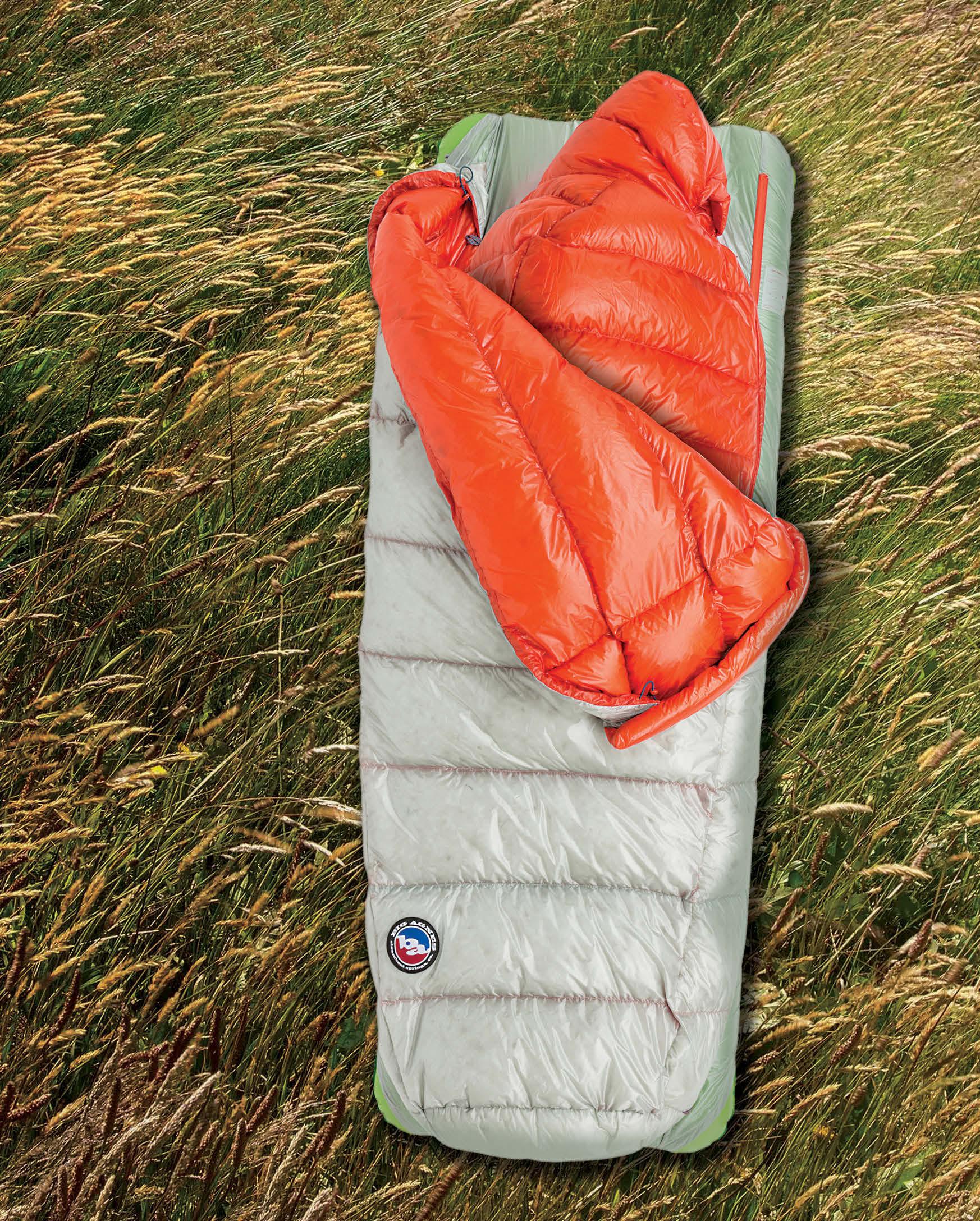
86 5280 | NOVEMBER 2022
Courtesy of Big Agnes (sleeping bag); Jason Hollinger/Wikimedia Commons (background)
zone 4
PLANET-FRIENDLY BACKPACKING MEALS Farm to Summit
With entrées such as Thai Peanut Slaw, Garden Mac & Cheese, and Fall Harvest Green Curry, Durango’s Farm to Summit makes dehydrated backpacking meals as good as—and maybe even better than—whatever you’re cooking at home tonight. If deliciousness isn’t enough, they’re also eco-friendly. The two-year-old company’s packaging is compostable, recyclable, and biodegradable, and the meals are made with flawed produce, food that might otherwise be thrown away because it’s too ugly to be sold at the grocery store. $3 to $15

HANDLED POT GRIPPER AND FUEL CANISTER RECYCLE TOOL Outdoor Element
We’re betting that you’ll be carrying a single-use fuel canister to power your stove on your next backpack ing trip. We’re also betting that you don’t know how to dispose of it properly: It must be fully drained of fuel and punctured so recyclers know it’s safe. That’s why this new pot gripper from Englewood’s Outdoor Element includes an integrated tool for piercing the canister. Grab one and your county recycler will thank you. $15
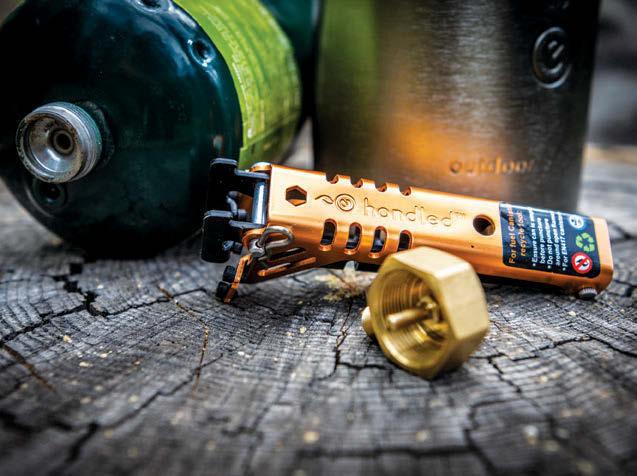
GO THERE PANT SheFly
For gals, roping up for a climb right after their morning coffee isn’t as easy—or safe—as it is for guys because going to the bathroom often requires doffing their har ness and other gear. The Go There Pant from Gunnison’s SheFly solves that with a simple fix: two zippers. There’s a traditional one for taking the pants on and off and an extra-long one that starts just below the first and wraps all the way around to the back to make nature’s call quicker and more discrete. These aren’t just for climbing, though. With five large pockets, a mid-rise waist that accommodates harnesses and hip belts, and a stretchy nylon and spandex fabric, the Go There Pant is great
 WIRELESS POWER BANK FOR MAGSAFE
Otterbox
Portable battery packs and wireless charging are nothing new. But Fort Collins’ Otterbox expands on the concept with the first battery pack to feature twosided wireless charging, meaning you can refuel your MagSafe-compat ible iPhone at the same time as you top off the power bank. If you can stand cables, there’s also a USB-C port for charging non-MagSafe devices such as head lamps and GPS watches before your summit attempt. $70

FREERAIN28 WATERPROOF PACKABLE BACKPACK
Matador
A backpack when you need it; a softball when you don’t. That’s how small Matador’s new Freerain28 bag packs down. What’s even more impressive are all the features the Boulder travel accessory company crammed into the 12-ounce daypack, including a fully waterproof main compartment, space for a hydration bladder, a supportive hip belt, comfortable mesh shoulder straps, and attach ment points for ice axes, trekking poles, and other gear. $125
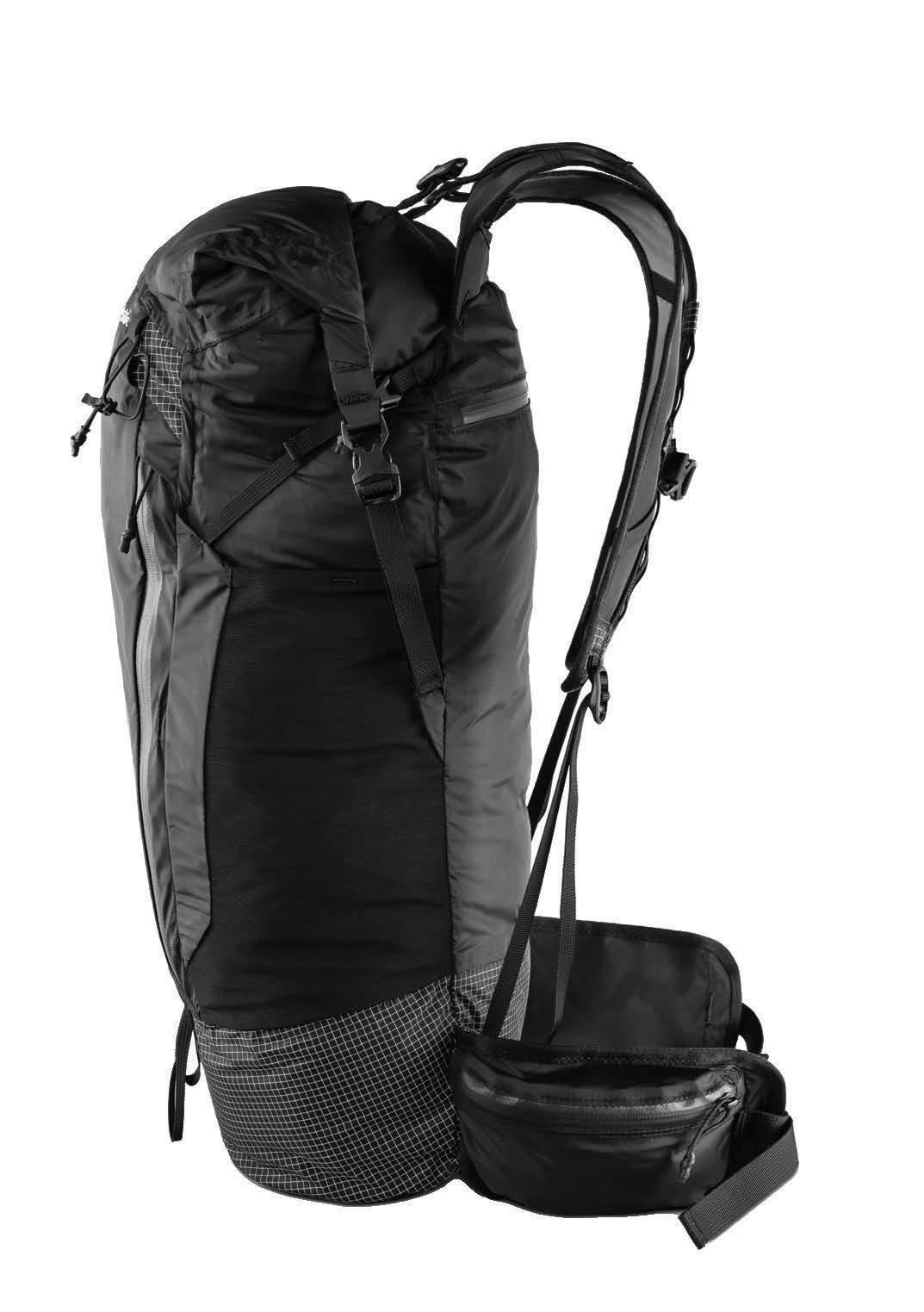
Credits Tk
THE BIG IDEA “We were all remote originally,” says SheFly co-founder and COO Charlotte Massey. It took the Moosejaw Outdoor Accelerator, a program in Gunnison’s ICELab designed to support outdoor startups, to finally give the then fledgling brand an excuse to gather in person. “It ended up being a huge game-changer,” she says. “We learned so much.” That included discovering that Gunnison was where they wanted to grow their business. What’s next now that they’ve made the move? Drysuits, wetsuits, fishing waders, and more. “Pretty much anything you wear,” Massey says, “you should be able to go to the bathroom in.” A fabric flap disguises the zip as a pant seam. Clockwise from top left: Trent Bona/Courtesy of Meyvn Creative; Sarah Banks; Courtesy of Matador; Courtesy of OtterBox; Sarah Banks
BY KELLY BASTONE
ROGUE GRAVEL BIKE
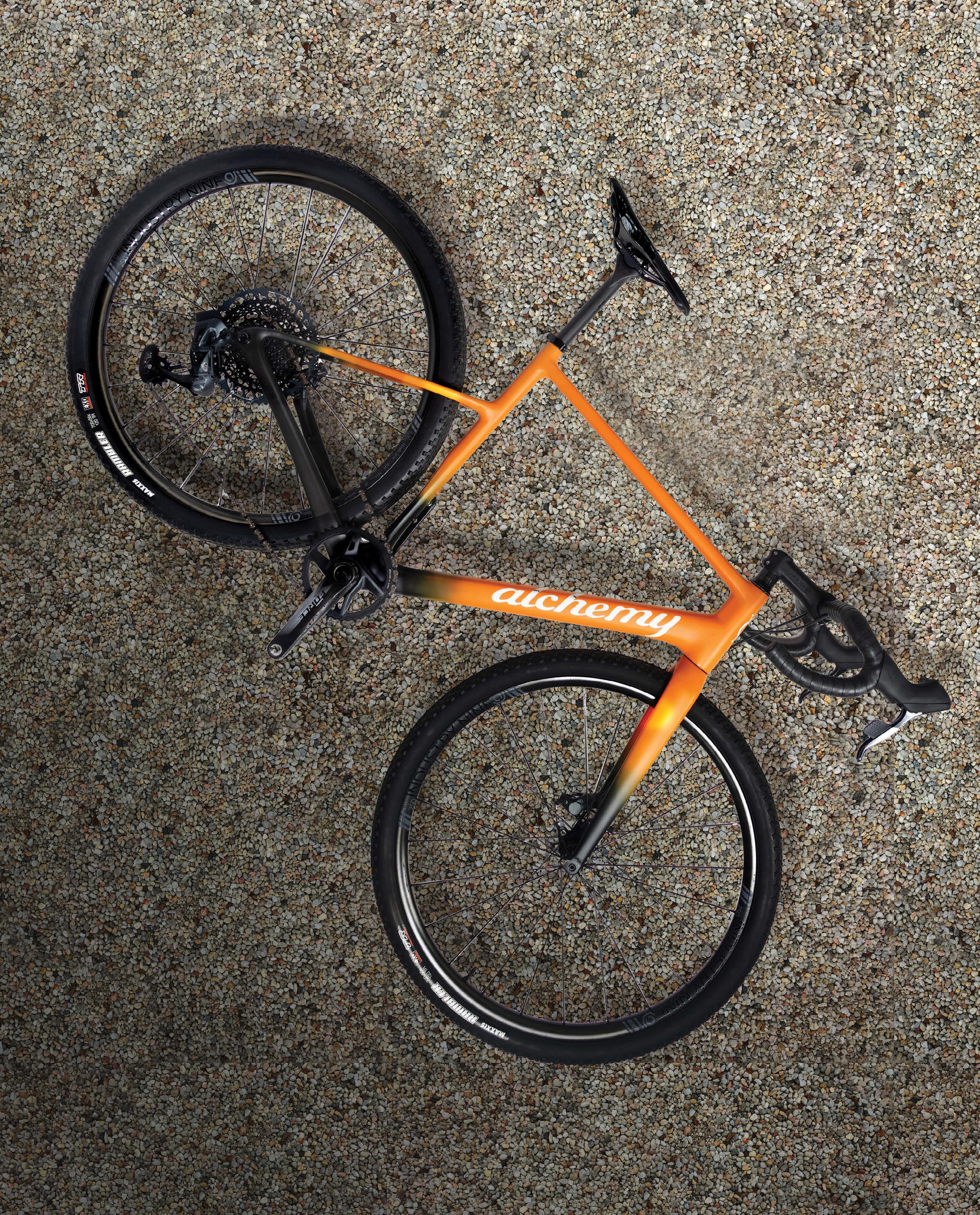
Alchemy Bikes
Micromanagement isn’t a four-letter word at Gold en’s Alchemy Bikes. “We can control every aspect of the production of our bikes,” says Bryce Wood, operations manager for the boutique bicycle maker. Case in point: this year’s off-road-ready Rogue. The carbon gravel bike, which debuted in late 2021, was designed—tube by tube—to make riders feel confident on rougher routes without sacrific ing a racy zip on smooth byways. That magic mix comes from Alchemy’s famed carbon construction techniques (which deliver stiffness where needed for efficient pedaling and pliancy elsewhere for comfort) and the Rogue’s longer wheelbase and descent-ready geometry. That attention to detail extends beyond Alchemy’s engineering depart ment. The company makes enough frame sizes for its road, gravel, and mountain bike models that rid ers have six different fit options, and customers can tweak everything from handlebar width and stem length to gearing and more—gratis. Professional fitting and custom paint jobs are also available, and an even higher-end carbon formulation will be available this spring. Called Au for the symbol for gold on the periodic table, the blend is stiffer and lighter, making it perfect for race-ready rides, Wood says. Available on select models—includ ing the Rogue—the blend underscores Alchemy’s mission to engineer sorcery by controlling every variable. From $7,999
88 5280 | NOVEMBER 2022
Sarah Banks (bicyle); Getty Images (background)
zone 5 cycle
HELMET DECORATIONS
Helmet Flair Boulder resident and for mer summer camp director
Shaun Oshman wanted to make helmet-wearing more appealing for kids (and everyone else). So, in 2020, he started selling kitten ears, unicorn spikes, devil horns, and other whimsical helmet attach ments that can transform even the most mundane piece of safety equipment into a style statement. But just because they’re silly doesn’t mean they aren’t serious: Peel-and-stick magnets keep the adornments attached at highway speeds while allowing them to break free in the event of a crash so the helmet can do its job unhindered. From $30

PETROLEUM-FREE BIKE LUBE
MountainFlow
Yes, you can lube your bike without fossil fuels. MountainFlow makes three plant-based, biodegrad able formulas optimized for Colorado’s most common riding conditions: The wax and dry lubes defy West ern Slope moon dust, while the wet lube renders your drive train impervious to high-alpine creek crossings. Or simply grab a bottle of the all-weather recipe for set-and-forget lubrication. From $14

SUMMIT PRO NEOSHELL WXB JACKET Pearl Izumi

Although the company is moving from Louisville to Califor nia, it’s Colorado’s lung-crushing mountain climbs that likely inspired Pearl Izumi’s newest crave-worthy item. This windtunnel-tested cycling jacket features performance textile manufacturer Polartec’s NeoShell membrane, a waterproof barrier that’s so breathable it can expel a basketball-size vol ume of clammy air from the jacket every minute. Because you won’t get drenched from the inside, the Summit Pro is the rare piece of cycling apparel that’s actually worth wearing during warm summer storms when sweat and rain collide. $375
AVERY REMTECH PEDALS

Hustle Bike Labs
Ever struggle to unclip your shoe from your pedal? Or fail to click it back in before a trail feature? Sure, you have. Hustle Bike Labs, located in Gunnison, solves both problems by adding powerful rare earth magnets to its REMtech ped als. Translation: Unlike traditional clip-in pedals, they help keep your feet planted when you need to and let you slide your foot off in any direction when you don’t. Released this past spring, the fussfree flats are compatible with most SPD-style bike shoes, and they’re winning converts among mountain bikers who love chunky down hills and technical climbs, both of which occasionally require quick footwork to stay upright. $219
Oveja Negra
Founded in Leadville in 2012 and currently headquartered in Salida, Oveja Negra may specialize in bikepacking bags for long-distance excursions, but its hand-sewn 925 handlebar bag is as practical on the High Line Canal Trail as it is in the backcountry. The five-liter pack is big enough to stash your phone, snacks, spare tube, and more while you ride, and the optional carry strap converts it to an on-body sling for forays on foot. Order yours “wack”— company slang for bags made from a random assortment of colorful scrap fabric. $100
THE BIG IDEA In 2016, after his inability to separate his shoe from his mountain bike nearly sent him hurtling off a cliff in Moab, Utah, Craig Payne began searching for an utterly new pedal design. After months of dead ends, he finally found his solution at the gas station: Fuel pump hoses use magnets so they can separate from the tank should hapless drivers peel out with the handle still attached. That aha moment led to six years of product development before riders were finally able to start snagging Hustle Bike Labs’ easy-off pedals this past spring. m
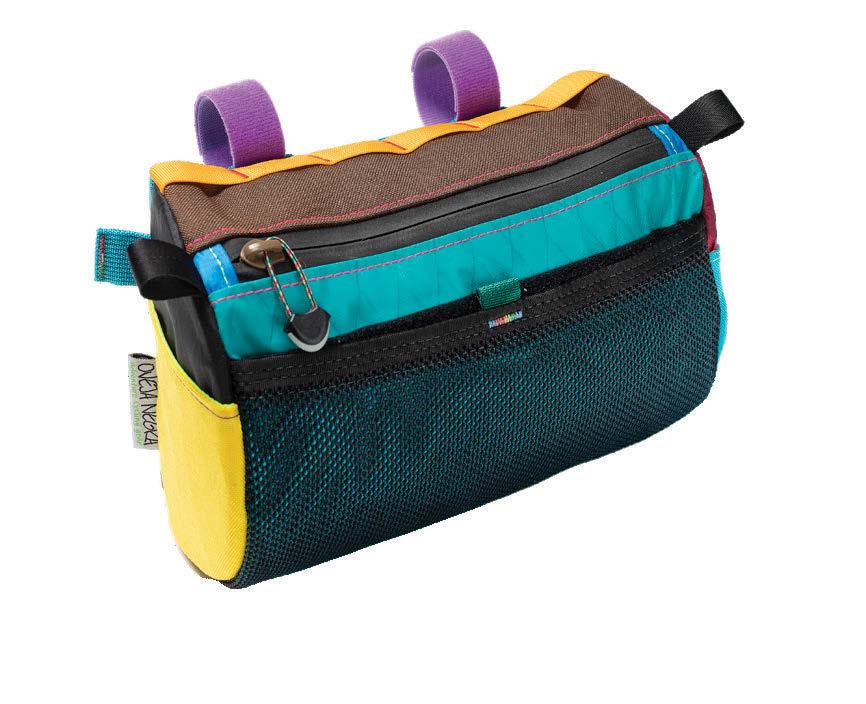
Credits Tk
925 HANDLEBAR BAG
Clockwise from top left: Courtesy of Helmet Flair; Courtesy of Pearl Izumi; Sarah Banks; Courtesy of MountainFlow; Courtesy of Hustle Bike Labs
ONE PILL CAN KILL YOU
PHOTOGRAPHY BY JONI SCHRANTZ
THE FENTANYL CRISIS

With over 900 deaths last year and more expected in 2022, it’s clear that Coloradans aren’t getting the message: This stuff is deadly.
Roughly 42 percent of illicit pills sold on the street— often made to look like prescription drugs—seized by the Drug Enforcement Administration have enough fentanyl to potentially result in a fatal overdose.
 BY LINDSEY B. KING
NOVEMBER 2022 | 5280 91
Often called “blues,” the small, often light blue tablets are made to look like oxycodone M30 pills. Other bogus versions can be manufactured to imitate Percocet, Adderall, and Xanax.

and how much more lucrative it was to sell in the States—often passing it off as pilfered prescription meds—compared with heroin.
According to some local law enforcement officials, a 2019 state law may have turned 2018’s trickle of illicit fentanyl into a torrent by 2020. That statute made possession of up to four grams of almost all drugs for personal use a misdemeanor. The problem? Four grams of fentanyl-laced pills equals, conservatively, 40 fatal doses. And while a 2022 law changed possession limits for fentanyl specifically, not everyone believes the legislation went far enough. “Drug dealers are savvy,” says Denver Police Department Commander Paul Jimenez. “When state law allows possession of certain drugs to be misdemeanors, drug dealers know how much to carry so they fly under the radar. Because of its location, population, and drug laws, the metro area is a major trafficking hub for all drugs, including fentanyl.”
The 2022 threat assessment from the Rocky Mountain High Intensity Drug Trafficking Area (RMHIDTA) program supports that claim. For the first time, the annual report from RMHIDTA—which facilitates coordination between federal, state, local, and tribal law enforcement in Wyoming, Utah, Montana, and Colorado to disrupt drug trafficking—listed fentanyl as the most significant drug threat facing the region.
says 35-year-old Jamie Ethridge, but he typically went to down town Denver’s Civic Center Park to find fentanyl. Blue tablets, orange pills, pink powder: It was a smorgasbord of fixes, all available from a handful of dealers. Ethridge, a local musician, hasn’t chased the euphoric high of the potent synthetic opioid for more than a year now, though, making him one of the lucky ones who can say they played an often fatal game of chance and lived. In 2020 and 2021, roughly 1,450 Coloradans—and more than 127,500 other Americans—were not so fortunate.
Although experts point to 2013 as the beginning of what is now being called the third wave of the nation’s opioid epi demic, law enforcement and health care professionals in the Centennial State say it wasn’t until about 2018 that they began seeing the effects of the drug on everyday Coloradans. “Patients were coming into our facility in opioid withdrawal,” says Dr. David Mendez, an addiction medicine specialist at UCHealth’s Center for Dependency, Addiction, and Rehabilitation, “but they weren’t responding to treatment. We realized this wasn’t oxycodone. It was something else.”
It was fentanyl. But it wasn’t the pharmaceutical-grade IV drug long used in hospital operating rooms and as a painkiller for cancer patients. This was a bastardized version, one that was cooked up using chemicals (usually imported from China) and pressed into tablets by drug traffickers (often in Mexico) who had realized how much easier and cheaper it was to make
In Denver, one pill can sell for anywhere from $5 to $25. Those who are struggling with addiction often use between five and 20 pills a day.
According to Keith Weis, executive direc tor of RMHIDTA, fentanyl is a menace for several reasons, but mostly because it’s so deadly. “Remember,” he says, “one [pill] can cause a fatal overdose.” Roughly 50 times more potent than heroin, fentanyl is a poor excuse for a street drug because it often kills repeat clients. “Dealers just don’t care,” says Steve Kotecki, a Denver-based public infor mation officer for the Drug Enforcement Administration (DEA). “There’s always another customer.”
Users can simply ingest the pills, but snorting fentanyl powder and smoking it—by crushing the pills, adding water, and heating the resulting mixture with a flame— are also common methods of use.
There is never, however, another family member or friend. And with Colorado’s associated death toll rising faster than any other state’s save Alaska’s, too many loved ones here are learning that in the most awful way possible—whether that’s because a group of five friends thought they were doing cocaine at a party in Commerce City but instead took a lethal dose of fentanyl or because a curious 13-year-old in Aurora swallowed a pill he’d gotten from a friend and died in his bathroom.
Ethridge knows his family nearly expe rienced that agony. He overdosed on four occasions. “Whether you’re thinking you’ll just experiment one time or you’re an addict, think about it first,” Ethridge says. “Dying from this stuff can happen to anyone.”
92 5280 | NOVEMBER 2022
“You can get it anywhere,”
! !
The Opioid Effect
First produced in 1959, fentanyl is a synthetic opioid—which means it’s made in a lab rather than from an actual poppy plant. Typically, it’s used under a doctor’s supervision to curb chronic pain or pain after surgery. Used appropriately, it’s a wonder drug; deployed recreationally, it can ravage the body. Here, a look at some of its effects.
Fatal Fentanyl-Related Overdoses In Colorado
2017: 81 2018: 102 2019: 222 2020: 540 2021: 912
RMHIDTA’s Colorado Fentanyl Seizures By Dosage Units*
DROWSINESS: Fentanyl, like most opioids, makes people drowsy. This can be an upside for those who need to rest after surgery. Fentanyl misuse, however, can interfere with a person’s ability to work, drive safely, and manage daily life.
PUPILLARY CONSTRICTION: One symptom of opioid overdose is pinpoint pupils that don’t respond to changes in light.
EUPHORIA AND RELAXATION:
2018: 4,128 2019: 198,203 2020: 384,096 2021: 1,657,249 2022: 3,068,325 (through Q2)
When fentanyl enters the body, the neurotransmitter dopamine increases in the reward areas of the brain, which elicits the stereotypical exhila ration and serenity associated with being high. After frequent opioid use, though, the brain develops a tolerance for the substance, making it difficult to feel pleasure from the drug—or anything else.
*A dosage unit is a single-use amount that would be consumed by one user.
RMHIDTA Fentanyl-Related Felony Arrests In Colorado 2018: 0 2019: 26 2020: 54 2021: 147 2022: 173 ****
PAIN RELIEF: Fentanyl works by binding to the body’s opioid receptors, which are localized in areas of the brain that manage pain. The analgesic effects of fentanyl are greater than morphine and are generally relegated to use in the operating room and for uncontrolled pain, typically in patients with late-stage cancer.
CYANOSIS: Because fentanyl depresses breathing, the body doesn’t receive the oxygen it needs. This can lead to a bluish discoloration of the skin resulting from poor circulation or inadequate oxygenation of the blood.
DANGEROUS LINES
The statistics are going in the wrong direction when it comes to fentanyl’s impact in Colorado.
RESPIRATORY FAILURE: At high doses, fentanyl depresses respira tion, making breathing slower and shallower and decreasing the amount of oxygen a person takes in. This side effect is generally responsible for fentanyl’s over dose deaths, but it can also lead to hypoxia-induced coma and brain damage for those who survive a fentanyl overdose.
GI TRACT ISSUES: Up to 85 per cent of people who use prescription opioids experience constipation. Unlike some other side effects of opioids, these gastrointestinal disturbances—which are often accompanied by nausea, vomiting, and abdominal pain—do not dis sipate as a person becomes more tolerant to opioids.
ADDICTION AND WITHDRAWAL:
When the brain’s opioid receptors don’t receive the fentanyl they’re used to, they panic and cause a variety of unpleasant symptoms. Most addiction specialists and people who misuse fentanyl liken fentanyl withdrawal to the worst flu imaginable. Symptoms of withdrawal can include yawning, watery eyes, goose bumps, diar rhea, nausea, vomiting, sensitivity to light, body aches, muscle spasms, insomnia, and sweating.
Jorge
Cuadal
Calle
0 200 400 600 800 1,000 0 50 100 150 200 250 0 1,000,000 2,000,000 3,000,000 4,000,000 4,128 0
*A dosage unit is a single-use amount—usually a pill, but it can be powder—that would be consumed by one person **Through August Sources: Colorado Department of Public Health & Environment; Rocky Mountain High Intensity Drug Trafficking Area
THE FENTANYL CRISIS
2018 2019 2020 2021 2022** 2018 2019 2020 2021 2022**2017 2018 2019 2020 2021
RMHIDTA’s Fentanyl-Related Felony Arrests In Colorado
RMHIDTA’s Colorado Fentanyl Seizures By Dosage Units*
Fatal FentanylRelated Overdoses In Colorado
WAVE 1
1999–2009
Although some experts suggest the opioid epidemic began after the New England Journal of Medicine published a letter in 1980 that said the development of addiction to narcotics was rare in patients with no history of dependence, most lay blame for the current opioid epidemic on the American Pain Society. In the mid-1990s, the society (which closed in 2019 after allegations it had colluded with opioid manufacturers) called for pain to be con sidered the “fifth vital sign.” Paired with the journal infor mation that opioids might not be as addictive as physicians thought, doctors began relieving patients’ suffering with opioids such as OxyContin, which Purdue Pharma released in 1996. Although numerous studies have found that up to 45 percent of chronic-pain patients become addicted, Purdue’s salespeople told doctors for years that fewer than one percent would suffer that fate. OxyContin turned many formerly functioning folks who’d needed pain meds after surgery into pill seekers who went from doctor to doctor to feed their addiction after their scripts ran out. Meanwhile, Purdue’s sales of OxyContin rose from roughly $48 million in 1996 to more than $1 billion in 2000.
It Comes In Waves
The history of human opioid use is long and (mostly) nonlinear, but it’s easy to connect the crests and troughs of the country’s most recent opioid crisis. What’s not as easy? Predicting what will come next.
WAVE 3
2013–present
WAVE 2
2010–2012
In 2007, Purdue Pharma was found guilty of misrepresent ing OxyContin’s potential for abuse and paid $600 million in penalties. Three years later, Purdue Pharma released a re-engineered iteration of Oxy Contin that couldn’t as easily be crushed and injected, which had been the preferred method among those who misused the drug. Around the same time, the American medical estab lishment collectively pulled back on prescribing narcotics. These changes left those who’d become dependent upon Oxy Contin with little choice but to find other substances to avoid dope sickness, a slang term for going into withdrawal from opiates. For many, the easiest replacement for OxyContin was heroin, which set off a steep rise in overdose deaths.


Heroin is a high-overhead product. Drug trafficking organi zations, often located in Mexico, need acreage to grow poppies; farmers to tend to them; secu rity to guard the crops; workers to harvest them; vehicles for transporting plant materials; a processing facility; and other expensive items common to large agricultural endeavors. According to the DEA’s Kotecki, when cartels realized they could import the ingredients they needed to manu facture illicit fentanyl and other opioids from China, thereby avoiding all that farming overhead, they pivoted. That meant a dip in heroin produc tion that forced Americans to take whatever the drug traffickers were selling—and that was mostly fentanyl. The sub stance and its variations—called analogs—have caused more annual deaths than any other drug, ever.

The DEA put out an alert in late August that traffickers are now making so-called rainbow fentanyl. The pills and powder, which have been found in Colorado and are known as Candy or Skittles, come in a variety of colors and shapes and are an effort to drive addiction among adolescents and teens.

94 5280 | NOVEMBER 2022 Credits Tk
! 1999 2010 DEATHS PER 100,000 OF THE POPULATION 0 6 12
Coming soon (if it’s not already here) Carfentanil. Isofentanyl. Acetylfentanyl. These are just some of fentanyl’s socalled analogs—drugs that are chemically similar to an original substance but are created to be chemically different enough to circumvent existing laws. These analogs have been outlawed by the DEA over the years, but new designer synthetic drugs could be part of the fourth wave. Some of them—such as N-pyrrolidino etoni tazene, a synthetic opioid sometimes called Pyro that is circulating in Colorado—are more potent than the original. There are other newcomers, too: The combo of xylazine and fentanyl is known as tranq. Xylazine is a central nervous system depressant that’s combined with fen tanyl to make the effects of the opioid last longer; it also causes skin ulcers, drowsiness, amnesia, slow breath ing, slow heart rate, and low blood pressure. Benzo dope is the mixture of fentanyl and benzodiazepines, which are sedatives prescribed as anti-anxiety medications. “We’re already seeing it,” says Steve Carleton, executive clinical director for Gallus Medical Detox Centers, which has a Denver location. “The next wave is benzo dope because, from a business standpoint, it’s gold. It’s so addictive. Plus, it doesn’t respond to Narcan. It’s going to be crushing.”

PLAYING PRETEND
ADDICTION CHRONICLES
Connie Weinrich is looking for a “before” picture on her iPad—the one where Hannah looks young, vibrant, and healthy. She wants to show that photo first and then the “after” shot, the image where her daughter, in the throes of fentanyl addiction, is nearly unrec ognizable. In that photograph, Connie and her husband, Tom (Hannah’s longtime stepdad), can barely see the talkative girl with the dry sense of humor who loved scary movies, wanted to save the honeybees, excelled at styling hair and doing makeup, and always had a vivid imagination. “As a child,” Connie says, “she was good at pretend. And even as she grew older and something would go sideways, she’d say, ‘Let’s pretend that didn’t happen.’ ”
Today, the Weinrichs wish they could pretend a lot of things didn’t happen. For instance, they might pretend that when Hannah was 15 she hadn’t started using cannabis. They might also try to forget about how smoking high-THC pot led Hannah to using meth, which led to heroin, which led to fentanyl. They could try to imagine a world where their 23-year-old daughter hadn’t been homeless for more than a year and hadn’t been breaking into houses to find copper wiring to sell for fentanyl. They might also try to misremember that, since April, Hannah had been working on her sobriety and attending services at Denver’s Free Spiritual Community, which bills itself as a place for “addicts, loved ones of addicts, and spiritual refugees.”
“She seemed to be motivated,” Connie says. “She’d gotten her cosmetology license back, she’d gotten a job.” But on the day she received her first paycheck in late July, Hannah left work early and decided to celebrate.
At the time, the 25-year-old had been staying with her father; he found her, lifeless, in her bedroom the next morning. There was fentanyl in her pocket and in her purse—and ultimately in her autopsy report. Her parents believe she may have neglected to take into account that she had become less tolerant as she had weaned herself off the drug and failed to scale back her dosage. “I went to her dad’s house that day, but I couldn’t go into the room because it was a crime scene,” Connie says. “They brought her down in a body bag—my child. That’s something you never forget.”
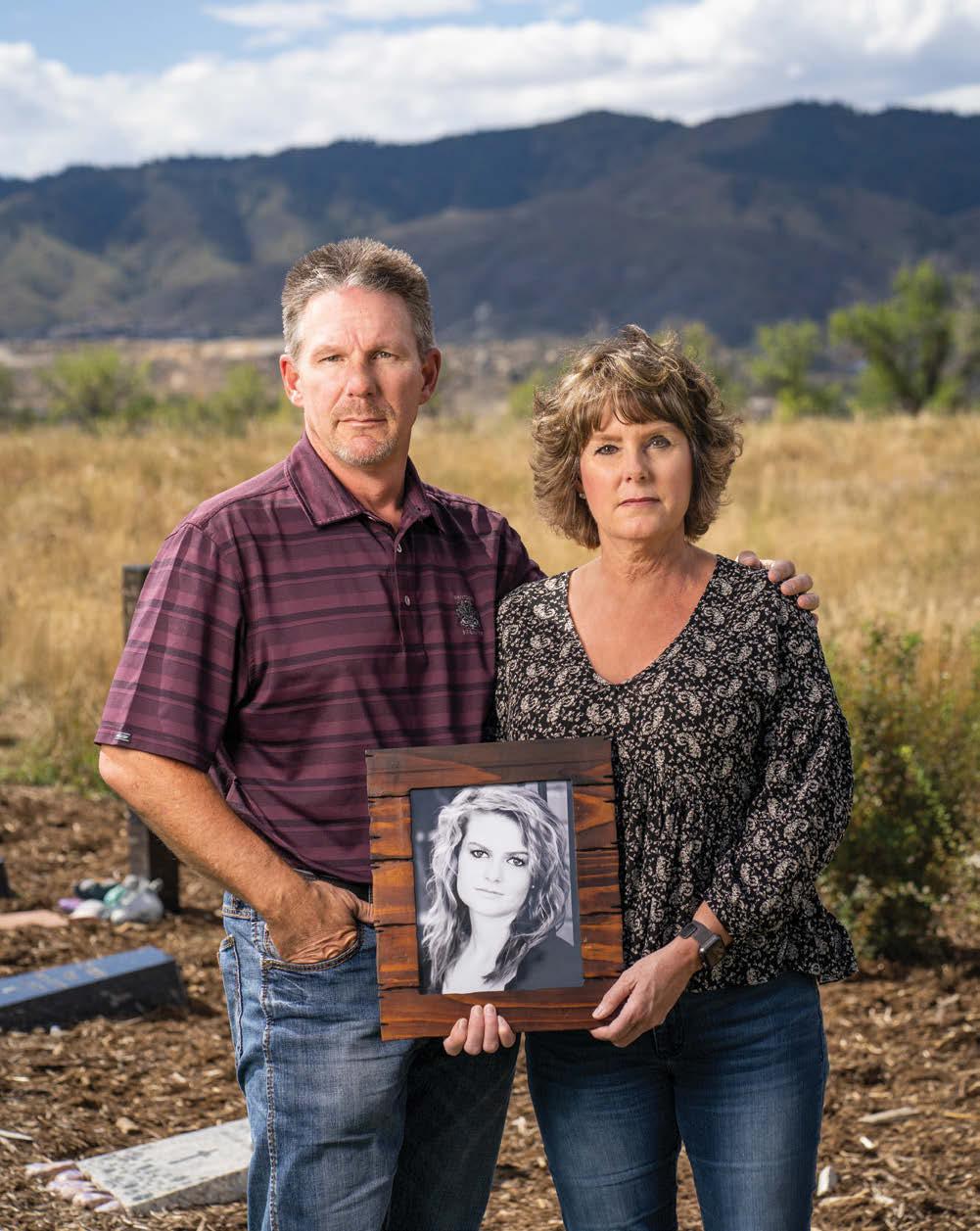
NOVEMBER 2022 | 5280 95 Credits Tk WAVE 4
2019 KEY WAVE 1: Rise in prescription opioid deaths, 1999–2009 WAVE 2: Rise in heroin deaths, 2010–2012 WAVE 3: Rise in fentanyl deaths, 2013–present WAVE 4: To be determined AP Photo/Toby Talbot (wave 1); AP Photo/Douglas Healey (wave 2); Peter Dazeley/Getty Images (wave 3); Getty Images (wave 4) 2013 Source: Centers for Disease Control and Prevention
STRONG ENOUGH TO LIVE
The first sign of fentanyl withdrawal is the nonstop yawning, says Laura Beth “LB” Burkhalter. Then come the watery eyes and the runny nose. Then sweating, body shakes, heart palpitations, muscle spasms, diarrhea, and vomiting. The symptoms can begin within hours of a person’s last fix. “It was my substance of very little choice for 10 years,” Burkhalter says.
ADDICTION
Growing up in Mississippi, Burkhalter says she had mental health struggles and the signs of a predisposition to addiction as a teenager, but it wasn’t until she experienced bone fractures in her legs and feet from athletics that she found the relief of pain meds. “My inju ries wouldn’t heal,” she says, “and doctors gave me massive amounts of medication. I was using OxyContin and Vicodin and then fentanyl patches on top of that.”
When her prescriptions ran out, Burkhalter began buying pharmaceuticalgrade fentanyl patches from cancer patients she knew who needed money more than pain relief. “The drug stops doing what you need it to do,” she says. “You need more and more to turn your brain off. You need it just to not be sick. I wasn’t strong enough to die or strong enough to live.”
But, tired of being sick and tired, Burkhalter tried to self-detox. She went cold turkey and suffered alone in an apartment in Louisiana for 17 days. When the misery was too much, she got some heroin and did just enough to make the hurt go away. “I was trying to portion control heroin,” she says. “I realized you can’t use heroin like a lady and then went back to my old routine.”
After bearing a son who was addicted to opioids at birth and nearly dying of an over dose, Burkhalter surrendered. Her family found a treatment center for her in Colorado, far away from her life in the South. A year of therapy allowed her to leave the drugs behind, but she didn’t trust herself to leave the recovery community. So, she didn’t. Instead, she found a job working in a treatment center in Lake wood and now also runs a sober-living home for women in Loveland.
Through that work she has learned a lot about how people view addiction. “People are opposed to harm reduction because they see it as enabling,” she says. “My view is that we are enabling them to survive so that they can find recovery. It took me more than 10 years to choose to live, but now I have the gift of recovery and know that life can be beautiful.”

96 5280 | NOVEMBER 2022
THE FENTANYL CRISIS
CHRONICLES
No Easy Fixes
In the battle against misused substances, there are often two camps: those who want to fight illicit drug use using the criminal justice system and those who prefer to reduce its consequences by deploying a set of strategies called harm reduction. Located in Denver, the Harm Reduction Action Center (HRAC) helps roughly 150 people who use drugs each day do so more safely. With assistance from HRAC executive director Lisa Raville, we explain what harm reduction looks like—or could look like—when it comes to the fentanyl crisis.

NALOXONE (NARCAN)

Several years ago, when fentanyl was still relatively rare in Colorado, it was often police officers or paramedics who encountered people who were overdosing. “Today, it’s a barista or a bartender who’s finding someone in the bathroom,” Raville says, referring to the dramatic increase in overdose deaths in Colorado. “We need more people to have access to Narcan. I carry it. If someone is going to OD, I want them to OD with me.” Naloxone, often referred to by its brand name Narcan, is a medication—which comes as an injectable and as a nasal spray—that temporarily but rapidly reverses an opi oid overdose. HRAC provides access to naloxone for its clients, but other local agencies, businesses, and organiza tions offer it to the general public.
■ Denver residents can get naloxone for free from the Denver Department of Public Health & Environment.
■ Naloxone doesn’t require a prescription; visit stoptheclock colorado.org to find providers.
SUPERVISED DRUG USE SITES
In 2018, Denver City Council approved a framework for a pilot program for a government-sanctioned supervised drug use site in the Mile High City. Four years later, the site—which would allow people to use drugs in the presence of medical professionals, rather than risking an overdose alone—has yet to open because the state Legislature hasn’t passed a law needed to enable its launch. “We need to be having conversations about safe use,” Raville
says. “If we want to prevent overdose deaths, this is one way to do that.” The country’s first such sites opened in New York City in November 2021. In the first two months of operations, the sites (pictured ) were used 5,975 times by more than 600 people; staff responded to 125 on-site overdoses but saw zero
chocolate-chip-cookie effect refers to the fact that the illicit drug supply is unpredictable; drugs are not always mixed evenly, which means it’s pos sible to get a false negative if you test a part of the cookie where there is no chocolate chip—aka fentanyl.) “Still,” Raville says, “we hand them out and tell people to test their supplies.”
■ Denver residents can request fentanyl test kits for free from the Denver Department of Public Health & Environment.
■ DanceSafe, a public health nonprofit, sells test strips online ($20 for a 10-pack).
SAFE SUPPLY
deaths. Governor Jared Polis has stated he is opposed to supervised sites.
FENTANYL TEST STRIPS
Fentanyl has permeated the illicit drug supply in Colorado. The opioid is show ing up in what dealers are selling as cocaine, heroin, meth, MDMA, and prescription painkillers, like oxyco done. Those who are addicted to street drugs—or those who want to experi ment with these substances—can use test strips to detect the presence of fentanyl before using them. “People do want to know what’s in their drugs,” Raville says. “My clients know the dan gers of fentanyl. Are test strips 100 percent effective? No, mostly because of the chocolate-chip-cookie effect, but they’re better than nothing.” (The
Controversial and as-yet-unadopted in the United States, safe supply is the idea that there should be a federally regulated, pharmaceutical-grade supply of drugs such as heroin and fentanyl so that people may use them more safely, without worrying about life-threatening adulterants. This would, advocates like Raville suggest, disrupt the toxic drug supply and save thousands of people from fatal over doses. A number of countries have been exploring and researching safe supply methods; however, the idea is often anathema to Americans who have been consuming This Is Your Brain On Drugs–style campaigns since the 1980s. Advocates make the point that the opioid drugs that started the current crisis were governmentregulated—and overdose deaths were lower than they are now.
NOVEMBER 2022 | 5280 97 From top: AP Photo/Matt Rourke; AP Photo/Seth Wenig
3 QUESTIONS FOR:
JOHN KELLNER
The district attorney for the 18th Judicial District—and candidate for Colorado attorney general in this month’s election—was involved in one of the largest fentanyl busts in state history earlier this year. 5280 caught up with Kellner to ask what concerns him most about the state’s synthetic opioid crisis.
5280: A cadre of law enforcement agencies and the 18th Judicial District were involved in busts that, combined, took more than 200,000 fentanyl pills off the streets in early 2022. What did you take away from this case?
John Kellner: There were two big things for me. First, these pills weren’t just the blue tablets we so often see. There were also pink pills, which suggests to us an effort by dealers to differentiate their prod ucts. They’re essentially rebranding to catch eyes. We’ve heard they may even be adding flavor ing to market to younger Americans. They will be killing younger and younger people.
And the second big thing?
In addition to the fen tanyl, we found guns and heroin and cocaine and $60,000 worth of stolen merchandise. In another large fentanyl bust back in December 2021, we
found 28 firearms and $450,000 in cash. [Fen tanyl] is big business for dealers, and there is tremendous potential for violence because these people will protect that business at all costs.
These sound like the exploits of drug trafficking organizations, but everyday crime in Colorado is up, too. Some experts are suggesting there is a link to the opioid crisis— what’s your take?
There is a nexus between crime and drug activity. Law enforcement officers are finding fentanyl when they catch people stealing cars. They’re finding it on people who are stealing things from Target to resell. FBI agents who investigate bank robberies—which Colorado had the highest number of in 2021—attribute the state’s increase to fentanyl. The rise in crime rates in Colorado can, I think, be put at the foot of the fentanyl crisis.
Colorado’s Great Fentanyl Debate
House Bill 22-1326, which became the Fen tanyl Accountability and Prevention Act, passed the state Legislature in the final minutes of the 2022 session—yet no one seems all that happy about it.
Supporters say HB 1326 didn’t go far enough. Detractors say the law stepped well over the line. Typically, that might mean legislators hit the sweet spot, but the Fentanyl Accountabil ity and Prevention Act, which took effect on July 1, doesn’t seem to have any real friends.
The bill was introduced, in part, to remedy the unin tended consequences of a 2019 law that made possession of four grams or less of a controlled Schedule I or II sub stance, including fentanyl, a level one drug misdemeanor. The aim of that 2019 law was to de-felonize possession for personal use. But at that time, fentanyl was only beginning to show its destructive potential in Colorado. By early this year, Governor Jared Polis, Colorado Attorney General Phil Weiser, and House Speaker Alec Garnett all went on the record to say new legislation was needed to fix a law that was allowing drug dealers to carry dozens of potentially lethal doses of fentanyl without fear of being charged with a felony. HB 1326 passed in late May.
Months later, it’s difficult to find anyone—whether they supported the original intent of HB 1326 or not—who thinks the Fentanyl Accountability and Prevention Act was particularly well constructed. Here’s why.
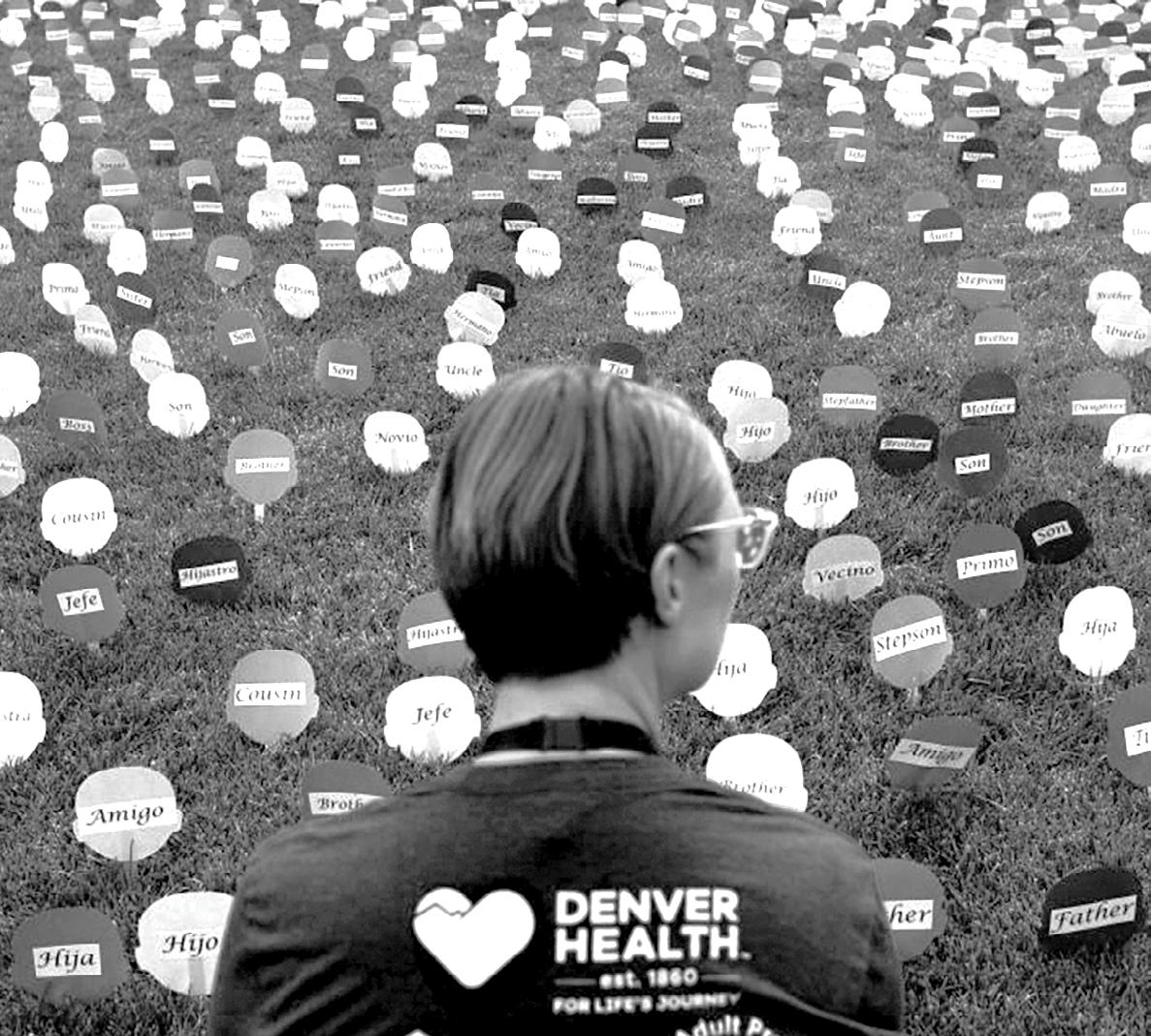
98 5280 | NOVEMBER 2022 Credits Tk
THE FENTANYL CRISIS
From left: Jorge Cuadal Calle; RJ Sangosti/Media News Group/the Denver Post via Getty Images
THE PROVISION
Possession of between one gram and four grams of fentanyl or a fentanyl compound for personal use is a level four drug felony punishable by up to 180 days in jail and up to two years of probation.
SUPPORTER
John Kellner, district attorney for the 18th Judicial District, backed the legislation but believes the new law, which would make drug dealers eligible for probation, was too lenient. “If dealers feel like there’s a strong system of punishment,” he says, “they’d be less willing to do business in Colorado.”
DETRACTOR
“This legislation doubled down on the worst parts of the war on drugs,” says Lisa Raville, executive director of the Harm Reduction Action Center, which advocates for the health of Denverites who use drugs. Raville argues that re-criminalizing possession just means putting people—many of whom take five to 15 fentanyl pills a day, enough to trigger a felony charge, just to stave off dope sickness—back in jail.
THE PROVISION
If defendants charged with fentanyl possession can show evidence they didn’t know that the controlled substance they had in their possession contained fentanyl, the defendant can argue that case to the jury. If the jury agrees, the penalty can be knocked down to a misdemeanor.
SUPPORTER
“This is going to make felony prosecution of anyone found with one to four grams of fentanyl more difficult than any other hard drug,” Kellner says. “Anyone can say they didn’t know. The prosecution doesn’t have to prove someone knew it was cocaine, so why is that the case here?”
THE PROVISION
The act zeroes in on those who have an intent to dis tribute fentanyl, making penalties stiffer if the drugs originated from outside of Colorado, if the person also possessed a pill press or other manufacturing equipment, or if the distribution leads to a death.
SUPPORTER
“For a number of years, we’ve looked at cases of fentanyl overdose deaths and worked with the DEA or FBI,” DPD Com mander Jimenez says, “but there weren’t state charges until now. It’s a good deterrent, but these are labor-intensive cases, and we have to have good information to present to a DA. Sometimes, because there are multiple drugs in a person’s system, the medical examiner can’t say for sure that fentanyl killed them. Sometimes medical examiners don’t even test for fentanyl. That’s a problem for us.”
SUPPORTER
“I hear over and over from families affected by a fentanyl death that the police just don’t reach out,” says Aretta Gal legos, who lost her daughter, Brianna Mullins, to fentanyl in 2021. “Even when they do, they often say there’s nothing they can do because they don’t have definitive information to arrest someone. The law should’ve been stricter and more helpful for investigators.”
THOSE LEFT BEHIND
Scotty Mullins laughs a sad little laugh when he admits that Brianna was his boss at his first job at a Sonic Drive-In. He giggles, too, when he says that the woman who would become his wife was funny and caring and a good mom but that she liked to pick arguments. “She liked to fight,” he says. “If she fought with you, she loved you.”
But, Mullins says, Brianna was fighting other battles as well. Sexually assaulted at the age of 18, she had started taking Xanax to help manage anxiety. She used it off and on until she got pregnant, and after giving birth, her family thought she was doing well without the medication. That, however, was not the case. Brianna had started taking Percocet—or what she thought was Percocet— that she got from a friend at work. “She knew she needed to stop using it,” Mullins says. “She had already scheduled an appointment with a therapist looking for that help.”
Instead, on the night of April 14, 2021, Mullins came home from work to find his 25-year-old wife already in bed. “I knew something was wrong the moment I saw her,” he says. “Her face didn’t look good. I tried CPR. I didn’t know what to do. The medic said she had probably been gone for hours.”
The pills Brianna thought were Percocet were laced with illicit fentanyl. “It sucks, because I know who gave her the pills,” Mullins says. “I gave the police that info. But because the fentanyl bill wasn’t a thing then, they said they couldn’t do anything [about her death].”
Mullins believes, as many others in his position do, that his wife was poisoned. “It’s murder,” he says. “She thought it was something else; she didn’t want to die. Our son was everything to her.”
Now, more than a year later, Mullins says he still has to explain over and over to their five-year-old, Aaron, that his mom is not coming home. Too young to understand, Aaron is confused about why she’s not coming back when he misses her so much. “I just tell him that I miss her, too,” Mullins says. “If you haven’t lost someone like I lost her, though, it’s hard to explain—and unexplainable to a child—that really I don’t have any feelings anymore. Everything just got taken away.”
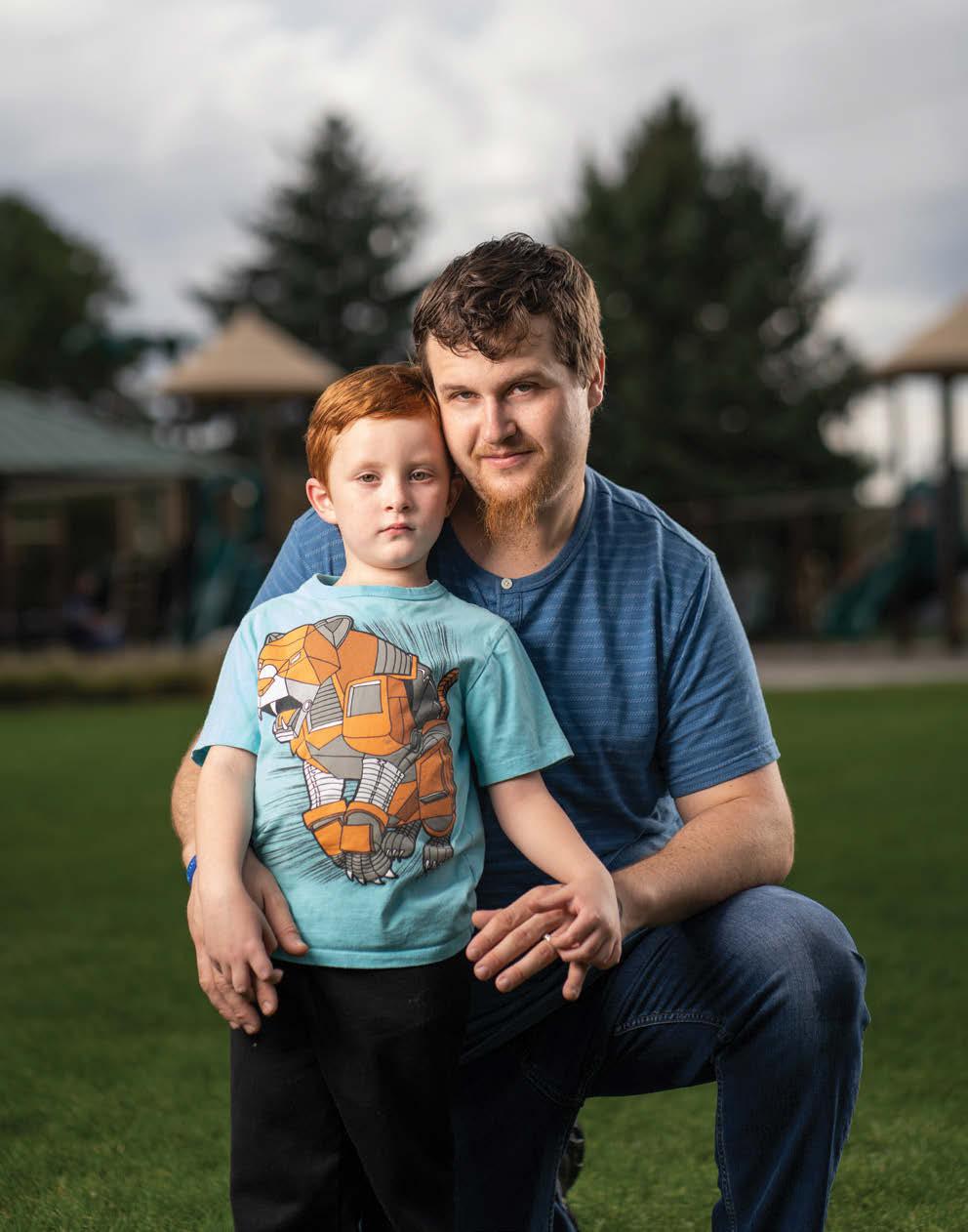
NOVEMBER 2022 | 5280 99 Credits Tk
Courtesy of 18th Judicial District Attorney’s Office
ADDICTION CHRONICLES
HINDSIGHT IS 20/20
Coco Peterson looks at her three kids and her niece—all between eight and 13 years old—and wishes she didn’t have to have the conversation she knows she has to have. But maybe more than most people, the 39-year-old Fort Collins resident realizes how critical it is to talk with her children about not taking any pills or medicines that their friends might offer them. “It’s just not something you should have to tell little kids,” she says. “You have to explain, though, that it could be one pill and done.”

ADDICTION CHRONICLES
That’s how it happened for Peterson’s 37-year-old sister, Kristina Kaufmann, who died in February 2019 after taking what her family believes was a counterfeit oxycodone pill cut with fentanyl. Kaufmann had become dependent on prescription painkillers following a car accident. When her prescriptions ran out, she began getting oxycodone or Percocet from friends who had legal prescriptions. When that became untenable and the neck pain became too great, she turned to less-savory characters, who would sell her blackmarket pain medications. She was able to do all this and hide it from her family and her boss. “My sister was high-functioning,” Peterson says. “She was smart, had a job in financial investing, and she had a daughter she loved. Only in hindsight did we see how much she was struggling.”
Peterson is devastated by the thought that her older sister—who was funny and a lover of practical jokes—died of loneliness. “Substance abuse is so isolating,” she
says. “She wanted to have the appearance of being able to take care of everything. I think the stigma was a big part. She didn’t want to say, ‘I need help.’ ”
W hich is why Peterson talks to Kaia (top left), Jett, and Jade—and her sister’s daughter, too—about how it’s OK to not be OK, but that it’s not at all acceptable for them to experiment with pills of unknown origins.
“Fentanyl is in things kids might want to try,” she says. “It’s in pills that look like Xanax and Adderall. The problem is they can’t experiment any longer. It’s a death wish.”
Not that she thinks Kaufmann wished to die. She knows she didn’t. “She never intended to die,” Peterson says. “She didn’t intend to take a counterfeit pill. She didn’t want to miss all these life moments with her daughter.”
100 5280 | NOVEMBER 2022 THE FENTANYL CRISIS
CODED LANGUAGE
Smartphone-wielding Gen Zers don’t need to find a dark alley to score drugs. Why? Because dealers, often called “plugs,” can flog their wares—and offer to deliver them, pizza-guy style—to your teens using emojis that, even if you saw your kid’s Snapchats, you might not recognize as sales transactions. With a little help from the DEA, we rounded up some common pictograms and their meanings.
Remember: Nearly all of these street drugs can be cut with fentanyl and, when it comes to pills that look like prescription drugs, more than 90 percent of them are counterfeit and can contain fentanyl.
Public Service Announcement
How the death of her child led one woman to create Colorado’s Voices for Awareness.
More than four years after her 32-year-old daughter died, Andrea Thomas is still waiting for the man she holds responsible to be sentenced. Bruce Holder, who was convicted of four counts of fentanyl distribution in April 2021, has been linked to nine deaths and several other nonfatal overdoses on the Western Slope. “My daughter didn’t mean to die that day,” Thomas says. “She was poisoned.”
A lot of people would agree. Although the Denver-based jury that convicted Holder was only presented with the opportunity to return a guilty verdict (which it did) on one count of distribution resulting in death—for a man who died in Carbondale in 2017—a grand jury had previously indicted the dealer for the death of Thomas’ daugh ter, Ashley Romero.
Romero, who had chronic pancreatitis exacerbated by alcohol use, would sometimes use legally prescribed pain meds when the condition flared. But in June 2018, she didn’t have anything in her medicine cabinet during an acute attack and instead bummed what she thought was an oxycodone pill from her boyfriend, who had gotten it from a friend. “She took half of the pill,” Thomas says. “Her boyfriend took some, too. They both overdosed on fentanyl.”
Paramedics revived Romero’s boyfriend, but Romero was pronounced dead at the scene. “The next day,” Thomas says, “that young man took his own life.”
At the time, Thomas says, she had no idea how half of a pain pill could kill her daugh ter. Since then, Thomas has made it her mission to make sure everyone knows that even the smallest amount of fentanyl can kill. In 2019, she founded the Voices for Aware ness Foundation, a nonprofit based in Grand Junction that tries to bring attention to coun terfeit drugs and illicit fentanyl around the country.
That has meant speaking at town halls, spearheading awareness campaigns, advo cating in Washington, D.C., for a federal response, testify ing in front of the Colorado Legislature this past May, and organizing rallies for National Fentanyl Awareness and Pre vention Day. “I also spend a lot of time with affected families,” Thomas says. “I’m in rooms where everyone has been to a mortuary to pick out a pine or cardboard box for their child.”
She does it in memory of her daughter, but she says it’s become bigger than that. She says she’s had it with the lack of action at the federal level and wants to make enough noise to encourage change. “We need sanctions on other countries that sell these dangerous chemicals,” she says. “We need to stop these terrorist organizations from bringing it into our country from Mexico. And we need people to tell that to the federal government because, trust me: This can happen to your family.” m
NOVEMBER 2022 | 5280 101
From left: Jorge Cuadal Calle; McKenzie Lange/Courtesy of the Daily Sentinel
Oxycodone �������������� ��❄����⛽���� Xanax Percocet ������������ Adderall Heroin ���� ���� Cocaine ❄��⛄������ Drug Dealers Advertising They Have Product �������� Universal Symbol For Drugs �� Package Has Arrived ���� Available Via Mobile And For Delivery ⛽����
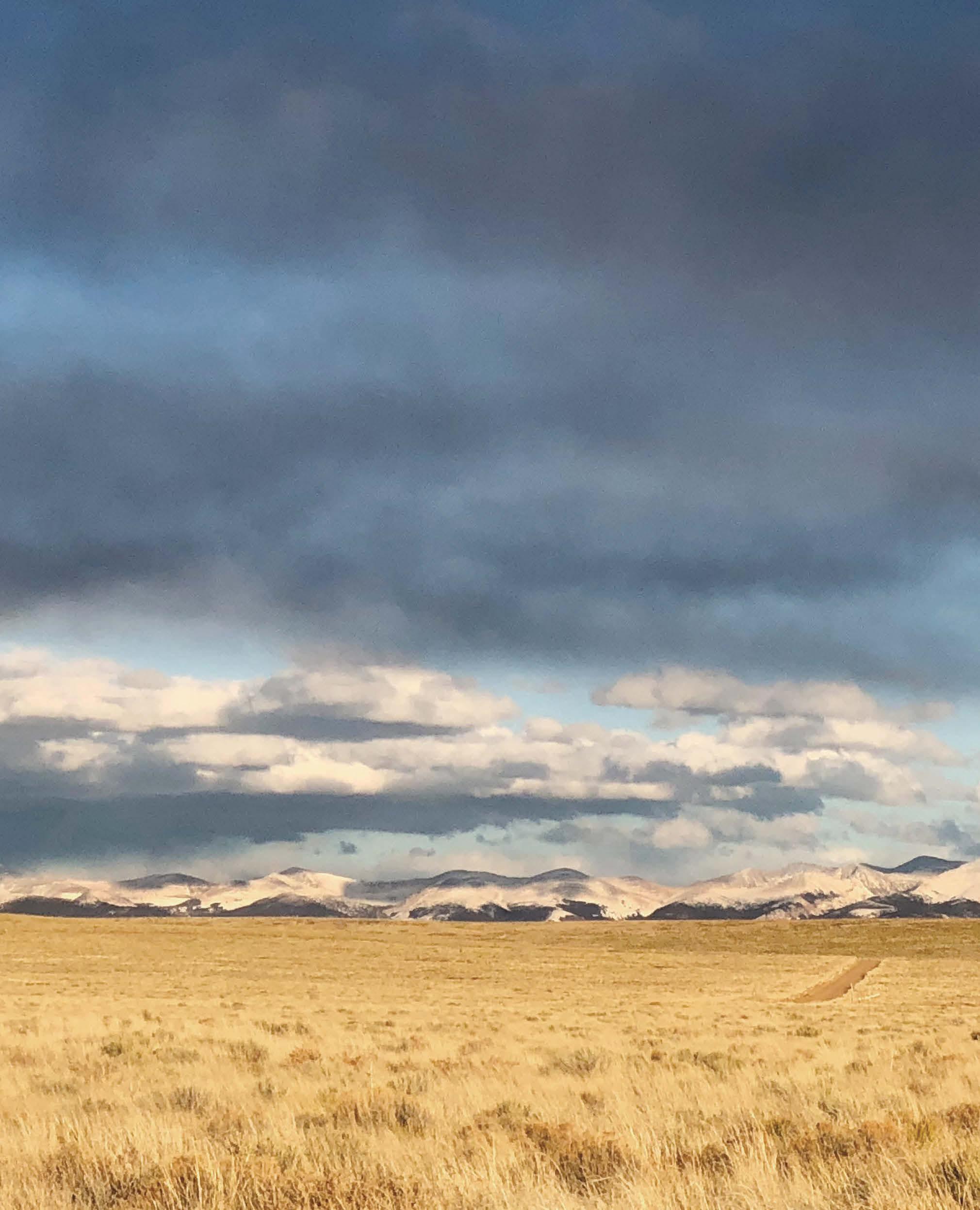
102 5280 | NOVEMBER 2022
Cheap Land Colorado
Five-acre homesteads with views of the Sangre de Cristos for $5,000 might sound like a bargain. But off-grid life in the middle of the San Luis Valley has a distinctly rough aspect, as the author learned when he volunteered to support locals whose lives become precarious when the weather gets cold.
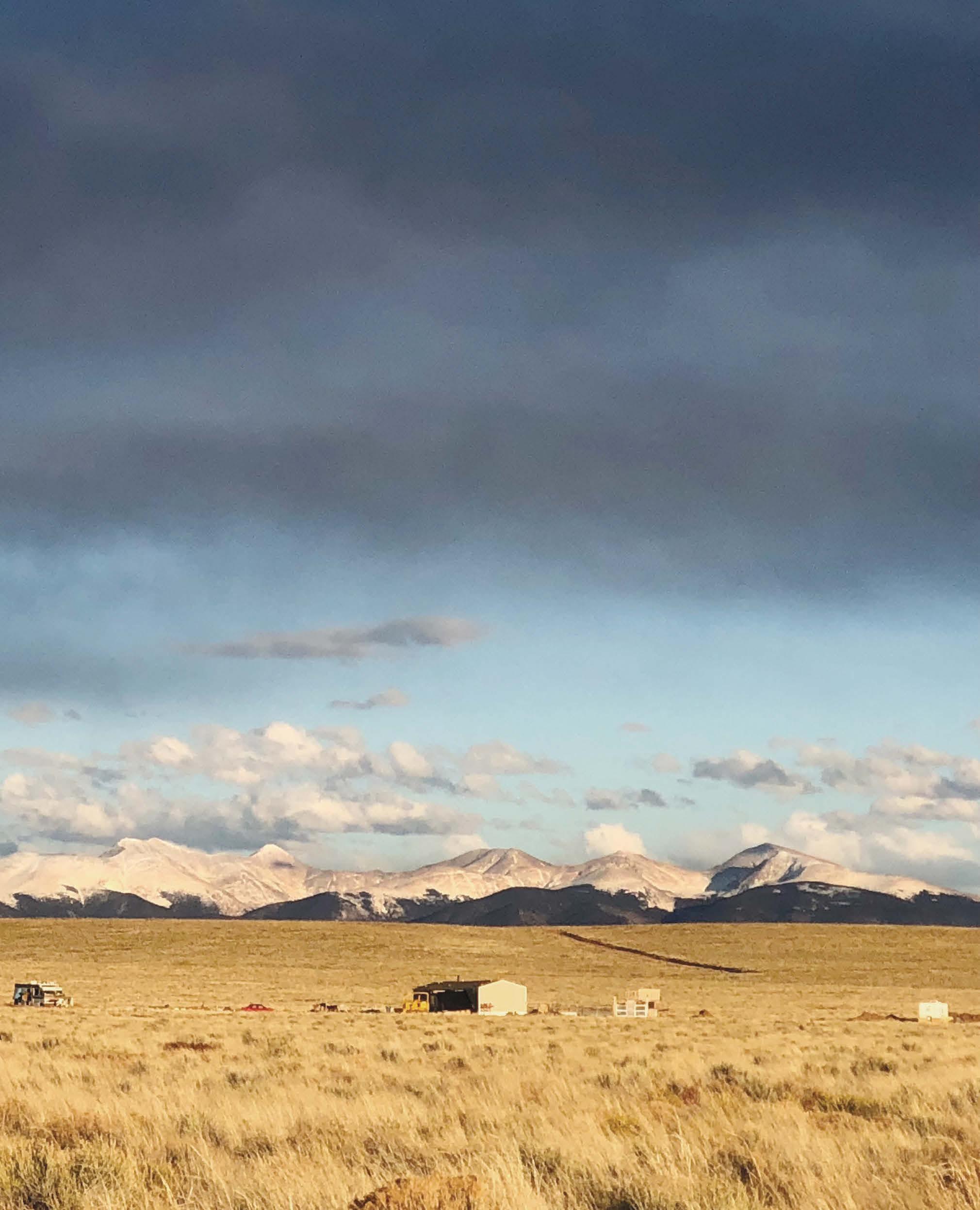 WORDS AND PHOTOGRAPHY BY TED CONOVER
The prospect is daunting: A lot of people live out here because they do not want to run into other people. They like the solitude. And it is daunting because many of them indicate this preference by clos ing their driveways with a gate, or by chaining a dog next to their front door, or by posting a sign with a rifle-scope motif that says, “IF YOU CAN READ THIS YOU’RE WITHIN RANGE!”
The local expert on cold-calling is Matt Little, charged by the social service group La Puente with “rural outreach.” Matt has let me ride around in his pickup with him so that I can see him in action. Distances between households on the open Colorado prairie are great, which gives him time to explain his approach, which he has thought about a lot, as he does this every day and in three months has not gotten shot.
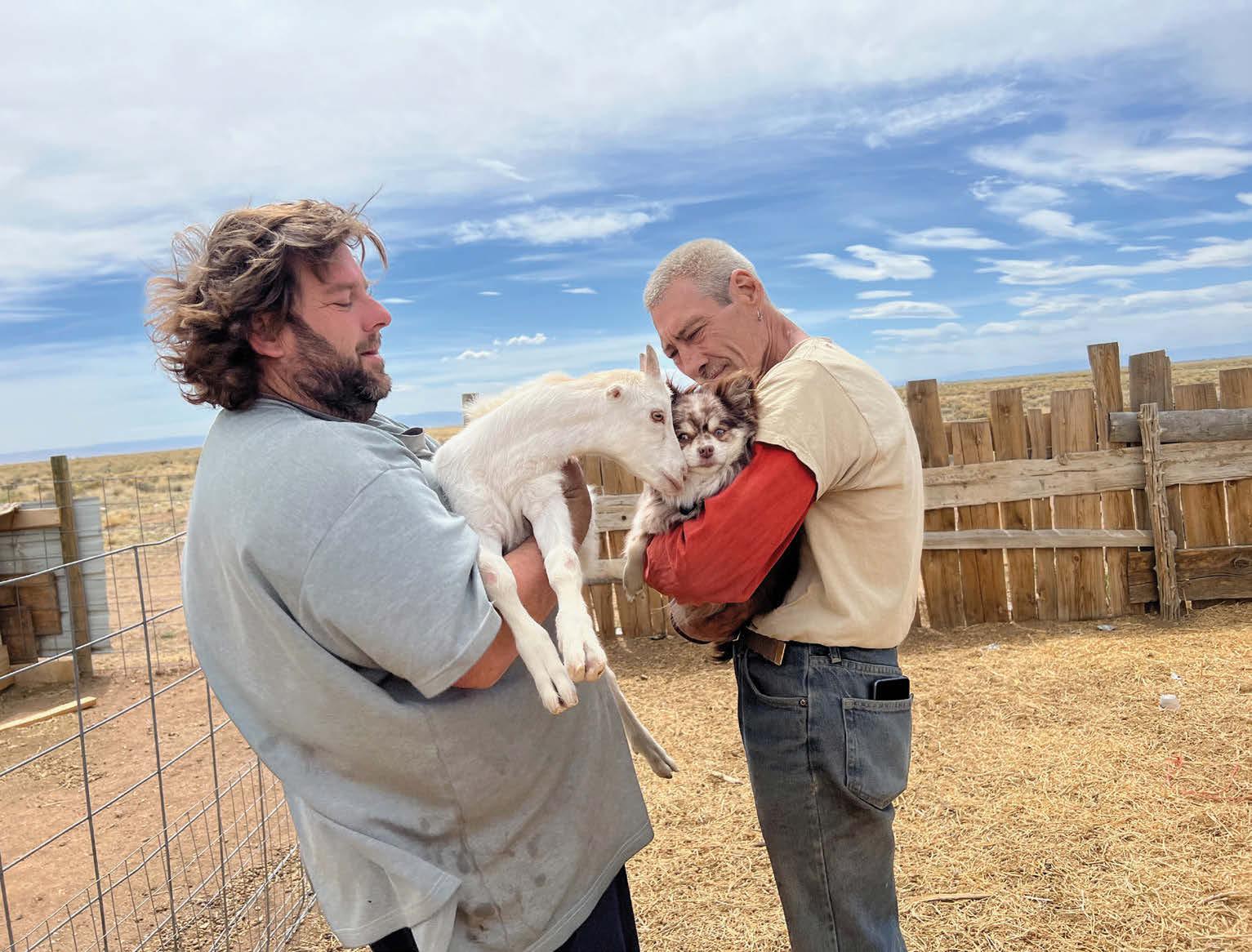
If you’re thinking the checklist is short, you’re mistaken. Before you ever see the homestead, you need to consider the visual impres sion you’ll make. Matt drives a 2009 Ford Ranger with a magnetic “La Puente” sign on the door. It is not fancy. Nor is Matt fancy: He is a 49-year-old veteran of two tours in Iraq, a slightly built man from rural West Virginia with an easy smile. He smokes cigarettes and often he is whiskery. He tells me not to wear a blue shirt, because that’s the
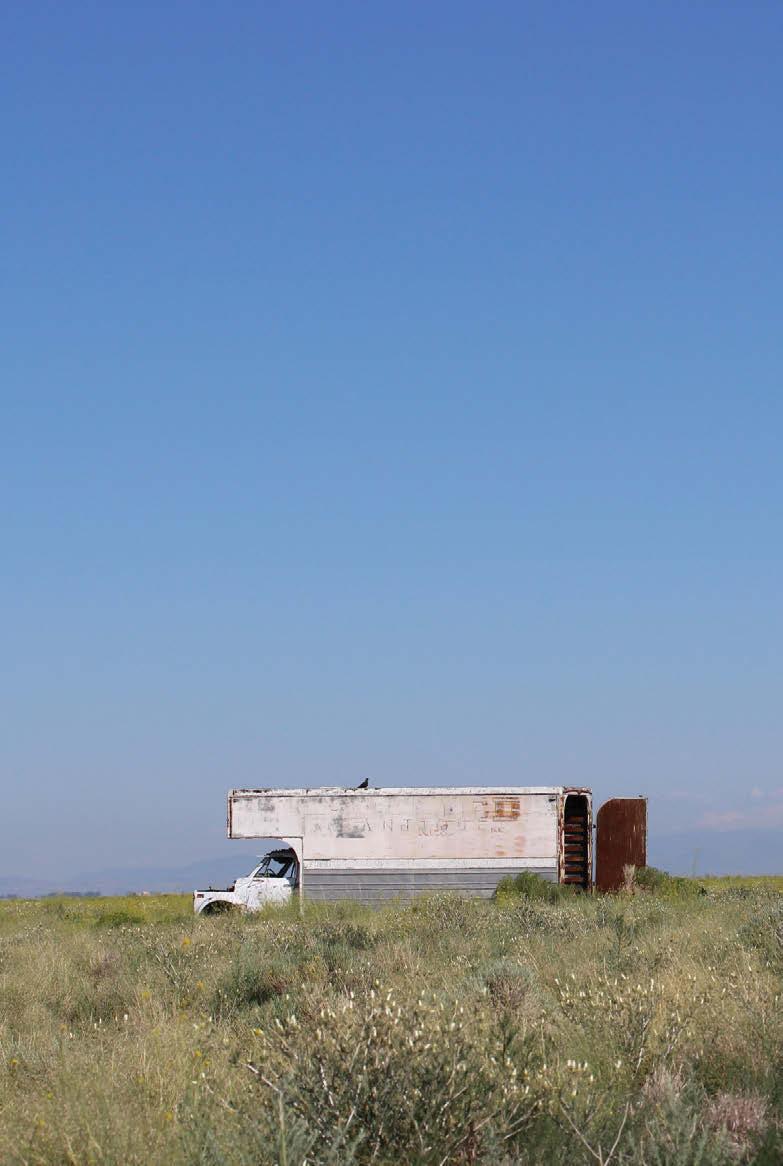
color worn by Costilla County code enforcement, and you don’t want to be mistaken for them. La Puente ordered him a hoodie and a polo shirt in maroon with its insignia, and he usually wears one or the other, along with jeans and boots.
He’ll drive by a place, often more than once, before actually stopping, so that he can reconnoi ter. Is there an American flag flying? That often suggests a firearm inside. Are there children’s toys? Is there a small greenhouse or area hidden behind a fence that suggests that marijuana is being grown? (Initially, I thought that might be a good sign, because cannabis can make people mellow. But Matt emphatically said no. “A fullgrown plant could be worth a thousand dollars, and people steal ’em!”) More to the point, is any one even living there? Are there fresh tire tracks? Smoke coming from the chimney? Many prairie settlements have been abandoned or are lived in only during the summer.
Matt had noticed one property with berms constructed inside its perimeter of barbed-wire fence. He saw bullet casings and suspected the owner was a vet with some psychological issues: “I thought he was probably playing war games, re-enacting things he’d been through.” He drove by to show me—the place was at the end of a dead-end road, which made it kind of hard to pretend you were just passing by. Matt said that the first few times, he paused at the road’s end, waved at whoever inside might be watching him, and turned around. He continued in that vein over the next month, waving or honking but not lingering, until one day he saw a man outside the house dressed in camo gear. Matt parked his truck and stepped outside.
“I’m Matt from La Puente,” he said. “I’ve got a little wood.” He gestured at the firewood stacked in the bed of his truck, something useful conceived of by his employer as a calling card, an icebreaker.
104 5280 | NOVEMBER 2022
It begins with a moment of contact— of driving up to a homestead and trying to introduce yourself.
The man picked up an AK-47. “You’re a per sistent son of a bitch,” he said. Then: “How much is it?”
“It’s free,” Matt said.
The guy walked toward the gate. He opened it. He waved Matt in.
MY FIRST EXPERIENCE of the San Luis Valley came on a family car trip when I was 11. We stayed on the paved roads, but even that was impressive. The Great Sand Dunes National Monument, now Great Sand Dunes National Park and Preserve, looked like fake scenery from a movie until we were in it. I was amazed by its origin story: grains of sand blown from one side of the valley’s huge expanse, about the size of New Jersey, had formed gigantic dunes on the other. The San Juan Moun tains to the west hold the remains of an enormous, ancient supervolcano whose eruption was one of the largest explosions in Earth’s geologic history.
When you grow up in a beautiful place that seems to lose some beauty to settlement (i.e., development) every year, you treasure the unchanged. The San Luis Valley still looks much as it did 100, or even 200, years ago. Blanca Peak, at 14,345 feet the fourth-highest summit in the Rockies, overlooks a vast openness. Blanca, named for the snow that covers its summit most of the year, is visible from almost everywhere in the valley and is considered sacred by the Navajo. The range Blanca presides over, the Sangre de Cristos, forms the valley’s eastern side. Nestled up against the range just north of Blanca are the amazing sand dunes. The valley tapers to a close down in New Mexico, a little north of Taos. It is not hard to picture the Indigenous people who carved images into rocks near the rivers, or the Hispanic people who established Colorado’s old est town, San Luis, and a still-working system of communal irrigation in the southeastern corner,
From left: Matt Little (right); an abandoned home on the flats; creative homesteading
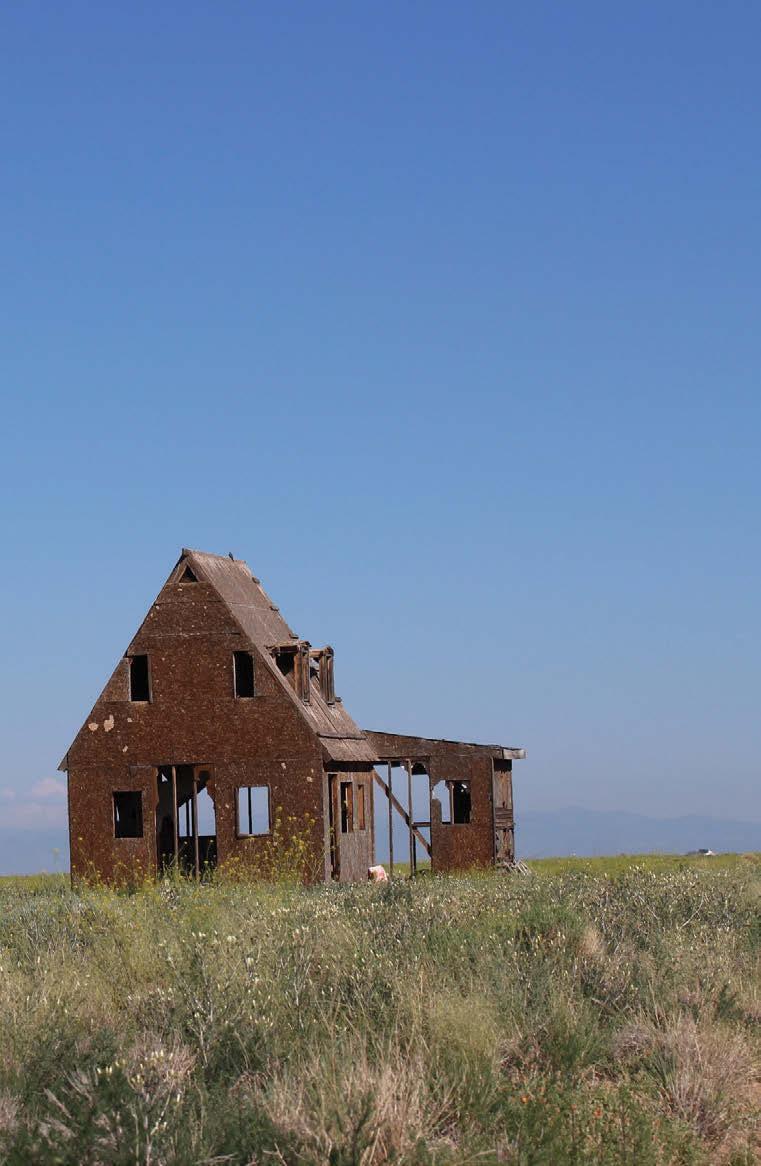
or a pioneer wagon train. Pronghorn antelope still roam, as do feral horses and the occasional mountain lion.
It’s also not hard to see a through line between the homesteaders of the 19th century and the people who move out there today. The land is no longer free, but it is some of the cheapest in the United States. In many respects, a person could live in this vast, empty space like the pioneers did on the Great Plains, except you’d have a truck instead of a wagon and mule, and some solar panels, possibly even a weak cellphone signal. And legal weed. By selling or bartering weed and picking up seasonal labor, you might even get by without having a job, though if you have no income, things can get tricky, especially when winter comes around. It would be extremely difficult to live completely off the land, especially out on the open prairie.
Denver and New York City, where I now live, are complex urban areas. Out here, by contrast, it seemed that life must be simple, but how could I really know? My feeling of ignorance grew stronger in November 2016, when Donald Trump was elected president of the United States. The day before, in New York, I had told a French radio station that Trump could never win the election. (Of course, I had plenty of company in this delusion.) The American firmament was shifting in ways I needed to understand, and these empty, forgotten places seemed an important part of that. I took an assignment from this magazine in 2017 to write about South Park, which is similar to the San Luis Valley in its challenging climate and abundance of open space. One particularly remote area was overlaid with dirt roads from a moribund 1970s subdivision that had never taken off, just as in the valley. Some isolated trailers and shacks suggested that a handful of people were living off-grid.
I told my sister about the place. In her work for a Denver-based foundation, she said, she had recently visited Alamosa, the San Luis Valley’s biggest town, and heard about an off-grid settlement on a much larger scale. Staffers from a social service group called La Puente had shown her slides of how people were living out on “the flats” and told her about their rural outreach initiative; later, she sent me some photos in a PDF file. I got in touch with La Puente, which had begun as a homeless shelter—one of the first rural homeless shelters in the country—co-founded by a nun. And then I visited.
Lance Cheslock, the executive director, showed me around, start ing with lunch at the shelter. It’s a big old house on the humbler side of Alamosa, converted to allow for separate facilities for men,
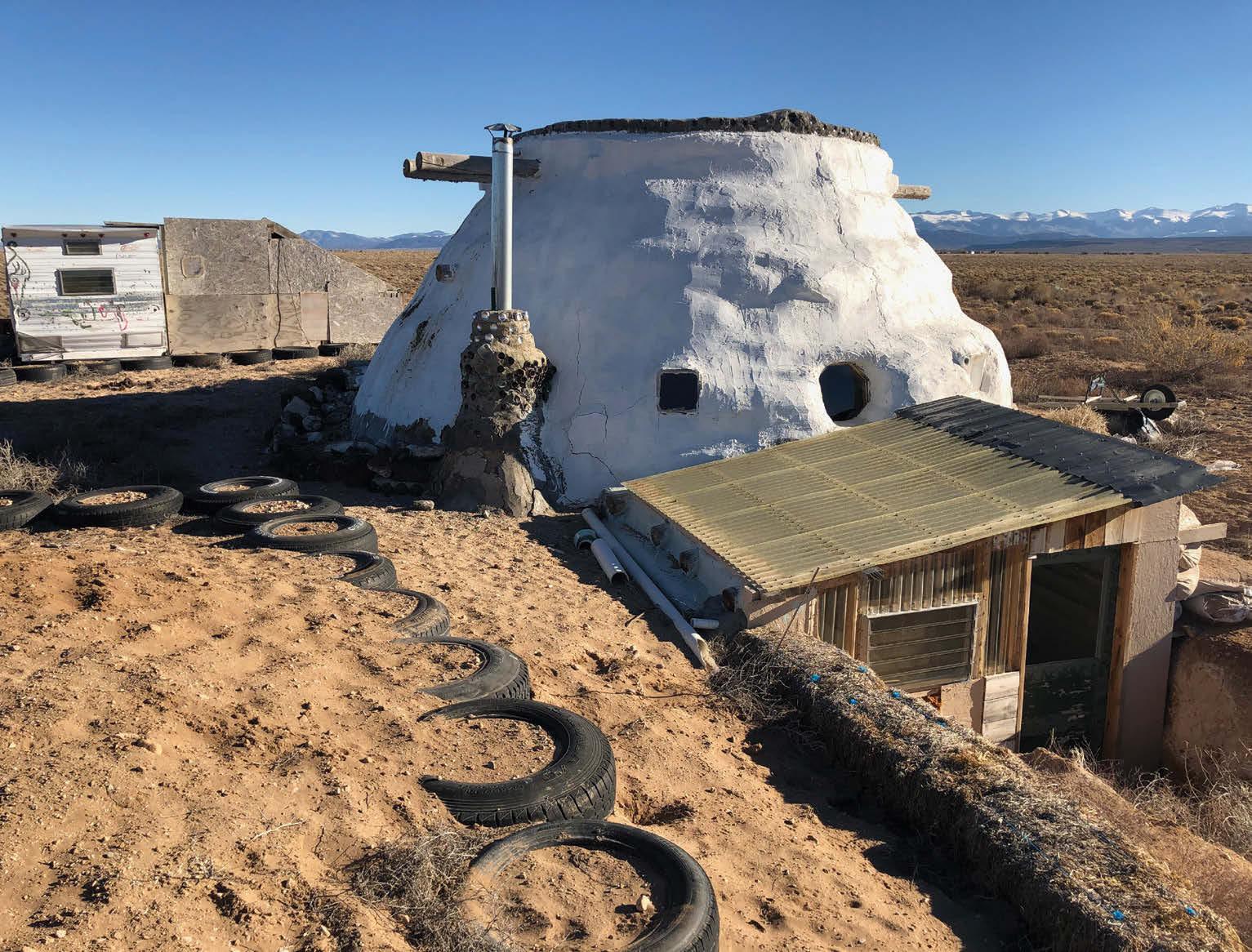
NOVEMBER 2022 | 5280 105
women (who get buzzed into their part of the upstairs), and fami lies, for whom there are separate bedrooms. There are 45 beds in all, but on this day in June, only 26 guests were registered. Most of the downstairs is a dining room and kitchen. The shelter was serving three meals a day, with lunch and dinner open to walk-ins from the community—but only after enough diners had signed up to clean the kitchen afterward. The AmeriCorps volunteer assigned to this task wasn’t having luck. Lance took the clipboard from her and began walking down the queue, cajoling and appealing to diners’ better natures, engaging with them one by one until he had his volunteers. A few minutes later, we sat down at a table for six, along with shelter clients and a staff person, the shelter’s director, Teotenantzin Ruybal.
Tona, as she’s known, had grown up in the valley and had run the shelter for more than nine years. She was from one of the extended families that have been in the area for generations and identify as Hispanic. (The terms Latino and Latinx are less often used in the valley.) Her demeanor was on the gruff side—you can’t run a shelter if you’re a pushover—but it was clear from our conversation that she had a big heart and was deeply committed to helping the poor.
She explained the direct link between the shelter and the offgridders I was interested in: “You’re living in a slum, and you see an ad about owning five acres for $5,000, and you have a view of Blanca Peak—to them it’s an opportunity, it’s the savage wild, their piece of the rock.” People would come to the valley just to own their own place, free from landlords and utility bills. And free also from being judged: “Sometimes the attitude is, I’d rather live a rough life out there than live in town and be looked down on,” Tona explained. “Regardless of if it’s a stupid choice, it’s their choice.”
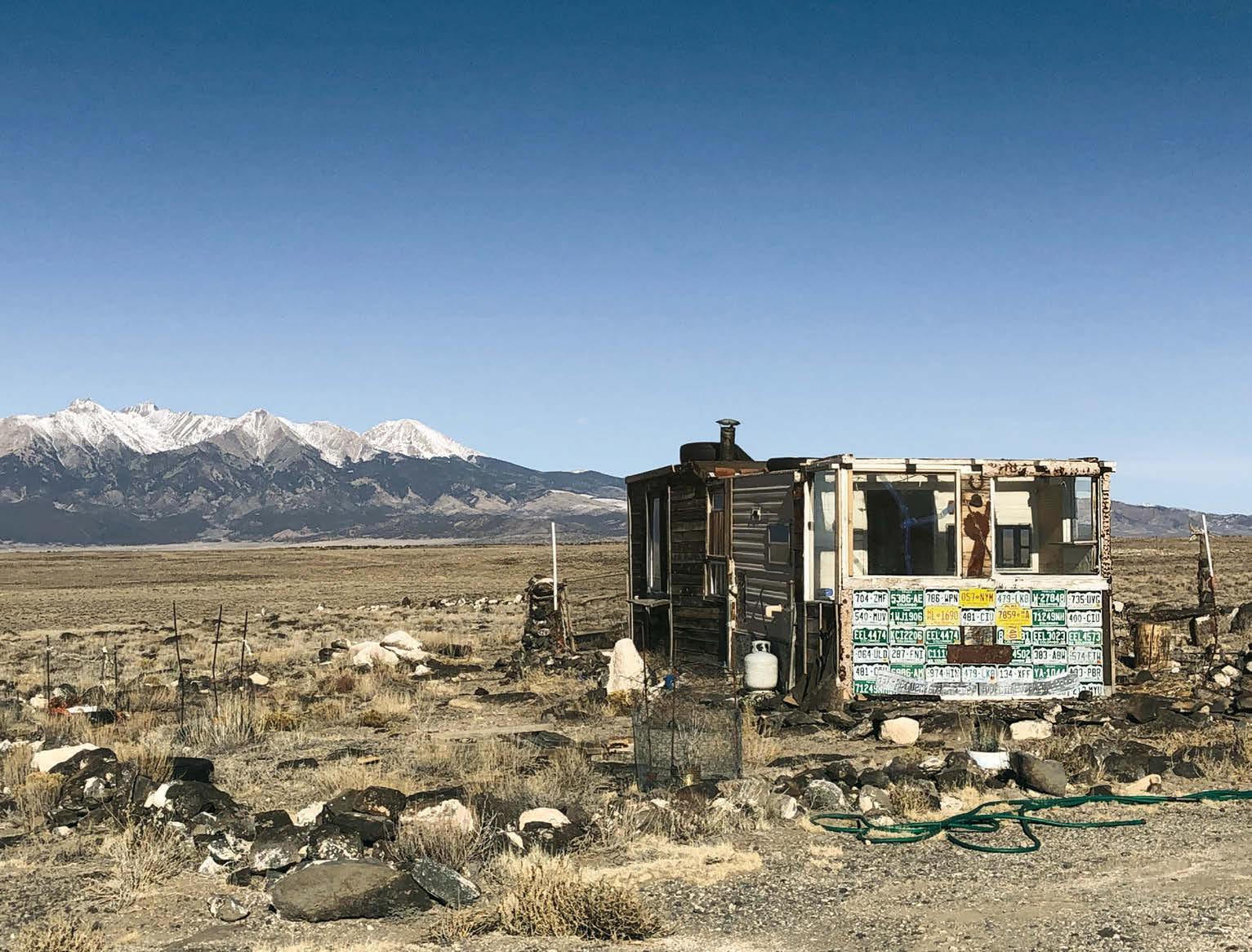
NORMALLY, MATT HAD SHOWN ME, you didn’t see somebody outside, so the procedure was to stop at the end of their drive and tap the horn. At the first sign of life, he’d often step from his truck so they could see him, a (hopefully) unthreatening presence. He might leave them with some firewood, a business card with his cell number, and an offer to come back should they find themselves in need of food, help with filling out an application, a ride to town for a doctor’s appointment, or a pickup of a prescription.
I paid close attention because I was starting to volunteer with La Puente. It seemed like a good way to meet isolated prairie dwellers, and Matt said he could use the help.
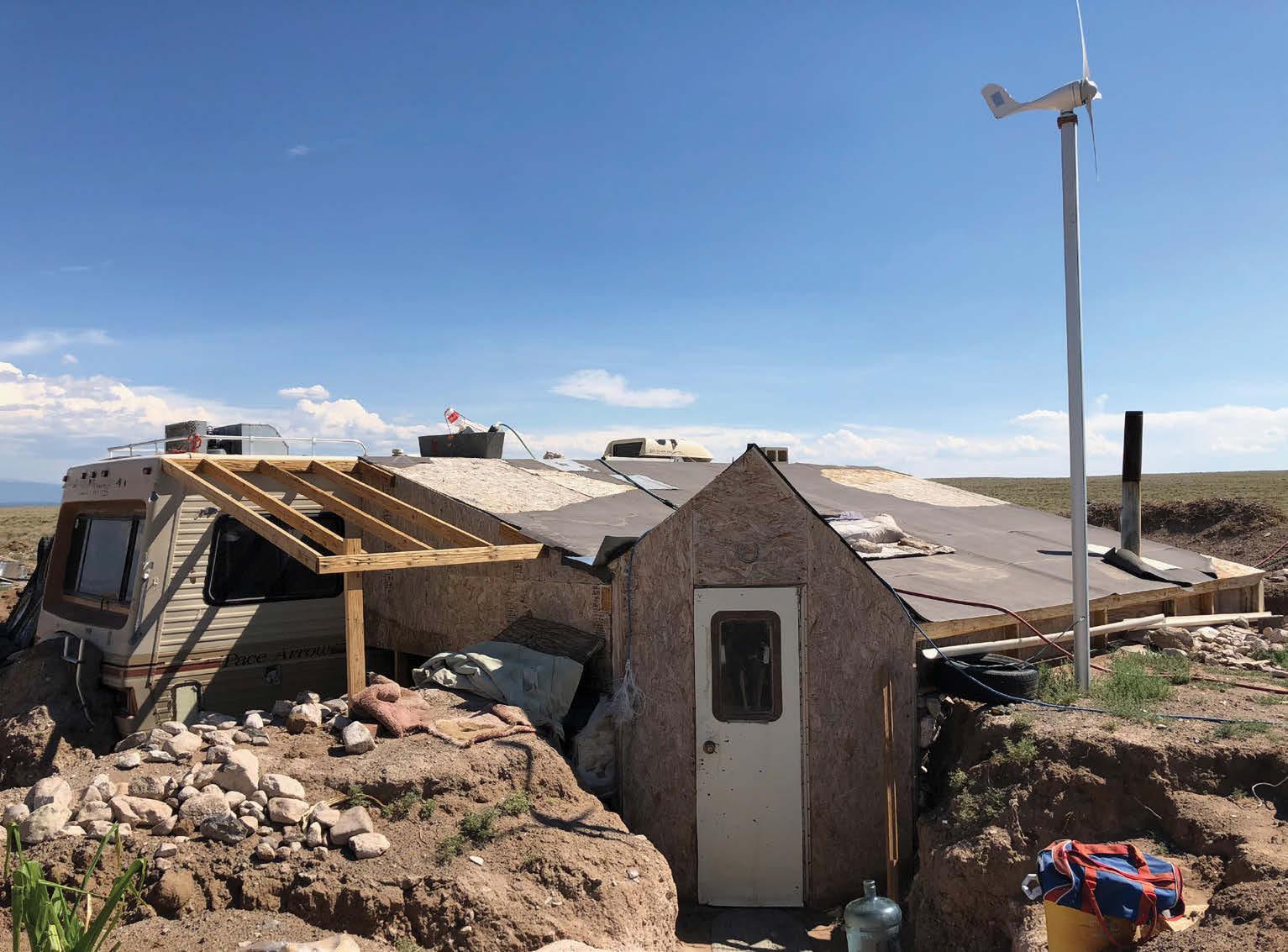
From left: Wideopen views of the Sangre de Cristos; a double rainbow on the prairie; the remote Punche Valley
I set myself a goal of three new contacts per day. La Puente loaned me a “Rural Outreach” sign for the door of my own pickup truck. I chose an area and drove around, as slowly as I could without looking suspicious; I guessed that many of the places I was sizing up were abandoned.
I finally settled on a place with a short driveway, figuring that would make me harder to ignore and easier to evaluate. It was a mod est house with various pieces of junk around it, including nonworking vehicles, but I could see by tracks in the dusty dirt that someone had been driving in and out. I stopped and beeped the horn. That’s when I realized that the Jeep Wagoneer in front had somebody in it. I rolled down my window. A moment later, he cracked his own window. I climbed out of my truck and, in a show of my confidence and good intentions, walked over to him.
“Hi, I’m Ted, from La Puente,” I said.
“Hey,” he said. His green Corona beer baseball cap matched the color of his eyes.
I told him about the firewood.
“I don’t usually accept charity and stuff,” he said.
“I get that,” I said. He was just back from rehab, he said. I asked for what, and he said opioids.
“And how are you doing?” I asked.
“OK so far. You want a soda?” He offered me a Sprite, which I accepted.
It was November and cold and windy, and I had left my jacket in the car. I should have gone to get it, but I kept hoping that any minute he’d invite me into his truck, which was warm enough inside for him to be in a T-shirt; its front read, “Single and Ready to Jingle.”
He didn’t invite me in, but he liked to talk, and it wasn’t long before he told me how he had once let a guy live in his place for a spell while he was gone. Then, when he came back, he and the guy got into an argument and the guy shot
106 5280 | NOVEMBER 2022
him. “Right here.” He held out his arm to show a big, complicated scar.
Instead of needing to pry information out of a hermit, as I had expected, I found myself with a chatty, self-revealing guy who really wanted someone to talk to...even if he didn’t want to invite them into his car.
I TRIED HONKING outside three places where either nobody was home or nobody lived, and I left each feeling kind of foolish. But then I saw a humble place close to the road, with a horse in a small corral and a couple of chickens in a pen. I parked at the gate and honked. I was imme diately swarmed by several heeler dogs, some of them growling, but I made soothing noises and crossed my fingers. It took a couple of minutes for a Hispanic guy about 60 years old to appear and start walking toward the gate, from about 50 yards away. While he ambled over, I read an offi cial notice from the county that had been stapled to a fence post. “CEASE AND DESIST,” it said. I pointed to it after the man reached me and I had introduced myself.
“Are they after you about no septic system?” I asked. It was a common problem.
“No, it’s over taxes,” said the man. “They didn’t send the bill. I’m working with them.” I offered him wood, which he accepted, as well as some new bedsheets I happened to have, which he declined (“I sleep in my clothes”). He said he owed 10 hours of community service to a court and asked if he could work it off with La Puente. I gave him the office phone number and encouraged him to call. We said goodbye, and I climbed back into my truck. I turned the key and…nothing. Embarrassed, I tapped the horn again. The dogs swarmed me again. The man came out again and immediately offered to give me a jump—it was in his interest, as well, as I was blocking his gate.
Excerpted from Cheap Land Colorado: OffGridders at America’s Edge by Ted Conover, pub lished by Knopf. Copyright © 2022


“Circling the wagons” was the expression that came to mind at the next place I decided to hit. An array of old vehicles—a Lincoln, an RV, a pickup truck, a Volkswagen bus, an SUV, and more—were arranged in roughly three-quarters of a circle, like a wagon train hunkered down on the prairie in anticipation of attack, or a doughnut with a big bite missing. I saw goats outside, a sign of life, but paused: The settlement was about a football field away from the road. Honking would bring nobody to my window. What the hell, I thought, and decided to drive in.
I tapped the horn as I approached and tapped it again for good measure once I had entered the little circle inside the perimeter and placed my truck in park. The apparent dwelling was on the far side of my truck, so I rolled down the passenger window to make it easier to see me.
A middle-aged white man wearing wraparound dark glasses with reflective lenses and a baseball cap came out a door, descended a few steps, and walked around to my side of the truck. He kept his distance and also kept his right hand inside the pocket of his hoodie; I suspected there might be a pistol there.
“How ya doin’?” he asked in a tone that said, Declare yourself.
I told him I was Ted from La Puente, new to the area, just wanted to introduce myself, got a little wood—
He interrupted me: “That’s dangerous, just rolling up on people. You must be either brave or a little dumb.” He smiled in a way that was hard to interpret.
“Probably a little dumb,” I acknowledged.
He was just visiting from California, he eventually told me. “Tony will probably be back a little later.”
I put that name and all the vehicles together. “Wait—does this place belong to Tie Rod Tony?” He was a person I had already met. The man nodded. Suddenly, I was no longer afraid. But I was wistful, feeling like a cat who had wasted one of her nine lives. m
Ted Conover is the author of several books, including Newjack: Guarding Sing Sing, which won the National Book Critics Circle Award for nonfiction and was a finalist for the Pulitzer Prize. His writing has appeared in the New York Times Magazine, the Atlantic, the New Yorker, Harper’s Magazine, and National Geographic. He is a professor at, and the former director of, New York University’s Arthur L. Carter Journalism Institute.
NOVEMBER 2022 | 5280 107 Courtesy
of Alfred A. Knopf
SPECIAL ADVERTISING SECTION
GUIDE to CHARITABLE GIVING

This holiday season, consider giving back with a donation to organizations that are making a difference in our local community. Not sure where to start? Keep reading to learn more about the charities that help our vibrant community thrive.



Adaptive Adventures
Your gift to Adaptive Adventures will help us provide progressive outdoor sports opportunities to improve quality of life for children, veterans, and adults with physical disabilities and their families.
We strive to ensure that all individuals with physical disabilities have access to participation in outdoor sports regardless of their location, equipment needs or economic status. We know that when individuals are active, they experience greater independence, camaraderie, freedom and the undeniable health benefits of recreating in the great outdoors.
We also know that when the individual thrives the whole family thrives, and our programs provide transferable skills that improve daily life for the whole family.
Close your eyes with us and imagine a world where all individuals have access to the rejuvenating power of outdoor sports, no matter their physical, geographical or financial barriers. It’s a world with an improved quality of life — one defined by supportive networks, continuous skill development and newfound independence.
This is the world we’re trying to create. By continuing to expand our offerings, connect with new communities and empower existing members, we believe this future is within reach.
Share the adventure today by participating, volunteering or giving to Adaptive Adventures.
Animal Rescue of the Rockies


Please Save a Pet’s Life Today! Your gift will be DOUBLED with a matching gift up to $10,000!
Shelters are overflowing, and your help is needed urgently to save the lives of innocent animals! Pets are dying in our country’s shelters every day simply because there isn’t enough space for them. Your gift will help save the lives of pets that have been surrendered by their owners or left out on the street to fend for themselves. ARR pulls homeless pets from overcrowded and underserved shelters, places them in foster homes, and adopts them to loving forever homes. Since 2003, Animal Rescue of the Rockies has rescued tens of thousands of dogs and cats at risk of euthanasia.
Your gift goes directly towards veterinary care, food, and supplies for homeless pets in need, which enables more lives to be saved!
Pets often arrive from shelters with illnesses or injuries that have been left untreated. Your donation ensures that pets receive all the veterinary care they require, including surgery and medications. Each pet is spayed or neutered, microchipped, and vaccinated prior to adoption. So far this year, over 1,250 rescued dogs and cats have found forever homes through ARR’s foster and adoption programs. Last year, 1,771 lucky pets were adopted.
Your support will not only save lives, but it will also help families and individuals experience the unconditional love that only a pet can provide.

Please donate generously to Animal Rescue of the Rockies on Colorado Gives Day! You’ll be helping pets and people to share what we all need most right now—LOVE!
9053 Harlan Street, Suite 34 Westminster, CO 80031 (303) 679-2770 | AdaptiveAdventures.org
MAILING ADDRESS: 13918 E. Mississippi Ave. #60188 Aurora, CO 80012 (970) 389-8324 arrcolorado.org
ARR’S CAT COTTAGE AT JUST CATS STORE: 7150 Leetsdale Dr. Suite 402 Denver, 80224 (720) 235-2724
ARR’S CAT CASITA AT HIGH PAW PET SUPPLIES: 503 US Hwy 285 Fairplay, CO 80440 (719) 836-4909
Donate today! Visit our online guide at 5280.com for more information.

110 || GUIDE to CHARITABLE GIV ING NOVEMBER 2022 SPECIAL ADVERTISING SECTIONGUIDE to CHARITABLE GIVING
Flourishing Communities
Centura Health is the largest health care network in Colorado and western Kansas with one very important vision—to provide whole person care to every community, every neighborhood, every life. Our non-profit, Christian mission cherishes the unique spiritual needs of those we serve throughout our hospitals, physician practices and clinics, urgent care and emergency centers, and more, our commitment to build flourishing communities is based on a simple belief — we have the privilege to care for others. That’s why we’re driven to understand each of our unique communities and equip them with the vital resources they need.
Our reinvestment of resources is made possible by our incredible foundations, which allow us to deliver specialized services and compassionate whole person care to those who need it — regardless of their ability to pay.
Our family of foundations is proud to extend our healing ministry to our growing network of hospitals and clinics—not just in Colorado and Kansas, but across borders in countries like Ukraine, Peru, Tanzania, and India.
Learn more about our Centura Health Foundations and their impact by visiting c centura.org /community impact/foundations, or by scanning the QR code.

Donate today! Visit our online guide at 5280.com for more information. NOVEMBER 2022 GUIDE to CHARITABLE GIV ING || 111 SPECIAL ADVERTISING SECTION GUIDE to CHARITABLE GIVINGCOMMITTED TO
centura.org
Denver Rescue Mission
Denver Rescue Mission has been serving our neighbors experiencing homelessness and poverty since 1892. The people we serve are among the most vulnerable men, women and children in our community. We help restore the lives of people experiencing homelessness and addiction through emergency services, rehabilitation, transitional programs, and community outreach in multiple locations across the Denver metro area.
Volunteers are the lifeblood of Denver Rescue Mission and there are many ways for volunteers to get involved, including serving or preparing meals, mentoring adults or children, sorting donated items and more.
Donations are also vital to continue our emergency services and long-term programs. When you give to the Mission, you are providing for the immediate needs of people experiencing homelessness through warm meals, safe shelter and basic necessities like showers, restrooms and clothing. Additionally, you are offering life-changing opportunities for men, women and families who need a second chance.
The long-term programs at the Mission guide people on a path out of homelessness toward permanent housing and a productive, self-sufficient lifestyle. Learn more today at DenverRescueMission.org.
Mission Statement: Denver Rescue Mission is changing lives in the name of Christ by meeting people at their physical and spiritual points of need with the goal of returning them to society as productive, self-sufficient citizens.

Energy Outreach Colorado
Energy Outreach Colorado (EOC) is a nationally recognized organization dedicated to helping vulnerable households afford their home energy costs. EOC is the only statewide nonprofit that raises funds to assist thousands of Coloradans by paying energy bills, repairing or replacing furnaces, and helping to lower utility costs through energy efficiency and weatherization programs.
Across the state people living on fixed incomes, low wage earners, veterans, and families are facing critical financial challenges and energy insecurity. EOC is working with lawmakers and leads a network of industry, state and local partners to ensure that all Coloradans are able to live in a healthy and safe home, and can afford their home energy costs.
Charity Navigator has named EOC as one of the nation’s Top 10 charitable organizations with the most consecutive 4 star ratings—EOC has received this recognition for 21 years in a row. This is the highest possible rating offered by Charity Navigator and verifies that EOC exceeds industry standards and outperforms most charities in this area of work. 94.6% of every donation given to EOC goes directly to programs and services. These funds are leveraged to secure additional resources making every dollar raised go farther.
Your support can give power to homes and hope to people in need through a gift to Energy Outreach Colorado.

Chelsea Hutchison Foundation
Chelsea Hutchison Foundation provides tangible assistance to those affected by epilepsy and educates the public about SUDEP (Sudden Unexpected Death in Epilepsy). Funds raised provide grants for seizure-response service dogs and life-saving monitors. We are dedicated to providing opportunities that allow individuals greater independence, increased confidence and community understanding. CHF sends families to special Epilepsy expos and events in Disney Parks each year.
PO Box 630048, Littleton, CO 80163 (303) 250-7739 chelseahutchisonfoundation.org


Laboratory to Combat Human Traf f icking
Human trafficking is a severe form of exploitation for sex or labor—and it happens right here in Colorado. Since 2005, LCHT has been a leader in the movement to end this crime in our state. Right now, your generosity has the power to advance that progress through anti-trafficking training, community-based research, the strengthening of Colorado’s 24/7 Human Trafficking Hotline, and the development of future human rights leaders. Together, we can end human trafficking.
6100 Smith Road, Denver, CO 80216 (303) 297-1815 | denverrescuemission.org
303 E. 17th Ave., Suite 405, Denver, CO 80203 (303) 825-8750 | energyoutreach.org/donate
1031 33rd Street, Suite 237 Denver, CO 80205 | (303) 295-0451 combathumantrafficking.org
Donate today! Visit our online guide at 5280.com for more information.
112 || GUIDE to CHARITABLE GIV ING NOVEMBER 2022 SPECIAL ADVERTISING SECTIONGUIDE to CHARITABLE GIVING
Children’s Diabetes Foundation


When Barbara and Marvin Davis’ daughter Dana was diagnosed with type 1 diabetes at the age of seven, they established the Children’s Diabetes Foundation. The Foundation is a not-for-profit organization dedicated to researching childhood diabetes and to the provision of the best possible clinical and educational programs for children with type 1 diabetes. The Foundation’s mission is to raise funds to support programs at the Barbara Davis Center for Diabetes—where more than 7,600 children and adults with type 1 diabetes from across America and around the world currently receive care. Since its inception, they have raised over $110 million to support diabetes programs and research through various events.
Imagine a disease that occupies your thoughts all day long, without a break, and requires hundreds of life-threatening or life-saving decisions every day of your life. This is type 1 diabetes.
Diabetes requires constant management and the physical, emotional, and social stress that it can cause is ever-present in the life of a type 1 and their family. The Children’s Diabetes Foundation and the Barbara Davis Center are fighting to improve patient lives every day by providing the best possible patient care, hosting support groups, educating the public, and doing research to prevent diabetes, reduce its complications, and eventually find a cure.
Type 1 diabetes is an autoimmune disease where the body’s defense system attacks the cells that produce insulin. As a result, the body cannot produce insulin on its own. Without a cure, those diagnosed with type 1 diabetes must monitor
Donate
their blood sugar and take insulin to control their blood glucose levels. While these measures are certainly helpful for maintaining a steady blood sugar, they are not a perfect science. There are many variables that go into diabetes management, such as diet, exercise, hormones, stress levels, and countless others.
A large concern for diabetics is low blood sugar levels, or hypoglycemia. Symptoms of hypoglycemia include blurred vision, shaking, sweating, slurred speech, irritability, drowsiness, and acting incoherent or spacey. If the blood sugar is severely low, the person may become unconscious or have a seizure. These low blood sugars put a diabetic in immediate danger.
Type 1 diabetes means being connected to multiple devices 24 hours a day, 7 days a week. While they usually improve blood sugar levels, these medical supplies come at a huge expense for the patient or family. Unfortunately, there is no cure for diabetes. Each person who is diagnosed with type 1 diabetes will have the disease for the rest of his or her life, unless we can find a cure.
By 2045 it is predicted that over 783 million people will have diabetes.
Know the symptoms:
• Excessive Thirst
• Excessive Irritability
• Fatigue
• Increased Appetite
• Vision Changes
• Unconsciousness
• Frequent Urination
• Weight Loss
WHO WE ARE: The Children’s Diabetes Foundation is the fundraising arm of the Barbara Davis Center for Diabetes, focusing on patient support, diabetes research, and public awareness. The Foundation was established by Barbara and Marvin Davis in 1977 and is dedicated to the support of research in diabetes and to provide the best possible clinical and educational programs for people with the disease. The Foundation’s mission is to raise funds to support the Barbara Davis Center for Diabetes, where thousands of patients receive the finest diabetes care available. Thanks to the generous funding provided to the Center, all patients are welcome, regardless of their financial means.
today! Visit our online guide at 5280.com for more information. NOVEMBER 2022 GUIDE to CHARITABLE GIV ING || 113 SPECIAL ADVERTISING SECTION GUIDE to CHARITABLE GIVING
(303) 863-1200 ChildrensDiabetesFoundation.org
Freedom Service Dogs
At Freedom Service Dogs (FSD), we transform lives by partnering people with customtrained assistance dogs. FSD serves veterans and active-duty military members with PTSD or combat-related injuries, children and teens with autism, and individuals with physical disabilities. Your support helps provide service dogs to our clients free of charge, along with lifetime support that includes ongoing training and successor dogs when a service dog retires.
For people with disabilities, a customtrained service dog can open the door to new possibilities. Instead of a life limited by difficulties, fears, and frustrations, our clients and their loyal and loving service dogs discover all they are capable of doing together.
U.S. Army veteran Chris lives with PTSD brought on by serving in Operation Desert Shield and Desert Storm during the Gulf War, followed by a 23-year career as a police officer. After experiencing flashbacks, depression, and isolation from family and friends, Chris turned to FSD for help and graduated with his service dog, Reef, in 2021. Says Chris, “Reef has made my PTSD symptoms no longer rule my life. She can pick up on signs when I become anxious and disrupt them by giving me a gentle nudge or licking me in the face. Reef gives me the confidence to get out of the house, and when I feel uncomfortable in crowds, she creates a space around me to help me get through it. Reef makes me look forward to leaving the house and doing things again.”
By supporting Freedom Service Dogs this holiday season, you can help open doors to new possibilities and bring greater independence, hope, and happiness to people in need. You can also help by volunteering to raise a puppy, assist in our nursery, or foster dogs on weekends! Thank you for your generosity and compassion.
Judi’s House
Judi’s House/JAG Institute was created with the belief that all bereaved children and families should have access to effective and compassionate care. Judi’s House was founded in 2002 by former NFL quarterback Brian Griese and his wife Dr. Brook Griese, a Clinical Child Psychologist, to honor Brian’s mother, Judi, who died of breast cancer when Brian was 12.
Did you know?
1 in 14 Colorado children will experience the death of a parent or sibling by age 18— more than 89,000 youth. Experiencing a significant death loss during childhood often results in profound stress and adversity, and without appropriate support, can derail a child’s development.

We believe no child should be alone in grief.
Since opening our doors in 2002, we have served more than 12,000 children and caregivers through research-based grief care. All services and programs are provided at no cost to families.
We are celebrating 20 years of service with a new home!
This fall we celebrated our 20th anniversary with a move into a new purpose-built home at the crossroads of Denver and Aurora. Our new facility includes play, art and group therapy rooms, community education and workforce training spaces, and a backyard garden for outdoor therapy and gatherings. Our work relies on your support.
We rely entirely on private donations and our community of dedicated volunteers to fulfill our mission. We hope you’ll support us as we continue to work toward our vision that no child should be alone in grief.
Make a gift today at judishouse.org/donate.
The Nature Conservancy
Every acre we conserve, every mile of river protected, every species brought back from the brink begins with you.
By supporting The Nature Conservancy, you’re supporting a future where nature and people thrive. To address the complex challenges facing our planet, we need ambitious and innovative solutions—for both people and nature.
The Nature Conservancy has worked on-the-ground for more than 55 years to protect what makes Colorado the place where we all love to live, work and play.

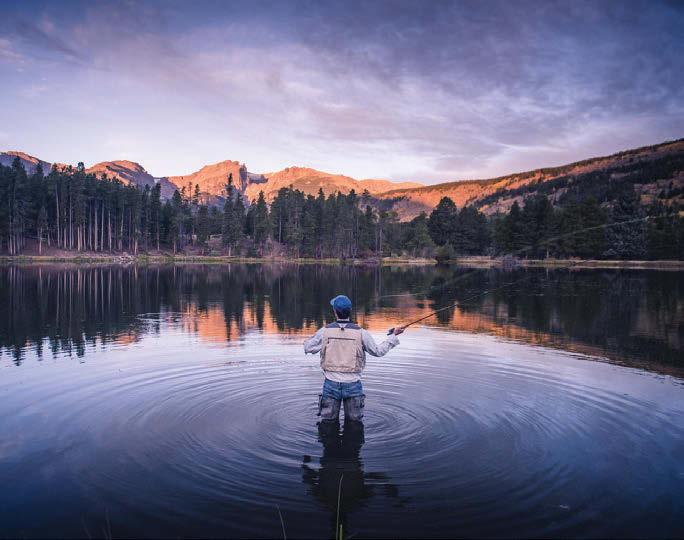
We are taking on Colorado’s biggest environmental challenges:
• Tackling climate change
• Conserving important lands and waters
• Bringing nature to our cities
• Restoring our forests
• Working with diverse partners to create a thriving future for all
From mountain peaks to desert canyons, from rushing rivers to wide-open grasslands, the Colorado we depend on depends on us. Join us to make a difference for Colorado’s future.
7193 S. Dillon Court, Englewood, CO 80112 (303) 922-6231 | freedomservicedogs.org
10125 E. 25th Avenue Aurora, CO 80010 (720) 941-0331 judishouse.org
2424 Spruce Street Boulder, CO 80302 (303) 444-2950 nature.org/colorado
Donate today! Visit our online guide at 5280.com for more information.
114 || GUIDE to CHARITABLE GIV ING NOVEMBER 2022 SPECIAL ADVERTISING SECTIONGUIDE to CHARITABLE GIVING
Photo by Nick Hall


Denver
Project Angel Heart
Project Angel Heart’s purpose is to deliver comfort and support through high-quality nutrition services, including medically tailored meals, while also advocating for the principles of “Food is Medicine.” Regardless of a person’s background or circumstances, they believe everyone should have access to the nutrition they need—especially when they’re sick.
Each week in Project Angel Heart’s kitchen, they create meals from scratch, made in partnership with a registered dietitian, that are tailored to meet the specific dietary needs of people living with severe illnesses such as cancer, heart failure, HIV/AIDS and more.

Project Angel Heart meals are delivered directly to their clients’ homes, free of charge, removing the barriers to accessing nutritious food due to financial, mobility and accessibility issues. This year, Project Angel Heart will provide more than 650,000 meals to more than 4,250 Coloradans from Weld County to Pueblo County.
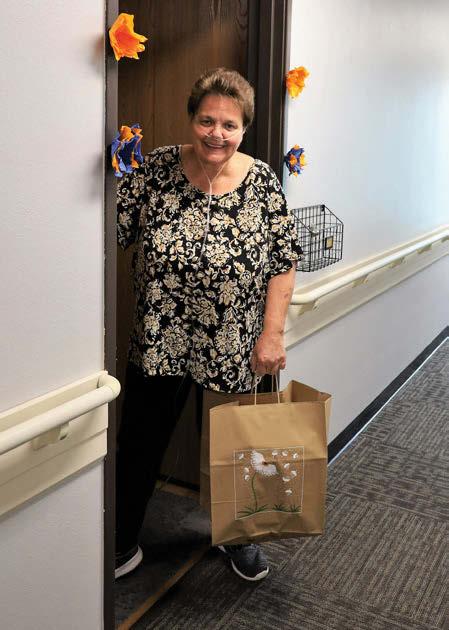
Kaloea’s story. For her, Project Angel Heart meals make every day a “good day.”
Kaloea knows about health and well-being; she was a nursing assistant for 30 years. So, when she was diagnosed with sarcoidosis, an inflammatory disease affecting her lungs, brain and eyes, the first thing she did was research her condition. The second was to research nutrition that would best support her.
Carefully watching her diet, Kaloea got by for a while.
As Kaloea’s disease progressed, though, her daily life was more impacted. Flu-like symptoms plagued her for months. She went through bouts of pneumonia and lost weight. Kaloea’s
DENVER OFFICE & KITCHEN
eyesight was also affected. In her words, her eyes “were shot.”
What bothered her most? Walking through the grocery store and standing in the kitchen preparing meals became intolerable. On oxygen and experiencing extreme aching in her joints, her ability to carefully manage her nutrition was slipping away.
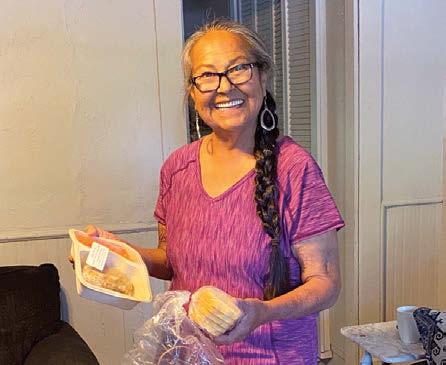
For ease, Kaloea turned to boxed macaroni and cheese or canned soup. Kaloea said, “It was calories, but it wasn’t nourishment.”
Then, a friend in her building told her about Project Angel Heart. Kaloea was skeptical. She said she knew about other food delivery programs and thought her macaroni and cheese was the same as what those programs offered. But Kaloea’s friend wouldn’t be deterred. She invited Kaloea to taste a Project Angel Heart meal.
“I couldn’t believe it,” said Kaloea. “There were veggies and fish. That meal was unlike anything I’d seen before! And the flavor. You can tell a chef makes the meals.” Kaloea immediately called her doctor and asked if he could help her apply to Project Angel Heart.
Since starting with Project Angel Heart, Kaloea says she feels the difference every day. She says the meals help her do what she wants to do, including classes at the activity center in her building like chair yoga, stretch, and balance. Kaloea says Project Angel Heart has changed her life. “Now, I get what I need to have a good day.”
To learn more and get involved, visit ProjectAngelHeart.org
4950 Washington Street, Denver, CO 80216 (303) 830-0202
projectangelheart.org

COLORADO SPRINGS OFFICE
1625 W. Uintah Street, Suite I Colorado Springs, CO 80904 (719) 323-0084
Rocky Mountain Fisher House Foundation
The Rocky Mountain Fisher House Foundation is a 501(c)(3) non-profit. The Foundation supports America’s military and veteran families while a loved one is undergoing extended medical treatment. Our program supports the construction as well as the on-going operation of the Fisher House located at the Rocky Mountain Regional VA Medical Center in Aurora, Colorado.
The Rocky Mountain Fisher House Foundation’s mission is to serve veteran and military families by providing FREE lodging at the Fisher House while their loved one is receiving medical treatment for illness, disease, or injury at an approved medical facility. We can serve 32 families at our Fisher House at one time. The comfort home has 16 private suites with a shared living room, dining room and kitchen. Many of our active duty service members and veterans have to be hospitalized for weeks or even months and we make sure their families can be bedside and never have to worry about paying for lodging, ever. The Foundation also ensures the families staying at the Fisher House have all the comforts of home. We provide the home with food, bottled water, clean linens and transportation to and from the airport. We never turn a family away even if our home is full. We will provide a hotel room for the family until space is available in the house.
Donations to the Rocky Mountain Fisher House Foundation will help ensure military families have a clean, convenient, and free place to stay while their loved one is receiving treatment. Please donate today!

 rockymountainfisherhouse.org
Donate today! Visit our online guide at 5280.com for more information.
116 || GUIDE to CHARITABLE GIV ING NOVEMBER 2022 SPECIAL ADVERTISING SECTIONGUIDE to CHARITABLE GIVING
coloradogives.org/organization/ rockymountainfisherhousefoundation
Tennyson Center for Children
Tennyson provides compassionate care and treatment for kids 0-18, families, and parentsto-be who have been impacted by neglect, abuse, and other traumatic experiences. Our therapists work with over 3,000 families in over 17 counties across Colorado, offering intensive in-home therapy. We also run a fully accredited K-12 school where kids receive therapy and an education all under one roof to ensure their social, emotional, and behavioral learning.
Our team of therapists, teachers, early childhood experts, and volunteers help kids find their unique paths to healing, sometimes working 2-10 hours a week with one family to build the skills and supports they need to heal. These efforts are improving kids’ lives:
• Last year, 98% of the families we worked with stayed together.

• 90% of children we worked with did not resort to hospitals or crisis centers for a mental health emergency, which shows a reduction in trauma stress symptoms.
• 95% of children we worked with maintained their school placements.
We often hear from families that Tennyson offers a level of compassion they could not find anywhere else. When asked what Tennyson
means to her, a mother of six recently said, “I’m seeing my kids thrive in spite of it all. Without Tennyson, there would be no hope.” She was a victim of domestic violence, which her kids witnessed at young ages. When her marriage ended and she became a single mother, she felt outnumbered and overwhelmed. The stress kept piling on until her family received the worst news of all: her oldest daughter was diagnosed with cancer. The mother relapsed after years of avoiding alcohol, and all the kids were placed in separate foster homes.
With support from the Tennyson community, this mom has worked incredibly hard to repair the bonds that were ruptured. As the kids gradually returned home, Tennyson provided each child with the specific services they needed to heal and thrive. Five of the six kiddos are now reunited with their mom and siblings, and three Tennyson clinicians are helping them emerge stronger. That sort of intensive, personalized care is only possible because of donations from people like you.
Please remember Tennyson Center for Children on Colorado Gives Day! This 24-hour giving event is on December 6th, but you can give early at www.coloradogives.org/organization/ tennyson-co

WHO WE ARE: Our mission is to work with every child and family impacted by trauma so they can realize their infinite possibilities. We rely on your generosity to improve kids’ lives and ensure a healthier future for the state of Colorado.
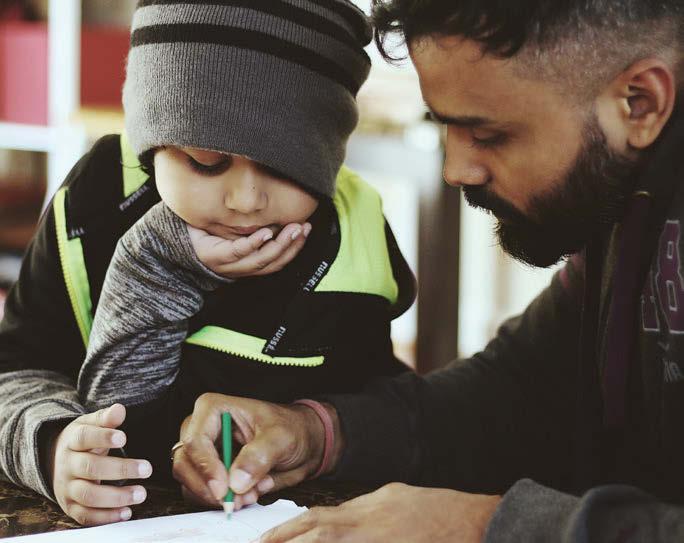
Support Tennyson on Colorado Gives Day at www.coloradogives.org/ organization/tennyson-co.
Support Tennyson on Colorado Gives Day
2950 Tennyson Street Denver, CO 80212 (303) 433-2541 tennysoncenter.org

Donate today! Visit our online guide at 5280.com for more information. NOVEMBER 2022 GUIDE to CHARITABLE GIV ING || 117 SPECIAL ADVERTISING SECTION GUIDE to CHARITABLE GIVING
Safehouse Progressive Alliance for Nonviolence


SPAN is a human rights organization committed to ending violence against adults, youth, and children through support, advocacy, education, and community organizing. SPAN began providing services in 1979 and is crucial to the network of support that offers critical “safety net” services to vulnerable, low-income and at-risk populations. Donate today to give survivors of domestic violence access to safe shelter, individual counseling, a 24-hour crisis line, extended stay housing, and more.

24-Hour Crisis Line: (303) 444-2424 Donate online at: safehousealliance.org

Street’s Hope/ Voluntad
Voluntad provides services to empower human trafficking survivors, from safe housing to mental health support. Voluntad works to bring awareness and education to our community in the fight against exploitation and human trafficking. We envision a world where all people can choose the direction of their own lives, free from exploitation.
HUMAN TRAFFICKING: It’s happening here, and you can help.

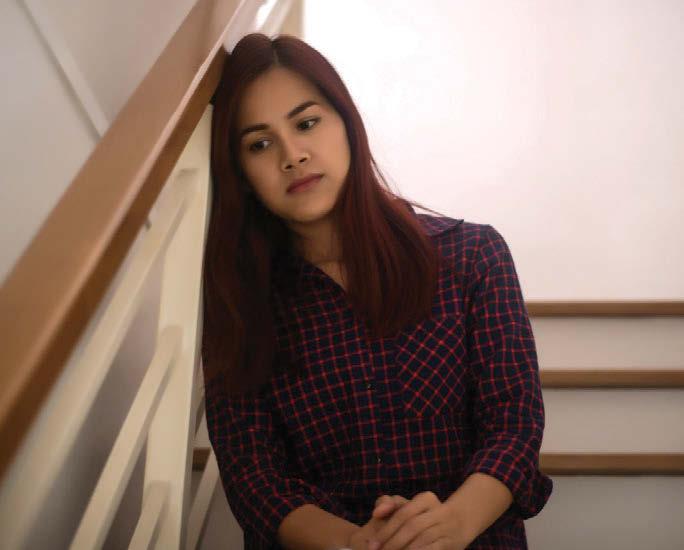
PO Box 9794, Denver, CO 80209 (720) 420-9951 | voluntad.org

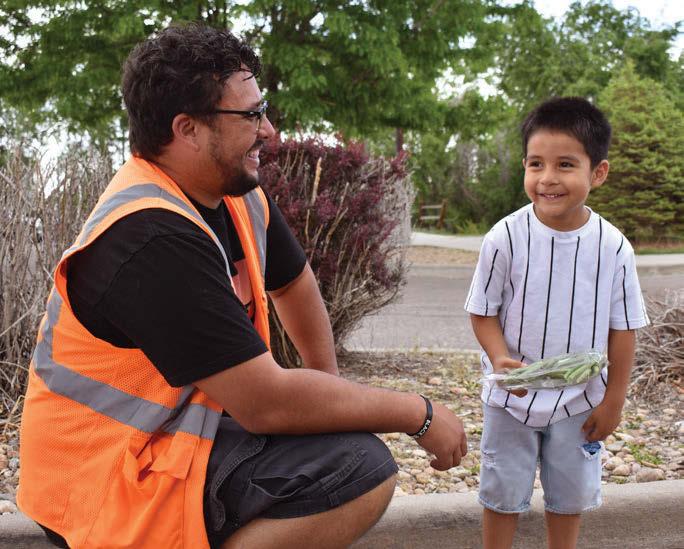
We Don’t Waste
We Don’t Waste believes that nutritious food should go to people, not landfills. 40% of food produced in the US ends up in the landfill, yet 1 in 3 Coloradans are currently experiencing hunger and food insecurity. We Don’t Waste reduces hunger and food waste in the Denver area by recovering quality, unused food from local businesses and distributing it free-of-charge to food pantries, schools, shelters, and more, as well as directly to the community through their Mobile Food Markets. By recovering quality, nutritious food that would have otherwise gone to waste, We Don’t Waste is also protecting our planet from greenhouse gases produced by food rotting in landfills. Since 2009, We Don’t Waste has recovered and distributed over 165 million servings of food.
We Don’t Waste is a simple, innovative concept that has met a need within our community. When companies have food items to donate, We Don’t Waste does two key things to further the mission: (1) pick up the food from the donors’ locations so they don’t have to invest time and resources in transportation; and (2) deliver the recovered food directly to over 90 organizations expertly serving vulnerable, underserved individuals. All food items are provided at no cost to the recipient agency, meaning We Don’t Waste is reliant on support from the community to fund its vital work. YOU can help We Don’t Waste reduce hunger and food waste in our community!
Scholars Unlimited
Since 1993, Scholars Unlimited has provided no-cost out-of-school time programs for elementary-aged children within the Denver metro area. Our vision is an unwavering commitment to empower students to achieve academic and personal success. We believe in every child’s potential; cultivating life-long learners; and the power of every child, family, and community. Our scholars are remarkable, and your support helps us build on their existing strengths and expand their opportunity to have the highest quality programming, delivered by dedicated professionals.

3705 E. 40th Avenue Denver, CO 80205 (303) 355-0290 scholarsunlimited.org
The Wild Animal Sanctuary
The World’s Largest Carnivore Sanctuary with more than 700 Lions, Tigers, Bears, Wolves and other RESCUED animals living in a 10,000+ acre Refuge!

Please help us save more lives!
1946 County Road 53 Keenesburg, CO 80643 (303) 536-0118 wildanimalsanctuary.org
5971 Broadway, Denver, CO 80216 (720) 443-6113 | wedontwaste.org
Donate today! Visit our
guide at 5280.com for more information.
online
118 || GUIDE to CHARITABLE GIV ING NOVEMBER 2022 SPECIAL ADVERTISING SECTIONGUIDE to CHARITABLE GIVING
SAVING FOOD • PROTECTING THE PLANET • FEEDING PEOPLE
Volunteers of America Colorado

Volunteers of America Colorado is a nonprofit, faith-based organization dedicated to helping those in need transform their lives. Through more than 50 distinct human service programs, VOA Colorado changes the lives of nearly 100,000 Coloradans with the greatest need each year. VOAC services include housing and emergency shelters, hunger and nutrition programs, and many other community support programs. It is our mission to address the unmet needs within our communities across Colorado.
From teaching and feeding preschoolers and their families during the pandemic, to delivering meals to homebound aging adults, VOA Colorado is there. We support veterans experiencing homelessness, and provide a safe place for domestic violence survivors. Wherever we go, we utilize relationship-building, essential services and volunteers to lift up and support those with the greatest need.
This holiday season, VOA Colorado encourages your generosity by making a gift at voacolorado.org/donate.

We are also in great need of Meals on Wheels volunteers to help deliver meals to homebound aging adults. To sign up, please visit voacolorado.org/volunteer

Follow our Facebook and Instagram pages @VOAColorado to receive updates on what we are doing in the community and how you can get involved.

2660 Larimer Street, Denver, CO 80205 (303) 297-0408 | voacolorado.org

Donate today! Visit our online guide at 5280.com for more information. NOVEMBER 2022 GUIDE to CHARITABLE GIV ING || 119 SPECIAL ADVERTISING SECTION GUIDE to CHARITABLE GIVING
AS DENVER'S PREMIERE HOME + DESIGN MAGAZINE CELEBRATING Home FEBRUARY/MARCH 2022 76 Smart Ideas For Beautiful, Functional Living Spaces This Year THE RENOVATION ISSUE PLUS HOW TO REDUCE YOUR HOME'S IMPACT ON THE ENVIRONMENT A DIY devotee clever design MAKE A Change SUBSCRIBE TO 5280 HOME TODAY
DINING GUIDE
The Bindery
SYMBOL KEY
Indicates a restaurant featured in 5280 for the first time (though not necessarily a restaurant that has just opened).
Indicates inclusion in 5280’s 2022 list of Denver’s best restaurants. These selections are at the discretion of 5280 editors and are subject to change
A5
A$$$$
Downtown / Steak House The team behind Forget Me Not and Tap and Burger offers a refreshing chophouse experience with a stellar lineup of steaks in a hip, delightfully funky bar and dining room. Reservations accepted. 1600 15th St., 303-623-0534. Dinner
Annette $$$
Aurora / American Caroline Glover brings a warm, intimate dining experience to Stanley Marketplace. Enjoy a family-style menu featuring seasonal salads, toasts, and wood-grilled fare. Reservations accepted. Stanley Marketplace, 2501 Dallas St., Ste. 108, Aurora. 720-710-9975. Dinner
Ash’Kara $$$
Highland /Middle Eastern Chef Daniel Asher offers a playful take on Middle Eastern cuisine at this plant-bedecked eatery. Don’t miss the silky hummus and earthy baba ghanoush. Also try the Boulder location. Reservations accepted. 2005 W. 33rd Ave., 303-537-4407. Dinner, Brunch
B
Bacon Social House
Littleton / American This fun, casual restaurant’s beloved namesake ingredient is at the forefront of many of its boldly flavored dishes. Start with a flight of the signature bacon strips. Multiple locations. Reservations accepted. 2100 W. Littleton Blvd., Littleton, 720-750-7107. Lunch, Dinner, Brunch
$$
Bellota $$$
RiNo / Mexican Chef Manny Barella cooks elevated regional Mexican fare inspired by his Monterrey childhood inside the Source. Don’t miss the fried quesadilla de requesón. Reservations accepted. The Source, 3350 Brighton Blvd., 720-542-3721. Lunch, Dinner

Want More Dining Options? Visit our online listings at 5280.com/ restaurants.
$$$
LoHi / Contemporary Linda Hampsten Fox’s eatery, market, and bakery offers worldly fare inspired by her travels. Settle in for a sophisticated brunch, or get the smoked rabbit pecan pie with mustard gelato for dinner. Reservations accepted. 1817 Central St., 303-993-2364. Breakfast, Lunch, Dinner, Brunch
Blackbelly
$$$
Boulder /American At Blackbelly, chef Hosea Rosenberg’s carnivore-friendly menu features charcuterie, small plates, and daily butcher specials. Try the crispy pig ears with red pepper jelly. Also check out the grab-and-go market next door. Reservations accepted. 1606 Conestoga St., Boulder, 303-247-1000. Dinner
Bruto
$$
Downtown / International At the Wolf’s Tailor’s sister restaurant at the Dairy Block, executive chef Michael Diaz de Leon highlights heritage grains and other local ingredients with a menu of fresh-baked breads, wood-fired proteins, and vegetable-forward dishes. Reservations accepted. 1801 Blake St., 720-3252195. Lunch, Dinner
TACO TIME
Inside four-month-old Arvada food hall Freedom Street Social, Tex-Mex seekers gather for build-yourown tacos at Osito, the fast-casual little brother of RiNo’s cult favorite Mister Oso. Stack your tortillas with ingredients such as sweet-and-spicy fried co conut shrimp, serrano chile slices, slaw infused with grated coconut and lime, and tangy salsa verde.
Chez Maggy
French /Downtown Acclaimed chef Ludo
C$$$$
Lefebvre plates up Colorado-inspired French clas sics at this brasserie inside the Thompson Denver hotel. Aside from outstanding baguettes, don’t miss the expertly prepared escargot and the gluten-free crab cake bound with shrimp paste. Reservations accepted. 1616 Market St., 720-794-9544. Breakfast, Lunch, Dinner, Brunch
Comal Heritage Food Incubator $$ Globeville / International You’ll find an array of family recipes from Latin America at this compact but welcoming restaurant, which has a rotating menu and provides job training to immigrant and refugee women. Reservations not accepted. 3455 Ringsby Ct., Ste. 105, 303-292-0770. Lunch
Coperta $$$
Uptown Area / Italian Tuck into comforting Italian fare at this intimate restaurant, which celebrates the cuisine of Rome and Southern Italy with an everrotating menu. Don’t miss the bucatini in red wine tomato sauce. Reservations accepted. 400 E. 20th Ave., 720-749-4666. Lunch, Dinner
Corrida $$$$
Boulder /Spanish Housed on the rooftop level of the Pearl West building, this elegant Spanish steak house offers stunning Flatiron views and fabulous cocktails and wines. Splurge on the Japanese wagyu or opt for a regeneratively sourced steak. Reservations accepted. 1023 Walnut St., Ste. 400, Boulder, 303-444-1333. Dinner, Brunch
DDaughter Thai Kitchen & Bar $$$$
Highland /Thai This upscale Thai restaurant from Ounjit Hardacre serves beautifully plated dishes and inventive cocktails with an elegant ambience to match. Try the lychee-kissed massaman curry with bone-in Colorado lamb. Reservations accepted. 1700 Platte St., Ste. 140, 720-667-4652. Lunch, Dinner
D Bar
Uptown Area / Contemporary Chefs Keegan Gerhard and Lisa Bailey produce exquisite desserts and modern comfort food at this hip Uptown spot. Try the Hatch green chile queso with housemade corn chips. Reservations accepted. 494 E. 19th Ave., 303-861-4710. Breakfast, Lunch, Dinner, Brunch
$$$
120 5280 NOVEMBER 2022
Courtesy of Chelsea Chorpenning
PRICE
KEY $ UNDER
$ 10 $$ $ 11 TO $ 15 $$$ $ 16 TO $ 25 $$$$ $ 26
AND HIGHE R(Average Entrée)

D’Corazon $
Downtown / Mexican Known for its tender and delicious slow-simmered carnitas, here you’ll find Mexican fare at its best. Pair your meal with a refreshingly affordable $7 house margarita. Reservations not accepted. 1530 Blake St., Ste. C, 720-904-8226. Lunch, Dinner
Dio Mio $$
RiNo / Italian You can count on perfect pasta at Alexander Figura, Spencer White, and Lulu Clair’s fast-casual Italian eatery. The house-made sour dough is also heavenly. Reservations accepted. 3264 Larimer St., 303-562-1965. Dinner
Edge Restaurant & Bar $$$$
EDowntown / Steak House Inside the Four Seasons Hotel Denver, this eatery serves contemporary steak house fare. Order the dry-aged buffalo ribeye. Reservations accepted. 1111 14th St., 303-389-3343. Breakfast, Lunch, Dinner
El Taco de Mexico $
Lincoln Park /Mexican This Denver favorite serves Mexican food with an emphasis on authenticity. Try
the chile relleno burrito. Reservations not accepted. 714 Santa Fe Dr., 303-623-3926. Breakfast, Lunch, Dinner
Elway’s $$$$
Downtown / Steak House This sleek downtown restaurant serves a bevy of classic steak house fare in upscale environs. Choose from a menu of steaks, seafood, and more. Multiple locations. Reserva tions accepted. 1881 Curtis St., 303-312-3107. Breakfast, Lunch, Dinner, Brunch
FFellow Traveler $

Englewood /Global This vegan restaurant offers an array of rotating eats, such as tofu banh mi and jackfruit tacos. Pair your meal with a drink from the menu of international spirits. Reserva tions not accepted. 3487 S. Broadway, Englewood, 303-635-6621. Dinner, Brunch
The Fifth String $$$$
LoHi / American At the Fifth String, chef Amos Watts offers his seasonally inspired cooking along side an in-house beef butchering program. The results, such as the tallow candle bread service, are delicious and inventive. Reservations accepted. 3316 Tejon St., Ste. 102, 720-420-0622. Dinner
Fire Restaurant $$$$
Golden Triangle /American Located inside the Art, a Hotel, Fire Restaurant serves contemporary American dishes made with locally sourced ingredients, including a Colorado lamb chop. Reservations accepted. 1201 Broadway, 720-709-4431. Breakfast, Lunch, Dinner
Glo Noodle House $$
GWest Highland / Asian Blackbelly veterans Chris Teigland and Ariana Pope bring Asian fusion fare to West Highland with Glo Noodle House. Don’t miss the shatteringly crisp karaage. Reservations accepted. 4450 W. 38th Ave., Ste. 130, 303-993-4180. Dinner
The Greenwich $$$
RiNo / Pizza Restaurateur Delores Tronco brings a slice of her favorite New York City neighbor hood to RiNo at the Greenwich. Don’t miss the satisfying sourdough pizzas and fresh, seasonal salads. Reservations accepted. 3258 Larimer St., 720-868-5006. Dinner
Hashtag $$
HDenver / American Prolific Denver chef Troy Guard takes on the breakfast joint with Hashtag. Try the lamb neck eggs Benedict or the sea salt chocolate chip hot cake. 10155 E. 29th Dr., 303-996-9985. Breakfast, Brunch
122 5280 | NOVEMBER 2022 DINING GUIDE






WE’RE NOW CARRYING SOUTH PLATTE PRODUCT AT THESE LOCATIONS! 10301 West 6th Avenue, Lakewood, CO • (303)275-0011 4258 South Parker Road, Aurora, CO • (303)690-9855 6310 Corporate Center Circle, Colorado Springs, CO • (719) 528-2450 Horizontal Furniture That Tells A Story Featuring one-of-a-kind pieces and incredible finds, each with a unique story to tell. DISCOVER A WORLD OF POSSIBILITIES 5353 North Bannock St. Denver, CO 80216 Mon-Sat:10-8•Sun:12-6 Ph. (303)454-1501 JUST OFF I-25 AND 58TH AVE. WE ARE OPEN! COME IN TODAY! www.instagram/southplattetrading https://facebook.com/southplattetrading IMMEDIATE AVAILABILITY! BUY & TAKE HOME TODAY! southplattetradingco.com At South Platte Trading Co., we specialize in salvaged, repurposed, and one-of-a-kind furniture that you just can’t find anywhere else. We carry furnishings and recovered materials from a wide range of places and time periods: local to international, modern to antique. Our low prices and large selection of goods make it easy for people of all backgrounds to find something special to suit their style. If you’re someone who appreciates beautiful furniture with a story to tell, or if you feel it is important to reuse, recycle, and repurpose, come to South Platte and discover those extraordinary reclaimed pieces you’ve been missing. SAVE 20% Storewide! ® TOPOF THETOWN EDITORS’ CHOICE2022
HANDCRAFTED COCKTAILS

DINING GUIDE
Hop Alley
$$$
RiNo / Chinese From Tommy Lee of Uncle, this neighborhood hangout serves dishes rooted in the Chinese tradition with a touch of distinctive flair. Try the dan dan mian and the fiery la zi ji laced with numbing peppercorns. Reservations accepted. 3500 Larimer St., 720-379-8340. Dinner

I
Il Posto
$$$$
RiNo / Italian Sample Andrea Frizzi’s imaginative Italian cuisine in sleek, urban environs. Don’t miss the impossibly silky seasonal risotto. Reservations accepted. 2601 Larimer St., 303-394-0100. Lunch, Dinner, Brunch
India’s Restaurant
Hampden / Indian This spot serves traditional fare, including flavorful dishes like tandoori chicken. Be sure to try the cinnamon bread pudding. Reservations not accepted. 8921 E. Hampden Ave., 303-755-4284. Lunch, Dinner
$$$
LLa Diabla Pozole y Mezcal $$
Ballpark / Mexican James Beard Award finalist Jose Avila serves up comforting pozole and other traditional Mexican fare at this casual eatery. Don’t miss the weekend brunch for chilaquiles, huaraches, and a killer house michelada. Reservations not accepted. 2233 Larimer St., 720-519-1060.
Breakfast, Lunch, Dinner, Brunch
Lucina Eatery & Bar $$
South Park Hill / Latin American At Lucina Eatery & Bar, enjoy bites and sips inspired by the flavors of Latin and South America, the Caribbean, and Spain in a colorful, plant-bedecked space.
Reservations accepted. 2245 Kearney St., #101, 720-814-1053. Dinner
Lucy’s Burger Bar $$
PLATES
Izakaya Den $$
Platt Park /Japanese Ultra-fresh sushi, tender sashimi, and creative small plates are on the menu at this local Pearl Street favorite. Reservations accepted. 1487-A S. Pearl St., 303-777-0691. Lunch, Dinner
J
Jamaican Grille
Lincoln Park / Jamaican Savor an array of spiceladen Caribbean dishes like jerk chicken at this family-owned eatery. Also try the Jamaican Mini Grille and International Jerk Market in Lakewood. Reservations not accepted. 709 W. Eighth Ave., 303-623-0013. Lunch, Dinner
$$
Berkeley /American Belly up to the retro bar at this 1,000-square-foot burger joint for a Minneapolis-style Juicy Lucy, a cheese-filled burger with an oozing interior. Beverages produced by minority- and women-owned businesses abound. Reservations not accepted. 4018 Tennyson St., 720-379-6311. Dinner

Jax Fish House & Oyster Bar $$$
Downtown / Seafood Enjoy sustainable seafood and a massive raw bar at this beloved outpost for oysters and shellfish. Multiple locations. Reserva tions accepted. 1539 17th St., 303-292-5767.
Lunch, Dinner, Brunch
K
Kachina Cantina
$$
Downtown / Southwestern Located in the Dairy Block, this spot specializes in southwestern fare, such as Navajo tacos. Also try the Westminster-based sister location, Kachina Southwestern Grill. Reserva tions accepted. 1890 Wazee St., 720-460-2728. Lunch, Dinner, Brunch
Katsu Ramen $$
Aurora / Japanese Satisfy a ramen craving with one of the traditional styles offered at this cozy spot. Try a combo meal with gyoza and a rice bowl.
Reservations not accepted. 1930 S. Havana St., Aurora, 303-751-2222. Lunch, Dinner
MMisfit Snackbar $$
City Park / Contemporary Chef-owner Bo Porytko serves a rotating lineup of creative plates at this walk-up kitchen inside Middleman cocktail bar. Each one is a satisfying and imaginative twist on familiar pub fare. Try the chips and dip: smashed potatoes with an ever-changing house sauce. Reservations not accepted. 3401 E. Colfax Ave., 303-353-4207. Dinner
Mono Mono Korean Fried Chicken $$ Downtown /Korean Savor tender and crispy Korean fried chicken wings along with sides like kimchi and pickled daikon and starters like gochu jang-slathered spicy rice cakes. Multiple locations. Reservations not accepted. 1550 Blake St., 720-379-6567. Lunch, Dinner
N
Narrative
$$$
Cherry Creek / American Chef Paul Nagan serves gussied-up versions of American favorites—such as shrimp and grits with Tabasco butter—at this sleek eatery inside the Jacquard hotel. Reservations accepted. 222 Milwaukee St., 720-571-8080. Breakfast, Lunch, Dinner, Brunch
Noisette $$$$
LoHi / French Tim and Lillian Lu serve elegant renditions of home-cooked French comforts in a romantic space. Also check out the bakery, which serves flaky croissants and other European delica cies. Reservations accepted. 3254 Navajo St., Ste. 100, 720-769-8103. Lunch, Dinner
124 5280 | NOVEMBER 2022
EXPERIENCE OUR NEW CRAFT COCKTAIL LOUNGE PETITE
MEMORABLE EVENINGS TUESDAY-THURSDAY 4:00-11:00PM FRIDAY 4:00PM-12:00AM SATURDAY 5:00PM-12:00AM SHERATON DENVER DOWNTOWN HOTEL 1550 COURT PLACE DENVER, CO 80202 303-835-2159 BEZEL.DENVER@SHERATON.COM @BEZELDENVER BEZELDENVER.COM

Onefold
O$$$
City Park West /Contemporary This eatery does early-day dining justice. Pair the bacon fried rice with house-made bone broth or Vietnamese iced coffee. Reservations not accepted. 1420 E. 18th Ave., 303-954-0877. Breakfast, Dinner, Brunch
Osito $
Arvada /Mexican Build your own tacos at this little-sister restaurant to RiNo’s Mister Oso. Reservations not accepted. Freedom Street Social, 15177 Candelas Pkwy., Arvada, 720-716-3615. Lunch, Dinner
Q House
Q$$$
City Park / Chinese Enjoy a modern take on Chinese cuisine in low-lit, intimate environs. Chef Christopher Lin, an alum of Momofuku in New York City, crafts specialties like tender braised pork over rice. Reservations accepted. 3421 E. Colfax Ave., 720-729-8887. Dinner
Que Bueno Suerte
$$$
Platt Park / Latin American The menu at this vibrant restaurant offers familiar items like tacos and fajitas as well as upscale, regionally inspired Mexican fare. Try the pulpo a la parrilla (grilled citrus-garlic octo pus with huitlacoche-butter sauce) or the achiote roasted pheasant. Reservations accepted. 1518 S. Pearl St., 720-642-7322. Dinner
Restaurant Olivia $$$$
Washington Park / Italian This cozy-yet-modern neighborhood spot specializes in fresh pastas and Italian classics. Reservations accepted. 290 S. Downing St., 303-999-0395. Dinner
Panzano $$$
PDowntown / Italian Visit this longstanding exhibi tion kitchen to enjoy rustic northern Italian cuisine. Reservations accepted. 909 17th St., 303-2963525. Breakfast, Lunch, Dinner, Brunch
Point Easy $$$$
Whittier / Contemporary This farm-to-table eatery produces feasts made with thoughtful ingredients, many of which are local. Reservations accepted. 2000 E. 28th Ave., 303-233-5656. Dinner

RRedeemer Pizza $$$
RiNo / Pizza Spencer White and Alex Figura, the duo behind Dio Mio, bring blistered, New York City–style sourdough pizza to RiNo. Nosh on full pies in the dining room or nab a slice to go from the casual walk-up window on the back patio. Reservations accepted. 2705 Larimer St., 720-780-1379. Dinner
SSafta $$$
RiNo /Mediterranean Chef Alon Shaya brings his modern Israeli fare to Denver. Start with creamy hummus and wood-oven pita before moving on to harissa-coated roast chicken. Reservations accepted. The Source Hotel & Market Hall, 3330 Brighton Blvd., 720-408-2444. Lunch, Dinner
Somebody People $$
Overland /Mediterranean At this zero-waste, vegan restaurant, Sam and Tricia Maher and head chef Art Burnayev run a pasta program with dishes that celebrate seasonal bounty. Try the $40 Feed Me. Reservations accepted. 1165 S. Broadway, Ste. 104, 720-502-5681. Dinner, Brunch
Spuntino $$$
Highland /Italian Enjoy the locally sourced menu at this Italian-inspired, husband-and-wife-owned spot. Try the seasonal pasta or any dish with South ern Indian influences. Don’t miss the house-made gelato for dessert. Reservations accepted. 2639 W. 32nd Ave., 303-433-0949. Dinner
126 5280 | NOVEMBER 2022 DINING GUIDE


DINING

Sunday Vinyl $$$$
Downtown /European This hip European-style restaurant and wine bar at Union Station offers warm hospitality and exquisite cuisine, all to the soundtrack of a vinyl-only playlist. Try the house hot dog and fresh oysters. Reservations accepted. 1803 16th St., 720-738-1803. Dinner, Brunch
Super Mega Bien $$$
RiNo /Latin American Dana Rodriguez offers large-format, shareable items and Pan-Latin small plates, the latter served from roving dim-sum-style carts. Try the braised lamb with grilled cactus salad. Reservations not accepted. The Ramble Hotel, 1260 25th St., 720-269-4695. Dinner
Super Star Asian Cuisine $
Athmar Park / Asian This glitz-free spot serves topnotch dim sum and traditional Chinese plates. Reservations accepted. 2200 W. Alameda Ave., Ste. 34, 303-727-9889. Lunch, Dinner
Tocabe, An American Indian Eatery $ Berkeley / American Feast on Indigenous fare like fry bread tacos with bison, beans, lettuce, cheese, and salsas alongside spicy potato- and corn-laden green chile stew. Also try the Greenwood Village location. Reservations not accepted. 3536 W. 44th Ave., 720-524-8282. Lunch, Dinner
Mall. Don’t miss the Not Your Grandma’s Butter Chicken. Reservations accepted. 8505 Park Meadows Center Dr., #2184A, Lone Tree, 720-536-8565. Lunch, Dinner

TTavernetta $$$$
Downtown / Italian The team behind Boulder’s Frasca Food and Wine offers the same attention to detail and hospitality at this more casual Denver restaurant. Go for dishes from across Italy and the deep wine list. Reservations accepted. 1889 16th St., 720-605-1889. Lunch, Dinner
UUchi Denver $$$$
RiNo / Japanese James Beard Award–winning chef Tyson Cole combines unexpected flavors for his unique take on Japanese food at this restau rant with its own garden. Visit for the daily happy hour when nigiri and temaki are less than $10. Reservations accepted. 2500 Lawrence St., 303-444-1922. Dinner
Uncle $$
Speer / Asian A bustling atmosphere defines this popular, modern noodle house. The selective menu includes dishes such as Chinese-style steamed buns and, of course, noodles. Also try the Highland location. Reservations accepted. 95 S. Pennsylva nia St., 720-638-1859. Dinner
Urban Village Grill $$$
Lone Tree / Indian Chef Charles Mani serves classic and contemporary dishes from regions across India at this eatery inside Park Meadows
VVital Root $ Berkeley / American Grab a seat in the airy space and nosh on chilled carrot-ginger soup or a veggie dosa at this health-conscious eatery. 3915 Tennyson St., 303-474-4131. Breakfast, Lunch, Dinner
Voghera Ristorante & Apericena $$$ Berkeley / Italian Enjoy Italian-style tapas such as pancetta-wrapped scallops at this Berkeley outpost. Reservations accepted. 3963 Tennyson St., 303-455-9111. Dinner, Brunch
WThe Wolf’s Tailor $$$$ Sunnyside / Contemporary Chef Kelly Whitaker fuses Asian and Italian techniques and ingredients at this hip Sunnyside eatery. The results, such as 7X brisket braised in dashi and red wine, are unique and delicious. Reservations accepted. 4058 Tejon St., 720-456-6507. Dinner
135 ANNIVERSARY PRESENTING SPONSORS THANKSGIVING DAY, NOVEMBER 24, 2022 Register Now! Scan to register or visit unitedwaydenver.org/turkey-trot
GUIDE








Free Nightly 5-9pm November 19 thru January 1 Mark your calendars for special live nights Nov.19, Dec. 3 & Dec.10, featuring community performances, free photos with santa, real reindeer, princess visits, ice sculpting & more. winterwonderlightsloveland.com HAVE YOU SEEN OUR DIRECTORIES? Enhanced directories highlight your business or practice by placing them in the TOP 3 OF READER SEARCHES with your personalized content. CONTACT US TODAY TO LEARN MORE | ADVERTISING@5280.COM | 303.832.5280 LAWYERSREALTORSDOCTORSDENTISTS
DINING GUIDE
Work & Class
are your weekend plans currently a bottomless void of despair?are your weekend plans currently a bottomless void of despair? fight the void at denverite.com
$$$
RiNo / American This meat-and-three concept from Dana Rodriguez offers a hybrid of American and Latin cuisine in raucous, repurposed-shippingcontainer digs. Reservations accepted. 2500 Larimer St., 303-292-0700. Dinner
Wynkoop Brewing Company $$
Downtown / Pub Enjoy freshly brewed beer and feast on pub favorites such as the hanger steak or the corn and poblano chowder at one of Denver’s origi nal brewpubs. Reservations accepted. 1634 18th St., 303-297-2700. Lunch, Dinner

X
Xatrucho $$
Greenwood Village / Latin American Chef Edwin Sandoval serves up dishes inspired by his Hondu ran heritage at this food stall inside Grange Hall. Try the house-made, gluten-free pastelitos. Grange Hall, 6575 Greenwood Plaza Blvd., Greenwood Village. Lunch, Dinner, Brunch
Y
Yabby Hut $$
Lakewood / Cajun Transport yourself to the bayou at this seafood joint where you can indulge in crawfish, shrimp, and crab—then leave your mess behind on the throw-away tablecloths. Reservations not accepted. 3355 S. Yarrow St., Lakewood 303-985-0231. Lunch, Dinner
YumCha $$
Downtown / Asian From Lon Symensma of ChoLon and Bistro LeRoux comes a dim sum house and noodle bar serving staples like xiao long bao and steamed pork dumplings. Reservations accepted. 1520 16th St., 720-638-8179. Lunch, Dinner
Zocalito Latin Bistro $$$
ZDowntown / Latin American Formerly located in Aspen, chef/owner Michael Beary’s upscale Oaxa can eatery found a home in the heart of Denver. Try the pork tenderloin with red mole sauce. Reserva tions accepted. 999 18th St., Ste. 107, 970-920-1991. Lunch, Dinner
Zorba’s $$
Congress Park / Greek Zorba’s has served Ameri can and Greek fare—burgers, salads, sandwiches, and classic breakfast dishes—in the Congress Park neighborhood since 1979. Don’t miss the gyro sand wich. 2626 E. 12th Ave., 303-321-0091. Breakfast, Dinner, Lunch
These listings are in no way related to advertising in 5280. If you find that a restaurant differs significantly from the information in its listing or your favorite restaurant is missing from the Dining Guide, please let us know. Write us at 5280 Publishing, Inc., 1675 Larimer St., Suite 675, Denver, CO 80202 or dining@5280.com.
130 5280 | NOVEMBER 2022
 KEEPER’S HEART WHISKEY
KEEPER’S COFFEE
The classic winter warmer, made with the most versatile, highly awarded new whiskey.
INGREDIENTS
10 oz. freshly brewed Middle State Coffee
1/2 oz. local Minnesota maple syrup
1 oz. Keeper’s Heart Irish + American whiskey
Lightly whipped cream*
Grated nutmeg
INSTRUCTIONS
Add coffee, maple syrup, and whiskey to heated mug and stir to mix. Leave at least a half-inch of room at the top.

Garnish by gently layering whipped cream over the drink. The whipped cream should be fluid and flow smoothly when you pour.
Garnish with grated nutmeg.
*Lightly whipped cream: Add 200 ml. of heavy cream and 1 tsp. of granulated sugar to a blender bottle and shake for 60 seconds.
HORNITOS ®
TEQUILA OLD FASHIONED
A remix on the classic, this whiskey-barrel aged tequila old fashioned is potently delicious and bold.
INGREDIENTS
1 1/2 parts Hornitos® Black Barrel® Tequila
1 part Simple Syrup
1/2 part Amaro Liqueur
2 dashes Bitters
2 dashes Orange Bitters
Orange peel
INSTRUCTIONS
Combine simple syrup, Hornitos® Black Barrel® Tequila, amaro, and bitters. Add ice and stir.
Strain over fresh ice and garnish with an orange peel.

VAQIT VODKA
SODA
VAQIT (prounounced vock-it) pairs real vodka soda with elevated fruit flavors for love at first sip.

FLAVORS INCLUDE
Clementine Pineapple Strawberry Guava White Peach Ginger
INSTRUCTIONS
All you need to do with this ready-todrink cocktail is simply pour over ice or sip cold from the can and enjoy!
Find VAQIT near you at letsvaqit.com or follow us on Instagram @letsvaqit
SPECIAL ADVERTISING SECTION 132 | WINTER SIPS | NOVEMBER 2022
RIO GRANDE MEXICAN RESTAURANT
MILE HIGH SKINNY
A top shelf skinny margarita made with 1800 Cristalino, fresh lime juice, and locally produced orange bitters.

INGREDIENTS
2 ounces 1800 Cristalino
1 ounce fresh squeezed lime juice
3 drops orange bitters (Strongwater, local Denver bitters producer)
1 ounce simple syrup
Lemon twist
INSTRUCTIONS
Shake with ice, then strain into a chilled martini glass.
Garnish with a twist of lemon.
HAPPY HOUR AT HOME NEVER LOOKED SO GOOD.
As temperatures drop, warm up this season with one of these tasty local cocktails. Whether you fancy gin, tequila, whiskey, or something a bit sweeter, these businesses have the perfect drink for you. Make them at home or visit the locations and ask for their Winter Sip.
FIRST CHAIR
You don’t need a warm drink to pay off your winter adventures. Cheers.
INGREDIENTS
2 oz. Breckenridge Gin
1 oz. fresh lime juice
¾ oz. pine simple syrup*
½ oz. egg white
Top with sparkling soda
INSTRUCTIONS
Dry shake first 4 ingredients (no ice).
Shake again with ice and strain into glass.
Top with sparkling soda.
Garnish with pine sprig and zest of lemon.
*Pine simple syrup: over medium heat, add 1 cup water, 1 cup sugar and ¼ cup rinsed edible pine needles. Stir until sugar is dissolved. Let cool, strain, bottle, and refrigerate.

Find the digital version at paidposts.5280.com/ 5280s-winter-sips

NOVEMBER 2022 | WINTER SIPS | 133 SPECIAL ADVERTISING SECTION
BRECKENRIDGE DISTILLERY
#5280WinterSips
but didn’t give details. MacKenzie replied immediately. “Damn it, Walt, it really makes me boil,” MacKenzie wrote, begging for elab oration and suggesting Springs take his story to Time and Life magazines and expose the Army’s issues in the segregated South. “Good Americans don’t believe in racial discrimina tion and good Americans won’t stand for it,” the coach added.
The coach tried to buoy the young man’s spirits. Springs, MacKenzie wrote, was the perfect soldier for the moment. He likened him to Joe Louis and Jesse Owens— racial pioneers who’d knocked down walls between white and Black worlds. “This war is affording you that opportunity,” MacKen zie continued. “All Americans have a great stake in the war[.] American negroes have a greater stake than other Americans for it is their opportunity to once and for all rise above a sectional hatred and emerge so
gloriously that no one will dare cast a stone against them…. You and your fellow sol diers, I know, will make all Americans feel the same way towards your race.”
Springs cut his furlough to Denver short that December. He told his family and col lege friends that he’d been recommended to attend officer candidate school. Springs was excited about a potential promotion and wanted to return to Camp Swift early.
The train depot in Bastrop was on the east end of town, where Black residents were able to move without restriction. Jackson’s Cafe and Montgomery’s—two neighbor ing establishments—were the only places Black residents and Black camp soldiers could relax and enjoy one another’s com pany. On December 16, Springs walked the two blocks from the train station with his coat and suitcase. He’d have some beers with friends, maybe get something to eat. Some time after midnight, he’d probably return to the camp.
THE NATIONAL Personnel Records Center in Spanish Lake, Missouri, is a 474,500-square-foot repository that sits on more than seven acres north of St. Louis.
Dating back to the Spanish-American War, it is the nerve center for rank-andfile military documents. Roughly 56 million individual files are stored in cardboard boxes stacked 29 feet high on metal shelving.
For veterans, the center, which is oper ated by the National Archives, can help track medical records. For their families, it can serve as a bridge to a long-dead relative. In other cases, it can give clues to a moment 80 years ago, in a small Texas town.
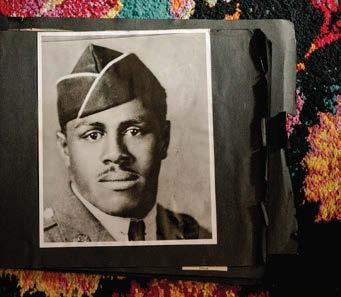
In midsummer, I’d filed a request for Springs’ military record but was quickly denied. The paperwork didn’t exist: A fire 49 years earlier had torn through the stacks. Millions of documents were burned during the four-day fire, and millions more were left soaking wet and slowly disintegrated in the Missouri humidity. For years, archi vists had tried to reconstruct some files by pulling from other resources, but they’d only succeeded in recreating a fraction of what had been lost. Around 80 percent of Army records from World War II had been destroyed, a figure that probably includes most everything related to Walter Springs.
There was one final option for possibly figuring out what happened to Springs: the
Support what matters most to you, give a buck.
This Colorado Gives Day, support the causes that matter most to you by giving a buck. Early Giving starts Nov. 1.
ColoradoGivesDay.org
134 5280 | NOVEMBER 2022
WALTER SPRINGS
Springs
DIE? WHYDIDWalter by military police near his complete. They were right. CONTINUED FROM PAGE 77
Donate today at Hop e An d Home.org









court-martial transcripts for Martin Walker. I requested the file, and in late August, an archives employee in Spanish Lakes walked into the records bays—with their 17,501 lin ear feet of storage—and pulled a box from one of the shelves. Inside was file 229865, which was wrapped in an aging manila folder. On the top left, in black ink, it read: “Walker, Martin A.”
The file contained 79 pages. The papers were varying hues of yellow and orange,
but the corners appeared pristine, as if they’d never moved since being put there in early January 1943. There were officiallooking stamps and signatures throughout. The file included basics: a timeline of the shooting; the court-martial; a record of Walker ’s monthly Army pay ($66); his charging sheet for manslaughter; and a list of witnesses. Most important, it included affidavits from the MPs and 33 pages of court-martial transcripts.

IT WAS LOUD in Jackson’s Cafe that night in December 1942. Maybe 25 or 30 Black civilians and six to 10 Black servicemen were packed inside. The jukebox was playing in one corner; drinks were flowing. At around 11:30 p.m. the four-man, all-white MP detachment led by Walker arrived to clear the room of curfew violators. Black MPs usu ally handled duties in this part of town, but they’d been confined to the infirmary after a bout of mumps.
The white MPs were all friends, the court-martial testimony shows. Three were privates—Vivian McDowell, Barney Mar

NEWSIES

Disney’s PRESENTS The Musical!
FEATURING
Music by Alan Menken Lyrics by Jack Feldman Book by Harvey Fierstein
Based on the Disney film written by Bob Tzudiker and Noni White
tin, and Henry Kehr—and the men had moved quickly through Jackson’s, round ing up the servicemen at a table near the doorway, demanding identification, and then lining them up along a wall. While the MPs were collecting information, Springs walked through the door.
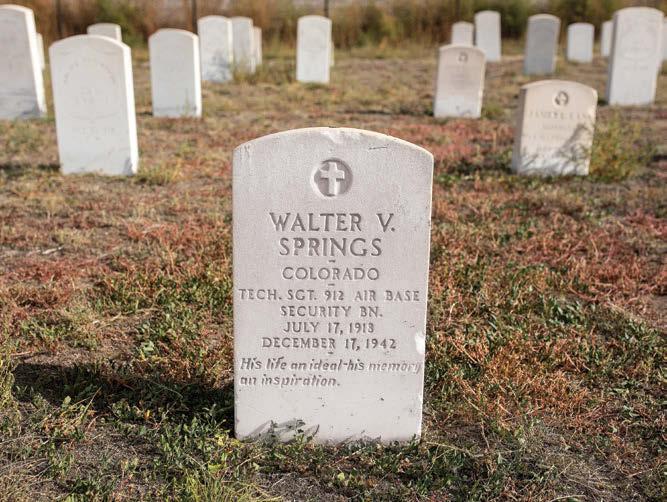

defense: Was [Springs’] attitude antag onistic?
walker: It seemed that way. When he first came in the door, which was pretty crowded, he brushed right in and shoved his way through the other colored boys.

Springs had been inside Jackson’s earlier that night, according to testimony, then went next door to Montgomery’s. He drank whis key and beer with two women and a local shoe-shine man named Steve Reed. Reed eventually left for Jackson’s. At around 11:40 p.m., Springs did, too, taking his suitcase but leaving his coat behind. When Springs walked in the door at Jackson’s, he saw Walker and the other MPs rounding up the Black soldiers.
Walker addressed Springs. “Sergeant, we are going to have to write you up,” he said, according to an affidavit from Private Barney Martin. Springs stopped and turned around to face the corporal. He explained he hadn’t broken curfew; he was still on leave from Camp Swift. Walker didn’t want to hear it. He’d have to show his papers to McDowell,

136 5280 | NOVEMBER 2022
RAJDULARI AS MISS MEDDA LARKIN
ELTON J. TANEGA AS JACK KELLY KELLY MAUR AS KATHERINE PLUMBER
NOV. 18
THROUGH DEC.
30
FOR TICKETS: TownHallArtsCenter.org or 303.794.2787
Sarah Banks WALTER SPRINGS
Springs’ grave, located in Denver’s Riverside Cemetery
NOV 5
Free Day and Night at the Clyfford Still Museum

Clyfford Still Museum | 10:00 a.m. to 10:00 p.m.
Experience the Museum for free from 10 a.m. to 10 p.m. during the SCFD Free Day and Night at the Museums. Explore You Select: A Community-Curated Exhibition, a show featuring Clyfford Still’s artworks chosen by the public. Walk-ins are welcome.
Information at clyffordstillmuseum.org/events.
SCENE
PROMOTIONS | EVENTS | SPONSORSHIPS
Follow @5280scene for a behind-thescenes look at 5280 marketing.
NOV 25-26
Home Alone in Concert
Boettcher Concert Hall | 7:30 p.m.
Celebrate the modern holiday classic Home Alone with your Colorado Symphony! This family-friendly event features composer John Williams’ charming and delightful score performed live as the film is screened at Boettcher Concert Hall.

Information and tickets at tickets.coloradosymphony.org.
DEC 3
9News Parade of Lights
Civic Center Park | 6:00 p.m.
This FREE holiday spectacular features more than 40 units including extravagantly illuminated floats, giant helium-filled character balloons, magnificent marching bands, traditional equestrian units, and vibrant cultural displays. And of course, a special appearance by Major Waddles the Penguin and Santa!
Information and tickets at winterindenver.com/parade.

5280 MAGAZINE PROMOTION 5280SCENE | 5280SCENE.COM
who was standing nearby. Springs attempted to show his furlough paperwork to the pri vate, but McDowell told Springs he’d need to line up against the wall.
Springs called to Reed and asked him to go back to Montgomery’s and get his coat. “These damn MPs got me,” he told Reed.
McDowell spun around. “Soldier, why don’t you be quiet,” Martin claimed McDowell said. Springs immediately got in McDowell’s face, according to Martin.
“I’ll have you understand that you are not to address me as soldier,” Springs told McDow ell, according to Martin. “When you talk to me, address me as Sergeant.”
Prosecutors called Reed to testify.
prosecutor: Did any MP say anything to [Springs]….”
reed: One did.
prosecutor: Which one said something, do you know him?
A Dash of Hope with Every Slice
A Dash Hope with Every Slice
A Dash of Hope with Every Slice
t Order by Nov. 11 pick up Nov. 22
A Dash of Hope with Every Slice
reed: I don’t know him. He was a tall fellow.
He was referencing McDowell, whose words had sparked such quick anger from Springs, which eventually led to the fight with Martin.
And then, there it was. Page 55:
prosecutor: What did the tall MP say? reed: He told him, “One more word out of you, n-----, and I’ll be on you.”
t Order by Nov. 11 pick up Nov. 22
prosecutor: What, if anything, did Sergeant Springs say after the MP made the statement which you have just stated to the court?
reed: He said, “Don’t call me n-----, call me sergeant or soldier. I think he said “soldier”; I don’t know.
t Order by Nov. 11 pick up Nov. 22
A Dash of Hope with Every Slice
t Order by Nov. 11 pick up Nov. 22
t Order by Nov. 11 pick up Nov. 22
A Dash of Hope with Every Slice
Order classic apple with streusel topping or decadent pecan pies from Project Angel Heart and help provide medically tailored meals for Coloradans living with serious illnesses. Each $30 pie allows us to prepare and home-deliver more than three nutritious meals, free of charge.
apple with streusel topping or decadent Project Angel Heart and help provide medically Coloradans living with serious illnesses. us to prepare and home-deliver more nutritious meals, free of charge.

Order classic apple with streusel topping or decadent pecan pies from Project Angel Heart and help provide medically tailored meals for Coloradans living with serious illnesses. Each $30 pie allows us to prepare and home-deliver more than three nutritious meals, free of charge.
Prosecutors called Cornelius H. Hall, a Black staff sergeant who was also in the bar. He was lined up near Springs when the fight broke out. Hall had never met Springs, he testified, and had never seen him at Camp Swift. Hall was asked to explain what he’d witnessed that night.
Order classic apple with streusel topping or decadent pecan pies from Project Angel Heart and help provide medically tailored meals for Coloradans living with serious illnesses. Each $30 pie allows us to prepare and home-deliver more than three nutritious meals, free of charge.
Order or Donate by November 11! PieInTheSkyColorado.org
Order classic apple with streusel topping or decadent pecan pies from Project Angel Heart and help provide medically tailored meals for Coloradans living with serious illnesses. Each $30 pie allows us to prepare and home-deliver more than three nutritious meals, free of charge.
Order classic apple with streusel topping or decadent pecan pies from Project Angel Heart and help provide medically tailored meals for Coloradans living with serious illnesses. Each $30 pie allows us to prepare and home-deliver more than three nutritious meals, free of charge.
Thanks to our sponsors:
or Donate by November 11!
Order or Donate by November 11!
Order or Donate by November 11!
PieInTheSkyColorado.org
Order or Donate by November 11!
PieInTheSkyColorado.org
“At the time Sgt. Springs entered the door at Jackson’s Cafe, the MPs were taking my name,” Hall began. “They told [Springs] to stop, and he set his suitcase down and stopped. They were mumbling something behind me, but I couldn’t understand what they were saying. I heard someone say, “Shut up, n-----,” and someone said, “You can call me, ‘colored soldier.’ ”
Benefiting:
PieInTheSkyColorado.org
Order or Donate by November 11!
t Order by Nov. 11 pick up Nov. 22
Thanks to our sponsors:
PieInTheSkyColorado.org
PieInTheSkyColorado.org
Thanks to our sponsors:
A Dash of Hope with
Every Slice
Thanks to our sponsors:
Thanks to our sponsors:
A Dash of Hope with Every Slice
A Dash of Hope with Every Slice
Order classic apple with streusel topping or decadent pies from Project Angel Heart and help provide medically tailored meals for Coloradans living with serious illnesses. $30 pie allows us to prepare and home-deliver more than three nutritious meals, free of charge.
sponsors:
Order classic apple with streusel topping or decadent pecan pies from Project Angel Heart and help provide medically tailored meals for Coloradans living with serious illnesses. Each $30 pie allows us to prepare and home-deliver more than three nutritious meals, free of charge.
Order or Donate by November 11!
PieInTheSkyColorado.org
Order classic apple with streusel topping or decadent pecan pies from Project Angel Heart and help provide medically tailored meals for Coloradans living with serious illnesses. Each $30 pie allows us to prepare and home-deliver more than three nutritious meals, free of charge.
Order classic apple with streusel topping or decadent pecan pies from Project Angel Heart and help provide medically tailored meals for Coloradans living with serious illnesses. Each $30 pie allows us to prepare and home-deliver more than three nutritious meals, free of charge.
Order or Donate by November 11!
Order or Donate by November 11!
PieInTheSkyColorado.org
Thanks to our sponsors:
Thanks to our sponsors:


PieInTheSkyColorado.org
Benefiting:
t Order by Nov. 11 pick up Nov. 22
t Order by Nov. 11 pick up Nov. 22
Benefiting:
Benefiting:
Benefiting:
Benefiting:
Benefiting:
Benefiting:
Martin stepped up, put his hand on Springs’ shoulder, and pushed the sergeant back. Springs threw a punch, Martin told investigators. Martin took a swing with his club but missed. Springs grabbed the private. The men wrestled, knocking over tables and chairs. McDowell jumped in and clubbed Springs in the forehead. Springs and Martin tumbled into a booth, breaking the table. Martin sprained his ankle; he later told police he’d been pinned down by the debris. McDowell hit Springs at least twice more, “never seeming to have an effect,” accord ing to McDowell’s affidavit. Springs took off toward the cafe’s rear door, but then stopped. McDowell said the sergeant turned around and pulled out a knife.
Benefiting:
“[A]fter I attempted to reach [Springs], he was using his knife in a slashing man ner,” Walker testified at his court-martial, sizing up Springs as six feet tall and between 175 and 190 pounds (the autopsy reported Springs was five feet, nine inches and 165 pounds). “[W]hen he came out with the knife… just like a mad dog, I knew he would have cut anything in his path.”

138 5280 | NOVEMBER 2022
WALTER SPRINGS
Walker said he saw Springs moving toward Martin, who was still pinned by debris in the booth. Walker pulled out his Colt .45. He yelled for his men to step back. He fired once.
I SENT SPRINGS-LEVERT the transcript on September 2. She eventually read most of the file but says she couldn’t find the emo tional strength to finish it all. Just getting through parts of it seemed to be a quiet and simple act of bravery her uncle and her grand father would have appreciated. When she finished reading, Springs-Levert felt numb.
For weeks afterward, she couldn’t get the confrontation between her uncle and McDowell out of her mind—how a racial slur uttered by a military police officer was one of the last things Walter Springs heard. Even then, Springs’ inclination wasn’t to fight over that word; instead, he asked for them to respect his humanity, to acknowledge his rank, to recognize he was one of them.
Was Walker guilty of manslaughter? Springs-Levert wondered. Maybe not. But she thought the MPs were guilty of perhaps something far more sinister. She kept thinking about the descriptions of her
uncle, the way Walker called him a “mad dog” and how the white MPs thought he was three inches taller and 10 to 25 pounds heavier than he actually was. “These are all the tropes about the angry Black man in America that we’re still seeing today,” Springs-Levert said. “The MPs see Walt as big and strong and almost not human. Walker literally uses an animalistic descrip tion. All the police are good friends; one MP says he feared for the lives and safety of his fellow officers.” Springs-Levert shook her head. “How many times have we heard that story? How many times do we have to read this same thing? How many times are we going to excuse that behavior?”
There was another troubling issue: While the MPs testified that the half-opened knife had been near Springs’ right hand, one of the first police officers at the scene said Springs was “gripping the handle of the knife” when he arrived. Both the sheriff and the town constable said the knife clearly was in Springs’ hand when they showed up, too; however, under cross-examination, the constable admitted that “it was possible for someone else to have placed [the knife] in his hand.”
“At the end of the day, no one was con cerned about Walt,” Springs-Levert said. “No one seems upset about the word used against him. They don’t care he obviously had been harassed for months leading up to the shooting. Walt was talking to everyone about this, and we know because we have the written evidence. But he ends up like this character to these MPs, to the people at the court-martial.”
It was vindicating to know her family’s stories had been correct. Their assumptions about the night in Texas, Walter’s father’s intuition, were right all along.

There was a fragility here, too, SpringsLevert thought. What if she didn’t have the family album with her uncle’s photographs and papers? What if Campbell hadn’t been asked to research Springs’ life in 2020? What if the fire at the National Personnel Records Center had destroyed the transcripts of Mar tin Walker’s court-martial proceedings?
“We finally have the missing piece to our family’s story,” Springs-Levert said. “And I can hold it in my hands.” m

Robert Sanchez is 5280 ’s senior staff writer. Email feedback to letters@5280.com.
Behind the Stories, the first podcast from 5280, will take listeners—you guessed it!—behind the stories that appear in 5280 magazine and on 5280.com. Each episode, hosted by editorial director Geoff Van Dyke, will feature editors and writers from 5280 discussing articles they've been working on and giving readers insight into how these stories come together.

NOVEMBER 2022 | 5280 139 WALTER SPRINGS
BEHIND THE STORIES TUNE IN 5280.COM/PODCAST Statement of Ownership, Management, and Circulation (Requester Publications Only) 3. Filing Date 4. Issue Frequency 5. Number of Issues Published Annually6. Annual Subscription Price (if any) 8. Complete Mailing Address of Headquarters or General Business Office of Publisher (Not printer) 9. Full Names and Complete Mailing Addresses of Publisher, Editor, and Managing Editor (Do not leave blank) Publisher (Name and complete mailing address) Editor (Name and complete mailing address) Managing Editor (Name and complete mailing address) 10. Owner (Do not leave blank. If the publication is owned by a corporation, give the name and address of the corporation immediately followed by the names and addresses of all stockholders owning or holding percent or more of the total amount of stock. If not owned by corporation, give the names and addresses of the individual owners. If owned by partnership or other unincorporated firm, give its name and address as well as those of each individual owner. If the publication is published by nonprofit organization, give its name and address.) 11. Known Bondholders, Mortgagees, and Other Security Holders Owning or Holding 1 Percent or More of Total Amount of Bonds, Mortgages, or Other Securities. If none, check box. PS Form 3526-R July 2014 [Page 1 of 4 (See instructions page 4)] PSN: 7530-09-000-8855 None 7. Complete Mailing Address of Known Office of Publication (Not printer) (Street, city, county, state, and ZIP+4 Contact Person Telephone (Include area code) Complete Mailing Address Complete Mailing AddressFull Name 12. Tax Status (For completion by nonprofit organizations authorized to mail at nonprofit rates) (Check one) Has Not Changed During Preceding 12 Months Has Changed During Preceding 12 Months (Publisher must submit explanation of change with this statement.) The purpose, function, and nonprofit status of this organization and the exempt status for federal income tax purposes: PRIVACY NOTICE: See our privacy policy on 5280 Publishing, Inc. 10826815 09/24/2022 Monthly 12 $16 Daniel Brogan Zach Wolfel Lindsey King 1675 Larimer Street, Suite 675, Denver CO 80202 1675 Larimer Street, Suite 675, Denver CO 80202 1675 Larimer Street, Suite 675, Denver CO 80202 1675 Larimer Street, Suite 675, Denver CO 80202 Daniel Brogan 303-832-5280 Jessica LaRusso 1675 Larimer Street, Suite 675, Denver CO 80202 Daniel Brogan 1675 Larimer Street, Suite 675, Denver CO 80202 PS Form 3526-R, July 2014 (Page 2 of 4) Extent and Nature of Circulation Average No. Copies Each Issue During Preceding 12 Months No. Copies of Single Issue Published Nearest to Filing Date 15. 14. Issue Date for Circulation Data Below a. Total Number of Copies (Net press run) In-County Paid/Requested Mail Subscriptions stated on PS Form 3541. (Include direct written request from recipient, telemarketing, and Internet requests from recipient, paid subscriptions including nominal rate subscriptions, employer requests, advertiser’s proof copies, and exchange copies.) d. Nonrequested (By mail and outside the mail) b. Legitimate Paid and/or Requested (By mail and outside the mail) c. Total Paid and/or Requested Circulation (Sum of 15b (1), (2), (3), and (4)) Outside County Paid/Requested Mail Subscriptions stated on PS Form 3541. (Include direct written request from recipient, telemarketing, and Internet requests from recipient, paid subscriptions including nominal rate subscriptions, employer requests, advertiser’s proof copies, and exchange copies.) (1) (2) (4) Requested Copies Distributed by Other Mail Classes Through the USPS (e.g., First-Class Mail Sales Through Dealers and Carriers, Street Vendors, Counter Sales, and Other Paid or Requested Distribution Outside USPS(3) Nonrequested Copies Distributed Outside the Mail (Include pickup stands, trade shows, showrooms, and other sources)(4) (1) Outside County Nonrequested Copies Stated on PS Form 3541 (include sample copies, requests over 3 years old, requests induced by a premium, bulk sales and requests including association requests, names obtained from business directories, lists, and other sources) (2) In-County Nonrequested Copies Stated on PS Form 3541 (include sample copies, requests over years old, requests induced by a premium, bulk sales and requests including association requests, names obtained from business directories, lists, and other sources) (3) Nonrequested Copies Distributed Through the USPS by Other Classes of Mail (e.g., First-Class Mail, nonrequestor copies mailed in excess of 10% ® or Package Services rates) Total Distribution (Sum of 15c and e)f. Total Nonrequested Distribution [Sum of 15d (1), (2), (3) and (4)] Copies not Distributed (See Instructions to Publishers #4, (page #3))g. (Sum of 15f and g) Percent Paid and/or Requested Circulation (15c divided by 15f times 100) i. If you are claiming electronic copies, go to line 16 on page 3. If you are not claiming electronic copies, skip to line 17 on page 3. 5280 Magazine 09/01/2022 0 0 3,008 3,045 0 0 23,038 27,950 0 23,038 27,950 8,034 9,270 32,241 36,878 39,923 67,873 77,143 0 0 0 0 0 58.82% 66,321 77,143 35,249 58,286 66,321 60.47% Statement of Ownership, Management, and Circulation (Requester Publications Only) 16. Electronic Copy Circulation Average No. Copies Each Issue During Previous 12 Months No. Copies of Single Issue Published Nearest to Filing Date a. Requested and Paid Electronic Copies b. Total Requested and Paid Print Copies (Line 15c) Requested/Paid Electronic Copies (Line 16a) c. Total Requested Copy Distribution (Line 15f) + Requested/Paid Electronic Copies (Line 16a) d. Percent Paid and/or Requested Circulation (Both Print & Electronic Copies) (16b divided by 16c Í 100) certify that 50% of all my distributed copies (electronic and print) are legitimate requests or paid copies. 18. Signature and Title of Editor, Publisher, Business Manager, or Owner Date certify that all information furnished on this form is true and complete. understand that anyone who furnishes false or misleading information on this form or who omits material or information requested on the form may be subject to criminal sanctions (including fines and imprisonment) and/or civil sanctions (including civil penalties). 17. Publication of Statement of Ownership for a Requester Publication is required and will be printed in the issue of this publication. November 200234 40,123 68,073 58.94% 35,483 58,521 60.63% CEO & Editor-in-Chief 09/20/2022
The 25 Best Neighborhoods in Denver
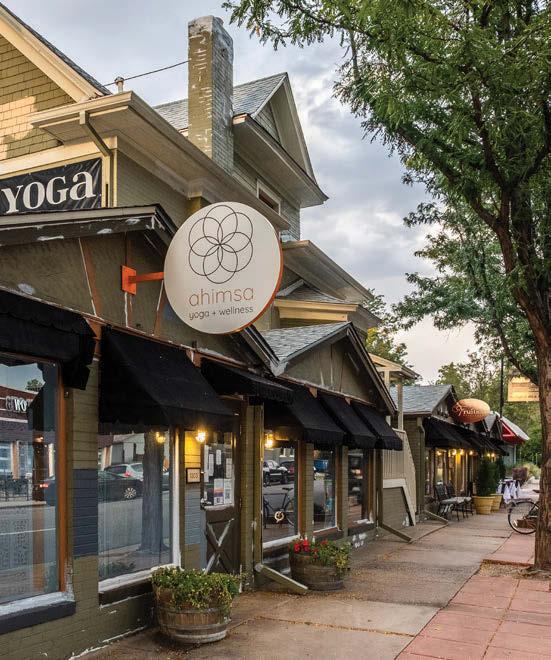
Whether you’re looking to buy a home or explore Denver’s vast and varied locales, we’ve crunched the numbers to bring you our exclusive list of the 25 best neighborhoods in the Mile High City.
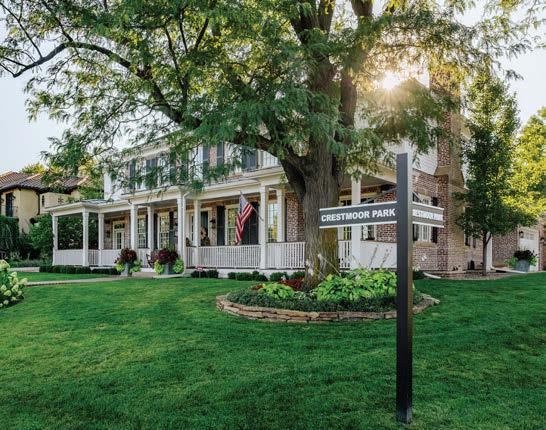
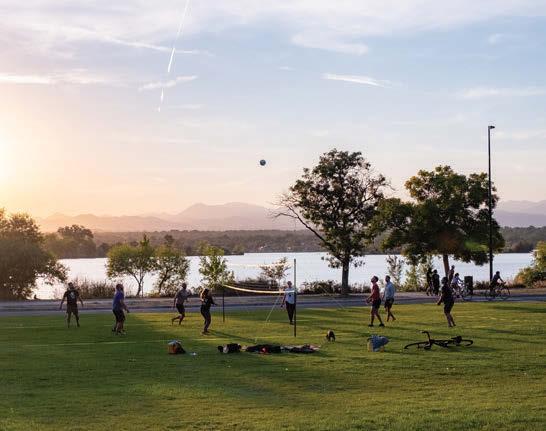



Scan the QR Code to find out WHICH
THE CUT

NEIGHBORHOODS MADE
Photography by Marvin Anani
2022 DENVER
FIVE STAR AWARD WINNERS
These days, it takes a village to manage your financial world. Whether it is managing your assets with a wealth manager, navigating the ever-changing tax landscape, sorting out your estate and succession planning or picking the right life insurance, finding the right team can be a daunting task. In fact, many consumers have a hard time figuring out where to even begin. Sometimes, a few simple questions can put you off on the right path. Asking a professional what makes working with them a unique experience can help you understand how they work and if their style meshes with your own.
This is a great place to start! Five Star Professional uses its own proprietary research methodology to name outstanding professionals, then works with publications such as 5280: The Denver Magazine to spread the word about award winners. Each award candidate undergoes a thorough research process (detailed here) before being considered for the final list of award winners. For the complete list of winners, go to www.fivestarprofessional.com.
RESEARCH DISCLOSURES
In order to consider a broad population of high-quality wealth managers and investment professionals, award candidates are identified by one of three sources: firm nomination, peer nomination or prequalification based on industry standing. Self-nominations are not accepted. Denver-area award candidates were identified using internal and external research data. Candidates do not pay a fee to be considered or placed on the final lists of Five Star Wealth Managers or Five Star Investment Professionals.
• The Five Star award is not indicative of a professional’s future performance.
• Wealth managers may or may not use discretion in their practice and therefore may not manage their clients’ assets.
• The inclusion of a professional on the Five Star Wealth Manager list or the Five Star Investment Professional list should not be construed as an endorsement of the professional by Five Star Professional or 5280: The Denver Magazine
• Working with a Five Star Wealth Manager, Five Star Investment Professional or any professional is no guarantee as to future investment success, nor is there any guarantee that the selected professionals will be awarded this accomplishment by Five Star Professional in the future.
• Five Star Professional is not an advisory firm and the content of this article should not be considered financial advice. For more information on the Five Star Wealth Manager or Five Star Investment Professional award programs, research and selection criteria, go to fivestarprofessional.com/research.
FIVE STAR WEALTH MANAGER DETERMINATION OF AWARD WINNERS CRITERIA
Award candidates who satisfied 10 objective eligibility and evaluation criteria were named 2022 Five Star Wealth Managers. Eligibility Criteria – Required: 1. Credentialed as a registered investment adviser or a registered investment adviser representative. 2. Actively employed as a credentialed professional in the financial services industry for a minimum of five years. 3. Favorable regulatory and complaint history review. 4. Fulfilled their firm review based on internal firm standards.
5. Accepting new clients. Evaluation Criteria – Considered: 6. One-year client retention rate. 7. Five-year client retention rate. 8. Non-institutional discretionary and/or non-discretionary client assets administered. 9. Number of client households served. 10. Education and professional designations. 2,132 award candidates in the Denver area were considered for the Five Star Wealth Manager award. 235 (approximately 11% of the award candidates) were named 2022 Five Star Wealth Managers.
FIVE STAR INVESTMENT PROFESSIONAL DETERMINATION OF AWARD WINNERS CRITERIA
The investment professional award goes to estate planning attorneys, insurance agents and select others in the financial industry. Eligibility Criteria – Required: 1. Credentialed with appropriate state or industry licensures. 2. Actively employed as a credentialed professional in the financial services industry for a minimum of five years.
3. Favorable regulatory and complaint history review. 4. Accepting new clients. Evaluation Criteria –
Wealth Managers
Financial Planning
Nathan Archuleta · Summit Wealth Group
Robert H. Bastiaans · Ameriprise Financial Services, LLC Page 9
Karine Renee Beard · Clarus Wealth
James Blair Callahan · Saza Wealth Partners
Leann Ann Canty · Canty’s Financial Strategies, Inc.
Jeremy Russell Clark · Lucet Advisors
Benita Creacy · DC & Associates
Advanced Financial Solutions
Frank Djonbalaj · Ameriprise Financial Services, LLC
Jeffrey J. Donahue · LPL Financial
Robert Schuler Eberhardt · Eberhardt Wealth Management

Derek N. Eichenwald · Triumph Capital Management Page 4
Karl Fredrick Frank · A & I Financial Services
Kimberly Ann Gieseler · Valorem Financial
Mark Steven Goodside · Retirement Solutions of Colorado
James M. Graham IV · Lincoln Financial Advisors McCrea Allen
Brad Hablutzel · Mosaic Retirement Planning, LLC Page 7
G. Bruce Hemmings · Morgan Stanley
David Andrew Henderson · Jenkins Wealth
Jennifer Elizabeth Hilts · LOTUS Financial Partners
Jody Kim Hinsey · Mint Financial Strategies
Robert Lee Holland Jr. · LPL Financial
Patricia Kummer · Mariner Wealth Advisors Page 8
David Lawyer · DALA Financial Services
Edward Campbell Lee · LPL Financial Lori Jane Miller · LPL Financial
Adam J. Moeller · AJM Financial, LLC Page 6
Patrick Nolen · Nolen Western Company Page 3
Angie M. Osili · Williams Investment Network
Julia Judith Smith · LPL Financial
Robert Clark Smith · RCS Wealth Management
Sam Rey Tenney · Fidelis Wealth Advisors
Kris Eric Tower · American Portfolios Advisors
Jennifer Koonz Trembley · Ameriprise Financial Services, LLC
Nick Weisert · Integra Financial Page 8
Mark Louis Weiss · Wolf Creek Capital, LLC
Taylor Yionoulis · Nolen Western Company Page 3
Investments
Bruce G. Allen · Bruce G. Allen Investments, LLC Page 2
Willis Ashby · Integra Financial Page 8
Daniel I. Barotz · Focused Alpha M Katharine Collins · LPL Financial Page 9
Brandon Drespling · Triumph Capital Management Page 4
Daniel David Ellis · Western Wealth Management
George Aaron Gumbiner · Marathon Investment Management
Todd M. Hauer · Morgan Stanley
Shelley Elizabeth Hertel · LPL Financial
Jeffrey Allan Hutcheson · Aspen Wealth Management
Jonathan Russell Kelley · Hinds Financial Group
Christopher Lynett · Wells Fargo Advisors Page 7
Meghan McGuire · Wells Fargo Advisors Page 5
Thomas Obarski · LPL Financial Page 9
Brian J. Perkins · CDP Financial Group, LLC Page 9
David Jon Pocs · LPL Financial
Shelley Ann Schlossberg · CastleMountain Financial Services, Inc.
William Howard Shriver · Shriver Investments
Jeffrey Michael Thompson · Colorado Financial Partners
Elizabeth Thorpe · Wells Fargo Advisors Page 6
T.H. Williams · Wells Fargo Advisors Page 5
Taxation
Richard Jay Whipple · WhippleWood CPAs
Investment Professionals
Gregory Zick · Zick Business Advisors
Brian Chase · JDS Professional Group
Frank J. Danzo III · Chayet & Danzo
SPECIAL ADVERTISING SECTION
LEARN MORE AT FIVESTARPROFESSIONAL.COM — FS- 1
Considered: 5. One-year client retention rate. 6. Five-year client retention rate. 7. Number of client households served. 8. Recent personal production and performance (industry specific criteria). 9. Education and professional designations/ industry and board certifications. 10. Pro Bono and community service work. This year, we honored 9 Denver-area investment professionals with the Five Star Investment Professional award.
All award
winners are listed in this
publication.
Mike Glen Nielson · Nielson Wealth Management
Continued on FS-9
regulatory authority or complaints registered through FSP’s consumer complaint process; feedback may not be representative of any one client’s experience; C. Individually contributed to a financial settlement of a customer complaint; D. Filed for personal bankruptcy within the past 11 years; E. Been terminated from a financial services firm within the past 11 years; F. Been convicted of a felony); 4. Fulfilled their firm review based on internal standards; 5. Accepting new clients. Evaluation criteria – considered: 6. One-year client retention rate; 7. Five-year client retention rate; 8. Non-institutional

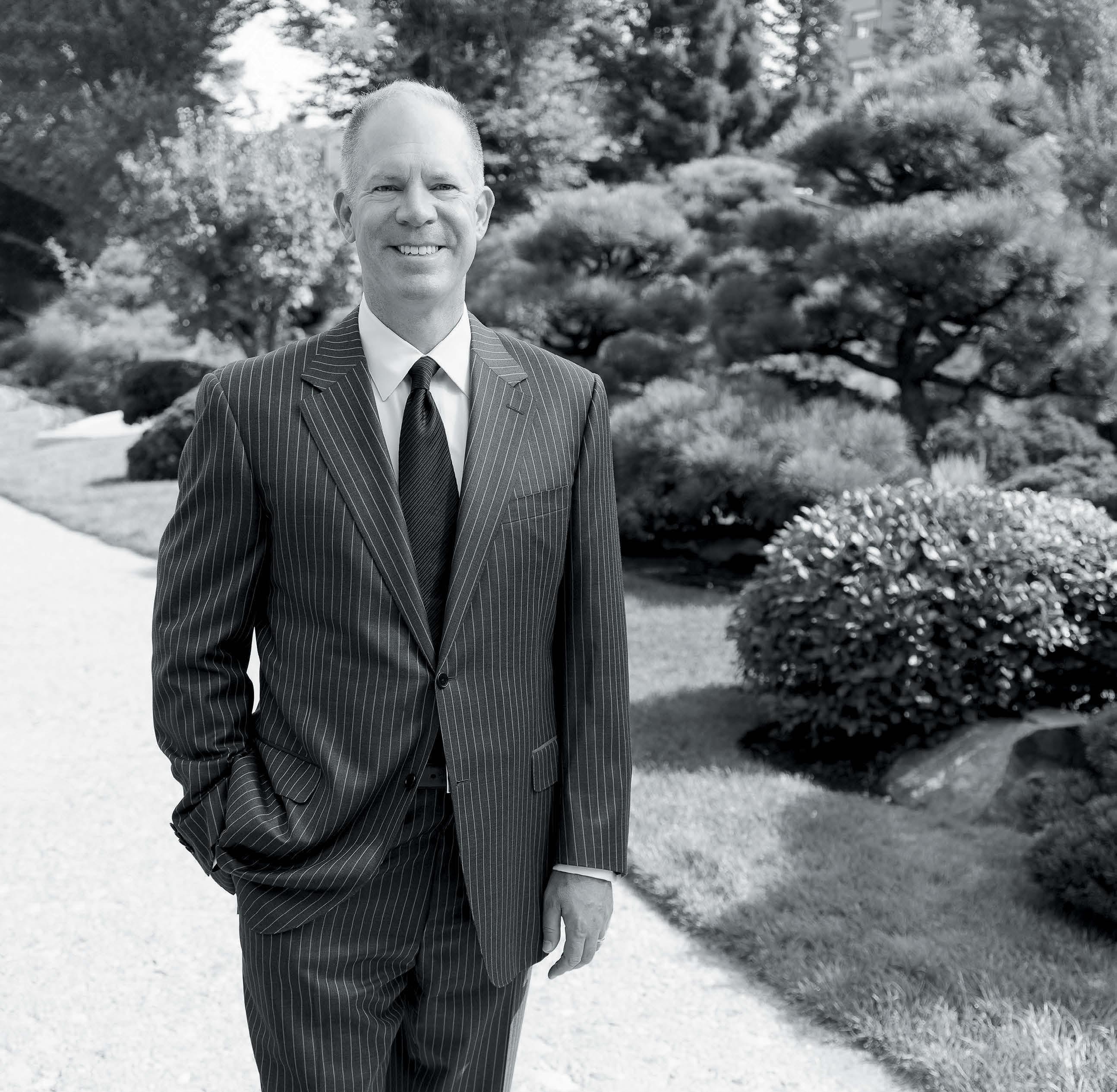
I created Bruce G. Allen Investments, LLC to help our clients build, manage, protect and transition their wealth. We take a comprehensive approach to wealth management by touching on the four cornerstones of investments, credit and liability management, risk management and estate and trust matters. Advisory services offered through Bruce G. Allen Investments, LLC., a Registered Investment Advisor. Securities offered through M. S. Howells & Co., member FINRA/SIPC. M. S. Howells & Co. and Bruce G. Allen Investments, LLC are not affiliated. Availability of services is subject to applicable licensing requirements. Eleven-Year Winner AIFA®, CIMA®, CPWA®, General Securities Principal 370 17 th Street, Suite 3580 • Denver, CO 80202 Office: 303-592-5535 • Fax: 303-592-5534 bruce@bgaillc.com • www.brucegalleninvestments.com Bruce G. Allen This award was issued on October 1, 2022 by Five Star Professional (FSP) for the time period October 1, 2022 through September 30, 2023. Wealth managers do not pay a fee to be considered or placed on the final list of Five Star Wealth Managers. Award winners may pay for marketing tools, including this advertisement. The award is based on 10 objective criteria. Eligibility criteria – required: 1. Credentialed as a registered investment adviser or a registered investment adviser representative; 2. Actively licensed as a registered investment adviser or as a principal of a registered investment adviser firm for a minimum of 5 years; 3. Favorable regulatory and complaint history review (As defined by FSP, the wealth manager has not; A. Been subject to a regulatory action that resulted in a license being suspended or revoked, or payment of a fine; B. Had more than a total of three settled or pending complaints filed against them and/or a total of five settled, pending, dismissed or denied complaints with any regulatory authority or FSP’s consumer complaint process. Unfavorable feedback may have been discovered through a check of complaints registered with a
discretionary and/or non-discretionary client assets administered; 9. Number of client households served; 10. Education and professional designations. FSP does not evaluate quality of services provided to clients. The award is not indicative of the wealth manager’s future performance. Wealth managers may or may not use discretion in their practice and therefore may not manage their clients’ assets. The inclusion of a wealth manager on the Five Star Wealth Manager list should not be construed as an endorsement of the wealth manager by FSP or this publication. Working with a Five Star Wealth Manager or any wealth manager is no guarantee as to future investment success, nor is there any guarantee that the selected wealth managers will be awarded this accomplishment by FSP in the future. 2,132 Denver-area wealth managers were considered for the award; 235 (11% of candidates) were named 2022 Five Star Wealth Managers. 2021: 2,158 considered, 206 winners; 2020: 2,172 considered, 213 winners; 2019: 2,146 considered, 262 winners; 2018: 2,255 considered, 267 winners; 2017: 1,716 considered, 287 winners; 2016: 1,552 considered, 515 winners; 2015: 3,008 considered, 517 winners; 2014: 4,385 considered, 528 winners; 2013: 2,083 considered, 607 winners; 2012: 1,965 considered, 611 winners. SPECIAL ADVERTISING SECTION FS- 2 — LEARN MORE AT FIVESTARPROFESSIONAL.COM
— WEALTH MANAGERS —
Fiduciary Investment Account Services
This award was issued on October 1, 2022 by Five Star Professional (FSP) for the time period October 1, 2022 through September 30, 2023. Wealth managers do not pay a fee to be considered or placed on the final list of Five Star Wealth Managers. Award winners may pay for marketing tools, including this advertisement. The award is based on 10 objective criteria. Eligibility criteria – required: 1. Credentialed as a registered investment adviser or a registered investment adviser representative; 2. Actively licensed as a registered investment adviser or as a principal of a registered investment adviser firm for a minimum of 5 years; 3. Favorable regulatory and complaint history review (As defined by FSP, the wealth manager has not; A. Been subject to a regulatory action that resulted in a license being suspended or revoked, or payment of a fine; B. Had more than a total of three settled or pending complaints filed against them and/or a total of five settled, pending, dismissed or denied complaints with any regulatory authority or FSP’s consumer complaint process. Unfavorable feedback may have been discovered through a check of complaints registered with a regulatory authority or complaints registered through FSP’s consumer complaint process; feedback may not be representative of any one client’s experience; C. Individually contributed to a financial settlement of a customer complaint; D. Filed for personal bankruptcy within the past 11 years; E. Been terminated from a financial services firm within the past 11 years; F. Been convicted of a felony); 4. Fulfilled their firm review based on internal standards; 5. Accepting new clients. Evaluation criteria – considered: 6. One-year client retention rate; 7. Five-year client retention rate; 8. Non-institutional discretionary and/or non-discretionary client assets administered; 9. Number of client households served; 10. Education and professional designations. FSP does not evaluate quality of services provided to clients. The award is not indicative of the wealth manager’s future performance. Wealth managers may or may not use discretion in their practice and therefore may not manage their clients’ assets. The inclusion of a wealth manager on the Five Star Wealth Manager list should not be construed as an endorsement of the wealth manager by FSP or this publication. Working with a Five Star Wealth Manager or any wealth manager is no guarantee as to future investment success, nor is there any guarantee that the selected wealth managers will be awarded this accomplishment by FSP in the future. 2,132 Denver-area wealth managers were considered for the award; 235 (11% of candidates) were named 2022 Five Star Wealth Managers. 2021: 2,158 considered, 206 winners; 2020: 2,172 considered, 213 winners; 2019: 2,146 considered, 262 winners; 2018: 2,255 considered, 267 winners; 2017: 1,716 considered, 287 winners; 2016: 1,552 considered, 515 winners; 2015: 3,008 considered, 517 winners; 2014: 4,385 considered, 528 winners; 2013: 2,083 considered, 607 winners; 2012: 1,965 considered, 611 winners.

SPECIAL ADVERTISING SECTION
LEARN MORE AT FIVESTARPROFESSIONAL.COM — FS- 3
FIVE STAR WEALTH MANAGER AWARD WINNER
Certified Financial Planner Board of Standards, Inc. (CFP Board) owns the CFP® certification mark, the Certified finanCial Planner™ certification mark, and the CFP® certification mark (with plaque design) logo in the United States, which it authorizes use of by individuals who successfully complete CFP Board’s initial and ongoing certification requirements. Securities and Advisory Services offered through Geneos Wealth Management, Inc. member FINRA/SIPC. Awards by unaffiliated publications should not be construed by an investor as a guarantee of future financial success with the Financial Advisor. Nor should they be construed as a current or past endorsement of the Financial Advisor. Neither the recognized advisor nor Geneos Wealth Management, Inc. has paid a fee for inclusion on the list or for an award. 9085 E Mineral Circle, Suite 215 • Centennial, CO 80112 Phone: 303-779-1311 • taylory@nolenwestern.com www.nolenwestern.com Founded in 1973, Nolen Western Co. has always had the goal of helping people accumulate wealth while simultaneously controlling risk. Our staff consists of experienced professionals with a hands-on approach to financial guidance. As your financial professionals, we will do everything in our power to keep you focused on where you want to go, advise you on how to get there and continually remind you of the importance of maintaining a disciplined approach to realizing your dreams. Our firm provides comprehensive financial planning and investment management, retirement accumulation, distribution strategies and employee benefits.
YEAR WINNER 10
— WEALTH MANAGERS —
Derek N. Eichenwald

Triumph Capital Management
needs. As one of the top Registered Investment

in the Denver area, we feel confident in our ability to plan, execute and oversee your financial goals for both the long-term, short-term and everything in between. We aim to empower our clients with financial knowledge and comprehensive plans that are easy to digest and uniquely tailored. With transparent reporting and innovative platforms, our clients are equipped with everything they need to make smarter, more informed investment decisions.
This award was issued on October 1, 2022 by Five Star Professional (FSP) for the time period October 1, 2022 through September 30, 2023. Wealth managers do not pay a fee to be considered or placed on the final list of Five Star Wealth Managers. Award winners may pay for marketing tools, including this advertisement. The award is based on 10 objective criteria. Eligibility criteria – required: 1. Credentialed as a registered investment adviser or a registered investment adviser representative; 2. Actively licensed as a registered investment adviser or as a principal of a registered investment adviser firm for a minimum of 5 years; 3. Favorable regulatory and complaint history review (As defined by FSP, the wealth manager has not; A. Been subject to a regulatory action that resulted in a license being suspended or revoked, or payment of a fine; B. Had more than a total of three settled or pending complaints filed against them and/or a total of five settled, pending, dismissed or denied complaints with any regulatory authority or FSP’s consumer complaint process. Unfavorable feedback may have been discovered through a check of complaints registered with a regulatory authority or complaints registered through FSP’s consumer complaint process; feedback may not be representative of any one client’s experience; C. Individually contributed to a financial settlement of a customer complaint; D. Filed for personal bankruptcy within the past 11 years; E. Been terminated from a financial services firm within the past 11 years; F. Been convicted of a felony); 4. Fulfilled their firm review based on internal standards; 5. Accepting new clients. Evaluation criteria – considered: 6. One-year client retention rate; 7. Five-year client retention rate; 8. Non-institutional discretionary and/or non-discretionary client assets administered; 9. Number of client households served; 10. Education and professional designations. FSP does not evaluate quality of services provided to clients. The award is not indicative of the wealth manager’s future performance. Wealth managers may or may not use discretion in their practice and therefore may not manage their clients’ assets. The inclusion of a wealth manager on the Five Star Wealth Manager list should not be construed as an endorsement of the wealth manager by FSP or this publication. Working with a Five Star Wealth Manager or any wealth manager is no guarantee as to future investment success, nor is there any guarantee that the selected wealth managers will be awarded this accomplishment by FSP in the future. 2,132 Denver-area wealth managers were considered for the award; 235 (11% of candidates) were named 2022 Five Star Wealth Managers. 2021: 2,158 considered, 206 winners; 2020: 2,172 considered, 213 winners; 2019: 2,146 considered, 262 winners; 2018: 2,255 considered, 267 winners; 2017: 1,716 considered, 287 winners; 2016: 1,552 considered, 515 winners; 2015: 3,008 considered, 517 winners; 2014: 4,385 considered, 528 winners; 2013: 2,083 considered, 607 winners; 2012: 1,965 considered, 611 winners.

SPECIAL ADVERTISING SECTION
FS- 4 — LEARN MORE AT FIVESTARPROFESSIONAL.COM
FIVE STAR WEALTH MANAGER AWARD WINNER
Seven-year winner
Derek Eichenwald, CEO
and Senior Investment Executive
Triumph Capital Management 1610 Wynkoop Street, Suite 550 • Denver, CO 80202 Office: 720-399-5551 • dereke@triumphcapitalmanagement.com www.triumphcapitalmanagement.com Advisory services offered through Triumph Capital Management, a registered investment advisor SEC# 282814. Insurance Services offered through Triumph Capital, LLC #619821. Registration does not imply a certain level of skill or training. The inclusion of a Wealth Manager in the Top Ranked Investment Manager, Financial Planners and Five Star awards or other publications that awards are published in is partly based on client responses to surveys and additional criteria utilized by the awarding organization, which are not necessarily representations of the experience of all clients. The awards and rankings are not indicative of the Wealth Manager’s future performance or success. Winners appearing on this page do not pay a fee to be considered or to win the Five Star award. Professional with a digital profile has paid a promotional fee. Your financial objectives for your family, business and heirs drive our entire planning process. Our mission is to get to know and understand your desires and to develop and execute a strategy designed for your individual
Advisors
Left to right: Back row: 2014 winner Brent McGibbon; 2014 and 2016 – 2019 winner Greg Schowe; Avery McDonnell; Middle row: Andrew Hoffmeyer; Ryan Cook; James Peters; Chris Nani; Emma Leiker; Front row: Hannah Ferguson; 2012 and 2014 – 2016 winner Timothy Waters; 2014 – 2015, 2017, 2019 – 2022 winner Derek Eichenwald; 2017 and 2019 – 2022 winner Brandon Drespling; Dan Mayer (Not pictured: Meghan Nalty-Roach; 2022 winner Brian Stark; 2017 and 2022 winner Cory Robinson; Shea Winkeller; Ed Hable; Stephen Murphy)
CEO, Senior Investment Executive
YEAR WINNER 7
— WEALTH MANAGERS —

and
Investing in What Matters … You
Markets bounce up and down. In the
foundation and clarity. The process
value throughout lifelong relationships with
Having a plan and an advisor to
of
We begin with open direct
and strive to
This award was issued on October 1, 2022 by Five Star Professional (FSP) for the time period October 1, 2022 through September 30, 2023. Wealth managers do not pay a fee to be considered or placed on the final list of Five Star Wealth Managers. Award winners may pay for marketing tools, including this advertisement. The award is based on 10 objective criteria. Eligibility criteria – required: 1. Credentialed as a registered investment adviser or a registered investment adviser representative; 2. Actively licensed as a registered investment adviser or as a principal of a registered investment adviser firm for a minimum of 5 years; 3. Favorable regulatory and complaint history review (As defined by FSP, the wealth manager has not; A. Been subject to a regulatory action that resulted in a license being suspended or revoked, or payment of a fine; B. Had more than a total of three settled or pending complaints filed against them and/or a total of five settled, pending, dismissed or denied complaints with any regulatory authority or FSP’s consumer complaint process. Unfavorable feedback may have been discovered through a check of complaints registered with a regulatory authority or complaints registered through FSP’s consumer complaint process; feedback may not be representative of any one client’s experience; C. Individually contributed to a financial settlement of a customer complaint; D. Filed for personal bankruptcy within the past 11 years; E. Been terminated from a financial services firm within the past 11 years; F. Been convicted of a felony); 4. Fulfilled their firm review based on internal standards; 5. Accepting new clients. Evaluation criteria – considered: 6. One-year client retention rate; 7. Five-year client retention rate; 8. Non-institutional discretionary and/or non-discretionary client assets administered; 9. Number of client households served; 10. Education and professional designations. FSP does not evaluate quality of services provided to clients. The award is not indicative of the wealth manager’s future performance. Wealth managers may or may not use discretion in their practice and therefore may not manage their clients’ assets. The inclusion of a wealth manager on the Five Star Wealth Manager list should not be construed as an endorsement of the wealth manager by FSP or this publication. Working with a Five Star Wealth Manager or any wealth manager is no guarantee as to future investment success, nor is there any guarantee that the selected wealth managers will be awarded this accomplishment by FSP in the future. 2,132 Denver-area wealth managers were considered for the award; 235 (11% of candidates) were named 2022 Five Star Wealth Managers. 2021: 2,158 considered, 206 winners; 2020: 2,172 considered, 213 winners; 2019: 2,146 considered, 262 winners; 2018: 2,255 considered, 267 winners; 2017: 1,716 considered, 287 winners; 2016: 1,552 considered, 515 winners; 2015: 3,008 considered, 517 winners; 2014: 4,385 considered, 528 winners; 2013: 2,083 considered, 607 winners; 2012: 1,965 considered, 611 winners.

SPECIAL ADVERTISING SECTION
LEARN MORE AT FIVESTARPROFESSIONAL.COM — FS- 5
FIVE STAR WEALTH MANAGER AWARD WINNER Certified Financial Planner Board of Standards Inc. owns the certification marks CFP®, C ertified f inanCial P lanner Investment and Insurance Products: NOT FDIC Insured / NO Bank Guarantee / MAY Lose Value Wells Fargo Advisors is a trade name used by Wells Fargo Clearing Services, LLC, Member SIPC, a registered broker-dealer and non-bank affiliate of Wells Fargo & Company. [CAR 0722-03064]. 5613 DTC Parkway, Suite 1000 • Greenwood Village, CO 80111 www.virtuentwmg.com • @THWilliamsWFA • linkedin.com/in/thwilliams
Your team matters: The professionals at Virtuent Wealth Management Group of Wells Fargo Advisors have more than 91 years of collective experience in wealth management. Our team takes a holistic approach to planning. We are fully invested in our clients’ success and will be with you every step of the way. Put our experience, imagination and energy to work for you. Philosophy matters: Our relationship-driven, disciplined approach to wealth management helps ensure our clients stay focused on their long-term objectives. Planning matters: Life is full of changes, both positive and negative. World events inspire euphoria
despair.
midst
unpredictability, an investment plan can provide
matters:
communication
deliver
our clients. Relationships matter: Investing often evokes emotion.
coach you can help you stay focused on your long-term objectives.
Managing Director – Investments; 2019 winner Mick Pepper, Senior Vice President – Investments; Susie Kaufman, Senior Registered Client Associate; 2020
– 2022
winner Meghan McGuire, CFP®, MS, RICP®, Vice President – Investment Officer
YEAR WINNER 10
— WEALTH MANAGERS —
Adam J. Moeller
President
Where Clients Come To Win at Retirement
• Independent fiduciary with 18 years of success
• Wealth management, asset protection, income planning, long-term care alternatives, estate planning

Adam was born and raised in Denver, Colorado. His mom was a teacher in Cherry Creek schools, and his dad was a Lutheran minister. He is married to his beautiful wife, Jennifer, a prominent attorney. They have three children: Jackson, Jordan and Sophia. After college and getting a degree in finance, his basketball talents allowed him to play professionally. His competitive nature and desire to do the best thing possible for all clients is why he started his independent fiduciary firm. When Adam is not meeting with clients, he is coaching, fishing or golfing. Adam prides himself in educating his clients on the why, what, when and how of planning for retirement. Adam has been published in The Wall Street Journal and Forbes.
Advisory services offered through Foundations Investment Advisors, an SEC Registered Investment Adviser.

Werley Thorpe Financial Group of Wells Fargo Advisors

Integrity and Experience Matter
Listening to better
power
Being a valued client of the Werley Thorpe Financial Group of Wells Fargo Advisors means our clients deserve and experience a personally tailored plan that assists in achieving their life goals that align with their investment plans. We pride ourselves on bringing you the opportunity to work with a team of 125 years of integrity-based experience. Elizabeth Thorpe is a 2014 – 2022 Five Star Wealth Manager and William Werley Jr. is a 2022 Five Star Wealth Manager.

and Insurance Products: NOT FDIC-InsuredNO Bank Guarantee MAY Lose Value Wells Fargo Advisors is a trade name used by Wells Fargo Clearing Services, LLC,
SIPC, a
and non-bank affiliate of
Fargo & Company. [CAR 0722-04369].
This award was issued on October 1, 2022 by Five Star Professional (FSP) for the time period October 1, 2022 through September 30, 2023. Wealth managers do not pay a fee to be considered or placed on the final list of Five Star Wealth Managers. Award winners may pay for marketing tools, including this advertisement. The award is based on 10 objective criteria. Eligibility criteria – required: 1. Credentialed as a registered investment adviser or a registered investment adviser representative; 2. Actively licensed as a registered investment adviser or as a principal of a registered investment adviser firm for a minimum of 5 years; 3. Favorable regulatory and complaint history review (As defined by FSP, the wealth manager has not; A. Been subject to a regulatory action that resulted in a license being suspended or revoked, or payment of a fine; B. Had more than a total of three settled or pending complaints filed against them and/or a total of five settled, pending, dismissed or denied complaints with any regulatory authority or FSP’s consumer complaint process. Unfavorable feedback may have been discovered through a check of complaints registered with a regulatory authority or complaints registered through FSP’s consumer complaint process; feedback may not be representative of any one client’s experience; C. Individually contributed to a financial settlement of a customer complaint; D. Filed for personal bankruptcy within the past 11 years; E. Been terminated from a financial services firm within the past 11 years; F. Been convicted of a felony); 4. Fulfilled their firm review based on internal standards; 5. Accepting new clients. Evaluation criteria – considered: 6. One-year client retention rate; 7. Five-year client retention rate; 8. Non-institutional discretionary and/or non-discretionary client assets administered; 9. Number of client households served; 10. Education and professional designations. FSP does not evaluate quality of services provided to clients. The award is not indicative of the wealth manager’s future performance. Wealth managers may or may not use discretion in their practice and therefore may not manage their clients’ assets. The inclusion of a wealth manager on the Five Star Wealth Manager list should not be construed as an endorsement of the wealth manager by FSP or this publication. Working with a Five Star Wealth Manager or any wealth manager is no guarantee as to future investment success, nor is there any guarantee that the selected wealth managers will be awarded this accomplishment by FSP in the future. 2,132 Denver-area wealth managers were considered for the award; 235 (11% of candidates) were named 2022 Five Star Wealth Managers. 2021: 2,158 considered, 206 winners; 2020: 2,172 considered, 213 winners; 2019: 2,146 considered, 262 winners; 2018: 2,255 considered, 267 winners; 2017: 1,716 considered, 287 winners; 2016: 1,552 considered, 515 winners; 2015: 3,008 considered, 517 winners; 2014: 4,385 considered, 528 winners; 2013: 2,083 considered, 607 winners; 2012: 1,965 considered, 611 winners.
SPECIAL ADVERTISING SECTION
FS- 6 — LEARN MORE AT FIVESTARPROFESSIONAL.COM
FIVE STAR WEALTH MANAGER AWARD WINNER
2022 winner Adam J. Moeller
5445 DTC Parkway, Penthouse 4 • Greenwood Village, CO 80111 Phone: 720-974-4800 • adam@myajmfinancial.com • www.myajmfinancial.com
FIVE STAR WEALTH MANAGER AWARD WINNER
Left
to
right:
2022 winner
William Werley Jr., Senior Vice President –
Investments; 2014 – 2022 winner Elizabeth Thorpe, Senior Vice President – Investment Officer; William Werley Sr., Vice President – Investments 143 Union Boulevard, Suite 1050 • Lakewood, CO 80228 • Office: 303-763-8300 betsy.thorpe@wellsfargoadvisors.com • bill.werleyjr@wellsfargoadvisors.com bill.werleysr@wellsfargoadvisors.com Investment
Member
registered broker-dealer
Wells
•
understand your personal financial
• Assisting in your financial strategies built on trust and confidence
YEAR WINNER 9
— WEALTH MANAGERS —
Christopher Lynett
Private Wealth Financial Advisor, Sr. Vice President – Investments
Personalized Planning and Investments Focused on You
With over 20 years of experience serving clients in the Denver community, Chris works every day to offer exceptional customer service focusing on:

lifelong relationships with clients and their families
disciplined approach to investment management
unique approach to wealth preservation
Identifying what is most important to you and your family
Christopher: 2013, 2014, 2015, 2016, 2017, 2018, 2019, 2020, 2021 and 2022 Five Star Wealth Manager
Investment and Insurance Products: NOT FDIC-InsuredNO Bank Guarantee MAY Lose Value
Union Boulevard, Suite 1050 • Lakewood, CO 80228 Phone: 303-679-2104
Phone: 720-802-5700 chris.r.lynett@wellsfargo.com
www.wfadvisors.com/chris.r.lynett
Wells Fargo Advisors is a trade name used by Wells Fargo Clearing Services, LLC, Member SIPC, a registered broker-dealer and non-bank affiliate of Wells Fargo & Company. [CAR-0722-00793].
Brad Hablutzel
Mosaic
Dedication
a precursor to its
in transparent, incentive-based
Mosaic has adopted a financial planning process

which is widely regarded as the gold standard for financial planning. Mosaic’s
on the lives of the community, one family at a time.
7200 S Alton Way, Suite B290 • Centennial, CO 80112 Phone: 720-617-4400
bhablutzel@mosaicretirement.com www.mosaicretirementplanning.com
This award was issued on October 1, 2022 by Five Star Professional (FSP) for the time period October 1, 2022 through September 30, 2023. Wealth managers do not pay a fee to be considered or placed on the final list of Five Star Wealth Managers. Award winners may pay for marketing tools, including this advertisement. The award is based on 10 objective criteria. Eligibility criteria – required: 1. Credentialed as a registered investment adviser or a registered investment adviser representative; 2. Actively licensed as a registered investment adviser or as a principal of a registered investment adviser firm for a minimum of 5 years; 3. Favorable regulatory and complaint history review (As defined by FSP, the wealth manager has not; A. Been subject to a regulatory action that resulted in a license being suspended or revoked, or payment of a fine; B. Had more than a total of three settled or pending complaints filed against them and/or a total of five settled, pending, dismissed or denied complaints with any regulatory authority or FSP’s consumer complaint process. Unfavorable feedback may have been discovered through a check of complaints registered with a regulatory authority or complaints registered through FSP’s consumer complaint process; feedback may not be representative of any one client’s experience; C. Individually contributed to a financial settlement of a customer complaint; D. Filed for personal bankruptcy within the past 11 years; E. Been terminated from a financial services firm within the past 11 years; F. Been convicted of a felony); 4. Fulfilled their firm review based on internal standards; 5. Accepting new clients. Evaluation criteria – considered: 6. One-year client retention rate; 7. Five-year client retention rate; 8. Non-institutional discretionary and/or non-discretionary client assets administered; 9. Number of client households served; 10. Education and professional designations. FSP does not evaluate quality of services provided to clients. The award is not indicative of the wealth manager’s future performance. Wealth managers may or may not use discretion in their practice and therefore may not manage their clients’ assets. The inclusion of a wealth manager on the Five Star Wealth Manager list should not be construed as an endorsement of the wealth manager by FSP or this publication. Working with a Five Star Wealth Manager or any wealth manager is no guarantee as to future investment success, nor is there any guarantee that the selected wealth managers will be awarded this accomplishment by FSP in the future. 2,132 Denver-area wealth managers were considered for the award; 235 (11% of candidates) were named 2022 Five Star Wealth Managers. 2021: 2,158 considered, 206 winners; 2020: 2,172 considered, 213 winners; 2019: 2,146 considered, 262 winners; 2018: 2,255 considered, 267 winners; 2017: 1,716 considered, 287 winners; 2016: 1,552 considered, 515 winners; 2015: 3,008 considered, 517 winners; 2014: 4,385 considered, 528 winners; 2013: 2,083 considered, 607 winners; 2012: 1,965 considered, 611 winners.
SPECIAL ADVERTISING SECTION
LEARN MORE AT FIVESTARPROFESSIONAL.COM — FS- 7
FIVE STAR WEALTH MANAGER AWARD WINNER
143
•
•
Ten-year winner Christopher Lynett
• Forging
• A
• A
•
•
YEAR WINNER 10
FIVE
STAR WEALTH
MANAGER AWARD WINNER
Two-year winner Brad Hablutzel
Certified
Financial
Planner Board
of Standards Inc. owns the certification marks CFP®, C ertified f inanCial P lanner ™, and the CFP® mark (with plaque
design)
in the U.S. Investment advisory services offered by duly registered individuals through CreativeOne Wealth, LLC a Registered Investment Adviser. CreativeOne Wealth, LLC and Mosaic Retirement Planning are unaffiliated entities.
Mosaic Retirement Planning, LLC is a comprehensive financial planning and investment advisory firm. Its founder has been providing proactive solutions to retirees and pre-retirees since 2007 based on the belief that it’s always right to do the right thing, foremost putting clients’ interests first.
believes
pricing where its clients’ success is
success.
recommended by the CFP® board,
mission is to have a positive impact
• Proactively looking after staff and clientele like angels and working toward being good stewards for one another
Where
Retirement Plans Resemble a Work of Art. A
Mosaic.
Faith • Responsibility • Integrity •
President, CFP®, CFS™, CTS™, MBA
YEAR WINNER 2
— WEALTH MANAGERS —
Mariner Wealth Advisors

360° Advice Designed to Last
• Helping you keep your goals on track in an ever-changing world
• Creating flexible strategies to keep your priorities in focus
Our team of experienced advisors is committed to putting your interests first and identifying your best solutions. We’ll listen to what matters most to you, then partner with our in-house teams and you to create a wealth management plan for today and beyond that is flexible enough to change along with you.
Certified Financial Planner Board of Standards Inc. owns the certification marks CFP®,

Ridgeline Boulevard, Suite 100 • Highlands Ranch, CO 80129 Phone: 303-470-1209 • patricia.kummer@marinerwealthadvisors.com marinerwealthadvisors.com
and the CFP® mark (with plaque design) in the U.S. Mariner Wealth Advisors (“MWA”) is an SEC registered investment adviser with its principal place of business in the State of Kansas. Registration of an investment adviser does not imply a certain level of skill or training. For additional information about MWA, including fees and services, please contact MWA or refer to the Investment Adviser Public Disclosure website (www.adviserinfo.sec.gov). Please read the disclosure statement carefully before you invest or send money. Securities offered through MSEC, LLC Member FINRA & SIPC.
Willis Ashby and Nick Weisert
Five Star Wealth Managers
This award was issued on October 1, 2022 by Five Star Professional (FSP) for the time period October 1, 2022 through September 30, 2023. Wealth managers do not pay a fee to be considered or placed on the final list of Five Star Wealth Managers. Award winners may pay for marketing tools, including this advertisement. The award is based on 10 objective criteria. Eligibility criteria – required: 1. Credentialed as a registered investment adviser or a registered investment adviser representative; 2. Actively licensed as a registered investment adviser or as a principal of a registered investment adviser firm for a minimum of 5 years; 3. Favorable regulatory and complaint history review (As defined by FSP, the wealth manager has not; A. Been subject to a regulatory action that resulted in a license being suspended or revoked, or payment of a fine; B. Had more than a total of three settled or pending complaints filed against them and/or a total of five settled, pending, dismissed or denied complaints with any regulatory authority or FSP’s consumer complaint process. Unfavorable feedback may have been discovered through a check of complaints registered with a regulatory authority or complaints registered through FSP’s consumer complaint process; feedback may not be representative of any one client’s experience; C. Individually contributed to a financial settlement of a customer complaint; D. Filed for personal bankruptcy within the past 11 years; E. Been terminated from a financial services firm within the past 11 years; F. Been convicted of a felony); 4. Fulfilled their firm review based on internal standards; 5. Accepting new clients. Evaluation criteria – considered: 6. One-year client retention rate; 7. Five-year client retention rate; 8. Non-institutional discretionary and/or non-discretionary client assets administered; 9. Number of client households served; 10. Education and professional designations. FSP does not evaluate quality of services provided to clients. The award is not indicative of the wealth manager’s future performance. Wealth managers may or may not use discretion in their practice and therefore may not manage their clients’ assets. The inclusion of a wealth manager on the Five Star Wealth Manager list should not be construed as an endorsement of the wealth manager by FSP or this publication. Working with a Five Star Wealth Manager or any wealth manager is no guarantee as to future investment success, nor is there any guarantee that the selected wealth managers will be awarded this accomplishment by FSP in the future. 2,132 Denver-area wealth managers were considered for the award; 235 (11% of candidates) were named 2022 Five Star Wealth Managers. 2021: 2,158 considered, 206 winners; 2020: 2,172 considered, 213 winners; 2019: 2,146 considered, 262 winners; 2018: 2,255 considered, 267 winners; 2017: 1,716 considered, 287 winners; 2016: 1,552 considered, 515 winners; 2015: 3,008 considered, 517 winners; 2014: 4,385 considered, 528 winners; 2013: 2,083 considered, 607 winners; 2012: 1,965 considered, 611 winners.
SPECIAL ADVERTISING SECTION
FS- 8 — LEARN MORE AT FIVESTARPROFESSIONAL.COM
FIVE STAR WEALTH MANAGER AWARD WINNER
Left to right: Paula Degener, CFP®; Brett Lapierre, CFA; Eleven-year winner Patricia Kummer, CFP®; David Martin, CFP®; Elisabeth Burk; Eric Haberkorn, CFP®
8871
C ertified f inanCial P lanner ™,
YEAR WINNER 11 Left to right: Eleven-year winner Willis Ashby, President, CFP®; Two-year winner Nick Weisert, CFP® We provide high-value, personalized investment planning services tailored to you throughout your financial life. As investment fiduciaries our primary responsibility is to you, not a broker-dealer. We believe the true measure of our success is client satisfaction and retention. Greenwood Village, CO 80111 Willis: 303-220-5525 • willis@integrafinancial.ws Nick: 303-819-1820 • nick@integrafinancial.ws www.integrafinancial.ws Certified Financial Planner Board of Standards Inc. owns the certification marks CFP®, C ertified f inanCial P lanner ™, and the CFP® mark (with plaque design) in the U.S. Integra Financial, Inc. is a registered advisory firm registered with the Colorado Division of Securities. • Operating independently with no broker-dealer • Investment fiduciary putting your interests first • Managing client assets since 1992 FIVE STAR WEALTH MANAGER AWARD WINNER
YEAR WINNER 11
CFP®,
— WEALTH MANAGERS — INVESTMENT PROFESSIONALS —
Robert H. Bastiaans
MSFS,
BFA™,
Wealth Advisor
7979 E Tufts Avenue, Suite 120 Denver, CO 80237 Office: 303-689-7424 Toll-free: 800-991-0993 robert.h.bastiaans@ampf.com bobbastiaans.com
Understanding Your Goals and Dreams

• Planning for the certainty of uncertainty
• Developing strategies tailored to
needs
• 2012 – 2022 Five Star Wealth Manager award winner
planning as well as day-to-day needs. My talented team and I strive to enhance our clients’ abilities to make financial and investment decisions.
conduct
is
May Lose Value
as working with
2012 – 2022 Five Star Wealth Manager
M Katharine Collins LPL Branch Manager, LPL Registered Principal 2229 S Joliet Way Aurora, CO 80014 Direct: 303-306-6639 katie.collins@lpl.com katiecollinswealthmanager.com
A successful financial partnership requires an experienced adviser. With 37 years of experience, I offer guidance in building, managing and maintaining your investment portfolios.
Securities offered through LPL Financial Member FINRA/SIPC. Investment Advice offered through GPS Wealth Strategies Group LLC, a registered investment advisor. GPS Wealth Strategies Group LLC and Columbine Wealth Advisors Inc. are separate entities from LPL Financial.
FIVE STAR WEALTH MANAGER AWARD WINNER
Brian J. Perkins Owner, CFS™
26 W Dry Creek Circle, Suite No. 460 Littleton, CO 80120 Phone: 303-794-0706 brian@cdpfinancial.com www.cdpfinancial.com
Insurance
Investments
Financial planning
of
Ameriprise Financial Services, LLC. Member FINRA and SIPC.
Thomas Obarski
LPL Branch Manager
5445 DTC Parkway, Penthouse 4 Greenwood Village, CO 80111 Direct: 303-740-6620 tom.obarski@lpl.com www.lpl.com/tomobarski
As an independent advisor, Brian builds custom investment plans appropriate for each individual client situation instead of using cookie-cutter model portfolios. Brian values the relationships he has with his clients and helping them meet their goals.
Securities offered through Emerson Equity LLC, Member FINRA, SIPC. Investment advisory services offered through CDP Financial Group, LLC, a registered investment adviser. Emerson
It’s an
have received the
2022 Five Star Wealth Manager
Securities offered through LPL Financial. Member FINRA/SIPC.
Wealth Managers
Susan Gough
Gary
Barghelame
David
Thomas
Allen Bartz · Pruco Securities
Gordon William Bauer · LPL Financial
Bruce Richard Bendell · Transitions Wealth Management
John Russell Bennett · First Command Financial Planning
A. Raymond Benton · Lincoln Financial Advisors
Amy Lynn Berk · Ameriprise Financial Services, LLC
Tyler Gregory Bernard · Lincoln Financial Advisors
Donald Billings · Charles Schwab & Co.
Matt Blake · Moss Adams Wealth Advisors
Sherri L. Bliss · ERSI Wealth Management
Donna Mcdermott Boender · Wells Fargo Advisors
Thomas Michael Boh · Robert W. Baird & Co.
Kean O. Boucher · Boucher Wealth Management Group
Stephen Roland Brubaker · ERSI Wealth Management
Madison Anne Carter · Morgan Stanley
Mark William Christofferson · Wells Fargo Advisors
Michael Andrew Cohen · Sagemark Consulting
Peter Jon Coleman · Coleman Capital and Risk Management
Bartley Arthur Corfee · Corfee & Associates
Richard Paul Costner · G5 Financial Group
Kimberly Louise Curtis · Wealth Legacy Institute
Jordan Mark Dechtman · Dechtman Wealth Management

W. Greg Denewiler · Denewiler Capital Management
This award was issued on October 1, 2022 by Five Star Professional (FSP) for the time period October 1, 2022 through September 30, 2023. Wealth managers do not pay a fee to be considered or placed on the final list of Five Star Wealth Managers. Award winners may pay for marketing tools, including this advertisement. The award is based on 10 objective criteria. Eligibility criteria – required: 1. Credentialed as a registered investment adviser or a registered investment adviser representative; 2. Actively licensed as a registered investment adviser or as a principal of a registered investment adviser firm for a minimum of 5 years; 3. Favorable regulatory and complaint history review (As defined by FSP, the wealth manager has not; A. Been subject to a regulatory action that resulted in a license being suspended or revoked, or payment of a fine; B. Had more than a total of three settled or pending complaints filed against them and/or a total of five settled, pending, dismissed or denied complaints with any regulatory authority or FSP’s consumer complaint process. Unfavorable feedback may have been discovered through a check of complaints registered with a regulatory authority or complaints registered through FSP’s consumer complaint process; feedback may not be representative of any one client’s experience; C. Individually contributed to a financial settlement of a customer complaint; D. Filed for personal bankruptcy within the past 11 years; E. Been terminated from a financial services firm within the past 11 years; F. Been convicted of a felony); 4. Fulfilled their firm review based on internal standards; 5. Accepting new clients. Evaluation criteria – considered: 6. One-year client retention rate; 7. Five-year client retention rate; 8. Non-institutional discretionary and/or non-discretionary client assets administered; 9. Number of client households served; 10. Education and professional designations. FSP does not evaluate quality of services provided to clients. The award is not indicative of the wealth manager’s future performance. Wealth managers may or may not use discretion in their practice and therefore may not manage their clients’ assets. The inclusion of a wealth manager on the Five Star Wealth Manager list should not be construed as an endorsement of the wealth manager by FSP or this publication. Working with a Five Star Wealth Manager or any wealth manager is no guarantee as to future investment success, nor is there any guarantee that the selected wealth managers will be awarded this accomplishment by FSP in the future. 2,132 Denver-area wealth managers were considered for the award; 235 (11% of candidates) were named 2022 Five Star Wealth Managers. 2021: 2,158 considered, 206 winners; 2020: 2,172 considered, 213 winners; 2019: 2,146 considered, 262 winners; 2018: 2,255 considered, 267 winners; 2017: 1,716 considered, 287 winners; 2016: 1,552 considered, 515 winners; 2015: 3,008 considered, 517 winners; 2014: 4,385 considered, 528 winners; 2013: 2,083 considered, 607 winners; 2012: 1,965 considered, 611 winners.
SPECIAL ADVERTISING SECTION LEARN MORE AT FIVESTARPROFESSIONAL.COM — FS- 9
FIVE STAR WEALTH MANAGER AWARD WINNER
Certified Financial Planner Board of Standards Inc. owns the certification marks CFP®, C ertified f inanCial P lanner ™, and the CFP® mark (with plaque design) in the U.S. Not FDIC or NCUA InsuredNo Financial Institution Guarantee
Investors should
their own evaluation of a financial professional
a financial advisor
not a guarantee
future financial success.
For 45 years, I have been helping clients develop financial planning strategies that address multigenerational
your
APMA®,
CLU®, ChFC®,
Private
YEAR WINNER 11
•
YEAR WINNER 11
•
•
•
YEAR WINNER 3
FIVE STAR WEALTH MANAGER AWARD WINNER
• 2012 –
honor to
Five Star Wealth Manager award again. Our focus continues to be providing you with investment education and working toward the protection of your retirement assets. I thank you all for your business.
YEAR WINNER 11 Continued from FS-1
A wealth manager can help with retirement planning, legal planning, estate planning, banking services, philanthropic planning and risk management.
Thomas Michael Abboud · Abboud Financial Planning G. Martin Agebrand · Morgan Stanley Chad Michael Alevras · Lincoln Financial Advisors Cynthia Diane Alvarez · Wambolt & Associates Aaron Robert Anderson · Fit Wealth Management Mark Dale Arlen · Lincoln Financial Advisors John Lee Arnold · Robert W. Baird & Co. Amanda Lea Arthur · Heirloom Wealth Management
Baldwin · Aveo Capital Partners Michael
Ball · Transform Wealth Ali
· Barghelame Wealth Advisors Christopher Jacob Barker · Maia Wealth Jared
Barkmeier · Mariner Wealth Advisors John
Barry · Barry Financial Services Matthew
Robert Logan Campbell · Transform Wealth
— WEALTH MANAGERS — INVESTMENT PROFESSIONALS —
Dede M. Jones · Innovative Financial
Lorie Jones · Fidelis Wealth Advisors
Todd Bradley Doleshal · Ameriprise Financial Services, LLC
Kathleen Ann Drake · Ameriprise Financial Services, LLC
Stephen Dreiling · Goldman Sachs Personal Financial Management
Pam Ogletree Dumonceau · Goldman Sachs Personal Financial Management
Ally Marie Ecklund · Buckingham Strategic Wealth
Anthony C. Englert · Goldman Sachs Personal Financial Management
Chad Nathaniel Ernzen · Edelman Financial Engines
Galina Yakovlevna Esterby · Morgan Stanley
Carol Dailey Fabbri · Fair Advisors
Alexander Nichols Feick · Paragon Capital Management
Brannon Jeffrey Fisher · Simon Quick Advisors
Shelley Nicole Ford · Morgan Stanley
Gustin Deloran Fox-Smith · Fox-Smith Wealth Management
Harvey Friedentag · Friedentag Portfolio Management
Brian Jay Friedman · GHP Investment Advisors
Geoffrey Todd Gervasini · Wakefield Asset Management
Daniel Gilbertson · Summit Financial Group
Stephen Mark Gordon · Cornerstone Asset Management
Gerald Allen Graham Sr. · The Timberline Group
Elbert Clark Griggs · Griggs Wealth Management
Whitney Winslow Grimm · Ameriprise Financial Services, LLC
Edward Lawrence Hable · Triumph Capital Management
William Henry Hamel · Oppenheimer & Co. Inc.
Nicholas Manning Hamilton · The Hamilton Group
Chad Michael Harmon · A & I Financial Services
Roger Kent Harris · R. Kent Harris & Associates
Ross Haycock · Summit Wealth Group
Mark Clive Healiss · Lincoln Financial Advisors
Samantha Jane Hedberg · PFS Investments
Tara Hefty · Peak Asset Management
Clarissa Rugaber Hobson · Transform Wealth
Guy Wesley Holman · TCI Wealth Advisors
Malcolm A.W. Horn · Alliant Retirement & Investment Services
Jeffrey Thomas Huff · Redpoint Capital Management
Andrew Inman · Springs Wealth Group
Sebrina Chriselda Ivey · GHP Investment Advisors
Geraldine Ann Janiczek · SRS Capital Advisors
Joshua Jay Jerele · Summit Financial Group
Reid Michael Johnson · MBA Wealth Management
Nick Ryan Jones · Morgan Stanley
Stephanie L. Herdahl Jordan · Next Generation Wealth Systems
Linda Susan Kalat · Morgan Stanley
Andrew Michael Kark · MZ Kark & Associates
Stephen Lawrence Kastrul · Garden Street Financial Group
Zachary Kibby · Thrivent Financial
Logan Harding Killpack · Capstone Partners
Maggie Merrill Kirchhoff · True North Partners
Garry Ron Kirkland · Peak Wealth Advisors
Andrew Abraham Klein · Paramount Associates
H. Koplar · Ameriprise Financial Services, LLC
David Benjamin Kraatz · Morgan Stanley
Paul Gerard Kropatsch · Ameriprise Financial Services, LLC
Nathan James Kubik · Transform Wealth
Ryan James Landsberg · Plante Moran Financial Advisors
Sean Laws · Cetera Wealth Partners
Daniel Lee · Jenkins Wealth
Chad Allen Leigh · ERSI Wealth Management
Matthew Edward Lengel · Denver Private Wealth Management
Mark D. Levine · Denver Private Wealth Management
Richard Jason Levine · Synergy Financial Partners
Dean Austin Lewis · Lewis Wealth Management
Kathryn Ann Lizotte · GPS Wealth Strategies
Geoffrey Russell Luchetta · High Point Financial Group
Andrew Charlton Lyford · LPL Financial
Tupper Gordon MacDowell · Robert W. Baird & Co.
Kimberly Maez · Chrysalis Wealth Management
Gary Alan Mangelsdorf · Western Wealth Management
Deric Kriston Martin · Morgan Stanley
Quinn A. Martinez · Clear Creek Investment Services
Michael Todd Matthews · Wells Fargo Advisors
Reed Rummel McCoy · GHP Investment Advisors
Michael Robert McDonald · LPL Financial
Chad Aaron McDonnell · Segall Bryant & Hamill
Deirdre Marie McGuire · GHP Investment Advisors
Brandon Harrison Mcilroy · The Mcilroy Financial Group
Kevin John McNab · ACE Wealth Partners
Terry Melonakis · Melonakis Financial
Brandy S. Merriam · Householder Group Estate & Retirement Specialist
Kathy Mezei Raabe · Seneca Financial Advisors
Jonathan Edward Miller · Parsonex Advisory Services
Lauretta Carlene Moell · Benjamin F. Edwards & Co.
Jeff James Nelligan · Morgan Stanley
Neil Norman Nichols · Intentional Wealth
William Norris · Robert W. Baird & Co.
Daniel Albert Noven · SRS Capital Advisors
Elizabeth Parent O’Donnell · O’Donnell Wealth Management
Alice Margaret Olsen · Ameriprise Financial Services, LLC
Daniel Richard Palm · Robert W. Baird & Co.
Christopher William Parsons · Wells Fargo Advisors
David Christopher Partheymuller · The Normandy Group
Edward William Pearl · Wells Fargo Advisors
Kirk Robert Peterson · Peterson Financial Services
Russell West Petrin · Morgan Stanley
Matthew Bishop Pezel · Charles Schwab & Co.
Nick Stewart Pirnack · LGA
Christine Lynn Plentyhoops · Primerica Advisors
Julie Pribble · Peak Asset Management
Devonee Lynn Quinn · Wipfli Financial Advisors
Jacob Brian Ray · Colorado Wealth Group
Jerry Robert Reiff · Morgan Stanley
Adam Robinson · SevenWealth
Brian Thomas Robinson · Robert W. Baird & Co.
Cory Philip Robinson · Triumph Capital Management
Carshon Rodgers · Indelible Wealth Group
Dan L. Rust · Strategic Alliance Investment Advisors
Odette Mariam Sahakian · Investment Security Group
Haley Ann Sanders · Altitude Wealth Management
Stacia Marie Schumacher · Ameriprise Financial Services, LLC
Arthur Barry Segall · Morgan Stanley
Clayton John Shearer · Strategic Partners Financial Group
Amy Lynne Shroff · Prism Financial Strategies
J. Kim Simmons · Dynamic Financial Services
Mark Sindrich · Sindrich & Associates
Darin Michael Snow · Denver Private Wealth Management
Catherine Stahl-Scheuber · LPL Financial
Paul F. Staib · Staib Financial Planning
Brian Timothy Stark · Triumph Capital Management
Sharon Nicole Starkey · Wells Fargo Advisors
Rush Barrett Steelman Jr. · Private Client Wealth Advisors
David Lee Stevens
· A & I Financial Services
Adam J. Strickman · Ethos Financial Partners
Michael Thomas Sullivan · GHP Investment Advisors
Barbara Elizabeth Terrazas · GHP Investment Advisors
Clint Paul Thomas · Integrity Wealth Solutions
Terri Lynn Thomas · Townsend
Charles Edmond Tobler · Star Financial Services
Kristy Tochihara · Trailhead Wealth Management
Scott Scott Tremlett · Paramount Associates
Lee Trexler · Wells Fargo Advisors
Matthew Lindsay Trontel · Robert W. Baird & Co.
Derek Tuz · Aegis Financial Partners
David Anthony Twibell · Custom Portfolio Group
Jonathan Arie Vander Hoek · Primerica Advisors
Jack Edward Venable · Ethos Financial Partners
Derick Lance Volle · Wells Fargo Advisors
Carin Dawn Wagner · GHP Investment Advisors
Rhonda Wagner · Ameriprise Financial Services, LLC
Cortney Walker · Q Wealth Management
Damian Daniel Walsh · Ameriprise Financial Services, LLC
Gregory Alan Wambolt · Wambolt & Associates
Robert Webster · Webster Investment Advisors
Marcel Wehr · Marc Wehr, CPA, CFP®
Justina Renee Welch · Integrity Wealth Solutions
Zoe Whitmore · Ameriprise Financial Services, LLC
Brian David Williams · G&W Wealth Management
Chad Aaron Williams · Aveo Capital Partners
Thomas Emanuel Wolf · Oppenheimer & Co. Inc.
Bartlett D. Writer · Madison Financial
Virginia Hui Wu · A & I Financial Services
Ali K. Yousaf · Ameriprise Financial Services, LLC
Michael Gene Zahler · Wells Fargo Advisors
Steven Donald Zahorik · Wells Fargo Advisors
Diane Carol Zing · Trilogy Capital
Investment
Professionals
Marilyn R. Burnside · Marilyn R. Burnside
Lisa Hardin · Hardin Waldrip Law, PLLC
Miranda K. Hawkins · Goddard Hawkins
Elizabeth D. Mitchell · Ambler Keenan Mitchell Johnson
Karen Shirley · Holmes Shirley Law
Kirsten Waldrip · Hardin Waldrip Law, PLLC
This award was issued on October 1, 2022 by Five Star Professional (FSP) for the time period October 1, 2022 through September 30, 2023. Wealth managers do not pay a fee to be considered or placed on the final list of Five Star Wealth Managers. Award winners may pay for marketing tools, including this advertisement. The award is based on 10 objective criteria. Eligibility criteria – required: 1. Credentialed as a registered investment adviser or a registered investment adviser representative; 2. Actively licensed as a registered investment adviser or as a principal of a registered investment adviser firm for a minimum of 5 years; 3. Favorable regulatory and complaint history review (As defined by FSP, the wealth manager has not; A. Been subject to a regulatory action that resulted in a license being suspended or revoked, or payment of a fine; B. Had more than a total of three settled or pending complaints filed against them and/or a total of five settled, pending, dismissed or denied complaints with any regulatory authority or FSP’s consumer complaint process. Unfavorable feedback may have been discovered through a check of complaints registered with a regulatory authority or complaints registered through FSP’s consumer complaint process; feedback may not be representative of any one client’s experience; C. Individually contributed to a financial settlement of a customer complaint; D. Filed for personal bankruptcy within the past 11 years; E. Been terminated from a financial services firm within the past 11 years; F. Been convicted of a felony); 4. Fulfilled their firm review based on internal standards; 5. Accepting new clients. Evaluation criteria – considered: 6. One-year client retention rate; 7. Five-year client retention rate; 8. Non-institutional discretionary and/or non-discretionary client assets administered; 9. Number of client households served; 10. Education and professional designations. FSP does not evaluate quality of services provided to clients. The award is not indicative of the wealth manager’s future performance. Wealth managers may or may not use discretion in their practice and therefore may not manage their clients’ assets. The inclusion of a wealth manager on the Five Star Wealth Manager list should not be construed as an endorsement of the wealth manager by FSP or this publication. Working with a Five Star Wealth Manager or any wealth manager is no guarantee as to future investment success, nor is there any guarantee that the selected wealth managers will be awarded this accomplishment by FSP in the future. 2,132 Denver-area wealth managers were considered for the award; 235 (11% of candidates) were named 2022 Five Star Wealth Managers. 2021: 2,158 considered, 206 winners; 2020: 2,172 considered, 213 winners; 2019: 2,146 considered, 262 winners; 2018: 2,255 considered, 267 winners; 2017: 1,716 considered, 287 winners; 2016: 1,552 considered, 515 winners; 2015: 3,008 considered, 517 winners; 2014: 4,385 considered, 528 winners; 2013: 2,083 considered, 607 winners; 2012: 1,965 considered, 611 winners. This year, we honored 9 Denver-area investment professionals with the Five Star Investment Professional award.
SPECIAL ADVERTISING SECTION
Certified Financial Planner Board of Standards Inc. owns the certification marks CFP®, Certified finanCial Planner™ and federally registered CFP (with plaque design) in the U.S., which it awards to individuals who successfully complete CFP Board’s initial and ongoing certification requirements. The Chartered Financial Consultant® credential [ChFC®] is a financial planning designation awarded by The American College. FS- 10 — LEARN MORE AT FIVESTARPROFESSIONAL.COM
Neil Patrick Dermody · Wells Fargo Advisors
Ralph David Diaz · Wells Fargo Advisors
Ann Marie Milinazzo · Hadad-Milinazzo Financial Group
David L. Swenson · AE Wealth Management
Theodore James Swenson · Valorem Financial
Jessica J. Tai · Robert W. Baird & Co.
Featuring COLORADO HOMES

The property information herein is derived from various sources that may include, but not be limited to, county records and the Multiple Listing Service, and it may include approximations. Although the information is believed to be accurate, it is not warranted and you should not rely upon it without personal verification. Affiliated real estate agents are independent contractor sales associates, not employees. ©2022 Coldwell Banker. All Rights Reserved. Coldwell Banker and the Coldwell Banker logos are trademarks of Coldwell Banker Real Estate LLC. The Coldwell Banker® System is comprised of company owned offices which are owned by a subsidiary of Anywhere Advisors LLC and franchised offices which are independently owned and operated. The Coldwell Banker System fully supports the principles of the Fair Housing Act and the Equal Opportunity Act. SPECIAL ADVERTISING SECTION
Upon







ColdwellBankerHomes.com DENVER | $2,500,000 Welcome to the epitome of urban luxury living. Soaring ceilings and expansive glass walls make this corner townhome incredibly unique. It’s truly Artful Living. Located between the Museum of Contemporary Art and the Cherry Creek Bike Path. Elevator, three bedroom, den/office and three parking spaces. The premier Delgany Street location is a vibrant residential block that is bookended by culture and nature. Heidi Martinez 303.717.1870 Heidi@HPMColoradoRealEstate.com | coldwellbankerhomes.com GOLDEN | Price
Request Expansive windows capture Mt. Evans in this 3br/4ba home w/3-car garage & 3,500+ SQFT. Enjoy a spacious open floor plan that creates an ideal flow for entertaining. It’s the perfect blend of formal and informal living space. Featuring a great room w/travertine surround gas fireplace, kitchen w/granite counters & built-in bar & primary suite w/bath, walk-in closet & dressing room. Ann Donley 303.903.2046 anndonley1@gmail.com | TheDonleyGroup.com SPECIAL ADVERTISING SECTION
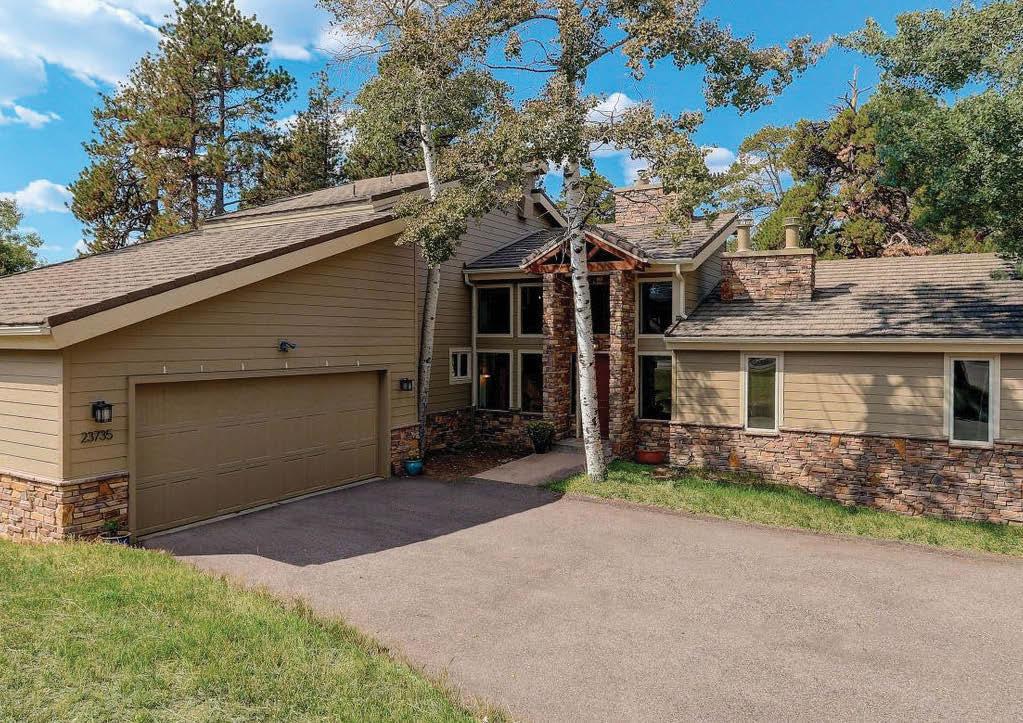





guiding you home since 1906 ColdwellBankerHomes.com GOLDEN | Price Upon Request Dreaming of mountain living yet close to the city? 5br/4ba mountain home boasts an open floor plan, Mount Evans views & newly remodeled kitchen. Four of the five bedrooms have their own private deck. The very cool garden level basement is ready for a cocktail, a fire in the fireplace and some good tunes. Located on a large half acre lot in Genesee, it is close to the Vista clubhouse, pool & tennis courts. It is time to start living the dream. Amy Smoldt 303.949.9683 amy@mountaintimerealestate.com | MountainTimeRealEstate.com BROOMFIELD | Price Upon Request Don’t miss the opportunity to live in this highly sought after Cornerstone model in the Anthem Highlands Community. Well-appointed 4br/4ba home boasts an office, wide-open floor plan, mountain views, family room w/fireplace & custom wood beams, gourmet kitchen w/SS appliances & granite counters & finished walk-out basement. Near PRA & Thunder Vista & rec center. Jennifer Kiss 303.828.7472 | jennifer@4sresidentialgroup.com | 4SResidentialGroup.com Michael Brassem 303.494.0990 | michael@4sresidentialgroup.com | 4SResidentialGroup.com SPECIAL ADVERTISING SECTION
Shannon Byerly 303.919.2611

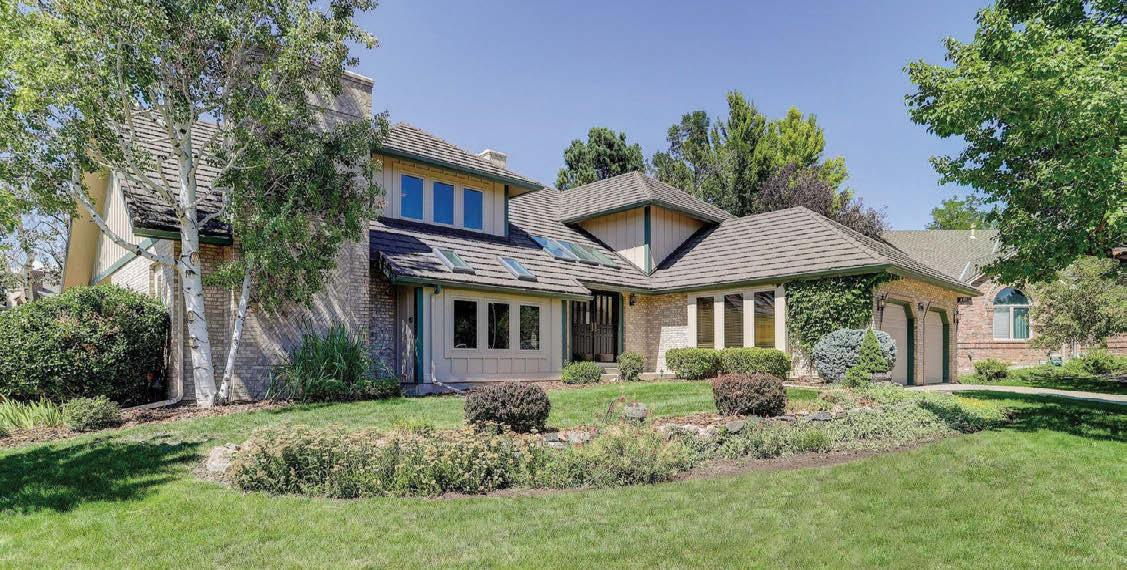


Tolnay
ColdwellBankerHomes.com EVERGREEN | $1,245,000 SOLD! 5BR/3.5BA offers a living room w/a fireplace. Main floor master w/a spa like bath and a walk-in closet. Kitchen w/a pantry, quartz counters and an island. Upper level w/a loft, 2nd fireplace and a hidden office. Complete w/a basement and deck. Dorie Lisowska 719.337.2442 dorio2006@hotmail.com | doriesellsDenver.com GOLDEN | $1,000,000 Stunning unobstructed lot has jaw dropping views of the foothills and Fossil Trace Golf Course as a backdrop. Enjoy living in a luxury neighborhood nestled against the Rocky Mountain front range. Near Colorado School of Mines & downtown Golden.
Soledad
303.349.1043 AURORA | $998,000 3br/3ba ranch surrounded by open space in Tallyn’s Reach features an open layout floorplan, gourmet kitchen w/GE Profile ss appliances, cherry cabinets & slab granite counters, great room w/fireplace, fully finished, walk-out basement & 3-car garage. Kari Smith 303.324.2376 kari@denverhomesbykari.com | DenverHomesByKari.com DENVER | $989,000 Stunning ranch in Gun Club gated community is beautifully updated. Featuring a sunlit, bright great room w/exposed beams, soaring vaulted ceilings, wood floors & gas fireplace & gourmet kitchen w/quartz island. Close to Bible Park & Cherry Creek. Mary Ann O'Toole 720.530.6878 Otoolemaryann@gmail.com | MaryAnnOtoole.cbintouch.com CENTENNIAL | $975,000 4br/2.5ba home on a huge lot adjacent to the community gardens & park. Featuring soaring vaulted ceilings, living room w/wall of windows, open kitchen, breakfast nook, family room & main floor primary suite. Close to Streets of Southglenn. Julie Thelander 303.520.2308 julie.thelander@cbrealty.com | JulieThelander.cbintouch.com CENTENNIAL | $975,000 Stunning colonial brick 5br/4ba home in Piney Creek featuring an office, living & dining room with intricate ceiling accents, chef’s kitchen & family room with vaulted ceilings & brick accented wall. Amenities include pool & clubhouse w/low HOA. Shannon Byerly 303.919.2611 shannon@yourfreshstartrealtor.com | YourFreshStartRealtor.com SPECIAL ADVERTISING SECTION
Upon





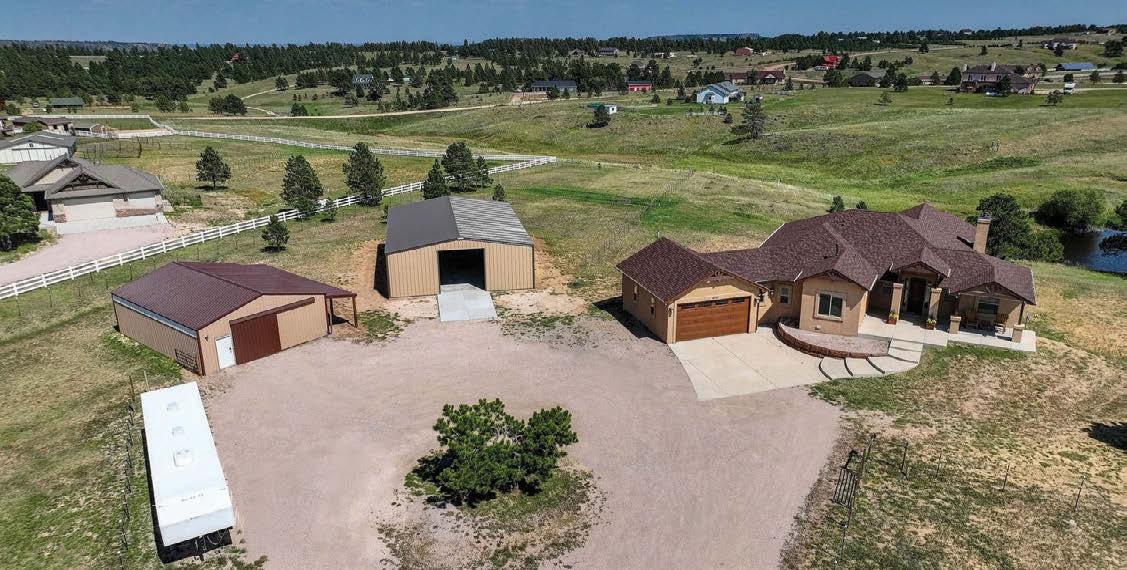

guiding you home since 1906 ColdwellBankerHomes.com COLORADO SPRINGS | Price Upon Request 5br/5ba home. Great room w/fireplace. Kitchen w/SS appliances, dual oven, an island, butler’s pantry and a walk-out to the deck. Owner’s suite w/an updated spa bath and dual walk-in closets. Complete w/a finished basement and multiple outdoor spaces. Zane Whitfield 719.332.3930 Zane@ccSignatureGroup.com | Zane.ccSignatureGroup.com PEYTON | Price Upon Request 4br/5ba on 5-acres in Peyton Pines w/built-in speakers in living rooms, kitchen has granite counters, breakfast bar, drawer microwave, and pot filler; office, recreation room w/fireplace, multiple walk-out decks, hot tub, barn & shop. Zane Whitfield 719.332.3930 Zane@ccSignatureGroup.com | Zane.ccSignatureGroup.com BROOMFIELD | Price
Request Immaculate 4br/4ba home in Anthem Highlands features an open concept kitchen, living room w/custom built-ins & fireplace, office, loft & finished basement. Community features a Rec Center, parks, 2 pools, trails & more. Close to PRA & Thunder Vista. Jennifer Kiss 303.828.7472 Michael Brassem 303.494.0990 LONE TREE | $875,000 Beautifully updated 3br/3ba patio home in Enclave located in Lone Tree featuring an office, open floorplan, updated kitchen w/quartz countertops, formal dining area & professionally finished basement. Close to I-25, C470 & Park Meadows Mall. Colleen Teitelbaum 303.668.8186 teitelbaumcolleen@gmail.com | CocoTeitel.com BROOMFIELD | $800,000 Beautiful 4br/4ba home located in Broomfield Country Club Estates features a remodeled kitchen, 2 formal living spaces, wood-burning fireplace & finished basement. Close to Broomfield Country Club & a short drive to Boulder & downtown Denver. Tiffani Harris 720.469.9755 Tiffani.Harris@CBRealty.com LAKEWOOD | $775,000 Desirable Green Mountain Location! You will enjoy the spacious 5+ bedrooms, 4 baths, on a corner lot. Primary bedroom w/seating area, walk-in closet and remodeled bath. Complete w/a finished basement, 3-car garage, great backyard and no HOA. Kelly Redpath 303.548.4058 Kelly@kellyredpath.com | KellyRedpath.com SPECIAL ADVERTISING SECTION

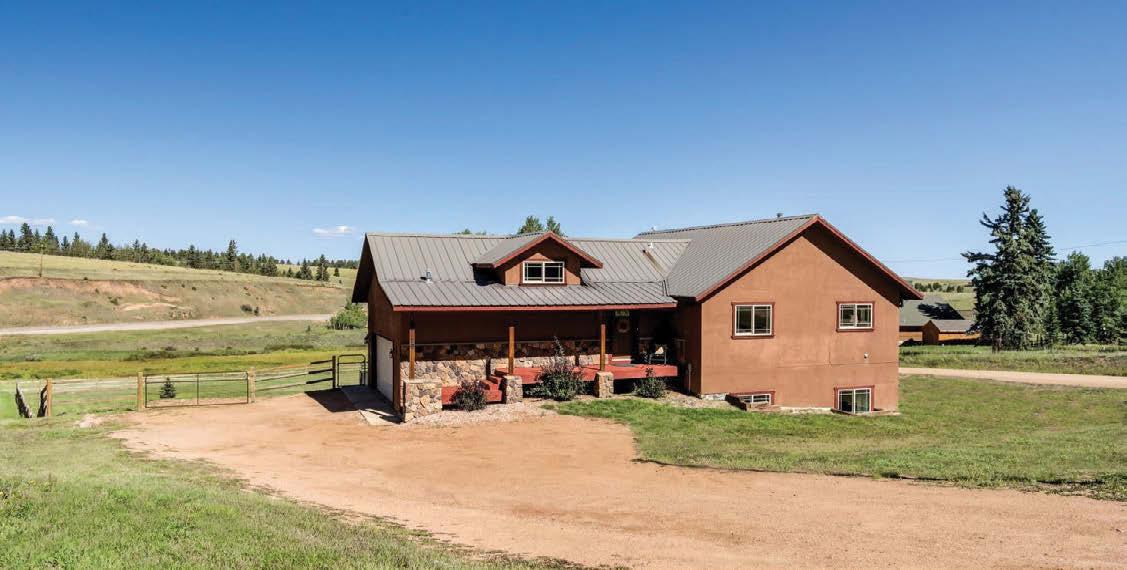
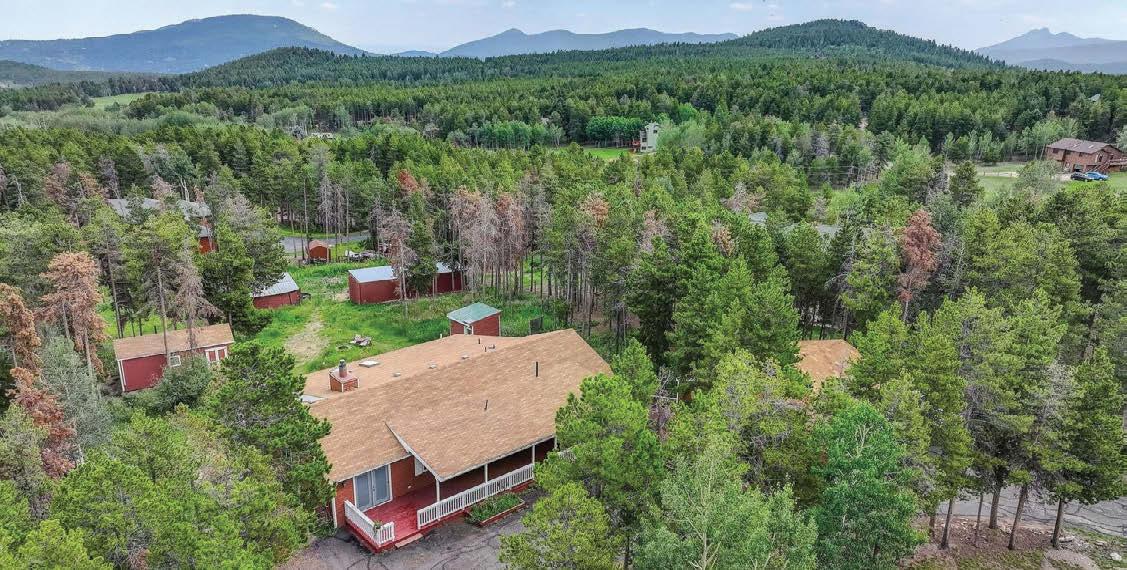
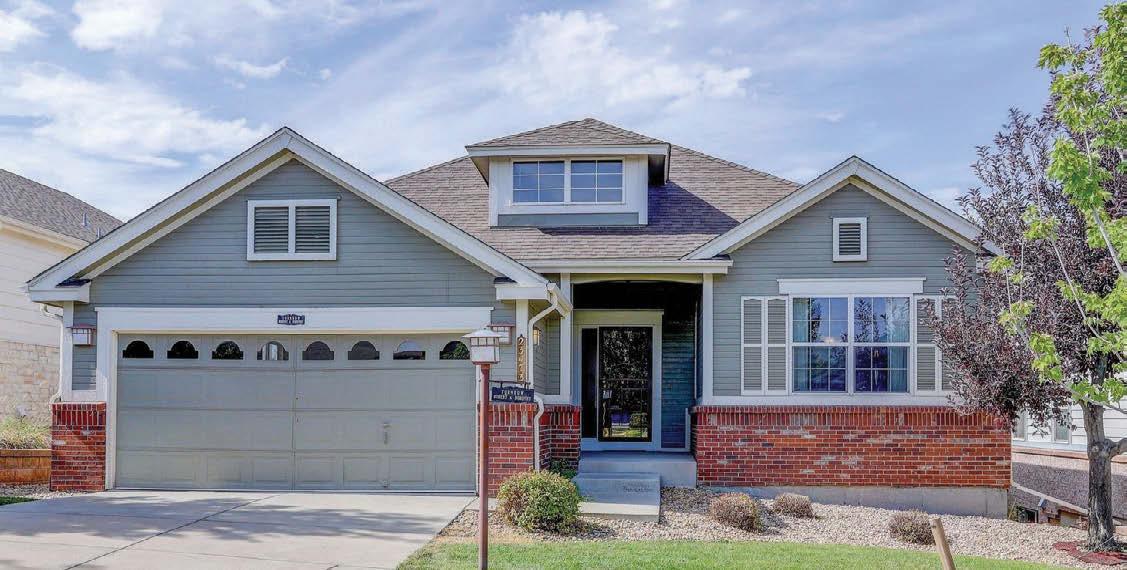
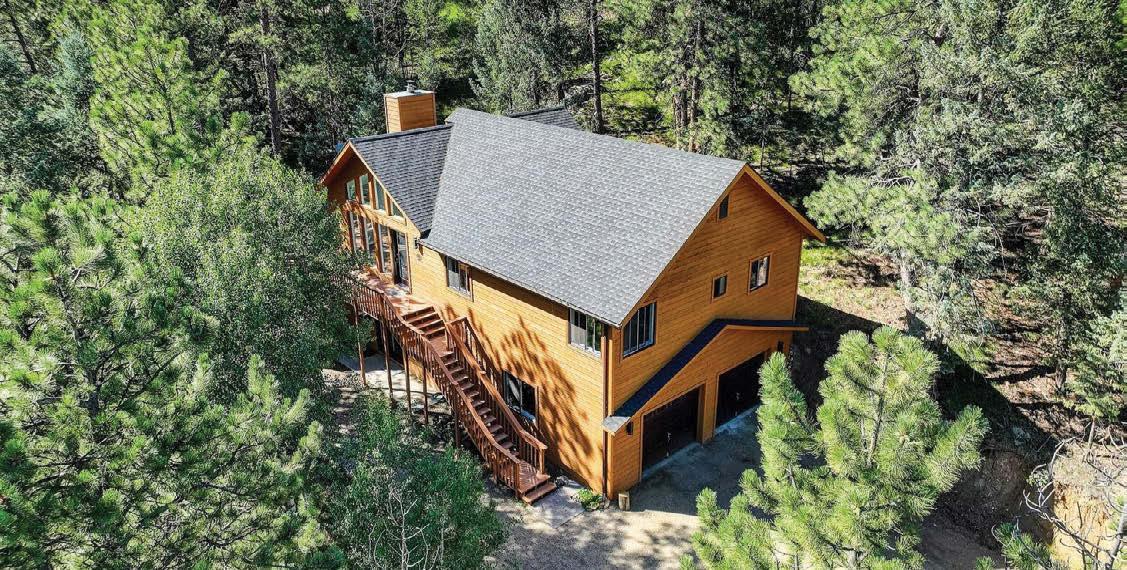
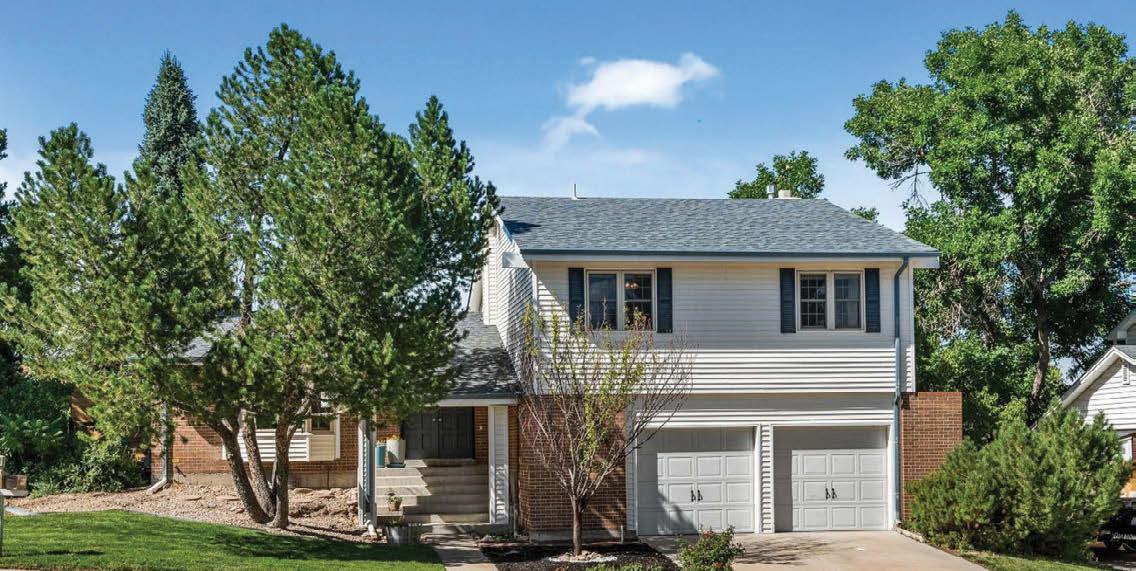
ColdwellBankerHomes.com PARKER | Price Upon Request Beautiful 4br/2.5ba home in Antelope Heights in Parker features 3,685 SQFT & a beautifully landscaped lot, close to Gold Rush Elementary. Includes an office, dining room & updated, eat-in kitchen w/quartz counters, SS & freshly painted cabinets. Jennifer Vitella 303.210.3363 Jenn@JenniferVitellaRealty.com | JenniferVitellaRealty.com DIVIDE | Price Upon Request Rock & stucco 3br/3ba home sits on a fenced 2-acres. Featuring an open concept floor plan w/updated kitchen appliances, owner’s suite w/fireplace & professionally finished basement. Located near a community lake & short drive to Muller State Park. Zane Whitfield 719.332.3930 Zane@ccSignatureGroup.com | Zane.ccSignatureGroup.com CONIFER | $725,000 Great fenced 3br/2ba farm home on over an acre of useable land w/watering rights for horses, livestock & chickens. Featuring a beautifully remodeled open kitchen w/granite counters, dining room w/wood burning fireplace & family room w/pellet stove. Dawn Zalfa JD 720.495.1225 dawn.zalfa@cbrealty.com | DZsellsRE.com AURORA | $699,000 4br/3ba home backing to golf course, with kitchen, dining, and living areas that open out to the back deck. Primary suite w/soaking tub and walk-in closet. Complete w/finished walkout basement, back patio, and an oversized garage. Garth Criswell 303.669.0252 Garth.Criswell@coloradohomes.com | GarthCriswell.com BAILEY | $699,000 Updated 3br/3ba home situated on 1 acre featuring stunning mountain views. Featuring new luxury vinyl flooring, new kitchen staninless smart appliances, wood burning fireplace insert & primary suite w/bath, new carpet & private deck. Cindy Sahli 303.588.2399 cindy.sahli@cbrealty.com | CindySahliRealEstatePro.com DENVER | $689,000 Fantastic, updated 4br/4ba home on a cul-de-sac! Featuring a living & dining area, updated kitchen w/beautiful granite countertops & breakfast nook. Family room w/fireplace & spacious loft w/built-in bookshelves. Backyard oasis has a 2-tier deck. Amanda Larson 303.523.9288 amanda.larson@cbrealty.com | DenverHomesByAmanda.com SPECIAL ADVERTISING SECTION
SPRINGS
$640,000



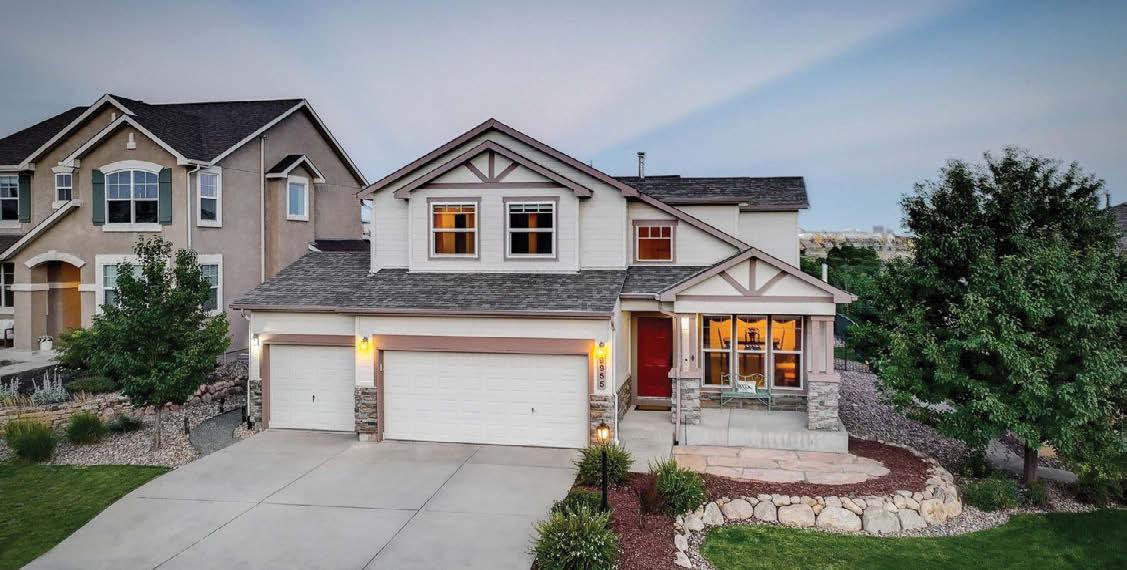
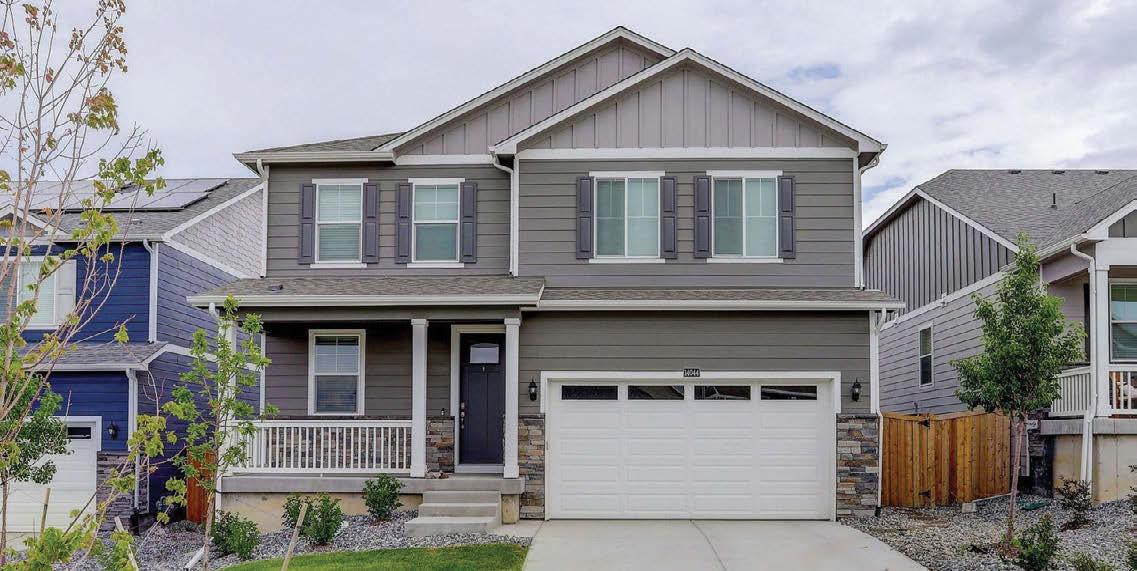
Thompson

Upon
SPECIAL ADVERTISING SECTION guiding you home since 1906 ColdwellBankerHomes.com PARKER | $675,000 3br/3ba home w/an open floor plan. Kitchen w/a large pantry, SS appliances, gas range, quartz countertops and a subway tile backsplash. Primary bedroom w/a walk-in closet and attached bath. Complete w/a landscaped backyard and stamped concrete patio. Joe Blinn 720.498.1365 joe@therowleygroup.com | TheRowleyGroup.com COLORADO
|
5br/4ba Pine Creek home. Family room w/a fireplace. Kitchen w/granite countertops and SS appliances. Primary bedroom w/a 5-piece bath and walk-in closet. Basement w/a 2nd family room, bedroom and full bath. Complete w/a backyard and 3-car garage. Rob
719.337.7254 rob.thompson@cbrealty.com | RobThompsonHomes.com LOVELAND | Price
Request Remodeled 4br/4ba home on a half-acre lot features a kitchen w/white shaker cabinetry & quartz counters, finished basement & $90,000 in custom updates including an expanded primary suite w/stunning en-suite bathroom & custom designed closet. Lynn Hodges 303.913.0166 lynn.hodges@cbrealty.com | LynnHodgesCO.com LITTLETON | $620,000 4br/3ba home in Roxborough Village is updated and turnkey ready. Thoughtfully designed open floor plan, generously sized kitchen, dining area, family room w/upgraded gas fireplace w/stone accents, primary bedroom w/attached bath & finished basement. Shannon Byerly 303.919.2611 shannon@yourfreshstartrealtor.com | YourFreshStartRealtor.com CASTLE ROCK | $610,000 Beautiful 4br/3ba 2-story home located in Cobblestone Ranch features a kitchen w/granite countertops, glass tile backsplash, hardwood floors & SS appliances & living room w/fireplace. HOA includes a community pool, tennis courts, trails & parks. Joe Blinn 720.498.1365 joe@therowleygroup.com | TheRowleyGroup.com DENVER | $575,000 Spectacular 3br/1ba townhome in a prime City Park West location offers unbelievable charm w/all the modern finishes. Open floor plan filled w/natural light, hardwood floors, tall ceilings, large windows, updated kitchen, basement & fabulous backyard. Chriss Bond 720.771.7369 Chriss.Bond@cbrealty.com | www.chrissbond.com


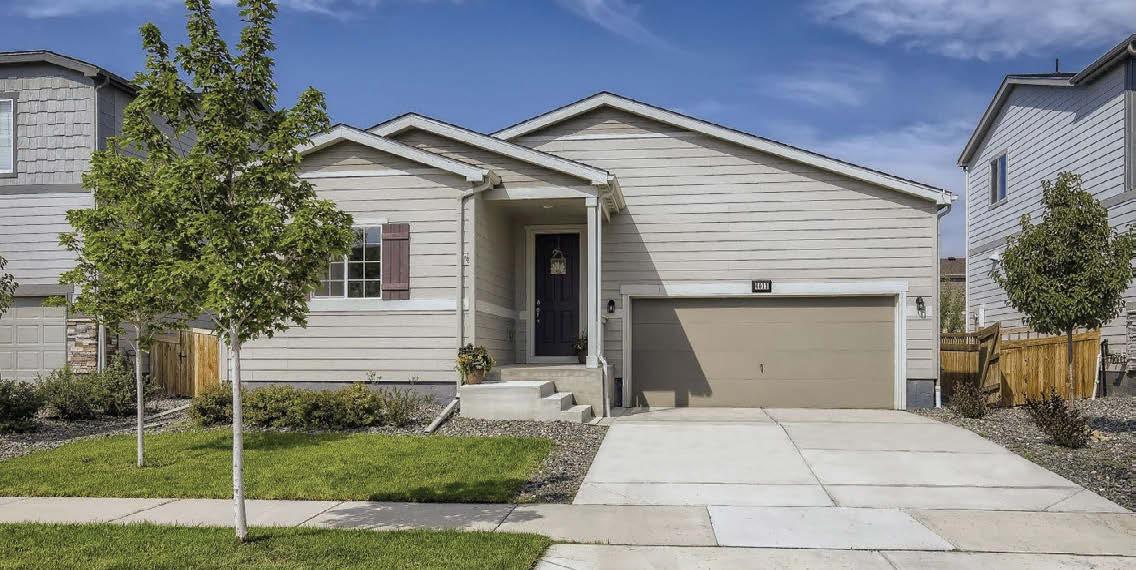


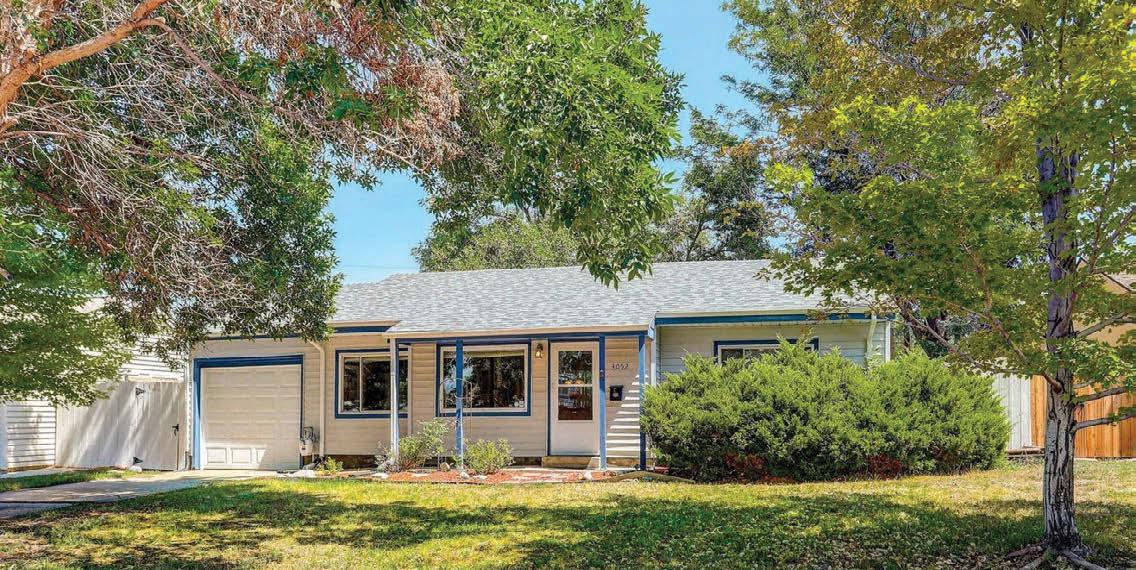
ColdwellBankerHomes.com DENVER | $549,000 5th floor 2br/2ba condo in the historic fully renovated Baldwin Building has 1,172 SQFT of living space, exposed brick wall, vaulted ceilings, open kitchen w/ss appliances & private balcony right over 16th St Mall. Great Central Downtown location! Sean Closset 720.308.7505 sean.closset@cbrealty.com | SeanSellsColorado.com AURORA | $545,000 Stunning, spacious, end unit 4br/4ba townhome boasts over 2,700 SQFT including a living room w/gas fireplace, designer kitchen w/quartz counters & finished basement. Near Heritage Eagle Bend Golf Course & Red-Tailed Hawk Park. Easy access to E470. Alison Kaufman 203.981.4337 ASKAlisonK@gmail.com | ASKAlisonK.com FREDERICK | $536,900 Beautifully maintained 3br/2ba ranch in Wyndham Hill w/lots of parks features 9-ft ceilings, kitchen w/white cabinets, granite counters & pantry, spacious living room, laundry room, covered patio & 2-car attached garage w/built-in oversized loft. Linda Chea 720.397.0388 linda.chea@cbrealty.com THORNTON | Price Upon Request Stunning raised ranch 5br/2ba home has been remodeled in 2018 & the 9,000 sq ft lot offers views of the mountains & downtown Denver. Open & bright modern floor plan, 2 living rooms & wood burning fireplace. Close to Yorkborough Park. Lynn Hodges 303.913.0166 lynn.hodges@cbrealty.com | LynnHodgesCO.com DENVER | $520,000 1br/2ba 2nd-floor residence w/open floor plan features 12’ ceilings, oak floors, exposed concrete ceiling & ductwork, floor to ceiling windows & gas fireplace. 1 parking space. Close to Coors Field, Pepsi Center & Denver Performing Arts Center. Robb Green 303.885.2924 robb.green@cbrealty.com | RobbGreen.cbintouch.com DENVER | $518,000 3br/2bath home w/an open layout. Updated kitchen w/quartz countertops and SS appliances. Primary bedroom w/an en suite bath. Backyard w/a gazebo, a deck and a shed. Close to highly rated schools, the Highline Canal Trail, many shops and restaurants. Jake Rapplean 720.694.0771 jake.rapplean@cbrealty.com | JakeRappleanEstates.com SPECIAL ADVERTISING SECTION
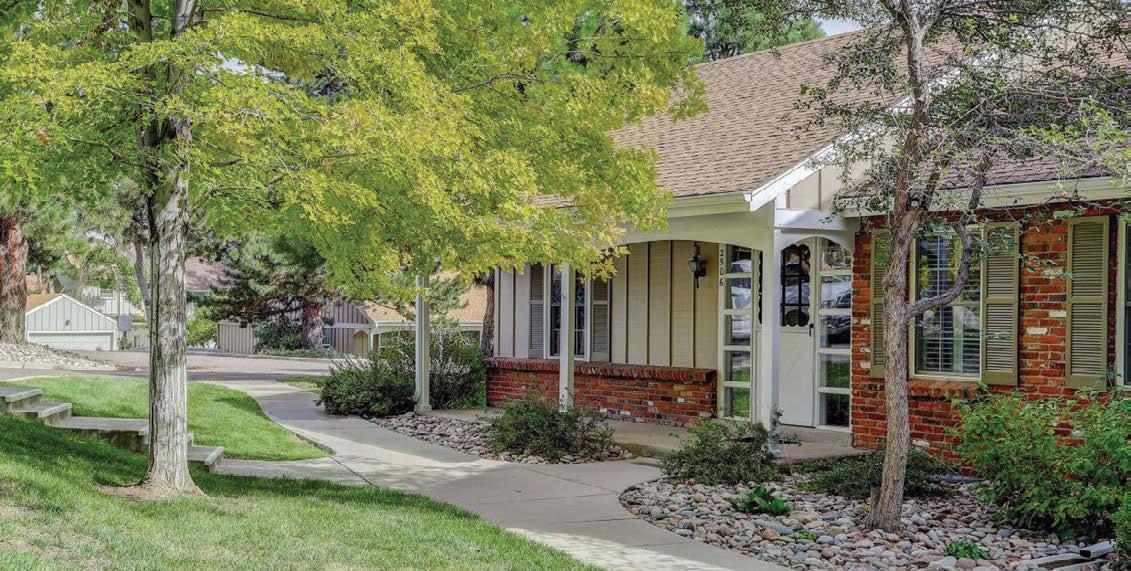
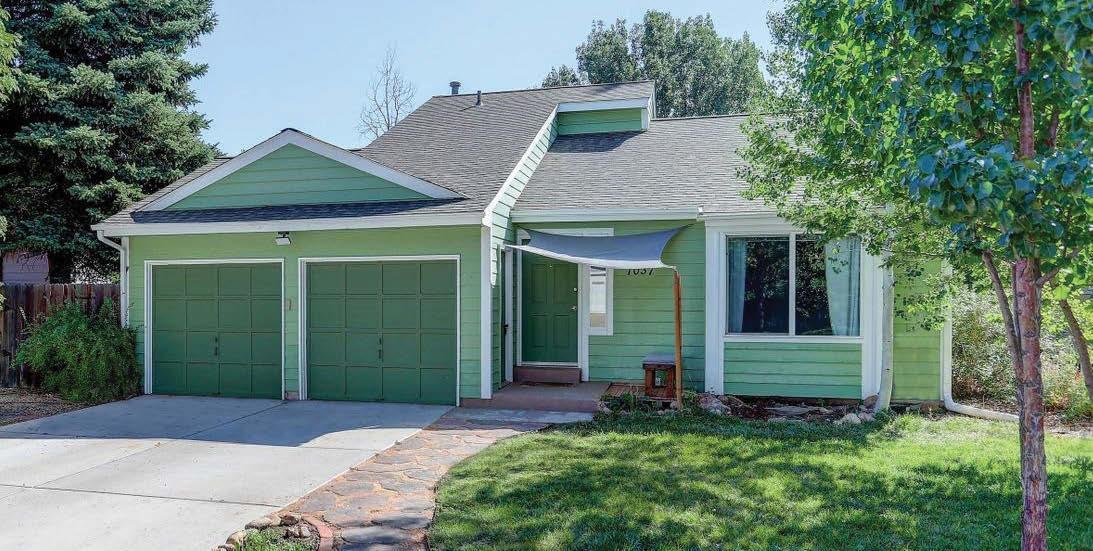
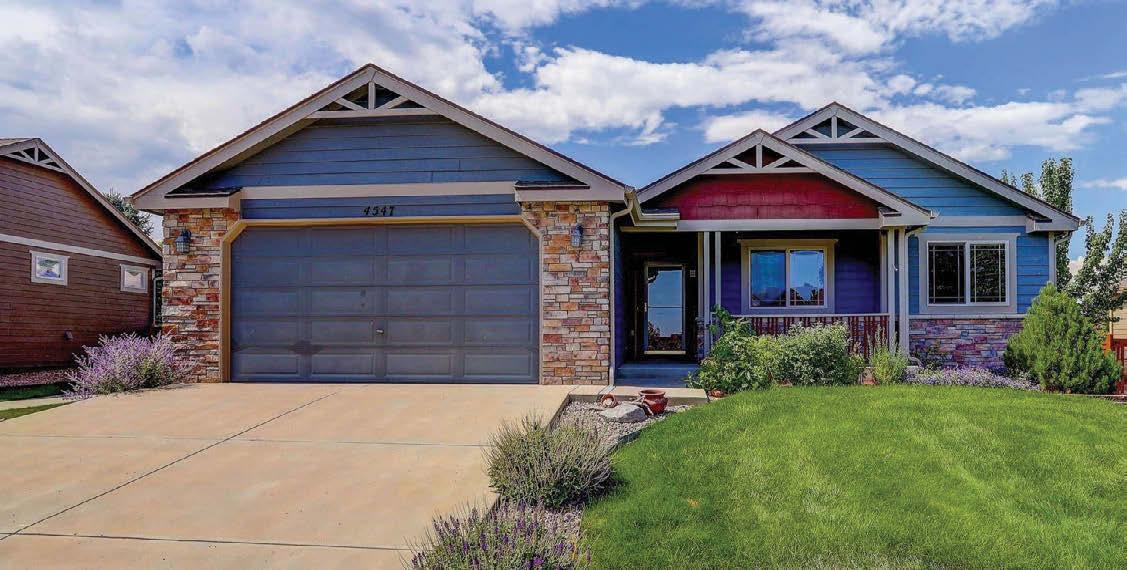
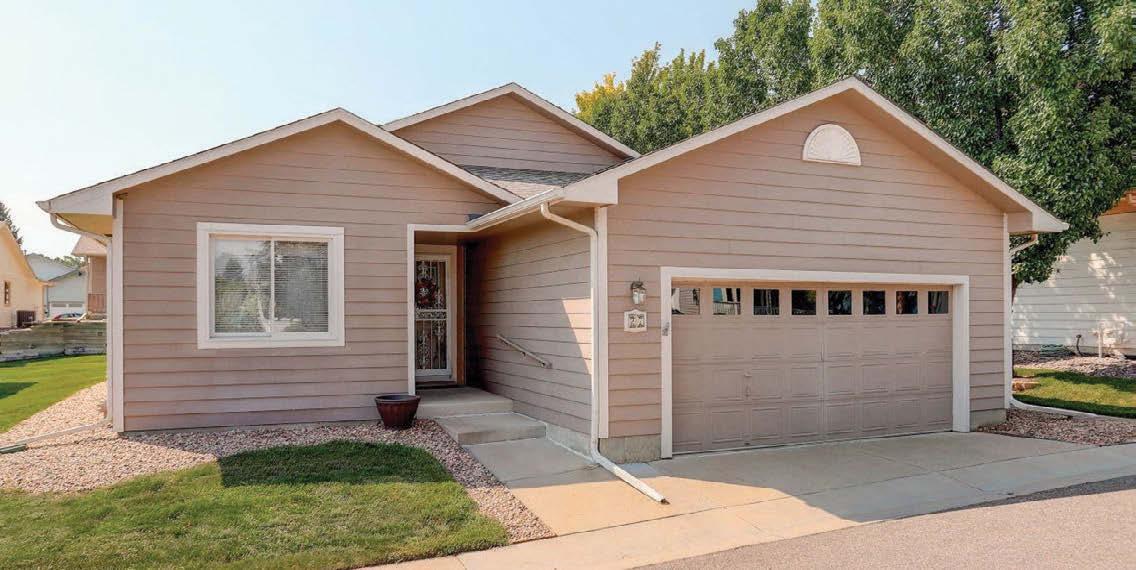

guiding you home since 1906 ColdwellBankerHomes.com FORT COLLINS | $508,000 Charming, updated 3br/2ba home w/adorable kitchen & SS appliances which opens to a large deck. Large primary bedroom w/vanity. Separate entrance to private Zoom Office. Spacious fenced yard w/hot tub. New sewer line, furnace, & electrical panel. Christina Larson 970.443.4111 You.re.Home777@gmail.com | DiamondHomesACutAbove.com LOVELAND | $500,000 Delightful Northwest Loveland 3br/2ba home in Enchantment Ridge showcases a bright & open floor plan. Featuring wood floors, decorator-inspired ledges, breakfast bar, trapezoid windows & retreat-like primary suite. Backs to neighborhood greenbelt. Jody Jewell 970.646.2276 jody.jewell@cbrealty.com BROOMFIELD | $489,000 Gated 55+ Community in Broomfield w/2br/2ba ranch & 1,457 SQFT living space. Including an open floor plan, family rm w/fireplace & covered patio. Community features a 24-hour security gate, clubhouse, pool, fitness facility, pond & beautiful grounds. Linda Gilbert 720.232.1990 Greg Gilbert 303.250.9007 CENTENNIAL | $475,000 Ranch styled 3br/3ba end unit in the Village at the Knolls features Cedar floors, covered front porch & back patio, fireplace, plantation shutters & lots of storage. Close to Streets at Southglenn, parks & trails. Quick drive to Denver University. Karen Valdez 303.886.4545 karen.valdez@cbrealty.com | KareniValdez.com AURORA | $437,000 2br/2ba townhome w/a gas fireplace. Kitchen w/granite countertops and SS appliances. Upstairs has a primary bedroom w/a walk-in closet, a loft and full bath. Basement w/a space for an office or gym, a bathroom and bedroom. Complete w/a private patio. Karen Valdez 303.886.4545 karen.valdez@cbrealty.com | KareniValdez.com THORNTON | $435,000 Bright & beautiful, paired 2br/1.5ba home located in Eastlake Village III. Main floor features tall ceilings, abundant sun filled windows, living room w/fireplace, dining area & kitchen. Across the street from the Eastlake Nature Preserve! Heidi Martinez 303.717.1870 Heidi@HPMColoradoRealEstate.com | coldwellbankerhomes.com SPECIAL ADVERTISING SECTION
PARKER
Upon Request
DENVER
2br/2ba



$350,000
AURORA
ColdwellBankerHomes.com
| Price
Beautiful main floor, 2br/1ba condo in Prairie Walk on Cherry Creek. Featuring a kitchen w/granite counters & newly painted cabinets, living room w/fireplace & 2 patios. Amenities include clubhouse, pool & more. Cherry Creek Trail system close by. Jennifer Vitella 303.210.3363 Jenn@JenniferVitellaRealty.com | JenniferVitellaRealty.com
|
townhome features an open floor plan w/breakfast bar, dining room, wood burning fireplace, oak hardwood flooring, vaulted ceilings, balcony & remodeled bathrooms. Close to trails, transportation, shopping, Cherry Creek & Downtown. Kelly Baca 303.748.3295 Kelly.Baca@ColoradoHomes.com | AgentKellyBaca.com DENVER | Price Upon Request Remodeled 2br/1ba condo in Congress Park features a kitchen w/white cabinets, granite counters & SS appliances, wide planked flooring throughout, updated bathroom, living room w/wood burning fireplace & covered balcony. Near City Park & Denver Zoo. Lorena Jimenez 720.937.4012 lorena.jimenez@cbrealty.com
| $345,000 2br/3ba turnkey ready property in Sterling Hills features a 2-car tandem garage, 3 outdoor living areas & open floor plan. New flooring & interior paint. Two ensuite bedrooms w/attached bath. Easy access to E-470, DIA, Cherry Creek State Park.. Shannon Byerly 303.919.2611 shannon@yourfreshstartrealtor.com | YourFreshStartRealtor.com LAKEWOOD | $275,000 Large single-level 2br/1ba condo in an amazing locale, close to James Richey Park & Starbucks & 10-minute drive to Golden or Downtown Denver. The home flows seamlessly w/light beaming from the kitchen through the dining area & into the living room. Brandi Miller 720.442.1681 brandi.miller@cbrealty.com | BrandiMillerProperties.com DENVER | $225,000 Completely updated 1bd/1ba in the heart of Capitol Hill! Spacious living room, eat-in kitchen, washer/dryer, plus reserved parking! Fantastic location near shopping, restaurants and Cheesman Park. Pet-friendly building! Great place to call home! Kelly Redpath 303.548.4058 Kelly@kellyredpath.com | KellyRedpath.com SPECIAL ADVERTISING SECTION
AURORA
Jagger
HIGHLANDS RANCH









CASTLE
Drummond 720.788.4599

guiding you home since 1906 ColdwellBankerHomes.com BOULDER | $1,750,000 Brand-new 3br/4ba 3-story end unit townhome boasts modern & high-end finishes & located in downtown Boulder. Private rooftop deck w/Foothill & Flatiron views. McFall Draheim Partnership 720.232.8212 CONIFER | Price Upon Request Sun-drenched 4br/4ba home on 5 acres w/mountain views offers a great room, open floor plan, wood floors, stacked stone surround wood burning fireplace & newer kitchen w/granite counters. Susan Trindl 303.710.2411 Dawn Havery 720.413.0318 DENVER | $849,000 Beautiful 3br/3ba home w/2-car attached garage located right off Broadway & Evans! Location is everything for this property especially with the lot size making opportunities endless. Calla Walker 720.560.4755 HIGHLANDS RANCH | $849,000 Stunning home features a great room w/soaring vaulted ceilings, gas fireplace & gourmet kitchen w/quartz counters. Quick access to C-470 & near Whole Foods. Access to HRC Rec Centers. Mary Ann O'Toole 720.530.6878 ARVADA | $784,900 Magnificent 3br/2ba ranch features an open concept w/gourmet kitchen, living area w/modern stone fireplace, owner’s suite, oversized 3-car garage & unfinished 1,900+ SQ FT basement. Marcus Harris 720.217.8904
| $740,000 Lovely 4br/3ba home in desirable Firelight features beautiful hardwood floors, gourmet kitchen w/upgraded granite counters, flex room, family room w/fireplace & stamped concrete patio. Lynne Ross 303.520.8800 LITTLETON | $739,900 Updated 4br/4ba home. Sunfilled main floor with living, dining,spacious kitchen and family room. Expansive Trek deck. Primary Bedrm has ensuite bath. Finished walkout basement. Joni Jagger 303.437.3046
| $699,900 Beautiful updated 3br/3ba home featuring updated kitchen w/granite counters, spacious primary bedroom w/remodeled bath & garden level finished basement. Heritage Eagle Bend Community! Joni
303.437.3046
ROCK | $699,000 Charming & spacious 4br/3ba home features a wrap around porch, solid oak hardwood floors, huge primary suite w/5pc bath & beautiful kitchen. Near Castlewood Canyon. Community pool. Jessica
DENVER | $650,000 Investor/Developer opportunity! 5br/2ba home, finished basement, close to park. Was rented for $3k. TLC and increase rent. Sizable living area wood floors, galley kitchen. Newer HVAC. Garvin Laverick 720.245.9956 AURORA | $620,575 4br/3ba home. Kitchen w/plenty of cabinets and counter space and a center island. Enjoy an owner’s retreat and a main floor bedroom w/access to a 3/4 bath. Complete w/basement and yard. Marcus Harris 720.217.8904 COLORADO SPRINGS | $605,000 Beautiful turnkey 5br/3.5ba home centrally located in Northern Colorado Springs, within minutes to I-25, Briargate Shopping Center, the newly opened Scheels, restaurants & so much more! Calla Walker 720.560.4755 SPECIAL ADVERTISING SECTION
AURORA | $595,000
5br/3ba home offers gorgeous hardwood flooring, beautiful great room w/fireplace & open kitchen w/upgraded slab granite counters. Convenient access to Buckley Space Force Base & DIA.
Lane Lyon Denver Home News Team 303.667.0309
CENTENNIAL | $569,000

3br/3ba home on open space. Kitchen w/SS appliances, an island and a butler's pantry. Primary bedroom w/a bath and walk-in closet. Complete w/basement, side yard patio and 2-car garage.
Kari Smith 303.324.2376
LITTLETON | $525,000
4br/3ba home. Family room w/a wood burning fireplace. Upstairs has a primary suite w/an en-suite bath, two more bedrooms and a full bath. Conclude w/a finished basement and large yard.
The Dudley Team 303.995.7377
DENVER | $550,000





Great investor & developer opportunity. On the open market for first time in 25+ years. Original layout modified to add additional bedroom. HVAC replaced abut 5 years ago.
Garvin Laverick 720.245.9956
Price Upon Request
COLORADO SPRINGS | $510,000
Bright & open 5br/4ba home features new LVP flooring, living & dining room, kitchen w/breakfast nook, family room w/fireplace & lower level w/rec room & wet bar. Close to Powers Blvd.
Jennifer Montoya 719.232.3397
LITTLETON | $475,000
3br/2.5ba home. Living room w/a fireplace. Kitchen w/a work station. Primary bedroom w/an en-suite bath and a walk-in closet. Complete w/an unfinished basement and a fenced backyard.
The Dudley Team 303.995.7377
FIRESTONE
3br/2ba
Price Upon Request
THORNTON
ColdwellBankerHomes.com
THORNTON |
3br/2ba patio home in Eastlake Shores by a greenbelt features vaulted ceilings, great room w/fireplace, open kitchen w/included appliances & stamped patio. Near East Lake Shores Park. Debbie Cooper-George 303.944.8494 LAKEWOOD | $460,000 3br/3ba home. Main level w/an open kitchen and dual living rooms w/a 2-sided fireplace. Main floor primary bedroom w/primary bath. Complete w/a basement, covered patio and 2-car garage. Debi Haning 303.960.8252
|
in Firestone features a remodeled kitchen, new paint & trim throughout, updated bathrooms & lights. Corner lot w/1-car attached garage and extra parking, fully fenced back yard. Amy Metz 720.272.7337 DENVER | $460,000 Rare top-floor 2br/2ba condo at The Lanai is light, bright, spacious & open. Featuring a brand-new kitchen, a newly enclosed balcony & updated bathrooms! Close to Cheesman Park & RTD! Mike Kornelsen 303.918.8910 COLORADO SPRINGS | $440,000 Beautiful tri-level 4br/3ba home w/2-car garage in Homestead. Features a large open living room with vaulted ceilings. Located near walking trail. Minutes from the Powers Corridor. Anna Fish 719.650.9300
| $400,000 2br/2ba updated ½ duplex in much desired Deer Run Community w/open floor plan, fireplace, modern kitchen, private yard. Great location in highly rated Adams 12 5-Star School District. Nita Kolarsick 303.250.8280 SPECIAL ADVERTISING SECTION
LAKEWOOD | $350,000
DENVER | $345,000






THORNTON | Price Upon Request
AURORA | $299,900
1br/1ba
skylight,
open
plan w/vaulted
near Belmar & close to 6th Ave.
Cyndi DeLaney 303.204.3834

3br/1ba home w/updates throughout including a living space that opens to the kitchen and dining area. Kitchen w/tile flooring and backsplash and a gas range. Complete w/fenced backyard.
The Dudley Team 303.995.7377
Freshly remodeled, 2br/2ba turn-key condo features new updates including flooring, paint, appliances, butcher-block high-top bar, kitchen cabinets, tile around fireplace & mantle. Jessica Gissa 720.310.5952
guiding you home since 1906 ColdwellBankerHomes.com COLORADO SPRINGS | $399,000 4br/3ba home features a stucco & brick exterior, living room w/original brick fireplace & all-seasons room w/skylights. Views of Pikes Peak from deck. Tessa Cofer 719.332.7189 BOULDER | $370,000 2br/2ba top floor condo conveniently located in a quiet neighborhood just a few minutes’ drive from Boulder & Longmont. HOA includes an outdoor pool, tennis courts, clubhouse & more. Jillian Fowler 303.884.2032 Tom Fowler 303.956.2575
Gorgeously updated main level 2br/2ba condo in the Lodge at Terralago. Featuring an open floor plan, fireplace & modern kitchen. Close to East Lake Recreation & Trail Winds Rec Center. Debbie Cooper-George 303.944.8494
fully furnished turn key condo offers an
floor
ceiling, large windows,
fireplace, hardwood flooring & loft. Located
Dreaming of never
having too many
cooks in the kitchen? Work with a Coldwell Banker ® affiliated agent to make your dream home a reality. SPECIAL ADVERTISING SECTION
BACKSTORY
WELCOME TO THE META-DENVER-VERSE
This month, Seoul plans to launch the first stage of Metaverse Seoul, an ambitious five-year plan to code a dig ital re-creation of the South Korean capital. When it’s finished, residents will be able to explore historical sites, tour museums, attend virtual events, and even stop by City Hall to hack away at red tape without leaving their couches. Given Governor Jared Polis’ love of all things high-tech—including collecting state taxes in crypto currencies—it’s only a matter of time until Colorado follows suit, starting with our own capital city. Which is why we came up with some of Metaverse Denver’s most important points of interest.
—NICHOLAS HUNT
LARIMER SQUARE
Pop into the modern-day version’s boutique shops and high-end restaurants or activate the Wild West filter and experience the block in all its Victorian glory. Back then, cigar factories, hotels, saloons, and a dance hall (whose floor was suspended by cables for extra spring) lined the street.
CASA BONITA

Maybe things will improve when the restaurant reopens, but a virtual visit in which we’re able to skip the food but still watch the cliff divers sounds better than a trip IRL.
COORS FIELD
If we can build the stadium out of binary code, surely we can thicken the atmosphere to help the Rockies’ belea guered bullpen.
CHERRY CREEK TRAIL
This way, all the cyclists breaking the multiuse path’s 15 mph speed limit can simply pixel through our avatars instead of almost mowing us over.
AFFORDABLE HOUSING
It’s expensive to buy in Denver (the median home price here was $640,554 in August, according to Zillow)—but not in Detroit ($69,857). So purchasing physical real estate in the Motor City and “living” virtu ally in your very own mile-high McMansion would deliver the best of both worlds.
A 15ER
With no need to fly anymore, we can replace Denver International Airport with Colorado’s first 15,000-foot mountain. (Mt. Illuminati, maybe?) But we’ll be sure to keep Blucifer around to greet hikers at the summit.
BEA BARROS
164 5280 NOVEMBER 2022
ILLUSTRATION BY