Best Of The Mountain West
FROM SUGAR COOKIES TO SOURDOUGH, 30 SWEET AND SAVORY BAKERY TREATS PAGE 76 THE UNTOLD CHALLENGES FACING COLORADO’S SKI PATROLLERS
WHAT HAPPENS WHEN MILLENNIALS CAN’T AFFORD TO LIVE IN DENVER?
DECEMBER 2022 | 5280.com THE DENVER MAGAZINE Our Third Annual Celebration Of The People, Places, And Things Changing The Way We Live—For The Better
BY JAY BOUCHARD
BY ROBERT SANCHEZ

CHERRY CREEK MALL | PARK MEADOWS FORT COLLINS | FLATIRONS | BOULDER





SCAN FOR ELIXIR GOLD
Introducing ELIXIR GOLD

















JOHNATENCIO.COM













85% of CSU Rams secured employment or continued education within 6 months of graduation 80% of Colorado State students complete their degree in 4.5 years or less 84% of CSU Rams receive some sort of financial aid to start their education journey Learn more about financial aid resources
CSU RAMS GRADUATE WITH 20% LESS STUDENT LOAN DEBT


THAN THE U.S. AVERAGE

Colorado State is committed to student success before and after graduation. On-campus academic support and career resources enable CSU students to graduate with the confidence, skills, and spirit to change the world.

COLOSTATE.EDU
FEATURES
64
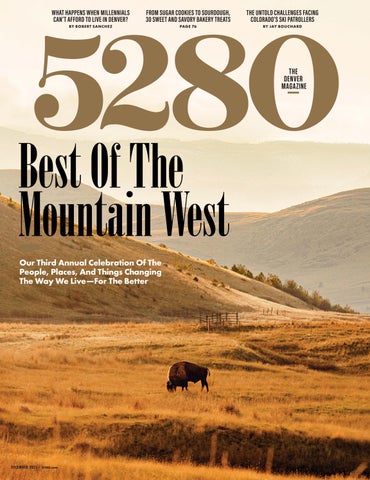
Best Of The Mountain West
Our third annual celebration of the people, places, and things changing the way we live for the better—from a megasculpture in the Nevada desert to a Montana bison preserve recently returned to Indigenous control.
EDITED BY JESSICA LARUSSO
76
Treat Yourself
Bakeries are having a mo ment, thanks to Denverites’ appetites for carb-loaded comfort and a pandemicdriven rise in storefront-free operations. We nibbled our way through fluffy cupcakes, vanilla-creamstuffed buns, and crackly sourdough loaves to find the tastiest goodies in and around the Mile High City.
BY PATRICIA KAOWTHUMRONG & RIANE MENARDI MORRISON

86
Generation Gapped
Denver has been a hot spot for millennial transplants. But what happens when the generation born between roughly 1981 and 1996 suddenly becomes the one that can’t afford to stay?
BY ROBERT SANCHEZ
DECEMBER 2022
Sarah Banks
Not Yo Mama’s Cupcakes owner Angelia Han
10 5280 | DECEMBER 2022
HEALTHY BREATHING TAKES LUNGS, HEART, SCIENCE AND CARE.
At National Jewish Health, the nation’s leading respiratory hospital, we bring doctors, scientists and caregivers together to find answers, develop treatments and solve the medical challenges of today and tomorrow. From providing care for adults and children with complications from COVID, to addressing the needs of patients with lung, heart, immune and related diseases — our experts work within our communities and across the nation.
Our research breakthroughs are improving and saving lives around the world, while our innovative care leads to extraordinary outcomes.
To learn more or make an appointment, call 800.621.0505 or visit njhealth.org.
DEPTS.
COMPASS
23 GIFT GUIDE
Following two years of pandemicinduced closeness, we could all use a little space. This holiday season, we suggest giving the gift that says, “Please leave.”
26 Q&A
CBS4 News’ Jim Benemann and 9News Mornings’ Gary Shapiro both announced that they are retiring soon. Before the celebrated newsmen sign off, we asked them to cover one last story: their own.
28 HOLIDAYS
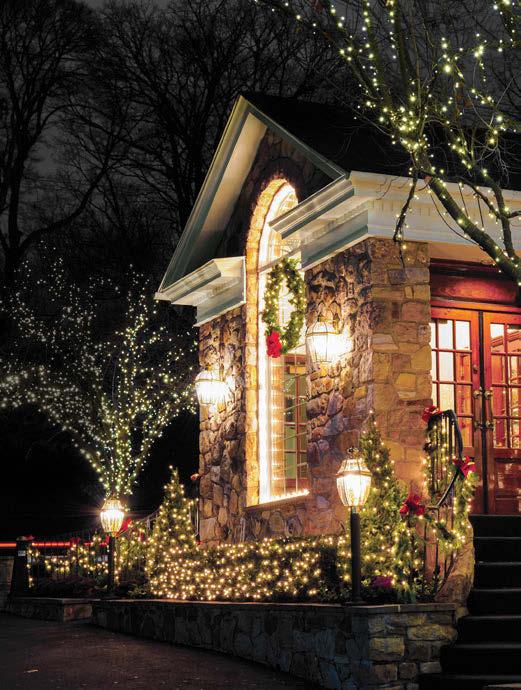
Shawn Sealy, owner of Little ton’s St. Nick’s Christmas and Collectibles, shares decorating tips for keeping the stress low when putting the lights high.
30 KIDS & FAMILY

Instead of hibernating when the mercury drops, take your hatch lings (and our bird-watching field guide) to Barr Lake State Park.
32 MUSIC

One year after CharlestheFirst’s death, Denver artists reflect on the ways the electronic musi cian continues to inspire them.
EAT & DRINK
35 WHAT’S HOT
Self-care mecca Nurture has a new way to indulge: dinner at Rewild.
36 Q&A
Meet Adam Freisem, the executive chef behind Castle Rock’s beloved Manna Restaurant.
38 BEST BITES
Chef Zin Zin Htun introduces patrons to the culture and cuisine of Myanmar.
40 REVIEW
The Cole neighborhood gets a taste of Brasserie Brixton’s refreshed bistro fare.
BY ALLYSON REEDY
COLUMNS
44 BUSINESS
Under financial strain and a heavy mental load, ski patrollers are grinding to keep the slopes safe—and to make their profession more viable.
BY JAY BOUCHARD
52 PROFILE
Jerome Osentowski is known the world over as a pioneer of permaculture. But can the Eagle County resident survive a challenge from a pest he never anticipated?
BY CHRIS WALKER

BACKSTORY
124 REVENGE SERVED HOT
Four fun places in Texas where you can escape the cold this month—and annoy the locals while you’re at it.
ON THE COVER 5280 (ISSN 10826815) is published monthly by 5280 Publishing, Inc.,1675 Larimer St., Suite 675, Denver, CO 80202. Subscriptions are $16 for one year (12 issues). Back issues are available for $6.99 plus tax and shipping by visiting shop.5280.com. Periodical postage paid at Denver, CO, and additional mailing offices. POSTMASTER: Send all UAA to CFS (see DMM 707.4.12.5). NONPOSTAL AND MILITARY FACILITIES: Send address corrections to 5280 Publishing, Inc., P.O. Box 3000, Denville, NJ 07834. Canadian Post Publications Mail Agreement No. #40065056 Canadian Return Address: DP Global Mail, 4960-2 Walker Road, Windsor, ON N9A 6J3. 5280® is a federally registered trademark owned by 5280 Publishing, Inc. 5280 also owns trademark registrations for TOP OF THE TOWN, DENVER’S TOP DOCTORS, DENVER MAGAZINE, and COUTURE COLORADO. © 2022 5280 Publishing, Inc. All rights reserved. 32 28
40
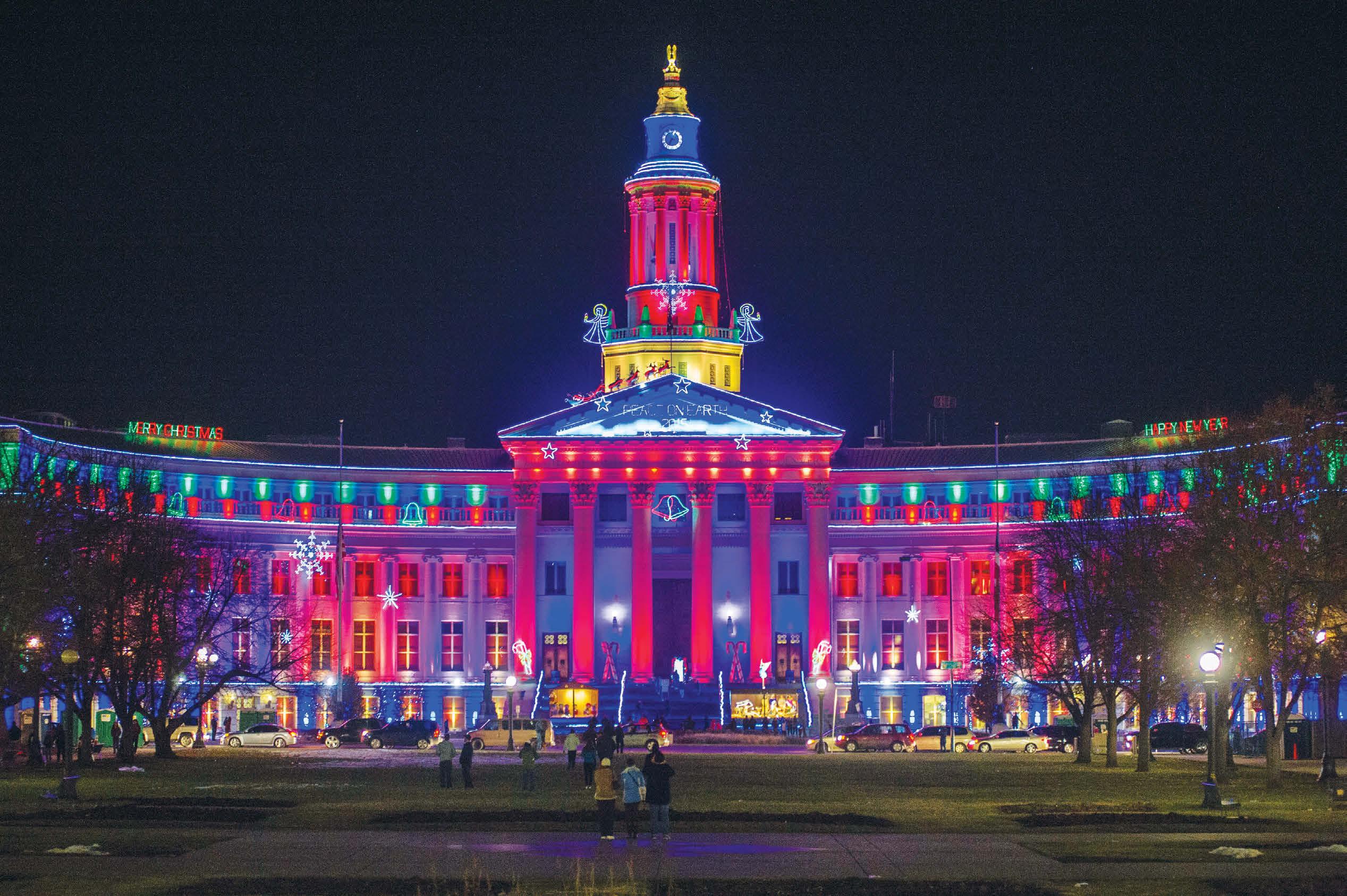
Photograph by Rebecca Stumpf The CSKT Bison Range in Montana
23
Clockwise from top left: Sarah Banks; Getty Images; Seth Watrous aka @Shutterfinger; Getty Images (2)
20
BEHIND THE STORIES
DINING GUIDE 92
welcome to your

If you’re ready for merry making or searching for good tidings, you will find places that light up your spirit this season in downtown Boulder. With local shops stocking unique gifts; cozy restaurants serving holiday cheer; and magical moments around every corner, come discover your happy place to fill your heart with holiday wonder.
Find your holiday happy place in Downtown Boulder.
VisitDowntownBoulder.com
PHOTOGRAPHY


14 5280 | DECEMBER 2022
5280 PUBLISHING, INC.
CEO & EDITOR-IN-CHIEF Daniel Brogan
EDITORIAL DIRECTOR Geoff Van Dyke 1675 Larimer St., Suite 675, Denver, CO 80202 Tel 303-832-5280 | Fax 303-832-0470 | 5280.com For subscription questions, please call 1-866-271-5280. EDITOR Lindsey B. King ART DIRECTOR David McKenna
DIGITAL DIRECTOR Maren Horjus
EDITORIAL MANAGING EDITOR Jessica LaRusso SENIOR STAFF WRITER Robert Sanchez FEATURES EDITOR Spencer Campbell SENIOR EDITOR Nicholas Hunt FOOD EDITOR Patricia Kaowthumrong DIGITAL STRATEGY EDITOR Riane Menardi Morrison
ASSOCIATE EDITOR Chris Walker
ASSISTANT EDITORS Madi Skahill, Barbara Urzua ASSISTANT FOOD EDITOR Ethan Pan RESEARCH EDITOR Visvajit Sriramrajan
COPY EDITORS Shannon Carroll, Dougald MacDonald
Kelly Bastone, Laura
Christine
Clay Fong, Courtney
Sarah
Jenny
Allyson
Sell, Daliah
Andy
Karyna
Sean
Sarah
Daniel Bayer, Lucy
Charlie
Joni Schrantz, Jason
Rebecca Stumpf, Michael Waraksa, David Williams BRINGING THE VERY BEST SCANDINAVIAN CLOTHING TO COLORADO Aktiv can be found at aktivstyle.com and Stanley Marketplace 2501 Dallas Street, Aurora, CO 80010 There is no such thing as bad weather, just bad clothing.
CONTRIBUTING WRITERS
Beausire,
DeOrio,
Holden,
Kuta,
McCoy,
Reedy, Meredith
Singer, Martin J. Smith,
Stein EDITORIAL INTERNS
Balch, Katie Roth, Helen Xu DESIGN &
PHOTO EDITOR Charli Ornett DEPUTY ART DIRECTOR
Parsons DEPUTY PHOTO EDITOR
Banks CONTRIBUTING ARTISTS
Engelman,
Powell,
Sinn,
Compassionate, comprehensive healthcare for your whole family.

CU Medicine always puts our patients first. With nationally recognized physicians, we CU and treat you with the most advanced technology—and provide personalized, comprehensive care you can trust. Because at CU Medicine, we CU as more than a patient. We CU as the inspiration behind everything we do.
We CU as our #1 priority. Find a provider near you at CUmedicine.us.













A
A
PRESIDENT
Carly
ADVERTISING
Ari Ben
Piniel Simegn SENIOR
Molly Duran ADVERTISING
Katie Duven, Heather Lowe, Angie Lund, Kara Noone ADVERTISING
MARKETING
Tamara Curry MARKETING
Grace Thomas BRAND SERVICES PRINT OPERATIONS
Megan Skolak CREATIVE SERVICES
Chelsea Conrad DIGITAL OPERATIONS MANAGER Shundra Jackson GRAPHIC DESIGNER Caitlin Brooks AUDIENCE GROWTH COORDINATOR Greta Kotova P RODUCTION COORDINATOR Alyssa Chutka DES IGN COORDINATOR Mylie Hiraoka NEWS STAND CONSULTANT Alan Centofante CIRCULATION CONSULTANTS Meg Clark, Greg Wolfe ADMINISTRATION HUMAN RESOURCES MANAGER Derek Noyes OFFICE MANAGER Todd A. Black BILLING & COLLECTIONS MANAGER Jessica McHeard www.europtics.net ptic t Cherry Creek North 303.321.3000 Greenwood Village 303.721.9666 Aspen Grove 303.706.9900 Colorado Springs 719.473.2020 2nd Pair 1/2 Price Sale Purchase one pair of complete eyeglasses at the regular price and get the 2nd pair of equal or lesser value for 1/2 price. Sale prices valid on in-stock frames only. Some exclusions apply including Oakley, Maui Jim, Jacques Marie Mage, Cartier, and Chanel. Sale prices may not be combined with any other coupons, discount offers, insurance discounts, or previous purchases. Sale ends 12/31/22. Purchase two pair for yourself, or one for you and another for a friend!
member of the American Society of Magazine Editors
member of the City and Regional Magazine Association VICE
& PUBLISHER Zach Wolfel VICE PRESIDENT, BRAND STRATEGY
Lambert ADVERTISING & MARKETING
DIRECTOR
MARKETING DIRECTOR
ADVERTISING EXECUTIVE
EXECUTIVES
&
COORDINATOR
COORDINATOR
DIRECTOR
MANAGER

SUBSCRIPTIONS
A one-year subscription to 5280 costs $16 for 12 issues. A two-year subscription costs $32. Special corporate and group rates are available; call 303-832-5280 for details. To start a new subscription, to renew an existing subscription, or to change your address, visit 5280.com/ subscribe; call 1-866-271-5280 from 9 a.m. to 5 p.m. EST Monday through Friday; or send an email to circulation@5280.com.



LETTERS TO THE EDITOR & DINING GUIDE

Letters to the editor must include your name, address, and a daytime phone number (all of which can be withheld from publication upon request). Letters may be submitted via regular mail or email (letters@5280. com). To have a restaurant considered for our Dining Guide, contact us by phone or email (dining@5280.com) to receive a submission form. We also encourage you to contact us if your experience at a restaurant differs significantly from our listing. Information for these sections should be subm itted at least six weeks before the issue’s cover date.





WRITER’S GUIDELINES





Writer’s guidelines can be found online at 5280.com/writers-guidelines. To suggest a story idea, email us at news@5280.com.


ADVERTISING
offers businesses the most costeffective way to reach Denver’s upscale consumers. Information about advertising is available on the web at 5280.com/ advertising. Call 303-832-5280 to request a printed media kit.

SPONSORSHIPS
actively supports organizations that make our city a better place to live and work. Submit sponsorship proposals to Piniel Simegn, director of marketing, at sponsorship@5280.com.
18 5280 | DECEMBER 2022
5280 Publishing, Inc. adheres to high standards to ensure forestry is practiced in an environmentally responsible, socially beneficial, and economically viable manner. Printed in Denver, Colorado, by Publication Printers Corp. Our printer is certified by the Forest Stewardship Council (FSC). Your Merry Spa Give TallGrass this holiday season! Order online at www.TallGrassSpa.com or call 303.670.4444 These are not your These are not your run of the mill run of the mill stocking stuffers! stocking stuffers! THORNTON I-25 104TH AVENUE (303) 280-3800 WESTMINSTER HWY 36 & SHERIDAN (303) 426-4800 Visit Us In- Visit Us InStore or Shop Store or Shop Online At: Online At: totalbev.com totalbev.com


BEHIND THE STORIES
FROM THE EDITOR
Putting It Out There
Adults don’t often make wish lists, even if they’re feeling confident that Santa would characterize them as nice. But I have a friend who likes to say that “if you want something, you’ve gotta put it out into the universe.” Thought leaders in the self-help space (see: Deepak Chopra) would probably call this “manifesting.”
I’m not typically prone to woo-woo philosophies—in fact, my pragmatism enjoys near-mythic status among those who know me—but as we entered the holiday season and began to wind down yet another challenging year, even I found myself wondering if there were any harm in this if-you-think-it-it-will-come notion.
On a crisp November day, I decided a little chat with the cosmos couldn’t hurt. My index of desirables wasn’t to be about me (although I could use some help with that novel I’ve been wanting to write). Instead, I would focus my good juju on the issues I’d encountered—and lain awake thinking about—as a journalist and editor in Colorado over the past year. And so, as I sat in my backyard and watched the leaves fall, I came up with the following requests.
I would love it, I said to no one in particular, if those made lonely by the isolation of the pandemic could find the outstretched hand of a friend. If Marshall fire survivors could get the support they still desperately need, nearly a year later. If Colorado’s underrepresented voices could more frequently find welcoming audiences. If we could all sacrifice just a little comfort and convenience—and the almighty dollar—to protect our state’s natural beauty. If we could simultaneously recognize the root causes of crime and address the state’s sharply rising rates. If leaders could put in place smart policies that mitigate Colorado’s housing crisis. If Coloradans could stand up to safeguard the rights we believe we are afforded as Americans. And, maybe most important, if we could all treat each other with kindness and dignity, even when we disagree.
My short list is a tall order. But, hey, I’ve put it out there now. Maybe the powers that be will answer. If not, I probably still have time to send a letter to old Saint Nick.
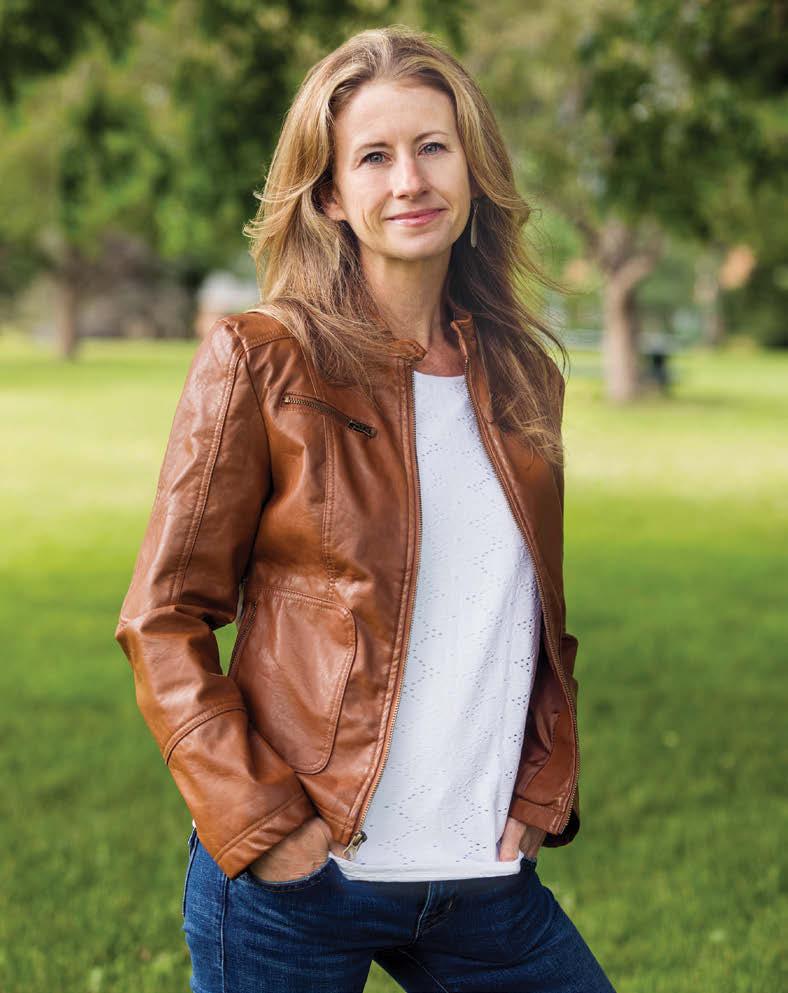
Jay Bouchard Freelance Writer

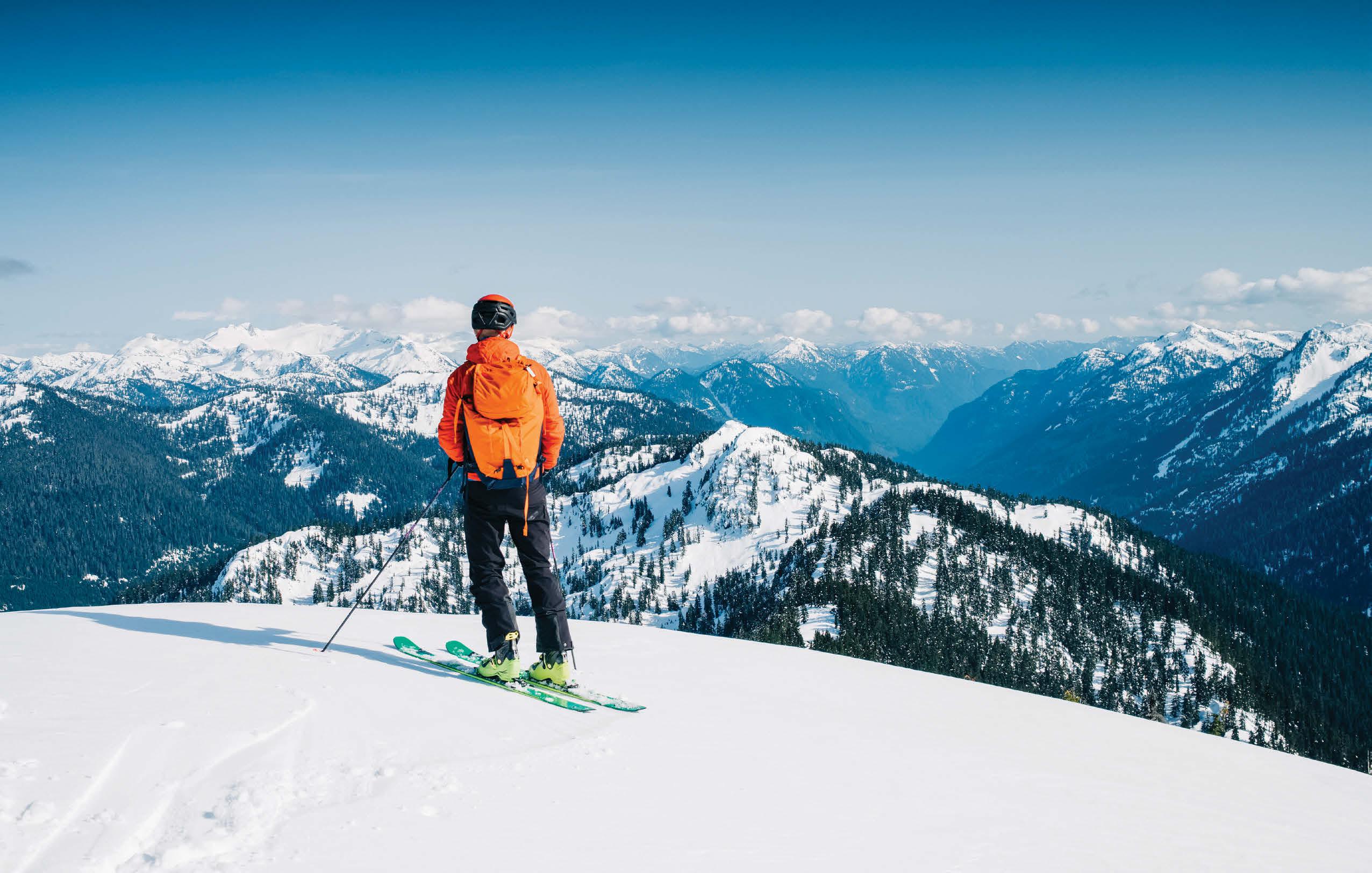
Bouchard put his ski skills to the ultimate test when he tried out for Eldora Mountain’s ski patrol (“The Price Of Powder,” page 44). But the New Hampshire native was confident his East Coast upbringing had prepared him well.
EAST
VS. WEST
“East Coast skiers don’t complain about conditions. And I’m not trying to start anything, but there’s a reason Mikaela Shiffrin moved to the Northeast to train as a kid. OK, maybe I am tr ying to start something.”
ON BEING A SKI JOURNALIST
”Most of your sources are very cool people and very good skiers. It’s hard to be objective when you want to quit writing for a living and hang out with them instead.”
BEST SKI RUN IN COLORADO “Do you actually think I’d let you print that?”
ON 5280.COM
LINDSEY B. KING
Email: lindsey@5280.com
Twitter: @linzbking
IT’S BETTER TO GIVE
Still looking for last-minute gifts for your loved ones this holiday season? Don’t panic. Head to 5280.com for a comprehensive list of the best presents from local companies for every kind of Coloradan, from skiers and hikers to dog lovers and, well, dogs.

20 5280 DECEMBER 2022
SPOTLIGHT
Clockwise from top left: Sarah Banks; Courtesy of Jay Bouchard; Dave Nagle/Getty Images
ICON Eyecare’s team shares one mission: To improve people’s lives through better vision. As a medical ophthalmology provider, ICON is committed to providing you with expert eye care and quality lens-based and laser vision correction options including EVO ICL, LASIK, PRK, and CLE. EVO ICL is a vision correction option that implants a lens in the eye, instead of altering the shape of the cornea as with LASIK or PRK. ICON’s Dr. Eva Kim is Colorado’s top ICL surgeon and we are the only provider in Colorado to use advanced testing technology to precisely fit your ICLs. To find out if EVO ICL is the right vision correction option for you, schedule a consultation at one of our 5 Front Range Colorado clinic locations.






COMPROMISE WHEN IT
YOUR EYES
Experience the freedom vision correction surgery can offer you to live the life you love with ease and comfort. TOP SURGEONS, LEADING TECHNOLOGY & OUTSTANDING PATIENT CARE ICONeyecare.com • 720.806.6390 Invest in Your Vision with EVO® ICL™ from ICON Eyecare
DON’T
COMES TO

DECEMBER 2022 | 5280 23
Q&A HOLIDAYS KIDS & FAMILY MUSIC
airline offers direct
Get Out Gifts that tell your loved ones to leave (but in a nice way). GIFT GUIDE
Raymond Forbes LLC/Stocksy
JSX
flights to Phoenix that don’t require TSA screenings. CoMPASS
GIFT GUIDE
The past two-plus years have forced us to become closer than ever with our loved ones. Like, straitjacket close. In other words: You could use some space. Not a permanent split, of course—but a short-term separation? Yes. Please. Now. Our present to you is five gift ideas that’ll make your heart grow fonder by creating temporary distance between you and the rest of your household.
1. END OF THE LINES
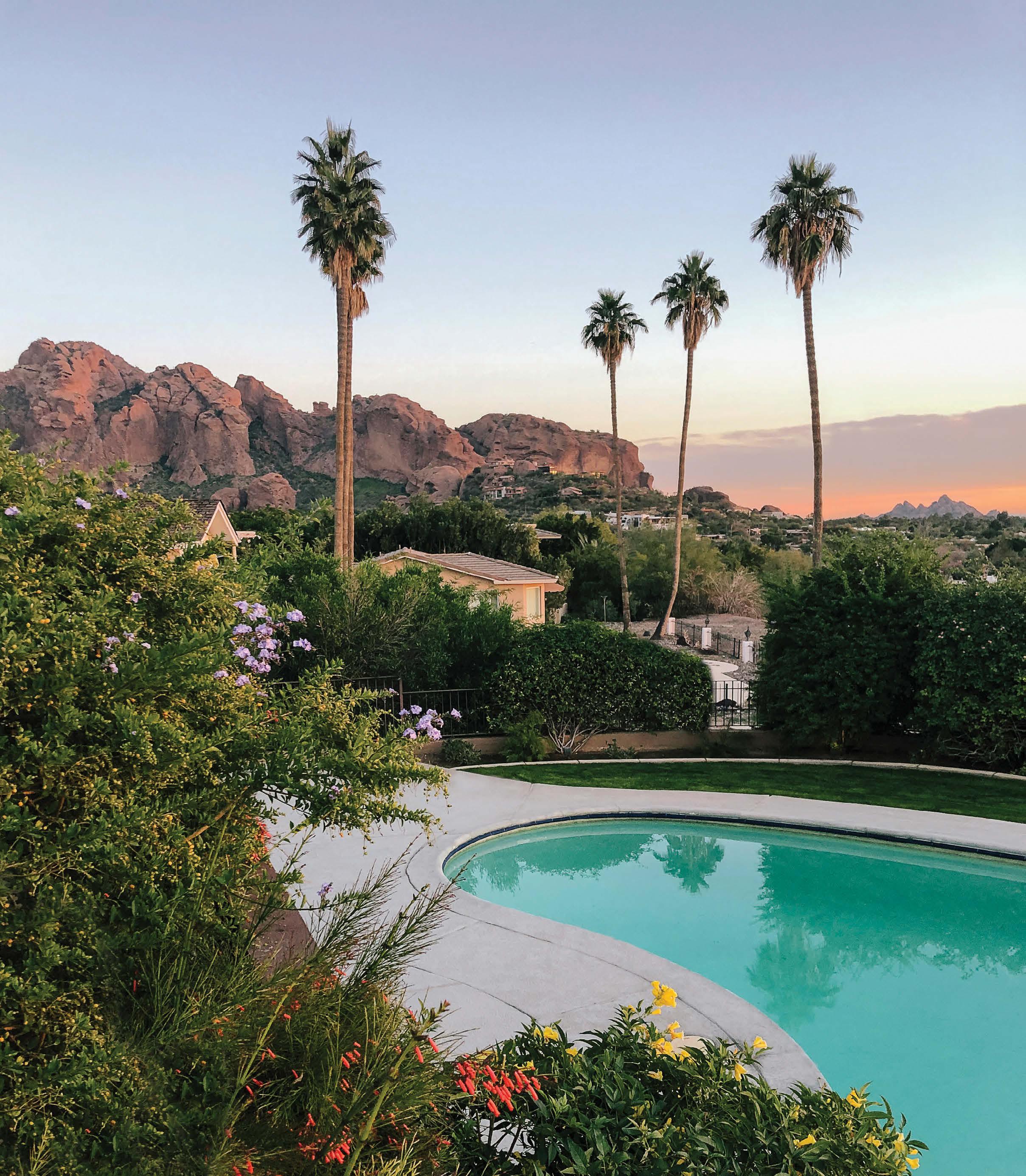
In November, JSX airline began offering direct flights from Rocky Mountain Metropolitan Airport in Broomfield to Phoenix Sky Harbor International Airport five days a week. The Dallas-based carrier flies smaller planes that don’t require passengers to suffer through TSA lines, yet round-trip tickets cost less than $500.

2. ROAD WARRIOR
The newest offering from Longmont-based Rossmönster, the Lagom series (from $205 per night) consists of off-roadready rental rigs featuring a hard-walled pop-up camper that could sleep two but would also be supercomfy for one (hint, hint). And the floor-to-ceiling windows provide unimpeded
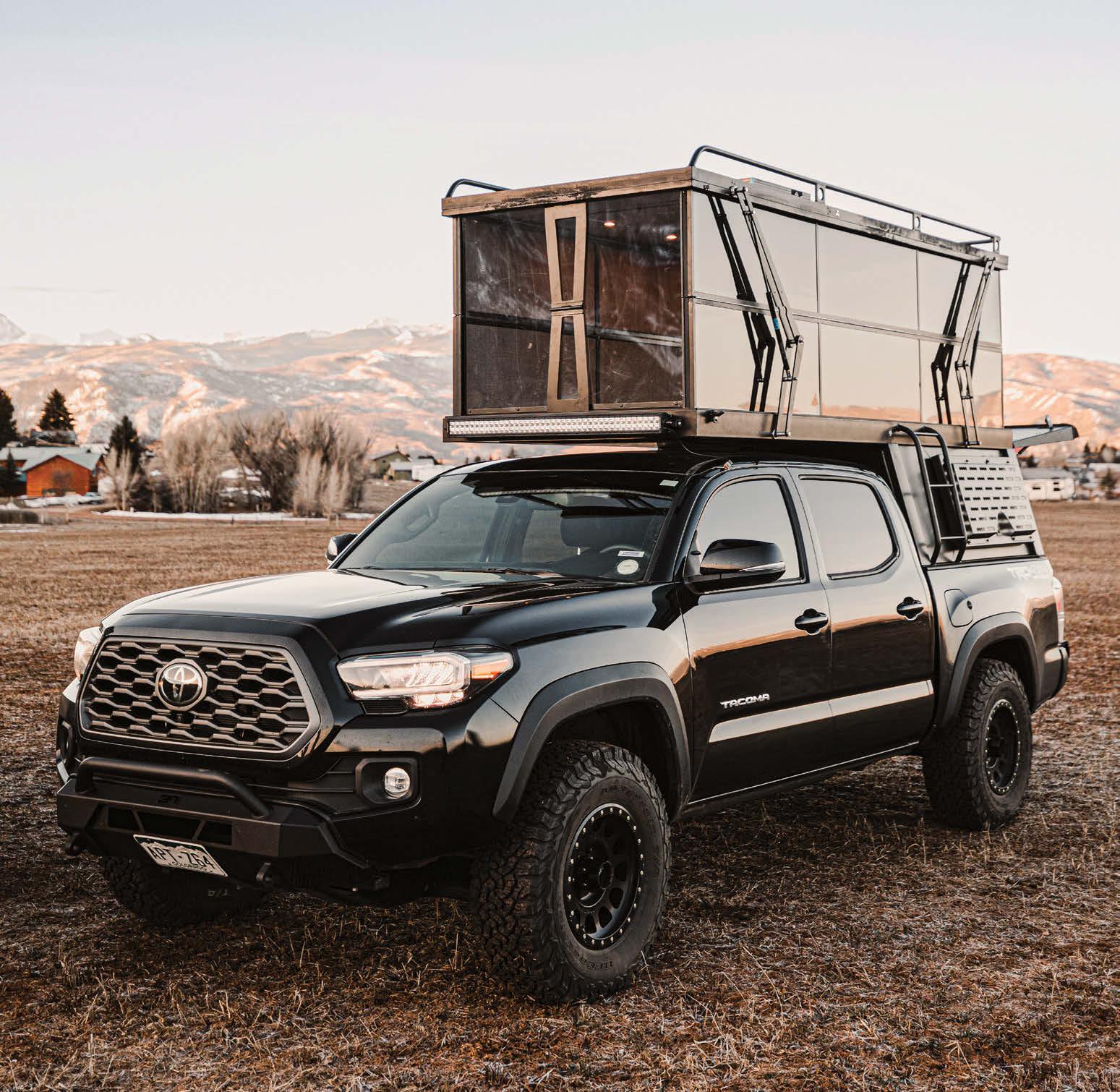
views of the landscape, which might inspire the gift recipient to remain in the wild for an extra sunset or two.
3. BUY THE BOOK

Galena Mountain Projects, an outdoor retailer in Leadville, has everything you need to encourage your SO to head for the hills, including Arkansas Val ley guidebooks providing local knowledge on the area’s best sunbaked crags and flowy single track. Pair a book with Galena’s 5-9-5 Shirt ($86), a versatile spandex blend with a Western twang, so your loved one can dress the part while exploring.
4. DRUM SOLO
Give yourself the gift of quiet by sending your budding Dave
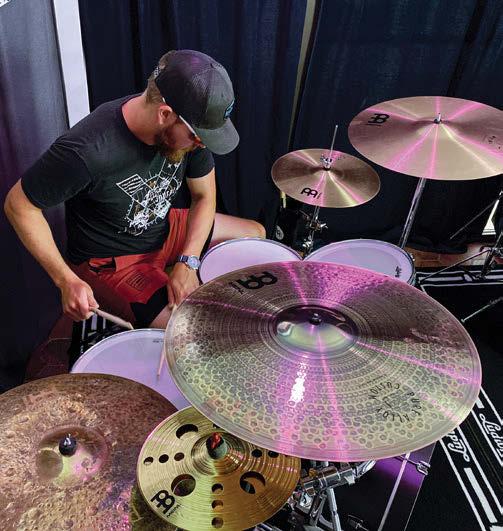

Grohl to Drum Box. The threeyear-old company turned two ATM vestibules, in Longmont and Lafayette, into mini drum studios equipped with four- and five-piece kits. Book online (one hour costs $30, but a bundle of 10 one-hour sessions runs $150) and boom: the sound of silence.

5. COVER YOUR TRACKS
Kids are prone to breaking things— like that fancy Apple AirTag tracking device you gave them last Christmas in order to monitor their movements. This year, stick a snazzy, protective case
from Fort Collins–based Otter Box into their stockings to serve as a safeguard. Decorated with vibrant swirls, the company’s new Figura Series option ($20) is made with synthetic rubber and features a handy clip to protect your peace of mind while your kids are out and about—leaving you home all alone.
24 5280 DECEMBER 2022
Clockwise from top left: Courtesy of JSX; Courtesy of Slater Trout; Courtesy of Drum Box; Courtesy of Otterbox (2); Courtesy of Justin Talbot
CONTINUED 1 2 3
—SPENCER CAMPBELL, COURTNEY HOLDEN, ALLYSON REEDY & RACHEL WOOLWORTH
4 5
Anchormen
After more than 30 years in the Denver market, CBS4 News’ Jim Benemann and 9News Mornings ’ Gary Shapiro both announced that they will soon hang up their microphones for good. Before the celebrated newsmen sign off, we asked them to cover one last story: their own. —SC

5280: Finish this sentence. The most accurate thing about the movie Anchorman was…
Gary Shapiro: The most accurate thing in that movie was the mustaches. It was the ’80s. I had one, for sure. And Jim, I know you did, too.
Jim Benemann: Yeah, quick mustache story. When I went to Channel 9 in 1981, they had Ron Zappolo—mustache. They had Greg Moody—mustache. They had John Ferrugia—mustache. Roger Ogden, the general manager, said, “Jimmy, I don’t want to be the mus tache station. Lose the mustache.”
Shapiro: When Dave Lougee became the news director at Channel 9 in 1990, he called me into his office and said, “You know, I think the era of mustaches is over, Gary. I think you need to get rid of the mustache.” I said, “Aw, really?” And he said, “Man, it’s not that good anyway.”
Other than the facial hair, what has been the biggest change in TV news over the past three decades?
Shapiro: The way the internet has affected audiences. Channel 9 in the ’80s used to get about a 50 share on its 10 p.m. news cast [meaning half the households in the Denver market tuned in]. That’s incredible. Now, you’re lucky if you get a six or seven share. I don’t think the stories are all that different. We still try to give people information about their communities in a way that’s understandable and compelling.
Benemann: Local news didn’t just sit back and watch social media explode. Gary’s station was the blueprint in this market for how to be part of that. Now, all the stations have aggressive websites and are figuring out ways to monetize the eyeballs that visit those websites.
Anchorman lampooned the idea of TV newspeople being icons, but what’s it really like being a local celebrity?
Shapiro: Jim is more of a celebrity than I am, so I’ll let him talk about that.
Benemann: I do get recognized, but I am at a point in my life, 66 years old, where people say, “God, I remember when I was a toddler, my mom and dad used to watch you.” It’s a smack in the face that we’ve been at this for a long time.
Shapiro: I decided I wasn’t going to take myself too seriously after a guy came up to me and said, “I recognize you.” I said, “Channel 9?” And he goes, “No, that’s not it. You ever work at the meatpacking plant?”
What was the biggest story you covered?
Shapiro: In 1986, I went to Florida to do a piece on these great kids from Colorado who had won a contest to watch the Challenger space shuttle take off. We all know what happened to Challenger.
Benemann: The one that was such a game changer for our society and our community was the Columbine High School shooting. Sadly, that was just the tip of the iceberg.
Any regrets?
Benemann: No. I think the most important emotion I have as I move toward the door is gratitude.
Shapiro: I remember when I started on 9News Mornings, I thought I’d give it a year or two. Thirty-three years later, I still enjoy doing it. Although I am going to enjoy sleeping in.
26 5280 DECEMBER 2022 Q&A
ILLUSTRATION BY CHARLIE POWELL

HOLIDAYS
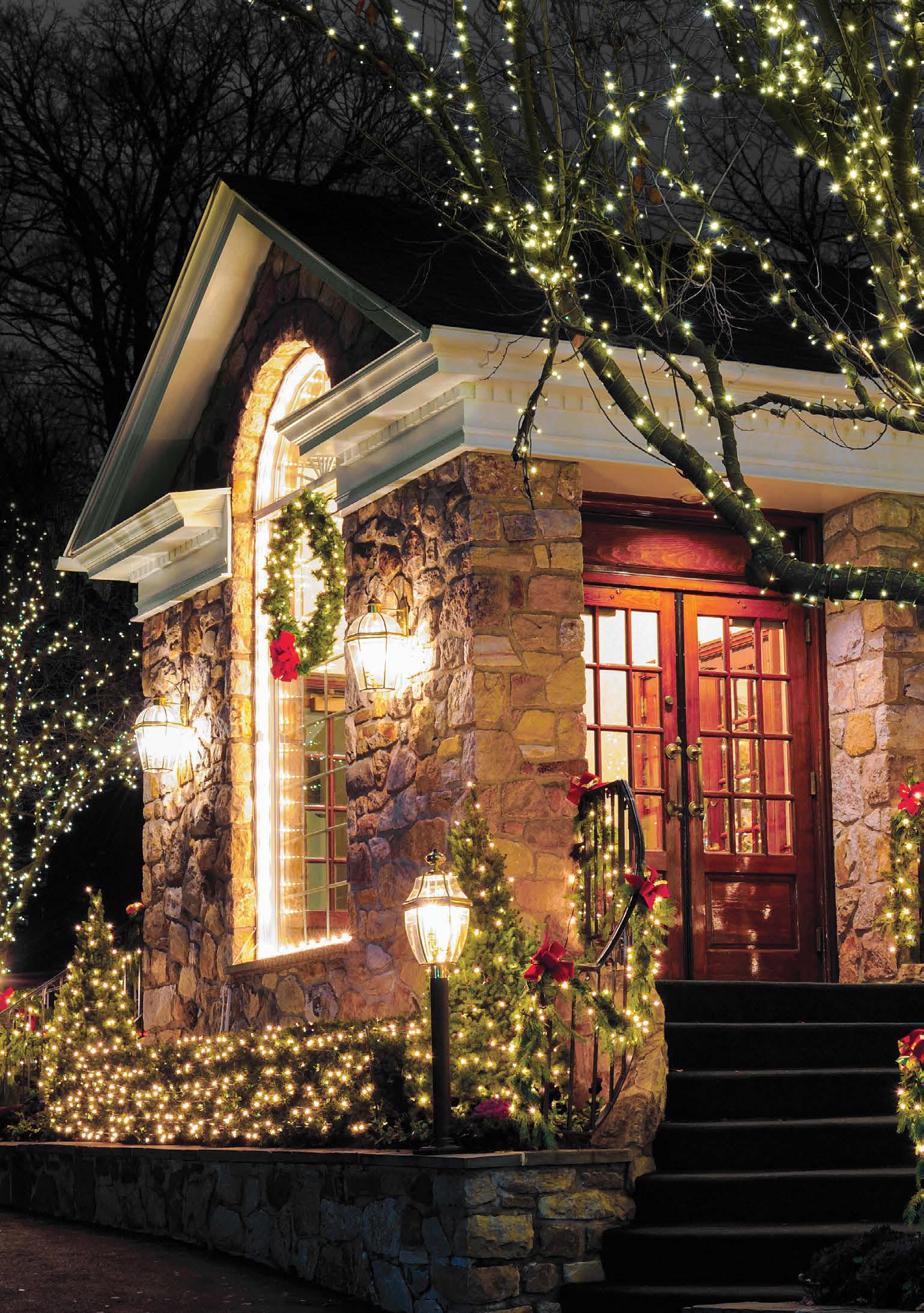
MERRY AND BRIGHT
Hanging holiday lights often begins with Griswoldian ambitions, only for the mediocre results to leave you feeling like the Grinch. To help preserve your festive spirit, we asked Shawn Sealy, owner of Littleton’s St. Nick’s Christmas and Collectibles, for tips to keep the stress low when putting the lights high. —KATIE ROTH
MEASURE TWICE, BUY ONCE

Nothing is more frustrating than purchasing lights and then, after you’re on the ladder, discovering you need more. Whether trying to illuminate a porch, roofline, or tree, having an accurate idea of the feature’s di mensions will save you a return trip to the store during an already busy time of year.



O TANNENBAUM
The right amount of tree lights can turn ordinary displays into regular Rudolphs. The general rule of thumb is about 100 bulbs per foot for pines (so a five-footer needs 500 bulbs) and a little less for deciduous trees; wrap the trunks as tightly as possible. Canopies, however, look better with just a glimmer, so use a strand with bulbs that are two feet apart.
SAFETY FIRST
Don’t add to the spike in ER visits during the holidays. To reach higher places, such as branches or peaks in rooflines, use a paint roller with an extension pole attachment. “It makes this awesome install hook for lights,” Sealy says. Those with children and pets will want to stake cords for yard decorations to eliminate tripping haz ards. Elevate cords by hanging them within bushes or securing them to trees to protect them from moisture at the ground level.
YARD ART
Inflatable decorations are a fun and relatively inexpensive way to up your game, but blow-up Frosty requires careful maintenance to ensure a return performance next season. (Pro tip: Roll, don’t fold, when you store inflatables.) Even with the best care, inflatables will only last a few years; fiberglass decorations can endure for decades, though they are more costly.
TWINKLE, TWINKLE
Replace every third or fourth bulb of a traditional strand with a twinkle bulb to give your display extra flair. Just be sure they’re energy-efficient LEDs, rather than old-school, power-sucking incandescents. (That advice goes for all your lighting paraphernalia.)

28 5280 DECEMBER 2022
From left: Getty Images; Sean Parsons (5)
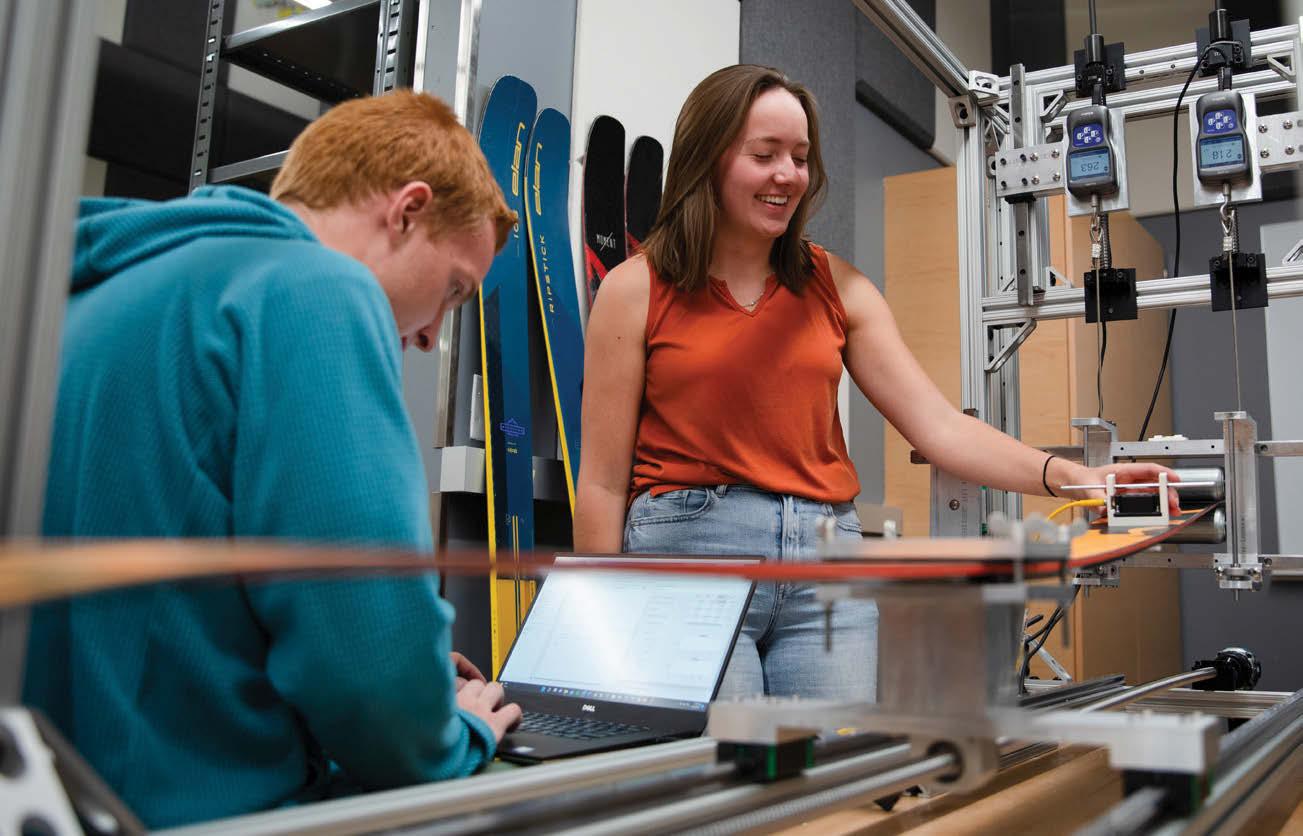
Discover Western Nestled in the heart of the Rocky Mountains, Western Colorado University delivers small class sizes, engaging faculty, career preparation, and a robust liberal arts and STEM curriculum to 3,000 intellectually curious students. With access to over 2 million acres of public land, 700+ miles of single-track trails and two ski resorts within an hour of the university, you’ll have the chance to pursue your outdoor passions while working toward a degree in one of 100+ academic areas.
High Altitude Partnership

Earn a University of Colorado Boulder engineering or computer science degree while enjoying personal attention from faculty, access to cutting-edge lab facilities and the unbeatable natural surroundings of Western Colorado University.
Head to western.edu/rady to learn more about the partnership program, our unique areas of specialization, and opportunities for program-specific financial aid.
Your
Academic Adventure. University of Colorado Boulder Partnership Programs 2 Accelerated Degree Programs 9 Student to Faculty Ratio 16:1 of Students Receive Financial Aid 80% Mountain Sports Teams 8
Gateway to
FOR THE BIRDS
Instead of hibernating when the mercury drops, take your hatchlings (and this field guide) to Barr Lake State Park.
1. COMMON GOLDENEYE
These medium-size ducks from the boreal forests of Canada dive underwater to find their food. Wait about a minute, and they’ll pop back up.
What to look for:

This bird’s bright yellow eyes stand out against the snow. They also have a distinctive, bulbous head and a small beak. Males feature black-and-white bodies with iridescent green heads. Females have gray-brown bodies and brown heads.
2. DARK-EYED JUNCO
You’ll have the best luck finding these smaller song birds by wandering through the cottonwood groves along the nature trail south of the Barr Lake Nature Center. Be sure to keep your eyes down, though. The charismatic junco is most likely hopping around near the low-lying shrubs and tree trunks.
What to look for: Although there are several variations of this mediumsize sparrow, the most distinctive is the Oregon form, denoted by its dark black head, pink bill, and white outer tail feathers.
3. BALD EAGLE

“The number one draw for Barr Lake in the winter is bald eagles,” Doxon says. America’s mascots move to Colorado when the weather turns cold because their home lakes freeze over, making fishing difficult, while our lakes often do not.


Although birding is considered a pastime for boomers, it’s an ideal excursion for kids, too, says Sarah Doxon, education programs manager for Bird Conservancy of the Rockies: “Not only does it get them outside...it gets them noticing the world around them.” There’s no better time to introduce your little ones to the hobby than December, when northern birds move to Colorado for the season, and the conservancy is hosting two events for kids at Barr Lake State Park in Brighton: the Christmas bird count (December 3) and a winter birding camp (December 28 to 30). If you go on your own, though, you don’t have to wing it. Use
—MALISSA RODENBURG
What to look for: Juve nile bald eagles can easily be misidentified as golden eagles because they don’t start to look like the distin guished figures we know until they are three to five years old. Some telltale differences: Goldens have feathered legs; balds do not. Goldens have a uniform dark breast and belly, while balds are mottled brown and white.
4. NORTHERN SHOVELER


fig.
fig.
Look for these waterfowl (among the most readily identifiable and abundant winter guests at Barr Lake) feeding just off the shore, bobbing their heads in the water to fish out inverte brates, seeds, and plants. What to look for: The bird’s large bill (about 2.5 inches long) is shaped like a shovel. Males have bright white chests, rust-colored flanks, and green heads. Females and adolescent males are mottled brown and white.

5. WHITE-CROWNED SPARROW
File this objectively adorable bird under “intermediate to advanced identification,” as it camouflages itself against brown trees. But don’t fret if you miss it this month. The variety that visits Barr Lake spends summers in Colora do’s mountains, so they’re available year-round.
30 5280 DECEMBER 2022
Russell Burden/Getty Images (common goldeneye); Getty Images (dark-eyed junco, child birders); David C. Stephens/Getty Images (bald eagle); Richard Goluch/500px/Getty Images (northern shoveler); Chris McNeill/Getty Images (white-crowned sparrow)
KIDS & FAMILY
4
What to look for: Bold black and white striping marks the top of this small bird’s head; it also has a longer tail and a pale bill. 5
fig. 3 fig. 1

MUSIC Long Live The King
One year after CharlestheFirst’s death, Denver artists reflect on the ways the electronic musician continues to inspire them.
Charles Ingalls may have called California’s Truckee home, but the musician forged a lasting legacy in Denver. Going by the stage name CharlestheFirst, Ingalls special ized in electronic bass music, and his signature sound—low, throbbing frequencies interplayed with rich, ethereal melodies—could be heard during his frequent visits to perform at local venues big and small, from Cervantes’ Masterpiece Ballroom to Red Rocks Amphitheatre. In December 2021, Ingalls died during a tour stop in Nash ville, Tennessee, from what a coroner determined to be an accidental overdose of drugs that included fentanyl. Thousands amassed for Ingalls’ memorial concert at RiNo’s Mission Ballroom the following month, when a mural of him was unveiled. But perhaps a more telling tribute is the number of Colorado musicians and industry veterans who count CharlestheFirst among their most important influences. —CHRIS WALKER
CLOZEE
DJ and producer, founder of Odyzey Music
I learn from his music all the time just by listening to it. He had such a unique way of creating his bass and drum sounds: They’re so bubbly and rounded. And his sound design work was both beautiful and powerful. We collabo rated in 2016 [on a remix, and later on “The Mist,” a single], and I’m grateful to have toured with him that year; he was always doing amazing things.
JOSH TEED Producer and instrumentalist
Charles’ music to me always will be the pinna cle of emotionality through bass music. More often than not, I feel that bass music is geared toward getting that crowd reaction and going hard. Charles’ music opened a lot of minds to a whole other aspect of creativity and expression within the genre. The way he was able to transport a listener to a different place will stick with me for life.
ORENDA DJ and producer
When I first heard and saw Charles perform, in 2016 at a festival in California, I was blown away and knew that this was the kind of sound and story I wanted to tell through my own music. He proved that you could play soft, raw, and emotional music in a bass music set and it would be received well by even the biggest crowds. This is something no one really knew was possi ble. The sky was suddenly the limit for us all.
 SCOTT MORRILL Owner of Cervantes
He was always lifting up his musician friends who were just getting started by mak ing sure they were included on lineups. One story his agent told me: [Ingalls] requested his name be smaller on a festival poster, because he wanted to be the same size as everyone else, which I have never heard of anyone doing. His music will live on forever, but I think perhaps the big gest impression he left on others was his kindness.
Seth
aka @Shutterfinger (2)
Watrous
32 5280 | DECEMBER 2022
BE GOOD This fall, Ingalls’ family launched Crown, the Foundation, a nonprofit that in tends to build a retreat for musicians who need to rest and recharge from the toils of touring, says Charles’ mother, Beth Ingalls. To contribute, visit crownthefoundation.org.














































Second Nature
Self-care mecca Nurture offers a new way to indulge: dinner at Rewild.

Since it opened in 2020, Nur ture, a wellness marketplace, has enriched West Highland with a Pilates studio, acupuncture practitioners, and nutrition and counseling services. The heart of the 25,000-square-foot former elementary school, however, is its velvet-seat-lined cafe. During the day, the eatery is filled with natu ral light and goes by the name of Nest, but as of six months ago, the space has been transform ing into a moodier counterpart, called Rewild, at night. Guests still gather for gluten- and dairy-free breakfast and lunch fare, but the new suppertime concept—helmed by onetime Clayton Members Club chef Juan Tapia—delivers an afford able farm-to-table experience with hyperlocal ingredients from purveyors such as Tasty Acres, Rock River Bison, and Hazel Dell Mushrooms. This fall and winter, the menu is graced with dishes such as roasted delicata squash with muham mara, Camembert cheese, and crispy quinoa with walnuts and a bison burger topped with fennel-cranberry slaw, arugula, and mushroom gravy. Those hearty items are accompanied by organic wine and botanicinfused cocktails. The lineup is built for sharing, and the ambi ence—thanks to small tables, dim lighting, and cascading foliage— promotes intimate conversation, resulting in an eatery that nour ishes both the body and the soul.
—RIANE MENARDI MORRISON
& EAT DRINK
DECEMBER 2022 | 5280 35
Q&A BEST BITES REVIEW
Caption Tk
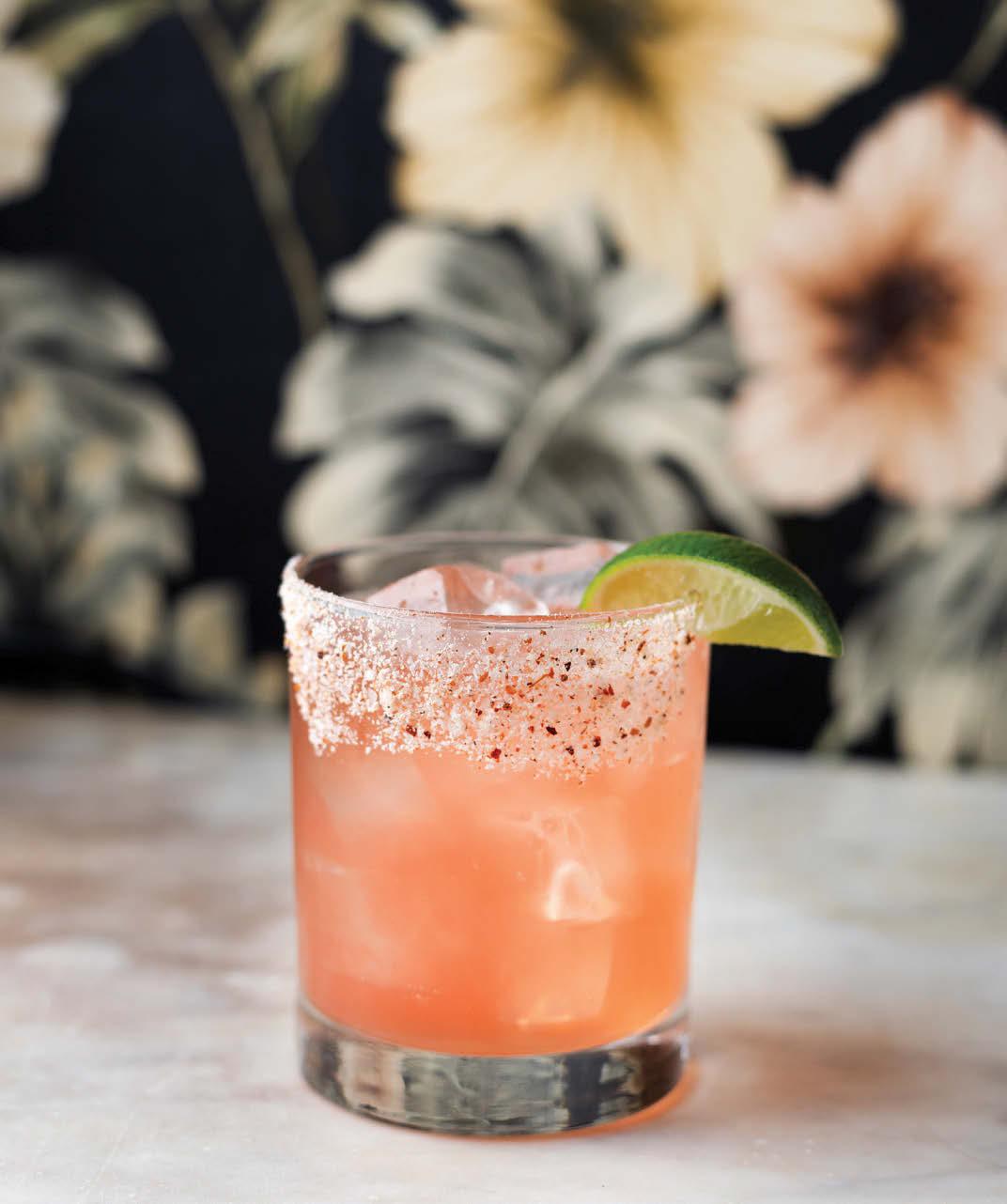
Rewild’s roasted delicata squash and Madre y Padre cocktail
PHOTOGRAPH BY JONI SCHRANTZ
Doctor Approved
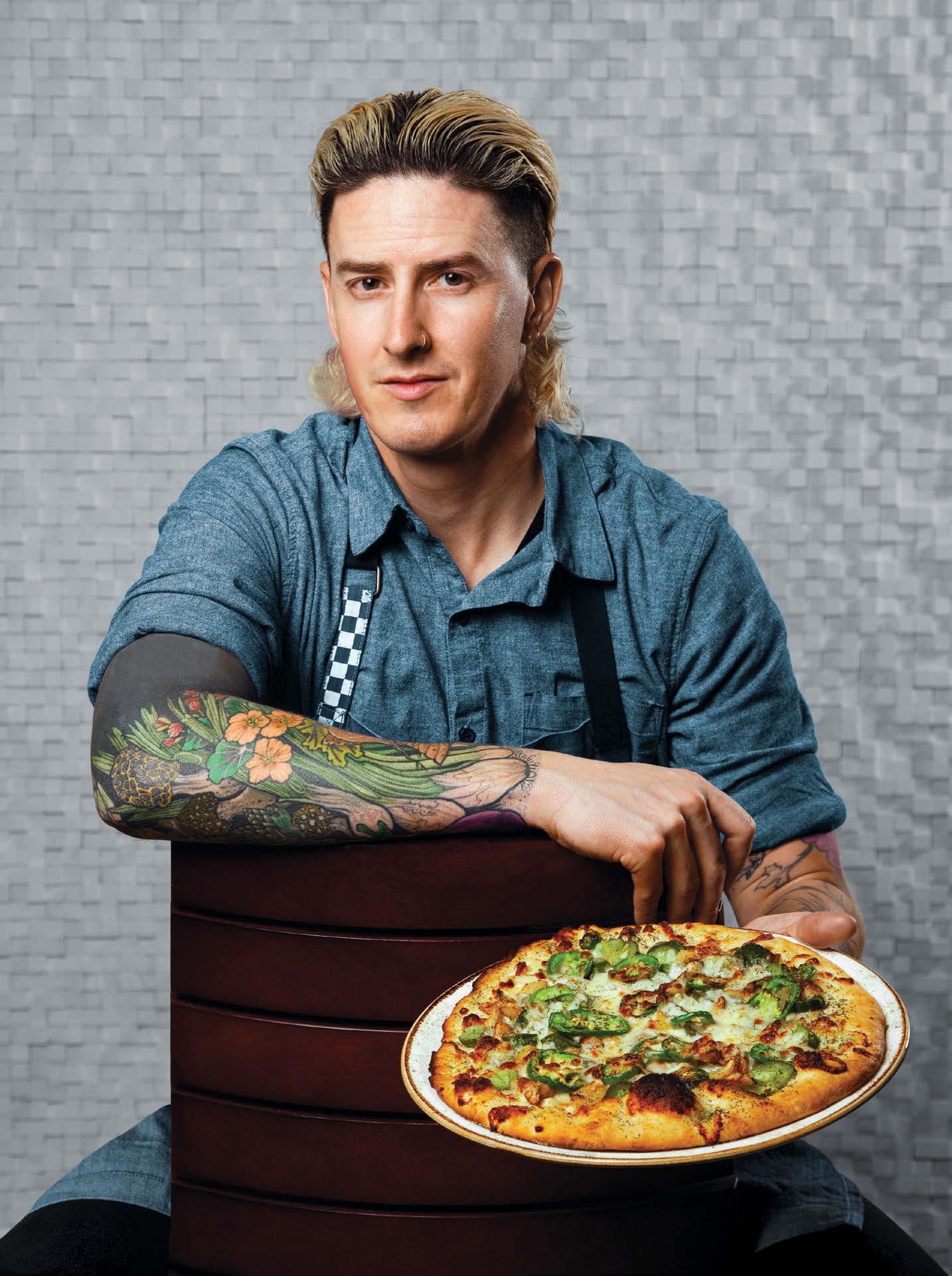
Manna Restaurant has all the trappings of a buzzy hot spot: a locally sourced menu that changes with the seasons, an open kitchen, and dishes sporting spins on clas sics such as cilantro lime wings doused in black garlic and a jalapeño pickle pizza with fresh dill. The catch? The eatery is located inside Centura Castle Rock Adventist Hospital. “Oftentimes in hospital cafete rias, you see patients’ family members come down and look around at the stations, and they don’t know what to do or where to go,” says Adam Freisem, who was tapped to open the eatery with fellow chef Dan Skay in 2013. “That’s why we wanted to have a [true] restaurant. We wanted to be a place where people could get away from the clinical environment, sit down, and be taken care of.” The pair delivered, and the community responded: In fact, 90 percent of Manna’s diners now come from outside the hospital, even though it doesn’t have a liquor license. Prices are lower than those at area fast-casual restau rants ($4 to $16 for small plates and entrées), and there’s a heightened focus on nourishment through whole foods. In advance of the eat ery’s 10th anniversary, we sat down with Freisem to discuss what makes the restaurant destination-worthy. —BRITTANY
 ANAS
ANAS
5280
Adam Freisem: Mostly our location. I can’t tell you how many times I get phone calls from people saying, I keep plug ging you into the GPS, and it drops me off at the parking lot of the hospital. The fact that we’re a nonprofit also makes us really unique. We’re not here for any other reason than to be a service to the community. We’re not here to turn a profit.
What obstacles does the unusual environment
create?
One of the challenges we have is running a restaurant as well as patient room service. We operate hotel-style room service as opposed to the typical bulk cooking seen in a lot of hospitals. Our patients are our top priority, so adding the operations of the restaurant on top of it is always a balancing act.
You rotate your dishes regularly, but what items won’t your customers let you take off the menu?
The Fatted Calf is a halfpound, certified Angus burger we get from [Denver’s] Lom bardi Meats. We top it with caramelized onions, arugula, garlic aïoli, and a Port-Salut cheese. It’s a basic burger, but the cheese is melty like a raclette [dish] and has just a hint of funk. We also have a pizza called the Diamond Ridge. We do a fig jam on the base, with some beef prosciutto, and then we top it with Gorgonzola, moz zarella, and Parmesan. When it comes out of the oven, we give it a balsamic glaze.
How do you plan to keep Manna going for another decade?
Inflation and the cost of food have gotten insane. Our next menu will be more veggiecentric. You can treat a lot of veggies like a protein; I’ve done a cabbage steak dish before. We partner with Farm Box Foods in Sedalia and get these blue oyster mushrooms from them. Mushrooms are a beautiful substitute for meat products. You can treat them exactly like you would a steak. You can braise them, you can grill them, you can fry them. There’s definitely a demand for more plant-based meals, but from a restaurant perspective, it’s also more cost-effective.
36 5280 DECEMBER 2022 Q&A
Meet Adam Freisem, the executive chef behind Castle Rock’s beloved Manna Restaurant.
PHOTOGRAPH BY JASON SINN
: How is Manna different from other restaurants in Colorado?
Alcove Residences is located in the state of Colorado. All reservations, contracts and other documents relating to the sale of this real estate shall be executed only in the state of Colorado. No state bureau or division of real estate has inspected, examined, or qualified this offering. This advertisement does not constitute an offer or solicitation in any state where prior registration is required. All renderings and illustrative maps are conceptual only and subject to change. Amenities shown in renderings and illustrative maps are proposed, and may not occur. The developer reserves the right to make any modifications and changes as deemed necessary. Square-footages, dimensions, sizes, specifications, furnishings, layouts, and materials are approximate only and subject to change without notice. Window sizes, layouts, configurations and ceiling heights may vary from home to home. Prices are subject to change without notice. Errors & omissions excepted. Listing courtesy of Slifer Smith & Frampton Real Estate.
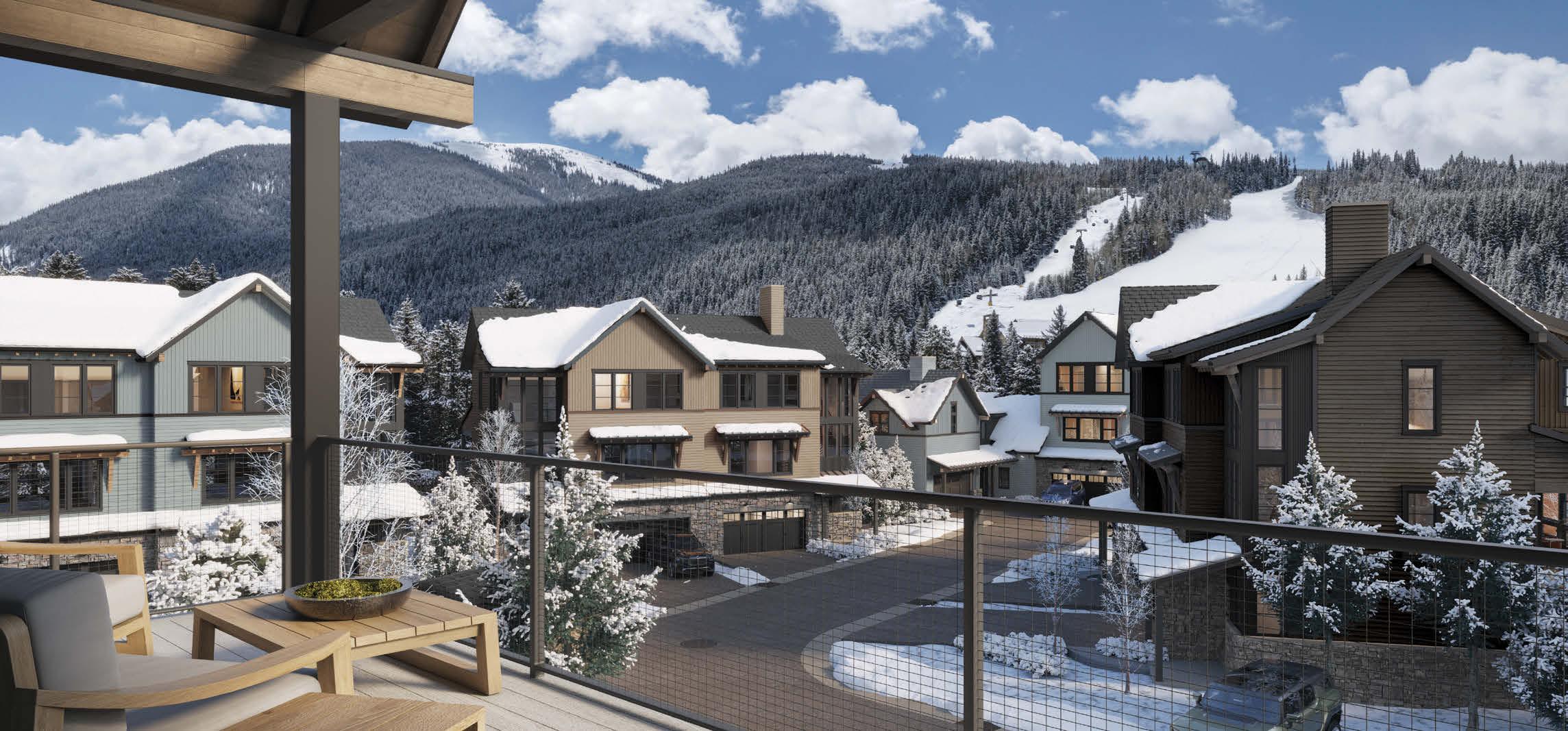
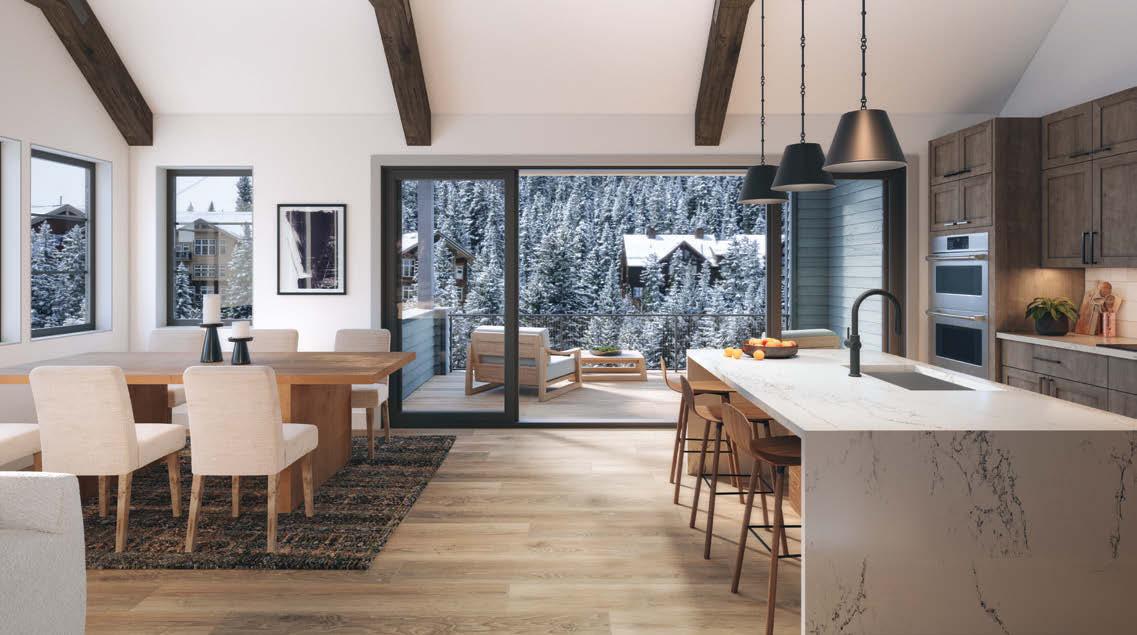
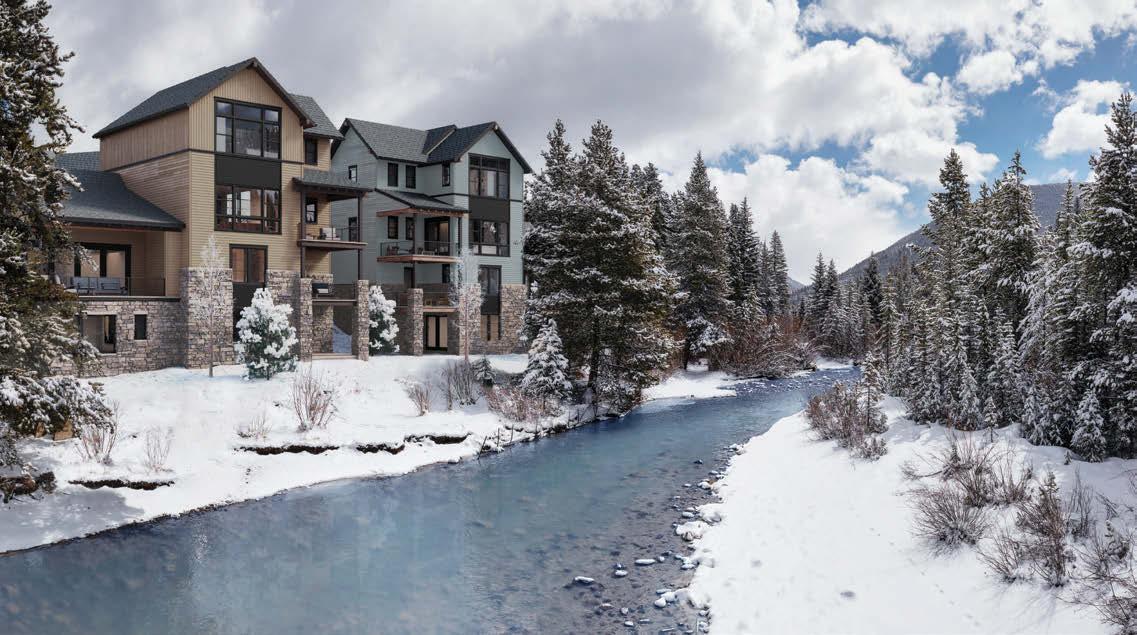
THE IDEAL MOUNTAIN ADVENTURE HOME Alcove is an exclusive collection of 24 townhomes situated just steps from ski lifts, Snake River, and River Run Village in Keystone, Colorado — for those who treasure immersive, all-season, outdoor experiences. These expansive, three and four bedroom residences feature open-concept living spaces, covered terraces, hot tub patios, two-car garages with gear storage, and stunning mountain views. PRICED FROM $2.4M | INQUIRE TODAY ALCOVEATKEYSTONE.COM | MICHAEL LYTLE, 970.390.9592 Conceptual only. Subject to change. Conceptual only. Subject to change. Conceptual only. Subject to change.
TASTE
Colorado reminds Zin Zin Htun of Myanmar (formerly known as Burma), a country she left as a refugee. “I like it here a lot because my native town has a lot of mountains. [Colorado] feels like home,” says Htun, who arrived in Denver with her husband and two young children in 2015. Although she became accustomed to the West’s landscapes and traditions, she soon realized that many people aren’t familiar with her birthplace. “I tell people I’m from Burma, and they’re like, What is that?” she says. Those reactions fueled Htun’s desire to teach locals about her roots by posting cooking videos on YouTube that featured foods she ate growing up. In 2021, she opened her own catering
OF HOME
Htun imports whole green tea leaves from Myanmar and turns them into an earthy, tangy paste. After boiling and squeezing the excess liquid out of the leaves, she crushes them into a pulp using a mortar and pestle, adds minced garlic and lime juice, and lets the mixture ferment at room temperature for a few days. The dark green condiment is covered in vegetable oil and stored until ready to serve.
The chef shreds red and green cabbage and chops tomatoes and serrano peppers into bite-size pieces.
Big slices of toasted garlic deliver aromatic and sweet notes.
All of the elements are arranged separately in takeout boxes so everything stays fresh and crispy in
Htun urges customers to add the ac companying lime juice and fish sauce and then toss the salad with their hands, gently squeezing and dispersing the tea leaves with their fingers. This ensures every forkful is the ideal balance of salty, sour, spicy, and bitter—a trademark of her homeland’s cuisine.

38 5280 DECEMBER 2022
BEST BITES
Chef Zin Zin Htun introduces patrons to the culture and cuisine of Myanmar—one carton of tea leaf salad at a time.
company, Zin Zin’s Burmese Cuisine, which gained a following at Front Range farmers’ markets and expanded into a ghost kitchen this Septem ber. At the takeout-only restaurant inside Town Center at Aurora, Htun stuffs mini samosas with potato, cabbage, and onion; simmers yellow split pea flour, sliced banana leaf stems, and catfish for mohinga noodle soup; and pan-fries keema paratha, a flatbread filled with ground beef, onions, mint, and tomatoes. It’s all satisfying, but we recom mend starting your culinary tour with the lat phat toke, a tea leaf salad that’s often referred to as the national dish of Myanmar. —PATRICIA KAOWTHUMRONG
A hefty handful of Htun’s customized roasted nut and legume mix—which includes sunflower seeds, butter beans, chickpeas, peanuts, pumpkin seeds, cashews, and sesame seeds—brings crunch and depth to the dish.
transit.
PHOTOGRAPH BY SARAH BANKS
Prop styling: Charli Ornett
















COMP E T ITION LONDO N SPIRITS GOLD CRAFT S PIRITS BRECK E N RIDGE DOUBLE GOLD SP I R I TS D E N VER IN T E RNATI O N A L GOLD
French Kissed
The Cole neighborhood gets smacked by Brasserie Brixton’s refreshed bistro fare. BY
 ALLYSON REEDY
Brasserie Brixton doesn’t care what a French restaurant should be. It doesn’t mind that people have been conditioned to expect white tablecloths and a pretentious menu. Yes, Brixton often serves escargot and pâté—albeit with Ritz crackers sprinkled over those snails—but there’s also blood-sausagefilled wontons, Star Wars stormtroopers painted behind the bar, and hip-hop on the speakers.
To be honest, I think calling Brasserie Brixton a French restaurant is a stretch. I highly doubt, however, that a place folding blood sausage into wonton skins worries about what I think. So, if chef-partner Nicholas Dalton wants to bill it as such, then oui, French it is.
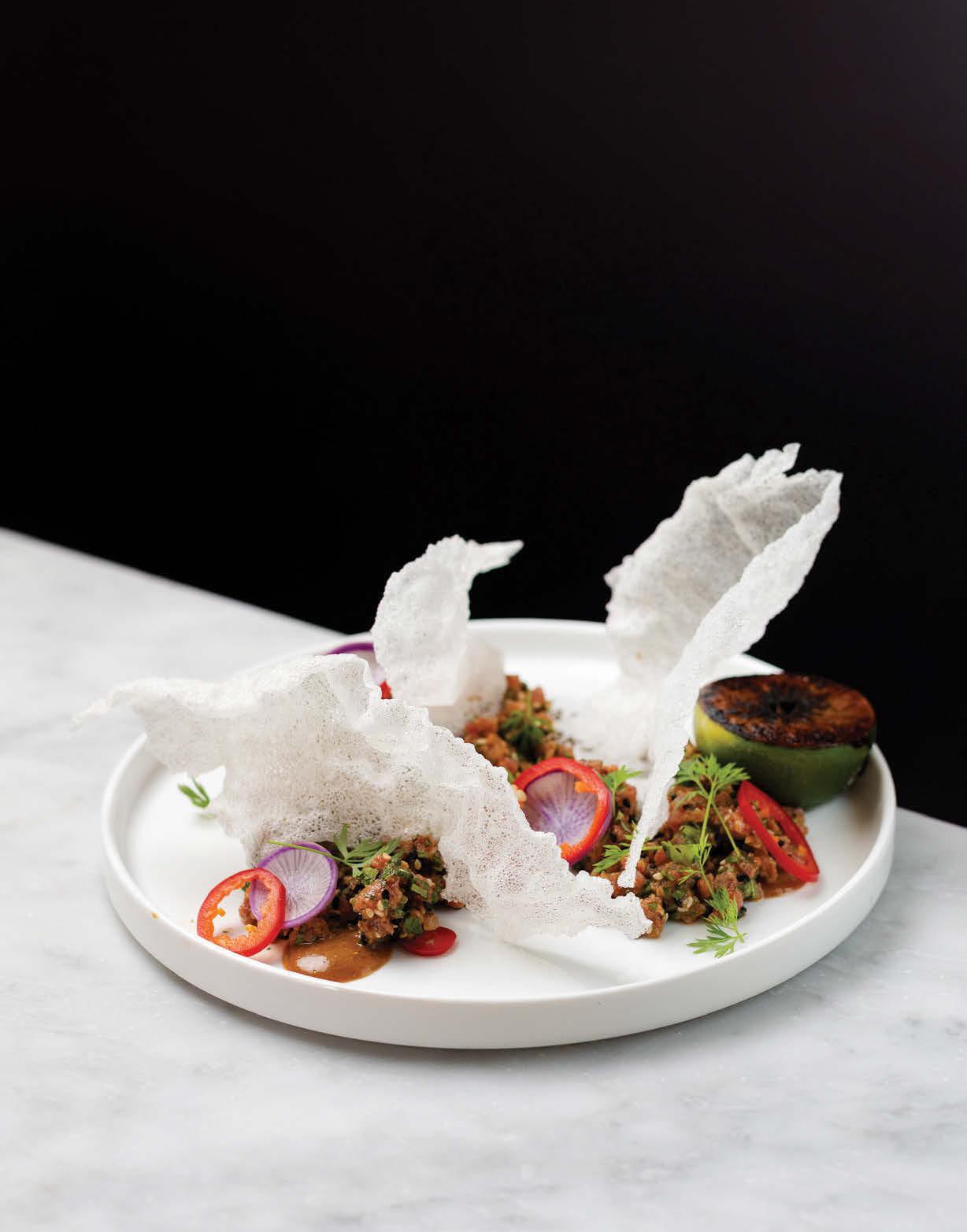
Classifications out of the way, what diners need to know about Brasserie Brixton is that it’s a very good restaurant where Denverites can enjoy smart dishes they won’t find anywhere else in town. That includes anchovy-saucelaced asparagus, a rotating beef tartare that riffs on everything from Arby’s Beef ’n Cheddar to a Thai-spicy crying tiger sauce, and inventive versions of the more typical French-ish suspects.
BRASSERIE BRIXTON
Dalton was inspired to break the mold with Brixton by his experiences at bistros in Montreal, where fine din ing chefs have swapped the pompous for the comfortable and are moving their opera tions from the city center to suburbs. “We wanted to cre ate something more casual, inviting, and fun,” says Dal ton, a California native. In short: No sky-high prices, no dress code, no fuss.
The menu here avoids norms, too. Instead of being divided up in the usual res taurant way between small plates and mains, everything is instead listed in one giant stack—but you can tell where the entrées begin as the prices rise. Among the
40 5280 DECEMBER 2022 REVIEW
BY SARAH BANKS
PHOTOGRAPHY
THE DRAW Creative renditions of French classics THE DRAWBACK A minimalist space that may leave you yawning NOISE LEVEL High DON’T MISS The duck, Brixton burger, pâté, and seasonal variations of tartare and veggies
3701 N. Williams St. brasseriebrixton.com
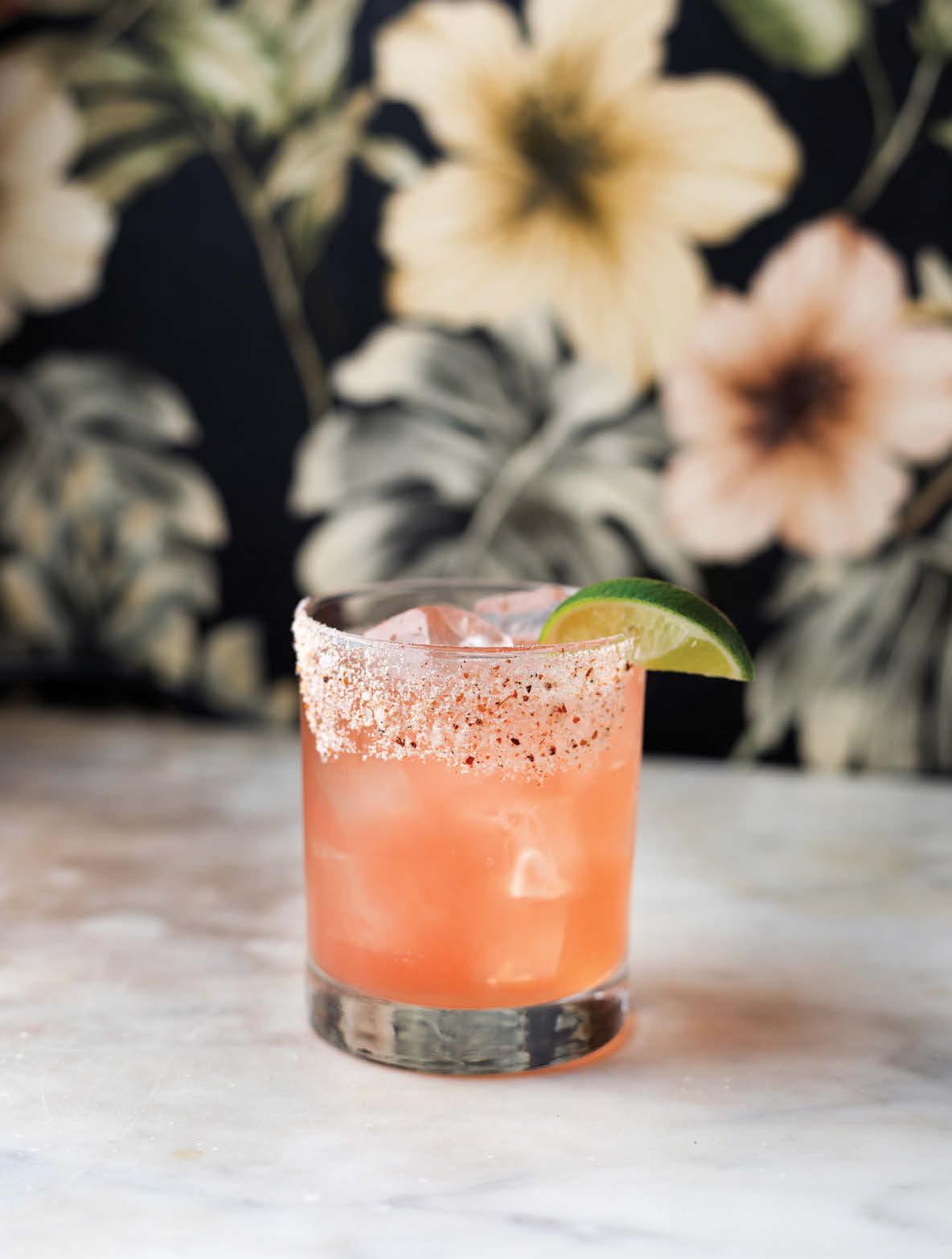
From left: Beef tartare with fresno chiles, cilantro, and rice crisps; Pinky Promise cocktail
There are vacations and there are escapes. where a long weekend is nothing short of eternal.













more petite offerings, the asparagus is taut but yielding, like an angler’s pole when it has something on the line, and the stems are drizzled with miso bagna cauda, a garlic-andolive-oil sauce heavy with diced anchovies. The fishy flavor hits the palate hard, but combined with the freshness of the asparagus and the crispiness of toasted pine nuts, it’s a truly special bite. The baguette (sourced from RiNo’s Reunion Bread) with butter and the pâté— sweet, smooth, and white-portforward—are similarly enjoyable.
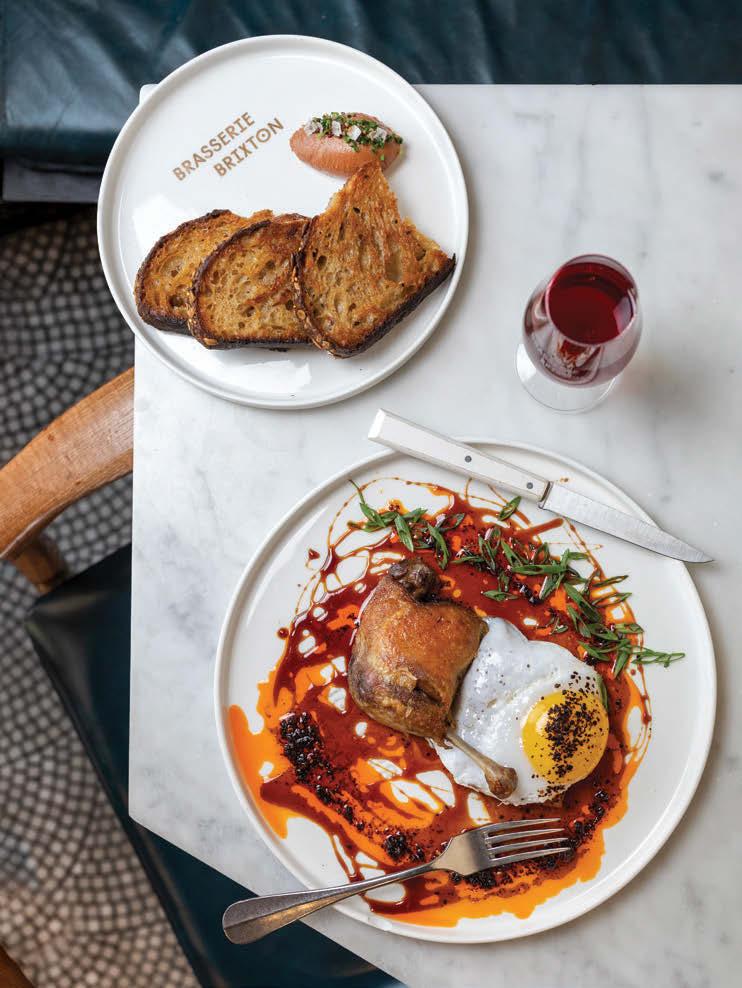
Where the dollar signs head north of $30, you’ll find the duck, which is served two ways: There’s the confit leg whose skin crackles when you bite into it and then the fried egg whose yolk oozes onto the turnip cake it sits atop. All of the components should be used to sop up the splatters of sweet ginger soy sauce and chile
may be off the menu when you get there: Brixton’s lineup changes often, and not just seasonally, but on a whim. “We’ll change dishes periodically,” Dalton says, “when ingredients and ideas come to us.”
Still, there are a few staples, and the cheeseburger is one. Most French eateries probably wouldn’t boast that their hamburgers are bestsellers, but Dalton wanted something approachable. The Brixton burger is a fancy take on In-N-Out Burger’s DoubleDouble, except it arrives with Gru yère cheese fused onto two thin, smashed patties that have the per fect griddle char. The melty-messy goodness is served with matchstick fries that are far superior to what you’d get at the drive-thru.
The short cocktail menu is remi niscent of the roster of food in that it mixes cuisines and ingredients in surprising ways—and downplays the whole, you know, French thing. My tasty X Marks the Spot was an almost tropical blend of apricot, pineapple, and cachaça garnished with mint. In the Pinky Promise, tequila, aquavit, and Aperol coex ist with salted watermelon in a sweetly delicious way. Sake (yes, the Japanese rice wine) is listed at the top of the menu, while the more French-centric grapes by the glass appear far below. “I love sake, and it pairs well with rich, fatty foods, which we lean toward with French cuisine,” Dalton says.
NEIGHBORHOOD
LOCAL HAUNTS
From a nautical-themed bar to a beloved taqueria, here are four other bars and restaurants to try in and around Denver’s Cole district. —AR
crunch. Clearly, this plate borrows flavors from the East, but I’ll con cede that its indulgence and preci sion feel decidedly à la française. The chicken is a rare miss; the smashed half bird was bland despite its ’nduja butter sauce and veggie accoutre ments. The version I tried, however,
What Dalton doesn’t lean into is the conventional French eating house ambience. The basic space, in the largely residential Cole neigh borhood northeast of downtown, is devoid of white tablecloths, yes, but it also lacks a cohesive vibe. Dal ton and his team set out to ditch the pretense surrounding French fare—so keeping the atmosphere simple and decidedly un-French was intentional, a part of their mas ter plan to redefine what we think about restaurants that serve pâté and escargot. The Brixton team is cooking the food they want to cook in an unintimidating space. It’s up to us to change our expectations.
NOLA VOODOO TAVERN
Chef-restaurateur Henry Batiste serves Creole special ties his mom and grandma cooked during his child hood in New Orleans. That includes hearty gumbo, crispy catfish po’boys, and creamy red beans and rice—best washed down with a bottle of Abita, a Louisiana-brewed beer.

LOS MOLINOS
This establishment began as a food truck in the 1980s and is one of the original brick-and-mortar restaurants in the area. Inside, neighborhood dwellers have gathered for giant barbacoa gorditas, chicharrón tacos, and smothered burritos since 2002.
YACHT CLUB
This petite watering hole, which opened in Cole last December, melds all the upsides of a divey hangout and a polished cocktail bar with a thoughtful natural wine list, cheap beer-and-shot specials, and a lineup of loaded hot dogs.
CORNER RAMEN
The seven bowls of noodle soup on deck—includ ing the indulgent, spicy lobster iteration—might be most tempting on a chilly winter night. But Cole residents know that the pork belly buns, poke, soba, and udon are just as tasty no matter what the thermometer says.
REVIEW
The pâté and the duck with fried egg, turnip cake, sweet soy, and chile crunch
42 5280 DECEMBER 2022

The Price Of Powder
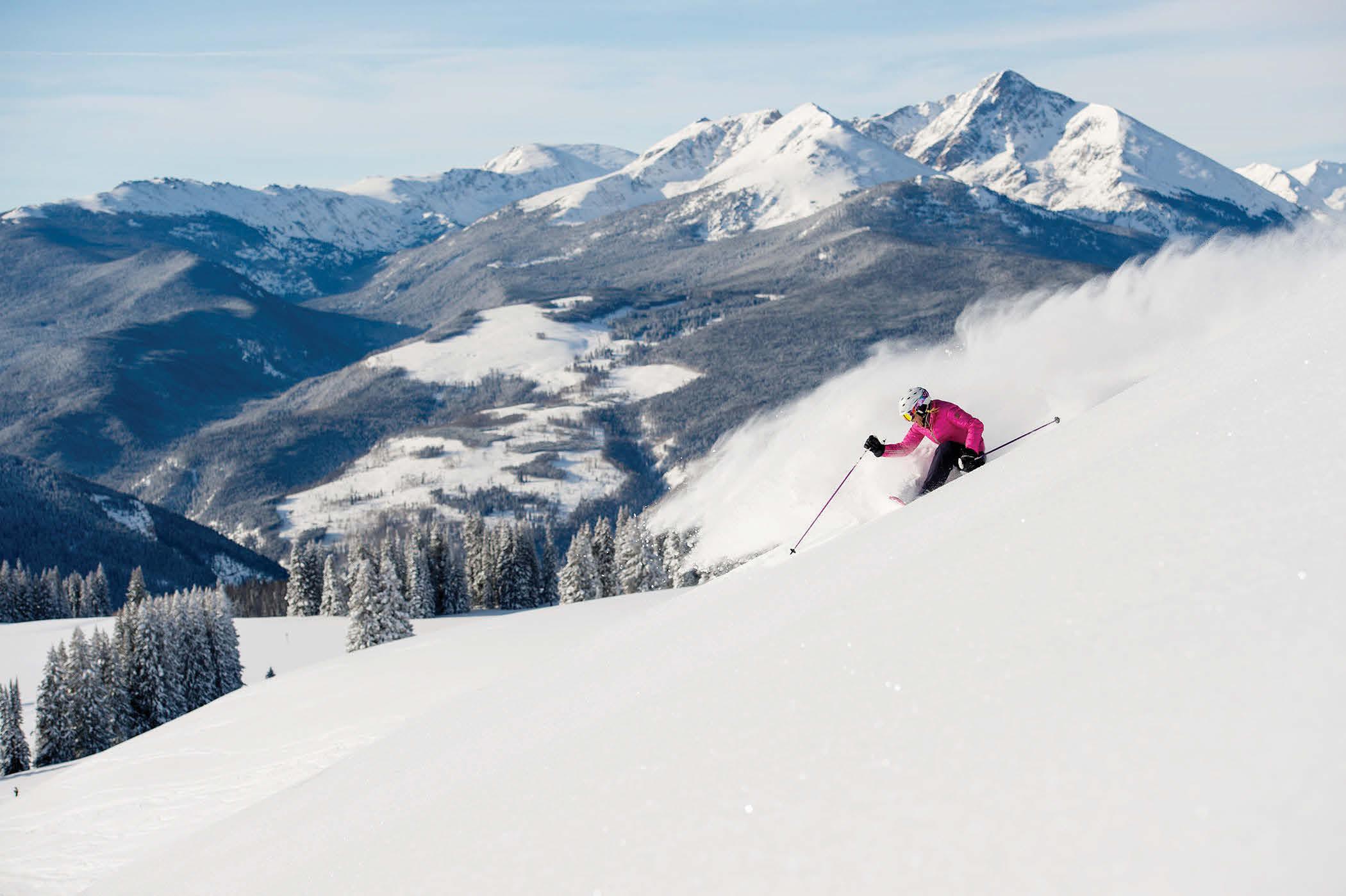
Under financial strain and a heavy mental load, ski patrollers are grinding to keep the slopes safe and make their profession more viable. We sent our writer to Eldora’s ski patrol tryouts to investigate what that looks like—and why skiers should care.
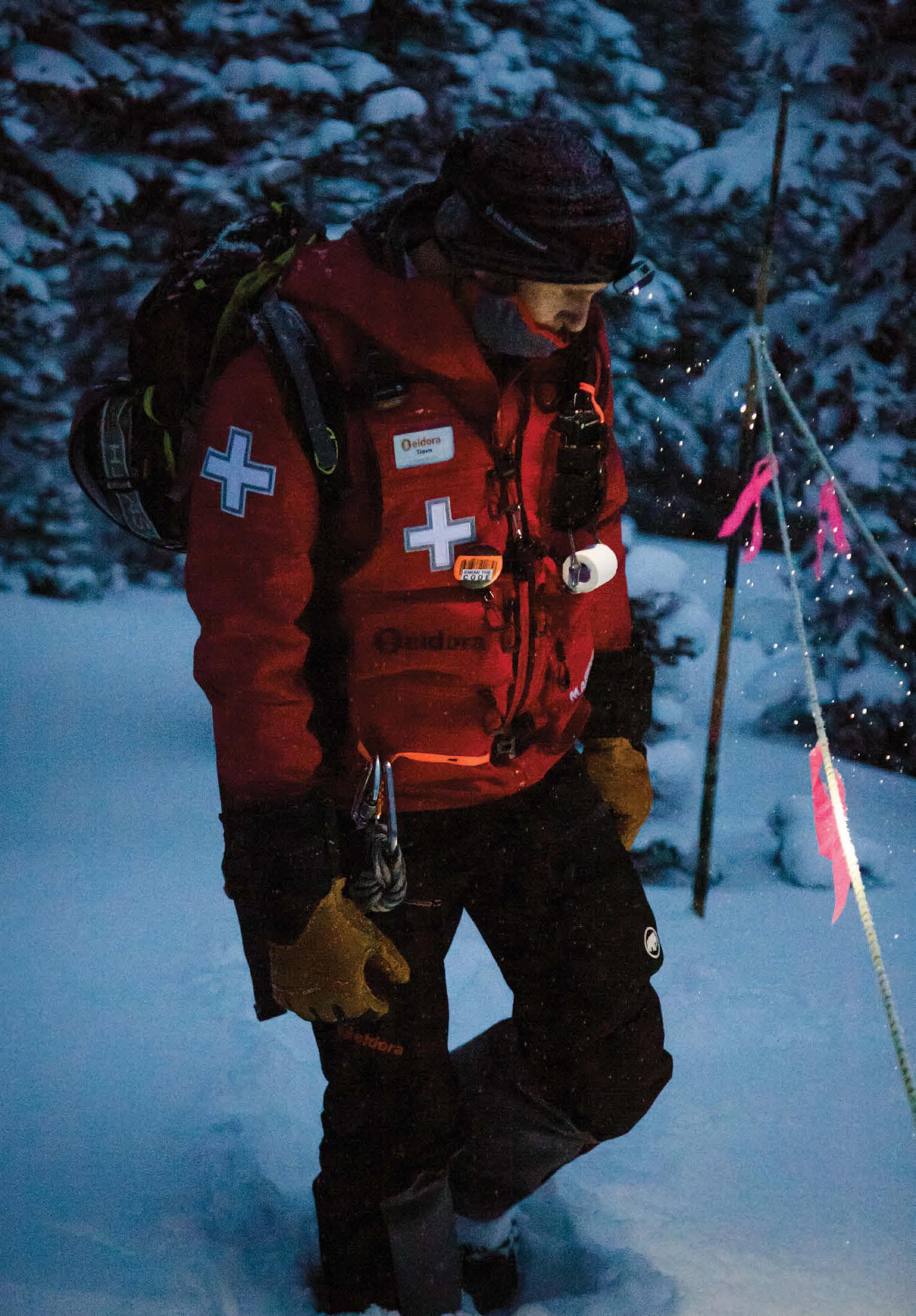
Nearly 20 skiers are squeezed into a hut atop Eldora Mountain on March 27, but only a handful know what’s going on as the radios begin to squawk. I’m one of 15 candidates in the room who are trying out to fill the four or so openings on the resort’s ski patrol, and we’ve been taking a break to warm up after an hour of ski drills on icy slopes. Now, we watch as our judges don helmets, pull on goggles, and rush out the door.
Zach Ryan, a patrol supervisor, stays behind with us and listens to the radio traffic. There’s a mechanical failure on the Indian Peaks lift, leaving hundreds of people stranded on chairs. Patrollers must close part of the mountain to ensure other guests don’t ski down to the malfunctioning lift until it’s fixed. While we wait for the tryout judges to return, Ryan fields our questions.
Most of the people in my group are vying to become full-time patrollers, others want to volunteer, and a few teenagers hope to ski their way onto the youth patrol, which would see them learn emergency first aid and assist in incidents to prepare them to join as adults. I’m here on assignment for 5280 to better understand what it takes to be a ski patroller in Colorado—and to see if I have the right stuff to put on the red-and-white jacket. But despite being a lifelong skier and a journalist who often covers the ski industry, I realize as Ryan answers our questions about wages, housing, medicine, and skier fatalities that I know almost nothing about the realities of his profession.
If I’m being honest, I also sometimes ski like an asshole. I’ve ducked ropes and run from patrollers. I’ve straight-lined groomers trying to set a new personal record for speed and weaved between beginners like they were racing gates. And I’ve always kept an eye out for patrollers, hoping to avoid a lecture from the fun police. Call it willful ignorance, but until today, it never occurred to me that the same patroller roping off terrain in the afternoon might have spent her morning responding to an uncon scious skier who hit a tree at full speed. I also never considered that she might go home to sleep on her buddy’s couch because she can’t afford housing—or that she might not sleep at all because she’s dealing with crippling stress from her chosen line of work.
BUSINESS BY JAY BOUCHARD
Cullen
McHale/Courtesy of Eldora Mountain Resort
44 5280 | DECEMBER 2022






After one morning on the mountain, I was only just beginning to realize how difficult the job could be.

WHEN THE JUDGES RETURN, they’re led by Neil Sullivan, Eldora’s assistant patrol director and the person facilitating the tryout. The 53-year-old is calm and affable, and if his heart rate has risen because of the Indian Peaks call, you’d never know it. He motions the candidates outside, addressing each of us by our first names as we clip back into our bindings. Then he tells us to ditch our poles. Earlier in the day, we’d done what felt like elementary drills—side-stepping down hill, then climbing back up in herringbone (reverse pizza) stances—but the tests help the judges evaluate our abilities to navigate the steep slopes and tight spaces required to access injured guests. (Eldora Ski Patrol used to recruit snowboarders, too, but skiing the mountain proved easier.) As Sullivan had told us earlier, carving turns is only a small part of the job. Now, though, those of us in my largely capable group have a chance to prove our true skiing abilities. We drop into a mogul run called Alpenhorn with instructions to ski fast and in control. Without poles, the judges
watch how well we square our shoulders to the mountain and manage our speeds—essential skills for running a toboggan. A couple of can didates drop in with swagger only to wash out. When we reach the bottom, I board the lift with Sullivan and ask about his approach to the tryouts. I’d heard other mountains give ski patrol candidates bib numbers and only learn their names if they score high enough. Why, then, does he take a more personal tack? “We’re pretty selective, too,” he tells me. “But we’re not just looking for good skiers. We’re looking for good people on top of those skis.”


In the 1990s, Sullivan tried out for another patrol he prefers not to name. “I remember thinking, It’s interesting they’re not talking to us,” he says. “They have 15 judges on the side of the trail, and they’re rank ing us.” Sullivan skied well enough that they learned his name, and he spent sev eral years patrolling at that resort. Now at Eldora, where he’s been for nine years, he’s found that creating a welcoming environment instead of a competition during tryouts is a good first step in building a cohesive group with high morale that wants to come back each season despite what he admits are paltry financial incentives.



LIKE MANY SKILLED WORKERS, ski patrol lers do a lot for a little. Sometimes they’re just pleading with out-of-control knuckle heads to slow the hell down. Other times they’re thinning out trees. But on many days, they’re using the professional training they’ve been given, including first-aid medicine and avalanche mitigation, to respond to skiers who need medevac flights and to bootpack explosives into avalanche zones. Historically, their pay has not been commensurate with those skills.
According to data from the U.S. Bureau of Labor Statistics, professional patrollers in the United States earned an average wage of just over $13 per hour in spring 2021. The patrollers I spoke with told me starting pay in the Centennial State this past season was closer to $15 per hour, still barely enough to survive in most Colorado mountain towns. When Ryan, the patrol supervisor, started working at Eldora in 2016, he was a snow maker, but when he passed the ski test and was hired as a patroller, he started at $12 per hour, a $2-per-hour pay cut. It was worth it because he planned to go to medical school, and the experience would help him get there. (He enrolled this summer and is no longer
O -Center Theater of the Mind is supported in part by Science Sandbox, an initiative of the Simons
This project has been funded in part by a grant from the Colorado Tourism Office. NOW EXTENDED DUE TO POPULAR DEMAND YORK STREET YARDS
CREATED BY DAVID BYRNE & MALA GAONKAR
Foundation.
BUSINESS
“IT FEELS LIKE ABSOLUTE MAGIC.” – THE DENVER GAZETTE
46 5280 | DECEMBER 2022
Cocktails
Fireplace Tipple
CANDY CANE FOREST
1 ½ oz. Candy Cane infused Breckenridge Vodka*
2 oz. white chocolate liqueur
2 dashes Bittercube Cherry Bark Vanilla Bitters Whipped cream
FIREPLACE TIPPLE
2 oz. Breckenridge Bourbon 1 oz. smoked grapefruit shrub* 1 oz. grapefruit juice ½ oz. lime juice 12 elderberries

Shake first three ingredients with ice. Strain and serve up. Top with whipped cream. GARNISH: mini candy canes
*Pour 8 oz. vodka and 4 oz. slightly broken candy canes into a mason jar. Seal, shake, and rest a few hours. Strain, return to mason jar, and refrigerate.
In a shaker tin, muddle elderberries. Add all other ingredients with ice. Shake and strain over ice. GARNISH: smoked sage, citrus and elderberries
*Over low heat, add 1 cup pink grapefruit juice, 6 oz. Turbinado sugar, and 2 oz. honey. Stir until sugar is dissolved. Turn off heat, let cool, and add 1 oz. grapefruit balsamic vinegar. Stir to incorporate. Add shrub into a sealable container. Smoke with a smoking gun or cylinder using applewood chips. Seal and refrigerate. **Smoking is optional.
WHISKEY MULLED WINE { batched , serves 6-7 guests }

6 oz. Breckenridge Spiced Whiskey 1 bottle Cabernet 1 oz. honey
1 oz. Turbinado sugar
1 tbsp. cardamom seeds, muddled
FIRST CHAIR
2 oz. Breckenridge Gin
1 oz. fresh lime juice
¾ oz. pine simple syrup* ½ oz. egg white
Top with sparkling soda
WINTER WONDERLAND
1 ½ oz. Breckenridge Pear Vodka 3 oz. pear juice
¾ oz. mace simple syrup*
SWEATER WEATHER
1 oz. Breckenridge Spiced Rum 2 oz. cream liqueur 5 oz. Dark Roast Coffee
Over low-med heat, add all ingredients. Stir to incorporate. Continue to heat for 20 minutes. Then turn to low and cover for 30 minutes. Strain when you have the balance you like. Return to low heat and serve garnished with orange, cinnamon stick, star anise.
Dry shake first four ingredients (no ice). Shake again with ice and strain into glass. Top with sparkling soda.
GARNISH: pine sprig
*Over medium heat, add 1 cup water, 1 cup sugar and ¼ cup rinsed edible pine needles. Stir until sugar is dissolved. Let cool, strain, bottle and refrigerate
Shake all ingredients with ice. Strain and serve up.
*Over medium heat, add 1 cup water, 1 cup sugar, and ½ cup whole mace. Stir until sugar is dissolved. Let rest 20 minutes, cool, strain, bottle, and refrigerate.
Stir in all ingredients. Serve hot. Top with whipped cream.
GARNISH: pralines
ADVERTISEMENT BRECKENRIDGEDISTILLERY.COM 970.547.WSKY (9759)
hand-crafted by award-winning Liquid Chef Billie Keithley
Breckenridge Distillery More Holiday Cocktails SEASON CHEER IS IN THE AIR... AND IN YOUR COCKTAIL. Festive Christmas Cocktails 6 FROM
3 star anise 2 cinnamon sticks 6 cloves Peels from two oranges 1 lemon sliced ¾ oz. fresh lemon juice 2 dashes Peychaud’s Bitters ½ tsp. white Brew Glitter
an Eldora employee.) To be able to pay the bills, he spent his summers fighting fires in Montana and relied on hazard pay and over time to squirrel away enough cash to make it through each winter. It’s a balance that is more challenging than ever to maintain as housing costs in Colorado continue to soar.
Nowhere is this truer than in Breckenridge. With pay failing to keep up with the town’s high cost of living, patrollers at Breckenridge Ski Resort voted to unionize in 2021 and began
bargaining with Vail Resorts, which owns the mountain, to establish a new wage structure. In March, Vail Resorts finally announced a $21 hourly rate for entry-level ski patrollers at its 37 resorts—a higher wage than the union expected. While the increase was cheered across the industry, $21 per hour equates to about $41,000 a year. In Breckenridge, the average annual rent for a one-bedroom apart ment is $30,000, and that’s if you can find a unit that hasn’t been turned into a short-term

rental. “You could argue $21 an hour gives you a little more breathing room,” says Ryan Dineen, president of the Breckenridge Ski Patrol Union. “But if it’s impossible to move here unless you’re wealthy, we’ve eliminated so many people for whom this [profession] is not attainable or available.”
Still, Vail Resorts’ announcement could force other resorts to raise their wages to attract and, more importantly, retain patrol lers. There are encouraging signs: In 2022, Eldora and Copper Mountain, both owned by Powdr Corp., raised starting pay for patrol lers to $18 per hour. “For us to be able to get people to stick around for a couple of years, that’s been a challenge,” Sullivan says. “With all the effort that goes into the training, it’s disappointing if someone leaves after a year or two.” That high turnover makes it harder for patrol leaders to build reliable, experienced teams. In 2021, for instance, Eldora had to onboard nine patrollers, and because their first year on the mountain is essentially a

NOV. 18 APR. 9, 2023 18 de Noviembre al 9 de Abril de 2023

training course, more than half of Sullivan’s full-time team of 16 that season were learn ing on the job.
Larger resorts also struggle with reten tion. “Our patrol is younger now,” says Kara Flores, a supervisor at Winter Park. Flores has been patrolling for 16 years, and like so many of her colleagues, her love of skiing is what keeps her coming back. “You don’t do this for the money,” she says, but she recognizes that passion alone is no longer enough for many. “We used to have a ton of patrollers who’d been here for 30 years. Now, three to four years is average. With the cost of living being so high, it’s hard to keep people around because they don’t have a place to live.”
She hopes the job will become more viable as a career and not just as seasonal work, especially as pay increases and the advent of lift-served mountain bike parks help some patrollers keep their jobs year-round. But many resorts don’t have bike parks, and even if they do, there’s no guarantee they’ll pay the same in the summer as they do in winter, meaning most patrollers in Colorado are still on a seasonal grind. That financial stress only compounds the job’s mental toll.
“There used to be this misunderstanding that, as long as the powder was good, nothing we saw could actually hurt us,” says Laura

Get Your Free Tickets Today Obtén tus entradas gratuitas hoy WWW.DMNS.ORG “Unseen Oceans” is organized by the American Museum of Natural History, New York (amnh.org) BUSINESS
48 5280 | DECEMBER 2022
“They feel like they’re betraying their families for their jobs.”
Food is at the top of his Christmas list.
Over 200,000 Denver-area children go to school hungry and it’s getting worse. Fill the Void: Amp the Cause to End Hunger is a program created to alleviate hunger through grocery gift cards. With your help we can Fill the Void created by overrun food banks, supplement SNAP benefit programs, and ensure children have reliable access to food. Your $250 donation will feed a family of four for two weeks.
Help end hunger by donating at fillthevoidcolorado.org

FILL THE VOID
Amp the Cause is a nonprofit that works with over 55 beneficiary organizations to improve the lives of Colorado’s children and families.
McGladrey, a psychiatric nurse practitioner at the University of Colorado Anschutz Medi cal Campus and a longtime patroller. “That was somewhat magical thinking.”
When skiers are critically injured on the mountain, those who respond often experience so-called stress injuries, which can mani fest as sleep loss, lack of motivation, anxiety, and depression. That’s why, several years ago, McGladrey created Responder Alliance, a program that helps outdoor professionals
by connecting them with each other and resources for psychological first aid and stress management. She created the program with techniques adapted from the United States Marine Corps and law enforcement, filling a gap in the outdoor emergency response field. “I saw some of the patrollers I worked with have career-ending stress injuries,” she says, “and I thought it was time to start adapting some of those tools.” Today, McGladrey vol unteers at Eldora as its stress and resilience
adviser. She trains patrollers to recognize stress injuries in themselves and others and helps them communicate about traumatic on-mountain events.
Over the past several years, Eldora, Vail Resorts, and others have also committed funding to help patrollers via counseling and other peer-supported initiatives. Many patrollers, however, still struggle to talk about their experiences. “It’s a lot more fun to tell someone on a chairlift I get to ski powder,” says Breckenridge’s Dineen. “[Not that] I did CPR on a dad while his daughter watched. People don’t want to hear those stories, and first responders don’t want to tell them.” When coupled with the economics of sea sonal work and mountain town life, stress injuries can make it difficult to justify staying on the mountain.
Holiday Jazz Shows 2022






AS THE TRYOUT ENDS at Eldora, Sullivan lets the group know he’ll be in touch one way or the other. Then he quietly speaks with a few skiers, including me, to let us know we made it to the next round. Over the next several weeks, he will invite those who passed back to the mountain for a ride-along to see how well they mesh with the existing team.
Whether they stay on for multiple seasons, however, depends on how the profession con tinues to evolve. Powder laps and pro deals on new gear are great perks, but in the long term, they aren’t enough to overcome the “mountain tax,” the term for accepting lower pay to work in the outdoor industry than what you would receive doing a similar job elsewhere. Multiple patrollers told me that to stop the burnout—and the brain drain that comes with it—they need better access to affordable housing and health care, and they need some guarantee they won’t have to find a new gig every time the snow melts. “The future of this profession depends on retain ing experienced patrollers,” McGladrey says. “But many people who love patrolling have to leave it because they feel they’re betraying their families for their jobs.”
That’s bad news for Colorado’s skiers. As crowds have grown, Sullivan has seen skier speeds and poor behavior increase, too. “It’s what I call a reckless, out-of-control X Games mentality,” he says. Which made me think about my less-than-responsible behav ior over the years. Even though I didn’t end up joining Eldora’s team, I’ll slow down the next time I pass a patroller. And I’ll keep in mind what that white cross on their jackets really means. m
LAPOMPE Holiday Show
Acoustic Christmas by El Javi
DEC. 10
Charlie Brown Christmas with the Annie Booth Trio & Friends
Otis Taylor
DEC. 15 & 16 DEC. 29 TICKETS AND FULL LINEUP DAZZLEDENVER.COM ADDITIONAL SHOWS DEC. 19-24 Same Cloth Last Saturday of Each Month, including New Year’s Eve Joe & Theresa Mazza December 14 Ken Walker Sextet, Sarah Mount & the Rushmores Final Friday of Each Month BUSINESS
Photo: Adam Cory Photography
50 5280 | DECEMBER 2022
Jay Bouchard is a Denver-based freelance writer. Email him at letters@5280.com.

Around Colorado’s Roaring Fork Valley, the legend is well-known: An eccentric old man living on Basalt Mountain had grown bananas at 7,200 feet. And from a patch of rocky hillside, perched precariously above a cliff, this gardening guru hadn’t only grown bananas; the lore suggested he’d brought to life all kinds of plants that seemed impossible to cultivate in the Rocky Moun tains, including guavas, papayas, dragon fruit, grapes, figs, and passion fruit. A quick scan of Jerome Osen towski’s property suggests the stories surrounding his high-elevation green thumb aren’t fables. “We have about 10 different citruses,” Osentowski tells me one afternoon, gesturing toward a cluster of bright green fruits emerging from a tree branch.
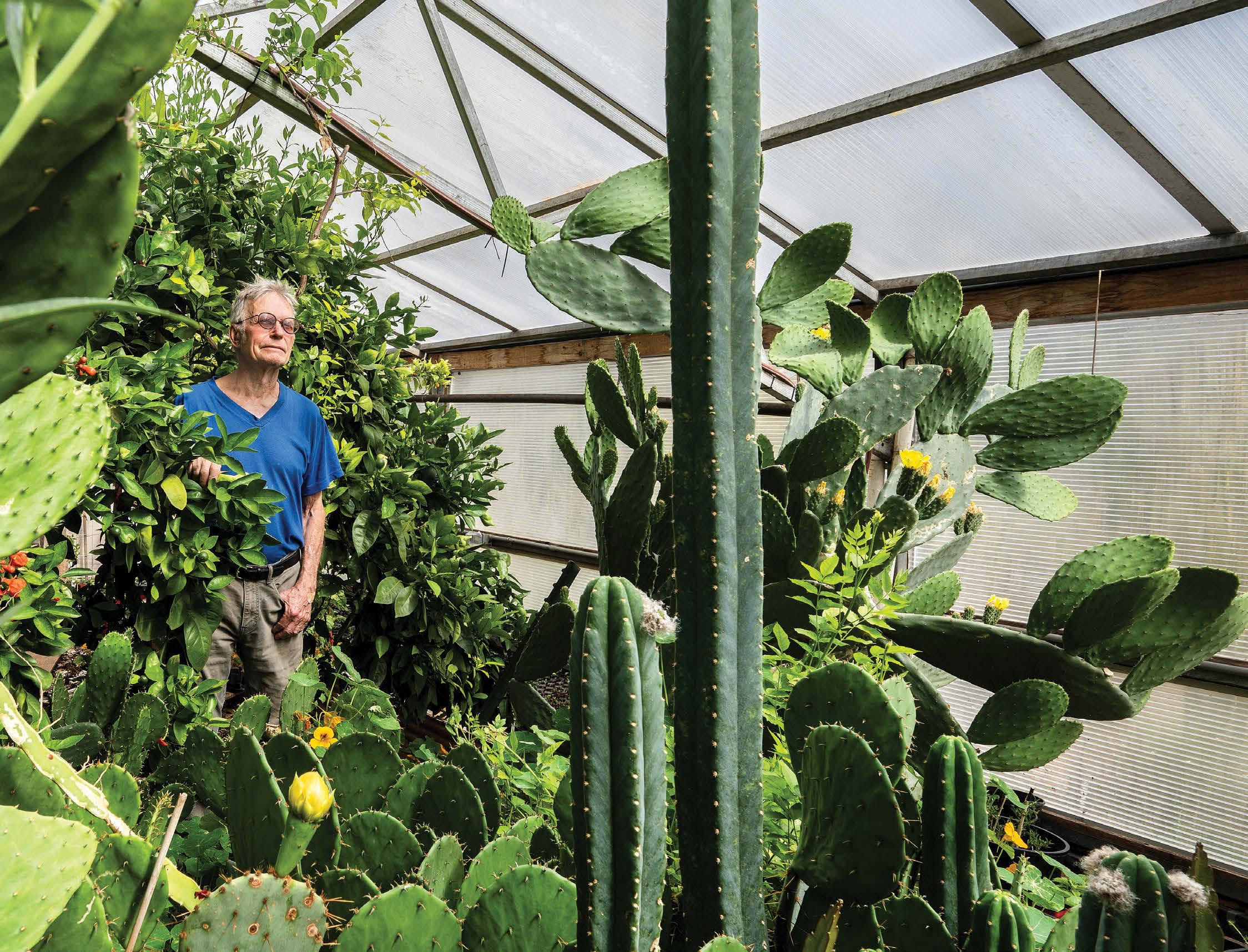
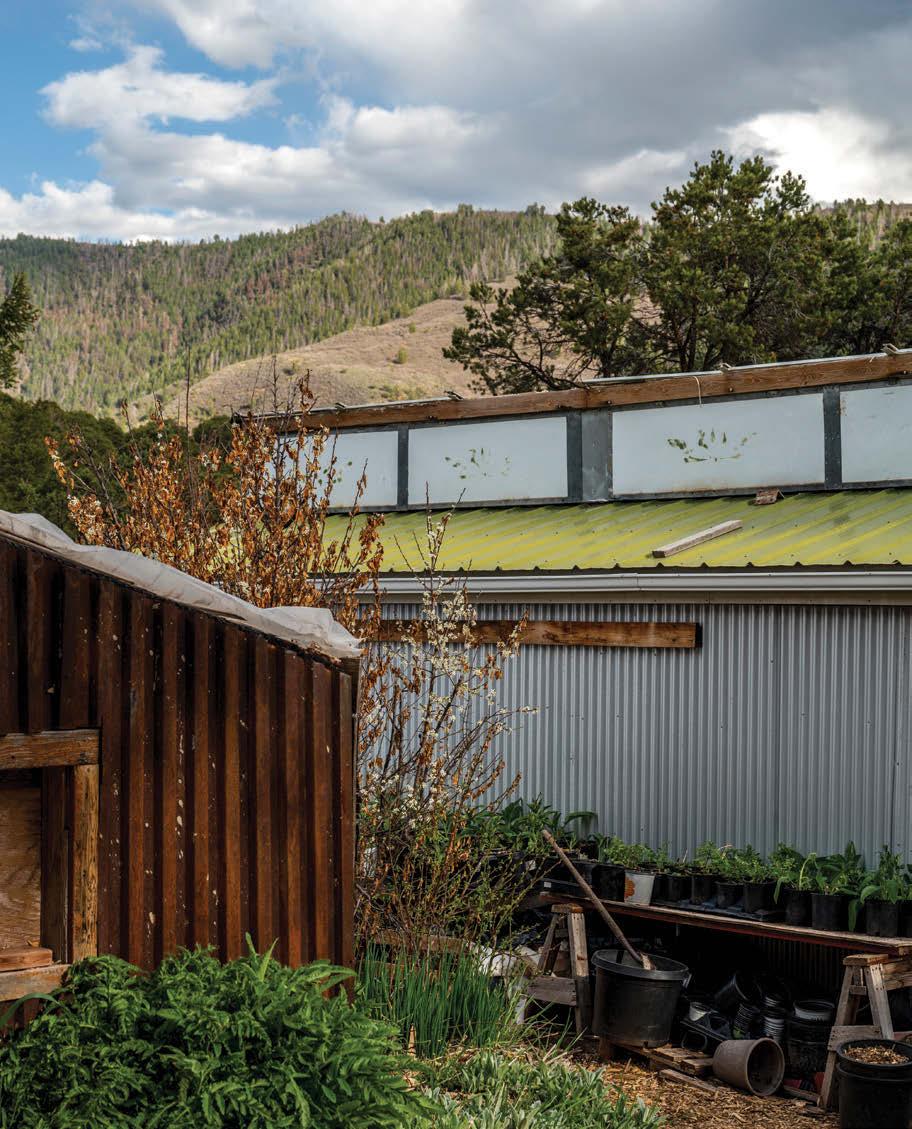
It’s a hot July day, and the short, bespectacled 81-year-old with unkempt gray hair is ambling along a wooden-plank pathway that bisects one of his greenhouses, which has been constructed—with the help of contractors and volunteers—with scrap material, giving the whole compound a DIY, dystopian feel. In fact, the property relies only on solar power, and Osen towski sometimes compares himself to a survivalist. “We’re
The Seeds He Sowed
kind of the ultimate preppers here,” he says. “I look at this as a kind of ark—but Noah just had two of everything. We have 10 of everything.”
Osentowski is certainly right when it comes to plant life. Between his tropical- and Mediterranean-climate greenhouses and an outdoor food forest—where a cornucopia of fruit trees and herbs thrive—his property is a high-country Garden of Eden, teeming with so many plant species that his land may hold the largest diversity of edible species in all of Colorado. “Everything we have here has multiple yields,” Osentowski tells me. His eyes brighten while he demonstrates how one yield of a latticed vine is shading understory plants from direct sunlight. “And another of the yields is education,” he continues. “We have these plants here to teach people.”
Osentowski has done plenty of that educating himself, having overseen the longest-running permaculture design course in North America as part of the Central Rocky Mountain Per maculture Institute (CRMPI), a nonprofit he established in the early ’90s, with its headquarters on his property. Permaculture is a design discipline that can cover many different applica tions—not just gardening—but it generally aims to mimic
PROFILE BY CHRIS WALKER
Daniel Bayer
52 5280 | DECEMBER 2022
Jerome Osentowski is known the world over as a pioneer of permaculture. But can the Eagle County resident survive a challenge from a pest he never anticipated?



Affordable Certified-Organic in America. Urban Mattress.


nature, including replicating the kinds of diversity, resilience, and cross-species relationships found in self-sustaining environments. “We’re looking at native ecosystems and asking: How do they survive for millenniums?” he says as we walk past a pollinator garden buzzing with bees. “Every plant and every tree has a story.”
It’s obvious that Osentowski holds a special reverence for flora, and his connection to the world of roots, leaves, and seeds hasn’t just made him a local celebrity: He’s considered a pioneer of permaculture worldwide and has taught classes and presented at conferences in places like Nepal, Australia, Argen tina, Cuba, and Puerto Rico. But as beloved as Osentowski is by acolytes near and far, his adoration for plants usually exceeds his esteem for people. Halfway through my tour of his property, his cellphone rings.
“Excuse me,” Osentowski says, annoyed.
While he takes the call, I wander toward some cages that hold more than 70 rabbits— CRMPI’s main source of manure—but I can’t help but overhear Osentowski’s voice rising.
“No! No! NO!” he exclaims. “We don’t have any campfires here. That’s not a concern. I wish people wouldn’t go off the deep end and just talk to us!”
Even from a distance, I can tell Osen towski is venting about his neighbors, at least one of whom has lodged written
complaints with county officials about certain activities on his land. It’s one of the reasons I’ve made the trek from Denver to Osentowski’s property near Carbondale. This isn’t some minor quar rel between neighbors; complaints to Eagle County officials around issues such as traffic, construction permits, and perceived fire danger at CRMPI have drawn the attention of various government departments, and now the nonprofit’s future is in jeopardy due to a bureaucratic banality: zoning.
It’s a saga years in the making and has pitted the longtime plant whisperer against county land-use codes. After more than three decades of running CRMPI, the octogenarian stalwart who helped launch a global garden ing movement finds himself battling a tangle of fees and red tape that may be his and his beloved nonprofit’s undo ing. It also raises a slew of questions: What will become of Osentowski’s institute if the county moves against him? And what does the uncertainty around Osentowski’s property mean for his one-of-a-kind food forest—and his legacy?
Queen
Queen
Boulder Showrooms www.urbanmattress.com
The Most Affordable Certified-Organic Mattress in America. Exclusively at Urban Mattress. The Most Affordable Certified-Organic Mattress in America. Exclusively at Urban Mattress. Denver and Boulder Showrooms www.urbanmattress.com
Most Affordable Certified-Organic
in America. Exclusively at Urban
Always Five-Star. Queen Mattress $1,099 Denver and Boulder Showrooms www.urbanmattress.com The Most Affordable Certified-Organic
in America. Exclusively at Urban
Always Five-Star. Queen Mattress $1,099 Denver and Boulder Showrooms www.urbanmattress.com
Affordable
Reviews. Always
Queen Mattress $1,099 Denver and Boulder Showrooms www.urbanmattress.com
Affordable
Reviews. Always
Queen Mattress $1,099
The Most Affordable Certified-Organic Exclusively at Urban Mattress. The Most Affordable Certified-Organic Exclusively at Urban Mattress.
The
Mattress
Mattress. Real Reviews.
Mattress
Mattress. Real Reviews.
The Most
Certified-Organic Mattress in America. Exclusively at Urban Mattress. Real
Five-Star.
The Most
Certified-Organic Mattress in America. Exclusively at Urban Mattress. Real
Five-Star.
Always
Mattress $1,099
Affordable Certified-Organic in America. Urban Mattress. Real Reviews.
Five-Star.
Boulder Showrooms www.urbanmattress.com
Mattress $1,099
Real Reviews. Always Five-Star.
Denver
PROFILE
Denver
Daniel Bayer
54 5280 | DECEMBER 2022
The exterior of Osentowski’s greenhouse on Basalt Mountain

Tequila, 40% alc. / vol. ©2021
Import Company, Chicago, IL.
Hornitos®
Sauza Tequila
JEROME OSENTOWSKI never planned to trans form one flank of a rocky hillside outside of Carbondale into a verdant paradise—much less one that’s become known around the world. By the time he pressed the first seeds into the nutrient-poor clay on Basalt Moun tain, he was already in his 30s, and his life had taken a number of unpredictable turns.
Born in 1941 on a farm in central Nebraska, Osentowski was one of five children in what was essentially a one-parent household where

the only language spoken was Polish. “We lived very close to the bone,” Osentowski wrote in a book he published in 2015 titled The Forest Garden Greenhouse. “My mother raised [us] on a hundred dollars of public assistance a month.”
The hard times instilled in Osentowski a sense of frugality, as well as a knack for selfpreservation and a desire for independence. At the age of 17, he left home and signed up for the U.S. Air Force, first playing drums in
the Air Force band in Denver, then serving in administrative roles in England and Ger many during the Cold War. Paper-pushing didn’t suit him, though, so Osentowski’s gaze eventually turned stateside, where he returned to attend Orange Coast College and then San Diego State University in California on the GI Bill. Officially, his focus of study was political science, but it was Lee Canyon ski resort in Nevada that drew more and more of Osentowski’s attention; after a few winters, he became a full-time ski instructor.
Like any skiing careerist, Osentowski quickly found himself lured by the dry powder and black diamond descents of Colorado’s slopes. In 1969, he moved to the Aspen area to work winters as a ski instructor and summers as a carpenter. He even taught Hunter S. Thompson how to ski. (“He didn’t have any ether with him,” Osentowski jokes about the lesson. “But all the other drugs were there.”)
It was around this time, in 1975, that Osentowski saw an ad for land for sale on Basalt Mountain. It was the cheapest prop erty he’d seen available in the Roaring Fork Valley—$13,000 for nine acres—but most important, it fulfilled the one requirement Osentowski was looking for: a secluded spot to build the proverbial cabin in the woods. At the time, the 34-year-old didn’t know much about gardening and nothing about perma culture, but he planted a few root vegetables anyway. His first attempts failed miserably.
It wasn’t until years later, when he crossed paths with a permaculture designer named Michael Winger at the Aspen Commu nity School, that Osentowski would begin to unlock many of the discipline’s secrets— such as enriching soils in raised beds and planting species that work symbiotically with each other—that would enable edible plants to flourish on Basalt Mountain. The concepts fascinated Osentowski enough that he signed up for courses with Bill Mollison, who, along with David Holmgren, coined the term “permaculture” in the ’70s. The two Australians rejected modern industrial con cepts such as constant growth and reliance on nonrenewable resources. Much of what they espoused had been practiced by vari ous Indigenous peoples for millennia. But Mollison and Holmgren’s practical design applications—including greenhouses—as well as their writings on the topic inspired farmers to pick up the practice.
Inspired by the nascent movement, Osen towski decided he’d give gardening on Basalt Mountain another try. He even constructed a 60-foot-by-22-foot greenhouse and named it Pele, after the Hawaiian goddess of fire,
PROFILE
56 5280 | DECEMBER 2022
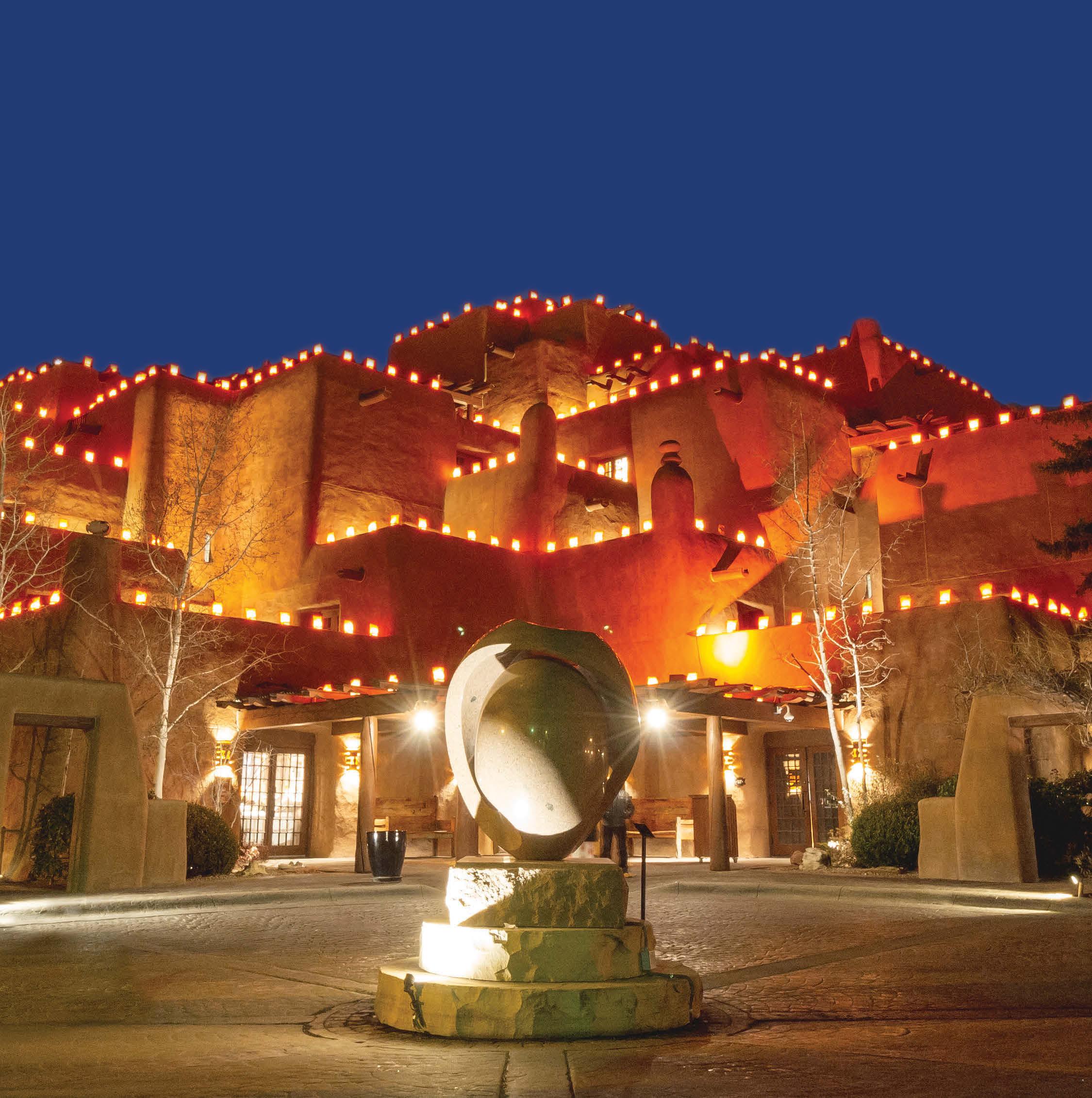
HOLIDAYS IN SANTA FE 877.901.7666 | HHandR.com TAOS El Monte Sagrado Resort & Spa Palacio de Marquesa SANTA FE Eldorado Hotel & Spa Inn and Spa at Loretto Hotel St. Francis Hotel Chimayó de Santa Fe ALBUQUERQUE Hotel Chaco Hotel Albuquerque at Old Town The Clyde Hotel LAS CRUCES Hotel Encanto de Las Cruces Above: Inn and Spa at Loretto GIFT CERTIFICATES AVAILABLE
who he hoped would keep his plants warm. In Pele, Osentowski also engineered a prototype of something for which he’d later become famous: a so-called climate battery. Basically, the device consists of an underground sys tem of plastic tubes connected to fans that suck the hot, moist air from the greenhouse atmosphere and distribute it beneath the soil. Thanks to this innovation and others, the plants thrived, and Osentowski’s timing was such that he became a central player in a mixed green salad revolution.
In the 1980s, Osentowski says Aspen restaurateurs were trying to transform Ameri cans’ understanding of salad away from a sad standard. “They were just eating ranch dressing and iceberg lettuce,” he says. So as he began producing mixed greens such as Swiss chard, kale, and arugula, his roster of restaurant and grocery accounts swelled to 18; for many years, he was making $1,500 a week selling mixed greens to area businesses.
Word about Osentowski’s successes with permaculture spread around the Roaring Fork Valley—and then outside of it. The more people heard about it, the more they asked if they could come learn. The demand to understand the gardening guru’s floral for mulas inspired Osentowski to begin teaching classes in 1987 and ultimately offer his now well-known permaculture design course, which covers topics such as soil building, greenhouse maintenance, and water-capture technologies.
Osentowski’s longtime friend Michael Thompson took the course himself and mar veled at Osentowski’s abilities with plant life. As a trained architect, however, Thompson couldn’t help but notice that Osentowski’s greenhouse “looked like it was built with baling wire and bubble gum.” Still, he was impressed by Osentowski’s innovations, including the subterranean air system. The architect eventually entered into a greenhouse design business partnership with Osentowski called Eco Systems Design; it was Thomp son who coined the term “climate battery.” Over the past 21 years, they’ve given back to the community by helping design gardens and greenhouses at roughly 60 percent of the schools in the Roaring Fork Valley and have taken on more than a hundred com mercial greenhouse projects in Colorado and around the world.
But life at CRMPI has not always been rosy. At around 3 a.m. one night in October 2007, Osentowski woke up to the smell of smoke and found flames erupting out of the top of his beloved greenhouse. By the time firefighters made it to his property, Pele was in ruins. “It was said to have started in the flue of the sauna,” Osentowski says of the
fire, referring to a wood-burning sauna he’d attached to one end of the greenhouse. “But I think it could have been arson. People have been trying to get rid of me for a long time.”

BASALT MOUNTAIN HAS LONG BEEN a place where people come to seek peace and quiet, as Osentowski originally did himself. But over the years, the institute has drawn several thousand people to its greenhouses and edible food forest, many of whom have camped on the property in order to spend more time learning on-site from the man who can grow almost anything at elevation. It’s the comings and goings of the permaculture-curious on the area’s main road—a winding, treacher ous drive with heart-pounding drop-offs and few places to pass vehicles—that have sometimes led to altercations.
Osentowski says he’s tried to make nice with his neighbors—inviting them for tours of his land, giving them fresh produce—but anyone who’s spent enough time with him knows that Colorado’s godfather of per maculture can come off as prickly. Some of Osentowski’s students and volunteers halfjokingly refer to him as a thistle: He’s resilient and hardy, as evidenced by how he replaced Pele with a better greenhouse after the fire, but he can sometimes poke or sting with his words. In 2018, one neighbor felt she’d been pricked enough by CRMPI’s existence that she filed a written complaint with Eagle County administrators.
The complaint, which referenced possible nonpermitted construction activities, put CRMPI on the radar of Eagle County’s planning department; its property inspectors subsequently found a litany of issues. As Thompson puts it, when Osentowski built most of the structures on his property and established CRMPI, “it never even crossed his mind that he should be looking at the Eagle County land-use code.”
Osentowski says he has since spent more than $250,000 on new construction, engi neers, and consultants to get his property up to code—including doing electrical work and improving emergency evacuation routes in case of a fire. The most frustrating expense of all, though—and the biggest insult to Osen towski—has been having to justify the very existence of CRMPI within Eagle County’s zoning code. Because CRMPI teaches classes and hosts a campground in a residentially zoned area, Eagle County officials told Osentowski he needed to apply for a special-use permit if he wanted to continue those activities. As guidance, the planning department recom mended he apply for a resort recreational facility permit, because it was the closest
PROFILE
58 5280 | DECEMBER 2022
History. Heritage. Craft CULTURE. The Great Outdoors.


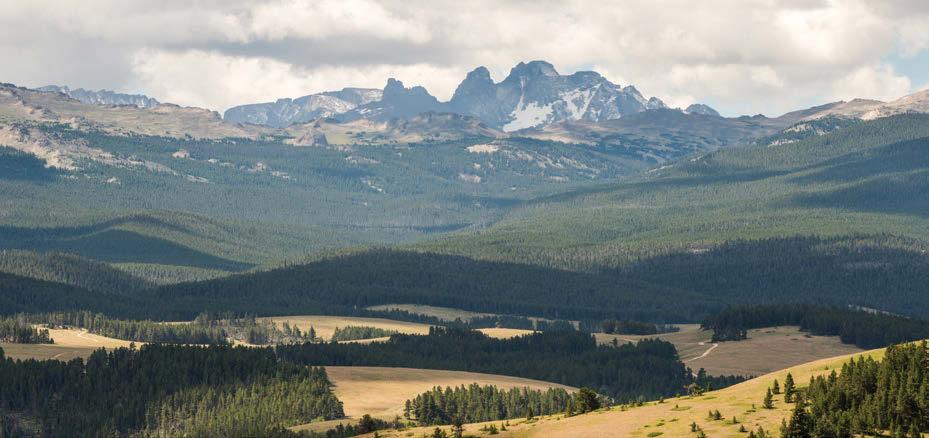
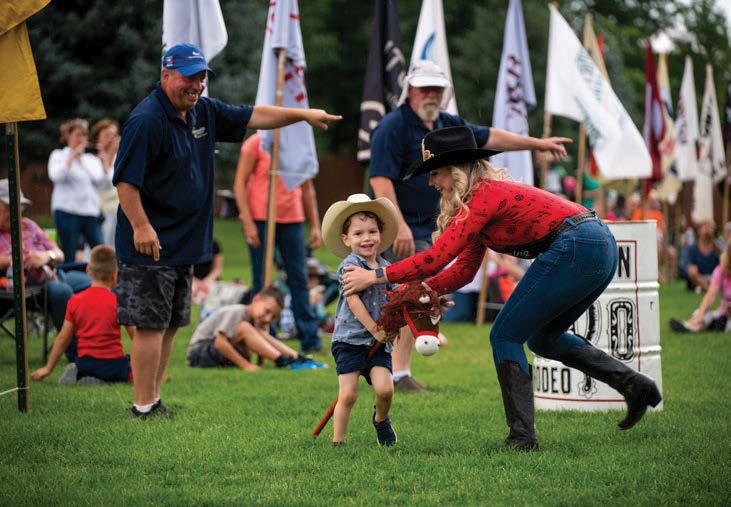

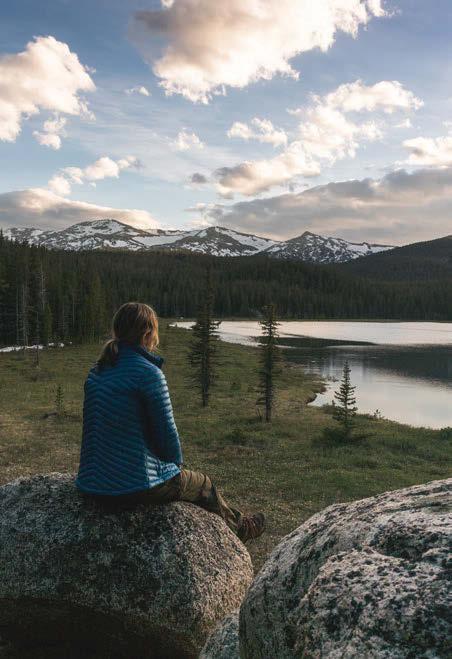
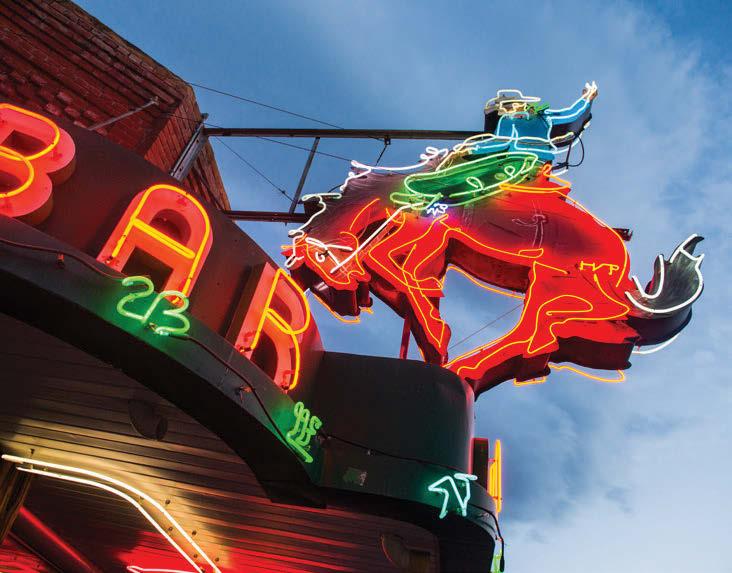
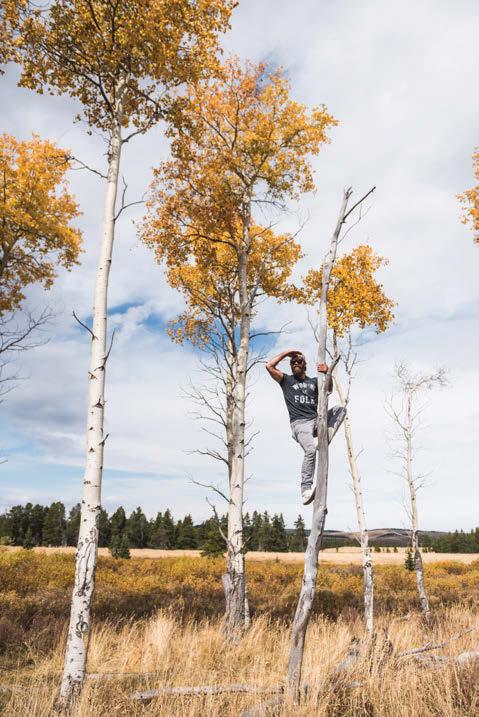
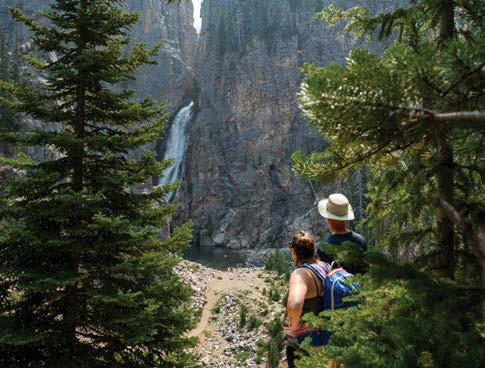
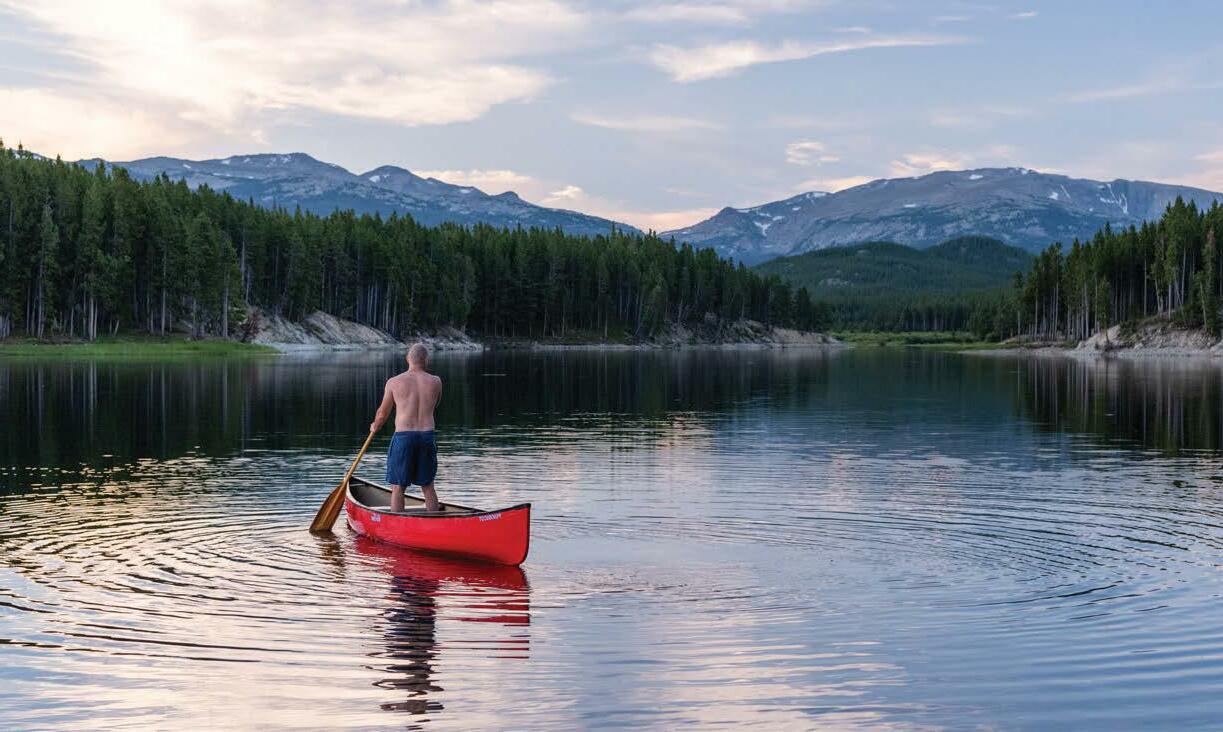

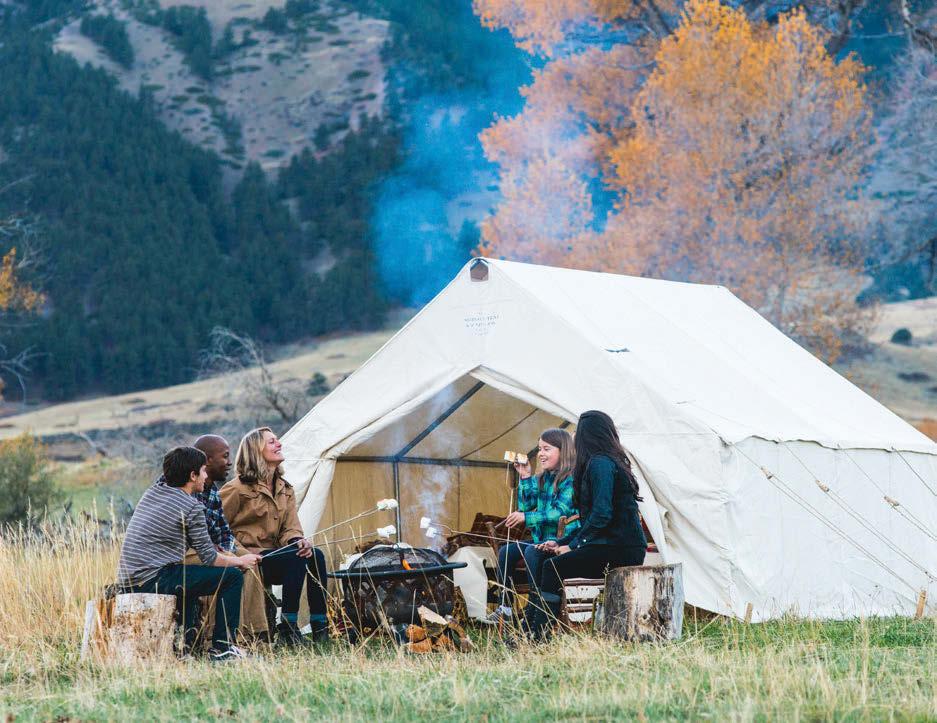
Your Ticket to the Wild West.
The world comes out west expecting to see cowboys driving horses through the streets of downtown; pronghorn butting heads on windswept bluffs; clouds encircling the towering pinnacles of the Cloud Peak Wilderness; and endless expanses of wild, open country. These are some of the fibers that have been stitched together over time to create the patchwork quilt of Sheridan County’s identity, each part and parcel to the Wyoming experience. Toss in a historic downtown district, with western allure, hospitality and good graces to spare; a vibrant art scene; bombastic craft culture; a robust festival and events calendar; small town charm from one historic outpost to the next; and living history on every corner, and you have a golden ticket to the adventure of a lifetime.
classification they could find in their zon ing code. Osentowski begrudgingly hired a consultant to prepare the application.
After years of delays due to the pandemic and county staffing issues, he finally got a chance to make his case to the Roaring Fork Valley Regional Planning Commission on July 21. Before a packed room in the Eagle County Courthouse in El Jebel, a consul tant named Maya Ward-Karet explained how CRMPI had accommodated every county
request it could and laid out a plan for how CRMPI would prohibit campfires, import port-a-potties, and use shuttle buses to reduce vehicle traffic.
Before the commissioners made a decision, they opened the floor to public comment, and a rather remarkable scene unfolded. Over three hours, dozens of community members spoke in favor of CRMPI, includ ing former Aspen Mayor Bill Serling. They provided various reasons for why CRMPI
should be allowed to operate. “This is about preserving a legacy in our valley, a jewel rooted literally—pun intended—in Basalt Mountain,” said Doug Graybeal, an area resident. Eagle County local Richard Blair concurred, adding, “With all due respect to the other homeowners, but with just a little change in perspective, living in such close proximity to an international legend could be an asset. It could be something that they could be excited about.”

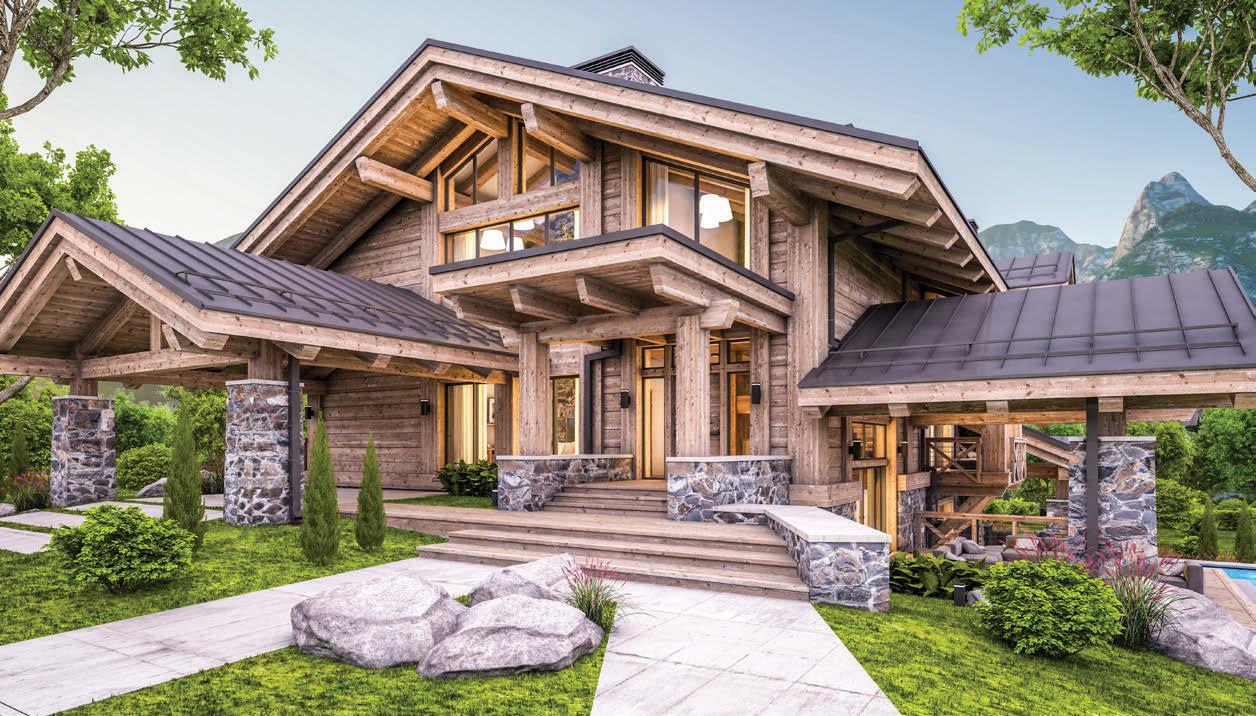
Some commenters asked the planning commission to be less rigid with its zoning code. Even Bob Schultz, a former volunteer member of the commission, pointed out that, in the past, neighboring Pitkin County had been amenable to allowing two farming- and climate-focused nonprofits in its municipality to operate in ways—including creating heavy traffic—and in residential areas that conflicted with rules in the zoning code. “[Pitkin] went through [a process] to try to straighten out some irregularities over there because everyone agreed [those nonprofits] were important things to keep in our community,” Schultz said. “I would ask you to actually consider that rather than a strict interpretation…because Jerome and CRMPI have been a net positive to the Roaring Fork Valley.”
Others focused specifically on climate change and explained how, in these tenuous times, humanity needs more sustainable, zerowaste farms like Osentowski’s. One speaker even referenced This Changes Everything: Capitalism vs. the Climate, a book by Naomi Klein. “[Klein] points out how bureaucracy and its red tape is the reason why our global crisis of climate change is such an issue,” the woman told the commission. “Are you here to help our community? Or are you here to hinder our community?”
We’ve been in the dream-making business since 1973.
As dusk fell, the wave of support swelled on, backed by more than 100 letters submitted championing CRMPI. In the end, the plan ning and zoning commission was not swayed. By a 4-1 vote, the commissioners denied the application, citing inadequate road access and evacuation plans, as well as general incompat ibility with the surrounding neighborhood.
ccu.org | 303.978.2274
Osentowski hung his head. While the July 21 vote was only a recommendation, he’d just lost a major battle, and it was all but certain how the county’s commissioners would rule on that recommendation a couple of months later. Being denied a special-use permit would mean he could no longer teach in-person classes on his property—his finan cial lifeblood—or host volunteers on-site. Any retirement plans he once had, includ ing living in the tropics for half of the year, would have to be put on hold. By the time
MEMBERSHIP ELIGIBILITY REQUIRED. FEDERALLY INSURED BY NCUA. EQUAL HOUSING OPPORTUNITY. Your DREAM HOME awaits. Whether you’re looking to purchase a new home or take advantage of your home’s equity, CCU can help you with your dream home. CALL US TODAY! Mortgages | Home Equity Line of Credit | Fixed Second Mortgage
PROFILE
60 5280 | DECEMBER 2022

PROFILE
Out of this world
the county commissioner meeting arrived on October 17, he’d prepared for the worst. He listened while officials, aggrieved neigh bors, and permaculture allies all argued the finer points of CRMPI’s special-use permit. Almost three hours into the proceedings, the county commissioners broke for an execu tive session. When they returned to the dais, something unexpected happened.
“I think CRMPI clearly provides a public benefit to residents and visitors,” said Eagle County Commissioner Kathy Chandler-Henry. “We have grave concerns about climate, the heating up of the planet, and the food inse curity around the world. And I think that this is a benefit not only to Eagle County, but to a much broader region.”

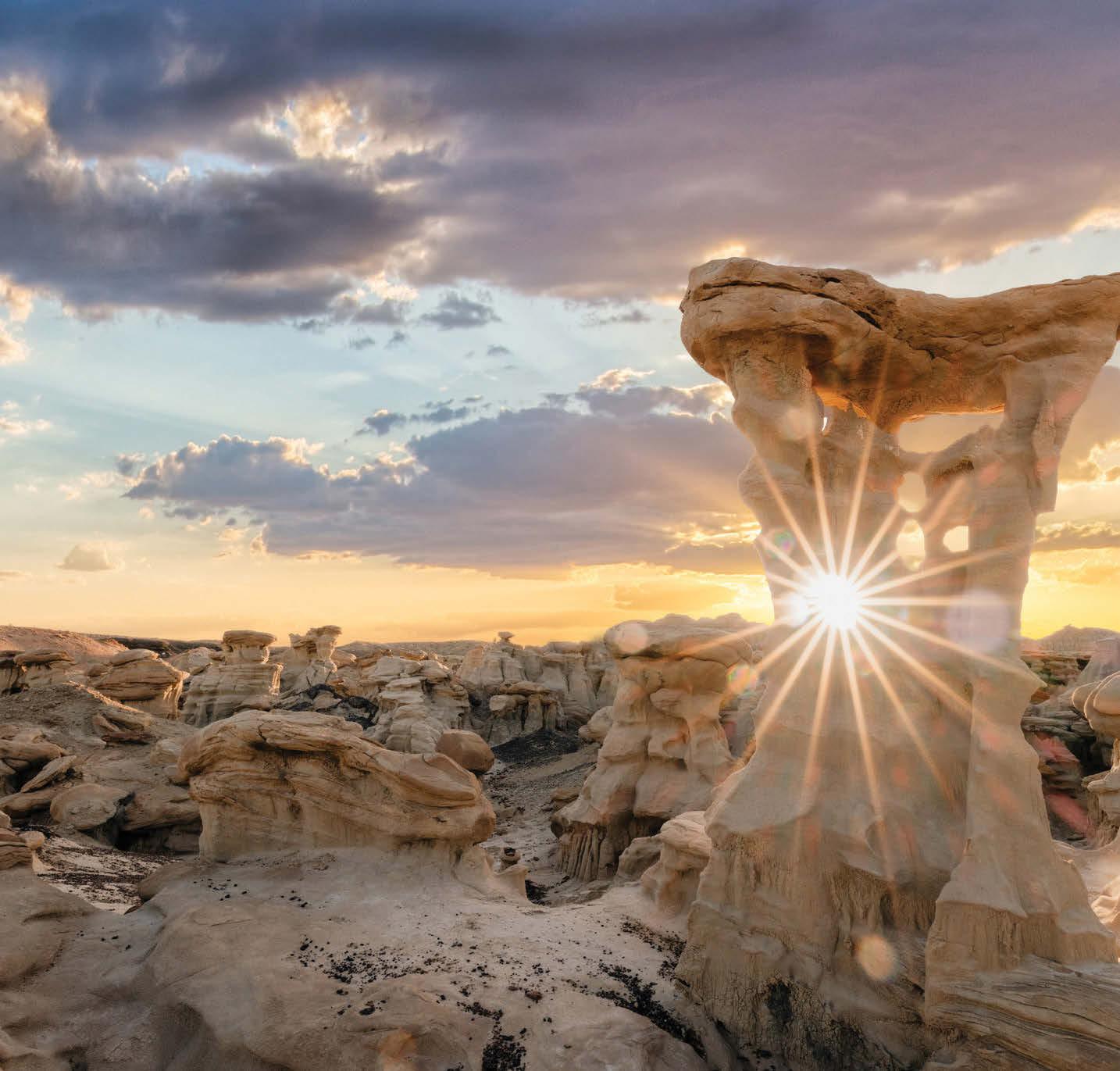
With that, the three commissioners said they were prepared to approve CRMPI’s application if Osentowski agreed to meet 18 separate conditions, including improving evacuation routes and prohibiting camp fires on his property. Finally, it seemed Osentowski’s bureaucratic woes were nearly over. But always the thistle, there was one condition the permaculture guru would not agree to: that the permit be tied to his ownership of the property.
“Part of permaculture is being able to turn [things] over to the next generation,” he told the commissioners. “The education continues beyond me.” The commissioners, clearly not expecting an 11th hour request to extend the permit beyond Osentowski’s stewardship of CRMPI, said they couldn’t trust that a future owner would honor their conditions, and tabled the vote until a ten tative date of November 30. (Eagle County declined to comment until after the county commissioners have voted.)
To many, Osentowski’s move will come across as risky—and possibly boneheaded. But he told me that he views this permit application as his one shot to ensure CRMPI endures over time. While he could start the whole bureaucratic process over, retooling a special-use permit application under a dif ferent designation, he’s not sure he has the heart, the cash, or the strength to pursue that at his advanced age. And the meetings haven’t been all bad. “I felt validated that my life’s work was appreciated,” he says. At the same time, Osentowski’s future—and the future of his food forest—remains blurry. Until the final vote, all he can do is stay grounded in what’s always spoken to him: his plants. “The land knows you,” he says, “even if you’re lost.” m
Alien Throne
Visit FarmingtonNM.org today and awake your thirst for adventure.
62 5280 | DECEMBER 2022
Chris Walker is 5280 ’s associate editor. Email feedback to letters@5280.com.

NOV. 25 – JAN. 1 various dates (see website) Experience a winding path glistening with lights that illuminate the Colorado countryside. Hot drinks and sweet treats available for purchase. Get tickets today. Tickets limited, advance purchase required. botanicgardens.org SUPPORTING SPONSORS C-470 & Wadsworth Blvd.
Best Of The Mountain west

> MONTANA > WYOMING > COLORADO > NEW MEXICO > ARIZONA > UTAH > NEVADA > IDAHO OUR
64 5280 | DECEMBER 2022
THIRD ANNUAL CELEBRATION OF THE PEOPLE, PLACES, AND THINGS CHANGING THE WAY WE LIVE FOR THE BETTER—FROM A MEGASCULPTURE IN THE NEVADA DESERT TO A RIVERSIDE WINE REGION IN IDAHO TO A MONTANA BISON PRESERVE RECENTLY RETURNED TO INDIGENOUS CONTROL. EDITED BY JESSICA LARUSSO
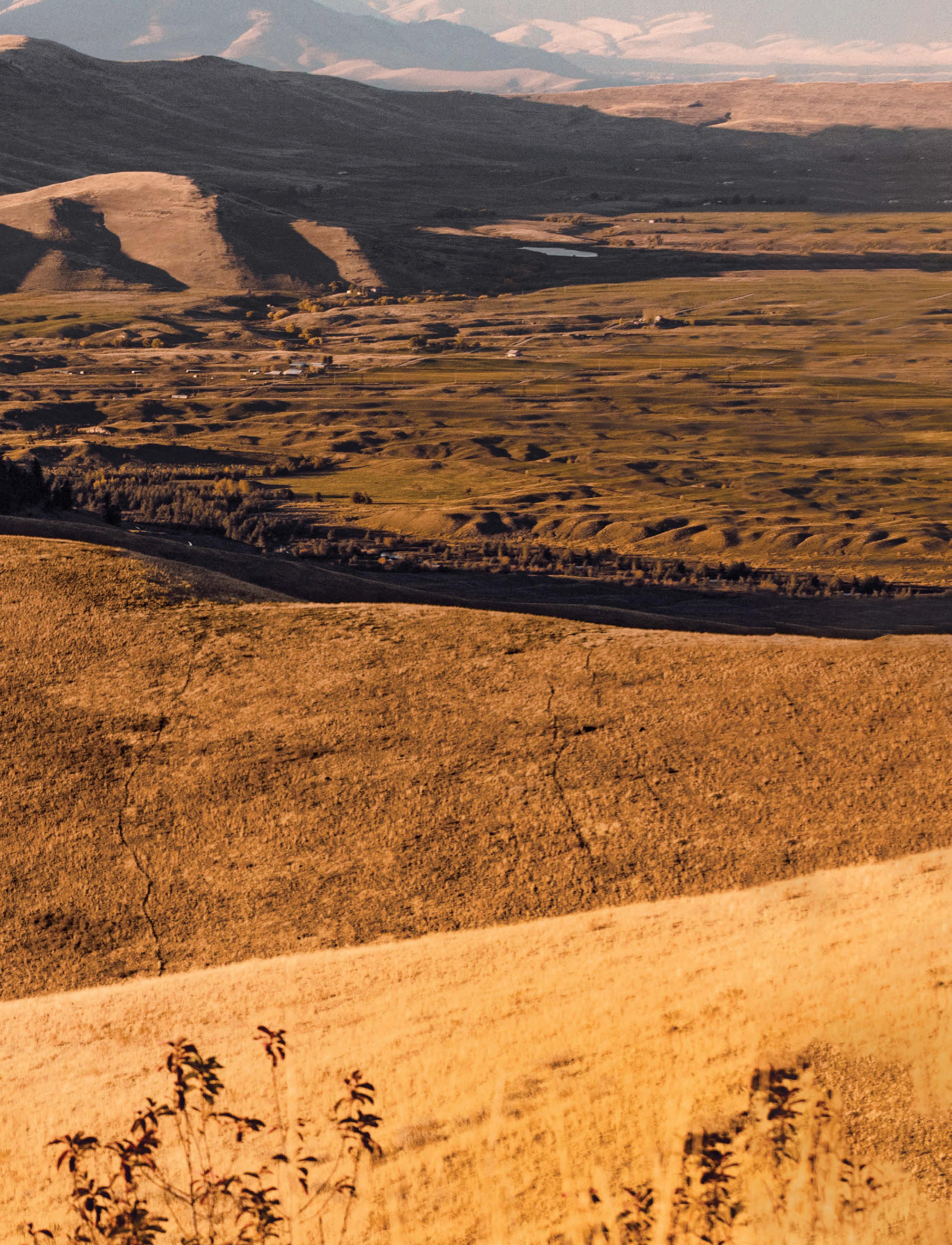
 The CSKT Bison Range, managed by the Confederated Séliš and Ksanka Tribes, covers more than 18,500 acres in Montana.
Wind River Rally
For the nomadic community, home is where you park it, and over four days in June, that was the tiny hamlet of Hudson for more than 120 camper vehicles. Souped-up custom vans, vintage Volkswagen buses with pop-up tents, and skoolies (converted school buses) descended on the mountain-nestled Wind River Country for the inaugural Wind River Rally. The gathering—which featured live music, gear swaps, perfor mances by a traveling circus family, morning yoga sessions, and fresh ink from mobile tattoo artist Chris Montes—is slated to return in August. That’s good news for van lifers and overlanding enthusiasts and even better news for area businesses such as Svilar’s Bar & Steakhouse and Wyoming Whiskey. Local outfitters also got an economic boost by host ing add-on adventures like hot air balloon rides, guided rock climbing, bighorn sheep viewing, and historical mine tours. —Karyna Balch
Natalie Young
About 2.5 miles from the extravagance of the Las Vegas Strip sits chef Natalie Young’s breakfast and lunch joint, Eat. Like its no-frills name, the restaurant’s menu is light on adjec tives, with options such as “shrimp and grits” and “chicken salad.” But sample the homemade sourdough bread and aged cheddar that make up the grilled cheese or the Parmesan-rindinfused tomato soup and you’ll taste their creator’s dedication to fine-cooking techniques. “I keep it simple and approach able,” says 59-year-old Young, who was trained by a classical French chef at the Paris Las Vegas casino. Her food’s subtle depth is a big part of the reason why the restaurant is celebrat ing its 10th anniversary this year—an extraordinary tenure for a low-key, alcohol- and smoke-free eatery in a town full of glitzy, celebrity-chef dining destinations. Young says she still feels gratitude for each pancake- and Reuben-ordering patron: “Every person that makes their way over to my little restaurant makes me feel blessed.” —Courtney Holden

The Gravel House
When Heidi Rentz Ault and Zander Ault first visited Pata gonia, a small town 18 miles north of the Mexico border, in 2015, they quickly real ized they’d stumbled onto a gravel biking paradise. The then nascent cycling discipline steers riders off pavement and onto wider, less obstacle-laden trails than mountain biking singletrack, and the couple has since tapped into the fastgrowing sport via a variety of ventures. In Patagonia, they hold gravel camps through their guide company, the
Cyclist’s Menu; they launched the annual Spirit World 100 ride in 2019; they run Patago nia Lumber Company, a cafe and bar; and they converted two homes into Instagramworthy Airbnb destinations in 2020. Their two-wheeled empire is built on the San Rafael Valley’s 100-plus miles of gravel roads, which wind between the Santa Rita and Huachuca mountain ranges that rise dramatically from the desert floor. In early 2023, the duo plan to expand their lodging offerings, all under the Gravel House moniker, to include a nine-room hotel in town—meaning even more people will be able to discover this gravel riding mecca. —JL
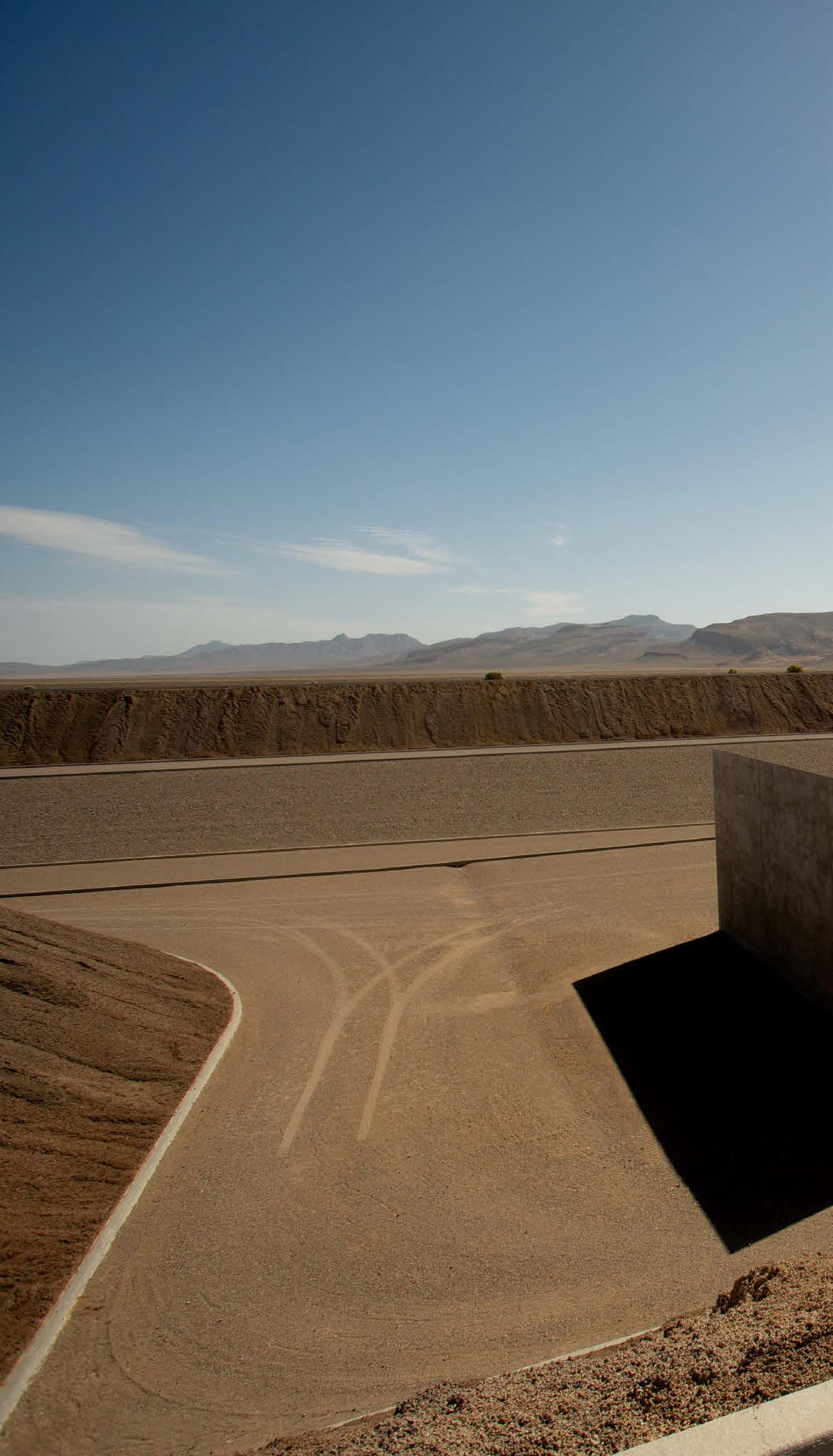
66 5280 | DECEMBER 2022
> MW B
Previous spread, from left: Rebecca Stumpf; Chuck Haney/Danita Delimont/Alamy Stock Photo
NEVADA > FOOD
> ADVENTURE
WYOMING
ARIZONA > LODGING
90°, 180°, City); Eric Piasecki/© Michael Heizer/Courtesy Triple Aught Foundation (City, 1970–2022); Courtesy of Tandem BASE

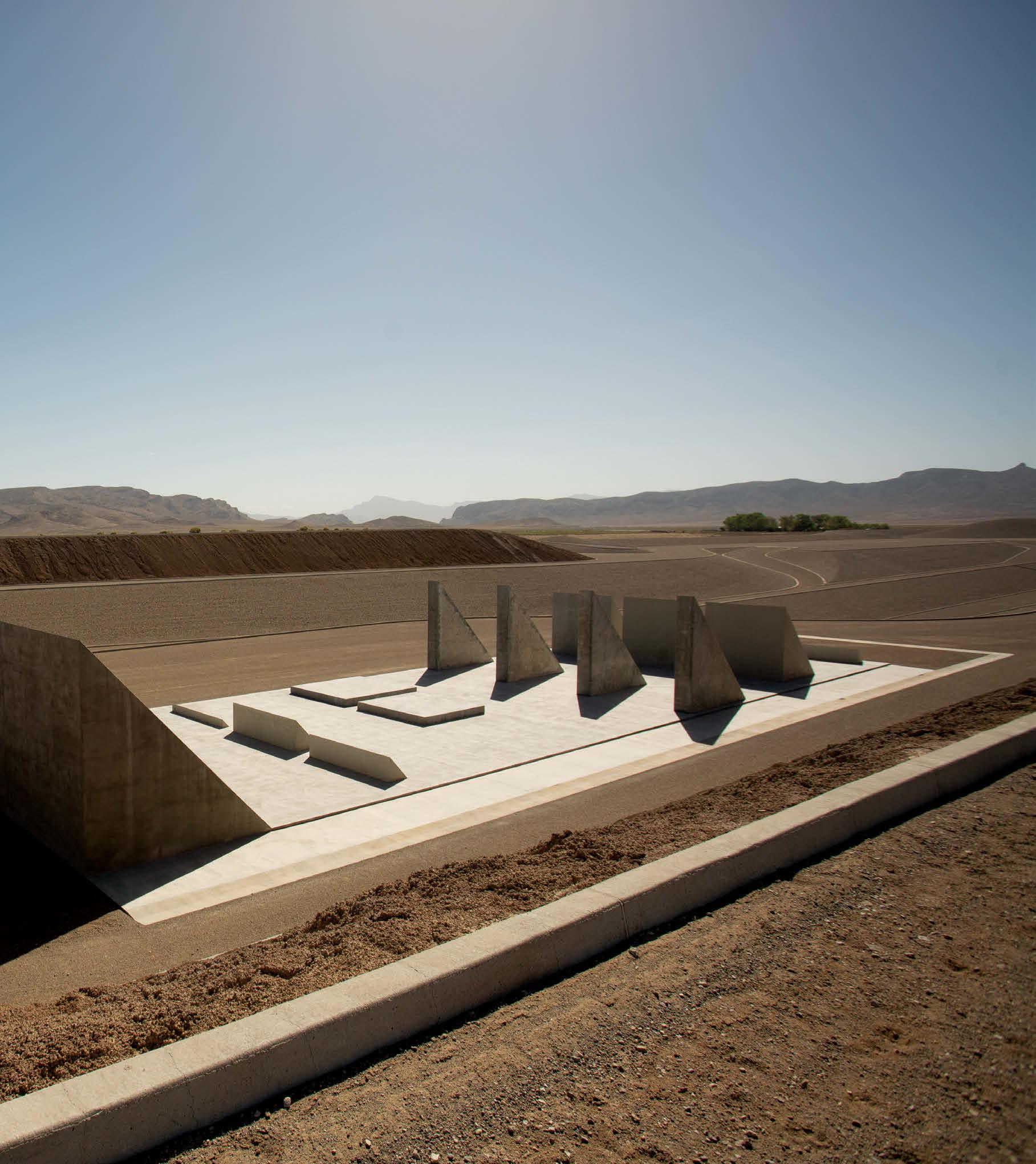
“City”
Area 51 isn’t the only mysteri ous locale tucked away in the Nevada desert. For more than 50 years, large-scale sculpture artist Michael Heizer has been building “City,” a mile-and-ahalf-long installation within Basin and Range National Monument composed of dirt, rock, and concrete. The project, which opened to the public in September, is reminiscent of ancient ruins while simultaneously evoking a futuristic metropolis. Actually seeing Heizer’s monumental work might be as difficult as spotting a UFO, though: Only six people (who are picked up in the nearby town of Alamo, nearly 100 miles north of Las Vegas) are allowed to visit each day. Heizer, 78, hopes the exclusivity will allow viewers to be fully immersed in the structure’s eerie geometry and shifting shadows instead of theme-park-esque crowds. Booking for 2022 has already closed, but the Triple Aught Foundation, which manages “City,” will resume accepting reservations ($150 per person) for 2023 in January. —Barbara Urzua
The I. B. Perrine Bridge
A year ago, MSN named this 1,500-foot truss arch bridge, which extends across the Snake River in Twin Falls, Idaho’s most terrifying attraction. That’s not because it’s structurally unsound, but because it’s open for BASE jumping, a pursuit in which parachute-clad thrill-seekers leap from high perches (per the name: buildings, antennae, spans, and earth). At 486 feet above the water’s surface, the Perrine is among the tallest bridges in the United States and the only man-made structure in the country where you can BASE jump yearround without a permit. That doesn’t mean just anyone should try it, of course, which is why local outfitters offer visitors the opportunity to take the plunge while strapped to certified instructors.
Jumps with 13-year-old Tandem BASE (pictured) and BASE Jump The Bridge, which opened in June 2021, include socialmedia-ready videos of your experience. If that still sounds too terrifying, you can spectate and take in gorgeous canyon views from the bridge’s pedestrian lanes instead. —JL

DECEMBER 2022 | 5280 67 Credits Tk
IDAHO > ADVENTURE
NEVADA > ART
This spread, from left: Courtesy of Angie Ortaliza Photography; Joe Rome/© Michael Heizer/Courtesy Triple Aught Foundation (45°,
Armendaris
From rare Bolson tortoises to the discovery site of the Sierraceratops turneri dinosaur to one of the largest populations of Mexican free-tailed bats (pictured) in the United States, this nearly two-month-old addition to Ted Turner’s portfolio of guest ranches in New Mexico offers plenty of unique reasons to visit. But the most exclusive aspect of staying at 362,885-acre Armendaris might be the fact that visitors are welcomed into the private resi dence of the billionaire media mogul and conservationist himself. The four-bedroom hacienda, which has been featured in Architectural Digest, comes complete with rep licas of Turner’s museum-worthy art collection, a private chef, and a housekeeping staff. Guided activities—such as nature photography workshops, petroglyph tours, and wildlife safaris to see bison, African oryx (large antelopes introduced nearby for big-game hunting around 1970), and desert bighorn sheep—are once-in-a-lifetime experi ences that are also included. That’s a good thing because a stay rings in at what would be, for most of us, a once-in-alifetime cost of $7,600 to $9,600 per night. —JL
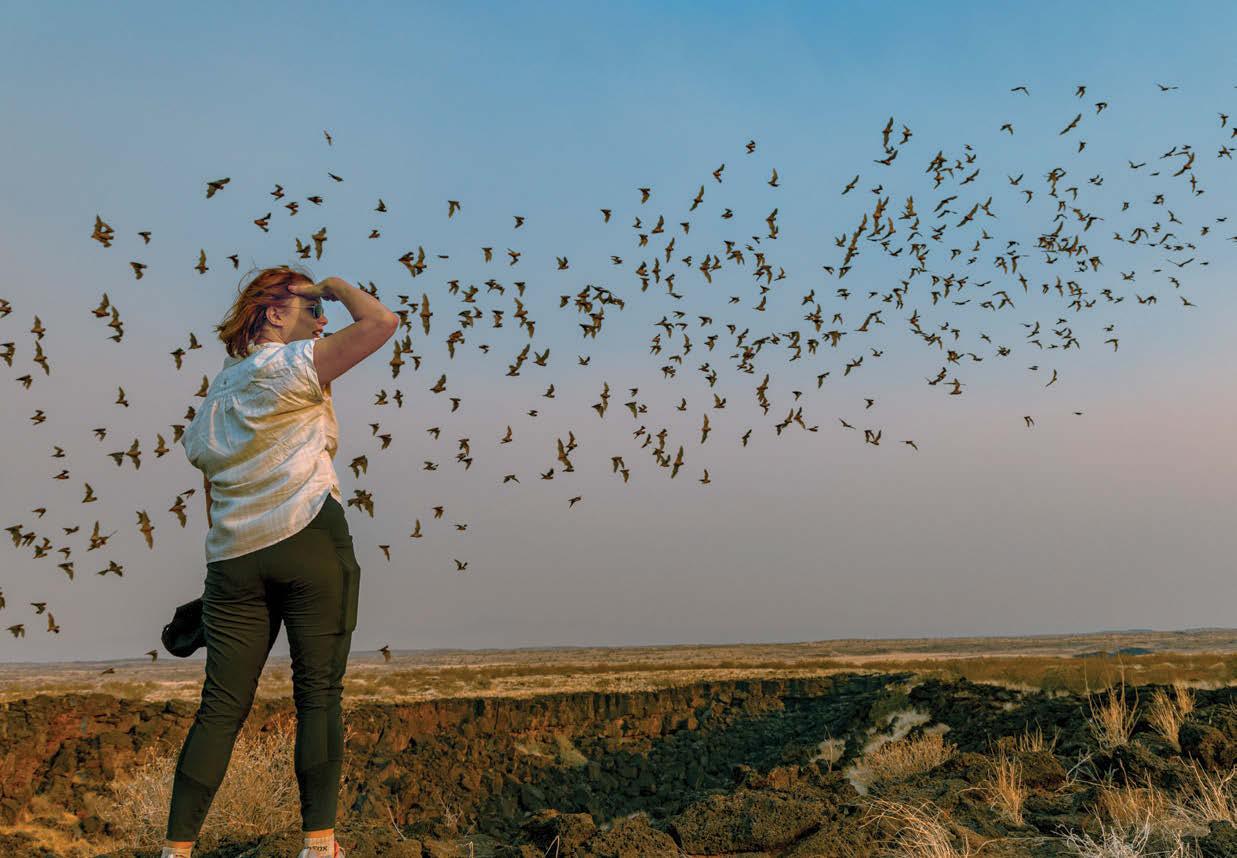
Brooke Pepion Swaney

“A lot of what I’ve been interested in is the overall idea of justice in an unfair world,” says Brooke Pepion Swaney, the Polson-based writer, director, and pro ducer behind a suite of film projects that focus on the contemporary Indigenous experience. Her first feature-length documentary, Daughter of a Lost Bird, follows a Lummi woman who was adopted by a white family as she meets her birth mother, reconnects with her tribe, and grapples with what it means to be Native. (The 2021 festival release is newly available for streaming on pbs.org.) Pepion Swaney’s first love is fiction, though, and she especially loves comedy—a proclivity that’s evident in her in-development sitcom, Tinder on the Rez, about a woman’s dating misad ventures after returning to her family’s reservation. The project snagged a pres tigious mention on the first Indigenous List, a collection of promising film and television scripts created by Sundance Institute, Black List, and IllumiNative in 2020. “When I came out of film school 10 years ago, there wasn’t faith that Native people could [create] content people would want to watch,” says Pepion Swaney, an enrolled citizen of the Blackfeet Nation who also has Salish ancestry. “Now, it feels exciting that there’s more opportunity for artists like me.”
—Elisabeth Kwak-Hefferan
Duckworth
The merino sheep that grow the wool destined to become base layers, socks, and T-shirts from this eightyear-old, Dillon-based brand have a side hustle: ecosystem restoration. This past summer, the city of Missoula tapped about 800 of third-generation rancher and Duckworth co-founder John Helle’s sheep to chow down on invasive and noxious plants such as leafy spurge, spotted knapweed, and Dalmatian toadflax on several thousand acres of the city’s public lands. “It’s a really novel—and in every sense of the word, organic—solution to a problem,” says Mike Somerby, Duckworth’s marketing director. And in a market where most merino wool is imported from abroad, raising the fluffy ovines in the Rockies not only helps to lessen the company’s carbon footprint but also yields an extra-crimped fiber (due to a combination of Helle’s breeding science and the local climate’s wide temperature swings) that makes for exceptional heat regulation and breathability in Duckworth’s gear. —EKH
68 5280 | DECEMBER 2022
MONTANA > GEAR
MEXICO
LODGING
NEW
>
MONTANA > CULTURE
The Virginian Lodge
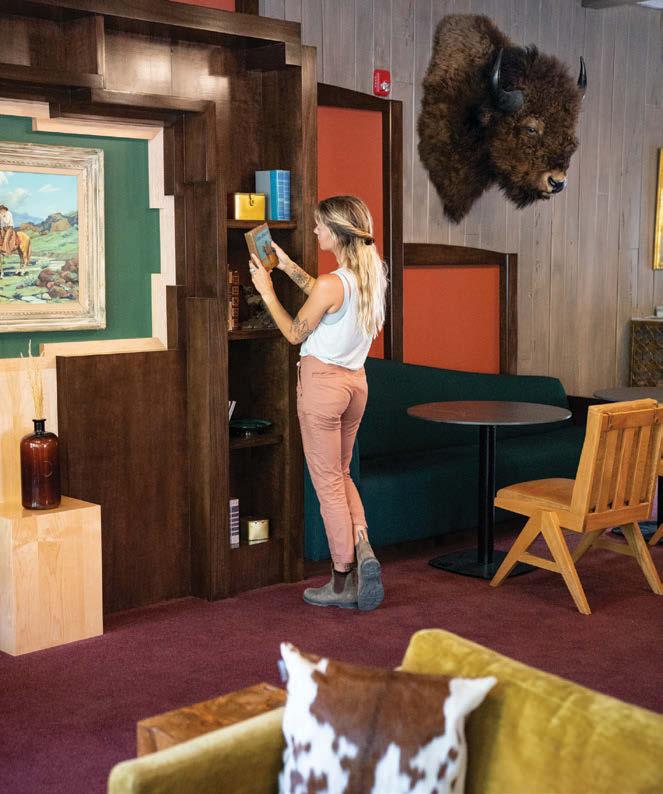
We have at least one good thing to thank the COVID-19 pan demic for: the resurgence of the great American motor lodge. Leery of crowded lobbies and sharing elevators with strang ers, travelers found rooms with drive-up access particularly attractive—leading to invest ments in classic properties such as Jackson’s Virginian Lodge. Originally opened in 1965, this past January the 165-room property debuted an exten sive multiyear renovation that merged Western and midcen tury modern design elements into a travel influencer’s dream. The courtyard’s pool, two hot tubs, and fire pits are open yearround, and in the winter, skiers returning from Jackson Hole Mountain Resort on the compli mentary shuttle can après there or in the on-site saloon, which kept its original sign. Mean while, the adjacent Outbound Adventure Center, operated by Backcountry Safaris and JH Skis, has everything guests need (including stand-up paddle boards, e-bikes, and guided fly-fishing, horseback riding, and whitewater rafting) to explore Jackson’s most timeless amenity: the great outdoors. —JL
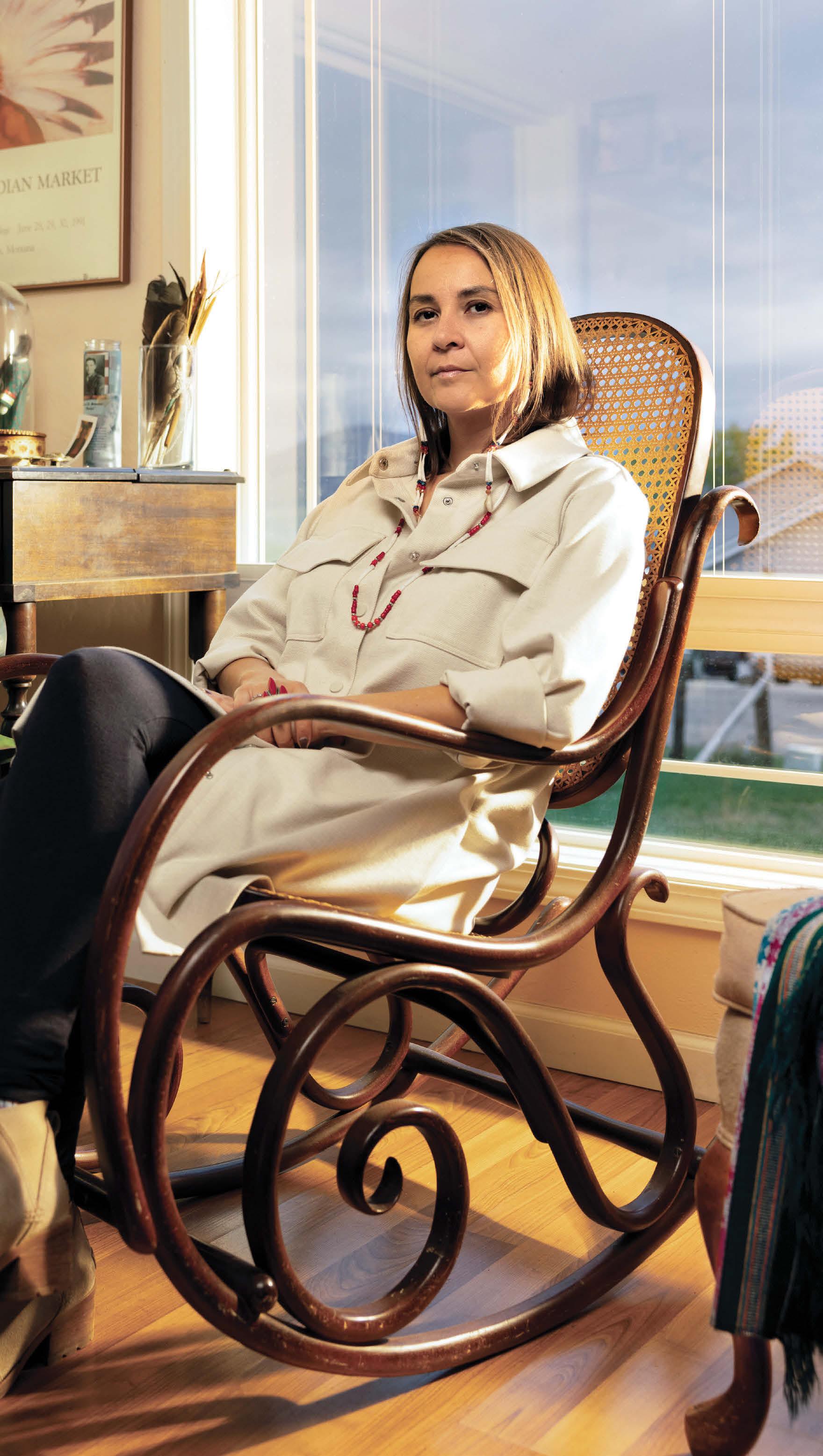
DECEMBER 2022 | 5280 69 WYOMING > LODGING
> MW B
This spread, from left: Courtesy of Deann McBride; Rebecca Stumpf; Courtesy of Travis Burke
Don Guerra
“Bread is just flour, water, and salt, but all over the world, you have millions of representations of those ingredients,” says Tucson’s Don Guerra, who won the 2022 James Beard Foundation Award for outstanding baker. “Bread is about the artisan.” For Guerra, that means showcasing the heritage and ancient grains he’s worked closely with area farmers to bring back to their fields over the past decade. The varieties, dense with flavor and nutrients, are what was grown before maximum-yield, hybrid wheat became ubiquitous in the mid-20th century. Patrons flock to his Barrio Bread bakery for loaves of Sonoran white, Khorasan, red fife, and einkorn, a primitive wheat that’s naturally low in gluten and has notes of roasted corn and coffee. You can also taste his work in the tortas at Barrio Charro and the pizza at the Monica, both of which he’s partnered with as part of his mission to create a sustainable local grain economy. “The way to do that is to engage farmers and then use up all the grain that’s planted for food,” Guerra says. “It’s about creating jobs and agricultural opportunities, but it’s also about feeding my people.” —JL
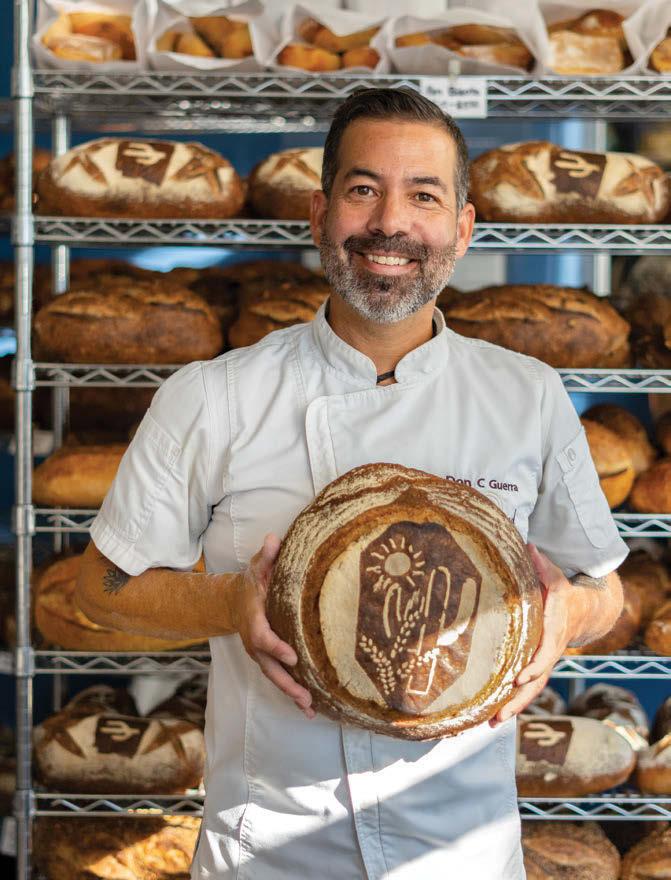
The Raptor Route
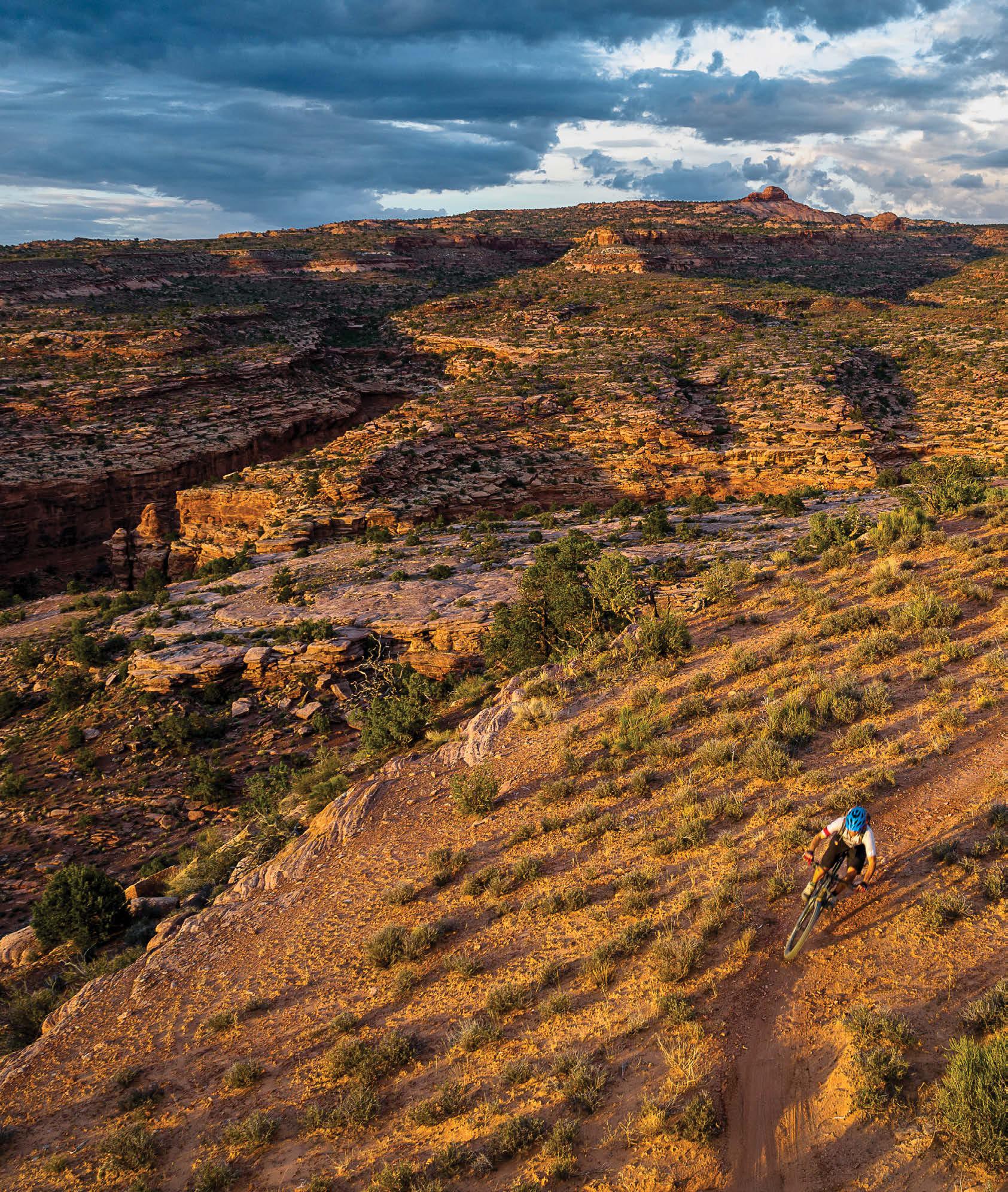
One of the more challenging—some might say punishing—aspects of the Whole Enchi lada, Moab’s legendary 26.5-mile singletrack from Burro Pass to the Colorado River, has traditionally been its finish. After already descending thousands of vertical feet across technical terrain, mountain bikers confront the Porcupine Rim, whose drop-offs and rock fea tures have claimed countless collarbones—and even lives. But now there’s a more forgiving option. The Raptor Route’s 10 miles of new singletrack allow riders to skip the double black diamond descent on Porcupine Rim in favor of a more intermediate, flowy trail. Two of the Raptor Route’s stages, called Eagle Eye and Falcon Flow, debuted over the past two years, and a third segment, Hawks Glide, was slated to open in November. (A fourth seg ment, Kestrel Run, has also been proposed and is currently undergoing an environmental review.) Riders are already loving this alternate ending, which takes them through the slick rock of the Sand Flats Recreation Area. Their unbruised bodies and bikes are probably loving it, too. —Chris Walker
Lewis-Clark Valley AVA
The Lewis-Clark Valley’s vineyards were decimated during Prohibition, but a century later (and six years after an official American Viticultural Area designation), rows of grapes once again line the hillsides. Nearly three-quarters of the almost 307,000 acres, which span central Idaho and eastern Washington, are in the Gem State, and its nine win eries are already racking up accolades.
Clearwater Canyon Cellars, for one, was named Pacific Northwest Win ery of the Year in 2020 by what’s now called Great Northwest Wine, and its 2020 Renaissance Red tied for the
70 5280 | DECEMBER 2022
IDAHO
> DRINK
ARIZONA > FOOD
UTAH > ADVENTURE
> MW B
This spread, from left: Rebecca Noble; Whit Richardson; Tira Howard Photography/SWAIA (“100 Years In The Making!” by Russell Sanchez); Courtesy of Richard Edens
highest-rated red at this year’s Bellingham Northwest Wine Competition—beating out more established vintners from Washington and Oregon. The Rhône varietals that thrive in the region’s steep canyons are reason enough to visit, but what makes for good wine here also makes for stunning scenery. The confluence of the Snake and Clearwater rivers sucks the cold air out of the valley, allowing grapes to hang longer on the vine and develop more complex flavors. There may be no better perch to take it all in than a seat on two-year-old Rivaura’s deck, where you can sip the winery’s Grenache and soak up views of vine yards stretching toward the riverbank below. —Andrea Clark Mason
“100 Years In The Making!”
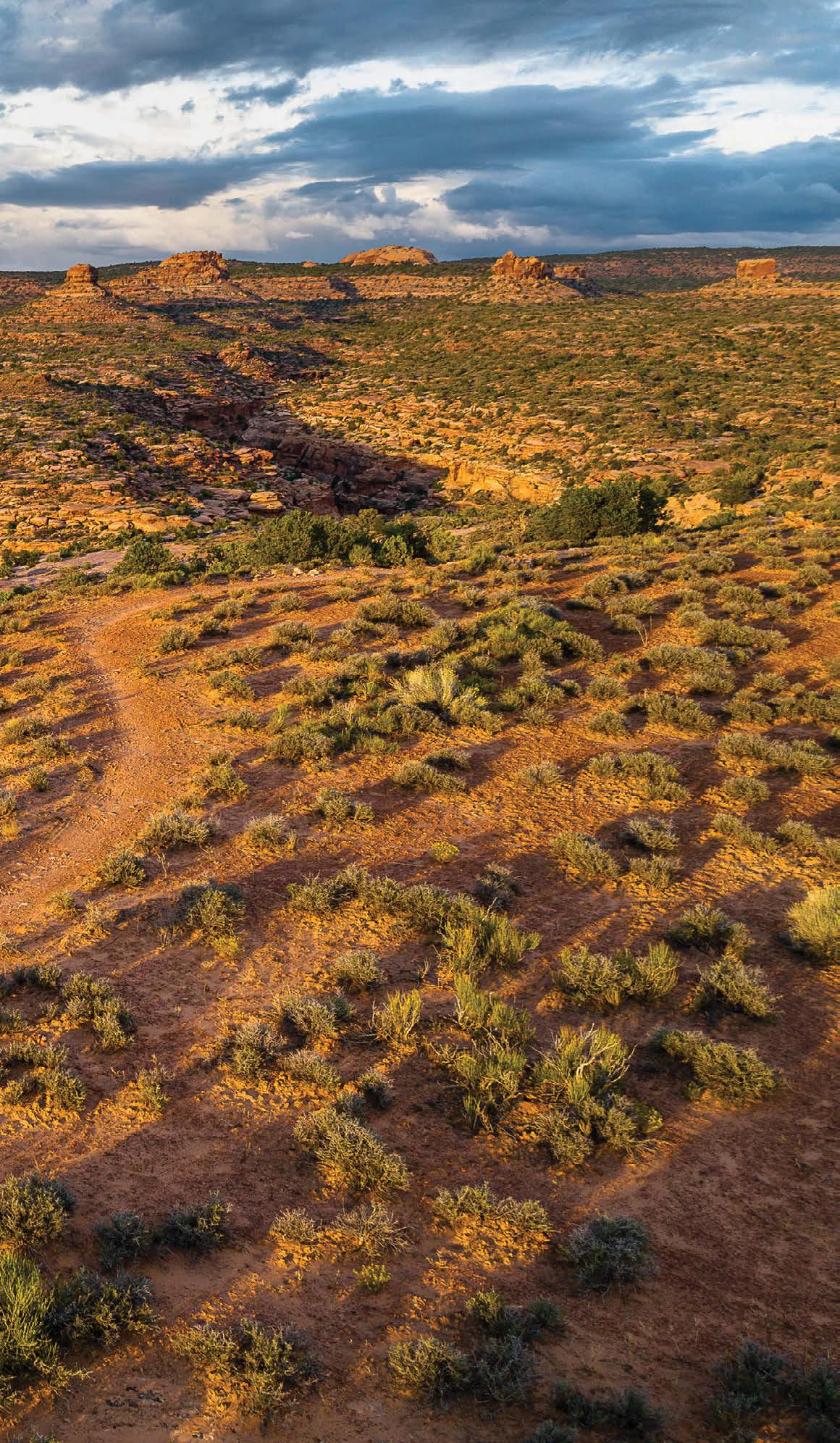
Although potter Russell Sanchez spent only (only!) one year crafting his best-in-show winner for the Southwestern Association for Indian Arts’ 100th Santa Fe Indian Market, he pulled inspiration from the event’s entire history. The black, red, and white of the polychrome piece— made of clay sourced from San Ildefonso Pueblo, where he lives, northwest of Santa Fe—is a nod to what his ancestors brought to the inaugural Native American arts bazaar in 1922, while the carving techniques and 400 inlaid turquoise and hematite beads are part of more recent Indigenous design traditions. Sanchez has sold out of his wares every one of the 45 years he’s attended the market and credits the event for his success in making connections with collectors and gal leries, including Denver’s Native American Collections. But taking the top award (and its record $30,000 prize) in this centennial celebration year was a special honor. “Pottery was a very big part of the first market,” Sanchez says, “so it was nice to have a pot win this year.” —JL

> MUSIC

Vinyl Me, Please
These days, almost any song is just a few clicks away—yet annual vinyl record sales have mushroomed to more than $1 billion for the first time in nearly four decades. That growth includes Denver-based Vinyl Me, Please (VMP), which began as a service that sent curated albums, some times accompanied by cocktail recipes or art prints, to LP aficionados. Roughly a decade later, VMP offers four monthly subscriptions—classics, essentials, hip-hop, and country—to customers in nearly 50 countries. “We wanted to create not just a product but an experience around tan gible music,” CEO Cameron Schaefer says. Now, VMP is expanding on that ethos by building its own pressing plant in RiNo. Once the 14,000-square-foot space opens to the public early next year, music lov ers will be able to book tours to see the record-making process and stop by to purchase albums (VMP has struck deals for exclusive reissues from big names such as Run-DMC, Aretha Franklin, and Red Hot Chili Peppers) and grab a drink at the onsite bar. —Visvajit Sriramrajan
DECEMBER 2022 | 5280 71 NEW MEXICO > CRAFT
COLORADO
The University of Arizona Museum of Art
The day after Thanksgiving in 1985, a couple entered the University of Arizona Museum of Art. The woman distracted a guard while the man went upstairs, and less than 10 minutes later, they left with Willem de Kooning’s “Woman-Ochre,” the canvas having been crudely sheared from its frame. The whereabouts of the abstract expression ist’s work remained a mystery for more than three decades. Then, in 2017, it turned up at the New Mexico estate sale of the deceased presumed thieves: schoolteachers who had hung it in their bedroom, where the piece was obscured by the door anytime it was open. In those intervening years, the 1955 painting’s valuation jumped to more than $100 million, even as its arguably misogynistic content drew controversy. (“Women irritate me sometimes,” de Kooning said in 1956. “I painted that irritation in the Woman series.”) After a painstaking restoration process at Los Angeles’ J. Paul Getty Museum, “Woman-Ochre” returned—with a U.S. Department of Homeland Security escort—in Sep tember to the Tucson gallery, where it hangs alongside an impressive array of works from other masters, such as Geor gia O’Keeffe, Jackson Pollock, and Mark Rothko. —JL
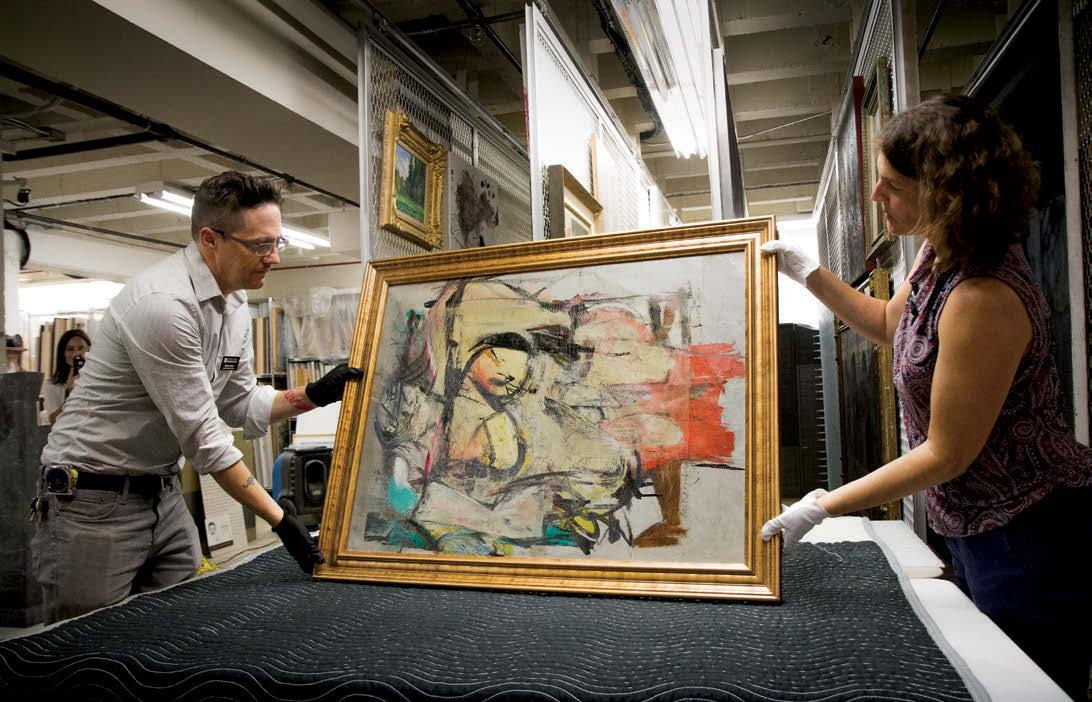
One Jump at a Time
: My Story


From the first time he took the ice at age three in Salt Lake City to winning the men’s figure skating gold medal at the 2022 Olympic Games in Beijing, Nathan Chen covers the quadruple loops and lutzes that fueled his journey to international stardom—as well as the falls he endured along the way— in his memoir released in November. With the help of co-writer Alice Park, a Time magazine staffer, Chen opens up about knee and hip inju ries that threatened his career, his difficulties navigating his relationship with his mother while she served as his coach, and the mental health strug gles he confronted with the help of a sports psychologist. The lessons the 23-year-old shares—particularly how finding hobbies outside of figure skating and attend ing Yale University brought him the balance he needed to succeed on the rink—are poignant reminders for any one, but especially for today’s anxiety-riddled teens. In February, Chen will impart more wisdom to the next generation in a children’s picture book. —JL
RigStrips
It’s a tale as old as time: You trudge back to the lot after an epic day on the slopes. You lean your skis against the car to de-layer. And, every time, they clatter to the ground, dragging those metal edges right down your paint job. Thankfully, Denver-based RigStrips founders Steven Graf and Zhach Pham created a $50 solution: a molded, magnetic bit of genius called the SnoStrip with slots where you can securely rest your gear. For summer, switch out your SnoStrip (an updated model, released in Octo ber, features deeper grooves and a grippier material) for the SunStrip, similarly designed to prop up fishing poles and bikes. —Julie Dugdale
72 5280 | DECEMBER 2022
ARIZONA > ART
UTAH > LITERATURE
COLORADO > GEAR
> MW B
This spread, from left: Courtesy of Bob Demers, University of Arizona; Matthew Stockman/Getty Images; Courtesy of Coelette; Lindley Rust
Wild Rye
Until recently, many outdoor brands making women’s gear were guilty of simply shrinking men’s apparel and turning it pink. Frustrated by the resulting dearth of properly fit ting, shred-ready get-ups, in 2016 Cassie Abel launched Wild Rye, a women-focused bike, ski, and active lifestyle brand based in Sun Valley. Dedicated to function and fashion in equal measure, with a touch of fun (hello, pandemic-inspired houseplant graphics), Wild Rye makes cloth ing for women with strong, athletic figures. That means strategically using four-way stretch fabrics that move with a woman’s curves; includ ing lots of pockets because, as Abel says, “women carry a lot of shit”; and testing products on women with a range of body sizes. “We are—and always have been—unwaveringly a brand for adventurers who identify as women,” Abel says, noting that’s precisely why her brand attained B Corp status this year. The certifica tion, which is based on companies’ commitments to social and envi ronmental causes, is “a way to really define who we are,” she says, “and who we’re going to be.” Whatever the future holds for Wild Rye, you can bet it will be female. —CH
Coelette
Coelette stands out in Jackson’s star-studded culinary scene by aiming high—6,000 feet high, to be exact. That’s the minimum elevation for the vast majority of ingredi ents used in the restaurant’s self-described “snowline cuisine,” which draws inspira tion from high-country cultures such as those in Japan, Peru, and the Himalayas. Sam Dawson and Drew Madison, for mer sous chefs at two-year-old Coelette who took over the head chef duties in August, use pickling, lacto-fermentation, and preserves to extend seasonal produce year-round. Rotating dishes primarily feature goods from local farms, with a few far-flung surprises: Diners might sample poached beef with horseradish skyr (Icelandic yogurt) or a whole snow trout raised in an aquaculture system in Hokkaido, Japan. The cozy dining room is located in a restored 1915 log cabin while the bar—which slings cocktails such as a mezcal-and-brandy hot chocolate with marshmallow foam—is housed in a new, woodpaneled addition. This summer, diners will be able to embrace the high-elevation concept even more literally when Coelette’s rooftop deck opens. —EKH
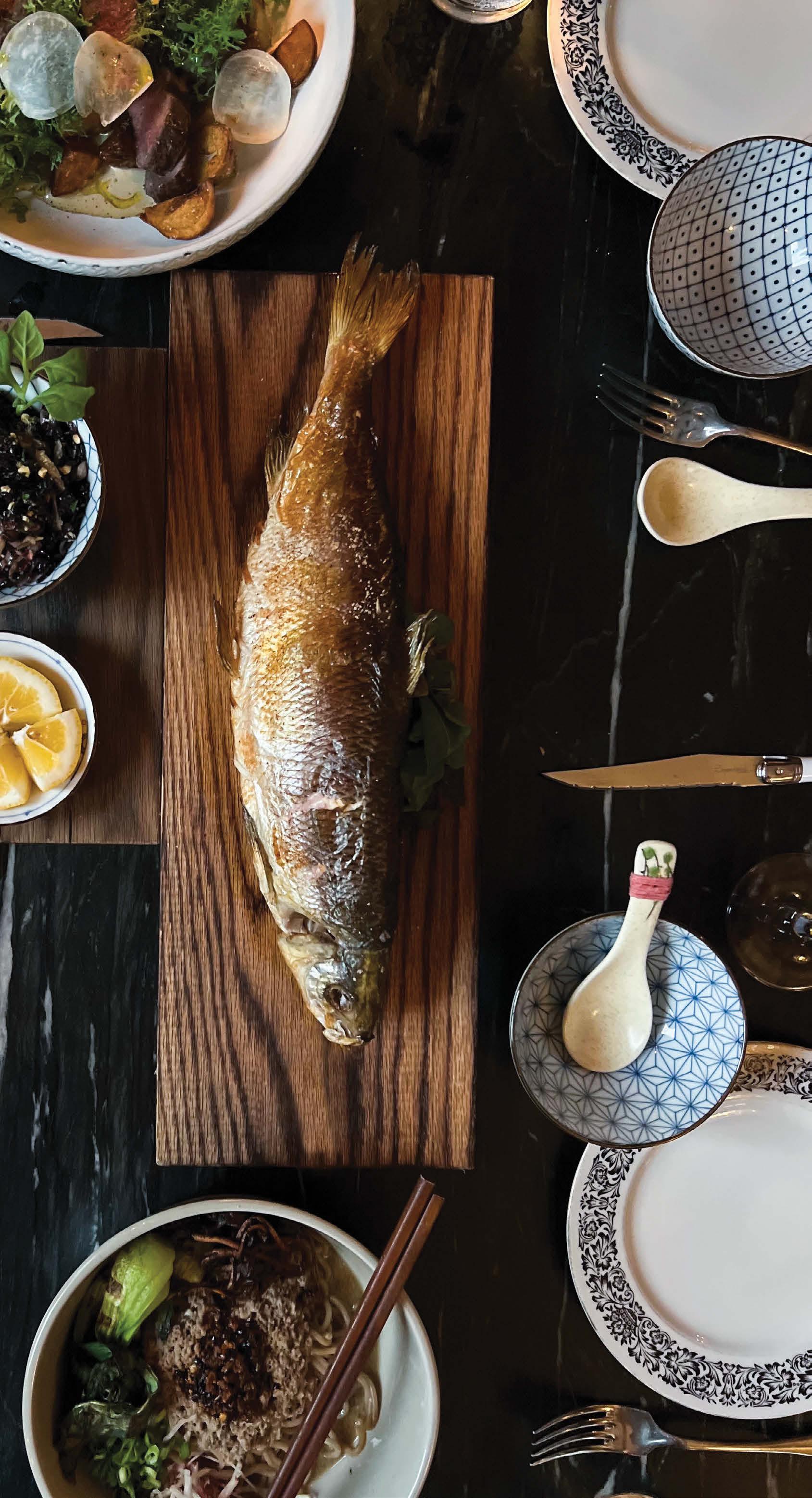
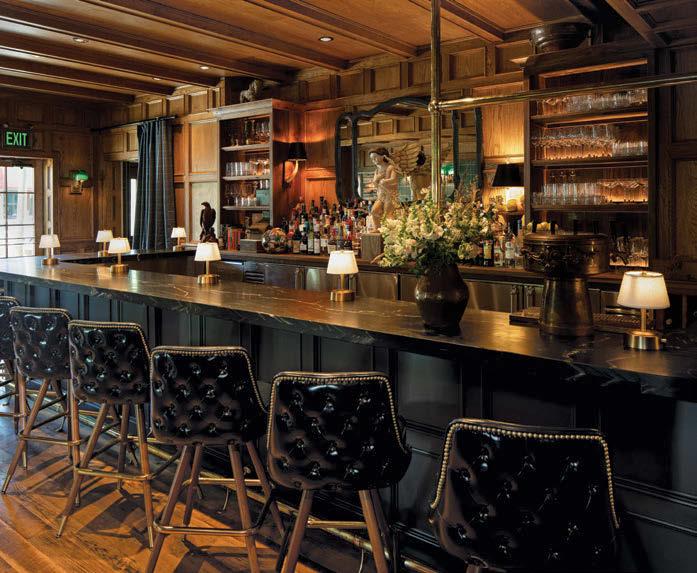
WYOMING > FOOD
IDAHO > GEAR
Obeeyay
Oba Bonner, professionally known as Obeeyay, could attribute any number of experiences to his musical ity, from sitting in his mother’s lap at the piano while she taught voice lessons to showing up his seven older brothers and sisters (one of whom has performed on Broadway) in impromptu singing competitions. In fact, he still records gospel tunes with his parents and siblings as part of a group called the Bonner Family, with nearly 24,000 monthly listeners on Spotify. But that doesn’t mean Bonner isn’t forging his own path: As a preteen, he begged his mother and father to move to Los Ange les. Once there, he knocked on studio doors, offering to sweep floors and fetch lunches for musicians, and before long, he was working as an audio engineer with the likes of Queen Latifah and JoJo. Today, back in his hometown of Provo, 28-year-old Bonner is finally pro ducing and performing his own music, and his first EP, Winnin’—a five-song collection of feel-good, melodic pop songs with hip-hop-inspired rhythms—dropped in March. Although the party anthems may seem at odds with his Church of Jesus Christ of Latter-day Saints roots, “the family I have and the people who have loved me and I’ve loved over the years—they brought my hopes up,” Bonner says, and he wants to see his music do the same for everyone who listens. —KB


MONTANA
CSKT Bison Range
In the late 1870s, the Ql ’ ispé people brought a handful of bison to the Flathead Indian Res ervation, home to the Confederated Séliš and Ksanka Tribes (CSKT), in an effort to prevent the animals’ extinction due to overhunting. A few decades later, in an alltoo-familiar story in the West, the U.S. gov ernment seized a prize parcel of the tribes’ land to form the National Bison Range under the U.S. Fish and Wildlife Ser vice. It took until 2022, but the 18,500-plus-acre preserve—a mountainmeets-prairie landscape with black and grizzly bears, pronghorn, elk, wolves, and, yes, 350-some bison—has been restored to the CSKT. “When our wildlife management and conservation efforts are guided by Indigenous knowledge developed over millennia,” Interior Secretary Deb Haaland said at an emotional cel ebration in May, “we all succeed.” Since taking over, the CSKT have remodeled the visitor center and produced a short documentary, In the Spirit of Atatice, about the tribes’ historical role in bison conservation. “It’s our story, told by us,” says Stephanie Gillin, infor mation and education program manager for the CSKT’s Natural Resources Department. Currently, the main attractions for sightseers are wildlife sightings on a scenic driv ing loop, a few short trails, and a gift shop with goods from tribal vendors, but the CSKT are in the early stages of planning a new cultural center. —EKH
Erem
Most athletic shoes are a com bination of polyurethane, EVA foam, and polyester—which means we spend our time hik ing, running, and otherwise Colorado-ing in plastics that take thousands of years to com pletely biodegrade. Fledgling footwear brand Erem is doing things differently by building trail-ready boots that return to the dirt they pound much more quickly. Led by fourthgeneration shoemaker Noah Swartz, the year-old Henderson company designs its kicks for rugged environments using
74 5280 | DECEMBER 2022
From left: Annie Whitehead/Courtesy of Obeeyay; Markus van Meter/Courtesy of the Wright Opera House
UTAH > MUSIC
NEVADA > GEAR
> NATURE
> MW B
all-natural materials such as cactus-proof leather, eco-rubber, and upcycled cork. In the right conditions (i.e., if they were

buried in your garden, not overwintering in your closet), Erem footwear will decompose within seven to 14 years. To ensure that happens, the company will even take back your wornout shoes in exchange for credit toward a new pair. “Our view,” Swartz says, “is that green can outperform [the alternative].” You can test that theory with Erem’s new allweather line, set to launch in January and designed for highdesert environments just like the Centen nial State’s. —CH
Colorado Historic Opera Houses Circuit
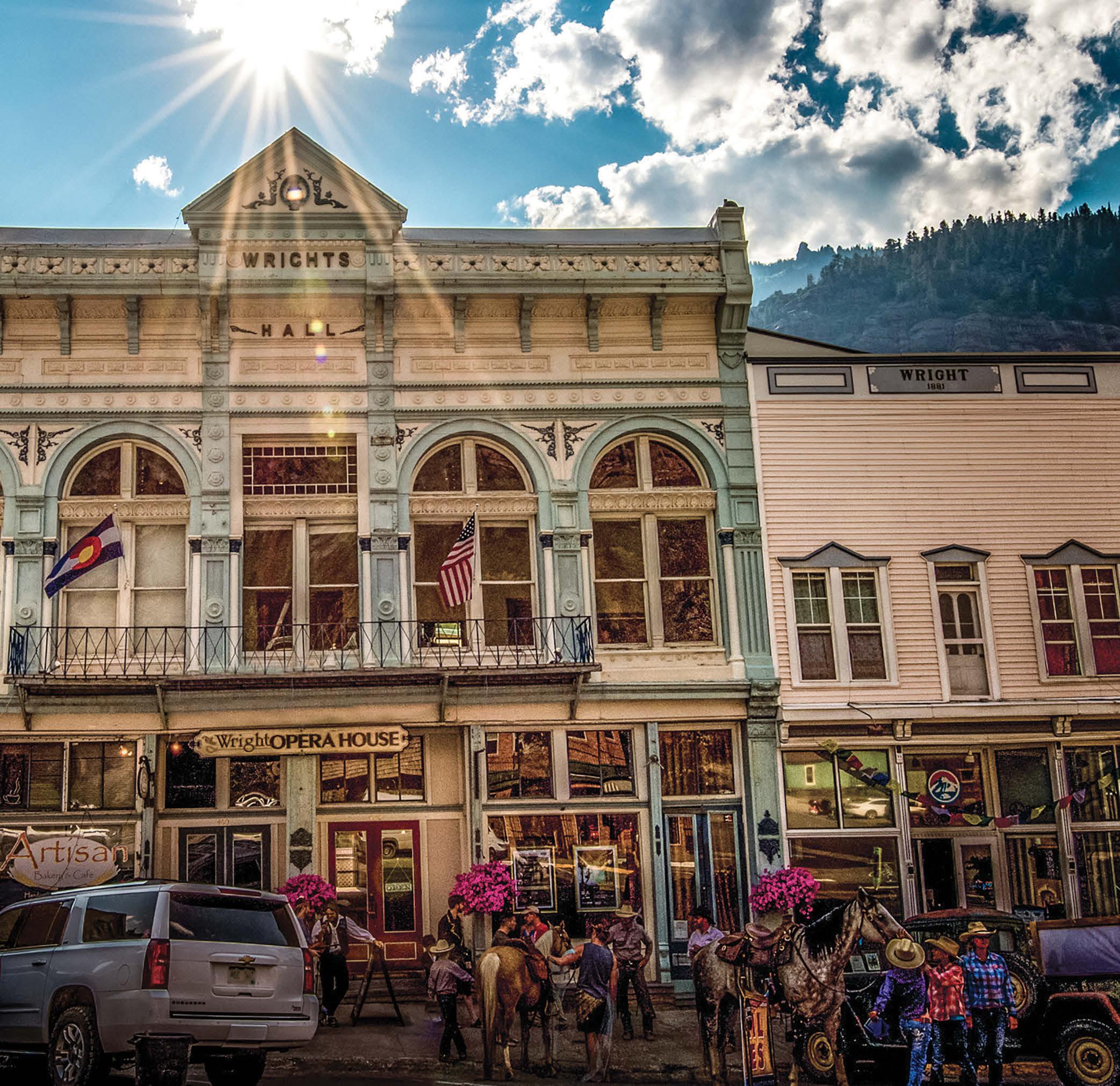
As prospectors unearthed mineral riches in the late 19th and early 20th centuries, they began building lavish opera houses in Colorado’s boomtowns to satisfy the grow ing demand for entertainment—and for places to be seen in their Victorian finest. The few venues that remain attempt to fill their plush seats by hosting cultural events, festivals, and musical and theatrical perfor mances, many of which were canceled or limited during the pandemic. Ticket sales (in addition to donations and volunteer hours) are critical for their continued pres ervation, so the state, along with local and regional partners, launched the Colorado Historic Opera Houses Circuit in June. The awareness-raising tourism initiative includes a website with suggested visitor itineraries, a map, and an events schedule. The five buildings on the circuit—the Cen tral City Opera House (pictured above) in Central City, the Sheridan Opera House in Telluride, the Tabor Opera House in Lead ville, the Wheeler Opera House in Aspen, and the Wright Opera House in Ouray— were built between 1878 and 1913. “The memories of each performance, whether last week, last month, or a hundred years ago,” says Nicole Levesque, marketing manager for 133-year-old Wheeler, “live on in the walls.” —Sarah Kuta m

DECEMBER 2022 | 5280 75
From left: Cameron Karsten/Courtesy of Erem; Amanda Tipton Photography/Courtesy of Central City Opera
COLORADO > HISTORY
COMFORT FOOD
At three-month-old Süti & Co., chef Andrea Uzarowski serves buttery shortbreads with a side of serenity. The Boulder shop is modeled after bakeries in her homeland of Denmark, where hygge—the practice of creating ambiences that promote coziness and warmth—is a way of life. Inside the airy cottage, leather chairs and pillow-lined seats are arranged around small tables to invite visitors to engage in conversation or reflection over hand-cut cookies and cinnamon-scented chai, rather than looking at their devices.

76 5280 | DECEMBER 2022
Yourself Treat

Bakeries are having a moment, thanks to Denverites’ appetites for carb-loaded comfort and a pandemic-driven rise in storefront-free operations. We nibbled our way through the Mile High City to find the tastiest goodies. Go ahead and try them all—you deserve it.
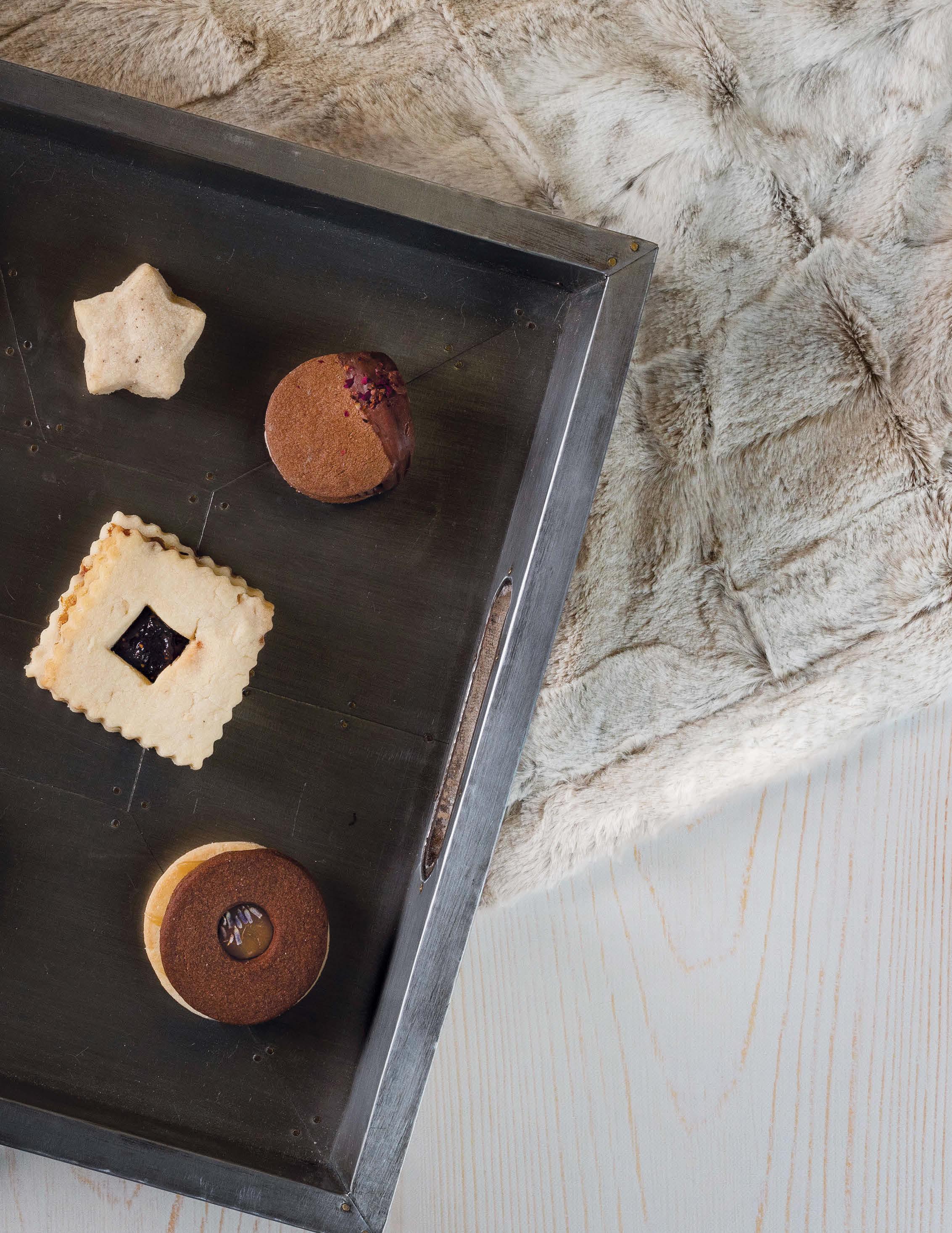 BY PATRICIA KAOWTHUMRONG & RIANE MENARDI MORRISON PHOTOGRAPHY BY SARAH BANKS•STYLING BY CHARLI ORNETT
Colorado Stroopwafels ONLINE
When Yolande Schmitz moved from Amsterdam to the Front Range in 2018, she missed the fresh-made, syrup-filled waffle cook ies synonymous with the Netherlands. To satiate her cravings, she baked her own. Schmitz’s crisp, delicate exterior layers are made with mostly local ingredients and give way to a caramelly molasses interior. Hot tip: Warm the treats by resting them atop a cup of coffee.
ChewsWisely
ICED CRANBERRY & OAT COOKIES
The Urban Cookie CHEESMAN PARK
Baker Denon Moore’s driedfruit-bejeweled, frosting-driz zled wonders are so popular they earned her Cake Crumbs Bakery an appear ance on a holiday episode of the Today Show in 2015. Although Moore sold that Park Hill eatery in 2017, she added the crowd-pleaser to her lineup at nearly two-year-old Urban Cookie, where she now sells a variety of big, chewy beauties influenced by nostalgic flavors.
SEASONAL SHORTBREAD


Victory Love & Cookies WEST HIGHLAND
Kristy Greenwood Bortz found purpose in baking after being diagnosed with cancer in 2006 and now crafts decadent cookies out of the kitchen at Denver Bread Company (which she owns with her husband, Greg Bortz). Her melt-inyour-mouth shortbread cookies are seasonally inspired, and creations in clude lavender-cherry and thyme-, lemon-, and blackpepper-infused bites.
LUNETTES
Trompeau Bakery ENGLEWOOD
Trompeau has been treating Denverites to traditional French goûters (late afternoon snacks) for more than 20 years, and among the lineup of comforting baguettes and brioches, lunettes—two shortbread cookies nestled around a layer of raspberry jam—are a beloved indulgence. With a name that means eyeglasses, each lunette has two flower-shaped cutouts that give diners a peek into the interior.
TEA COOKIES
Gateaux Bakery GOLDEN TRIANGLE
At Gateaux—which has stocked its cases with fondant-shrouded cakes, glossy fruit tarts, and other beautifully decorated goodies since 1999—tea cookies are a canvas for the changing seasons. For Christmas and Hanukkah, look for Santas, trees, and dreidels, all of which come dressed in the bakery’s hand-piped secret-recipe icing.
Whether you prefer your cookies big and gooey or crumbly and frosted, the following iterations are good to the last crumb.
STROOPWAFELS
BETTER BAGELS
Upgrade your slice-andschmear routine with these crave-worthy versions, courtesy of Mile High City bakers who are elevating and embellishing the breakfast standby.
JEWISH BAGEL

At 37-year-old Zaidy’s Deli & Bakery, a haunt off South Holly Street for latkes, blintzes, and challah French toast, owner Gerard Rudofsky offers tradi tional Jewish bagels in eight flavors, including onion and pumpernickel. Every day, up to 300 of the circular indulgences are shaped, boiled, and baked to yield the style’s signature thick crust and dense texture. Order the lox melt—which fea tures cream cheese, lox, onion, tomato, capers, and melted pepper jack cheese—on your favored variety.
Best In Class


Ana Fanakra’s custard-stuffed skoleboller (translation: school rolls) are a quintessential Norwegian treat for pastry lovers of all ages.
TURKISH SIMIT
Marla Celik’s three-year-old Istanbul Café & Bakery is a Washington Virginia Vale staple for specialties such as Turkish baklava and cof fee. But Celik also makes three types of bagels from her homeland, including the simit, a take that’s lighter than its New York–style counterparts. The hand-size rings are composed of two strands of twisted dough and baked to golden brown for a crispy exterior with a tooth some center; sides of soft feta cheese, tomatoes, cucumbers, and olives make for a perfect savory counterbalance.

Norwegian-born Ana Fanakra comes from a long line of bakers: Her mother and grandmothers passed down their recipes through the generations, and her father would wake up early to make cinnamon rolls. But it wasn’t until she lost her human resources job during the pandemic that her family’s treat-making expertise became the foun dation for Ana’s Norwegian Bakeri in Centennial. Sand wiched between two auto service shops, the eatery’s
troll-adorned sign is the only indicator of what’s found within: a brightly lit, teal-accented bakery furnished with Norwegian flags and display cases full of tempting comforts. Fanakra’s father’s fourinch-tall cinnamon rolls are a staple, but it’s the skoleboller—a name that references the frequency with which they are included in school chil dren’s lunches—that keep us coming back. “People would make them at home
for celebrations,” says Fana kra, who immigrated to the United States for college in 1999. The lightly sweet, cardamom-zinged bread is oh-so-soft and has a hol lowed-out center that holds a pool of yellow vanilla cus tard. A topping of icing and flaky coconut adds a tropical aroma and a bit of crunch.
“The perfect bite is a mix of all of that,” she says, a feat best achieved by tearing off a bit of the outer bun for scooping out the decadent creamy filling.
DECEMBER 2022 | 5280 79 Treat Yourself ILLUSTRATIONS BY LUCY ENGELMAN
Pastry Passport

You don’t have to book a flight to savor Hong Kong–style egg tarts, Sicilian cannoli, or Mexican sweet breads. Find them—and other staples from across the world—at nine Denver-area bakeries offering true senses of place.

80 5280 | DECEMBER 2022
1 2 3
5
6
1. FRANCE
In Parker, La Baguette de Normandy chef-owner Michael Dupont crafts French specialties from his home country. The Paris-Brest, named for the 131-year-old long-distance bicycle race between those two cities, is a wheel-shaped indulgence made of two layers of pâte à choux pastry dough sandwiched around a whipped praline crème mousseline (vanilla but tercream mixed with praline paste).
2. UNITED STATES
In true melting pot fashion, Thoa Nguyen combines Asian fusion ingredients with French and American techniques at Bánh & Butter Bakery Café in Aurora. To make her ube cupcake, Nguyen adds simple syrup and purple yam in extract and powder form to a pound cake batter and then crests each moist, deeply flavorful base with lavender-hued chantilly cream.
3. TURKEY
Middle Eastern– and Mediterraneaninfluenced appetizers, entrées, and desserts—like honey-soaked baklava—have long drawn diners to fast-casual Jerusalem Restaurant in the University neighborhood. Finish your meal with a pistachio bird’s nest, whose toasted nuts are nestled in a ring of phyllo dough that’s glazed with butter and lemon simple syrup.
4. CHINA
Inside tiny, no-frills Celestial Bakery in South Federal Boulevard’s Far East Center, the counter is loaded with Chinese goodies, including shatter ingly crisp jian dui (sesame balls) and golden youtiao (fried dough strips). Don’t miss the egg tarts: puddles of smooth, sun-colored custard cradled by mini puff pastry shells and pre sented in cupcake wrappers.
5. MEXICO
From Panaderia Contreras’ orangefronted mercado in the heart of Westwood, bakers prepare Mexican delicacies of all shapes and sizes.
Although tres leches cakes and churros are readily available, a self-serve glass case of pan dulce offers treats for all palates. Indulge in a pastel-hued concha: The briochelike bread is patterned to resemble a seashell and showered with a cookie crumble.

6. ITALY
Stop into Englewood’s Gallo Italian Supper Club and Bakery on South Broadway for some of Denver’s best cannoli, shaped by the masterful hands of Sicilianborn baker and co-owner Gaspare Licata. The tubes of crisp fried pastry dough are piped with a combination of creamy ricotta and come in versions such as classic vanilla, chocolate, and green-tinted pistachio.
ETHIOPIA
Aurora’s HiRa Cafe & Patisserie is a love letter to the cafes of Ethiopia’s capital city, Addis Ababa, where chef-owner Hiwot Solomon learned about the postcolonial tradition of sliced cake with coffee. Enjoy a mug of single-origin Ethiopian java with a square of the Black Forest, whose thin sheets of chocolate sponge are layered with cherryliqueur-infused whipped cream and decorated with delicate curls of shaved chocolate.
ARGENTINA
Maria Empanada, which has locations in Highland, Platt Park, and Aurora’s Stanley Marketplace, makes plump turnovers for every meal of the day. Most of the pastries are savory, but the sweet Banatella—packed with a medley of Nutella, bananas, and chocolate—is wonderful accompanied by a cup of the restaurant’s yerba mate, an herbaceous tea popular in South America.
VIETNAM
In 1980, the Huynh family transformed the Mile High City sandwich scene with the debut of banh mi hot spot Vinh Xuong Bakery, which now has outposts in the Far East Center and on West Alameda Avenue in Valverde. The eateries also offer an array of Vietnamese desserts such as banh da lon, a steamed, delightfully sticky cake composed of yellow and green layers made with tapioca starch, coconut milk, pandan, and mung bean paste.
DECEMBER 2022 | 5280 81
4
DAILY BREAD
Let Them Eat Cupcakes
“Everything about me is packaged into this branding,” says Not Yo Mama’s Cupcakes (NYMC) owner Angelia Han. “Everything” includes her love of street dancing and hiphop, her appreciation for global flavors, and her upbringing in Guam as the daughter of Korean immigrants. Han started her business in Hawaii in 2019 but relaunched in Denver in 2020 after moving to Colorado. We caught up with Han to find out why her colorful creations, such as the It’s A Pandanmic—a cream-cheese-frosting-finished cake made with pandan extract and stuffed with coconut pudding—are so delectable.


5280: What’s the creative process behind your play fully named treats?
Angelia Han: I like to take nostalgic flavors from childhood snacks and things like that and re-create them with more Asian flair. One of my top flavors, Cookiesz N Bae, is ube with black sesame and Oreo, so it’s like my take on an Asian cookies and cream.
How do you keep them so moist?
We actually freeze our
cupcakes immediately after we bake and decorate them so that they retain the moisture. Our frosting is made with a whipped cream base instead of a buttercream.

What makes NYMC stand out?
If you go to the grocery store or an American bakery, the sweets are very sweet because they’re Western desserts—so I wanted to offer an alternative. I let customers who have never tried our cupcakes know that
they’re not going to be anywhere near as sweet as any cupcake they’ve had.
Why do you keep baking?
I believe my cupcakes will help bridge barriers and facili tate connections at the table because the brand and everything within it is crosscultural. My favorite reactions from people who try our cup cakes are: Oh, we have that in our culture, too. Or, This is something I had back home or when I was a kid.
Pastry pros Carolyn Nugent and Alen Ramos are a resourceful pair. Case in point: The husbandand-wife team, who own one-year-old Poulette Bake shop in Parker, collect and save the leftover trimmings from their French-butterenriched European breakfast pastry dough. Then they bake the would-be discards into loaves, which are the equivalent of 10 croissants each. This by-the-meal guide will ensure you use up the pillowy, flaky stunners before they go stale.
BREAKFAST
Cut the bread into hefty slices to griddle into French toast, a dish Nugent recommends finishing with caramelized apples and toasted pecans; whipped crème fraiche and pumpkin or apple butter; or Nutella, roasted hazelnuts, and candied oranges. “Slices should be thick, around 1.5 inches, for maximum custard absorption,” she says.
LUNCH

Generous slabs are an excellent foundation for tartines: open-faced sandwiches loaded with sweet and savory accoutrements, from ham, cheese, and béchamel sauce to al mond butter and fresh berries. Says Nugent: “The easiest slam dunk is avocado toast.”
DINNER
Brown squares in the oven to make croutons for salads or transform them into the ultimate holiday side. “What would really be over the top,” Nugent says, “would be to make stuffing with some really great stock, onions, celery, and herbs.”
82 5280 | DECEMBER 2022
A guide to enjoying Poulette Bakeshop’s showstopping croissant loaf at every meal.
Find Angelia Han’s pop-up schedule on her Instagram page, @_notyomamascupcakes.
Slice Of Heaven
Whip up a coconut cream pie with the help of Shamane’s Bakery & Cafe.

For Thanksgiving weekend alone, the 19-year-old Boulder store produces more than 1,000 crusted beauties—starring apple caramel crumble, pecan, and other sweet fillings—as well as galettes and savory varieties. Cream-laden options such as choco late mousse and Key lime are perennial favorites, owner-baker Shamane Simons says, but lately, more customers have been gravitating toward the coconut cream. Use her recipe below to craft your own.
Yields two 9-inch pies
2 cups 100 percent coconut milk
4 oz. granulated sugar
1½ oz. cornstarch
1 egg yolk
1 whole egg
1 oz. butter (optional)
2 9-inch pie crusts*
1½ cups fresh whipping cream
3 Tbs. powdered sugar

½ tsp . vanilla
¾ cup toasted shredded coconut
*For Simons’ sweet pie crust recipe, visit 5280.com.
To make the custard:
1. Whisk coconut milk, sugar, and cornstarch in a saucepan. Cook over low to medium heat, whisk ing frequently, until the mixture is just about to simmer.
2. Meanwhile, whisk the egg yolk and whole egg in a medium-size bowl. When the milk thickens slightly (about 10 to 15 minutes), gently pour the mixture over the eggs while whisking continuously until combined. Return the cus tard to the saucepan.
3. Whisk the custard over medium heat until bubbly and thickened (stir continuously to ensure it doesn’t cook onto the bottom of the pan).
4. Strain the filling over a wide, shallow bowl and whisk in butter. Cover with parchment paper or plastic wrap and chill for 24 hours.
To assemble the pies:
1. Bake the pie crusts. Let cool.
2. Whisk the coconut custard slightly until smooth and fill
the pie shells to just under the rim.
3. Whip the fresh cream until soft peaks form. Add pow dered sugar and vanilla (you can also use the innards of half a vanilla bean) and continue whip ping until nearly stiff peaks form. Pipe cream on top of the custard and sprinkle with toasted coconut. Let everything chill for at least two hours before serving.
Treat
COCONUT CREAM PIE
Yourself
The Upper Crust
Talented carb-slingers on the Front Range are churning out colorful croissants, sustainably sourced sourdough, and cheesy rolls. Here, a by-the-numbers snapshot of the scene.
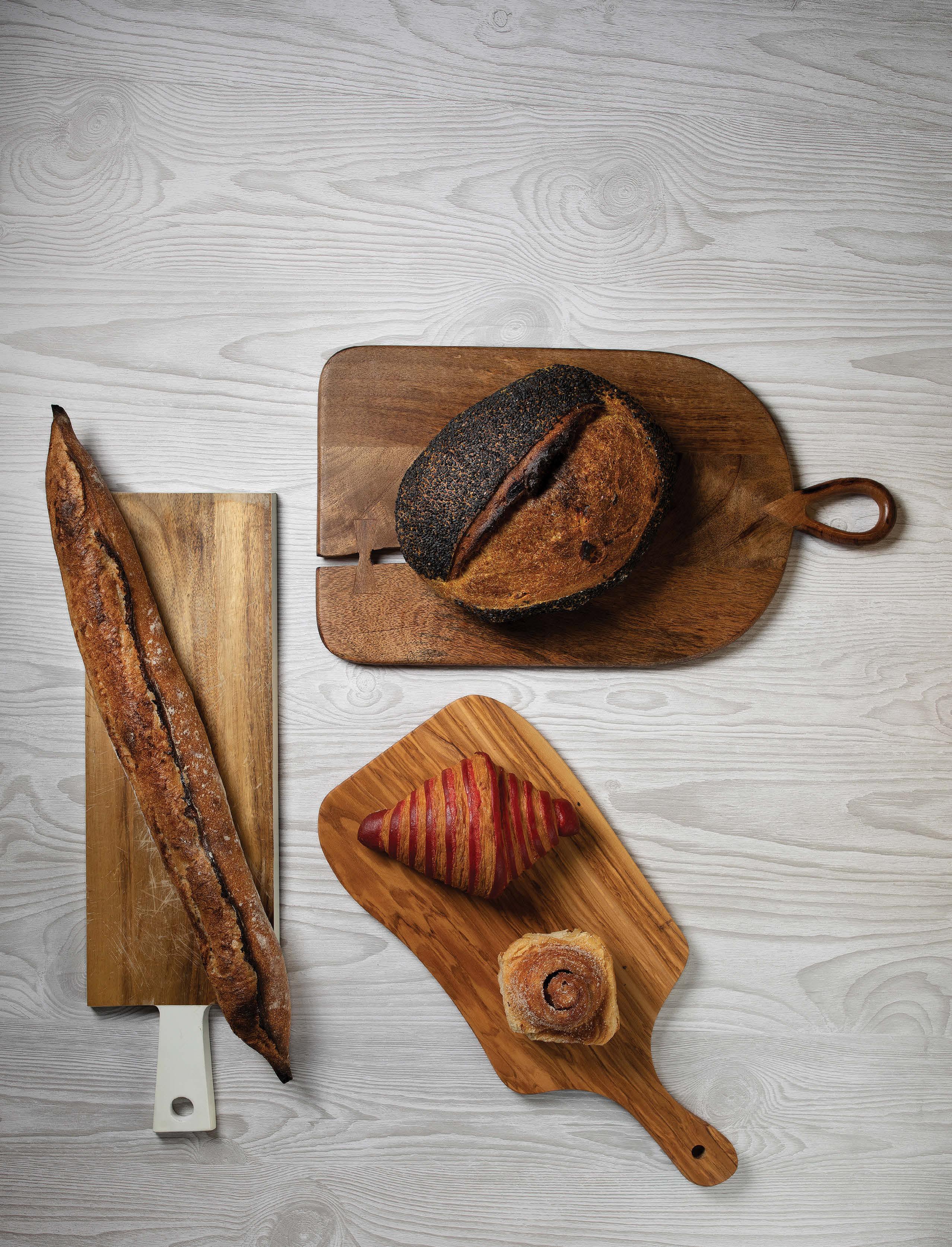

300
Acres of regenerative farmland in Colorado supported by Dry Storage. At the company’s grain mill in Boulder, pros transform batches of sustainably grown heirloom wheat purchased from local growers into flour for busi nesses—including Dry Storage’s own Arapahoe Avenue bakery, which produces thick-crusted sourdough baguettes—in the state and beyond.
5
Brightly striped varieties of filled croissants avail able from space-themed Black Box Bakery in LoDo. The colors of the pastries, available for delivery and at pop-ups, are often a clue to what’s inside: The strawberry, for instance, is streaked with layers of red dough that hint at its jammy center.
40
Minutes each yellow-tinted turmeric loaf spends cooking in the Funky Flame’s mobile, wood-fired oven at the corner of 44th Avenue and Zuni Street in Sunnyside. Chef-owner Allison Declercq Steiner seasons each boule with roasted garlic and adds a thick coating of black sesame seeds for a dramatic finish.
2,750
Pounds of French butter used to laminate the croissants Hearth sold during the 2022 farmers’ market season. In September, owner and head baker Matt Quinlisk debuted a bakery and coffeeshop in Curtis Park, where he makes multiple riffs on the pastry, including a spiral-shaped pinwheel laced with green chiles and cheddar cheese.
8 a.m.
Time of day Babette’s Pizza & Pane in Longmont puts out sheet pans of gorgeously blistered pizza (along with a parade of almond croissants, fruit Danishes, and other goodies).
The Roman-style pies use a sourdough crust to yield an airy, crispy-bottomed base for top pings such as sausage, acorn squash, and fennel pollen.
2019
The year that Shawn Bergin—who worked at a pizzeria during high school and honed his doughwhispering skills with the help of YouTube and Instagram—decided to quit his gig in marketing and sales to pursue baking full time. Now, fans wait in line for up to an hour at his Bakery Four in Berkeley for boxes of cinnamon-andsugar-dusted morning buns and other naturally leavened sourdough marvels.
PASSION PROJECT
Matt Dulin is smitten with cheesecake—and after tasting his Basque version at GetRight’s, you will be, too.
As a teenager, Matt Dulin was so crazy about cheesecake that he wrote a lyrical ode to the des sert. “My friend and I had a rap group called Hot Sauce and Cheese,” says Dulin, the owner of GetRight’s, a new bakery, house plant nursery, and event space in Wheat Ridge. The duo broke up, but Dulin’s obsession endured. Cheesecake—particularly a caramelized, crustless style called Basque—is still one of his favorite sweets. So, naturally, he added the specialty to the rotating lineup at GetRight’s, which (after regularly selling out of pop-up and delivery goods since 2020) is set to debut a storefront in early 2023.
The secret to Dulin’s Basque cheesecakes—which feature the usual cream cheese, egg, sugar, flour, salt, and heavy cream— is that he removes them from the oven a few minutes early, while the centers are still jiggly. (Leaving them in longer results in a grainier, New York–style texture.) “This ensures a very creamy, luscious, and custardy interior,” he says. Pick up your own at GetRight’s, where Dulin will also stock other love-songworthy treats, including pain au chocolat, canelé de Bordeaux (rum-forward custard cake), and citrus tarts.
Home Is Where The Hearth Is
At House of Bread, the Torosyan family fosters connection over bites from Armenia and beyond, including yojik, a custard-layered cake.

When Jack and Mary Toro syan moved to California from Armenia in 1990, they quickly connected with other immigrants at West Coast bakeries. But in 2009, when they relocated their family to Colorado, they found a less-established Armenian community. To fill the void, they opened their own place for people to gather. House of Bread, the Front Range’s only Armenian bakery, is a


humble strip-mall eatery where the Torosyans have prepared family recipes (Turkish coffee, Soviet-era pastries, Armenian lunch fare) since late 2020.
“Half [of our customers] have prior knowledge of [our food], whether it was some thing that they had when they were traveling or some thing they always had when they were living in their home countries,” says Allan, the Torosyans’ 23-year-old
son. One such delight is the yojik, an apple-size cake named after the Rus sian word for porcupine. The oven-baked specialty is layered with house-made vanilla custard and covered in a crust of spiky cake crumbs that resembles its namesake creature—mak ing for a head-turning dish that’s sure to serve as a con versation starter, no matter who’s sitting at the next table over. m

DECEMBER 2022 | 5280 85 Treat Yourself
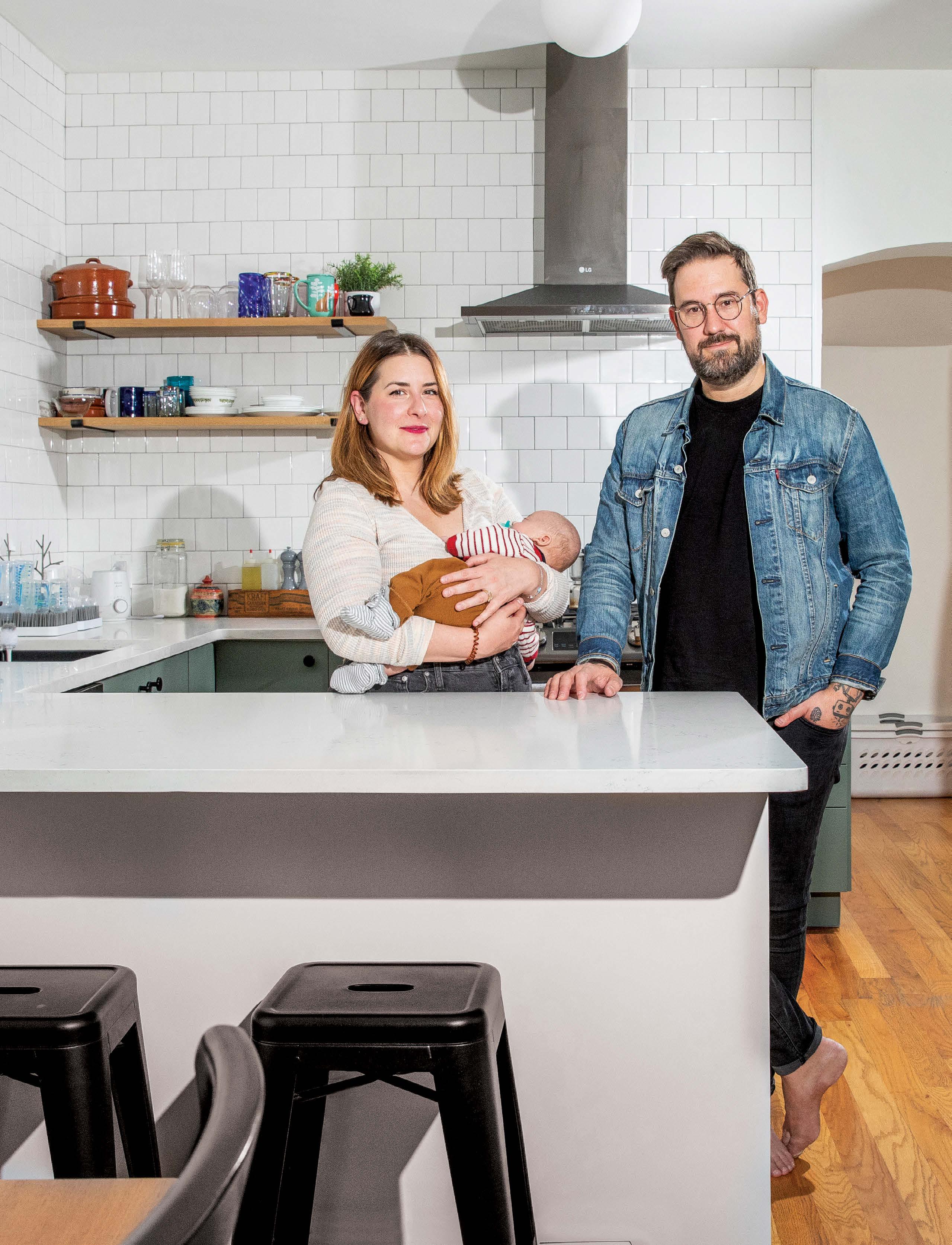 Rachel Booth, Youri Zaragoza, and their son, Soren, at the family’s home in West Highland
GENERATION
G A PP E D
Denver has been a hot spot for millennial transplants for years. But what happens when the generation born between roughly 1981 and 1996 suddenly becomes the one that can’t afford to stay?
BY RO BERT SA N CH E Z PHOTOG RAPHY BY
DECEMBER 2022 | 5280 87
D AVID WILLIAMS
Gone was the iron Booth had bought just a year earlier; the clothesdrying rack went to a former colleague who had made a quick visit to say goodbye. The grill was getting interest from a few passersby, as were the how-to books Zaragoza had read on becoming a new father. A young man in a baseball cap lifted a Turkish coffee pot into the air, and motioned to Booth.
“How much?”
“Three bucks,” Booth said. “It’s gotta go.”
It was a warm, sunny, early fall morning in Denver, the kind of day on West 36th Avenue that made the married couple contem plate everything they’d miss about their West Highland home. Leaves rustled in the large oak out front; parents pushed baby strollers along the sidewalk; an old man waved as he walked his Labrador retriever; and a gas lawn mower purred in the distance.
“I absolutely love this place,” Booth, 35, said. She gestured toward Zaragoza, 43, who was dressed in a black T-shirt and stonewashed jean shorts. “Youri doesn’t want to move.” He was leaning against their covered porch, next to his brother-in-law who’d come from France to help them pack.
“It’s complicated,” Zaragoza said. “But I know this is the right decision for us.”
When they moved into their house, it would’ve been unfathomable to think they’d be liquidating nearly everything two and a half years later for a move to Lyon, France, where Zaragoza’s sister lives. They’d thought of their beige-brick one-story as a refuge, imagining a quiet life punctuated by long walks in the nearby park, beers together in the backyard, and sunsets that would make their friends who didn’t live in Colorado jealous. In the winter of 2020, Zaragoza proposed on the front porch. “A lot of memories were already made here for us,” said Booth, who grew up in Virginia and moved to Colorado 10 years ago. “It’s like every inch of this place tells a piece of our story.”

That is to say, it was magical—until it wasn’t. Over the past couple of years, the two found themselves besieged by the ever-increasing cost of living that had them rethinking life in their adopted city. The doubts started with climbing costs at the grocery store, followed by rising gas prices. “It felt like nothing was going to be affordable again,” Booth said. Water, electricity, insurance—all these costs were increasing, and seem ingly all at once. The mortgage on their 112-year-old, 1,100-square-foot home was $2,500 a month, and most everyone had told them they were lucky to have such an “affordable” monthly payment.
Then, this past spring, Booth learned she was pregnant with the couple’s first child. They called daycare facilities to inquire about prices, all of which came back with budget-straining monthly quotes that just about matched their mortgage payment. By April, they were having serious conversations about their options.
Combined, the couple earned well into the six figures. They rented Booth’s former con dominium in Uptown at a profit, and they both had good jobs. She worked in interna tional trade compliance for an export control firm in Denver; he was a creative director who recently was employed by Broomfield-based Crocs shoe company.
In every way, Booth and Zaragoza could afford to live in Denver. They weren’t looking for sympathy. They could cover their bills; they could pay for the house. They had a healthy amount of savings. But they also did the math: Roughly 11 percent of their total income would now be going to childcare. They were spending a little more than that on the mortgage. Then, there were the increasingly expensive groceries and utilities and insurance. Every month, it seemed like rising costs were taking more of their hard-earned money. “At some point, you have to say, ‘We’re not going to fall into this financial trap,’ ” Zaragoza said.
There were so many questions—about the money, about the European weather, about living on a different continent. One night this past spring, Booth finally asked the question that would’ve seemed absurd to them just a couple of years earlier. It was the same one that thousands of millennials are now asking them selves across the Denver metro area: Can we afford to stick around?
Millennials came to Denver because of the cool factor. They came for the breweries and the coffeeshops, for the hiking trails and the sunshine and the postcard views of the Rocky Mountains. They came for the growing tech industry and because they were highly educated and therefore in demand.
For a decade, the Mile High City has been among the most
88 5280 | DECEMBER 2022
MONTH BEF ORE THEY LEFT THE CI TY WHERE T HEY WERE BUILDING THEIR LIVES TOGETHER, RACHEL BOOTH AN D YOURI ZARAGOZA STOOD ON THE LAWN OUTS IDE THEIR DENVER BUNG A LOW AND WATCHED AS STRAN GERS PICKED THR O UGH THEIR BELONGINGS.
ONE
popular places in the United States for folks born between 1981 and 1996. The total population in Denver and the surrounding metro area increased 2.8 percent between 2014 and 2015, according to U.S. Census Bureau figures, a number fueled in large part by millennials moving into the area. According to the most recent census figures, millennials in 2021 made up about 33 percent of Denver’s population—a fourpercentage-point jump from five years earlier. In raw numbers, the city saw an influx of more than 30,000 millennials between 2016 and 2021, an increase of roughly 15 percent. Step outside these days, and approximately one in every three people you meet in the city will be between the ages of 26 and 41.
This group, as a whole, has not had it easy. In many ways, millennials have been a generation delayed—economically and socially—compared with generations that came before them. “I look at my parents and where they were heading financially at my age, and I just don’t see that as a possibility in my life,” says McKenzie Fuller, 26, a young millennial from Iowa who shares a two-bedroom Capitol Hill apartment with her Gen Z friend, 24-year-old Jenna Dukes.
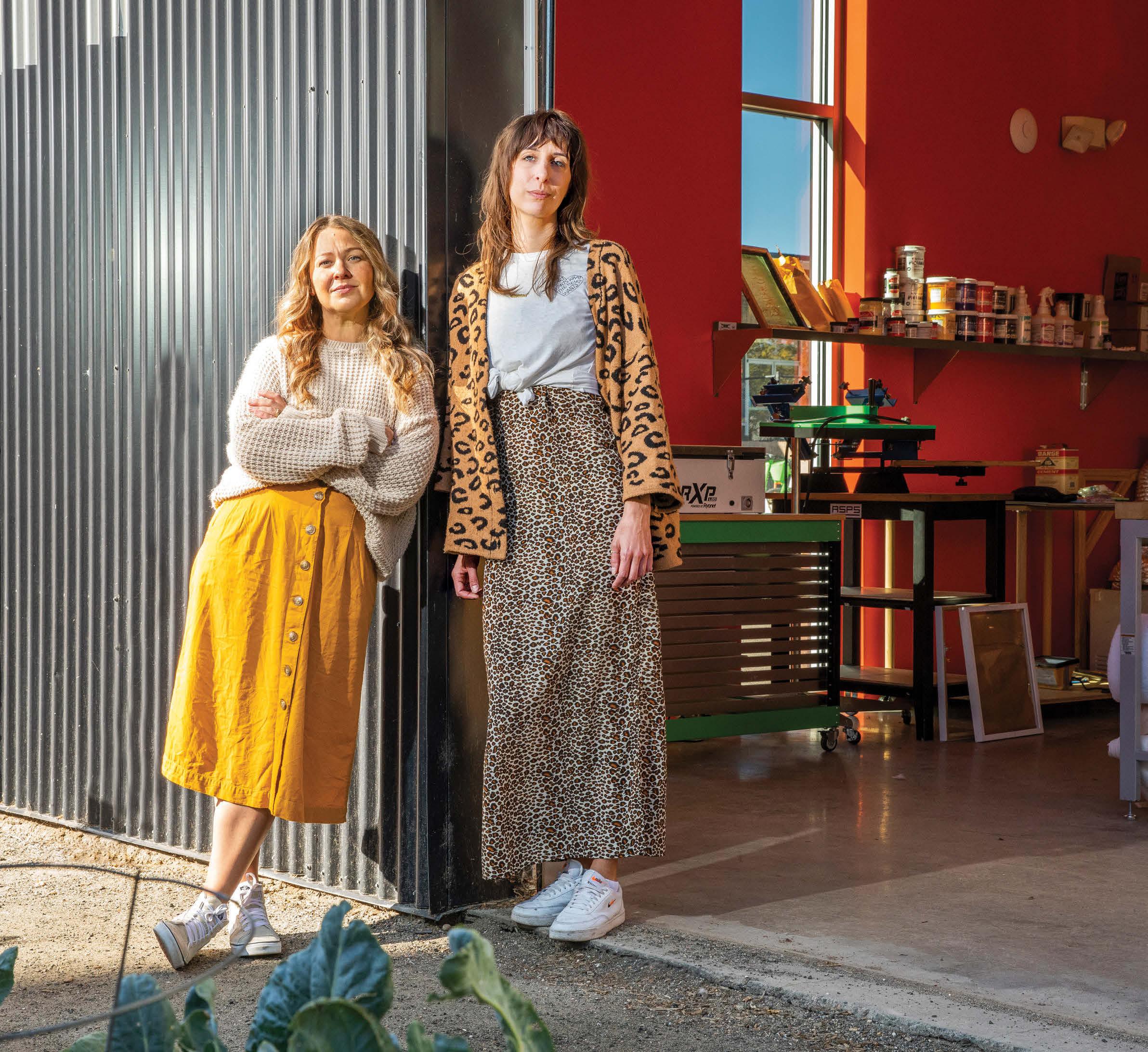
says Adam Lippert, a University of Colorado Denver sociology profes sor who has been doing research on millennials since 2008, in reference to the generation’s ambivalence about their place in the world. For the most part, the generation grew up in the shadow of the 9/11 terrorist attacks, and many of them were still at home when their parents struggled through the Great Recession. Later, millenni als dealt with myriad housing crises as they were attempting to create independent lives. They have contended with massive student debt burdens and extraordinary wealth inequalities. Census Bureau data show the annual average salary, adjusted for inflation, for a millennial in 2020 was 20 percent lower than that of a baby boomer at the same age. Now, they’ve lived through a pandemic and are dealing—like all of us—with inflation unlike anyone has seen in roughly half a century.
“How
A Georgetown University survey conducted last year revealed that many serious life decisions millennials make today are likely a product of simple financial survival. Nearly half of all millennials in the United States are living paycheck to paycheck—six percentage points higher than in 2020. More than two-thirds of millennials surveyed also say they don’t think they could handle the financial implications of an unexpected,
DECEMBER 2022 | 5280 89
can you blame them?”
Tara Forman and Jes Leffler at the Fruits of Our Labor office in Denver
major expense, like a car accident or a substantial medi cal bill. And only one-third of millennials say they have taken steps to save for retirement—despite 43 percent in 2020 saying saving was a top financial goal. Stability, in many ways, has become less of a certainty and more of an open-ended question.
“Millennials are keen on life experiences rather than material pos sessions,” Lippert adds. “Then you read about a young, vibrant city like Denver, and you say, ‘Why not?’ You’re rolling the dice, but you’re rolling the dice in a pretty cool place.”
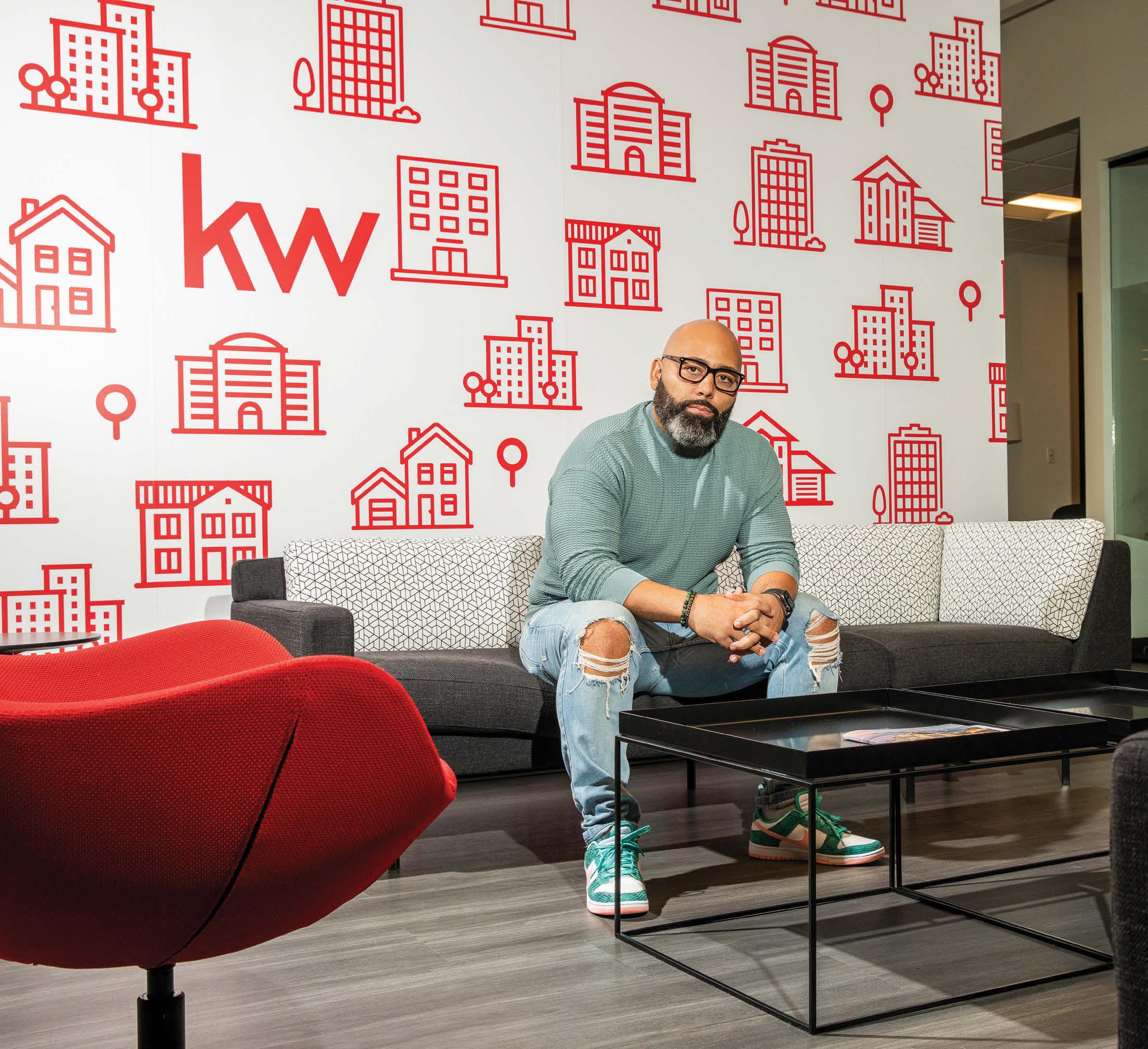
One night this past fall, Tara Forman and her friend Jes Leffler were at the opening of Town Hall Collaborative, a femaleowned exhibition and community space off Santa Fe Drive, near downtown. They were there as entrepreneurs: Forman and Lef fler own and operate Fruits of Our Labor, a small business that offers do-it-yourself art events, and they were displaying their wares to the mostly female crowd. The pair originally started Fruits two years ago, but pandemic delays had sidetracked the operation. Tonight, though, felt like something of a coming-out party.
Forman was just about to turn 39; Leffler was 36. They’d been friends for nearly two decades, since their days at the University of South Florida, in Tampa. Forman, who’d moved to Denver nearly eight years ago to be with the man who would become her husband, now has a six-year-old son and owns a house in Lakewood.
Leffler moved to the Mile High City shortly after Forman, and she and her husband also live in Lakewood. Leffler had previously worked in advertising in New York City and San Francisco, so when she came to Denver in 2018, everything seemed affordable in com parison. She, too, has a child and, like Forman, a husband who works a full-time job.
As the two women stood at their booth at Town Hall, potential customers rooted through bags of felt and ribbon and pulled tie-dyed T-shirts off a rack. A DJ played house music from a stage near the front door, where people milled around a bar. A vegan food truck was parked outside.
Leffler had recently left a job with an advertising agency to pur sue the fledgling business full time. Forman was still holding down a part-time job in the events industry but also was spending nearly
90 5280 | DECEMBER 2022
Real estate agent Daniel Dixon in his Englewood office
40 hours each week on Fruits of Our Labor. Although they lived comfortably—their only significant debts were their homes—the wom en’s money worries felt like a low-grade fever that followed them from one day to the next. This past summer, a friend had been laid off from a tech job, and the women knew others who were struggling to find freelancing gigs or affordable places to rent or to buy in and
feel like people my age are stepping back and wondering what’s hap pened to their lives,” Forman says. “Like, is this really what we’ve all worked for?”
She and Leffler were discouraged. “You’re told that hard work pays off, but it seems like you get on a hamster wheel and it never stops,” Leffler says. The economy wasn’t helping. A recently updated PayScale survey showed that while groceries in the Denver metro area remained below the national average, any benefit was offset by the avalanche of far-above-average transportation costs and poor housing affordability.
E TOLD
around the city. It seemed everyone they knew complained about the cost of living in Den ver—where both Forman and Leffler hoped to grow their futures.
Forman was the first to feel it. She and her husband, Matt Close, had once lived in an apartment downtown. Over time, though, she says they “kept getting pushed farther and farther away from where we really wanted to live”—namely in a single-family home within Denver proper. Lakewood became their real ity when they finally decided it was time for homeownership. At $400,000, their house was affordable, at least relative to what they’d seen in the city—which these days has ranked among the nation’s most expensive when it comes to both average rents and prices paid for homes. Realtor.com reported in September that the median listing price in the city was $585,000—up more than 10 percent over the same time in 2021—and the median sales price was $645,000. In more stark terms, a report this past sum mer by Point2, which covers real estate trends, showed metro Denver homes, on average, increased in price $94 each day between 2011 and 2021—placing the region 10th among 187 metro areas nationally when it came to average daily gain.
Forman’s father retired in February 2021, which got her thinking about what her own family’s future would look like in five, 10, 15 years. She wondered if things might simply get too expensive and they might someday have to move. Her husband had grown up in Florida and worked in sales for a machinery-supply company north of Den ver. Recently, he’d finished an MBA, paid for by his company, but the time away from the family had put Forman in charge of everything at home while her husband worked and studied.
More and more, she found herself thinking about her parents; how paying for the house and cars and kids seemed so easy back then. “I
While Leffler had initially thought of Denver as a financial escape from San Francisco, the changes to the cost of living had begun to remake the Mile High City in the image of some of America’s most unaffordable places. Leffler was increasingly concerned about her hus band getting laid off from his job as a software engineer. What would her family do if something significant suddenly happened to make their financial situation untenable? Denver had once been the place Leffler could see herself “relax a little, live the life I always imagined, maybe escape my workaholic lifestyle.” These days, though? “I’m right back to that life,” she says.
As interest rates increased and the economy started to slow in mid-2022, real estate agent Daniel Dixon began hearing from potential millennial clients who hoped their window to homeownership might begin to open. “They think this is the moment the housing bubble bursts in Colorado,” the 37-year-old says. It’s a feeling born from helplessness, Dixon adds. So many thirtysomethings want to stay in Denver but in recent years have been shut out of the three-bed-two-bath-white-picket-fence dream.
Every housing market has peaks and valleys, Dixon has told clients. But the idea that the current economic uncertainty would somehow bring wholesale change to metro-area real estate is a mirage. “It’s a tough conversation to have,” says Dixon, the chief executive of Engle wood-based the Dixon Group. “I’m telling people we’re never again going to see that $300,000 single-family home in Denver. It’s not happening, and that’s the reality we’ve just got to accept.”
Meanwhile, millennials have entered the not-so-fun stage of life where they’re beginning to focus on purchasing power—or, perhaps, their lack of it. “Millennials are the generation of contradictions,” Lippert, the sociology professor, says. “They’re more educated than anyone, but they have more debt than anyone. When they’re sitting at home, they’re look ing at affordability, how much they’re working,

DECEMBER 2022 | 5280 91 GENERATION G A PP E D
CONTINUED ON PAGE 104
“YOU’R
THAT HA RD WORK PAYS O FF, BUT IT S EE MS LIKE YOU GET ON A HAMSTER WHEEL AND IT NE VE R STOPS.”
DINING GUIDE
SYMBOL
Indicates a restaurant featured in 5280 for the first time (though not necessarily a restaurant that has just opened).
Indicates inclusion in 5280’s 2022 list of Denver’s best restaurants. These selections are at the discretion of 5280 editors and are subject to change
A
A5 $$$$
Downtown / Steak House The team behind Forget Me Not and Tap and Burger offers a refreshing chophouse experience with a stellar lineup of steaks in a hip, delightfully funky bar and dining room. Reservations accepted. 1600 15th St., 303-623-0534. Dinner
African Grill & Bar $$$
Lakewood / African Head to this cheery African restaurant for rich stews, fried fish, rice dishes, and friendly service. Get the chakalaka, a traditional vegetarian South African stew. 955 S. Kipling Pkwy., Lakewood, 720-229-7778. Lunch, Dinner
Annette $$$
Aurora / American Caroline Glover brings a warm, intimate dining experience to Stanley Marketplace. Enjoy a family-style menu featuring seasonal salads, toasts, and wood-grilled fare. Reservations accepted. Stanley Marketplace, 2501 Dallas St., Ste. 108, Aurora. 720-710-9975. Dinner
B
Beckon $$$$
RiNo / Contemporary Chef Duncan Holmes brings an elevated, intimate dining experience to Larimer Street. The seasonal menu changes frequently, and excellent, thoughtful wine pairings are available. Reservations accepted. 2843 Larimer St., 303-7490020. Dinner
Bellota $$$
RiNo / Mexican Go for elevated regional Mexican fare like shrimp tacos basted in shrimp-shell-infused butter and the popular fried quesadilla de requesón. Pair your meal with a tequila- or mezcal-based cocktail. Reservations accepted. The Source, 3350 Brighton Blvd., 720-542-3721. Lunch, Dinner
The Bindery $$$
LoHi / Contemporary Linda Hampsten Fox’s eatery offers worldly fare inspired by her travels. Settle in for a sophisticated brunch, or get the smoked rabbit pecan pie with mustard gelato for dinner. Reservations accepted. 1817 Central St., 303-993-2364. Breakfast, Lunch, Dinner, Brunch
Blackbelly $$$
Boulder /American At Blackbelly, chef Hosea Rosenberg’s carnivore-friendly menu features charcuterie, small plates, and daily butcher specials. Try the crispy pig ears with red pepper jelly. Also check out the grab-and-go market next door. Reservations accepted. 1606 Cones toga St., Boulder, 303-247-1000. Dinner
Want More Dining Options? Visit our online listings at 5280.com/ restaurants.
CChez Maggy $$$$
French /Downtown Chef Ludo Lefebvre plates up Colorado-inspired French classics at this brasserie inside the Thompson Denver hotel. Don’t miss the expertly prepared escargot and the gluten-free crab cake bound with shrimp paste. Reservations accepted. 1616 Market St., 720-794-9544. Breakfast, Lunch, Dinner, Brunch
Comal Heritage Food Incubator $$ Globeville / International Find an array of family recipes from Latin America at this welcoming restaurant, which has a rotating menu and provides job training to immigrant and refugee women. Reservations not accepted. 3455 Ringsby Ct., Ste. 105, 303-292-0770. Lunch
Corrida $$$$ Boulder /Spanish Housed on the rooftop level of the Pearl West building, this elegant Spanish steak house offers stunning Flatiron views and fabulous cocktails and wines. Splurge on the Japanese wagyu or opt for a regeneratively sourced steak. Reservations accepted. 1023 Walnut St., Ste. 400, Boulder, 303-444-1333. Dinner, Brunch
DDaughter Thai Kitchen & Bar $$$$ Highland /Thai This upscale Thai restaurant from Ounjit Hardacre serves beautifully plated dishes and inventive cocktails with an elegant ambience to match. Try the lychee-kissed massaman curry with bone-in Colorado lamb. Reservations accepted. 1700 Platte St., Ste. 140, 720-667-4652. Lunch, Dinner
Dio Mio $$ RiNo / Italian You can count on perfect pasta at Alexander Figura, Spencer White, and Lulu Clair’s fast-casual Italian eatery. The house-made sour dough is also heavenly. Reservations accepted. 3264 Larimer St., 303-562-1965. Dinner
Duo Restaurant $$$ Highland /Contemporary This quintessential neighborhood restaurant combines simple food, a low-key ambience, and the hum of neighbors trading stories. The seasonal cuisine constantly surprises, and dessert is worth a visit in itself. Reservations accepted. 2413 W. 32nd Ave., 303-477-4141. Dinner, Brunch
PLANT–POWERED
Oregon-based Next Level Burger opened a University neighborhood outpost this August, bringing the eight-year-old chain’s popular vegan sandwiches, brats, and shakes to town. Pair the Ghost Pepper Popper Burger—a Beyond Meat patty stuffed with plant-based jalapeño cream cheese and layered with pepper jack, tomatoes, lettuce, and fiery ranch on a pretzel bun—with BeerChzsauce-smothered fries.

92 5280 DECEMBER 2022
Courtesy of Next Level Burger
KEY PRICE KEY $ UNDER $ 10 $$ $ 11 TO $ 15 $$$ $ 16 TO $ 25 $$$$ $ 26 AND HIGHE R (Average Entrée)

SUPPORTING SPONSORS PRESENTING SPONSOR Tickets must be purchased in advance. Get tickets and full details at botanicgardens.org NOVEMBER 18 – JANUARY 7 Experience the magic of the season with a stunning display of light and color. 1007 York Street
Edgewater Public Market
Edgewater / International Satisfy your cravings for everything from hearty wild game sandwiches to spicy Ethiopian fare at this eclectic collective of nearly two dozen food stalls and boutiques. Tenants include popular restaurants such as Konjo Ethiopian, Lucky Bird, Lazo Empanadas, veganfriendly Gladys, and more. Reservations accepted. 1111 14th St., Edgewater, 303-389-3343. Break fast, Lunch, Dinner, Brunch
E$
El Tepehuan $
Englewood / Mexican This relocated restaurant has been serving affordable Mexican food for more than 40 years. Stop by for the huevos rancheros. Reservations accepted. 3495 S. Broadway, Engle wood, 303-781-0243. Breakfast, Lunch, Dinner
Elway’s
$$$$
Downtown / Steak House This sleek downtown restaurant serves a bevy of classic steak house fare in upscale environs. Choose from a menu of steaks, seafood, and more. Multiple locations. Reserva tions accepted. 1881 Curtis St., 303-312-3107. Breakfast, Lunch, Dinner, Brunch
Famille
F$$$
Westminster / French Located inside the Origin Hotel, this all-day bistro specializes in seasonally inspired French fare prepared with sustainably sourced ingredients. Brunch is served daily. Reserva tions accepted. 8875 Westminster Blvd., Westminster, 720-647-6041. Breakfast, Lunch, Dinner, Brunch
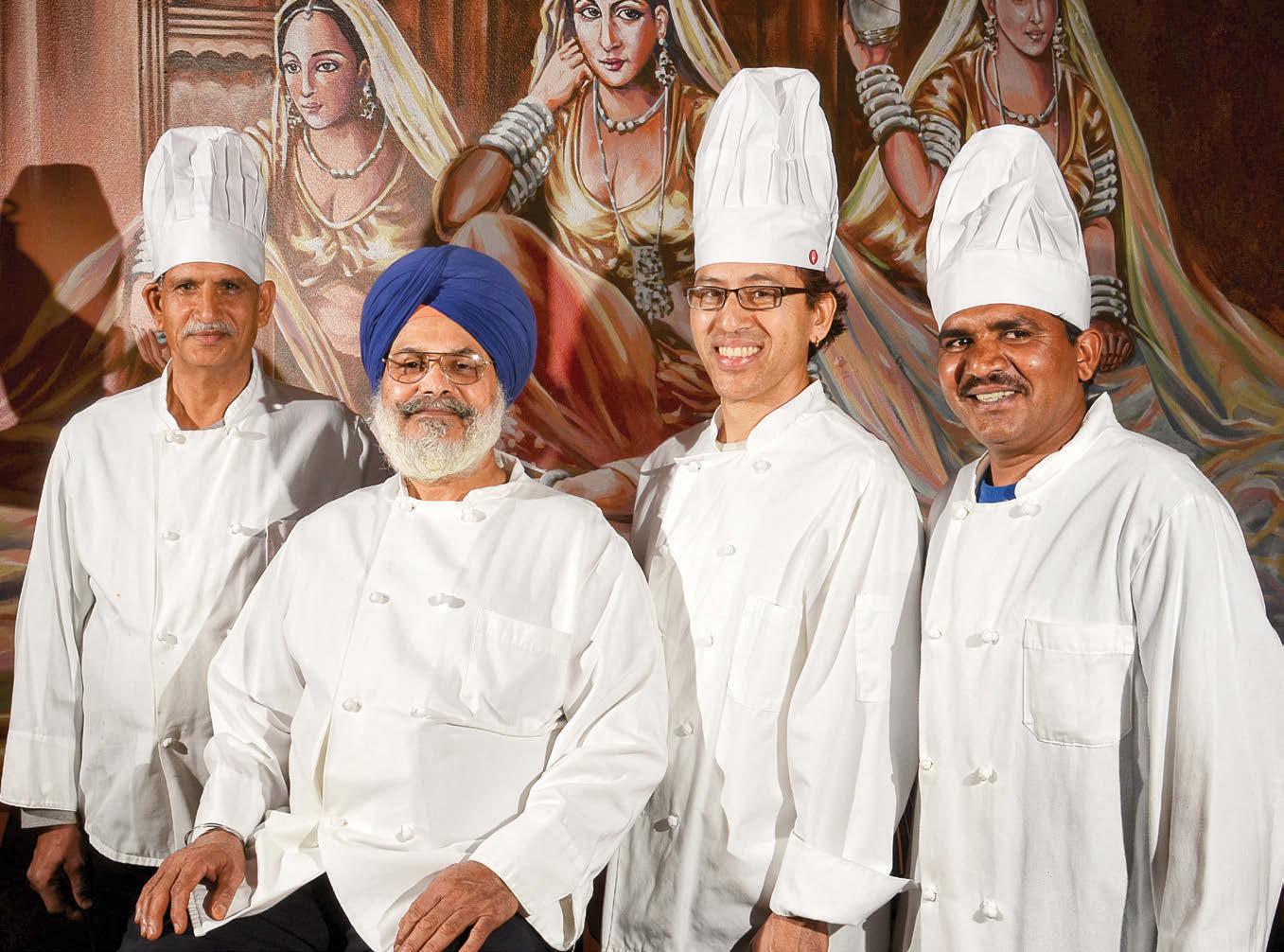
The Fifth String $$$$ LoHi / American At the Fifth String, chef Amos Watts offers his seasonally inspired cooking along side an in-house beef butchering program. The results, such as the tallow candle bread service, are delicious and inventive. Reservations accepted. 3316 Tejon St., Ste. 102, 720-420-0622. Dinner
GGaetano’s $$$ Highland / Italian This comfy neighborhood hangout features old-school Italian favorites, such as chicken Parmesan and fettuccini alfredo. Reserva tions accepted. 3760 Tejon St., 303-455-9852. Lunch, Dinner, Brunch

The Greenwich $$$
RiNo / Pizza Restaurateur Delores Tronco brings a slice of her favorite New York City neighbor hood to RiNo at the Greenwich. Don’t miss the satisfying sourdough pizzas and fresh, seasonal salads. Reservations accepted. 3258 Larimer St., 720-868-5006. Dinner
HHighland Tap and Burger $$ Highland / American Pick your patty, bun, and premium toppings for a customizable meal enhanced with a choice of more than a dozen Colorado craft beers. Multiple locations. Reservations accepted. 2219 W. 32nd Ave., 720-287-4493. Lunch, Dinner, Brunch
Hop Alley $$$

RiNo / Chinese From Tommy Lee of Uncle, this neighborhood hangout serves dishes rooted in the Chinese tradition with a touch of distinctive flair. Try the dan dan mian and the fiery la zi ji laced with numbing peppercorns. Reservations accepted. 3500 Larimer St., 720-379-8340. Dinner
I
Il Porcellino Salumi $$
Berkeley / Deli This market and deli strives to provide the highest quality, locally raised cured meats in Colorado. Pick a selection to take with you, or enjoy a fresh salumi platter or sandwich in house. 4334 W. 41st Ave., 303-477-3206. Breakfast, Lunch, Dinner
94 5280 | DECEMBER 2022 “BEST INDIAN RESTAURANT” - 5280, EVERY YEAR SINCE 2002 “BEST INDIAN & LUNCH BUFFET” - WESTWORD, PAST 17 CONSECUTIVE YEARS Come and experience why everyone has fallen in love with our food Now Serving for 25 years! 2390 S. DOWNING | 303-298-1939 330 E. 6TH AVE. | 303-871-9777 ★ ESTABLISHED 1998 ★ Takeout, Catering & Delivery Available | Gluten Free Menu FOLLOW OUR FOOD TRUCK! LITTLEINDIAOFDENVER.COM 3496 W. 32ND AVE. | 303-561-2855 7352 29TH AVE. 303-665-7070 SCAN TO VIEW OUR UPDATED MENU ALL YOU CAN EAT 7-DAYS-A-WEEK LUNCH BUFFET NOW OPEN 11 A.M. - 3 P.M. DINING GUIDE
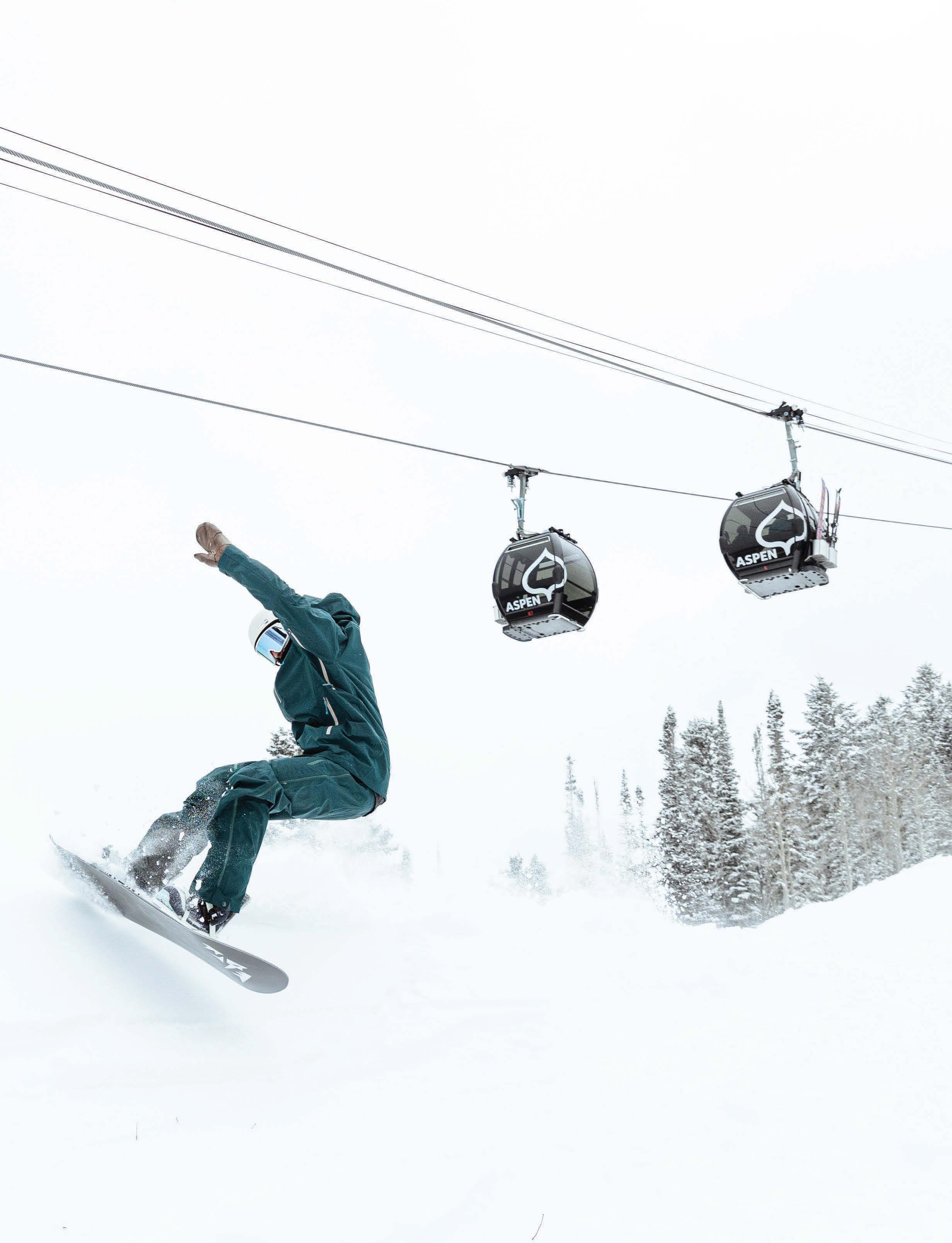
features Japanese favorites, such as tempura, gyoza, and yakisoba. Reservations accepted. 231 Milwaukee St., 303-989-5907. Lunch, Dinner
Jamaican Grille $$
JLincoln Park / Jamaican Savor an array of spiceladen Caribbean dishes like jerk chicken at this family-owned eatery. Also try the Jamaican Mini Grille and International Jerk Market in Lakewood. Reservations not accepted. 709 W. Eighth Ave., 303-623-0013. Lunch, Dinner
Jovanina’s Broken Italian $$$
Downtown / Italian This gorgeous LoDo eatery expands on traditional Italian fare by incorporating unexpected, seasonal ingredients. Reservations accepted. 1520 Blake St., 720-541-7721. Dinner
LLa Diabla Pozole y Mezcal $$
Ballpark / Mexican James Beard Award finalist Jose Avila serves up comforting pozole and other traditional Mexican fare at this casual eatery. Don’t miss the weekend brunch for chilaquiles, huaraches, and a killer house michelada. Reservations not accepted. 2233 Larimer St., 720-519-1060. Breakfast, Lunch, Dinner, Brunch
Le French $$
MManna Restaurant $
Castle Rock /American This restaurant located in a hospital serves comforting soups, pizzas, burgers, and mains. Don’t miss the broth bowl with soba noodles and shaved steak. Reservations not accepted. 2350 Meadows Blvd., Castle Rock, 720-455-3664. Breakfast, Lunch, Dinner
Misfit Snackbar $$
Kaos Pizzeria $$
KPlatt Park / Pizza A wood-fired oven, gourmet ingredients, and wine to go make this a perfect pizzeria for dine-in or delivery. If the weather’s nice, eat outside in the spacious garden area. Reserva tions accepted. 1439 S. Pearl St, 303-733-5267. Lunch, Dinner
Kobe An $$$
Cherry Creek / Asian Everything is traditional at this Japanese restaurant, including the seating. The menu
Southmoor Park / French This chic Belleview Station bistro, owned by French-Senegalese sisters, transports diners to France via pastries and Parisian cuisine. Ring in cocktail hour with wine and beverages courtesy of an afternoon cart service. Reservations accepted. 4901 S. Newport St., 720-710-8963. Breakfast, Lunch, Dinner, Brunch
Linger $$
Highland / International Set in the former Olinger Mortuary’s parking garage, this restaurant takes you around the world with a menu of small plates. Enjoy views of downtown and an inviting menu. Reserva tions accepted. 2030 W. 30th Ave., 303-993-3120. Lunch, Dinner, Brunch
City Park / Contemporary Chef-owner Bo Porytko serves a rotating lineup of creative plates at this walk-up kitchen inside Middleman cocktail bar. Each one is a satisfying and imaginative twist on familiar pub fare. Try the chips and dip: smashed potatoes with an ever-changing house sauce. Reservations not accepted. 3401 E. Colfax Ave., 303-353-4207. Dinner
Narrative $$$
NCherry Creek / American Chef Paul Nagan serves gussied-up versions of American favorites—such as shrimp and grits with Tabasco butter—at this sleek eatery inside the Jacquard hotel. Reservations accepted. 222 Milwaukee St., 720-571-8080. Breakfast, Lunch, Dinner, Brunch
Good things happen when you give a buck.
Colorado Gives Day is almost here. On Dec. 6, find a cause you care about and give a buck.
ColoradoGivesDay.org
96 5280 | DECEMBER 2022
DINING GUIDE
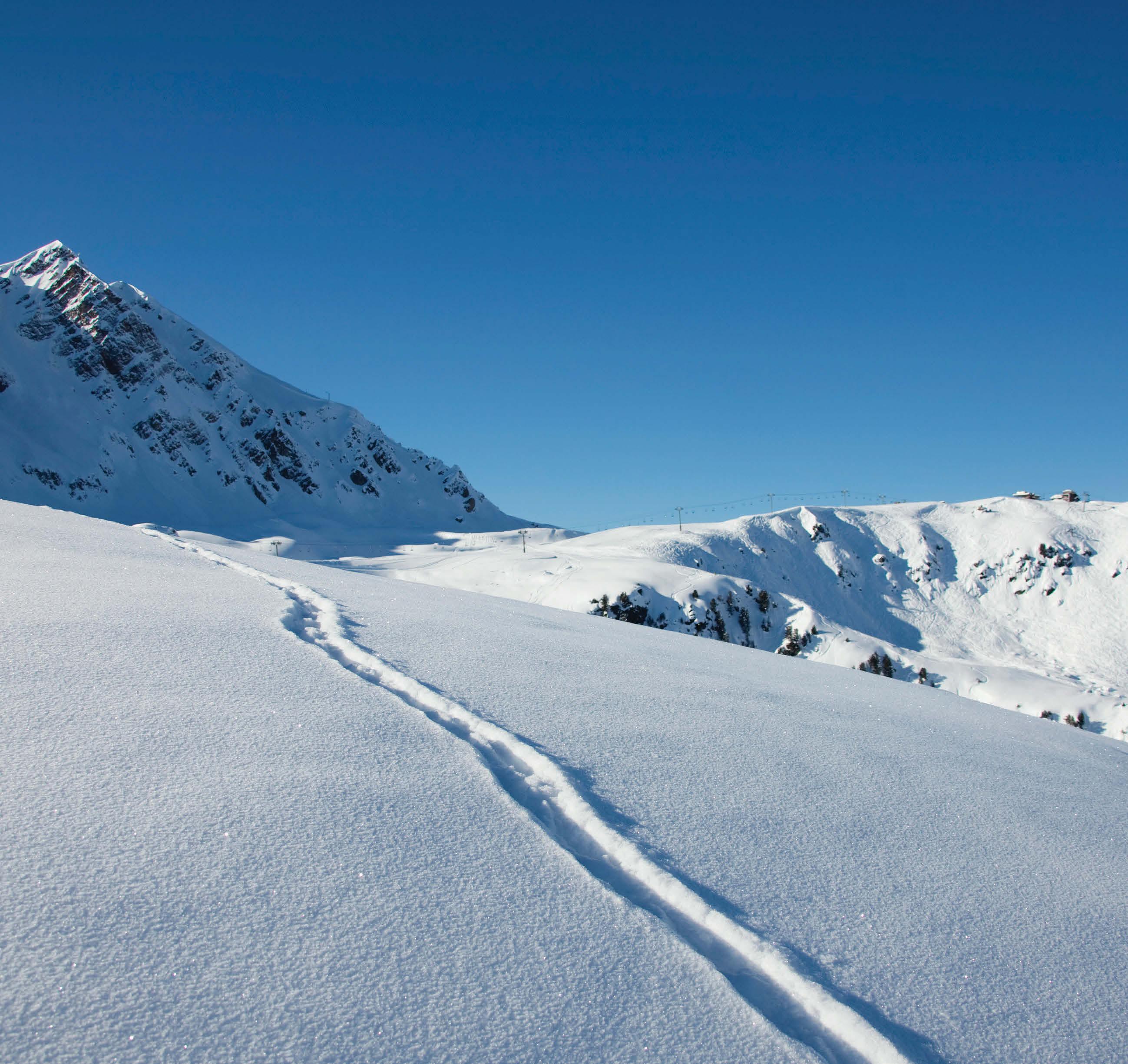

2022 T OPLAWYER S DENVER COLORADO’S SKI COLLISION & INJURY LAW FIRM SKI COLLISION? If you were seriously injured in a skier or snowboarder collision, please visit our website to learn about your rights and our results. WWW.SKILAW.COM 1600 Broadway, Suite 1920, Denver, CO 80202 | 303.861.1042
Next Level Burger $
University /American Visit for vegan burgers, brats, and shakes, plus comforts like fries and tots topped with plant-based BeerChz. Reservations not accepted. 1605 E. Evans Ave., 720-640-6900. Lunch, Dinner

NOLA Voodoo Tavern and Perks $$
Cole / Southern New Orleans native and owner Henry Batiste serves his grandmother’s recipes for gumbo, po’boys, and much more at this Louisianainspired spot. Don’t miss the Crawfish Monica: rotini pasta with cream sauce and shellfish. 3321 Bruce Randolph Ave., 720-389-9544. Dinner
Pete’s Kitchen $
PCheesman Park / American A Denver landmark and a staple for late-night comfort food, Pete’s is known for its breakfasts but also serves gyros and souvlaki sandwiches. 1962 E. Colfax Ave., 303-321-3139. Breakfast, Lunch, Dinner, Brunch
Pony Up $$
Downtown / Pub This casual bar serves comforting fare such as French dip sandwiches and fried chicken with craft cocktails and lots of bubbly. 1808 Blake St., 720-710-8144. Lunch, Dinner
Onefold $$$
OCity Park West /Contemporary This eatery does early-day dining justice. Pair the bacon fried rice with house-made bone broth or Vietnamese iced coffee. Reservations not accepted. 1420 E. 18th Ave., 303-954-0877. Breakfast, Dinner, Brunch
Osteria Marco $$$
Downtown / Italian This casual tavern on Larimer Square features deep-set wooden booths and a spacious bar. The menu lists approachable eats, such as house-made fresh mozzarella and rustic pizzas. Reservations accepted. 1453 Larimer St., 303-5345855. Lunch, Dinner
Q House $$$
QCity Park / Chinese Enjoy a modern take on Chinese cuisine by chef Christopher Lin, an alum of Momofuku in New York City. Reservations accepted. 3421 E. Colfax Ave., 720-729-8887. Dinner
Quiero Arepas $$
Platt Park / Latin American Venezuelan flatbreads, or arepas, are the draw. Try the La Havana, a take on a Cubano featuring slow-roasted pork, ham, and Muenster with a creamy mayo-mustard-pickle sauce. 1859 S. Pearl St., 720-432-4205. Lunch, Dinner
RRedeemer Pizza $$$
RiNo / Pizza Spencer White and Alex Figura, the duo behind Dio Mio, bring blistered, New York City–style sourdough pizza to RiNo. Nosh on full pies in the dining room or nab a slice to go from the casual walk-up window on the back patio. Reservations accepted. 2705 Larimer St., 720-780-1379. Dinner
Rewild $$$
West Highland / American Enjoy veggie-forward small plates and locally sourced mains at Nurture’s eveningtime restaurant, Rewild, helmed by chef Juan Tapia. Don’t miss the roasted delicata squash and other seasonal delights. Reservations accepted. 2949 Federal Blvd., 303-390-1252. Dinner
SSafta $$$
RiNo /Mediterranean Chef Alon Shaya brings his modern Israeli fare to Denver. Start with creamy hummus and wood-oven pita before moving on to harissa-coated roast chicken and tender cabbage cooked sous vide. Reservations accepted. The Source Hotel & Market Hall, 3330 Brighton Blvd., 720-408-2444. Lunch, Dinner
98 5280 | DECEMBER 2022 DINING GUIDE
You can’t help but believe in the magic of Christmas at ICE! featuring A Charlie Brown Christmas at Gaylord Rockies Resort. See the story come to life, carved out of two million pounds of ice.



NOV. 18 - JAN. 1 | ChristmasAtGaylordRockies.com © 2022 Peanuts Worldwide LLC
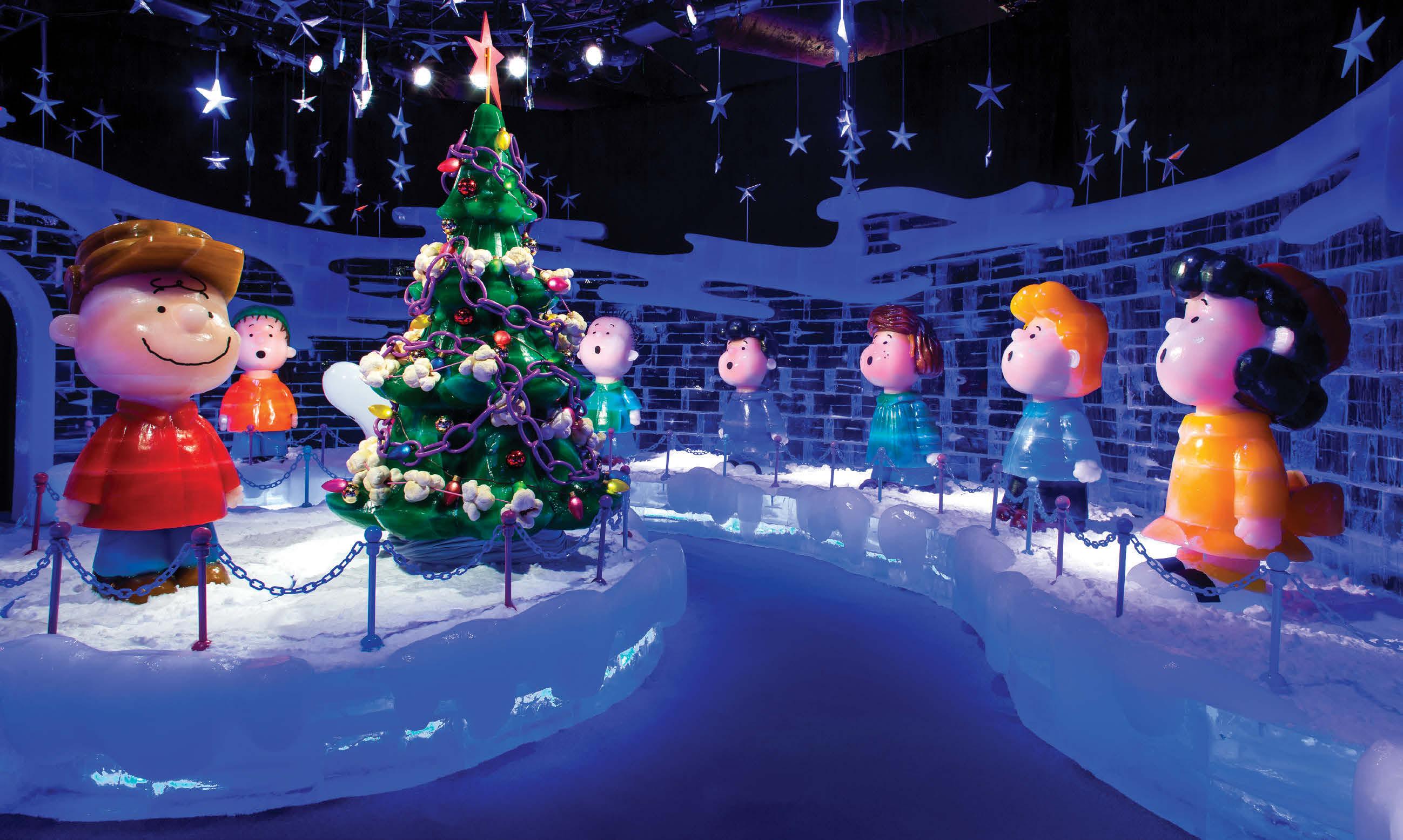
A GAYLORD HOTELS ORIGINAL EXPERIENCE
DINING GUIDE
Somebody People $$
Overland /Mediterranean At this vegan restaurant, Sam and Tricia Maher and head chef Art Burnayev run a pasta program with dishes that celebrate seasonal bounty. Try the $40 Feed Me experience. Reservations accepted. 1165 S. Broadway, Ste. 104, 720-502-5681. Dinner, Brunch

Spuntino $$$
Highland /Italian Enjoy the locally sourced menu at this Italian-inspired, husband-and-wife-owned spot. Try the seasonal pasta or any dish with Southern Indian influences. Don’t miss the housemade gelato for dessert. Reservations accepted. 2639 W. 32nd Ave., 303-433-0949. Dinner
Sunday Vinyl $$$$
Downtown /European This hip European-style restaurant and wine bar at Union Station offers warm hospitality and exquisite cuisine, all to the soundtrack of a vinyl-only playlist. Try the house hot dog and fresh oysters. Reservations accepted. 1803 16th St., 720-738-1803. Dinner, Brunch
Super Mega Bien $$$
RiNo /Latin American Dana Rodriguez offers large-format, shareable items and Pan-Latin small plates, the latter served from roving dim-sum-style carts. Try the braised lamb with grilled cactus salad. Reservations not accepted. The Ramble Hotel, 1260 25th St., 720-269-4695. Dinner
Tamayo $$$
TDowntown / Mexican This spot serves modern dishes based on traditional recipes and ingredients. Visit the rooftop lounge and the selection of more than 100 tequilas. Reservations accepted. 1400 Larimer St., 720-946-1433. Lunch, Dinner, Brunch


Tavernetta
$$$$
Downtown / Italian The team behind Boulder’s Frasca Food and Wine offers the same attention to detail and hospitality at this more casual Denver restaurant. Go for dishes from across Italy and the deep wine list. Reservations accepted. 1889 16th St., 720-605-1889. Lunch, Dinner



Tocabe, An American Indian Eatery $ Berkeley / American Feast on Indigenous fare like fry bread tacos with bison, beans, lettuce, cheese, and salsas alongside spicy potato- and corn-laden green chile stew. Also try the Greenwood Village location. Reservations not accepted. 3536 W. 44th Ave., 720-524-8282. Lunch, Dinner
UUchi Denver $$$$ RiNo / Japanese James Beard Award–winning chef Tyson Cole combines unexpected flavors for his unique take on Japanese food at this restau rant with its own garden. Visit for the daily happy hour when nigiri and temaki are less than $10. Reservations accepted. 2500 Lawrence St., 303-444-1922. Dinner
100 5280 | DECEMBER 2022
THE GIFT OF ADVENTURE DINING OUT TRAVEL DATE NIGHT 5280 IS THE PERFECT GIFT FOR ANYONE ON YOUR LIST. GIVE 12 ISSUES FOR ONLY $14! Scan the QR code or use code HOLIDAYCHEER at 5280.com/subscribe for the special holiday discount.
DEC 3
9News Parade of Lights
Civic Center Park | 6:00 p.m.
This FREE holiday spectacular features more than 40 units including extravagantly illuminated floats, giant helium-filled character balloons, magnificent marching bands, traditional equestrian units, and vibrant cultural displays. And of course, a special appearance by Major Waddles the Penguin and Santa!


Information and tickets at denverparadeoflights.com.
PROMOTIONS
DEC 10
Family Program: Your Voice Matters!
Clyfford Still Museum | 10:30 a.m. to 12:30 p.m.

Enjoy story time and Q&A with Jason Gruhl, author of the new children’s book Colorfully Courageous Clyfford Still. Then, get creative in our hands-on studio. All ages are welcome! No registration required, included with Museum admission, and kids are free.
Information and tickets at clyffordstillmuseum.org/events.
DEC 31
A Night in Vienna
Boettcher Concert Hall | 6:30 p.m.
Start your New Year’s celebration in style with the Colorado Symphony’s presentation of A Night in Vienna, a rousing selection of polkas, waltzes, and marches. The festive evening is the perfect sendoff to 2022 and a can’t-miss holiday mainstay!
Information and tickets at tickets.coloradosymphony.org.
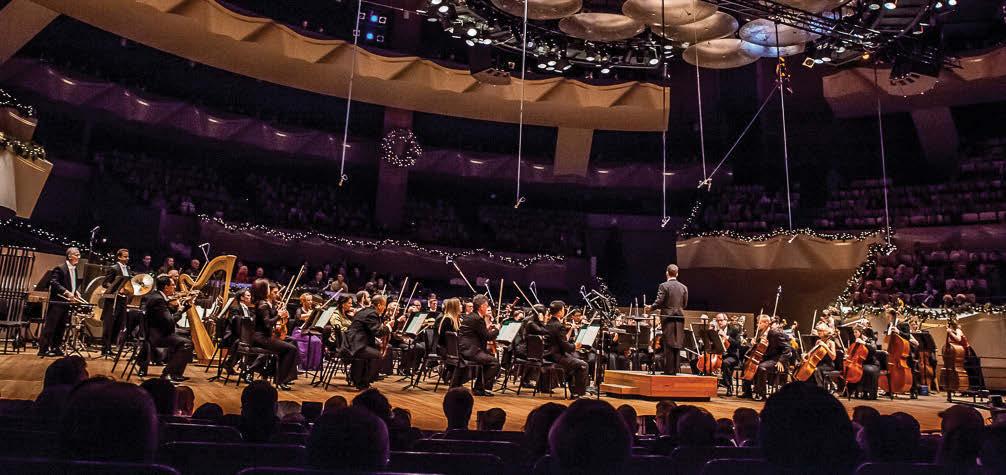
5280 MAGAZINE PROMOTION 5280SCENE | 5280SCENE.COM Follow @5280scene for a behind-thescenes look at 5280 marketing.
|
| SPONSORSHIPS
EVENTS
SCENE
Photo by James Dewhirst
Uncle $$
Speer / Asian A bustling atmosphere defines this popular noodle house. The menu includes Chinesestyle steamed buns and, of course, noodles. Also try the Highland location. Reservations accepted. 95 S. Pennsylvania St., 720-638-1859. Dinner
Urban Village Grill $$$
Lone Tree / Indian Chef Charles Mani serves classic and contemporary dishes from regions from across India at this eatery inside Park Meadows Mall. Reservations accepted. 8505 Park Meadows Center Dr., #2184A, Lone Tree, 720-536-8565. Lunch, Dinner
Viewhouse $$
VBallpark /American Enjoy a variety of bar bites, from burgers and hot dogs to steak, at this down town staple. Watch your favorite sports team on one of the many television screens while enjoying a draft beer and a plate of nachos, or catch a stellar view of the city from the rooftop bar. The laid-back patio is also a great place to gather. Multiple loca tions. Reservations accepted. 2015 Market St., 720-282-1555. Lunch, Dinner, Brunch
WThe Wolf’s Tailor $$$$ Sunnyside / Contemporary Chef Kelly Whitaker fuses Asian and Italian techniques and ingredients at this hip Sunnyside eatery. The results are unique and delicious. Reservations accepted. 4058 Tejon St., 720-456-6507. Dinner
Work & Class $$$
RiNo / American This meat-and-three concept from Dana Rodriguez offers a hybrid of American and Latin cuisine in raucous, repurposed-shippingcontainer digs. Reservations accepted. 2500 Larimer St., 303-292-0700. Dinner
Xatrucho $$
XGreenwood Village / Latin American Chef Edwin Sandoval serves up dishes inspired by his Honduran heritage at this food stall inside Grange Hall. Grange Hall, 6575 Greenwood Plaza Blvd., Greenwood Village. Lunch, Dinner, Brunch
FRESH SEASONAL OFFERINGS

Yabby Hut $$
YLakewood / Cajun Transport yourself to the bayou at this seafood joint—then leave your mess behind on the throw-away tablecloths. Reserva tions not accepted. 3355 S. Yarrow St., Lakewood, 303-985-0231. Lunch, Dinner
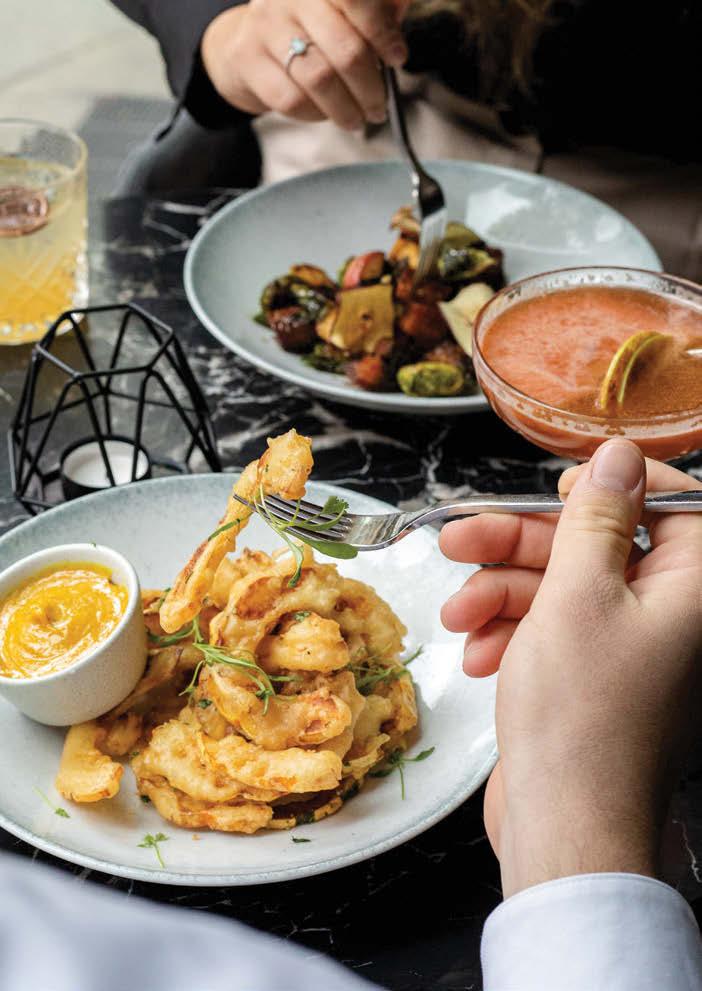
YumCha $$
Downtown / Asian From Lon Symensma of ChoLon and Bistro LeRoux comes a dim sum house and noodle bar serving staples like xiao long bao and steamed pork dumplings. Reservations accepted. 1520 16th St., 720-638-8179. Lunch, Dinner
ZZin Zin’s Burmese Cuisine $
Aurora /Asian Sample Burmese cuisine like beef samosas and mohinga (rice noodles in a split pea purée) at this takeout-only restaurant located inside Aurora Town Center. 14200 E. Alameda Ave., Aurora, 720-982-2477. Lunch, Dinner
Zorba’s
$$
Congress Park / Greek Zorba’s has served Amer ican and Greek fare—burgers, salads, sandwiches, and classic breakfast dishes—in Congress Park since 1979. Don’t miss the gyro sandwich. 2626 E. 12th Ave., 303-321-0091. Breakfast, Dinner, Lunch
These listings are in no way related to advertising in 5280. If you find that a restaurant differs significantly from the information in its listing or your favorite restaurant is missing from the Dining Guide, please let us know. Write us at 5280 Publishing, Inc., 1675 Larimer St., Suite 675, Denver, CO 80202 or dining@5280.com.
102 5280 | DECEMBER 2022 BEZEL.DENVER@SHERATON.COM @BEZELDENVER BEZELDENVER.COM TUESDAY-THURSDAY 4:00-11:00PM FRIDAY 4:00PM-12:00AM SATURDAY 5:00PM-12:00AM SHERATON DENVER DOWNTOWN HOTEL 1550 COURT PLACE, DENVER, CO 80202 303-835-2159
DINING GUIDE

Floral Gears, 36”x 36”, water-based medium on canvas © Karen Roehl Roehl Western Inspirations 8th Year exhibiting artist at the 2023 Coors Western art exhibit & sale JanuarY 3: red Carpet reCeption JanuarY 7-22: open to the publiC Coors Western art gallerY 4655 humboldt st • denver, Co tiCkets and more information: WWW.CoorsWesternart.Com www.karenroehl.com
THE PERFECT LOCATION
“When we were looking for a wedding venue, we wanted a spot that had all of our wedding needs in one place (food, drinks, ceremony/reception space, getting ready space, etc.) and The DAC hit the mark. The staff was amazing, getting to know our friends and family and checking in to see if we needed anything throughout the night. The DAC was the perfect location for our wedding!
— Emma, The Knot
Create the Wedding of Your Dreams
AT THE DENVER ATHLETIC CLUB

Located in the heart of downtown Denver, The DAC offers a variety of indoor and outdoor spaces to accommodate your wedding day. From a ceremony on our 9,700 square foot Sundeck, to a reception in our elegant Grand Ballroom, The DAC offers a truly unique wedding venue in the Mile High City.

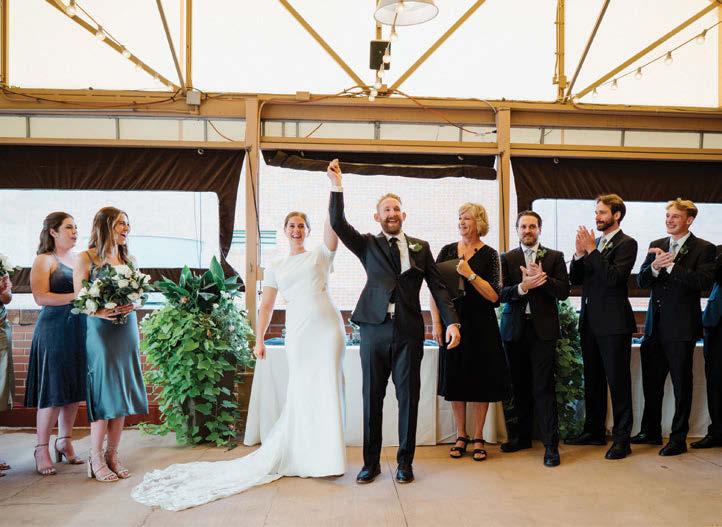
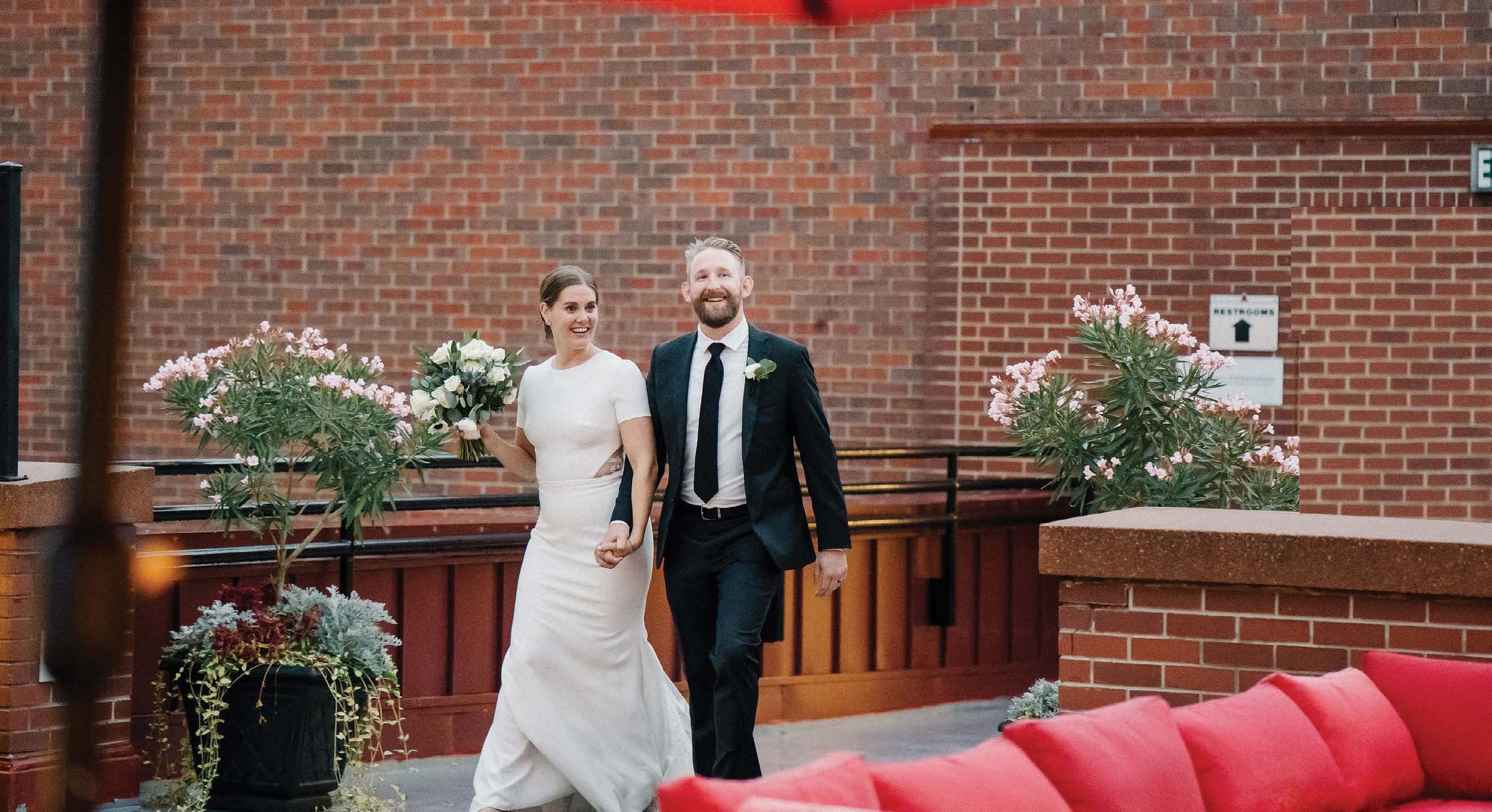

OUR TEAM OF CATERING SPECIALISTS WILL HELP YOU CRAFT A DAY TO REMEMBER. WEDDING SITE VISITS ARE BY APPOINTMENT ONLY: 720-931-6700 The Denver Athletic Club Now Booking for 2023 Weddings!
GENERATION
Denver bungalow. A French soccer match played on their flat-screen TV. Zaragoza was stretched out on one end of their light gray couch, next to Booth, who was watching their two-month-old son, Soren, on a baby monitor app on her phone.
The chaos of caring for a new child, plus planning a move, had settled into what Booth described as buzzing anxiety. The couple’s golden retriever, Martha, was already with Zaragoza’s parents in Orléans, France. Booth and Zaragoza had locked down jobs in France—she was continuing to work in international trade compliance, and he had taken a position as a creative director for a French startup. They planned to live temporarily with Zaragoza’s sister and brother-in-law while they searched for an apartment.
Zaragoza had packed up most of his vinyl LPs. Booth sold one of the Volkswa gens, and the other soon would follow. A For Rent sign stood in the front lawn. For these two, the idea of selling their home seemed irresponsible. In all likelihood, it was only a matter of time before their place would be valued at seven figures. Of all the things the two had worried about
with regard to their move, they hadn’t thought that finding a renter would be one of them. But earlier in the day, Booth had dropped the rent by $150, to about $3,500 per month. It was still expensive, but their broker assured them it was the going rate for a place in the neighborhood.
While baby Soren slept in a back bed room, Booth allowed herself to relax a bit. She’d been thinking a lot lately about the house they were leaving. Her parents and much of her family still lived in Virginia; Zaragoza’s people were all in France. Would they ever return to the Mile High City? Would they return to America? To their house on West 36th Avenue? Booth wanted to keep the option open. “Maybe if costs finally come down here,” Zaragoza said. “But that’s not happening anytime soon.”
Booth thought about the last trip she’d take to one of the markets near 32nd Ave nue, where she and her husband bought fancy cheeses. Zaragoza thought about the neighborhood walks and the quiet moments together in their little, grassy backyard. They thought about the light show Zaragoza put on in the yard when he proposed and how neighbors stopped by to congratulate them
later. They thought of the day they brought Soren into the house for the first time.
The couple and their young son would be in France soon, with their jobs and Zarago za’s family and daycare that cost a quarter of what they would’ve paid in Colorado. They’d mostly use public transportation in Lyon, so there wouldn’t be as many gas payments to worry about. Quality food would be cheaper. The couple had lived their lives without regret so far; they certainly weren’t about to make this move from Denver their first. “Everything comes to an end sometime,” Zaragoza said. “This one just happened a little sooner than we expected.”
He got up to sort laundry in the kitchen. Booth leaned back into their sofa. “It’s the right thing for us to go,” she said. Her husband nodded from the other room. In a couple of weeks, they’d be locking the doors to this home and starting a new life in Western Europe.
Booth exhaled and looked out the win dow at the yard. “Honestly, though,” she said, “it’s hard to walk away from Denver.”m
Robert Sanchez is 5280 ’s senior staff writer. Email feedback to letters@5280.com.


106 5280 | DECEMBER 2022
GAPPED



Featuring COLORADO HOMES
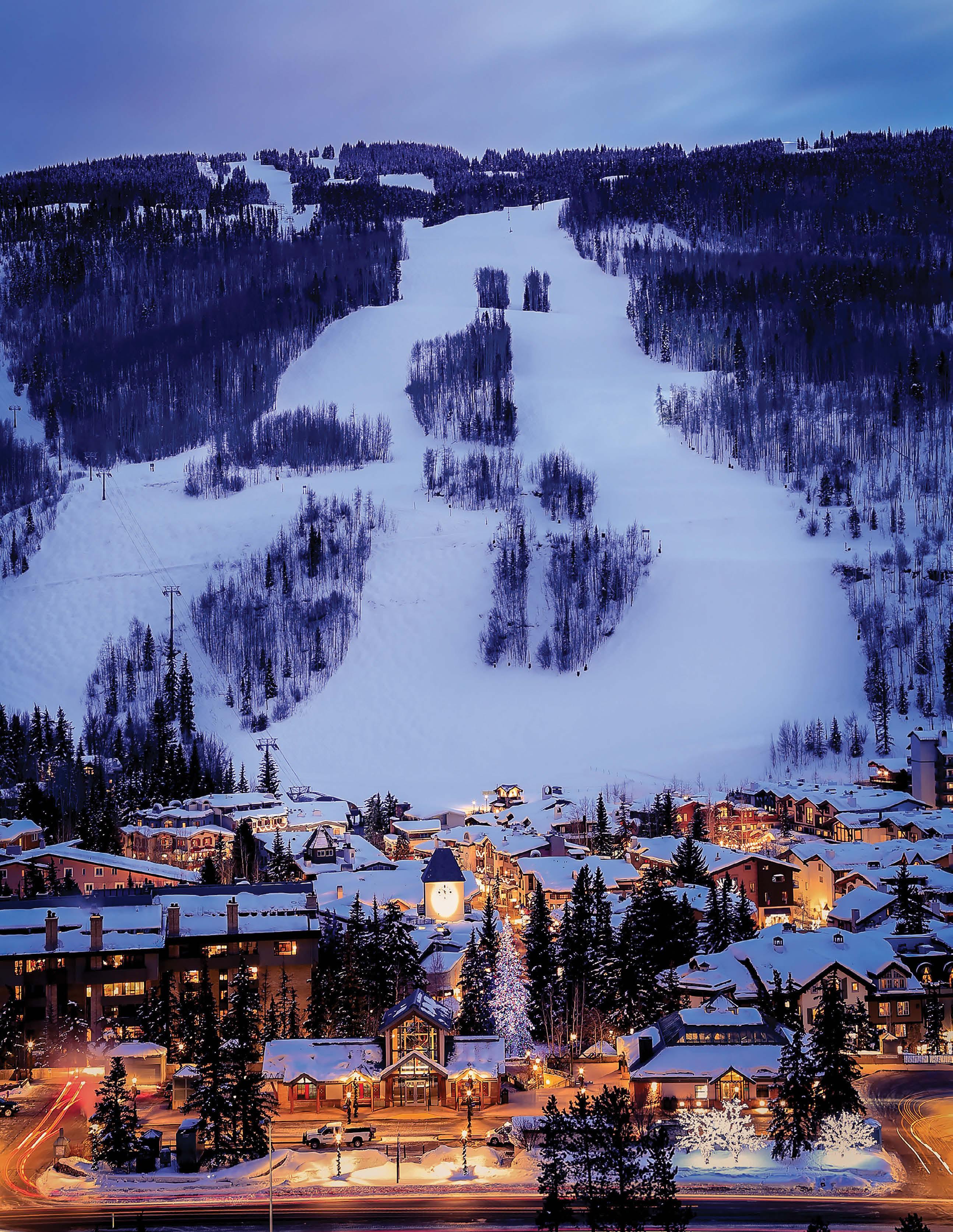
The
is
various sources that may include,
not be
to, county records and the
Listing Service, and it may include
the information is
to be accurate, it is not
you
rely
personal verification. Affiliated
estate
are
contractor
SPECIAL ADVERTISING SECTION
property information herein
derived from
but
limited
Multiple
approximations. Although
believed
warranted and
should not
upon it without
real
agents
independent
sales associates, not employees. ©2022 Coldwell Banker. All Rights Reserved. Coldwell Banker and the Coldwell Banker logos are trademarks of Coldwell Banker Real Estate LLC. The Coldwell Banker® System is comprised of company owned offices which are owned by a subsidiary of Anywhere Advisors LLC and franchised offices which are independently owned and operated. The Coldwell Banker System fully supports the principles of the Fair Housing Act and the Equal Opportunity Act.
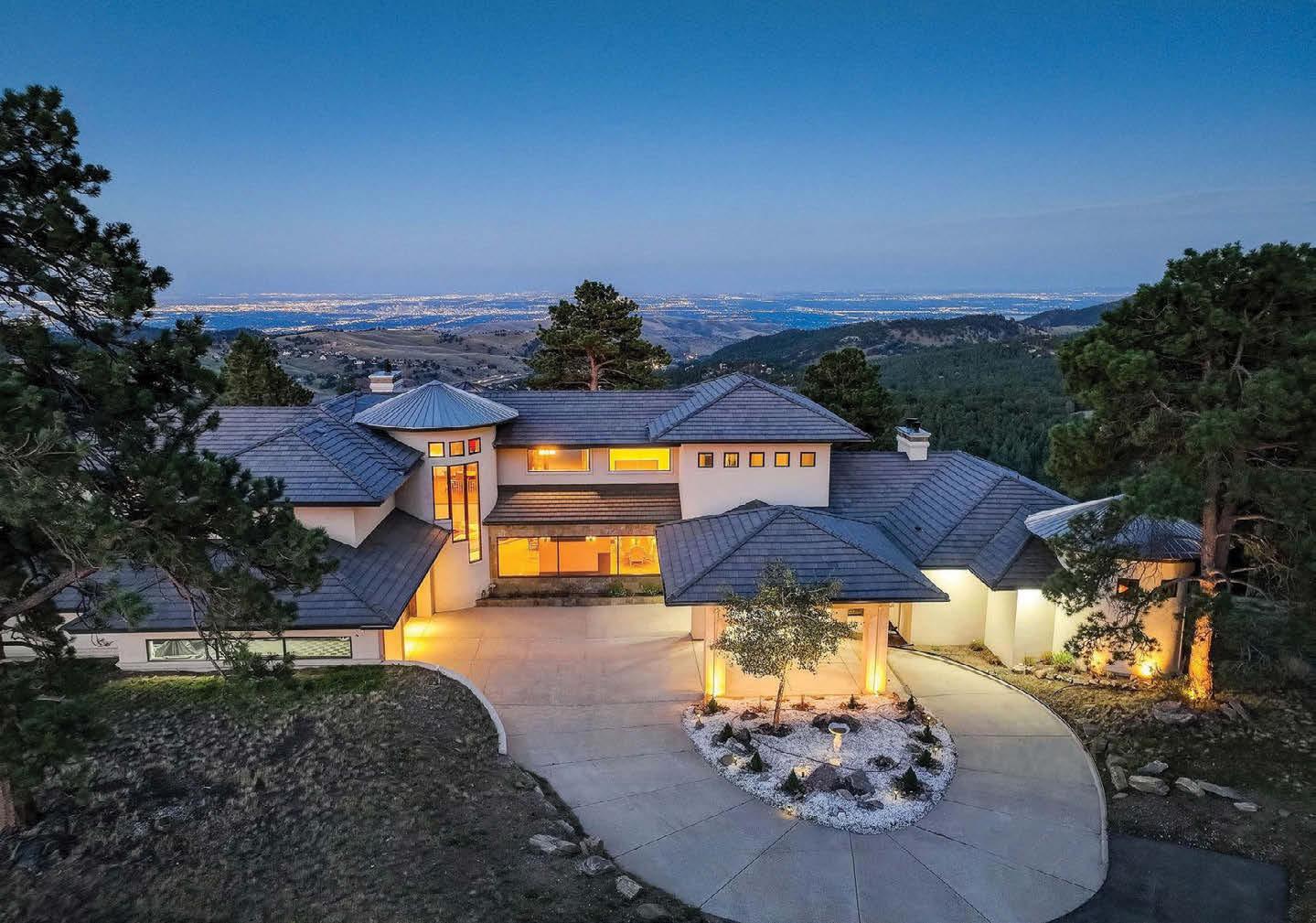


ColdwellBankerHomes.com SPECIAL ADVERTISING SECTION GOLDEN | $3,950,000 A true Vision! Custom Executive-Style 4br/7ba home on 5 acres. Incredible 24 hour views. An entertainer’s delight. Chef’s kitchen, formal and casual dining, game loft, gym, theater room, huge primary suite. Enjoy fantastic outdoor spaces w/2 fire pits, bar and more. Complete w/a 4-car tandem finished garage. Anne Pielage 720.939.2680 anne.pielage@cbrealty.com LONGMONT | $2,700,000 5br home w/7400+ finished sqft on a 3-acre lot offers an open floor plan. Great room w/a rock fireplace. Kitchen w/top of the line appliances, 6-burner gas range and walk-in pantry. Main floor primary suite w/a 5-piece bath. There is open space on 3 sides w/breathtaking views of the mountains. Complete w/alluring outdoor living spaces, a swimming pool and an outbuilding. Dave Elmblad 970.376.4407 dave.elmblad@coloradohomes.com | MyHomeByDave.com



guiding you home since 1906 ColdwellBankerHomes.com SPECIAL ADVERTISING SECTION DENVER | $1,900,000 Chic, modern, updated 3br/3ba townhome in Cherry Creek North w/2-car garage & NO HOA. Featuring an updated chef's kitchen w/quartz counters, dining room w/fireplace & family room w/additional fireplace. Blocks from many restaurants in Cherry Creek. Kathryn Farrow 720.987.8660 KathrynSellsColorado@gmail.com | KathrynFarrow.com DENVER | $1,500,000 Stunning Spanish Colonial 5br/3ba home set on a spacious corner lot, close to Congress Park. Featuring a chef's kitchen w/high-end appliances, spacious dining room, private owner's suite w/spa-like bath & finished lower level w/private entrance. Enjoy the Colorado outdoors year round on your covered front porch. Prime location, in one of Denver’s best communities! Shannon Byerly 303.919.2611 shannon@yourfreshstartrealtor.com | YourFreshStartRealtor.com
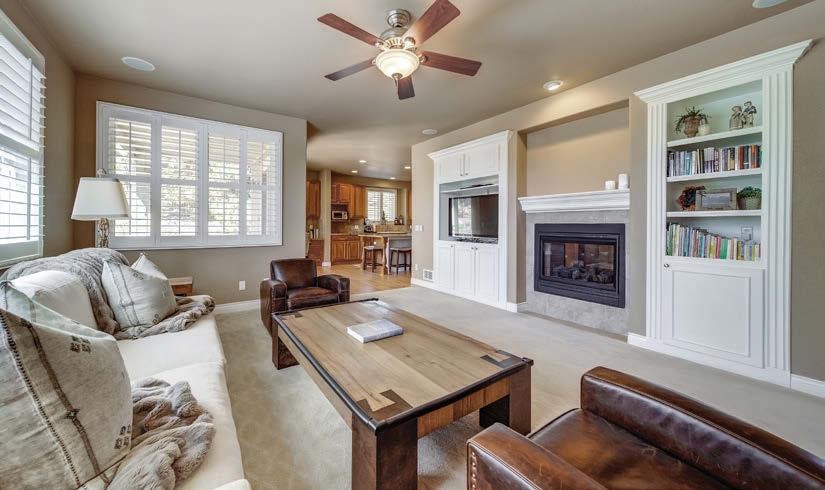


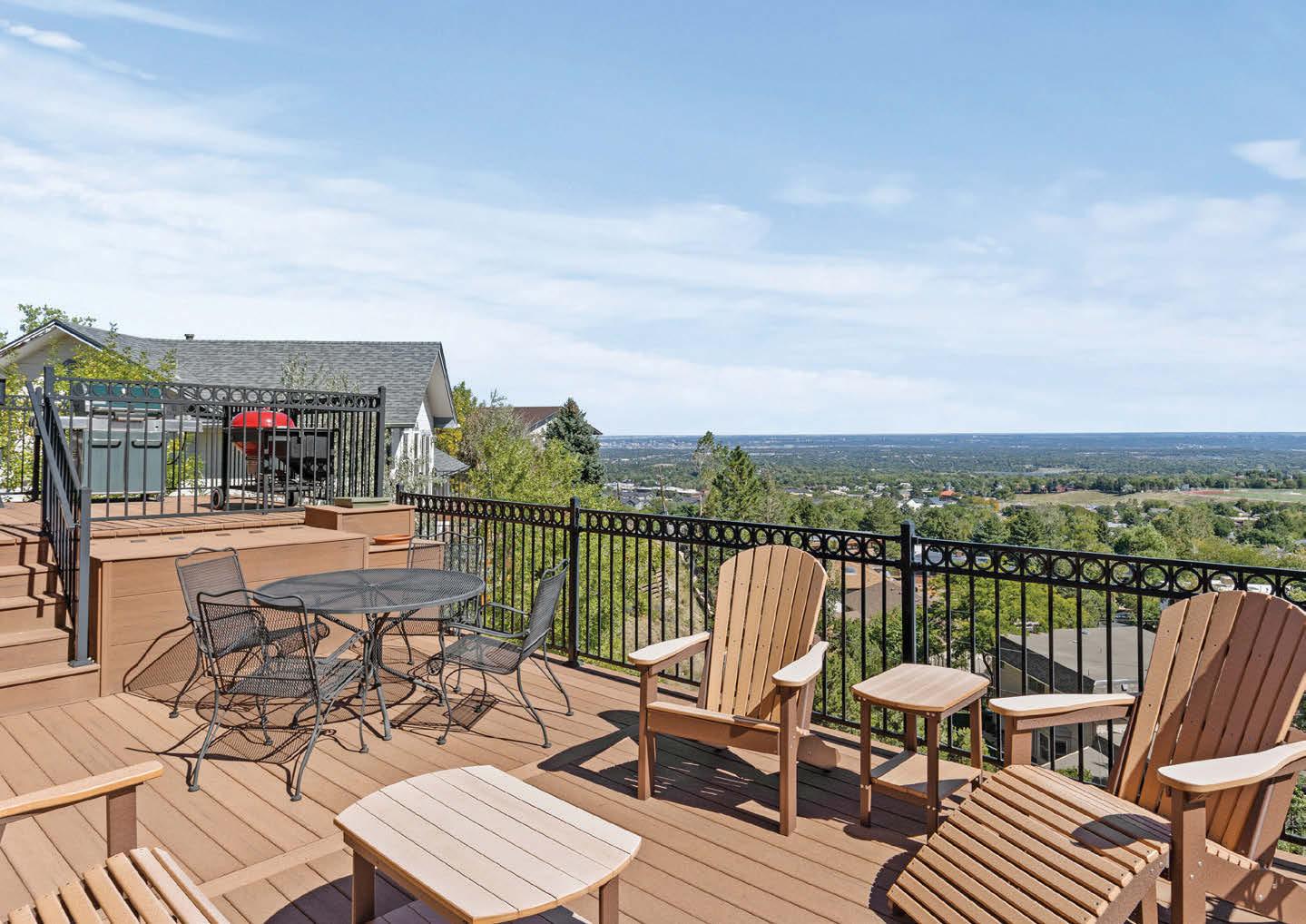
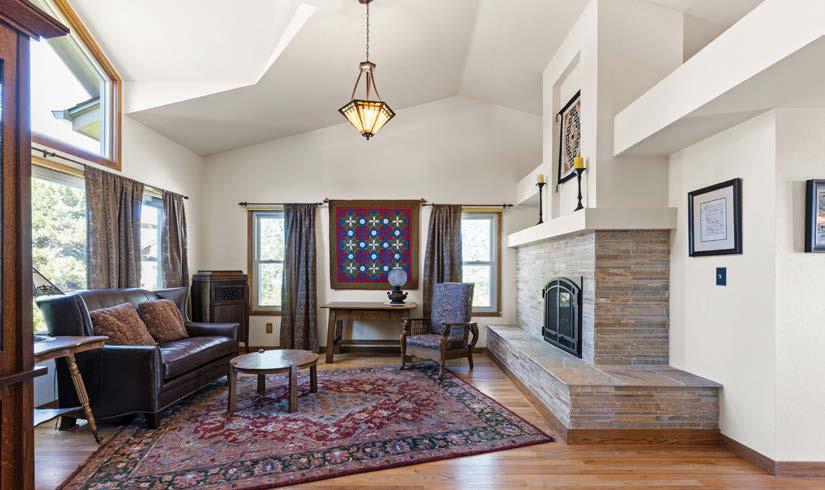
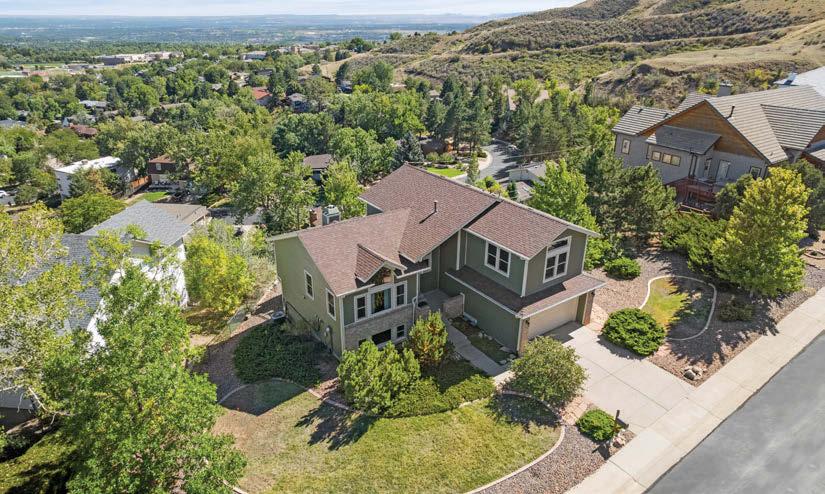

ColdwellBankerHomes.com SPECIAL ADVERTISING SECTION AURORA | $1,050,000 Perfectly located on a cul-de-sac and backing to the Saddle Rock golf course, this meticulously maintained 5br/5ba home is what you have been waiting for. Family room w/double-sided fireplace. Kitchen w/quartz island, double oven and SS appliances. Primary bedroom w/fireplace, patio, 5-piece bath and dual walk-in closets. Complete w/a finished basement and backyard. Backs to Golf Course. Jill and Greg Svenson 303.522.0631 jill@jillgreg.com | JillAndGregHomes.com LAKEWOOD | $1,000,000 Perched 1,000 ft above Denver with breathtaking 60-mile unobstructed views from multi-level deck. 4br/3ba multi-level open floor plan home has been updated to an Arts & Crafts style with attention to details & high-quality upgrades. With Green Mountain practically being your backyard there are so many incredible locations nearby. LaDawn Sperling 303.710.5817 ladawn.sperling@coloradohomes.com | LaDawnSperling.com



guiding you home since 1906 ColdwellBankerHomes.com SPECIAL ADVERTISING SECTION PEYTON | Price Upon Request This new build with premium finishes in Corral Ranches offers 6 bedrooms, 4 baths, and an oversized 3 car garage. The main level has an open floor plan with stunning mountain views and a gourmet kitchen. The lower level has a spacious rec room. Camellia Coray 719.359.0014 Camellia@ccSignatureGroup.com | Camellia.ccSignatureGroup.com DENVER | $895,000 Stunning 3br/4ba 3-story Sloan's Lake townhome w/ open floor plan, hardwood floors, kitchen w/large island, spacious primary suite, porch & rooftop deck. Conveniently located near Sloan's Lake Park, LoHi, downtown & much more. No HOA. Garvin Laverick 720.245.9956 garvin.laverick@cbrealty.com | LaverickRealEstate.com AURORA | $875,000 5br/4ba home in Siena in SE Aurora backs to open space featuring a grand staircase, spacious family rm, Chef's kitchen w/Viking appliances, primary bedroom w/newly remodeled 5pc bath & heated 3-car garage. Located in the Cherry Creek School District. JJ Alexander 303.475.5905 jj.alexander@cbrealty.com | JJAlexanderrealty.com EVERGREEN | $840,000 5br/4ba home w/attached 2-car garage on a 1/2 acre lot w/no HOA, close to Evergreen Lake. Featuring an updated kitchen w/granite counters & gas range, family room w/lodge-style wood burning fireplace, living room w/built ins & finished basement. The Simonis Group 303.905.5137 amber@thesimonisgroup.com | AmberSimonis.cbintouch.com THORNTON | Price Upon Request 3br/2ba newer Hamilton model on the 5th fairway of the Todd Creek Golf Course features a spacious open floor plan with a gourmet kitchen w/ss appliances, dining area, covered porch & 3-car garage. Few blocks from the clubhouse, restaurant & 2 pools. Linda Gilbert 720.232.1990 Greg Gilbert 303.250.9007 LITTLETON | $775,000 3br/4ba home. Great room w/a crystal stone fireplace wall. Kitchen w/rich quartz countertops, stainless backsplash and stainless appliances. Primary bedroom w/an adjacent sitting area and a primary bath. Conclude w/a finished basement and a yard. Kimberly Ryan 303.523.8333 Kim@BuyDenver.net | BuyDenver.net
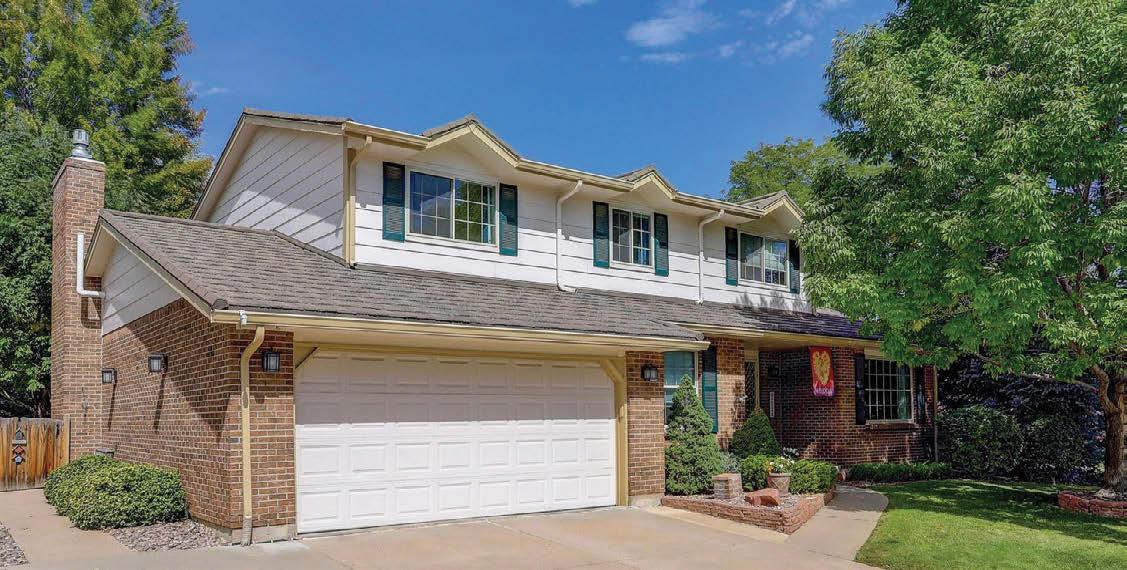

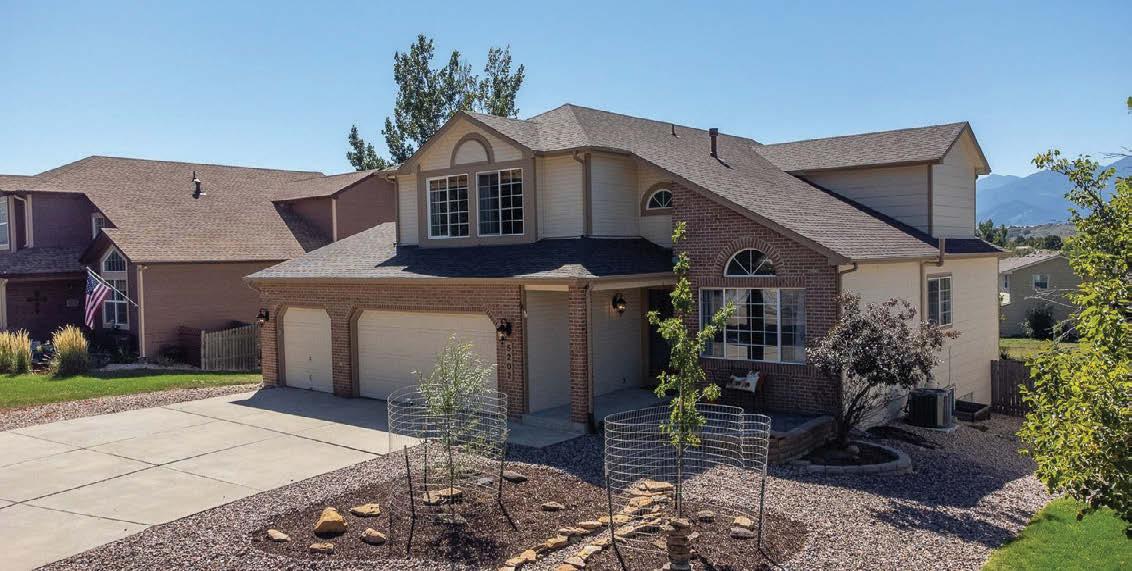
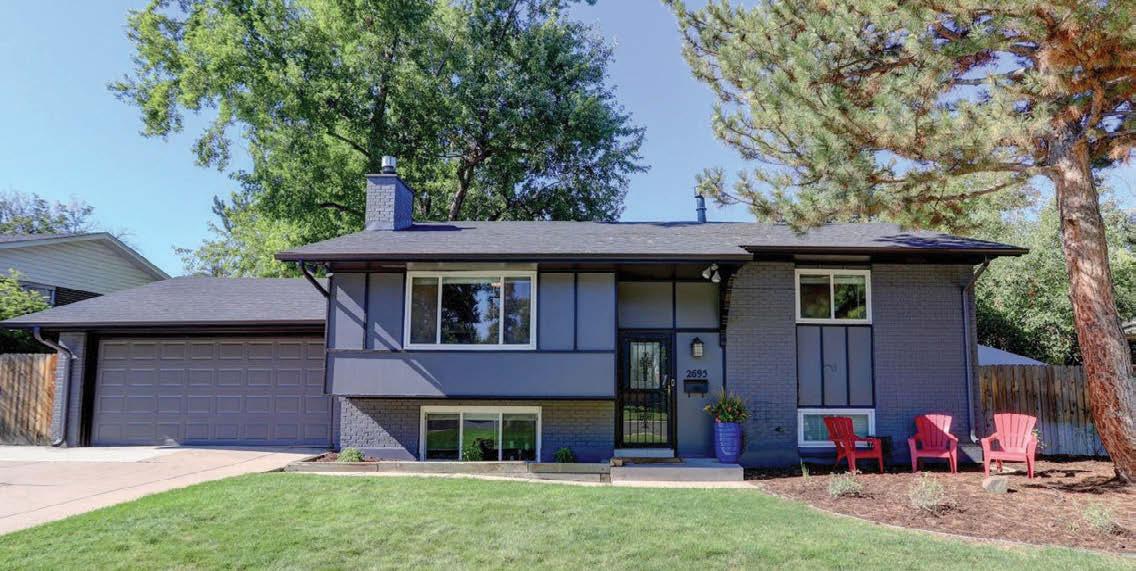
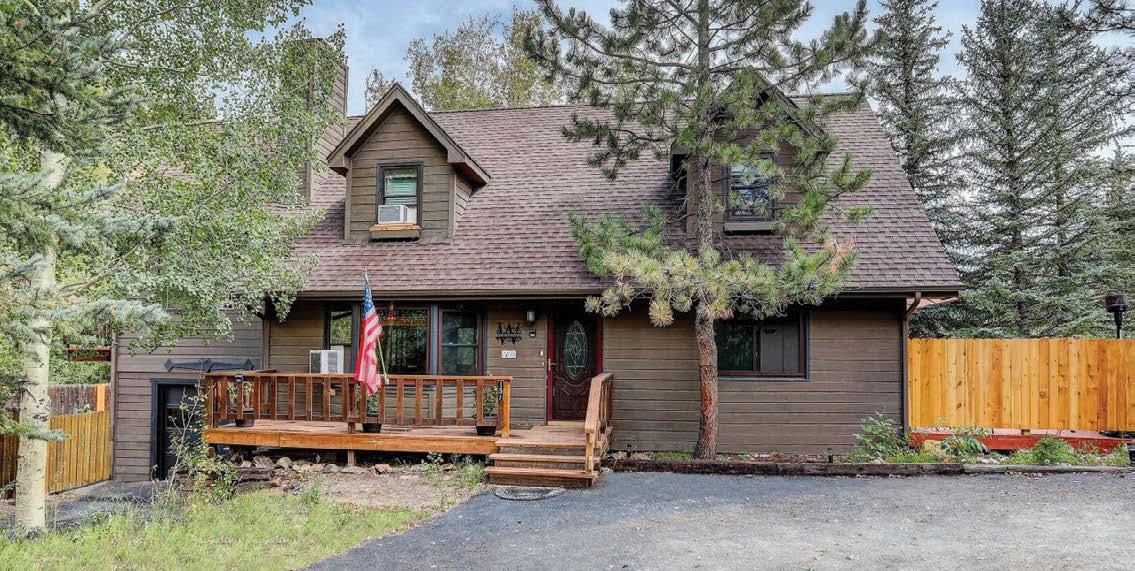

SPECIAL ADVERTISING SECTION ColdwellBankerHomes.com SPECIAL ADVERTISING SECTION LITTLETON | Price Upon Request Beautiful 4br/3.5ba home in Columbine Knolls South featuring an updated kitchen w/SS appliances, maple cabinets & slab granite countertops, family room w/brick fireplace, main floor office, finished basement & gorgeous, landscaped backyard. Leslie Hock 303.507.8887 leslie.hock@cbrealty.com COLORADO SPRINGS | $735,000 Beautifully updated 4br/4ba home w/3-car garage located on the west side of Colorado Springs in an amazing location, Pinon Bluffs. Near the Ute Valley Park trailhead & Pinon Valley Park & 5 minutes from Blodgett Peak trail & Garden of the Gods. Peggy Anderson 719.433.5967 peggy.anderson@cbrealty.com | www.CSDreamHomes.com DENVER | $715,000 Beautiful 5br/3ba home in Hutchinson Hills close to the Highline Canal & Bible Park. Featuring a living room w/refinished hardwood floors, remodeled kitchen & beautiful primary suite. Vicki Zeeb 303.549.6203 vicki.zeeb@outlook.com | SouthDenverLux.com DUMONT | $699,000 3br/2ba home nestled in a private little oasis offering beautiful mountain views in Dumont. Minutes to skiing & close to everything. Newly remodeled kitchen, primary bedroom & primary bath. New wooden floors, carpet, paint, decking & windows. Jay Brown 303.681.6118 jay@jaydbrown.com THORNTON | $679,000 4br/4ba home w/an open floor plan. Kitchen w/granite countertops, tile backsplash, an island, SS appliances and walk-in pantry. Owner's suite w/a 4-piece bath and 2 walk-in closets. Complete w/a 3-car tandem garage and a backyard w/a covered patio. Mike Desmarais 303.594.4100 michael.desmarais@cbrealty.com | DenverRealEstatePros.com PARKER | Price Upon Request 4br/2ba home w/an open floor plan. Kitchen w/SS appliances, a gas cooktop, an island, slab granite countertops and pantry. Great room w/a gas log fireplace. Unfinished basement w/ample room. Fenced backyard w/a concrete patio and a view of Pike Peak. The Rowley Group 303.717.5613 info@therowleygroup.com | TheRowleyGroup.com
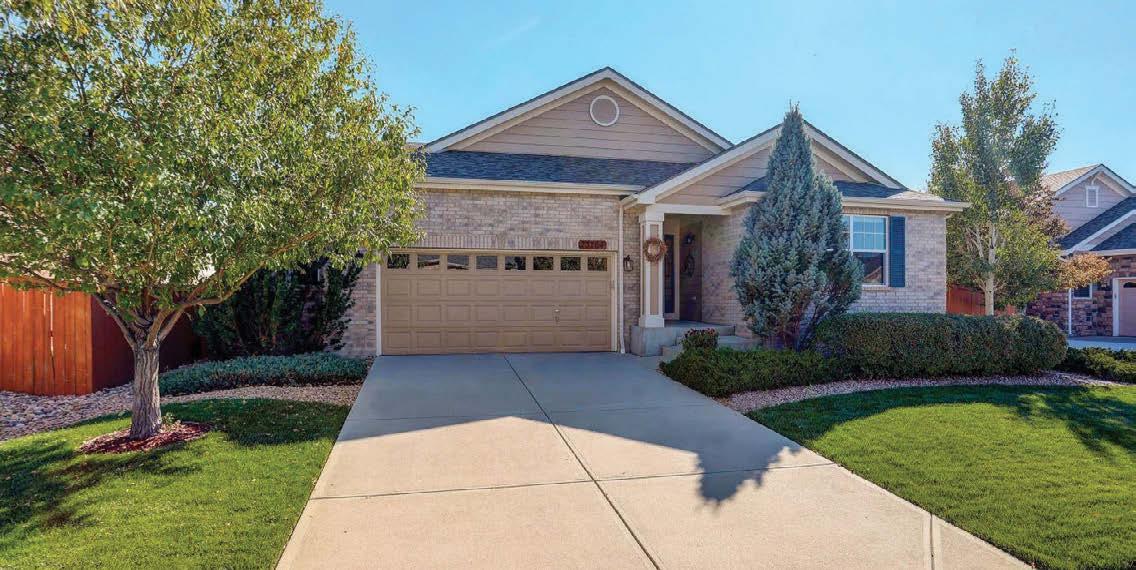

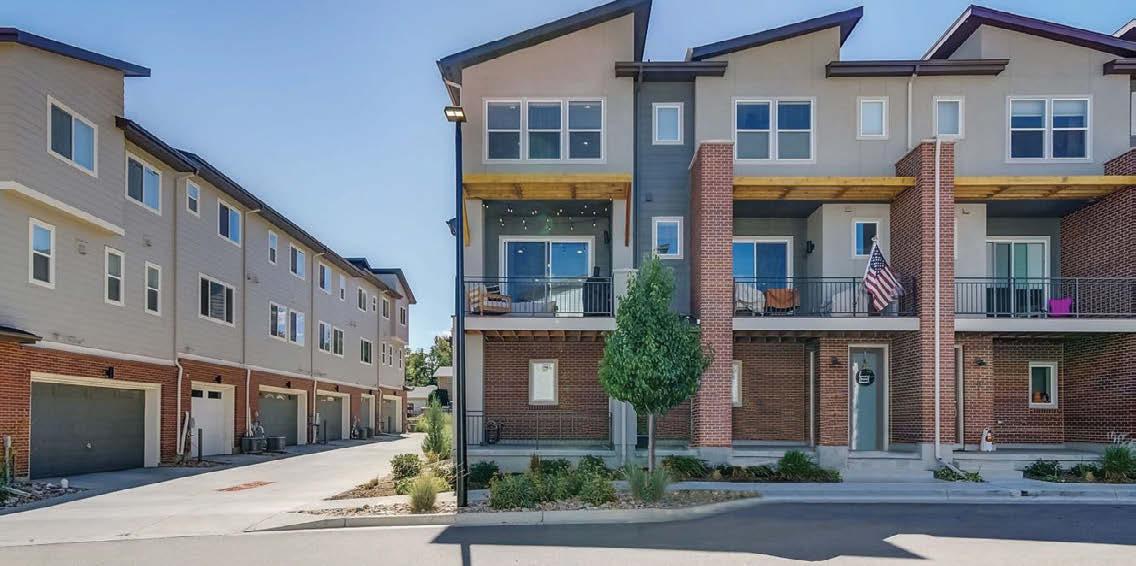

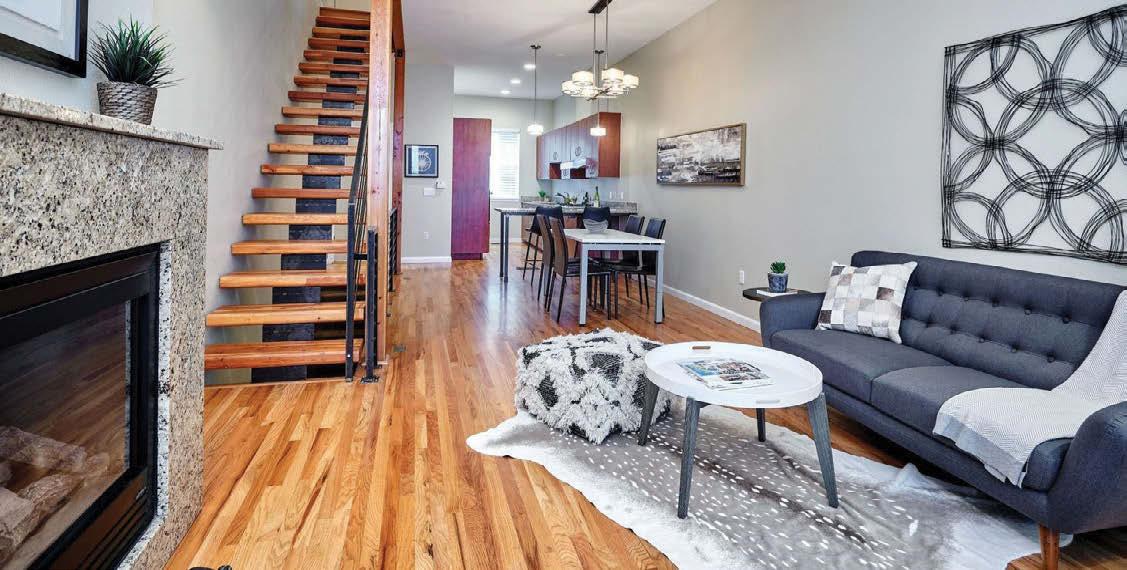

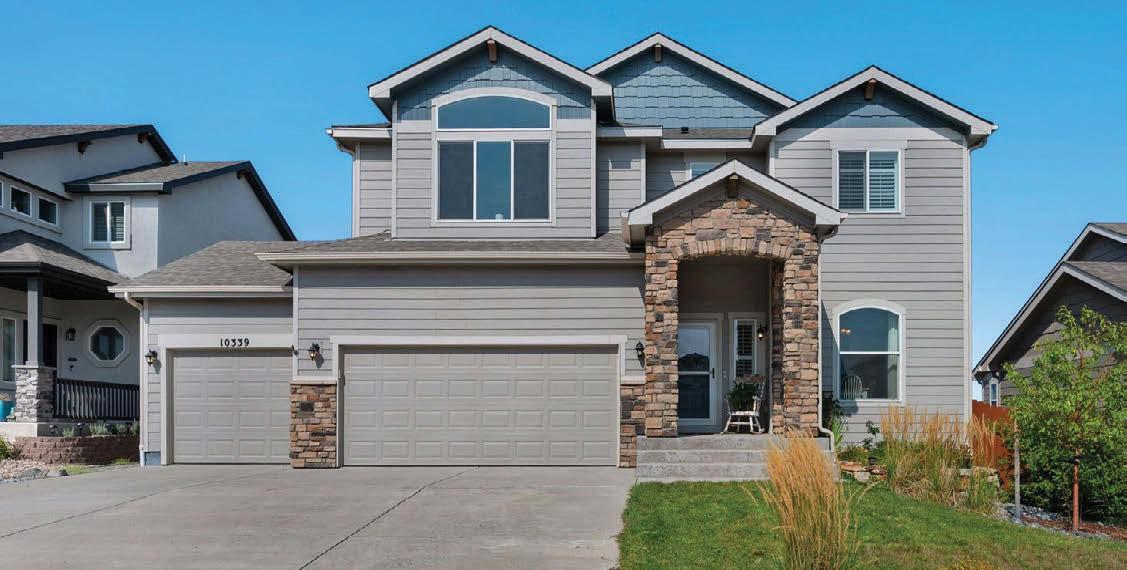
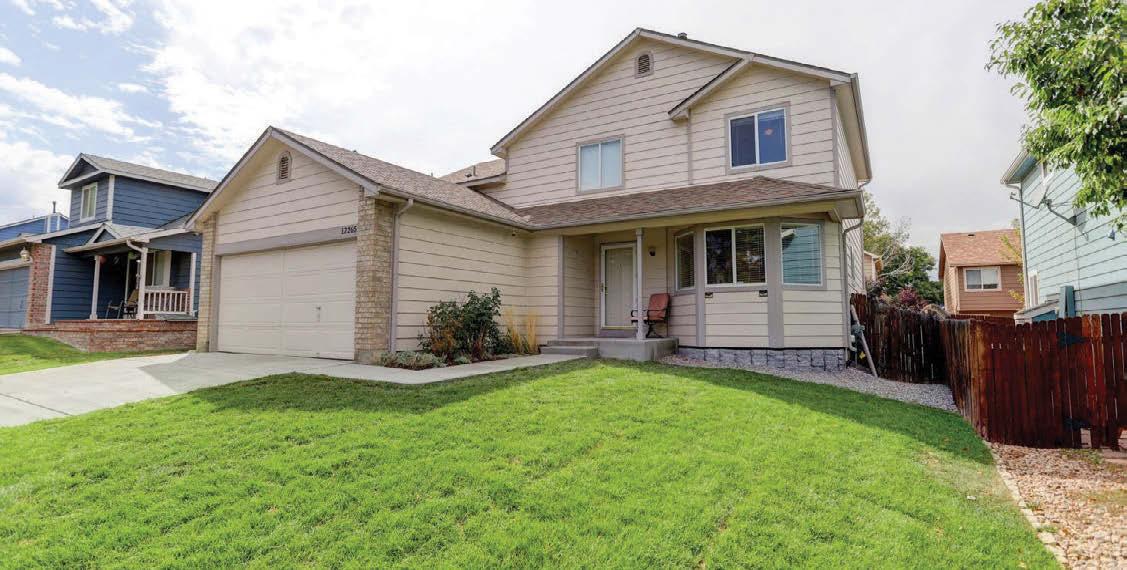

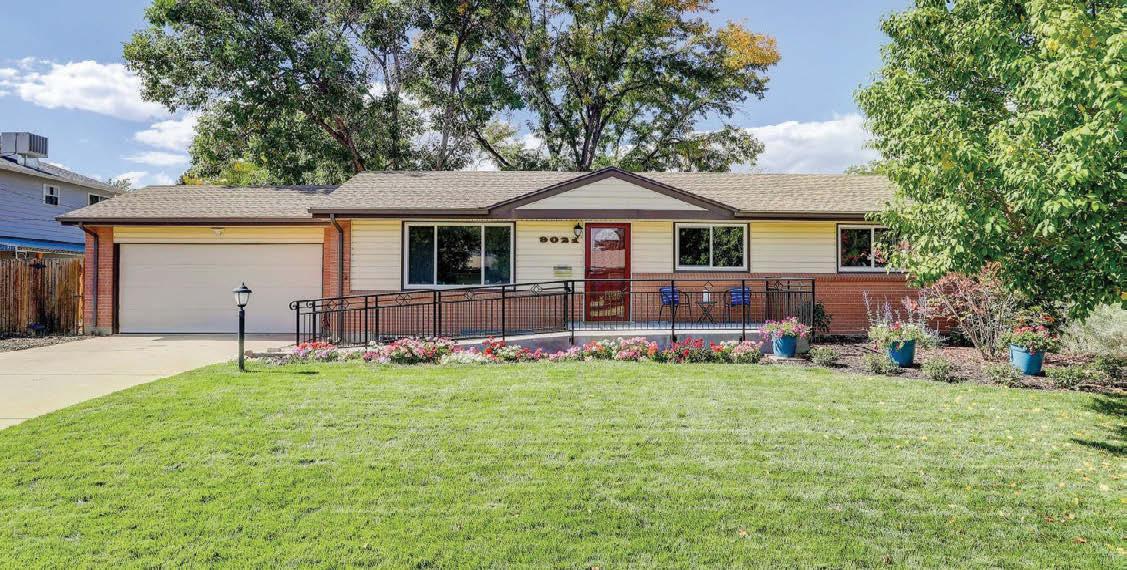
SPECIAL ADVERTISING SECTION guiding you home since 1906 ColdwellBankerHomes.com SPECIAL ADVERTISING SECTION AURORA | $598,000 Stunning 2br/2ba ranch in Tollgate Crossing featuring an open floor plan including a living room w/fireplace, kitchen w/granite counters & pantry, dining area & office. Close to Southlands, Aurora Reservoir, DIA, Buckley Air Force Base & E-470. Terra DeLockroy 303.681.1518 terra.delockroy@cbrealty.com | TerraDeLockroy.cbintouch.com WHEAT RIDGE | $570,000 Gorgeous end unit 2br/3ba home w/2-car garage features a vast open floor plan w/high ceilings, no HOA, upgraded kitchen w/hardwood floors, gas stove & SS appliances, primary bedroom retreat w/high peaked ceilings, walk in closet & bathroom. Joe Blinn 720.498.1365 joe@therowleygroup.com | TheRowleyGroup.com DENVER | Price Upon Request Wonderful, modern 2br/2.5ba townhome in RiNo features a spacious rooftop deck w/mountain views. Offering a gas fireplace, private balcony, spacious kitchen, in unit washer/dryer, pet friendly & double garage. 5 blocks from Coors Field. LaDawn Sperling 303.710.5817 ladawn.sperling@coloradohomes.com | LaDawnSperling.com PEYTON | $555,000 Beautiful 3br/3ba home w/3-car garage that overlooks open space in Meridian Ranch features a kitchen w/SS appliances, great room w/vaulted ceiling, floor to ceiling windows & gas fireplace & spacious primary suite w/5pc bathroom & walk-in closet. Angela Calloura 719.322.3109 angela.calloura@cbrealty.com | DelightfulRealty.com THORNTON | $540,000 Spacious 5br/5ba home w/2 junior suites features a spacious kitchen, an open-concept living room w/vaulted ceilings, formal dining room that exits to the large Trex Deck w/electric awning, finished basement & 2-car garage. NO HOA or Metro Tax. Marie Warren 303.884.2111 marie@mariewarrenhomes.com WESTMINSTER | $535,000 4br/2ba Westminster home. Remodeled kitchen w/granite countertops, new cabinets, SS appliances and tile backsplash. There are three bedrooms upstairs. Basement w/a family room, a bedroom and a 3/4 bath. Complete w/a large backyard and a 2-car garage. The Cybyske Home Team 303.635.1100 Lisa@cybyske.com | Cybyske.com





ColdwellBankerHomes.com SPECIAL ADVERTISING SECTION PEYTON | Price Upon Request Stunning 4br/4ba home w/3-car garage in Meridian Ranch in Peyton backs to open space. Featuring tall ceilings, hardwood floors, open floor plan, formal dining room, kitchen w/granite counters & upgraded appliances & walk-out basement w/2nd living room. John Chudzinski 719.232.4515 john@codreamhomes.net | codreamhomes.net LOVELAND | $535,000 Beautiful 3br/4ba home in Westwood features a bright, open floor plan with vaulted ceilings, oak floors, kitchen w/customized backsplash & partially finished basement. Minutes from Devil’s Backbone, Mariana Butte Golf Course & Boedecker Lake. Brady Marinangeli 720.899.6133 marinangelib72@gmail.com DENVER | $530,000 Stunning 1br/2ba downtown loft in Brooks Tower has an open floor plan, 12’ ceilings, wood floors, gas fireplace, floor to ceiling windows, granite kitchen counter, SS gas range w/hood, in unit w/d & storage unit. Close to Coors Field & Ball Arena. Robb Green 303.885.2924 robb.green@cbrealty.com | robbgreenrealtor.com AURORA | $499,900 Corner lot 5br/4ba home in Aurora w/2-car garage features new paint & carpet, formal living/dining room, open kitchen w/island bar, sunken family room w/gas fireplace & opens up to a large, covered patio w/hot tub & finished basement. Kathy Casey 303.359.0579 kathy.casey@cbrealty.com AURORA | $497,500 4br/2.5ba home w/an open floor plan. Stylish kitchen w/an island, gas range, granite countertops and SS appliances. Sunroom/enclosed patio w/a wood burning fireplace. Complete with a lower level, a backyard with a hot tub and an attached garage. Matt Brinkhoff 303.324.0241 matt.brinkhoff@cbrealty.com | MattsColoradoHomes.com FORT LUPTON | $479,000 Corner lot 3br/2ba home in Fort Lupton sits on 1.02 acres in Aristocrat Ranchettes. Featuring new flooring, new roof & updated kitchen w/newer appliances! Large attached finished garage. No HOA. Animals allowed, including horses! Amanda Larson 303.523.9288 amanda.larson@cbrealty.com | DenverHomesByAmanda.com
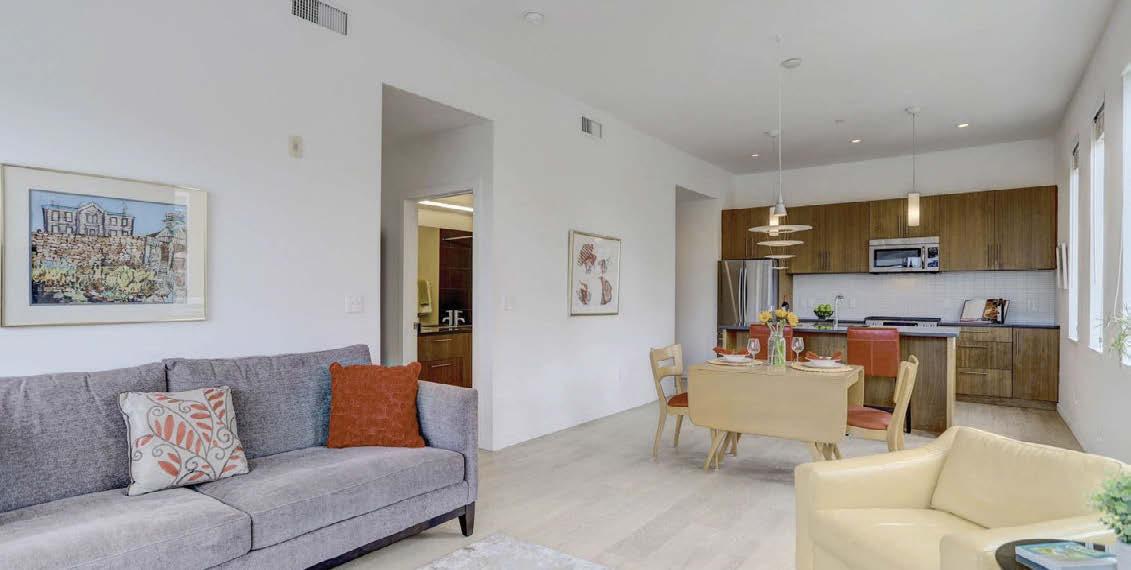



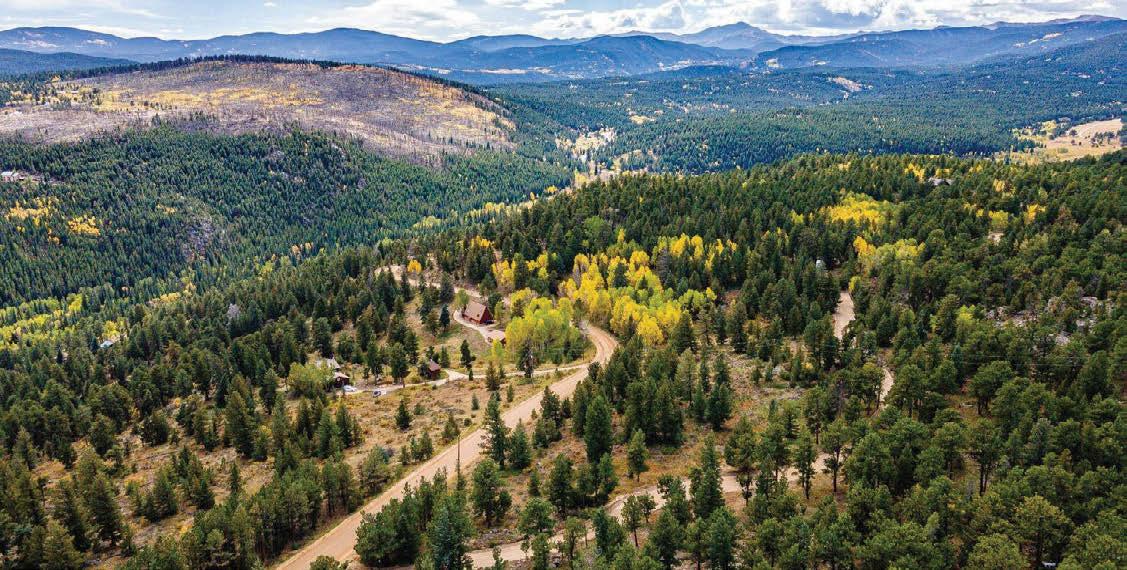


guiding you home since 1906 ColdwellBankerHomes.com SPECIAL ADVERTISING SECTION AURORA | Price Upon Request Bright & open Mission Viejo 5br/2ba home w/2-car garage situated on an oversized lot featuring a living & dining room & kitchen w/hardwood floors. Close to schools, shopping & parks. At the end of block, access to paved trails connected to parks. Bobby Dusbabek 970.227.1997 5280HomesByBobby@gmail.com DENVER | $435,000 1br/1ba condo w/an open floor plan. Kitchen w/quartz countertops, a gas cooktop, an island, SS appliances, wood cabinetry that flows into a spacious dining area. Great room opens to a private outdoor balcony. Complete w/deeded carport parking space. Vicki Wimberly 303.210.8577 Carmen Elam 469.231.4497 DENVER | $425,000 In the heart of downtown Denver, this 15th floor, 2br/2ba home boasts unobstructed views of downtown Denver. Nearly 1,000 SQFT of living space. Amenities include 24-hour front desk, pool, fitness center & more. Close to Coors Field & Ball Arena. Robb Green 303.885.2924 robb.green@cbrealty.com | robbgreenrealtor.com BOULDER | $425,000 Nearly 10 acres of aspen groves, diverse pines and scenic rock out-croppings. Flat building site provides options for your future dream home and has previously been through Boulder County site-plan review. Near Caribou Open Space and National Forest. Christiana Barber 720.404.8757 cbhomesco@gmail.com | ChristianaBarber.com COLORADO SPRINGS | $414,900 Updated 4br/2ba Sable Chase home offers an open floor plan & lots of light. Featuring a living room w/tall ceilings, dining area & kitchen w/granite countertops & view to the lower-level family room. Close to D20 schools, parks, shopping and dining. Steve McManus 719.629.7515 steve.mcmanus@cbrealty.com | StevenwMcManus.com PARKER | $410,000 Top-level corner unit 2br/2ba condo features vaulted ceilings, open layout, fresh paint, window shades, new carpeting in bedrooms, engineered hardwood, quartz counters & SS appliances. Amenities include clubhouse, pool, hot tub & fitness center. Joella Rodarte-Vasquez 310.871.1277 Justinian De La O 303.518.4767







ColdwellBankerHomes.com SPECIAL ADVERTISING SECTION LITTLETON | Price Upon Request Updated, spacious 2br/2ba townhouse nestled along the foothills. The open, light-filled floor plan accented by high ceilings & neutral tones features a living room w/fireplace, kitchen w/pantry, breakfast bar, dining room & finished basement. Michelle Lopez 303.619.6287 michelle.lopez@cbrealty.com | MichelleLopezSellsHomes.com AURORA | $390,000 2br/3ba home w/an open floor plan and new carpet. Kitchen includes all appliances. Enjoy a loft area and a full-size laundry area upstairs. Unfinished basement w/rough-in plumbing for your personal touch. Complete w/a 2-car garage and a patio area. Colleen Teitelbaum 303.668.8186 teitelbaumcolleen@gmail.com | CocoTeitel.com AURORA | $350,000 2br/2ba home. Fantastic layout w/new luxury vinyl plank flooring and new paint. Enjoy an all new kitchen. Living room w/a fireplace. Upstairs w/2 bedrooms and full bath as well as a storage and laundry area. Complete w/a 2-car garage and rear patio. Wendy Weeden 720.726.1480 wendy.weeden@cbrealty.com | WendyWeedenGroup.com AURORA | $335,000 Pristine 2br/2ba Aurora home in gated First Creek Farm features a living room w/fireplace, kitchen w/newer ss appliances, dining room, vaulted ceilings & private balcony. Amenities include pool, hot tub, fitness center & clubhouse. Easy access to DIA. Jody Jewell 970.646.2276 jody.jewell@cbrealty.com LITTLETON | $328,000 2-story 2br/2ba corner unit condo in Marina Pointe features vaulted ceilings, large arched windows, laminate wood flooring, gas fireplace, dining space & kitchen w/granite counters. Close to major roads & 470. Quick access to all Colorado offers. Donna Jarock 303.718.6285 thanksdonna@gmail.com | HomesAndCondosDenver.com DENVER | $325,000 1br/1ba condo in one of Denver's most sought-after buildings w/a fitness center, outdoor pool, hot tub/spa, theatre room, a business center and more. Conclude w/2 parking spaces and access to storage. Close to the best Downtown Denver has to offer. Kareem Howard 720.206.6568 kareem.howard@cbrealty.com | KareemRealtor.com
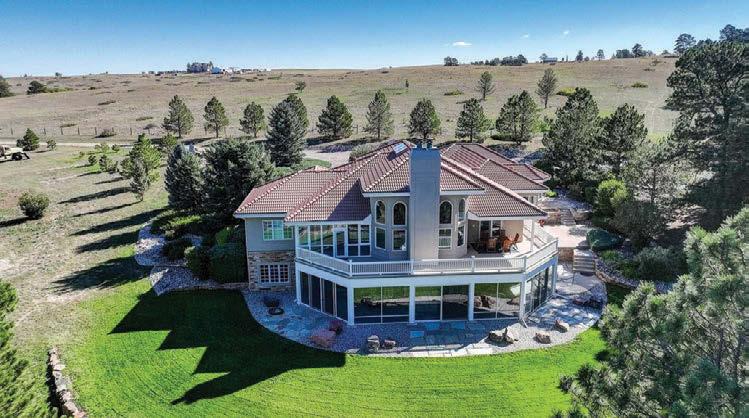
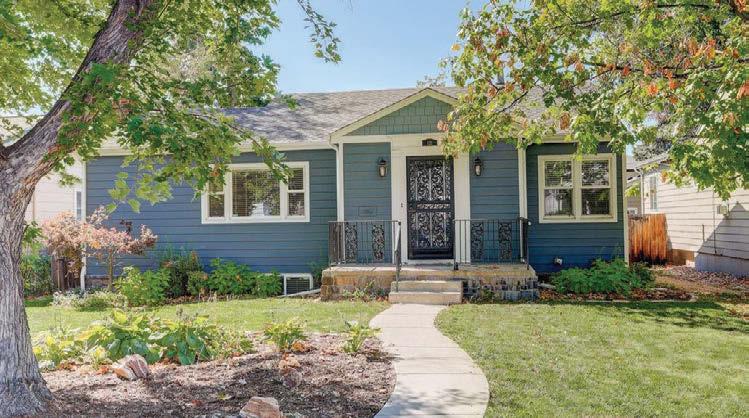

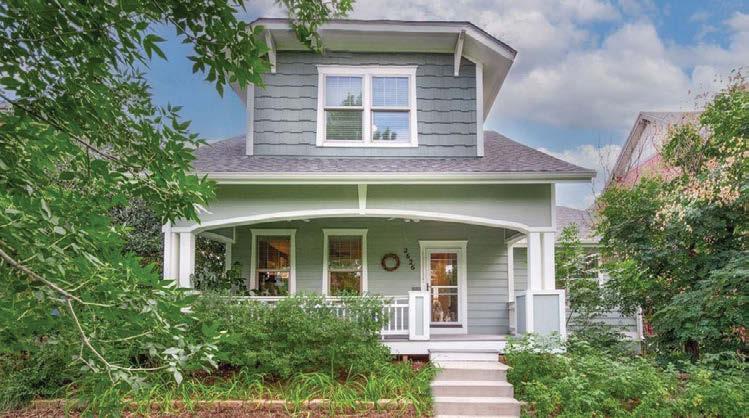
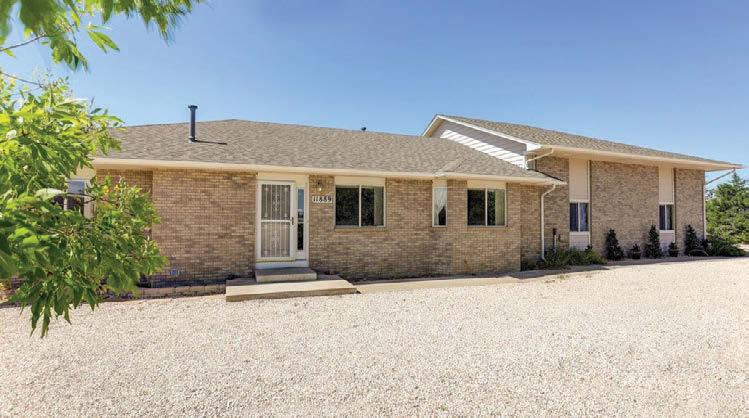
guiding you home since 1906 ColdwellBankerHomes.com SPECIAL ADVERTISING SECTION ELIZABETH | $5,295,000 Swift Creek Farms Equestrian Estate on 318.25+/- acres includes a 4br/5ba custom home w/7,000 SQFT & 3-car garage, 26,000 SQFT equestrian facility & 2-level duplex (3br/2ba & 2br/1ba). Rich Gundersen 720.934.5712 DENVER | $1,185,000 Stunning 1944 4br/2ba Cory-Merrill Oasis w/finished basement & 2-car garage has been remodeled from top to bottom including the kitchen & bathrooms. 15 minutes from Downtown Denver. Sean and Janet Willcox 303.903.5255 LAKEWOOD | $1,090,000 5br/5ba home. Kitchen w/granite counters & backsplash, breakfast bar and walk-in pantry. Main floor primary bedroom w/spa-like bath and double walk-in closets. Complete w/covered deck. The Dudley Team 303.995.7377 DENVER | $875,000 Serene 5br/4ba main floor primary suite home in Central Park w/new appl & counters, refinished hardwood floors & new paint & carpet. Blocks from Stanley Marketplace & several schools. Kelli Barton 720.530.7466 HENDERSON | $849,998 3br/3ba home on a 2.3 acre lot with 2,142 SQFT featuring an open floor plan, including a living room w/gas fireplace, primary bedroom w/5pc bathroom & walk in closet. Huge 3-car garage. Janice Hovorka 303.324.4705 LITTLETON | $780,000 4br/3ba home in Columbine Knolls. Family room w/a fireplace. Primary suite w/a sitting area, fireplace, walk-in closet and 5-piece bath. Complete w/a basement, a deck and 3-car garage. Jill and Greg Svenson 303.522.0631 LAKEWOOD | $779,000 4br/3ba home w/new everything. New kitchen w/stainless & granite. Enjoy a main level primary suite. Basement w/2nd primary suite, laundry room & family room. Large corner lot, backyard. P.J. Farrell 303.884.5368 LOUISVILLE | $779,000 3br/2ba home w/many beautiful finishes from the stunning fixtures, hickory floors and exposed-brick detail in the kitchen and smart-home features. Complete w/an inviting outdoor space. Ellen Ross 303.720.8589 LAKEWOOD | $709,900 Tastefully updated 4br/3ba brick ranch home w/2-car garage in Green Gables Manor of Lakewood. Featuring birch hardwood floors, 2 wood-burning fireplace, sunroom & finished basement. Mark Landin 720.322.5878 EVERGREEN | $662,500 4br/2ba home w/2-car garage in Forest Hill offers a central Evergreen location w/access to all the perks. Main level has a vaulted clerestory ceiling & moss rock wood burning fireplace. Terry Robinson 303.898.3658 PARKER | $650,000 3br Stonegate home in Parker backs to a greenbelt & features an open floor plan. Including an eat-in kitchen w/slab granite, family room w/fireplace, office & living & dining area. Rae Marie Heard 720.234.7918 AURORA | Price Upon Request 3br/3ba home in The Conservatory at the Plains w/a remodeled kitchen and many upgraded features. Enjoy refinished hardwood floors and fresh paint throughout. Complete w/a 2-car garage. Cyndi Briggs 720.771.8873
FIRESTONE
THORNTON
ColdwellBankerHomes.com SPECIAL ADVERTISING SECTION
| $610,000 Stunning 4bd/4bth home with a great floor plan, private beautifully landscaped yard, newly finished basement, gorgeously updated and meticulously maintained. Karen Elmers 303.810.7708
| $599,000 2br/2ba carriage home in West Highland features an amazing outdoor living area, bamboo flooring, updated kitchen w/concrete counters, primary bedroom w/private deck & finished basement. Miguel Miranda 720.883.8650 Daisey Gutierrez 720.483.9881
| $585,000 Beautiful 3br/4ba home in Murphy Creek features a loft, office w/bookshelves, 2-story living rm, kitchen w/granite counters & finished basement w/kitchenette. Tesla owned solar panels. Jennifer Oldham 720.234.3863
| $585,000 Beautiful 5br/4ba home w/2-car garage features new AC, paid off solar system, hardwood throughout & family room w/fireplace. Close proximity to Barr Lake State Park & wildlife refuge. Brian Anzur 303.263.6808
| $579,000 Newly remodeled 3br/3ba townhome offers an open floor plan. Family room w/a moss rock fireplace. Conclude with a two-car garage and a wraparound deck overlooking Cub Creek. P.J. Farrell 303.884.5368
DENVER
AURORA
BRIGHTON
EVERGREEN
| Price Upon Request Former model ranch style 3br/2ba home in Sage Creek featuring wood floors, vaulted ceilings, kitchen w/ss appliances & granite counters, formal dining room & spacious primary bedroom. Bill Rapp 303.358.7070 BOULDER | $575,000 1br/1ba corner unit townhome in great Boulder location featuring hardwood floors, gas fireplace, wood deck & 1-car garage. Backs to common area & access Diagonal Hwy & Foothills Pkwy. Domenick Mancini 614.202.0829 LAKEWOOD | $568,900 3br/1ba remodeled brick ranch w/big yard in Lakewood near Belmar Park features an updated kitchen & bathroom. Including fresh interior paint, hardwood floors & wood burning fireplace. Sandra Nevarez 303.332.5209 LITTLETON | $539,000 Charming 2-story 2br/2.5ba starter home in Littleton, located in Sherman Park neighborhood, close to the Little's Creek Trail system. 2-car attached garage, fully fenced yard & patio. Kat Zoefelt 303.881.5684 WESTMINSTER | $529,900 4br/3ba Cotton Creek home backs to green space! Features a dining & family room w/vaulted ceilings, kitchen w/quartz counters & SS appliances & living room w/fireplace. Jaclyn Baca Carroll 720.318.0755 BRIGHTON | $525,000 Beautiful 3br/2ba updated home in Brighton featuring stunning faux wood floors, kitchen w/SS appliances & dining area showcasing the Rocky Mountains. Close to restaurants & trails. Ashia Barela 303.898.7703 AURORA | $519,900 Built in 2018, 3br/3ba home has an open & inviting feel w/additional living space in the large loft. Easy access to E-470, I-70, Murphy Creek & DIA. Close to parks & nearby schools. Staci Stroh 303.570.7039


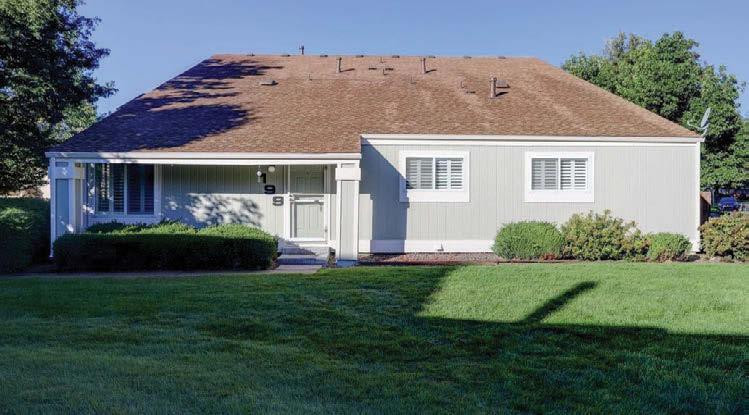
guiding you home since 1906 ColdwellBankerHomes.com SPECIAL ADVERTISING SECTION DENVER | $510,000 Urban loft living in the heart of Denver's Historical Downtown Capitol Hill neighborhood. Soaring high ceilings, striking industrial elements, concrete flooring, fresh paint & AC. Jaci Piel 303.903.1428 LITTLETON | $500,000 2br/3ba townhome w/an open layout, gas fireplace and updated kitchen appliances. Enjoy a beautiful pool, a short stroll from your front door! Complete w/a 2-car garage and private patio. Jennifer Bub 303.253.4969 AURORA | $499,000 Classic traditional 2-story 4br/3ba home in Aurora on a beautiful spacious corner lot w/formal living & dining room, finished basement, backyard oasis w/shed & leased solar panels. Jennifer Oldham 720.234.3863 DENVER | $495,000 Updated 3br/2ba end-unit in the Versailles in Capitol Hill featuring tall UV tinted windows, custom woodwork accent wall, spacious closets, newer kitchen appliances & garage parking. Barb Riley 303.548.0753 AURORA | $490,000 4br/3ba ranch in Aurora offers an open concept great room w/wood burning fireplace, dining room & large kitchen. Landscaped yard w/deck. Finished basement w/family room & built in bar. Lane Lyon Denver Home News Team 303.667.0309 LOVELAND | $450,000 Updated 3br home w/an office. Beautiful laminate floors and a galley kitchen w/newer SS appliances that opens to main living area. Complete w/a fenced backyard that backs to a park. Jeff Lewis 970.443.2224 LITTLETON | Price Upon Request 4br/2.5ba Littleton Home has incredible potential! Featuring an updated kitchen, lovely porch & large unfinished basement. No HOA. Close to Williamsburg Park & Ken Caryl Sledding Hill. LaDawn Sperling 303.710.5817 LITTLETON | $375,000 2br/3ba end unit ready for your personal touches and updates. Basement offers a bonus room. Complete w/a 1-car garage and additional assigned parking space. Close to downtown Littleton. John Kinney 720.283.9000 LAKEWOOD | $375,000 Spacious 2br/2ba condo w/private balcony & extended loft in Meadow Creek adjacent to Lakewood Country Club. Featuring skylights & newer SS appliances & hot water heater. Near mailbox. Lorri DeLaney 720.313.7437 DENVER | $365,000 2-story 2br/1.5ba unit w/attached garage & deck. Close to Glendale, Lowry, Cherry Creek & the Highline Canal Trail. Amenities include 2 outdoor pools, 2 tennis courts & 2 clubhouses. Amy Turner 720.333.0213 COLORADO SPRINGS | $360,000 2br/2ba townhome w/affordable HOA dues boasts Pikes Peak & mountain views featuring an open floor plan w/hardwood laminate flooring & 9’ ceilings. Close to military bases & Powers Corridor. Bill Finkle 719.761.5874 ARVADA | $360,000 3br/2ba townhome in the desirable Arbor Green neighborhood near Lake Arbor Golf Course in Arvada w/an open floor plan; complete w/a private patio. Nicole Wolf 303.898.5816
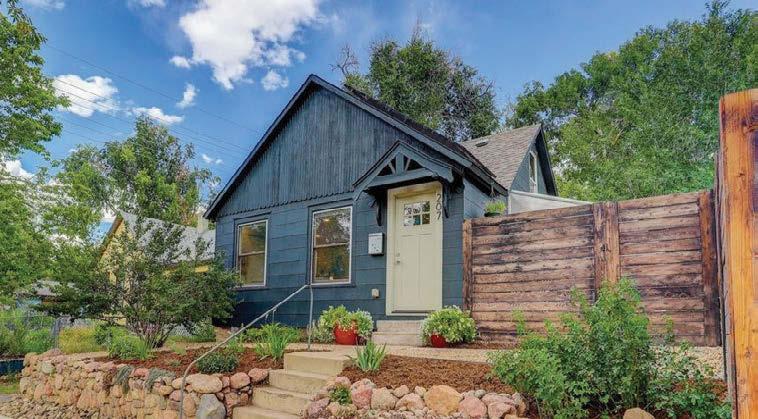
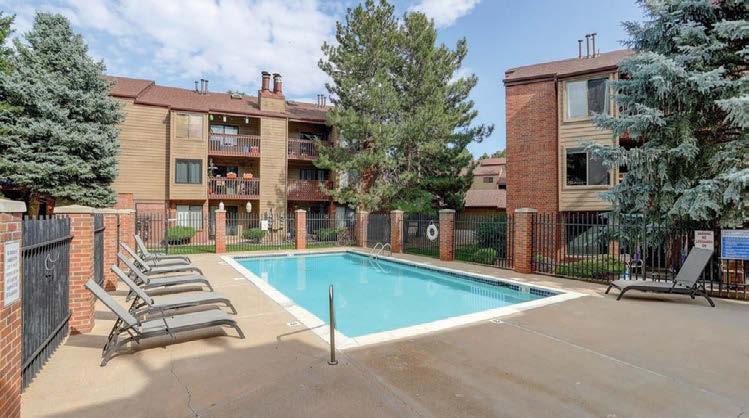

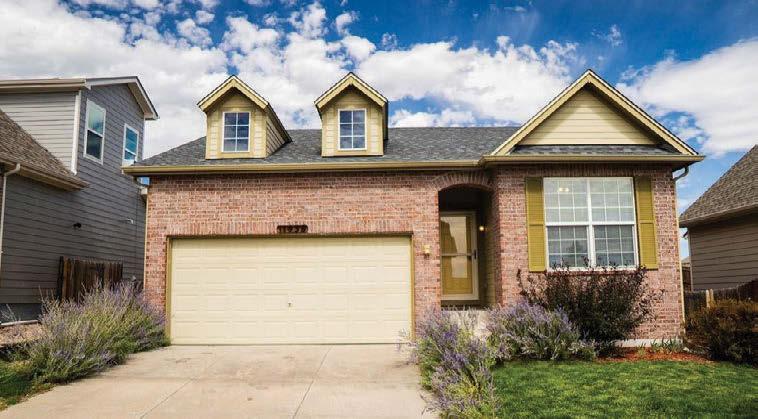
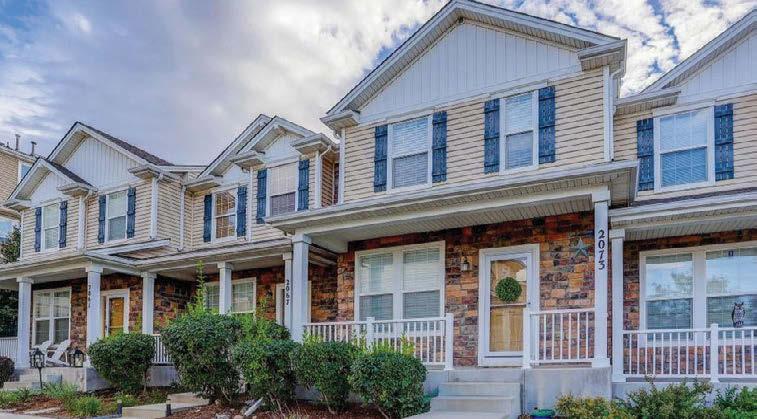


ColdwellBankerHomes.com SPECIAL ADVERTISING SECTION
SPRINGS | Price Upon Request This 2bed/1bath completely remodeled bungalow boasts an open concept, an open-style kitchen, an inviting sunroom, and a huge backyard on a corner lot near downtown.
Coray 719.359.0014
| $329,000 2br/2ba condo w/garage in Telluride West in Lakewood featuring a living room w/wood burning fireplace, in-unit laundry & covered deck. Amenities include pool, hot tub & clubhouse.
McKelvey 720.840.7763
| $315,000 Great price!! Close to Garfield Lake Park. Community garden adjacent to property. Approximately 9 minutes to I-25, 14 minutes to downtown and 18 minutes to DTC. Vacant lot to the south. Derrek Patrick 720.987.5271
| $315,000 2br/1ba rancher in the Courtyards at Woodmen Hills North w/central air conditioning, ceiling fans, private fenced backyard, easy access to Woodmen and Highway 24. Thomas Elmer 719.210.4258
SPRINGS | $285,000 Bright & open 2-story 2br/2ba townhome that backs to park-like common area! Move-in ready & features 9’ ceilings, large living room & sunny eat-in kit. w/ample cabinets. Central AC, too!
Montoya 719.232.3397
| $255,000 This fabulous yet affordable one bed, one bath, end-unit condo boasts a spacious living room with a wood-burning fireplace and a quartz-counter kitchen with new cabinets and appliances.
303.242.1968 Dreaming of a new year in a new space? Work with a Coldwell Banker ® affiliated agent to make your dream home a reality.
COLORADO
Camellia
LAKEWOOD
Reuben
DENVER
PEYTON
COLORADO
Jennifer
DENVER
Lars Swenson

BACKSTORY
Revenge Served Hot
Every winter, Colorado is overtaken by snow-seeking Texans who seem like they’re trying to get on our nerves. It’s time for payback. Here’s how to enjoy yourself in the Lone Star State this month—daily highs are still in the 60s in many places—and annoy the locals while you’re there. —SPENCER CAMPBELL
GUADALUPE PEAK Guadalupe Mountains
National Park
Unlike routes up Colorado’s four teeners, Texas’ highest trails are rarely impassable on account of snow, and this park’s desert landscape features eight of the tallest peaks in the state.
Tick off a Texan: After reaching Gua dalupe Peak via its namesake trail (8.5 miles round trip with 3,000 feet of ele vation gain), read the historical marker planted there lauding the mountain as Texas’ tallest, at 8,751 feet. Then—once you’re sure there’s a Texan around to hear you—say, “Huh. I thought every thing was bigger in Texas.”
THE ALAMO San Antonio
From November 25 to January 2, Texas’ favorite memorial to moral victories illuminates its grounds with enough holiday lights to rival Mexican General Antonio López de Santa Anna’s original artillery barrage.
Tick off a Texan: Point out that the “Come And Take It” cannon depicted on the flag Texans are so fond of was actually, well, taken by the Mexican army when its soldiers captured the Alamo.
INTERSTELLAR BBQ Austin
Spending hours in a line for barbecue is a time-honored tradition in Texas, and honestly, the fare is usually worth the wait. That’s especially true in the capital, which in 2021 was home to three of Texas Monthly’s top 10 smoke shops: InterStellar (number two), LeRoy and Lewis Barbecue (five), and Franklin Barbecue (seven).
Tick off a Texan: Stir up some excitement in the queue by asking your neighbors if Texas would like to join Colorado in celebrating MeatOut Day on March 20, a date Governor Jared Polis dedicated to the promotion of plant-based eating habits in 2021.

GRAPEVINE VINTAGE RAILROAD Grapevine
You’ve heard of a booze cruise?
In this Dallas suburb, the official Christmas Capital of Texas, there’s a two-hour-long Christmas Wine Train. The $45 basic fare includes hors d’oeuvre and two glasses of holiday cheer served in a commem orative cup that’s yours to keep.
Tick off a Texan: When Santa Claus stops by your seat, tell him you’re sorry his sled is in the shop. After all, why else would a Texan take public transportation?
124 5280 DECEMBER 2022 ILLUSTRATION BY MICHAEL WARAKSA
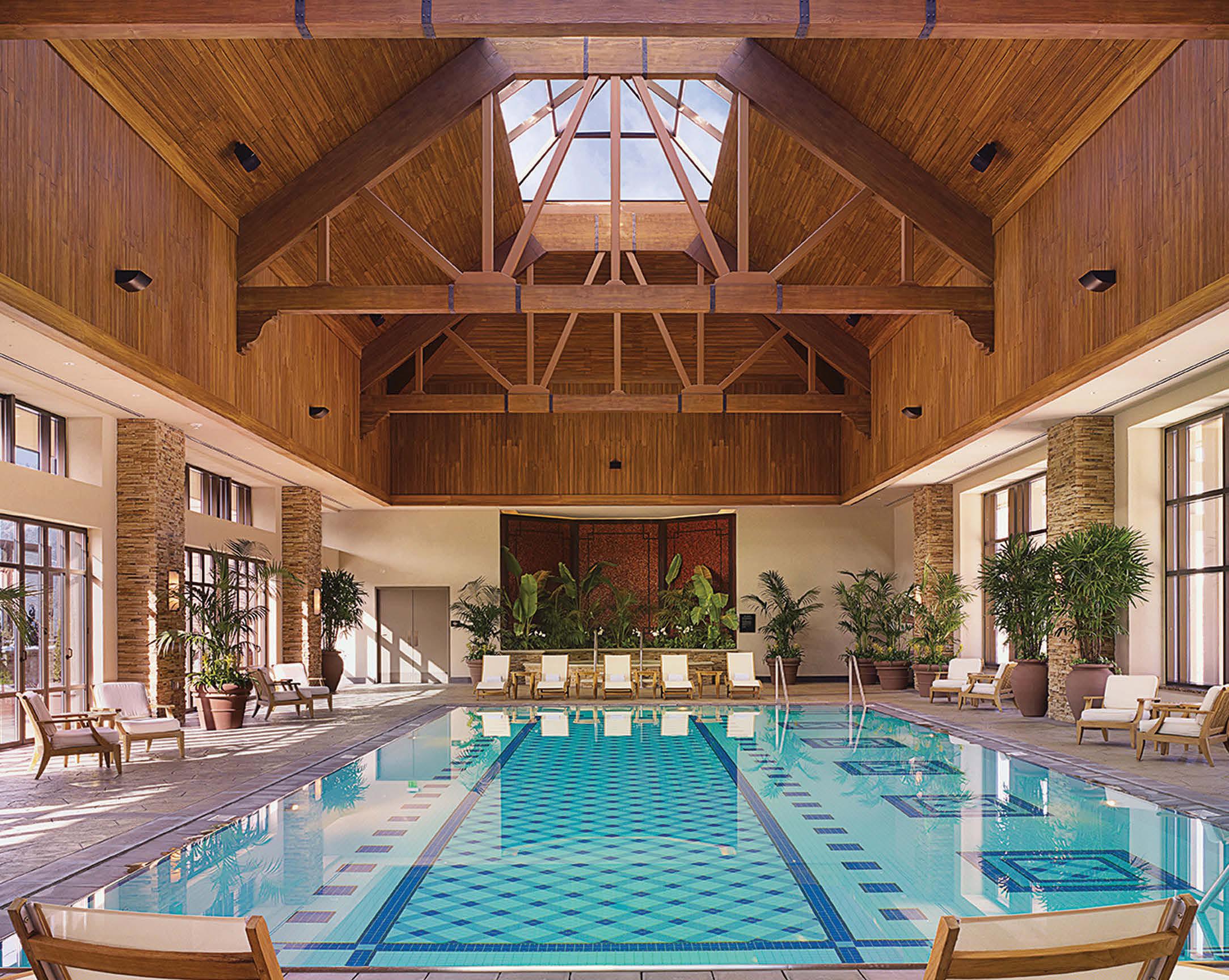
Your Rocky Mountain Escape Awaits Book now using offer code THEDEAL and receive up to 20% off your stay. Gambling problem? Call 1-800-GAMBLER AMERISTARBLACKHAWK.COM