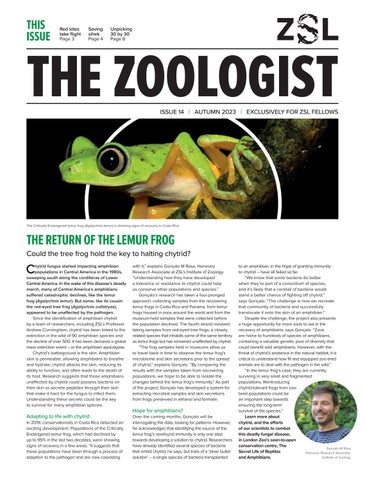
THE RETURN OF THE LEMUR FROG
Could the tree frog hold the key to halting chytrid?
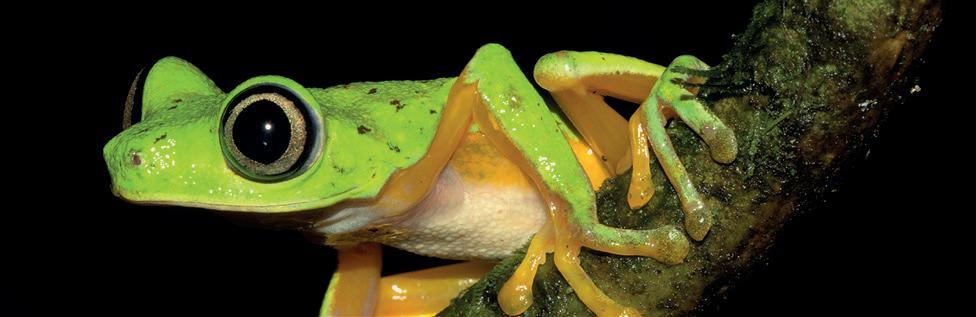
Chytrid fungus started impacting amphibian populations in Central America in the 1980s, sweeping south along the cordilleras of Lower Central America. In the wake of this disease’s deadly march, many of Central America’s amphibians suffered catastrophic declines, like the lemur frog (Agalychnis lemur). But some, like its cousin the red-eyed tree frog (Agalychnis callidryas), appeared to be unaffected by the pathogen.
Since the identification of amphibian chytrid by a team of researchers, including ZSL’s Professor Andrew Cunningham, chytrid has been linked to the extinction in the wild of 90 amphibian species and the decline of over 500. It has been declared a global mass extinction event – or the amphibian apocalypse.
Chytrid’s battleground is the skin. Amphibian skin is permeable, allowing amphibians to breathe and hydrate; chytrid attacks the skin, reducing its ability to function, and often leads to the death of its host. Research suggests that those amphibians unaffected by chytrid could possess bacteria on their skin or secrete peptides through their skin that make it hard for the fungus to infect them. Understanding these secrets could be the key to survival for many amphibian species.
Adapting to life with chytrid
In 2019, conservationists in Costa Rica detected an exciting development. Populations of the Critically Endangered lemur frog, which had declined by up to 95% in the last two decades, were showing signs of recovery in a few areas. “It suggests that these populations have been through a process of adaption to the pathogen and are now coexisting
with it,” explains Gonçalo M Rosa, Honorary Research Associate at ZSL’s Institute of Zoology. “Understanding how they have developed a tolerance or resistance to chytrid could help us conserve other populations and species.”
Gonçalo’s research has taken a four-pronged approach: collecting samples from the recovering lemur frogs in Costa Rica and Panama, from lemur frogs housed in zoos around the world and from the museum-held samples that were collected before the population declined. The fourth strand involved taking samples from red-eyed tree frogs, a closely related species that inhabits some of the same territory as lemur frogs but has remained unaffected by chytrid.
“The frog samples held in museums allow us to travel back in time to observe the lemur frog’s microbiome and skin secretions prior to the spread of chytrid,” explains Gonçalo. “By comparing the results with the samples taken from recovering populations, we hope to be able to isolate the changes behind the lemur frog’s immunity.” As part of the project, Gonçalo has developed a system for extracting microbial samples and skin secretions from frogs preserved in ethanol and formalin.
Hope for amphibians?
Over the coming months, Gonçalo will be interrogating the data, looking for patterns. However, he acknowledges that identifying the source of the lemur frog’s newfound immunity is only one step towards developing a solution to chytrid. Researchers have already identified several species of bacteria that inhibit chytrid, he says, but trials of a ‘silver bullet solution’ – a single species of bacteria transplanted
to an amphibian, in the hope of granting immunity to chytrid – have all failed so far.
“We know that some bacteria do better when they’re part of a consortium of species, and it’s likely that a cocktail of bacteria would stand a better chance of fighting off chytrid,” says Gonçalo. “The challenge is how we recreate that community of bacteria and successfully translocate it onto the skin of an amphibian.”
Despite the challenge, the project also presents a huge opportunity for more zoos to aid in the recovery of amphibians, says Gonçalo. “Zoos are home to hundreds of species of amphibians, containing a valuable genetic pool of diversity that could benefit wild amphibians. However, with the threat of chytrid’s existence in the natural habitat, it is critical to understand how fit and equipped zoo-bred animals are to deal with the pathogen in the wild.”
“In the lemur frog’s case, they are currently surviving in very small and fragmented populations. Reintroducing chytrid-tolerant frogs from zoobred populations could be an important step towards ensuring the long-term survival of the species.”
Learn more about chytrid, and the e orts of our scientists to combat this deadly fungal disease, in London Zoo’s soon-to-open conservation centre, The Secret Life of Reptiles and Amphibians.
Red kites take flight Page 3 Saving sihek Page 4 Unpicking 30 by 30 Page 8 THIS ISSUE
ISSUE 14 | AUTUMN 2023 | EXCLUSIVELY FOR ZSL FELLOWS
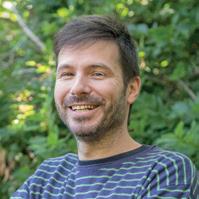
Gonçalo M Rosa Honorary Research Associate, Institute of Zoology
The Critically Endangered lemur frog (Agalychnis lemur) is showing signs of recovery in Costa Rica
DEAR FELLOWS
The global community is battling a series of intertwined and anthropogenically caused crises affecting our climate, water, wildlife, food systems and health. At ZSL, we focus on the impacts of these pressures on wildlife and the role recovery can equally play in addressing some of the challenges. This issue of The Zoologist highlights some of the key research into the impacts of these pressures, including the effects of chytrid on amphibians and climate change on UK woodlands and African wild dogs.
CLIMATE CHANGE SETS COURSE FOR AFRICAN WILD DOG COLLAPSE
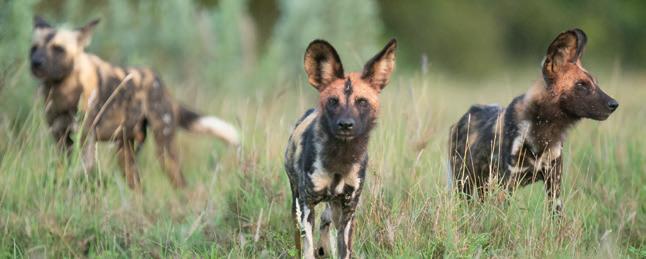
New study links rising temperature to the predicted extinction of canine population
Research from ZSL’s Institute of Zoology has predicted the total extinction of African wild dog populations – that’s if temperature rise exceeds 3°C by 2100.
The alarming conclusion has been drawn by modelling climate change scenarios with 16 years of data collected from an African dog population in central Kenya, where scientists have examined the effect of rising temperatures on hunting behaviour, reproduction and survival.
In the most optimistic scenario, a rise of just 1.6°C by the end of the century, extinction risk is unaffected. However, once temperature rise exceeds 2.4°C, the models predict the disappearance of all but the largest populations of African wild dogs. Past 3°C, African wild dogs could face the accelerated collapse of their whole species.
“We already know, from our previous research, that high temperatures in the first three months of life leads to a fall in pup survival,” explains Dani Rabaiotti, researcher at the Institute and lead author of the paper. “What drives the extinction

We have consistently pushed for the development of integrated solutions around climate, biodiversity and wildlife health. Eighteen percent of global emissions come from agriculture and land use change, and the recovery of natural systems is vital in reducing emissions, alongside changes to food production and consumption. At the end of November, the 28th Conference of Parties to the Climate Change Convention will take place in Dubai. We will take an active role. Our focus will be on the importance of coastal ecosystems, particularly mangroves, in supporting communities to adapt to the impending impacts of climate change, lock carbon into the ground and support wildlife recovery.
Part of the response to the climate and biodiversity crises was the commitment to protecting 30% of the land and ocean by 2030, made in the Global Biodiversity Framework. This has always been both a widely supported and controversial goal, particularly when it comes to how and where sites will be protected and what constitutes meaningful protection. In this issue we bring together two leading experts who have worked on this target, both from the terrestrial and marine perspectives, to discuss its implications and what happens next.
As ever, there are positive stories in this issue highlighting that, despite the challenges, recovery is possible and is happening. We have new evidence of survival of Cuban solenodons, insights into the lives of seldom-seen angelsharks, and new activities to restore the sihek to the wild. These stories not only provide hope but they also demonstrate that recovery is possible and must remain our priority.
DIARY DATES

23 November, 7pm
Annual General Meeting
In-person and online

12 December, 6pm
Armed conflicts and nature conservation

Science and conservation event Online
9 January, 6pm
The impact of lockdowns on human-wildlife interactions
Science and conservation event
In-person

29 February, 7pm
Careers in conservation Fellows event Online


In-person events take place at London Zoo’s Huxley Lecture Theatre. Online talks are streamed via YouTube and Zoom. For more info, visit zsl.org/zsl-fellows-events
risk is when the temperature reaches a point that juvenile survival rates fall so low there aren’t enough dogs to support their pack, or to leave their own to join others.”

The reality could be even starker than the study predicts, admits Dani. “While we used global average temperature rises for our study, local temperature could rise much higher.” Because of its position straddling the equator, Africa is expected to experience more radical temperature change. The paper highlights another African wild dog research site in Botswana where temperatures have rise by an average of 1°C every eight years. “At this rate, we could see the extinction of the species within a much shorter timeframe.”
The model was also limited to considering temperature change. African wild dogs are already classified as Endangered by the IUCN Red List and face several existing threats that could interact with rising temperatures. “Climate change is throwing a whole set of new challenges and threats at wildlife,” says Dani. “Disease spread, habitat loss, the loss of prey species – all of these are going to
be exacerbated by a warming planet, each one making it increasingly harder for wild dogs to survive. As threats start to pile on top of one another, extinction risk will climb.”
Behind the stark warning presented by the study, there is a glimmer of hope. Of the 32 populations of wild dogs across Africa, the average population size is nine packs. However, some of the very largest populations – such as in Nyerere National Park in Tanzania – contain over 30 packs. “Our modelling showed that those larger populations have a much greater resilience to temperature rise,” explains Dani. “This implies that creating wildlife corridors, or transboundary protected areas, to increase connectivity between wild dog populations could improve their chance of survival.”
The answer is clear: African wild dogs need urgent support, both globally and locally, if they are to outlast the 21st century. And, with so few long-term data sets analysing temperature change on species, wild dogs may be one of many facing a similar fate.
2
Andrew Terry, Director of Conservation and Policy, ZSL
Endangered African wild dogs (Lycaon pictus) face extinction if climate change is not curbed
RED KITES GET GREEN LIGHT FOR SPANISH FLIGHT
The day begins early on a sunny morning at a Forestry England site in Northamptonshire. A group of veterinarians, nurses and biologists from London and Whipsnade Zoos have assembled, as have 32 red kite chicks – housed in purpose-built pens.
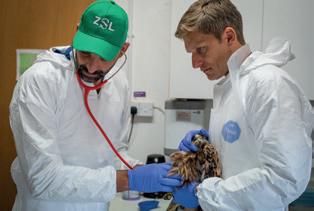
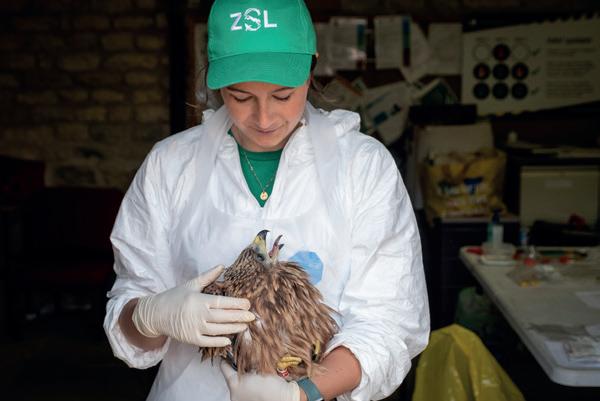
The red kites (Milvus milvus) are being prepared for the first, and longest, flight of their lives. On hand are representatives from ZSL’s Disease Risk Analysis and Health Surveillance (DRAHS) team, there to provide pre-flight health examinations. They will check everything from body condition and eye health to tell-tale signs of disease, before the red kites are flown by plane to Spain.
to minimise disturbance to the parents.”
Once collected, the birds are given health examinations and flown to Spain almost immediately to ensure they have as little human contact as possible. Their move is timed to mimic the period when the chicks would naturally fledge and leave the nest, and they spend a further four to six weeks in large release aviaries to help them adjust to the new environment, before they are released into the wild.
It isn’t long ago that red kites travelled in the opposite direction between the UK and Spain. Though our red kite population is now flourishing, they disappeared from England, Scotland and Ireland in the mid-1900s, while only a small
progress. The news from last year’s cohort has been largely good, though there are both natural and anthropogenic risks: one kite was found poisoned in Portugal and another was predated by an eagle owl.
Red kites are one of several bird of prey species that have been historically heavily persecuted, often for the perceived threat they pose to farm animals or grouse estates. Kites are at particular risk from poisoning because of their role as scavengers. “Kites will readily eat from a poisoned pheasant carcass, where other birds of prey might not,” explains Sophie.
Their behaviour can also lead to unintentional poisoning, says Sophie. “Animals shot by hunters but left uncollected pose a major threat to red kites, who can become poisoned by the lead shot in the carcass. This is something we have to check all of the chicks for – parents will sometimes unknowingly feed their chicks poisoned meat.”
From Peterborough to Extremadura
The birds of prey are being translocated to Extremadura, in southwestern Spain, to bolster the country’s rapidly declining red kite population. “This is the second of three years of translocations,” explains Sophie Common, Wildlife Veterinarian and Research Associate at ZSL’s Institute of Zoology. “We hope to move over 90 birds in total.”
The project is a collaboration between several organisations in the UK and Spain, including Natural England, Acción por el Mundo Salvaje (AMUS), Roy Dennis Wildlife Foundation, RSPB and ZSL, and is part of an overarching European-wide initiative to conserve red kites, led by Life Eurokite.
The chicks have been collected from nests in Northamptonshire by experts from Forestry England and RSPB, and the kites’ instinct to play dead makes the veterinary team’s job of examining the birds of prey much simpler than it might otherwise be.
“Red kites have flourished in the East Midlands, and we can safely remove chicks without damaging the population,” says Sophie. “Each chick is taken from a nest that contains at least two healthy chicks,
population of around 50 birds held on in Wales. Their recovery is a major conservation success story: the result of tighter regulations and a major reintroduction effort. And when red kite reintroductions to the UK began in 1989, some of the wild birds released in areas like the Chilterns were imported from Spain.
Poison, powerlines and persecution
Now it is the turn of the UK’s birds to return the favour. “Spain’s red kites have taken a dramatic decline in the last decade,” says Sophie. Persecution has become a major issue, as has the use of poorly designed powerlines that can electrocute red kites and other birds of prey.
Life Eurokite is working across Spain to improve relationships with farmers and hunters, and to mitigate the threat of powerlines. However, with the number of red kites in the country having dropped so low, it was determined that a translocation was urgently required to stop the population collapsing entirely.
All of the red kites released in Spain will carry satellite tags, so that conservationists can track their
Vultures have faced similar issues across the world. Poisoned carcasses, intended for the large carnivores who might otherwise prey on livestock, have contributed to a decline in vultures. Likewise, both vultures and kites play an important role in maintaining a healthy ecosystem, helping to discard rotting carcasses that might otherwise spread disease in the environment.
All eyes will now be on the UK’s feathered expats in Spain and whether they can start breeding successfully in the region. The recovery of the UK’s native population from the edge of extinction, and the growing popularity of the birds, offer hope for the coexistence of raptors and humans in wider Europe.
3
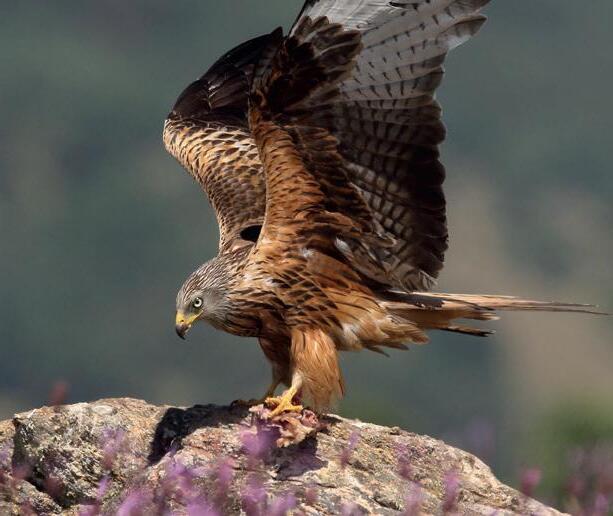
UK’s red kite population, once on the edge of extinction, is now supporting restoration efforts in Spain
“Though the UK’s red kite population is now flourishing, they disappeared from England, Scotland and Ireland in the mid-1900s... Their recovery is a major conservation success story.”Clockwise from top left: Sophie Common assessing a juvenile red kite; a wild red kite; Marco Vecchiato from ZSL (left) and Tim Mackrill from the Roy Dennis Wildlife Foundation (right) perform a health examination on one of 32 red kites
and accidental capture in fisheries, it suggests that males are moving outside of coastal protected areas and could be facing unexpected threats.


Gathering more data is now key, says Lucy. “Now we have this foundational data we can start to think more strategically about the areas we want to understand better. We’d love to tag more males, who are the hardest to find, and we want to employ trackers with a longer battery life to tell us if individuals return to the same place every year.”
Angel Shark Project is a collaboration – led by Leibniz Institute for the Analysis of Biodiversity Change, Universidad de Las Palmas de Gran Canaria and ZSL, alongside a range of local partners – and the work in the Canary Islands is part of a regional network across the Atlantic and Mediterranean. Having established ways of tagging angelsharks, working alongside key communities (such as fishers and divers), and informing policy change, the project has been adapted in other countries, such as Wales, Croatia and Libya.
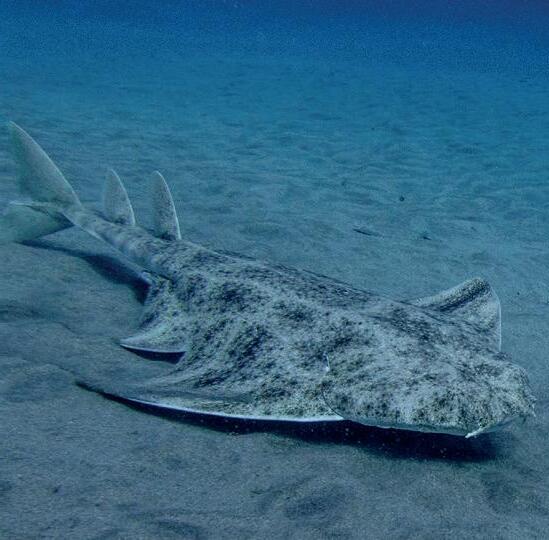
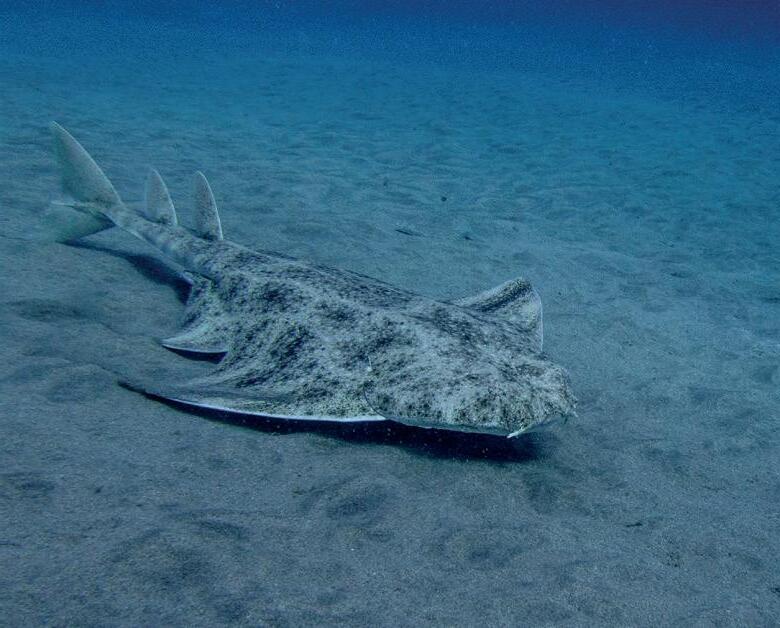
Lucy is optimistic that the future of angelsharks is a bright one, considering the awareness the project has garnered for the previously little-known shark. “Though angelsharks are still Critically Endangered, the growth of local engagement and media attention is a major success story that provides a model for other poorly understood animals.”
SAVING THE EXTINCT-IN-THE-WILD SIHEK



Zookeeper from Whipsnade Zoo supports conservation breeding programme



Earlier this year Claire McSweeney, Whipsnade Zoo’s Deputy Team Leader of Birds, journeyed to the United States to support the sihek (Todiramphus cinnamominus) recovery project.
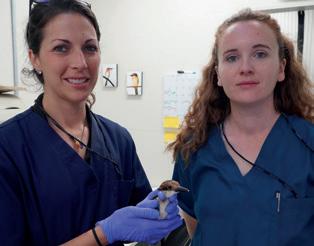
Since disappearing from the wild in the 1980s, the sihek (also known as the Guam kingfisher) has survived entirely in zoos. Plans are underway to introduce the sihek to Palmyra Atoll in the Pacific Ocean in 2024, and Claire travelled to a bio-secure breeding facility at Sedgewick County Zoo in Kansas to help with hand-rearing efforts.
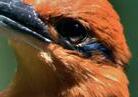
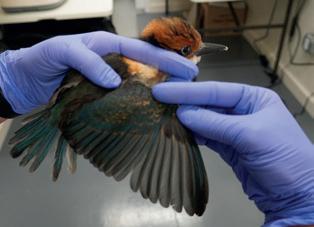
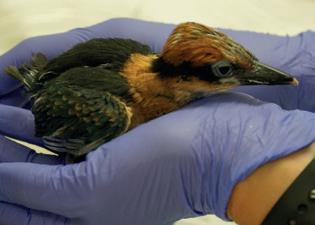
“We were caring for the rare chicks around the clock, feeding, monitoring and weighing them to ensure they’re in the best of health,” says Claire. “Having the opportunity to work on the recovery of a species that is Extinct in the Wild really brought home for me the important role that zookeepers can play in global conservation. It’s always incredibly rewarding watching chicks grow and develop new behaviours, but knowing that these chicks are playing an important role for their species makes it even more exciting.”
The sihek recovery project is a collaboration between several organisations, including Guam’s Department of Agriculture, the US Fish and Wildlife Service and The Nature Conservancy Resources. There are just 47 breeding females, in a global population of fewer than 140 birds, and the population is predicted to decline in zoos unless management effort increases. The race is on to breed enough birds to stage an introduction to the remote Palmyra Atoll in the Pacific Ocean.
While the Guam government continues to work on removing brown tree snakes, the invasive species responsible for the sihek’s disappearance, Palmyra has been identified as the perfect stepping stone before a reintroduction to Guam. “Our
modelling predicts that the introduction to Palmyra could grow the global sihek population by 40%, based on the predicted carrying capacity of the atoll,” says John Ewen, Professor at ZSL’s Institute of Zoology and Chair of the Sihek Recovery Team.
“The sihek is not native to Palmyra, so we’ve undertaken extensive research to evaluate the risks of introducing them,” explains John. “For example, the island does not have any threatened species that the sihek could prey on, and we’ll be minimising disease risk by implementing a strict quarantine system.”



The added benefit of introducing a relatively small number of birds to a very small island is that the programme has a clear exit strategy. “If we detect any unexpected negative impact on the atoll we can remove the birds immediately. That wouldn’t be possible on a larger, mountainous island,” says John.
Sihek are an important part of indigenous CHamoru culture on Guam, and a key objective of the project is to reconnect people with the sihek. “We’re going to learn everything we can on Palmyra,” says John. “Success on the atoll brings reintroduction to Guam so much closer.”
Top to bottom: A sihek chick; Erica Royer from the Smithsonian Conservation Biology Institute (left) and Claire McSweeney from Whipsnade Zoo (right); a sihek undergoing a health examination4
CLIMATE CHANGE TO IMPACT ANCIENT WOODLAND
Study identifies forests in southern England and on the border with Wales as most at risk
Less that 1km2 of the UK’s ancient woodlands will be unaffected by climate change over the next century – that’s according to new research from ZSL’s Institute of Zoology. The study, perhaps expectedly, highlights ancient woodland in southern England as most at risk, but also points to forests on the Welsh-English border and in Northern Ireland as at risk.
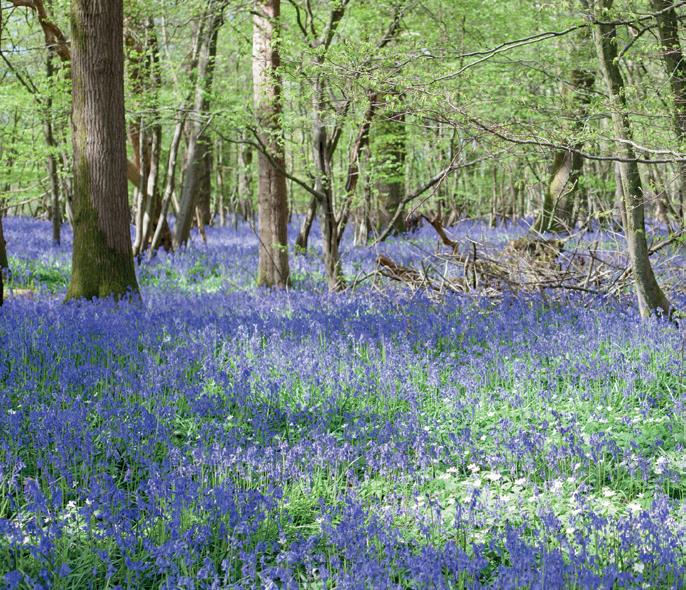
“Wales and Northern Ireland were a bit of a surprise,” admits lead author Henrike Schulte to Buhne, Postdoctoral Research Associate at the Institute. “Though average temperatures might not drastically change, climate modelling suggests the areas will experience more extreme droughts and increased risk of wildfires.”
A key part of Henrike’s research examined the role of neighbouring land. The average size of ancient woodland in the UK is just two hectares and 62% of our ancient woodland is within 100m of a forest edge. So, adjacent land – secondary forest, farmland or urban areas – plays a crucial role, says Henrike.
However, the interactions between forest edges and climate change are unclear. “Proximity to anthropogenic pressures, like pollution, are likely to have a negative effect, and higher temperatures on forest edges could lead to drier foliage and increase the risk of forest fires,” says Henrike. “However, trees on the edge of woodland tend
FOLLOW THE FINGERPRINTS
Adapting forensics for the fight against illegal wildlife crime
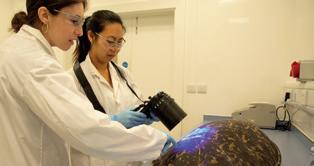
Windowsills, door handles, used drinks containers: these objects represent a potential mine of information for the forensic examiner unpicking a crime scene. But for the wildlife crime investigator, whose only piece of evidence is often the remains of an animal, what role can forensics play?
Researcher Alex Thomas is seeking to strengthen the role of forensics in wildlife crime law enforcement. “The common argument is that the countries that suffer most from wildlife crime don’t have the funds or capabilities to recover forensic evidence. This isn’t always the case,” she says, citing the example of Kenya’s recently opened, multi-million-dollar forensics facility in Nairobi.
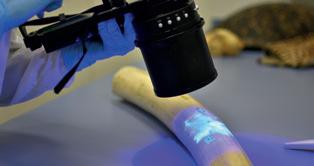
Alex’s PhD involves taking existing forensic techniques used by the UK’s police force and testing their application on a range of samples, including ex-police evidence – such as elephant skins, tortoise shells and furs.
to be more wind resistant
and might perform better in storms. In the case of woodland bordering agricultural land, the high amount of nitrogen in fertilisers might even help the trees grow better in some situations.”

To get around this knowledge gap, the study modelled two scenarios: an optimistic scenario, that treated forest edges as neutral or positive factors on climate change impact, and a pessimistic scenario, that treated forest edges as worsening the impact of climate change. What is clear from the modelling is that the at-risk areas, such as southern England, remain the same in each scenario.
In an ideal world, more research is needed. “But perhaps we don’t have the time,” Henrike says. “We know certain areas of the UK are at highest risk; it’s urgent that regional government work with local forestry experts to implement onthe-ground mitigation measures.” Another measure the UK could also take would be to formerly protect its ancient woodland; there is no specific
definition of ancient woodland and no statutory protection.
As well as providing a variety of habitats for animal and plant species, ancient woodland has a strong heritage value. “Though they appear untouched and natural to us, ancient woodlands have been shaped by people through coppicing and other traditional techniques,” adds Henrike. “They are living records of a time when we were better at coexisting with nature and prove that we can be good neighbours.”
“The aim is not to develop new and expensive technology with limited impact,” says Alex. “We’re trialling commonly found forensic equipment and simple techniques that can be easily carried by rangers and other first responders across the world in wildlife crime hotspots.
“Forensics has the potential to be a major intelligence tool in the fight against wildlife crime. While a fingerprint or trace of DNA might not lead law enforcement immediately to an individual, building up a database of evidence allows officers to start linking shipments, locations and even other crimes conducted by the same criminal networks.”
Alex also points to the UK’s own wildlife crime issues, and the role forensics can play in protecting persecuted animals, such as badgers or birds of prey, and tracking importers of illegal products, such as animal skins. “So much focus is put on wildlife crime in developing nations, but we must
acknowledge the role that developed nations play in driving the market,” she says.

Though not yet published, Alex’s research suggests that a specific fluorescent fingerprint powder is the most effective. In addition, a type of foam swab has shown the most effective for collecting DNA samples. However, the tools can vary depending on the object. “A tortoise shell is porous, for example, so this has a big impact on what kind of techniques we use.”
The true success of applied science like Alex’s research will be in how effectively it can be adopted in the field. “We’re in talks with the UK’s law enforcement to offer training, and we’re part of PAW (Partnership for Action against Wildlife crime), which will help us disseminate the research. The next step is to begin working with ZSL’s contacts in wildlife crime units overseas and trial the techniques in the field,” adds Alex.
5
The UK’s ancient woodlands perform a vital role for biodiversity, containing habitats that many species rely on to survive
Researcher Alex Thomas (left) and supervisor Louise Gibson (right) trialling fingerprint reading techniques at ZSL’s Institute of Zoology
CAUGHT ON CAMERA
First image of wild Cuban solenodon in quarter of a century
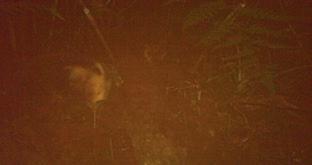
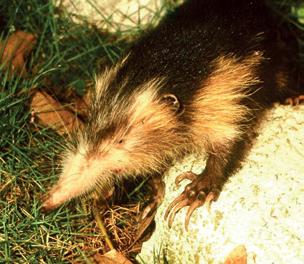
It might be blurry and hard to make out but, to those in the know, the image below is the first photographic evidence of the existence of the Cuban solenodon in 25 years in the Pico Cristal National Park.
Caught on camera trap by EDGE Fellow Margarita Sanchez Losada, the photo is proof that the hedgehog-sized mammal, believed to have evolved during the Cretaceous period over 70 million years ago, survives in Cuba.
“The solenodon is our living fossil, an incomparable symbol of Cuban biodiversity,” says Margarita. “They belong to a lineage of animals found only on Cuba and Hispaniola. The name means ‘grooved tooth’ in ancient Greek, referring to the hollow canine in their lower jaw that they use to deliver venom – making them one of the world’s few venomous mammals.”
Cuban solenodon’s are one of the rarest and most unique of the world’s mammals, and are placed fourth by ZSL’s EDGE programme, which ranks the most evolutionarily distinct and globally endangered species. They are a nocturnal insectivore, feeding primarily on worms and beetles, and their presence is thought to be limited to the remote mountains of eastern Cuba.
Though solenodons have long been suspected to survive in Pico Cristal National Park, due to signs of their feeding and burrows, the photos and videos are the first categoric proof of their existence in the protected area since 1998. “The record of their presence is an important starting point for the establishment of monitoring protocols, and for the design and implementation of conservation plans in the national park,” says Margarita.
Margarita is now working with local partners to develop a conservation action plan and reduce the threats to the solenodon. “The main threat is the reduction and fragmentation of their habitat,” she explains. “Pico Cristal is under immense pressure from illegal logging and forest fires. Invasive species of mammals are also a threat; particularly feral dogs, who have been reported hunting solenodon in the national park on several occasions.”
To address these threats, the conservation plan includes the restoration of forests lost to fire and logging and the management of invasive species. Through activity with local communities in the vicinity of the national parks, Margarita also hopes to build local awareness for the rare mammal.
Having proved the existence of the solenodon in Pico Cristal, Margarita plans to employ the camera trap techniques learned in Pico Cristal during surveys of other nearby protected areas. These include Sierra Maestra National Park, where sightings have been reported but no surveys have been conducted.
ON THE TRAIL OF CHINESE GIANT SALAMANDERS
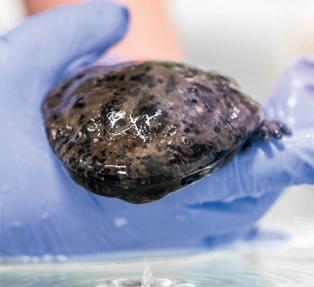
Developing new techniques for monitoring giant amphibians at London Zoo
Scientists and zookeepers at London Zoo are developing environmental DNA (eDNA) techniques that could be the key to monitoring the elusive Chinese giant salamanders in their wild environment.
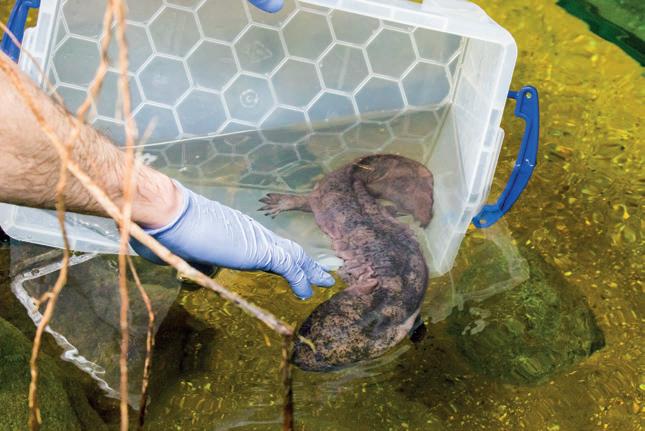
“Moving the four Chinese giant salamanders cared for at London Zoo into their new home at The Secret Life of Reptiles and Amphibians presented a unique opportunity to test and validate eDNA techniques,” explains Louise Gibson, Project Coordinator.
“In the old tanks we’re conducting a degradation experiment, to understand how

long salamander DNA can be detected in the water after salamanders have been removed from the tank,” says Louise. “In their new home we’ve set up a shedding study to understand how long it takes for eDNA to build up in the water before it can be detected.”
There are other factors that will feature in the study: if the water is warmer, does that effect how much DNA the salamanders shed? Does a greater volume of water increase the difficulty to detect the salamanders. And what are the best ways to filter eDNA from the water?
Collecting eDNA samples involves filtering water to collect the DNA. “Testing the filtration options is about making sure the eDNA system is as mobile as possible,” says Unnar Aevarsson, Zookeeper. “Some filtration techniques can be expensive and bulky. These salamanders often reside in very difficult terrain, and we don’t want to be carrying heavy kit in the field.”
Chinese giant salamanders are classified as Critically Endangered, primarily due to their over exploitation for human consumption. In 2013, ZSL led a three-year study on the Chinese giant salamanders with local partners. As a result, we know there are several species of giant salamander in China and that Chinese giant salamanders have been critically depleted throughout the country. However, there are still major gaps in our knowledge about where the salamanders remain.
“Despite being the world’s largest amphibian, they are extremely difficult to survey in the wild,” explains Kim Carter, Zookeeper. “They are perfectly camouflaged for life in rocky rivers, and they often inhabit canyons and pools between rapids that are difficult for us to access. There is even recent research indicating that some frequent caves, where they may be less accessible to human hunters. So eDNA could be a more effective way of monitoring them.”
The team hope that, once we have a better idea of where the salamanders still survive, more targeted protection and habitat restoration can take place. Longer term, the team also plan to use eDNA to distinguish between the different species of Chinese giant salamander.
6
“Chinese giant salamanders are classified as Critically Endangered, primarily due to their over exploitation for human consumption.”Environmental DNA could be a valuable tool for monitoring the elusive Critically Endangered Chinese giant salamander (Andrias davidianus)
LISTENING TO THE FOREST
ZSL Fellow Amanda Korstjens is Professor of Behavioural Ecology at Bournemouth University. She leads the LEAP (Landscape Ecology and Primatology) programme, concerned with investigating the combined influence of climate change and forest degradation on primate communities.





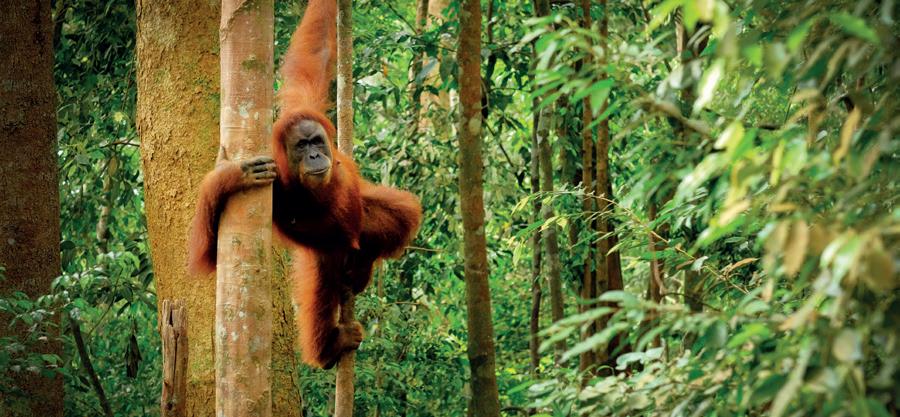
Tropical forests may teem with wildlife, but finding it can be a different matter – as anyone familiar with working within a jungle will know. Save for the ubiquitous ants (which can be found everywhere, including nesting inside laptops and camera traps), animals are adept at avoiding their eager researchers.








Primatologists have several techniques for getting around this. One is habituating a community of primates to our presence, though the technique

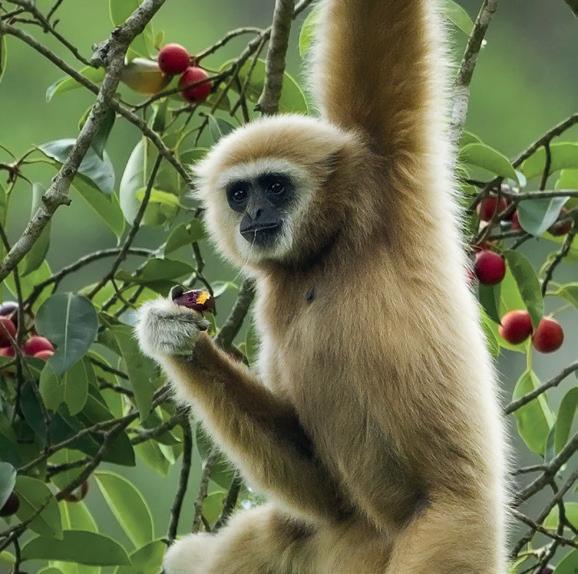
I naively thought I wouldn’t need to come up with new solutions and would be able to use methods that others had developed. Turns out there are still many hurdles: the equipment, the huge amount of data, data extraction and data analyses.
That’s where interactive arts studio Invisible Flock came in. Since 2017, we have worked with them to translate our research into art experiences for general audiences – and their expertise extended to audio recording. Over several
bothered by the regular hunting that occurs at the edge of the national park, possibly because nighttime hunting in this location is most focused on ground-dwelling mammals.
We have still a wealth of questions we could study with the files we have (such as the effect of hourly temperature on vocal behaviour of amphibians, reptiles, birds and primates) but, despite the help of technical experts at Arbimon (by Rainforest Connection), it is painstakingly hard work to extract information from the recordings.




Soundscape on the south coast

is not without flaws. The process can take from six months to three years, inevitably starts with some stress to the animals and, once they are habituated, the researchers may scare away predators or risk transmitting diseases. The habituated animals could even make easy prey to poachers. Therefore, many of us look for ways to monitor animals non-invasively. Camera traps are popular for this purpose, though they have relatively low capture rates due to their very localised reach. Passive acoustic monitoring (PAM) is a developing technique that is growing in popularity and becoming more affordable every year.
Rainforest-ready recorders


My journey with PAM started in 2018. Knowing that so many researchers were already using the technology,
months in 2019, including a very muddy two weeks testing equipment options, Invisible Flock developed 10 recorders that managed to meet the needs of life in the jungle: robust, continuous recording, powered by powerpacks, a built-in GPS and high-quality stereo microphones.
Audio insights
















Dr Helen Slater, as part of her PhD, added the recorders to her camera-trap study on edge effects on mammal diversity, microclimate and forest structure in Sikundur, on the Indonesian island of Sumatra. The results were analysed by MRes student Jake Hill and undergraduate students Chloe Shaw, Archie Bedford, Ellie Vincent and Devon Humphreys. Our preliminary acoustic analyses suggest that siamang and lar gibbon presence is unaffected by distance to the forest edge, microclimate and forest structure (sampled within 2.5km of a sharp forest edge adjacent to open agricultural land). Likewise, siamang and Lar gibbon call frequency appears unaffected by anthropogenic noise, such as machine noise and gun shots, which increase in frequency towards the forest edge. This suggests that they are not
Just as exciting as the scientific possibilities are the ways in which audio recordings can be used beyond the realm of pure science. In May 2023, sound experience The Sleeping Tree by Invisible Flock, in collaboration with LEAP, premiered at the international Brighton Art Festival. The experience, which sold out all 1,500 tickets on the opening weekend of the festival, saw visitors spread out on bean bags, listening to Sumatran forest sounds being played from 52 speakers surrounding the central area of the Dome theatre. Smoke and light beams gave the illusion of a misty dark forest. The weekend ended with an experimental music performance in which Invisible Flock’s Victoria Pratt and Ben Eaton played forest sounds while Nabihah Iqbal played instruments or sang. Besides communicating the beauty of the forest, there were many opportunities to share the science and conservation underway in Sumatra.
Looking forward, I plan to use PAM in a study on forest restoration in Côte d’Ivoire, in which we aim to understand how forest restoration can be planned to support primates that are under pressure from human hunting and climate change. An automated species ID system, based on PAM, is the ideal way to provide real-time updates on changes happening in the study system, and we’ll use the data to calibrate and improve the model’s predicting accuracy. Rainforest Connection and Invisible Flock will again form an integral part of achieving that aim, together with Ivorian conservation organisations.
7
monitoring primate behaviour in dense rainforest
“The Sleeping Tree premiered at the international Brighton Art Festival... which sold out all 1,500 tickets on the opening weekend of the festival, saw visitors spread out on bean bags, listening to forest sounds being played from 52 speakers surrounding the central area of the Dome theatre.”Amanda Korstjens, ZSL Fellow
SCIENTISTS’ CORNER
Q&A with Rachel Jones and Mike Hoffmann
TZ: How big of a challenge is 30 by 30?
RJ & MH: Around 17% of land is already protected, and there is more land outside of protected areas, including indigenous land, that, if managed for the long-term conservation of biodiversity, would add to that figure. However, only 8% of the ocean is protected – and it’s an even smaller figure if you include areas that are completely protected from exploitation. Just 3% of the ocean has strict restrictions or complete bans on fishing and other extractive industries. Incredibly, although that means that up to 97% of the world’s ocean is available for fishing in some form, protected areas are still under continuous and immense pressure, both by legal fisheries who lobby for increased quotas and access to restricted areas and by illegal, unreported and unregulated (IUU) fishing. Perhaps the biggest challenge is funding – governments have been unwilling or unable to dedicate the funds necessary to adequately manage even existing protected areas. A study done in 2012, looking at the estimated costs of running a global network of protected areas just for birds, found that conservation spend is at 5% of what’s required.
Do these kinds of targets work?
Over the course of the last decade, evidence has emerged suggesting that protecting and conserving at least 30% of land and sea is necessary to safeguard carbon and biodiversity. The target has captured the public imagination
and nations are keenly aware that, without some rapid and bold action, they will miss the targets – which could inspire some to act. We’ve seen several countries, including the UK, declare major protected areas in the last decade in the race to meet previous targets set in 2010. The problem is that, when it comes to protected areas, quality matters. Protected areas need to be well managed to achieve positive outcomes, and they need to be in areas that are the most important for biodiversity. In the UK, for example, despite 28% of land being reported as protected, as little

to protected area effectiveness, but it doesn’t stop at the reserve boundary. It must include the entire land or seascape, seeking to promote collaboration between wildlife conservation, local governance and communities.
TZ: What role can indigenous communities play?
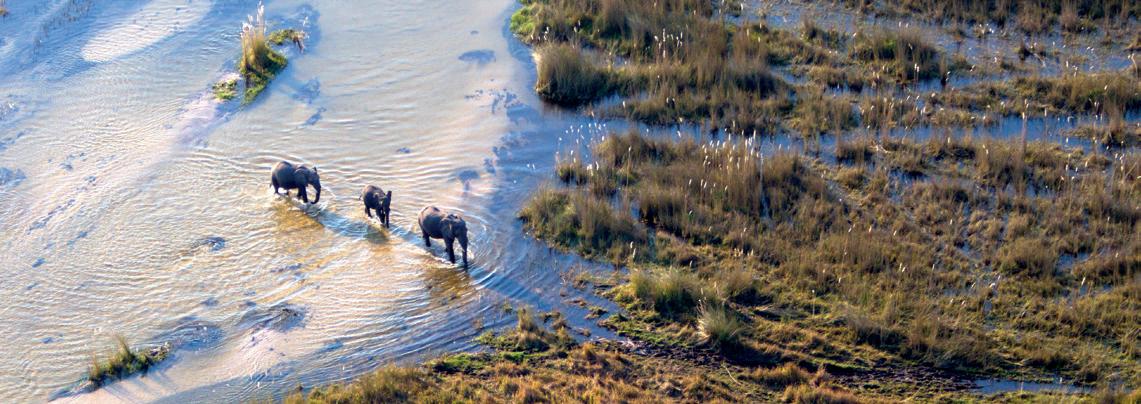
RJ & MH: The old notion of taking a chunk of the planet, building a fence around it and excluding people does not work. There are many examples across the world where this has led to tension
as 5% may be effectively protected for nature. Percentage-based targets can have perverse outcomes: some countries could be tempted to declare protected areas in places that offer nominal benefit to biodiversity, or without providing enough resources to adequately manage them.
TZ: What makes an effective protected area?

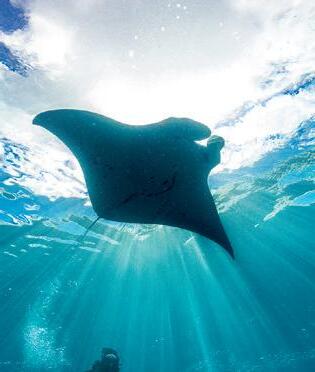
RJ & MH: For marine protected areas (MPAs), bigger is often better – the reason being that a larger MPA can protect connected habitats and highly mobile species. Marine species often use a mosaic of habitats across their life history. For example, reef fish will often spend their juvenile phase living in mangroves, so it’s not good enough to just protect coral reefs. Connectivity is key. On land, even small protected areas can be vital to the persistence of biodiversity. Management, supported by capacity and resources, is crucial
with local communities and disengagement with conservation. It is fundamental that protected areas are equitably managed and account for the needs of the people who inhabit the landscape. This is particularly apparent with MPAs, the majority of which are small, coastal and managed by local communities. Our work in the Philippines is a good example of how this can work – we’ve supported a network of small MPAs, often protected overnight by a community member in a guardhouse on the reef, and that network has spread across the region. Clear boundaries on restricted fishing areas are created with, and enforced by, the communities, benefitting both biodiversity and fish stocks. Conversely, we also need to acknowledge the positive role that businesses and private landowners can play. For example, we’re increasingly seeing rubber and palm oil plantations becoming more receptive to the idea of managing their lands in a responsible way.
Printed on FSC-accredited 100% recycled paper. When you finish with this newsletter please recycle it. ZSL is a registered charity in England and Wales no: 208728
“A study done in 2012, looking at the estimated costs of running a global network of protected areas just for birds, found that conservation spend is at 5% of what’s required.”
ZSL’s impact on the future of wildlife is transformative. Help us continue our vital work at zsl.org/donateRachel Jones, Programme Manager of ZSL’s Indian Ocean marine science project, and Mike Ho mann, Head of Wildlife Recovery, join The Zoologist to discuss the 30 by 30 target – to protect and conserve 30% of land and sea by 2030 – agreed at last year’s Convention on Biological Diversity. Rachel Jones and Mike Hoffmann, ZSL