Melting Heritage - Adapting to a changing snow and ice cover in the South Caucasus
Melting Heritage
Capture d’écran 2022-06-10 à 10.52.18.png
Background
This regional policy brief aims to identify the needs for improved monitoring and adaptation to a declining snow and ice cover in the South Caucasus, and to support stronger advocacy for the region and its communities. It draws on recent scientific knowledge and national data to assess the current state of snow and ice cover in the South Caucasus; reviews existing monitoring systems and data governance structures; identifies national policies and adaptation efforts; and provides recommendations to strengthen regional action.
This brief is intended for a broad audience, including government and international organizations, financial institutions, think tanks, academia, and civil society. It aims to engage stakeholders interested in aligning their research and development actions with resilience pathways and to promote nature-based solutions in the South Caucasus region.
A Regional Adaptation Dialogue in the South Caucasus (RADISC) took place on 19–23 May 2025 in Stepantsminda, Georgia, bringing together researchers and experts, policymakers, and practitioners from across the South Caucasus and beyond. During the meeting, participants reviewed a draft version of this policy brief and the accompanying infographic and provided valuable feedback – particularly on regional needs – that has been incorporated into the final document.
The Adaptation at Altitude programme supported both the RADISC and this policy brief and facilitates regional contributions to the observance of the United Nations International Year of Glaciers’ Preservation 2025 and the Five-Year Action Plan for the Development of Mountain Regions 2023–2027.
Samira Abushova, National Academy of Sciences, Azerbaijan
Suren Arakelyan, Georisk - Scientific Research Company, Armenia
Susana Hancock, International Cryosphere Climate Initiative
Rashail Ismayilov, Water and Amelioration Scientific Research Institute, Azerbaijan
Natavan Jafarova, National Academy of Sciences, Azerbaijan
Zura Javakhishvili, Ilia State University, Georgia
Matthias Jurek, United Nations Environment Programme
Stepan Khachatryan, National University of Architecture and Construction, Armenia
Ioseb Kinkladze, Department of Hydrometeorology, National Environmental Agency, Georgia
Kakha Lomashvili, Ministry of Environmental Protection and Agriculture, Georgia
Ayaz Mammadov, Western Caspian University, Azerbaijan
Irakli Megrelidze, Department of Hydrometeorology, National Environmental Agency, Georgia
Amalya Misakyan, Hydrometeorology and Monitoring Center, Armenia
Nina Shatberashvili, Caucasus Network for Sustainable Development of Mountain Regions
Lasha Sukhishvili, Ilia State University, Georgia
Levan Tielidze, Ilia State University, Georgia
Benyamin Zakaryan, Institute of Water Problems and Hydrо-Engineering, Armenia
Proposed citation
Adaptation at Altitude Programme (2025). Melting Heritage: Adapting to changing snow and ice cover in the South Caucasus. Regional Policy Brief. Edited by UN Environment Programme, Mountain Research Initiative and Sustainable Caucasus. Nairobi, Bern and Tbilisi. https://doi.org/10.48620/89753
1. Executive summary
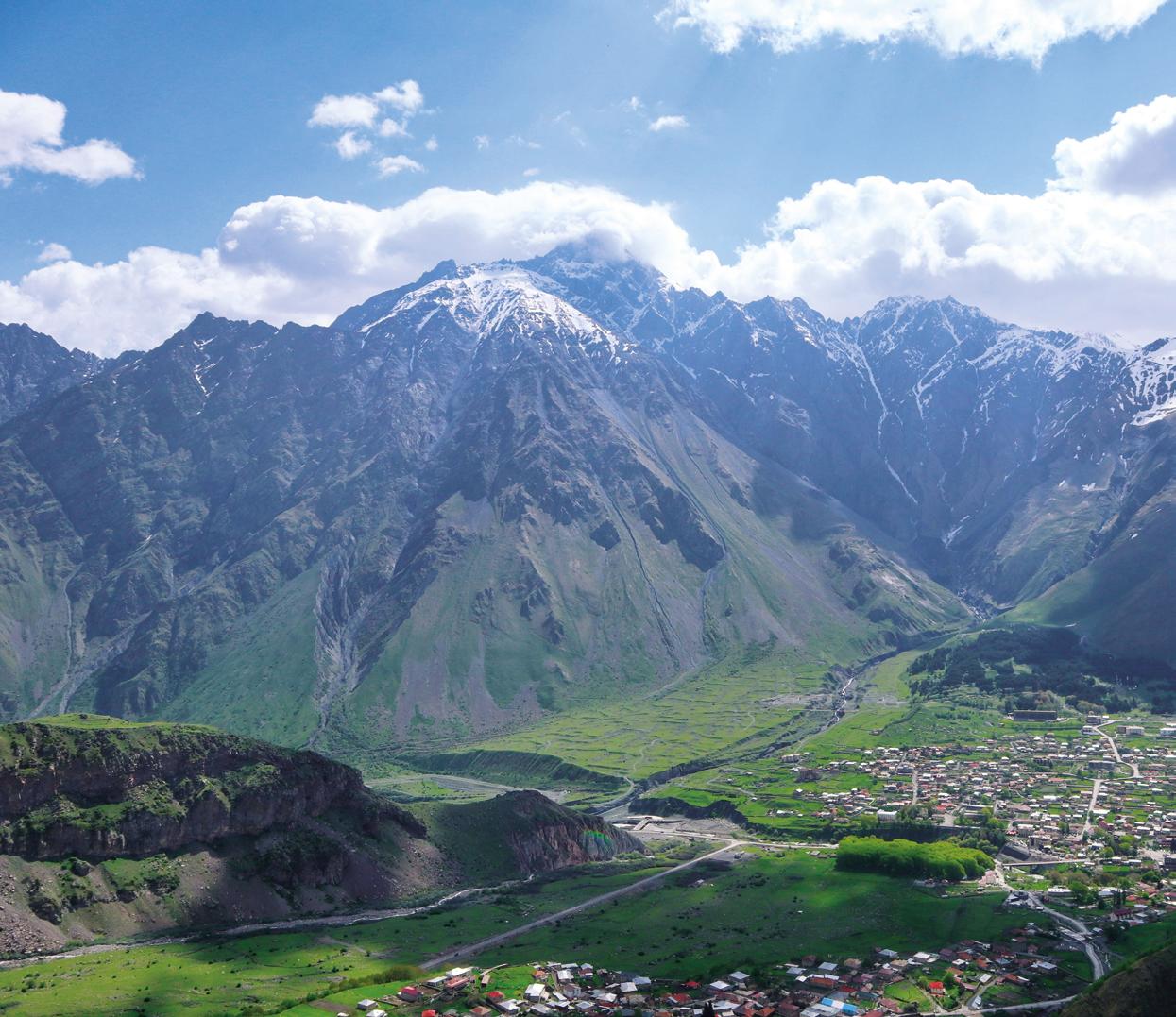
The Caucasus ecoregion1 is a transboundary mountain ecosystem recognized as a global biodiversity hotspot. In the South Caucasus, human-induced climate change is driving the second-highest rate of glacier ice loss globally in terms of total volume. Between 2000 and 2020, the region lost more than 23 per cent of its glacier area. If current warming continues, most glaciers could disappear by 2100.
Glaciers in the South Caucasus exhibit aboveaverage sensitivity to even slight temperature increases. Climate projections suggest average regional warming could exceed 4.5°C by 2100 under current emission scenarios. The region’s glaciers and snow cover are expected to respond more rapidly to warming than in other regions, making the effectiveness of global climate policies critical in determining the region’s future snow and ice cover.
Given this vulnerability, it is essential to promote research activity and advocacy efforts with outcomes that are suited to the South Caucasus. Furthermore, it is necessary to improve monitoring, data governance and experience sharing among scientists and practitioners in the South Caucasus, and to strengthen the generation of local knowledge and access to technology through international exchange. Programmes and incentives are needed to build capacities especially with young researchers and practitioners to ensure regional expertise on the cryosphere. There is a need for universities and other academic institutions to establish and strengthen a sustained academic system for monitoring, studying, teaching and learning about the cryosphere and related issues.
In situ monitoring remains limited in the region, particularly for glaciers, snow cover, and permafrost, despite its role in the management of hazards such as floods, flash floods, landslides, rock and ice falls, glacial lake outburst floods, and glacial mudflows, as well as for water storage. Comprehensive glacier, snow, and ice inventories, along with improved and coordinated monitoring efforts, are urgently needed to address these limitations. These efforts would form the foundation for understanding key dynamics of the cryosphere, and for guiding adaptation policies.
Policy frameworks need to better reflect both current and anticipated cryosphere changes under different climate scenarios. Integrating snow- and ice-related vulnerabilities into national climate and development policies and establishing a framework for climate-related loss and damage are key steps. Future water availability across the South Caucasus will largely depend on changes in glacier and snow cover trends, with broad implications for ecosystems and downstream communities.
Finally, adopting evidence-informed and inclusive governance mechanisms, enhancing disaster preparedness, supporting locally led adaptation actions, integrating traditional knowledge and nature-based solutions, considering specific vulnerable groups, and protecting emerging peri- and post-glacial ecosystems2 will be vital to building resilience to cryosphere changes in the region.
1 The Caucasus ecoregion extends over the entire national territories of Armenia, Azerbaijan, and Georgia; the northwestern part of the Islamic Republic of Iran; the southern part of the Russian Federation; and the northeastern part of Türkiye. The South Caucasus region covers Armenia, Azerbaijan, and Georgia.
2 The term “peri-glacial ecosystem” refers to cold-climate ecosystems located in areas along the margins of glaciers or ice sheets. These ecosystems are sensitive to warming due to thawing permafrost, changes in hydrology, and vegetation shifts. “Post-glacial ecosystems” are formed on deglaciated land following glacier retreat and new post-glacial landscapes are created due to rapid glacier loss (Adler et al., 2022; Hock et al., 2019).
2. Key facts on the changing snow and ice in the South Caucasus
The Caucasus transboundary mountain ecosystem sustains rich plant and animal life, provides many essential ecosystem services, and is recognized as one of the world’s biodiversity hotspots. Glaciers serve as natural water towers, storing considerable volumes of freshwater. Together with seasonal snowmelt, glacial discharge plays a critical role in sustaining river flows, and in supporting drinking water supplies, downstream ecosystems, and key economic sectors such as agriculture, energy, and tourism (UNEP, 2024).
Due to climate change, the Caucasus glaciers are experiencing the world’s second highest ice loss rate relative to their total volume (Zemp et al., 2019).
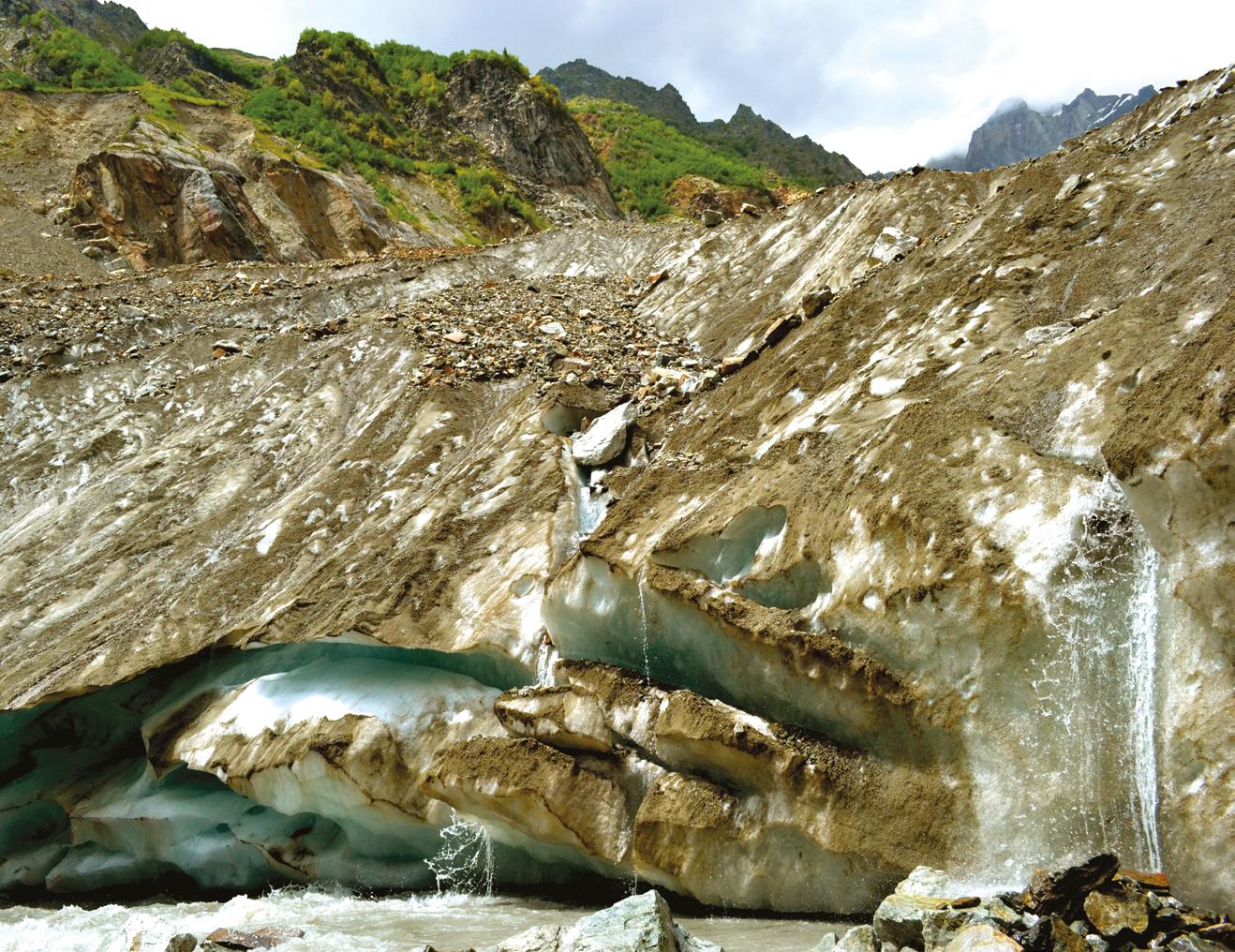
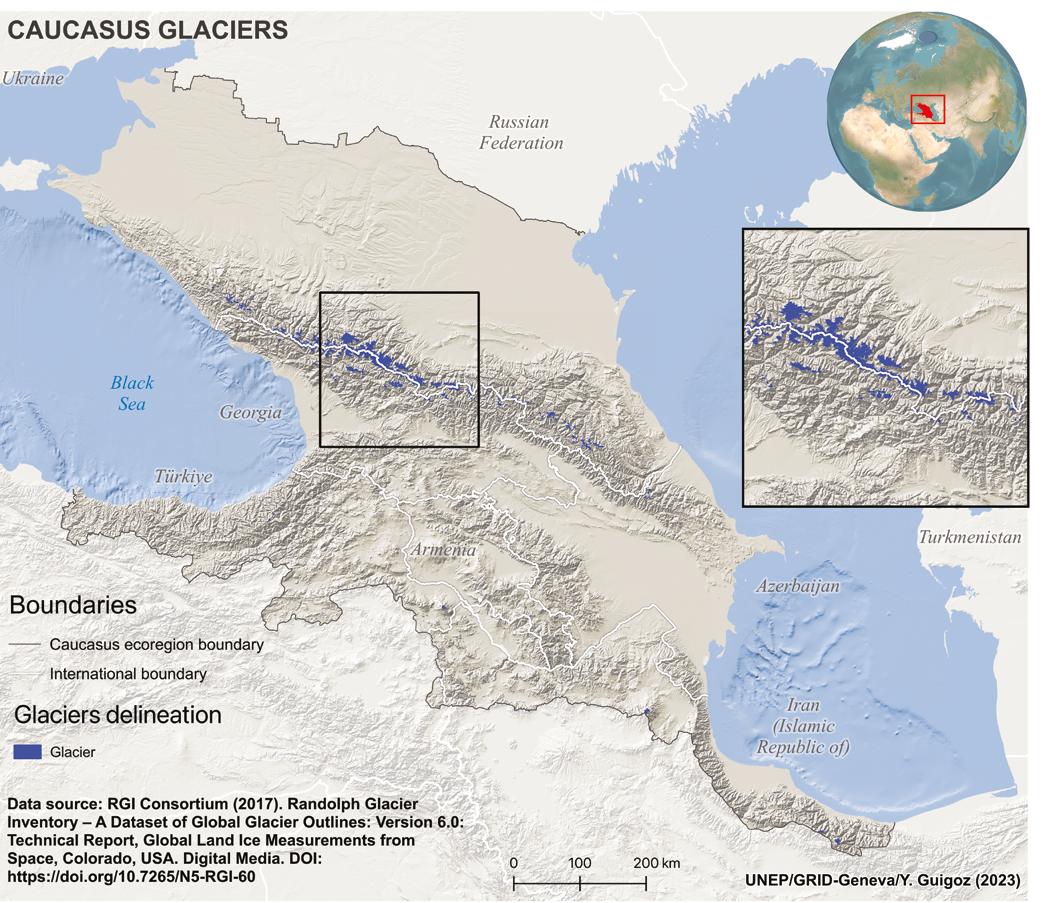
Between 2000 and 2020, the region lost 23 per cent of glacierized area, while the average glacier length has shrunk by ~485 metres (Tielidze et al., 2022a). Total ice loss during the same time amounted to ~11 gigatonnes of water (Tielidze et al., 2022b). The rate of decline varies across the range, appearing especially pronounced in the eastern Greater Caucasus (Tielidze et al., 2022a).
From 2019 through 2020, glaciers covered ~340 km² in Georgia, 1 km² in Azerbaijan, and none in Armenia.
From 2000 through 2020, glacier cover declined by 24 per cent in Georgia, 77 per cent in Azerbaijan (Tielidze et al., 2022a), while in Armenia, average
snow depth decreased by 3 cm and seasonal snow cover duration shortened by 11 days, according to the Hydrometeorology and Monitoring Center.
Future projections indicate high glacier sensitivity to rising global temperatures. Under warming of +1.5°C relative to pre-industrial levels, about 40 per cent of the glacier mass could be preserved. However, at +3°C, near-total deglaciation is expected (Zekollari et al., 2024). If current ice loss trends continue, most of the region’s glaciers could vanish by 2100 (Zemp et al., 2019; Hock et al., 2019). Some climate scenarios suggest that under current greenhouse gas emission trajectories, temperatures in parts of the region may rise by more than 4.5°C by 2100, and may be accompanied by a decline in average annual precipitation of more than 8 per cent, which would have major implications for the availability of freshwater resources in the region (World Bank 2021a, 2021b, 2021c), especially during dry hot summers.
Since 2010, ice loss has accelerated, likely due to rising summer temperatures and decreasing winter precipitation (Tielidze et al., 2022b). Additional factors, such as Saharan dust deposition and increased shortwave radiation, have further intensified snow and ice loss (Zhang et al., 2021; Tielidze et al., 2022a; Notarnicola, 2022).
3. Existing monitoring and observation systems for snow and ice cover
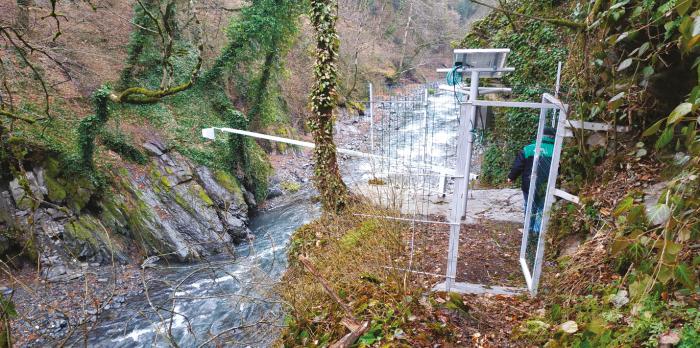
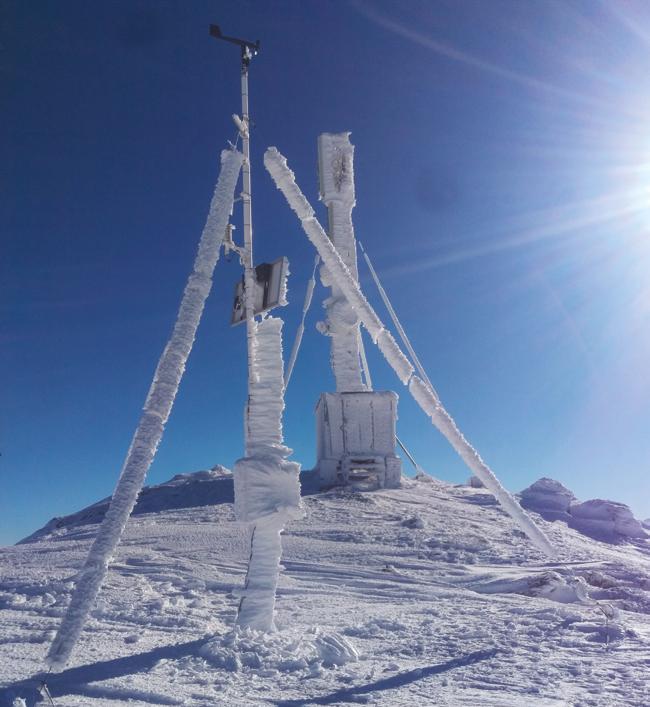
Georgia, Armenia, and Azerbaijan have been members of the World Meteorological Organization (WMO) since the early 1990s. Today, most groundbased environmental monitoring in mountainous areas is conducted by the National Meteorological and Hydrological Services (NMHS), which act as agencies of the countries’ ministries of environment. Armenia, for example, operates more than 40 meteorological stations in mountainous areas. Cross-referencing the GEO Mountains In Situ Inventory v2 (GEO Mountains, 2022) with the WMO Observing Systems Capability Analysis and Review Tool (OSCAR)/Surface database suggests that there are many other stations that provided observations in the past, but whose records ended – often in the 1990s and early 2000s (Thornton et al., 2021). Measurements from nine river discharge stations across the South Caucasus are available via the Global Runoff Data Centre, with more potentially available upon request from the respective national agencies. Universities and research institutes, both regional and international, also use in situ monitoring, and generate datasets that can complement those by NMHSs and thus help close regional observation gaps.
Georgia
Limited observational records on various themes are available in Georgia for public download in PDF format from the National Environmental Agency (NEA) website. Other open-access data can be obtained through official correspondence; raw data can be shared with scientists for free, but processed data are not freely downloadable or publicly available. Regarding the cryosphere, basic data on glacier extent are collected by the NEA and two universities, and a glacier survey was conducted in 2015.3 However, most recent and active monitoring is conducted by the group of Dr. Tielidze at Ilia State University.4
Snow extent and depth are monitored at some NEA stations, but the network is sparse, leaving a reliance on remote-sensing approaches. In addition, some snow measurements are made along preselected routes during annual surveys, still largely following Soviet era methodologies, to develop hydrological assessments and flood forecasts. There is now a requirement across the region to modernize monitoring practices by employing, for example, automated, continuous snow water equivalent (SWE) sensors, such as snow pillows or cosmic-ray devices. Realtime transfer of data for weather, snow, and hydrology is also crucial for such observations to contribute meaningfully to early warning systems.
3 Public information on glaciers at the NEA website, https://nea.gov.ge/En/popular/5
4 Glaciology Georgia website provides information, publications, photos, blog articles, etc., about Georgian glaciers, https://glaciologygeorgia.wordpress.com/
Glaciers in the Caucasus Ecoregion from the Caucasus Environment Outlook, UNEP, 2024
Armenia
Climate summaries and hydrological data can be obtained in PDF format via the website of the Hydrometeorology and Monitoring Centre of Armenia. Snow depth is measured at both manual and automated meteorological stations in the country. In addition, snow density and SWE are measured at 27 manual stations across the country. Due to limited financial and technical resources, however, route-based and aerial snow monitoring methods for snow and snow water equivalent assessments have not been conducted for 20 years, and avalanche monitoring ceased more than 30 years ago.
Azerbaijan
A basic description of Azerbaijan’s glaciers is provided by the Ministry of Ecology and Natural Resources as well as a description of snow measurements that have been conducted since the 1950s.5 The same article also explains that the measurements are undertaken on the Tufandag Glacier annually, although specific details are not provided. In addition, some basic qualitative hydrological information is publicly available.6 The highest hydrometeorological stations are located at Tufandag, at 4,172 m, Kabash, at 3,500 m, and Shahdag at 2,700 m. Monitoring results show that the snow line has moved up by more than 300 m over the past 20 years (MENR of Azerbaijan, 2021). There is no standard procedure for researchers or the public to access historical climatic time-series, snow and glacier observations and other data. In terms of Earth Observation satellite monitoring services, Azerbaijan, through Azercosmos, leads among South Caucasus countries by providing satellite monitoring within its territory and across the broader Caucasus region, but sharing of these data remains limited.
5 Public information on snow field measurement works at the National Hydrometeorological Service website, https://meteo.az/index.php?ln=az&pg=149
6 Hydrological data by months, current situation on local and transboundary rivers at the National Hydrometeorological Service website, https://meteo.az/index.php?ln=az&pg=79
Data derived using geodetic methods (remote sensing) for glaciers across the region is available from the World Glacier Monitoring Service. Similarly, remote sensing offers excellent potential for monitoring snow cover dynamics in a spatially continuous fashion (e.g. Notarnicola, 2022). However, deriving SWE — a more hydrologically relevant variable — directly from remote sensing data remains an ongoing research challenge.
Technical capacities and infrastructure for permafrost monitoring, which generally requires in situ methods, are currently absent across the entire region. In addition, while glacier lakes can also be readily identified using satellite imagery (e.g. Song et al., 2025), the characterization of hazards requires additional local observations such as water levels. No glacial lake monitoring system is available in the region. Also, satellite-based remote sensing currently offers fewer possibilities to gain insights into many
other important processes and dynamics related to permafrost, avalanche risk, slope failure probabilities, groundwater, and biodiversity. As such, the expansion and maintenance of effective, representative, multidisciplinary in situ networks remains a critical need and thus a key regional priority.
Adoption of more sophisticated monitoring and decision-support technologies would also be beneficial. For example, in Armenia, it has been suggested that the establishment of a radar network and higher resolution (1–3 km) Numerical Weather Prediction models would be helpful in the context of extreme weather events, especially hailstorms. A snow monitoring programme that incorporates automated snow measurements at dedicated high-elevation sites with drone and satellite-derived data has also been called for. It has furthermore been suggested that improved drought and flood forecasts, and multi-hazard early warning system would be helpful.
Georgia, in collaboration with the Finnish Meteorological Institute, is reconfiguring and maintaining all its meteorological and hydrological stations. Since 2020, 154 new hydrometeorological stations have been, or are still being, deployed. Once completed, all stations will be integrated into the WMO Global Telecommunication System, the WMO Information System (WIS), and the Observing Systems Capability Analysis and Review Tool (OSCAR)/Surface. Thirty-one stations are currently registered in OSCAR. While considerable progress has been made in internal data management systems, free and open access to snow and ice data remains limited. Developing open-access platforms and interoperable databases could help address this issue. Another major outstanding limitation concerns human capacities, which improved training and partnerships could help address.
In Armenia, all 45 operational stations are registered with WMO OSCAR/Surface. Twenty of the stations exchange data internationally via WMO systems, and form part of the WMO Global Basic Observing Network and the Regional Basic Observing Network. Similar systems and capabilities presumably exist in Azerbaijan to enable the necessary reporting and transfer of climatic observations to the WMO, and their use for internal purposes (e.g. weather forecasting, issuing alerts). The WMO OSCAR/Surface map shows 75 stations in Azerbaijan. Apparently, however, none of the three
countries make NMHS observations freely available to researchers and the public, as encouraged by WMO Resolution 40
More generally, the opportunity exists to improve the interoperability of data and information obtained through existing monitoring efforts. The use of existing and potential new monitoring data for decision-making around climate change adaptation across the region could be strongly enhanced by more accessible data storage and management infrastructure and enhanced knowhow and expertise alongside more consistent implementation of data sharing policies. There is strong potential for many of these developments to be pursued on a regional level, e.g. through a shared data portal and training courses between national agencies to build technical and human capacities. Strengthening the coordination and integration of existing systems with the academic and the research communities would capitalize on the multiple monitoring activities, the collected cryosphere data and the available knowledge. In addition, mechanisms coordinated at the international level provide support and opportunities for data exchange and the development of systems and capacities. One example is the WMO Flash Flood Guidance System, which provides a model for regional collaboration that could potentially be replicated for cooperation on cryosphere-related monitoring and activities.
5. Impacts of shrinking snow and ice cover in the South Caucasus
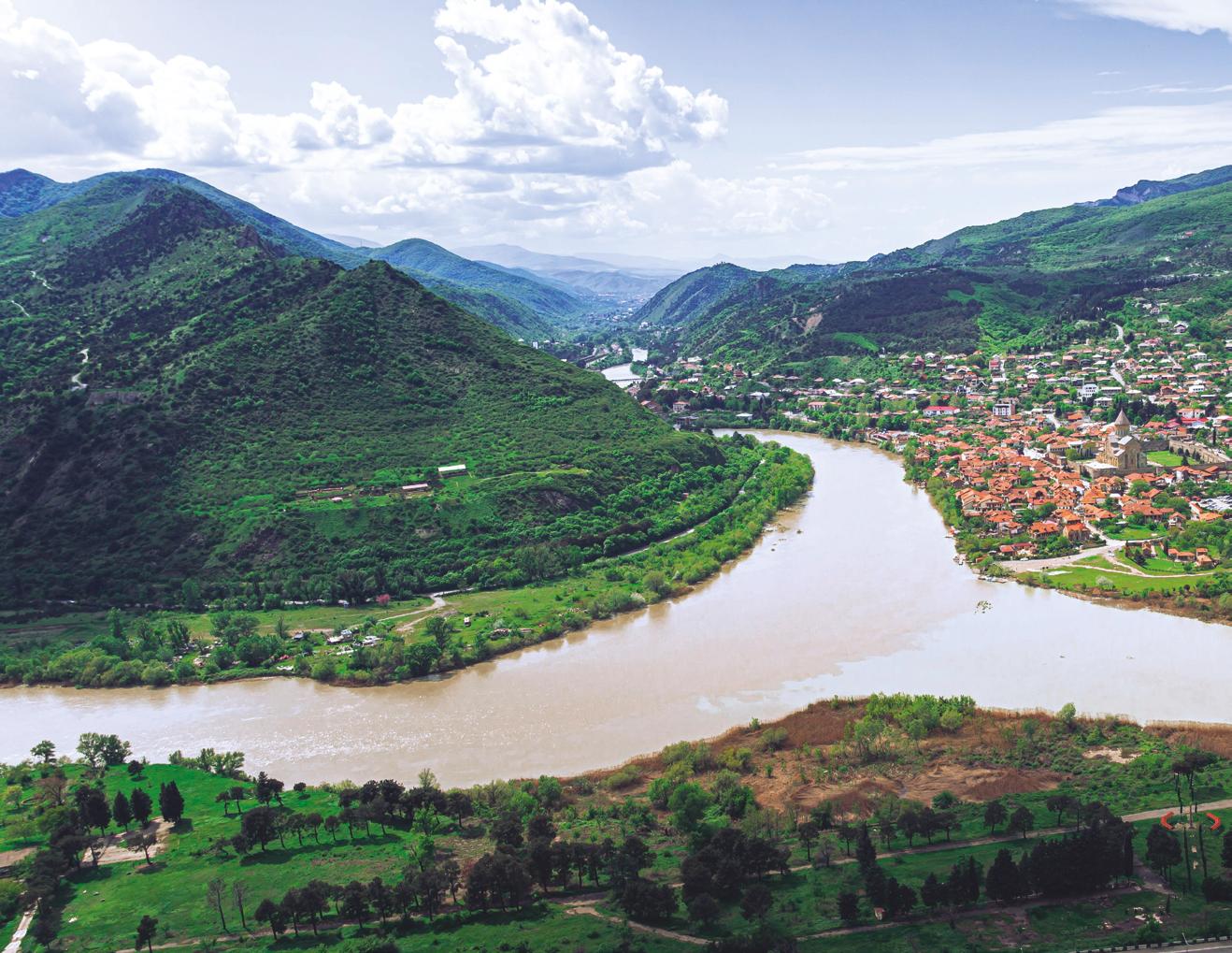
The South Caucasus cryosphere forms an important part of the hydrologic cycle, which connects water in all its forms as snow, glaciers, rock glaciers, rivers, wetlands, lakes, and groundwater systems across borders and ecosystems. Glacier melt and snow melt initiate a chain of water flows that sustain rivers, replenish aquifers, maintain wetlands, and ultimately feed into major water bodies like the Caspian and Black Seas. Disruptions in one part of the water cycle – such as accelerated glacier retreat – can reverberate downstream by altering seasonal water flows, reducing aquifer recharge, degrading aquatic habitats, and weakening the integrity of entire ecosystems. Recognizing and managing these ecosystems as interconnected hydrological units is
essential for effective climate adaptation and biodiversity protection.
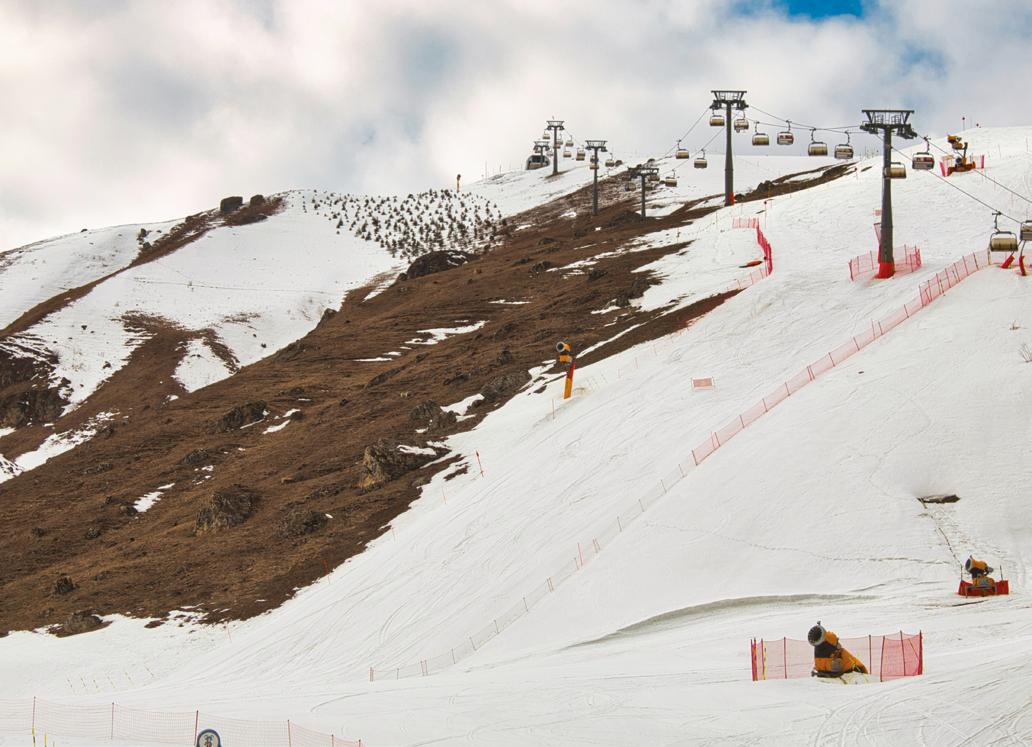
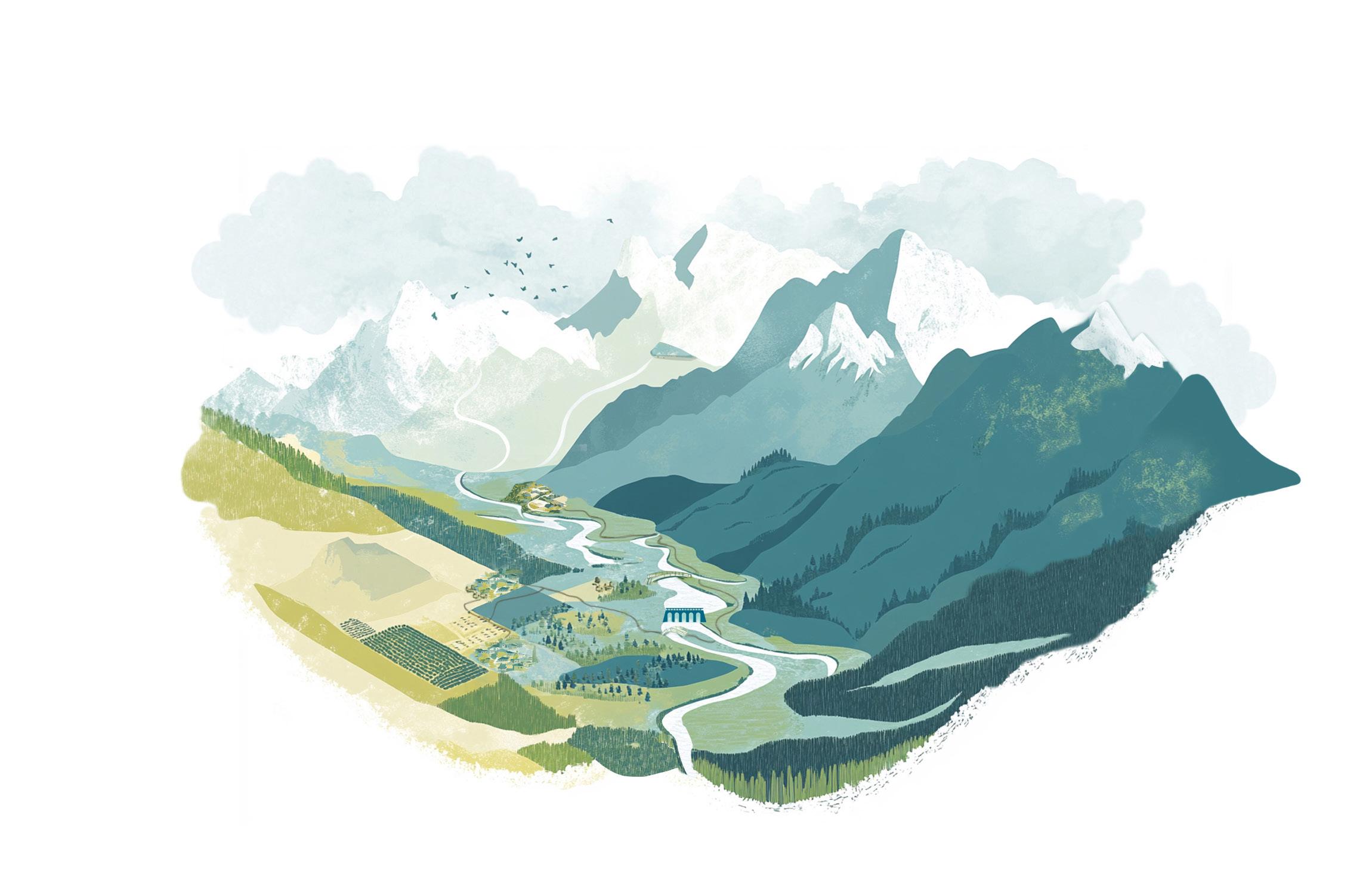
The loss of snow and ice cover affects several economic sectors, the environment, cultural traditions and practices, and the daily lives of populations across the South Caucasus. Some existing problems are worsening, and new challenges are emerging. Key impacts – reduced water availability, biodiversity loss, and increased frequency and severity of certain mountain hazards – are discussed in the next sections. A declining cryosphere can also affect local economies, for instance by changing the viability of winter tourism in the region (Gaprindashvili et al., 2016). The Infographic on the next page illustrates additional impacts.
Impacts of the loss of snow and ice in the South Caucasus
Between 2000 and 2020, glaciers in the Caucasus have lost approximately 20% of their mass.
Permafrost thawing
Landslides & rockfall
Reduced supply of drinking water and irrigation water, with effects on food security, livelihoods, cultural heritage, and overall security
By 2100, a temperature rise of 1.5°C would result in loss of approximately 60% of glacier mass compared to 2024.
Glaciers mass loss
By 2100, a temperature rise of 3°C could result in near-total loss of glaciers.
Snow
melting earlier, reduced snowfall
Ice avalanche & snow avalanche
Glacial lake outburst floods
Loss of endemic species dependent on snow and ice
Mudflows
Increase in human–wildlife conflicts
WATER RESOURCES
▶ Reduced summer water availability in hot and dry years
▶ More pronounced annual and inter-annual water fluctuations
▶ River flows see earlier peaks and then decrease to lower than average levels
▶ Drying of springs
Changes in cyclic and seasonal climate patterns disrupting plant and animal species
Increase in economic costs to tourism, tourism, transport, mining and hydropower
Rain-on-snow floods & flash floods
Reduction in albedo
Shifts in migratory routes and upward migration of species
ECOSYSTEMS
▶ Degraded habitats
▶ Changes in river nutrients
▶ Changes in sediments
▶ Spread of invasive species
Groundwater depletion
Increase in groundwater withdrawals since 2000 – 25% in Georgia, 100% in Armenia and nearly 400% in Azerbaijan
Increased
frequency and severity of
Disrupted and reduced water availability
Future water availability in the Caucasus largely depends on the rates of glacier retreat and snow cover change (UNEP, 2024). Once glacier loss reaches a tipping point, known as “peak water”, the glaciers’ contribution to river discharge will decline, leading to increased water scarcity at the local, national and regional levels. By 2080, river discharge is expected to become insufficient to meet water demand, making the region more dependent on depleted snow and glacier meltwater (Mankin et al., 2015; Muccione and Fiddes, 2019).
Climate change is already affecting agricultural productivity and food security in the Caucasus. Existing water availability challenges – stemming from inefficient use, unequal distribution, and seasonal fluctuations – are expected to worsen as ice and snow volumes shrink. While Armenia and Georgia rely heavily on groundwater reserves for drinking water, Azerbaijan depends largely on the Kura River and mountain watersheds. Between 2000 and 2017, water withdrawals increased significantly across the
region: Armenia saw a 32 per cent rise, Georgia 22 per cent, and Azerbaijan 10 per cent. Projections in the initial National Adaptation Plan of Azerbaijan estimate that by 2100, with a temperature increase of 1.8°C –2.7°C in the Lesser Caucasus basin, river discharge could decline by 15 per cent compared to current levels.
Declining river flows across the region have led to a growing reliance on groundwater. Since 2000, groundwater withdrawals have surged by 25 per cent in Georgia, by 100 per cent in Armenia, and by nearly 400 per cent in Azerbaijan (UNEP, 2024). With the ongoing retreat of glaciers, thawing of permafrost, and loss of snowpack, the importance of mountain groundwater in hydrological systems is growing. Reduced and shifting cryosphere recharge may lower overall groundwater availability, with uncertain impacts on catchment hydrology. Improved understanding of cryosphere-groundwater links is essential for managing water resources (Van Tiel et al., 2024).
Reduced water availability directly affects the energy sector, as hydropower is a critical source of electricity in the region. In 2021, hydropower plants accounted for over 80 per cent of Georgia’s electricity production (International Energy Agency, 2023). The 1,300-MW Enguri hydropower plant, which serves as the backbone of the country’s electricity generation system, is largely dependent on glacier run-off. According to a 2018 report, the glacier area in the Enguri basin had decreased by 23 per cent compared to the 1970 glacier inventory (Ministry of Environmental Protection and Agriculture of Georgia, 2021).
hazards
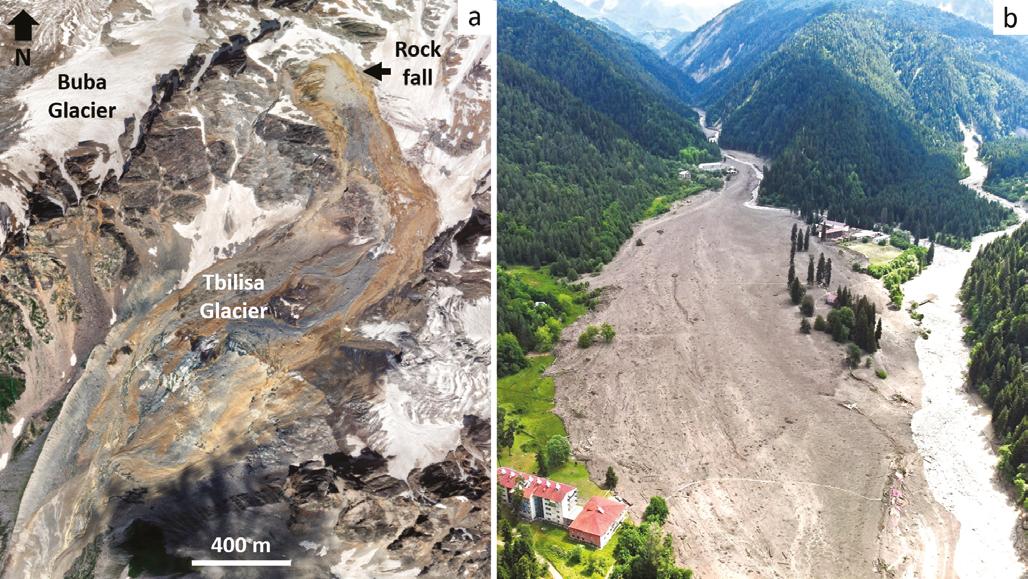
As glaciers shrink, the number of proglacial, supraglacial and subglacial lakes is increasing, raising the risk of hazardous events, including glacier lake outburst floods and debris flows. Before peak water is reached, excess run-off will increase flood risk during hot years (Mankin et al., 2015). Glacier thinning and permafrost degradation are also destabilizing high-elevation rock faces, increasing the risks of landslides, glacial lake outburst floods, snow avalanches and slope collapse (Tielidze et al., 2019). These hazards are expected to become more frequent as ice and permafrost loss continues (Tielidze et al., 2023a), threatening both human life and settlements, as well as critical infrastructure. As an example, in 2023, a rock and ice avalanche in Georgia triggered a debris flow that killed 33 people and devastated the resort of Shovi (Kevanishvili and Ratiani, 2024).
Glacier retreat, snow and ice cover change, and reduced river flow have far-reaching ecological consequences. Glacier-fed streams and rivers support cold-adapted species, but rising temperatures and declining water levels degrade these habitats, threatening fish and other aquatic life. Such habitat loss and shifting temperatures and hydrological cycles affect many other aspects of biodiversity, disrupt essential ecological processes and increase extinction risks (WWF, 2024; Baghirov, 2025). Freshwater ecosystems are also affected by changes in river nutrient levels and altered sediment dynamics (Reidmiller et al., 2017).
Temperature changes, along with snow and ice loss, are altering ecosystem distribution patterns. These changes can cause the spread of invasive species and shifts in migratory routes, including the upward migration of native species. In Georgia, for example, the golden jackal has recently expanded into mountainous areas (Shakarashvili et al., 2020). Such shifts, particularly the expansion of mammals into new areas and their increasing proximity to human settlements, are contributing to rising human-wildlife conflicts.
6. National policies and ongoing efforts to adapt to snow and ice loss
Considering the region’s rich biodiversity, high exposure to hazards, and the vulnerability of ecosystems and local communities to the impacts of climate change, adaptation efforts in the South Caucasus are of critical importance. Armenia, Azerbaijan, and Georgia have been developing policies aligned with international commitments under the United Nations Framework Convention on Climate Change (UNFCCC), and are actively identifying climate vulnerabilities while developing national responses. Key documents such as
National Communications to the UNFCCC, Nationally Determined Contributions (NDCs), and National Adaptation Plans (NAPs) outline the countries’ needs, as well as their ongoing and planned efforts to strengthen adaptive capacity and resilience. The new Global Biodiversity Framework under the Convention on Biological Diversity provides another opportunity to develop and implement policies, in particular National Biodiversity Strategies and Action Plans, that take into account the effects of a changing cryosphere on nature.
ARMENIA
NATIONAL ADAPTATION PLANS
Adopted NAP for 2021–2025
The NAP aims to strengthen impact assessments and enhance the country’s resilience to the adverse effects of climate change (Government of the Republic of Armenia, 2021).
AZERBAIJAN
Initial NAP developed in 2024
The NAP outlines comprehensive strategies to address climate-related challenges, with a strong focus on agriculture, water resource management, mountains and coastal zones, and disaster risk reduction (MENR of Azerbaijan, 2024).
GEORGIA
NAP preparation ongoing
The NAP will include the development of adaptation policies for mountain regions and water resources, particularly glaciers. It will also assess climate impacts on coastal zones, mountain ecosystems, ecosystem services, and the livelihoods of local populations.
NATIONALLY DETERMINED CONTRIBUTIONS NATIONAL COMMUNICATIONS TO THE UNFCCC
NDC 3.0 to be submitted in 2025 NDC 3.0 is intended to include enhanced adaptation targets and broader stakeholder engagement.
NDC 3.0 to be submitted in 2025
The process updates targets and emphasizes adaptation measures.
NDC 3.0 to be submitted in 2025
Building on lessons learned, NDC 3.0 increases focus on adaptation and the needs of vulnerable groups.
5th NC in preparation
The 5th NC is intended to assess climate change-related risks, and options for sustainable development. The 4th NC (2020) reviewed climate change scenarios, assessed ecosystem vulnerabilities and climate-sensitive sectors, identified priority adaptation measures, and evaluated the intensification of hydrometeorological hazards and the need for early warning and information dissemination systems.
5th NC not started yet Azerbaijan submitted its 4th NC in 2021. It includes climate scenarios, a sensitivity assessment of key sectors – particularly agriculture and water resources –and outlines adaptation actions in response to extreme heat and other climate risks. Mountain areas are mainstreamed, as they cover 60% of the territory.
5th NC published on 30 April 2025
The 5th NC has a focus on climate change impacts and adaptation communication (MEPA of Georgia, 2025). It assesses vulnerabilities and adaptation needs, with detailed analysis of the impacts on glaciers, surface water and groundwater resources, natural hazards, forests, biodiversity, and other critical areas.
The countries have adopted vulnerability assessments and adaptation plans, but have not yet developed methodologies and actions for addressing losses and damages that explicitly address snow and ice loss. Furthermore, holistic, inclusive and in-depth vulnerability assessments are still missing.
Armenia
Armenia’s NAP outlines the guiding principles, institutional arrangements, and priority measures for 2021–2025 (Government of the Republic of Armenia, 2021). The NAP does not present a detailed risk analysis of changes in the cryosphere, nor does it reference a loss and damage framework or methodology to quantify and address evolving risks.
The priority measures include sector-specific actions, such as the adoption of the Adaptation Plan for the Water Resources Sector and the Action Plan for Climate Projections and Early Warning Systems (Government of the Republic of Armenia, 2022). Adopted in 2022, the adaptation plan for water resources addresses some challenges associated with snow and ice loss, such as the upward shift of the snowline. It also identifies decreasing river run-off during hot periods and increasing water demand, especially during droughts, as key stressors on the hydrological system, and concludes that these changes disrupt the balance of aquatic ecosystems and contribute to biodiversity loss. As a critical recommendation, it emphasizes integrating water vulnerability considerations into the issuing of water use permits.
Azerbaijan
The initial NAP of Azerbaijan includes climate risk mapping, with brief reference to glacier melt and existing monitoring systems. Among the priority areas identified are water resources, disaster risk
reduction and mountain ecosystems. The document highlights a decline in both surface water and groundwater availability, largely due to reduced winter and spring precipitation and diminishing snow water reserves in river basins. As a result, major rivers in Azerbaijan are experiencing reduced flow (MENR of Azerbaijan, 2024).
The NAP includes a chapter on the climate resilience of mountain ecosystems, emphasizing growing threats, such as glacier retreat, biodiversity loss, and the disruption of traditional practices in local communities. The disappearing cryosphere is expected to significantly impact activities – such as mountain agriculture, herding, and medicinal plant harvesting – that are vital to cultural and economic well-being. Additionally, the initial NAP outlines a preliminary list of measures for further consideration during the 2025–2026 period, including disaster risk reduction, improvement in water management, and creation of new protected areas.
Georgia
Georgia expects a 2025 launch of its NAP, which will assess the impacts of climate change on mountain ecosystems, glaciers, ecosystem services, mountain economies, and the quality of life in local communities. The Fifth National Communication includes a chapter on addressing losses and damages associated with the adverse effects of climate change (MEPA of Georgia, 2025). This chapter highlights the melting of glaciers and the resulting reduction in water resources as well as landslides and mudflows triggered in cascading events. Georgia’s NDC (2021) includes a special paragraph on mountains and acknowledges their vulnerability to extreme weather and associated geological events. Key priority areas for Georgia’s NAP include water resources, forests and biodiversity, and extreme weather events.
7. Emerging needs and recommendations for building resilience to a melting cryosphere
Reducing greenhouse gas emissions
Mitigating the impacts of declining snow and ice cover in the South Caucasus requires enhanced international cooperation and efforts to limit the rise in global temperatures. Zekollari et al. (2025) emphasize that glaciers in the Caucasus are expected to respond more rapidly and exhibit higher sensitivity to warming than glaciers in other regions. As a result, the effectiveness of current and near-term climate policies globally will play a critical role in determining how much glacier ice remains in the South Caucasus. Adapting to the changes already underway requires more effective water management, environmental governance, and cooperation at the local, national, and regional levels.
Strengthening regional cooperation and transboundary governance
The IPCC AR6 WGII Cross-Chapter Paper 5 on Mountains (Adler et al., 2022) concludes that “regional cooperation and transboundary governance
in mountain regions, supported by multi-scale knowledge networks and monitoring programmes, enable long-term adaptation actions where risks transcend boundaries.” Collaboration and exchange at regional levels tap into local and traditional knowledge, address challenges of mutual concern and support adequate solutions. Strengthening cross-border and regional cooperation is essential in terms of ensuring data availability and the exchange and sharing of technical know-how. Addressing and enhancing technological capacity for efficient data-sharing across countries is also a key priority. Existing regional frameworks, such as those under the WMO, UNEP and its RADISC initiative, present valuable opportunities for regional dialogue and cooperation, coordinated data exchange and joint capacity-building. Developing and implementing transboundary management plans for water, biodiversity, disaster risks, and other critical issues carry multiple co-benefits for livelihoods and sustainable development.
Elevating the needs of the South Caucasus in global cryosphere studies and discussions
Global studies often combine the Caucasus with the Middle East, making specific regional analysis more difficult. It is crucial to conduct separate investigations and to advocate for the unique needs of the South Caucasus at the UNFCCC, the Convention on Biological Diversity, the High-level Political Forum on Sustainable Development, and other frameworks, in order to bring in investments and knowledge. Sharing lessons from other mountain regions will enhance regional governance in the efforts to preserve ice and snow cover and implement effective adaptation strategies.
Implementing enhanced in situ monitoring
Currently, because only a few glaciers in the South Caucasus are regularly monitored, and most areas lack continuous field measurements, the access to detailed, relevant data for analysis and decision-making is limited. In situ monitoring of permafrost, supraglacial and proglacial lakes, in particular, remains limited across the region. To address these limitations, conducting glacier, snow, and ice cover inventories, along with regular monitoring and data collection, is essential. Investment in monitoring networks (in situ, satellite-based, and combined) should be accompanied by capacity-building in data management, interpretation, and system maintenance. This can form the basis for further studies of glacier and snow changes, as well as the local and regional hydrological impacts.
Developing integrated monitoring systems
The design of monitoring systems should capture the connectivity across the water cycle — from glacial melt to groundwater recharge and ecosystem response. Monitoring efforts should link data on water quantity and quality with ecological indicators, particularly in biodiversity hotspots such as wetlands and glacial rivers. This will support more holistic water governance and strengthen understanding of the cascading impacts of cryosphere change on ecosystem services, food security, and transboundary water stability. Moreover, integrating biodiversity considerations into cryosphere monitoring would provide valuable insights into how biodiversity responds to the retreat of snow and ice and the changing environmental conditions in the South Caucasus, and how to develop relevant policy measures for biodiversity conservation. Collaboration with managers of protected areas is important in developing management plans that incorporate climate change impacts and support ecosystem resilience. Ensuring the protection of peri-glacial and post-glacial ecosystems, which are highly vulnerable, is imperative.
Improving monitoring methodologies and data coordination
Upgrading and standardizing the regional hydrometeorological knowledge base and assessment methodologies is essential for more effective monitoring. Many hydrometeorological services in the region still rely on outdated methods for hydrological assessments and flood forecasting. Modernization efforts should include the automation of SWE monitoring systems to ensure more accurate and timely data collection. In addition, actively involving the research and academic communities in the implementation of regional data management systems and platforms for cross-border data exchange is needed. Strengthening technical capacity for data sharing – through support from organizations such as the WMO – is also critical in enabling climate resilience in the region.
Adopting science-driven and inclusive governance mechanisms
Strengthening collaboration between the scientific community and government institutions is essential for data collection, monitoring, and forecasting, and for evidence-informed policy development. Enhancing this cooperation, e.g. through defining the key role for academic institutions in monitoring and assessment, joint studies, databases and programmes, through enhancing teaching and learning will help close existing gaps in snow and ice monitoring and activities across the region. It also will help to build uninterrupted and sustained research that responds to policy priorities of the countries and the region. Inclusive governance also involves local governments, communities, and civil society actors, along with others from relevant sectors implementing and sustaining climate resilience measures.
Training the next generation of cryosphere specialists
Supporting and educating young people in high schools and university programmes on topics of climate change, environmental monitoring and Earth observation is fundamental. The national education systems should improve training in snow hydrology, glaciology, remote sensing and other practical aspects of cryosphere monitoring by upgrading existing bachelor’s and master’s programmes in line with international methodologies and national needs, along with increasing incentives for young specialists in the field. These efforts should be supported through formats such as summer schools, exchange visits, and practical demonstrations. The summer schools implemented under the Strengthening Adaptive Capacity in the Caucasus: Enhancing Regional Cooperative Action for the Benefit of the Caucasus Mountain Region project could serve as a source of inspiration.7
Mainstreaming snow- and ice-related vulnerabilities into national policy frameworks
National policies and action plans are essential tools for ensuring coordinated responses and effective resource mobilization. National Adaptation Plans and other relevant policy frameworks such as National Biodiversity Strategies and Action Plans should explicitly address vulnerabilities and needs related to snow and ice loss. Furthermore, while all countries have incorporated the principles of Integrated Water Resources Management into their legislation and regulations, not all have government-approved river basin management plans. There is a need for a water management approach that considers upstream-downstream connectivity, including the role of glacier-fed systems in maintaining wetland health, riverine ecosystems, and transboundary water balances.
Enhancing local preparedness for disasters
Strengthening and expanding early warning systems is a priority in enhancing preparedness in disaster risk management and in protecting local communities, livelihoods, and ecosystems. These systems play a critical role in enabling timely responses to climate-related hazards, particularly in areas affected by changes in snow and ice cover. Locally led adaptation and nature-based solutions offer opportunities to integrate traditional knowledge, engage diverse community groups, and help build long-term, sustainable solutions. In addition, implementing nature-based solutions can provide multiple co-benefits, such as climate change mitigation, disaster risk reduction, and biodiversity conservation. They also pay particular attention to vulnerable groups, support and empower local women and promote the inclusion of youth.
Building a response framework for climate-related loss and damage
Developing methodologies for assessing tangible and intangible losses and damages in the South Caucasus is necessary. These methodologies should incorporate the decline of snow and ice and should evaluate vulnerable communities and species.
References
1. Adler, C., P. Wester, I. Bhatt, C. Huggel, G.E. Insarov, M.D. Morecroft, V. Muccione, and A. Prakash, (2022). Cross-Chapter Paper 5: Mountains. In: Climate Change 2022: Impacts, Adaptation and Vulnerability. Contribution of Working Group II to the Sixth Assessment Report of the Intergovernmental Panel on Climate Change [H.-O. Pörtner, D.C. Roberts, M. Tignor, E.S. Poloczanska, K. Mintenbeck, A. Alegría, M. Craig, S. Langsdorf, S. Löschke, V. Möller, A. Okem, B. Rama (eds.)]. Cambridge University Press, Cambridge, UK and New York, NY, USA, pp. 2273–2318, doi:10.1017/9781009325844.022.
2. Aubry-Wake, C., Bertoncini, A., & Pomeroy, J. W., (2022). Fire and ice: The impact of wildfire-affected albedo and irradiance on glacier melt. Earth’s Future, 10, e2022EF002685. https://doi.org/10.1029/2022EF002685
3. Baghirov, H. (2025). Study of the Greater Caucasus glaciers and forest distribution routes. In BIO Web of Conferences (Vol. 151, p. 02001). EDP Sciences.
4. Dumont, M., Tuzet, F., Gascoin, S., Picard, G., Kutuzov, S., Lafaysse, M., Cluzet, B., Nheili, R., and Painter, T. H. (2020). Accelerated snow melt in the Russian Caucasus mountains after the Saharan dust outbreak in March 2018, J. Geophys. Res.-Earth, 125, e2020JF005641, https://doi.org/10.1029/2020JF005641
5. Gaprindashvili, M., Tsereteli, E., Megrelidze, I., Lominadze, G., Shatirishvili, N., Margvelashvili, M. et al. (2016). The Georgian Roadmap on Climate Change Adaptation. Tbilisi: National association of Local Authorities of Georgia. https://www.researchgate.net/publication/337286978_The_Georgian_Road_Map_on_Climate_ Change_Adaptation
6. GEO Mountains. (2022). GEO Mountains Inventory of In Situ Observational Infrastructure v2.0. figshare. Dataset. https://doi.org/10.6084/m9.figshare.14899845.v4
7. Government of the Republic of Armenia. (2021). On Approval of the National Action Program of Adaptation to Climate change and the List of Measures for 2021-2025, National adaptation plan of the Republic of Armenia. https://www.undp.org/armenia/publications/national-adaptation-plan-republic-armenia
8. Government of the Republic of Armenia. (2022). Decision No. 1692-L, on Adoption of the Climate Change Adaptation Programme in the Water Resources Sector for 2022–2026.
9. Hock, R., Rasul, G., Adler, C., Cáceres, B., Gruber, F., Hirabayashi, Y., Jackson, M., Lo, M.-H., Mote, P., Muhammad, S., Sánchez, M. F., & Shahgedanova, M. (2019). High mountain areas. In H.-O. Pörtner, D. C. Roberts, V. Masson-Delmotte, P. Zhai, M. Tignor, E. Poloczanska, K. Mintenbeck, A. Alegría, M. Nicolai, A. Okem, J. Petzold, B. Rama, & N. Weyer (Eds.), IPCC Special Report on the Ocean and Cryosphere in a Changing Climate (pp. 131–202). Intergovernmental Panel on Climate Change. https://www.ipcc.ch/srocc/ chapter/chapter-2/
10. International Energy Agency. (2023). Georgia energy profile – Energy security. https://www.iea.org/reports/ georgia-energy-profile/energy-security
11. Kevanishvili, E. and Ratiani, I. (2024). Remembering Shovi: One Year After The Tragic Landslide In Georgia, Available at - https://www.rferl.org/a/shovi-landslide-disaster-georgia/33065959.html
12. Kordzakhia, G., Shengelia, L., Tvauri, G., Tsomaia, V. and Dzadzamia, M., (2015). Satellite remote sensing outputs of the certain glaciers on the territory of East Georgia. The Egyptian Journal of Remote Sensing and Space Science, 18(1), pp.S1-S7.
13. Kutuzov, S., Shahgedanova, M., Mikhalenko, V., Ginot, P., Lavrentiev, I., and Kemp, S. (2013). High-resolution provenance of desert dust deposited on Mt. Elbrus, Caucasus in 2009–2012 using snow pit and firn core records, The Cryosphere, 7, 1481–1498, https://doi.org/10.5194/tc-7-1481-2013
14. Mankin, J.S., Viviroli, D., Singh, D., Hoekstra, A.Y., Diffenbaugh, N.S. (2015). The potential for snow to supply human water demand in the present and future. Environmental Research Letters, 10(11), 114016. https://doi. org/10.1088/1748- 9326/10/11/114016
15. Ministry of Environmental Protection and Agriculture of Georgia. (2021). Fourth National Communication of Georgia Under the United Nations Framework Convention on Climate Change. Tbilisi. https://unfccc.int/sites/ default/files/resource/4%20Final%20Report%20-%20English%202020%2030.030.pdf
16. Ministry of Environmental Protection and Agriculture of Georgia. (2025). Fifth National Communication of Georgia to the United Nations Framework Convention on Climate Change. https://www.undp.org/sites/g/files/ zskgke326/files/2025-04/undp-georgia-5th-national-communication-2024-eng.pdf
17. Ministry of Ecology and Natural Resources of the Republic of Azerbaijan. (2024). Initial National adaptation plan – Azerbaijan. https://unfccc.int/sites/default/files/resource/2024_NAP_Azerbaijan.pdf
18. Muccione, V. and Fiddes, J. (2019). State of the knowledge on water resources and natural hazards under climate change in Central Asia and South Caucasus.
19. Notarnicola, C. (2022). Overall negative trends for snow cover extent and duration in global mountain regions over 1982–2020, Sci Rep 12, 1373. https://doi.org/10.1038/s41598-022-16743-w
20. Reidmiller, D.R., Avery, C.W., Easterling, D.R., Kunkel, K.E., Lewis, K.L., Maycock, T.K. et al. (eds.) (2017). Fourth National Climate Assessment. Volume II: Impacts, Risks, and Adaptation in the United States. Washington, D.C.: United States Global Change Research Program.
21. Schneider, S. H. & Dickinson, R. E. (1974). Climate modeling. Rev. Geophys. 12, 447–493. Available at https:// agupubs.onlinelibrary.wiley.com/doi/epdf/10.1029/RG012i003p00447
22. Shaw, T. E., Ulloa, G., Farías-Barahona, D., Fernandez, R., Lattus, J. M., & McPhee, J. (2021). Glacier albedo reduction and drought effects in the extratropical Andes, 1986–2020. Journal of Glaciology, 67(261), 158–169. doi:10.1017/jog.2020.102. Available at https://www.cambridge.org/core/journals/journal-of-glaciology/article/glacier-albedo-reduction-and-drought-effects-in-the-extratropical-andes-19862020/9876F5C774184D788816481E34BB60AA
23. Shakarashvili, M., Kopaliani, N., Gurielidze, Z., Dekanoidze, D., Ninua, L. and Tarkhnishvili, D. (2020). Population genetic structure and dispersal patterns of grey wolfs (Canis lupus) and golden jackals (Canis aureus) in Georgia, the Caucasus. Journal of Zoology 312(4), 227-238. https://doi.org/10.1111/jzo.12831
25. Thornton, J. M., Pepin, N., Shahgedanova, M., & Adler, C. (2022). Coverage of in situ climatological observations in the world’s mountains. Frontiers in Climate, 4, Article 814181. https://doi.org/10.3389/ fclim.2022.814181
26. Tielidze, L.G. and Wheate, R.D. (2018). The greater caucasus glacier inventory (Russia, Georgia and Azerbaijan). The Cryosphere, 12(1), pp.81-94. https://doi.org/10.5194/tc-12-81-2018
27. Tielidze, L.G., Kumladze, R.M., Wheate, R.D. and Gamkrelidze, M. (2019). The Devdoraki Glacier catastrophes, Georgian Caucasus. Hungarian Geographical Bulletin, 68(1), pp.21-35. https://doi.org/10.15201/hungeobull.68.1.2
28. Tielidze L.G., Solomina O.N., Jomelli V., Dolgova E.A., Bushueva I.S., Mikhalenko V.N., Brauche R., Aster T. (2020). Change of Chalaati Glacier (Georgian Caucasus) since the Little Ice Age based on dendrochronological and Beryllium-10 data. Ice and Snow. 60(3):453-470. https://doi.org/10.31857/S2076673420030052.
29. Tielidze, L. G., Nosenko, G. A., Khromova, T. E., and Paul, F. (2022a) Strong acceleration of glacier area loss in the Greater Caucasus between 2000 and 2020, The Cryosphere, 16, 489–504, https://doi.org/10.5194/tc16-489-2022
30. Tielidze, L. G., Jomelli, V., & Nosenko, G. A. (2022b). Analysis of Regional Changes in Geodetic Mass Balance for All Caucasus Glaciers over the Past Two Decades. Atmosphere, 13(2), 256. https://doi.org/10.3390/ atmos13020256
31. Tielidze, L.G., Cicoira, A., Nosenko, G.A. and Eaves, S.R. (2023a). The first rock glacier inventory for the greater Caucasus. Geosciences, 13(4), p.117. https://doi.org/10.3390/geosciences13040117
32. Tielidze, L., Charton, J., Jomelli, V., Solomina, O. (2023b). Glacial geomorphology of the Notsarula and Chanchakhi river valleys, Georgian Caucasus. Journal of Maps. 19. 10.1080/17445647.2023.2261490.
33. Toropov, P.A., Aleshina M.A. & Grachev, A.M. (2019). Large-scale climatic factors driving glacier recession in the Greater Caucasus, 20th-21st century. Int. J. Climatol., 39 (12), 4703–4720, doi:10.1002/joc.6101.
34. United Nations Environment Programme. (2024). Caucasus Environment Outlook. Second Edition. Arendal, Tbilisi and Vienna.
35. United Nations Environment Programme and GRID-Arendal. (2022). Mountains ADAPT: Solutions from the South Caucasus. Nairobi: United Nations Environment Programme.
36. van Tiel, M., Aubry-Wake, C., Somers, L. et al. (2024). Cryosphere–groundwater connectivity is a missing link in the mountain water cycle. Nat Water 2, 624–637. https://doi.org/10.1038/s44221-024-00277-8
37. World Bank Group. (2021a). Climate Risk Country Profile: Georgia.
38. World Bank Group. (2021b). Climate Risk Country Profile: Armenia.
39. World Bank Group. (2021c). Climate Risk Country Profile: Azerbaijan.
40. WWF. (2024). From biodiversity to climate action hotspot factsheet. Biodiversity and climate nexus in the Caucasus region. Available at https://wwfeu.awsassets.panda.org/downloads/cc-mitigation-and-adaptation. pdf?15847416/Biodiversity-and-Climate-Nexus-in-the-Caucasus-Region
41. Zekollari, H., Schuster, L., Maussion, F., Hock, R., Marzeion, B., Rounce, D.R., Compagno, L., Fujita, K., Huss, M., James, M. and Kraaijenbrink, P.D. (2024). Glacier preservation doubled by limiting warming to 1.5° C.
42. Zekollari, H., Schuster, L., Maussion, F., Hock, R., Marzeion, B., Rounce, D. R., ... & Sakai, A. (2025). Glacier preservation doubled by limiting warming to 1.5° C versus 2.7° C. Science, 388(6750), 979-983.
43. Zemp, M., Huss, M., Thibert, E. et al. (2019). Global glacier mass changes and their contributions to sea-level rise from 1961 to 2016. Nature 568, 382–386 (2019). https://doi.org/10.1038/s41586-019-1071-0. Available at https://www.nature.com/articles/s41586-019-1071-0#citeas
44. Zhang, Y., Gao, T., Kang, S., Shangguan, D., Luo, X. (2021). Albedo reduction as an important driver for glacier melting in Tibetan Plateau and its surrounding areas, Earth Sci. Rev., 220. https://doi.org/10.1016/j. earscirev.2021.103735. Available at https://www.sciencedirect.com/science/article/pii/S0012825221002361