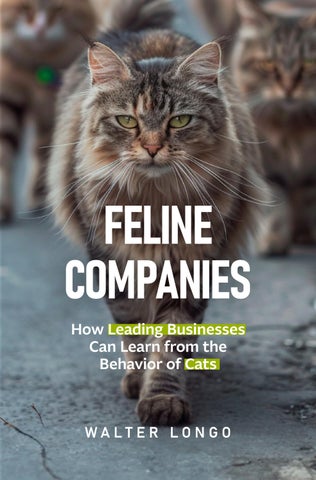
FELINE COMPANIES
How Leading
Businesses
Can Learn from the Behavior
of
Cats WALTER LONGO
“To lead like a cat is to understand that strength and subtlety walk hand in hand.”
In the corporate world — where speed often crushes precision and anxiety suffocates creativity — Feline Companies is an invitation to rethink leadership. Inspired by feline behavior — animals that balance independence and connection, attention and rest, courage and prudence — Walter Longo offers a practical and philosophical guide for those who want to lead with strategy, vision, and humanity.
Each chapter unveils powerful analogies between feline instincts and corporate decisions, exploring themes such as curiosity, resilience, adaptability, focus, independence, and strategic observation. With historical examples, philosophical insights, and real-world applications, Longo bridges the animal kingdom and the boardroom in a provocative way.
This is not just another leadership book. It’s an invitation to transform your company — and yourself — into a feline enterprise: one that lands on its feet through adversity and achieves extraordinary results with elegance, wit, and emotional intelligence.
FELINE COMPANIES
How Leading Businesses Can Learn from the Behavior of Cats
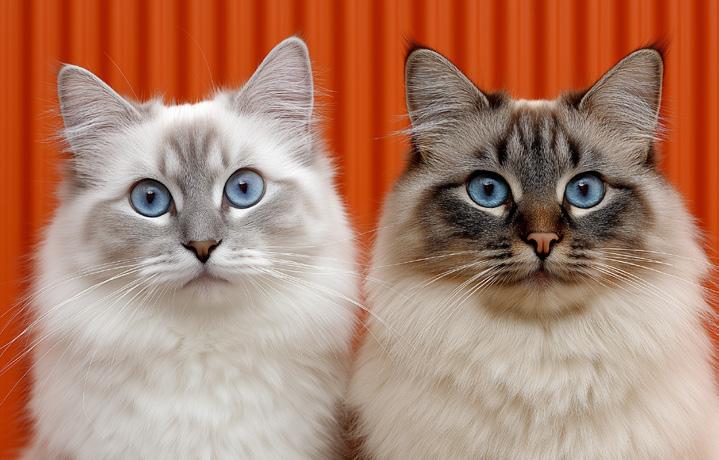
To Lady Ísis Bizunga and Sir Nietzsche Kael , my two Neva Masquerade cats whose elegance and presence inspire this book.
Their quiet lessons, dignified posture, and serene joy remind us each day that true leadership is about observing, waiting, and acting at the right moment.
Hoping for the Best, Preparing for the
Why companies must combine trust in the future with solid contingency plans.
Acting in Harmony
Cats read space before they act; leaders must do the same with culture, context, and limits.
Lessons from Nietzsche (the Philosopher and the Cat)
A dive into Nietzschean philosophy and feline behavior to highlight the importance of assuming destiny and responsibility.
PART II – STRATEGY IN MOTION
Facing Risk with
The difference between heroic action and recklessness — and how cats master the balance.
Belonging Without Losing Freedom
How to thrive within a group while keeping autonomy and identity intact.
of Daydreaming
Idleness as Creative Fuel
The feline “stare into nothingness” as a metaphor for mental processing and deep creativity.
From Desert to Apartment
The cat as a model of adaptation without losing identity — and how businesses can do the same.
Separating Hype from
Cats filter stimuli; leaders must learn to ignore the irrelevant and focus on what matters.
Why, like cats, successful companies
How order, beauty, and integrity, inspired by feline behavior, build more respectful and harmonious companies.
feline reflex to always land on its feet as a metaphor for organizational resilience in
and
PREFACE
Cats are more than companions. They are natural strategists, silent observers, and masters of timing. They never waste energy, never act without purpose, and always seem to land on their feet.
In today’s volatile, uncertain, complex, and ambiguous business world, those are exactly the skills leaders need most.
This book is not about pets. It is about leadership. Every feline trait — curiosity, patience, adaptability, indepen -
dence, silence, elegance — can be translated into a management principle. Together, they form a philosophy of business that is at once timeless and urgently relevant.
A philosophy that says: observe before you act, conserve energy until the right moment, and move with precision when the opportunity appears. Throughout history, cats have been worshipped as gods and persecuted as demons. They have been seen as
mysterious, aloof, independent, and unpredictable. That duality mirrors the life of companies and leaders, who also shift between cycles of glory and crisis, admiration and attack.
Learning from cats is, therefore, learning how to thrive in extremes — with grace, resilience, and discipline.
A Feline Enterprise is not the largest or the loudest. It is the company that knows how to choose its territory, how to defend it wisely, and when to expand with courage. It avoids wasting energy
on useless battles but never hesitates when the right opportunity arises. It is a living organism — alert, agile, elegant in execution, relentless in strategy.
My two Neva Masquerade cats, Lady Ísis Bizunga and Sir Nietzsche Kael, are more than household companions. They are silent teachers.
From them I learned that leadership is not about control, but about presence. Not about noise, but about attention.
Not about power, but about balance.
They remind me daily that trust is earned, not imposed , and that elegance in execution can be as important as the brilliance of strategy.
This book is, therefore, an invitation. An invitation for leaders, managers, and teams to rediscover what cats have known for millennia: that strength lies in patience, that independence does not exclude collaboration, and that presence can be more powerful than words.
By learning from the feline way, you will not only lead better — you will build organizations capable of enduring change, seizing opportunities, and thriving in uncertainty.
Welcome to The Feline Enterprise . May it inspire you to lead with curiosity, act with precision, and always, always land on your feet.
FROM GODDESS BASTET TO THE HOUSE CAT

Dogs have owners, cats have staff.
This line, often delivered with a smile, carries a deeper truth than it seems. Cats don’t simply live with us — they train us. To watch them closely is to uncover a set of refined behaviors and strategies, polished over thousands of years, that can inspire leaders who want to guide their companies in an age of uncertainty, volatility, and complexity.
This book was born from a conviction: leading people and organizations is not only about processes, KPIs, or org charts. Leadership is — and perhaps always has been — about instinct, perception, presence, and behavioral intelligence. These are the very qualities our feline companions embody with effortless mastery.
Long before they became stars of social media, cats had already lived through an epic saga: from sacred deities in Ancient Egypt to cursed creatures in the Middle Ages; from omens of misfortune to icons of elegance and sophistication. They survived centuries of “cancellation” long before the word existed. That quiet resilience is only the first lesson they have to offer.
Each chapter in these pages will invite you to observe one feline trait and translate it into a leadership strategy. This is not about “humanizing” the cat or “animalizing” the leader. It is about recognizing that nature, in
its timeless wisdom, has already developed solutions we in the corporate world are still trying to reinvent.
As a leader, you will learn there are moments to climb high and take in the full panorama, moments to move in twilight without perfect visibility, moments to wait patiently, and moments to advance with courage. And above all, you will see it is possible to be both domestic and independent, adaptable and selective, silent and decisive.
So prepare yourself for a journey that begins in history, flows through philosophy, and arrives in today’s boardrooms. Your guide is silent, elegant, and at times relentless: the cat.
FROM THE NILE TO INSTAGRAM: THE SAGA OF A TIMELESS SURVIVOR 01
An Unlikely Beginning 14
The story of the domestic cat (Felis catus) began long before social media, memes, or digital adoration. It started nearly 10,000 years ago, in a moment of pure human pragmatism. Early agricultural societies in the Fertile Crescent learned that storing grain attracted rodents — and those rodents, in turn, attracted wild cats.
But here’s the twist: humans did not domesticate cats. Cats chose to live with humans. That reversal of initiative is our first leadership lesson: not every strategic partnership is born of control or coercion.
Sometimes, collaboration emerges from mutual benefit and quiet observation — until both parties recognize the value of coexistence.
While dogs were bred for specific functions — hunting, guarding, herding — cats remained genetically independent. Instead of being “created” to serve, they opted to coexist.
And here lies a powerful metaphor for leadership: the most productive partnerships are not built on submission but on autonomy, respect, and a shared goal.
FROM UTILITY TO DIVINITY
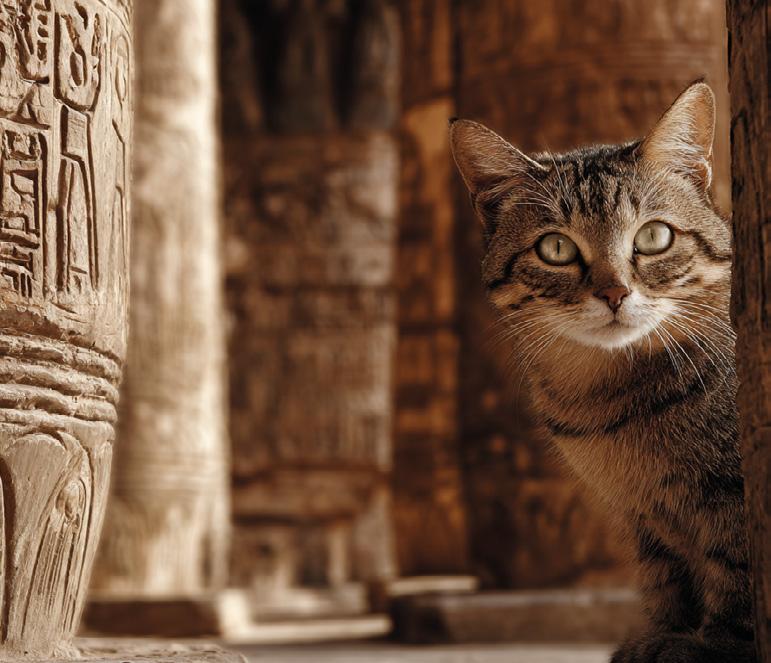
In Ancient Egypt, the cat transcended its practical role and became a spiritual symbol. Bastet, the feline-headed goddess, represented protection, fertility, and harmony at home. Killing a cat was punishable by death. Cats were mummified and buried with honors as part of sacred rituals.
Philosophically, this reveals something timeless about power: what protects vital resources earns symbolic authority that goes far beyond function. For leaders, the lesson is clear: protect the “stock” — whether it is talent, technology, or reputation — and you will earn respect and legitimacy.
Egyptians understood that cats, by controlling pests, safeguarded the very foundation of their society. Likewise, leaders who identify and defend their organization’s lifeblood secure the conditions for prosperity.
DIPLOMATS ON FOUR PAWS
As Egyptian trade expanded, cats sailed on ships to control rats and protect cargo. This is how they spread across Europe, Asia, and beyond. In every new culture, they adapted — learning to live under different climates and rules — yet always preserved their essence. This ability to move between worlds without losing identity is rare. For global leaders, it is essential.
The feline leader adapts to local customs and expectations while holding onto core values. Like cats stepping off ships into foreign ports, they enter new markets with quiet confidence, observe carefully, and carve out their space — integrating enough to thrive without dissolving their identity.
THE DARK AGES AND THE MEDIEVAL “CANCELLATION”
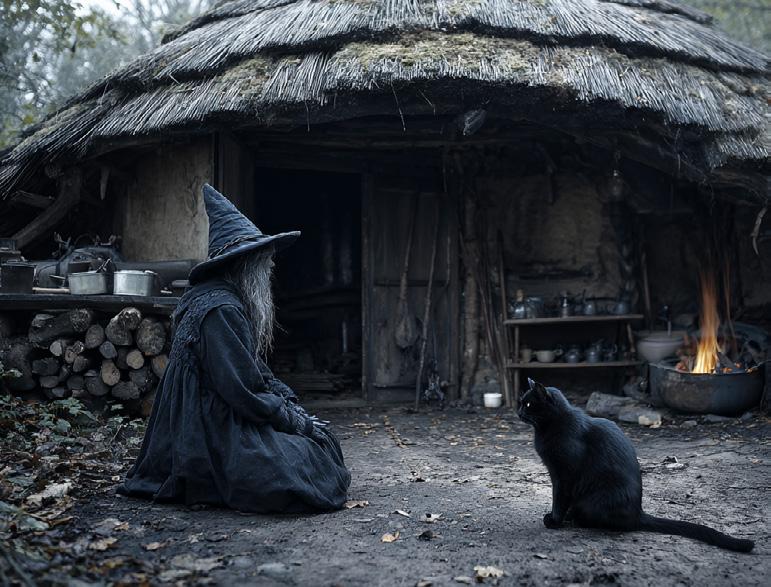
The cat’s fate turned dramatically in medieval Europe. The Church associated felines — especially black ones — with evil forces, witchcraft, and paganism. Many were burned alongside women accused of sorcery.
This brutal shift illustrates how institutional narratives can overturn reputation overnight. The leadership lesson? Prestige is never immune. External forces — political, cultural, ideological — can suddenly redefine you or your organization.
Survival depends on weathering reputation-
al storms without losing essence, and whenever possible, avoiding confrontations that accelerate destruction.
Ironically, persecuting cats had unintended consequences. With fewer cats, rat populations exploded, fueling the spread of the Black Death in the 14th century.
It was a vivid reminder that removing a stabilizing element in any ecosystem can trigger systemic collapse — a perfect parallel for businesses that slash “invisible” assets like culture or expertise, only to unleash crises far greater.
REPUTATION REBUILT
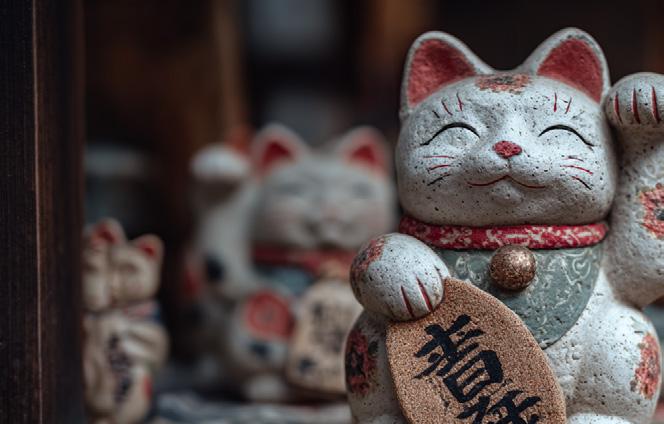
From the 17th century onward, cats began reclaiming their place, first in seafaring communities, then among aristocratic households. In Japan, they became symbols of luck (maneki-neko). In France and England, admired for their poise and intelligence, they were welcomed back as companions.
This renaissance underscores another truth: reputations can be rebuilt, but rarely quickly. Recovery requires persistence, proof of value, and often, a shift in the larger environment. Leaders must recognize that time is a critical component of reputational recovery — and like cats, may need periods of low visibility before emerging again with strength.
THE CAT IN MODERN IMAGINATION
By the 20th century, the cat had secured its role as the urban pet par excellence: independent, elegant, and adaptable.
By the 21st century, thanks to the internet, it had become a global cultural phenomenon.
From symbols of misfortune to icons of “cute,” felines captured an emotional space far beyond their original role.
The philosophical reflection is unavoidable: cats never really changed — we changed the way we saw them. This is a lesson in perspective.
Often, the value of a leader or a strategy lies not only in substance but in perception. The ability to reposition narratives is as strategic as execution itself.

LEADERSHIP LESSONS FROM A MILLENNIA-LONG ALLIANCE
The human–feline partnership offers a framework of lessons every leader can apply:
AUTHENTIC PARTNERSHIPS:
Cats chose coexistence, not domination. The best corporate alliances follow the same principle.
PROTECT VITAL RESOURCES:
Just as Egypt protected its cats, leaders must safeguard what ensures organizational survival and growth.
ADAPTABILITY WITHOUT LOSING IDENTITY:
Like cats crossing cultures, leaders must integrate into new contexts without compromising core values.
REPUTATION RESILIENCE:
The medieval story teaches that reputations can collapse — and be rebuilt — but only with patience and strategy.
NARRATIVE REPOSITIONING:
The cat’s digital-era rise proves that changing the story told about you can redefine your relevance.
PHILOSOPHY, CATS, AND LEADERSHIP
Nietzsche (the philosopher, not my cat) spoke of living with a “dancing lightness” of spirit. The cat embodies this perfectly: unhurried, resistant to unnecessary pressure, yet precise and effective when the moment demands.
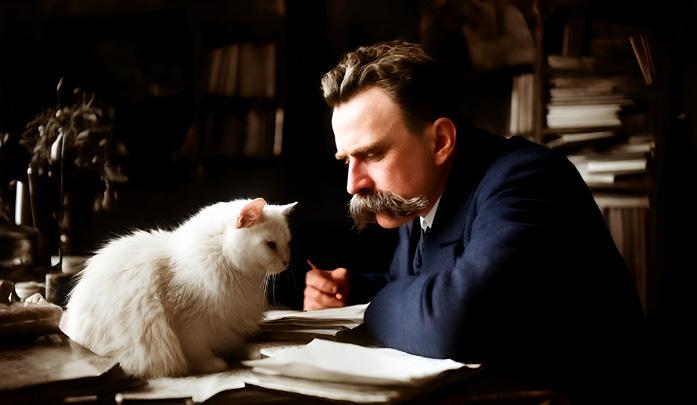
This resonates with a modern leadership truth: leadership is not endless action but the wise alternation between observing, waiting, and striking.
There is also a Stoic undertone: cats accept what they cannot control — mealtime, for example — but maximize what they can: where they rest, how they move. Likewise, effective leaders focus energy on what is within their circle of control rather than wasting it on immovable variables.
RESILIENCE AND ENDURANCE
From Egypt to the internet, cats have lived through adoration, demonization, and global fascination. They endured because they preserved essence while adapting silently.
To lead with a feline mindset is to understand that real value lies not just in immediate results but in the capacity to remain relevant in ecosystems that constantly change . Just as cats never stopped being cats, even when the world around them shifted dramatically, leaders must preserve their core values while adapting strategies and behaviors.
Leadership, after all, is a long game — and felines have been playing it, flawlessly, for millennia.
CURIOSITY THAT MOVES THE WORLD 02
The Spark That Starts Everything

Curiosity is not just another instinct. It is the spark behind every discovery, every invention, every cultural shift and scientific breakthrough. It is that inner restlessness that refuses to settle for the surface, that insists on peering behind the door, inside the box, or into the dark corner of the maze.
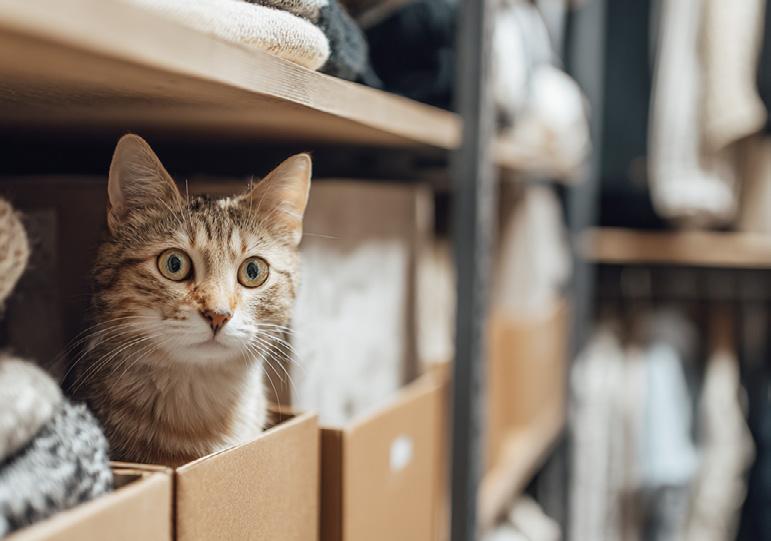
For cats, curiosity is inborn, irrepressible, almost compulsive. Open a drawer, and they will be there in seconds. Leave a box on the floor, and it instantly becomes the stage for a meticulous inspection. A sudden noise, a flicker of shadow, an unfamiliar scent — every anomaly triggers the urge to investigate, to explore, to claim new information.
Among humans, however, this flame is dimming. Not from scarcity of knowledge, but from abundance. What once demanded pursuit now requires only a click.
The smartphone has turned the act of learning into something passive: “I’ll look it up when I need it.” And therein lies the danger.
ACTIVE CURIOSITY VS. PASSIVE CURIOSITY
The difference is critical. Curiosity is not the accumulation of answers — it is the hunger to ask questions.
It is not waiting until necessity forces us to learn — it is the drive to discover before the need arises. It is the difference between someone who wanders
Curiosity
is not the accumulation of answers — it is the hunger to ask
questions.
through a library for the sheer joy of discovery and someone who enters only to find a specific title.
The digital age, for all its power, has trained us into passive curiosity. The endless stream of feeds, notifications, and algorithmic suggestions delivers information chosen by others, at someone else’s pace, filtered by someone else’s bias. The instinct to get up, look out the window, and wonder has been replaced by an endless finger swipe.
Cats do not operate this way. They do not wait for novelty to be served to them. They hunt — for prey, for mystery, for the unknown. They observe, sniff, test, and explore. They don’t rely on an external algorithm to feed them information; they build their own behavioral algorithm of discovery.
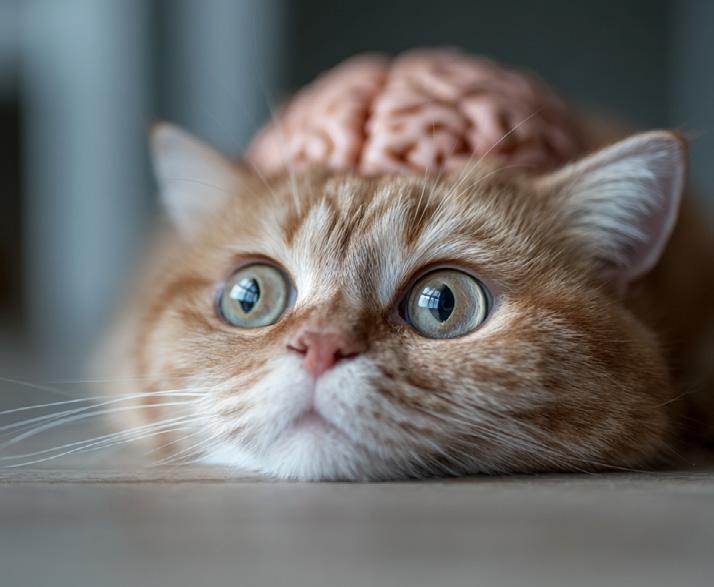
THE RISK OF “OUTSOURCED KNOWLEDGE”
In my lectures, I often use a phrase:
Ideas are like cats, not dogs. They come when they want, not when you call.
This means that without a rich internal repertoire, there is no material for the mind to connect dots and generate original insights. Google can provide answers, but it does not create synapses. It delivers data but does not fertilize neurons. And without neurons firing together, there is no creativity.
Having the Library of Alexandria in your pocket is worthless if you never open the books in your own mind.
Knowledge that lives outside your brain is like a tool locked in a box — technically available, but useless in the moment of need. Creativity is the direct offspring of active memory. Without stored references, there can be no new combinations.
THE FELINE LESSON FOR LEADERS
When a cat explores every corner of a room, it is not wasting time. It is investing. It is mapping territory long before there is threat or opportunity.
For leaders, this translates into scanning beyond current metrics, experimenting with technologies before
they become mainstream, exploring markets that are not yet urgent but may soon define the future.
Curiosity is not a distraction from business — it is the radar that prevents surprise attacks.
Feline companies cultivate teams that ask questions, reward exploration, and do not punish experiments that fail to produce immediate results. They know that reactive cultures — the ones that only move under external pressure — are already too late.
THE END OF CURIOSITY, THE DEATH OF INNOVATION
We are, dangerously, watching the slow death of curiosity as a collective force. It is the paradox of abundance: the easier knowledge becomes to access, the less effort we put into pursuing it.
A generation raised on “I’ll just Google it” is not building the internal repertoire required for disruptive ideas. And without ideas, there is no true innovation — only replication of readymade patterns.
For both species and companies, the principle is the same: those that stop exploring new territories are doomed to extinction.
When the environment shifts, they will lack the agility — mental or operational — to adapt.
THE PHILOSOPHY OF CURIOSITY
Philosophically, curiosity is the bridge between ignorance and knowledge. It is what drove Thales to ask, “What is the world made of?” What led Galileo to aim a telescope at the sky. What pushed Darwin

aboard the Beagle. What compelled Leonardo da Vinci to dissect bodies, sketch flying machines, and design ideal cities.
None of them had Google. No algorithm whispered the next question in their ear. What they had was discomfort, doubt, and the courage to explore it.
Nietzsche once said, “One must still have chaos in oneself to give birth to a dancing star.” Curiosity is that chaos — the fertile restlessness that forces the mind to move, like a cat that cannot resist investigating the sound behind a closed door.
RECOVERING THE CURIOUS INSTINCT
For leaders and companies, reigniting curiosity requires three deliberate moves:
1. TRAIN DELIBERATE
OBSERVATION
Like a cat at the window, apparently idle but scanning every detail, leaders must practice intentional watching without immediate demand.
2. REWARD QUESTIONS, NOT JUST ANSWERS
Cultures that value genuine questioning keep the flame alive. In the feline world, there are no wrong questions — only instincts for discovery.
3. BUILD REPERTOIRE BEFORE YOU NEED IT
The time to learn about new technologies, markets, or models is before they become inevitable. Like the cat that explores the house long before danger arrives, leaders must map before urgency.
THE SPARK THAT MUST NOT DIE
Curiosity is the invisible muscle of the mind. Left unexercised, it atrophies.
Cats remind us that to live fully is to explore what lies beyond the next door, even without immediate reason. To see the unknown not as threat but as invitation. To build knowledge before it is required, so that when opportunity appears, we can leap with feline speed and precision.
If we lose this quality, we lose the spark that makes us inventive, adaptive, and — ultimately — human. And so, in their quiet, elegant way, cats continue to show us the path. The only question is: will we still be curious enough to follow?

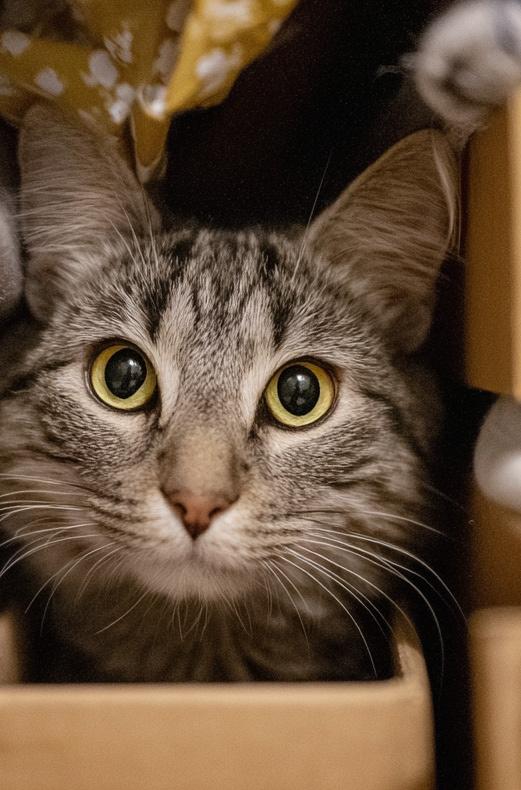
VISION IN THE TWILIGHT: LEADING THROUGH UNCERTAINTY 03
The Light That Is Never Complete
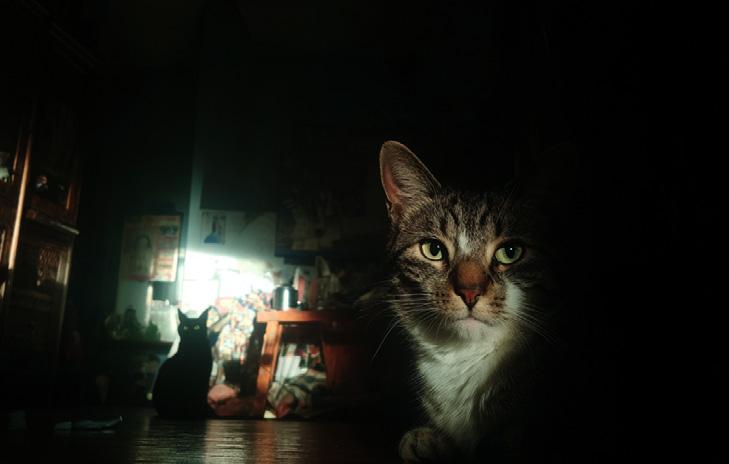
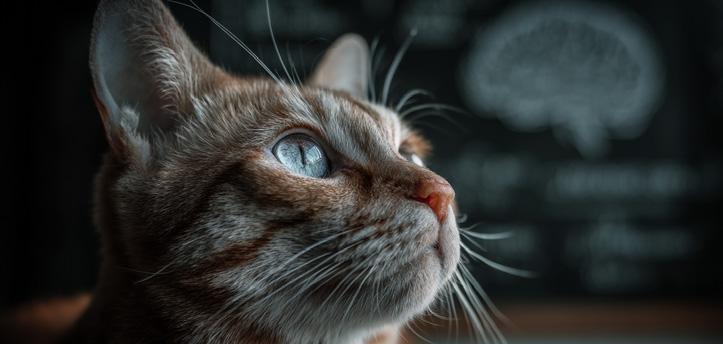
Cats possess a singular ability: they see in the twilight. Their eyes, adapted to capture the faintest light, allow them to move with confidence even when the world around looks indistinct to us.
It isn’t perfect clarity — but it is enough. Enough to take the next step, calculate the leap, gauge the distance to 39
prey, or sense the presence of danger.
In business, this is a priceless metaphor. Leaders almost never have full clarity when making decisions. Perfect information is rare; what we usually have is twilight — a partial view, fragments of data, incomplete signals. To lead, often, is to act with partial light.
History is full of leaders who mastered this art. They didn’t wait until all the data was on the table, because by then the opportunity would have already passed. In volatile markets, waiting for certainty can be more dangerous than moving forward with caution.
In volatile markets, waiting for certainty can be more dangerous than moving forward with caution.
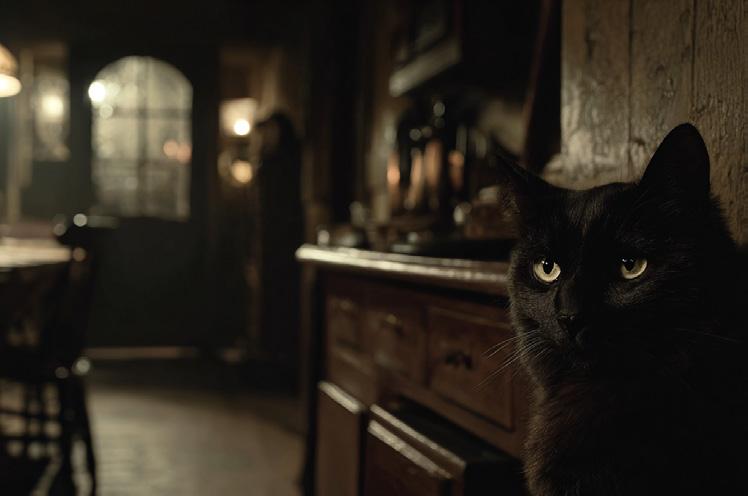
THE TEMPTATION OF ETERNAL WAITING
Human nature seeks security. Faced with uncertainty, many postpone decisions until they feel “sure.” It is understandable, but dangerous. Companies, governments, and individuals often lose their moment of advantage because they waited for a clarity that never came.
Cats don’t make that mistake. They don’t wait for the stage lights to come on; a shadow, a reflection, or a faint silhouette is enough to act. They know the prey will not wait until dawn.
For leaders, the pursuit of perfect clarity is, in practice, a form of abdication. It is yielding the initiative to competitors, partners, or even rivals inside the organization. The challenge is to move soon enough to gain advantage, but cautiously enough not to fall off the cliff.
THE PHILOSOPHY OF TWILIGHT
Stoic philosophy teaches us to focus on what we can control and accept what lies beyond it.
But leading in twilight goes further: it demands sensitivity to nuances before reality is fully revealed.
It is the art of reading weak signals, detecting early patterns, intuiting shifts before they become obvious.
Nietzsche spoke of a
“perception beyond good and evil” — the ability to see without judgment, to first observe before interpreting. The cat, still and watchful, pupils wide in the half-light, is this philosophy embodied.
The leader who masters twilight vision does not panic when information is incomplete. They gather what they can, accept what remains hidden, and move forward anyway.
UNCERTAINTY AS THE HUMAN CONSTANT
It is fashionable to say we live in “uncertain times.” But uncertainty is not new.
Sailors of the 15th century set out into oceans mapped only in fragments, knowing they might never return. Inventors of the Industrial Revolution bet on technologies whose consequences they could not predict.
Entrepreneurs of the dot-com era launched business models before anyone knew if markets were ready.
The difference today is the density of twilight . The digital age gives us floods of data, but not necessarily more light.
More information often means more shadows — layers of noise masking the signal.
THE ERROR OF ABSOLUTE VISION
The quest for total certainty reflects a Cartesian mindset: clarity and distinction as prerequisites for action. But in the real game of business, waiting for certainty is like waiting for the sea to be perfectly calm before setting sail: the ship will never leave port.
Cats remind us that partial vision can be sufficient, if paired with agility and sensitivity. They don’t need to see every detail to leap onto a higher ledge; they calculate from the cues available and act decisively.
In leadership, this means acting on plausible hypotheses, refining continuously as new data emerges. Not blindness, but also not paralysis.
FELINE TECHNIQUES FOR TWILIGHT LEADERSHIP
Cats compensate for low light by combining senses — vision, hearing, and tactile sensitivity. Leaders can do the same, expanding their “sensors” to navigate the penumbra of business:
1. EXPAND THE SENSORS
Build networks, formal and informal, to capture faint signals from markets, customers, and competitors.
2. SILENT MOVEMENT
Pilot projects on a small scale before major rollouts, like a cat stalking prey in silence.
3. PERIPHERAL AWARENESS
Pay attention to the edges, where weak signals often appear before reaching the center.
4. PATTERN RECOGNITION
Analyze historical and behavioral data to anticipate trends, even when the present feels blurry.
THE COURAGE TO ACT WITHOUT A FULL MAP
There is an emotional dimension to twilight leadership: courage.
Not bravado, but the acceptance that risk is unavoidable. Decisions must be made even when gaps remain.
Cats leap not out of recklessness, but out of confidence in their senses. Likewise, leaders must invest in preparing themselves and their teams so that, when the moment comes, they can move forward without hesitation.
THE DANGER OF TOO MUCH LIGHT
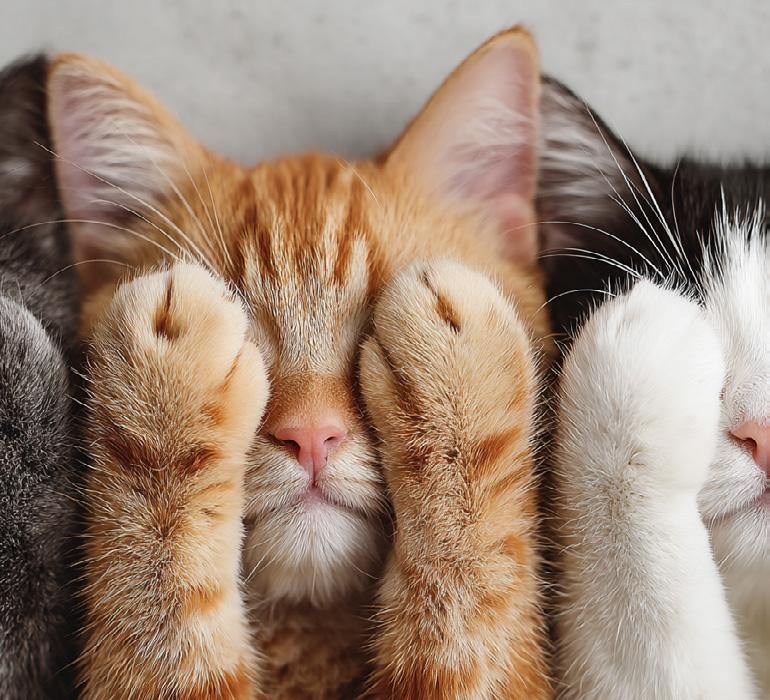
Curiously, complete clarity can also be dangerous. When everything appears visible, we lower our guard. Some of the biggest strategic errors occur in daylight — when leaders confuse visibility with predictability.
Cats remain vigilant even in bright light. For them, twilight is not just physical, it is psychological — an awareness that something unseen may always be lurking. Leaders must adopt the same mindset: even in apparent stability, the unseen and the unknown remain.
Cats remain vigilant even in bright light.
TRAINING TWILIGHT VISION
This skill can be cultivated deliberately. Leaders can train for twilight leadership by:
EXPOSING THEMSELVES TO AMBIGUOUS ENVIRONMENTS
— projects and markets without ready-made answers.
SEEKING CROSS-DISCIPLINARY KNOWLEDGE
— like cats checking multiple angles before acting.
RUNNING CRISIS SIMULATIONS
— practicing decision-making with incomplete data..
VALUING INFORMED INSTINCT
— combining hard data with intuition forged by experience.
THE ADVANTAGE OF MOVING EARLY
The reward for twilight vision is the ability to move before others.
Often, the difference between success and failure lies in the willingness to act with 70% certainty while others wait for 100%.
This early-mover advantage compounds: each step taken in twilight expands the known territory, creating more confidence for the next move.
SEEING BEFORE IT’S TOO LATE
The feline lesson is unmistakable: perfect light rarely comes. Waiting for it is to miss the moment.
Cats move confidently in twilight because they trust their senses, their experience, and their instincts. Leaders must do the same: blend data with intuition, analysis
with sensitivity, caution with boldness.
In a world that changes faster than we can describe it, survival — and prosperity — depend not on perfect clarity but on the courage to act in partial light. Twilight is not an obstacle. It is the natural habitat of the prepared.
ALWAYS ON HIGH GROUND: LEADERSHIP THAT SEES THE WHOLE AND THE DETAIL
THE INSTINCT FOR ALTITUDE
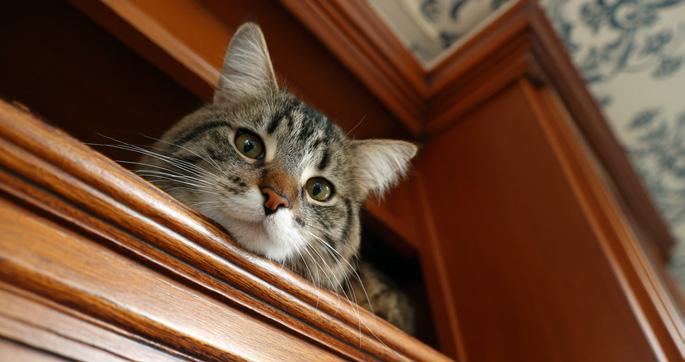
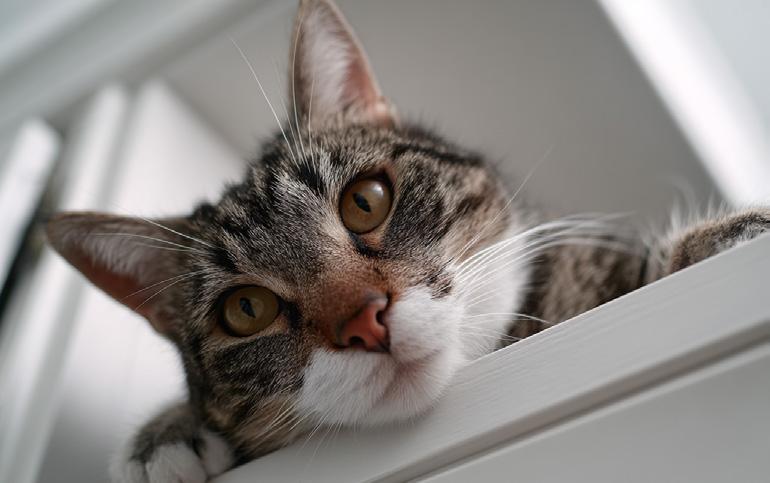
Watch a cat in an unfamiliar space, and you’ll almost always find it climbing to the highest spot available — the top of a cabinet, the edge of a window, the back of a sofa. From above, it feels not only safe but in control, with a vantage point over every movement in the room.
This instinct is not whimsy, but strategy. In nature, felines of every size — from leopards to house cats — climb trees and rocks to gain advantage over prey and predators. From above, they detect subtle movements, anticipate risks, and choose the right moment to act.
In business, this behavior translates into a simple but powerful truth: leaders who stay at ground level see little, react late, and often misunderstand the bigger picture. To “climb higher,” metaphorically, is to gain perspective, spot patterns, and understand dynamics before they are obvious to everyone else.
SEEING BOTH THE WHOLE AND THE DETAIL
The cat’s elevated gaze is not only panoramic. While scanning the territory, it also perceives micro-signals: the tremor of a leaf, a distant footstep, the smallest shift of an object. It combines the macro and the micro seamlessly.
Leaders often fail by choosing one over the other: seeking the strategic view and ignoring details, or drowning in details and losing the strategic view. The cat shows us they are not opposites but complements.
Height gives context. Detail gives precision. Leadership demands both.
THE FELINE LEADERSHIP TRIAD
To “be on high ground” is not just a physical or hierarchical posture; it is intellectual and emotional.
From this vantage point, leaders must manage three roles simultaneously:
1. FOCUS ON TRENDS
(seeing far)
Anticipating shifts in markets, technology, and consumer behavior.
2. RESOLVE PENDENCIES
(handling the near)
Acting decisively on immediate problems before they escalate into crises.
3.
PRESERVE ESSENCE (guarding the eternal)
Protecting values and identity even as the organization evolves.
Cats embody this triad naturally: scanning the horizon for opportunities, responding instantly to nearby signals, and maintaining their essence regardless of environment.
ALTITUDE AS STRATEGIC SAFETY
Cats climb not only for vision but for safety. From above, they are harder to reach and have clearer escape or attack routes. Leaders, too, need strategic altitude — reserves of capital to endure crises, networks to activate when needed, and skills to pivot when markets shift.
From higher ground, leaders gain maneuvering room — the space to choose, rather than being forced to react.

ALTITUDE AS A SCHOOL OF PATIENCE
Cats can remain perched for hours, seemingly inactive but fully alert — processing signals, recalculating moves, waiting for alignment.
Leadership requires the same strategic patience. Many decisions should not be rushed, but taken when the elements align.
From high ground, waiting is not passivity — it is preparation.
HISTORY’S LESSONS
IN ALTITUDE
Military history offers countless examples of the advantage of higher ground. Armies sought hills and fortresses to secure observation and control. At the Battle of Hastings (1066), the Saxons’ elevated position gave them an initial edge — one they squandered through poor tactics.
Corporate history mirrors this lesson. Amazon, Apple, and Toyota built “high-ground” positions by scanning trends relentlessly while maintaining operational discipline.
Their combination of vision and execution is pure
THE PHILOSOPHY OF ALTITUDE
Philosophically, to rise above recalls Plato’s cave allegory — inverted. From above, the leader does not see shadows but the full landscape. Yet, as in Plato’s tale, not everyone is willing to climb. It takes effort, discomfort, and the courage to face stronger winds at higher altitudes.
Nietzsche captured this progression: “He who would learn to fly must first learn to stand, then walk, then run, then climb, and finally dance in the air.” This is the leader’s journey to panoramic vision.
THE
IVORY TOWER TRAP
Height carries risk: isolation. Cats, even when perched, return to the ground — to hunt, explore, and connect.
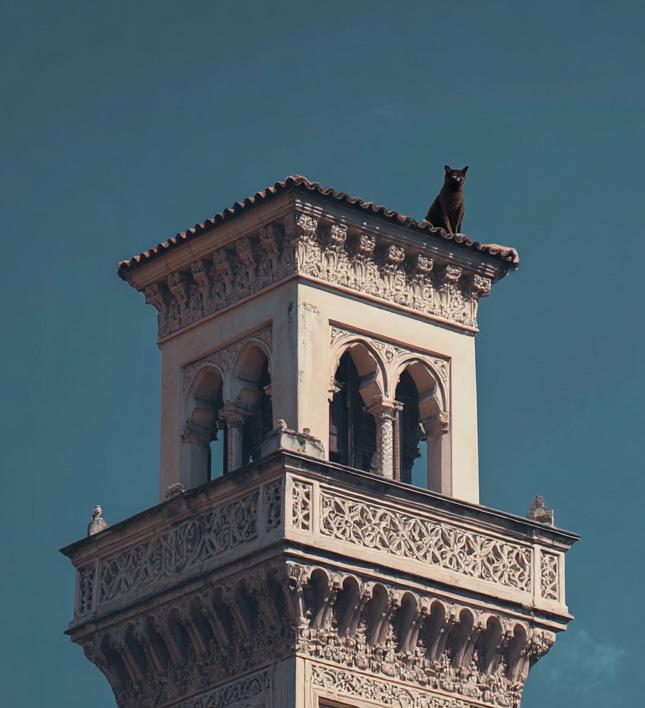
Leaders who retreat into the “ivory tower” lose touch with reality, making decisions detached from operations.
ALTITUDE AND HUMILITY

Interestingly, cats at the top do not display arrogance. They do not climb to be seen but to see. This humility matters.
The point of height is not ostentation, but protection, guidance, and foresight.
Good leaders use height to give their teams clarity and security. Bad leaders use it to impose distance. The difference is intent.
PRACTICAL APPLICATIONS: FROM WHOLE TO DETAIL
Leaders can apply the feline mindset of “always on high ground” through:
• SCENARIO REVIEWS
Strategic sessions to track macro trends.
• CRITICAL INDICATOR MONITORING
Ensuring operational details remain tight.
• VALUES PROTECTION
Guarding against cultural erosion amid change.
• VERTICAL INTEGRATION
Aligning leadership vision with ground-level execution.
BETWEEN CLOUDS AND GROUND
The cat perched above teaches that true leadership is dual vision: broad awareness of the whole and sharp focus on the detail.
Height provides foresight and security. Detail ensures accuracy and credibility. Preserving essence ensures endurance. For leaders, the mandate is clear: focus on trends, resolve pendencies, preserve essence — all at once.
Because leadership, at its core, is about climbing to higher ground, seeing what others cannot, and never losing sight of what happens at your feet.
Between Confidence and Prudence
Cats live in a permanent state of balance between confidence and caution. They stretch lazily in the sun but keep their ears tuned to the faintest sound. They play with an object, but their muscles remain primed to spring.
This is what ensures their survival: enjoying the moment while staying ready for the unexpected.
For leaders, the lesson is direct. Optimism is necessary to inspire and mobilize teams; absolute pessimism paralyzes and corrodes morale.
The sweet spot lies in between: expecting things to work out while preparing for the possibility that they won’t.
This is what I call cautious optimism.
THE PHILOSOPHY OF PRECAUTION
History shows us that preparation is not the enemy of confidence.
Navigators who crossed oceans carried maps, provisions, and instruments — not because they doubted arrival, but because they respected risk.
Engineers design bridges to withstand far greater weight than daily use requires. Doctors
rehearse rare complications, though most procedures go smoothly.
Cats embody this instinctively. Before jumping, they measure distance.
Before approaching something new, they watch from afar. Even at rest, they keep mental escape routes.
Not paranoid, not naïve — simply prepared.
THE TRAP OF EXTREMES
In business, leaders who drift to extremes tend to fail predictably.
• The naïve optimist assumes everything will be fine, neglects contingency planning, and gets blindsided by foreseeable crises.
• The chronic pessimist sees danger everywhere, stifles innovation, and drives away talent eager to build.
The cat avoids both traps. It trusts its ability to adapt while staying alert to risk.
For organizations, the parallel is clear: build internal capabilities that enable quick responses when reality diverges from the plan.
FELINE STRATEGY IN BUSINESS
A cat never places itself in a situation it cannot escape. This is risk management in its purest form: always keep a way out.
Companies can apply the same logic by investing in:
SMART REDUNDANCY
Multiple suppliers, sales channels, and core competencies.
CRISIS SIMULATIONS
Practicing improbable scenarios so they’re not first encounters in real life.
STRATEGIC RESERVES
Capital, time, or talent set aside for emergencies.
CONSTANT MONITORING
Like a cat’s rotating ears, scanning subtle market shifts.
When things go well, vigilance slips. Success creates the illusion that it is permanent. That is precisely when leaders are most vulnerable.
Cats don’t fall for this. Even at rest, they remain attuned. Not tense, just ready. Leaders must cultivate the same state: relaxed, but prepared.
THE OVERCONFIDENCE TRAP OPTIMISM AS ENERGY
The optimistic side of cautious optimism matters deeply. Optimism fuels morale, inspires creativity, and sustains innovation. Fear-driven companies become bureaucratic and defensive.
Optimistic ones, grounded in preparation, pursue bold ideas because they trust they can handle setbacks.
In feline terms: the cat explores new territory not because it’s risk-free, but because it trusts its ability to respond. Leaders must develop that same trust.
PREPARATION AS CALM
Paradoxically, the better prepared we are, the more relaxed we can be. A cat familiar with its routes and resources doesn’t live in constant stress; it can rest easily.
For leaders, preparation creates serenity in crisis. It eliminates panic and replaces it with execution. Companies that prepare don’t scramble; they activate.
The difference between improvisation and trained improvisation is everything.
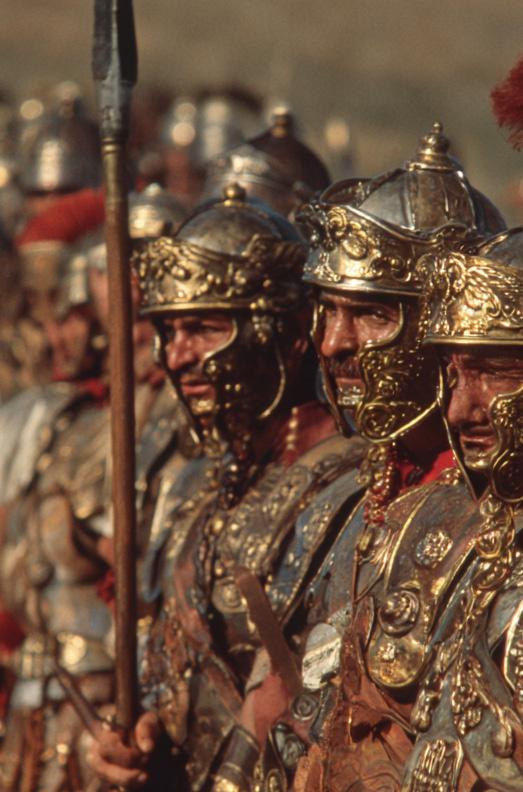
HISTORY’S LESSONS IN CAUTIOUS OPTIMISM
The Romans had a motto: Si vis pacem, para bellum — “If you want peace, prepare for war.” It might as well have come from a cat.
Civilizations that endured were those that used times of prosperity to build defenses, expand routes, and invest in resilience. Those that assumed good times
would last forever collapsed quickly.
Modern business examples echo this: Samsung, Microsoft, and Unilever have thrived in part because they never assumed prosperity was permanent. They prepared in the good times for storms ahead.
THE FELINE MINDSET FOR LEADERS
Adopting cautious optimism means:
Expect projects to succeed , but list alternatives if a chain link breaks.
Celebrate wins , but keep a risk team active.
Encourage innovation , but validate with tests before full commitment.
Trust the team , but ensure backups for critical roles.
The cat trusts its leap — but only after measuring the distance.

UNCERTAINTY AS NORMALITY
The greatest leadership trap is treating uncertainty as an exception. It is the rule.
Economic shocks, technological change, and social transformation are constants.
Cats are born with this mindset: they never as-
sume total safety. Likewise, companies must stop treating contingency planning as “extra” and embed it into daily operations.
Crises then become rehearsed scenarios, not blind panic.
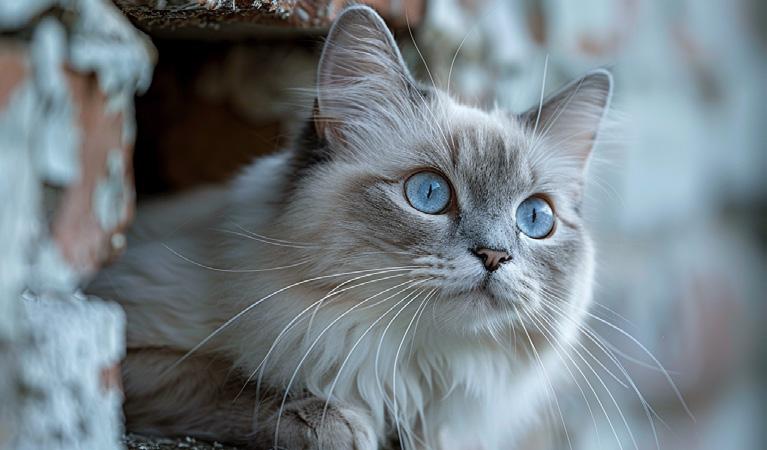
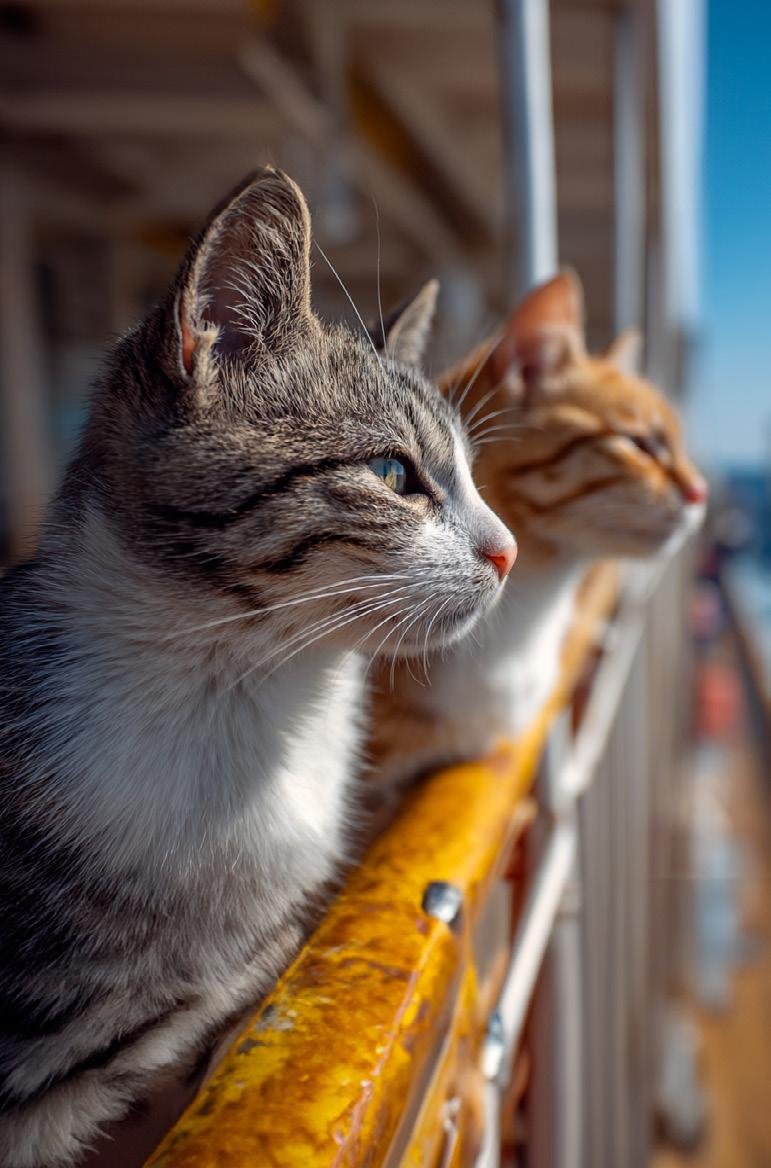
READY FOR THE UNEXPECTED, OPEN TO THE POSSIBLE
Cats live as if each moment is an invitation to enjoy, while knowing that at any instant they may need to react. This is the essence of cautious optimism: open to the best, prepared for the worst.
For leaders, it means inspiring teams with a positive vision while ensuring everyone knows what to do if the sky suddenly darkens.
It means pairing the hope of sunshine with the security of shelter — and keeping the keys firmly in your hand.
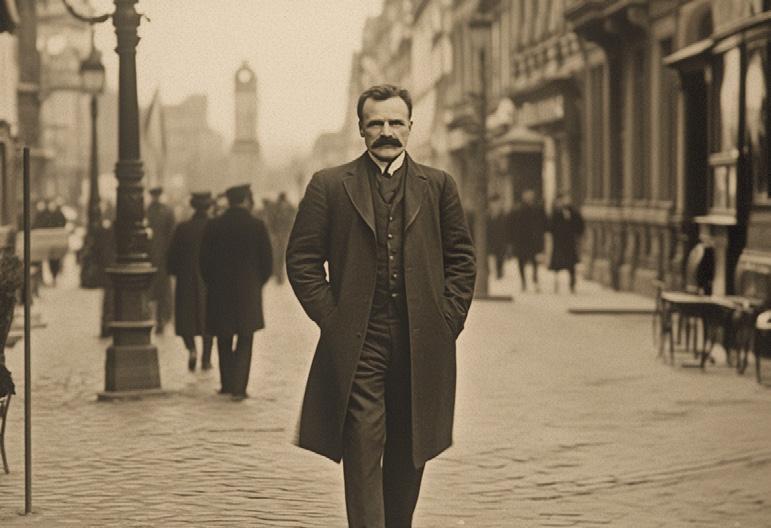
ARISTOCRATIC MORALITY AND INDEPENDENCE: THE PHILOSOPHY OF NIETZSCHE 06

THE GENESIS OF THE CONCEPT
It was Friedrich Nietzsche who first drew the distinction between two radically different moral systems: aristocratic morality and slave morality. At the time, political correctness did not restrain vocabulary; terms were used with conceptual precision, without fear of offending sensibilities.
Today, softened versions are often used: “master morality” versus “herd morality.” But the essence is unchanged. One system describes the posture of those who own their destiny; the other describes those who live under someone else’s command.
Nietzsche was not speaking of nobility by blood or social class, but of existential attitude. Aristocratic morality is born of self-sufficiency: acting without waiting for permission and assuming full responsibility for one’s fate. Slave morality is born of dependence: transferring responsibility, outsourcing initiative, waiting for someone else to act.
ENDOGENOUS VS. EXOGENOUS
The difference between the two moralities can be distilled into one axis:
• Aristocratic morality is endogenous: it internalizes problems, says “I’ll handle it”, and acts.
• Slave morality is exogenous: it projects problems outward, asks “Who will fix this?”, and waits.
These two stances create two psychological worlds:
• The aristocrat takes full responsibility for both success and failure.
• The slave or herd member attributes success to external luck and failure to inevitable fate.
Nietzsche summed it up simply:
“The superior man blames no one; the inferior man blames everyone.”
NARRATIVES AT WORK
ARISTOCRATIC MORALITY:
“Success is my responsibility; failure is my fault.”
This mindset gives control, because accountability is never outsourced.
SLAVE MORALITY:
“Success
is my right; failure is my destiny.”
This mindset paralyzes, because victories are credited to luck and failures to injustice.
BRAZIL AND THE HERD MENTALITY
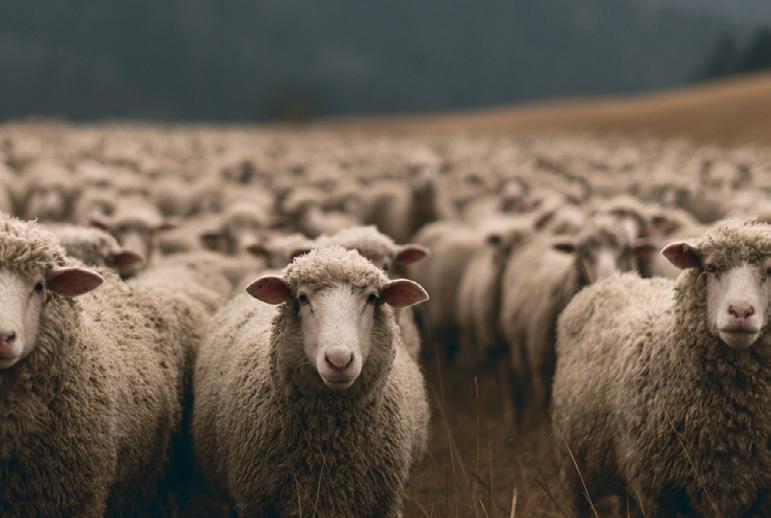
In Brazil, herd morality is dominant. Our culture was shaped by three historical matrices of dependency:
1. Indigenous peoples , who looked to nature to provide shelter and food.
2 Enslaved Africans , denied autonomy, who projected liberation into the divine.
3. Portuguese colonizers , who looked to the Crown for resources and decisions.
This triple heritage built a habit of waiting: waiting for the State, waiting for fate, waiting for someone “up there” to fix things.
It is the mindset of “Who will do this for me?”
COMPARATIVE FRAME
ARISTOCRATIC VS. SLAVE MORALITY
FOCUS ASPECT
RESPONSIBILITY ACTION MINDSET
RELATIONSHIP TO FATE
EMOTION INTERNAL VOICE
ANIMAL METAPHOR
ARISTOCRATIC MORALITY
Endogenous: internal responsibility
Owns both success and failure
Faces and confronts
SLAVE / HERD MORALITY:
Exogenous: external dependency
Credits success as a right, blames failure as fate
Procrastinates and avoids confrontation
Thinks big, strives for growth Builds destiny Self-affirmation
“I solve it”
Cat: autonomous, alert, self-reliant
Thinks small, resigns to limits
Accepts destiny and laments Resentment
“Someone should solve it”
Herd animal: follows, depends on the group
THE CAT AS SYMBOL OF ARISTOCRATIC MORALITY
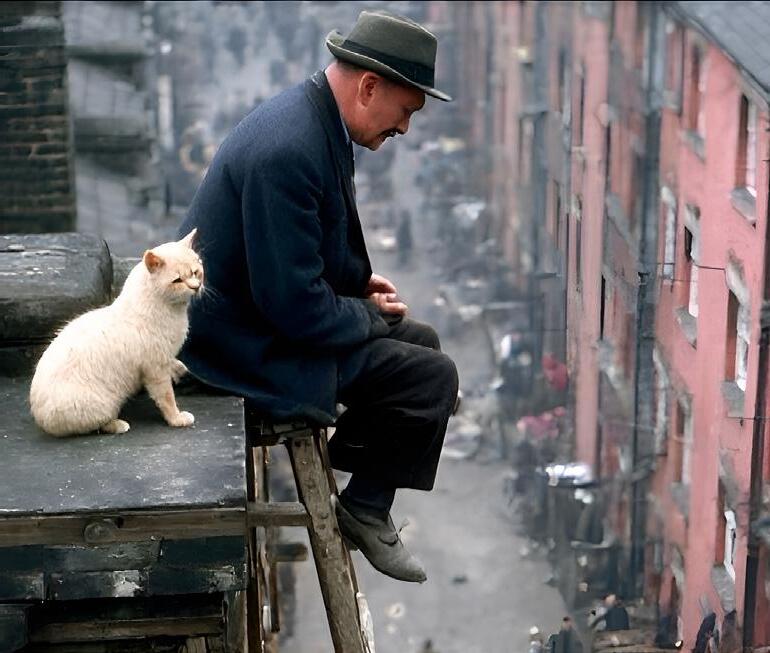
The cat is aristocratic by nature.
It does not wait for orders, does not seek applause, does not apologize for taking space.
It is territorial yet free to roam; sociable when it chooses, solitary when it prefers.
It does not ask, “Who will feed me?” It decides when and how to eat.
Even domesticated, it keeps its hunter’s instinct.
This is aristocratic morality embodied: self-responsibility and independence.
By contrast, the dog often symbolizes herd morality: obedient, approval-seeking, dependent on collective belonging. The cat lives on its own terms.
ARISTOCRATIC LEADERSHIP IN BUSINESS
In corporate life, aristocratic morality means refusing to outsource accountability. It starts with the leader looking inward.

The aristocratic leader:
• Does not say “The market is bad” as an excuse; instead asks, “What can I do to win anyway?”
• Does not blame the team for failure; instead asks, “Where did I fail to prepare or lead them?”
• Does not wait for outside solutions; they create their own.
The feline leader surveys the territory, chooses strategy, acts at the right moment — and owns the result, good or bad.
RESENTMENT AS PRISON
For Nietzsche, resentment was the fuel of slave morality: bitterness toward those more capable, freer, or more successful.
Cats know nothing of resentment. They don’t envy
another cat that hunts better; they simply keep hunting. They don’t waste energy wishing others to fail — they invest energy in protecting their own space.
Resentment paralyzes by converting energy for action into energy for complaint. The aristocrat uses frustration to grow; the herd uses it to justify stagnation.
PHILOSOPHY APPLIED:
NIETZSCHE, THE PHILOSOPHER AND THE CAT
Nietzsche wrote: “Become who you are.”
That phrase echoes in the life of a cat: it doesn’t pretend to be a dog, doesn’t try to please everyone, doesn’t bend to external expectations.
Nietzsche, the philosopher — and Nietzsche, my cat — both embody this independence. They may accept affection, but they never beg for it. They may accept food, but never grovel. Above all, they remain masters of themselves .
TOWARD AN ARISTOCRATIC CULTURE
Transforming a company (or a nation) from herd morality to aristocratic morality requires:
1. EDUCATION FOR AUTONOMY
Teach problem-solving, not just problemidentification.
2.REAL MERITOCRACY
Reward those who take responsibility and deliver.
3. ZERO TOLERANCE FOR VICTIMHOOD
Encourage people to focus on what they can control.
4. TOP-DOWN EXAMPLE
Leaders must act like cats: independent, accountable, and self-directed.
THE CALL OF SELF-SUFFICIENCY
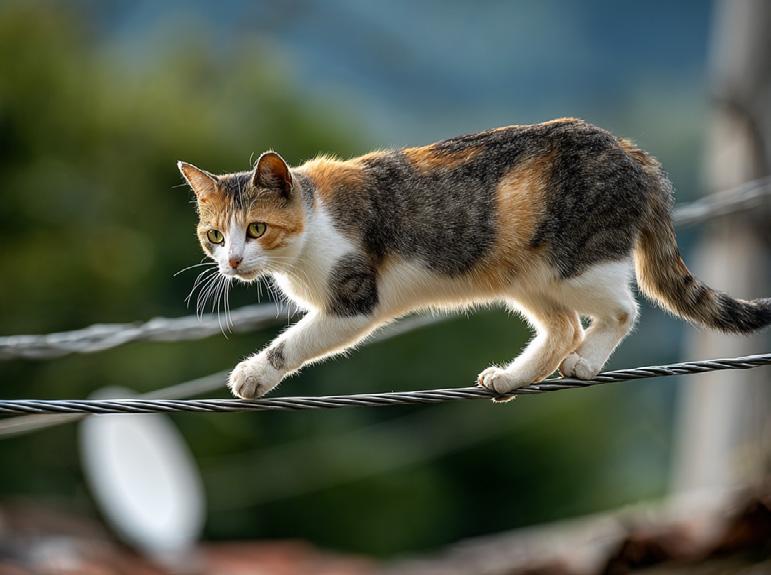
Aristocratic morality is a call to inner freedom. To stop waiting for others to do what only you can do. To refuse the role of victim and embrace the role of protagonist.
In business, it separates leaders who leave legacies from managers who merely occupy positions. In life, it separates spectators from authors of their own story.
Cats remind us daily: true independence is not about needing no one, but about choosing with whom, and when, to connect. It is acting from conviction, not convenience.
As Nietzsche would say — philosopher or cat alike —
Become who you are.
PART I
TIMELESS LESSONS FROM A TIMELESS ANIMAL
EXECUTIVE SUMMARY
CHAPTER 1: FROM THE NILE TO INSTAGRAM
• Partnerships are chosen, not imposed. Cats were not domesticated — they chose coexistence. The best business alliances emerge from mutual benefit, not control.
• Protect vital resources. Egypt revered cats because they protected grain. Leaders must guard what sustains the organization — talent, trust, or technology.
• Adapt without losing identity. Cats traveled the world and thrived in every culture without changing their essence. Leaders must do the same.
• Reputation is fragile. Medieval Europe “canceled” cats overnight. Prestige can collapse quickly; recovery requires patience and strategy.
• Narrative matters. The cat didn’t change, our perception did. Leaders must master narrative repositioning to remain relevant.
CHAPTER 2: CURIOSITY THAT MOVES THE WORLD
CHAPTER 3: VISION IN THE TWILIGHT
• Curiosity fuels innovation. It is not about collecting answers but about asking better questions.
• Beware of passive curiosity. Algorithms feed us readymade information, but true leaders hunt for knowledge before it’s needed.
• Knowledge must live inside you. Google delivers data, but creativity comes only from an internal repertoire of experiences and references.
• Feline companies reward exploration. They value questions, experiments, and mapping future opportunities before urgency arises.
• Without curiosity, innovation dies. A species — or a company — that stops exploring new territory is on the path to extinction.
• Perfect clarity never comes. Leaders who wait for all the data miss opportunities. Acting with partial light is not recklessness — it’s leadership.
• Twilight is the leader’s natural habitat. Like cats, leaders must learn to move in ambiguity, guided by weak signals, intuition, and experience.
• Early action beats perfect timing. Success often belongs to those willing to act with 70% certainty while others wait for 100%.
• Expand your sensors. Combine data, networks, experiments, and instinct to detect shifts before they become obvious.
• Beware of daylight traps. Apparent clarity can breed complacency. Even in stability, unseen threats remain.
CHAPTER 4: ALWAYS ON HIGH GROUND
CHAPTER 5: CAUTIOUS OPTIMISM
• Perspective matters. Leaders who remain at ground level react late and miss the big picture.
• Dual vision is essential. True leadership combines panoramic strategy with precise attention to detail.
• Altitude gives safety. Financial reserves, networks, and skills create maneuvering space, just as height protects cats from predators.
• Height requires humility. Leaders climb to see, not to be seen — using perspective to guide, not to distance.
• Leadership is cyclical. Move between high vantage points and ground reality: observe the whole, act on the detail, and rise again.
• Balance is survival. True leadership lies between naïve optimism and chronic pessimism.
• Preparation creates freedom. The more prepared you are, the calmer and more confident you can be.
• Always keep a way out. Like cats, organizations should never enter situations without exit options.
• Use good times wisely. Build reserves and resilience during prosperity to endure inevitable downturns.
• Optimism fuels progress. Inspire teams with hope while safeguarding against risk — that is cautious optimism in action.
CHAPTER 6: ARISTOCRATIC MORALITY AND
INDEPENDENCE
• Ownership is power. Aristocratic leaders take full responsibility for success and failure.
• Endogenous vs. exogenous. Leaders who internalize problems grow; those who externalize them stagnate.
• Cats embody aristocracy. Autonomous, self-reliant, and unapologetic, they act without waiting for permission.
• Resentment drains energy. Great leaders convert frustration into action, not complaint.
• Culture can be reshaped. Companies shift from herd to aristocratic mentality through autonomy, meritocracy, and accountability.
FEARLESSNESS BEFORE THE UNKNOWN: ADVANCING WITHOUT RETREAT 07
The Myth of Zero Fear
There is a persistent misconception about courage: that the brave feel no fear. But the total absence of fear is not courage — it is recklessness.
Fear, in balanced doses, is an ally. It sharpens the senses, keeps us alert, and prompts preparation. What makes someone courageous is not the lack of fear but the ability to act in spite of it — eyes open, risks acknowledged, and readiness in place.
The reckless leap without calculation; the courageous weigh the risks, prepare for the consequences, and then move forward. This is the lucid courage we find in cats.
THE CAT AS A MODEL OF CONSCIOUS COURAGE
A cat does not charge blindly at a dog many times its size. It evaluates. It measures distance, identifies escape routes, sizes up the opponent — and only then does it act.
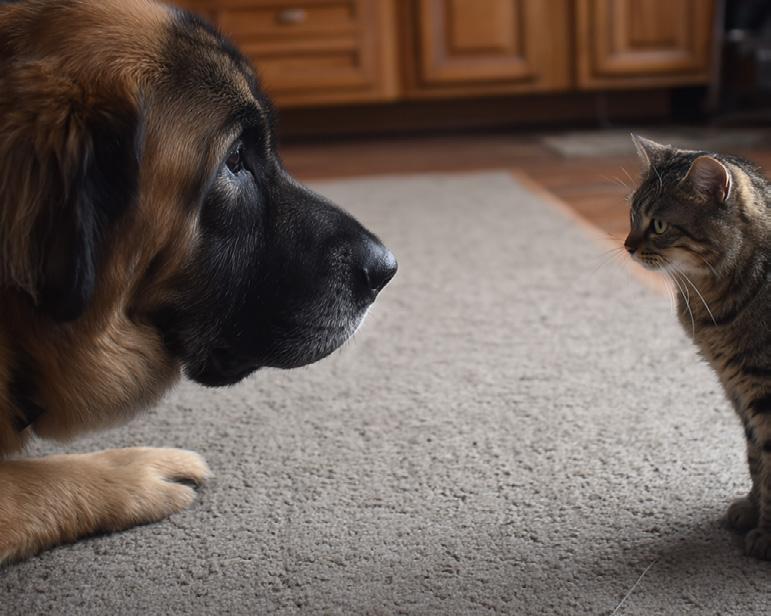
And when it decides to face the threat, it commits fully: back arched, fur bristled, body expanded to appear larger. It is not blind aggression; it is strategic positioning .
In the feline world, courage is not about denying risk but about confronting it with clarity. Cats don’t seek danger for its own sake; they respond with precision when danger arrives.
FEARLESSNESS: A DOUBLE-EDGED SWORD
Fearlessness can look admirable, but it is often a liability. It ignores warning signs and turns manageable challenges into disasters.
In business, reckless fearlessness is the leader who bets everything on an untested project, disregards risk signals,
or charges into a new market with no contingency plan.
Fearlessness without strategy is vulnerability disguised as bravery. It may produce spectacular wins — but also catastrophic, irreversible failures.
STRATEGIC COURAGE: THE FELINE VIRTUE
Cats model strategic courage: acknowledging danger, preparing responses, then acting decisively. It can be broken into three steps:

1. Assess – Observe the terrain, identify risks and opportunities.
2. Prepare – Create options, adopt a stance that improves odds of success.
3. Act – Move with focus, commitment, and timing.
In leadership, courage is not ignoring risk but advancing when the potential reward outweighs the danger — with preparation as the safety net.
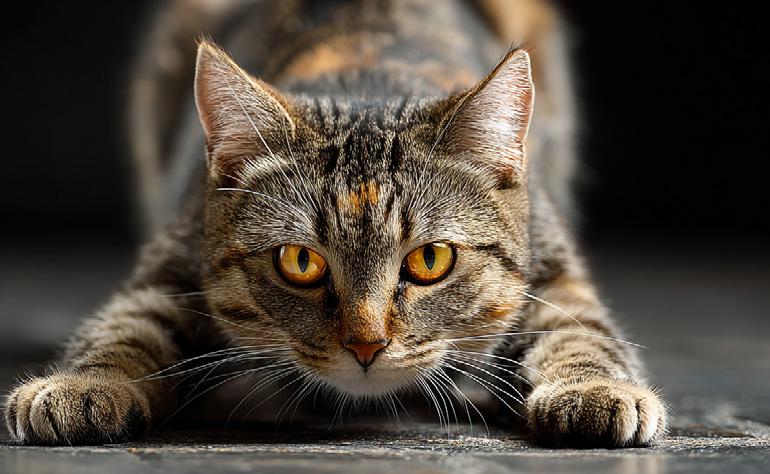
WHEN RETREAT IS THE BRAVEST CHOICE
Courage is not only about moving forward. Sometimes, it is about retreating strategically.
Cats retreat when they sense no advantage in continuing. But they do so in order, never in panic, always ready to return when the conditions change.
Leaders must adopt the same wisdom.
Retreating to conserve resources, reputation, or energy is not cowardice.
It is strategic courage — the discipline of repositioning in order to fight another day.
THE PHILOSOPHY OF CALCULATED RISK
Aristotle defined courage as the mean between cowardice and recklessness. Cowardice retreats always. Recklessness advances always. Courage lies in between: moving forward when reason justifies the risk.
Nietzsche drew a similar line between the instinct of self-preservation and the drive for self-overcoming. The higher individual recognizes danger but is not paralyzed by it. Cats embody this philosophy instinctively: they live in constant cycles of evaluation and action.
EGO VS. PURPOSE
Much so-called fearlessness comes from ego — the need to prove something, to win applause. But ego does not calculate. It reacts.
The cat is not driven by vanity. It does not fight to impress an audience. It acts to defend territory, resources, or survival.
For leaders, the lesson is stark: acting from purpose is courage; acting from ego is recklessness.
CORPORATE APPLICATIONS OF FELINE COURAGE
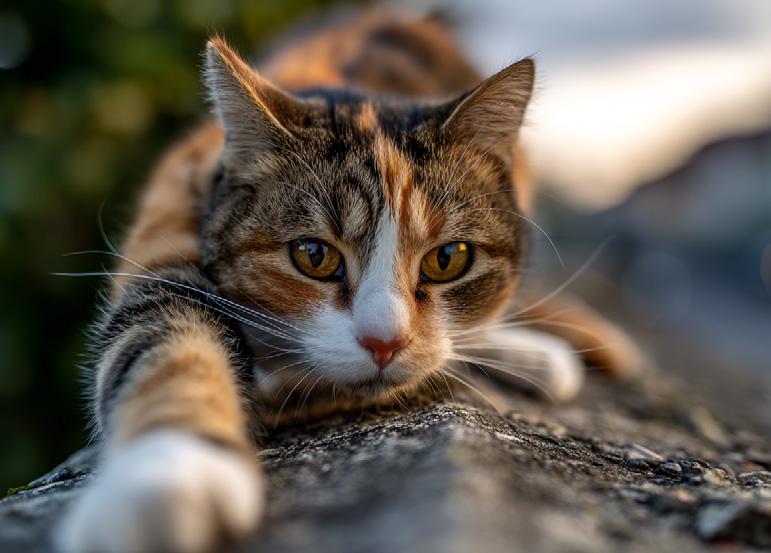
Strategic courage in business looks like:
• Launching an innovative product only after tests and validations, not just because of external pressure.
• Entering a new market with research in hand, knowing certainty never comes.
• Responding to crises with fast, deliberate action instead of waiting for them to fade.
• Making unpopular but necessary decisions for long-term benefit.
Courage is entering the battlefield knowing where the exits are. Fearlessness is charging in without knowing there’s a door.
THE BIOLOGY OF FELINE COURAGE
The cat’s threat posture is a masterclass in physiology and strategy. Arched back, bristled fur, tail twitching. It is not only intimidation but preparation — sensory systems heightened, muscles primed.
Neurologically, cats switch rapidly between sympathetic (fight-or-flight) and parasympathetic (calm and recovery) states. This flexibility allows them to engage and disengage seamlessly.
Leaders need the same ability: to activate decisive action under pressure, then quickly return to analysis and planning.
ADVANCING WITH EYES OPEN
Cats are not reckless — but neither are they hesitant. They advance with eyes wide open, fully present.
The difference between courage and fearlessness is simple:
• The courageous know what they’re getting into.
• The fearless do not.
And in leadership, this difference determines who builds enduring legacies and who collapses under the weight of their own bravado.
The challenge is to adopt feline courage: measure, prepare, act — not too soon from anxiety, not too late from fear, but at the right moment, fully conscious of every step.
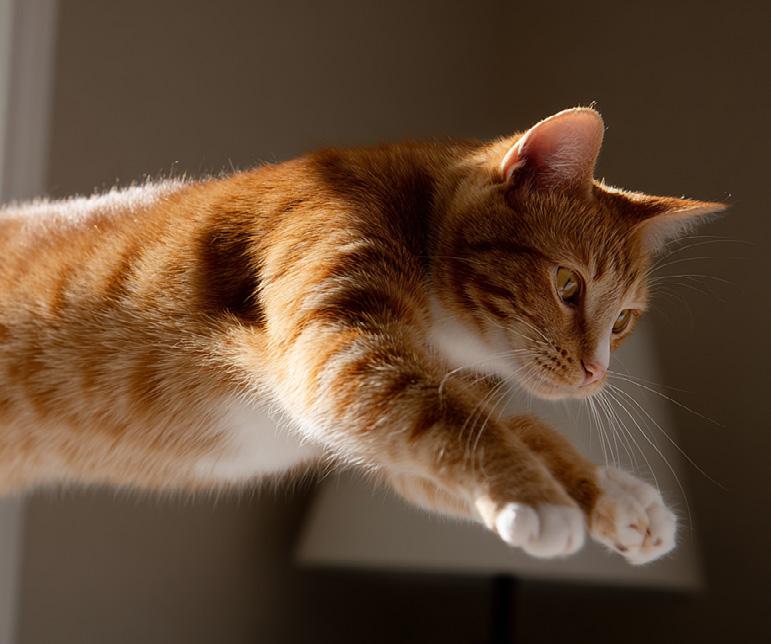
ADAPTABILITY: FROM DESERT TO APARTMENT 08
Cats don’t resist change — they study it, adapt to it, and exploit it.
THE DESERT ORIGINS OF THE DOMESTIC CAT
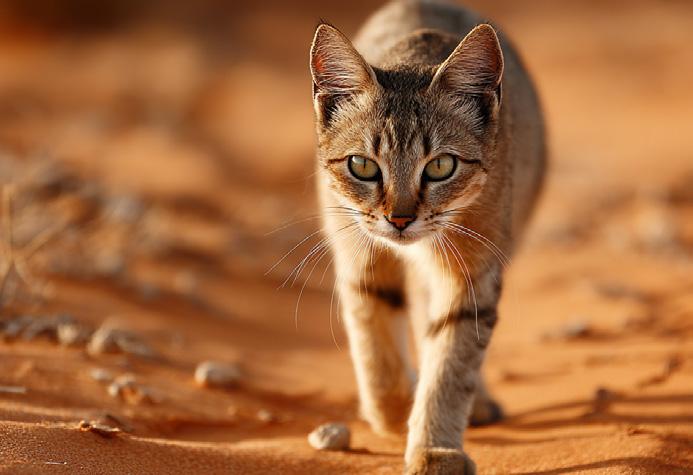
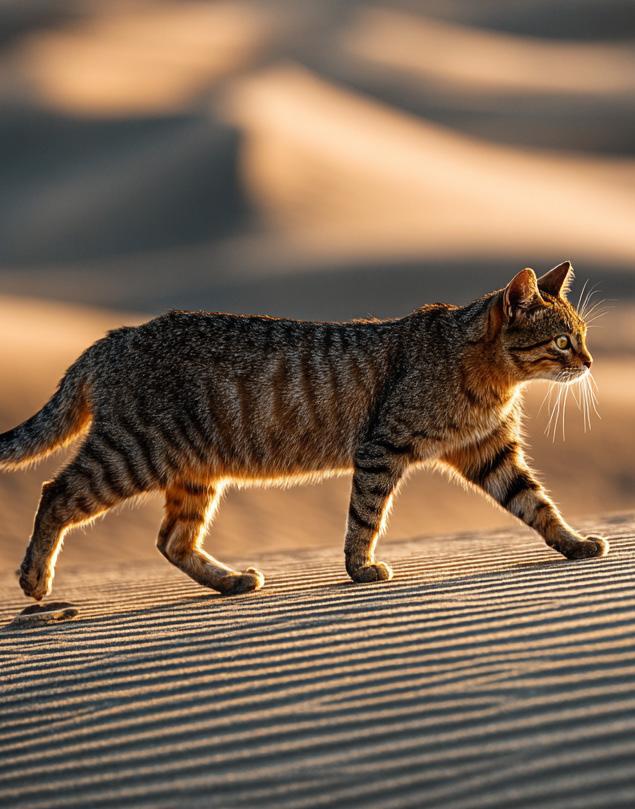
The modern house cat (Felis catus) descends from wildcats of the Fertile Crescent and North Africa — solitary hunters forged in harsh deserts. They endured scorching heat, scarce water, and seasonal prey.
This ancestry shaped their physiology: ultra-efficient kidneys to conserve water, twilight activity to avoid midday heat, and refined hunting instincts to seize opportunity whenever it appeared.
And yet today, we find cats living comfortably in highrise apartments, fed on packaged food and napping on couches. The shift is dramatic, but the essence remains feline. That is adaptability at its purest.
ADAPTABILITY DOES NOT MEAN LOSS OF IDENTITY
The great feline lesson is this: to adapt does not mean to lose who you are.
The cat in a penthouse may not hunt mice, but it still stalks toys, climbs heights, and sharpens claws. It redirects its energy to fit the environment — but never abandons the traits that define it.

For leaders and organizations, the message is clear: changing operations without abandoning core values is the essence of successful adaptation.
Adaptability without essence is empty opportunism; essence without adaptability is suicidal rigidity.
THE RISK OF RIGIDITY
In nature and in business, failure to adapt means extinction.
Fossil records are littered with species that perished because they could not respond to changing climates or food sources. In business, we see the same
in companies that clung to outdated models while the world evolved around them.
Cats survived because they thrived across habitats: deserts, farms, forests, ships, apartments. They adjusted strategy without losing identity.
THE PHILOSOPHY OF PLASTICITY
Heraclitus wrote:
The only constant is change.
But the feline philosophy refines it: what is permanent is essence; what changes is form.
Cats don’t resist change — they study it, adapt to it, and exploit it. High-performing leaders do the same: they absorb change as part of strategy.
Structures, products, and processes may evolve endlessly, but the purpose must endure.
ADAPTABILITY AS COMPETITIVE ADVANTAGE
In unstable environments, adaptability is as crucial as innovation.
Cats demonstrate this by:
• Adjusting diet to what’s available.
• Modifying hunting habits by geography and season.
• Mapping new routes through urban landscapes.
• Using vertical space when horizontal space is limited.
For companies, adaptability means reconfiguring processes, exploring new sales channels, testing business models, and redesigning structures as markets shift.
FROM DESERT TO APARTMENT: A BUSINESS TRANSLATION
Think of the desert as the hostile market: scarce resources, fierce competition, difficult clients. The apartment is the protected market: steady customers, stable operations, less volatility.

Cats flourish in both but never confuse comfort with permanence. Even in the apartment, they keep desert skills sharp.
The lesson for leaders: in times of abundance, train as if still in scarcity. Comfort today does not guarantee survival tomorrow.
THE THREE LAYERS OF FELINE ADAPTABILITY
1. PHYSICAL
The body adjusts: sleep cycles shift, activity adapts to heat or cold.
2. BEHAVIORAL
Habits change: new ways to play, hunt, and explore emerge.
3. STRATEGIC
Essential skills remain ready for use, even if not needed daily.
In business, these map to flexible infrastructure, agile culture, and scenario-based strategy.
THE DANGER OF OVER-ADAPTATION
But too much adaptation risks losing identity.
Companies that pivot with every trend dissolve their brand. Leaders who abandon values for approval lose credibility.
Cats avoid this mistake: they adapt, but always preserve rituals that define them. Scratching, marking territory, climbing high — these anchor their identity regardless of context.
RESILIENCE AND ANTIFRAGILITY
Cats are not just resilient (able to bounce back); they are antifragile — stronger after impact.
The cat that once hunted in deserts and now thrives in apartments has expanded, not diminished, its survival playbook.
Antifragile companies do the same: they emerge from crises not just intact but more versatile, more creative, more robust.

CHANGING WITHOUT LOSING YOURSELF
The feline shows us that true adaptability is not changing to survive, but changing to continue being who you are.
It may swap real prey for toys or desert heat for couch cushions — but it never abandons the hunter within.
For leaders and organizations, the lesson is timeless: change form to preserve content.
Because survival is not only about the ability to change — it is about the wisdom to preserve uniqueness while everything else transforms.
RESPECT FOR THE ENVIRONMENT: THE INSTINCTIVE READING OF CONTEXT 09
The Instinct of Fitting In
When a cat enters a new environment, it doesn’t charge forward. It explores, sniffs, observes, records. It identifies escape routes, safe zones, food sources, and resting spots. Before acting, it understands the scene.
This is why cats rarely expose themselves to unnecessary risk. They know what belongs where — and, more importantly, what doesn’t.
Respecting the environment is not submission. It is adaptive intelligence: acting in harmony with space, rules, and forces already in play.
RESPECT AS STRATEGIC READING
In business, “respecting the environment” doesn’t mean passive acceptance. It means deeply understanding culture, formal and informal rules, sensitivities, and opportunities.
Leaders who read the environment well can:
Choose the right timing for change.
Know which allies to mobilize to speed up decisions.
Avoid friction caused by premature moves.
Map stakeholders before launching initiatives.
Just as cats don’t hunt anywhere, executives shouldn’t act without reading the terrain.
THE CAT’S TERRITORIAL INTELLIGENCE
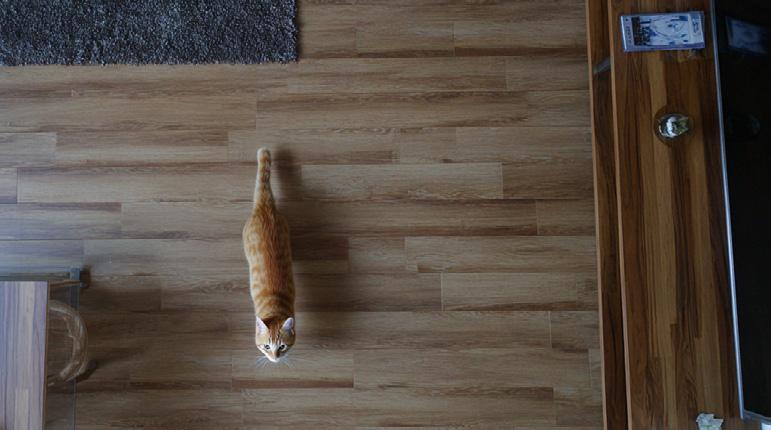
Cats are masters at mental mapping. They know every corner of their territory, where they can rest undisturbed, and what areas to avoid. This territorial intelligence is built through continuous observation and cautious interaction.
For leaders, this is the equivalent of mapping the company’s political and operational landscape: who has influence, what processes are nonnegotiable, where experimentation is safe. Ignore this, and mistakes multiply.
Cats respect each other’s space. They may dispute it, but rarely without weighing the odds.
In business, entering the wrong “territory” — a market without preparation, or an internal domain without relationships — provokes resistance.
Respecting the environment also means respecting those already in it. That doesn’t mean avoiding competition, but acknowledging that every move generates reactions. Success depends as much on perception as on action.
THE MISTAKE OF INVADING THE WRONG TERRITORY THE PHILOSOPHY OF ADEQUACY
Heraclitus said: “Character is destiny.” For leaders, character dictates how they read and respect context.
Nietzsche would add: the superior individual acts by will, but never ignores the setting. He adapts actions to maximize impact without losing essence.
Cats live this balance: calm companions on the sofa, alert hunters in the street. Identity intact, behavior adjusted.

THE DANGER OF SUPERFICIAL READING
One of leadership’s great failures is believing an environment can be understood after a few signals. Cats don’t make that mistake: they sniff more than once, test reactions, return to objects again and again.
In business, superficial reading leads to:
• Product launches without understanding consumers.
• Culture-change initiatives without grasping impact.
• Alliances with unstable influencers.
• Ignoring invisible forces operating behind the scenes.
Rushed action without context is a recipe for failure.
Respecting the environment does not mean never challenging it. It means knowing when and how to challenge it for maximum effect.
Cats test limits when safe — climbing higher, expanding territory. But only after gauging reactions.
Likewise, leaders who challenge status quo without legitimacy waste energy and create enemies. Those who time it well, however, bend the environment to their advantage.
READING THE EXTERNAL ENVIRONMENT RESPECT IS NOT PASSIVITY
Respect for environment extends beyond internal culture. Companies must read market, economy, politics, and consumer moods.
Launching a campaign without sensing social climate or opening abroad without studying local culture is like a cat hunting blind. The risk of failure is enormous.
Long-term success depends on decisions aligned with context.
HOW LEADERS DEVELOP INSTINCTIVE READING
Lessons from cats can be applied directly:
1. Prolonged observation – Absorb signals before acting.
2. Gradual interaction – Test spaces before moving fully into them.
3. Active listening – Hear before speaking, understand before proposing.
4. Contextual memory – Record patterns to anticipate future moves
Instinctive reading is born from patience, attention, and memory.
ACTING TO THE RHYTHM OF THE ENVIRONMENT
Cats teach that intelligence is not only knowing what to do, but also knowing when and where to do it .
In business, this means synchronizing action with context: accelerating when conditions favor, slowing when the ground is hostile.
Respecting the environment is not submission.
It is turning context into an ally rather than an obstacle. In any territory, success belongs to those who read and move with the rhythm of the place.
DOMESTIC YET INDEPENDENT: THE BALANCE BETWEEN INTEGRATION AND AUTONOMY 10
THE APPARENT PARADOX
The domestic cat lives in a fascinating paradox: it belongs to a home, but it is never truly owned. It accepts care, shares space, but maintains nonnegotiable zones of autonomy.
This is one of its greatest strengths — the ability to integrate into a system without losing individuality.
In business, the same balance is vital. Organizations need professionals who align with culture and collective goals but who also preserve the independence to think and act on their own.
INTEGRATION WITHOUT SUBMISSION
The cat is not submissive, but it is integrated. It values the benefits of cohabitation — shelter, food, affection — yet it maintains its freedom of choice: when to approach, where to rest, how to interact.
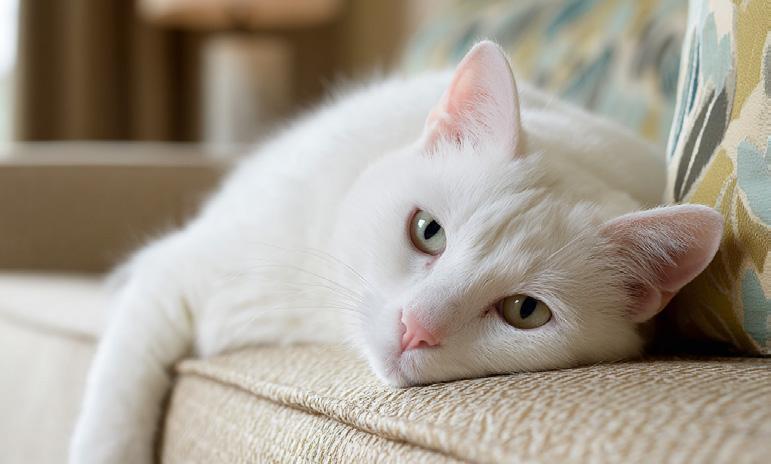
For leaders, the lesson is clear: true integration does not require uniformity — only alignment of purpose.
THE RISK OF TOTAL DEPENDENCE
Animals that lose autonomy become fragile when the environment shifts or when their provider disappears.
In business, employees who rely entirely on the company for identity and direction lose the ability to re-
invent themselves. Companies that foster total dependency also weaken themselves: a single talent loss can destabilize the entire system.
Cats avoid this trap. Even when fed daily, they maintain hunting instincts. If needed, they can return to self-reliance.
THE VALUE OF SELF-SUFFICIENCY
Autonomy is the ultimate reserve of survival — for both individuals and organizations.
For the cat, it means not depending exclusively on the human. For professionals, it means having skills, knowledge, and networks sufficient to remain relevant no matter the scenario.
High-performing leaders cultivate teams that function without constant oversight — teams able to decide, innovate, and act independently within clear guidelines.
TRUST AS THE BRIDGE
The balance between being domestic and independent rests on one element: trust .
Cats trust their household to provide security, but know their instincts are ready if that trust fails.
Likewise, high-performance teams trust leadership and systems, but preserve the ability to act autonomously when conditions demand it.

THE PHILOSOPHY OF INTEGRATED INDEPENDENCE
Nietzsche, who prized authenticity, would see in the cat the perfect example of living in the world without dissolving into it.
This philosophy teaches:
• Integration means living in harmony with the collective, respecting rules and shared values.
• Independence means preserving freedom of thought and action within that collective.
Cats embody both — and that dual mastery makes them resilient and adaptive.
THE ERROR OF ABSOLUTE INDEPENDENCE
If total dependence is dangerous, so too is absolute independence.
The fully wild cat faces instability and greater risk. The professional who rejects integration altogether misses out on resources, protection, and opportunities that only the collective can provide.
The sweet spot lies in balance: connected enough to thrive, independent enough to survive alone.
CORPORATE APPLICATIONS OF THE “DOMESTIC YET INDEPENDENT” MODEL
For organizations, embracing this model means:
1. DELEGATE WITH CLARITY
Real autonomy paired with defined objectives.
2. AVOID MICROMANAGEMENT
Allow people to find their own methods to achieve goals.
3. ENCOURAGE INITIATIVE
Reward proactive behavior.
4. ANCHOR AUTONOMY TO PURPOSE
Ensure freedom doesn’t drift into disconnection.
A “domestic yet independent” team innovates without breaking cohesion.
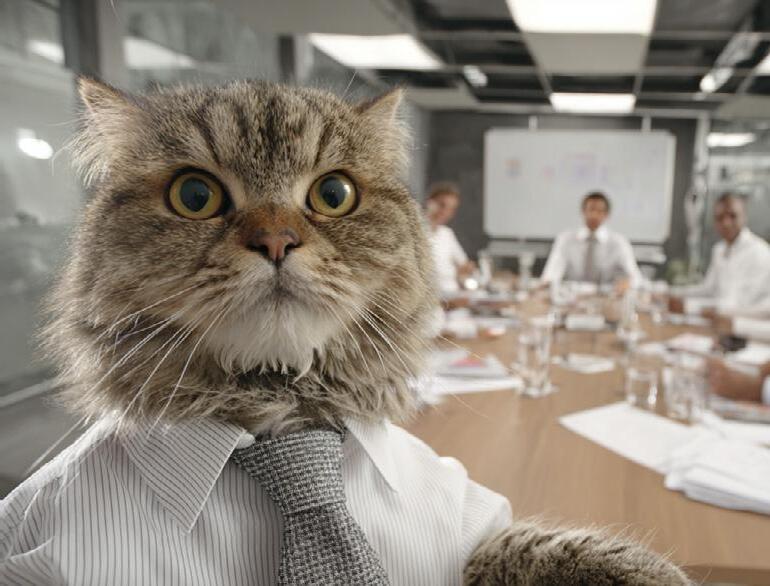
THE ELEGANCE OF SILENT INDEPENDENCE
The cat does not announce its independence. It simply lives it.
In business, this is a lesson in humility. True independence is not noisy rebellion but quiet confidence. Independent professionals don’t challenge for vanity; they contribute from conviction.

BELONGING WITHOUT LOSING YOURSELF
The cat shows us that belonging is not the same as submission. It joins the life of the household while preserving its private space. It is companion without dependency, free without isolation.
For leaders and organizations, the message is clear: create environments where people want to belong but are free to remain themselves. That is the balance that sustains stability and fuels innovation.
THE POWER OF DAYDREAMING: THE IMPORTANCE OF CREATIVE IDLENESS
The Look That Sees Nothing—and Everything
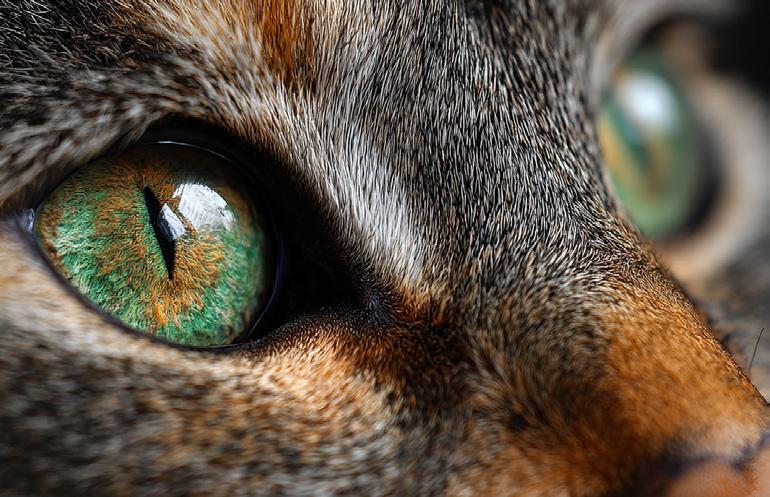
Anyone who lives with cats has noticed it: they can spend long minutes — sometimes hours — staring into what seems like empty space.
To the hurried observer, it looks pointless. But to those who understand feline instinct, it’s anything but. What appears to be “nothing” is actually processing — a state of relaxed attention, ready to react but unwilling to waste energy prematurely.
This feline “stare into nothingness” is, in fact, a form of productive daydreaming. And here lies the first lesson for leaders and organizations: the best ideas don’t come in moments of frenzy, but in the silence between one action and the next.
THE DEATH OF DOWNTIME
Modern life has replaced pause with haste. Busyness is celebrated; stillness is stigmatized.
In the corporate world, professionals who are perpetually busy are praised as committed. Those who take time to think are often labeled unproductive.
This is a dangerous misconception. Without pause, there is no thought. Without thought, there is no depth. And without depth, there is no humanity.
Historically, we feared weapons of mass destruction. Today, we should fear weapons of mass distraction — the endless notifications, fragmented feeds, and dopamine-driven alerts that hijack our attention while starving our minds.

THE BRAIN UNDER SIEGE
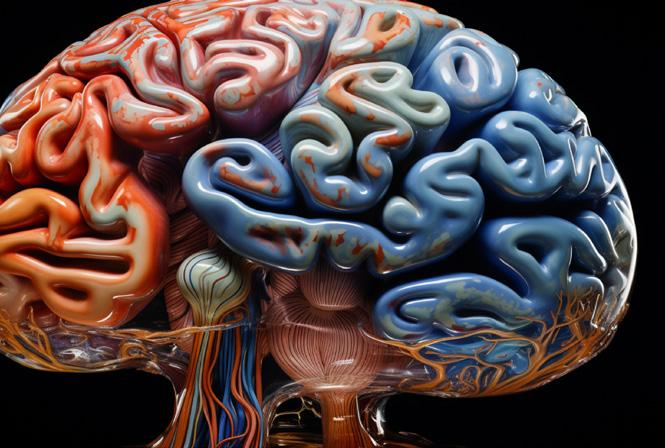
Nicholas Carr, in The Shallows, explains how online overstimulation rewires the brain: neural activity migrates from the hippocampus — the center of deep thought, memory, and synthesis — to the prefrontal cortex, which handles fast, shallow decisions.
In simple terms: we are trading depth for speed. And as any cat knows, speed without evaluation can be fatal.
THE PRICE OF AUTOMATIC LIVING
When the mind runs only on autopilot, it loses its ability to form hypotheses, anticipate scenarios, or create original solutions.
We become like hunters who can only strike when the prey is in plain sight — incapable of imagining where it
might be hiding or heading next.
Cats, on the other hand, invest time in contemplation — absorbing, recording, and preparing.
Their “idle” moments are what sharpen their readiness for the decisive strike.
DAYDREAMING: THE INVISIBLE LAB
OF IDEAS
Creative idleness is not inactivity. It’s the brain’s hidden laboratory. In those moments of apparent stillness,
the mind is reorganizing memories, cross-referencing information, and forming unexpected connections.
Many breakthroughs were born this way: Einstein imagining riding alongside a beam of light; Newton contemplating a falling apple; Archimedes reflecting in his bath.
Daydreaming is the fertile ground where invisible seeds germinate.
THE CAT AS MASTER OF ABSTRACTION
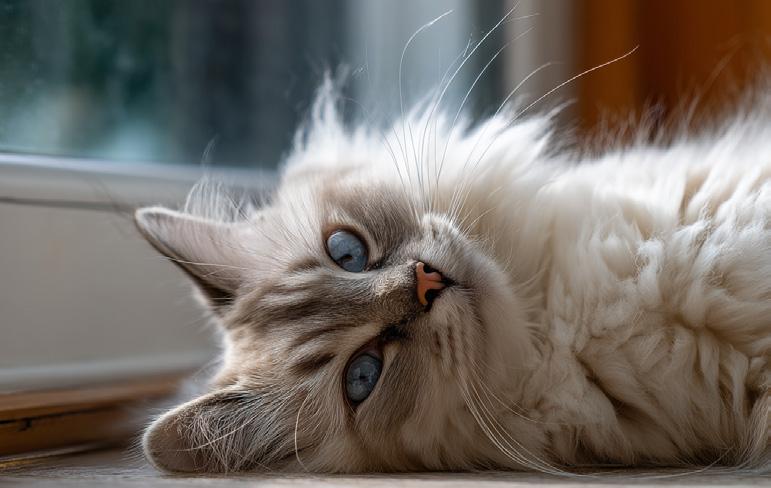
Cats never feel guilty for “doing nothing.” They know rest is part of the strategy. Their bodies regenerate, their senses stay sharp, and their minds continue to process subtle environmental cues.
The feline company mirrors this posture: leaders and teams who think before they act, who resist the illusion that constant motion equals progress, who embrace pause not as escape but as preparation.
THE PHILOSOPHY OF PAUSE
The Stoics defended inner retreat. Seneca wrote:
To be everywhere is to be nowhere.
Nietzsche praised the value of “slow thoughts” — ideas that require time and maturation.
Cats live this philosophy instinctively: alternating bursts of intense action with long stretches of stillness.
ORGANIZATIONS IN THE AGE OF DISTRACTION
Modern organizations, seduced by the cult of “always on,” confuse busyness with productivity. Endless meetings, instant messages, and daily fire drills suffocate long-term thought.
Without downtime, companies become reactive, locked into short-term cycles.
They lose foresight, creativity, and resilience.
BRINGING CREATIVE IDLENESS BACK TO WORK
Inspired by cats, leaders can design environments where reflection thrives:
1. Spaces without interruption – Dedicated times and places free from meetings or notifications.
2. Breathing room – Structured pauses between projects to consolidate learning.
3. Stimulated curiosity – Activities that expand knowledge without immediate payoff.
4. Public recognition of reflection – Valuing thinking as much as doing.
THE THREE DIMENSIONS OF PRODUCTIVE DAYDREAMING
Contemplation – Observing without urgency, allowing ideas to mature.
Association – CConnecting distant dots to generate novel solutions.
Projection – Imagining futures and testing scenarios in the mind before reality.
Without these dimensions, creativity devolves into replication.
WITHOUT DAYDREAMING, NO SALVATION
The real danger of our era is not technological obsolescence, but human obsolescence — the loss of our ability to think deeply, create, and connect meaningfully.
Without daydreaming, without abstraction, there is no salvation.
The cat, in its contemplative silence, reminds
us that pause is the matrix of intelligent action.
In the feline company, leaders and teams who know how to stop and think are always a step ahead — because when the moment of action arrives, they have already lived the strategy in their minds before executing it in the real world.
THE LOOK OF BOREDOM: FILTERING FADS FROM VALUE 12
THE FELINE DISDAIN FOR THE SUPERFLUOUS
Anyone who has tried to entertain a cat with an expensive toy knows the scene: after a brief spark of curiosity, the cat turns away, lies down, and focuses on something else — often a crumpled piece of paper on the floor.
Cats are unimpressed by novelty for novelty’s
sake. Instinctively, they filter what deserves their attention from what is mere noise.
In the corporate world, this ability is rare. Too often, companies chase “the next big thing” without asking the harder question: Does it have lasting value?
THE DANGER OF THE NOVELTY SYNDROME
Every week brings a new framework, a new management tool, a new leadership fad. Social media, conferences, and consultants all package these novelties as essential.
Yet most of them are fashion, not innovation. Adopting them blindly is like filling a house with toys a cat will never touch: wasted money, diluted focus, and eroded identity.
THE CAT AS NATURAL FILTER
A cat approaches stimuli with quiet discernment: sniff, observe, approach, withdraw — only then decide.
Leaders must emulate this feline discipline: temper enthusiasm with analysis, and be willing to conclude “not worth it.”
THE PHILOSOPHY OF SELECTION
The Stoics called it apatheia: the strength to remain unshaken by unnecessary distractions. Cats live this philosophy daily, investing attention only where it matters.
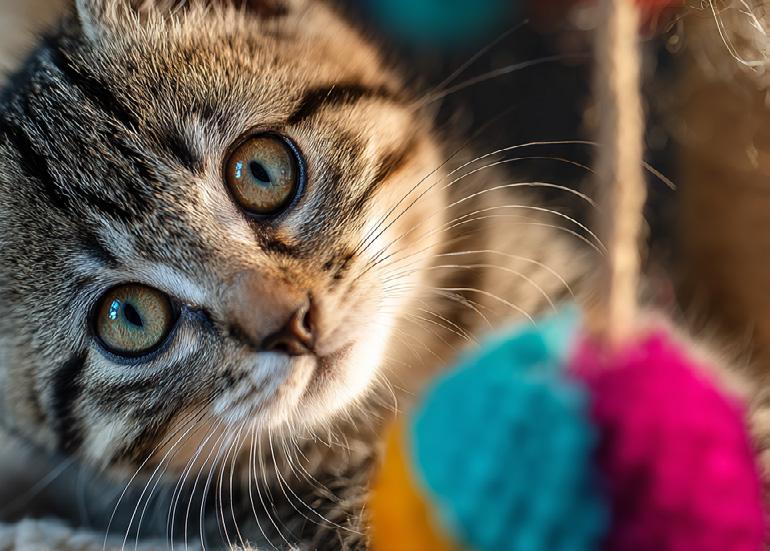
For organizations, this means distinguishing genuine shifts from passing noise — trend vs. truth, fad vs. foundation.
FASHION VS. VALUE: THE TEST OF TIME
Every fad is born with an aura of inevitability. Ignore it, we’re told, and you’ll fall behind. Yet, within months or years, most disappear without impact.
To separate the lasting from the fleeting, leaders can apply a simple time test:
• Will this still matter in 5 or 10 years?
• Does it solve a real problem or just create a new category of consumption?
• Is it consistent with our purpose and identity?
If not, the wisest move may be to ignore it entirely.
THE INVISIBLE COST OF FADS
Chasing novelties comes with two hidden costs:
1. Direct cost – investment of money, time, and training.
2. Opportunity cost – the energy stolen from genuine, transformative initiatives.
Cats never waste energy on pursuits that neither feed nor delight them.
Leaders must learn the same selective discipline.
THE CORPORATE FOMO TRAP
Fear of Missing Out (FOMO) isn’t just a consumer issue — it’s a corporate epidemic.
Many decisions are made not because the initiative is sound, but because “the competi-
tion is doing it.”
If cats behaved this way, they would chase everything that moved — and collapse from exhaustion. Their secret superpower is the ability to ignore.
THE VALUE OF STRATEGIC INDIFFERENCE
Indifference is not apathy; it is the power to choose where to invest attention and resources.
Cats react only to what matters to them. Feline companies do the same: they filter opportunities through the lens of long-term vision, not short-term buzz.
CASE STUDIES: FASHION VS. FOUNDATION
• Passing Fad: In the early 2000s, corporations rushed to build “enterprise portals.” Most vanished quickly, because they solved no real problem.
• Lasting Value: Corporate email, on the other hand, endured because it addressed a genuine need: direct, structured communication.
The difference lies not in hype, but in function.
BUILDING A FELINE RADAR FOR VALUE
1. ANALYZE BEFORE ADOPTING
Speed is not the same as agility.
2. TEST SMALL, SCALE LATER
Experiment cautiously before full rollout.
3. INVITE DISSENTING VOICES
Group enthusiasm often blinds judgment.
4. WATCH REAL BEHAVIOR
Focus on what customers actually use, not what they claim to want.
In business, the energy you save is as important as the energy you spend. Sometimes the smartest move is to walk away.
Cats win many battles by simply not fighting them.
IGNORING AS A STRATEGY THE WISDOM OF SELECTIVE BOREDOM
Feline boredom is not laziness — it is filtration. Cats conserve their focus for what matters most.
For organizations, the same principle applies: protecting identity, avoiding waste, and amplifying what aligns with purpose.
If more leaders learned to view certain novelties with the same indifference that cats show toward a dull toy, business would have fewer fads — and far more genuine innovation.
STRATEGIC TERRITORIALITY: HOW TO DEFINE, DEFEND, AND EXPAND WITHOUT WASTING RESOURCES 13
Territory as an Extension of Identity
For a cat, territory is not just physical space — it’s a map of safety, influence, and control. Every boundary is known, every zone of comfort well-defined. And when those boundaries are challenged, defense comes swiftly, whether through posturing, negotiation, or outright confrontation.
In business, “territory” extends beyond geography. It is market share, client portfolios, brand reputation, and strategic niches where the company exerts real influence. And just like a cat, every enterprise must know precisely where its power begins, where it ends, and where the next frontier lies
DEFINING YOUR BUSINESS TERRITORY
The most common mistake organizations make is attempting to be everywhere at once.
Cats don’t try to hunt the entire neighborhood — they concentrate on what they know and control.
For leaders, this means clarifying:
• Where are we already dominant?
• Where is there room for sustainable growth?
• Where is the cost of dispersion higher than the potential return?
Without this clarity, strategy turns into sprawl.
THE IMPORTANCE OF CLEAR BOUNDARIES
Healthy corporate territory isn’t shapeless. Boundaries provide structure. They:
• Reduce unnecessary conflict with competitors.
• Focus resources where impact is greatest.
• Protect brand identity.
Just as cats leave scent markers, companies must clearly signal to the market what space they claim and how they intend to defend it.
PROTECT BEFORE YOU EXPAND
Cats do not expand recklessly. They explore every corner before claiming it as their own. Businesses often do the opposite — chasing new markets without securing the foundation. The result is fragility, not growth.
A cat knows: expansion without consolidation is suicide. Leaders must remember: fortify before you advance.
THE COST OF DISPERSION
When companies spread across too many fronts, they weaken their defensive power. It’s like a cat attempting to patrol multiple yards at once — energy is drained, focus is lost, and none of the spaces remain truly secure.
Concentration is strength. Dispersion is vulnerability.

HOW CATS EXPAND WISELY
The feline playbook for expansion is simple and disciplined:
1. OBSERVE FROM A DISTANCE – WATCH BEFORE ENGAGING.
2. EXPLORE DISCREETLY – ENTER CAUTIOUSLY, WITHOUT FULL EXPOSURE.
3. TEST FOR VALUE – CLAIM ONLY IF RESOURCES JUSTIFY THE RISK.
In business terms: pilot projects, soft launches, and phased investments before full-scale commitment.
THE SAFE CORRIDOR PRINCIPLE
Cats don’t cross unknown ground without a sequence of safe checkpoints.
For companies, a “safe corridor” might be longterm contracts, anchor clients, or strategic partnerships that guarantee stability while new ventures are explored.
Expansion without such corridors isn’t strategy — it’s gambling.

TERRITORIAL CONFLICTS ARE INEVITABLE
Competition for space is part of the game. Cats know when to fight and when to retreat. Leaders must learn the same discipline.
Not every battle is worth the energy. Sometimes conserving strength for a bigger, more strategic fight is the real victory.
THE ART OF FELINE DIPLOMACY
Cats may be territorial, but they can also coexist — provided boundaries are respected. In business, this translates into alliances, joint ventures, and strategic partnerships that allow territory to be shared when mutual benefits exist.
BRAND AS SYMBOLIC TERRITORY
Not all territory is physical or financial. Brand reputation is a symbolic territory, and one of the most critical to defend.
Every client experience reinforces or erodes that invisible frontier. Fail to patrol it, and competitors will claim it as their own.
THE RISK OF ABANDONING SPACE
When a cat stops patrolling, another takes over. The same is true in markets: a neglected segment quickly becomes someone else’s domain.
SMART EXPANSION: FROM CORE TO PERIPHERY
Cats expand concentrically — strengthening the core first, then extending outward. Companies should do the same. Build from a secure nucleus, so each new layer of growth is anchored to something solid.
Expansion that ignores this principle often collapses under its own weight.
TERRITORIALITY AND CORPORATE CULTURE
The way an organization defines, defends, and expands its territory reflects its culture. A culture of vigilance builds resilient companies; a culture of improvisation breeds fragility.
Cats survive because they are meticulous in observation and relentless in defense. Companies thrive when they adopt the same cultural DNA.
TERRITORY AS IDENTITY
For cats, territory is not just where they live — it is who they are. The same applies to companies. Defining, protecting, and expanding territory wisely is not just a market strategy — it is an act of self-preservation.
In both the feline and corporate worlds, survival belongs to those who know their ground, guard it with precision, and expand it with discipline.

PREDATORY PATIENCE: THE VALUE OF WAITING FOR THE RIGHT MOMENT
The Hunt Is Never Rushed
If you’ve ever watched a cat stalk its prey — whether a bird in the garden or a toy dangling in the living room — you know the ritual. It doesn’t pounce immediately. It lowers its body, slows its breathing, narrows its focus, and waits. Minutes may pass. Sometimes hours. Then, in a single burst of precision, it strikes.
The cat understands something most leaders forget: timing is everything. It’s not the strongest predator that wins, but the one who knows when to move.
PATIENCE AS A COMPETITIVE EDGE
In business, impatience is often celebrated. “Fail fast,” “move fast and break things,” “speed is the new strategy.” But haste is not always strength. More often, it’s waste.
Predatory patience is not idleness; it’s strategic restraint. It is the discipline to wait until conditions align, resources are in place, and the payoff justifies the risk. Like a cat that saves its energy for the decisive leap, successful companies don’t waste effort chasing every opportunity. They conserve, prepare, and strike when success is most likely.
THE DIFFERENCE BETWEEN ACTIVITY AND PROGRESS
In corporate life, busyness is frequently mistaken for effectiveness. Leaders fill calendars with meetings, teams launch endless initiatives, and companies run in circles to look productive.


Cats reveal the folly of this approach. They can spend most of the day apparently doing “nothing.” Yet when the moment comes, their action is flawless.
For organizations, this is the distinction between motion and momentum. Activity consumes resources; progress multiplies them.
PHILOSOPHY OF WAITING
Aristotle described patience as a form of courage — the ability to endure until the right moment to act. The Stoics reinforced it, teaching that wisdom is knowing what to control and when to accept delay. The cat embodies this philosophy without reading a word of it. Its silence is strategy, not surrender.
Nietzsche would call this the will to power expressed in restraint — strength shown not in endless movement, but in decisive, intentional action.

THE BIOLOGY OF PATIENCE
From a biological perspective, patience is survival. Cats burn calories only when the probability of success is high. Their nervous system is wired to conserve energy until the leap.
Humans, and especially companies, often do the opposite: we exhaust resources chasing low-probability ventures, reacting to every minor fluctuation in the market, mistaking motion for resilience.
The feline teaches the reverse: patience conserves the capital — financial, emotional, and organizational — that allows for decisive moves when it matters most.
CORPORATE LESSONS FROM THE FELINE HUNT
Adopting predatory patience in leadership means:
1. Choosing the battlefield wisely – Not every opportunity is worth pursuing.
2. Conserving energy – Invest resources only where the payoff justifies the cost.
3. Reading weak signals – Like a cat watching the twitch of a tail, leaders must recognize subtle shifts in markets before others do.
4. Acting with explosive precision – When the moment comes, hesitation kills. Preparation must meet decisiveness.
Acting too soon can be as fatal as acting too late. A cat that pounces before its prey is close enough wastes the opportunity and signals its intent.
For leaders, premature launches, undercooked strategies, or reactive decisions often weaken the very position they were meant to strengthen. Impatience transforms potential into failure.
THE RISK OF PREMATURE ACTION THE MARKET REWARDS TIMING, NOT SPEED
History is full of examples:
Apple didn’t invent the MP3 player, the smartphone, or the tablet. It simply waited for the right timing — when technology, design, and consumer readiness aligned — and then struck with decisive brilliance.
Netflix didn’t rush into streaming in the late ’90s; it patiently refined logistics, studied bandwidth adop-
tion, and moved when conditions guaranteed scale.
Countless startups failed by launching before the market was ready, exhausting themselves while paving the road for more patient competitors.
In strategy, being too early can feel a lot like being wrong.
PATIENCE VS. PROCRASTINATION
It’s critical to distinguish patience from procrastination. Procrastination is avoidance — delaying because of fear or indecision. Patience is purposeful waiting — delaying because the odds
aren’t favorable yet.
The cat doesn’t avoid the hunt; it prepares for the perfect strike. Leaders must cultivate the same mindset: wait actively, not passively.
TRAINING PREDATORY PATIENCE IN ORGANIZATIONS
1. SCENARIO PLANNING
Run simulations to anticipate multiple futures. This builds confidence in waiting until the right conditions emerge.
2. ENERGY MANAGEMENT
Protect teams from burnout by discouraging unnecessary “busywork.” Patience thrives in well-rested, focused organizations.
3. STRATEGIC SILENCE
Sometimes the most powerful move is no move. Staying quiet while competitors rush creates space for a better play.
4. CELEBRATE TIMING WINS
Reward decisions that were made not first, but best.
In Eastern philosophy, stillness is often portrayed not as absence, but as presence in its purest form. The cat curled on the windowsill, eyes half-closed, is not asleep — it is waiting. Entirely aware. Entirely ready.
This is leadership at its most refined: the power to hold back until release creates maximum impact.
THE ZEN OF THE PAUSE STRIKING WITH FELINE PRECISION
When the moment comes, the cat does not hesitate. Muscles release, claws extend, focus narrows — and in an instant, what was potential becomes reality.
For companies, this is the product launch timed to perfection, the acquisition that secures dominance, the market entry that shifts the industry. The patience beforehand makes the strike inevitable.
STRATEGIC SILENCE: THE POWER OF OBSERVING WITHOUT BEING NOTICED 15
The Quiet Power
In a world addicted to noise, silence feels uncomfortable. We fill meetings with words, strategies with slogans, and leadership with endless communication. Yet cats show us a different model: they dominate by silence. They move quietly, watch silently, and strike with minimal sound. Their power is 179 not diminished by silence — it is magnified by it.
For leaders, the ability to observe without drawing attention is one of the most underestimated tools of influence. Strategic silence creates space for insight, for negotiation leverage, and for trust to emerge.
OBSERVATION AS A SUPERPOWER
Cats know that silence amplifies perception. By staying still and quiet, they notice what others miss — the flick of a tail, the sound of a wing, the shift of a shadow.
For leaders, silence does the same. In meetings, the quiet observer often sees dynamics others ignore: who dominates, who hesitates, who resists. In markets, the company that listens before speaking discerns deeper truths about customer behavior.
Silence isn’t passive. It’s active attention disguised as calm.
THE COST OF ENDLESS NOISE
Organizations often mistake talking for leading. But constant noise has costs:
• It drowns out subtle signals.
• It breeds overconfidence and under-listening.
• It signals insecurity more than authority.
Like a cat that never stops meowing, leaders who always fill the air with words lose credibility. Teams tune out. Markets grow skeptical. True authority doesn’t need constant amplification.
PHILOSOPHY OF SILENCE
Philosophers have long celebrated silence:
Lao Tzu wrote, “He who knows does not speak. He who speaks does not know.”
Blaise Pascal observed, “All of humanity’s problems stem from man’s inability to sit quietly in a room alone.”
The cat embodies this wisdom. It doesn’t explain its moves. It doesn’t justify its choices. It simply acts when the time is right.
Nietzsche might say silence is the ultimate proof of strength — the confidence to withhold, to endure, to wait.
CORPORATE SILENCE: LISTENING BEFORE
ACTING
In corporate life, silence takes multiple forms:
1. Listening in negotiations – The negotiator who speaks last often wins. Silence pressures the other side to reveal more.
2. Market research – Companies that observe before launching can avoid costly mistakes. Think of Apple’s quiet market studies before each major release.
3. Leadership presence – The leader who listens more than speaks fosters trust and empowers others.
Strategic silence turns the room into a mirror. People project into the quiet, revealing their priorities and fears.
THE DISCIPLINE OF HOLDING BACK
Silence is hard. It requires discipline not to interrupt, not to fill space, not to react instantly. But discipline is exactly what separates noise from insight.
The cat crouched in silence before the leap
looks inactive. In reality, it is more active than the prey it stalks — processing data, refining timing, conserving energy.
For leaders, silence is not an absence of action. It is an invisible preparation for decisive impact.
WHEN NOISE BECOMES A LIABILITY
Many companies collapse under their own noise:
Over-communication that confuses rather than clarifies.
Over-marketing that raises expectations they can’t meet.
Overpromising to stakeholders, eroding credibility.
Noise can be intoxicating in the short term, but it builds fragility. Silence, in contrast, creates resilience — because it keeps options open.
THE ART OF INVISIBLE INFLUENCE
Strategic silence is not about withdrawal; it is about invisibility. It allows leaders to influence without obvious exertion.
Consider Warren Buffett: he speaks rarely, but when he does, markets move. His silence multiplies the weight of his words.
The cat teaches the same: the less it reveals, the more unpredictable it becomes. And unpredictability is power.
For leaders, silence is not an absence of action. It is an invisible preparation for decisive impact.
HOW TO PRACTICE STRATEGIC SILENCE
1. IN MEETINGS
Listen twice as much as you speak. Use silence to invite others to fill the space.
2.
IN STRATEGY
Avoid announcing every move. Sometimes the quiet rollout beats the loud campaign.
3. IN LEADERSHIP
Replace speeches with presence. Being there, calm and attentive, often motivates more than words.
4. IN CRISIS
Speak only when clarity exists. Silence buys time to understand before reacting.
Anyone who’s ever felt the gaze of a cat knows the intensity of silent observation. It’s unsettling — not because of aggression, but because of presence.
Leaders who master silence project the same aura. Their quiet focus compels respect. They don’t need to prove dominance; their silence proves it for them.
THE CAT’S SILENT STARE FROM QUIET TO DECISIVE ACTION
Of course, silence is not permanent. The cat eventually moves — with precision and power. Silence is not the endgame; it is the foundation for effective action.
For companies, that means pairing listening with boldness. Stay quiet long enough to see the truth. Then act decisively enough to shape it.
PART II - STRATEGY IN MOTION
EXECUTIVE SUMMARY
CHAPTER 7: COURAGE VS. FEARLESSNESS
CHAPTER 8: ADAPTABILITY
• Fear is not the enemy. Courage is acting despite fear; fearlessness is often recklessness.
• Cats model strategic courage. They calculate, prepare, then act with precision.
• Retreat can be brave. Strategic withdrawal preserves strength for future victories.
• Ego fuels recklessness. Purpose-driven courage sustains results; ego-driven fearlessness destroys them.
• Leadership demands balance. The best leaders advance with eyes open: measured, prepared, and decisive.
• Essence + adaptation = survival. Adaptability must protect identity, not erase it.
• Rigidity kills. Species and companies that refuse to adapt disappear.
• Cats model layered flexibility. Physical, behavioral, and strategic adaptations keep them thriving everywhere.
• Beware over-adaptation. Constant pivots without essence dissolve credibility.
• True adaptability is antifragile. The best leaders and companies emerge from crises stronger, not just intact.
CHAPTER 9: RESPECT FOR THE ENVIRONMENT
• Cats don’t rush. They read context before acting — leaders must do the same.
• Respect is strategy. Timing, alliances, and perception matter as much as action.
• Superficial reading kills. Misreading culture, politics, or markets leads to failure.
• Respect ≠ passivity. True leaders challenge environments at the right time and in the right way.
• Synchronize with context. Survival and success belong to those who move with the rhythm of their surroundings.
CHAPTER 10: DOMESTIC YET INDEPENDENT
• Cats belong, but are never owned. They model integration without submission.
• Dependence weakens. Over-reliance on systems or people leads to fragility.
• Autonomy is survival capital. Skills, knowledge, and networks preserve relevance.
• Trust bridges the paradox. High-performing teams trust the system but act independently when needed.
• Belong without losing yourself. True leadership cultivates environments that harmonize unity with autonomy.
CHAPTER 11: THE POWER OF DAYDREAMING
• Stillness is strategy. What looks like “doing nothing” is actually preparation for decisive action.
• Weapons of distraction are today’s biggest threat to creativity and depth.
• Daydreaming is a lab. Reflection reorganizes memories and breeds insight.
• Feline leaders know: motion without pause is noise, not progress.
• Without daydreaming, no innovation. Companies that don’t create time to think become prisoners of the short term.
CHAPTER 12: THE LOOK OF BOREDOM
• Cats teach us to filter. They ignore noise and save energy for what truly matters.
• Most corporate novelties are fads. Without evaluation, they drain resources and erode identity.
• Strategic indifference is power. Learning to ignore can be as valuable as choosing to act.
• Lasting value passes the time test. Real innovations solve problems and endure.
• Selective boredom = competitive edge. Companies that filter like cats innovate with clarity and purpose.
CHAPTER 13: STRATEGIC TERRITORIALITY
• Territory defines identity for both cats and companies.
• Boundaries create strength — expansion without defense breeds fragility.
• Concentration beats dispersion — energy spread too thin is energy wasted.
• Smart expansion is gradual — test, secure, then scale.
• Neglect invites takeover — abandoned spaces are quickly claimed by competitors.
• Territorial discipline is culture — resilient companies defend, patrol, and grow like a feline strategist.
• Synchronize with context. Survival and success belong to those who move with the rhythm of their surroundings.
CHAPTER 14: PREDATORY PATIENCE
• Patience is strength in disguise — restraint today enables decisive power tomorrow.
• Cats conserve energy until the probability of success peaks, then strike with precision.
• Businesses must learn the same discipline: not every opportunity deserves immediate pursuit.
• The difference between patience and procrastination is intent — one is strategy, the other avoidance.
• The market rewards timing over speed — success comes to those who wait for alignment, then act explosively.
• Predatory patience transforms leadership from reactive busyness to strategic mastery.
CHAPTER 15: STRATEGIC SILENCE
• Silence is not weakness — it is disciplined observation, the foundation of intelligent action.
• Cats use silence to heighten perception — leaders should do the same in meetings, markets, and negotiations.
• Endless noise erodes credibility — measured silence multiplies authority.
• Strategic silence is invisible influence — it compels trust, reveals hidden truths, and strengthens timing.
• The cycle of silence and action is what makes leadership both precise and powerful.
THE POWER OF PURRING: SUBTLE FEEDBACK, LASTING IMPACT 16
The Hidden Language of Satisfaction
A cat’s purr is one of nature’s most understated miracles. Unlike the dramatic roar of a lion or the bark of a dog, the purr is discreet, intimate, almost private.
Yet its impact is enormous. It signals safety, gratitude, and trust. It is feedback delivered softly — and precisely because it is soft, it resonates deeply.
In leadership, we often underestimate the power of quiet reinforcement. We think motivation must come through big speeches, loud applause, or grand incentives. But sometimes the most transformative feedback is the subtle acknowledgment, the quiet “I see you, I appreciate you.” In corporate life, purring is a lost art.
WHY SUBTLETY OUTPERFORMS NOISE
A leader’s “purr” does not overwhelm. It does not flatter excessively. It affirms without spectacle. And therein lies its effectiveness: it communicates sincerity.
Loud, constant praise risks becoming transactional.
Employees begin to discount it as rhetoric. The feline purr, in contrast, is authentic precisely because it is selective. It appears at moments of real satisfaction. That is what makes it powerful — and believable.
FEEDBACK AS ENERGY, NOT DECORATION
For cats, purring isn’t decoration; it’s energy. Research shows that a cat’s purr can even stimulate healing — both for the cat and, through its vibrations, for humans. Feedback works the same way: done right, it accelerates recovery, strengthens bonds, and encourages future performance.
Leaders who fail to purr — who fail to provide acknowledgment — starve their organizations of morale.
THE PHILOSOPHY OF QUIET GRATITUDE
Claire Luce once said, “Nothing is more aggressive than the indifference of softness.”
People don’t just want to be paid; they want to be noticed. They want their effort to be felt, even if not broadcasted. acknowledgment. The purr is the corporate equivalent of active listening, of smiling with genuine warmth, of saying “thank you” not as a formality but as a statement of presence.
When leaders remain silent in the wrong way — by ignoring effort — their indifference screams louder than criticism. The cat reminds us of the opposite: that softness, when intentional, is not indifference but
Nietzsche might call it “the subtle strength of affirmation” — the ability to reinforce life and effort without pomp or spectacle.
PRACTICAL PURRING IN THE WORKPLACE

So how can leaders learn to “purr” in corporate environments?
1. Micro-recognitions –
A quick “well done” delivered privately can mean more than an award announced loudly.
2. Active listening as praise – Sometimes the greatest compliment is to give someone your full, undivided attention.
3. Symbolic gestures –
A hand-written note, a smile across the table, a pat on the back. Small signals, deep resonance.
4. Timely acknowledgment – Purring works because it is immediate. Leaders should aim to recognize effort in the moment, not months later in performance reviews.

THE COST OF WITHHOLDING FEEDBACK
Failing to purr is costly. Employees who never feel acknowledged disengage quietly. They deliver less, innovate less, and eventually leave. The paradox is brutal: leaders who think silence equals strength actually create weakness in their culture.
Just as a cat that never purrs may signal illness or stress, an organization where gratitude is absent is an organization in decline.
THE CAT’S LESSON: GRATITUDE AS STRATEGY
The cat teaches us that gratitude doesn’t need to be loud to be real. A soft vibration communicates volumes. Likewise, leaders should understand that positive reinforcement need not be dramatic to be impactful.
The goal is not to flatter, but to nourish. To make people feel that their presence and effort matter. That is the essence of the feline purr, and it should be the essence of corporate acknowledgment as well.
FEEDBACK CULTURE: FROM NOISE TO NUANCE
Too many organizations confuse recognition with ceremony: awards shows, quarterly “thank you” emails, or slogans about “our people being our greatest asset.” But slogans are not purrs.
A feedback culture inspired by cats focuses less on spectacle and more on sincerity. It is about the nuance of daily reinforcement, not the noise of annual rituals.
The most effective leaders practice gratitude as rhythm, not event.
HEALING THROUGH RECOGNITION
Science tells us that the frequency of a cat’s purr (25–150 Hz) can promote healing of bones and tissues. Imagine if corporate recognition operated on the same principle — subtle, consistent vibrations that heal morale, mend trust, and strengthen organizational “bones.”
Purring leadership is healing leadership. It does not wait for crisis to acknowledge effort. It does it continuously, so resilience becomes part of the corporate DNA.
ETHICS AND AESTHETICS WALK TOGETHER: THE CAT AS GUARDIAN OF ORDER AND ELEGANCE 17
THE DUALITY THAT SHAPES CIVILIZATION
Walk into a Japanese garden and you immediately sense it: beauty and discipline coexist. The raked sand, the deliberate placement of stones, the harmony of asymmetry. It is not merely an aesthetic experience — it shapes your behavior. You walk more carefully, you lower your voice, you instinctively respect the space.
This is the lesson that Immanuel Kant articulated centuries ago: aesthetics elevate our moral sentiment. Plato went even further, arguing that the pursuit of beauty
is inseparable from the pursuit of virtue. Where there is harmony, ethics naturally flourishes.
And this is where cats — elegant guardians of their environment — enter our leadership metaphor. Cats are relentless about order. They know exactly where to eat, where to rest, where to eliminate waste. They are both ethical (they respect natural codes of conduct) and aesthetic (they keep themselves and their environment impeccably clean).
For leaders, this duality is not optional. Ethics without aesthetics becomes rigid. Aesthetics without ethics becomes hollow. Together, they create organizations that inspire trust and admiration.
THE CAT’S CODE OF CLEANLINESS
Even in neglect, cats bathe themselves. Even in chaos, they find a dignified posture. Their ethics is not moral preaching; it is practical consistency. Their aesthetics is not vanity; it is respect for form.
A cat will not tolerate filth in its litter box. It will not eat in the wrong place. These instincts embody what corporations often fail to implement: non-negotiables of order. Without them, culture collapses.
For leaders, the message is clear: setting standards of conduct and appearance is not micromanagement, it is moral-aesthetic stewardship.

WHY ETHICS NEEDS AESTHETICS
Ethics tells us what is right. Aesthetics makes it desirable.
An ethical office that looks chaotic sends mixed signals. Employees may be honest, but the disorder around them diminishes pride and discipline. Conversely, a beautiful office without fairness or justice is cosmetic — a façade that eventually collapses.
The cat teaches us integration. Clean fur, elegant movements, silent discipline — all serve as both ethical rules (respect for self and environment) and aesthetic choices (elegance in execution). The lesson for organizations: culture is built where ethics and aesthetics meet.

THE BRAZILIAN DILEMMA
Brazil, my homeland, is a vivid case of what happens when ethics and aesthetics are neglected simultaneously. Cities often reveal both moral disorder (corruption, irresponsibility) and aesthetic negligence (visual pollution, chaotic urban planning).
The result is a society where the ugly reinforces the unethical, and the unethical perpetuates the ugly.
Leaders who ignore this duality perpetuate the cycle. Leaders who embrace it have the power to break it.

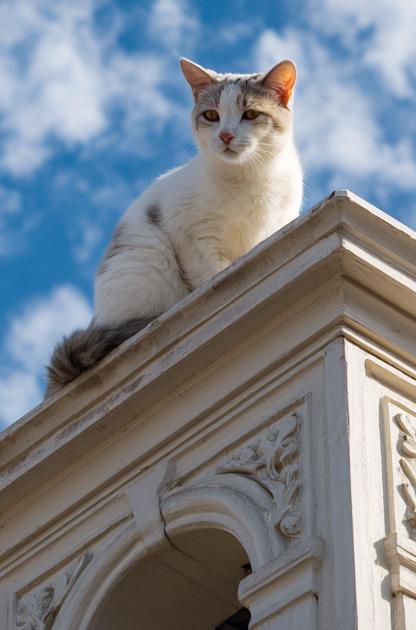
CORPORATE APPLICATIONS OF THE CAT’S LESSON
How does a company become a guardian of both ethics and aesthetics? By embedding this duality into daily practices:
1. Design as a moral force – Offices, products, and communications should embody harmony. Form reinforces behavior.
2. Ethical order as brand equity – Transparency, integrity, and fairness are not optional policies, but competitive advantages.
3. Attention to detail – As the cat grooms every hair, leaders must ensure that small details — the tone of an email, the clarity of a process, the punctuality of a meeting — reflect the company’s identity.
4. Non-negotiable standards – Define clear boundaries for what is acceptable. Cats know instinctively what belongs where. So must leaders.
THE CAT AS SILENT AESTHETIC PHILOSOPHER

Observe a cat stretched in a sunbeam. There is order in its posture, symmetry in its rest. It is not performing, it is simply being. But that being radiates harmony.
Leadership, too, has this performative paradox: we are always observed, always communicating even in silence.
Our gestures, our environments, our habits become silent codes that others emulate.
A leader who values both ethics and aesthetics sends a message of refinement and responsibility without uttering a word.
PHILOSOPHY IN PRACTICE
Kant reminds us that beauty refines morality. Plato reminds us that beauty is inseparable from the good. The cat shows us how this plays out in daily life: order, elegance, and respect woven seamlessly.
For organizations, the philosophy is simple but profound:
The Physics of Falling
There is something almost mystical about watching a cat fall. From trees, rooftops, or even windows, they twist midair, reorient themselves, and — more often than not — land gracefully on their feet.
Scientists call it the “righting reflex,” a physiological gift. But beyond biology, there is philosophy: cats don’t panic in free fall. They adapt mid-flight.
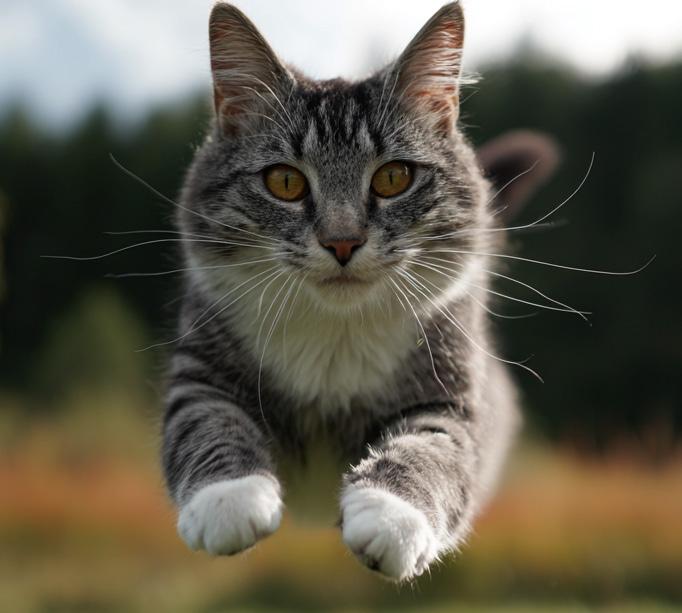
In business, falls are inevitable. Markets collapse, technologies disrupt, competitors outmaneuver.
The difference between companies that perish and companies that survive is not the absence of falls, but the ability to reorient before impact.
RESILIENCE VS. ADAPTATION
Resilience has long been the corporate buzzword: the ability to recover from shocks. But resilience alone implies returning to the old state — bouncing back. Cats show us something more refined: they don’t simply “bounce back.”
They reconfigure in motion. They adapt before they hit the ground, ensuring the landing is not survival by chance but survival by design.
This distinction is crucial. Companies that only aim to return to “how things were” after a crisis are like fragile objects glued back together.
Companies that adapt in midair, like cats, emerge not only intact but more agile for the next leap.
THE PSYCHOLOGY OF CALM IN CRISIS
Cats do not scream on the way down. They don’t flail wildly. Their composure allows them to control what can be controlled. This is leadership in crisis: staying calm enough to make micro-adjustments while everyone else panics.
For executives, this means:
• Control what you can: communication, culture, decision-making speed.
• Accept what you cannot: the shock itself, the turbulence of the fall.
• Focus on reorientation: finding a new posture before impact.
HISTORICAL LESSONS OF FALLING AND RISING
History is rich with companies that demonstrated feline resilience:
IBM IN THE 1990S
After nearly collapsing, it reinvented itself from a hardware giant to a services powerhouse.
APPLE IN THE EARLY 2000S
Facing near bankruptcy, it pivoted not by clinging to its old identity, but by reimagining itself around design and ecosystems.
NETFLIX
Fell from DVD rentals, landed on its feet with streaming, and leapt again into content production.
Each of these companies exemplified the feline principle: accept the fall, twist midair, land, and leap again.
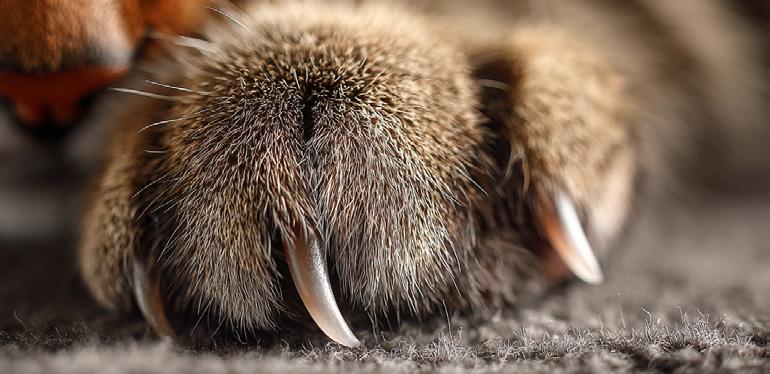
THE DANGERS OF PANIC AND PARALYSIS
When organizations face a fall, two common reactions emerge:
1. Panic – Frantic cost-cutting, layoffs, and reactive decisions that worsen the spiral.
2. Paralysis – Waiting for “stability” that never returns, wasting precious time.
Cats do neither. They act in motion, not before or after, but during. The fall itself becomes strategy time. Leaders must train their teams to reframe crises as opportunities to reorient.
THE CAT’S PLAYBOOK FOR LANDING ON YOUR FEET
The feline metaphor offers a practical guide for leaders:
1. Maintain balance midair – Spread risk across multiple markets or revenue streams, so no single fall is fatal.
2. Right the body quickly – Accept reality fast. Denial kills more companies than competition.
3. Relax strategically – Cats often relax in free fall to reduce impact. In business, this means not wasting energy fighting what is irreversible, but saving strength for the landing.
4. Choose where to land – Sometimes, survival is not about where you fell from, but where you decide to land. Redirect the fall toward a safer ground.
5. Leap again quickly – Cats rarely stop after a fall; they reposition and keep moving. Companies must do the same.
THE PHILOSOPHY OF FALLING
Nietzsche wrote: “He who has a why to live can bear almost any how.” In the corporate world, the “why” is what allows companies to endure turbulence. Purpose acts as the internal gyroscope, keeping direction intact when everything spins.
The Stoics, too, would approve of the feline model. They taught that we cannot control external shocks, only our response. A cat embodies this: it does not control gravity, but it masters orientation.
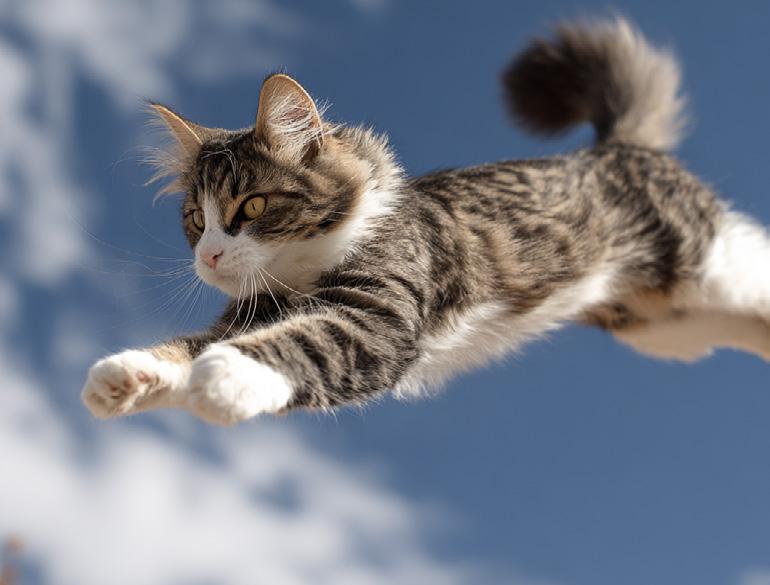
PRACTICAL CORPORATE TRANSLATION
To institutionalize the “cat reflex” in organizations, leaders must:
RUN SIMULATIONS OF CRISIS — rehearse the fall before it happens.
BUILD ADAPTIVE CULTURES — reward experimentation, not just results.
STRENGTHEN THE CORE — like a cat’s spine and muscles, the core values and competencies must be flexible yet strong.
EMPOWER DECISION-MAKING AT THE EDGES — cats don’t wait for instructions midair. Empower frontline teams to adapt quickly.
LANDING ON YOUR FEET AS COMPETITIVE ADVANTAGE
The true competitive edge today is not avoiding crises, but metabolizing them faster than others. Cats survive not because they avoid danger, but because they are superior at recovery.
A company that can land on its feet in times of turbulence doesn’t just survive — it intimidates competitors, inspires customers, and reassures employees. It becomes an organization that others want to follow, invest in, and emulate.
Cat embodies this: it does not control gravity, but it masters orientation.

FELINE LEADERSHIP
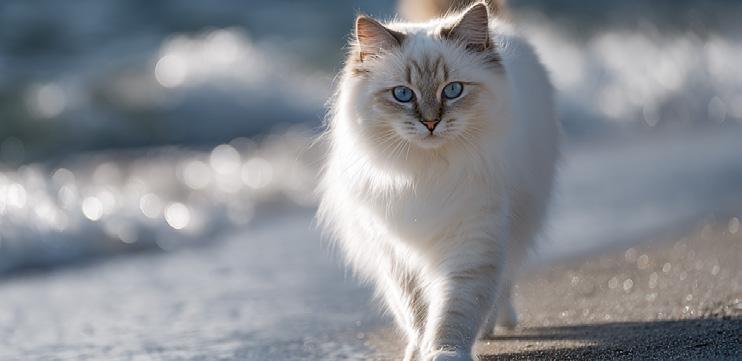
FROM METAPHOR TO PRACTICE
By now, it should be clear: this was never just a book about cats. It was a book about leadership, strategy, and survival in a volatile world — seen through the lens of one of nature’s most fascinating creatures. Every story, every instinct, every metaphor drawn from the feline universe points to a single truth: cats have mastered what many leaders still struggle to internalize — the art of being independent yet connected, patient yet decisive, calm yet lethal when necessary.
The challenge ahead is not to admire these lessons but to apply them. A company becomes feline not by decorating its offices with cat posters, but by embedding feline principles into its DNA.
THE FELINE COMPANY DEFINED
What does it mean to be a feline company? It means:
• Curious by nature – Never satisfied with what is given, always exploring new markets, technologies, and opportunities.
•Strategically observant – Like a cat on the windowsill, watching quietly before leaping.
• Resilient by design – Capable of falling, twisting midair, and landing on its feet.
• Focused on essentials – Filtering out noise, fashion, and irrelevant distractions.
• Graceful in execution – Not wasting energy, not overreacting, but conserving strength for the decisive move.
A feline company does not try to dominate everything. It chooses its battles, defines its territory, and invests in protecting what truly matters — culture, talent, reputation, and purpose.
LEADERSHIP AS PRESENCE, NOT PERFORMANCE
Cats remind us that leadership is not about barking orders or constant noise. It’s about presence. A silent cat can dominate a room more than a loud dog. Why? Because presence commands respect, attention, and trust.
The modern leader must rediscover this kind of presence. Not the frantic visibility of someone always busy, but the grounded authority of someone who knows when to move, when to pause, and when to strike. Leadership, in its highest form, is not performance — it is posture.
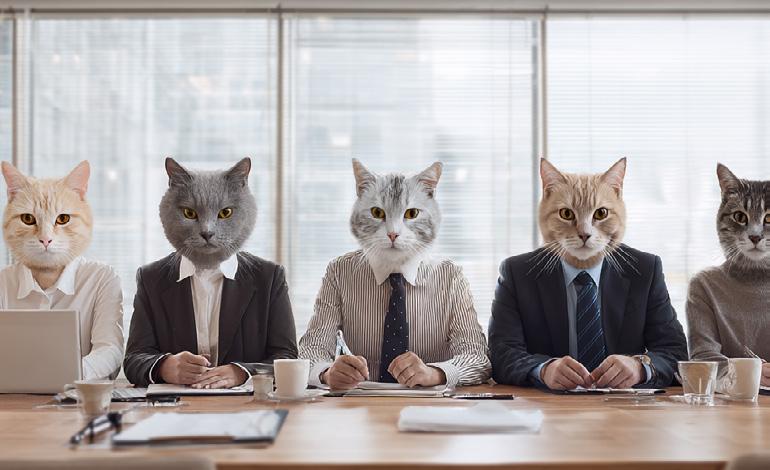
PERSONAL LESSONS: LEADING YOUR OWN LIFE
The feline philosophy is not only corporate; it is deeply personal.
• To be curious is to never let your mind grow old.
• To climb high is to always search for perspective before acting.
• To purr — softly, sincerely — is to acknowledge and appreciate those around you.
• To respect your environment is to move in harmony with the context you inhabit.
• To adapt without losing yourself is to honor your essence in every transformation.
• To land on your feet is to understand that falls are inevitable, but collapse is optional.
Each of these lessons is as valuable for the boardroom as it is for the living room. The feline leader is also the feline human — one who chooses to live intentionally, elegantly, and authentically.
A CALL TO ACTION: BECOME A FELINE LEADER
In a world obsessed with speed, noise, and relentless hustle, cats remind us of something different: that mastery comes from balance.
The feline leader is not the loudest in the room, but the most observant. Not the one who rushes first, but the one who leaps at the right moment. Not the one who depends on applause, but the one who owns their choices.
As you close this book, ask yourself:
• Am I leading like a frantic dog, chasing every moving object?
• Or am I leading like a cat, deliberate, observant, and powerful in my timing?
The companies that will thrive in the coming decades will not be the biggest, nor the fastest. They will be the most feline — curious, adaptive, graceful, resilient, and sovereign over their own territory.
FINAL WORD
Nietzsche once urged us: “Become who you are.”
That is precisely what cats do every day. They never pretend, never apologize for their essence, never dilute their identity. They are — simply and profoundly — themselves.
For leaders and organizations, the invitation is the same: become who you truly are, but with the discipline, elegance, and strategic instinct of the feline.
Lead your company as a feline would: silent when possible, fierce when necessary, always grounded in essence, and always ready to land on your feet.
Because in business, as in life, survival is not about avoiding the fall. It’s about mastering the art of rising stronger every single time.
PART III
CULTURE, CHARACTER, AND CONTINUITY
EXECUTIVE SUMMARY
CHAPTER 16: THE POWER OF PURRING
• Purring is subtle feedback — quiet acknowledgment that carries enormous emotional weight.
• Noise diminishes credibility; selective, authentic signals of gratitude build trust and resilience.
• Practical purring includes micro-recognitions, active listening, symbolic gestures, and timely acknowledgment.
• Silence without recognition erodes culture; silence with gratitude strengthens it.
• Feline leadership teaches that soft affirmations heal morale, deepen loyalty, and sustain performance.
CHAPTER 17: ETHICS AND AESTHETICS WALK TOGETHER
• Cats embody the integration of ethics and aesthetics, maintaining order and harmony in every environment.
• Ethics without aesthetics feels rigid; aesthetics without ethics feels hollow. Together, they create trust and admiration.
• Corporate application: design as moral force, attention to detail, transparent practices, and non-negotiable standards.
• Lesson for leaders: true culture arises where ethical integrity and aesthetic harmony converge.
CHAPTER 18: THE ART OF LANDING ON YOUR FEET
• Cats demonstrate a unique resilience: not merely bouncing back, but reorienting midair — a metaphor for adaptive companies.
• Resilience vs. adaptation: resilience restores the old; adaptation creates the new.
• Calm in crisis is key: panic and paralysis destroy, but composure enables reorientation.
• Corporate playbook: diversify risks, accept reality quickly, conserve energy, choose where to land, and leap again fast.
• Philosophical backbone: purpose (Nietzsche) and focus on controllables (Stoics) act as the leader’s internal compass.
• Leadership insight: success is not avoiding falls but mastering the art of falling well — turning turbulence into transformation.
EPILOGUE: FELINE LEADERSHIP IN ACTION
• From Metaphor to Practice – The book’s journey was never about cats as pets, but cats as timeless strategists. Their instincts translate into leadership behaviors essential for modern business.
• The Feline Company – A feline organization is curious, observant, resilient, selective, and graceful in execution. It conserves energy for decisive moves and builds strength from balance.
• Leadership as Presence – True authority comes not from noise, but from posture. Like a cat, great leaders command respect through observation, timing, and composure — presence over performance.
• Personal Application
– Curiosity, perspective, gratitude, respect for context, adaptability, and resilience are lessons that apply both to leadership and to life. The feline leader is also a feline human.
• The Call to Action – The future will not belong to the biggest or the fastest, but to the most feline: those who balance independence with integration, silence with action, patience with courage.
• Final Word – Nietzsche’s call to “become who you are” echoes in feline wisdom: authenticity is power. Leaders who adopt feline principles won’t just survive uncertainty — they’ll thrive by landing on their feet, every time.
QUICK REFERENCE GUIDE
Chapter 1 – From the Nile to Instagram: The Saga of a Timeless Survivor
• Cats were not domesticated; they chose to partner with humans. True strategic alliances are built on mutual benefit, not domination.
• Protecting vital resources — food, talent, reputation — is the fastest path to authority.
• Adaptability without loss of identity is the secret to long-term survival.
• Reputations can be destroyed — and rebuilt — but only with patience and strategy.
• The cat teaches resilience: stay authentic while adjusting tactics to new environments.
Chapter 2 – Curiosity That Moves the World
• Curiosity is not about collecting answers but about asking better questions.
• Passive curiosity (“I’ll Google it later”) kills creativity; active curiosity fuels innovation.
• Knowledge outside your head is useless in the moment. True creativity requires internalized memory and references.
• Cats model daily exploration: mapping territory without immediate payoff, preparing for future advantage.
• Companies that reward curiosity build the raw material for innovation before crises demand it.
Chapter 3 – Vision in the Twilight: Leading Through Uncertainty
• Perfect clarity never comes. Waiting for it means missing the moment.
• Twilight is the leader’s natural habitat: partial information, ambigu-
ous signals, and weak patterns.
• Leaders must act at 70% certainty while others wait for 100%.
• Overconfidence in “full daylight” can blind you; uncertainty is constant.
• Success comes from agility: combining data, intuition, and timing to move early.
Chapter 4 – Always on High Ground: Seeing the Whole and the Detail
• Cats climb high to gain perspective — safety and vision in one move.
• Great leaders balance three mandates: spot trends (the distant), fix pending issues (the near), and preserve essence (the eternal).
• Vision without detail loses credibility; detail without vision loses direction.
• The high ground gives security and patience, but must not become an ivory tower.
• True altitude is humble: it exists to see, not to be seen.
Chapter 5 – Expect the Best, Prepare for the Worst: Practicing Cautious Optimism
• Optimism inspires; pessimism paralyzes. The balance lies in precautious optimism.
• Cats relax in the sun yet remain alert — joy and vigilance in one.
• Leaders should celebrate victories while building contingency plans.
• Preparation enables calm; the better prepared you are, the more relaxed you can lead.
• The future is uncertain by default; preparedness must be a routine, not an exception.
Chapter 6 – Aristocratic Morality and Independence: Nietzsche’s Lesson
• Two moral systems: aristocratic (endogenous, “I resolve”) vs. herd (exogenous, “someone will resolve”).
• The aristocratic mindset assumes full responsibility; the herd blames circumstances.
• The cat is aristocratic by nature: self-reliant, unapologetic, master of its own territory.
• Resentment is the herd’s prison; cats don’t waste energy on envy.
• Great leaders “become who they are”: authentic, responsible, and free from victimhood.
Chapter 7 – Courage vs. Recklessness: Facing the Unknown
• Courage is not fearlessness; it is acting despite fear.
• Recklessness ignores risk; courage calculates it.
• Cats model strategic courage: observe, prepare, then act decisively.
• Retreat, when strategic, is also courage — preserving energy for future moves.
• Purpose-driven action is courage; ego-driven action is recklessness.
Chapter 8 – Adaptability: From Desert to Apartment
• Cats evolved from desert hunters to apartment dwellers without losing essence.
• Adaptability is not identity loss. It’s adjusting form while preserving core.
• Companies that adapt but lose essence become opportunistic; those that keep essence but refuse to adapt become obsolete.
• The highest form of adaptability is antifragility: becoming stronger from crises.
• Like cats, organizations must change form to remain themselves.
Chapter 9 – Respect for the Environment: Reading Context Instinctively
• Cats never act blindly; they scan, smell, and test before moving.
• Leaders must master context: timing, allies, risks, and culture.
• Respecting the environment is not passivity — it’s precision.
• Misreading context leads to wasted energy, failed launches, and avoidable conflicts.
• Success comes from synchronizing action with environment: acting in rhythm, not against it.
Chapter 10 – Domestic Yet Independent: Integration Without Submission
• Cats belong to households but never lose autonomy.
• Belonging does not equal submission; independence does not equal isolation.
• Teams thrive when integrated by purpose but free to think and act autonomously.
• Overdependence weakens resilience; over-independence wastes collective strength.
• The feline lesson: be part of the group without losing yourself.
Chapter 11 – The Power of Daydreaming: Creative Idleness
• The cat’s “stare into nothing” is not laziness — it’s processing.
• Creativity emerges in silence, not in frenzy.
• Without pause, there is no thought; without thought, no depth; without depth, no humanity.
• Modern distractions kill deep thinking. Leaders must defend spaces of reflection.
• Idleness is a laboratory: contemplation, association, projection — the roots of innovation.
Chapter 12 – Boredom Toward Novelty: Filtering Trend from Value
• Cats ignore toys without substance; leaders must ignore fads without value.
• Most corporate “newness” is fashion, not innovation.
• Strategic indifference is power: not every battle or tool deserves energy.
• FOMO kills focus; cats thrive by ignoring noise.
• True value passes the test of time; fashion dies with the season.
Chapter 13 – Strategic Territoriality: Defining, Protecting, and Expanding Space
• Cats wait, watch, and strike only when odds are in their favor.
• Leaders must learn that waiting is not wasting — it’s investing.
• Impulsivity wastes resources; timing multiplies impact.
• True innovation is often a patient game: observing until the perfect moment.
• The greatest advantage belongs to those who move late enough to be precise but early enough to win.
Chapter 14 – Predatory Patience: Timing Is Power
• Cats wait, watch, and strike only when odds are in their favor.
• Leaders must learn that waiting is not wasting — it’s investing.
• Impulsivity wastes resources; timing multiplies impact.
• True innovation is often a patient game: observing until the perfect moment.
• The greatest advantage belongs to those who move late enough to be precise but early enough to win.
Chapter 15 – Strategic Silence: The Power of Listening and Restraint
• Silence builds trust and authority more than words.
• Listening is the highest form of respect; cats are masters at it.
• Speaking less and observing more creates decisive leaders.
• Noise is abundant; attention is rare. Use silence as your differentiator.
• In corporate life, silence is not absence — it is power.
Chapter 16 – The Power of Purring: Subtle Feedback, Lasting Impact
• Purring is quiet gratitude: soft but transformative.
• Leaders must “purr” to their teams: small acts of recognition with deep effect.
• Subtle feedback motivates more than loud speeches.
• Active listening is also praise; indifference is the opposite of leadership.
• Gratitude fuels loyalty, performance, and morale.
Chapter 17 – Ethics and Aesthetics Walk Together
• Cats value cleanliness, order, and balance — ethics and aesthetics in action.
• Beautiful environments elevate morality; ethical environments cultivate beauty.
• Leadership is curating both: culture and design, justice and elegance.
• Brazil’s deficit in both ethics and aesthetics is a cautionary tale.
• Companies that align virtue with harmony thrive inside and out.
Chapter 18 – The Art of Landing on Your Feet: Resilience and Recovery
• Cats always land on their feet — a metaphor for organizational resilience.
• Crises are inevitable; recovery is optional.
• Resilient companies prepare for stumbles and rebound quickly.
• Antifragile ones not only recover — they grow stronger.
• Leadership is not avoiding falls, but ensuring graceful recovery.
Epilogue – Feline Leadership in Action
• The book is not about cats as pets, but cats as timeless strategists.
• A feline company is curious, observant, resilient, selective, and graceful.
• Leadership is presence, not performance; posture, not noise.
• Curiosity, adaptability, respect, gratitude, and resilience apply to both business and life.
• The future belongs to the feline: those who balance independence with integration, silence with action, patience with courage.

Walter Longo is an international speaker, writer, and business strategist known for blending technological vision, philosophical reflection, and practical application. Throughout his career, he has mentored leaders and organizations seeking not just to grow, but to reinvent themselves. With a sharp eye for trends and a rare ability to connect past and future, Walter has guided companies across industries to navigate times of accelerated change.
Author of several books on innovation, digital transformation, and human behavior, he is also a keen observer of the lessons nature — and in this case, cats — offers to contemporary leadership. Surrounded daily by Lady Ísis Bizunga and Sir Nietzsche Kael, two Neva Masquerade cats who fill his home with joy, Walter writes not as a distant observer but as a practitioner, translating their silent teachings into insights on leadership, strategy, and adaptability.
Cats don’t chase everything.
They choose. They plan. They prevail. In business, doing the same can mean the difference between merely surviving and truly thriving.
In Feline Companies, Walter Longo reveals how feline behavior conceals powerful lessons for leading companies and teams. From millennia of coexistence with humans come principles that unite philosophy, strategy, and corporate practice.
Learn from nature’s masters of survival:
• Curiosity that fuels innovation.
• High-ground vision to see both near and far.
• Courage with calculation.
• Autonomy with strong bonds.
• Resilience to always land on your feet.
• Creative idleness that sparks unique ideas.

This isn’t just about leading.
It’s about leading like a cat: precise, alert, elegant — and always ready for the next leap.