ZiMining February 2025

Page 1


SANROCK

With T&A Drilling and Blasting With T&A Drilling and Blasting in

Amendment of Iron and Steel Act commendable

It is that time of the month again when we bring you your favourite read, ZiMining. This month’s edition features some exciting news that you have been eagerly anticipating. We continue to provide updates on the revival of the iron and steel sector, which has been dormant since the closure of ZISCO in 2008.

Since then, small to medium-sized players have been sustaining the industry, albeit with difficulties in meeting demand. This struggle has cost the country at least US$1 billion in lost imports of iron and steel products.ThearrivalofDINSONIron and Steel Company has brought renewed hope to the sector, with the company recently announcing the commencement of iron and steel manufacturing.

This development has provided much-needed relief to a country burdened by a hefty import bill, as it aims to satisfy local demand and even export to the region. During the inaugural Iron and Steel Indaba inKwekwelastDecember,President Emmerson Mnangagwa urged all players in the iron and steel sector to collaborate in reviving the industry.

The revival of the iron and steel sector also signals the potential resuscitation of ZISCO, which is promising news not only for the Kwekwe and Midlands communities but for the country as a whole, as it will support the positive initiatives underway at Manhize.

ZiMining spoke to the Minister of Industry and Commerce, Mangaliso Ndhlovu, who emphasised the importance of revitalising the sector.

CEO KUNDAI

COO

TAFARA MAGARIRA

MANAGING EDITOR

THEMBELANI MOYO

EDITOR

THOMAS CHIDAMBA

He also pointed out that, to create a level playing field, his ministry is working on amending the outdated Iron and Steel Act, originally established in 1942 and last amended in 1956.

This archaic legislation presents numerous challenges for the sector, as it was designed to regulate the then sole iron and steel manufacturer, ZISCO. Therefore, the amendment of this act is long overdue.

The Mines and Mining Development Minister, Winston Chitando, has urged small-scale miners to exercise caution during this rainy season to prevent loss of life from groundfalls.Thisadviceiscrucialfor everysmall-scaleminer,whoshould implement safety measures while working underground. It is essential that all miners take this warning seriously.

We are excited to introduce a new column, The Blast Zone, where experts in the blasting industry will provide insights into their field.

We invite companies and individuals involved in blasting equipment and chemicals to support this initiative by sponsoring the column. This is a valuable opportunity to showcase your brand as a leader in the blasting sector.

We would also like to congratulate T&A Drilling and Blasting for their ongoing excellence and for winning awards at the recent Zim Trailblazers Community Awards.

Thank you for your continued support, and we look forward to connecting again next month.

QUALITY ASSURANCE

MAKUMBE J MAKUMBE

JOURNALISTS

AMANDA MAVHAZA mavhazat@gmail.com

JEREMIAH NDHLOVU jndhlovu@gmail.com

THOMAS SIZIVA

ADVERTISING

THOMAS 0778372731

DESIGN AND LAYOUT

SHAVA28 Designs

FRONT COVER

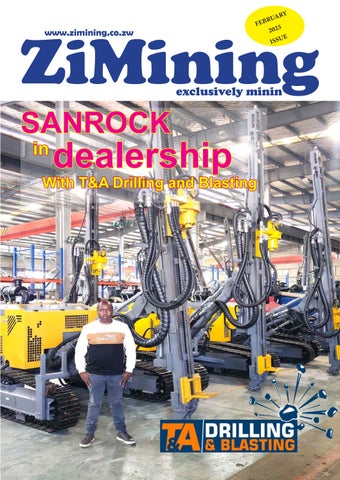
CONTRACT mining firm T&A Drilling and Blasting has been appointed the exclusive local distributor for Chinese heavy machinery manufacturer Quzhou Sanrock heavy industry machinery, a move set to enhance efficiency in the country’s mining sector.

Quzhou Sanrock, established in 1992, is a leading global supplier of mining and construction equipment, specialising in crawler rigs, air compressors, drilling tools, and spare parts.

A certification issued by the company confirms that T&A Drilling and Blasting, operating under Koketso Investments PL, is now the official distributor of its products in Zimbabwe, offering sales, drilling solutions, and after-sales services.

T&A Drilling and Blasting Managing Director Kundai Chidamba said the partnership reflects confidence in his company’s expertise and reliability.

ABOUT US

ZiMining is an exclusively mining magazine that enlightens people about rich the country is blessed with an avalanche of minerals and how it is making strides in the mining industry.

www.zimining.co.zw

FACEBOOF: ZiMining

X (Twitter): ZiMining

Whatsapp: 0778372731

PUBLISHER KUNTHOM MEDIA

Zim’s mining sector faces contrasting fortunes:

11 14 24 30

IN 2025, Zimbabwe’s mining sector reveals a tale of two markets: the Victoria Falls Stock Exchange (VFEX) thrives with dollar-denominated stability, while the uncertainty of the local currency affects the performance of the Zimbabwe Stock Exchange (ZSE), resulting in escalating production costs and diminishing profits for essential minerals.

Resilience, hard work: key ingredients of Mollin Siwella’s success

ENGINEER Mollin Siwella shares her journey, insights on gender equality in Chemical/Metallurgical engineering, and the transformative role of women in the field. She said the Bible has her pillar of strength as she continues to breal barriers in the male dominated field.

Chris Mutsvangwa urges Zim to shift from ideation to production

ZIMBABWE must prioritise manufacturing over theoretical expertise to drive economic growth, former Ambassador to China Chris Mutsvangwa has said, urging the country’s intellectuals to focus on production.

Shabani Mashava Mine reopening gains momentum amid calls for economic revival THE potential reopening of Zimbabwe’s Shabani Mashava Mine, once the world’s leading producer of high-quality asbestos, is reigniting debate over its economic significance, job creation potential, and the global asbestos market.

Chitando urges small-scale miners to prioritise safety amid heavy rains

FIFTEEN miners were trapped underground last year at Redwing Mine in Manicaland when a shaft collapsed from heavy rains, raising serious safety concerns in Zimbabwe’s small-scale mining sector.

Fortunately, all 15 were rescued unharmed, but the incident has sparked renewed demands for stricter safety regulations as the rainy season persists.

Mines and Mining Development Minister Winston Chitando has urged miners to exercise extreme caution, warning that persistent downpours have made underground work increasingly dangerous.

“Miners should take precaution, including avoiding and stopping work in shafts and pits when it is actually raining,” he said.

“We urge miners to heed this warning to prevent accidents, injuries, fatalities, and associated losses.”

Zimbabwe has a significant history of mining accidents, especially in the informal sector, where many operations do not have adequate underground support.

production.

Lacking viable alternative livelihoods, many miners believe they have no option but to jeopardise their safety in precarious shafts.

The government has consistently urged for enhanced safety measures, such as strengthening tunnels, upgrading drainage systems, and providing emergency response training for miners. Nevertheless, enforcing these measures proves difficult, particularly in remote regions where informal mining is prevalent.

Although the workers at the Redwing Mine were lucky to survive, the next collapse could lead to much more severe consequences.

Zim moves to

amend outdated iron and steel law to boost sector growth

ZIMBABWE’S Industry and Commerce Ministry is working to amend the Iron and Steel Act of 1942, a law that has long been rendered obsolete by the evolving demands of the sector, officials said.

The law was originally enacted to regulate the Rhodesia Iron and Steel Commission, later renamed the Rhodesia Iron and Steel Company in 1956 and eventually the Zimbabwe Iron and Steel Company (ZISCO) in 1980.

The Ministry of Industry and Commerce is amending the Act in close consultations with key stakeholders such as the Ministry of Mines and Mining Development.

SpeakingattheIronandSteelIndaba,Industry and Commerce Minister Mangaliso Ndhlovu said the current legislation is outdated and does not reflect the realities of the modern iron and steel industry.

“This Iron and Steel Act, now called the Zimbabwe Iron and Steel Company Act, was designed entirely for ZISCO,” Ndhlovu said.

“I wonder how steelmakers have been operating under it, which is why, as a consequence, Manhize is exporting its products as a mineral — because we do not have enabling legislation.”

The minister pointed out the need for a regulatory framework that aligns with current industry dynamics, allowing companies to operate more efficiently and competitively.

He also urged the sector to establish self-regulatory mechanisms to uphold industry standards and protect product integrity.

“There are certain things that may not necessarily need to be legislated but should be regulated by the industry itself,” he said.

“We need standards, just like doctors and lawyers follow strict professional guidelines.

“In this critical sector, where engineers create products that can impact lives, we must ensure quality and safety.”

Industry and Commerce Minister Mangaliso Ndhlovu

The Industry and Commerce Ministry is responsible for overseeing the Iron and Steel Act and acknowledged that while legislation is not amended arbitrarily, the current law no longer serves the industry’s needs.

Innocent Madziva, a director in the ministry, said the review process is long overdue.

“We do not amend legislation for the sake of it, but significant changes have taken place in the engineering, iron, and steel value chain.

“We need a comprehensive review to promote growth, enhance competitiveness, and boost export earnings,” he said.

called on industry players to submit proposals highlighting

Madziva
Innocent Madziva (standing)

gaps in the existing legal framework.

“The Act was established when RISCO was the sole manufacturer in the country.

“There is an urgent need to review it to account for new players and increase competitiveness,” he said.

“The current legal framework does not provide adequate mechanisms to regulate issues such as scrap metal trade and recycling.”

The proposed amendments are being drafted and will be submitted to the Cabinet for approval.

Welcome to the Blasted Zone!

We are super excited to introduce the “Blasted Zone”, a dedicated section in our monthly magazine, ZiMining, where blasting professionals can converge, share ideas, and stay updated on the latest trends and technologies in the field of blasting.

As a platform for blasting enthusiasts, the Blasted Zone aims to provide a space for knowledge sharing, discussion, and collaboration.

Whether you’re a seasoned blaster, a mining engineer, or simply someone with a passion for explosives, we invite you to join our community and be a part of the conversation.

In each issue, we’ll feature articles, case studies, and expert insights on various aspects of blasting, including new technologies, safety best practices, and innovative techniques.

We’ll also provide a platform for our readers to share their own experiences, ask questions, and seek advice from their peers.

At the Blasted Zone, we believe that the best ideas come from collaboration and conversation.

That’s why our motto is: Detonate. Discuss. Discover.

We want to help you detonate new ideas, discuss the latest trends and technologies, and discover new innovations in the field of blasting.

If you’re interested in contributing to the Blasted Zone, we encourage you to submit your articles, stories, or opinions to blastedzone@gmail.com

We look forward to hearing from you and sharing your insights with our community.

So, join us in the Blasted Zone and let’s ignite the conversation on all things blasting!tay blasted!

The Best

www.zimining.co.zw Mining Magazine

Zim’s mining sector faces contrasting fortunes:

VFEX thrives, as ZSE seeks stability

IN 2025, Zimbabwe’s mining sector reveals a tale of two markets: the Victoria Falls Stock Exchange (VFEX) thrives with dollar-denominated stability, while the uncertainty of the local currency affects the performance of the Zimbabwe Stock Exchange (ZSE), resulting in escalating production costs and diminishing profits for essential minerals.

This highlights the sector’s wider challenges and opportunities.

There is a palpable sense of optimism at the Victoria Falls Stock Exchange (VFEX), where firms like Caledonia Mining Corporation are flourishing thanks to a stable, dollar-based trading environment.

By January 2025, the VFEX had achieved a combined market capitalisation of around US$1.32 billion, with its All Share Index reaching 105.17 points during the same timeframe.

Companies such as Caledonia Mining Corporation and Bindura Nickel Corporation have taken full advantage of this stability.

Their strong performance has enhanced in-

vestor confidence, positioning the VFEX as an appealing venue for both foreign and domestic investment.

In stark contrast, the Zimbabwe Stock Exchange (ZSE) seeks stability as it grapples with considerable economic challenges that are hindering investors’ real return levels.

Despite these challenges, the ZSE remains a variable investment option.

This is evidenced by the 18% increase in its market capitalisation in 2024, which was largely a result of investors’ inflation-hedging strategies.

The ZSE’s All-Share Index surged by 118% to finish the year at 217.58 points, following a rebase to 100 points earlier in April.

However, these gains conceal more profound challenges within the mining sector. Rising production costs and falling mineral prices have clouded the outlook for 2025.

The Chamber of Mines of Zimbabwe anticipates an 8% rise in production costs and a 15% decrease in prices for key minerals, including platinum group metals and lithium.

Global commodity price trends have also influenced Zimbabwe’s mining industry. Lithium, once hailed as Zimbabwe’s “white gold,” saw price drops between 2022 and 2024 due to oversupply and reduced demand for elec-

tric vehicles.

Analysts expect lithium prices to stabilise in 2025, but they are unlikely to reach the peak levels seen in 2022.

Gold presents a more positive scenario for the sector. Prices are expected to increase by 12% in 2025, offering much-needed relief for Zimbabwe’s gold miners.

Trevor Barnard, CEO of Kuvimba Mining House, remains cautiously optimistic about a potential rebound in lithium prices by next year, although he notes they will likely remain below previous highs.

Zimbabwe’s mining sector also contends with fierce competition from regional players. Countries such as Botswana and South Africa continue to draw significant investment due to their stable regulatory frameworks and developed infrastructure.

In contrast, Zimbabwe grapples with power shortages, which led to an estimated loss of $500 million in potential revenue for the mining industry in 2024.

Energy demand in Zimbabwe is expected to increase from 600 to 800 megawatts per day by 2025, which will place additional pressure on the industry.

Without immediate investment in dependable power generation and infrastructure,

the sector may miss out on significant growth opportunities.

To tackle these issues, Zimbabwe needs to implement strategies for sustainable development.

Consistent and transparent regulations are essential for attracting and retaining investment.

Building strong infrastructure, especially in energy and transportation, will enhance mining operations and boost efficiency.

Promoting value addition and the beneficiation of minerals can also maximise the sector’s revenue potential.

Furthermore, Zimbabwe could gain from adopting regional best practices, particularly from its neighbours, to enhance its investment climate.

Zimbabwe’s mining sector is at a critical juncture. While the VFEX presents a stable and promising avenue for growth, the ZSE requires the Government’s support and strategic intervention to overcome its challenges.

With the right policies and investments, Zimbabwe can leverage its rich mineral resources to promote sustainable economic growth in the future.

Thomas Gono, Chamber of Mines president
Trevor Barnard, Kuvimba Mining House CEO

Resilience, hard work: key ingredients of Mollin Siwella’s success

ENGINEER Mollin Siwella shares her journey, insights on gender equality in Chemical/Metallurgical engineering, and the transformative role of women in the field. She said the Bible was her pillar of strength as she continues to break barriers in the male dominated field.

Thomas Chidamba (TC): Engineer Mollin Siwella, tell us about yourself?

Mollin Siwella MS: I am a Chemical/Metallurgical Engineer with ECZ membership. I have extensive experience in production, scientific research, and project management within the mining industry.

Outside of my professional life, I am a wife and mother to two wonderful children. As a devout Christian, I am strongly influenced by biblical principles and values in my undertakings.

TC: Take us through your lines of work in the mining sector?

MS: My journey in the mining industry began as the first female Graduate Metallurgist at Zimplats (Pvt) Ltd.

In this production-focused role, I collaborated with production teams to achieve targets and undertook various project work in the fast-paced, high-demand environment.

This experience was both challenging and transformative - the predominantly male setting initially felt intimidating.

Over time, my colleagues’ perspectives of me positively shifted and I eventually gained acceptance as a team member.

However, this took significant effort – a lot of resilience and hard work. I would engage the team with thoughtful questions, stay late at the plant, dedicate time to research, and actively contribute in meetings to increase my visibility.

I’m sincerely grateful for this experience. It pushed me to grow beyond my comfort zone and prepared me for the opportunities that

Engineer Mollin Siwella

arose later in my career.

A few years later, I left Zimplats (Pvt) Ltd for an Anglo American-funded Master’s in Extractive Metallurgy with Stellenbosch University.

Once again, I was the only female in a multicultural research group, collaborating with exceptionally talented researchers.

I had a supportive supervisor who made my work enjoyable and strengthened team cohesion through social outings – so settling in was quite easy.

My research focused on a proof-of-concept study for Mogalakwena Platinum Mine, Amplats’ flagship operation.

I thoroughly enjoyed this experience as I was exposed to cutting-edge technologies at this world’s largest open-pit platinum mine.

Fast forward, I returned to mining operations as a Process Manager, once again as the first female mid-manager on the team.

As expected, I initially faced challenges in gaining acceptance within the predominantly male operational and management teams.

To overcome this, I focused on building relationships, actively listening to my colleagues, and demonstrating my expertise through effective problem-solving.

Over time, my commitment and hard work began to shift perceptions, leading to a more collaborative environment for me.

I was subsequently promoted to Operations Manager, where I remained dedicated to promoting inclusivity and encouraging diverse perspectives.

To support this vision, we actively recruited more women for Graduate Mining Engineer, Graduate Process Engineer, Graduate HR, and Graduate Finance roles.

Nearly a year later, I had the unique opportunity to serve as Acting General Manager, becoming the first female among the four General Managers of the organization’s SBUs.

This role was both challenging and fulfilling - leading diverse teams, driving strategic initiatives, and implementing operational improvements.

It was an invaluable experience that deepened my understanding of leadership dynamics and enhanced my ability to navigate complex organizational challenges.

I am grateful for my mentor, who provided invaluable guidance and support throughout this experience.

Their belief in my potential was a significant driving force in my career. Currently, I am with an international organization that is focusing on promoting environmentally sustainable practices within the mining sector.

TC: What are the primary challenges you encounter that other women in the mining sector are also likely to face?

MS: Being the only female in male-dominated environments sometimes exposed me to implicit biases and stereotypes that undermined my contributions.

It took longer to build a strong professional reputation compared to my male counterparts in similar roles.

I was occasionally viewed through a gendered lens rather than as a competent professional.

Cultural challenges were particularly significant - it is often expected for men to play the leading role so when the opposite happens there tends to be some resistance.

Balancing professional responsibilities with family and societal expectations regarding gender roles is another significant challenge women may face.

The demanding nature of mining jobs includ-

ing long hours and travel can be complicated.

Nonetheless, I am grateful for a very supportive family that has allowed me to integrate work and home life as needed.

Fortunately, when it came to access to opportunities for women, I did not encounter any significant systemic barriers to promotions and leadership roles.

On the contrary, the organizations I served were eager to support my career advancement.

A key challenge I have also noticed is the limited opportunities to connect with other women in similar roles.

Finding mentors who understand the unique challenges faced by women in mining was a hurdle.

While initiatives and organizations supporting women in this field are increasing e.g. WIM, we need more platforms for women to interact, network and find mentors.

Despite these challenges, I am happy that I have been able to pave the way for other women.

Our presence as women in fields where we are underrepresented certainly encourages

others to pursue careers in traditionally male fields.

TC: Why should women consider the field of mining given this host of challenges?

MS: Despite some of the challenges which I have highlighted, the increasing presence of women in the mining industry presents greater opportunities for leadership roles.

I believe we can collectively transform organizational cultures and drive meaningful change as more women step into leadership roles.

TC: How did you, or should I say do you deal with stereotypes?

MS: In the end, results speak for themselves! It is very important to consistently demonstrate skills and expertise through performance and tangible results.

This not only helps to dismantle gender-based stereotypes but also establishes credibility among peers and superiors. I have also realized that it is necessary to have a strong belief in your abilities.

There will be times where you will feel undermined – self-confidence will help to push through doubts.

As a manager, it is important to cultivate an inclusive culture by accommodating di-

verse perspectives and promoting teamwork. When you create an environment where every team member feels valued and empowered to contribute, they too will pay attention to you.

This approach has significantly simplified my management experience. It not only brought down stereotyping – we were also able to address issues more effectively by leveraging the team’s collective knowledge and skills.

TC: What advice would you give to young women with aspirations to take on mining roles?

MS: Absolutely go for it! There are no limits to what can be achieved when one has the right mindset.

Once you get your foot in the door, stay competitive and don’t wait for promotions to be delivered on a gender platter.

Be committed to continuous learning and professional development with the right skills and knowledge.

This helps to position you as an asset to the organization. It’s important to maintain a positive mindset, viewing obstacles as opportunities for growth.

Take advantage of mentors and connect with women who are already in the industry.

These will provide guidance, support, and encouragement. Be humble enough to learn from others – knowledge is like a baobab tree, no individual can embrace it alone.

TC: What inspired you develop a passion for advocating practices that emphasize ecological stewardship and long-term sustainability?

MS: With years of experience in the mining industry, I have witnessed the environmental consequences of mining activities, including habitat destruction, pollution, and poor resource management.

These issues not only impact local communities and their livelihoods but also pose a threat to the broader population.

Environmental degradation endangers the stability of future generations, making this a pressing legacy concern.

Figuratively speaking, we must commit to planting trees under whose shade we may never sit.

It is our responsibility to nurture the environment so that future generations have the resources they need to thrive.

I am glad to be part of an organization that prioritizes sustainability, diligent resource management and protecting our environment for those who will come after us.

How can the mining sector contribute to the growth of the economy without causing much damage to the environment?

MS: Zimbabwe is facing significant power supply challenges that could be addressed through investments in renewable energy sources within the mining sector.

Recent patterns of low rainfall underscore the urgent need for effective water management practices, including sustainable water use strategies and pollution reduction measures.

Water is a vital resource that must be conserved for local communities and ecosystems.

The increasing number of mining operations in Zimbabwe has resulted in considerable community displacements and environmental degradation.

Leveraging AI can improve resource identification and help minimize unnecessary land disturbance.

Therefore, comprehensive land reclamation strategies are essential for restoring mined areas, promoting biodiversity, and repurposing land for agricultural or community use.

Additionally, Zimbabwe should prioritize resource efficiency and adopt a circular economy approach.

This will facilitate material recycling and reuse, ultimately reducing the need for accelerated resource extraction.

TC: What solutions can you proffer that improve mineral resource extraction and utilization to meet today’s needs while safeguarding the environment for future generations?

MS: There’s no need to reinvent the wheel. Advanced technologies such as precision mining can minimize waste and environmental impact by targeting specific ore bodies.

By utilizing automation and artificial intelligence, we can maximize efficiencies in mining operations while reducing energy consumption.

Adopting these modern technologies in Zimbabwe will go a long way to improve our mining practices.

I also previously emphasized the importance of promoting material recycling to reduce the demand for new extractions.

TC: Do you think it’s appropriate for the government to mandate compliance with ESG principles?

MS: I feel it’s necessary to hold companies accountable for their environmental and social impacts.

This will encourage responsible business practices. Enforcing ESG principles can promote long-term sustainability especially when other companies may want to prioritize short-term profits over environmental and social considerations.

On the other hand, it may be useful to offer incentives for companies to adopt ESG practices voluntarily rather than strict mandates.

This will encourage more genuine involvement. So, perhaps a balanced and tailored approach might be the most effective way to achieve meaningful progress in this area.

Thank you for having me on this interview, Thomas. It was a pleasure to discuss with you about my role in mining so far and my opinions on ESG.

T&A Drilling and Blasting T&A Drilling and Blasting Zim’s sole distributor for Quzhou Sanrock

CONTRACT mining firm T&A Drilling and Blasting has been appointed the exclusive local distributor for Chinese heavy machinery manufacturer Quzhou Sanrock heavy industry machinery, a move set to enhance efficiency in the country’s mining sector.

Quzhou Sanrock, established in 1992, is a leading global supplier of mining and construction equipment, specialising in crawler rigs, air compressors, drilling tools, and spare parts.

A certification issued by the company confirms that T&A Drilling and Blasting, operating under Koketso Investments PL, is now the official distributor of its products in Zimbabwe, offering sales, drilling solutions, and after-sales services.

T&A Drilling and Blasting Managing Director Kundai Chidamba said the partnership reflects confidence in his company’s expertise and reliability.

“We are happy to be the sole local autho-

rised dealer for Quzhou Sanrock in Zimbabwe.

“This association strengthens our brand, grants us access to exclusive products and pricing, and enhances customer trust through product authenticity,” he said.

The deal is expected to alleviate longstanding challenges Zimbabwean miners face in accessing high-quality drilling equipment.

Many companies have had to rely on expensive imports, dealing with long lead times, high shipping costs, and difficulties in securing genuine parts.

With a local distributor now in place, the availability of Sanrock’s equipment is set to improve significantly, reducing downtime for mining firms.

Chidamba underscored that customers will benefit from direct access to genuine Sanrock machinery, manufacturer-backed warranties, and dedicated after-sales support.

“We are committed to ensuring high quality and customer satisfaction by supplying original products directly from the manufacturer,” he said.

Zimbabwe’s mining sector is a crucial driver of the economy, contributing around 60% of export earnings and employing thousands across the country.

With growing demand for minerals such as lithium, gold, and platinum, the need for reliable and cost-effective mining equipment has increased.

He added that access to high-quality drilling solutions will enhance operational efficiency and safety standards in Zimbabwe’s mining sector.

Chidamba noted that the company’s local presence eliminates the logistical challenges of importing heavy machinery.

“Our customers can now expect faster delivery, better quality control, improved communication, and reduced transportation costs,” he said.

With global demand for minerals on the rise and Zimbabwe positioning itself as a key player in the mining industry, partnerships such as this are crucial in ensuring that local companies have the tools needed to compete on the international stage.

The partnership between T&A Drilling and Blasting and Quzhou Sanrock is expected to play a key role in supporting the industry’s expansion.

The unseen force behind global transformation Blasting:

FROM carving tunnels through mountains to unearthing precious minerals, the power of blasting has quietly shaped the modern world.

Often overlooked, controlled explosions have played a crucial role in mining and infrastructure development. They have even contributed to environmental conservation efforts.

Blasting has been fundamental to resource extraction, enabling access to significant deposits of iron, copper, and gold that power industries globally.

Without this technique, Zimbabwe’s platinum reserves and South Africa’s gold mines would have remained hidden.

The capacity to effectively break rock has spurred economic growth, benefiting sectors from construction to technology.

Without iron ore, steel for buildings and bridges would not exist; without copper, modern electrical wiring would be impossible.

Beyond mining, blasting has been instrumental in the development of some of the world’s most ambitious infrastructure projects.

The Channel Tunnel, which connects England and France, was made possible through precise blasting of chalk rock.

In Zimbabwe, the Kariba Dam and Christmas Pass in Mutare exemplify how controlled explosions have reshaped the environment.

On a global scale, the Panama Canal and the skyline of Hong Kong owe their existence to the strategic application of explosives.

These projects highlight the critical role that blasting plays in engineering and construction.

As technology advances, the methods of blasting continue to evolve, ensuring safety and efficiency in these monumental undertakings.

Agriculture has significantly benefited from blasting, especially in the realm of water management.

Large-scale irrigation projects, like Egypt’s Aswan Dam, utilised explosive techniques to penetrate granite, thereby ensuring that millions of acres of farmland remain fertile.

These advancements have bolstered global food security, aiding population growth and promoting economic stability.

Blasting is not solely about destruction; it also contributes to environmental restoration.

When managed carefully, detonations can eliminate invasive species, restore natural water flows, and create artificial reefs that enhance marine biodiversity.

In certain instances, explosives have been employed to rehabilitate degraded land, facilitating reforestation and wildlife conservation initiatives.

Despite its significant contributions, blasting often remains an overlooked force, overshadowed by the industries it supports.

However, its impact is undeniable. Every mine shaft, dam, and skyscraper stands as a silent testament to the precision and power of controlled explosions.

From the depths of the earth to the heights of modern engineering, blasting plays a crucial role in shaping our world.

Each calculated detonation contributes to the construction and development we see around us. It is a vital process that continues to influence our environment in profound ways.

Chris Mutsvangwa urges Zim to shift from ideation to production

ZIMBABWE must prioritise manufacturing over theoretical expertise to drive economic growth, former Ambassador to China Chris Mutsvangwa has said, urging the country’s intellectuals to focus on production.

Speaking in Kwekwe, Mutsvangwa stressed the need for Zimbabweans to move beyond abstract thinking and take a hands-on approach to industrial development.

He said the country should follow China’s example by turning ideas into tangible products that contribute to economic progress.

“We want to focus on Zimbabwe as a manufacturer, not just a nation of thinkers. Kufunga hakuna mubairo (there is no reward in thinking) if no products are being made,” he said.

Mutsvangwa praised President Emmerson Mnangagwa’s innovation hubs, which aim to bridge the gap between research and industrial production.

He said these hubs should complement, not replace, those already in the manufacturing sector.

“What innovation hubs hatch must go to industry because you are the ones with production machinery. Thinking about a product and producing it are two entirely different things,” he said.

The former diplomat pointed to China’s Hon Hing, a leading telecommunications manufacturer, as an example Zimbabwe should emulate.

He noted that China’s economic rise was built on a strong production base, with industries translating ideas into market-ready goods.

Zimbabwe, he said, must adopt a similar approach to become a competitive player in global markets.

Zimbabwe’s industrial sector has struggled in recent years due to economic instability, lack of investment, and outdated machinery.

However, the government has been pushing for industrial revival through policies that support local manufacturing and value addition.

Mutsvangwa’s remarks align with these efforts, underscoring the importance of aligning education, innovation, and industry to drive sustainable economic development.

With Zimbabwe positioning itself as a key player in Africa’s mining and manufacturing sectors, calls for increased production are expected to gain momentum.

RAM Mining Solutions

expands role in mining sector with innovation and efficiency

RAM Mining Solutions, a contract mining company based in Zimbabwe, is transforming operational efficiency in the industry with advanced equipment, integrated services, and a strong focus on workforce development.

With more than nine years of experience, the firm has earned a reputation for delivering high-quality results while prioritising safety, sustainability, and cost-effective solutions.

As Zimbabwe’s mining sector continues to grow, RAM Mining Solutions is establishing itself as a leader in production services, providing a comprehensive range of offerings including drilling, blasting, loading, hauling, crushing, and screening.

This all-in-one approach improves project coordination, lowers costs, and ensures smooth execution.

“By integrating multiple services, we eliminate the challenges of managing multiple vendors, creating customised solutions that improve operational efficiency,” the company said.

The company’s dedication to innovation is clear through its utilisation of new or nearly

new machinery, which greatly enhances uptime and lowers operational costs.

“We replace equipment as soon as it reaches the end of its economic service life, keeping us at the forefront of technological advancements,” the company stated.

This strategy enables RAM Mining Solutions to sustain high productivity levels while reducing downtime, which is essential in large-

scale mining operations.

In addition to equipment, the development of human capital is a key focus for RAM Mining Solutions.

The company is committed to investing in the training of young engineers, operators, artisans, and project managers, offering mentorship and practical experience.

“By fostering a culture of continuous learning, we are preparing the next generation of mining professionals to drive industry innovation,” RAM added.

In an industry where equipment failures can result in expensive interruptions, effective inventory management is essential.

RAM Mining Solutions guarantees that vital spare parts and backup machines are consistently on hand, reducing the risk of downtime.

“Maintaining an adequate stock of essential equipment allows us to respond swiftly to breakdowns, ensuring our clients’ targets remain on track,” the company stated.

Health, safety, and environmental sustainability are fundamental aspects of RAM Mining Solutions’ operations.

The company ensures that its management systems comply with both international and local safety regulations, emphasising risk reduction, zero-harm policies, and a commitment to environmental stewardship.

“We prioritise the safety of our employees and the communities we operate in, ensuring that our operations meet and exceed legislative standards,” the company said.

RAM Mining Solutions stands out as a reliable partner in Zimbabwe’s mining sector due to its strategic approach to contract mining.

By integrating advanced equipment, focusing on workforce development, enhancing operational efficiency, and implementing sustainable practices, the company is well-positioned for ongoing growth.

Mine surveyors

lead push for innovation, safety, professional growth

THE Association of Mine Surveyors of Zimbabwe (AMSZ) is driving the adoption of new technologies, promoting professional development, and strengthening safety standards to enhance the country’s mining sector.

With the advancement of Zimbabwe’s mining industry, AMSZ is encouraging the use of drones, laser scanning, and Geographic Information Systems (GIS) to improve surveying accuracy, safety, and efficiency.

Speaking to ZiMining, AMSZ President Stewart Gumbi stressed the importance of embracing modern technology: “Technology and safety go hand in hand,” he said, underscoring the need to integrate advanced tools to reduce risks and improve operational precision.

The association plays a key role in professional development, offering training programmes, workshops, and certification to ensure that mine surveyors remain up to date with the latest industry standards.

“AMSZ provides training, development programmes, and networking opportunities for its members to enhance their skills and expertise,” Gumbi told ZiMining.

The organisation also collaborates with in-

Stewart Gumbi, AMSZ President

stitutions such as the Zimbabwe School of Mines (ZSM) to align mine surveying education with industry demands.

AMSZ actively engages with government bodies, mining companies, and industry stakeholders to advocate for the profession and influence mining policies.

“AMSZ actively participates in the development of mining policies and legislation, advocating for regulations that support the advancement of the profession and the sustainable development of the mining sector,” Gumbi said.

The association is also committed to gender inclusion, recognising the importance of increasing female representation in mine surveying.

It provides an annual award for the Best Female Mine Surveying Student and is working to develop leadership training and mentorship programmes for women.

“The AMSZ provides awards and sponsorship to the Best Female Mine Surveying Student at the Zimbabwe School of Mines annually to recognise and encourage the participation of females in our profession,” Gumbi stated in his interview with ZiMining.

AMSZ’s efforts aim to create an inclusive environment where female surveyors have equal opportunities for professional growth and leadership roles, strengthening the industry’s future.

Shabani Mashava Mine

reopening gains momentum amid calls for economic revival

THE potential reopening of Zimbabwe’s Shabani Mashava Mine, once the world’s leading producer of high-quality asbestos, is reigniting debate over its economic significance, job creation potential, and the global asbestos market.

Closed since 2008, the mine was the economic backbone of Zvishavane, a town that once boasted the highest income per capita in Zimbabwe due to thriving asbestos exports.

Advocates for its reopening argue that resuming operations could revitalize local economies, create thousands of jobs, and boost national revenue through both raw mineral extraction and value addition industries.

Former Turnall Fibre Cement Production Manager Engineer Zvikomborero Lazarus Duri, DoctorateScholar(AmityUniversity,India),has been vocal about the economic loss caused by the mine’s closure, describing the global ban on chrysotile asbestos as “illogical” and calling on Zimbabwe to exploit its natural resources rather than yield to external pressure.

“Zimbabwe is a land of milk and honey,” Eng. Duri said, stressing the country’s vast untapped mineral wealth.

Duri, who isalso a Former Harare Institute of Technology Material Science Lecturer, questioned the rationale behind the mine’s shutdown, arguing that chrysotile asbestos remains irreplaceable in key industries.

“For you to substitute this material with any other, you must match the technical characteristics of white chrysotile asbestos, a hydrated

magnesium silicate compound. Why are we banning something that has no perfect alternative?” he said.

Eng. Duri, a former Technology Centre Direc-
Engineer Zvikomborero Duri

tor, and Matrial Science Lecturer, pointed to critical sectors such as aviation and automotive manufacturing and construction where he claims replacing asbestos with alternative materials has led to increase in some mechanical failures and use of substandard materials.

The cellulose-based fibre replacements used in Nutec fibres used to replace chrysotile asbestos in roofing sheets and asbestos cement sewer and freshwater pipes for water reticulation have struggled to fully replace the functionality of the asbestos characteristics in these critical products, he asserted.

Properties of the cellulose (Wood Chips) can not match the properties of the asbestos in terms of melting point (>3000 degrees in asbestos vs less than 150 degrees in wood chips) Acrylic Fibres melting point is less than with very poor thermal expansion and high water retention.

This makes the product produced have increased water porosity due to micro cracks developed after each thermal expansion cycle.

Asbestos is very stable under these conditions and was the reason Zimbabwe developed fast in infrastructure development and new residential area servicing.

Zimbabwes asbestos is known for its high quality in terms of length (long fibres) and was used traditionally to blend other fibres from other producer countries in the heat-resistant textiles industry.

Duri, also highlighted that Zimbabwe, despite being rich in asbestos, was persuaded to shut down production while other major asbestos-producing nations, including China, Russia, Canada, India, and Brazil, continue operations without restrictions.

Asbestos was widely used globally for decades, particularly in construction, insulation, and industrial applications, due to its fire resistance and durability.

However, health concerns, particularly its link to diseases such as asbestosis and mesothelioma, led to widespread bans in Europe and other regions.

This was mainly prevalent in mines that mined brown and blue asbestos fibres, and not the white asbestos mined in Zimbabwe.

The technical properties of these three asbestos groups are different due to the mineral composition of each.

The brown and blue contain high iron levels which makes them rigid and needle like- a property that influences its carcinogenic properties.

The white asbestos is soft and has no iron in its microstructure with the human body also

able to dissolve the magnesium and the silica, which are its main constituent elements.

Iron sheets alternatives are prone to oxidation and rusting and have a shorter life when compared to asbestos.

Critics argue that these bans were strategically imposed only after Western nations had depleted their own reserves, leaving developing economies like Zimbabwe at a disadvantage.

“Europe is still living on asbestos pipes, sheets, and infrastructure, yet they tell us to abandon our mines. The truth is, they finished theirs and don’t want competition from us,” Eng. Duri claimed.

Before its closure, the Shabani Mashava Mine operated three sites, Shabani Mine, Gaths Mine, and King Mine in Mashava, once among Zimbabwe’s most productive mining assets.

The mine’s shutdown led to massive job losses, economic downturns in surrounding communities, and a decline in asbestos exports, which had been a key contributor to Zimbabwe’s foreign currency earnings.

Proponents of reopening argue that with modern safety protocols, controlled mining,

and improved processing technologies, Zimbabwe could re-enter the asbestos market while addressing environmental and health concerns.

Other countries currently producing are using the Safe Use Principle. Asbestos production output worldwide dropped from 2 million tons to approximately 1.3m tons.

The balance was largely fibre that was produced from Zimbabwe. Creating local and regional demand for the asbestos fibre becomes key.

The government has yet to make a formal commitment regarding the mine’s future, though speculation about its reopening has grown amid ongoing economic challenges.

With the global demand for industrial minerals still strong, supporters believe that reviving Shabani Mashava Mine could be a turning point for the local mining and construction sectors.

However, concerns over asbestos-related health risks and international trade restrictions remain significant obstacles that authorities will have to navigate if the mine is to resume operations.

Koketso wins top award,

reinforces commitment to excellence and social impact

T&A Drilling and Blasting has been recognised once again for its outstanding contribution to the mining industry, winning the Best Drilling and Blasting Comany Award at the Zimbabwe Community Trailblazers Awards held at the Harare International Conference Centre.

Managing Director Kundai Chidamba described the award as a testament to the company’s excellence and leadership in the field.

“Winning this award signifies public recognition and validation of our expertise in drilling and blasting within the mining sector,” he said.

“It enhances our credibility and visibility, which we believe will lead to increased customer trust, employee morale, and new business opportunities.”

Chidamba noted that the company remains committed to maintaining its industry-leading position.

“As an award-winning company, we have established ourselves as a leader in contract mining, as recognised by industry experts and

peers,” he said.

“These accolades reinforce our reputation,

setting us apart from competitors and adding a layer of trust that attracts new partners and clients.”

Beyond business success, T&A Drilling and Blasting is actively addressing drug and substance abuse among Zimbabwean youth by offering employment and rehabilitation opportunities.

“We recognise that substance abuse is a major issue in our country, so we have introduced workplace programmes to tackle its impact,” Chidamba said.

“By hiring and rehabilitating former addicts, we provide them with valuable skills and a structured, drug-free work environment, which aids their recovery and reintegration into society.”

This latest recognition follows the company’s win at last year’s CEO Roundtable Awards, where it was named Best Drilling and Blasting Company, further solidifying its reputation as a key player in the domestic mining sector.

FDCA leads charge in safeguarding mining sector from fire hazards

AS Zimbabwe’s mining sector continues to grow, fire hazards pose a significant threat to lives, equipment, and productivity.

Fire Dust Control Africa (FDCA) is a leading specialist in fire suppression and dust control.

The company is at the forefront of protecting the industry with advanced fire detection and suppression systems designed specifically for high-risk mining environments.

Mining operations, particularly in Zimbabwe, pose significant dangers due to flammable materials, remote locations, and the use of heavy machinery in challenging environments.

Fire outbreaks can severely disrupt production, lead to substantial financial losses, and, in the most tragic instances, result in loss of life.

To address these risks, FDCA has launched internationally certified, environmentally friendly fire suppression systems that aim

to enhance operational continuity and safeguard workers.

“Our systems are built to detect, alarm, suppress, and control fires efficiently,” an FDCA representative said.

“Early warning is crucial. A small flame in an underground shaft or a processing plant can escalate within minutes, and our technology ensures rapid detection and response before disaster strikes.”

FDCA’s FirePro and Dafo Fire Suppression Systems employ advanced technology to combat fires in electrical panels, control rooms, power generators, and areas with high-risk machinery.

The FirePro system utilises an aerosol-based extinguishing method that disrupts the chemical reactions in flames without consuming oxygen, making it particularly suitable for enclosed mining environments.

In contrast, the Dafo system combines detection, alarm, suppression, and control functions to deliver a thorough solution, ensuring that fires are quickly contained with minimal disruption to operations.

In addition to fire suppression, FDCA tackles another unseen yet vital issue: dust control. Dust generated by mining activities not only compromises air quality and poses health risks to workers but also contributes to equipment deterioration and heightens the risk of fires.

The company provides both liquid and electronic dust suppression systems, effectively minimising airborne particles and mitigating dust-related ignition threats.

With Zimbabwe’s mining sector experiencing increased investment and expansion, FDCA sees a future where fire and dust suppression become industry standards rather than afterthoughts.

“Trends in mining management indicate a

shift towards modern, proactive safety measures. As platinum group metal prices rise, mines are more willing to invest in high-quality safety systems to protect both assets and personnel,” the company noted.

While many companies in Zimbabwe offer fire protection services, FDCA prides itself on professionalism, quality management, and compliance with international safety standards.

“We don’t promote mere compliance; we encourage having the right system in the right place, ensuring mines operate without unnecessary downtime or risks,” an FDCA executive emphasised.

Mining downtime can be expensive, and FDCA is committed to maximising operational uptime.

The company provides complimentary presentations on fire suppression insights and conducts risk assessments for mining operations.

This proactive approach helps companies pinpoint vulnerabilities before they escalate into costly disasters.

Fire suppression and dust control may not always capture the headlines, yet they serve as the silent guardians of a thriving, productive, and safe mining industry.

These essential practices ensure the well-being of workers and the environment alike.

By effectively managing hazards, they contribute significantly to the overall success of mining operations.

Poetry corner: Mining Flow Sheet

In the heart of the Earth, where treasures do sleep, A calculative process, a promise we keep.

With pickaxes swinging and drills set to dine,

The art of extracting, we simply call mining.

Investors, all eager, with dollar signs bright, Turn to geologists to shed them some light. “Gold in them hills!” the reports start to sprout,

Investors cheer loudly, “That’s what we’re about!”

Mining engineers, with calculators so bold, Dream of the tonnage that mines will unfold.

Surveyors with compasses, precise in their craft, Plot the coordinates for a profitable draft.

The orebody’s position, a crucial big deal, Dictates how we dig and the way that we peel.

Investment’s allure, with confidence brimming,

Proven or probable, keeps wallets all grinning.

Development begins, to the orebody we steer,

With bulldozers roaring and dynamite near. Mine planners sketch plans with meticulous flair, Ensuring dilution ratios are handled with care.

Strategic blueprints and daily reports, Keep planners on track, in all their cohorts. Run-of-mine ore, to the processor flushed, Where crushers and grinders reduce it to dust.

Screening and milling, expanding the space, Increasing surface area, at a feverish pace.

Flotation’s magic, hydrophobic delight, Separates minerals in a bubbly flight.

With moisture reduced, the ore’s feeling dry, Ready for burning, we wave it goodbye. The separation dance, it continues with glee,

Until pure recovery is something we see.

I love mining, from shaft to the shaft, From core samples’ depths to the geological draft.

With laughter and grit, we conquer the land,

Mining’s our mission, so grand and so grand!

Ian Chauke

Fit-for-purpose risk capabilities: ever-elusiveriskmanagementessential

What you have to do and the way you have to do it is incredibly simple. Whether you are willing to do it is another matter.” - Peter Drucker

Pursuant to risk management being publicised as a critical component of business operations, many organisations have gone on to “establish” risk management functions as second lines of defence, which is a great feat.

What is worrisome, though, is that risk management staff are mostly among the first people to be shown the door during restructuring exercises.

This is counterintuitive, from a risk management point of view, as such periods of change normally increase the risk profile of the organisation, hence the risk staff ought to be needed

the most.

The critical question, therefore, is why do organisations normally let go the risk management staff first, among other assurance providers, during organisational restructuring?

A challenge that organisations generally face is that the value derived from setting up the riskmanagementfunctionmaynotbeconvincing enough for the risk management function to be spared during periods of scaling down.

One of the reasons contributing to risk management’s sub-par performance, as assessed by some key stakeholders, is that the available risk capabilities might not have contributed to an optimised fit-for-purpose risk management system.

Risk capabilities ordinarily refer to the collection of abilities that are needed to optimally

identify, assess, and effectively respond to potential risks within an organisation.

Risk capabilities encompass having adequate competency to analyse potential threats, evaluate their likelihood and impact, and develop strategies to mitigate or avoid negative consequences.

Beyond setting up the risk management framework, it is, therefore, imperative that organisations deliberately ensure that the first line, second line and third line of defence all have commensurate risk capabilities for them to meaningfully contribute to the success of the risk management function of the organisation.

The key risk capability factors to consider include the following:

• Staff’s risk management skills – the operational units (first line of defence) should have

ample know-how to identify risks, their respective risk responses and the adequacy of such risk response.

Thepartiallyindependentassuranceproviders (second line of defence, e.g. risk management and compliance departments) ought to be the most skilled in risk management to ensure that they assist in setting up a comprehensive risk management framework for the ease of all the lines of defence to execute their roles.

The second line of defence assists in ensuring emerging risks are identified and changes to existing risks are timely identified and risk responses re-evaluated to determine whether they remain adequate.

The independent assurance providers (third line of defence, e.g. internal audit) should have adequateappreciationoftheriskmanagement systems to conduct comprehensive review of the risk management function’s design adequacy and operating effectiveness.

• Continuous development and tailored risk management training – risks are very dynamic as they continuously respond to changing circumstances.

It is, therefore, critical for staff to be continuously developed in risk management, with tailoredriskmanagementtrainingplayingasignificant role, to ensure that staff’s risk management competencies remain relevant, adequate and economical.

• Risk management staff qualifications – in tandem with the tailored risk management training, the risk management staff should attain relevant qualifications to ensure that they

continuously play their oversight role as a second line of defence.

• Risk awareness is a recognised competency – among the key competencies formally expected of staff, risk awareness should be expressly one of them.

Formally recognising the need for the risk awareness competency facilitates deliberate acquisition of the competency by staff.

• Timely and sufficient risk information for decision making – the risk management systems in place should ensure sufficient risk information is readily available to aid stakeholders’ decision making.

This may include decision making related to assessment or tracking of key performance metrics, appropriateness of introducing new products, services or operations and appropriateness of changes proposed on the existing operations.

• Ease of access of risk information – to facilitate consistent use of risk information for decision management, risk information ought to be easily accessed by stakeholders.

• Ability to generate robust risk reports –the risk management system should facilitate production of risk reports with ample insights so that stakeholders find them to be indispensable for decision making purposes.

• Capability to provide positive assurance – the insights derived from the risk management system should reliably represent the risk profile of the organisation as any risk management misrepresentations may be

detrimental to the organisation due to incorrect decisions that may be made based on the risk reports or information.

• Risk management documentation – ample documentation relating to applicable risks, the inherent risk levels, the risk responses adequacy assessment, the target and actual residual risks assist in attainment of the abovementioned risk capabilities.

In as much as organisations are clear on the experience and qualifications of key traditional roles in the organisation, like finance directors and managing directors, they need to be likewise for risk management roles if the risk management function is to be of optimal use to the organisation.

Risk management roles ought to be indispensable, hence the need of ensuring that fitfor-purpose risk capabilities are in place and their relevance continues into the foreseeable future by continuously adapting them to the dynamic operating environment.

About the Author

Jeremiah Ndhlovu is a Certified Expert in Risk Management (CERM). He has acquired extensive risk management insights in the mining sector through outsource projects including enterprise risk management, combined assurance, process and controls standardisation, internal auditing and external auditing.

This article is for information purposes only.

Steelmakers pledges

to drive industrial growth and economic revival

LEADING steel manufacturer Steelmakers Zimbabwe has reaffirmed its commitment to supporting the country’s industrialisation agenda, pledging to play a key role in economic recovery through advanced steel production and infrastructure development.

Based in Redcliff, the company is a major producer, supplier, and exporter of high-quality hot-rolled steel and alloy casting products.

Established in 1996, Steelmakers has expanded its operations to become one of Zimbabwe’s foremost industrial players, providing essential materials for the construction, mining, and manufacturing sectors.

With the government prioritising industrial revival under the Second Republic, company executives say the steel industry will be pivotal in driving economic resilience.

Operations Director Upendra Alamwar, an engineer by profession, stressed the company’s alignment with national development objectives.

“The steel industry significantly contributes to economic growth through job creation, infrastructure development, and foreign cur-

rency generation,” he said.

“Steel is the backbone of our nation, and economic resilience will be achieved through our commitment to industrialisation and technological advancement.”

Steelmakers has invested in modern produc-

tion techniques to enhance efficiency, reduce costs, and meet growing domestic and regional demand.

The company supplies a wide range of steel products, including reinforcement bars, structural sections, and specialised alloy castings, which are crucial for large-scale construction

Upendra Alamwar, SteelMakers Zimbabwe Operations Director

projects.

Alamwar noted that the firm has supported key infrastructure initiatives, including road networks, power generation projects, and mining operations, all of which depend on high-quality steel.

In addition to its industrial contributions, Steelmakers is a major employer, providing thousands of jobs directly and indirectly through its supply chain.

The firm has also prioritised workforce training and skills development to ensure employees remain competitive in a changing market.

“We continuously invest in our people, ensuring they are equipped with the latest industry knowledge and technical expertise,” Alamwar said.

“A skilled workforce is essential for sustaining the long-term growth of the steel industry.”

Quality assurance remains at the core of the company’s operations, with strict adherence to international production standards.

Alamwar stressed that Steelmakers is committed to exceeding customer expectations by maintaining rigorous quality control measures.

“At Steelmakers Zimbabwe, we are dedicated to manufacturing and distributing high-quality hot-rolled steel sections, cast iron, and steel castings that meet or exceed customer requirements,” he said.

“We periodically review our objectives to ensure we continually improve our performance and remain a leading manufacturer in Southern Africa.”

The company plans to expand its production capacity to meet increasing local and regional demand.

With Zimbabwe’s steel sector poised for growth, Steelmakers sees an opportunity to position itself as a major supplier in Africa,

reducing the country’s reliance on imports.

Industry experts say a revitalised steel industry could significantly lower construction costs, boost exports, and strengthen Zimbabwe’s manufacturing base.

Steelmakers’ ongoing investments in technology, human capital, and infrastructure development place it at the forefront of the country’s economic transformation, reinforcing the crucial role of steel in national growth.

SAZ pledges

to elevate mining standards for safety, sustainability

THE Standards Association of Zimbabwe (SAZ) has reaffirmed its commitment to strengthening quality and safety standards in the mining sector, ensuring that operations adhere to best practices for improved production efficiency and worker protection.

As Zimbabwe’s mining industry propels economic growth, SAZ stresses that improved regulatory compliance is essential for longterm sustainability.

In an interview with ZiMining, SAZ Mining Engineering Manager, Engineer Eusebia Mashiringwane, highlighted the necessity of upholding stringent standards across all mining operations.

“We are committed to ensuring that the mining sector operates with the right quality measures in place,” she said.

“We have various standards that cut across mining fields, including regulations for cyanide use, ball mill operations, and testing protocols.

“Additionally, we provide calibration services, product certification, and management systems for mining operations.”

Mining continues to be one of Zimbabwe’s most profitable yet perilous industries, with safety oversights frequently resulting in accidents, environmental harm, and financial setbacks.

In response, SAZ is striving to address deficiencies in compliance, risk management, and process efficiency by aligning local mining standards with global best practices.

This approach aims to minimise workplace hazards, improve environmental sustainability, and ensure that Zimbabwean minerals remain competitive in international markets.

In addition to establishing regulatory frameworks, SAZ provides testing and certification services to assist mining companies in upholding product integrity and ensuring operational safety.

Machirangwane highlighted that these initiatives extend beyond mere compliance, promoting a culture of continuous improve

ment and accountability within the industry.

“The use of proper standards in mining is not just about meeting legal requirements,” she said.

“It plays a critical role in ensuring safety, sustainability, and overall industry credibility.”

As the mining sector continues to expand, investor confidence is increasingly linked to adherence to internationally recognised safe-

ty and quality benchmarks.

The SAZ aligns with global mining standards, enabling local producers to access international markets, enhance trade partnerships, and attract foreign direct investment.

Companies that comply with these standards are better positioned to compete on a global scale, secure contracts, and demonstrate responsible mining practices.

The significance of industry-wide compliance cannot be overstated, particularly as Zimbabwe’s vast mineral resources, ranging from gold and platinum to lithium and diamonds, draw growing interest.

In response to the rising demand for responsible mining, SAZ is advocating for stronger industry collaboration, encouraging mining companies to adopt best practices in safety, environmental management, and production quality.

Although SAZ operates as a voluntary organisation, its influence in shaping Zimbabwe’s mining industry is becoming increasingly important.

The association leads in policy advocacy, capacity building, and industrial transformation, ensuring that mining operations not only thrive financially but also adhere to the highest safety and environmental standards.

Nqobile Magwizi’s daunting reality check Warriors to play home games away

Newly elected Zifa president Nqobile Magwizi is set to fail on his first electoral pledge to bring the next Warriors’ home fixture to Harare.

The senior national football team, like all representative outfits, has not played a single international in the country for more than three years due to sub-standard pitches.

But Magwizi, who campaigned on a platform of refurbishing National Sports Stadium and, in his victory speech, promised that the Warriors’ upcoming assignment would be at NSS, is quickly finding campaigning to be miles different from governing.

Zimbabwe are scheduled to host Benin on the resumption of Fifa 2026 World Cup qualifiers on March 19, this year.

Magwizi intimated before his trip to Moroc-

co for the Afcon draw on Monday night, that the Warriors’ would perform before their home crowd at last.

This has however since been ruled out as wishful thinking.

“The next match is being played in Zimbabwe,” the Zifa boss announced.

“It’s very, very important because it’s embarrassing to be playing outside your country.”

Addressing journalists who were capturing his first perspective on the job, Magwizi continued: “We have National Sports Stadium right now which is under renovations, bucket seats are being fixed.

“It takes a lot of time but it’s gonna require more resources for us to finish in time for the next match which I think is in March.

“It’s important that our infrastructure is in place so that we can start having our matches here.”

Investigations carried out by this publication have revealed that hosting matches in Zimbabwe will remain a mirage for now.

A Fifa delegate to the Zifa Elections last weekend told the paper that Zimbabwe was not yet ready to play their international fixtures at home.

“I had time to visit the national ground (NSS) since arriving in Harare four days ago and there is no improvement according to what

Fifa expect,” he said, during a break from his duties as an observer of the electoral process

“Venue inspection does not fall under my office but we were shown around local stadia

out of interest and I know the issue of Zimbabwe having to play in South Africa, Rwanda and so on.”

Ironically, Magwizi heads a consortium that

clinched the tender to renovate the giant stadium to meet Fifa and CAF requirements.

His entry in football was heralded by a donation of bucket seats and he was filmed during their off-loading at the stadium in November last year whereupon he promised the work to install the bucket seats would be completed before the Warriors’ next assignment.

But the Fifa official, who asked not to be named, said venues for the upcoming World Cup qualifiers would be fixed from Zurich end of this January.

“Normally Fifa cannot consider a stadium that is still under construction, even if the works are meant to finish before fixture date,” the official ascertained.

It has further been established that Fifa ground inspectors completed their duties around the earmarked venues on the continent early this month and left out Zimbabwe.

This means Zimbabwe could again be returning to South Africa, where they have played two of their first four Group C qualifiers to date, for the match against third-placed Benin.

Magwizi’s current sojourn in South Africa is understood to be partly centered around the quest to secure a venue for the tie.

It has not been easy to find out the latest on NSS refurbishment as sports authorities remain tight-lipped but a recent image of the iconic facility that is circulating on social media shows it might still be months away from completion.

Meanwhile the Warriors anchor the six-team group with a paltry two points, while Benin, Rwanda and South Africa share the lead with seven points from the same four matches.

Turn static files into dynamic content formats.

Create a flipbook