PORTFOLIO 2025
Zeynep Sahin
Zeynep Sahin
contact
zeynep.sahin@mail.utoronto.ca
+1 (437) 971-6408
68 Abell St. M6J 0B1
Toronto, ON, Canada
Hello!
I’m Zeynep, an Architectural Designer trained in both Toronto and Istanbul, driven by a passion for creating spaces that are socially impactful and visually compelling. My academic and professional journey has shaped a design approach grounded in sustainability, flexibility, and adaptability, while fostering a global architectural perspective rooted in social and environmental responsibility.
Throughout my work, I place a particular emphasis on project communication and visualization. I believe that how we convey architectural ideas -through drawings, models, diagrams, or renderings- is just as important as the design itself. Clear visual storytelling not only makes ideas accessible, but it invites collaboration, sparks imagination, and drives change.
This portfolio brings together a range of projects across scales, from custom furniture to mid-rise housing and institutional proposals. Each one reflects my commitment to sustainable strategies and thoughtful spatial design that support belonging and contribute to climate-resilient architecture.
May 14, 2025
To whom it may concern:
This is to confirm Zeynep Sahin has completed the requirements for the degree of Master of Architecture under the direction of the John H. Daniels Faculty of Architecture, Landscape, & Design, School of Graduate Studies, University of Toronto.
Zeynep Sahin was enrolled in the Master of Architecture program on a full time basis from Fall 2022 to Winter 2025 (28 months).
The degree of Master of Architecture will be awarded at convocation in June, 2025.
If you require any further information, please contact at sgs.masters@utoronto.ca
Sincerely,
Stacey Blouin, Coordinator, Program Completion Office, for Brian Desrosiers-Tam, Assistant Dean School of Graduate Studies University of Toronto
63 St. George Street, Toronto ON M5S 2Z9
Tel: 1+416-978-2377 Fax: 1 +416-971-2864 masters@sgs.utoronto.ca www.sgs.utoronto.ca
MArch Thesis Project: WILL YOU BE MY ROOMIE?
Institutional: ITU FACULTY of MANAGEMENT BUILDING
Residential: HOUSING FOR 500 PEOPLE
Interior: DOGAN HOUSE RENOVATION
BArch Thesis Project: BIOTECHNOLOGY R&D CENTER
Cultural: SCI&ART RESEARCH HOTEL - SATELLITE CITY
Residential: A HOME OF ONE’S OWN
Other Work: RESEARCH, RENDERS, ILLUSTRATIONS
01
Thesis Project, UofT, 2025
Individual Work
Location: Toronto, CA
Duration: 3 months
LICENCED ROOMING HOUSES IN TORONTO
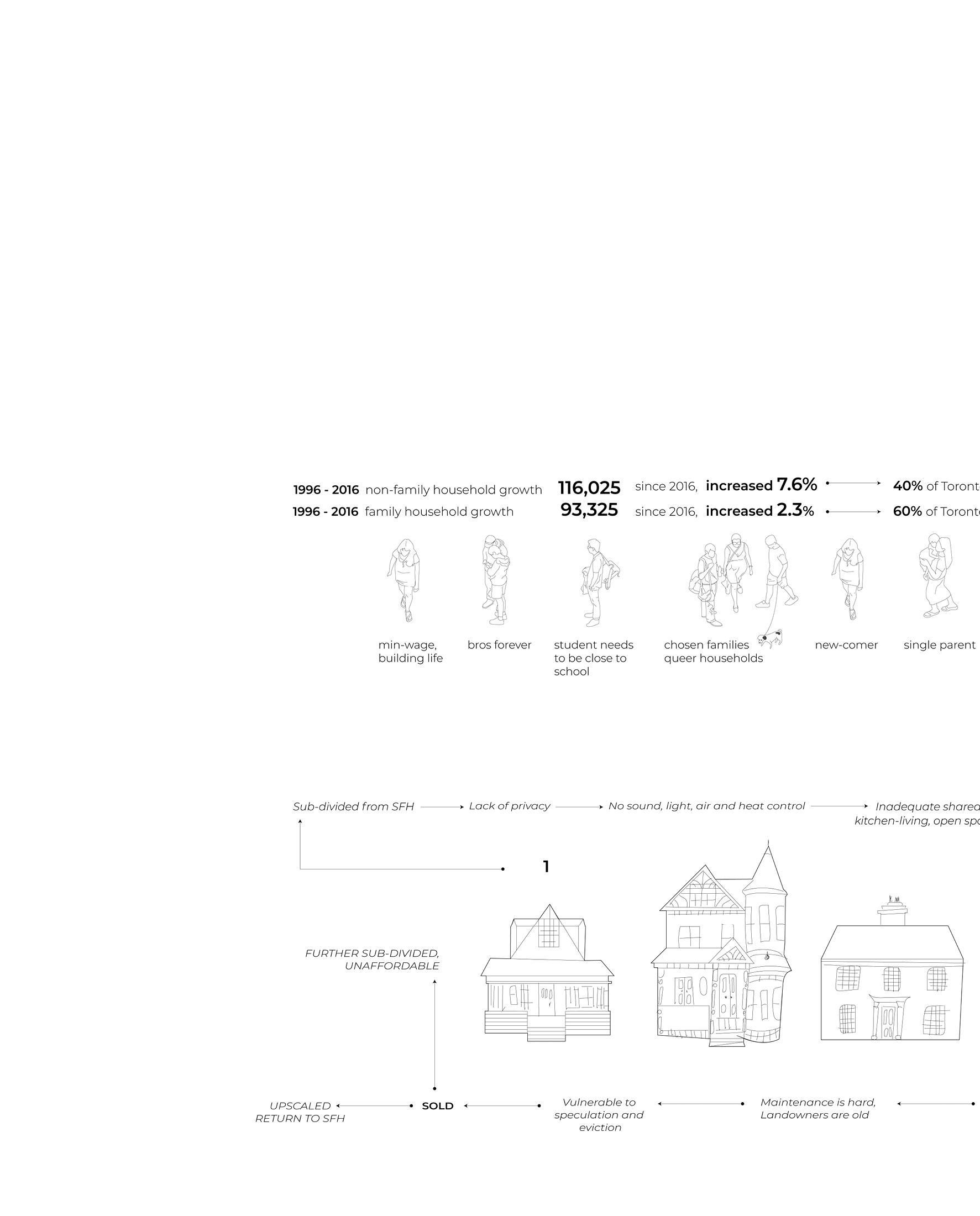
Parkdale is unique for its high concentration of rooming houses. Rooming houses — renting a room with shared kitchen and living spaces — exist globally under different names,but the fundamental idea remains the same. According to the Parkdale Rooming House Study, between 2007 and 2017, around 350 tenants were evicted due to speculative development —and today, over 800 people are at risk of losing their affordable homes.
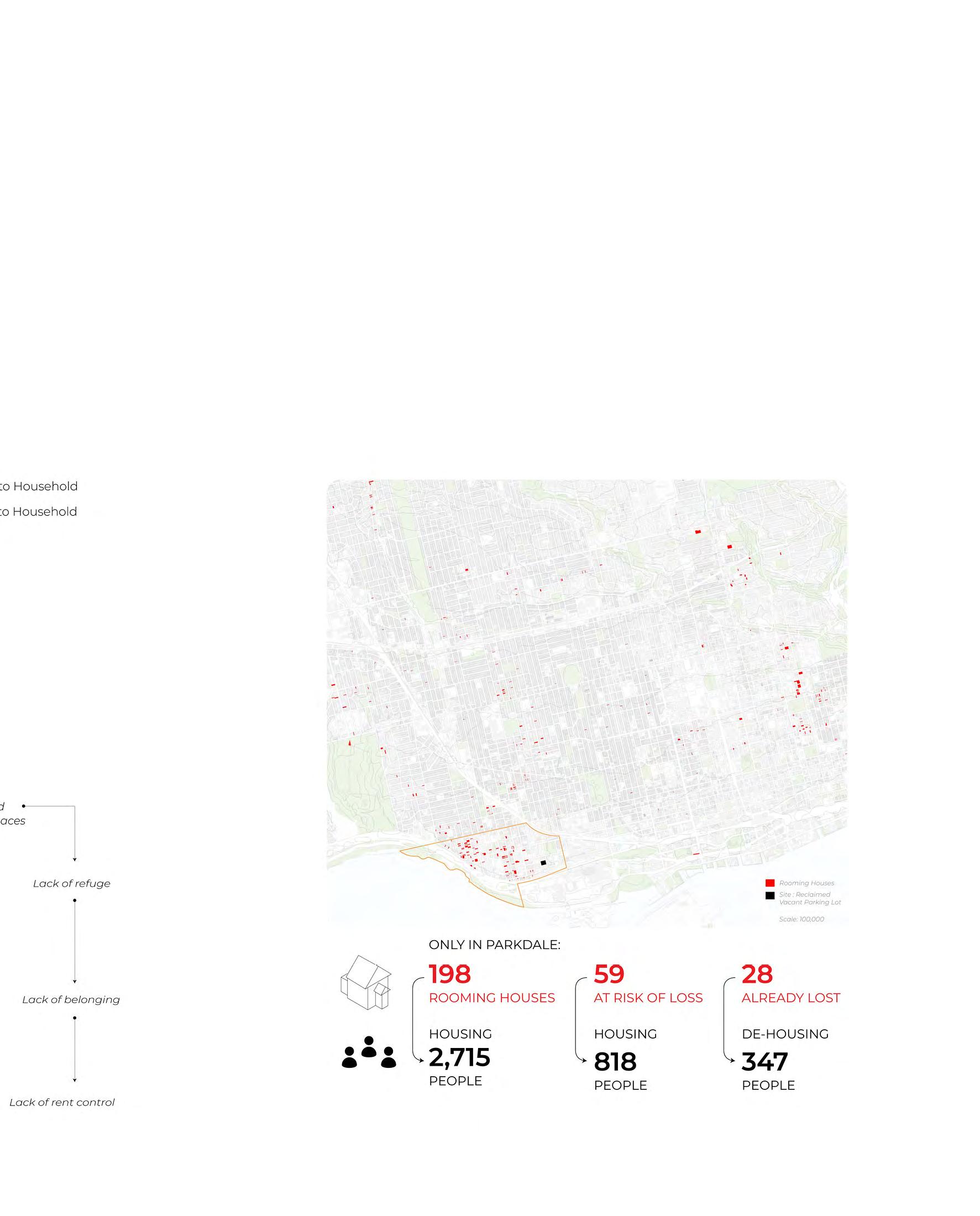
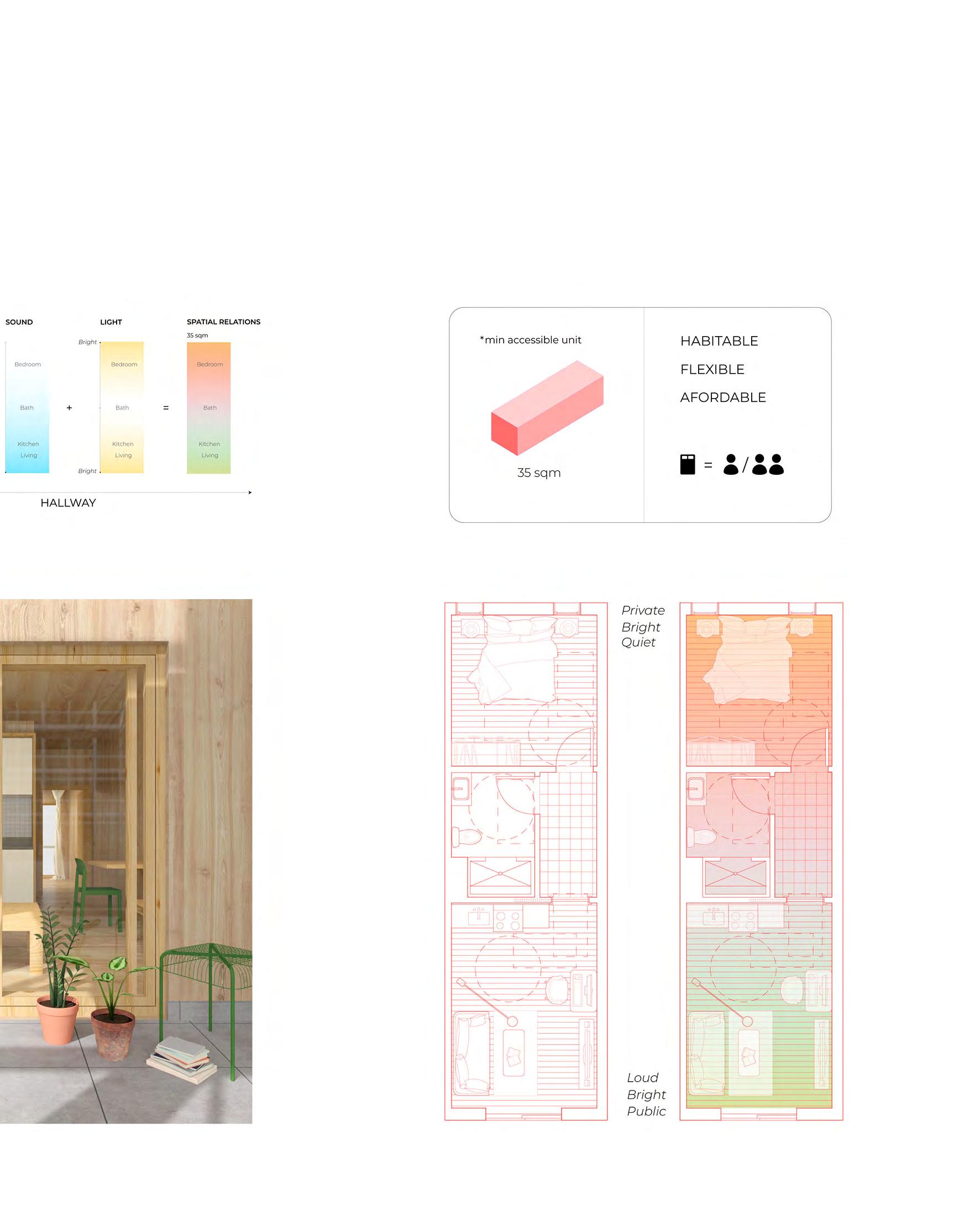
DESIGN PRINCIPLES - HABITABILITY
This thesis proposes a new model of purpose-built shared housing within the Parkdale Community Land Trust framework. sen families and evolving household structures, the project includes adaptable units with varying degrees of privacy, and integrated “refuge spaces”. By reimagining rooming housing through the lens of collective ownership and social envisions a dignified, flexible, and deeply rooted future for shared urban living.
Color Coding System
Spatial Analysis
-Physical Factors
Color Coded Spatial Analysis
-Normatives
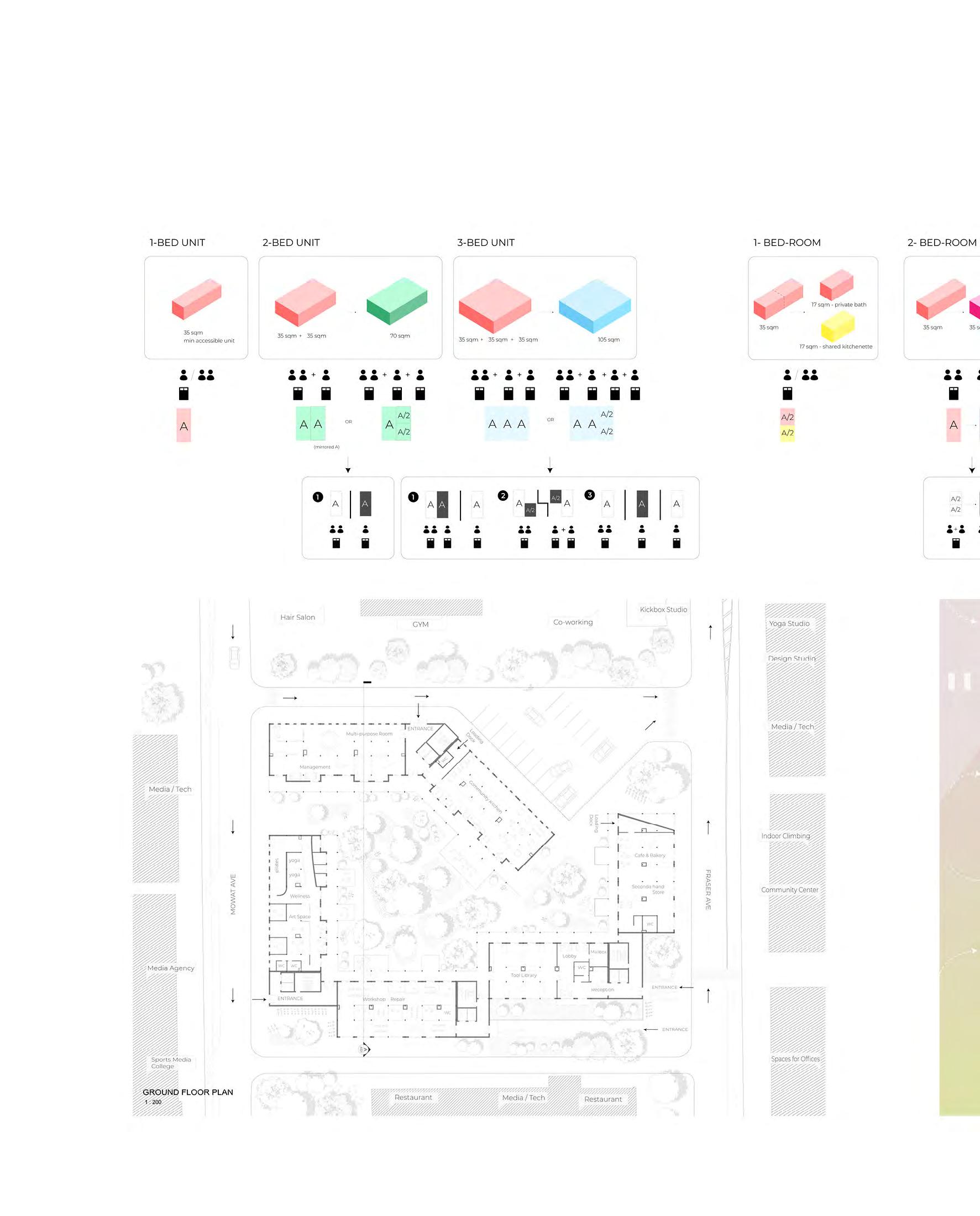
Diagram Co-Living Arrangements
-Levels of Privacy
Idea Diagram Adaptable Co- Living Arrangements
-Giving Options
Shared Bathroom
Private Bathroom
Idea
framework. Designed to support choprivacy, shared kitchens, living spaces social infrastructure, the project
Color Coded Spatial Analysis
-Thesis
THESIS
TYPE A - 1-BED UNIT
HABITABLE ADAPTABLE AFFORDABLE
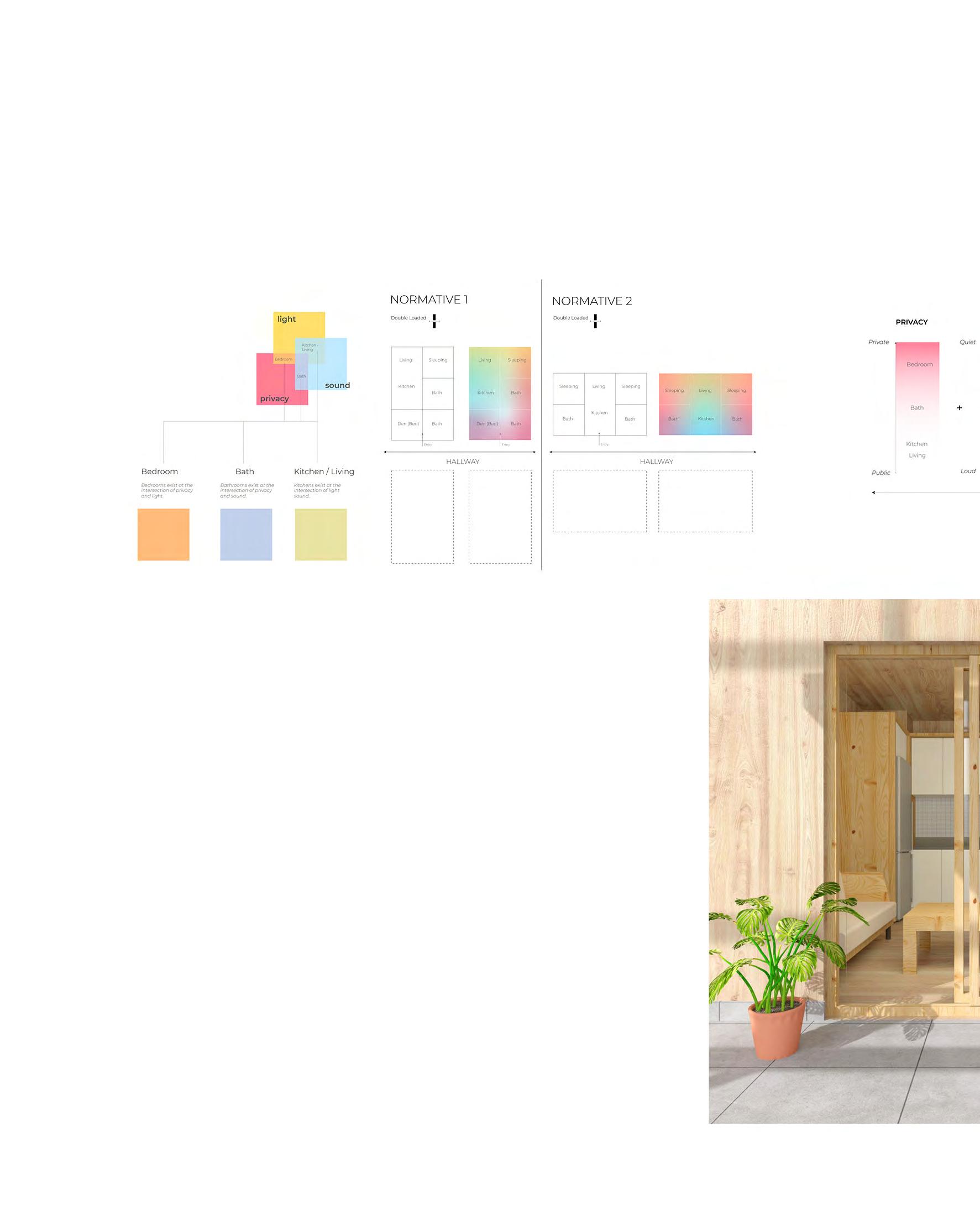
Render Type A, 1-Bed Unit
DESIGN PRINCIPLES - ADAPTABILITY
TYPICAL UNITS
ALTERNATIVES
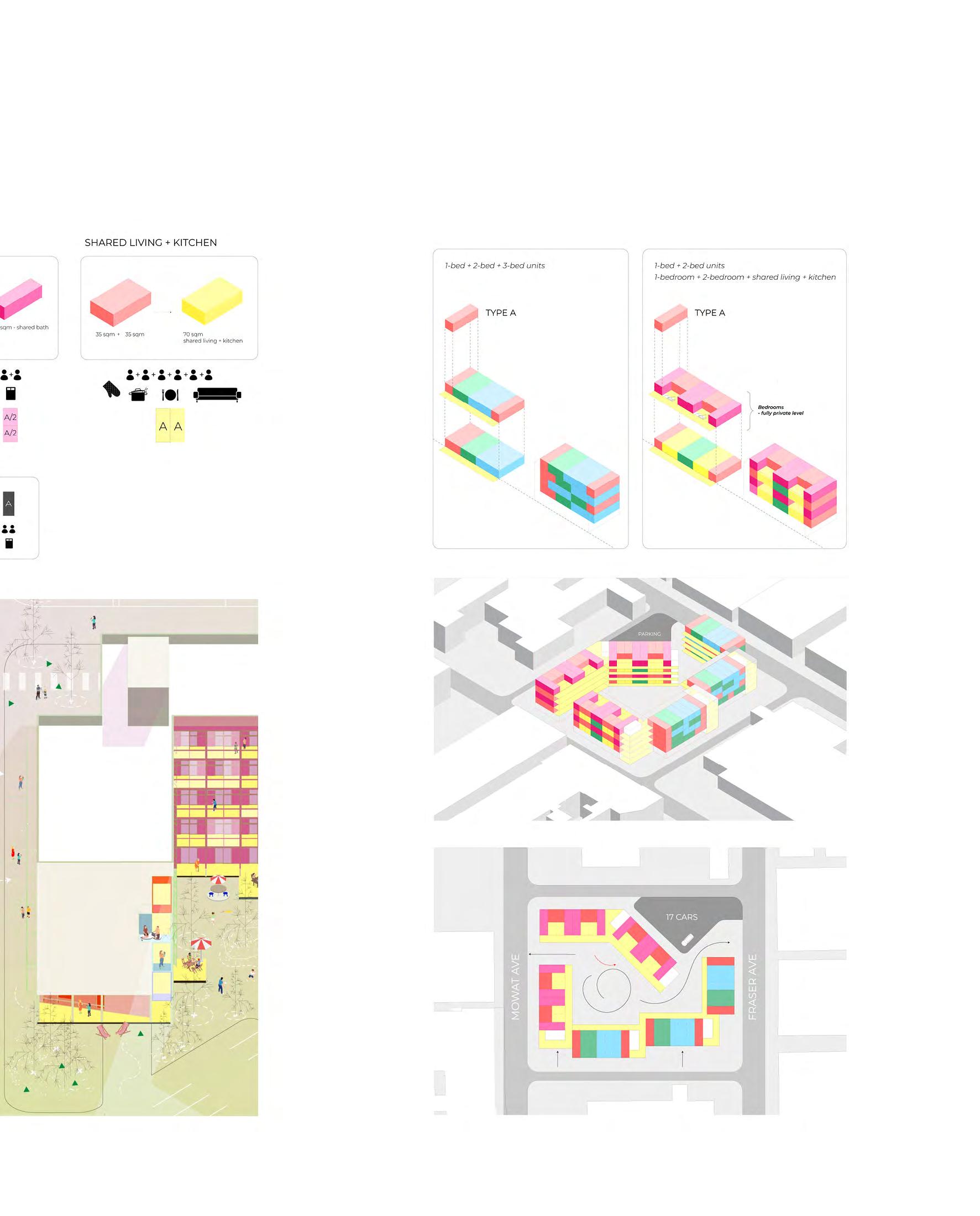
BLOCK STRATEGIES
BLOCK 1 - MIXED
BLOCK 2 - MIXED + ROOMING
Massing Strategy - AXO
Massing Strategy - PLAN
Illustration Oblique View
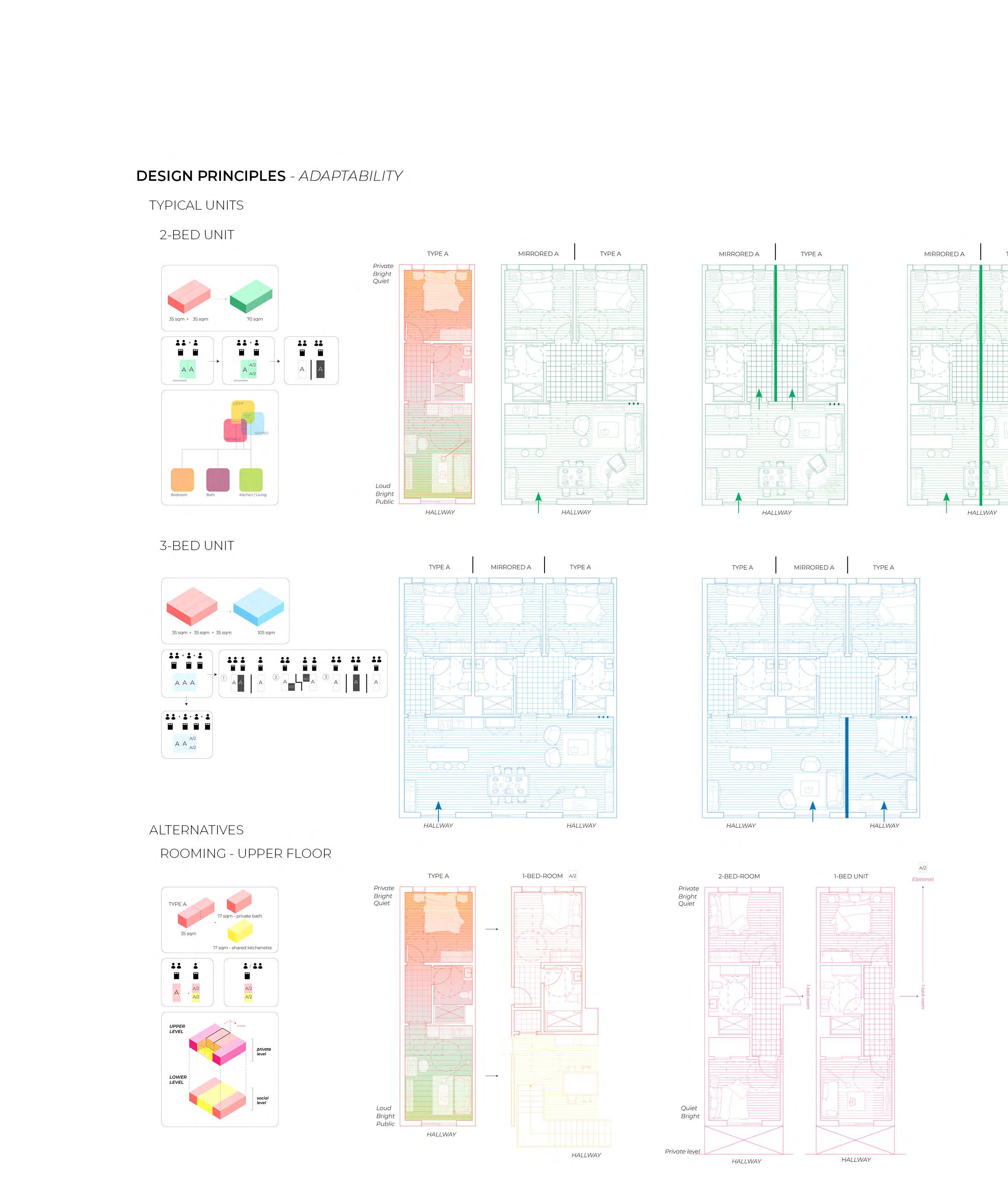
DESIGN PRINCIPLES - ADAPTABILITY
TYPICAL UNITS
2-BED UNIT
3-BED UNIT
ALTERNATIVES
ROOMING - UPPER FLOOR
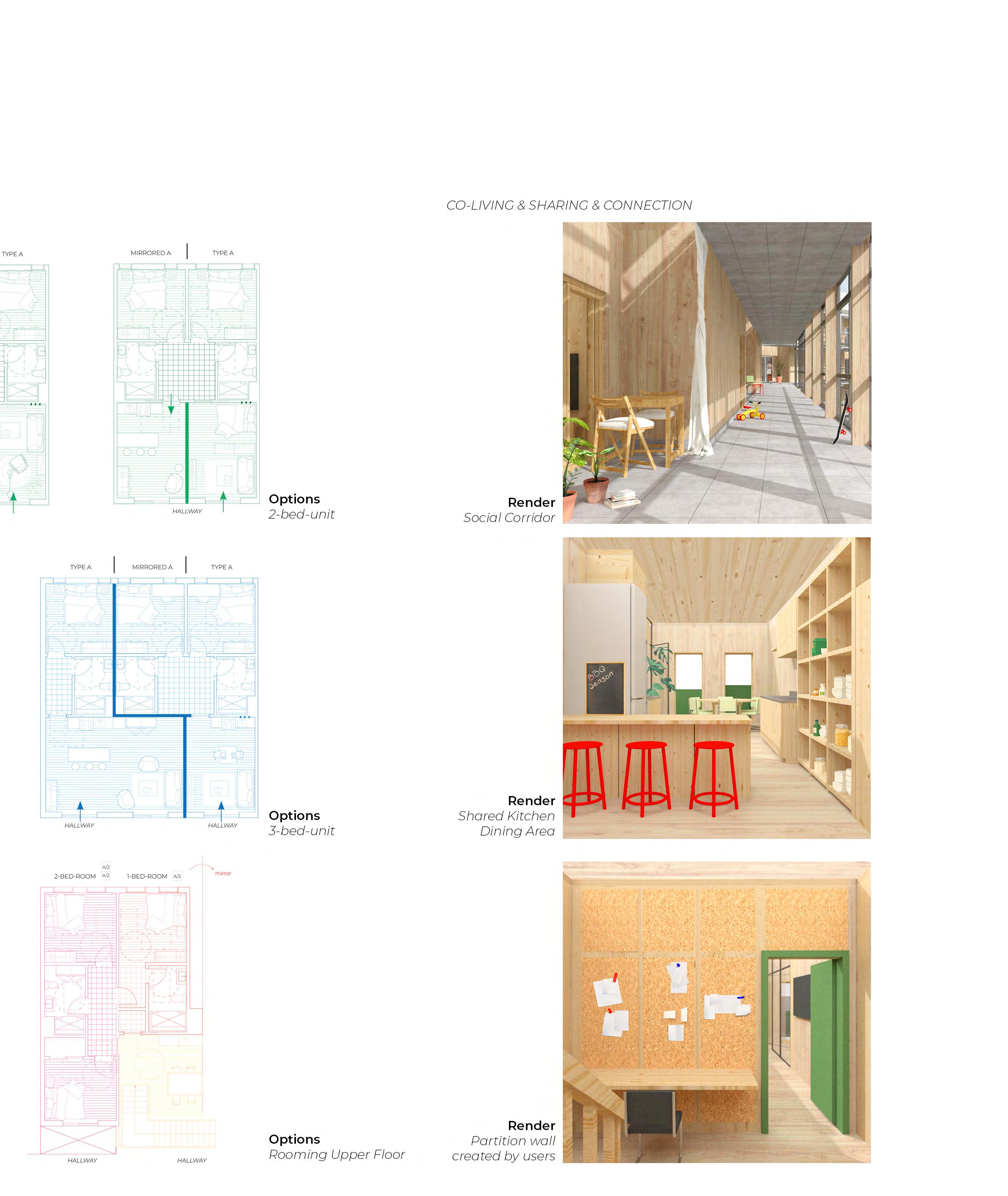
Options 2-bed-unit
Options 3-bed-unit
Render Social Corridor
CO-LIVING & SHARING & CONNECTION
Options Rooming Upper Floor
Render Shared Kitchen Dining Area
Render Partition wall created by users
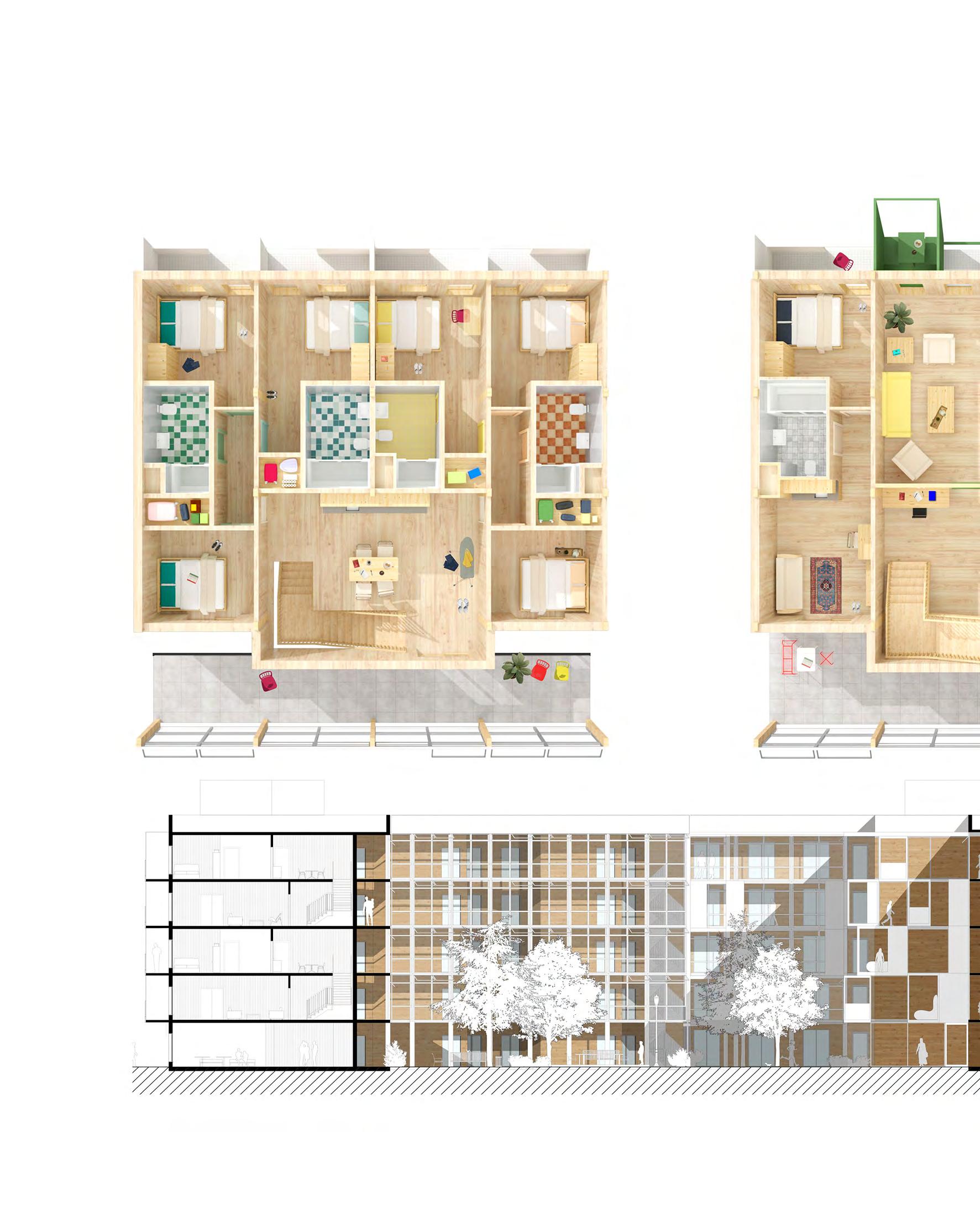
ROOMING - UPPER FLOOR - SEMI-PRIVATE
Upper Floor Bedrooms + Kitchenette
ROOMING - LOWER FLOOR - PUBLIC
REFUGE & PROSPECT THEORY
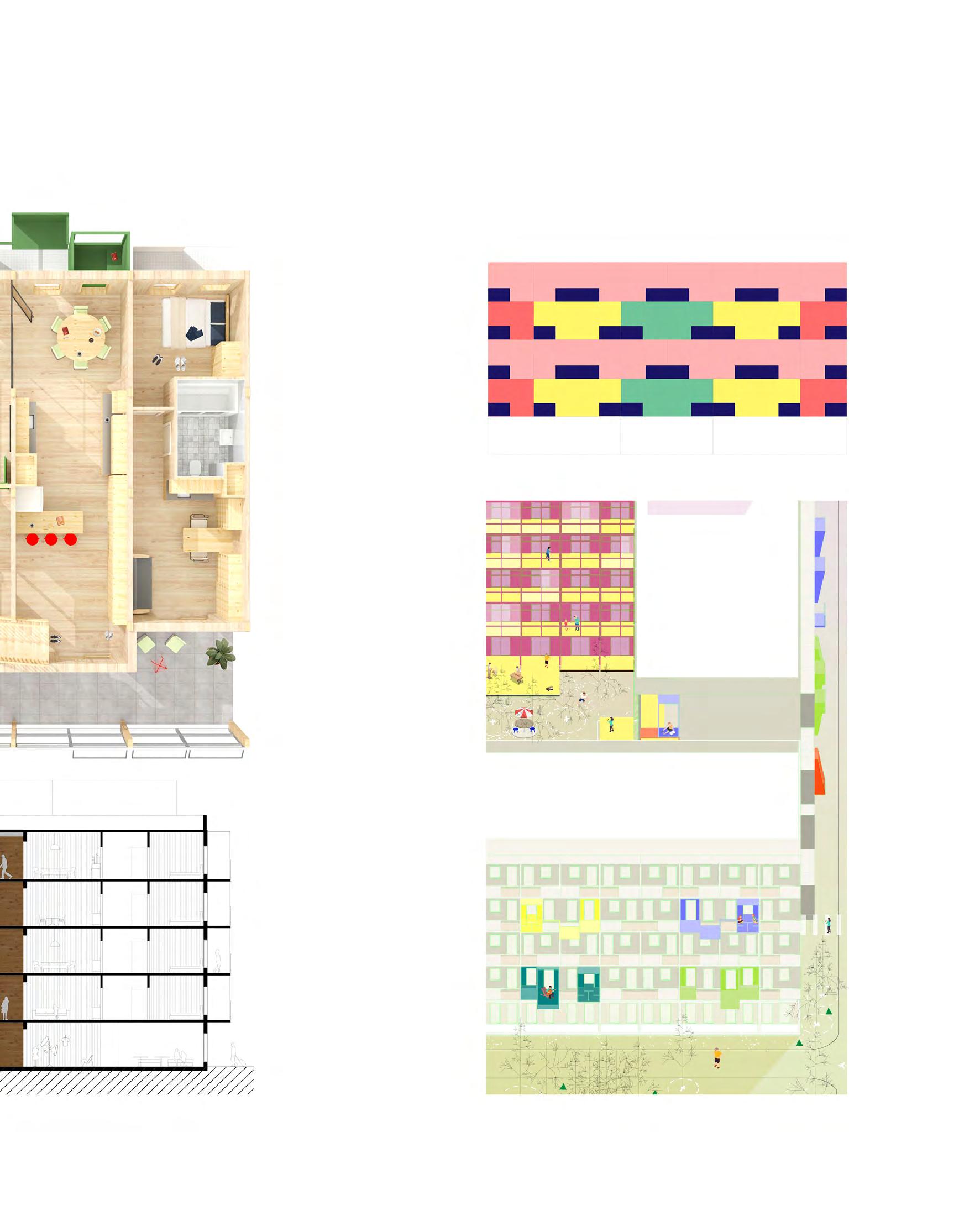
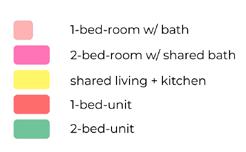
FACADE STRATEGY
Integrated Spatial Facade Design
Lower Floor Common Areas
Illustration
Oblique View
Ground Floor
Section AA Courtyard
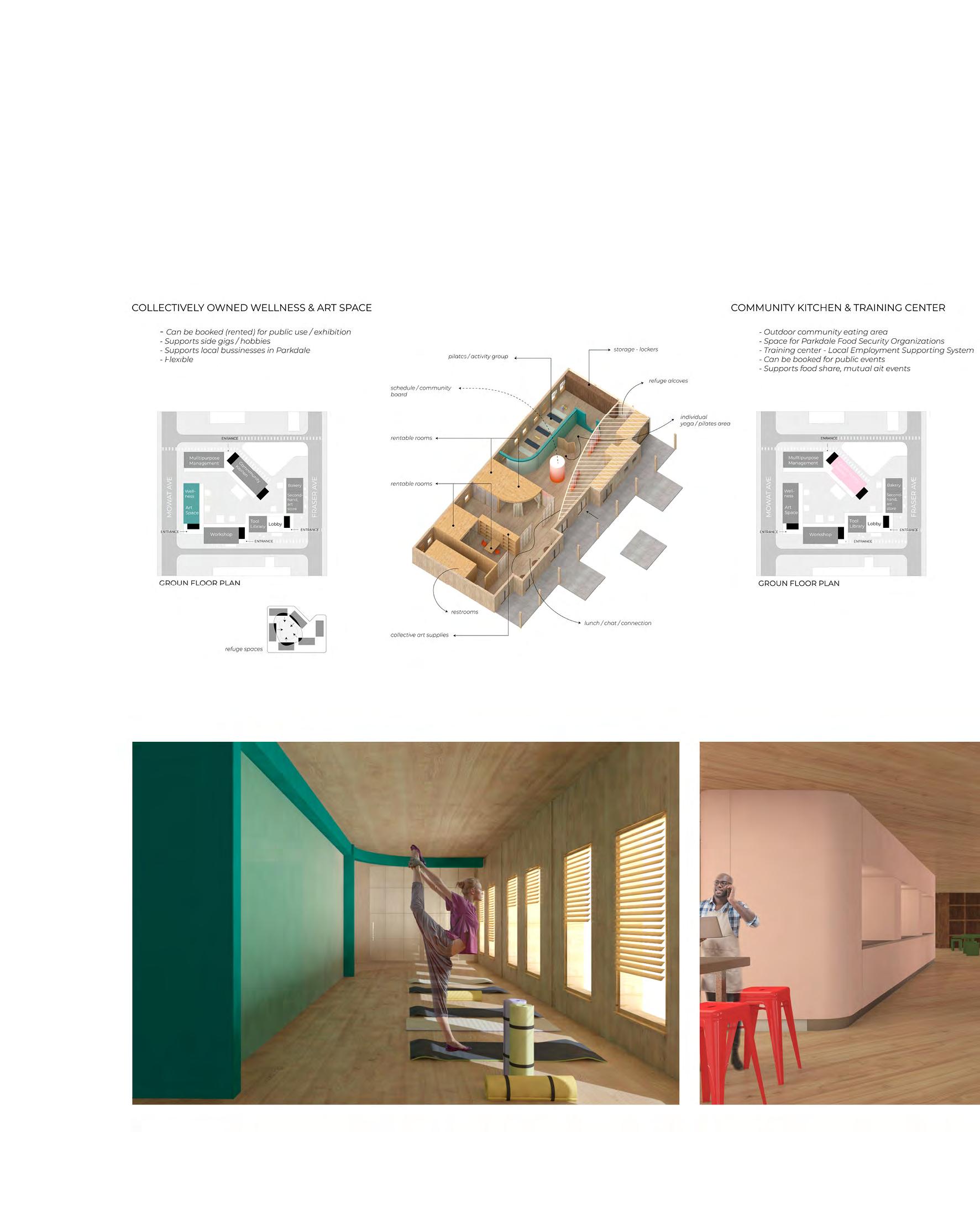
COMMUNITY SPACES
GROUND FLOOR
Render Group Pilates Space
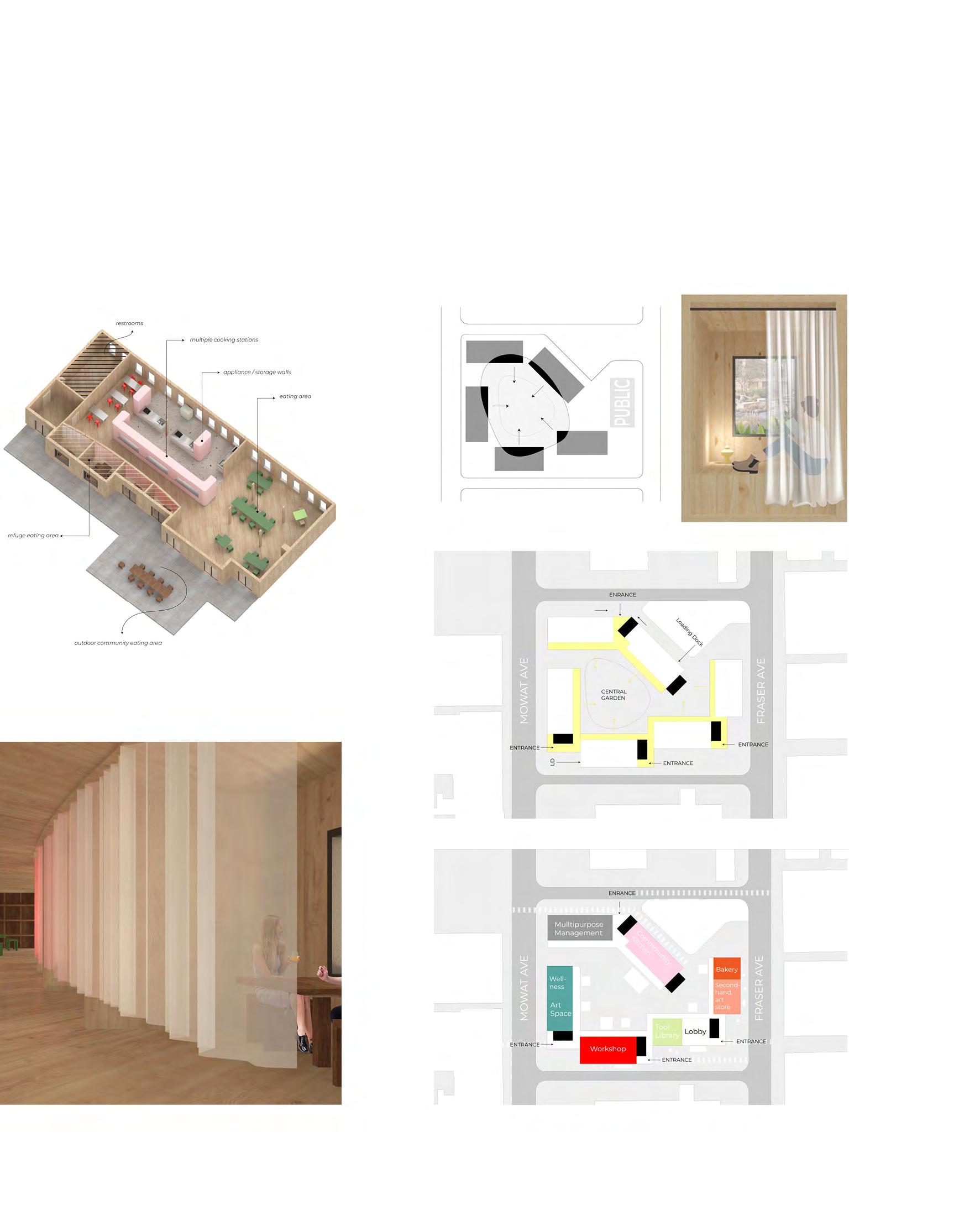
Render Community Kitchen - Training
REFUGE & PROSPECT THEORY
GROUND FLOOR STRATEGY
In architecture, Jay Appleton’s Refuge & Prospect Theory translates into spaces where users feel safe and comfortable, yet can still see and be subtly connected to their environment without being overwhelmed.
Public & Community & Refuge Spaces
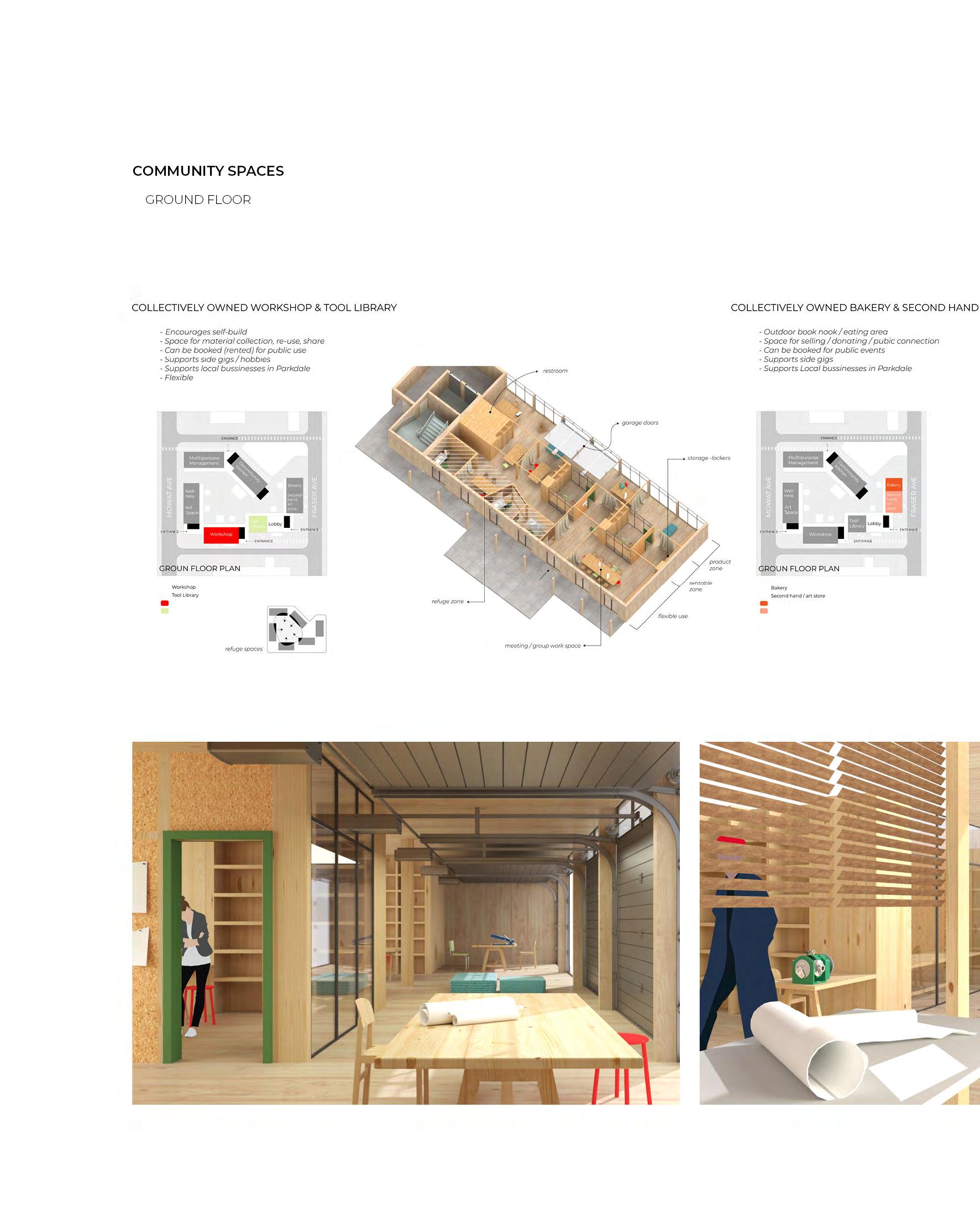
COMMUNITY SPACES
GROUND FLOOR
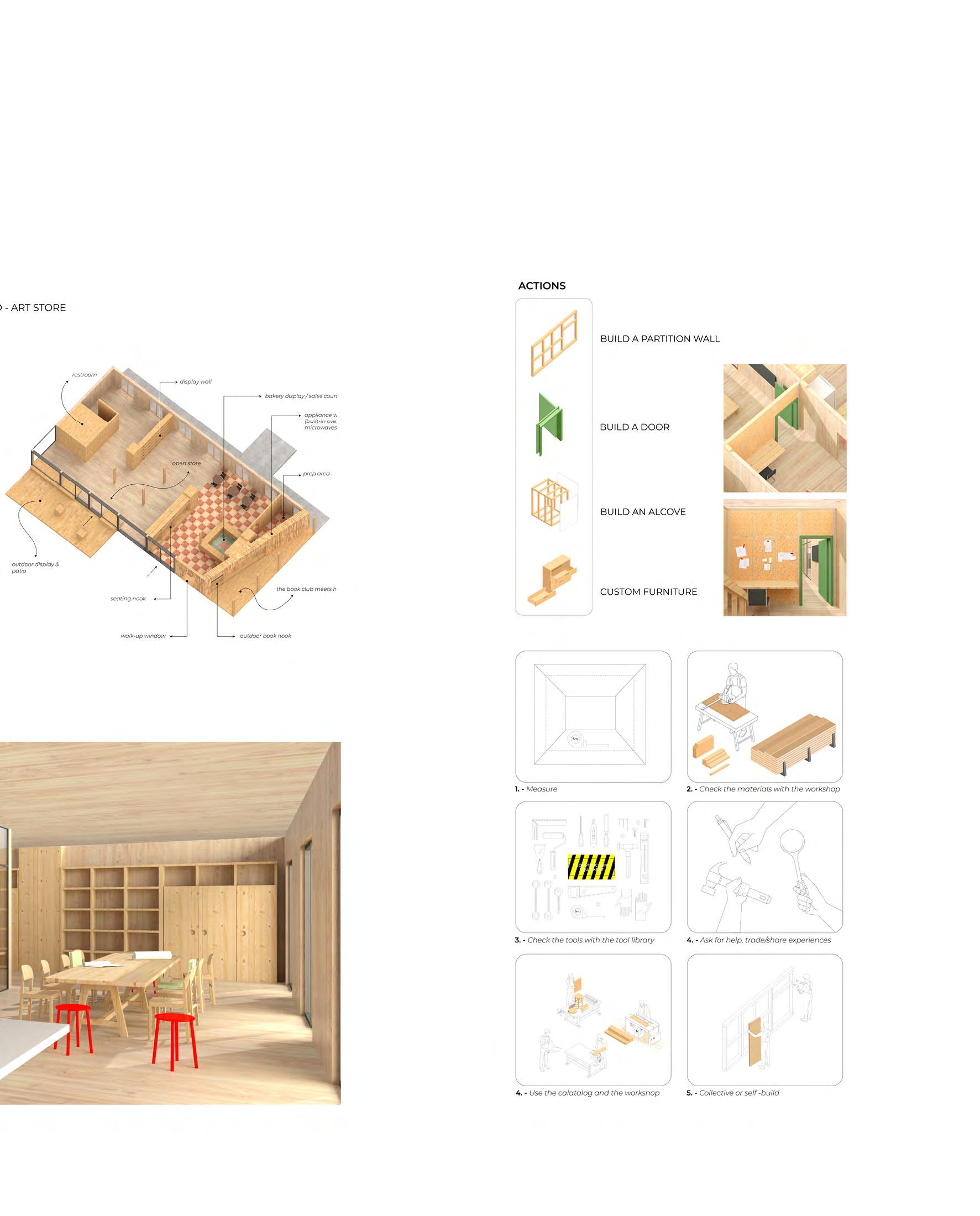
HOW TO BUILD?
The common workshop space is where community share their experience and empower each other , and the tool library is where all the tools were collected and owned collectively.
illustration Self-build @ Community Workshop
02
Professional Office Work, 2021 Group Work
With: Eren Ciraci, Nihan Boran
Location: Istanbul, TR
Duration: 3 months
Role in Team: Conceptual Design, Diagrams, Landscape, Technical Drawings
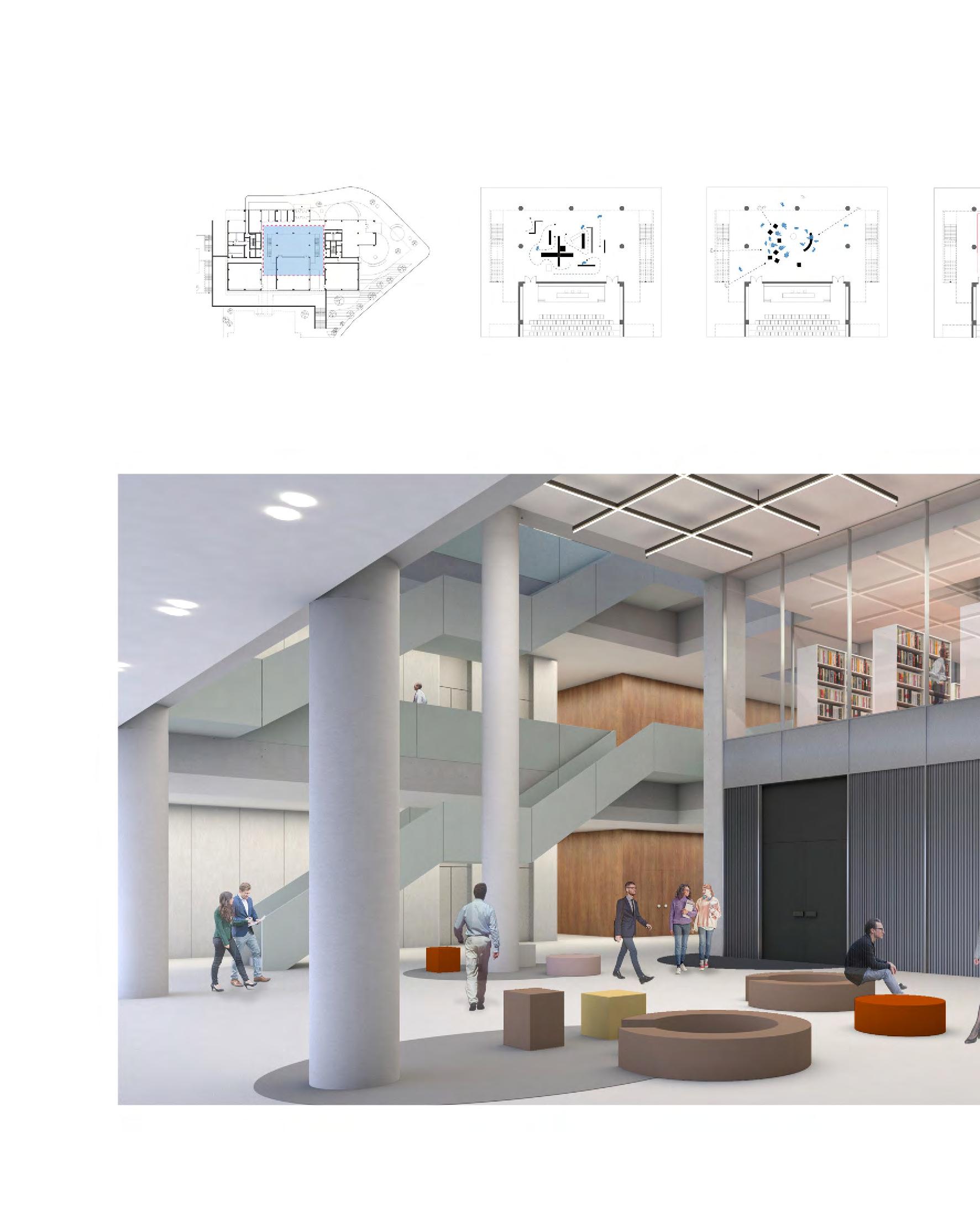
Render Street Entrance
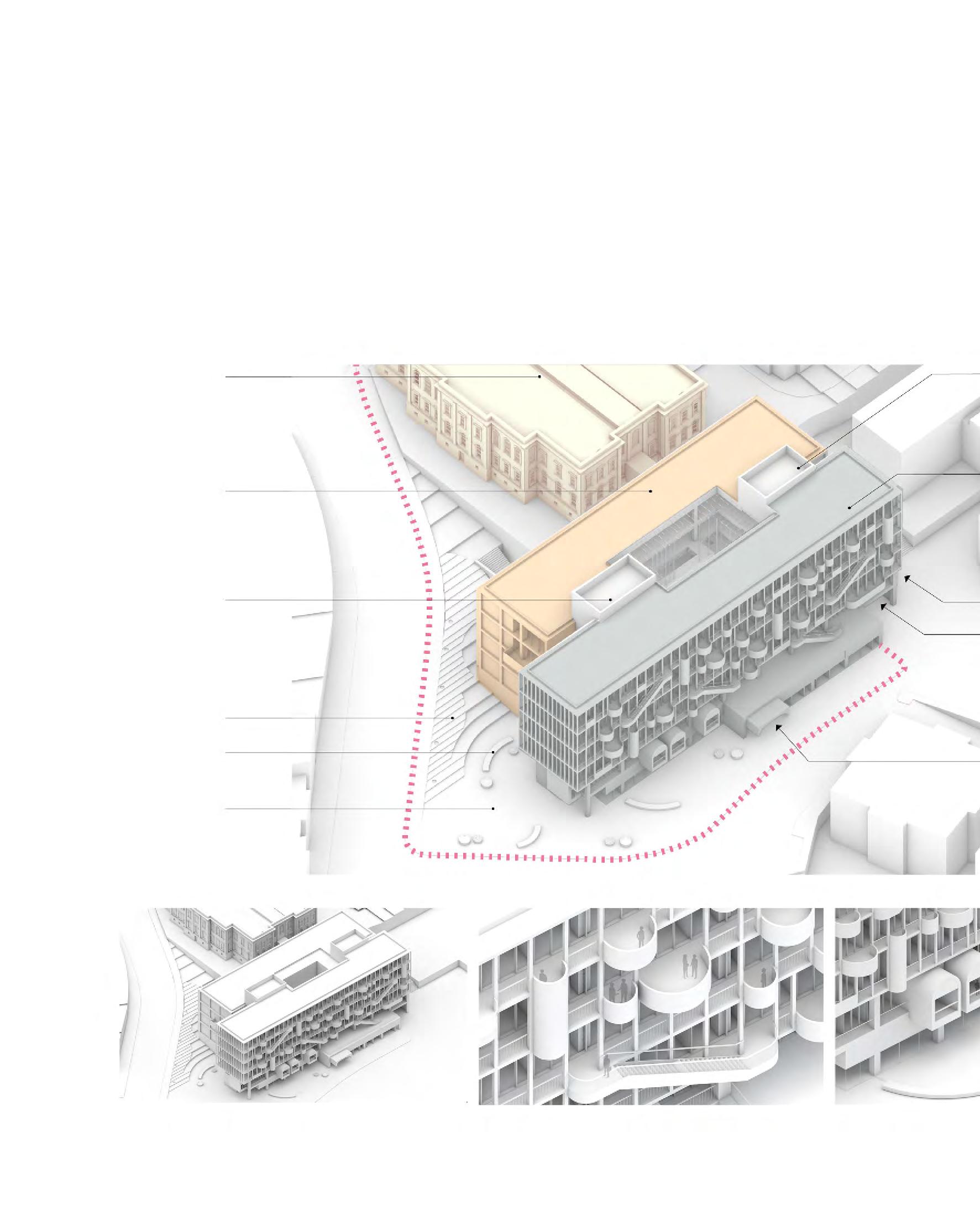
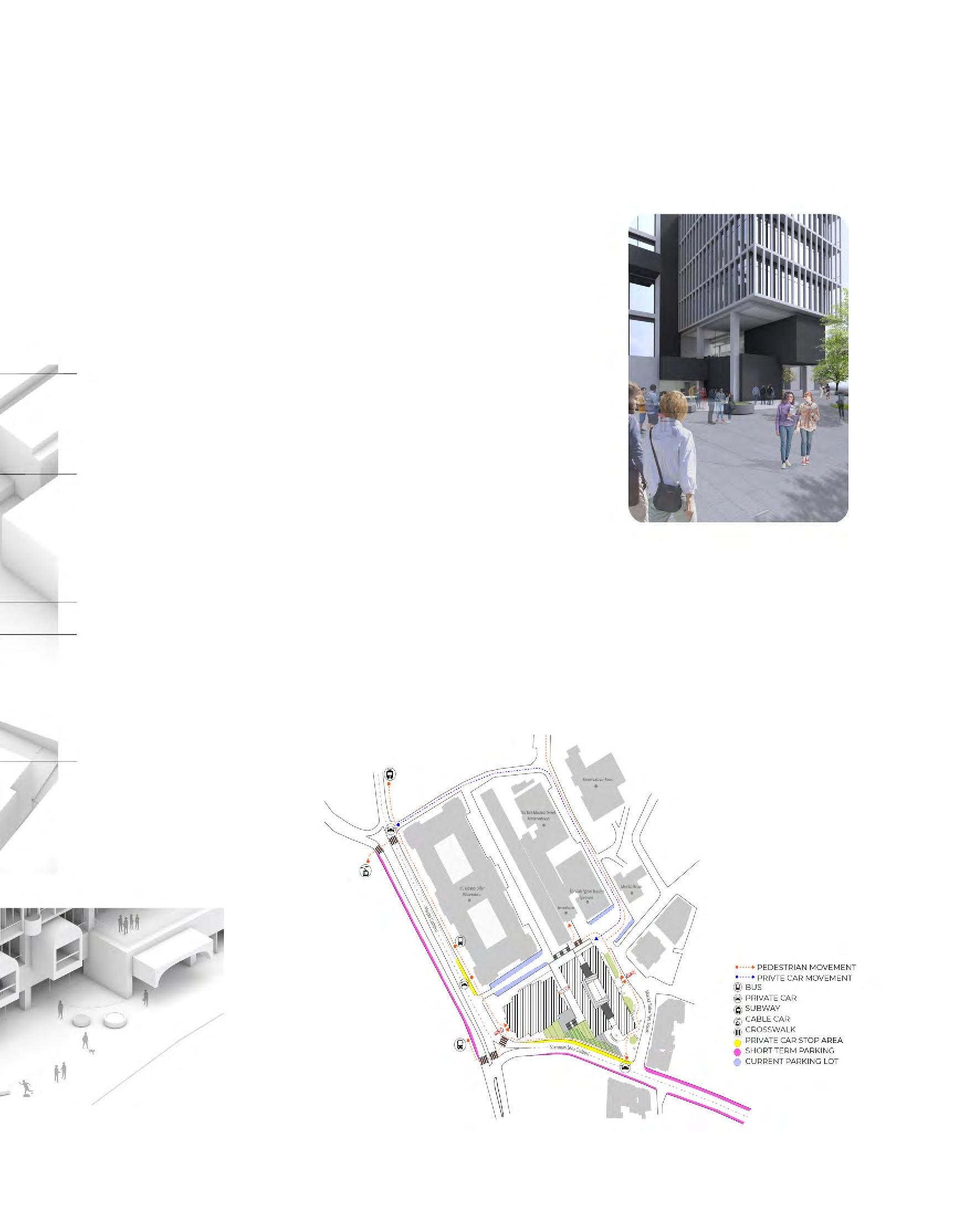
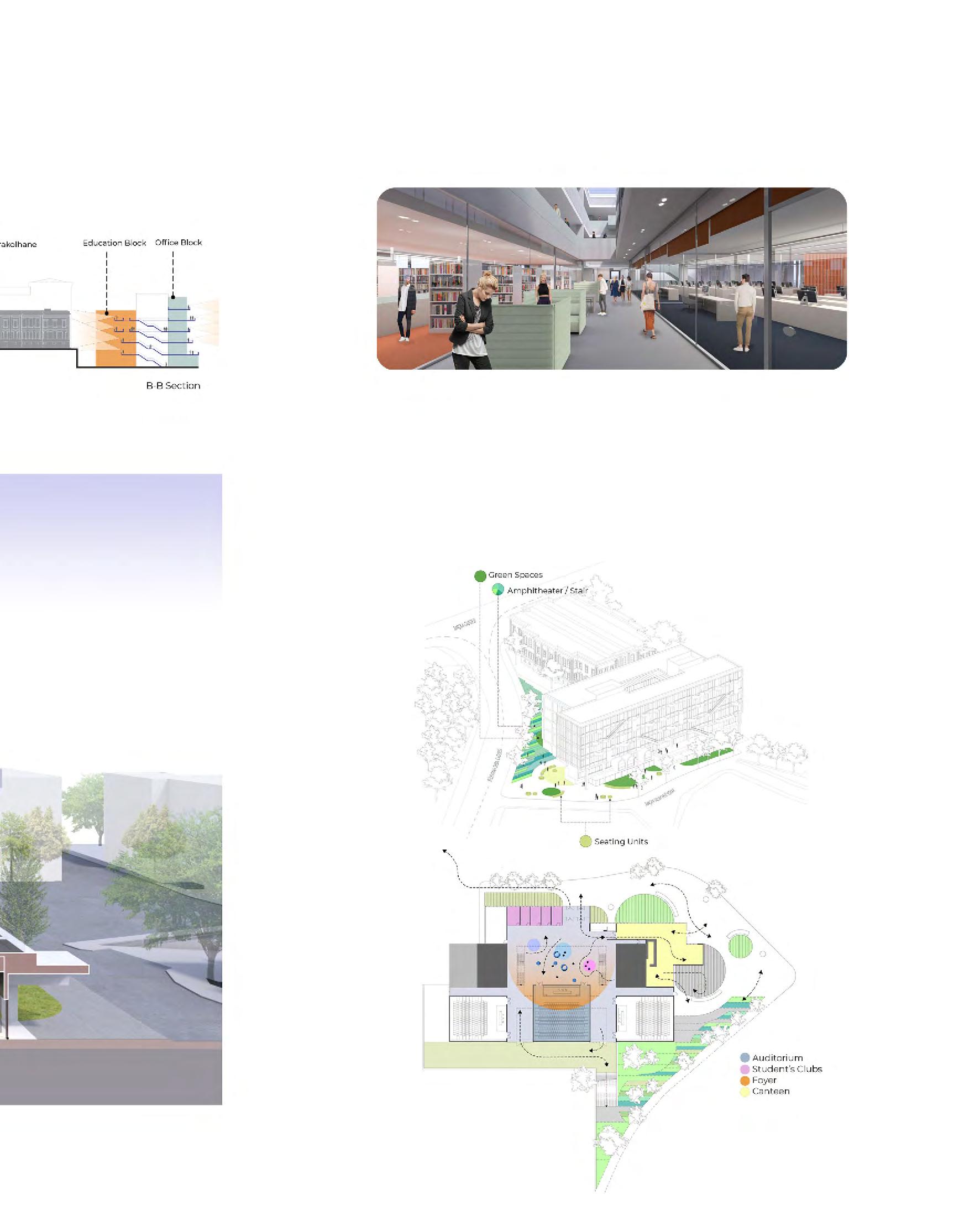
The project integrates the historical Karakolhane building with a new faculty structure, reflecting ITU’s deep-rooted identity while fostering interaction and community. Karakolhane serves as the symbolic main entrance, emphasizing history, while the new building introduces a secondary entrance, enhancing campus connectivity and revitalizing surrounding spaces. By blending old and new, the design creates a focal point at the intersection of significant streets, opening public spaces for communal use. The approach prioritizes inclusivity, preserving existing trees and designing shaded, stepped areas to encourage gathering and interaction.
MACKA TALIMYERI ENTRANCE
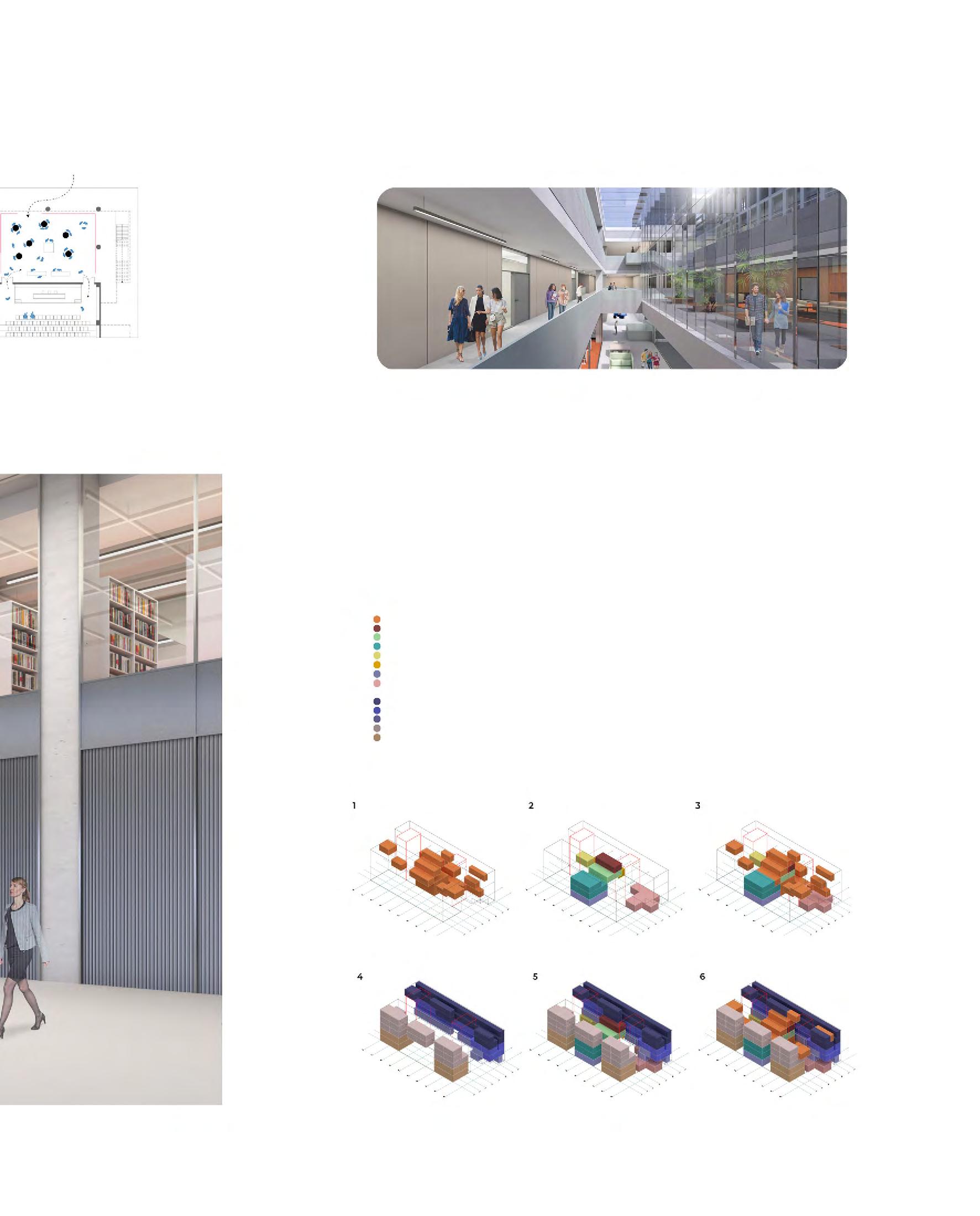
Render Computer Lab and Library
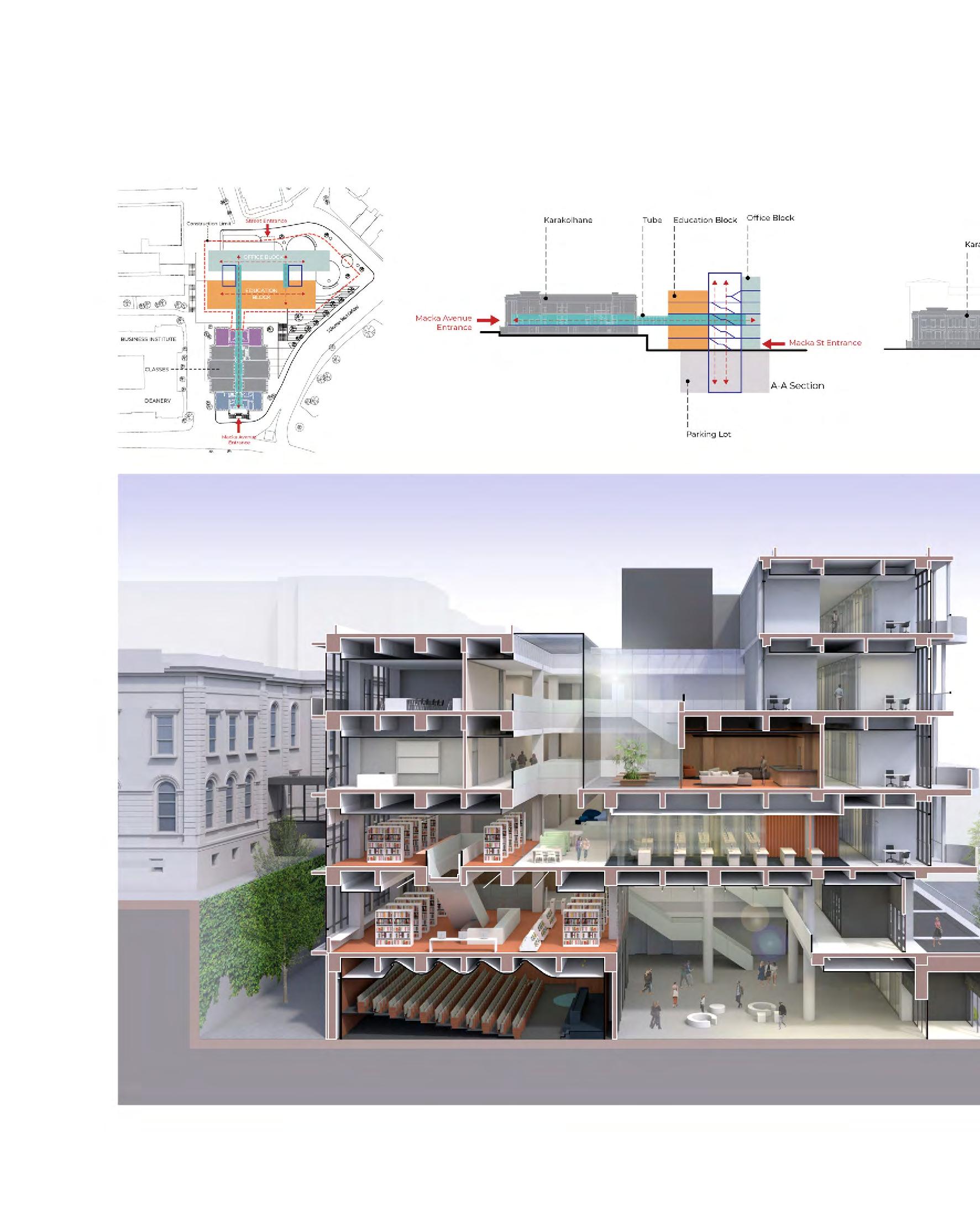
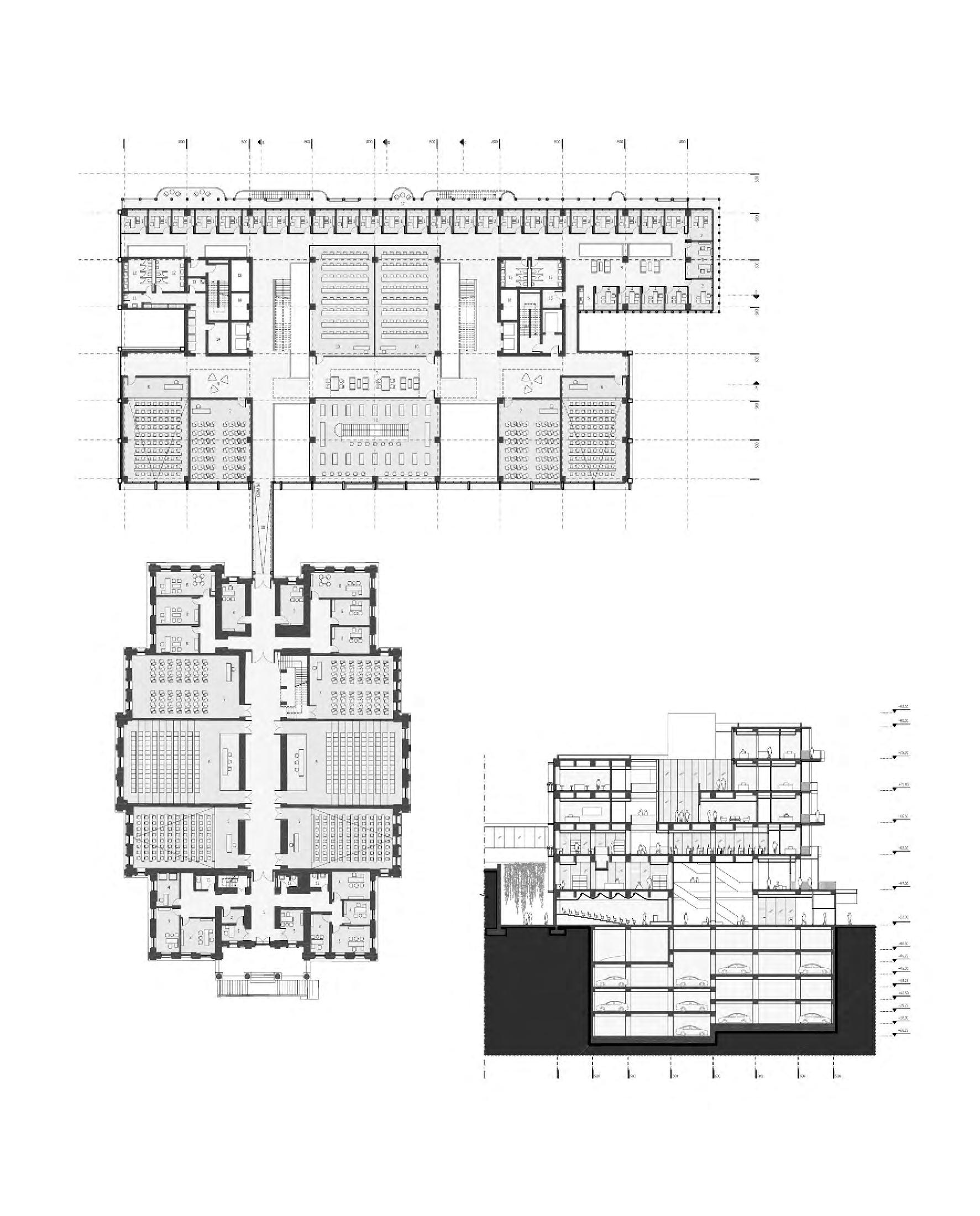
The building is constructed as a non-dilated reinforced concrete system consisting of two blocks and two cores. The office block is solved in 8m x 6m axes. In the education block, 3 floors with 16m spans on each floor are separated from each other by gallery spaces. This opening distance allows to pass the space required for the conference hall and lecture halls on the first two floors. On the upper floors, it enables to create uninterrupted wide spaces in common spaces such as the library and computer laboratory..
Render Section Perspective
Foyer Usage Alternatives
1- Exhibition The Foyer can be used for various styles of exibitions. Size of space allows curators flexibility and capacity towelcome
2- Forum Forums are inevitable parts of college life. It should be accessible for everyone at every moment. Forums can be watched upstairs’
3- Coctails In addition to the educational events, the Foyer can be used for other social activities not only during school hours,
towelcome to crowds.
upstairs’ and downstairs’ corridors.
hours, but also on weekends.
Render Gallery space, Common areas
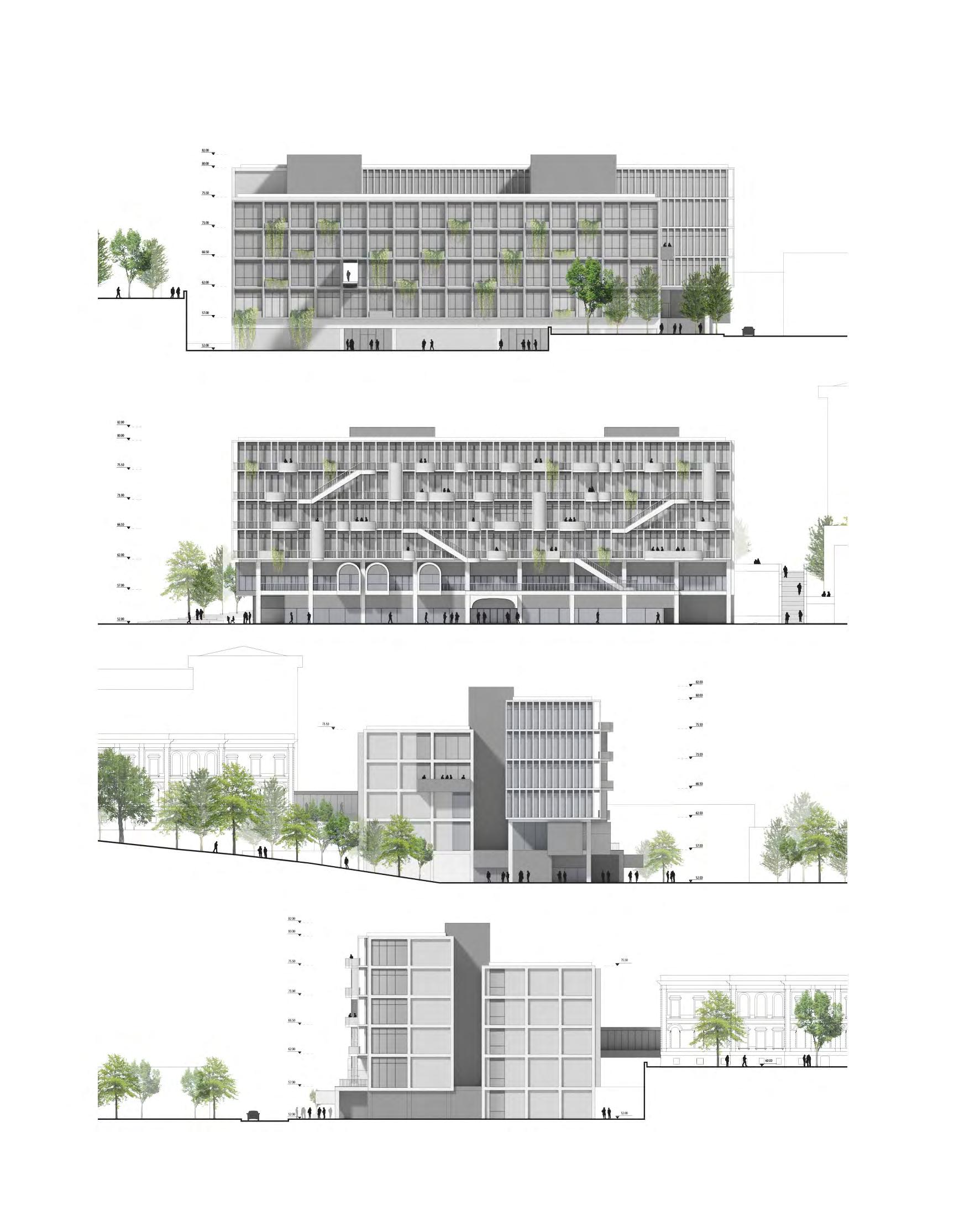
The aim of the building is to maintain the spirit of the modernist style, which reflects the load-bearing system of the faculty building, it will replace with a different interpretation. In the education block, unlike the existing building, the elements placed modularly inside the reinforced concrete skeleton on the facade have been replaced by surfaces that slide behind the carrier grid, come out from the facade as sunshades from time to time, and are expressed with materials of different colors and textures. .
SOCIAL SPACES
RESTING ROOM
COMPUTER LAB
LIBRARY
COPY CENTER
STUDENT CLUBS
AUDITORIUM
CANTEEN
MANAG. EN. OFFICES
INDUSTRIAL EN. OFFICES
ECONOMY OFFICES
CLASSES
AMPHITHEATERS
Render Main Hall
Selected Technical Drawings
Drawings on this page are my original work.
Elevation West
Elevation East
Elevation South
Elevation North
HOUSING FOR 500 PEOPLE
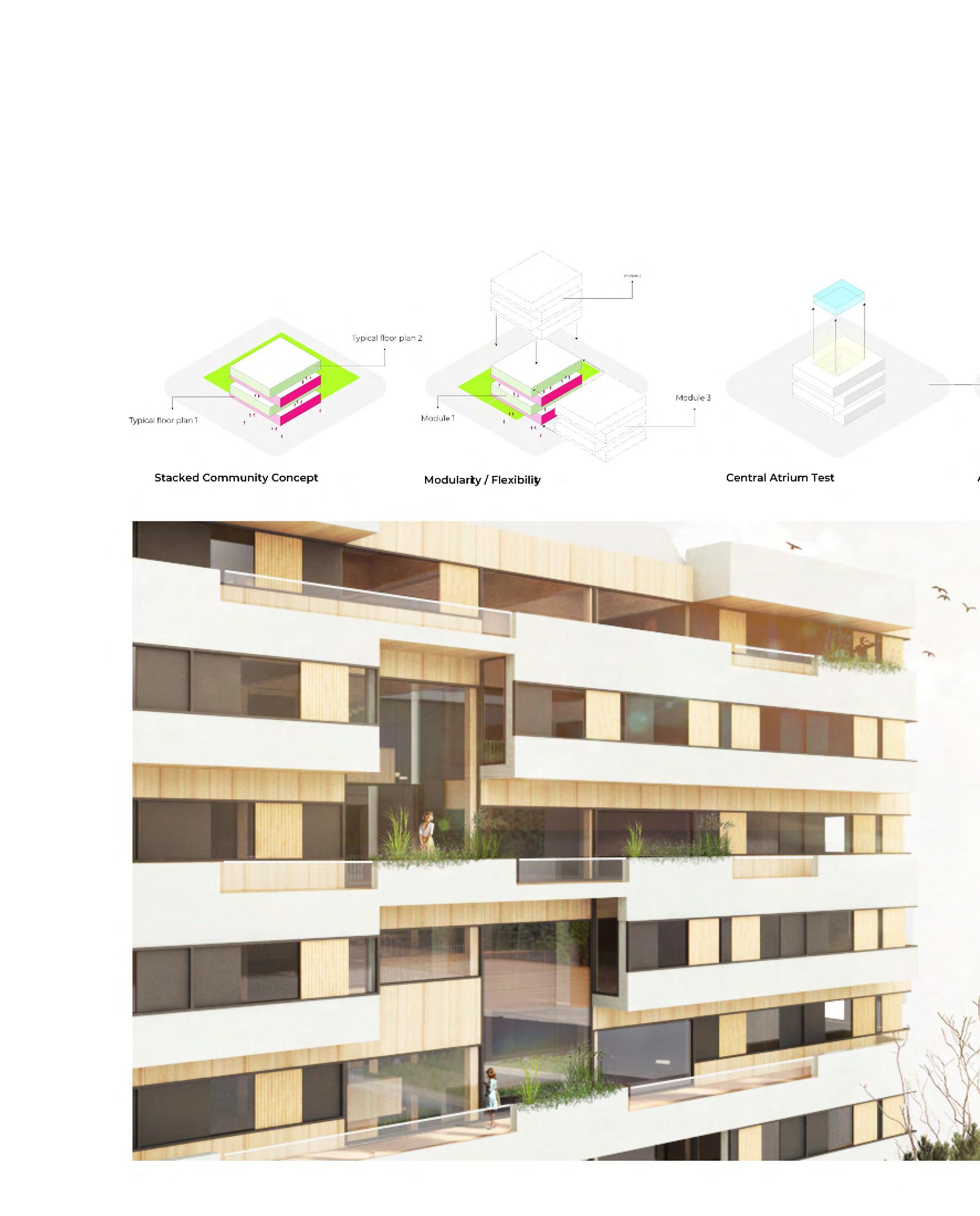
Stacked Community: Sharing Vertical Living
Comprehensive Studio, UofT, 2023 Group Work
With: Alessandra Castellini
Location: Toronto, ON
Duration: 3 months
Role in Team: Conceptual Design, Diagrams, One Click LCA, Facade, Modelling & Rendering
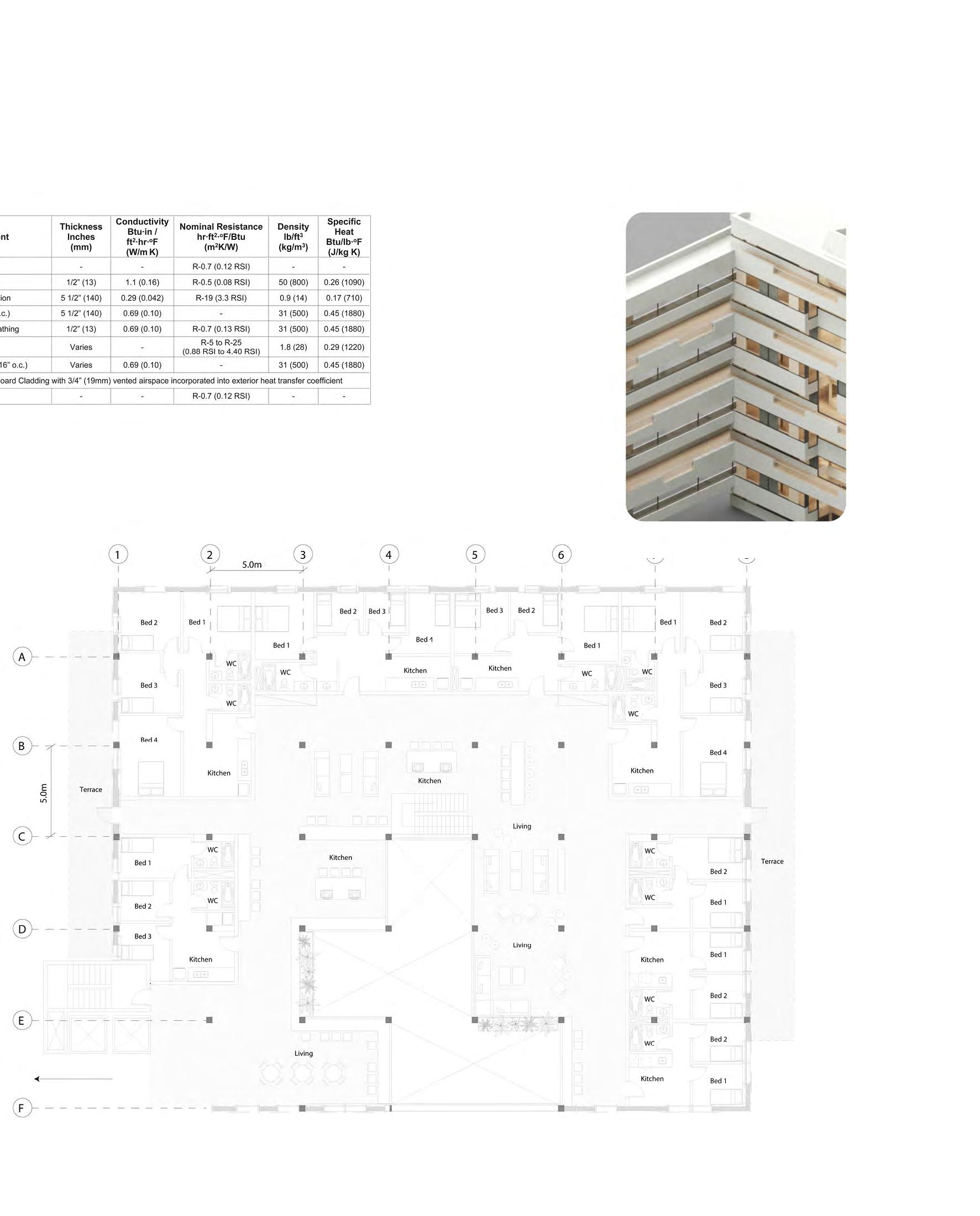
Render Facade Close-up
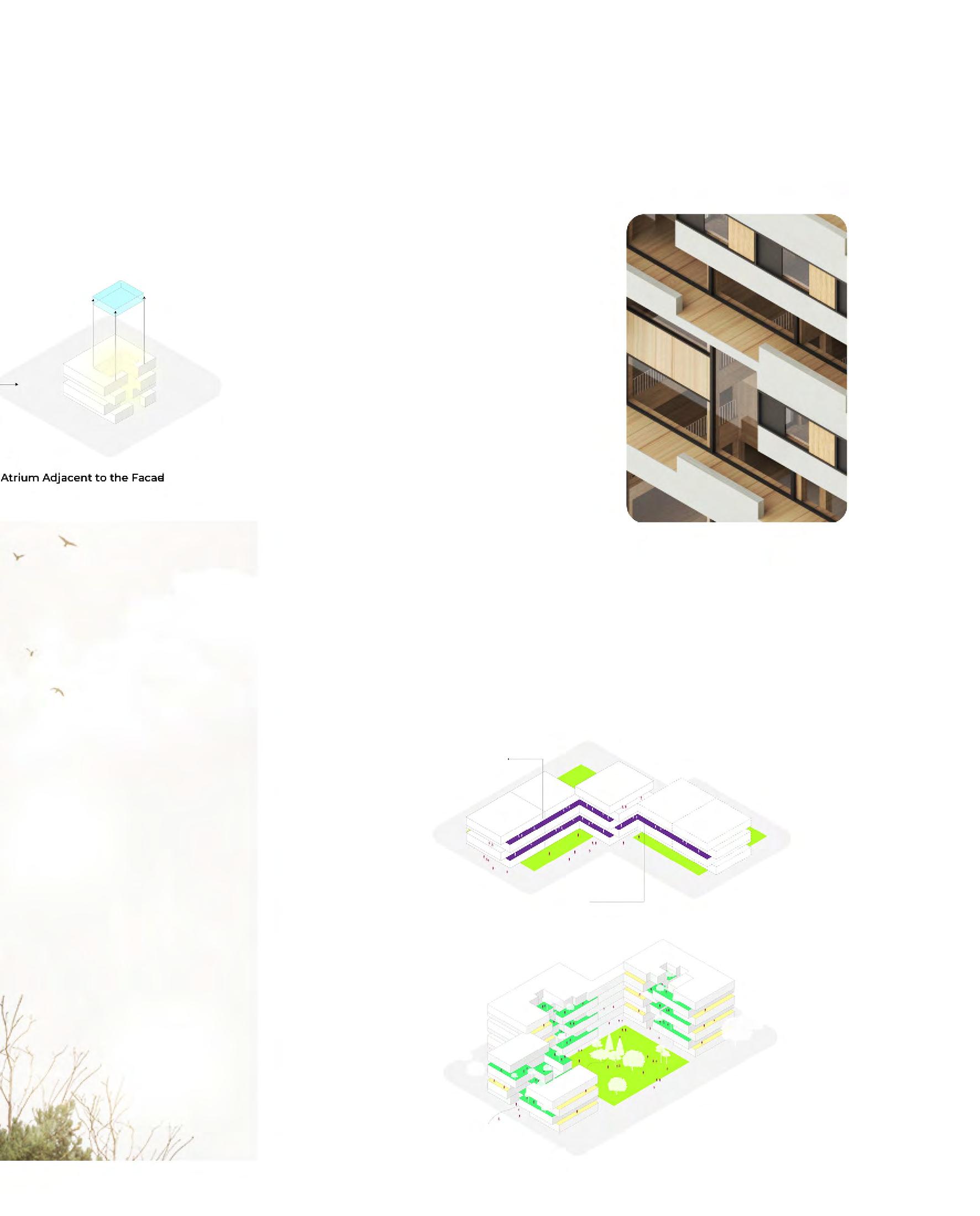
This project proposes a new 15,000 sqm mixed-use housing development designed to accommodate 500 residents. While primarily residential, the program also integrates community spaces and retail units to serve both the building’s occupants and the surrounding neighborhood. The housing is positioned as an affordable mid-rise option, distinctly separate from luxury developments. Stacked Communities presents a bold vision for contemporary vertical living, rooted in principles of unity, vibrancy, and scalability. The design reimagines shared amenities and carefully negotiates the relationship between private dwellings and communal spaces to foster a more connected and inclusive urban lifestyle.
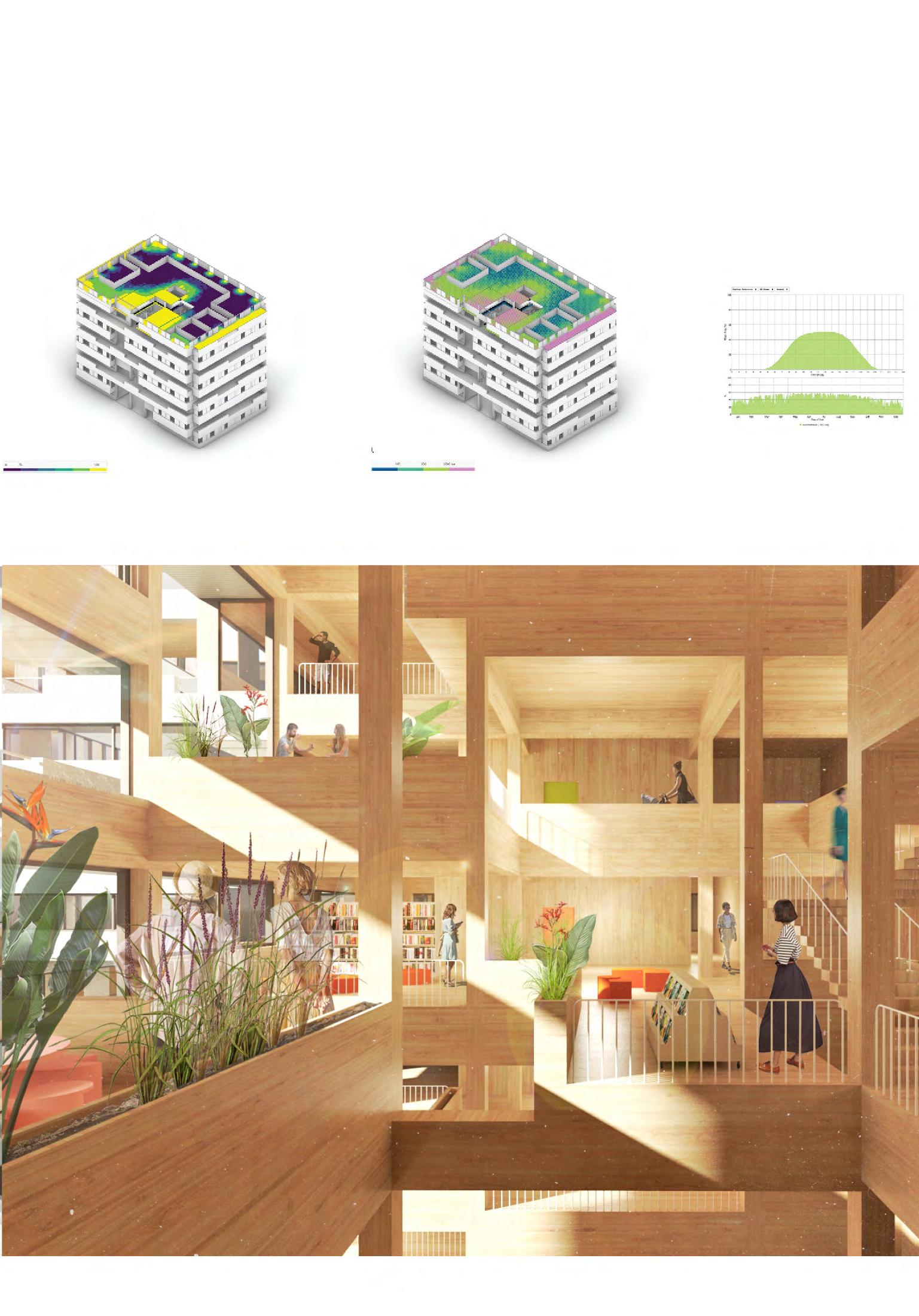
Daylight Autonomy Study
Useful Daylight Illuminance
When autonomous illuminance level >300 Lux (Light Perceived by Human Eye) is met exclusively by natural daylight without the need for supplemental artificial lighting.
The quantity of daylight available in a space within specified illuminance ranges that are deemed beneficial for visual tasks and occupant comfort.
Most Optimum Annual Daylight Autonomy Scenario
Reaching 40%-60% (Starting Feb to Oct) Ranging from 9am to 4.30pm.
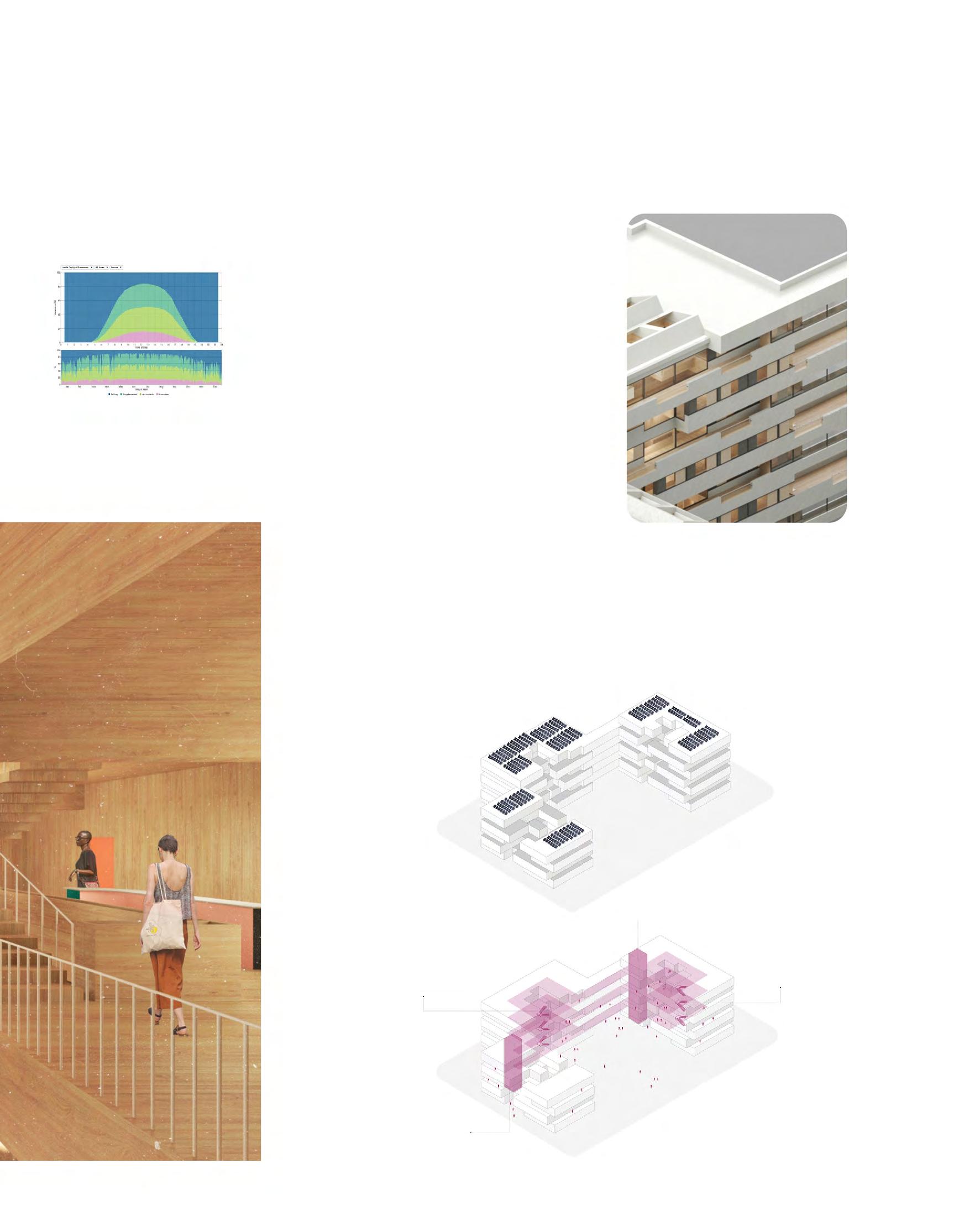
Base Information (1 Building)
Total Site Building Area: 27,896 m2
Roof Area: 1898 m2
EUI: 102.6 kWh/m2/a
PV Array Energy Generation: 384,300 kWh/year
Total Energy Use: EUI x 01 Building Area: 2,401,729.2 kWh
One Roof Presents 16% of the total energy from PV Array
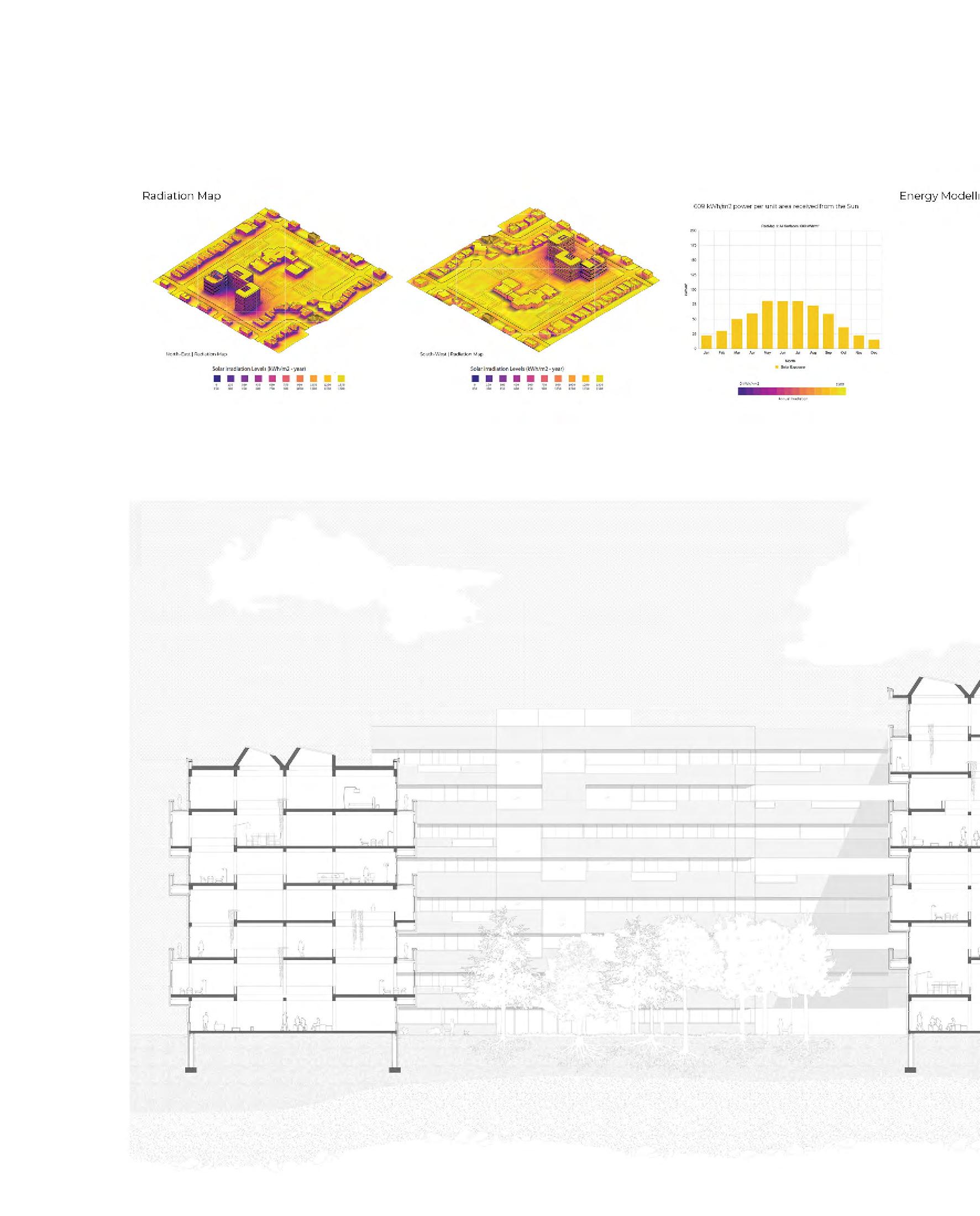
The radiation map indicates a total annual solar exposure of 609 kWh/m² across all surfaces and hours. This comprehensive data highlights the significant role of solar radiation in shaping the building’s energy performance and sets the groundwork for further analysis presented in the following board. The peak exposure months—May, June, and July—align with periods of intensified solar heat gain identified earlier. During this time, elevated radiation levels can substantially increase cooling demands..
Conversely, off-peak months, including January, November, and this, solar radiation still contributes to passive heating and may periods. The Total EUI of 102.6 kWh/m²/a provides a comprehensive per unit area annually. This metric serves as a foundational indicator Implementing energy-saving measures considering the specifc in overall energy consumption and operational costs.
and December, show lower solar exposure. Despite infuence heating requirements during these comprehensive measure of the building’s energy consumption indicator of the building’s overall energy effciency.
specifc EUI breakdown can lead to signifcant reductions
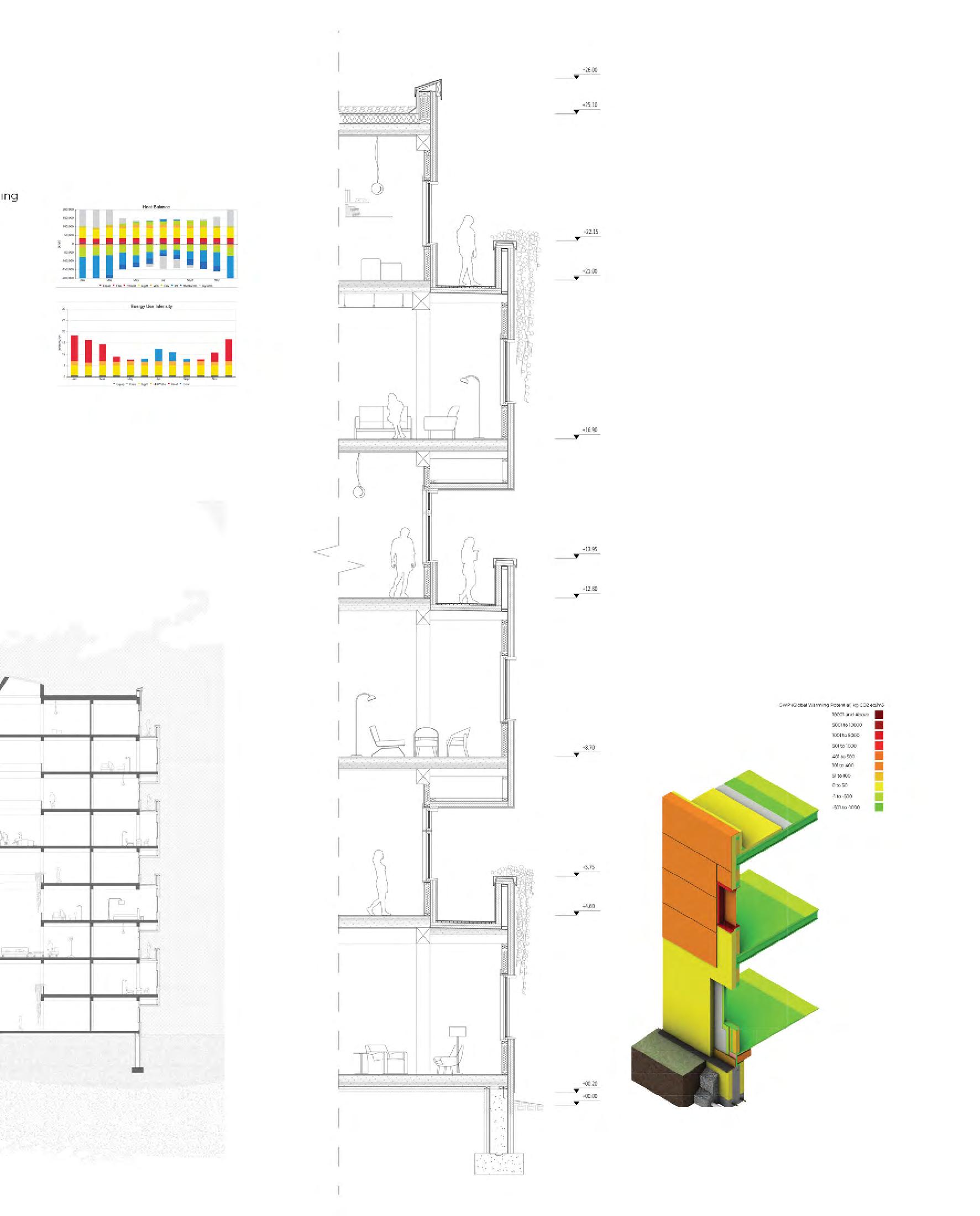
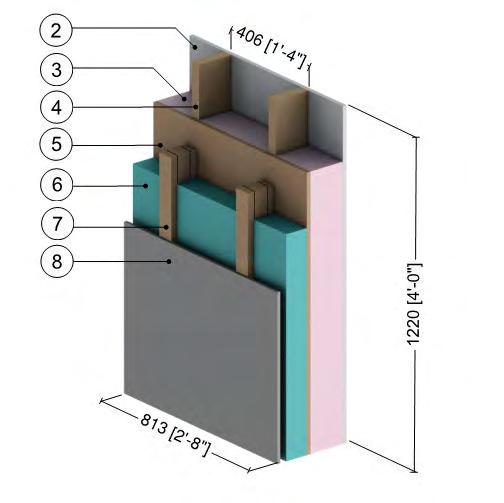
Exterior Wall Details:
Exterior Film
Fiber Cement Board Cladding with 3/4” 1x3 Wood Strapping 16”o.c.
Exterior Insulation
Exterior Plywood Sheating
2x6 Wood Stud 16”o.c.
Fiberglass Batt Insulation
Gypsum Board
Interior Film
Understanding the Global Warming Potential (GWP) of building materials is essential for promoting sustainability in construction practices. By quantifying the emissions associated with each material, expressed in kilograms of CO2 equivalent per cubic meter, we gain real knowledge about their environmental impact over their lifecycle. This information allows us to make informed decisions during the design and construction phases, selecting materials with ower GWPs to minimize the overall carbon footprint of the building. Additionally, incorporating GWP considerations enables us to prioritize renewable and low-carbon alternatives, fostering a more environmentally conscious approach to building design and construction.
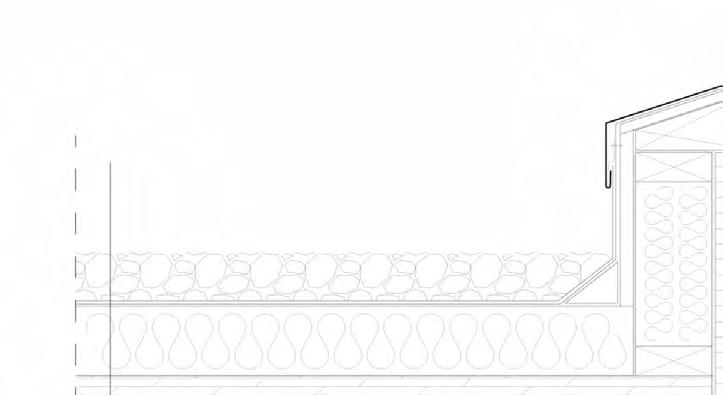
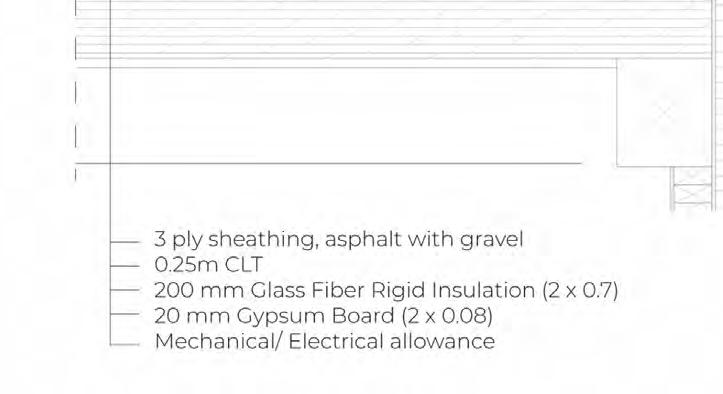
3 ply sheatig, asphalt with gravel
0.25m CLT
200 mm Glass Fiber Rigid Insulation (2x0.7) 20 mm Gypsum Board (2x0.08)
Exterior and Interior Insulated 2x6 Wood Stud (16” o.c.) Wall Assembly with Wood Strapping Supporting Fiber Cement Board and R-19 Batt Insulation in Stud Cavity –Clear Wall.
* Value selected from table orientation.
Roof Section
Wall Assembly
Typical
Render Facade Close-up
Detail Drawings
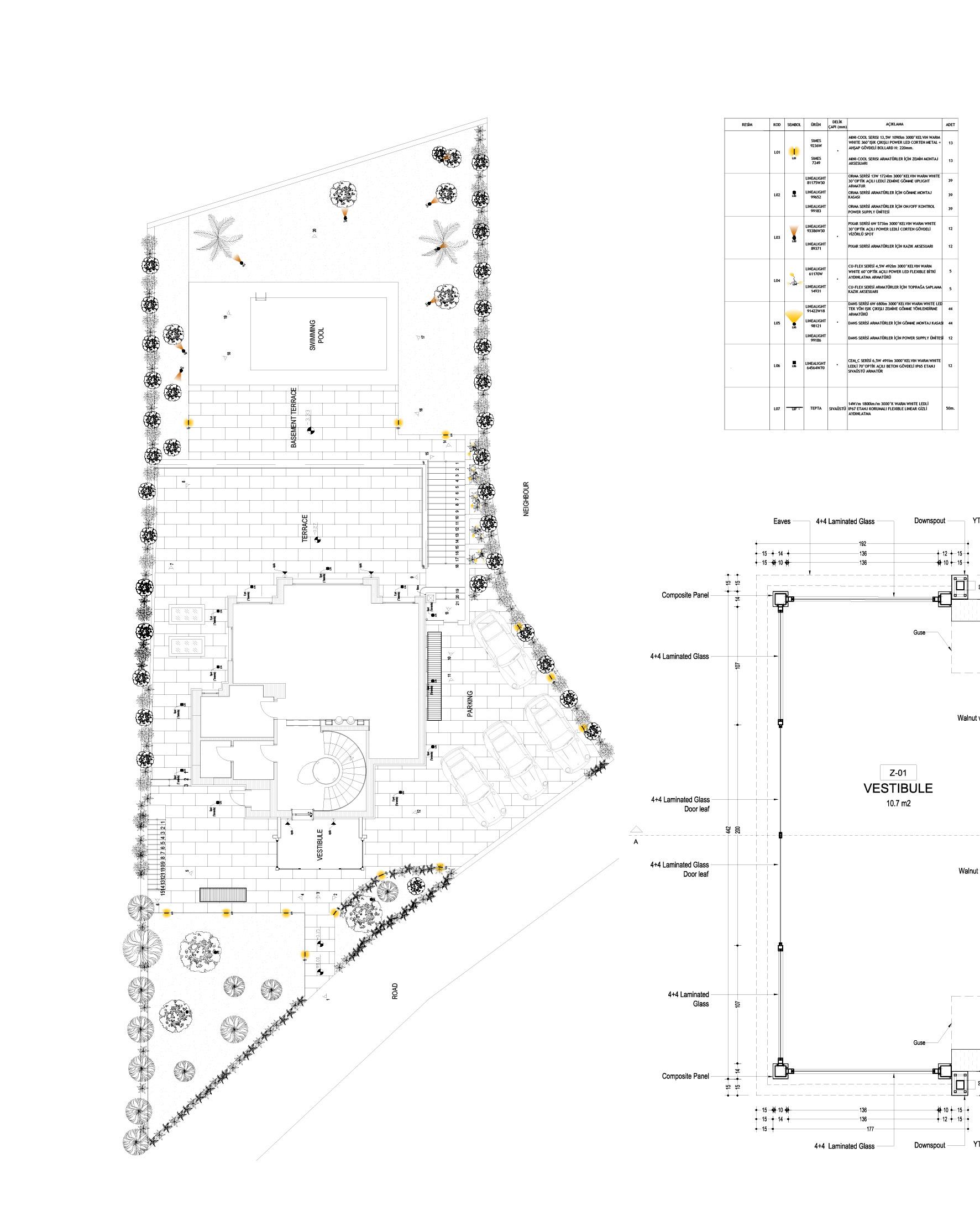
DOGAN-House Renovation & Interior Design, 2020 Office Work
Location: Istanbul, TR
Duration: 12 months
Role in Team: Design, Modelling, Site Coordination, Workshop Drawings, Renderings
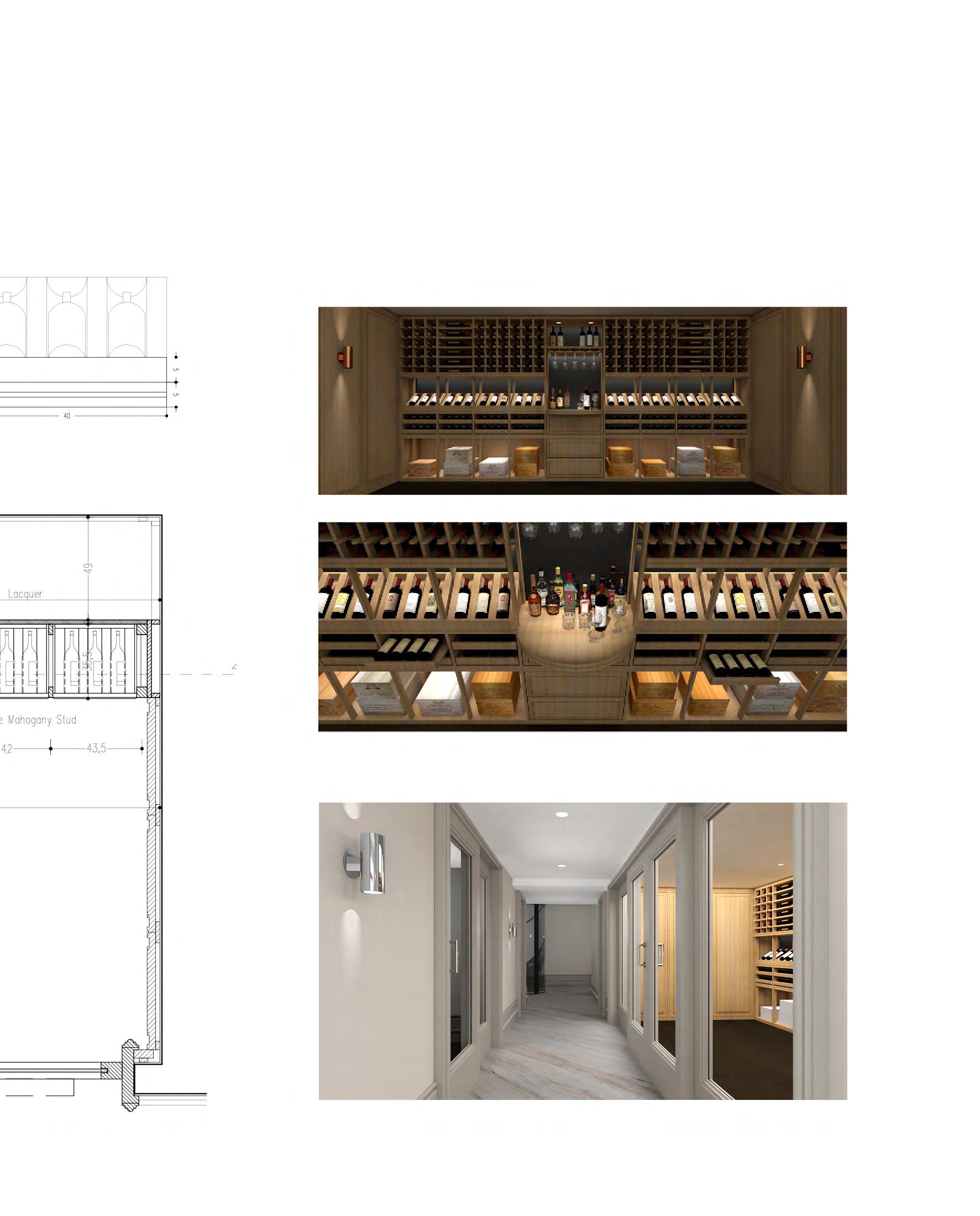
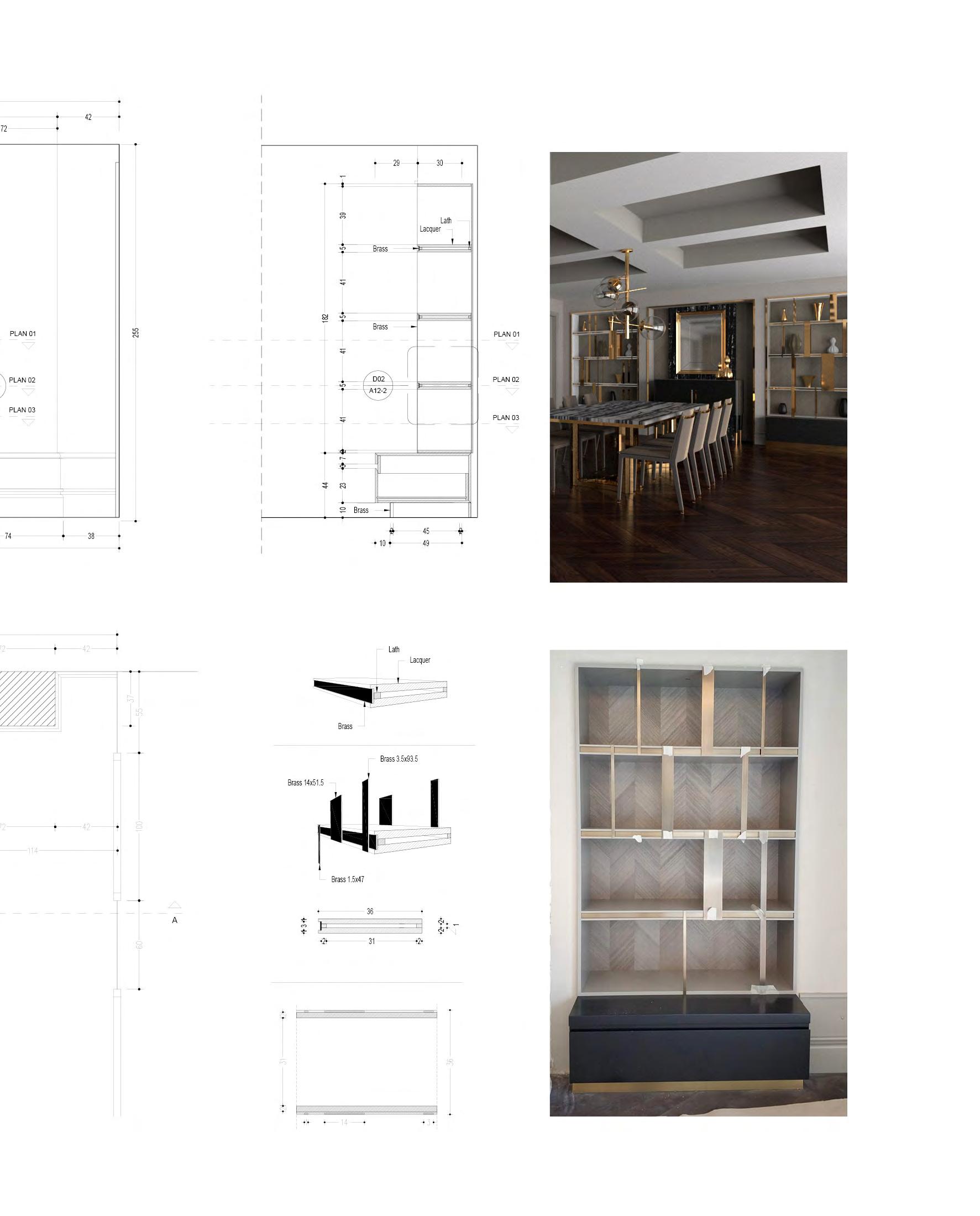
Render Winery Room
Render
Winery Room- Corridor
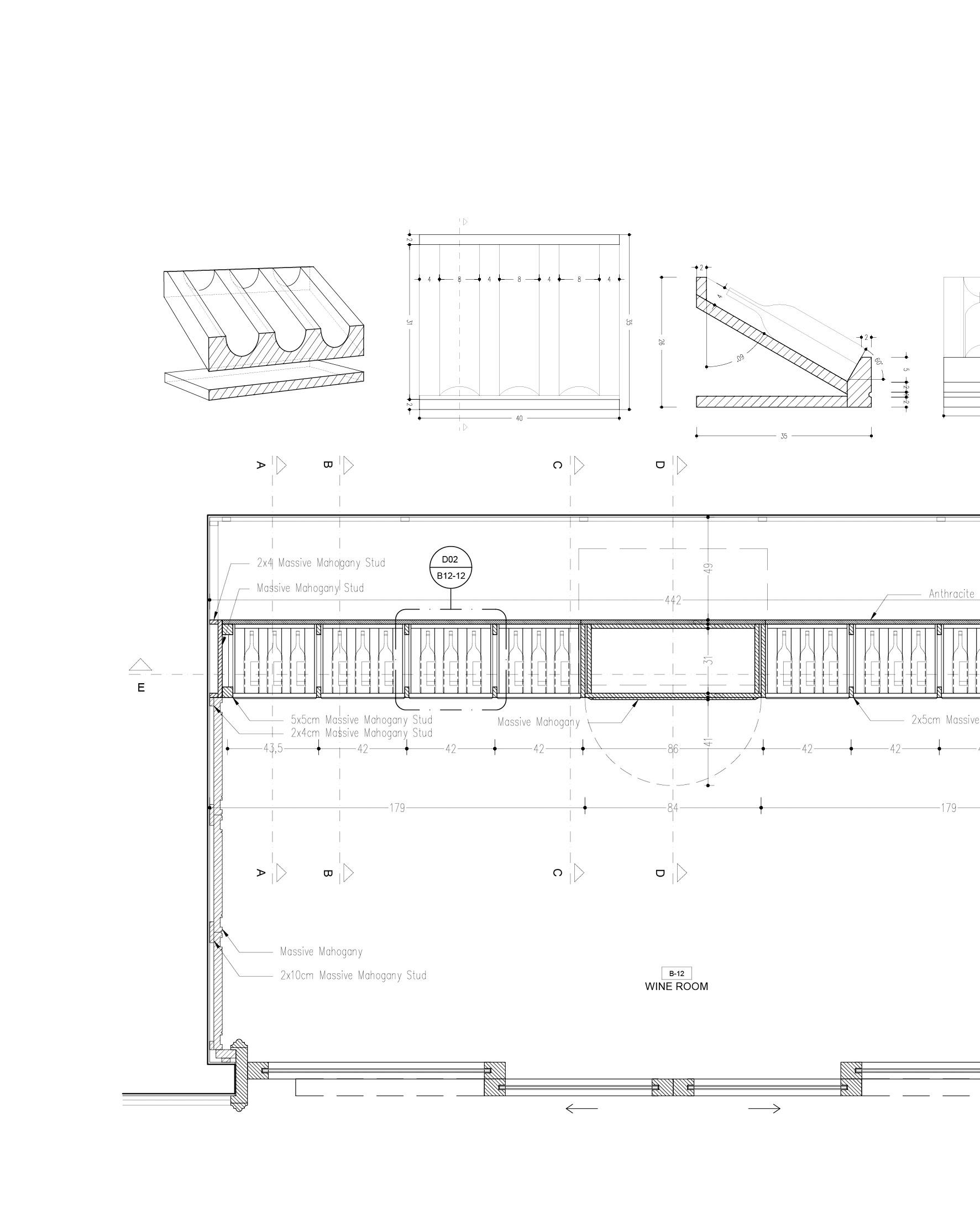
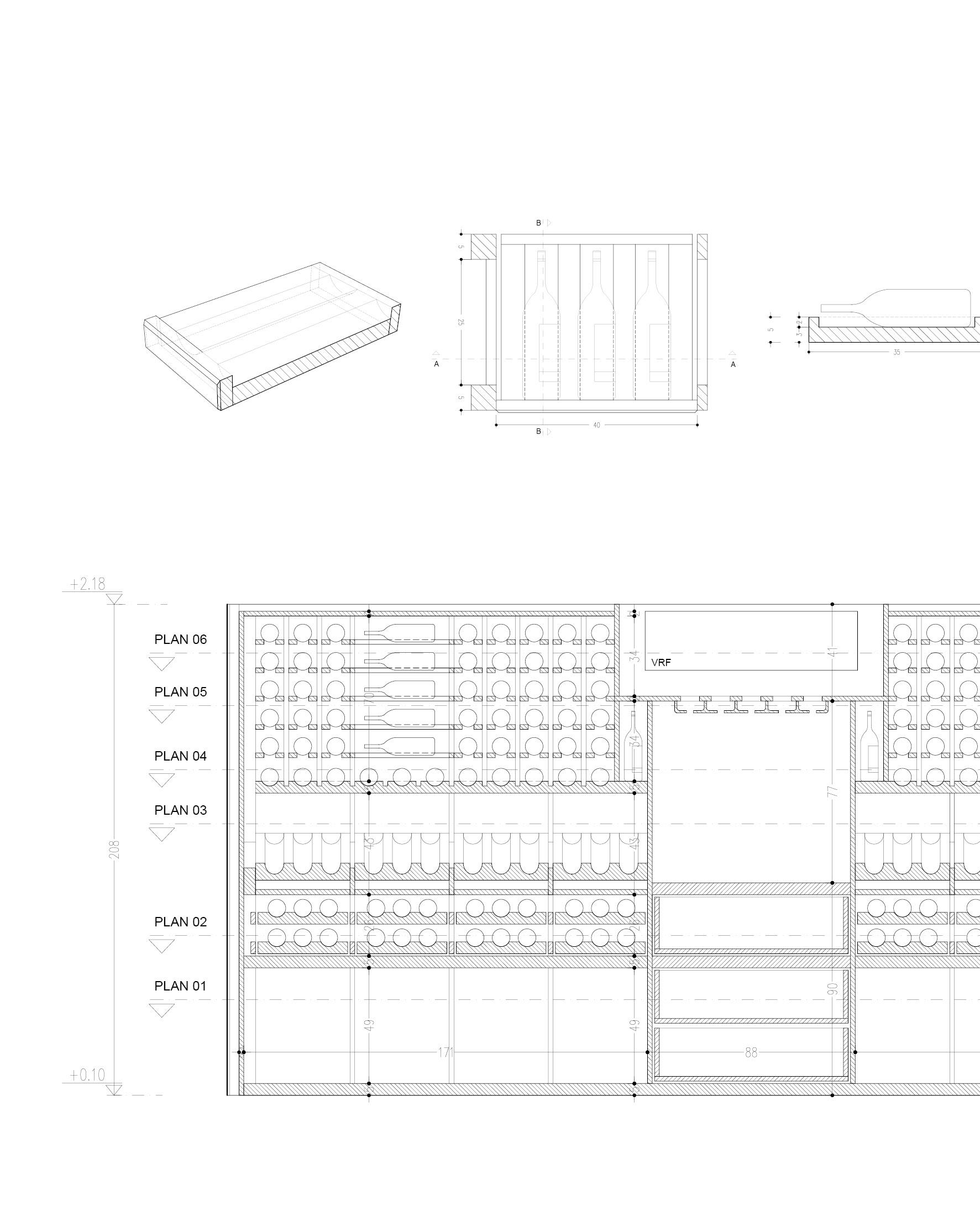
WINERY ROOM
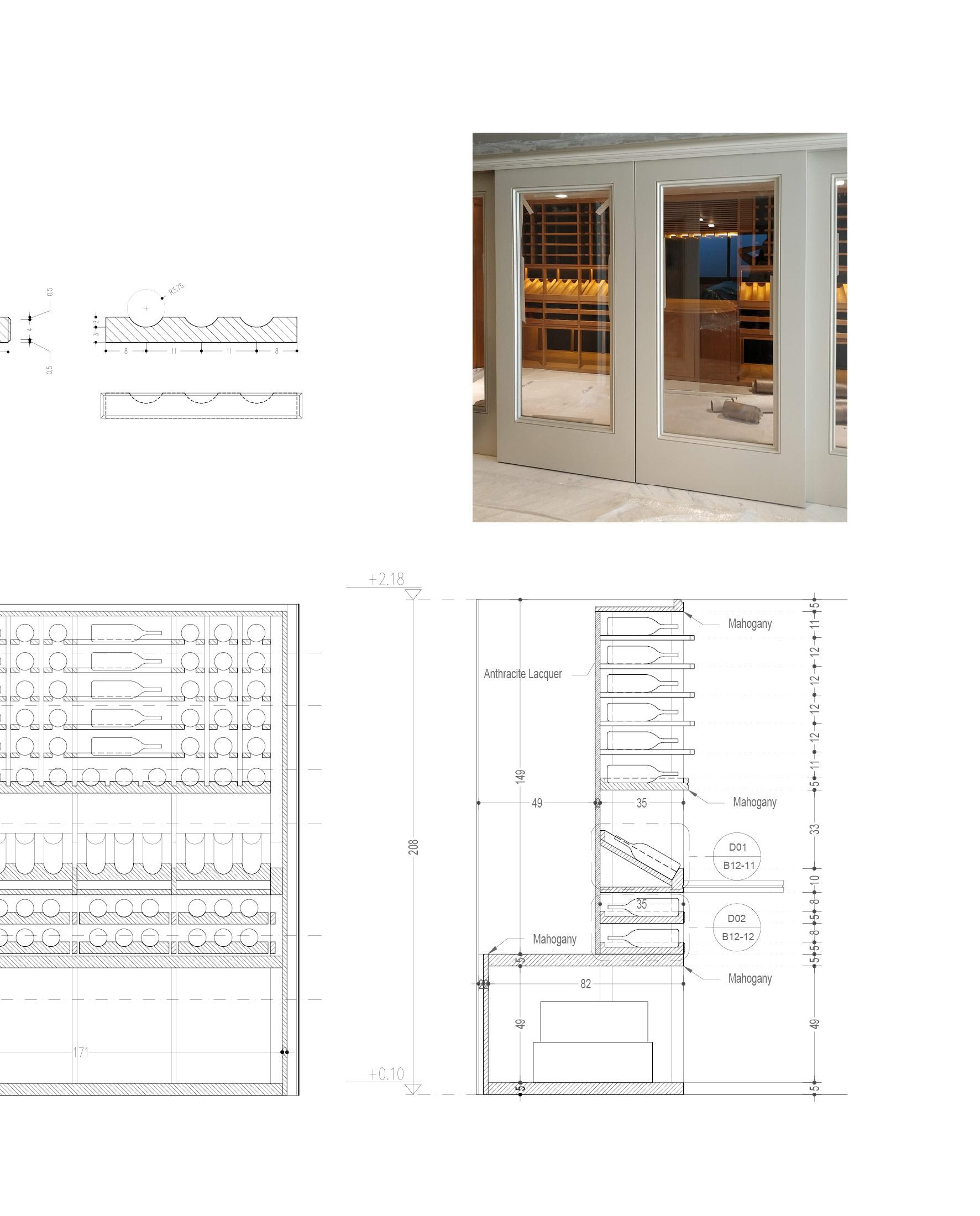
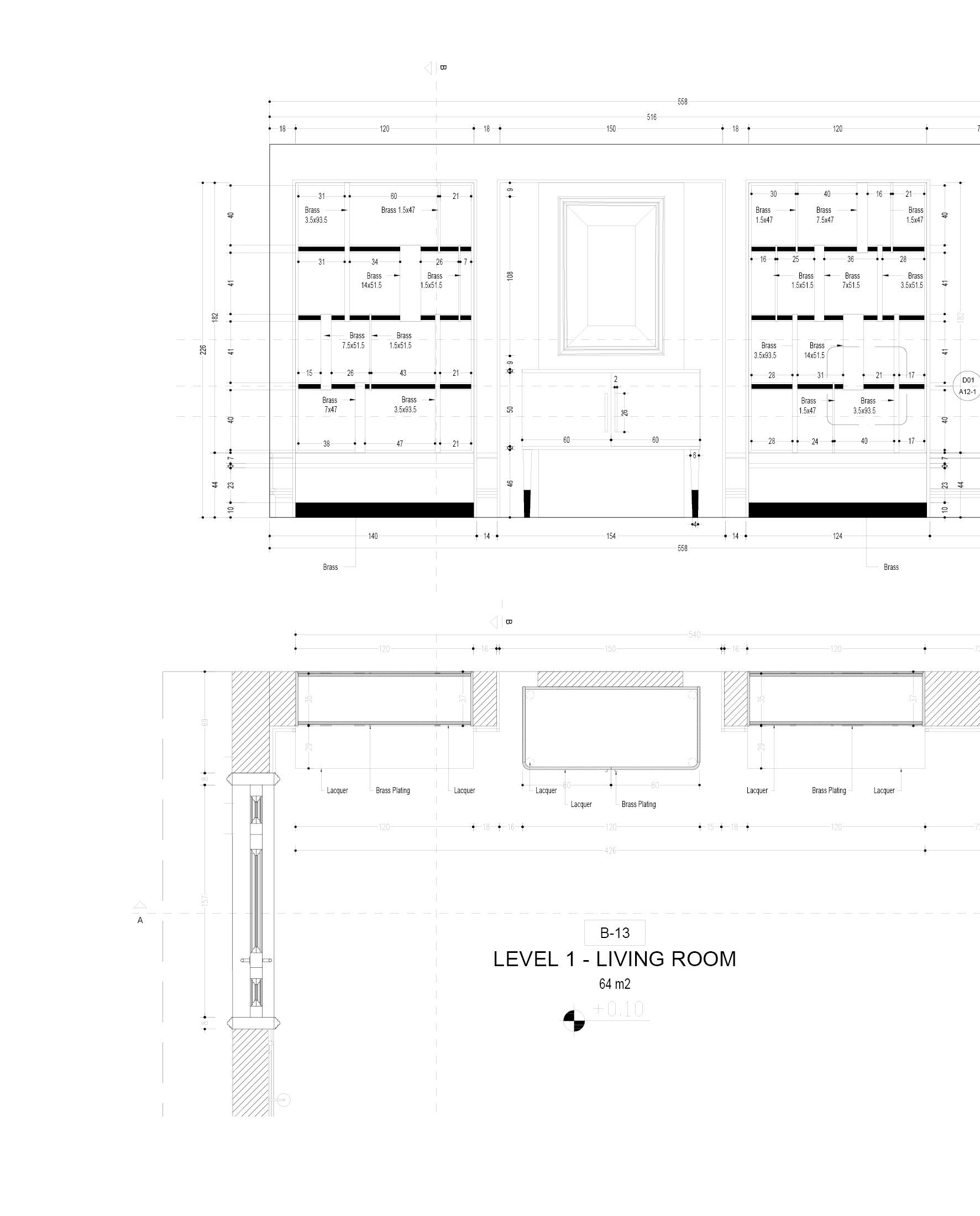
Detail Drawings
Photo
From the Site Assembly
Elevation
Photo
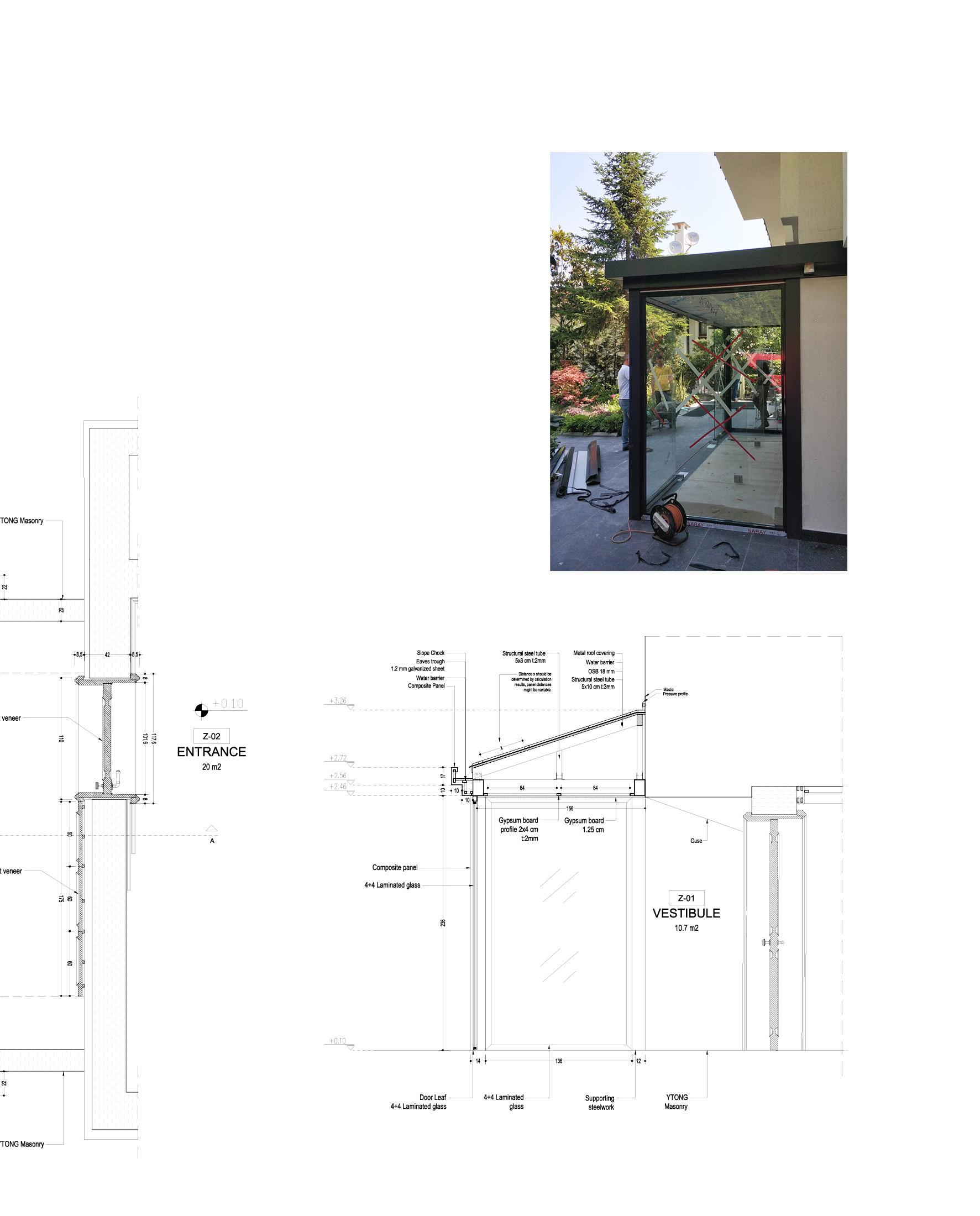
LANDSCAPE & VESTIBULE
Photo
From the Site Assembly
Section
Vestibule
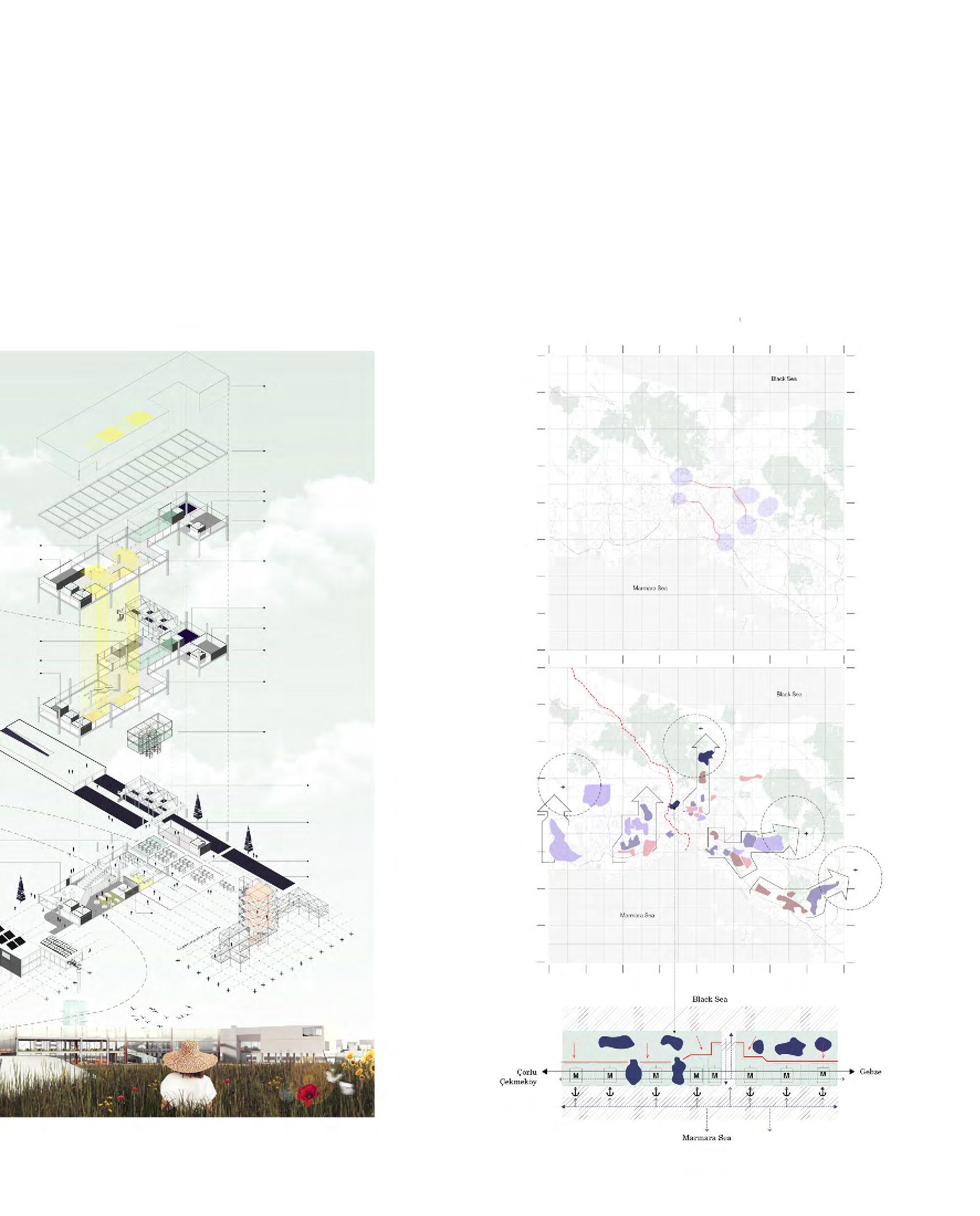
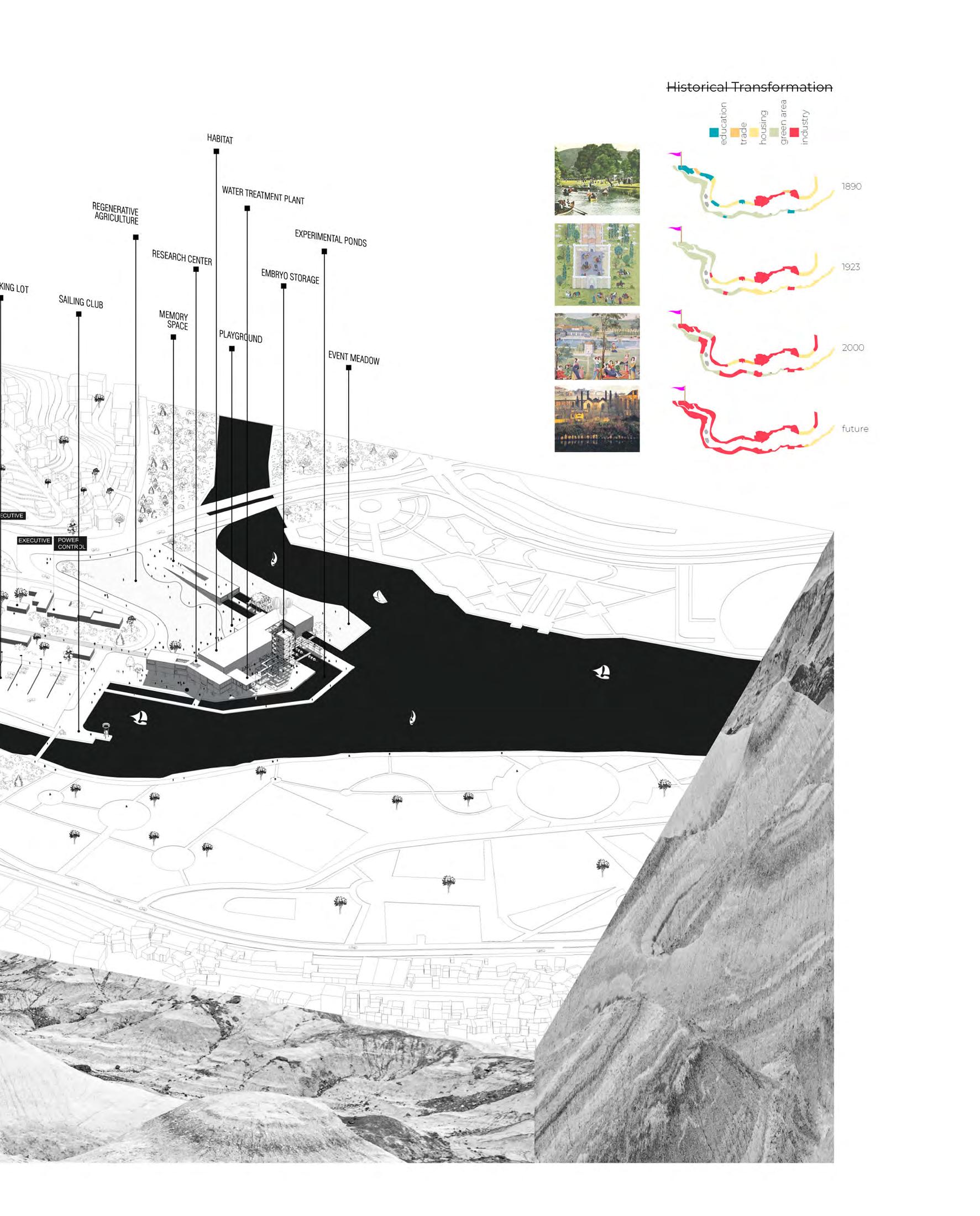
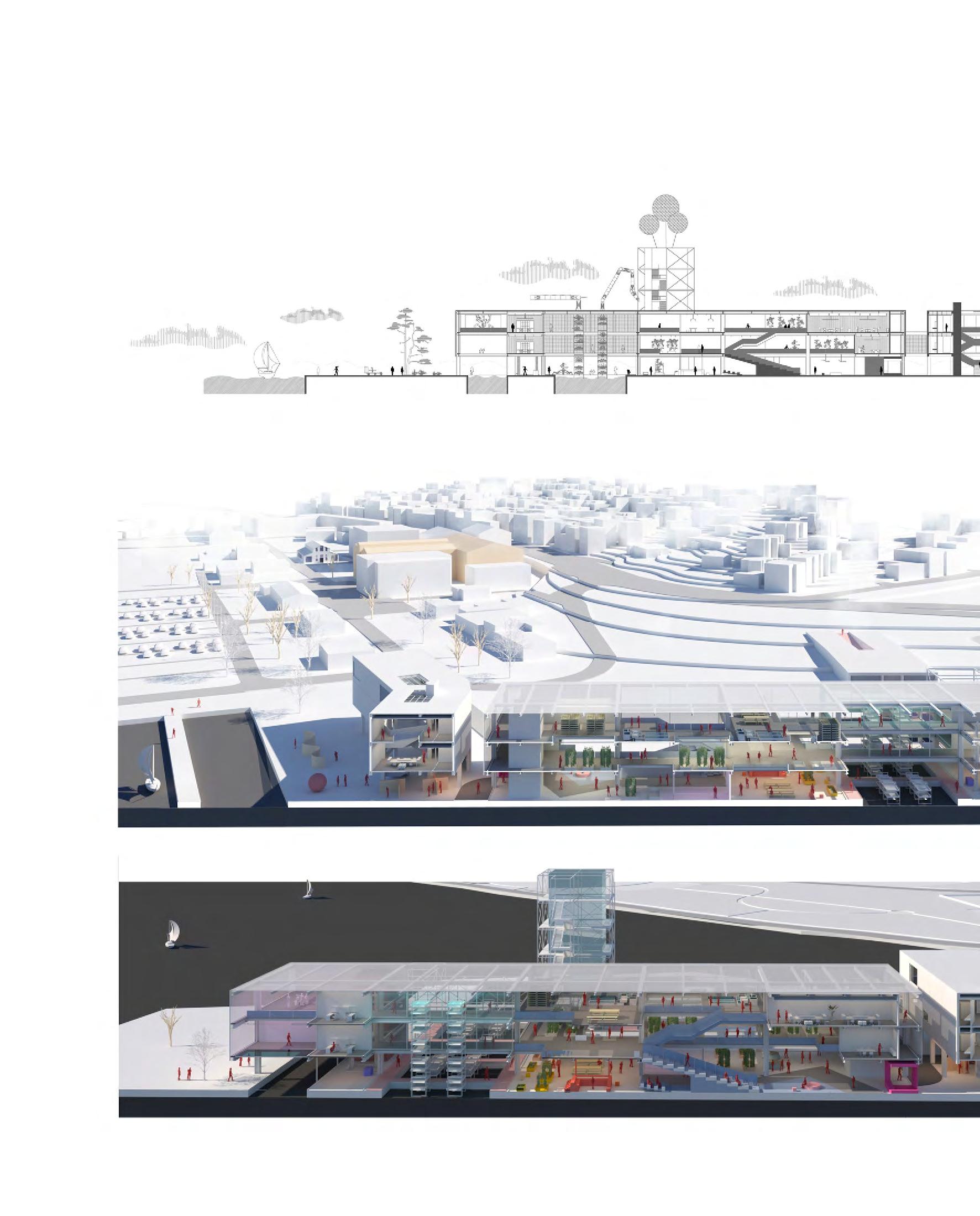
BIOTECHNOLOGY and ARCHITECTURAL FUTURE FICTION Research Center
Like a prosthesis that articulates with nature, the land is sharpening with new hybrids. The combination of human intelligence with technology and positivism creates a new space of experience. Hybrit Habitat represents the intertwined and co-founder relationship of human, technology, and nature. Today, nature has become artificial, and artificial has become natural.
Render & Illustrator
Program Imperatives & Exploided Axonometric
City centers developing with the construction of the Bosphorus bridges
City centers
Bridges
Existing housing development axes threaten Istanbul’s green band that needs to be protected. Northern forests are the source of water and life of Istanbul.
Basin
Places forMalls (2010)
Places for Plazas (2010)
Places for Plazas (1998)
Places for Malls (1998)
Diagram for the development decision of Istanbul urban macroform included in the 2009 plan note of the Ministry of Environment and Urbanization
Location: Istanbul, TR
Duration: 4 months
Bosphorus
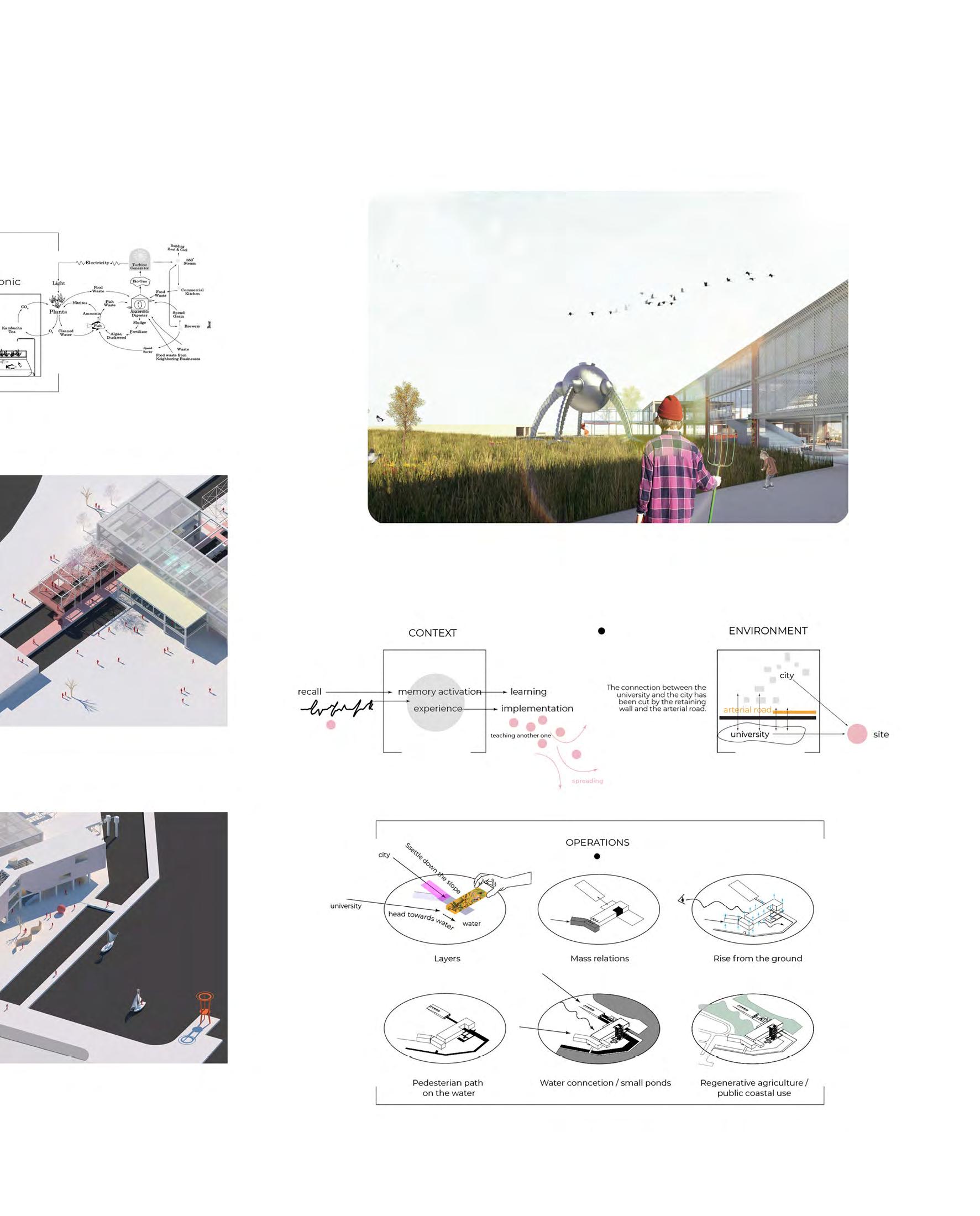
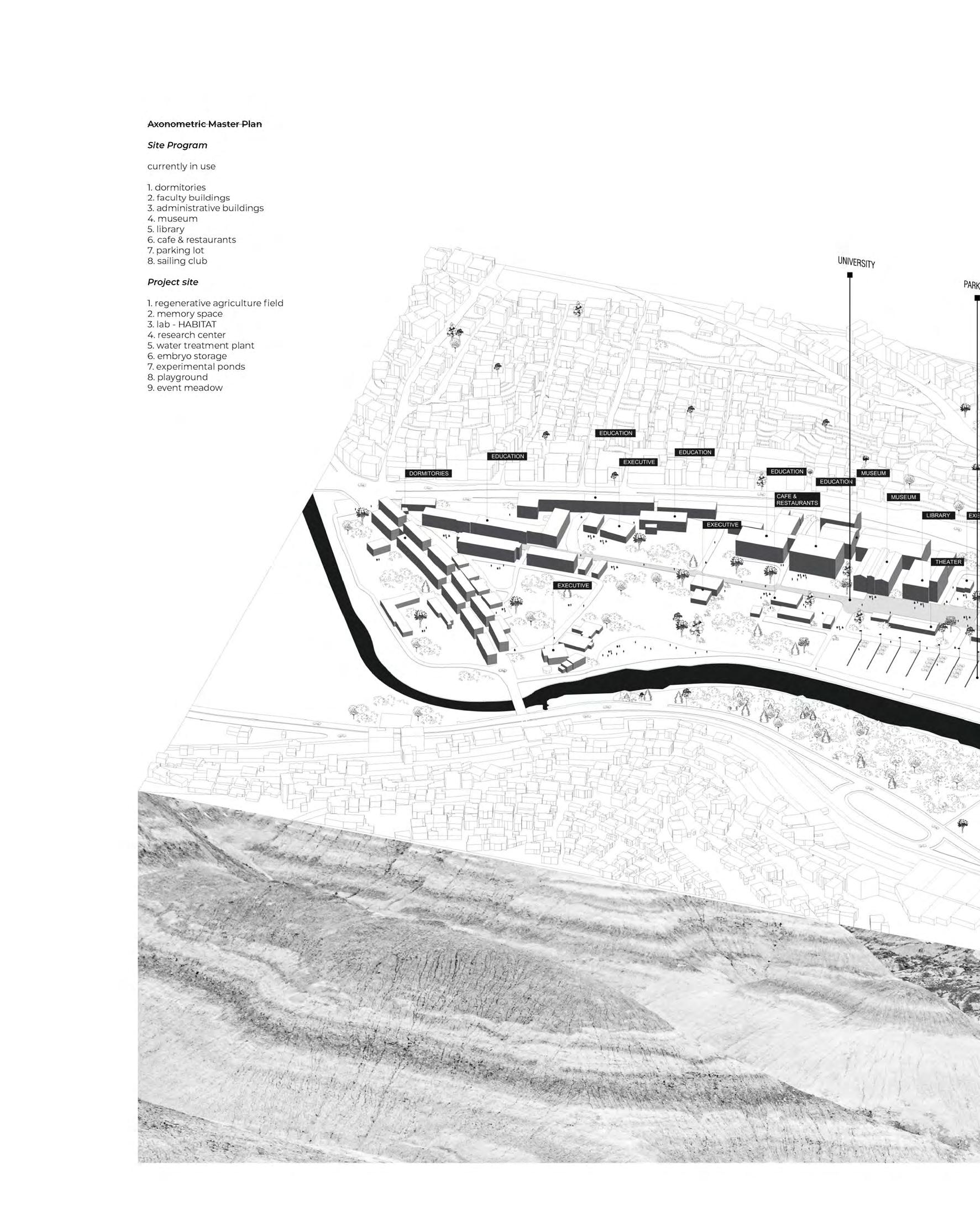
Site Physical & Liminal Relations
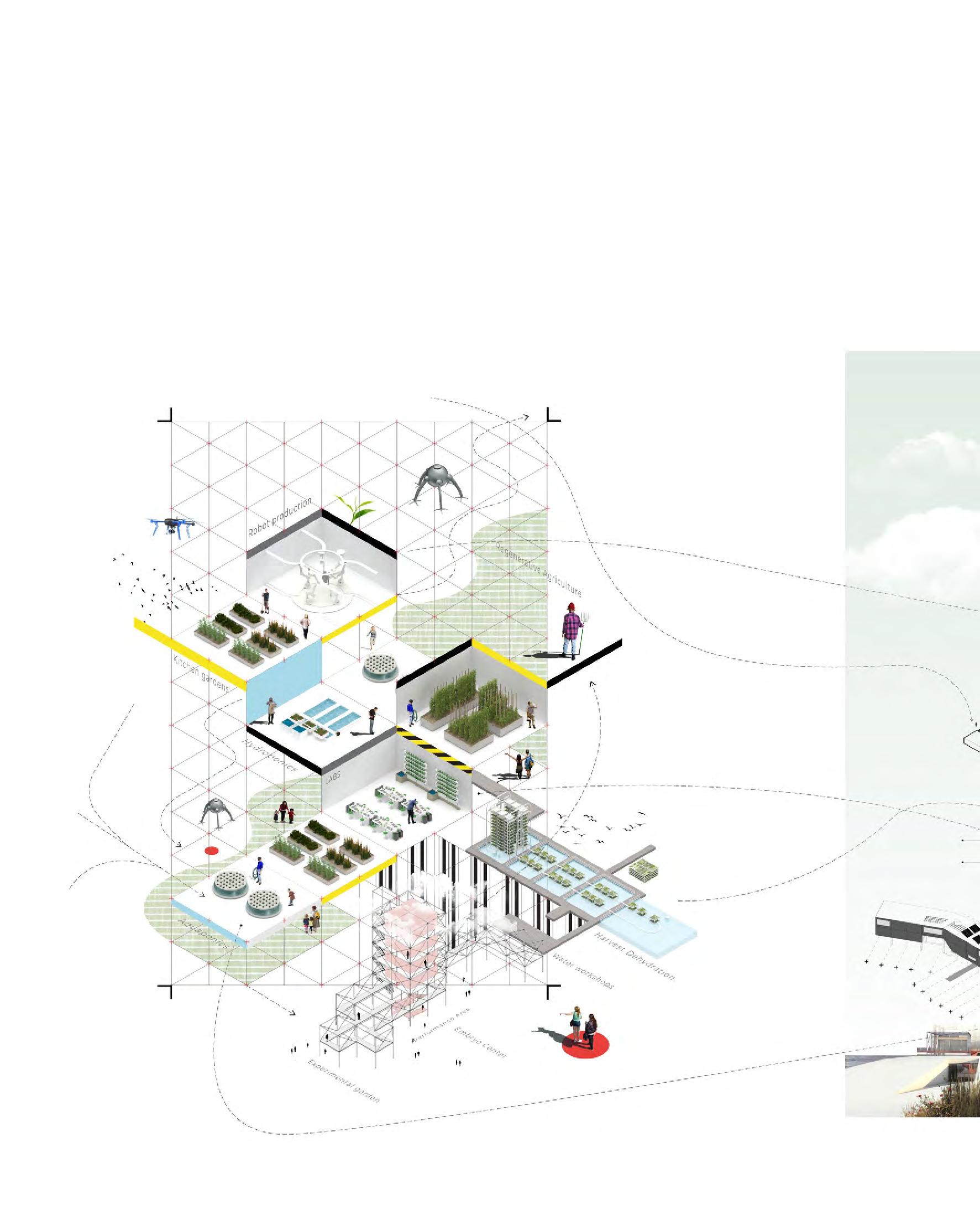
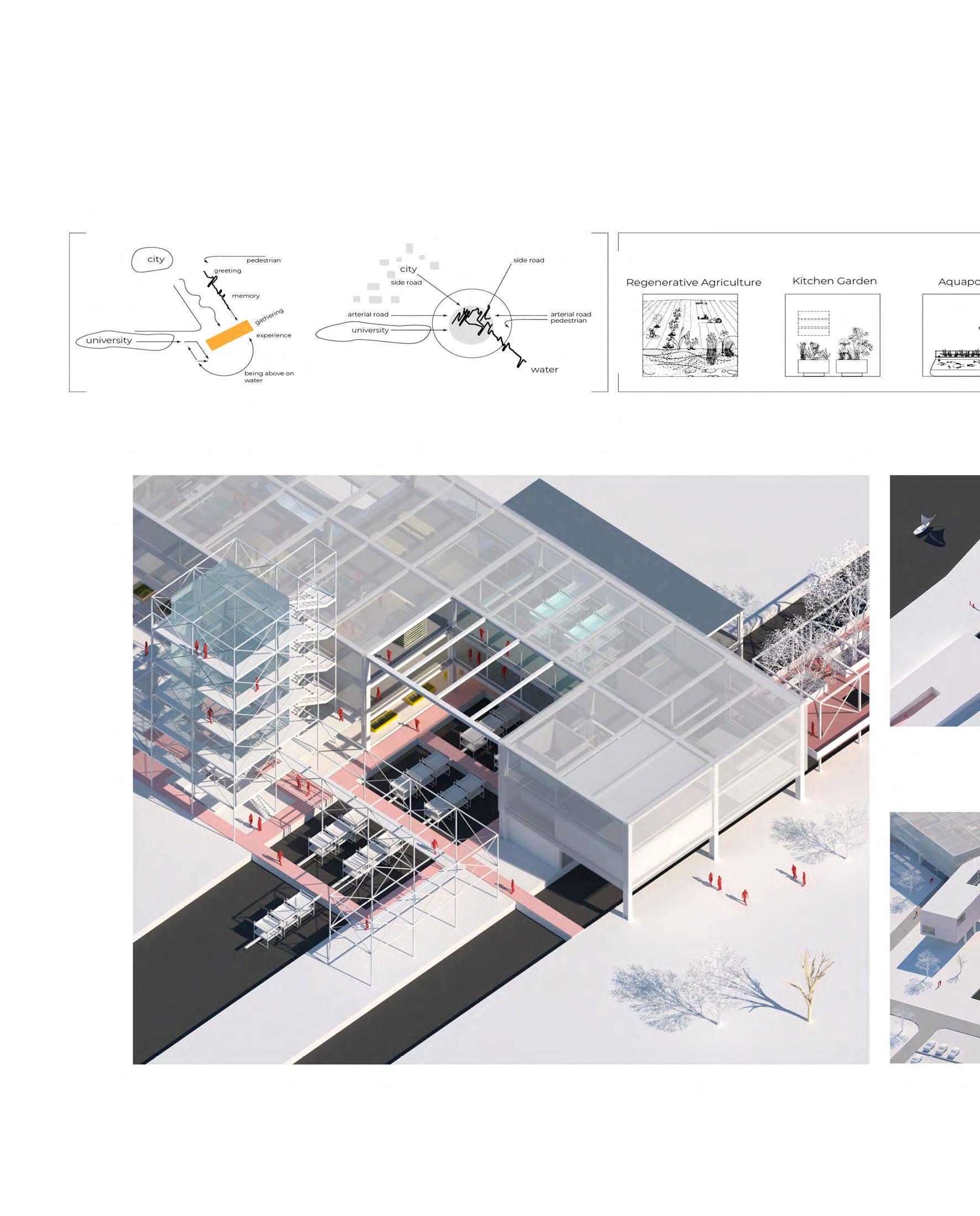
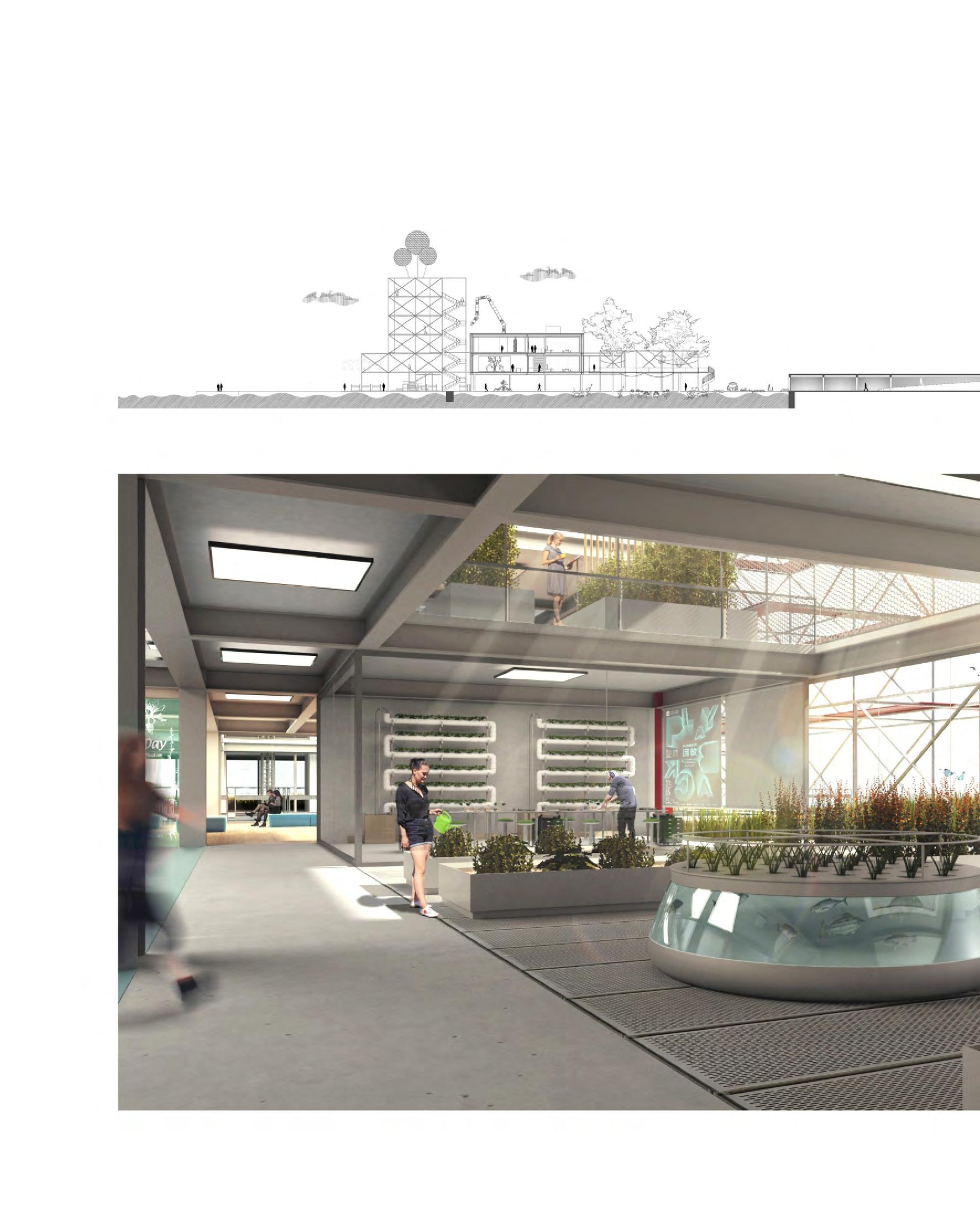
Indoor Farming & Urban Agriculture
Render Habitat, Embryo Center and Sun-drying
Memory Space,
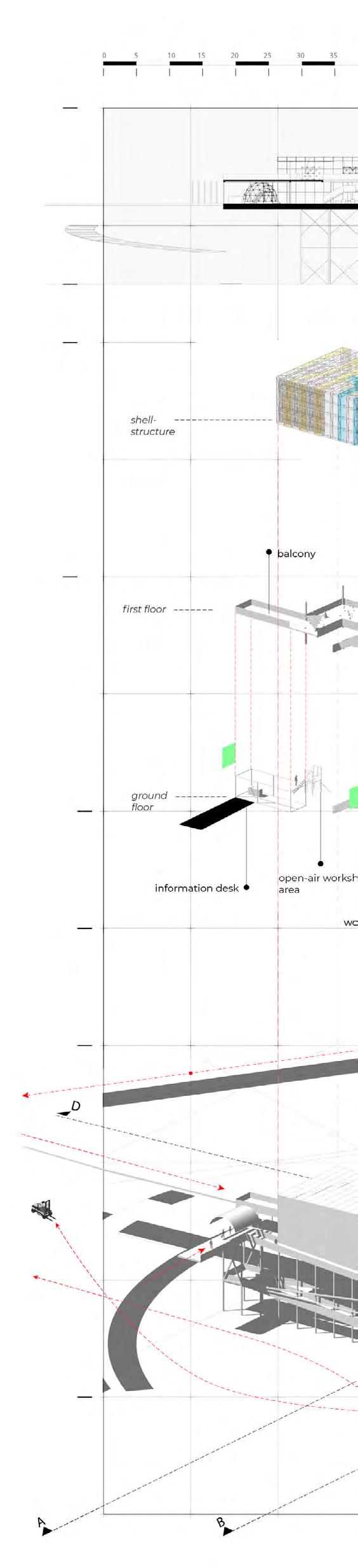
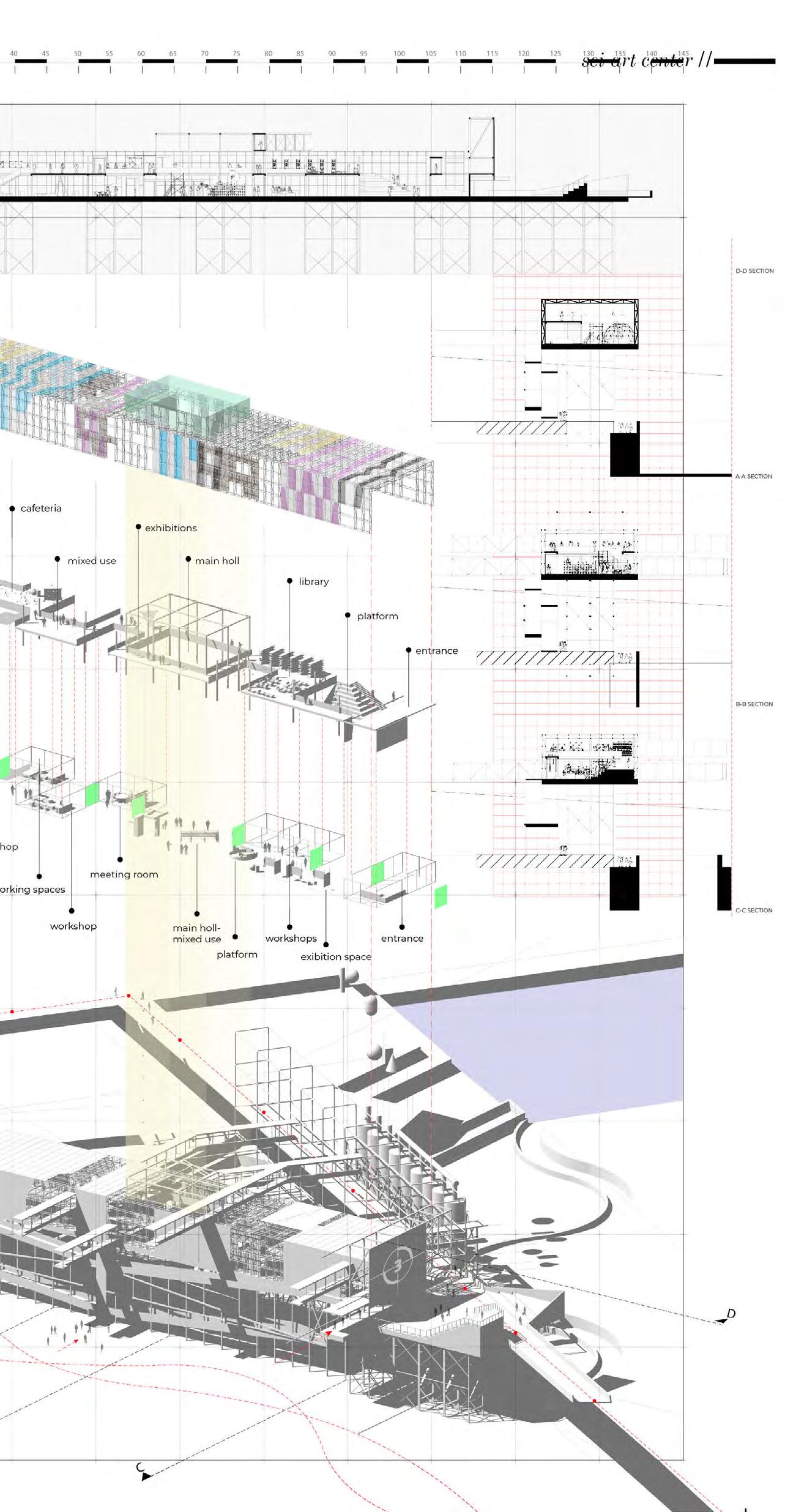
Render Space, Entrance and Open-air Workshops
Render Research Center and Yacht Club
Render
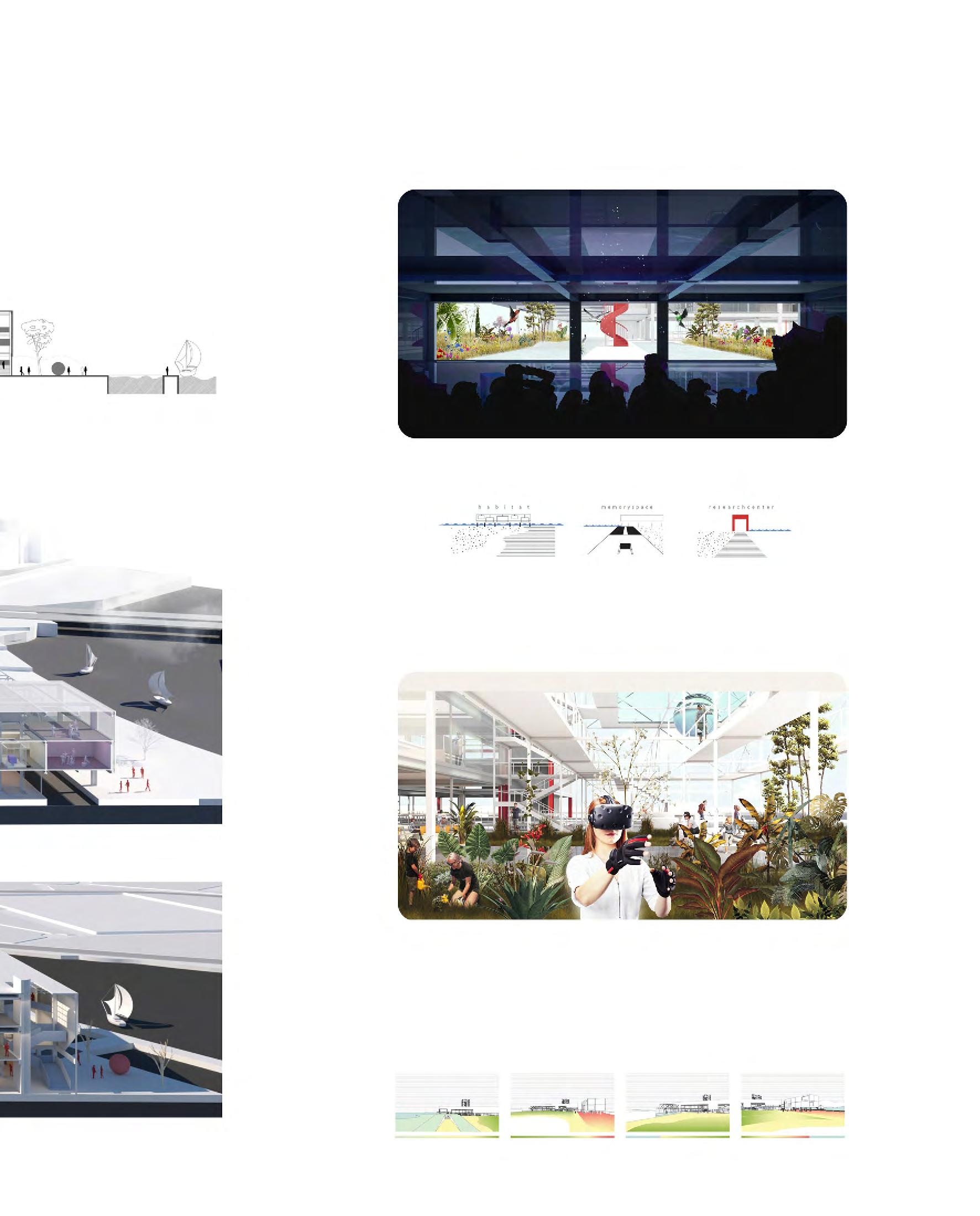
Image showing the encounter of human and robot.
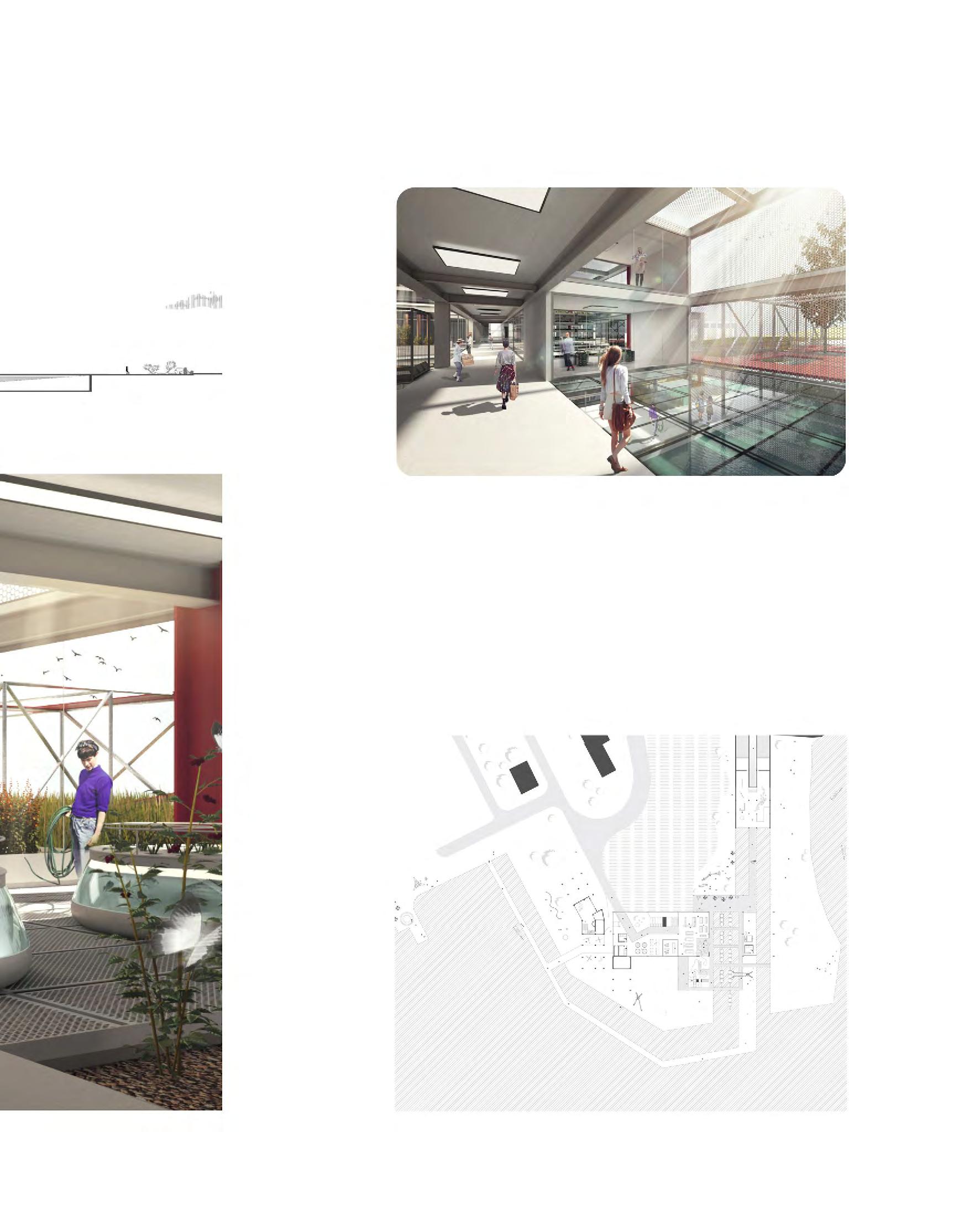
Ground floor usage is divided by invisible boundaries. The interaction of these boundaries with each other creates new activities. The rural area integrates with the building. The building invites pedestrians inside. You are looking through the farmland. The university axis leads directly to the research center..
As you enter the building through the gardens, you continue to make eye contact with the water and you may encounter various installations that continue along the water. The concept of artificial and natural erosion was imposed on every stage of the project and the design was implemented as a hybrid habitat.
Render
A moment in memory space
A-A Section CAD Drawing
Render
Render Virtual reality experience in the garden.
C-C Section
Drawing
Render Interior view looking south
While the concept of “Biotechnology” as one of the traditional variants of the study of nature for design purposes is based on the assumption that nature already contains all kinds of technological solutions; The concept of “Mimesis”, on the other hand, tends towards the production of the new by imitating nature. These two perspectives produced entirely in the ‘artificial’, while the ‘model’ is nature. “Biotechnology”, as a more current term, is used to break away from the traditional understanding of the aforementioned concepts, because, biotechnology involves the use of living systems or new biological structures derived from them for the development of new products.
Bandırma Context
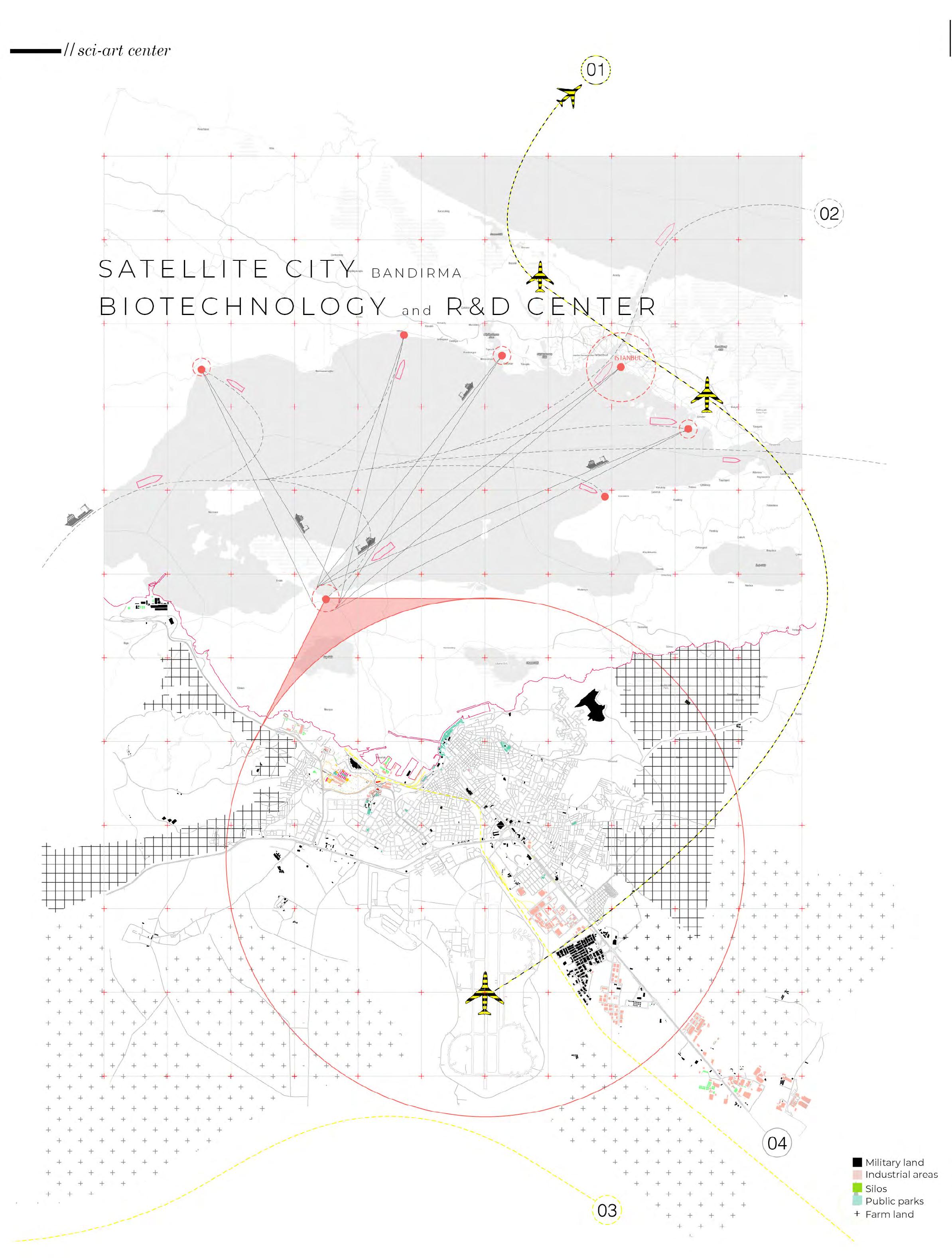
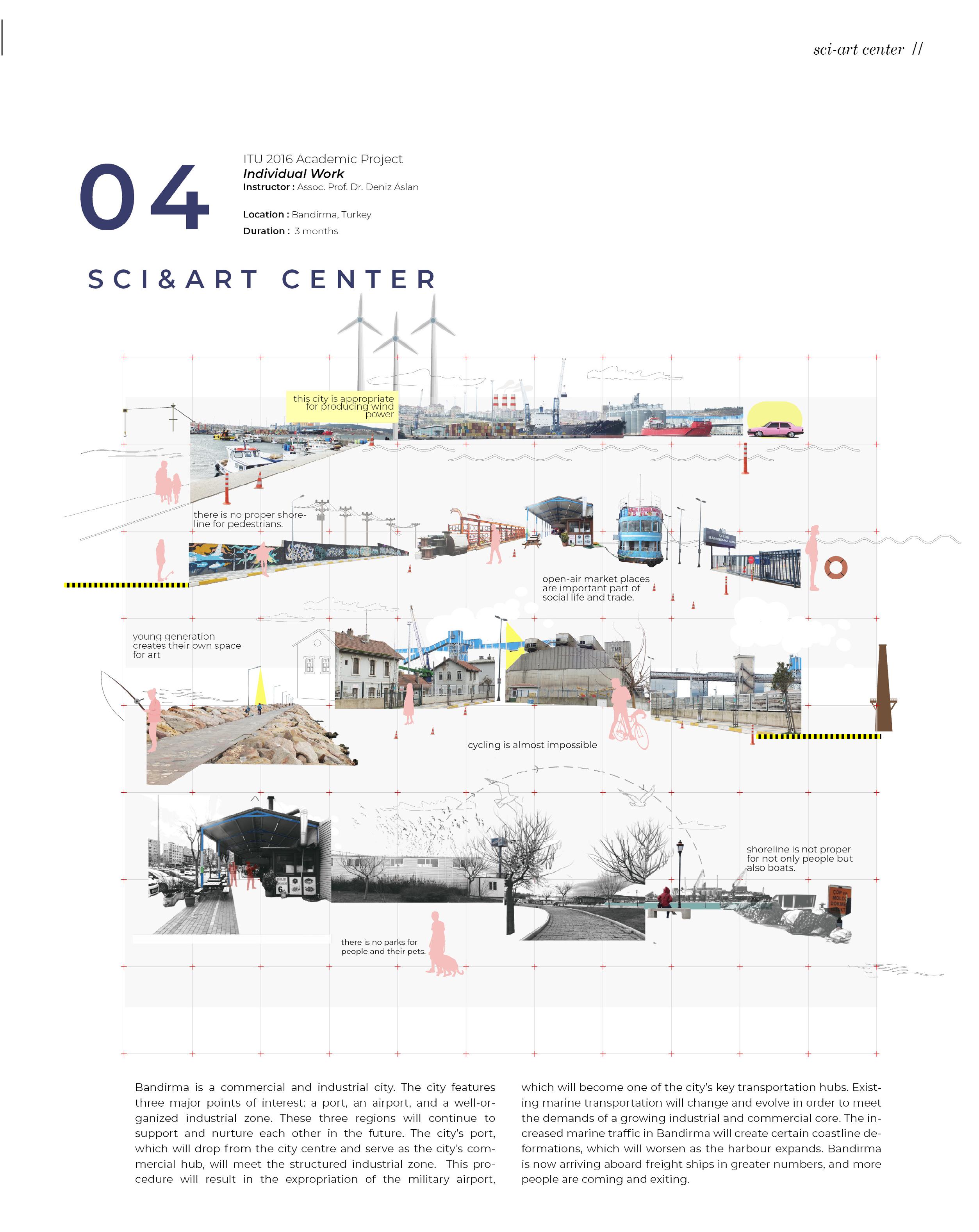
Bandırma is a thriving commercial and industrial city, defined by three key assets: its port, airport, and well-organized industrial zone. These areas will continue to reinforce and complement each other in the future. The city’s port, relocated from the center to serve as a commercial hub, will be closely integrated with the structured industrial zone. This transition involves the expropriation of the military airport, transforming it into one of Bandırma’s primary transportation hubs.
Studio Project, ITU, 2018
Individual Work
Location: Istanbul, TR
Duration: 3 months
As the city’s industrial and commercial core grows, marine transportation will adapt to meet increasing demands. However, the rise in maritime traffic is expected to alter the coastline, with deformations intensifying as the harbor expands. Today, more freight ships arrive than ever before, and the city is witnessing a steady flow of people and goods.
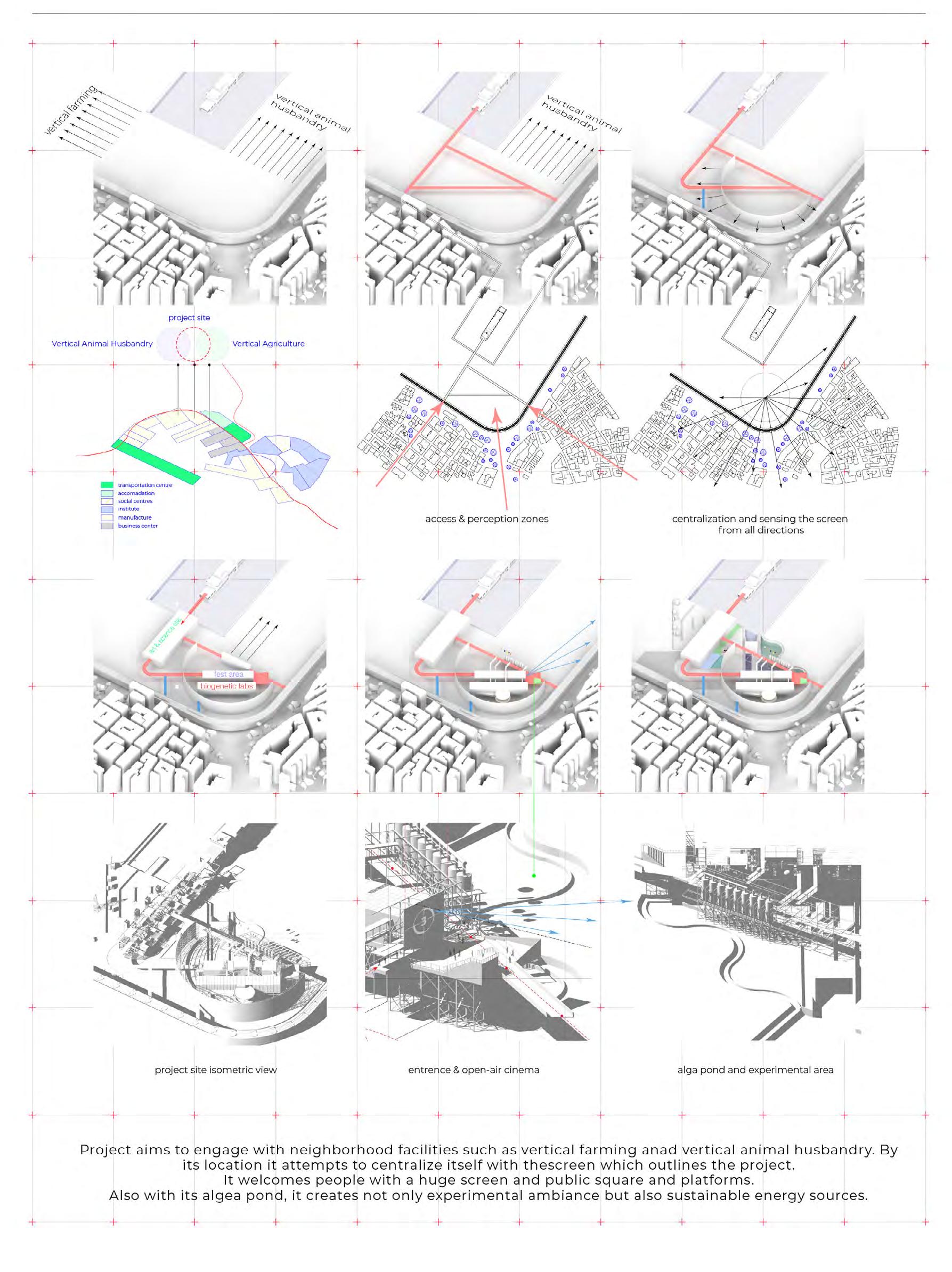
Mass relations and engagement with the site
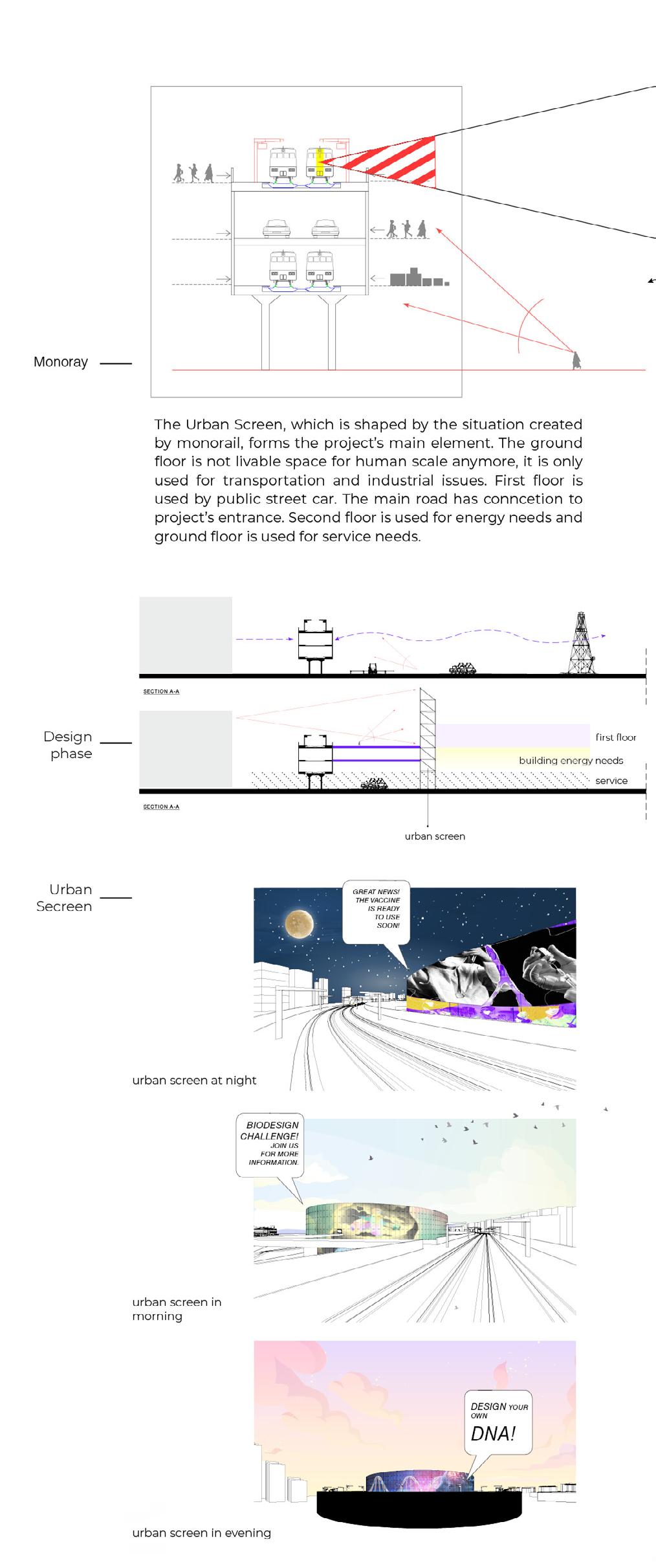
The project seeks to integrate with neighborhood facilities, including vertical farming and vertical livestock husbandry. Its strategic location is accentuated by a defining screen that frames the development, welcoming visitors with a dynamic public square and elevated platforms. This expansive screen serves as both a visual landmark and a functional interface for displaying updates and media.Incorporating an algae pond, the project generates not only a unique experimental atmosphere but also contributes to sustainable energy production, positioning itself as both a community hub and an environmentally conscious innovation.
museum and culture center
Transportation Connected to monorail, visually engaging.
A striking, shell-like screen envelops the project, seamlessly merging form and function, broadcasting videos and updates while its bio-material composition actively purifies the air.
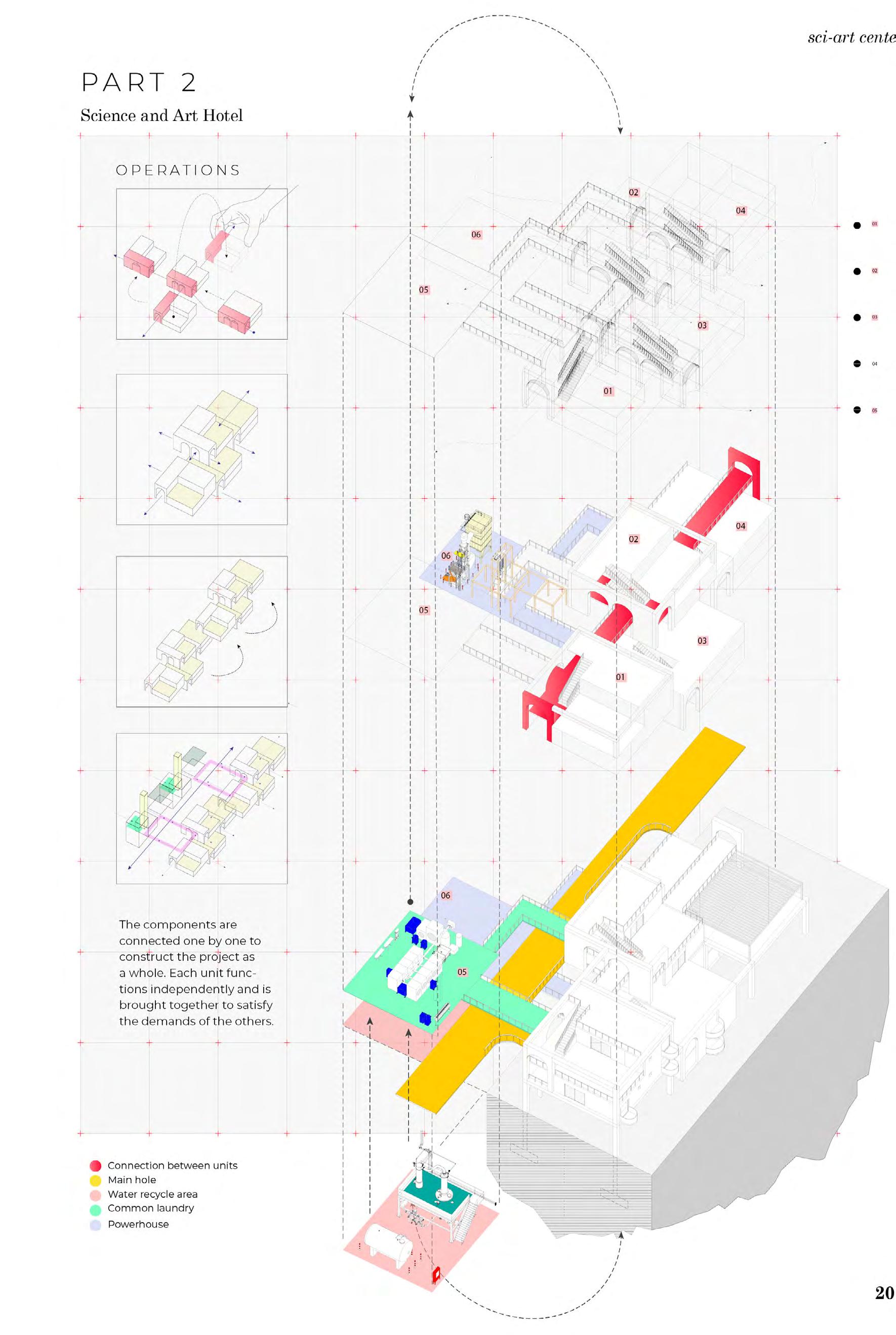
Part 2
Science Hotel - A short term home for visitors
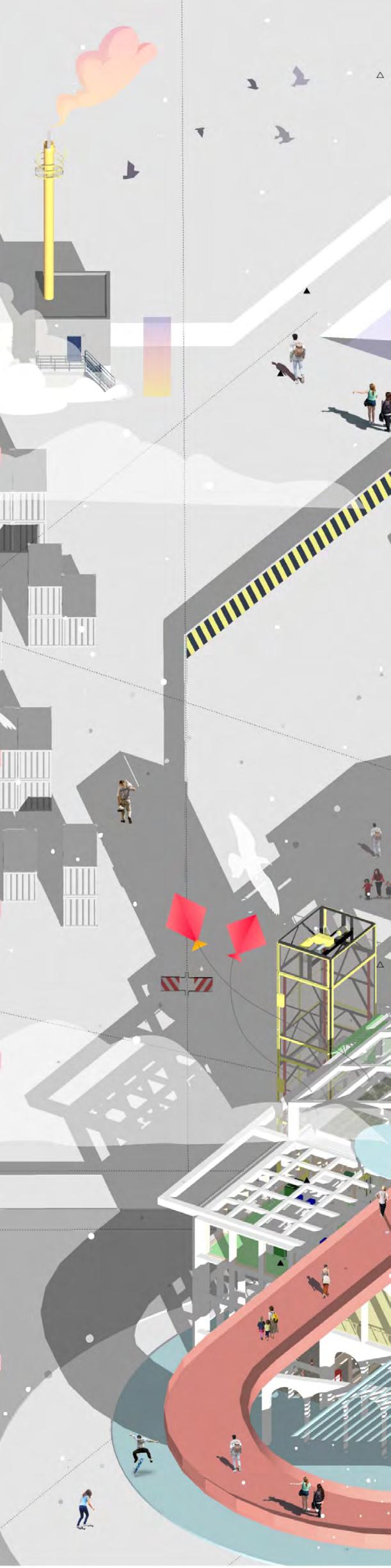
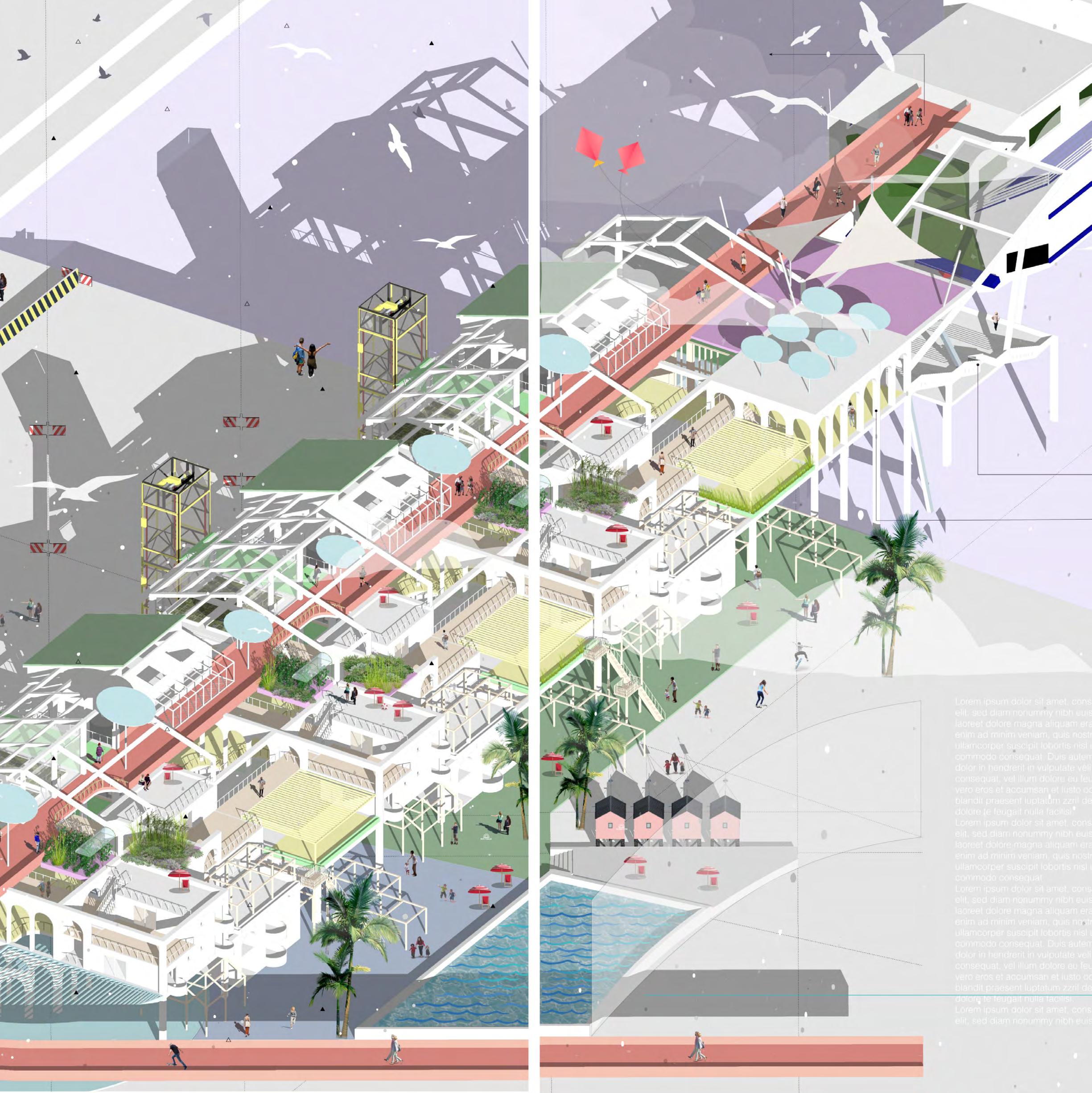
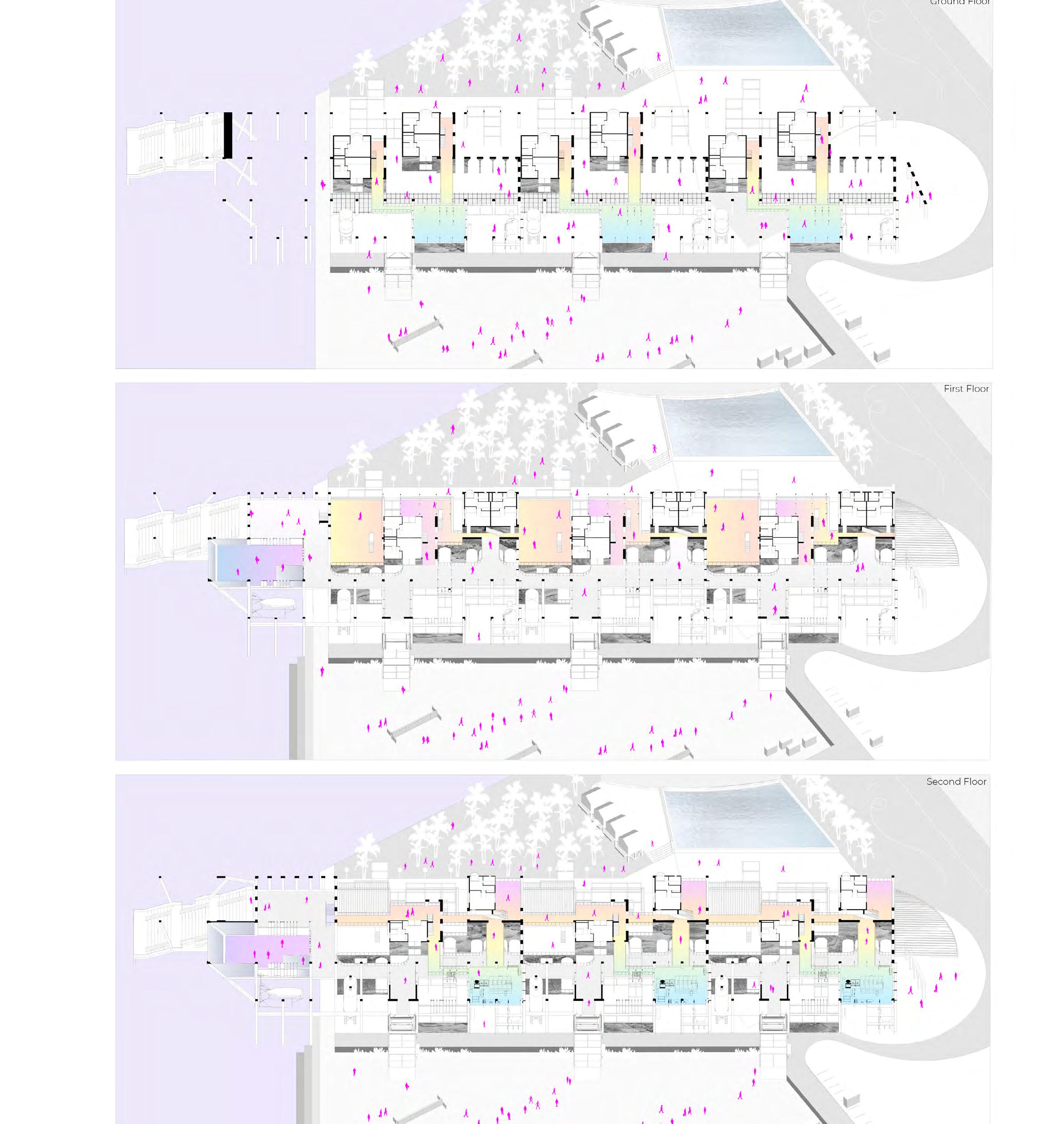
The modular system is designed for easy deconstruction. Its arrangement creates playful shared terraces and intersections while maintaining uninterrupted horizontal access between units.
Unit conncetion- Pedestrian Main Inner streed - Shared with Service Water Re-treatment
Laundry Power house
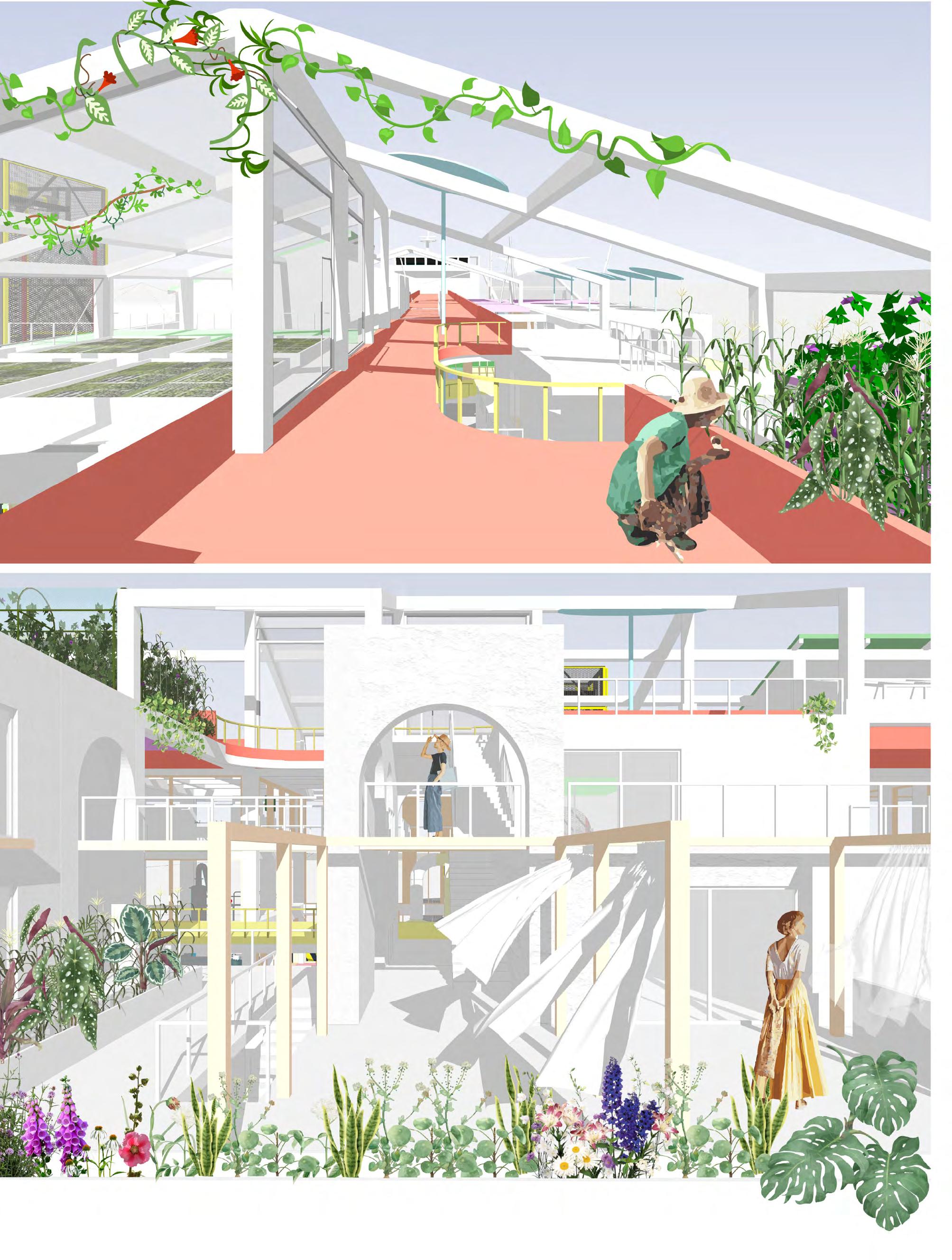
1. View from the hobby garden toward the ferry.
The rooftop hosts shared kitchens and kitchen gardens.
2. View from the common terrace.
These terraces not only foster social interaction but also offer an essential space to enjoy the Mediterranean sun and breeze.
Fig.
Fig.
A HOME OF ONE’S OWN
Window,
Cleansing & Heart
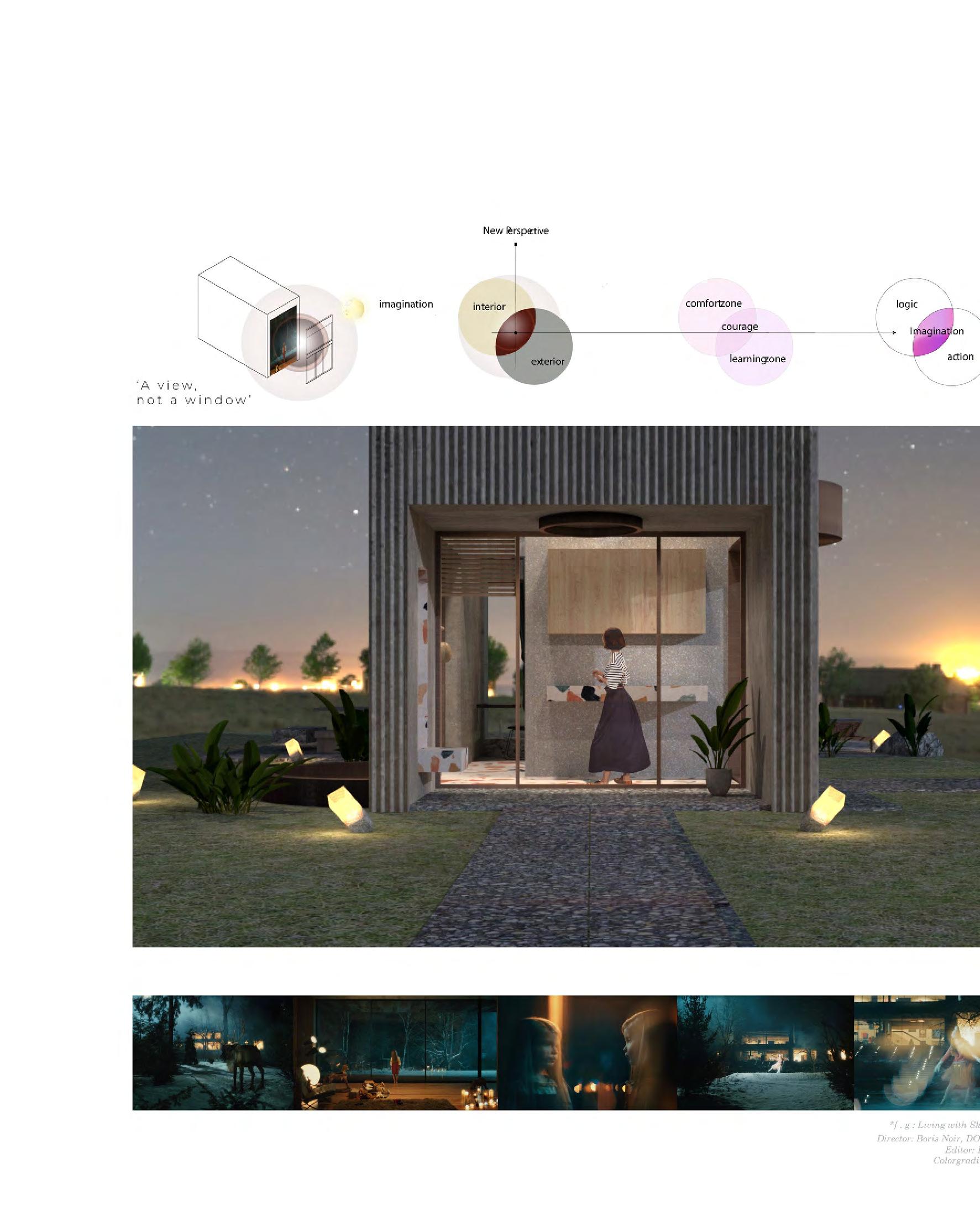
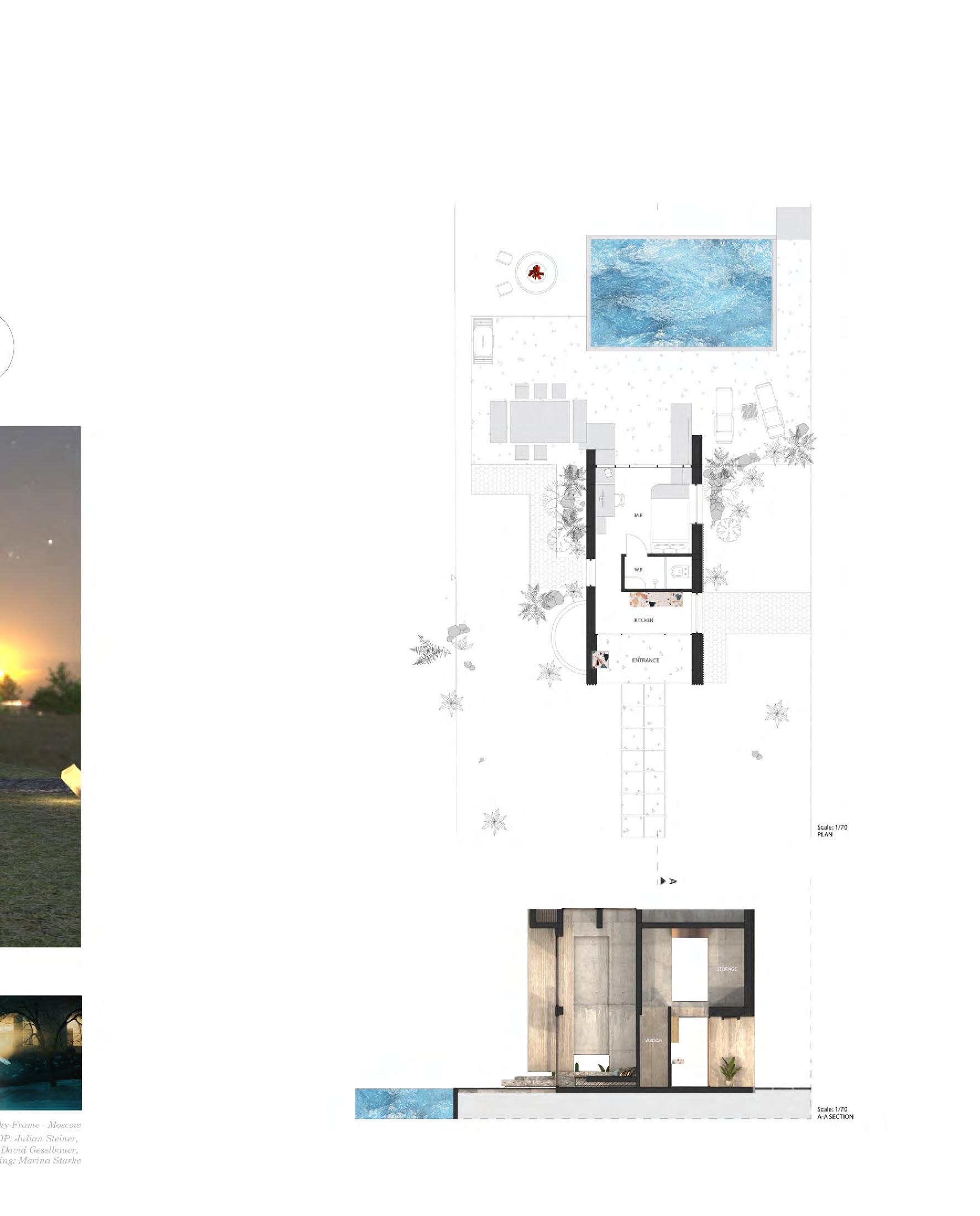
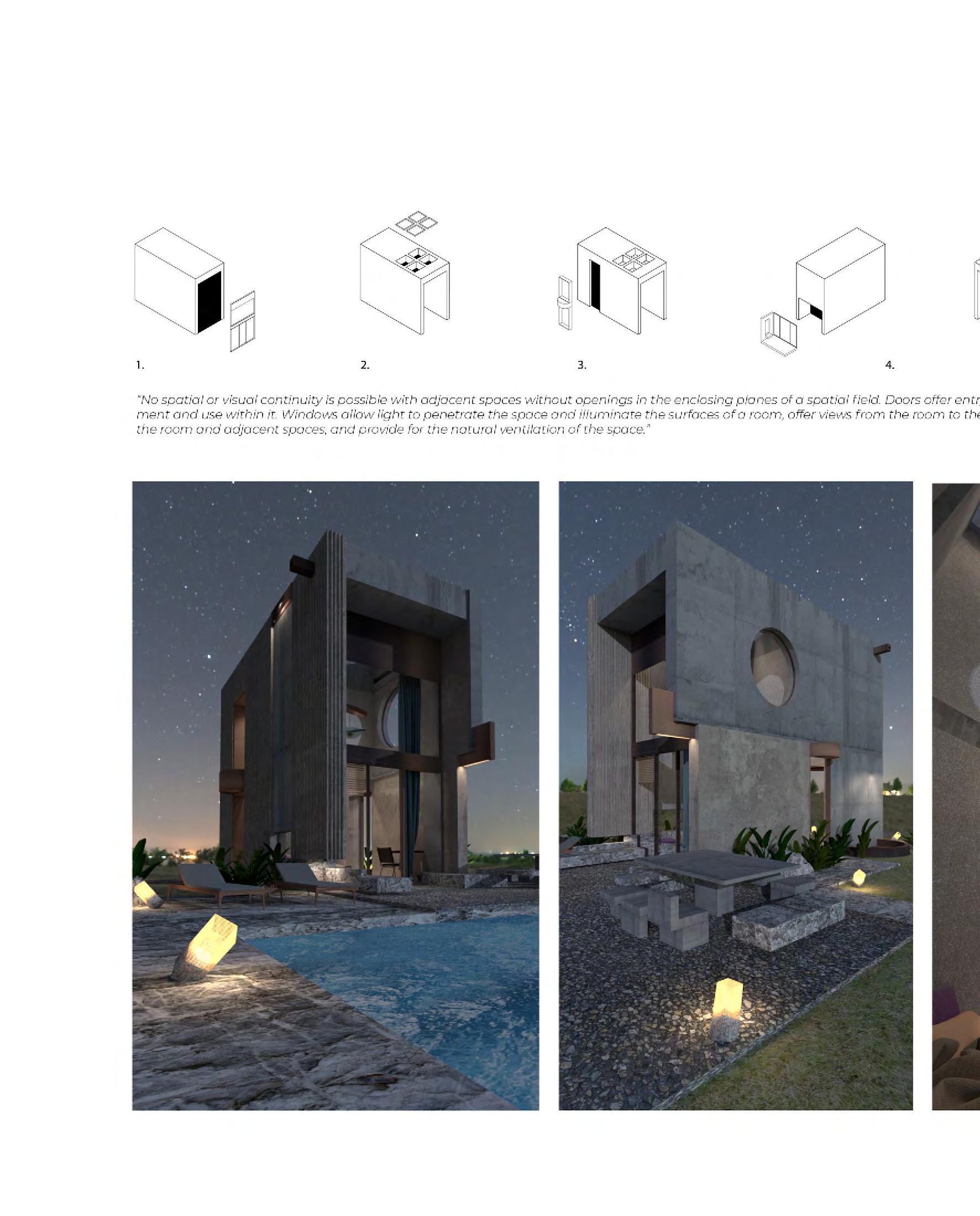
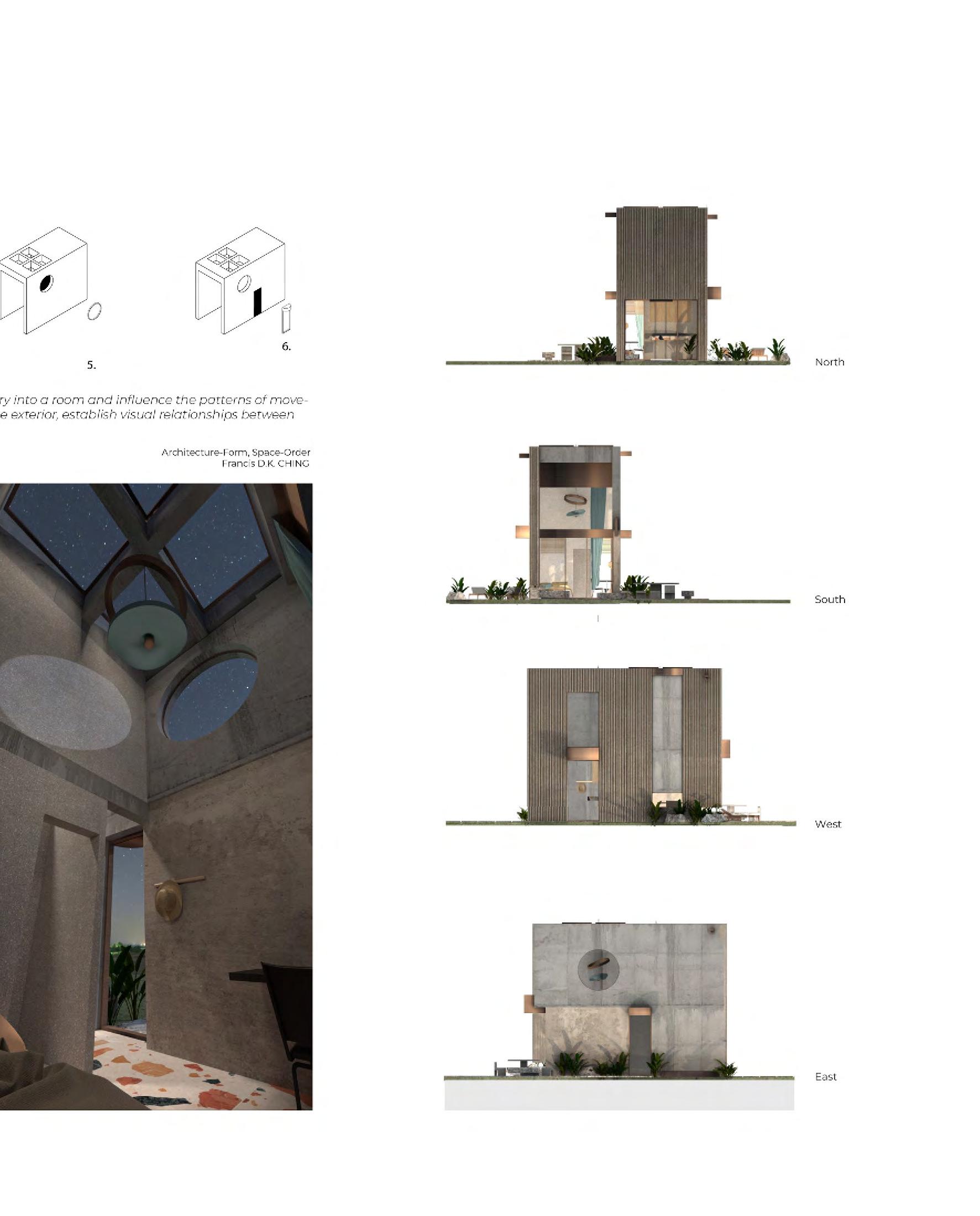
What do you see in your light-hearted dreams? Behind the window or reality? Is it the slience of the forest that whispered their eternal secret to you?
So much glory around us. In everything, sometimes if it is hard to see it, sense it behind the foggy shimmer. Growing up does not mean changing. You can become anything you want. Just follow your dreams. It is not about what’s visible behind the windows.
Inspiration
Short Movie Render Entrance
Algonquin College, 2021
Individual Work
Location: Ottawa, ON
Duration: 3 weeks