HARBINGER HARBINGER
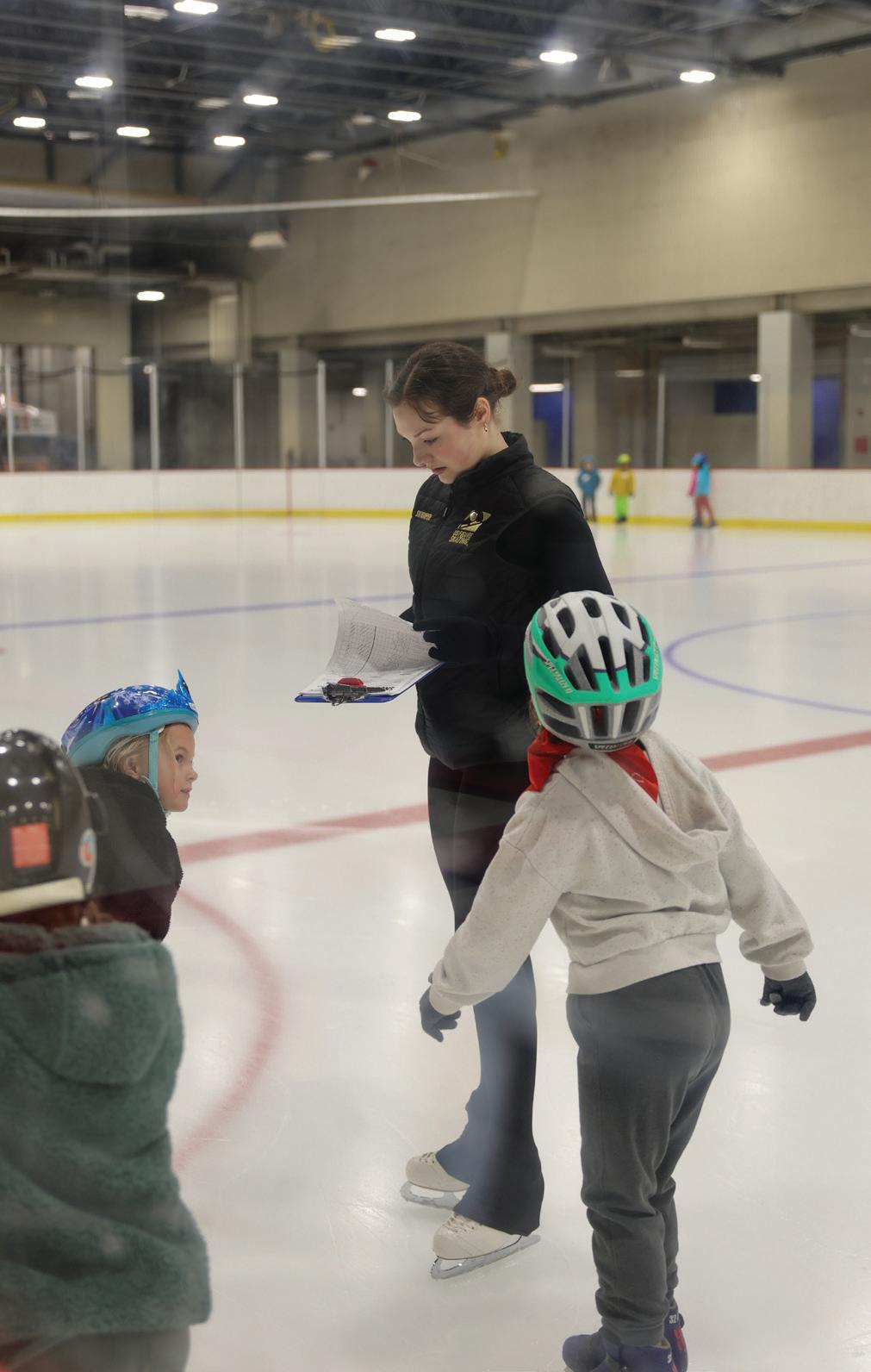

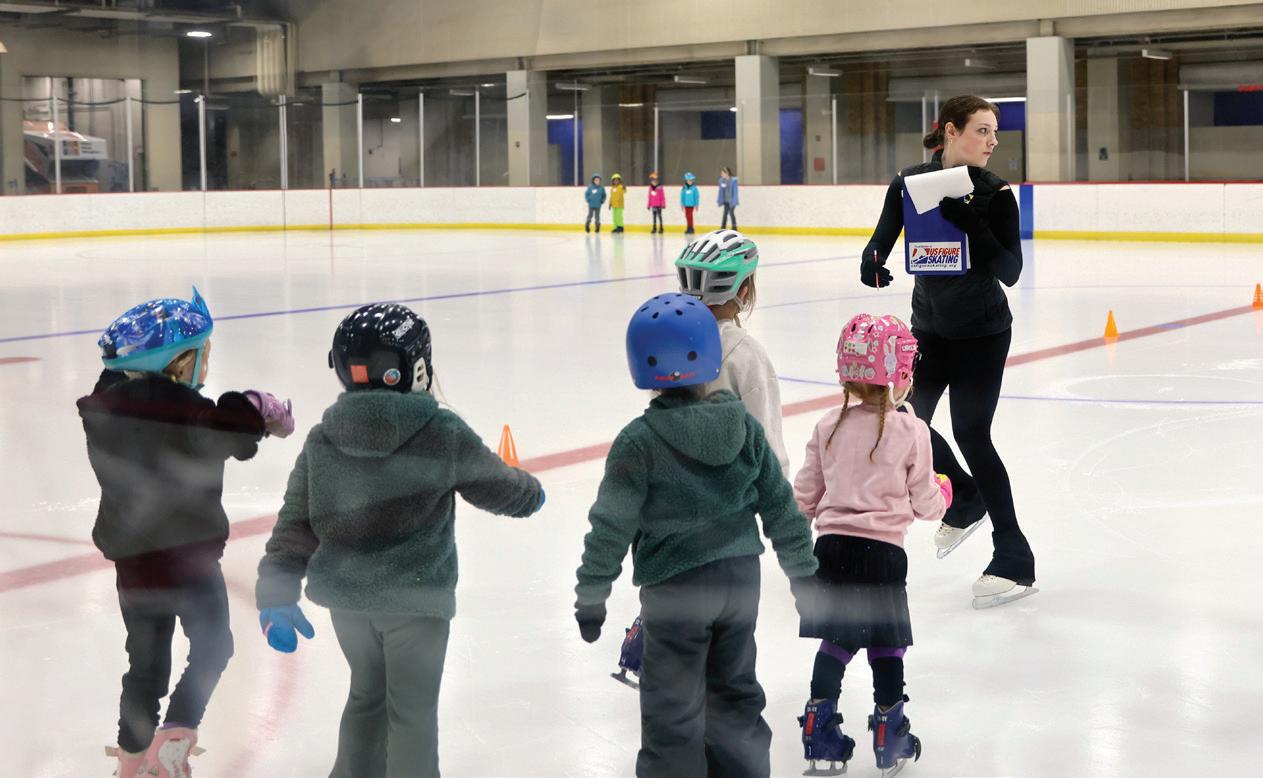
Junior Shay Hooper instructing an ice skating class on Feb. 5.
Photo by Ant Farrar
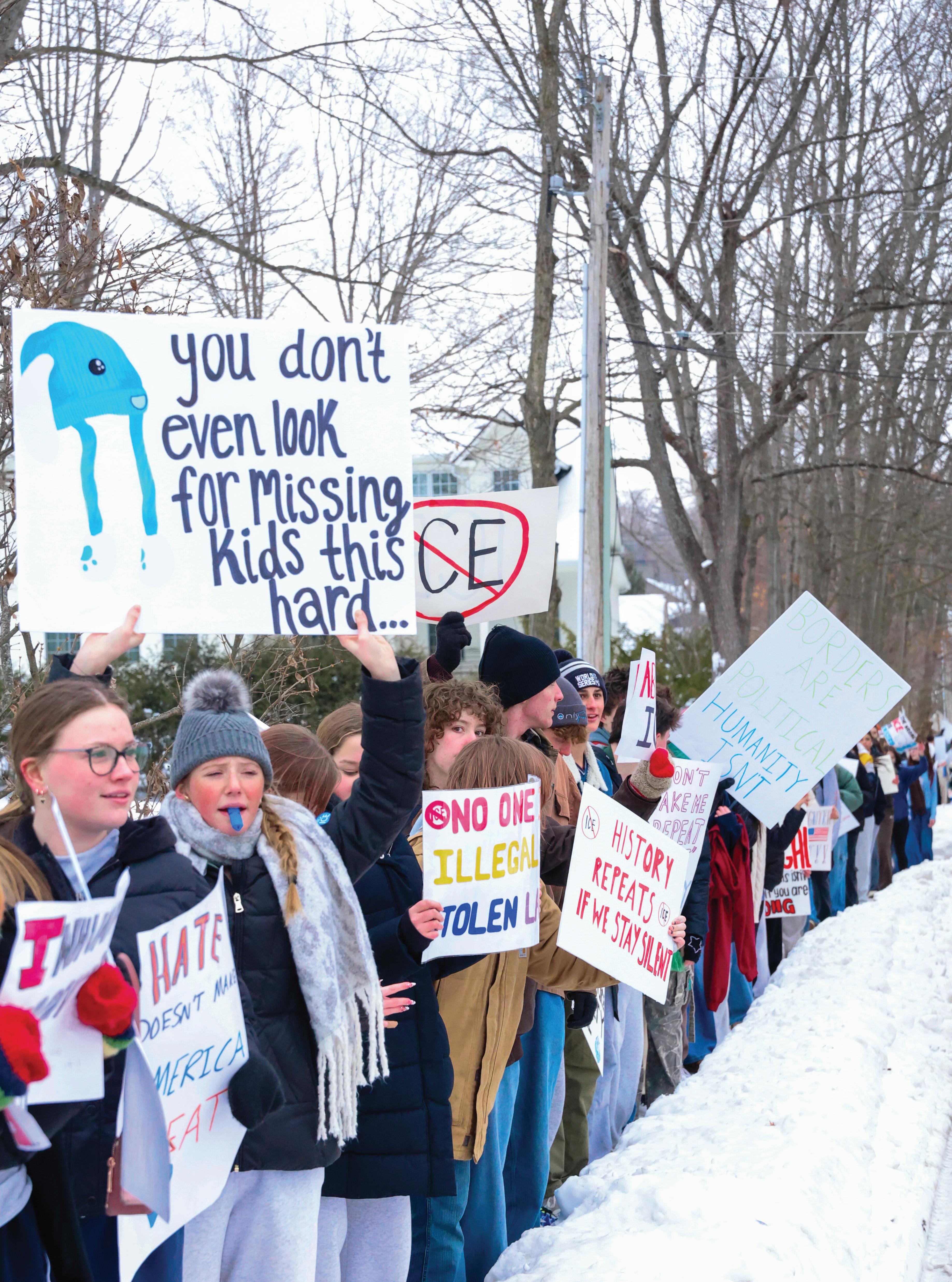
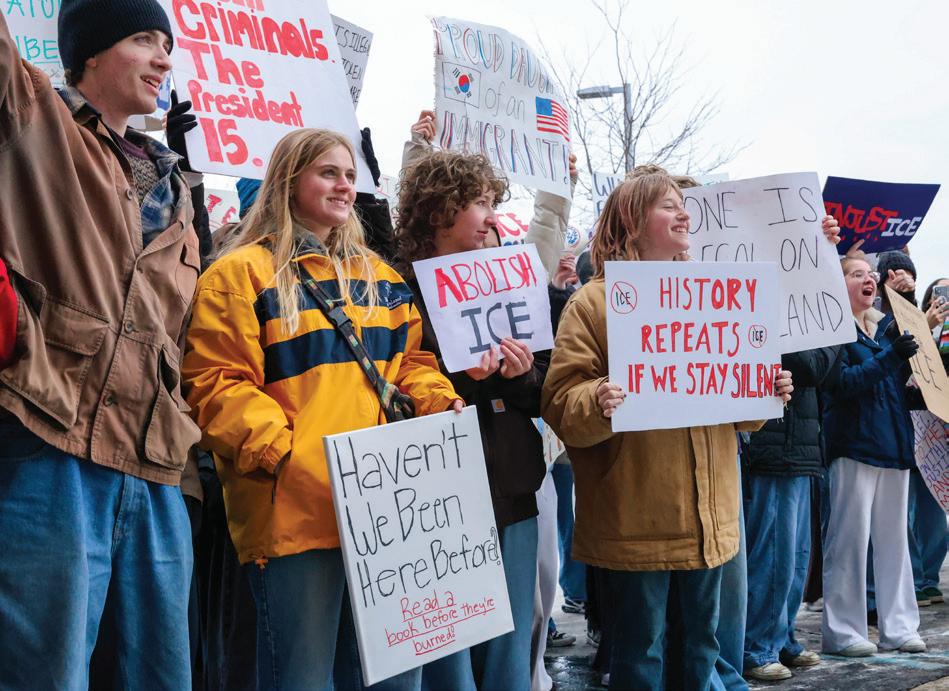
Seniors Amelia Molen, Evie Prucka and juniors Hazel Toloday, Macy Adams hold signs onMulberry St. during student walk out, Feb. 2. Photo by Brody Brown
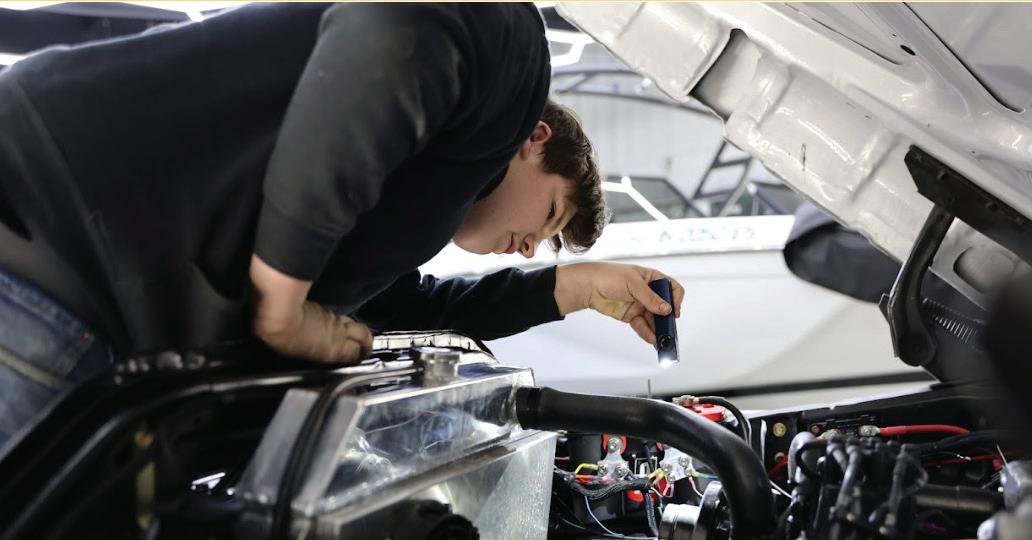
Senior Matthew Duncan inspects hood of vehicle at Revolution Motorwerks on Feb. 3. Photo by Luke Kouns
Technology restrictions limit student learning, growth Editorial
From appointment notifications and emergency news to staying in touch with friends and family, we use our phones in school every day. This essential piece of technology has its downfalls, but it helps us communicate and stay organized.
Recent technology policies in schools are making communication harder for students rather than teaching responsibility. High school is a time when students should be practicing real-world skills and preparing themselves for their future. However, instead of helping students learn how to manage technology, these policies rely on restrictions instead of accountability.
Since COVID, educators have been leaning towards using less online resources in order to encourage students to come to school for in-person learning. When teachers stop putting lessons and learning materials on Canvas, students who miss school find it harder and harder to keep up. This encourages students who are sick or struggling to come to school despite health issues, simply out of fear of falling behind.
While it’s preferable for students to come into school and learn in person, things come up, and having these digital resources is important to help them stay on track. Moreover, many students need extra review, help with studying, or refreshers for finals.
An attendance policy is already in place, so what is the point of not giving students resources to force them to come to school? Taking away access does not improve attendance, instead creating unnecessary barriers for students who are genuinely trying to study.
Yet these digital restrictions are happening on a much larger scale, including at the state legislative level. The current law states that public and charter school students may not use cell
phones or other personal wireless devices during instructional time. Now, Indiana lawmakers are considering Senate Bill 78, which would extend the cell phone ban to cover the entire school day. According to the Indiana Capital Chronicle, during a Senate Education Committee meeting on Dec. 6, this restriction would apply not only to phones but also to smartwatches and other personal devices.
This would further restrict the use of most technology, and with Zionsville schools eventually using all Chromebooks, communication, especially through texts, would become nearly impossible.
Though it’s important to minimize distractions in classrooms and during instructional time, completely shutting down communication can be both a safety and a learning hazard.
Schools already have policies such as phone pockets in place regarding phone use during instructional time to address these concerns, so eliminating access entirely ignores the possibility of real-world needs and potential emergencies.
In college and most careers, students and employees are expected to balance responsibilities, manage distractions, and use technology appropriately. Overly restrictive policies do the opposite. They prevent students from learning how to self-regulate and use digital tools responsibly. Accountability is something students need to learn on their own through practice and not constant restriction.
We on the Harbinger staff believe that instead of preparing students for the real world, these technological difficulties prevent students from becoming independent. Having these additional restrictions would not solve the problem, but only make it more difficult for students to learn responsibility.
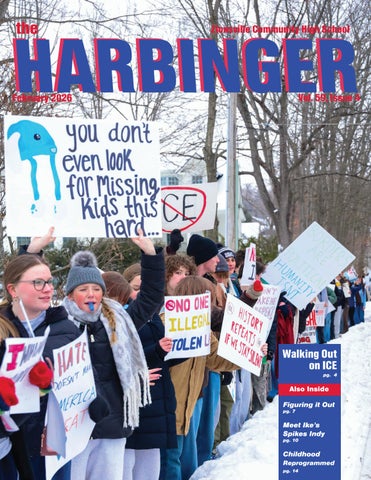
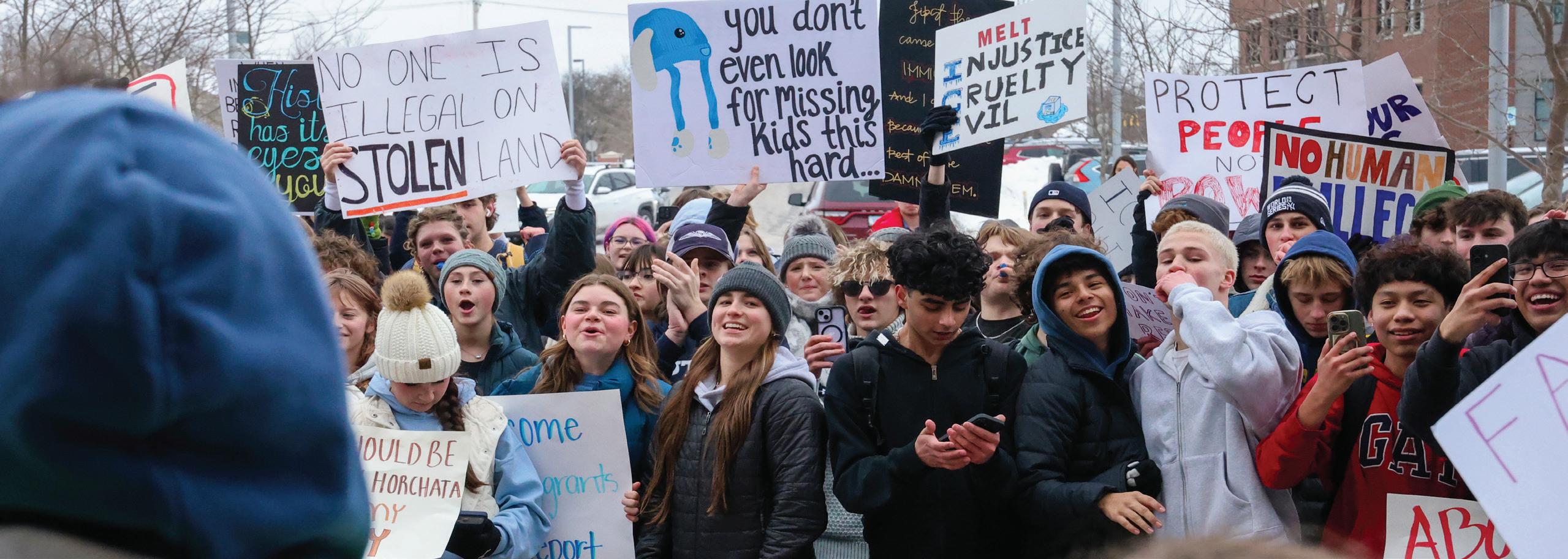
Cover: Students march down Mulberry St. through Zionsville to the town hall on Monday, Feb. 2. Photo by Brody Brown
Walking Out on ICE
Students walk out in peaceful protest during school day
By Clara Vasey and Dhani Miller, Reporters
About 400 ZCHS students walked out of school during the passing period after fifth period on Feb. 2 in a peaceful protest against the recent actions of ICE, the U.S. Immigration and Customs Enforcement agency.
Participating students walked from Jennings Field, down Main Street, and finished at Zionsville Town Hall where protest organizers gave speeches before the group dispersed.
According to the official ICE website, the group acts to “protect America through criminal investigations and enforcing immigration laws to preserve national security and public safety.” There has been public discourse and debate over many of the agency’s recent actions and methods, especially in Minneapolis where two U.S. citizens died during interactions with ICE agents.
Junior Noah Doran is one of several student organizers who planned the walkout.
“We came up with the idea of protesting ICE after seeing multiple accounts of ICE abusing their powers and spreading fear in the streets of our country,” Doran said.
Student organizers were specifically inspired by the protests they saw in Minnesota in response to ICE’s actions there.
“If kids have to step out of school and
protest in the streets of their town to try and make a change, then something is seriously wrong,” Doran said.
One week before the protest, ZCS Superintendent Dr. Rebecca Coffman emailed high school families after becoming aware of the potential planned walk out. Coffman requested families have a conversation about protest activity saying “students do not shed ‘their constitutional rights to freedom of speech or expression at the schoolhouse gate’ (Tinker v. Des Moines). This thought must balance with our obligation to operate an orderly school environment and our day-to-day safety.”
Freshman Chloe Brown’s family was one of those who had a discussion.
“I didn’t really want to in the first place because I thought that many peaceful protests aren’t really peaceful, and I was worried things like that would end badly, especially because it’s so controversial,” Brown said.
“But I agree with everything they’re protesting for.”
Organizers gathered two weeks prior to the walk out and planned for a small-scale protest. They created the Instagram account @abolishicezionsville to inform participants of logistics. With posts and stories getting upwards of 4,000 views, sophomore protest organizer Caitlin Rubeck said it played a key part in gaining support for the walk out.
There was also coordination through the app GroupMe and a Google Form made by the student organizers for safety liabilities. Filling out the form was not required to participate, but it was strongly encouraged.
These protests were not limited to Zionsville; 17 schools across central Indiana planned walk outs between Jan. 29 and Feb. 3.
“We see injustice and have no choice but to oppose it,” said a joint statement with six other Central Indiana high schools that was posted on Instagram to express the sentiments of the ICE walk out that included Zionsville.
Rubeck said Zionsville organizers coordinated with others that organized similar protests. They shared poster ideas, worked on speeches and coordinated walk out times.
The response to the planned walk outs, particularly on social media, was mixed. Indiana Lieutenant Governor Micah Beckwith disagreed with the format of protest.
“As some of our children in Indiana struggle to learn basic skills like math and reading, it’s unacceptable to see so many schools in our state, funded by BILLIONS of Hoosier tax dollars, openly allow their students to walk out in protest of ICE,” Beckwith posted on X.
According to Rubeck, student organizers coordinated a police escort to emphasize the safety of the students protesting, as student safety was one of their main goals.
Doran said that leaders dedicated so much time “so that this walk out can be smooth and keep everyone safe while expressing their First Amendment right.”
Indiana state senator JD Ford was present at the protest, saying in a post on Instagram, “Today belonged to Zionsville High School students…leading a walkout, speaking up, and showing democracy in action.”
A voter registration booth was set up at the end of the protest route, next to Town Hall. According to Doran, more than 40 students registered to vote during the protest.
“We are here to try and make a change in not just our town or state, but the country as a whole,” Doran said.
Zionsville students assemble outside of town hall in protest against ICE during the school day on Feb. 2.
Senate Summary
A preview of bills affecting students from the Indiana General Assembly
By Brody Brown, Copy Editor
From the Chicago Bears finding a new home to statewide immigration enforcement cooperation, the state of Indiana is seeing new legislation during the shortened general assembly. The session ends March 14, 2026 and features bills that affect students, schools and residents of Indiana in general.
“The Indiana General Assembly writes the laws and sets the state budget,” Doctor of Political Science at Indiana University South Bend Elizabeth Bennion said. “Its decisions shape everything from school funding and public safety to taxation, healthcare, and local infrastructure.”
The legislative session for 2026 is a shortened session with a focus on narrowed issues.
“This session is a short one, so lawmakers are not reopening the budget. Instead, the Republican supermajority is focusing on targeted affordability measures: boosting housing supply by easing local regulations, improving utility rate accountability, streamlining boards and commissions, and continuing education deregulation,” Bennion said. “Senate leaders are also emphasizing public safety, government reform, and fiscal discipline.”
Senate
Bill 76, proposed by Sen. Liz Brown, enforces local cooperation with immigration enforcement from the federal government, meaning penalties towards local governments refusing to cooperate with the U.S. Immigration and Customs Enforcement (ICE).
ICE has a controversial presence in Indiana and the rest of the country due to violent clashes between law enforcement and citizens.
The bill passed through the Senate on a 37-7 vote, with five members being excused, and is on the House floor as of Feb. 11.
“Two people have died at the hands of ICE agents,” Sen. Grey Taylor, one of seven no votes said. “We have a responsibility as legislators to put forward public policy that protects against those things.”
Senate Bill 88: Success Sequence*
Closely impacting what students are taught in schools, SB 88, authored by Sen. Gary Byrne, implements a new “Success Sequence” for students. This plan requires Indiana public schools to emphasize the pathway of graduating, getting a full-time job and marrying before having kids.
Byrne said the “Success Sequence outlines three simple steps that researchers have consistently shown helps individuals to avoid poverty,” Byrne said to the Indiana Capital Chronicle.
There’s been pushback from some, under the pretense that these beliefs are already taught with less directed language.
“I just don’t think it’s necessary to begin instilling areas of judgment with students who are trying their very best in school and going home to their families that they love,” Sen. Shelli Yoder said to the Indiana Capital Chronicle.
The bill passed the Senate with a 39-9 vote and was referred to the Committee of Education in the House on Feb. 2.
NotIn both bodies of the legislature the Republican supermajority, with the house having a 70-30 split and the senate having a 40-10, is veto-proof.
“Democrats aren’t needed for the chambers to conduct business, though many smaller or technical bills still pass with bipartisan support,” Bennion said.
Issues that would draw the ears of Zionsville students are less prevalent than what the session is focusing on, for example, the sister bill to Senate Bill 185 which forced schools to create a phone policy.
every bill in session is of a serious nature. Senate Bill 27 establishes a new sports stadium in the northwestern section of the state. In an effort to move the Chicago Bears to Indiana and boost the economy, Sen. Lonnie Randolph’s bill “establishes the northwest Indiana stadium authority for the purpose of acquiring and financing certain facilities.”
According to House Speaker Todd Huston, House Republicans are prepared to take up the bill when it arrives.
According to Indiana Capital Chronicle, the state of Indiana would own a stadium, while leasing it to a National Football League (NFL) franchise. This leasing and the financial attention the stadium would receive would go back into the state’s economy.
“I think it’s an incredible economic opportunity for northwest Indiana and for the state of Indiana,” Huston said.
Senate
Bill 78 proposes a bell-to-bell prohibition on phones during the school day. According to SB78, teachers are required to use school-supplied devices for educational purposes throughout the day and mandates a “no device” or “secure storage” policy.
The legislation will not affect students who need to manage documented medical conditions with their phone.
Authored by Sen. Jeff Raatz, the bill passed in a 12-0 vote and has moved onto the House. Amendments added on Feb. 11 include safety grants for schools to supply storage systems, guidance for schools on using lockers to store cellphones, explicit language stating the phone should be stored away, powered off and inaccessible and students will be allowed to bring personal laptops and tablets for instructional use.
*Current status of bills as of Feb. 12
Senate Bill 76: Immigration Cooperation*
Senate Bill 27: New Home For The Bears*
Senate Bill 78: Cell Phone Ban*
Going
Viral
Viral activity spikes nationwide, new flu strain brings record numbers of cases to Indiana
By Ariana Spence, News Editor
The flu is one of the most common illnesses worldwide, and in its vast history, the 2025-2026 flu season is one of the worst the United States has ever seen. As of Jan. 29, 18 million people have been infected with the flu, over 230,000 people have died. This season has brought the highest number of flu deaths among children in the U.S. ever recorded: 44 infants under one year old, and hundreds more

for Disease Control (CDC), in 2025 and Jan. 2026, 12% of the population has been infected by
Even though flu rates are as high as ever and thousands of people have already died, these numbers are expected to climb until the peak

season, one strain in particular has swept the U.S. and has been behind over 91% of all flu cases since Oct. 2025.
According to the Global Association of Vaccines and Immunizations, a global program that works to dis tribute vaccines to third-world countries, this strain of the flu, called Subclade K, or “Superflu,” is currently the leading and most common viral illness in the U.S., above COVID-19, Respiratory Syncytical Virus (RSV), and Rhinovirus (Common Cold) combined.
epidemiologist and infectious disease specialist at Marion County Health Department, Subclade K causes more intense symptoms and complications than the ‘regular’ flu (Influenza A and B), which has led to more hospitalizations and more infections from this particular strain than any other.
“[Subclade K] significantly reduces and potentially eliminates vaccine effectiveness, which means that neither anti-viral medication or flu-specialized vaccines work against it,” Gaviola said, “So there’s almost twice as many hospitalizations and deaths than the other strains that are susceptible to treatment.”
Even though the ‘regular’ flu and Subclade K have taken the U.S. population by storm, other viruses like Norovirus, RSV, Measles, Pertussis (Whooping Cough), and particularly COVID-19, have shown elevated and rising trends in early 2026.
According to the Indiana Department of Health, both Norovirus and COVID-19 test positivity rates in 2025 were significantly higher compared to the year before, and the U.S. has recorded its highest number of measles cases in over three decades.

Several epicenters for outbreaks of both of these viruses had developed in, or close
10th most COVID-19 nationwide cases
Not only have viruses been sweeping the country and the state, but there’s also been a significant increase of viral activity in Zionsville and ZCHS.
According to Shelly Dial, a new school nurse at ZCHS and previously at Zionsville West Middle School, around 50 to 60 students a day have come


thousands of students, can be high-transmis sion environments and a breeding ground for different viruses because of frequent close contact with those coming to school sick.

According to the CDC, COVID-19 and Subclade K have shown steep, significant inclines among large schools across the nation, alongside moderate inclines in the ‘regular’ flu, Norovirus, RSV and Pertussis (Whopping Cough) among students.
School-wide efforts to minimize the spread of these viruses are vital to maintaining an illness-free environment and to prevent these inclines before they arise.
“Stay home, because the problem is kids come to school [sick] because they don’t want to miss [school work], and then they give it to all their friends,” Dial said. “Be careful with what you touch, keep high-touch surfaces clean, eat healthy, and cut down on the energy drinks when you’re sick. Things like that are really important for the whole school, to keep everyone safe.”
As of Jan. 29, Subclade K has infected almost 16 million people in the U.S. since its identification in Aug. 2025, and the numbers are only expected to climb.
According to Nicolé Gaviola, a BSN/RN
As of Jan. 29,

18 million people have contracted the flu since August



Figuring it Out
Junior figure skater Shay Hooper prepares to compete internationally while balancing school, coaching
By Ant Farrar, Sports Editor
For junior Shay Hooper, figure skating has been a part of her life for as long as she can remember, from skating with her sister when she was a kid, to traveling worldwide for her competitions. When she was younger her mom introduced her to many different sport, but it was figure skating that stuck.
Hooper has been skating for about 12 years, and she has been competitively skating for 10 years.
“I have always loved putting on a show for others,” Hooper said. “Ice skating has always really helped me express myself.”
Hooper is currently competing at the novice level, which is followed by the intermediate and juvenile levels. The events are adapted to the age range of the younger athletes who compete in the Junior Olympics, primarily 14 to 18-year-olds. Although she’s not yet competing at the junior level, this season is still influential for her. She will soon be competing overseas in Italy, and this opportunity stands out as a huge achievement for her. “I will be competing in novice SolovIce Dance, I’ll have three programs. Normally in regional competitions at my level, I’d only have two programs to compete,” Hooper said. “I will be competing in The Starlight Waltz which is a pre-gold (junior) level dance and The Quickstep which is a gold (senior)

dance.”
Hooper has also traveled and competed in Washington, Texas, Boston, Florida, Indiana, Ohio, Illinois and Tennessee. Like most other athletes, Hooper experiences a lot of nerves before her performances and competitions.
“For the day of a competition I normally like to be by myself, away from my coaches and family,” Hooper said. “I’ll sometimes pray right before I get on, and what really helps is when I close my eyes and picture myself running through my routine right before I go out.”
Looking ahead at her figure skating journey, Hooper hopes to continue to improve and pass more tests, since there are certain skill tests required to move up on the skating levels. Hooper has already earned her gold level in her skating skills, which is the highest possible, and is currently working on her pregold in pattern dancers.
She plans to continue skating after high school. In fact, skating is something she considers while looking at her college options.
“I really hope I can still skate when I’m in college because it makes me happy,” Hooper said.
“Part of what I’m looking for at colleges is how far the closest
rink is, and what kind of coaches they have. Some schools have collegiate skating and even synchronized team skating.”
Additionally, Hooper does more than just compete when it comes to skating. Every Thursday night she teaches younger kids how to skate, helping beginners gain the confidence they need on the ice.
With her years of experience and dedication and major opportunities in front of her, Hooper continues to work towards her goals, one competition at a time.
“You’re not going to be the best at it right away but no one is,” Hooper said. “This is the sport that takes decades to become good at. But you need to embrace being bad at the beginning.”

Shay Hooper instructing a group of young skaters, on Feb. 5. Photo by Ant Farrar
Hooper in a freestyle session to practice her skating on Feb. 5.
Photo by Ant Farrar
A Need For Speed Formula One and IndyCar continue to grow in popularity
By Addison Prieshoff, Reporter
The world of motorsport, where even a hundredth of a second or a tenth of an ounce can be the difference between winning and losing, is one that is highlighted by two of its most popular series, Formula One and IndyCar.
From the fabled streets of Monaco to the weathered bricks of the Indianapolis Motor Speedway, the world of motorsport ranges far and wide across the world.
The American based IndyCar series is one that races throughout North America, compared to the global Formula One racing series that competes everywhere from Japan to Brazil. The two series are at the top level of open-wheel racing, and are defined by their similarities and difference from one another.

“Formula One is an intense racing sport where drivers have to put their body and their mind on the line to drive a car for a specific amount of laps,” Senior Lauren Thomas said. “And it’s a team sport as well.”
Formula One, commonly referred to as F1, is comprised of 11 different racing teams, each with two drivers. In contrast, IndyCar races can range from having 24 to 33 drivers. Additionally, each IndyCar team can have anywhere from two to four drivers, and there are 11 total teams.
One of the other big differences between the two series is the different styles of tracks that they race on, along with the locations of the tracks. F1 tracks feature street courses and traditional circuits, whereas IndyCar has more variety in track styles.

“You see all these big ovals and super speedways like in the Indy 500 and you also see street courses like in Long Beach and Detroit,” Senior Owen Toloday said. “It all kind of fits into a little puzzle, which I quite enjoy following along with.”
Both Thomas and Toloday are diehard fans of their respective racing series and have been following the growth of both series closely, particularly in the US throughout recent years.
Norma Unser — the wife of retired two-time Indianapolis 500 Champion, Al Unser Jr. — credits the growing interest in motorsport as a whole throughout the US to the increased to the accessibility of the races, in both IndyCar and Formula One.
Likewise, interest has grown with the rise in motorsport media, such as the Netflix Formula One show, “Drive to Survive”.
“Especially at IMS, youth get in for free,” N. Unser said. “There are internships, diversity programs, and special events all around the month of May.”
Another main reason for the two series’ popularity is the differences in the cars themselves.
When asked about how IndyCar differs from Formula 1, Unser exclaimed, “Formula 1 drivers often comment that IndyCar drivers are crazy for going upward of 230 miles an hour!”.
As seen in the article “The Differences Between an IndyCar and a F1 Car” from OpenWheelWorld, all cars in IndyCar are designed using a Dallara chassis, a type of standardized structure for the body of each car, and are essentially identical. By contrast, Formula 1 cars are designed individually by each team or by a contracted partner.
Traditionally, IndyCars will run at faster top speeds due to the simplicity of the tracks that they race on, compared to the more aerodynamically designed Formula 1 cars that are built for more turns and technical sections.
A key similarity between the series, however, is the thrilling storylines that are one of the reasons that around 5 million people tune in year after year.
“I think what draws me to it is how much determination the drivers have to be the best people that they can be,” Thomas said. “It makes me want to put that much effort into my daily life.”
The future of both Formula One and IndyCar is bright, with both series introducing new regulations in upcoming years, and race broadcasts drawing in more viewers each year.
This season, IndyCar races can be found on FOX Sports, and Formula One races will be broadcast on several platforms like Apple TV, FOX, Netflix, and others. Both seasons start in the first week of March and will be filled with some of the most thrilling racing in the world.
And if you are searching for an additional reason to watch, take advice from Unser Jr. “They are the fastest cars in the world!”
Srinithya Basireddy
Srinithya Basireddy

Graphic by Srinithya Basireddy & Addison Prieshoff Sports
Meet Ike’s Spikes Indy
By Dhani Miller, Reporter
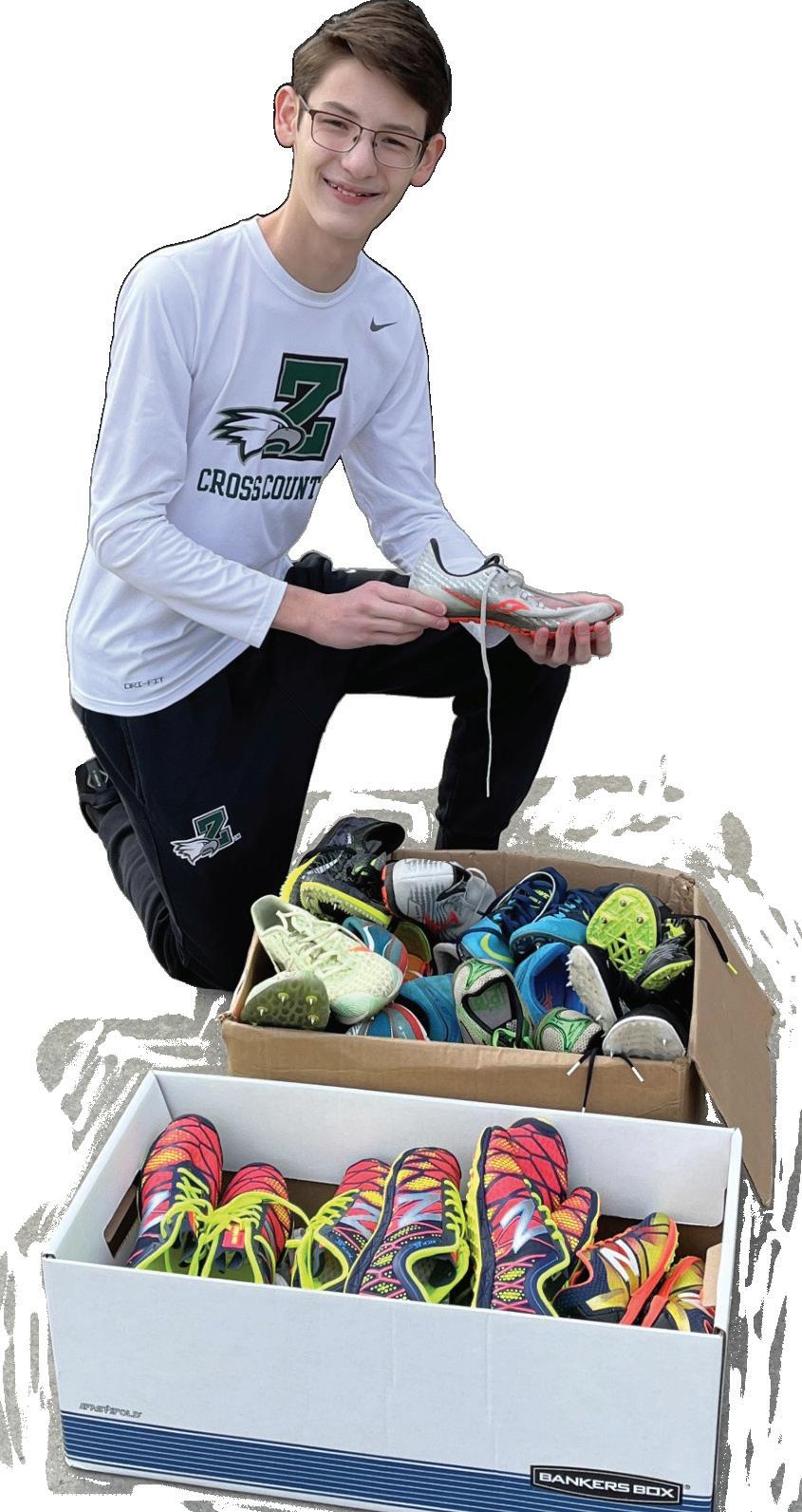
From program support fees to equipment, participating in sports comes with hidden costs that can add up. Fortunately, for cross-country and track runners, junior Isaac Kiell founded Ike’s Spikes Indy to help athletes access the equipment they need to compete.
“Some people say that running is free. It’s not free,” Kiell said. “You need to buy proper shoes and proper competitive racing shoes.”
Ike’s Spikes Indy helps track and crosscountry athletes
in the Indianapolis area that can’t afford spikes, shoes commonly worn during races, acquire quality footwear. Spikes are lightweight athletic shoes that have sharp metal pieces beneath their soles that dig into the ground to help runners gain traction in cross-country terrain and track surfaces. The materials used to create the shoes are expensive, often costing $75 or more.
Not-for-profit organization helps Indy-area runners acquire quality footwear
You can donate spikes to Ike’s Spikes Indy by contacting Isaac or leaving spikes in the donation bin in the Wedge LGI that will appear after track season concludes. Learn more about the organization, read weekly blog updates on their progress and donate at this website:
Kiell’s dedication to support track athletes sparked from his own experiences and his hope of wanting to share that passion with others.
“I started my initiative because the Zionsville team culture that I’ve experienced in cross country and track has taught me quite a lot,” Kiell said. “And I feel like it should be a privilege that everyone should experience.”
This program allows more local athletes to be able to compete, no matter their financial status.
“It promotes an equitable atmosphere,” Kiell said. “[It lets people] come into this sport and compete despite any financial barriers that [they] might encounter.”
Through donation bins set up in neighboring schools, including Carmel, Westfield, Brebeuf and a drop-off bin in the Wedge at ZCHS, Kiell collects spikes to redistribute to the athletes that need them.
“Right now, I have about 50 in my garage,” Kiell said. “We’ll get closer to 75 or more once we get the pairs from Brebeuf and Westfield.”
Starting an organization like this isn’t easy to do alone. Kiell has been getting support and guidance from the cross-country and boys distance track coach, Gabe Porras.
“This is a great idea to help promote the sport throughout the area,” Porras said. “As he explained
what his goal was with his not-for-profit, I helped him think through some challenges and solutions. I appreciated the initiative that he had already taken.”
Porras also sees this inequality on a regular basis.
“We go to many meets and see dozens of athletes in each race that do not have racing spikes,” Porras said. “This is a great opportunity to help these athletes have more success and promote the sport.”
As of right now, Kiell personally drives to the nearby schools with donation bins to pick up donated spikes. But once the program expands to include more schools farther away, shipping becomes an important aspect, which isn’t free.
“I need actual monetary donations for shipping to schools [that are far away],” Kiell said. “Around $40 of actual donations gets about 20 pairs of shoes to a school across Indiana.”
To reach more people in the area, Kiell has created an Instagram account, YouTube channel and Strava club for Ike’s Spikes Indy. Although he’s focused on reaching athletes in the Indianapolis area right now, he hopes to branch out further in the future.
“I want to reach as many athletes as I can in Indiana,” Kiell said. “We’ll definitely expand, you have hundreds of schools across Indiana that have students that need [spikes] or can donate their old ones. We hope that this will be an ongoing thing over the years across all of Indiana. I will probably try to pass it on to another runner after I graduate.”
Ike’s Spikes Indy owner Isaac Kiell shows off donated spikes at his house Jan. 18, 2026.
Photo by Dhani Miller
Behind the Screen
Comparing online and in-person classes
By Colin Adam, Perspectives Editor
It’s the middle of summer and for some students taking online classes, assignments are blending together and can be completed quickly. For a teacher, distinguishing between if the work was completed honestly or showed academic dishonesty can be difficult. With online classes becoming more prominent in recent years, questions arise about online classes and if they are the future of learning or if they’re harming our education.
When comparing online to in-person classes, online classes have many bonuses. You get to work at your own pace, work wherever and whenever you want and have access to an excess of study resources at your fingertips. These bonuses create concerns for educators as they can become harmful when used incorrectly.
Unlike online, in-person classes offer teacher assistance and constant work that helps you when you’re struggling, something harder to achieve in an online format.
Algebra and Precalculus teacher, Abigail Fitzwater previously taught over the summer at Indiana Online and has experience teaching online and in-person classes.
“For the majority of students in-person classes hold you more accountable. For some students, it’s equal, but for the majority, online is just an easy way to cram a
bunch at one time,” Fitzwater said. “It’s good for short-term, not long retention.”
School is designed to help you learn new information and retain that knowledge for future use. Most core classes build on previous years and with a gap of knowledge, it’s hard to get back on track.
Many students use online classes to get electives out of the way, but when it comes to some of the core classes like math or sciences, it’s different.
“We’re seeing kids doing an entire year of math over the summer and pulling A’s then not knowing how to solve a linear equation and moving on because they have the credit,” Fitzwater said. “It’s a credit grab sometimes.”
The trust we have in students to complete work truthfully in online classes extends beyond school to other areas like drivers education.
The course, although being online, has two in-person tests, one knowledge test and one skills test. Both tests prove retention of the material, and the skills test helps show actual driving skills on the road.
USA Today collected that between 20202023, 51.9% of drivers in Indiana failed driving license tests, the most in the entire United States. They also collected that only 43% of test takers passed the knowledge test in Indiana.
This data suggests that the Bureau of Motor Vehicles (BMV) isn’t handing licenses out to anyone, and even though the class is done online, it still requires retention and application of the material learned. Because of that, online driver’s education allows students to balance school and driving while still giving them the same end goal.
With the use of technology increasing, online classes will become more and more popular not just in high school, but in other areas as well.
The National Center of Education statistics (NCES) said that 54% of college students were enrolled in at least one online course and 26% were enrolled entirely online in the fall of 2022.
Online classes are convenient and helpful when trying to balance a job or personal lives
with school, allowing students to complete work when they can instead of at set times. But colleges tend to teach students more specific classes geared towards their career, and they should be taken seriously.
“I think for colleges it depends on what you’re doing, like a nursing degree fully online seems a little scary,” Fitzwater said. “I don’t think an education degree should be fully online either, you have to see what kids are like.”
With fully online courses, it can be difficult to see if you did the course legitimately or cheated, whereas previously it was common for online classes to have an in-person proctored final to prevent cheating and prove retention. That has since been removed for flexibility reasons, a main point of online classes.
“I would have a kid do an entire semester in 72 hours- it can’t be good for your mental health or your physical health,” Fitzwater said.
Online classes shouldn’t be a replacement for the traditional in-person counterpart, but instead be an aid. When taken seriously, they can be a way for students to learn in a different way and boost performance or take a class you couldn’t fit in your schedule.
“Part of an online class is to help you stay paced and not overwhelm yourself because you’re just kids,” Fitzwater said.
n g F r o m L e a r n
The Work-Based Learning program prepares students for life after high school, teaches valuable lessons
By Luke Kouns, Feature Editor
Many high schoolers have experience working a summer or after school job. Few however, can say they have an important role in an international company. Senior Alexsandra DeHart, who is part of the Work-Based Learning (WBL) program and the marketing assistant for the real estate firm The Agency’s Indianapolis division, can.
“I help agents with their marketing,” Dehart said. “I send emails to different organizations if we’re trying to do partner events, I help with work events, I reach out to different global offices because the agency is a global business. So, I’ll reach out to the ones in different countries or states and see what they’re doing.”
WBL is a one-to-two-semester course available to 11 and 12 grade students that, according to the ZCHS website, offers a true ‘work-based’ experience that occurs in workplaces and involves an employer assigning a student meaningful job tasks to develop his or her skills, knowledge, and readiness for work.
“The relationship between the employer and the student is the exact same as it would be if you were just maintaining a part time job over the summer or an internship over your college experiences,” WBL teacher Kyle Marshall said. “Students go through the same training that other employees at that organization would go through, and they’re held to the same expectations.”
The program helps teach students about the reality of being part of the workforce. This reality involves gaining practical experience at a job, but also learning valuable work skills.
To ensure that students learn this unique mix of technical and employability skills, Marshall encourages students to be hands-on in their positions. His goal for the students is that when it comes to their jobs, “there is no simulation.”
“I’ve worked at jobs before, but it was teenagers working,” DeHart said. “This was everyone’s real job, and it’s adults who went to college... So, I wanted to make sure I could pick up things quickly, not hold anyone back and I could do a good job with my work.”
Pure work-based experience isn’t the only way that the WBL program helps students prepare for life after high school. To help students prepare for their job search, Marshall teaches students some key skills necessary to life in the workforce.
“It’s important because it’ll set students up for success,” Marshall said. “There’s going to be a steep learning curve on the front end, especially if they haven’t had any previous work experience. It’s a different environment than what students are used to in a school setting. That curriculum helps students adapt and thrive, it shortens that learning curve.”
The WBL class is only available to those who apply through the form on the school’s website. Applicants will then talk to their counselor and Marshall, discuss their ideas for where they will work, and complete a contract. Marshall said that students primarily find their jobs based on their own network or through a Career and Technical Education class, such as accounting or J Everett Light programs. Such was the case with senior Mat-
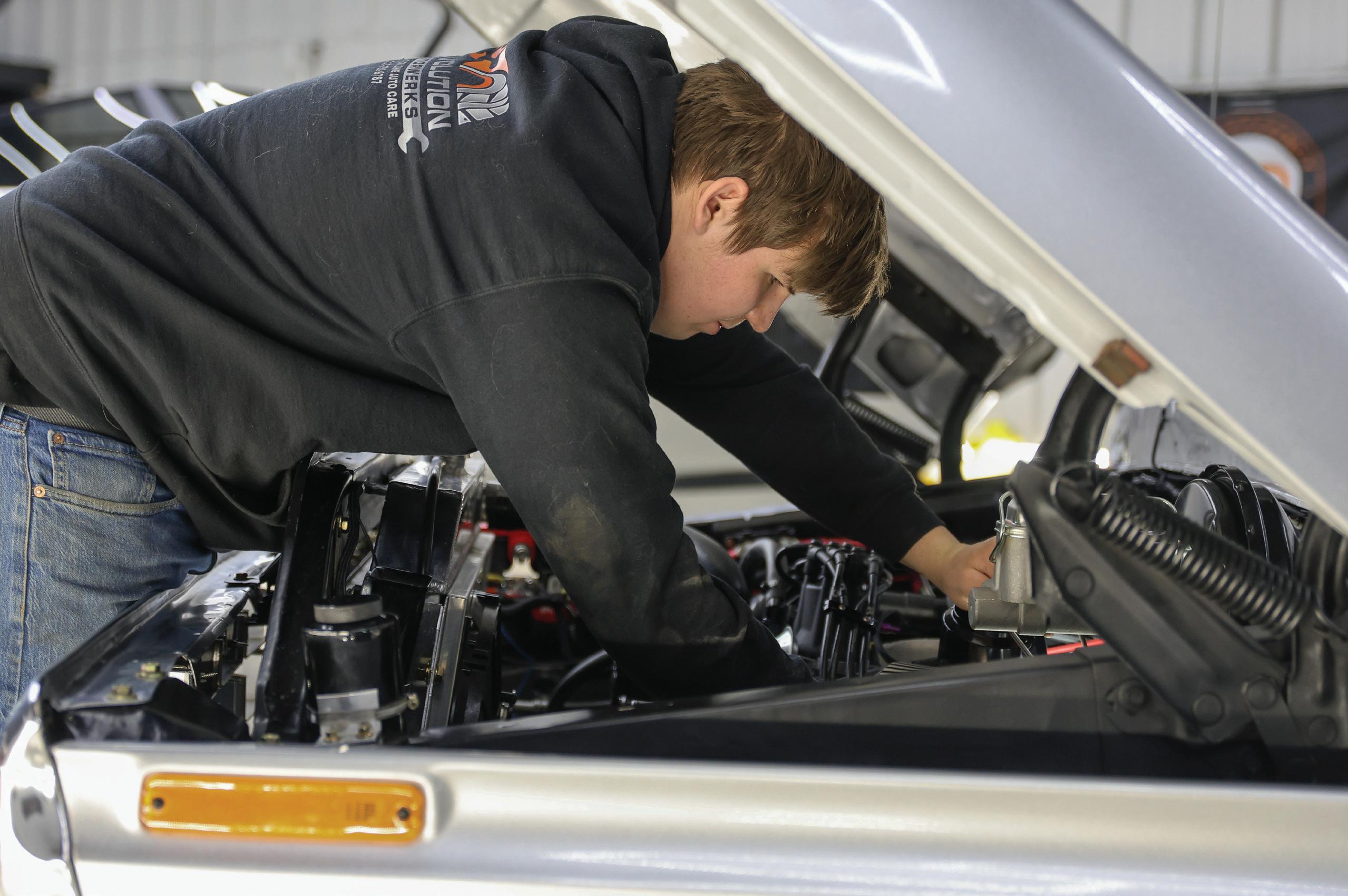
thew Duncan, who had taken a JEL course in Automotive Maintenance and Detailing before finding his job at Revolution Motorwerks.
“I’ve actually known [my boss] for a little bit… he used to work at a shop that me and my family used to take our cars to. Then

Michael Stanfield counts gold at Midwest Estate Buyers, where he works during his Work Based Learning time on Feb. 2. Photo by Lilly Steele.
“It’s nice to know I have a place where I can work and not panicking the second I graduate. I have a place I know I can turn to.” - Matthew Duncan
he started up his own shop, and thought it would be a good place to do work based learning,” Duncan said. “I just walked in there and talked to Scott. I told him I was doing WBL, and he was very accepting of me joining.”
Marshall’s goal for the students‘ jobs is that “they don’t look any different than a part-time job or an internship.”
Duncan can attest to this goal of realism, he expected the job to be “like a repeat of JEL.” “They put me on my own bay and kind of put me on my own to do stuff,” Duncan said after a couple of weeks working at Revolution Motorwerks.
Duncan’s experience and future plans of going straight into the work force highlight a commonly held belief that WBL is primarily an alternate pathway to college. However, the program isn’t made exclusively for this purpose or these specific students. As Marshall says, WBL can be for any student who wants to, “to prepare for their future.”
“I know I’m going to college, I already had that planned out since junior year,” DeHart said. “I knew I wanted to study business, but I wasn’t really sure what kind exactly. But after joining work based learning, I think I’ll do
something in marketing.”
Work based learning isn’t an experience unique to high school, but is a common strategy for advancing one’s career and technical experience. To that end, the WBL program can help prepare students for any life pathway they choose through life experiences.
“Students who do continue their education, the purpose of that is to develop opportunities for a career,” Marshall said. “And this is one of those steps, the earlier that students can get involved in internships and explore work opportunities, the better informed they’ll be when choosing an industry to continue to work in, or a degree to pursue in college.”
When deciding whether or not to take the WBL class, students should look beyond the common notions, because it might just be different than what they expect.
“Not really, it was kind of what I expected,” DeHart said. “I mean, my job wasn’t what I expected. It was even better than I expected. I love my job, and I really like going to it every day, so, maybe it was a little unexpected that I would actually like working.”
Senior Matthew Duncan takes a look under the hood of a truck at his work based learning job at Revolution Motorwerks on Teusday, Feb. 3. Photo by Luke Kouns.
Childhood Reprogrammed
By Clara Vasey, Reporter
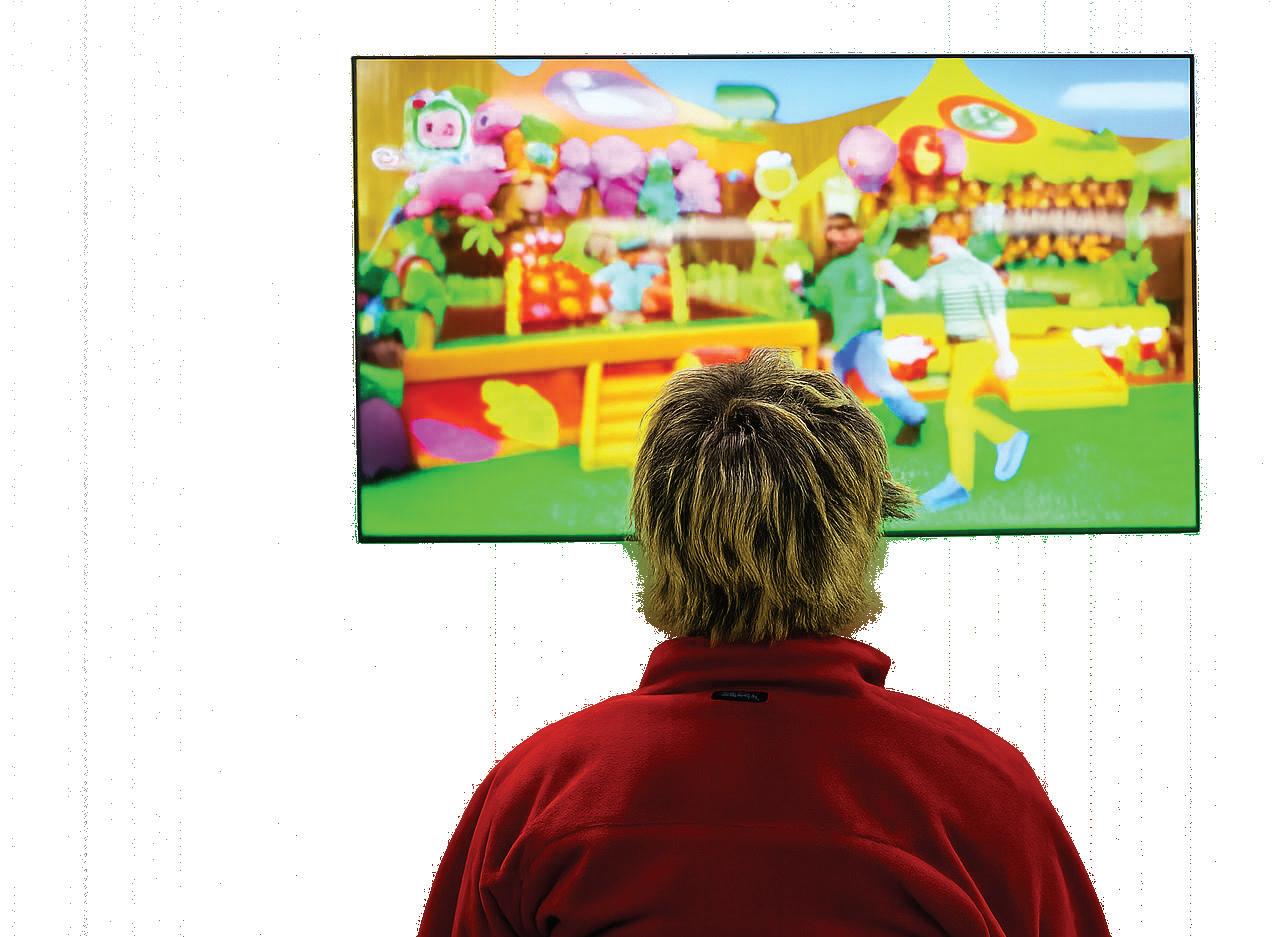
“Do you want to make-believe with me?” Daniel Tiger asks. Once upon a time, characters in kids’ shows made conversation and taught life lessons, but not any more.
Impersonal and fast-paced children’s shows are replacing the classics. Kids latch onto the stimulus of these newer shows, and the constant screen time lowers attention spans and encourages constant screen time.
Shows made to educate and engage were once the standard. Dora the Explorer taught Spanish while Curious George taught problem-solving. Most shows felt like the characters were your friends who had real problems and successes.
As children, today’s high schoolers were on the edge of the transition to fast-paced content, in which the scene changes about every four seconds. Usually, bright colors and catchy songs go with these rapid-fire switches.
Shows like “Daniel Tiger’s Neighborhood” were the staple when I was little. Now, so many kids are obsessed with “Cocomelon,” a YouTube channel that tells musical stories to entertain children at a much faster pace.
In a minute-long clip, Daniel Tiger’s animation switched camera angles only four times while Cocomelon changed 39 times, so there was barely time to blink, let alone process the story.
Producers have changed their approach to emphasize stimulus above engagement. This switch is harmful because it encourages kids to only consume and prepares them for a life online instead of real relationships.
“PJ Masks”, “SpongeBob SquarePants (HD)” and “Paw Patrol” all came out between 2012 and 2015. All three are high-stimulus shows that were on the rise right when we were preschool age.
But not all modern shows are only stimulation. While “Cocomelon” has embraced the new format, other newer shows still hold that learning is better than stimulation.
For example, “Bluey” was released in 2018, but episodes keep cuts above 7 seconds, favor muted tones, and use simple,
melodic music, helping little kids stay engaged without feeling on edge.
Just nine minutes of watching a fast-paced TV show immediately affects 4-year-olds’ ”executive function,” according to a study conducted in 2011 by the official journal of the American Academy of Pediatrics, in partnership with the National Institute of Health.
Executive function is the set of skills that relate to setting and reaching goals; attention span, organization, self-control and working memory just to name a few. In other words, most working intelligence is affected by shortform kids’ shows.
The overload of stimulus creates “iPad kids.” Those of us who watched high-stimulus shows have to work harder to create in our free time instead of constantly consuming entertainment.
According to Nephilia Inc, a tech company that specializes in web design, “motion
inherently attracts our attention because it signals change or potential relevance in our environment.”
Short shows or short attention spans. Which came first? As social media has captivated the masses, our ability to focus has plummeted. When 10 second videos became mainstream entertainment, the TV industry had to compete.
Many kids’ shows transitioned to online platforms and streaming services, with each episode being between 5-10 minutes long. We wanted short-form content which resulted in tiny attention spans, so now we want to watch fast-paced shows.
The apocalypse of television hasn’t arrived, but there is much more content to sort through. What we consume dictates what producers make, so choose wisely. Quality entertainment is not only in our imagination.
Generated Creativity
Why AI art can’t replace real art
By Noelle Brooking, Reporter
Will AI art ever fully replace real artists? Many artists, myself included, have pondered this question in the backs of their minds as they draw. AI art has increased significantly in its capabilities and accuracy in recreating real art.
AI is only able to improve at producing art by being fed pieces created by humans. This means that real artists’ work is being pulled from online, often without their consent.
Oftentimes, I will be looking at online artworks, and I will see an art piece that looks stunning. Well rendered, dynamic posing, interesting framing. However, once I notice a mistake, that is a “tell” that the piece is AI-generated, an unnatural smudge for example, I instantly lose interest. But why is that?

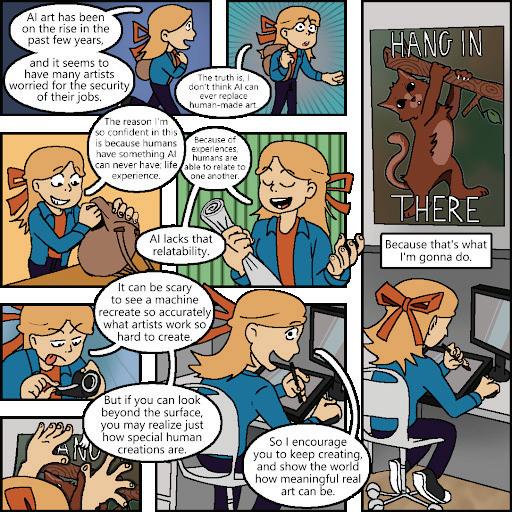
Even if AI can replicate the artworks made by inspired and creative artists, AI has never experienced what the original artist had. It never felt the sadness or anger that inspired a vent piece, or the joy of a silly interaction that inspired its recreation in art form. Because of this, the art loses its meaning.
Think of this; On any social media platform, regular people will post low-effort, random thoughts or videos that feel out-of-
pocket or strange in a comedic and relatable way. Eventually, big corporations noticed this trend, and tried to imitate it so their audience could relate to them, and by extension, feel a connection to their product.
These big corporations and AI art programs both have something in common –they are only training based on the product, and not the experiences that inspired them. For the most part, artists like me would
be happy for other artists to take inspiration from their work, but that’s not what AI is doing. AI can’t be inspired or understand what it’s creating, it just copies the results of others’ experiences.
Art is not about the result as much as it is about the journey and the emotions behind it, which AI can never truly replicate. Because of this, human-made art will always mean more.


“I
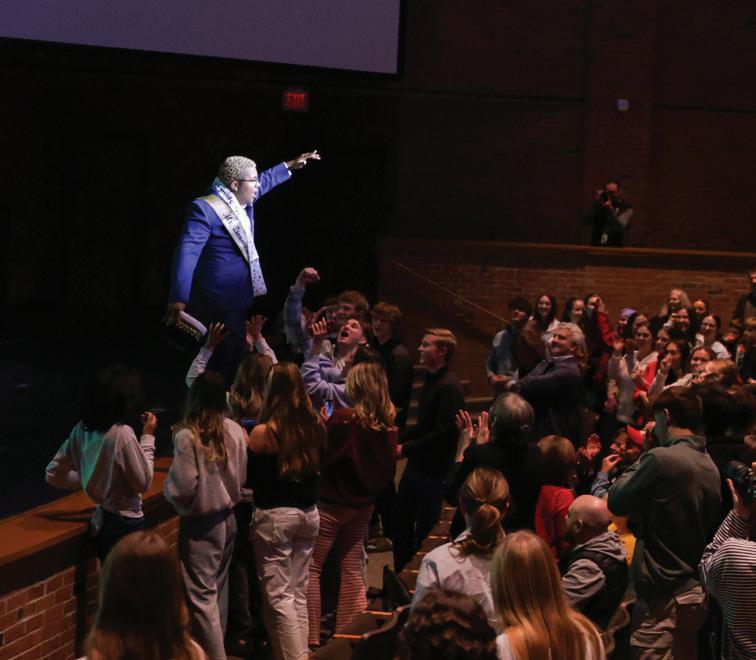
Abeloved Zionsville tradition, Mr. Zionsville, took place Jan. 22 in the Performing Arts Center. Contestants, directors, crew, staff sponsors, and more came together to raise money for Prom and the American Foundation for Suicide Prevention as well as have fun. The show featured acts and dances put on by senior boys as well as funny videos throughout the show. “I loved getting to do the dance, having fun with my friends, and seeing all of our hard work pay off,” senior contestant and People’s Choice winner, Luke Steele, said.
Featured in the photos: Senior directors Lilly Steele, Naomi Davis, and Meredith Herbon and senior contestants Luke Steele, Elliott Brown, Tyler Cook, Jacob Jackson, Elijah Weaver, Joey Seitz, Chris Jalaie, Graham Wilson, Atlas Kaufmann


Photos by Luke Kouns