Illinois ESA Letter Review: Is RealESALetter.com Legit in 2026?
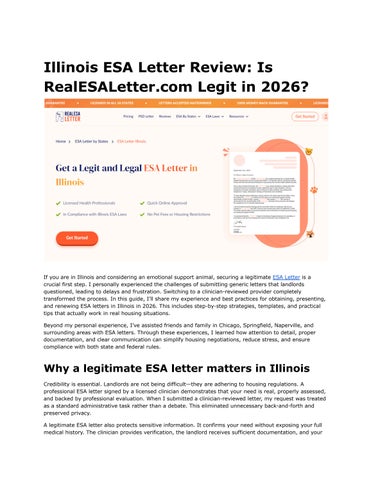
If you are in Illinois and considering an emotional support animal, securing a legitimate ESA Letter is a crucial first step. I personally experienced the challenges of submitting generic letters that landlords questioned, leading to delays and frustration. Switching to a clinician-reviewed provider completely transformed the process. In this guide, I’ll share my experience and best practices for obtaining, presenting, and renewing ESA letters in Illinois in 2026. This includes step-by-step strategies, templates, and practical tips that actually work in real housing situations.
Beyond my personal experience, I’ve assisted friends and family in Chicago, Springfield, Naperville, and surrounding areas with ESA letters. Through these experiences, I learned how attention to detail, proper documentation, and clear communication can simplify housing negotiations, reduce stress, and ensure compliance with both state and federal rules.
Why a legitimate ESA letter matters in Illinois
Credibility is essential. Landlords are not being difficult they are adhering to housing regulations. A professional ESA letter signed by a licensed clinician demonstrates that your need is real, properly assessed, and backed by professional evaluation. When I submitted a clinician-reviewed letter, my request was treated as a standard administrative task rather than a debate. This eliminated unnecessary back-and-forth and preserved privacy.
A legitimate ESA letter also protects sensitive information. It confirms your need without exposing your full medical history. The clinician provides verification, the landlord receives sufficient documentation, and your
private details remain confidential This balance between verification and privacy made the process smoother and reduced my anxiety considerably
Understanding Illinois law and housing expectations
Illinois follows federal fair housing regulations Landlords can request documentation verifying a disability-related need but cannot demand detailed medical records A properly dated clinician letter is usually sufficient I relied on RealESALetter’s ESA Letter Illinois page to make sure my request aligned with state and federal expectations Knowing exactly what landlords can and cannot request allowed me to approach the process confidently
Tip: Pair your ESA letter with a brief accommodation request email Presenting both documents together usually answers most landlord questions immediately and professionally
Preparing before contacting your landlord
Preparation is key. I made sure to secure a clinician-reviewed ESA letter, draft a concise accommodation request, and create a short care plan outlining my animal’s responsibilities. Having both digital and printed copies on hand allowed me to respond to any inquiries efficiently and calmly.
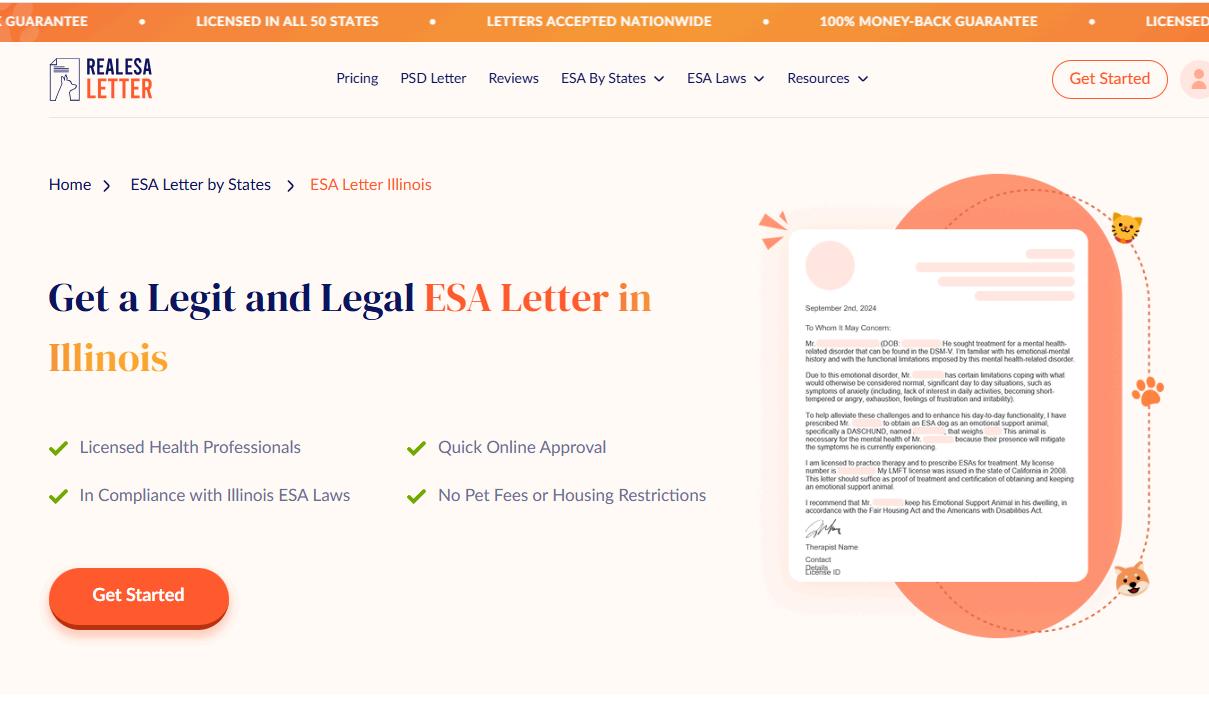
The letter included clinician name, license type, license number, date, and a clear explanation linking my mental health needs to the therapeutic benefits of my animal Landlords appreciated this level of detail because it made the request professional, credible, and easy to process
Step by step: obtaining your ESA letter in Illinois
First, select a provider that conducts a thorough clinical evaluation rather than issuing automatic letters. Next, complete the confidential evaluation. Then, receive your letter and prepare a concise accommodation email. Finally, send your package and offer clinician verification if requested. Following this sequence consistently worked for me and friends across Illinois.RealESALetter’s process ensures proper formatting and clinician review that landlords recognize and trust.
Writing the accommodation request email
Keep the email short, professional, and to the point. I structured mine with three paragraphs: stating the accommodation request, attaching the clinician-signed letter with verification offer, and summarizing the care plan. Here’s an example:
Subject: Request for reasonable accommodation for emotional support animal. Body: Dear Property Manager, I am requesting a reasonable accommodation to keep an emotional support animal due to a documented mental health need. I have attached a clinician-signed ESA letter confirming the necessity. I am happy to provide clinician verification if needed. I follow a consistent care plan including grooming, crate use, and noise management. Thank you for your consideration. Sincerely, [Your Name].
Renewals and staying organized
Housing offices usually prefer letters dated within the last 12 months Using the ESA Letter Renewal system, I set reminders well before my letters expired Renewals are often quicker than initial evaluations because the clinician already understands your situation Staying proactive prevents last-minute stress at lease renewal or when moving
I also referenced the October Guide: ESA Letter Renewal in Mississippi to understand practical renewal timelines, even though it focuses on Mississippi Many of the concepts, such as setting reminders and maintaining clinician contact, apply broadly and were helpful in keeping my Illinois documentation current
What to do if a landlord asks for more than a letter
Occasionally, landlords request additional documentation It is important to remain calm and politely explain that the ESA letter verifies your need Offering clinician verification is usually sufficient This approach protects privacy, maintains professionalism, and consistently resolves extra requests Friends using ESA letter Colorado confirmed this strategy works across states
Handling neighbor concerns
Even with proper documentation, neighbors may have questions. A short, friendly note describing your animal, commitment to cleanliness, and steps to minimize disruptions prevents potential complaints. Proactive communication helps create a positive environment and demonstrates responsibility. Small gestures like offering to answer questions or explaining routines often make a big difference.
Choosing the right animal and justifying your choice
Choosing the right emotional support animal is more than just picking a pet you like it’s about selecting an animal that provides measurable therapeutic benefit and is compatible with your living situation. While dogs and cats remain the most common ESAs due to their adaptability and strong emotional connection with humans, other animals such as small birds, rabbits, guinea pigs, and even certain reptiles can qualify if they are manageable, safe, and contribute to your mental well-being. I relied heavily on RealESALetter’s Types of ESA Animals guide to understand which animals are generally considered reasonable in housing and what considerations landlords may have regarding noise, size, and care.
Equally important is understanding how your animal supports your mental health. I reviewed the Mental Disorders overview to articulate how my animal helps alleviate anxiety, depression, or other conditions. This preparation allowed me to explain the specific ways my ESA contributes to my emotional stability. Additionally, I explored the PSD Letter resources to clarify the distinctions between psychiatric service dogs and emotional support animals, ensuring I did not misrepresent my animal’s role. With this comprehensive understanding, I was able to confidently answer landlord questions, demonstrate responsibility, and show that my chosen ESA was both therapeutic and reasonable for my housing environment.
Cost considerations and transparency
Knowing costs upfront prevents surprises. RealESALetter’s Pricing page clearly explains what each package includes, from clinician review to renewal options. Investing in proper documentation ensures recognition and avoids disputes, which is always worth the cost.
How to identify and avoid scams
Avoid providers offering instant downloadable letters with no clinician credentials Legitimate providers list clinician details and renewal options Verifying these factors prevented complications for me and friends across multiple states
Quick checklist: verify clinician license, confirm renewal options, check pricing clarity, and ensure clinician verification is possible
Independent validation
To confirm legitimacy, I read an independent RealESALetter Review, which explained clinician standards, user experiences, and reliability This reassured me that the service is trustworthy
Final checklist
● Obtain a clinician-reviewed ESA letter
● Prepare a concise accommodation email
● Include a brief care plan
● Offer clinician verification
● Set renewal reminders and plan ahead
Conclusion
Securing an ESA letter in Illinois is straightforward when done properly. Use a clinician-reviewed provider, present a clear request, and keep documentation up-to-date. Following these steps simplifies housing negotiations, reduces stress, and protects your well-being.
Schedule your evaluation, prepare your email and care plan, and set renewal reminders With proper preparation, you can confidently enjoy the support of your emotional support animal in Illinois
FAQs
1. How long is an ESA letter valid in Illinois?
ESA letters do not have a federally mandated expiration date, but in practice, most housing providers prefer documentation that is dated within the last 12 months. This ensures that the information reflects your current mental health needs and is compliant with fair housing rules. To avoid any potential issues during lease renewal or when moving to a new property, it is a good practice to renew your ESA letter annually. Timely renewals also make the process smoother for both you and the landlord, minimizing delays and unnecessary questions.
2. Can a landlord deny my ESA?
Under federal and Illinois fair housing laws, a landlord can only deny an ESA if it poses a direct threat to the safety of others, causes substantial property damage, or creates an undue financial or administrative burden Landlords cannot reject an emotional support animal simply because of a no-pet policy, personal
preference, or bias Providing a professionally signed ESA letter that clearly documents your need usually resolves any questions, and in most cases, landlords accept the request without conflict
3. Do I have to provide medical records?
You are not required to share your personal medical records to qualify for an ESA. The purpose of an ESA letter is to confirm your need for an emotional support animal without exposing sensitive medical information. Most landlords are satisfied when the letter comes from a licensed clinician and includes a statement linking your condition to the therapeutic benefits of your animal. If requested, you can also offer clinician verification, which protects your privacy while confirming the legitimacy of your accommodation.
4. Do ESAs have public access rights?
Unlike service animals, emotional support animals do not have public access rights under federal law. This means they are not legally permitted in places like restaurants, stores, or other public spaces where pets are normally restricted. Their primary role is to provide emotional and mental health support in private settings, such as your home or housing accommodations. Understanding this distinction is important to avoid confusion and ensure your ESA is used appropriately and legally.
5. How quickly can I get or renew an ESA letter?
Many people receive a clinician-reviewed ESA letter within 24 to 48 hours after completing their evaluation The process is often even faster for renewals, since the clinician is already familiar with your situation and mental health needs Providers like RealESALetter offer efficient renewal systems that make updating your documentation simple and stress-free, allowing you to maintain uninterrupted housing rights and continue enjoying the benefits of your emotional support animal