



Главни уредник Стефан Пауновић
За издавача Стефан Пауновић, в. д. директора

Министар
CIP - Каталогизација у публикацији Народна библиотека Србије, Београд
37.016:811.111(075.3)
за други разред гимназије и средњих стручних школа : десета година учења / Гордана Марковић, Катарина Ковачевић ; [илустрације Драгутин Вукелић]. - 6. изд. - Београд : Завод за уџбенике, 2025 (Нови Сад : Сајнос). - 151 стр. : илустр. ; 27 cm
Тираж 2.500. - List of irregular verbs: str. 147-148. - Word list: str. 149-151.
ISBN 978-86-17-21242-9
1. Ковачевић, Катарина, 1942- [аутор] COBISS.SR-ID 166366985
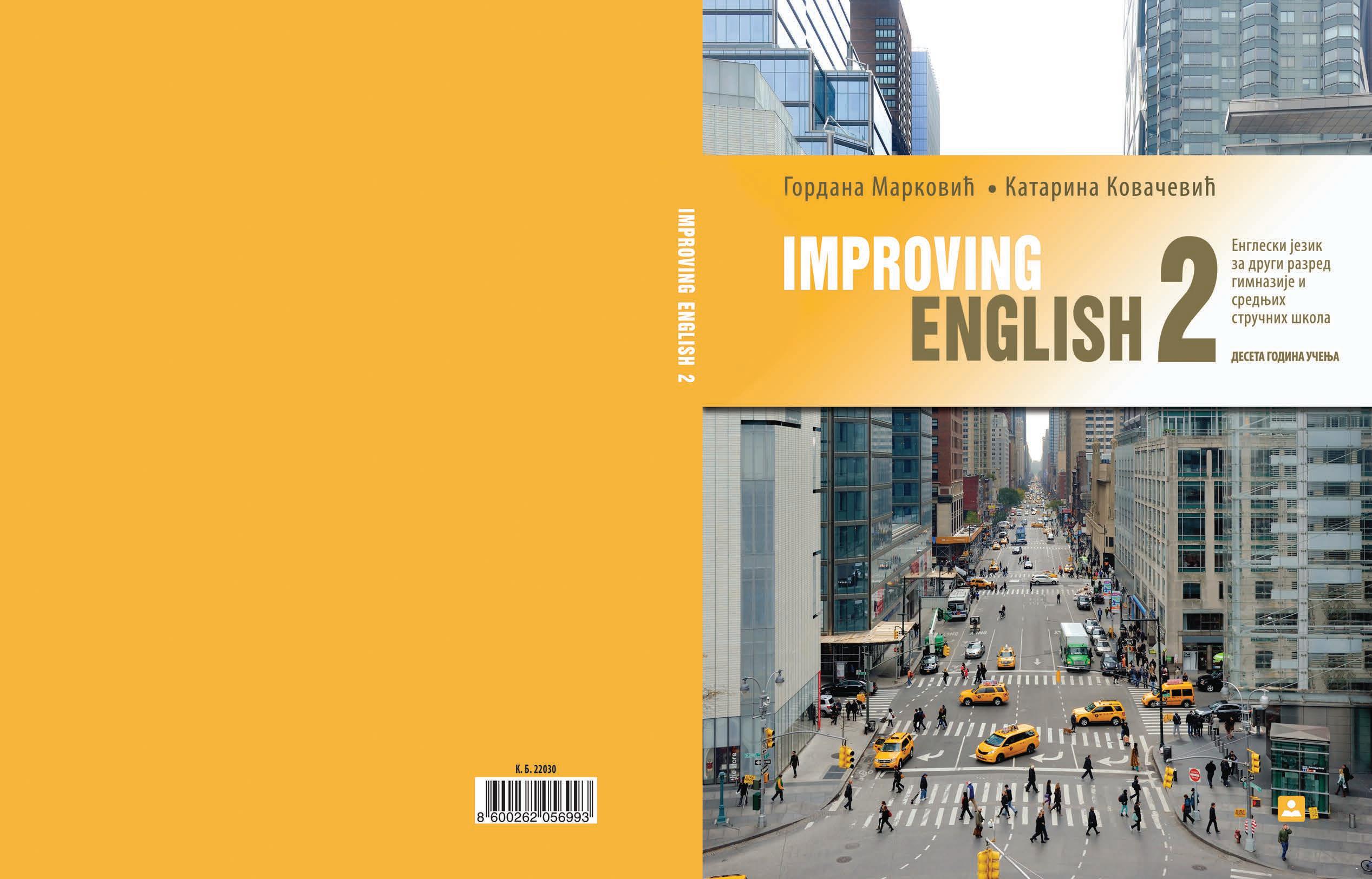
Cover page: Eighth Avenue, Manhattan, New York (Depositphotos)




Unit 1
6–19
Grammar
Vocabulary
Reading: A Oxford – the city of dreaming spires B New Orleans – the city of music and carnivals
The present simple and continuous tenses
The present perfect tense
Conditional sentences type 1
Prepositions after verbs; Synonyms
Making adjectives and nouns
Phrasal verbs with get
Speaking Talking about Oxford
Listening Cycling in New Orleans
Writing A biography of William Shakespeare
Communication Asking for and giving directions
Unit 2
20–33
Grammar
Vocabulary
Reading: A Stories that teach values B The seed of honesty
The past simple and continuous tenses
The indefinite article
The infinitive without to
Collocations; Making nouns
Phrases with down
Speaking Retelling fables/fairy tales
Listening Three filters for gossiping
Writing A short story
Communication Making and accepting apologies
Unit 3
34–47
Reading: A The Olympic Games B Pushing the boundaries of human possibility
Grammar The use of articles; The past perfect tense; Expressing wishes and regrets
Vocabulary
Collocations with undergo and together Making adjectives and nouns
Phrasal verbs with stand and call
Speaking Why have extreme sports become so popular?
Listening My first skydiving experience
Writing Writing a composition: Extreme sports – for or against?
Communication Expressing interest
Unit 4
48–63
Grammar
Vocabulary
Reading: A Setting and achieving goals B People who have achieved greatnessWilma Rudolph
The gerund or infinitive; Past habits
The passive voice; The passive - infinitive construction
Collocations; Making verbs and nouns
Prepositions
Phrasal verbs with turn
Speaking Examples of achievements
Listening Stephen Hawking
Writing A biography of Nikola Tesla
Communication Talking about possibility and probability


Unit 5
64–79
Reading: A Changing eating habits
B Food and health
Grammar Omission of articles; Quantifiers (much/many; few/little)
Direct and indirect speech
Vocabulary Word formation; Prepositions; Phrasal verbs with give
Speaking A healthy diet; An interview with Jamie Oliver
Listening Traditional meals
Writing Writing a recipe
Communication Agreeing and disagreeing
Unit 6
80–95
Reading: A A firefighter
B Hobbies
Grammar Conditional sentences - type 2; The present perfect continuous tense
Vocabulary Expressions related to jobs; Adjectives for describing personality; Prepositions; Phrasal verbs with look
Speaking Choosing a career; Talking about hobbies
Listening Talking about occupations
Writing An interview
Communication Asking for and giving advice
Unit 7
96–111
Reading: A What role will robots play in the future?
B The invisible man by H. G. Wells
Grammar The future continuous tense; The causative structure with have/get Modal verbs; Conditional sentences - type 3
Vocabulary Prepositions; Phrasal verbs with up; Negative prefixes and suffixes
Speaking What would you do/would you have done if…?
Listening The invisible man (2)
Writing A short composition on technological advancement
Communication Expressing certainty and uncertainty
Unit 8
112–123
Reading: A The phenomenon of music
B Festivals
Grammar Adjectives: the comparison of adjectives and word order; Relative clauses
Vocabulary Collocations; Phrasal verbs with take and off
Speaking Talking about music
Listening Can music heal?
Writing Writing a conversation in dialogue form
Communication A complaint Unit 9
ENTERTAINMENT
124–137
Grammar Adverbs
Reading: A Forms of entertainment
B Pros and cons of reality TV shows
Vocabulary Prepositions; Phrasal verbs with come
Speaking Reality TV shows
Listening Develop your sense of humour
Writing Reality TV shows
Communication Making an appointment




B

In this unit, you will
a. read, listen and talk about:
- Stratford-upon-Avon

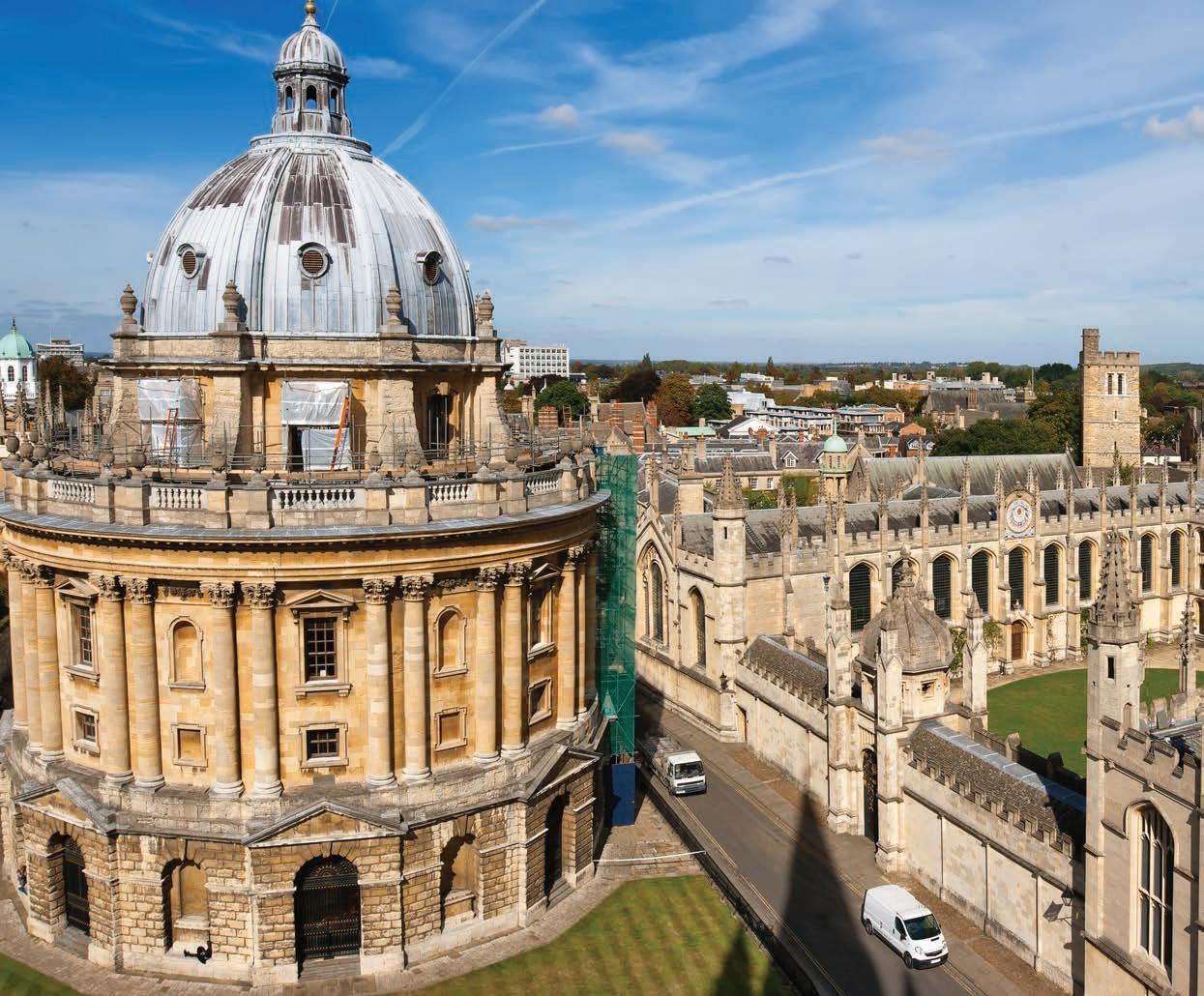
- Oxford – the city of dreaming spires
- New Orleans – the city of music and carnivals
- cycling in New Orleans
b. practise:
- the present simple and continuous tenses
- the present perfect tense
- making nouns
- prepositions after verbs
- phrasal verbs with get
- asking for and giving directions

Discuss these questions in class. Compare your answers.
1. Why do people like to live in cities?
2. What makes a city an interesting place to visit?
3. Mention three things that make your home town a good place to live in.
Finish the following sentences.
1. The landmarks of a city are its __________________________________________.
2. Oxford and Cambridge are famous ______________________________________.
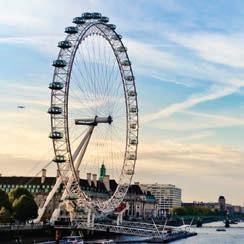
3. The landmarks of the cities in the pictures are: _________________
How
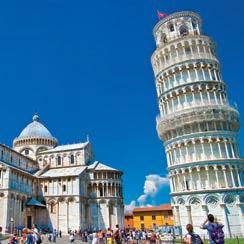

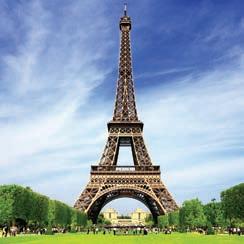




How much do you know about Oxford? Tick (√) the sentences which you think are true.

1. Oxford is famous only for its University.
2. The first colleges were opened in the 19th century.
3. There is a river running through the city.
4. Students wear gowns for some occasions.
5. Two universities, Oxford and Cambridge, compete in a boat-race.
6. Shooting films is not allowed on the college grounds.

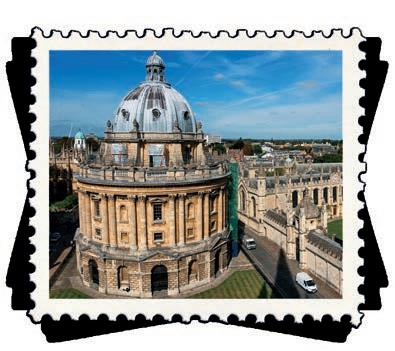
Read the text once and check your answers.
A This bustling cosmopolitan town, known as the ‘City of Dreaming Spires’, is a mixture of ancient and modern. The breathtaking architecture of the medieval buildings that dominate the town and the lovely parks scattered all over the city provide a great source of fascination and suit all ages and tastes.
B Oxford is certainly best known for its famous, prestigious colleges, which date back to the 12th century. Most of the colleges are closed to the public, but some are open during certain hours and certain seasons so that tourists can stroll around the fascinating historical grounds and chapels. From time to time, visitors can see Oxford students wearing their gowns. The largest and most striking college is Christ Church, where many of the scenes in the Harry Potter feature films were shot. The Great Hall itself was replicated at film studios as the grand dining hall at Hogwarts and Harry Potter’s popularity continues to attract people to visit the film’s locations.
C One of the landmarks of the town is a charming pedestrian bridge for the students of Hertford College, which has popularly become known as the ‘Bridge of Sighs’. It is named after the famous bridge in Venice because of its supposed similarity to it. The bridge links the old and new areas of Hertford College so the students don’t get wet and it saves time. There is a false legend saying that many decades ago Hertford College’s students were the heaviest. In order to help them lose weight, the college authorities decided to close off the bridge and the students were forced to take the stairs instead. However, if the bridge is not used, students actually climb fewer stairs than if they use the bridge.
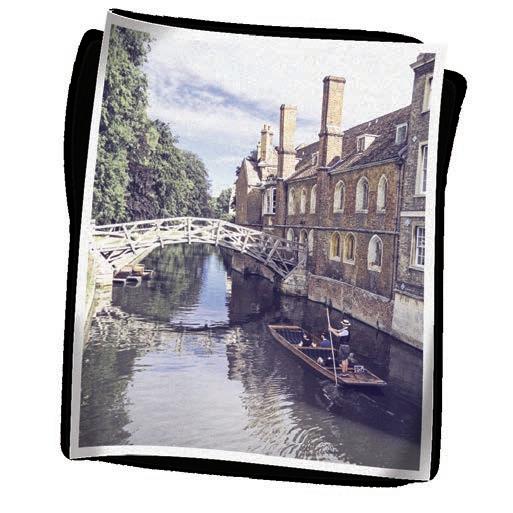
D If someone wants to do something that’s romantic and fun in Oxford, punting could be an appropriate activity. A punt is a shallow wooden boat that is propelled by a long pole. You can also hire someone to do the punting for you, although it is easy and fun to do it yourself. Twice a year, traditional inter-college boat races take place and the famous Oxford-Cambridge boat race is an opportunity for both universities to enjoy the great atmosphere and experience real college spirit.
E With so many choices of country walks, cycling, sailing or punting, there are activities to suit everyone. Everything in the centre of Oxford is within easy reach and a visitor can just walk around and enjoy the atmosphere.










spire – a tall narrow pointed structure on the top of a roof or tower bustling – very busy and lively, full of people cosmopolitan – made up of people from different countries and cultures chapel – a place in a church for private prayer; a small church
scatter – spread around an area
striking – remarkable, outstanding, attractive replicate – do something again in exactly the same way; reproduce punting – moving a boat by pushing a long pole against the bottom of the river pedestrian bridge – a bridge that people can walk across sigh – let out a deep breath expressing relief or sadness gown – a long cloak worn on formal occasions by university students and staff propel – drive, push, or cause to move


Which paragraph talks about:
1. various activities on the river?
2. why the bridge was closed?
3. the college which is the most prestigious?
4. the architecture of the city?
5. the filming of a famous film for children and adults?
According to the text, which sentences are true and which are false? Justify your opinion.
1. Most of the old buildings are very attractive.
2. Tourists can enter all the colleges.
3. The famous ‘Bridge of Sighs’ in Venice was named after the bridge in Oxford.
4. Oxford offers a lot of activities which are suitable for everyone.
5. If you want to go punting, you have to hire somebody to do it for you.

• Oxford University is an association of thirty-five colleges.
• About half of Britain’s Prime Ministers were educated at Oxford.
• For centuries teaching and studying at Oxford were for the few.
Match the words from the text with their definitions.
A1. feature film
2. grounds
3. race
4. medieval
5. similarity
6. stroll
7. prestigious

Ba. an area of land around a building
b. relating or belonging to the Middle Ages
c. likeness, having one or more qualities in common
d. go for a relaxed walk
e. important, impressive, prominent
f. a full length film
g. contest, competition

1. Cosmopolitan is most similar in meaning to A worldly B respectable C provincial
2. Bustling is most similar in meaning to A demanding B still C busy
3. The closest opposite to shallow is A low B deep C small
4. The closest opposite to scatter is A collect B spread out C break up

Add the correct preposition that follows the verbs in the box. Choose from: around, from, on, for and after.
Circle the correct answer. In some cases there is more than one correct answer! name ... apologize … stroll ... to be known … prevent … suffer … concentrate … wait …
5. Grand is most similar in meaning to A impressive B ordinary C modest
6. The closest opposite to link is A connect B separate C bring together


Complete the sentences with the correct form of a verb + preposition from the box.
1. Rose ______________ a severe headache and has to see a doctor.
2. The town is ______________ its fascinating architecture.
3. It was a very pleasant evening and we decided to ______________ the park.
4. I think you should __________the boy __________ his maternal grandfather.
5. Diana finds it hard to _________________ her studies when she is in love.

Mention three things that, in your opinion, can appeal to every visitor to Oxford.
What about you? Which of the following would you like to see or do first?
a. go punting
b. watch a boat race
c. visit the Great Hall
d. walk over the Bridge of Sighs
e. go sightseeing in the colleges which are open to the public
f. stroll around the parks

1 2
3
Match the tenses and their uses (a-h). The first one has been done as an example.
The present simple… __a______________
The present continuous…
…is used for
a. general facts.
b. activities in progress at the moment of speaking, or near the moment of speaking.
c. repeated actions or habits.
d. situations that we see as permanent.
e. definite arrangements in the future, as in timetables.
f. something that someone has arranged to do in the near future.
g. situations that we see as temporary.
h. situations which are slowly changing.
Match the examples (1-8) with the explanations (a- h) to show that you understand the use of tenses.
1. He is taking four examinations in June.
2. Water boils at 100 degrees Centigrade.
3. He is working in the garden at the moment.
4. She gives me a lift to work every morning.
5. The Jacksons live in a very nice house in the suburbs.
6. Geoff is staying in his sister’s flat while he’s looking for a place to settle down.
7. The days are getting shorter and colder. It will be winter soon.
8. The football match starts at six o’clock.
Note: The present tenses are also used in conditional sentences type 0 and 1.
E.g. If you click on delete, you lose everything that you have written. If my mother buys me this jacket, I’ll be very happy. I’ll come back later if you’re working now.
Match the two halves of the sentences to get the right meaning.
1. If I go to Cambridge,
2. If you buy a return ticket,

3. You will need some more money
Don’t disturb him
Unless you give me your email address,

a. it will cost you less.
b. I won’t be able to send you the photos.
c. if he is sleeping.
d. if you want to buy all these things.
e. I’ll certainly visit King’s College.
The word unless means the same thing as if ... not. For example: We’ll arrive at ten o’clock unless our flight is late. (We’ll arrive at ten o’clock if our flight isn’t late.)
Unless is often used in conditional sentences.


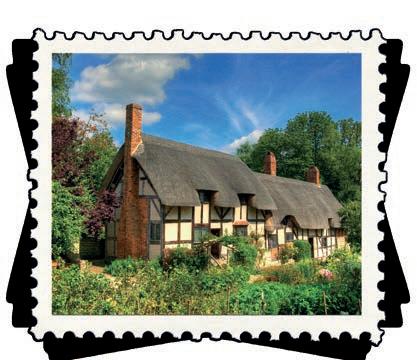
Read Anne’s email to Peter and put the verbs in brackets into the present simple or present continuous tense.

Hi Peter,
I ____________(visit) Stratford-upon-Avon for a relaxing weekend. As you know, this picturesque town is the birthplace of the world’s greatest playwright, William Shakespeare. I’ve read a few things about the town in a brochure. I ___________(think) the best way to see as much as Stratford-uponAvon __________(offer) is to use one of the sightseeing hop on hop off bus tours. If I ________ (manage) to get on that bus, it will take me past all the main sights of the town. Besides, I can get off the bus at stops around the city where places of interests __________ (be).
I ______________ (look) forward to walking around the centre of the town and seeing the final resting place of William Shakespeare, Holy Trinity Church. I__________(also plan) to visit the Royal Shakespeare Theatre, which is situated on the bank of the river Avon. This is a ‘one-room’ theatre, which ___________(allow) the actors and the audience to share the same space, as they did in Shakespeare’s time. Here the Royal Shakespeare Company _____________(perform) Shakespeare’s plays all year round. Tonight they __________(perform) Othello. And finally, I’m going to do some shopping. I ____________(not/want) to come back empty-handed!
Love,
Anne
PHRASAL VERBS with GET
Study the use of the phrasal verbs with GET and do the exercise.
1. get along/on have a good relationship with 1. I was surprised how well my new girlfriend and my sister got along/on.
2. get on 3. get off enter a bus/train leave a bus/train 2. They’ve already got on the bus. 3. Follow them to see where they will get off.
4. get away with escape the consequences of 4. He always gets away with cheating on his maths tests.
5. get over recover from an illness/ loss; overcome 5. I’ve just got over the flu and now my sister has it.
6. get down to give one’s attention to something 6. Let’s get down to work.
7. get through succeed in making contact; reach 7. I can’t get through to Tom on this phone.
8. get rid of eliminate, throw away 8. We must get rid of our old furniture.
Complete the sentences with the correct phrasal verbs with get.
1. I hope she’ll _____________ her illness.
2. He couldn’t _____________ his crime because the police found a witness.
3. It’s time to ________________business and finish it.
4. He didn’t _______________ with his boss and finally decided to leave the company.
5. Why do I always _____________to the wrong department when I phone Jim?
6. She wants to _______________all the clothes she can’t wear any more.
Go to an Internet site or look through books to find out the answers to the following questions.
1. When and where was Shakespeare born?
2. What did he write?
3. Name a few of his plays.
4. Where did he live while he was writing?
5. Where were Shakespeare’s plays performed in his time? What did the theatres look like then?
6. Where did he die?
Using the answers to these questions, write a short biography of William Shakespeare. You may add other details about his life and work.
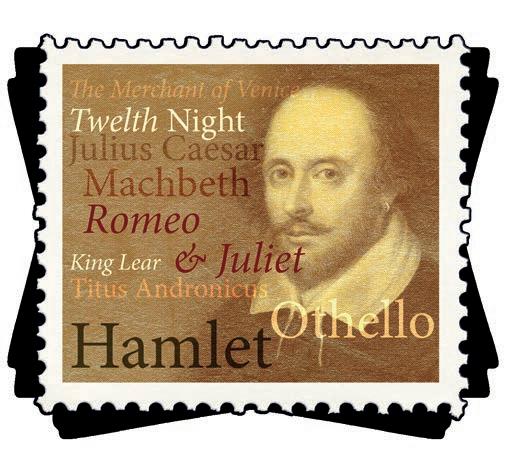
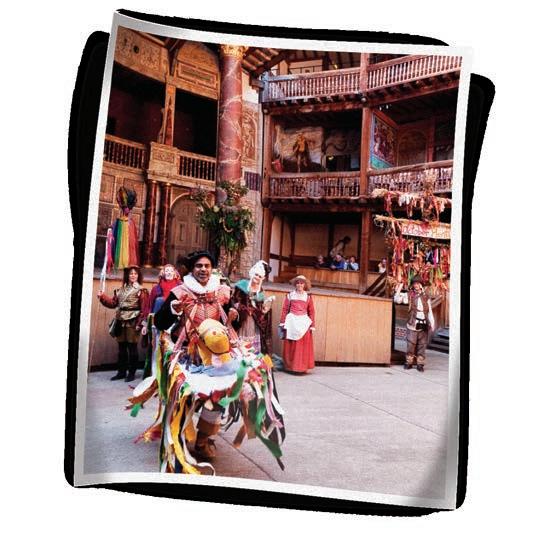
There are many expressions in modern English which have come from Shakespeare’s plays. Discuss the following quotations.
All the world’s a stage, And all the men and women merely players: They have their exits and their entrances; And one man in his time plays many parts, His acts being seven ages.
(As You Like It)
But love is blind, and lovers cannot see.
(The Merchant of Venice)
Neither a borrower nor a lender be. (Hamlet)
All’s well that ends well. (All’s Well That Ends Well)
Better three hours too soon than a minute too late.
(Merry Wives of Windsor)


The Globe Theatre celebrated its 400th anniversary in 1999.



Read the text and do the exercises which follow.
New Orleans is one of the top ten most visited cities in the United States. The city is located on the east and west banks of the Mississippi River. In 2005, it was struck by deadly Hurricane Katrina, which caused some of the worst damage in the country’s history. More than 1,500 people lost their lives and hundreds of people were left without homes, jobs and social security.
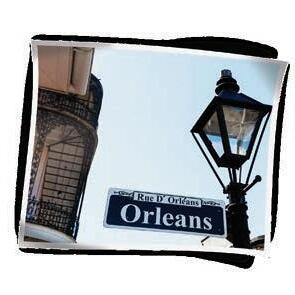
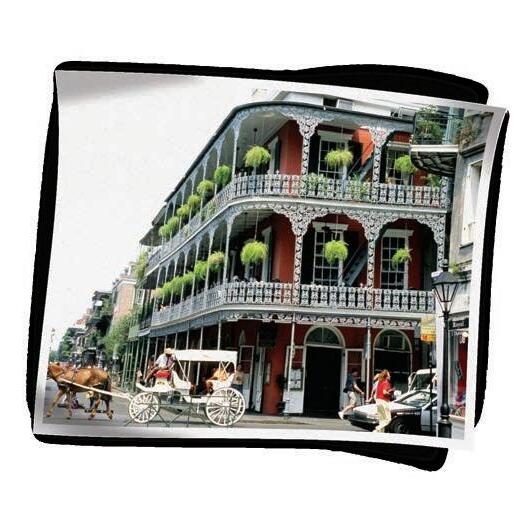
New Orleans is named after the city Orleans in France and is well known for its French architecture, as well as its multilingual heritage. It is also famous for its annual celebrations and music festivals. Despite hurricanes, floods and wars in the past, the city has always celebrated Mardi Gras, the ‘greatest free party on Earth’, and the Jazz Festival. More than 4 million people from around the world come to New Orleans each year to take part in the Mardi Gras Carnival. It has traditionally been part of the winter social season, a season of parades and masquerade balls. The main celebration is Mardi Gras Day, which means Fat Tuesday in French, and Mardi Gras Parade clubs play an important role in the celebrations. Each of them has a unique history and theme. Some have been around for decades, while others have been in existence for just a few years. They choose a king or queen for the parade and organize balls, dancers, bands and floats. The parade processions consist of decorated floats which are usually pulled by trucks. People riding on the floats wear masks and costumes for the entire parade and they throw inexpensive colourful beads and toys into the crowds. The beads are one of the most attractive symbols of the carnival and represent good luck and the spirit of Mardi Gras. The Carnival cannot be imagined without jazz bands because New Orleans is also a significant centre of music. The Jazz Festival is one of the largest music festivals in the USA, with crowds of people coming to experience music, arts and crafts. Despite the name, it promotes not only jazz, but a large variety of music, including both native Louisiana music and international artists.

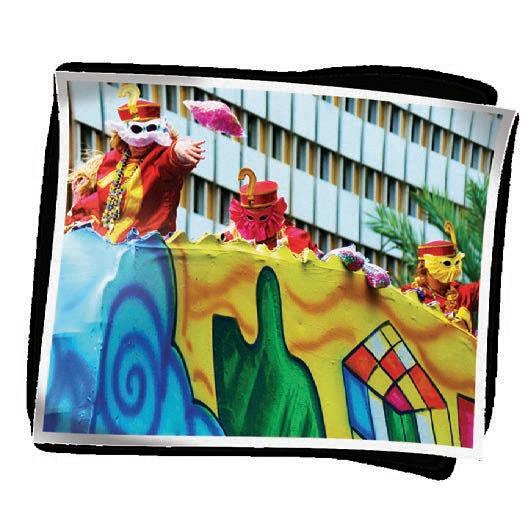

heritage – tradition, all features of life that have been passed on from one generation to another float – a lorry on which people in special costumes are carried in a festival procession bead – a small coloured glass, plastic, or wooden ball, with a hole in the middle, put together on a piece of string crafts – objects made by the skilful use of the hands
Answer the following questions.
1. Where is the city of New Orleans situated?
2. What damage did the people of New Orleans suffer during the hurricane?
3. Did hurricanes prevent people from organizing festivals and celebrations?
4. Which two cultures mixed together while the city developed?
5. What role do the Mardi Gras Parade clubs play in organizing the celebrations?
6. How are float riders dressed?
7. What do they throw from the floats?
Read these sentences from the text and underline the correct alternative.
1. After hurricane Katrina, Mardi Gras was/wasn’t celebrated again.
2. Mardi Gras takes place in summer/ winter.
3. The colourful beads they throw are expensive/inexpensive.
4. Jazz bands take part/don’t take part in the Carnival.
5. The Jazz Festival promotes only jazz/a great variety of music. 1 2
8. Why do people come to New Orleans at the time of the Jazz Festival?
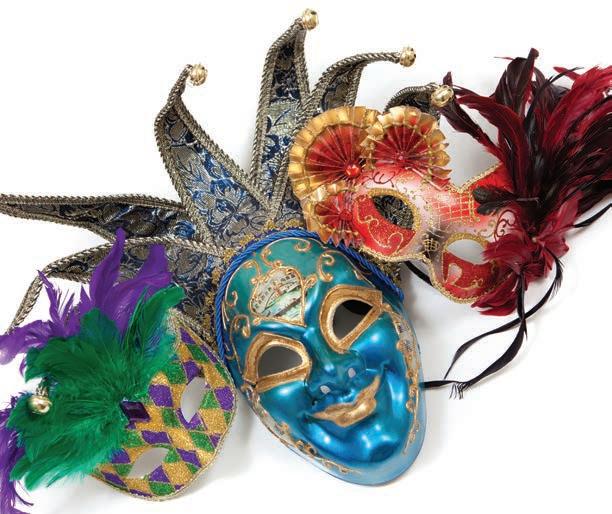

?• The carnival season starts on January 6 and lasts until Mardi Gras Day, which can fall on any Tuesday between February 3 and March 9 (depending on the date of Easter).
• Fat Tuesday is the day before the beginning of Lent, a 40-day season of fasting for many Christians which lasts until Easter. According to old beliefs, people eat and drink excessively on that day.

Which highlighted word from the text means:
1. happening once a year or every year? _ _ _ _ _ _
2. the whole of something, including all the details? _ _ _ _ _ _
3. something likely to cause someone’s death, or something very unpleasant? _ _ _ _ _ _
4. a period of ten years? _ _ _ _ _ _
5. physical harm that is caused to something? _ _ _ _ _ _

Complete the sentences with the nouns made from the verbs in capitals.
1. A long ____________ of colourful floats appeared to the excitement of the children. / PROCESS
2. Old customs have been in _____________ for hundreds of years. /EXIST
3. They have cancelled their annual company __________________. / CELEBRATE
4. How many _______________ were there on the floats? /RIDE
5. She apologized for her late _________________. /ARRIVE
6. They needed some more _________________on the subject. /INFORM
7. Liam made a good _____________ when he decided to study medicine. / DECIDE

Complete the sentences by using the words in the box.
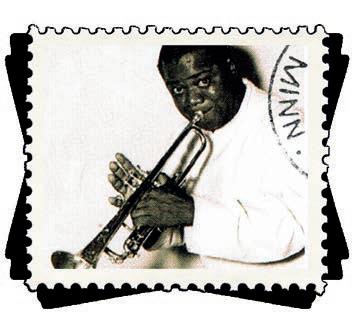
New Orleans is considered to be the ______________ of jazz music. Jazz was created by black Americans who sang and played the music of their _____________land. This music is a combination of a strong ____________and a dance rhythm. The characteristics of jazz music are blue notes and improvisation. Much of the music of New Orleans today____________ its popularity to the early brass marching bands. Many of the best-known musicians had their start in brass marching bands performing at parades and funeral _____________. One of them, Louis Armstrong, became a _____________. He was recognized as the best trumpet _____________ of all time and an outstanding vocalist. Though rock ‘n’ roll was more popular than jazz in the sixties, he hit the _____________ of the chart in 1968 with the song What a Wonderful World, which many _____________have sung ever since.

PRESENT PERFECT TENSE
Match the use of the present perfect with the example sentence. The present perfect is used…
1. to talk about unfinished actions that started in the past and continue to the present.
2. to say that an action happened at an unspecified time before now.
3. to describe experiences.
4. to talk about changes that have happened over a period of time.
5. to list the accomplishments of individuals.
6. when we mention how many times something has happened.
7. for a finished action with a result in the present (focus on the result).
native processions birthplace generations owes player legend top beat

a. The army has attacked that city five times.
b. They’ve missed the bus (so they will be late).
c. I think I have met him once before.
d. You have grown since the last time I saw you.
e. She’s lived in London for three years.
f. He has never travelled by train.
g. Doctors have cured many deadly diseases.
Make questions asking for the information in bold.
We do not use the future tense (will) in a time clause to describe future activities. The present simple or present perfect tense is used instead. A time clause is introduced by conjunctions such as after, as soon as, before, till, until, when, whenever, and while He’ll wait for you until you are back. You can go out after you have tidied up your room. 2 3 4
1. His brother has lost his glasses again. ___________________________________________
2. He has ordered three desserts. _________________________________________________
3. My sister has cooked dinner. __________________________________________________
4. He has had that violin for five years. ____________________________________________
Time adverbials and tenses
Put these time adverbials in the correct place in the table. Some of them can go in more than one box.
always, so far, ever, never, at the moment, already, tomorrow, usually, for ages, since, for, now, every summer, at present, not yet, just, today, this morning, up to now, recently, currently, occasionally, lately, frequently the present simple _________________________________ the present continuous ______________________________ the present perfect _________________________________
Note:
Always used with the present simple tense means every time. Always used with the present continuous tense means very often and usually describes an annoying habit. Always used with the present perfect tense describes conditions that were true in the past and are still true.
Write sentences in the present perfect tense.
Use the adverbs of time: never, yet, already and before.
Example: Tina / run / before / marathon – Tina has never run a marathon before.
1. we / reach / our goal – _______________________________________________________
2. our team / lose / the match – __________________________________________________
3. they / not / discover / the treasure – ____________________________________________ Ron / not / talk / about the problem – ___________________________________________ the teacher / mark / the tests – ________________________________________________?


LISTENING and SPEAKING
Pre-listening activity
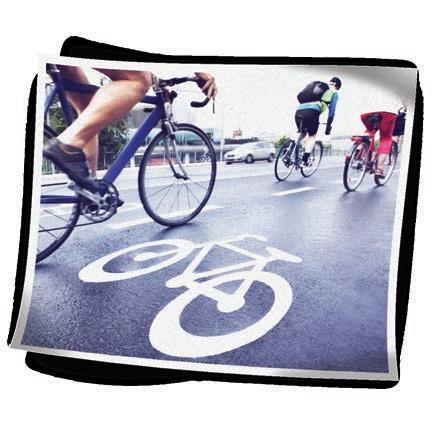
1. Is cycling popular in your town?
2. Are there bicycle lanes in your town or nearby towns?
3. Do you think that bicycle lanes are useful? Why?/Why not?
3
Listen to the text Cycling in New Orleans and answer the following questions.
1. What is the best way of touring Louisiana?
2. Where does the Mississippi River Trail start?
3. Can the citizens of New Orleans use their bikes all year round?

4. Which conditions have helped New Orleans to become a highly-rated city for bicycle transportation?
5. What has the city done for its cyclists?
6. Why are New Orleans’ bicycles considered unique?
What do the following words from the text mean? Choose the best explanations.
1. the trail
a. path
b. train
c. flow
4. adventurous
a. dangerous
b. serious
c. courageous
2. to promote
a. build
b. support
c. protest
5. to post (a sign)
a. make up
b. put up
c. get up
3. to allow a. permit
b. forbid
c. prevent
6. mild (climate)
a. cold
b. hot
c. not extreme
Complete the second sentence so that it has a similar meaning to the first, using the word in bold.
Do not change the form of the word in bold.
1. I have never been to this summer resort before. /first It ___________________________________ to this summer resort.
2. I don’t think she will ever recover from the shock of her friend’s death. /get She will ____________________ the shock of her friend’s death.
3. Unless we get the tickets soon, they’ll all be sold out. /if The tickets will all be sold out ________________________ them soon.
4. Why are you interested in taking up a new hobby? /want Why __________________________ up a new hobby?
5. She bought this car three years ago. /for She _____________________________________ years.
6. I haven’t seen Richard’s brother since Thursday. /last The ___________________________________ on Thursday.
7. What is the pronunciation of this word? /you How ____________________________ this word?

The following are some of the phrases used for asking for and giving directions.
ASKING FOR DIRECTIONS
• How can I get to . . . from here?
• Can you show me the way to...?
• Can you tell me how to get to . . . ?
• What’s the best way to get to . . . ?
• Where is . . . ?


GIVING DIRECTIONS
• Go straight on!
• Turn left/right!
• Take the first turning on the left/right!


• The ... is beside/in front of/next to the...
• Go past the theatre/school!
Work in pairs. Take turns to ask for directions and give directions from the place where your school is located to…
a. a well-known place where young people like to hang out.
b. two landmarks in your town.
1 2 3
Complete the sentences with the expressions from the box.
1. A: ‘Did you call Roger and Ann to wish them a happy anniversary?’
B: ‘Oh no! ____________________.’
2. Don’t let anyone spoil this chance of success for you. _____________!
3. We’re going camping this weekend, _________________.
4. If you think you failed the test because it was hard, you are __________________.
5. My neighbours were living happily here when ______________ they decided to move to the city.
6. Diana’s salary is so low that she finds it hard to ______________.
Which of the expressions means the following:
1. take action on it?
2. whatever the weather?
3. happening unexpectedly?
4. forget about something?
5. to have money only for basic needs?
6. wrong? COMMUNICATION
go for it ▪ it totally slipped my mind ▪ out of the blue ▪ rain or shine ▪ barking up the wrong tree ▪ make ends meet
Use the phrases from the box to make new sentences.
2 3 4
Complete the sentences by using the words/phrasal verbs from the Key word list in the correct form. (6 points)
1. ‘Agh! I have my __________ visit to the dentist’s today.’ –‘Well, it’s only once a year.’
2. She dropped the bag and the cookies _____________ all over the floor.
3. They along the beach as they had nothing to do.
4. Local people want to protect their natural and cultural ___________ and encourage tourism.
5. It will take her weeks to _____________ the disappointment.
6. The workers want to work, but can’t find ________________ jobs.
Replace the underlined word in the sentences with the word/ phrasal verb from the Key word list which has the opposite meaning. (4 pts.)
1. Natural disasters and nuclear power plants are a harmless mix.
2. The river was deep, so we were able to get across easily.
3. My suggestion is to keep these old books.
4. The man’s appearance was unimpressive.
Complete these sentences using the correct tense of the verbs in brackets. (6 pts.)
1. This is the first time I (fly)_____________ on a jumbo jet.
2. He sometimes ___________________ (speak) so quickly that nobody ___________________ (understand) him.
3. I (not have) _____________ a proper dinner for weeks.
4. _________________ (he/visit) his parents next weekend?
5. The film _____________ (start) at 8 p.m. Hurry up!
Rewrite the following sentences using the word in bold. (4 pts.)
1. The last time they went to the theatre was last September. /not They ________________________________ last September.
2. If he doesn’t take this medicine, he won’t get better. /unless He won’t get better________________________ this medicine.
3. ‘You’ve broken my glasses,’ said the boy to Tom. /accused The boy ________________________________ his glasses.
4. B ecause of the accident Bob couldn’t take part in the race. / prevented B ob’s accident _______________________________ part in the race.

KEY – page 141

TEST 1 KEY WORD LIST
Verbs float scatter stroll Nouns damage heritage craft procession spire sigh gown Adjectives appropriate annual bustling deadly cosmopolitan striking entire medieval prestigious shallow picturesque Phrases get along/on get on get off get away with get down to get over get through get rid of



20 points


In this unit, you will
a. read, listen and talk about:
- stories that teach values
- the value of honesty
- Socrates’ reasons against gossiping
b. practise:
- the past simple and past continuous tenses
- the indefinite article
- the infinitive without to - collocations; making nouns; phrases with ‘down’
- making and accepting apologies

Mention:



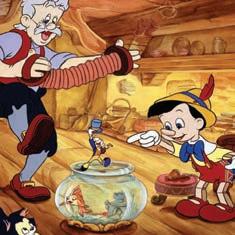
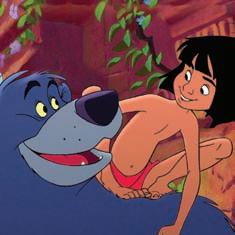
Work in groups. Each group should use one of the pictures to tell the story it relates to. One student starts the story, the other continues, and so on.
• the main characters of the story.
• what they do.
• how the story develops.
• what happens at the end of the story.
• what message the story has.





Read the text on the right and answer the following questions.
1. Why do these kinds of stories inspire and teach?
2. Which values are most often emphasized in these stories?
3. Do you know what the two stories mentioned in the text are about?
READING and SPEAKING
There are many types of stories that have a simple ‘moral’ for the reader: fables, myths, fairy tales and so on. These stories teach, whether the storyteller intends to or not. The fable called The Tortoise and the Hare teaches people that they will achieve a lot by taking slow steps. The Boy Who Cried Wolf warned us of the dangers of dishonesty. Through reading, we can learn about values that are truly important, such as honesty, sincerity, tolerance, generosity, forgiveness, gratitude, and self-discipline.
Young people in particular need examples of what is right and wrong and books serve to illustrate some easily recognizable human characteristics. Stories show the consequences of bad behaviour and the benefits of good behaviour. They spark the imagination, leave lasting impressions, inspire and teach.
FOLLOW UP



track 5
Read the short story Old habits die hard and then discuss the questions.
Not satisfied with his son’s behaviour, a wealthy man requested an old wise man help his son change his bad habits. The old man thought for a while about how to make the boy improve his manners. Eventually, he had an idea.
He took the boy for a walk. While they were strolling through a garden, he asked the boy to pull up a tiny plant growing there.

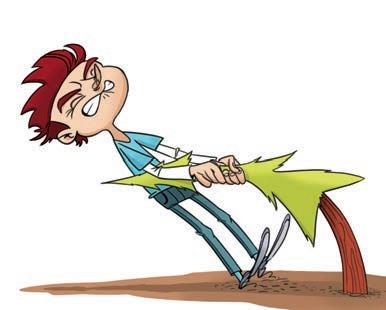
The youngster held the plant between his thumb and forefinger and pulled it out. The old man then asked him to pull up another, slightly bigger plant. The boy pulled hard and the plant came out, together with its roots. ‘Try that one,’ said the old man pointing to a bush. The boy had to use all his strength, but finally managed to pull it up.
‘And now this one,’ said the old man, indicating a small apple tree. The boy grasped the trunk and tried to pull it up, but it would not move. He was panting with the effort. ‘I can’t. It’s impossible,’ he said.
‘You see, so it is with bad habits,’ said the wise man. ‘When plants are young, it is easy to pull them out, but when they take hold they cannot be uprooted easily. Don’t wait for bad habits to grow in you; drop them while you have control over them or else they will take control of you.’
The boy then realized what the moral of the story was and that he should take the old man’s advice and change his behaviour.
gratitude – thankfulness, the feeling of being grateful or thankful spark – stimulate (an activity, interest) grasp – to take or hold firmly pant – to breathe rapidly, with short, quick breaths indicate – point out; show to pull up – to pull (a plant and its roots) out of the ground


Use the words from the Glossary in the correct form to complete the sentences below.
1. He wants to express his sincere __________ for all your help.
2. The man __________ her by the wrist and shouted.
3. The question __________ a lively discussion and we stayed an hour longer.
4. Somebody ___________ all the flowers from my garden last night.
5. The boy ____________________ when he reached the top of the hill, unable to get his breath back.
Fill in the correct prepositions from the text and then use the phrases to make sentences.
1. consequence _______
2. benefit _______
3. based __________
4. point______
5. stroll________
6. grateful ________
Answer the following questions.
1. What kind of request did the wealthy man have?
2. Why did the old man take the boy for a walk?
3. How did the boy’s attempts to pull up the plants serve the old man’s purpose?
4. What did the boy decide to do?
What about you? Do you have any bad habits which have lasted too long?
Find a word in the box which most closely matches one of the pairs of synonyms below. There are two extra words. 2
1. ask, demand __________
2. very small, little __________
3. really, surely __________
4. permanent, endless
5. direct, indicate ___________
6. frank, honest ________
2 Fill in the gaps with the correct prepositions. See the Appendix and check your answers.
1. He will never forgive me _________ breaking up with him.
2. He was accused _______stealing a valuable painting.
3. He blamed me ________the theft.
4. They congratulated me ___________ passing my exams.
5. I will never agree ______ any of his proposals.
6. Modern paintings differ _______ earlier paintings in many ways.
7. I succeeded ________ getting to the meeting on time.
8. I am thinking of applying _______ the scholarship.
9. They were suffering ______ shock after the explosion.
10. I strongly disapprove ________your teaching methods. effort request slightly tiny lasting point truly sincere



Guess the meanings of the phrasal verbs from the context. Then match the phrasal verbs with their meanings (a-f).
1. The government should do something to bring down oil prices.
2. He has cut down on sugar in his coffee because he wants to lose weight.
3. They pulled down the old restaurant to build a new one.
4. Calm down! There’s no point worrying about it now.
5. He really let me down. I won’t forgive him.
6. My car broke down on the motorway yesterday.

a. destroy; demolish
b. stop feeling upset/ excited
c. disappoint somebody
d. stop working (machine)
e. make something cheaper/less
f. consume less
Complete the following sentences using the phrasal verbs with ‘down’.
1. You need to________________ a bit or the stress will give you a headache!
2. They decided to _________________ the old bridge because it was dangerous to cross it.
3. I think we should try to ______________ the level of unemployment.
4. He _____________on coffee and cigarettes, and ate a balanced diet.
5. You mustn’t rely on her – she always _________ people _________.
Make nouns from the adjectives (1-6) in the table. The first one has been done as an example. Then use the words from the table to make sentences.
Adjective Noun
1. virtuous virtue
2. tolerant
3. generous
4. grateful
5. honest
6. proud

There is a proverb which says that ‘what you plant now, you will reap later’.
a. Explain the meaning of the proverb.
b. Think of a similar proverb in your language.
Example: Virtue is thinking and doing what is right.
Choose a fable/ fairy tale that you know and tell it to the class.

Identify the tense in the sentences (1-10) and match them with their use (a-j).
1. At noon we were still driving through the country.
2. Last year, I travelled to Japan. / Did you have dinner last night?
3. He was talking to a policeman for two hours yesterday.
4. David turned off the light and went to bed.
5. I was studying while she was making dinner.
6. When did he come back from Italy?
7. He used to play the piano.
8. Several people were busily typing and some were talking on the phones.
9. She was always coming home late.
10. I was taking a bath when the telephone rang.
a. a longer action in the past which was interrupted
b. with always or constantly expresses the idea that something is irritating
c. an action which was in progress at a particular moment in the past
d. finished events in the past with no connection to the present
e. two actions happening at the same time
f. to express a long action
g. a sequence of completed past actions
h. questions beginning with when i. to describe past habits
j. background information, to give atmosphere to a story
Complete the fable with the correct past form of the verbs in brackets.
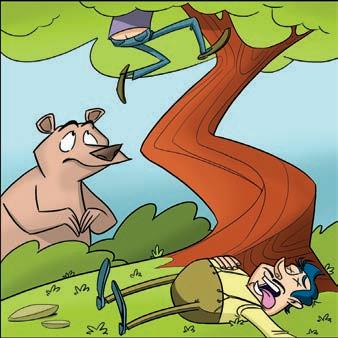
The bear and the two travellers by Aesop
Two men ________________ (travel) together when a bear suddenly _______________ (appear) in their path. One of them, in order to save himself, _______________ (climb) quickly up into a tree, and _____________(hide) in the branches. The other _______________ (fall) flat on the ground. He _____________ (lie) motionlessly when the Bear came up and smelt him all over. He_______________ (hold) his breath and pretended to be dead as much as he could for it is said that bears won’t touch a dead body. As soon as the Bear had left him, the other traveller _____________ (come) down from the tree and asked: ‘What _______________ (the Bear /whisper) in your ear?’ His friend replied: ‘He ____________ (give) me this advice: Never travel with a friend who deserts you at the approach of danger.’ Moral of the fable: Misfortune tests the sincerity of friends.
Choose which tense (the past simple or continuous) fits better.
1. I ________ – I didn’t hear you come in.
a. was sleeping b. slept
2. I ________ to see her twice, but she wasn’t at home.
a. was coming b. came
3. What ________? I was watching TV.
a. did you do b. were you doing
4. Did you talk to your boss? Yes, I ________ to her yesterday.
a. was talking b. talked
5. How long ________ the flu?
a. did you have b. were you having
6. ________ a good time in Paris? Yes, it was wonderful!
a. Were you having b. Did you have
7. I ________ when the waitress took my plate.
a. still ate
b. was still eating
We use the indefinite article, a/an, with countable nouns when the listener/reader does not know exactly which one we are referring to.
E.g. The police are searching for a 14-year-old girl.

The indefinite article is also used:
- to refer to something mentioned for the first time
- with names of jobs
- with nationalities in singular and religions
- with a noun complement
- to refer to an example of a class of things
- after the words ‘what’ and ‘such’ with nouns in the singular
- in certain expressions of quantity: a lot of, a great deal of, a great many, a couple, a dozen, a hundred
There is a flag on their house. He wants to be a mechanic.
John is an Irishman/a Catholic. She is a good student.
A crocodile is a dangerous animal.
What a nice day! / She’s such a clever girl.
There is a great deal of money in that business.
Note:
• The indefinite article is also used in a number of phrases: It’s a pity that … / It’s a shame … / as a rule … / to be in a hurry… / to take an interest in... / to have a headache/a cold/a pain/a cough/a sore throat / to have a chance/an opportunity to ...
• We do not use an indefinite article with plural nouns and uncountable nouns: She was wearing blue shoes. (= plural noun) She has short blonde hair. (= uncountable noun)


Add the indefinite article where necessary.
1. He said he was _____ employee at _____ shop in town.
2. She’s staying at _____ hotel in _____ small town in Colorado.
3. I’m on _____ diet. No _____ sugar for me!
4. She’s sent me _____ postcard from Italy. She says they are having such ____ nice weather.
5. He wants _____ bottle of _____ water.
6. He bought _____ dozen roses for his wife.
7. I think_____ pizza is bad for your health.
8. Don’t you know that _____ cookies contain _____ lot of sugar?
9. I ate at _____ Chinese restaurant. The restaurant was very good.
10. What _____ pity I can’t stay! I have had such ____ busy day.

The infinitive without TO is used:
• after auxiliaries/modals (can/may/will/ should, etc.) He can run very fast. / Diana will come back soon.
• after make and let He wanted to make the boy improve his manners. / Sandy let her child go out alone.
• after verbs of perception + object (to say that the action is complete): feel, hear, see, watch, notice They saw him climb up onto the roof. / Mandy noticed the boy steal an apple.
Note: After these verbs, the –ing form can also be used if the focus is on an action in progress. E.g. We could smell something burning in the kitchen.
• after the following expressions: had better – You had better clean up your room. would rather – Susan would rather study for her exam tomorrow. would sooner – I would sooner read a book than watch this film.
Note: In the passive voice, we use make with the infinitive with ‘to’ and be allowed to instead of let. E.g. He was made to go. / She was allowed to go.
The following sentences have been removed from the story. Read the text and decide in which numbered gap each sentence should go. There is one extra sentence.
A. Jim couldn’t believe it.
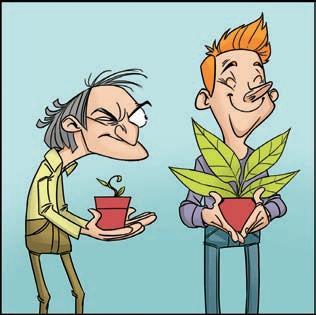
A successful businessman and the Chief Executive Officer (CEO) of a big firm, Mr Smith was growing old and he knew it was time to retire. One day, he called all the young executives in his company together and said: ‘It is time for me to step down and choose a successor to take over the business. 1_______’
B. However, he didn’t say anything to his colleagues.
C. Jim then told him the truth.
D. He was eager to tell them.
E. I have decided to choose one of you.
Seeing that the young executives were astonished, the boss continued. ‘I am going to give each of you a SEED today – one very special SEED. I want you to plant it, water it, and come back here a year from today with what you have grown from the seed. I will then judge the plants that you bring, and the one I choose will be the next manager.’
Jim, a modest but diligent man, got a seed like the others. He went home and excitedly told his wife the story. She helped him get a pot and plant the seed.
Jim kept checking his seed, but nothing ever grew. Six months went by. Others were talking about their plants, but Jim didn’t have a plant and he felt like a failure. 2________
A year finally went by and all the young executives of the company brought their plants to the CEO for inspection. When Jim arrived, he was amazed to see the variety of plants grown by the other executives. Jim put his empty pot on the floor and many of his colleagues laughed! He felt embarrassed, but he didn’t want to lie about what had happened.

executive –someone who manages a department of a company diligent – hard working survey – a) look over carefully or inspect; b) ask people questions in order to find out their opinions decency – behaviour that is moral and proper

When the CEO arrived, he surveyed the room and greeted his young executives. ‘My, what great plants and flowers you have grown,’ he said.
All of a sudden, the CEO spotted Jim at the back of the room with his empty pot. He asked him what had happened to his seed. 3_________
He looked at Jim and then announced to the young executives: ‘This is your next Chief Executive Officer! His name is Jim!’ 4________ ‘How can that be?’ the others exclaimed. Then the CEO said: ‘A year ago, I gave everyone in this room a boiled seed; it was not possible for it to grow. However, all of you, except Jim, have brought me plants and flowers. When you found that the seed would not grow, you substituted another seed for the one I had given you. Jim was the only one with the courage, decency and honesty to bring me a pot with my seed in it. Therefore, he is the one who will be the new Chief Executive Officer!’

3 2 1 2 VOCABULARY
In groups, discuss the following questions. Compare your answers.
1. Why did the CEO give seeds to his executives?
2. Why did he give them a boiled seed?
3. What did all the executives except Jim do?
4. How did Jim expect the CEO to react after seeing his empty pot?
5. Why did the CEO choose Jim to succeed him?
Match the highlighted words in the text with their explanations.
Word
1. step down a. someone who has an important position after someone else
2. to substitute b. to salute or welcome in a friendly way
3. to greet c. shy or reserved, humble in appearance
4. to spot d. to retire from a position, resign
5. successor e. to replace (someone or something) with another
6. modest f. to notice or detect
Use the words from exercise 1 and the Glossary in their correct form to complete these sentences.
1. You can use sunflower oil as a _________________ for olive oil, but it doesn’t taste as good.
2. He hurried to _________________ his guests.
3. We suddenly _________________ another boat about a kilometre away.
4. The boss appointed me to be his _________________.
5. She’s got a drawer full of expensive stuff, but she’s too ________________ to wear it.
6. If someone ________________, they resign from an important job or position.
7. He wanted to ___________ their work, but they said it was a secret.
8. Her brother isn’t so _____________ and we don’t expect much of him.
There are words which typically ‘go together’, as in ‘perform a task’, ‘make a suggestion’ and ‘do one’s homework’.
Choose a word from the list below to make a collocation with the words/phrases given (1-5). Then make sentences using some of the collocations. The first one has been done for you. survey / successor / announce / judge /effort
E.g. A survey carried out last year found 80% of the public in favour of the change. Their firm carries out a similar survey every year for a wide variety of purposes.
1. to carry out/conduct a survey
2. to make an ______________to do something
3. to _______________ an engagement /news
4. to find/appoint/choose a _____________
5. to ____________ someone’s age /the performance /the impact
Find the word in the text which has a similar meaning to the words below. The first one has been done as an example.
1. hard-working, studious diligent
2. surprised, amazed ___________
3. not successful, a fiasco ____________
4. uncomfortable, ashamed ___________
5. sincerity, truthfulness ______________
6. make known, read out ______________
What’s the difference?
The present perfect simple
Unfinished actions that started in the past and continue to the present:
• I’ve had this car for ten years (and I still have it).
A finished action in someone’s life (time is not mentioned); life experience:
• My brother has been to America three times.
A finished action with a result in the present:
• I’ve lost my wallet! (The result is that I can’t pay the bill)
Note:
The past simple
Finished actions:
• I had this car for ten years (but I sold it yesterday).
A finished action in someone’s life (when the person is dead):
• My great-grandmother went to America three times.
A finished action with no result in the present:
• I lost my wallet yesterday. Actually, I forgot it at a shop! (But I’ve found it today).
We CAN’T use the present perfect with adverbs denoting a finished time: yesterday, ... ago, in 1990, the other day, last week/year, etc.
1. we / reach / our goal _________________________________________________
2. our team / lose / the match _____________________________________________
3. she / visit / Rome ____________________________________________________
4. they / not / discover / the treasure ________________________________________
5. Sheila / not / talk / about the problem ____________________________________
Make sentences using the words below in either the present perfect or past simple tense. Add any other words that you need. Choose adverbs of time from the box, depending on the tense you use. so far last night already yet during since never the other day
6. tourists / find / shelter / the storm ______________________________________
7. many things / change / village __________________________________________
8. how many books / Bob / read _________________________________________ ?

Put the verbs in brackets into the correct present or past tense. (The present simple/ continuous, present perfect, past simple/continuous)
1. Last week I (be) ________________very busy and I (have/not) ________________the time to do a lot of housework.
2. On Monday I (do) ________________three hours overtime and (come) ________________home very late in the evening.
3. I (be) ________________on a business trip from Tuesday to Thursday.
4. On Friday I (go) ________________to a friend’s birthday party and at the weekend I (visit) ________________my grandparents.
5. Tomorrow some friends are coming over. I (see/not) ________________them for ages and they (be/never) ________________to my place before.
6. I (clean/just) ________________my house so I can show them around. Now everything is perfect.
7. Look! There is so much wine left. Nobody (drink) ______________anything.
8. Linda _______________ (stay) with a friend because her parents are on holiday.
9. Francis ______________ (cycle) to work this month.
10. Come on, let’s celebrate! Our song (win) ______________the competition.

LISTENING and SPEAKING
You are going to listen to a text called Three filters for gossiping. The three key words to understanding the text are truth, goodness and usefulness
How do you associate them with gossiping? Listen to the text and find out if your guesses were correct.
Listen again and answer the following questions.
1. What did Socrates want to know by asking the first question?
2. What did he learn from the second filter?
3. How did Socrates’ acquaintance answer the third question?
4. Will Socrates’ acquaintance pass the test if he answers yes to the third question?
Class discussion
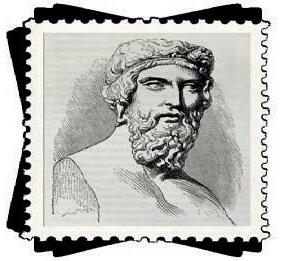
1. In your opinion, which filter is the most important to pass?
2. Do you think that Socrates was very wise? Why?
3. Do you and your friends gossip a lot?
4. What do you think of gossiping?
5. Can people get hurt when others gossip about them?
Study the linking words in the table and do the exercise. To add a point Also In addition Similarly Moreover Furthermore Contrasting ideas But / However / Yet Although / Even though Despite (the fact) / In spite of Nevertheless While / Whereas On the other hand
To note consequences So / Therefore As a result Consequently Since Due to
E.g. He works hard. However, he doesn’t earn much.
To summarize Finally In conclusion To conclude To summarize
Match the two halves.
1. It’s a great city. However, 2. It’s a great city despite 3. He’s very good looking. However, 4. He’s very good looking. Therefore, 5. He went to London. In addition,


a. the bad public transport.
b. accommodation is terribly expensive.
c. he visited Oxford.
d. he has no trouble finding girlfriends.
e. he’s not very intelligent.
Which word or phrase CANNOT complete the sentence?
1. The match was cancelled _______ the rain. A due to B because C because of 2. We were late and __________ we missed the beginning of the show. A consequently B as a result C nevertheless
3. Temperatures are low _______ the sun. A despite B in addition C in spite of
4. ________it wasn’t raining, I took an umbrella.
A But
B Although C Even though
5. feeling cold, they didn’t turn on the heater.
A However
B Despite C In spite of
Retell a fable or a short story in 100-120 words, using four paragraphs. When you have finished, check your grammar, spelling and punctuation.
Introduction: Write a few sentences to set the scene and introduce the characters.
2. Describe the main action.
3. Write what happened next.
4. Write a suitable ending to the story.
* Include a few appropriate linking words from the box to connect your ideas and paragraphs. You can also use others, such as: meanwhile for something that was happening at the same time, eventually for the last in a long sequence of events, and finally for the last event of all.

Complete the second sentence so that it has a similar meaning to the first, using the word in bold. Do not change the form of the word in bold.
1. I haven’t been to Oxford for at least ten years. /went The last time _______________________ at least ten years ago.
2. Tina arrived there twelve months ago. /for Tina _________________________________ year.
3. Were you successful in passing the exam? /manage Did _______________________________ the exam?
4. I don’t think you should drink any more coffee. /better You ___________________________ any more coffee.
5. She was not allowed to leave town while the investigation was in progress. /let The police didn’t ______________________ while the investigation was in progress.
6. I don’t really want to go out. /rather I _________________________________ home.
1
1. The name _______________, but I can’t remember his face.
2. I’m feeling a bit _________________ – I think I’ve caught a cold.
3. It’s a _________________ that you’ll get promotion if you do that deal.
4. I couldn’t _________________ the report. It was completely unclear.
5. I am _________________ about whether or not to go to the party.
under the weather ▪ safe bet ▪ rings a bell ▪ in two minds ▪ make head or tail of
2 3
Which of the expressions means the following:
a) That sounds familiar?
b) I don’t feel too well?
Complete the sentences with the expressions from the box. Use the phrases from the box to make new sentences.
d) I couldn’t understand? e) I’m unable to decide?
c) It is very likely to happen?
Here are some suggestions on how to apologize for something that you have done/haven’t done and how to respond to an apology.

Examples: A: ‘I must apologize for my late arrival.’ – B: ‘Don’t worry about it.’

Making apologies:
• I do / I’d like to / I must apologize for...
• I am so / I’m terribly sorry for...
• I shouldn’t have...
• It’s all my fault... / I’m ashamed of...
• It was wrong of me to...
• Please forgive me for...
• Excuse / Pardon me for ...
• Please accept my apologies for...

Accepting apologies:
• That’s all right. / Never mind.
• It doesn’t matter. / That’s OK.
• Don’t worry about it. / Forget about it.
• Don’t mention it.
• I quite understand.
• You couldn’t help it.
• No harm done.
Work in pairs. Take turns to blame your partner a) for being late for the cinema, b) for spilling water over your book, c) for offending a mutual friend. Make an apology or accept one.
1 2 3 4
Complete the sentences with the correct forms of the words/phrasal verbs from the Key word list. (6 points)
1. You can ________________ fish for chicken if you don’t like meat.
2. The doctor advised him to _______________ on cigarettes.
3. The new shopping centre will bring lasting _____________ to the community.
4. Novak Djokovic’s success ______________ me to start playing tennis.
5. They _______________ several old office buildings in the town centre.
6. Henry finally ____________ his girlfriend in the crowd.
Complete the table. (4 pts.)
noun
Complete these sentences using the correct tense of the verbs in brackets. (6 pts.)
1. When_______________________ (you/see/last) her at school?
2. I ______________ (already/travel) to London a couple of times.
3. While I _________________ (buy) my ticket, the bus _________ (arrive).
4. Since she __________ (begin) writing, her whole life __________ (change) a lot.
Rewrite the following sentences using the word in bold. (4 pts.)
1. I’m not allowed to stay out later than 11 o’clock. /let My parents __________________________ out later than 11 o’clock.
2. I haven’t seen her for ages. /time The_______________________________ was ages ago.
3. They managed to finish the project on time. /succeeded They __________________________________________on time.
4. He was taken to hospital two weeks ago and he’s still there. /for He______________________________ two weeks.

KEY WORD LIST TEST 2
Verbs spark grasp pant indicate inspire pull up substitute spot greet undergo Nouns gratitude benefit decency effort request successor survey Adjectives lightly tiny lasting diligent sincere modest Phrases break down slow down pull down calm down cut down let down step down

KEY – page 141 20 points
B
In this unit, you will
a. read, listen and talk about:
- the Olympic Games
- the Olympic marathon
- extreme sports
1 2 3

- the boundaries of human possibility
b. practise:
- the use of articles
- the past perfect tense
- expressing wishes and regrets
- making adjectives and nouns
- phrasal verbs with stand and call
- expressing interest

How interested are you in sports and sports competitions?

1. Do you go in for any sports? If so, how much training do you do?

2. Why are sports activities good for us?
3. Why do people take part in sports competitions?
How much do you know about the Olympic Games?
Read questions 1-6 and try to answer them. If you don’t know all the answers, find them among sentences A-F.
1. Where and when did the original Olympic Games begin?
2. What is the Olympic symbol?
3. What is the Olympics motto? What does it mean?
4. What is the principle of the modern Olympic movement?
5. When did women start competing?
6. Why were the VI, XII and XIII Olympic Games cancelled?
A. Five interlocked rings (blue, black, red, yellow and green), which represent the five continents.
B. They were cancelled because of World War I and II.
C. ‘ The most important thing in the Olympic Games is not to win, but to take part.’
D. Citius, altius, fortius. These Latin words mean: Faster, higher, stronger
E. Women started competing in 1912.
F. The original Olympic Games began in Olympia in Ancient Greece in 776 BC.
Read the text and find out more about the Games.




track 7
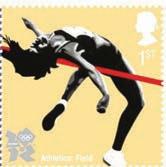
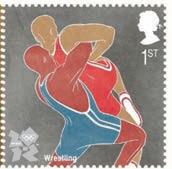
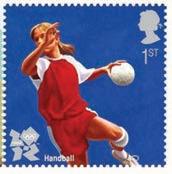
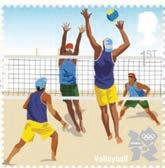
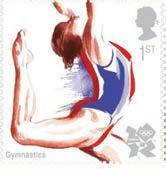
The Olympic Games are the world’s most important sporting event and their spirit is best expressed by the Olympic Creed: ‘The important thing is not so much winning as taking part.’ These words are attributed to Baron Pierre de Coubertin, the founder of the modern Olympic Games. However, a chance to win gold and glory isn’t all the Games stand for. They are also an important symbol for billions of people around the globe – a symbol of sportsmanship, peace and friendly co-operation between nations. The Games give athletes the opportunity to compete, compare themselves against each other, and to determine how good they are internationally.
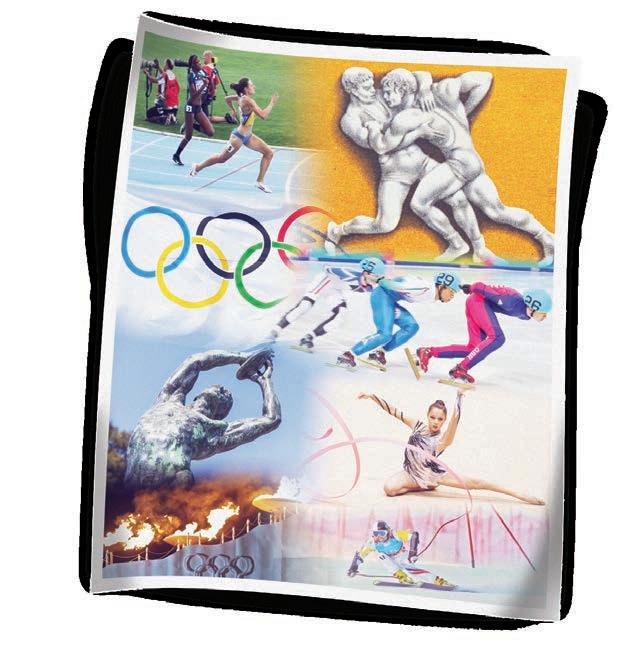
javelin – the athletic sport of throwing a javelin (a light spear) chariot – a two-wheeled vehicle drawn by horses, used in ancient racing and warfare. tribute – something that you say or do to show respect or admiration undergo – to go through; to experience
Named after the Greek city of Olympia, the Olympics have a long history and have always been regarded as prestigious. They originally started as a series of competitions between representatives from cities in Ancient Greece and were held every four years. This four-year cycle, known as an Olympiad, was used by the ancient Greeks as a way of measuring time. All wars and fighting had to stop while the athletes and their supporters came together in the town of Olympia for a few days to compete in various events, mostly related to warfare (throwing the javelin, running, wrestling, boxing and chariot racing).

The first Olympic Games as we know them today were held in Athens in 1896 as a tribute to their origin. They brought together 14 nations and 241 athletes competing in 43 events. The Olympics then underwent another revival in 1912 before becoming the modern Olympics. The number of countries taking part has increased considerably over the years.
At the opening ceremony of the Olympic Games there is a parade of all the sportsmen who are taking part in the Games. The Olympic anthem is played, the Olympic flag is raised on the flag pole and the Olympic flame is lit as the Olympic spirit crosses the world once again. For the short time the Olympics are taking place, the whole world comes together to celebrate a tradition that has been going on for thousands of years. The Games contribute to the development of sports, excellence and friendship.

Read the text again and answer the following questions.
1. Why are the Olympic Games the most important sporting event?
2. What equal chances do all the competitors get at the Games?
3. What did you learn about the history of the Olympic Games?
4. What was the significance of the old Olympic Games?
5. Why were the first modern Olympic Games held in Athens?
6. What is an Olympiad?
Have you watched the opening ceremony of any recent Olympic Games? Describe some important features of the ceremony.
1
Word Meaning
Match the words (1-7) to their meanings (a-g) and use them in the example sentences.
1. glory a. a sense of pride and self-respect
2. object b. to believe that something was said, made, written, painted, etc. by a certain person
3. essential c. admiration and praise; honour won by notable achievements
4. creed d. to defeat or achieve victory over someone or something
5. dignity e. the thing you want to get or achieve; what you aim to do
6. conquer f. of the greatest importance; absolutely necessary
7. attribute g. a set of basic beliefs.
Example sentences
1. Athletes must__________ their fears in order to perform well.
2. The___________ of athletes should be to perform to the best of their ability.
3. Athletes’ ___________ should be that winning isn’t everything.
4. He wasn’t the winner, but he did his best and performed with___________.
5. One of the_____________ qualities of a great athlete is belief in his or her own ability.
6. We cannot _______________ all the frescoes in this monastery to the same painter.

7. He did so much for the national team, but someone else got all the _________.
Study the collocations in the sentences below and make some new sentences using the collocations.
Collocations with the verb undergo
• The country has undergone massive changes recently.
• He had to undergo medical treatment in the United States.
• She has been undergoing tests since Monday.
• Employees are expected to undergo career training and development.
Verb + together
The word together collocates with many verbs: live, come, get hold, put, bring, etc.
• The conference will bring together scientists from all over the world
• We’ll just get together to enjoy a DVD and have some fun.
• Our club sold many players despite the manager wanting to hold the team together.
• They decided to get married after living together for several years.
1 Underline the correct preposition and use the phrases to make sentences.
1. attribute to / at 2. a symbol at / of 3. related to / for 4. take part on / in 5. devote to / for

Fill in the gaps with the correct prepositions. See the Appendix and check your answers.

1. They are proud ________ their children.
2. Are you worried _______ your driving test?
3. I am very bad _______ remembering names.
4. Sydney is famous _______ its Opera House.

5. Are you interested ______ playing tennis tomorrow?
6. He is very fond _______ football.
7. Were you afraid _______ the dark when you were a child?
8. We’ll have to hurry. We’re a bit short ______ time.

Complete the sentences by using the correct form of the word in capitals. 1. It was the most _______________ victory of all time. /GLORY
2. If you want me to make you a dress, I need to take your ______________. /MEASURE
3. Her brother had a ______________ influence on her at that time. /CONSIDER 4. His courage and great ______________ to succeed are inspirational. /DETERMINE 5. They will send a ______________ to attend the meeting in London. /REPRESENT 6. The two ______________ were banned from the Olympiad for taking drugs. /COMPETE
Match the phrasal verbs (1-6) to their definitions (a-f) and use them in the correct form to complete the sentences below. Use a dictionary if necessary.
1. stand by 2. stand for 3. stand in for
4. stand (someone) up
5. stand up for 6. stand out


a. represent or be a symbol for b. speak or act in support of; defend
c. support or remain loyal to (someone) d. replace; fill in for; be a substitute
e. be highly noticeable f. not arrive for an appointment or date
1. Some people find it hard to ____________ what they believe in.
2. If she loves him enough, she will ____________ him despite his problems.
3. He’s so tall. He is one of those men who always in a crowd.
4. He ____________ for his brother at the wedding rehearsal.
5. Before I was married, I never ____________ any girls. I thought it was rude.
Read the text and complete it with the words given in the box.
The end of the Olympics sees one of the most exciting (1) __________ at the Games. It is the longest and hardest (2) __________of all – the marathon. The name ‘marathon’ comes from a village in Greece and ancient Greeks were used to long-distance running. They used foot couriers to take important (3) ___________ from city to city.
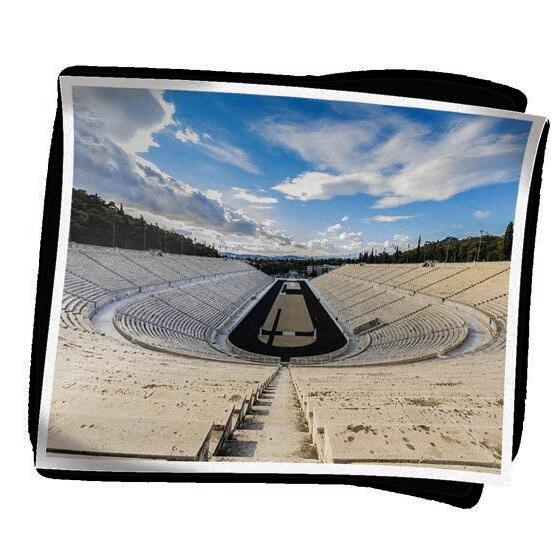
Legend says that in 490 B.C. a soldier (4) ___________ the distance from a battlefield near Marathon to Athens, more than 40 kilometres away, on foot in order to bring the good news of a Greek (5) ____________ over the Persians. At the end of this historic (6) __________, he collapsed and died from exhaustion.
At the Olympic Games in 1896, the legend of the soldier was honoured with a race from Marathon to the Olympic (7) ____________in Athens and the marathon as an athletic event was born. The (8) ___________that the athletes ran varied at the next few Olympic Games until 1921 when it was standardized to 42,195 kilometres.
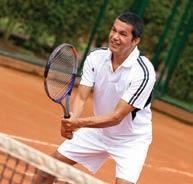
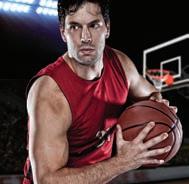
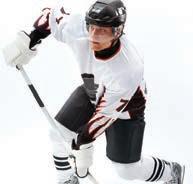
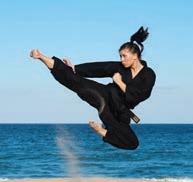
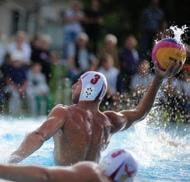
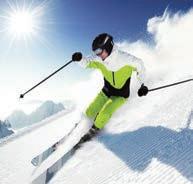
Look at the pictures. Which sports do the people in the pictures go in for?
• How much do you know about these sports?
• Which one would you like to take up?
Decide which of the sports are:
a. the most popular in your country
b. the least popular
c. team sports
d. indoor / outdoor sports
e. expensive to play
3
f. played
• with a ball
• with a racket
• on snow and ice
• in water
Choose one sport from the pictures. Talk about the qualities which athletes who do it should have.
1
The use of the definite article with geographical names
We use the with the names of: We don’t use the with the names of: geographical areas – the Middle East continents – North America countries in the plural – the Netherlands most countries, states – Serbia geographical points on Earth – the Equator cities, towns – Belgrade (but: the Hague) rivers, seas, oceans – the Danube lakes – Lake Ontario (but: the lake of Ontario; the Black Lake) mountain ranges – the Rockies mountains – Mount Fuji groups of islands – the Caribbean single islands – Sicily deserts, gulfs, and peninsulas – the Sahara
2 Complete the sentences with a/an or the where necessary
We also use the with the names of: We don’t use the with the names of: hotels, restaurants, shops, institutions, museums, galleries, cinemas, theatres, ships, newspapers, etc.
colleges/universities, most magazines (e.g. Time) musical instruments, family names in the plural, scientific inventions (e.g. the telephone), nationalities (e.g. the British), adjectives representing a class of people (e.g. the old)
streets/avenues (e.g. 5th Avenue), parks, bridges, airports (e.g. Heathrow), sports and games, languages, school subjects
1
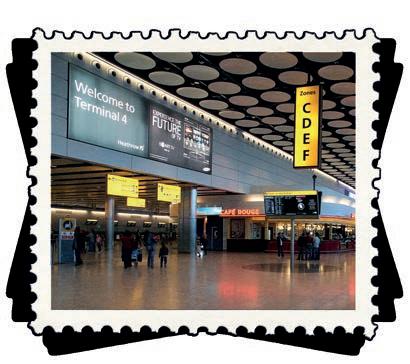
I’ll give you ___ lift to ____ Heathrow. I’m going to ____ airport to meet a friend.
2. ____ Pearl Harbour is on ____ island in ____ Pacific Ocean.
3. When did you go last to ____ seaside? I think it was in ____ summer of 2012.
4. Whenever he comes to _____ Belgrade, he stays at ____ Metropol Hotel.
5. Could you please show me the way to ____ Kalemegdan Park?
6. Is ____ Nile ____ longest river in ____ world?
7. ‘Where’s good for ____ skiing?’ ‘____Rockies.’
8. I saw her walking along _____ Bloomsbury Street.
9. ______ People think all _____ Canadians speak _____ French, but they’re wrong.
10. He’s been to _____ South Pole and now he is planning to see what _____ Equator looks like.


There are certain kinds of people who can do anything when they set their minds to it.
address – to say something to somebody, or make a speech to an audience altitude – height due to – caused by somebody or something hair-raising – terrifying or thrilling stunt – something dangerous that is done as a challenge or to entertain people descent – the act of going down, from the top to the bottom capture – catch, seize

track 8
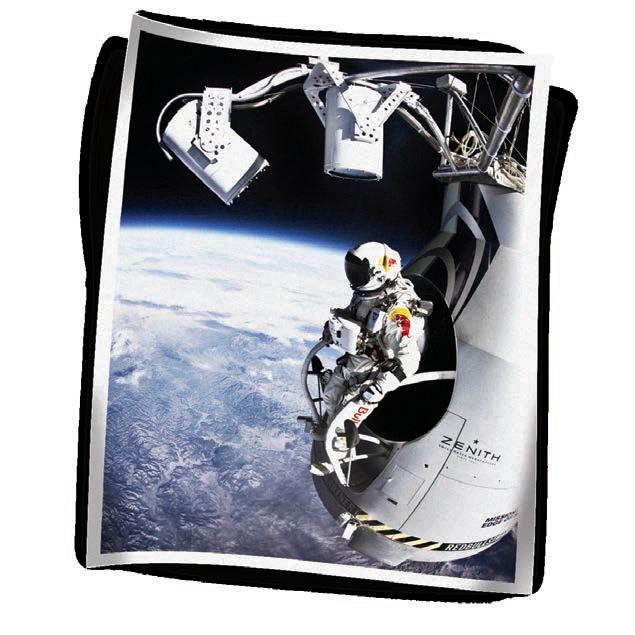
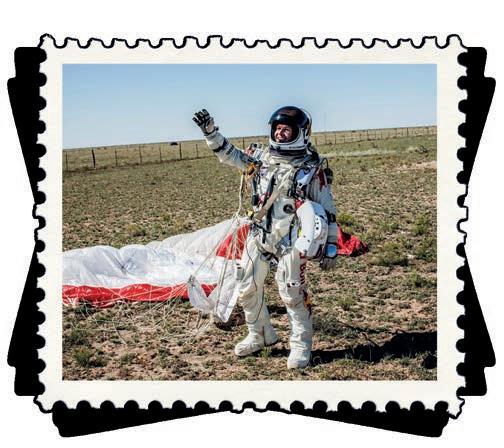
A It was a cloudless day in New Mexico when Felix Baumgartner sat on the edge of his capsule beneath a giant helium balloon at a height of 39 kilometres, looking down at Earth. The previous mission had been called off due to the weather conditions, but it finally took place on 14 October 2012.
B It took him more than two hours to get up to the jump altitude. A few minutes before this historic leap, which was broadcast on television around the world, Baumgartner addressed the audience, saying: ‘I know the whole world is watching right now and I wish the world could see what I can see. Sometimes you have to go up really high to understand how small you are.’
C It was a hair-raising dive from the edge of space and thirty cameras captured his descent and safe landing, nine minutes after jumping. The last few thousand feet were navigated by parachute. Baumgartner’s family and friends watched, cheered and celebrated as it became clear he was safe.
D Felix Baumgartner is a 43-year-old former military parachutist from Austria. As well as becoming the first man to break the speed of sound outside a vehicle, Baumgartner set three other world records during the attempt: the highest manned balloon flight, and the highest and fastest free-fall jump.
E Baumgartner had been training for this jump from far above Earth for seven years. A special capsule was built to protect him on the way up and for his descent he wore a special suit made for astronauts to protect him from temperatures as low as -70ºC and a lack of oxygen. This jump will help in scientific research, especially for emergency evacuations from spacecraft.
F Baumgartner is well known for his love of extreme sports and the particularly dangerous nature of the stunts he has performed during his career. He went skydiving for the first time at the age of 16 and has made more than 2,500 jumps from planes, helicopters, landmarks and skyscrapers over the past 25 years. When asked what he was going to do next, he said he would fly helicopters, carry out mountain rescues, and fight fires.

2
Find the parts of the text which correspond to the following headings.
• An extreme sports career
• Addressing the TV audience
• Setting world records
• A hair-raising descent
• Ready to jump into the unknown
• Testing special equipment
Say whether the following statements are true or false. Find sentences in the text to justify your opinion.
1. Baumgartner wanted to try the jump before, but the weather was bad.
2. The balloon went to a height of 39 kilometres.
3. It took him more than ten minutes to land safely.
4. He landed with the help of a parachute.
5. He was the first man to break the sound barrier in an airplane.
6. His descent was performed in a specially made capsule.
1. dive
2. audience
3. spacecraft
4. vehicle
5. rescue
6. emergency
Six words are highlighted in the text. Match the explanation to the correct word.
a. an unexpected event requiring immediate action

b. a means of transportation designed for travel in space
c. jump forwards from the air towards the ground or water
d. to save somebody from a dangerous situation
e. a means of transportation
f. a group of people gathered to watch and listen to a show, concert, or speech
Complete the sentences with the words in the box to get the correct collocation.
1. ‘Hello? There’s an ___________. My house is on fire! Send the fire brigade!’
2. How many world ____________ does Mark hold?
3. The plane had a ___________ landing despite a problem with one of the engines.
4. John is part of a ______________ rescue team.
5. Baumgartner enjoys taking part in ______________ sports.
6. Tesla’s _____________ research changed the world.
7. The landing of the first men on the Moon was considered a ___________ achievement.
safe
extreme historic mountain records emergency scientific
Study the following phrasal verbs with CALL. call off cancel an event or arrangement call (somebody) back phone someone who called you earlier call by visit a place for a short time (on the way to somewhere else) call on (someone) pay someone a short visit call for
make a demand or request for something to be done call up ring up, phone
Complete the sentences with the correct form of the phrasal verbs from exercise 1.
1. Would it be all right if I _____________you in the afternoon?
2. I __________________ an old friend from junior school yesterday – I found his number in my wallet.
3. I’m visiting your neighbour Mary in the afternoon. I can _____________ if you want.
4. This victory ______________ a big celebration.
5. Why don’t you _________ him _______ and see what he wanted?
6. They had to ______________ the match due to the storm.
We use the past perfect tense:
1. for an action completed before another action in the past.
2. in third conditional sentences.
3. in reported speech.
4. to express dissatisfaction with the past (wishes).
Complete the sentences with the past simple or the past perfect tense of the verbs in brackets.
1. When I ______________(come) home, it was cold in the house because my mother _______________ (not/switch on) the heating.
2. Robert ______________(already/learn) French before he ___________(leave) for Canada.
3. When he looked at the photos, he ________(realize) where he _________(see) that man before.
4. By the time he______________(finish) his studies, we _____________(be) in Oxford for over eight years.
5. We _________________(collect) the nuts that ________________(fall) from the tree.
6. The boy said he couldn’t remember the poem he______________(learn) the week before.
7. My children ______________(eat) all of the cake I ________________(make).


We use WISH/IF ONLY to describe something that is untrue but desired or to express regrets. For present wishes, the past simple is used in the that-clause because it indicates a situation that is only imagined. That can be omitted.
E.g. I wish (that) I knew the answer to this question. (The truth is I do not know the answer.)
If only I had a sports car. (I don’t have a sports car.) I wish that I were a doctor. (I am not.)
Note:
The form of the verb ‘be’ is were, regardless of the subject. Use would/wouldn’t when you are complaining about someone else’s behaviour, but could for the first person. I wish I could sing. / I wish he would stop smoking.
2 We use the past perfect tense after WISH to express regrets about the past.
E.g. I wish I had worked harder. (I didn’t work hard.)
He is bored and he wishes he had stayed at home. (He didn’t stay at home.)
Look at the situations and imagine what each person might say, using WISH.
E.g. I am frightened of the dark. – I wish I weren’t frightened.
1. My son is lazy. I wish ________________________________________________________
2. I didn’t have her phone number. I wish __________________________________________
3. He doesn’t eat fish. He wishes _________________________________________________
4. I was in a hurry and didn’t help him. I wish ______________________________________
5. Ann doesn’t speak any foreign language. She wishes _______________________________
He doesn’t study enough. His mother wishes______________________________________ He hates having so few friends. He wishes _______________________________________
• We normally use apostrophe s (‘s) with people and animals although it can also be used with place names, organizations and companies (which suggest a group of people).
Examples: my parents’ house / the world’s most important event / a United Nations’ building / the government’s decision
• It’s also used in expressions of time, place, distance, measurement, and weight (e.g. in three years’ time, a pound’s worth of sweets), and in some idiomatic expressions (e.g. For heaven’s sake!).
• If there are two owners of something, we add ‘s to the final name. Diana and Steve’s dog is quite old. However, if each person owns a dog, then we add ‘s to both names: Diana’s and Steve’s dogs are quite old. (Notice how the verb is in the plural form.)
Note: The possession can be omitted: at Peter’s (house); the baker’s (shop); St. Paul’s (cathedral).
• When people’s names end in ‘s’, you can either add ‘ or ‘s (e.g. Charles’ or Charles’s). . .

In pairs, talk about the sports you have seen or tried.
1. Do you enjoy watching extreme sports on TV? Why/why not?
2. The people in the pictures are called ‘daredevils’. What does it mean? Do you think what they do is too risky?
3. Which of these sports in the pictures do you consider to be the most dangerous? Put them in order from the most dangerous to the least dangerous.
boxing hang-gliding bungee jumping scuba diving canoeing rock climbing motor racing rugby surfing snowboarding

4. Why do you think people enjoy extreme sports?
5. Have you ever tried any of these sports? If so, how did you feel?
6. Which of these characteristics do people need in order to do high-risk sports? Discuss.


▪ fear ▪ mental energy ▪ courage ▪ a sense of adventure ▪ physical strength ▪ be well-built ▪ determination ▪ quick reactions ▪ selfconfidence ▪ be fit and healthy ▪ like showing-off ▪ a sense of balance ▪ curiosity ▪ good concentration ▪ thoughtlessness
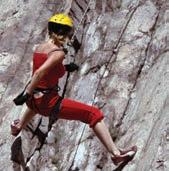

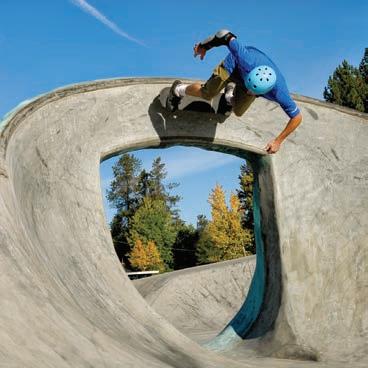
Young people who are thrill-seekers choose extreme sports to test themselves. Are you for or against extreme sports? Write a short composition expressing your opinion on one of these sports. You can use opinions expressed in the discussion above. (You could use some of these expressions: In my opinion, …; It may be true that …; However, …; Many people believe that …; But as far as I’m concerned, …)
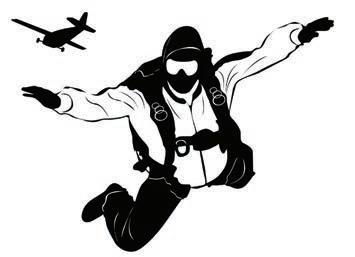
Listen to the text My first skydiving experience and say whether these statements are true or not.
1. Philip was more scared than others.
2. His friends told jokes about him.
3. He didn’t experience the thrill and excitement because he was frightened.
4. The instructors jumped together with them.
5. The parachute opened after 5 minutes.
6. Philip admits the sport is dangerous, but he has overcome his fear.
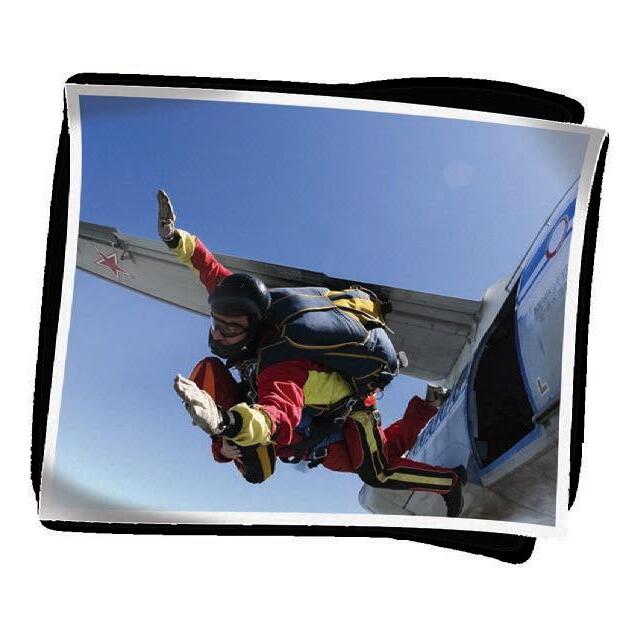
2 Listen again and check your answers.
KEY WORD TRANSFORMATIONS
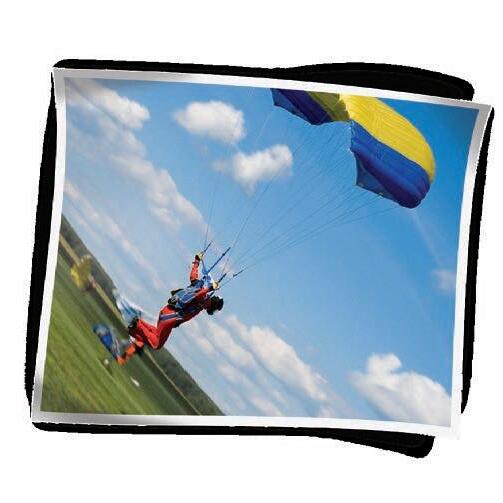
Complete the second sentence so that it has a similar meaning to the first, using the word in bold. Do not change the form of the word in bold.
1. Roger always wore a white suit so he was easily visible in the office. /stood Roger always wore a white suit so __________________ in the office.
2. The match was cancelled because of the bad weather. /to The match was cancelled _____________________ bad weather.
3. The police left and then all the journalists arrived. /already The police ________________________ the journalists arrived.
4. It’s a pity the car is so expensive. /wish I _____________________________ so expensive.
5. They’ve cancelled the wedding. /off They have _________________________ the wedding.
6. I’d love to go to the seaside, but I can’t afford it. /wish I ___________________________, but I can’t afford it.
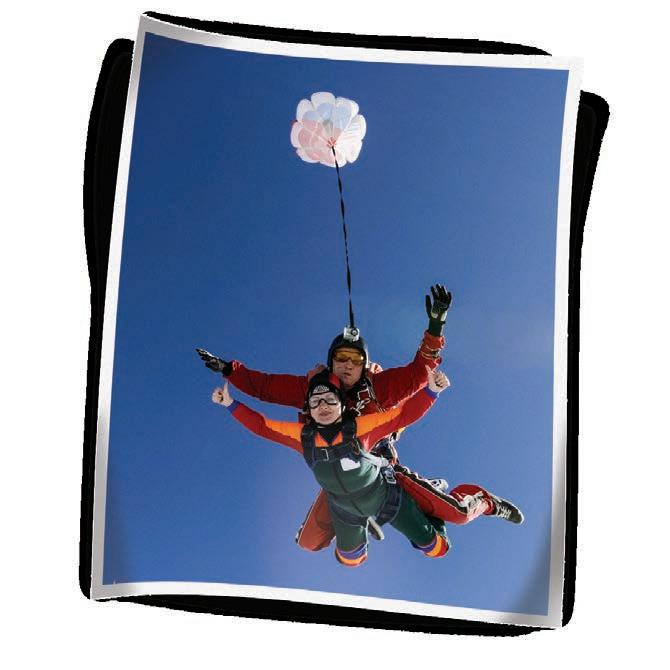
The sentences below are explanations of the expressions in the box. Try to work out what the expressions mean and then use them in the correct form to fill in the gaps.
1. If an idea or scheme is __________________, it is utterly impractical.
safe and sound ▪ pie in the sky ▪ rack your brain ▪ not have the faintest idea ▪ pay tribute to
2. If you arrive ________________, then nothing has harmed you on your way.
3. If you do _________________about something, you don’t know anything about it at all.
4. If you ________________, you think very hard in order to solve a problem or find an answer.
5. If you __________________ someone, you say in public how good they or their work is.
Use the phrases from the box to make new sentences. Example: I think their plans to set up their own business are just pie in the sky.

I find ... rather boring. I don’t find ... interesting. I don’t have any interest in ... 1 1 2 2 3

Asking about someone’s interests
Are you interested in …?
Do you find … interesting?
Do you go in for …?
What are your interests?
Are you keen on …?

Study the expressions in the table and use them in the dialogues below.

Expressing your interests
My main interest is … I go in for … I find … fascinating. I’m a fan of … … has always interested me.
Starting a conversation about sport
Complete the dialogues according to your interests.
1
A: Do you find athletics interesting?
B: __________________________. How about you?
A: ________________________________________.
2
A: I’m a fan of .
B: I don’t find _________________________________.
A: __________________________________________.

Saying you aren’t interested

Role play: In pairs, role-play the conversation between a parent and child about extreme sports.
Student A: You are a mother or father. Your teenage son or daughter wants to try an extreme sport.
What questions do you ask? Do you encourage your son/daughter or do you suggest they try a safer sport?
Student B: You are a teenager. Explain why you want to try an extreme sport. Talk to your parent about this.
1 2 3 4
Complete the sentences with the correct forms of the words/ phrasal verbs from the Key word list. (6 points)
1. As we were in the area, we decided to______________ my aunt.
2. Who did they ________________this quotation to?
3. The city was _________________by the ancient Romans.
4. He behaved with great ____________and self-control during the ceremony.
5. It is _____________ that he gets a visa if he wants to come.
6. Her sister is ready to _____________ if Ann gets sick.
Write synonyms for these words. (4 pts.)
1. frightening ___________ 2. save _____________
3. represent ______________ 4. because ___________
Complete these sentences using the correct past form of the verbs in brackets. (6 pts.)
1. There was no sign of her! Nobody knew where she _____________________ (go).
2. _________________ (it/rain) when you got up?
3. He _________________ (admit) that he _____________________ (commit) the crime.
4. Before the plane landed, the pilot ________________ (send) a signal.
5. He wishes he _______________ (know) the answer to the question, but he doesn’t.
Rewrite the following sentences using the word in bold. (4 pts.)
1. Because of the heavy rain, Mary didn’t let the children go out. / due
The children were not ___________________________ heavy rain.
2. They cancelled the lecture because the professor was ill. /called The lecture ____________________________ the professor was ill.
3. I’m sorry I am not with them now. /wish I _______________________ with them now.
4. I regret lying to her. /wish I__________________________ the truth.
KEY – page 141
KEY WORD LIST TEST 3
Verbs address attribute conquer rescue object
Nouns creed dignity descent glory tribute vehicle
Adjectives hair-raising essential
Phrases due to stand by stand for stand in stand (smb) up stand up for stand out call off call by call on call out call up

20 points



In this unit, you will
a. read, listen and talk about:
- how people can achieve their goals
- people who have achieved greatness
- Wilma Rudolph and Stephen Hawking
b. practise:
- the gerund and infinitive
- past habits
- the passive voice
- the passive – infinitive construction
- making verbs and nouns
- phrasal verbs with turn
- talking about possibility
Many great things have been achieved by very young people throughout history in the fields of art, culture, sport, science and technology. Choose one person from the list to prepare a talk on.
1. At the age of 8, having already composed two polonaises, Frederic Chopin gave his first public piano performance.
2. At the age of 13, Bobby Fischer became a Chess Grandmaster.
3. At the age of 14, the Romanian gymnast Nadia Comaneci achieved perfection unlike anyone before her.
4. At the age of 17, the Brazilian football player Pele scored six goals in four games in the 1958 World Cup, including perhaps the finest ever goal to be scored in the finals, helping Brazil to become world champions.
5. At the age of 19, Mark Zuckerberg commercialized Facebook, which later became the leading social networking system on the Internet.
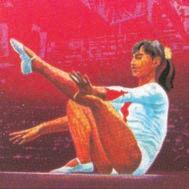



Pair work. Make a list of things that you would like to achieve in your life. Compare your list with your partner.
Discuss these questions.
Everyone in this world has dreams and aspirations. However, it isn’t enough just to want something. It is important to set goals that you genuinely want to achieve. It is essential to believe in yourself and never to give up.
1. Do all people have clear goals in their lives?
2. Should we have strategies for achieving what we want? Why?/ Why not?
3. Why do we sometimes fail to realize our ambitions?
4. Is it necessary to believe in yourself to become successful?
John Goddard is considered to be the world’s greatest goal achiever. At the age of 15, he made a list of 127 challenging goals, most of which (109) he completed in his long life, in addition to hundreds more from new lists. The lists included items as varied as climbing the world’s major mountains, exploring the longest rivers of the world, flying a plane, riding an ostrich, and appearing in a Tarzan film. Goddard was a graduate of the University of Southern California, where he studied anthropology and psychology. He studied the effects of modern civilization on various cultures throughout the world. In addition, he climbed 12 of the world’s highest mountains and conducted 14 major expeditions into remote regions. He became the first man in history to explore the entire length (from source to mouth) of the world’s longest river, the Nile, in a nine month kayaking expedition.

Goddard was a survivor of numerous frightening experiences through his 88 years of life. He was attacked by hippos and crocodiles, bitten by a snake, almost buried alive in a sandstorm, and trapped in quicksand. He survived a plane crash and desert temperatures of over 60 °C, and almost drowned four times while running rapids and deep sea diving. He had a life of fun, excitement and knowledge. He was called ‘the real-life Indiana Jones.’ His motto was: To dare is to do – to fear is to fail. He documented his adventures on film and showed them to thousands of people across the globe, inspiring them to set and achieve goals. However, we don’t need to set our goals as high as Goddard, but it is possible to accomplish far more than we imagine. Bear in mind that not all accomplishments have to be impressive. You can experience the feeling of achievement when you get a good mark in maths from a strict teacher, when you take lessons and become a good dancer, learn to ski, use a skateboard or score a game-winning basket. Such feelings of satisfaction, when you see your dreams realized, make everything worth doing.

hippo (hippopotamus) – a large African animal which lives in rivers, lakes, etc. quicksand – deep wet sand which people or things can sink into dare – to be brave enough to do something accomplishment – the completion/fulfilment of something strict – severe, rigorous
1
2
Complete the sentences according to the information in the text.
1. It is important to ____________ in yourself, to set __________ and __________ them.
2. Goddard’s adventures were numerous. He _______ ______________________.
3. Goddard inspired people to set goals by _________ ___________________________________.
4. Even minor accomplishments can bring ________ ___________________________________.
Read the sentences with the highlighted words again and try to guess the meaning of these words from the context. Then match the words with their explanations below and write them down.
1. ________________ – organize and carry out an activity or task
2. ________________ – a desire or ambition to achieve something
3. ________________ – parts of a river where the water moves very fast
4. ________________ – really, honestly, sincerely
5. ________________ – a student who has successfully gained a degree from university
Look at the underlined expressions which appeared in the text. Choose the best alternative to them in the sentences (1-6).
1. Computer graphics have come a long way in the last few years.
A made a long story
B travel a long distance
C made a lot of progress
2. He has travelled to many remote countries.
A distant B lonely C deserted
3. Susan didn’t apply for the job because it didn’t seem very challenging to her.
A easy
B demanding C rewarding
4. When you speak to George, bear in mind he’s still pretty upset about what happened.
A care
B see C remember
5. We’ve given up trying to persuade them to change the plan. A decided B stopped C given in
6. We asked high-school students to tell us about their strict teachersthe ones who demand maximum effort.
A tough
B hard-working
C the most serious
Fill in the gaps with the correct prepositions. See the Appendix and check your answers.
1. Speaking is quite different _____ writing.
2. We are very proud _____ our achievements.
3. He’s bored _______ his job.
4. I am very fond ______ my old dog.
Read the anecdote and do the exercises below.
5. Are you worried ______ your driving test?
6. Are you angry ________ me?
7. He’s never satisfied _________ what I do.
Thomas Edison’s success story is a story that can (1)_____ anyone after experiencing failure.
Thomas failed to invent the light bulb about 999 times before he succeeded in (2)_____ it at the 1,000th attempt. People often asked him how he managed to keep going even though he was failing all the time. ‘Each time it didn’t work, I used to say I’d discovered a new way how not to invent the lamp,’ he would reply. He had tried two thousand different materials in (3) _____ of a thin wire for the light bulb. When none worked (4)_____, his assistant complained: ‘All our work is (5)_____. We have learned nothing.’ Edison replied very confidently: ‘Oh, we have come a long way and we have learned a lot. We know that there are two thousand elements which we cannot use to make a good light bulb.’
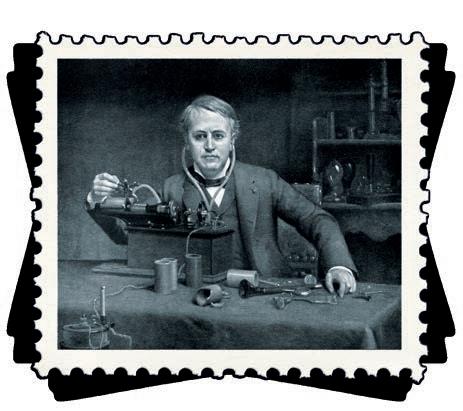
Thomas Edison’s success story should make you (6) _____ that failure should never stop you even if it occurs more than once.
Decide which word/phrase (A, B or C) best fits each gap.
1. A motivate B cause C stimulates
2. A to make B doing C finding
3. A search B explore C look for
4. A suitable B satisfactorily C adequate
5. A unprofitable B unbeneficial C in vain
6. A conclude B to deduce C supposing
Pair work
Discuss these questions in class. Compare your answers.
1. Why should we be realistic about setting goals?
2. Why do we sometimes fail to fulfil our dreams?
3. Would everyone have Edison’s patience in similar situations?
Complete the table with the correct forms of the given words. The first one has been done as an example. Then use the words from the table to complete the sentences below.
VERB NOUN
VERB NOUN explore exploration complete motivate failure aspiration conclusion
1. Scientists have reached the _______________ that the universe is expanding.
2. When I was 12, my ______________ was to play professional football, but then I broke my leg.
GRAMMAR
GERUND OR INFINITIVE
3. The teacher seems to know how to ______________ his students to learn.
4. The police found it easy to ______________ who the thief was – there was so much evidence.
5. Harry might ______________ English this year; he’s not really interested in the lessons.

Review the use of the gerund and infinitive before doing the exercise. The explanations in the box may help you.
The GERUND is used:
a. after certain verbs: admit, appreciate, avoid, continue, deny, fancy, love, like, dislike, imagine, keep, mind, miss, risk, quit, save, suggest, practise, consider, prevent, and after spend, waste, or lose (time, money, etc).
E.g. He avoided answering my question.
b. after some expressions: it’s no use, it’s (no) good, it’s (not) worth, what’s the use of, can’t help, there’s no point in, can’t stand, have difficulty (in), look forward to, etc.
E.g. The film isn’t worth watching.
c. after prepositions: e.g. He succeeded in doing it after many attempts.
The INFINITIVE is used: after certain verbs: agree, afford, ask, choose, decide, expect, fail, happen, hesitate, hope, intend, manage, offer, plan, prepare, pretend, promise, refuse, seem, try, want, etc.
E.g. He refused to help him.

Pair work. Use six verbs from the box to describe some of the things that happened to you last week. Pay attention to the verb pattern.
E.g. I avoided going shopping with my parents.
Put the verbs in brackets into the gerund or infinitive.
1. She is brilliant and is worth ____________ (listen) to.
2. I’m looking forward to _______________ (see) you soon.
3. Would you be so kind as_______________ (help) me?
4. I gave up _______________ (eat) meat last year.
5. He entered the room without _______________ (knock).
6. I’ve decided ________________ (write) another book.
7. Do you mind ________________ (not/talk) in here?
8. She is considering _______________ (have) a holiday.
9. Do you remember ___________ (come) to this beach when you were very young?
10. We agreed ________________ (not /go) there at night.

FOCUS ON TALKING ABOUT PAST HABITS
•The expression used to is commonly used when talking about past habits. It means ‘something was true in the past, but it is not anymore.’ For example: I used to go by bus to work. Now I drive a car.
•We can use either would or used to to talk about repeated past actions. Every Sunday, I would go/used to go on a long bike ride. However, only ‘used to’ is possible when we talk about past states. We used to live in Manchester when I was a kid.
Remember: be/get used to is followed by either a gerund or a noun to say that we are accustomed to something. John’s used to working hard. / I’ve got used to getting up so early.
Rewrite these sentences using the word in bold and expressions with ‘used to’.
1. I once lived in Belgrade, but now I live in the country. /used I _______________________, but now I live in the country.
2. My brother is beginning to like living on his own. /getting My brother ________________ ________________ on his own.
3. My sister quickly adapted to her new job. /to My sister quickly _____________ ________________ job.
4. When I was a teenager, I went to a lot of football matches. /go I _________________________ _______ when I was a teenager.
5. We had lots of friends when we lived in the country. /have We _______________________ lots of friends when we lived in the country.
They are the people who inspire us, challenge us, and change our world.
1 Read the text about Wilma Rudolph and say which events were important at the following stages of her life:
a. early childhood
b. sports career
c. helping others
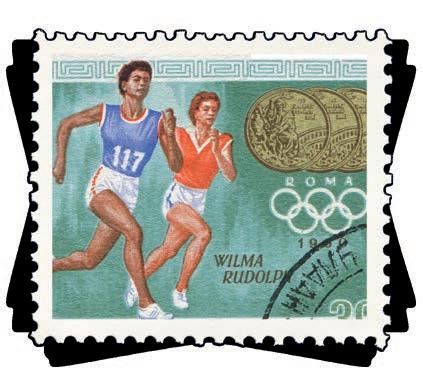
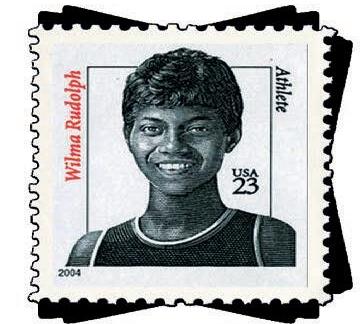

prematurely – born too early braces – an orthopaedic support for part of the body
confidence – selfassurance, belief in somebody’s ability struggle – a great physical effort polio – a serious infectious disease which often leaves people unable to use their legs
Wilma Rudolph was born into a large family – she was the 20th of 22 children – and her parents were hardworking people, but very poor. Her life is a story of achievements. Her first accomplishment was to stay alive because she was born prematurely. As a child, she went through many difficult times, and a great part of her childhood was spent in bed with her suffering one illness after another. At the age of 6, her parents were told that Wilma had polio and would never walk. However, her mother would not give up on her and she found out that Wilma could be treated at a black medical college in Nashville, 50 miles away. She took her child there twice a week for two years. After Wilma had been fitted with metal leg braces, she was able to walk. All her brothers and sisters encouraged her to be strong and to work hard to help her get well. ‘When you come from a large, wonderful family, there’s always a way to achieve your goals,’ said Wilma. Finally, by the age of 12, she could walk normally, without even her corrective shoes. It was then that she decided to become an athlete. At high school, Wilma joined the basketball team and became a basketball star, setting state records for scoring. Then she became a track star, going to her first Olympic Games in 1956 at the age of 16. She won a bronze medal in the 4x4 relay.
At the 1960 Rome Olympics, Wilma became ‘the fastest woman in the world’ and the first American female runner to win three gold medals in the Olympics, breaking records along the way.
Wilma Rudolph paved the way for African-American athletes, both male and female, who came later. She worked as a track coach, an athletics consultant and she also founded the Wilma Rudolph Foundation for amateur athletes. She encouraged them to have confidence in themselves. ‘I remind them that triumph can’t be achieved without struggle,’ she said.
1 2
Look back at the text and answer the questions.
1. How did Wilma Rudolph manage to overcome polio?
2. Who played an important role in her recovery?
Study the expressions from the text and use them in the sentences below.
• go through something = experience something difficult or unpleasant
• pave the way for something = create a situation that makes it easier for something to happen
• give up on someone = stop hoping that someone will improve and stop trying to help
3. Which sport did she go in for before she became a track star?
4. What did she do after she had stopped competing?
5. How did she encourage other athletes to keep practising?
THE PASSIVE VOICE
• along the way = during the time that something is happening
1. We will focus on vocabulary, but ____________, we will study grammar as well.
2. She succeeded because her coach didn’t want to ________________her.
3. This discovery will _____________ for the development of new medicines.
4. It’s difficult to imagine what she had to_____________ during that period.

Look at these sentences from the texts. Which verb form is used in each sentence? How do we form different tenses in the passive voice? Complete the table.
1. A great part of her childhood was spent in bed.
2. She found out that Wilma could be treated in Nashville.
the present simple write is/are written the present continuous the past simple the past continuous the present perfect the past perfect the future tense modals: can/must/ should
Note: Verbs with two objects
• A lot of verbs, such as give, show, send and bring, can be followed by two objects: an indirect and a direct object. E.g. They didn’t show him the report
• When these verbs are used in the passive voice, there are two possible passive sentences. E.g. 1. He wasn’t shown the report. (more common)
2. The report wasn’t shown to him.
Put the following sentences into the passive voice.
Example:
An explosion damaged the upper floor of the building.
The upper floor of the building was damaged by an explosion.
1. They are closing the school for repairs.
2. How often do you water the garden?
3. They haven’t offered me a job.
4. Someone put a parking ticket on my car windscreen.
5. Have you informed Kate about the job?
6. They gave the patient some medicine.
7. No one can answer your question.
8. They didn’t tell me the whole story.
9. They have bought a bunch of flowers for the leading actress.
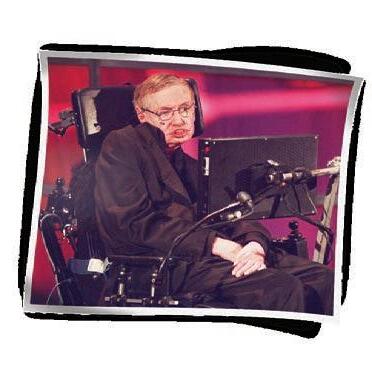
While listening to the text about S. Hawking, fill in the gaps with the missing words.
Listen again and check your answers.
Say whether these statements are true or false.
1. Hawking’s career is connected to two prestigious universities.
2. His disease has destroyed his career.
3. He is interested in the universe.
4. Hawking held the same post at Cambridge as Galileo.
5. Because of his illness he isn’t able to travel and lecture.
Stephen Hawking is considered to be one of the world’s foremost living theoretical astrophysicists and cosmologists. He was born on January 8 1942, which just happened to be the 300th (1) ___________ of Galileo’s death. He studied at the University of Oxford and later received his PhD from Cambridge. At an early age, Hawking showed a (2)__________ for science and the sky. At the age of 21, the doctors diagnosed that the nerves that controlled his muscles were shutting down. Doctors gave him two and a half years to (3)__________. It was devastating news for Hawking and his family, but the (4)____________ helped him become the eminent scientist he is today. He focused on his work and went on to Cambridge to become a brilliant researcher. His research turned him into a (5)____________ within the scientific world when he showed that black (6)_________ weren’t vacuums as scientists had thought they were. Stephen had to overcome many obstacles. By 1970 he could neither walk nor write. In spite of being wheelchair bound and dependent on a computerized voice (7)__________ for communication because he can’t talk, Stephen Hawking continues to combine family life (he has three children and three grandchildren), and his (8)__________ together with an extensive programme of travel and public lectures. He wrote the modern classic A Brief History of Time to help nonscientists understand the fundamental questions: Where did the universe come from? How and why did it begin? Will it come to an end, and if so, how?


foremost – first in rank or importance; ranking above all others primarily – chiefly, for the most part devastating – very shocking or upsetting; damaging and terrible devastate – to damage badly or destroy post – a job, especially one with a lot of responsibility obstacle – something that prevents your progress or achievement fundamental – of central importance; essential to the existence or success of something eminent – well-known; renowned
Work in groups of three or four. Discuss your answers to these questions.
1. How did Stephen Hawking react to the news of his diagnosis?
2. What did Hawking write about in his book A Brief History of Time?
3. What similarities can we find between these two remarkable people, W. Rudolph and S. Hawking?
4. What were their handicaps?
5. Why are these stories examples of achievements?
Use the words from the glossaries of the texts on W. Rudolph and S. Hawking to complete the sentences below.
1. There used to be a lot of industry, but now it has become __________ a residential town.
2. Albert Einstein is considered one of the scientists of the 20th century.
3. My uncle has had full-time teaching at two universities.
4. The financial crisis will ______________ the car industry.
5. Wilma had to ______________ hard to realize her dreams.
Match the words (1-7) with the nouns (a-g) to make collocations. The first one has been done for you.

1. fundamental 2. foremost
3. devastating 4. extensive
5. honorary 6. set
7. break
a. effect / floods / earthquake / consequence
b. research / measures / assistance
c. changes / difference / weakness
d. surgeon / concern / statesman
e. the table / a goal / a record
f. a rule / a record / a promise / an agreement / a bone
g. position / degree / member
Complete the sentences with the collocations from the box.

1. The devastating floods in Pakistan have brought misery to the country.
2. They will have to make some ________________ in the way they do business if they want to be successful.
3. His ______________ was to keep players safe until the match.
4. Officials say they’ve taken ______________ to repair the system.
5. Earlier this month, he was made an ______________ of the American Academy of Arts.
6. You must learn how to ______________ properly for the dinner party.
Read the sentences (1-9) and try to guess the meaning of the phrases with turn from the context. Use a dictionary if necessary. Then match them with definitions a-i.
1. turn down (1)
2. turn down (2)
3. turn off
4. turn on
5. turn up (1)
6. turn up (2)
7. turn out
8. turn into
9. turn to
1. I’m studying! Please turn down the TV.
2. It was a mistake to turn down his offer.
3. Turn off the light before you go to bed.
4. Let’s turn some lights on. It’s too dark.
5. None of his old friends turned up to his party.
6. It’s a nice song. Turn up the radio.
7. The meat pie turned out beautifully.
8. When she kissed the frog, it turned into a handsome prince.
9. I had no one else to turn to for help.
a. switch off
b. end up being; result
c. switch on
d. lower the volume
e. reject; refuse an offer
f. appear suddenly
g. increase the volume
h. transform
i. ask someone for help; address
Use the phrasal verbs with turn in the correct form to complete the sentences.
1. She _____________ to be the murderer after all.
2. I was surprised to see how many people ____________ for the concert.
3. Bob was such a nice boy. I wonder why he has ___________ such a bully.
4. Please _________ the music __________. It’s too loud.
5. I _________ the job __________ because I don’t want to move.
6. She couldn’t decide what to do so she __________________ her friends for advice.
7. ____________ the TV if no one is watching it.
Complete the sentences by using the correct form of the word in capital letters.
1. If you want to succeed , you may need to __________ your team a bit more. (STRONG)
2. He really needs to _______________ his attitude to work this year. (IMPROVEMENT)
3. Has he got the __________________ to accomplish this task? (ABLE)
4. He just needs support, ________________ and direction and I’m sure he will succeed. (ENCOURAGE)
5. He said that it was _______________ information and he couldn’t tell us anything. (CONFIDENT)

Bound is the past simple and past participle of bind (= tie, to make something stick together)
Study the meanings of the expressions with bound and make sentences using them.
a) bound to = certain; sure; destined
• If you have problems at home, it’s bound to affect your work.
b) be/feel bound to do something: feeling that you should do something because you are expected to.
• As teachers, we felt bound to tell her that her son had started the fight.
The infinitive construction is usually used after verbs in the passive, such as say, think, consider, report, know, claim, believe, and expect. Example:
a) It is said that Hawking is one of the world’s leading astrophysicists.
b) Stephen Hawking is said to be one of the world’s leading astrophysicists.
Rewrite the sentences using the passive infinitive as in the example.
Example: It is known that she has a lot of money. She is known to have a lot of money
1. It is expected that the company will move to London next year. The company ____________________________ London next year.
2. They say that the film is very good. The film ___________________________ very good.
3. It is thought that he is the best manager the company has ever had. He ______________________________________ the company has ever had.
4. It is expected that the government will make a decision soon. The government _________________________ a decision soon.
5. It is believed that he is the richest man in Serbia. He _______________________ the richest man in Serbia.
Whenever you want to listen to the radio, watch TV, play on your computer, make breakfast, or read in the evening, you only have to switch on the electrical power. Have you ever asked yourself what life would be like without electricity?
Tesla’s inventions made the long distance transmission of electricity possible. This system is still in use today. Tesla had many ups and downs in his life. He built a laboratory in Manhattan which was destroyed by fire, but then he rebuilt it and continued working. Many times he was penniless, out of work and forced to do odd jobs, but all his life he worked hard and had a great desire to achieve.
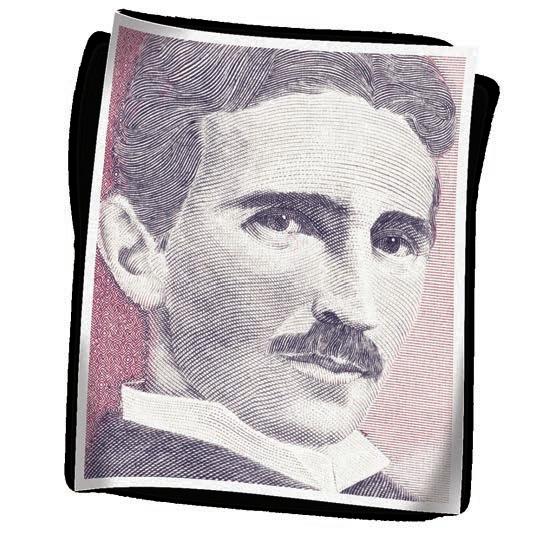
Try to find out as much information as possible on the Internet or in books to answer the following questions about Nikola Tesla.
1. When and where was Tesla born?
2. What kind of education did he have?
3. What jobs did he have at the beginning of his career?
4. When did he go to America?
5. Who did he work with?
6. What are his most important inventions?
7. When and where did he die?
2 Write a short biography of Nikola Tesla. Add any information you found interesting.
Complete the second sentence so that it has a similar meaning to the first, using the word in bold. Do not change the form of the word in bold.
1. The job was too badly paid so she didn’t accept it. /down She _________________________ it was too badly paid.
2. Drunk driving causes many accidents. /by Many accidents drunk driving.
3. I feel certain that it will rain soon. /bound In my opinion, it _____________________ rain soon.
4. If you see Harry, could you tell him I want to speak to him, please? /happen If you _________________ Harry, could you tell him I want to speak to him, please?
5. People say that he speaks 8 languages. /said
a) It_________________________________________
b) He _________________________________________
1 1 Discuss these accomplishment quotes. Explain their message.

‘The greatest accomplishment is not in never failing, but in rising again after you fall.’
Vince Lombardi

‘To accomplish great things we must not only act, but also dream; not only plan, but also believe.’
Anatole France
Choose the best answer.

1. ‘An ounce of practice is worth more than tons of preaching.’ Mahatma Gandhi
Which statement or quote is similar to the quote above?
A. The pen is mightier than the sword.
B. Actions speak louder than words.
C. Practice makes perfect.
2. ‘A person who won’t read has no advantage over one who can’t read.’ Mark Twain Twain is saying that _______.
A. reading isn’t necessary
B. reading ability is nothing if it isn’t used
C. he is a great author
D. you should learn how to read

3. ‘You must do the things you think you cannot do.’ Eleanor Roosevelt
This means that _______.
A. we should fool ourselves
B. we are confused
C. we can’t do all that much
D. we’re capable of doing more than we realize

4. ‘Continuous effort – not strength or intelligence – is the key to unlocking our potential.’ Winston Churchill Churchill really meant this because he was not a _______.
A. smoker
B. leader C. farmer D. quitter

Complete the sentences with the expressions from the box.
1. He’s certainly not afraid to ___________________, even if people get angry.
2. A: Well done! It shows how much you’ve improved.
B: Maybe, but ____________________ before I can be really satisfied.
3. A: We’re offering you the very best price.
B: It sounds fair. But I need to _________________. I’ll let you know by Friday.
4. She came to the party dressed so strangely that it was hard to keep ______________!
5. I keep various ___________________ in that drawer, nothing special. 6. I__________ everything my children do. They’re amazing.
Use the phrases from the box to make new sentences.
▪ think it over
▪ speak his mind
▪ I’ve still got a long way to go
▪ take pride in
▪ a straight face
▪ odds and ends
Possibility is when there is a chance that something may happen or be true.
Probability is when there is a high chance of something happening or being true.
Example:
‘Until yesterday, the project was just a possibility, but now it has become a real probability.’
Expressing possibility
Use the word/expressions from the box to complete the sentences.
1. She is _____________ make the trip alone.
2. ___________ she will visit London.
3. ____________ that someone will meet her at the airport.
4. She __________ buy some presents for the family before she goes.
5. I suppose she ____________ spend a lot of money on the presents.

can’t possibly may not there’s no chance impossible it’s possible perhaps might likely to may

Expressing impossibility
Use the words/expressions from the box to complete the sentences.
1. No, it’s _____________to repair that old Chevrolet.
2. Even a good mechanic _____________ fix it.
3. We _____________be able to travel by car.
4. ______________my father will repair it tomorrow.
Expressing probability
There are many ways to say that something probably will or won’t happen. You can use:
- modal verbs: may, might, can, could - expressions: It’s probable/improbable that... , It’s likely/unlikely that..., I doubt/suppose/guess ..., I’d be surprised if ...
Examples:
1. Maybe/Perhaps the problem won’t be serious.
2. It will probably rain this evening.
3. I doubt my father will buy me a new computer.
4. I’d be surprised if he got the best score.
5. It’s unlikely he’ll find his lost keys.
• Talk to your partner and tell him/her what is likely/unlikely to happen in your life soon.
Circle the most appropriate word to complete the sentence. (6 points)
1. Stephen showed a __________ interest in our work.
a) genuine
b) live c) foremost
2. A tornado ________ parts of the city on Monday, killing dozens of people.
a) distracted
b) turned down c) devastated
3. She has a/an _________ knowledge of art history.
a) foremost b) large c) extensive
a) turned out
4. Their ‘special relationship’ with the government has _________ to be not so special after all.
b) turned up c) turned off
5. He said the country has _______huge changes since the revolution. a) completed b) accomplished c) undergone
6. The boy ________ hard to free himself.
a) struggled b) aspired c) completed
Put the verbs in brackets into the correct active or passive form. (8 pts.)
1. I_____________(inform) last week that all her books _________ (sell).
2. I was scared because I _____________________ (never/fly) before.
3. By the time he___________ (come) back, we ______________ (eat) all the food.
4. Our most famous singer ________________ (just/invite) to sing for the President.
5. Call the police! Our flat ______________________ (break) into.
6. He ____________________ (not/tell) her anything about the party yet.
Rewrite the following sentences using the words in bold. (6 pts.)
1. No one told us that this was private property. /were We___________________________________ private property.
2. The boss is interviewing the candidates. /interviewed The candidates ________________________________ by the boss.
3. Hard work doesn’t bother me. /used I ___________________________________hard.
4. The job wasn’t attractive and she refused the offer. /turned She _____________________________ the job wasn’t attractive.
5. I think it would be a good idea if you joined the beginner’s class. /suggest I __________________________________ the beginner’s class.
6. To everybody’s surprise, he appeared at our party late at night. /up To everybody’s surprise, he ________________________ late at night.
KEY – page 141

Verbs accomplish aspire devastate conclude struggle Nouns accomplishment aspiration completion post Adjectives genuine extensive foremost fundamental eminent Phrases turn down turn off turn on turn up turn out turn into turn to
20 points

1
In this unit, you will
a. read, listen and talk about: - changing eating habits
- an interview with Jamie Oliver
- food and health
b. practise:
- omission of articles
- quantifiers (much/many; few/little)
- direct and indirect speech
- phrasal verbs with give
- expressing agreement and disagreement

Look at the photos and fill in the gaps with the correct item of food. _______________ A sweet food in the shape of a ring. _______________ A large round vegetable with a thick orange skin. _______________ A soft red fruit with a lot of small seeds. _______________ It is made of grains (wheat, rye, etc.) and is often eaten for breakfast.
2 Go quickly through the list of words below with your partner. Look up any words you don’t know in the Word list. Put these words into the correct column.
potato cucumber garlic
cheese peach yoghurt beef
carrot plum pie cabbage


lettuce beans sausage chicken
bread rolls turkey apple


Add more words you know to each column.
Compare your list with another pair of students.




Before you start reading, do this exercise. Finish the sentences in column A by using the endings in column B.
1. Cookery books consist of
2. A dish is
3. A meal is
4. Roast meat is cooked
a. food prepared in a particular way and served as a meal.
b. in an oven with some oil.
c. various recipes and cooking instructions.
d. which are sliced thinly and fried until crunchy.
e. an occasion such as breakfast, lunch or dinner.
5. Crisps are potatoes
Eating three meals a day has become a thing of the past in Britain. Over the last few decades, eating habits have changed a lot. Meals times are no longer fixed social occasions and more people are eating on the go – on the street, in cars, or on buses and trains. They eat anything from chocolate bars to sandwiches, wraps, crisps and salted snacks to keep them going between meals. Soups, pasta and salads, which are traditionally part of a home-made meal, are available pre-packaged. Hot food can also be bought from shops that are open all hours.
Another reason for changes in eating habits could be longer working hours. The British work more hours a week than most other Europeans, so they don’t have much time to shop for food or cook. Supermarkets sell ‘convenience food’, pre-cooked dishes that can be heated up and served quickly. On-line shopping is also becoming increasingly popular.
Takeaways are popular time savers and even on Sundays, there are a lot of families who enjoy their free time without cooking. On the other hand, for numerous families a long and relaxing Sunday dinner, which they enjoy preparing together, is still a part of a very special family tradition. The most common food for dinner includes roast beef, chicken, lamb and pork chops, Yorkshire pudding, and pies.
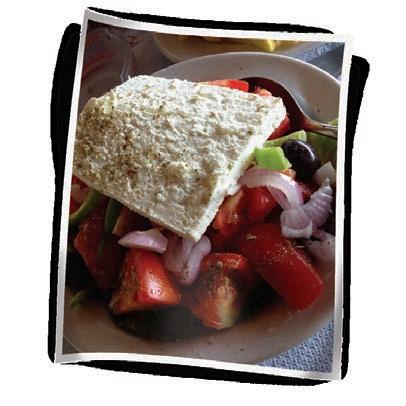
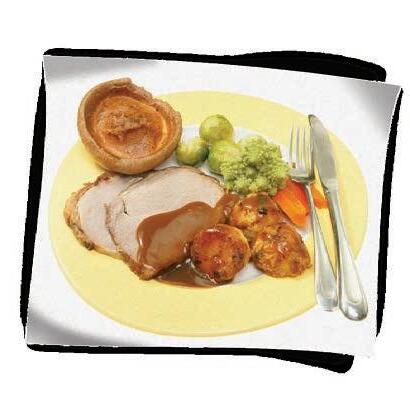
Eating habits in Britain have also been influenced by migration. Britain is a multi-cultural society that is rich in its diversity. Migrants to Britain have introduced new flavours, such as curries and kebabs. A wide range of international ingredients and meals are available at the supermarkets – tropical fruit like mangos are sold side-by-side British apples. There are a lot of restaurants and takeaways, especially in big cities, and food from every culture in the world is available besides the original British takeaway meal - fish and chips.
On the other hand, as a nation, the British are becoming more aware of the food they and their children are eating. The number of organic food markets is growing. Recipe books and cookery programmes on television, as well as recipes in magazines and on websites, have recently become very popular. People are bombarded with advice on what and how to cook.



occasion – an important event, ceremony diversity – variety flavour – taste ingredient – a component of a mixture; different foods used when cooking available – free to be used or obtained (be) aware of – have knowledge of something; notice; realize recipe – a list of ingredients and instructions for making something
Answer the following questions.
1. Which characteristics of English eating habits are mentioned in the text?
2. What kind of food do the English eat on the go?
3. What is one of the reasons the English have had to change their eating habits?
4. How have migrants changed eating habits in Britain?
5. Why are takeaways so popular?
6. What do people still traditionally cook for Sunday lunch?
7. Are the British concerned about what their children eat?
8. Where can British people find advice on what and how to cook?
Read the sentences with the highlighted words in the text again. Try to guess the meaning of these words from the context and then complete the sentences.
1. In supermarkets I look for _____________ food which is packaged and can be cooked quickly whenever I want.
2. Susan’s wedding will be a big social _________________ in our town.
3. _________ food must be healthy and cannot contain synthetic pesticides, antibiotics or hormones.
4. Whenever we watch football on television, we love eating __________ - crisps, chocolate, and peanuts.
5. In our business, we have to deal with a wide _____________ of people.
6. On Sundays I usually _____________ meat in the oven.
7. How many ____________ are there in a century?

Fill in the gaps with the correct prepositions. See the Appendix and check your answers.
1. Are you really angry ______ me?
2. We were shocked ______ the news.
3. Your face is familiar _____ me.
4. He was accused ______ stealing a recipe from his colleague.
5. I’m interested _____ discussing the problem.
6. You can’t be jealous ______ your brother.
7. She is really keen ______ becoming a cook.
8. Jane is incapable ______ doing such a thing.
9. Your parents must be pleased _____ your exam results.
OMISSION OF ARTICLES
Some common types of nouns that don’t take an article are uncountable nouns. Examples:
• Certain food and drink items: bread, butter, cabbage, candy, cereal, cheese, chicken, coffee, fish, fruit, ice cream, lettuce, meat, milk, oil, pasta, rice, salt, tea, water, etc.
• Certain non-food substances: air, gold, paper, petrol, plastic, snow, soap, wood, wool
• Names of meals: breakfast, dinner, lunch
• Most abstract nouns: advice, culture, employment, fun, happiness, health, honesty, information, knowledge, love, weather, beauty, etc.
Note:
We can use the with uncountable nouns (and plural nouns) to refer to a specific example of something. E.g. The life we had there was full of happiness. / The meat is in the fridge.
Complete the sentences with a or the where necessary.
1. For my family _____Sunday lunch is ____ favourite meal.
2. Some people eat _____bread with ____ potatoes.
3. The instructions were given in ____ French.
4. His main interest in life is _____ music.
5. _____ weather is fine. Shall we go for ____ picnic?
6. Put _____ butter on the shopping list.
7. ‘How much did you pay for ____ cherries?’ − ‘Two pounds ____ kilo.’
8. ‘What is Peter studying this year?’ ‘_____Geography I think.’
9. Do you know how to prepare ____ pasta?
10. ____ milk in the fridge tastes bad.

Fill in the table with examples for each rule. Review the plural of nouns, as well as countable and uncountable nouns, before doing the exercise.
With most nouns we add -s to make them plural
With nouns that end in -s, -ss, -sh, -ch, -x, we add –es
For nouns that end in -f, -fe, we change -f, -fe to –ves
For nouns that end in a consonant +y, we change the -y to –ies
With some nouns that end in -o, we add -es
Irregular nouns
Uncountable nouns

MUCH / MANY / A LOT OF / (A) LITTLE / (A) FEW
much / (a) little with uncountable nouns
How much money do you have?
There is a little sugar left.
many / (a) few with plural countable nouns
How many visitors are there here today?
Few people have come.
Choose one of the following words to complete the sentences:
much, many, little (a little), less, few (a few), fewer
1. Although he is educated, he has very _______ to say.
a lot of / lots of with both countable and uncountable nouns
A lot of people come here. We don’t have a lot of time.
2. He’s much happier now; he has _________ problems at work than before.
3. He is sad because he has very _________ friends at school.
4. There isn’t ________ coffee left for tomorrow morning.
5. I need to borrow ______ dollars. Can you help me out?
6. We can manage to finish it. There is still _________time left.
7. There are too _________ mistakes in your composition.
8. She’s dissatisfied because she is _________ successful than her friends.
SPEAKING
Read the Tips for teenagers on how to eat healthily. Teenagers should be encouraged to
- eat:
• plenty of carbohydrates – bread, rice, pasta, breakfast cereals, and potatoes
• plenty of fruit and vegetables – at least three portions every day
• two to three portions of dairy products, such as milk, yoghurt and cheese
• two servings of protein, such as meat, fish, eggs or beans.
- drink:
• six to eight glasses of water a day.
- cut down on:
• fatty and sugar-rich food and drinks.
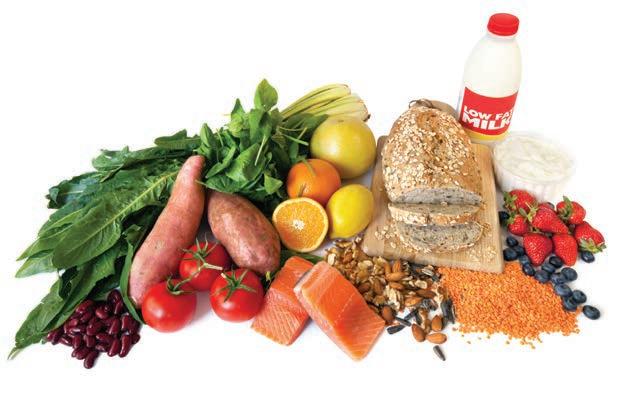


2 3 Do you agree with the tips? Which tips best suit your diet?
What about you?
Work in pairs. Answer the questions about yourself and compare your answers with your partner.
1. Do you think your eating habits are a) good, b) bad or c) you don’t pay attention to them?
2. Do you think that it is important to have a cooked meal every day?
3. Do you eat all your meals with your family?
4. Is Sunday lunch a special occasion for your family?
5. Most nutritionists say it is important to have breakfast. What do you think?
6. What do you eat for breakfast?
7. How often do you have snacks during the day? What do you usually have?
Sonia and Tania had to do a project. Sonia wrote questions for an interview with Jamie Oliver and Tania had to find the answers in Oliver’s public speeches. The interview expressed some of his main ideas about eating healthily.
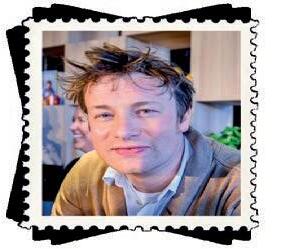
The UK celebrity chef and food campaigner Jamie Oliver talks about his determination to change the way people eat.
Interviewer: In 2005 you initiated a campaign called ‘Feed me better’. What did you want to achieve?
Oliver: I wanted British schoolchildren to eat healthy food and to cut out (1) _______ food. I was disgusted by the unhealthy food which was served to schoolchildren. I began the campaign to improve the standard of Britain’s school meals. Public (2) ________ was raised and the British Government decided to spend more money on school dinners.
I: How many projects have you worked on in order to change people’s eating habits?
O: I’ve been engaged in various projects and television programmes. I also give lectures, write books and advise supermarket chains how to improve the (3) _________of supermarket food. I’m trying to establish (4) ________ eating as a part of daily life and to teach people how to cook at home with simple (5) ___________.
I: Which cuisine is your speciality?
O: It’s Italian, though I have a broad international repertoire. I use garlic as well as fresh herbs, such as parsley, oregano, and mint, and I buy ingredients from organic (6) ________ and farmers.

Now read the interview and fill in the gaps with the words from the box.
2 ingredients suppliers healthy quality awareness junk
Discuss the following.
1. What does Oliver think about meals served at schools?
2. What is the result of his campaign for better school meals?
3. What does Oliver want to achieve through his television shows and other projects?
4. Which herbs does he add to his dishes?
In these extracts, three people are talking about good and bad eating habits for Food and Health magazine.
Read the text once and say whose opinions these could be. Write J (John), N (Nelly) or B (Brown).
1. A healthy diet leads to a healthy life.
2. Fast food is heavily processed.
3. Fast food is responsible for health problems.
4. Good home-made food is being replaced by cheap, but rather tasty food.
5. Healthy food is expensive, but available.
track 14

F&H: What do you think of the eating habits of average Americans?
JOHN, 30, A CHEF
Millions of people consume fast food meals every day. Fried chicken, burgers, wraps and sandwiches are
over the world. I wonder if the fast food industry is responsible for obesity and the health problems of a great number of Americans.
Traditional American ingredients, such as turkey, sweet potatoes, corn, squash, cranberries, and maple syrup, were consumed by Native Americans and early European settlers. Almost a generation ago, three quarters of meals eaten by Americans were homemade, but these days people prefer to buy fast food, mainly because it’s cheap and tasty. Americans do not have a typical cuisine.



F&H: The fast-moving, restless lifestyles of teens today are pushing them towards more junk and fast food rather than healthy, home-cooked food. What is your personal experience with eating fast food?
NELLY, 18, A STUDENT
Two years ago I suffered from obesity. I also
ferred fast food in restaurants to home-made meals mainly because nobody in my family had enough time to cook at home. I used to drink highly sweetened soft drinks, which are widely popular with the younger generations. As a result, I didn’t feel well and in the end I went to see a doctor. She told me that illnesses related to poor diet include obesity, heart disease, and cancer. She advised me to give up eating fast food because it was heavily processed. She helped me find the way to a healthy diet that would suit me. When I lost some weight, I

F&H: What is the alternative to fast food?
MRS BROWN, 28, A TEACHER
I think it is important to raise awareness of the benefits of healthy food. Though healthy food is expensive, it is more available than before. The other day I heard that some fast food chains had decided to promote a new product range for children with organic eggs and milk, together with fruit and vegetables.
People may choose a vegetarian diet for health reasons or because it’s trendy to follow the latest celebrity diet. I went one step further and became a vegan. I thought that it would be good to avoid eat


consume – eat or drink something obesity – fatness cuisine – a style of cooking, especially the style of a particular country relate – be connected to something chain (stores, restaurants) – a group of businesses that belong to the same person
2
Find sentences in the text that tell you
1. that people eat the same kind of fast food in many countries in the world.
2. what is to be blamed for obesity and the health problems of many Americans.
3. about the kinds of food the Native Americans and first settlers consumed.
4. that homemade food is being replaced by fast food.
5. some reasons why teenagers eat junk food.
6. how Nelly started having health problems.
7. that some fast food chains have changed their products for the benefit of children. Explain what they did.
8. about a vegan’s diet.
Read the text once again and find items of food that you a) like, b) don’t like, c) avoid eating.
• What is your favourite food that is not mentioned in the text?
Complete the sentences using an appropriate word from the box.
1. She is ______________ known for her generosity.
2. He ____________ many times in the football match yesterday.
3. My sister ________________ from a bad diet.
4. What food product are you ____________ on television?


available suffered scored widely promoting

5. Convenience food is ______________ on the shelves of every supermarket.
Complete the sentences with the correct form of the verbs rise, raise and arise.
1. What do they _____________ on their farm?
2. She hoped that the problem wouldn’t _________________.
3. Would you, please, ______________ your right hand?
4. The sun ___________ high in the sky and we decided to set out.
5. They _____________ the price of almost every item of food.
6. The river __________ alarmingly after the heavy rain.
7. Please, don’t _____________ your voice.
8. They decided to ___________ awareness of the bad effects of radiation.
Study the meanings of the phrasal verbs with GIVE and use the phrases in the correct form to complete the sentences below. give out give in give away (something) give up give off give (something) to many people; distribute stop competing or arguing and accept you can’t win reveal information that you should keep secret stop doing something that you do regularly send (light, energy, etc.) out from a source


1. We fired our chief engineer because he _____________ details of a top-secret project.
2. His wife finally persuaded him to _____________ basketball because he was always getting hurt.
3. She knew she’d lost the argument, but she wouldn’t ______________.
4. The garbage ______________ an unpleasant smell.
5. They _______________ free copies of the book to the people who were waiting.
Complete the table with the correct forms of the given words. Then use the words from the table to complete the sentences below.
migrate X benefit choose X introduce promotion X aware consumption X variety

1. Are you ___________ of what kind of food we eat?
2. She had to make a ____________ between fresh and frozen fruit.
3. Have you read the _______________ to the book?
4. Do you think that you will _______________ from this treatment?
5. Sometimes people who ____________ to different countries bring a variety of new dishes.
6. What kinds of food do you regularly _____________________?

Look at this sentence:
I told her I had changed my eating habits and was feeling much better.
What do you think the actual sentence was in direct speech?
We report statements with verbs such as say, tell, mention and complain Remember:
• He said (that) her name was Mary. (With say, you do not need to use a personal object.)
• She told me (that) everything was correct. We can use that to join the reporting verb and the reported statement or leave it out.
We report questions with the verbs ask, want to know and wonder.
• When reporting WH- questions, we use the same question word (when, what, why, how or which) to join the reporting verb and the reported question.
• When reporting Yes/No questions, we use if or whether to join the reporting verb and the reported question.
• In a reported question, there is no inversion of the subject and verb.
Commands and requests
• We report orders with tell/remind/persuade, etc. + object + infinitive.
• We report requests with ask + object + infinitive.
• We report negative commands and requests with tell/order, ask etc. + object + not + infinitive.
When the reporting verb is in the past tense, the tenses in the reported clause usually change. Can you remember the rule for the sequence of tenses? Complete the following chart changing the sentences from direct speech to reported speech using a past form.
Direct Speech
present simple
She said, ‘I often go to concerts.’
past simple
He said, ‘I went to Greece last summer.’
present perfect
He said, ‘I have been to London twice.’
present continuous
He said, ‘I am going to see her tomorrow.’
future (will)
He said, ‘I will finish writing soon.’
can
She said, ‘I can go there alone.’
must
He said, ‘I must get up early.’
Note:
Indirect Speech
past simple
She said (that) she _________________________
past perfect
He said (that) ____________________________
past perfect
He said (that) ____________________________
past continuous
He said (that) ____________________________
would + infinitive
He said (that) ____________________________
could She said (that) ____________________________
had to
He said (that) ____________________________
• Could, should, would and might do not change.
• It isn’t always necessary to change the tense if something is a general truth or if the situation is still true now. E.g. ‘I work in France.’ He told me that he works in France.
• Pronouns, possessive adjectives and some other adjectives and adverbs can change.
now – then, at that time today – that day yesterday – the previous day, the day before last month/year – the month before, the previous month/year
five days ago – five days before/earlier tomorrow – the following/the next day next year – the following/ the next year in two days – two days from then here – there
Report what Mrs Brown said about food and eating.
1. ‘All the members of my family are vegetarians.’ Mrs Brown said ___________________________________________________________.
2. ‘I have started avoiding eating milk and eggs, too.’ She added _______________________________________________________________.
3. ‘I want my children to have good eating habits.’
She explained ____________________________________________________________.
4. ‘It is important to understand the benefits of organic food.’
She advised______________________________________________________________.
5. ‘Some fast food chains promoted a new range of products for children last year.’ A friend of mine told me ___________________________________________________.
Report the following sentences.
1. ‘Where does Kelly usually go for the weekend?’ He wanted to know...
2. ‘Do you always cook lunch for your children?’ I asked her...
3. ‘Where did Jim spend his last winter holiday?’ I wanted to know...
4. ‘Can you come earlier?’ I asked Jane...
5. ‘How long has he been here?’ They asked me...
6. ‘Please bring some organic vegetables from the market.’ She asked me...
Jane and Kate are talking about their favourite food prepared for traditional meals at Easter and Thanksgiving.
Part one
First listen to Jane talking about Easter in Britain and Ireland and then do the exercises.
1. What do children like to get for Easter?
2. At what time of year is Easter celebrated?
3. What vegetables are prepared with the meat?
4. What is lamb stuffed with?
5. What is served as an Easter dessert?
What about you?
1. Which is your favourite holiday? What is traditionally eaten then? Which dish do you like best?
2. How is Easter celebrated in your country/home?
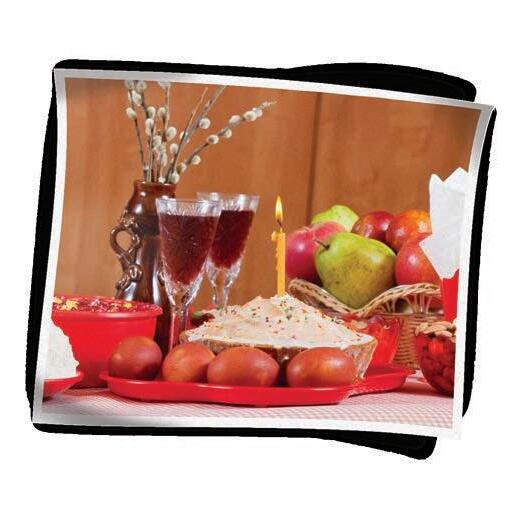
Match the words with the explanations.
A side dish
A main course
Spring vegetables
Gravy
Dessert
Stuffed vegetables
A herb is are
a thin sauce made from the juices that come out of meat when it is cooked.
a plant whose leaves add flavour to food. the part of the meal usually consisting of meat and vegetables. sweet food served at the end of a meal.
filled with a mixture of ingredients before cooking.
a meal usually consisting of vegetables, served with meat. grown in spring (new potatoes, spring cabbage, spring onions).

How much do you know about Thanksgiving Day in America? Try to answer these questions before listening to Kate.
1. When do Americans celebrate Thanksgiving Day?
a. In July
b. In October
c. In November
2. Who organized the first Thanksgiving feast?
a. the first Pilgrims
b. the Indians
c. the Dutch
3. What do Americans traditionally eat on Thanksgiving Day?
a. roast lamb
b. roast beef
c. roast turkey
3
What is the meaning of these words?
1. harvest
2. crops
3. cranberry
4. baked
5. sweet potatoes

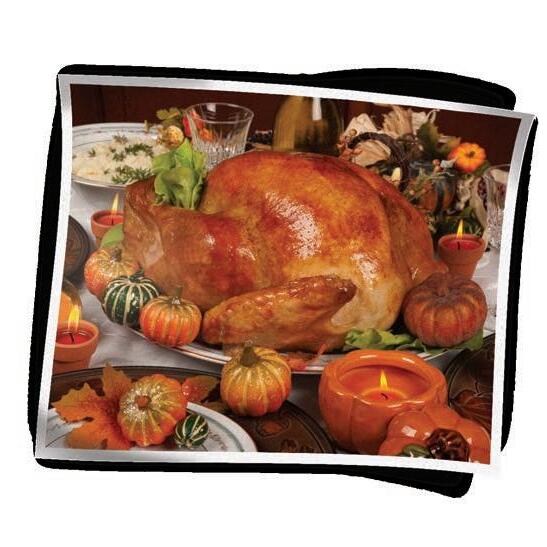
favourite traditional holiday and then answer the following questions.
1. Besides turkey, what else do the Americans eat on Thanksgiving Day?
2. What has become part of Thanksgiving tradition that Kate enjoys watching?

a. cooked in an oven (bread, pies, cakes)
b. collecting plants grown for food
c. a root vegetable with a brown or orange skin
d. plants grown for food
e. a red berry with a sour taste
Dear ...,
Write a recipe for a traditional dish from your country and send it to a friend in England. Try to use the phrases given in the email.

(Say a few words about the recipe and the dish)
First of all you’ll need ____________________________________________________
Then _________________________________________________________________
The next thing to do is ___________________________________________________
Don’t forget to ___________________________________________________________
When you’ve done all this__________________________________________________
(Say a few words about yourself. Ask him/her about ...)
(Greetings ...)
Complete the second sentence so that it has a similar meaning to the first, using the word in bold. Do not change the form of the word in bold.
1. You needn’t wait for him. He won’t come back soon. /point There’s _________________________ for him. He won’t come back soon.
2. I don’t like playing football very much. /keen I __________________________________ playing football.
3. I can’t play tennis very well. /good I __________________________________ playing tennis.
4. Eating six times a day seems to be natural for him. /used He seems __________________________ six times a day.
5. ‘I forgot to phone him yesterday,’ said Laura. /admitted Laura ____________________________ him the day before.
6. ‘Don’t go sailing when the weather is bad,’ said Roger’s father. /warned Roger’s father ________________________ bad.
1
Use the phrases from the box to complete the sentences. Read the dialogue with your partner and act it out.
Tony : You look tired. You need a break!
Mary : I know, but I’m ________________ in work.
Tony : Would you like to have a cup of coffee with me?
Mary : Well, ______________, I’m hungry, but I’m _____________ of cooking.
Tony : Let’s _____________, shall we?
Mary : I can’t, ____________. I’ve gone through my pay cheque for the week already.
Tony : Don’t worry about it. _____________.
Mary : You’re sure? You’re so generous!
Tony : True!
Mary : All right. Next time lunch is ____________.
▪ It’s my treat ▪ I’m broke ▪ eat out ▪ sick and tired ▪ as a matter of fact ▪ up to my neck ▪ on me
2
Use the phrases from the box to make new sentences.
One group in the class will prepare arguments to speak in favour of fast food and the other group will prepare to speak against it. You can use some of the following phrases in your

I couldn’t agree more.
I think so, too. There is no doubt about it that...
I completely / absolutely agree with you.
That’s absolutely right. I entirely agree with you. I totally agree with you. I simply must agree with that. I am of the same opinion. That’s exactly what I think.
You must be joking.
I’m afraid I don’t agree with you. Yes, but I have a different opinion. I don’t think so.
Of course not.
You’re quite wrong.
I’m sorry, but I disagree. I (very much) doubt whether... This is in complete contradiction to...
With all due respect,… I can’t share this / that view.

Yorkshire pudding is not usually eaten as a dessert like other puddings, but as part of the main course. It is made from flour, eggs and milk, and is baked in the oven.
2 Dos and don’ts when eating in Britain
The British generally pay a lot of attention to good table manners.
• If you are a guest, it is polite to wait until your host starts eating.
• Always say thank you when served something.
• Never talk with food in your mouth.
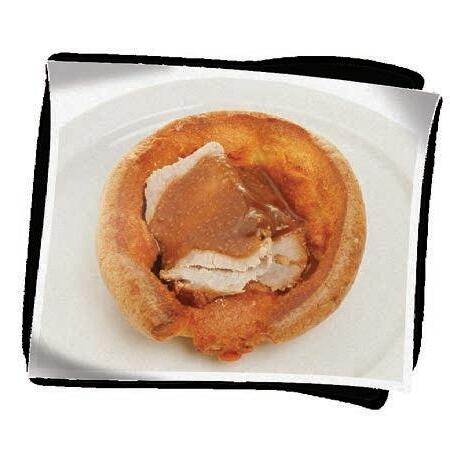
• If you want something, ask politely for the item to be passed.
• It is impolite to put too much food in your mouth.
• When you have finished eating, place your knife and fork together on your plate.
1. The world’s first chocolate bar was made in Bristol in the late 1720s by Joseph Fry. His company was eventually taken over by Cadbury, one of the world’s best-known chocolate manufacturers.

2. 27 tons of strawberries are eaten (along with more than 1,500 gallons of cream) during each Wimbledon tennis championships.


Circle the correct answer. (10 points)
1. They got some valuable _____ from the night watchman.
A piece of information B information C informations
2. He told her to buy 2 ____ eggs and ____.
A dozen / the milk B dozens / the milk C dozen / milk
3. Do you think ____ he wants?
A does he know what B he knows what C that he know what
4. The government mustn’t _ to the terrorists’ demands.
A give up B give in C give away
5. I would prefer _____ at home rather than ____ out tonight.
A to eat / to go B eating/going C eat/go
6. The storm prevented _____ on a picnic.
A us to go B us from going C us of going
7. He had ___ accident on his way home and _____ to hospital.
A an / had to take B an / was taken C --/ has been brought
8. When I listened to the radio this morning, ____very bad.
A the news was B the news have been C the news were
9. Unfortunately, my daughter has _____ friends in our neighbourhood.
A few B a few C less
10. One of my neighbours has _____ me to come for ____dinner.
A pleased / a B suggested / the C invited / --
Add the article where necessary. (5 pts.)
1. It is difficult to imagine _____ life without ____ Internet.
2. _____ wide variety of _____ plants can be found in each of _____ major zones of _____ Himalayas.
3. We had _______ sandwich for _____ breakfast.
4. We eat _____ chicken with _____ knife.
Rewrite the following sentences using the word in bold. (5 pts.)
1. You can’t bring food into this classroom. /supposed
You __________________________ food into this classroom.
2. ‘Are you going to sell your old car?’ William asked. /if William asked me ___________________________ old car.
3. ‘Did you catch any fish yesterday?’ Roy asked his brother. /he Roy asked his brother ____________________________.
4. Everybody knows that regular exercise is good for our health. /be Regular exercise _________________________ good for your health.
5. I regret going to that awful restaurant. /wish I ___________________________ that awful restaurant.
KEY – page 141

Verbs (be) aware relate consume gather Nouns awareness occasion diversity flavour ingredient obesity recipe
Adjectives available tasty Phrases give up give in give away give out
20 points



In this unit, you will

a. read, listen and talk about: - firefighters - hobbies - job experiences
b. practise: - the second conditional - the present perfect continuous tense - expressions related to jobs - adjectives for describing personality - phrasal verbs with look - asking for and giving advice



In your opinion, which of the following jobs are
a) the most interesting/boring?
b) the hardest/easiest?
c) the best/worst paid? doctor / teacher / accountant / lawyer / information technology (IT) specialist / actor / salesperson / waiter / bank clerk / sports coach / journalist / singer / cook / scientist / judge / TV presenter / fashion model
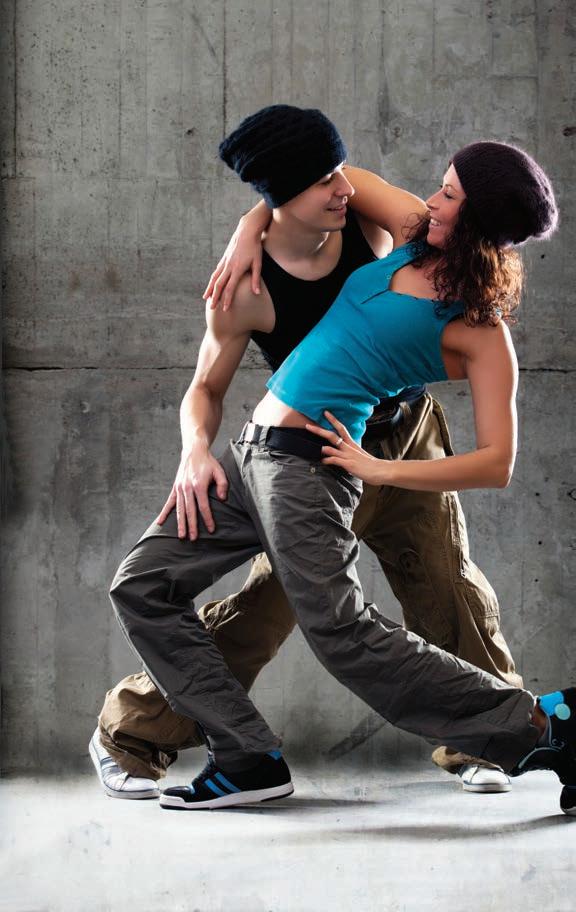
Which profession wouldn’t you like to choose? Justify your choice.
Example: I wouldn’t like to be a doctor because I feel depressed when I see sick people.

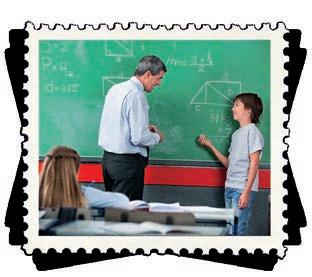

Describe a job that you would like to do when you have finished your education.



A firefighter does a great number of jobs. Tick the jobs that you know or think that they do. Then read the following interview with Martin Higgins, a firefighter, to see if you are right.
THEY
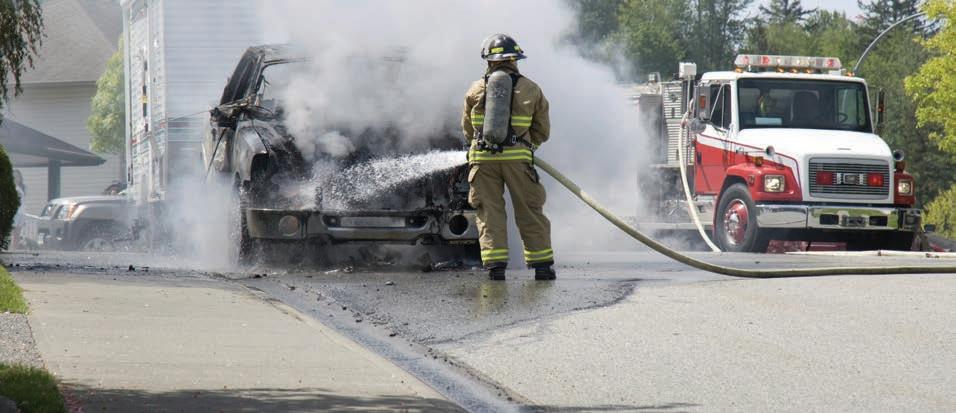
Interviewer: Being a firefighter seems a demanding job to many. What is it really like?
a. have to rescue people or animals trapped in various situations.
b. provide emergency medical care.
c. climb very tall buildings to wash the windows.
d. are on the spot when there is a bomb scare or if a bomb goes off.
e. help people in car accidents.
f. put out fires in buildings and forests.
g. help people when they are attacked by animals.
h. help people when their houses are flooded.
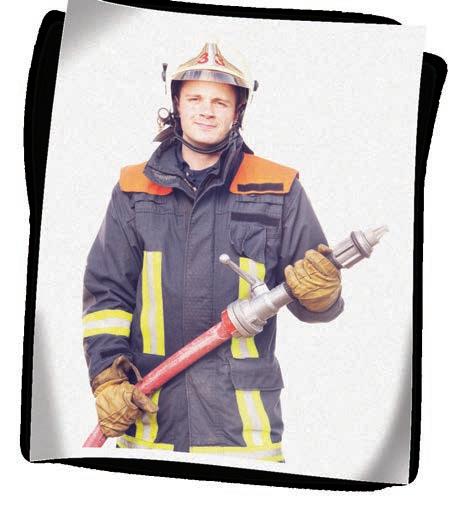
Martin: As everybody knows, our job is to protect people, the environment and property from all types of accidents and emergencies. First of all, we are trained to extinguish and control fires, but we also attend various emergency incidents, including road accidents, floods, bomb incidents, etc. We also rescue people from burning buildings or trapped people and animals. You might not realize it, but firefighters respond to more medical emergencies than fires.
I: How does one become a firefighter? What kind of training must you have?
Martin: Because we must be able to deal with different types of situations, we have to go through an extensive training program. It takes many years of dedication and practice to become a truly good firefighter. We gradually develop our skills and must maintain our fitness levels. We are expected to undertake a continuous training programme by attending lectures, exercises, and other forms of training.
I: How dangerous is your job?
Martin: It can be a very dangerous occupation. Fire is neither easy to predict nor to control and besides, there is a danger of floors and walls collapsing and overexposure to smoke. For some people the work is very rewarding, while others have a hard time dealing with the physical and emotional challenges.
I: Tell us about a typical day at work.
Martin: When there are no emergencies, we spend our time at the fire station. Since firefighters literally live together for 24 hours a day, the station becomes a combination of work and home, and co-workers constitute a sort of second family. We share the living room and eat meals together while on duty and we also participate

in household chores. During working hours, I socialize with other firefighters, play video games, and basically live at the fire station, but stay prepared to go on a job at a moment’s notice.
I: What qualities are required for the job?
Martin: Firefighting is a physically demanding and dangerous occupation and certain kinds of personal and social qualities are really essential. Our job requires someone who is courageous, strong, reliable, confident, trustworthy and dedicated to their job. In addition, each firefighter is expected to work closely with others and must also trust everyone on their crew.


Answer the following questions.
1. What do firefighters do?
2. What kind of special training is required for this job?
3. How do they obtain the necessary levels of skill and fitness?
4. Besides being burnt, what other dangers do firefighters face?
5. What is a firefighter’s day like when there are no emergencies?
6. What qualities are needed if you want to become a firefighter?
trap – to prevent from escaping or getting free respond – to react; to say something back undertake – commit oneself to doing something; start an activity overexpose – to expose too much or for too long literally – without exaggeration; actually, exactly, precisely skill – a talent or ability to do something well constitute – to form or compose extinguish – to put out (a light, flames, etc.) trustworthy – someone who is honest, dependable, responsible

1. What do you think of the firefighting profession?
a) Is it dangerous?
b) Is it well paid?
c) Would you like to be a firefighter?
2. Can women become firefighters?
3. Do you think that some jobs are just for men and others just for women?
Study the highlighted words in the text and try to work out their meanings from the context. Then match the words to their explanations.
1. _______ requiring great skill, patience, etc.
2. __________________ giving pleasure and satisfaction; beneficial
3. __________________ keep in a good state; care for
4. __________________ falling down
5. __________________ complete devotion, esp. to a career, ideal, etc.
6. __________________ large in range, scope or quantity
Use the words from exercise 1 and the Glossary in the correct form to complete the sentences.
1. Rescuers were searching for miners ______________ in the flooded mine.
2. The small groups allow teachers to ______________ to the needs of each student.
3. When you ______________ that job, you accept responsibility for it.
4. Our aim is to ______________ good relations with neighbouring countries.
5. It’s both exhausting and ______________ to be doing this job right now.
6. Firefighters’ safety depends on ______________ training and proper equipment.
7. Mr Jones’ superiors pointed out his______________ to peace and human rights.
Fill in the correct preposition to complete the phrases. Then use them to make sentences.
1. _____ a moment’s notice 2. to be ____ duty
3. to participate ______ (something)
4. to socialize (people)
5. to deal ___________ a difficult situation
Use these words from the text to complete the collocations. Then make sentences with the collocations.
maintain extensive develop crew demanding attend
1. _________________ a skill; a new technique; a region

2. _________________ fitness; a building
3. (an) ______________training program; damage; flooding
4. _________________ lectures; meetings; a church service
5. (a) _______________ job; studies; baby
6. (a/an) film / ambulance / cabin ______________
Job is a countable noun and refers to an occupation which people are usually paid for, or to a particular task. She has a good job as a teacher. You have done a good job with this dress.
Fixed expressions related to jobs

Work is an uncountable noun and refers to something more general. I have a lot of work to do in the kitchen today.
Study the expressions (1-8) in the box and use them in the correct form to complete the sentences (a-g).
1. apply for a job
2. lose / leave / quit a job
3. be out of a job
4. a temporary job
5. a permanent job
6. a part-time job
7. a full-time job
8. a steady job (= a job that is likely to continue)

a. If you’re late for work again, you might _______ your job.
b. Oh, please tell me you didn’t ______________ your job.
c. If the project fails, we’re all _____________ a job.
d. It’s a ______________ job, but I’m hoping it will be made permanent.
e. He only had a ____________ job and therefore had enough time to study for his exams.
f. I haven’t had a ____________ job since last March.
g. I’ve ____________ for a job at the university.
Choose the word that can be used in both sentences. Make changes to the word if necessary. 6
1. kind / type
a) Susan is not the ________ to get annoyed.
b) Your hair ________ requires a specific shampoo.
2. deal / distribute
a) Let’s carry on playing cards. It’s your turn to ______________.
b) The film _______________ with some serious issues.
3. answer / respond
a) She hasn’t yet ___________________ to my letter.
b) The police quickly __________________ to the call for help.
4. maintain / manage
a) It’s difficult to _______________a friendship when we’re both so busy.
b) The police had to ________________ order during the match.
5. reliable / dependable
a) Alice can look after the children. She’s very _____________.
b) There seemed to be no ____________ evidence of David’s guilt.
1
Study the common suffixes for job titles. Use some of these nouns to describe the jobs people do.
Example: doctor treats sick people.
er
or
ist

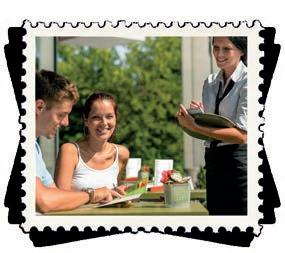

writer / painter / plumber / teacher / manager / practitioner actor / director / supervisor / doctor / sailor chemist / pharmacist / therapist / receptionist / pianist / specialist optician / librarian / politician / musician shop assistant / civil servant / flight attendant fireman / dustman / barman / policeman / fisherman waitress / hostess / headmistress
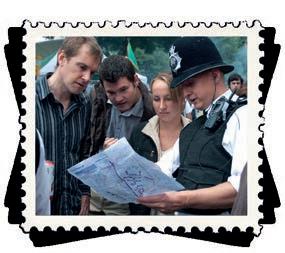

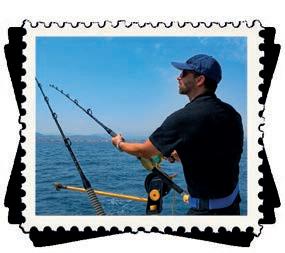
Note:
In English most job titles, such as writer and doctor, are used for both men and women. Some nouns, such as waiter and policeman, can only be used to refer to males. Words that refer to females often end in -ess, for example, waitress, stewardess, and actress. Another ending is -woman, as in policewoman
• short working hours
• health insurance
Work in groups. Which of the things listed in the box do you think are important when you choose a job?
• flexible working hours
• helping other people
• travelling
• good working conditions
• opportunity to learn something new
READING and GRAMMAR
Three people are talking about their jobs and experiences.
1 A. My dream job
• good pay
• getting on with employers/ other employees
• long holidays
• an outdoor job
• meeting people
Match the headings to the paragraphs. There is one extra heading.
B. A job I would never do C. The worst job D. A job that inspires me
2 Complete the gaps with the words in the box. Underline all the examples of conditional sentences.
I would probably ▪ I would like ▪ If my income depended ▪ If you want ▪ If I could
Lisa:
I’ve been an English teacher for ten years now. I really like teaching English and I’ve worked in several countries, including Japan and France. It’s been an amazing experience. It’s a fun job, too. I like being with students and (1)_______________ to be a teacher for the rest of my life if I could. Over the last few years, I have become increasingly interested in the use of technology in the classroom. (2)_____________ to be a good teacher, you have to adapt to the needs and aspirations of learners in today’s digital world.
Brian:
(3)_____________ have any job in the world, I would like to be a professional tennis player. I think the best thing about being a sportsman would be the chance to travel, to see a lot of different cities, enjoy the fun of competition and play a sport you love. Actually, (4)_____________ make a lot of money, but the money would not be the most important thing to me.
Dorothy A job I would hate?
Well, I must admit that I wouldn’t like to be a salesperson. I would really hate it if I had to convince people to buy something they didn’t need and couldn’t afford.
(5)_____________ on selling things, I think I would probably starve. That would be my last choice for a job.




Type 2 conditional sentences are used to talk about imaginary, unreal, or impossible situations in the present or future or to give advice. Read the sentences and say how the second conditional is formed.
• I would buy myself a new car if I won the lottery.
• I would read more if I didn’t watch so much TV.
• If I were you, I would accept the new job.
What would you do…?

Note:
The modal verbs could, should and might can be used instead of would.
• If I went to Egypt, I could learn Arabic. / If she had time, she might go to the party. Were is often used instead of was in formal language.
• If I were taller, I’d join the basketball team.
Choose the correct answer for each question below.
1. What would you enjoy about working from home? a) I’d enjoy not having to travel to and from work. b) I will be able to choose when to work.
2. If you could start your own business, what would you do? a) I will become a musician and join a rock band. b) I’d start up a beauty salon.
3. If you could choose your own working hours, when would you work? a) I would only work in the afternoons. b) If I could choose, I will only work on weekdays from 9.00 – 12.00.
Answer the questions in complete sentences.
For example: Would you like to live abroad? Why or why not? No, I wouldn’t like to live abroad because it would be too stressful for me.
1. Would you like to live on an island? Why or why not?
2. Would you ever lie to your best friend? Why or why not?
3. What would be some of the advantages of being a professional footballer?
4. If you had the chance, would you take up surfing? Why or why not?
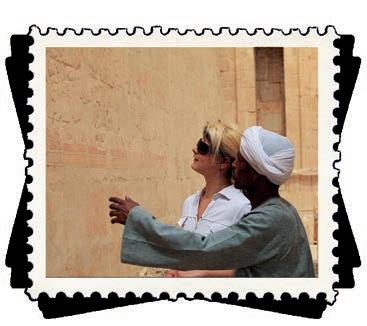

Three people are talking about their occupations. Which professions (1-4) do they have? There is one extra.
1. a postman
3 track 18 Listen again and decide which of the three people…
2. a foreign correspondent/journalist
3. a tourist guide
4. a pilot


Which words helped you to decide?

1. likes to work outdoors. _______
2. has to take care of the safety of people.
3. has to do early work in all kinds of weather.
4. likes to work on his own. _______
5. depends on his/her team. _______
6. has to learn a lot about foreign countries

Prepare to do an interview with a person who has, in your opinion, an interesting job. You have to be able to write both questions and answers. The following ideas may help you. Add a few more.
- how interesting or hard the job is / the education needed / the effect of the job on one’s private life / the pressure and stress / the satisfaction one gets from it
Example:
I: Why did you decide to become a teacher?
P: I like working with children and I think it’s a very rewarding job.

1
Discuss statements 1-4 with your partner. Do you share the same opinion on hobbies?
1. It is important for people to have a hobby.
2. The choice of hobby depends only on a person’s ability.
3. Dedication and imagination are more important for doing a hobby than money.
4. Collecting things is the most popular hobby.
2
Read the text and decide whether your answers correspond to the opinions expressed in the article. Discuss the differences.
Hobbies, like tastes, vary from person to person because different people are passionate about different things. The choice depends on one’s age, education, and social and economical status.
Hobbies are divided into four wide categories: doing things, making things, collecting things, and learning things. The most popular category of all is doing things. It includes a wide variety of activities, everything from gardening to travelling and from chess to volleyball. Gardening is one of man’s oldest hobbies. It’s a well-known fact that the English are very fond of gardening and growing flowers, especially roses.
With a little imagination, anyone can make a hobby out of the most insignificant things. No matter how busy you get with everyday responsibilities, you should always take some time off for yourself and your interests.


Ann:
Read and listen to what these four people say about their hobbies and do exercises 1 and 2.
‘My hobby is dancing. I’ve been going to dance classes for almost a year. In my opinion, the biggest advantage of dancing, besides being fun, is that it keeps me fit. Dancing allows me to express my emotions through rhythmic moves. There are a lot of dance forms you can choose from and there are also a lot of studios that teach different types of dances. I would recommend it to everyone.’
Diana:
‘I have always admired handmade jewellery and that’s why I have taken up designing jewellery as my hobby. I turn shells, beads and some of my or my friends’ old jewellery items into gorgeous designs by adding a dash of imagination to them. The best part about jewellery making is that you can give it to your friends as a gift. I often wear my creations myself because I’m proud of my skill.’
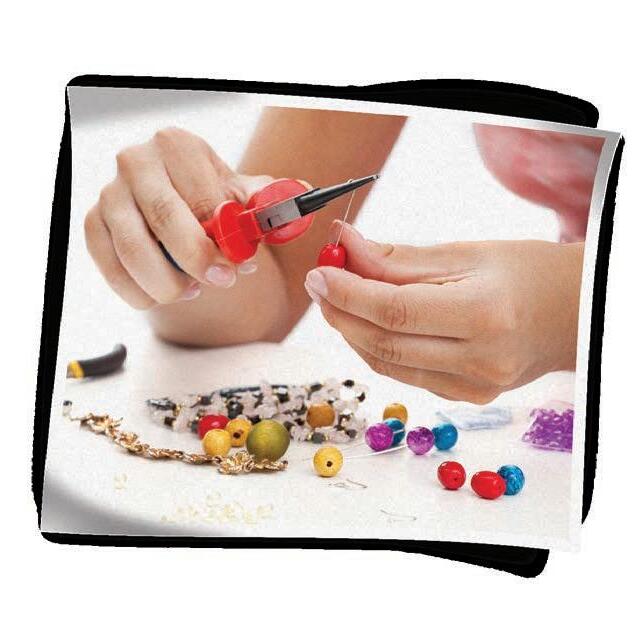
Peter:
‘I’ve been trying to learn to play the guitar for some time now. I took up the violin a few years ago, but unfortunately for me, I stopped practising after a while, which I regretted. I realized that dedication and passion for a hobby is necessary. I’m looking forward to the time when I’ll be confident enough to go public and perform in front of my classmates, friends, relatives and family.’
Tina:

take up – become involved in; engage in; start doing something gorgeous – strikingly beautiful or magnificent, attractive, fine, lovely fold – to bend so that one part covers another dash – a small quantity of something initial – first

‘I took up this wonderful art form after seeing origami flowers, birds and hearts at an exhibition. I looked for instructions on the Internet on how to fold paper and make paper objects myself and was very pleased with the initial results. Since then, I’ve been doing it whenever I have some free time.
The number of craft items you can make using just a few pieces of paper is really amazing.’
True or false?
1. Ann has been practising dancing for years.
2. Peter first tried to play the violin.
3. Diana is very gifted at designing things.
4. Tina has been going to origami classes for some time.
Whose hobby
a. can be very useful? ____________
b. is good for keeping a person in good physical condition?____________
1
c. can be self-taught? __________________ needs confidence for performing in public? __________________
SPEAKING
In pairs, take turns to talk about
• why people get pleasure from their hobbies.
• why determination and passion are necessary.
• why there are fewer people who have hobbies nowadays.
1
2
Think of a hobby you might take up (if you don’t have one already) and prepare to talk about it for a few minutes.
• Say why you like it, what kind of pleasure it gives you and what you can learn from it.
When we ask ‘What is she like?’, we are asking about her personality/character. This question can be answered with: ‘She is outgoing and talkative.’
Here is a list of adjectives which are commonly used to describe someone’s personality. Match the adjectives with their meanings. Look them up in the Word list if necessary.

1. broadminded 2. affectionate
tolerant 4. reliable
stubborn
bossy 7. vain 8. sensible 9. easy-going
a. showing reason and good judgement
b. sociable; at ease when talking to others
c. unwilling to change one’s mind
d. showing respect for the rights or opinions of others
e. too proud of one’s appearance, possessions, or achievements
f. willing to accept other people’s behaviour and beliefs, not easily shocked
g. somebody who can be trusted or depended on
h. a person who is very loving and caring
i. a person who likes giving orders
2
Guess the personality word
Pair work. Choose one adjective from the box and make up an example sentence without using the word itself. Your partner should guess which adjective you chose.
E.g. He refuses to change his mind. He isn’t flexible at all. (He is stubborn.)
Choose the best word to complete the gaps in these sentences.
1. She is a(n) ____ child who often kisses and hugs her mother.
A affectionate B broadminded
C tolerant
2. I soon realized that Diana was more loyal, responsible and ____ than her co-workers.
A reliable B narrow-minded C bossy
3. Tina is very ____. I’m sure you’ll like her when you meet her.
A vain B stubborn
C outgoing
4. You must agree that those who pushed in in front of us in the queue were really ____.
A jealous B impolite
C vain
5. My brother is a little bit _____. I’m the opposite - I’m outgoing.
A shy B easy-going
4 Answer the following questions.
C cheerful
1. Which adjectives would you use to describe your personality?
2. Which adjectives would you use to describe your best friend?
3. Using the personality adjectives, say what kind of people you like/don’t like.
Study the meanings of the phrasal verbs with LOOK and read the examples. Then complete the sentences with the correct form of the phrasal verbs.
look down on
consider inferior / think less of Bob looks down on other employees.
look up to respect
All the players really look up to their coach.
look after take care of I have to look after my sick grandmother.
look forward to be excited about the future I’m looking forward to visiting them.
look something up find information in a reference book or database We can look up her phone number on the Internet.
look into something investigate
She’s looking into who stole her telephone.
1. Can you _______________ my pet for a few days while I am away on holiday?
2. Children often _________________ Christmas from November onwards.
3. When I try to read an English book, I get frustrated because I have to ____________ too many words in a dictionary.
4. Hank has always ________________ his Uncle Peter. He treats him like a hero.
5. The police are _________________ reports of a strange flying object that appeared last night.
1. We use this tense for an action which began in the past and is still going on or for an activity that has just stopped, but you can still see its result. It emphasizes the duration of an action.
• I’ve been studying English for years.
• I’ve been working on this report since eight o’clock.
• I’m tired because I’ve been running / The streets are wet because it’s been raining.
2. The present perfect continuous is often used with since, for, all week, for days, lately, recently, and over the last few months.
• He hasn’t been waiting for long. / We’ve been studying hard since this morning.
1. Compare these two sentences:
– I’ve painted the living room blue. (The focus is on the finished result.)
– I’ve been painting the house. (The action is unfinished.)
We use the present perfect simple mainly to express that an action is complete or to emphasize the result of an action and the present perfect continuous to emphasize the duration
– He’s been writing since ten o’clock.
– He’s written a very good report.
2. Compare these two sentences:
▪ I’ve been calling Tom all morning. ▪ I’ve made fifteen phone calls this morning. The present perfect continuous (have been calling) talks about a repeated activity or how long something has been happening. The present perfect simple (have made) talks about how many times the action has been completed.
Use the verbs from the box in the present perfect continuous to complete these sentences. PRACTICE
1 repair not feel wait talk work
1. They ______________________ on the phone for the last hour.
2. She ____________________ at the firm for two years.
3. It’s nine o’clock. Jack _____________________ his car all evening.
4. We __________________________ for the manager since 10 o’clock.
5. Diana ________________________ well recently.


Put the verbs in brackets into the present perfect continuous or the present perfect simple. 2
1. I (read) __________________the book. You can have it back.
2. How long (learn/you) ________________ ________________ Spanish?
3. (you/take) _______________________ the dog for a walk yet?
4. I (look for) ____________________ a present to buy for more than an hour.
5. ‘Why is he so tired?’ ‘He (play) _____________________tennis for five hours.’
6. Sandy (cook) _______________________ dinner four times this week.
7. How many text messages (send/you) __________________ this month?
8. I don’t want you to drive. You (feel/not) ____________________ well all day.
9. How much money (Jack/spend) ______________________in that shop?
10. How long (she/sit) ______________________ in the waiting room?

Complete the second sentence so that it has a similar meaning to the first, using the word in bold. Do not change the form of the word in bold.
1. Robert has not had a job for two years. /out Robert has _______________________________ for two years.
2. I probably won’t win the lottery, so I can’t buy a car. /won If I ________________________________________________ buy a car.
3. My brother started playing football when he was a child. /playing My brother _________________________________ he was a child.
4. Unless we get the tickets soon, they’ll all be sold out. /if The tickets will all be sold out _____________________________ them soon.
5. I’m not tall enough and the coach won’t pick me for the team. /taller If I ______________________________________ pick me for the team.
6. If you’re not sure how to spell the word, consult the dictionary. /up You should __________________________ a dictionary if you’re not sure how to spell it.

1
Use the phrases from the box to complete the sentences. Read the dialogue with your partner and act it out. ▪ work out ▪ ▪ make my day ▪
Nancy: You look so concerned. What’s __________________?
Mike: I’m worried about the interview tomorrow. What types of questions do you think they will ask?
▪ keep my fingers crossed ▪
▪ on your mind ▪ ▪ do my best ▪
Nancy: Well, they might ask you some personal questions or give you a problem and expect you to ____________ the solution.
Mike: I can handle that. Anyway, I’ll try to_____________.
Nancy: Don’t worry. I’ll __________________.
Mike: If they accept me, it will really ______________!
2 Use the phrases from the box to make new sentences.

Explain the problem. (You’ve got an offer for another job.)
Advice is an uncountable noun. You can say some advice, but you cannot say an advice.


• If I were you, I would ...
E.g. I’d like to ask for your advice about a job.
• What should I do?
• What do you advise me to do?
• What would you do in my position?
• If you were me, what would you do?
• What do you suggest?

• I don’t know what to advise, I’m afraid.
• I wish I could suggest something, but I can’t.
• I wish I could help.
• I’m afraid I can’t really help you.

• If you take my advice, you won’t decide in a hurry.
• If you ask me, I wouldn’t leave ...
• You should/had better talk to your parents.
• Have you thought about ...?
• The best thing for you to do is to talk to ...
1 A: I have a terrible stomach ache. What should I do?
B: You’d better go and see the doctor.
2 A: I need some flowers for my parents’ anniversary. Where can I buy some?
B: I wish I could help, but there isn’t a florist’s nearby.

dent B.
• Prompts: going to another school / terrible at English / lose passport or money / not revise for a test

Complete the sentences with the words/phrasal verbs from the Key word list. (6 points)
1. Although teaching kids is very _______________, it is also a most ________________ job.
2. Your baby is absolutely ____________! You must be very proud.
3. The government should _____________ serious reforms immediately.
4. This job requires a lot of time and ____________________.
5. Please do some research and ___________________ some more information on the Internet.
Complete the sentences by using the correct form of the word in capital letters. (4 pts.)
1. You shouldn’t ______________ him and think that you are better, because you aren’t. /ESTIMATE
2. He has been a _____________ for years and does a lot of good work in parliament. /POLITICS
3. The teacher gave us a very ________________ reading list. / EXTEND
4. He is such an ______________boy. No wonder everybody loves him. /AFFECTION
Put the verbs in brackets into the correct tense. (6 pts.)
1. Jack _________________ (not make) any progress although he __________________ (work) for the firm for five months.
2. I ___________________(drive) this car for years and _____________ (not/have) any problems with it.
3. If I _______________(be) younger, I _____________ (travel) more.
4. If you could choose, which picture _________________ (you/take)?
Rewrite the following sentences using the word in bold. (4 pts.)
1. She started to train with the team over six months ago. /training She ______________________________ over six months.
2. It’s rather cold today. We can’t go swimming. /not If it ______________________________ go swimming.
3. You don’t know English and I can’t offer you the job. /would If _________________________________________ the job.
4. ‘Laura, did you make it yourself?’ asked Diana. /if Diana asked Laura ____________________________________.
KEY – page 141

Verbs dedicate trap respond undertake overexpose constitute extinguish collapse fold maintain Nouns dedication dash skill crew Adjectives affectionate demanding gorgeous initial literally trapped rewarding trustworthy Phrases look forward to look down on look up to look into look after look up take up

20 points


A WHAT ROLE WILL ROBOTS PLAY IN THE FUTURE?
In this unit, you will
a. read, listen and talk about:
B THE INVISIBLE MAN BY H. G. WELLS

- what role robots will play in the future
- The Invisible Man by Herbert George Wells
- what the future holds
b. practise:
- the future continuous tense
- the causative structure with ‘have’
- type 3 conditional sentences
- modal verbs
- prepositions; phrasal verbs with up and carry
- negative prefixes and suffixes
- talking about certainty/uncertainty

People often give their opinions on how things will be in the future. Discuss the following questions in class. Compare your answers.
1. Which invention do you think has had the greatest impact on society? Why?
2. What do you think the world will be like a hundred years from now?
Talk about how possible the following will be in the near future.
• Someone will celebrate their 150th birthday.
• Your clothes will clean themselves.
• We will find life beyond Earth.
• Contact lenses will have all the features of a mobile phone and a camera.
• Robot servants will do most of our day-to-day chores.
• Robots will possess the power of thought.


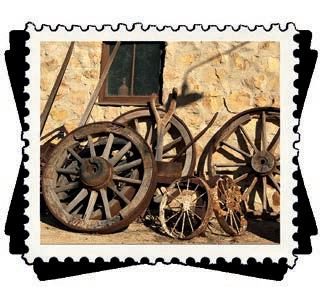

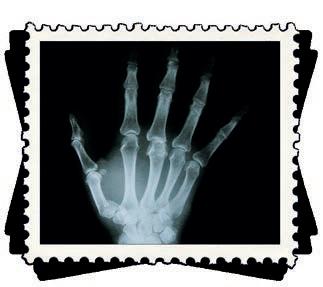
The text you are going to read is partly fact and partly fiction. It is based on predictions of technological advancement.
Read the text once and find out which paragraph talks about:
a. the advantages of robot pets.
b. robots replacing people in risky jobs.
c. robots which will be doing things better than people in the future.
d. the role of robots in space exploration.
e. the possibility that robots might take over the world.
f. robots assisting people who need help.

A The television, computer, telephone, mobile phone and many other devices have changed and improved our world dramatically. What we are now witnessing is a revolution that will transform our lives forever. Practical, useful robots are taking on more significant roles. It is predicted that sophisticated robots will soon be doing everything that humans do now, only better, and so ease our lives in every way imaginable. Since we will have all the housework done for us, we will have more free time to enjoy ourselves.
B Even now there are robots available on the market in a wide variety of forms and with many functions and they are constantly being upgraded. Robots used on industrial production lines are already faster, more accurate and cheaper than humans who would do the same job. Androids are especially popular among the elderly, the widowed and the disabled, serving as companions and guides. Some of the more advanced models even have lifelike skin, hair and eyes.
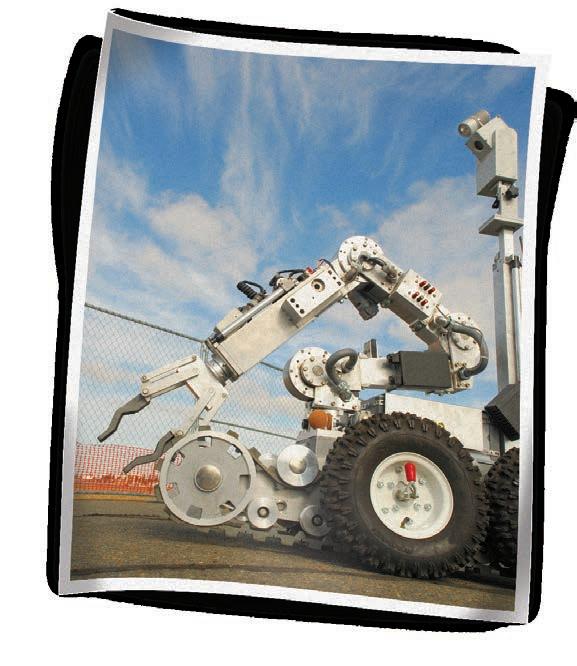

C Besides assisting human beings, robots will be employed to perform different tasks. They will certainly play a more important role in various rescue operations after accidents and disasters. As for their role in medicine, in the not too distant future, surgery robots will be performing complex operations far more precisely, handling them even without human assistance.
D The leisure industry also creates opportunities for robotics. One particular trend at the moment is for robot cats, dogs and other pets with highly realistic movements and behaviour, often indistinguishable from the real thing. These have a number of advantages - such


as never getting sick or dying, never requiring food or water, and never biting their owners. Robot toys can also play with children and help them in their development.
E In space, robots have already explored hundreds of moons and planets in the outer solar system and are expected to perform far more complex tasks in the future.
F But some people worry that we are not asking some fundamental questions: Are there certain tasks or roles that we should not let robots do? Is there a danger of robots taking over the world? The majority of people think that we should ensure that robots remain just ‘servants’ and never reach the capacity to outwit humans.

2 3
accurate – exact; precise handle – to manage a difficult work situation, deal with; to operate with the hands indistinguishable – that cannot be differentiated outwit – be cleverer than

Finish these sentences according to the information in the text.
1. Robots are used on industrial production lines because ____________________________
2. Sophisticated robots are designed to assist ______________________________________
3. Androids are especially popular because they ____________________________________
4. Robot pets are designed to __________________________________________________
5. Some people are afraid that robots ___________________________________________
Talk about the positive and negative sides of robots.
1. Do you think that robots are going to play an important role in our lives? Why?/Why not?
2. Which services that robots can provide are useful?
3. Which functions of robots may not be appropriate?
4. Will robots bring more benefits or downsides? Why?
5. Should there be a limit to robot technology? Why?/Why not?
Work out the meanings of the highlighted words in the text from the context and choose a word or phrase that is an explanation for each of them. .
1. very complex; advanced __________
2. free from trouble or worry; to make less painful _____________
3. physically handicapped _______________
4. a robot with human appearance ______________
5. to investigate systematically; examine_______________
6. to improve; update ______________
Use the words from exercise 1 and the Glossary in their correct form to complete these sentences.
1. The calculations were very ____________. There were absolutely no mistakes.
2. The government was criticized for the way it ___________ the crisis.
3. The accident had left her severely ____________.
4. They used the latest and most ______________ technology.
5. Computer games have become practically ______________ from reality.
Use some of the new words in the text to make sentences.
a) Match the words in column A with the nouns in column B to make collocations.
b) Think of other possible collocations with the words (1-5) and write them in box C.
The first collocation has been done as an example.

1. to handle
2. indistinguishable
3. significant
4. sophisticated
5. ease A
a. a problem
b. roles
c. the pain
d. twins
e. equipment B
Fill in the gaps with the correct prepositions.
Every day new electronic products are coming out onto the market. There are numerous products available (1) _______ all different lifestyles. Companies are constantly upgrading and redesigning products to make people (2) _______ all age groups more interested (3) _______ buying them. It is easy to get excited (4) _______ something that is smaller, better and more fun than previous models.
As technology advances, so do the gadgets that we are fond (5) _______. Young people are particularly good (6) _______ embracing new technologies. The current generation is constantly thinking (7) _______ having the latest thing or what is more convenient (8) _______ them rather than what is best for them.
to handle a tool / crisis
Choose one of the following questions to write a short composition on. Use about 150 words.
1. What kinds of new gadgets would you like scientists to invent?
2. In which direction should technological advancement go?
3. Machines might learn to predict our thoughts.
4. Can robots with artificial intelligence be dangerous for people?
Be careful when choosing the subject. The most important thing about writing a composition is to have a message to pass onto the reader. In some cases you may need to give examples.
Guess the meanings of the phrasal verbs from the context.
Now match the phrasal verbs with their meanings (a-f). The first one has been done for you.
Complete the dialogue with the phrasal verbs with up. Mar y: John, please go to see Mr Jones in his office. Something urgent seems to have (1)_____________.
John: Oh, I don’t want to go. Prices have (2)__________ because of inflation. He wants me to (3)____________ the problem at the meeting tomorrow.
Mary: Then you must (4) _________ an excuse and avoid coming to work tomorrow.
Complete these sentences from the text.
1. It is predicted that robots _______ soon _________________everything that humans do now.
2. In the not too distant future, surgery robots ________________________ complex operations.
The future continuous tense (will be + present participle) is used to express:
1. an activity that will continue for a certain period of time in the future.
• They’ll be shopping all afternoon.
2. an action that will be in progress at a certain time in the future.
• Please don’t come at 9 o’clock. She’ll be sleeping at that time.
3. what we expect will happen in the usual course of events (the event is certain and will happen naturally).
• In the future, robots will be doing all our chores.
Note:
Remember that the future simple tense is used to express future facts, sudden decisions, and predictions based on what we think, and to make requests, promises or offers.
• I think he will pass the exam this time. / She will be eighteen next month.
Useful tips: going to + infinitive is used for decisions made before the moment of speaking. will + infinitive is used for decisions made at the moment of speaking.
• I’m going to see some old friends at the weekend. (I have already planned it.)
• I’ll buy that dress. (I make the decision in the shop when I see the dress.)
Put the verbs from the box into the future continuous tense to complete the sentences.
watch sleep have supper move play
1. Tom, come round between eight and nine. We ________________ computer games.
2. Right now, I am watching the news, but this time tomorrow, I ____________ a film.
3. At midnight we ________________. We go to bed at about ten.
4. We _____________________ house next week. Can you help us?
5. Don’t phone at 8.00 - I ____________________ then.
Put the verbs in brackets into either the future continuous tense or future simple.
1. Sorry, but I can’t come at 5. I ______________________ (play) football with my mates.
2. In half an hour everybody ________________________ (watch) the film.
3. Don’t phone me between 10 a.m. and 12 p.m. I _________________ (have) a meeting then.
4. I think she _________________ (win) the race.
5. This time tomorrow I ______________________________ (fly) to London.
6. I suppose the show __________________ (start) before 8.
7. John seems to be very upset today. I _______________ (try) to talk to him.

Study the word order in the following sentences. We will have all the housework done for us. / He had/got his latest novel translated into French.
We use the structure have/get something done when we want to say that we ask someone else to do something for us.
Compare the sentences: I fixed the computer. (I did it myself) I had my computer fixed. (I asked someone to fix it for me)
More examples:
• I’m going to have my hair cut next week.
• She has had her house painted recently.
• She will get her novel published soon.



Complete the following sentences by using the verb have or get in the correct form and the past participle of the verbs in brackets.
1. John took my car to the mechanic’s to _________it ______________. (repair)
2. ‘Have you made this skirt yourself?’ ‘No, I _____________it __________.’ (make)
3. I want to __________ my tooth _____________. (fill)
4. I __________ my flat _______________ thoroughly last week. (clean)
5. I am going to an optician to _________ my eyes ___________. (test)
6. I decided to _________ the TV _________ to another room. (move)
7. She _______________ the roof of her house _________ next week. (fix)
8. He ___________ all his suits ___________________ last week. (dry-clean)

Herbert George Wells (1866-1946) was a British novelist, journalist and historian. Wells is most famous today for his science fiction novels, of which the best known are: The War of the Worlds, The Time Machine and The Invisible Man. In his early scientific writings, Wells predicted the invention of modern weapons, such as the tank and the atom bomb. In The Invisible Man, Wells explores the life of another scientist who undergoes a dark personal transformation after becoming invisible.
Discuss in class:
a) if it will ever be possible for people to become invisible.
b) what the benefits of becoming invisible might be.
c) what kind of problems invisibility might cause.
Read the extract from the novel The Invisible Man and say whether the ability to become invisible brought Griffin any benefits.
The Invisible Man

Griffin, who made himself invisible with an earlier experiment, enters a town and sets up a lab in an inn where he works night and day to come up with a formula that will reverse his invisibility. When he slips up and accidentally reveals himself, he is forced to run and find a new hiding place. As more people become aware of his existence, his situation becomes more dangerous. Finally, he finds the home of a former college professor whom he assumes will be interested in his experiments and willing to help him.
This is what Griffin said to Dr Kemp.
Griffin: I’ll tell you the whole story. First, though, you must get me some food, and light the fire. I’m tired, I’m hungry, and I’m cold. Yes, yes, I’ll tell you the whole story. But you must promise not to tell a soul. Dr Kemp, do not forget for an instant that though you cannot see me, I can see you all the time.
Wilma Rudolph was born into a large family – she was the 20th of 22 children – and her parents were hardworking people, but very poor. Her life is a story of achievements. Her first accomplishment was to stay alive because she was born prematurely. As a child, she went through many difficult times, and a great part of her childhood was spent in bed with her suffering one illness after another. At the age of 6, her parents were told that Wilma had polio and would never walk. However, her mother would not give up on her and she found out that Wilma could be treated at a black medical college in Nashville, 50 miles away. She took her child there twice a week for two years. After Wilma had been fitted with metal leg braces, she was able to walk. All her brothers and sisters encouraged her to be strong and to work hard to help her get well. ‘When you come from a large, wonderful family, there’s always a way to achieve your goals,’ said Wilma. Finally, by the age of 12, she could walk normally, without even her corrective shoes. It was then that she decided to become an athlete. At high school, Wilma joined the basketball team and became a basketball star, setting state records for scoring. Then she became a track star, going to her first Olympic Games in 1956 at the age of 16. She won a bronze medal in the 4x4 relay.
At the 1960 Rome Olympics, Wilma became ‘the fastest woman in the world’ and the first American female runner to win three gold medals in one Olympics, breaking records along the way.
Wilma Rudolph paved the way for African-American athletes, both male and female, who came later. She worked as a track coach, an athletics consultant and she also founded the Wilma Rudolph Foundation for amateur athletes. She encouraged them to have confidence in themselves. ‘I remind them that triumph can’t be achieved without struggle,’ she said.
You may remember that at the College I was much interested in the problems of light. I began to do some experiments in changing the colour of various substances. Finally, quite by accident, I hit on a method of making any inert object – a piece of wood, a bit of meat, even a lump of coal – absolutely colourless, as transparent as water. Suddenly I had a brilliant idea: why not make myself invisible? I worked at it for years – and at last I succeeded. I will not bore you with the details of my experiments. I have had many adventures as an invisible man… but it is not going as I had planned. I am invisible only when I am undressed; with clothes on, I can be seen as easily as you. While I was still experimenting, I saw only the advantages of the thing. But there are disadvantages, I can tell you. I cannot rest until I am sure that no one will discover me. I cannot eat unless I am alone, for I would be found out by the spoon floating in mid-air. That is why this is such a stroke of luck, my running into you. I need an accomplice. I can take refuge in your house. I made a huge mistake, Kemp, in trying to carry the thing through alone.

If you want to know what happened later, listen to Mr Kemp’s story.

reverse – to move something in a backwards direction
assume – to accept that something is true substance – a kind of material inert – lifeless, not moving accomplice – a partner in crime; assistant refuge – a place offering protection a stroke of luck – a good thing that happens suddenly bore – to cause to feel boredom
1. by chance –
2. for a moment –
3. see-through, clear –
3 4
Find the sentences in the text which support these statements. Griffin …
• wanted to become visible again.
• had to leave the inn urgently.
• thought that Mr Kemp would be interested in his project.
• asked the professor to keep a secret.
• succeeded in making objects transparent.
• decided to make himself invisible.
• had many problems and tried to hide from people.
• needed someone to help him.
In four sentences describe the troubles Griffin went through and why it was easy to be discovered.
Which highlighted word/expression from the text means:
4. be discovered –
5. (someone’s job) in the past, but not now –
6. make something known –
Study the use of the following words.
strike (struck, struck) v = 1. hit hard – He struck the ball.
2. attack – The enemy will strike again. 3. refuse to work – The miners decided to strike.
Expressions with strike:
The clock strikes every hour. / He struck a match. / They hope to strike oil/gold
strike n = 1. a refusal to work; 2. a hunger strike (= a refusal to eat)
stroke v = moving a hand gently over someone or something
– She gently stroked her dog’s back.
stroke n = 1. a sudden illness which can make people paralysed
– He suffered a stroke and is unable to walk.
2. a stroke of luck/good fortune – Winning the lottery was quite a stroke of luck.
• You can find more examples if you look the words up in a dictionary.

The former refers to the first of two things, the latter to the second. Example: I like apples and oranges, but I prefer the former over the latter meaning I like apples more than oranges.
• I enjoy reading magazines and tabloids, but prefer the latter over the former
• Joan liked both dogs and cats, but because of her cat allergy, she preferred the former.
• Red and blue are popular colours, but the latter is more popular.
Negative prefixes: in- (im-, ir-), un-, dis- and the suffix -less are added to nouns, adjectives, adverbs and verbs to make their meaning negative. E.g. impossible, disapprove, careless
Use the words below to complete the sentences, making any changes necessary.
advantage thought willing visible possible home
1.
2.

3. The new school building has a lot of ________________, including the fact it’s so far from the town centre.
4. I invited him, but he was _____________ to come.
5. The poem was too long; it was _____________ to learn it for the next day.
6. One day in the future people will put on special glasses and become ___________.
carry through – accomplish carry on – continue
carry out – perform a task; follow instructions carry away – make enthusiastic
Complete the sentences by using the correct form of a phrasal verb with carry.
1. She _____________ with her work and didn’t look at me.
2. The audience was completely _____________ by her singing and couldn’t stop cheering.
3. We ____________ everything that was written in the letter and the results were excellent.
4. In the end, they __________ the project ________ despite the difficulties.
1
Before you listen to the text, study the words in column A. What do you think these words mean? Try to find the explanations in column B. Use a dictionary if necessary.
1. capture 2. insane
3. trust 4. betray 5. cruel
Listen to Kemp’s instructions on how to capture Griffin and do exercise 3.
a. faith, belief
b. be disloyal to someone
c. brutal, heartless
d. mad
e. catch, seize, arrest
Answer the following questions.
5. What happened to Griffin in the end? 2 3
GRAMMAR
MODAL VERBS
1. How did Mr Kemp betray Griffin?
2. What did Mr Kemp think of the invisible man as a person?
3. Why did people want to capture the invisible man?
4. Why did Mr Kemp want clothes to be kept away?
Modal verbs are used with other verbs to express permission, ability, obligation, possibility, and so on. Study the meanings of the modal verbs and do the exercise below.
Modal Meaning
can to express ability
Example
I can speak a little Russian. can to request permission Can I open the window? may to express possibility I may be home late. may to request permission May I sit down, please? must to express obligation I must go now. must to express strong belief She must be over 90 years old. should to give advice You should stop smoking. would to request or offer Would you like a cup of tea? would in if-sentences to give advice If I were you, I would say sorry.
Note: Mustn’t and needn’t/don’t have to
We use mustn’t to say that something is NOT ALLOWED and needn’t (or don’t need to/don’t have to) to say that something is NOT NECESSARY.
• You must not copy on the test.
• We needn’t go into details now.
Things to remember:
• Can in the past is was/were able or could and for other tenses be able to.
Examples: When I was young, I was able to earn a living pretty easily. Now I can’t - I’m too old! I couldn’t hear what he was saying. When I finish my studies, I will be able to find a job.


Complete the sentence using an appropriate modal verb. Sometimes there may be more than one possibility.
E.g. I didn’t feel very well yesterday. I couldn’t eat anything.
1. It’s snowing, so it ____________be very cold outside.
2. This bill ____________ be right. £200 for two cups of coffee!
3. You ___________ come home late tonight.
4. You ______________ stop smoking.
Have you ever wondered what the world would be like if some inventions hadn’t been made? Discuss the following questions in class.
5. ______________ I leave early today, please?
6. You ____________ use the car tonight.
7. You _____________ tell her the truth. That’s the best option.
8. You ___________ pay until next week.
9. His excuse ___________ be true, but I don’t believe it.
1. In what ways has technology improved your lives?
2. How has the Internet changed the way you live?
3. Do computers save time or do they just make you waste more time?
4. Do you think that people will ever visit Mars?
Read the text and pay attention to the parts of the sentences in bold. These are examples of the third conditional. Can you work out its usage from the context?
What does the future hold?
The world would be such a different place if it hadn’t been for scientists and inventors whose inventions had changed the course of history. How our civilization would have developed if many of the inventions hadn’t been designed is now difficult to imagine. The inventions that have affected the lives of most people around the world are the telephone, electricity, radio, television, the computer, the car and the ability to communicate through the Internet. Hopefully, there will be new important technological breakthroughs that will not only make our lives easier, but also lead to economic growth. We are particularly looking forward to new technology in fields such as medicine, transport and appliances.
Some of 2020’s new gadgets will probably come out of the blue. If we had been asked about our
expectations several decades ago, we would never have imagined many of the hot gadgets available today. Smartphones, with their ability to multi-task, have already changed the way the world communicates and lives. They are continually evolving and will soon become micro personal computers. This industry simply moves too fast to be predictable and only time will tell what we will see.

unexpectedly breakthrough – an important discovery, especially in science evolve – develop


We certainly expect more powerful mobile devices, thinner and lighter tablets, sophisticated robots, self-healing systems, and the development of artificial intelligence – that’s a reasonable list to get started with.



GRAMMAR THIRD CONDITIONAL
We use the third conditional to talk about the past and a situation that didn’t happen. We also imagine how the situation could have been different. Form: {if + past perfect} + {would have + past participle}
Examples: If I had worked harder at school, I would have got better marks. If we had caught the earlier train, we would have got there on time.
I would/could/might have asked him if I had seen him at the meeting.
Notice that the main clause can contain would, could or might.
1 2 PRACTICE
Put the verbs into the correct form to make third conditional sentences.
1. If I _____________(pay) more attention, I ________________(understand) him.
2. If ______________(have) time, I _________________(go) to see him.
3. You ________________(enjoy) the play if you ____________________(not/fall) asleep.
4. She ______________(not ring) her daughter if she ________________(not be) so excited.
5. If Tesla ______________(live) longer, he _____________(carry) out more experiments.
6. The actress ____________________(not be interviewed) if she ___________________ (not marry) a millionaire.
Complete the following sentences in an appropriate way.
1. If I had been with them at the party, I ___________________________________________.
2. If I had had the power to change one thing in my childhood, I ________________________.
3. I probably wouldn’t have met my best friend if ____________________________________.
4. I’d have been really pleased last week if __________________________________________.
5. If the computer hadn’t been invented, ___________________________________________.
6. Diana would have worn her red dress if__________________________________________.
7. Would he have had that terrible accident if _______________________________________?
8. If we had saved some money, __________________________________________________.
Rewrite the sentences below to form second or third conditional sentences. The first one has been done for you.
1. They didn’t watch the news so they didn’t hear about the earthquake. If they had watched the news, they would have heard about the earthquake.
2. We can’t go sailing because there isn’t enough wind.
3. We won’t go abroad on holiday because we don’t have a visa.
4. He broke his leg so he couldn’t take part in the competition.
5. I couldn’t take any photos because I had forgotten to pack my camera. She didn’t pass her exams so she couldn’t go to university.
In pairs, take turns to answer these questions.

What would you do?
A What would you do if you were invited to a really good party by someone you didn’t like?
B If you could be a headmaster for a day, what changes would you make to your school and why?
2
What would you have done?
Last week your friend found a purse with a lot of money in it and decided not to hand it in to the police. What would you have done if you had found the money?

Complete the second sentence so that it has a similar meaning to the first, using the word in bold. Do not change the form of the word in bold.
1. The painters painted our house last month. /had We ___________________________________ last month.
2. That’s the garage where I left my car last week. /repaired That’s where I went _________________________ last week.
3. People say that cats have nine lives.
Cats _____________________________________ nine lives. /said
4. I want to go to university this year. /interested I ___________________________________ to university this year.
5. I didn’t learn enough and I failed the exam. /more If I ______________________________________ passed the exam.
6. James gave me good advice and I saved a lot of money. /given If James ________________________________________________.
7. We won’t go swimming if the weather is bad. /changes Unless _________________________________________________.
Complete the sentences with the expressions from the box.
1. Why did you ______________ over a problem like that?
2. I’ll try to _______________ all the things that are important before I make a decision.
3. Our flight is at 8:00. _____________, we can go to a café and have a drink.
4. There is no point in helping Jack. He’ll never ________________________.
5. He can stay with us _________________. I hope he will soon find a suitable flat.
Use the phrases from the box to make new sentences.

take into account in the meantime for the time being make a fuss return the favour

Asking if someone is sure about something
Are you quite sure ...? Are you certain ...? Do you think ...?


When we are sure about something
I’m quite sure / positive / certain that ... I think ... Yes, certainly /absolutely / definitely. Of course ... will.


When we are not sure about something
Perhaps / Maybe / Probably I suppose / I expect ... I’m not really sure. I can’t say for certain. I doubt it. It’s possible / likely.

Work in pairs. Take turns to ask and answer questions expressing a) certainty and b) uncertainty. Use the phrases from the boxes. Do you think
• you will go to the seaside this year?
• Serbia will be basketball world champions this decade?
• a cure for cancer /AIDS will be found soon?
• England will win the next football World Cup?
• every home will have a sky car in ten years’ time?

2 3 4
Complete the sentences with word/s from the Key word list. (6 pts.)
1. The third _____________ was sentenced to life in prison.
2. As technology advances, these gadgets will become more _________.
3. The poor guy didn’t even have any medicine to__________ the pain.
4. This is not the sort of experiment you can _____ _____ in your bathroom.
5. We need to_____________ these problems with care.

6. Scientists want to _____________what is happening deep inside the planet.
Complete the sentences by using the correct form of the word in bold. (4 pts.)
1. The quality of inventions is _______________. Not all of them are good. /predictable
2. He failed to back up the files and it had consequences. /disaster
3. The work was completed with the ___________ of robots. /assist
4. This bus is ______________ for disabled travellers. /convenience
Put the verbs in brackets into the correct tense. (5 pts.)
1. If I hadn’t gone to London, I __________________ (get) this job.
2. Don’t come between 6 and 8. I ___________________ (have) dinner with my family then.
3. Why didn’t you phone me? If I ______________(know) you were ill, I __________________________ (come) to see you.
4. This time tomorrow we ________________ (celebrate) our victory.
5. If you had come to the race, which horse ____________________ (you/bet) on?
Rewrite the following sentences using the words in bold. (4 pts.)
1. You should take the train instead of the bus. /were If ___________________, I’d take the train instead of the bus.
2. My father drove slowly and we arrived late for the show. /not If my father ___________________________________ for the show.
3. The mechanic changed the oil in my car yesterday. /had I ________________________________________changed.
4. It isn’t Jane. I’m sure she is in Paris. /be It ______________________. She is in Paris.
KEY – page 141

Verbs assume explore ease handle upgrade reverse bore Nouns accomplice substance refuge Adjectives accurate disabled inert sophisticated indistinguishable Phrases a stroke of luck by chance carry through carry on carry out carry away
20 points
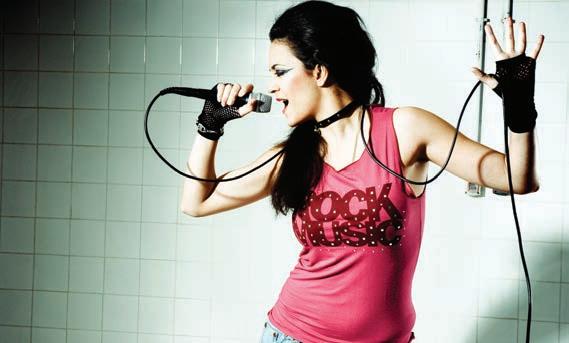

In this unit, you will
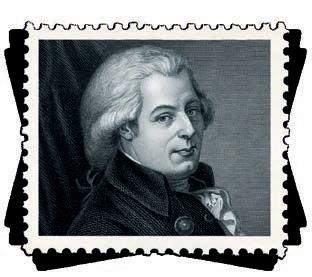

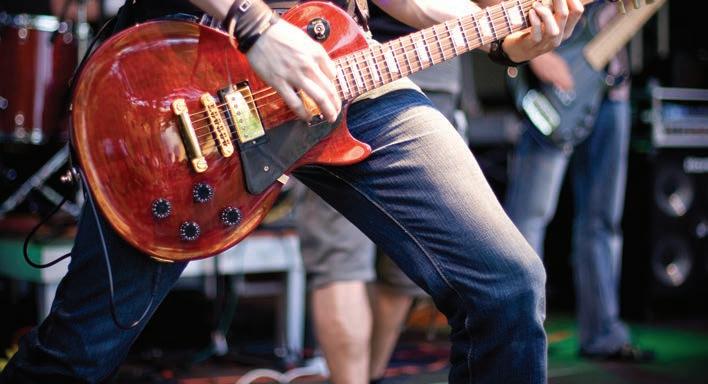
a. read, listen and talk about:
- the phenomenon of music
- the healing power of music
- festivals: Exit and Guča b. practise:
- adjectives: comparison and word order
- relative clauses
- collocations; prepositions; phrasal verbs with take and off
- expressing complaints

5. Which of the ____________ composers do you like best? I think Beethoven is my favourite. 1 2
The four people in the photos perform/performed different kinds of music. How much do you know about their music? In groups of four, each student should choose one musician (or the type of music they are known for) to talk about.
Complete the sentences by using one word from the box. There is one extra word.
gigs lyrics classical sculpture conductor audience
1. I think that the _________ are more important than the music in the songs by the Beatles.
2. The ___________ was astonished by the way he played Chopin.
3. Does your band play a lot of ____________ in this club?
4. A ____________ is responsible for the whole orchestra.



Discuss the following questions.
1. What kinds of music do you listen to?
2. Do you listen to music while doing your homework and studying? Does it help?
3. Should music be played during class to help keep students’ attention?
4. Do you ever like to listen to loud music? When?
5. Do you play a musical instrument? Which instrument? Do you take lessons?
6. Which musician would you most like to meet? Why?
What are the effects of music on the human brain? Read the text to find out.
Numerous studies have shown that music has a remarkable influence on the mental and physical well-being of its listeners. It creates positive effects on the brain cells that control memory power, learning, mood, sleep and other functions. It also has the power to form character and should therefore be introduced into the education of the young. In short, music is to the brain as physical exercise is to the human body.
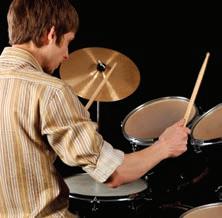
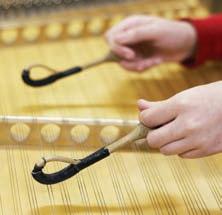
One of the strongest effects of music is believed to be in the area of memory and language, although these conclusions should be treated cautiously. However, there has been some evidence that children who take music lessons develop a better memory, exhibit greater verbal abilities and have more advanced reading skills than those who have no musical training. It has been concluded that listening to Mozart in particular improves mental functions that deal with logic. This phenomenon has become known as ‘The Mozart Effect’. According to this theory, if children or even babies listen to music composed by Mozart, they will become more intelligent. The idea took off in the 1990s with thousands of parents playing Mozart to their children. However, listening to any music that is personally enjoyable has positive effects on ability levels for all age groups because it improves the duration and intensity of concentration. While reading important information, students are advised to play music they will associate with the topic. The more interesting and dramatic the music, the more easily the information is remembered.
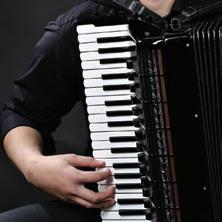
Studies have also shown that rhythm can be used as an aid when studying maths. What’s more, playing an instrument also seems to make learning mathematics and foreign languages easier.
Teenagers listen to music when they are feeling troubled or lonely, to pass the time, ease boredom, etc. Musical tastes are a good way for teenagers to bond with their peers and make more friends, too. It also determines the way they dress, move, talk and style their hair. Many bands have a front man that teens can idolize and look up to.
All in all, as long as it’s not too loud and aggressive, music can be an incredible medium through which young people can share their experiences and emotions.

cautiously – carefully; showing caution aid – help, support; assistance bond – establish a relationship or link with someone peer – a person of the same age or status
5. an incredible medium calming catchy cheerful depressing lively moving relaxing 3 4 1
Say whether these statements are true or not. If not, correct them.
1. It has been proved for definite that music lessons help children develop a better memory.
2. Music improves the intensity of concentration.
3. Music has no effect on our mood.
4. Only classical music can improve and speed up the process of learning.
5. Playing a musical instrument helps in the learning of mathematics.
Read the text again and list the reasons why music has a positive impact on our well-being.
Use the highlighted words or those from the Glossary to complete the sentences below.
1. The problem is that they are poor and their country relies on foreign ____________.
2. You must drive very ___________ when it is snowing.
3. Unfortunately, I got the impression that Martin found it hard to _________ with any of the other students.
4. She decided to leave for ___________ reasons - too many to count.
5. We must admit that the girl has a __________ talent. Some might say she’s a genius.
6. It’s ___________ to me that a person without formal training could be so successful.
2 3 The adjectives in the box can be used to describe music. What else can they describe? Think of appropriate nouns to use these adjectives with and make sentences to practise. Example: After reading the article, there was a lively discussion.

These are collocations from the text. Think of other possible collocations with the words in italics. The first collocation has been done as an example.
1. numerous studies numerous times/visitors
2. a remarkable influence
3. a positive effect
4. advanced skills
Complete the sentences by using the correct form of the words in capital letters.
Rock and roll is a genre of music that emerged as a defined (1)____________ style in America in the 1950s and quickly spread to the rest of the country and the world. It later evolved into the (2)__________ different sub-genres of what is now simply called ‘rock’. As a result, the term ‘rock’ now has two (3)__________ meanings: either rock and roll in the 1950s style, or later rock and even pop music which may be very different to (4)____________ rock and roll.
The answer to the question of who was the most famous band of all time will depend on people’s different tastes and (5)_________. However, the Beatles are (6)____________ rated as the best and most famous band in rock history. The (7)___________ of their songs and their (8)____________ were the reasons for their popularity.
Study the meanings of the phrasal verbs and use them in the correct form to complete the sentences below.
1. take somebody in
2. take something in
3. take after somebody
4. take off (1)
5. take off (2)
6. take over
7. take to
8. take up
1. MUSIC
2. VARY
3. DISTINCTION
4. TRADITION
5. PREFER
6. QUESTIONABLY
7. DEEP
8. CREATE

a) deceive, trick
b) understand
c) resemble in looks
d) leave the ground and start flying; remove
e) suddenly become successful/popular
f) take control of something
g) begin to like
h) turn one’s interests to; begin doing something as a hobby
1. I can’t believe I was ______________ by him. It was all a lie!
2. The baby ______________ its father. They have the same eyes and nose.
3. I couldn’t ______________ what she was saying yesterday at the meeting.
4. When does the new manager _______________? It’ll be sad to see Mr Smith leave.
5. ‘Have the children ____________ their new teacher?’ ‘Yes, they love her.’
6. If I had more time, I’d like to ____________ the guitar.
7. He didn’t want to ___________ his hat _________.
8. Her singing career has just begun to _____________.
Find examples of the comparison of adjectives in the text. Explain how the comparison of adjectives is formed.
In each row write the missing forms of the adjectives. The first one has been done as an example.
The adjectives far and old each have two comparative forms which mean different things. Can you explain the difference?
Complete the sentences using the comparative form + than or the + the superlative of the adjectives in brackets.
1. She is ______________________________ her brother. (serious)
2. English is _______________________ language in the world. (easy)
3. The station was ___________________________ I thought. (near)
4. Today is a lot ____________________________ yesterday. (hot)
5. That was ______________________ watch they had in the shop. (expensive)
6. I’ve got ____________________ money of all of us. (little)
7. You’re _____________________ person I’ve ever met. (amusing)

Note:
For the comparison of equality we use:
• as ... as (to say that something is similar) - Jane is as tall as John.
• not as … as / not so … as (to say that something is not similar) John’s car is not as fast as ours. = Our car is faster than John’s.
When we use more than one adjective in a phrase, they usually follow this order.
It is a new black Swiss leather travelling bag.
Can music heal?
Listen to an interview with a music therapist and fill in the gaps using the words from the box. track 24
Look at the words in the box below and check if you know their meanings.
1. Music is a source of entertainment and provides a ____________ from problems.
2. Listening to music helps us relieve ____________.
3. Music affects our ___________ and mental state.
4. Listening to music speeds up the natural ____________ process of the body.
5. If we listen to happy ___________, we are less depressed and have positive thoughts.
6. When our brain releases dopamine, we ___________ much better.
Listen again and check your answers.
Try to explain the power of music expressed in these sentences, according to the information in the text.
Class discussion. Answer the following questions.
1. Why are rock, pop and folk music events becoming increasingly popular?
There are a large number of music festivals covering a wide variety of genres. Over the years music festivals have become more important for their social and cultural roles. Besides the fact that they attract thousands of music fans, they also give an opportunity to new artists to play before large audiences.
2. How important are they for your generation?
3. Do they have any social, cultural or economic significance?
4. Which commercially successful music festivals have you heard of? Have you visited any of them?
EXIT is an annual summer music festival which welcomes renowned stars and artists from all music genres. It is considered to be one of the most interesting summer party destinations. In 2013, EXIT was declared the best European festival at the annual European Festival Awards.
This stunning four-day festival takes place at the magnificent 18th century Petrovaradin fortress in Novi Sad, a most romantic place to go partying. It was started in 2000 by three university students and it quickly gained in reputation.
The four-day programme is scattered across as many as 22 stages and includes all genres of music. The site is laid out so that different music can be played in different parts of the venue, including a large outdoor space where revellers dance until dawn.
The Festival, famous for its cosmopolitan spirit, attracts visitors from all around the world who come to enjoy excellent musical programmes and top world performers. It proves that music, as a universal language, can connect and bring people together.
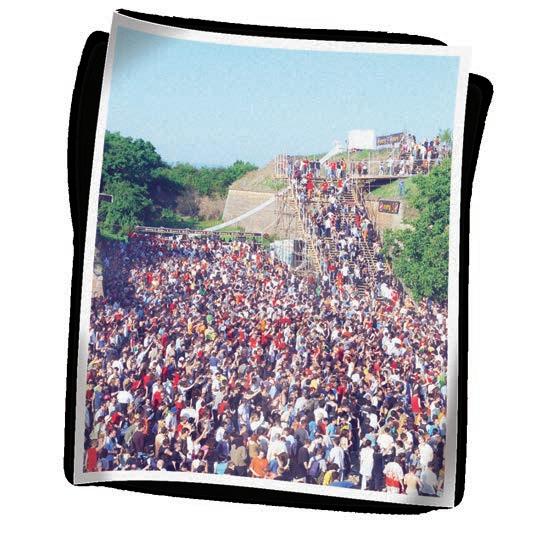
A peaceful and colourful village, Guča has gained world fame owing to its Assembly of Trumpet Players, the largest trumpet event on the planet.
The first festival, the Dragačevo Assembly of Trumpet Players, was held in 1961 in the local church yard. Initially, it was a very modest affair. However, the event gradually grew and over the years it has become a world-renowned festival.
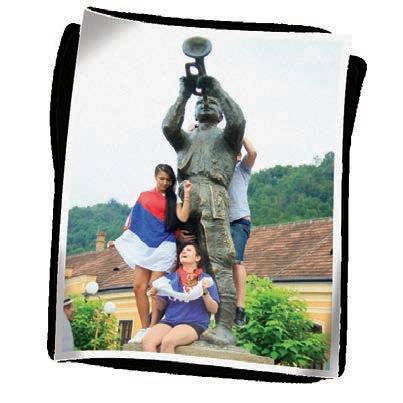
Traditional brass bands and folk song and dance groups from around the world regard it as a great honour to be invited to the Assembly and the number of visitors increases with each coming year.
The brass players are for the most part fully self-taught. They play by ear and quite spontaneously, relying on their musical memory. They play from their hearts and souls and this is the very reason why their music reaches out to listeners.



gain – receive advantage or profit; get venue – the place where an event takes place reveller – a person who is celebrating with other people in a wild and noisy way renowned – famous and notable regard – (v) consider or think of (something) in a specified way; (n) a feeling of respect stunning – very beautiful or pleasing; surprising assembly – a group of people gathered together for a particular reason

Use the words from the Glossary to complete the sentences below, making any changes necessary.
1. I ______________ her as my best friend.
2. They won’t give up because they have nothing to lose and everything to ____________ .
3. He thinks that the most ______________ musician is undoubtedly Duke Ellington, a jazz pioneer.
4. The streets were crowded with on New Year’s Eve.
5. The nightclub provided an intimate ______________ for her performance.
6. We go to the same popular summer _____________ every year.
1 2 3 4 2
Study the collocations and make sentences to practise.
Example: Researchers have made a stunning discovery.
• to gain attention / recognition / fame / confidence / experience
• sports / popular / concert venue
• renowned scientist / artist / school
• stunning discovery / news / decision / view
• fashionable / holiday / ski resort
Complete these sentences according to the information from the text.
1. EXIT hosts____________ performers who play music of different ____________.
2. It also welcomes ________________ who come to enjoy its music and cosmopolitan ____________.
3. Music festivals offer excellent promotional opportunities for ___________________.
4. There are many revellers who ___________ _______________________________.
5. The village of Guča has become renowned for ______________________________.
6. The brass players are mostly self-taught and they_________________________.
Fill in the correct prepositions. Then use any five of the phrases to make sentences.
1. associate ____ 2. deals _____
3. increase _____ 4. valued _____
5. owing _____ 6. impact _____
7. play _____ ear 8. rely_____
Guess the meanings of the phrasal verbs from the context. Then match the phrasal verbs on the left (1-5) with their meanings on the right (a-e).
1. The plan was called off at the last moment.
2. We were cut off while speaking on the phone.
3. I wish you wouldn’t put off going to the doctor’s when you are ill.
4. He set off for Europe and I don’t expect him to return soon.
5. I was so tired last night that I dropped off in front of the TV.

1. call off
2. drop off
3. set off
4. put off
5. cut off
a. start on a journey
b. cancel
c. delay doing d. separate from others; discontinue
e. fall asleep

Discuss the following questions in class.
1. How popular is live music in your country?
2. When was the last time you went to a concert or live show?
3. Is there any kind of music that you never listen to?
4. Are there any important festivals in your town?

Interesting facts about music and musicians
• Before composing, Beethoven dipped his head in cold water.
• Mozart often sold the same piece of music to six or seven different publishers simultaneously and demanded unreasonably large fees for the simplest work.
• House of the rising sun by The Animals was recorded in only 15 minutes because the band was on a tight budget. In spite of this, the song went all the way to number one in 1964.
Study this sentence:
• The term ‘disc jockey’ was first used in 1937.
• Although The Beatles broke up in 1970, they continue to sell more records each year than the Rolling Stones.
• In 1988, tenor Luciano Pavarotti received a record 165 curtain calls at a Berlin opera house. Pavarotti was applauded for 1 hour and 7 minutes.
• Ireland has won the most Eurovision song contests (7 times).
EXIT is a summer festival which welcomes artists from all music genres.
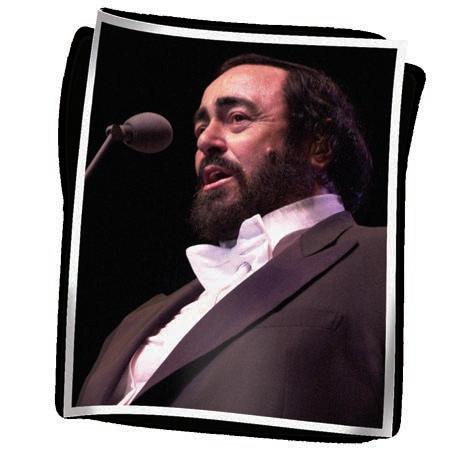

The underlined clause is a defining relative clause. It tells us which noun / pronoun we are talking about and is necessary in order to understand the sentence. We do not separate it with a comma. These are the pronouns used with relative clauses. Explain their use.
who is used for people which is used _____________ that is used_____________
whose is used_____________ whom is used_____________
Where, when, what and why can be also used. E.g. This is the house where Jane was born.
Study these examples:
a. She has a son who is an actor. (Who is the subject of the defining relative clause and can’t be omitted.)
b. She loves the present (which/that) her boyfriend bought. (Which/that is the object of the clause and can be omitted.)
A non-defining relative clause
a. The event, which has gradually grown over the years, has become a famous festival.
b. My mother, who is a social worker, sometimes works on Sundays.
The underlined clauses are non-defining relative clauses. They only give us additional information about a preceding noun or pronoun. These relative clauses must be written with commas. We can’t omit the relative pronoun and we don’t use that in this type of clause.

Fill in the gaps with an appropriate relative pronoun. In which sentences can you leave out the relative pronoun?
1. The woman _______ she was sitting with was her neighbour.
2. My boss, ________car has broken down, wants me to go there instead of him.
Look at these examples:
• He came as quickly as he could.
• Has everybody eaten as much as they want?
3. Her flat is in the block _______ my sister lives.
4. He gave me the parcel ________ my parents had sent.
5. Do you know the reason _______ she didn’t come?
6. The boy ________ had given him the money called last night.
7. I remember the holiday ________ I learned how to swim.

There are a large number of idiomatic expressions or fixed phrases which we use in informal English when we are making comparisons like this. Here are a few of them in context:
• He went as white as a sheet when he saw the ghost.
• She sat there as quiet as a mouse and wouldn’t say anything.
• All the children were as good as gold when they came to visit me.
• These stories are as old as the hills and have been passed down from generation to generation.
Complete the sentences using the as ... as construction and the words: soon, long, fast/quickly and much/many.
1. I won’t smoke any more cigarettes ______________ I live.
2. Help yourselves to cookies. You may take ____________ you like.
3. Please send us your information ______________ possible.
4. Since we were late, he drove ______________ he could.
Complete the second sentence so that it has a similar meaning to the first, using the word in bold. Do not change the form of the word in bold.
1. John had not expected the film to be so good. /better
The film was better than John had expected.
2. Surprisingly, the airfare to London was cheaper than to Majorca. /as Surprisingly, the airfare to London to Majorca.
3. Keith is not as well qualified as Sue. /than Sue ______________________________ Keith.
4. His latest book isn’t as good as the first one. /than His first book _________________________ his latest one.
5. He has never made such a bad decision. /the It _________________________ decision he has ever made.
6. I didn’t think my results would be this bad. /were My results __________________________ I had thought.
7. The moment I saw the hotel pool, I no longer felt so tired. /soon I forgot _______________________ I saw the hotel pool.
8. I have never seen such a tall building. /the It’s _______________________________ I have ever seen.
1
Complete the sentences with the expressions from the box.
1. My mother never ____________ when my brother and I argue.
2. Do you really expect me to ______________ something I didn’t do?
3. Who knows what kind of revenge he might think up to___________ him!
4. If something happens _____________, it happens right at the last minute.
5. _____________ is the final problem that makes someone lose their temper.
take the blame for take sides (with) the last straw get even (with) at the eleventh hour
2
Use the phrases from the box to make new sentences. E.g. We all know what he did in order to get even.
Expressions you can use when complaining:
• I have a complaint to make.
• I’m sorry to say this, but...
• Sorry to bother you, but...
• I’m afraid I’ve got a complaint about...
If you want to express displeasure in response to an action, you can use some of these expressions:

• Excuse me, but there is a problem with...
• I’m afraid there is a slight problem with...
• I want to complain about...
• I’m angry about...
Remember: When expressing a complaint in English, you should use more polite expressions if you want to get what you want!
Positive responses to complaints
• I’m sorry. We promise never to make the same mistake again.
• I’m so sorry, but this will never happen again.
• I’m really sorry. We’ll do our utmost/best not to make the same mistake again.
Negative responses to complaints
• Sorry, there is nothing we can do about it.
• I’m afraid there isn’t much we can do about it.
• We are sorry, but the food is just fine.
With a partner choose one of the expressions to make a dialogue.
A guest and a receptionist at a hotel:
Guest: I’m afraid there is a slight problem with the service at this hotel.
Receptionist: I’m so sorry. Could you tell us what the problem is?
Guest: ________________________________________
Receptionist: _____
Your neighbour has two very noisy children, who play very loud music at all hours. You have decided to talk to their parents and to complain. Write a conversation in dialogue form between your neighbour and you. You may find the expressions from the Communication section useful.
1 2 3
Circle the correct answer. (5 points)
1. They expressed _____ optimism that they’d find a solution.
A aware B careful C cautious 2. Scientists have had a ____ in their search for new sources of energy.
A breakup B breakthrough C breakout
3. The brothers are different in character, but they _____ very well.
A get on B take on C carry on 4. Don’t be _____ by his promises.
A taken in B called off C cautious
5. Tina hopes to _____ experience by working abroad for a year.
A win B expand C gain
Fill in the gaps with ONE suitable word from the Key word list in the correct form. (5 pts.)
1. The streets were crowded with ___________ on New Year’s Eve.
3. We ____________off early the next morning.
2. We have decided to __________ off our holiday until next month.
4. We must inform everybody about the change of _________ for this event.
5. The Ritz is _____________ as one of the city’s best hotels.
Circle the correct answer. (10 pts)
1. She’s the woman _______ sister babysits for us.
A who’s B that’s C whose 2. _____ your room painted every year?
A Have you get
B Do you have C Have you 3. If he ______ a second time, he wouldn’t have succeeded.
A wouldn’t have tried B wasn’t tried C hadn’t tried 4. Your dress is ________ than mine and it’s ______fashionable.
A prettiest/the more B prettier/more C the prettier/more 5. You _________ smoke here. It’s a no-smoking area.
A needn’t B wouldn’t C mustn’t
6. My colleague apologized ________ my name.
A that he forgot B for he forgot C for forgetting 7. If he hadn’t invited me personally, ________ to his party last night.
A I wouldn’t go
8. The cashier called the police and said that a lot of money _______.
A has been stolen B had stolen C had been stolen 9. Unfortunately, there were ________ good players at that time.
A fewest B fewer C less
A I had known
KEY WORD LIST
Verbs gain bond regard Nouns aid resort venue reveller
Adjectives cautious renowned incredible remarkable stunning Phrases take after take in take off take over take to take up call off drop off set off put off cut off
B I hadn’t gone C I wouldn’t have gone

10. I wish ________ the answers yesterday. I’d have passed the exam.
B I knew C I would have known
B
In this unit, you will

a. read, listen and talk about:
- what teenagers do in their free time
- English humour
- reality TV shows
- the pros and cons of reality TV shows
b. practise:
- adverbs
- phrasal verbs with come
- making appointments
1 2 Discuss the following questions. Give reasons for your answers and include any relevant examples from your knowledge and experience.

1. Do young people today make good use of their leisure time?
2. Do they spend too much time watching television and playing video games, instead of taking part in more productive activities?
3. Do electronic devices draw young people’s attention away from their own environment and the people around them?
4. How much do you use technological devices for entertainment?
Which of the following would you rather do in your spare time? Give reasons.
• play a board game like Scrabble or Monopoly
• surf the Internet
• do yoga
• go hiking somewhere close, but new
• read a book
• play an instrument
• go jogging
• spend time with your friends



Entertainment may come in a variety of forms. It provides relaxation, gets rid of boredom and brings excitement. Young people in particular are always looking for ways to amuse themselves. However, the way teenagers live and spend their spare time nowadays has changed compared to teens in the past. The arrival of new technology has changed their preferences.
Instead of spending their precious free time outdoors and getting some fresh air and exercise, they seem to be hooked on modern technology. Internet addiction has thus become a real problem for students and teens today because it can lead to an inactive lifestyle, weight gain, sleep disturbance, etc. However, it must be admitted that computers have also made their lives easier by enabling them to search the Internet for millions of answers and offering them more options for entertainment.
track 26
Now you are going to read and listen to what two teenagers from the UK and Serbia say they do in


Simon, a 17-year-old from Brighton
In my view, both indoor and outdoor activities have their good sides. I generally prefer spending my free time outdoors. I like going out for a walk in the local park, riding a bike or skateboarding.

On Friday or Saturday nights I go out to a disco, concert or a pub. In such places you have the chance to come across interesting people, dance or simply talk to your friends.
Over the past few years there has been a great increase in activities such as jogging and going to fitness clubs. My friends join different clubs depending on their interests. I go to a youth theatre, but most of my friends go to a local sports club. On cold days, I browse YouTube, watch TV or play on the computer.
I’m sixteen and I prefer to spend my leisure time indoors, but I like hanging out with friends, too. I’m a computer addict. Texting with friends, chatting online, and playing dozens of video games is all I need. I might play the games for hours on end. Most of my friends consider it strange and stupid, but for me it’s really great entertainment.
I also spend some of my free time at a sports club, where I go in for kung fu. This type of fighting is a great art and requires many years of hard work and self-discipline.
On those occasions when I have no idea what to do in my spare time, I simply lie in bed and watch TV. I like ‘Friends’ or shows such as ‘The X Factor’ or ‘I’ve got talent’.

boredom – the state of feeling bored to enable – to make possible

2
1. prefers outdoor activities?
Complete the sentences according to the information in the text.
1. Entertainment helps people ______________________ ___________________.
2. Without entertainment there would be no ___________________ in our lives.
3. Today, Internet addiction makes young people
4. The good side to the Internet is that it enables ________
Read the texts again and put a letter next to each question. S - Simon M - Marko Who
2. spends a lot of time on his computer?
3. goes to a sports club?
4. prefers acting to going to a sports club?
5. doesn’t spend too much time on the computer?
6. has friends who don’t like spending time playing video games?
1
3
2

1. precious 2. preference 3. to hang out
4. to be/get hooked 5. disturbance
Discuss the following questions in class.
1. Where do young people spend their free time today?
2. Are there any bad consequences of spending a lot of time on the Internet?
3. What good sides to using computers are mentioned in the text?
Read the sentences with the highlighted words/expressions again and try to guess the meaning of these words from the context. Then match the words (1-5) with the explanations (a-e).
a. the act of interrupting something or someone
b. be dependent on; be addicted to c. of great value
d. a thing preferred; priority; choice
e. spend time in a certain location or with certain people
Use the words from exercise 1 and the Glossary in their correct form to complete these sentences.

1. She always talks about her _______________ for pop music. She hates all other kinds.
2. Jason likes to ride his bike and _______________ with friends in local parks.
3. John got______________ on his new gadget sooner than we thought. He can’t put it down!
4. Robert’s inheritance will ________________ him to study abroad.
5. He complained about a _______________ of his daily routine. Nothing ever changed. 1
Match the meanings on the right with the phrasal verbs on the left.
1. come across 2. come into
3. come out
4. come up with
5. come up
6. come by
a. think of, invent, produce b. inherit
c. become known; to be issued
d. find by chance
e. visit someone at home
f. be mentioned; discussed; arise
Complete the sentences with the correct phrasal verbs with come.
1. While browsing in a bookshop, I _________________ a valuable book.
2. His team ________________ some strange ideas at the meeting.
3. The whole truth ______________ at the trial.
4. John has stopped working since he ________________ a fortune.
5. Why don’t you ________________ and see my new laptop?
6. Sorry, I can’t meet you for dinner this evening. Something __________ at the office.

VERB active disturbance preference entertain relaxation
amusing compare
Use the words from the box to complete the sentences below.

1. You may rank candidates in order of _______________.
2. I don’t know how to _______________ my new cell phone. I need some code.
3. The whole family went to the amusement park to have fun and to ____________.
4. Do you know the _______________ of adverbs well?
5. Don’t ___________________ the child! She’s sleeping.
What about you? Compare your answers to the following questions with those of other students.
about the ways Simon and Marko entertain themselves.
• Compare their daily activities. How similar/different are they?
• Are the ways you spend your free time more similar to Simon’s or Marko’s?
• Is there anything you do in your free time that they don’t do?
1. How do you spend your weekends?
2. How often do you visit museums? When was the last time you went to a museum?
3. What do you do for entertainment when you’re on holiday?
4. How often do you go to parties? Have you ever hosted a party? What was it like?
track 27
• It is said that laughter is the best medicine. Laughter not only improves our state of mind, but also relaxes the whole body. Humour helps us to be positive and optimistic. Best of all, this priceless medicine is fun, free, and easy to use.
Listen to the following jokes and say whether you find them funny or not.
1
2
Answer the question: Why did the parrot remain silent in the presence of Joe’s friends?
Put the sentences into the correct order. Then listen to the joke and check if your order is correct.

1. The reply was, ‘Sorry, I can’t send anyone for an hour or two because I have no officers to spare.’
2. He phoned the emergency services again, but this time he said, ‘You can cancel that call-out because I’ve shot the man.’
3. He phoned the police and described what he could see.
4. It was the police operator phoning him back. He said to the man accusingly, ‘You lied!’
5. The man put the phone down and watched as the burglar climbed over the gate into his neighbour’s back garden.
6. A man noticed an aggressive-looking burglar in his neighbour’s front garden, trying to break into the house.
7. Within minutes, three police cars arrived. Shortly afterwards, the man heard his telephone ring.
8. ‘So did you,’ replied the man. ‘You said you had no officers to spare!’

1. What do you usually watch on television?
2. Which are the most popular shows in your country?
3. What kinds of shows do you like to watch?
Reality television as a whole has become very popular over the past few years and the list of reality television series is long. The genre is generally thought to be controversial and is often questioned for its ethical values.
What all reality TV shows have in common is their competitive nature. Typically, participants are filmed competing to win a prize, often while living together in a confined environment. In many cases, the participants are removed one by one until only one person remains and they are then declared the winner.
Since it is essentially interesting to see how people speak and behave in unusual situations, many viewers find themselves gripped by reality shows such as ‘Survivor’, ‘Big Brother’ ‘Candid camera’ and the like. However, many people believe that such shows are exaggerated just for the sake of the entertainment value. Reality TV often highlights constant fights or disagreements between groups, which raises the popularity of the show. In order to pull viewers in and to satisfy their curiosity, some reality shows use sensationalism, violence and offensive language.
Reality-based singing competitions, such as ‘American Idol’, ‘The Voice’, and the world-acclaimed ‘The X Factor’, and a diverse range of similar talent-search series have also experienced great success around the world. People with distinct skills and talents now have a platform where they can show their passions and become famous. The message of this kind of reality television is that ordinary people can become so important that millions will watch them. And the secret thrill for many of those viewers is the thought that perhaps next time the new celebrities might be them.
1 2 Discuss the following questions in class.
Based on the text, some of these statements are not true. Find the false ones and explain why they are incorrect.

1. The number of reality television series is decreasing.
2. People watch reality shows to see how the participants behave in unusual situations.
3. Fights between participants within a group make the show less popular.
4. The message of singing competitions is that anybody can become famous if they have talent.
5. Violence and bad language are not used in reality shows because they are supposed to have educational value.
confine – to force someone to stay in a place and prevent them from leaving grip – hold something tightly acclaimed – famous; celebrated

Read the sentences with the highlighted words/expressions again and try to guess the meaning of these words from the context. Then match the words with the explanations.
1. controversial
2. declare
3. offensive
4. distinct
5. for the sake of

a. insulting; rude
b. because of; for the purpose of
c. able to be clearly seen, heard, smelt or tasted
d. characterized by or subject to controversy
e. make known or state clearly; announce
Use the highlighted words or those from the Glossary to complete the sentences below.
1. They were classified into two __________ groups – boys and girls.
2. Adam tried to ______________ Judie’s hand, but she escaped.
3. It’s no wonder many people find the show _________ - they use so much bad language.
4. She spent much of old age _______________ to bed.
5. The issue of the death penalty is highly __________________.
6. The government ___________________ a state of emergency in the province.
7. He bought a house in the country _____________ his wife’s health.
Match the words in box A with those in box B to form collocations and use them to complete the sentences. The first sentence has been done as an example.

Example: ethical issues

1. The article provides a good example of the ethical issues that may arise.
2. She received _________________ for her interpretation of Chopin. People from all over the world loved her performance.
3. These books can be categorized into four _________________.
4. The ___________________ was criticized by all the participants in the show.
5. It is best to avoid such a __________________ during the meeting.
1. Most adverbs are formed by adding –ly to adjectives:
• Alex is a quick runner. – Alex runs quickly.
2. Some adverbs are identical to adjectives in form. Others are completely different.
• Jason is a fast runner. (Adjective) / Jason runs fast. (Adverb)
• Sonia is a good singer. (Adjective) / Sonia sings well. (Adverb)
3. Be careful with words like hardly and lately, which are not related to the adjectives/adverbs hard and late
The position of adverbs in sentences
Generally, adverbs can go in three different positions, but there are also a lot of exceptions.
1) Initial position (sentence adverbs):
Unfortunately / However, he couldn’t come with us this time.
2) Mid-position (before the verb) or after the first auxiliary verb (but before the main verb):
I’ll happily do the washing-up. / ‘Do you usually have dinner so late?’
3) End position: She opened the door quietly.
Adverbs of frequency, manner, place and time
• Adverbs of frequency (e.g. always, never, seldom, usually) come before the main verb (except the main verb to be and modal verbs):
Jane often arrives first. / We are usually here in summer. / She can never beat me.
• Adverbs of manner and place (e.g. slowly, awfully, carefully, here, there, behind) can go in the mid-position or end position. The children slowly ate their cake. / She drank her milk slowly. / We stayed behind.
• Adverbs of time (e.g. now, recently, then, today) are usually put at the end of the sentence or at the beginning of the sentence (for emphasis).
I saw him yesterday. / Tomorrow I will visit you at about 7 o’clock.
• If there is more than one adverb at the end of a sentence, the word order is normally:
Manner – Place – Time
She sang very well at the concert last night.

1
Adjectives or adverbs? Underline the correct adjective or adverb.
1. I know how strong / strongly you feel about George.
2. Can you easy / easily run half a mile?
3. My head aches quite bad / badly.


4. He had a happy / happily expression on his face all evening.
5. They stroked the cat gentle / gently.
6. It was a very delicious / deliciously meal.
2 Choose an adverb from the box for each sentence below and put it in the right position.
1. Public transport isn’t reliable.
2. She has been a team player.
3. Jim got up.
4. She didn’t play the piano.
7. The boys and girls waited for the parade to pass. sometimes always suddenly very well impatiently rarely never
5. They come and stay with us.
6. Unfortunately, he answers correctly.
3 Complete each sentence by placing the adverbs and adverbial phrases given in brackets in the correct position.
Example:
The children were playing. (in the garden, all evening, quietly)
The children were playing quietly in the garden all evening.
1. We slept. (all afternoon, in the tent, soundly)
2. They will go. (next week, on business, to Brazil)
3. The children sang. (on Christmas Eve, loudly, in front of the tree)
4. We hung the picture. (on the wall, carefully)
5. The birds sang. (this morning, outside the window, beautifully)
6. Cameron works. (on Saturdays, often, in the garden)
4
Study these sentences and answer the questions below.
– He drives more carefully than me. – He plays tennis worst of all his friends.
• What are the rules for making the comparison of adverbs?
• What are the irregular forms of the comparison of the following adverbs: well, badly, little, much, far?
5
Make the comparative or superlative form of the adverbs in brackets.
1. She finished the test ______________ (quickly) than I’d expected.
2. He plays basketball ____________ (well) in his team.
3. Now he walks __________________ (badly) than before his operation.
4. She sings ___________________ (beautifully) of all the members of the choir.
5. I slept _____________________ (comfortably) in this bed than in mine.
Example: The year started well, but then it all went wrong. He was wrongly accused. 2 3 1
Some verbs can only be used with adjectives; others might change their meanings when used with an adverb.
verb used with an adjective used with an adverb
look look good (= appearance) look well (= healthy)
smell smell good (= aroma)
taste taste good (= tasty)
Examples:

smell well (= have a good sense of smell)
taste well (= have a good sense of taste)
A: Do you think Mary smells good because she’s wearing expensive perfume?
B: I don’t know. I’ve caught a cold and I can’t smell very well.
2 These words are both adjectives and adverbs: fast/hard/late
adjective:
* Jack is a very fast runner.
* Ann is a hard worker.
* The train was late.
adverb:
* Jack can run very fast.
* Ann works hard. (not ‘works hardly’)
* I got up late this morning.
* Have you seen Tom lately? (= recently)
In some cases, the adverb may have two forms, one like the adjective and the other with –ly. There is usually a difference in meaning or use.

without –ly with –ly wrong wrongly = by mistake high highly = very; speak with respect late lately = recently most mostly = mainly or for the most part near nearly = almost short shortly = soon hard hardly = almost not/never (must come before the verb)
Choose the correct answers.
1. It was raining hard/hardly outside.
2. The post usually comes late/lately on a Saturday.
2 1 Which word is missing? Use the words from the box to complete the sentences below, making any changes necessary.
3. Her previous boss spoke very high/highly of her.
4. He’ll be back short/shortly.
5. The kite flew high/highly in the sky.
late direct short fast hard quick bad
1. I like driving ____________, but it is dangerous.
2. You have to study _________ to catch up with the rest of the class.
3. You can fly ___________, but there is only one non-stop flight per day.
4. Please do that ___________. It is very urgent.
5. Mr Johnson will be with you ___________. Please take a seat.
6. I haven’t seen him ______________. How is he?
7. The event was organized really ______________.
Are reality TV shows an important part of popular culture today? The statements in the box will help you. Agree or disagree with them. Justify your answers.
1. Reality TV shows provide wonderful entertainment.
2. Reality TV shows allow ordinary individuals a chance of fame.
3. They allow us to see the real personalities of celebrities.
For and against essay
Instructions
When you write the essay, you need to discuss both sides of the argument and give a balanced view.
Introduction – introduce the topic, but do not give your opinion.
1. Reality TV shows bring out the worst in people.
2. Reality TV encourages people to pursue celebrity status and discourages the values of hard work and education.
3. Reality shows send a bad message and help to create a cult of instant celebrity.
Main body – In the second paragraph, present the arguments in favour of the topic together with justifications and examples. In the third paragraph, present the arguments against the topic.
Conclusion – In the last paragraph, add a personal opinion or summarize the main points.
Use appropriate linking words to connect similar ideas or to introduce opposite ideas.
Circle the correct answer.
1. To check and find out what happened is the same as to ___ into something.
a. look
b. make
c. pull
2. The question didn’t come ___ so I was happy.
a. up
b. in
c. down
3. She had to bring ___ the children by herself.
a. on
b. up
c. out
4. When he spread the news, panic broke ___ in the city.
a. in
b. away
c. out
5. The sun broke ___ the clouds.
a. up
b. through
c. out
6. I doubt she’ll ever get ___ her trauma.
a. out
b. over
c. in
7. I can’t get ___ all this work. I need some help.
a. about
b. away
c. through
8. When she got the promotion, she started to look ___ on the people she used to work with.
a. up
b. for down

Study the sentences (1-5) below and match the phrases in bold with the explanations (a-e).
The first one has been done for you.
a) if the situation gets really bad
b) speaking about something
c) if nothing else succeeds
d) in one’s opinion
e) extremely happy and excited
1) If the worst comes to the worst, we’ll have to cancel the trip. [a]
2) If all else fails, we could borrow some money. [ ]
3) When it comes to restaurants, this town’s not that good. [ ]
4) I’ve been on cloud nine all day long. I got the job! [ ]
5) As far as she’s concerned, we can eat at any time. [ ]
2 Now use the expressions in these sentences. Try not to look at the previous examples.
1. ___________________, we can always spend the weekend at home.
2. ___________________ trouble, your brother really knows how to cause it.
3.___________________ and we spend it all, we can ask Dad to send us some more money.
4. The teacher said that ___________________, we could go on a day trip.
5. Ever since he proposed to her, she has been .
Being able to make and cancel an appointment is important in English. Here are some expressions you can use.
• ‘Are you available / free on the 7th?’
• ‘Can we meet on the 6th?’
• ‘How does the 3rd sound to you?’
• ‘Is next Tuesday convenient for you?’
• ‘What about sometime next week?’
• ‘Yes, Monday is fine / suits me / would be perfect.’
• ‘I’m afraid I can’t on the 2nd. What about the 6th?’
• ‘I’m sorry. I won’t be able to make it on Tuesday. Could we meet on Thursday instead?’
• ‘Ah, Monday is going to be a little difficult. I’d much prefer Friday if that’s all right with you.’
• ‘Would Friday suit you?’ 2
Cancelling an appointment
You can cancel an appointment as follows:
• ‘I really don’t think I can on the 21st. Can we meet on the 22nd? ’
• Unfortunately, I will be unable to keep our appointment for ...
• Would it be possible to arrange another time later in the week?
• I’m afraid I have to cancel our meeting on ... as something unexpected has come up.
• I’m afraid I’m not going to be able to meet you after all. Can we arrange another time?
Work in pairs. Take turns to ask for an appointment, to respond and to cancel an appointment.
- You have very bad toothache. Phone your dentist, give your name and ask him/her for an appointment.
- It’s no good for you. Suggest another time.
- Accept and thank him/her.

A: You have to cancel your appointment.

- You are the dentist. Try to make an appointment for A, but it is very difficult for you to arrange one because you’re very busy. Offer a time.
- Say it’s not possible. Offer another time.
B: Try to explain to A that you can’t make another appointment for the next two weeks.
Use the words/phrases from the Key word list to complete the sentences, thus making collocations. (5 points)
1. I found his comments deeply ___________ and rude.
2. Our time is ___________ and we don’t want to waste it.
3. A hole in the fence _____________ us to watch the show.
4. We heard a ____________ sound coming from the other room.
5. Most critics agree that it is a highly ________ film and that it will cause a lot of public discussion.
Add the correct prefix to make the opposite of the words below. (4 pts.)
1.____dependent 2.____active 3. ____regular 4. ____honest
Put the verbs in brackets into the correct tense. (6 pts.)
1. I informed him that I _______________ (send) him two e-mails the previous day.
2. If he ___________ (hear) her sing, he’d have asked her to take part in the show.
3. My son __________ (win) several prizes in the last two years.
4. While I _________________ (walk) to the bus-stop, I realized I ________________ (leave) the cooker on.
5. I ____________________ (drive) all day tomorrow, so I must rest now.
Rewrite the following sentences using the words in bold. (5 pts.)
1. The manager should raise our salaries. /I If ____________________________________our salaries.
2. When did they tell him the news? /he When _________________________ the news?
3. ‘Did you speak to the head teacher, Dad?’ I asked my father. /he I asked my father _______________________________________.
4. Although it was raining heavily, we finished the game. /heavy Despite ___________________, we finished the game.
5. Nobody could suggest an explanation for the incident. /come Nobody could ____________________ an explanation for the incident.

Verbs enable declare confine grip Nouns disturbance peer preference Adjectives acclaimed controversial precious offensive distinct Phrases hang out be/get hooked on for the sake of come across come into come out come up with come up come by

Put the verbs in brackets into the correct tense.
1. George’s sister _________ (go) to Italy in 2005. She _________________ (not be) there since then.
2. I’m terribly sorry, but I __________________ (forget) your name.
3. They _____________________ (get marry) at three o’clock tomorrow.
4. Oh no! You ___________________ (ruin) my nicest dress!
5. I wish I _______________ (play) tennis as well as my sister.
6. He wanted to know if she _______________ (go) to the disco the night before.
7. Nobody ___________________ (ask) us yet what we want.
8. In two days’ time, we ________________ (cross) the Channel on our way to London.
9. This mirror _______________________ (break) for a long time.
10. I didn’t forget how he ___________________ (help) me once.
11. Two boys ___________________ (catch) last night breaking into their neighbour’s house.
12. He remembered that he _________________ (hide) some money in the drawer.
13. When he __________(wake up), his mother ____________________ (already/prepare) breakfast.
14. I can’t take any pictures because I _________________ (not /buy) a camera yet.
15. What ____________________ (she/wear) at Mark’s party last night?
16. A: ‘________________ (you /be) here before? _____________ (they/have) good hotels?’
B: ‘Yes, we _____________ (spend) a weekend here last year. We ___________ (satisfy) with the service and the food.’
A: ‘_________________ (you/have) a good time?’
B: ‘Unfortunately, it never _______________ (stop) _____________ (rain).’
17. If you could change one thing here, what ___________________ (it/be)?
18. Sorry about the mess – I _____________ ____________ (paint) the house.
19. The river _________________ (rise) one metre since yesterday.
20. ‘Why are you so out of breath?’ – ‘I ___________________________ (run).’
21. By the time we reached home, the rain ____________________ (stop).
22. The cat ________________________ (lie) on my chair since this morning.
23. Her sister __________________ (wear) ten different pairs of shoes this week!
24. It _______________________ (rain) all day! Why won’t it stop?!
25. Tom realized that the machine he________________ (buy) a few days earlier was broken.
26. When I opened the door to the office, I saw that one of the policemen ________________ (question) a suspect.
27. I ________________ (not/know) what the road is like now because I ___________ (not/ see) the place for twenty years.
28. His mother would have talked to him if she _______________ (know) he had a problem.


Complete the sentences by using the correct form of the word in capital letters.
1. I don’t have much ________________ of European history. /KNOW
2. Tomorrow I’m going to send off my ________________ form for the job. / APPLY
3. Her brother works in a factory as an ________________. /ENGINE
4. The ________________ in this city has got worse. I find it difficult to breathe. / POLLUTE
5. His father was one of Britain’s most famous ________________. /POLITICS
6. I’ve been out of work for ages. It’s not much fun being _____________. / EMPLOY
7. If you go to court, you will need a good ________________. /LAW
8. Why are you afraid of this dog? It’s so _______________. /HARM
9. What a _____________ baby! It’s so cute and healthy. /DELIGHT
10. The weather is very ________________ these days. /CHANGE
11. All my children are good at making things. They are very __________. / CREATE
12. The sky is red and threatening. It will be ___________ today. /STORM
13. He is a ______________ young man and he will make the right decision. /SENSE
14. It was the most _____________ experience and we were all delighted. / ENJOY

15. Is this lecture really __________ or you are simply not ____________? /BORE/ INTEREST
16. One of the greatest _________________ of this country is this palace. /ATTRACT
17. The shop assistant showed a lot of ___________________ with the difficult customers. /PATIENT
18. Although they tried their best, the operation was unfortunately ____________________. /SUCCESS
19. That hat isn’t at all _________________. It’s too formal. /SUIT
20. Doctors have proved that smoking is . /HARM
21. You’re always breaking things! Why are you so ______________? /CARE
22. Don’t drink it! You don’t know if the water is ___________. /DRINK
23. Our team is very ________________. We’ve won three international competitions this year. /SUCCEED
24. We all admire the remarkable _________________ of the human brain. /EFFICIENT
25. However, sometimes we are ____________ to remember something. /ABLE
26. The pupils were given lists of words to ______________ and were then tested on their powers of recall. /MEMORY
27. Don’t ___________________ the cost of hotel accommodation when you plan your next holiday. It’s often more expensive than you think! /ESTIMATE

Complete the second sentence so that it has a similar meaning to the first one, using the word in bold.
1. The workmen finished and then Mr Brown came home. /when __________________________________, Mr Brown came home.
2. The burglar escaped before the police arrived. /had When the police arrived, _________________________ escaped.
3. First the Smiths owned this house; then my grandparents bought it. /before The Smiths ___________________________________________.
4. The last time my brother came here was in 1987. /since My brother ________________________________________
5. Who will lend you the book? /borrow Who __________________________________ from?
6. She didn’t see the stranger as she entered the house. /without She entered _______________________________ the stranger.
7. Scientists have concluded that the world’s weather patterns are changing. /been It ________________________________ that the world’s weather patterns are changing.
8. B efore I came to England, I read all about the school on their website. /already When I came to England, ____________________ all about the school on their website.
9. I find English newspapers really interesting. /in I’m really_______________________ English newspapers.
10. It’s probable that he will become the president of the union. /likely He __________________________ the president of the union.
11. The guest performers are all here now. /already The guest performers ____________________________.
12. When I was young, I went to a lot of dances. /used When I was young, I ______________________ to a lot of dances.
13. This is my first visit to China. /time This is the first ___________________________.
14. The artist is going to paint my portrait soon. /have I am _______________________________ soon.

1 1. annual 2. scattered 3. strolled 4. heritage 5. get over 6. appropriate
2 1. deadly 2. shallow 3 get rid of 4. striking
3 1. have flown 2. speaks / understands 3. haven’t had 4. is he visiting 5. starts
4 1.They haven’t been to the theatre since 2.unless he takes 3. accused Tom of breaking 4. prevented him from taking
1 1. substitute 2. cut down 3. benefit(s) 4. (has) inspired 5. pulled down 6. spotted 2 noun- adjective: gratitude/grateful; decency/ decent; benefit/beneficial; sincerity/sincere
3 1. did you last see 2. have already travelled 3. was buying / arrived 4. began / has changed 4 1. won’t let me stay 2. the last time I saw her 3. succeeded in finishing the project 4. has been in hospital for
1 1. call on 2. attribute 3. conquered 4. dignity 5. essential 6. stand in
2 1. hair-raising 2. rescue 3. stand for 4. due to 3 1. had gone 2. was it raining 3. admitted/had committed 4. (had) sent 5. knew 4 1. allowed to go out due to (the) 2. was called off because 3. I wish I were/was 4. wish I had told her
1 1/a 2/c 3/c 4/a 5/c 6/a
2 1. was informed/had been sold 2. had never flown 3. came/had eaten 4. has just been invited 5. has been broken 6. hasn’t told 3 1. weren’t told that this was 2. are being interviewed 3. am used to working 4. turned down the offer because 5. suggest (your) joining/ (that) you join 6. turned up at our party
1 1/B 2/C 3/B 4/B 5/A 6/B 7/B 8/A 9/A 10/C
2 1. -/the 2. A/-/the/the 3. a/- 4. -/a
1 1. demanding/ rewarding. 2. gorgeous 3. undertake 4.dedication 5. look up
3 1. You are not supposed to bring 2. if I was going to sell my 3. if he had caught any fish the day before/the previous day 4. is known to be 5. wish I hadn’t gone to
2 1. underestimate 2. politician 3. extensive. 4. affectionate
3 1. hasn’t made/has been working 2. have been driving/haven’t had 3. were/would travel 4. would you take
4 1. has been training with the team for 2. it wasn’t/weren’t so cold, we could/would 3. if you knew English/I would offer you 4. if she had made it herself
1 1. accomplice 2. sophisticated. 3. ease 4. carry out 5. handle 6.explore
2 1. unpredictable 2. disastrous 3. assistance 4. (in)convenient
3 1. wouldn’t have got 2. will be having 3. had known/would have come 4. will be celebrating 5. would you have bet
4 1. I were you 2. hadn’t driven (so) slowly, we would not have arrived late 3. had the oil in my car changed 4. can’t be Jane
1 1/C 2/B 3/A 4/A 5/C
2 1. revellers 2. put 3. set 4. venue 5. renowned
3 1/C 2/B 3/C 4/B 5/C 6/C 7/C 8/C 9/B 10/A
1 1. offensive 2. precious 3. enabled 4. distinct 5. controversial
2 1. in 2. in 3. ir 4. dis
3 1. had sent 2. had heard 3. has won 4 was walking/had left 5. will be driving
4 1. were the manager, I would raise 2. was he told 3. if he had spoken to the head teacher. 4 .
Despite (the) heavy rain, 5. come up with

angry about annoyed furious excited nervous worried good at bad clever hopeless keen on interested in familiar to different from
afraid of (someone / something) ashamed aware capable / incapable conscious envious fond frightened full jealous proud scared short
• accuse of
• agree with / to
• apologize for
• apply for / to
• approve / disapprove of
• argue with
• arrive in / at
• believe in
• belong to
• blame for
• care for / about
• complain to (someone) about (something)
• concentrate on
astonished at / by amazed shocked surprised engaged to (someone) married to similar to nice of / to someone kind polite friendly good rude
• congratulate on
• consist of
• depend on
• die of
• disagree about
• dream of / about
• forgive someone for
• give birth to
• hear about
• involve in
• laugh at
• listen to
• advantage / disadvantage of
• answer to
• demand for
• difficulty in
• effect on
• entrance to
famous for (something) well known responsible sorry bored with disappointed happy pleased angry with (someone) annoyed furious patient
• look at / for
• rely on
• search for
• shout at
• speak / talk to
• stick to
• succeed in
• suffer from
• think of / about
• wait for
• write to
• example of
• increase / decrease in
• invitation to
• key to
• need for
• picture / photograph of
• reaction to
• reason for
• relationship with (someone)
• reply to
• solution to

track 3
It’s hard to imagine a better way to enjoy the beautiful and unusual landscapes of Louisiana than by touring on two wheels. The trails take cyclists into the heart of some of the most interesting territory in the country. The capital of Louisiana, New Orleans, is located at the start of the Mississippi River Trail, which is 4,800 km long all the way to Minnesota. It is rated 8th among US cities in terms of bicycle transportation. The city’s flat landscape and mild climate allow great biking at almost any time of year. The city has promoted cycling by adding many miles of bicycle lanes to various streets. A series of signs situated along the lanes direct cyclists. While these signs provide directions for bikers, they also raise awareness among drivers of the presence of cyclists.
New Orleans is a city with unending possibilities for adventurous cyclists. It has also been recognized as a place with a great number of uniquely decorated and designed bicycles.
track 6
In ancient Greece, Socrates was known as a man of great wisdom.
One day an acquaintance met the great philosopher and said: ‘Do you know what I’ve just heard about your friend?’
‘Hold on a minute,’ Socrates replied. ‘Before telling me anything, I’d like you to pass a little test. It’s called the Triple Filter Test.’
‘Triple filter?’
‘That’s right,’ Socrates continued. ‘Before you talk to me about my friend, it might be a good idea to take a moment to filter what you’re going to say. That’s why I call it the triple filter test. The first filter is Truth. Are you absolutely sure that what you are about to tell me is true?’
‘No,’ the man said. ‘Actually I just heard about it and ...’
‘All right,’ said Socrates. ‘So you don’t really know if it’s true or not. Now let’s try the second filter, the filter of Goodness. Is what you are about to tell me about my friend something good?’
‘No, on the contrary.’
‘So,’ Socrates continued. ‘You want to tell me something bad about him, but you’re not certain if it’s true. You may still pass the test though, because there’s one filter left: the filter of Usefulness. Is what you want to tell me about my friend going to be useful to me?’
‘No, not really.’
‘Well,’ concluded Socrates. ‘If what you want to tell me is neither true nor good nor even useful, why do you want to tell me it at all?’

Skydiver and base jumper, Philip Gordon, talks about his passion and remembers his training.
My first jump is the most unforgettable one. I was the first person from the class who was going to jump and I was really frightened. The others were telling jokes and even drinking juice. When my turn came to jump, I was told to walk towards the exit door. I felt pretty heavy, probably because of the heavy jump suit and equipment.
The instructors were holding me tightly and then we let ourselves go, out of the airplane. Those were the most thrilling and enjoyable seconds I have ever experienced. For a few seconds, I had a sense of falling. I was out in the middle of nowhere and falling to Earth faster and faster as the seconds passed.
After a while, it was mostly like floating in the air. I opened the parachute at the necessary altitude, flew to the drop zone, and landed smoothly on the ground. The 5-minute adventure had ended!
I celebrated my first jump with my family and friends and I decided to continue to practise and go skydiving whenever I can. All jumps are usually unpredictable; even though I have done thousands of jumps, I get a little bit scared. It is a dangerous, but exciting sport. Now I have a new passion for base jumping.
track 9 track 15
Easter in Britain and Ireland is similar and involves traditional cooking and baking for the dinner on Easter Sunday. Easter cannot be imagined without eggs, especially chocolate eggs for children. As Easter falls in spring the favourite meat is lamb. A simple roast leg of lamb stuffed with fresh herbs is always a favourite. Spring vegetables, like cabbage, carrots, and new potatoes, are served as side dishes. Gravy made from meat juices is served with the meat, too. Chocolate cake is a favourite choice for dessert.
Kate
Thanksgiving Day is my favourite holiday. The Thanksgiving feast became a national tradition. It takes place on the fourth Thursday of November because it is the end of the harvest season and all the crops have been collected. It is a bad time of year for turkeys because roast turkey is served in most houses. The dinner also includes some of the foods served at the first feast the Pilgrims had after the harvest: cranberry sauce, sweet potatoes and freshly baked pumpkin pie. The highlight of Thanksgiving Day is a big parade organized by the famous New York department store, Macy’s. My family enjoy watching it on TV.


Geoff
My job takes me to different countries where I learn about their history and their cultures. I also get a lot of pleasure from writing. I am my own boss, doing work which is challenging. There are some particular qualities I think you need to do this job. First of all, you need to be curious. It is also important to have the confidence to approach people, and ask them things that they may or may not be comfortable answering.
Hillary
At the start of my shift I get the latest weather information and a flight plan before I board. I greet the cabin crew and I do a complete cockpit check. I brief the crew on safety information regarding the route. I tell them when they can expect to take off and land. Then I wait for instructions to start taxiing out to the runway.
Harry
I used to work indoors and was very unhappy. When an opportunity came up, I took my chances and applied for a new job. Now I’m enjoying it so much that I’m going to apply for a full-time position. I love the fact that I have to be active and I spend a lot of time out in the fresh air, and I can’t imagine working inside again. I don’t like the wet weather and getting up early in the morning, but I’ve gradually got used to it.
Mr Kemp read newspaper reports of Griffin’s insane actions against people in the town and betrayed his trust.
KEMP: My friends, unless we capture the madman, he will rule us with an iron fist. It will not be easy to capture him, but it is possible. We must begin at once. Every available man must get to work. First, set a watch on every train leaving the countryside. He must not get through. Then, we must prevent him from eating or sleeping and therefore houses must be locked. Clothes are not to be put out to dry, but must be kept indoors. I hope it will freeze tonight. We must get out the dogs, for they can smell what cannot be seen. These things sound cruel, I know. But it is our only chance to protect ourselves. This man is a madman. He has cut himself off from his own kind.
Griffin is hunted down, caught and killed, whereupon he becomes visible again.
Can music heal?
Interviewer: Music therapy is being encouraged all over the world as potential therapy in clinical situations. Today we are talking to Dr Sacks, a famous music therapist.
Dr. Sacks, you have spent years exploring the effects of music on the brain. What are your views of the power of music?
Dr Sacks: Well, we all know that music provides entertainment and a distraction from problems and serves as a way to relieve tension and boredom… but music also has the power to heal the body, mind and spirit. First of all, music affects us emotionally and the mental effect can be so strong at times that a few lines from a song can keep running through our minds despite our efforts to ignore them or make them stop. We have probably all experienced it. More importantly, listening to music speeds up the natural healing process of the body in hospital patients.
Interviewer: How is music used in the treatment of depression?
Dr Sacks: Music is a direct channel into the emotions. I can try to explain the power of music in the following way. First of all, when we listen to music, our brain releases dopamine, which is a feel-good chemical, affecting emotions, perception and movement. Besides, happy lyrics help us to think positively.
Interviewer: Is there any advice you can give to our listeners?
Dr Sacks: Whatever the reason you listen to music, I hope it makes your heart sing.
27
Joe bought a talking parrot. He told his friends it could recite Shakespeare, but they didn’t believe him. In fact they bet him a pound it wouldn’t say a word. The parrot remained silent. Joe was angry because he had to pay a pound to each of his betting friends. After the friends left, Joe complained to his bird:
‘First I paid a lot of money to buy you. Now I’ve had to pay out again when I lost my bet.’ ‘It doesn’t matter,’ replied the parrot, proving again that it could speak. ‘Next time, bet one hundred pounds, not just one, and I’ll recite a complete Shakespeare play.’
A man noticed an aggressive-looking burglar in his neighbour’s front garden, trying to break into the house. He phoned the police and described what he could see. The reply was, ‘Sorry, I can’t send anyone for an hour or two because I have no officers to spare.’ The man put the phone down and watched as the burglar climbed over the gate into his neighbour’s back garden. He phoned the emergency services again, but this time he said, ‘You can cancel that call-out because I’ve shot the man.’ Within minutes, three police cars arrived. Shortly afterwards, the man heard his telephone ring. It was the police operator phoning him back. He said to the man accusingly, ‘You lied!’ ‘So did you,’ replied the man. ‘You said you had no officers to spare!’ track 24
Interviewer: Well thanks, Dr Sacks.
Infinitive Past Tense Past Participle be /bi:/ beat /bi:t/ become/bI`kQm/ begin /bI`gIin/ bend /bend/ bite /baIt/ blow /bl^U/ break /breik/ bring /brIM/ build /bild/ burn /b3:n/ buy /baI/ catch /k@tS/ choose /tSu:z/ come /kQm/ cost /kQst/ cut /kQt/ do /du:/ draw /drO:/ dream /dri:m/ drink /drIMk/ drive /draIv/ eat /i:t/ fall /fO:l/ feed /fi:d/ feel /fi:l/ fight /faIt/ find /faind/ fly /flai/ forget /f^`get/ forgive /f^`gIv/ freeze /fri:z/ get /get/ give /gIv/ go /g^u/ grow /gr^U/ hang /h@M/ have /h@v/ hear /hi^/ hide /haId/ hit /hIt/ hold /h^Uld/ hurt /h3:t/ keep /ki:p/ know /n^U/ lay /leII/ lead /li:d/
was/were / wQz, w3:/ beat /bi:t/ became/bI`keIm/ began /bI`g@n/ bent /bent/ bit /bIt/ blew /blu:/ broke /br^Uk/ brought /brO:t/ built /bIlt/ burnt /b3:nt/ bought /bO:t/ caught /kQ:t/ chose /`tS^Uz/ came /keIm/ cost /kQst/ cut /kQt/ did /dId/ drew /dru:/ dreamt /dremt/ drank /dr@Mk/ drove/dr^Uv/ ate /et/ fell /fel/ fed /fed/ felt /felt/ fought /fO:t/ found /faund/ flew /flu:/ forgot /f^`gQt/ forgave /f^`geIv/ froze /fr^Uz/ got /gQt/ gave /geiv/ went /went/ grew /gru:/ hung /hQM/ had /h@d/ heard /h3:d/ hid /hId/ hit /hIt/ held /held/ hurt /h3:t/ kept /kept/ knew /nju:/ laid /leId/ led /led/
been /bi:n/ beaten /bi:tn/ become /bI`kQm/ begun /bI`gQn/ bent /bent/ bitten /bItn/ blown /bl^Un/ broken /br^Ukn/ brought /brO:t/ built /bIlt/ burnt /b3:nt/ bought /bO:t/ caught /kQ:t/ chosen /`tS^Uzn/ come /kQm/ cost /kQst/ cut /kQt/ done /dQn/ drawn /drO:n/ dreamt /dremt/ drunk /drQMk/ driven /drIvn/ eaten /`i:tn/ fallen /fO:ln/ fed /fed/ felt /felt/ fought /fO:t/ found /faund/ flown /fl^Un/ forgotten /f^`gQtn/ forgiven /f^`gIvn/ frozen /fr^Uzn/ got /gQt/ given /gIvn/ gone /gQn/ grown /gr^Un/ hung /hQM/ had /h@d/ heard /h3:d/ hidden /hIdn/ hit /hIt/ held /held/ hurt /h3:t/ kept /kept/ known /n^Un/ laid /leId/ led /led/
бити
ударити
постати
почети
савијати се
загристи
дувати
поломити
донети
градити
горети
купити
ухватити
изабрати
доћи
коштати
сећи
чинити, радити
цртати, вући
сањати
пити
возити
јести
пасти
хранити
осећати
борити се
наћи
летети
заборавити
опростити
замрзнути
добити
дати
ићи
расти
окачити
имати
чути
сакрити
ударити
држати
повредити
чувати, држати
знати
положити
водити
learn /l3:n/ leave /li:v/ lend /lend/ let /let/ lie /laI/ light /laIt/ lose /lu:z/ make /meIk/ mean /mi:n/ meet/mi:t/ pay /peI/ put /pUt/ read /ri:d/ ride /raId/ ring /rIM/ rise /raIz/ run /rQn/ say /seI/ see /si:/ sell /sel/ send /send/ set /set/ shake /SeIk/ shoot /Su:t/ shut /SQt/ sing /sIM/ sit /sIt/ sleep /sli:p/ speak /spi:k/ spend /spend/ spoil /spOIl/ spread /spred/ spring /sprIM/ stand /st@nd/ steal /sti:l/ sweep /swi:p/ swim /swIm/ take /teIk/ teach /ti:tS/ tell /tel/ think /TIMk/ throw /Tr^U/ understand /Qnd^`st@nd/ wear /we^/ win /wIn/ write /raIt/
learnt /l3:nt/ left /left/ lent /lent/ let /let/ lay /leI/ lit /lIt/ lost /lQst/ made /meId/ meant /ment/ met /met/ paid /peId/ put /pUt/ read /red/ rode /r^Ud/ rang /r@M/ rose /r^Uz/ ran /r@n/ said /sed/ saw /sO:/ sold /s^Uld/ sent /sent/ set /set/ shook /Su:k/ shot /SQt/ shut /SQt/ sang /s@M/ sat /s@t/ slept /slept/ spoke /sp^Uk/ spent /spent/ spoilt /spOIlt/ spread /spred/ sprang /spr@M/ stood /stu:d/ stole /st^Ul/ swept /swept/ swam /sw@m/ took /tUk/ taught /tO:t/ told /t^Uld/ thought /TO:t/ threw /Tru:/ understood /Qnd^`stUd/ wore /wO:/ won /wQn/ wrote /r^Ut/
learnt /l3:nt/ left/left/ lent /lent/ let /let/ lain /leIn/ lit /lIt/ lost /lQst/ made /meId/ meant /ment/ met /met/ paid /peId/ put /pUt/ read /red/ ridden /rIdn/ rung /rQM/ risen /rIzn/ run /rQn/ said /sed/ seen /si:n/ sold /s^Uld/ sent /sent/ set /set/ shaken /SeIkn/ shot /SQt/ shut /SQt/ sung /sQM/ sat /s@t/ slept /slept/ spoken /sp^Ukn/ spent /spent/ spoilt /spOIlt/ spread /spred/ sprung /sprQM/ stood /stu:d/ stolen /st^Uln/ swept /swept/ swum /swQm/ taken /teIkn/ taught /tO:t/ told /t^Uld/ thought /TO:t/ thrown /Tr^Un/ understood /Qnd^`stUd/ worn /wO:n/ won /wQn/ written /rItn/
учити
оставити, отићи
позајмити
некоме
дозволити
лежати
упалити
изгубити
направити
значити
срести
платити
ставити
читати
јахати
позвонити
подићи
трчати
рећи
видети
продати
послати
ставити
трести
бацити, пуцати
затворити
певати
седети
спавати
говорити
потрошити
упропастити
раширити
искочити
стајати
украсти
почистити
пливати
узети
учити некога
рећи
мислити
бацити
разумети
носити
победити
писати
Aacclaim /^kleIm/ v – хвалити, прихватити
accomplice /^kQmplIs/ n –
саучесник
accomplishment /^kQmplISm^nt/ n – достигнуће
accurate /@kj^r^t/ adj – тачан acquaintance /^kweInt^ns/ n –
познаник
address /^dres/ v – обратити се
adjust /^dJQst/ v – прилагодити се
agile /@dJaIl/ ad j – окретан aid /eId/ n – помоћ
allow /^laU/ v – дозволити,
омогућити
altitude /@ltItjud/ n – висина announce /^naUns/ v – објавити annual /@njU^l/ adj – годишњи anticipate /@n tIsIpeIt/ v –
предвидети artificial /a:tI fISl/ adj –
вештачки
aspiration /@spI reISn/ n – тежња
assembly /^sembli/ n – скуп, збор, скупштина assessment /^sesm^nt/ n –
процена assume /^sju:m/ v –претпоставити astonish /^stQnIS/ v – запањити attribute /^trIbju:t/ v –
приписати
audience /O:di^ns/ n – публика
available /^veIl^bl/ adj – на
располагању
awareness /^we^n^s/ n –
свесност
aware /^we^/adj – свестан
Bbar /ba:/ v – затворити пречагом
или резом bead /bi:d/ n – перла bond /bQnd/ v – повезати се
bore /bO:/ v – досадити braces /breIsIz/ n – протеза breakthrough /breIkTru:/ n –
продор bush /bUS/ n – грм bustling /bQstlIM/ adj – ужурбан
Ccapture /k@ptS^/ v – ухватити cautious /kO:S^s/ adj – опрезан celebrity /s^lebr^ti/ n – славна
личност chain /tSeIn/ n – ланац challenging /tS@lIndJIM/ adj –
изазован chapel /tS@pl/ n – капела chariot /tS@ri^t/ n – кочије collapse /k^l@ps/ v – срушити се completion /k^mplISn/ n –
завршетак confidence /kQnfId^ns/ n –
поверење confidential /kQnfI’denSl/ adj –
поверљив confine /k^nfain/ v –
ограничити, затворити constitute /kQnstItju:t/ v –
установити consume /k^nsju:m/ v – појести,
попити
convenience /k^nvi:nI^ns/ n –
погодност
craft /krA:ft/ n – уметност
creed /kri:d/ n – вера
crew /kru:/ n – посада
cuisine /kwIzi:n/ n – кухиња, храна
Ddamage /d@mIdJ/ n – штета
dash /d@S/ n – мала количина decency /di:snsi/ n –
пристојност declare /dikle^/ v – изјавити
dedication /dedIkeISn/ n –
посвећеност demanding /dImA:ndIM/ adj –
захтеван
depict /dIpIkt/ v – описати
descent /dIsent/ n – спуст devastate /dev^steIt/ v –
уништити dignity /dIgn^ti/ n –
достојанство diligent /dIlIdJ^nt/ adj – марљив, вредан distance /dIst^ns/ n – удаљеност distinct /dIstIMkt/ adj– особит, јасан distract /dIstr@kt/ v – одвратити, збунити
disturbance /dIst3:b^ns/ n –
узнемиравање, сметња dive /daIv/ v – заронити diversity /daIv3:s^ti/ n –
разноврсност
Eease /i:z/ v – олакшати edge /edJ/ n – ивица embarrassed /Imb@r^st/ adj –збуњен, осрамоћен eminent /emIn^nt/ adj – врло значајан enable /IneIbl/ v – омогућити essential /IsenSl/ adj – битан executive /Igz^kj^tIv/ adj –
извршни extensive /IkstensIv/ adj –
обиман, опсежан extinguish /IkstIMgwIS/ v –
угасити
fasting /fa:stiM/ n – пост
feature /fi:tS^/ v – приказати, истаћи
filament /fIl^m^nt/ n – пуњење flavour /fleIv^/ n – укус
float /fl^Ut/ n – платформа у
паради
float /fl^Ut/ v – плутати, пловити foremost /fO:m^Ust/ adj – први
у рангу
former /fO:m^/ adj – бивши fundamental /fQnd^mentl/ adj –
основни
Ggain /geIn/ v – добити
genuine /dJenjuIn/ adj – прави,
истински
glory /glO:ri/ n – слава
gown /gaUn/ n – огртач
gossip /gQsIp/v – оговарати, трачaти
grasp /grA:sp/ v – зграбити
gratitude /gr@tItju:d/ n –
захвалност grip /grIp/ n – захват grumble /grQmbl/ v – гунђати
Hhandle /h@ndl/ v – управљати heritage /herItIdJ/ n –
наследство honorary /Qn^r^ri/ adj – почасни
Iincredible /Inkred^bl/ adj –
невероватан indicate /IndIkeIt/ v – указати indistinguishable /IndIstIMgwIS^bl/adj – који се не
може разликовати inert /In3:t/ adj – непокретан ingredient /Ingri:di^nt/ n –
састав, компонента interlocked /Int^lokt/ –
међусобно повезан
javelin /dJ@vlIn/ n – копље latter /l@t^/ adj – онај други
lay /leI/ v – поставити Lent /lent/ n – Велики пост link /lIMk/ n – веза literally /lIt^r^li/ adv – буквално
maintain /meInteIn/ v –
одржавати medieval /medii:vl/ adj –
средњовековни modest /mQdIst/ adj – скроман
obesity /^Ubi:s^ti/ n – гојазност occasion /^keiJn/ n – прилика offensive /^fensIv/ adj –
увредљив overexpose /^Uv^rIksp^Uz/ v –
превише изложити
pant /p@nt/ v – дахтати passionate /p@S^n^t/ adj –
страствен pedestrian /p^destri^n/ adj –
пешачки peer /pI^/ n – вршњак permanent /p3:m^n^nt/ adj –трајан pole /p^Ul/ n – мотка post /p^Ust/ v – истаћи, поставити post /p^Ust/ n – посао pot /pQt/ n – саксија prematurely /prem^tS^rli/ adv –
прерано prestigious /prestIdJ^s/ adj –
престижан primarily /praImer^li/adv –
првенствено propel /pr^pel/ v – покренути pursue /p^sju:/ v – тежити
Rrange /reIndJ/ n – домет reap /ri:p/ v – пожњети recipe /res^pi/ n – рецепт refuge /refju:dJ/ n – склониште regard /rIgA:d/ v – сматрати relate /rIleIt/ v – бити повезан, у сродству renowned /rInaund/ adj – чувен replicate /replIkeIt/ v – копирати rescue /reskju:/ v – спасити respond /rIspond/ v –одговорити, узвратити reveller /rev^l^/ n – особа која се бучно проводи reverse /rIv3:s/ v – ићи уназад rewarding /rIwO:dIM/ adj –захвалан, који награђује root /ru:t/ n –корен
Sscatter /sk@t^/ v – раштркати seed /si:d/ n – семе
session /seSn/ n – заседање shallow /S@l^U/ adj – плитак shoot /Su:t/ v – снимати sigh /saI/ n – уздах sophisticated /s^fIstIkeItId/ adj –сложен, префињен source /sO:s/ n – извор spacecraft /speIskrA:ft/ n –свемирска летилица spark /spA:k/ v – подстаћи spire /spaI^/ n – врх торња spot /spot/ v – угледати strike /straIk/ n – штрајк, удар, напад striking /straIkIM/ adj – упадљив string /strIM/ n – врпца stroke /str^Uk/ n – ударац stroll /str^Ul/ n – шетња struggle /strQgl/ v – борити се stunning /stQnIM/ adj – диван, запањујући substance /sQbst^ns/ n –
супстанца
substitute /sQbstItju:t/ n – замена successor /s^k ses^/ n –
наследник
survey /s^vei/ n – анкета, испитивање јавног мњења survey /s^vei/ v – обухватити
погледом
Ttemporary /tempr^ri/ adj –
привремен
toss /tQs/ v – бацити
trap /tr@p/ v – ухватити у
клопку
tribute /trIbju:t/ n – признање, поштовање trunk /trQMk/ n – стабло
Uundergo /Qnd^ g^U/ v –
претрпети, подврћи се
undertake /Qnd^ teIk/ v –
предузети
upgrade /Qp greId/ v –
побољшати uproot /Qp ru:t/ v – искоренити
Vvenue /venju:/ n – место
догађаја
virtue /v3:tju:/ n – врлина
Wwallet /wQlIt/ n – новчаник
Гордана Марковић Катарина Ковачевић
IMPROVING ENGLISH 2
Енглески
Шесто издање, 2025. година
Издавач Завод за уџбенике Београд, Обилићев венац 5 www.zavod.co.rs
Ликовни уредник мр Бранислав Николић
Корице Аида Спасић
Илустрације Драгутин Вукелић
Графички уредник Борис Поповић
Дизајн и прелом Tатјана Вукмировић
Горана Раичевић
Обим: 19 штампарских табака
Формат: 20,5 × 26,5 cm
Тираж: 2.500 примерака
Рукопис предат у штампу априла 2025. године.
Штампање завршено априла 2025. године.
Штампа „Сајнос”, Нови Сад