LA BOHÈME
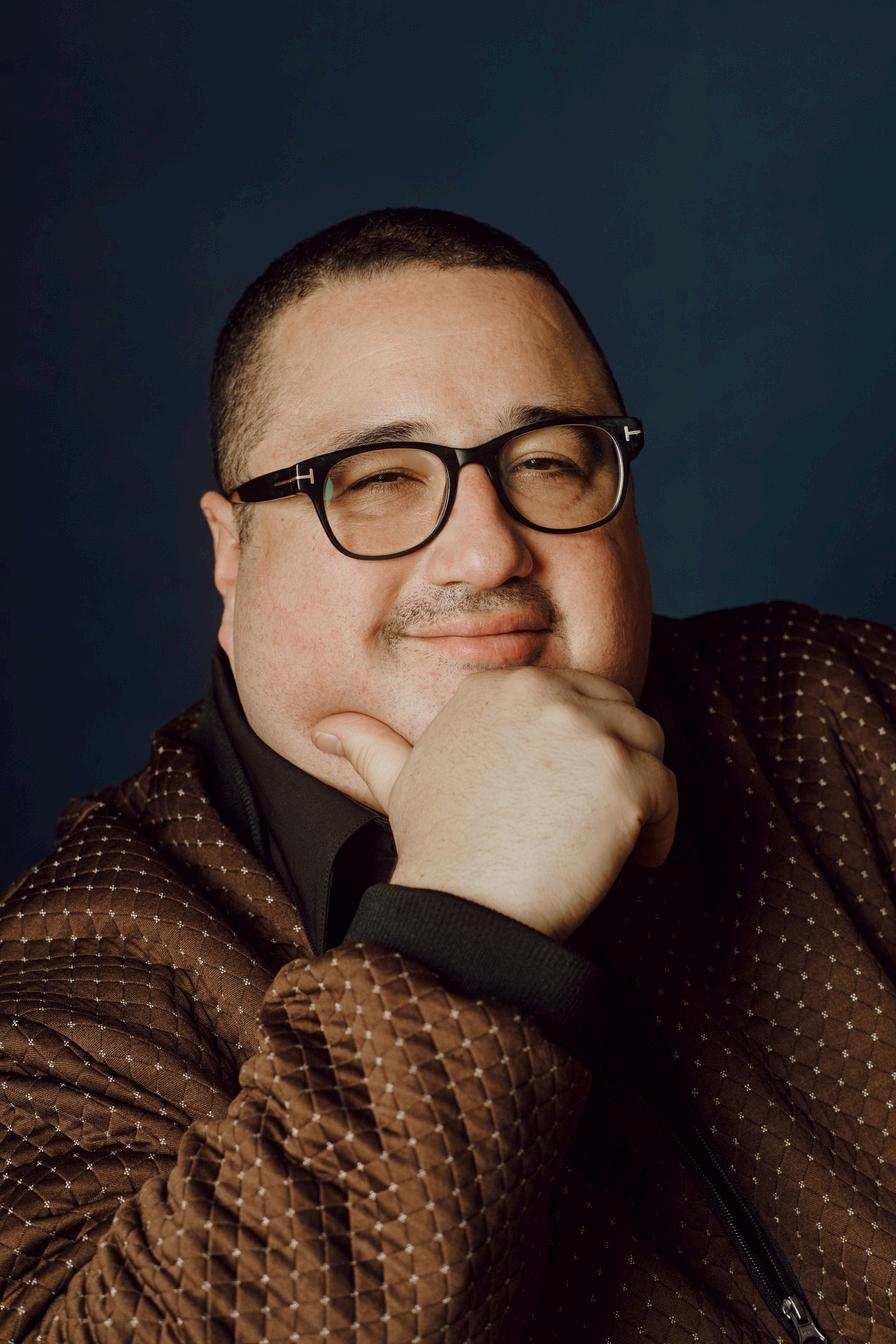
Dear Friends,
This study guide is designed to help you get more out of La Bohème whether you're seeing it for the first time or the tenth.
Inside, you'll find context about Puccini's life and why he understood these struggling young artists so well, a breakdown of the story and what makes it devastatingly effective, and some insights into what our creative team is bringing to this production.
La Bohème has endured for over a century because it's honest about what it costs to make art, to fall in love, and to live without money in a city that doesn't care. Puccini's score is brilliant at capturing both the exhilaration and the heartbreak.
What you'll see on stage is the result of months of work from our singers, orchestra, directors, designers, and crew and we hope this guide helps you appreciate the incredible craft and artistry they've brought to this production.
See you at the opera,
Ashley
Ashley Daniel Foot
Director of Engagement and Civic Practice

GUIDE TEAM
DIRECTOR OF ENGAGEMENT, CIVIC PRACTICE | ASHLEY DANIEL FOOT
EDITOR | JANE POTTER
LAYOUT | VICTOR YIN
The 2025–2026 season closes with one of opera ’ s most enduring love stories, set in the world’s most romantic city, rendered with the most vibrant characters and melodies.
Puccini’s masterpiece transports us to the heart of 1890s bohemian life in Paris, where love blossoms amidst dreams, hardships, and the unyielding pursuit of artistic freedom La Bohème has remained one of the most beloved and frequently performed operas worldwide since its 1896 premiere, due in large part to captivating pieces like "Quando m ’ en vo", a k a “Musetta’s Waltz”, and perhaps the most famous duet in opera, "O soave fanciulla", sung on that moonlit moment when Mimì and Rodolfo fall in love
In a bustling community of artists, students, philosophers, and Quartier Latin café denizens, the deep connection between the young poet Rodolfo and the seamstress Mimì is eventually tested by the bittersweet passage of time and the emotional toll of illness and poverty. VO Music Director Emeritus Jonathan Darlington returns to conduct some of the most romantic and iconic music in opera history, while Pacific Opera Victoria Artistic Director Brenna Corner crosses the Salish Sea to direct a stunning international cast.
Whether you ’ re discovering it for the first time or returning to a beloved classic, La Bohème speaks passionately to the soul, reminding us to cherish the fragility and fleeting beauty of life and love

Inside Vancouver Opera Podcast provides a unique backstage glimpse into the world of Vancouver Opera
Scan the QR code or go to vancouveropera.ca/ podcast

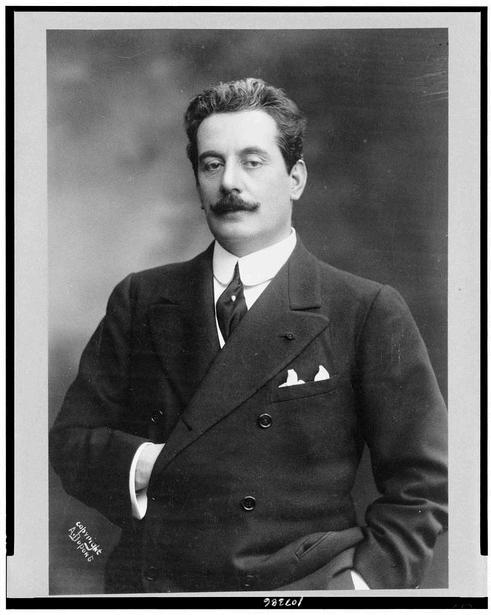
Born in Lucca, Italy, in 1858, Giacomo Puccini was one of the most prolific and successful composers of his time His most well-known operas include La Bohème, Tosca, Madama Butterfly, and Turandot
Puccini was known for developing the verismo, or realism, style of opera which featured real life characters, their everyday lives, and the tragedies which beset them, a departure from the romantics before him who relied on myth, history, and fairytales for their storylines. Some of opera ’ s best know arias were composed by Puccini, including “Nessun Dorma”, “O Mio Babbino Caro”, and “Un Bel dì, Vedremo.”
A life-long smoker, Puccini developed throat cancer at age 64, eventually dying from complications from treatment in 1924 at the age of 65.
Learn more about Puccini’s life and times Scan the QR code or go to vancouveropera ca/podcast

Speed Demon: Loved fast cars; crashed badly while writing Madama Butterfly
Heavy Smoker: Constant cigar smoker; led to throat cancer.
Family Business: Came from five generations of musicians in Lucca
Recording Pioneer: His music was among the first recorded on Edison’s phonograph
Opera Rivalry: Bitter feud with composer Leoncavallo over La Bohème.
Duck Hunter: Passionate hunter near his home in Torre del Lago
Sabotaged Premiere: First night of Madama Butterfly disrupted by bird whistles.
Romantic Scandals: Turbulent affairs; wife caused tragic public scandal
Superstitious: Refused performances on unlucky Friday the13th
Unfinished Finale: Died before completing Turandot, later finished by another composer.


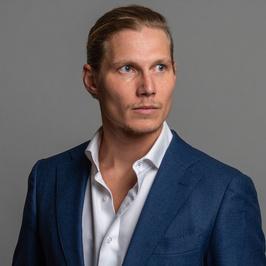
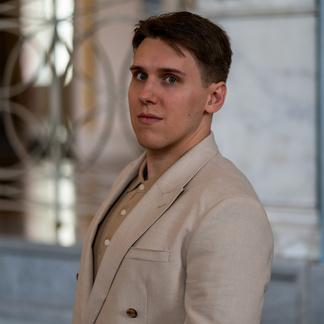

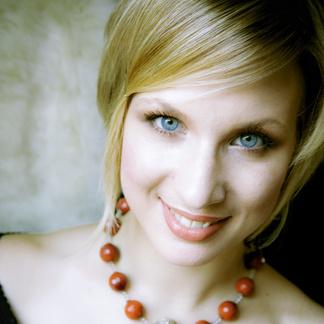

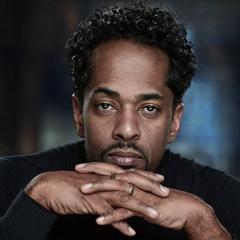
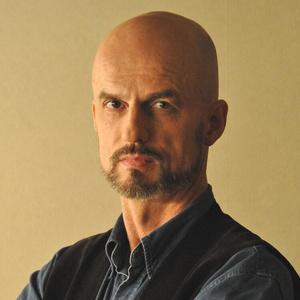
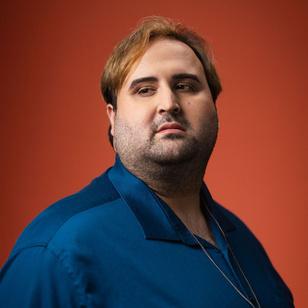
Welcome to the Latin Quarter Yes the one found in 19th century Paris, but also the one that exists in the hearts of everyone who has ever been young, broke, and in love When Puccini first set Henri Murger’s Scènes de la vie de Bohème to music, he was truly capturing the feeling of a moment in time, and a memory of being young. More than a century later, La Bohème remains an entry point for so many into our art form precisely because it reflects so many facets of humanity. We see ourselves in the desperate, hilarious, and creative characters, in the breathless fumbling of first love, and in the messy, agonizing jealousy that can be the price of passion. They are familiar aspects of ourselves, of the old friends we ’ ve toasted with, and loves we remember with sorrow and joy
The bohemian spirit, motivated by expression, art, and connection over the economic realities, is more than just a historic romantic notion La Bohème’s enduring power is the transition from the invincibility of youth to the sobering reality of adulthood. Watching Rodolfo and his friends confront Mimì’s illness marks that universal threshold of growth: the shattering moment we realize that love, as powerful as it is, cannot stop time. This heartbreak is just as sharp in 2026 as it was in 1896. We return to La Bohème because it reconnects us with the intensity of our memories of youth (whether that is now, or a more distant memory). As you watch this production, I invite you to remember the magic of those moments that you yourself have experienced, and to reflect on the ways that the joys and sorrows of the Latin Quarter exist within all of us

On a personal note, it is an absolute joy to be returning home to Vancouver Opera, a company that has served as the bedrock for so much of my artistic growth during my time in the Yulanda M Faris Young Artists Program To bring this story to life on the same stage where I learnt so much of my craft is a privilege beyond words I am thrilled to share this story of love with this wonderful community
Bohemia: the land of both reality and fantasy which one enters at one ’ s peril Today we tend to romanticize about poverty-stricken characters living out their creative dreams, of suffering for their art Puccini’s masterpiece based on Henry Murger’s play, Scènes de la vie de Bohème has become perhaps the most famous example of this phenomenon. Mimì’s death hits us so hard because all the longings of a care-free bohemian life (fantasy) are brought to a shuddering halt by her tragic end (reality).
Listening to La Bohème, one has the impression that Puccini’s journey of composition was a seamless bohemian jaunt. The truth is that the genesis of the opera was punctuated by one crisis after another, and he almost gave up on the project completely in the early days He was an obsessive reviser of his compositions, and demanded endless rewriting of the libretto, either to give him inspiration, or to fit his already conceived musical ideas In the existing manuscripts of La Bohème, hardly a page goes by without substantial corrections and revisions.
As a lover of mechanical inventions at the turn of the century (he was a great friend of Thomas Edison), it is no surprise that his music is full of precise instructions which seem to belie the rubato that we often think of as the innate Puccini style. Just like the corrections in the manuscripts, hardly a page goes by without obsessive tempo or expressive instructions.
Part of the fascination for me personally has always been Puccini’s ability to change his musical language for each opera Manon Lescaut is Wagnerian in its approach; La Bohème the epitome of late romanticism; Tosca shows us he could master verismo; Madama Butterfly with its pentatonic scales spreads its Asian wings; and La Fanciulla del West takes its inspiration from Debussy and impressionism.
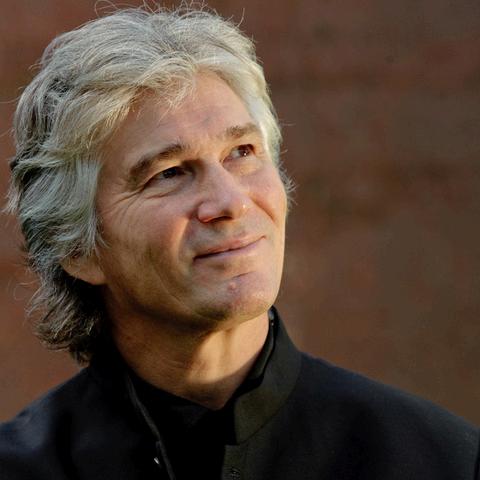
The orchestra, of course, is the key to these changes of atmosphere, and his mastery of orchestral colour was for a long time underestimated in academic circles. There are hundreds of examples of blissful word painting in La Bohème (the combination of harp and flutes at the beginning of Act III to represent falling snow, to name just one), and of thematic fragments he used to characterize objects or sentiments.
And then, of course, there is melody, which goes right to the heart of the matter He manipulates our emotions with his irresistible melodic gifts, and in an era that was just discovering the opportunities that recording could offer, he was a man at the right place at the right time A canny businessman, he composed many of his arias to fit on an original 78 rpm phonograph recording (3 – 5 minutes on each side).
All in all, Puccini was a man of his time, and in some ways well ahead of his time. In La Bohème, he created one of the greatest operatic masterpieces of all time.
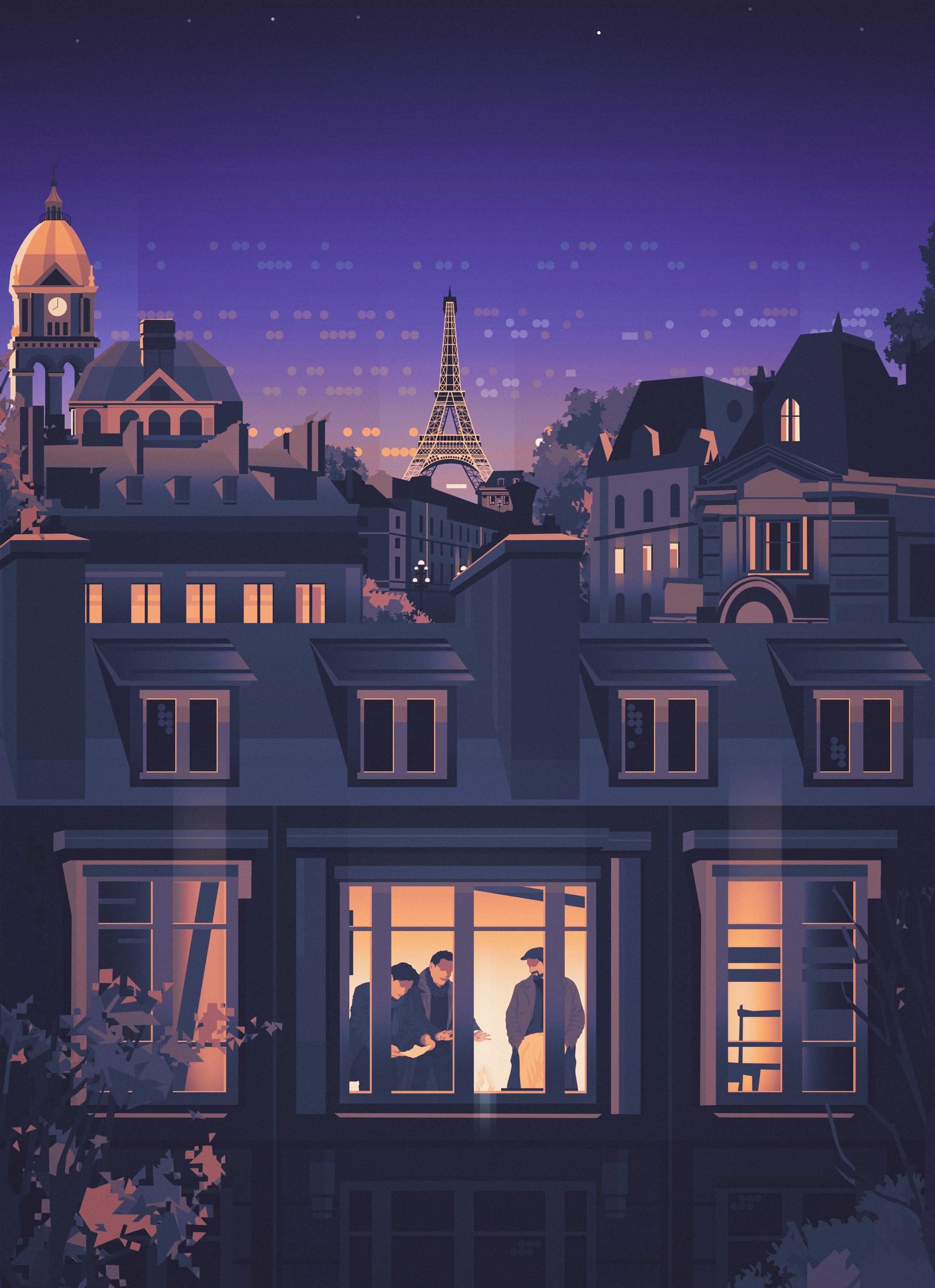
Illustration by Barry Ekko
A note by Barry Ekko
In this two-image series for La Bohème, I approached the opera through contrast: the quiet intimacy of poverty and the theatrical energy of the city. Rather than treating the scenes simply as narrative moments, I wanted each image to carry its own emotional atmosphere one inward and fragile, the other outward, luminous, and performative.
For the first illustration, I focused on the opening scene as something seen from a distance: a warm interior suspended within the cold vastness of Paris at night The garret becomes less a literal room than a small vessel of survival, youth, and companionship. By framing the figures through the window and surrounding them with silent rooftops and winter light, I wanted to emphasize the tenderness hidden within hardship.
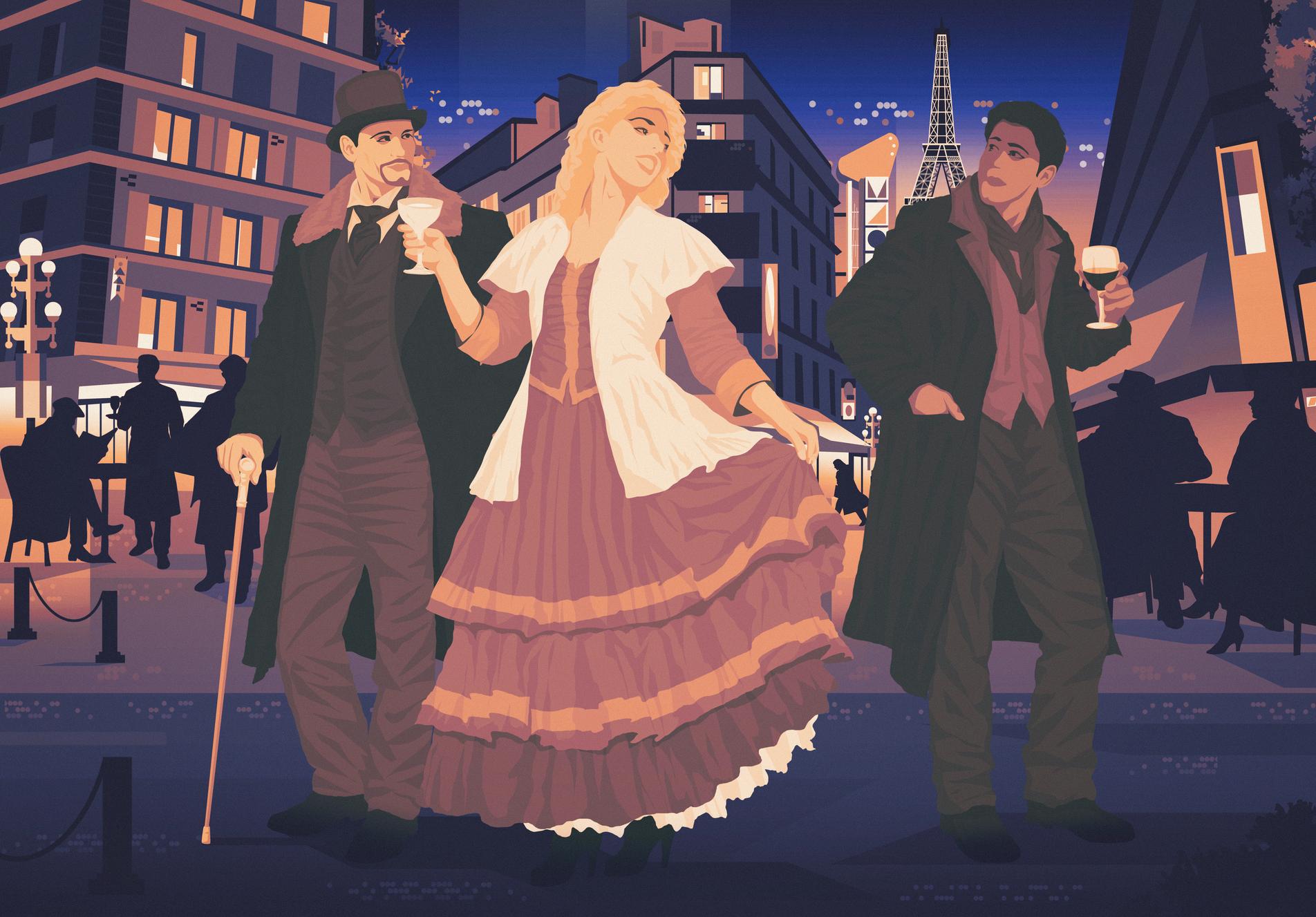
For the second illustration, I wanted the composition to reflect the tension between elegance and improvisation, romance and display, with the surrounding city acting almost like a stage for emotional confrontation.
Across both works, I hoped to create a visual language that feels both lyrical and immediate through simplified shapes, theatrical lighting, and layered spatial relationships. Above all, I wanted to preserve the youthful emotional charge of the opera while reimagining it through my own perspective
Many thanks to Vancouver Opera for the opportunity to interpret this classic work through illustration.

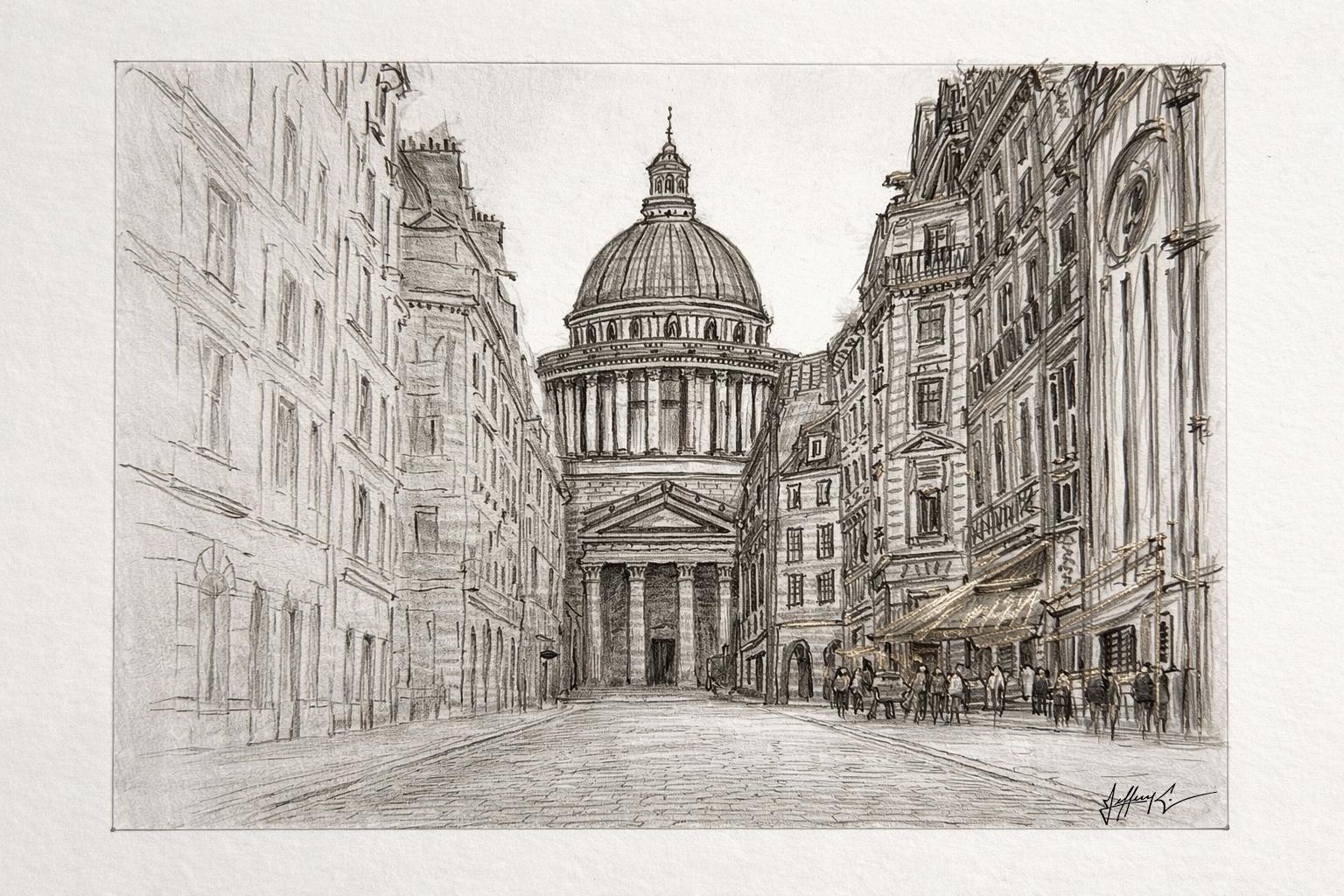
In the Latin Quarter of 1890s Paris, Rodolfo, a poet, and Ma garret studio It is Christmas Eve and bitterly cold The two fr feeding pages of Rodolfo’s latest manuscript into the stove roommatesColline,aphilosopher,andSchaunard,amusician a job and who brings food, wine, firewood, and money Benoit, the landlord, arrives to collect the rent. Plying the o flatter him shamelessly and urge him to tell of his flirtations, th indignation.
The friends depart for Café Momus, in the heart of the Latin behind He promises to join them as soon as he finishes wri knock at the door: it is their unknown neighbour, Mimì, whos thedraftystairs Shecoughspainfullyand,exhaustedfromclim Rodolfo, distressed by her pallor, offers her a glass of wine. relights her candle and helps her to the door, but she discov her key. Both their candles are blown out by a draft, plunging the room into darkness. Astheysearchforthekeyinthemoonlight,theirfingerstouch.
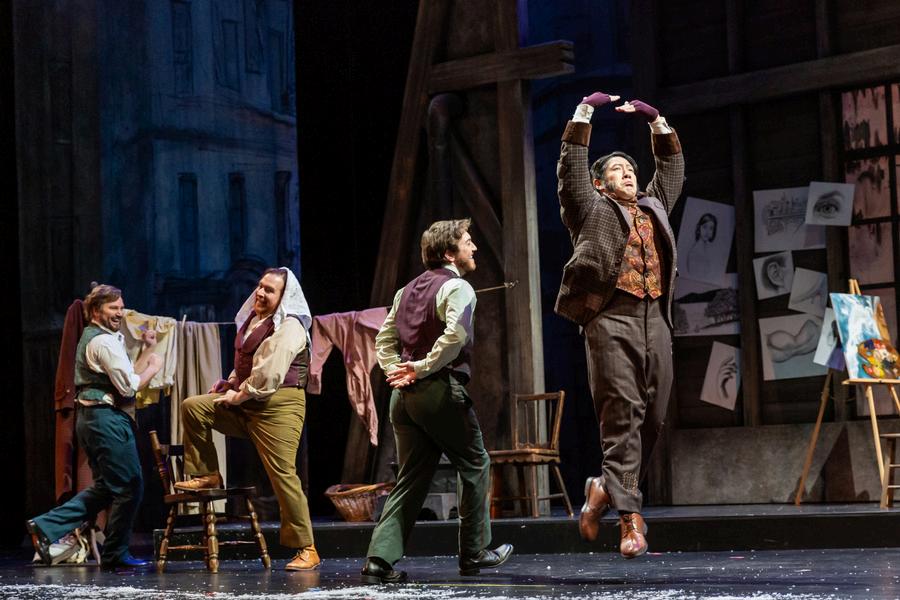
Taking her shivering hand in his, Rodolfo tells Mimì about his life and his dreams Mimì reveals that she is a seamstress who lives alone, waiting each year for the warmth of spring to bring the scent of real flowers instead of the ones she embroiders all winter Drawntoeachother,theydeclaretheirloveanddepartforthecafé.
In the busy square outside Café Momus, people jostle as street vendors hawk their wares. Rodolfo buys Mimì a bonnet before introducing her to his friends. They sit at an outdoor table, order dinner, and banter good-naturedly. A toy vendor, Parpignol, passesby,besiegedbychildren.
Marcello’s former lover Musetta sweeps in, followed by her suitor, the elderly, wealthy Alcindoro.MusettasitsnearMarcello,butashestudiouslyignoresher,sherealizesthat she still loves him. Trying to regain the painter’s attention and affections, she sings a waltz about her beauty and irresistibility. Complaining loudly that her shoe pinches, MusettasendsAlcindorotobuyheranewpair.RealizingthepurposeofMusetta’sruse, Marcello sings to her ecstatically and they fall into each other’s arms. The bohemians joinagroupofmarchingsoldiers,leavingabefuddledAlcindorotopaythebill.
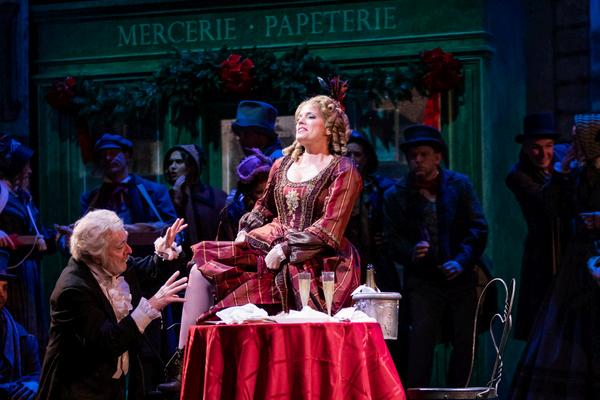
Marcello and Musetta are living in a tavern on the outskirts of Paris. Mimì, racked with coughing, appears, searching for Marcello. When the painter emerges, she pours out her heart: Rodolfo’s unrelenting jealousy has made their life together miserable; he has walked out. She begs Marcello to help them resolve their quarrels, before realizing that it’s probably best that theypart
Mimì hides as Rodolfo, who has been asleep in the tavern, comes out. He tells Marcello that he wants to leave Mimì because of her constant flirtations. Pressed, he confesses that the real reason is that Mimì is very sick, and he is consumed with remorse. Rodolfo believes their poor living conditions have worsened her illness, and in his poverty, he can no longer provide for her. Overhearing this, Mimì cannot stifle her sobs, which draw Rodolfo’s attention Wildly calling her name, Rodolfo takes her in his arms and they speakofneedingtogotheirseparateways,despitetheirlove
Hearing Musetta’s raucous laughter from inside the tavern, Marcello runs to investigate. Crockery is smashed and the two of them storm out, hurling insults at each other. As Musetta and Marcello quarrel, Mimì and Rodolfo agree to wait until spring beforetheyseparate
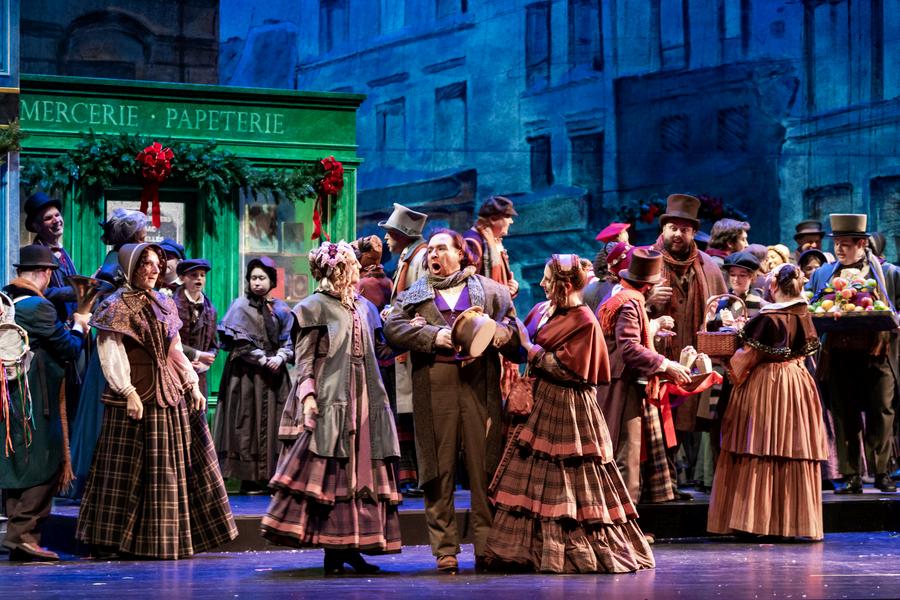
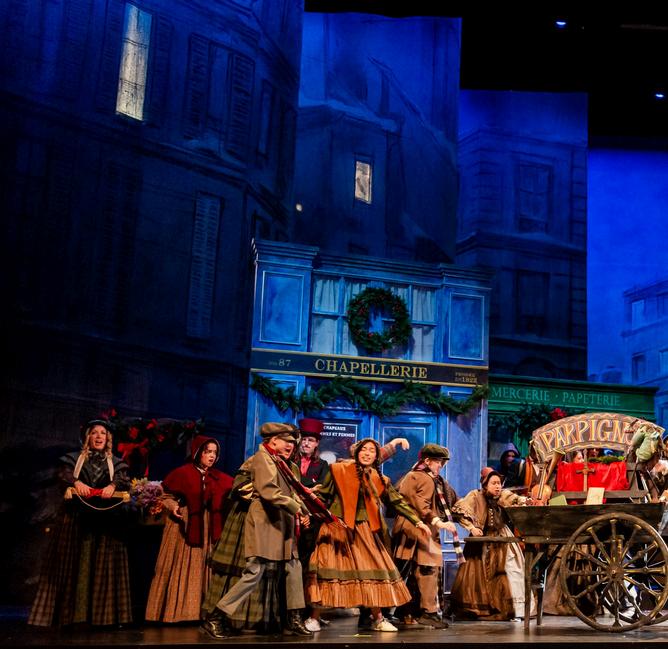
In their garret, Rodolfo and Marcello gamely pretend to work as they talk of their lost loves. Their glumness is interrupted by the arrival of Schaunard and Colline bearing bread and a herring for dinner. The four then stage a dance, which becomes a mock sword fight. When the merriment is at its peak, Musetta rushes in. Mimìiswithher,desperatelyill.
As Rodolfo helps Mimì to the bed, Musetta relates how Mimì left her rich lover and begged to be brought to Rodolfo Marcello goes with Musetta to sell her earrings for medicine and a muff to warm the dying woman ’ s hands. Colline leaves to pawn his treasured overcoat to help pay for the doctor, while Schaunard withdraws from the room to leave Mimì and Rodolfo alone. The lovers recall the early days. When the others return, Musetta gives Mimì a muff and says a prayer. No longer able to fight for her life, Mimì peacefully dies. With agonized sobs, Rodolfo cries for his departedlove.
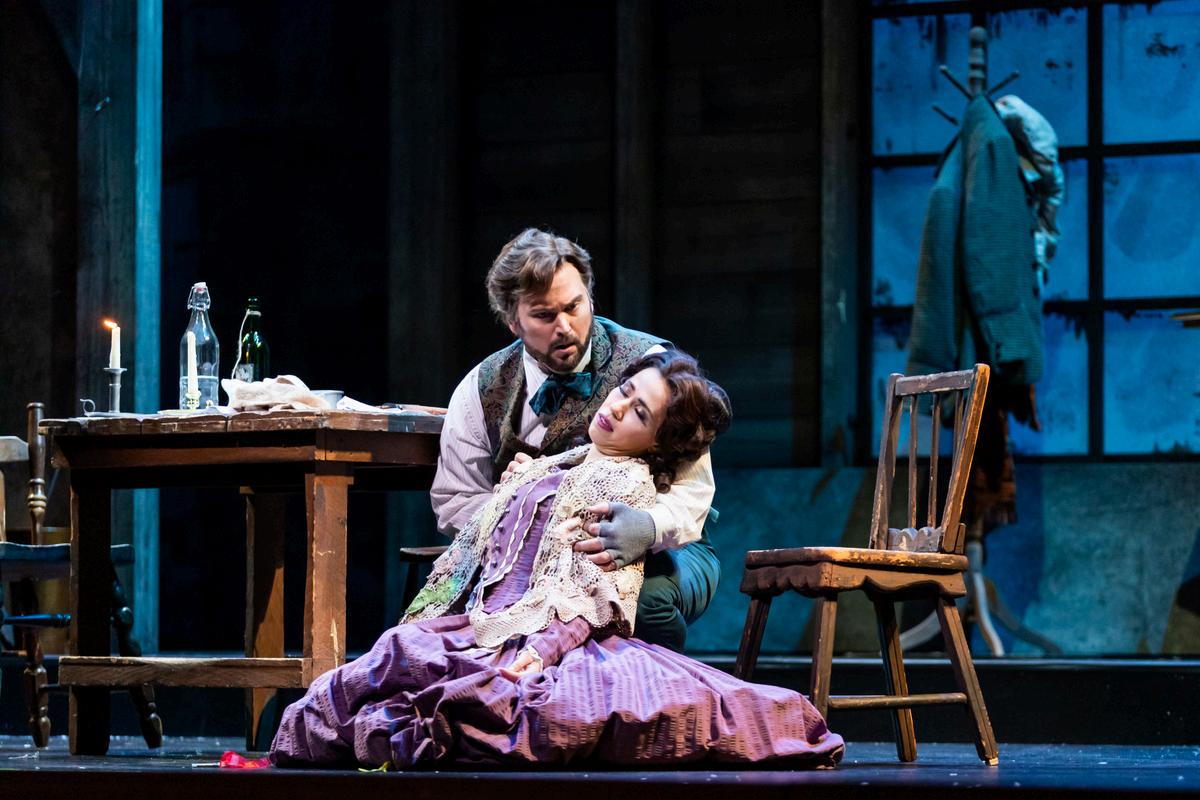
Opera came from Italy, just like gelato! The word opera means ‘work’ in Italian, as in work of art, not homework
Opera is a group effort by conductors, musicians, singers, dancers, set designers, costume creators, lighting experts, directors, theatre staff, make-up artists, wig makers, carpenters, prop designers, and more, to tell a story, sing, dance, and entertain the audience all the same time
Unlike Drake or Taylor Swift, opera singers don’t use microphones. Instead, they learn to project their voices. They may go from projecting over the sound of the live orchestra in one moment, to dropping to a near whisper in the next moment (just like your school principal during assemblies)
To protect each other’s hearing, opera singers cannot face directly towards each other while singing. Ear plugs are not allowed.
HOW LONG DO YOU HAVE TO TRAIN?
Opera singers often have as many years of education as physicians, and must continue training throughout their career.
Operas can be up to four hours long, which may be how long French class feels, but at least you don’t have to wear a costume, make-up, possibly a wig, sing and dance under hot lights, and memorize an entire opera, like the performers do
Composers write in their language, and sometimes in second or third languages too, so opera singers must often learn English, French, German, Italian, and even Russian and Czech if they want to perform worldwide And in case you ’ re wondering, ‘ice cream ’ in Czech is ‘zmizlina’
IT
If you were a top opera singer, you could make as much as $20,000 per performance.
OTHER
NEED?
Singers must learn to brush off negative reviews in time to perform the same show the following night.
Opera has been around for as long as gelato, which is just over four hundred years
Acts and scenes are ways of categorizing sections of operas An act is a large-scale division of an opera, and each opera will typically include from two to five acts Acts can be subdivided into scenes, which are often differentiated by a change in setting or characters.
ADAGIO
Literally “at ease, ” adagio is a tempo marking that indicates a slow speed An adagio tempo marking indicates that the performer should play in a slow and leisurely style
ALLEGRO
Italian for “cheerful” or “joyful,” Allegro is the most common tempo marking in Western music, indicating a moderately fast to quick speed.
A song for solo voice accompanied by orchestra
BRAVO / BRAVA / BRAVI
Italian for “nicely done”; shouted by audience members after a performance. “Bravo” for men, “Brava” for women, and “Bravi” for all.
A section of an opera in which a large group of singers performs together, typically with orchestral accompaniment
CRESCENDO
A gradual raising of volume in music achieved by increasing the dynamic level When music crescendos, the performers begin at a softer dynamic level and become incrementally louder.
ENSEMBLE
A musical piece for two or more soloists, accompanied by orchestra. Types of ensembles include duets (for two soloists), trios (for three soloists), and quartets (for four soloists)
Meaning “loud” or “strong” in Italian, forte is a dynamic level in music that indicates a loud volume. Adding the suffix “-issimo” to a word serves as an intensifier since forte means “loud,” fortissimo means “ very loud.”
The text of an opera, including all the words that are said or sung by performers.
An instrumental piece that occurs before the first act as an introduction to an opera
Speech-like singing in-between musical numbers that advances the plot
The complete musical notation for a piece, the score includes notated lines for all of the different instrumental and vocal parts that unite to constitute a musical composition. SCORE
Literally “time” in Italian, tempo refers to the speed of a piece of music

Visual Art / Critical Thinking
60–90 minutes
Individual or pairs
Tuberculosis, AIDS, and addiction culture have all been at the centre of artistic and cultural interest, with little regard for those suffering from them. What does that teach us about the nature of ‘illness aesthetics’?
Setup
Image Set
Before students encounter a single note of La Bohème, give them a simple prompt with no opera context whatsoever: “What does sick look like?” Ask them to write three sentences gut instinct only Collect these You’ll return to them at the end
Curate a gallery of 10–12 images across three loose “ eras ” don’t label the eras yet, let students notice the patterns themselves
19th century
Portraits of Marie Duplessis (the real-life Violetta), especially the famous Franz Xaver
Winterhalter likeness
John Keats death mask and portraits
Eugène Delacroix’s portrait of Chopin
Illustrations or engravings of crowded London tenement housing from the 1880s (Jacob Riisstyle)
Late 20th century
Keith Haring’s AIDS activist posters
David Wojnarowicz’s photographs or paintings
A newspaper front page or TIME magazine cover from the early AIDS crisis
Early 2000s
Kate Moss Calvin Klein ads (the ones most clearly associated with “heroin chic”)
Nicole Kidman as Satine in Moulin Rouge!
A fashion editorial from Vogue ca 1997–2002 that shows the aesthetic clearly
Post these around the room as a gallery walk, or distribute as a printed or digital set Students move through them with one guiding question written at the top of their response sheet: Who is allowed to look like this and what does it cost them?
Discussion
The Payoff
After the gallery walk, pull the three eras together and ask students to find the throughlines.
Some questions that tend to generate real conversation:
What do these images have in common visually? (Pale skin, thinness, a kind of blurred or faded quality let them name it)
Who made these images? Who are they for?
Look at the tenement photograph next to the Duplessis portrait. Both images involve tuberculosis. What’s different about how they make you feel?
The Calvin Klein ad and the Wojnarowicz photograph are from roughly the same decade. Why do they feel so different?
Introduce Susan Sontag’s book Illness as Metaphor and her central argument in plain language, no jargon: She argued that when we make illness beautiful, we ’ re usually doing it for people who aren’t actually sick. And the people who are actually sick often pay the price for that. You don’t need to assign the book. A two-paragraph handout quoting the key lines from the essay does the job.
Now and only now introduce Mimì. Play the Act I aria “Sì, mi chiamano Mimì” and show a production still. Ask: Where does she fit in the images you looked at today? This is a good time to discuss how their earlier written responses to ‘what does sick look like’ compare with what they have observed during the exercise. Students will already have the critical tools to answer these questions in a way that’s genuinely their own.
Creative Writing / Dramaturgy
75–90 minutes
La Bohème, like many other operas, and other art forms, has a timeless quality to it: many of the themes of illness, poverty, loss, friendship, and love, are just as relevant today as they were in 1896, with a few differences.
Individual, then small group Setup
Start by giving students the bare bones of what Jonathan Larson did one paragraph, no more:
In 1996, a composer named Jonathan Larson took the plot of La Bohème a group of struggling young artists in Paris, watching their friend die of tuberculosis in a cold attic and moved it to New York’s East Village in the late 1980s. He changed tuberculosis to AIDS. He changed the seamstress Mimì to a dancer. He called it Rent. It ran on Broadway for twelve years.
Then ask: Why would someone do that? What does it give you that a revival of the original doesn’t?
Take five minutes of open discussion. Students usually land on something like: it makes it feel real, like it’s happening now, like it’s about us. That’s exactly right, and it’s the whole point of the exercise.
The brief
Students receive a one-page synopsis of Act IV — Mimì’s return, the reunion, her death, the final moment. Keep it spare: who’s in the room, what they’re doing, what happens. Then the writing prompt:
You are Jonathan Larson. You’re going to transplant this scene to your city, in 2025. You have to make three decisions:
1.What is the illness or crisis that Mimì is dying from?
2.Who are these people — what makes them “bohemians” in your world? What are they struggling against?
3 Where is the attic? What does poverty or precarity look like in your city right now?
Write the scene It can be a script, a prose scene, song lyrics, or some combination It should be at least one page The only rule: Mimì still dies at the end
Facilitation
The share
This prompt works better if you give students genuine permission to go dark or close to home. Explicitly say: There are no wrong answers about which crisis you choose Students have written Mimì dying of: overdose, long COVID, deportation fear, untreated depression, gang violence, a treatable illness her family couldn’t afford to treat All of these are correct All of them are La Bohème
If students seem stuck on choosing a crisis, a brief class brainstorm of “what do young people in our city actually face” gets things moving fast and is itself a worthwhile five minutes
Small groups of three or four read scenes aloud to each other not to the whole class, which raises the stakes too high for something this personal.
After each reading, the group answers two questions: What did this version make you feel that you didn’t expect? What did the writer’s choice of crisis reveal about our city specifically?
Debrief
Note on sensitivity
Bring the class back together and map what emerged on the board: a column of crises, a column of settings, a column of who the “bohemians” were. Almost certainly, patterns will appear both in what students chose and in what nobody chose. That gap is worth naming: What did we all avoid? What didn’t feel like it belonged in an opera? Why?
Close by returning to Larson. Play “Without You” or “One Song Glory” something short and ask: Does knowing what you now know about La Bohème change how you hear this? Usually, yes.
Some students will have personal connections to the crises they’re writing about illness, housing instability, overdose in the family. Build in a quiet opt-out: students can write a version set in a fictional city if they prefer, and you won’t ask them to explain why. The work is just as valid.
From Mimi’s consumption to Rent’s AIDS crisis, opera has long aestheticized illness - revealing both our deepest fears and our most troubling biases
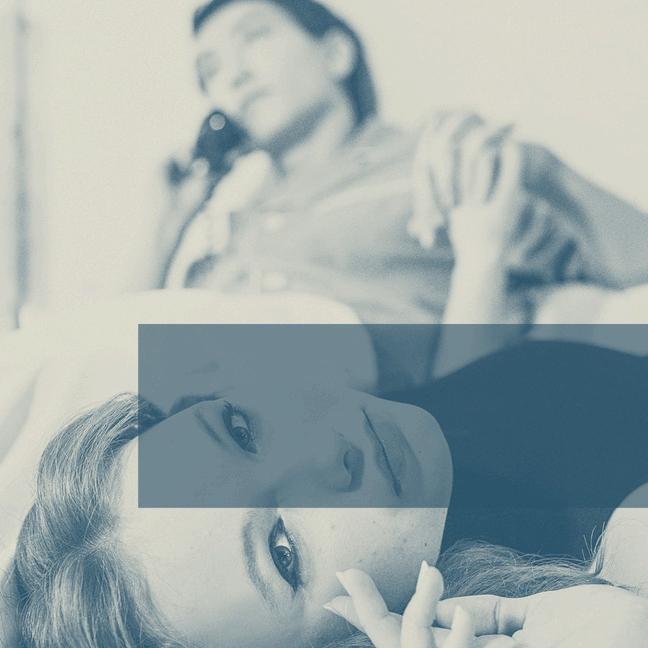
“It starts out like many star-crossed encounters. The girl’s candle has blown out, she knocks on her neighbour’s door, and a cute boy answers. But no sooner has he invited her in than she has a coughing fit and faints; our first indication that La Bohème may not be a rom-com with a happy ending after all. Mimì’s bloody handkerchief serves as Chekhov’s gun. ”
Kevin Ng writes about music and culture He has covered classical music and opera for over a decade, and has been a classical music critic for The Times and Financial Times. His writing has also appeared in The New York Times, Brooklyn Rail, VAN Magazine, Parterre Box, and Bachtrack, and he is particularly interested in the intersections between culture, power, and imperialism. For more information, visit kevinwng.com
Scan the QR code to read the rest of Kevin Ng’s informative and fascinating essay on the Aesthetics of Illness.

TICKETS

VO Ticket Centre Mon-Fri 9am to 5pm 604 683 0222
vancouveropera.ca
Vancouver Opera 1945 McLean Drive Vancouver, BC V5N 3J7 604 682 2871