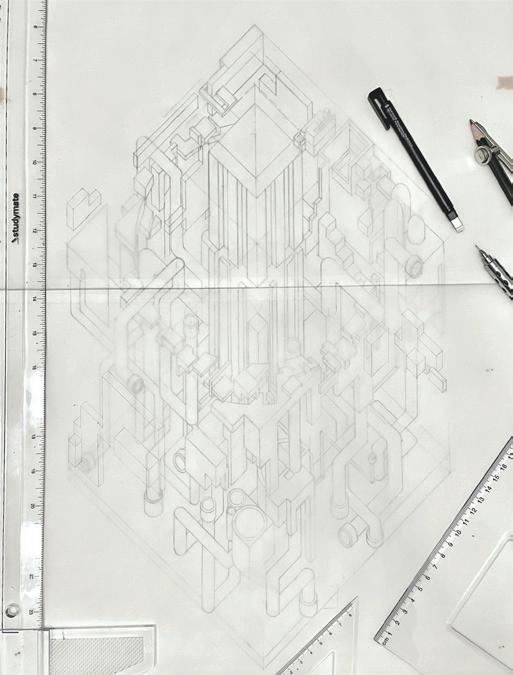
I am a second year student undertaking Bachelor of Design; majoring in architecture, diploma in music at The University of Melbourne. This portfolio aims to showcase my high-achieving projects completed as a part of a prerequisite subject of architecture, titled:
- Foundation of Design: Representation
- Design Studio Alpha
- Environmental Technologies
Ever since I was young, I was interested in both music and art. As I reached high school, studying both field to a high standard was proven to be very diffcult, so I chose to focus on music at school, and do art concurrently as a hobby.
Oddly enough, doing art as a mere ‘hobby’ did not limit my growth. In fact, I found myself to be more reflective and obeservant than before, so that each piece was built from previous experience and rational criticism.
After a year of formal study at the Melbourne Concervatorium of Melbourne, I began to realise that, despite reaching a high standard in music, my main source of joy mostly came from the final outcome and achievements. Whereas for art, I appreciated the result as much as the process of creation. From that moment, I made my decision to specialise in art and design as my future profession.
01-04 15-20 31-34 05-08 21-30 09-14
FLATNESS VS. PROJECTION
SURFACE VS. PATTERN
FRAME VS. FIELD
GROUND CONDITIONS
UTOPIAN DREAMS
TECTONIC PROJECT
FODR: FLATNESS VS. PROJECTION
INTRODUCTION TO THE WORK
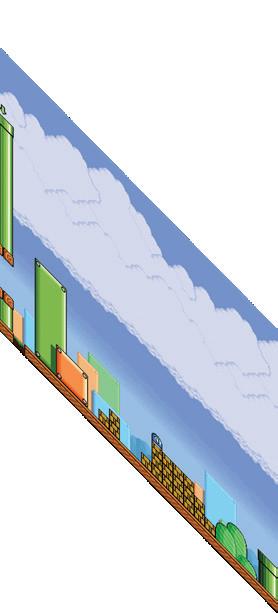
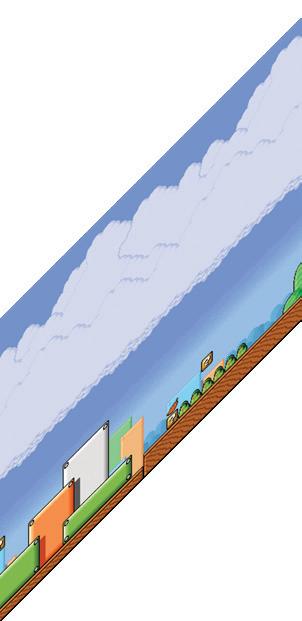
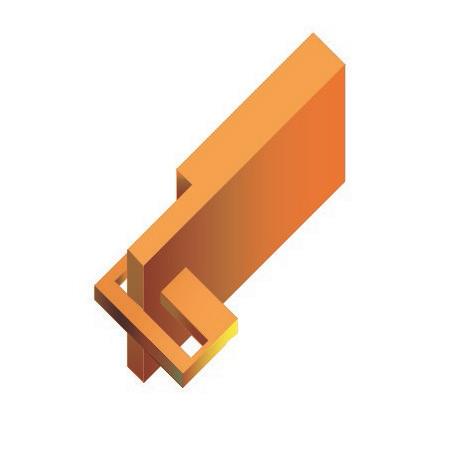
Using two 2D elevations drawn from the Super Mario game, a 3D axonometric projection was created, exploring the differences between ‘subjective’ and ‘objective’ points of view, as well as spatial construction.
THE PROCESS
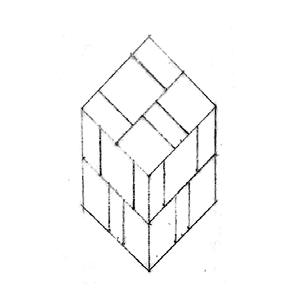
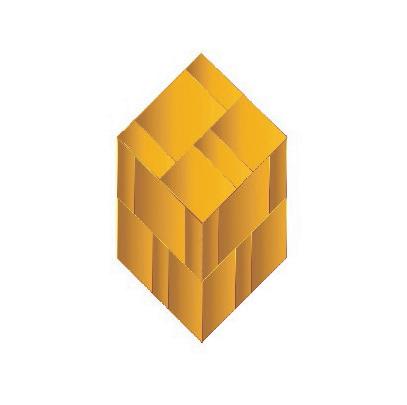
The two elevations were placed perpendicular to each other, with one slightly higher up, forming a cubic shape, with its inside filled out by the most iconic elements.
CONCEPT
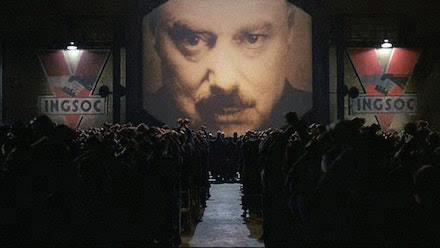
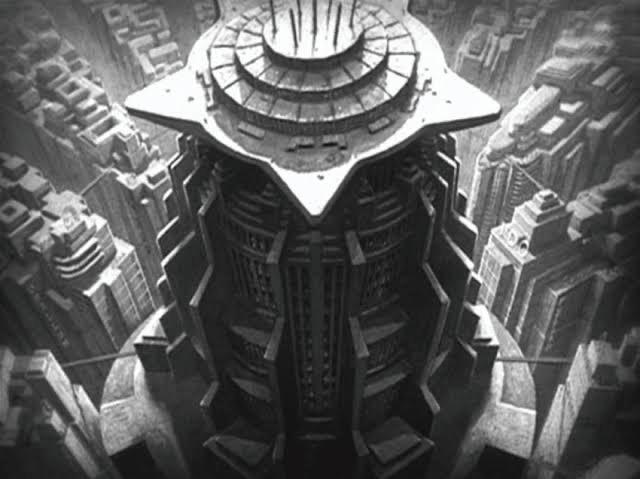
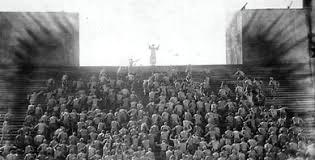
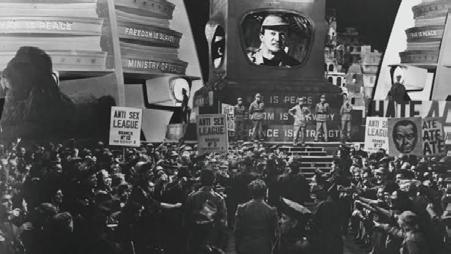
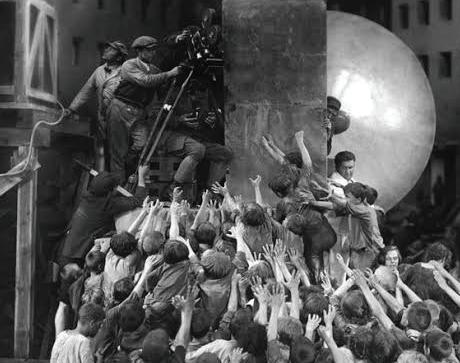
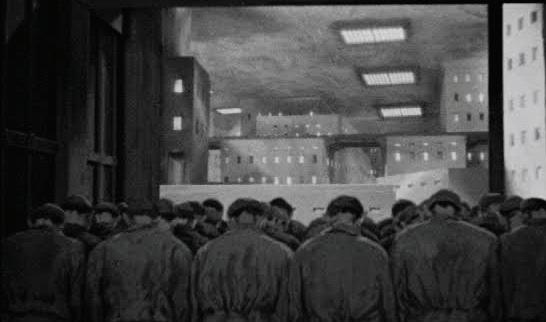
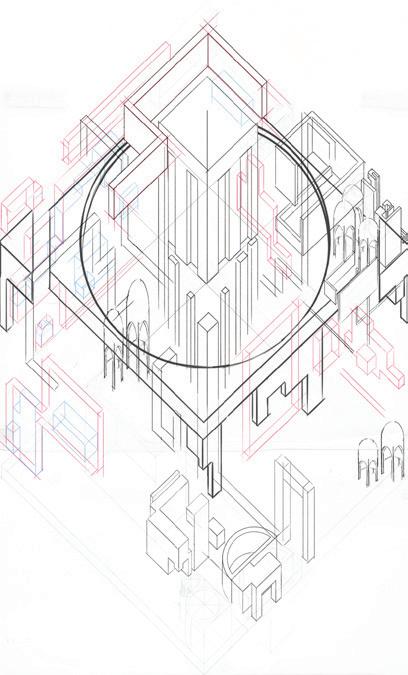
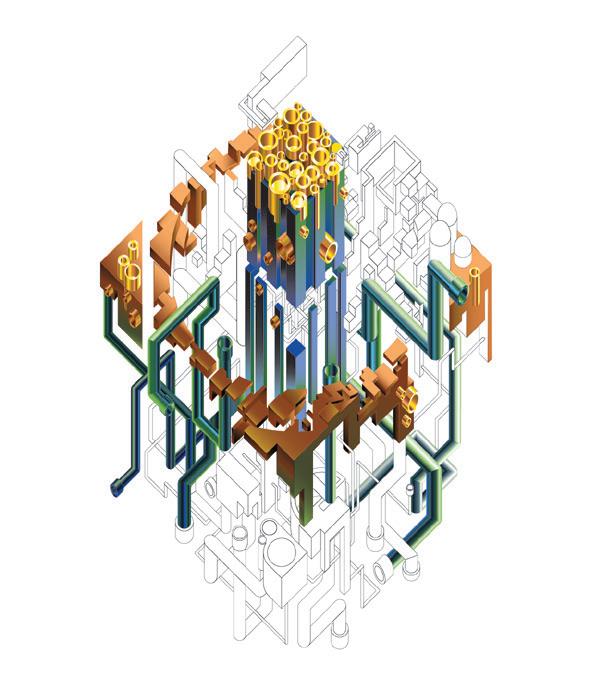
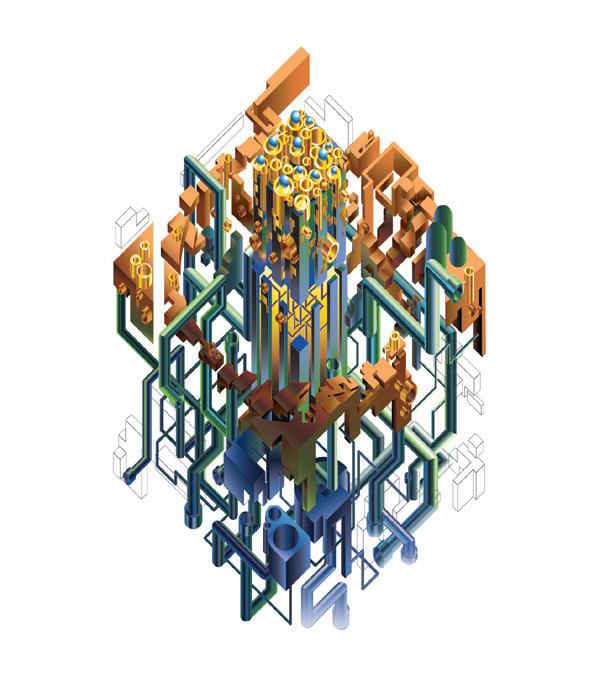
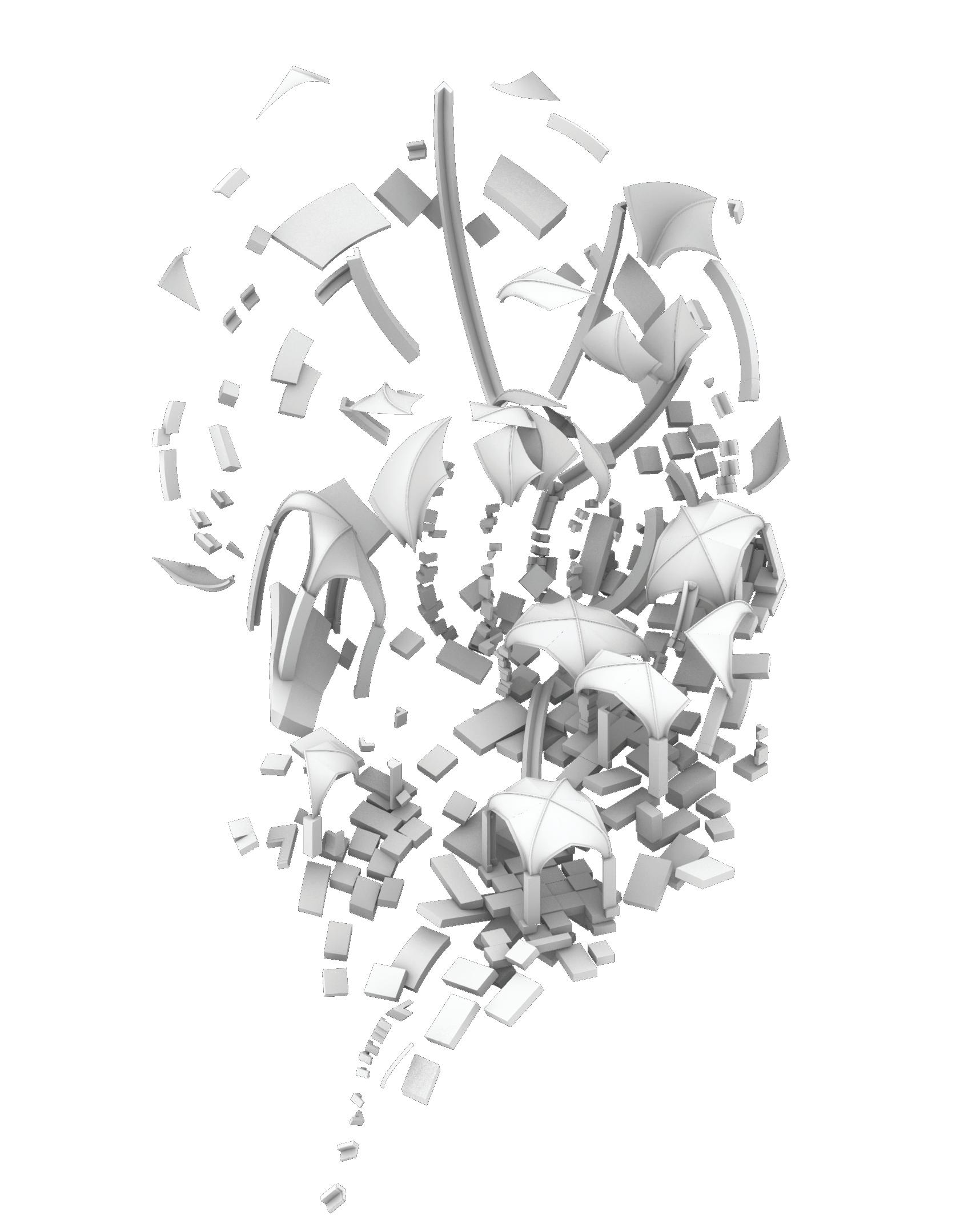
“Fear and Dystopia” was the theme of my design, inspired by fictional work ‘1984’ and ‘Metropolis’.
I intended to scale up one item drastically, and place it in the centre to create a focal point. Its significant size difference to other elements on the page was planned to invoke fear.
I also wanted to enrich the story told on the page, by giving the upper half more open space and leaving the bottom section clustered, to imply a dystopic message.
HAND DRAWINGS
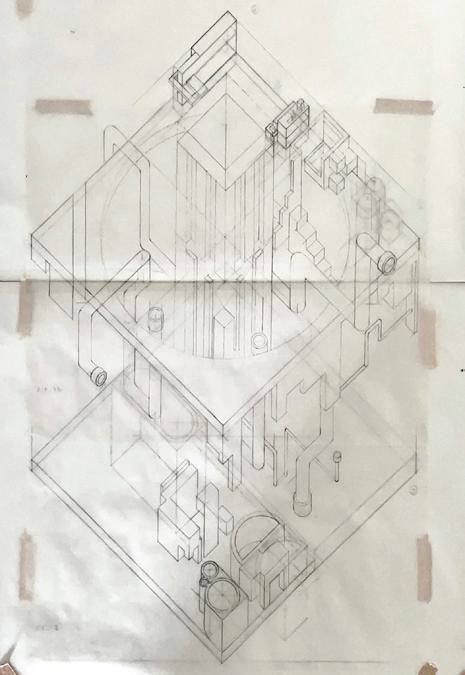
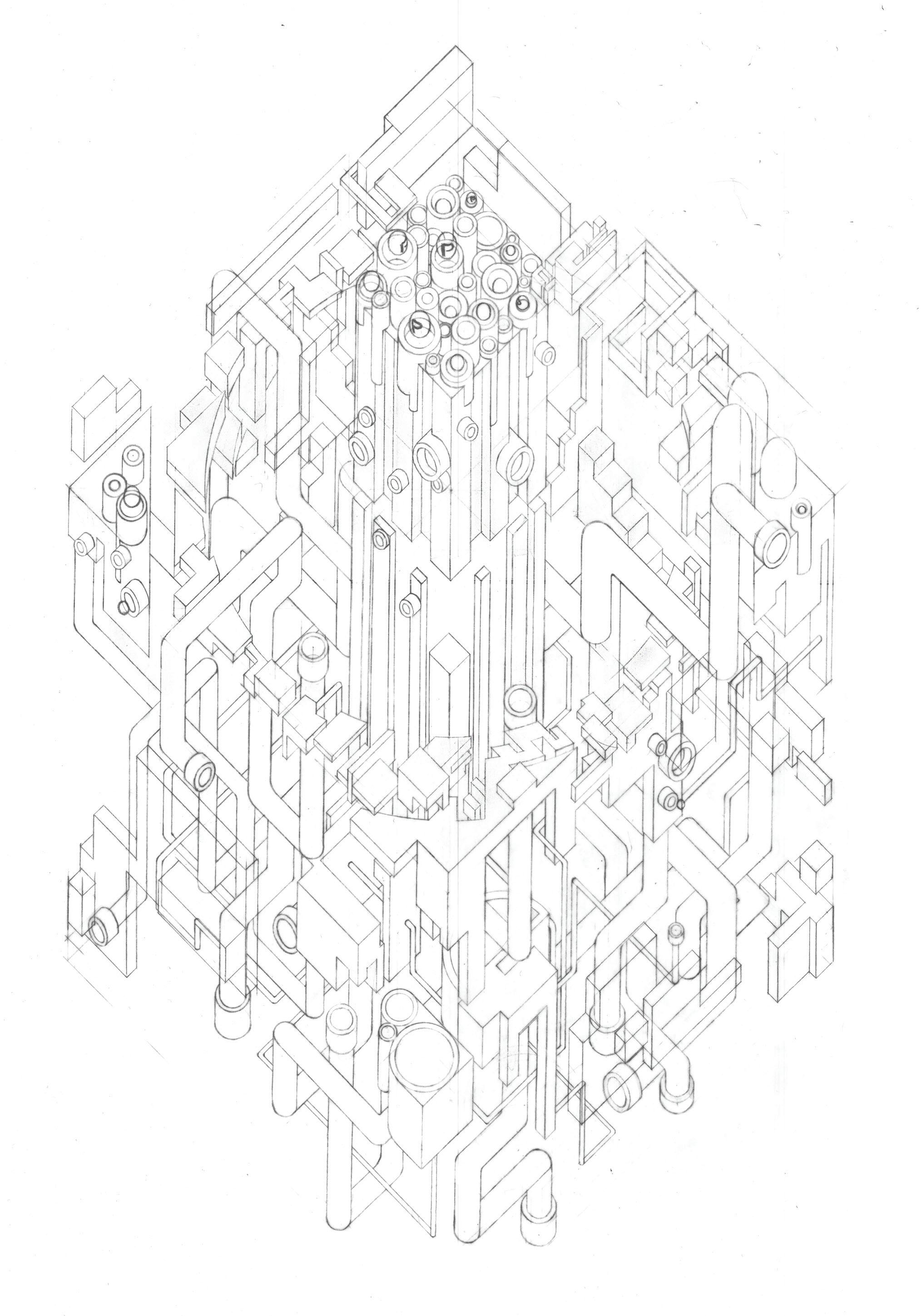
Starting of by sketching out an extremely rough piece to capture the main component I would like to include in my piece.
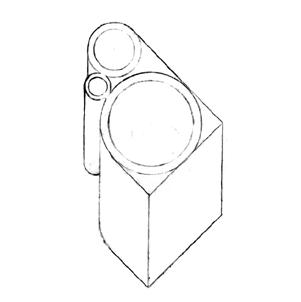
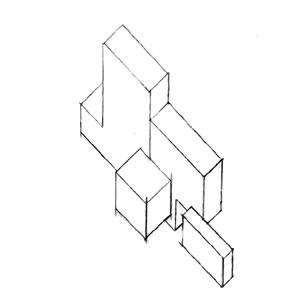
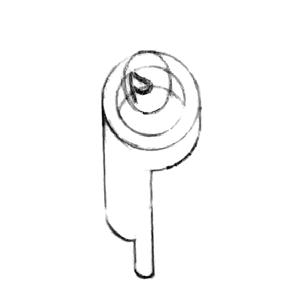
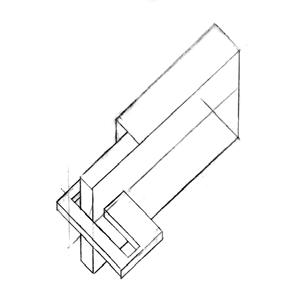
The earliest version of my six building blocks were chosen and modified to have more complexity (three at the top right corner, three at the bottom left).
The middle platform was dissected to reveal more hidden space. Lower platform was removed for more extension and movement, instead of compacting the image within a literal ‘box’.
I decided to mainly keep my work within the colour scheme of blue and green, in order to have more visual consistency; yet with a touch of brighter colours in the upper section, for more vibrance and contrast.
MAIN ELEMENTS
RENDERING
THE FINAL PIECES
HAND DRAWING AND RENDER
FODR: SURFACE VS. PATTERN
INTRODUCTION TO THE WORK
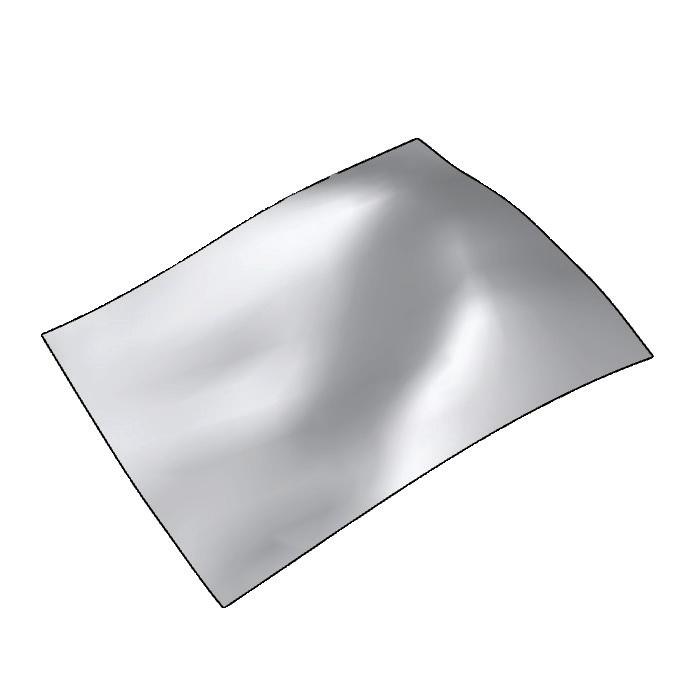
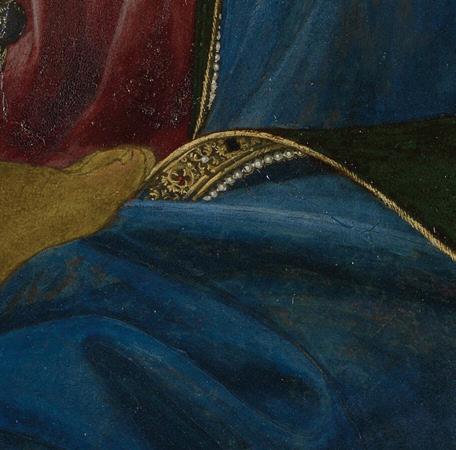
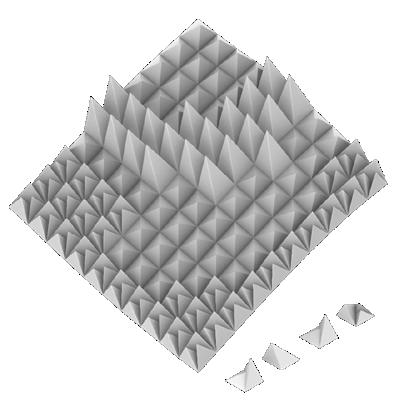
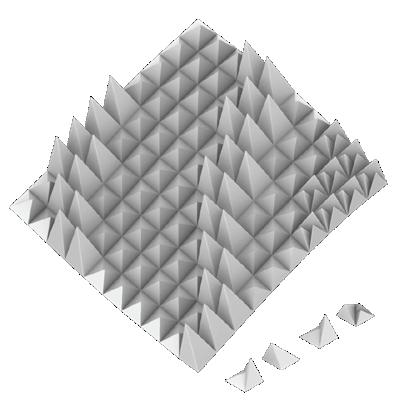
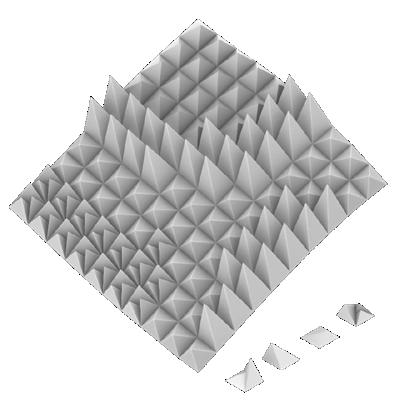
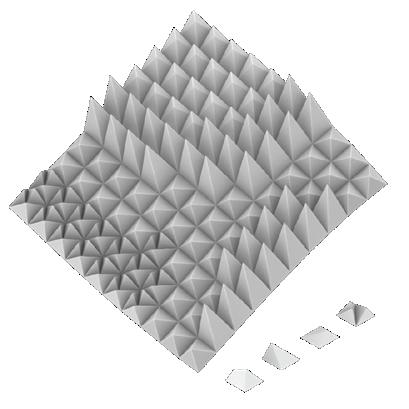
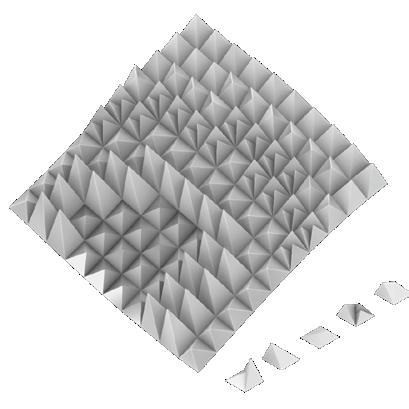
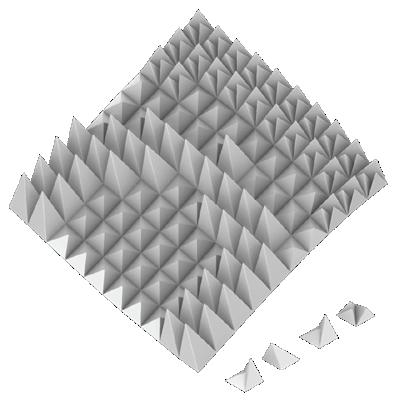
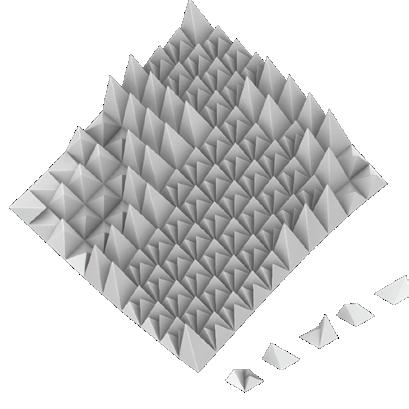
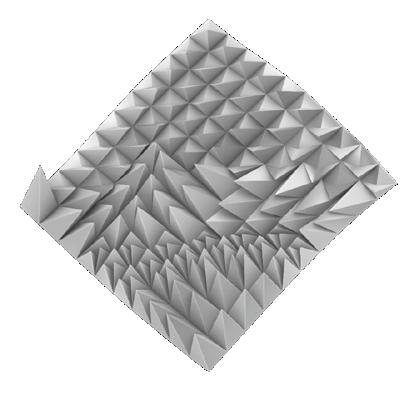
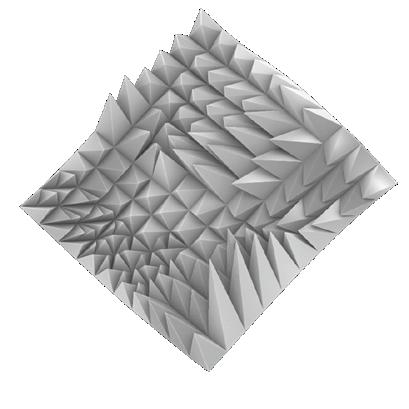
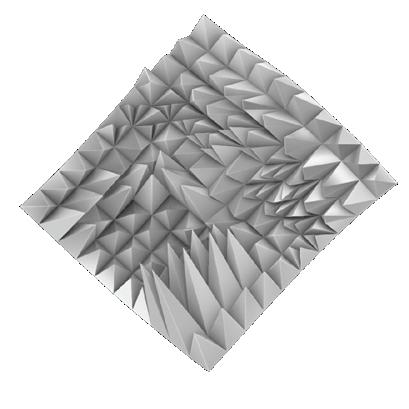
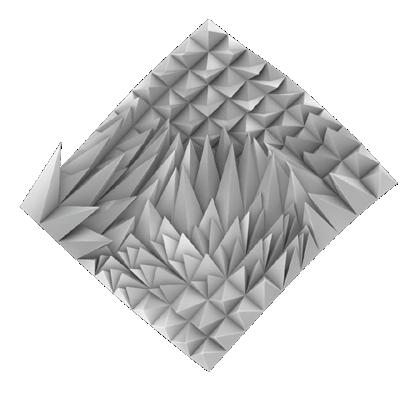
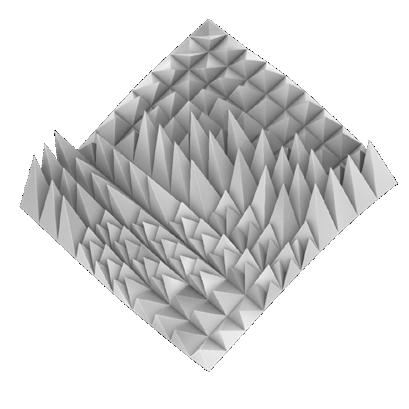
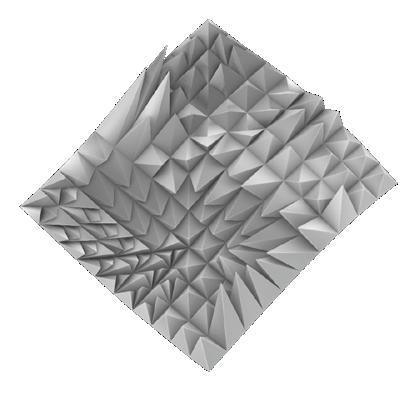
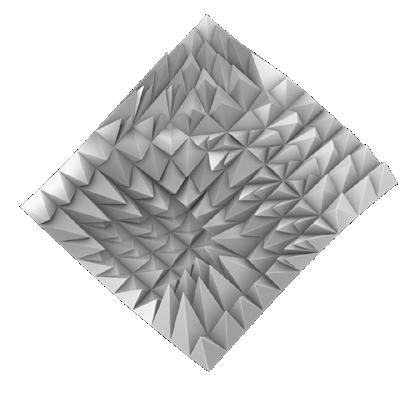
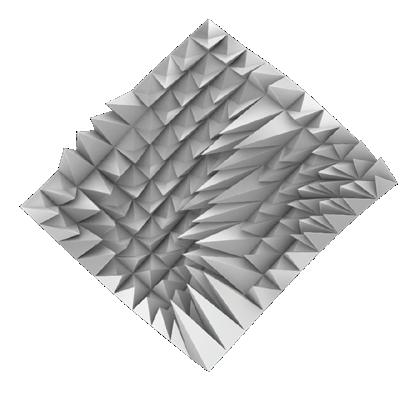
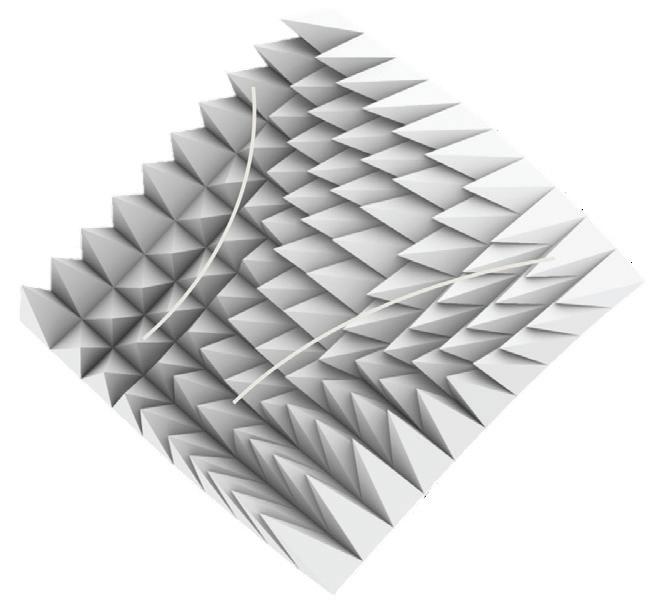
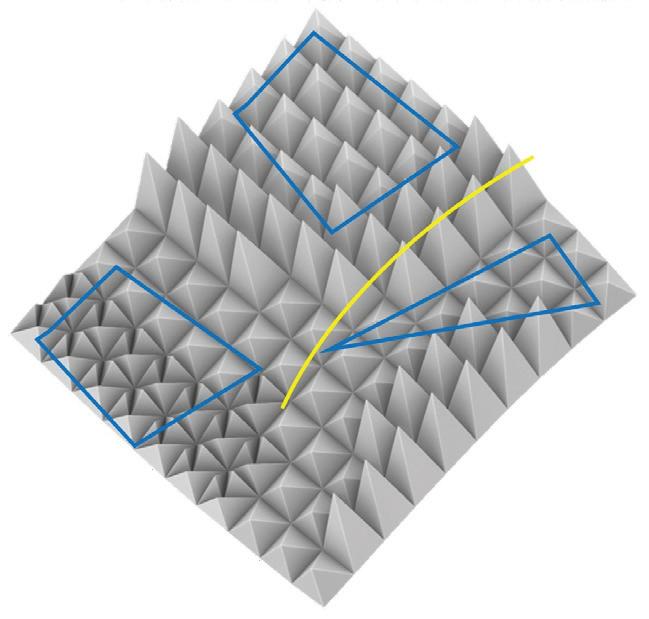
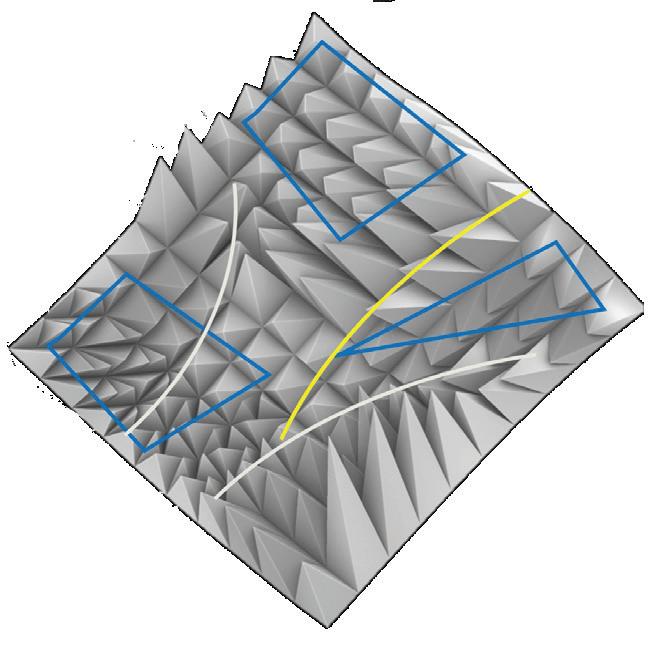
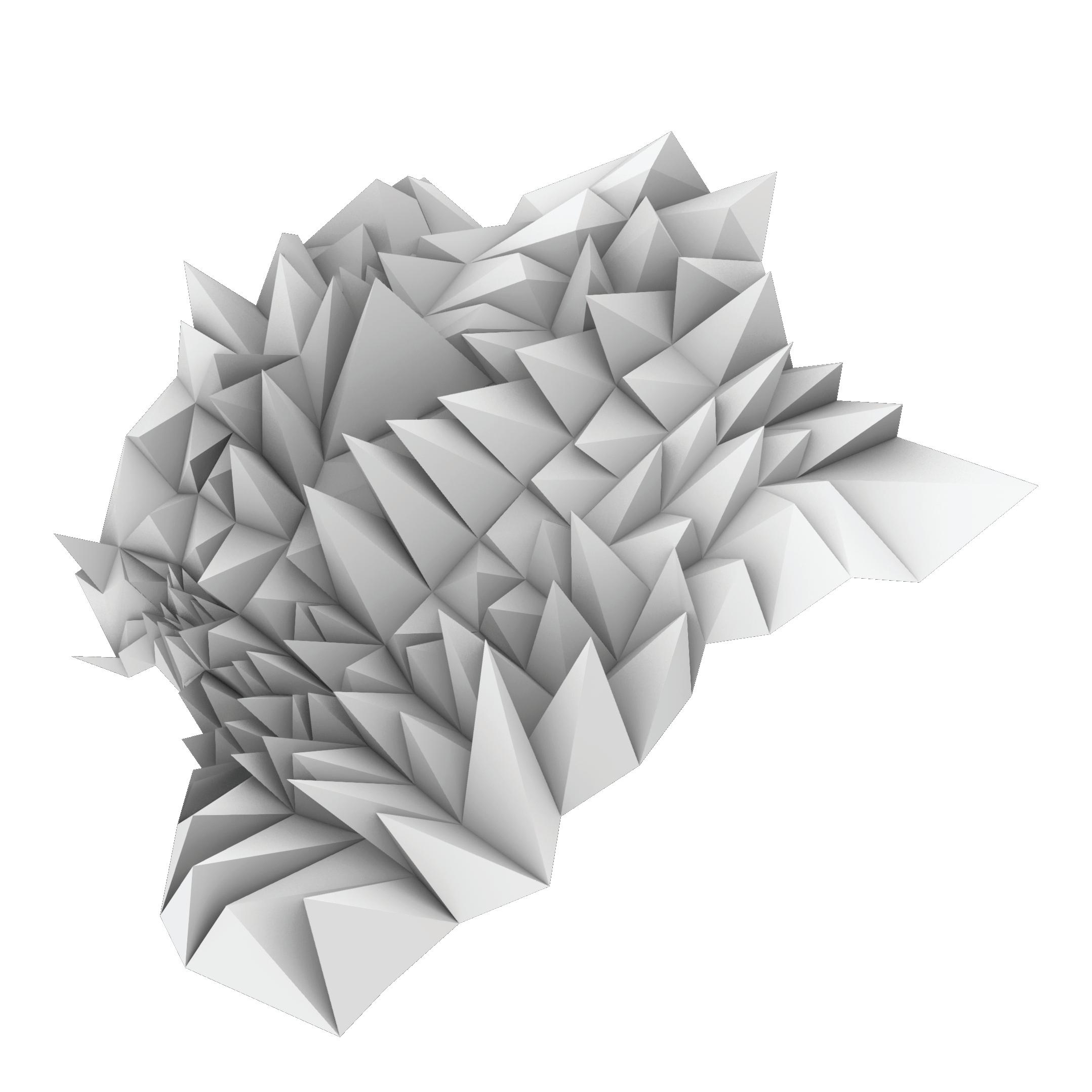
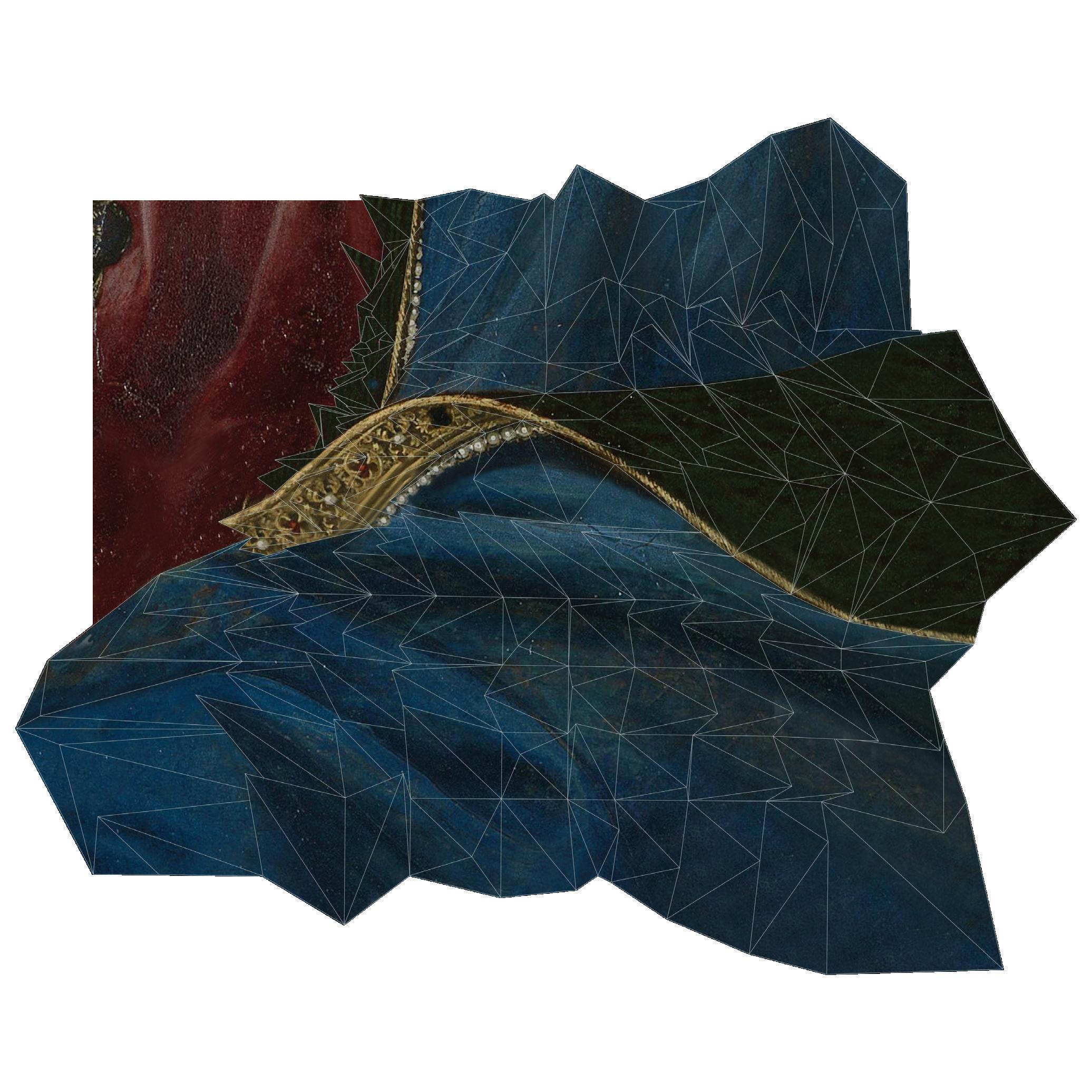
Using Rhino and its Paneling Tools plug-in, a hybrid surface is created using a section of a given landscape and a piece of precedet painting sample. The goal is to showcase the relationshiop between surface and pattern.
THE CONNECTION
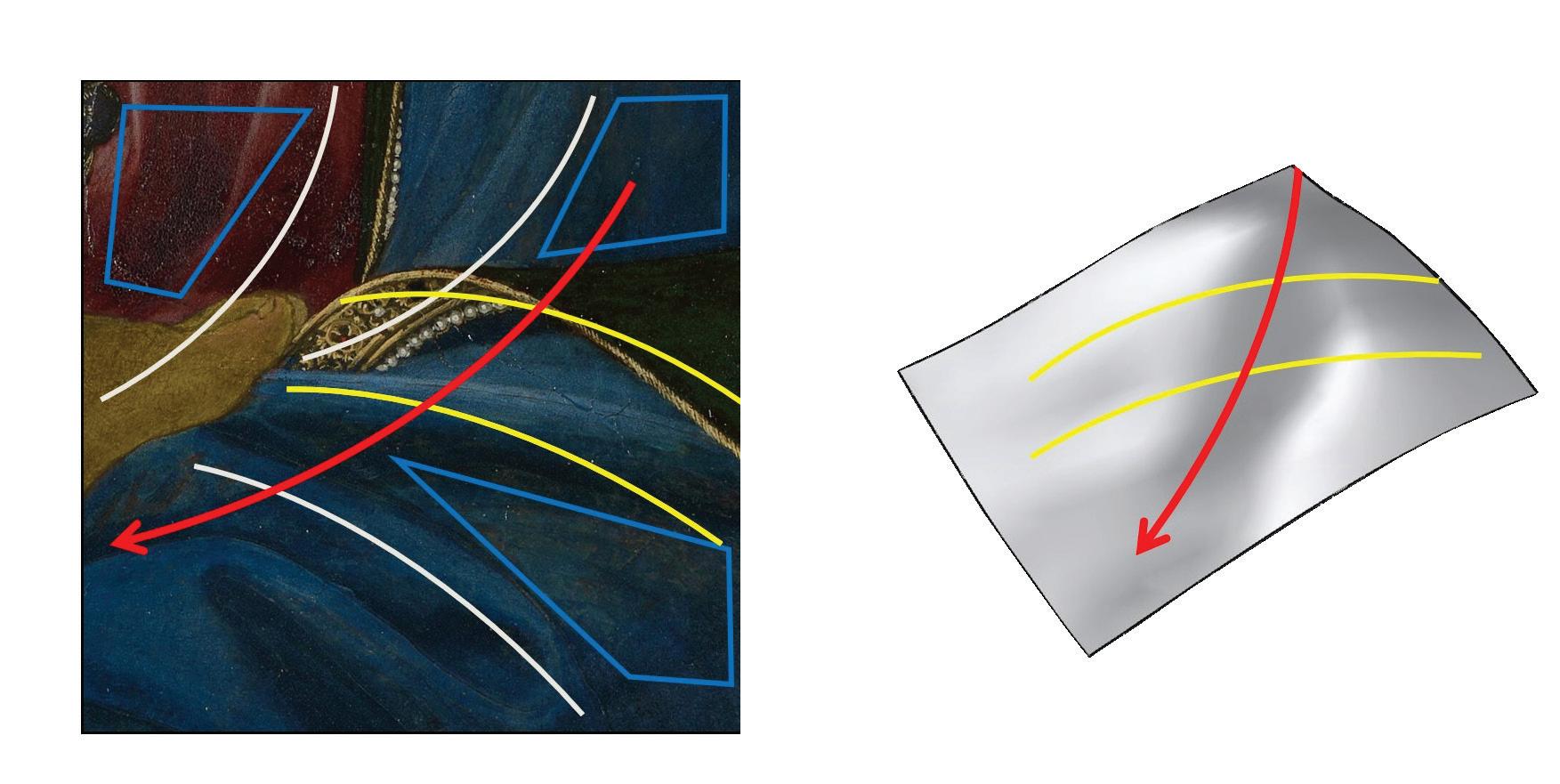
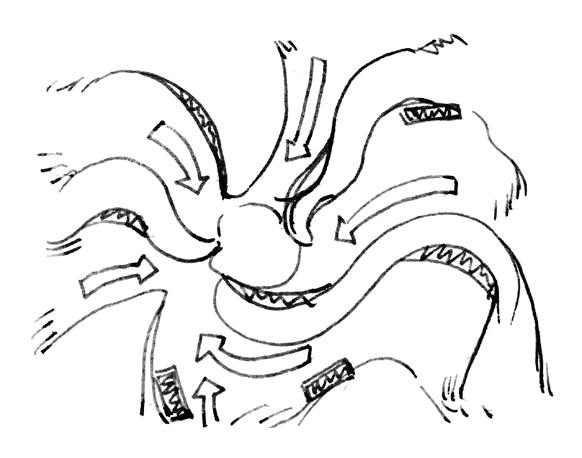
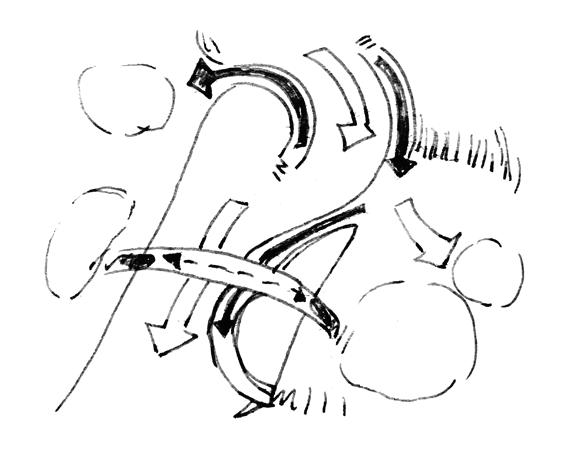
The farbic: - Distinct flow (red arrow) - complemented by shadow zones (blue boxes)
The terrain: - the slope accentuated the hierarchy bwteen foreground and background - a valley conveyed a similar downward flow
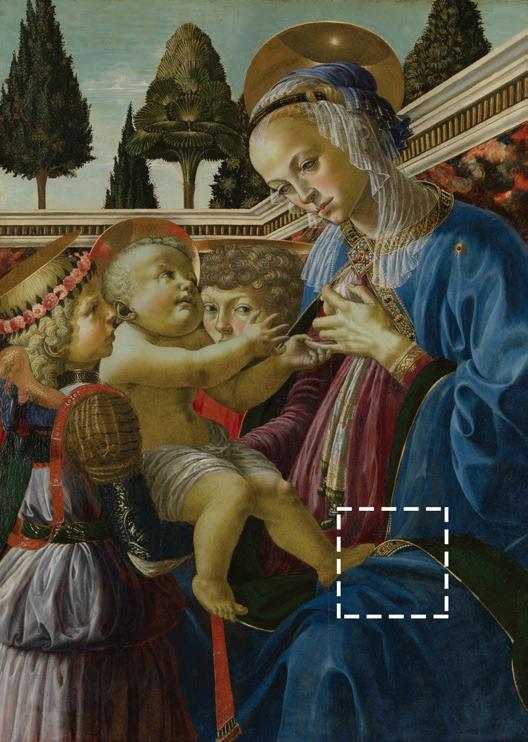
Andrea del Verrocchio, Madonna of the Milk. 1467-1469. London, National Gallery
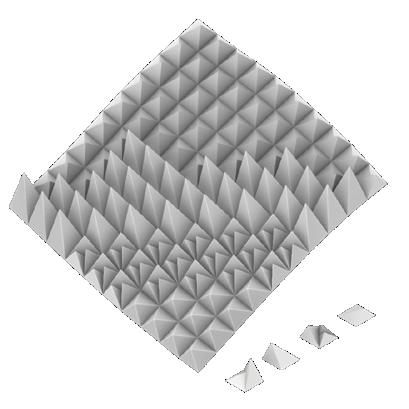
10x10 section of a Tasmania terrain.
PANEL STUDIES
HYBRID STUDIES
ARTEFACT
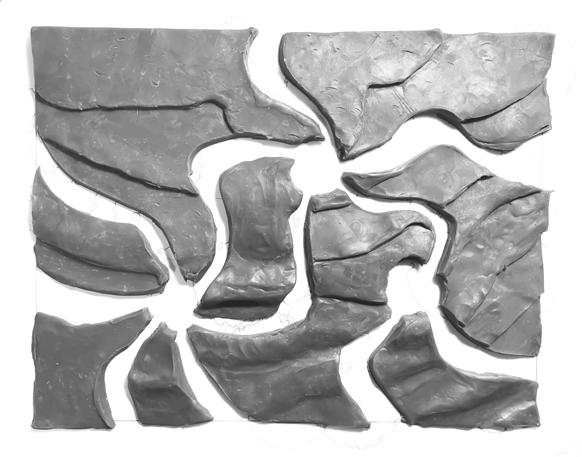
While trying to exhibit very clear similarities between the given samples, I decided to manipulate my artefact as if it was being pulled in all directions, achiving a strong sense of horizontal stretch, thus allowing it to have more independence as a sculpture.
COMPOSITE
When combining my artefact with the painting sample, I conformed to the surface as much as I could, and adjusted the pattern precisly so the both could align.
To enhance the composition, the blue and black fabric were extended, emphasising a strong horizontal stretch as mentioned earlier. A small section of shadow between the blue and red fabric was repainted and elevated to the same level as the blue fabric, complement the artefact. The golden ornament was extended while removing its “foot” to highlight it as the focal point.
FODR: FRAME VS. FIELD
INTRODUCTION TO THE WORK
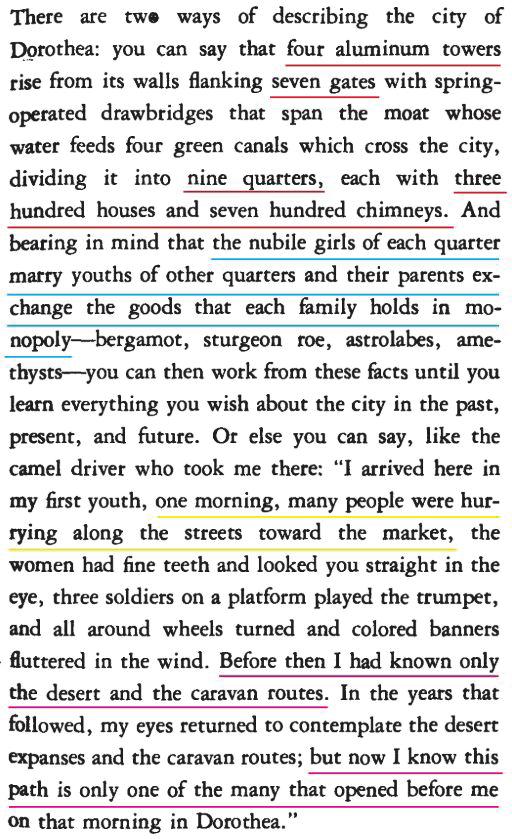
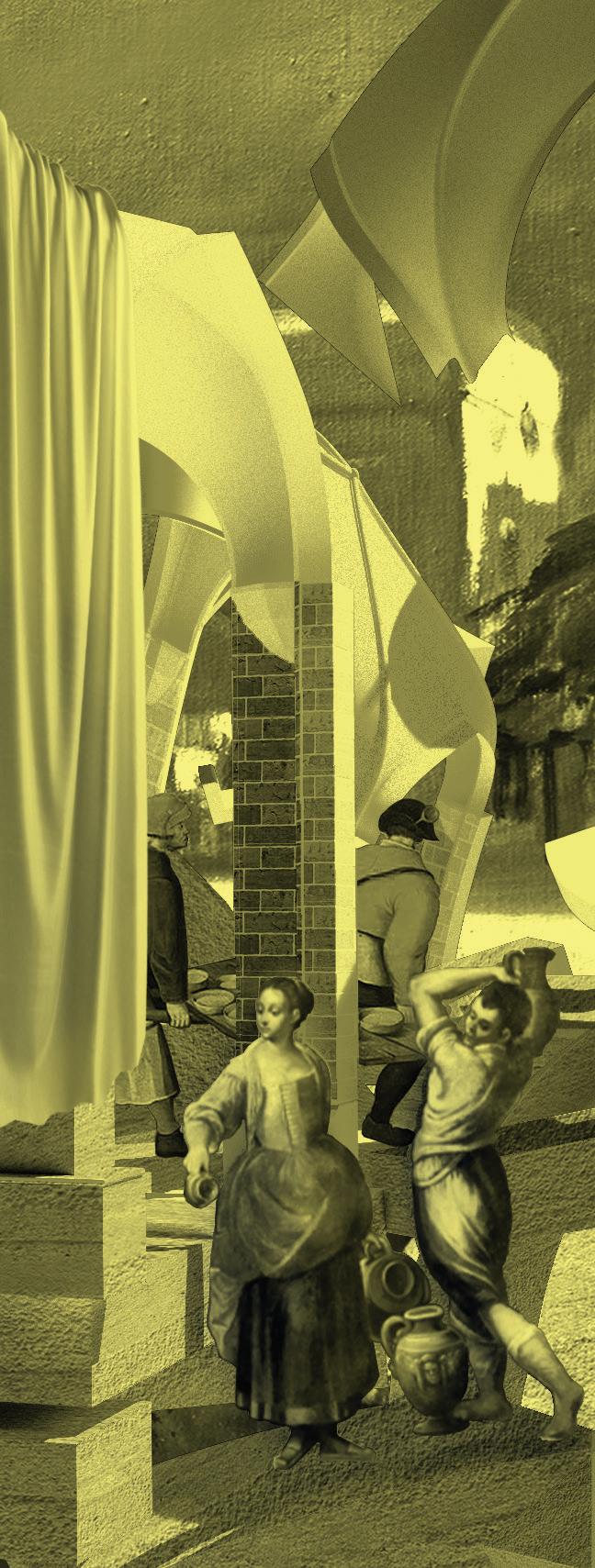
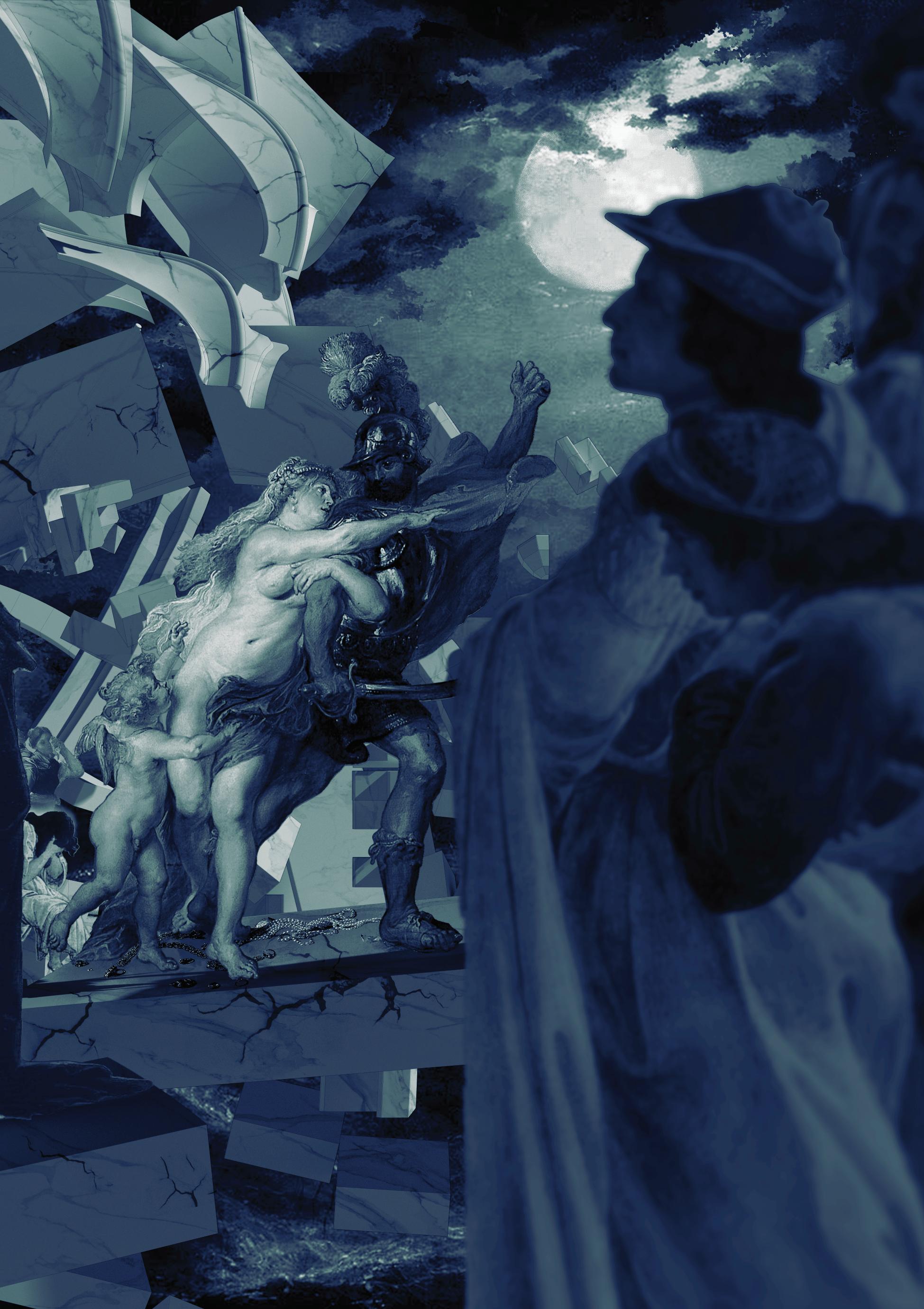
Reinterpreting Cities & Desire 1 - Dorothea written by Italo Calvino within the context of the Old Quad building, and create two perspective representation to describe a scene/city from the text.
INSPIRATION FROM THE TEXT
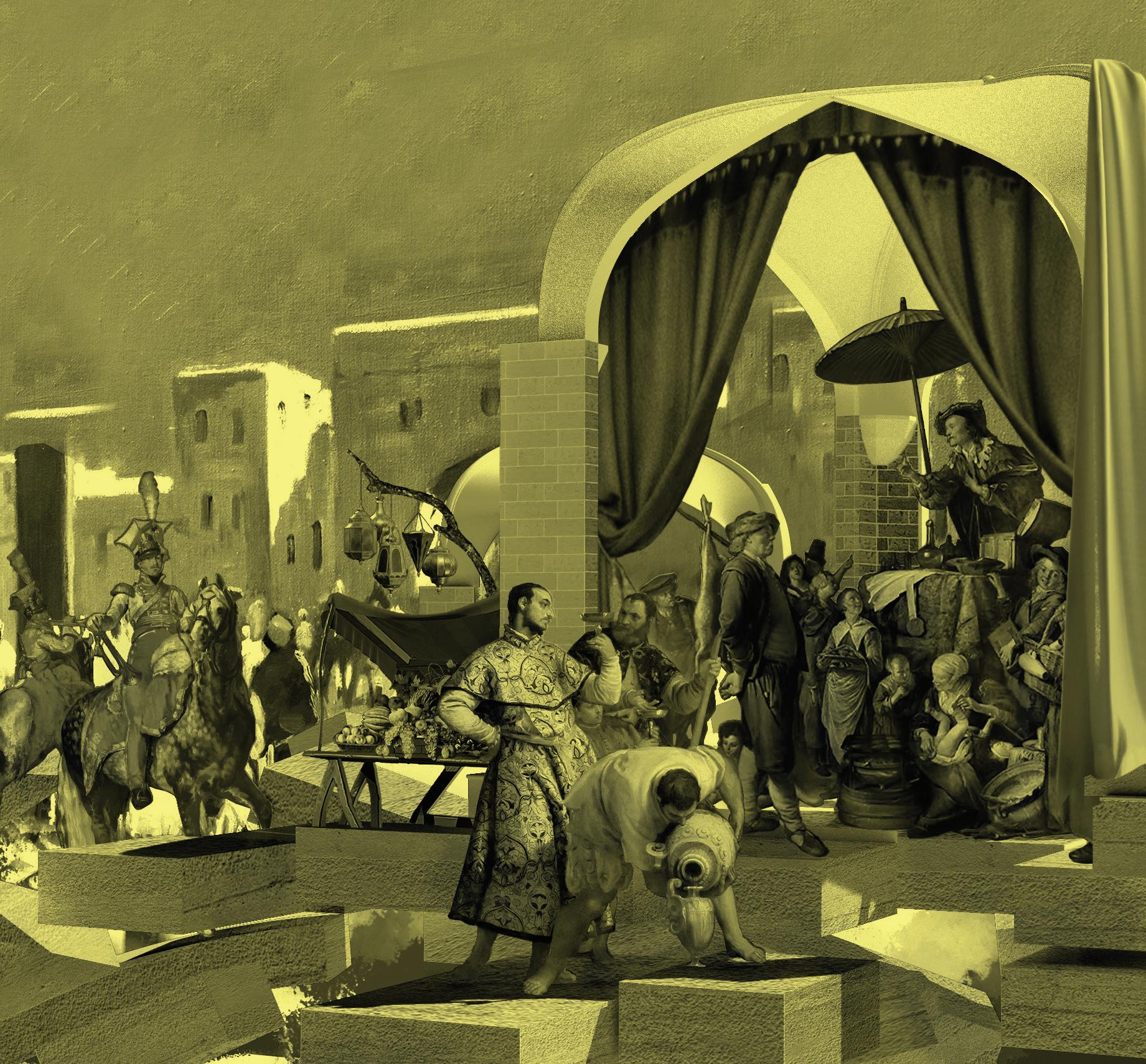
In order to make my perspective frames clearer, I decided to rearrange the elements. This means that I used rigid architecture in the market scene, while employing literal distortion in the field to represent moral distortion.
When a theoretical character stands in front of the vivid market, if they were to ‘zoom-out’, the contrasting chaos from afar would be visible. Thus, the field itself would present the concept of perspective and how it can limit oneself, as discussed in final paragraph of the text.
The field was developed further, yet it lacks an overall shape; thus, I had applied the ‘golden ratio’ to the model, enhancing its compostion.
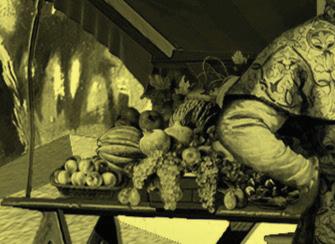
For frame 1, my intention was to depict a lively market scene using the clustered zone near the bottom-right.
In frame 2, I planned to set it perpendicularly to the previous location, casting onto the scattered field.
After modelling the Old Quad, I decided to portrary the concept of ‘perception’, by leaving a section relatively unaltered while dramatically warp the rest, in order to imply the idea of ‘moral distortion’ as described in the text.
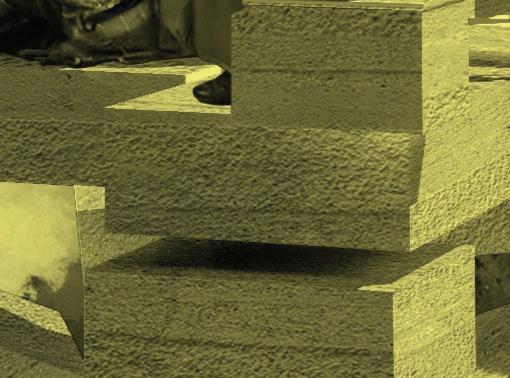
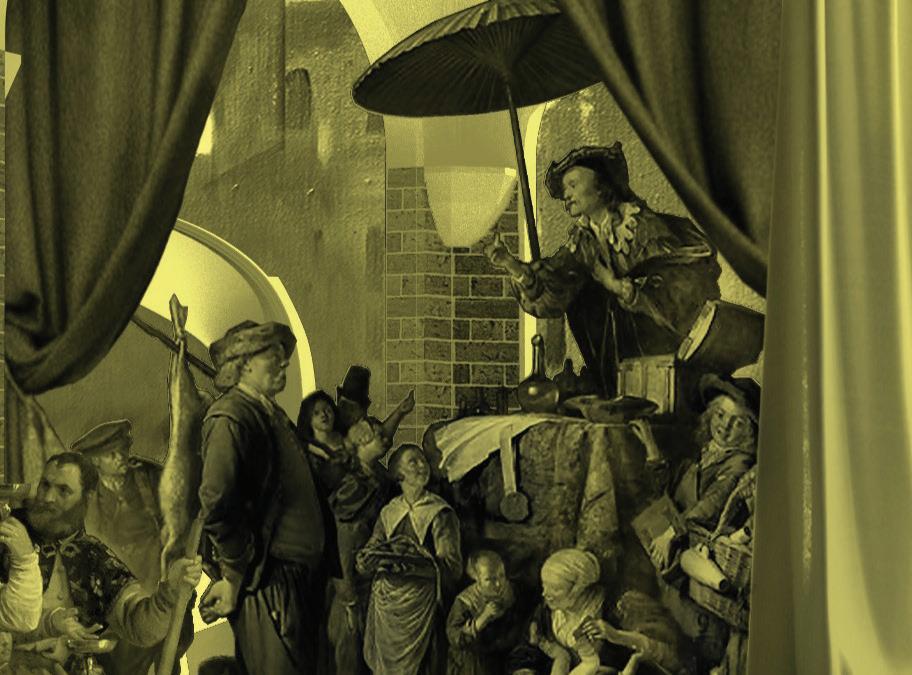
Merchant and the residents. Sandblock texture to acknowledge the “dessert” setting.
Details to enhance the market perception.
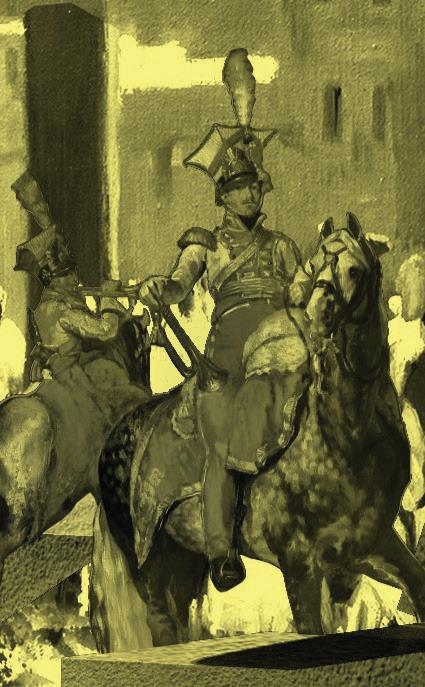
PERSPECTIVE FRAME 1 & DETAILS
To depict the rigidness and harmony as mentioned previously:
- Frame captured at the least distorted area of the Old Quad
- Isosceles triangular composition was used to express stability
“...Soldiers playing trumpet...”
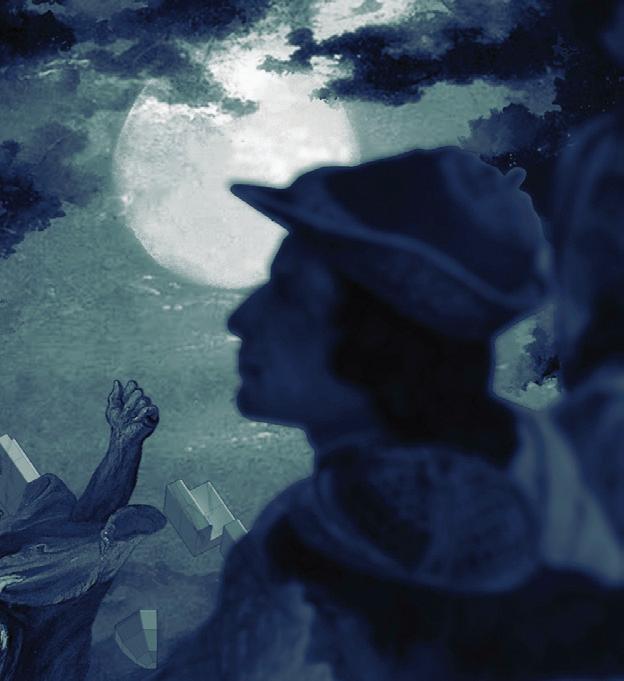
PERSPECTIVE FRAME 2 & DETAILS
This frame was intended to present the unsettling practice of parents trading their children for goods.
To portray such moral distortion, the scene was constructed in a portrait orientation at a warped location of the Old Quad. A rotated triangular composition was used to draw connection but also difference between the two frames, providing a sense of density and tension.
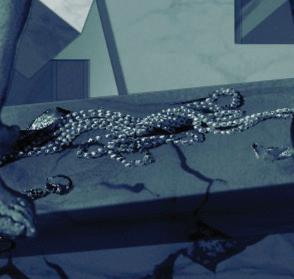
Scattered jewellery conveys the tragedy of this marriage.
Warped vault to emphasis the chaos.
Mable texture implies the theoretical purity of a marriage.
Night time and the silhouette of bystanders provide a sinister and unsympathetic impression.
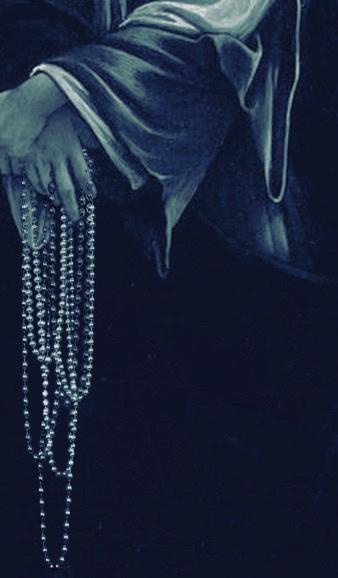
The large amount of pearls held by the old lady are symbolic of the goods received by the parents.
ALPHA: PROJECT 1 GROUND CONDITIONS
INTRODUCTION TO THE WORK
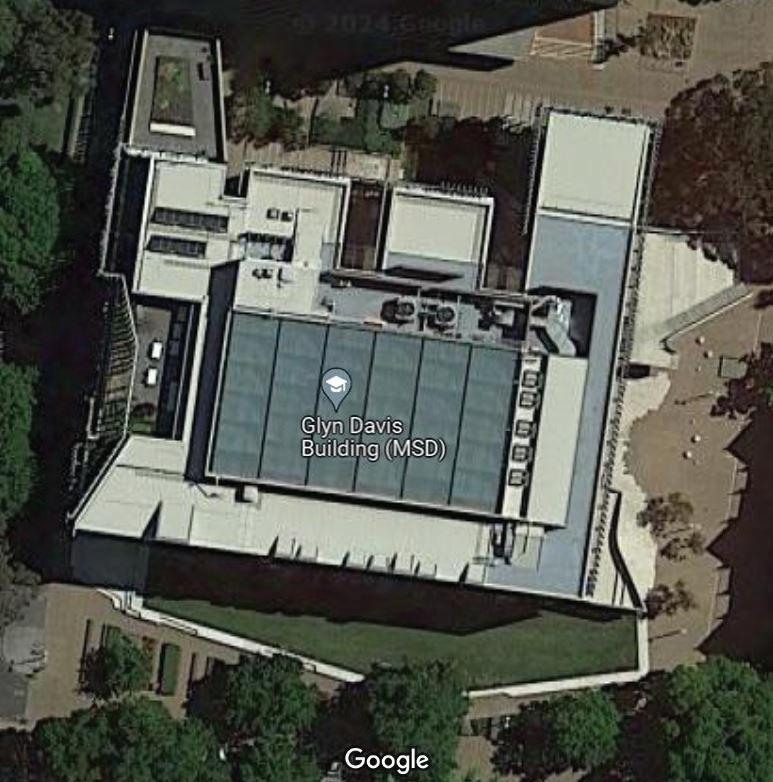
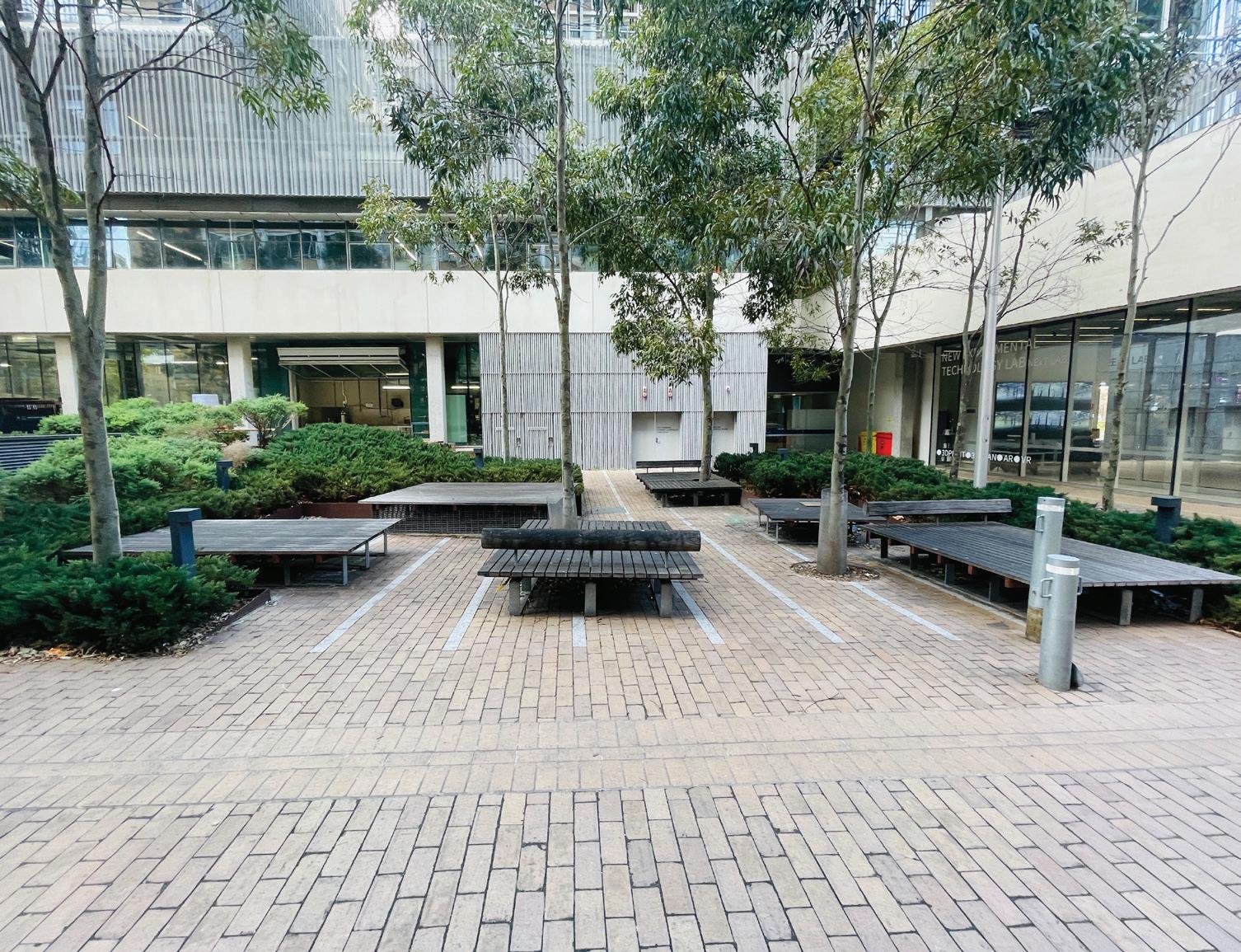
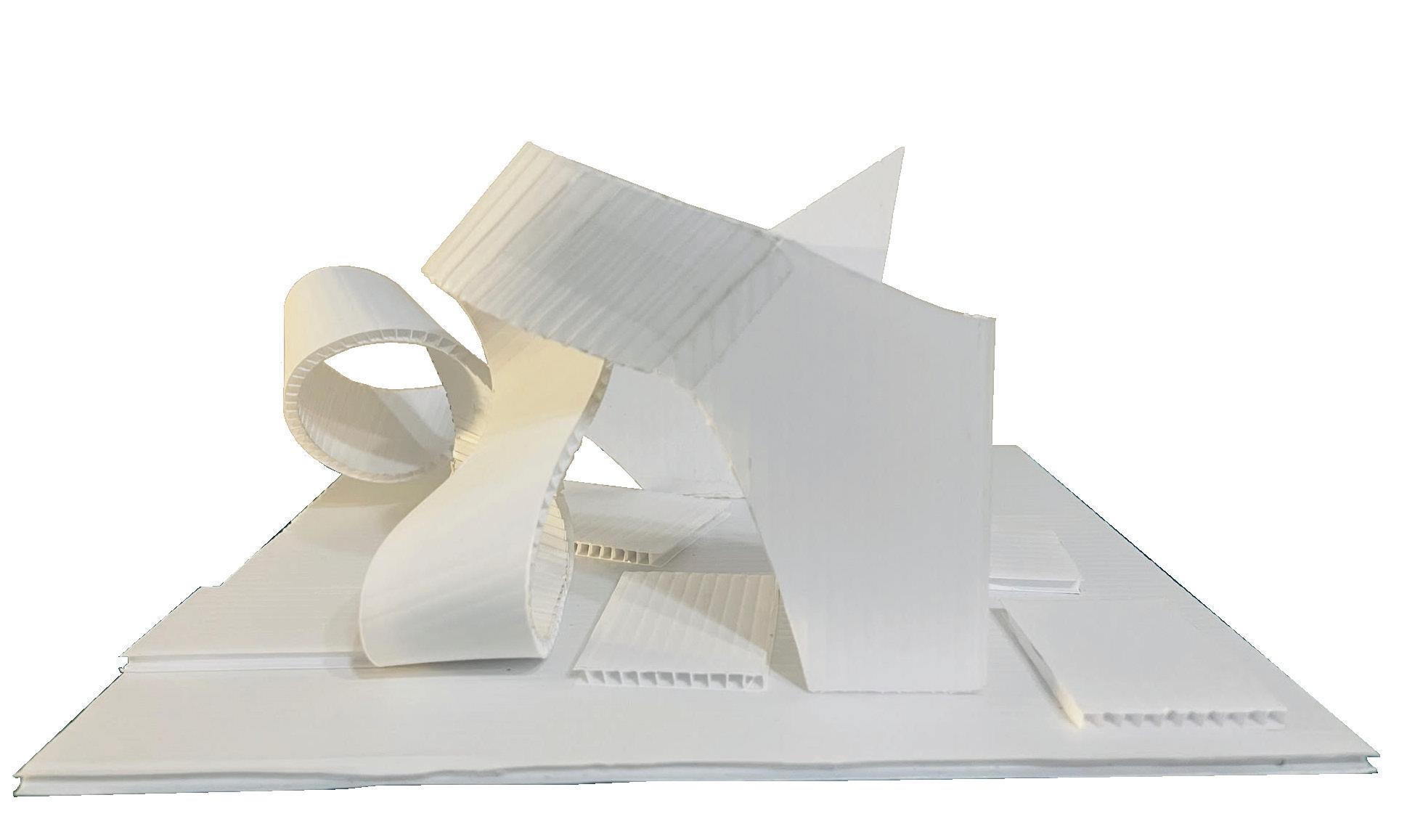
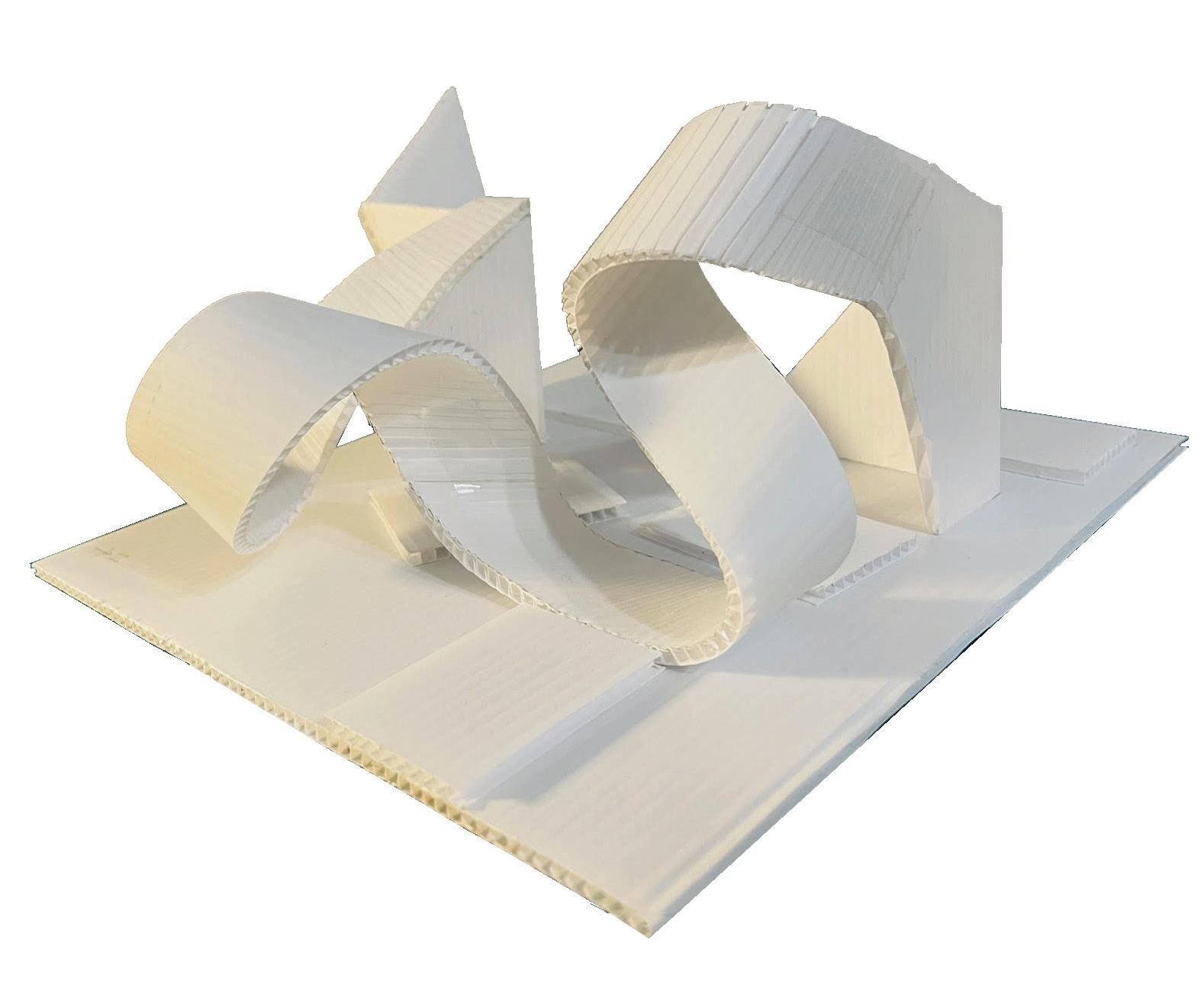
Propose a design intervention near the Melbourne School of Design building, offering young adults moments of social gathering, that could be both intimate and socially distant.
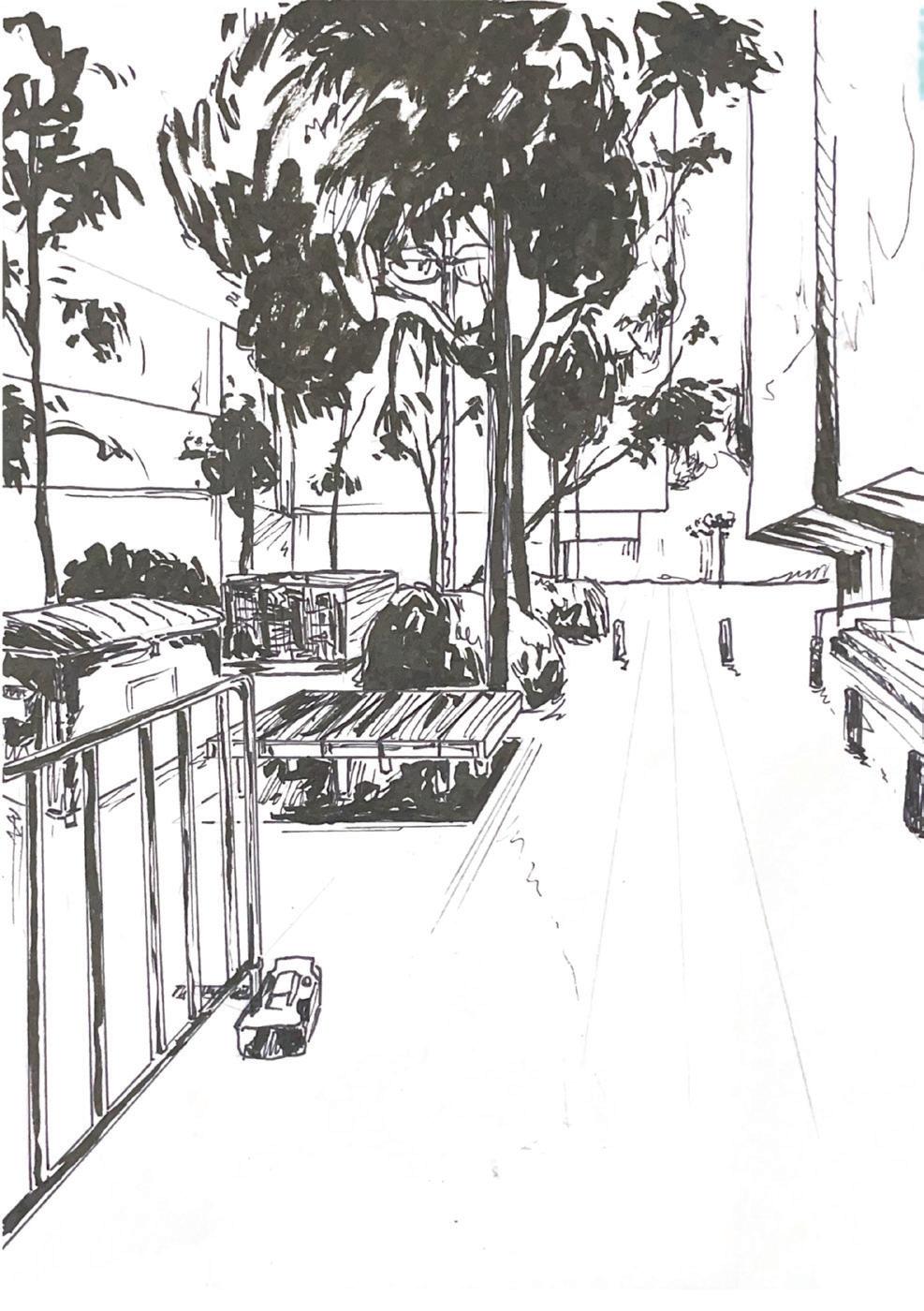
SELECTED SITE
DESIGN PROCESS
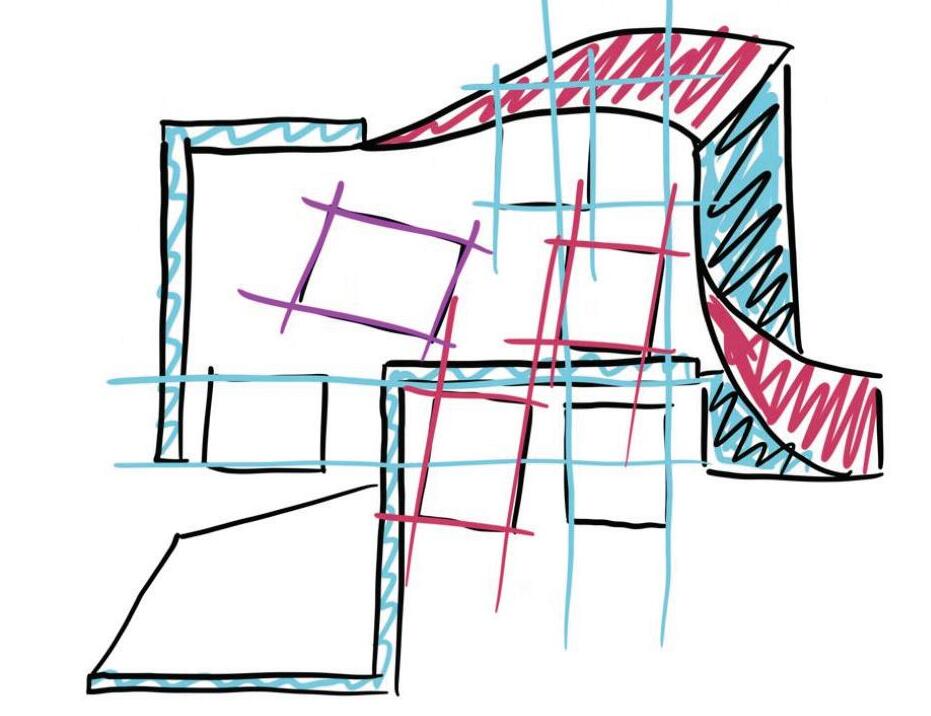
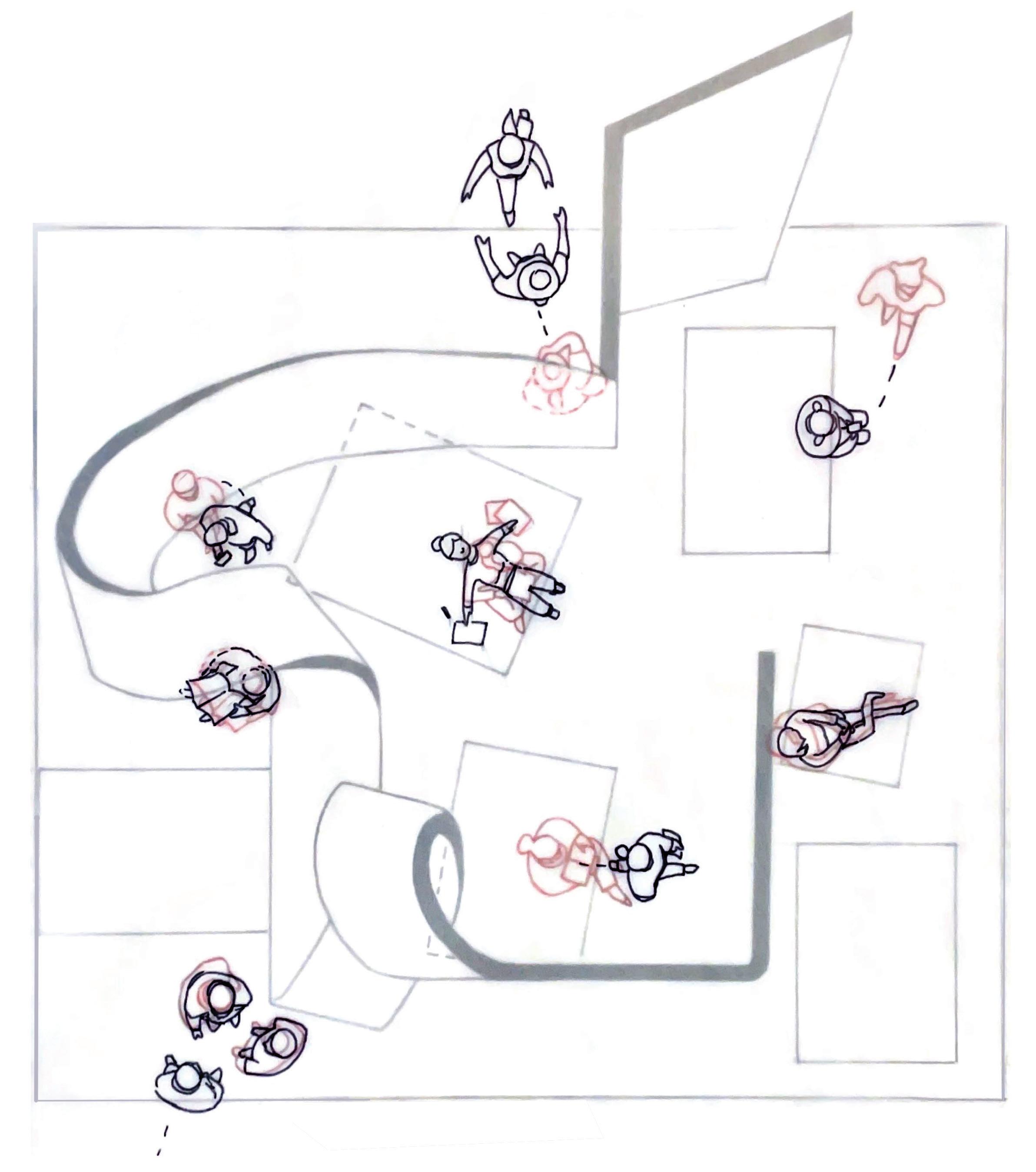
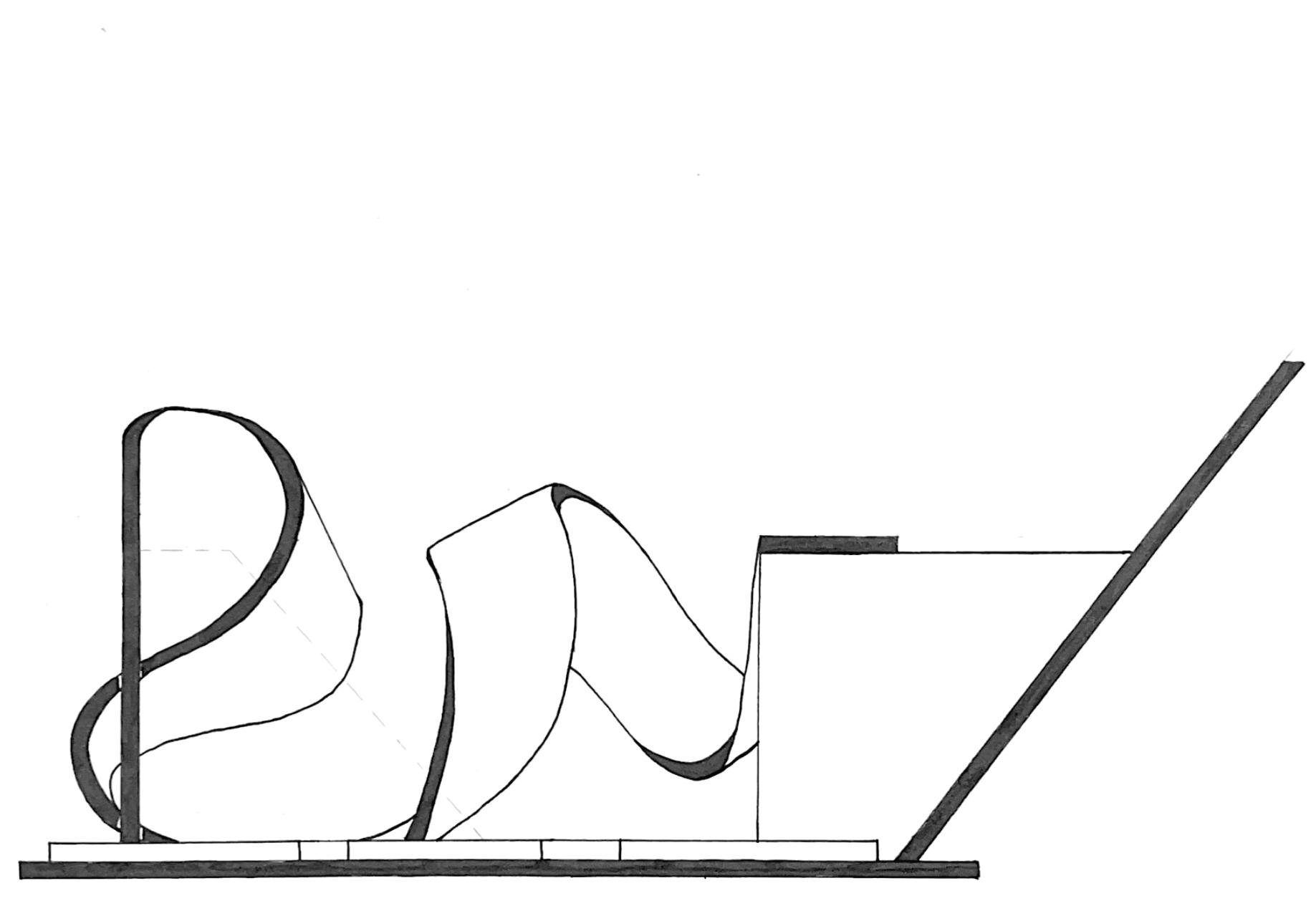
While the site is classified as ‘grid-like’ at first glance, it is not entirely orthogonal: some of the timber benches mis-align with each other. Due to this feature, I wanted my design esquisse to acknowledge the partial rigidness of the existing site, while highlighting the fact that it is innately asymmetrical.
To achieve this, I decided to make my esquisse orthogonal from top view, and non-orthogonal from perspective.
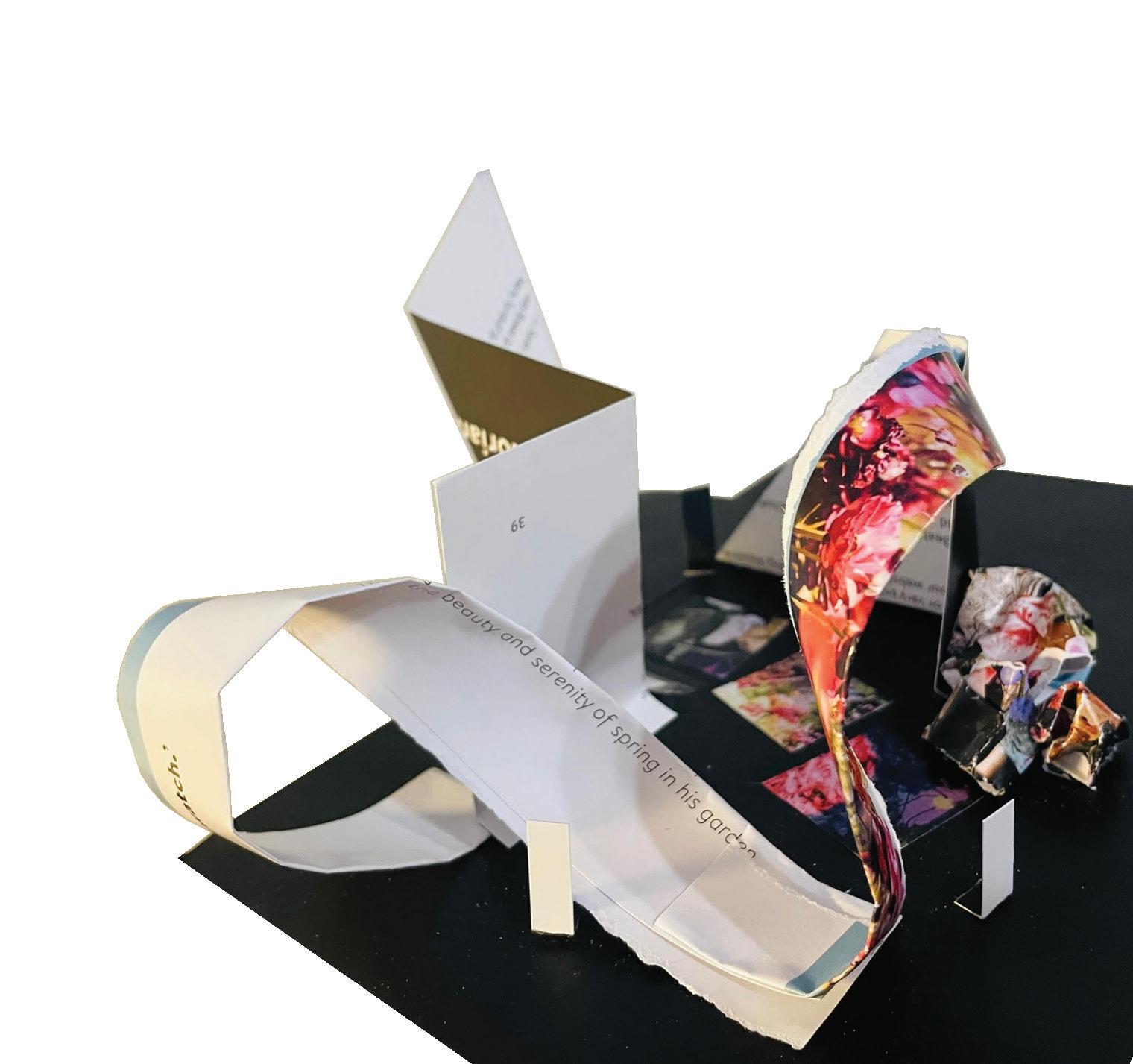
Experience wise, a twisted sculpture was intended to contrast with the right-angled dividers, to disable users from experiencing the rigidness.
Function wise, this micro-infrastructure creates more separated and sheltered spaces, allowing different social needs.
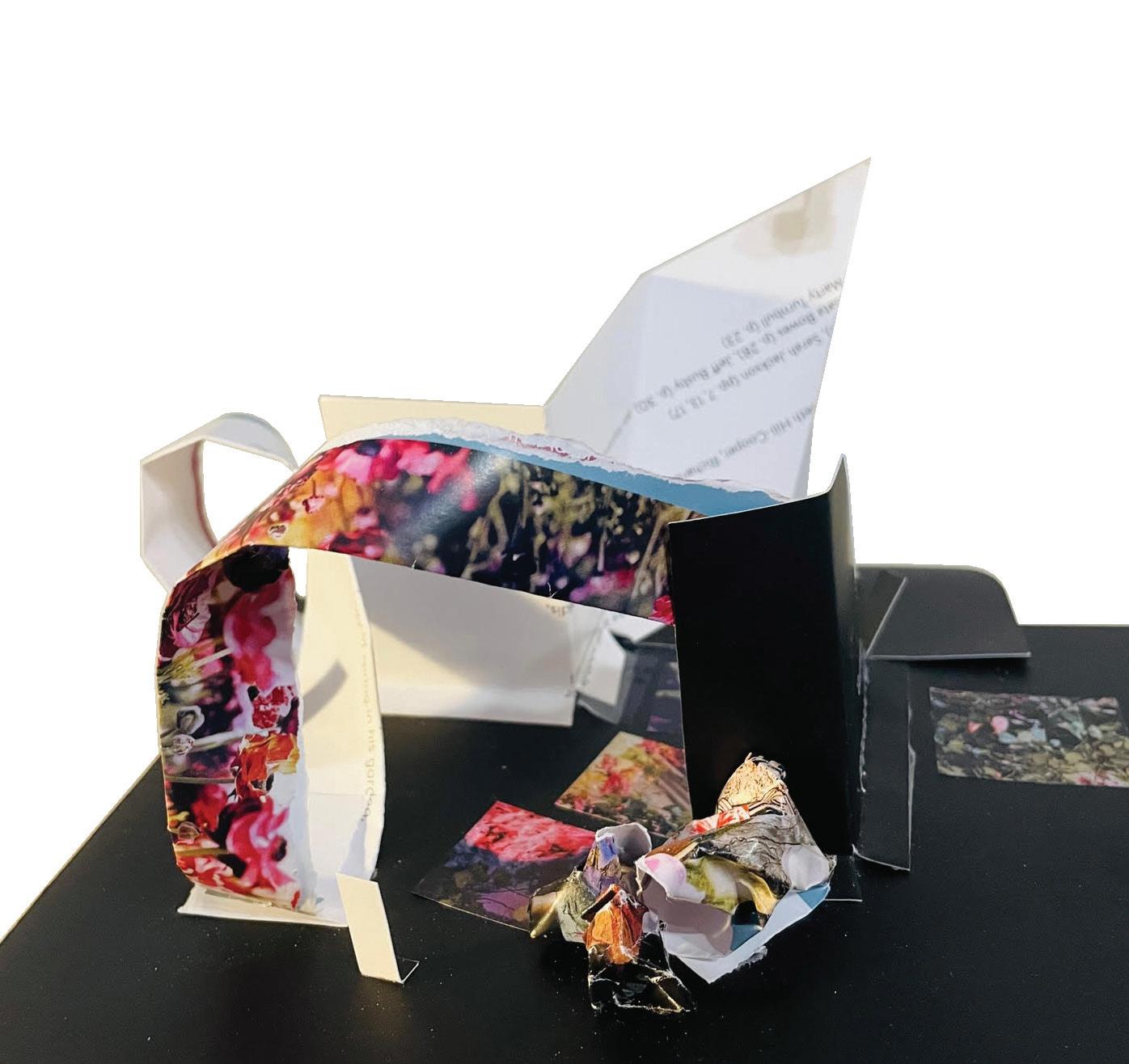
DRAFT MODEL
The draft model consisted of three separates pieces: 2x dividers 1x ribbon/rose arch
They were later joined into one connected piece for better continuity and flow as a structure.
REFINED MODEL
ALPHA: PROJECT 2 UTOPIAN DREAMS
INTRODUCTION TO THE WORK
Design an urban terrain of micro-infrastructure on Lincoln Square from the perspective of an allocated character.
The design needs to enable the character and their community (approx. 50 people) to engage in a type of exchange activity, while allowing them to quickly retreat and hide under surveillance; all of which is set within the context of futural dystopia.
CONCEPT
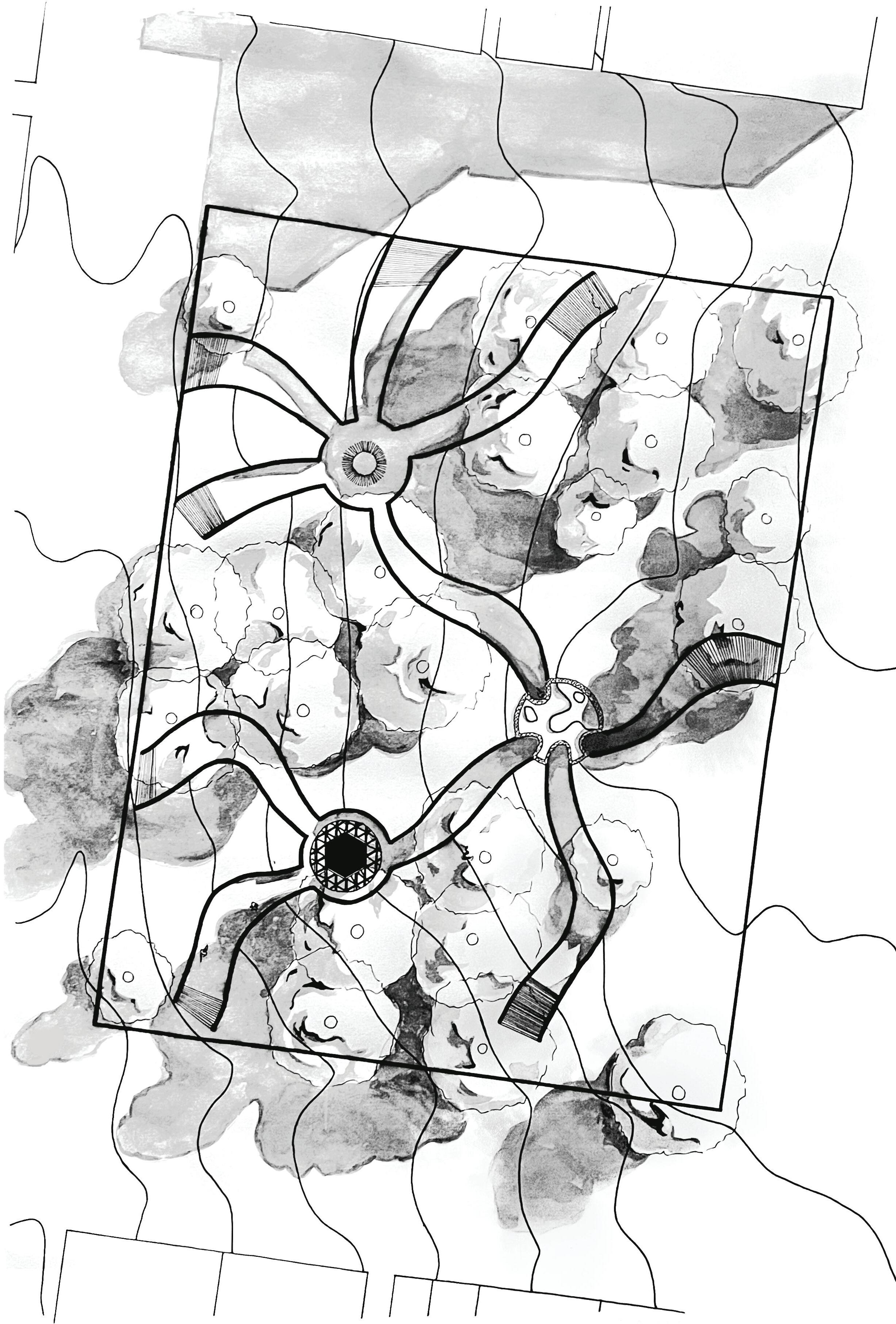
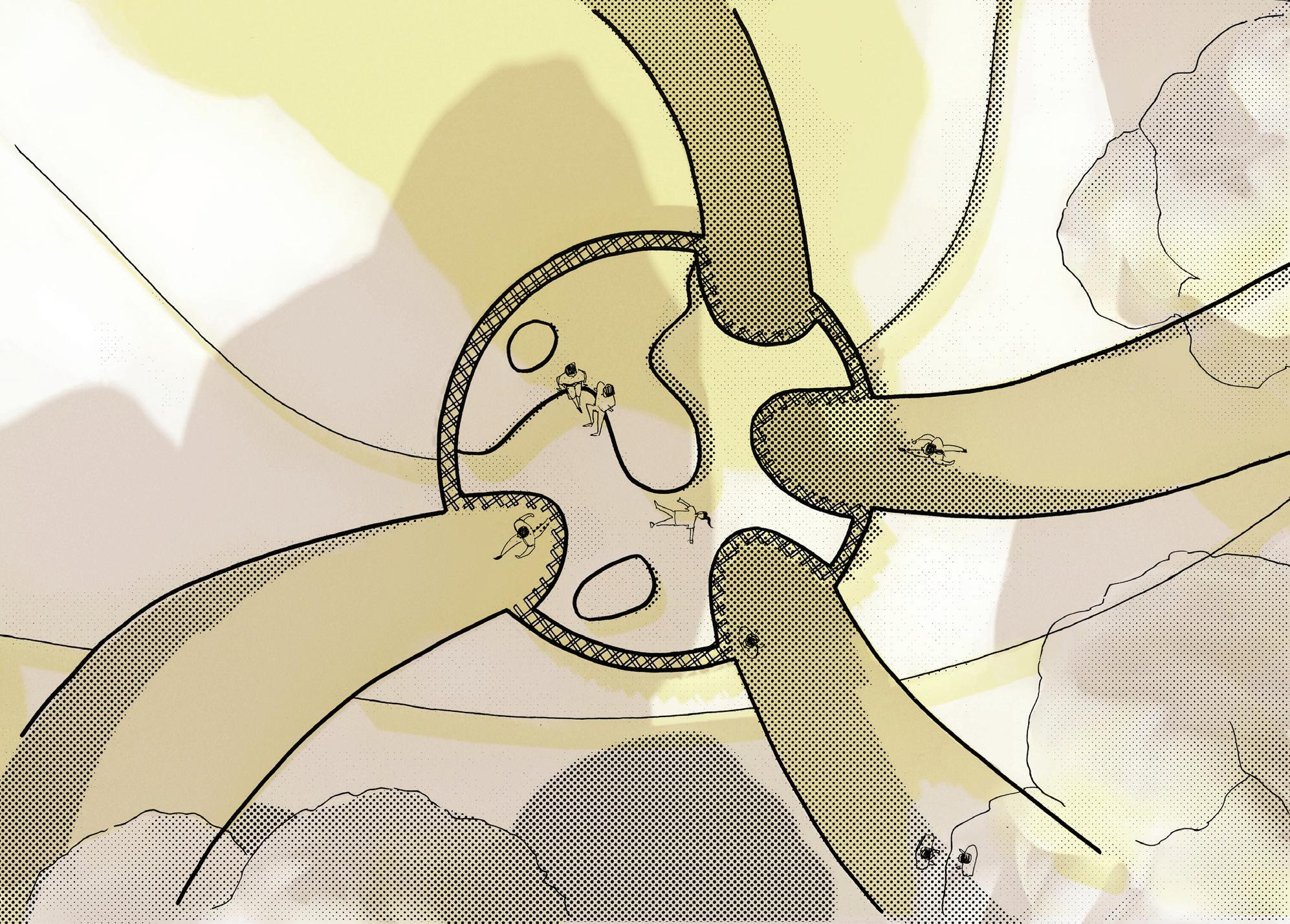
CONVERGENCE
CONNECTION
Different paths leading to one point. Multiple ways of accessing one destination.
THE PROTAGONIST
- A war veteran in their 60s
- They are battle worn but optimistic
- they found solace and redemption in caring for stray animals and wildlife post-retirement
INDEPENDANCE
Isolated zones that support different needs.
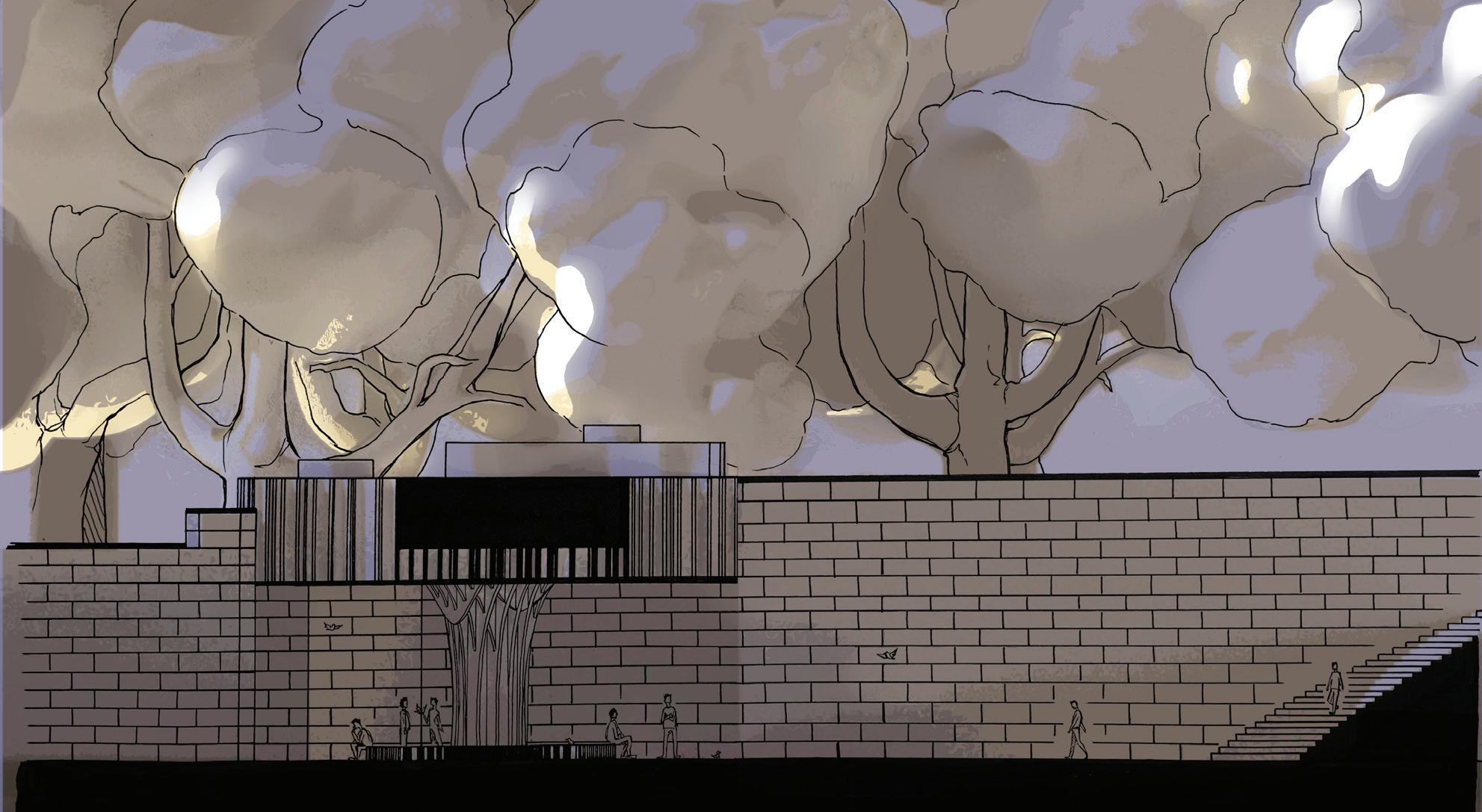
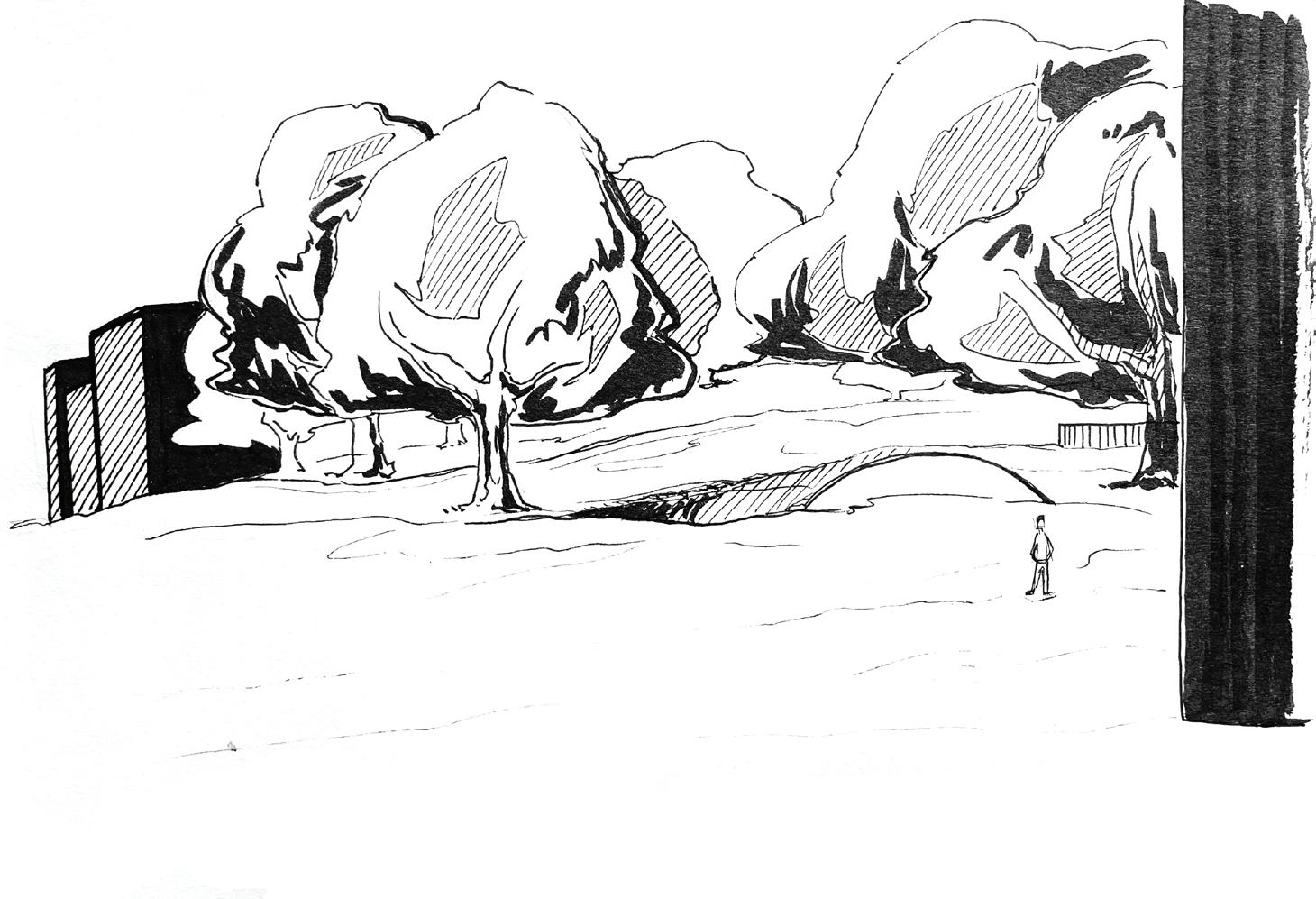
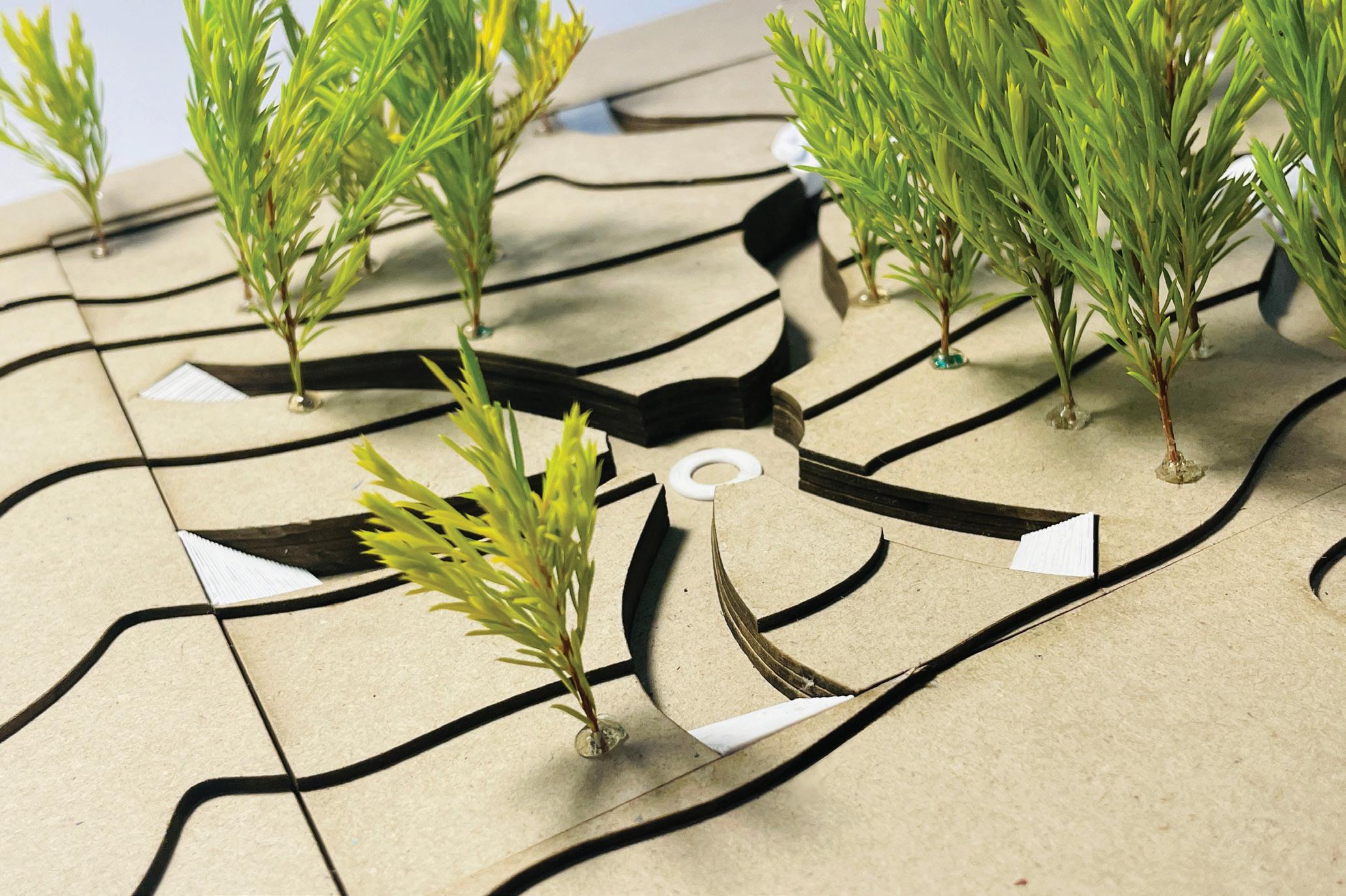
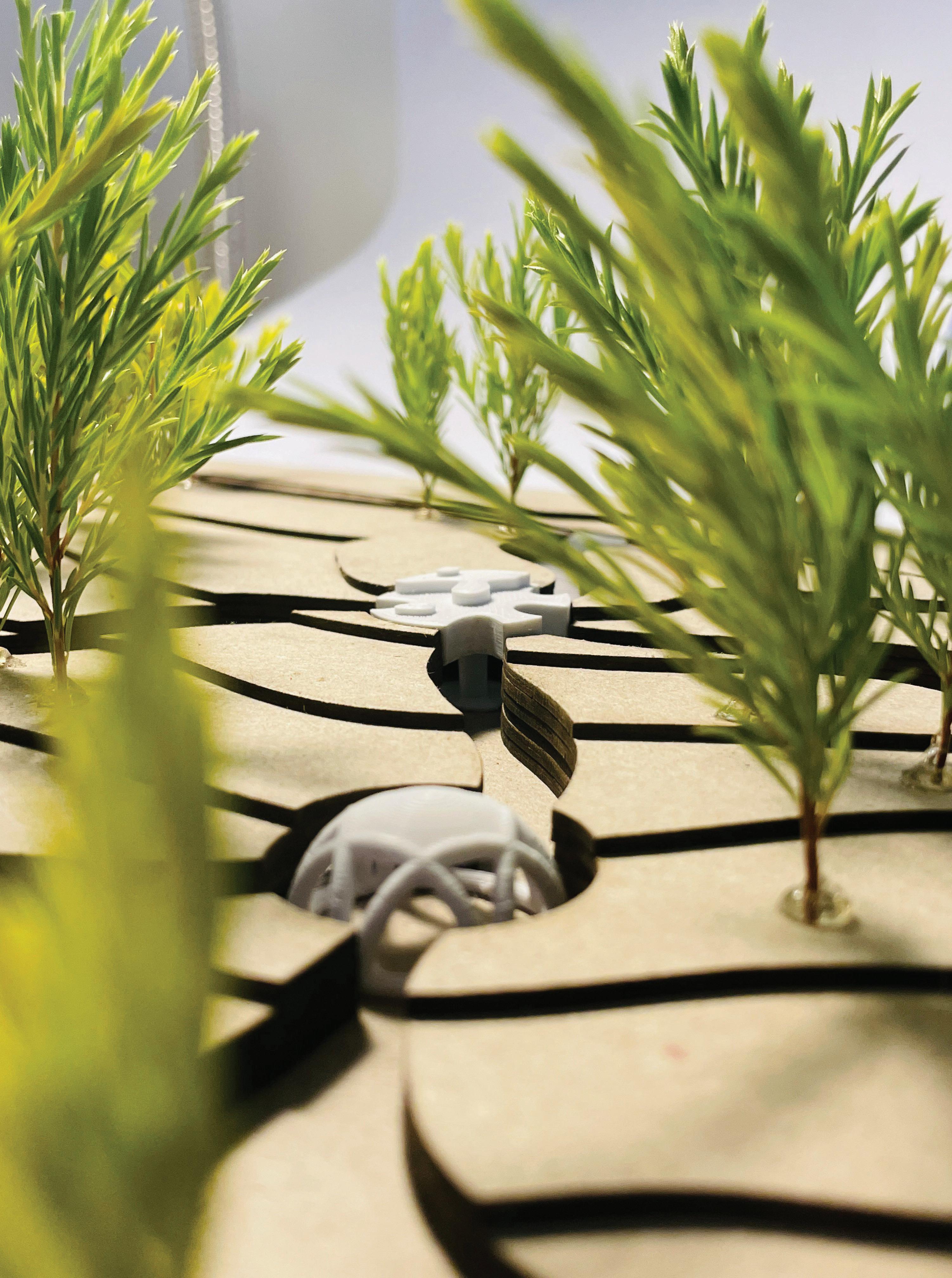
The close relationship between infrastructure and nature is the main focus of this design.
While allowing the protagonist to immerse themselves in the serenity, the site is camouflaged by mother nature from surveillance.
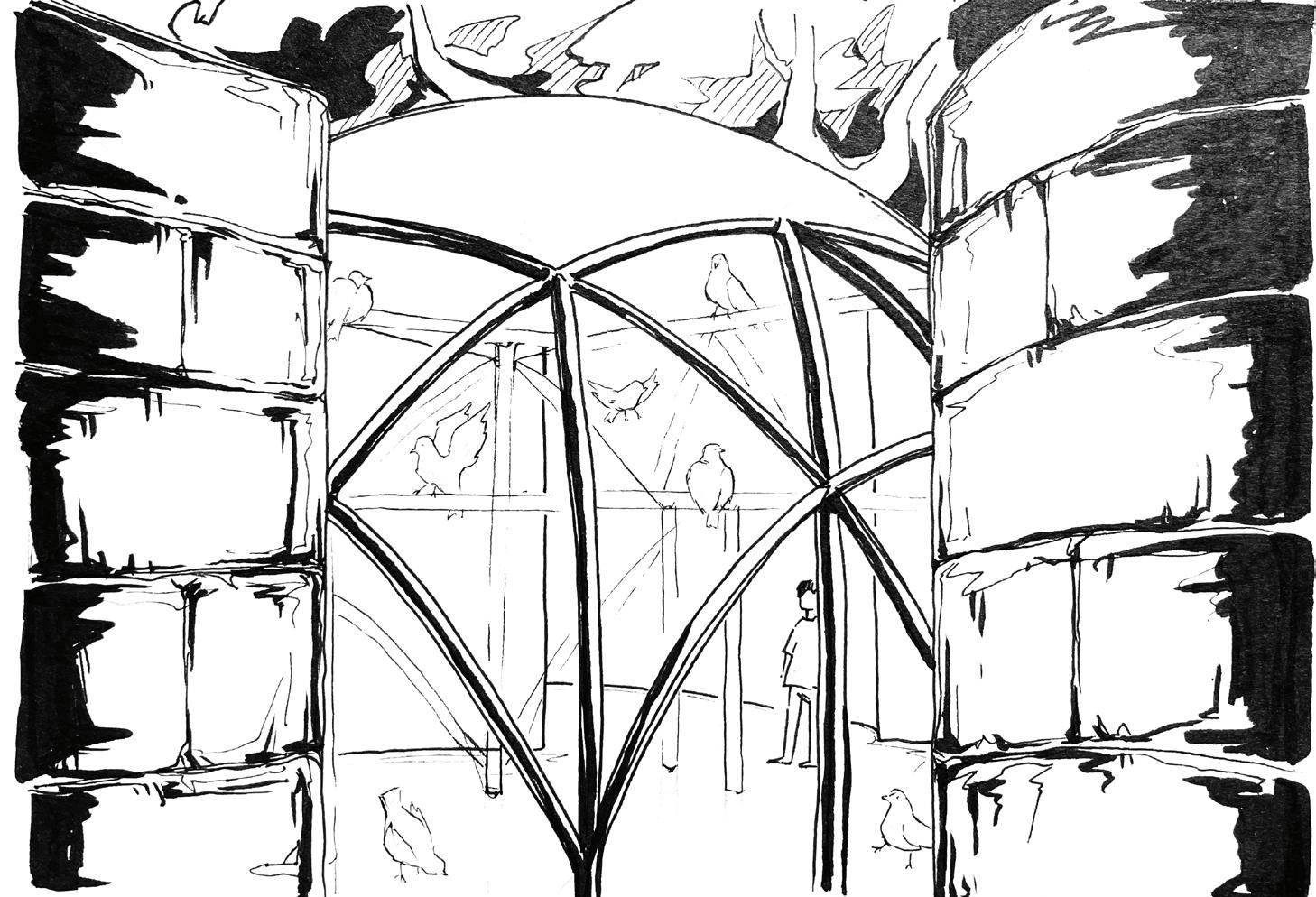
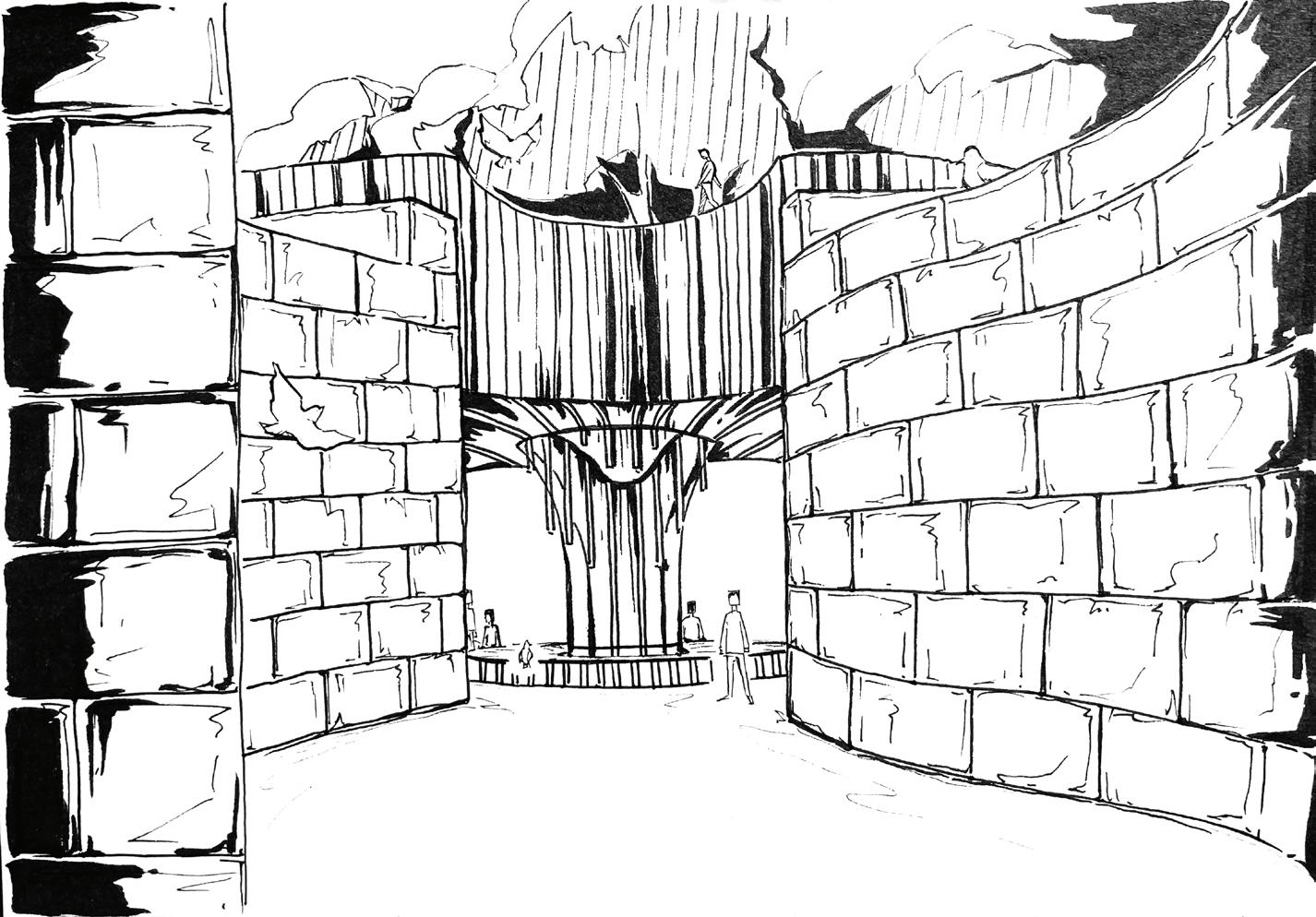
Despite being hidden, there are covert entrances around the site, welcoming those who seek protection from all directions. Within the site, three distinctive zones are designated for human, homing-pigeons, and a message-exchange centre in between. Everyone on or near the site, are welcomed to seek Indra’s service, to reconnect with their loved ones in letter form, only through the winding paths below the surface of the ground.
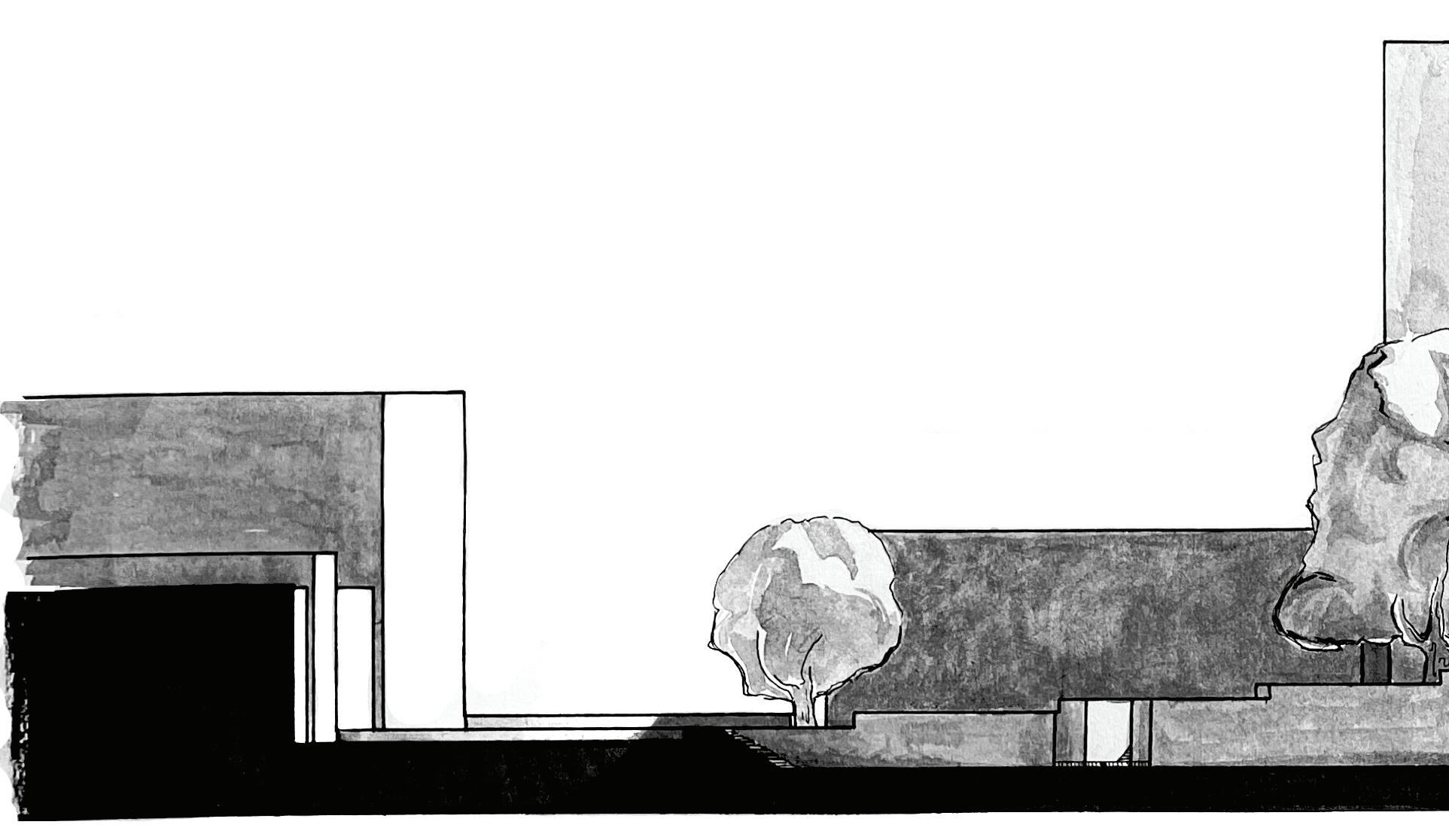
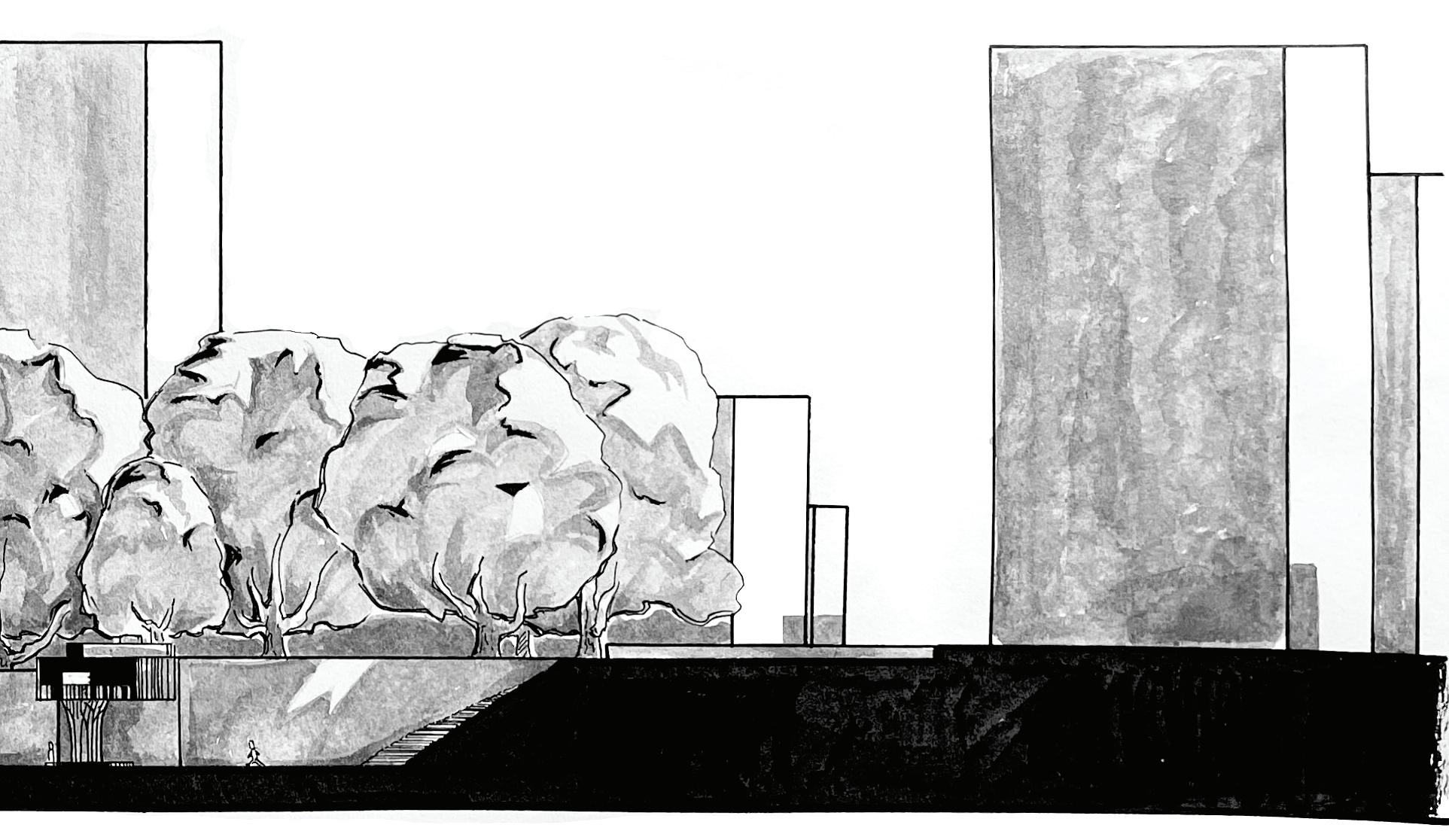
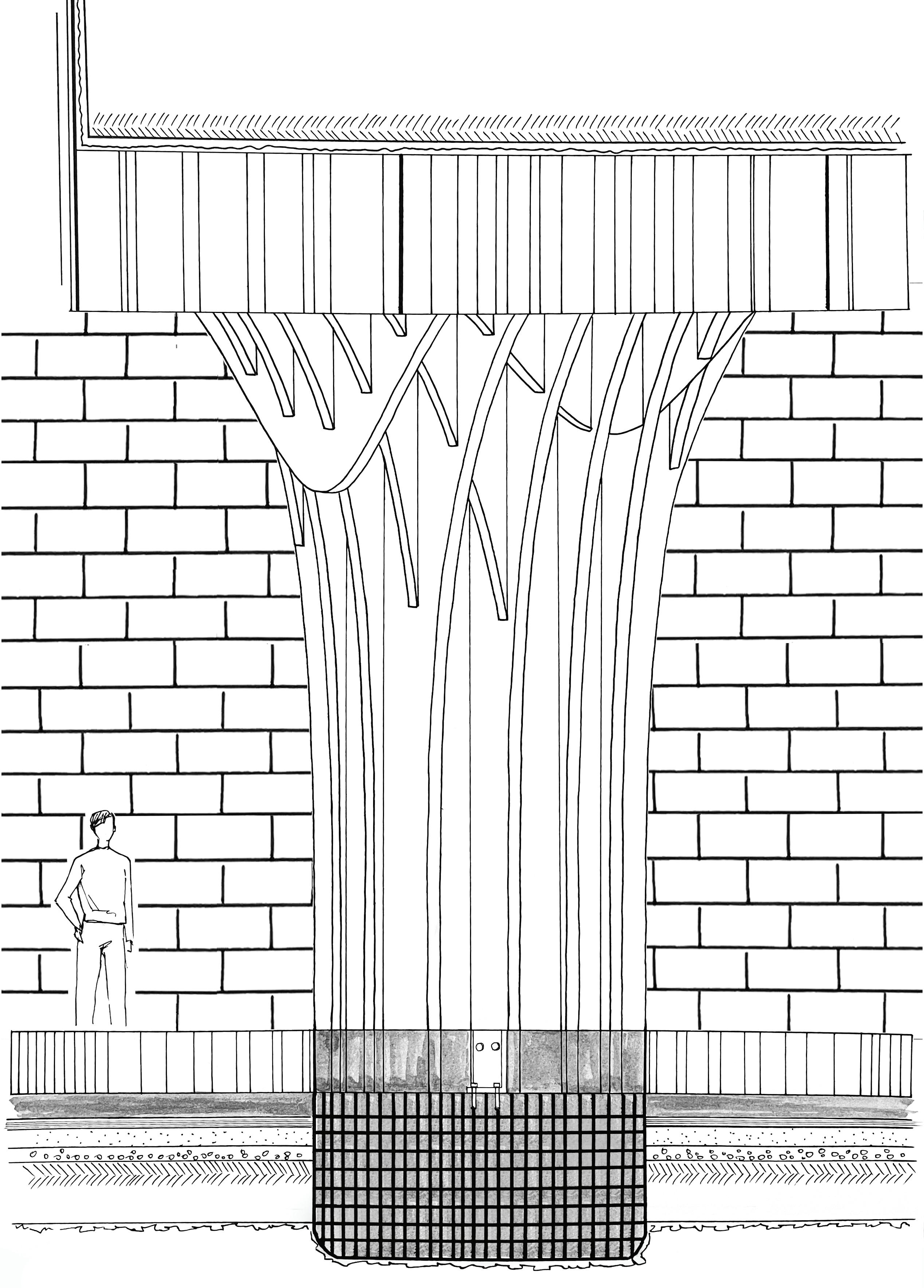
SECTION THROUGH MAIN SPACE OF EXCHANGE
Soil allows the top of this structure to be a bridge-functioning ground.
Agricultural fabric to contain soil.
Concrete reinforced retaining wall allows maximum support.
MATERIAL ANNOTATION
Timber used for the waffle structure as well as seating, for a more natural blend with its surroundings.
An rigid up-right steel piece bolted into the timber, then welded to a basket-like rebar structure, with concrete on the outside as foundation.
- Concrete paver
- Bituminous settingbed
- Concrete slab
- Compacted aggregate
- Earth
- Rock
SPATIAL PROGRESSIONS
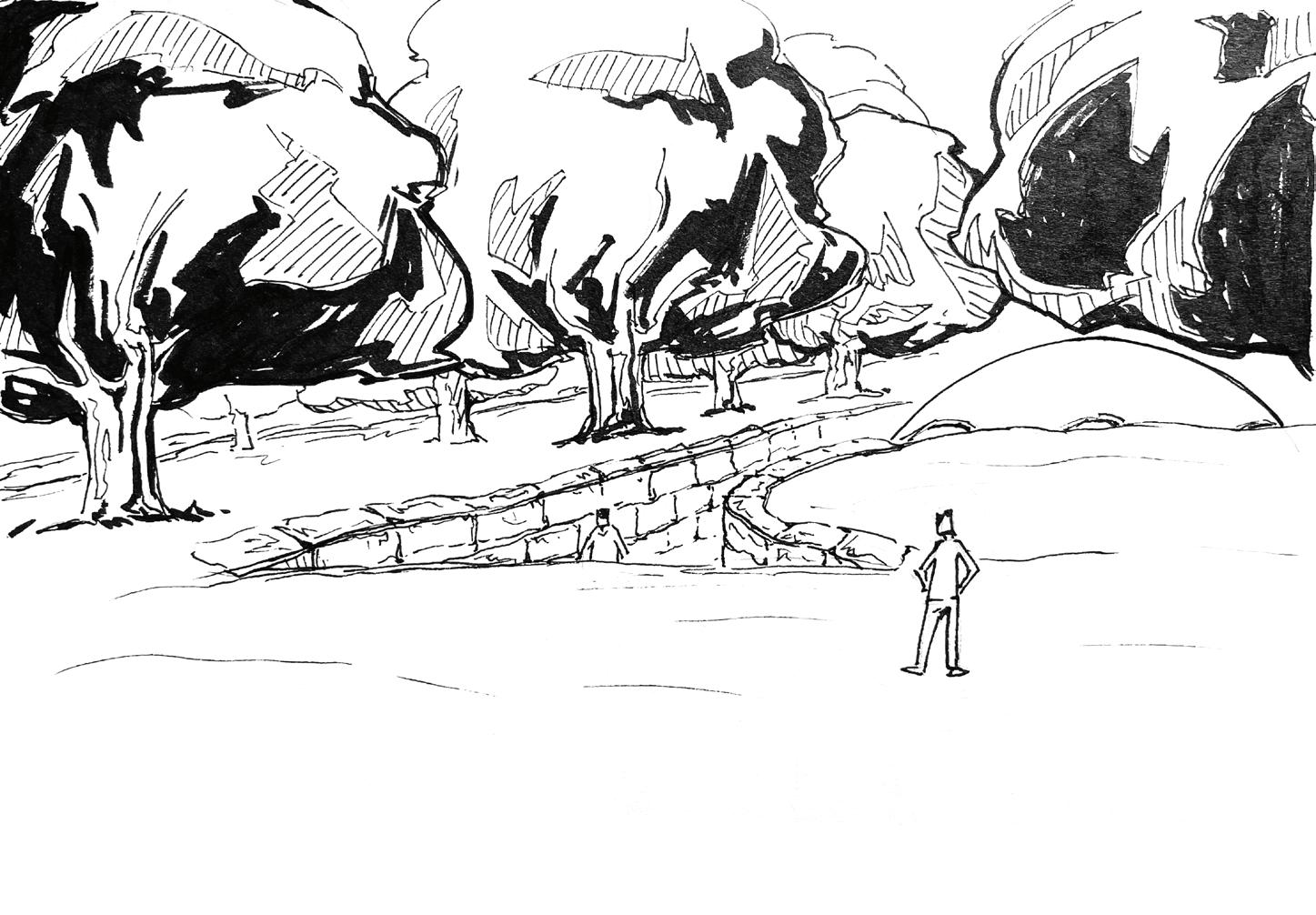
The below-surface paths make the site less conspicuous, thereby concealing the presence of humans.
Even when an entrance is visible, conducting surveillance from afar remains unachievable.
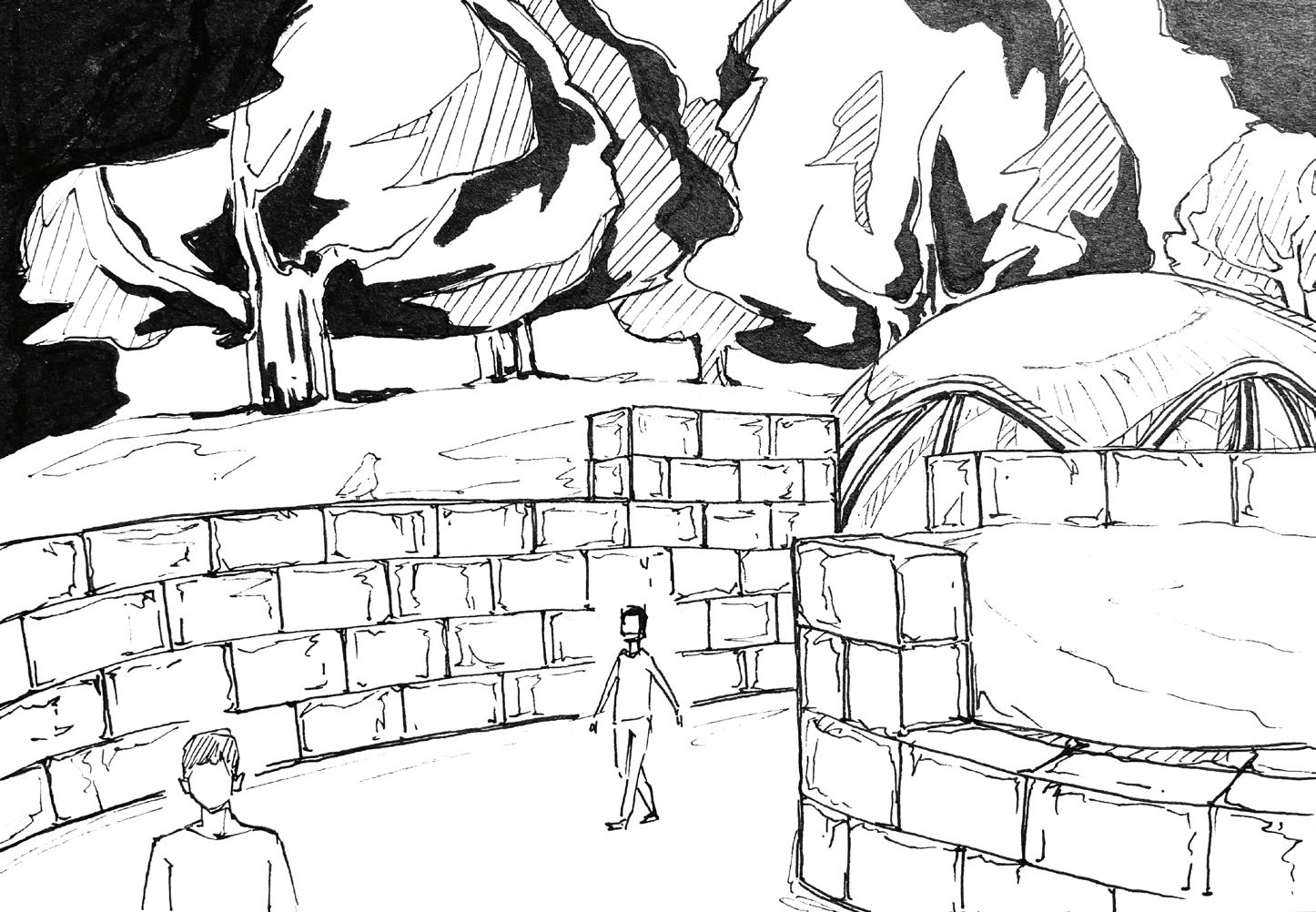
The winding paths protect the important zones and allow for easy retreat.
to the Dovecote
The homing pigeon sanctuary, with one-sided openings that shields the pigeons from potential harm by newcomers.
Path to message centre
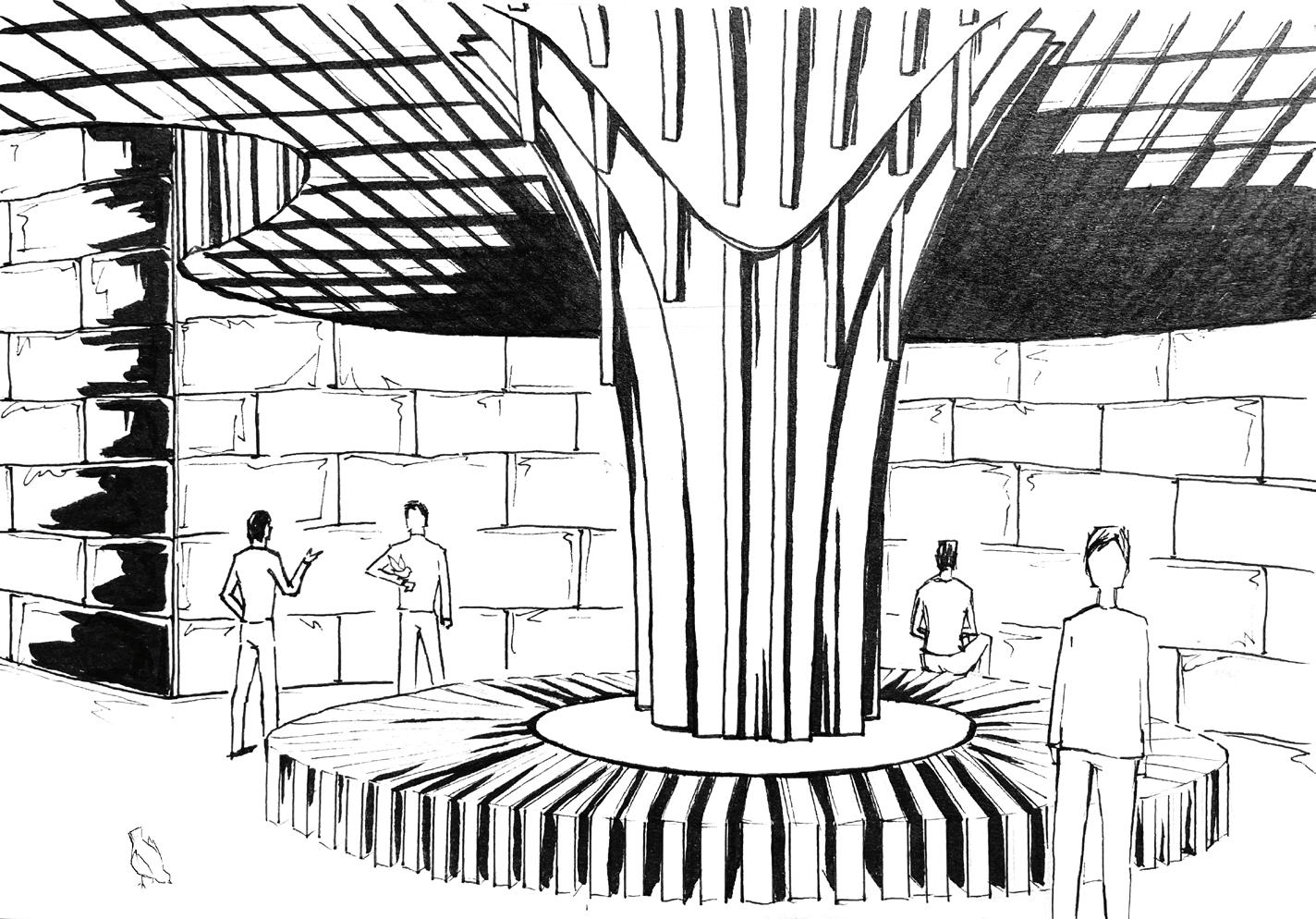
A waffle structure serves as the exchange center while also functioning as a pedestrian bridge for people to cross on top.
A waffle structure provides shelter for those waiting to be serviced, as well as protection in case anyone were to watch from above.
5. Path to the Centre 6. The Exchange Centre 4. The Dovecote
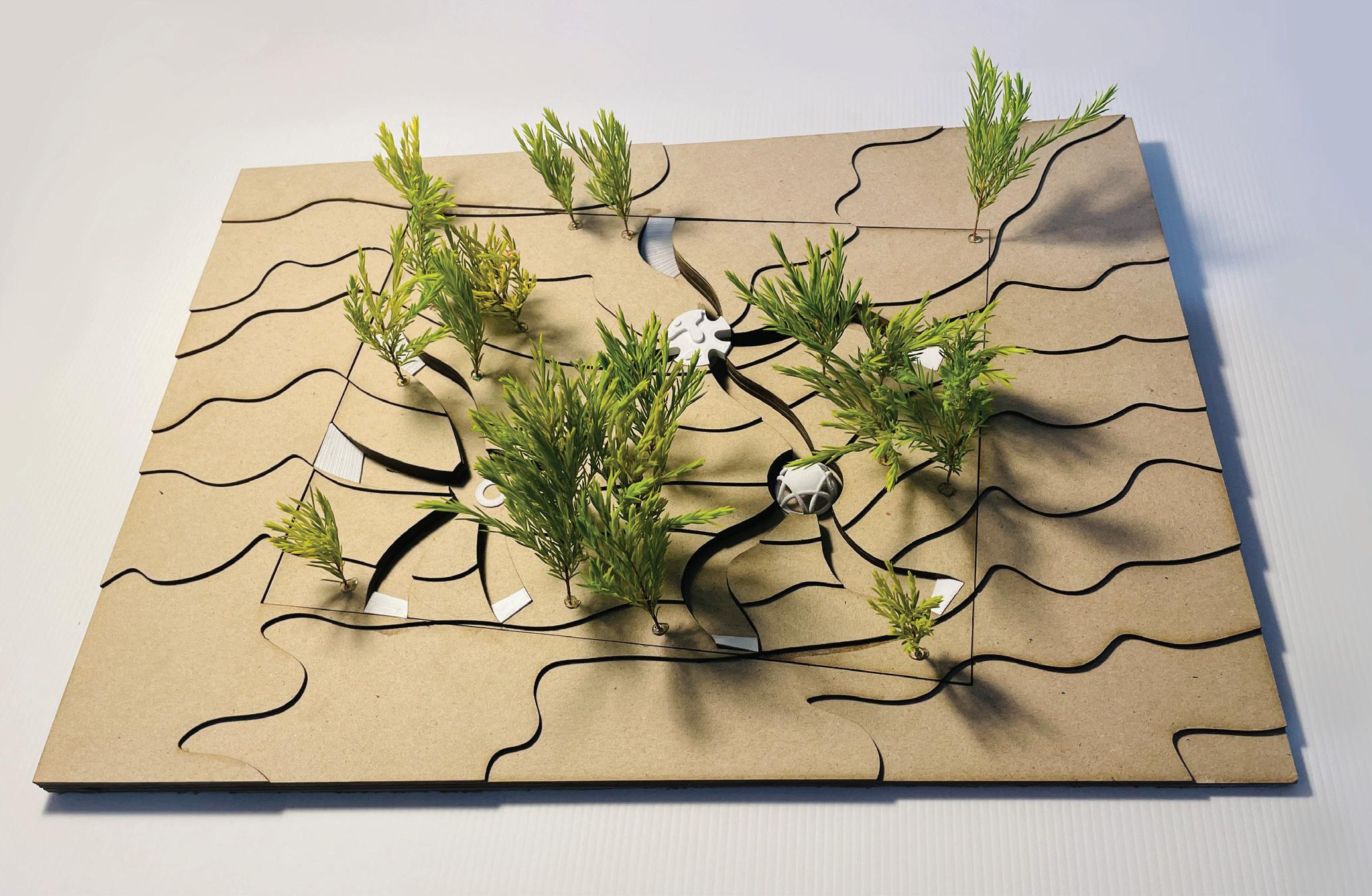
1:500 PHYSICAL MODEL
FODR: SURFACE VS. PATTERN
INTRODUCTION TO THE WORK
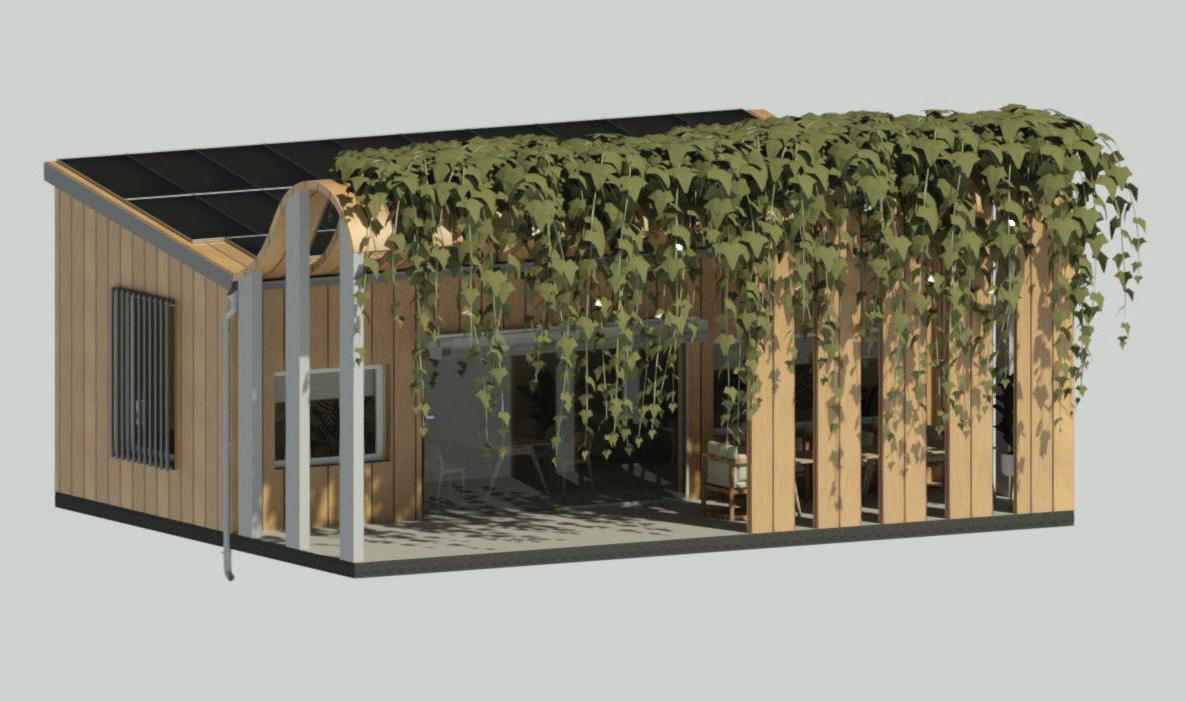
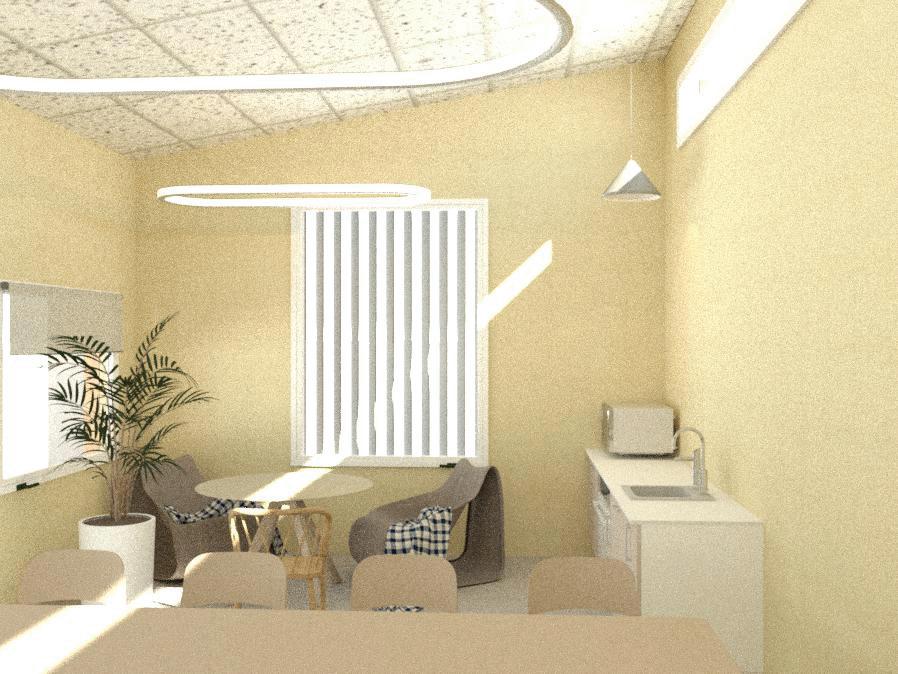
To design a study space for 16 students on the Unimelb South Lawn.
Requirements:
- 10.8 x 4.8m, min ceiling height 2.7m
- Small kitchenette
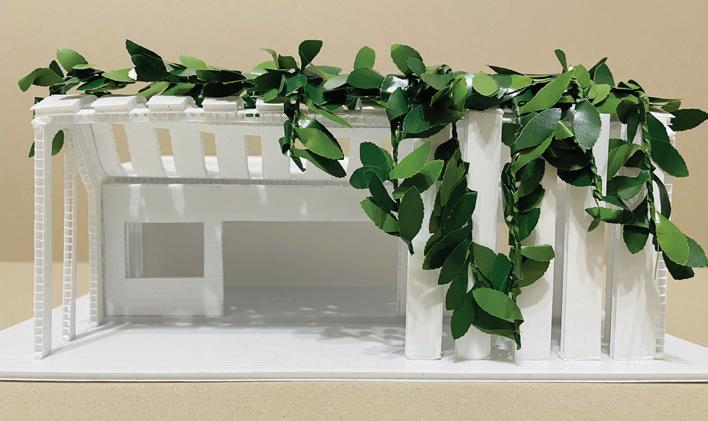
- Undercover outdoor space (such as verandah, decking, pergola)
Librial decisions:
- Window placements
- Wall/floor/roof type
- Roof design
- Outdoor area design
- Furniture & lighting layout
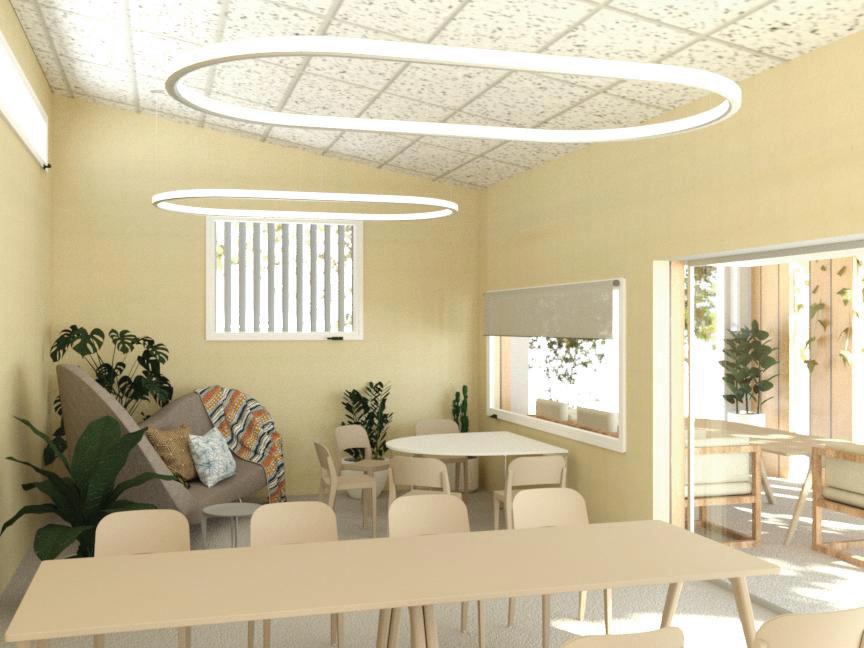
INTERIOR RENDER
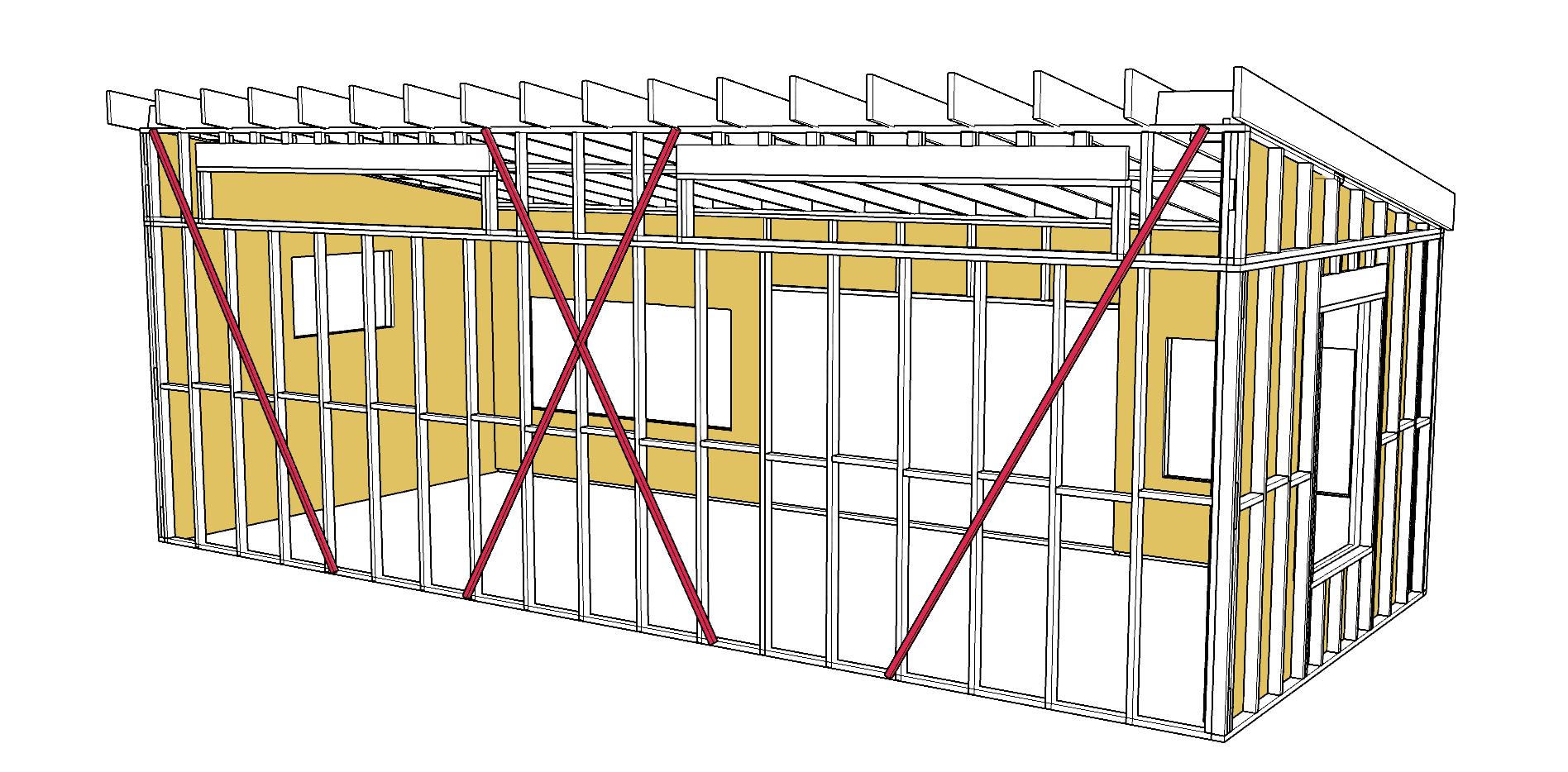
TIMBER STRUCTURE
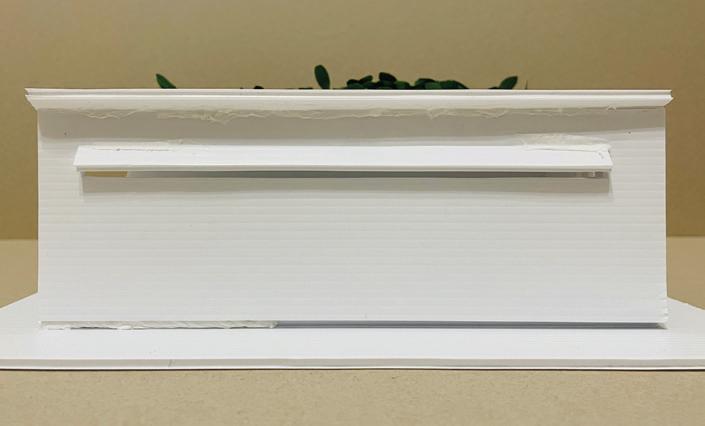
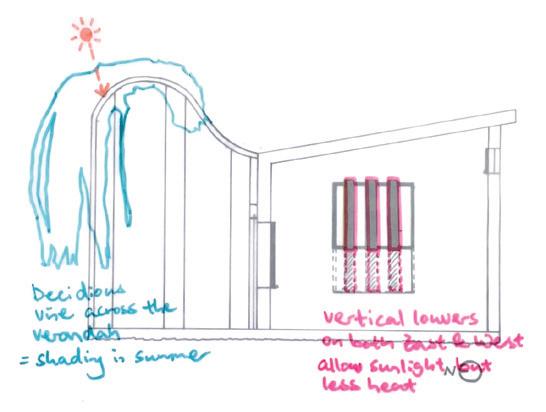
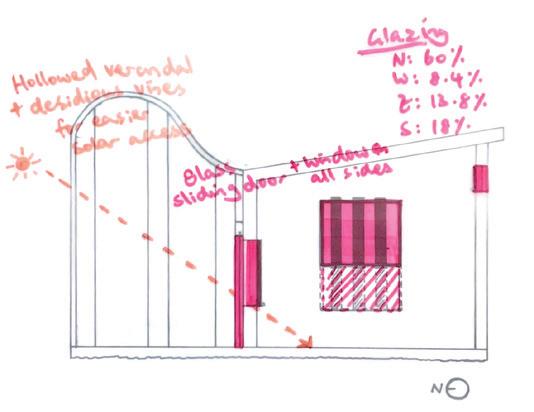
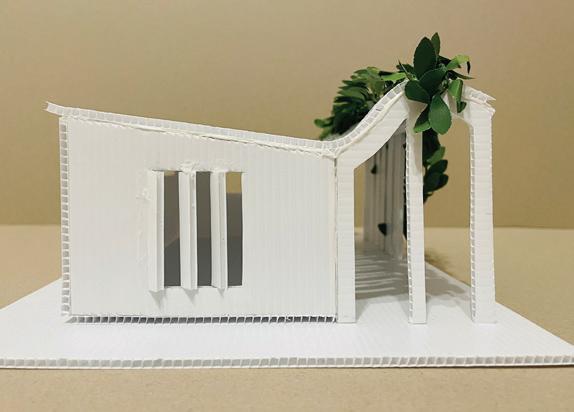
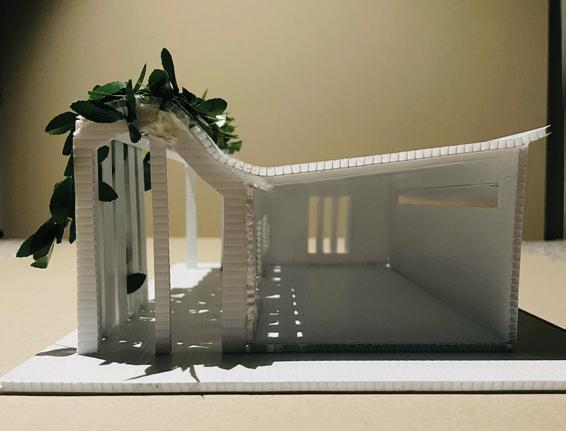
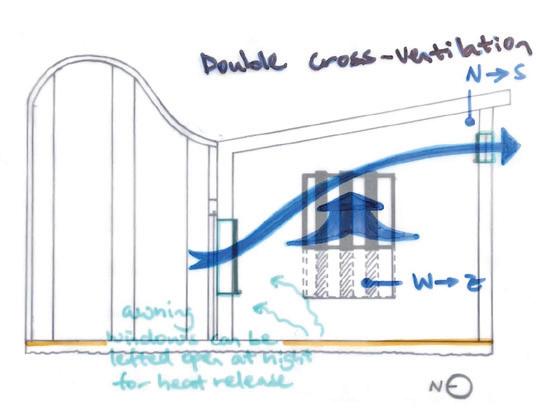
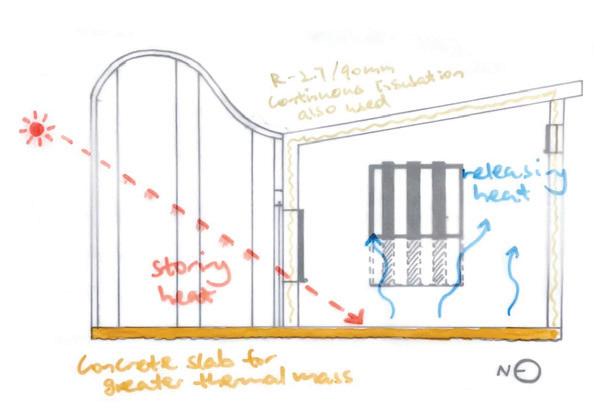
PASSIVE DESIGN
(s)? ance of t
Roof Wall
What is/are t he primary st ruct ural t element (s)?
Which forces are applied t o t he st ruct ural element (s)?
What are t he st resses om t he st ruct ural element (s)?
Describe and j ust ify t he t hermal performance of t he building element :