Champion Change



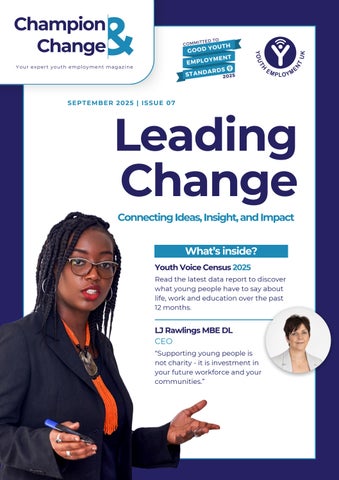

Read the latest data report to discover what young people have to say about life, work and education over the past 12 months.
LJRawlingsMBEDL CEO
“Supporting young people is not charity - it is investment in your future workforce and your communities”

Welcome to the third 2025 edition of our quarterly Champion & Change magazine. This issue focuses on Employment - a key pillar of our Good Youth Employment Benchmark, highlighting the essential role employers play in helping young people move into employment
We’ve brought together the latest early career insights, best practice guidance, and sector updates to support your organisation in creating impactful pathways into the world of work
The latest labour market data shows why investment from employers matters more than ever. We’re seeing less young people in employment now compared to last year, and the number of young people not in education, employment or training is edging closer to one million. At the same time, vacancies are declining, leaving many young people facing growing barriers to opportunity, confidence, and progression.
Our national Youth Employment Week campaign has shown us all what’s possible when employers, educators and policymakers come together - thousands of young people getting connected to fantastic opportunities, and hundreds of organisations pledging to create change To make a real
difference, our momentum and commitment must continue beyond our single weeks of celebration.
In these pages, you’ll find practical guidance on creating inclusive, accessible employment opportunities that respond to both your needs as an employer and the expectations of young people We’ll also explore how to take advantage of new initiatives and embed the essential activities that underpin strong programmes
Whether you’re just beginning to define your strategy or you’re refining an established early careers programme, this edition provides fresh insights and useful tools to help you take your commitment to the next level.
Laura-Jane RawlingsMBEDL CEO & Founder
As the third quarter of 2025 comes to a close, we’re reflecting on a season filled with powerful conversations, collaborations, and milestones that will shape the future of youth employment Here’s a snapshot of what we’ve been up to:
We co-launched the Connected Communities Forum with NCFE, bringing together local and combined authorities, government departments, and industry experts to discuss the delivery of the Youth Guarantee and how we can work together on placebased strategies to ensure that those who are not in trailblazer areas, and those furthest from the labour market, still have opportunities to thrive.
At our inaugural event in Derby, our CEO, Laura-Jane Rawlings MBE DL, set the scene with a keynote on the youth employment landscape before joining a panel with sector leaders from NCFE, Youth Futures Foundation, BASE and the Learning and Work Institute. Together, we explored what’s worked, what hasn’t, and what must happen next to deliver a Youth Guarantee that works locallyand ensures no young person is left behind
Join the Forum to join our quarterly events
Laura-Jane Rawlings MBE DL joined BBC News to discuss the current state of summer jobs in the UK and share practical advice for young people struggling to secure that allimportant first role.
From the “no experience, no job” catch-22, to the value of volunteering and showing up in person, she highlighted both the challenges and the solutions that can help young people break through.
She also reminded employers of the vital role they play in giving someone their first chance - a step that can change a life. Even in a tough market, we can all do something to support young people in finding work and building skills for the future
In July, we marked our biggest Youth Employment Week yet - our nationwide campaign all about taking action: sharing ideas, celebrating impact and showing up for the next generation
Across five action-packed days, thousands of young people, employers, educators and partners joined us to take part in events, share ideas, and commit to change.
Here’s a snapshot of what we achieved together:
100,000+ digital engagements from young people.
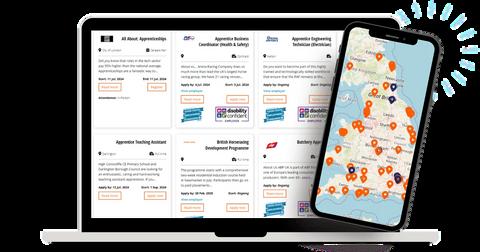
4,380 young people used our Opportunity Finder.
1,002 employees reflected on their youth employment practices. 20 events took place across the week.
We ended the week by celebrating the launch of the Youth Guarantee Advisory Panel.
The Minister for Employment, Alison McGovern MP, opened the celebrations by underlining why Youth Employment Week matters: “All the young people in our country deserve a chance, an opportunity, a start But we know at the moment we’ve got big problems with nearly 1 million young people out of work That’s why this year’s Youth Employment Week is so important ”
We were also delighted to receive support from the Minister of State for Health, Karin Smyth MP, who celebrated the launch of our brandnew ‘NHS, Health & Science’ Careers Guides and the ‘Explore Careers in the NHS’ course.
Local leaders, including the Mayor of Cambridgeshire and Peterborough, launched new trailblazer initiatives, while national partners pledged support to carry the work forward.
Thank you to all of you who have taken part, including our partners and sponsors. It just shows what noise and opportunity we can create with and for young people when we come together We’re already looking ahead to next year’s event, taking place 6–10 July 2026
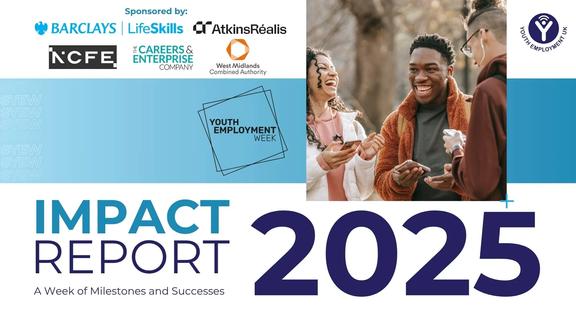
Curious how 100,000+ young people engaged with one campaign? Read our impact report - now available to download
8 years ago, we created the Youth Voice Census, a space and place for young people to share their experiences from the last 12 months.
This year, we are proud to have captured the voices of more than 8,200 young people aged 11-30 from across the UK.
Our hope is that this report becomes a tool for every employer, policymaker, and community leader who is serious about understanding and supporting young people.
The full report is available online at: www.youthemployment.org.uk/yout h-voice-census/results
The Rise of “meh”. A Generation Stuck Between Extremes 1
The last few years have been relentless in challenge and change Coupled with economic uncertainty, political division and a digital first world, there is a theme of exhaustion and exasperation from young people
There is rising indifference to both the big and small systems set out to support them
Half rate their life satisfaction and happiness in the middle ranges, rather than high or low.
Wellbeing is Stagnating, and Support Works Best For Those Already Closest 2
Support systems are improving, but they are not closing the gaps
Wellbeing remains fragile, disrupted by illness, stress, assessments and behaviour, and support works best for those already closest to opportunity Unless access becomes consistent and inclusive, young people furthest from education and work will remain the most exposed.
Around half (49%) report their work was disrupted in the past 12 months The most frequent cause is: Mental Health (40%)
Career Experiences and Wider Opportunities are Narrowing 3
Careers education, work experience, volunteering, social action and employer engagement are the bridges into work.
Each one is in decline.
A third (33%) shared that they undertook no extracurricular, volunteering or social action opportunities in the last 12 months. 33%
Young people are gaining confidence in some skills, and more now feel able to complete practical tasks like writing a CV or preparing for an interview. But these efforts are not translating into confidence about employment.
young people don't feel they have the qualifications to get a job.
Overall, work is a good place for young people; for those in work, their reported support and overall satisfaction tends to be higher than other groups
We have seen a trend of rising stress and workload. Young people’s experiences are shaping how they anticipate the future, and it is a mix of hope and anxiety.
Only half (50%) feel fairly paid, down from 58% in 2024.
We are setting out five clear actions to put Youth Opportunity at the heart of the government’s missions and commitment to full employment
1. Secure a Young Person’s Entitlement (11–18)
A national entitlement, delivered locally, ensures every young person develops the foundations for life and work.
2. Support Employers to Deliver for Young People
Recognise that employers differ in capacity: some may offer one opportunity, others many.
3. Close the Support Gap: No Young Person Falling Through the Net
A digital-first, locally present and tailored approach ensures early identification, consistent support, and clear progression routes Employers also benefit from better visibility of young people who might otherwise be invisible
4. Guarantee Consistency Everywhere: A National Systems Approach
A national funding and delivery framework would sustain Trailblazers and enable all regions to act now, using existing budgets coherently.
5. Lead a National Culture Shift: A Campaign of Opportunity
A Campaign of Opportunity would restore confidence, inspire ambition, and signal the government’s commitment to young people’s futures. For employers, it is a call to arms: supporting young people is not charity, it is an investment in productivity and national growth.
Download the full report to read the in-depth analysis of over 8,200 young voices and what they think about their life, education and work.
Young people can be home-educated for a variety of reasons, including creating a more tailored and flexible learning environment, in response to special educational needs, or to protect children from bullying or other negative experiences at school They have so much potential to thrive in the workforce, but they can also face additional barriers to finding employment
Read on to learn how you can review your recruitment processes to include and respond to the needs of home-educated applicants.
Review your recruitment materials, such as application forms or online application systems, to make sure that they are free from language that implies an assumption that all applicants had (or are required to have) a mainstream education
Some applicants may have taken a different route, and your materials should reflect that.
The biggest areas where you can make a difference are your requirements:
Qualifications: Many homeeducated young people do complete traditional GCSE, A Level or equivalent qualifications, but there are a range of alternative certifications and learning they can opt for too Do your recruitment materials make it clear that a range of qualifications are accepted?
Work experience: Home educated young people typically have less experience opportunities than their peers. Review how much emphasis
Members can access all 6 tips and supporting resources via their dashboard.
Talk to us today to unlock exclusive guidance and tools developed by experts.
you place on work experience and whether it’s essential.
Skills and interests: In your recruitment process, allow space for candidates to talk about their skills and interests, not just their qualifications or their job aspirations
Your application process should be easy to follow for all young people, meaning it is straightforward and free from technical language or industry jargon The most important thing you can do is be transparent Outline the recruitment process stages, from application to screening to interview. Explain what you expect, what the candidate can expect, and how they can prepare.
Youth Employment UK is a membership organisation, supporting employers to make a difference in creating better work opportunities for young people.
RECOGNITION AS AN EMPLOYER OF CHOICE
Proudly display the Good Youth Employment Badge to show your commitment to young people and early careers. Also gain entry into our annual Good Youth Employment Awards

EXPERT INSIGHT & BEST PRACTICE
Access to an extensive catalogue of exclusive resources on youth employment best practices and strategies via our members' dashboard
EXCLUSIVE EVENTS & AWARDS ENTRY
Regular series of exclusive in-person and online events, including policy updates, our end of year conference, and awards by completing the Benchmark
Our recruitment package allows you to showcase your brand and advertise your early careers opportunities with us.
For just £500 a year, our Members can post unlimited early career vacancies and opportunities
Latest reports, government developments, and policy news that impact the youth employment landscape.
Young people today face a challenging landscape: a tough job market, rising mental health pressures, and reduced access to the support services previous generations could rely on The IPPR’s Towards Universal Opportunity for Young People sets out a bold vision to increase social mobility, tackle inequality, and ensure every young person has the opportunity to build a decent life
Key priorities include a national entitlement to enrichment and trusted adult relationships, better preparation for work through meaningful experiences and careers guidance, and a stronger focus on high-quality apprenticeships for under-25s. With one in eight young people currently NEET, the report makes clear that systemic reform is essential to prevent more young people from being left behind.
These findings echo the 2024 APPG for Youth Employment report, which revealed that lack of work experience remains the biggest barrier, while schools and employers need greater
support to prepare young people for the future. Employers are often willing to engage, but the system is fragmented and hard to navigate without brokerage, flexibility, and better coordination
The APPG’s inquiry highlights that with nearly one million young people identified as NEET, the Youth Guarantee must succeed - and its success depends on employer engagement Businesses want to play their part, but need clearer pathways, stronger incentives, and coordinated policy support to do so effectively. With the right infrastructure, investment, and collaboration, government and employers together can create meaningful, inclusive opportunities that ensure no young person is left behind.
Read IPPR’s report: Towards Universal Opportunity for Young People.
Read our APPG for Youth Employment report: How Can Employers Be Supported to Engage With the Youth Guarantee?


A new Youth Guarantee Advisory Panel has been launched to ensure young people’s voices shape employment policy.
Made up of 17 young people with lived experience of being NEET, the panel includes representatives from Youth Employment UK’s own Youth Ambassadors, who bring vital insight into barriers such as mental health, poor careers advice, and lack of access to apprenticeships, digital tools and affordable transport.
Their lived experiences will ensure the challenges young people face are fully understood.
The panel’s recommendations will directly inform government policy, marking a major milestone in putting young people at the heart of the Youth Guarantee.
Read more about the Youth Advisory Panel
Student workers are essential to the economy, yet many face low pay, unsafe environments, and unfair treatment The Earning While Learning report reveals that young women in particular experience unpredictable hours, unpaid trial shifts, and widespread harassment issues
that affect both wellbeing and education
The report urges employers to commit to fair pay, safe workplaces, and genuine flexibility to support students’ futures. Discover the key findings and recommendations here.

The Children’s Commissioner’s report Growing Up in a LowIncome Family exposes the harsh realities faced by children living in poverty in one of the world’s wealthiest nations
From food insecurity, poor housing, and unaffordable transport to stigma around free school meals and limited access to activities, children
describe how money struggles shape their daily lives, education, and sense of safety.
The report calls for urgent reforms to benefits, housing, transport, and school support to ensure every child has the chance to thrive
Explore the key findings and recommendations here
With youth unemployment and NEET numbers rising, and the number of vacancies falling, the role of employers has never been more critical Our latest webinars explored the changing youth employment landscape - from shifts in apprenticeship policy to the practical steps employers can take to strengthen attraction, retention, and future talent pipelines
Watch the webinars below to gain fresh insight and practical actions to support both young people and your organisation
the Talent Tap On
In this Youth Employment Week webinar, hosted by Laura-Jane Rawlings MBE DL and Lauren Mistry of Youth Employment UK, guest speakers from Barclays LifeSkills and WMCA shared insights into the evolving youth employment landscape and what it means for employers
Open to all
The discussion focused on how businesses can adapt attraction and retention strategies to meet the needs of young people, while highlighting practical steps organisations can take to open up opportunities.

In this webinar hosted by Laura-Jane Rawlings MBE DL, speakers from the Department for Education, Federation of Awarding Bodies, and Novia Group discussed recent apprenticeship policy changes, including new Foundation Apprenticeships, changes to the apprenticeship funding, and off the job training.
We explored implementation challenges including duration requirements, assessment frameworks, and employer adoption concerns, while highlighting opportunities such as shorter programme durations and financial incentives for businesses

Got a spare 5 minutes?
That’s all it takes to unlock fresh insights for your early careers strategy.
The Talent Tap Quiz is a quick, 13question tool that helps you reflect on your current approach to youth employment.
At the end, you’ll receive your own tailored guide - full of practical activities you can implement right away.
Whether you’ve got 15 minutes, an hour, or a full afternoon, you’ll walk away with at least one step you can take to make a real impact in your organisation.



RebeccaMarandola
We heard from Rebecca Marandola about their award-winning early careers programme Rebecca has 25 years of experience working in the early careers space.
Early Career Opportunities at Molson Coors Beverage Company
“At Molson Coors Beverage Company, we offer apprenticeships (from advanced to degree level) and graduate schemes in a range of business areas, including engineering, brewing, data, sales, finance and logistics
My team and I embed youth voice into the design and delivery of our programmes by incorporating feedback from our early career employees. Their input has been invaluable in shaping content, structure, and support mechanisms!
To ensure inclusivity, we work with providers and target underrepresented groups through inclusive recruitment. We also provide mentoring, private health insurance, and Wellbeing Allies so young people feel supported and heard.”
Integrating Support into Employment Programmes
“Before our candidates even join us for our Discovery Days, we host a virtual ‘Getting to Know Us’ session where they can learn more about what we do. Parents/Carers are also welcome to join the session! During these sessions, we talk to candidates about the support they will receive and explain the assessment process so that they
know exactly what to expect, with no surprises on the day.
Those who spend their first year with a training provider away from home are invited to a meet-andgreet session to address any questions or concerns they have
We actively encourage our careers employees to be part of our Business Resource Groups as representatives. They get to meet senior leaders on our ‘Better with You’ Council to share views and be actively involved in how we can make our organisation even better.
We also provide a wide range of wellbeing and flexible benefits to ensure young people feel supported from the start, including mental health first aid trained staff.”
The Organisational Impact of Investing in Young Talent
“Our people-first approach and partnerships with the right organisations ensure we attract passionate candidates who are aligned with our values, while the apprenticeship levy also supports the development of existing employees.
This investment in young talent has created a strong internal pipeline of future leaders and specialists, with apprentices and graduates progressing into management roles. ”

“I often say to managers, do not be afraid to give them your ‘big rocks’ because with the right support around them, and with an acceptance that mistakes are inevitable, they will learn a lot. Creating those experiences in safe environments is a good starting point
My other piece of advice is don’t assume that all apprentices and graduates ‘get’ the corporate world and the softer skills we take for granted Start their learning journey by spending time with them, showing (not just telling) them the basics and build up
om there. We are their role models.”
“Being recognised with the Employment Award at the Good Youth Employment Symposium was a proud moment for us. It validated just how much we’ve put into making our early careers programmes as successful as they can be.
I’m lucky to have an amazing team around me and support from our leadership to make this happen. It absolutely reinforces my belief that investing in early careers is the right thing to do for the future of our organisation.
I maintain, we are not perfect, and you should never be complacent – there is always room for improvement, and with constant change in our external and internal worlds, you have to keep up ”
Click here to read the full article for best practice insights on inclusive recruitment.
“Through the Good Youth Employment Benchmark, we’ve been able to monitor, measure, and improve our youth employment activities. Our Benchmark report gave us valuable insights into what we’re doing well, and where we can continue to grow
It keeps encouraging us to listen more to our early talent – their voice is important for our team to keep building on progress, but it’s equally important to the rest of the business too where it helps us to evolve in this ever-changing world
Since receiving our report, we’ve: Strengthened feedback loops with young employees to ensure their voices continue to shape our programmes. We operate a 2-way and transparent culture where feedback is regular, and we act on it Rolled out a new Early Careers Capability Framework focusing on the personal development skills needed to be successful in future roles and will also increase capability-building aligned to business needs And more!”
Written by Nichola Hay MBE, Director of Apprenticeship Strategy and Policy BPP Education Group
The UK workforce is experiencing a period of dramatic change, from digital and AI-driven transformation and changing sustainability demands, to concerns around cybersecurity: and employee skills are at the heart of addressing these shifts.
However, with The British Chamber of Commerce reporting that 62% of organisations experienced skills shortages in 2024, how can we address the skills gap from the ground up?
In August 2025, foundation apprenticeships were introduced in England by the Department for Education and Skills England These new programmes are designed to provide young people under the age of 22 with a supported path into the workforce, combining onthe-job training with
foundational skills that bring young people into an organisation as the first step in their career They focus on specialising and building skills based on business’ skills requirements, acting as a vital ‘earn while you learn’ stepping stone into level 3 or 4 apprenticeships or further education and professional qualifications
Foundation Apprenticeships as a Strategic Investment
It is crucial that employers see foundation apprenticeships as a strategic investment in their future workforce. The opportunity to support career development from the start supports employee retention and loyalty, aides the development of relevant skills while addressing potential skills gaps and can ultimately provide the
productivity and skills boost that delivers competitive edge for businesses in a turbulent environment.
It’s not just a standalone programme but a starting point for futureproofing
It’s not just businesses that benefit from these programmes though Foundation apprenticeships

have the potential to offer a huge range of advantages to young people. Not only do they offer early access to the workplace, a real wage and a recognised qualification, but they also give young people a first step into their chosen career, and a chance to experience the sector and gain a real insight into the world of work.
They provide a taste of what a full apprenticeship involves, helping participants build confidence, develop employability skills, and prepare for progression into higherlevel apprenticeships and longer-term career opportunities
availability. It is important to ensure opportunities are accessible where young people live and in sectors that genuinely reflect their interests. To achieve this, we should focus on promoting sectors and career pathways as a whole, with a foundation apprenticeship as the first step into them as an option.
Entry requirements, such as minimum grades or prior work experience, can also exclude those who may lack formal qualifications or may have not had the right support to succeed in their education, but have the potential to thrive professionally if given the right opportunities
Revising entry criteria to focus more on potential and motivation rather than just academic results would give capable young people a fairer chance
Employers play a vital role in ensuring there is equitable access to apprenticeships for young people, and the foundation apprenticeship can do just that by engaging with young people who may not have had adequate support or career guidance to date. By working closely with schools and colleges, employers can raise awareness of opportunities and provide clear, accessible guidance on routes into work.
Apprenticeships should be viewed as one of several solutions within wider workforce planning and people development strategies to increase
There are many approaches to apprenticeship programmes that not only enrich the apprentice experience but also nurture well-prepared, motivated talent
Foundation apprenticeships should act as a springboard for young people’s careers, equipping them with the skills, experience, and workplace readiness needed to progress seamlessly into higher-level apprenticeships or permanent roles.
Click here to read the full article.
When people belong, they feel trusted, and feel able to show up as their authentic selves.
Here’s how employers can enhance their workplace culture...
Create opportunities for employees to connect
Though infrequent large social events can be effective, smaller and more regular opportunities for connection are at least as important Events could include cross-team networking, coffee afternoons, after-work drinks, virtual quizzes, and team-building outings
Don’t make assumptions
Microaggressions are one of the most common ways that employees, particularly those who are part of a minority or marginalised group, can be made to feel that they do not belong at work
Instead of assuming you know how someone thinks or feels, ask them
and listen to their answer. When you really listen to someone and value their input, you help them to feel as though they belong.
Create employee networks and resource groups
Connecting with others who understand our perspectives, lived experiences, and reality is a crucial part of cultivating belonging.
Employee networks and resource groups allow employees with a similar set of experiences (such as women in male-majority industries, employees of colour, or LGBTQ+ employees) to reduce loneliness and further workplace inclusion.
Read the full article here
6 Ways to Support Young People Transitioning from School to the Workforce
How Do We Ensure Diversity and Inclusion in Our Apprenticeship Programme?
How Employers Can Better Understand EHCPs
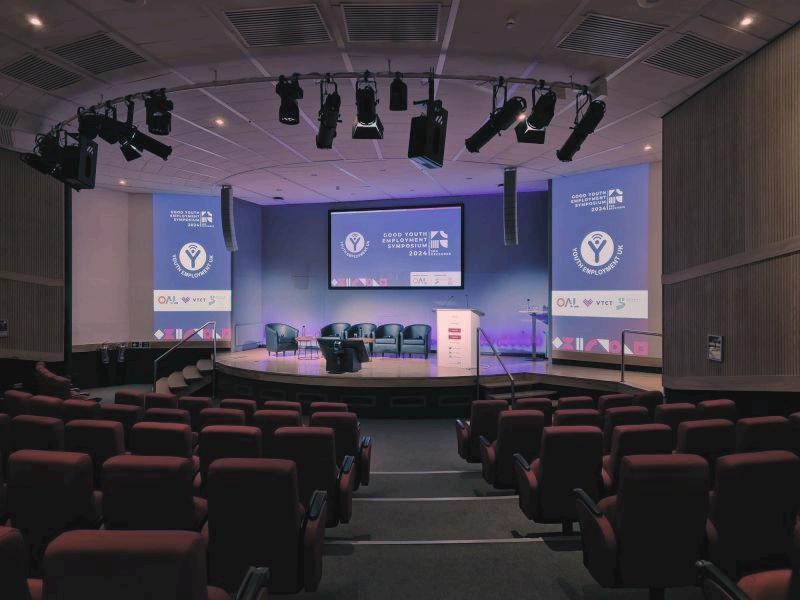

The Good Youth Employment Symposium is returning for 2025, and we can’t wait for you to join us.
This annual event brings together employers, policymakers, HR leaders, and recruitment professionals to connect, share insights, and explore the latest developments in youth employment.
Hear from expert panels on the key challenges and opportunities in the youth employment landscape Deepen your understanding of the three pillars of our Good Youth Employment Benchmark: Explore, Experience and Employment. Gain first-hand insights from our Youth Ambassadors
RegisterYourInterest
Register your interest today to be the first to hear about the 2025 agenda, speaker announcements, and how to get your ticket!