STUDENT AND FAMILY COURSE DESCRIPTION HANDBOOK STAND SCHOOL

STUDENT AND FAMILY COURSE DESCRIPTION HANDBOOK STAND SCHOOL

STAND (ST&) grew from Strathcona-Tweedsmuir School’s spirit of innovation, saying yes to possibility and to Say Yes to STS
In STAND, it becomes yes… and. Yes to all that STS is known for AND yes to flexible online or hybrid learning that fits the life and dreams of the modern learner.
STAND online students are fully remote learners who complete all courses online, enjoying the flexibility to learn from anywhere. They visit campus only for major exams or special events, as many are managing distance, travel, health needs, or high-performance schedules outside of school.
STS FLEX students are hybrid learners who complete their core courses online and have full access to both STAND and STS option classes, campus life and facilities, clubs, athletics and other co-curriculars. With guidance from the STAND principal, they design a customized plan with both online and in-person options to fit their needs, interests and personal schedules.
STS campus students in grades 9-12 may earn up to 10 credits per school year through online STAND courses when timetable conflicts or special circumstances arise This requires approval from the Head of Middle or Senior School and, in some cases, may include an additional fee
*External (e-commerce) students attending different schools for grades 9-12 may also purchase single online STAND courses and earn up to 10 credits per year. An application process is required.
The Course Description Handbook highlights the diverse course offerings available to STAND students in Grades 9-12 All STAND courses are designed and supported by STS teachers, meet the rigorous standards of the Alberta Programs of Study, and prepare students for a wide range of post secondary pathways, including competitive programs.
STAND follows the same yearly calendar as Strathcona-Tweedsmuir School. This includes school opening and close dates, holidays, instructional days and schedules for Provincial Achievement Tests (PATs) and Diploma exams.
STAND online courses are offered in three pacing options to support different learning needs and schedules:
Quarterly (accelerated or adjusted pacing with in-person final exams offered November, January, April and June)
Semestered (typical pacing with in-person final exams offered January and June)
Year-long (for those wanting a slower pace with in-person final exams in June).
Hybrid courses are available to STS Flex students who can attend classes on-campus Flex students also have access to additional on-campus opportunities in design, fine arts, athletics, outdoor education, co-curricular activities, and clubs. Not all campus courses are listed in this handbook; Flex families should consult the full STS Course Description Handbook for more information.
To help students plan realistic daily and weekly schedules when choosing their online courses, they should plan for:
Approximately 25 hours for each 1-credit course
Approximately 75 hours for each 3-credit course
Approximately 125 hours plus assignments, tests, and study time for each 5-credit course.
These are guidelines only. The time each course takes will look a little different for every learner, depending on their skills, how long they can comfortably focus, and what helps them do their best work.
STAND online courses are mostly asynchronous, which means students can work through modules and assignments largely at their own pace using our learning management system (LMS) at learn.stand.school
Asynchronous learning is flexible in that it can happen whenever and wherever works best for the student
Live online sessions are provided by teachers during regular school days and includes:
Live tutorials (optional sessions offered each week in core academic courses)
Group discussions and presentations (regular attendance required in Humanities, English and Social Studies)
1:1 support and assessment feedback (during office hours and by appointment, as needed)
Teams messaging for announcements, technical support or short conversations (regular school hours)
While most work can be completed independently, attendance in as many live sessions as possible is strongly recommended Students consistently achieve stronger results when they connect with teachers weekly for core academic subjects
Core academic courses include a midterm and a final exam, both completed in person at the STS campus
Students with exceptional circumstances may request a remotely proctored midterm, but final exams, PATs, and Diplomas must be written in person. Assessment timing depends on the student’s pacing plan. Major in person assessment weeks occur in November, January, April, and June.
Each STAND and Flex student is assigned an advisor for support including guidance on how to build a manageable daily, weekly, and yearly learning plan Online learning requires self-motivation, organization, responsibility, and strong time-management skills It is important to recognize that online learning is not less work than in-person learning - it is simply more flexible in when and where the work can be completed.
All Grade 9-12 students complete the Alberta Programs of Study. The Alberta Programs of Study inform the content for these courses. Students earn the Alberta High School Diploma by completing at least 100 credits starting in Grade 10, with courses following the 10–20–30 sequence. STAND and/or STS students who complete Grade 12 and meet all requirements for graduation are encouraged to participate in the joint graduation ceremony and celebrations held at the Strathcona Tweedsmuir School campus at the end of the year.
Below are the specific requirements necessary to graduate and achieve an Alberta high school diploma:

Biology 20 or Chemistry 20 or Physics 20 or Science 20 AND
Physical Education (PE) 10; AND
Career and Life Management (CALM); AND
Earn 10 credits in any combination:
Career and Technology Studies (CTS) courses
Fine and Performing Arts courses
Second Languages courses
Physical Education 20 and/or 30
Locally Developed and Authorized courses in CTS, fine arts, second languages or K&E occupational courses AND
Earn 10 more credits in any 30-level course (in addition to English 30-1 or 30-2 and Social 30-1 or 30- 2) from:
30-level Math, Science, Fine Arts, Second Languages, or PE
Advanced Level (3000 series) CTS courses
30-level Locally Developed and Authorized courses
30-level Work Experience courses
30-level Green Certificate courses
Provincial diploma exams are required for: English 30-1 & 30-2; French Language Arts 30-1; Social 30-1 & 30-2; Math 30-1 & 30-2 (in English or French); Science 30, Biology 30, Chemistry 30, and Physics 30 Final marks in these courses are a blend of school marks and the Diploma Exam marks (your Diploma Exam is worth 30%; your school mark is worth 70%)
A Detailed Academic Record (DAR) is an Alberta Education-issued record that contains a student’s entire high school course mark history, including (1) Grades 10-12 course attempts, (2) official course marks, (3) credits awarded, and (4) courses in progress A DAR is an unofficial record and is intended for student use only The Alberta Transcript of High School Achievement is the official record to be used to apply for post-secondary admission Students can view their DAR within PASI.
A student transcript is an official record of a student's high school marks from Grades 10 to 12, recognized by post-secondary institutions Issued by Alberta Education, the Alberta Transcript of High School Achievement includes the student's highest marks and awarded credits By default, transcripts display the student's legal name as registered under the Vital Statistics Act Ordering transcripts is a straightforward online process through myPass, allowing students to send copies to their preferred destinations However, it's important to note that there is a non-refundable processing fee of $10 for each copy requested Learn more about Alberta Education transcripts HERE.

Example:
English Language Arts 20-1
Prerequisite: English 10
Online Hybrid In-Person
This program sequence develops students’ ability to analyze different forms of text, particularly literature Students will be asked to respond critically and personally to a wide variety of texts Successful completion of English 30-1 is a requirement for entrance to most post-secondary programs
HOW
Prerequisite: none
STS COURSE NAME
STAND COURSE NAME
ALBERTA EDUCATION COURSE NAME
ALBERTA EDUCATION COURSE CODE
AB ED CREDITS EARNED UPON SUCCESSFUL COMPLETION OF COURSE
PREREQUISITE(S) OR CO-REQUISITE(S) REQUIRED TO ENROLL IN COURSE
PROGRAM DELIVERY & COURSE OVERVIEW
How to Be a Successful Online Learner is a short, mandatory asynchronous course for all students taking an online class. It introduces practical strategies for time management, organization, online communication and self-motivation, while also teaching students how to navigate our online platforms and manage their workload independently. Adapted from the Alberta Education CTS course: E-Learning and Learning Management Systems outcomes, students learn to use digital tools appropriately, communicate clearly through email and messaging, recognize and overcome barriers to online learning and prepare effectively to learn across time and distance Through practical activities, the course equips students with the essential skills needed to succeed in future online or hybrid courses Introduction to
Humanities 9 is an integrated course that combines English Language Arts 9 and Social Studies 9 to explore the connections between literature, history, and society. Through novels, media, and historical inquiry, students will develop critical reading, writing, and communication skills while examining topics like governance, democracy, and global citizenship. By analyzing diverse perspectives and exploring real-world issues, students will build a deeper understanding of how stories and systems shape individuals and communities. This engaging, interdisciplinary approach encourages critical thinking, creativity, and meaningful connections to the world around us
Online
This Alberta Education Program of Studies cours students’ ability to understand and appreciate a texts, with a strong focus on literary forms Stud respond personally, critically, and thoughtfully to including visual, print, and multimedia English 1 emphasizes the reading, annotation, critical thin analytical skills that build a strong foundation fo senior English Language Arts courses
Prerequisite: English 10-1
Online
This Alberta Program of Studies course offers an in-depth exploration of short stories, novels, poetry, non-fiction, drama, and visual/multimedia texts. Organized primarily by genre, it incorporates thematic connections to deepen students' understanding of literature and media. Students will study a novel, a Shakespearean play, a film, a modern drama, and a diverse selection of essays, short stories, poetry, and visual media from various sources This course is designed to develop critical thinking, analytical skills, and an appreciation for literature and media in their many forms
Prerequisite: English 20-1 ENGLISH 20-2
Prerequisite: English 10-1
Online
English 20-2 offers a strong and appropriate route for learners pursuing applied or career focused studies This course develops students’ abilities to understand and respond to a variety of everyday, popular, and literary texts Students build essential communication skills, make personal connections to what they read and view, and learn strategies to express ideas clearly and confidently across real world contexts.
Online
This Alberta Program of Studies course offers a rich exploration of literature and multimedia, focusing on novels, short stories, poetry, drama, nonfiction, and visual media Organized by genre with thematic connections, the course includes novel study, modern drama, Shakespearean analysis, film study, and a curated selection of essays, poetry, short fiction, and visual texts Students will refine critical thinking, interpretation, and creative expression through engagement with these diverse works.
Prerequisite: English 20-1 or 20-2
Online
English 30-2 provides a strong and appropriate route for learners pursuing applied or career-focused post-secondary pathways. The course aligns with the Alberta Education Program of Studies by helping students explore ideas, understand and appreciate a range of everyday, popular, and literary texts, and respond to them personally and critically Students strengthen their ability to manage information, create clear and effective oral, print, visual, and multimedia texts, and communicate confidently in real-world contexts.
Social Studies 10-1, following the Alberta Education Program Studies, introduces students to the changing meaning of identity and citizenship in a globalizing world Students exam how globalization affects people and communities, consider both its positive and negative impacts They learn to interpre and analyze sources as they explore key issues connected to global interdependence. Assignments gradually build the ski needed for later Social Studies courses and the Alberta Diplo exam.
Prerequisite: Social Studies 10-1

SOCIAL STUDIES 30-1
Prerequisite: Social 20-1
Social Studies 20-1, following the Alberta Education Program of Studies, examines the complexities of nationalism in both Canadian and international contexts. Students explore the origins of nationalism and how it affects regional, national and global relationships By considering multiple perspectives, they deepen their understanding of how nationalism shapes citizenship and identity The course encourages thoughtful responses to contemporary issues and builds appreciation for diverse viewpoints Learning is organized around four key units: Identity and Nationalism, National Interest and Conflict, Internationalism and Canadian Nationalism.
Social Studies 30-1, following the Alberta Education Program of Studies, explores the major political and economic ideologies that shape modern democratic societies, with a focus on classical and modern liberalism Students examine how different ideologies influence identity, citizenship and responses to issues in Canada and around the world They also investigate real policies and events to understand how governments make decisions and how citizens can respond Four key inquiry questions guide the course, helping students consider identity, resistance, the viability of liberal principles and the role ideology plays in everyday civic life.
“The People”: Indigenous Studies 10/20/30
Prerequisite: Social Studies 10-1
The title begins with Niitsitapi, the Blackfoot word for “The People,” to honour the Blackfoot language, the land where our schools are located, and the guidance of our Blackfoot Elder in Residence, Saa’Kokoto We want to express our gratitude for the relationships and support that helped shape this course This modernized online version of Alberta Education’s Aboriginal Studies 10/20/30 program explores the diverse languages, cultures, histories, and worldviews of Indigenous peoples in Alberta, across Canada, and around the world Alongside the provincial curriculum, students learn from local Indigenous knowledge keepers who help connect traditional teachings, contemporary issues, and community understandings. The course invites personal and thoughtful reflection on identity, culture, and relationships, and culminates in a required capstone project where students demonstrate their learning in creative and meaningful ways. There is no diploma exam for this course.
Note: Accelerated math students need approval from their division head before enrolling online
Math 10C or Principal of STAND approval
Based on the Alberta Education Programs of Study, this course is designed to equip students with the mathematical understanding and critical thinking skills necessary to enter mathematics-intensive post-secondary programs requiring calculus The course covers nine units of study: Sequences and Series, Trigonometry, Quadratic Functions, Quadratic Equations, Radical Expressions and Equations, Rational Expressions and Equations, Absolute Value and Reciprocal Functions, Systems of Equations, and Linear and Quadratic Inequalities, providing a solid foundation for advanced mathematical study.
Our Math 9 and 10C courses are informed by the Alberta Program of Studies and address key topics in the study of mathematics: Algebra Geometry Logical Reasoning Mathematics Research Project Measurement Number Permutations, Combinations and Binomial Theorem Probability Relations and Functions Statistics Trigonometry. Students develop mathematical process and mindset skills as they tackle each of these topics
Math 20-1 or Principal of STAND approval
This Alberta Education Programs of Study course equips students with the mathematical understanding and critical thinking skills necessary to enter math-intensive postsecondary programs It emphasizes critical thinking, problemsolving, and precise communication while covering nine units: Function Operations, Transformations, Polynomial Functions, Exponential and Logarithmic Functions, Unit Circle Trigonometry, Trigonometric Functions and Graphs, Trigonometric Identities, Radical and Rational Functions, and Permutations and Combinations. Completion of this course includes the Alberta Diploma Exam for Mathematics 30-1
Mathematics 20-2 MAT2792 5 credits
Prerequisite: Math 10C
Math 20-2 is designed for students who plan to continue in the -2 mathematics sequence toward post-secondary pathways that do not require higher-level algebra or calculus This course develops quantitative reasoning and practical problem-solving through Alberta Education’s key strands: Measurement, Geometry, Number and Logic, Statistics, and Relations and Functions Students explore topics such as proportional reasoning, trigonometry, properties of triangles, statistics and probability, and quadratic functions. Math 20-2 emphasizes real-world applications, reasoning, and clear mathematical communication, and it prepares students for Mathematics 30-2
Mathematics 30-2 MAT3792 5 credits
Prerequisite: Math 20-1 or Math 20-2 Online
Math 30-2 is designed for students pursuing post-secondary programs that do not require higher-level algebra or calculus Students and families should review admission requirements regularly, as they vary by institution and program Math 30-2 develops strong quantitative reasoning through eight units of study, including rational expressions, logic and set theory, counting methods, probability, exponential and logarithmic functions, polynomial and sinusoidal functions, and problemsolving with puzzles and games. Completion of this course includes the Alberta Diploma Exam for Mathematics 30-2.
Mathematics 31 MAT3211 5 credits
Prerequisite: Math 20-1 Co-requisite: Math 30-1

9
Based on the Alberta Education Program of Studies, this online course builds on students’ prior science learning and deepens their understanding of how scientific knowledge develops and impacts society Students explore science as a human endeavour, recognizing both its benefits and its limitations Through gamified learning experiences, instructional videos, virtual labs, and interactive simulations, students learn to ask questions, solve problems, and evaluate evidence The course supports students in designing digital inquiries, analyzing results, and communicating conclusions in a variety of online formats. It also emphasizes responsible action and sensitivity to the environment Units of study include Biological Diversity, Matter and Chemical Change, Environmental Chemistry, Electrical Principles and Technologies, and Space Exploration
Based on the Alberta Education Program of Studies, this online course introduces students to foundational scientific principles and prepares them for further study in Biology, Chemistry, Physics, and Science 20-level courses Students explore science as a human endeavour, examining how scientific knowledge develops, its strengths and limitations, and its impact on society and the environment Through gamified learning tasks, instructional videos, virtual labs, and interactive simulations, students investigate key scientific concepts and learn to ask meaningful questions, analyze evidence, and communicate findings in digital formats. The course emphasizes inquiry, critical thinking, and responsible action within real-world contexts Units of study include Energy and Matter in Chemical Change, Energy Flow in Technological Systems, Cycling of Matter in Living Systems, and Energy Flow in Global Systems SCIENCE
Prerequisite: Science 10
Science 20 is suited for students who want a broad, applied science program and who are not planning to enter university pathways that require academic sciences This Alberta Education Program of Studies course extends the overview of biology, chemistry, physics, and earth science from Science 10 and emphasizes real-world problem solving and scientific inquiry Students explore four major themes: Changes in Motion (dynamics and Newton’s laws), Chemical Changes (hydrocarbons and solutions), The Changing Earth (geological processes and plate tectonics), and Changes in Living Systems (human systems and ecology). The course supports students in developing practical scientific reasoning, interpreting data, and making connections across scientific disciplines.
Prerequisite: Science 10
Online
This Alberta Education Program of Studies course introduces students to key biological themes such as energy, matter, change, and systems. Through virtual labs, videos, gamified activities, and interactive simulations, students explore how living systems function and interact Biology 20 includes four units of study: Energy and Matter Exchange in the Biosphere, Ecosystems and Population Change, Photosynthesis and Cellular Respiration, and Human Systems
Prerequisite: Science 10
Based on the Alberta Education Program of Studies, this online course introduces students to foundational chemical principles related to matter, energy, change, and chemical systems Through virtual labs, videos, gamified activities, and interactive simulations, students explore how substances interact, react, and transform. Chemistry 20 includes four units of study: Solutions, Gases, Stoichiometry, and Thermochemistry.
Prerequisite: Science 10 Corequisite: Math 20-1
This Alberta Education Program of Studies course introduces students to the foundational principles of motion, forces, energy, and mechanical systems. Through interactive modules, students explore how objects move, how energy is transferred, and how physical systems operate in the real world Physics 20 includes four units of study: Kinematics, Dynamics, Circular Motion, and Work and Energy Strong demonstrated success in both Math 10 and Science 10 is recommended prior to taking this course
Prerequisite: Biology 20
Online
This Alberta Education Program of Studies course builds on foundational biological concepts and explores advanced themes such as systems regulation, adaptation, and energy flow. Through virtual labs, videos, gamified activities, and interactive simulations, students investigate how organisms maintain balance, respond to change, and pass on genetic information Biology 30 includes four units of study: Nervous and Endocrine Systems, Reproduction and Human Development, Cell Division and Genetics, and Population and Community Dynamics, finishing with the Biology 30 Diploma Exam
Prerequisites: Chemistry 20 and Math 20-1
This Alberta Education Program of Studies course builds on foundational chemical principles and examines more advanced concepts related to energy changes, equilibrium, electrochemistry, and organic chemistry Through virtual labs, videos, gamified activities, and interactive simulations, students investigate how chemical systems behave and how reactions can be controlled, predicted, and applied in real-world contexts Chemistry 30 includes four units of study: Thermochemical Changes, Electrochemical Changes, Chemical Changes of Organic Compounds, and Chemical Equilibrium Focusing on Acid–Base Systems, finishing with the Chemistry 30 Diploma Exam
Prerequisites: Math 20-1, Physics 20
This Alberta Education Program of Studies course builds on fundamental physics concepts and explores the principles that govern motion, forces, energy interactions, and the nature of matter Through virtual labs, videos, gamified activities, and interactive simulations, students investigate how physical systems behave and apply mathematical models to explain real-world phenomena. Physics 30 includes four units of study: Momentum and Impulse, Forces and Fields, Electromagnetic Radiation, and Atomic Physics, finishing with the Alberta Physics 30 Diploma Exam.
PE 9 & 10
Physical Education 10 PED1445 5 credits
Online or Hybrid
In this program sequence, students develop knowledge, skills, and attitudes necessary to lead active, healthy lifestyles PHE 9 & 10 is a mandatory course required for the Alberta High School Diploma In Grades 9 and 10 students are encouraged to make a habit of daily fitness through MiMove activity logging and join grade level curricular or co-curricular outdoor education trips
PE 20
Prerequisite: PE 10
Physical Education 20 PED2445 5 credits
Online or Hybrid
The Physical Education 20 course of three to five credits each explores a variety of activities to further develop healthy habits and lifestyles. At the 20 level, there are 3 streams within that a student can select:
PE 30
Prerequisite: PE 20

Physical Education 30 PED3445 5 credits
Online or Hybrid
The Physical Education 30 course of three to five credits each explores a variety of activities to further develop healthy habits and lifestyles. At the 30 level, there are 3 streams within that a student can select:
Regular Stream
All students will log in-person/online activity through MiMove Students will have the opportunity to join OE 20 trips that are appropriate for their skills and experience
High Performance Athlete
All students will log in-person/asynchronous activity through MiMove. Students will complete sport-specific assignments related to their chosen sport.
Supporting 1 Credit Courses: Sport Psychology I, Sport Nutrition
Active in Community
Students will select a community-based event (i e half-marathon, triathlon etc ) for which they will develop a training plan Students will be expected to show confirmed registration Students will log activity through Strava preferred, depending on their chosen event.
Supporting 1 Credit Courses: Sport Psychology I, Sport Nutrition
CALM is a required course for graduation and is based on the Alberta Education Program of Studies This fully asynchronous, online, project-based course allows students to work at their own pace and complete the required learning hours independently with teacher support as needed Through journal reflection, interactive games, videos, assignments, projects and quizzes, students explore four key units: Personal Health and Wellness, Financial Well-being, Post-Secondary Planning, and Career Planning. This course supports students in developing practical life skills, reflecting on their goals, and preparing for life beyond high school
Fitness is available to
11 and Grade 12 Students complete different 1-credit modules from those listed to the right to promote student wellness.

In this module, students explore and apply fundamental training and movement principles to improve health-related and performance-related fitness components The module includes designing fitness activities and creating a personalized fitness plan to achieve individual goals
In this module, students demonstrate training and movement principles focused on muscular and cardiovascular development, speed, agility, quickness, and flexibility. Emphasis is placed on applying safe practices while leading and participating in training exercises and activities
In this module, students explore the role of mental fitness in enhancing performance and motivation in sports, the arts, and academics The module covers strategies for strengthening mental wellness, including relaxation techniques, visualization, and positive self-talk.
In this module, students explore the role of nutrition and hydration in optimizing physical performance for recreational activities and sports The module provides knowledge and skills for planning nutrition and hydration strategies tailored to various activities and athletic events
In this module, students develop project design and management skills to enhance competencies gained in other REC courses by applying them to personally relevant contexts. To enroll, students must have completed at least two CTS courses, including one at the intermediate 20-level
Students describe trends in group fitness, participate in various group fitness opportunities and apply training and movement principles to analyze the viability of fitness trends
Students explore the relationship between plants, animals, and the environment, focusing on their impact on human health and wellness They evaluate how nature influences individual and community well-being and apply this understanding to plan and modify public and personal spaces that enhance personal wellness through natural elements
Design Tech & Innovation Changemaker Program for Grades 9-12
Hybrid and In-Person at STS
Exclusive to STAND and STS Flex students, this in-person program offers a full-year, once-per-week multi-age learning experience that immerses students in the world of design, technology, and real-world problem-solving Rooted in a changemaker mindset, this pathway guides students in grades 9-12 from foundational skills to advanced application as they explore how innovation can create meaningful impact. Projects are interest-based and student-driven, encouraging learners to identify authentic challenges and design solutions with humanitarian, charitable, or community-focused purpose. Through hands-on creation, collaboration, prototyping, and iterative design, students develop the skills, confidence, and curiosity to become thoughtful changemakers who use technology and creative thinking to make a difference in the world Weekly in-person attendance is required.

The STAND Innovation Diploma (iD) is a unique distinction available to students who participate in the STAND Design, Technology and Innovation Changemaker pathway. This program transforms students into real-world changemakers, responding to genuine community needs and creating projects that make a meaningful difference beyond the classroom Along the way, students gain powerful design skills using CAD and Adobe Creative tools, and bring ideas to life through 3D printing, laser cutting, and rapid prototyping Every project blends empathy, innovation, creativity, and purpose, giving students the confidence and capability to design solutions that will make a positive impact Graduates who earn the STAND iD leave with a portfolio of impactful work, modern skills, and the mindset to be great leaders in whatever field they choose
Art 10 FNA1400 3 or 5 credits
Art 20 FNA2400 3 or 5 credits
Art 30 FNA3400 5 credits
Online, Hybrid or In-Person at STS
Art 9,10, 20, 30 invites students to explore their creativity through various artistic mediums and techniques From painting and drawing to sculpture and photography, students will develop their skills while learning to think critically and conceptually. Projects are enriched through the study of art history, providing inspiration and a deeper understanding of how art connects to culture, identity, and self-expression. Weekly studio time is provided on campus, with instructional content delivered asynchronously Students must attend the weekly on campus studio time
Instrumental Music 10 FNA1425 5 credits
Instrumental Music 20 FNA2425 5 credits
Instrumental Music 30 FNA3425 5 credits
In-Person at STS or Private Music Evaluations
Flex students can earn Instrumental or Choral Music 10/20/30 credits by participating in STS on-campus, in-person music programs (see the STS Course Description Handbook for details)
Students may also choose to receive music credits through Private Music Evaluations completed outside of school. The Alberta Transcript includes a dedicated section for these evaluations, recording the fine arts credits and percentage marks earned through formal organizations such as The Royal Conservatory of Music Both the percentage mark and the credits approved by the school principal appear in this section and count toward credentialing


Dual Credit courses gives high school students the opportunity to take an introductory course at a post-secondary school while still attending high school, earning credits at both schools at the same time These courses allow students to explore unique areas of interest that are not always available in regular high school programming Students should be aware that some courses require scheduled attendance at the post-secondary school, either in-person or online, and should consult with their principal to ensure it is a good fit with their schedule. Students should also know that completed Dual Credit courses are not guaranteed to transfer to a different post-secondary
STAND has Collegiate School Status which means we have formal partnerships with several Alberta post-secondary schools so students can access these Dual Credit opportunities. This status strengthens our connection to colleges and universities and gives students more choice, more pathways, and more chances to explore what inspires them before graduation.
Learn more at:
Southern Alberta Institute of Technology: www.sait.ca/youth-programs/dual-credit-programs
University of Calgary: www.ucalgary.ca/future-students/open-studies/high-school-students
Career Internship and Work Experience courses let students gain practical, hands-on experience in real workplaces while exploring career interests and developing employability skills. Career Internship 10 introduces students to workplace learning, while Work Experience 15, 25, and 35 represent deeper opportunities where students take on responsibilities, apply skills, and reflect on their growth. It is the student’s responsibility to find an appropriate workplace, confirm work hours and expectations, and obtain approval from their principal before beginning any placement.
EQUINE TECHNICIAN Online and Off-Campus
Prerequisites: HCS3000 - Workplace Safety Systems & HCS3010Workplace Safety Practices
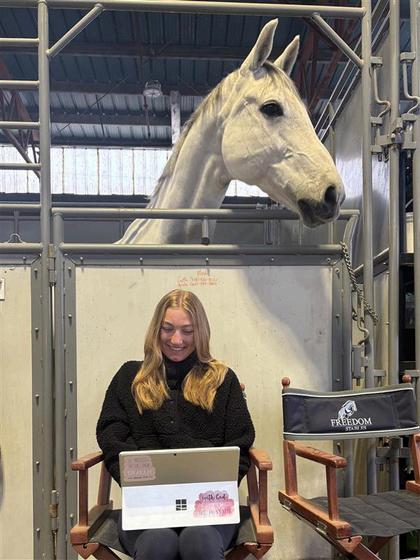
The Green Certificate Program gives high school students the opportunity to earn credits while gaining real, hands-on experience working with horses. Through the Equine Technician stream, students train in active equine facilities under the supervision of qualified industry mentors Students develop practical skills in horse care, handling, nutrition, health monitoring, and stable management. This program is offered in partnership with Lethbridge Polytechnic and supports pathways in equine care, agriculture, and related fields.
To participate, students must already be connected to an equine facility and have consistent hands-on experience working with horses, as the program combines online learning with apprenticeship-style training Each student must have a designated “trainer,” who is at least 18 years old, experienced in equine care and able to teach and supervise the required skills. The trainer may be a coach, parent, employer, barn owner, 4-H leader, or another qualified adult approved by the school.