YOUROPE – The European Festival Association has developed and released this Weather Preparedness & Resilience Toolset as part of its frour-year project “ Future-Fit Festivals“ (3F). Editors Sabine
INTRO
Weather and climate define the environmental frame in which festivals take place - and both are changing in ways that directly influence the festival season.
Climate observations across Europe show a clear trend: rising average temperatures, more frequent and intense heatwaves, shifts in rainfall patterns, and an increase in short-lived but severe storm events. Seasonal transitions become less predictable, and local weather conditions vary more rapidly than in previous decades.
For festivals, this means that traditional expectations of “typical summer weather” are no longer reliable. Weeks of stable sunshine can be interrupted by sudden downpours; long dry periods can turn into heavy, concentrated rainfall within hours; and warm evenings may just as easily become nights of unexpected cold or high winds. These shifts do not only create inconvenience - they change the physical environment in which visitors move, rest, queue, camp and celebrate. This is the reason why we have created this Weather Toolbox.
FESTIVALS THAT ARE WEATHER-READY FOR EVERYONE.
On paper, most festivals claim to be prepared for all kinds of weather. But if we’re honest, we know that extreme weather still catches many of us - and our audiences - off guard.
There are visitors who stay away because they don’t know what to expect in bad weather, because we forgot to share clear safety or shelter information, or because they worry conditions might become unsafe or uncomfortable.
The same goes for our teams and artists: people hesitate to work or perform when heat, storms, or rain aren’t properly managed. A truly weather-ready festival means thinking of everyone - providing clear, accessible information, planning for comfort and safety, and creating conditions that make every person on site feel protected, included, and welcome, no matter what the sky brings.
A truly weather-ready festival means thinking of everyone – providing clear, accessible information, planning for comfort and safety, and creating conditions that make every person on site feel protected, included, and welcome, no matter what the sky brings.
Therefore, we also have created a blueprint of a “Mission Statement” that you can adapt for your own event or organization. This statement helps you define your commitment to proactive weather management, outline responsibilities, and demonstrate your dedication to safety and preparedness across your operations.
Just like the toolkit you keep in your operations office, this Weather Toolbox is designed to help you build something, too. Only, this time, it’s not about constructing stages or setting up tents - it’s about preparing your festival or event to face all kinds of weather.
From heatwaves to heavy rain, from storms to sudden temperature drops, the Weather Toolbox gives you practical tools, checklists, and guidance to help you plan, respond, and keep everyone safe - your team, your audience, and your infrastructure.
INTRO
The Weather Toolbox brings together practical and research-based resources to give background information on weather & climate to help you design safer and more weather-resilient festivals and outdoor events.
It is aimed at organizers, safety professionals, production teams – everyone involved in planning, building, and operating open-air events. And of course we do not forget about the audience.
Many of the materials you find in the toolbox were created by experts and research projects across Europe, while others were developed directly by the project team – either as a member of their own festivals or as writers within this report.
On our homepage, you’ll find detailed explanations, application examples, and downloadable tools that you can use directly in your event planning and operations. The content of the homepage is growing – so it makes sense to visit it regularly.
The Weather Toolbox is not only a reference library but also a learning and training environment: it supports you in building systematic competence in weather risk management - from understanding weather & climate, analysis and planning to decision-making under real-time conditions.
Altogether, it provides a practical knowledge and toolset that hopefully helps make festivals and events safe, responsible, and resilient in the face of extreme weather.
THE STRUCTURE
Extreme weather can affect events in many different ways - often at the same time. To make it easier to find the right tools and information, this toolbox is divided into practical chapters that address specific aspects of weather preparedness and response.
The first chapter addresses weather & climate in general, whereas the following covering dealing with different aspects of planning: risk assessment, communication or implementation on site.
A look into the media and some case studies show that weather preparedness is not only about theory, but real life.
Additional resources help to educate you and others even better.
GLOSSARY
In this toolbox, you will come across a number of technical terms and abbreviations related to weather management and event safety. To keep things clear and accessible, we have compiled a glossary explaining key concepts such as “convective storm,” “wet-bulb temperature,” “severe weather warning levels,” and “emergency threshold values.”
If you’re unsure about a term, you’ll find concise explanations in this PDF and even more terms in the extended version of the glossary online.
GLOSSARY
Everyone knows what a “storm” is – but do we really? Do we really speak of the same phenomenom when we say, “there is a storm coming”? – Clear terminology does not only help to improve the understanding of the topic but also is – like clear thresholds – an important part of each risk assessment and each decision matrix.
Part of the Toolbox therefore is a practical glossary for weather-related planning and operations in events and festivals. Where applicable, entries include links to international standards and authoritative guidance.
Note: Access to full texts of standards may require purchase from the respective organisations.
Categories & Colour Coding
● Management
● Meteorology
● Structures
● Communication
● Climate
● Adaptation Plan
A documented framework for adjusting event operations based on forecasted or actual weather impacts (e.g., staged trigger actions for wind, heat, lightning). Reference
● Alert Chain
Defined communication pathway for escalating weather warnings between meteorological partners, event command, and operational teams.
● Anemometer
Instrument measuring wind speed (and sometimes direction). Place on unobstructed masts near stages/structures for reliable readings. Reference
● Beaufort Scale
Empirical wind scale (0–12) based on observed effects; often used to communicate thresholds operationally. Reference
● Briefing Protocol
Structured briefing ensuring staff are aware of expected weather, triggers, roles, and contingency actions. Reference
● Climate Adaptation
Long-term adjustment of event infrastructure and scheduling to a changing risk profile (e.g., shading, drainage, robust stages). Reference
● Contingency Area
Designated space where attendees can shelter or be relocated during weather disruptions (hail, lightning, wind). Reference
● Convective Storm
thunderstorm generated by instability and lift; can produce lightning, hail, heavy rain, and severe gusts. Reference
● Lightning Protection Zone (LPZ)
Defined protected area within a lightning protection system for structures and equipment. Reference
● Local Meteorological Service (LMS)
Accredited regional/on-site provider of meteorological information integrated with national services. Reference
● Operational Weather Plan (OWP)
Document defining roles, thresholds, data sources, and decision processes for weather management. Reference
● Return Period
Statistical frequency of an event of given intensity (e.g., 1-in-10-year wind gust). Reference
● Severe Weather Warning (SWW)
Official alert of hazardous weather from national meteorological authorities. Reference
● Surface Load Capacity
Ground bearing capacity relevant for stages, towers, and heavy vehicles on wet soils. Reference
● UV Index
Standardised scale of UV radiation risk guiding sun-protection measures for attendees and staff. Reference
● Wind Load Calculation
Engineering verification of temporary structures for expected wind actions based on codes. Reference
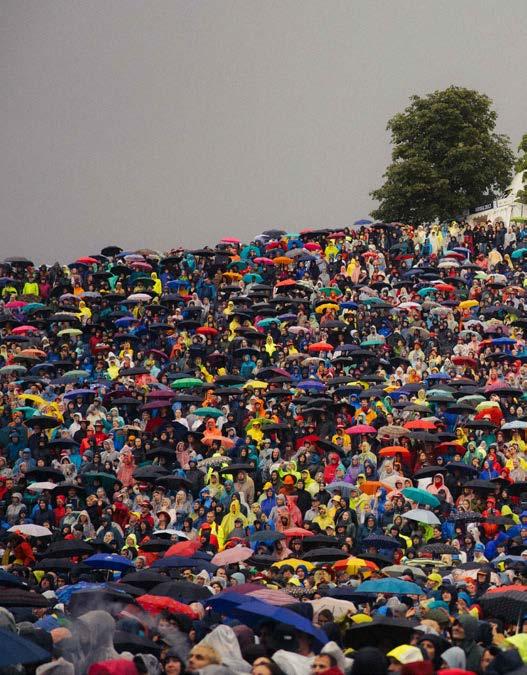
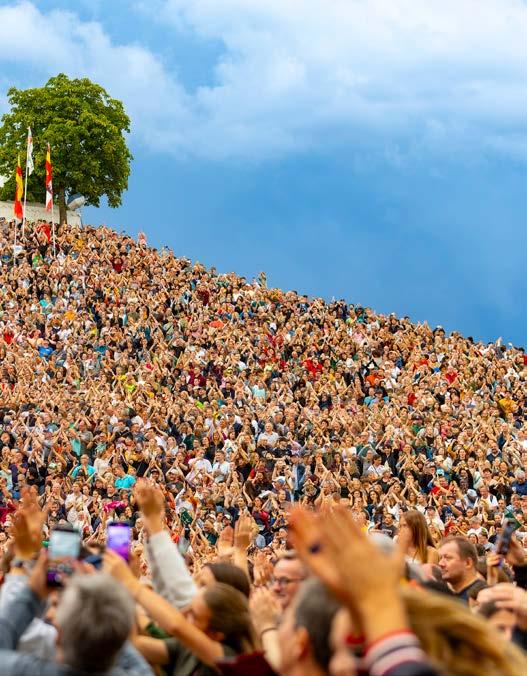
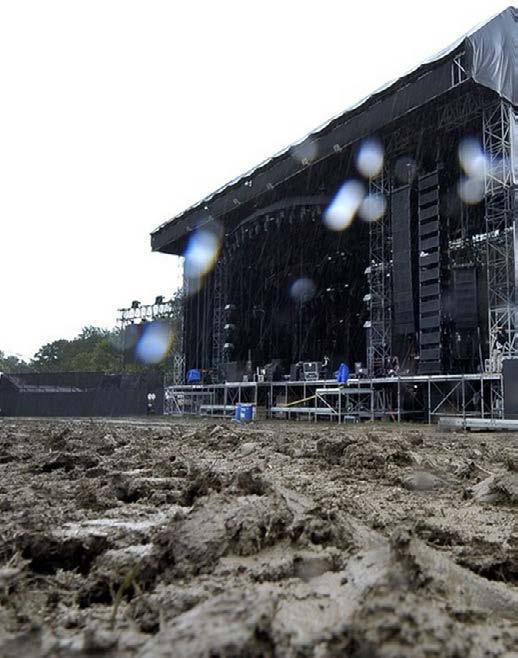
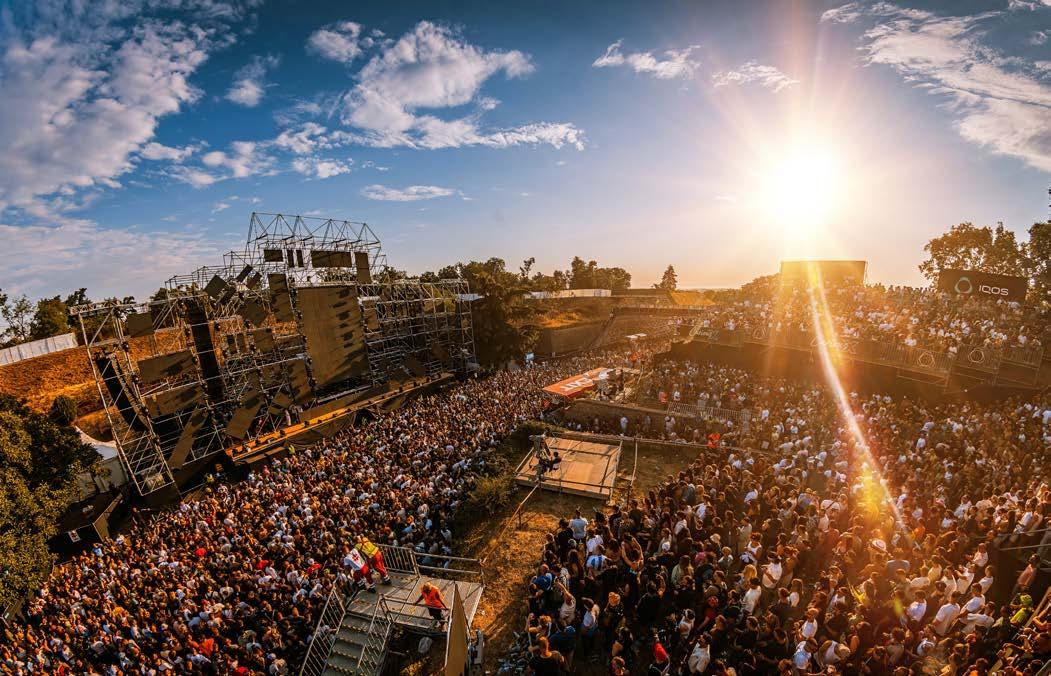
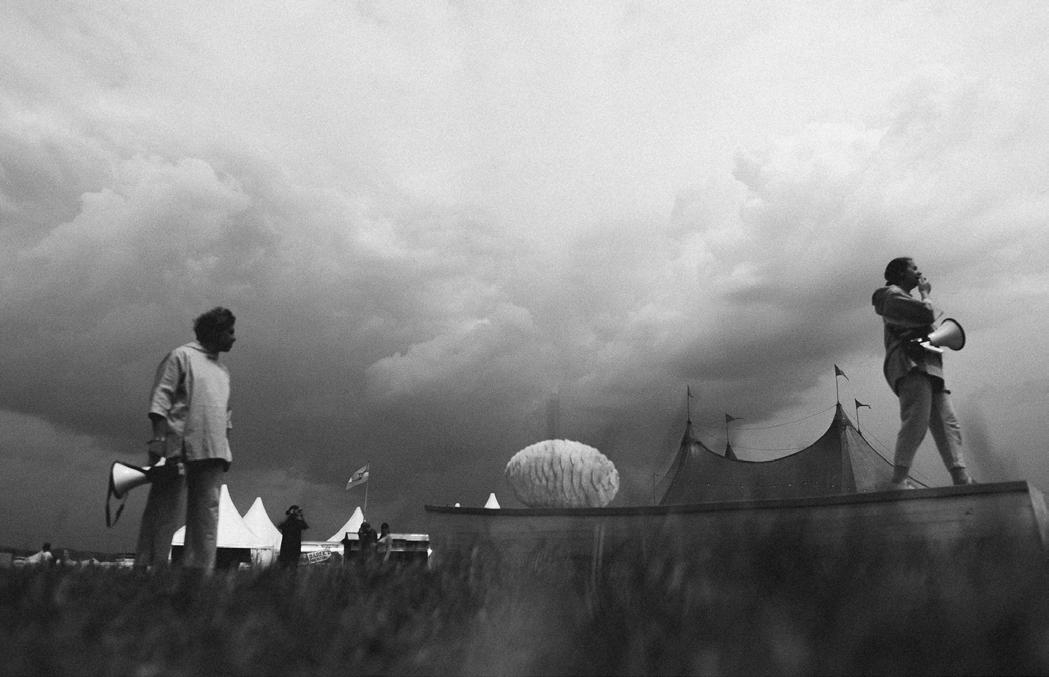
Festivals and other outdoor events need to prepare for all kinds of different weather situations.
Credit: Steffen Eirich (left) & Jürgen Rösner
Photo: Das Fest in Karlsruhe, Germany.
01 WEATHER HAZARD AWARENESS
Weather is one of the most influential and increasingly unpredictable factors in the planning and operation of outdoor events. From intense heat to rapidly forming thunderstorms, weather phenomena can affect every part of a festival: its structures, its infrastructure, its crowd dynamics, its staff, its programme, and ultimately its ability to operate safely. Understanding these hazards is therefore not optional but a fundamental component of professional event management.
This chapter provides an overview of the weather types most relevant to festivals and links them directly to their operational impacts. These range from anchoring stability and ground saturation to lightning proximity, visibility reduction, heat stress and the behavioural changes that occur when crowds are exposed to discomfort or danger. The aim is not to turn organisers into meteorologists, but to give them the practical awareness needed to make informed, timely decisions.
This chapter forms the foundation for all subsequent sections of the Weather Toolbox. By understanding weather hazards and their operational effects, organisers can integrate meaningful thresholds, identify vulnerabilities, prepare teams more effectively and ensure a safer, more predictable festival experience - even when the weather is not.
Several developments make a deeper engagement with weather risks more urgent than ever:
Planning Reliability
Events rely on predictable planning frameworks. Yet extreme weather events - once considered rare - now occur more frequently and with greater intensity. In many cases, disruptions occur not because the conditions were unprecedented, but because their consequences were not anticipated. Poor drainage, unsuitable structures or inadequate shelter space can turn moderate weather into a major operational challenge.
Legal Responsibility and Liability
Organisers have a legal duty to protect audiences, staff and contractors. Weather hazards, if foreseeable, must be assessed and addressed. Courts increasingly expect event professionals to demonstrate that they monitored conditions, understood the risks and acted according to established thresholds and procedures. Robust weather awareness is therefore a key part of due diligence and an essential element of defensible decision-making documentation.
Climate Change and Intensifying Extremes
Climate change is altering the baseline. Storm systems form faster, winds can intensify within minutes, heatwaves last longer, and rainfall becomes more concentrated. Microbursts, local flooding and sudden temperature shifts pose risks that many sites were not originally designed for. For festivals across Europe, this means that historical experience is no longer a reliable predictor for future seasons.
Safety and Behavioural Impacts
Weather does not only affect infrastructure - it affects people. Heat exhaustion, reduced mobility in mud, panic during lightning, or bottlenecks when crowds seek shelter can push systems to their limits. Understanding how weather influences crowd behaviour is a crucial part of anticipating and preventing critical situations.
Operational Continuity
Weather can threaten more than safety: it can disrupt schedules, shutdown stages, affect artist logistics, delay vehicles, damage equipment and reduce revenue. Awareness of hazard progression allows for earlier decision-making, better resource allocation and more resilient contingency planning.
Setting the Scene
We do not want to scare you – but we have collected some material dealing with the current & future climate – the climate we‘re producing our festivals in...
European State of the Climate Summary 2024
The European State of the Climate (ESOTC) Summary analyses climate conditions in Europe and the Arctic, covering key variables, events and their impacts, and a discussion of climate policy and action, alongside updates on the evolution of key climate Indicators.
Globally, 2024 was the warmest year on record and the first with an average temperature exceeding 1.5°C above the pre-industrial level. The last ten years have been the warmest ten years on record. In Europe, the impacts of climate change are clear. Since the 1980s, Europe has warmed twice as fast as the global average, making it the fastest-warming continent.
World Meteorological Organization “State of the Climate Update for COP30
This is an official WMO update summarizing key climate indicators and recent trends, positioned as a reference document for COP30 decision-makers.
Global Annual to Decadal Climate Update
The Global Annual to Decadal Climate Update is issued annually by the World Meteorological Organization (WMO). The latest predictions show that:
• 80% chance that at least one of the next five years will exceed 2024 as the warmest on record
• 86% chance that at least one of next five years will be more than 1.5°C above the 1850-1900 average
• 70% chance that 5-year average warming for 2025-2029 will be more than 1.5 °C
• Long-term warming (averaged over decades) remains below 1.5°C
• Arctic warming predicted to continue to outstrip global average
• Precipitation patterns have big regional variations
European Environment Agency Report
Protecting human lives and health from the impacts of droughts, floods and worsened water quality under climate change is of the utmost importance and urgency.
In recent years, Europe has seen devastating floods following record rainfall, droughts of magnitudes not experienced in hundreds of years, continuing sea level rise, and increasing lake and sea temperatures. While the effects of some of those changes on human health are painfully clear (e.g. deaths caused by flooding), others - such as droughts affecting farmers’ mental health or diseases caused by pathogens and toxins - are not yet widely recognized.
WHAT WE ARE DEALING WITH
TEMPERATURE-RELATED PHENOMENA
Heat & High Temperature Episodes
Heat episodes occur when stable high-pressure systems dominate. Air sinks, warms, and inhibits cloud formation. As a result, sunlight reaches the ground almost unfiltered, and temperatures can rise significantly. With little wind, heat accumulates at ground level and is intensified by urban surfaces, equipment, and dense crowds. Persistent heat increases physiological strain and creates conditions that promote dehydration, exhaustion and reduced outdoor working capacity.
Heatwaves
Heatwaves are extended periods of unusually high temperatures across several days and nights. They often result from “blocking” high-pressure systems that divert the jet stream and prevent the atmosphere from mixing. These stagnant conditions trap hot air and reduce nighttime cooling. Dry soil and vegetation amplify the heat due to reduced evaporative cooling. Heatwaves are becoming more frequent and intense across Europe.
Cold Spells / Low Temperature Periods
Cold spells emerge when polar air moves southward, often guided by large-scale wave patterns in the upper atmosphere. Clear skies and calm winds allow heat to radiate away from the ground, significantly lowering temperatures overnight. These conditions can create hard, frozen ground as well as cold stress for staff and visitors
Frost
Frost forms when the surface temperature drops to freezing, even if official air temperatures remain slightly above 0°C. Radiational cooling, clear skies and cold air pooling in low-lying areas are typical drivers. Frost affects the condition of structures, surfaces and ground.
PRECIPITATION-RELATED PHENOMENA
Rainfall
Rain is produced when moist air cools sufficiently for water vapor to condense into droplets. Light rain comes from shallow clouds; moderate to heavy rain results from deeper cloud layers and stronger vertical movements. Intensity is measured in mm/hour. Heavy rainfall can develop within large-scale fronts or small-scale convective systems.
Persistent Rain
Long-duration rain occurs when weather systems stall or move slowly. Stationary fronts, slow-moving lows or repeated lifting of warm air over cold air masses produce many hours of rainfall. The resulting saturated ground impacts mobility and structural stability.
Convective Downpours
Convective rainfall is driven by instability. Warm surface air rises rapidly, forming cumulonimbus clouds that release short, intense bursts of rain. These downpours often cause abrupt local flooding and can develop with very little warning.
Thunderstorms
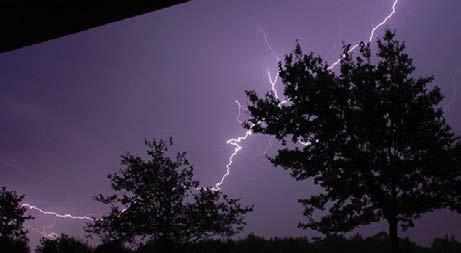
Thunderstorms require moisture, instability and a lifting mechanism (fronts, surface heating, orography,). Internally they consist of rising warm air (updrafts) and sinking cool air (downdrafts), creating a complex environment with lightning, heavy rain, hail and strong wind. They develop quickly and can evolve into organized storm structures.
Hail
Hailstones form in strong updrafts that lift water droplets above the freezing level multiple times. With each cycle, a new layer of ice forms. When hailstones become too heavy for the updraft, they fall to the ground. Larger hail is associated with severe thunderstorms.
Snow and Wet Snow
Snow falls when the entire atmospheric column remains below freezing. Wet snow occurs near the freezing point and adheres strongly to surfaces, resulting in high mechanical loads.
Sleet and Freezing Rain
Sleet forms when snow partially melts before refreezing near the surface.Freezing rain occurs when precipitation falls through a warm layer aloft and lands on sub-zero surfaces, forming a glaze of ice. It is one of the most hazardous cold-season phenomena.
WIND-DRIVEN PHENOMENA
Strong Wind and Gale Conditions
Wind is driven by pressure gradients: the bigger the difference over a distance, the stronger the wind. Gale-force winds are common near deep low-pressure centers or strong frontal systems and can last for many hours.
Wind Gusts
Gusts are abrupt, short increases in wind speed caused by turbulence or downward mixing of faster air from higher levels. They represent the peak load that structures must withstand.
Squall Lines and Gust Fronts
Squall lines are fast-moving bands of thunderstorms with powerful winds ahead of the rain. Gust fronts — the spreading of cool air at ground level from a storm — often precede precipitation and can cause a sudden wind shift.
Downbursts and Microbursts
Downbursts occur when rain-cooled air plunges downward, hits the ground, and spreads horizontally at high speed. Microbursts are smaller but more intense, producing highly destructive winds over a short area.
Tornadoes and Funnel Clouds
Tornadoes are rotating columns of air extending from thunderstorms to the ground. They are relatively rare but do occur in Europe. Even weak tornadoes can be hazardous for temporary structures.
SOIL, SURFACE AND WATERRELATED PHENOMENA
Ground Saturation
Soils have limited capacity to absorb water. Once saturated, rain accumulates on the surface, increasing mud, slip hazards and ground instability.
Mud Formation
Mud forms when saturated ground is exposed to foot traffic or vehicles. Soil structure collapses, creating difficult terrain, accessibility issues and logistical delays.
Flash Flooding
Flash floods occur when heavy rain overwhelms drainage systems. Their development is rapid, especially during convective storms.
River Flooding and Backwater Effects
River flooding is a slower process caused by long-duration rain or snowmelt. Backwater effects occur when downstream water levels rise and restrict drainage.
SOLAR
RADIATION AND UV INDEX
UV exposure increases with sun angle, altitude and cloud cover variability. High UV levels can cause rapid sunburn and heat stress.
High Insolation
Strong incoming radiation heats the ground, driving convection and influencing local wind and storm development.
Glare
Low sun angles lead to intense glare, reducing visibility for traffic, staff and visitors. Stage orientations can be affected.
SPECIAL WEATHER ISSUES
Combined Hazard Events (Multi-Hazard Storms)
Modern weather situations increasingly involve overlapping hazards (wind + heavy rain + lightning). Understanding compound risk is essential.
Microclimates
Local conditions differ significantly depending on terrain, forests, buildings, water bodies or urban environments. Microclimates can cause unexpected wind gusts, fog patches or temperature differences.
Heat Stress Conditions
Heat stress is determined by the combination of temperature, humidity, radiant exposure and wind. Physiological stress rises sharply when these factors coincide.
Smoke, Dust and Aerosols
Dust and smoke reduce visibility and irritate the respiratory system. They occur during dry periods, near traffic routes, or during pyrotechnic-heavy performances.
Holger Jan Schmidt
02 RISK ASSESSMENT & PLANNING
Effective safety management for festivals and large events begins long before tents are pitched, stages are built, or guests arrive. At its core lies a robust risk assessment and planning process - a systematic approach that identifies potential hazards, evaluates their likelihood and impact, and translates these insights into operational strategies.
While weather-related risks receive prominent attention in this toolbox, they are only one part of a broader web of vulnerabilities: site characteristics, visitor behaviour, infrastructure design, contractor performance, and the interdependencies between all systems that keep an event functioning.
Risk assessment is not a theoretical exercise. It is an action-oriented planning discipline that directly shapes decisions on site layout, staffing, communication, emergency procedures, and resource allocation. For festival planners and crowd managers, it provides the foundation for legally sound, defensible and resilient operations - particularly in a climate where extreme weather events increase, regulatory expectations rise, and incidents frequently stem from underestimated local conditions rather than rare catastrophes.
There are some principles and tools that support this process: from risk matrices, vulnerability checklists and site-specific analyses to the integration of risk assessments into business continuity planning and emergency preparedness. Special attention has to be given to the interplay between environmental conditions and operational design, as misjudged drainage, hidden wind channels, insufficient anchoring strategies, or weak decision-making structures often have more severe consequences than the storm itself.
Ultimately, good planning is about making informed choices under uncertainty. By understanding hazards, assessing vulnerabilities and embedding these insights into practical procedures, festival professionals can create environments that are not only compliant and functional, but resilient, adaptable and prepared for the unexpected.
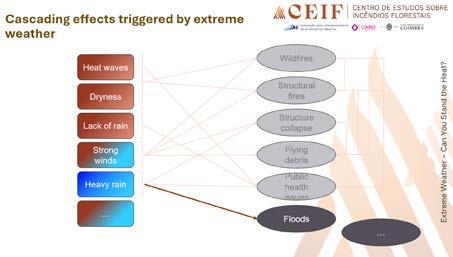
CASCADING EFFECTS
You all know the „classic“ risk management cycle – but in regard to weather, this unfortunately is not so easy at all.
A classic weather risk assessment identifies which weather types pose which dangers, the thresholds at which actions must be taken, and which site-specific vulnerabilities increase the likelihood or severity. Cascading effects triggered by extreme weather make it necessary to not only look at the individual hazard itself, but to a much broader context. Examples are:
• Restrict audience access near high structures during gust peaks
Read more
EXTREME HEAT & HUMIDITY (EXAMPLES)
Hazards (Examples)
• Direct sun exposure
• Dehydration, heat exhaustion, heat stroke
Operational Effects
WBGT (Wet Bulb Globe Temp) Action Level
> 26°C
> 28°C
> 30°C
> 32°C
Affected Assets
• Front-of-stage areas
• Queues, entrances
• Campsite zones with poor shade
• Staff working long shifts
Required Actions
Increase water, shade, staff rotations
Medical reinforcement, targeted comms
Modify show schedule, reduce crowd pressure
High risk: possible suspension of activities
• Heat communication plan (push messages, app, screens)
• Cold packs, misting tents, shaded waiting lines
• Hydration strategy (free water points every 50–75 m)
Read more
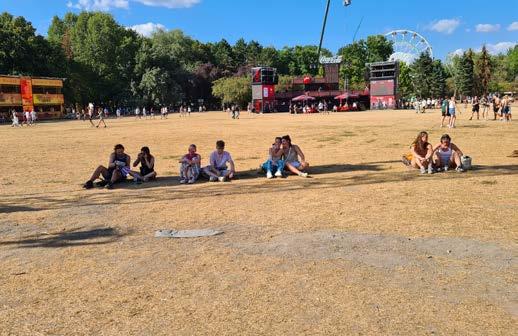
Extreme heat and drought will play a greater role in all of Europe, not only on the Ibearian Peninsula and in the Balkans.
Photo: EXIT Festival in Novi Sad, Serbia.
03 MONITORING & EARLY WARNING
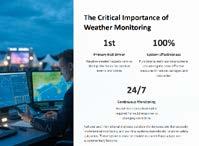
Effective weather preparedness begins long before the first raindrop falls or the first gust reaches the site. It starts with reliable, continuous monitoring and a structured system for interpreting early warning information. This chapter explores how festivals can combine forecasts, real-time data and clear internal procedures to anticipate hazardous conditions and act before they escalate into critical situations.
Weather incidents rarely occur without warning. In many documented cases across Europe, storms, intense rainfall or heatwaves were visible in forecasts hours - sometimes days - before they caused disruptions. Yet incidents still happened, not because the information was missing, but because it was not read, understood, trusted, or acted upon in time.
Early warning systems therefore require more than technology; they require clarity of roles, communication pathways and decision-making discipline.
03
WHY EARLY WARNING MATTERS
1.
Gaining Crucial Time
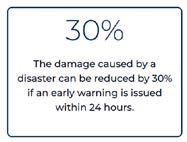
Weather often changes quickly, and the window for safe interventions can be narrow. The difference between a controlled evacuation and a chaotic one may be measured in minutes. Early warning systems allow festivals to:
• prepare staff,
• secure structures,
• pause or adjust programming, and
• communicate with audiences – before weather reaches dangerous thresholds.
2. Reducing Operational Uncertainty
Forecasts, radar images, lightning detectors and on-site sensors provide a layered view of weather evolution. When interpreted correctly, they turn uncertainty into actionable knowledge. This improves:
• infrastructure protection,
• resource allocation,
• staff readiness, and
• continuity of event operations.
3
. Meeting Legal and Professional Responsibilities
Authorities and courts increasingly expect organisers to demonstrate that they:
• monitored weather using reliable sources,
• understood official warnings,
• documented data interpretation, and
• took timely decisions based on defined thresholds.
Early warning systems therefore support not only safety, but also defensible decision-making.
What is an Early Warning System?
An early warning system is made up of four elements:
• disaster risk knowledge,
• detection, monitoring, analysis, and forecasting,
• warning dissemination and communication, and
• preparedness and response capabilities.
Learn, how the Early Warning Systems of the WMO can be applied to events:
What is a Combined Weather Hazard Dashboard?
A combined weather hazard dashboard is a tool that consolidates information on multiple weather hazards, such as storms, floods, and heatwaves, into a single view for monitoring, forecasting, and analysis. These dashboards are used by emergency managers, meteorologists, and researchers to get a comprehensive picture of current and future risks through data visualizations, real-time alerts, and historical information. They are essential for improving early warning systems and risk assessment
Key features and examples
• Data consolidation: Combines data from various sources.
• Multi-hazard view: Displays a range of hazards.
• Interactive maps: Uses interactive maps to show current conditions and potential impacts of hazards
• Forecasting and alerts: Provides real-time forecasts, expert analysis, and timely notifications to help with preparedness.
• Risk assessment: Includes tools for estimating risk.
Here you can find uselful resources to fill your dashboard:
Severe Weather Information Centre (SWIC)
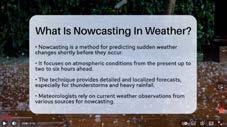
Forecasting vs. Nowcasting
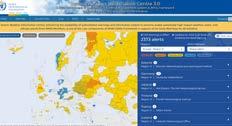
The homepage severeweather.wmo.int hosts the Severe Weather Information Centre (SWIC) 3.0, a platform operated under the World Meteorological Organization (WMO). WMO is the United Nations’ specialized agency for meteorology, climate, and hydrology that coordinates global weather, climate, and water information and services among national meteorological and hydrological services (NMHSs).
You all know that feeling: the disappointment (or relief) when the weather forecast turned out to be wrong.
To understand some of the problems better, it is important to understand the difference between forecasting and nowcasting.
On-site Information Sources
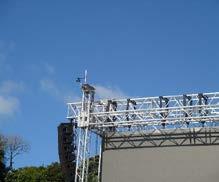
From the use of anemometers (wind meters; as seen in the picture) to staff reports and crowd feedback – there are a lot of possibilities to get data and information on site. This is not only about objective information but also about how people feel (for example: perceived temperature) and how they react to heat, rain, etc. (their mood).
Life Hacks
1. Do not refer to several different meteorological services. Choose the one whose information you use as a basis for your decisions. Otherwise you will lose time searching for “a better forecast“ (and then the discussion starts…).
2. If you can: use a service provider who is on your site during the whole event. Not only are they better in working with the data given, but even more important they can include detailed site information in their evaluation.
3. Do not say “we are monitoring the weather“. Make sure that there always is a responsible person (and that there is a deputy if necessary).
04 DECISION MAKING & COMMUNICATION
Weather does not become a safety problem when clouds appear on the radar, but when organisations fail to translate information into timely, coordinated action. Across many festival and event incidents of the past decade, one pattern is strikingly consistent: weather data was available, but decisions were unclear, delayed or poorly communicated. This chapter addresses exactly that operational gap.
Those involved in emergency planning need to know DETECTION EVALUATION COMMUNICATION EXCECUTION
DECISION
Effective decision making under weather-driven uncertainty requires more than a plan. It demands clarity of responsibilities, pre-defined thresholds, structured communication pathways and a shared understanding among all stakeholders of what specific information means for their role. Forecasts, radar imagery or lightning alerts are only useful if they trigger the right actions at the right time. Without this, even competent teams risk losing critical minutes or acting inconsistently during rapidly evolving situations.
At festivals and large outdoor events, decisions often need to be taken while managing competing priorities: visitor experience, artistic or commercial considerations, evacuation feasibility, crew workload, and regulatory obligations. Weather adds another layer of complexity: conditions can escalate non-linearly, vary across a site, or interact with existing vulnerabilities (e.g., already saturated ground, structural loads, crowd behaviour under stress). Therefore, clear decision architectures and communication protocols are essential components of resilience and legal defensibility.
• How to establish structured decision processes for weather-related risks, including triggers, thresholds, and authority lines.
• How to build effective communication flows between meteorological monitoring, operational leadership, artists, suppliers, authorities and the public.
• How to integrate uncertainty into decisions without paralysis - balancing precaution with feasibility.
• How to document decisions for operational clarity, post-event learning and liability protection.
The goal is to enable event professionals to move from reacting to weather to actively managing weather-related risks, ensuring that decisions are traceable, coordinated and communicated in ways that keep staff and audiences safe - even when conditions change quickly.
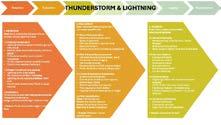
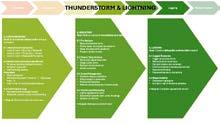
Flowcharts help to standardise the core loop: they give structure and a first impression of what is needed.
Flowcharts are a useful tool because they translate complex processes, decisions, and dependencies into a clear, visual structure that can be understood at a glance. They support rapid orientation under time pressure, make roles and decision points explicit, and reduce ambiguity by showing what happens next under defined conditions. In operational and safety-critical contexts, flowcharts help ensure consistency of action, support training and briefings, and provide a shared reference for interdisciplinary teams, thereby reducing the risk of miscommunication and delayed or incorrect decisions.
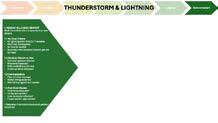
→ USE WHEN EXAMPLE FLOWCHART: LIGHTNING (THUNDERSTORM)
• storm cell within X km or
• ETA < Y minutes or
• lightning density threshold)
EXAMPLE FLOWCHART: WIND (GUSTS)
→ USE WHEN forecast/on-site gusts cross agreed
→ USE WHEN intensity×duration + pooling/run-off exceed site thresholds EXAMPLE FLOWCHART: RAIN & FLOOD
For sudden shifts (e.g., nearby lightning/gust front), use ultra-short templates:
• verb of action + location cue + clear instruction + time-bound next update.
• Push simultaneously on PA, screens, app, SMS/Signal, and radio.
• Keep tone calm, remove jargon, and avoid mixed instructions.
• Always follow with the promised update.
“FIRST 30 SECONDS” KIT
→ USE WHEN the event is happening now
MULTI-LANGUAGE SET
→ USE WHEN you serve multilingual audiences
Stakeholder Coordination
• Pre-agreed protocols smooth collaboration with authorities/emergency services, vendors/ contractors, and artist management.
• Provide a one-page SITREP/notification form (Who/What/When/Where/Actions/Next update), a call tree with alternates, rendezvous points, and per-vendor checklists (rigging, LED, tents, signage).
• For artists/agents, define communication windows and safe-holding locations to reduce pressure during critical minutes.
ARTIST LIAISON CUE SHEET
→ USE WHEN coordinating stop/restart with artists
AUTHORITY NOTIFCATION (SITREP)
→ USE WHEN you trigger stop/pause or partial evacuation
CONTRACTOR CHECKLISTS
→ USE WHEN wind/rain measures affect infrastructure
05 ON-SITE IMPLEMENTATION
Weather awareness, risk assessments and monitoring systems only become effective when they are translated into clear, actionable measures on the ground.
On-site implementation is the decisive phase in which concepts leave the realm of planning and meet the operational reality of a festival site. It is where responsibilities become visible, decision-making pathways must function under time pressure, and protective measures must withstand both environmental conditions and the dynamics of large crowds.
It is about how weather-related preparations materialise on site: how stages, temporary structures and campsites are secured; how communication cascades and safety instructions are embedded into daily operations; how response teams coordinate; and how crowd movements are influenced when weather develops in unexpected ways.
On-site implementation is also the moment when preparedness meets uncertainty. Weather forecasts carry probabilities, not guarantees; thresholds need interpretation; and micro-conditions on the festival grounds may differ from regional warnings.
This requires trained staff who understand not only what to do, but why they are doing it. It also requires rehearsed processes, redundancy in communication, and a shared situational awareness across all departments.
In this chapter, you will find guidance on operationalising weather information on site, establishing clear lines of action, defining triggers and thresholds, structuring communication, and integrating weather response into everyday festival logistics. The aim is to provide practitioners with realistic, workable frameworks that support safe and efficient decision-making – before, during, and in the critical minutes when conditions change.
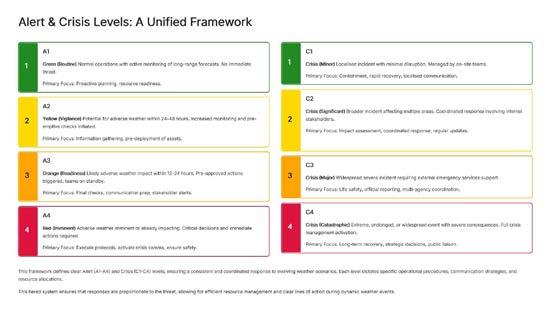
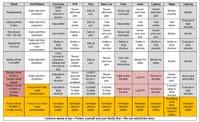
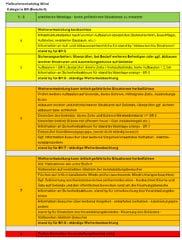
Topic B – Threshold & Trigger Log (Measure Matrix)
The threshold & trigger log (measure matrix) is the single source of truth to prevent on-the-spot improvisation.
→ USE WHEN the team needs instant clarity on “who does what.”
DO THE MATH!
If it is shelter capacity or flow times on muddy grounds – you cannot rely on assumptions but have to do some calculations.
Example: Determining Evacuation and Sheltering Timing
The time it will take to evacuate or shelter patrons at your event should be calculated well in advance. Not surprisingly, it takes much more time when people have to move through deep mud – so this has to be taken into account also.
There are three key components to the total time:
1. Alert and Activation Time: the time needed to mobilize staff and facility to conduct evacuation/sheltering and the time needed to notify patrons.
2. Evacuation/Shelter Time: The time needed for movement of patrons once the evacuation/sheltering begins.
3. 25% Safety Factor: This allows for unexpected delays in the movement of patrons, changes in storm arrival time and other unforeseen circumstances.
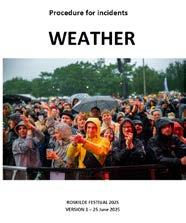
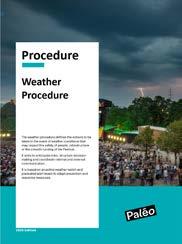
WE HAVE COLLECTED SOME INSPIRING BEST-PRACTICE PROCEDURES FROM DIFFERENT EVENTS
06 TRAINING & LEARNING
Preparing for weather-related risks at events is not simply a matter of having good plans - it is a matter of having people who can apply those plans confidently, consistently, and under pressure. Training and learning therefore form the operational backbone of effective weather risk management. They translate theoretical knowledge into practical competence, build shared mental models across teams and partners, and ensure that decisions under uncertainty are made by individuals who understand both the science and the operational reality.
Modern festivals and mass gatherings operate in increasingly complex environments: rapidly changing weather patterns influenced by climate change, highly dynamic crowd behaviour, tight production schedules, diverse stakeholder landscapes, and legal expectations that emphasise due diligence and demonstrable competence. Against this backdrop, training cannot be reduced to a one-off briefing or the distribution of a manual. It requires structured learning pathways, scenario-based exercises, and continuous improvement loops that mirror the decision-making challenges encountered on site.
The goal is simple: to create teams that are able to anticipate weather developments, to act early and proportionately, and to communicate decisions clearly even when conditions become challenging. Robust training is the bridge between knowledge and performance, and a key contributor to safe, resilient, and professional event operations.
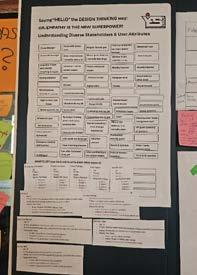
SEE, WHAT THEY SEEFEEL, WHAT THEY FEEL
To make sure that you actually meet the needs of your audience, a good exercise can be found in the concept of Design Thinking:
By creating Personas (which are examples of people coming to your event) you can get an useful insight into aspects which have to be considered.
Design Thinking & Personas: Stepping into someone else‘s shoes Keywords: Design Thinking, PersonasExamples from the 39. YES GROUP Seminar in Groningen
TABLE-TOP EXERCISES (TTX)
Table-top exercises are structured, discussion-based training formats used to explore decision-making, coordination, and communication under realistic conditions – without the need for operational deployment.
Unlike drills or full-scale exercises, a TTX simulates an evolving situation around a table, allowing participants to analyse challenges, identify gaps, clarify responsibilities, and test existing procedures in a low-stress, low-cost environment.For event organisations, TTX are particularly valuable because complex situations rarely fail at the point of action - they fail earlier: at interfaces, in unclear responsibilities, in ambiguous thresholds, or due to mismatched expectations among authorities, organisers, service providers, or weather intelligence partners.
A well-designed TTX therefore:
• tests plans, Standard Operation Procedue (SOPs), and weather decision matrices,
• strengthens communication pathways (internal/external),
• explores vulnerabilities such as delayed reactions, ambiguous triggers, or poorly understood contingency measures,
• increases shared situational awareness among all stakeholders.
EXAMPLE: WEATHER-RELATED TABLE-TOP SCENARIO: INCOMING SEVERE THUNDERSTORM
A multi-stage convective system develops 40 km west of the festival site. Radar indicates rapid intensification.
Injects / Timeline
• T–90 min: Private weather service issues a “Potential Thunderstorm Development” message; wind gusts up to 60 km/h possible.
• T–60 min: Radar shows the cell accelerating; new gust front detected.
• T–40 min: Lightning detection system: CG strikes within 12 km.
• T–25 min: Public forecast updates with a “Severe Weather Warning,” but visitors have not been informed yet.
• T–10 min: First strong gusts hit the campsite; minor damage reported.
Learning Aims
• Activation of weather decision matrices and threshold adherence.
• Coordination between meteorological service, production, security, and FOH.
• Visitor communication timing: when and how to inform; crowd behaviour under uncertainty.
• Shelter-in-place vs. evacuation decision.
Discussion Prompts
• Who has the authority to pause the show?
• How do we manage stages, temporary structures, and outdoor queuing areas?
• How do we communicate with crowds already in “festival mode”?
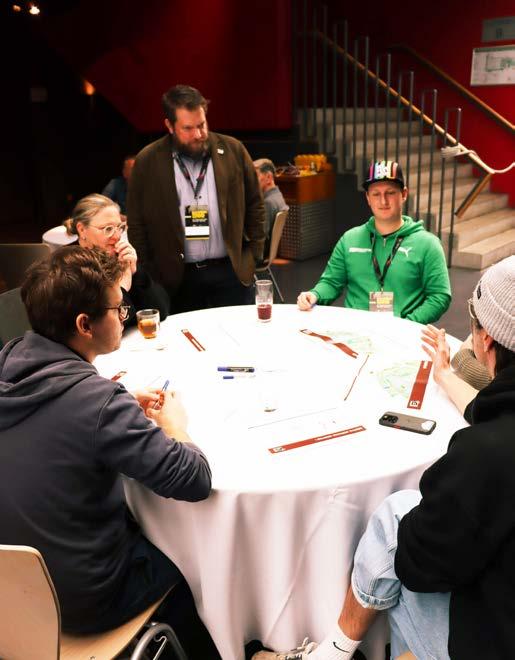
YES Group table-top exercise at the European Festival Summit 2024 in Karlsruhe, Germany.
Credit:Stephan Faber
07 EDUCATING THE AUDIENCE
Successful event and festival safety is not only the result of good planning, clear procedures and trained staff - it also depends on how well the audience understands their role within the safety system. Visitors are not passive recipients of safety measures; they are active participants whose behaviour can either support or undermine even the most robust plans.
Educating the audience therefore becomes a central component of modern safety management. It encompasses all measures that help visitors make informed decisions, recognise risks and respond appropriately to instructions - before, during and after an event. From weather preparedness and hydration advice to orientation information, crowd movement guidance and emergency communication, audience education aims to build a shared understanding of what “safe participation” means in a dynamic environment.
Targeted, accessible and timely communication can positively influence crowd behaviour, increase compliance, reduce uncertainty and enhance resilience. But there are also challenges: diverse audiences with differing levels of prior knowledge, attention and motivation; the competition for their limited cognitive bandwidth; and the responsibility to communicate without creating unnecessary fear or information overload.
In an era of rapid weather changes, increased operational complexity and heightened expectations for transparency and care, audience education is more than a courtesy - it is a key risk-reduction strategy, an important element of duty of care, and an essential contribution to the overall safety culture of an event.
METHODS AND EXAMPLES OF AUDIENCE EDUCATION
Short, Memorable Public Guidance: Behaviour-shaping micro-messages:
• “If it thunders, go under.” Lightning safety rule for open-field events.
• ⚡ Lightning detected – please head to indoor areas or vehicles.”
• �� Heat risk high – refill water and take breaks.”
• �� Heavy rain arriving soon – plan your move to shelter points.”
Behavioural Framing
Add reasons for compliance (“We do this so the show can continue safely”).
Social Media Campaigns
Before the Event “Festival Weather 101: Your 30-second safety guide.”
“Why we evacuate stages during lightning – explained by our meteorologist.”
During the Event “Heat wave today: where to cool down & refill.”
“Storm expected later – how to reach safe zones calmly.”
THE DANMARKS METEOROLOGISKE
INSTITUT HAS PUBLISHED SOME USEFUL TIPS FOR FESTIVALGOERS
Although the likelihood of being struck by lightning is small, it is important to respect the weather phenomenon. Thunderstorms are not harmless, and therefore there are several good tips on sensible behavior in thunderstorms.
• Keep an eye on the clouds in the sky. Thunderstorms do not appear out of the blue.
• Do not seek shelter under trees, especially not a single tree, nor in a tent under a tree.
• Try to avoid towers and open spaces.
• Do not touch large electrically conductive objects – for example fences, railings, taps, or appliances connected to the electricity and telephone networks.
• It is reasonably safe to talk on a mobile phone but remember that it is an electrically conductive object you are holding.
• The only thing that is completely safe is to sit in a fully closed, grounded metal cage (a so-called Faraday cage) where you do not touch the sides. A car with closed doors, windows and sunroof is such a cage. The lightning escapes via the wheels, even if the tires are poor conductors. The next best place is inside the concert tents. In the camping area, a small, low tent is safer to be in than a tall tent with long metal poles.
Credit: Ricky Nielsen
CASE STUDIES & BEST PRACTICES
Case studies are one of the most powerful learning tools in the field of event and crowd safety. They translate abstract principles into concrete practice, reveal the complex interplay between planning and reality, and expose the mechanisms behind both successful and failed decision-making. In the context of weather-related risks, crowd dynamics, and operational safety, real-world examples illustrate not only what happened, but why it happened an -d, crucially, what should have happened instead.
This chapter uses selected incidents and best-practice examples to illuminate the challenges facing event professionals in an era of increasing climate volatility, heightened public expectations, evolving regulatory frameworks and more complex event architectures. Equally important are the positive examples. Case studies of well-executed evacuations, robust monitoring strategies or effective cross-agency coordination highlight practical approaches that demonstrably reduce risk. They show how integrated planning, accurate situational awareness and trained decision teams can transform potential emergencies into controlled processes.
Rather than treating incidents as isolated “exceptions,” the chapter emphasises how each case contributes to a broader body of knowledge. Lessons learned feed directly into the earlier chapters on hazard awareness, monitoring and decision-making - closing the loop between theory and practice. For festivals, large gatherings and complex venues, these case studies become a form of anticipatory experience: an opportunity to learn from the past without repeating it.
By critically analysing real events, this chapter aims to support practitioners in sharpening their risk perception, strengthening their operational strategies and ultimately fostering safer environments for audiences, staff and stakeholders alike.
Source: Roxana Luca
“This
cannot happen to us“? See: it happened to others! We have created a curated list of weather related incidents to make sure, that everyone is aware that the risks are real.
To learn more about the very real risks of extreme weather events, please find examples of incidents at festivals like Pukkelpop (BE), Rock am Ring (DE), Pohoda (SK), Y Not Festival (UK), Red Rocks (USA), MetalDays Festival (SV), Medusa Festival (ES) and Le Vieux Canal (FR) in this chapter - the list is (almost) endless.
Lightning & Thunderstorms
Real examples show how quickly thunderstorms can turn a festival into a mass-casualty risk if lightning, wind and sheltering are not managed.
Heat Wave & Heat Exposure
Heatwaves and extreme temperatures increasingly threaten music events, causing collapses, hospitalizations and show cancellations.
High winds, gusts & heavy rain Flooding & Mud
Most probably the number one in regard to weather related incidents at events. High winds can turn stages, roofs, towers and signage into falling hazards within minutes, especially with temporary festival structures.
Even though flooding is no general concern, we all have seen what mud can do to festival grounds - turning them into inaccessible, electrically hazardous and structurally unstable environments.
A snapshot from Pohoda 2024, when the festival had to cancel the last day due to extreme weather events.
Credit: Tomáš Kuša
RESOURCES
A resilient and well-informed approach to weather-related risk management and event safety depends not only on operational tools and practical experience, but also on a solid connection to current knowledge. Research reports, technical guidelines, incident analyses, standards, and professional literature form the foundation on which effective planning, training and decision-making are built.
This chapter gathers and contextualises additional resources that support deeper understanding: from scientific studies on weather impacts at mass gatherings, to guidance documents issued by meteorological services, to handbooks, inquiries, and expert publications on crowd dynamics, emergency management, and climate-related challenges. These resources are meant to expand your perspective, validate planning assumptions, and offer evidence-based recommendations for practice.
As extreme weather events become more frequent and regulatory expectations evolve, staying informed about new findings is not optional - it is part of professional due diligence. High-quality research and analysis help practitioners recognise emerging risks, understand failure mechanisms, and improve coordination across agencies and disciplines.
Likewise, curated literature enables event professionals to move beyond anecdotal solutions and base their work on verifiable, transferable knowledge.
By presenting a structured selection of relevant and authoritative sources, this chapter serves as your gateway into the broader knowledge landscape surrounding weather, crowd safety, and event resilience. It invites you to explore, compare, reflect - and ultimately to integrate insights from research and literature into your daily practice and long-term organisational development.
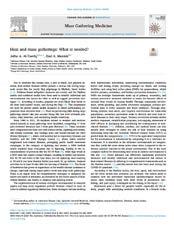
Mapping the impact of extreme weather on global events and mass gatherings: Trends and adaptive strategies.
Sport tourism, business events, festivals, and mass gatherings drive tourism and local development, but extreme weather increasingly disrupts events worldwide, heightening risks as the climate changes. This study analyses 2,091 weather-disrupted events reported between 2004 and 2024, examining location, purpose, and format, and providing qualitative insights into event size, financial impacts, and operational complexity, alongside links to extreme-weather attribution research.
Although data limitations preclude definitive global conclusions, clear patterns emerge for mature, English-speaking event markets (the US, UK, Canada, and Australia), including an apparent rise in incidents. Storms are the most disruptive hazard overall, with notable regional variation. Arts, culture, and entertainment events, especially festivals and concerts are most affected, followed by social and sporting events.
The findings support event organisers, destinations, and emergency managers in better understanding weather-related risks and in strengthening adaptation and resilience across event planning and delivery.
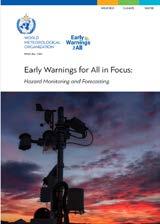
Early Warnings for All in Focus: Hazard Monitoring and Forecasting
Chapter 1 provides a brief introduction to the objectives and approach of the EW4All initiative. It summarizes the foundational work completed in the first years of the initiative in terms of conducting baseline assessments, devising plans and mobilizing resources for their implementation. Chapters 2–6 then present detailed statistics Chapters 2–6 each start with an “at-a-glance” section exhibiting baseline data on global and regional status of a set of monitoring indicators. Each then outlines the programmatic approach,including concrete actions and progress trends. The analysis is complemented with case studies illustrating successful approaches to building country and regional capacity as stemming from the diverse portfolio of WMO projects.
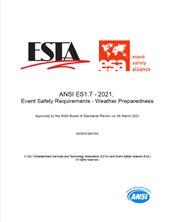
Event Safety Requirements - Weather Preparedness
The scope of this standard covers the consideration, development and use of event planning strategies that mitigate weather-related risks associated with live events, and with their associated temporary special event structures. Its scope includes both indoor and outdoor events, because each have considerations for the event participants. Its scope includes only public-access events, and private events where jurisdictional permits are required.
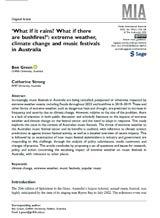
‘What if it rains? What if there are bushfires?’: extreme weather, climate change and music festivals in Australia
Increasingly, music festivals in Australia are being cancelled, postponed or otherwise impacted by extreme weather events, including floods throughout 2022 and bushfires in 2018–2019. These and other forms of extreme weather, such as dangerous heat and drought, are predicted to increase in frequency and severity due to climate change. However, relative to the size of the problem, there is a lack of attention in both public discussion and scholarly literature to the impacts of extreme weather and climate change on the festival sector, and the need to adapt in response.
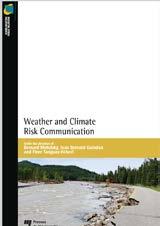
Weather and Climate Risk Communication
This book, written by sixteen experts, is designed as an educational and reference resource based on current knowledge. While the book focuses on meteorological and climate risk communication, its concepts apply broadly to risk communication in general, as weather- and climate-related hazards often trigger or amplify other risks. The book addresses the gap between scientific accuracy and public understanding, highlighting the limits of traditional top-down communication and the need for more effective, multilateral approaches. Several chapters explore tools, examples, and strategies for improved risk communication, including the growing role of social media, which enables two-way and multi-actor communication.
Grounded in core communication theory and ISO 31000 risk management principles, the book also covers risk perception, organizational and health impacts, change management, and systemic aspects of risk communication.
Heat and mass gatherings: What is needed?
Due to elements like intense heat, a lack of shade, and physical exertion, heat-related illnesses (HRIs) present a serious risk during large-scale events like the yearly Hajj pilgrimage in Makkah, Saudi Arabia. Evidence-based mitigation measures are crucial, and the Haddon matrix and combined model have been used to identify individual and environmental risk factors for HRIs as well as suggest prevention strategies.
Though not necessarily strictly written for the purpose of “weather- related risk communication“ there are a lot of ínteresting and useful resources in regard to risk-communication.
We want to introduce you to some of them and also give you some useful links to even more information.
MISSION STATEMENT
Suggestion for a Weather Preparedness & Resilience Mission Statement
We encourage festivals to copy and adapt this Mission Statement for their own purposes.
Our Mission
Our mission is to organize a festival that is safe, resilient, and well-prepared for all types of weather. We recognize that weather preparedness is a shared responsibility — and a key element of sustainable event planning.
Our goal is to create an environment where audiences, teams, and artists can experience the festival safely and confidently, even under changing or extreme weather conditions. We want every person on site to know that their safety, comfort, and wellbeing are being actively protected through professional planning, clear communication, and coordinated action.
To achieve this, we are committed to identifying and reducing weather-related risks, supporting informed decision-making, and continuously improving our procedures and knowledge. Weather preparedness is not only about reacting to forecasts — it is about building a culture of awareness, anticipation, and collaboration across our entire organization.
Our Approach
Our approach to weather preparedness is based on anticipation, communication, and cooperation. We continuously assess potential weather impacts during planning, build-up, live operation, and dismantling. Using reliable forecasts and defined thresholds, we make data-informed decisions that protect people, infrastructure, and schedules.
Preparedness starts long before the first visitor arrives. We train our staff, brief our contractors, and equip our partners with clear guidance for weather-related scenarios. We use reliable meteorological data, standardized risk assessments, and lessons learned from previous events to enhance our resilience every season.
We also believe in open communication. We inform our visitors about expected weather conditions and recommended behaviour, encourage self-preparedness, and maintain transparent dialogue with authorities and service providers.
MISSION STATEMENT
Suggestion for a Weather Preparedness & Resilience Mission Statement
Our Weather Preparedness Strategy
• Establishing clear weather-related behavioural and safety standards (e.g. protocols for heat, lightning, wind, and heavy rain)
• Assigning a Weather Coordinator or Safety Officer responsible for monitoring forecasts and coordinating actions
• Conducting regular staff and crew training on weather preparedness and emergency procedures
• Integrating weather risk assessments into all planning and operational stages
• Ensuring real-time communication channels for internal coordination and visitor information
• Cooperating with meteorological services, safety partners, and local authorities
• Conducting post-event evaluations to document learnings and improve future preparedness
• Publishing annual summaries or reports on weather-related actions, improvements, and lessons learned
Our Values & Goals
Building a culture of safety and resilience across all levels of the organization
Providing a safe and comfortable environment for all guests, staff, and artists – regardless of weather conditions
Promoting fair, responsible, and transparent decision-making in weather-related situations
Ensuring ongoing learning and professional development on weather preparedness
Sharing experiences and best practices with the wider event and festival community
THE YES GROUP
The YOUROPE EVENT SAFETY GROUP
Roxana Luca theabc.ro
Morten Therkildsen Roskilde Festival
Henrik Bondo Nielsen Roskilde Festival
Pascal Viot Paléo Festival Nyon
Markus Wiersch Das Fest
Sabine Funk IBIT
Alexandra von Samson A. von Samson
Ralf Zimme IBIT
Andy Mestka Gadget Entertainment
Ruud van Buuren Mojo
This toolset exists as both a PDF and an online version. This PDF very briefly introduces useful resources on dealing with different kinds of weather situations for festivals and outdoor events. For more detailed information, please go to yourope.org/weather-toolbox/