YOUR MAG
YOUR MAG
VOLUME 6 | ISSUE 2 | NOVEMBER 2016
PERI LAPIDUS Creative Director
SOPHIE PETERS-WILSON Co-Creative Director Photo Editor
EMILY DRAKE Editorial Assistant
LINDSEY PARADIS A&E Editor
ALLYSON FLORIDIA Romance Editor
ERIK LY Junior Designer
ANNIE HUANG Assistant Talent Manager
SAVANNAH STRANGE YMTV Director
PIMPLOY PHONGSIRIVECH Editor-in-Chief
YASMINA HILAL Photo Editor
MIA ZARRELLA Assistant Editor-in-Chief Head Stylist
ESTHER BLANCO Living Editor
JOANNE PAQUIN Web Director
SHAWN MCNULTY-KOWAL Talent Manager
KATJA VUJI Ć Web Editor
GINA BRAZO YMTV Director
CHRISTIAN LOPEZ Managing Editor
CLAIRE TORRES Head Designer
MEGAN CATHEY Style Editor
ARIELA RUDY ZALTZMAN Head Copyeditor
TAYLOR ROBERTS Art Director
LISSA DEONARAIN Beauty Director
KALA SLADE Marketing Director
KARIN YEHOUDIAN Marketing Director
MARKETING: KARIN YEHOUDIAN, EVAN MCCRORY, ALYSSA LYLES, MARNI ZIPPER, CHRISTINE HACHEM, TAYLOR CARLINGTON, ANNIE HUANG, EMILY PARK, ANNIE MASHBERG, SAMANTHA GOODMAN
COPY EDITORS: JULIA ROBERTO, NATALIE GALE, HANNAH MCKENNETT, LINDSAY HOWARD, IRIS PEÑA, ALICIA TOPOLNYCKY, DYLAN PEARL, EMILY CROWE
DESIGN TEAM: DAYSIA TOLENTINO, LVWENYU ZHANG, BOBBY NICHOLAS III, AMANDA GUTIERREZ, NATALIE GALE, BECCA CHAIRIN
editor’s letter
Two weeks ago, my country lost the one man who made our nation a place worth calling home. I won’t attempt to capture the grief. It is an inconceivable loss, and putting into words the effect would make it fathomable: I am not yet ready to try and comprehend something I should have seen coming but never could have been ready for. Being away from family, from home, watching as it crumbled from afar triggered a kind of desperate hopelessness I hadn’t known— so pungent and incessant that everything around me unraveled and became a congealed blur of pointless obligations.
We know that the world doesn’t stop for anyone. It cannot wait for you. It doesn’t cease to tug and turn and spin and sometimes you sway, sometimes you fall. There are, however, people who try to keep you upright.
They are the ones who tell you, “I cry with you” in German because they know “I’m sorry” falls short. They offer you eye drops and baby wipes, they send flowers to your house, they don’t mind when you turn down a hug. They record meetings that you can’t bring yourself to attend without you asking. They try their best to make you smile but understand if you can’t. They offer condolences, but not too many. And when homesickness becomes
hysteria brought on by the possibility of deportation, the flimsy future job prospects, and the looming abyss of adulthood, they don’t pretend all is all right. They drink liters of unsavory red wine with you in your pajamas on the floor of your room, get you coffee-braised chicken sandwiches, and withhold judgment as you cry into a Styrofoam box of Chinese food in the middle of City Place. They offer words of empathy, but not too many. They say they believe in you, but not too often.
Some of these people came into my life through this publication. Others, though they may not know it, kept me propped up with their patience. When I showed up to meetings devoid of humor, with little tolerance and an (even more) vicious Resting Bitch Face, they understood. They kept doing what they did best, which is both their best and the best.
Their commitment is astounding. They were adamant that the magazine stood tall and so with it I stayed standing. I can only hope that the relentless dedication, the love for each other and for the publication that emanates from our team are tangible through the pages. Because there’s a lot of that which went into this. And if it isn’t clear, you best take my word for it. It’s there.
Happy November,
P. Phongsirivech
TENTS
CON-
Digital Debut
WRITTEN BY
EMILY KIDD
ILLUSTRATION BY
JULIANNA SY
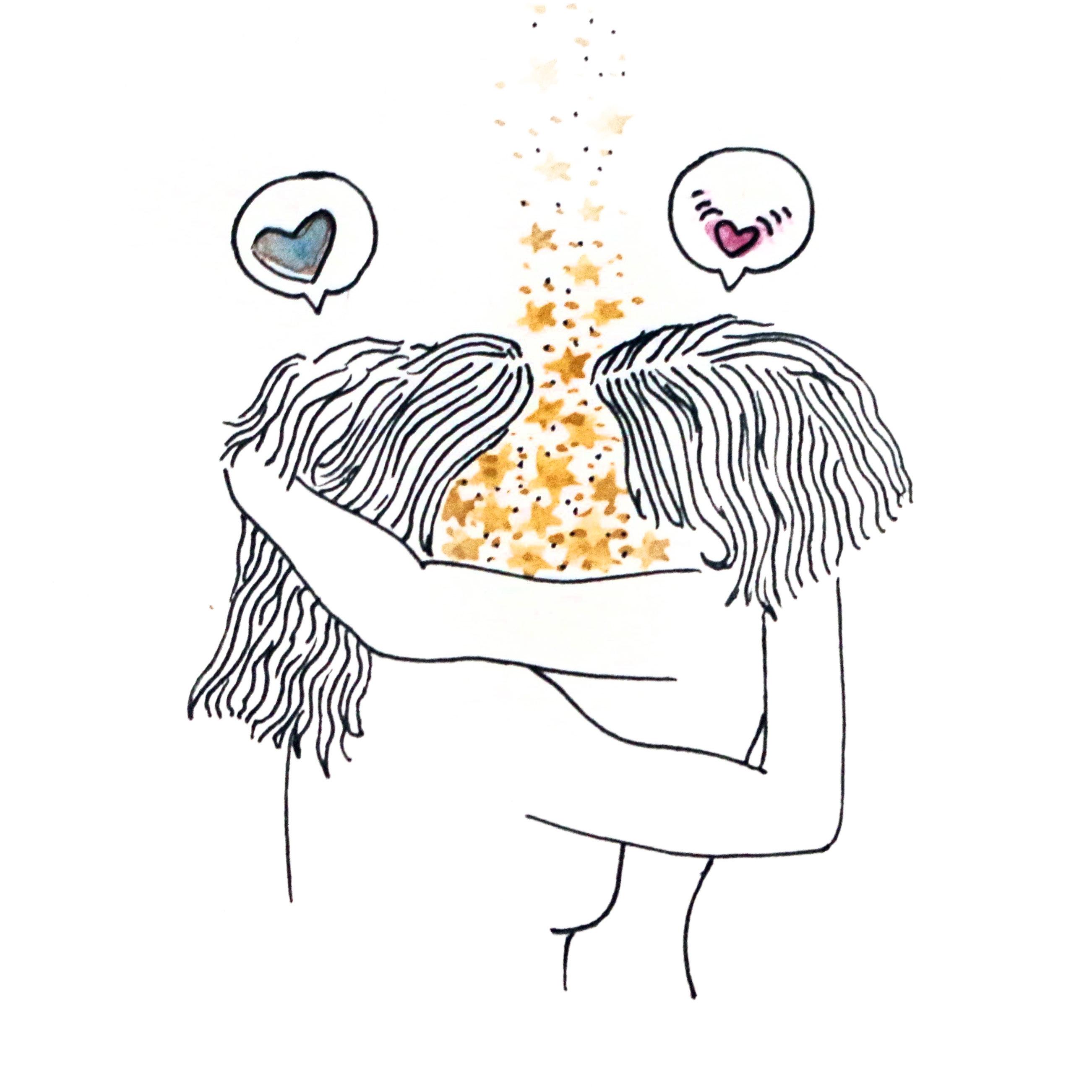
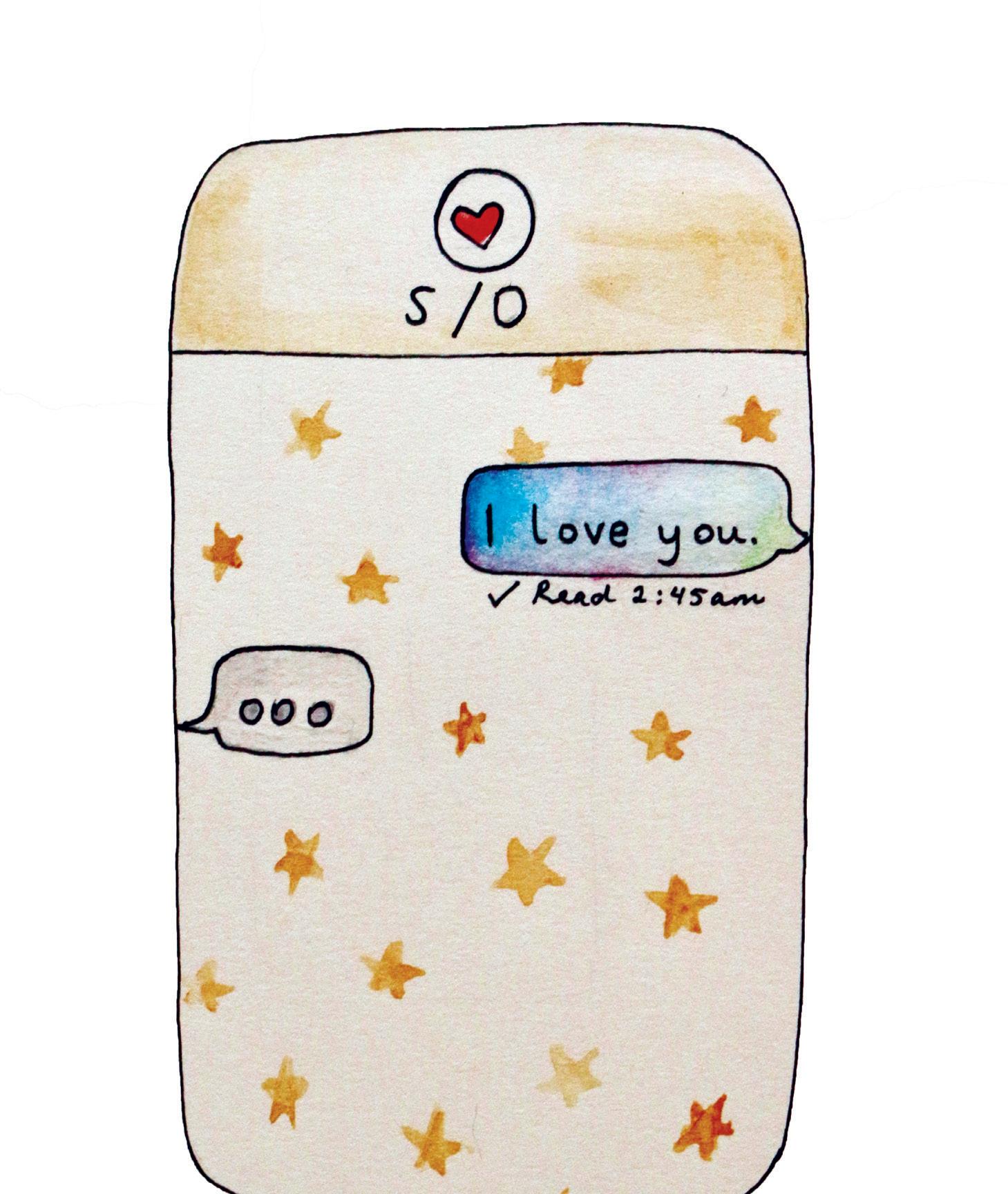
Iwas a socially awkward late bloomer, not to mention the classic “good girl,” so naturally when the news slipped out to my very small high school that everyone’s favorite prude was dating a textbook “bad boy,” life got a lot more complicated.
I’d been keeping it quiet that I’d started going on dates with the boy who got arrested for stealing jeans from Abercrombie. I knew my wholesome friends would think I was trying to be something I wasn’t and that the popular people I drifted amongst would think of the situation as a joke, despite the fact that the two of us were serious.
It was great: we could freely be ourselves. There were no societal pressures and I didn’t have to worry about PDA. But it all came crumbling down when he posted a #wcw (woman crush wednesday) picture of me without asking my permission, two weeks into our relationship.
Although he meant no harm, I was still offended by the fact THAT he didn’t ask for my opinion on announcing our relationship only two weeks in. I had been keeping quiet for a reason and now this post brought both positive and negative attention to us. A friend even sent a snide text after the post asking me if I was still a virgin.
While some don’t mind attention and others even love it, there are people who shy away. Perhaps someone’s significant other is of a different political or religious background and they’re not ready to tell their friends and family yet. Maybe someone hasn’t come out yet, is still questioning, and isn’t ready to announce their sexuality. Maybe someone is insecure about the way they look in comparison to their partner, or perhaps they’re just not into the mushy gushy stuff. Whatever the case, if your significant other doesn’t want your relationship out in the open so soon, it’s important to respect that.
You’ll eventually have to tell the important people in your life— family, friends—because, unfortunately, you can’t hide your partner away forever. However, it’s okay to be private in your newfound love while you’re still figuring out your relationship and whether you’re are happy with its current state or not.
It was a month and a half in that my current boyfriend posted a picture of me on Instagram as a birthday post. He asked me the night before if it was okay and I said yes. This was our social media debut, but I felt as if enough time had gone by and was happy he checked with me first. Until that point, I had been terrified of posting anything in fear of him thinking I was too clingy too soon. A few people knew we were dating but until then, although we were official in everyday life, we weren’t a thing yet in the digital world. It was his post that I used as the green light to go ahead and openly comment about our dating, both online and in person.
Just because one couple posts a million things online about their relationship, does not mean you have to. The internet allows people to openly comment on someone or something due to the fact that they
have a screen to hide behind, and if you are not ready to expose your relationship to the eyes of others and possible negative commentary, it’s not worth the stress.
Every relationship is different, and there are numerous combinations of personalities and sexualities that lend to conflicting opinions about social media. There also tends to be an overwhelming pressure to share every aspect of your life on social media, and this sometimes leads couples to post sooner than they want to. Overcoming this kind of pressure is incredibly difficult, but I realized that my relationship is just that, my own. When my boyfriend asked me to post a photo of us, we made the decision because we wanted to. This may not be the same for other couples.
One solution is to tell each other what you do or don’t like within the first few weeks of dating. If you are a private couple, wait however long you need before posting, or don’t post at all! On the other hand, if you are a social couple and enjoy putting yourself out there, go ahead and post immediately! There is no time limit or need to post. What matters most is that you both agree with the decision.
Know that you are not defined by the pictures you post. Relationships are about spending time with someone that makes you happy. If you capture a moment that displays that happiness and you want to share it with the world, do it without fear of backlash. Or, if you both want to keep your relationship private, for whatever reasons, you should. Remember that the only people in the relationship are the two of you. YM
You, Me, and Anxiety
WRITTEN BY JESSICA FILIPPONE
Relationships act as a mirror—reflecting our insecurities, mistakes, and unpleasant habits. There is nothing more anxiety provoking than looking into a mirror and seeing yourself—not the you that is primped and pressed, but the naked you.” — Amy Przeworski, Ph.D., PsychologyToday.
There are always common issues that occur within relationships: believing you know someone enough that you can accurately read your partner’s mind, refusing to address problems directly, what-if thinking, small communication problems that eventually add up to something bigger. What happens when one of those involved have either anxiety or depression?
Anxiety and depression are highly comorbid, meaning the two disorders are often seen together.
According to the Anxiety Disorders Association of America, generalized anxiety affects approximately 1.5 percent of the U.S. population aged 18 and older in a given year, which is about 3.3 million American adults. Many people with an anxiety disorder also have a co-occurring disorder or physical illness, which can make their symptoms worse and recovery more difficult.
The World Health Organization also claims that depression is one of the more common mental disorders. Globally, an estimated 350 million people of all ages suffer from depression. In relationships that are touched by anxiety and depression, conflict is more likely to occur and it diminishes your ability to connect with your partner, creating doubts about your entire relationship. This has more potential to fuel major issues between partners.
Shannon Kolakowski, Psy.D., refers to depression as a “master manipulator” in her book When Depression Hurts Your Relationship.
“The primary feature of depression is distortion, meaning your perception of life—including your relationship—is easily warped and represented in a more negative way,” writes Kolakowski. “You might have more negative thoughts about your
partner and your relationship. If your relationship is struggling, depression may be the hidden culprit,” she says.
But, there is some good news. A study conducted in the early 2000s by three university professors concluded that building a strong and loving relationship can fortify you and your partner against the powerful effects of depression. But the major key to know what you’re fighting against is being able to identify when and how depression is interfering in your relationship.
“My partner’s depression isn’t always present,” says Jonathan Kellen, a senior at Boston University. “But when it is I can feel it over a mile away. You really need to look at the tell-tale signs. Sometimes it’s so obvious but it really just takes knowing your partner to the extreme.” Kellen recalls his girlfriend starting to distance herself from him and their group of friends when her depression starts to hit.
Kathleen Mongreat, Kellen’s girlfriend of over a year, says, “Sometimes I don’t even realize how badly my depression is acting up, I get so lost in my own head. He drags me out of it and makes me talk to him about it […] and I’m so thankful for that.”
Chris Iliades, MD, notes that women tend to experience more sadness, guilt, and a lack of self-worth, while men may react to depression with anger, frustration, or even abuse. The problems that come with mixed anxiety and depression can be attributed to sleep trouble, concentration difficulties, high irritability and worry, expecting the worst, and being constantly on guard.
“I don’t even want to say this, but sometimes my partner can trigger my depression by expressing melancholy or negative thoughts,” says Mongreat. “I know he doesn’t mean to. It’s like if we fight and if he says something that makes me feel bad about myself, it may trigger a depressive episode. But that doesn’t mean I don’t want him telling me how he feels. His mental health is just as important as mine.”
According to Kolakowski, “Someone with lower self-esteem and depression may have a bad time with their partner and think, ‘She doesn’t really care about me. I knew it wouldn’t last’, whereas someone with a healthier sense of self-worth may think, ‘Right now, we’re going through a tough time, but I know our relationship can withstand this. We’ll work it out.’”
Anxiety sufferers have reported that the condition impacts all of their relationships, but their romantic relationships suffer the most. Anxiety is a condition of “near-total self-absorption,” made only worse by the fact that the sufferer typically realizes that he or she is being self-absorbed and grieves over his or her sad inability to see past themselves. An anxiety sufferer can feel as if he too is imprisoned in his own mind, but with the demonic twist that his mind can think of nothing but itself.
“We’re a weird combination of people because she has depression and I have anxiety,” says Kellen. “We can possibly trigger each other, which isn’t the best. But we also have a complete understanding of what’s going on in each other’s minds. In a weird way, it’s comforting.”
Kolakowski notes that you may have an internal script that dictates the right things your partner should say and how they should support you. “When the other person inevitably deviates from your script, the depressed part of you may react with dissatisfaction, disenchantment, or feelings of failure.” These reactions can further impact one’s depression or anxiety, as can the breakdown of responsibilities at home and work, which add pressure to one’s anxiety or depression. And on the flip side, features or specifics of a relationship can also affect levels of anxiety or depression.
According to CNN, anxiety disorders cost the United States more than $42 billion a year, nearly one-third of the total "economic burden" of mental illness in this country. Anxiety and relationships are a tricky combination, and if you throw in
other mental health issues, it can be even harder. With anxiety, a person may already struggle to keep his or her emotions and fears in check. Allowing yourself to be emotionally open and vulnerable to another person can be challenging, confusing, and overwhelming.
Both depression and anxiety can make romantic relationships, as well as less intimate relationships, a little more difficult than usual; it’s a lot more than just an amount of money affecting our country. But when a couple is able to overcome this, it can bring an incredible bond that can last forever. For help finding treatment, information, and support, visit the website of Mental Health America. Below are some tips from Everyday Health about communicating and helping a loved one dealing with anxiety or depression.
Things you can do to help someone with depression or anxiety:
• Let the person know if you've noticed a change in their behavior
• Spend time talking with the person about their experiences and let them know that you're there to listen without being judgmental
• Help the person to find information about depression and anxiety from a website or library
• Encourage the person to face their fears with support from their doctor/psychologist
It would be unhelpful to:
• Put pressure on the person by telling them to 'snap out of it' or 'get their act together'
• Stay away or avoid them
• Tell them they just need to stay busy or get out more
• Pressure them to party more or wipe out how they're feeling with drugs and alcohol YM
WRITTEN BY JULIA WOOD PHOTOGRAPHY BY EMME HARRIS
Let’s talk about intimacy. It’s that gross word your mother uses to ask you if you’re having sex, but remove sex completely from the picture for a second. Dictionary.com defines intimacy as, “a close, familiar, and usually affectionate or loving personal relationship with another person or group.” Well, intimacy and consensual touch can now be bought and paid for.
Cuddling in order to heal psychological wounds or anxieties is the latest trend sweeping the nation.
“I have an equal passion for business and the concept of yoga and finding out who you are and sort of anything related to that. That intersection of spirituality, business, and health and wellness is the Cuddlist,” says Adam Lippin, the founder of the Cuddlist—an online business that allows users to, after extensive screening, pay to snuggle with a professional cuddlist.
Cuddlists are trained professionals stationed around the world, often former massage therapists or psychotherapists who have become Cuddlists because they knew many of their clients really needed physical affection; however, within the boundaries of their own professions, this is illegal.
The Cuddlists go through an 8-10 hour online training course combined with a mandatory cuddle session with a certified and employed Cuddlist. The pre-existing Cuddlist evaluates the candidate at the end of the session. Through this training they are taught how to be psychologically present with other people as well as how to facilitate conversation about consent. This means teaching people how to be verbal about what do or don’t like regarding physical touch.
“If you are a potential client, then you would go to our website and read our code of conduct, then search by location for a particular Cuddlist,” says Lippin. Small biographies about the Cuddlist coupled with photographs of them are available online so the client can find his/her perfect match. The complexity lies in the need for cuddling, which is ultimately something quite beautiful.
“My underlying philosophy was that human connection is the most important thing we have,” Lippin explains. “So how do I help foster that?”
People do not venture to the Cuddlist to find sex. “I think it is more than possible to separate intimacy from sex. I have experienced it and I have seen multiple people experience it,” says Lippin. Many people who inquire about a session are suffering from depression, anxiety or other forms of mental illness, or are survivors of sexual assault.
Once the process of finding a Cuddlist is complete, the client requests a session with the Cuddlist and signs off on the code of
conduct. These extensive rules ensures the safety of the Cuddlist and client. It outlines the boundaries of the cuddling sessions and the importance of verbal consent throughout each session. It even outlines where the Cuddlist may or may not touch a person and addresses what both parties must be wearing.
“At that point the request is sent to the particular Cuddlist’s email and they will respond to the potential client. And depending on what the Cuddlist needs to do, they screen the client to make sure that he or she is appropriate for them, and vice versa—be that a phone call, an email, or a meeting in person,” says Lippin.
The next step is to meet with the Cuddlist for the session. This happens at the client’s or Cuddlist’s home, depending on where both parties feel comfortable.
“I guess the thing that I try to impress upon people is that, especially when you are in your 20s and 30s, you’re really conditioned for sex. But once you’re in your 50s and 60s and sometimes older and you have had some loss, there comes a point when sex doesn’t serve them anymore,” says Lippin. “People are looking for a connection. It’s not a sexual thing.”
Cuddling is following in the footsteps of other healing models that were previously not recognized or completely discredited by mainstream society. For example, acupuncture and alternative medicine are only recently more widely recognized as legitimate wellness practices. Lippin’s ultimate goal is to have cuddling medically accepted and covered by insurance. Before this can happen, he must change people’s ideas about the “cuddling market.” Currently, paying someone to cuddle seems a bit taboo and isn’t often thought of as reputable. Lippin aims to shed new light on the business.
“Holding someone and healing someone and having them feel your breath… There’s a sort of magic to it. It’s energy, pure energy,” says Lippin.
In the near future, the Cuddlist will participate in a study conducted by the University of San Diego. The school will examine the ethics of cuddling and the effects it has on people. Prior to cuddling, the participants will fill out an evaluation answering questions ranging from their likes and dislikes to a sliding scale of their mood. For example, participants will rank their compassion for others and the amount of positive and negative emotions they are feeling at the moment of the evaluation. They’ll fill out the same evaluation after their session.
The study’s goal is to provide the business with areas of improvement as well as concrete evidence that cuddling can be, in fact, a healing modality for many. YM
WRITTEN
BY
HANNAH MCKENNETT
PHOTOGRAPHY
BY
LVWENYU ZHANG
“So does the story truly deserve the weight our culture gives it? In the end, it doesn’t matter whether the meeting was stickysweet, cringe-worthy, or plain boring—relationships only work with the right person.”
So…how did you guys meet?”
It’s the infamous line that every couple faces, allowing (or forcing) them to relive that first moment that brought them together. It’s the basis of every romantic comedy, and there are even entire blogs built around it—the Instagram account, thewaywemet, has 385 thousand followers and counting (and yes, I am one of them).
In a way, a couple’s first encounter, the one that changes everything, has achieved enough power in our modern romantic culture to stand as a definition of a relationship. But should a partnership really be defined by its conception?
With the norm of arranged marriages far in our past, our society has acquired a modern fascination with the circumstances under which two lovers meet. Our media shows that we want them to be mythical, whether they involve two teenagers from rival families, or a wealthy business man and his weekend prostitute. It seems that we don’t judge, as long as the story is worth telling (and, of course, ends with a passionate makeout session). We’ve even fastened a term for this legendary meeting: a “meet-cute,” or a scene in which a future romantic couple meets for the first time in a way that is considered adorable, charming, or amusing. Just think of Troy and Gabriella, two strangers picked to sing a romantic duet together on New Year’s Eve—how could it not end in love?
As society favors the meet-cute, it frowns upon our more realistic and increasingly common ways of meeting partners: dating sites and parties. This is because of intention; most young adults download Tinder or step into a party looking for a hookup, and there’s nothing adorable or charming about that. However, the hookup culture of today is nothing surprising to us, and with a growing freedom of sexuality and all of its expressions, it’s not shameful, either. And, regardless of intention, it actually has a steady output of successful relationships.
According to a 2012 study led by Stanford sociologist Dr. Michael Rosenfeld, “close to one-fourth of Americans now make initial contact with their spouses online.” And it’s not always because they’re looking for a life partner, either. When Cosmopolitan asked
Katherine, a person just like you and me, the illustrious “how did you guys meet” question, she responded, “Both my husband and I had joined Tinder to get back into the dating scene after having just gotten out of long-term relationships. Neither of us had any intention of getting into a serious relationship through Tinder, but alas, fate had other plans.” Similarly, my roommate met her current boyfriend at another sleazy Saturday-night house party, when she approached him saying, “Aren’t you the kid that super-liked me on Tinder?” They’re going eight months strong as of October, somehow finding a loving relationship from the double negative of a dating site and a party.
So is a meet-cute really all that it’s cracked up to be? I used to fawn over the idea of meeting the love of my life while transcending social barriers in Saturday detention, or by being overheard singing by a hot rockstar at summer camp, thinking that a “what are the chances” meeting would make the love so much more meant to be But it can’t be proven that these stories have any correlation with what happens between two people after the inciting incident. Meetcutes don’t actually always have happy endings: during a walk in the gardens last spring, I witnessed a jogger run up to another jogger and ask for her number. “We met while jogging in the Boston Commons, surrounded by flowers” sounds cute in theory, but, as the woman revealed when she turned him down with a furrowed brow, sometimes we just don’t want to be bothered.
Love is unexpected, but that doesn’t always mean that it’s sparked by a tantalizing stranger at Bloomingdale’s reaching for the same black cashmere gloves as you. Sometimes, somehow, it comes in the heart of a hookup world. And, even less mythic, often the way we met is as simple as “through mutual friends.” So does the story truly deserve the weight our culture gives it? In the end, it doesn’t matter whether the meeting was sticky-sweet, cringe-worthy, or plain boring—relationships only work with the right person. That’s not going to be affected by whether the first eye contact takes place while standing in pouring rain versus on top of beer-flooded floors.
It doesn’t matter how we met, only that we did. YM
Pretty Thoughts
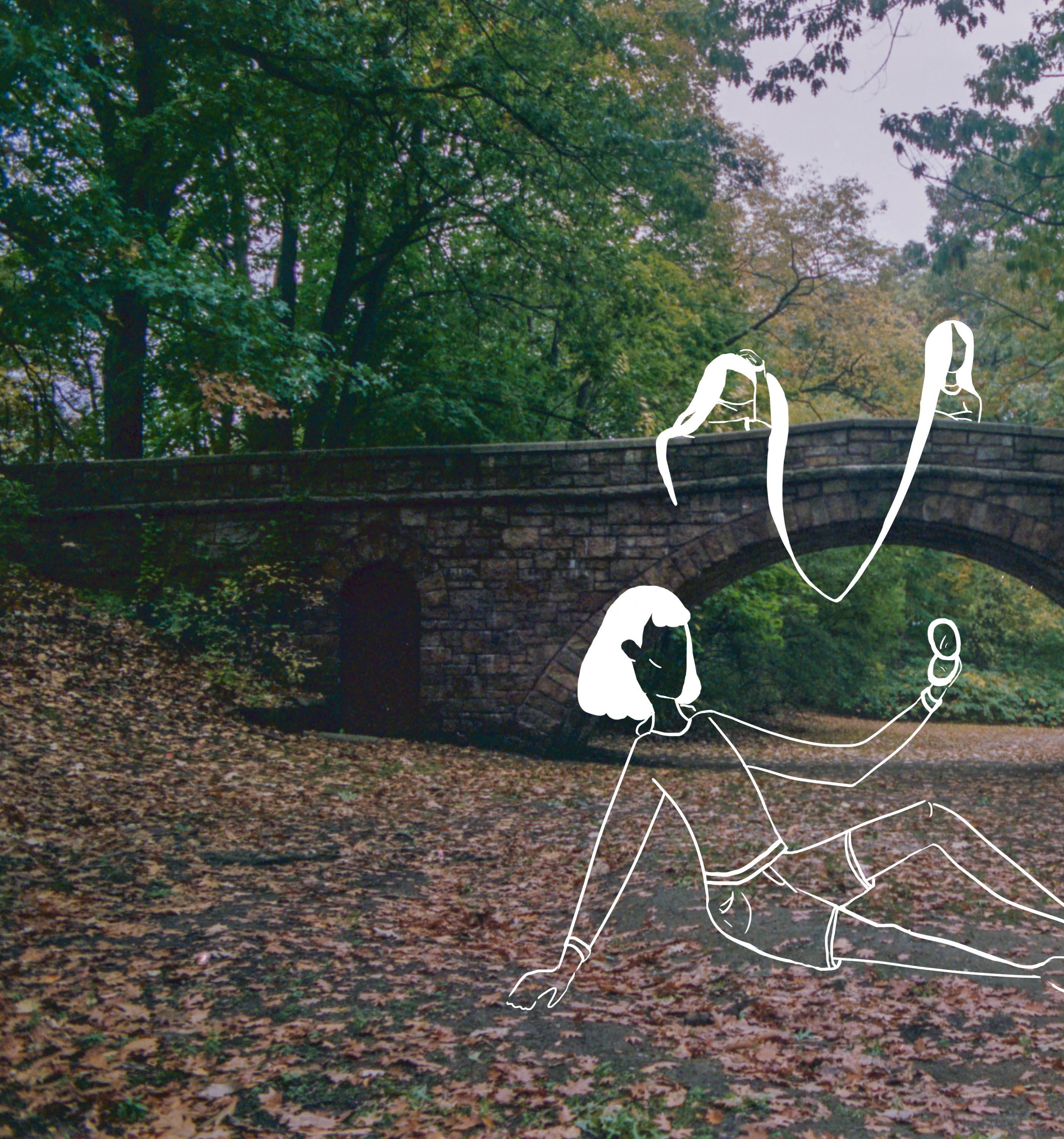
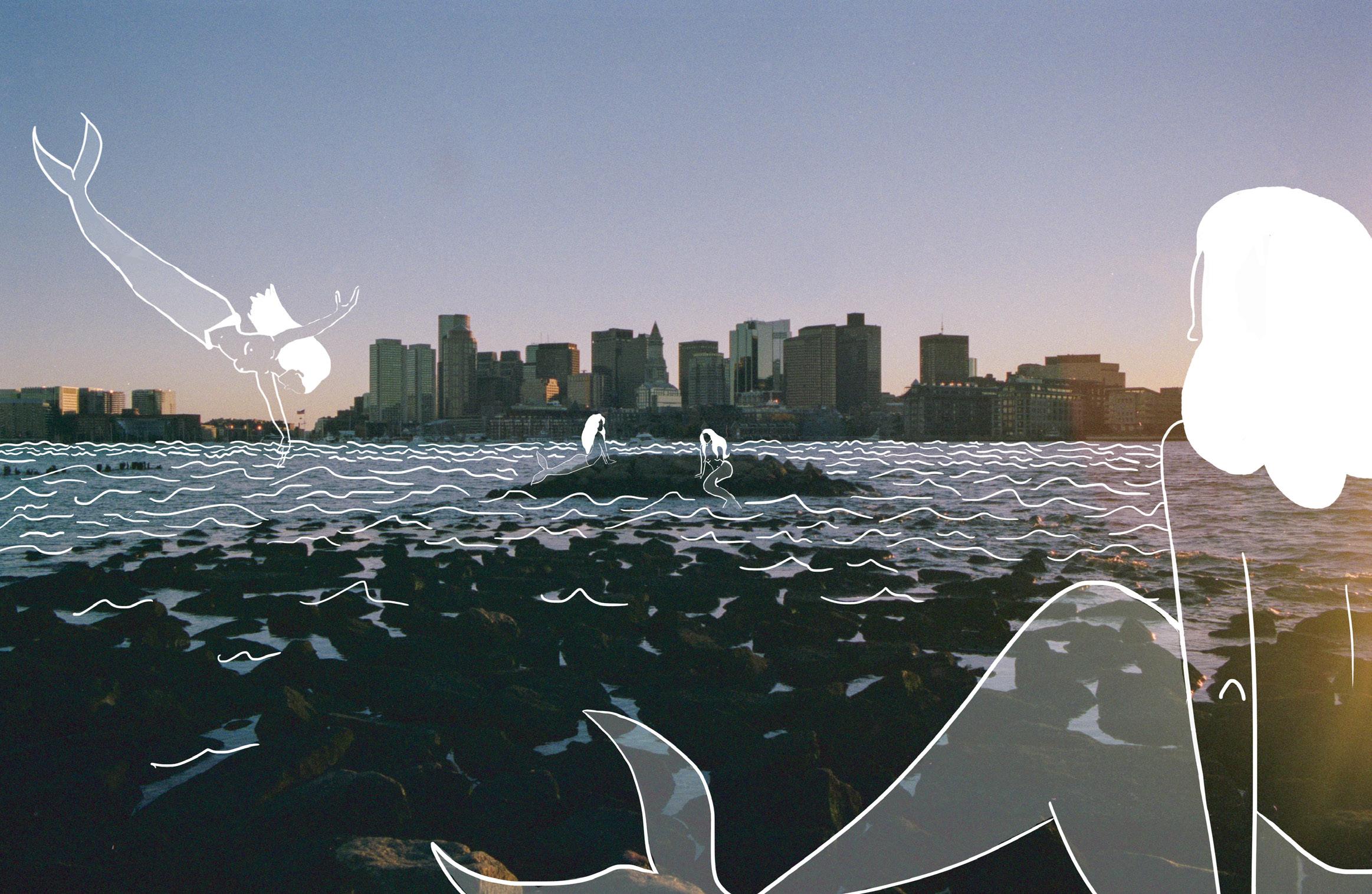
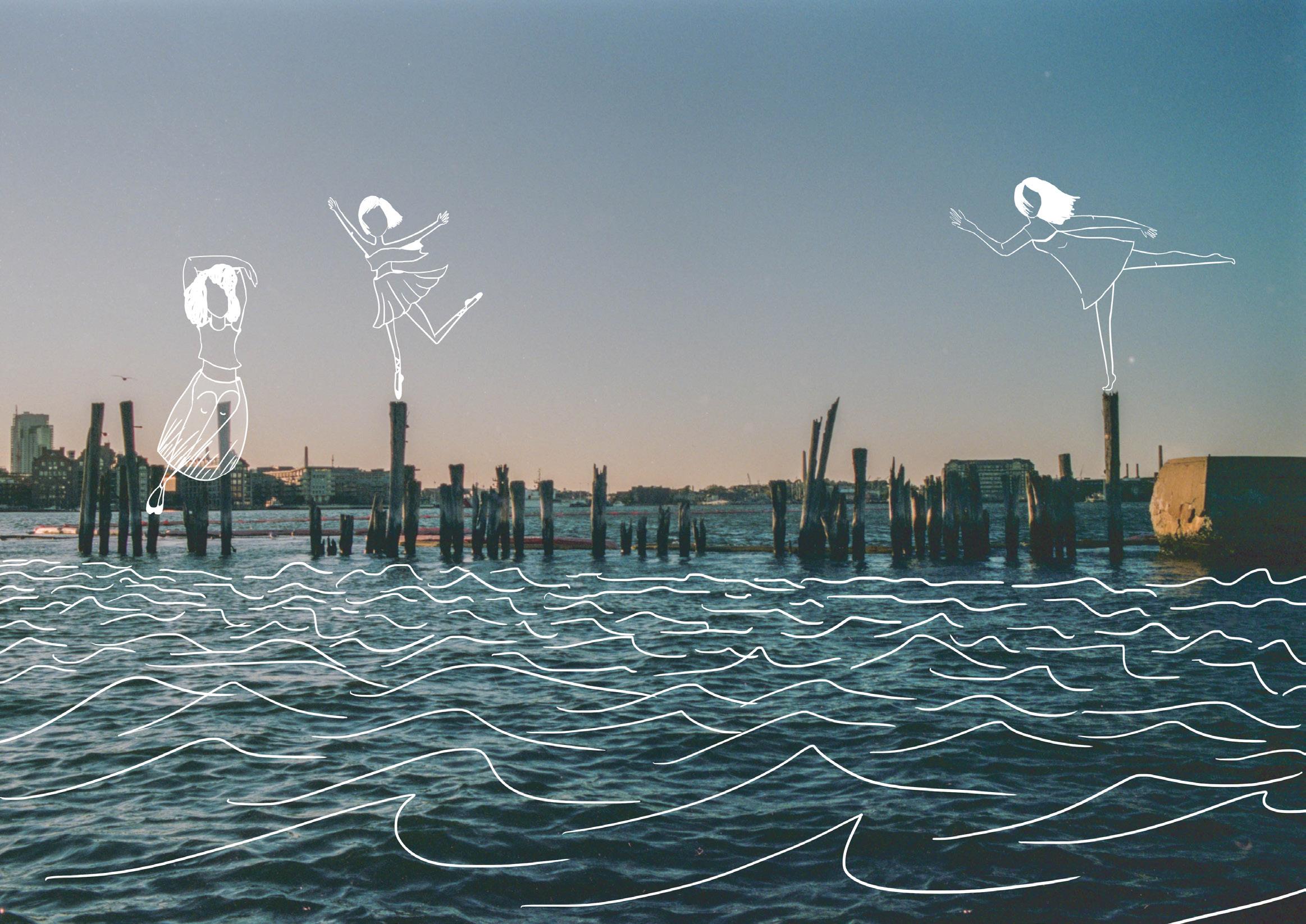
PHOTOGRAPHY BY STELLA CHOI
ILLUSTRATION BY TAYLOR ROBERTS
WRITTEN BY MEGAN CATHEY
PHOTOGRAPHY BY CAITLIN STASSA
An Unconventional Outfit Guide
Articles on what to wear to events like weddings, first dates, and job interviews are a dime a dozen. But what about everyday events? Where are the guides for those? Well, fortunately, Your Mag is here to fill that void.
WHAT TO WEAR WHEN YOU HAVE A FOUR HOUR NIGHT CLASS AND KNOW YOU’LL END UP AT THE TAM AFTERWARD
Four hours have the tendency to lead to whiskey sours, so it’s best to plan ahead. Yet, it’s hard to pinpoint an outfit that says “I’m here to learn, yet I lack a moral compass.” Your best bet is a pair of jeans comfortable enough to sit in for a long period of time, and that you don’t mind getting some questionable spills on. Same goes for your top—unless you want one of your dry-clean only shirts reeking of beer and cigarette smoke. And fancy shoes are a no-no, unless you like trashing nice things. Then go ahead!
You also have to keep temperature in mind. The Tam and Emerson classrooms are similar in a couple of ways: one, both are filled with Emerson students, and two, the temperature in each is unpredictable. That being said, bring a cardigan or sweatshirt that you can easily put on or take off. This is not clothing related, but the most important thing is to make sure to bring a snack—going from a long class to the Tam requires proper fuel.
WHAT TO WEAR TO CVS TO PICK UP UTI MEDICATION KNOWING THAT YOU’LL SEE AT LEAST THREE PEERS
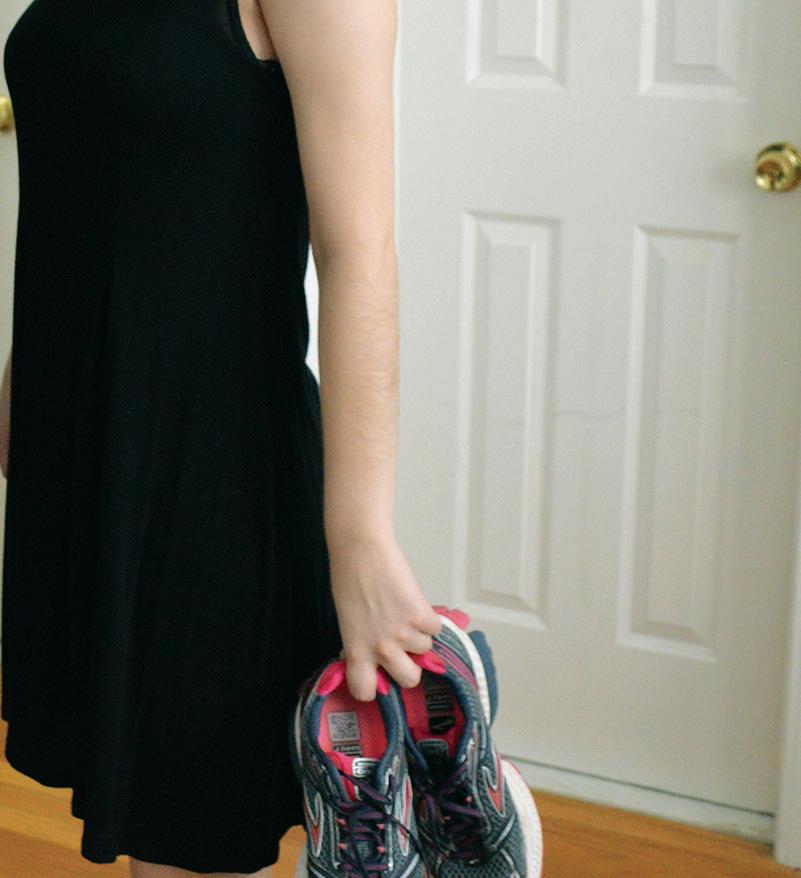
UTIs happen to the best of us, and they’re nothing to be ashamed of. That being said, sometimes you just don’t want people knowing the sitch with your snatch. Your crotch is throbbing and you need to go to CVS to pick up some medication pronto. But more likely than not you’re bound to see at least three people you know. Realistically no one is even going to see the box of Azo Urinary Pain Relief in your hand, yet you and your throbbing groin want to be as inconspicuous as possible. And you also don’t want anything tight rubbing up on you. Try a black flowy dress with your most comfortable pair of underwear (your crotch needs to breathe!). Hell, go full on Coven and pair your dress with a floppy black hat and black boots. You’ll look so spooky that no one will want to approach you! Is that a witch floating through the aisles of CVS? No, it’s just you, picking up your magical UTI potion.
WHAT TO WEAR TO PICK UP A COUCH FROM SOMEONE ON CRAIGSLIST, WHOM THROUGH STALKING
ON FACEBOOK YOU FOUND IS REALLY ATTRACTIVE
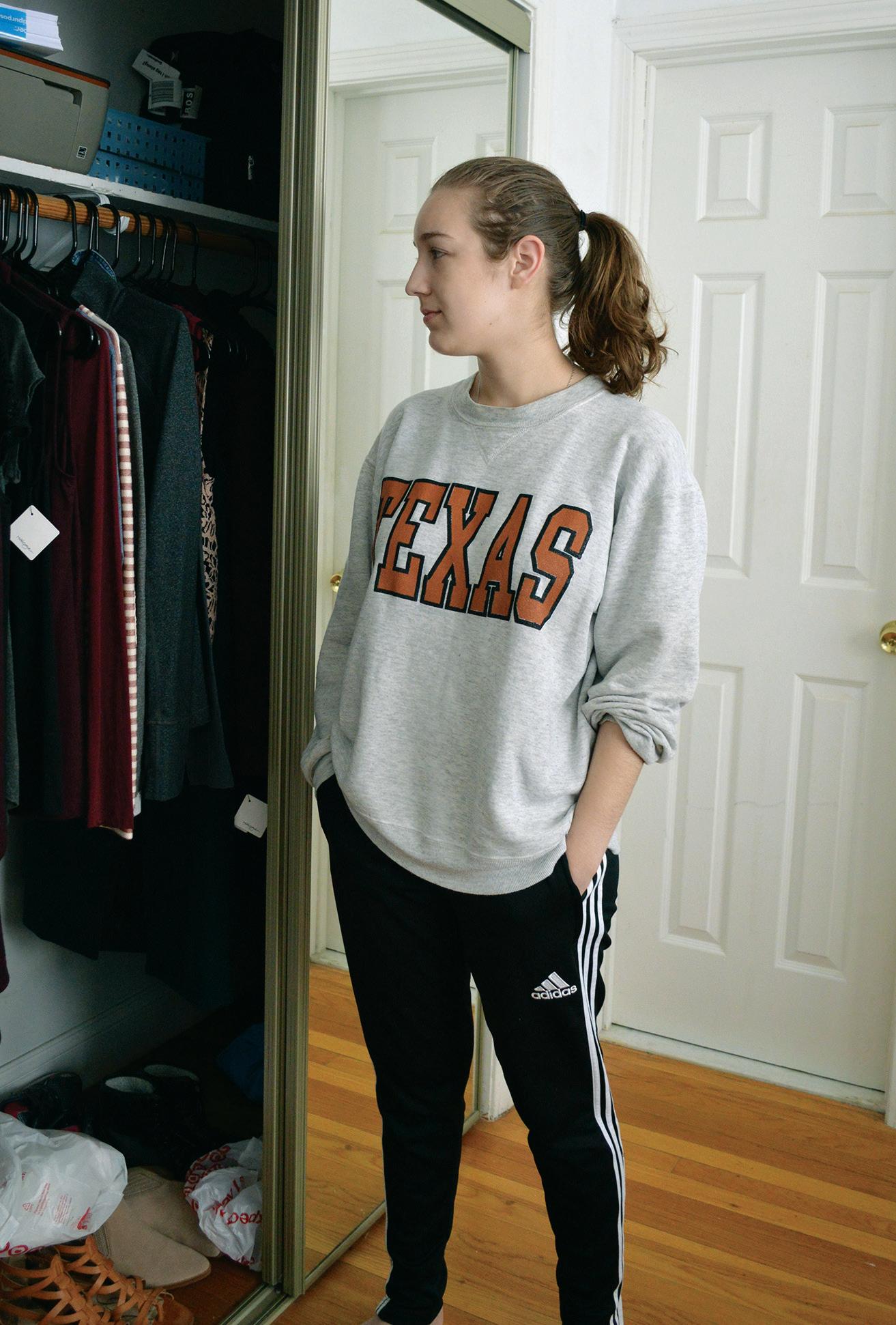
Emerson Free & For Sale failed you, so you’ve found yourself on Craigslist scouring for an affordable couch for your apartment. And good news! You’ve looked up a potential seller on Facebook (to see if they look like a serial killer, of course) and they’re a total babe. Now there’s no way that you’ll wear your ratty gym clothes to go over to their place. But you also don’t want to wear your Sunday best (you are going to be moving furniture, after all). Compromise: athleisure. Break out those sleek sweatpants that make your booty sing. Top it off with that stylish, overpriced sweatshirt you bought from Urban Outfitters. On your feet—Nike Airs, naturally. Now you’re ready to score that couch, and maybe something a little extra. As they say: another person’s trash, an opportunity to smash, right?
WHAT TO WEAR TO YOUR GRANDMA’S BIRTHDAY BRUNCH THE MORNING AFTER A ONE NIGHT STAND
You go out the Saturday night before your grandma’s 85th birthday brunch. You tell yourself that you’ll only have one or two drinks and head home early. And yet, you lock eyes with someone from across the room. And oops! You end up hooking up. As much as you love Grandma Edie, you don’t want her knowing about your deviant ways. What you wear depends on where you hooked up. Did it happen at their place or yours? If you’re at your place then call your new friend an Uber and hop in your shower to wash the sin off. Wear something nice, obviously, but nothing too prim and proper. Anything too precious will seem like a flat out lie—Grandma Edie may suspect you’re hiding something.
But if you slept over at theirs, there are some logistical hurdles you need to jump. Is their place close to yours, meaning you can go home quickly and change? What time did you wake up (or what time did you stop having morning sex?), and how long will it take to get to the restaurant? If there’s no way for you to change/shower in time, then as a last resort call and tell Granny that you’re sick and can’t make it. Better that than rolling up to brunch in your dirty party clothes smelling like sex and Svedka. Send her an Edible Arrangement as an apology—everyone loves those. YM
BY
ILLUSTRATION BY
WRITTEN
DELIA CURTIS
HAYLEY JOSEPH
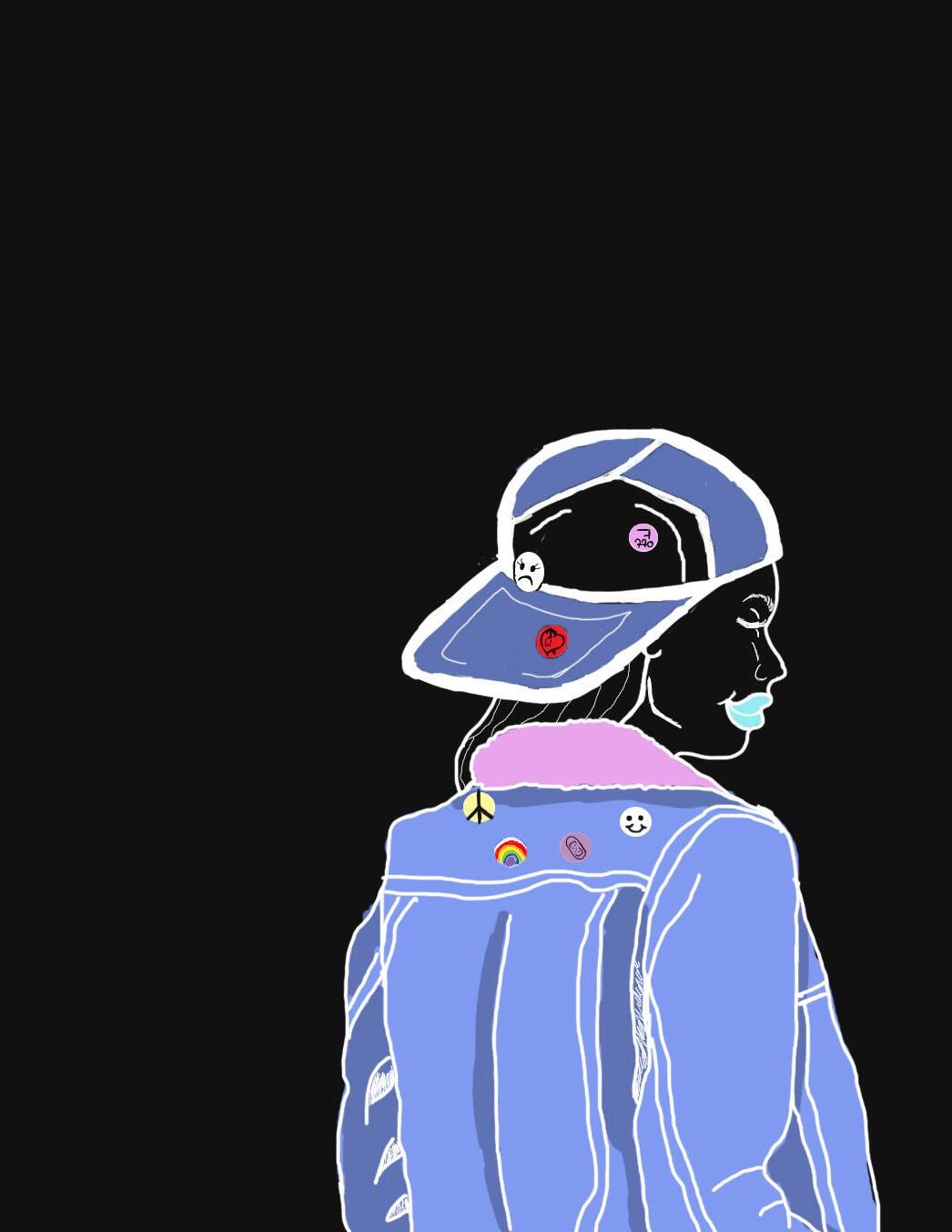
As I walk down Boylston Street, I notice people’s accessories. I notice what they’re wearing and how they’re wearing it, but what I find most interesting is their flair. Flair is anything from enamel pins and iron-on patches to buttons and brooches. People have amped up their shirts, backpacks, bags, and, especially, their denim jackets. Your outfit is your canvas, and you are the artist that’s able to decorate and accessorize however you see fit.
This trend of accessorizing jackets with flair has existed since the 1980s, but it has recently resurged with the rise of independent enamel pin and patch designers. The flair itself says just as much about the person that buys it as it does about the designer. Flair is a way to make a basic piece of clothing original and unique. It allows the wearer to personalize their wardrobe and turn their clothes into wearable art.
Absolutely anyone can wear jacket flair—it’s for people who want to make a statement no matter how big or how subtle. Decorating different elements of your outfit is a mode of self expression that allows you to display your passions, interests, and views. This mode of wearing art lets you project your individual visual tastes into your style and wardrobe, forging the gap between fashion and art. Oftentimes these two entities intermingle, but with pins and patches you physically get to wear a piece of your favorite designers’ art work right on your outfit.
The best part about flair is that the possibilities are endless. There are so many different ways of finding pins and patches, whether in a store, in a thrift shop, online, or through Instagram. Much of the craze over flair stems from the idea that you get to collect art in an accessible way. There are thousands of designers, mainly illustrators, that have started their own businesses making pins, patches, and other wearable forms of their artwork, such as Tuesday Bassen, Georgia Perry, and Erik Buikema.
Some flair makes statements, displaying political views or passions. There are enamel pins of everyone from Bernie Sanders to Kim Kardashian. There are feminist patches, buttons proclaiming that a person is a Democrat, and pins that


declare “I’m a Vegetarian!”. These accessories give people a glimpse into who you are before they’ve even talked to you.
Bitsy Skerry ‘18 is a huge pin lover. She collects all kinds of pins, mainly ones that she’s thrifted or has been gifted from friends and relatives. She displays her pins on her signature denim jacket that she found in the boys’ section of Savers. She says she seeks out pieces that represent her and that are conversation starters. She believes that pins and art are ways for her to connect with others. In terms of decorating her jacket, Skerry says, “I like to play around with the positioning of pins to allow the eye to visually move across the denim jacket to tell a story. Pins are like a paragraph that allow you to read a person.”
Sometimes people think that they can’t rock a denim jacket full of flair, but there are so many different ways to wear it. You can try wearing flair on another clothing item like a leather jacket, or a tote, messenger bag, or backpack. Some people will use their flair as room décor. Personally, I like to use my patches as wall art. I think they create an interesting textural dynamic among Polaroids and art prints. To decorate with buttons and pins, stick them in a little cork board or on some fabric in an embroidery hoop.
To find flair locally, check out thrift shops like Savers or Goodwill, or hop on Instagram and browse designers like Georgia Perry, Valley Cruise Press, Tuesday Bassen, and Culture Flock. Some designers, like Georgia Perry, tend to focus on portraits of celebrities and cultural icons in their art, while others, like Valley Cruise Press, make pins and patches with beachy themes. Tuesday Bassen’s designs are all about female empowerment, and Culture Flock’s flair is quirky and whimsical. Most designers have their own websites and/or Etsy accounts where they sell their work, and their Instagrams usually have links to either of these. There are thousands of flair illustrators and designers, allowing you to find flair that fits your personal style.
Clothing and accessories are a physical representation of one’s values and interests. Flair is one fun, easy way to tell people who you are and what you’re about. YM

BAREFACED
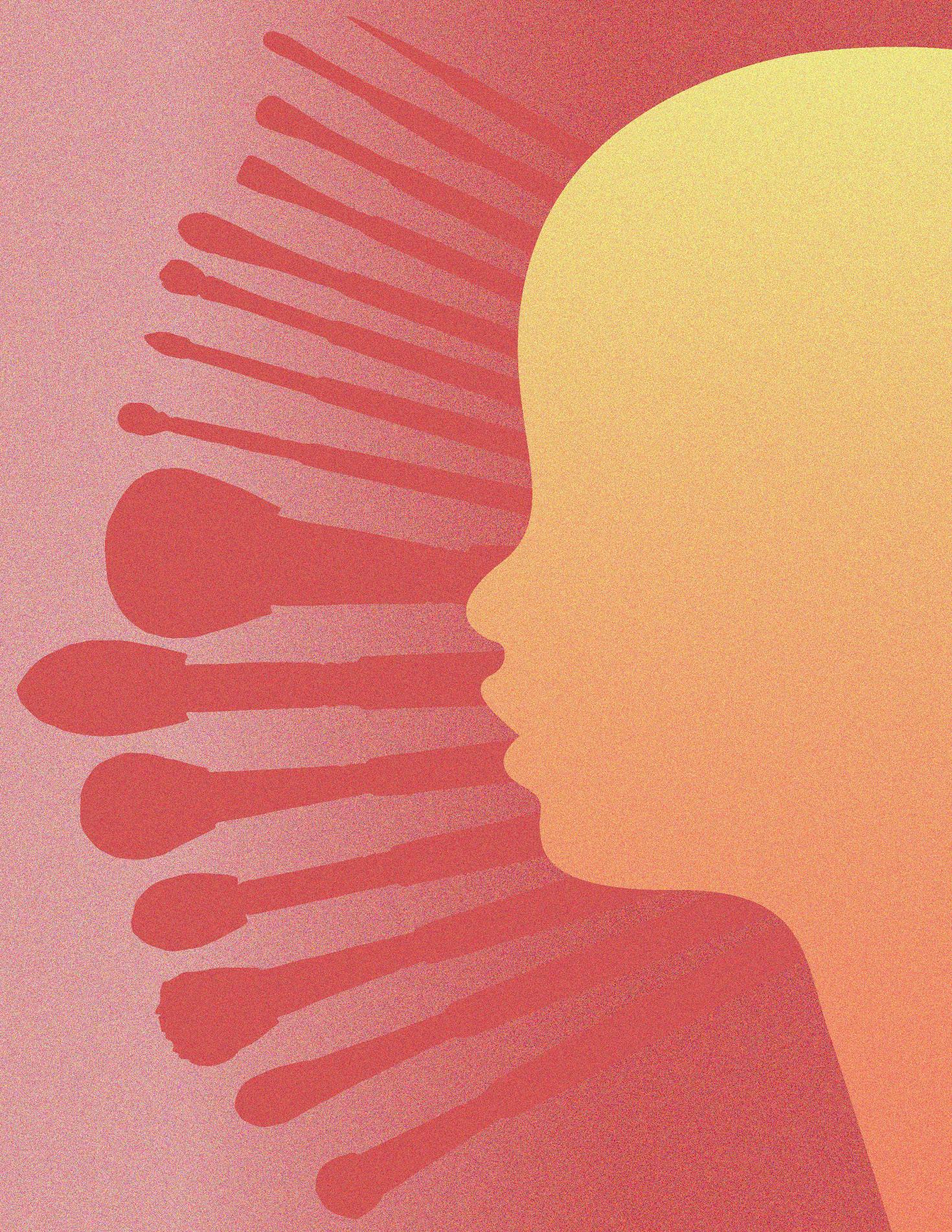
Coming face-to-face with my insecurities at the mental hospital
WRITTEN BY MEGAN CATHEY
ILLUSTRATION BY BECCA CHAIRIN
As I rode in the ambulance from the Mass General emergency room to McLean, watching out the back window Cambridge, Somerville, and eventually Belmont pass by, I thought about how I needed to wash my face. It was about six in the morning according to the EMT, meaning I had been wearing the same makeup for about twenty-one hours. My mascara had clumped to such a degree that my eyelashes were now only three large lashes above each bloodshot eye. I felt two zits welling underneath my grimy, dry skin.
I spent the majority of my thirty-minute ambulance ride not thinking about where I was headed or what had led me here, but rather thinking about how long I had been wearing my contacts and makeup. Maybe I was distracting myself from big, scary thoughts—something I usually did well, until I didn’t, hence the trip to the emergency room the previous night.
When you’re admitted into a mental hospital, you leave all illusions and fronts at the door. You forfeit secrecy along with your “sharps,” i.e. items with which you could potentially harm yourself. There’s no room for façades. When a mental health specialist or a nurse asks, “How are you?” You’re not obligated to say, “Good, how are you?” You can say, “Well, pretty shitty, actually.” Lying about how you’re doing will prevent you from receiving the help you need. Dishonesty will get you nowhere.
Makeup, among many other things, had been one of my fronts. It was harder to tell from the outside that I was suffering when I looked put together. If I looked fine on the outside, then I couldn’t possibly hold a shitstorm of emotions on the inside. Depressed people look like messes, right? Sweatpants, unbrushed hair—definitely no makeup. Depression often does affect people’s effort in their appearance, but if anything, I put more effort into mine.
I’ve loved makeup since I was a little girl. As a child I’d sneak into my parents’ bathroom and pillage my mom’s makeup door, using my tiny fingers to rub mauve Clinique blush onto my cheeks. When I was thirteen my mom let me pick out my first eyeshadow from MAC. Being thirteen, I chose “Aquadisiac,” a shimmery, impractical turquoise. Through high school I watched thousands of YouTube tutorials, cultivating my passion and skill for makeup. But when does makeup stop being a creative outlet and become simply a crutch?
As a teenager, insecurity racked me like a shawl I couldn’t take
off. In high school, I would wake up at 5:15 (forty-five minutes earlier than I needed to) to apply a full face of makeup. Struggling to keep my eyes open, I’d apply foundation, concealer, blush, eyeshadow, eyeliner, mascara, brow powder, and lipstick. I certainly didn’t enjoy losing an extra forty-five minutes of sleep, but god forbid my classmates saw me barefaced.
During the past three years in college my self esteem had somewhat improved, but feelings of worthlessness followed me from my native Arizona to Boston. Emerson is a more accepting, less vain environment than my private high school was. Yet I still struggled with low self-esteem, especially when I wasn’t wearing makeup or I hadn’t done my hair.
When I looked someone in the eye while not wearing makeup, I was hyper aware of my face. Did they notice the hormonal breakouts on my chin, the dark purple semi-circles permanently under my eyes no matter how well rested I was? Then I would feel guilty for focusing on myself and not paying attention to what the other person was saying, which in effect made me feel worse.
The first few days at McLean, I had to get used to my naked face. Obviously, I didn't use to wear makeup all the time, like when I worked out or when I went to bed, but not wearing makeup around other people was new territory. I had to get used to what I saw in the mirror. I looked so young, so plain. I suppose I could have had my mom bring me some of my makeup, but that seemed superfluous. No one there cared about my undereye circles or uneven complexion, they had their own shit to deal with.
I was the base model version of myself—no smoke and mirrors. I wasn’t Megan the student, Megan the partier, Megan the server, I was just Megan—depressed, anxious, scared Megan.
Over the course of ten days, I adjusted to not wearing makeup. I could eventually look people in the eyes and not even think about what my face looked like. Plus, since I didn’t do my makeup or hair, getting ready took me less than ten minutes. The breakouts from my overnight stay in the emergency room faded, and my skin looked better than it had in ages.
This isn’t to say that ten days without wearing makeup resolved my insecurities. Ten days won’t do that. I wore makeup my first day back to classes, and have worn makeup most days since being home. But I’m more conscious about why I do it. Do I actually want to wear makeup today, or do I just feel like I have to? I still struggle with coming up with an answer. But I’m working on it. YM
Seduce Yourself
WRITTEN BY BROOKE SOLOMON
PHOTOGRAPHY BY VIVIEN LIU
It’s the summer before college, and I’m standing in the lingerie section of Target. Not very glamorous, but there’s a lot more lace and bows than I would have expected. My 14-yearold sister has her hands clamped firmly over her eyes, and my mother is distastefully eyeing the bra and panties set I’m holding: a red satin number. “You don’t need them,” she scolds. “What’s the point of buying lingerie if no one’s going to see it?” Covering my tracks, I toss the undergarments in our shopping cart and put on my best mature adult face. “I don’t need someone to see them. I can wear them just to feel confident.” But of course, I’m lying through my teeth: I’m hoping that in the magical college whirlwind of hookups, parties, and communal bathrooms, someone will see them.
Society does a lot to market sexy underwear to the masses. Specialized stores, advertisements, catalogues, and an entire televised Victoria’s Secret fashion show tell women that they need alluring garments to go under their clothing every morning, where they probably won’t be seen again. Everything seems to be centered around lingerie for ultimate sex appeal. Victoria’s Secret is particularly known for this. Their bralettes, thongs, and slips are given names such as “Bombshell,” “Very Sexy,” “Peep Show,” and “Tease.”
However, Victoria’s Secret has a competitor on the market: Aerie. The company names all their products after girls. Instead of a “Dream Angel Bustier,” customers can shop for a “Katie” or a “Bridget.” Aerie markets underwear for women, to women. Aerie knows that feeling comfortable and confident in lingerie is much more important than what society dictates as sexy. We can, and should, determine ourselves what sexy is.
For example, I have a friend who purchases only thongs. She loves the cut, the barely-there feel, and the way she looks in them. There’s no ulterior motive, no desire to show herself off in lingerie to a significant other. She’s never mentioned buying underwear to appeal to anyone other than herself. Another friend wears vintage slips under all her dresses; she appreciates the silk against her skin, she likes feeling pampered and sensual for herself in
day-to-day life. I own four or five matching lingerie sets, and I’ll factor them in while planning outfits. I enjoy walking into class and knowing that not just my shoes and purse coordinate, but so do my bra and underwear.
It took me a while to appreciate underwear for myself. Eventually, it was the feeling of power and self-assurance that came with looking in the mirror and thinking I’m sexy. Nobody is going to see my body but me, but I’m still sexy. In college, I learned to fully embrace dressing for myself. My outfits reflect my mood and daily aesthetic, and it seemed only natural to me that this sentiment should continue through my underwear. Yes, I’ll slip on something extra lacy for a special occasion, but that special occasion can be a big test or an audition. Lingerie is a personal confidence boost. Nobody else knows the intimates I’m wearing, but that doesn’t diminish my confidence.
My younger sister (who still won't go into Target’s lingerie section after her so-called traumatic experience) loves boy shorts and sports bras. Last month, I offered her some lacy bras that didn't fit me anymore. She shook her head, claiming she didn't want them. Allegedly, she didn't mind how they felt and looked, but was adverse to the concept of lingerie itself. She felt it was too mature and adult, a bit too sexual. I convinced her to try the bras for a few days and see what she thought. She reported back that she felt different in lace instead of cotton, and in an underwire bra instead of an athletic one. Not worse, not better—just different. Fashion reflects personality—undergarments are a part of yourself just as much as outward fashion. After all, they’re quite literally near and dear to your heart.
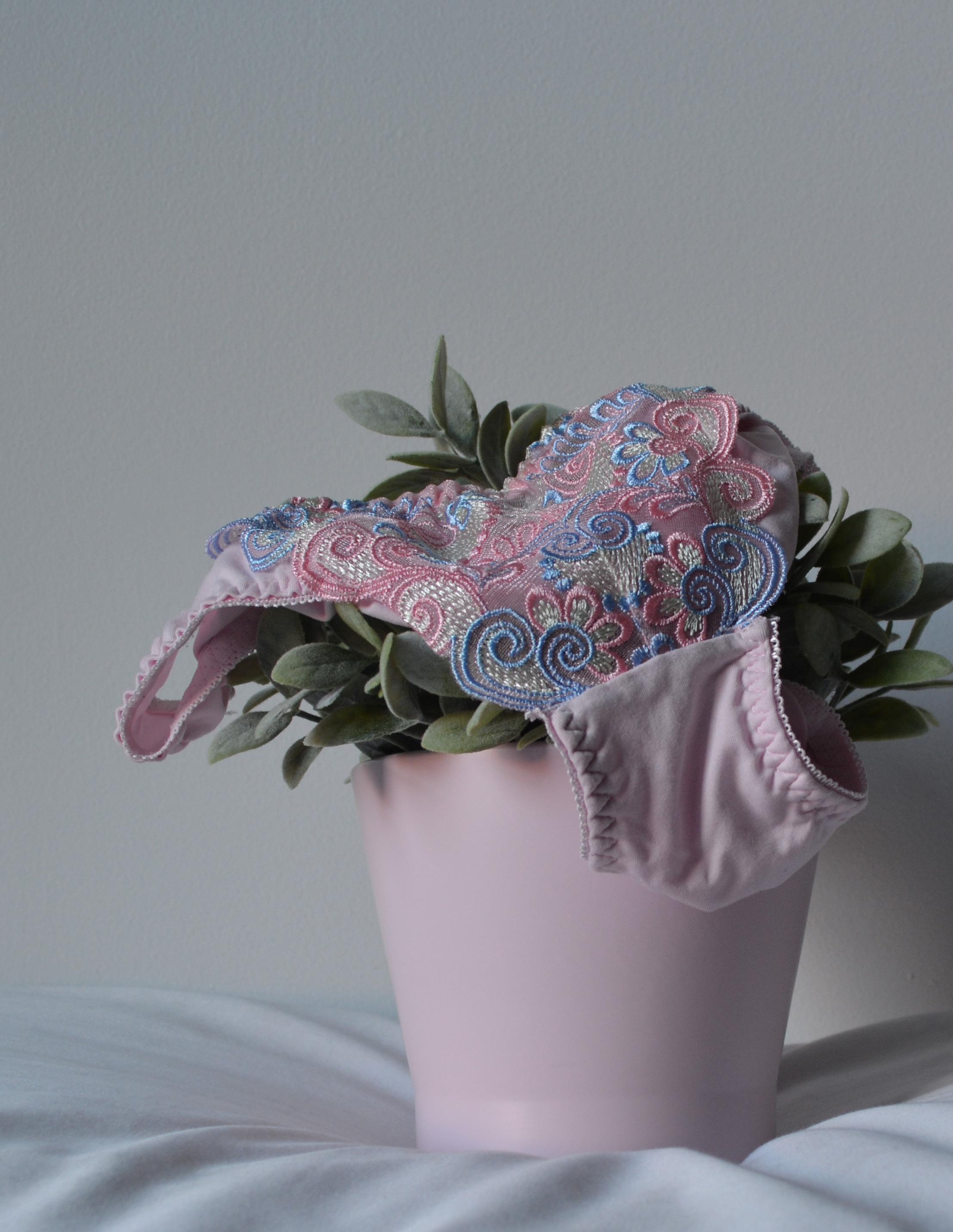
A trip to the intimates section should be a grand romantic gesture: from you, to you. Take yourself on a date to brush through endless racks of silky bows and tiny hearts. Whisper sweet nothings to yourself as you caress that cute pink slip. Seduce yourself in the dressing room mirror. You’re in a relationship with yourself as much as you are with anyone. Self-love is important, and that should extend to embracing your sexuality. Look hot, feel hot, be hot—for you.
YM
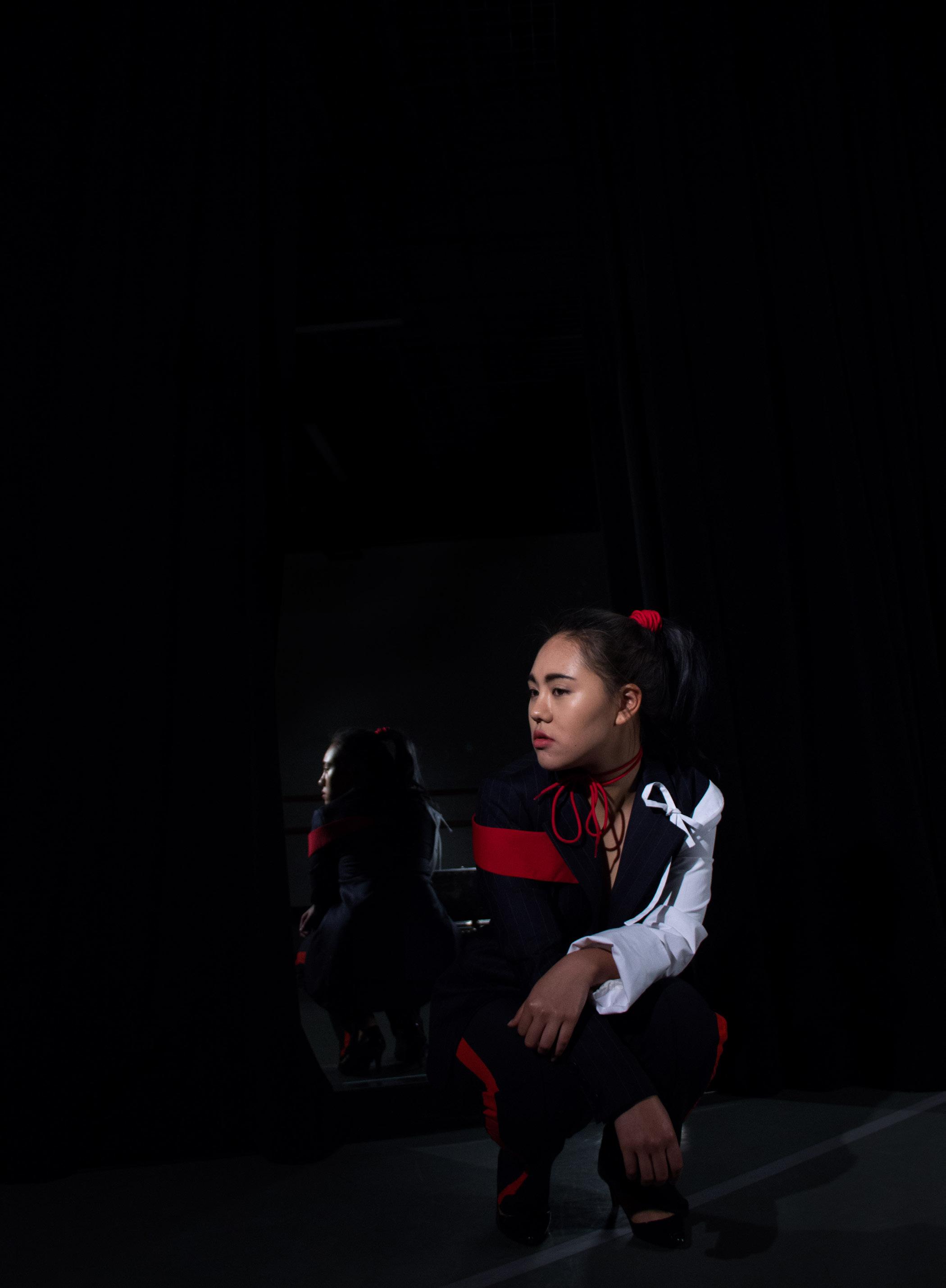
HARD WEAR
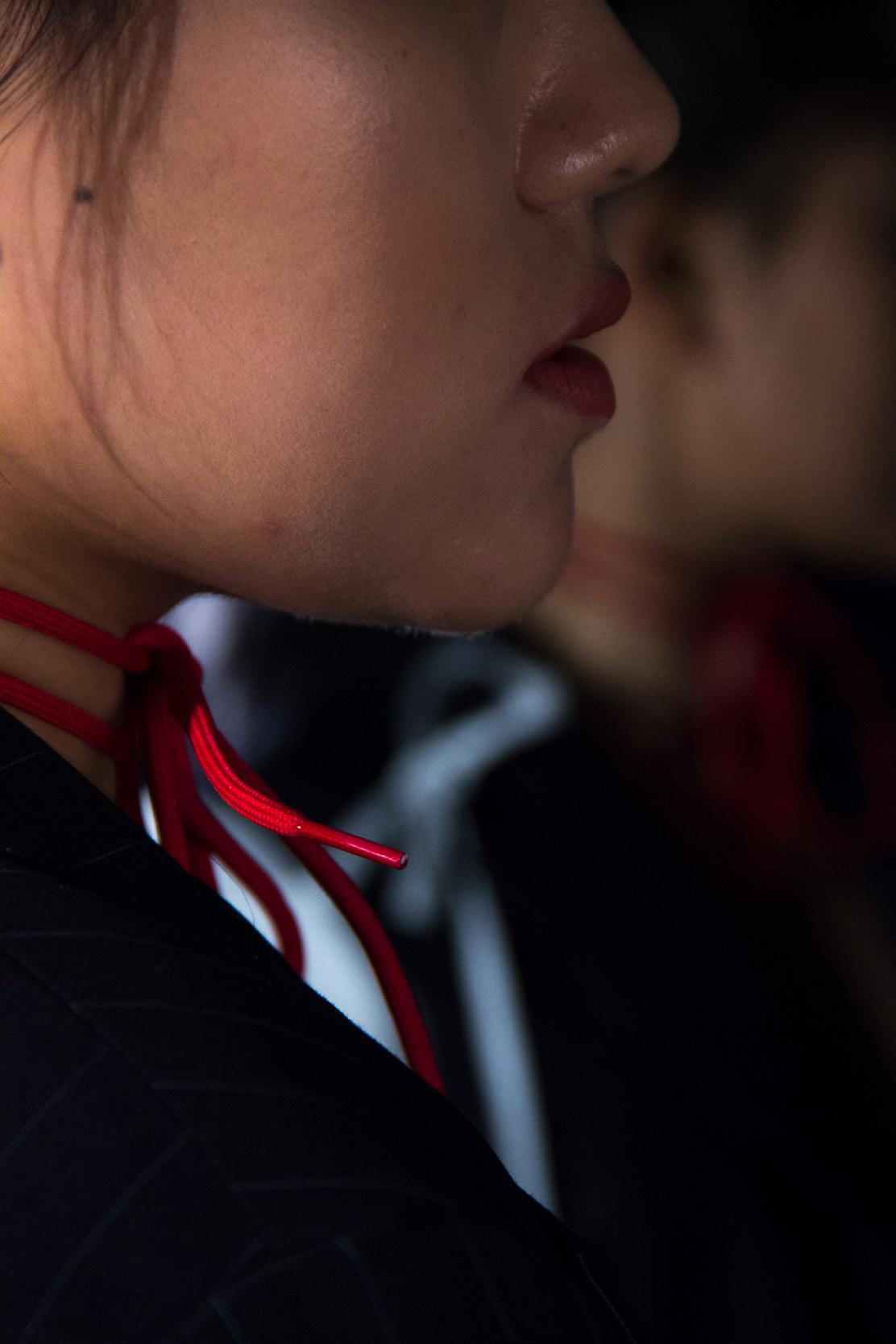
PHOTOGRAPHY BY SOLEIL HYLAND
STYLING BY MIA ZARRELLA
MODELING BY AZURA LI
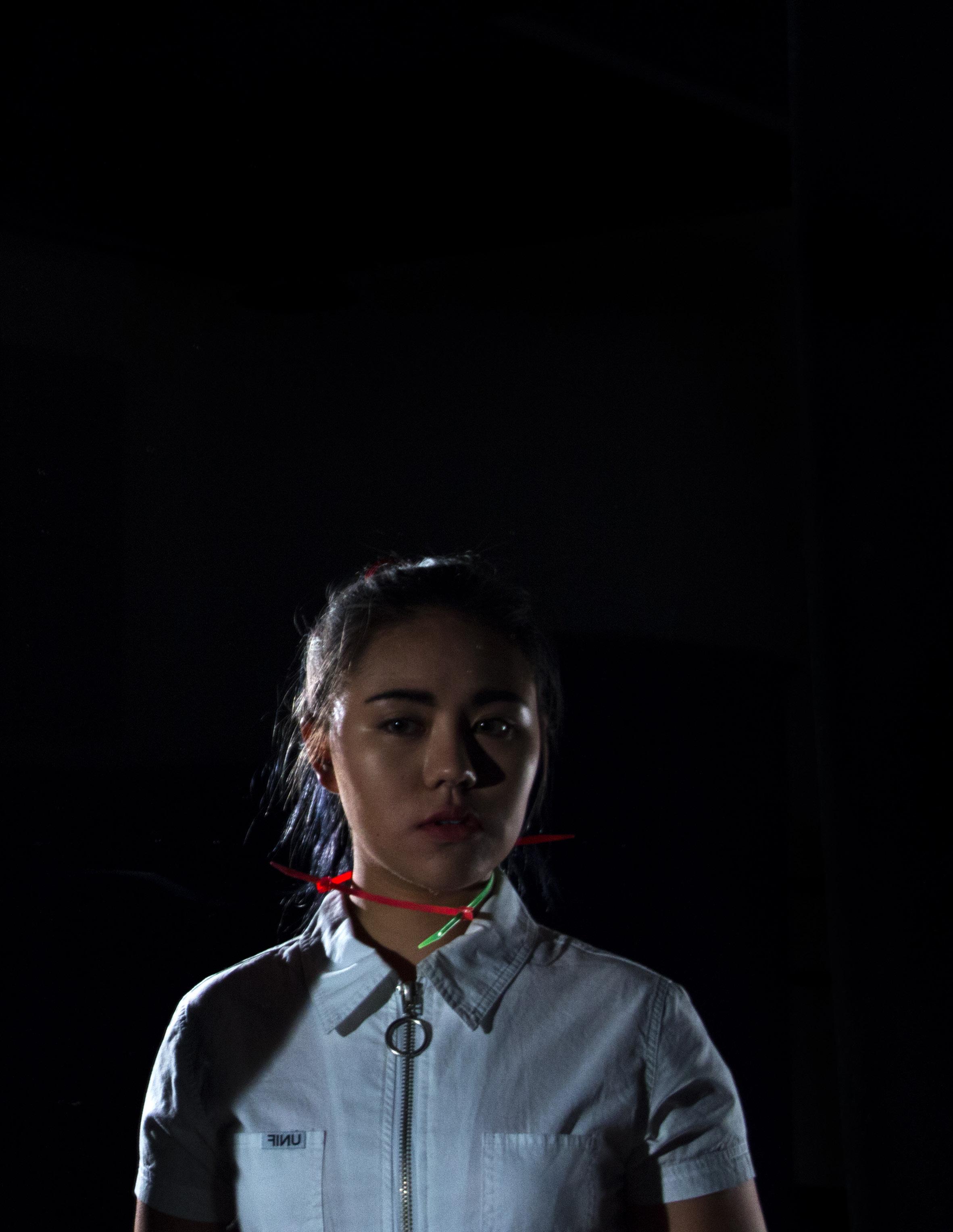
OH, CY$*!
WRITTEN BY LAURA CAFASSO
PHOTOGRAPHY BY HANA ANTRIM AND ALYSSA GEISLER
Ihad been moody, distant, and confrontational. If you believe in teen angst, then I was the poster child for it. Unfortunately, I didn’t sneak out and ride off into the suburban sunset on the back of a motorcycle. I felt isolated and particularly emotional during my time of the month. My PMS was like a nuclear reactor: volatile and unaware. My anxiety, which was probably charming when I was small, got worse and affected my socializing.
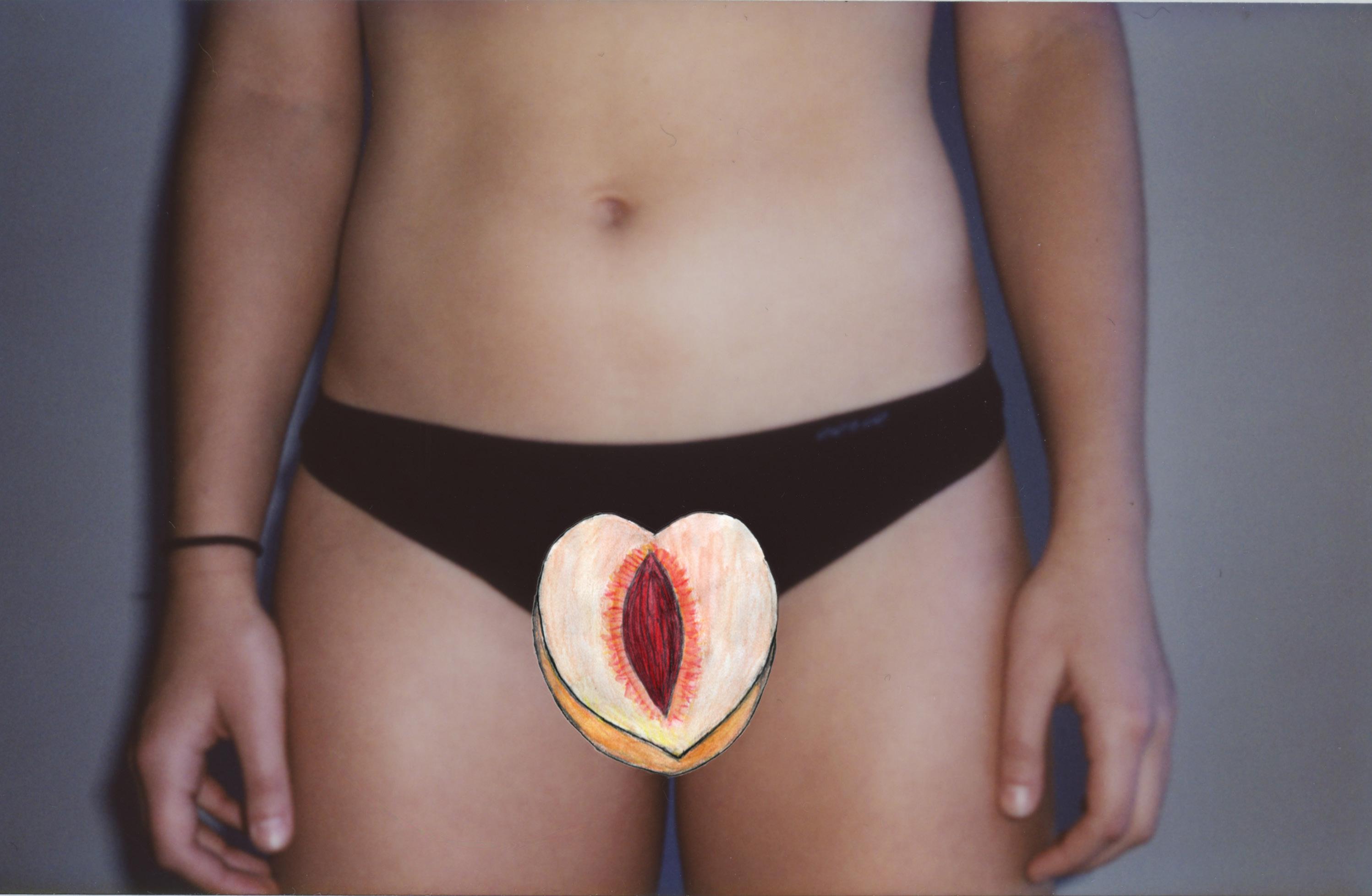
Obviously concerned, my mom thought it would be best to start me on birth control. I was a sophomore in high school and still kind of hesitant about that. I said, “I’m not even having sex, why do I need to take the pill?” But, as it was relayed to me, the pill helps ease pesky PMS symptoms and makes your period lighter and shorter. I got many blood tests and an initial ultrasound; an elevated amount of some hormone was found, suggesting Polycystic Ovary Syndrome. Polycystic Ovary Syndrome causes irregular or prolonged periods, acne, hair growth, weight gain, depression, and anxiety. Cysts crop up alongside enlarged ovaries, and although it isn’t curable, it is treatable and common. To top it all off, it heightens the chance of developing infertility and Type 2 Diabetes. Terrified, I assumed the worst. But that’s not what was in store for me.
The ultrasound showed a mass that didn’t belong. It was a singular ovarian cyst, dangling off my right fallopian tube. For a visual: ovaries are about the size of almonds, and my unwelcomed guest was the size of an orange or tennis ball. I don’t think I ever had symptoms of this intruder, which can range from pelvic pain and nausea to pressure on your bladder. And since it was my first ever ultrasound, this cyst could have been with me my whole life.
Avoiding conflict and difficulty, I thought I could just ignore it and let it rent space. But my doctor told me that I was at risk for “ovarian torsion,” which could occur from the largeness of the cyst twisting my right fallopian tube and right ovary until it dies. I could lose my right ovary, severely limiting my chances of pregnancy in the future.
I was seventeen years old and faced with a seemingly adult burden. I had no idea what I wanted to officially be when I grew up (tentatively the next Jennifer Lawrence) or if I wanted children. Yet, my future was riding on this decision: remove the cyst or not.
The route was laparoscopy, or when a surgeon makes a small incision (abdominal and through your belly button) in order to see your ovaries and remove the cyst. Hell no. I had never broken a bone, gotten stitches, or had invasive surgeries. I had gotten stung by a bee, skinned my knees, and gotten sporadic bloody noses. I did not want to go under anesthesia and have my body ripped apart. What if I didn’t wake up?
The surgery was scheduled for the following July. Devastated, I went through the motions of college tours and AP classes, feeling in the back of my mind that I was a goner. They say ignorance is bliss, which I wholeheartedly agree with now. I would have been unaware but content if I had no knowledge of the cyst. Looking back, I don’t consider this an overreaction or pure dramatics. I was not terminally ill; I was lucky.
But I was immature. I focused on myself and my own problems during a time when tragedies and misfortune, like the Boston Marathon Bombings, still sadly clogged the atmosphere. The local cable news was reporting on the controversial Rolling Stone spread on the Tsarnaev family as I awaited going under for my surgery. I thought about fear and its hold on me while unsuspecting marathon runners, families, and bystanders were struck with the worst fate possible. A little boy lost his life. Fear is always a choice, and those people had courage amidst a senseless and cowardly act of violence. I could suck it up for a routine surgery.
Apparently, the last thing I talked about before giving into the anesthesia was cheeseburgers. All the nurses thought that was a riot. My cyst turned out to be benign, but the entire summer was spent with two miniature holes in my pubic area. It took a month for them
to disappear, but I still feel the slices of new skin even after three years. I still feel like there’s something out of place and empty at the same time. I’ve moved on, but I replay those moments from time to time, sometimes when I’m daydreaming in class instead of taking notes on Rousseau and his “sexual perversion” for being spanked by dominant women. That’s a whole other story you should really research, it’s quite fascinating.
Anyway, whether there is such a thing as luck or fate, life is scarily unpredictable. Yet we can predict that there will be three million cases of ovarian cysts in any given year. After my surgery, my anxiety never went away. It grew debilitating and overwhelming, to the point where my parents had to sit down and have a “serious” talk with me. Yes, going on birth control did alleviate the Dr. Jekyll / Mr. Hyde scenario, but I was still a nervous hamster, running on my wheel, overwhelmed. A couple years later, I was diagnosed with Generalized Anxiety Disorder.
Being a woman is hard, and not just because a man like Donald Trump could be our next president. We have to be happy, collected, and easygoing. The “cool girl” is ideal, just listen to Amy Dunne’s
(Rosamund Pike) candid rant in Gone Girl. We should be in control of our bodies and God forbid if someone hurts us, it’s our fault for how we were looking or acting and what we were wearing. Realizing I had this cyst, which led to my anxiety disorder acknowledgment, showed me I can be vulnerable and out of control. Despite the inferiorities of being a human, I am invincible for what I’ve gone through, and continue to go through. I can shout, “I am stronger than my cyst, I am stronger than my anxiety, I am a superhero.” Women must practice self care. Whether it’s emotional and mental, like declaring a “me day” and binge-watching Gilmore Girls, or physical, by seeking a doctor to get a check up.
My cyst (may it rest in peace) and anxiety made me proud to be a woman. This is my thank you to my cyst. Yes, I have annual ultrasounds to check if anything grows back, like a cyst neighborhood (and drink copious amounts of water in preparation which nauseates like you wouldn’t believe), but if it wasn’t for that cyst, I wouldn’t have gotten the help I needed and the overdue diagnosis I deserved. Thank you, you stupid gross cyst, for making me strong and a better, more self-aware woman. YM
Her Hirs utism
WRITTEN BY RODJYNA BEAUVILE
PHOTOGRAPHY BY DELIA CURTIS
There were ten minutes left in the class. We’d completed the lesson for the day so my English teacher decided we could use the time to talk. My friends and I were seated in the back as usual in a circle that didn’t always stay a circle because of bouts of laughter and bathroom trips. We were talking about kissing. One of the guys pointed to my friend and me and said our faces were perfect because of its round shape. He then proceeded to demonstrate. He reached out and gently cupped her face the way he would if he were to kiss her. He then made the motion toward me. I froze immediately. If he touched my face, he would feel the stubble of my beard from not shaving for four days. It was a stretch but I just hadn’t restocked on razors. I smacked his hand and told him he’d have to buy me dinner first. I was able to avoid another incident like the one that happened earlier that week when a friend told me my face felt like his dad’s.
I came across this memory after reading a Refinery29 article about Harnaam Kaur, a body image activist who landed herself in the book of Guinness World Records for 2017 for her luscious beard.
I wish I could say I was inspired to grow out my own beard and embrace my insecurities for what they were, but I wasn't. I thought back to my days in middle school, of staring at my stubble in the mirror after someone called me sir, or the countless days in high school of holding my face because two days was too soon to shave. I remembered thinking to myself how I would never be pretty enough for any boy and that no matter my parts that made me inherently female, I would never be considered a [real] woman.
It isn’t easy being a bearded lady. Although I have hair everywhere from my knuckles to my lower back, my facial hair will always be the most humiliating. Not many people can think past the idea of a woman with a beard and consider the forces that she has to deal with which are outside of her control. When I tried to explain that I have Hirsutism, a condition of unwanted, male-pattern hair growth due to an excess of testosterone, no one wanted to hear my excuse about hormone irregularities. They also didn’t care that this it is also a symptom of Polycystic Ovary Syndrome (PCOS) which will make me and the other five to ten percent of women of childbearing age affected by PCOS unable to have children.
I did not, however, let this cripple my way of living. After years of razors bumps and shadows, I’ve learned to live with my imperfections. I decided my insecurities were nothing more than irrational fears that are the result of unrealistic societal standards. I no longer see myself as less than a woman for something as natural as fur on an animal. As a unique and truly beautiful human being, I am what I am. In the words of Harnaam Kaur, “My body, my rules.” YM
Angry Asian Girls
WRITTEN
BY
KATE BARTEL
BY
ALLISON NGUYEN
PHOTOGRAPHY
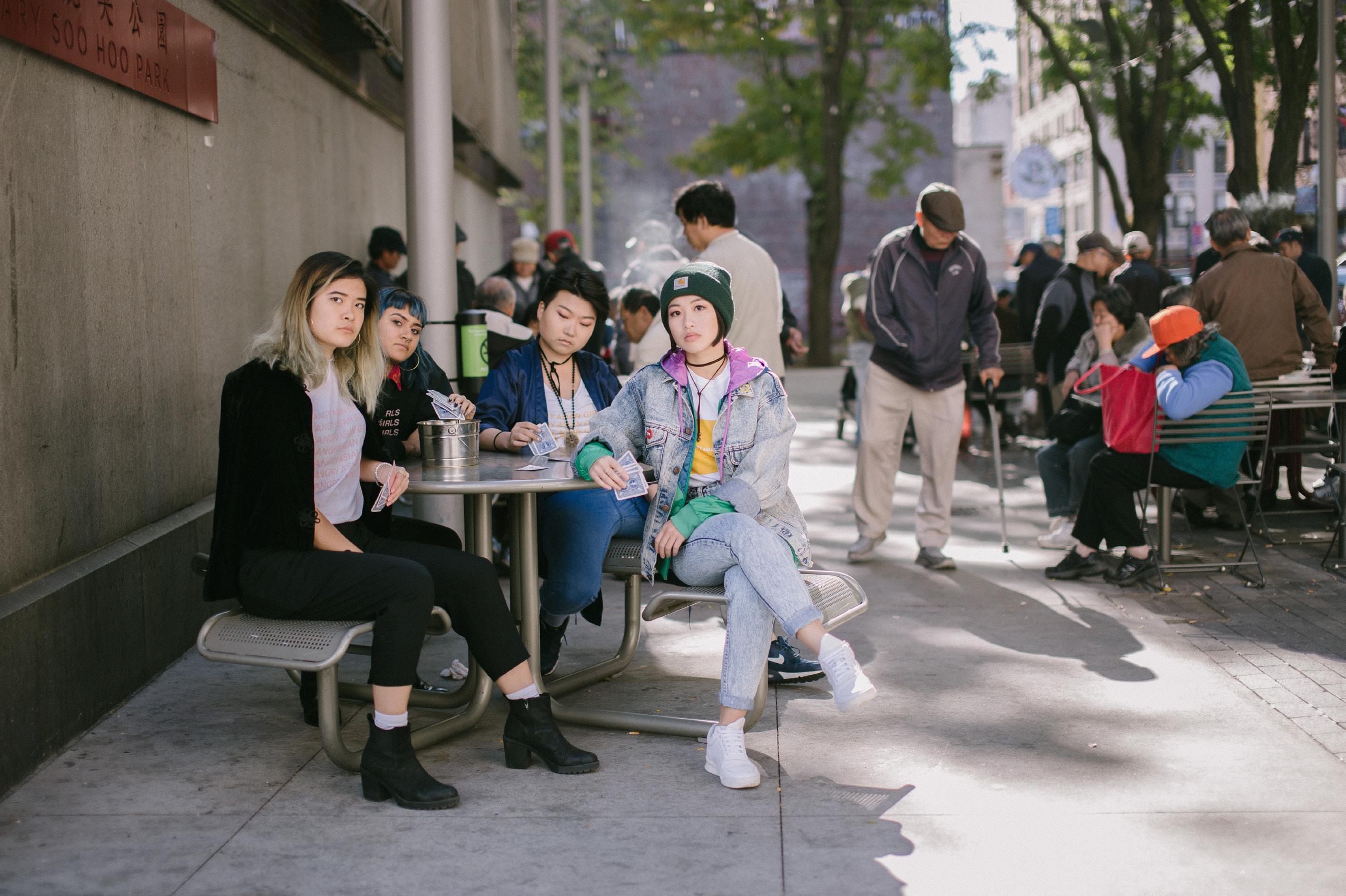
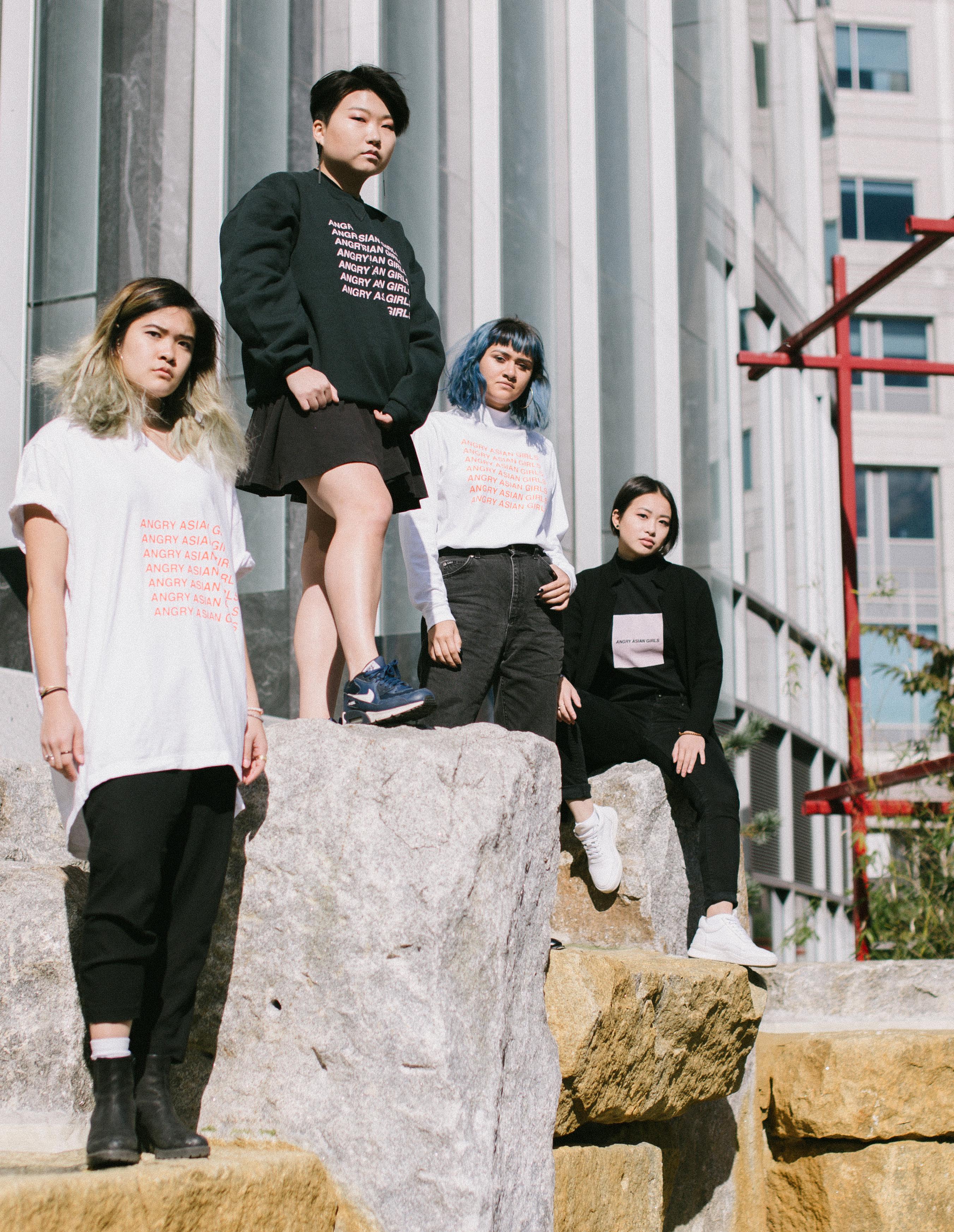
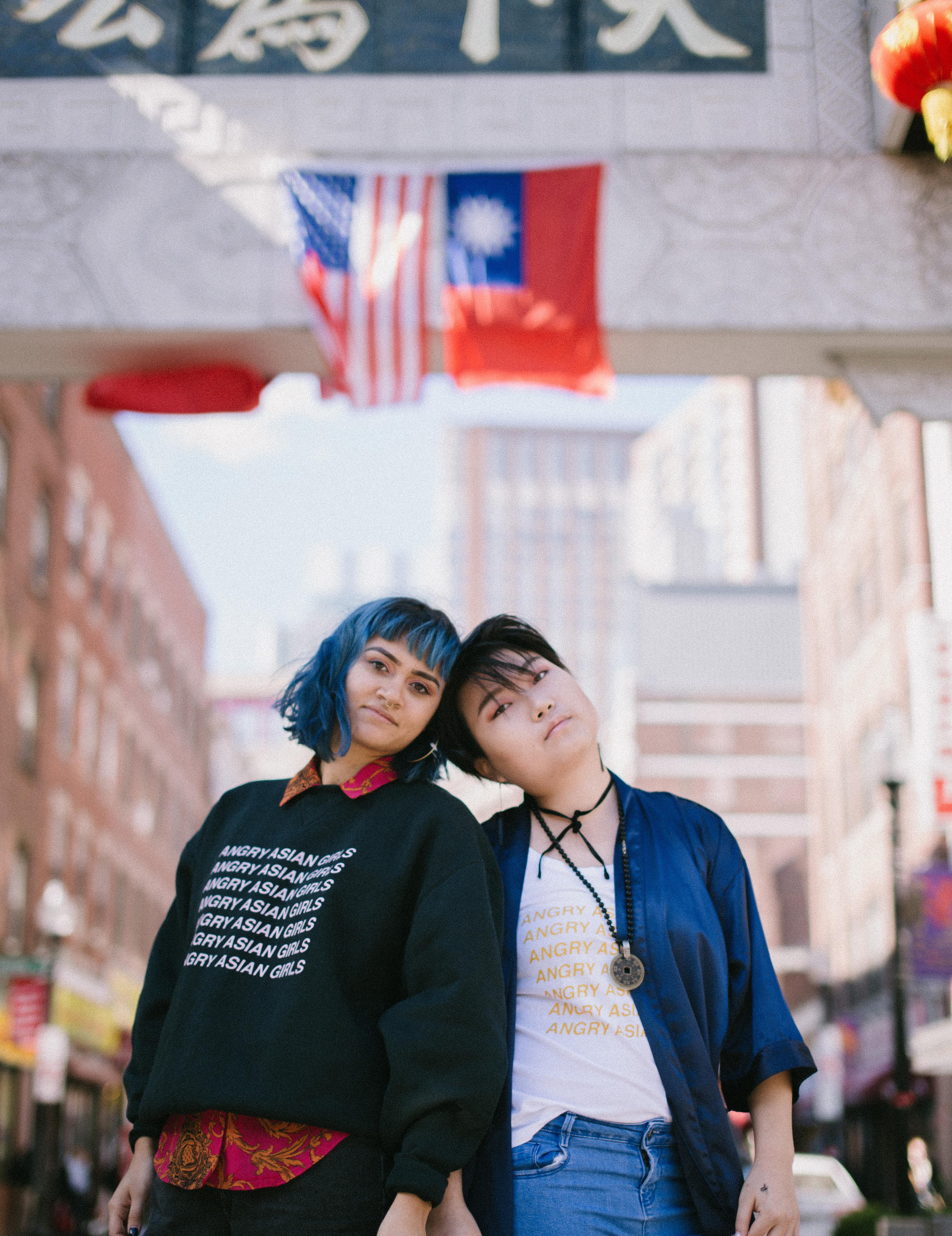
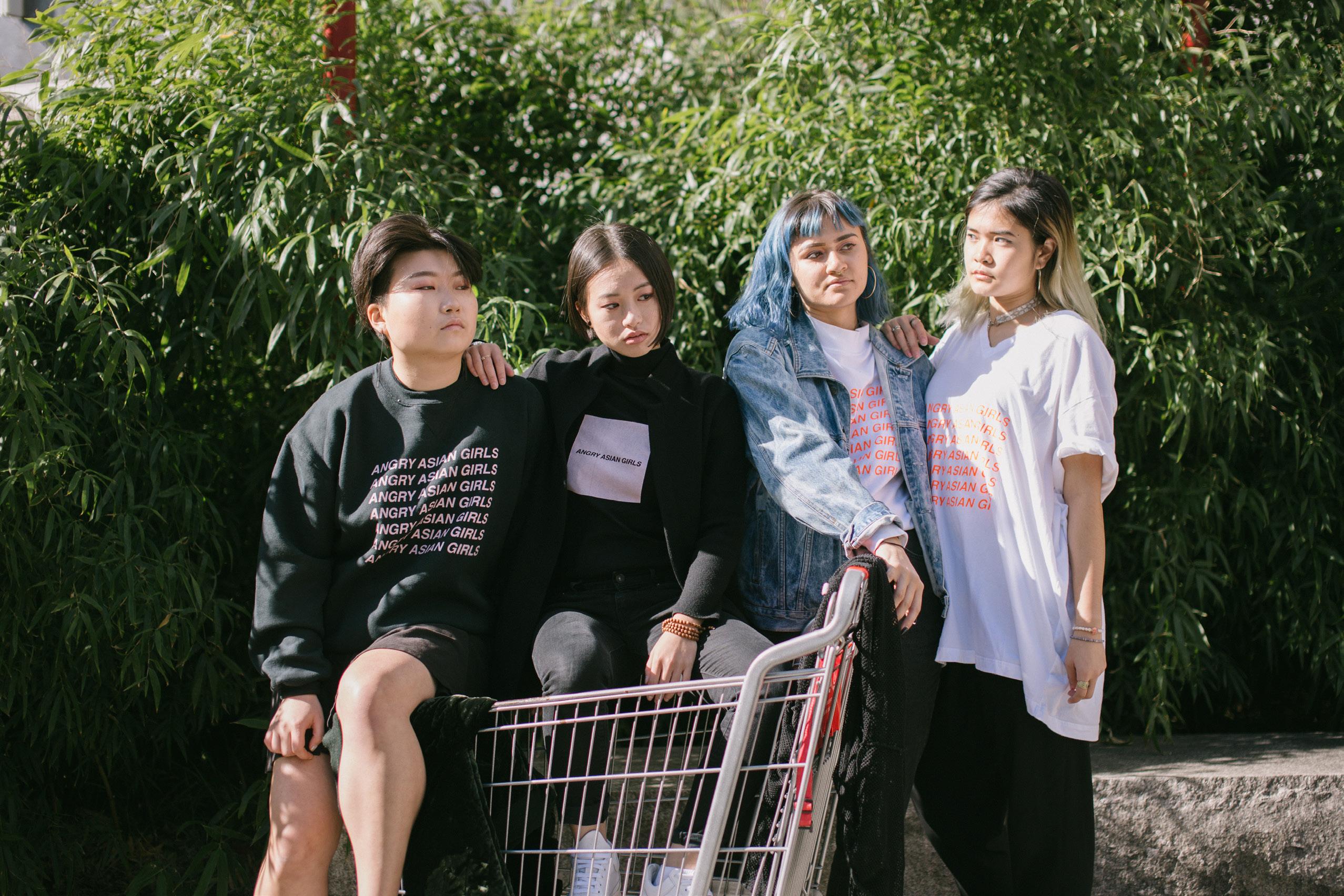
ANGRY ASIAN GIRLS began as a Teespring fundraiser. Seven of us were sitting in a conference room at the Northeastern Asian American Institute on a Sunday morning trying to brainstorm ways to raise some fast funds, given we had put off fundraising for our internship program until the last month. So far, we had “fundrager", “bake sale”, and “ask people for money” spelled out on the whiteboard, and the level of enthusiasm in the room was at a flat nonexistence. We had spent the semester working at the Massachusetts State House, putting up with a whole lot of White nonsense, learning how to vent about that nonsense in safe circles on Sunday mornings, and coming to understand the multitude of ways in which Asian American women are marginalized in every sphere of life.
We started talking about the mental health issues Asian American women face, illnesses many of us feel the direct impact of in our daily lives. We recalled a presentation outlining the startling fact that most medical technicians and doctors aren’t even
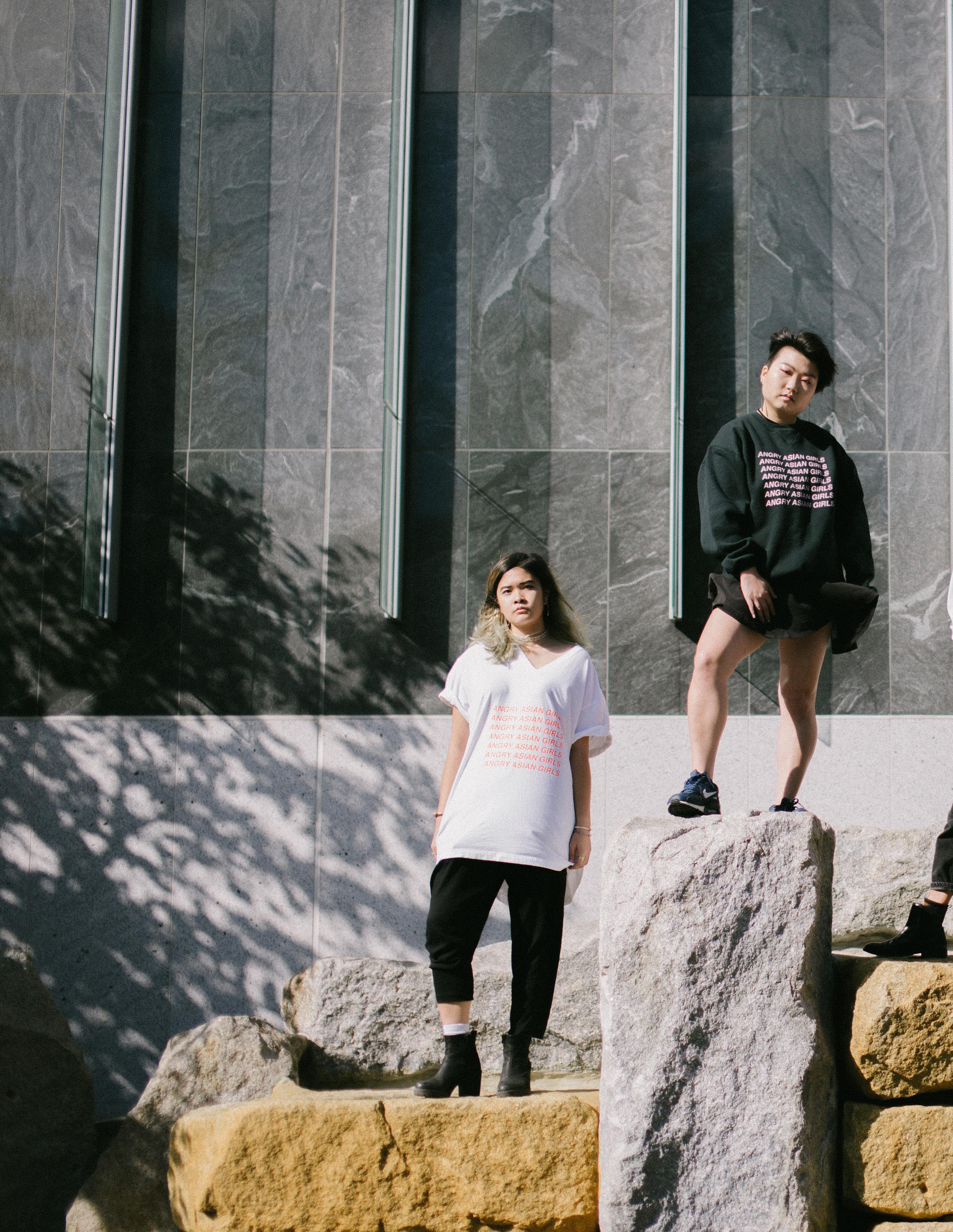
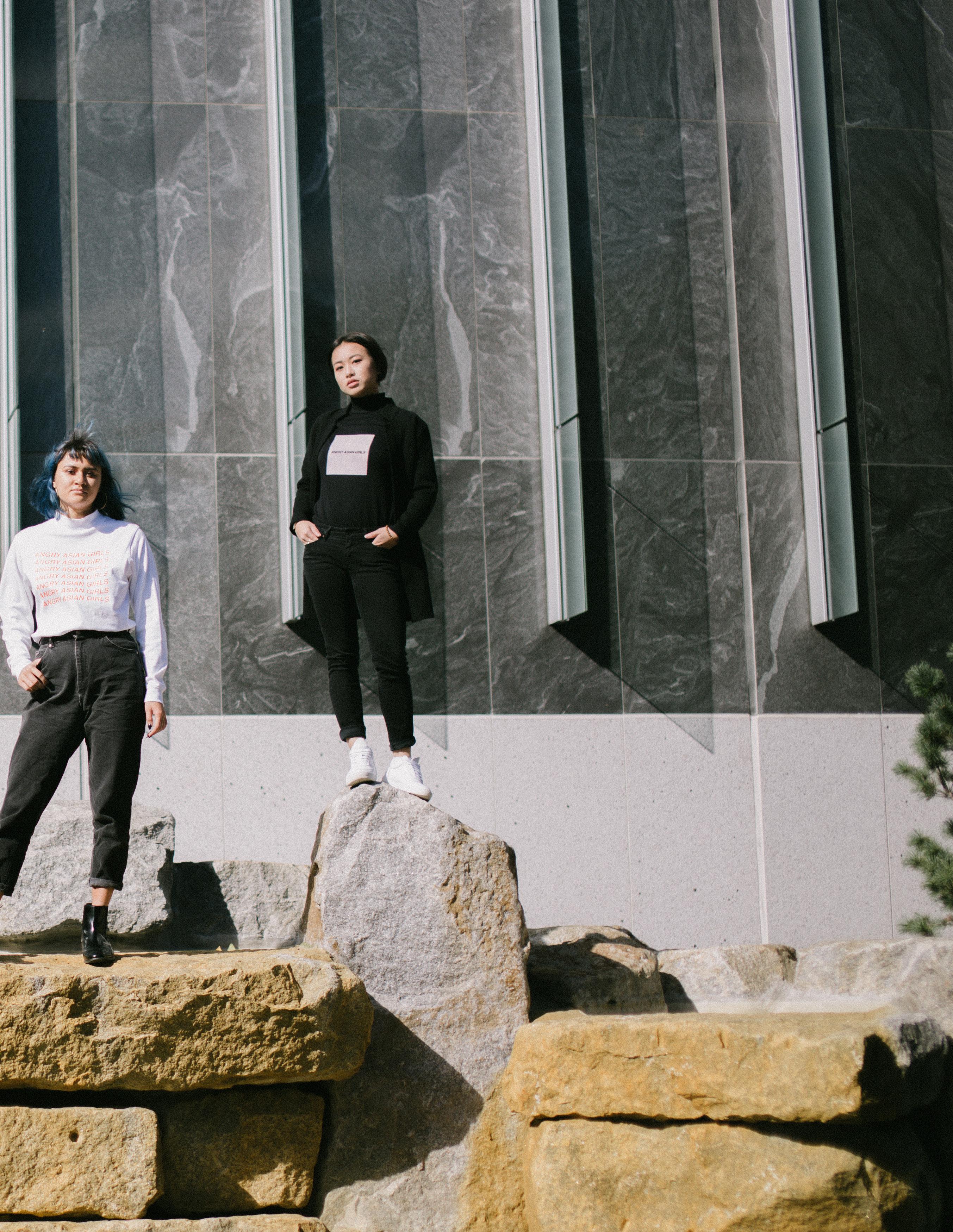
trained to look for signs of breast cancer in Asian American and Pacific Islander (AAPI) women. Like many Sundays before this one, we found ourselves sitting at a table stewing in equal parts passion and outrage. We felt unheard—silenced, even. We were angry. By the end of the conversation, we had pasted ANGRY ASIAN GIRLS in repeating text onto what is now our trademark mustard yellow square in bold, italicized Helvetica letters (cc: Drake), and submitted the digital design to Teespring. Although none of us knew it in that moment, we had just coined a collective identity that would change everything to come.
We’re nearing the end of 2016 and I think we can all collectively agree this year has been one long nightmare. But the metaphorical silver lining is that the tragedies of this year have enabled entire movements of people to utilize online spaces as tools to create visibility in otherwise marginalized communities. The Black Lives Matter movement is perhaps the most notable example of hashtag activism, and its founders have faced
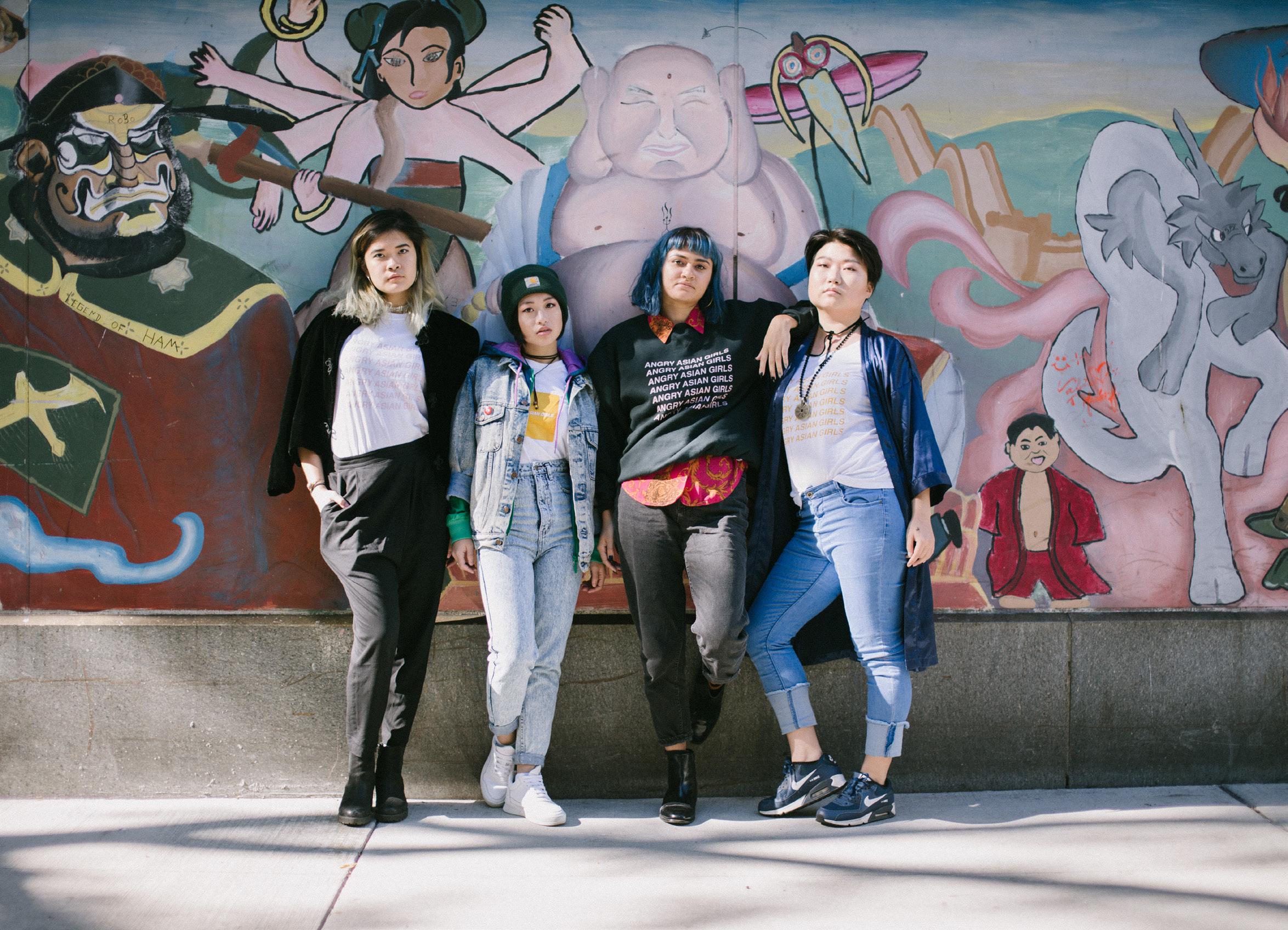
a shocking amount of criticism on their methods of organizing (read: White oppressors telling Black people how they would like them to voice their oppression). Few things elicit a visceral reaction of equal parts groan and eyeroll from me quite as well as the phrase “just an internet activist.”
We’re currently in an age of quick clicks: online petitions you’ll forget you signed a week from now and easy-to-curate profiles that can make just about anyone look like a well-informed individual. Certainly, slacktivism is a very real term, and rightfully so. We all know by now that setting an opaque overlay of the French flag as your temporary profile picture did just as much for the grieving Parisian people as downloading the free bonus filters on VSCO did for your Instagram aesthetic.
But there is a stark distinction between slacktivism and using the magical powers of the World Wide Web to advance political groundwork and create actual, tangible change—like, IRL. I’d like to think of our collective as the latter.
As 2016 has proved to us time and time again that it’s only going to keep getting worse (although we hope November 8th might put an end to this nightmare), our mission and projects have gained momentum in ways we hadn’t previously thought possible. This is the part where I shamelessly attribute all of our successes to the aforementioned magical cloud that is The Internet.
I think our generation, having grown up in this internet era, has a tendency to discount everything we see online as trivial in relation to the larger context of social movements and issues going on in our “real world.” This translates into the language we use online versus, say, in a letter to a potential employer. I find myself sharing links to my work with the caption, “Check out this thing I did!” about something I put a lot of time and effort into, which is funny in that endearing, self-deprecating sort of way, but it’s also a way to lowball my skill set and appease my internet friends. And when it comes down to it,
the social movements that have taken our country by storm in this past year are in large part due to hashtag activism. The things happening in our real world are a direct result of “this thing I did,” so maybe it’s important to give ourselves a little more credit, y’all.
Hashtag activism is something ANGRY ASIAN GIRLS has adopted as our primary mode of communication. We’ve found that it can be not only useful in physical organizing tactics, but it can also be empowering and reaffirming. My cofounder Dahn Bi Lee-Hong and I have used it to align our mission and goals with local organizations, such as Asian American Millennials Unite, and We, Ceremony. We just teamed up with both of these nonprofits to put on an enormously successful panel and poetry slam on the importance of voting in the upcoming elections. Hashtagging on Instagram and Twitter have expanded our outreach from Boston and New York to across the globe, all in a matter of months.
I look back on that misty Sunday in April of this year and it seems like a figment of my imagination. Our outreach has since quadrupled. Our team has grown and redefined itself just as we are growing and redefining what it means to be Asian American, to be woman and femme and non-binary, to be activist and ally. We consider ourselves a solidarity campaign in line with the demands of the Black Lives Matter movement, and in loving support of and solidarity with all queer people of color.
From Emerson’s SheCult to rising movements like the Art Hoe Collective, we know we’re in good company. We strive to reclaim the word “girls” and push back against the model minority myth. We are expanding the definition of femininity and tearing down fetishization of AAPI women and femmes. We are shifting the narrative of what it looks like to be Asian American, Pacific Islander, and Desi. We are here. We are taking up space. We are angry. We are ready. YM

WRITTEN BY ESTHER BLANCO
PHOTOGRAPHY BY ANTONIO FIGUEROA
Ihad never been to Martha’s Vineyard before. I imagined there would be preppy guys dressed in Polo Ralph Lauren shirts, girls in tennis skirts, and wealthy people just hopping off of their yachts and ready to enjoy their million-dollar Martha’s Vineyard beach-front houses. My experience, however, was very different.
My boyfriend’s family and I decided to go down to the Vineyard in early October, since the peak season was ending and all that would be left would be locals and a few other late vacationers. We drove down to Woods Hole, stopped at Pie in the Sky Bakery & Café where I had a delicious oat apple streusel muffin and soy chai latte (ok, that definitely sounded stuck up, but in my defense, soy chais are delicious). We then waited in the car in line to board the ferry. I was a bit nervous about getting on a boat while also being in the car, I felt like a sitting duck. So, once aboard, we all climbed the rusty, tiny ladder up to the front of the ship. I stood near the railing, watching as we left the Cape Cod shores and sailed the short distance between the Massachusetts coast and the Vineyard.
During this forty-minute ride, I constantly fought with my hair, which had decided to attack my face for the duration of the journey. Whenever my hair allowed, I watched a family next to me. I watched as a four-year-old girl dug her tiny hands into a Cape Cod potato chip bag and I couldn’t help but smirk. Her younger brother would come by every couple of minutes and aggressively shove his hand in the bag, managing to grab a few chips, most of which would immediately fall out of his mandarin-sized hands. Adorable, and yet infuriating (also, who lets chips go to waste?!).
As we got closer to the Vineyard, I started to see pintoresque lighthouses and million-dollar mansions poking out of lush woods. I immediately started pointing to the ones I would one day buy and only come once a year to. We passed Vineyard Haven and finally docked into Oaks Bluff—the typical Martha’s Vineyard town—full of quaint souvenir shops, and Vineyard Vines and Black Dog stores. Once on the island, we took a wrong turn and instead of driving ten minutes southeast to Edgartown (where we were staying), and drove toward Aquinnah, where we stopped to take iconic lighthouse pictures and look at the waves hitting the cliffs. If you tried hard enough, you could almost believe you were in Scotland, in the Highlands, overlooking one of their impressive cliffs. Later, we drove through the remaining towns, though they were just mostly long twining roads engulfed in a sea of trees. Again, I felt that if I was dramatic enough, I could be the protagonist of one of those movies where the camera zooms in on your pensive face as you look out the window, the image of the trees reflecting off the glass.
When we finally arrived at Edgartown, the town was desolate. It was kind of creepy, but at the same time exciting that we got to enjoy it without having hundreds of people crammed into the same narrow sidewalk. We had a late lunch at Newes From America Pub, a place I considered to be a tourist trap, but I kept my mouth shut because I was with six other hungry people. After a mediocre lunch, we walked through the streets (somewhat surprised and somewhat expecting to see a Lululemon Athletica store) and made our way back to the hotel. While the older members of the party dozed off for their afternoon naps, my boyfriend, his brothers, and I went over to Bad Martha’s Farmer Brewery where they drank and I played cornhole (for the first time ever!). There were a few friendly locals enjoying their happy hour under a canopy of lights in the chilly October weather. We were one of the last groups to leave; I remember thinking how great this place would be in the middle of
the summer, when the nights are long and the beer doesn’t leave you frozen.
Fast forward to Sunday morning, also known as Apocalypse Sunday or Noah’s Second Calling. I woke up to what seemed to be Hurricane Matthew—the wind was blowing hard and the rain was falling like I had only seen in tropical storms or hurricanes as a child. Nothing like the gentle drizzle of Somerville, that I have become so accustomed to. So, at the mercy of the rain and the wind, we ended up at Espresso Love in Edgartown, where I munched on a blueberry scone and drank a latte in a sunroom, void of sun. Instead, I was surrounded by a surprisingly peaceful thunderstorm and the sweetest (and smartest) Pit bull I’ve met; Nico, who gave me a double high-five and enjoyed a bite of my scone!
After breakfast, we drove to Chappaquiddick Island and in a foolish attempt to see the infamous bridge where Ted Kennedy had his incident, our car got stuck in the sand. Naturally, I had a panic attack. I got out of the car and treaded the sand, looking for a spot to calm down. The rain was falling hard and my shoes were full of sand, but anywhere was better than inside that car. Luckily, after a few minutes, the men in the group managed to set the car free and we were on our way back to the mainland. Shortly afterward, we decided that the weather wasn’t going to let us enjoy the rest of the day so we headed back.
We were on standby for an hour, waiting for the seemingly -never-arriving ferry back to Woods Hole. Again, I was nervous about the trip back, fearing that the weather might impact the otherwise smooth ride. Once we got on the ferry, it was rough; the sea seemed angry that we were leaving the Vineyard, but reality was calling and we had to get back to Boston. After a few minutes in the car, I abandoned it and went up to the deck, where, despite the strong winds and torrential rains, other passengers stood and chatted. I got soaked, but I didn’t care. I had always enjoyed being out in the rain and soon as I saw that we were near the port, I went back in the car to change my drenched shoes and damp socks.
My trip was short and limited, but in my time there I got a glimpse of what life in the Vineyard is like; peaceful and laidback, a lot like it is back home in Puerto Rico. So, although I’m not a white girl enjoying Martha’s Vineyard, I’m definitely an island girl enjoying one of New England’s most beautiful islands. YM
Your Things
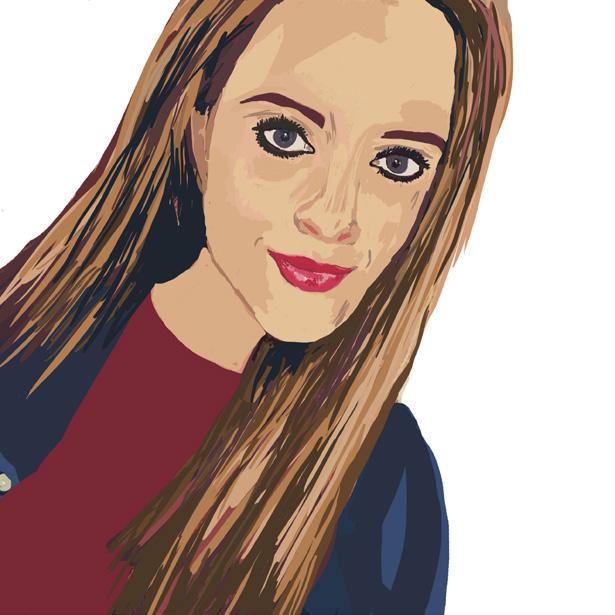
YOUR MAG TV DIRECTOR SAVANNAH STRANGE'S FAVORITE THINGS
What are six objects that you can't live without and why?
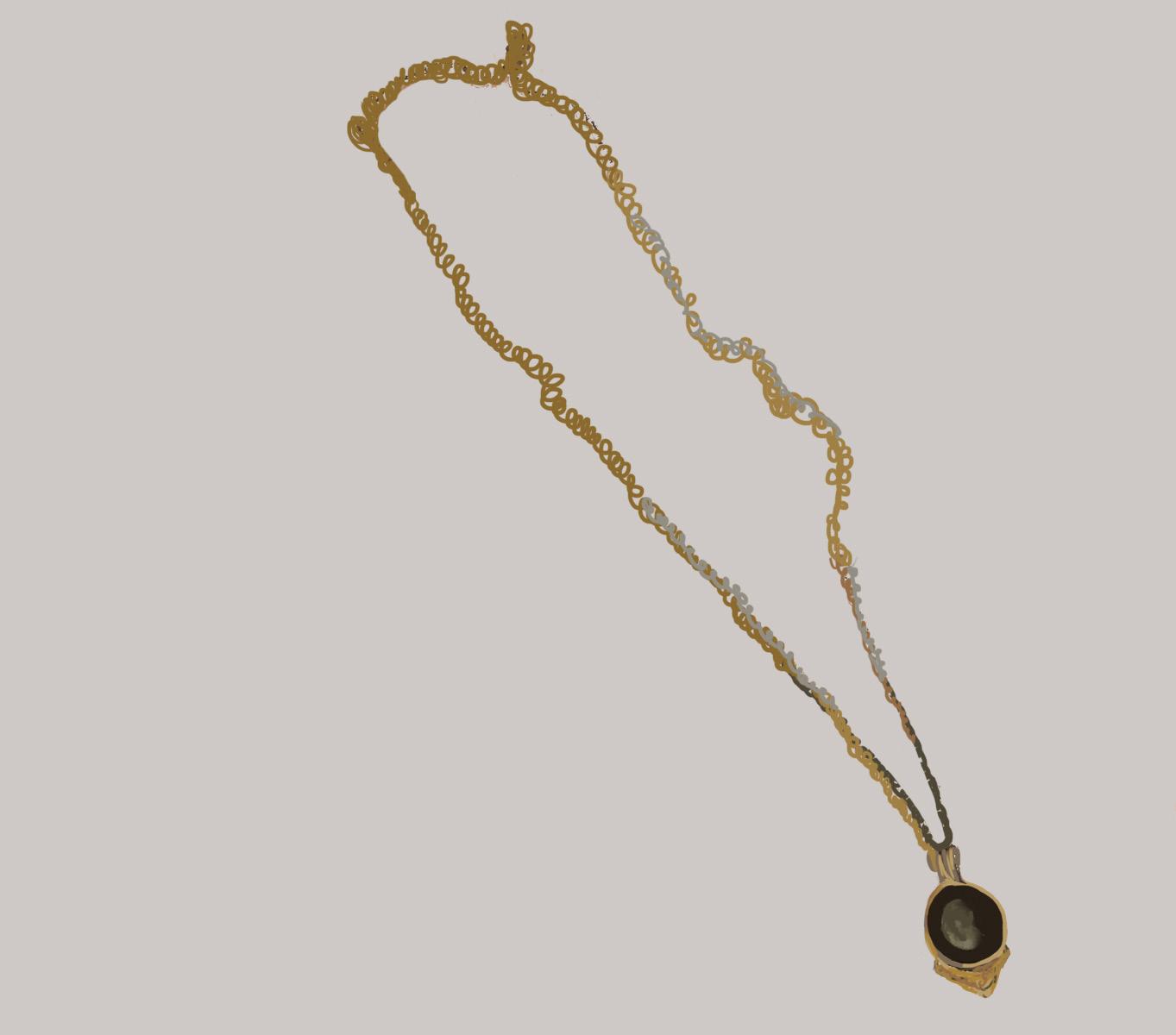
A necklace with an image of what the moon looked like on the day I was born. My mom originally bought one of these necklaces for herself and my sister and I would steal it and wear it even though it wasn’t what the moon looked like on either of our birthdays. So, a couple of Christmases ago, my mom got us each our own. It’s a nice representation of the women in my family.
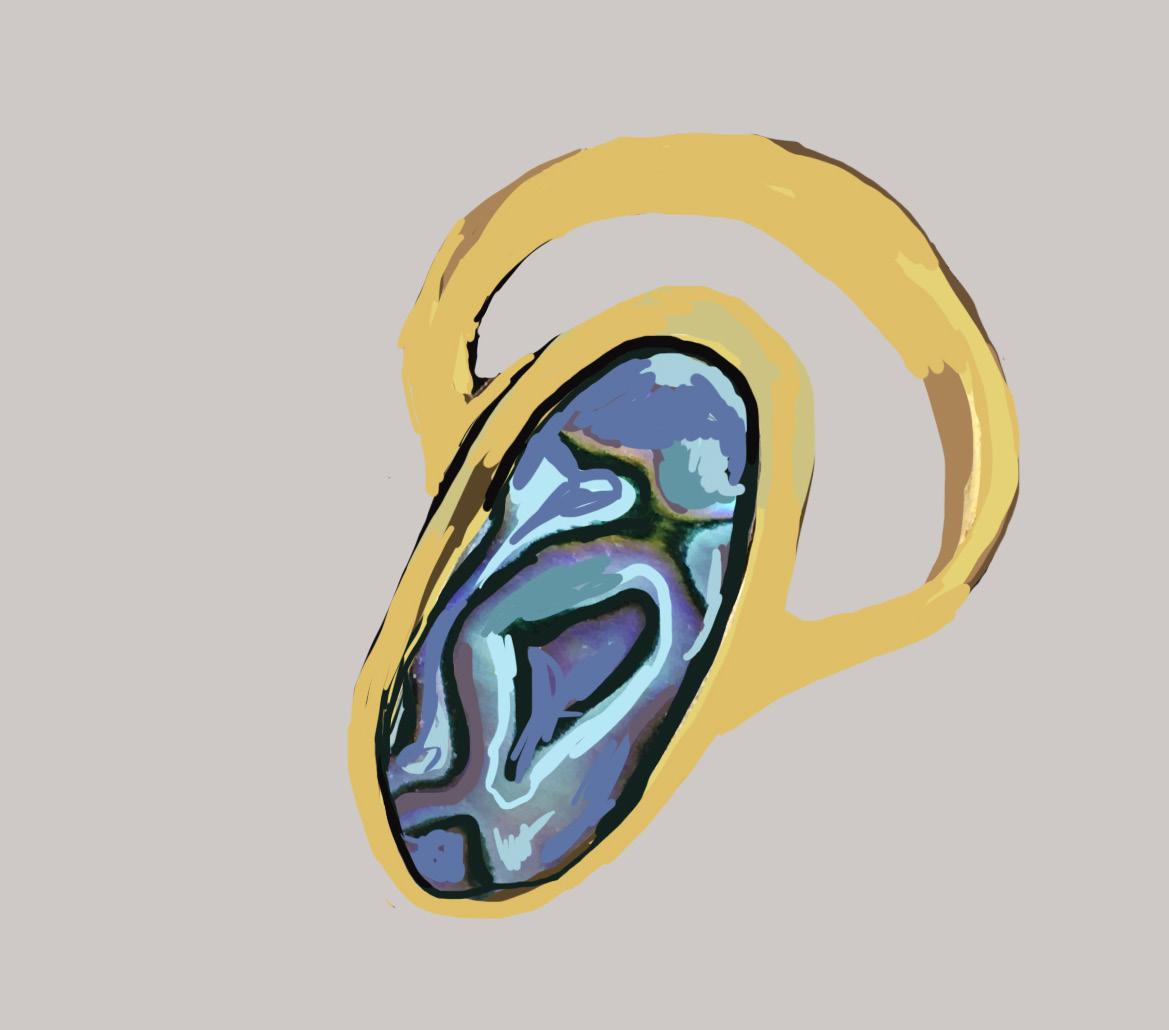
A ring that belonged to my Nana. She was my great-grandmother but I knew her very well and she was a pretty badass lady. I feel lucky to have inherited this from her. I’m also surprised that I haven’t lost it yet as I’m very prone to losing things. I like to think that means something.
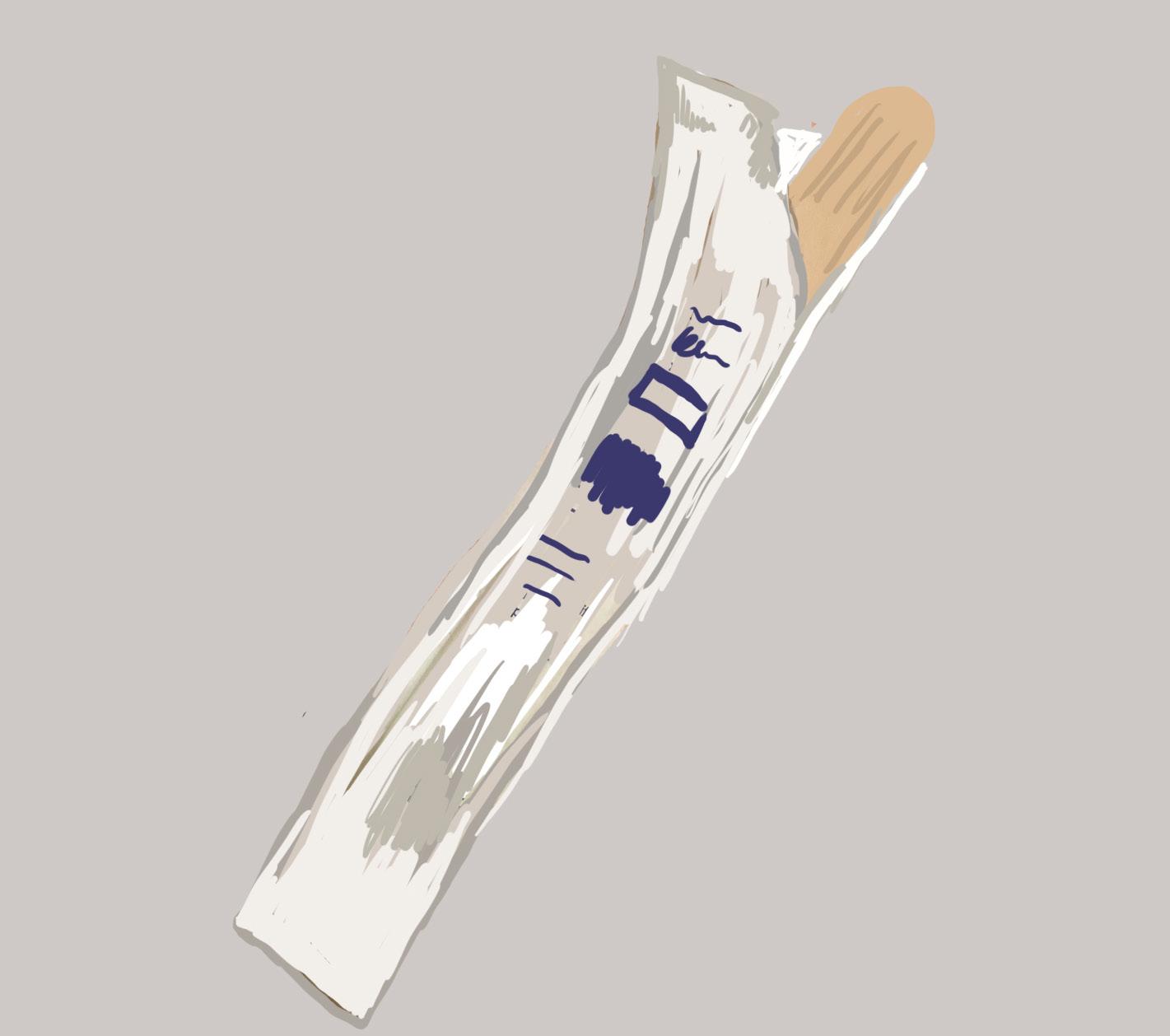
A tongue depressor. I got this during my anatomy and physiology class in my sophomore year and have kept it in my pencil case ever since. I’m a Comm Disorders major, and the depressor is used to examine the mouth and facial structures; a.k.a. basically every CSD kid’s heaven. When I reach for my pencil case it’s a nice reminder that (hopefully) this will all be put to good use and I’ll be seeing real patients one day instead of color coordinating my planner in gel pen.
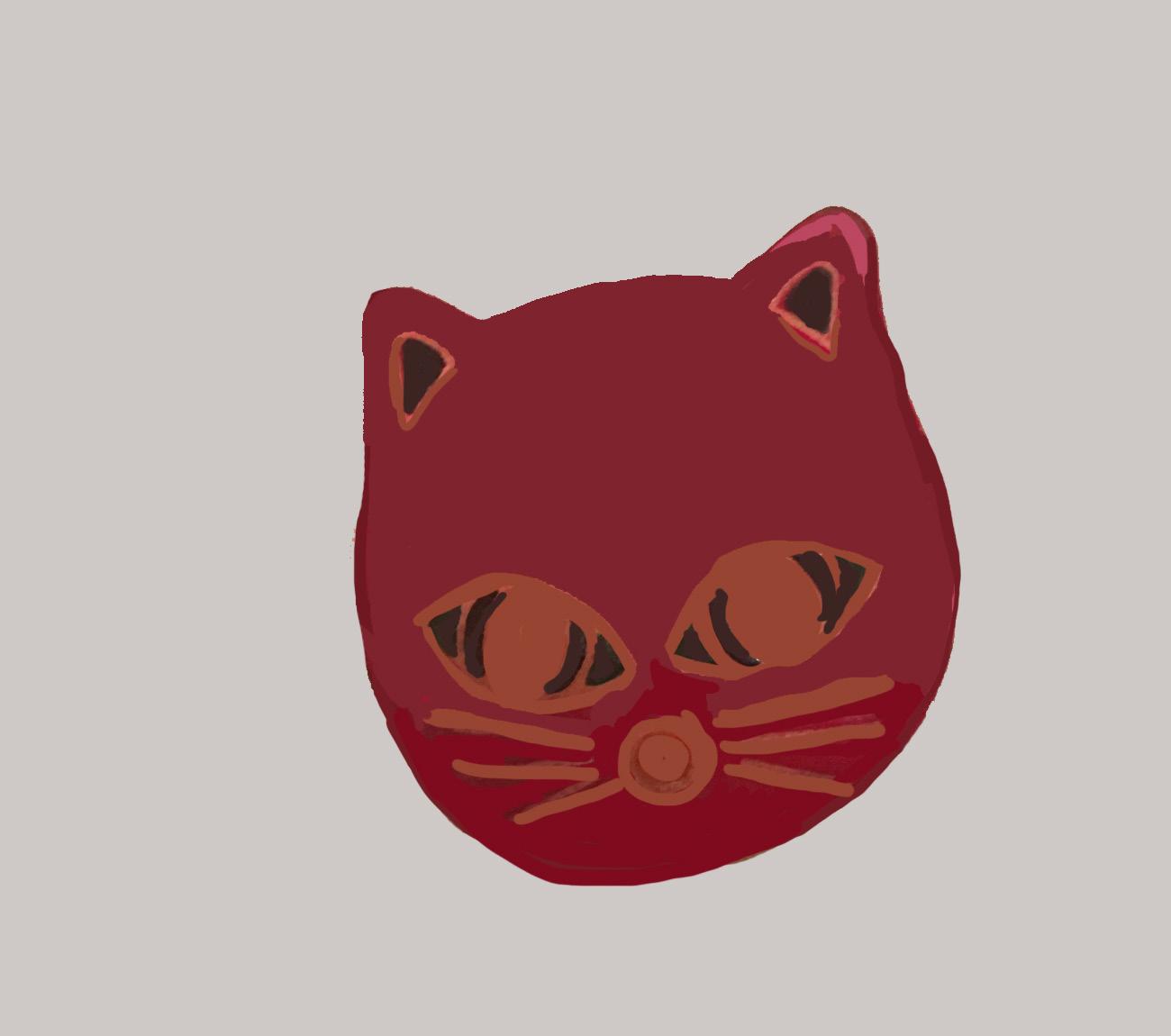
A cat change purse. I love cats. I got this as a gift for my 20th birthday. It fits change but is also conveniently the exact size of a Durex condom. I really hope my parents aren’t reading this.
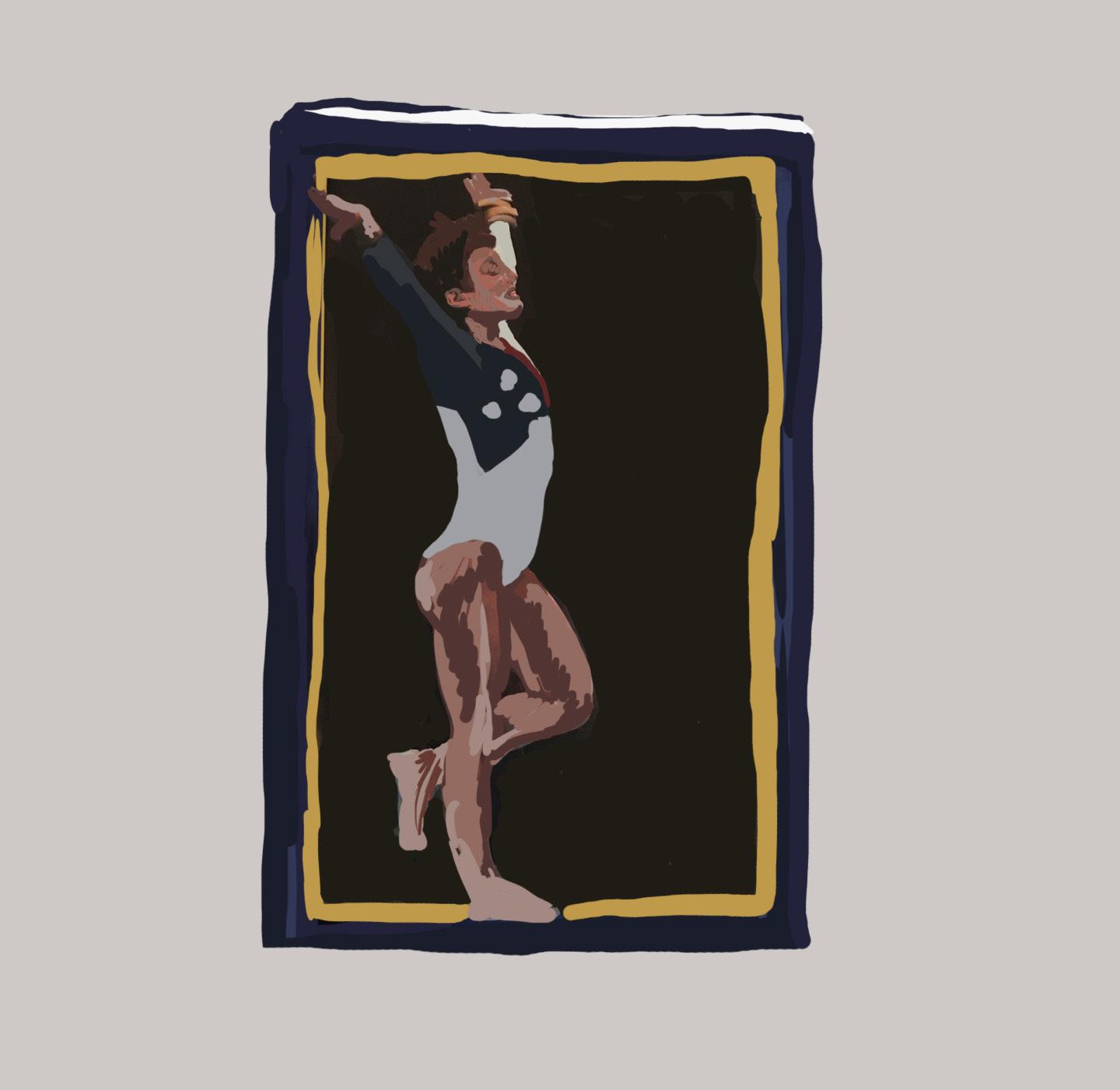
Olympic gymnast Kerri Strug’s autobiography. During the Rio Olympics this summer, along with everyone else, I got into Olympic gymnastics. But then, I got really, really into Olympic gymnastics. To the point where I was up until 4:00 a.m. every night watching vintage elite gymnastics competitions. Kerri Strug is my favorite gymnast (if you don’t know her story, Google it) because she was kind of the underdog and found a lot of success in an unconventional way. Plus, if 14-yearold girls in 1993 could do 8 hours of gymnastics in Houston, Texas with no air conditioning...I can do just about anything.
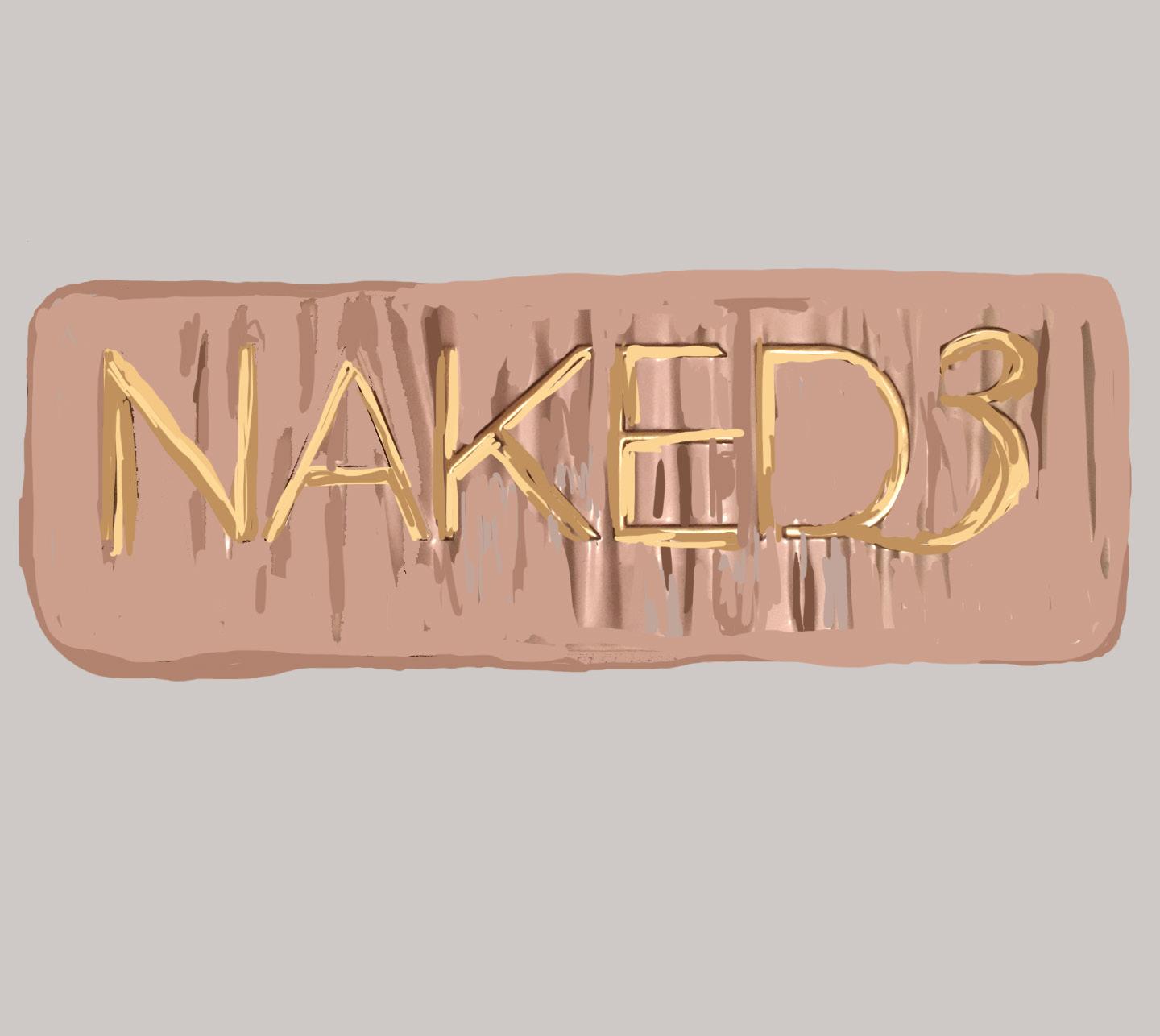
The Naked3 palette. Like every basic bitch, I got this the Christmas it came out. It was a gift from my ex-boyfriend. I use it often and imagine it as being the due he owes me for causing me an entire summer plus half of a Fall semester or so of heartbreak. If you’re reading this Davey, you deserve it. Thanks for the eyeshadow.
What's the most memorable thing you've given someone?
This past Christmas I gave my sister an Atlas clock necklace. She’s spending her first semester of college at Northeastern in Greece, and once she moves to Boston I’ll be graduated and heading to do volunteer work in Africa. It was tough on us when I first moved 6 hours away for school, so we knew this upcoming year would also be difficult. I told her to wear it as a reminder that I love her and think of her no matter what time zone each of us may be in. That sounds horribly cheesy, but she really is the most important person in my life. YM
STYLING BY MIA ZARRELLA, ZOE ALEXIADIS, PENNY JOHNSON, GABY CHIONGBIAN
PHOTOGRAPHY BY AND CREATIVE DIRECTION BY YASMINA HILAL
MODELING BY ALLURA DUFFY, KEVIN MA, GRACE MADIGAN, MAX KOLOMATSKY
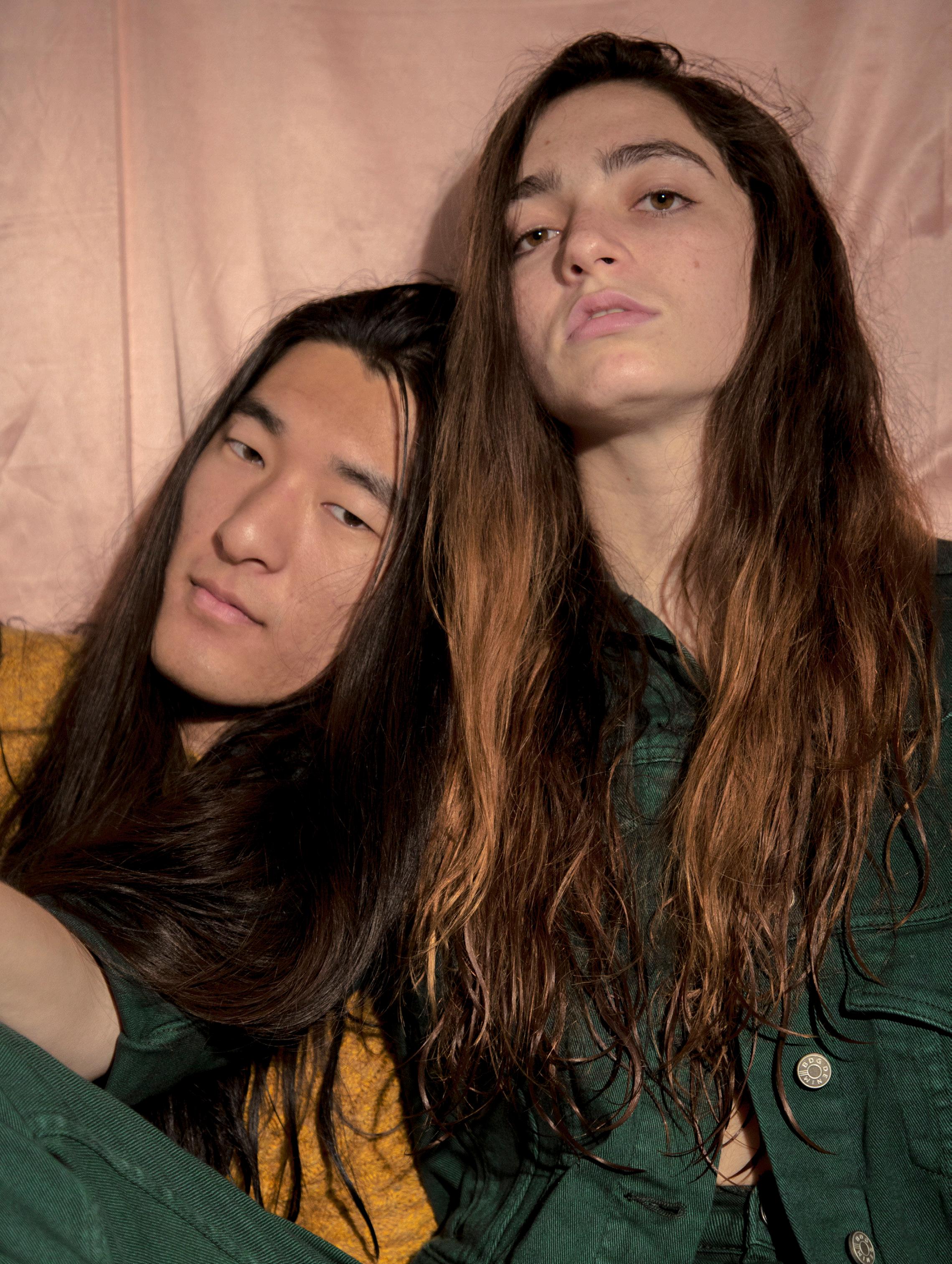
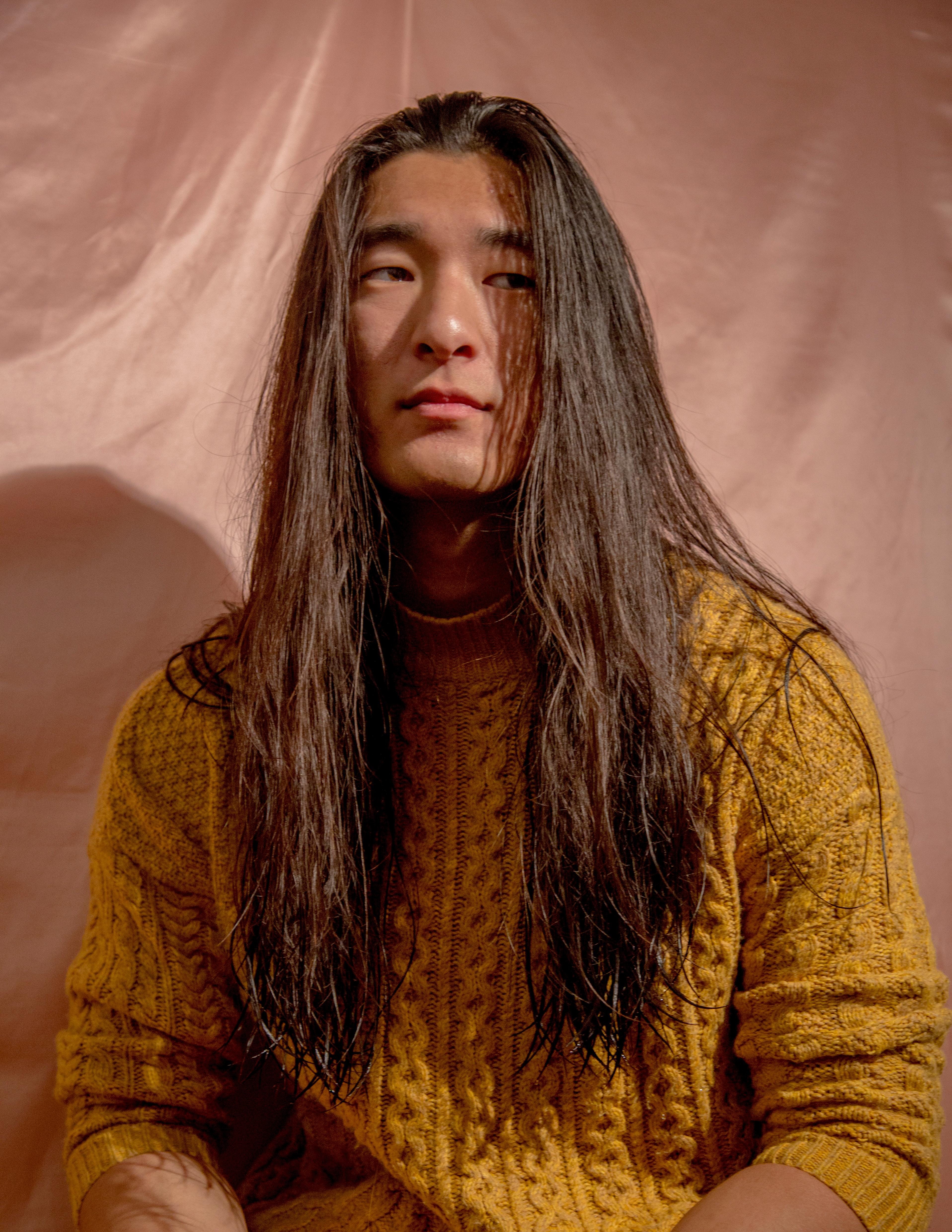
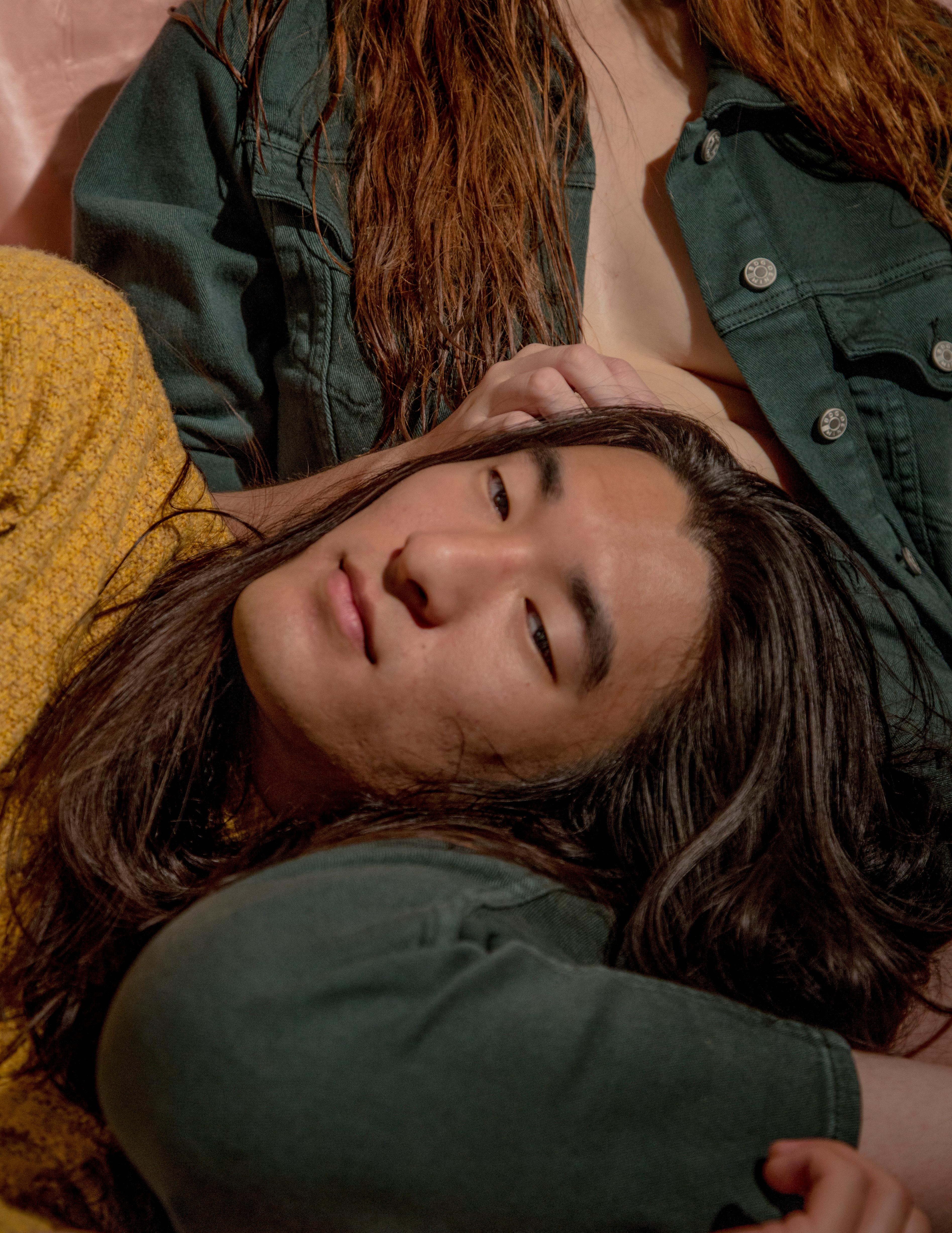

NASTY GALAXY
WRITTEN BY PENNY JOHNSON
There’s a revolution happening, a revolution of Girlbosses. If you haven’t heard of a Girlboss before, you’ve probably seen one. A Girlboss is in control. She creates her own opportunities. She’s a badass who knows the rules, and then breaks them. She listens to her instincts, then follows them at full speed. A Girlboss knows how to get what she wants and has a good reason for going after it. And of course, a Girlboss knows never to take herself too seriously.
The term was made popular by Sophia Amoruso, New York Times Best-Selling Author and founder of Nasty Gal fashion retailer. Amoruso built a multimillion-dollar fashion company with no college degree and without ever borrowing a dollar. She started out with the simple goal of paying her bills and making customers happy. She opened an eBay store and named it after a Betty Davis album, selling clothes haggled from thrift shops in the back of her run-down apartment. Through the years, Amoruso’s personal online store turned into a $250-million-plus company with hundreds of employees. By working hard, playing her strengths, and letting her freak flag fly, she showed us just what it means to be a Girlboss. And through her books, Sophia Amoruso inspires other girls to be one, too.
In her most recent book, Nasty Galaxy, the self-proclaimed Girlboss presents an inspo-journey filled with essays, photos, illustrations, and more. Nasty Galaxy is a mix between a style guide, motivational handbook, and modern day bible. The form and content is wonderfully unconventional, just like Amoruso’s rise to success in the retail industry. Amoruso opts out of the traditional memoir and reaches for a less-predictable coffee table format. The oversized, pink hardcover book, nevertheless, is meant to go beyond serving as a trendy household display. With sections titled, “Tips for Thrifting,” “How to Shuck an Oyster,” and “Portraits of a GirlBoss,” Nasty Galaxy represents a system in which anything can happen.
The book redefines what an author can do. It paves the way for future writers and artists, creating new rules and disregarding the old. Nasty Galaxy aspires to be a non-conforming guidebook for the modern, hardworking badass. Amoruso leads girls by example to never compromise their ideas. She shows that just because something’s different doesn’t mean it can’t be great—it might actually be brilliant. Compiling “everything that goes on in her head,” Amoruso’s pink cloth-adorned coffee table book is a portal to the Nasty Galaxy of fabulousness and girl power. And it’s sort of genius.
To those girls who are still navigating their way through their passions and artistic endeavors, Amoruso reassures us all that inspiration is everywhere, and that staying true to one’s self is what
makes the magic happen. She demonstrates that clear goals, a unique approach, and an unapologetic attitude make dreams come true. Through career advice, inspiring quotes, and groundbreaking life-hacks—e.g. “How to go Commando”—Amoruso leads young women to discover just how they can achieve their goals and embody their inner Girlboss.
In her personal essay sections, Amoruso gets particularly candid. In one essay, titled “On Confidence and Humility,” she points out that she hasn’t always been the confident Girlboss she is today. Amoruso even admits to “feeling like a loser a lot of the time.” She continues to explain that this is all part of being someone with “hopes, dreams, and aspirations,” that people who don’t experience these feelings are usually narcissistic or lazy. It’s a bold statement, backed up by a bizarre metaphor about cheese, but Amoruso circles back to the point that “shrinking doesn’t get you very far,” and that being “confident while remaining humble” is a choice all Girlbosses have to make.
By getting personal, Amoruso also shows us that whether you’re dumpster diving or strutting down Melrose, there’s something to be said about the fabulousness of it all. As she has said before, “Your life can begin as a dirty skateboard and morph into a hot rod somewhere along the way.” The grueling steps it takes to channel the inner Girlboss are all parts of the process, and not everything can be glamorous.
After all, taking over the world takes time, and if you want to do it right, you better have some fun. It’s comforting to know that there’s an unconventional route to success that sounds as inviting as it is adventurous. For the girl who has been told that there is only one way to reach the top, a book like Nasty Galaxy shows her that there are infinite possibilities. With hard work and patience, a Girlboss gets what she wants and finds the universe on her side.
So whether you want to be the next big CEO or are just trying to go commando (can’t a girl do both?), Nasty Galaxy has a little something for every young female planning to kick butt in the great big world and look fabulous while doing it. YM

If houses were people, Gropius House would be the type of person who’s curt, prompt, straightforward, Type A, intimidating but not condescending, relatable, quite likeable, refined, sartorially clean, and exuding minimalist elegance. Their minimalism, however, would extend beyond a heavily curated Instagram aesthetic: They would live conscientiously and perhaps even ascribe to “slow living,” but they would actualize the philosophy unknowingly and naturally—and not because they discovered it in Kinfolk’s mission statement. They would maintain the lifestyle towards which many of Kinfolk’s devotees (think: wooden-chopping-board-and-overpricedlattes loving marble-countertop-white-space-pretty-tiles enthusiasts) aspire. They would live simply, intentionally, and responsibly, but without needing to ensure that everyone sees them doing so.
Such a person aligns with the principles around which German architect Walter Gropius founded The Bauhaus in 1919, an revolutionary institute and movement that placed efficiency, economy, simplicity, geometry and functionality at the foundation of architecture. The two-story Gropius House, tucked away in Lincoln, MA, is not a staggering beauty that dazzles or wows like the Newport mansions in Rhode Island. Rather, it stands quietly and unobtrusively, melding into the surrounding greenery. Built in 1938 by Gropius himself, the house is now a part of Historic New England, the country’s oldest architectural heritage organization. The moderately sized building emanates a quiet elegance, its beauty emerging from the essence of its design rather than from ornamentation. Gropius incorporated wood, brick and fieldstone conventional in New England architecture with the materials deemed innovative and rarely used in residences at the time like glass blocks and chrome banisters.
A Bauhaus Home
WRITTEN BY AND ILLUSTRATION BY PIMPLOY PHONGSIRIVECH
As with any house-turned-monument preserved to be a portal connecting a past era to the present, it’s impossible to walk through Gropius’s home without sensing that the person who’d built and lived within its walls was an influential force. And he most certainly was. Walter Gropius combined the Academy of Fine Arts with the School of Crafts in Weimar, Germany renaming it Bauhaus: Bauen (to build) and hausen (house) literally translates Bauhaus to “House of Building”—such economy of language is testament to his philosophies. In 1933, the Third Reich closed down the Bauhaus and four years later, Gropius became an emigre, relocating to Massachusetts to teach at Harvard’s Graduate School of Design. He, his wife Ise, and their daughter Ati arrived in New England with little but the furniture made in Bauhaus workshops and four acres of land lent to them in Lincoln.
With no knowledge of its history, Gropius House is simply an aesthetically pleasing, well-designed, sleek modern house with beautiful lighting and photo ops; you can approach it with a certain kind of historical sensitivity, toeing the line between meaningful visitation and mere voyeurism. You may even revel in the fact that Alexander Calder, Joan Miro, Frank Lloyd Wright, and other notables of the twentieth century worthy of Gropius’s hospitality also walked on the same roof deck, through the living room and into the four bathrooms.
When Gropius died in 1969, he left his wife Ise a two-sentence will stating that “he loves and trusts her with his legacy.” She turned the house into a museum and by doing so has in trusted us with the legacy of a man whose influence will transcend time. YM