YELLOWSTONE
Fall / Winter 2024

A Message For You
FROM OUR CHIEF DEVELOPMENT OFFICER
As the vibrant colors of fall begin to blanket Yellowstone National Park, we reflect on yet another busy summer full of wonder, potentially record visitation, and unique challenges. This underscores the importance of our mission and the critical role your support plays in protecting, preserving, and enhancing this iconic park.
As federal budgets continue to be stretched thin, your contributions are more vital than ever. Thanks to your generosity, we have been able to fund essential projects that might otherwise have gone unsupported. However, as we transition from the bustling summer to the serene winter months, there is still much work to be done to ensure the park remains a safe and enriching environment for all.
We are proud of the strides made in Yellowstone’s wildlife conservation, visitor safety, and education programs. The Bear Conservation Fund and the famed Yellowstone Wolf Project (which celebrates 30 years next year) are instrumental in protecting the park’s iconic wildlife and providing visitors with a safe and enjoyable experience. Additionally, Yellowstone

Scan here for our 2023-2024 Annual Report.
youth education programs—like Expedition Yellowstone, Youth Conservation Corps, and the Junior Ranger program—provide invaluable educational experiences for young visitors, fostering a new generation of conservationists.
These initiatives still need your help to reach their full potential. As we close out the year, we ask for your continued support to sustain and expand these critical programs. Your donations make a tangible difference in preserving Yellowstone for future generations.
Thank you for your unwavering commitment to Yellowstone National Park. Please be sure to check out all your accomplishments in our 2023-2024 Annual Report by scanning the QR code above.

Sam Barkley Chief Development Officer Yellowstone Forever
Share Your Yellowstone Story
LAURA DIGGLE
Yellowstone Guardian since 2008
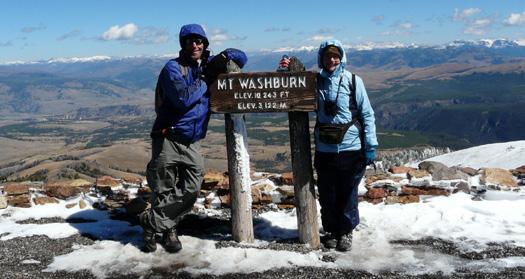
For nearly 16 years, Laura Diggle from the United Kingdom has been a dedicated Yellowstone Guardian member, making generous contributions to Yellowstone National Park
each month. Her journey with Yellowstone began in June 2008 when she and her partner, Keith, embarked on their first trip to the park. As they navigated the stunning landscapes, a surprise sighting of a grizzly bear ignited their passion for this extraordinary ecosystem, forging a deep and lasting bond with Yellowstone.
Since then, Laura and Keith have returned to Yellowstone seven times, each visit deepening their connection to the park. They’ve hiked beloved trails, observed numerous bears, and gained
invaluable insights into the delicate balance of nature. Yellowstone transformed their understanding of conservation, highlighting the critical need to protect its ecosystem for future generations. “We were always nature lovers, but Yellowstone showed us how much better the world could be if only human beings would assist and preserve many such areas,” Laura shared.
Although health challenges have limited their ability to visit, Laura and Keith remain devoted and engaged supporters of Yellowstone.
We’d love to hear from you and learn more about your connection to the park. Share today at yellowstone.org/your-yellowstone-story/ or scan the QR code.
Living near a picturesque expanse of common land in the U.K., they often find themselves reminiscing about their cherished experiences in the park.
Laura’s unwavering commitment to conservation serves as a powerful reminder of the profound impact that Yellowstone has on its visitors and the vital importance of preserving and protecting its ecosystem.
Will you join Laura in sharing your Yellowstone story?

Historic Impacts
WOLF PROJECT REACHES MILESTONE, EXPANDS RESEARCH
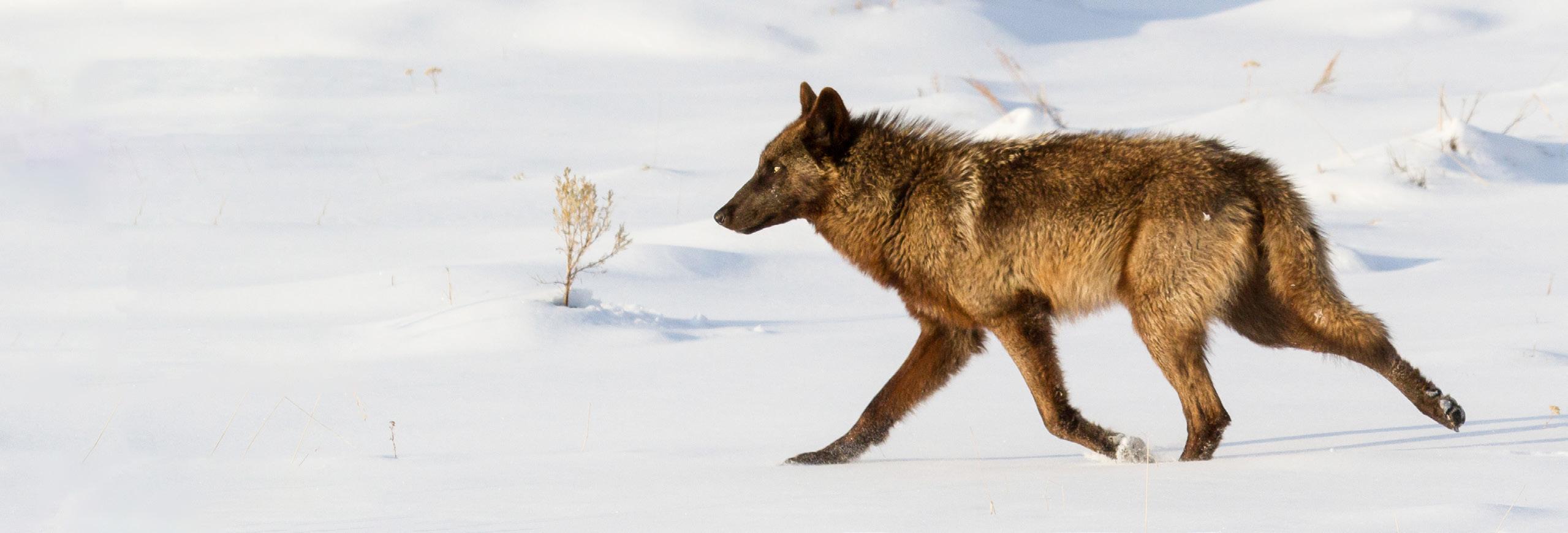
Next year marks the 30th anniversary of the reintroduction of wolves to Yellowstone National Park. In 1995, 31 gray wolves from western Canada were relocated to Yellowstone. Now, with nearly three decades of research, the Yellowstone Wolf Project has become the longest in-depth study of a large carnivore in the world. Biologists conduct year-round field research gaining data on the park’s 11 wolf packs. Research includes population and reproduction data, wolf-prey relationships, predation studies, causes of mortality, and disease.
As of December 2023, the park had 124 wolves with six breeding pairs in 11 packs. Throughout Yellowstone, a minimum of 58 pups were produced and 46 pups survived (79%) to the end of the year with 30 in the six northern packs and 16 in the five interior packs.
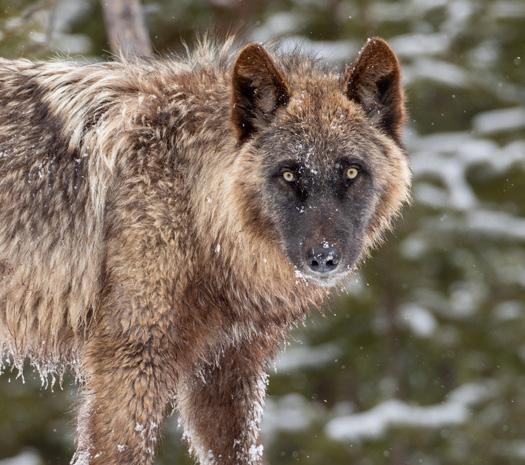
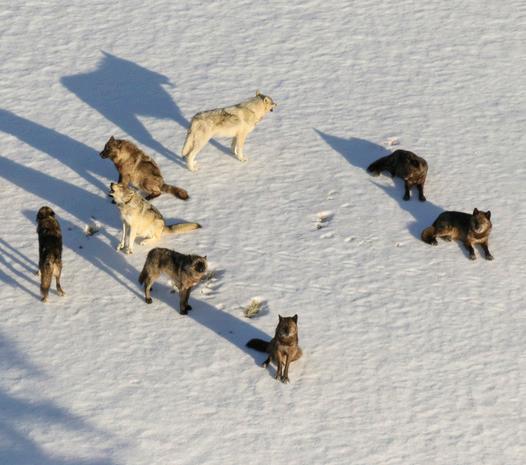
The wolf team conducts this research through the use of radio collars, field work, and air observations. This past summer, they conducted summer predation work by searching GPS clusters of two wolves during May, June, and July. During this work, field technicians hiked nearly 500 miles to search over 350 GPS clusters. They detected about 60 elk, bison, and deer killed or scavenged by wolves. These findings feed into long-term work that assess precise predation dynamics during summer, which are rarely obtained in large carnivore research. In addition to predation studies, the project monitored reproduction and pack
As of December 2023, the park had 124 wolves with six breeding pairs in 11 packs. Throughout Yellowstone, a minimum of 58 pups were produced, 46 pups survived to the end of the year.
dynamics through the summer and early fall. Although too early to provide accurate pack and population size estimates due to challenges of monitoring less cohesive pack behavior in summer, pup production, and adult survival seemed stable throughout this season. This suggests a likely stable wolf population from last year’s count by the end of 2024.
The Wolf Project team is also beginning to listen, to allow the wolves to tell their stories. Last year, the Wolf Project began new research using bioacoustic monitoring tools and methodology to study Yellowstone’s wolves by listening to their voices. With the help of partners, the team is utilizing new technologies including Artificial Intelligence to comb through the data and classify wolf detections. This data is useful for wolf census, presence, movement, and behavior studies.
None of this long-term and innovative work would be possible without the dedicated Wolf Project team who, along with conducting research, gave three conference presentations, 156 formal talks, led 18 field trips, and 124 informal talks in the field as part of the ongoing and important outreach and education efforts that reach tens of thousands of park visitors every year.
In addition to wolves, project staff study cougars and elk. Efforts to monitor and understand the ecological importance of Yellowstone’s two top predators (wolves and cougars) and their relationship with their primary prey (elk) are critical to the park’s mission.
“The Yellowstone Wolf Project’s margin of excellence over three decades is because of teamwork. From our seasonal and year-round technicians, research associates, graduate students, and collaborators, to our partners at Yellowstone Forever, we have built a worldclass program that continues to benefit conservation and Yellowstone National Park”
— Dan Stahler , Senior Wildlife Biologist & Wolf Project lead
Mar. 3-6, 2025
Mar. 10-13, 2025
Mar. 17-20, 2025
BISCUIT BASIN AWAKENS WITH RARE HYDROTHERMAL EXPLOSION
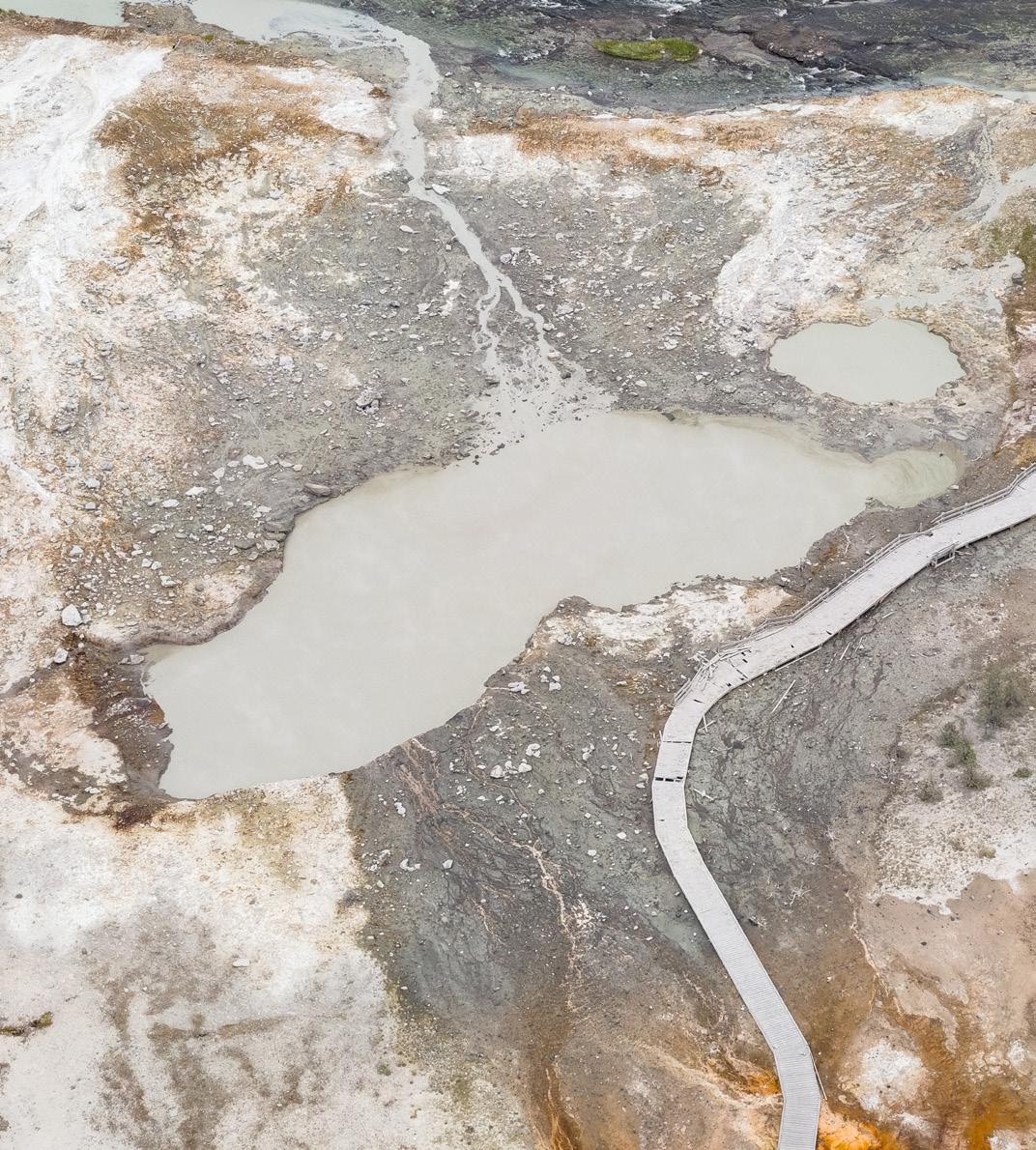
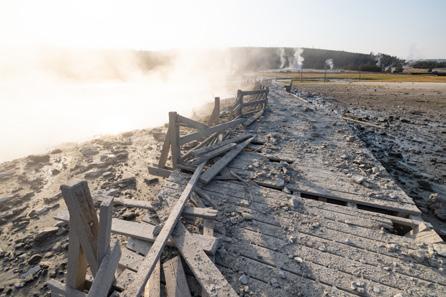
On July 23, 2024, Yellowstone experienced a rare hydrothermal explosion at the popular Biscuit Basin area. Luckily, no one was injured. However, the boardwalk was heavily damaged by the force of the explosion and falling rocks and debris.
Though a dramatic example, the event does serve as a reminder of the constant repair and replacement that is necessary of park boardwalks and trails in the midst of Yellowstone’s often harsh conditions. Whether from frigid winter weather, heavy visitor use, or hydrothermal activity, trail upkeep is critical to making sure Yellowstone remains accessible and safe.
Yellowstone National Park encompasses more than 2.2 million acres and has 1,000 miles of hiking trails, and more than 15 miles of boardwalks. Trails and boardwalks not only connect Yellowstone’s visitors with its wild places and natural wonders, but they’re also the park’s primary tool for protecting visitors from harm. Thanks to the incredible park staff and groups like the Youth Conservation Corps who work diligently all year to protect the park’s precious resources and provide the pathways that keep visitors inspired!
through

Yellowstone Forever is the official nonprofit partner of Yellowstone National Park. Our mission is to protect, preserve, and enhance Yellowstone National Park through education and philanthropy.
Smithey Ironware Supports Native Fish with Limited-Edition Skillet
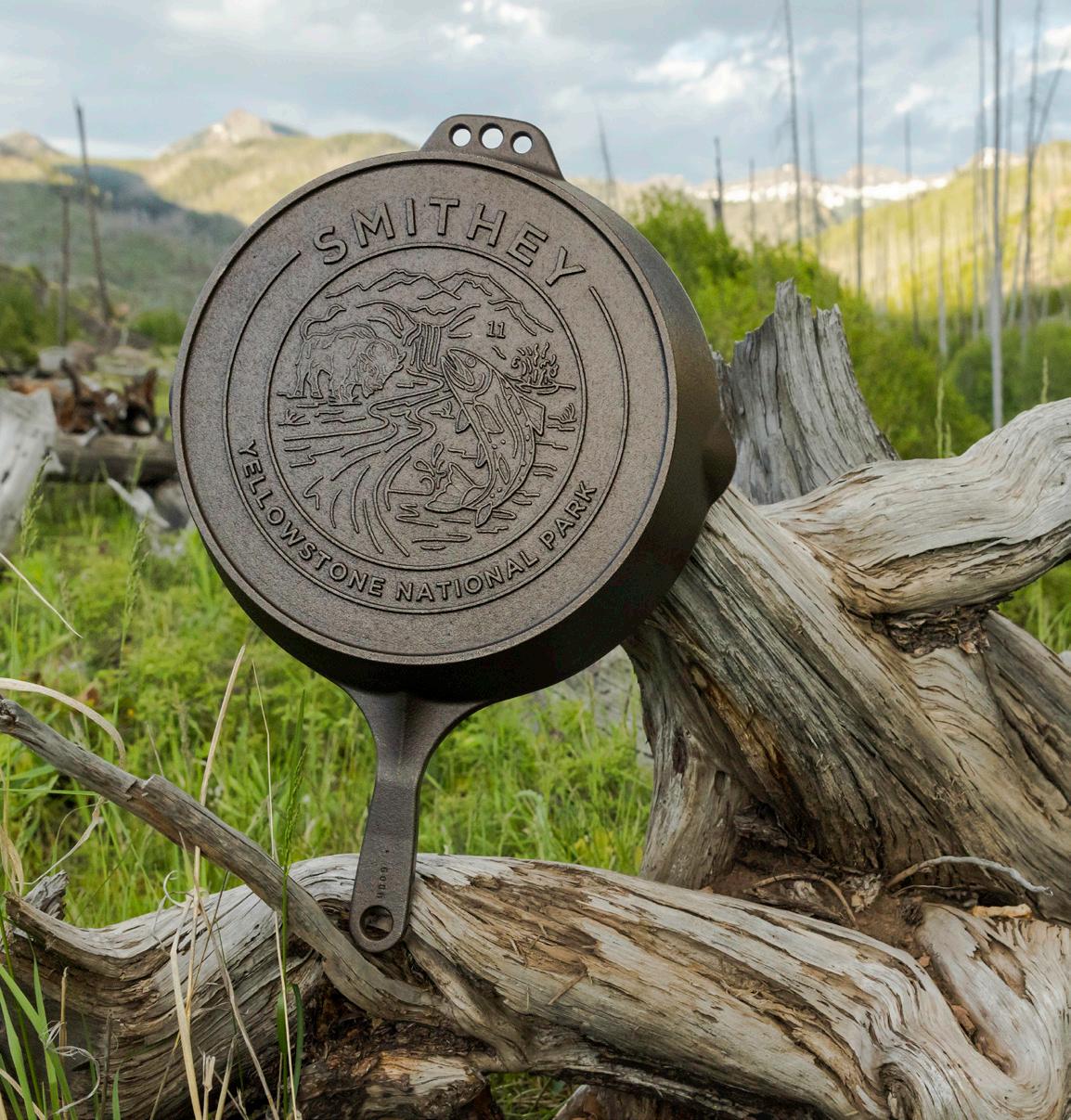
In celebration of two enduring American icons—Yellowstone National Park and cast iron—Smithey Ironware has partnered with Yellowstone Forever on its limited-edition No. 11 Skillet.
The skillet’s launch financially supports Yellowstone Forever’s mission to protect, preserve, and enhance the park’s ecosystem, specifically the conservation of the park’s primary native fish species, the cutthroat trout.
Yellowstone’s cutthroat trout is a keystone species and vital food source for bears, otters, and birds of prey. Utilizing the best available science and a multi-faceted approach, Yellowstone’s Native Fish Program is working to restore the ecological role of the cutthroat trout.


Scan the QR code to watch a video update from the Yellowstone Volcano Observatory and learn how Yellowstone Forever supports the rebuilding and rehabilitation of boardwalks and trails throughout the park.
Smithey’s Yellowstone Skillet has a limited release
December 2024. A percentage of every purchase directly supports Yellowstone Forever. Add it to your holiday gift giving list this season!