PORTFOLIO
YIFAN FENG
CARNEGIE MELLON UNIVERSITY | B.ARCH 2027
Third year B.Arch student at Carnegie Mellon University
Email: yifanfeng27@gmail.com
Number - China: (+86) 15000933943
Number - US: (+1) 4126526871
Location: Shanghai, China Pittsburgh, PA, US
2022 / 09 ~ Carnegie Mellon University B.Arch
Major: Architecture
Minor: Human-computer Interaction
Dean's List: 2023 Fall, 2024 Fall
2023 / 07 ~ 2023 / 08
2024 / 05 ~ 2024 / 07
2024 / 09 ~
Architectural intern at Goettsch Partners SH Office
- Assist with Indesign, 3d modeling, AutoCAD - Check, source metrials
Architectural intern at David Chipperfield SH Office
- Assist with Illustration, 3d modeling, AutoCAD (Zhangyuan Project)
Carnegie Mellon School of Architecture Event Team
- Photography & Video editing
- Assist with lectures, events and workshops happening in the school of architecture
Adobe: AI, PS, ID, PR Modeling: Rhino, Sketchup, AutoCAD Render: D5, Vray, Enscape Physical model making Soft skills: communication, time management, adaptability Language: Chinese(native), English(fluent)
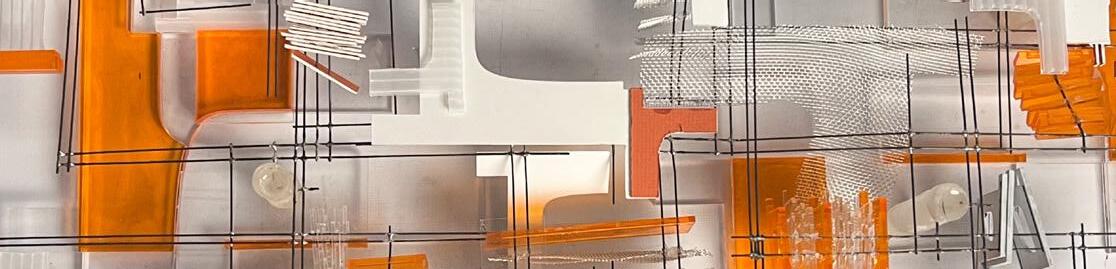
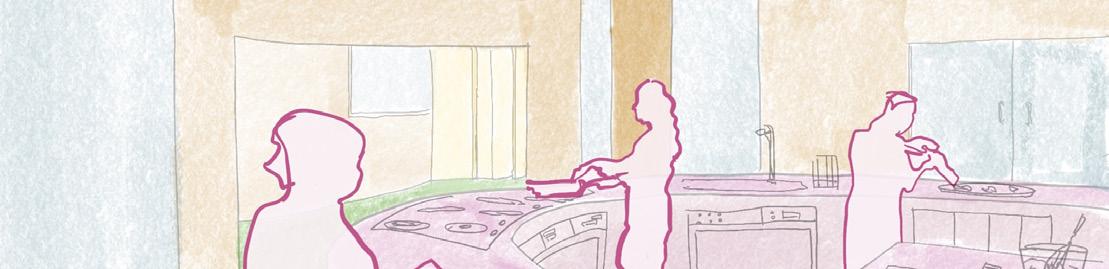
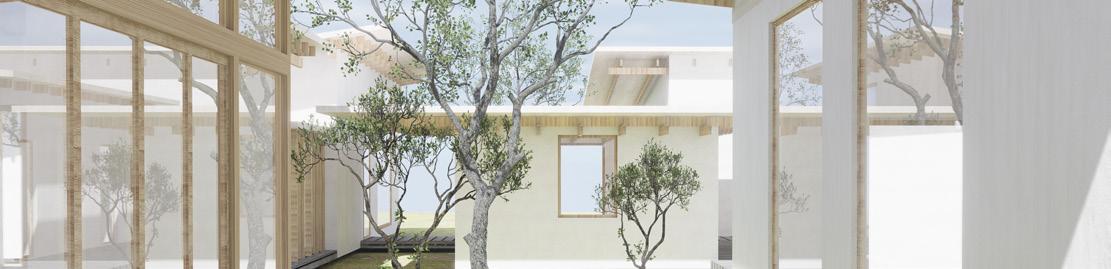



Pittsburgh, PA | Fall 2024
Partnered with Lisa Chun
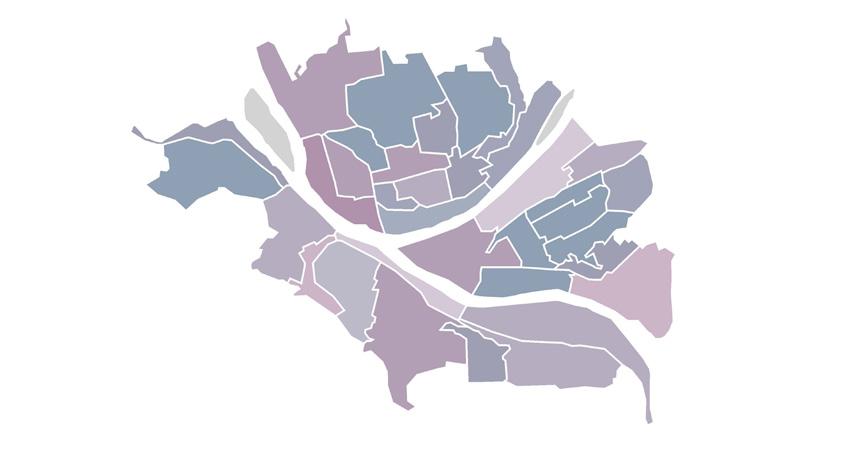
The project explores Pittsburgh as a whole by analyzing the city's existing systems and designing a framework to address food deserts in the North Side. The system mainly consists of three components: housing, infrastructure and its connection.
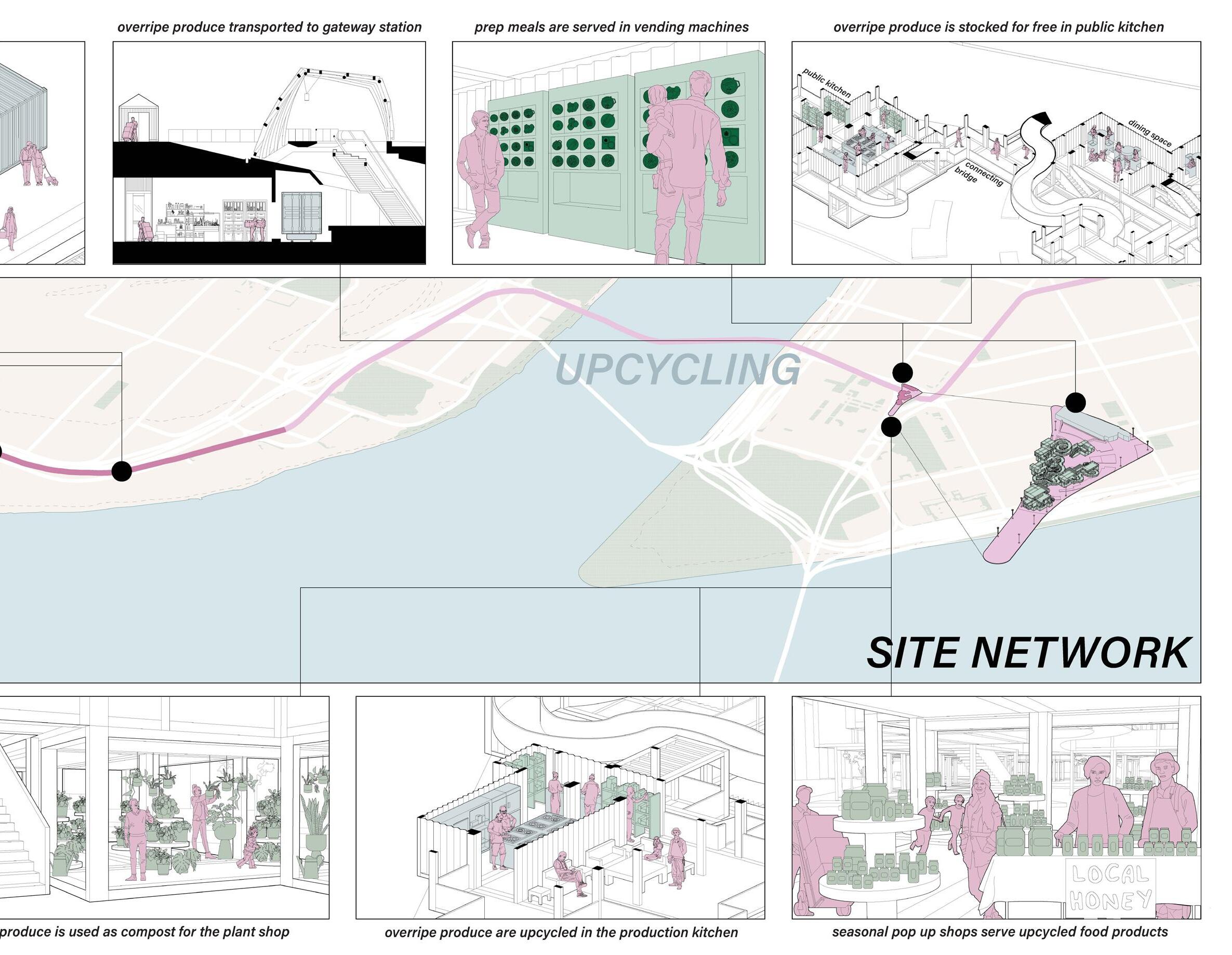
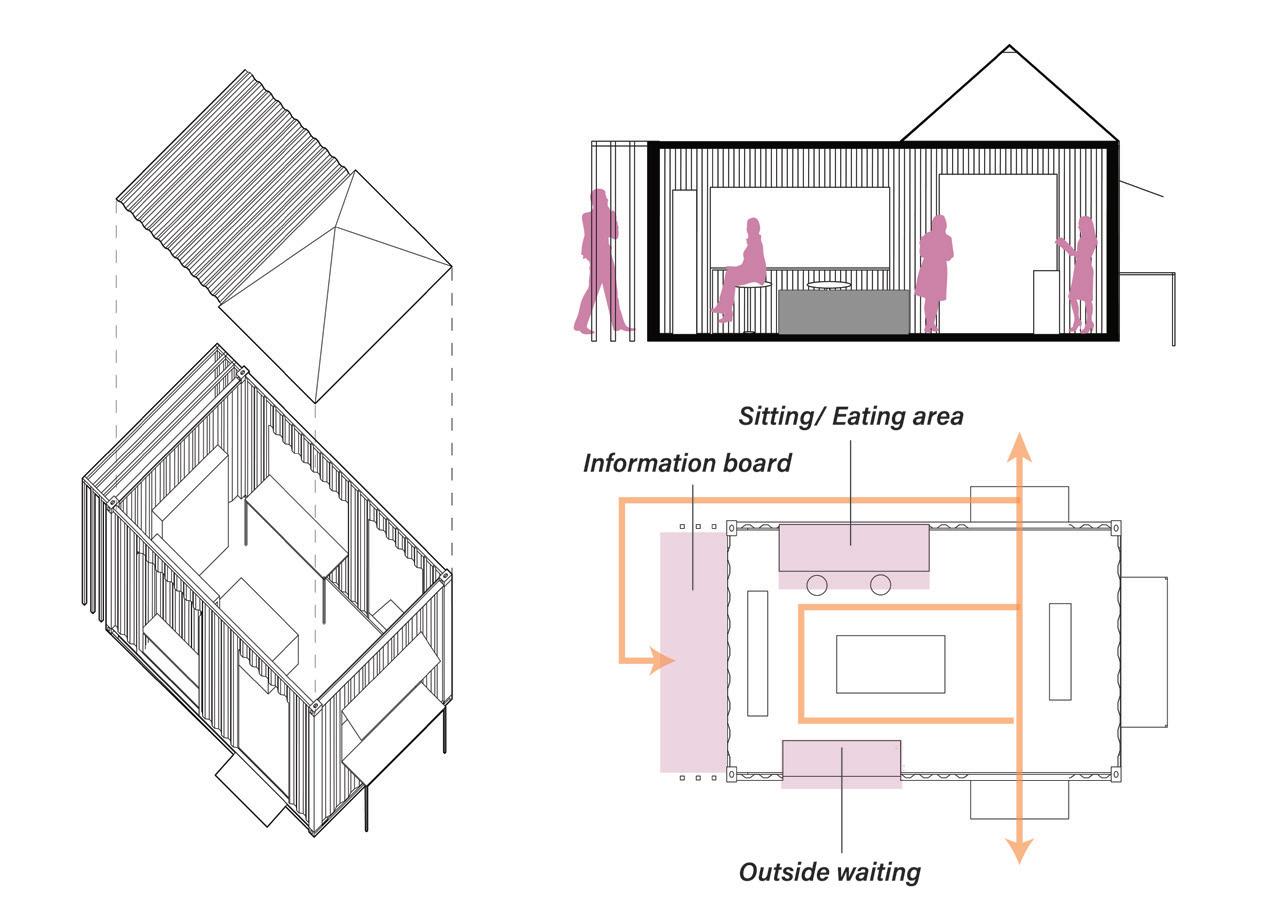
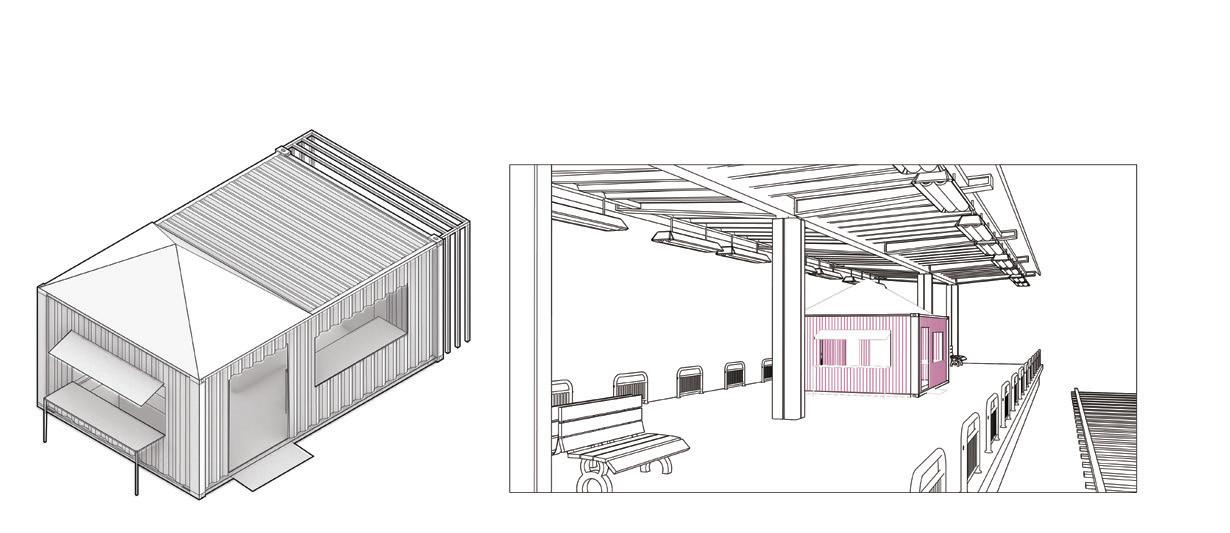
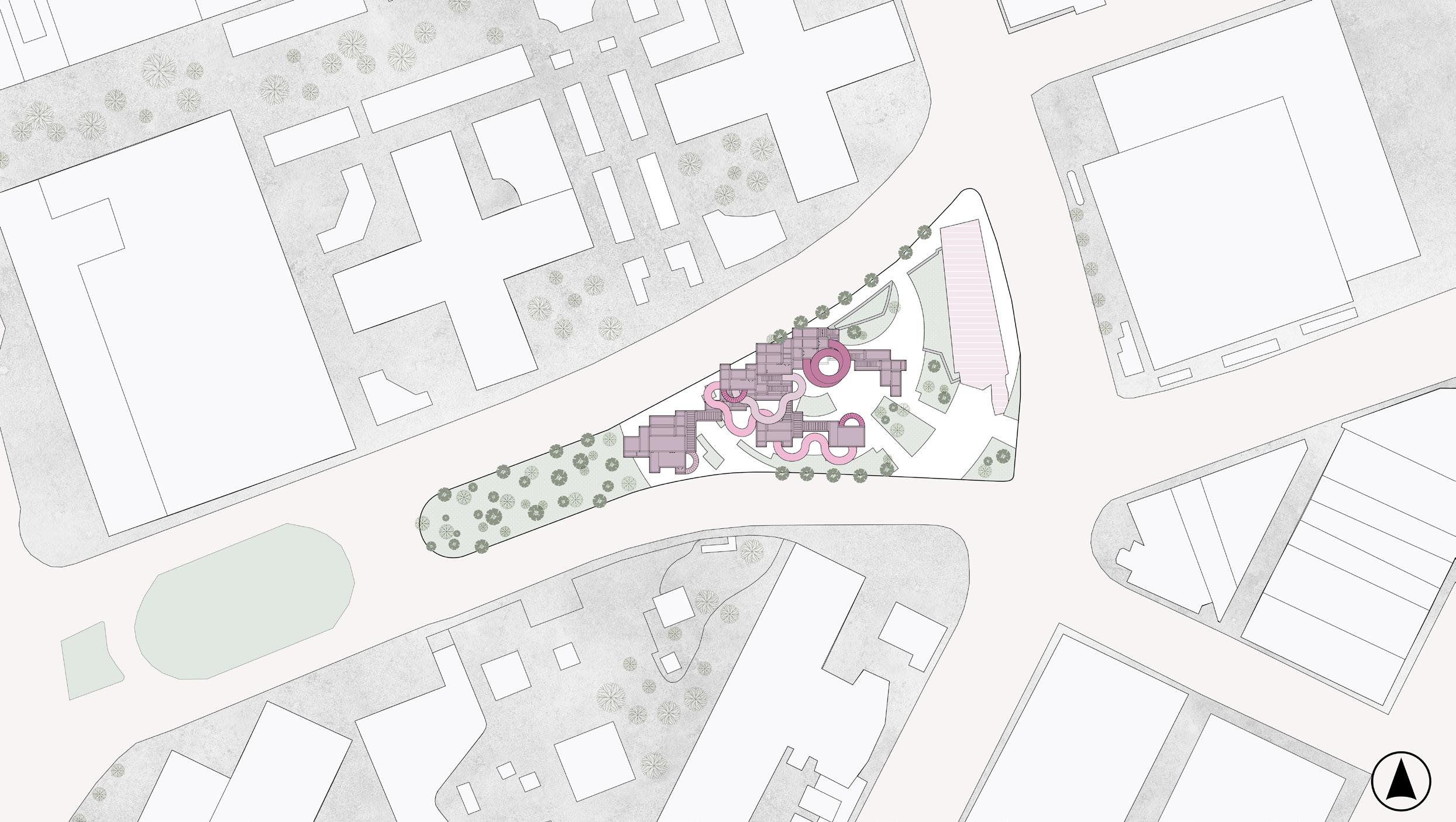
As part of the initiative, we propose a remediation process for Brunot Island, transforming it into a fresh food production hub within the city. The housing on the Island supports its agricultural activities. Gateway Station functions as essential infrastructure, providing citizens with amenities such as kitchens, bathrooms, laundry facilities, rest areas, and gathering spaces.The connection is a new form of grocery stand. Constructed with reused shipping containers, it will sell fresh produce from Brunot Island. During off-hours, these mobile, temporary stands are restocked and transported onto station platforms via the T-Line. Additionally, the project includes an extension of the T-Line to expand access and implement the system across more areas of the city.
The project not only established a new cycle of producing, distributing and consuming food but also a new way of how people are connected to their food sources.
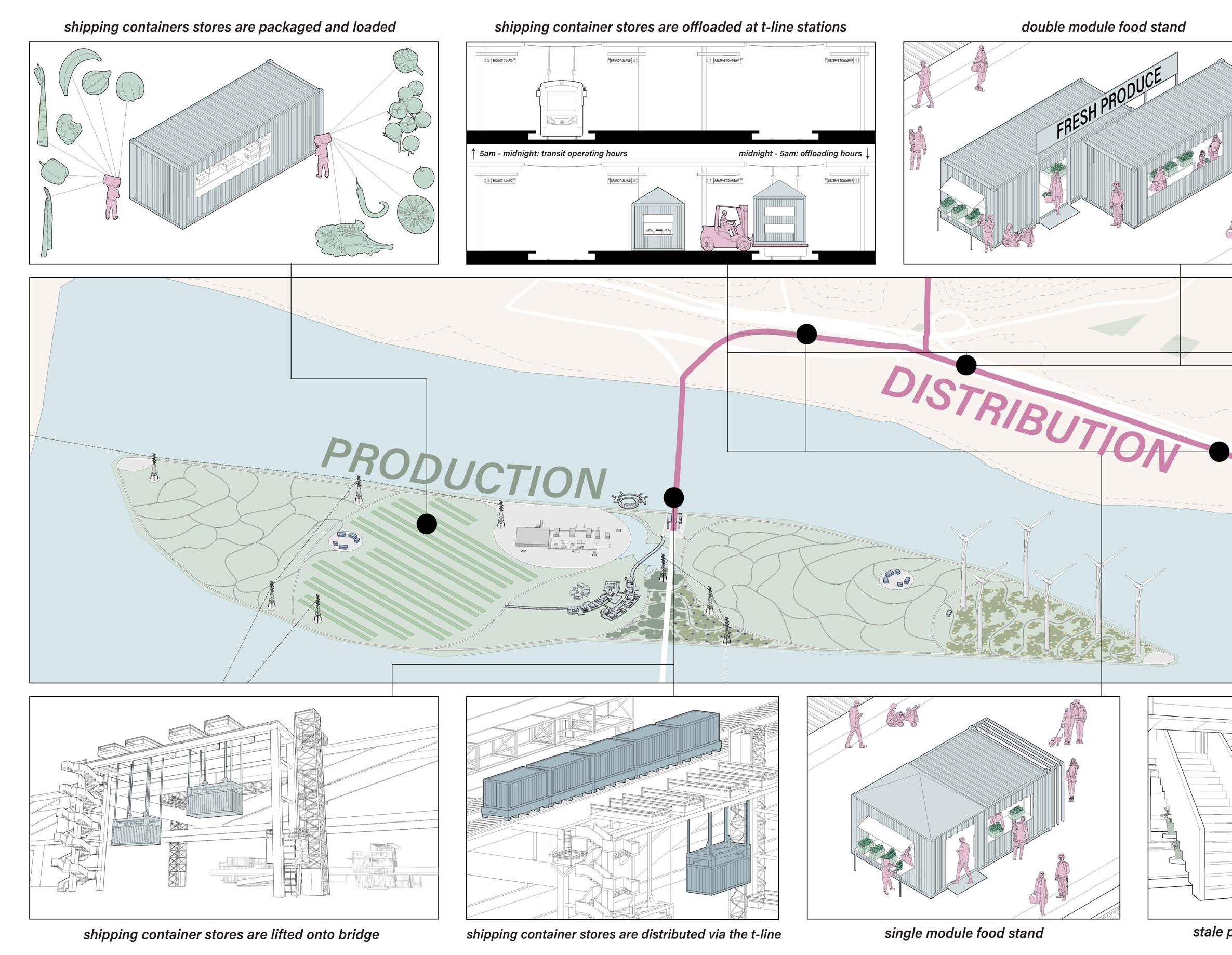
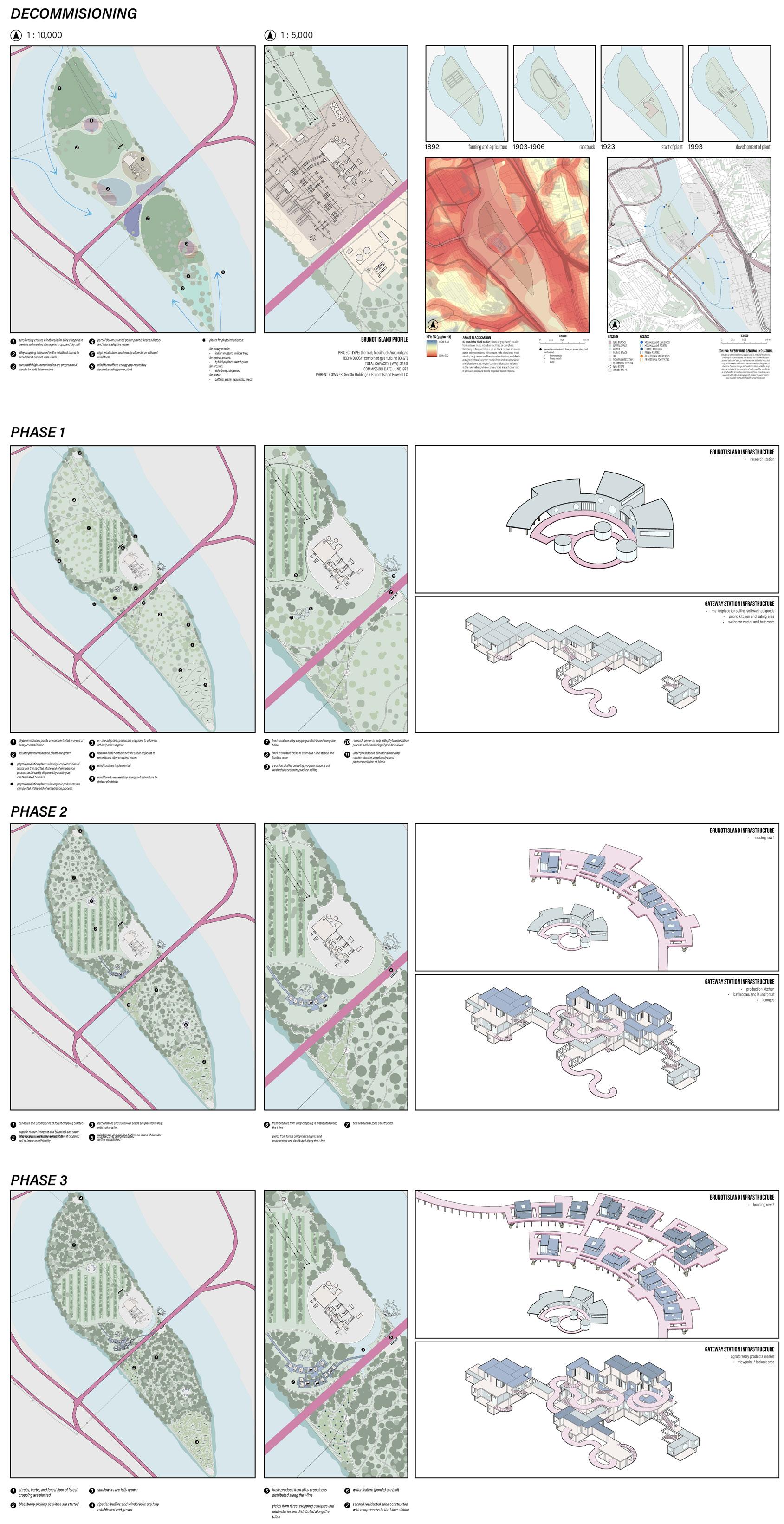
left: Island remediation right: building development
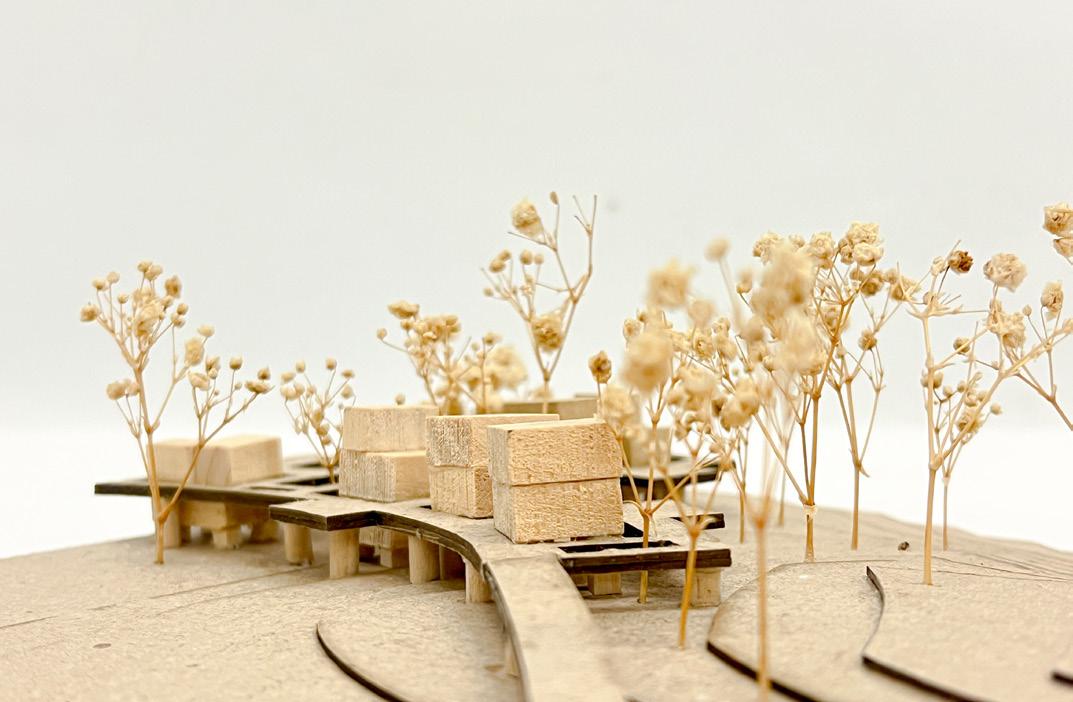
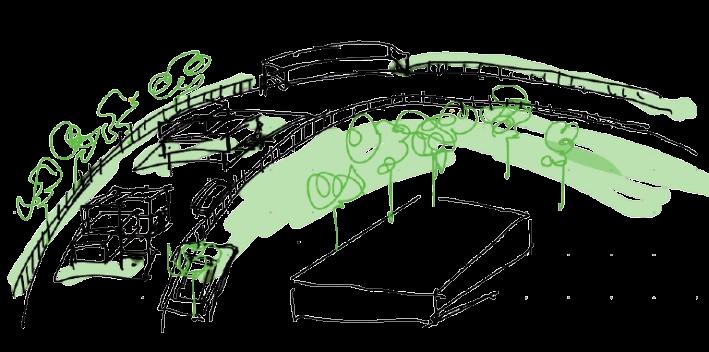
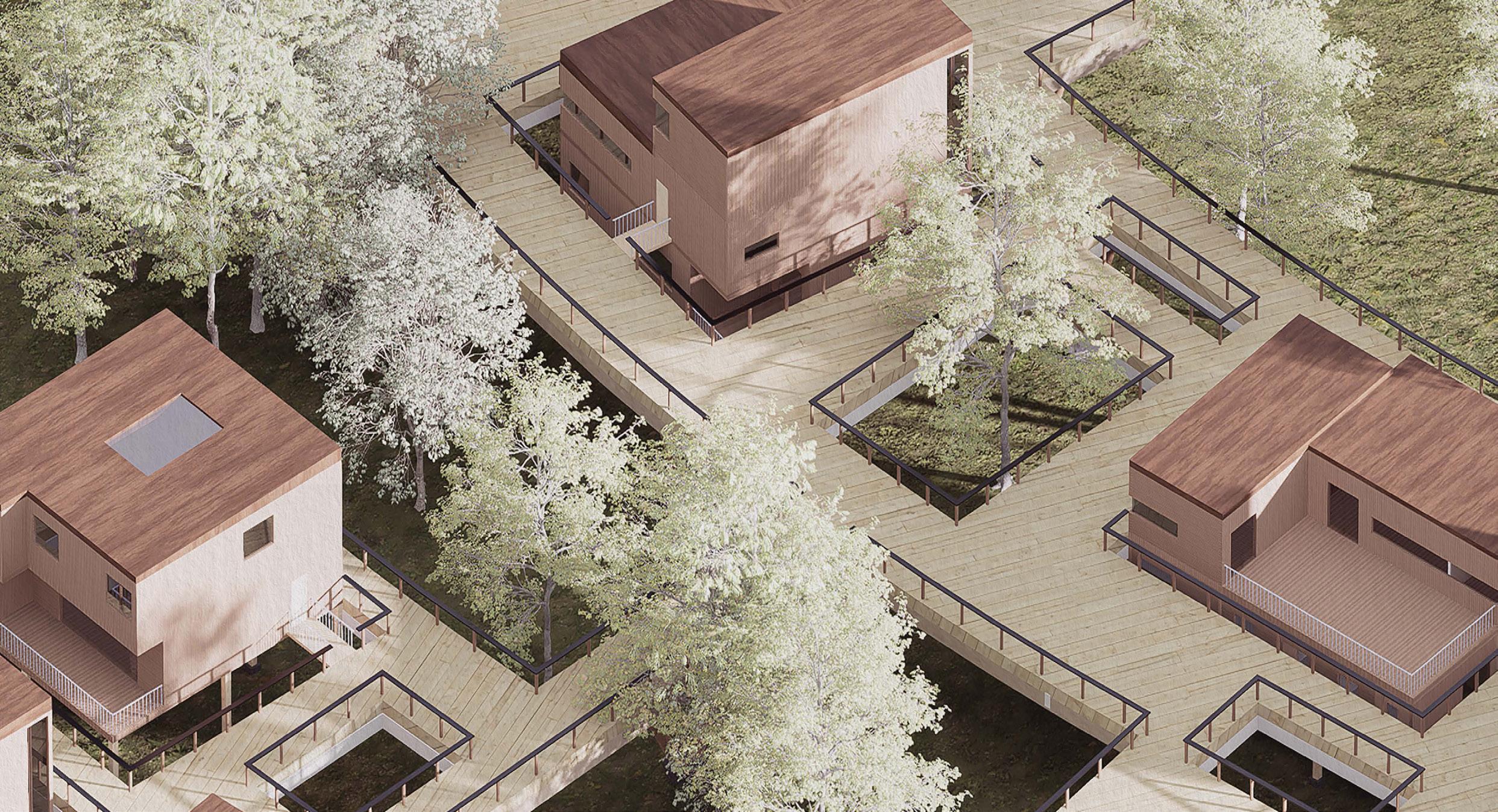
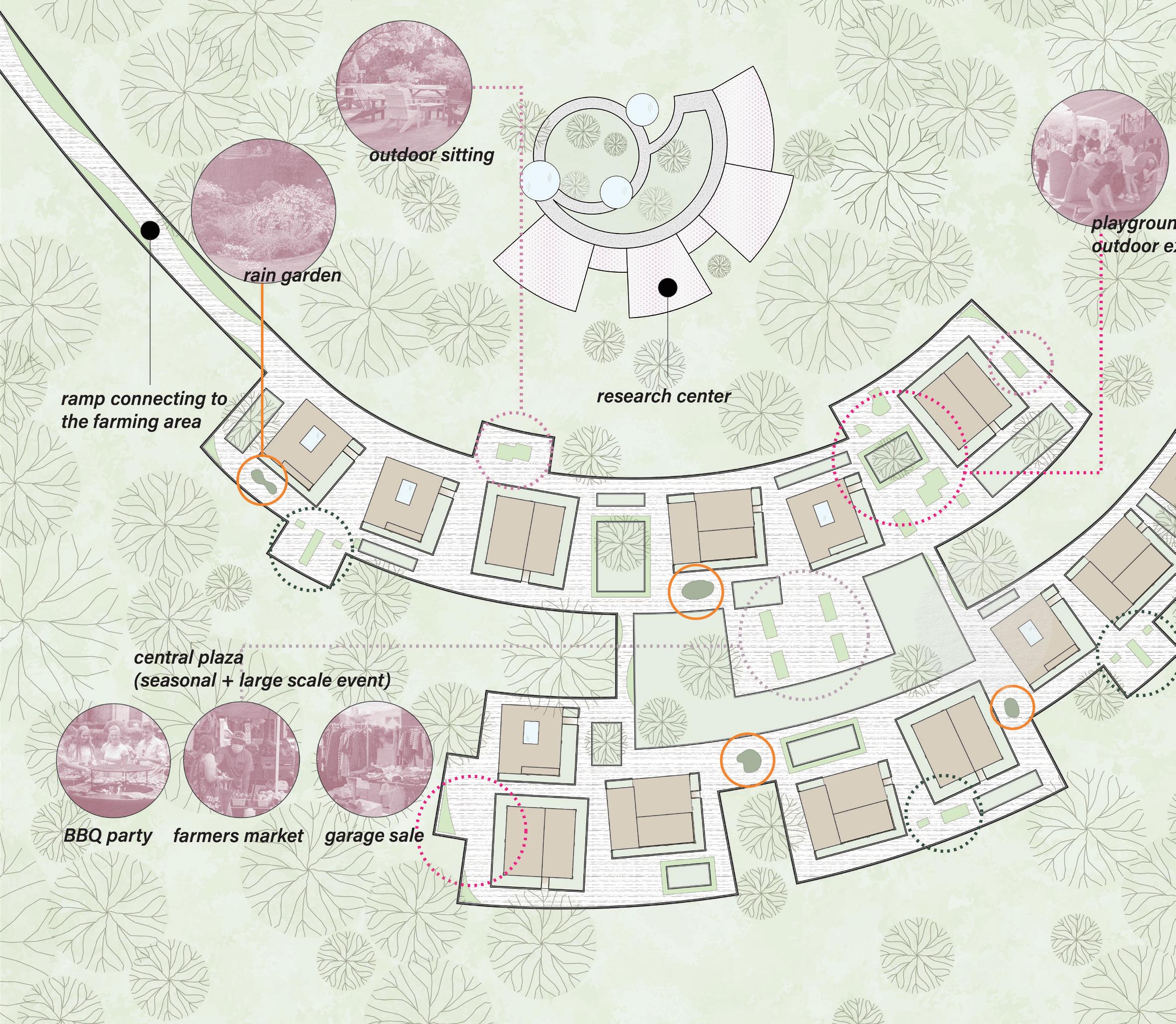
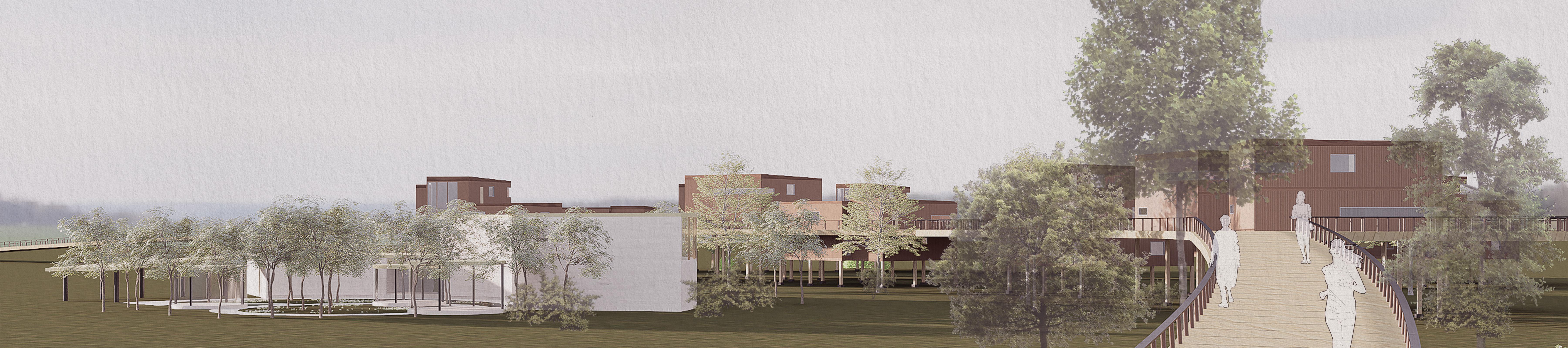
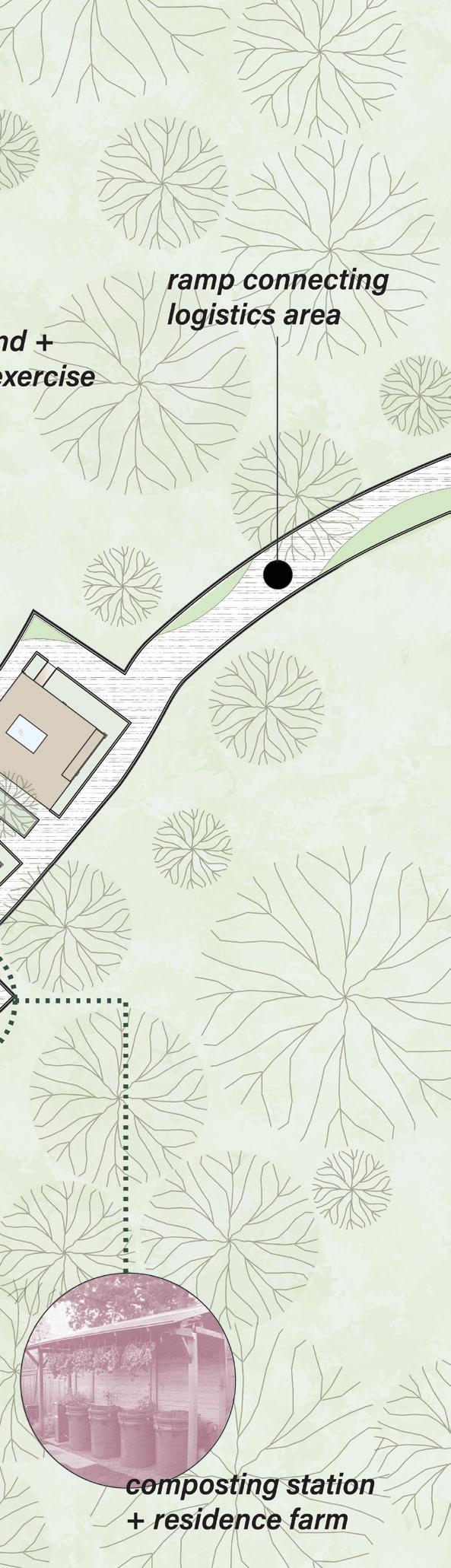
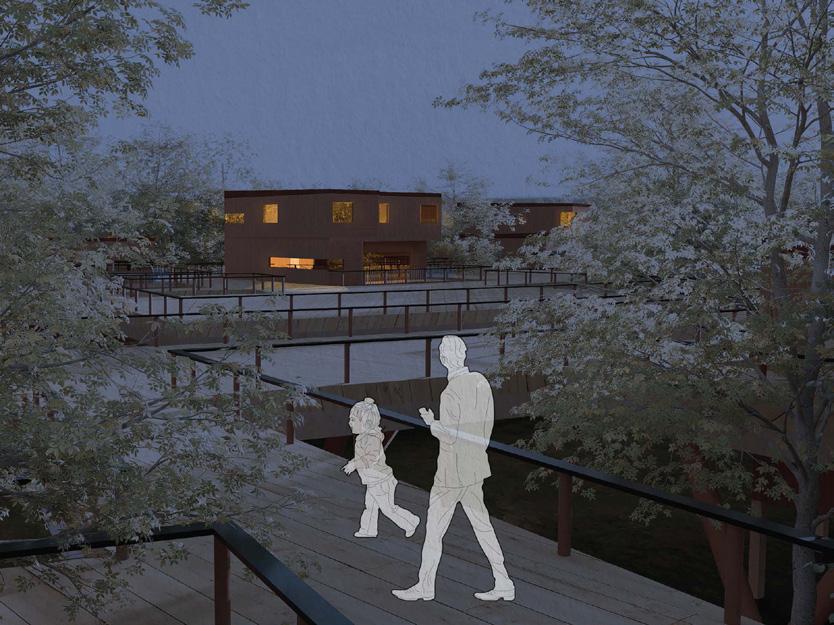
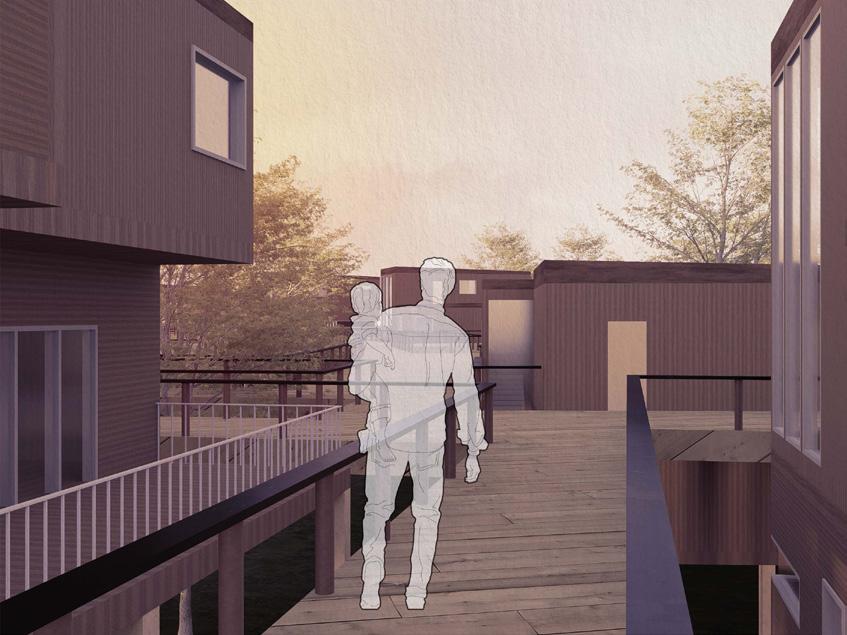
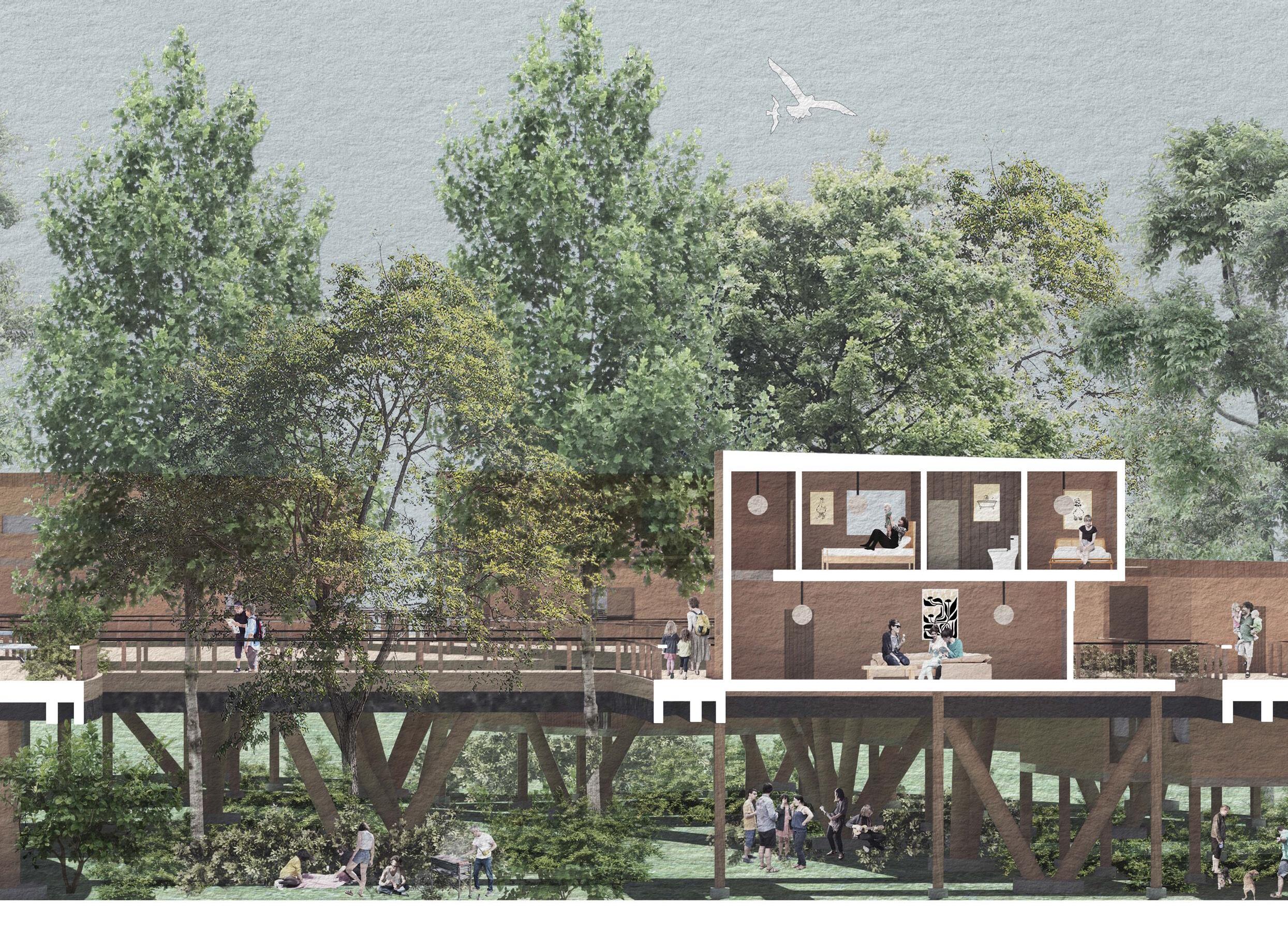
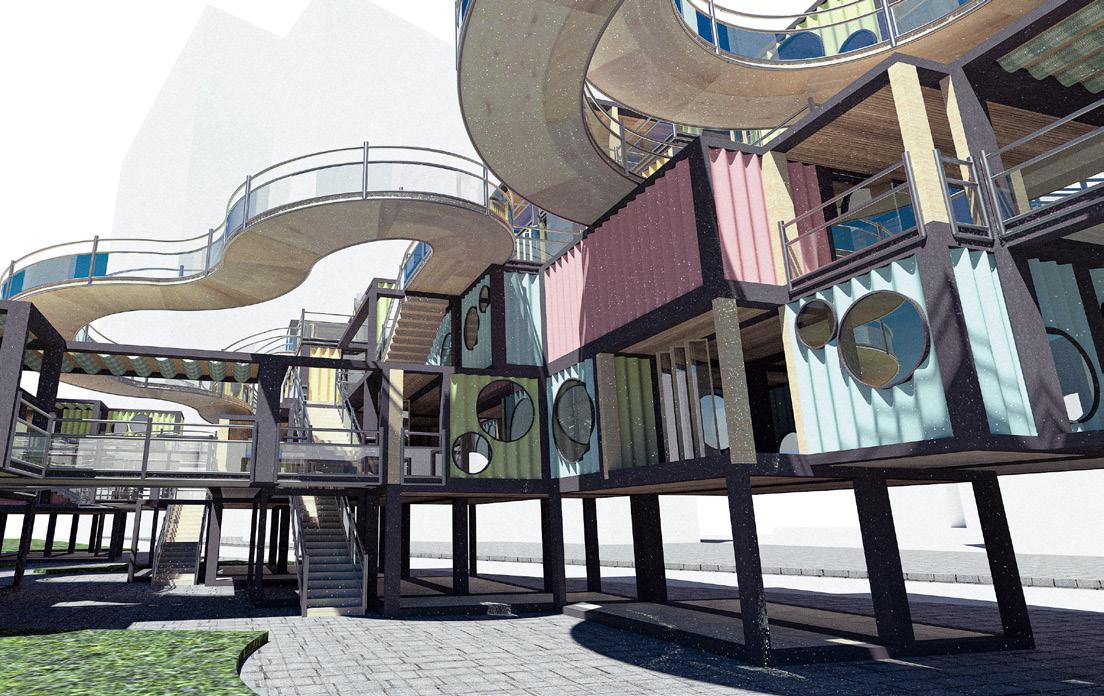
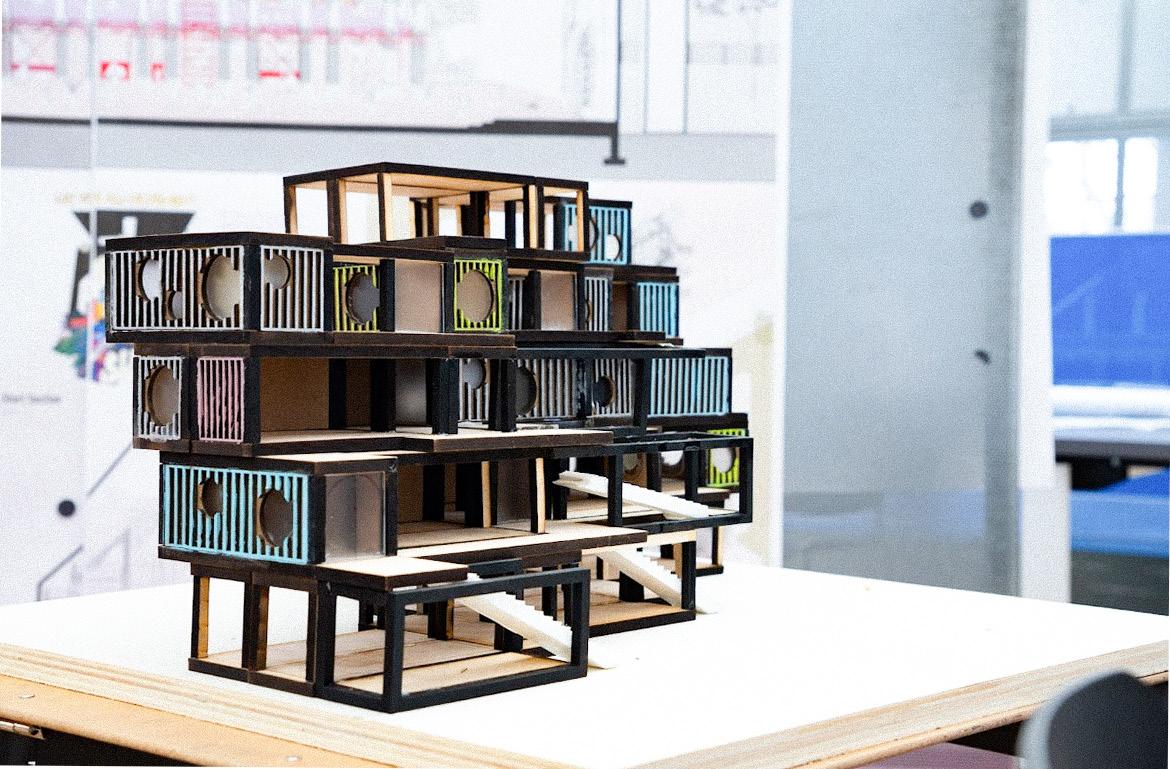
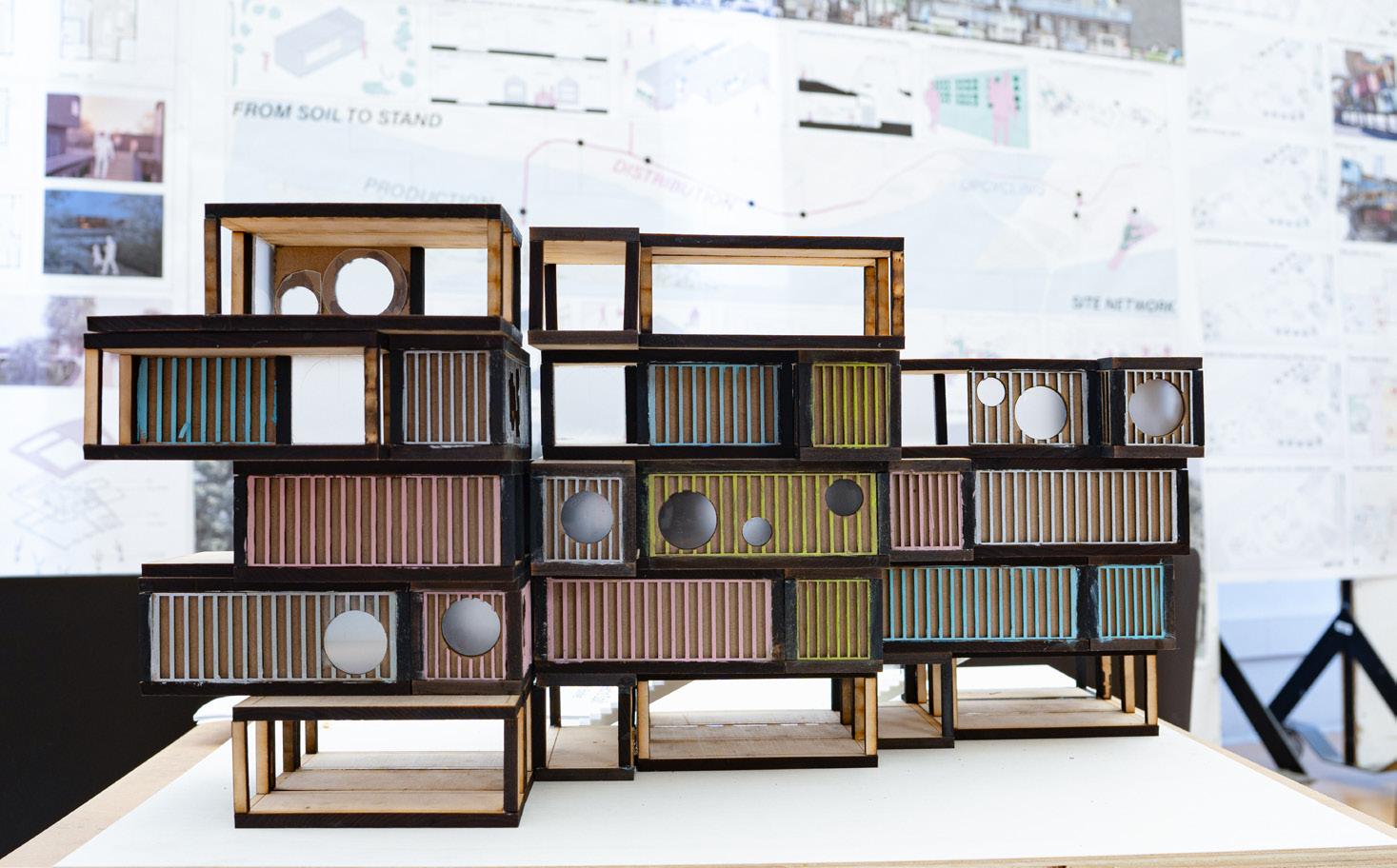
Housing on Brunot Island is designed to accommodate the island’s growing population, primarily farmers and production workers, while aligning with the phased development of planned remediation efforts. The housing geometry is intentionally simplified, drawing inspiration from stacking typology studied in previous precedents. However, the design incorporates a sense of bounding community living with circular circulation.
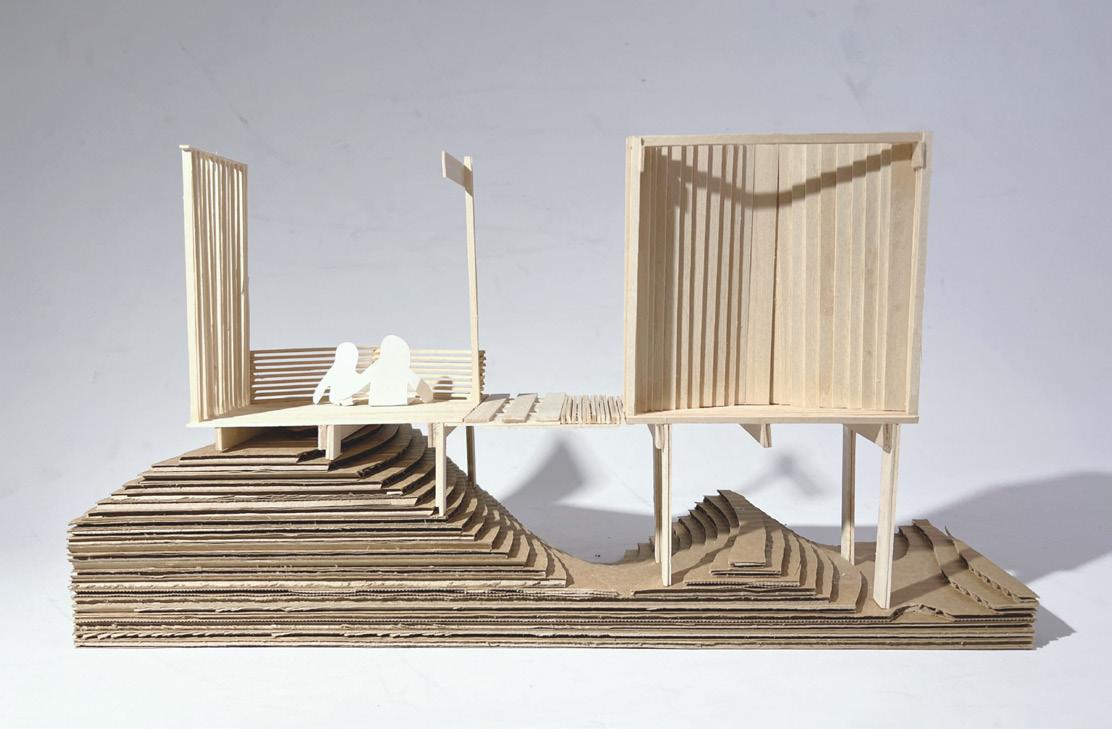
To minimize the footprint on the land, all entrances are elevated to the second floor. A bridge system connects these second-floor entrances and links both sides of the island, enhancing accessibility.
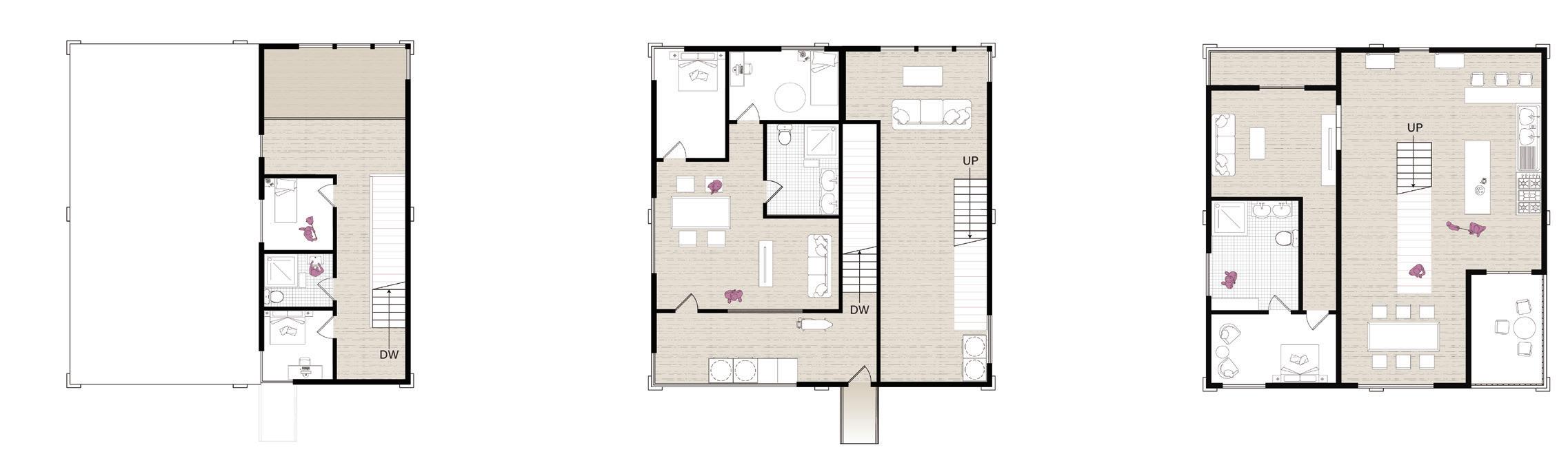
Housing Type 1: shared kitchen (F3-F2-Ground floor)
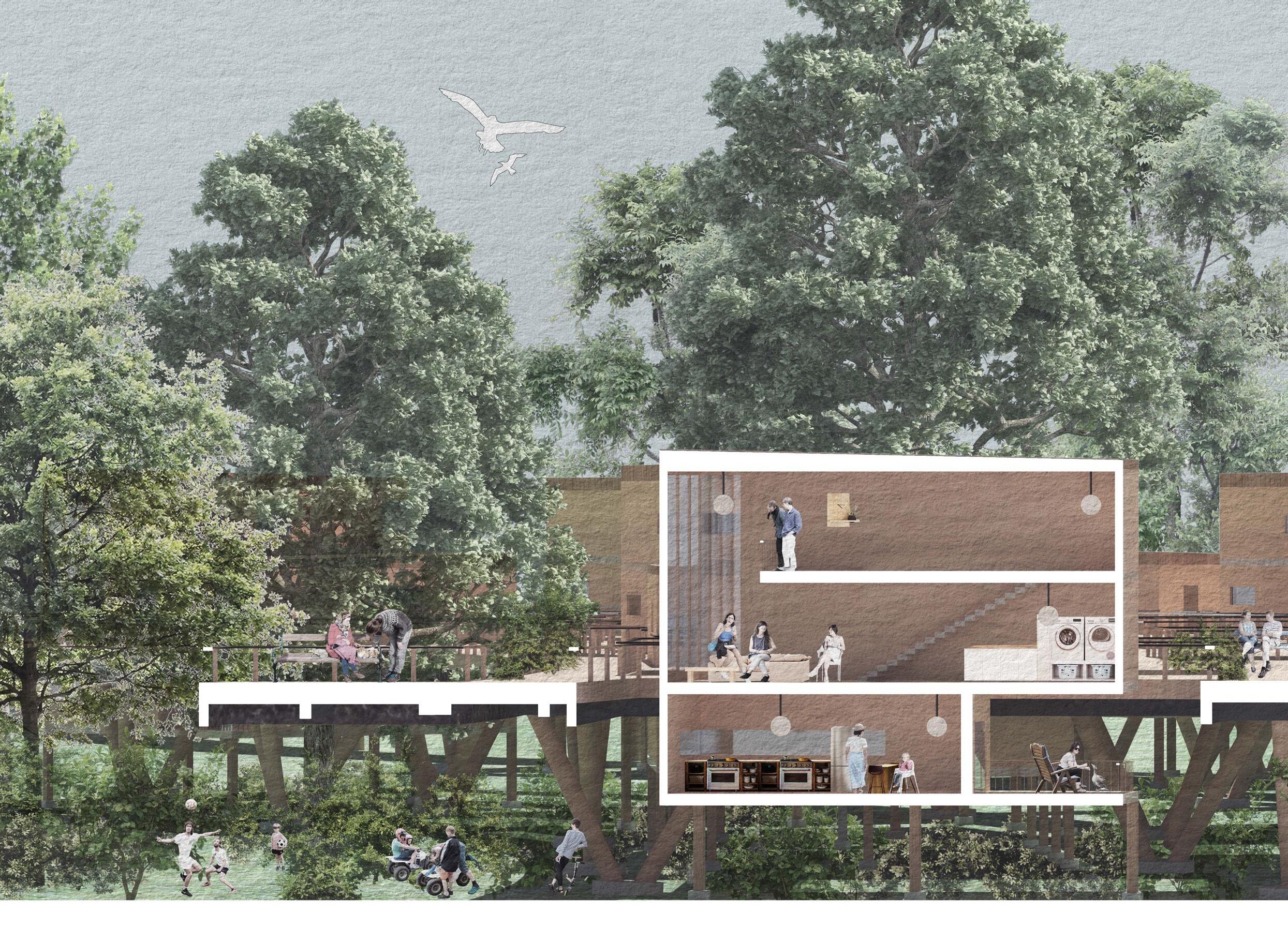
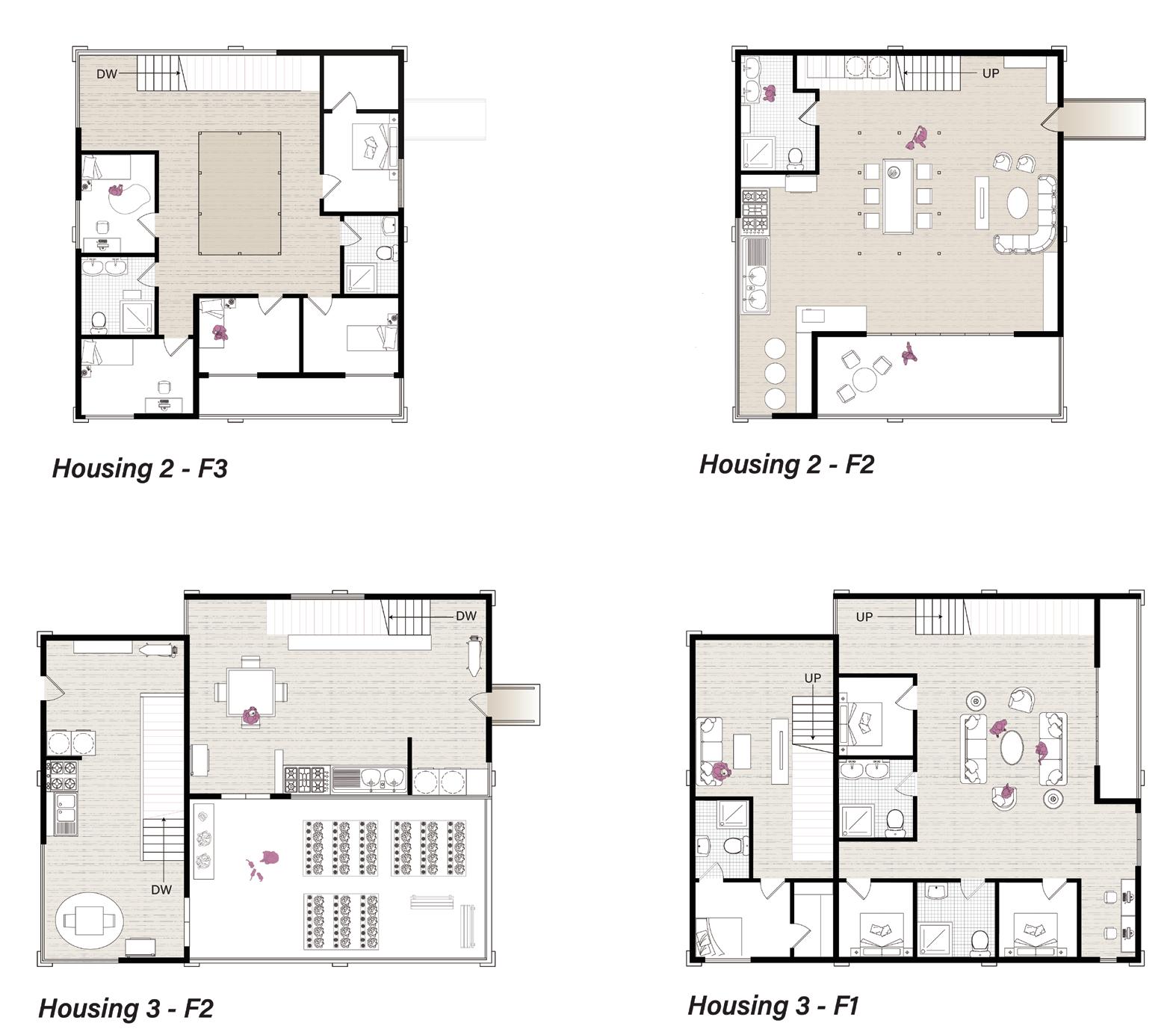
The housing typology includes three distinct unit types, each offering different shared spaces to support communal living needs.
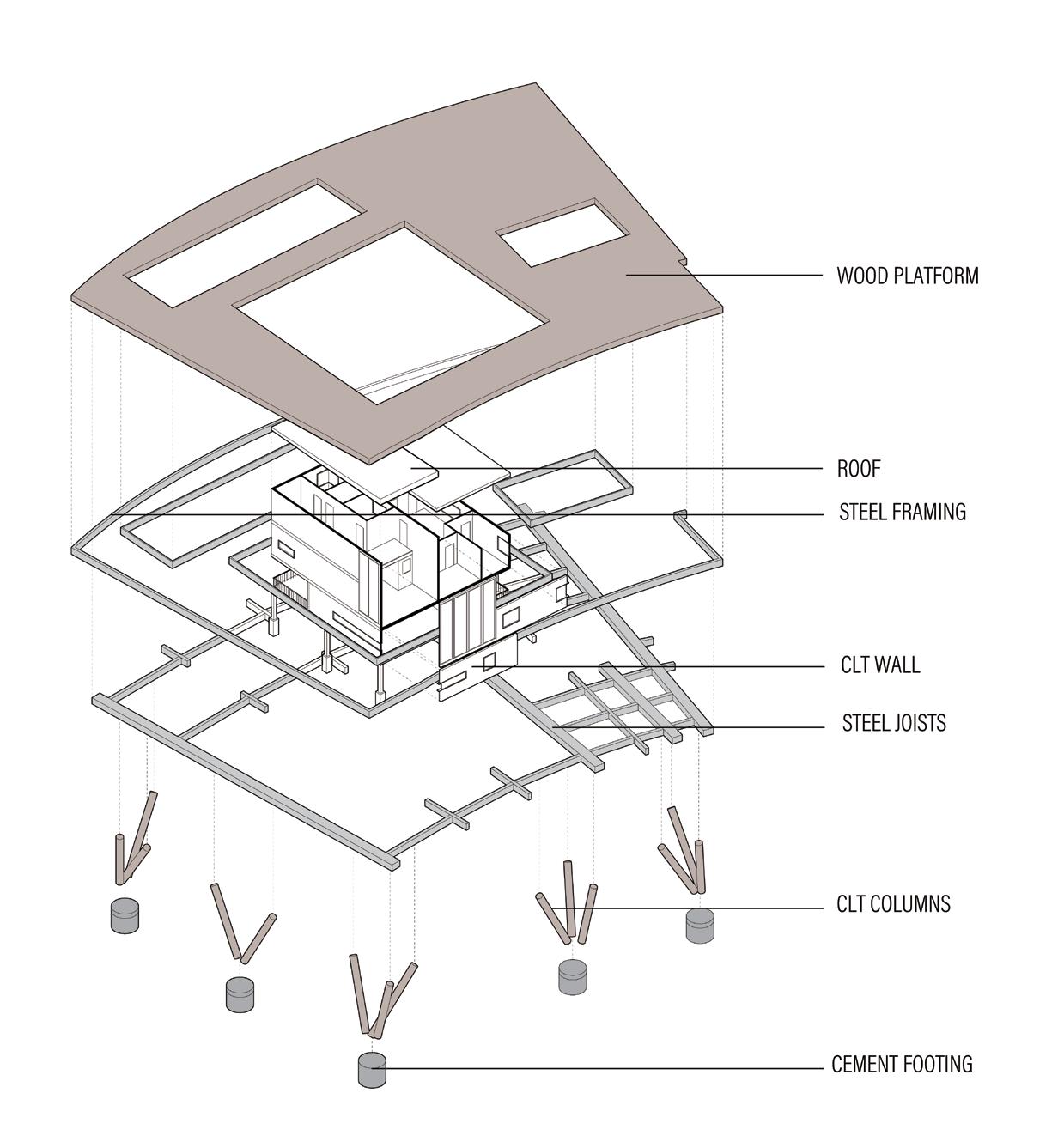
Cross-laminated timber (CLT) was chosen to serve as the primary material as it is more environmentally friendly. The layout strategically maximizes sun exposure to optimize energy efficiency. In addition, shed roofs are incorporated to facilitate rainwater collection, supporting both private and community gardens integrated into designated areas of the bridge.
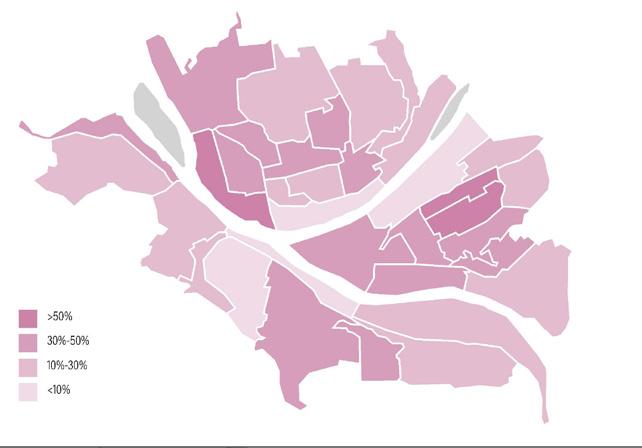
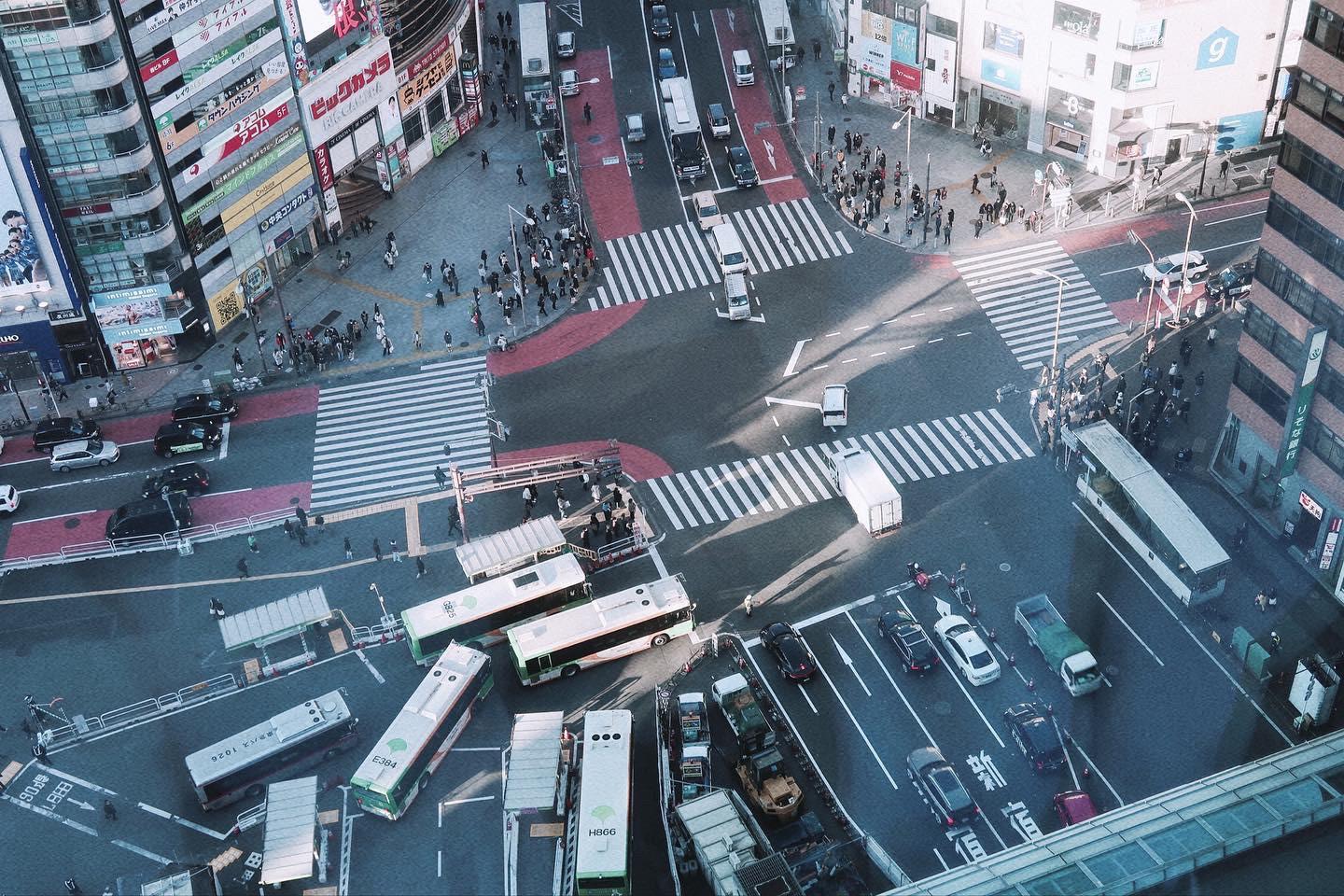
% of households without vehicle access
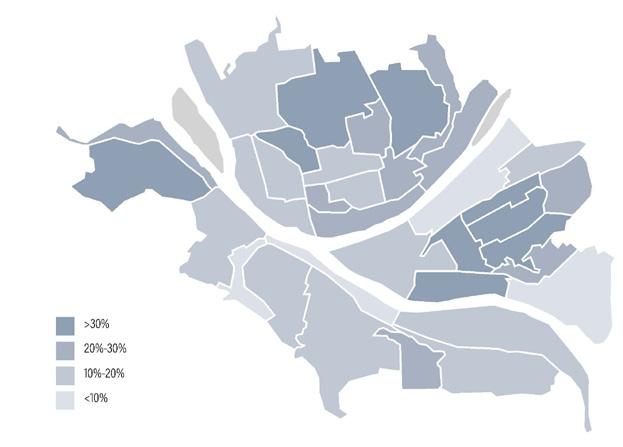
% of residents below poverty line
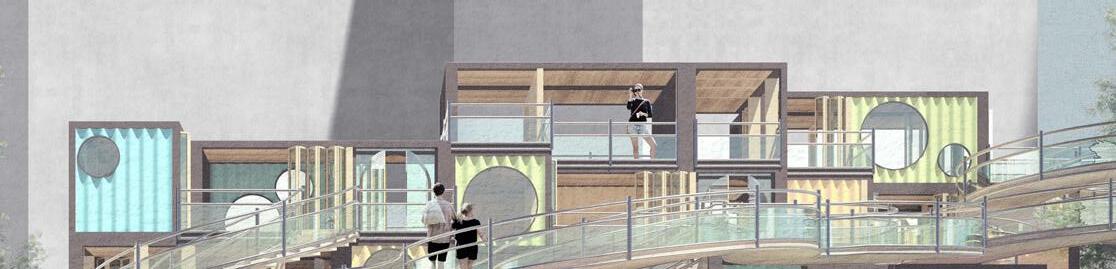
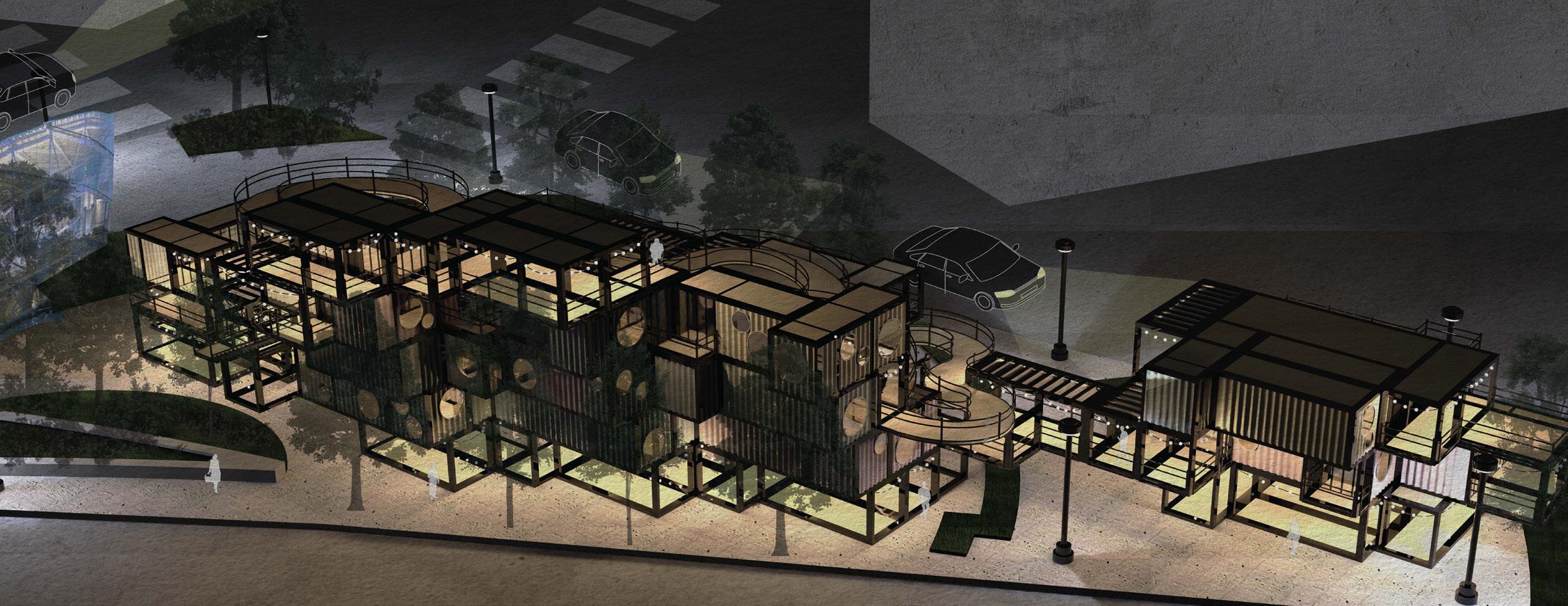
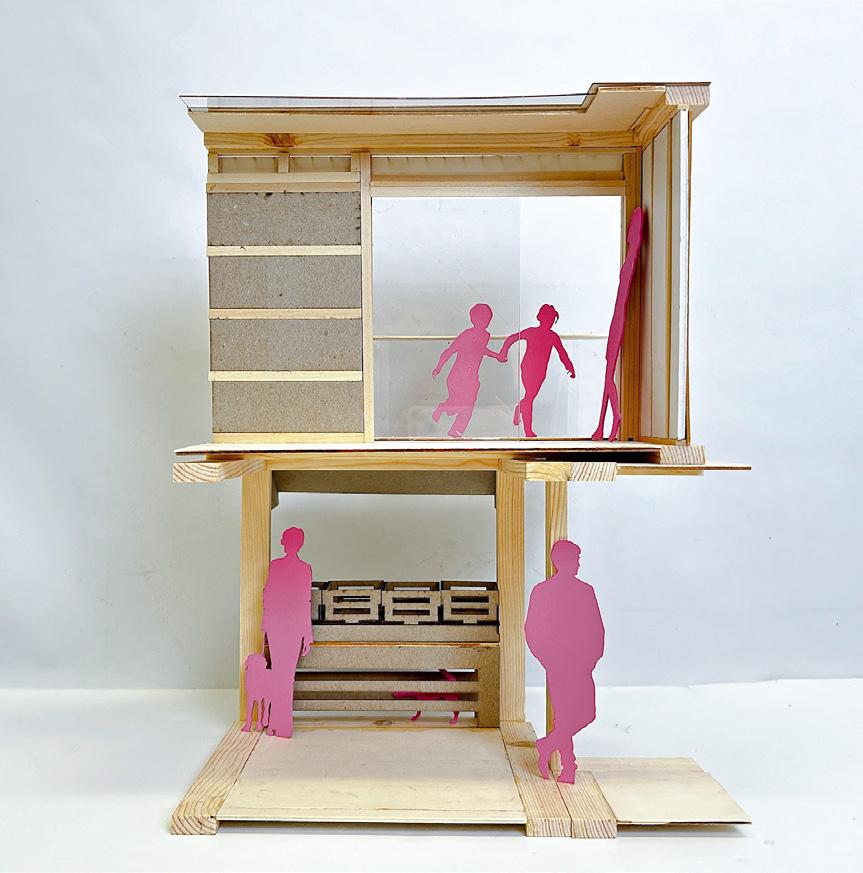
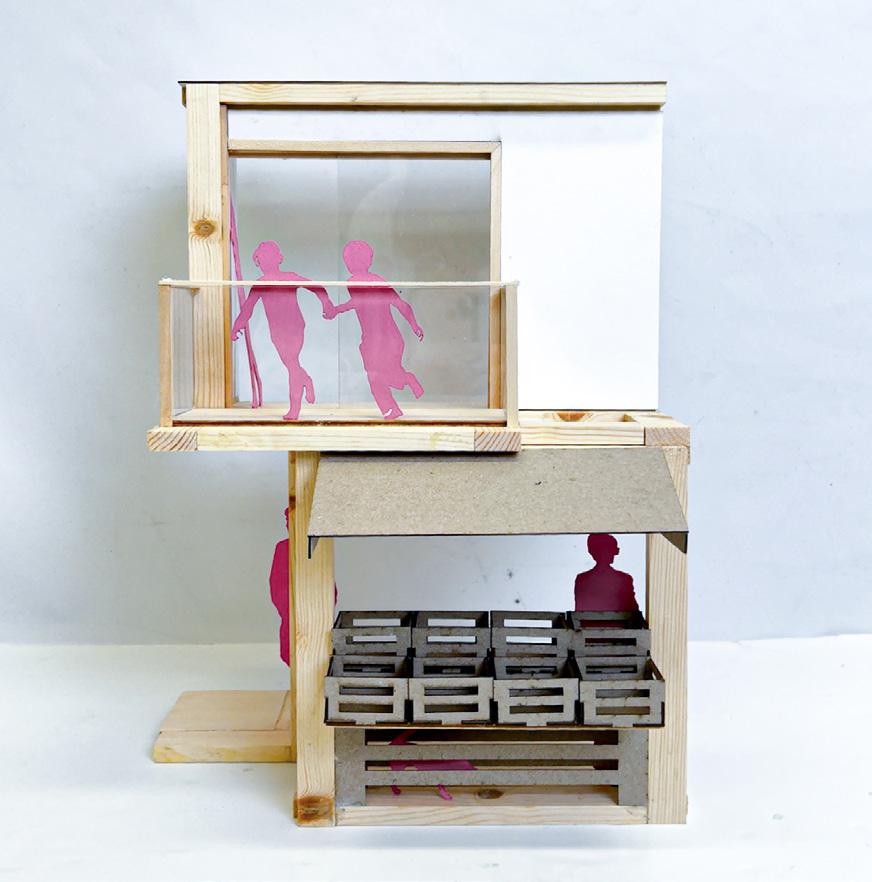
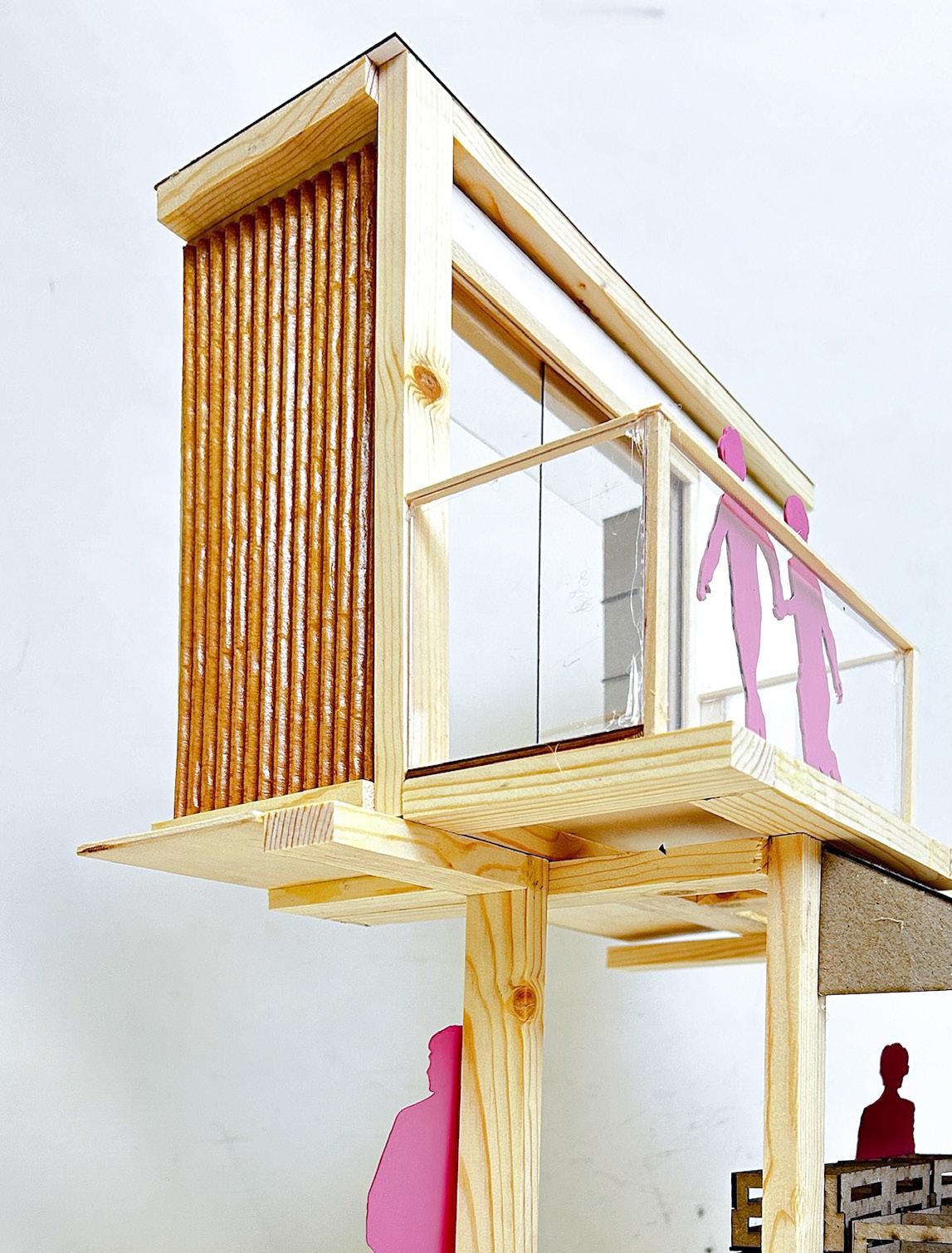
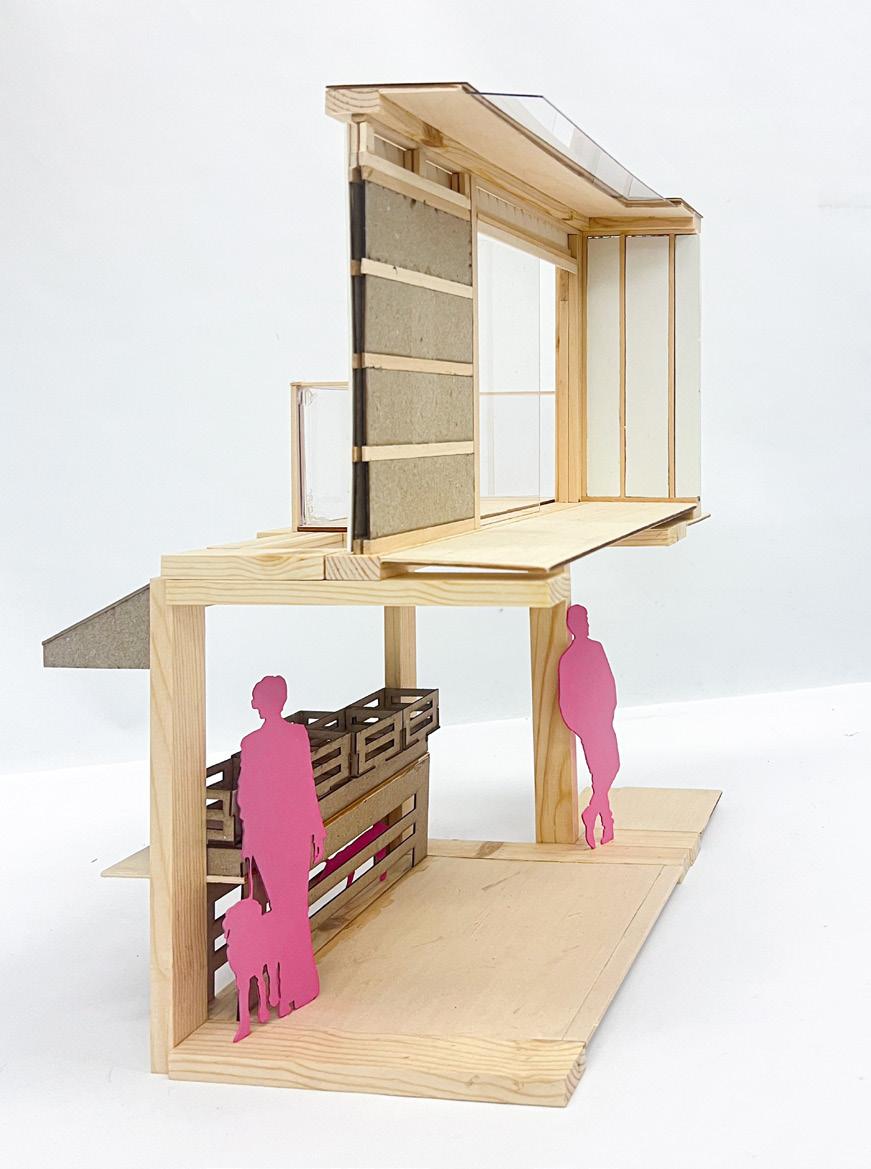
The grocery stands are intended to be built in the new stations with the extention of T line. Although the space itself is not big but we want to elborate the concept that these stands can be used for providing fresh grocery and embrace urban farming by selling seeds and showcasing related activities + small tips. The stands will be in the form of repurposed shipping containers, easier to disassemble when the station need to be renovated but also connect the typology of Gateway Center.
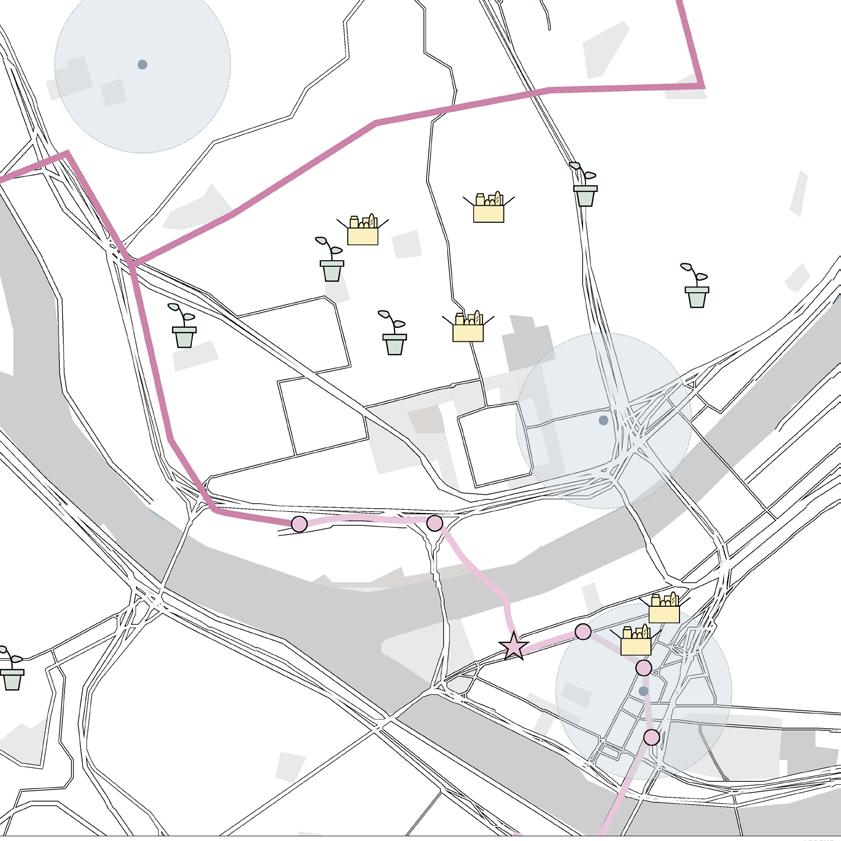
Site analysis - food supply
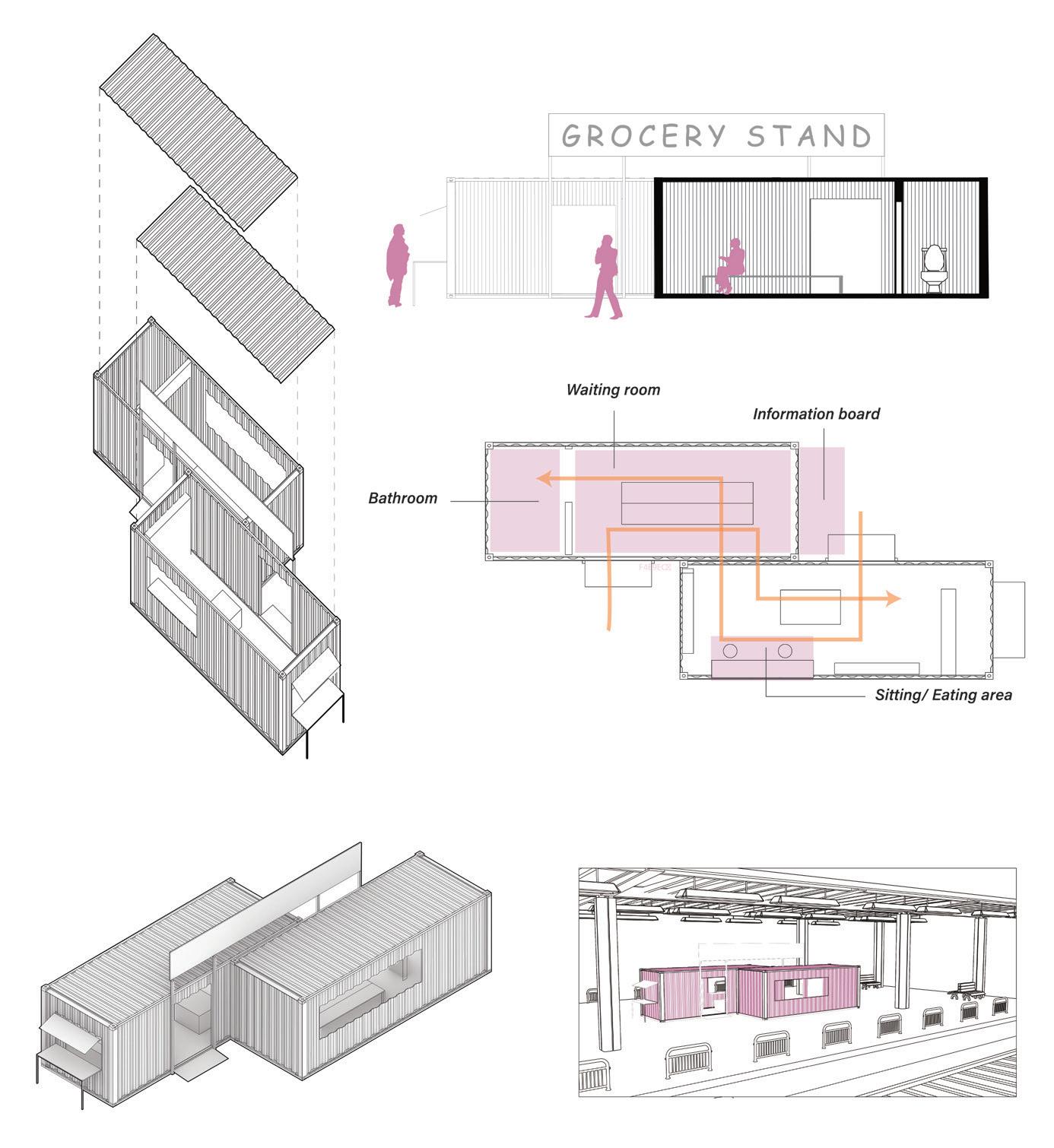
Double stand(with bathroom and waiting room)
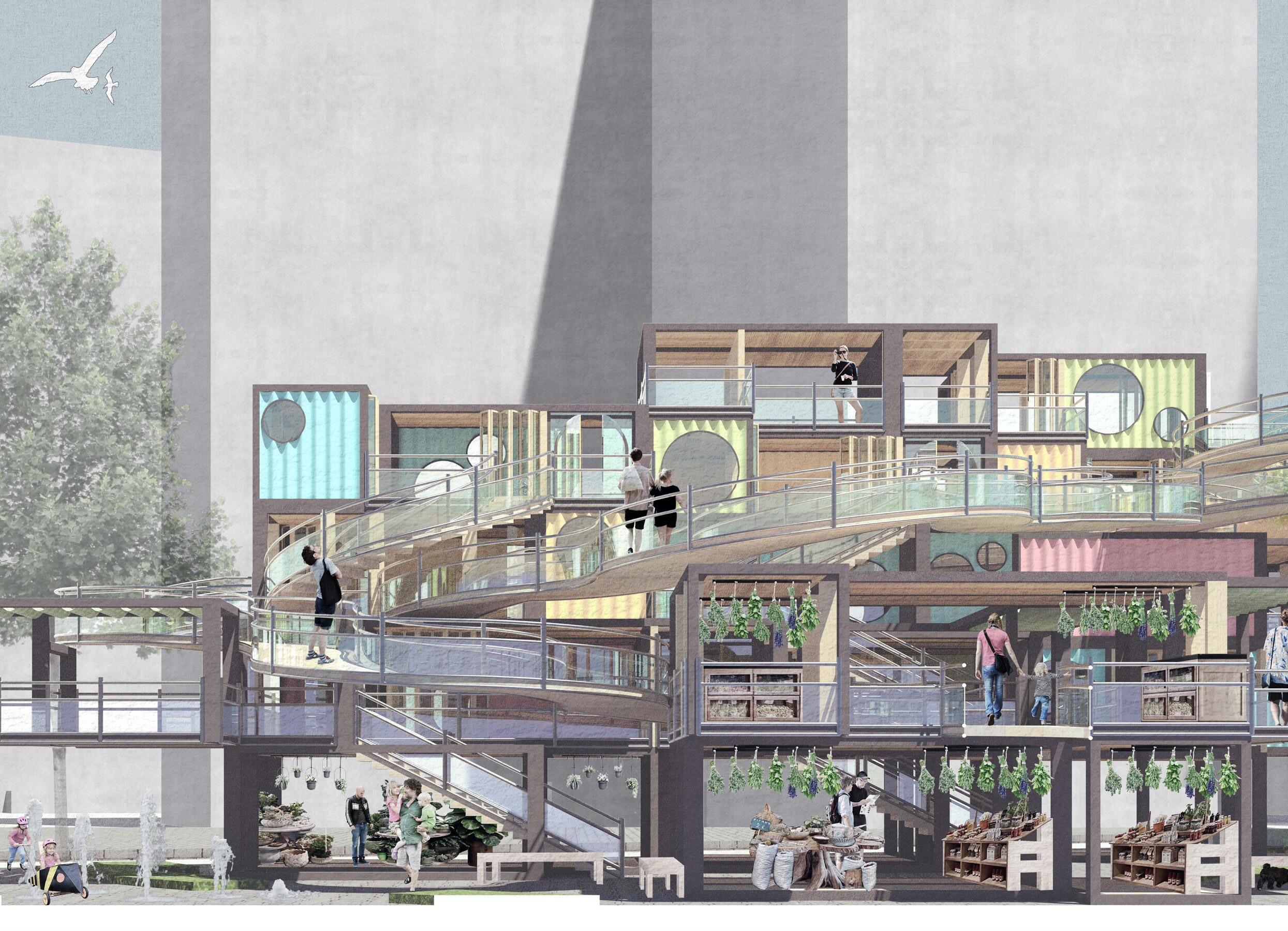
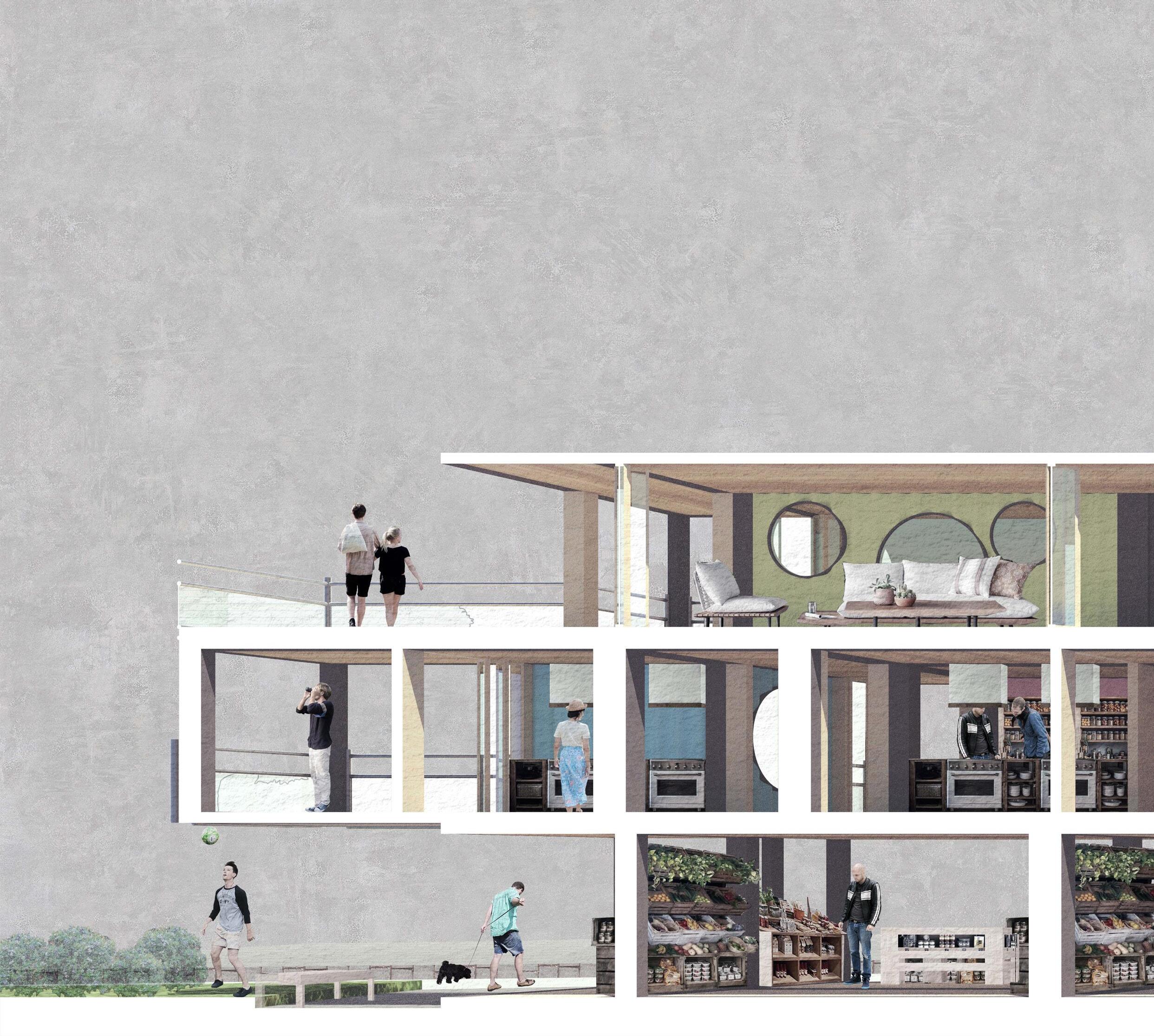
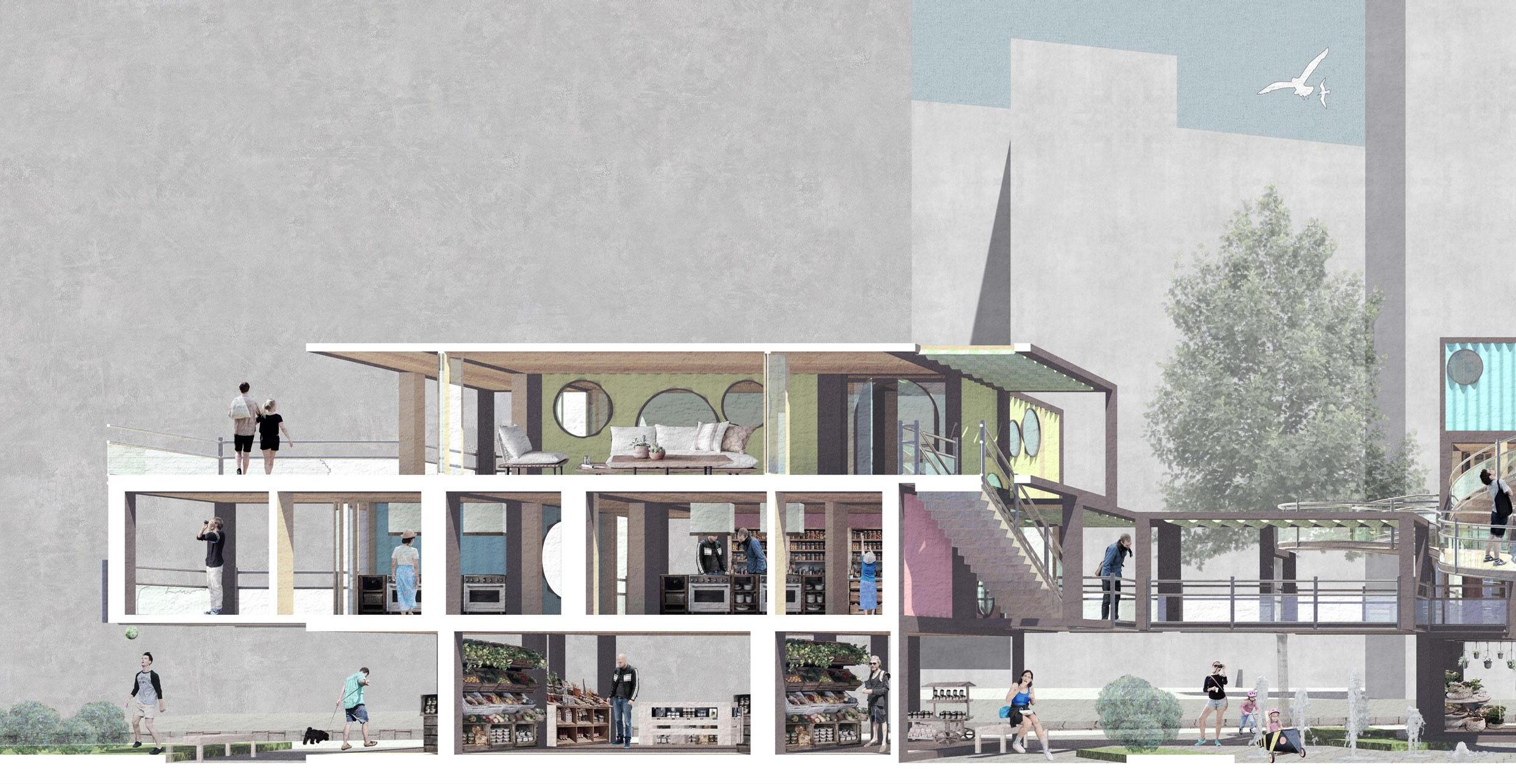
The Gateway Center functions as a multipurpose hub, providing essential amenities such as kitchens, bathrooms, laundry facilities, rest areas, and gathering spaces. It serves as the final stage in the system’s food cycle: food or ingredients that are no longer in their best condition as fresh produce will be sent to Gateway and the production kitchen will prepare homemade produced food or prep meals for people to buy or grab.
The public kitchen is open to all, encouraging people to cook their own meals and adopt healthier eating habits. The first floor of the design is a marketplace dedicated to agroforestry products but also offering seeds and potted plants, reflecting the seasonal growing cycles on Brunot Island.
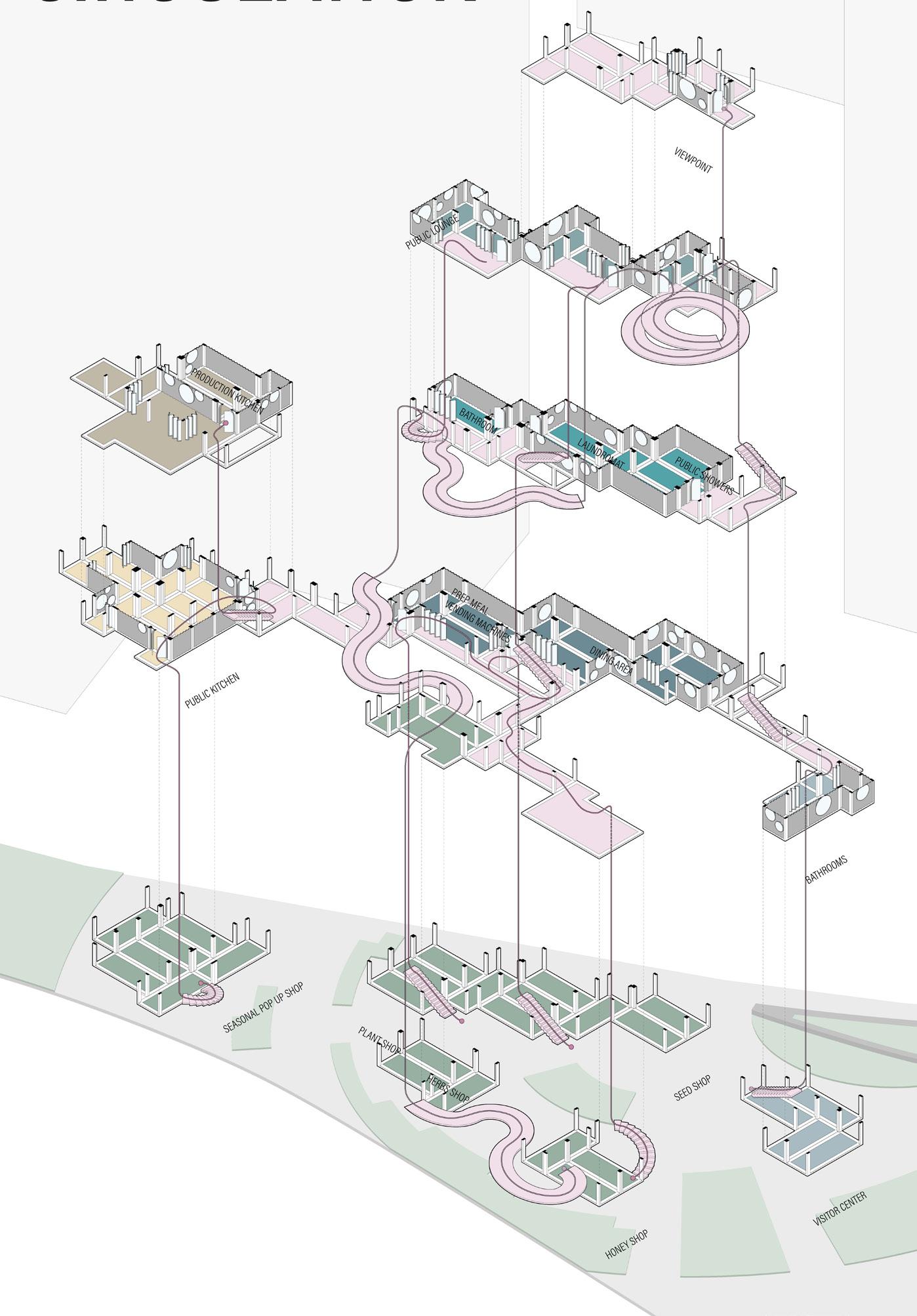
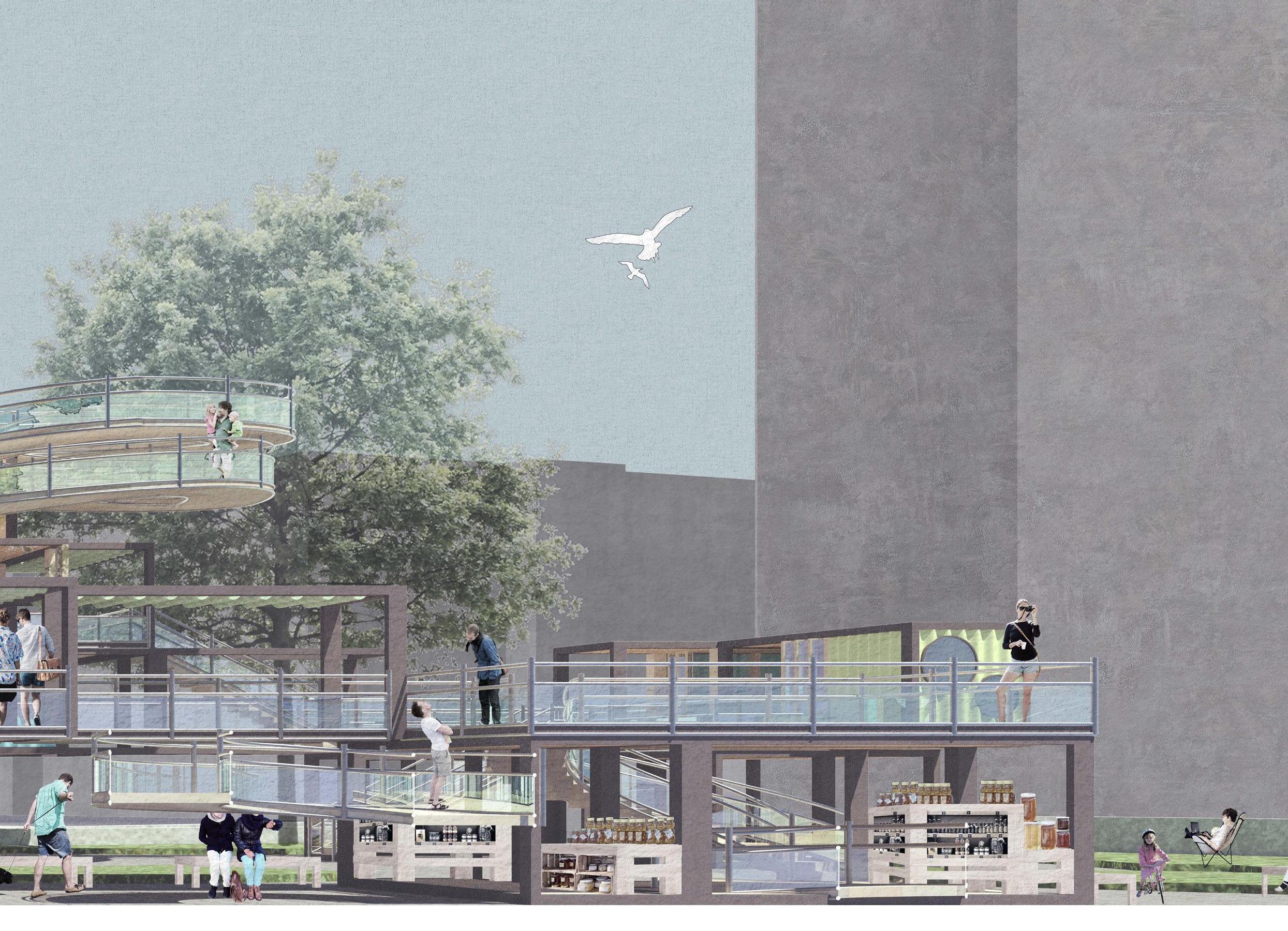
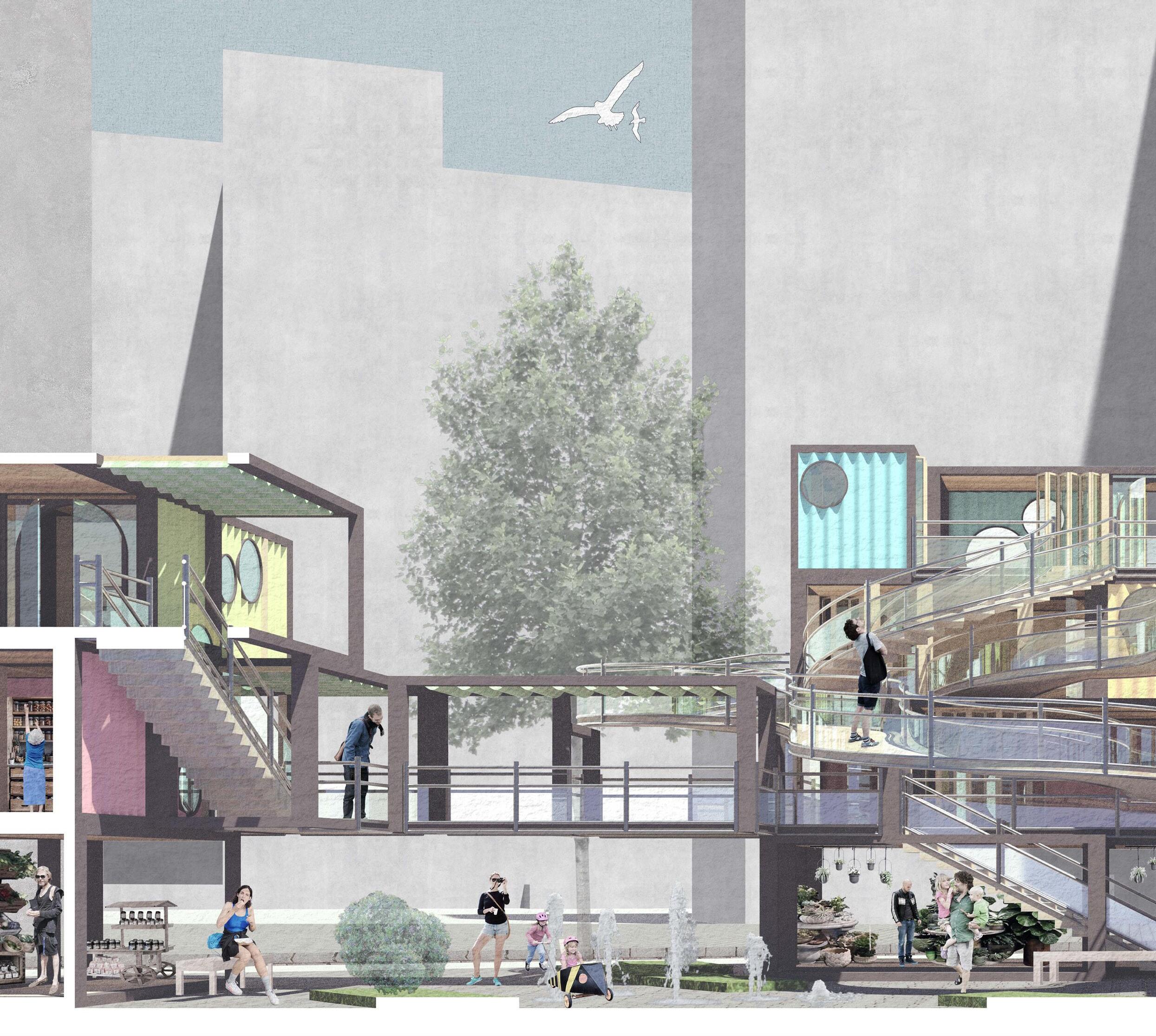
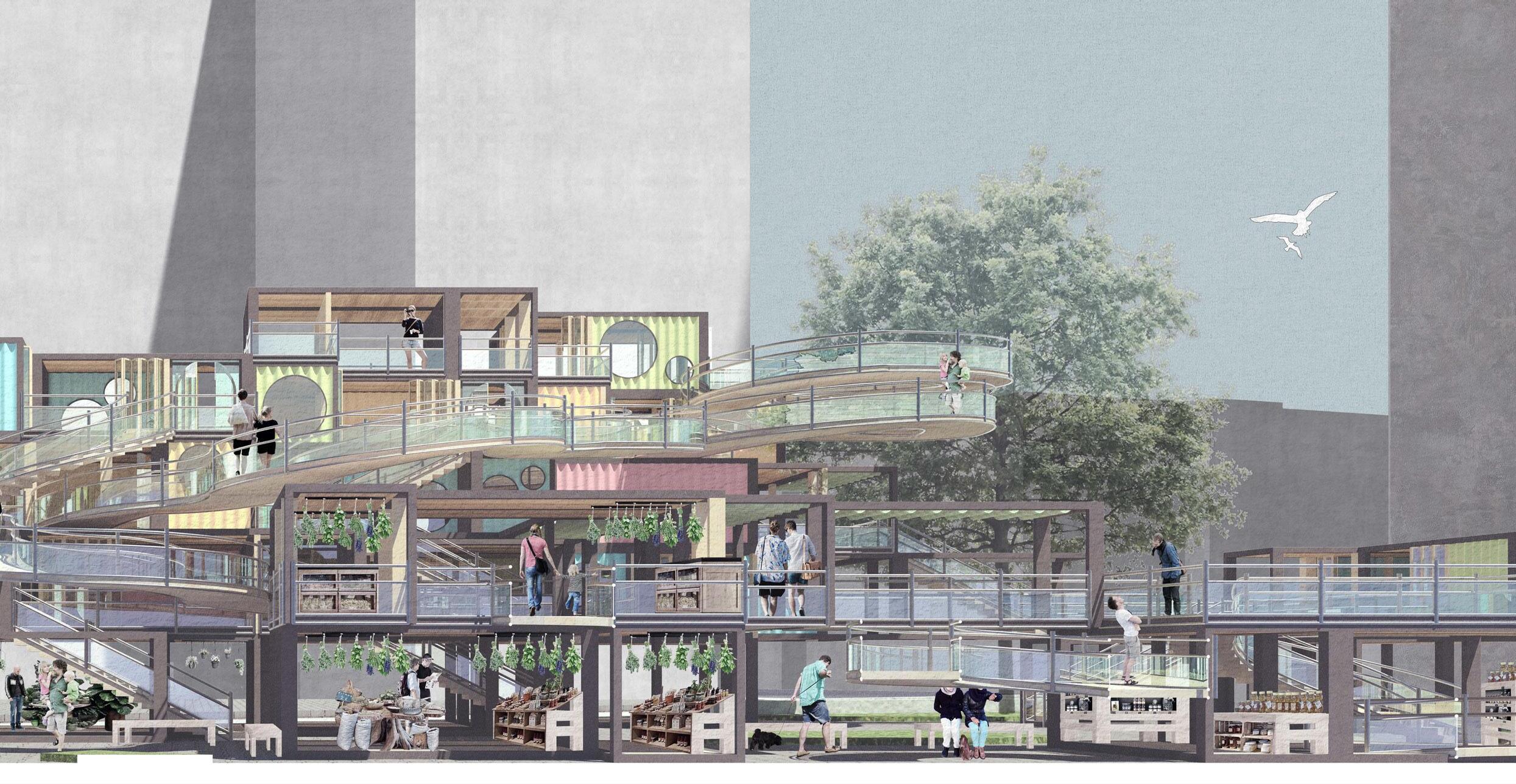
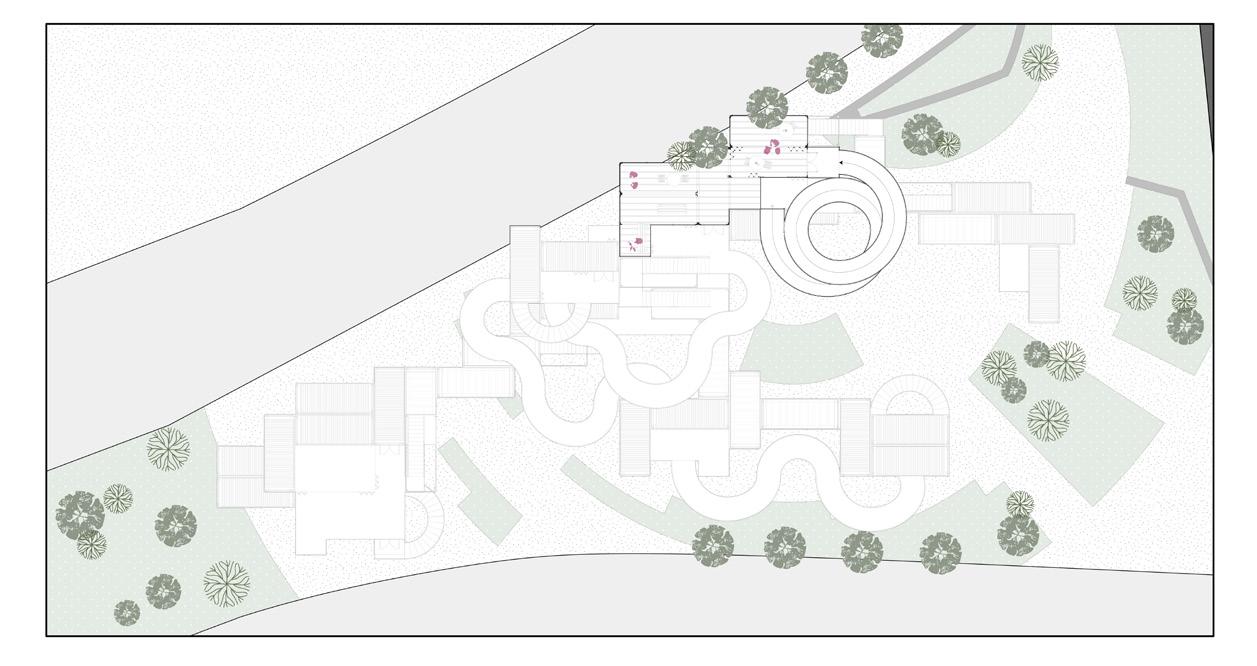
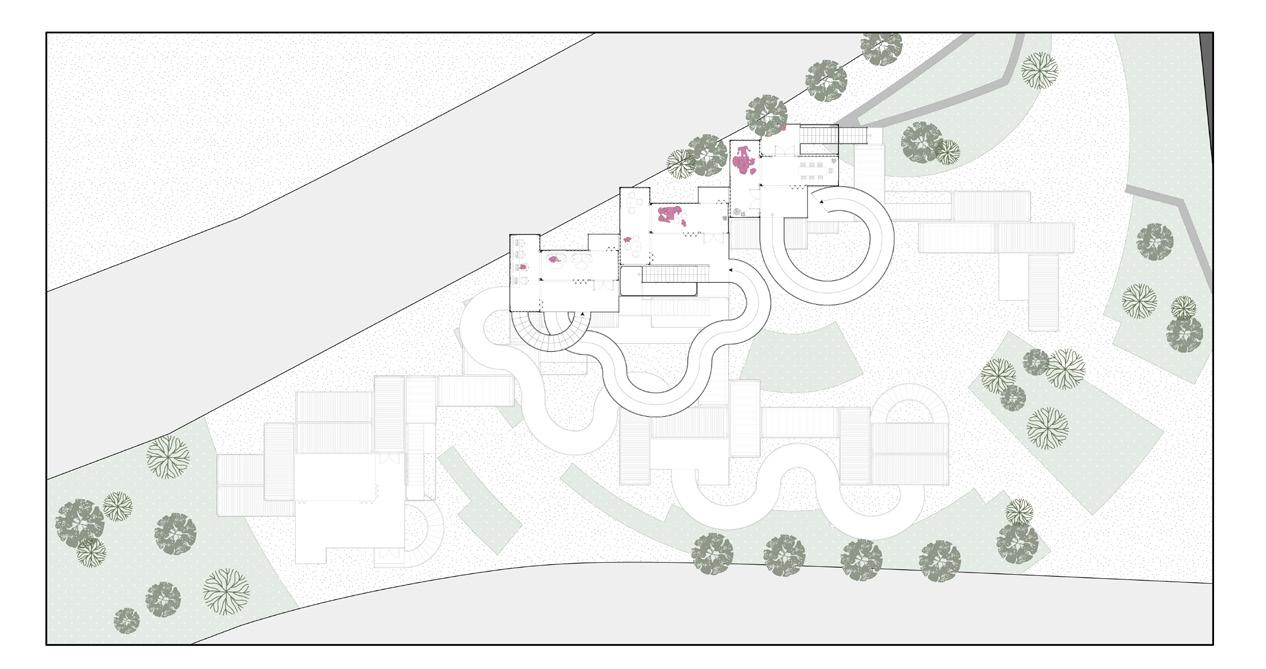
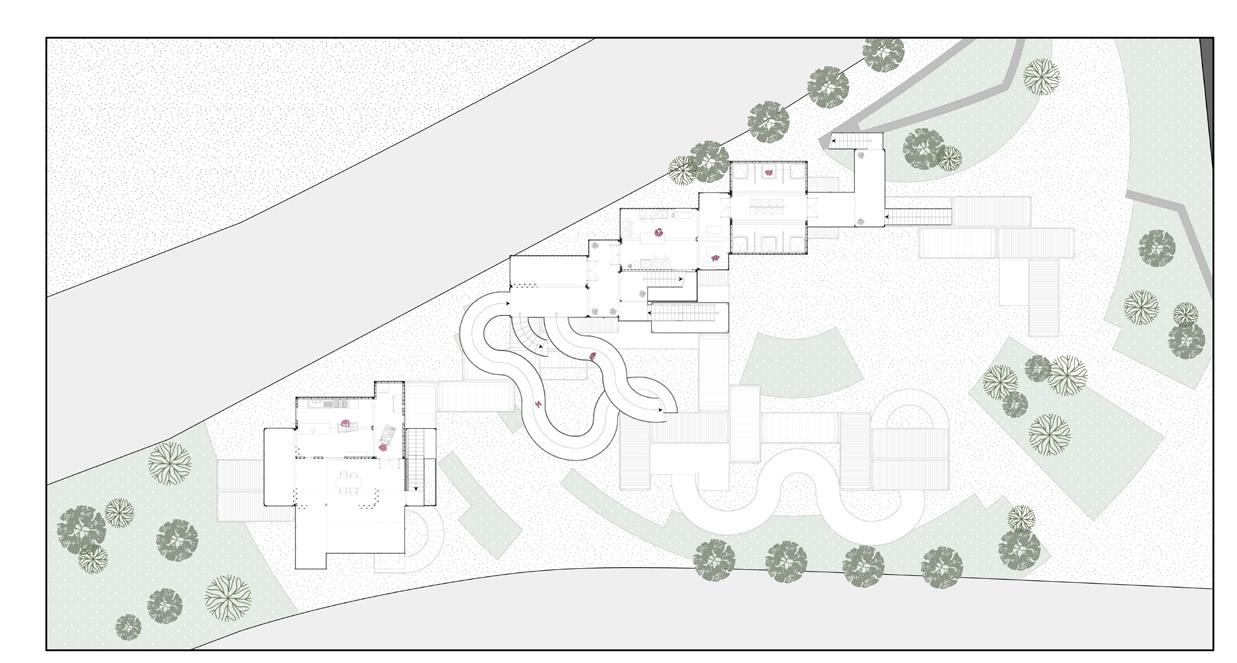
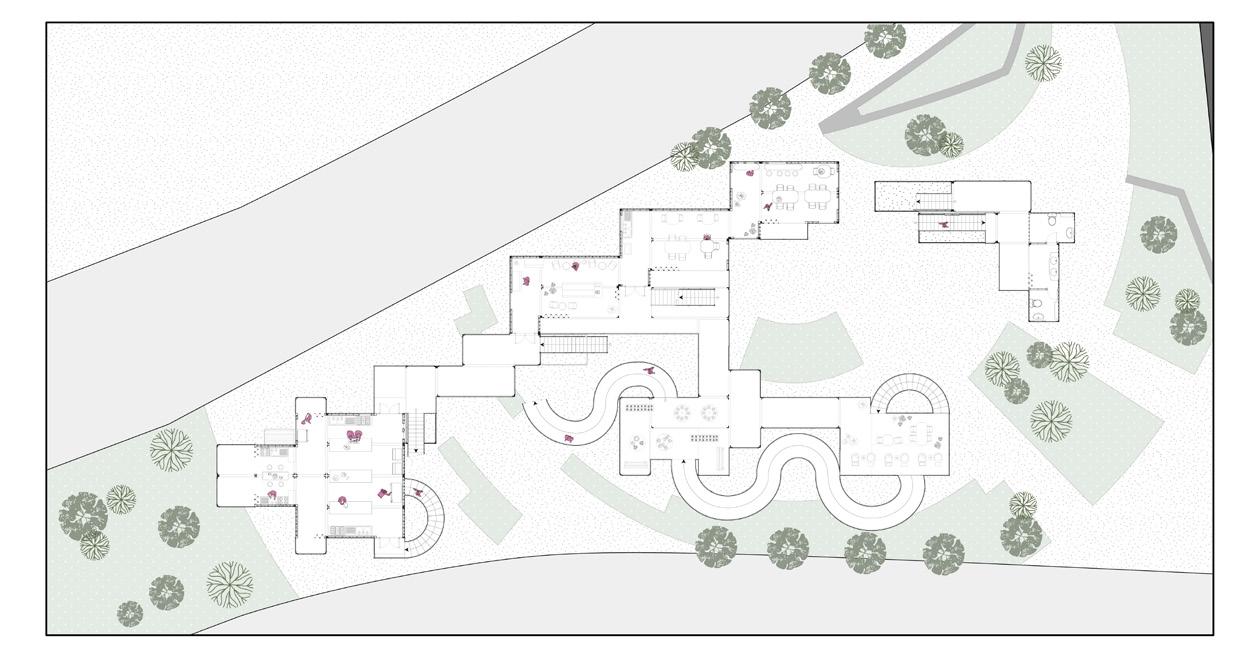
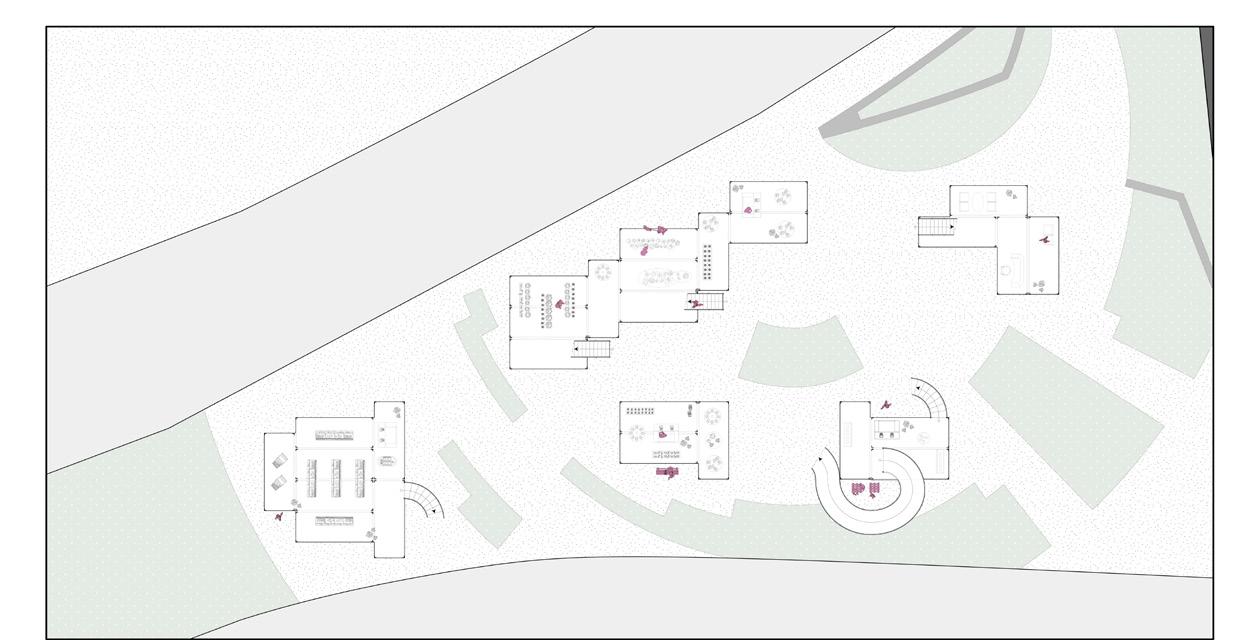
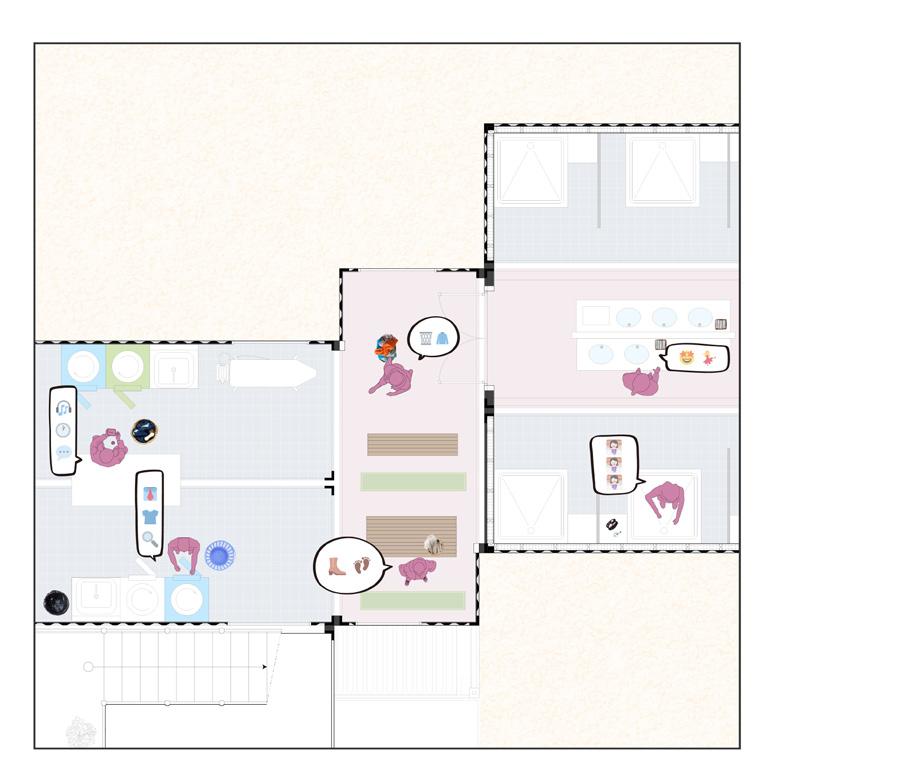
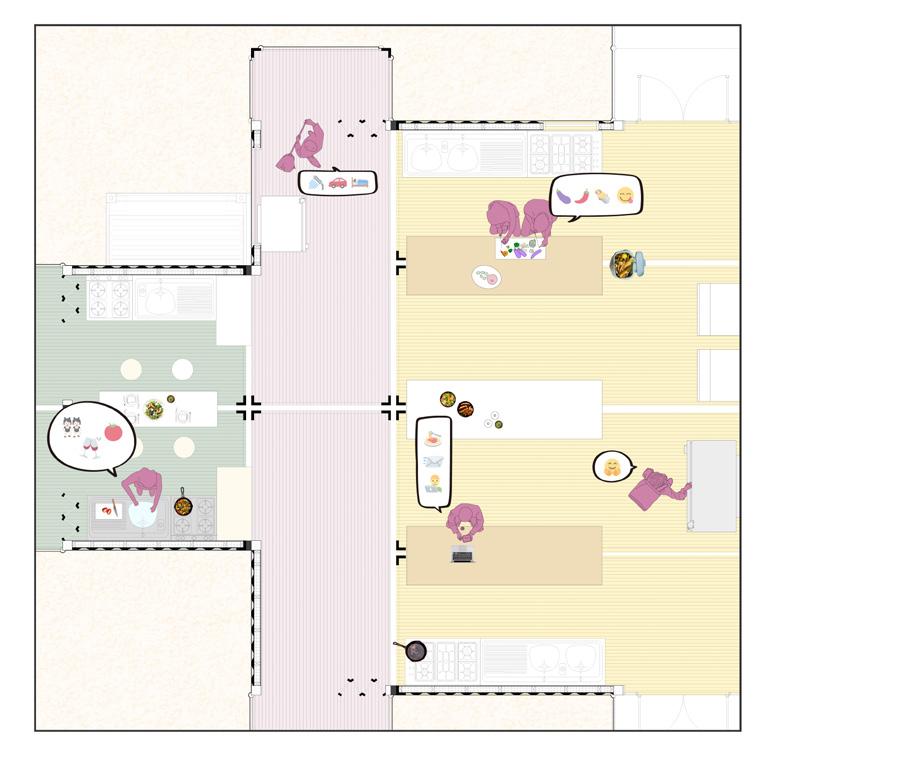
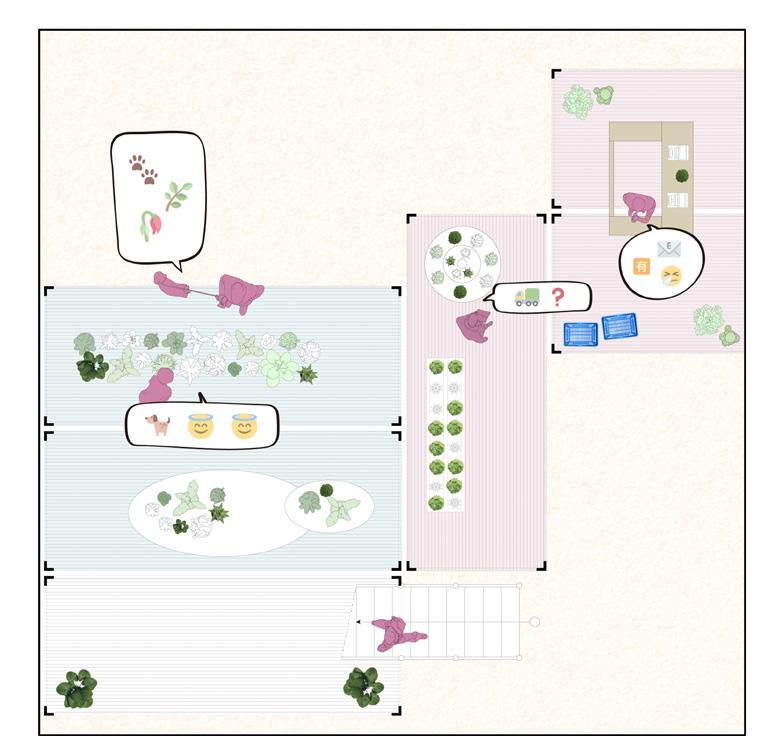
Zoomed in plans
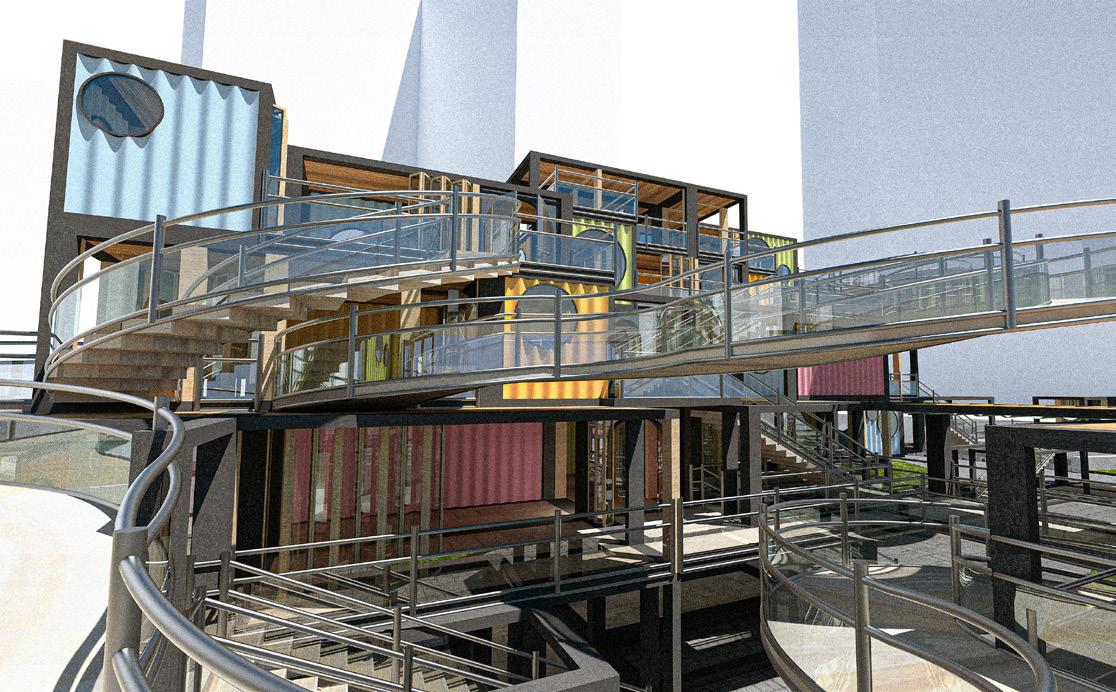
The structures are supported by shipping container frames, with retrofitted walls tailored to various programmatic needs. The corresponding circular circulation creates a more dynamic and engaging spatial experience.
Pittsburgh, PA | Fall 2023
Partnered with Ryan Shen
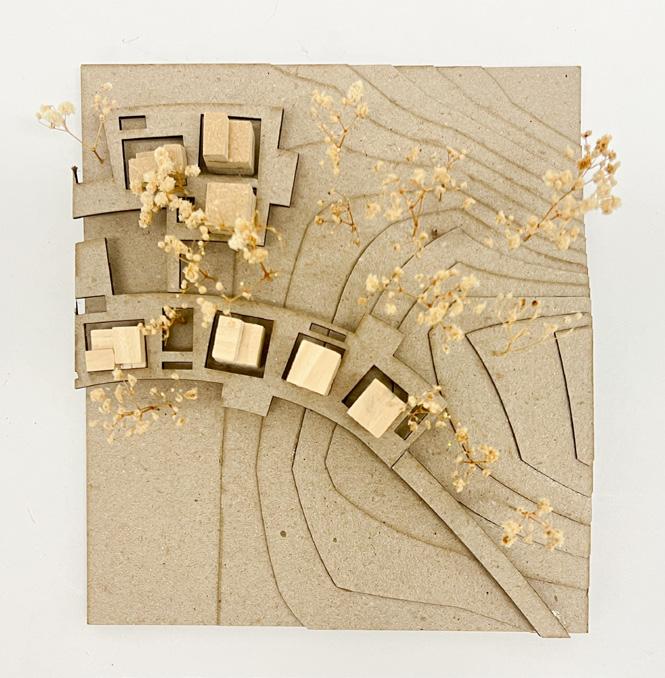
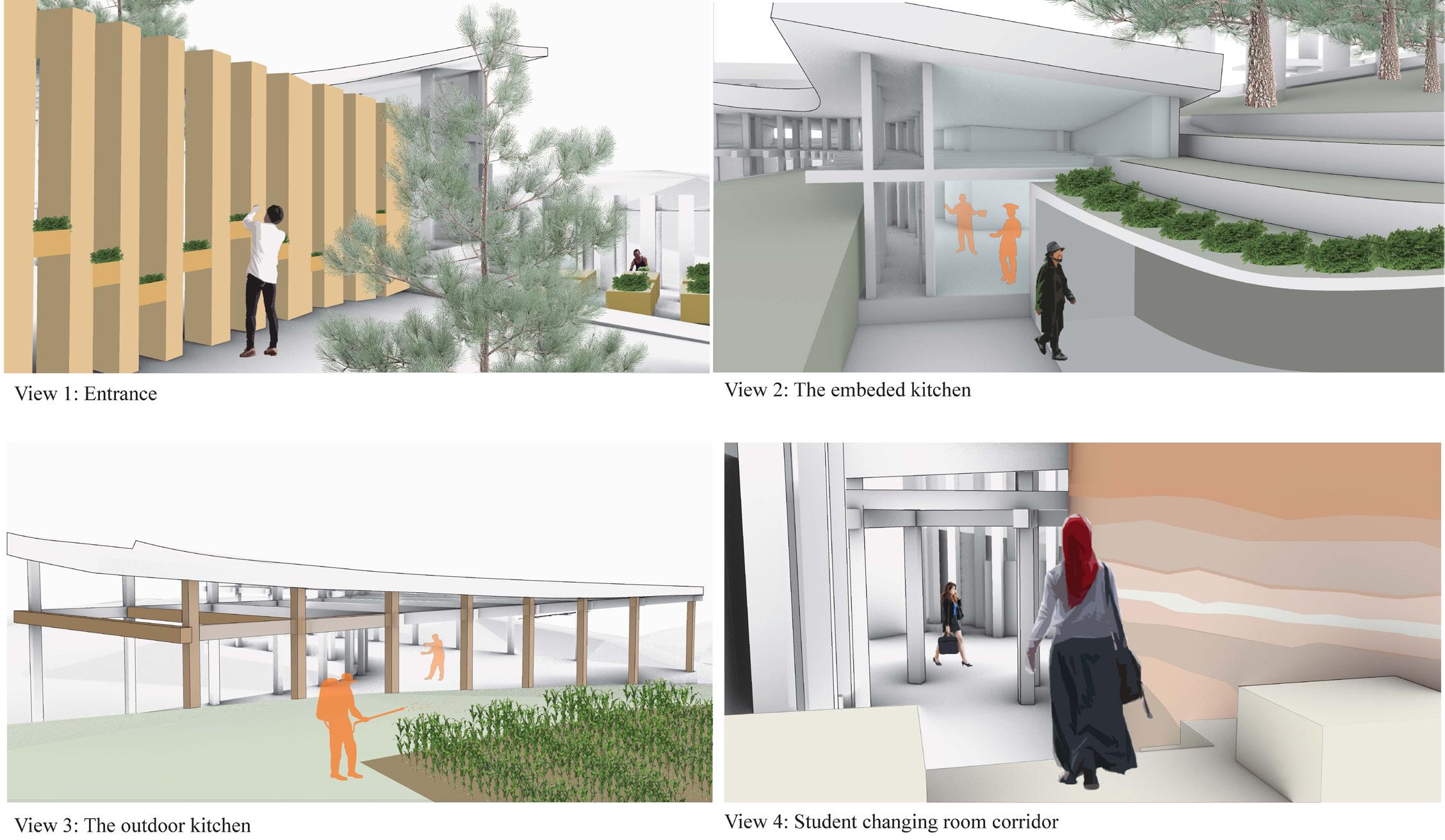
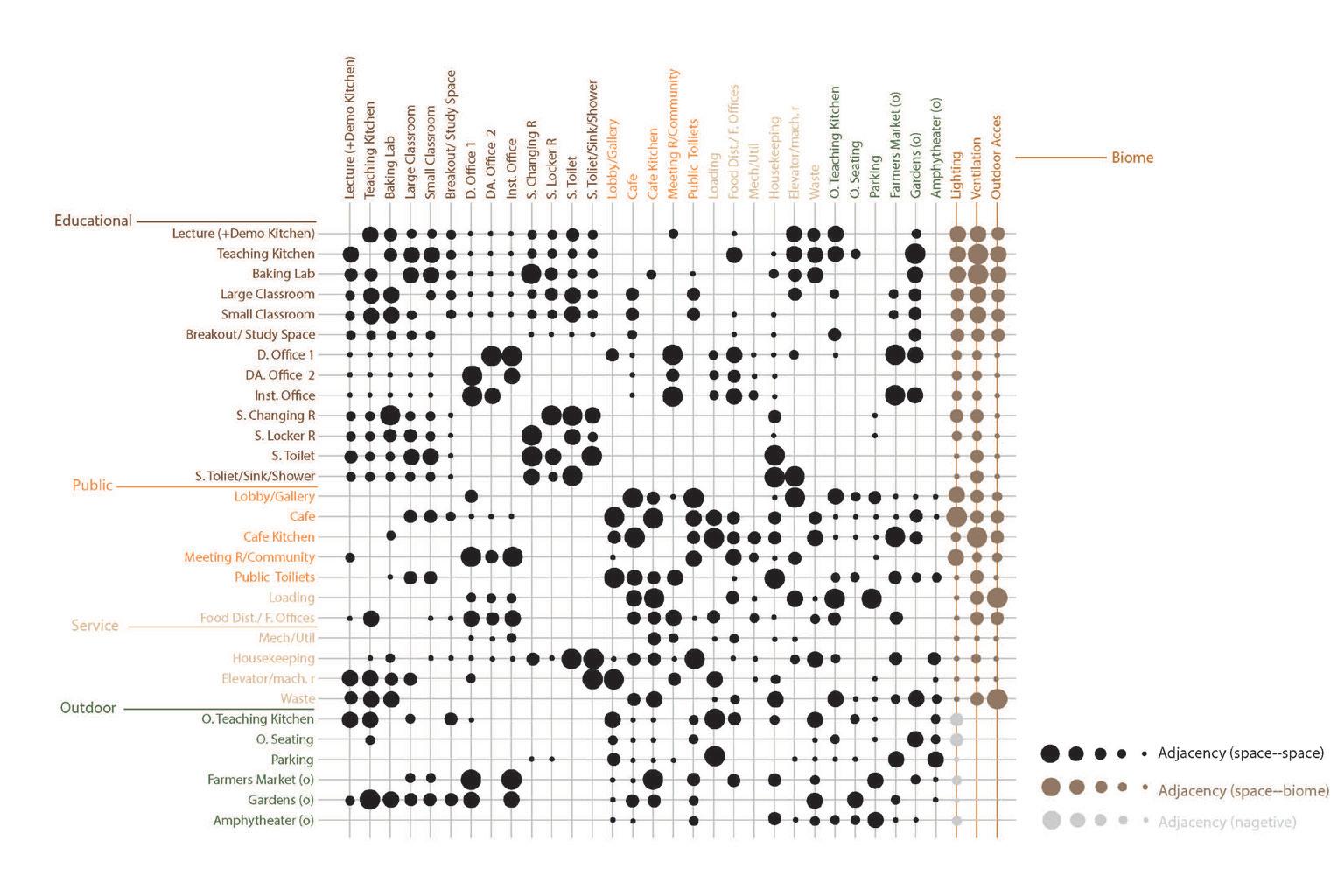
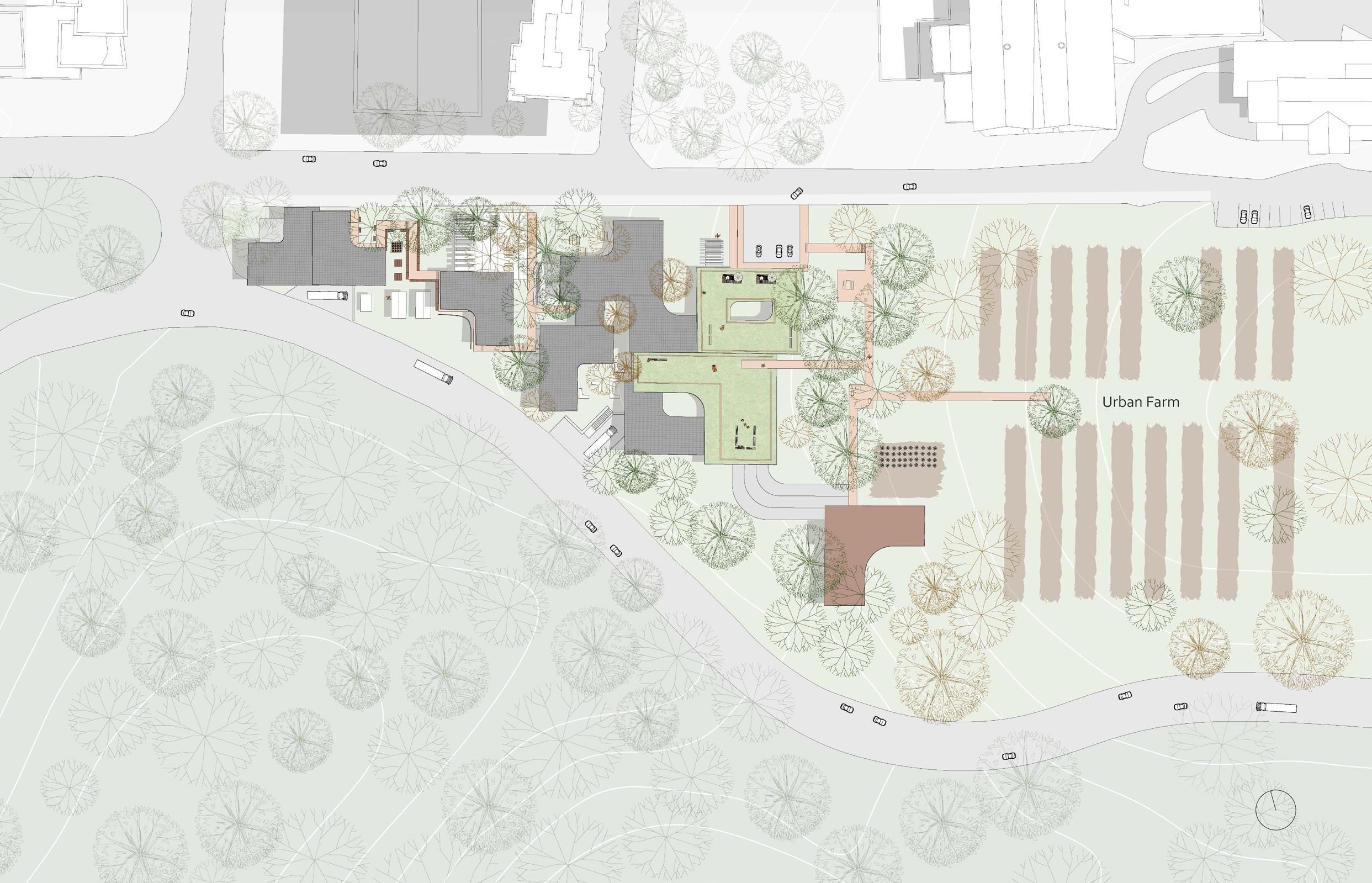
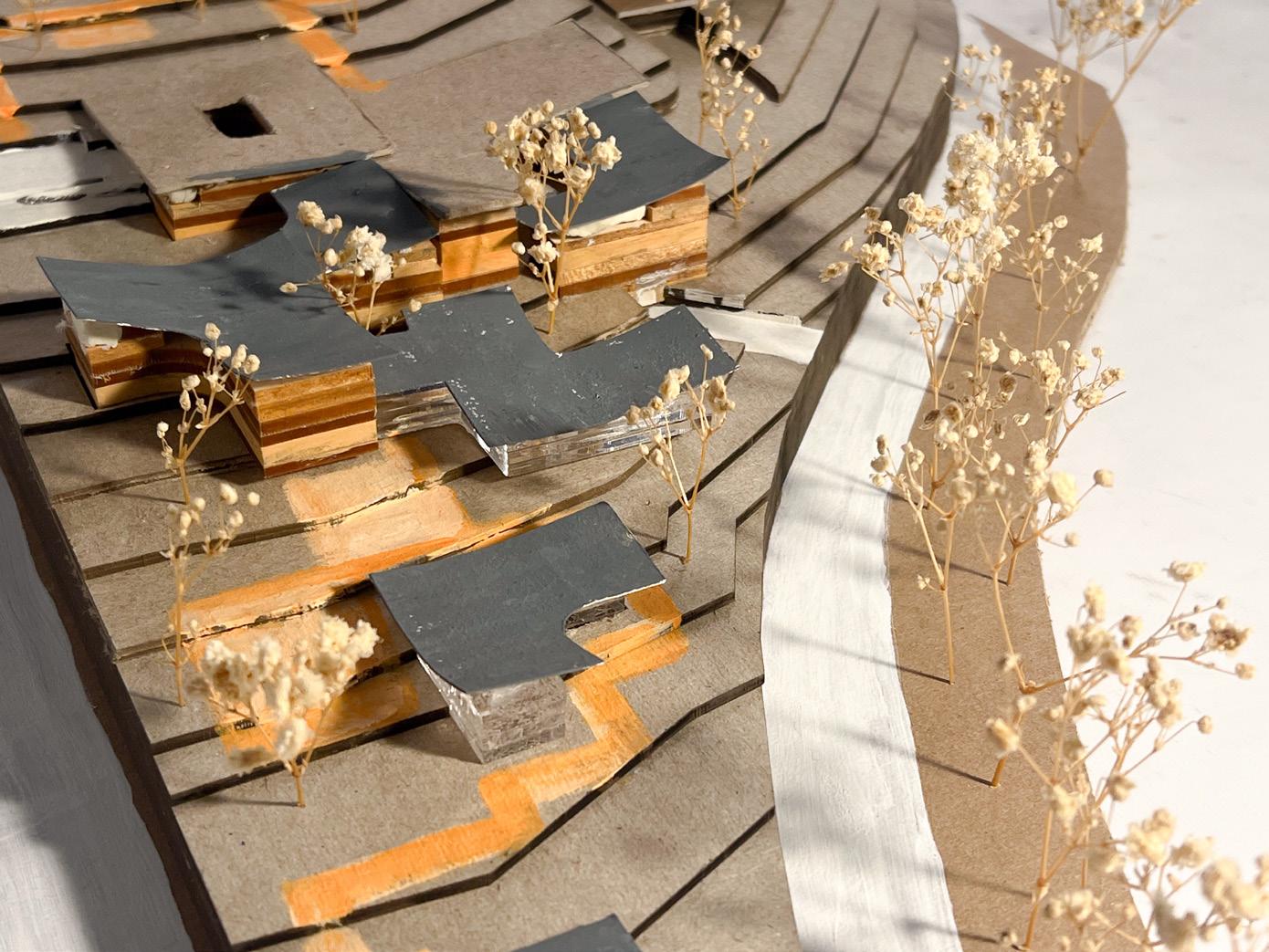
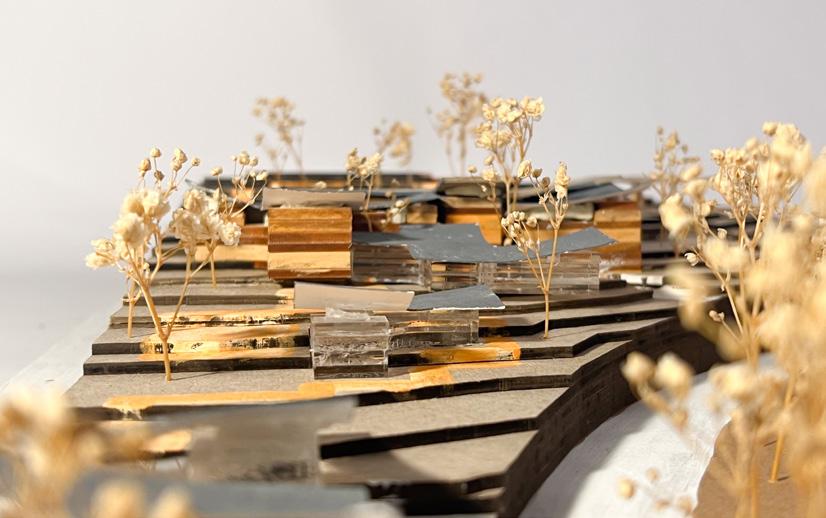
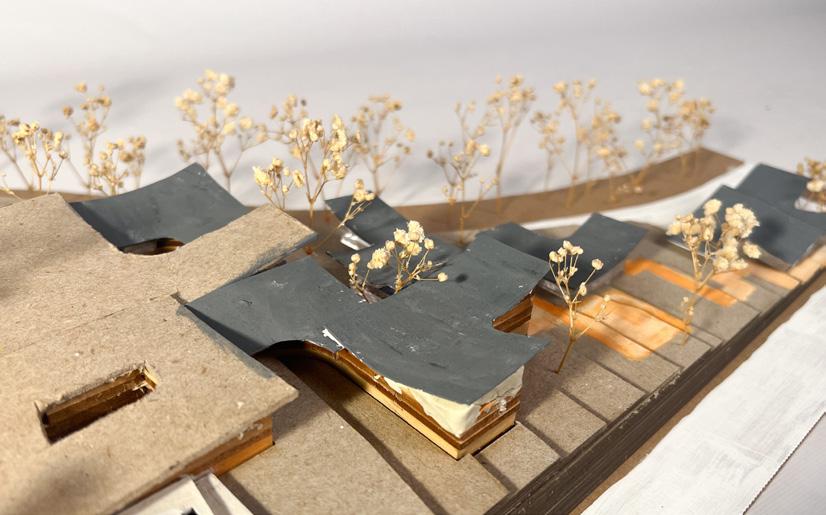
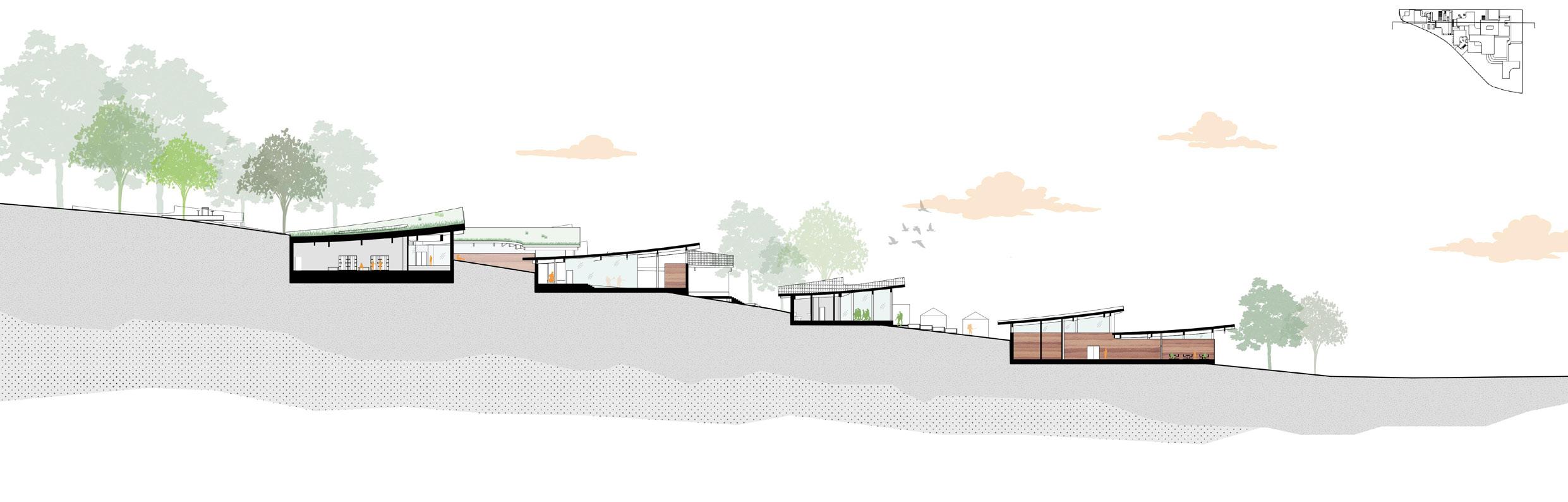
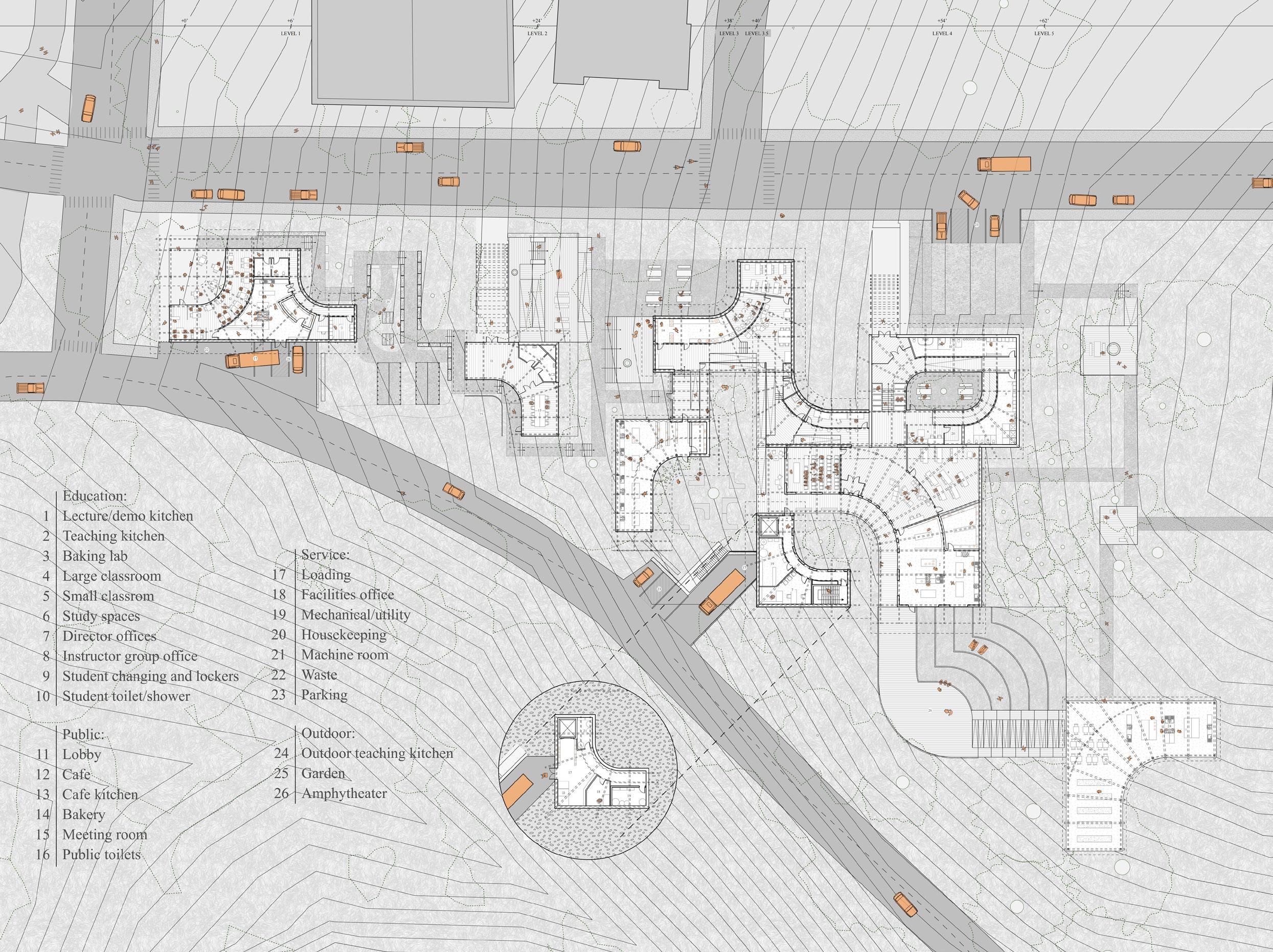
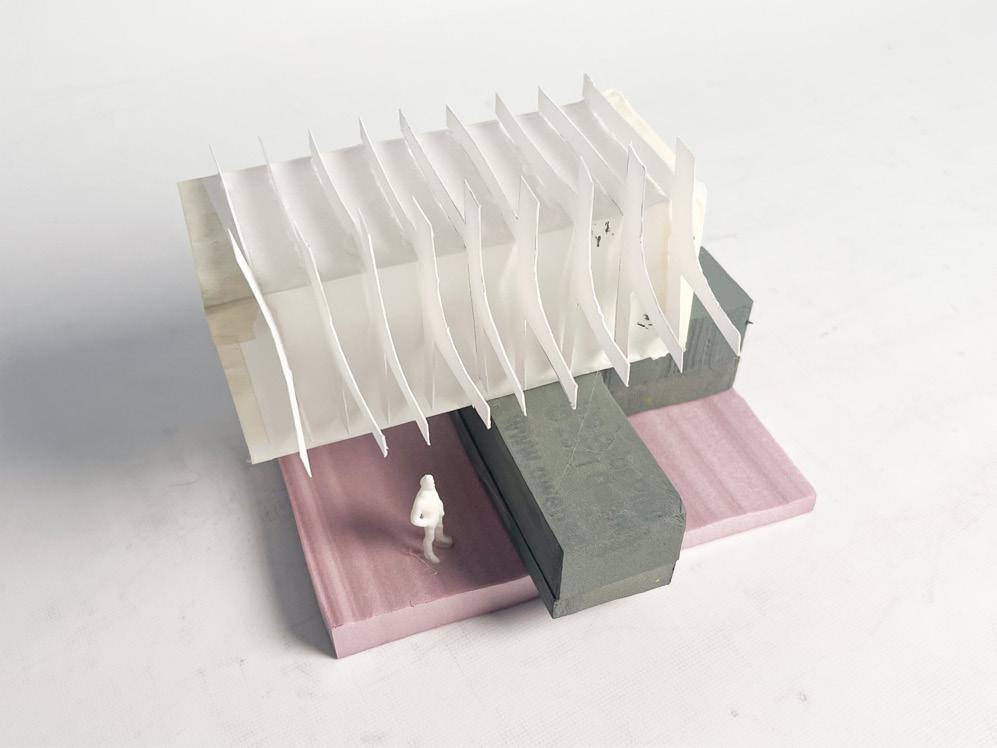
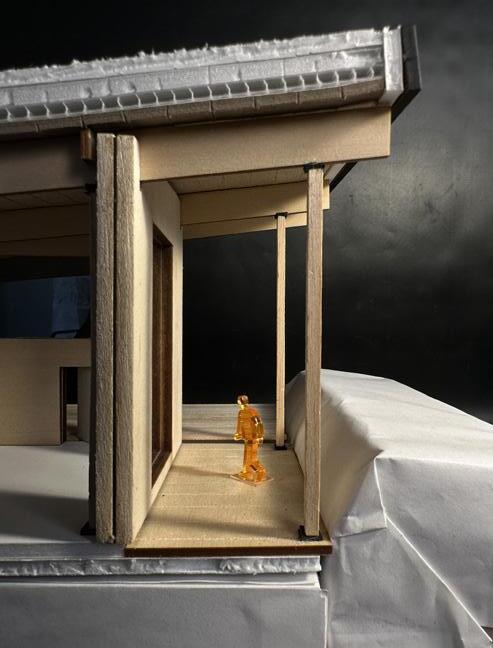
The project is to design a culinary institute with an urban farming theme, situated next to the golf course near Carnegie Mellon. The design progress contained several stages: precedence study, field drawing, physical field model and the final architectural proposal.
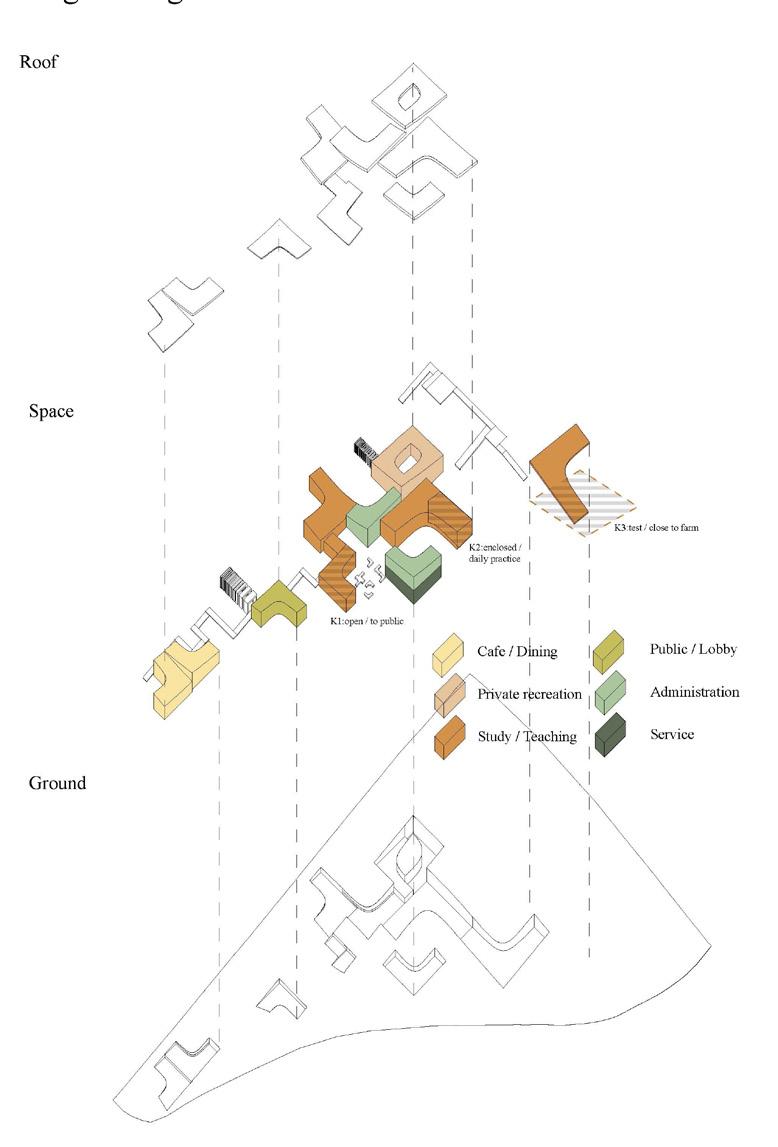
For the final design, the form referred to the field condition as an inspiration while the mass layout was mainly driven by circulation, aligning with the chef philosophies we studied.
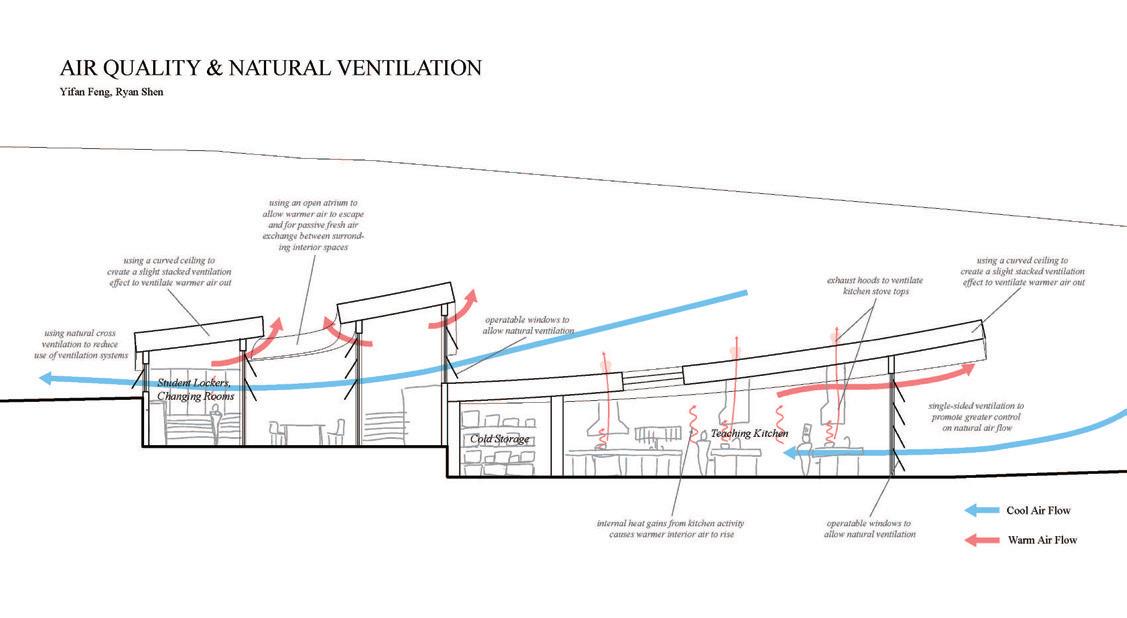
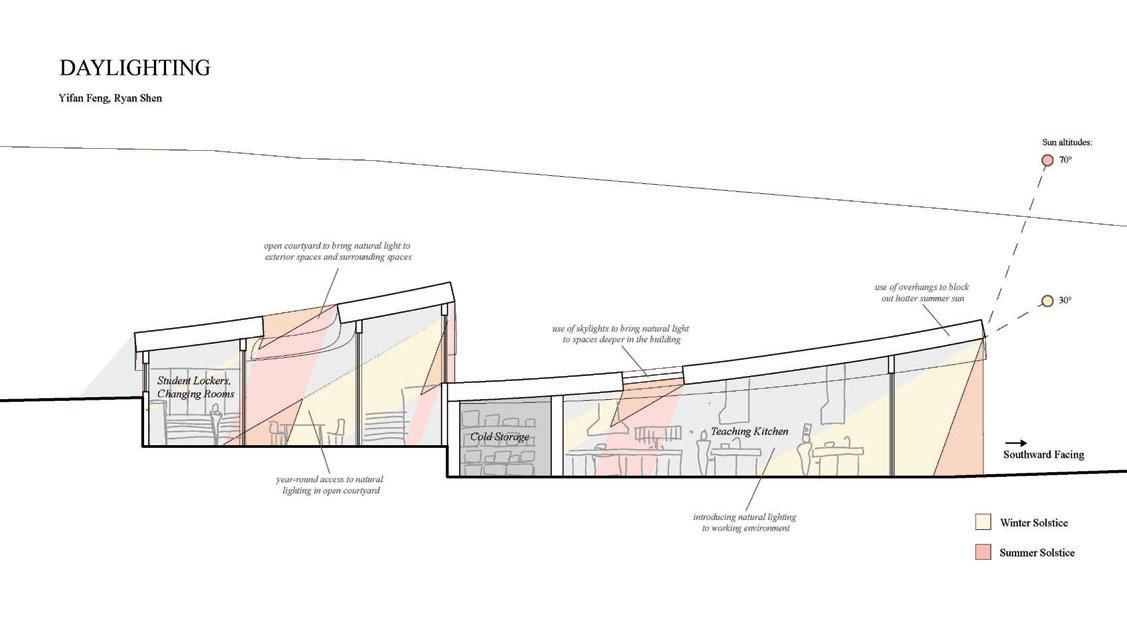
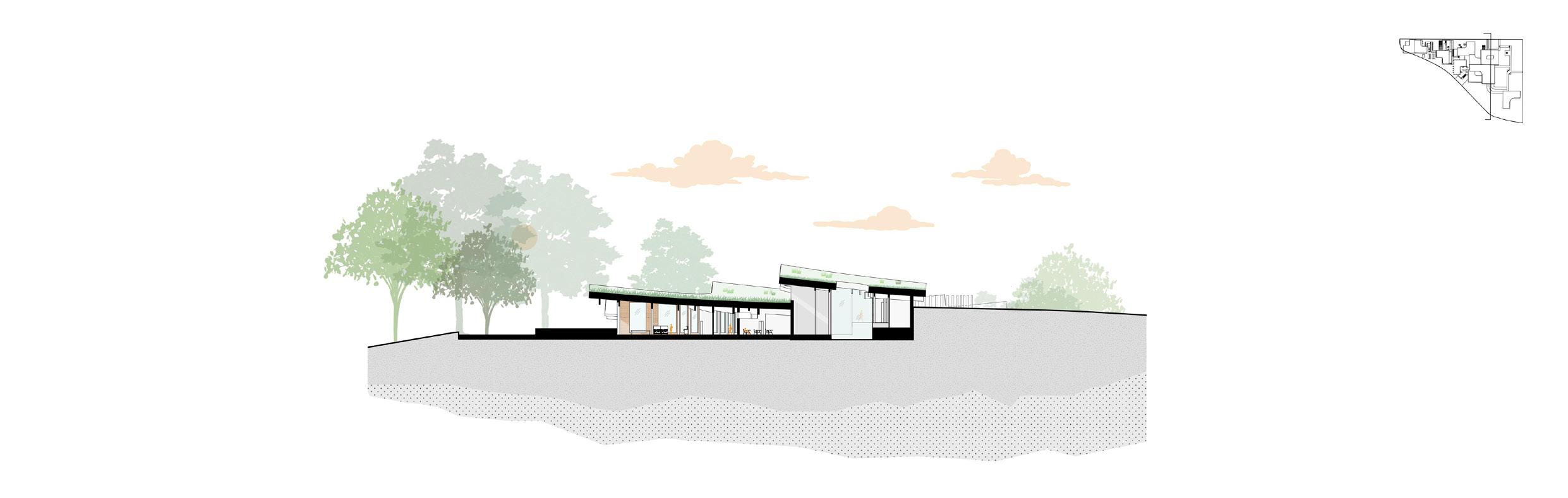
As a result, the design highlighted the concept of sequence of special experience and the natural place in between. Given the site's sloped terrain, the building complex is designed to gradually blend into the landscape, with a green roof that blurs the distinction between architecture and nature.
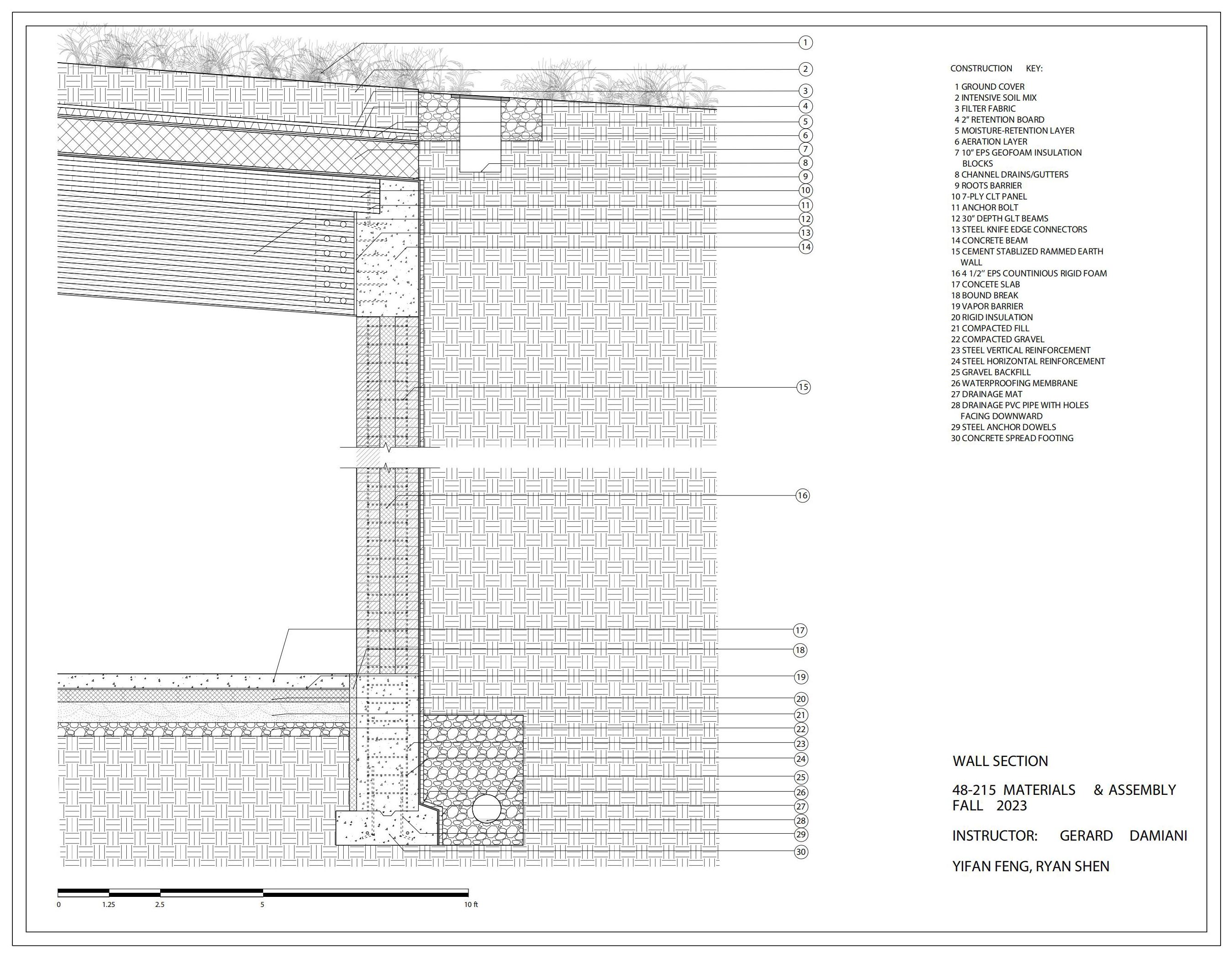
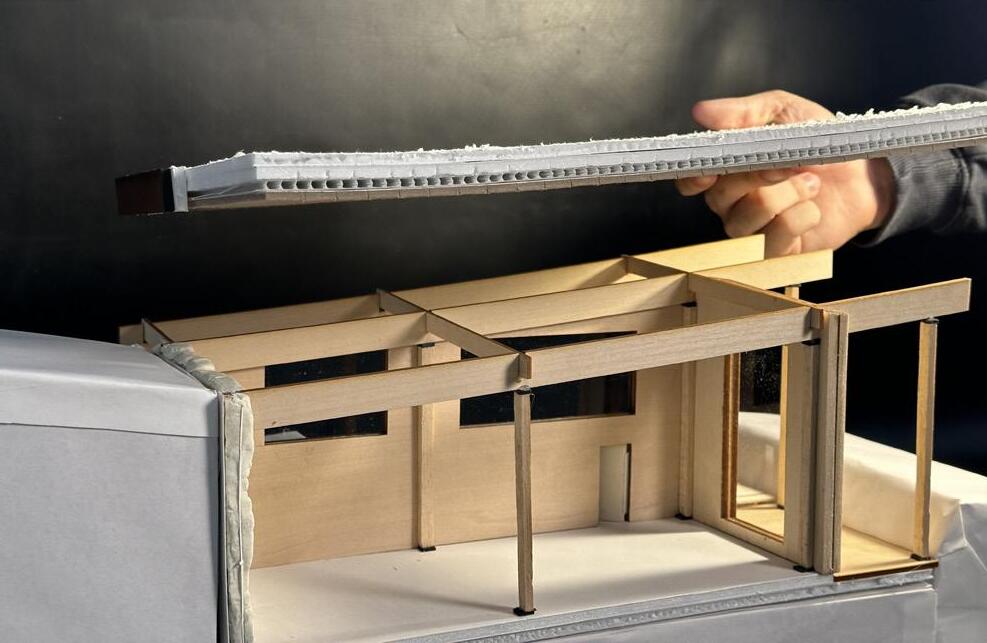
The primary materials include rammed earth, cross-laminated timber (CLT), and glass. Rammed earth is specifically chosen as it reflects on our precedent (turfhouse in Iceland) which uses layered thick turf as the wall material; in addition, it is a more environmentally friendly local material. In order to make the structure language consistent, CLT beams and columns were used spread over the massing ‘L’s.

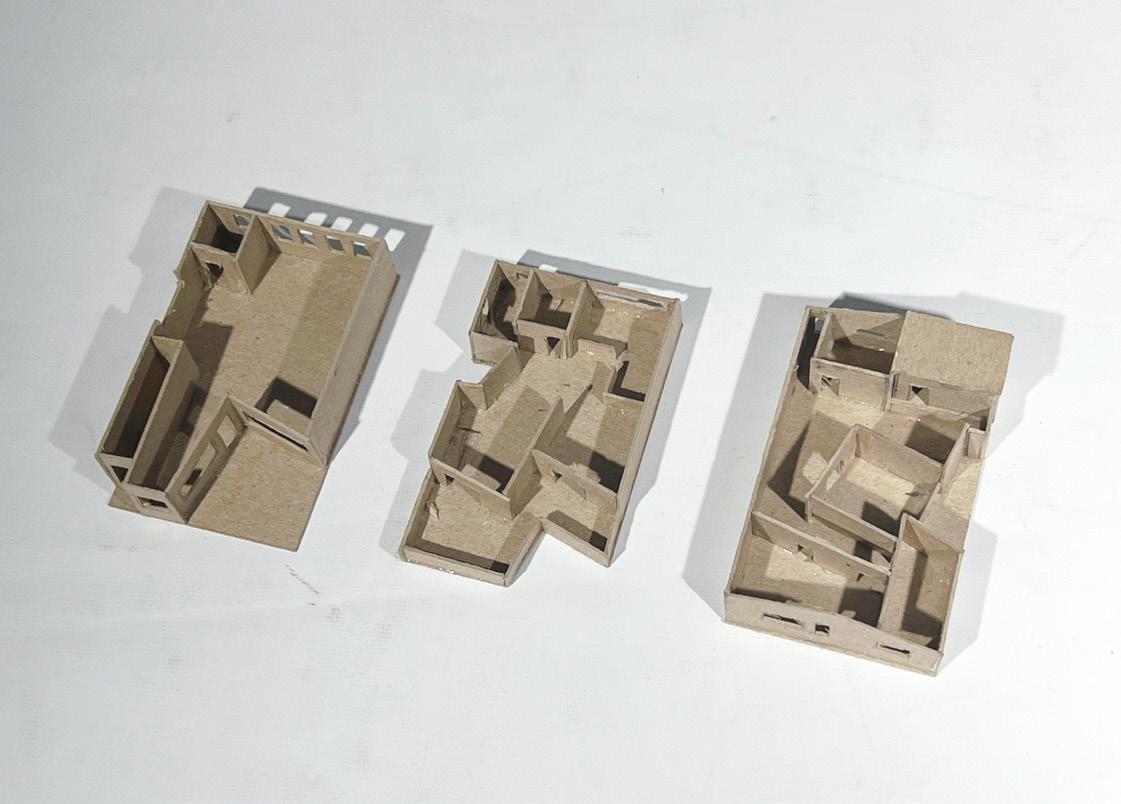
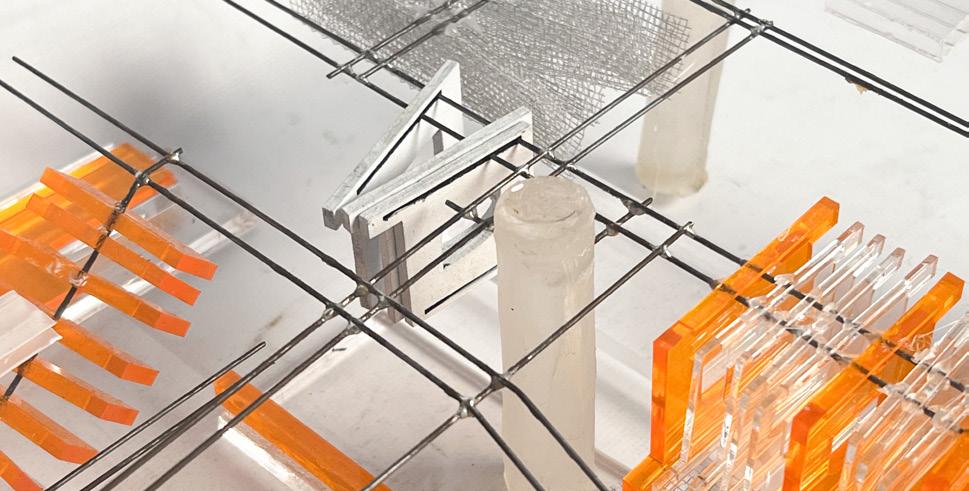
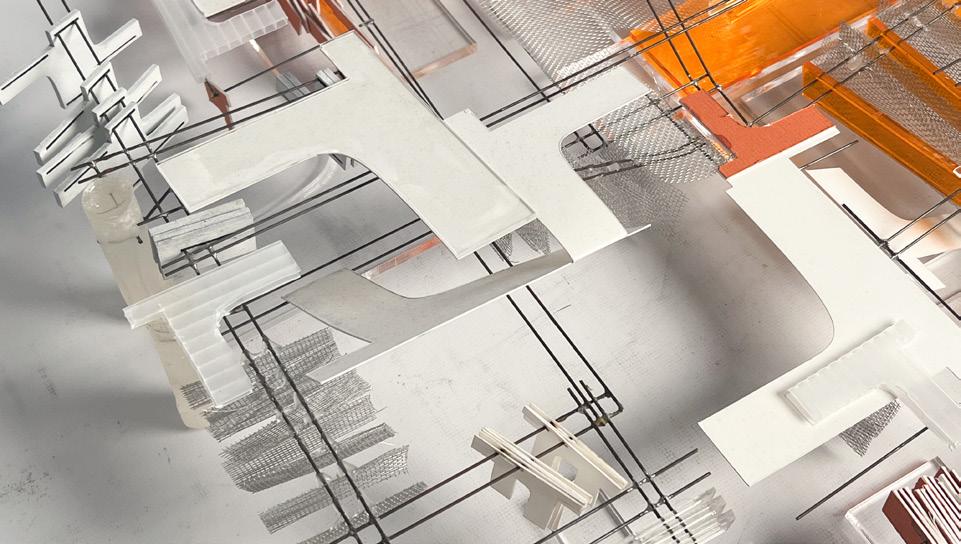
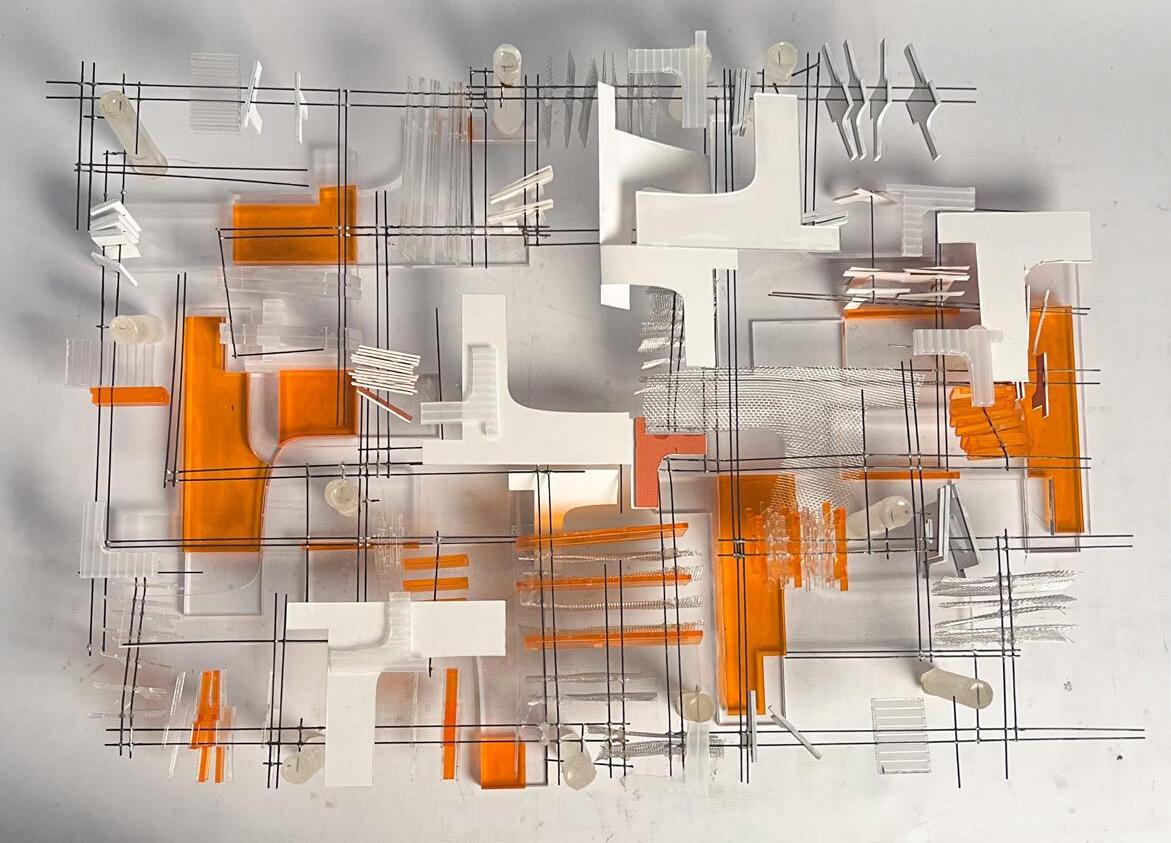
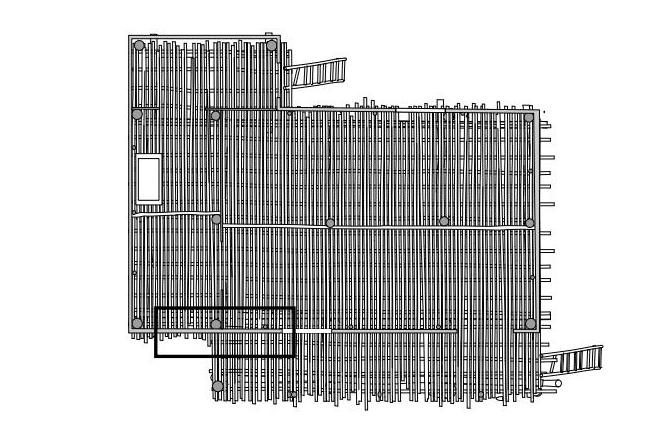
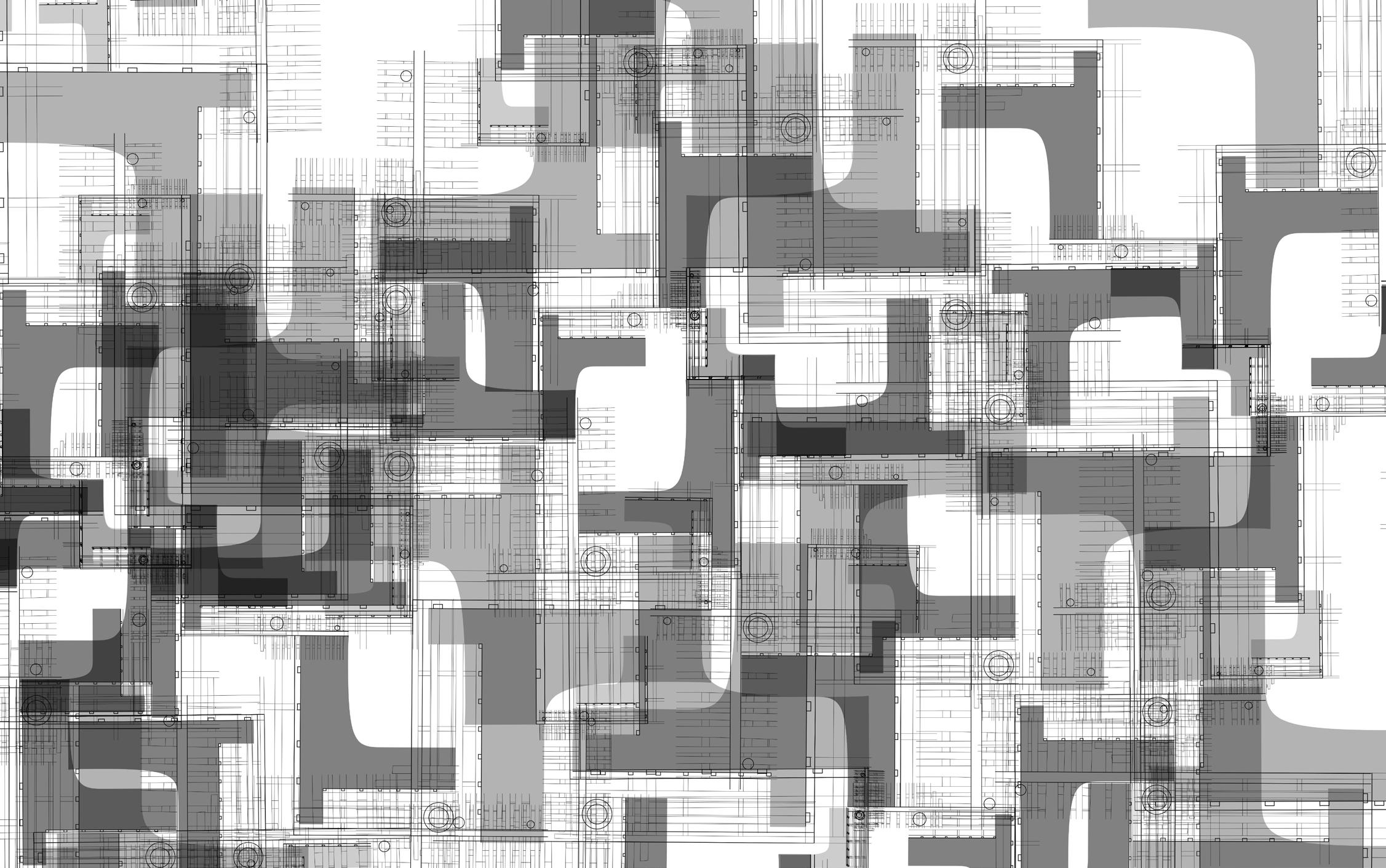
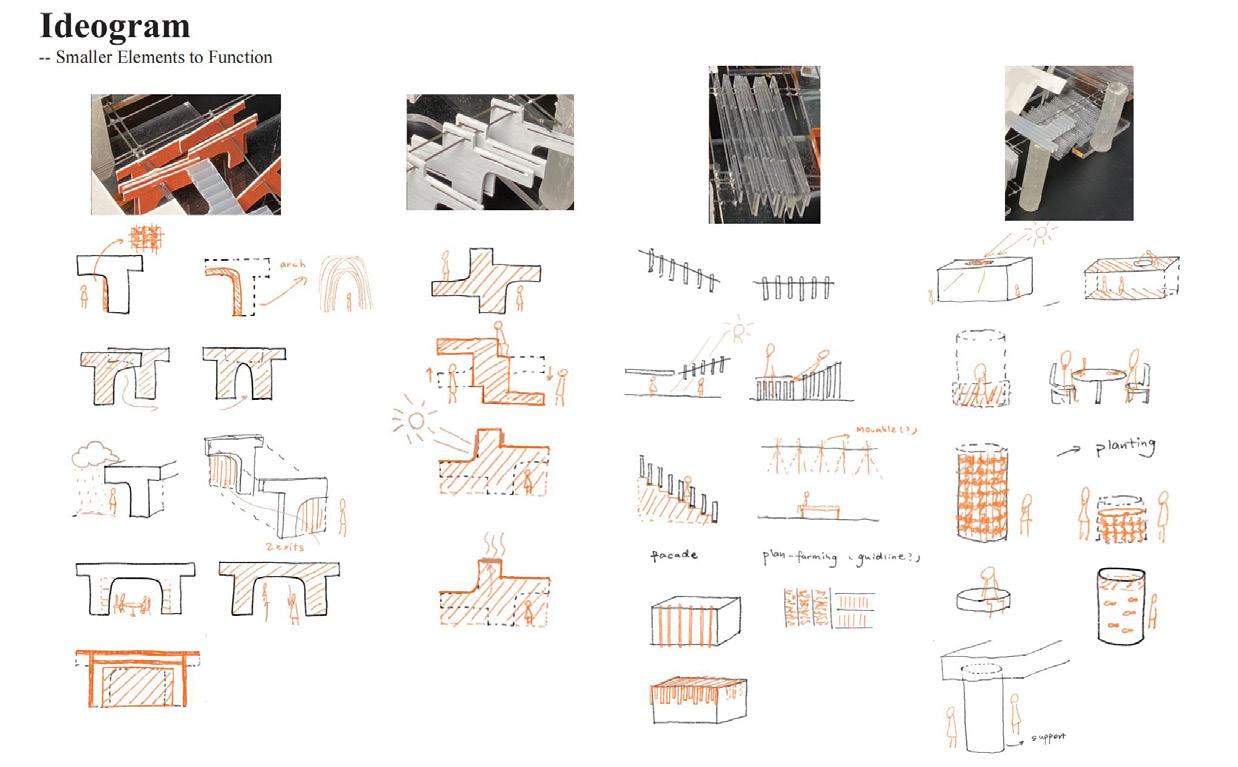
The project started with precedent study, in which our team studied turf houses in iceland. Then we picked another house in an opposite biome. We picked the boat house since the two precedents are very different from each other in material and building mechanism aspects while both use repurposed and local materials. Later, we use a chunk from each housing’s plan as the component of the field drawing where a specific rule set was created to generate the whole condition.
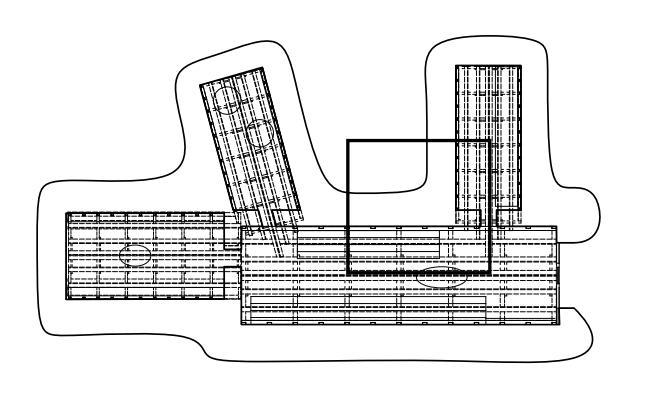
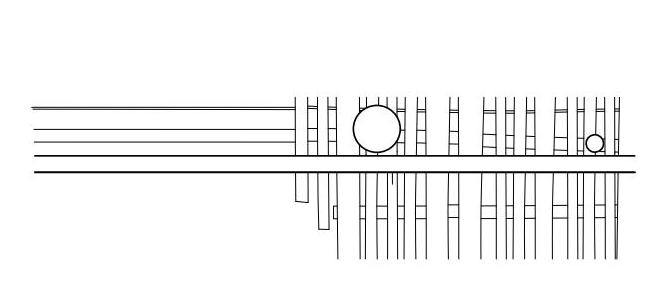
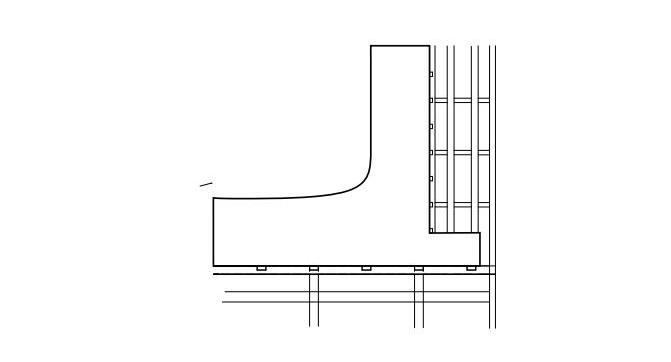
Ideograms
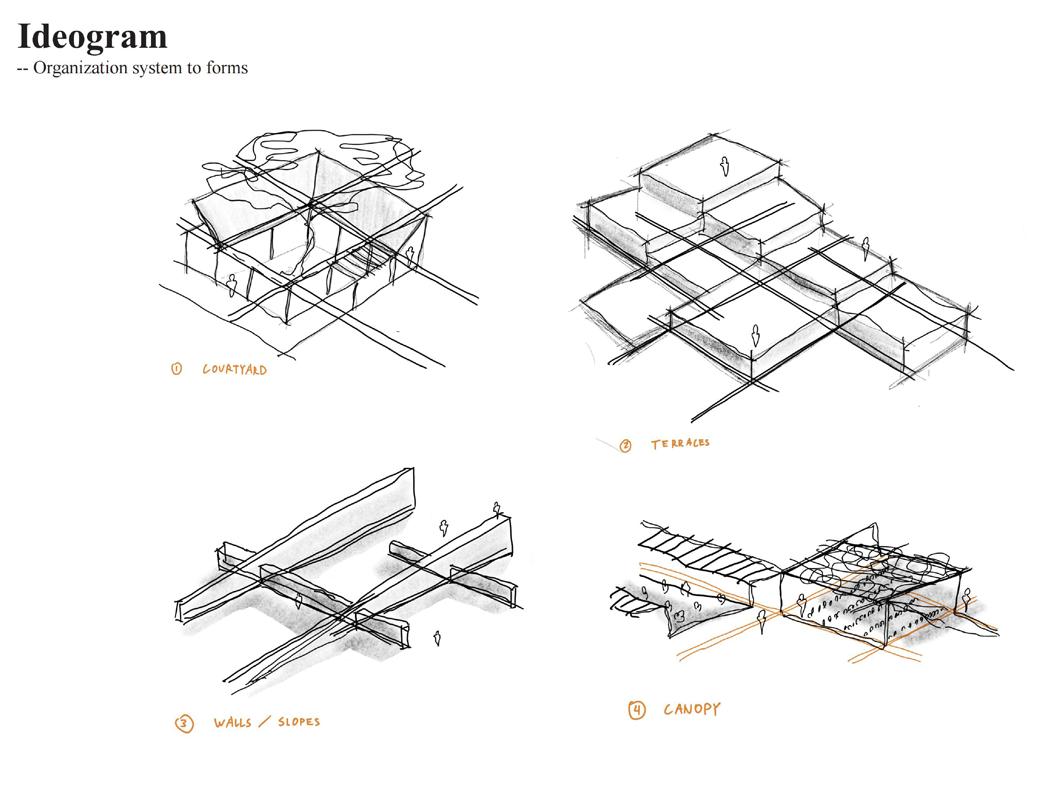
Pittsburgh, PA | Sring 2024
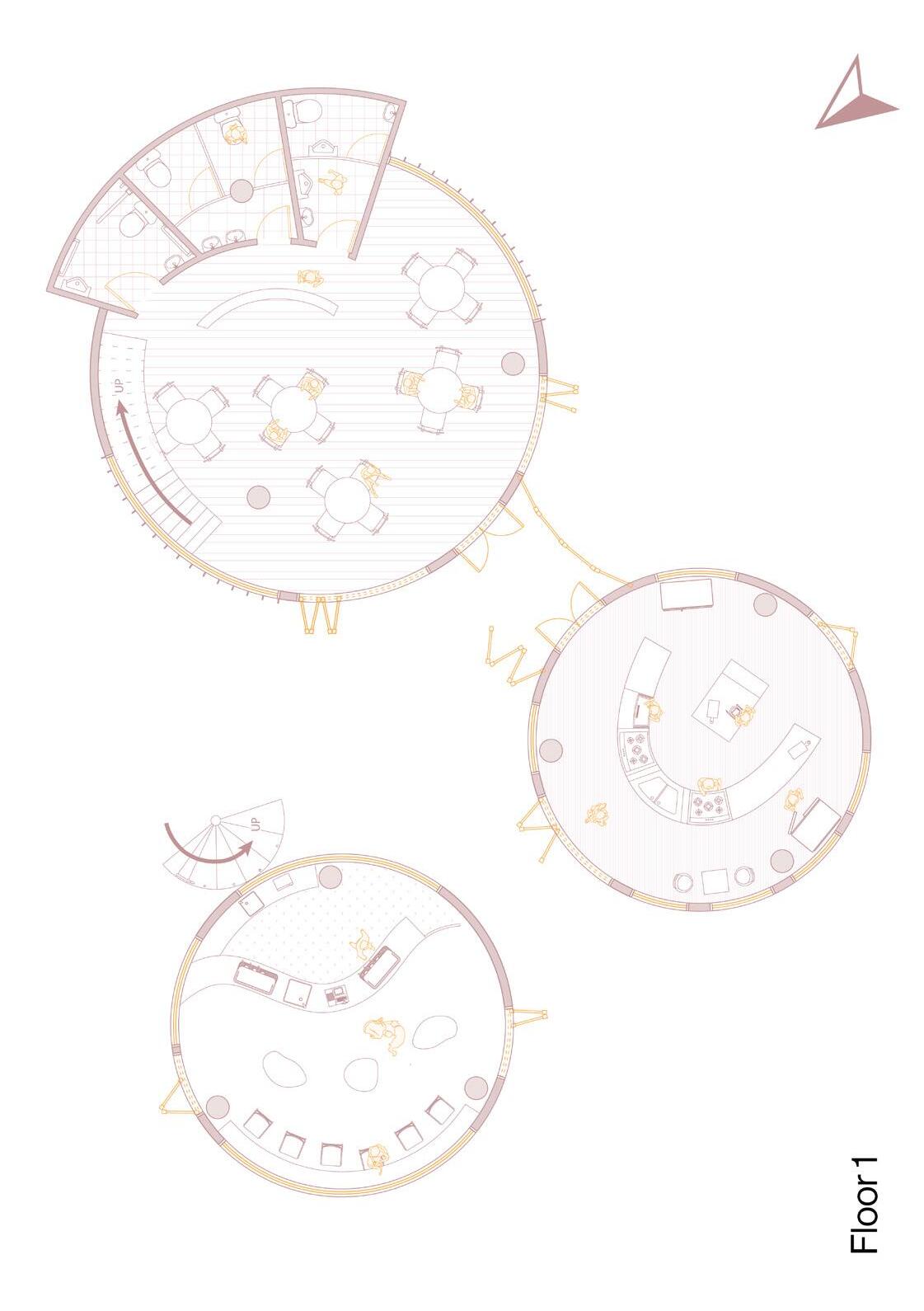
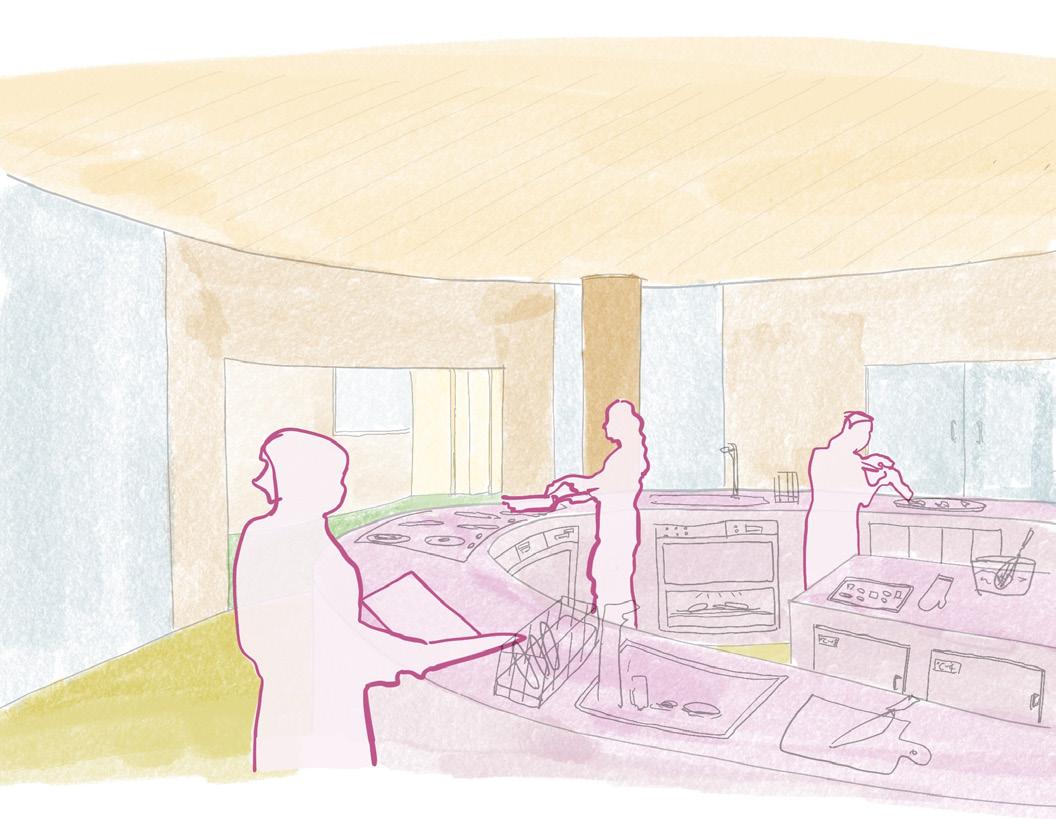
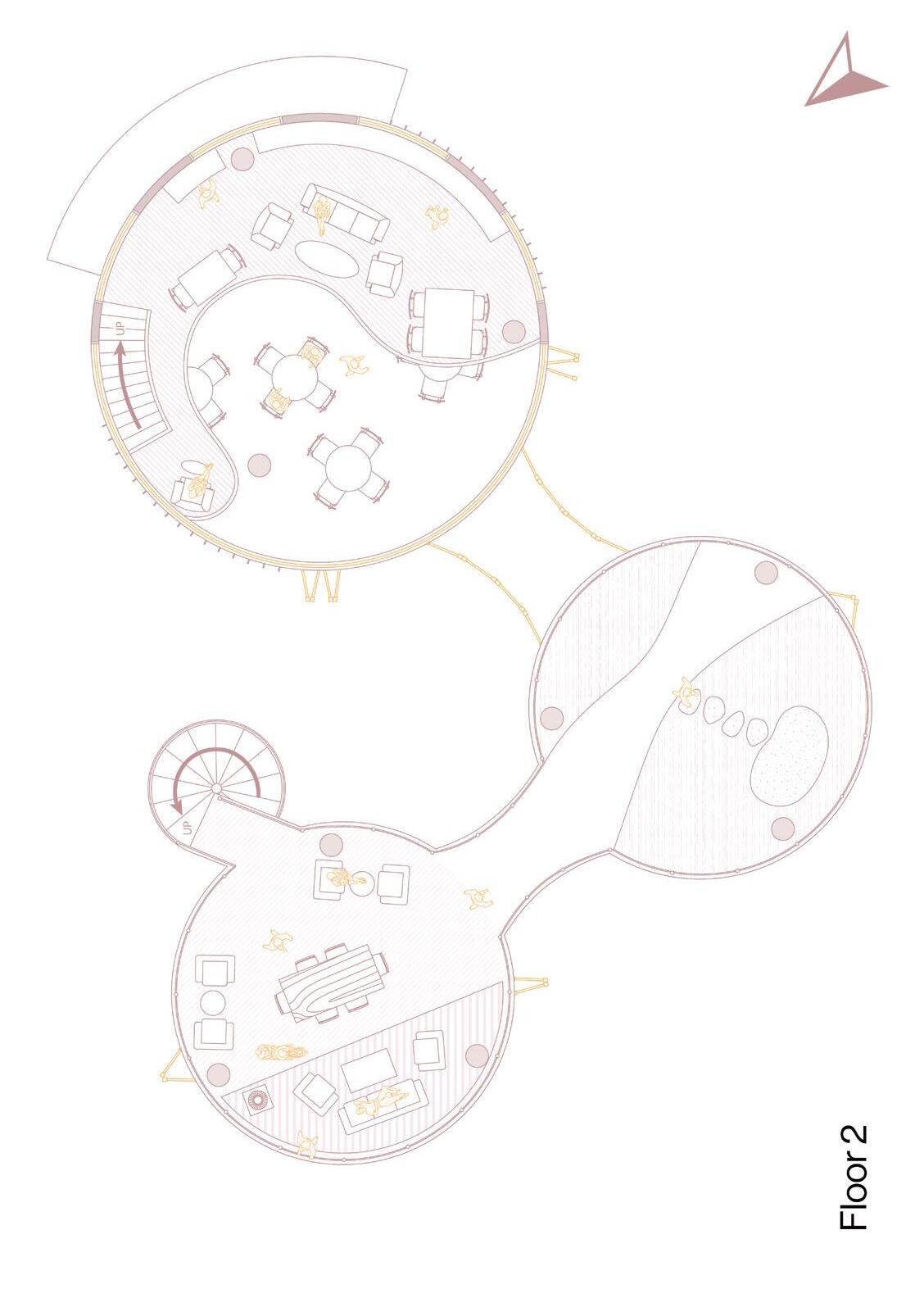
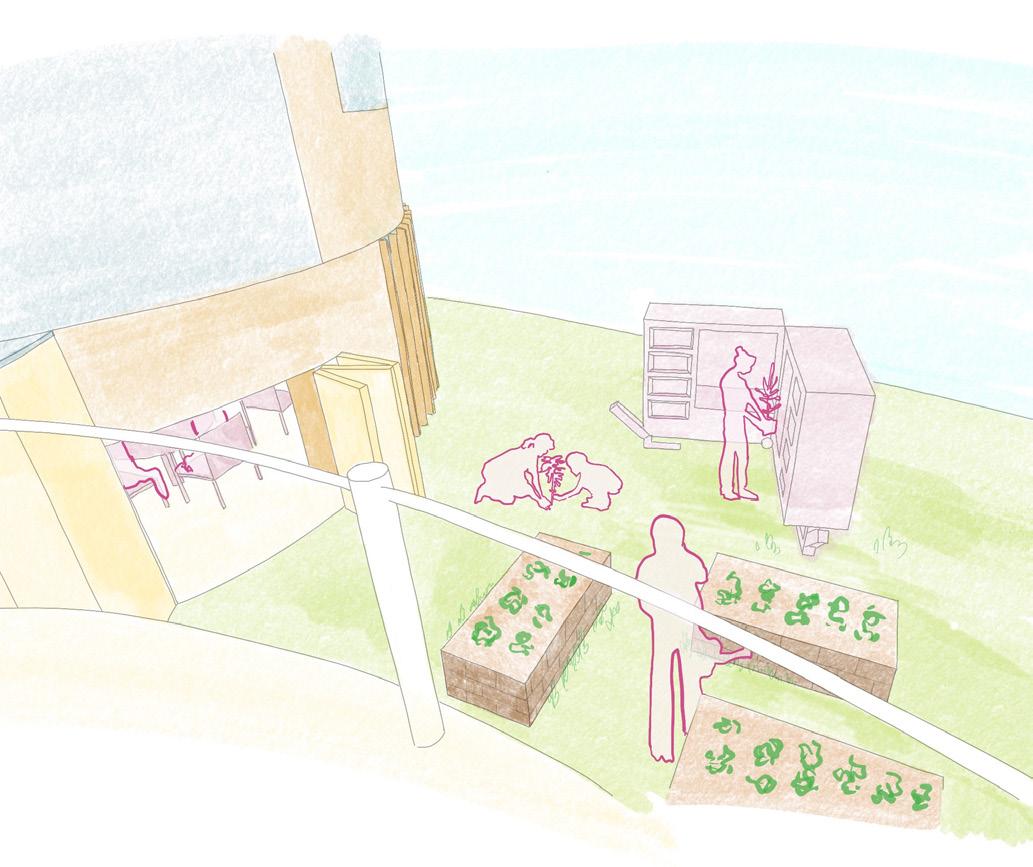
The project consists of two components: a zine and an architectural proposal. Throughout the semester, I studied queer culture in Pittsburgh, with a particular focus on the lesbian coffeehouse typology. The zine presents my research on Wild Sisters, a lesbian coffeehouse from the 1980s, and explores how food and the activity of cooking fostered community, shaping the shared experience of eating together.
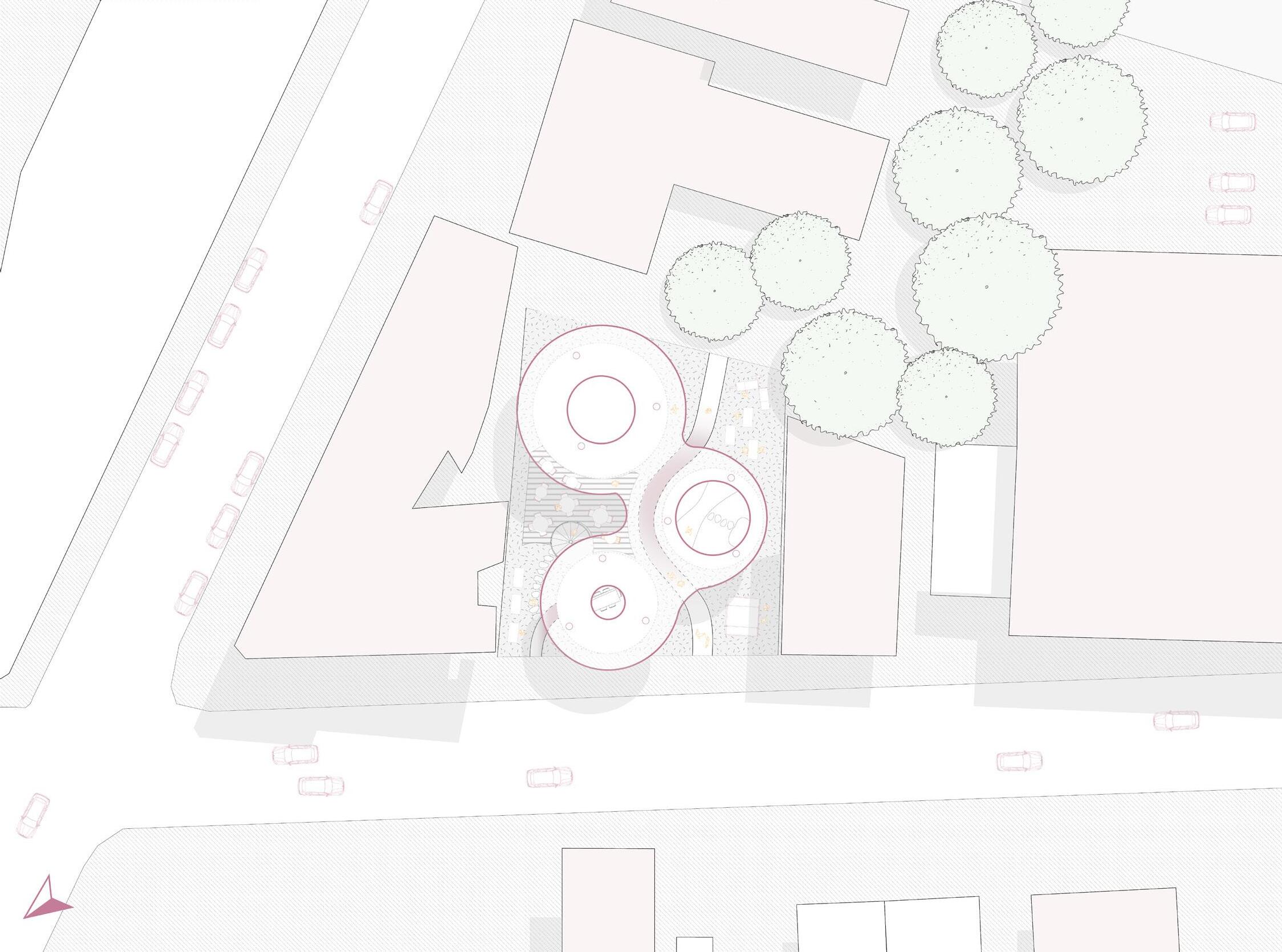
The architectural proposal, Fresh Ring, is a hybrid community restaurant founded by the Labry Alley commune. (The commune is proposed by me and my three peers, which we each contributed to different aspects of the commune, with our designs forming an interconnected network across the city, for instance, public bathroom and community garden.)
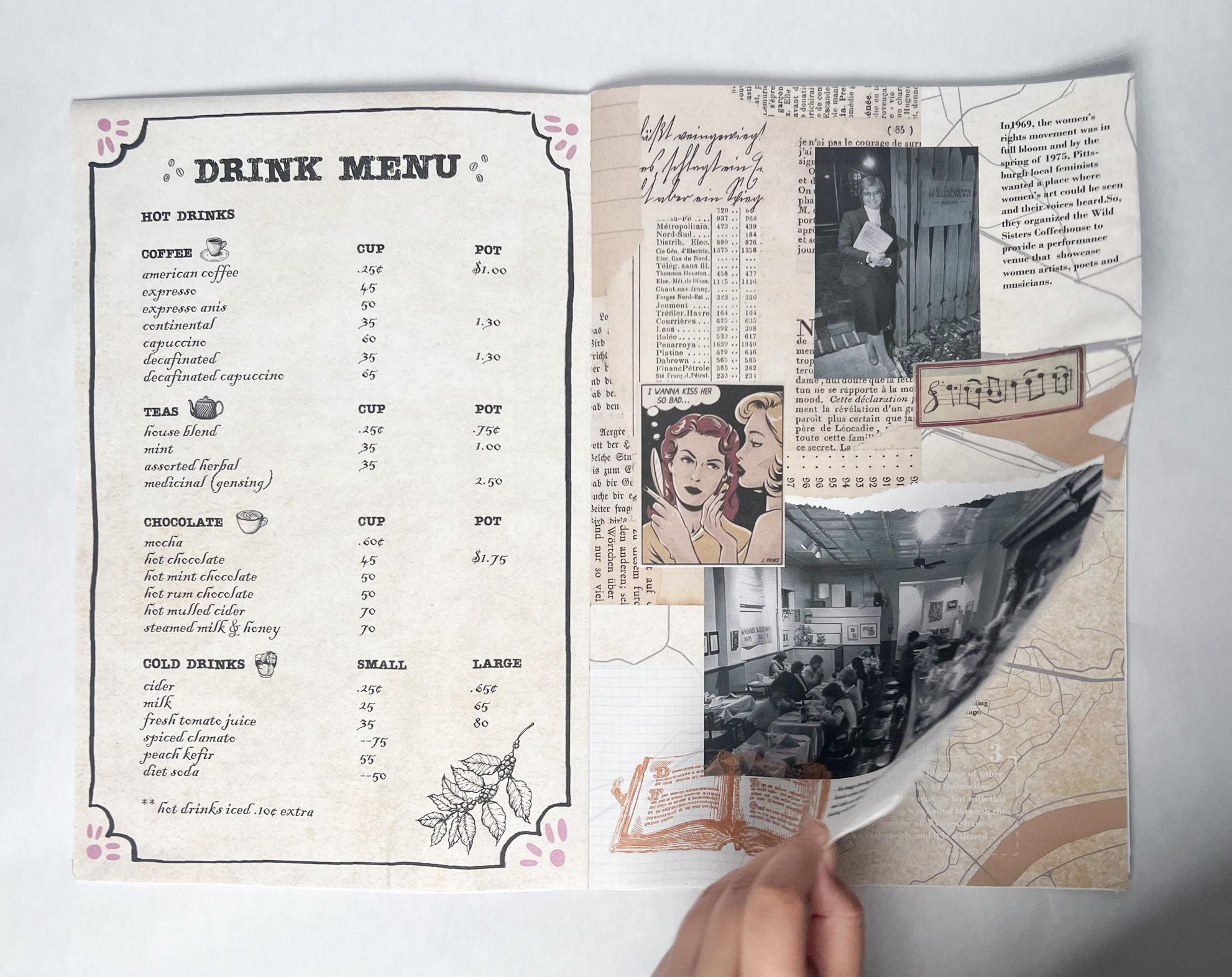
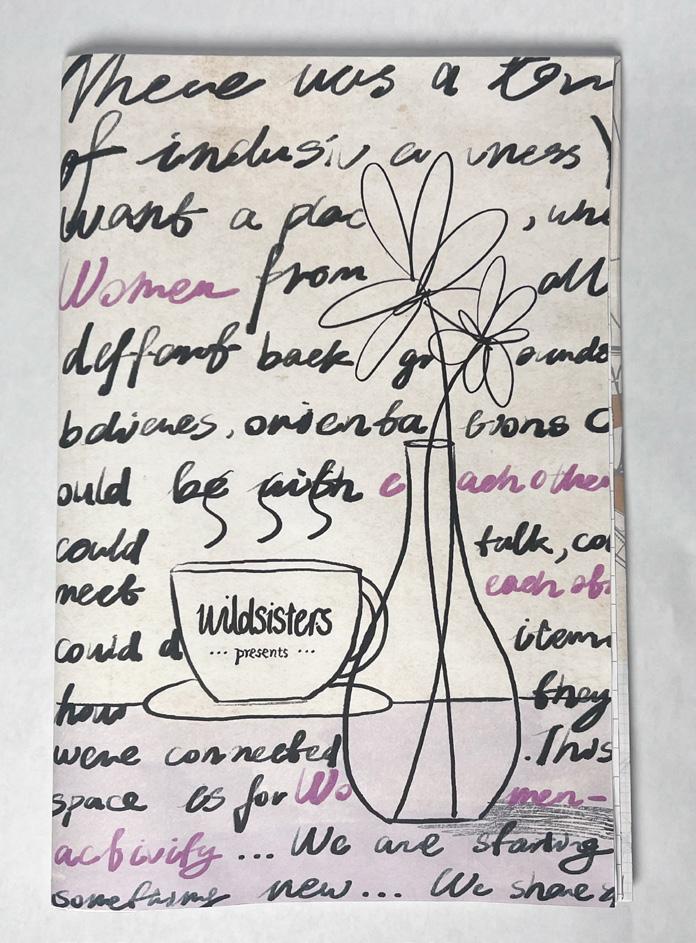
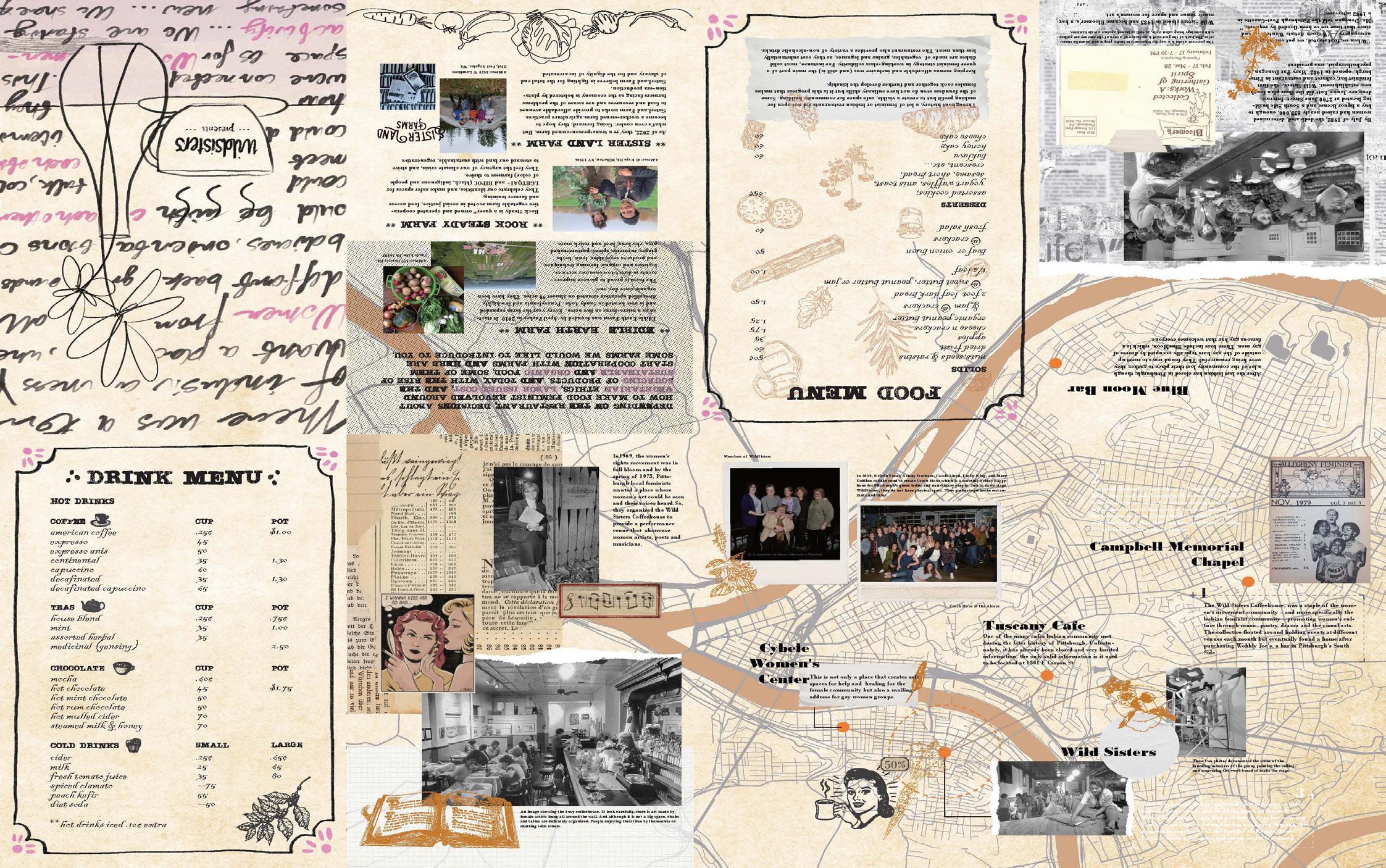
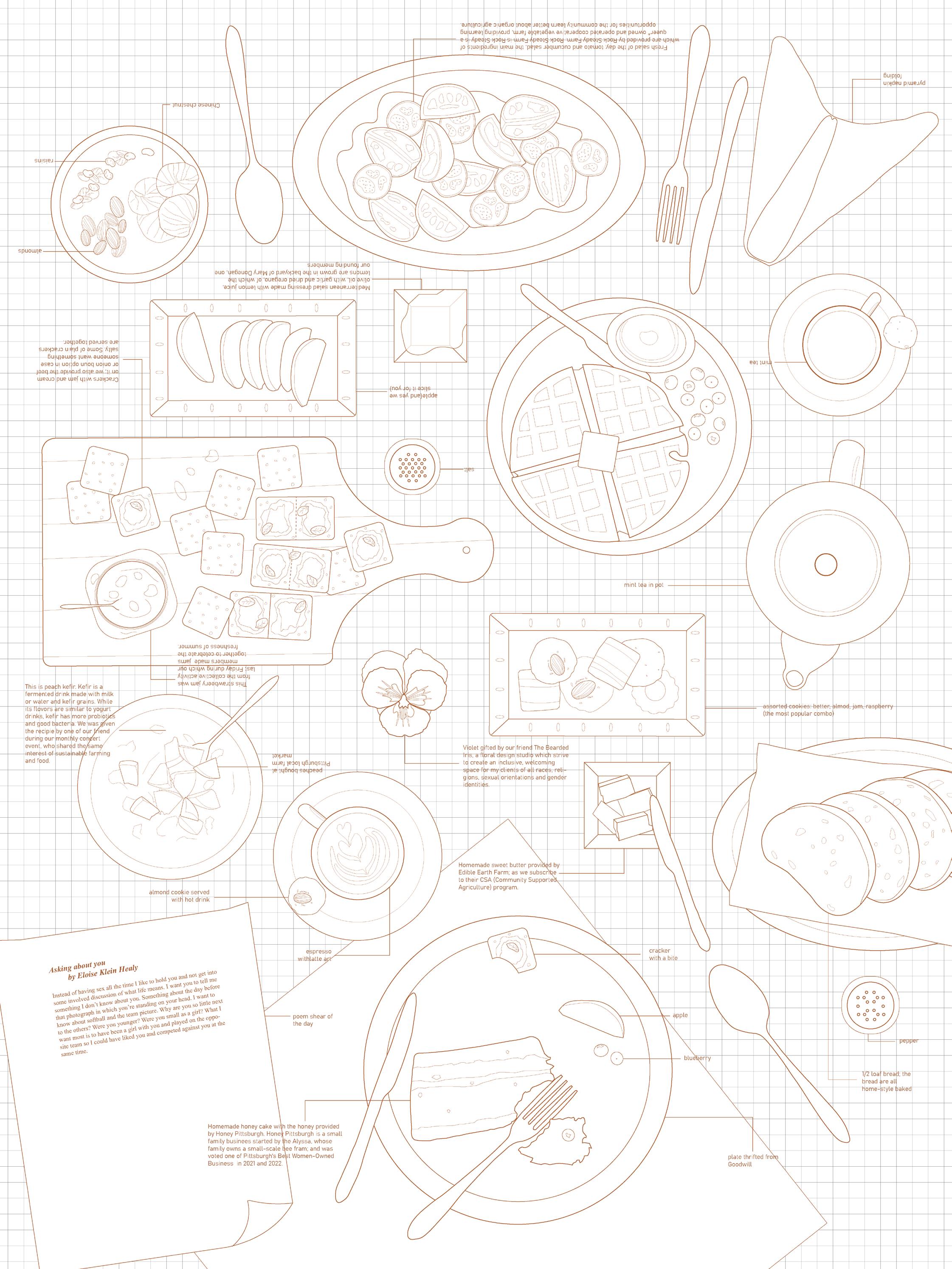
I find it fascinating how the lesbian coffee house during the 80s became a place that not only provided affordable food and valuable information exchange but also a place that fostered love, art, politics and a bounding community. The coffeehouse prioritized healthier options, often using homemade ingredients or organic products sourced from local farms. The zine is designed to be double sided. On one side, it talked about the story and the history of the coffee house but also showcasing a menu of the time. Open up the back side, it becomes a life scale table where the activity of eating and the food element involved is more detailedly explained.
Zine(front side)
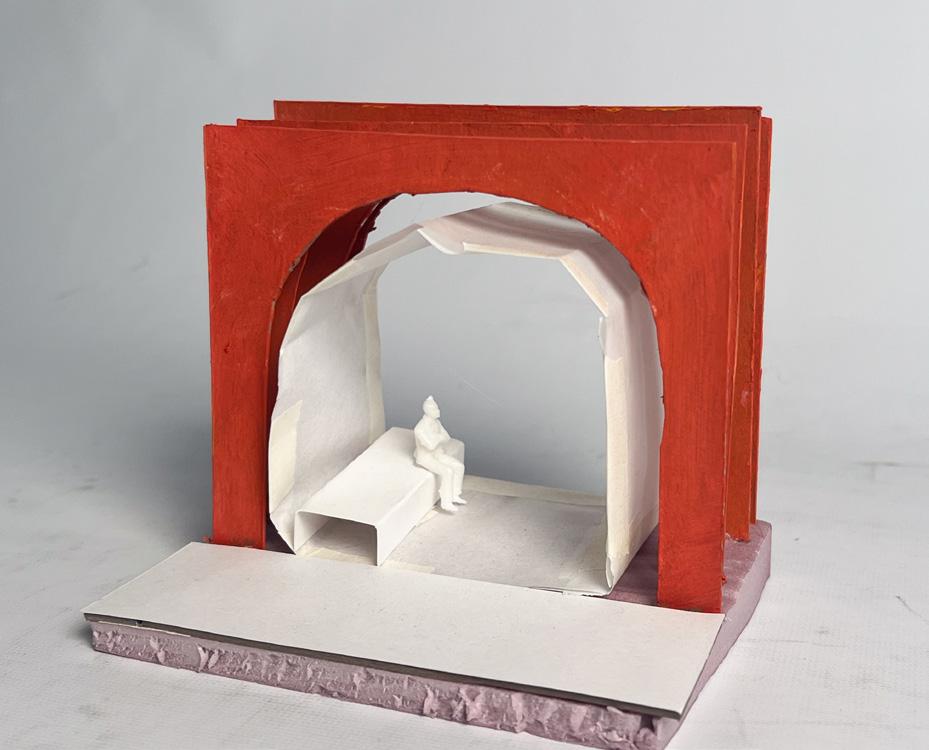
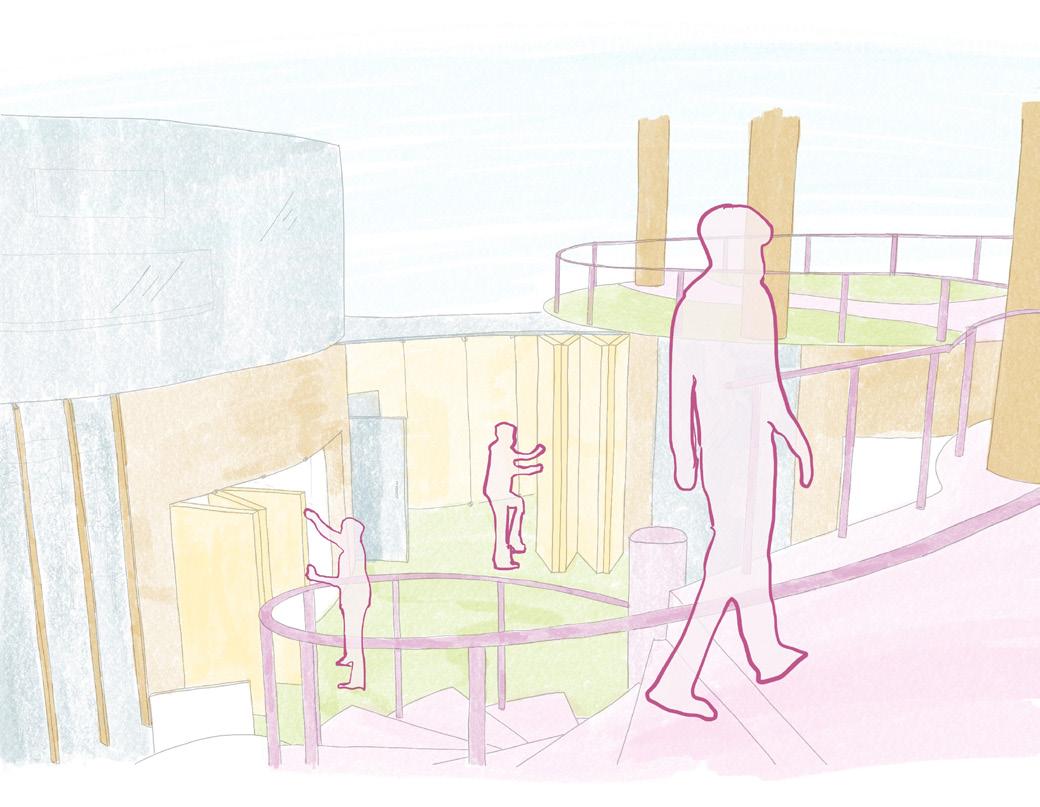
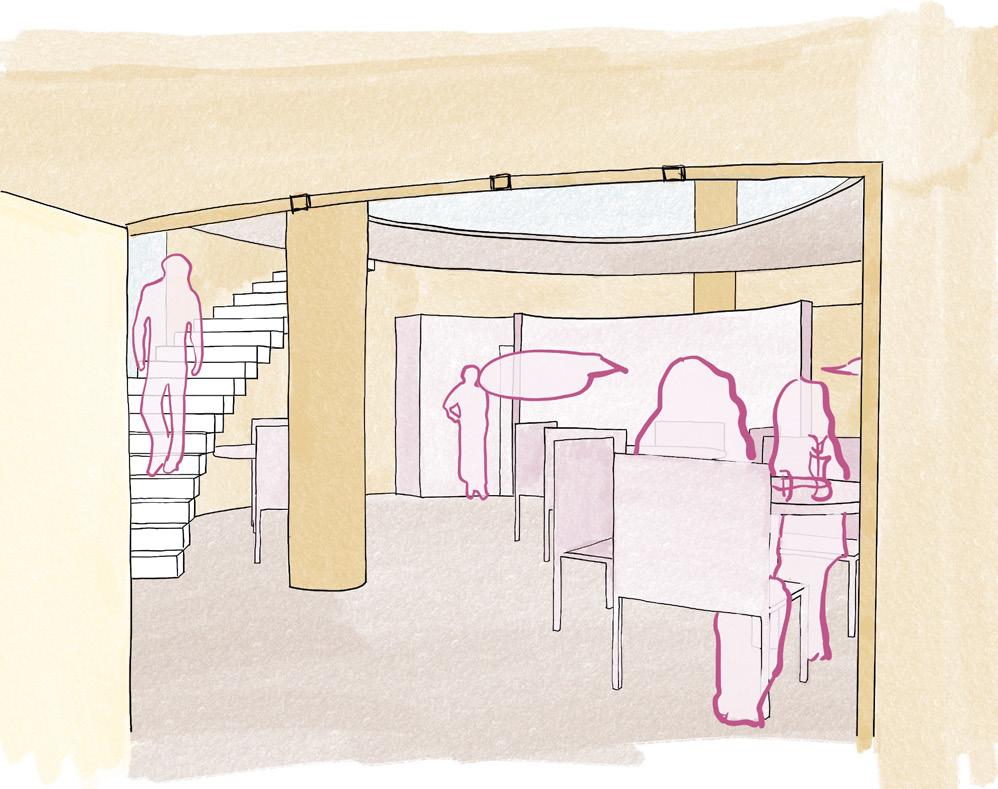
Inspired by the diverse connections forged at Wild Sisters, the design arranges spaces as individual volumes beneath a unifying shell. Most of the walls are folding doors, designed to enhance the building's spatial organization and flexibility. In other words, all the areas can be individual but it becomes a whole under the shell, reinforcing the project’s central theme of community and shared experience. Circles were chosen as a basic mass geometry as it fosters more interaction and exposes people with the most footprint with the least material.
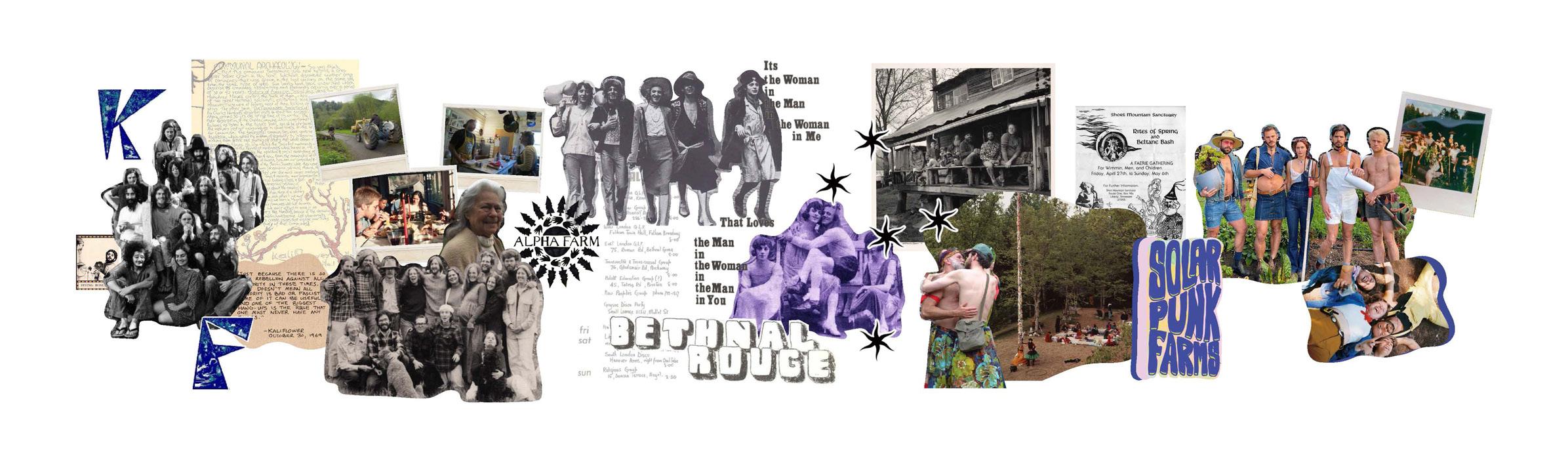
Other queer communes studied
Shanghai, China | Summer 2024
Group project with Yifan Wu / Taylor Wang
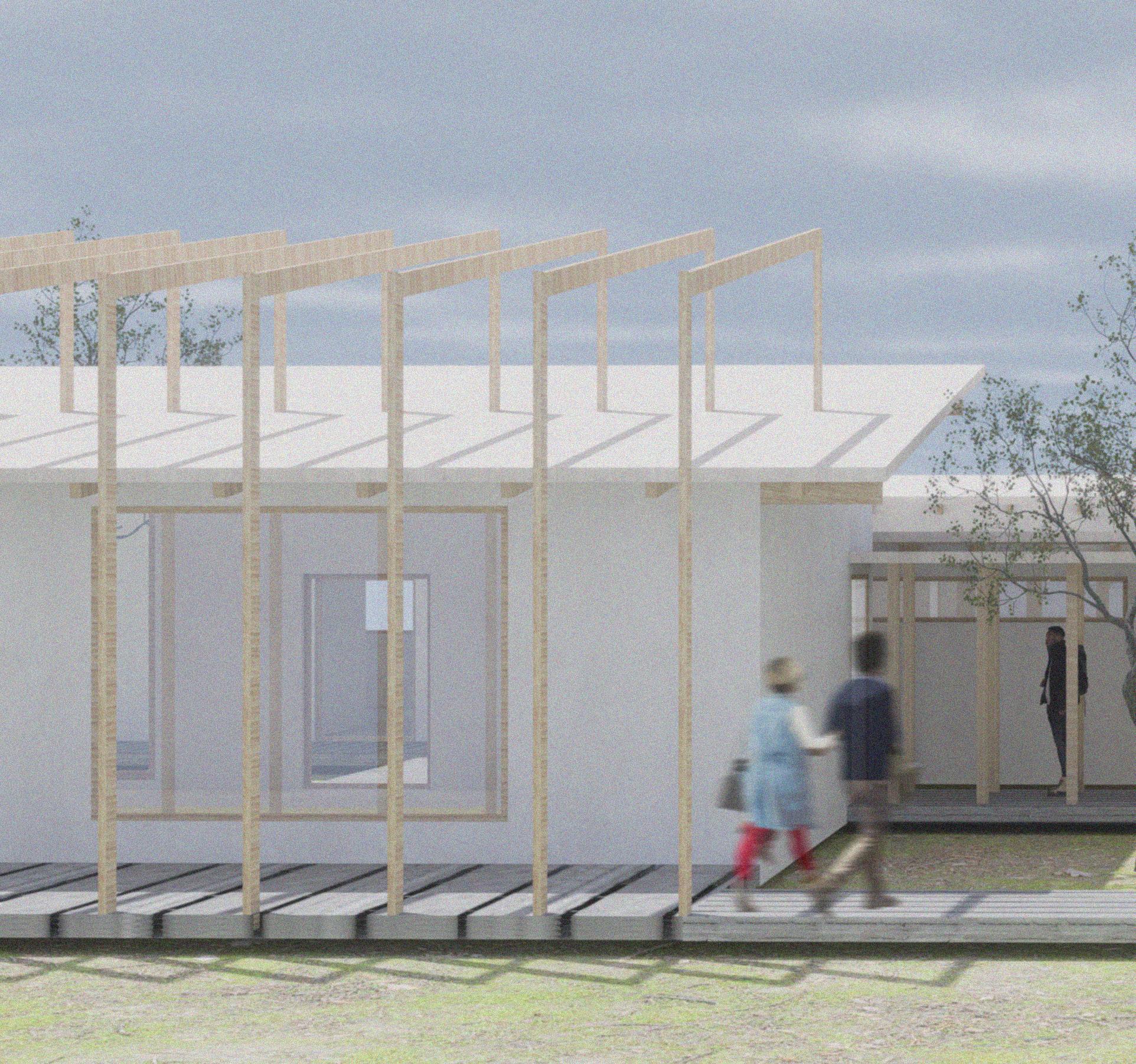
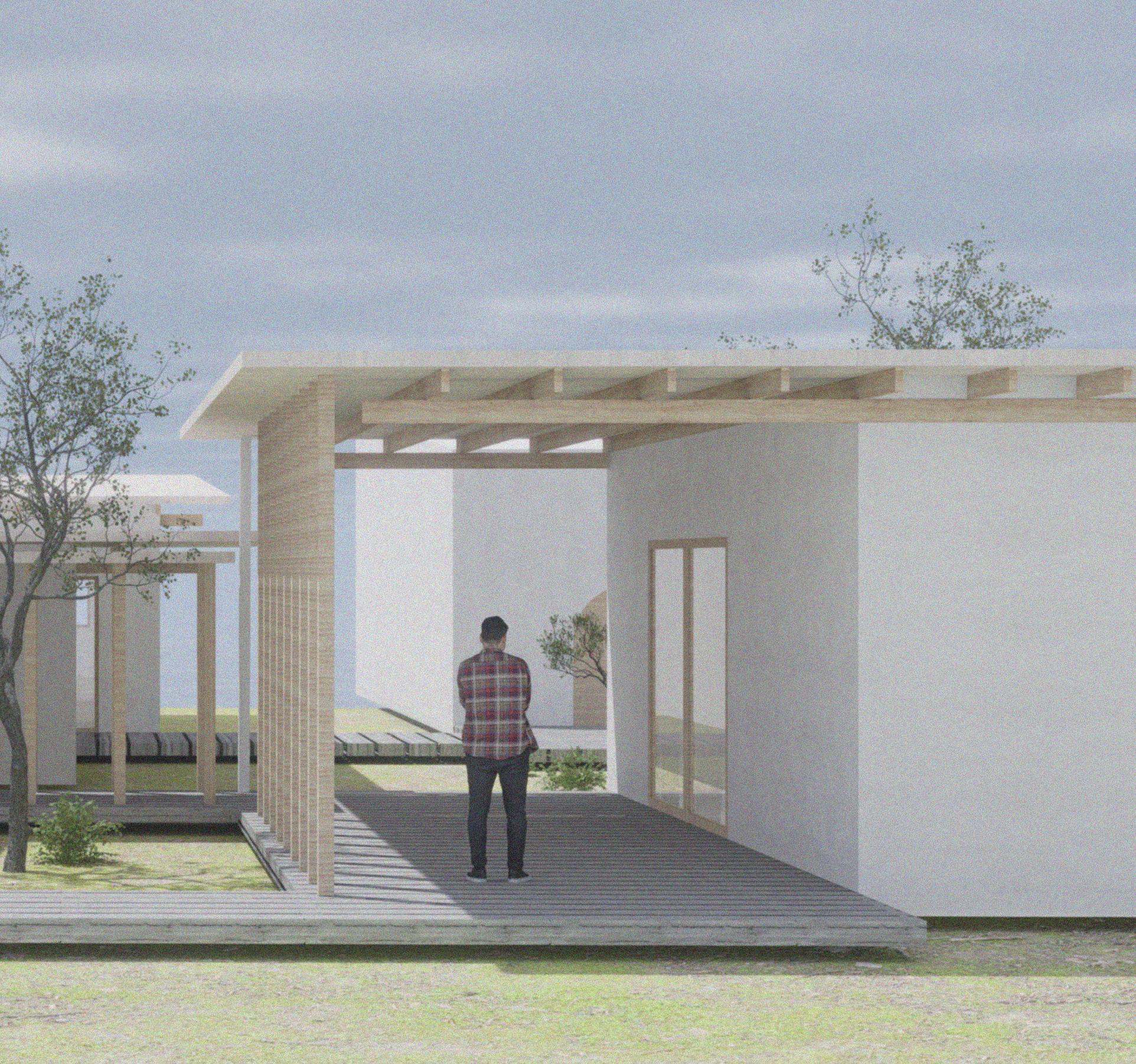
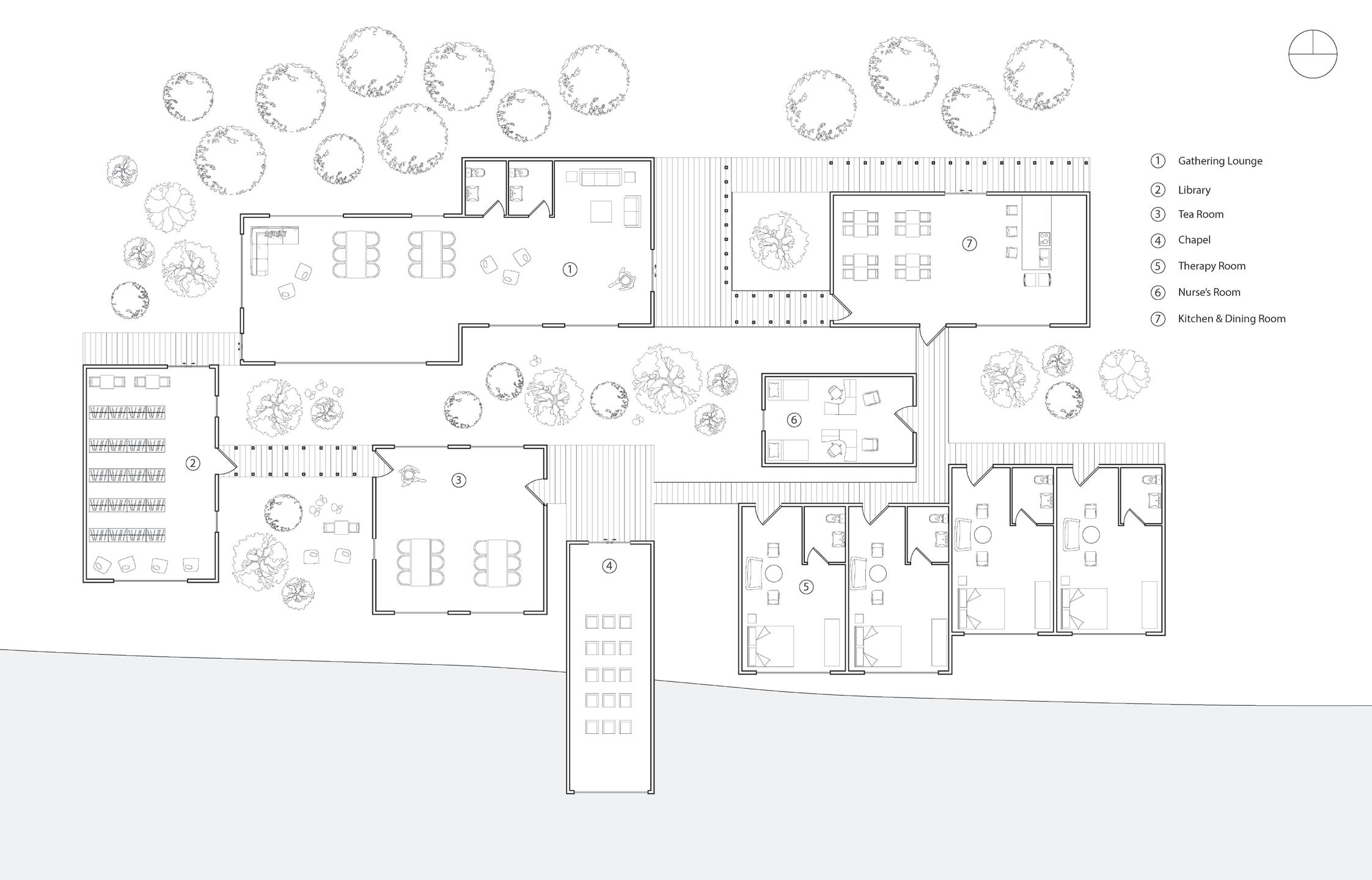
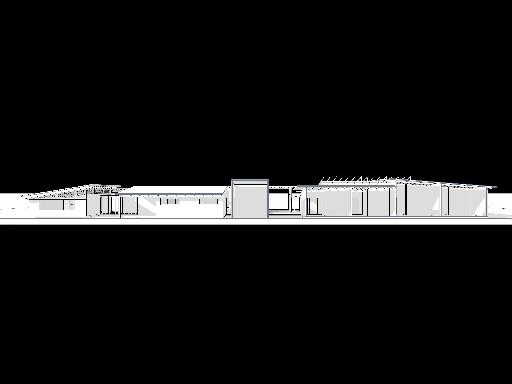
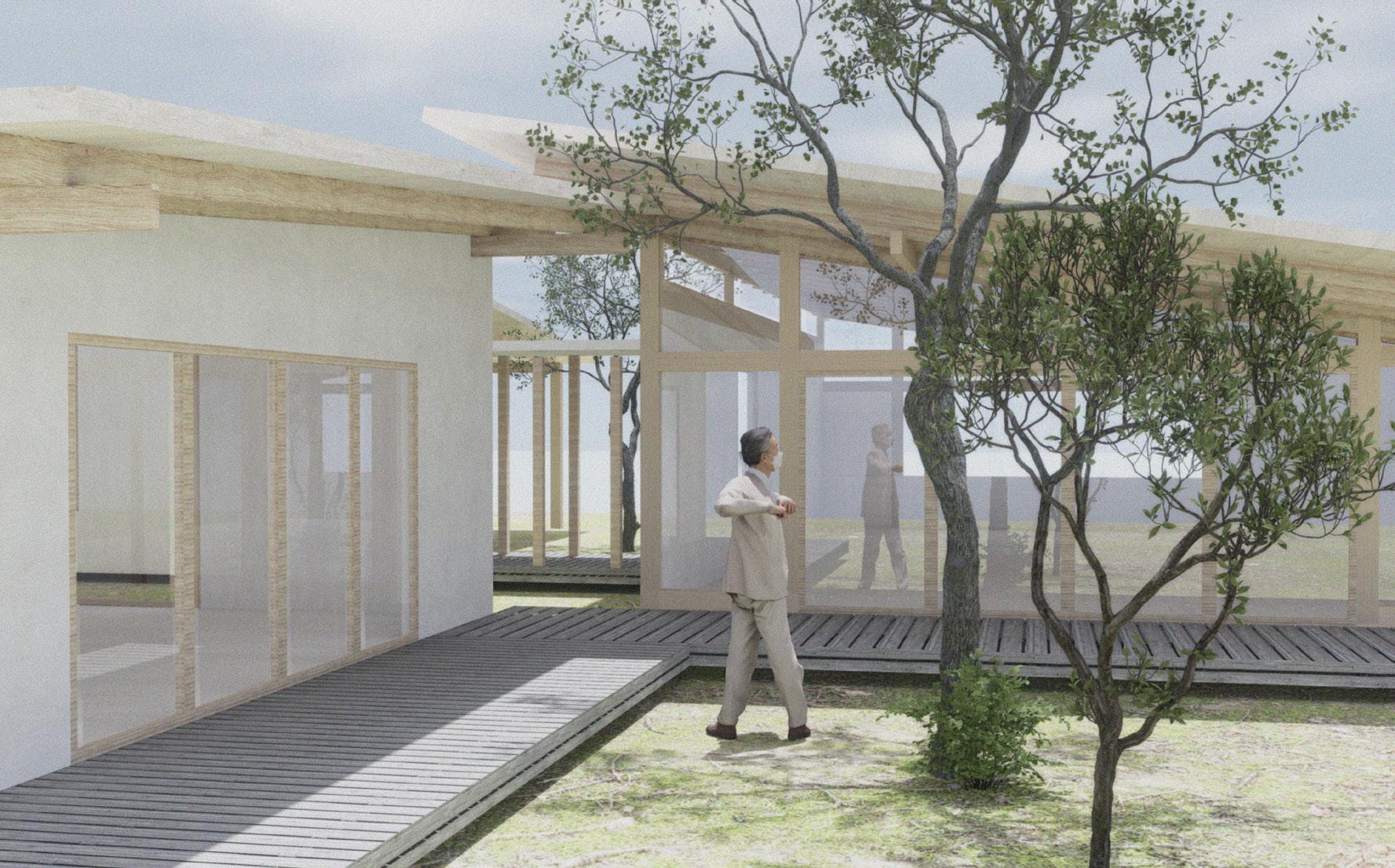
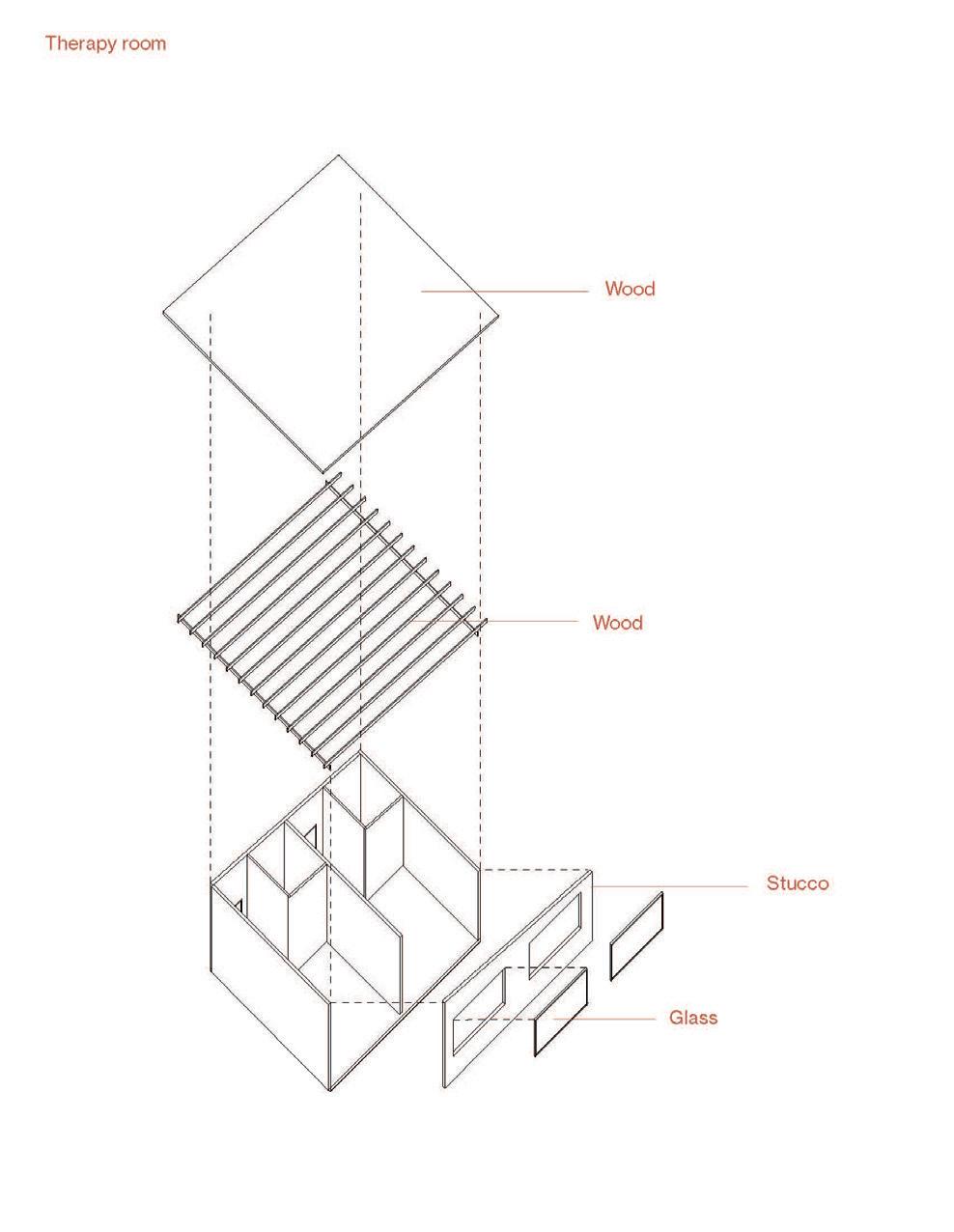
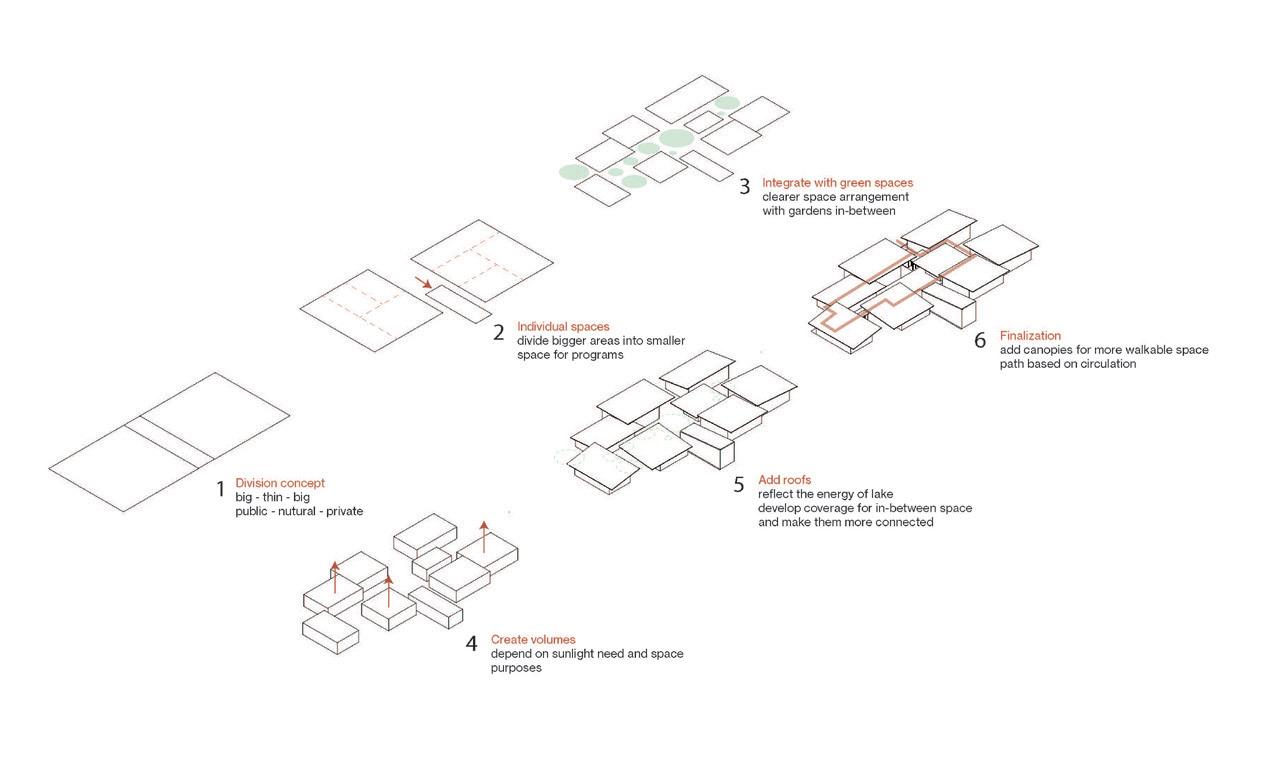
Tranquility Edge is a hospice designed with a focus on enhancing the well-being of patients through a deep connection with nature.Situated on the edge of Dishui Lake in Shanghai, China, the site offers a serene view of the water, fostering a sense of peace and tranquility.
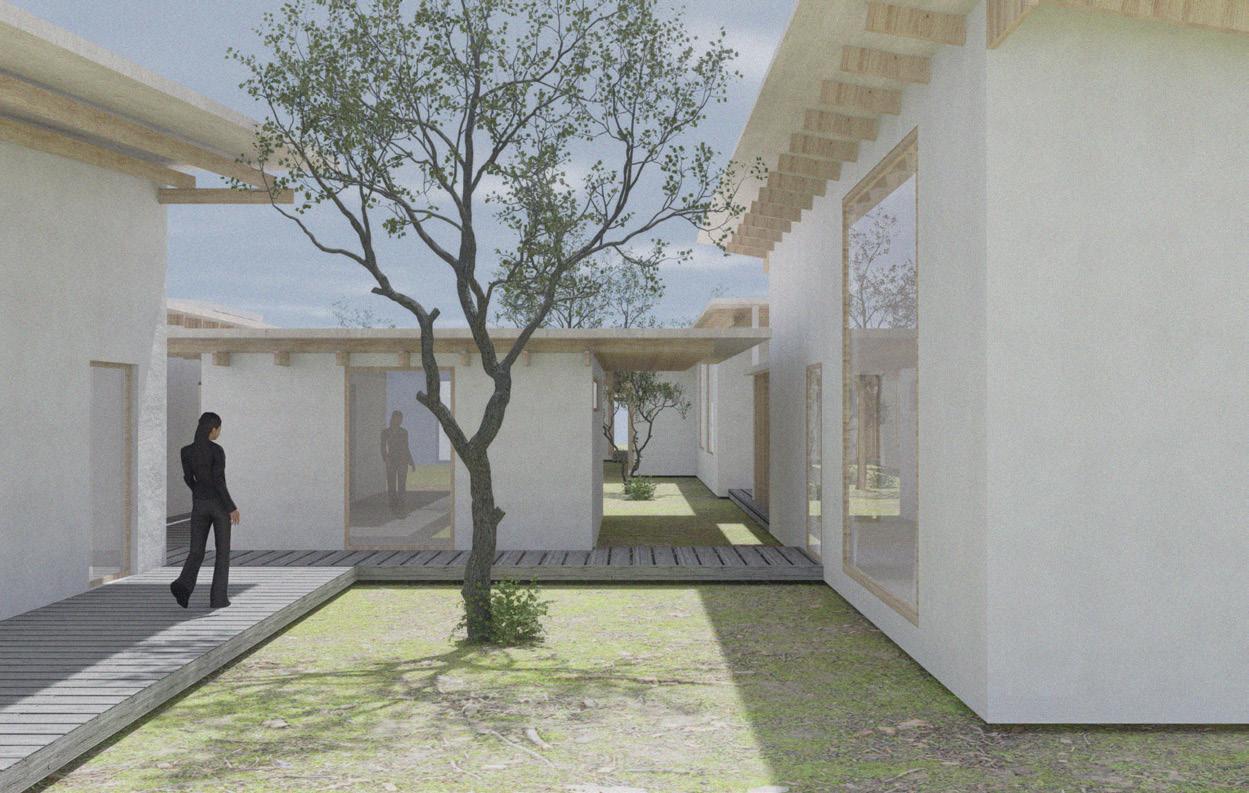
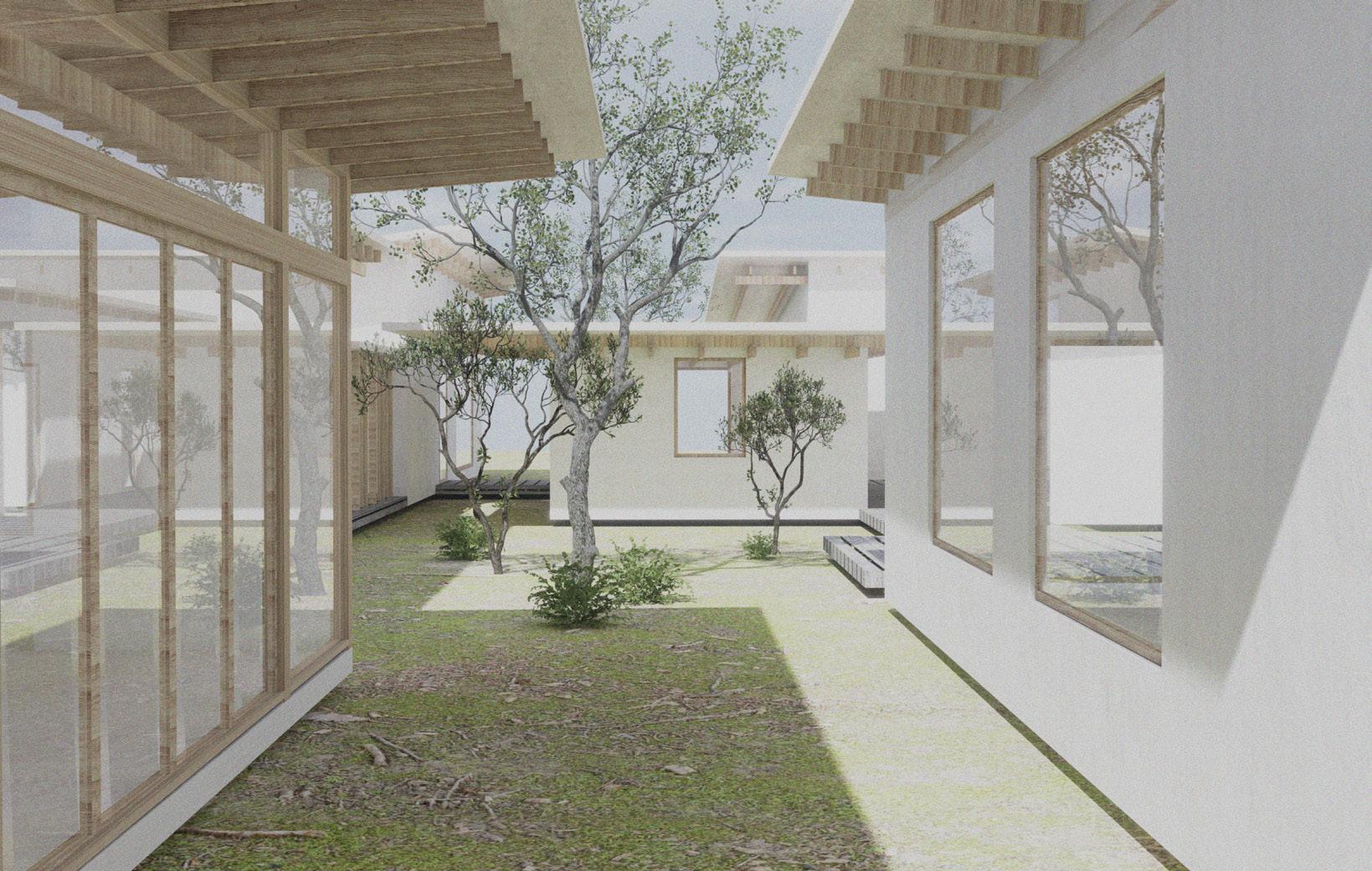
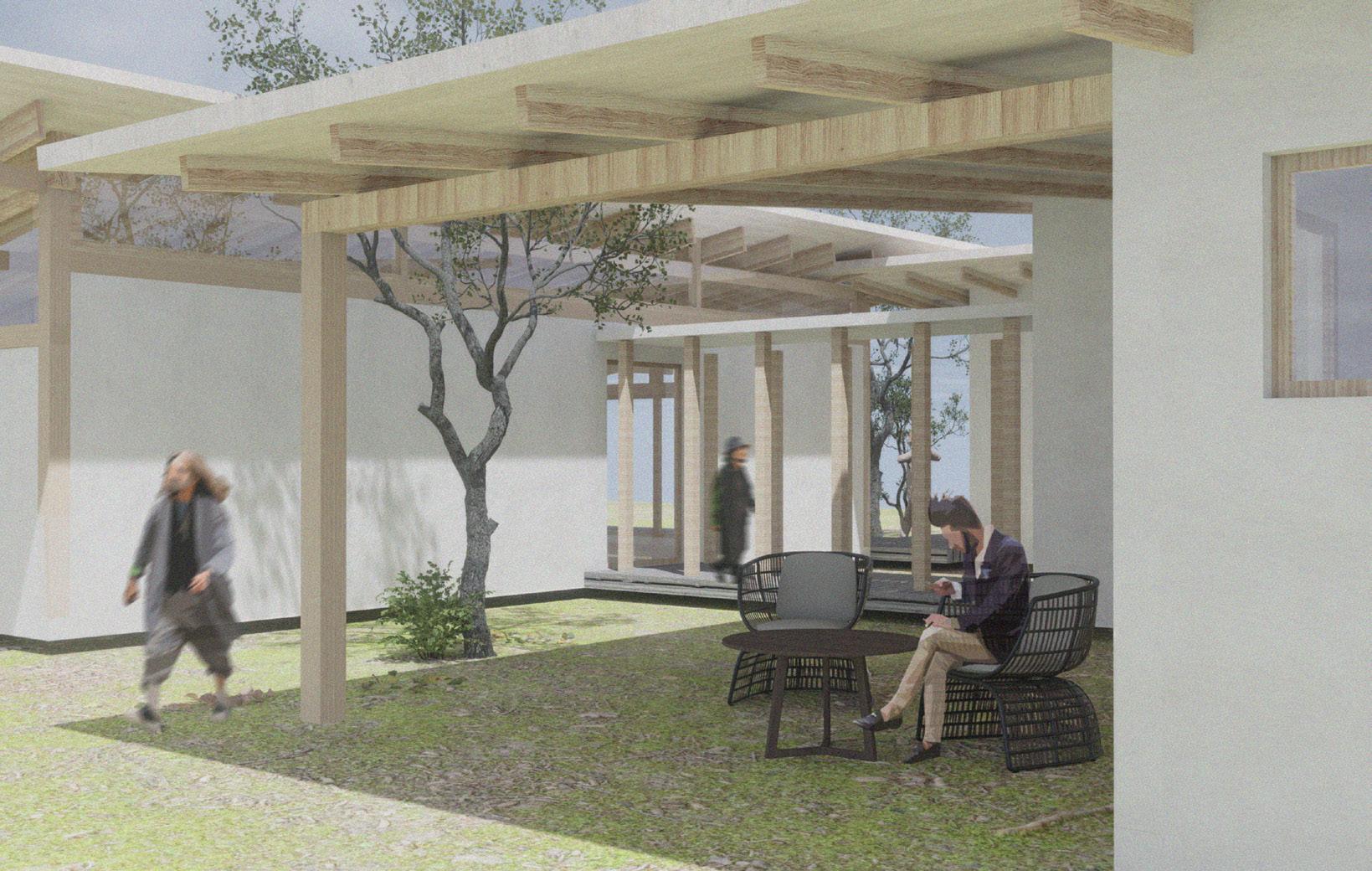
The architecture integrates natural elements such as abundant sunlight and thoughtfully designed outdoor spaces to create a healing environment that promotes comfort and serenity.Prioritizing access to nature, the hospice seeks to support both the physical and emotional well-being of patients, providing a tranquil setting that supports their journey with dignity and care.
To further strengthen this central theme, we incorporated elements of Japanese garden style architecture, including carefully designed landscapes, flowing water features, and meditative spaces. These features enhance the sense of calm and spiritual reflection, deepening the connection between patients and the natural world.
Site plan



The chapel, extending halfway over the water, reflects the serene and expansive nature of its surroundings, providing the user with a special moment of openness.






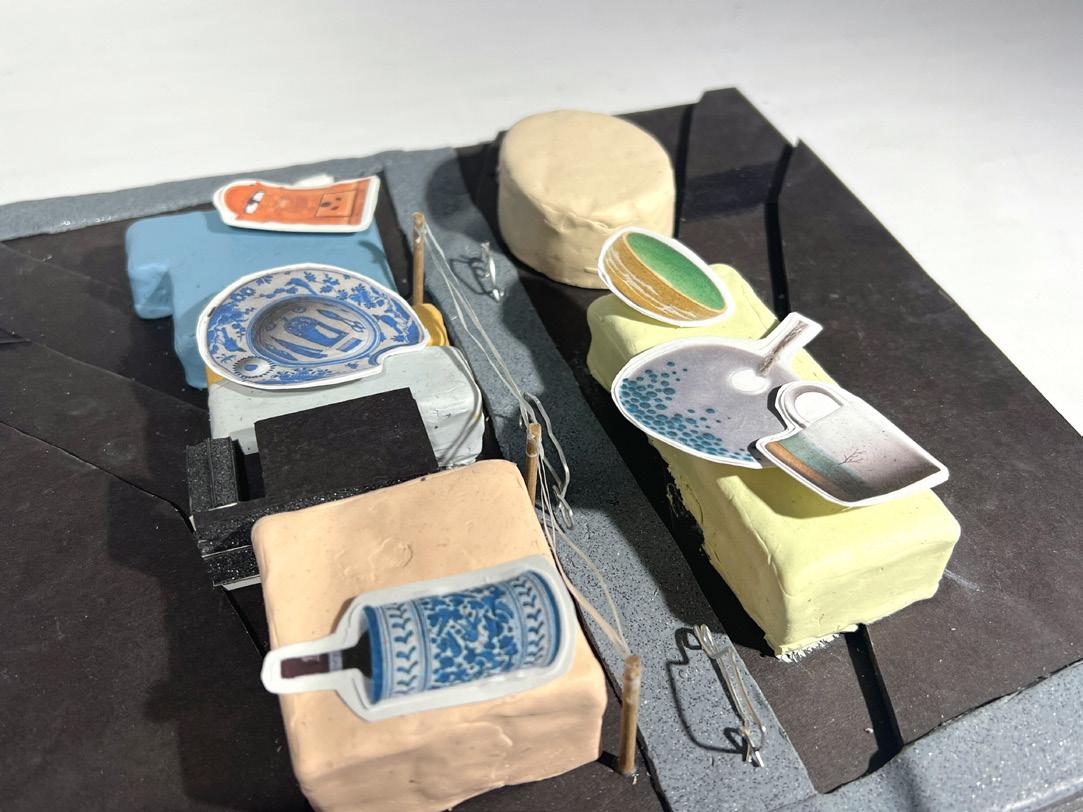
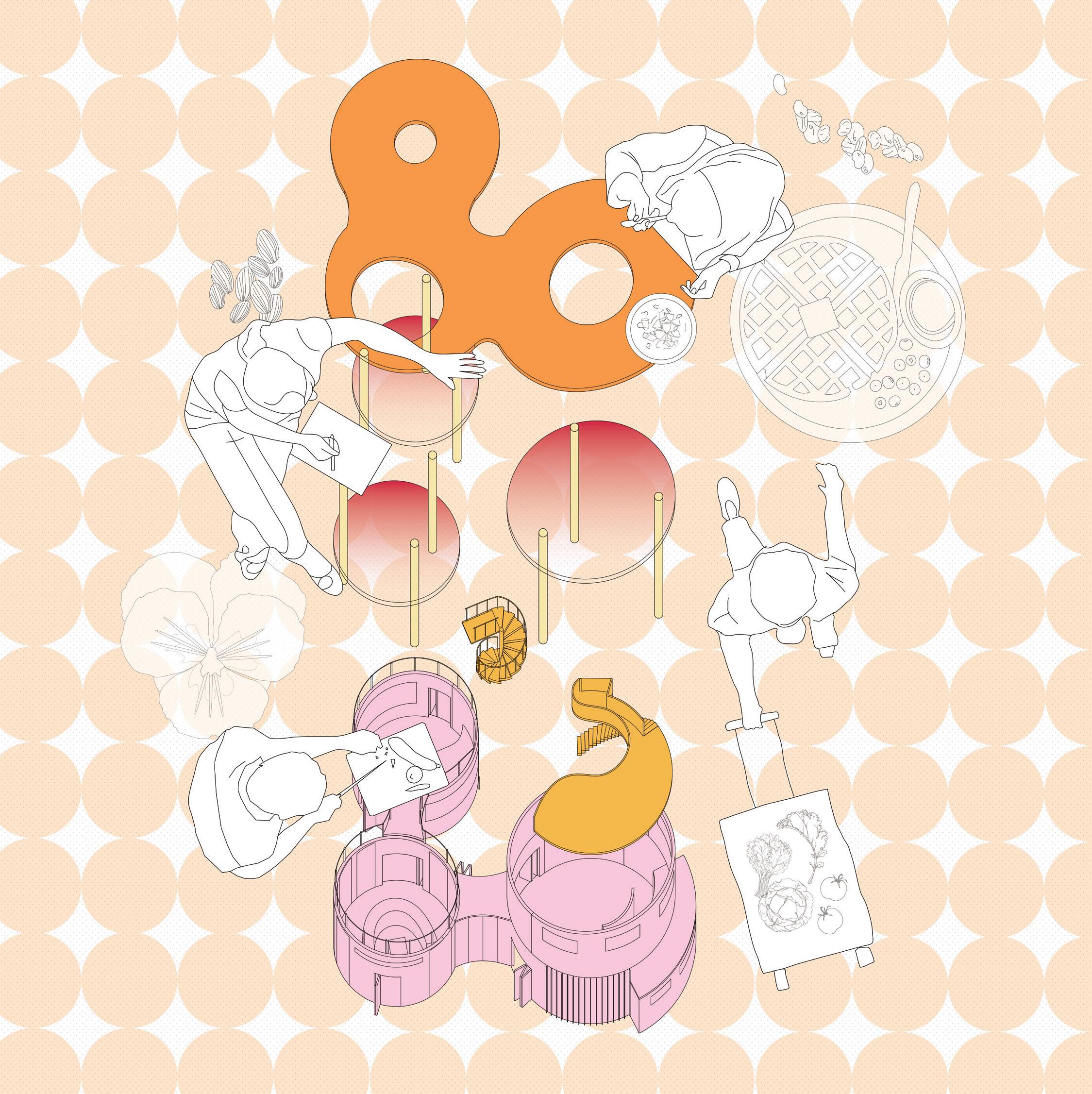
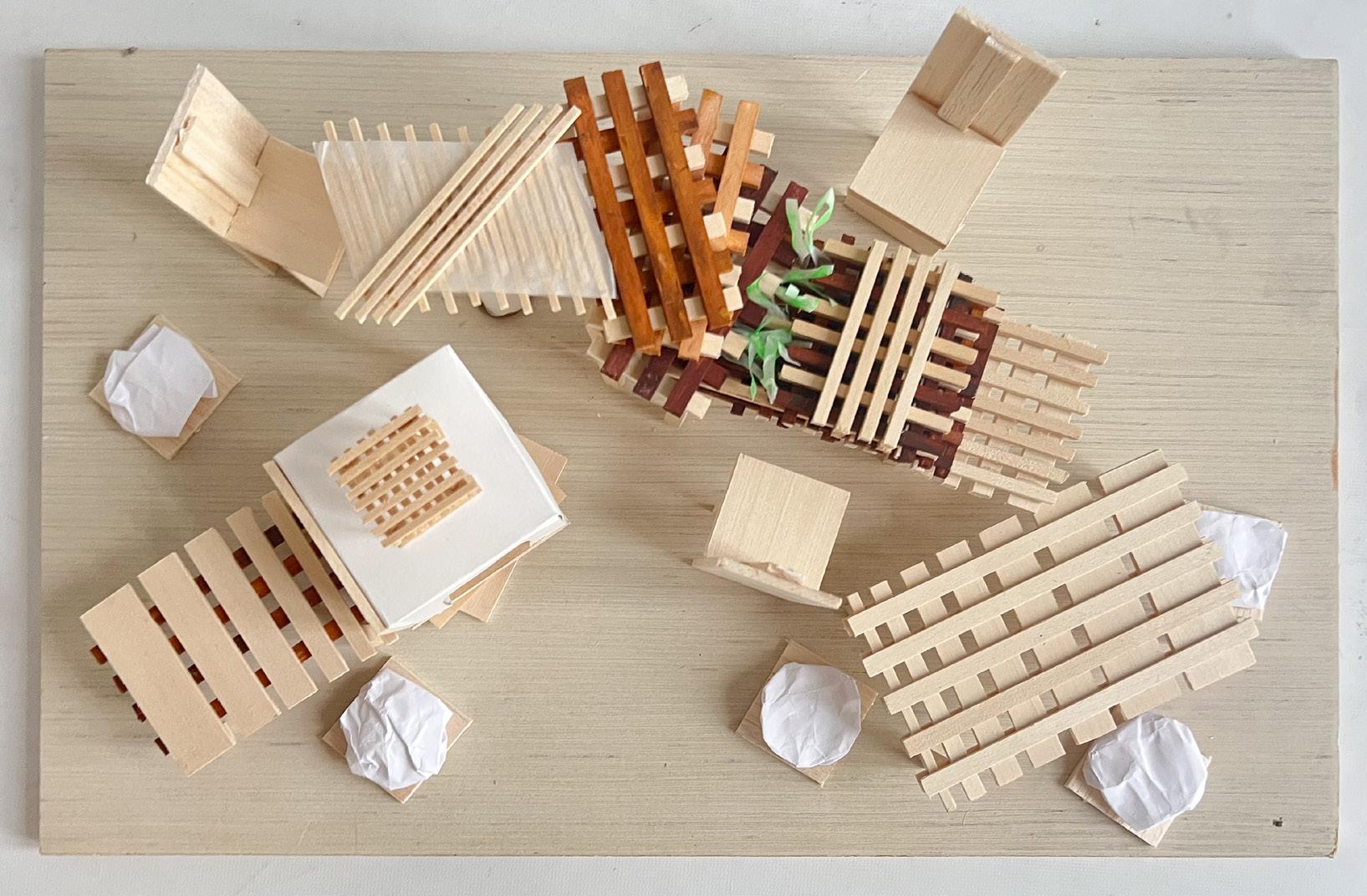
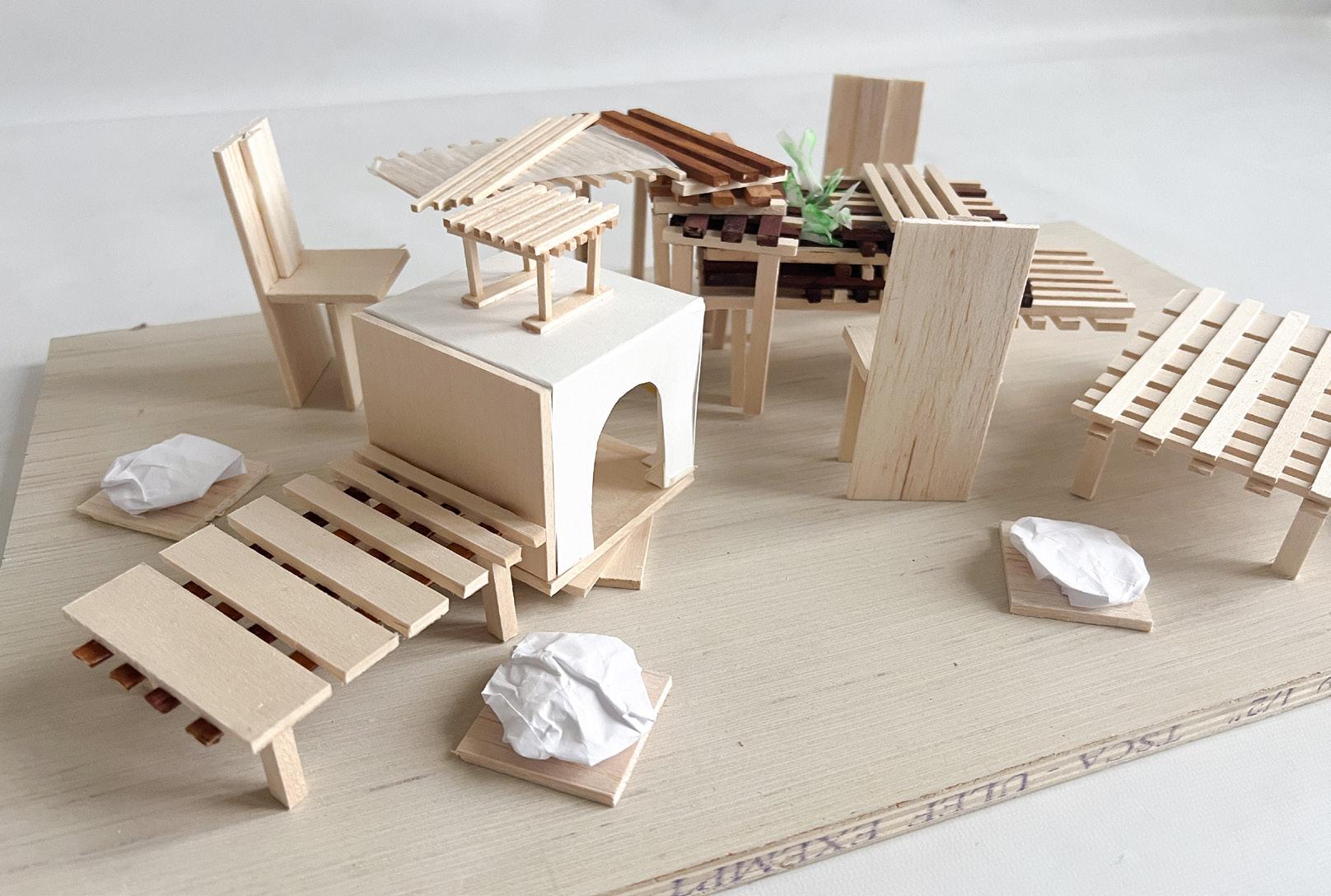
"The rituals of eating, played out on the plane of the dining table, mirror the rituals of domestic life." This two-week project involved designing a table and a dining experience inspired by chef from Chef’s Table (a Netflix series). Additionally, we selected a meal from our own memory and recreated a table drawing, referencing Sarah Wigglesworth’s Dining Table.
For my personal selection, I chose the traditional Chinese New Year’s Eve dinner at my home—a meal that brings my entire family together. This moment reflects not only the act of sharing food but also the deep cultural and home connections embedded in the dining experience.
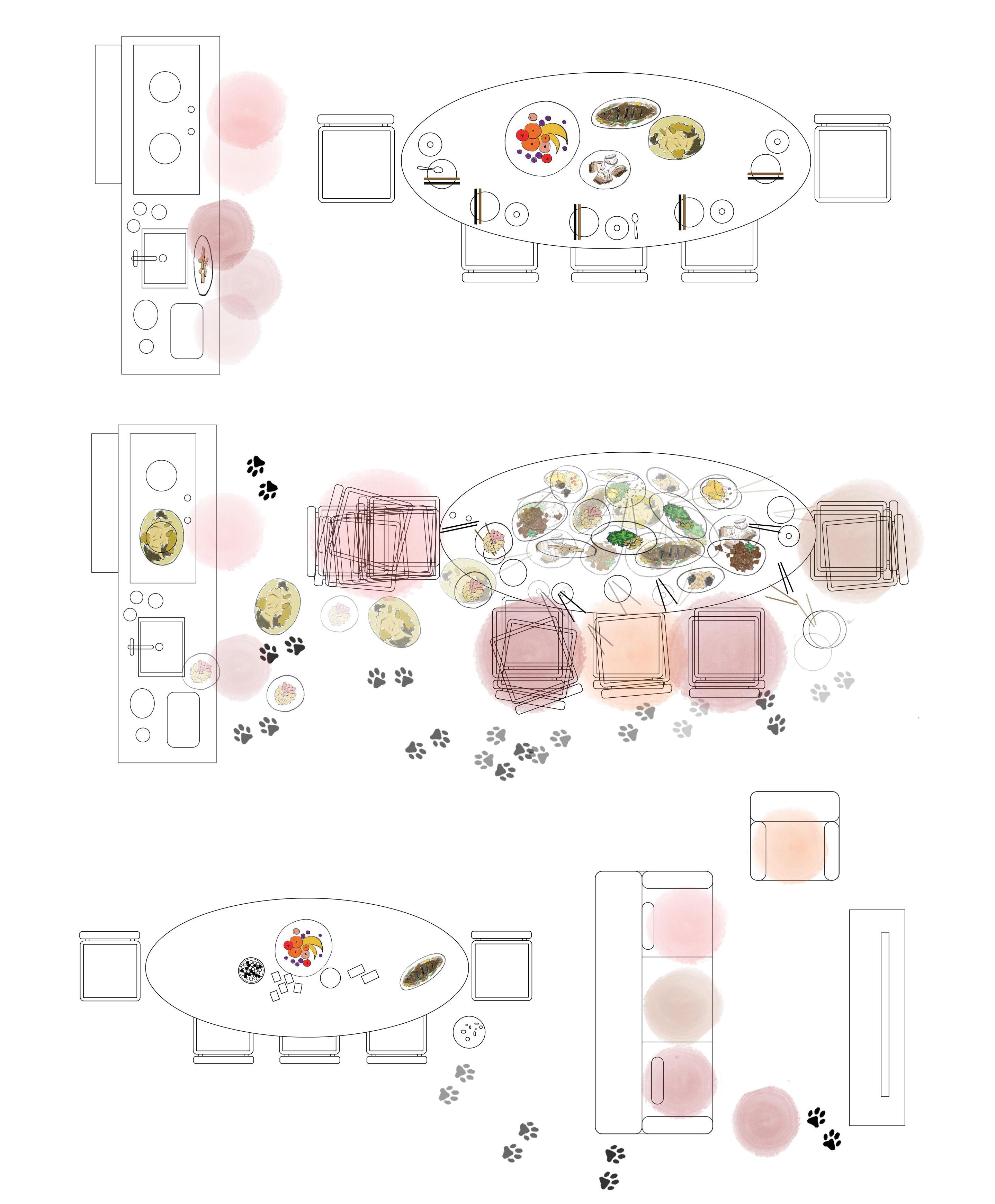
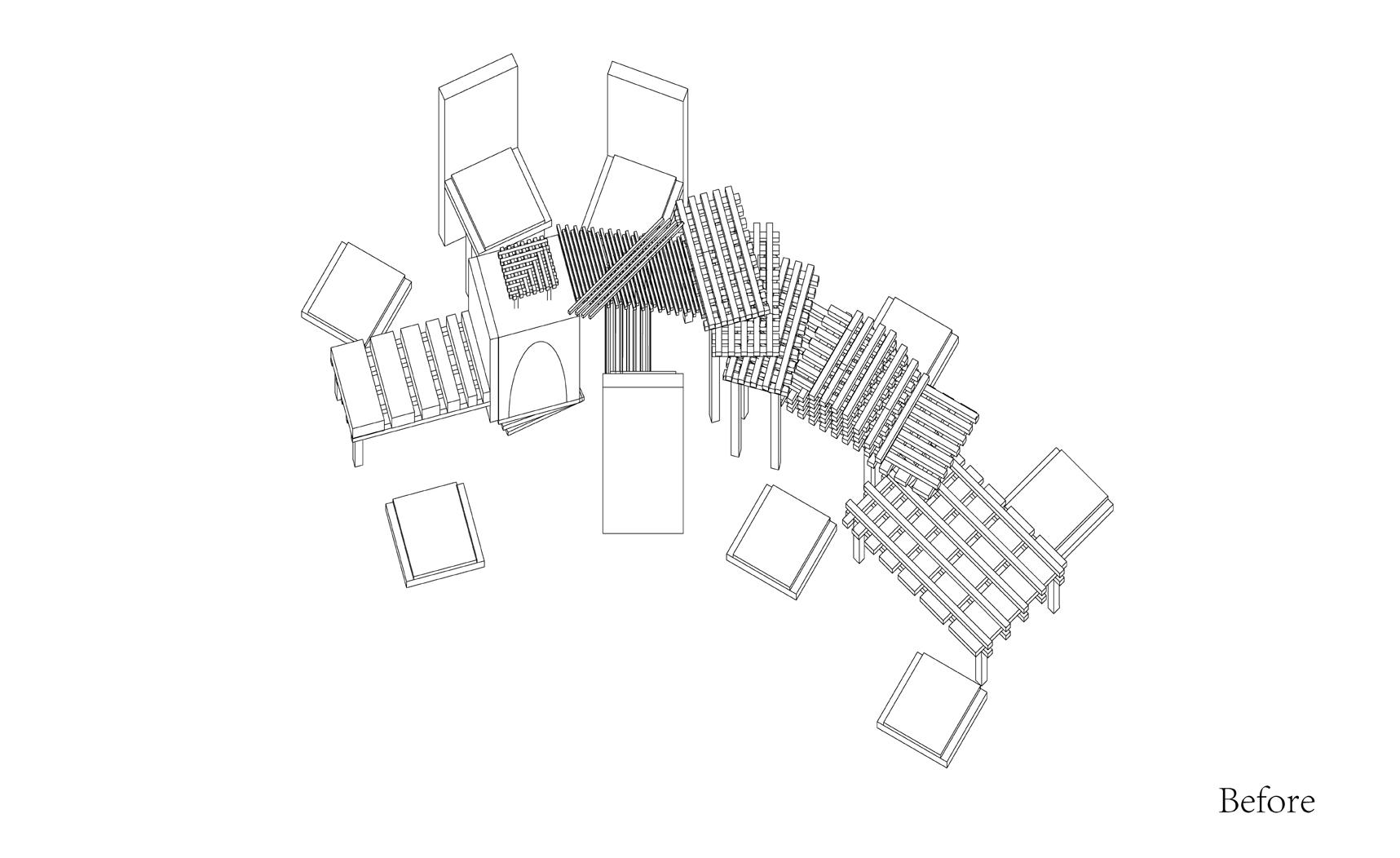
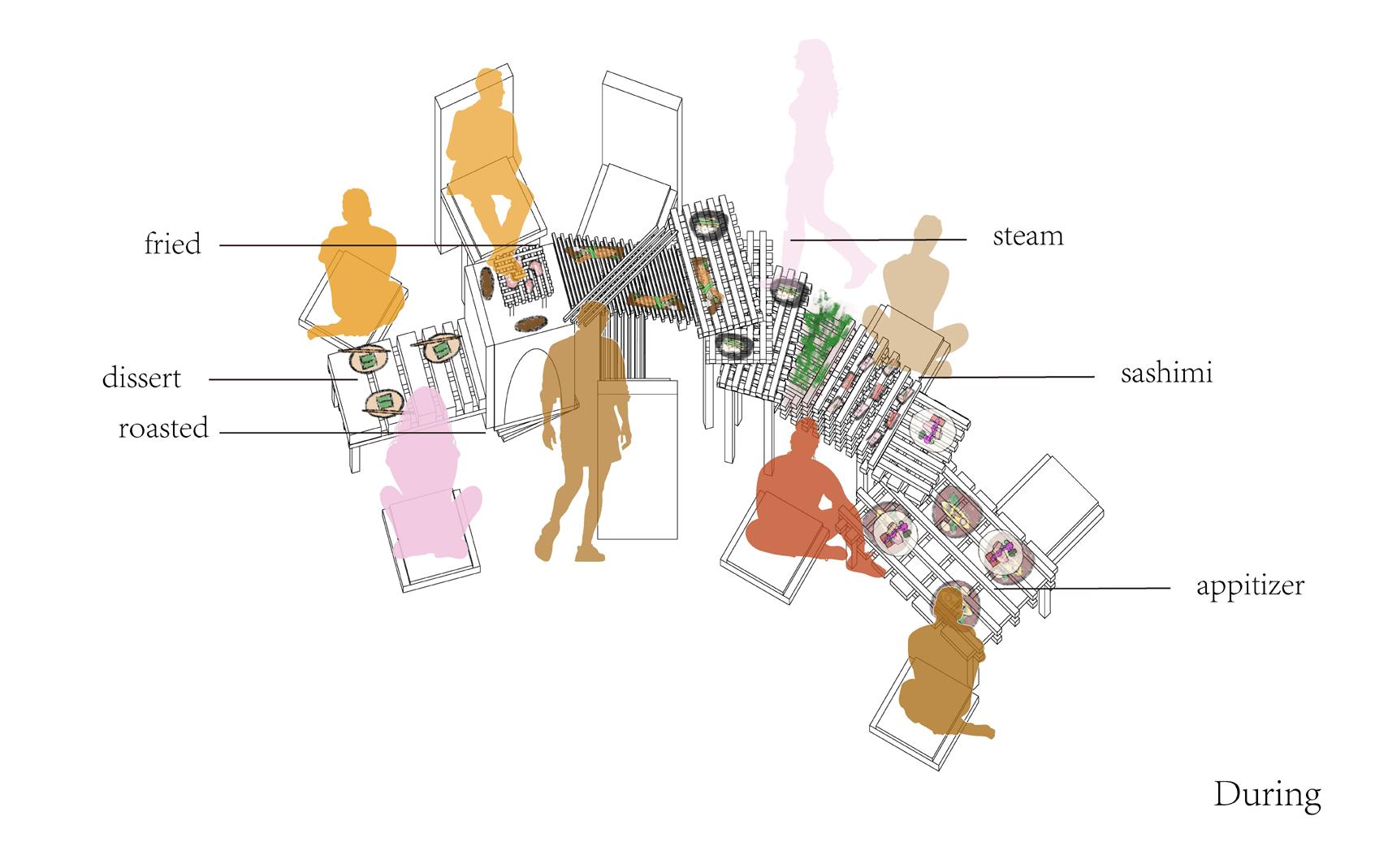
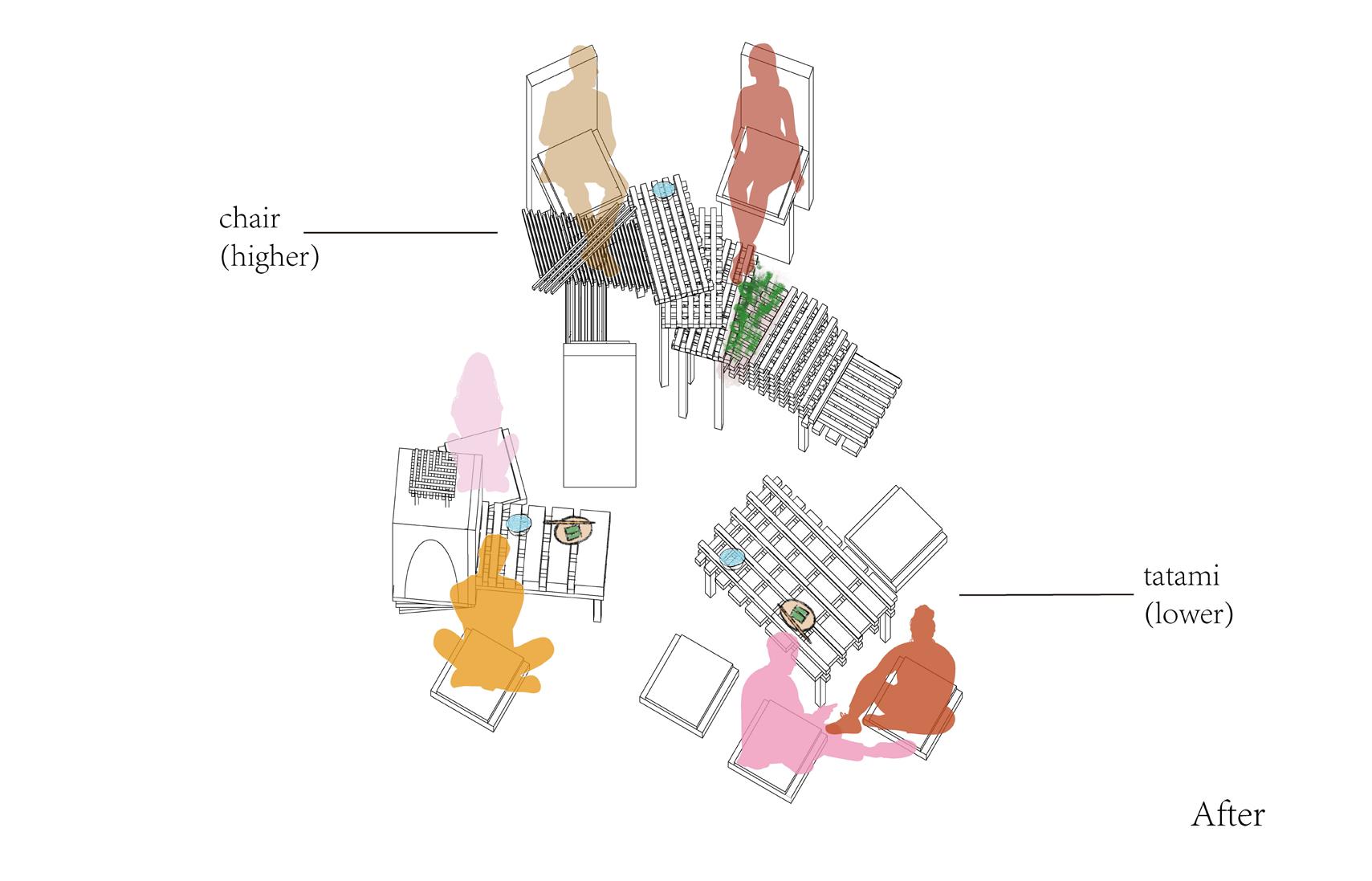
My chosen chef is Niki Nakayama, who specialized in traditional kaiseki cuisine. Her cooking philosophy balances innovation with tradition where she experiments with ingredients and techniques while honoring the structured principles of kaiseki.
Inspired by this approach, my table design reflects the sequence of eating, encouraging movement throughout the meal. As the dining experience unfolds, guests shift between different table arrangements, creating a dynamic interaction with the space. At the meal’s conclusion, the tables separate into smaller sections, fostering a more intimate and personal connection among diners. Before
Sring 2024
Group project with Taylor Wang / Jessie Son / Esha Shah / Grace Mahathananont
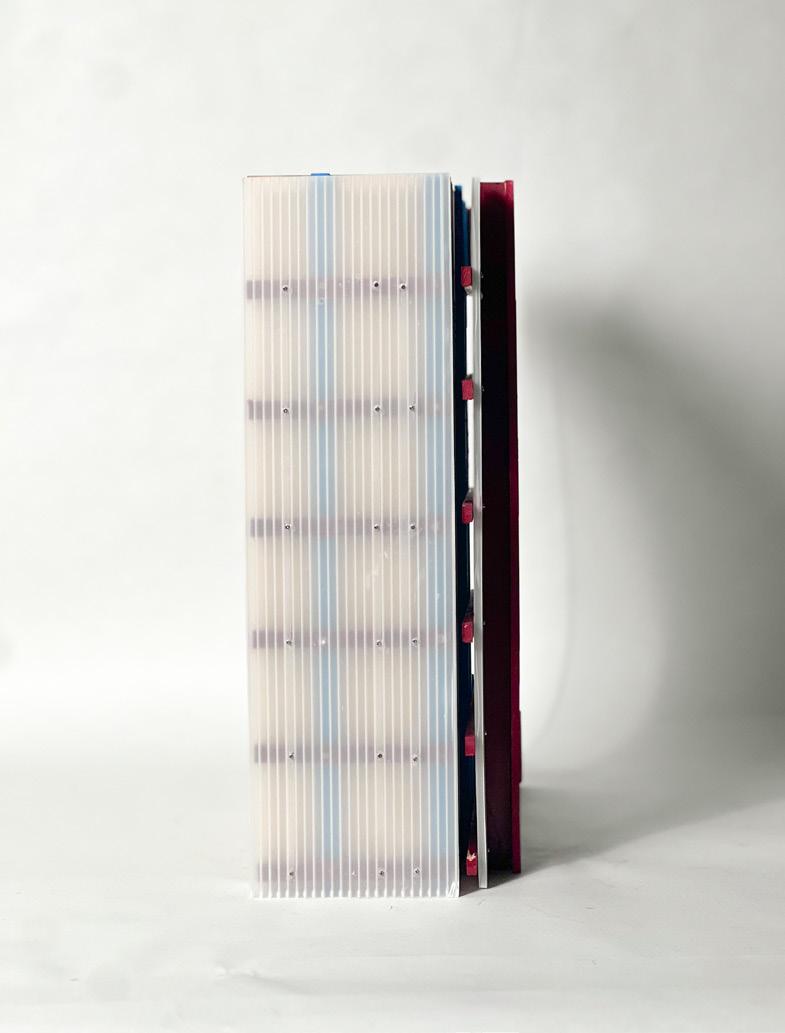
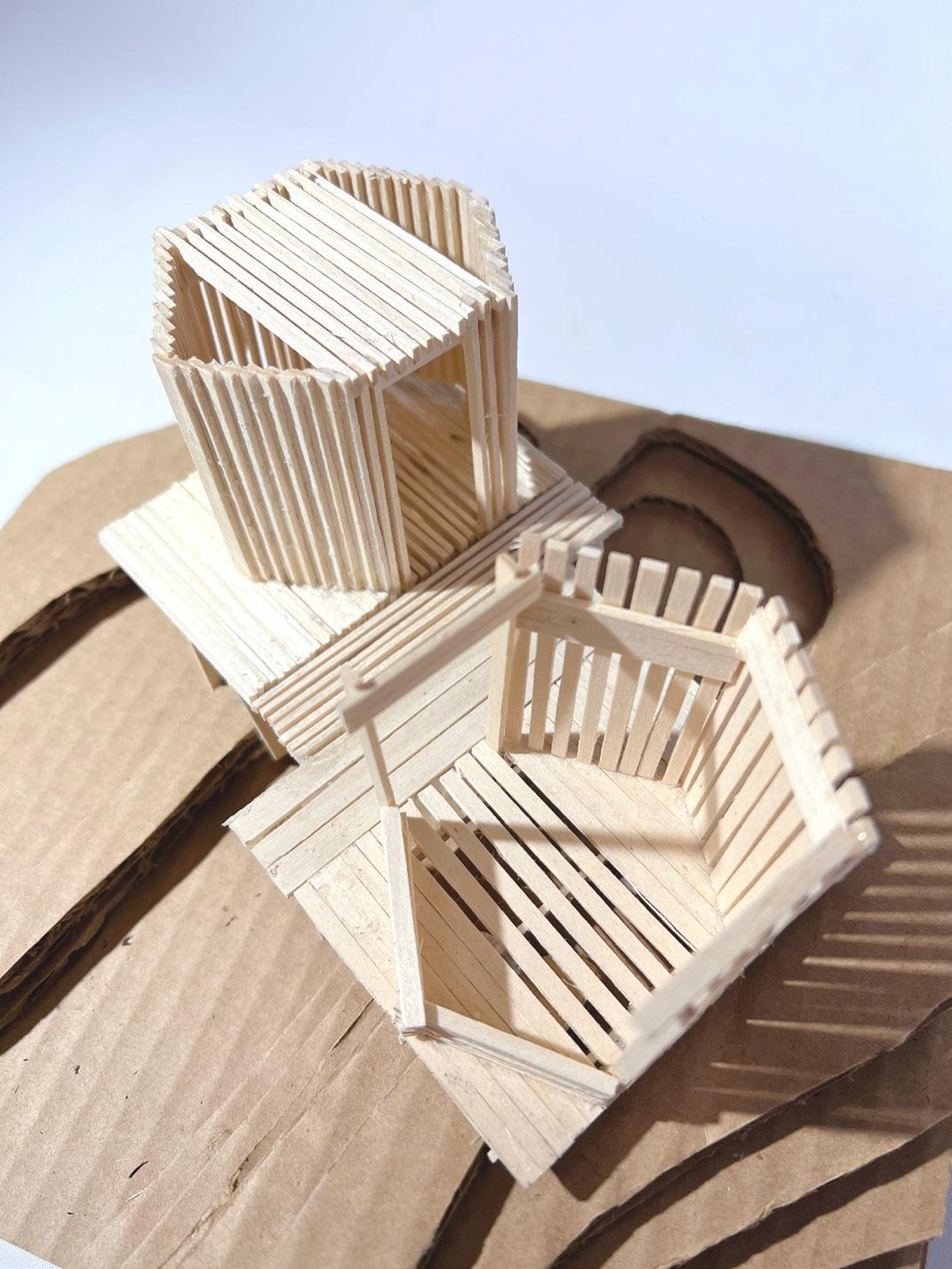
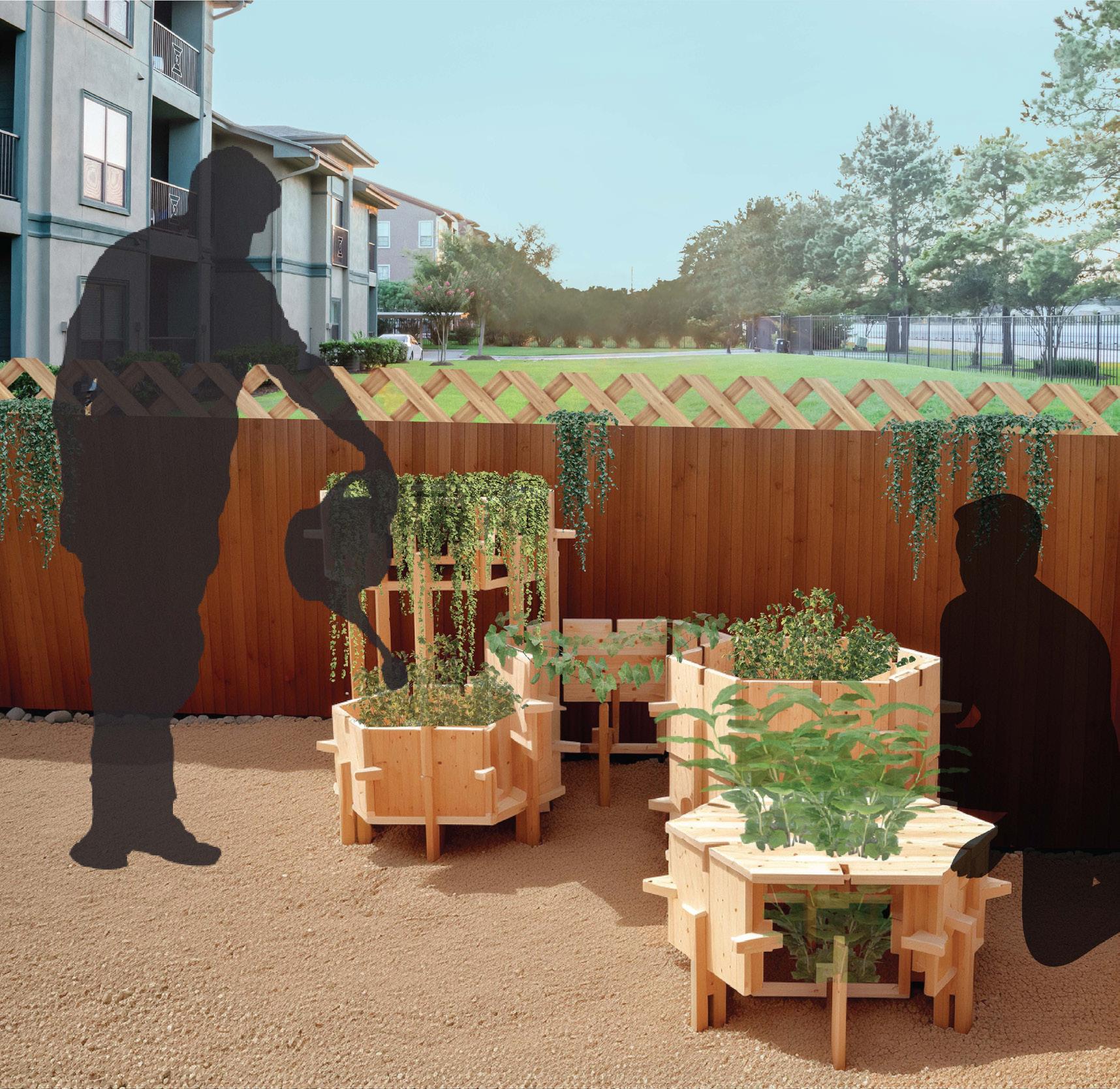
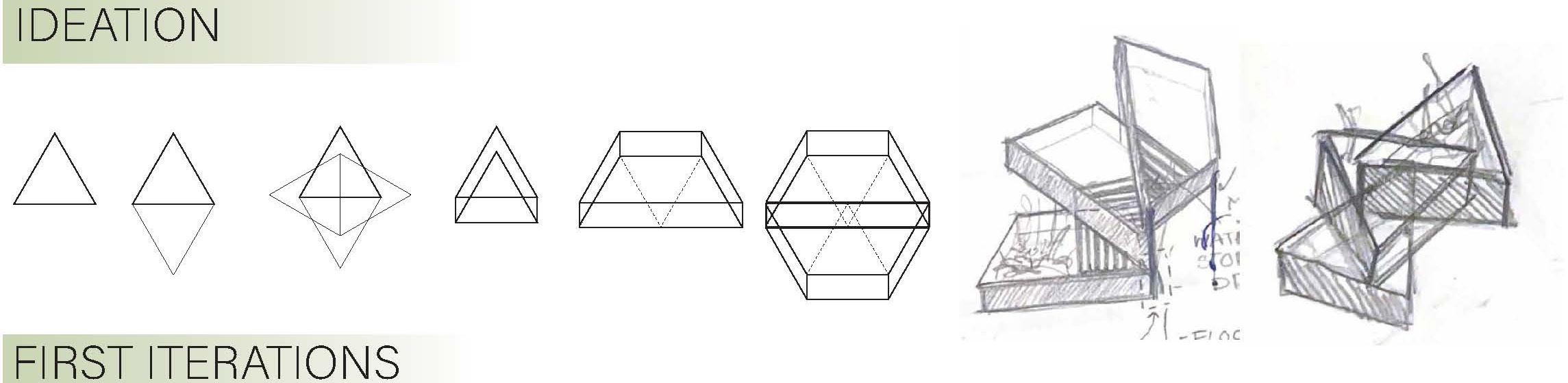
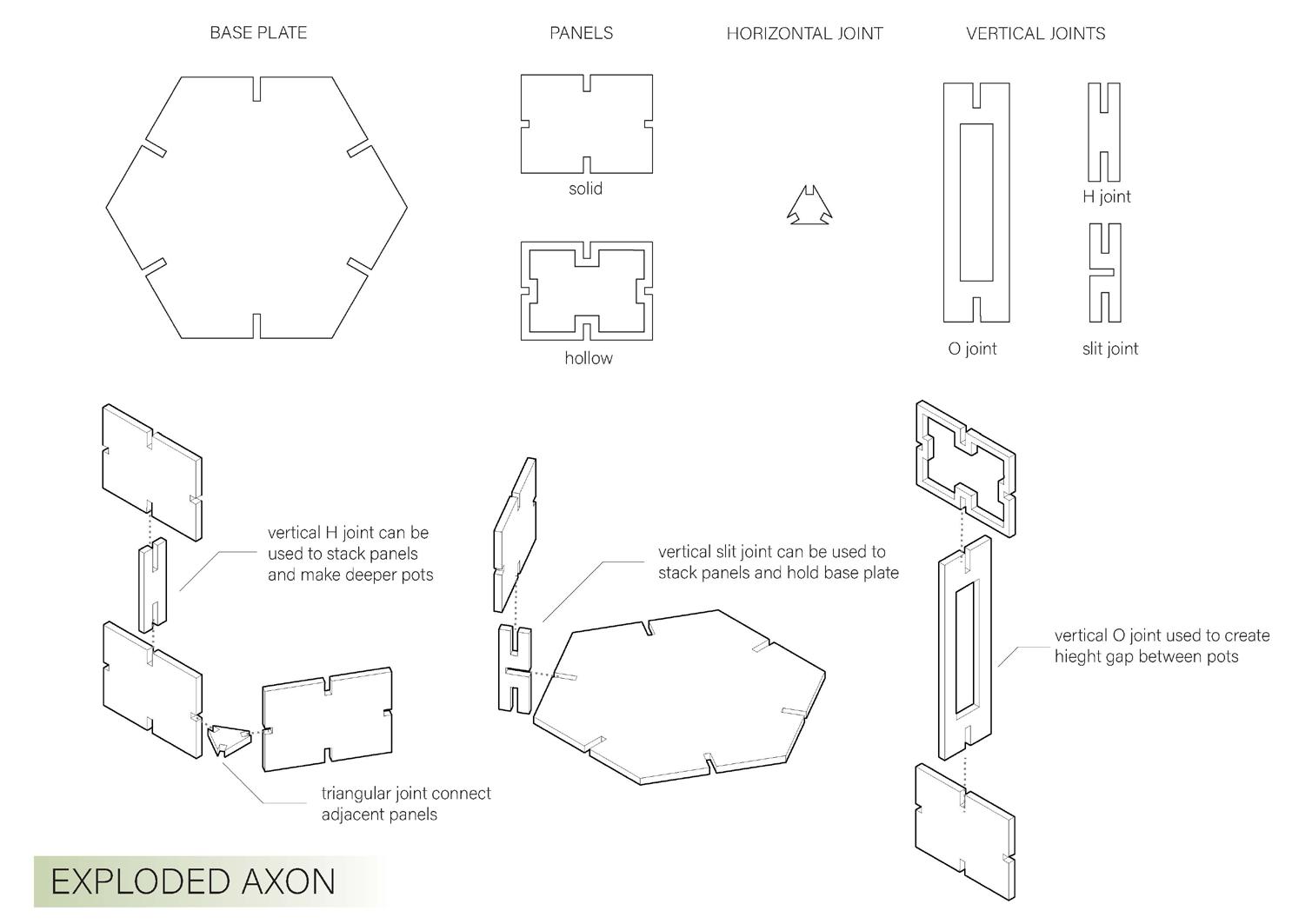
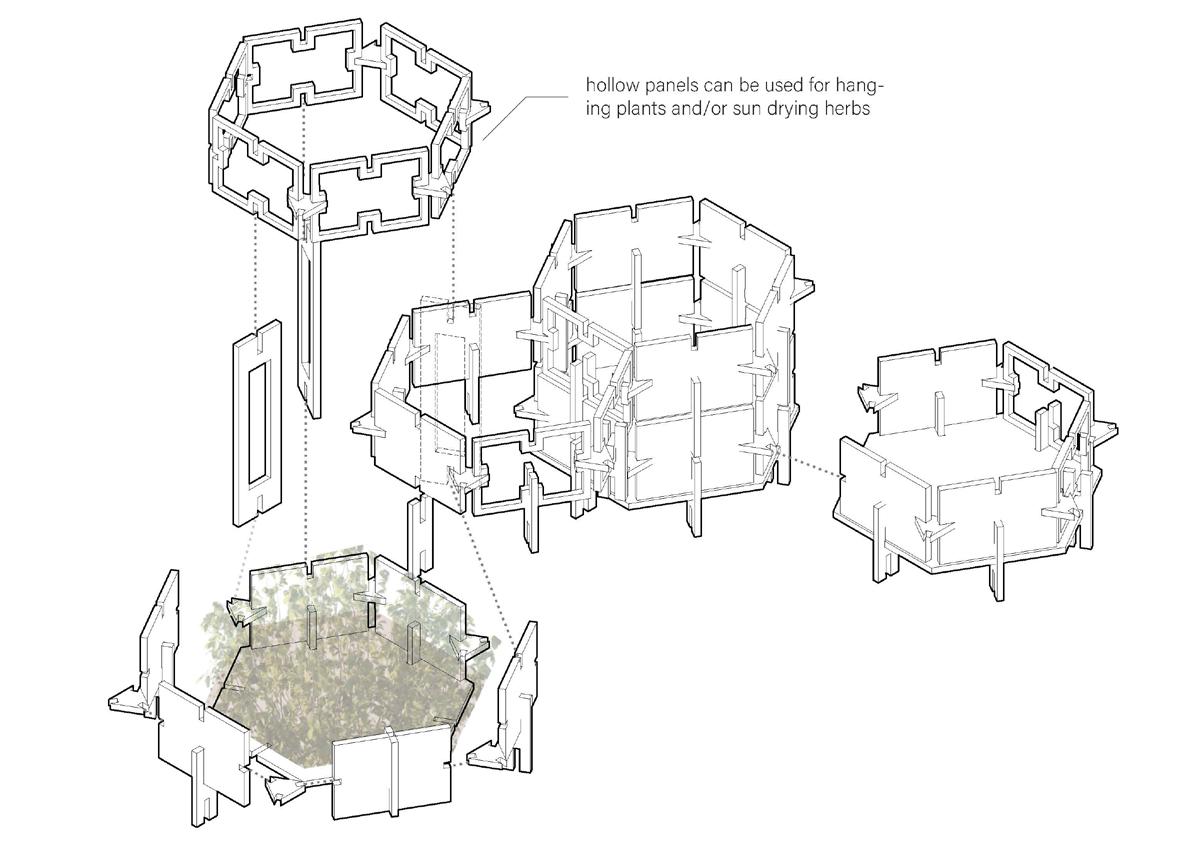
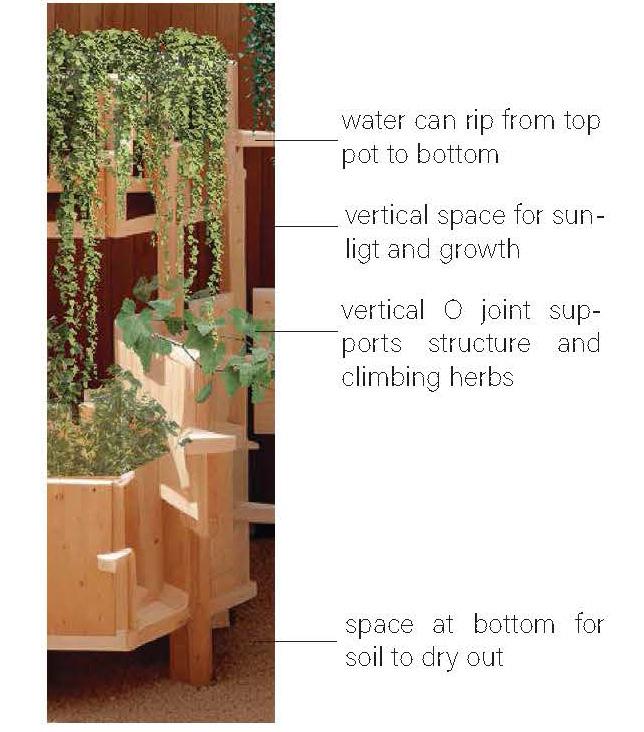
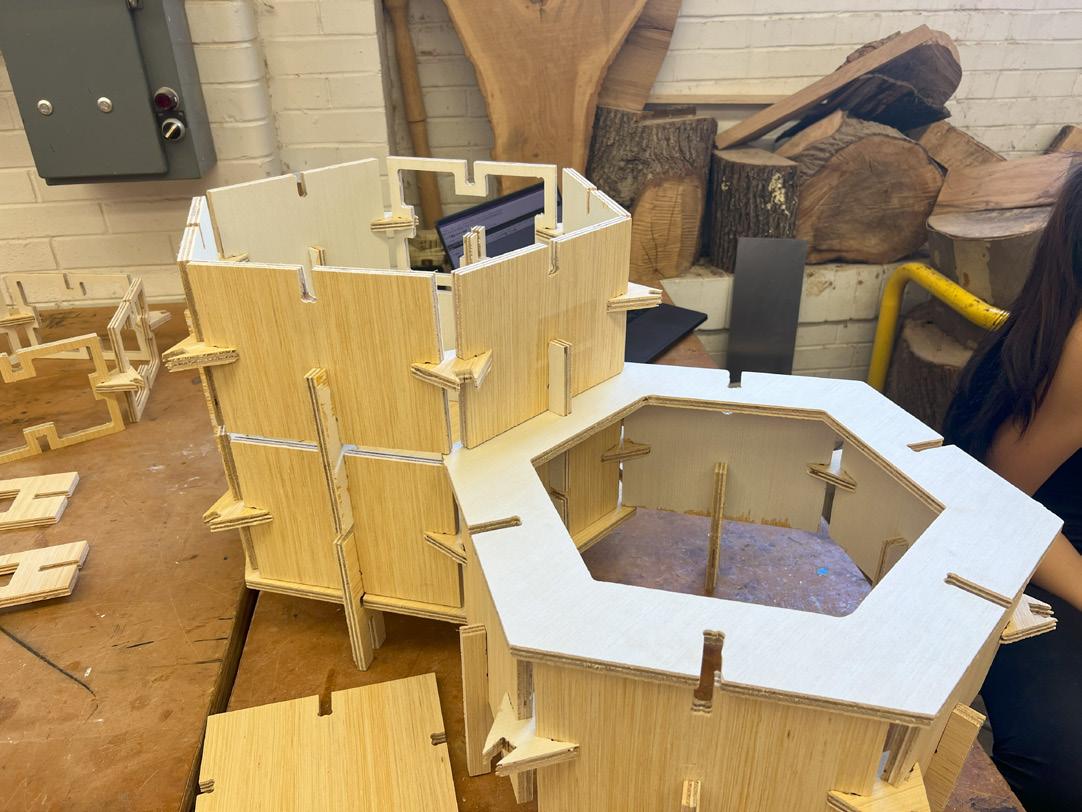
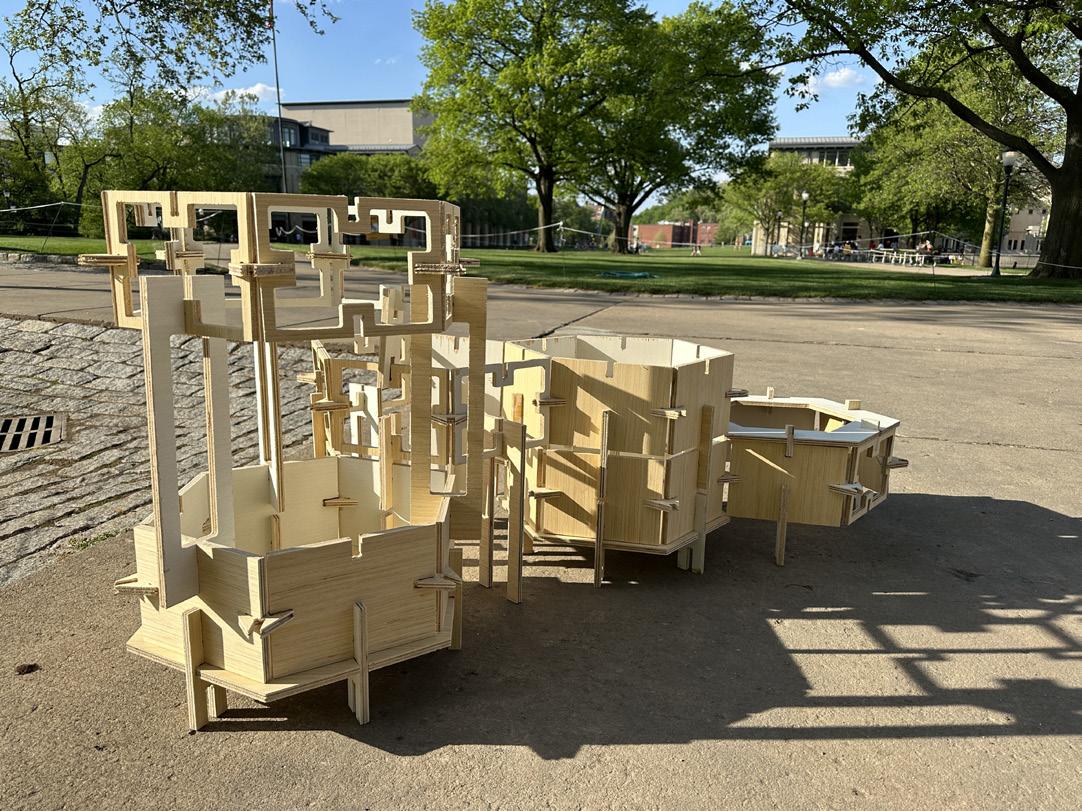
The project is a modular vertical planter designed for urban herb gardening that combines practicality with aesthetic appeal, catering to space-conscious urban dwellers eager to cultivate fresh herbs in limited spaces. Its hexagonal design allows for customization and expansion, supporting a variety of herbs while adapting to different spatial configurations. The structure ensures ample light exposure and air circulation.
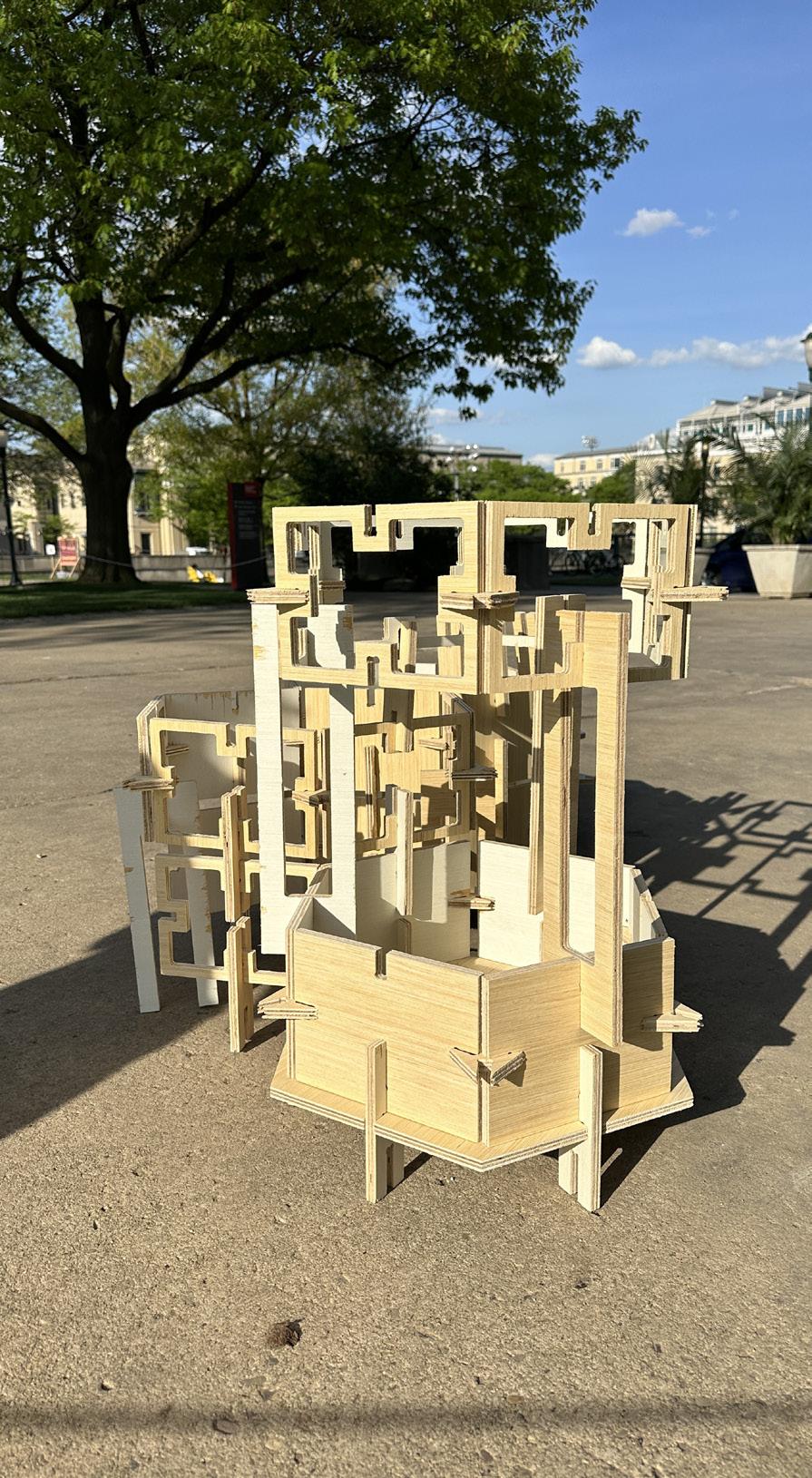
The vertical organization maximizes space efficiency, not only makes it ideal for balconies, patios, or even indoor settings but also simplify maintenance. Some higher tier feature hollowed panels, which can be used for hanging and drying herbs, extending the herbs’ usability for longterm storage.
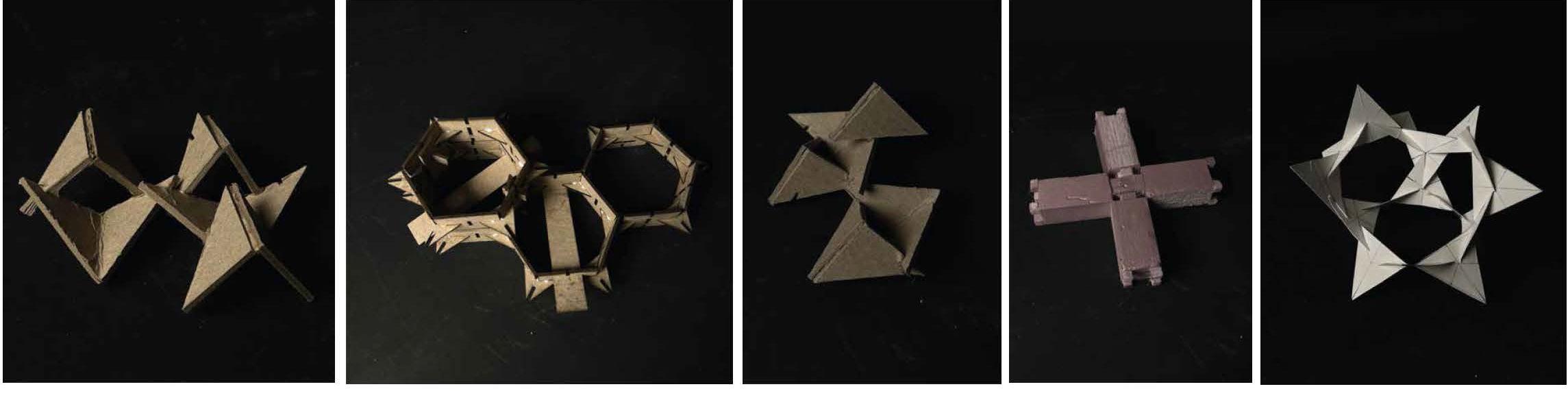
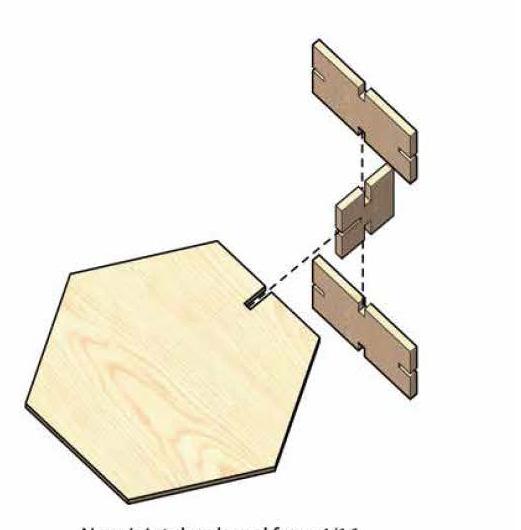
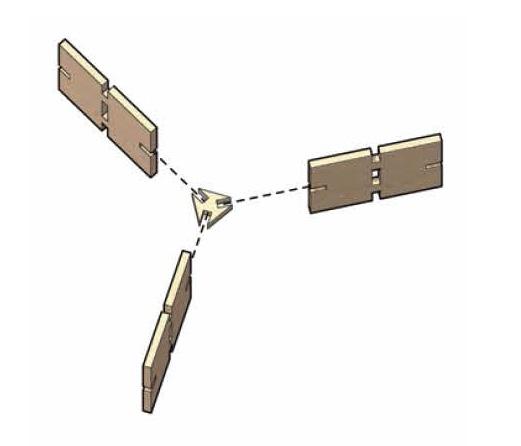
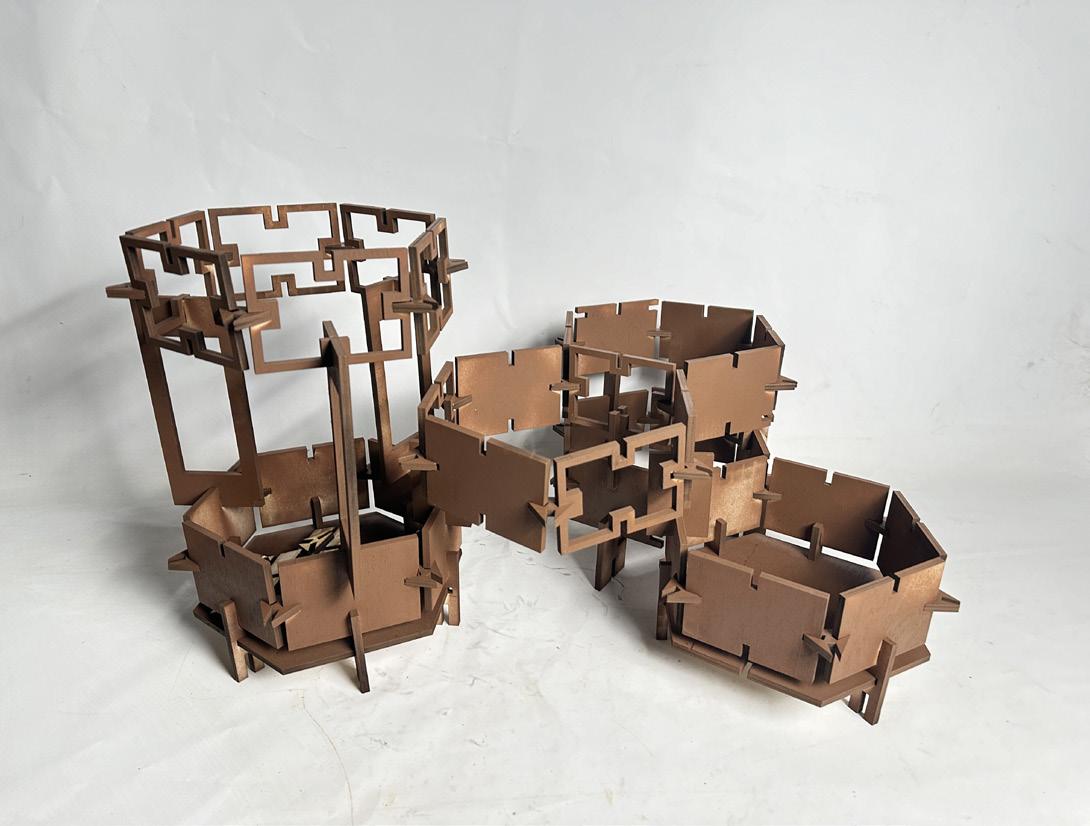
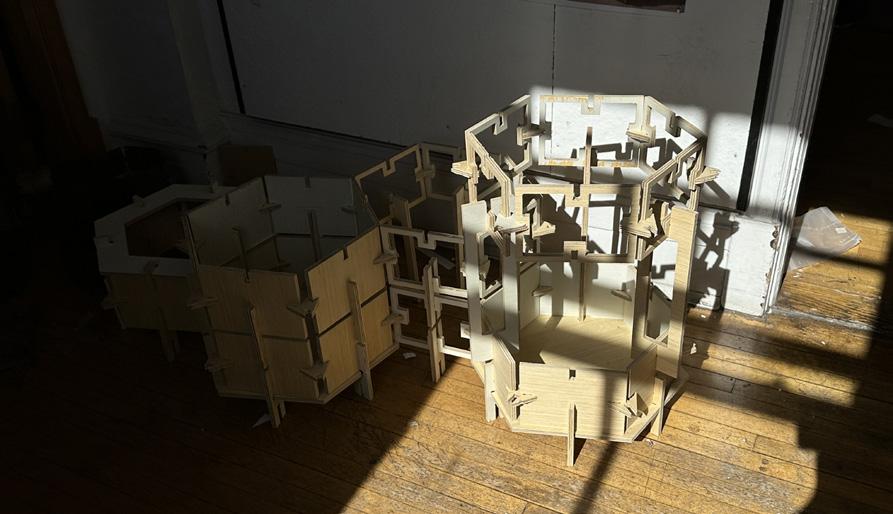
The plywood construction ensures durability while keeping the setup lightweight and movable. The design aims to encourage urban gardening by offering a practical and visually engaging way to integrate greenery into densely populated areas. Additionally, the project integrated with a digital fabrication process where multiple iteration and prototype are modeled and tested.
Research summary
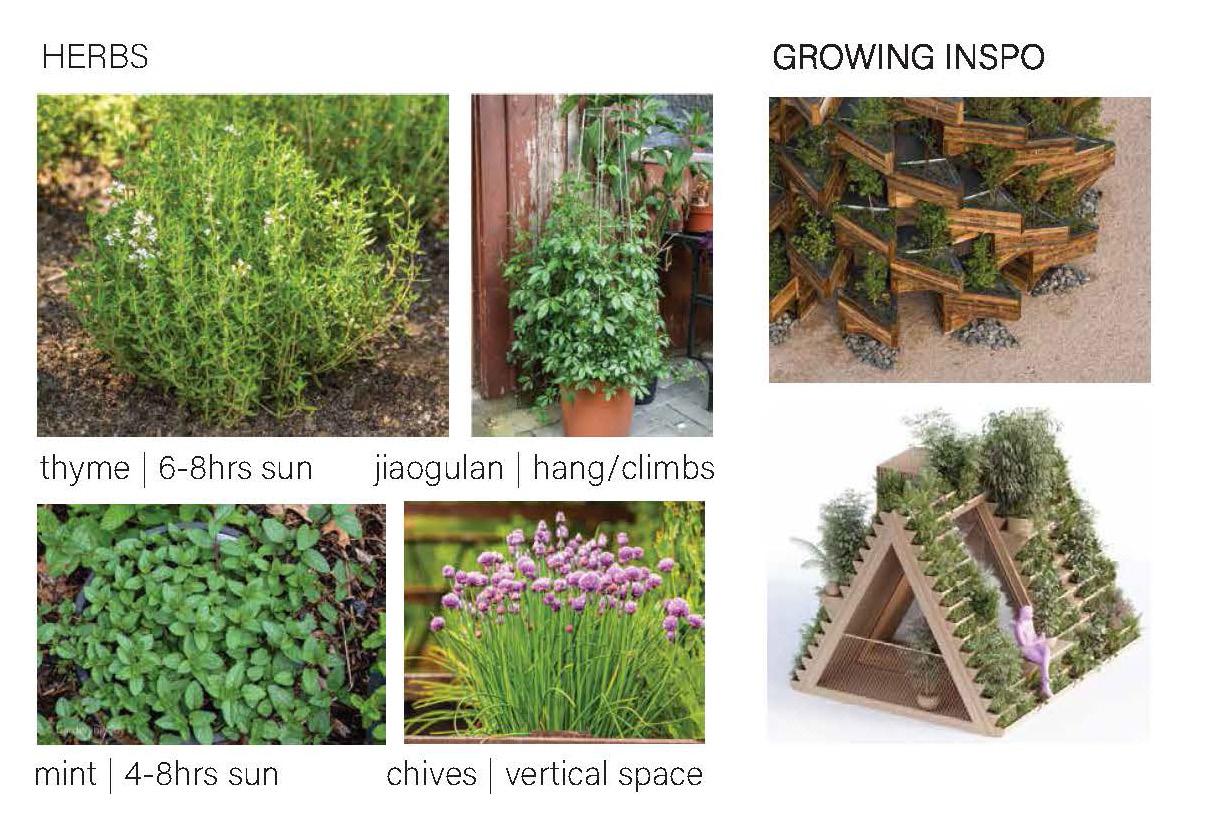
Most herbs require plenty of sunlight to thrive, typically around 6-8 hours per day. While it's essential to water properly and keep the soil consistently moist, it's equally important not to overwater, as this can lead to root rot. If planting in garden beds, it is needed to space herbs according to their growth habits and consider companion planting to maximize space and discourage pests.
Iterations
Sring 2024
This three-week project challenged students to select an object and develop a series of storytelling drawings using conventional architectural representations: plan, elevation, section, and axonometric views. In the second half, the object was translated into a wearable piece. The media for both exercises is unlimited.
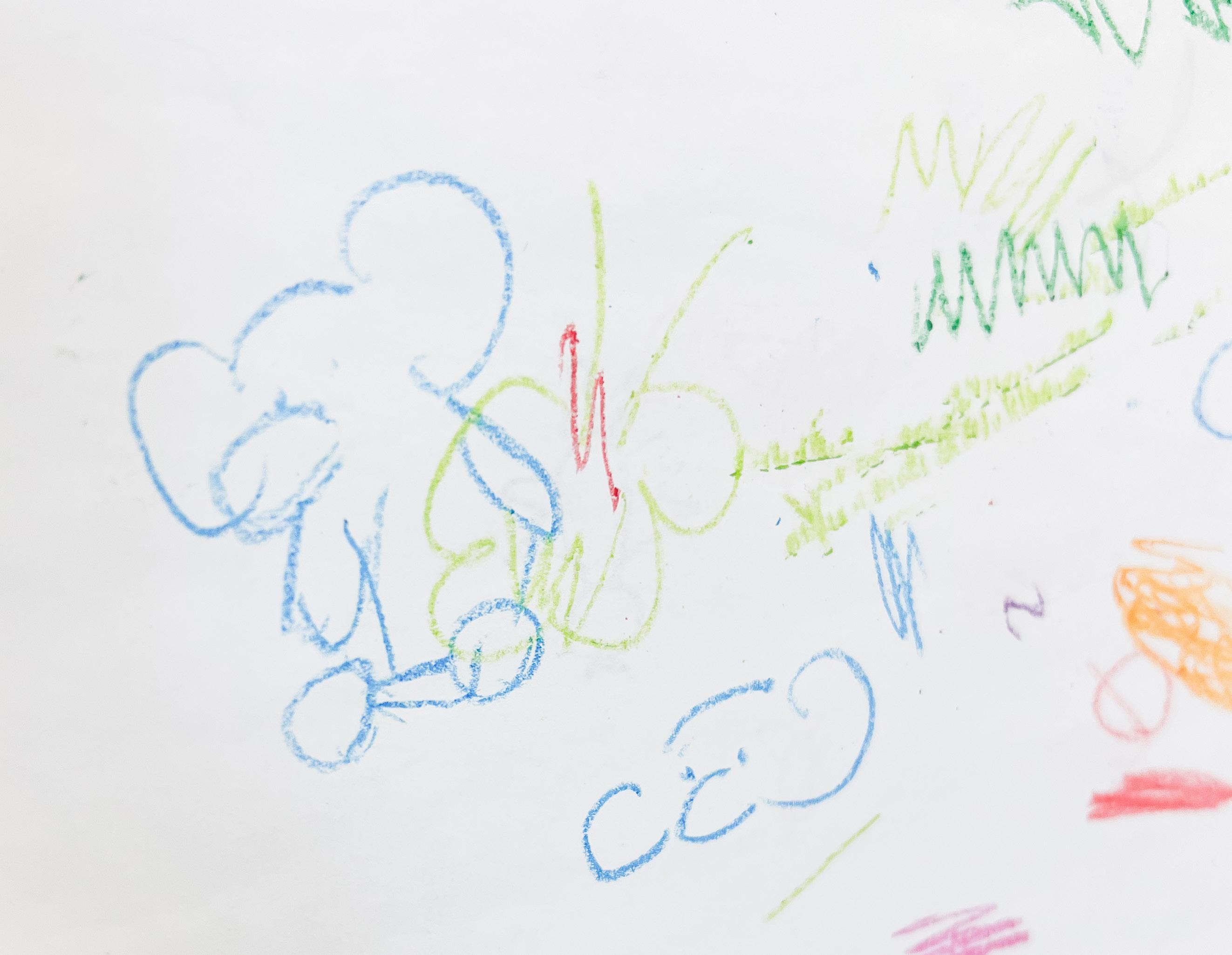
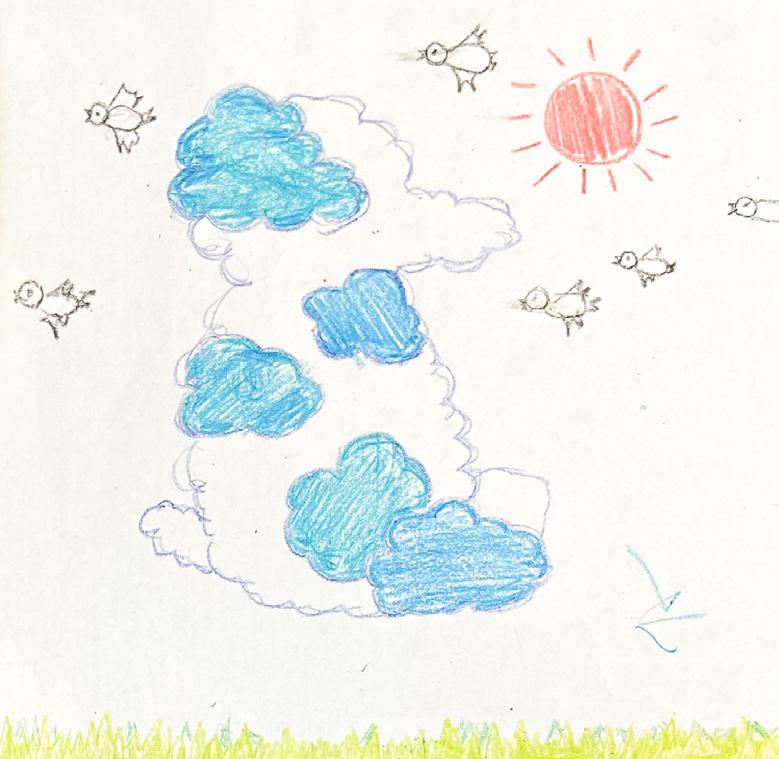
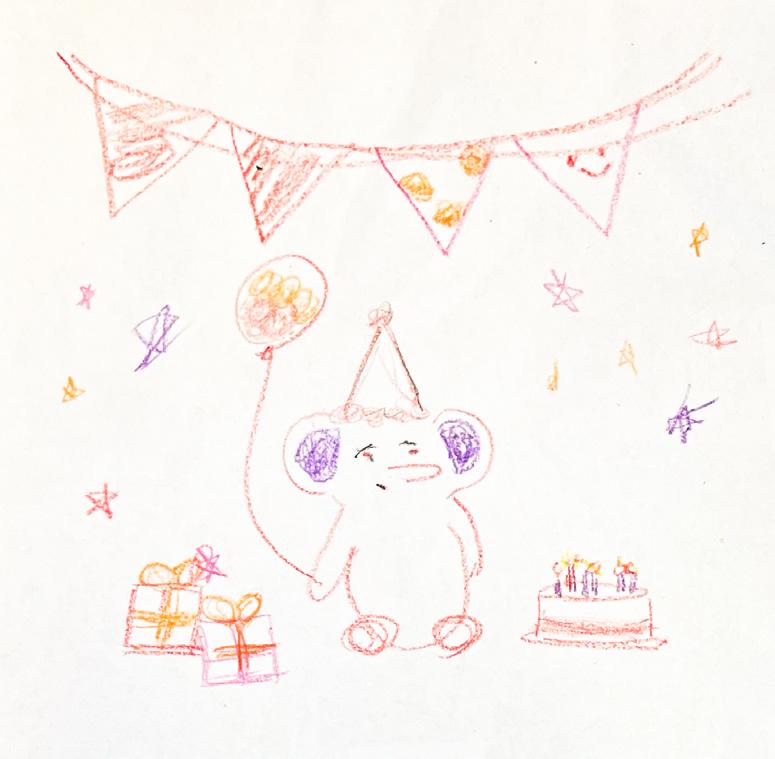
I chose my stuffed elephant toy, "Blue," which I’ve had since I was one year old. It represents my childhood and the most soft, comforting, and safe space for me.To reflect this deep personal connection, I used crayons, mimicking the way children draw, embracing a sense of spontaneity and imagination. I drew with both hands, immersing myself in the mindset of a child.
The final drawings convey themes of self, freedom, and imagination, capturing the emotional essence of "Blue" beyond just its physical form. This exercise also makes me think critically about conventional architectural drawing and how the expression can go beyond technical drawings.
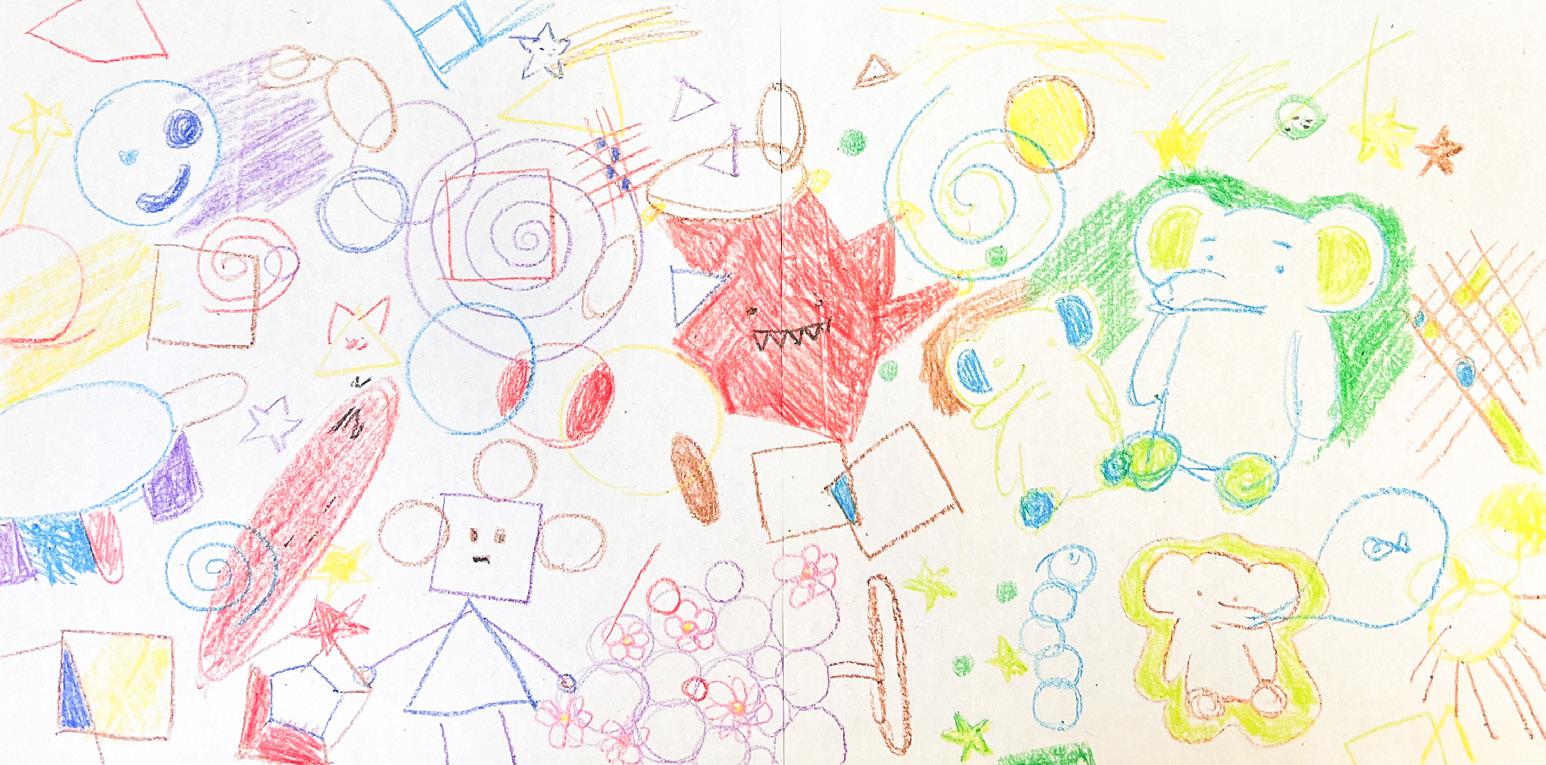
3
1 - Blue is soft, like it's made of clouds, that I wanna take it with me anywhere I go.
2 - This is blue’s birthday, and I will prepare you a party.
3 - What is Blue in plan are just simple geometries.
4 - We have three ‘Blue’s on this one.
4
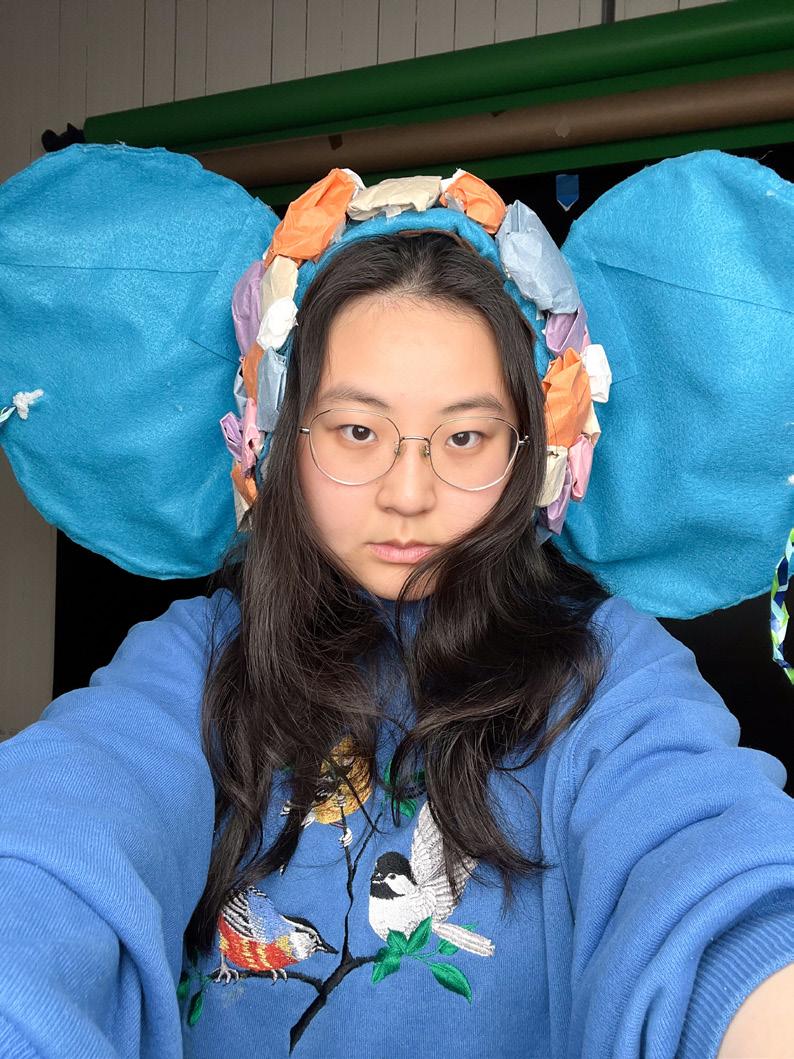
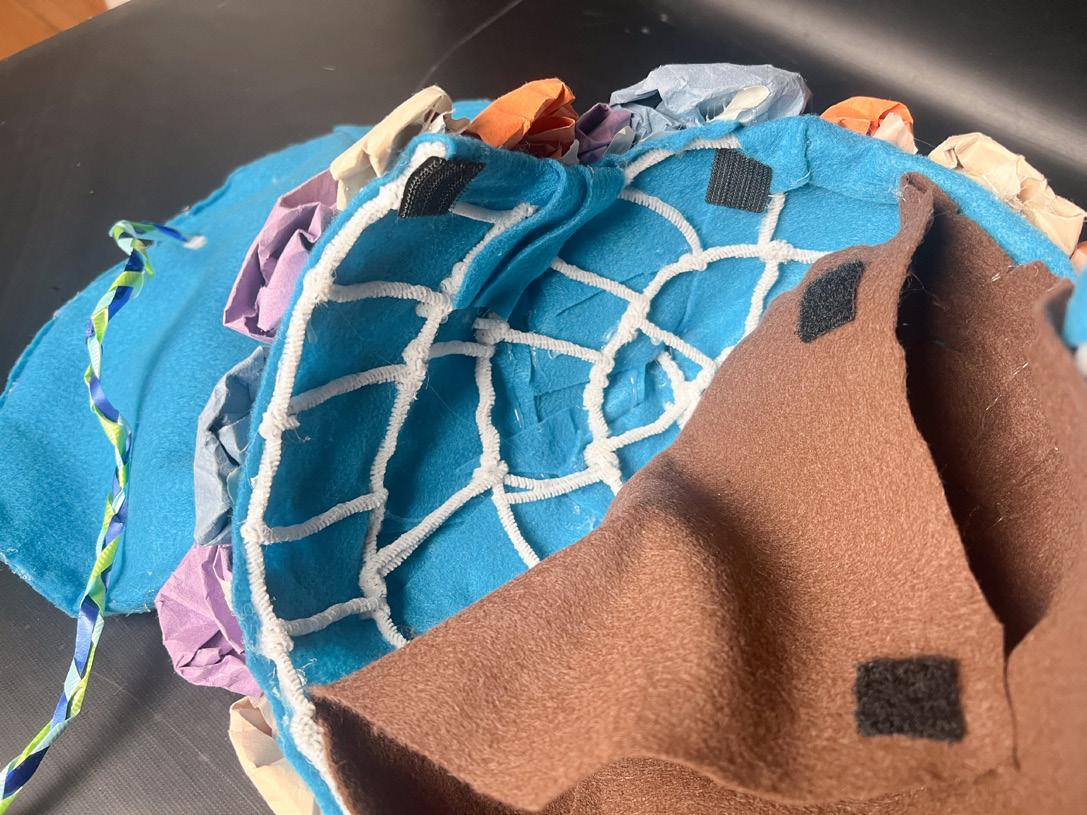
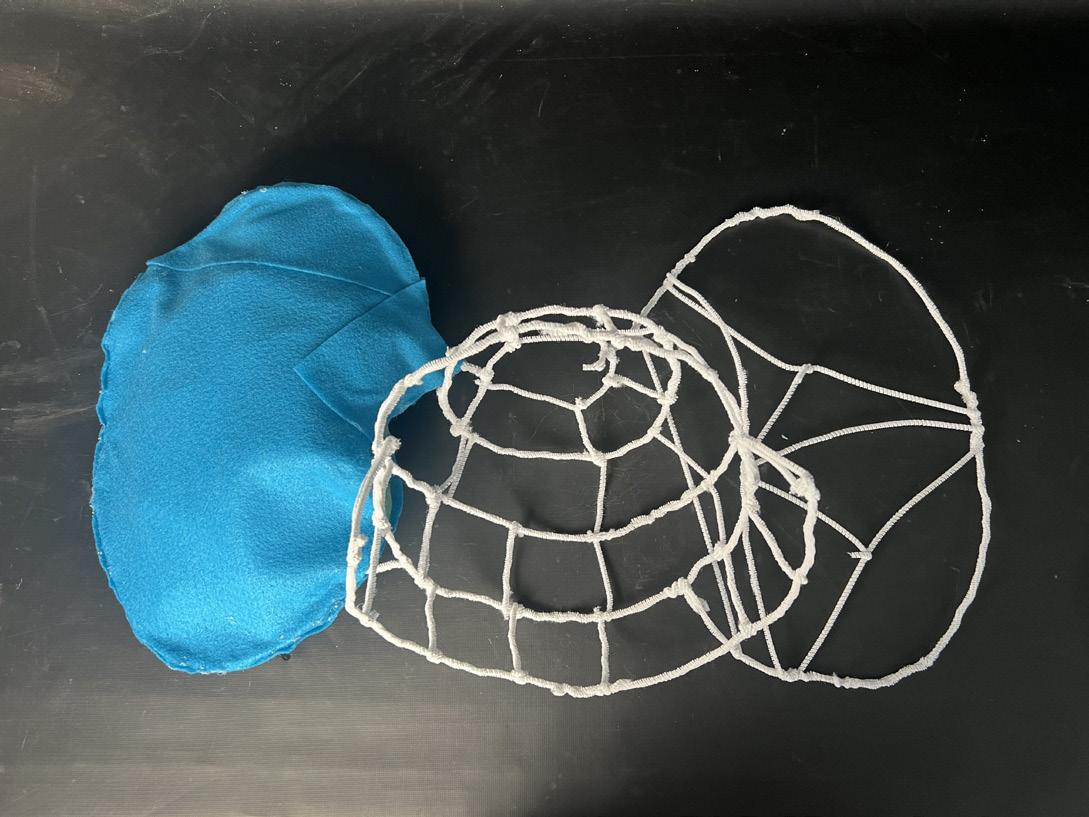
The wearable piece I made is a helmet, inspired by the comforting qualities of my stuffed elephant, Blue. The design incorporates two large elephant ears, forming a natural barrier from the surrounding environment to evoke a sense of safety and refuge. To further reflect childhood memories, I added strings to both ears—when tied together, the ears fold inward, creating an enclosed, cocoon-like space for the wearer.
I handmade the whole helmet and the main material I used were felt fabric(for the soft texture and better sound proof), pipe cleaner(for the structure building), and color paper(for decoration and texture). These are also materials commonly contained in kids’ DIY sets. In addition, I put velcro for the inner layer of felt so the structure inside can be still seen when needed.
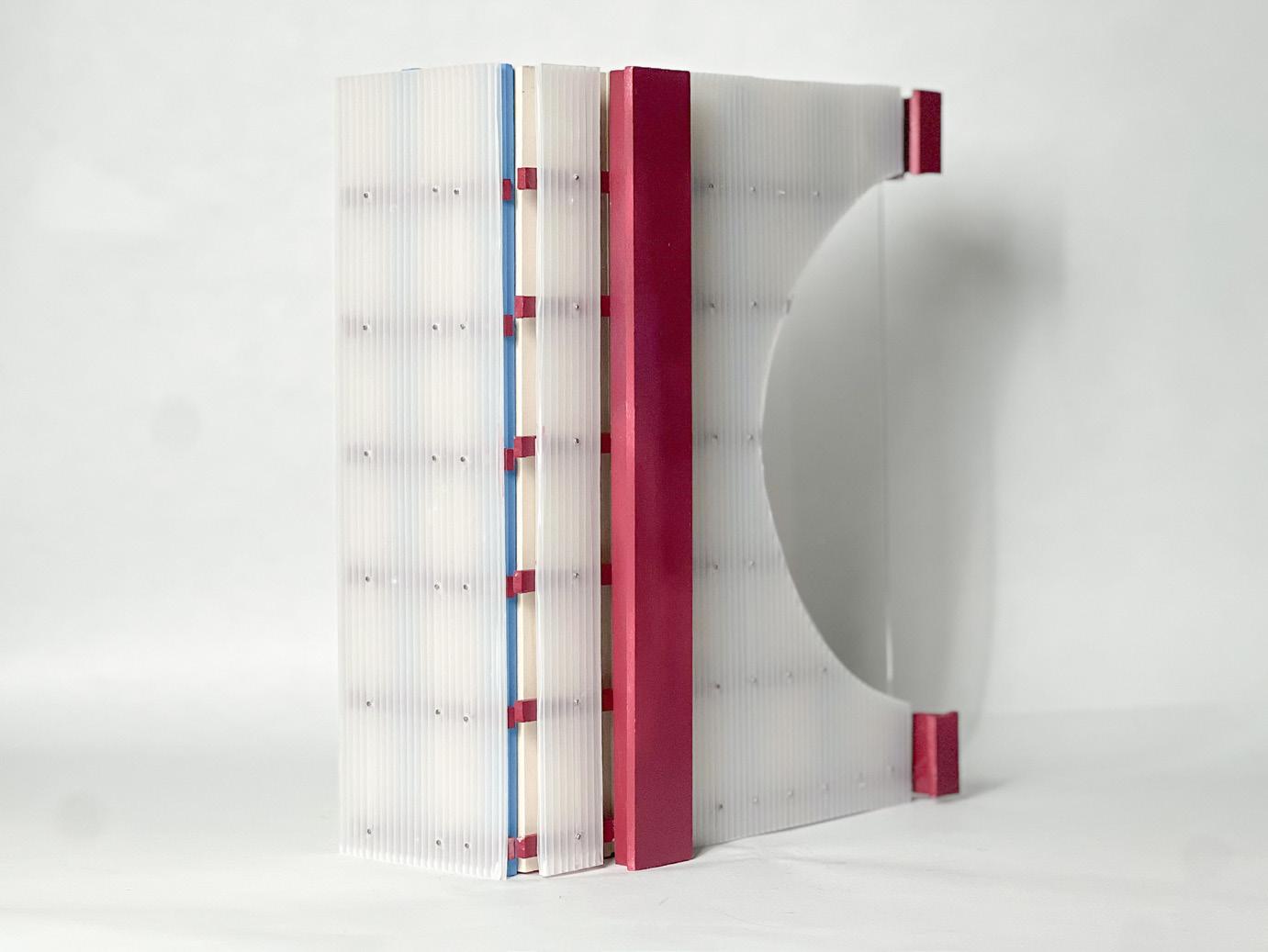
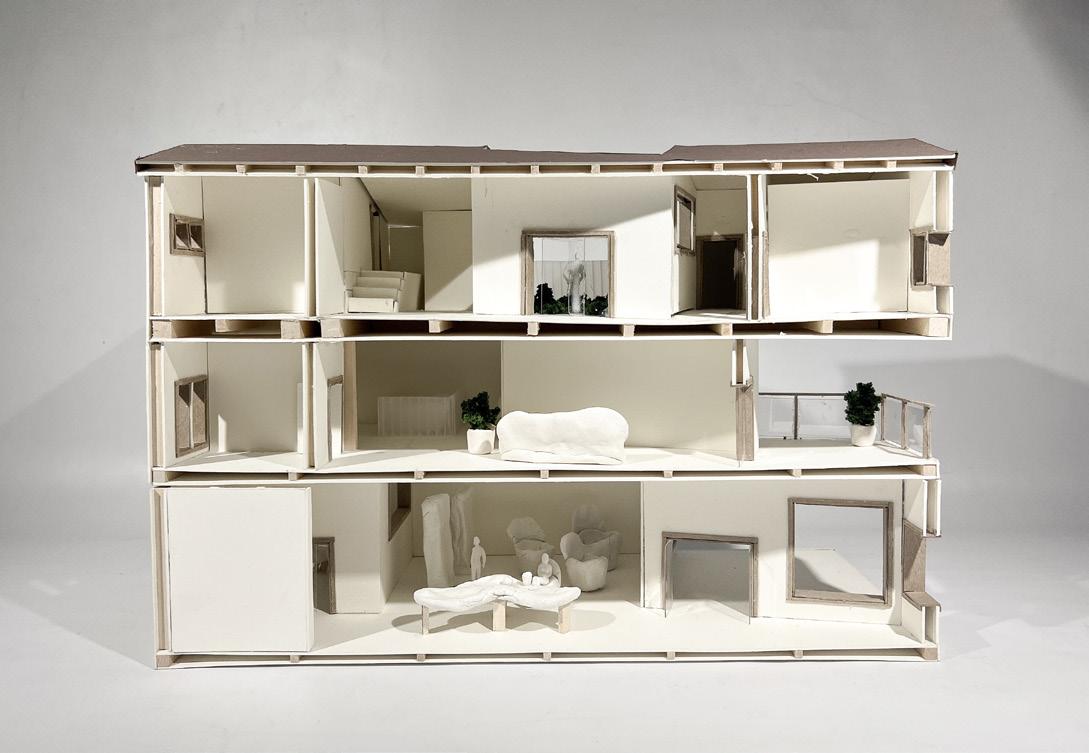
1:10 chunk model of Freudenberg-Enge cantonal schools sport house by Pool Architekten
Partnered with Ishika Dinesh