How is Food Waste Recycled
Food waste is a significant problem in the UAE: the annual cost of food waste has been estimated at $3.5 billion, with around 38% of the food prepared daily in the UAE wasted.
The average UAE resident generates about 2.7 kilograms of waste every day, according to 2016. That’s more than double than someone in Europe – who produces just 1.2kg!
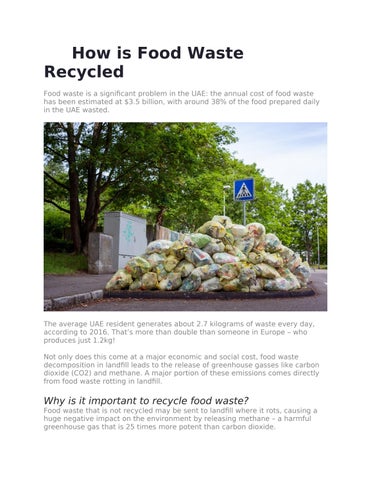
Not only does this come at a major economic and social cost, food waste decomposition in landfill leads to the release of greenhouse gasses like carbon dioxide (CO2) and methane. A major portion of these emissions comes directly from food waste rotting in landfill.
Why is it important to recycle food waste?
Food waste that is not recycled may be sent to landfill where it rots, causing a huge negative impact on the environment by releasing methane – a harmful greenhouse gas that is 25 times more potent than carbon dioxide.
Some local councils send their non-recyclable waste to be incinerated to create useful energy. However, food waste is composed of about 70% water, requiring considerably more energy to burn it, making this a less efficient method of disposal than recycling.
More and more people are recycling their food waste. If we all stopped wasting the food which could have been eaten, it would have the same CO2 impact as taking 1 in 4 cars off the roads.
Get More Info : food recycling in uae
Websites : https://yesfullcircle.com/
Contact Us : Recycling Services in Dubai