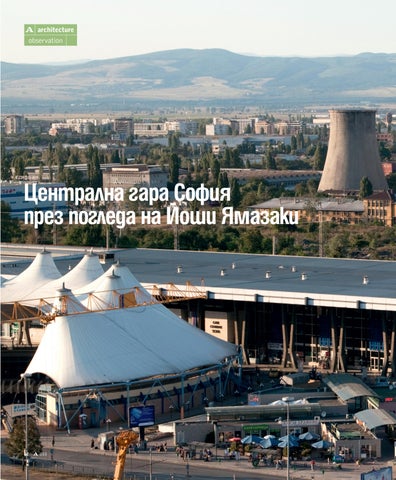
The hidden contemporary “stoa”–Sofia Central Railway Station
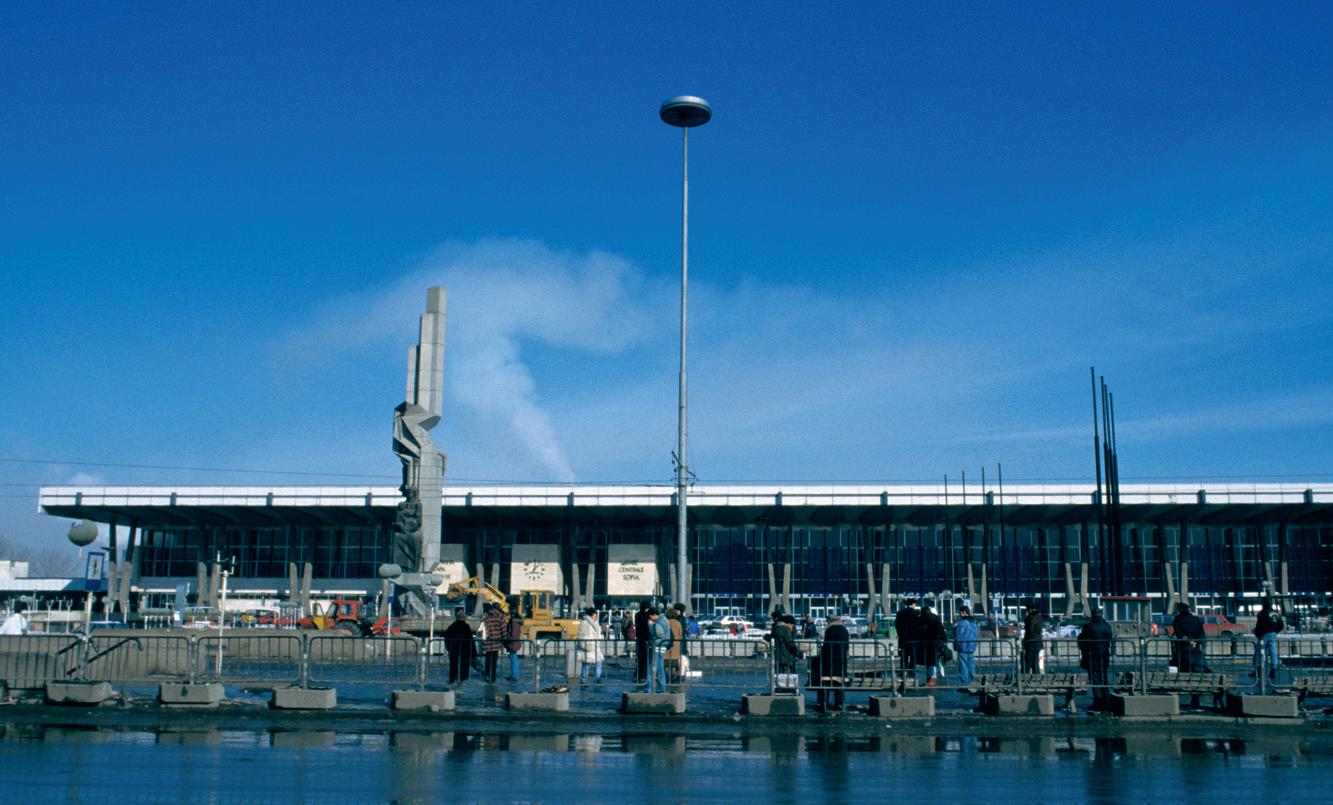
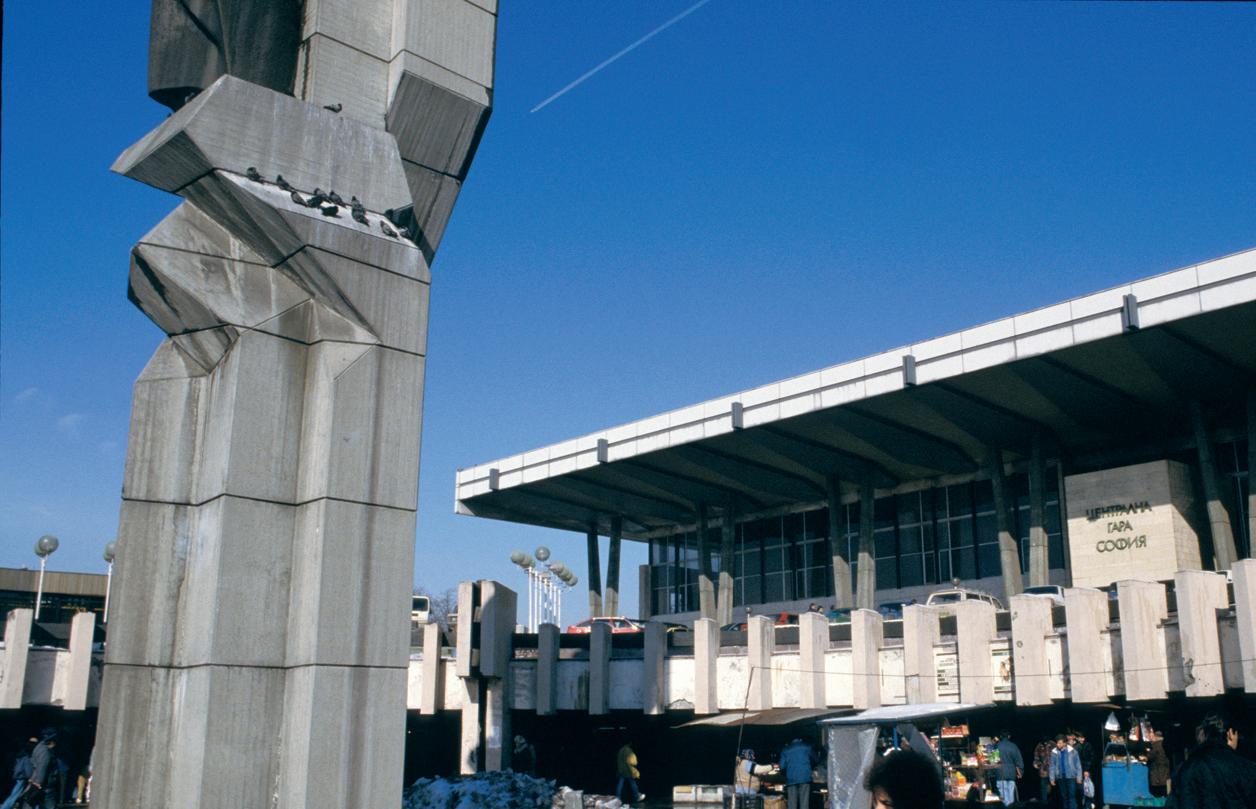
The Sofia Railway Station was the first socialist building I encountered. It happened while I was travelling from Istanbul to Wien in 1988. I remember that I, as a person used to the European type of railway stations, was rather anxious when I saw it. The Sofia Railway Station is not the kind of railway main stations. The grey February sky, together with the mixture of rain and snow aggravated my anxiety. The atmosphere, typical for main stations as the entrance to a city, welcoming passengers, couldn’t be felt. I got off the train and strode into the subway and suddenly I found myself out of the station. While I was wondering where the main building of the station was, I stopped, looked back and saw a long horizontal building; I realized then that I had imperceptibly left the station. I felt deceived. I can still clearly remember the massive horizontal facade of the building.
At the moment in Bulgaria the reputation of the Sofia Railway Station is rather bad. In my opinion its bad reputation results from emotional reasons, because of the fact that it is related to socialist architecture. And is the building that bad in fact? To me it seems a very interesting architectural solution.
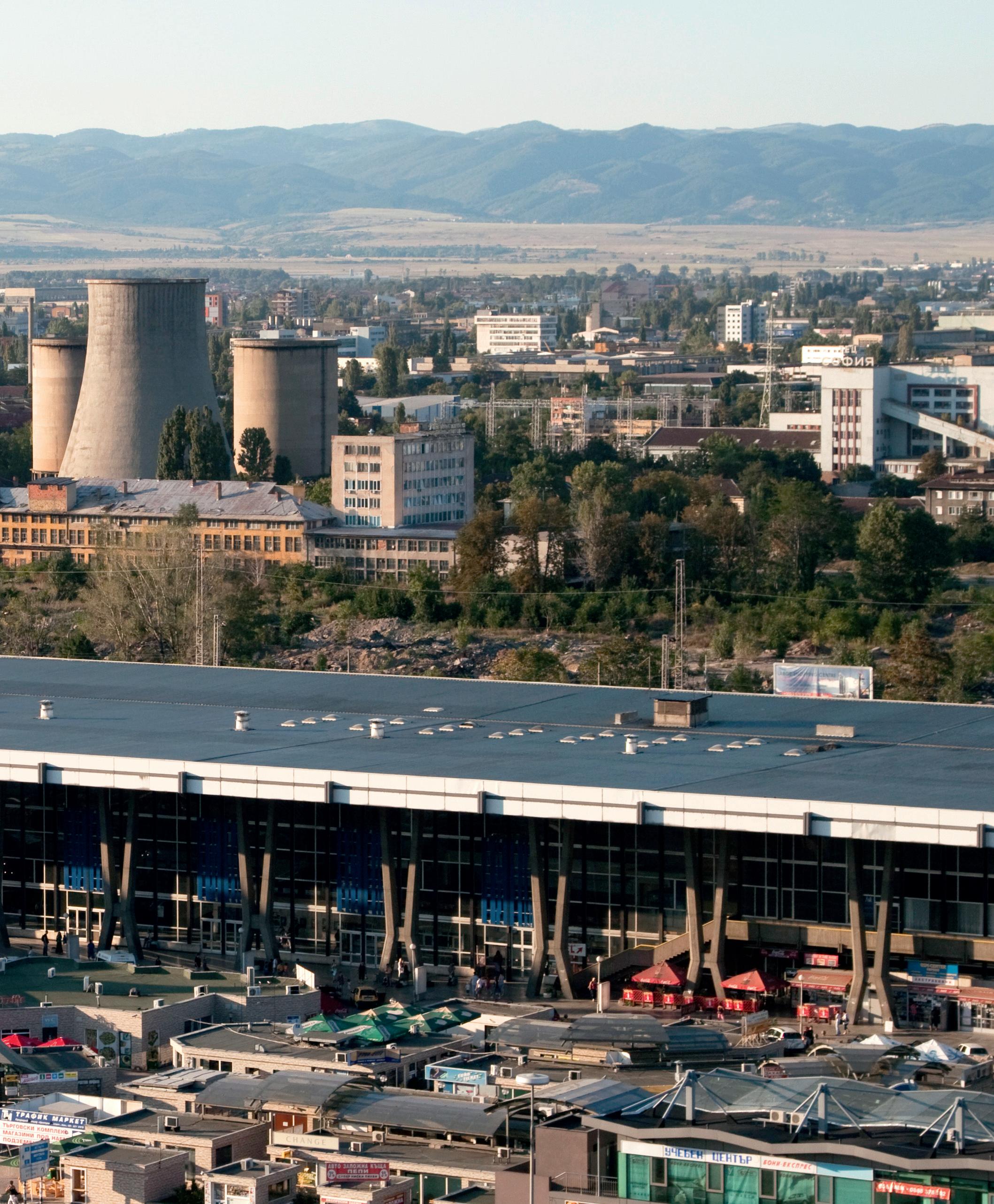
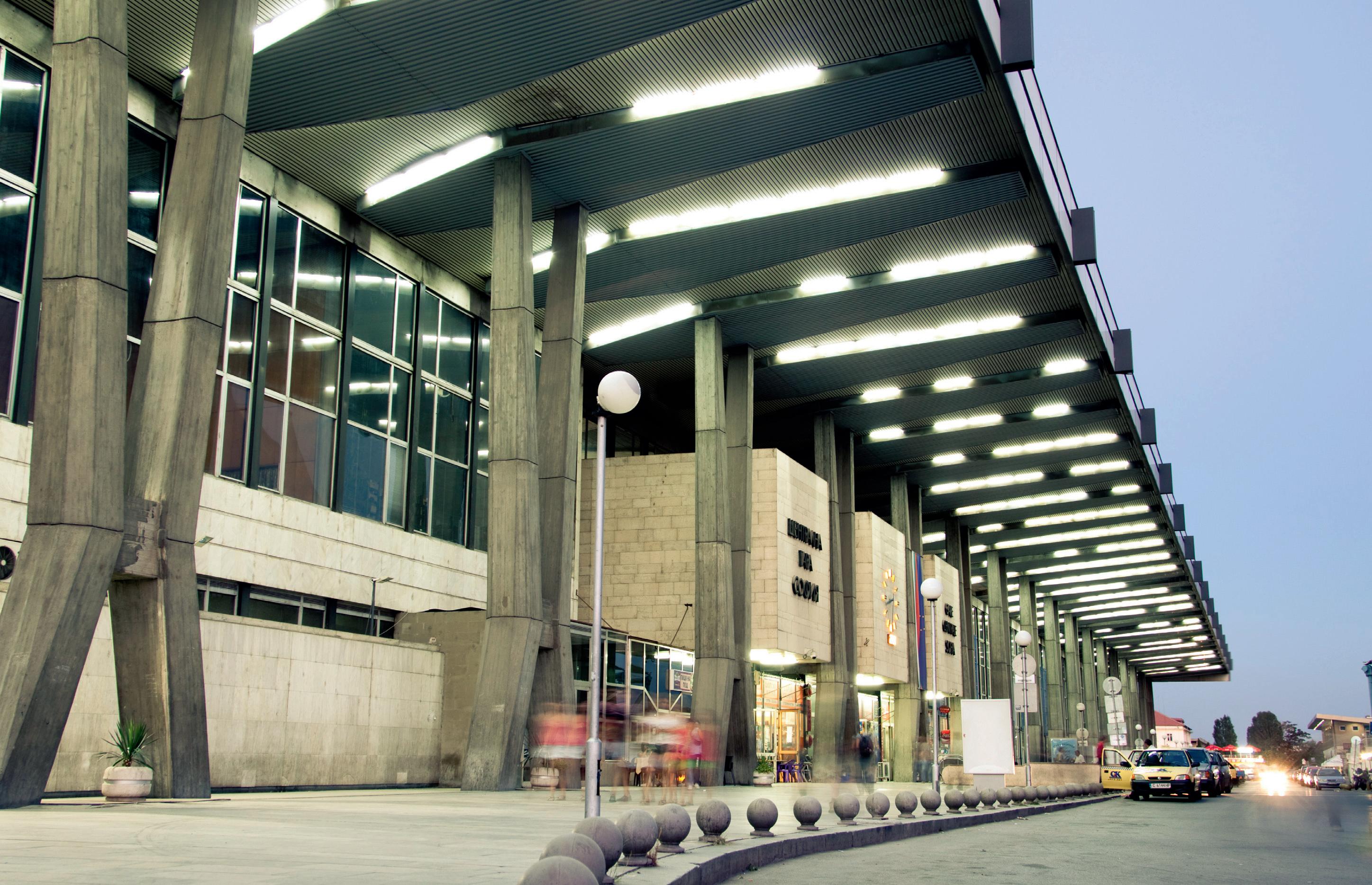
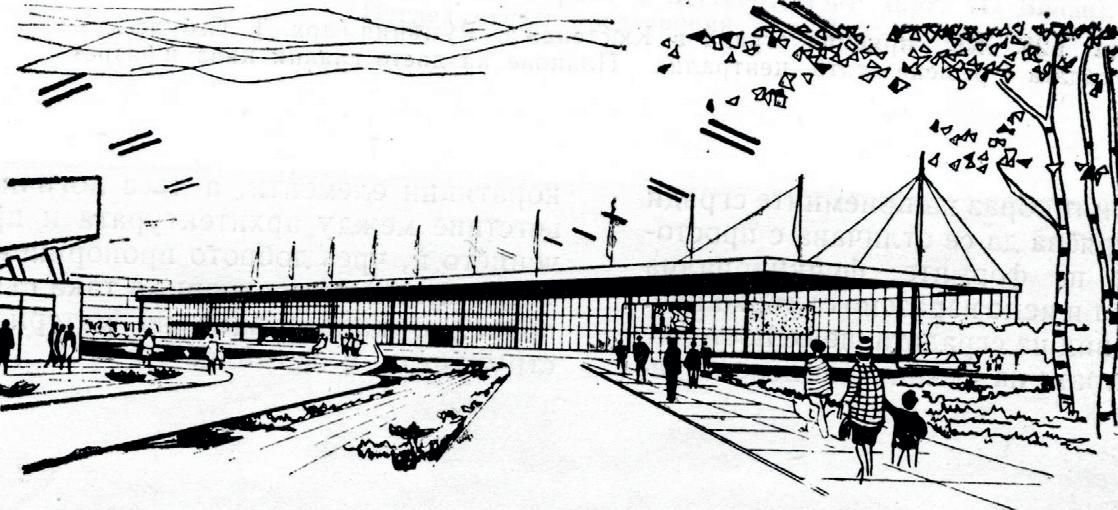
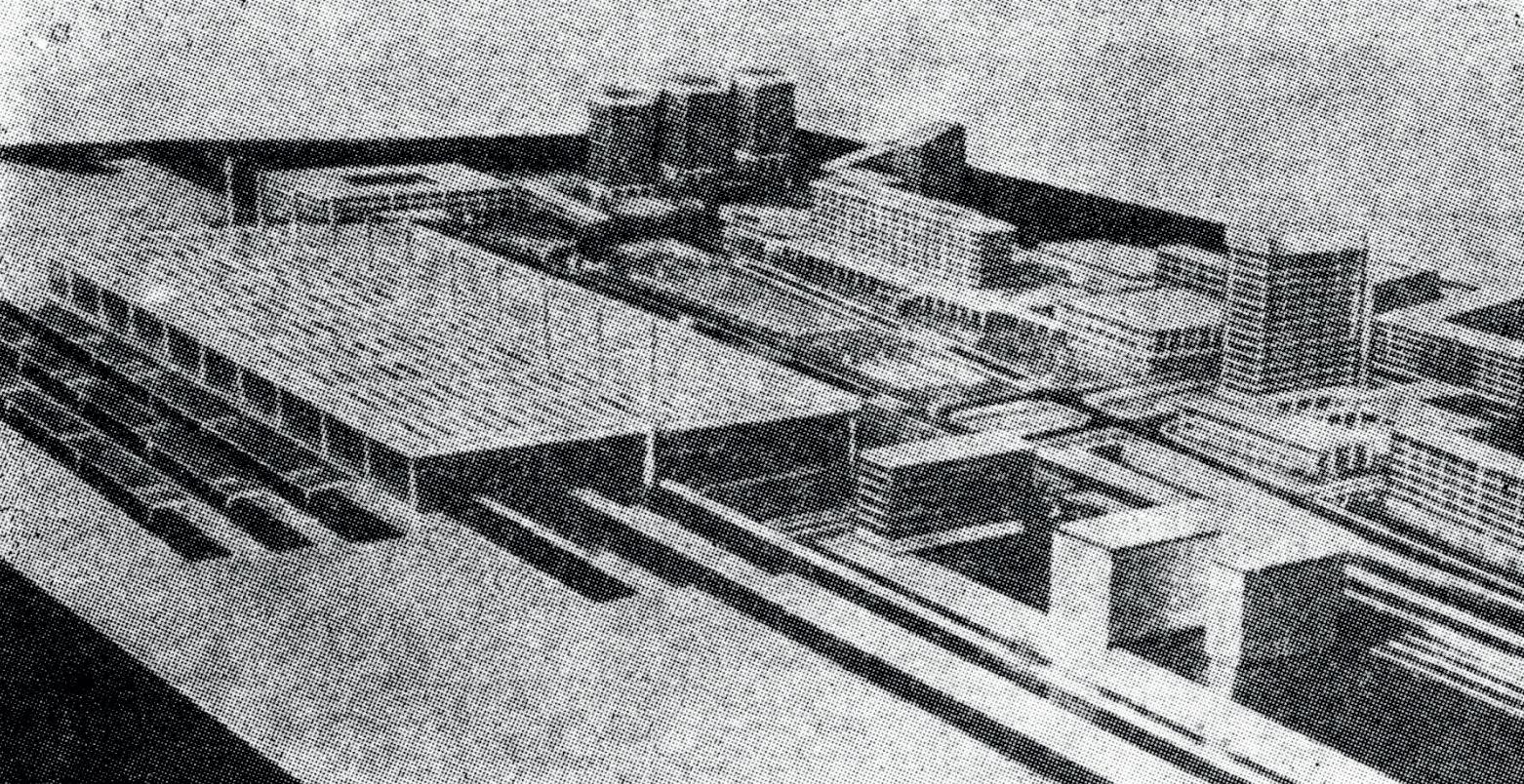
The current building of the station was constructed in the 70s because the old one was found non-functional and old. An architectural competition had been organized at least twice for the accomplishment of this project. The project of the East German architect Ch. Gerike won the second competition. But it was not realized. The current building of the station was designed by Transproekt. But actually this building is quite similar to the one projected by Gerike. It has a large rectangular terraced roof, a massive horizontal glazed facade, the platforms are interconnected by underground corridors, i.e. the main idea about the building’s functionality is the same as the existing station. The big difference is that the rectangular roof, which continues over the platforms, is cut down in half and the hanging roof is replaced by one supported by a colonnade. I have no idea how this happened in that time. I have the feeling that the practice of illegibility and borrowing still
exists and is part of the architectural competitions held in Bulgaria, i.e. the situation remains the same.
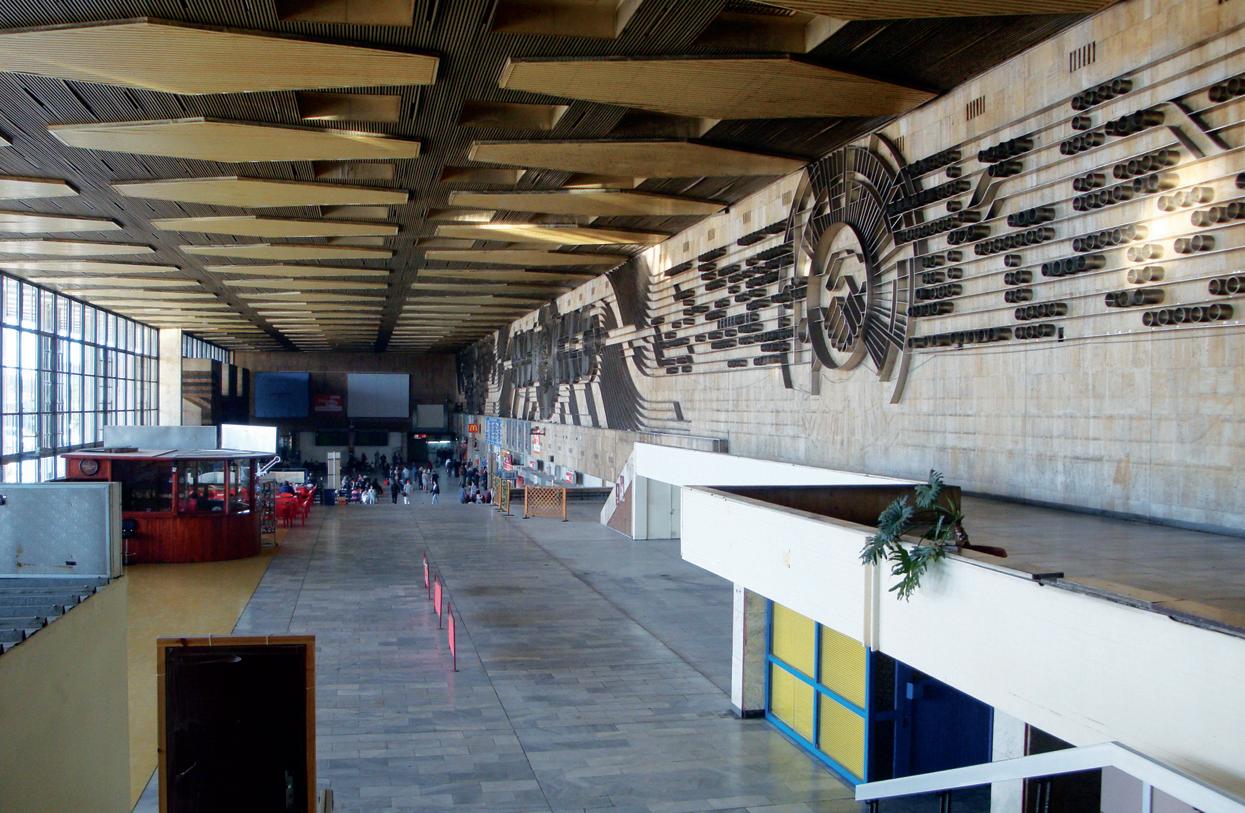
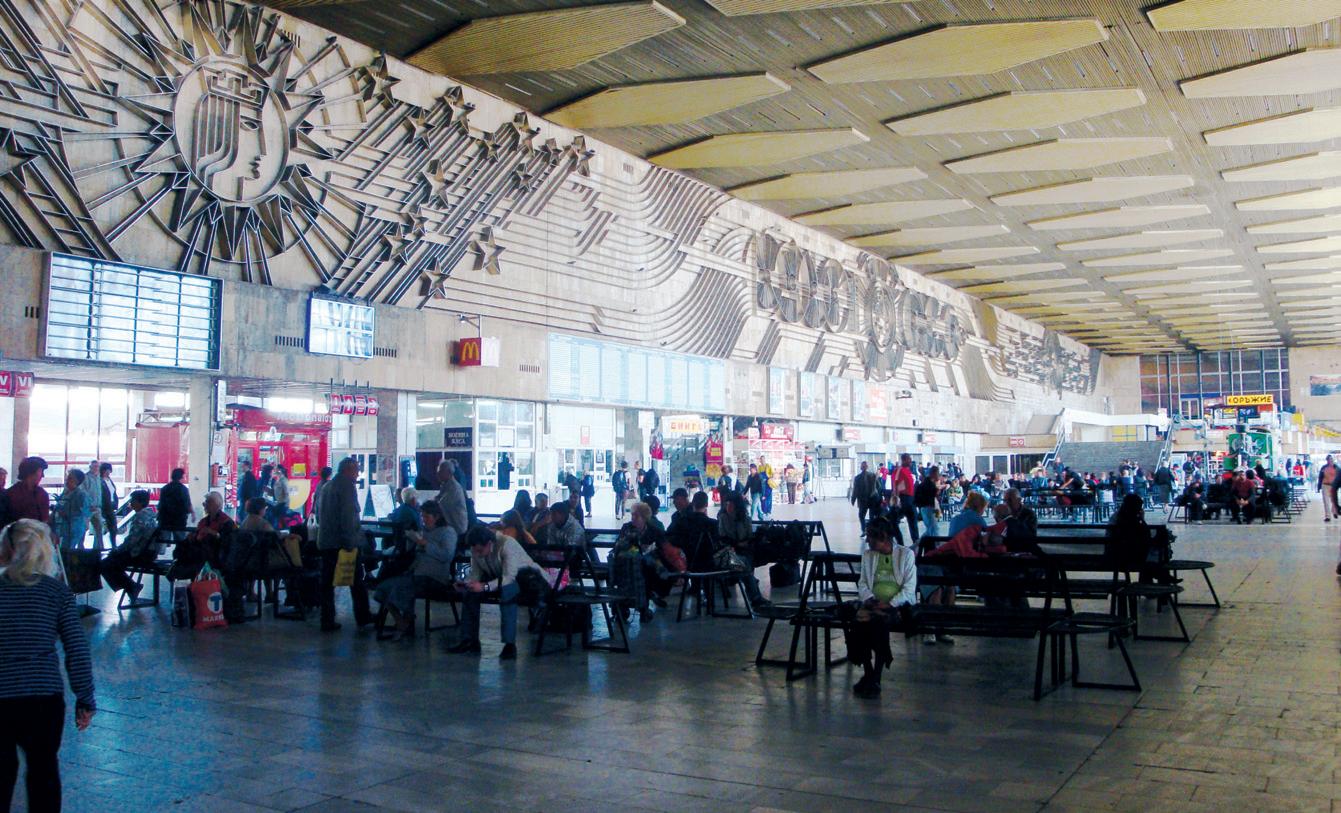
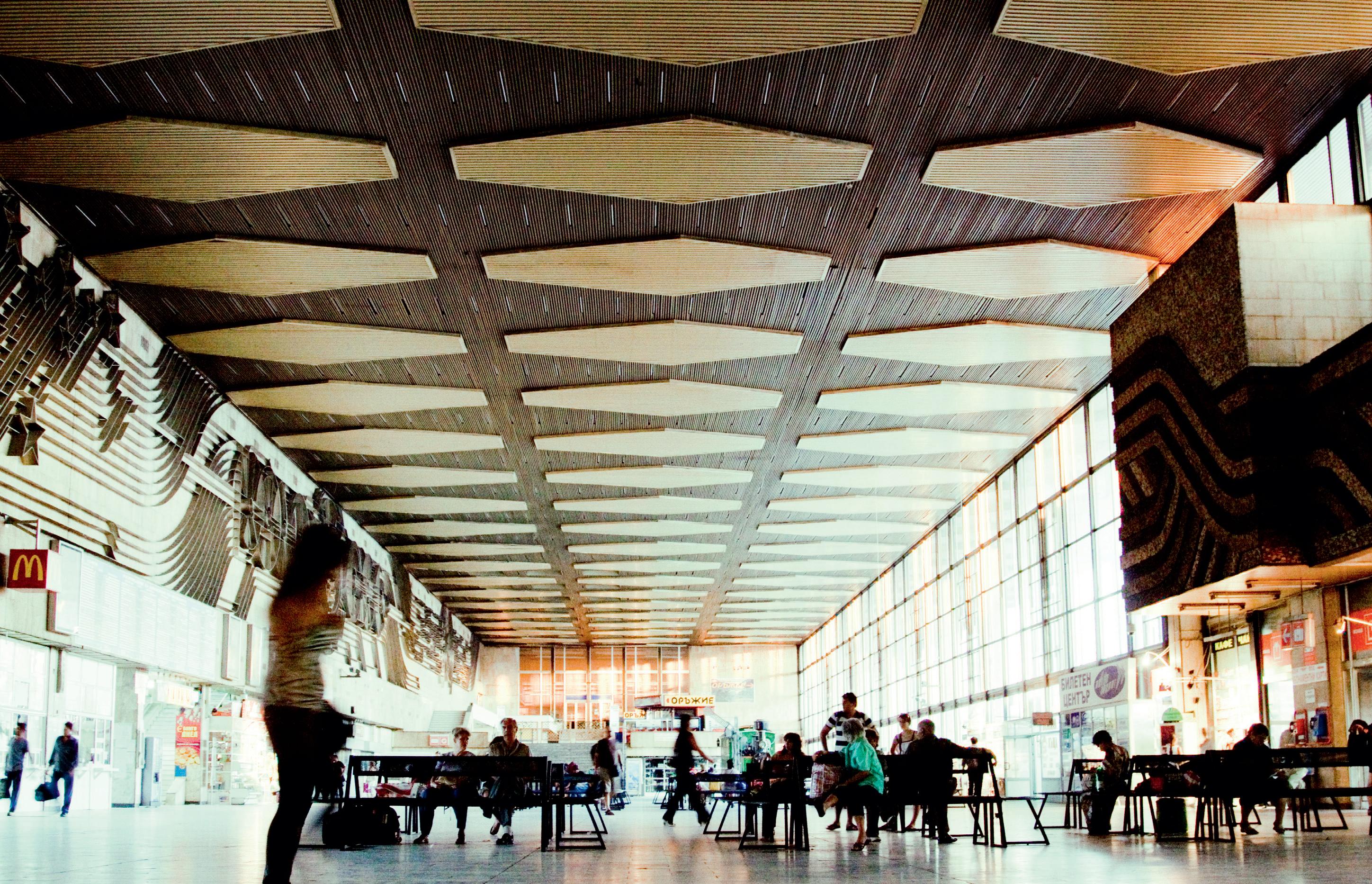
To me, however, it is not so important who designed the building; I am more interested in the spacious waiting room. It is a huge cuboid which measures 30 meters wide by 150 meters long by 15 meters high and is parallel to the tracks. And somewhere in the middle of this huge area, the floor is elevated 3 meters up and the left-luggage and other premises are located underneath. The floor of the waiting room is made of white marble, the southern side, which faces the city, has long window panes, revealing a colonnade of X-shaped columns and the side next to the platform, i.e. the northern side is covered in limestone with a long and huge relief made of 3 mm thick aluminum sheets. Ivan Kirov’s relief in combination with the elevated floor in the bottom, highlight the horizontal line and create a sense of motion. This space evokes the association with a stoa rising around the agora. Stoa is that ancient Greek building, which consists of a colonnade with a wall. It might have originated by chance, without the awareness of the architects of that time. I found it interesting to mix the idea of the ancient Greek stoa with the urban function of the railway station. And if this point of view is expanded to urbanist point of view, one will realize the development potential of the station’s architecture. Maybe if the architects had included such concept into the project, they would have developed it and would have reached better results. Yet, there is something I consider an advantage of this project – it is that that no building was envisaged for the square in front of the station building. So the next generation will have the chance to further develop this open area. Unfortunately recent designs clearly show that not only do we witness lack of further development, but we also face irresponsible destruction. The only way to work out is to leave this new “rag-fair” unnoticed against the background of the otherwise good architectural concept of the railway station building.
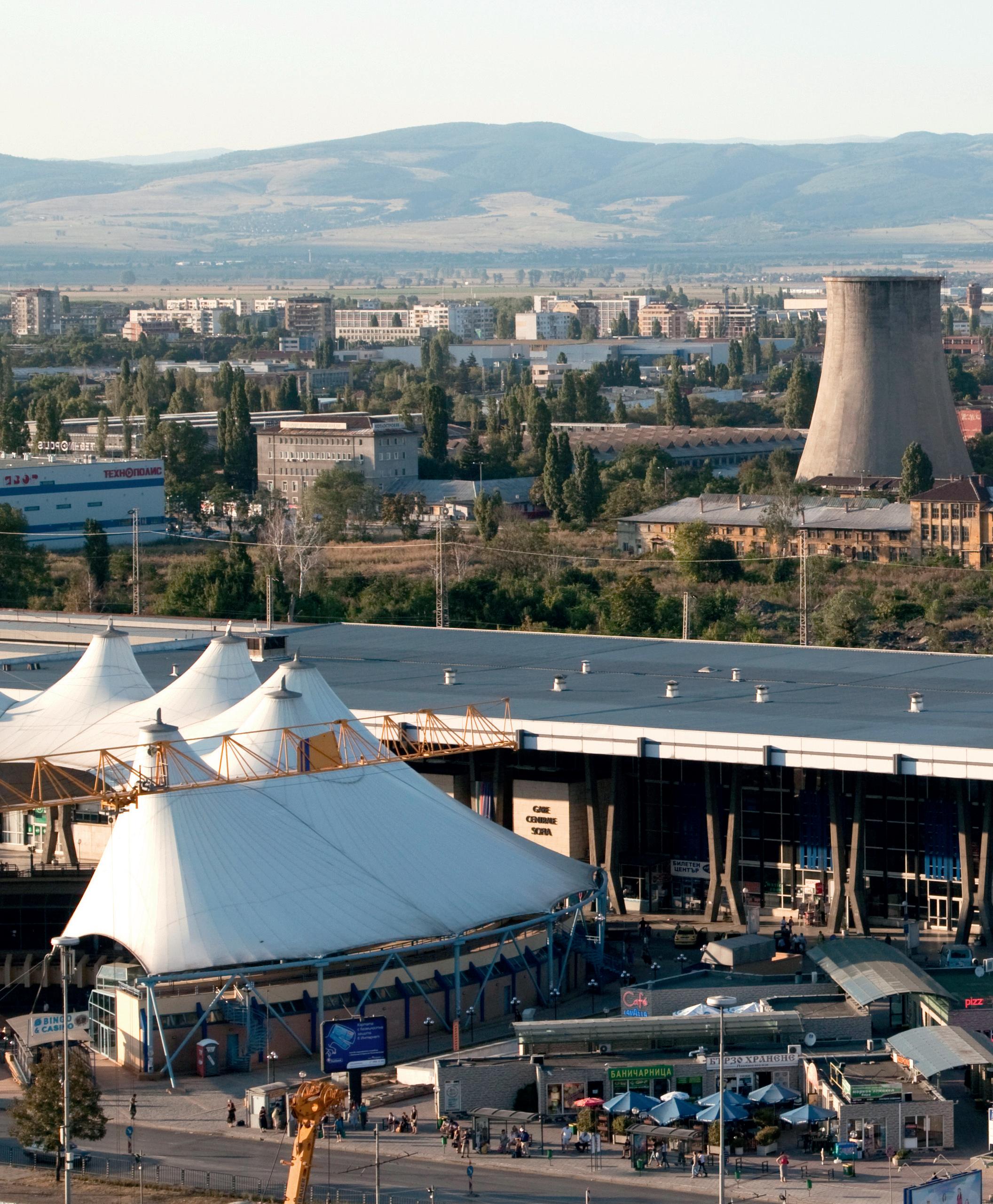
At the moment in front of the station building there is an enormous
construction in the form of a circus tent, which shuts out the view to the distinctive massive horizontal facade of the station. Thus it cuts out any chances for a contemporary “agora”. Apart from that, this tent prevents one from seeing the socialist architecture, makes it invisible. To me it is like a curtain, which covers the past.
In this train of thought I suddenly remembered that I had found out something really interesting in Italy. Twenty years ago I visited a friend in Italy and she showed me a book by the Italian architect A. Libera. And somewhere towards the end of the book I noticed a small print of the project of the Sofia Railway Station. The project already existed in 1940. Right after the start of WWII, there was no socialist regime in Bulgaria yet. During that period Libera worked on a monumental project for the fascist party and the EUR exhibition close to Rome. Maybe because of this fact or because of the classic side of Italian Rationalism, the project turned out very good. In other words the project is an architectural style approved by Italian fascism. It is amazing to what extent the project resembles the current building. It is the same plan of a big rectangular railway station building, a facade highlighting the horizontal line, an internal space with a colonnade; everything corresponds to the above information. Of course, this doesn’t mean that the contemporary building of the station is a direct borrowing from Libera’s project. But it is clear that the designers used the same technique from the period of Classicism that Libera used.
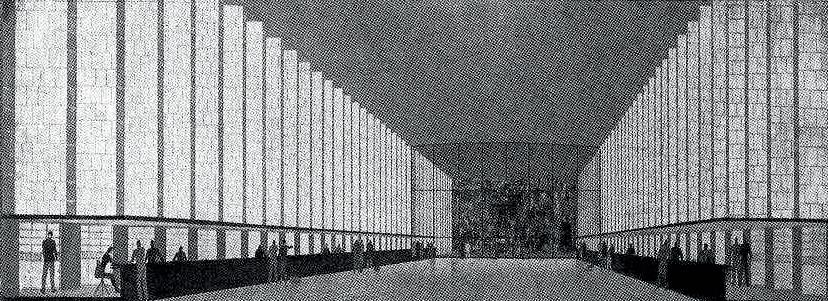
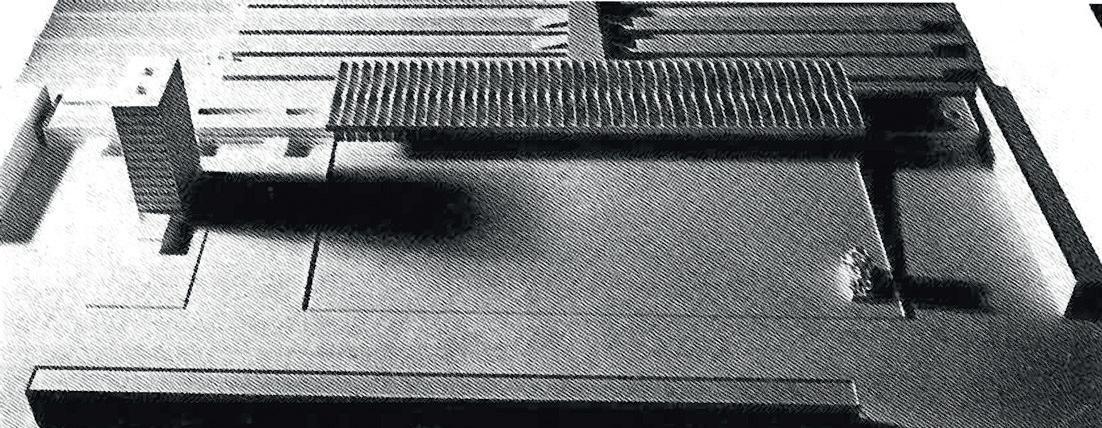
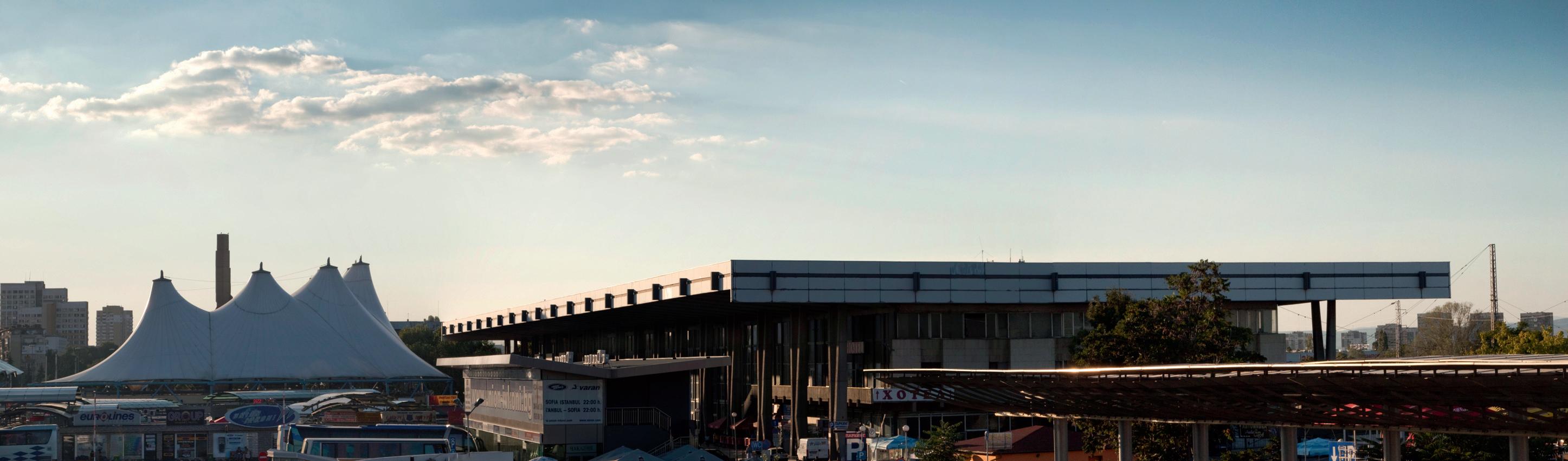
What irony of fate – the typical socialistic architecture resembles the antagonistic fascist architecture. This means that by courtesy of architecture, ideologically and logically impossible things became possible. Nevertheless, this building, which appeared by chance, has a strange architectural style. And it is precisely this impenetrable strangeness that attracts me. Of course the railway station building doesn’t possess the architectural value to become a world cultural monument. But yet such type of buildings won’t be constructed in Bulgaria in the future. I think that such strange buildings are rare to find all over the world. There are many buildings throughout Bulgaria, which are remains from the socialist time. But I have the feeling that such type of buildings is detested, there is no objective analysis of their architecture and many of them are left to the mercy of fate. Instead of turning to the trends of foreign architectural design, it is more important for Bulgarian architects to analyze the situation in their own country objectively and realistically. They don’t need a stereotypes analysis, but a real analysis from their personal perspective. This is neither Germany, nor Russia or the USA, this is Bulgaria.
These were the thoughts that crossed my mind while I was using the genuine white marble toilet of the indoor ruin-like closed restaurant, located in the huge space on the top level of the waiting room. Standing by the white marble toilet, I imagined a sumptuous wedding celebration taking place here thirty years ago.
за да стане световен
паметник на културата. Но въпреки това занапред подобен
сгради
Yoshi Yamazaki (Tokyo, 1966) architect. Lives in Sofia, Bulgaria, since 2007. After receiving master’s degree at Waseda University. In Tokyo, he has researched Russian avant-garde and post-socialist architecture in Moscow after the end of the USSR Era. In a method created by this research and analysis he has written articles, lectured and presented the creation of architectures. Published in a+u, World Architecture, kenchiku bunka. Recently he moved his main studio to Sofia and started work on Bulgarian projects.