Yachting & Boating Quarterly
INSIDE: TONY MUTTER
+ ADMIRAL'S CUP
+ JO ALEH
+ SEAN HERBERT
+ THE SCIENCE OF SAILING HELMETS
+ A-Z OF OFFSHORE ESSENTIALS
+ 2025 EXCELLENCE AWARDS
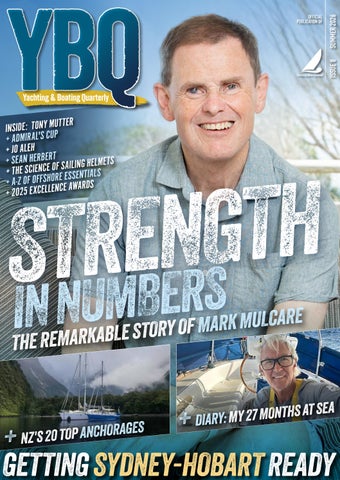
Yachting & Boating Quarterly
INSIDE: TONY MUTTER
+ ADMIRAL'S CUP
+ JO ALEH
+ SEAN HERBERT
+ THE SCIENCE OF SAILING HELMETS
+ A-Z OF OFFSHORE ESSENTIALS
+ 2025 EXCELLENCE AWARDS
STORY OF MARK
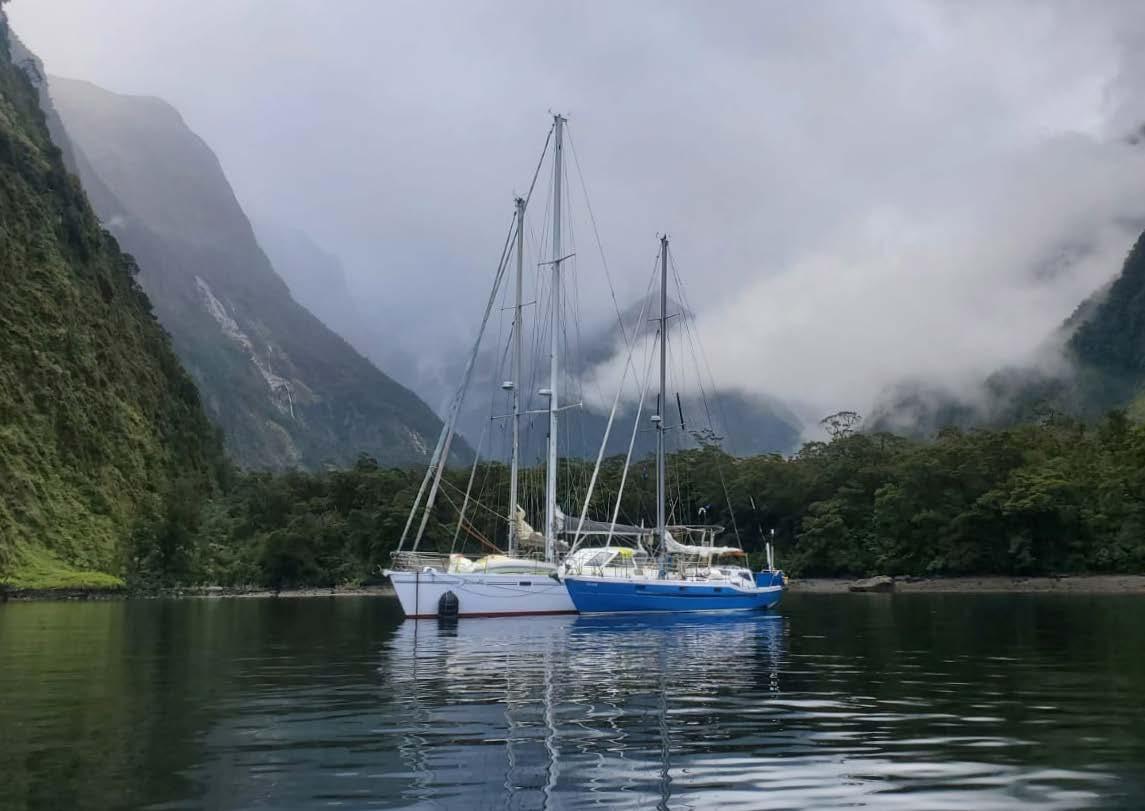
+ DIARY: MY 27 MONTHS AT SEA + NZ'S 20 TOP ANCHORAGES
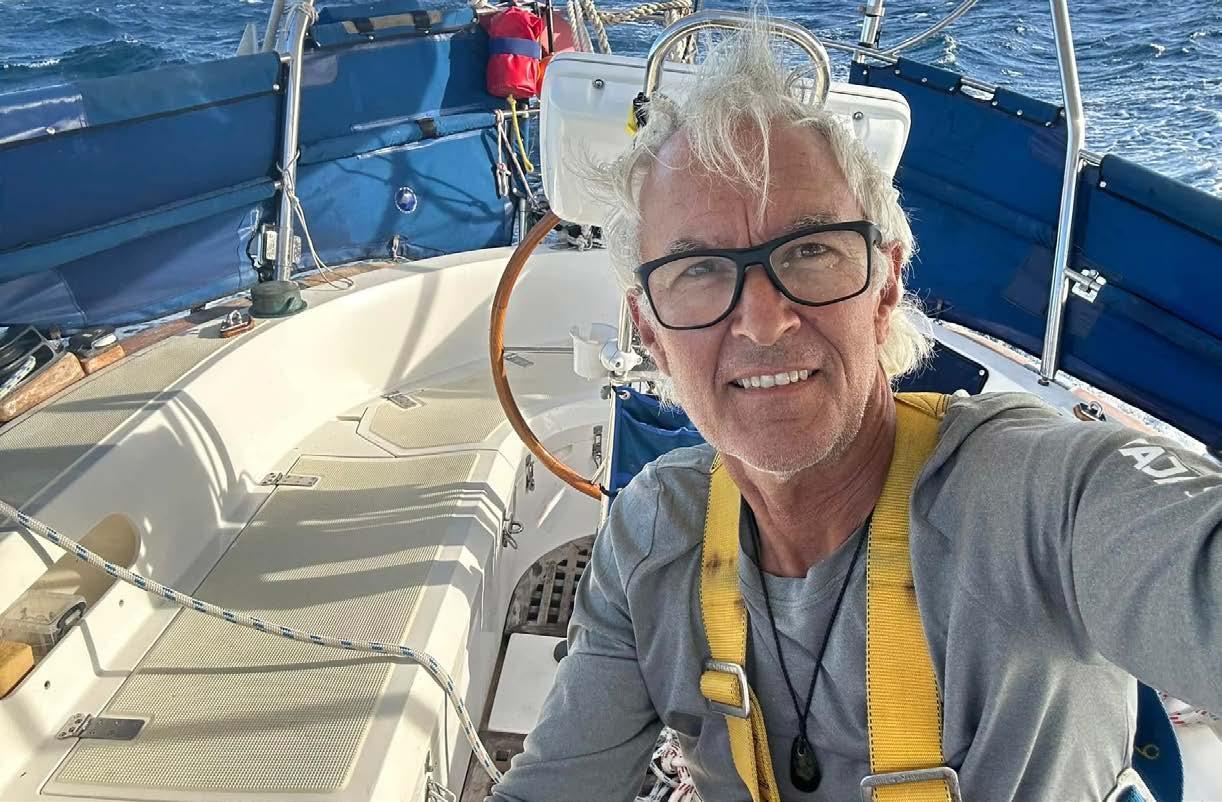
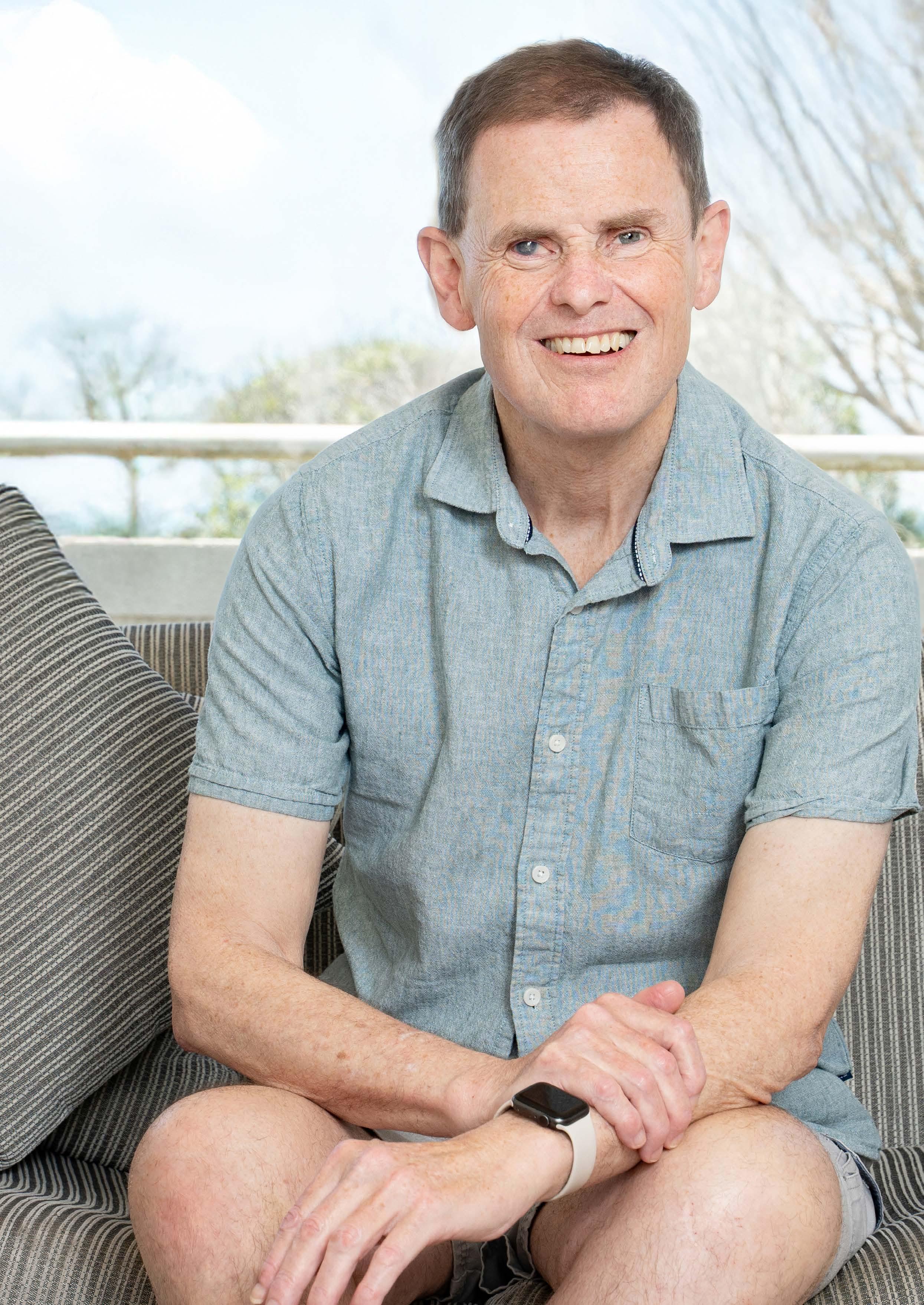
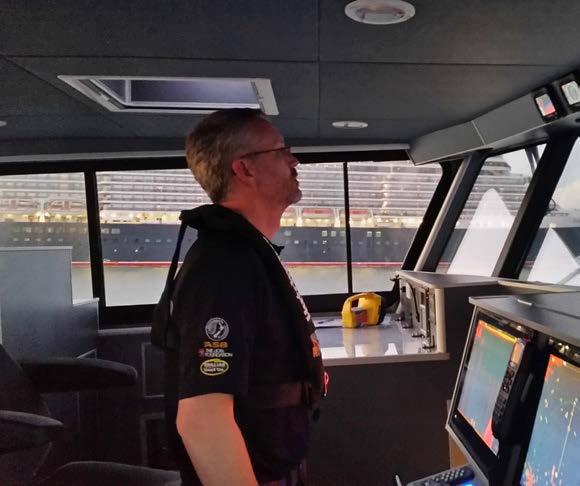
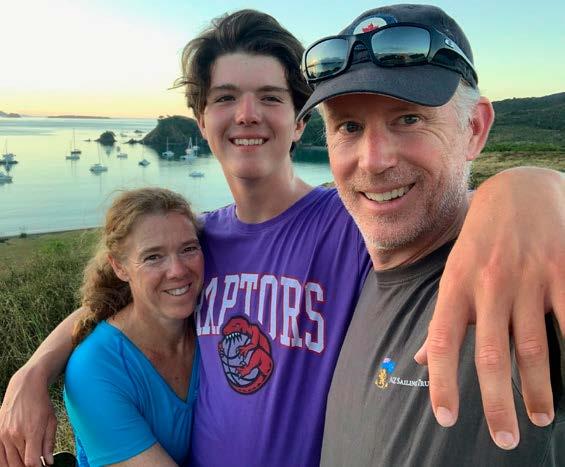
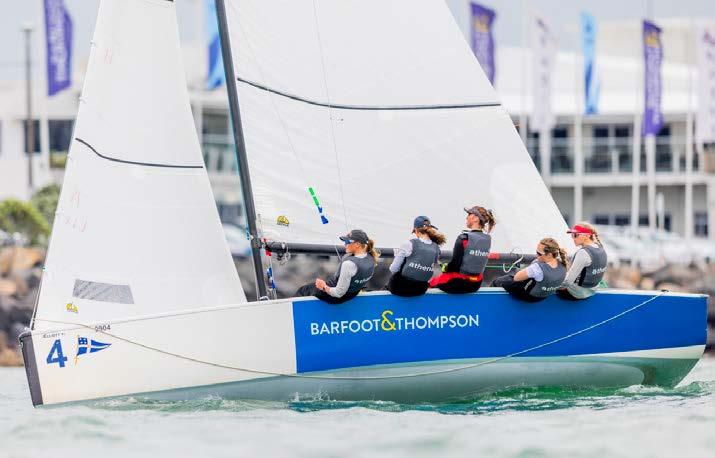
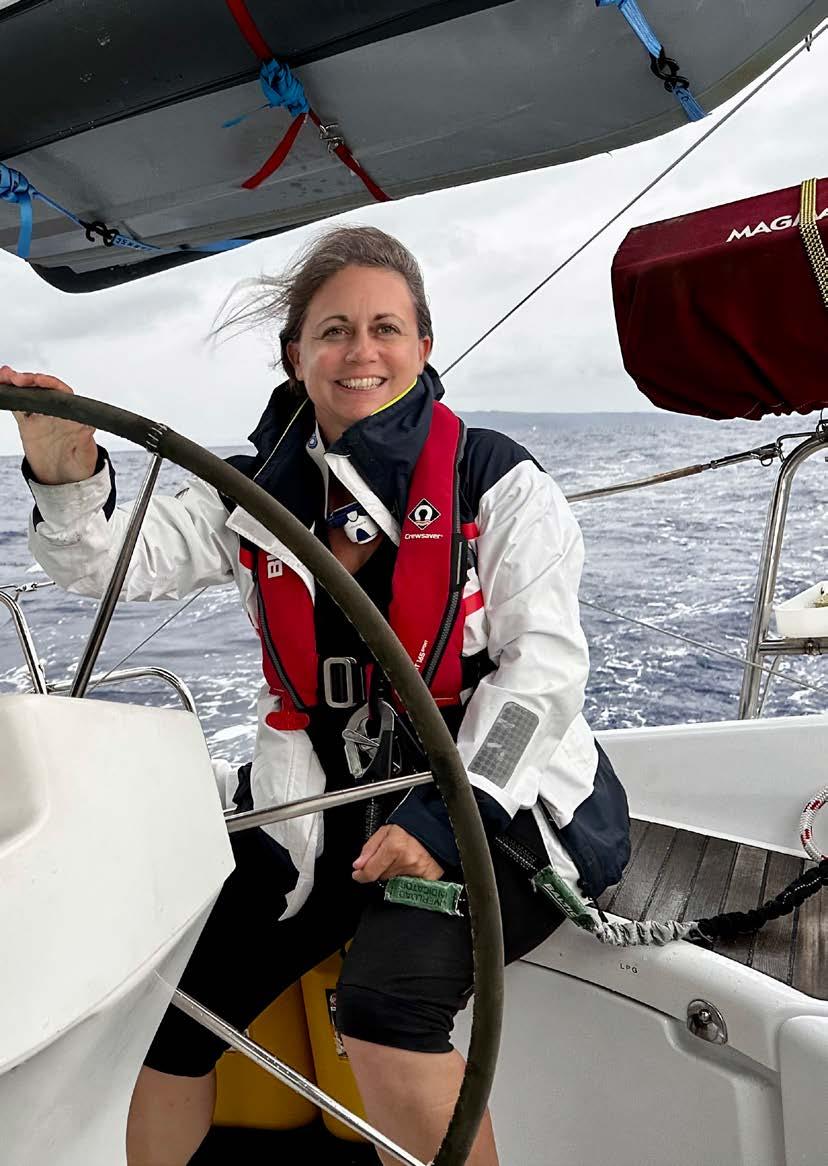
For Stephen Barfoot, sailing has always been more than a pastime. From growing up on Auckland’s Tāmaki Estuary to adventures shared with his wife Terri, the water has shaped his journey in ways both personal and professional. Stephen now balances his role as a Director at Barfoot & Thompson with his passion for sailing.
For Stephen Barfoot, sailing has always been more than a pastime. From growing up on Auckland’s Tāmaki Estuary to adventures shared with his wife Terri, the water has shaped his journey in ways both personal and professional. Stephen now balances his role as a Director at Barfoot & Thompson with his passion for sailing.
In this Q+A, he reflects on where it all began, the lessons learned, and why sailing remains an important part of who he is.
In this Q+A, he reflects on where it all began, the lessons learned, and why sailing remains an important part of who he is.
Q:
A:
Q: A:
Can you tell me about your sailing journey and what first drew you to the water?
Can you tell me about your sailing journey and what first drew you to the water?
I grew up overlooking the Tāmaki Estuary, spending hours watching boats and imagining myself out there. Growing up we had a little dinghy hand-built by our neighbour, which we paddled around in. Later, my dad bought a Young 2.8 sailing dinghy, and I spent countless hours with it. I was good friends with Jim Young’s grandson Aaron at school, and was fortunate to get some tips from Jim himself. Since then there has been windsurfing, Laser sailing, keeler racing, and I spent 15 years as a Coastguard volunteer. For the last ten years we have had our Beneteau 473 “Pearl” at Westhaven which we get out on as often as we can.
I grew up overlooking the Tāmaki Estuary, spending hours watching boats and imagining myself out there. Growing up we had a little dinghy hand-built by our neighbour, which we paddled around in. Later, my dad bought a Young 2.8 sailing dinghy, and I spent countless hours with it. I was good friends with Jim Young’s grandson Aaron at school, and was fortunate to get some tips from Jim himself. Since then there has been windsurfing, Laser sailing, keeler racing, and I spent 15 years as a Coastguard volunteer. For the last ten years we have had our Beneteau 473 “Pearl” at Westhaven which we get out on as often as we can.
Q: A:
Q: A:
Yourself and Terri circumnavigated the North Island - what did that experience mean to you, both personally and as a sailor?
Yourself and Terri circumnavigated the North Island - what did that experience mean to you, both personally and as a sailor?
That experience reinforced how incredibly fortunate we are in New Zealand to have such remarkable sailing destinations so close at hand. I’ve sailed to Fiji, and spent time sailing in Tahiti and Tonga. We have the Hauraki Gulf and Northland Coast right on our doorstep, and the Marlborough Sounds and Abel Tasman within easy reach.
That experience reinforced how incredibly fortunate we are in New Zealand to have such remarkable sailing destinations so close at hand. I’ve sailed to Fiji, and spent time sailing in Tahiti and Tonga. We have the Hauraki Gulf and Northland Coast right on our doorstep, and the Marlborough Sounds and Abel Tasman within easy reach.
Q: A:
Q: A:
What is it about sailing that keeps you passionate and engaged in the sport?
What is it about sailing that keeps you passionate and engaged in the sport?
Q: A:
Q: A:
Q: A:
Q: A:
Sailing requires teamwork, resilience and problem-solving - do you see parallels between those qualities and your role as a Director and leader in business?
Sailing requires teamwork, resilience and problem-solving - do you see parallels between those qualities and your role as a Director and leader in business?
It’s my view that people who are good sailors make great business people. In sailing (as in business), it doesn’t matter how fast you’re going if you’re not going in the right direction. Everyone on the boat, and in the business, needs to know what they’re doing, why they’re doing it, when they’re doing it, and what part they are responsible for.
It’s my view that people who are good sailors make great business people. In sailing (as in business), it doesn’t matter how fast you’re going if you’re not going in the right direction. Everyone on the boat, and in the business, needs to know what they’re doing, why they’re doing it, when they’re doing it, and what part they are responsible for.
Looking ahead, what excites you most about the future of sailing in New Zealand?
Looking ahead, what excites you most about the future of sailing in New Zealand?
Sailing is a sport that’s at the intersection of athleticism, strategy and technology. It’s a sport aligned with New Zealand’s clean and green image. It’s exciting to see how the Royal NZ Yacht Squadron’s multi-generational investment - such as the youth training programme - continues to drive New Zealand’s sailing success worldwide.
Sailing is a sport that’s at the intersection of athleticism, strategy and technology. It’s a sport aligned with New Zealand’s clean and green image. It’s exciting to see how the Royal NZ Yacht Squadron’s multi-generational investment - such as the youth training programme - continues to drive New Zealand’s sailing success worldwide.
Q: A:
Q: A:
I’m lucky that my wife Terri enjoys sailing as much as I do - otherwise I’m sure I wouldn’t be able to spend anywhere near as much time (or money!) on the sport. Terri is from inland Canada and had never sailed before we met - so it’s been wonderful rediscovering sailing through her eyes.
I’m lucky that my wife Terri enjoys sailing as much as I do - otherwise I’m sure I wouldn’t be able to spend anywhere near as much time (or money!) on the sport. Terri is from inland Canada and had never sailed before we met - so it’s been wonderful rediscovering sailing through her eyes.
Barfoot & Thompson partners with the Royal New Zealand Yacht Squadron and supports programmes such as Learn to Sail and the Women’s Day Out. Why are these initiatives important to you and the company?
Barfoot & Thompson partners with the Royal New Zealand Yacht Squadron and supports programmes such as Learn to Sail and the Women’s Day Out. Why are these initiatives important to you and the company?
I was fortunate to spend many years racing in Squadron events when I was younger (mainly with Tom Browne on his boats Allora and Sure Thing), and to have done the youth training programme with Harold Bennett. It’s deeply rewarding to continue that association today through Barfoot & Thompson’s support of programmes that open sailing to wider communities.
I was fortunate to spend many years racing in Squadron events when I was younger (mainly with Tom Browne on his boats Allora and Sure Thing), and to have done the youth training programme with Harold Bennett. It’s deeply rewarding to continue that association today through Barfoot & Thompson’s support of programmes that open sailing to wider communities.

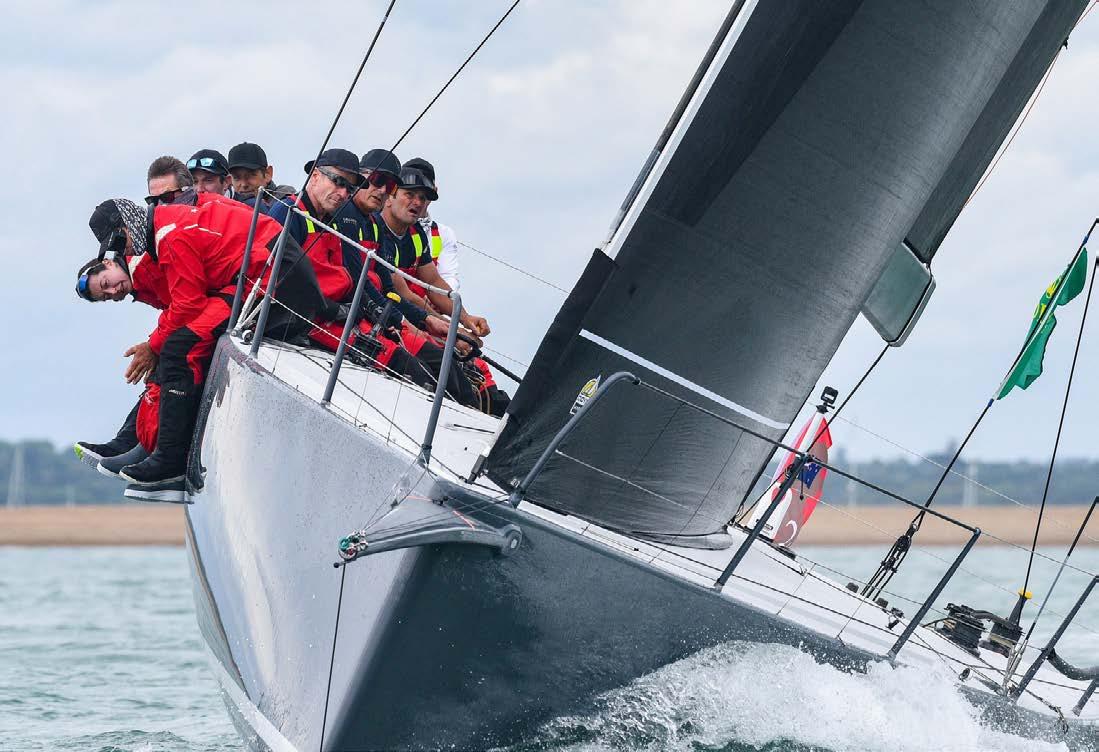

Tony Mutter’s Hobart hopes
Meet the fleet: NZ boats
Jenny Armstrong: Getting S2H ready
The highs and lows of the Admiral’s Cup
Jo Aleh rewriting America’s Cup rules
Excellence Awards: All the winners
The rise and rise of Sean Herbert
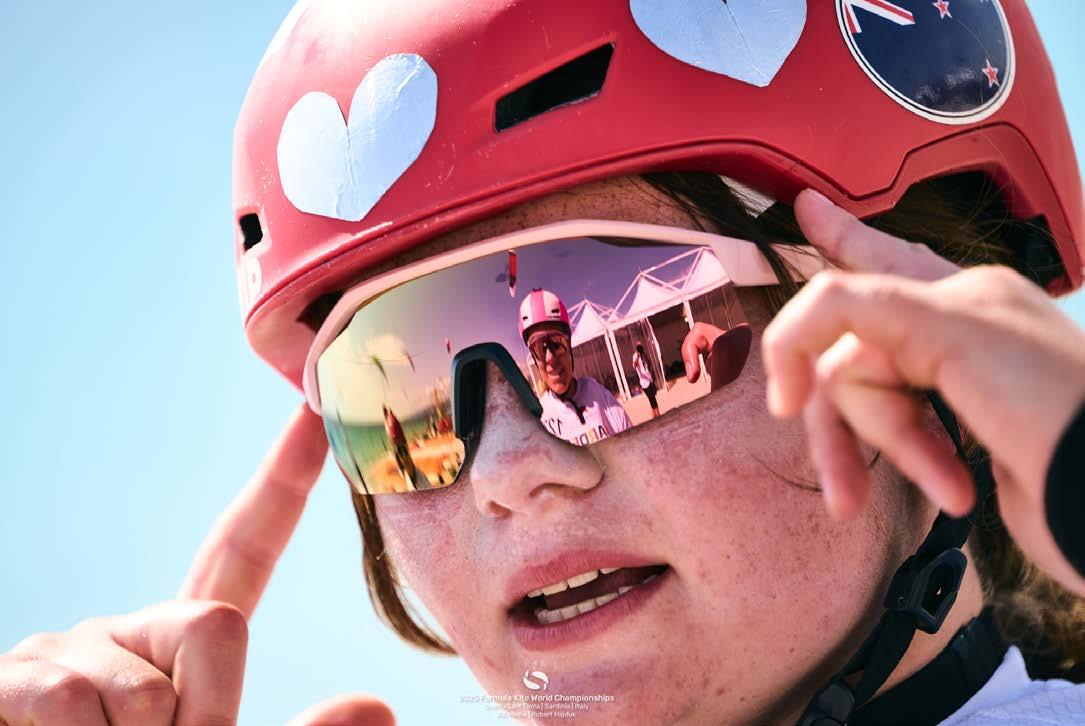
Concussion:
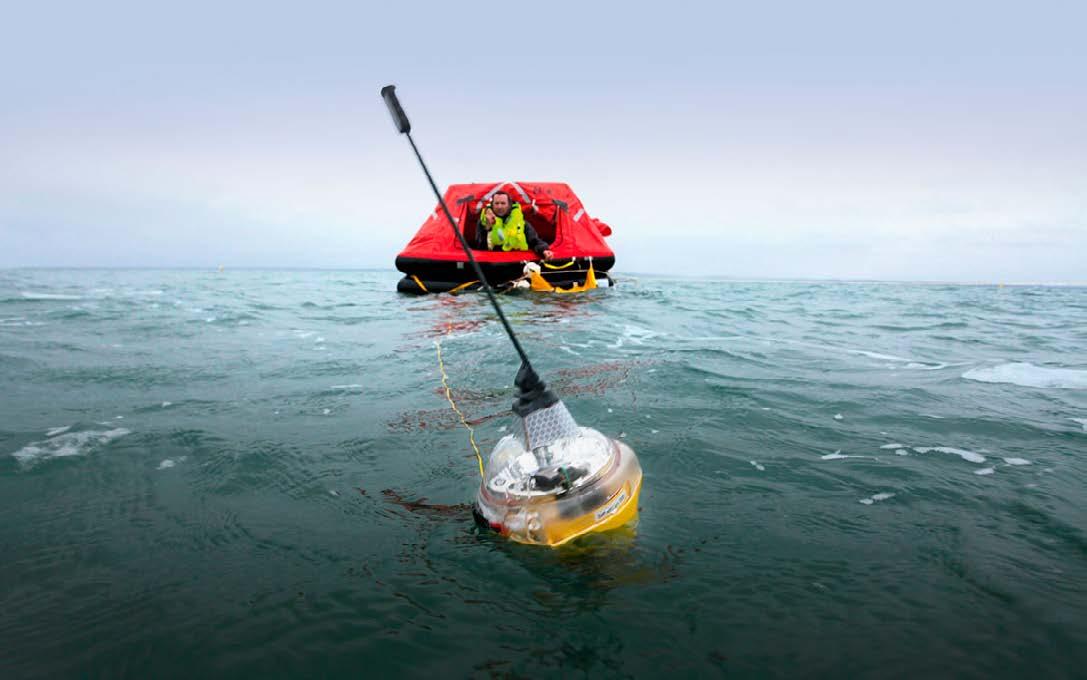
Product
ParAble’s



EDITOR
@YachtingNewZealand
@YachtingNewZealand
CONTRIBUTORS
Steve Armitage, Jenny Armstrong, Michael Brown, Duncan Croft, Bruce Maunsell, Suzanne McFadden, Nigel Richards, Dominique Roos, Kathy Young.
EDITORIAL
Eduan Roos eduan@yachtingnz.org.nz
ADVERTISING
Angela Jordan angela@yachtingnz.org.nz
DESIGN
coxandcocreatives@gmail.com
YACHTING NEW ZEALAND 11 Omana Road, Milford, Auckland 0620
YBQ is published quarterly by Yachting New Zealand.
Cover photo: Belinda Bullock
Excellence in sailing meansdifferent things to different people. That, perhaps more than anything, is the unique beauty of our sport.
It can be measured in trophies and titles, in miles sailed or races won.
It can be found in quiet commitment, in service given without fanfare, or in passion that endures long after the spotlight has moved on.
This issue of Yachting & Boating Quarterly celebrates all of these forms of excellence – and none more so than the one embodied by the man on our cover.
Late last month, Mark Mulcare was awarded the inaugural Peter Lester Award for Outstanding Contribution to Sailing at the 2025 Barfoot & Thompson Excellence Awards. It is a significant honour, named after one of the most respected figures our sport has known.
Yet to define Mark’s story by an award alone would be to miss the point entirely.
His life in sailing has been shaped by obstacles that would have diminished –even ended – the involvement of many others.
His journey has not been straightforward, nor easy. And yet, through every challenge, his love for sailing has never waned.
Mark’s story is one of resilience, adaptability, and an unwavering belief in what the sport can give – and what it allows us to give back.
Contribution takes many forms, and Mark gives in the best way he knows how: quietly, generously, and with a profound impact on those around him.
His story is a reminder that the health of our sport depends on people like Mark, whose passion is expressed through service as much as skill.
Elsewhere in this edition, Yachting New
Zealand chief executive Steve Armitage reflects on his early months in the role and his belief that clubs are the true breeding ground of excellence.
Every sailor, coach, and official honoured at this year’s awards evening began their journey at a club. Supporting and strengthening those clubs, Steve says, is central to ensuring sailing in New Zealand continues to thrive.
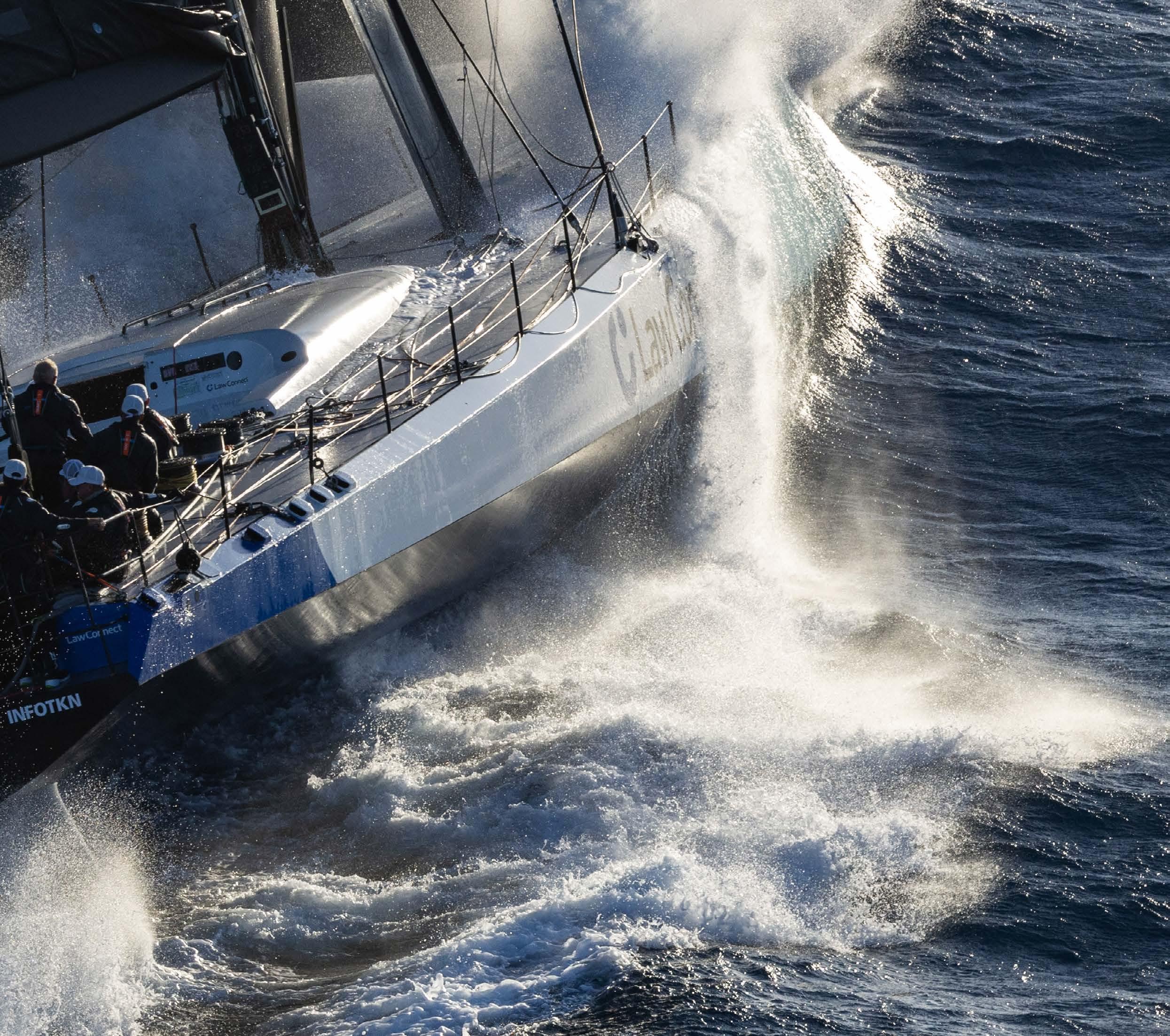
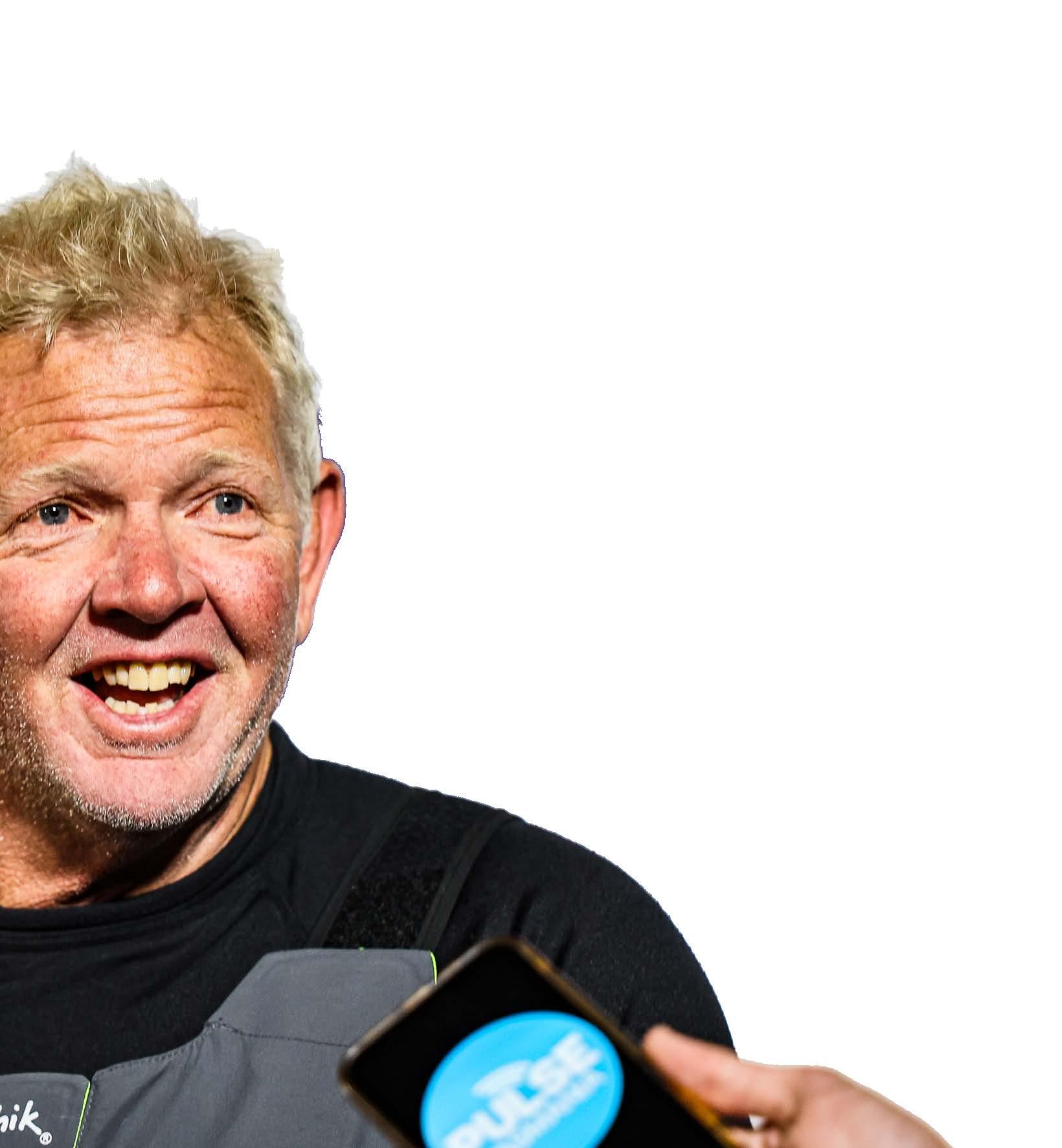
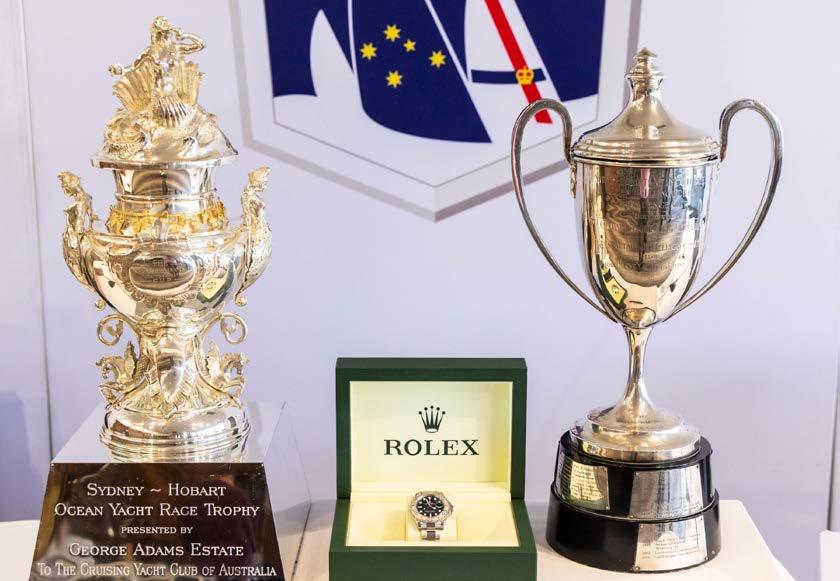
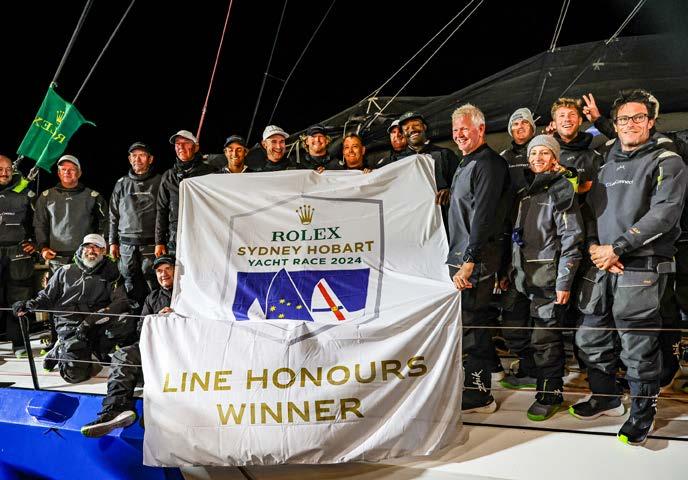
We also revisit the return of the Admiral’s Cup after a 22-year hiatus – a development that has reignited offshore ambition – and look ahead to the SydneyHobart Yacht Race, where Kiwi sailor and LawConnect sailing master Tony Mutter talks us through his team’s rare opportunity to claim an extraordinary three-peat of line honours.
Jo Aleh shares what life has been like since she became the first female sailor selected for Emirates Team New Zealand, offering insight into life inside the America’s Cup machine.
We also catch up with wingfoiling sensation Sean Herbert, New Zealand’s Male Sailor of the Year, whose rapid rise has taken the discipline by storm.
For those drawn to quieter horizons, we bring you 20 of our favourite New Zealand anchorages – from timeless favourites to hidden gems – as cruising season ramps up.
And in one of the most gripping accounts we’ve published, Bruce Maunsell takes us inside his 27-month, 24,000-nautical-mile circumnavigation of the Pacific: a voyage marked by typhoons, breakdowns, solitude, sharks, armed officials – and unforgettable moments of wonder.
Enjoy the read, and here’s hoping the summer ahead brings fair winds, good company, and plenty of time on the water.
Kiwi’s dash to get Hobart ready 12

All the Excellence Awards winners 24
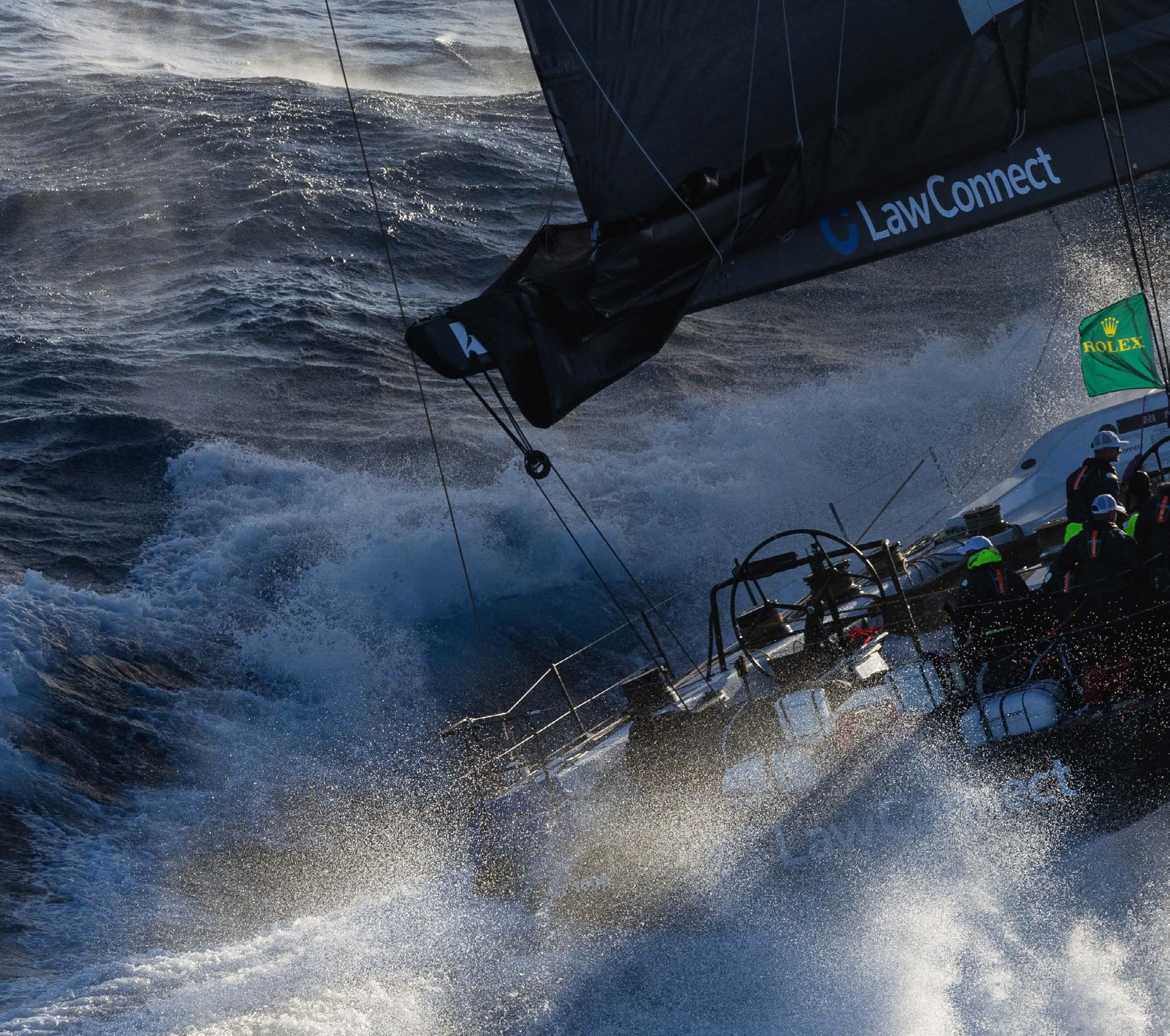
Two wins down, one to go. Tony Mutter and LawConnect chase the ultimate offshore triumph: a rare triple in the Sydney-Hobart, writes
few offshore races can match the history and intensity of the SydneyHobart Yacht Race. The annual event attracts elite sailors and some of the fastest and most technologically advanced monohulls ever built, setting out from Sydney Harbour each Boxing Day and watched by a huge audience on and off the water.
Yet at its heart, the Sydney-Hobart remains a test of seamanship, endurance and judgement.
almost immediately “at the end of the last
“In February, March we’re starting to pull apart the boat. Biannually the rig and keel come off and are fully checked… we go over and above what’s required for our is then put back together
vessel has had some additional refinements added this year. “We lengthened the boom a little bit by about 400mm…we took the opportunity to gain 20 square metres in the back of the mainsail, and that seems to
hopefully translate into some important p10
Continued from p9 gains on the water, but conditions will shape the race as much as preparation. Last year produced one of the most punishing Sydney-Hobarts in recent memory, with Mutter describing it as “definitely the roughest one I’ve done”.
He isn’t expecting a straightforward run south this year either, with the weather in the lead-up to the event being “unpredictable” thanks to “a heatwave in Antarctica that’s made the season unsettled and Spring run later. It’s been warm and windy, not the typical sea breezes.”
The Sydney-Hobart begins with one of the most demanding starts in offshore sailing. “The spectacle is amazing,” Mutter says. “I think there’s 1.1 million people watching the race live around the harbour, down the coast and on the harbour.
“The toughest part is often that first stage of close-quarters sailing with the other big boats. We’re going to have five of those this year, so that closes down our manoeuvring room in the harbour. The first stage is basically getting out of the harbour in good shape.”
On the first night, boats often encounter a southerly wind change which can vary in severity. But even when the wind is steady, the sea state rarely is. Counter-currents, Southern Ocean swell and coastal eddies make the New South Wales coastline a tactically complex stretch of water to sail in.
“The wave patterns are super unsettled,” says Mutter. “You’ll be sailing along, thinking ‘it’s really nice’, and then 10 minutes later, it’s totally horrible. The wind hasn’t changed; your course hasn’t changed; you’re just in a different eddy. That makes it really difficult… it keeps you on your toes.”
For many, this unpredictability is part of the appeal.
Mutter agrees that the challenge is one of the attractions for sailors who return to race year-in, year-out.
“Some sailors do very little else in the year. The sailing they’re doing is in preparation for the big one – the SydneyHobart. It’s on a par with the Melbourne Cup. It’s an iconic event.”
Among those making the crossing this year are several Kiwi crews – something Mutter is pleased to see. “Callisto is wellprepared… V5 and Vixen arrived [early too].
“Sailing 1000 miles from New Zealand to Sydney on a boat that size is a massive effort. You learn an awful lot about your boat by doing those sea miles.”
Achieving a rare three-peat will mean overcoming a fleet that has only grown stronger since last summer.
Mutter believes Comanche remains the benchmark for out and out speed. Scallywag arrives after a strong year in Europe, while Wild Thing has undergone significant modification and Lucky 88 brings extensive race miles and a top-tier crew.
Yet despite the challenge, the goal of three in a row for LawConnect remains firmly in sight.
“That’s what we’re trying to do,” says Mutter. “It’s very difficult for us to win on paper any year, especially against [boats like] Comanche, and throwing the other boats into the mix that are well prepared.”
And should LawConnect find themselves in contention again in the final approach to Hobart up the River Derwent, Mutter believes the crew’s mindset and preparation give them a chance.
“We have to know when to push performance and when to [hold back] –we need to weigh up the risk and reward of when we push a bit harder.
“We know exactly where we’re at; we’re slower in a drag race, but it means we plan around that – and it’s worked for us.”

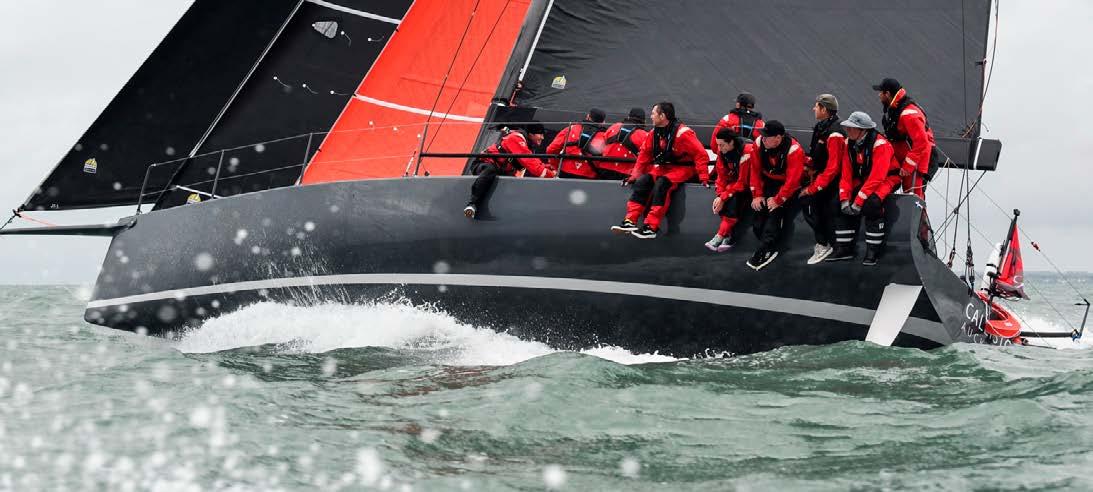
Royal New Zealand Yacht Squadron
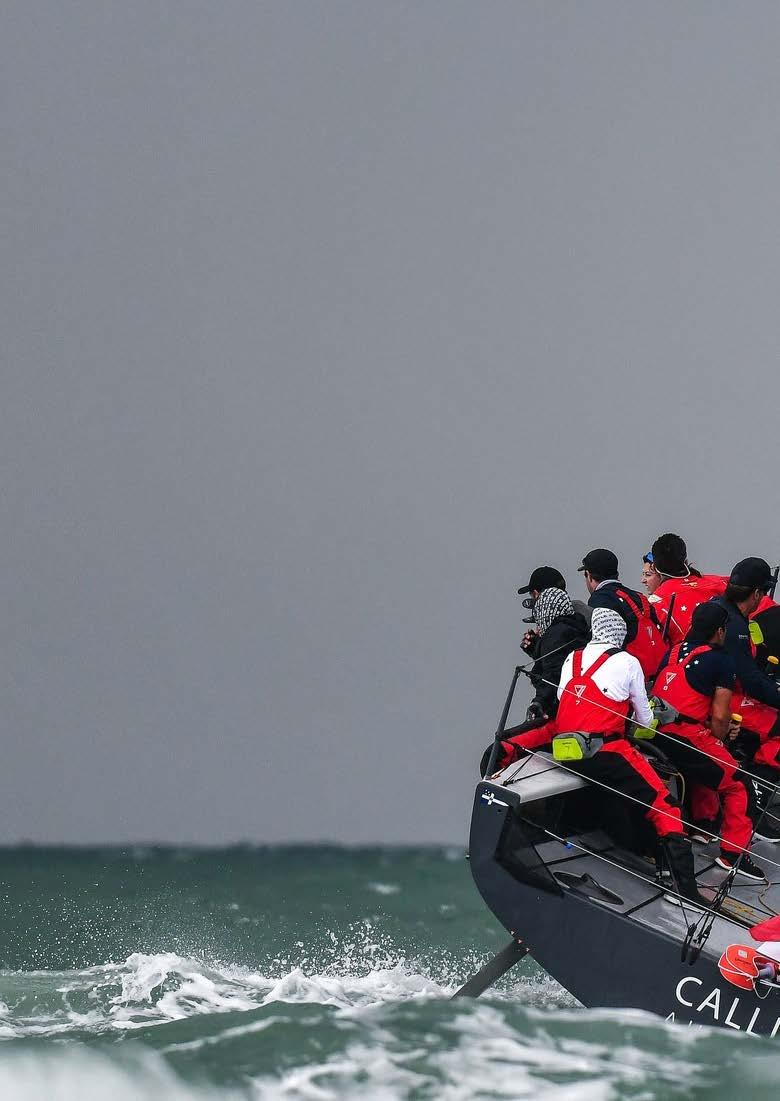
Callisto is a PAC52 with an impressive offshore racing pedigree under the leadership of Jim Murray.
A proven performer, Callisto won overall honours in the 2021 California Offshore Race Week and secured third place in Division 3 of the 2021 Transpacific Race. Callisto has competed in two editions of the Caribbean 600, finishing second and third in IRC Zero. The team won divisional line honours and its class in the 2023 Newport Bermuda Race and notably, claimed victory in that season’s Pineapple Cup from Miami to Jamaica. Its sistership, Warrior Won, has already demonstrated strong potential in the Sydney-Hobart Yacht Race on a similar platform, when it finished fourth overall in 2022. Team Callisto represented the RNZYS in the 2025 Admiral’s Cup on their GP42, also named Callisto, partnered with Max Klink’s Botin 52 Caro
Royal New Zealand Yacht Squadron
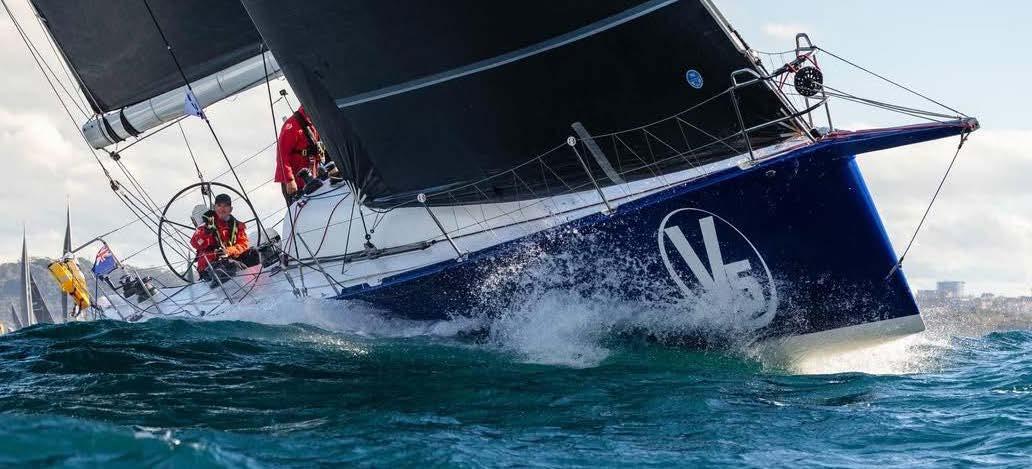
Royal Akarana Yacht Club
Brian Petersen returns with V5 having sailed his former yacht, Ran Tan II to 24th overall in 2017. V5 was the first interpretation by Alan Andrews for the newly developed Box Rule and was named Victoria 5 for her USA owner but is now simply V5
She was modified, with a canting keel and canard fitted and in 2006 was shipped to Auckland and raced extensively. V5 was subsequently bought and raced by David Nathan. In October 2020 she was acquired by Petersen some 18 months after the loss of Ran Tan II on a delivery to Los Angeles for the 2019 Transpac Race.
Globe-trotting Petersen has covered a lot of ocean miles over the years.
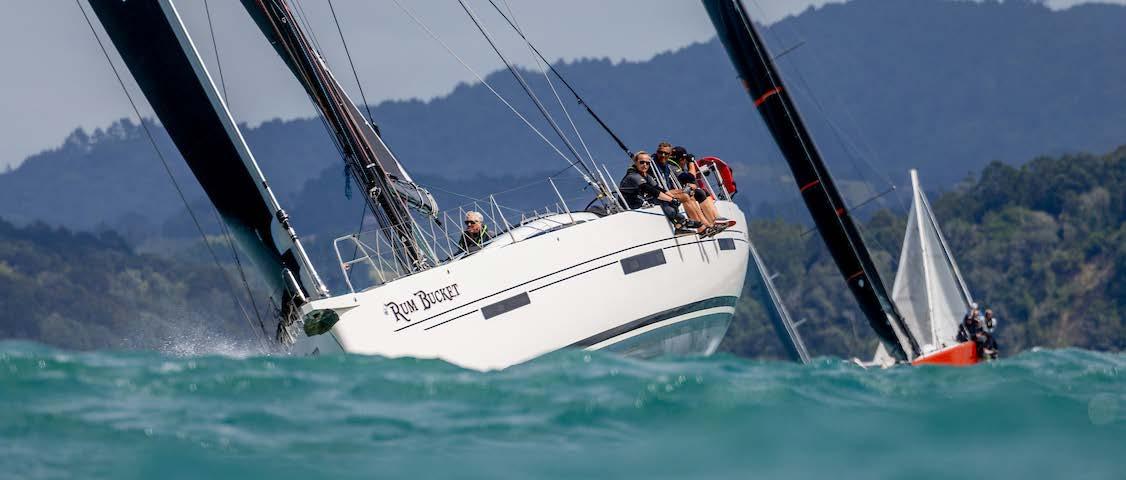
Royal New Zealand Yacht Squadron
Rum Bucket, a cruiser, was built in Croatia and with her New Zealand crew was sailed through the Mediterranean and down to Las Palmas de Gran Canaria. From there, the More 55 entered her first race across the Atlantic west bound to Saint Lucia in the Caribbean.
In 2020, she sailed to the Panama Canal and was stranded with the global Covid lockdown, and then she was trapped on a boat carrier where drugs had been found, before finally arriving in New Zealand in August 2021.
Rum Bucket is the first of her design in the Southern Hemisphere. Since 2021 she has been racing on the Hauraki Gulf, including competing in the Three Kings Race and the PIC Coastal Classic.
Her crew are looking forward to competing in the 2025 Sydney-Hobart, a bucket list race.
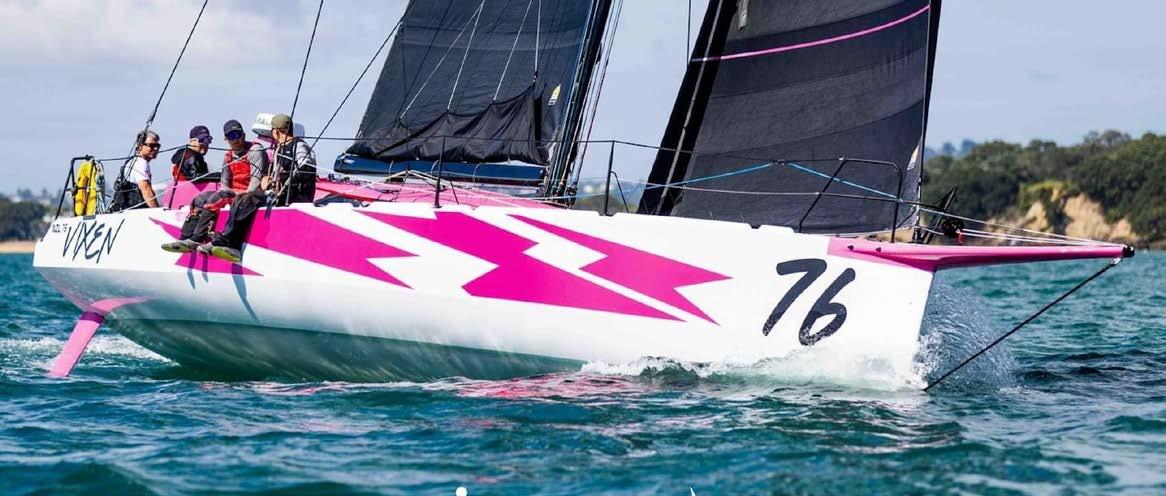
Bay of Islands Yacht Cub
Vixen Racing is a modified Class 40 from the design board of Guillaume Verdier and the 80th is her first Sydney-Hobart. She was launched in 2008 as Desafio Cabo de Horno and won the Global Ocean Race.
Vixen Racing is a new team led by double Olympian Sharon Ferris-Choat, a Canadian-born New Zealander who has raced around the world three-times and is a world speed record holder.
Ferris-Choat, who skippered the Open 60 Awen to Hobart last year, says Vixen Racing will be a dynamic and competitive team in the 80th Sydney-Hobart. Her crew is a blend of females and males. There are many fast yachts of around 40 feet in the fleet this year, including Elizabeth Tucker’s Class 40 First Light, that the competition will be fierce.
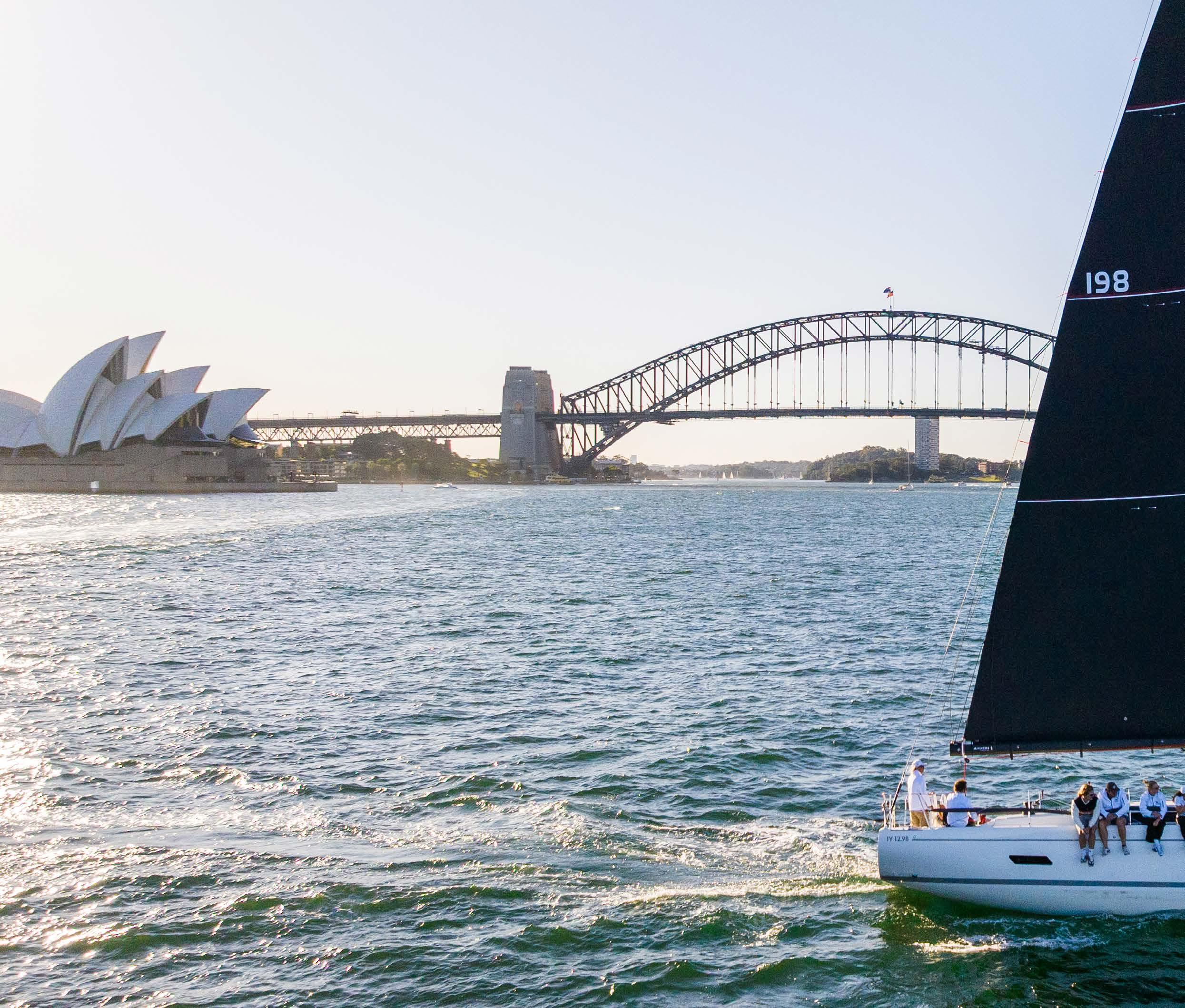
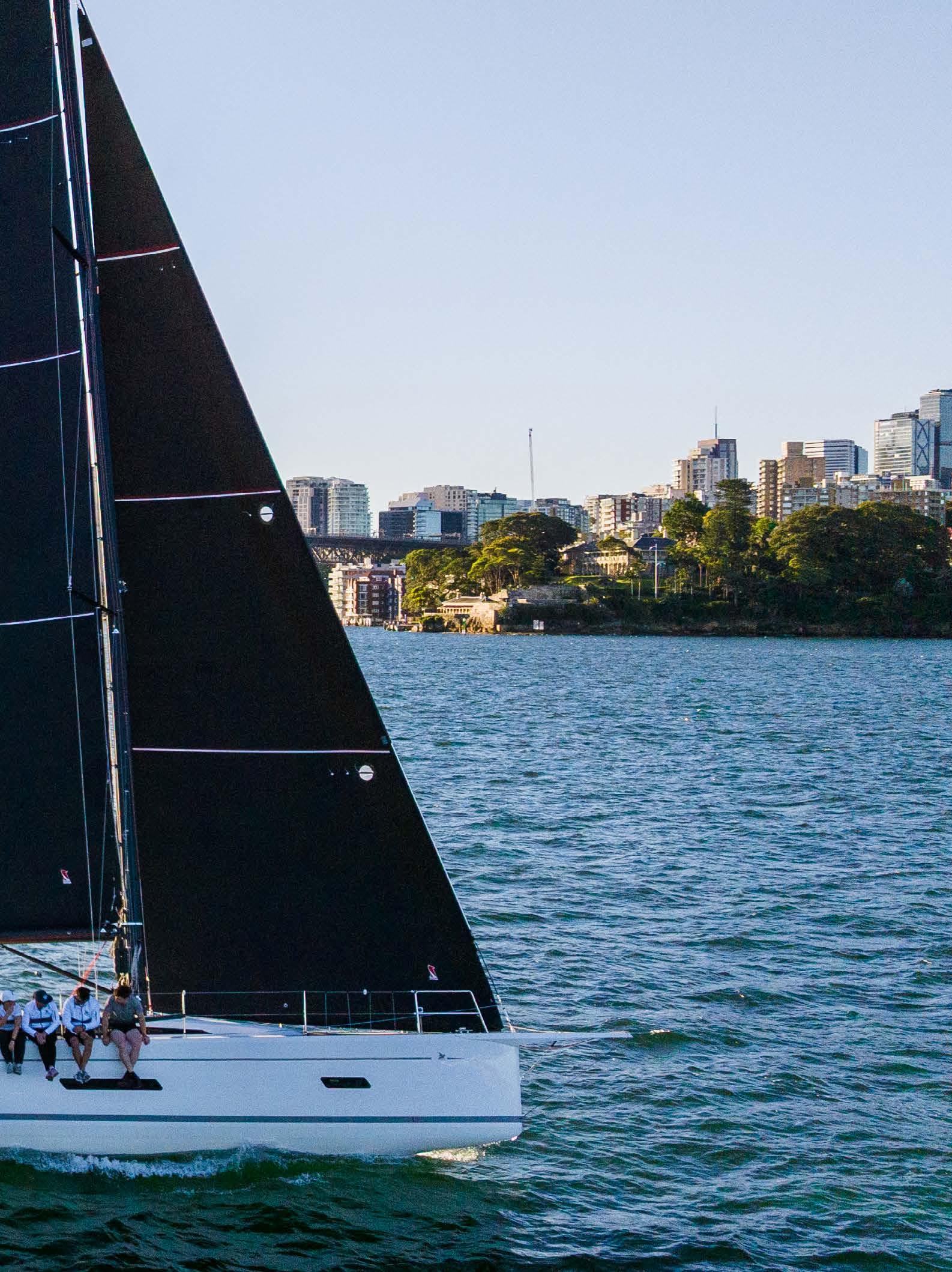
From first sail to final qualifier, Veloce's journey to Boxing Day proves the iconic event is never simple – and never dull
About a year ago, my phone rang.
On the other end was Matt Hayes – renowned Australian sailor, adventurer, entrepreneur and, it turns out, the sort of person who calls with big ideas and expects you to jump right in with him.
“Fancy doing the Sydney to Hobart with me?” he asked.
He didn’t have a boat. He didn’t have a
crew. He just had the dream. Naturally, I didn’t hesitate. I said yes straight away – and that was the start of this wild, wonderful challenge that now lies ahead of us.
Hayes isn’t new to this caper. His first Sydney-Hobart was at just 18, on Sir James Hardy’s Police Car. He later raced on Syd Fischer’s legendary Ragamuffin He represented Australia in the Soling at the 1996 Olympics, campaigned again for Sydney 2000, sailed the Admiral’s Cup and Kenwood Cup, and even circumnavigated the globe from 2018 to 2020.
He founded his first sailing school at 19 and later launched Sydney By Sail, helping introduce thousands of people to our sport. Now 61, he’s on something of a mission: he believes ocean racing needs more young sailors and he wants to give them their shot.
And what better platform than a brandnew race boat, the only new yacht in the entire 2025 Sydney-Hobart fleet?
That boat – Veloce (Italian for “speed”) – is an Italia 12.98 racer-cruiser, built and designed in Italy. She was meant to arrive in Sydney in June. She didn’t show up until September.
That left us with a very short runway to prepare for one of the toughest offshore races in the world. The Sydney-Hobart is nearly 630 miles of currents, storms, light patches, big waves and, more often than anyone likes to admit, fear. More than 140 yachts will set off on Boxing Day – and we want to be competitive from the start.
So, the moment Veloce rolled out of the container, the clock started ticking. Every day since has been long hours of commissioning, safety checks, systems testing, compliance paperwork, and
training – lots of training. Sea survival refreshers. First-aid drills. Emergency procedures you hope you never use.
My first sail on Veloce was in Sydney. I remember looking at the instruments and thinking something wasn’t calibrated correctly. Surely, we couldn’t be going that fast upwind. But yes – she moves beautifully. She feels powerful, yet manageable. Every now and then you sail a boat that just wants to go. Veloce is one of them.
It’s not all smooth sailing, though. We’re still learning how to get the best out of her. Sail selection on the runs and reaches will be crucial. Weight on the rail matters. Trim must be precise. It’s all those tiny refinements that will decide whether we gain metres – or lose them – hour after hour, across the Tasman Sea.
We had our first major outing in the
'I remember looking at the instruments and thinking ... surely, we couldn't be going that fast upwind.'
Jenny Armstrong
Bird Island Race. Conditions threw everything at us – five to 35 knots – and that was before we even made it back to the bar for a debrief. We had flashes of brilliance and some humbling moments too. Exactly what a new team on a new boat should expect.
The crew for Hobart was selected after that race - and I’m thrilled to have been offered a place, and one of the key driving roles. Drivers are the boat’s heartbeat in heavy seas, and the Sydney-Hobart is notorious for delivering exactly that. Being trusted at the wheel means a lot.
Our squad is a brilliant blend of youth and experience, with sailors from Australia, Canada, Ireland, Norway – and one Kiwi (that’s me). Eleven of the crew are men, and many are doing their first Hobart. Their enthusiasm is infectious. Their nerves are too.
Matt’s son Josh, 30, is sailing with us as well. It’s a family effort in every sense, including the new generation learning offshore skills from those who have seen a bit more weather.
We then raced in the Sydney Short Ocean Racing Championships – a long passage race followed by two short-course battles. Saturday’s westerlies hit 35 knots and we found ourselves blasting downhill while other boats lost control around us. On Sunday, we tightened manoeuvres and found more confidence. Every race teaches us something.
Our final Hobart qualifier – the 170mile Cabbage Tree Island Race – gave me another crucial night shift on the helm before I ducked away briefly to coach at the youth world championships in Portugal. The next time I sail Veloce after that; it will be Boxing Day.
When I think about the race now, I cycle between excitement and fear. The good kind of fear. The kind that makes you prepare hard, respect the sea, and trust your teammates.
Success for us won’t only be measured on the results sheet. If we reach Hobart safely, race smartly, and bring more young sailors into ocean racing, that will be a win. If we can do all that – and have a few laughs along the way – that’s even better.
I know we have a strong boat under our feet. I know we will look after each other. And I know that when things get rough, which they always do in this race, saying “yes” so quickly will feel like the best decision I’ve made in a long time.
So, when you’re relaxing on Boxing Day, settling into leftovers and watching the action from the harbour, spare a thought for the chaos on board Veloce – 142 boats charging south, chasing dreams, chasing wind, chasing Hobart.
I’ll be one of them – holding tight to the wheel and smiling.
Jenny Armstrong is a three-time Olympian, gold medal winner, celebrated coach and Yacht New Zealand's regional development and coaching manager.
Kiwi Cam Dunn and the Yacht Club de Monaco crew delivered the goods to reclaim the famed trophy – as several of New Zealand’s best sailors were left to rue a few slices of bad luck, writes Michael Brown
Cam Dunn got to hang out with Prince Albert of Monaco recently – a first for the veteran sailor who’s spent 30 years rubbing shoulders with sailing royalty but never an actual prince.
That’s how significant the Yacht Club de Monaco’s win in this year’s Admiral’s Cup was to the principality.
Dunn was in the afterguard on Jolt 3, the 52-foot Botin, which helped the country win the first iteration of the Admiral’s Cup in 22 years.
Together with the 40-footer Jolt 6, the Monaco entry sailed a near-flawless regatta, banking consistently low scores across both the inshore and offshore racing to finish ahead of Hong Kong by 19 points.
“It was pretty epic,” Dunn said of the moment when they realised they’d claimed the Admiral’s Cup. “There wasn’t a lot of sleep that night.”
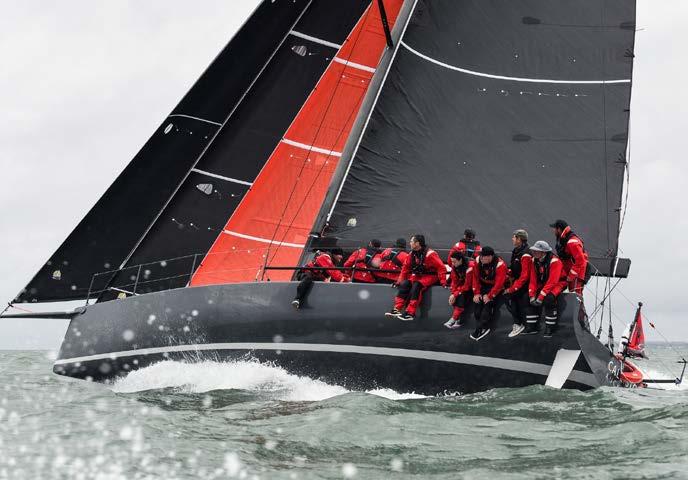
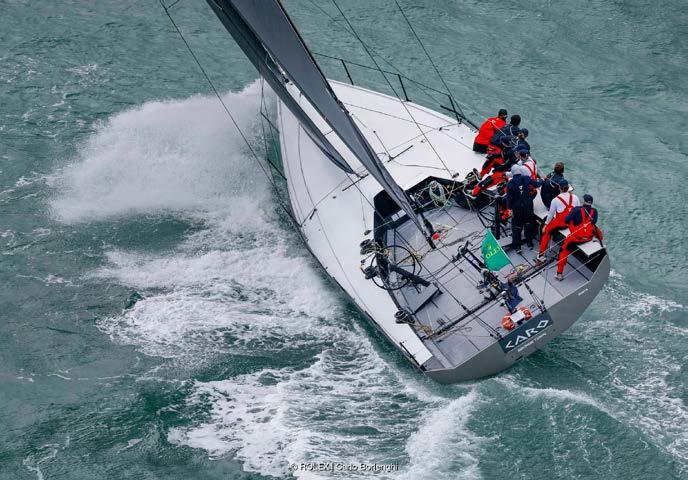
Further down the dock, the crews from the New Zealand entries were reflecting on what might have been. They’d gone in as one of the pre-regatta favourites with Caro and Callisto but
couldn’t quite string together the results across both divisions to push themselves onto the podium, finishing fourth overall.
“Caro just had one of those regattas, and would be the first to admit it,” said Mike Sanderson, who was main sheet trimmer on Callisto. “On a different day, they could have been top boat. We’ve all had them, and the way I explained it is they dropped their bit of toast and the peanut butter landed face down, every time.”
Needless to say, it left New Zealand in a bit of a jam.
The Admiral’s Cup dates back to 1957 and is known as the unofficial world championships of offshore racing. It dropped off the calendar, however, after the 2003 event, largely due to declining interest.
But momentum grew for its return, and two years ago it was announced a regatta would take place in 2025, something seen as appropriate given traditional hosts, the Royal Ocean Racing Club, were also celebrating their centenary.
No one really knows why interest dropped off, but it wasn’t hard to generate it this time around.
“I remember when I was a kid, it was massive,” said Dunn, whose sailing CV includes three America’s Cups, an Ocean Race, various world titles and many years on the TP52, RC44 and maxi tours.
“My tech drawing folder was covered
Continued on p16

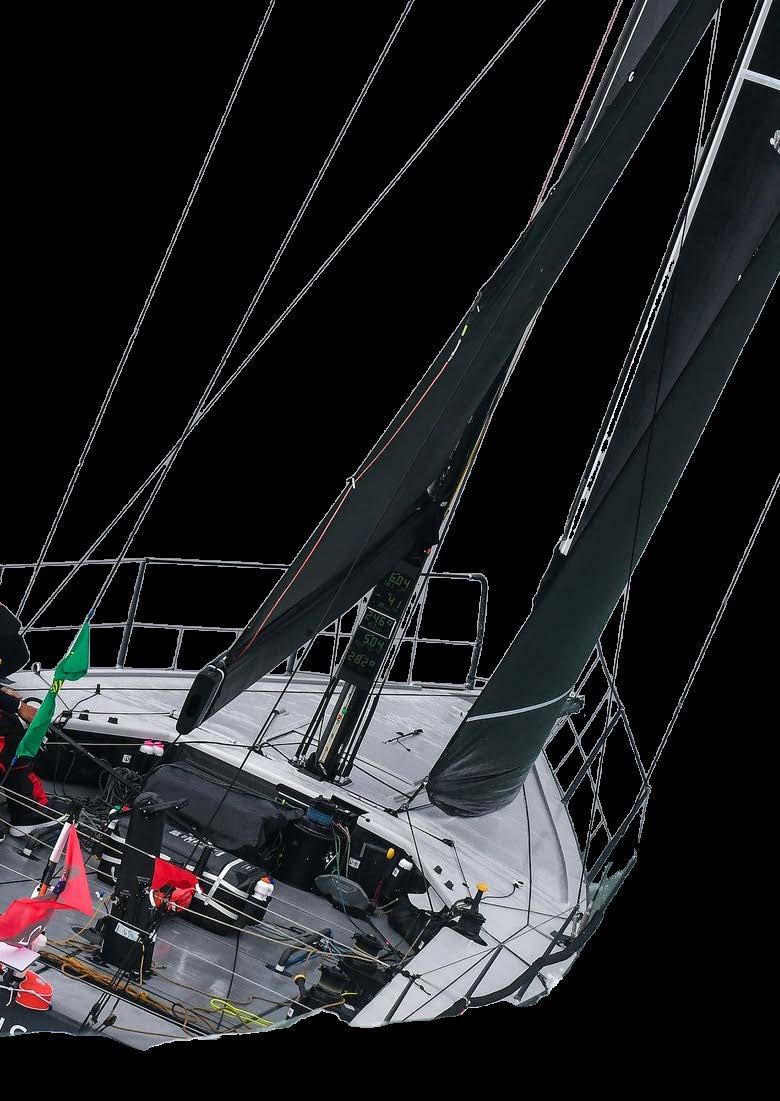

Continued from p15 in photos of Propaganda, when New Zealand won it in 1987. There used to be trials off East Coast Bays and there’d be heaps of boats, so when I heard it was going be back on the calendar I was like, ‘I want to do that’.”
Sanderson won the Admiral’s Cup with the Dutch in 1999 before going on to become the youngest skipper to win the Volvo Ocean Race with ABN Amro One in 2005/06.
He helped put together a strong crew on Callisto, recruiting the likes of Dean Barker, James Dagg and Jared Henderson, and tried to configure the boat for what they thought they might encounter.
While optimistic about their chances, no one really knew how each team would perform, especially when considering the combination of inshore and offshore racing, as well as handicapping and weather conditions.
“That’s just the lottery of it,” Sanderson said, “but I think that added to the adventure of this Admiral’s Cup”.
Fifteen teams representing clubs from 12 different countries lined up for this year’s Admirals Cup, from Italy and Ireland to Germany and Great Britain. Add in the likes of the United States, Australia, New Zealand and Hong Kong and it truly was an international fleet. It started with the Channel Race,
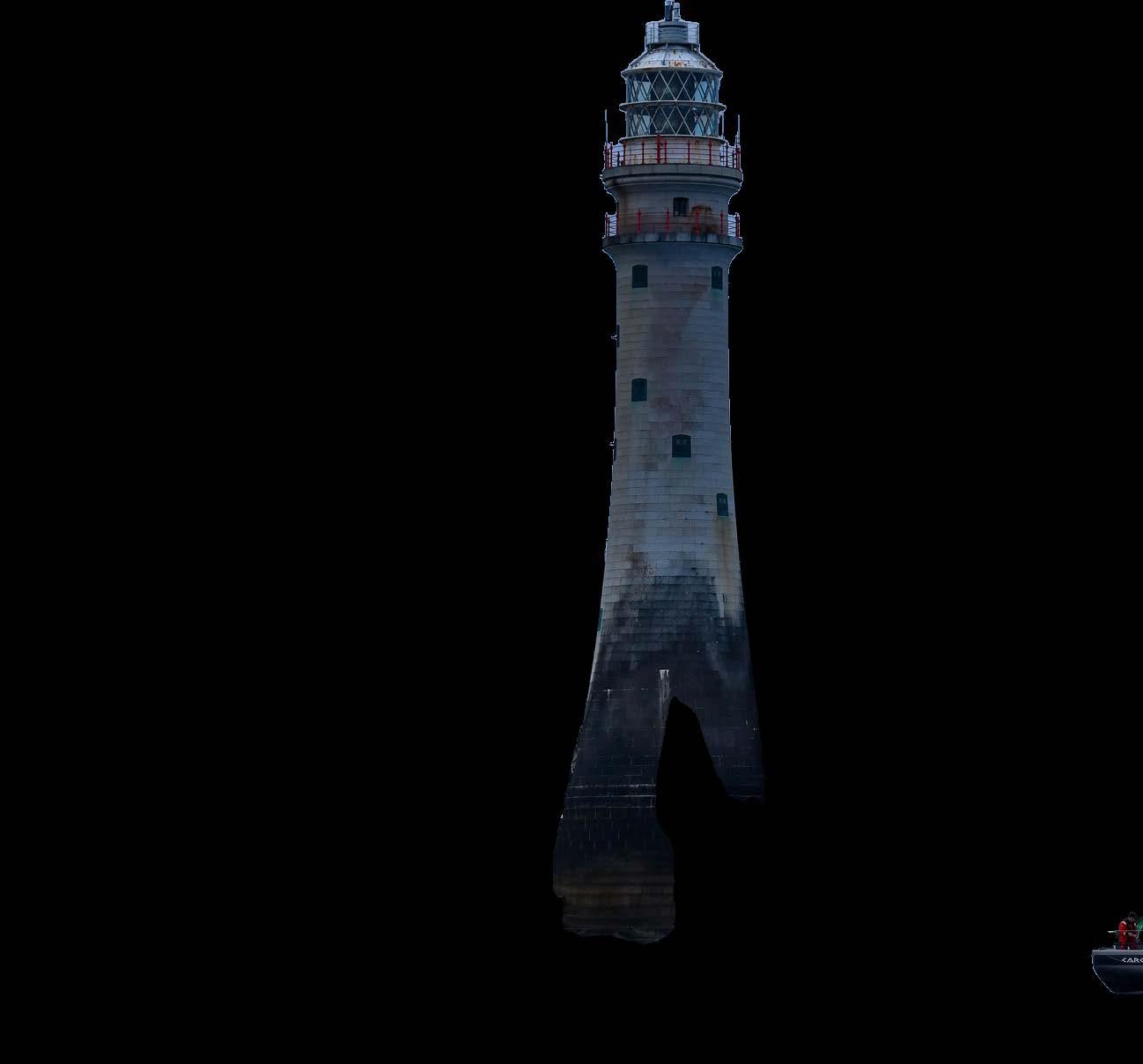
covering 150 nautical miles from the Solent to the coast of France and back. It was a double-points, no-drop race, so it was imperative for teams to get off to a good start. It’s also a traditional race on the offshore calendar, meaning the 30 Admiral’s Cup boats were joined by as many as 200 other boats on the racecourse.
Competitors weren’t told the course until 5pm the day before, to allow race organisers to chart what they thought would be the best course based on weather and tides. It ended up being a relatively light-wind race, until the final stages when the breeze picked up considerably, so suited different boats at different times.
For Dunn, it was his first offshore race since the 2013 Fastnet.
“I love the personal challenge of offshore racing, as well as the team challenge,” he said. “I enjoy the
psychological side of it as well, how people perform when they’re getting tired.
“I was one of the watch captains on the boat, so you’re in charge of your little squad. And while you’re managing yourself, you’re also trying to manage your crew and make sure everybody’s in good shape. There’s not a lot of time to get bored, especially when there’s a lot of tactical decisions to be made.”
They didn’t always get it right but weren’t far off and with both Jolt 3 and Jolt 6 performing well in their classes the Yacht Club de Monaco found themselves in third overall, just two points off the lead.
It was an encouraging start for them, especially as they felt their strength would be the inshore racing.
“Our team philosophy or target at the beginning was to win the inshore section and then just sort of see what happened in the offshore racing,” Dunn said. “And then in the first two days of the inshore racing, we sailed phenomenally well. We felt very comfortable in the conditions and managed to control the fleets really well.”
Across at the New Zealand camp, it felt like they had to scrap for every point. Callisto had been performing well, consistently in the top two of the Admiral’s Cup 2 fleet, but Caro struggled
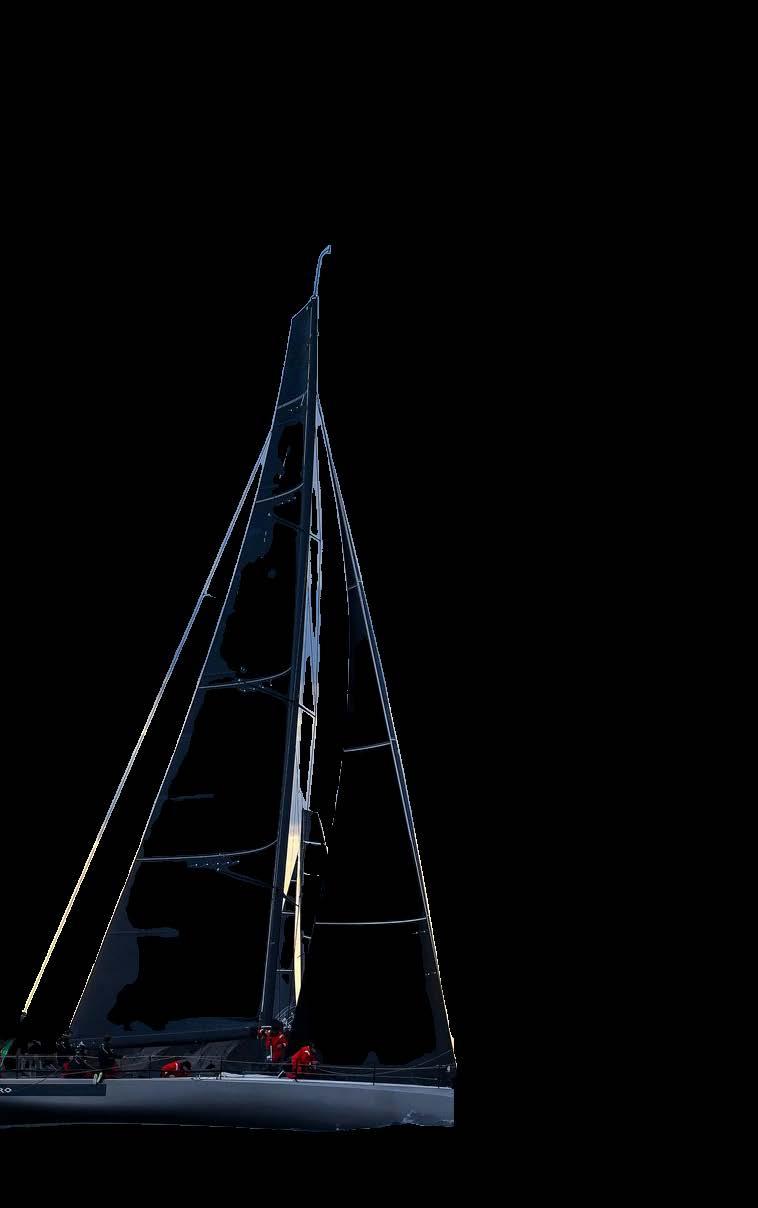
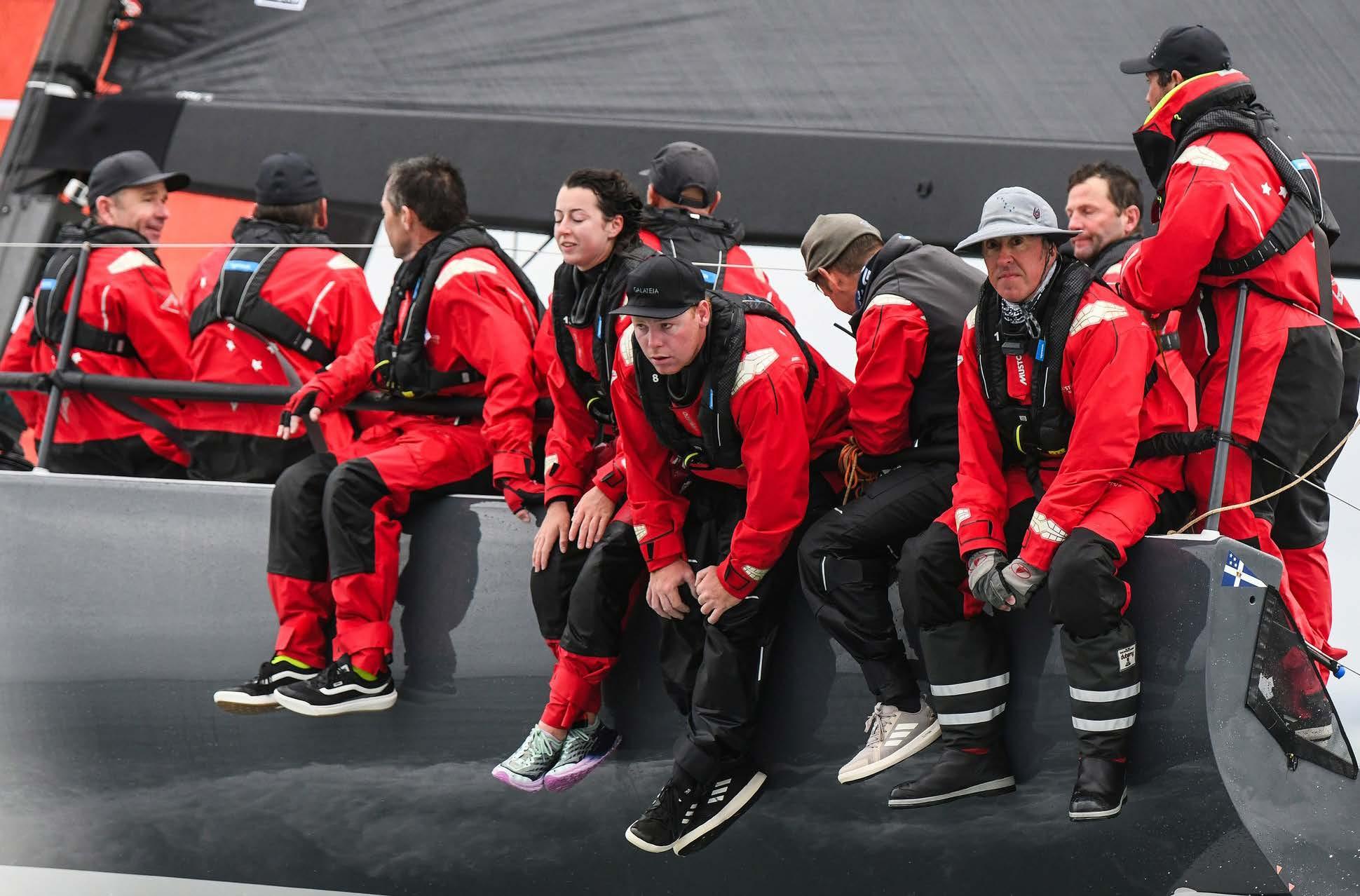
to piece it all together.
It meant New Zealand went into the Fastnet Race in fourth overall, behind Hong Kong, Monaco and Italy, but the race for division honours was even more intense. Only one point separated the top three boats in AC1 and in AC2 Callisto was joint leader.
The Fastnet Race might last upwards of four days – taking boats from Cowes on England’s south coast, around Fastnet Rock underneath Ireland and then all the way to Cherbourg on the French coast – yet results in this year’s Admiral’s Cup fleet were often decided by metres not miles.
Dunn and his Jolt 3 crew essentially found themselves in a 700-mile match race with Hong Kong’s Beau Geste (helmed by Kiwi Gavin Brady), with Caro providing extra company. That only intensified when the breeze unexpectedly shut down on the final day, allowing several boats to close up from behind.
Every decision, every manoeuvre, every puff of breeze became crucial.
“It was amazing, intense, stressful racing,” Dunn recalled. “Even as we crossed the line, we didn’t really know if we’d done enough, which seems crazy after such a long race. At the end of the day, we beat them by two minutes [on corrected time]. I guess you could say it
was quite comfortable!”
The shutdown of the breeze meant the smaller boats in the Admiral’s Cup fleet had also compressed.
It was equally stressful on Callisto, which was jousting with Jolt 6 and the second Hong Kong boat Beau Ideal (a brand-new boat helmed by another Kiwi Nick Egnot-Johnson) for class two line honours.
In the end, the Kiwis finished 25 seconds ahead of Jolt 6, with Beau Ideal not far behind.
“It was phenomenal racing,” Sanderson said. “We went hammer and tongs the whole way and, in the end, we ended up missing out on being top boat of the whole regatta by 14 seconds. You look back and think about where the opportunities to grab those 14 seconds were. You could say, our peanut butter landed face side up, but the dog ate it. We could have been luckier, for sure.”
As the dock party went on longer than most planned, and the stories of weary sailors became even more colourful, chatter often reverted to a desire for the Admiral’s Cup to become a regular on the calendar again.
A couple of days later, at prizegiving, that call was answered when it was announced it would return in July 2027, when an even bigger international fleet is expected.
“It was a super-cool event,”
Sanderson said. “While we all love the 52 Super Series, RC 44s and Cape 31s, there’s something quite special about a combination of inshore and offshore racing. Every boat had their day in the sun at some point and that’s unusual. It also shows that while you can create all these new events, one with a bit of history is still pretty special.”
History shows New Zealand has still won it only once but, with Kiwis littered throughout the fleet, it’s not hard to find a winner. And Dunn’s heroics had the royal seal of approval.
Michael Brown is a sports producer for TVNZ and a former Yachting New Zealand communications manager.
After a fifth Olympic Games and a year spent chasing waves and finish lines, Jo Aleh has found her next challenge. She talks to Suzanne McFadden about joining Emirates Team New Zealand and taking her ride of a lifetime as the first female sailor in a Kiwi America’s Cup campaign
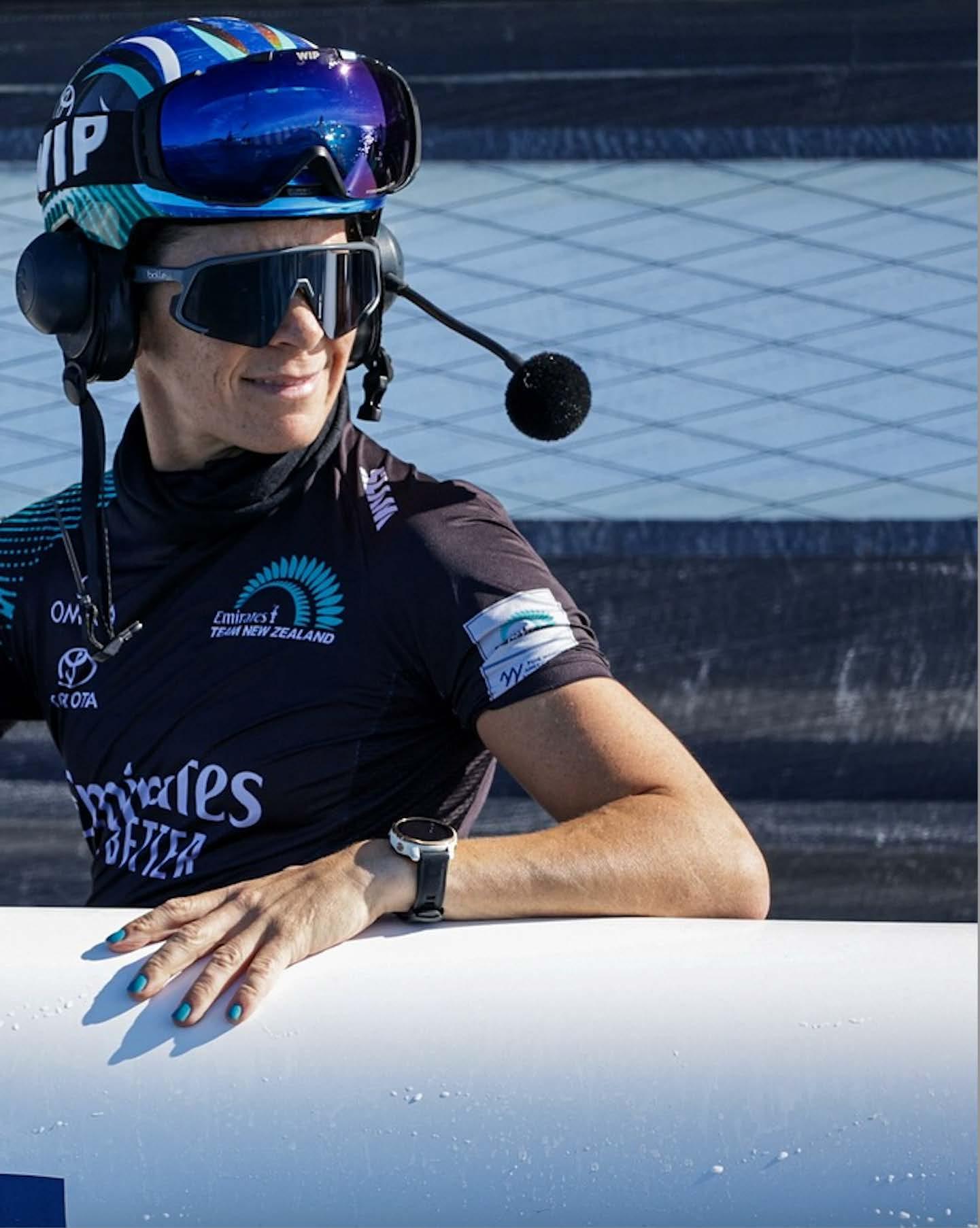
There’s a skateboard leaning against the gym wall in Emirates Team New Zealand’s Auckland base with Jo Aleh’s footprints on it.
It’s her latest mode of transport, gliding in on the final leg of her commute to work each day, after riding the bus from the North Shore to the old Tank Farm on the city’s waterfront.
She tries to arrive “extra early” each day – around 6.40am – to exercise, before breakfast in the base kitchen, a shower, and then into work.
“I’ve always done early mornings, and this routine is a really nice change,” Aleh says from a sofa in the corner of the gym.
It’s the first job with (almost) regular hours Aleh has done since she tried the corporate life at consultancy firm Ernst & Young after winning silver at the 2016 Rio Olympics. A desk job wasn’t the right fit for her.
“This year I’ve been all over the world, so it’s good to just settle here for a bit and figure out how life is,” she says.
If that all sounds a little laissez-faire, Aleh is anything but. She’s incredibly serious about her latest role – in the sailing team for Emirates Team New Zealand’s 2027 defence of the America’s Cup.
She’s breaking new ground as the first female sailor in a New Zealand
campaign – made possible by a landmark rule ensuring every crew of five includes at least one woman for the America’s Cup regatta in Naples.
The quota system may be controversial, and Aleh admits she wasn’t initially keen on it, but the double Olympic medallist is now revelling in being part of one of global sports’ most successful teams.
“I got a look inside here last year, when the Women’s America’s Cup team had a two-week training block in New Zealand. So, I understand the layout of the place – there are three different ways to get upstairs; I know where the women’s bathroom is, and our little four
‘This year I’ve been all over the world, so it’s good to just settle here for a bit and figure out how life is.’
Jo Aleh
locker stack,” she says, smiling. “There are a few girls around here, but we’ll slowly work on increasing that.
“There’s such a strong team vibe and you really feel like you’re part of something – a massive family. I’ve always loved being in a team – although I’ve only been in small teams, but all working on the same goal is exciting.”
It’s only been a matter of weeks, but Aleh is quickly finding her sea legs with the America’s Cup defenders. She doesn’t have a specific job description, and she’s perfectly okay with that.
“I guess that’s the thing with this place – there’s not really a job description. I’m in the sailing team and
the plan is I’ll be on the big boat. But we’re just starting the sailing programme on the AC40,” Aleh says.
“I’m driving the 40 in these sessions when I get a chance. The roles will be quite different on the big boat, so there’s a lot to figure out.”
At that moment, Emirates Team New Zealand chief operations officer Kevin Shoebridge walks into the gym. I ask him what it’s like to have Aleh as part of the team.
“It’s not her first time - she’s just here a lot more now,” he answered. “She’s just trying to fine tune what it’s like to be here 50 hours a week!”
Continued on p22
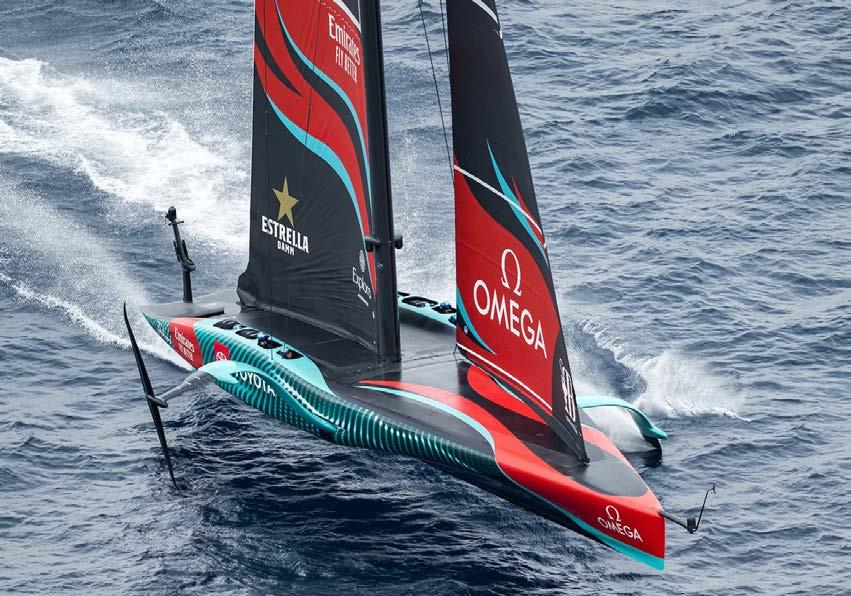
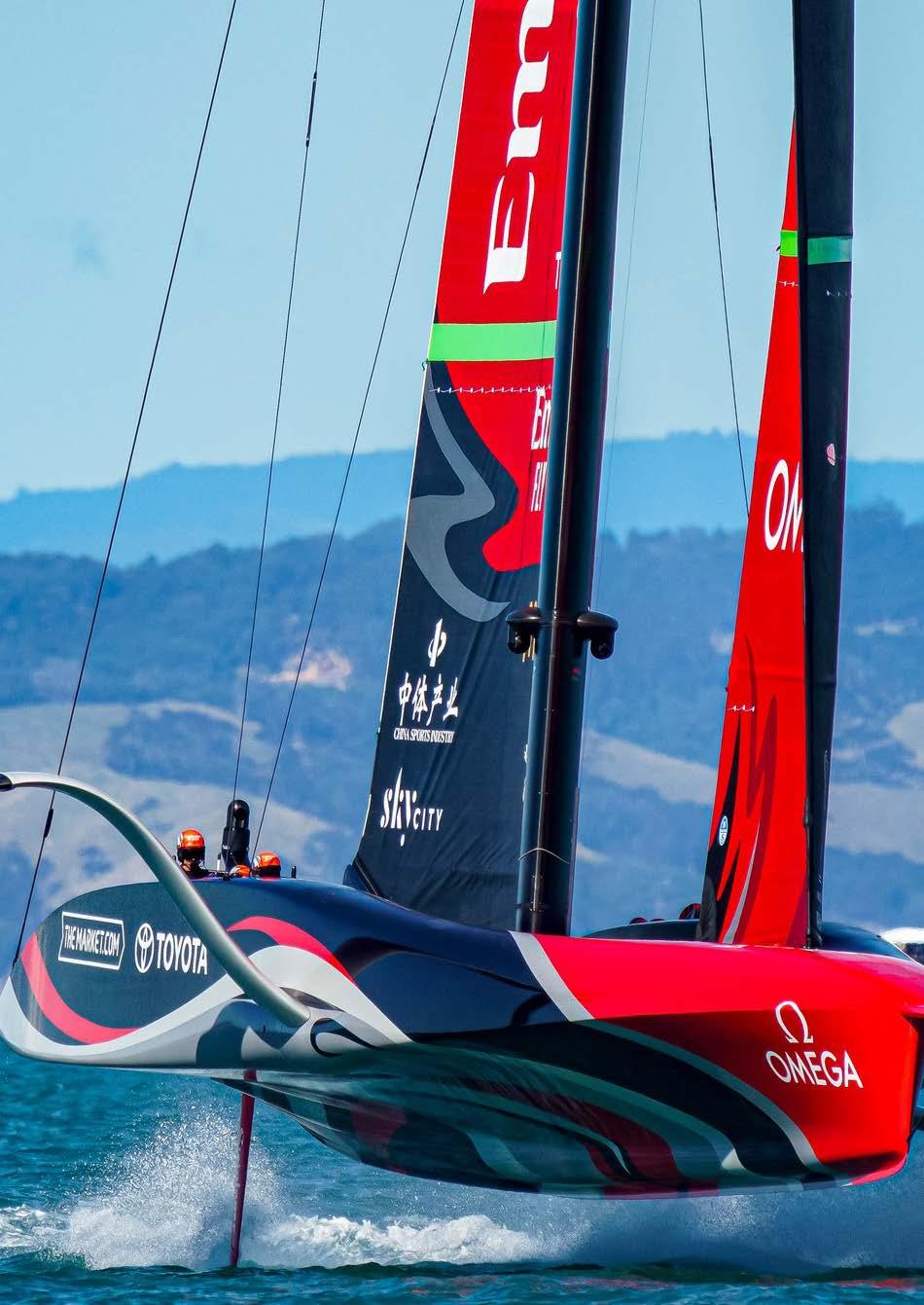
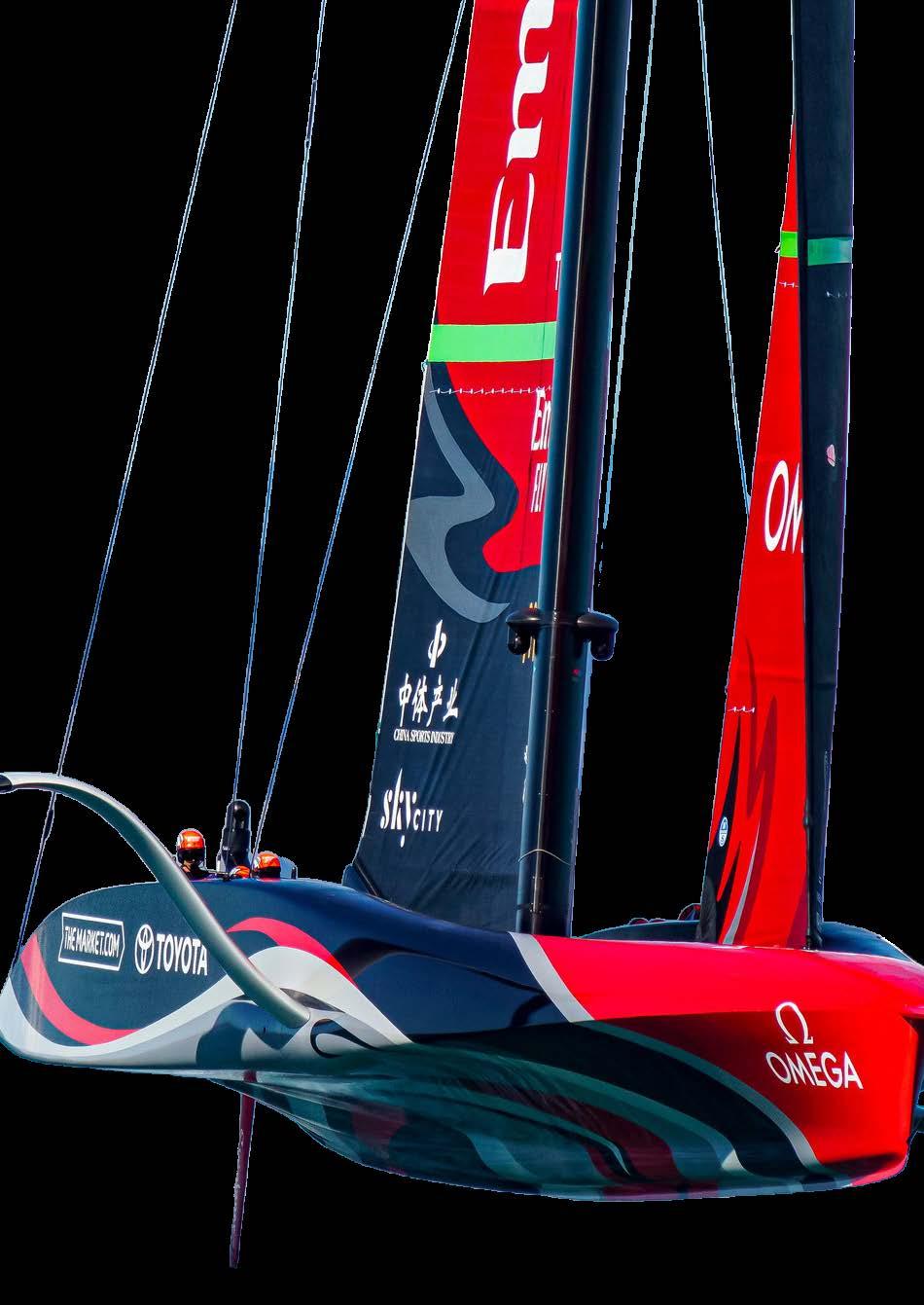
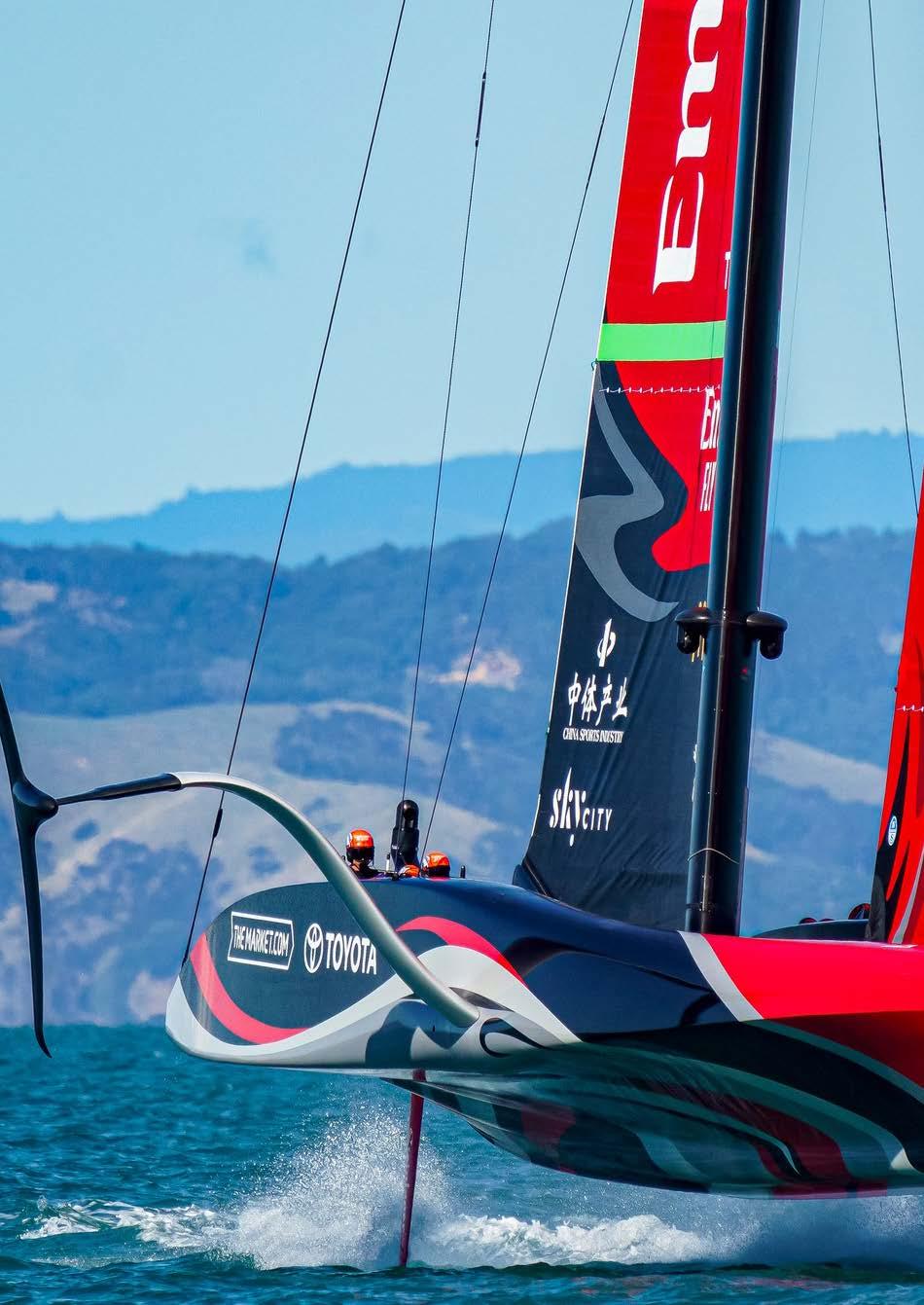
Aleh stepped on board AC75 Taihoro when it was in the shed in Barcelona, but she’s yet to sail on it. The deck layout will change for the next Cup –gone is the grunt of the cyclors (replaced with battery power), with five sailors and a guest racer split between two cockpits.
“It’s definitely a big learning curve,” she says. “The good thing is there’s a bunch of us newbies in the team – I mean ‘The Kids’ as they call the three young ones.” She’s talking about young guns Seb Menzies, Josh Armit and Jake Pye – the next generation of Cup sailors.
“They’ve been in the team a bit longer than me, so they probably understand this place more. But obviously I understand sailing, and I have a few life skills.”
Aleh is also excited to sail with another recruit, British helmsman Chris Draper. “He’s also new to this team, and it’s amazing to have him on board,” she says. “So, there’s a real learning mindset here; a cool sort of trajectory with everyone learning together.”
As co-driver on the Emirates Team New Zealand crew in the inaugural Women’s America’s Cup in Barcelona, Aleh was keen to continue with the team.
“I assumed that the event would keep going – it was definitely a success in Barcelona,” she says. “I’d kept in touch with Shoebs and Ray [Davies] over the last year, to keep track of what was happening with the rules. But it all took a long time.”
When the draft protocol was released earlier this year, proposing one female sailor must be on board, Aleh hoped she could be involved in some way. “Then, when it became apparent that this rule was going to go through, they reached out to me and asked if I was interested.
“My answer was obviously ‘yes’!” Aleh finds the new quota rule
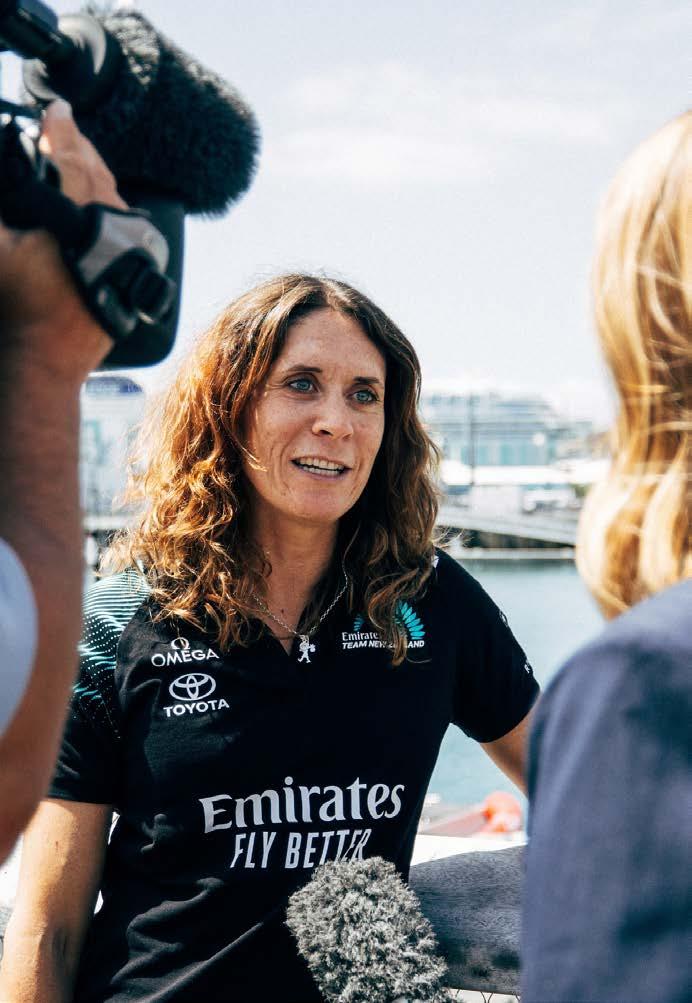
‘It can be pretty intimidating for women. Even though I know all these guys, and I’m pretty good at dealing with it all, there are still moments where I go, ‘Oh, am I the odd one out again?’’
Aleh on breaking boundaries
interesting. When it was suggested as an option while the regatta was in Barcelona, she remembers most of the women, including herself, were “pretty against it”.
“It’s understandable because the same thing happened when the Ocean Race announced it was introducing a quota. Now, a decade later, you look at it and think, ‘Well that was a no-brainer’,” she says.
“It’s changed the game in ocean racing, for sure. And hopefully that’s what this can do for the America’s Cup too. Hopefully this is just the start for women.”
Having travelled along the same pathway as many male sailors, the one thing Aleh’s CV has been missing is Cup experience.
“I just haven’t had the chance to step into something like this. I’ve been sailing
for as long as they have, and I’ve had a few opportunities along the way, but it’s just not the same experiences as they’ve had,” she says.
“It makes it harder when you’re older, too.” Aleh is now 39.
The Women’s and Youth America’s Cups will continue in Naples, and Aleh hopes more female youth sailors are involved. “This can’t be a one-off thing, and that’s been a mistake in the past. Once we make a step we have to continue moving forward and bring the younger ones up behind us. Because if they get the experience at 20, where are they going to be at my age?”
Women bring a different viewpoint to the table, Aleh believes.
“Since I’ve been here, I’ve been part of conversations where I feel I can add something different. It’s going to be interesting to see how powerful that is.
“I’ve been around sailing longer than a lot of guys here and a lot of it has been in the Olympic space, but I’ve also done offshore and SailGP, and a lot of different things. I’ve worked with a wider range of people and experienced many different challenges through that time.
“I think I can help shape how things happen – especially around bringing new people in.
“It can be pretty intimidating for women. Even though I know all these guys, and I’m pretty good at dealing with it all, there are still moments where I go, ‘Oh, am I the odd one out again?’”
She hopes when it gets down to the performance of the boat, she will question things that have been done a certain way for a long time.
“I’ll be like, ‘But why?’,” she says.
“It’s like the three young guys – they’re fresh out of the box and they’ve got cool ideas.”
Aleh hasn’t had a single idle moment in her new job.
“There’s always something I could be doing. We’ve got so many different programmes going on and I’m trying to up my development and skill base around sailing the boat, reviewing. It feels pretty
Continued on p22

Fiji, and running the 102km Tarawera ultramarathon.
endless,” she laughs.
“Now I’m trying to figure out how to make sure I still switch off at the end of the day as well. You’ve got to be able to do this for years.”
Emirates Team New Zealand veteran Davies has been impressing the importance of that to Aleh.
“Ray is the expert at after-work wingfoiling. He tells me: ‘Go winging, don’t hang around’,” she says.
Aleh has no problem finding other things to do. She’s always been incredibly fit and active. The kid who grew up running on the wild west coast beach of Muriwai, who tried her hand at netball and football before becoming obsessed with boats, is now a wingfoiler, surfer and a long-distance runner in her spare time.
She spent the past year travelling the world, mixing sailing with catching up with friends in Europe, surfing in
“If I’d just been hanging around for a year, I’d be pretty grumpy right now!”
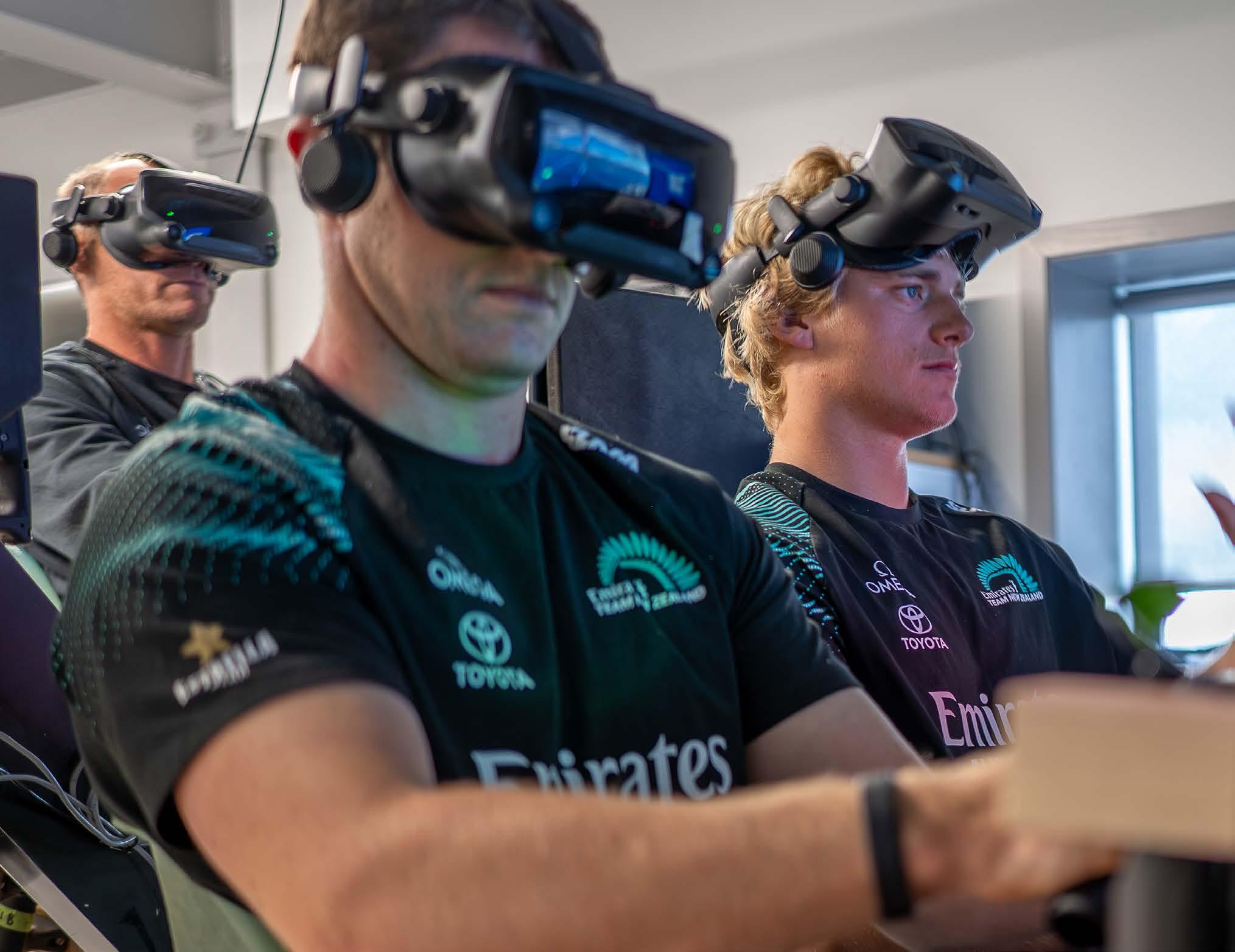
As much as she thrives on being on the water, Aleh also enjoys the data and technology side of a modern America’s Cup sailor’s life.
“The access you have to information here is amazing. If you want to change how you see or use something, it’s all possible,” she said.
“You can just iterate, and iterate, and iterate. Technology isn’t useful unless you’re figuring out how to use it and use it better – evolving constantly.
“Learning is what drives me. Finding out more and more and learning things I didn’t know. That’s what’s so cool here –there’s always something new to learn.”
Aleh remembers the goosebump moments when the women’s crew left the dock on board the AC40 in Barcelona on the first day of racing
– an incredible send-off surrounded by family, friends and teammates. “It was like nothing I’ve ever been part of,” she says.
Team New Zealand finished fifth, after scraping into the six-boat semifinals by countback.
“We obviously didn’t do as well as we wanted. But there are a few things that we’ll get the chance to fix in the team for next time. It was an amazing experience, to get a glimpse inside this team too. A cool starting point.”
It’s unlikely Aleh will sail in the women’s team, with her role on the AC75 her focus.
“But I’ll definitely be around to help the team. I will have learned a lot through this time to pass on, too. And the women’s team is also part of this pathway, and there’s somewhere else to go after that now.”
After four Olympic sailing campaigns (and one as a coach), Aleh was ready for a change. When she stepped away
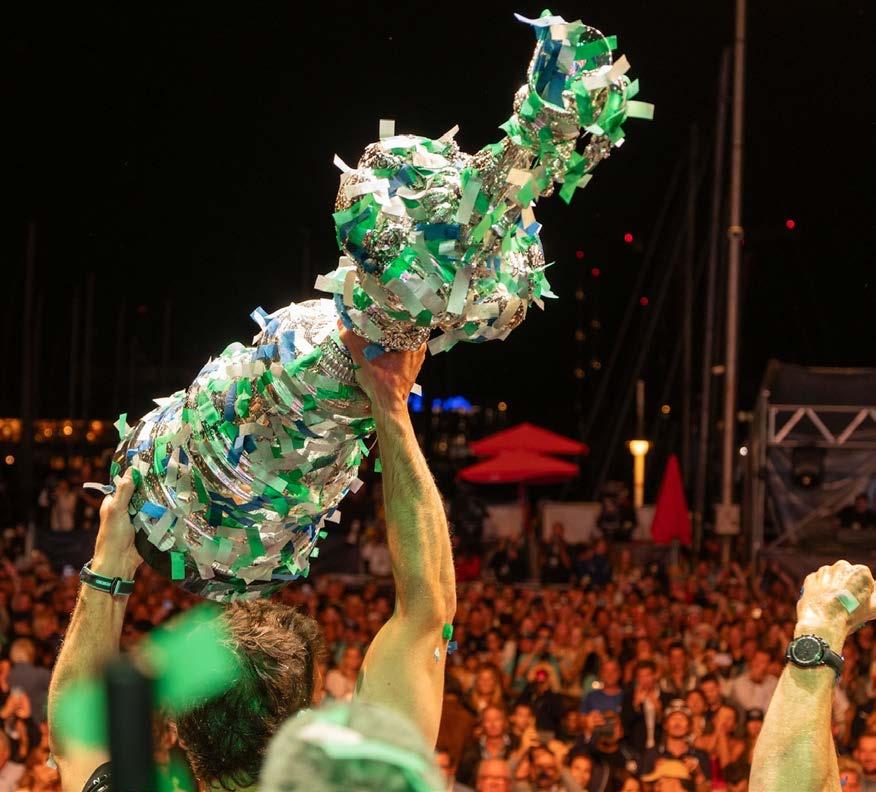
The Barfoot & Thompson Yachting Excellence Awards are a highlight of the annual calendar, celebrating the standout achievements of the past sailing year - and the 2025 edition was as fiercely contested as ever

Graham Catley
A member of the Royal Akarana Yacht Club, Catley serves as a trustee of the Akarana Marine Sports Charitable Trust and has been part of New Zealand skiff sailing since the 1970s. He raced 18-foot skiffs before recently switching to 12-foot skiffs and, for many years, has been the driving force behind the continued racing of the class. He owns most of the fleet and has supported sailors under 30 for many years by covering costs to send boats to world championships.
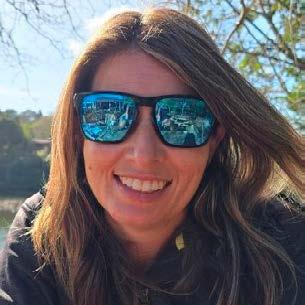
Aevril Hibbard Hibbard has been a dedicated volunteer at Taipa Sailing Club, supporting the Learn to Sail programme and coordinating club activities during the busy summer months. She previously ran the club for five years and returned three years ago to rebuild Taipa’s junior membership in a small rural area. Under her guidance, the Learn to Sail programme has been highly successful, achieving excellent retention and fostering a strong base of young sailors.
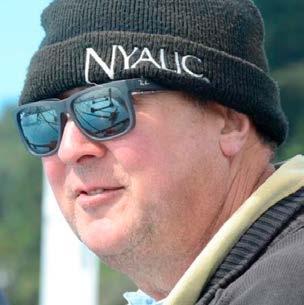
Grant Innes
A former competitive sailor with decades of experience, Innes has been a dedicated supporter of sailing across
Otago and Southland. He has volunteered at club regattas, secondary school championships, and national events, while serving as a club race officer, custodian, and committee member at Port Chalmers Yacht Club. Twice named Administrator of the Year and once Yachtsperson of the Year by the Otago Yachting Association, Innes continues to contribute his time and expertise to grassroots sailing, supporting clubs and nurturing the local sailing community.
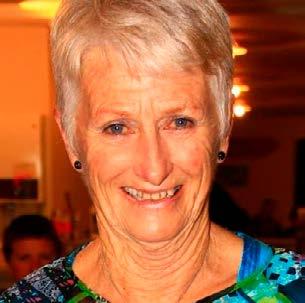
Gwenda Johnson Johnson has been a committed member of Waimakariri Sailing Club for 29 years and has served as secretary for the past 21 –supporting successive club commodores and managing administrative and social activities. She has played a leading role in organising the club’s annual fundraising Quiz Nights and generously hosted committee meetings at her home following the 2010 earthquake. An accomplished sailor, Johnson has competed in Sunbursts, won the Dorothy Cup Ladies Skipper Trophy, and crewed on Noelex 25 Enterprise, winning the club open class championship in 2003.
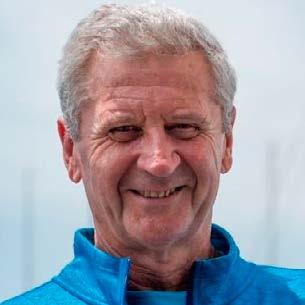
Kevin Lidgard Lidgard recently stepped down after more than 50 years as a Yachting New Zealand yacht inspector. His sailing journey began in 1966 on a nine-month Pacific circuit with his ocean-racing parents. He represented New Zealand in the 1971 Southern Cross Cup, where
the team swept the podium, and later competed in the One Ton and Half Ton Cups in Europe. A designer, builder, and safety advocate, Lidgard has spent his career combining craftsmanship and seamanship to promote safer sailing.
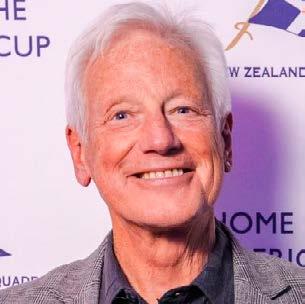
Blair Park Park is a highly respected figure in New Zealand yachting, qualified as a national race officer, mark layer, umpire, judge, and event organiser. Known for his meticulous, conscientious approach, he has contributed across multiple classes and clubs. Park’s involvement spans national events such as the Farr 1020 nationals and New Zealand Schools Keelboat National Championships. He mentors youth sailors, volunteers extensively, and brings exceptional skill, versatility, and leadership to the sailing community.

Larry Paul
Paul has been a key figure in preserving and racing the country’s classic yachts for nearly two decades. As chair of the Classic Yacht Charitable Trust, he has overseen the restoration and maintenance of iconic vessels including Waitangi, Ida, Gloriana, Ethel, Francis, and Thelma. A skilled skipper and mentor, Paul introduces new sailors to classic racing and leads maintenance crews. He also project managed the 2018 rescue of the 1863 schooner The Daring and actively promotes New Zealand’s maritime heritage nationally and internationally.
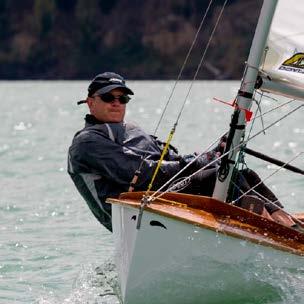
Paul Pearson
A long-time member and committee volunteer at Manly Sailing Club, Pearson played a leading role in delivering the 2024 Moth World Championships. Partnering with Harold Bennett, he oversaw all aspects of the event, dedicating significant personal time to ensure a world-class experience for international sailors and their families. The regatta received outstanding feedback from participants, with many describing it as one of the finest they had attended. Pearson’s commitment made a major contribution to yachting in New Zealand and the international sailing community.

A lifelong sailor who first took to the water in 1953, Radford has devoted decades to his club as commodore, life member, club patron, and long-serving club captain. Known as “Mr Fix-it”, Radford has led countless maintenance projects, from rebuilding the clubhouse balcony to
equipment with tireless dedication and skill.

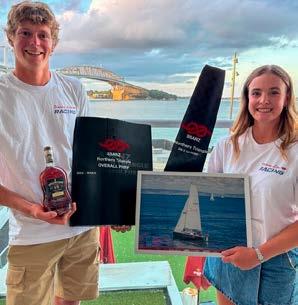
Ella Arnold and Ben Roff
Arnold and Roff claimed first place on PHRF in the 2025 SSANZ Northern Triangle aboard their Ross 830 Flaming Lips
As the youngest crew on the smallest boat, they outperformed seasoned competitors with decades of racing experience. Beyond their victory, the pair managed the remarkable feat of sourcing the boat, organising upgrades, and assembling a successful campaign, demonstrating exceptional skill, determination, and teamwork. Their achievement stands out as a striking example of youth sailors excelling in an open fleet.
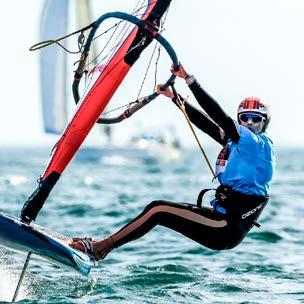
Aarhus, Denmark. She notched three top-five finishes, including a bullet in qualifying and a third in a gold fleet race, building on her 14th-place result at the 2025 Princess Sofia Regatta. Bright also won silver at the under-23 World Championships in Portugal and at Sail Melbourne, was third at the New Zealand national championships, and coaches O’pen Skiffs, windsurfing, and iQFOiL with the Russell Coutts Sailing Foundation.

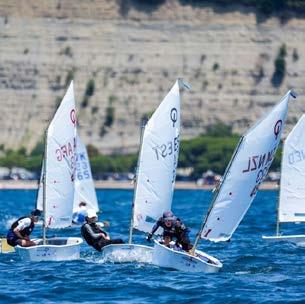
Matteo Barker Barker finished 10th in a 281-boat fleet at the 2025 Optimist World Championships and is a two-time New Zealand male national champion. Domestically, he claimed first place at both the North Island and Auckland Optimist championships. Transitioning to the 29er, Barker also achieved fourth at his first New Zealand national championships in the class, demonstrating rapid progression and versatility across classes.
race management across the South Island.
Aimee Bright
Seventeen-yearold Doney claimed two world titles at the 2025 Para Sailing International Championships in Sydney, competing in the Hansa World Championships. He won the Hansa 303 one-person event and the two-person division with his father, Paul, defeating competition from Australia, Hong Kong, and the Philippines. A member of Sailability Wellington and a student at Wa Ora Montessori High School, Doney began sailing at age five and racing in the singles class just six months prior to his triumph. He is believed to be the first New Zealander with Down syndrome to achieve this level of international sailing success.
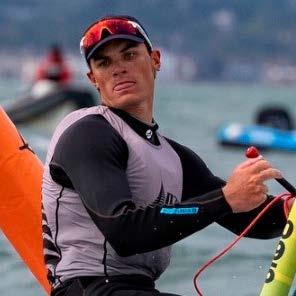
Pilkington Pilkington enjoyed a strong year in the ILCA 7 class, finishing fifth at the under-21 World Championships, just five points shy of the podium. He also claimed bronze at the UK National Championships as the top under-21 sailor and won
Bright enjoyed a breakout season, finishing 15th overall and in the top five in the under-23 division at the 2025 World Championships in Continued on p26

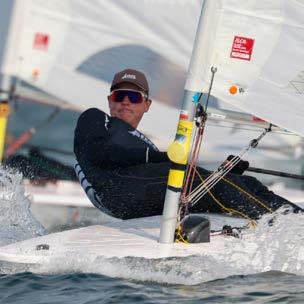
George Gautrey
Gautrey made an impressive return to international ILCA 7 competition in 2025, claiming silver at the European Championships in Marstrand, Sweden. A thrilling final day saw him win his third race of the regatta to finish second overall and top non-European sailor, just 11 points behind Britain’s Mickey Beckett. His consistent season also included top results in Palma, Hyères, and Long Beach, marking a strong resurgence following more than a year away from the class.
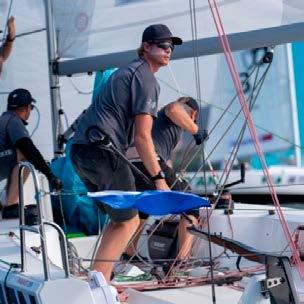
The team has consistently excelled on the global match racing stage, securing silver at the 2024 World Match Racing Tour Final in Shenzhen, China, propelling them to number two in the World Sailing Match Racing rankings. Nick Egnot-Johnson and crew Jack Frewin, Zak Merton and Chris Main also claimed silver at the 2025 Macao Match Cup and bronze at the 2024 Bermuda Gold Cup. Many of the core members of the team have sailed together since their time in the Royal New Zealand Yacht Squadron Youth Training Programme.
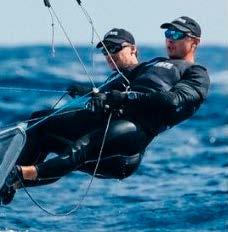
Isaac McHardie and William McKenzie
McHardie and McKenzie narrowly missed out on a place in the revamped medal race at the 49er World Championships in Cagliari in October, their first major regatta since winning silver at the Paris 2024 Olympic Games last August. The McKiwis were well in contention to advance under the newly introduced top-20 race before an untimely capsize ended their challenge. Starting sixth overall, they needed to climb into the top four to reach the winner-take-all final. The pair were crowned Orbit World Travel Sailor of the
Year at the 2024 Barfoot & Thompson Yachting Excellence Awards.
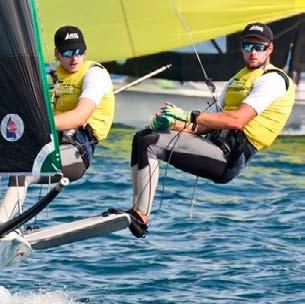
Seb Menzies and George Lee Rush Menzies and Lee Rush struck gold at the European Championships in Greece, New Zealand’s first major 49er success since McHardie and McKenzie’s Paris 2024 Olympic silver. The pair led from day two in Thessaloniki, notching 11 top-10 finishes from 12 fleet races and placing fourth in the double-points medal race to win by 54 points. They also won the inaugural Palm Beach Motor Yachts trans-Tasman 49er series at Hamilton Island Race Week, cementing their growing reputation on the world stage.
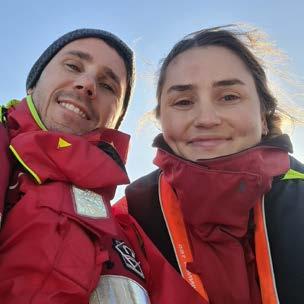
Anna Merchant and Aaron Hume-Merry Merchant and Hume-Merry finished fifth at the 2025 Offshore Double Handed World Championships in Cowes, sailing NZL 1 in Sun Fast 30 One Design yachts. After just missing out on the top-five cut in their 140-nautical mile qualifier, they won a dramatic 89-mile repechage to reach the final. Racing among the world’s top offshore crews, they navigated shifting breezes and strong Solent tides with precision, improving on their 2024 Lorient result, where they were ninth in their qualifying group.
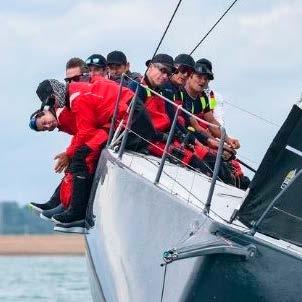
The Royal New Zealand Yacht Squadron’s Admiral’s Cup team
The Squadron claimed fourth overall at the 2025 Admiral’s Cup, falling just short of the podium in the event’s long-awaited return. Their two-boat team, Callisto in AC Class 2 and Caro in AC Class 1, performed strongly across three challenging race stages, including the 160-nautical mile Channel Race, six Solent short-course races, and the 695-nautical mile Rolex Fastnet Race, which carried triple points. Callisto claimed second in AC2, just one point behind winner Jolt 6, while Caro was eighth in AC1.
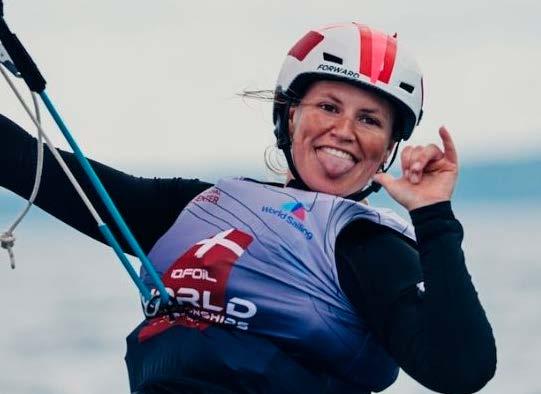
Ten Have finished 10th at the iQFOiL World Championships in Aarhus, Denmark, denied a last-minute shot at making the top-8 medal series due to light winds. The 24-year-old Tauranga sailor made a strong start to her new Olympic campaign, having already claimed bronze at the 2025 Princess Sofia Trophy in Palma. She won eight races in qualifying and advanced to the four-board final, finishing behind Emma Wilson of Britain and replicating her top10 finish from her 2024 Olympic debut in Marseille.

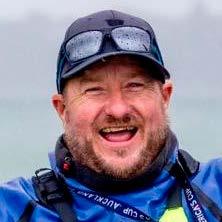
Ryan Parkin Parkin is a World Sailing international umpire and was selected for the Youth and Women’s America’s Cup through a 12-month development pathway for emerging umpires. He prepared by gaining extensive international experience, often selffunding travel and taking more than five months off work. In Barcelona, Parkin quickly mastered advanced umpiring systems and contributed strongly to the team by performing under pressure. His dedication and performance have established a solid foundation for his continuing international umpiring career, earning further invitations to major events.
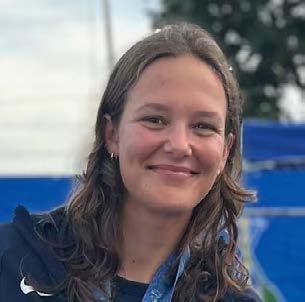
Sophia Morgan Morgan has rapidly established herself as an exceptional race coach at the Royal Akarana Yacht Club, growing the
Optimist race pathway from 13 to over 50 sailors in a single season. She led a 25-plus sailor team to the national championships in 2025, while mentoring junior coaches and implementing structured training programmes. Sophia has enhanced club culture with off-water events, parent engagement, and a focus on fun and development, creating a thriving environment that inspires young sailors to excel both on and off the water.

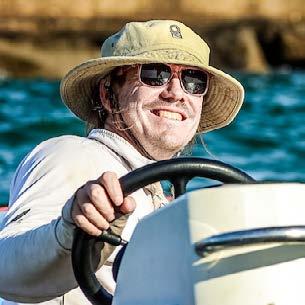
Paul Snow-Hansen
A former Olympian, Snow-Hansen is now Yachting New Zealand’s lead coach for the women’s iQFOiL squad, guiding one of the country’s most successful emerging groups. Under his leadership, Veerle ten Have has begun her Olympic campaign with a top-10 finish at the World Championships in Aarhus and bronze at the Princess Sofia Trophy, while Stella Bilger and Aimee Bright have also excelled internationally. His technical expertise and athlete-centred approach have been central to the team’s rapid development.

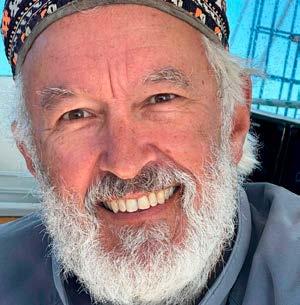
Bruce Maunsell
Maunsell recently completed a remarkable circumnavigation of the Pacific aboard his Tashiba 42 ‘Bob’, sailing mostly solo with friends and family joining for parts of the journey. Departing Whangārei in April 2023 as part of the Island Cruising Rally to Japan, he has now “closed the circle”, arriving back at Vuda Marina after almost 27 months at sea. His near-daily PredictWind blog chronicled the adventure, capturing the challenges, discoveries, and lessons of an extraordinary voyage. Read more about Maunsell’s adventure on p72.
the under-21 New Zealand national crown – placing third overall. Known for his focus, resilience, and self-directed training, Pilkington demonstrates exceptional technical skill and tactical awareness, balancing study and international competition with maturity and dedication.
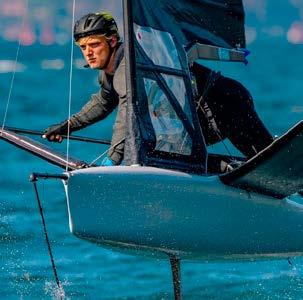
Jake Pye
Pye secured bronze at the 2025 Moth World Championships, recovering from a slow start with a second place in the final race. He finished just two points behind Australian SailGP and America’s Cup helmsman Tom Slingsby and was crowned the top youth sailor in a star-studded fleet. Pye had earlier finished second at the 2025 Foiling Week in Lake Garda, on countback after tying on points, and claimed silver at the 2024 Moth Worlds at Manly Sailing Club, winning eight of 16 races.
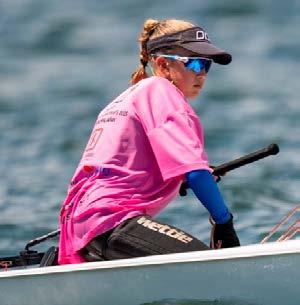
Summer Torbet Torbet excelled at the 2025 O’pen Skiff World Championships in Japan, finishing first girl and third overall in the under-13 fleet, with nine top-five finishes and two race wins. In the under-17 division, Valentina Gladiadis placed second girl and 14th overall. Ten New Zealand sailors represented the country across the age groups,
showcasing strong performances throughout the regatta.
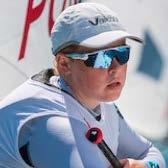
Chloe Turner Turner won the ILCA 6 under-17 female title at the 2025 Youth World Championships in Los Angeles, finishing 13th overall in the 81-boat girls’ fleet. On the final day, she prioritised securing the under-17 crown over an overall top-10 finish, ending 14 points ahead of her nearest age-group rival. Turner was coached throughout the week by New Zealand Olympian Tom Saunders, whose guidance helped her deliver a controlled and consistent performance to claim the youth world title.
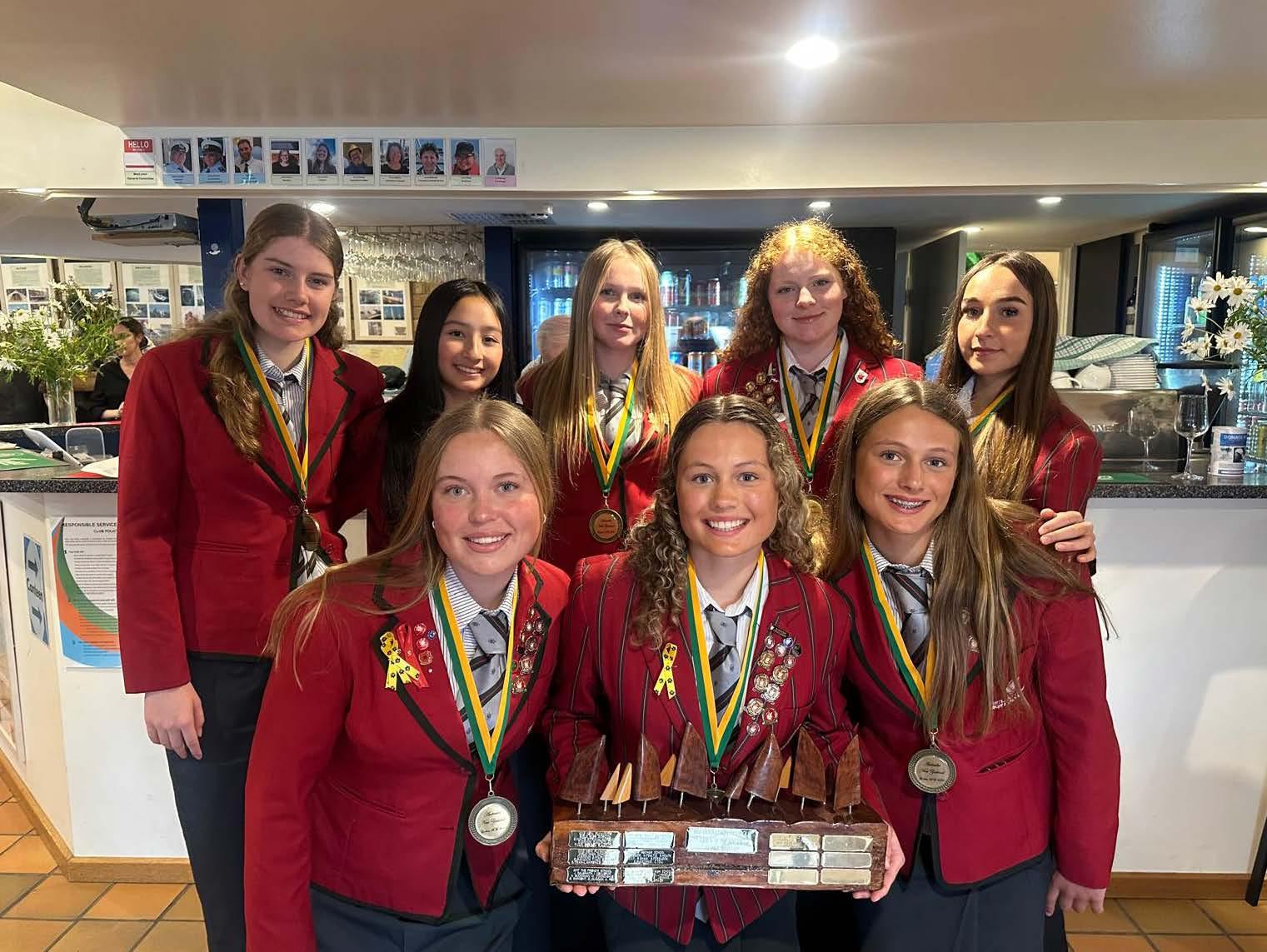
Westlake Girls High School sailing team
The Westlake Girls’ team – captain Jess Handley, Charlotte Handley, Kiera Dimock, Emily Turner, Bella Jenkins, Danielle Robertson, Gretel Satterthwaite and Julia Nguyen – claimed the female division title at the Interdominion Secondary Schools Team Sailing Championships in Goolwa, Australia, completing a remarkable three-peat. Auckland Grammar School finished second in the open division, flying the Kiwi flag against a strong field. The regatta brought together the top secondary school teams from New Zealand and Australia, with the Aussies taking the overall Interdominion Trophy.
Continued on p28

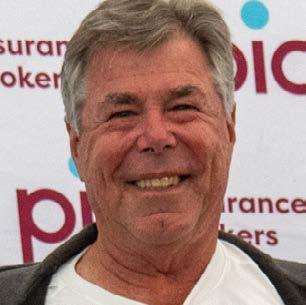
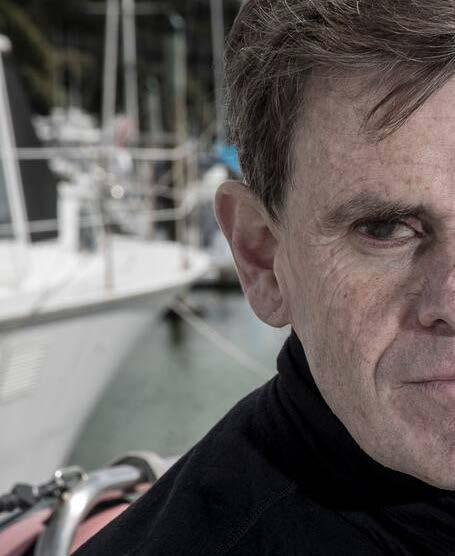
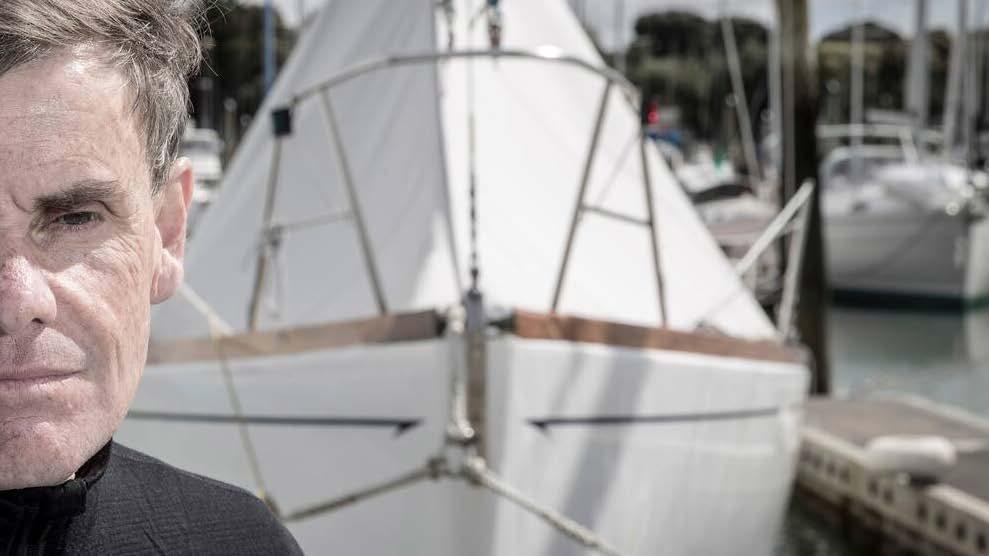
Mark Mulcare
Mulcare, a former blind world champion sailor, has devoted more than 20 years to managing New Zealand’s nationwide keelboat handicapping system, developing his own software - including the popular RaceTrack database - to ensure fair racing. A tireless volunteer, he has supported clubs and committees across the country while continuing to compete, contributing enormously through his work on Yachting New Zealand’s Cruising, Inshore and Offshore Racing
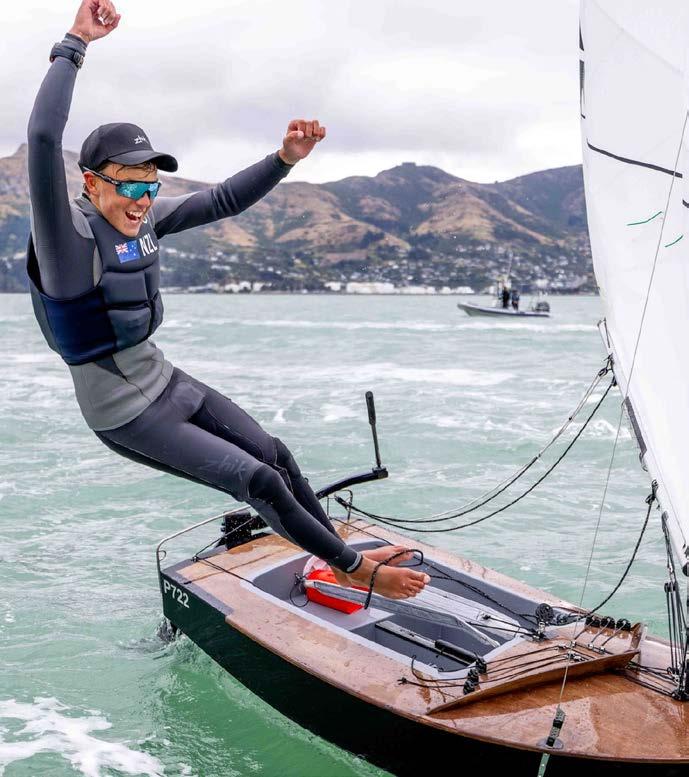

Blake Batten
Batten joined an illustrious group of Kiwi sailors by winning the P Class national title at Charteris Bay Yacht Club, taking the Tauranga Cup with four wins from nine races. The Murrays Bay sailor followed in the footsteps of Dean Barker, Simon Cooke, Ray Davies, Leslie Egnot and Isaac McHardie. Earlier, Batten also finished second in the Tanner Cup, which was won by Hamish Brown.
Committee and the PHRF committee. Mulcare lost his sight as a teenager and has battled ill health in recent years, but nothing has dimmed his love for the sport or his unwavering drive to make it better for everyone. This year’s Peter Lester Award for Outstanding Contribution to Sailing recognises Mulcare’s dedication, expertise, and enduring passion; qualities that echo the commitment to and love for sailing embodied in Peter Lester’s legacy.
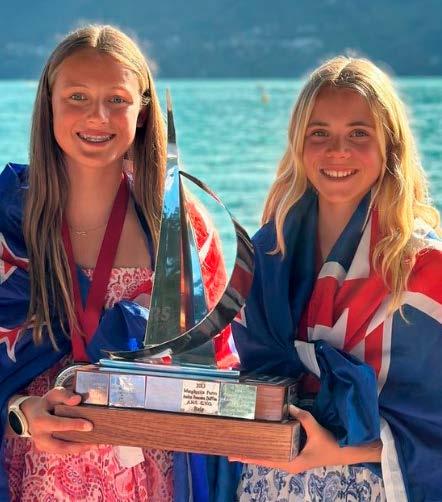
The pair became RS Feva female world champions less than a year after first sailing the class together, finishing second overall in a 168-boat fleet at the 2025 world championships in Aix-les-Bains. The young Kiwis led the regatta with four wins on a flawless second day and stayed in contention through demanding conditions ranging from drifting breeze to 40-knot gusts. Their rapid rise reflects strong teamwork, resilience and a shared joy for sailing.
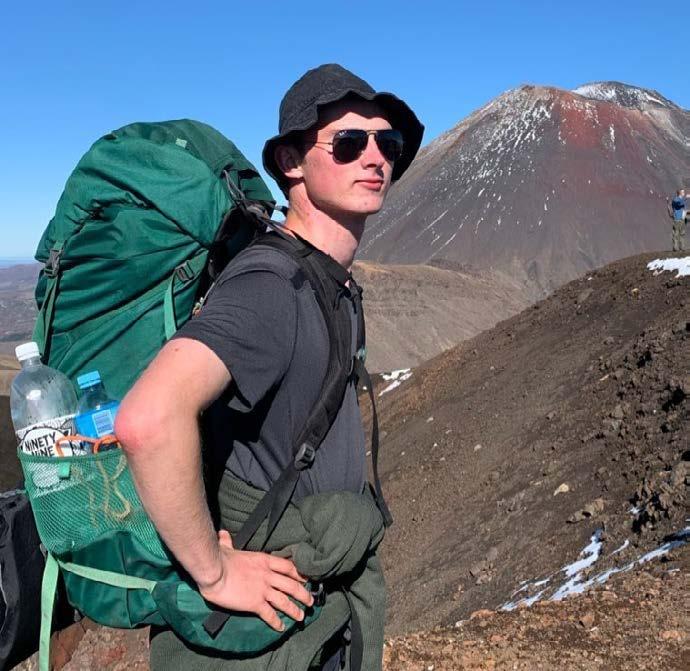

Lucas Hebberd
Hebberd has emerged as a natural leader at Murrays Bay Sailing Club, driving the Learn to Sail programme and wider coaching team with initiative and dedication. Over the past year, he has introduced extra holiday and winter sessions, organised social events to engage families, and personally oversaw the reorganisation of the gear cupboard. Hebberd has built a loyal, capable coaching team and maintained programme continuity during periods of limited oversight, demonstrating exceptional organisation, leadership, and commitment to nurturing young sailors and growing a strong club community.

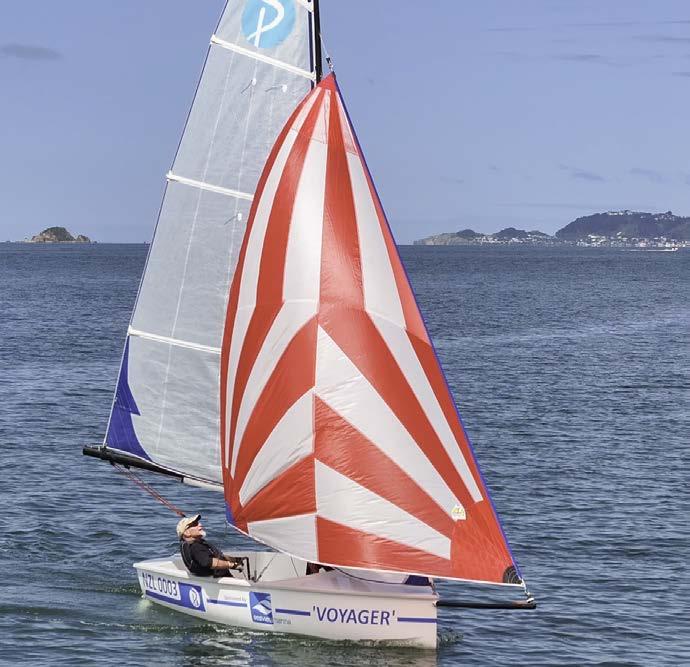
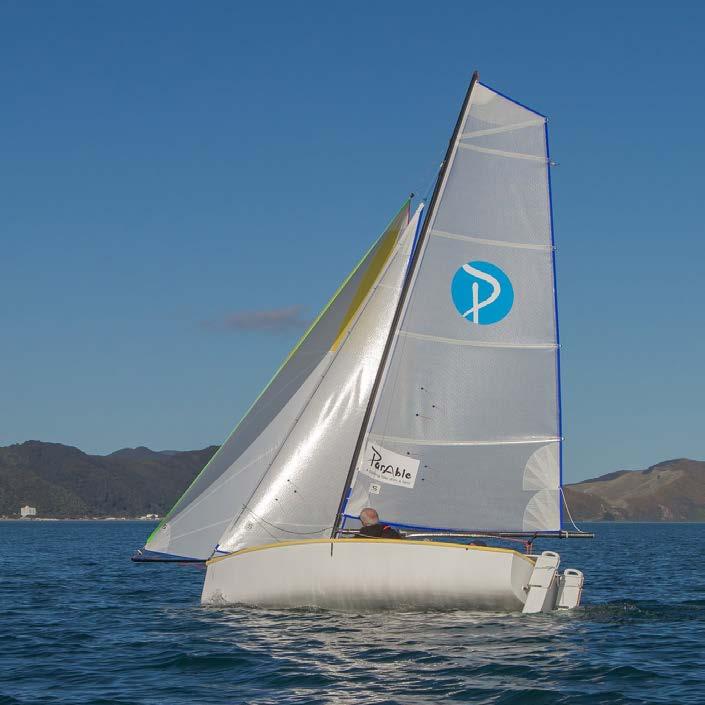
Sailability Wellington has transformed inclusive sailing in New Zealand, culminating in a new yacht recently recognised as a national class. More than a decade ago, the organisation identified the need for a bigger, more challenging boat for disabled sailors that could still launch off a beach trolley. A dedicated volunteer team designed and refined the ParAble boat, blending safety, versatility, and performance, capturing the imagination of inclusive sailing at home and abroad. This award celebrates vision, perseverance, and lasting impact.
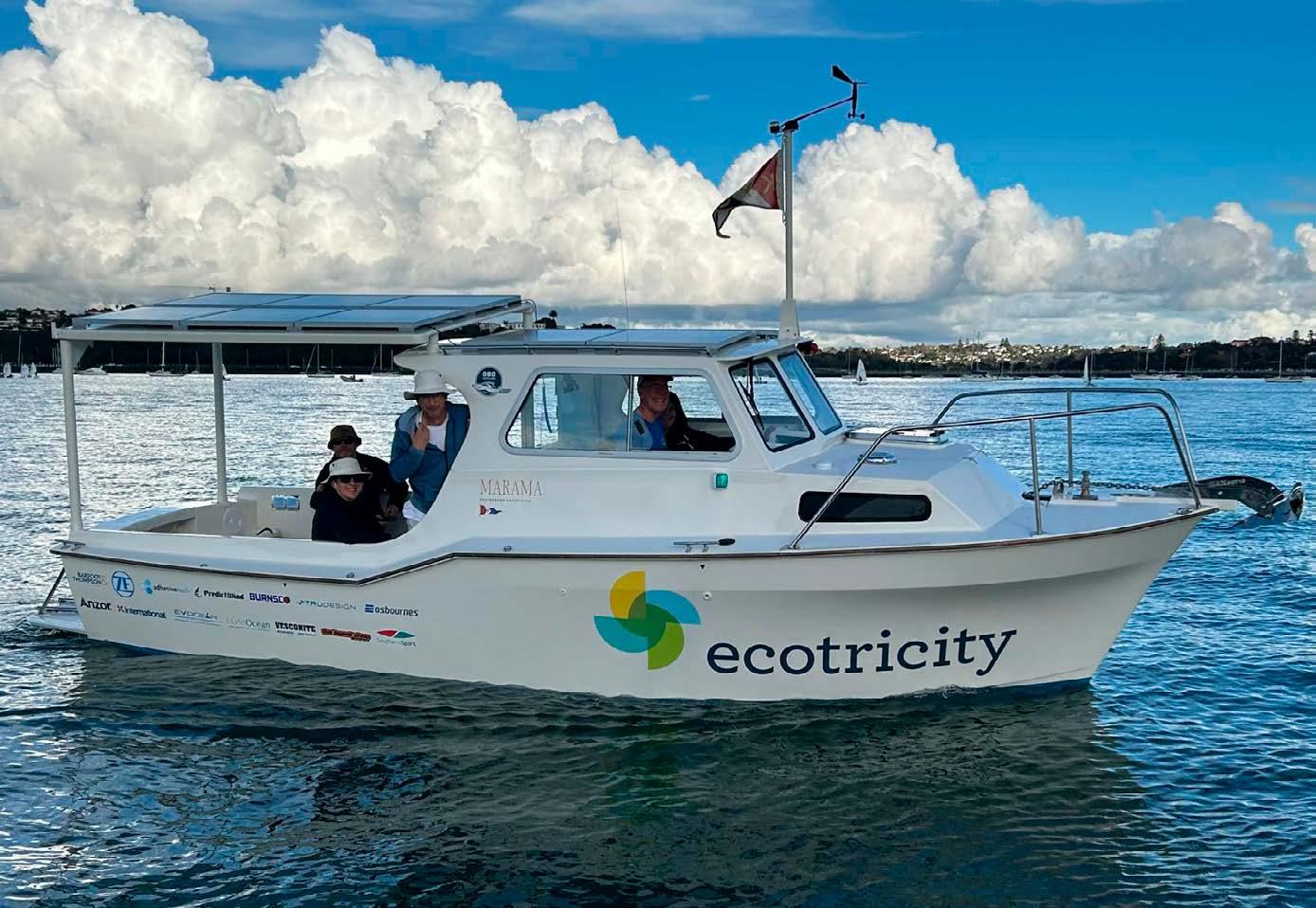

The Marama Project Kohimarama Yacht Club was the first in New Zealand, and potentially beyond, to fully restore and electrify its 23-foot committee boat, Marama. The 39hp diesel motor was replaced with a zero-emissions, solarpowered electric system, with volunteers, youth sailors, parents, and local marine
experts all involved. Started in 2023, the restoration was completed and Marama relaunched in 2025, offering silent, offgrid operation. The project demonstrated practical environmental stewardship while educating the next generation and inspiring other clubs.
Continued on p30
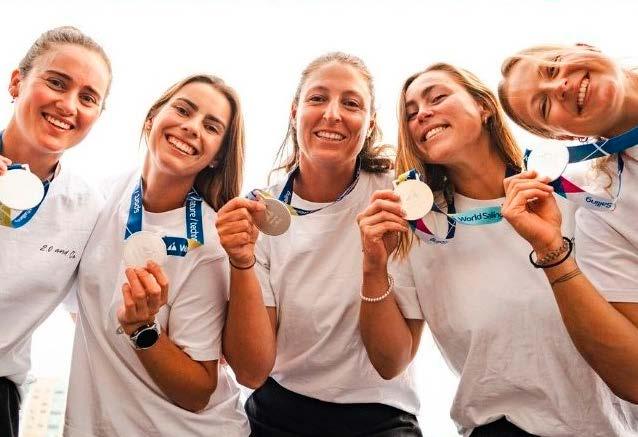

Megan Thomson and her 2.0 Racing Team delivered an outstanding performance at the 2025 World Sailing Women’s Match Racing World Championship in Chicago, finishing runners-up after a tense final against France’s Pauline Courtois. Pushing the five-time world champion to a deciding race, Thomson and crew Tiana Wittey, Josi
Andres, Charlotte Porter, and Hattie Rogers showcased world-class skill and composure, underlining their position among the top match racing teams globally and matching their silver-medal result from Jeddah in 2024, where Anna Merchant was part of the team.
+ PERFORMANCE AWARD
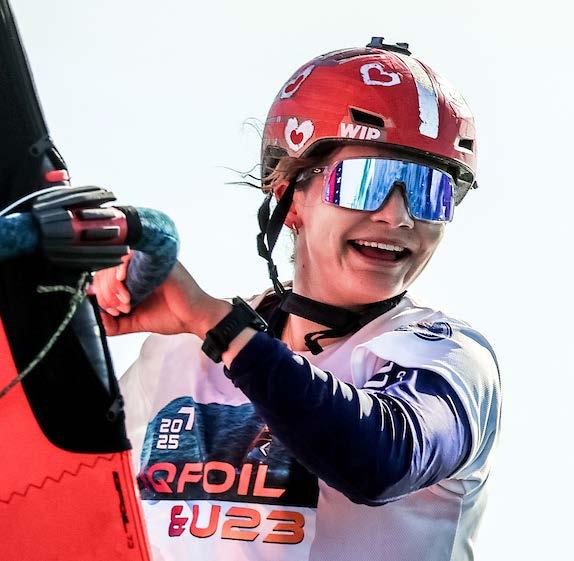

Stella Bilger
Bilger won the iQFOiL under-23 World Championships in Portimão, Portugal, claiming gold after a decisive second medal race. The 20-year-old executed a tactical split from her rivals to secure victory, leading a Kiwi one-two with teammate Aimee Bright taking silver. Bilger qualified fourth and advanced through the semifinals to reach the final, finishing second in the opening medal race before clinching the title in the decider, showing poise and tactical skill under highspeed, competitive conditions.
+ YOUTH PERFORMANCE AWARD
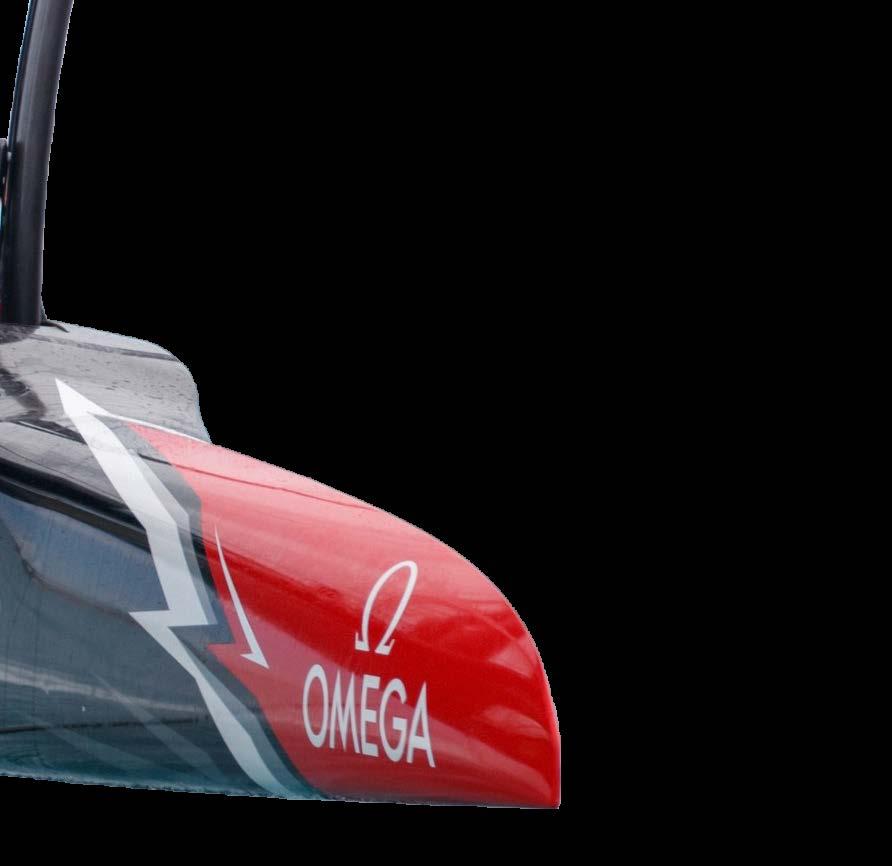

Emirates Team New Zealand
Emirates Team New Zealand etched their name into sailing history by winning the Louis Vuitton 37th America’s Cup in Barcelona, becoming the first team ever to lift the Auld Mug three times consecutively. In a tense final match against INEOS Britannia, the Kiwis showcased precision, composure, and tactical brilliance to secure victory by 37 seconds, cementing their legacy as one of the most dominant teams in
+ PERFORMANCE AWARD
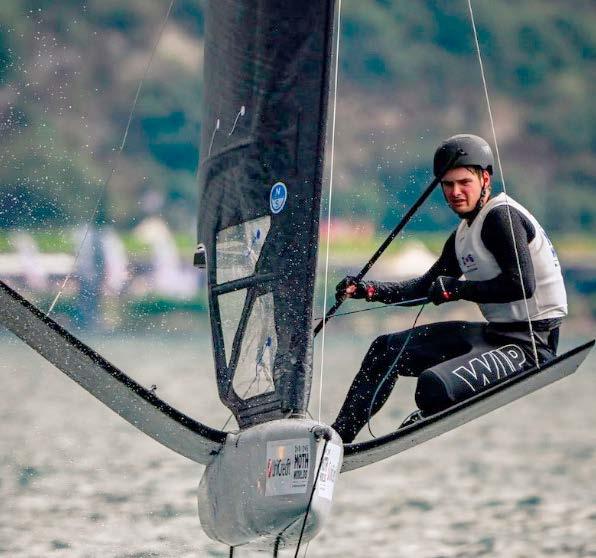
Mattias Coutts
At just 19, Coutts claimed the 2024 PredictWind Moth World Championships hosted by his home club, becoming only the second Kiwi world champion in the class since Peter Burling in 2015. He also won the 2025 Moth nationals and the 2024 STACK Winter Champs. Coutts has since begun a 49er campaign with Oscar Gunn, placing second in the silver fleet at the 2025 European Championships, while maintaining strong Moth results, including sixth at Foiling Week and 12th at the 2025 Moth Worlds. + YOUTH PERFORMANCE AWARD
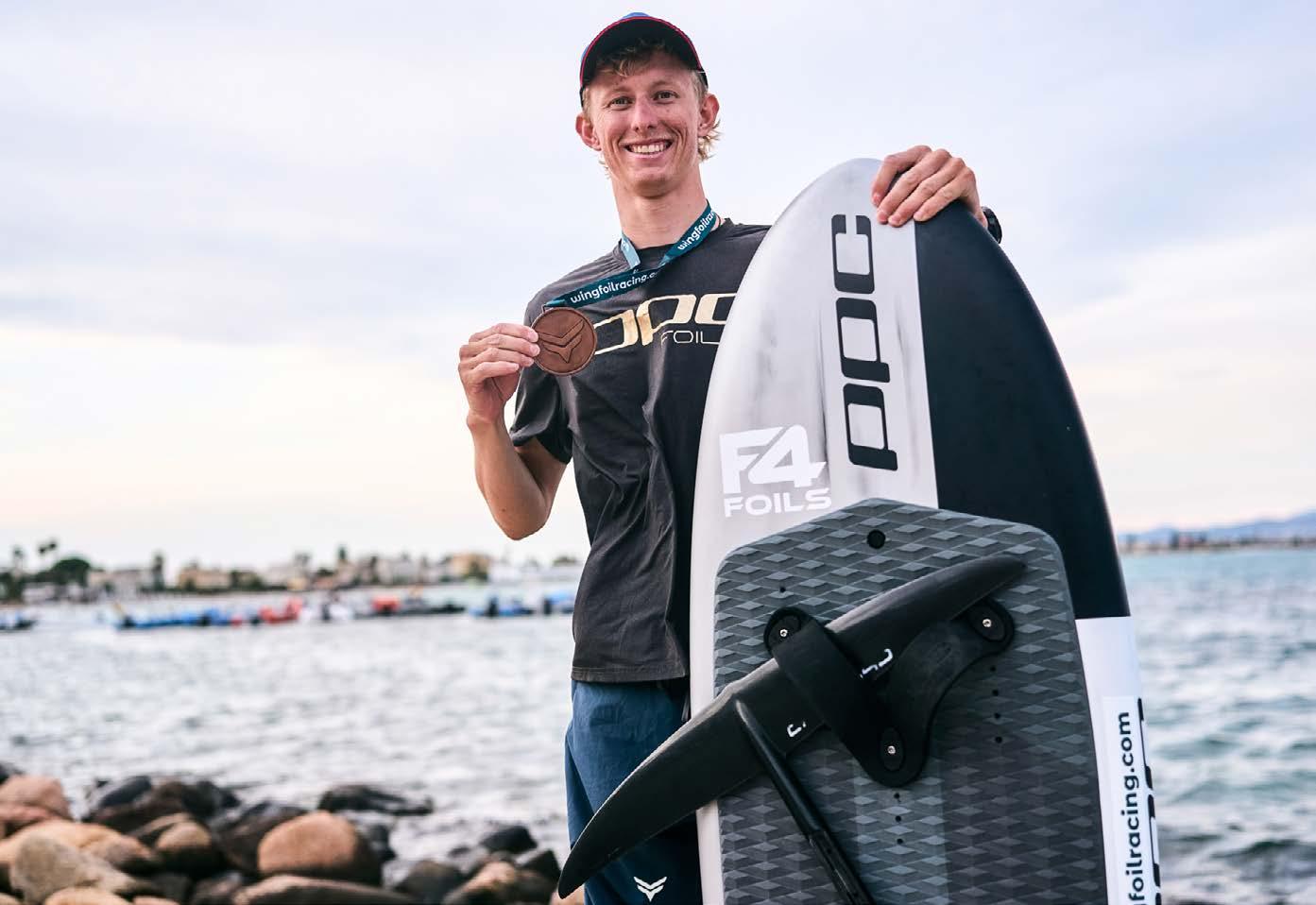
Sean Herbert
Herbert continued his rapid rise on the world stage, winning bronze at the Formula Wing World Championship in Cagliari, Sardinia, after a dramatic final day marked by shifting winds and tight racing. The 23-year-old Aucklander also claimed bronze at his World Cup debut in Switzerland, dominated the US
Wingfoil Championships in San Francisco, and defended his national title – becoming the first to win it twice consecutively – while adding the national Triple Crown and Hawaii State titles to a standout 2025 season.
+ PERFORMANCE AWARD
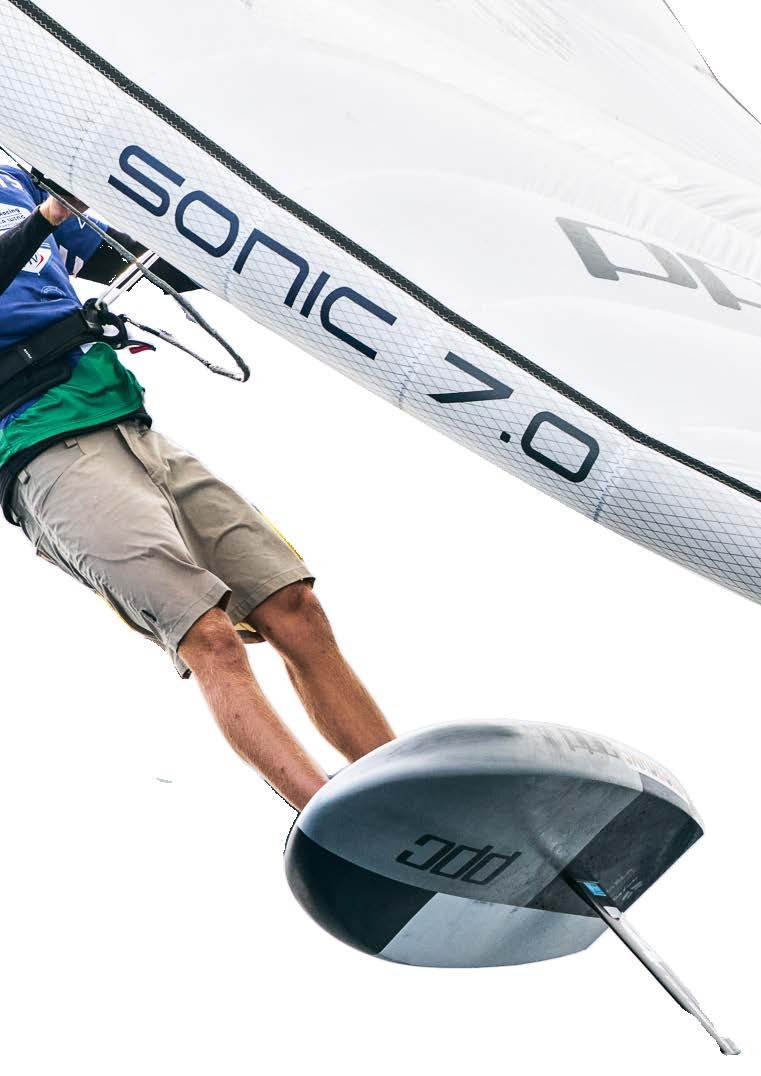
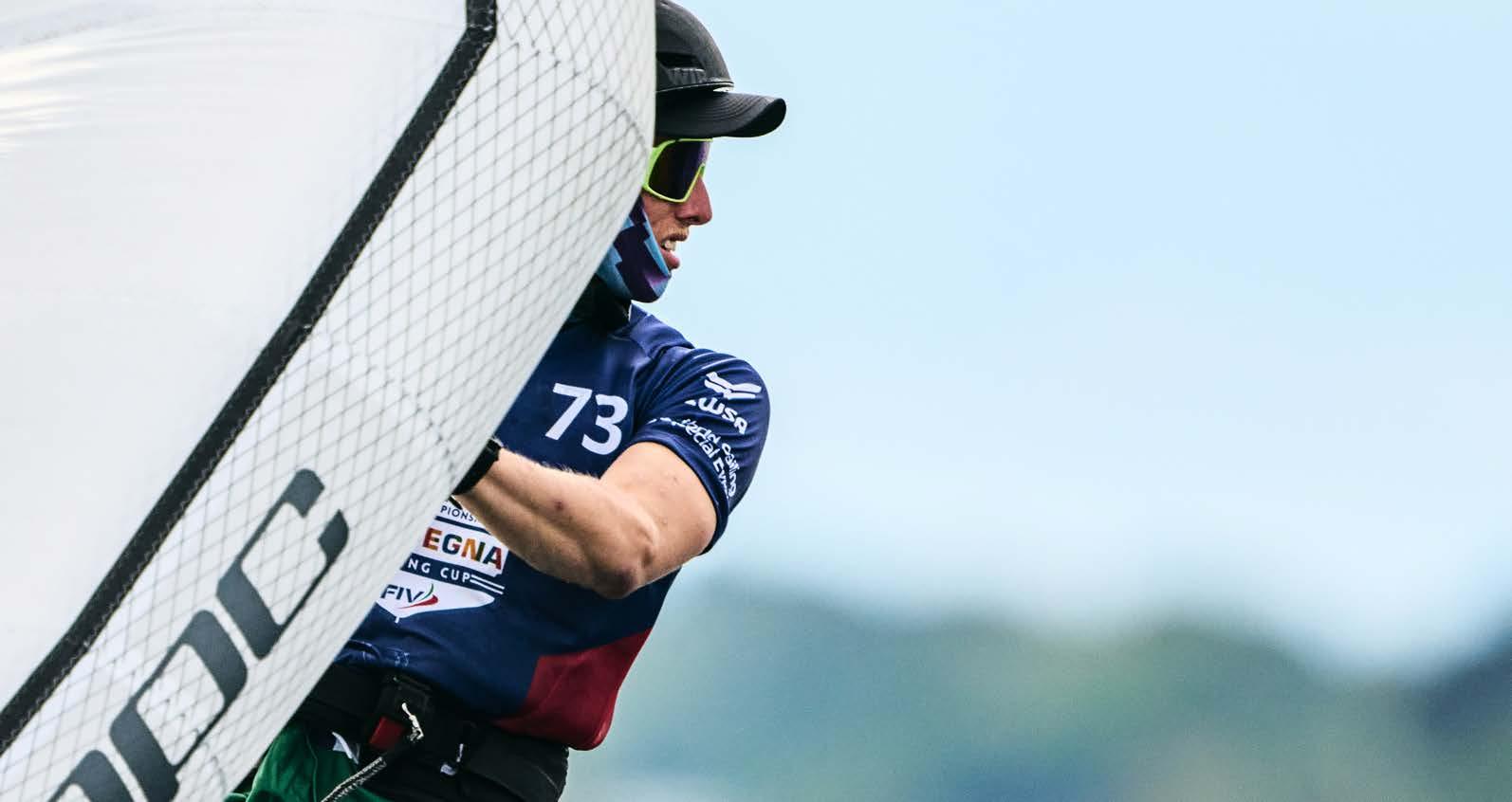
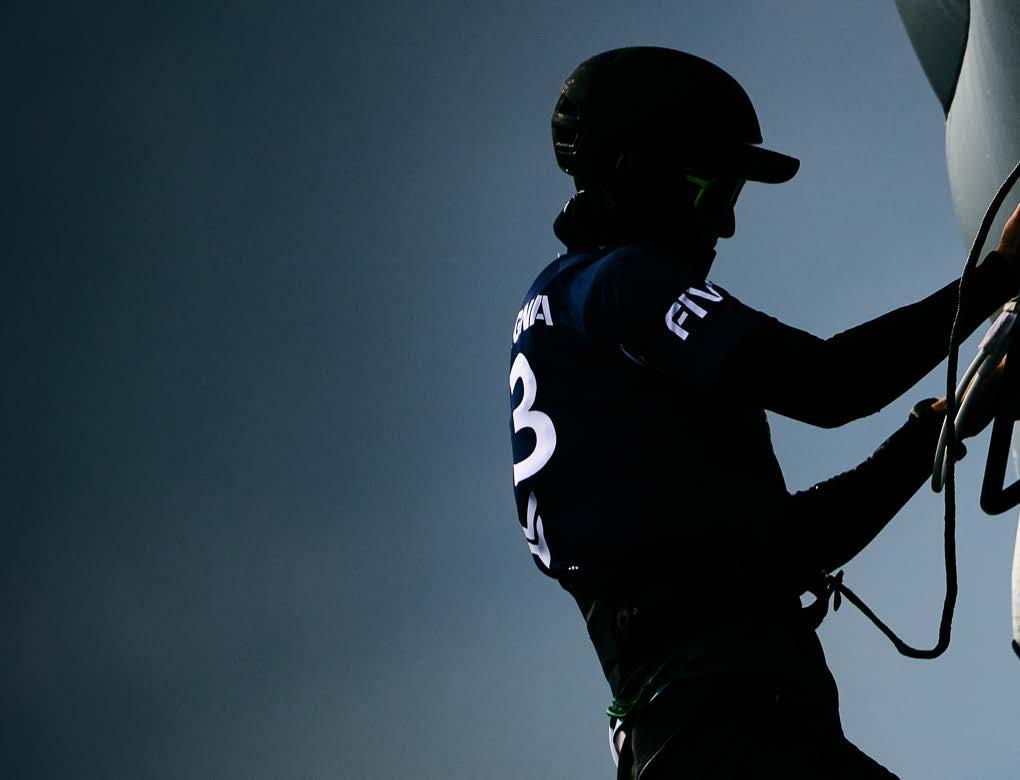
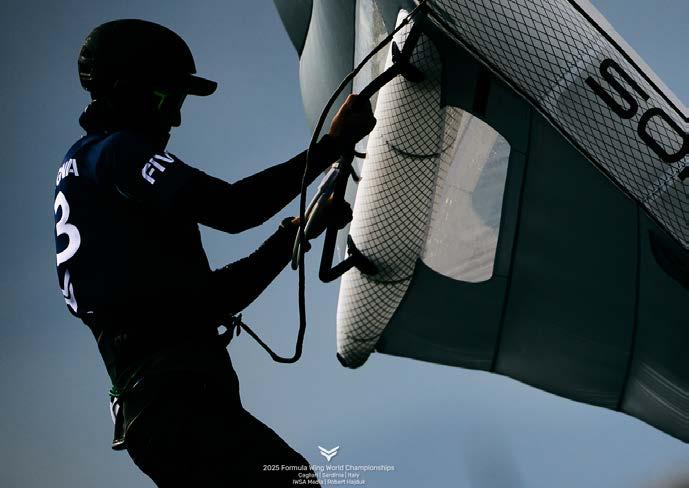
Sean Herbert feels like a crash test dummy at times.
The Kiwi wingfoiler is often handed a new piece of equipment, or one that's been tweaked a little, to see how it responds in certain conditions.
It's all part of the constant search for speed in a class that's relatively new. Needless to say, the results can be both exciting and excruciating.
"I'm involved in testing foils, boards and wings with my sponsor," Herbert said from his base in the United States.
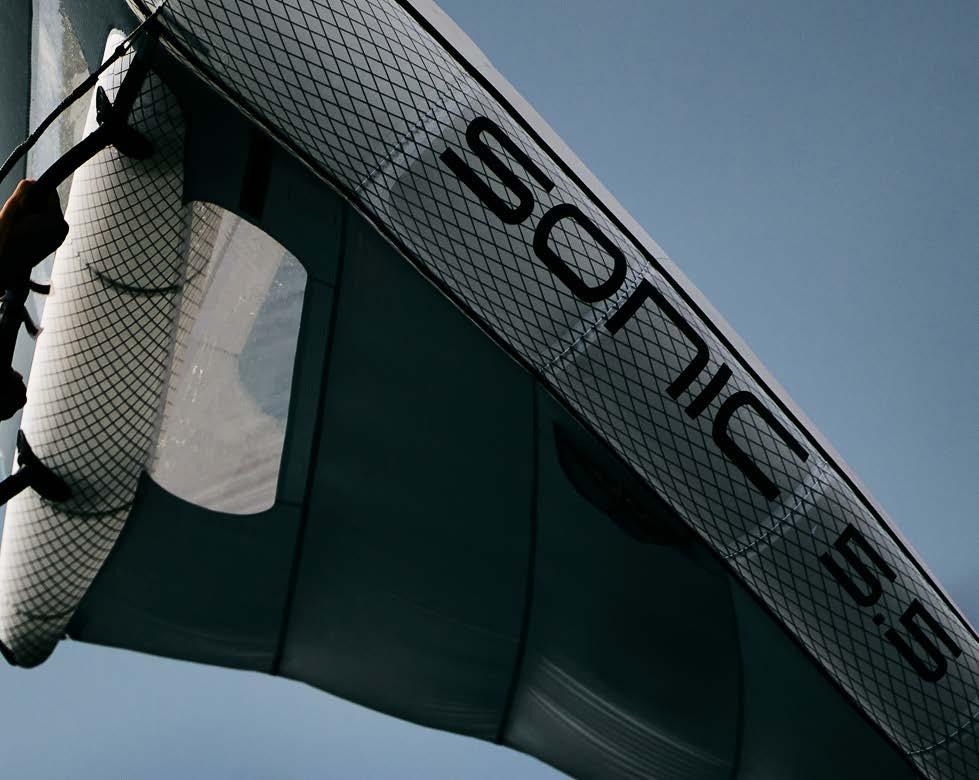
"The technology you see in SailGP is filtering into wingfoiling. The development is rapid.
"We're currently building new boards and trying to work out how light we can make them without breaking them. The same goes for foils. I've recently spent a couple of days on a new one and they're pretty loose. Some of the designs are pretty radical and they either work or they absolutely don't."
It's a reflection of Herbert's standing in the sport that he's involved in testing and development at the top end.
Earlier this month, he achieved another
‘I’ve always wanted to do a professional tour of some sort, and I think I’ve found my feet with wingfoiling.’
Sean Herbert
Continued from
for a number of sailors," Herbert said.
"I started dabbling in wingfoiling in 2022, nothing serious. We didn't know what was going to happen overseas, but I was looking for that next challenge and fully caught the [wingfoiling] bug."
Herbert duly won back-to-back national titles in the class and juggled his sailing around working as a composite laminator for New Zealand aerospace outfit Rocket Lab.
It was only after his success on the international circuit earlier this year that he decided to go "all in", helped by the fact he was signed to the America One team as a training partner for the top wingfoilers in the US.
"It's a mutually beneficial relationship," he explained. "I have access to resources I wouldn't otherwise have, and I get to continue training in a structured programme. I also provide information, data and feedback to the group that not only improves their sailing but also
improves mine."
The programme is supported by America's Cup outfit American Magic and described as a pipeline project, where they can identify future talent for anything from the Olympics to the America's Cup.
The rapid rise in popularity of the discipline – and the success of sailors like Herbert and Kosta Gladiadis, has seen Yachting New Zealand incorporate wingfoiling into its youth programme.
"It is amazing to see Sean's hard work paying off over the past year and how he has been making the
most of his opportunities," said Geoff Woolley, Yachting New Zealand's talent development manager.
"Wingfoiling is now an important focus of our youth programme and we've included it in our major regattas for the past few years. We're seeing a strong group of wingfoilers coming through and there is some real momentum building across the country."
There's growing chatter about wingfoiling being included on the Olympic programme, perhaps as early as the 2032 Games in Brisbane.
It was officially recognised as a World Sailing class at the governing body's recent annual meeting in Ireland.
Its burgeoning appeal, relatively costeffective equipment and accessibility make it an attractive option but, the way the Olympics programme works, one class would need to be dropped for wingfoiling to be included.
"It ticks a lot of the boxes," said David Gunn, the president of Wingfoil New
three seasons and made his international breakthrough in the Azores, where WingFoil Racing crowned its first-ever Youth and Masters world champions on Terceira, a volcanic island where unpredictable conditions provided a memorable test for competitors.
into the medal race. Advancing straight to the decider, Gladiadis needed one win to claim gold but was ultimately beaten by Italy’s Ernesto de Amicis, who had finished qualifying eight points behind the young Kiwi before winning back-to-back races to secure the title.
Gladiadis, from Manly Sailing Club north of Auckland, has been New Zealand’s leading
He won seven of 16 qualifying races and finished inside the top three in eight others, topping the leaderboard heading
“It’s really good to be the first youth world champion. The battle was really close and there were really good fights in all-round
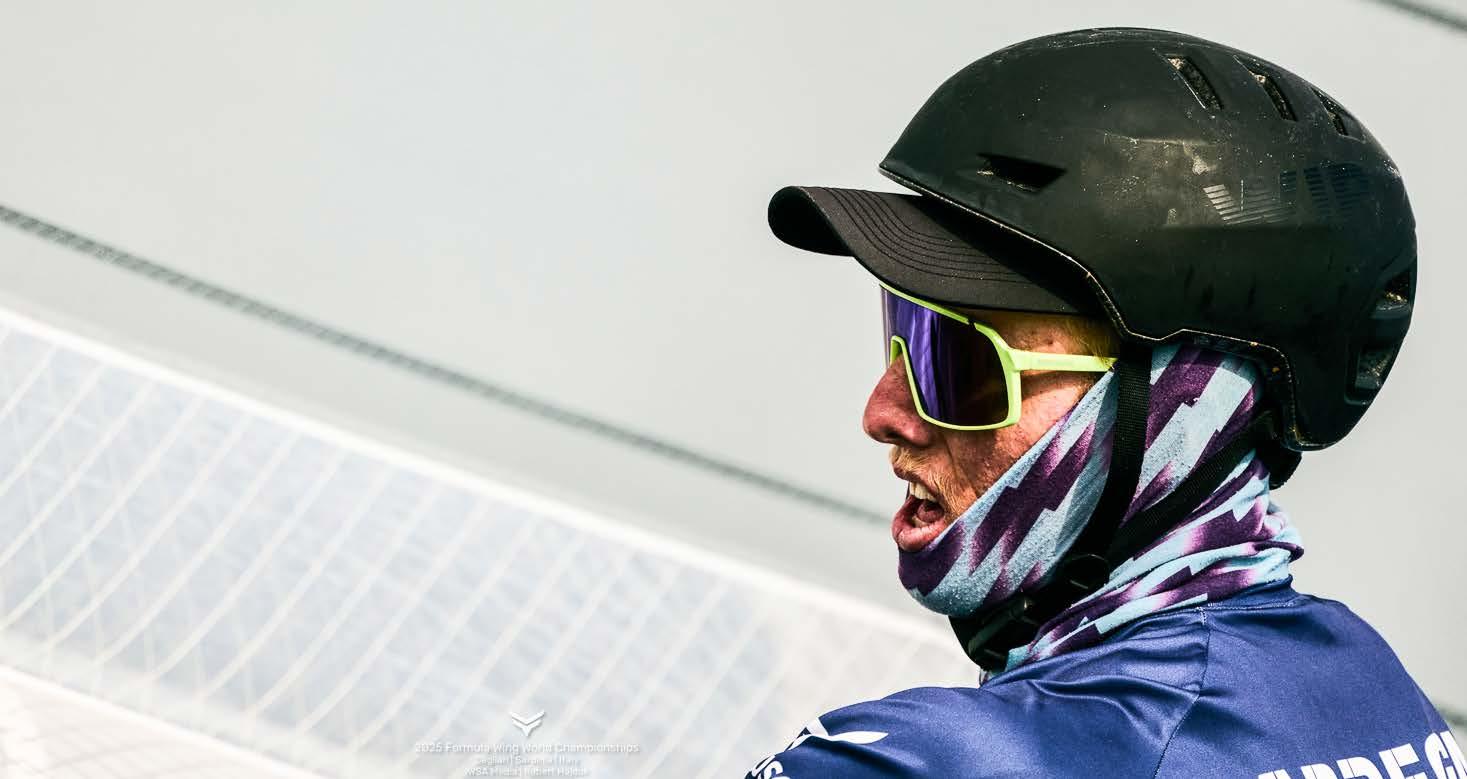
‘I feel like the sport has come around at the right moment for me. It happened at a time when I wasn't sure of my direction.'
Zealand who also sits on the international class association executive.
"It's inclusive, it's worldwide, relatively economical and very athletic," Gunn said.
"It's also attractive for broadcasters because it's easy to film and easy to follow. The longest race is 20 minutes – normal races take about six minutes – so it's really close racing. And they're really comfortable racing in anything from about six knots to 30 knots, so it has a much bigger wind range.
"I'm pretty positive it will be included
conditions, so I’m really pleased,” de Amicis said. Czech sailor Stepan Benes took bronze.
Gladiadis won the New Zealand Youth Championships in his home waters in September, sweeping all 17 races, and impressed again in Portugal by handling challenging conditions with skill and consistency.
His silver adds to a strong month for Kiwi
in the Olympics one day, but nothing is guaranteed, and we're just one class trying to gain inclusion."
It might all come too late for Herbert, even though he's only 23, but he remains optimistic.
"I have always had the dream of going to the Olympics and if wingfoiling makes it I'll be there to give it a crack," he said.
"I think it's on the right track to be included, but there are two sides to it. We want the development to continue, that's the beauty of winging.
"We're not currently limited in terms of the technology we can apply to the sport, as long as we meet certain requirements. I think we'll see more one-design racing in the future because there are moves to bring in a one wing, one foil, one board rule. That means we will need to start working on wings that are adjustable because, at the moment, you can change your sizes."
Herbert has a suitcase for a companion. Travelling is a constant and, while it can
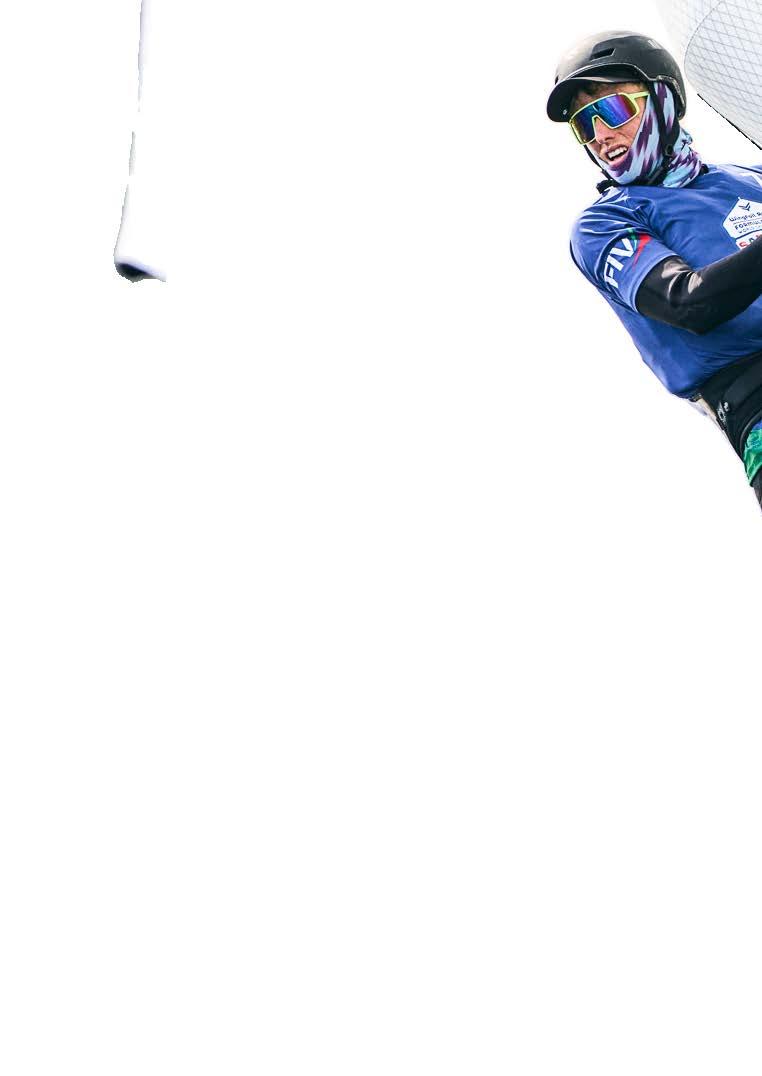
wingfoilers. In late September, Sean Herbert claimed bronze at the Formula Wing World Championship in Sardinia, after marking his World Cup debut in Switzerland in June with the same colour medal. Days later, Herbert dominated the US WingFoil Championships in San Francisco, winning 14 of 15 races.
get tiresome, it's still enough of a novelty to be exciting. It's also what he needs to do.
"It's what I always dreamed of doing, and I'm doing it at a high level," he said. "I'm loving it and, as long as I keep performing, I'll do it as long as I can. I feel like the sport has come along at the right moment for me. It happened at a time when I wasn't sure of my direction."
That's not to say he doesn't miss more traditional sailing – not long ago he saw himself competing in the likes of the 69F or M32 circuits and aspired to be involved in the Youth America's Cup.
"If one of those opportunities presented itself, I would seriously consider it," Herbert said. "The wingfoil racing is going really well and it could provide the vehicle to get on one of those teams.
"Where it's going to take me, I don't know."
For now, he still needs to pop the helmet on and test new equipment.
Only a dummy would turn down the chance to do that.
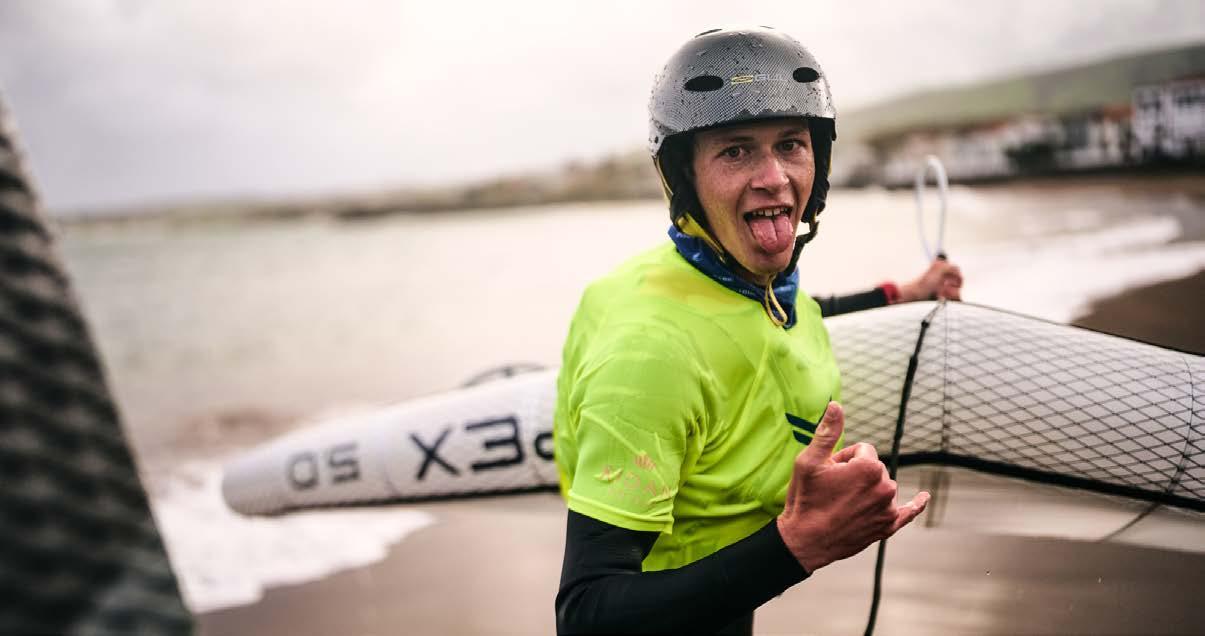
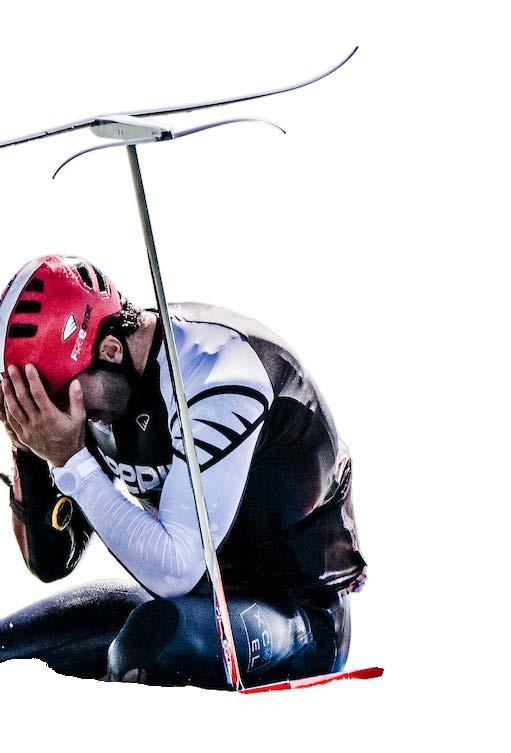
More Kiwi sailors are recognising that head protection isn’t just for the high-performance elite - but with no dedicated standards for sailing helmets and a bewildering mix of designs adapted from other sports, how do you decide what will actually keep you safe on the water?
We all see that boats are getting faster, but even traditional dinghies sailing in moderate conditions carry inherent risks, for instance during mark roundings, capsizes and unexpected equipment failures.
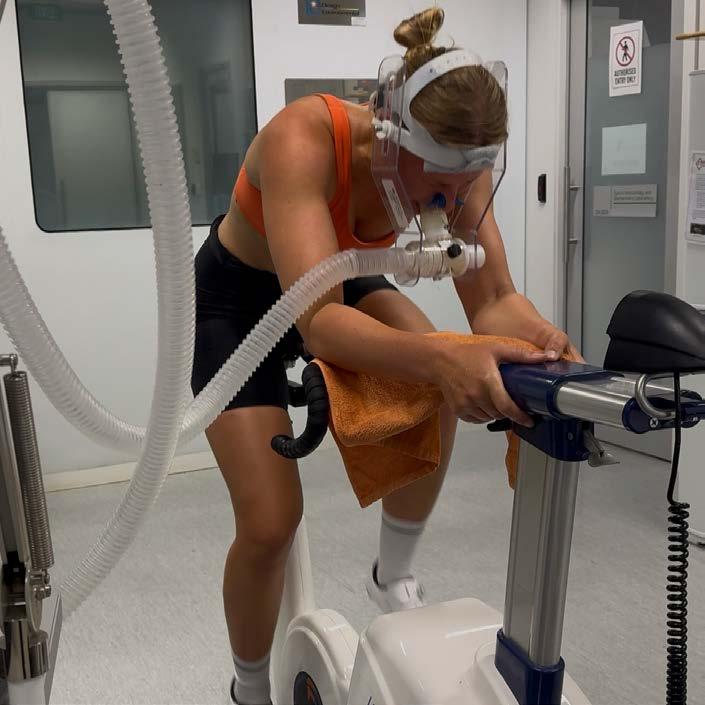
Findings from a recent Auckland University of Technology survey, run in conjunction with Yachting New Zealand, indicate that 21.1 per cent of people had received at least one diagnosed or unreported concussion from a sailingrelated activity over their lifetime.
The question is no longer whether head injuries happen in sailing – they demonstrably do – but rather what we can do to prevent them.
Before rushing out to buy a helmet, it’s crucial to understand what helmets can and cannot do.
“Helmets are great for protecting against severe injuries like skull fractures as well as facial lacerations and ear injuries,” said Dr
Alice Theadom, Professor of Brain Health and Director of the Traumatic
Brain Injury Network at Auckland University of
‘Helmets
are great for protecting against severe injuries like skull fractures as well as facial lacerations and ear injuries.’
Dr Alice Theadom
Continued from p39
gap with helmets, mainly drawing on her experience in equestrian: the lack of transparency around the safety standards. While many helmets display EN 1385 certification or similar standards, the testing does not always reflect real-life situations.
“Some helmet tests simply drop a helmet onto a metal anvil, and if it’s good, it passes the standard,” she said. “Testing standards and what they involve is something that needs to be made public.”
Professor Mark Orams, former Olympic sailing coach and Deputy Vice-Chancellor Research at AUT, is currently working with Yachting New Zealand on helmet research.
According to him, sailing has adopted helmets from other sports such as surfing, cycling and snow sports, though research is ongoing to determine whether these translate effectively to sailing conditions.
One observation is that sailors’ helmet decisions are driven primarily by practical concerns, rather than safety certifications.
“Sailors will try on multiple types of helmets and get a sense of how light they are and how well they fit,” Orams said.
His experience with trialling a wide range of helmets has led to key aspects for consideration, with coverage and profile chief among them.
Bulkier helmets can add centimetres to a sailor’s height, potentially disrupting years of muscle memory when moving under the boom and around the boat and potentially increasing the risk of boom collisions with the head, Orams said.
Fit, adjustability, weight and drainage are other factors to look for.
“Compatibility is also an important aspect. Do they work with your sunglasses, or give you enough sun protection?”
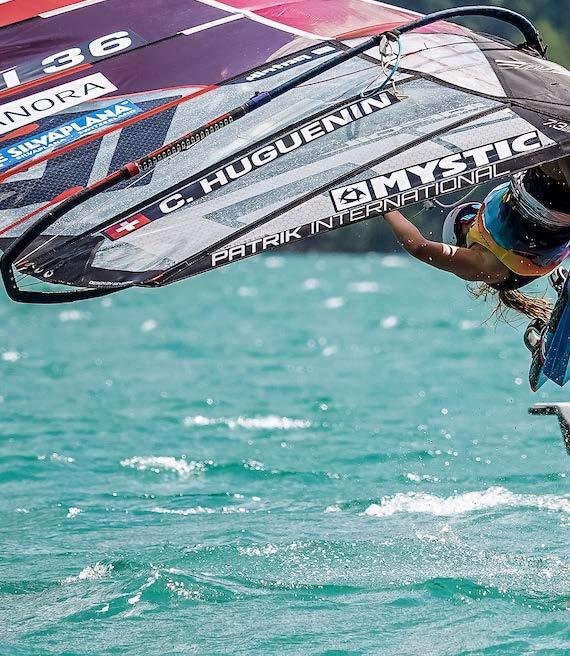
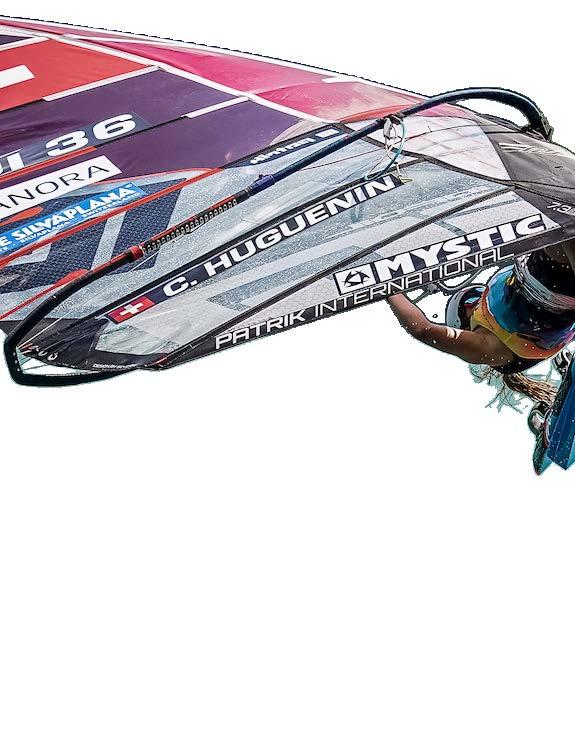
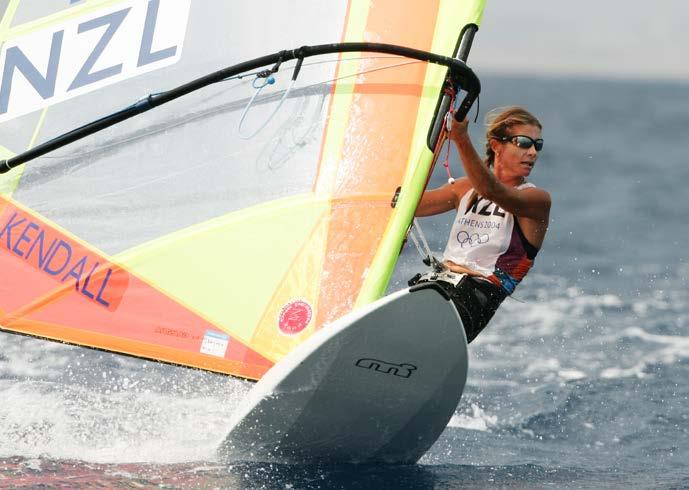
Heat is also significant, with Orams noting that some helmets are hot to wear, leading to sweat running down into your eyes. Ear coverings can lead to a sense of restriction for sailors, who often use the feeling of the wind as a fundamental part of their sailing.
Continued on p42
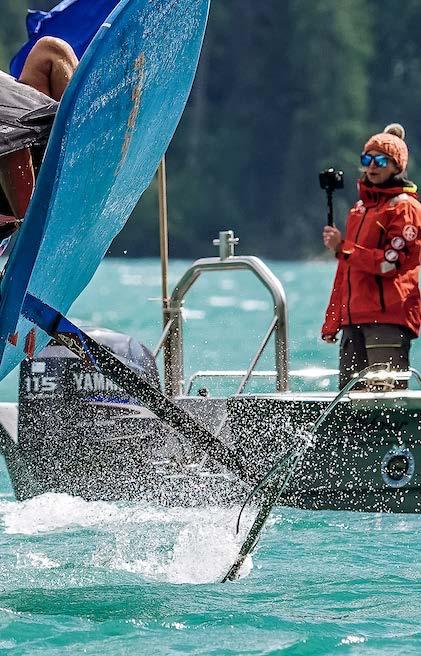
The choice to wear a helmet should be based on an honest risk assessment. Things to consider:
Foiling boats and high-performance skiffs like the 49er and Moth present higher risks than leisurely cruising.
Beginners benefit from helmets while developing awareness of boom position and boat movement. However, experienced sailors aren’t immune. Many head injuries occur when attention is focused on tactics, navigation or crew conversations rather than overhead hazards.
Heavy air, big seas and crowded racing increase collision risk. Our variable weather patterns can see conditions change rapidly, making helmet use prudent even on days that start calmly.
Lighter booms cause less severe injuries, but any boom or large piece of equipment could cause harm at the wrong angle or speed.
A new study by Auckland University of Technology (AUT) has found that concussion remains a significant but under-recognised risk in sailing, with low use of protective headgear and gaps in concussion knowledge among participants.
The research, led by AUT concussion expert Dr Alice Theadom, surveyed 168 sailors across New Zealand aged 12 and over using an anonymous online questionnaire. The study examined concussion awareness, experiences, and attitudes toward protective headgear in a sport often perceived as non-contact.
More than one in five respondents (21.1 per cent) reported sustaining a medically diagnosed or suspected concussion while sailing, with 2 per cent experiencing multiple concussions.
Despite this, only 43.2 per cent said they had a good or excellent understanding of concussion, and one in five were unsure when it was safe to return to sport after a concussion.
Headgear use was low, with 53.5 per cent of participants saying they hardly ever wore protective helmets. While many respondents acknowledged helmets could reduce impact and prevent injuries, concerns were raised about potential risks, including water entrapment, neck strain, and impaired performance.
Theadom said the findings highlight a clear need for better education and guidance.
“Our results show that concussion is a real risk in sailing, yet knowledge and protective behaviours are inconsistent,” she said.
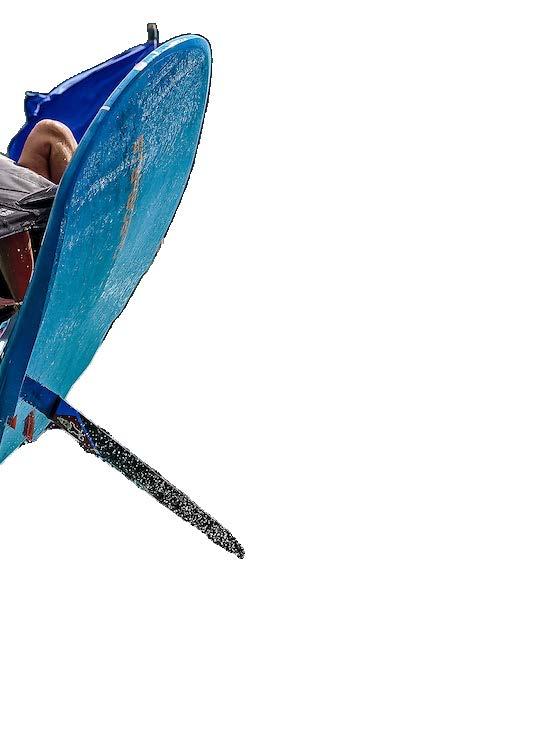
“Improved concussion education, clearer return-to-sport guidance, and better-designed headgear could play an important role in improving sailor safety.”
The study calls for stronger safety messaging within sailing and design improvements by manufacturers to address performance and safety concerns.
Olympic windsurfer Barbara Kendall has been wearing helmets since picking up wingfoiling, and said they need to be comfortable and not wobble around on your head.
“They also need to be as light as possible, so when you fall off winging you don’t have extra weight giving you whiplash,” Kendall said. “And they also need to provide adequate protection from foils hitting you in the head.”
Retail owner Mike Pasco from New Zealand Sailing Ltd has noticed increased demand for helmets since high-profile events like the America’s Cup and SailGP have hit the stage.
“Initially, we would sell helmets to clubs or training organisations,” Pasco said, noting that at that time they were seen as something the ‘cool people’ didn’t wear.
Fast forward 15 years and he’s seeing a big increase in individuals buying helmets, particularly given the surge in foiling sports.
“For me and many of my customers, wearing a helmet wasn’t something I’d ever thought I’d do.
“And now I wear one every time I go out, and I don’t even think about it now.”
Pasco’s advice to hesitant sailors is simply: “Come and try one. You’ll be amazed at how light they feel.”
Both Theadom and Orams agree that helmets have an important role in sailing safety, particularly under specific circumstances. Orams advocates for mandatory helmet use in youth classes and learn-to-sail programmes as well as high-speed foiling classes, where risks are elevated.
“We should seriously consider advocating for the wearing of helmets as a standard operating procedure for sailing, the same way as we expect PFDs [personal flotation devices],” he said.
Theadom emphasises that, regardless of helmet use, seeking medical attention after any head impact is crucial.
“If people do get a hit to the head, what they do afterwards is critical,” she said. “Even if you feel okay at the time, sometimes symptoms come on the next day.”
She encouraged sailors to view helmets as one part of a broader safety approach.
“For me, it’s about informing people to get the most out of their sport in the best way that they can to protect themselves,” Theadom said.
It’s a complicated space with lots of unanswered questions, she admits.
“Do your homework before purchasing and look beyond the marketing claims to understand what ‘impact protection’ actually means.”
Currently, helmets are mandated in the iQFOiL, wingfoiling and O’pen Skiff classes. The Waszp class also mandates their use during regattas.
Uptake in other classes is growing organically, particularly in highperformance classes.
The New Zealand 49er Class Association and the International Nacra 17 Class Association of NZ have seen widespread voluntary adoption at the elite level, with most of our Olympic and SailGP sailors now wearing helmets as standard practice.
Several yacht clubs around the country have introduced helmet requirements for their Learn to Sail programmes.
Kris Perano, commodore at Charteris Bay Yacht Club, said they have been mandating the use of helmets for Learn to Sail 1 and 2 since last season.
“Our committee decided this following a handful of boom strikes for Learn to Sail participants, as well as a relatively serious boom strike on a visiting Finn sailor in 2023 during a regatta.
“What we’ve seen is that when helmets are optional for Learn to Sail, the kids don’t want to wear them if other kids aren’t. Once they became mandatory, they all went with it, and it’s not been an issue at all.”
Expense and availability are a consideration.
“Outside of Auckland, few retailers stock suitable helmets for water sports that you can try on in store, and ordering online has its challenges with ensuring a proper fit,” Perano said.
Raynor Haagh, Yachting New Zealand’s General Manager: Community and Development, said the organisation will continue working with experts such as Theadom and Orams, and the wider sailing community, to improve concussion awareness, identification and prevention.
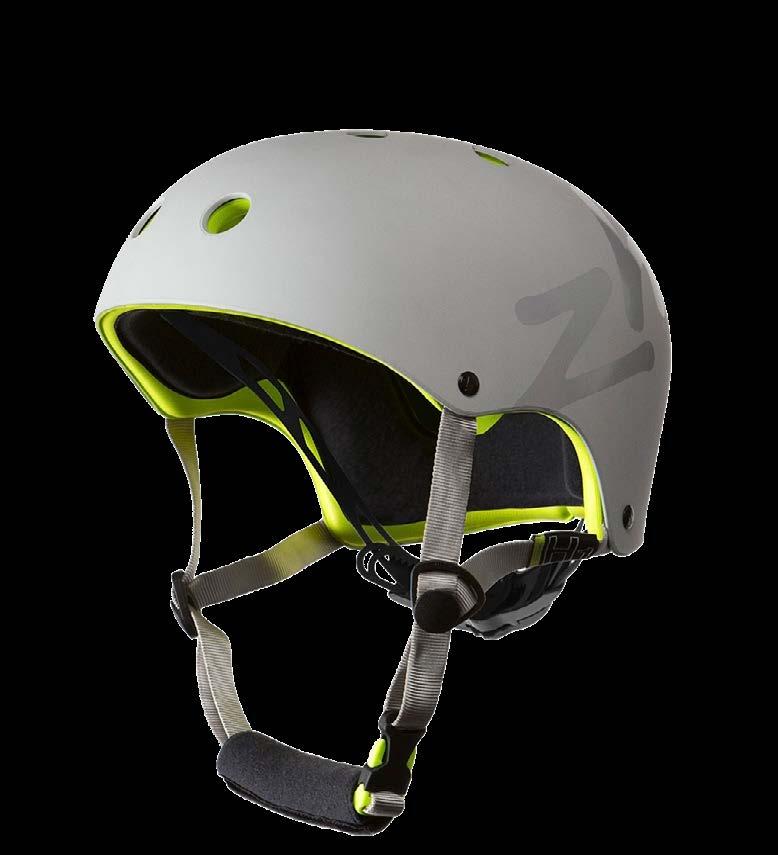
Price: $179 (adult), $125.30(junior)
Thin EVA and impact-resistant ABS construction
Hydrobase-lined padding (wicks moisture, dries fast)
Internal airflow channels for cooling and drainage
Rear adjustment cog for snug fit
Extra padding inserts included
Sizes: XS (junior), S, M, L (adult) EN 1385-approved
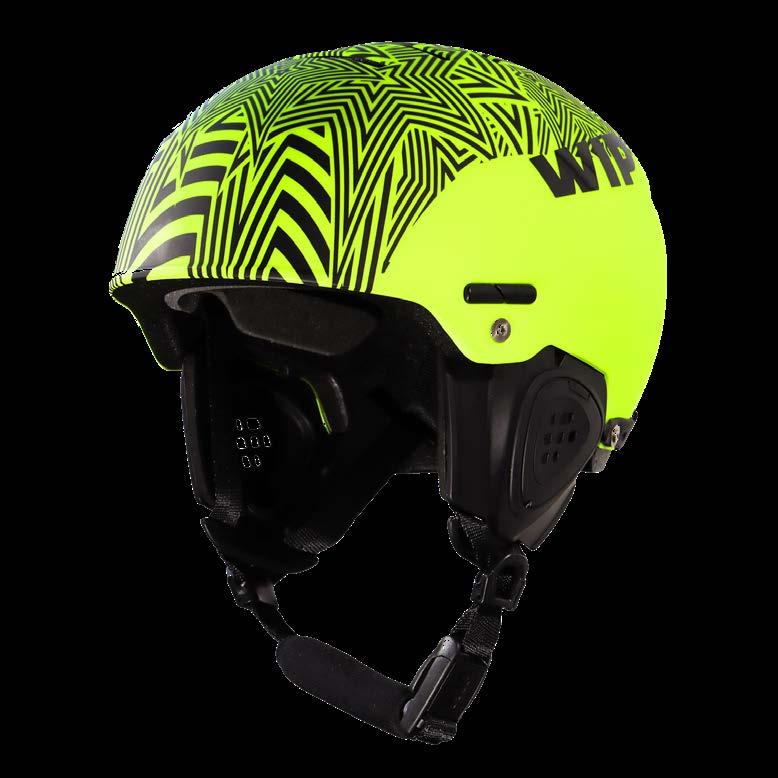
Price: $110
Designed for sailing and foiling
Lightest on market (150g without ears)
Multi-impact technology
Meets numerous standards, including EN 1385:2012
Regains shape after impact
One-size-fits-all (55-61cm)
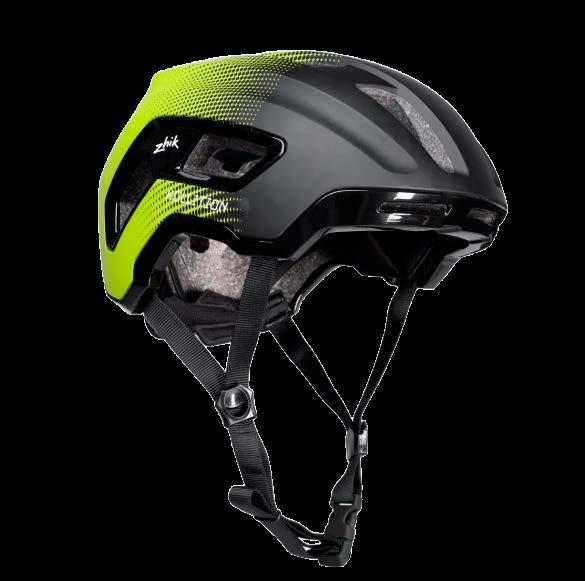
Price: $185
Low-profile composite shell
Impact-absorbing construction
Cushioned internal lining
Enhanced breathability
Designed for high-speed sailing
Sizes: S, M, L
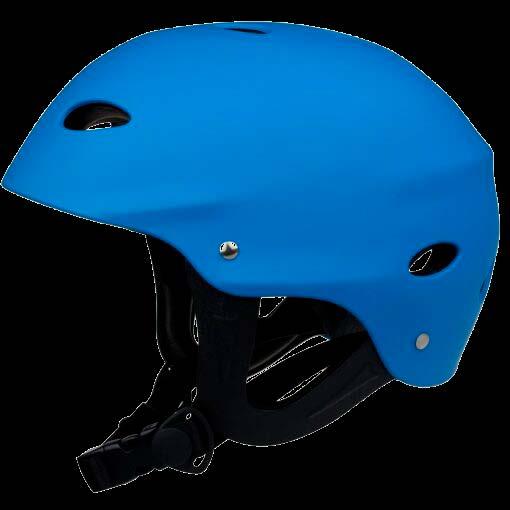
Price: $85
High-impact ABS shell
Moulded liner
Quick release buckle
11 vent design
Ear protector included
Certified water sports helmet
Budget-friendly option
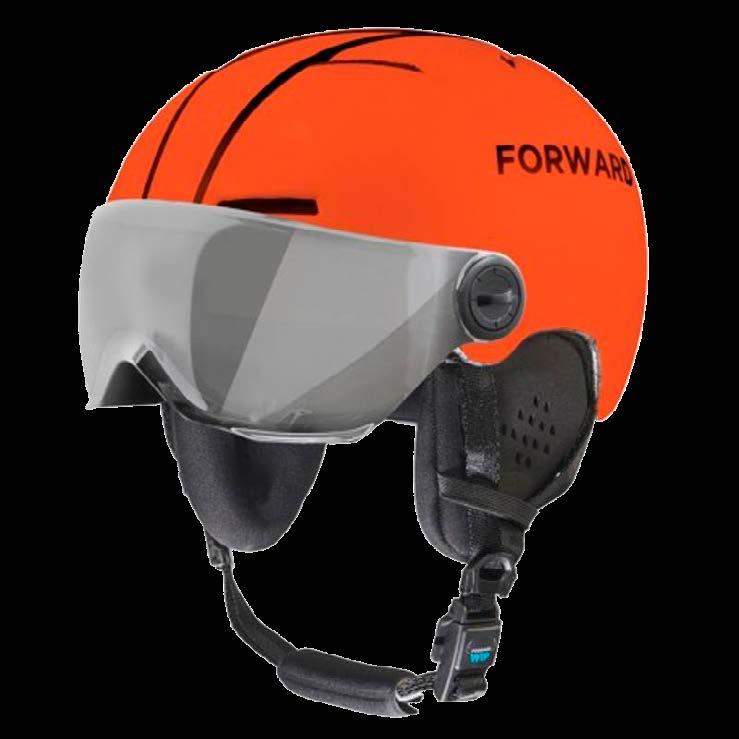
Price: $365 (with visor),
$275 (without visor)
Designed for sailing and foiling
In-mould construction (ultra-light)
Developed in collaboration with several America’s Cup teams
Crossover design (water/snow sports)
Meets numerous standards, including EN 1385:2012
Rounded aerodynamic shape
Sizes: M/L
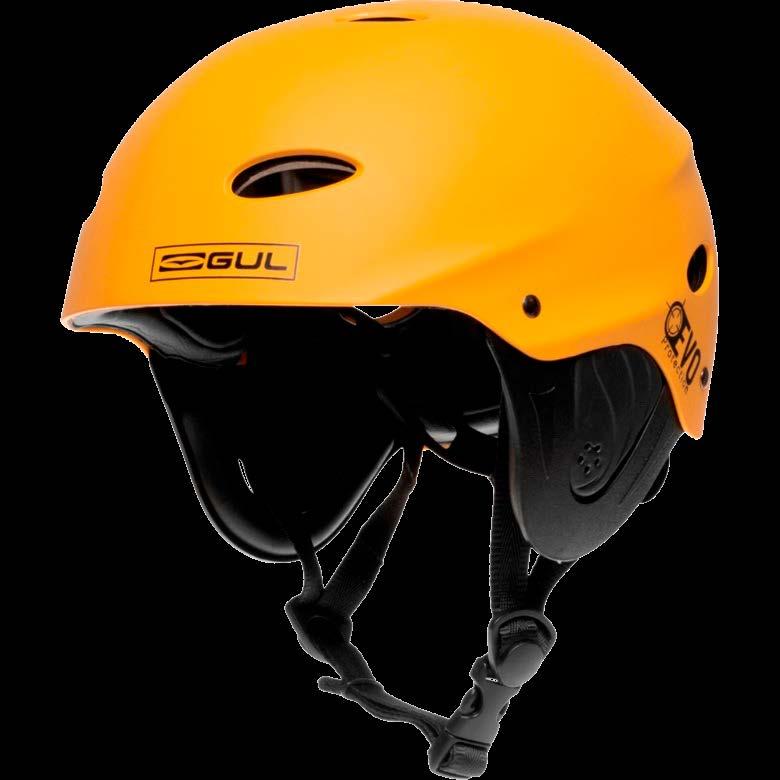
Price: $99
EN 1385-approved
ABS high-impact shell
EVA foam impact-absorption liner
Acculock wheel adjustable fitting system
Fully vented (top, sides) and ear protection
Quick-release chin strap
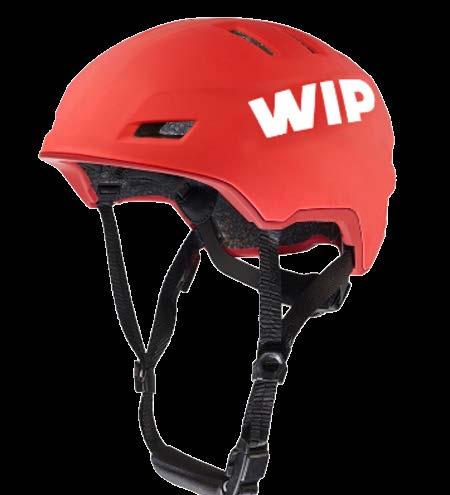
Price: $210
Designed for sailing and foiling
In-mould polycarbonate/polystyrene
Under 300g
Meets numerous standards, including EN 1385:2012
Superior shock absorption
Exceeds water helmet norms
Two sizes (S/M and M/L)
Sizes: Junior (55-57cm), S-M (57-59cm), L (59-61cm)
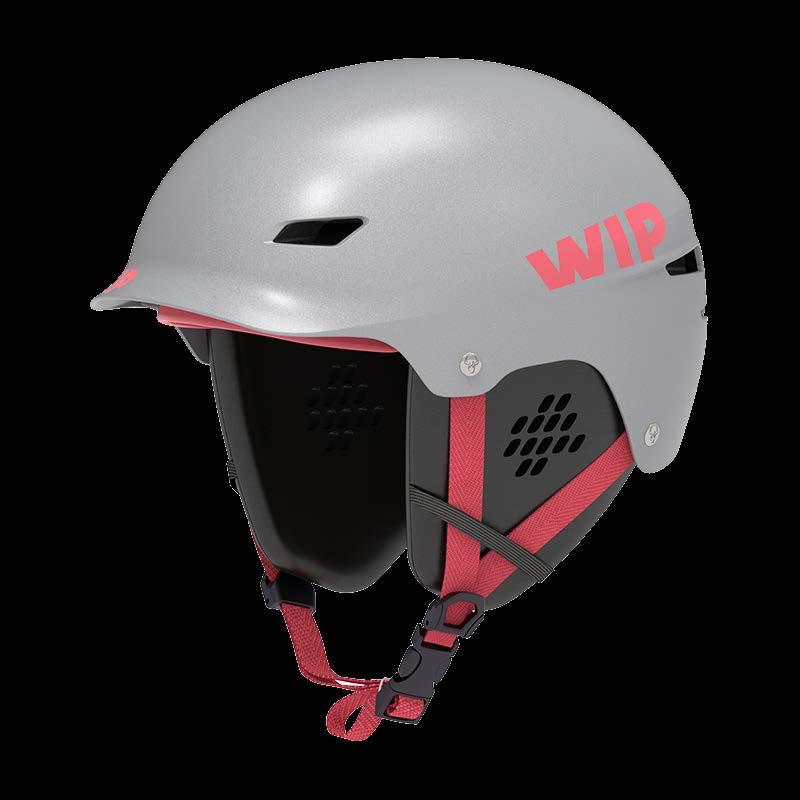
Price: $145
Designed for sailing and foiling
ABS shell
Multi-position fit
Micro Velcro size adjustment system for a snug fit
Meets numerous standards, including EN 1385:2012
Available in a variety of colours and finishes
With or without non-removable ear protection with an optional textile cap visor
Two sizes (S/M and M/L/XL)
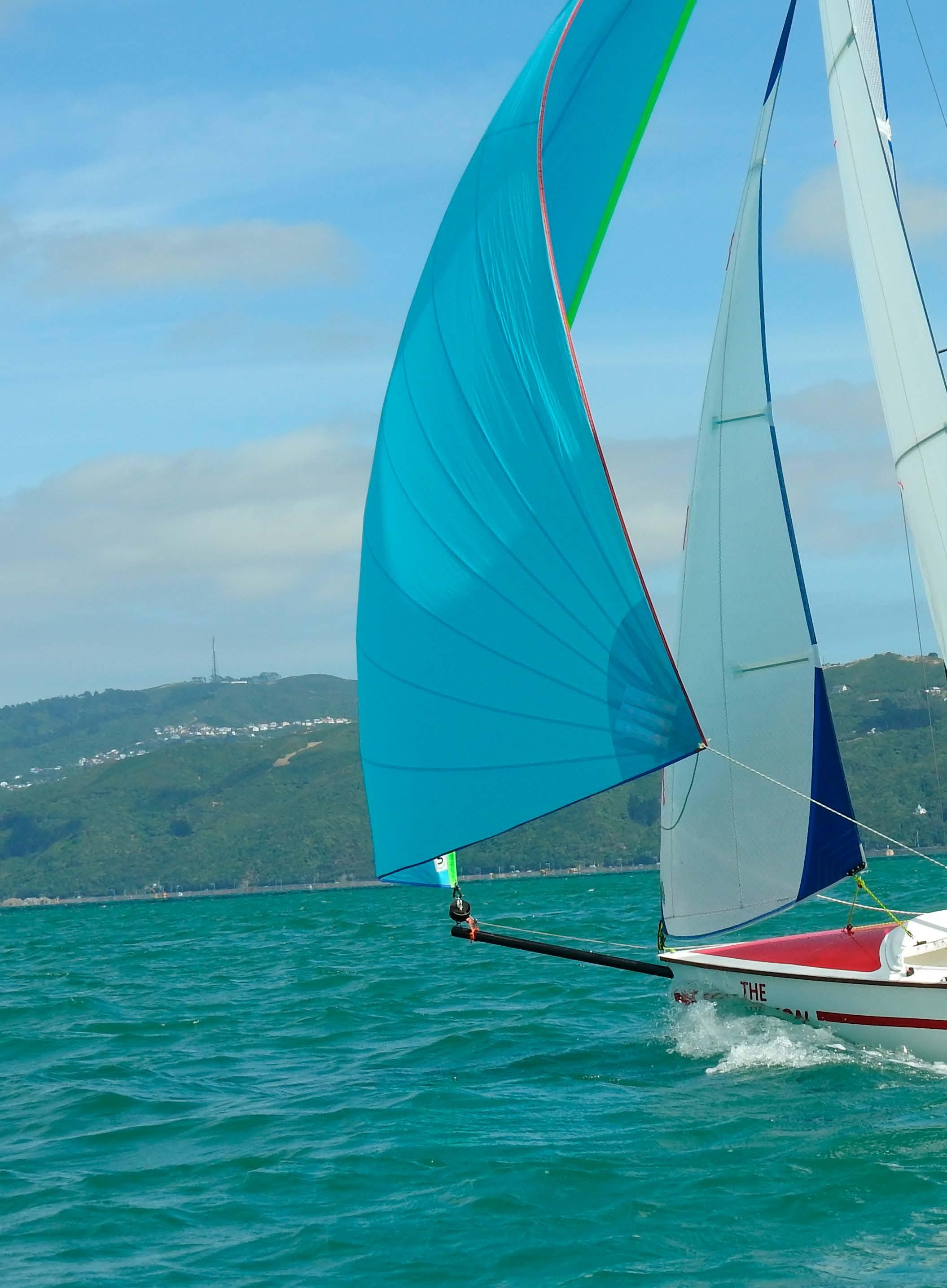
The ParAble’s journey from concept to national class has been long – but its impact on inclusive sailing is only just beginning
Born from boat-park conversations and a shared ambition to make sailing more inclusive, a dedicated group of volunteers has finally seen its passion project catch the wind. Thirteen years after the idea first took shape, the ParAble yacht has been formally recognised as a national sailing class – a landmark moment for the Sailability Wellington Trust and for inclusive sailing in New Zealand.
It was a particularly special moment for Don Manning, chief executive of the Sailability Wellington Trust, when he received the call confirming that Yachting New Zealand had added the ParAble boat to its fleet of class associations.
“It’s been a long time coming,” he said. “What started out as a passion project has taken on a life of its own. But when you finally see the boats in the water and people enjoying their time sailing them – that’s when you know it’s all been worth it.”
The trust is a volunteer-led
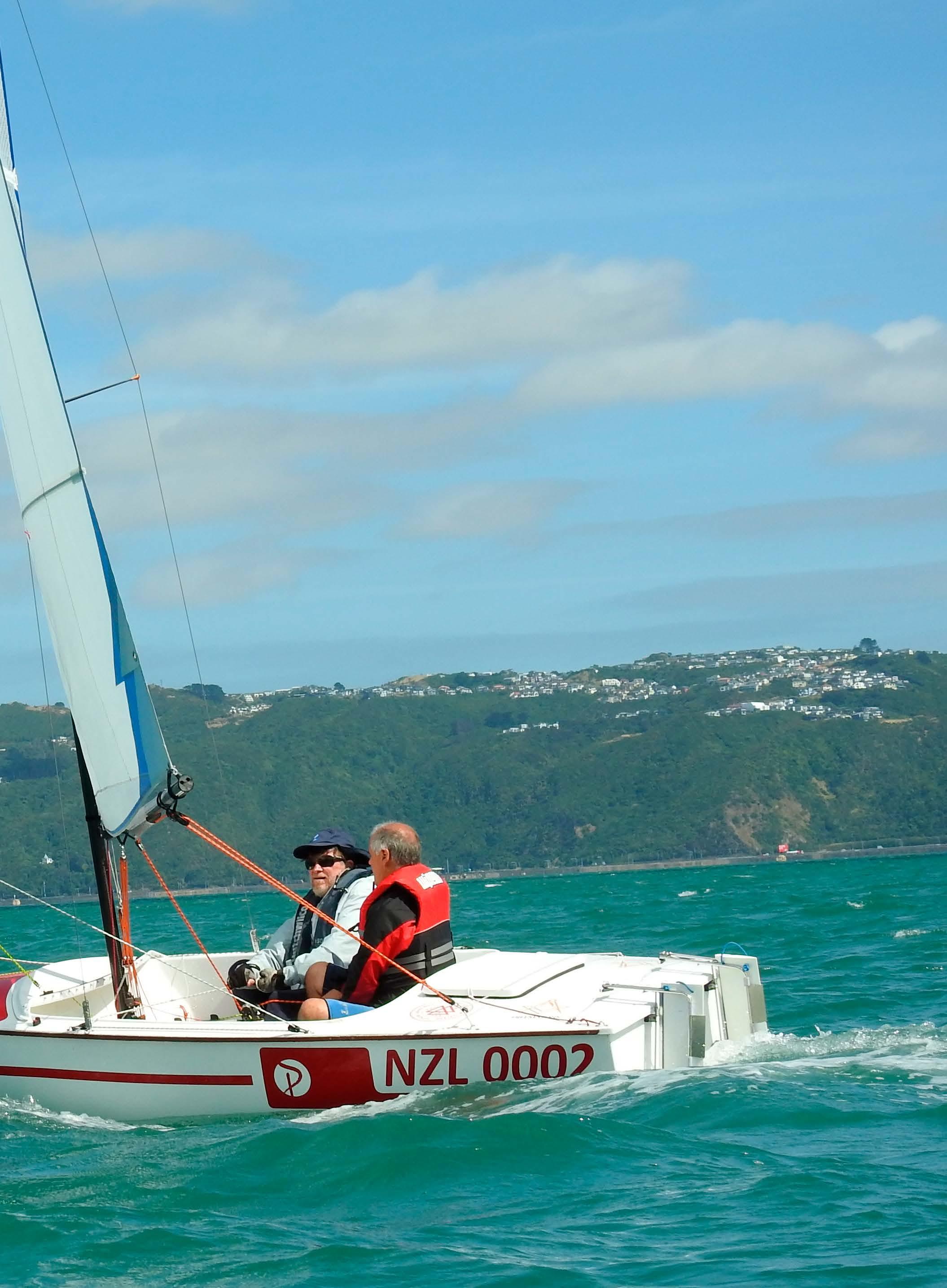
‘It’s been a long time coming. What started out as a passion project has taken on a life of its own.’
Don Manning
organisation dedicated to making sailing accessible for people with disabilities. It operates from three bases – Evans Bay Yacht and Motor Boat Club, Seaview Marina and Titahi Bay Boating Club – and more than 200 sailors take part in regular sessions. “If the weather’s good, we’re out six days a week,” Manning said. “Our numbers have been growing steadily, and that’s been fantastic to see.”
Manning is quick to clarify the organisation’s ethos. “While mostly it’s referred to as ‘sailing for the disabled’, we prefer ‘inclusive sailing’,” he said. “It’s about getting everyone out on the water – sailors
and the 70–strong support crew.”
That philosophy has driven the creation of the ParAble class. For years, the backbone of Sailability Wellington’s fleet has been the Hansa 303 – a reliable twoperson boat, but one with limitations.
“The Hansa 303 is registered for a payload of only 160kg,” Manning explained. “That’s fine for some of our sailors, but for others – particularly when you have a sailor and a crew – it’s just not enough. We needed something bigger, something more challenging to race, and something that could be launched straight off a beach trolley.”
That need sparked the idea for a new class of boat, beginning a 13-year journey. “Back in 2012, we went to Hansa and asked if they’d be interested in developing a larger boat like ParAble,” Manning recalled. “They weren’t keen. I got the impression they thought it would be too hard. And, to be fair, they were almost right,” he said with a laugh.
The project stalled for a while, but the idea never disappeared. “A group of us got together again and decided we’d have a
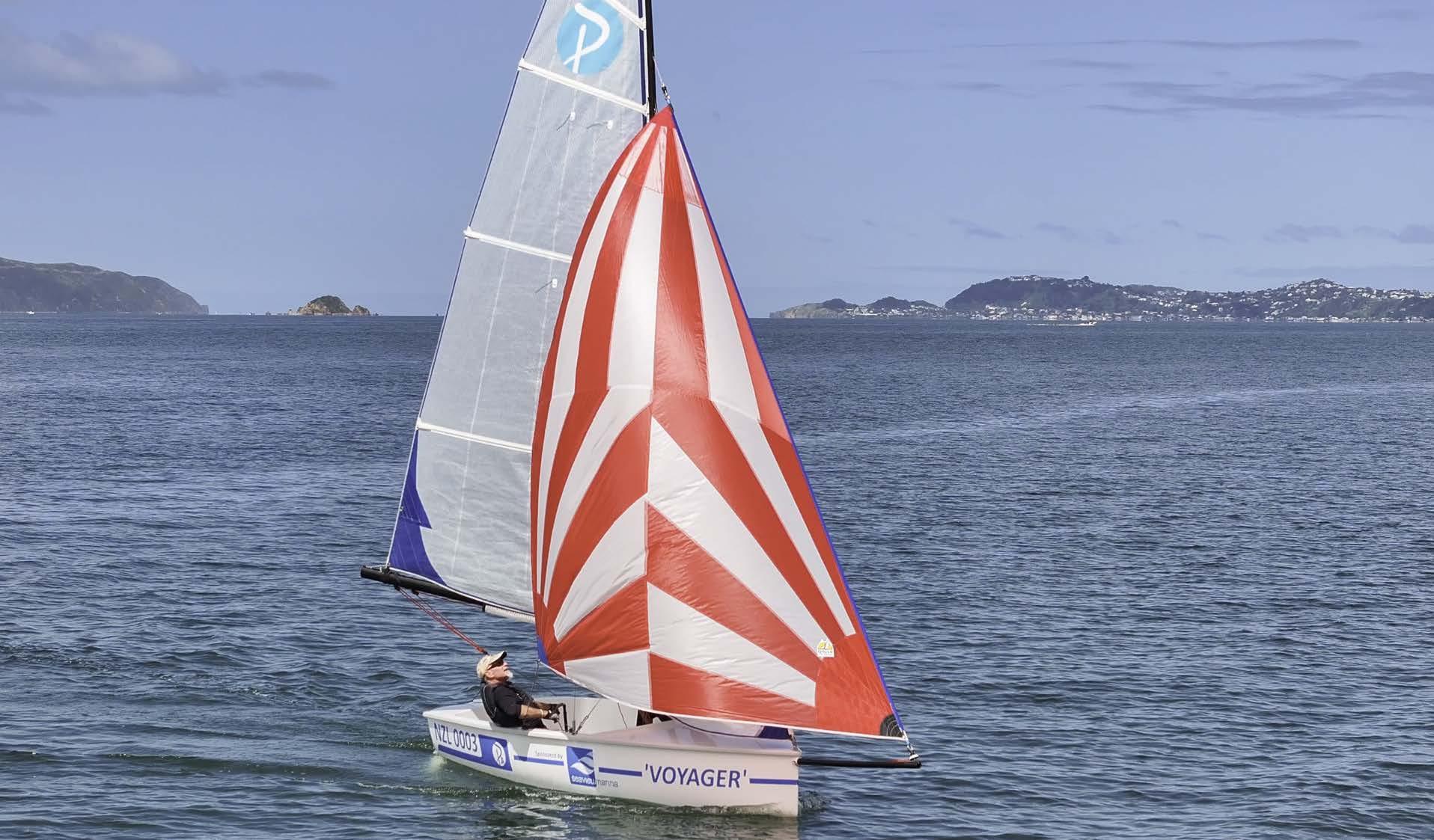
crack at it ourselves,” Manning said. They approached the late, renowned designer Bruce Askew for advice. “Bruce didn’t pull any punches. He told us it wouldn’t be easy, but not impossible either. He spent a lot of time testing our existing boats and eventually came back and said, ‘This is what you need.’”
Askew’s guidance laid the foundation for what would become the ParAble. Local boat designer and computer specialist Kevin Cudby then joined the project, developing what Manning describes as an “innovative” hull shape that was first tanktested on computer and later trialled on the water.
A group of Sailability Wellington volunteers began building the prototype from western red cedar in 2013. It took three years before the first fibreglass mould was ready.
“Everything was done in our spare time while we continued to sail the Hansa 303s. We were also dependent on the generosity of the team at Carboglass Mouldings in Lower Hutt, who built the hull mould and first hull,” Manning said.
“The team at Tory Channel Construction also donated an immense amount of time, skill and materials to complete the build of two prototypes, and plans were drawn up for half a dozen more.”
But progress was slow.
“We had to build a new floating pontoon and storage shed at Titahi Bay,” Manning said. “We also had to pause to organise the 2020 Hansa national regatta and then, of course, Covid hit. Each time, the ParAble project had to take a back seat.”
In the meantime, Sailability Wellington
‘The number of people who’ve given their time, skills and money to make this happen has been incredible.’
Manning on the ParAble class
bought 10 new Hansa 303s to meet growing demand, but the vision for a new class remained. Eventually, Manning’s team connected with Auckland boatbuilders Mackay Boats, renowned for their craftsmanship and Olympic-level dinghies.
“Mackay has been excellent to work with,” Manning said. “We decided to use a bulb centreboard from one of their kits, and they also produced the rudders and designed the mast for us. They’ve done a brilliant job.” The sails were produced by Doyle Sails in Auckland. “They landed on a one-design sail that works really well, and we have almost finished refining the details.”
The first production models were delivered to Sailability Wellington’s Seaview shed a few months ago.
“The early prototypes were heavy – over 140kg per hull – but with the experience and knowledge of the Mackay Boats team, we’ve now got that down to about 100 kilograms per boat,” Manning said. “That’s made a big difference.”
Each iteration brought the team closer
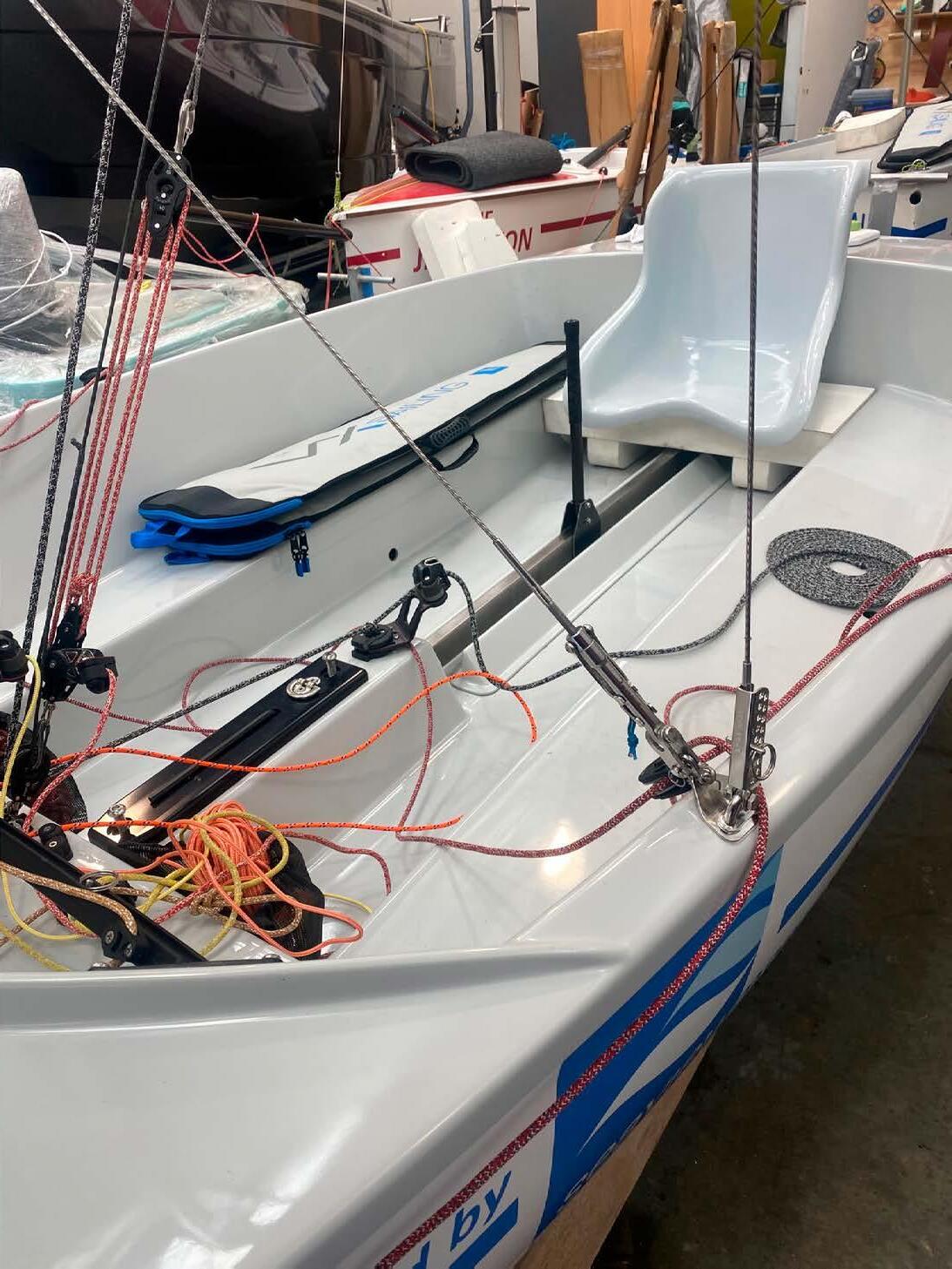
to what he describes as “the perfect mix of accessibility and performance”. The 4.1m boat features a self-draining cockpit, takes a 240kg payload and can be launched directly from the beach using a simple trolley.
“No cranes, no fuss,” Manning said. “It’s safer, quicker, and means more people can go sailing without having to wait for specialist equipment.”
The design also allows for flexible seating and sail configurations, from learnto-sail setups to high-performance racing. “We wanted something that could do it all,” Manning said. “A boat that beginners could learn on, but that also offers a proper racing experience for sailors who are progressing.”
The project’s longevity has only been possible thanks to a large and dedicated volunteer base. Manning estimates around 15 volunteers have been directly involved over the years. “That’s probably the part I’m most proud of,” he said.
“The number of people who’ve given their time, skills and money to make this happen has been incredible. Altogether
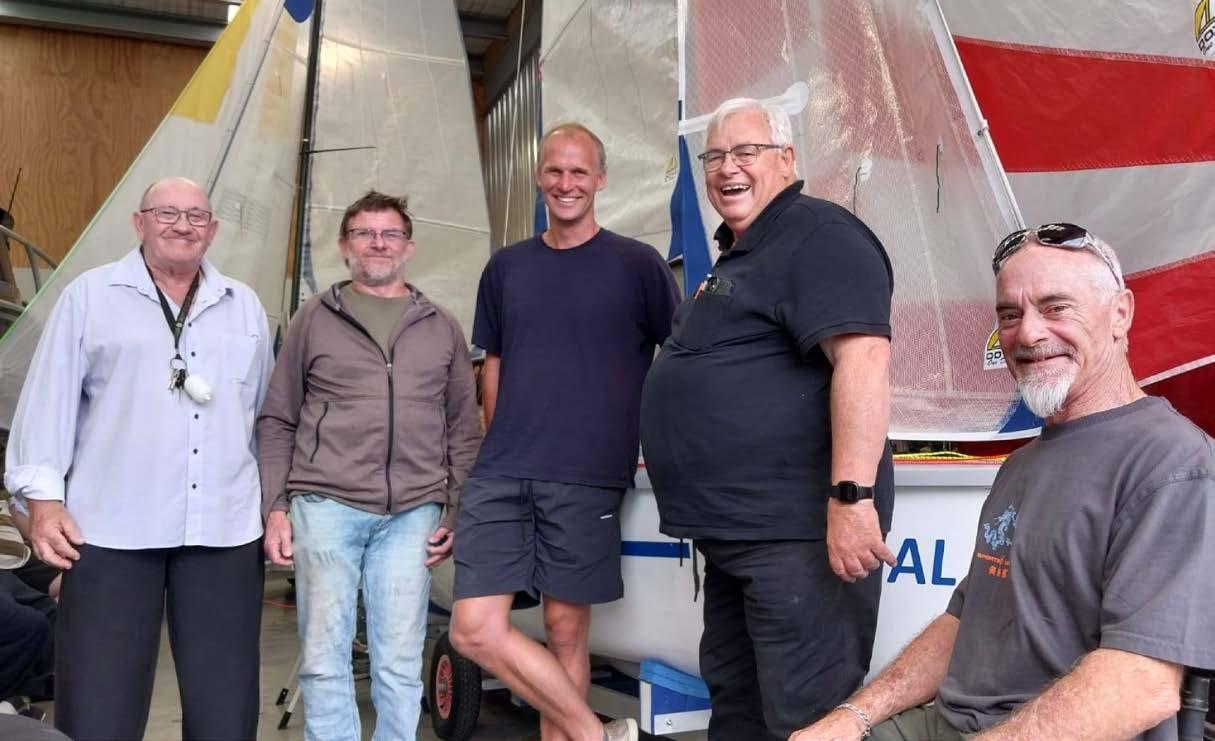
we’ve raised over $600,000 – most of that from people who just wanted to help – we still need some more to finish the project off.”
Among those who helped test and refine the boats was New Zealand para sailor Chris Sharp, who represented the country at the 2016 Rio Paralympics – the last time sailing featured in the Games.
“Chris sailed the boats for a bit and mucked around with the sail designs,” Manning said. “He gave us great feedback. Having someone of his calibre involved really helped us fine-tune the setup.”
Now that the ParAble class has official recognition from Yachting New Zealand, possibilities are expanding rapidly.
“The class affiliation means we can now host proper national championships,” Manning said. “We’re planning the first one for March or April next year at Seaview, and a second series specifically for sailors with intellectual impairments.”
Further regattas are being developed for vision-impaired sailors and those, Manning jokes, with “TMB – too many birthdays”.
Beyond New Zealand, the ParAble has already begun attracting international attention. Manning has received enquiries from organisations in Australia, the United Kingdom, the United States and Greece. “I’m not surprised,” he said. “Everyone who’s sailed the boat can’t stop talking about how amazing it feels. Once we’ve got all the boats and sails ready for the nationals, I expect interest to really peak.
“The project may have taken over a decade to reach this point, but its potential to change the face of inclusive sailing – in New Zealand and beyond – is only just beginning.”
Plans are already under way for an official launch celebration and regatta.
“That would be a fitting way to mark what’s been such a long and rewarding journey,” Manning said. “The dream is to see this boat all over the world, with as many sailors as possible enjoying the sport. It’s about inclusivity; that’s what the name stands for. We wanted to remove a few more barriers so more people can experience the freedom of sailing. If we’ve achieved that, then I can die happy.”
Unlocking the thrill of modern, high-performance dinghy sailing
If you’ve ever watched Olympic skiffs tearing across the water – spray flying, kites billowing, crews hanging on the edge – you’ve probably thought, “That looks incredible… but not for me”.
Fast boats have existed for decades, but modern, high-performance, small boat sailing – combining cutting-edge hull design, lightweight materials, and advanced hardware – has long been reserved for the more elite athletes. But a new generation of boats is breaking down that barrier – and now, the thrill of skiff-style, modern, highperformance sailing can be experienced by everyday sailors.
That’s exactly what Mackay Boats had in mind when they took over the VX Sailing range.
“We recognised that modern, highperformance skiff-style sailing was quite restrictive worldwide to those who wanted to go down the Olympic path,” said Mackay Boats’ John Clinton. “But recent advances in hull, rig, and hardware technology mean we can now offer that same excitement to recreational sailors – in a boat that’s easy to sail and affordable.”
The VX concept
The VX range was born from a simple but revolutionary idea: deliver the speed and excitement of modern, high-performance design without the intimidation or complexity.
It began with the VX One, conceived in 2010 by designer Brian Bennett with Ross Weene and Roger Martin. Their vision was a fast, lightweight “sports-boat” that blended dinghy responsiveness with keelboat stability; a 2–3 person asymmetric rocket that was exhilarating yet forgiving. The VX One’s clean hull lines, flat
sections, and open transom offered serious speed with surprising simplicity.
The concept worked. The VX One won Sailing World’s Overall Boat of the Year in 2012 and quickly built strong fleets in the US, Australia, and parts of Europe. Bennett followed up with the VX Evo in 2017 – a single-handed asymmetric hiking-skiff using the same principles – and another award winner.
When Mackay Boats took over VX in 2024, they saw an opportunity to evolve the concept further. Working closely with Bennett, they developed the VX Two – a modern double-handed hiking-skiff for recreational sailors seeking speed, fun and ease.
“We wanted a boat you can sail with a mate, partner, or child and experience the thrill of modern, high-performance sailing – without making it hard work,” said Dave McDiarmid of Mackay Boats, who is currently teaching his 6 and 9-year-old children in the VX Two.
The VX Two has already made waves internationally. It’s currently in contention for Sailing World’s Boat of the Year and even graced the magazine’s spring cover. Earlier this year, the VX Two featured in the “Legends Regatta” during the Moth Worlds lay day at Manly Sailing Club, raced by New Zealand sailing greats including Russell Coutts, Rod Davis, Jo Aleh, and Elise Beavis. The verdict? Pure fun.
The lineup doesn’t stop there. The VX Air, a double-handed single-trapeze version of the VX Two, is designed for sailors chasing the ultimate adrenaline hit. Using the same hull but with a larger rig, more sail area, and reconfigured deck controls, the VX Air will deliver Olympic-level excitement without the Olympic campaign. Early trials in New Zealand and the UK have generated huge buzz, with top sailors praising its speed and balance, so far hitting a top speed of 25.8 knots and regular speeds of 9 knots up wind.
What’s next for VX Sailing?
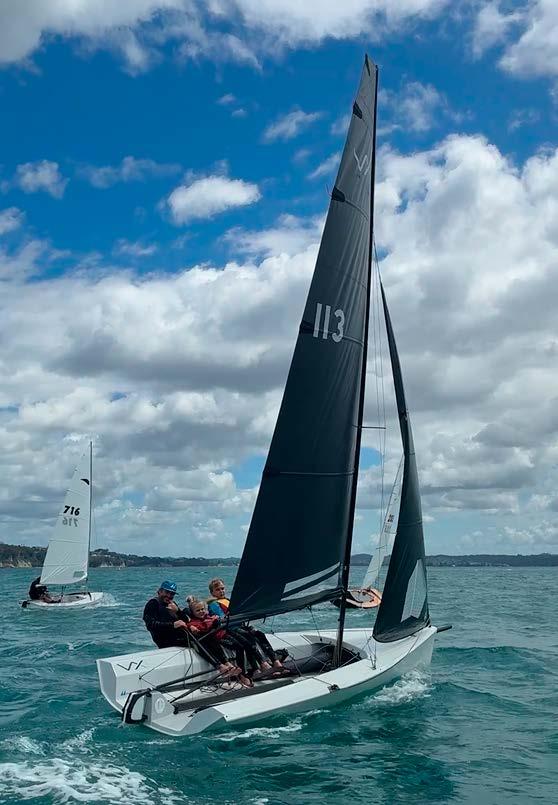
The VX family has exciting developments with the VX One on track for World Sailing International Class status, with its first World Championships scheduled for early 2027 in the USA. Strong fleets in Australia and Europe mean future worlds are likely to rotate across these continents.
Meanwhile, the VX Two is gaining traction across the US, Australia, the UK, and Europe – and will race in New Zealand this season. The VX Evo continues to evolve, with a new ballasted centreboard under development for lighter sailors.
And then there’s the VX Air soon to be officially launched – bringing the full modern skiff experience to anyone seeking speed, challenge, and excitement.
For sailors curious about what nextgeneration performance sailing feels like, where cutting-edge design meets accessible fun, now’s the time to try. Mackay Boats has demo boats available for test sails.
As Clinton said: “Once you’ve had a go, there’ll be no going back.”
For more info go to www.vxsailing.com or get in touch with Mackay Boats.



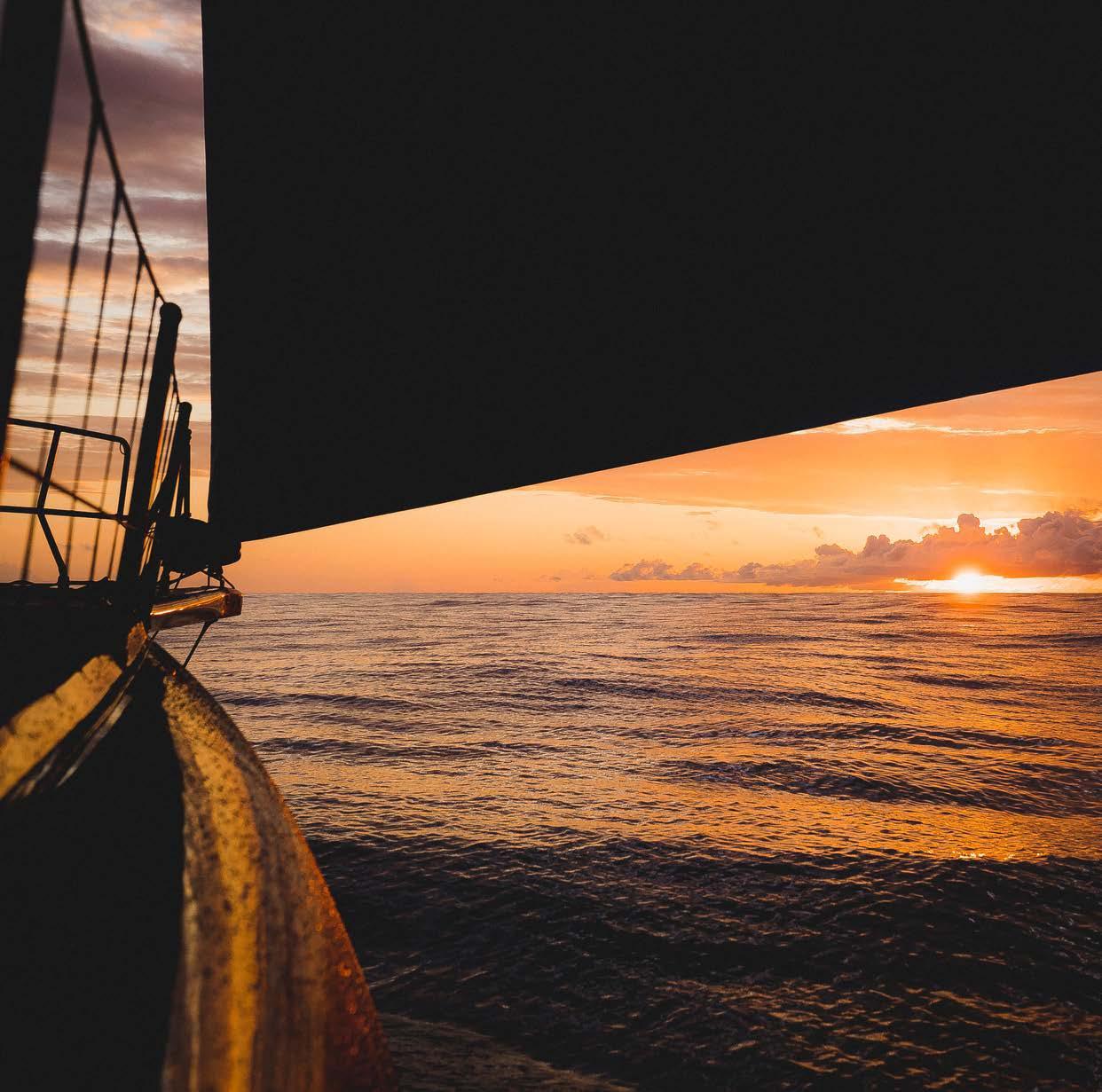

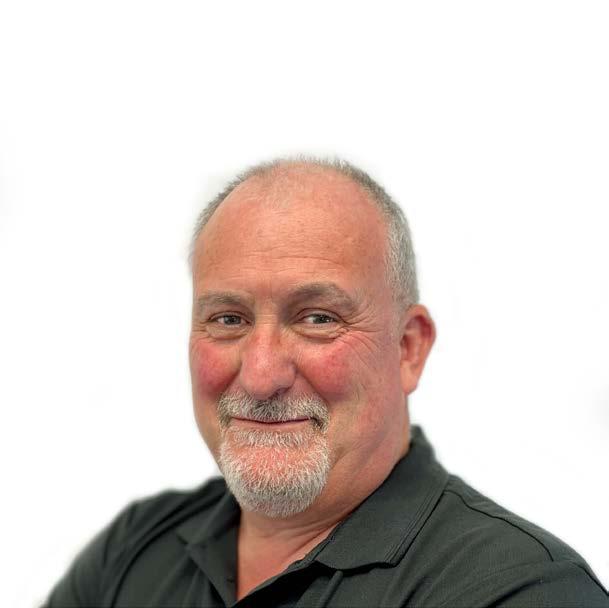
Yachting New Zealand regional and safety manager Nigel Richards shares a practical, skipper-friendly checklist of everything you need to make your next long passage less stressful
Awell-prepared boat, reliable equipment and a capable crew make any ocean passage safer and far more enjoyable. When everything is functioning as it should, your focus shifts from worry to simple observation and routine maintenance – freeing you to appreciate the open ocean and its wildlife. This A–Z checklist helps make the journey smoother, safer and more rewarding.
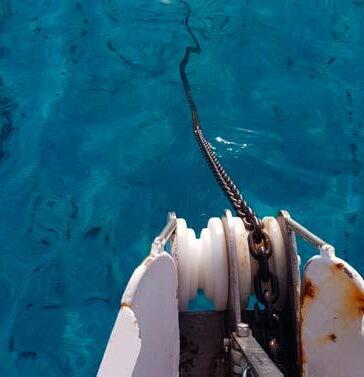
AAnchors
Anchor (and a spare) stowed safely and securely but ready for deployment when needed. It’s no good stowed below if you end up needing it in an emergency when you’re closing the coast in a blow.
B Briefings
Everyone on board needs to be competent in all aspects of sailing the boat - from using the head and operating in the galley to reefing sails, crewoverboard recovery and knowing the location of all safety equipment. The best way to introduce this to the crew is with a boat manual, including a plan drawing indicating the location of important items that all can read and digest. Then go looking for them and discuss.
C Communications
You need the normal VHF radios with emergency aerials. Automatic identification system (AIS) is fantastic for ‘seeing’ vessels around you – so long as it’s switched on. Long-range communications such as single-sideband radio (SSB) and satellite phones are also needed. Internet links like Iridium and Starlink have made receiving weather information easier.
D Drills, crew drills
need to be practised: sail changing, reefing, engine starting etc. The recovery drill is different for each boat. The skipper will know what process works best for their boat. How do you operate the crewoverboard button on the plotter? How will you manoeuvre the casualty? Where will they be brought aboard? How are you going to treat them once aboard?
E Emergency position indicating radio beacon (EPIRB)
You must have one on board. It must be in date and registered. Know where it is and what type. Does it need two passes of the satellite to position-fix, or does it transmit a GPS signal as well as the distress alert? Is it a flash one with Return Link Service (RLS), giving you the reassurance that the signal has been received instead of waiting and chewing your nails?
GGrab bag
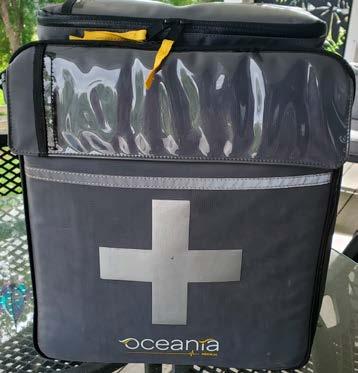
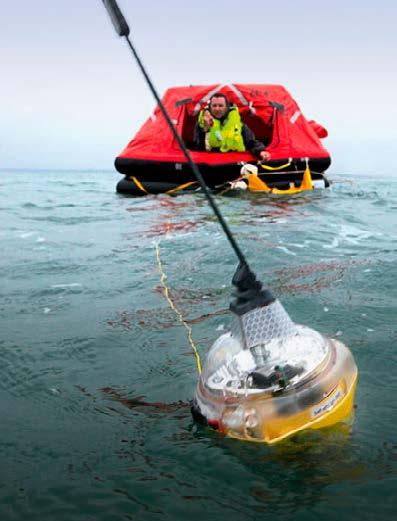
A waterproof bag capable of carrying essential survival items. Keep your documents in there while on passage: ship’s papers, passports etc; a supply of medication needed by the crew; communications devices; an EPIRB. Some purpose-built bags have a pocket for the EPIRB once you’ve activated it and are abandoning ship.
The International Voyage Certificate (IVC) is the minimum standard to satisfy the Director of Maritime NZ that the vessel, equipment and crew are adequate for the voyage. It is also recommended that you review the latest Yachting New Zealand
All the items mentioned under B
Continued on p52
Safety Regulations as a valuable resource.
Jacklines and jackets
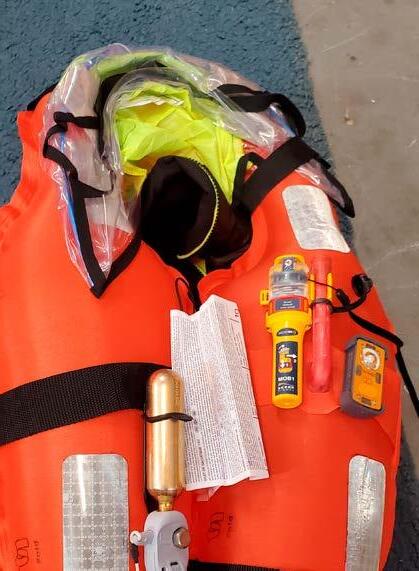
Properly fitted lifejackets with integral harnesses clipped to tethers and jacklines keep you attached to the boat while carrying out tasks. Together, this safety system is the biggest crew-overboard prevention measure. All crew must be allocated their own lifejacket; ensure that it fits correctly with a crotch strap. Then the crew ‘own’ that jacket for the passage. Every boat should have standard operating procedures for when they are to be used.
K Keel
If you have a bolted-on keel, make sure it’s going to stay on for the whole voyage. Check the keel-to-hull joint and those bolts. If you have grounded the vessel or the bolts haven’t been pulled for a while, ask an expert’s advice. While you are underneath, check the rudder stock and bearings, and don’t forget the cutlass bearing as well.
L
Locator beacons
AIS-enabled personal locator beacons (PLBs) are a few hundred dollars a pop but worth the investment for the confidence of relocating anyone who has gone overboard. The AIS ones provide a two-tier response: they transmit a digital distress call to any vessel in range via VHF and by 406 MHz to the global search and rescue satellite network.
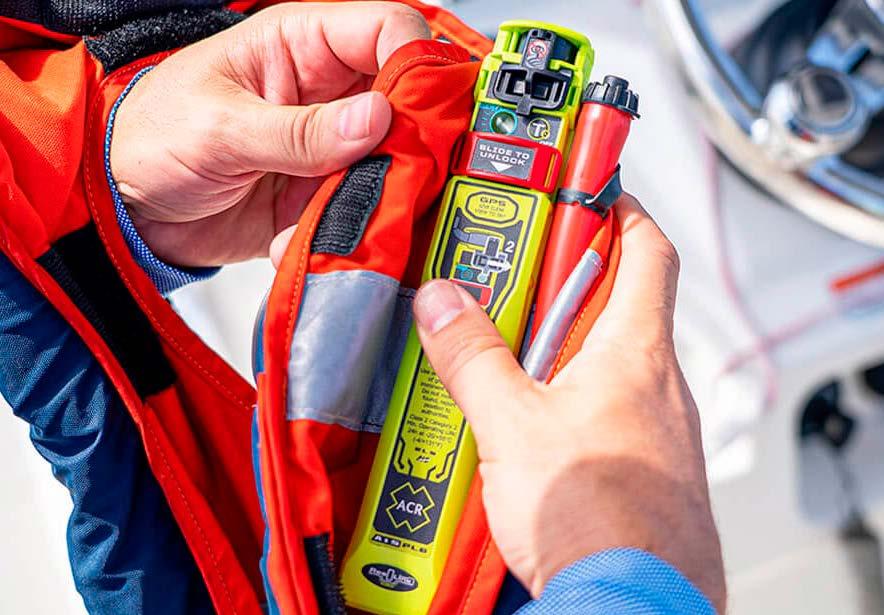
The two-day workplace first-aid course is no good 300 miles offshore. You need to have completed an offshore medic course that gives you a greater understanding of trauma and medical treatment. Know how to stop bleeding, suture, stabilise a fracture and recognise some of the more common medical conditions. Most importantly, know how to get help over the satellite phone or SSB.
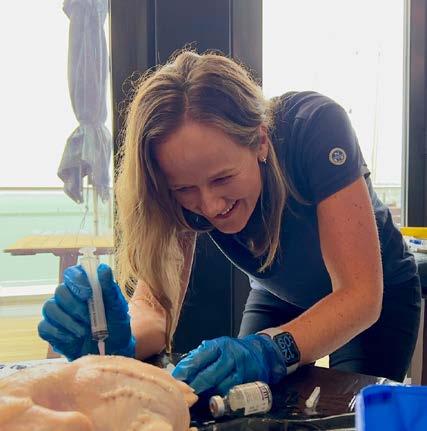
as well as alternative landfalls with waypoints and pilotage information. Remember, rarely do you follow a programmed route closely unless you are motoring. If you must change plans and your alternative routes are already programmed into the plotter, it only requires a couple of clicks and you’re all set.
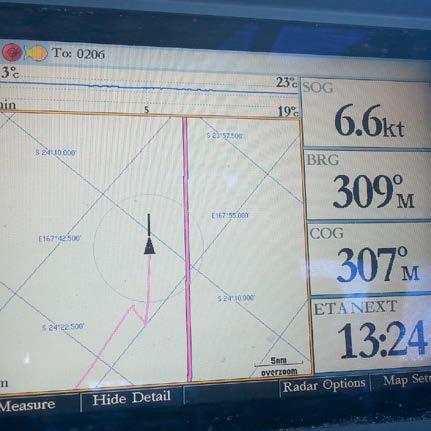
You need all the tools to do the job properly. Upto-date charts and the skills to use them. Paper charts to back up the plotter. Why not dust off the sextant for some noon sights? There are plenty of books to help you learn. Make a crew competition to see who can get the closest fix to the GPS. Then one day, when GPS fails, you can create an estimated position the traditional way.
P Passage planning and management
The plan is what you want to achieve; management is how you go about it. It needs to be comprehensive, considering the likelihood of changing conditions, ocean currents and predicted weather patterns. It needs contingency plans for unexpected weather and other events that may affect the safety of the boat and crew,
Insurance companies like them, and they build confidence for everyone. Boat handling, recovery, navigation, position fixing – estimated and observed – running fixes, dead reckoning. If those terms are new to you, look them up, study and qualify.
RRigging/reefing systems
A fully inspected rig gives confidence but be prepared for the worst. On passage, a daily walk around the deck looking for chafe, and wear and tear is essential to spot things early. Practise using the tools you would need to cut away a fallen mast. Use them in awkward positions. If using battery-powered tools, see how long they last on a charge and how you will protect them from salt water. Have you got enough batteries? Make reefing as simple and safe as possible, preferably from the cockpit.
The most important aspects of offshore cruising. Safety; comfort; speed – that’s my mantra. Carry out all your tasks safely. One hand for the boat always where possible.
Sleep is difficult to come by on a monohull at 20 degrees or on a multihull hobbyhorsing and slamming as it gulps ocean miles. Make sure to take every available opportunity to nap – cushions and properly fitted lee cloths will help to keep you in one place.
TThrough-hull openings
Check them all before leaving. Make sure they are in good condition and not damaged in any way. Ensure there is a wooden bung attached to each one by a short line, ready for use.
UUltraviolet light
This destroys anything left in the tropical sun over time. Good-quality products designed to be out in the open
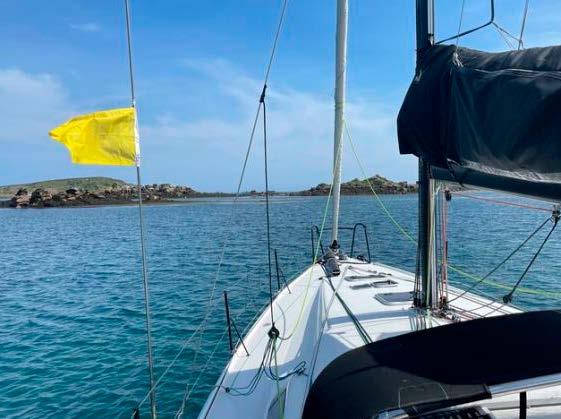
are the best value; cheap doesn’t last long. Whether it’s the tubes of the inflatable, the strip on your furling headsail, or running and standing rigging, make sure you protect them as best you can but be constantly vigilant for deterioration.
WWeather
Obtaining up-to-date weather GRIBs at sea is one of the biggest improvements in passage safety, but you need to be able to interpret them and use them to manage the passage. Know the signs from the clouds and sea; monitor what you see versus the predictions. Have a back-up plan if the weather unexpectedly deteriorates. Include heaving-to and badweather tactics in drills.
Water
Fresh water goes a long way towards making cruising a pleasure. A supply of fresh water can be a challenge if you don’t make your own. The day we started making water changed not only the cleanliness of the boat and crew but also helped some remote villagers by saving them a four-hour trek to the nearest supply.
YYellow Q flag
Don’t leave home without it. There is nothing more satisfying than hoisting that little flag as you approach a foreign shore. Whether it’s your first passage or your 50th, a broad smile will cross and light up your face.
Z
Zzzzs
A good sleep to recover. Oh, and probably a tot to send you off – you’ve earned it.


Experts explain why our elite sailors use cycling to boost on-water performance
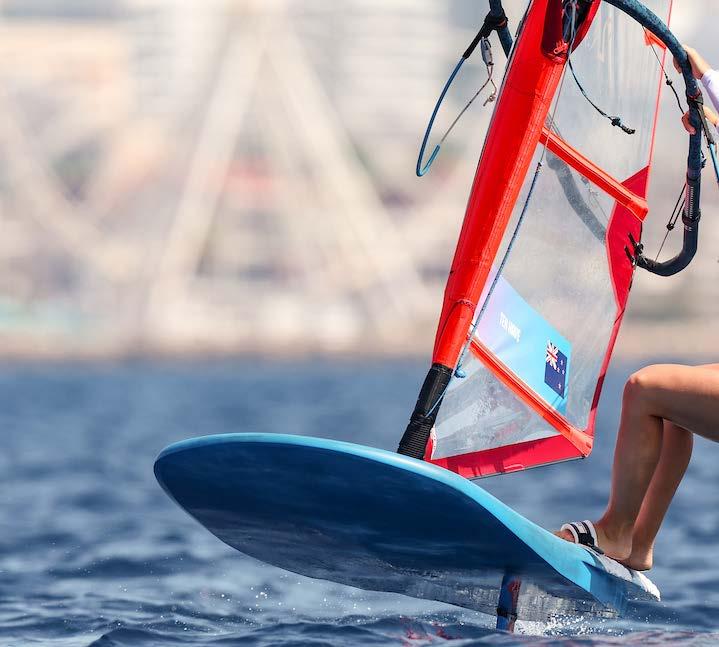
Cycling has become a favourite pastime – and a crucial part of the training programme – for several New Zealand Sailing Team members and Olympians, including iQFOiLer Veerle ten Have, and ILCA sailors Tom Saunders, George Gautrey, and Greta Pilkington. But beyond being a popular off-water activity, cycling plays an important role in conditioning, recovery, and performance for elite sailors.
To get a deeper insight into why cycling is such a valuable cross-training tool, we spoke to High-Performance Sport New Zealand specialists Lucy Jacobs, a performance physiologist, and Neil Yeates, a strength and conditioning coach, who are both closely involved with the country’s top sailors.
1Why do sailors use cycling as cross-training?
And is it more effective or popular for certain classes than others?
Cycling is an excellent way to build aerobic capacity, which is essential for sailors to perform consistently on the water and recover effectively between races. For classes like the iQFOiL and ILCA, where leg strength is crucial, cycling also helps develop the power needed to pump the sail and sustain hiking for long periods. This makes it particularly valuable for these classes, which require repetitive, high-intensity leg work. The amount and type of cycling can vary between classes; ILCA sailors often ride for longer sessions, whereas the 49er and iQFOiLers might
focus on shorter, more intense efforts to match their race demands.
2What benefits does cycling offer these sailors over other forms of cardio, like running?
Cycling provides a highly controllable training stimulus. Unlike running, it minimises the eccentric loading on muscles and joints, reducing the risk of overuse injuries. It also requires less technical skill than running in varying outdoor conditions. Indoor cycling adds an extra layer of safety, particularly during pinnacle events or critical training years when avoiding unnecessary injury is a priority. This controlled environment allows
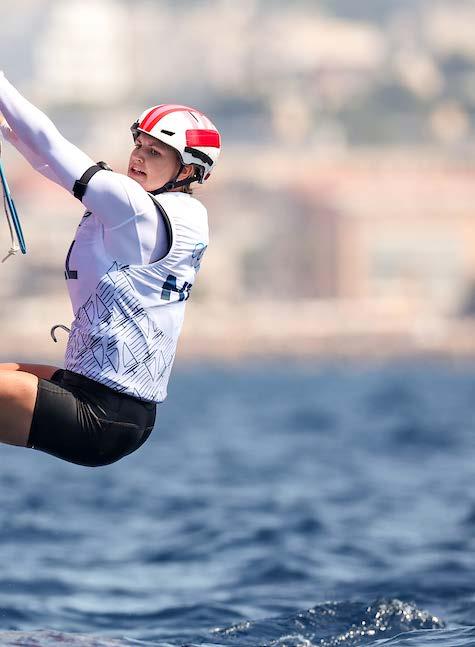
athletes to focus on specific physiological goals, like building leg power or aerobic capacity, without compromising recovery.
3Which muscles do sailors primarily use for hiking, and how does cycling strengthen them?
Hiking relies heavily on the quadriceps, hip flexors, glutes, hamstrings, and core muscles. Cycling targets these same muscle groups, especially the quads and hip flexors, while also developing the oxidative capacity of the lower body. This means the muscles can sustain activity for longer periods before fatigue sets in – which is exactly what sailors need during long regattas. Essentially, cycling helps condition the body to handle the repeated demands
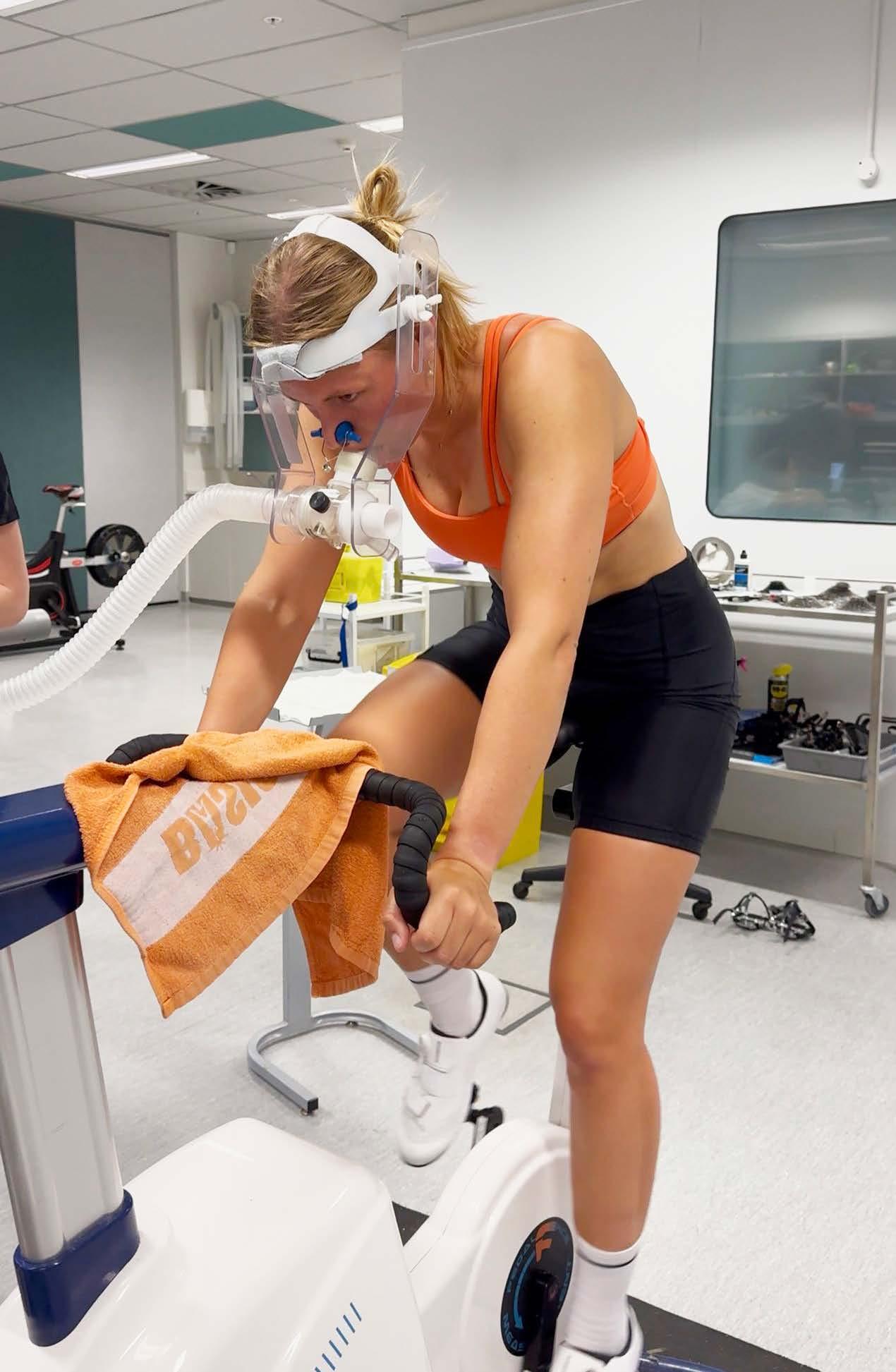
of hiking and pumping, enhancing both endurance and power output.
4
How much time should sailors ideally spend on the bike?
There’s no one-size-fits-all answer –the optimal “dose” depends on the physical goals of the sailor and the demands of their specific class. For example, ILCA sailors often benefit from longer rides of two or more hours to build aerobic endurance, while 49ers typically keep sessions under 75 minutes, and iQFOiLers usually ride less than 90 minutes. Coaches plan cycling volumes around the overall training schedule, race calendar, and recovery needs to maximise performance without overloading the athlete.
5Should sailors train on the road, in the gym, or a combination of both?
A combination can work well, but indoor cycling is often preferred during critical training periods or in the lead-up to major competitions. Safety is a big factor – indoor training eliminates the risks associated with road riding, such as traffic, weather, and accidents. It also allows more precise control over intensity, cadence, and resistance, which can be finely tuned to the athlete’s specific conditioning needs.
6What are the best bikes to use?
For indoor training, Wattbikes are our go-to!
As New Zealand’s leading workplace interior design specialists, STACK creates inspiring, functional spaces where people thrive.
We recently collaborated with Yachting New Zealand to support the refurbishment of their new Milford headquarters, creating a flexible, welcoming space that connects the organisation and the sailing community.
STACK is also proud to sponsor the annual STACK Winter Champs at Murrays Bay Sailing Club, celebrating the spirit and energy of the next generation of sailors.

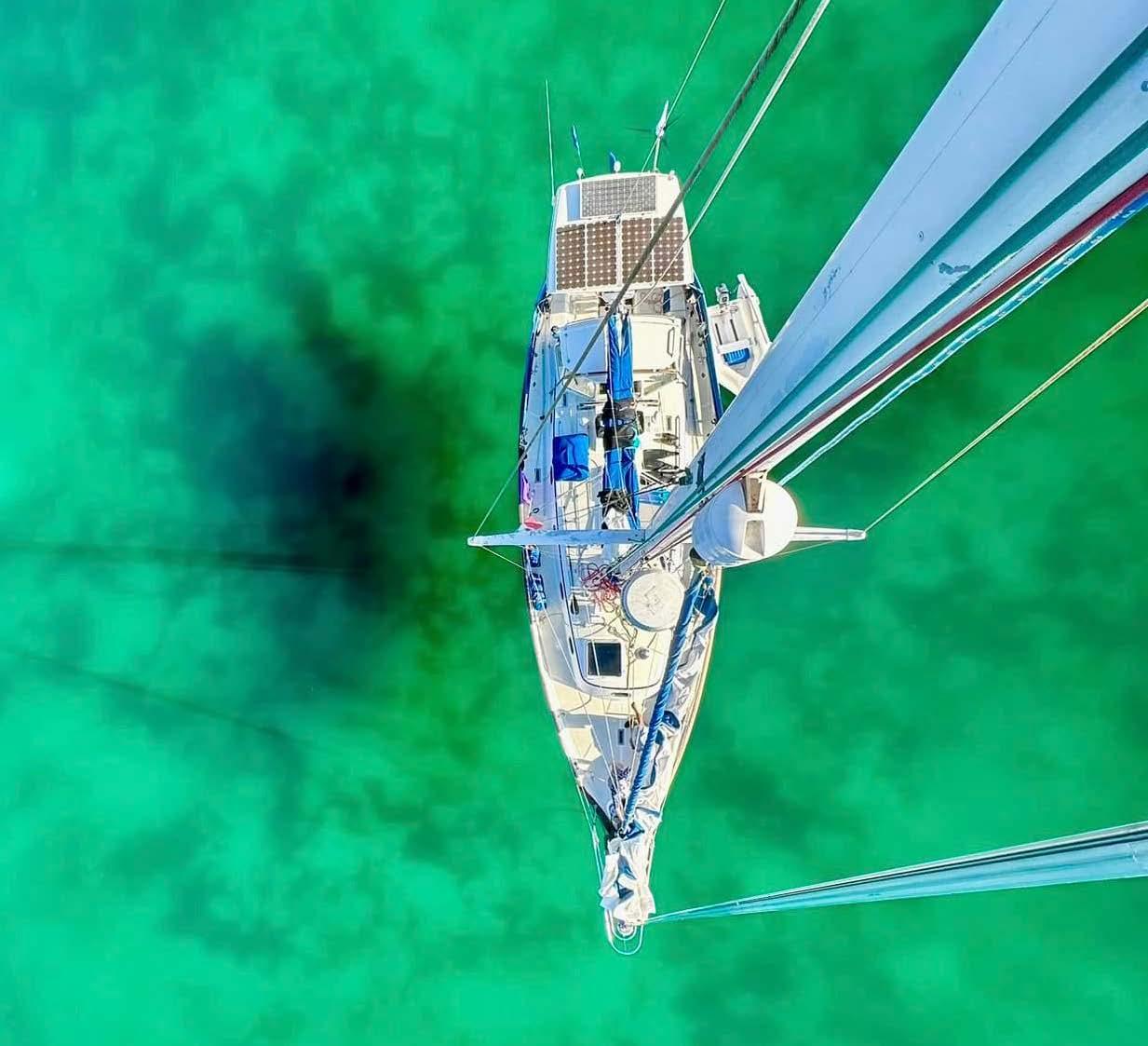
The intensity, vulnerability, and raw beauty of 27 months at sea 72
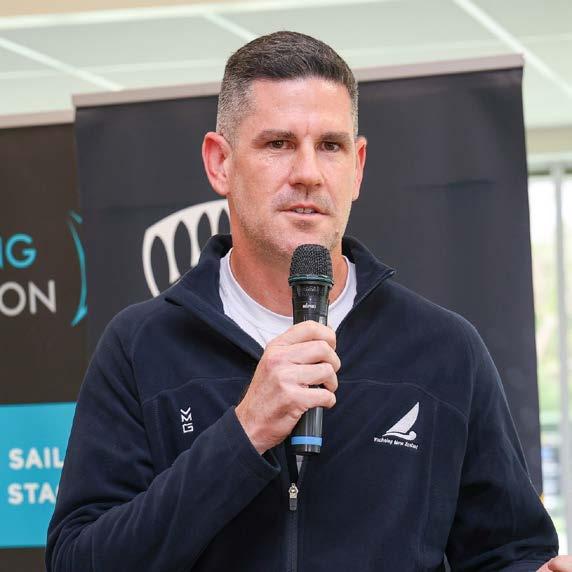
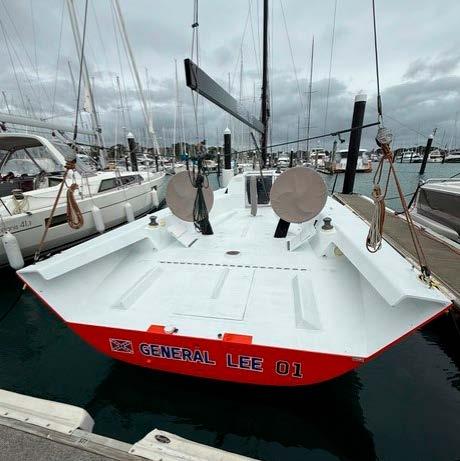
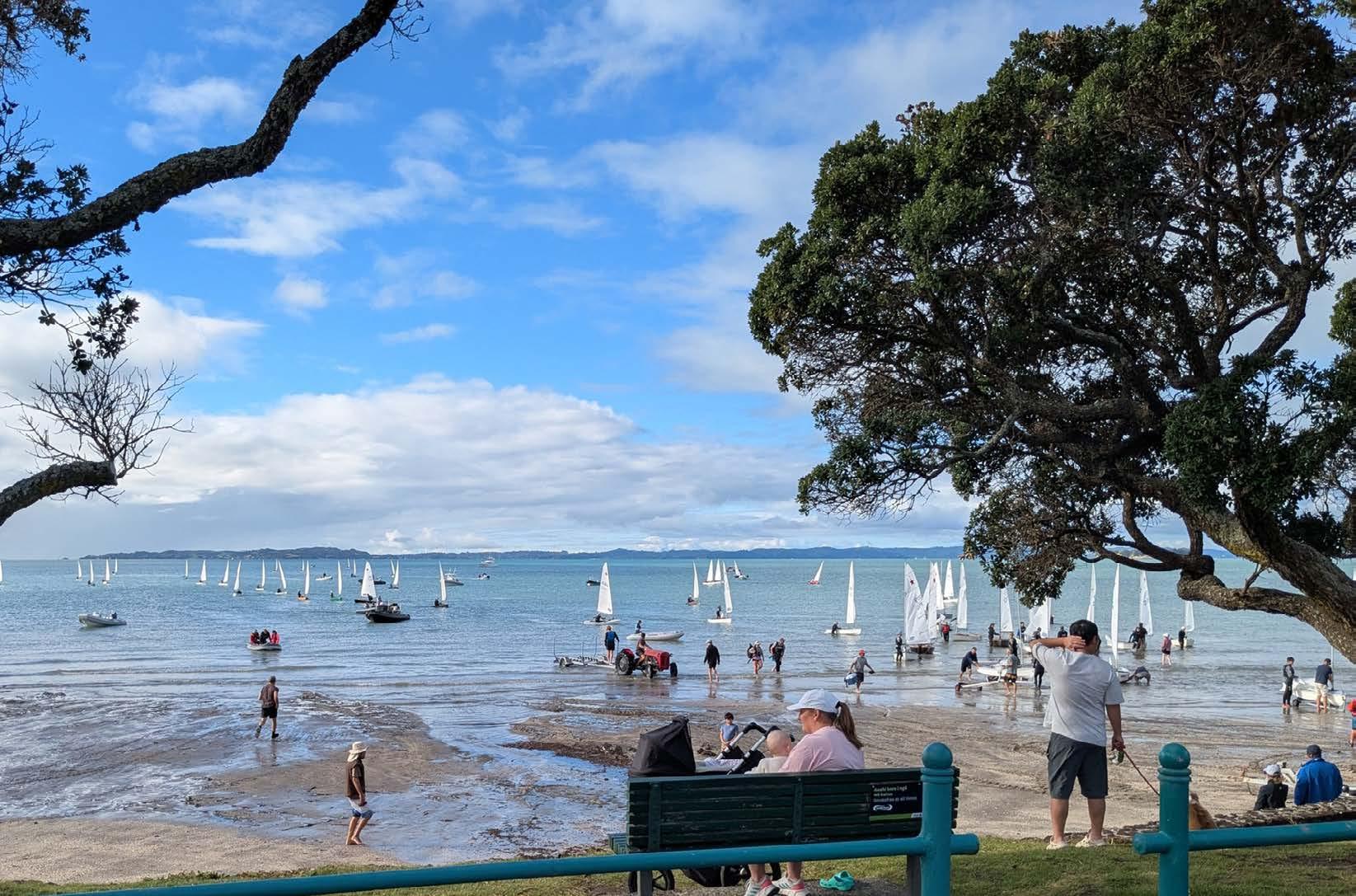
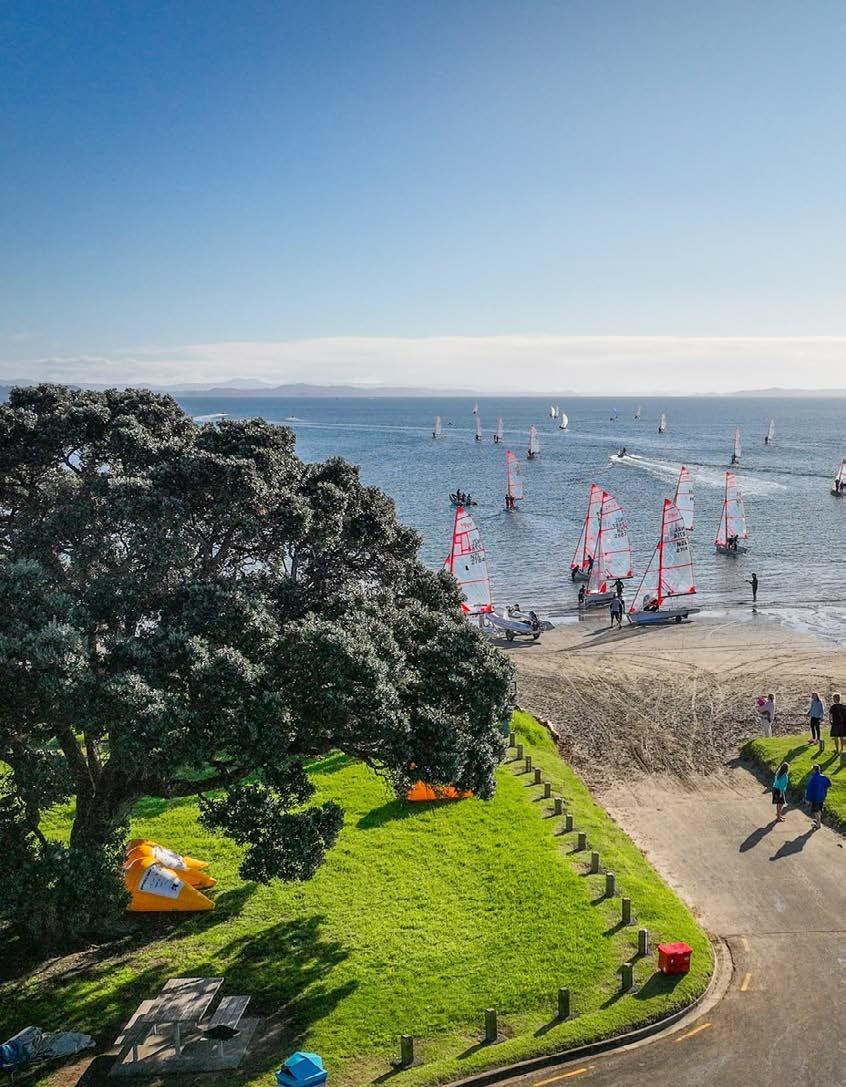
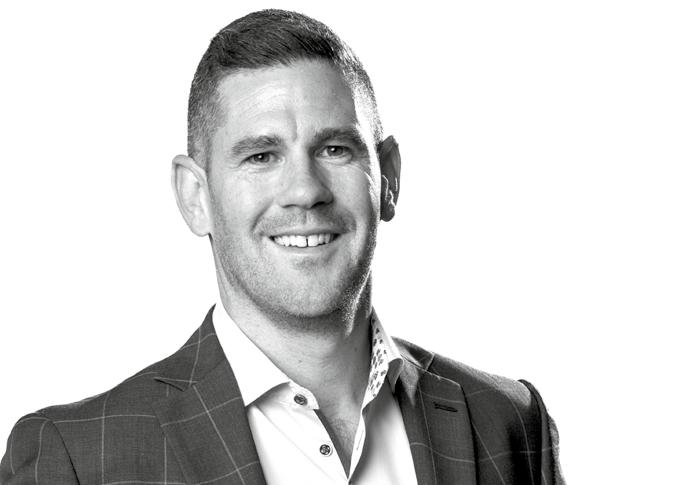
Beyond trophies and accolades, excellence in sailing starts in our clubs
The Yachting New Zealand Excellence Awards held at the end of November offered up a great chance to celebrate the athletes, coaches, volunteers and others who represent the very best of our sport, and also those who have played a part in contributing to their success.
We recognised outstanding people across performance, sustainability,
officiating and community service. On behalf of Yachting New Zealand, I want to acknowledge all those teams and individuals who received awards.
But these awards, and my engagement with members up and down the country in recent months, have shown me where excellence in sailing truly begins: in our clubs.
Clubs, and the individuals and families who bring them to life, are the heart of our sport. Almost every person who was recognised at the Excellence Awards would have got their start at a club. These communities have helped our award winners achieve excellence, by offering the support, encouragement and belief that is needed to achieve in any given field.
I’m still a relative newcomer to this role and this organisation. But it hasn’t taken long for me to realise that excellence in sailing isn’t just something that appears only on a race day, or at a regatta. It also shows up in our incredible volunteers; in our dedicated club administrators; and in the parents and families who pour so much of themselves into helping others succeed.
We’re incredibly fortunate to have a
community that gives generously, believes deeply, and lifts people up, whether it’s for a first-time junior on the boat ramp or an elite athlete chasing medals on the world stage.
We’re also lucky to be working with partners who bring genuine value to the table, with a well-established and highly regarded group of partners and sponsors who we value and appreciate.
They’re also striving for and demonstrating success which we are proud to be associated with. Thank you so much for your steadfast support – we do not take it for granted.
I want to make special mention of Peter Thompson and his Barfoot & Thompson team for their continued commitment to grassroots participation and for being naming rights sponsor for the Excellence Awards.
For Yachting New Zealand, we’re extremely focused on strengthening the support we provide our clubs and members, ensuring they have the resources, tools and guidance to thrive, and creating the conditions where excellence can do the same.
At our recent AGM, I spoke about the
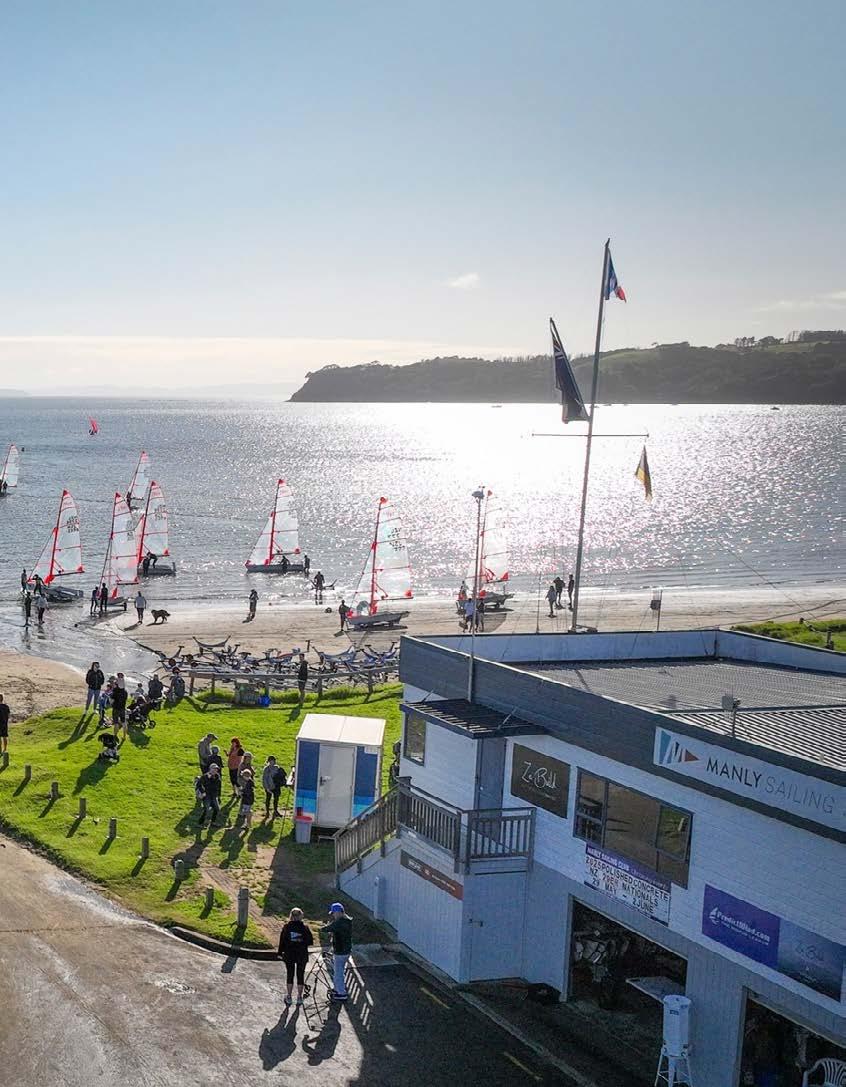
need for Yachting New Zealand to sharpen our offer to better reflect the evolving needs of clubs and members right across the country.
The pressures on club committees and volunteers are increasing, and our support must evolve to keep pace with these realities. This is a real priority for us, and work is underway to ensure that we are engaging with clubs and capturing their views and voice more regularly.
Pursuing excellence also means investing in our athletes, with clear pathways, world-class coaching and a supportive environment where their potential can be realised without barriers. It means deepening our connection with the wider community, growing participation by making sailing more accessible, visible and inspiring to all New Zealanders.
Collaboration is key to getting us there. Together – clubs, athletes, volunteers, families, the wider marine sector and the Yachting New Zealand team – we can ensure that the incredible achievements and legacies that our sport has generated remain stepping stones to continued success.
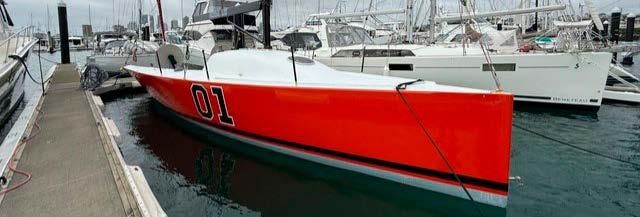
In the latest instalment of her series on the origins of quirky boat names, Kathy Young explores the story behind General Lee.
Last summer, a Bakewell White 37 sat abandoned at Hobsonville Marina, her glory days seemingly behind her. For three years, the boat had languished there, collecting barnacles and whispers of her demise. But icons don’t fade quietly, and this particular boat –originally named after one of the most famous cars in television history – was destined for resurrection.
“I got a phone call from a mate,” recalls Cameron Thorpe, who along with Tim Holgate would become the boat’s fourth owners and saviours. “He said, ‘Do you want to come and look at a boat with me?’”
What they found was a vessel “sitting a bit sad”, but with good bones worth saving.
Built in Christchurch by the late Davie Norris as a sister boat to the first Bakewell White 36 (Al Fresco), and launched in Auckland in 2010, it was named General Lee. This was clearly a nod to the bright orange Dodge Charger from The Dukes of Hazzard
Apparently, the name came first from the decision to have an orange boat. This arose because of a joke about one of the owner’s hair colour (ginger), then someone chipped in that they should make it look like a car. “When we grew up that was one of the coolest shows on TV!,” said Thorpe.
After trials in New Zealand waters and taking part in the 2010 Auckland to Fiji race, she was based in Perth, where her first Australian owners fully embraced
the theme. The boat quickly got a reputation as a giant killer and won the Fremantle to Bali race in 2010.
The second owner, Steve Mair, then Commodore of the Royal New Zealand Yacht Squadron, renamed her Clockwork, because he was “worried about some of the connotations with the General Lee name”. Mair campaigned the boat well with many successes, including the overall win in the 2020 SSANZ Round North Island race, Thorpe explained. She then had a stint with an owner in New Caledonia before returning to New Zealand waters where the General weathered some difficult years.
The restoration that followed has been transformational. When hauled out, the keel bulb had a foot of mud and oysters on it. The seized rudder caused the biggest drama, requiring the bottom bearing to be cut out and the entire assembly to be dropped out. The motor, rumoured to be beyond repair, started fine.
Now at Westhaven Marina, with decks stripped and primed, and her name restored, General Lee recently had her final coat. In a fitting tribute, Thorpe has secured the sail number NZL 01, matching the famous 01 on the Dukes of Hazzard’s car.
“It’s an iconic boat,” he said, adding that their Facebook page attracted 160,000 hits in its first 90 days of going live. Soon, this boat will race again, her orange hull turning heads as the General rides once more.
If you have any fun or quirky stories about your boat’s name, please send them through to eduan@yachtingnz.org.nz
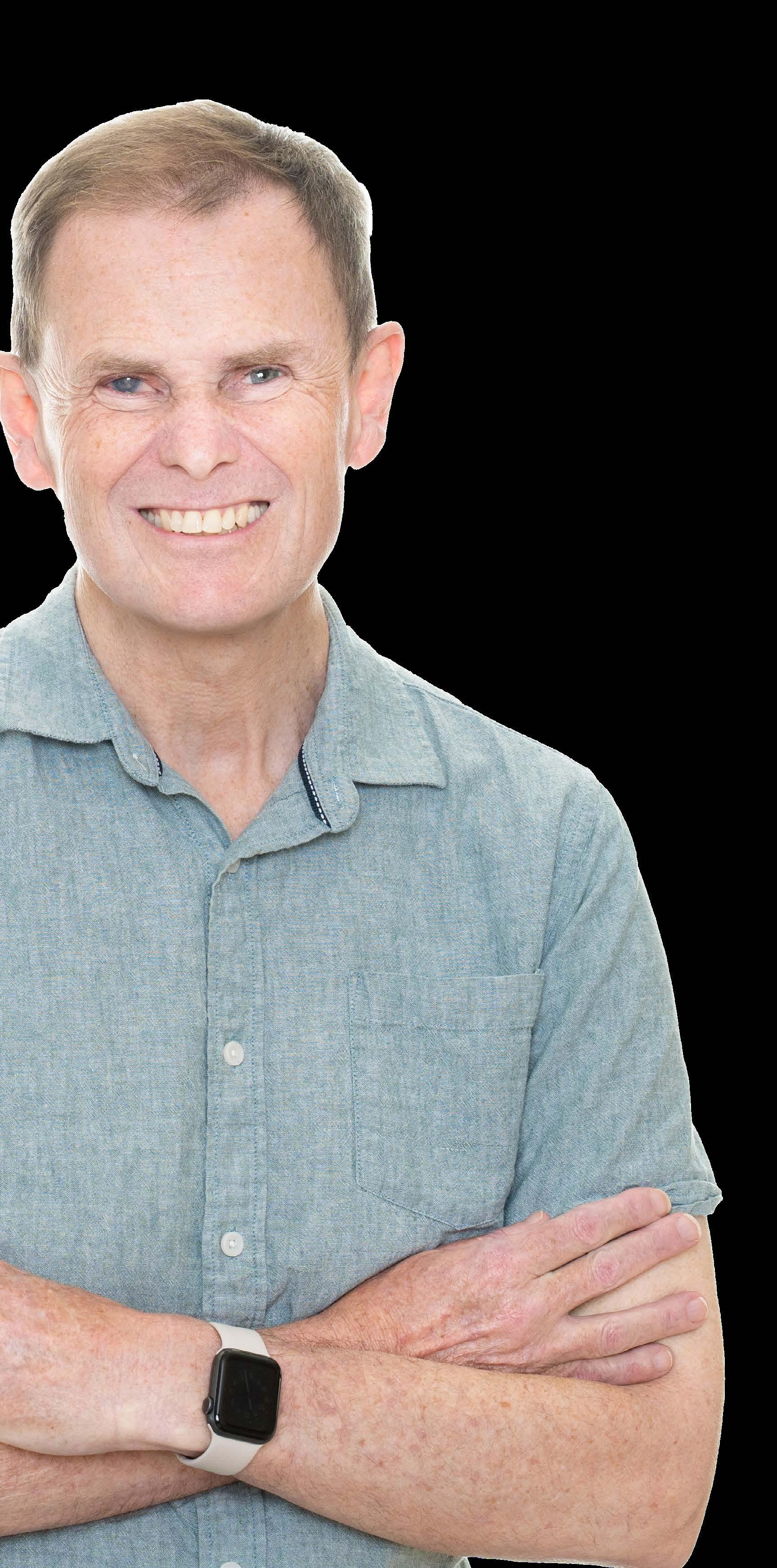
For over 20 years, Mark Mulcare has helped shape New Zealand keelboat racing, managing handicaps despite blindness and – recently – a series of health setbacks. Now he’s been honoured, a recognition of an impact that will endure far beyond the numbers
Rows of numbers and strings of code whirl across Mark Mulcare’s screen in a restless blur. To most people, it could pass for a scene ripped from a spy thriller – text blinking in the low glow of a darkened room, his fingers moving with practised precision over a keyboard that looks custom-built for cracking secret ciphers.
But for Mulcare, it’s just another night on the job: navigating algorithms, taming data streams, and
feeding an endless flow of information into the ever-hungry digital ether.
Soon, the results will spill out, telling New Zealand’s thousands of keelboat sailors exactly how they stack up against one another – the culmination of a process the 62-year-old has spent decades perfecting.
Since 2009, Mulcare has almost singlehandedly overseen the evolution of the rules that govern how these sailors race under the PHRF system – the national handicapping framework administered by Yachting New Zealand. He’s also the one tasked with answering a deceptively simple question: who’s the best competitor in a field where competing boats often share little more than a start line and a finish?
With hundreds of races unfolding around the country each season, it’s a relentless cycle of data gathering, interpretation, and continual refinement – mirroring the constant evolution of the boats that have occupied such a huge part of his life.
And yet, Mulcare has never laid eyes on a single one of the more than 4,000 boats he has tracked so obsessively over the decades. As the years pass, even the vessels of his childhood grow harder to conjure. What he holds instead are impressions: imagined hulls slicing through water, sails stretched tight in the wind – a world he has, since his mid-teens, navigated only through touch, sound, and intuition.
“I wasn’t born blind,” Mulcare says, smiling from his seat beside a shelving unit crammed with sailing memorabilia and old family photographs. “I had enough sight to understand colours, but never enough to get a driver’s licence, is probably
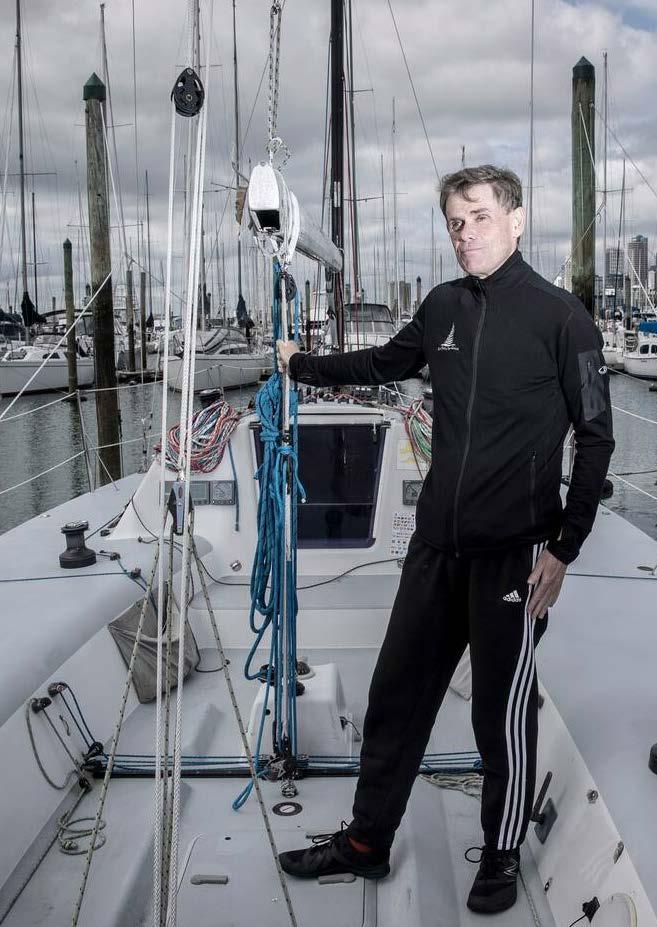
the easiest way of describing it.”
By the age of 16, glaucoma had taken the rest.
“It’s degenerative, so if you don’t stay on top of the treatment it tends to degrade and never come back. And of course, being young back then, I never stayed on top of it. When I was about 16, I was completely blind.”
It might seem impossible that someone who has lived most of his life without sight could command such a detailed understanding of the sport, yet Mulcare has done exactly that.
He’s not just a coder or system designer. He’s a multiple-time blind world champion sailor, a key member of Yachting New Zealand’s Cruising, Inshore and Offshore Racing, and PHRF committees, the creator of the widely used RaceTrack ranking tool, and, more recently, the inaugural recipient of one of New Zealand sailing’s highest honours: the Peter Lester Award for Outstanding Contribution to Sailing.
His sailing journey began far from the keelboats and racing committees that define his work today. Born in Christchurch, Mulcare spent his early years in Australia, where his father, Leo, played professional rugby league. But his parents believed New Zealand offered better support for a visually impaired child, so the family returned to Auckland.
Sailing arrived through family holidays. “We spent some time on a launch in the Bay of Islands,” Mulcare recalls. “I really enjoyed being out on a boat. I had sailed once, possibly twice. And really loved the idea of moving through the water without noise.”
That spark lingered. When he began earning money, Mulcare started looking for people willing to help if he bought a boat. His first was a modest H28.
“Even by the standards of those days, it was a very pedestrian boat,” he laughs. “We did a little bit of class racing, which I enjoyed, but if I’m honest, it was mainly about going out and drinking rather than sailing back then.”
His schooling began in what he calls the “standard education profile for blind people” before moving into the mainstream – a stint at St Peter’s College
followed by Rangitoto College. His aptitude for numbers, helped by a few timely family connections, nudged him toward software programming – and, he says, by the “brutal unemployment statistics” for blind people at the time.
Blindness never slowed him, though it meant adapting constantly. He learned
‘I really enjoyed being out on a boat. I had sailed once, possibly twice. And really loved the idea of moving through the water without noise.’
Mark Mulcare
to navigate the world through braille devices, screen readers, and an exceptional memory. “In the early days,” he says, “I had a refreshable braille display. You could only see 40 characters at a time, but with practice, you learned the environment.
“I managed to pick up a job that you could actually make work for a blind person – first at UEB Industries, then at Metropolitan Life, which was eventually taken over by Sovereign Assurance and then by ASB, and finally AIA,” he says.
“You could say I was working in the same role for 30-ish years. I was very lucky.”
As his career grew, his feel for numbers found a parallel in sailing. The challenge of losing his sight was eased by family support – especially from his brother Kevin – and a sharp sense of humour.
That humour is obvious when visiting him at his Tōtara Vale home overlooking the Waitematā Harbour and distant city.
“I bought it for the view,” Mulcare jokes as he shows us inside. The space is tidy and
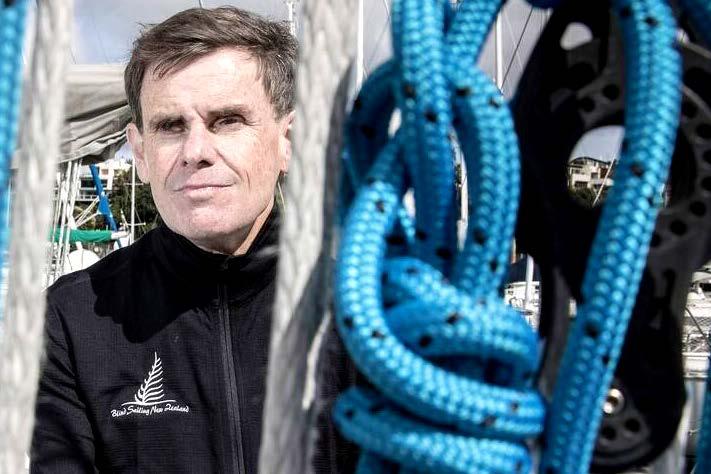
efficient, yet warm – much like Mulcare himself.
His competitive sailing career took off in the early 1990s at the first World Blind Sailing Championships in Auckland. With Kevin as his guide, he won the trials and then the event itself. Across six world championships, he won the first three before others caught up.
The H28 soon made way for faster boats; among them the Mt Gay 30 Fun N Games (now Sham Pain) and his prized Gary Lidgard-designed R36 Macintosh, co-owned with Kevin.
“We bought Macintosh almost by accident,” he says. “Mainly we wanted a boat that had a marina going with it just to make the logistics a lot easier. Which was a really, really smart decision in hindsight.”
For Mulcare, sailing offered both challenge and comfort.
“Boats are actually a lot better in terms of an environment for blind people than you would first think,” he explains. “Things
don’t move around. They stay in the same place. If you’ve got that, you can remember where things are, what movements are required. And a well-sorted-out boat is a very controlled environment.”
Sailing had its challenges initially.
“It’s hard at first, but once you start doing it, you get a feel for what the boat’s doing under you, how much it’s leaning, what strength the wind seems to be blowing, approximately where it’s blowing from. And as much as anything, you don’t consciously think it; you just have a sense of what’s right and what’s not.”
Mulcare’s programming background laid the foundation for one of his most enduring contributions to the sport: New Zealand’s keelboat handicapping system and the RaceTrack database.
PHRF has been the national standard for interclub racing since the 1970s. Once purely measurement-based, it later evolved
into a hybrid system incorporating results. Mulcare became involved when frustrated owners and committees struggled to reconcile fairness and race outcomes.
Over decades, he has collected and analysed thousands of race results, eventually developing RaceTrack as a comprehensive tool to rank boats and for sailors to understand their performance.
“RaceTrack was never intended as a handicapping system,” he explains. “It’s about giving owners information on their boats and results. PHRF applies that to racing fairness, but RaceTrack is for insight and comparison.”
He has spent countless hours entering, verifying, and updating data – “at least two full days every week in summer” – keeping the system evolving and helping clubs and sailors understand performance, and build a data-driven racing culture.
Despite this, Mulcare never set out to become the quiet engine behind New
Continued on p64
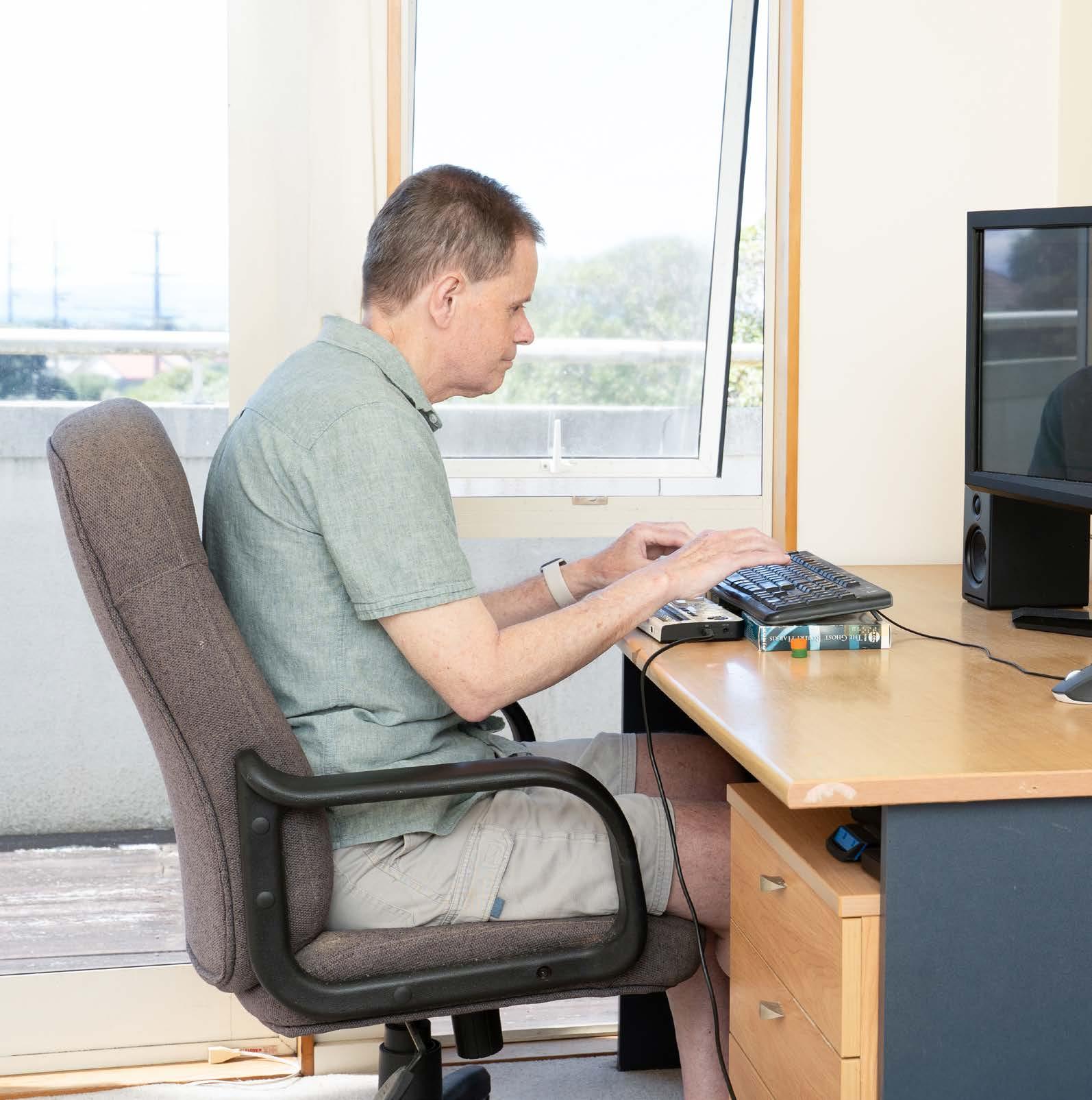
Zealand’s keelboat handicapping. He was simply trying to solve a problem.
“There were some issues around PHRF and disgruntled boat owners,” he says of the late 2000s.
By 2007, tensions reached a breaking point at a meeting between owners and the PHRF committee.
“The committee said they weren’t getting results from clubs, and clubs said PHRF wasn’t working – a clear breakdown. I piped up and said, ‘I’ve got the results. If results are the only problem, we can solve this.’ That’s where my involvement started.”
His obsession with results actually began a decade earlier. In the late 1990s, he noticed yacht clubs starting to post race results online. “It had crossed my mind that if clubs are publishing results – I think only one or two were at the time – I could collect these, aggregate the information, retain it, and do a comparison.”
Club handicapping had obvious limitations.
“Handicapping at a club level is as much about most improved as who was sailing the best,” he says. “The problem was it didn’t tell you how well you sailed consistently, only how well you sailed versus how well you’d been doing recently.”
What began as curiosity soon became a full-blown side project. For five or six years, he quietly compiled as many results as he could, producing informal rankings “for my own amusement”. When someone on the sailing forum crew.org.nz asked for historic results, Mulcare casually replied,“Oh, I’ve got a whole heap of results. What ones do you want?”
That caught the attention of the site’s owner.
“She emailed me and said, ‘What’s the story about these results?’ She asked if I was interested in publishing them on the site.” The page proved popular, prompting Mulcare to build a much larger, purposebuilt version on his own site.
Unlike the PHRF system, RaceTrack, as Mulcare’s site has since become
known, was never meant to shape handicaps. “RaceTrack was intended to be information for an owner about their boat, their results, and how they’re doing,” he says. “If your handicap goes up you’re probably doing better [on RaceTrack], and if it goes down, you’re probably not,” he laughs. “RaceTrack itself is just a tool to see how you’re going race by race and to have a history of your races.”
Mulcare formally joined Yachting New Zealand’s PHRF committee in 2009, helping shape its current hybrid approach. “PHRF was originally measurement-based, then evolved into results-based in the late ’80s,” he explains. “By the late 2000s, the oversight committee wanted a hybrid system, mostly measurement-based but including a results component. That’s where it is now.” His years of informal data-gathering suddenly became essential. At that infamous meeting, someone questioned whether he truly had the country’s results. “Every race I was aware of that was published online, from about 1998 onward,” he said.
While some misconceptions persist, most of the old PHRF frustrations have eased.
“Some people still think PHRF is purely results-based or purely measurementbased, but our hybrid approach considers both and I’ve brought more objectivity into the process than existed 16 years ago,” Mulcare said.
“You’ll never make everyone happy at the same time. Some boat owners are still disgruntled today – but just for different reasons!”
The past few years have tested Mulcare in ways even he couldn’t have anticipated, with his health a relentless opponent.
“I retired in 2021 and was diagnosed with gastric cancer in early 2022. That was treated with chemo and surgery but last year, bowel cancer was discovered,” he says. “I went through radiation, chemo, and surgery but then peritoneal disease (a condition where cancer cells spread to the lining of the abdominal cavity) was found at the end of 2024.”
For the first time, the smile slips. Mulcare pauses, weighing his next words. “It is now in the palliative phase but overall, I feel good day to day, and I have been brilliantly supported by so many people,
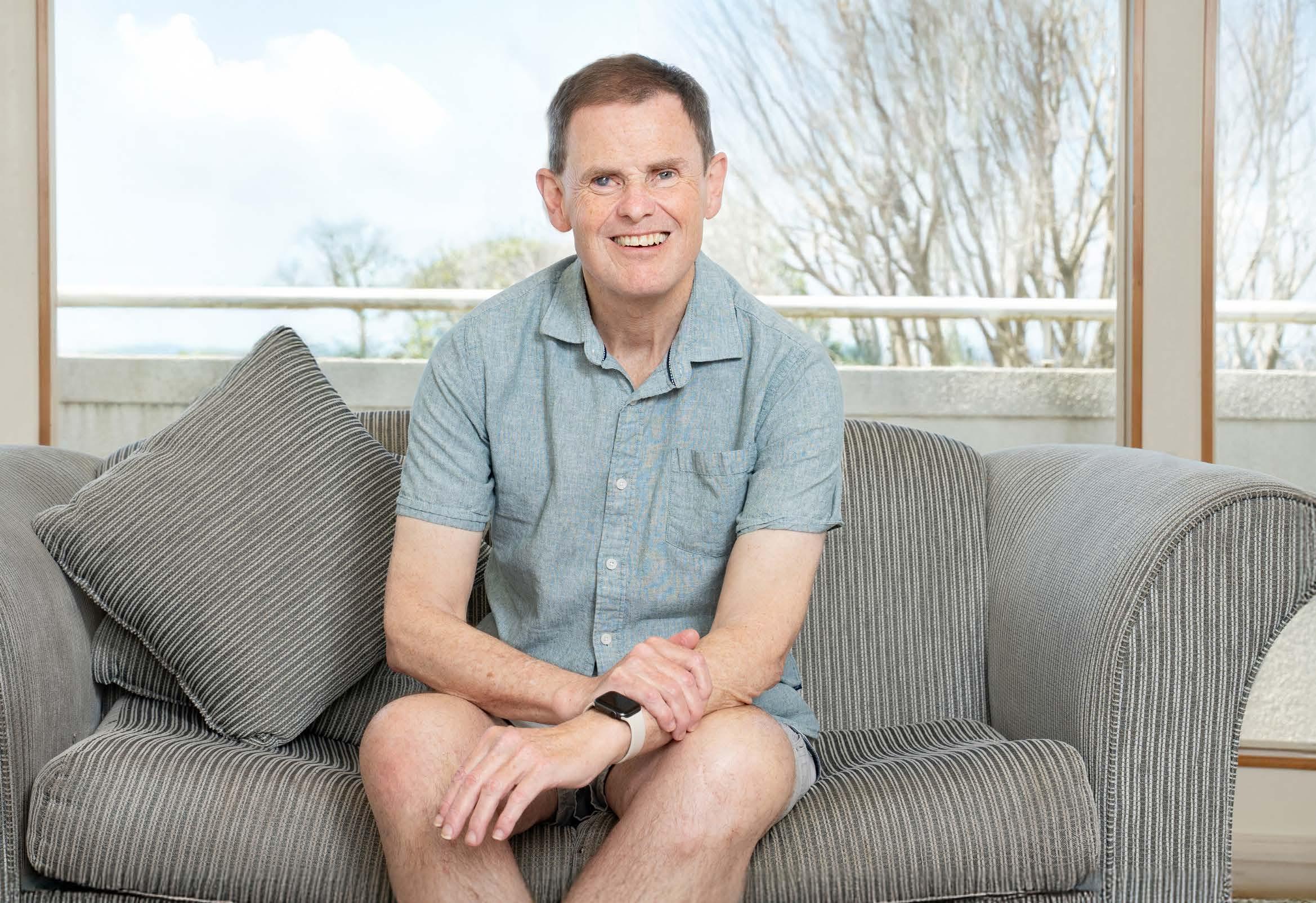
including those at Harbour Cancer and Wellness.”
The toll has kept him off the water. He hasn’t sailed much in the past 18 months and, only hours before our visit, he and Kevin sold Macintosh.
It is, Mulcare admits, a bittersweet milestone: the first time in decades he hasn’t owned a boat.
He brushes a hand across his lower left leg, where a fresh graze marks what may have been his final step aboard the cruiser before it changes ownership.
“Just as Kevin and I were getting off the boat the other day, my foot got caught and I went down,” he says, the smile returning. “I never even saw it coming.”
In late November, Mulcare received the inaugural Peter Lester Award for Outstanding Contribution to Sailing at the 2025 Barfoot & Thompson Yachting Excellence Awards.
Sponsored by Lawson’s Dry Hills and named in honour of the beloved world champion sailor, coach and broadcaster
who died in August, the award recognised Mulcare’s decades of tireless service, innovation and expertise.
True to form, he deflects the spotlight.
“It’s very special,” Mulcare says, before adding, “but I’m sure there are dozens of people more deserving. I’m just interested in boats and seeing how they go, to be honest. That’s what drives me.”
The most demanding chapter of his
‘It is now in the palliative phase but overall, I feel good day to day, and I have been brilliantly supported by so many people.’
Mulcare on his battle with cancer
recent work has been preparing RaceTrack and PHRF for a future without him at the helm. Working closely with Yachting New Zealand, he has been painstakingly documenting the systems, workflows and code – a task he likens to “unscrambling an egg”. Decades of knowledge, once stored largely in his own mind, now need to live on.
“The system was originally designed for me as a blind user, with shortcuts that didn’t translate easily. Adapting it for general use has been a big piece of work,” Mulcare says. “I wish I had another year to put it in proper shape for Yachting New Zealand. It contains 25 years of New Zealand sailing history.”
History, he hopes, that will help shape the future of the sport.
“My biggest wish is that RaceTrack continues to be used long after I’m gone. Who knows, it may even play some small part in seeing higher participation rates in New Zealand and more international keelboat racing.”
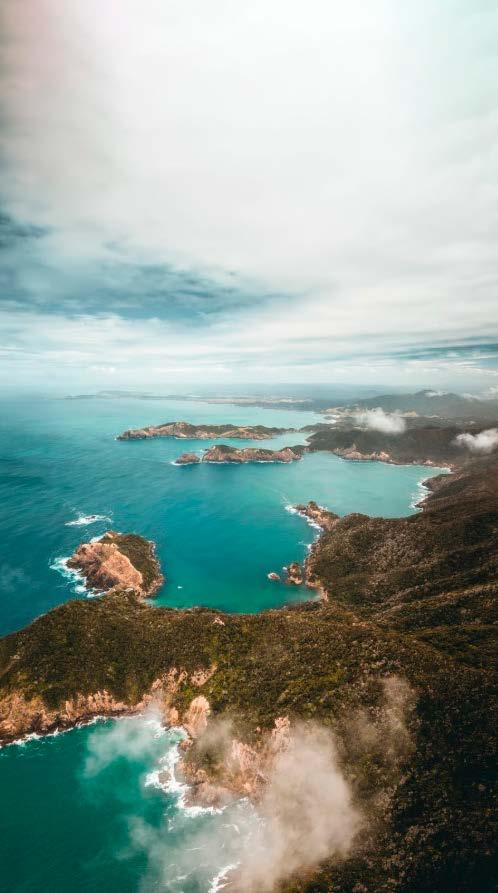
With cruising season upon us, Kathy Catton charts a course through a few favourite haunts and lesser-known hideaways worth discovering around the country this summer
New Zealand’s 15,000 kilometres of coastline offers some of the world’s most spectacular cruising grounds. Whether you’re seeking sheltered harbours for storm refuge, pristine beaches for summer fun, or remote wilderness anchorages where the only company is the local wildlife, our anchorages deliver.
We’ve gathered our list from cruisers and lifelong sailors, including drawing on the expertise of Janet Watkins, author of the essential Pickmere Atlas of the Northland East Coast, which has sold over 25,000 copies since publication.
Our selection spans both islands and captures the diversity that makes New Zealand cruising so exceptional. Some are well-known classics that appear in every cruising guide, while others are quieter gems that locals guard with caution.
This true cruiser’s paradise in Northland, south of Cape Brett, offers a sheltered corner. The surrounding native bush reaches down to golden beaches, and the bay rarely feels crowded. “It’s the Bay of Islands without the chaos,” said Watkins. “It’s a great place for a swim with a snorkel.”
Best for: Solitude and swimming, good in most weather.
This small harbour northeast of Rawhiti offers complete shelter and a fascinating history as a former whaling station, with rusted remnants of industrial equipment being slowly reclaimed by nature. Anchoring is excellent, though the entrance requires care in heavy easterlies. “People often stop here before
going around Cape Brett,” said Watkins. “There’s also a good fresh water stream at the whaling station for an icy dip after a snorkel or swim.”
Best for: History enthusiasts, snorkelling, overnight shelter.
The eastern entrance of Whangaruru Harbour is another favourite stopover for Watkins. The whole of the Mimiwhangata Peninsula is now a reserve, offering great opportunities for exploration and a ramble ashore. On the northern side of Rimiriki is a sheltered lagoon ideal for a lunch break and a swim, but not suitable for overnight stays. “You need to bear in mind the land and sea breezes and the impact they will have on your boat in many of the island anchorages on the coast,” she said. Best for: Exploring the reserve, walking and snorkelling, but there is now an extensive “no-take zone” for all fishing around the area.
At the southeastern tip of Helena Bay lies Taiwawe Bay, “where the tide is always right”. Watkins described it as a “neat little bay with a beach and island [Motutaniwha Island]”. This spot is suitable for overnight stays and is relatively sheltered from the easterlies and southerlies and provides good holding. Best for: Shelter from the easterlies, scenic beach.
This anchorage is close to the Cavalli Islands, north of Kerikeri. It offers a good overnight anchorage and, as Watkins explained, “You can almost guarantee a smooth night here, unless it’s an easterly blowing”.
Best for: A good night’s sleep, beautiful views, good holding.
One of Watkins’ secret haunts is Waimahana Bay, which she says is a must if cruising the Far North. Be aware, the entrance is narrow. “It’s quite possible
Continued on p68
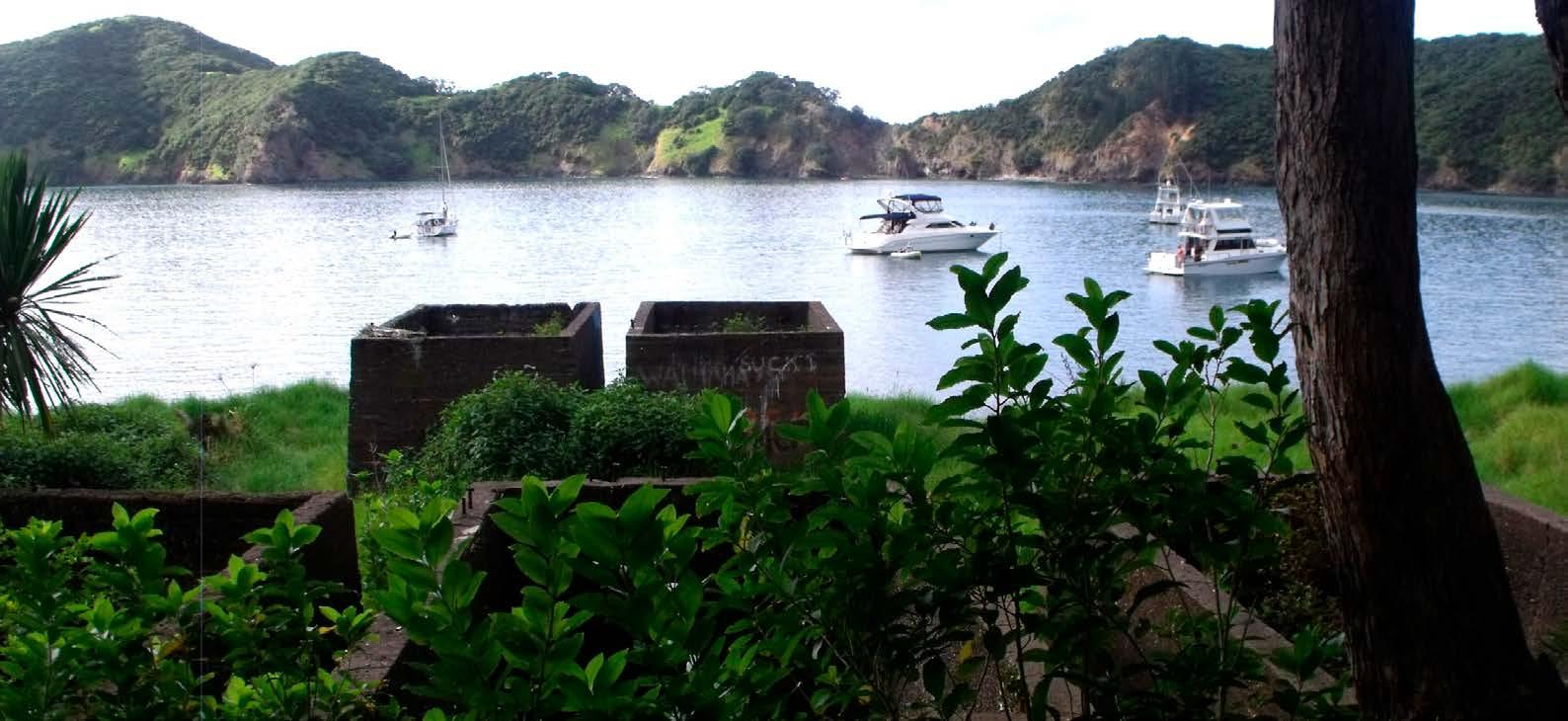
2

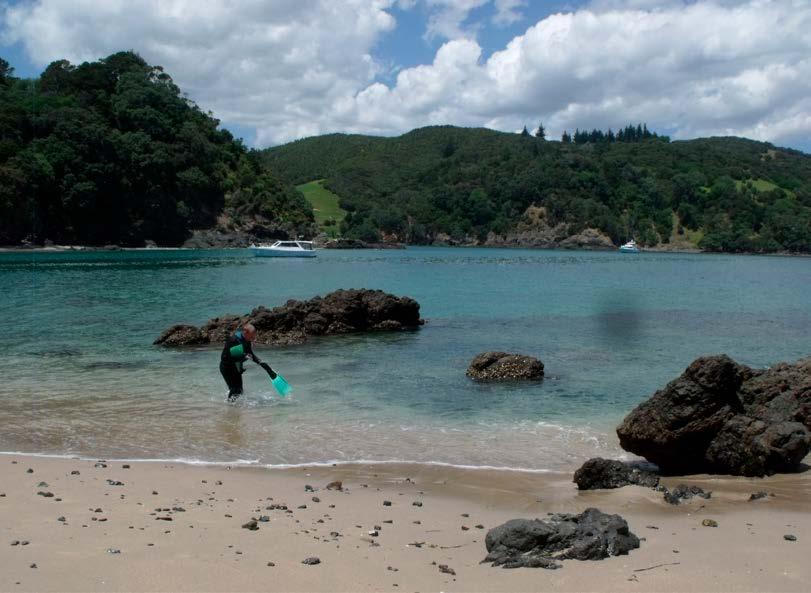
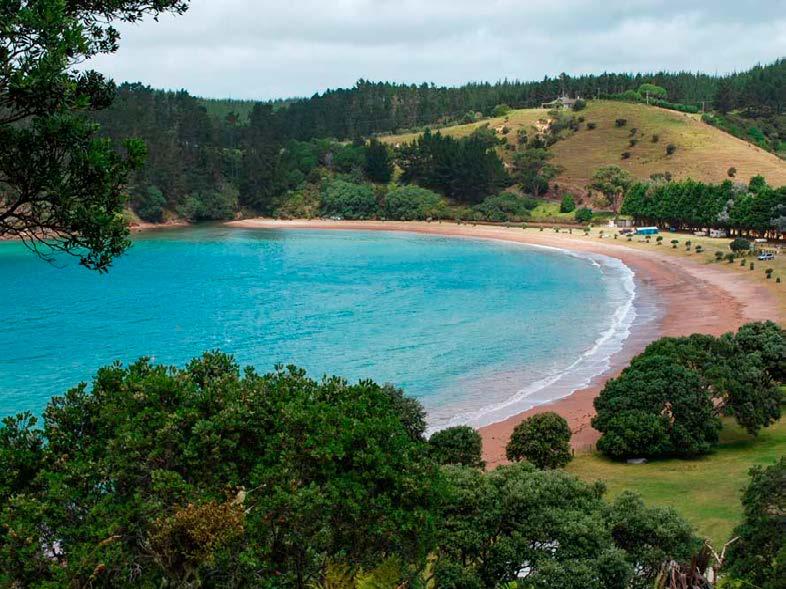
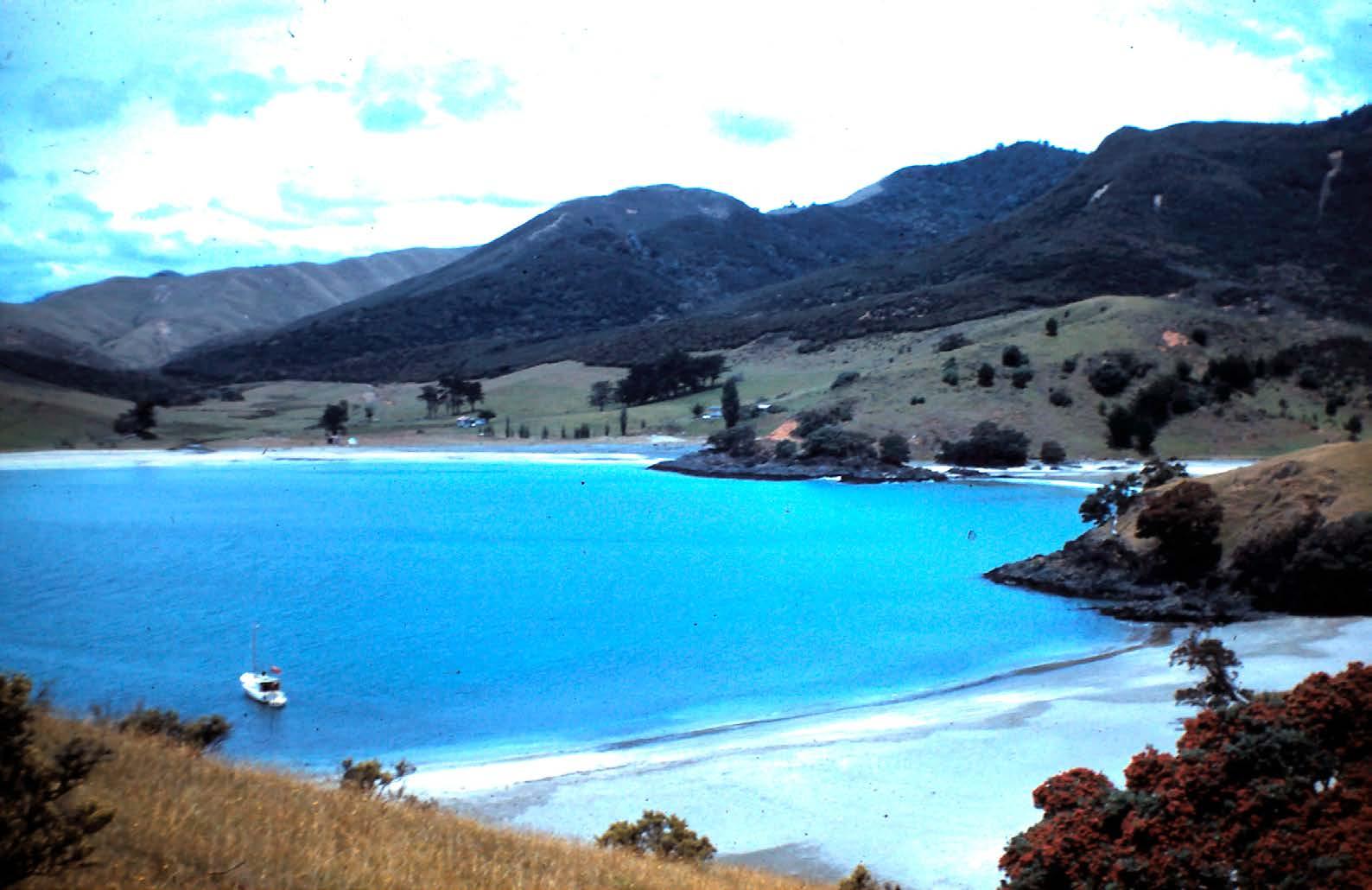
3 5 4 6
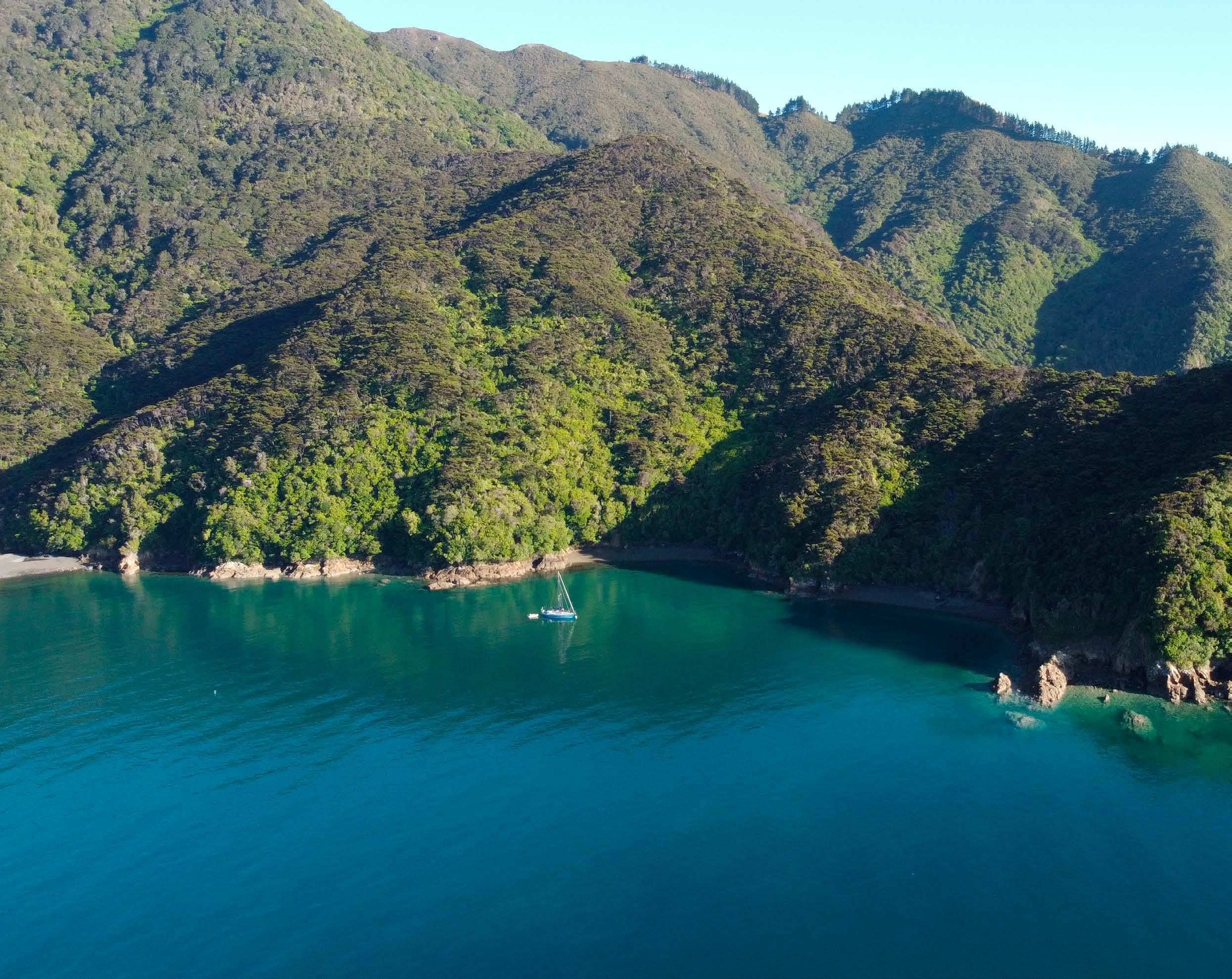
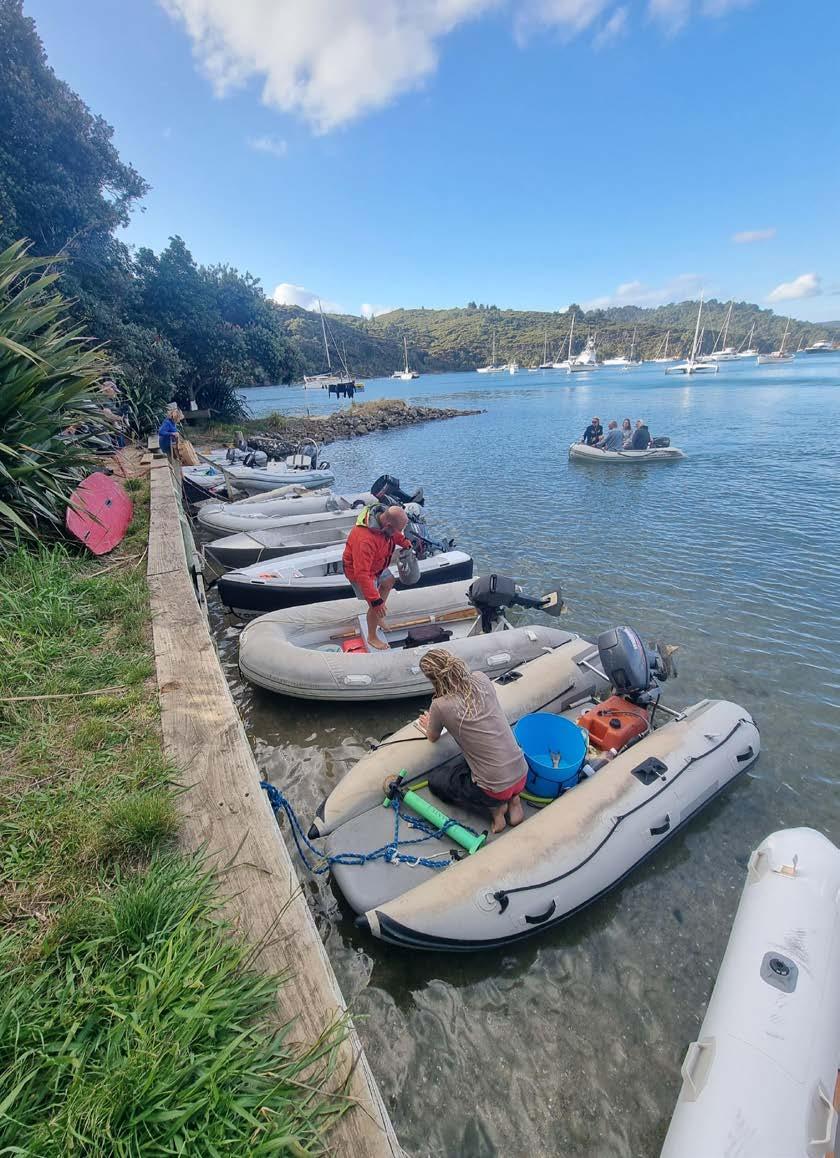
Continued from p67
to sail past without seeing the entrance which can be kelpy on the sides, but the channel is deep and clear.” This clovershaped bay is likely to be extremely quiet and unpopulated with a good anchorage in the northern corner.
Best for: A quiet retreat, exploring the bay.
This is one of Aotea / Great Barrier Island’s most picturesque anchorages. The bay offers good protection from prevailing winds due to Kaikoura Island (a nature reserve) guarding the entrance, though a strong northeaster can make it uncomfortable. “A walk up Mt Hobson is well worth it, and make sure to visit Smokehouse Bay for off-grid wood-fired hot showers and bathtub,” said sailor and cruiser Amy Richards.
Best for: Hot springs, walking up Mt
Hobson, scenic beauty.
This anchorage is a blessing for those seeking a quiet, lonely anchorage for the night. It’s only seven miles from Westhaven in Auckland and perfect in settled weather. “Especially in westerlies around to northerlies,” said Brian Trubovich, commodore at Ponsonby Cruising Club.
Best for: Gorgeous beach, snorkelling.
9
Hobsonville, Waitematā Harbour, Auckland
Even closer to the city is Hobsonville. According to Trubovich, it’s a much-neglected area of the Waitematā Harbour, but there are a lot of anchorages here. “Some are for shallow draft boats only, but others are fine for deeper draft. Enjoy them all!”
Best for: Access to the city for
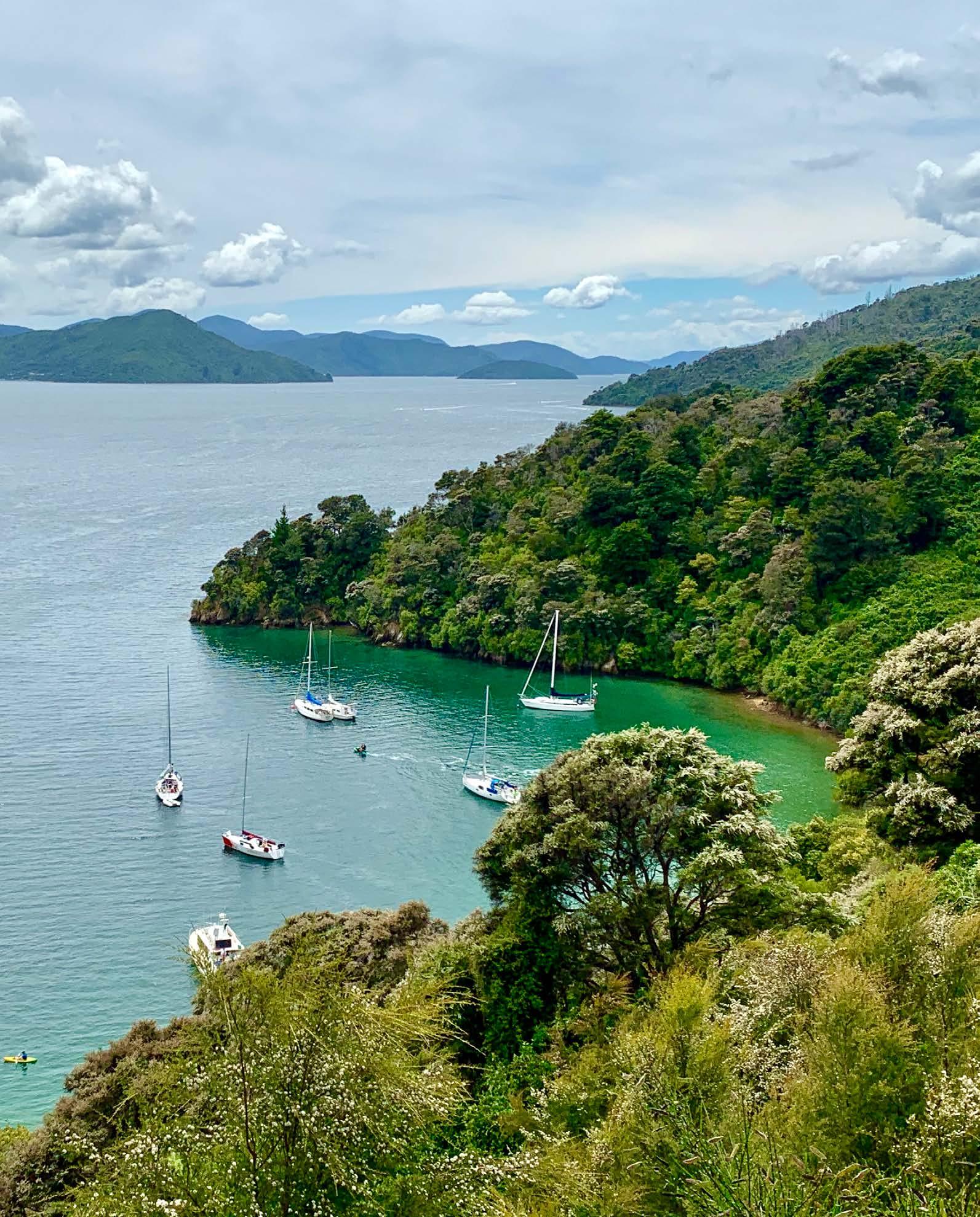
provisioning, a range of crafts.
10
This island is an open nature reserve, and is noted for its bird life, including takahē, North Island kōkako and kiwi. It attracts around 30,000 visitors a year. “There’s such epic birdsong to be heard here, and some great onshore activities and history to explore,” Richards said.
Best for: Accessible from main centre, wildlife.
This large bay provides good shelter and holding in winds from southwesterlies to westerlies to northeasterlies. It has a scenic beach with a freshwater stream. “There’s also beautiful snorkelling on the southern
side,” Richards said. “The bay also has a dilapidated shack in the bushes, that looks like a haunted house!” The holding can be a bit mixed – Richards advises accessing the network of moorings in the Sounds. There is a club mooring in Whareatea.
Best for: Snorkelling, history.
Deep in the Marlborough Sounds, Governors Bay offers the region’s characteristic steep bush-clad shores and crystal-clear waters. The quintessential Sounds experience: peaceful, beautiful, and utterly sheltered. Fantastic kayaking and fishing opportunities abound in the surrounding inlets and bays. It’s also a short walk, then drive, to Picton.
Best for: All-weather shelter, kayaking, fishing.
Continued on p70
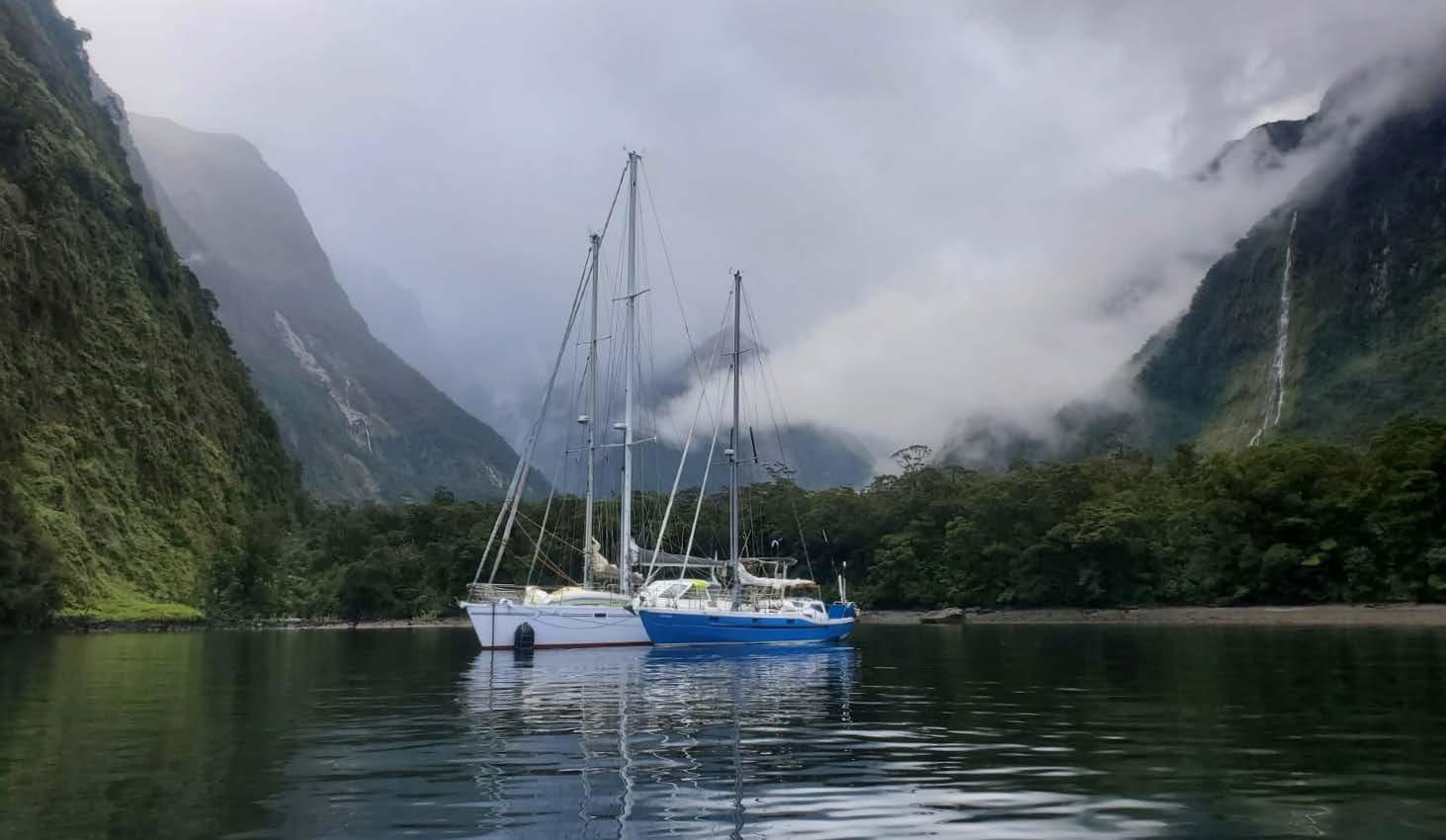
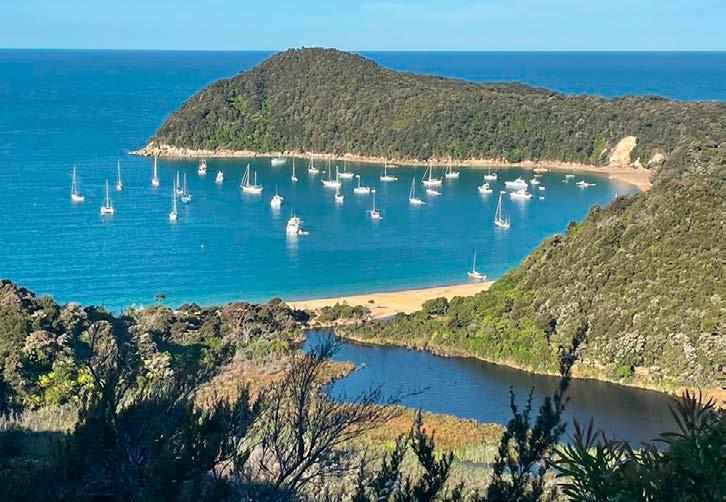
13
The Anchorage, Torrent Bay, Abel Tasman National Park
The jewel of the Abel Tasman coastline, Torrent Bay offers golden-sand beaches and native bush that reaches to the waterline. The bay provides good shelter from westerlies, though open to the north. Deservedly popular but worth the company. “Stop here on the South Island Rally and enjoy some of the fantastic walks and the fireworks display on New Year’s Eve!” said Island Cruising NZ Managing Director Viki Moore. Best for: Tramping, scenic beauty, beach activities.
14
Port Levy, Canterbury
Often bypassed by sailors heading to Akaroa from Lyttelton, Port Levy offers a long, sheltered bay for anchoring.
Reuben Miller, commodore at Naval Point Club Lyttelton, rates Port Levy because of its relative solitude.
“We often take the kids there from Lyttelton, it’s a great weekend away, but close enough to Lyttelton to be manageable in a day.”
Best for: History, variety of conditions.
15
Akaroa Harbour, Banks Peninsula
This historic French settlement offers excellent all-weather protection in a dramatic volcanic harbour. The town provides full services, superb restaurants, and a fascinating history. Regular Hector’s dolphin sightings add to the appeal. “The harbour is like a massive inland lake; you’ll always find shelter,” said Moore.
Best for: All-weather refuge, provisioning, dolphin watching.
16 Harrison Cove, Milford Sound
Harrison Cove is on the northern shore of Milford Sound, approximately five miles from Milford, and is a good place to be in touch with mainland access at the Milford wharves, but far enough away from civilisation to be in touch with the natural beauty of the southern fiords. “It’s a well-enclosed bay with shallow water at its headwaters for anchoring and with a backdrop of mountain peaks with glaciers on their southern sides,” says veteran cruiser Peter Bourke. “There is a risk that your anchor could get snagged by sunken logs lying on the seabed, so it’s a good idea to attach a line from the outer end of your anchor to a floating buoy so that you can pull your anchor out, end first, from any snag.”
Best for: Iconic scenery, access to provisioning and supplies.
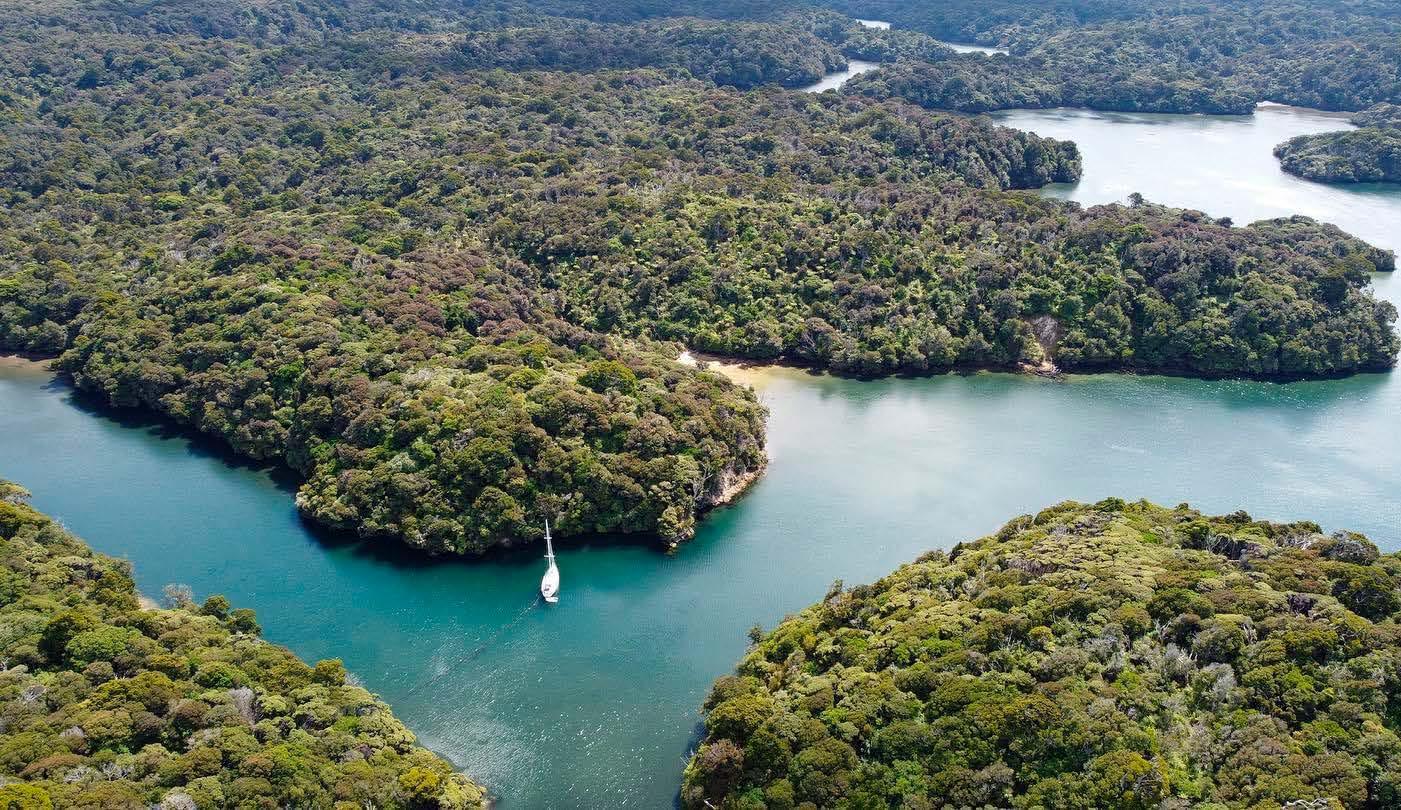
Deas Cove is in Thompson Sound, the northern access to Doubtful Sound, and is less than an hour from the open sea. On his recent circumnavigation of the South Island, Bourke enjoyed this anchorage some distance away from the ferocious sandflies. “I found that most boats cruising here chose to anchor off the shore and then take a stern line ashore, but I found this more admin and it caused the boat not to lie with the direction of the wind,” he said. “I’d much rather lay at anchor and Deas Cove is not too deep at its headwaters (5-10 metres).”
Best for: Solitude, secure and quiet holding, wilderness.
Beautiful bird song, clear waters and beautiful small islets dotted around make for a stunning place to anchor. “There’s also access close by to Anchor Island sanctuary, where you can try and spot the kākāpō,” said Richards. “This anchorage is best when using the mooring – ask for permission on arrival.”
Best for: Solitude, nature, adventurous sailors.
Possibly one of New Zealand’s most remote anchorages, Lords River rewards the journey south with pristine wilderness. Numerous small bays offer shelter in various conditions. “It’s as close to untouched as you’ll find in New Zealand,” Moore said. Utterly wild.
Best for: Ultimate isolation, wilderness, self-sufficient sailors.
The weather at Stewart Island can reach extremes, and so a good anchorage is essential for a safe ship and peace of a skipper’s mind. Port Pegasus is the most southern harbour in New Zealand, deep in the Southern Ocean. “While the scenery is more spectacular in the southern arm of Port Pegasus, my favourite was at the top of the North Arm, north of Rosa Island, where the wind was consistent and the holding at around four metres was in mud,” Bourke said. “There are some beautiful features to explore, including Bell Topper Falls at the outflow of Pegasus Creek, and the start of the track to the Tin Range.”
Best for: Wilderness experience, dramatic scenery, water available.
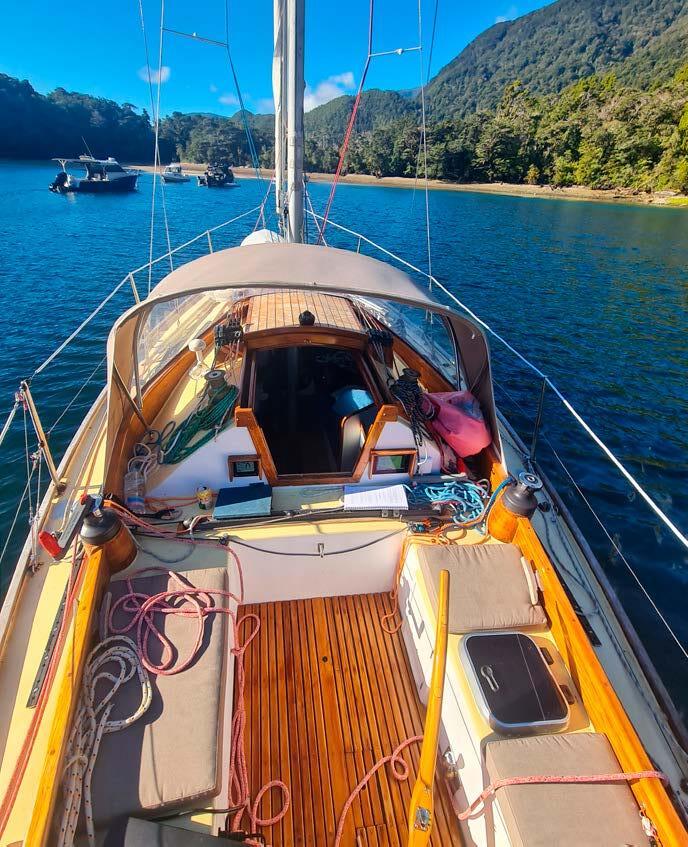
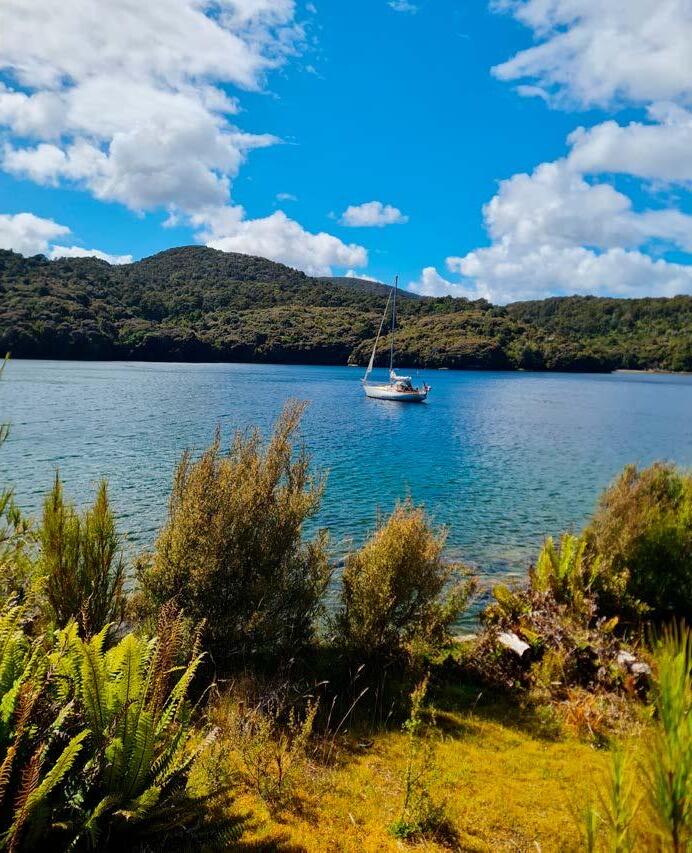

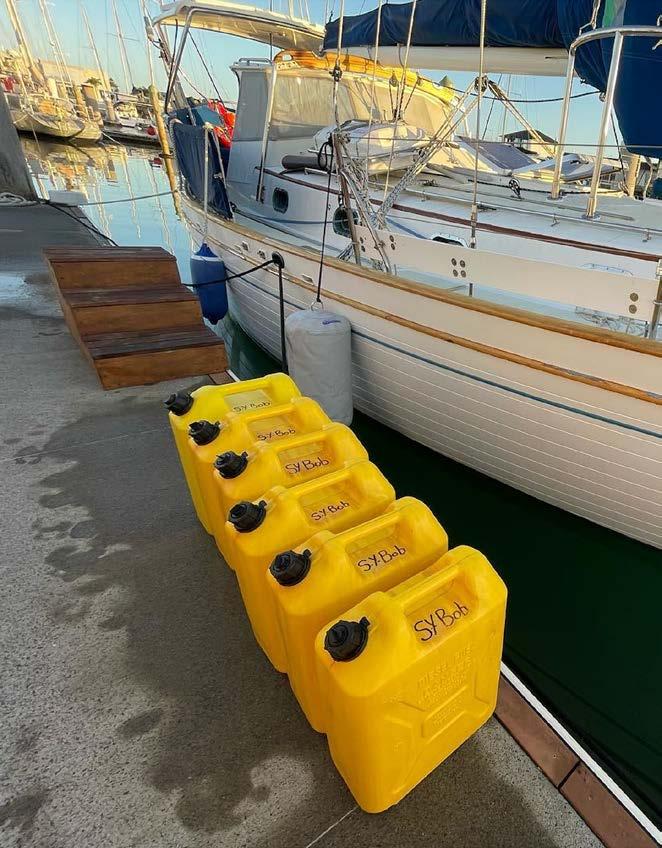
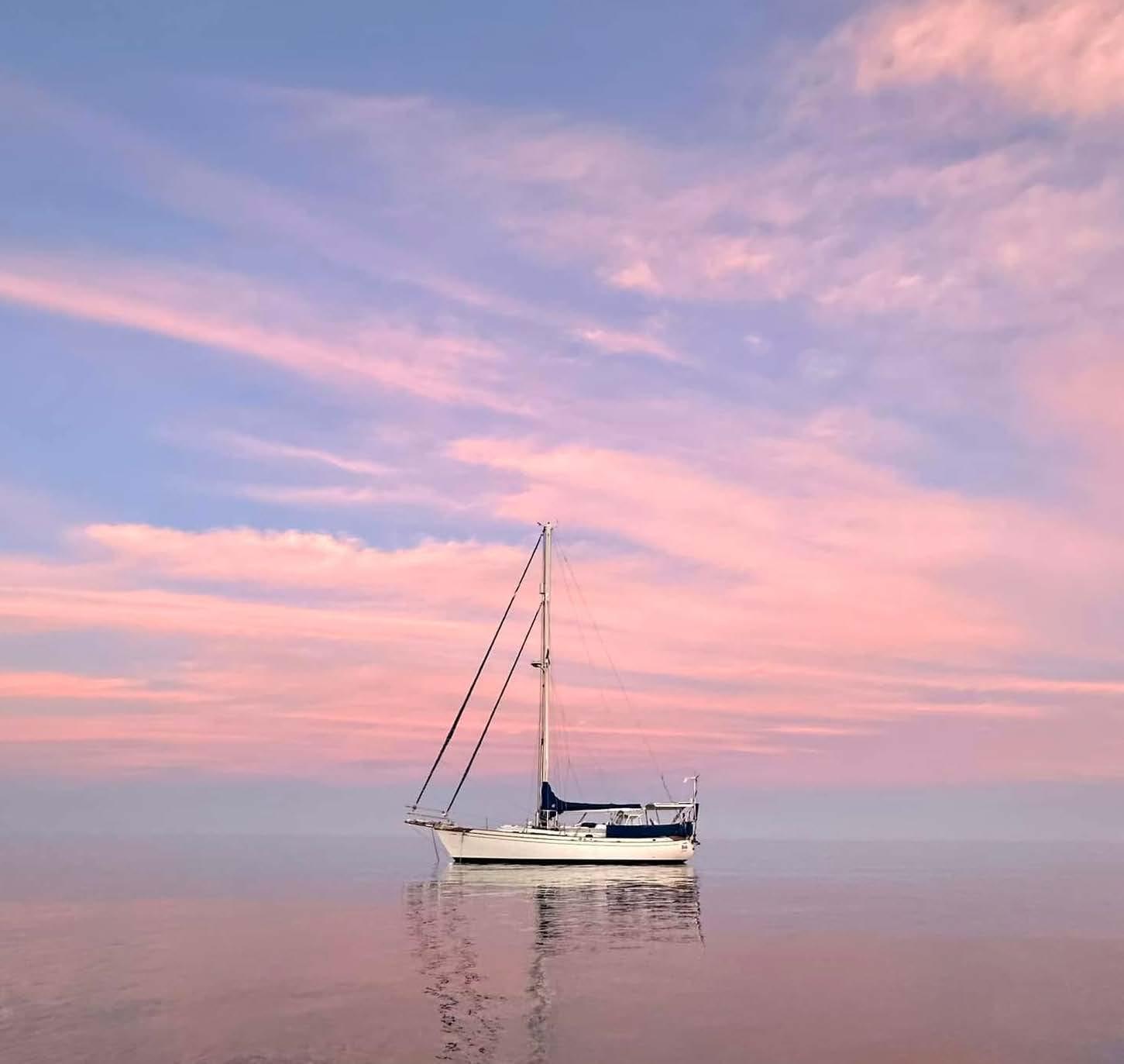
BIn April 2023, Bruce Maunsell set off on a sweeping solo voyage. Twenty-seven months later, he returned to New Zealand with tales of close calls, hard repairs, and moments of magic at sea - all captured in his own words.
ruce Maunsell has just completed an extraordinary Pacific circumnavigation aboard his Tashiba 42 Bob, mixing long solo passages with visits from friends and family along the way. Departing Whangārei in April 2023 as part of the Island Cruising Rally, he sailed across Japan, Canada, the USA, Mexico, Fiji, and back to New Zealand waters in October 2025, covering stretches of ocean few recreational sailors ever see.
Spending weeks alone at sea, Maunsell embraced the rhythm, challenges, and raw beauty of the Pacific, documenting it all in a near-daily blog filled with adventure, mishaps, wildlife encounters, and life lessons from the open ocean.
Below is a selection of his entries,
edited for brevity and reproduced with permission.
Tuesday departure?
8 April 2023
After a week of delay, waiting for suitable weather, it’s looking like Tuesday 11th (April 2023) could be departure day. The crew’s primed, the boat is provisioned and we’re ready for another round of goodbyes. I’m sure people just want to see us gone!
Who’s the boss?
16 April 2023
After a couple of days of feeling pretty good about ourselves, we had a little wake-up call last night. It was all on with oncoming squalls, gusts around 30 knots, and too
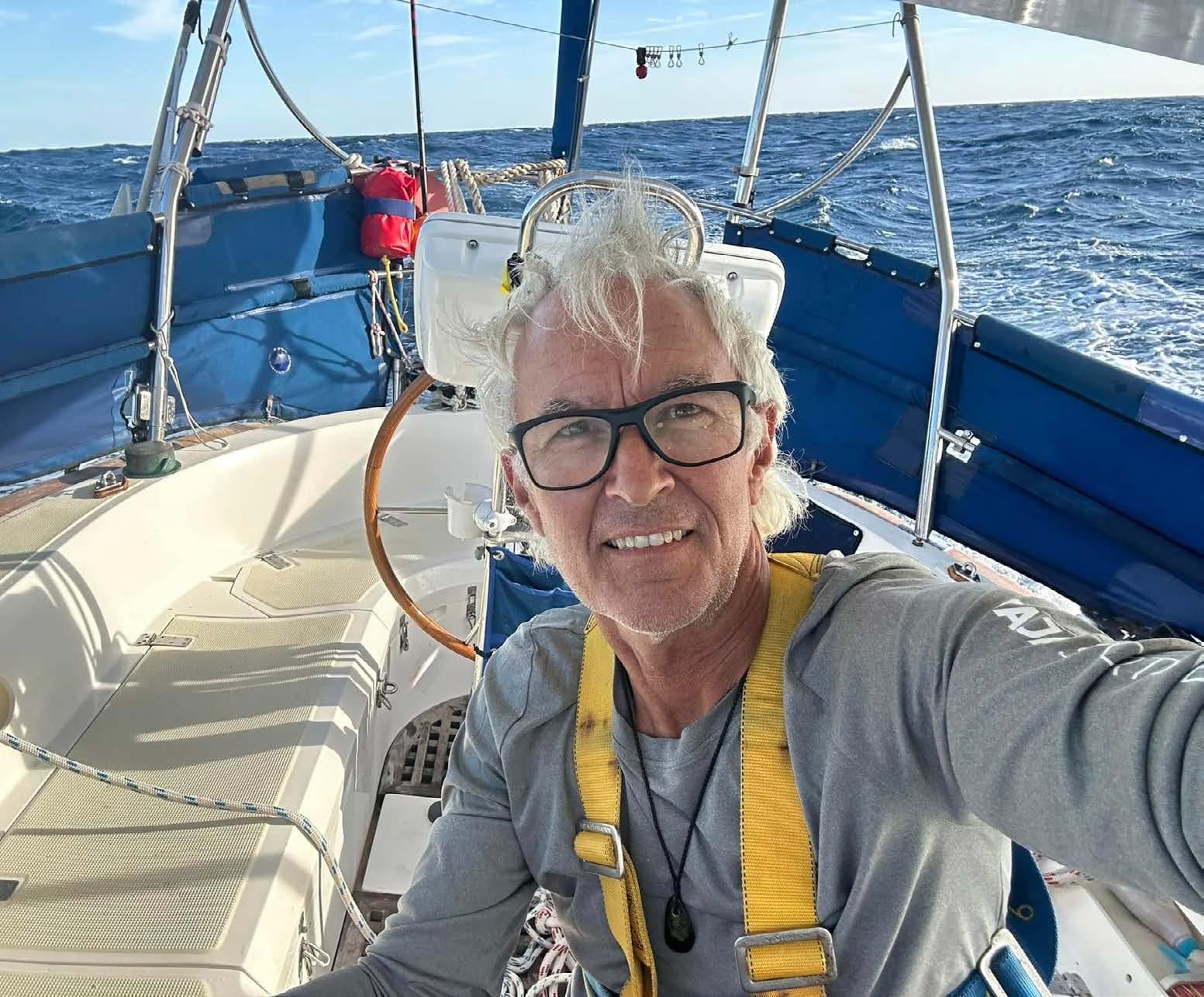
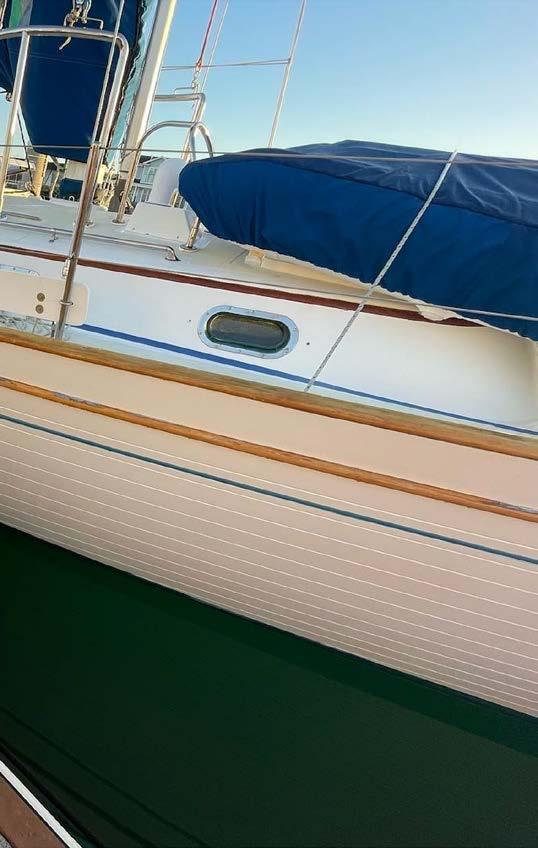
much sail up. Lesson: be even more conservative with sail planning going into night. Suze also learnt she isn’t completely over seasickness. We already know Mike likes to look as good as he can, and he changed his clothes twice during the night, apparently because he got wet. Suze reckons they got soiled some other way.
My mate’s leg fell off 19 April 2023
After singing its praises a couple of days ago, my new friend, the Aries Windvane steering contraption, promptly showed off a rare vulnerability – its leg fell off! More precisely, it has a blade that cuts through the water, providing hydraulic force to alter the steering (it’s complicated). That blade
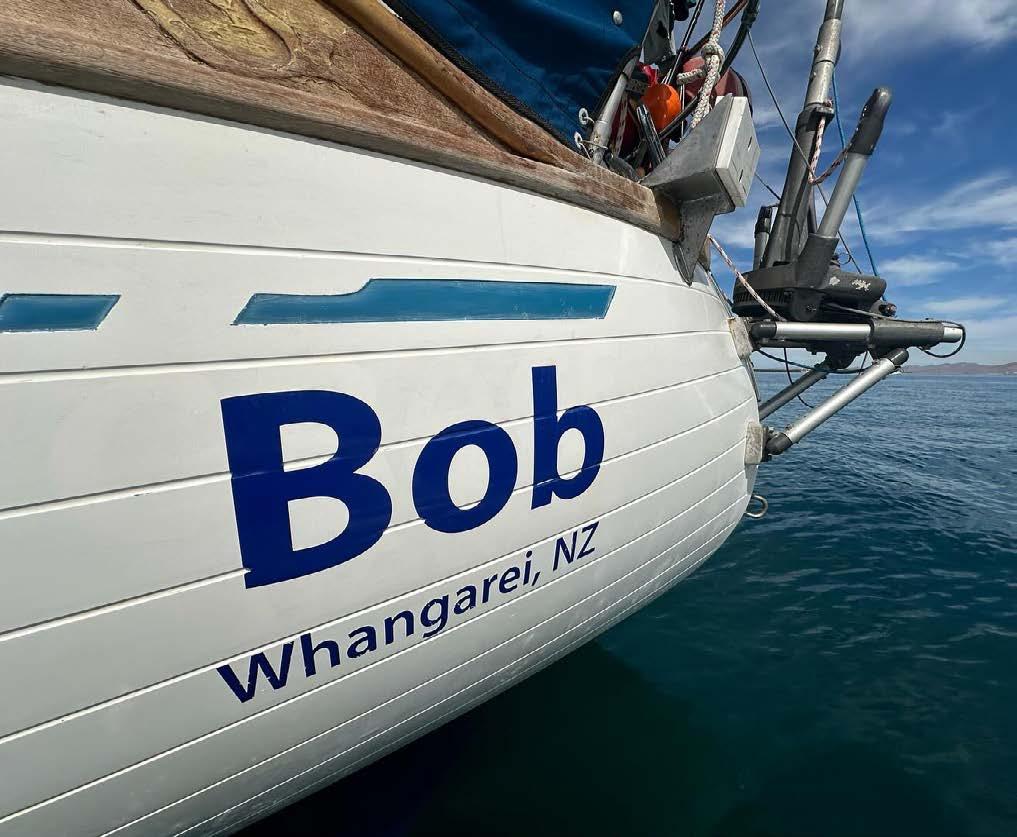
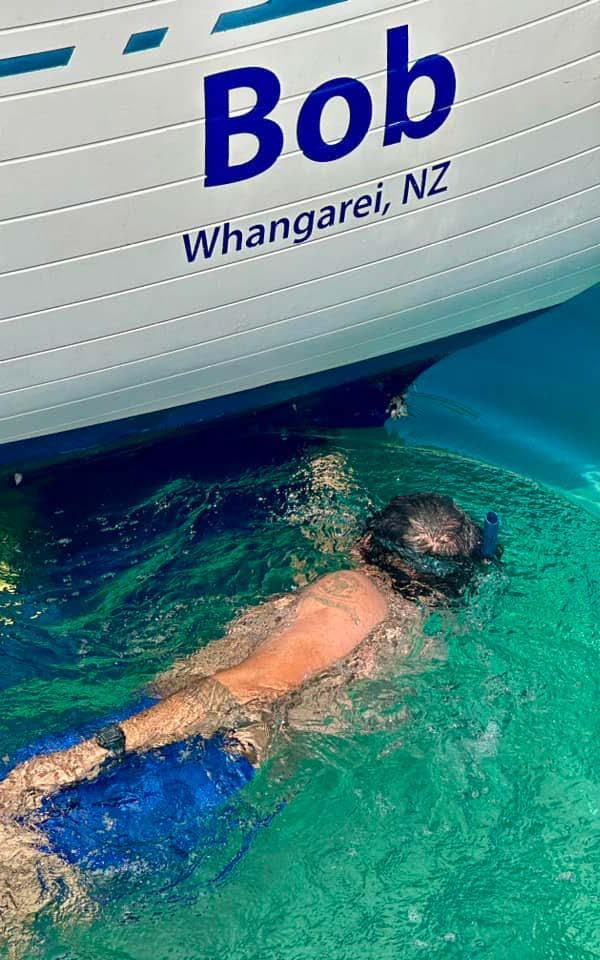
Vuda Marina, then it was lovely sailing the 20 miles to the reef passage, and then westwards.
Overnight, I managed to get four or five hours’ sleep, in 30-minute slots, using a kitchen timer. Between sleeps, I got up, checked the instruments and sails to see we were on course and that everything was in tune. Towards dawn, there was a spectacular lightning show up ahead, so I pulled in a bit of genoa just in case a squall arrived. It didn’t, so now the genny is unfurled again, and the sun is a big orange orb directly over the stern as I have my coffee.
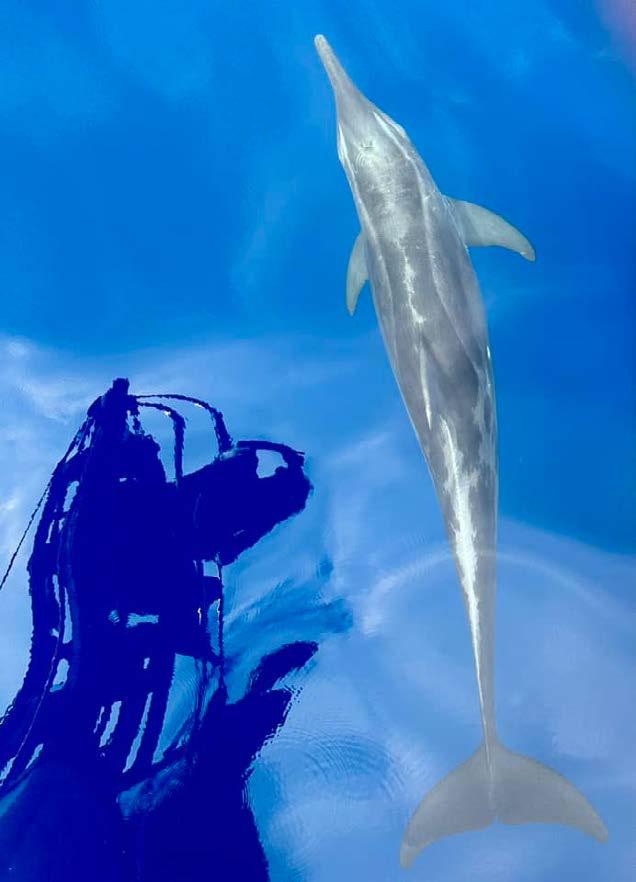
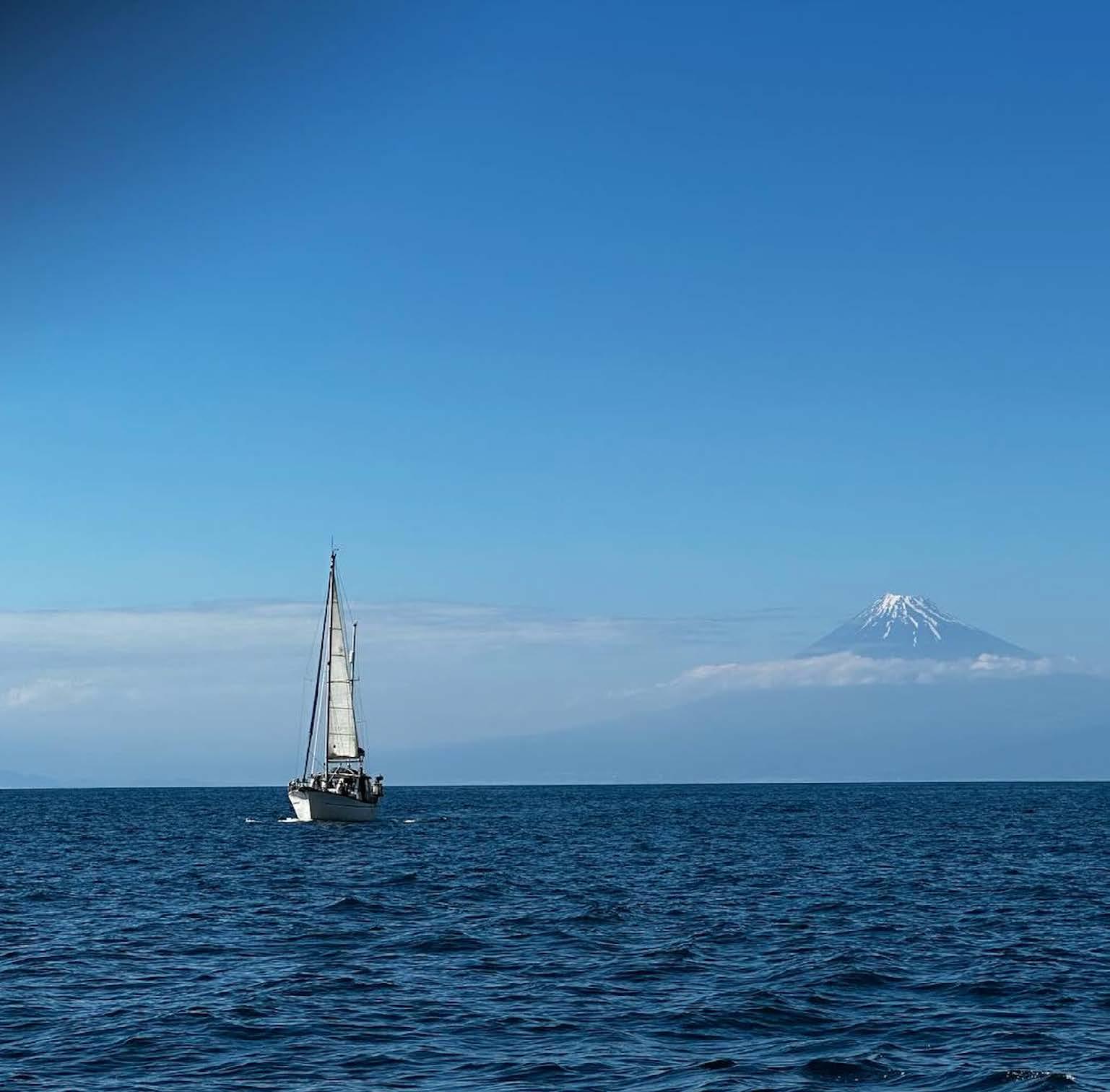
appropriately, with a tot of rum, half a piece of Julie Stout’s fruit cake, and some spag bol. As this was my first crossing under sail, according to seafarer lore, I can now call myself a ‘shellback’. You landlubbers remain ‘pollywogs’.
Confessions of a diesel head
14 May 2023
I’m a shellback, apparently 12 May 2023
Last night, as the sun went down, I crossed the equator. Earlier in the day, I’d thought I’d be crossing in the dark (always a little more difficult to navigate), but we had perfect sailing conditions, and the boat seemed to sense it was a special occasion, so we really raced to the line. We did the right thing and thanked King Neptune
My engine has been running for 16 hours now. I should have burnt about 50 litres of fuel. I can see I have moved 70 miles along a particularly straight line, except for one brief departure when I got excited about a non-existent breeze, altered course, put the headsails up, then reversed the whole process in embarrassment. Of course, there was no breeze – that’s what the doldrums do to you!
Pull me out of my torpor
15 May 2023
It’s harder and harder to be active these
days. I think it’s partly the repetitiveness of each day, combined with the heat. Unless I consciously make an effort to do something, I just don’t. Having said that, I get plenty of exercise as I’m up and down the four steps of the companionway about 100 times a day. There’s plenty of arm and shoulder exercise pulling and winching ropes and hanging on and balancing as the boat moves requires different muscle work.
Chuuk, I’m here 19 May 2023
I’ve only been here a couple of hours, and so far I’ve seen a few small islands with palm trees in the distance, an airport in the mist with planes that come and go just a few feet above boats in the harbour, a lot of locals buzzing around in the ubiquitous Pacific island utility boats with 50hp Yamahas on the back, a concrete wall that I’m tied up to, and Benson, who was from either Customs or Health. Now I’m waiting for his mates from Immigration and Health or Customs. Then, once I work out how to get off Bob and scale the concrete wall that I’m tied up to, I’ll go sample some local delicacies, and their beer.
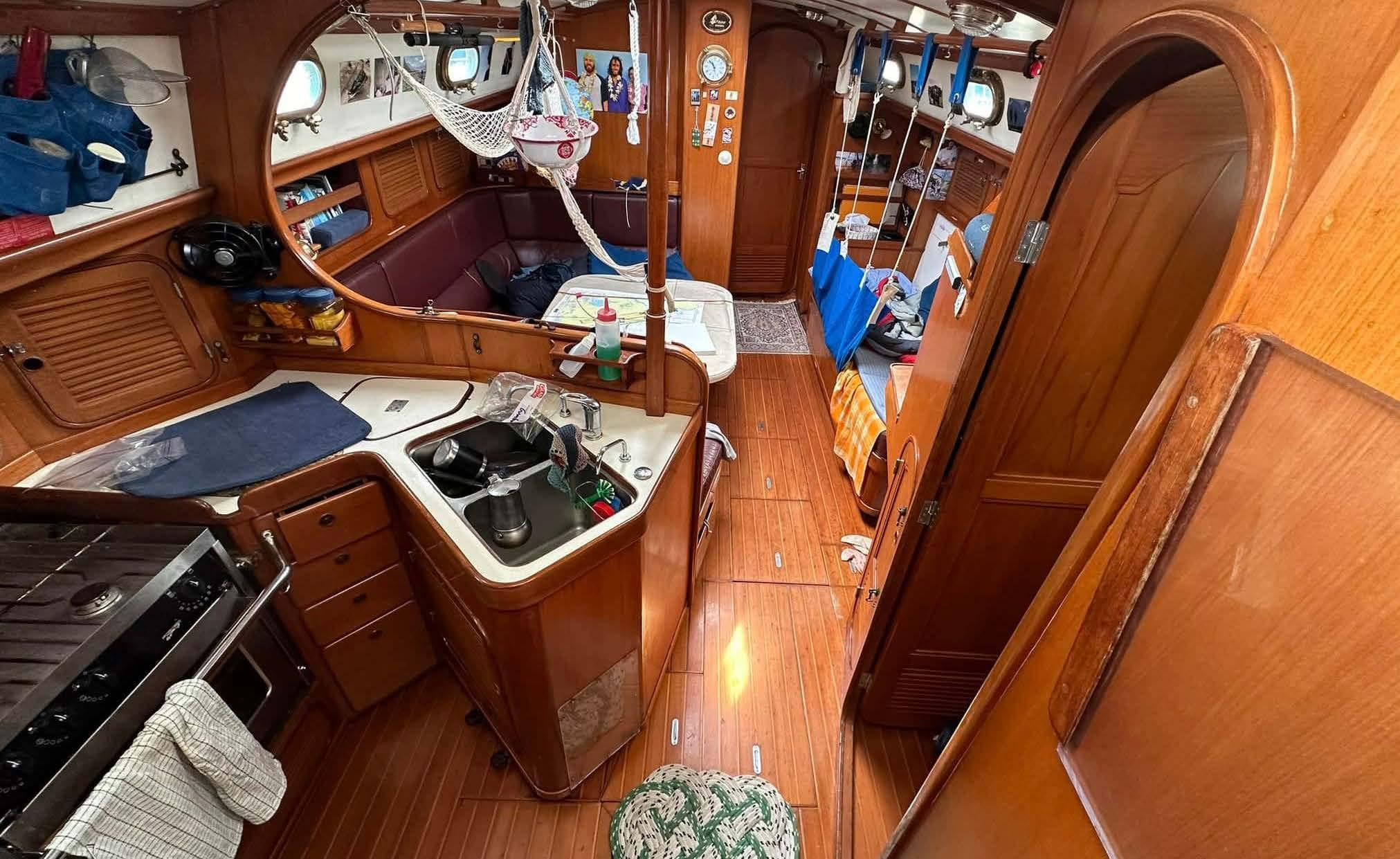
Here we go again
5 June 2023
Yesterday we started noticing a possible typhoon developing south of our current position. If that happens, Ogasawara is likely to be untenable. So, we’ve decided to head straight for the Japanese mainland, 1,000 miles away.
Saipan to Wakayama
9 June 2023
I came on watch this morning to the glorious sight of a fuming volcano 15 miles to starboard. The volcano is nameless, and just a pinprick on the paper chart we are using. Alarmingly, it doesn’t appear on the boat’s chart plotter.
A carpet of stars
10 June 2023
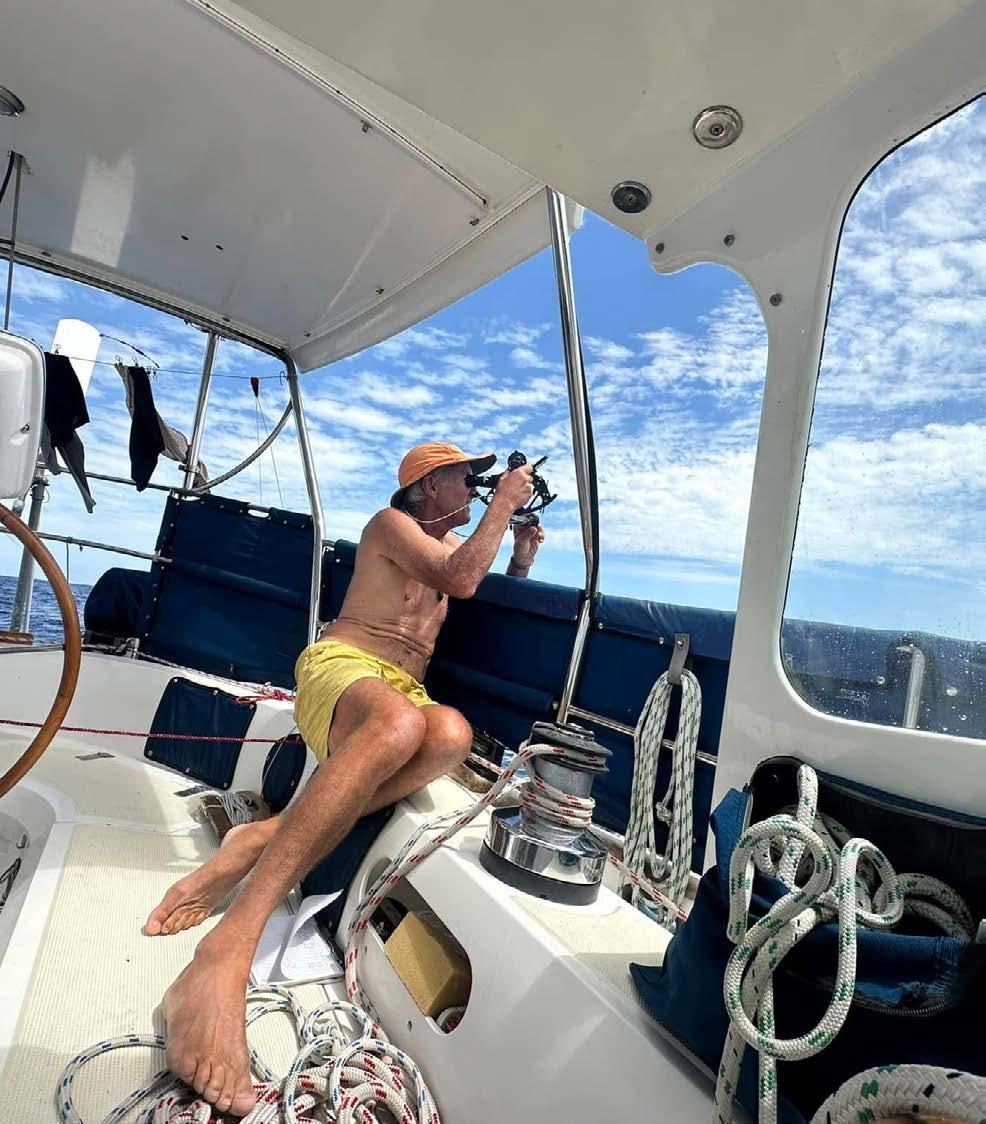
2023.
Last night, before the moon rose, was extraordinarily beautiful. There was no wind, and the sea was close to flat. The boat’s wake was kicking up phosphorescence such as I haven’t seen so far on this trip. There was a slight mist, so there was no horizon – the sea just merged
with the sky. Above, there was a thick, lush carpet of stars. Standing in the cockpit, I had this fantastic feeling that I was journeying through space, riding on waves of stars.
Saipan to Wakayama - job done
13 June 2023
It took us all night to motor along the bottom of Honshu, up the channel that leads through to Osaka. This is a much greater expanse of water than you imagine looking at charts and maps. After emerging from the tropics just a few days ago, it felt
very cold. I had to go digging in the bowels of the forepeak for the bags of warm gear that I’d thought I wouldn’t need until winter, or until Alaska. That’s giving me time to think back over the past two-and-a-half months, and 5,000 miles, since I left New Zealand. The overall feeling is one of satisfaction, along with a bit of relief –it wasn’t as hard as I thought it might be. Although we’ve had to avoid a couple of typhoons, I haven’t faced any real crises or challenges that pushed me hard.
Into the Pacific
8 May 2024
I’m flying along today, on a beam reach in 25 knots, and a 1-2 m following sea. The sun is out and it all feels just as it should be. This is my first day out of the Seto Inland Sea and into the Pacific. I have about 400 miles to go to Choshi.
Trucking along 18 May 2024
I’m halfway across the entrance to Tokyo
Bay, with Fuji receding behind me against a smoggy brown-tinged, but cloudless sky. There’s prolific birdlife around today. I haven’t seen so many birds since I left NZ. I had another first as I was arriving in Shizuoka Bay and came across a pod of about eight Risso’s dolphins. They weren’t interested in me and disappeared quickly.
And we’re off
24 May 2024
I got away from Choshi yesterday and headed out into an encouraging breeze. By the time I’d cleared the cape and got across the inshore shipping lanes, the breeze faded to zilch. An hour after turning on the engine, it stopped. I switched primary and secondary filters, replaced a second one later, and the engine has been running nicely since. I hope it doesn’t happen too often.
A tale of two Nigels
25 May 2024
Yesterday was a bastard. The engine had stopped again. I tried working it out by consulting Nigel #1 – Nigel Calder, whose book on marine diesels is on every selfrespecting cruising boat. Unfortunately, no solution jumped out, so I turned to Nigel #2. He’s a gifted handyman, a seriously good mechanic and he’s got me out of a few sticky spots (and into one or two). We had a conversation via satellite messaging over
the course of several hours. He provided a list of possible causes and I started working through them. At one stage I thought he had nailed it – blocked air filter – but an hour later the engine stopped again. At about that time I noticed there was water in the normally dry bilge. A quick look revealed the propeller shaft seal was leaking. Luckily the smart previous owner had fitted a spare seal on the shaft for such a situation, but I only had one shot and had to do it right the first time. Anyway, it seems to have worked out and has stopped leaking...
Best laid plans
28 May 2024
I downloaded books, podcasts, music, a Spanish course, and planned to exercise and meditate daily. Every time I start to read or listen, I fall asleep. Spanish? Not yet. Exercises and meditation? Forget it. It’s all about hanging on, looking after the boat, and feeding.
The system works
29 May 2024
I had my first voice conversation in a week, with a cargo ship on a collision course. Mike mentioned it in his weather update. I called on VHF, and the officer agreed to
change course. Radar and AIS alarms confirmed safety.
Recipes, please!
7 June 2024
I’m down to the last of my fresh veges. Please suggest a recipe using onions, aubergine, and a small capsicum. I also have kumara, potato, oranges, garlic, ginger, lentils, baby tomatoes, capers, sun-dried tomatoes, eggs, breadcrumbs, rice, noodles, peanut butter, and chilli. Fewer extra ingredients is better. Preferably made on a moving slope with one hand. I have an oven, pressure cooker, and stove. Suggestions to brucemaunsell@myiridium. net.
‘This is President Kennedy’
22 June 2024
I was roused from a doze by a VHF call: “Barb, Barb, Barb, this is President Kennedy. Do you copy?” My proximity alarm went off at the same time. I replied, “President Kennedy, sir, this is Bob.” The “President” turned out to be a container ship bound for Los Angeles. The watch officer recalled seeing us off Tokyo, we compared courses, and wished each other well.
No spring chickens
27 June 2024
In boat terms, Bob’s mature, like me. Although loath to admit it, possibly past
our best, in some areas, but still keen to perform. A journey like this exposes the weaknesses and vulnerabilities, and brings a few issues to the surface. There’s the engine which I’ve already discussed, the leaks up forward, and the varnish work which is in need of some attention. Well, now add to that the rigging is showing signs of age – and that’s pretty serious. A couple of days ago on my morning checks, I noticed that one of the lower stays had a broken strand of stainless steel. The rig is getting on but was replaced several years ago. I have been hoping I’d be able to do it once I get back to NZ but it’s looking like I better do it in Canada.
And so, it ends
2 July 2024
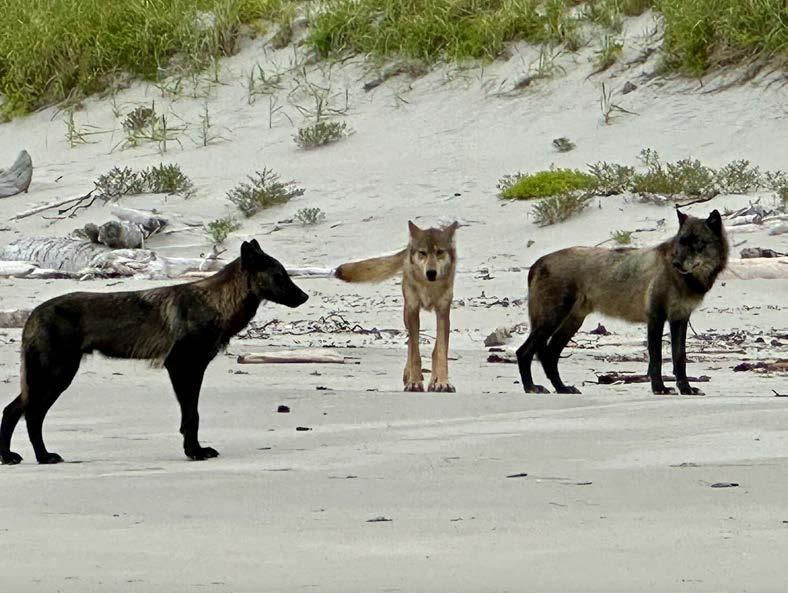
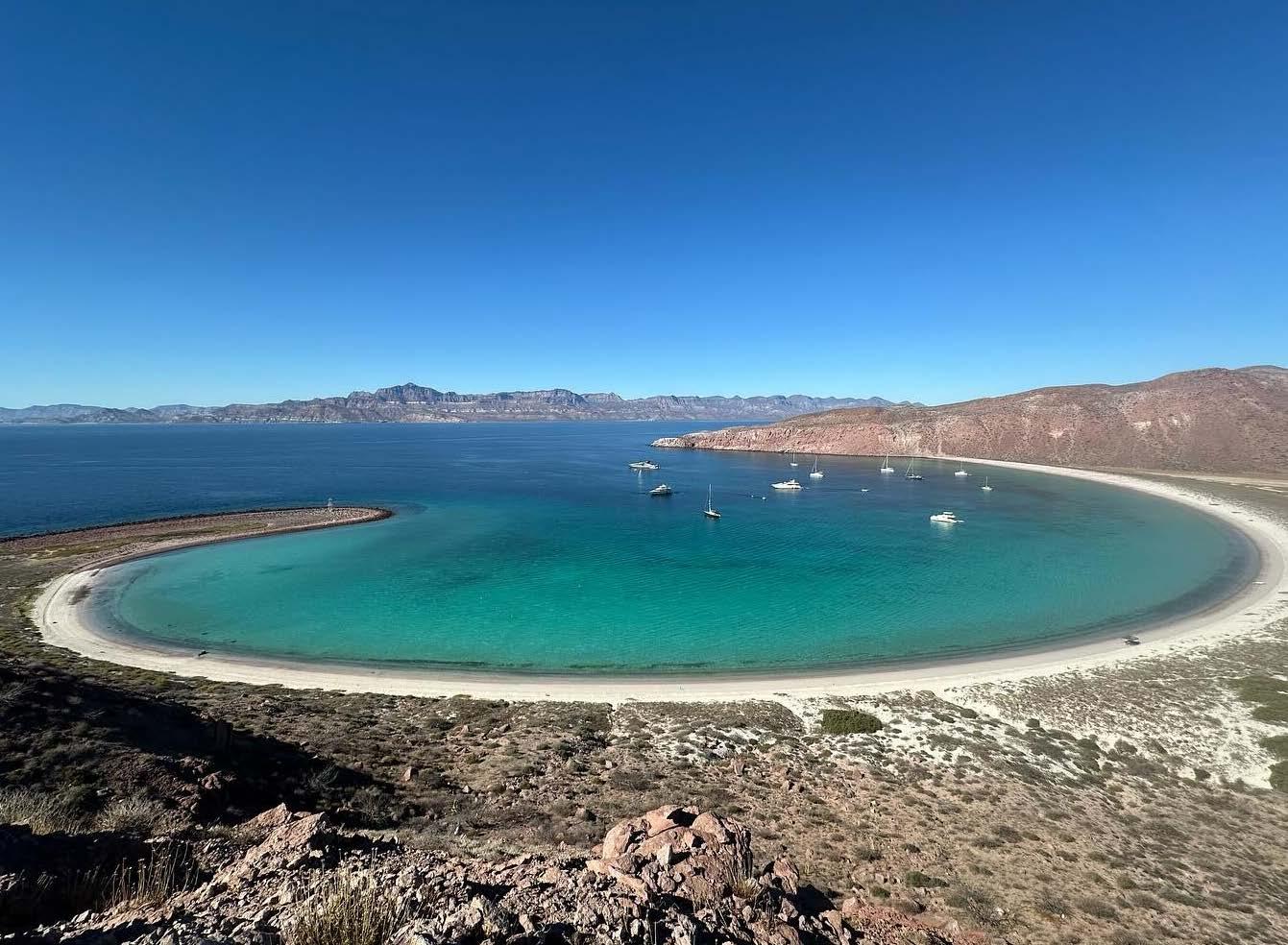
for the US passage down the coast to California. Bob is shipshape, and I’m mentally shifting from cruising to serious sailing mode. The Pacific coast can be very challenging, especially later in the season.
I had been visualising a more triumphant finish: sailing up to the dock, crowds, champagne, tears. The reality was arrival at a backwater Customs dock, jumping off on a dark jetty, making Bob fast on my own. After a 24-hour motor down the coast in fog, I’d done it. The North Pacific passage was the crux of my Pacific circuit, and I feel relief and satisfaction for the preparation, learning, mistakes, and experiences along the way.
The show continues
11 August 2024
After saying goodbye to Susan, and
hello to Mischa and Nigel, and a few days of civilisation in Prince Rupert, we are headed south. Within a couple of hours of departure, the nature show began with humpbacks on the way to our first anchorage, eagles and seals. A wolf appeared on the shoreline 150 metres away, circling and approaching as close as 50m. We haven’t seen another boat since clearing Prince Rupert.
Van Isle
1 September 2024
We’re at Tofino, halfway down Vancouver Island, or Van Isle as some locals call it. It’s busy – a mix of Queenstown and Bluff. Tourists are shuttled to natural wonders by guides, while others go flat out in overpowered boats, 4WDs, and tugboats. Many buildings feel shoddy amid the beautiful environment. I’m looking forward to getting back to wilderness.
Hasta la Vista
16 September 2024
I’ve been back at Canoe Cove for a week. After Mischa and Nigel headed home, Bob’s rigging was replaced with new stainless-steel stays. I focused on preparing
23 September 2024
Yesterday was fantastic – the sort of day I hope I never forget. I did some laundry, some boat jobs, started splicing a new snubber, baked some cookies, slept, read and listened to some podcasts and music. Around 1400 the breeze increased to around 12 knots so the engine went off. It was glorious sailing. I was entertained by three dolphins for most of the day, sometimes close to the boat. At other times I spotted them off in the distance, coming in close again as if to touch base and let me know they’re still here. Other than them I haven’t seen much sign of life. The only ship that came up on the AIS screen was the Queen Elizabeth. I tried calling on VHF, just so I could say I’d spoken to the Queen and the President – but, alas, I was out of range. Today I’m off to the foredeck for a haircut. The guy I use doesn’t really know what he’s doing, and only has cheap, blunt scissors.
Secure in Sausalito
29 September 2024
We got into San Francisco two days ago
Humpbacks were spotted a few hours after departing
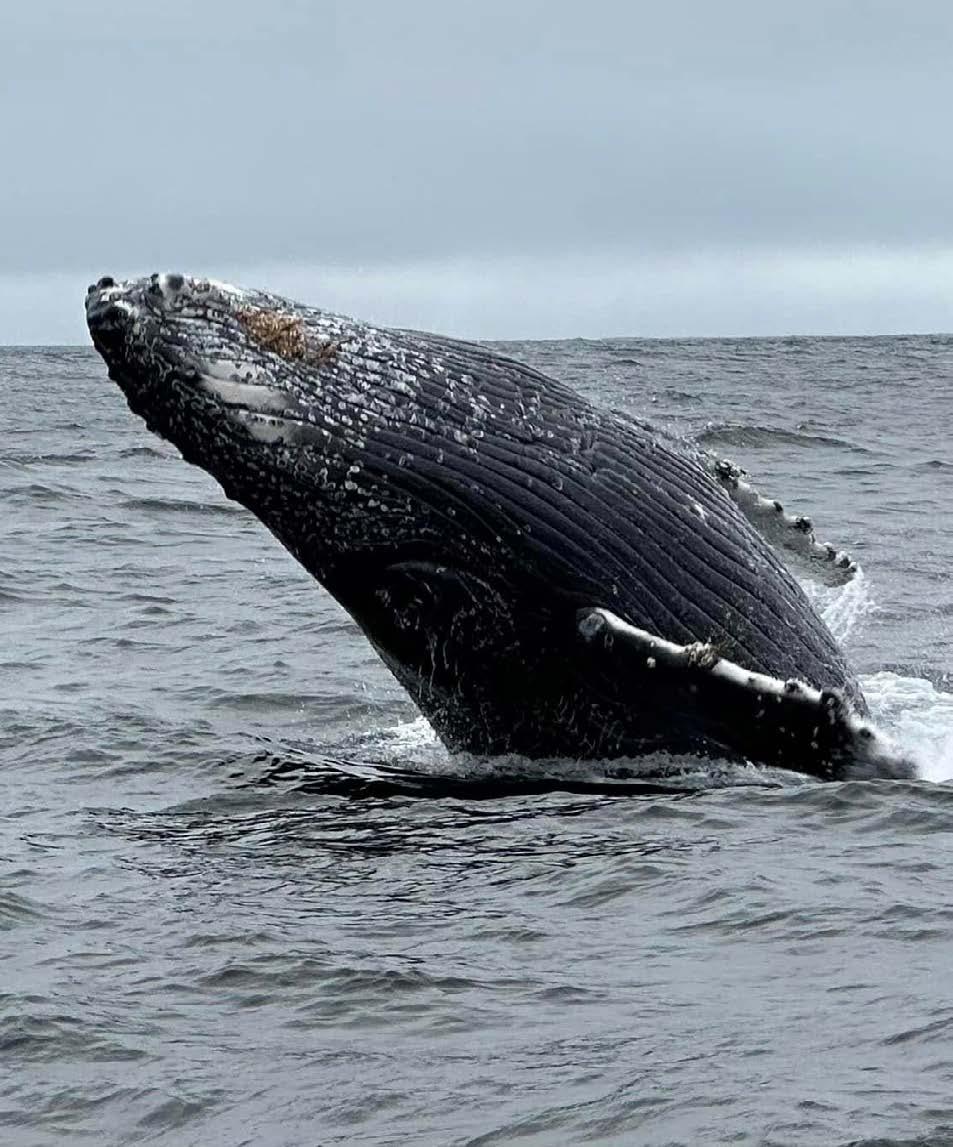
and it’s been busy. I’m tied up on a mooring off Sausalito Yacht Club. Nick, a friend from Prince Rupert, helped me with phone data and showed me around. Last night, we went for dinner and a gig at The Fillmore, where iconic bands have played since the 1960s.
...and some days are s***
29 October 2024
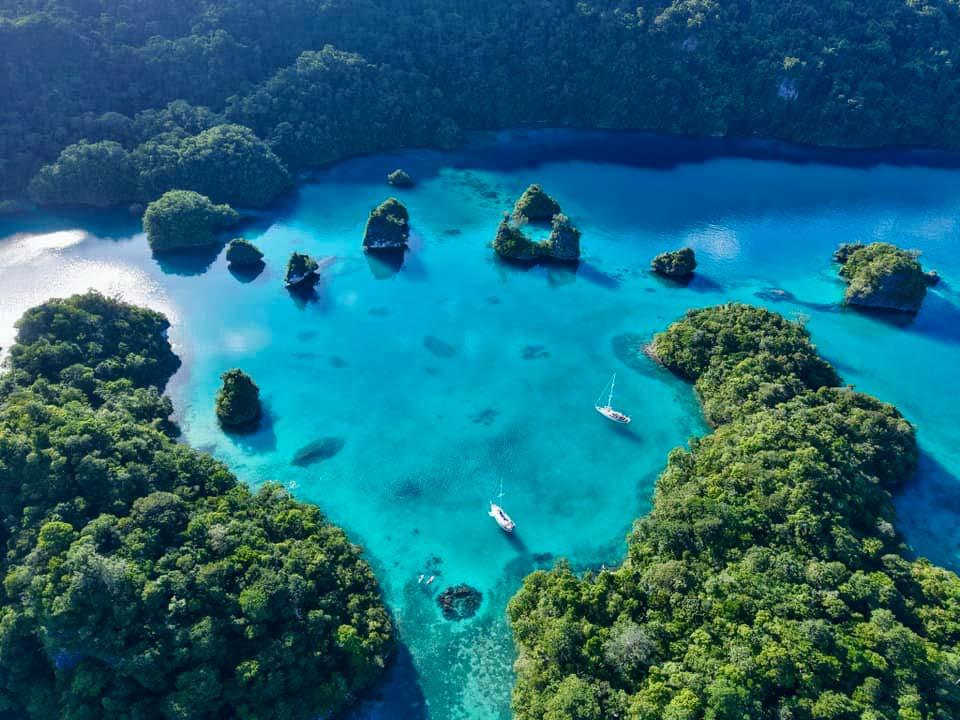
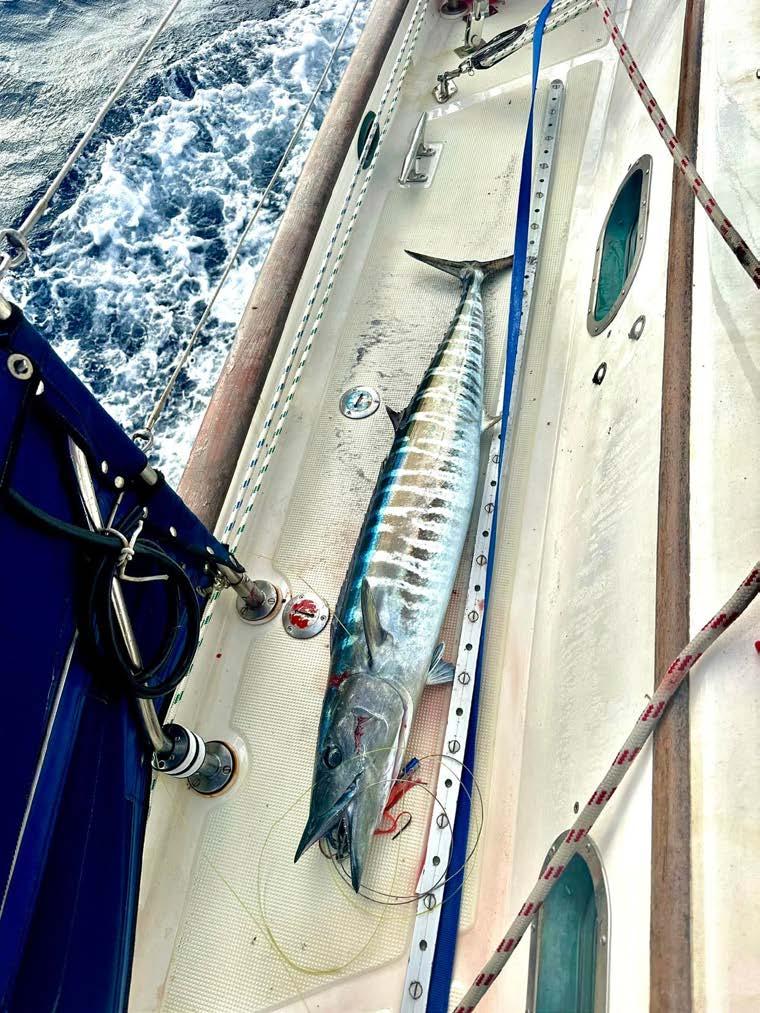
We left Catalina yesterday afternoon, timing our departure to make the most of forecast 10-20 knot winds, ahead of the 20-35 forecast for later today. We did have enough wind to sail for three or four hours but ended up motoring for 16. I didn’t get any sleep – there was too much traffic. At one stage, I found myself sandwiched between two cruise ships, and as we got into the San Diego harbour approach I had to give way to an aircraft carrier. Later an assault team on an inflatable, armed with semi-automatics, came at me at 30 knots even though I was well out of the channel and no threat. That wasn't even the worst – I then needed to pull into the Harbour Police dock to sort out where I could anchor and ended up with a nasty gelcoat graze on Bob’s starboard quarter. I hate it when I screw up and damage my boat. Hopefully, Bob will forgive me.
Then it all went quiet
6 March 2025
Winds increased to 30+ knots and seas
became feral. We averaged 8 knots, hitting 10, with peaks over 3 metres. Bob and I haven’t sailed downwind like that before. By 1600, we had covered 160 miles.
It’s war out here
13 March 2025
We’ve been bombarded with excrement, and dive bombed – by a booby. The critter is relentless, and won’t negotiate. Bob’s foredeck is literally a s***-scape. I woke up from a mid-afternoon snooze and there, on the dinghy, as relaxed as you’d like was the enemy. It came swooping in, low and fast, with clear intent. I had visions of being skewered by that evil-looking beak. The standoff continued for a few minutes until it moved away and landed on the waves a couple of hundred metres away. Half an hour later, I looked up and it was back. I’m reviewing my tactics.
Today, Tahiti
1 May 2025
We’re a little under 70 miles from Tahiti.
We should be able to see the high peaks of the island in the next few hours, if the horizon remains clear. I have images in my mind of the previous sailors who have sailed these waters – many would have followed this exact course. The Polynesian, Spanish, Portuguese, Dutch, French, English. Maybe the Chinese, and others – the first ones unaware of the paradise they were about to discover. The followers eagerly anticipating it. Many jumped ship in order to stay. Others, such as the crew of the Bounty, mutinied so they could return. We’re thinking that once we’ve got the engine issue sorted, we’ll have time to slow down for a few weeks and explore some of the Society Islands, especially the lesserknown ones.
29 May 2025
Last night, we added storm tactics to Cam’s practical experience. A band of unsettled weather was forming south toward Niue. We put a second reef in the main and extra turns in the yankee. At midnight, wind backed from SE to NE and increased from 15 to 22 knots in five minutes. Bob reached over 7 knots, hitting 30–32 knots briefly. We carried on with two reefs and half the yankee out, tracking straight in flat seas, ready to reef further if needed.
Swimming with sharks and turtles
13 July 2025
The snorkelling was next level. Coral
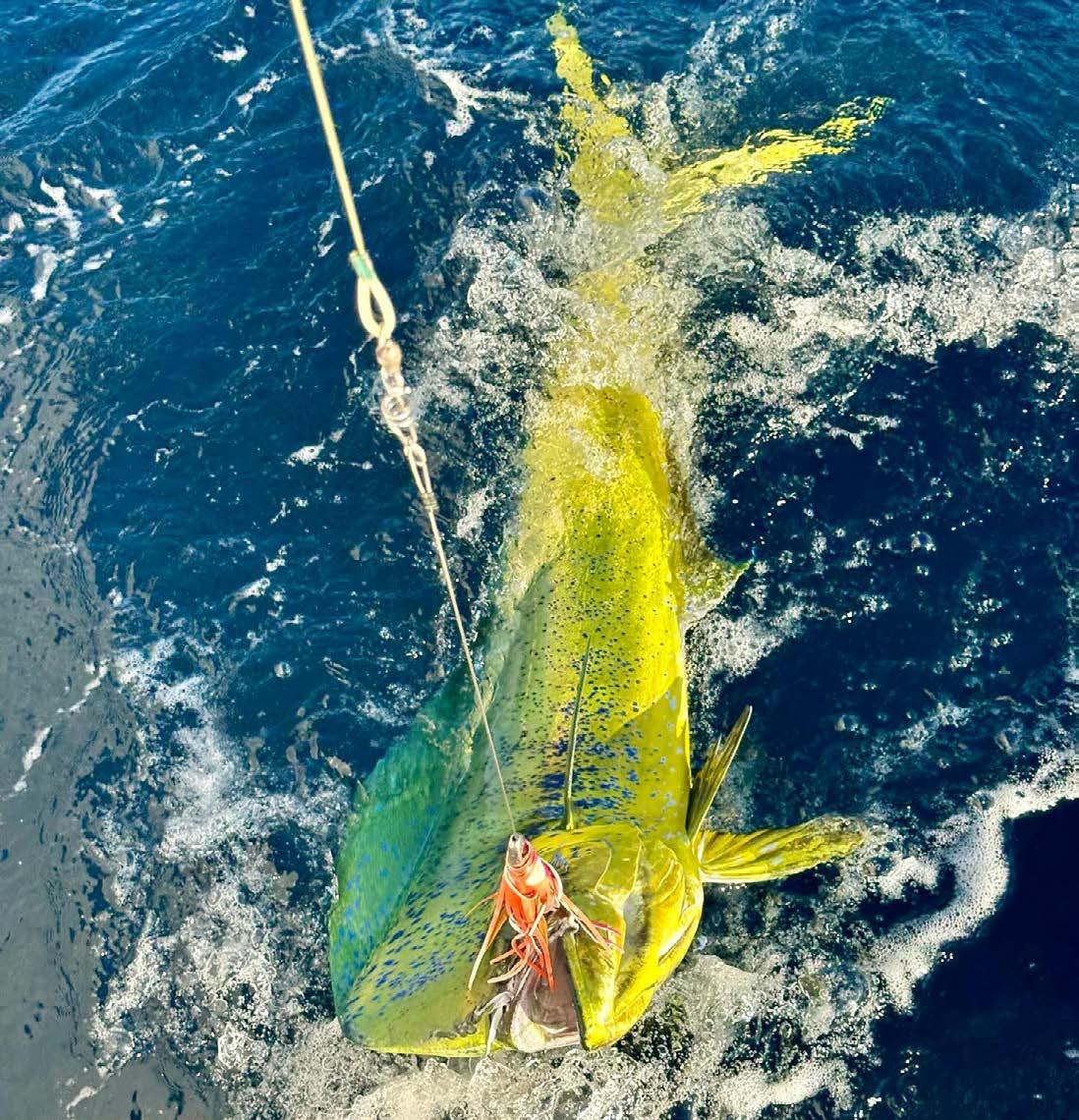
looked supernatural, with fantastic arrangements of colours, shapes, and textures. Schools of small fish swam in synchronised moves. A couple of turtles passed by, and sleek, white-tipped sharks wandered through. It was all so otherworldly that my shark alarm didn’t even go off.
Paradise (with strings attached)
26 July 2025
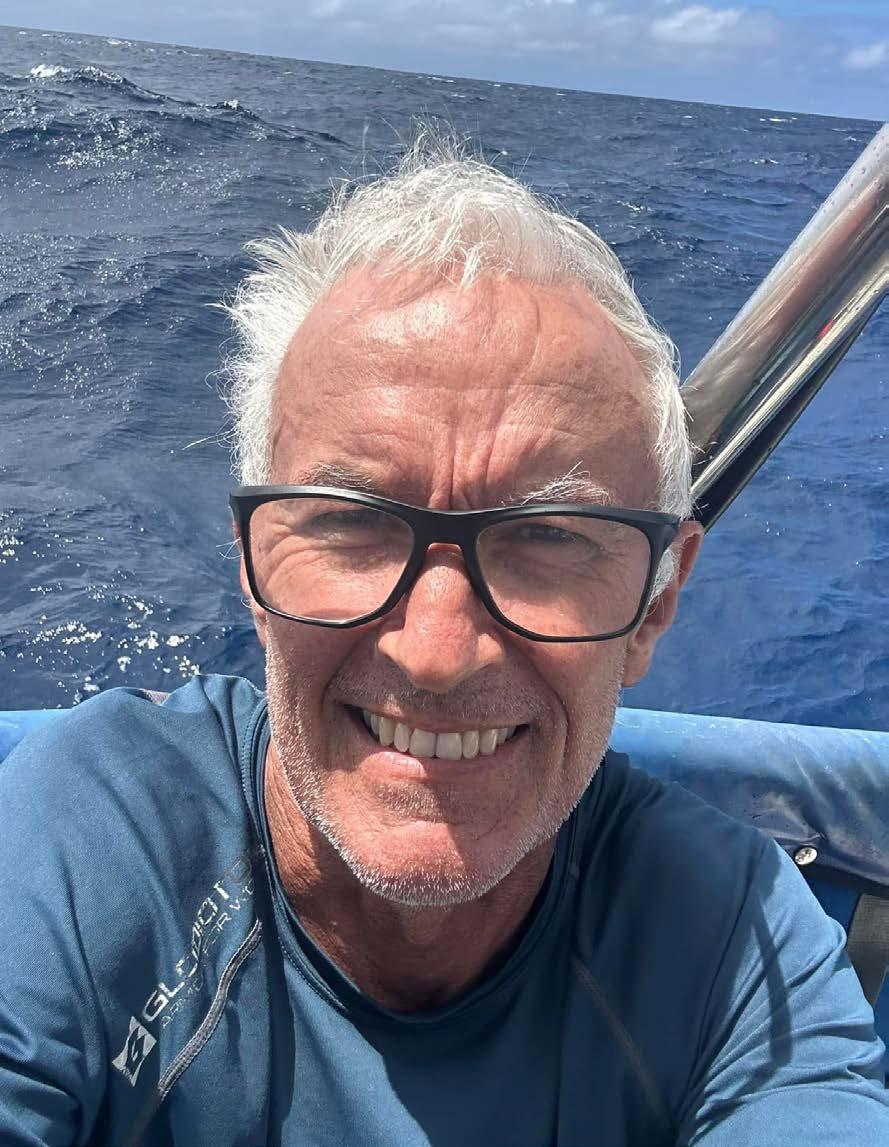
I made it to Paradise after a windy, rough night and tied up to a mooring. After a few hours’ sleep, I rowed ashore to explore. There’s no fee to moor but using some of their services is expected. Paradise, with strings attached, seems fine.
We’re not going to starve
13 August 2025
We caught another tuna and put it in the chiller. After motor sailing through reefs, we arrived at Yasawa village. We sat amongst the congregation on mats on the floor of the church. There was some lively singing, and some hellfire and brimstone preaching. At one stage, I was ushered up to the front with the other men to sing a song. It was a Fijian song, so I wasn’t able to contribute much, to everyone’s benefit.
Circle closed
20 August 2025
We made it to Vuda Marina, closing the circle on my Pacific circuit that began May 2023. Since then, we’ve covered about
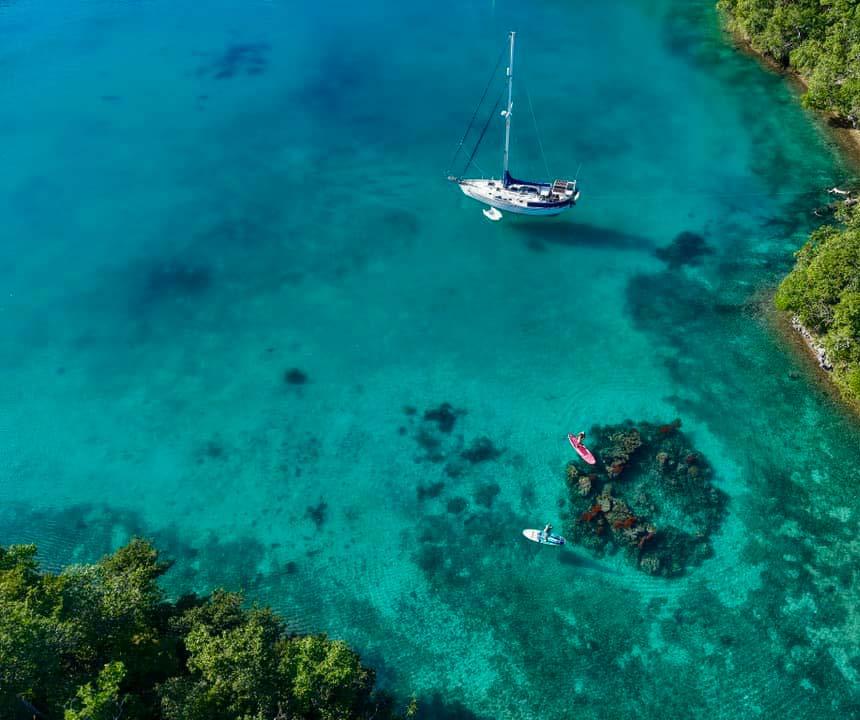
11 October 2025
24,000 nm, around 18,000 solo. We’re in the same berth as 2½ years ago – it feels like 2½ weeks. I feel like I can recall every mile, every day – the easy bits, the hard bits, the people, the food, the wildlife, the places, the seascapes, the clouds, the incidents, the stresses and the satisfaction of each challenge met and dealt with.
4 October 2025
After three months in Fiji, I feel the urge to finish this voyage and head home. Fiji has been a holiday within a holiday. It’s the easiest, most pleasant, and enjoyable cruising area I’ve experienced.
9 October 2025
Bob’s taken a hammering as waves built and wind increased to 25 knots. By 2100 we had three reefs in the mainsail and twothirds of the staysail, enough to drive us at over 7 knots. Waves became mountainous in the moonlight, and we surged and freefell across them. I watched instruments, sails, and rigging for chafe or problems, observing the sea’s fury.
You get over living life on an angle. Like when I’ve just spent a quarter hour cutting up my last papaya to have with a bowl of muesli and yogurt. I’ve done it onehanded so as to hang on with the other hand. Then, after a bigger than normal lurch, there’s papaya, muesli and yogurt all over the cabin sole, the bulkhead on the other side of the cabin, and my berth. Why am I doing this to myself?
It’s the introvert in me
15 October 2025
I’ve been thinking more about what it means to sail solo. It’s the introvert in me that relishes the opportunity to look inward, and experience things with an intensity that is only possible without the distraction of others. I love the simplicity of sailing, particularly solo sailing. It’s an art founded on science, sometimes harsh reality, and the beauty of nature. It exposes you to vulnerability, sometimes to simple fear. It reinforces that nothing lasts forever. Like our thoughts, no wave exists longer than the merest second.
Now it’s over
16 October 2025
I arrived at Marsden Cove after a starry, sleepless sail down the Northland coast. What a great way to finish. Now it’s over. For Maunsell’s full blog, click here
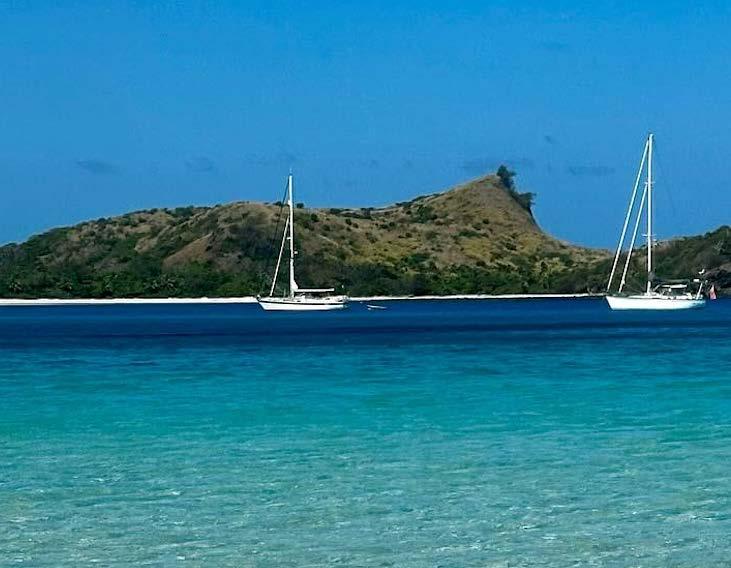
Have your say on Maritime NZ’s review of rules for pleasure craft departures
Recreational skippers planning international voyages are being urged to speak up on proposed changes to two important areas of maritime regulation – including how pleasure craft are cleared to leave New Zealand waters.
Maritime New Zealand has released a working paper reviewing the effectiveness of current maritime legislation. Among the most significant proposals are the possible repeal of Section 21 of the Maritime Transport Act 1994, which governs the approval of pleasure craft departing New Zealand for international ports, as well as a clarification of New Zealand’s ability to regulate foreign-flagged vessels while they are in local waters.
Yachting New Zealand is calling on the offshore cruising community to help shape any changes that could directly affect their safety and operations.
“This proposal from Maritime New Zealand to repeal Section 21 and replace it with regulations would mean recreational boaties won’t need to satisfy the Director of Maritime New Zealand and get formally checked before departing New Zealand waters,” said Raynor Haagh, Yachting New Zealand’s General Manager: Community and development. “There could be wide-reaching consequences for the New Zealand sailing and boating community and that’s why we’re urging people to respond.”
Haagh says the matter is already being actively worked through with key
stakeholders, including Yachting New Zealand’s safety inspectors and its Cruising Inshore and Offshore Racing Committee (CIORC).
From 1 July 2024, anyone intending to take a recreational boat overseas must apply to Maritime NZ for an International Voyage Certificate (pleasure craft), rather than seeking a category 1 certificate from Yachting New Zealand as previously required. Foreign-flagged vessels must also
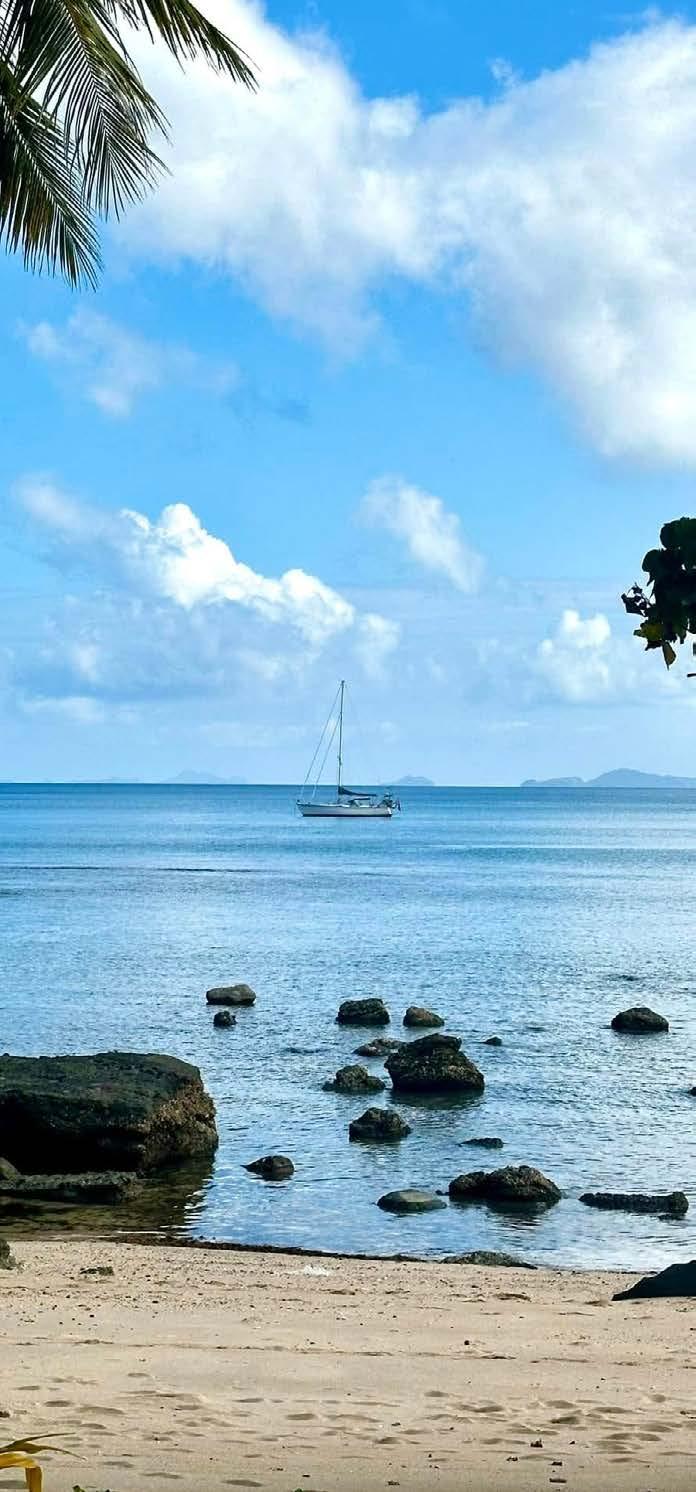
notify Maritime NZ before departing New Zealand on an international voyage.
Yachting New Zealand continues to manage category 1-3 inspections for boats racing offshore. However, if the voyage starts in New Zealand and includes a race overseas, skippers must still secure an International Voyage Certificate. This process currently sits under Section 21, which requires the Director of Maritime NZ to be satisfied that the vessel, its equipment and crew are adequate for the voyage.
Maritime NZ believes the legislation now needs modernising. It argues that Section 21 places responsibility on the agency rather than on vessel masters - a departure from how domestic recreational boating is regulated – and limits flexibility to respond to new safety risks.
Three pathways are being considered. The preferred option would repeal Section 21 and introduce proportionate maritime rules to ensure appropriate safety standards for pleasure craft heading offshore, while keeping skippers responsible for their vessels under Section 19 of the Act. Other options include removing Section 21 entirely without replacement, or revising it so masters must notify Maritime NZ before departure.
Under the preferred approach, future safety requirements – such as mandatory communications equipment – could be updated more easily through maritime rules.
The second proposal would address a
1998 Court of Appeal decision that limits New Zealand’s ability to apply additional safety requirements to foreign-flagged vessels using its ports and internal waters. Maritime NZ says this is out of step with international practice and could restrict New Zealand from managing emerging risks.
A legislative amendment is proposed to
where reasonable and clearly stated. Any changes enabled by this clarification would be subject to consultation.
Maritime NZ and Yachting New Zealand want to hear from those most affected, particularly boaties who undertake international voyages in pleasure craft.
including what safety requirements should apply if maritime rules replace the current system. Stakeholders are also asked whether they support clarifying New Zealand’s ability to regulate foreign-flagged vessels and whether there are impacts not yet identified.
For more information – including the specific questions for feedback, click here.
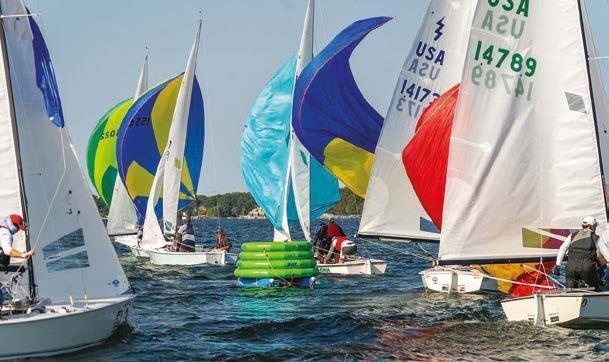
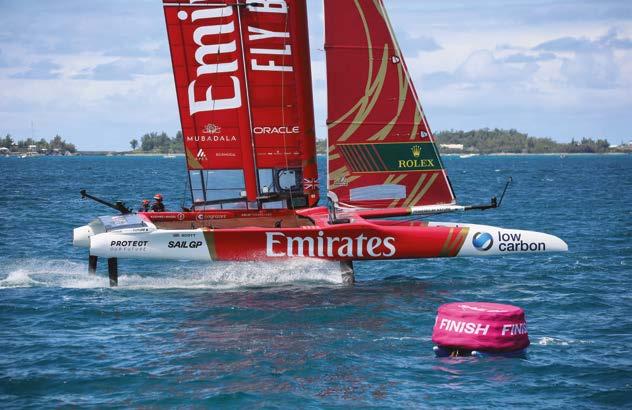
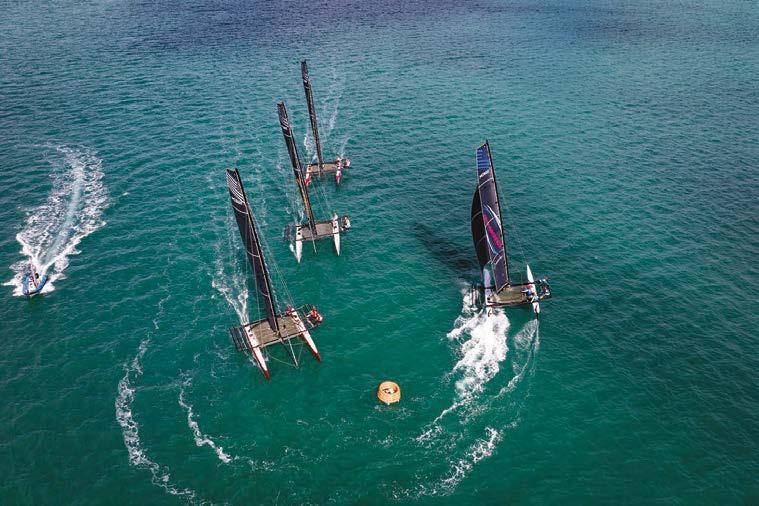
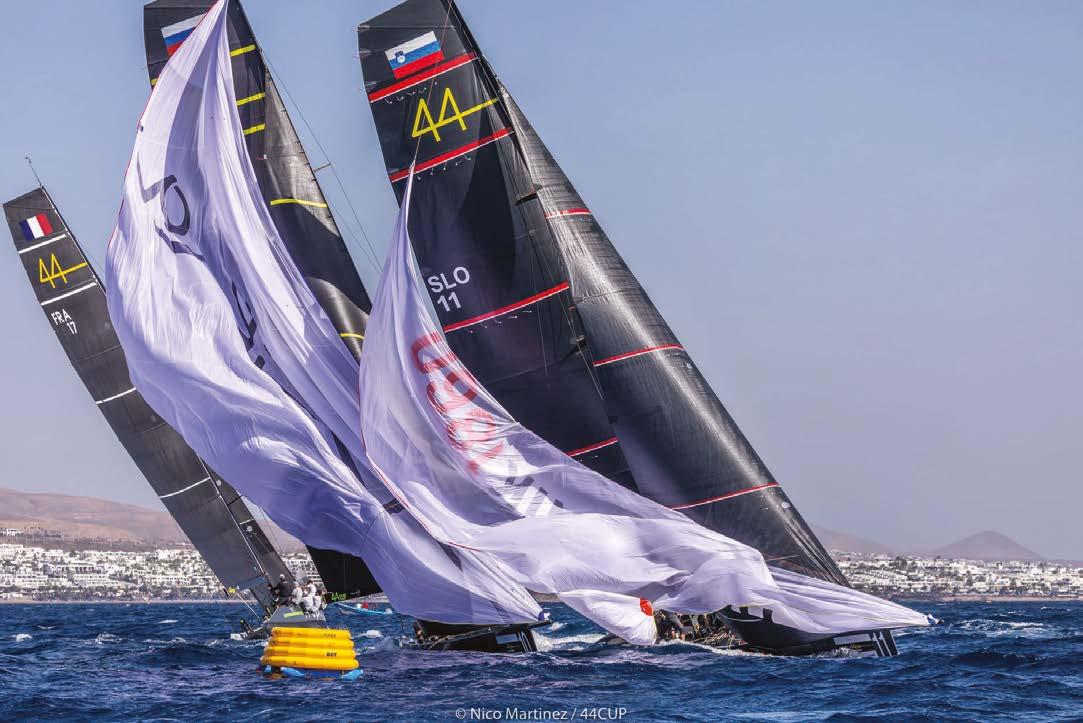
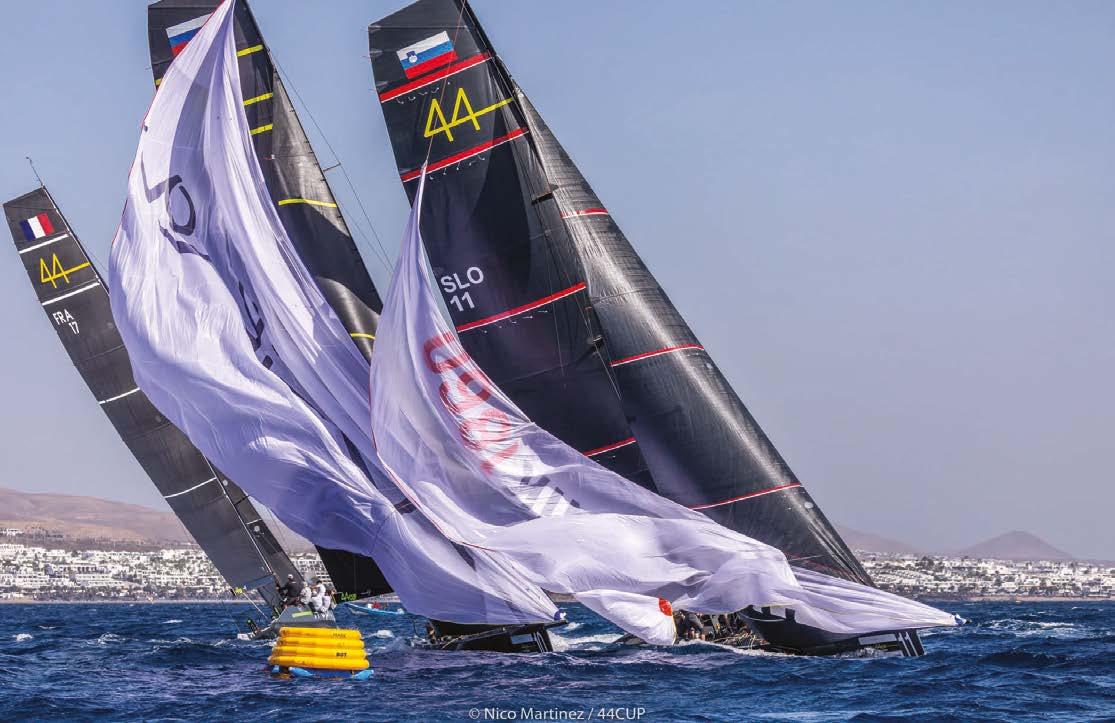
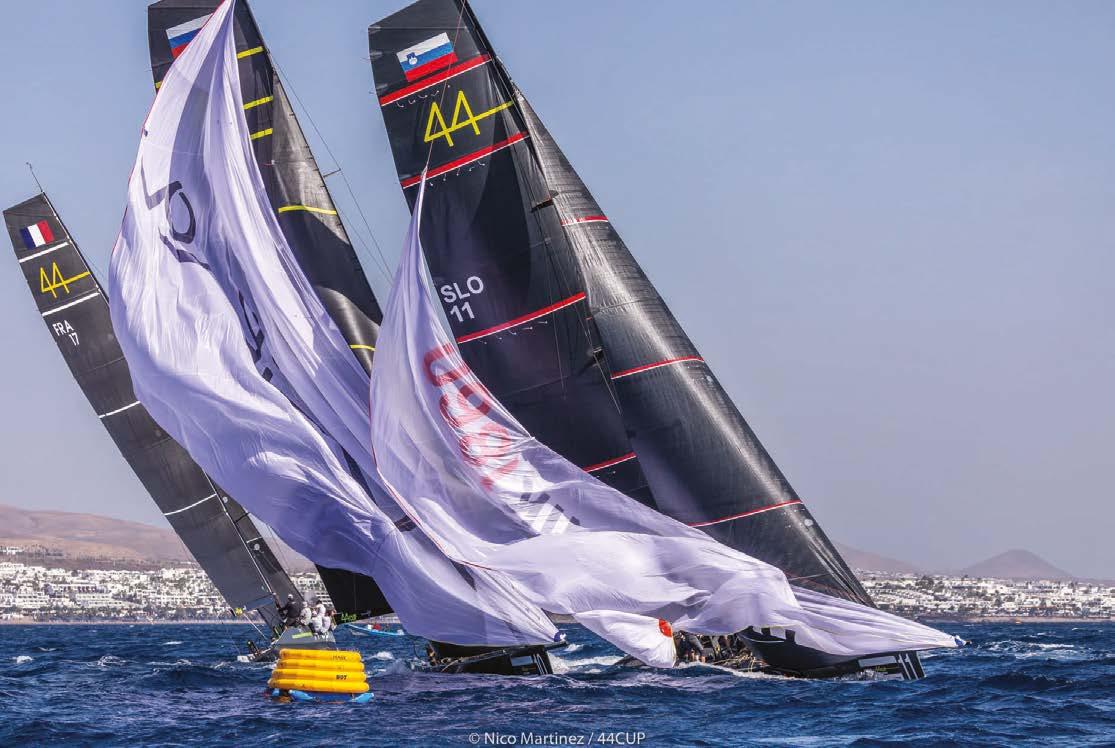
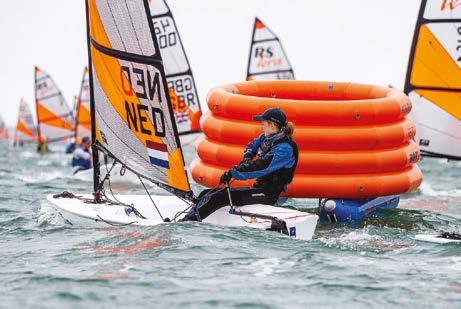
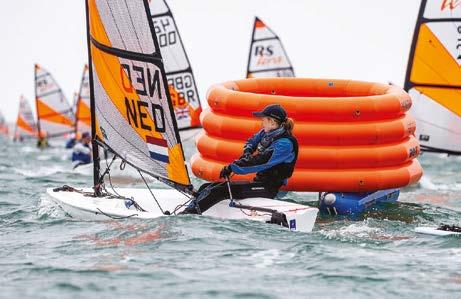
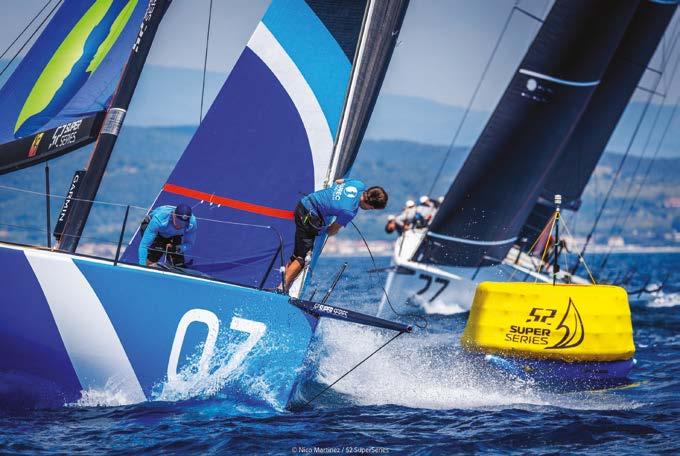
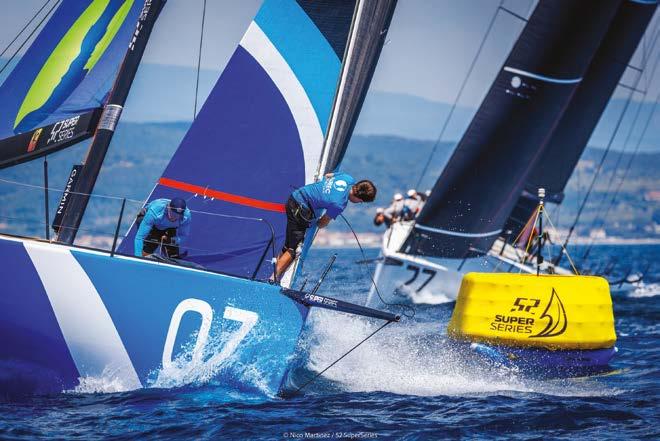
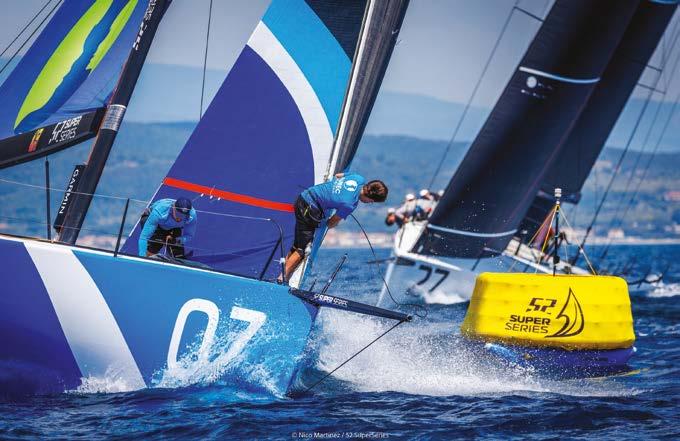


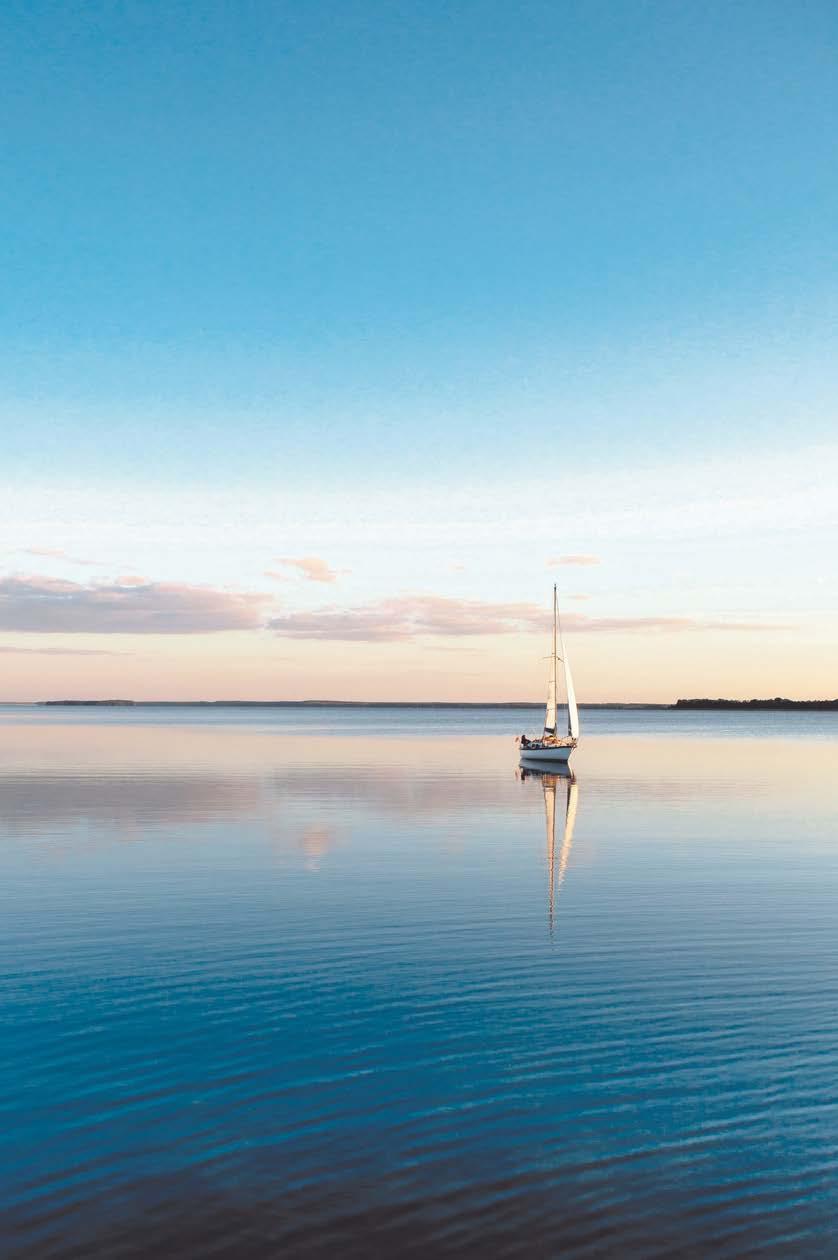


y wine producer - a perfect match!
Just as Yachting New Zealand are working towards protecting and enhancing the marine and coastal environment, we place significant focus on caring for our people, our planet, and our planet.
A Certified B Corporation and net carbon zero, our certified sustainable wines are estate-grown, made and bottled
Our small team of 18 people do everything - growing and nurturing the vines, making the wines and bottling on site Full accountability, just how we like it!
In addition to our award-winning flagship wine, Marlborough Sauvignon Blanc, we also grow and make amazing Riesling, Pinot Gris and Gewurztraminer as well as Chardonnay and Pinot Noir. Each is an authentic representation of the grape
Remember, YNZ members receive 20% off at the cellar door and our website with coupon code
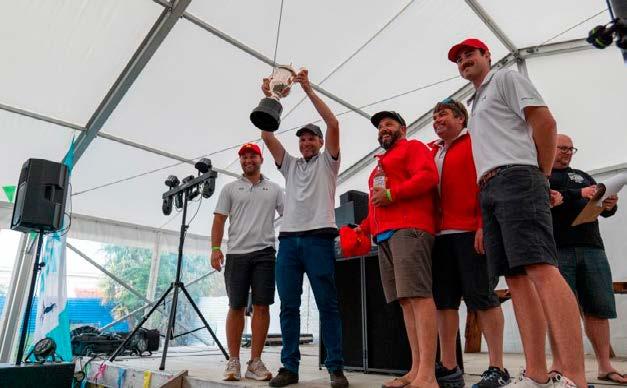
1
In the last week of October, US-flagged Lucky (pictured above) claimed line honours in the 119-nautical-mile 2025 PIC Coastal Classic from Devonport to Russell Starmaker won overall PHRF handicap, Savante topped IRC, and Innismara took the classic division. In multihulls, Cat+Ion led the line, Aventador won on handicap, and Justine Bellingham on Fez earned the Te Hau Ai Wairaka Trophy as the first female skipper. Youth crews, including Kick, also impressed.
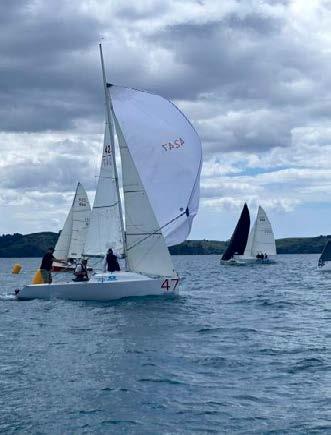
2 RnR (pictured left) dominated the fifth and final Burnsco Travellers Series regatta of 2025 at Sandspit Yacht Club, overcoming tricky winds to win three races on the final day and secure the regatta with 24 points, ahead of Slam Dunk (27) and Bloodline (29). RnR also took the overall Travellers Series title, with Slam Dunk second and Zoot Allures third. The next Elliott 5.9 event is the national championships at Maraetai Sailing Club in March.
3 Registration is now open for the 2026 PredictWind OpenSkiff Regattapalooza at Manly Sailing Club, running 23-26 January. The four-day event will feature adventure sailing, beach games, and competitive racing, with charters available for participants.
4 Gulf Harbour Yacht Club will host the fourth annual Women on Water Weekend (WOWW) from Friday 13 to Sunday 15 March 2026, supported by Anita Dobson & Co. The popular event celebrates confidence, camaraderie, and women on the water. Entries are open across three divisions: a relaxed harbour course for newcomers, a non-spinnaker division for cruisers, and a competitive spinnaker division for racers. Men are also welcome as skippers or crew.
5
Milford Cruising Club hosted the A Class World Championships in November, with Poland winning both Open and Classic divisions. Jakub Surowiec took his third consecutive Open title, while Jacek Noetzel claimed the Classic crown with a day to spare. Top Kiwi sailors were Mike Drummond (4th Classic) and Dave Shaw (6th Open, pictured right)
6
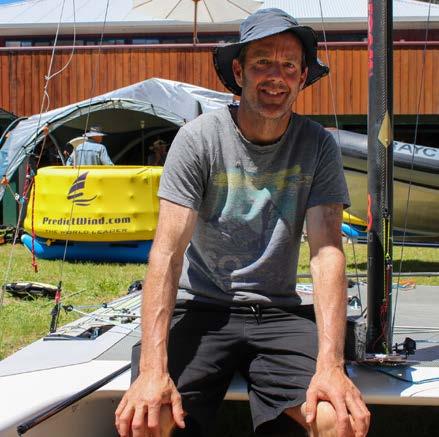
The SailGP Impact League Next Gen Challenge entry deadline is 16 January 2026, giving sailors aged 8-24 a chance to win a behind-the-scenes tech tour at the ITM New Zealand Sail Grand Prix. Entries can be an F50 model from recycled materials or an “ocean shoebox”. Last year, Northcote Birkenhead Yacht Club impressed judges with a creative recycled model.
7
The 186th Auckland Anniversary Day Regatta returns on
Monday, 26 January 2026, with a refreshed format and new additions. Keelboats, dinghies, foiling craft, and classic yachts will race across Waitematā Harbour and the Hauraki Gulf. Highlights include a sail-past parade from the Royal New Zealand Yacht Squadron and the regatta’s first-ever after-party with live
music. Celebrating Auckland’s maritime heritage, it remains one of the world’s most diverse sailing events.
8 Ponsonby Cruising Club marked 125 years in October with a free party at its Westhaven Marina clubhouse, featuring live music and an open bar and kitchen. The milestone coincided with the start of the two-handed Summer Harbour Series. Founded in 1900, the club is home to the famous Lipton Cup and hosts a wide range of sailing events across Auckland Harbour.
9 SailGP, the New Zealand RS Feva Association, and Royal Akarana Yacht Club are bringing back the Feva SailGP Inspire programme for 2026. The three-day event runs 13-15 February in Auckland and gives sailors under 17 the chance to race on the F50 course, go behind the scenes at SailGP, meet athletes, and learn about the boats and technology. Entry is $300 and applications close 31 January 2026.
10Napier Sailing Club (pictured right) welcomed 150 sailors - plus a few unexpected visitors - for its Summer Regatta in late November, with orca and dolphins
joining the action. Fine weather and lively breezes delivered classic conditions across all fleets, with Blake Duncan (Optimist); Mei Whitehead (O’pen Skiff); Callum Hyde, and Charlotte Handley (Starling); Tom Pilkington, and Chloe Turner (ILCA 6); George Pilkington (ILCA 7); Dave Ridley (OK Dinghy); Antje Muller (Europe Dinghy); and Hayden Percy (Paper Tiger) among the winners.
11
Tauranga Yacht and Powerboat Club (pictured left) hosted the Zespri AIMS Games in early September, bringing together 53 Optimist sailors. ACG Tauranga’s Harry Strang dominated, winning six of eight races to take the overall title. Belmont Intermediate claimed the schools’ crown, boosted by Milla Holland’s seventh-place finish and Zephyr Lane’s fourth. Year 8 and Year 7 podiums were filled by top performers nationwide, highlighting Tauranga’s role in staging a standout youth sailing regatta.
12
Gisborne Yacht Club played a key role in the biennial Life Education Trust Duck Race in mid-September, supplying vessels, maritime support, and volunteers to ensure no duck was left behind. The event is a major fundraiser for Life Education Trust, helping deliver health and wellbeing education to tamariki across the region – from Potaka to Wairoa, and Matawai and Mōtū to Gisborne city.
13In September, Heretaunga Boating Club added two new OnePlus Optimist training boats, thanks to Sail One NZ, boosting its growing junior fleet ahead of the new season. The club is also seeking volunteers with powerboat experience to help run events, offering training and flexible commitments for those interested.
14Worser Bay Boating Club will celebrate its 100th year in 2026 with a full weekend of festivities from Friday, 30 January. Highlights include the RŪNĀ curriculum
unveiling, a cocktail launch of The Worser Way centenary book, youth sailing, club and keelboat racing, a BBQ, and a semi-formal centenary lunch with guest speakers. The milestone season will also feature major regattas, including the Optimist North Island, Wellington centreboard, Wingfoiling, and Starling national championships.
Send your club or class association news to
eduan@yachtingnz.org.nz

(Starling).
18
15 Nelson Yacht Club has opened entries for the Foil Drive Wingfoil Regatta, taking place between 6 and 8 March 2026. The three-day event features an exhibition race on Friday, the first day of racing and an optional dinner on Saturday, and final racing plus prizegiving on Sunday. Entry forms and the notice of race are available on the club website, and enquiries can be sent to info@ nelsonyachtclub.org.nz
16 In September, Waikawa Boating Club was named the Marine Category winner at the Port Marlborough Marlborough Environment Awards. The club highlighted its journey to achieving Yachting New Zealand’s three-star Clean Club accreditation and outlined further sustainability initiatives, earning recognition for its strong environmental leadership on and off the water.
17
Plimmerton Boating Club’s Ray Hall successfully defended his crown as New Zealand’s top Finn sailor, winning the class national championships at Queen Charlotte Yacht Club last weekend. Hall won four of nine races to finish seven points ahead of Richard Hawkins, with Mark Perrow third. The event also doubled as the Nelson Marlborough regional championships, with winners including Eitetsu Yamaguchi and Amelia Marfell (420), Emily Overend (ILCA 6), Stephen Salmon (ILCA 7), William Davis (Optimist), and Liam Strack
Ten months on from the 2024 Starling national championships at Charteris Bay Yacht Club, the impact of sailors’ environmental efforts is evident. Each competitor funded a native tree as part of their entry, and the seedlings planted in February at Orton Bradley Park (pictured above) are now thriving, as recently photographed by CBYC sustainability lead Ian Luxford. The project also provides a valuable benchmark as the club prepares to renew its Yachting New Zealand Clean Club certification.
19 In late October, Naval Point Club Lyttelton hosted the John Jones Steel Centenary Sailing Regatta, celebrating 100 years of Cholmondeley Children’s Centre, which provides vital short-term and respite care for children aged 5-12. Perfect conditions and strong community support helped the regatta raise $27,000 for the centre, reflecting a powerful show of generosity from sailors and supporters alike.
20
Tough conditions didn’t stop the 37th Aviemore Classic, hosted by Timaru Yacht and Powerboat Club over Labour Weekend. Nineteen trailer yachts competed after Friday’s wind cancellations. On corrected time, Nick Coultas (Outnumbered) won ahead of Richard Hawkins (Chaos) and Dan Meehan (Eagle). Michael McAllister (Reprieve) took line honours from Jamie Neill (44 Forty) and Hawkins. The event remains a premier fixture for trailer yachts in the Mackenzie Country.
21
The SYA coaching weekend in Te Anau in October, hosted by Marakura Yacht Club and led by international coach Erik Stibbe, provided a valuable learning opportunity for sailors. Despite challenging weather limiting participants to a single on-water session, attendees gained significant insights to improve general sailing and racing skills.
Join RecycleKiwi and Yachting New Zealand as they show us how to improve our recycling efforts.
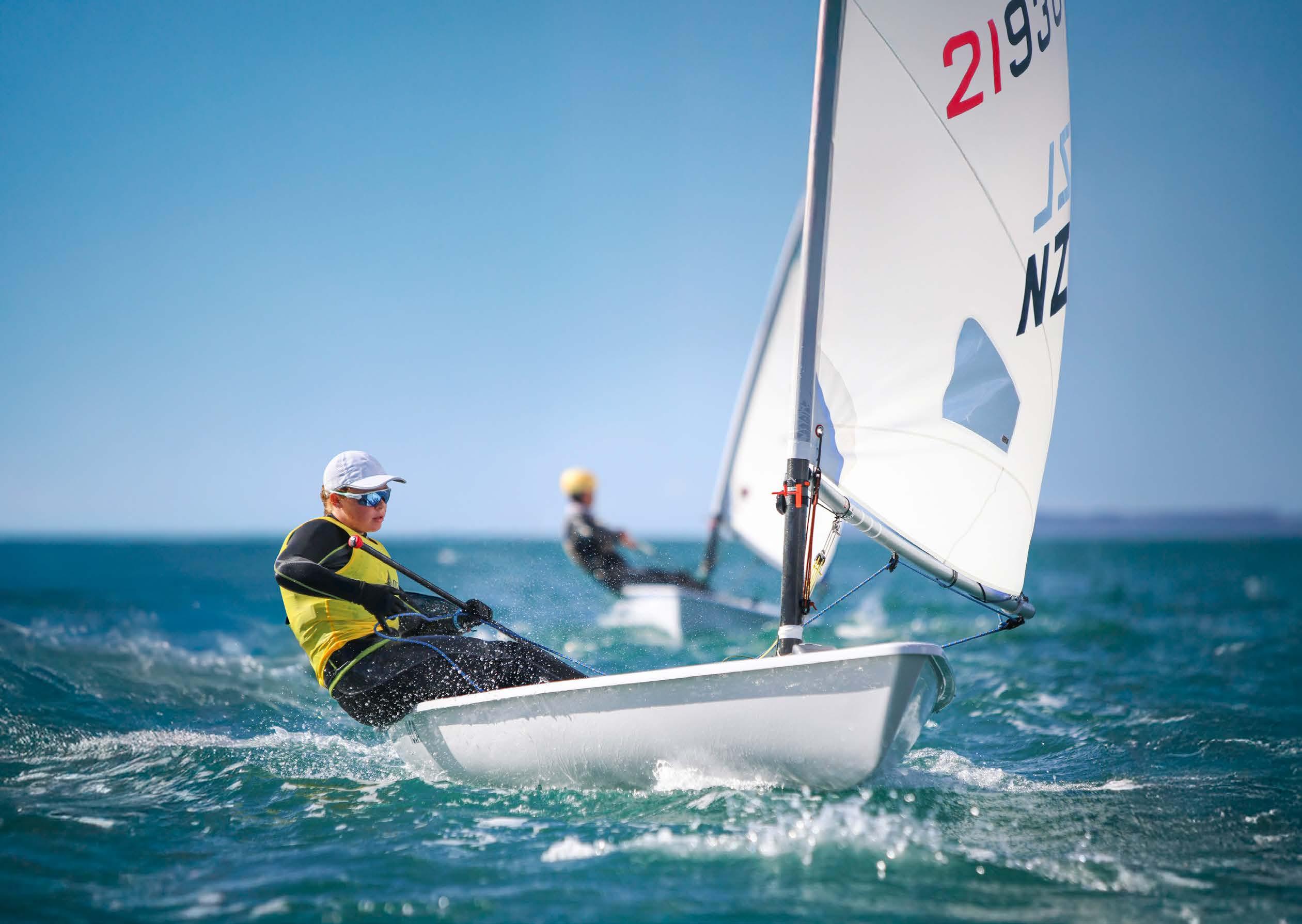
Be a RecycleKiwi with these 4 easy steps
Say ‘No’ to waste. This choice is powerful. Consider the packaging when you buy things. Refuse anything unnecessary.
Understand the impact that waste has on our natural environment. What are you doing to reduce waste?
Give things a second life cycle… reuse, repair and share. Wash and reuse containers and refill your water bottles.
Recycling is very important in reducing waste. Take care when separating recyclables.
We can all make choices… together we can create change
Sydney Hobart Yacht Race Cruising Yacht Club of Australia 26 December
P Class national championships Kohimarama Yacht Club 4-9 January
Whakatu Regatta Nelson Yacht Club 10-11 January
Europe Dinghy national champs Nelson Yacht Club 10-11 January
ILCA national championships Bay of Islands Yacht Club 14-18 January
Sunburst national championships Wakatere Boating Club 16-18 January
Nelson Regatta Tasman Bay Cruising Club 16-20 January
Perth Sail Grand Prix Perth, Australia 17-18 January
Paper Tiger national championships Clarks Beach Yacht Club 19-22 January
Auckland Anniversary Day Regatta Royal New Zealand Yacht Squadron 26 January
Oceanbridge Sail Auckland Torbay Sailing Club 29 January-1 February
Noelex 22 national championships Naval Point Club Lyttelton 5-8 February
OK Dinghy national and Farr 3.7 North Island championships Wakatere Boating Club 5-8 February
R Class national championships Naval Point Club Lyttelton 12-15 February
New Zealand Sail Grand Prix Auckland 13-15 February
Hartley 16 national championships Manukau Yacht and Motorboat Club 18-21 February
A Class national championships Maraetai Sailing Club 20-22 February
Waszp national championships Manly Sailing Club 20-22 February
Balokovic Cup (Gold Cup)
Royal Akarana Yacht Club 20-21 February
Foil Bay of Islands Bay of Islands Yacht Club 20-22 February
Centreboard Regatta and J14 North Island championships French Bay Yacht Club 21-26 February
Women’s Match Racing national championships
Royal New Zealand Yacht Squadron 21-22 February
Tauranga Centreboard Regatta Tauranga Yacht and Powerboat Club 21-22 February
Farr 3.7 national championships
New Plymouth Yacht Club 26 February-1 March
Tornado national championships Tauranga Yacht and Powerboat Club 27 February-1 March
Sydney Sail Grand Prix
Sydney, Australia
28 February-1 March
Auckland Open & Youth ILCA championships
Murrays Bay Sailing Club 28 February-1 March
Round North Island SSANZ
28 February-15 March
Flying Fifteen and 420 national championships
Evans Bay Yacht and Motorboat Club 4-8 March
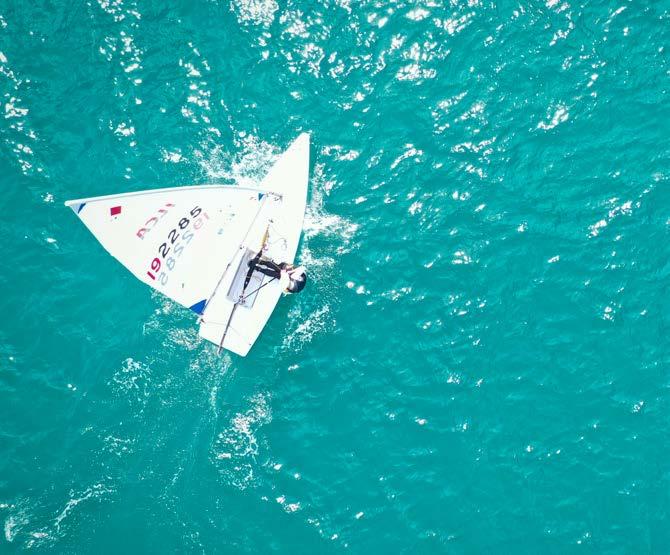
ILCA national championships
Foil Drive Wingfoil Regatta Nelson Nelson Yacht Club 6-8 March
Noelex 25 national championships Tauranga Yacht and Powerboat Club 6-9 March
Elliot 5.9 national championships Maraetai Sailing Club 12-15 March
Zephyr national championships Howick Sailing Club 12-15 March
NZ Secondary Schools Keelboat championships
Royal New Zealand Yacht Squadron 13-15 March
Women on Water Weekend
Gulf Harbour Yacht Club 13-15 March
Wingfoil national championships Worser Bay Boating Club 13-15 March
ILCA North Island freshwater championships Lake Taupo Yacht Club 14-15 March
Young 88 national championships
Royal New Zealand Yacht Squadron 20-22 March
Wellington Women’s Regatta
Lowry Bay Yacht Club 27-29 March
Princess Sofia Regatta Palma, Spain
27 March - 4 March
Click on the logo for the latest exclusive member benefits from Yachting New Zealand’s partners.