
P O R T F O

2 | THE DEBRIS FIELD - ARMADA WRECK SITE, SLIGO | ACADEMIC
NUOVO VICCOLO
THE BIKE HUB
A DYNAMIC SHIFT IN PRESERVING OUR HISTORY
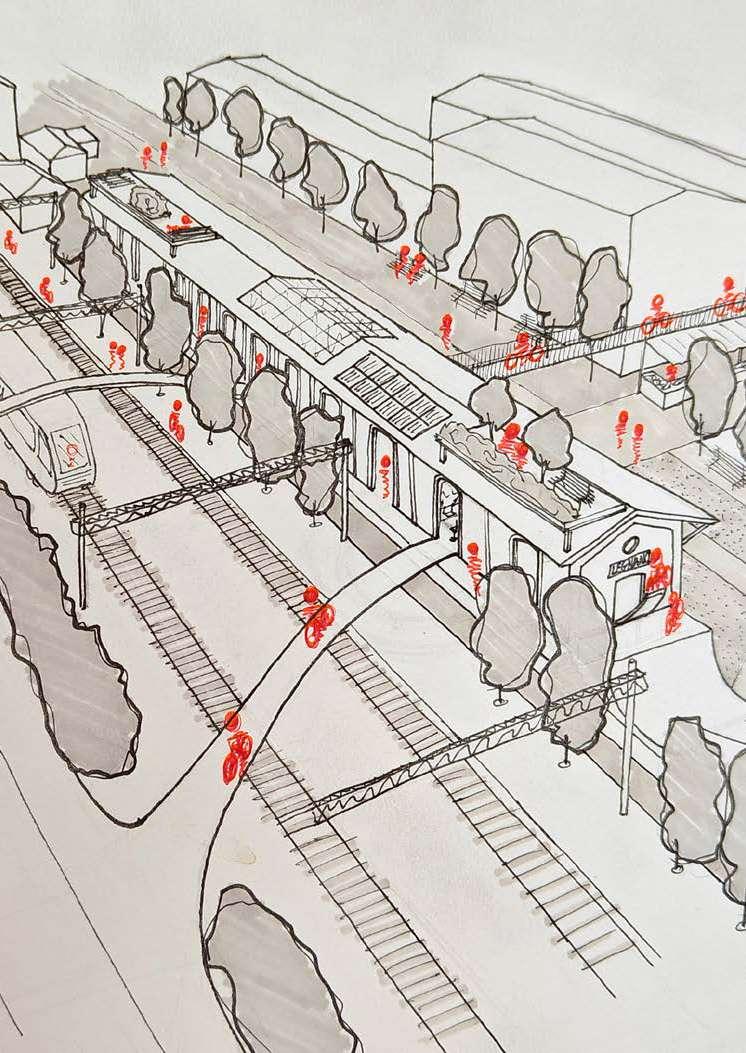
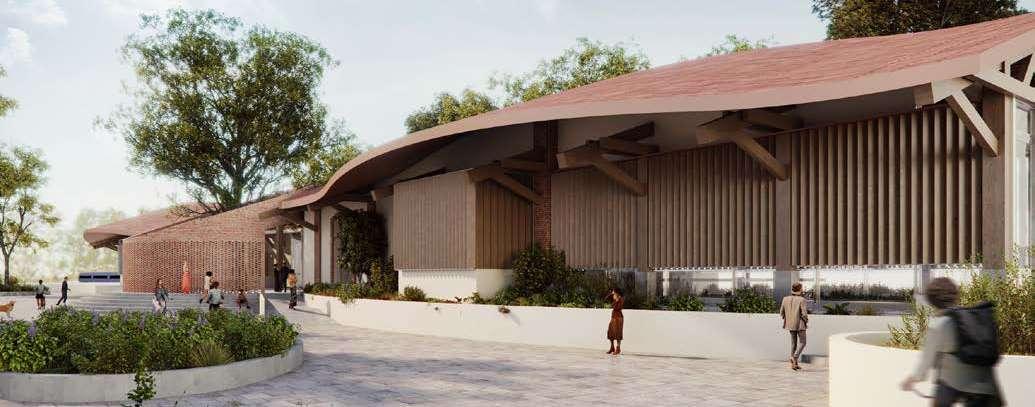
THE PROJECT AIMS TO BREATHE NEW LIFE INTO AN ABANDONED TRAIN STATION, TRANSFORMING IT INTO A VIBRANT CYCLING HUB THAT PAYS HOMAGE TO LEGNANO’S DEEP ROOTED LOVE FOR BIKES WITH A HISTORY STEEPED IN BICYCLE PRODUCTION AND RENOWNED CYCLING COMPETITIONS. THIS PROJECT SEEKS TO CELEBRATE THE SPIRIT OF BIKE COMMUTING, CATER TO CYCLING ENTHUSIASTS, AND PROVIDE A DYNAMIC SPACE FOR THE COMMUNITY

To create a dynamic and inclusive cycling hub in Legnano, we embarked on an exploration of the communityof bike users, aiming to understand the unique needs and desires of each archetype. This approach allowed us create a list of essential settings and spaces made to each user category. From efficient amenities to engaging environments that inspire enthusiasts and accommodate the different cyclists users, our design aims to integrate these elements throughout a fluid design of the space.



CREATINGNEW PATHWAYS WHILE PAYING HOMAGE TO THE HERITAGE
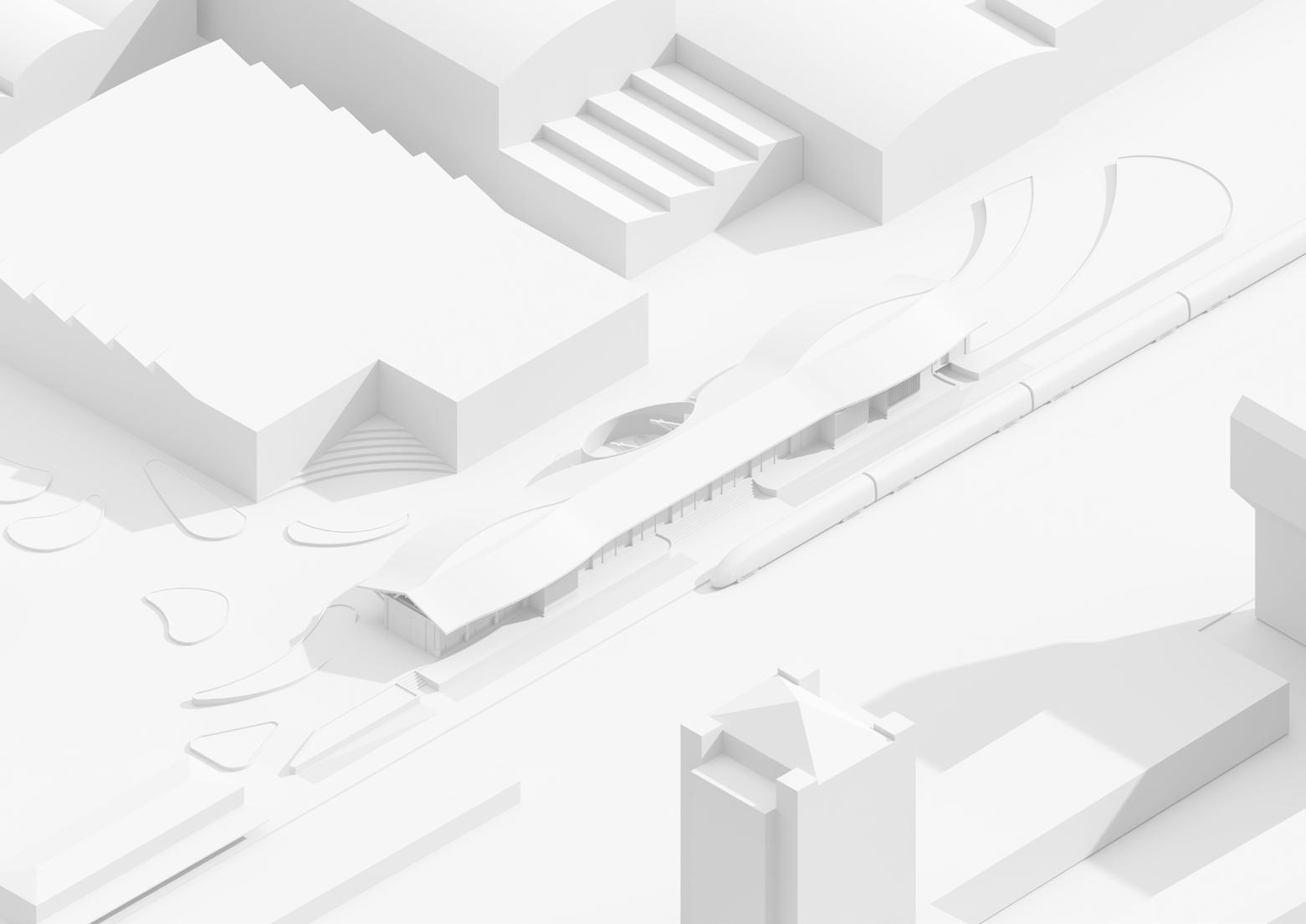
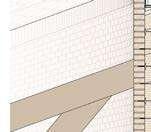
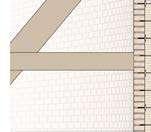
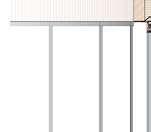
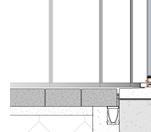
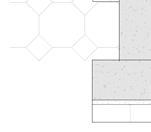
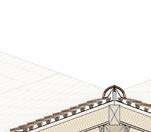
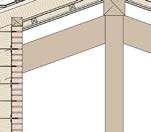
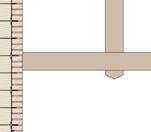
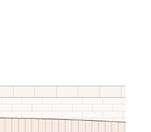
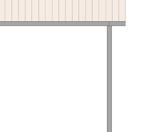
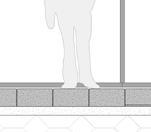
The challenge with this design lies in the 100 year old walls of the existing warehouse. How to breath new life into a building while preserving its heritage? We did this by designing a new roof which its complex frame sat on top of and reused the exciting beatuiful sleeper beams of the old roof. This new roof flared out from the conventional roof shape, breaking the vernacular to allow light to penetrate deep into the spaces within. Additionally we added pods to facilitate spaces which required new plumbing which couldnt be inserted into the exsting slab floor as well as cutting an unorthodx patio incased in a porous brick facade to create new permeablity through the old walls and create a new axis and method of traversal to the platform beyond.
















THE DEBRIS FIELD
A DYNAMIC SHIFT IN PRESERVING OUR HISTORY
THE BRIEF WAS TO DESIGN AN ARMADA INTERPRTIVE CENTRE. A BUILDING THAT SERVED AS BOTH A MUSEUM TO TELL THE STORY OF THE WRECKAGES AT STREEDAGH BEACH AND BEYOND ASWELL AS A HEADQUATERS TO HOUSE THE ARCHEOLOGICAL TEAM CURRENTLY STATIONED IN DUBLIN ON THE OPPOSITE COAST OF THE COUNTRY. WE WERE GIVEN A CHOICE OF 6 SITES IN THE GRANGE AREA ALL WITHIN WALKING DISTANCE AND WITH A LINE OF SITE TO THE BEACH AND WRECKAGES.
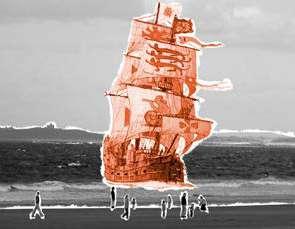
The site of the wrecks is dynamic, harsh and cold. The wrecks lie under metres of sand and only reveal themselves after rough storms. This piece of information was a key influence in developing the form of the building. By abstracting the debris field I created a cluster of geometric man made forms, which sit sunk-
en into the hillside of the site, emulating the way the Spanish artefacts lie strewn through the Irish landscape. I took the same approach when considering materials. Choosing an acid burned concrete to create a stark juxtaposition to the soft green hillside, like the man made bronze lost in the Irish sea.
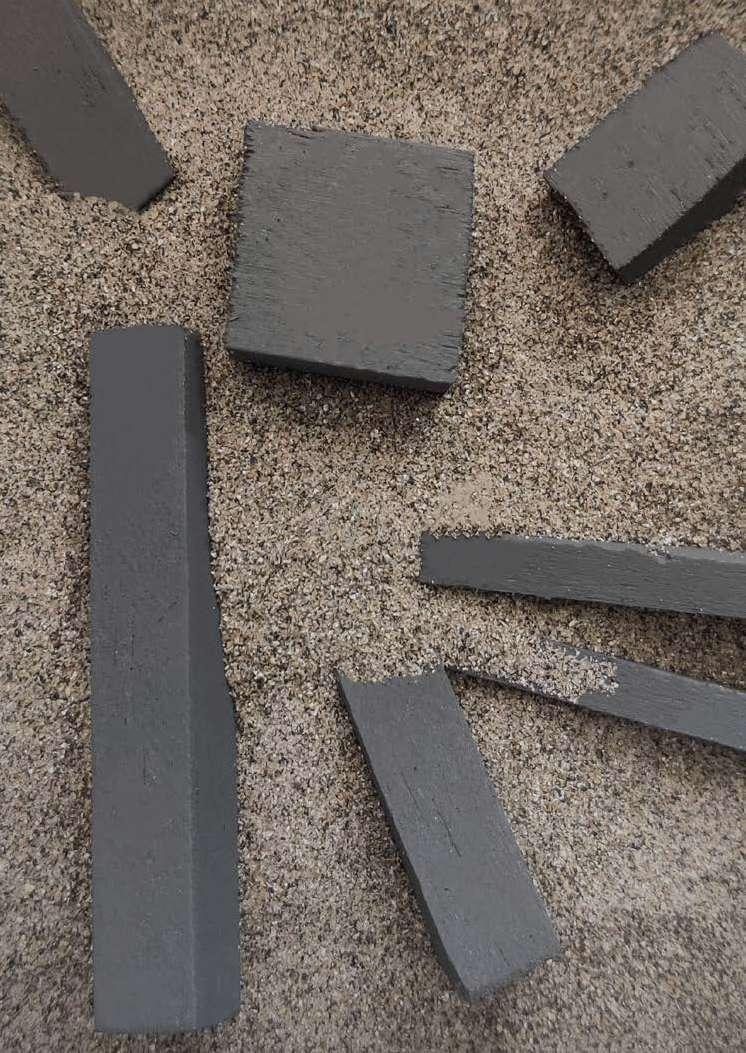
CONCEPT MODEL
Abstract Debris in Streedagh Sand
DISORIENTATING
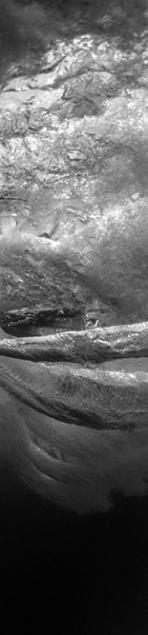
The building will be raw, and misleading, guided through narrow passages by false light, through small crevices giving snippets of outside.
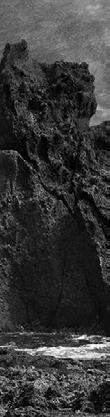
Derived from the concept, the abstracted man made shapes, buried in the sloping site, mimic the debris of the wrecks on the sea floor at Streedagh.
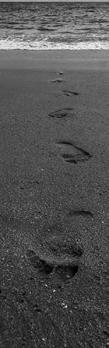
We look at the armada from the Irish perspective looking out.
I want the building to flip the perspective, give visitors a snapshot of the raw, harsh task the Spanish undertook and the environment the survivors of the wrecks faced when they arrived.
ARCHITECTURAL
SUBMERGED
The rectangular shape submerged in the natural hill represents the man made artefacts out of place in the sand on Streedagh.

The material choice is important for a building with such a particular message. Like the bronze cannons and Mediterranean wood found at the bottom of the sea, the building will be sunken into and swallowed by the slope, but the material is what will tell people that it doesn’t belong.
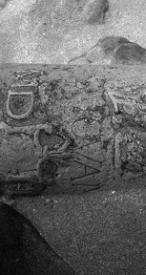
It is important that the process of collecting, preserving and conserving these amazing artefacts, doesn’t go unnoticed. The building must have a strong connection to the archaeology, and give the public a unique insight and appreciation for the difficult task of protecting theses amazing artefacts. This shouldn’t come at the expense of the archeology itself.
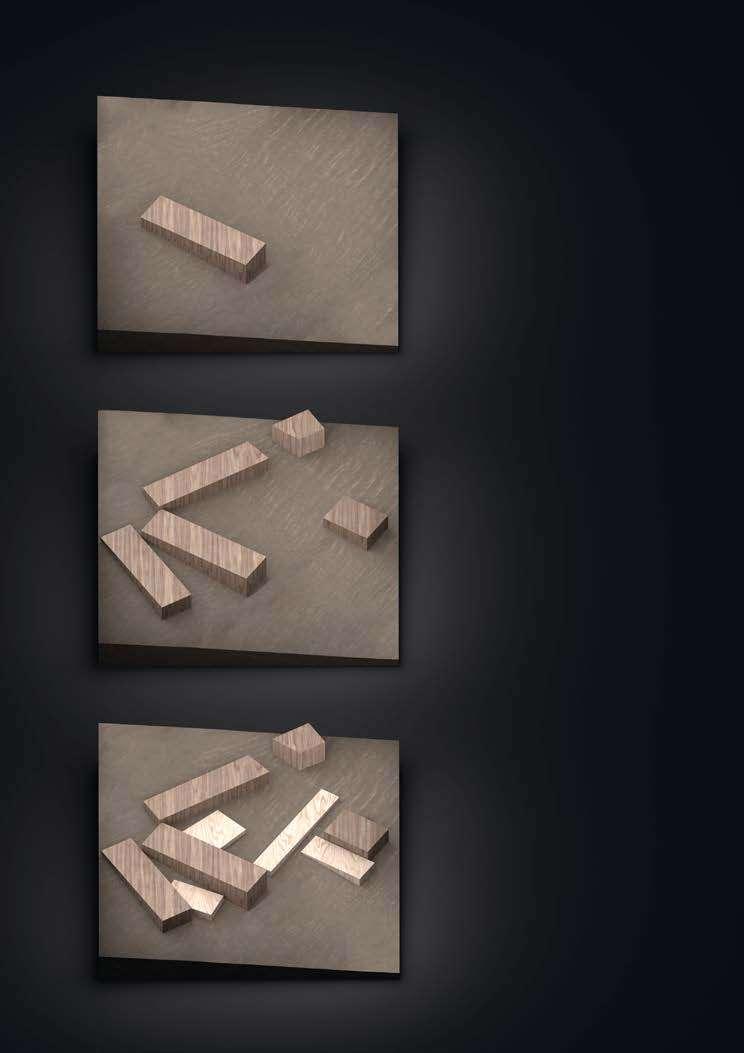
SCATTERED
Adding more man made forms to the site to create a chaotic and disorentating environment mimicking the experiecne of wrecking on the irish coast.
EXPOSED
The gardens follow the same philosphophy, nestling into the hillside. Placed between the buildings, giving users a respite from the heavy narrative inside.
Sunlight refracting through the surface of the sea, lamp light in a window, light glittering through the canopy. The survivors of the wreckage would have been following the light. Orientating themselves in the water, resting in the forest nearby, hiding in barns for warmth at night. To emulate this dependence, I created dark spaces, with light appearing through cracks and around corners, always out of reach, but always offering guidance.
SITE MODEL
Topography & Geometry
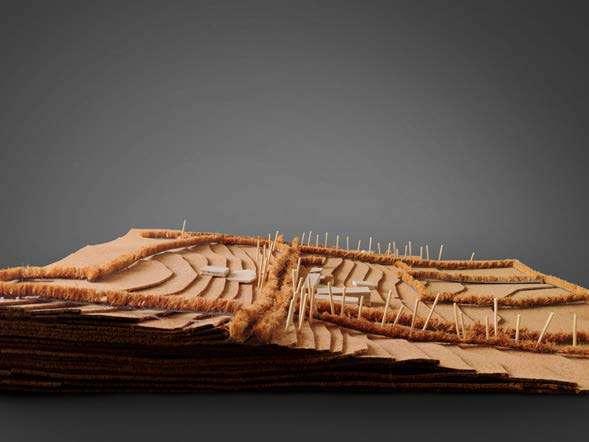
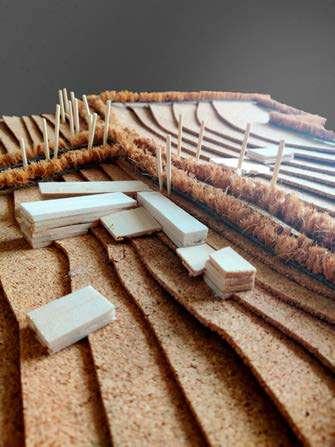
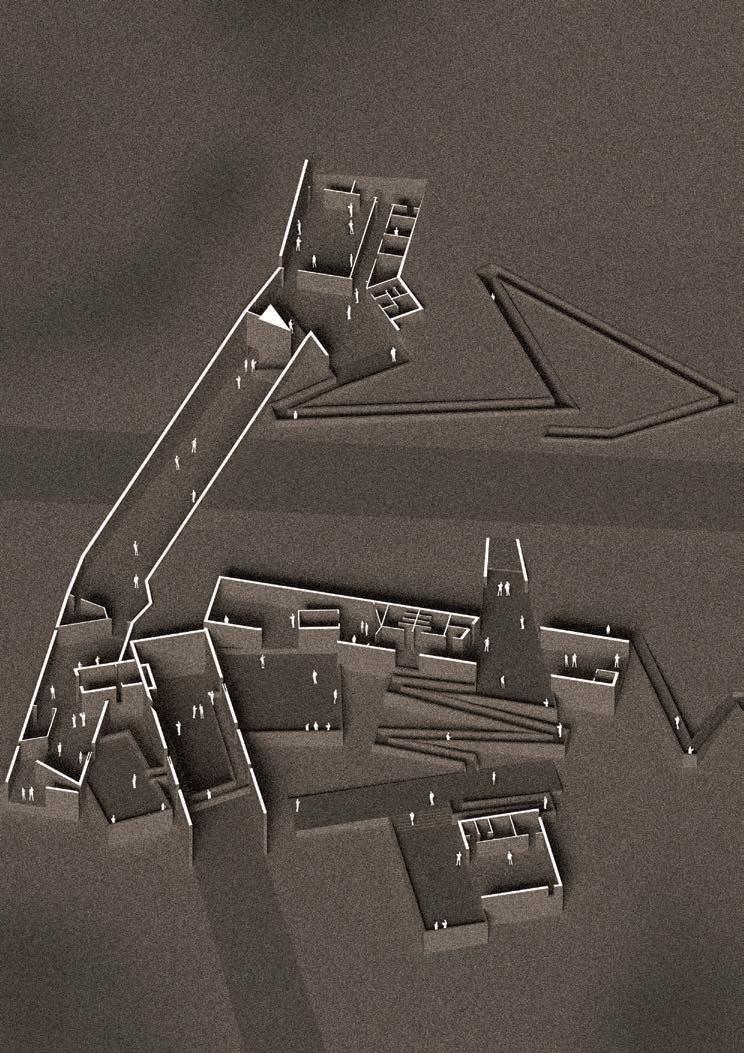
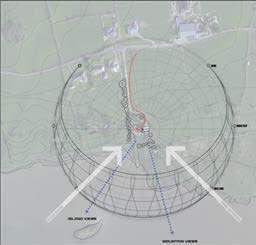
Ramping above, below & through the natural landscape. This is a linear building, beginning and ending at the courtyard before the tunnel. The circulation is disoreintating, reflecting the Spanish perspective, the below deck experience, the tumbling wreck, the disorientated survivors.
AXONOMETRIC
Created in Photoshop
THE JOURNEY
LED BY LIGHT
NUOVO VICCOLO
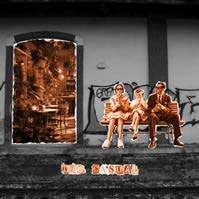
A HISTORIC VILLAGE REVITALISED
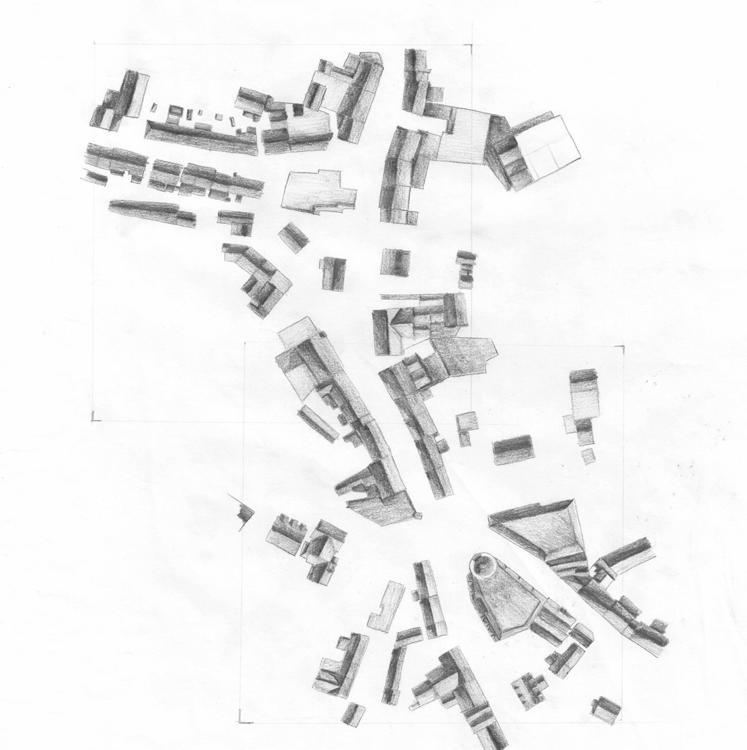
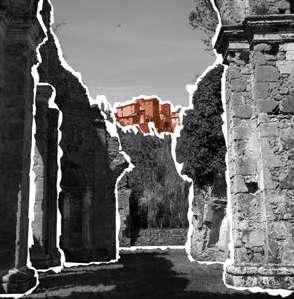
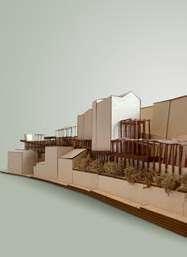
GENNAZZANO IS A SMALL VILLAGE SITUATED IN THE ROMAN COUNTRY SIDE. ITS CHARACTERISED BY THE RUINS OF A NYMPHAEUM DESIGNED BY ITALIAN RENNAISSANCE ARCHITECT, DONATO BRAMANTE. THE BRIEF WAS TO INTERVENE IN THIS FORGOTTEN VILLAGE, INSERTING AN INTERVENTION THAT WOULD RECCONENCT AND REACTIVATE A CONNECTION BETWEEN THE VILLAGE AND SURROUNDING VALLEY. ANOTHER CHALLENGE TO KEP IN MIND WAS THE DRAMATIC VERTICALITY WITH THE SETTELEMENT SITUATED ON THE PLATEAU OF A HILL ALLOWING US TO DRAW INSPIRATION FROM ROMAN ARCHITECTURE SUCH AS VILLA ADRIANA.
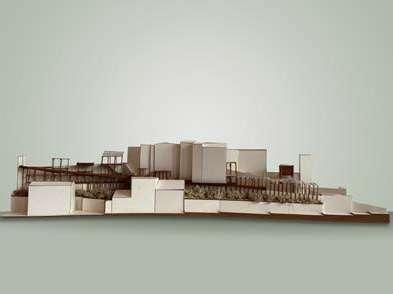
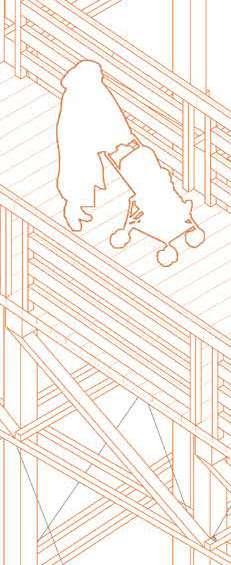
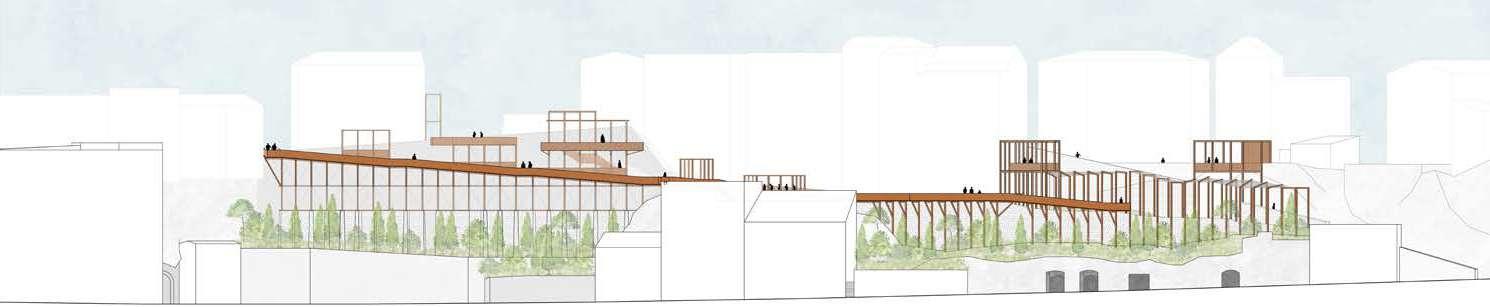
In the case of Genazzano, the intervention adopts the site-specific character of a living organism that fucntions as an urban artifact, every kind of life and moving across the narrow open spaces left unbuilt in this dense context. Blind facades and significant height irregularities shape up the geometry of the proposed project, which tries to bridge everything together. The ramp be-
comes a vital space, as it is connected to several “episodes” - adjacent platforms where people can meet, eat, relax, excercise or enjoy a theatrical play. At the same time, accessibility in specific areas is hugely improved. Although designed specifically for this location, this proposal introduces the idea of creating an architectural language that could be implemented in any area.
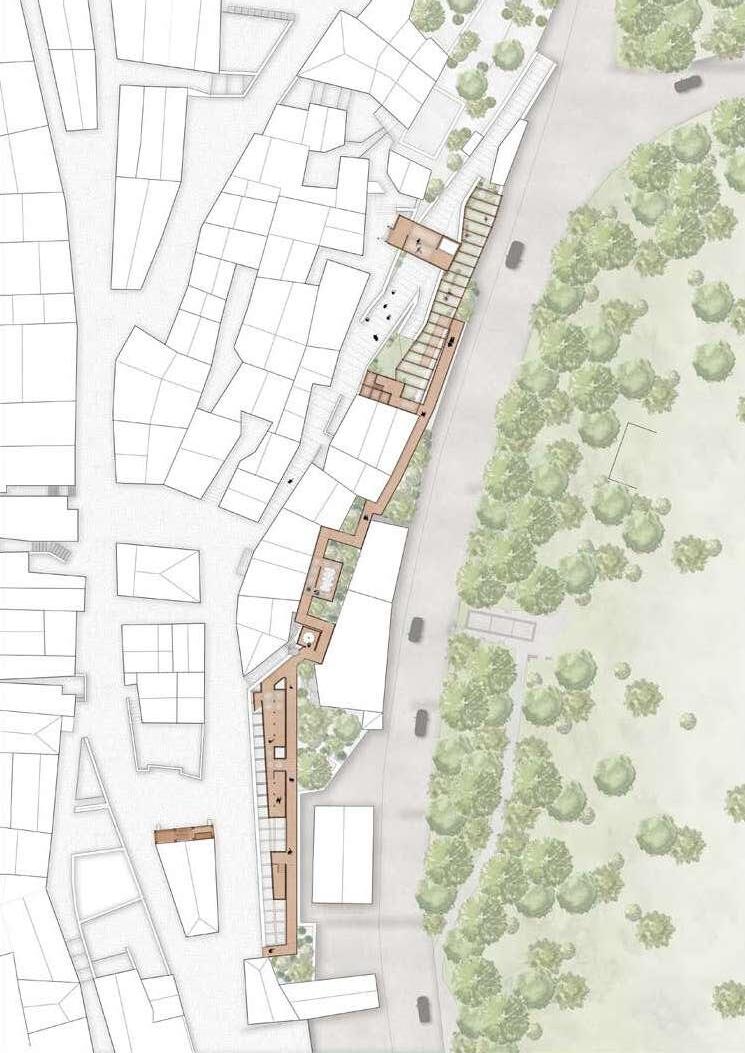
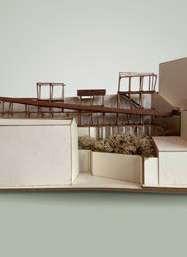
Bramante’s Nymphaeum, although detached from the dense urban fabric, is characterised by a visual connection to the higher points of the area surrounding the Lavatoio. This visual axis is detrimental for the positioning of the proposal. Analyzing the flow of people through the village, we understand that life here is based on one typology: the vicolo (narrow alley)
THE VICOLO
RESILIENCE [REVISITED]
ENGULFED BY THE SHEER POWER OF THE LANDSCAPE
GOING BACK TO MY FAVOURITE PROJECT FROM MY TIME IN COLLEGE. THE BOTANIST RETREAT IS A PROJECT INSPIRED BY THE PRE ICE AGE PLANT, THE FRINGED SANDWORT. THIS PLANT IS UNIQUE IN THAT IT WAS THE FIRST PLANT TO HAVE BEEN PROVEN TO PRE DATE THE ICE AGE. THIS PLANT CAN ONLY BE FOUND IN SPECIFIC PARTS OF THE SLIGO MOUNTAINS AND IN ICELAND, SCIENTIST BELIEVE THIS IS PROOF OF THE LAND MASSES POTENTIALLY BEING CONNECTED IN THE PAST. THE BOTANSIT RETREAT PROVIDES A PLACE FOR SCIENTIST AROUND THE WORLD TO COME STUDY THIS PREHISTORIC FLORA.
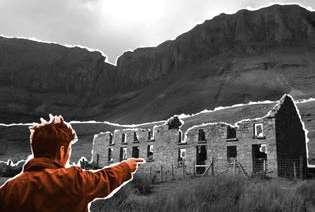
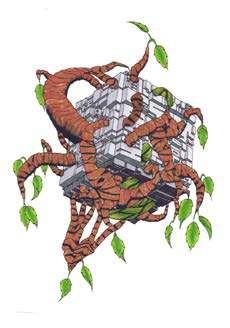
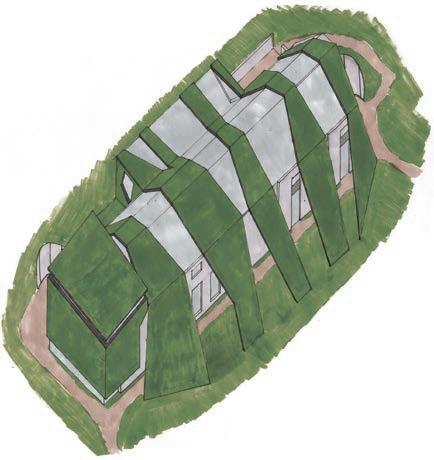
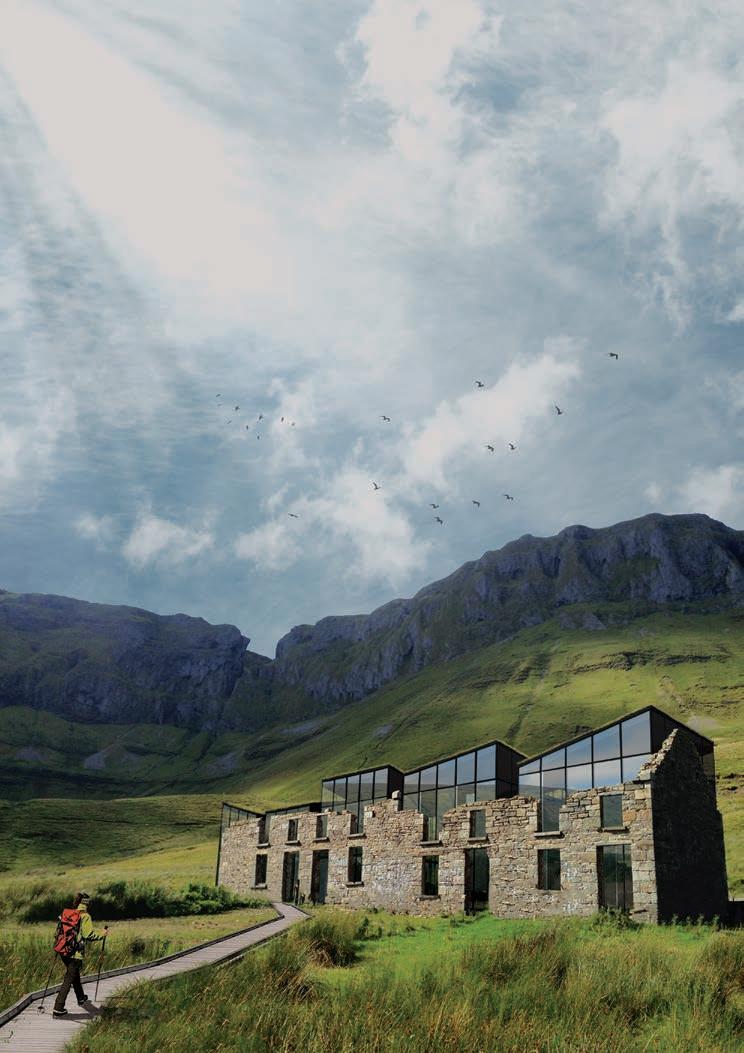
Reflecting on the unforgiving landscape of the Glenniff Horseshoe. The land itself is engulfing everything man made. Man, has had a presence in the valley for many decades, but not without a constant battle against the harsh environment. The schoolhouse is derelict. My aim is to rebuild the schoolhouse, make it feel new and invigorated without changing its outward appearance. I aim
to use transparent materials coupled with carefully planned vegetation to give the appearance that the building is unchanged. Engulfed by the sheer powerof the landscape, still derelict and un-used. As the viewer draws nearer to the building, lured by the terstament of resilience it displays. They will realise that the building isn’t derelict, but serves a purpose, which they will be eager to see.
SYMPATHETIC
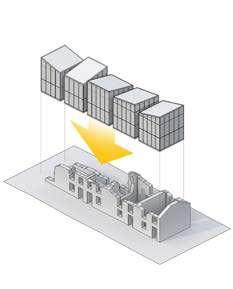
With the proposed building being a derelict miners lodge, it was important to retain the history while designing a fully functioning botanist lodge and research hub. I did this by retaining all the existing walls as they were, half crumbled and completing the spaces with glass pannelling.
When conversing about preservation and conservation, balance is always a heavily contested attribute. The balance between new and old, the history and new narrative. In this particular case the Glenniff Schoolhouse has a strong identity, which I
identified when I originally undertook this project, but I didnt follow through. It was important this time around to let the old building speak for itself. Give it a new purpose without forgetting the history that left it in its current state.
ONE CANNOT SURVIVE WITHOUT THE OTHER
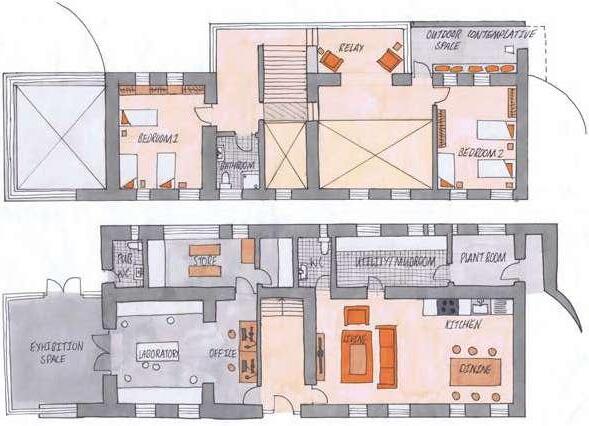
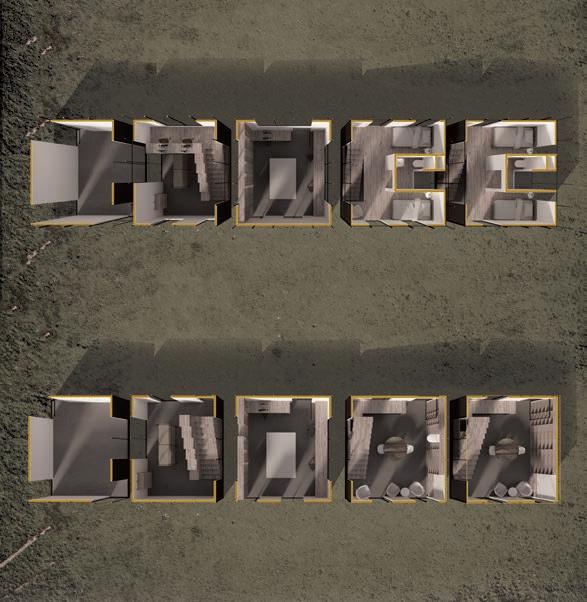
The design consists of a series of individual glass pods. Each pod is inserted into the appropriate space and secured to the original concrete slab of the structure. The glass facades rely on the shade of the exisiting ruin to prevent over heating inside and on the back side of the building with lower walls, the facade shifts to a local slate, matching the houses in the region. Each pod has a unique fuunction and entrance requiring a constant interaction with nature as you move from pod to pod. A small reminder of the environemtn the building is built to study.
UPPER FLOOR
GROUND FLOOR
GLENIFF PERSPECTIVE
THE BD RENOVATIONS
A NEW SPACE FOR A SHIFT IN LIFESTYLE.
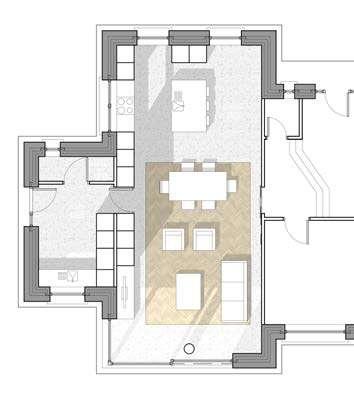
WORKING WITHIN THE CONFINES OF AN EXISTING BUILDING CAN BE A CHALLENGE. TO CHANGE THE IDENTITY AND FEEL OF A SPACE WITHOUT ADDING TO IT. THIS WAS MY FIRST PROJECT AS A POST GRADUATE. THE BRIEF WAS TO RENOVATE THE LIVING SPACE OF A HOME FOR A FAMILY THAT HAS GONE THROUGH A CHANGE IN LIFE STYLE. THE GOAL WAS TO OPEN UP THE SPACE TAKING DOWN A DIVIDING WALL BETWEEN THE LIVING ROOM AND KITCHEN TO CREATE ONE OPEN SPACE MOVING THE KITCHEN TO THE NORTH END AND THE SITTING ROOM TO THE SOUTH TO TAKE ADVANTAGE OF THE EVENING SUN AND SEA VIEWS.
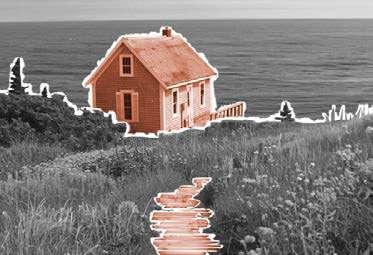
The location of this build is picturesque. In a secluded part of the Ballisadare bay with its own private access to the water and at low tide there are several islands that can be explored on foot. It was important from an early stage to capture all this from the living space. I decided to implement a corner window into the south and west wall to capture the midday to evening sunlight and the whole bay.
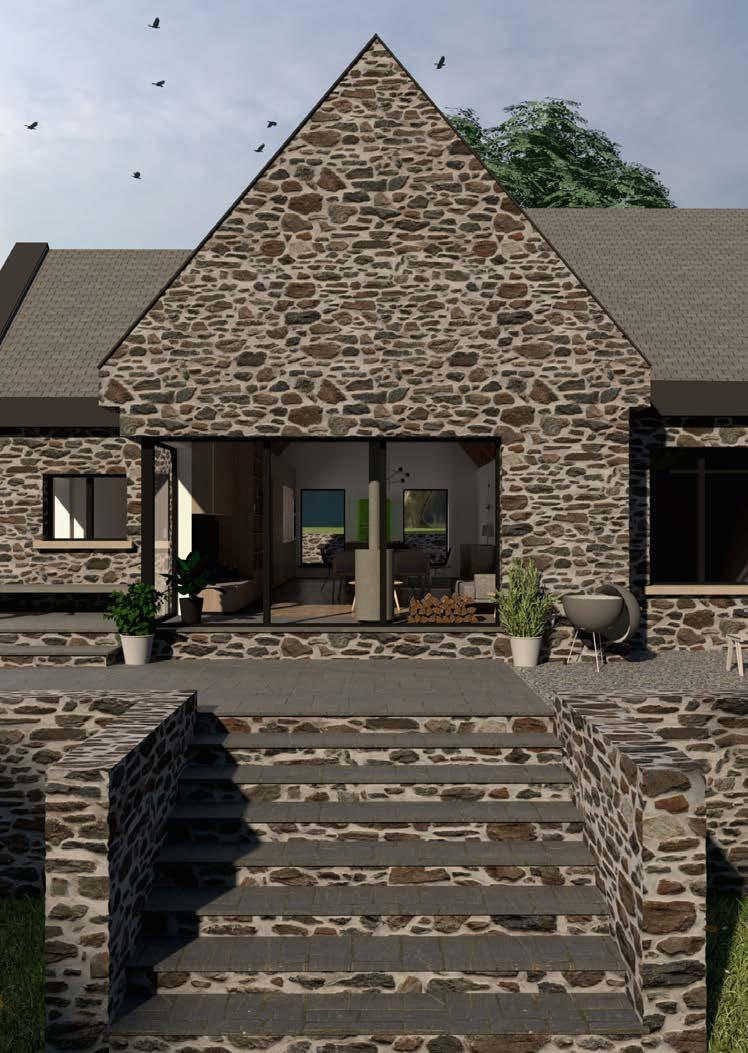
STORAGE WALL
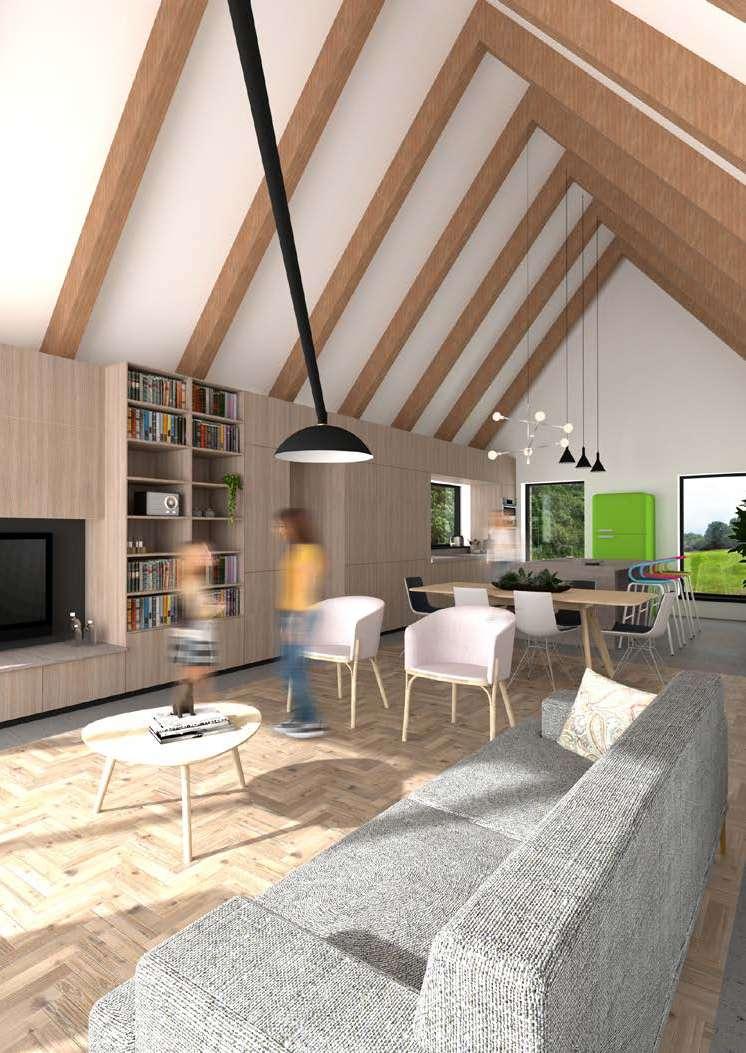
Increasing the size of the utility was an important part of this design. But to do that we had to remove the pantry. To accomodate for the lack of storage, I’ve extended the kitchen cabinetry all the way down the west wall, concealing the utility door flush in the cabinets, increasing the utilities floor space, while dropping the cabinet down at the end to accomodate the TV.
THANK YOU
Thank you for taking the time to read through and analyse the work I have on display. I hope you find that the qualities and skills in my work are what you are looking for.
Looking forward to hearing from you.
Eoin Denvir