Lawmakers introduce bill to prohibit lab-grown meat sales
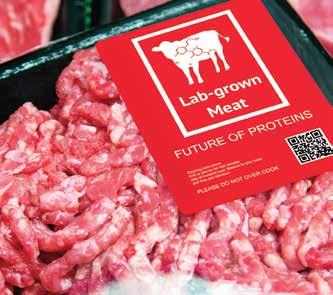
On Jan. 27, Wyoming lawmakers introduced legislation to prohibit the manufacture, sale and distribution of labgrown meat, a move they believe will protect public health, consumer transparency and the state’s livestock industry.
Quick Bits
Snow Report
In the eighth snow report for Water Year 2026, the state’s snow telemetry data reads 85% of median, with a basin high of 112% and a basin low of 4%. Last year, the state was at 87% and at 76% in 2024. The report and a map displaying basin snow water equivalent percentages of median for the state may be found at wrds.uwyo. edu/wrds/nrcs/nrcs.html
Scholarship
The Wyoming FFA Foundation is honored to introduce the Jeff Green Memorial Scholarship in memory of Jeff Green, the father of former Wyoming FFA State Officer and Ag Teacher Caleb Green. Jeff spent his life serving others in the medical field as a firefighter, paramedic, flight nurse and certified registered nurse anesthetist, so the foundation’s new $1,000 scholarship is intended for FFA members interested in pursuing a career in the medical field. For more information or to apply, visit ffa.org
Bull Test
The University of Wyoming (UW) is excited to host the Fourth Annual UW High Altitude Bull Test and Sale on March 28 starting at 10 a.m. The mission of the bull test is to provide a unique learning experience for UW students, valuable data and a venue for producers to market their bulls and a source of pulmonary arterial pressure-tested bulls for cow/calf producers across the region. For more information or to fill out a consignor entry form, visit uwyo.edu/ anisci/outreach/uw-beef-program/bull-test-info/index.html
4-H Classes
The veterinarians at Uinta Veterinary Hospital in Fort Bridger will offer free classes for all 4-H youth and leaders focused on animal care and well-being again this year. Classes will be held from 6-7 p.m., and sessions will focus on equine on March 2, pigs on April 6, beef on May 4 and sheep and goats on June 1. For more information, call 307783-0570 or e-mail uinta@ uwyo.edu.
Sponsored by State Reps. Tomi Strock (R-HD06) and Gary Brown (R-HD41), House Bill (HB) 61 builds on an existing labeling law in the state of Wyoming requiring meat alternatives and plant-based products to be clearly
identified for consumers.
If enacted, the legislation would take effect on July 1. Details of the bill
According to the bill’s text,
WESTI Ag Days
Annual conference offers current information on weed management in Wyoming
University of Wyoming (UW) Extension hosted its WESTI Ag Day conference at the Washakie Museum and Cultural Center in Worland from Feb. 3-4.
The annual conference aims to provide professional farmers with current, research-based information about best practices in Wyoming agriculture.
Discussion topics ranged from weed management and plant disease to fungicide resistance and pesticide application, with a specific emphasis on current issues affecting Wyoming farmers.
Weed management
The Professional Rodeo Cowboys Association (PRCA) is “seriously considering” a move from Colorado to the Cowboy State, according to a Jan. 26 press release issued by the association.
Members of the PRCA board approved a non-binding memorandum outlining a potential relocation of headquarters – as well as the PRCA Hall of Fame and Museum of the American Cowboy – from Colorado Springs, Colo. to Cheyenne by early 2029.
The announcement has been met with general
WSGLT welcomes leadership
On Jan. 30, the Wyoming Stock Growers Land Trust (WSGLT) announced the appointment of five distinguished leaders to its board of directors – Gay Lynn Byrd, Marilyn Kite, Bret Leas, DJ Healy and Robert Heykoop.
Each brings a deep commitment to Wyoming, along with exceptional experience in conservation, law, finance, agriculture and community leadership.
“As the organization looks ahead, this group will play an important role in strengthening partnerships, advancing stewardship of working lands and supporting ranching families across the state,” said WSGLT Executive Director Christine Adams. “Their guidance will help ensure WSGLT remains responsive, durable and grounded in the needs of Wyoming’s agricultural communities.”
Byrd is a Wyoming rancher, conservationist and public servant raised on the Allemand Ranch near Douglas.
She earned a degree in agricultural business from Montana State University and returned home to help operate her family’s ranch while managing wildlife habitat.
Appointed in 2017 to the Wyoming Game and Fish Commission, Byrd represented District Seven and championed wildlife crossings, invasive species prevention, the WYldlife Fund and solutions balancing ranching with conservation.
Kite is a pioneering lawyer and judge who made history as the first woman to serve on the Wyoming Supreme Court and later as its first female chief justice.
A University of Wyoming graduate, Kite served on the court for 15 years, authoring more than 500 opinions while advocating for court security, civics education and
enthusiasm from Wyomingites but is not yet final, with the PRCA noting the ultimate decision will be contingent upon funding from the Wyoming Legislature and other variables.
Strategic move
The PRCA board views a potential relocation to Wyoming as a strategic move which capitalizes upon the Cowboy State’s rich connection to rodeo and sets the ever-growing world of Western sports up for continued
Please see PRCA on page A12
Jeremiah Vardiman, assistant coordinator of UW Extensionʼs Pesticide Safety Education Program (PSEP), kicked off the conference with a presentation on Palmer amaranth in the Big Horn Basin.
In his role, Vardiman collaborates with the Wyoming Department of Agriculture, UW Extension educators and other industry leaders while overseeing private and commercial
Sage grouse working groups retired
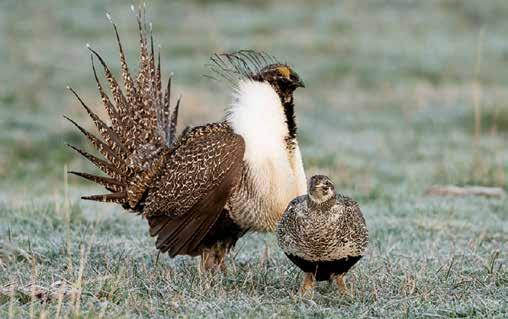
Effective Jan. 31, the Wyoming Game and Fish Department (WGFD) will retire the Sage Grouse Local Working Groups, marking a new chapter in conservation efforts which began in 2004.
“We greatly appreciate the 21 years of dedicated service from our local working group members,” WGFD Director Angi Bruce said. “Their efforts are part of the foundation for our ongoing work in sage grouse conservation.”
Local working groups
The working groups were a direct response to the 2003 Wyoming Greater Sage Grouse Conservation Plan.
The primary role of the groups was to localize sage grouse conservation strate-
gies focused on improving and maintaining sage grouse populations and habitats. Providing key local perspectives and insights, the groups were instrumental in implementing crucial sage grouse conservation plans and funded 377 projects. Through the efforts of these working groups, more than $11 million in sage grouse focused conservation actions and $68 million in matching funds were secured.
Since 2018, the role of the working groups has evolved. Conservation funding authority shifted from the legislature to the Wyoming Game and Fish Commission, while policy decisions moved to the
WYLR photo
PRCA board considers relocating to the Cowboy State
It is no surprise grocery shoppers’ behavior has changed in the last year, mostly driven by economic pressures. But, there is more to it than just the dollars, according to the December Consumer Food Insights (CFI) report. This survey-based report, published by Purdue University’s Center for Food Demand Analysis and Sustainability, looks at food spending, consumer satisfaction and values, support of agricultural and food policies and trust in information sources.
Purdue conducted and evaluated the survey based on information received from 1,200 consumers across the nation.
The report has CFI data listed by household income and included new questions about consumer changes in grocery spending behavior in 2025.
Eighty-two percent of those questioned said they changed their shopping habits to seek and wait for sales and discounts, while also switching to cheaper brands and buying only what they need.
But surprisingly, only five percent expected to continue these shopping changes into 2026. Most viewed these changes as temporary instead of permanent until prices dropped.
The survey reported 63 percent had household incomes of over $100,000 and were more likely to blame high food prices as their reason to change, as compared to 52 percent of those with lower incomes – those earning less than $50,000.
Middle income consumers were more worried about jobs, housing, utilities and healthcare, compared to 24 percent of lower income households.
I believe – and I would bet most people agree – grocery prices are not going to come down in 2026. If anything, grocery stores will likely keep prices high and reduce the size of products.
National food insecurity was reported at 14 percent in December 2025, which was two percent lower than the previous month. I believe this figure will only grow through 2026.
Consumer food spending is really driven by taste, safety and affordability, according to the latest Sustainable Food Purchasing Index, regardless of income level.
The report noted consumer food spending will continue to rise. Households were reported to spend an average of $133 weekly on groceries and $72 dining out in December 2025.
Consumers are also asking what will happen to the price of beef in grocery stores, while beef producers are asking if they saw peak cattle prices last fall or if higher prices will continue in 2026.
Currently, one of the factors guiding beef prices is the large amount of beef imports coming into the country, but one has to realize, with the border between the U.S. and Mexico shut down, live cattle are a premium.
Mexico is finding ways to process their cattle and export their beef products to the U.S.
Current expectations are for beef demand to continue to grow in 2026, both nationally and worldwide, but this demand is not coming from exports to China as they have stopped all U.S. beef coming into their country.
In fact, they have let all permits from U.S. beef processors expire, and they are not doing anything about it. As we all know, China has great potential for U.S. beef, but the U.S. is finding other countries to export beef to and we have to hold our breath on tariffs. Experts are saying when cattle prices do show signs of falling, it shouldn’t happen as quickly as it did 10 years ago.
GUEST OPINIONS
In the discussion over a proposed annual reduction of $20 million to the block grant the University of Wyoming (UW) receives from state government, assertions have been made the cut is necessary because UW has strayed from its founding purpose as a landgrant university.
Nothing could be further from the truth.
In fact, Wyoming’s land-grant university remains absolutely true to the federal Morrill Act of 1862 and its later iterations, as well as the founding principles in the state statute adopted in the state’s first legislative session in 1890 and in the Wyoming Constitution.
The Morrill Act called for the creation of public universities to “promote the liberal and practical education of the industrial classes in the several pursuits and professions in life,” specifically emphasizing agriculture and the mechanic arts but not excluding other scientific and classical studies.
Over the years, the land-grant mission has grown to also encompass
By Kermit Brown
research and service to the state, activities UW undertakes with a great sense of responsibility.
Wyoming’s founders added to the Morrill Act language with a more detailed mandate in state statute. Because it’s so important, I’m quoting it extensively here.
It reads, “The objects of the university are to provide an efficient means of imparting to men and women, without regard to color, on equal terms, a liberal education, together with a thorough knowledge of the various branches connected with the scientific, industrial and professional pursuits. To this end it shall embrace colleges or departments of letters, of science and of the arts together with such professional or other departments as in course of time may be connected therewith.”
“The department of letters shall embrace a liberal course of instruction in language, literature and philosophy, together with such courses or parts of courses in the college or department of science as are deemed necessary,” it con-
tinues. “The college or department of science shall embrace courses of instruction in the mathematical, physical and natural sciences, together with such courses in language, literature and philosophy as shall constitute a liberal education.”
“The college or department of the arts shall embrace courses of instruction in the practical and fine arts and especially in the applications of science to the arts of mining and metallurgy, mechanics, engineering, architecture, agriculture and commerce, together with instruction in military tactics, and in such branches in the department of letters, as are necessary to a proper fitness of students for their chosen pursuits, and as soon as the income of the university will allow, in such order as the wants of the public shall seem to require, the courses in the sciences and their practical applications shall be expanded into full and distinct schools or departments,” it adds.
This direction from Wyoming’s founders has guided UW’s development over the decades, and is reflected
NEWS BRIEFS
Sheep inventory declines
In a Feb. 2 RFD News article, Markets Specialist Tony St. James reports U.S. sheep inventories continued to contract at the start of 2026, while goat numbers posted modest growth, reflecting diverging trends across small ruminant sectors.
U.S. Department of Agriculture’s Jan. 1 Sheep and Goats Report shows a gradual tightening in sheep supplies alongside steadier expansion in meat goat production.
All sheep and lambs totaled 4.99 million head on Jan. 1, down one percent from a year earlier. Breeding sheep inventories fell one percent to 3.61 million head, with one-yearold and older ewes declining to 2.85 million head. Market sheep and lambs rose one percent to 1.38 million head, driven primarily by market lambs, which accounted for 94 percent of the total.
Production indicators point to limited expansion. The 2025 lamb crop slipped slightly to 3.03 million head, and the lambing rate declined to 105 lambs per 100 ewes.
Wool production fell five percent to 20.5 million pounds, while average wool prices dropped to $1.40 per pound, reducing total wool value year-over-year.
Goat inventories moved in the opposite direction. All goats and kids increased one percent to 2.51 million head, supported by a one percent gain in breeding goats and a one percent increase in the 2025 kid crop.
Meat and other goats rose two percent, offsetting declines in milk goats and angora goats.
Mohair production totaled 430,000 pounds in 2025, with prices averaging $6.40 per pound.
FSA appointees named
On Jan. 14, the U.S. Department of Agriculture’s Farm Service Agency (FSA) announced the appointment of five leaders in agriculture to serve on the Wyoming USDA FSA state committee.
Members of the FSA state committee are appointed by U.S. Secretary of Agriculture Brooke Rollins and, in support of the Trump administration’s “Farmers First” commitment, members of the FSA state committee are responsible for the oversight of farm programs and county committee operations, resolving program delivery appeals from the agriculture community, maintaining cooperative relations with industry stakeholders and keeping producers informed about current FSA programs.
Each FSA state committee is comprised of three to five members, including a designated chairperson.
The individuals appointed to serve on the Wyoming committee are Chair Shaun Sims of Evanston and Members Gwendolyn Geis of Gillette, Leslie Hendry of Lysite and Amy Miller of Wheatland.
GTSS successful
The temperatures outside were chilly, but the live animal prices at the National Bison Association’s (NBA) Gold Trophy Show and Sale (GTSS) were hot.
Over 70 premier animals from across the U.S. and Canada made their way through the sale ring on the grounds of the National Western Stock Show.
This year marked the 46th anniversary of the GTSS, which took place on Jan. 24. A total of 19 consignors brought animals ranging from calves to two-year-olds.
The top-selling animal was a two-year-old bull consigned by Wolverine Bison Company near Humboldt, Saskatchewan, Canada, which was purchased for $30,000 by Heartland Bison Ranch near Rugby, N.D.
For the second year in a row, the highest-selling female was a two-year-old bred heifer consigned by 2J Bison of Terreton, Idaho. This animal was bought by Lazy G Ranch near Cookeville, Tenn. for $7,750.
Top honors at the GTSS were also handed out.
The Grand Champion Female was a yearling heifer from Buffalo Run Ranch near Kamas, Utah, purchased by Adams Natural Meats out of Buckeye, Ariz. for $5,000.
The Reserve Champion Female was a pen of three yearling heifers consigned by Trails End River Bison near Presho, S.D., purchased by Riverview Bison out of Niobrara, Neb. for $4,000 per head.
On the bull side, the grand champion was two-yearold bull Lot 229 from Wolverine Bison Company, with the buyer being Cold Creek Buffalo Company in Cheyenne for $16,000.
The Reserve Champion Bull was a two-year-old bull consigned by Iron River Elk and Bison from Iron River, Alberta, Canada. This bull’s new home is Bourbon County Bison near Paris, Ky. following a winning bid of $17,000.
Wyoming Agriculture in the Classroom (WAIC) is hosting its second annual online auction featuring experiences and products showcasing some of the best Wyoming has to offer.
Items included in the auction range from guided hunts and fishing expeditions to customized merchandise, premium beef, baked goods and more. Every item in the auction was donated by WAIC supporters and was selected to highlight Wyoming’s industries.
The featured item in the auction is a 2026 Wyoming Game and Fish Commissioner’s License donated by Commissioner John Masterson of Casper, which allows the winner to choose a license for elk, deer or antelope in the hunt area of their choice. Some exclusions apply.
Bidding will be open online from Feb. 23 at 8 a.m. to March 1 at 5 p.m. To learn more and preview auction items, visit WAIC2026.givesmart.com
One-hundred percent of the proceeds from this auction will directly support WAIC’s efforts in expanding usage of its curriculum Wyo Wonders, a free, ready-to-teach curriculum for Wyoming educators and students in second through fifth grades.
These lessons explore Wyoming’s core heritage industries of agriculture, minerals and energy and outdoor recreation and tourism, while fostering critical thinking skills. This program reaches students in classrooms and homeschools in every county in the state.
NEWS BRIEFS
Cash-back dividends received
Farmers and ranchers in Wyoming will be receiving more than $7.9 million in cash-back dividends returned by Farm Credit Services of America (FCSAmerica).
This marks the 22nd consecutive year FCSAmerica has returned a share of its net earnings to customer-owners, reflecting the cooperative’s financial strength and focus on returning value through its annual patronage program.
Eligible customer-owners were issued patronage payments during the last week of January.
“The 2025 cash-back dividends underscore our dedication to sustain a patronage program customers can count on,” said Dana Morgan, FCSAmerica Board chairperson. “Cash-back dividends differentiate us as an agricultural lender and demonstrate the value we offer to the farmers and ranchers we serve.”
This year’s cash-back dividend is equal to 100 basis points – or a return of one percent of a customer’s 2025 eligible average daily loan balance with FCSAmerica. Countylevel payout data is available on the 2026 Wyoming CashBack Dividends Distribution Map.
The FCSAmerica Board of Directors has also approved a cash-back dividend to be paid from the cooperative’s 2026 net earnings, the amount of which will be determined in December.
Since 2004, FCSAmerica has offered a patronage program and shared its success in the form of cash-back dividends. The cooperative has now returned more than $89.2 million to farmers, ranchers and agribusinesses in Wyoming.
Summary reports released
The Wyoming State Geological Survey (WSGS) has released two new summary reports providing a clear, public-facing snapshot of Wyoming’s energy activity and geologic hazards.
The 2025 Oil, Gas and Carbon Capture, Utilization and Storage (CCUS) Summary continues the agency’s annual reporting on statewide energy trends in oil and gas exploration and carbon sequestration, while the Wyoming Geologic Hazards Summary offers an updated overview of key hazards and recent events across the state.
The Oil, Gas and CCUS Summary report highlights recent production and drilling trends, price context, major activity patterns in Wyoming and information on Class Six Carbon Dioxide sequestration wells. The report also documents how Wyoming’s natural gas production is shifting as drilling has favored oil over gas wells in recent years, resulting in a near doubling of the proportion of gas produced as a secondary product of oil wells since 2018.
The Geologic Hazards Summary reviews major hazard categories related to earthquakes, landslides, the Yellowstone Volcanic System and radon, and it directs readers to WSGS databases and interactive map tools.
It also highlights recent events such as the June 2024 Big Fill Slide near Teton Pass and the July 2024 Biscuit Basin hydrothermal explosion in Yellowstone.
Event details announced
Locations for 2026 Stockmanship and Stewardship events were announced during CattleCon 2026 in Nashville, Tenn.
The events will take place on March 28 at State College in Pennsylvania; May 21-22 at Indian Livestock Days in Farmington, N.M.; Sept. 15-17 at Husker Harvest Days in Grand Island, Neb. and Oct. 20-22 at Sunbelt Ag Expo in Moultrie, Ga.
These dynamic events are designed for cattle producers, students and industry workers who are ready to take their livestock management skills to the next level. Attendees can become Beef Quality Assurance certified, network with fellow cattlemen and women, participate in hands-on demonstrations led by animal handling experts, including Curt Pate and Dr. Ron Gill, and learn innovative techniques.
For more information, visit stockmanshipandstewardship.org/
Cattle producers attending a Stockmanship and Stewardship events are eligible for reimbursement through the Rancher Resilience Grant. To apply for a grant to cover registration and hotel costs, visit ncba.org/producers/rancherresilience-grant
Emergency rules signed
On Feb. 4, Gov. Mark Gordon signed emergency rules ensuring the proper administration of residential property tax reductions for Tax Year 2026. Included in the rules is a deadline to notify county assessors of owneroccupied status by March 1.
In the 2025 General Session, the Wyoming State Legislature approved a 25 percent exemption on the first $1 million of fair market value for owner-occupied, singlefamily residential property. To receive the exemption for the 2026 tax year, eligible homeowners must submit an affidavit to their county assessor attesting they reside in the home they are claiming the exemption for.
Homeowners must reside on the property for not less than eight months of the year to be eligible.
Moving forward, the governor urged lawmakers and taxpayers to have honest conversations about property taxation in Wyoming and the services those dollars support.
“Let us remember property taxes do not go to the state. Rather, they go to our towns, counties, schools and special districts,” he said. “Local governments often rely on this source of revenue to maintain the essential services we depend on, especially in our hardship areas where other sources of revenue are sparse.”
“We estimate there are about 137,000 Wyoming residential property owners who would be eligible to claim this exemption. As of today, 40,100 residential property owners have completed this application since our website went live last October,” said State Department of Revenue Director Bret Fanning. “If you wish to claim this exemption, please visit the website before March 1. Thanks to Gordon for approving our emergency rules so residential property owners have clarity with the filing deadline and procedures.”
For more information, visit revenue.wyo.gov/
Districts need tax dollars
Weed and pest districts, funded by property tax dollars, are the first line of defense in protecting agricultural producers, landowners and the economy from devastating loss. A common misconception about weed and pest districts is they are county departments. The fact is, weed and pest districts are special districts and were established in 1973 by the Wyoming Weed and Pest Control Act. This act established each county shall have a district funded by the tax levied on all property.
Districts have their own boards, appointed by county commissioners, ensuring local priorities are met. Districts are dependent on the tax levied upon property for base funding. Many are utilizing these funds to leverage additional funding for programs benefiting all landowners.
Tens of millions of funds from other sources are unusable without this base district tax funding.
Tax reform measures, targeting property taxes, have the potential to erode this critical funding for districts. This is a concern for the ability for districts to carry out the Weed and Pest Control Act. Special districts do not receive sales tax.
Wyoming loses millions of dollars annually in ag production, recreation and tourism dollars and wildlife health due to invasive weeds. These costs trickle down into everyday life for all who call Wyoming home.
A recent University of Wyoming economic impact study analyzed 10 invasive species and estimated losses of $83.5 million for the state annually. There are dozens more species on state and county lists not accounted for in the study.
The university only looked at agricultural impacts from lost forage production due to invasion. Compounding impacts to industry, recreation and wildlife were not part of this pilot. When all factors are taken into account, the losses are unimaginable. Without the programs currently in place to combat these 10 invasive species, the number could rise to $351.8 million of annual impact.
Nov. 6, 1939 – Jan. 25, 2026
Don Williams, a true cowboy in both spirit and deed, passed into the Lord’s hands on Jan. 25 surrounded by the love of his family.
Don was born on Nov. 6, 1939 in Oshoto to Charley
and Nina Williams. He lived a life defined by hard work, integrity and devotion to those he loved.
A cowboy through and through, he believed in early mornings, honest labor, keeping his word and lending a hand without expecting anything in return.
He spent his life taking care of his family, always putting their needs before his own and teaching what it meant to be strong, kind and dependable by example.
Don learned the cowboy way of life and inherited a love of horses from his dad and uncles. There was no one
SALE REPORTS
Ranch
Reported By: Curt Cox, WYLR Field Editor Jan. 23, 2026
McConnell Angus Ranch, Dix, Neb.
Auctioneer: Matt Lowery
202 Angus Bulls Avg. $12,004
35 Registered Angus Females Avg. $3,750
44 Registered Bred Cows
Commercial Bred Heifers
better with a horse than Don.
He was a legendary saddle bronc rider, a talented team roper and a successful chariot racer.
His first job was working for his uncle on a ranch in Livingston, Mont. He went on to work for the Wyoming Department of Transportation before becoming a brand inspector for the Wyoming Stock Growers Association where he was made a district supervisor.
He eventually made his way to doing what he loved the most – ranching. He and his wife Sherrill owned
and operated the Shipwheel Ranch until his passing.
Don was a wonderful storyteller and loved recounting history and tales of the area. If there was a crowd gathered around, one could bet they would find Don, where people listened with fascination to the stories he told.
He also loved mentoring, teaching and encouraging young people, and he provided many opportunities they might not have had to live and work the cowboy way of life.
Don cherished his grandchildren. Nothing brought
him more joy than time spent with them – sharing stories, laughter, lessons and unconditional love. To them, he was larger than life, a steady presence and a hero.
Don is preceded in death by his parents Charley and Nina Williams, grandson Ben Finnerty, brother Chuck Williams, brother-in-law
Earl Sides and sisters Marie Williams and Dixie (Vance) Grubb.
He is survived by his beloved wife Sherrill; children Tina (Dan) Finnerty and James (Stephanie) Williams; grandchildren Jill
(Nick) Eovaldi, Kelsey Williams and Cade Williams; brother Dennis (Grace) Williams; sisters Jeannie Sides and Betty Payton and sisterin-law Minnie Williams, as well as numerous nieces and nephews. Don will be deeply missed and forever remembered. A family memorial will be planned for a later date. Arrangements are under the care of Fidler-Roberts and Isburg Funeral Chapel of Sundance. Online condolences may be written at fidler-isburgfuneralchapels.com
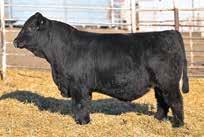
Lot 1 – McConnell Benefit 409 – Price: $46,000 DOB: 7/25/24 Sire: Basin Jameson 1076 Dam’s Sire: S A V Regard
1/24/25 Sire: Montana Judgement 1038 Dam’s Sire: S A V Brand Name 9115 EPDs: BW: +3.1, WW: +64, YW: +107 and Milk: +27 Buyer: Stroh, North Dakota
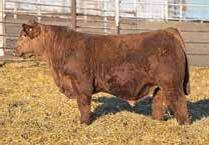
Lot 232 – MA Blackbird 5541 – Price: $15,000 DOB: 1/25/25 Sire: Montana Judgement 1038 Dam’s Sire: S A V
Brand Name 9115 EPDs: BW: +3.9, WW: +79, YW: +134 and Milk: +23 Buyer: Gunsight Angus, Wyoming McConnell Angus
WSGLT internship available
The Wyoming Stock Growers Land Trust (WSGLT) and the Haub School of Environment and Natural Resources are partnering to recruit a University of Wyoming (UW) student to serve as the 2026 Conservation and Stewardship Intern.
The intern will gain in-depth knowledge and experience in land conservation while furthering WSGLT’s mission of conserving Wyoming’s working agricultural landscapes.
The intern will expand their professional network through WSGLT events, field work and mentorship from conservation practitioners and Haub School faculty. The intern will work with the WSGLT’s Conservation and Stewardship Team to monitor 123 conservation easements across 300,000-plus acres of Wyoming ranchlands during the summer.
This is a temporary, full-time position averaging 40 hours weekly from May
UW continued from page A2
in the university’s structure and offerings today.
through August. Upon mutual agreement, the position may continue part-time during the fall 2026 semester.
The internship is remote or partially remote until May – assuming an early start date – and is primarily based in Cheyenne.
To apply, interested individuals should e-mail a copy of their resume, contact information for three references and a cover letter explaining why they are interested in the position and how they think it will benefit their career goals to Averi Davies at averi@wsglt.org with the subject line “Conservation and Stewardship Internship Application.”
The application deadline is Feb. 20.
For more information or to apply, visit wsglt.org/wp-content/uploads/2026/01Conservation-Stewardship-Intern-2026-Announcement.pdf
force and economy.
While continuing to emphasize agriculture and engineering, UW leaders have, in fact, added academic colleges and degree programs to meet the demands of all Wyoming industries, as well as to prepare students for their chosen pursuits. We now offer degrees in over 200 areas of study, producing teachers, nurses, engineers, accountants, natural resource managers, lawyers, scientists, artists, entrepreneurs and many others who fill important roles in Wyoming’s work-
Fax: 307.532.2040 www.torringtonlivestock.com
FEEDERS
Because UW’s resources are limited, we recognize the importance of prioritizing.
Even as we add degree programs and certificates to meet the needs of students and employers, the university is constantly assessing its offerings to determine what we should modify, continue or drop.
We have shed low-
Grant applications available
The Wyoming Emergency Insect Management Grant application is now available. Applications for the grant must be submitted by March 31, and the Wyoming Emergency Insect Management Grant package can be found on the Wyoming Department of Agriculture website at agriculture. wy.gov/emig
The Emergency Insect Management Program was enacted by the Wyoming Legislature in 2003 to create an account and program oversight to assist with emergency management of insect pests and insect vectors.
Funding from the account is allocated from a committee and details of the committee’s allocation meeting will be published once the date, place and time have been set.
Insect vectors may include blood-feed-
enrollment programs which don’t align with the state’s needs, and we will continue to do so.
The problem with the $20 million annual cut proposed by the Wyoming Legislature’s Joint Appropriations Committee is it would force us to drop programs that do fill the needs and wants of students and the state, and it would make
WEDNESDAY, FEBRUARY 11, 2026 - FEEDER/CALF SPECIAL
ing arthropods, mosquitoes, biting flies or other such insects which harbor or transmit pathogens harmful to humans, livestock, agriculture, livestock or natural resources. Insect pests may include grasshoppers, Mormon crickets or other cyclic or outbreak insect species, in addition to incipient populations of invasive insects including fire ants and Africanized honeybees.
Any state agency or political subdivision – cities, towns, counties, weed and pest districts and special districts – is eligible to apply for funding.
Approved programs shall receive not more than 50 percent of the total program cost. In special circumstances, programs for the control of outbreak insects may receive up to 75 percent of the program costs.
For more information, contact Lindsey Woodward at 307-777-6585.
it much more difficult to adhere to the Wyoming Constitution’s direction a UW education be “as nearly free as possible.”
policymakers about the university’s offerings and follow established processes to make appropriate changes.
The legislature and the state’s elected officials represent the people of Wyoming, and appropriations from the legislature and the governor are what make it possible to have a world-class landgrant and flagship university, as envisioned by the state’s founders.
Thaler Land & Livestock 200 Char Hfrs, 700-850#, Weaned since early October, Bunk Broke, Been on a Grower Ration, Weaned on By-O-Reg Breath-Rite Tubs, Branding Shots: Inforce 3, Bovi-Shield Gold One Shot, Ultra Choice 7, Pre-cond. Shots: Bovi-Shield Gold One Shot, Ultra Choice 7, Weaning Shots: Bovi-Shield Gold 5, FerAppease, Pour On, No Implants, April Born Calves Duck Bar Ranch LLC 108 Char-x Hfrs, 650#, Weaned a long time, Running out on pasture till the last 30 days, now in corral on a Grower Ration, Bunk Broke, 3 Rounds of Shots, Safeguard Wormer and Poured, Home Raised Bennett Cattle Co/Noah’s Ark 72 Mx Strs, 500-600#, Weaned since Oct., Hay Fed Only, Complete Vac. Program, Sired by Paint Rock Angus Bulls, Home Raised
Dr. Joe & Kristen Skavdahl 65 Mx Hfrs, 650#, Weaned a long time, Been on a Light Grower Ration, Modified Live Vac. Program, Bangs Vac. WEANED CALVES
Harlan & Charlie Bradshaw 63 Blk (1 Rd) Strs & Hfrs, 550-750#, Weaned since October, Free Choice Hay, Branding Shots, Pre-cond. Shots: Vira Shield 6, Vision 7, One Shot Ultra, Poured, Heifers are Bangs Vac.
Tom & Michelle Herbst 10 Blk Hfrs, 450#, Weaned a long time, Been on Grass/Alfalfa Hay Mix, Branding Shots: Ultrabac 8, Pyramid 5+Presponse, Weaning Shots: U;trabac 8, Pyramid 5+Presponse, Booster Shot on Jan. 1:
FRIDAY, FEBRUARY 13, 2026
- ALL CLASSES
Chuck Petersen 307-575-4015 Lander Nicodemus 307-421-8141 LIVESTOCK AREA REPS
Michael Schmitt - Torrington, WY 307-532-1776
Ty Thompson – Lusk, WY 307-340-0770
Cody Thompson - Lusk, WY 307-340-0150
Zach Johnson Lingle, WY –307-575-2171
Jeff Ward – Laramie, WY 307-399-9863
Tam Staman – Crawford, NE 308-631-8513
Chris Williams - Greybull, WY 307-272-4567
Justin Smith - Lusk, WY 307-340-0724
Hunter Dockery - Lusk, WY 307-340-1202
Ben Kukowski - Kaycee, WY 307-217-1472
Scott Redden - Burns, CO 970-596-3588
There is reason to believe the assertion UW has strayed from its founding purpose as a land-grant university primarily has to do with some of what is taught under the broad umbrella created by the Morrill Act and state statute, as well as some of the non-academic programs and services the university has provided to students and employees.
On this front, UW has shown a willingness to comply with legislative directives, most recently in the elimination of the university’s Office of Diversity, Equity and Inclusion (DEI) and in excising DEI concepts and advocacy from instruction, wich is an ongoing process.
While state statute gives UW’s Board of Trustees the responsibility to “prescribe the studies to be pursued and
It would be a terrible shame if misunderstandings regarding what being a land-grant university really means end up being the cause of unnecessary cuts which severely harm UW’s ability to fulfill its land grant mission.
We hope the full legislature will recognize potential harm and instead work with the university to make desired adjustments – as lawmakers and UW leaders have done for well over a century.
Kermit Brown is the chairman of the UW Board
On Jan. 27, Western Ag Network (WAN) and Ag Information Network (AIN) announced a strategic merger powered by Nemetz Communications, Inc.
The merger will unite two highly respected ag media organizations to form a comprehensive, far-reaching ag broadcast platform, serving farmers and ranchers across the U.S. with a primary focus in the West and Southeast.
Russell Nemetz, president and owner of Nemetz Communications, Inc., has been a trusted voice in ag broadcasting for nearly 30 years.
Nemetz says the merger will combine the strengths of the two networks to increase accessibility and depth of agricultural information across the West and beyond.
Trusted sources
Both WAN and AIN have a long legacy of delivering trusted news coverage to the agriculture industry.
According to a Jan. 27 press release posted on the WAN website, the merger will combine the two networks’ “complementary strengths” in order to serve a broader and more diverse agricultural audience.
Originally founded in 1985 as the Evan Slack Network, WAN has deep roots in agriculture and rural America and has been serving listeners for over 40 years.
AIN also brings more than three decades of experience serving American agriculturists – with a focus on crop reporting and farm broadcasting – to the merger.
The press release explains WAN has long served as a cornerstone of agricultural reporting across
the West, while AIN brings decades of authoritative regional programming and deep relationships within specialty crop sectors.
“Together, the two networks combine complementary strengths to serve a broader and more diverse agricultural landscape,” states the release. “With more than 200 radio affiliates across 17 states and a combined legacy of trusted agricultural journalism, the unified network offers an expanded, streamlined and highly-efficient channel for delivering agricultural news, market reporting and industry insights to producers, communities and national agribusiness partners alike.”
Core values
As the merger moves forward, the press release notes WAN and AIN are committed to maintaining their core values of integrity, accuracy and meaningful service to the producers and industries which rely on them every day.
WAN has promised to preserve the established identity of AIN while working towards a seamless transition, noting listeners and industry partners will continue to hear familiar AIN programming and trusted hosts as the two networks align behind the scenes.
“This merger reflects a shared commitment to elevate the accessibility and depth of agricultural information across the West and beyond,” says Nemetz. “We’re combining the strengths of two respected networks to create a stronger, more connected platform – without losing the authenticity and credibility our audiences expect.”
Kelly Allen, president and owner of Allen Media,
emphasizes the merger will not affect the established editorial identity and values which define AIN
“Our listeners and partners value consistent, trusted information,” says Allen. “Joining WAN allows us to expand service while maintaining the editorial identity that has defined the AIN for more than 30 years.”
Nationwide coverage
Together, WAN and AIN now deliver ag news, markets, weather and rodeo coverage to more than 200 affiliates across Alabama, Arizona, California, Colorado, Florida, Georgia, Idaho, Montana, Nebraska, Nevada, New Mexico, North Dakota, Oregon, South Dakota, Utah, Washington and Wyoming.
WAN says the unified network will strengthen service by expanding coverage areas, improving reporting capacity and providing more consistent regional information.
Nemetz notes uniting AIN and WAN under the same umbrella will create one of the most comprehensive and far-reaching ag broadcast platforms in the nation, bringing leading coverage on agricultural issues affecting farmers and ranchers in a variety of regions together in one place.
“In the West, we talk about important issues from private property rights and predators to water issues,” Nemetz states. “A lot of these issues apply to folks in the Southeast, just in a different scope.”
In addition to reporting on traditional topics like livestock, cereal grains and pulses, Nemetz says bringing AIN to the merger will increase the network’s authority on specialty crops
in several regions, from potatoes and grapes in the Pacific Northwest to peanuts in Georgia and citrus in Florida.
“This merger increases our focus and passion of serving farmers, ranchers and rural communities,” Nemetz concludes.
SAGE GROUSE
Sage Grouse Implementation Team (SGIT). The decision to conclude the working groups follows a departmental assessment which identified opportunities to improve efficiency, reallocate personnel time and streamline habitat project funding without impacting sage grouse management.
Continued conservation efforts
WGFD will continue to allocate funds to department projects specifically benefiting the sagebrush ecosystem, although Sage Grouse
BieberFever
Local Working Group project-specific funding is gone.
The SGIT will continue to meet on a regular basis, providing opportunity for public discussions and policy recommendation development. Partnerships with other state and federal agencies, conservation groups and local nonprofit organizations will continue to play a vital role in sage grouse management.
Sage grouse habitat conservation also is a priority in the Statewide Habitat Plan (SHP), a roadmap defining how WGFD will move forward with key habitat conservation projects. For sage grouse, SHP priorities include habitat connectivity, crucial winter habitat and core management areas.
Maps of these areas can be found on the sage grouse data page at wgfd.wyo.gov.
“We will continue to honor the work of our local working groups, managing sage grouse through effective partnerships and initiatives,” Bruce said. “Wyoming has a proven track record of successful management of this species, and we will continue to provide the public, as well as our former Sage Grouse Local Working Groups members, with opportunities to work with us.”
“While our strategies are evolving and adapting to current needs, our mission to conserve Wyoming wildlife remains the same,” she added.
WGFD is dedicated to conserving, enhancing and protecting Wyoming’s exceptional fish and wildlife resources and the habitats that support them. For more information, visit wgfd.wyo.gov
For more information on Greater sage grouse management efforts overseen by the Wyoming Game and Fish Department, visit wgfd.wyo.gov/wyoming-wildlife/ sage-grouse-management.
expanded access to justice.
She now serves as counsel at Holland and Hart, focusing on environmental, energy and natural resource law, and she remains deeply connected to Wyoming’s outdoor traditions.
Leas is the owner of B1T Ranch in Sublette County and a partner and global co-head of Asset Backed Finance at Apollo Global Management, where he oversees approximately $280 billion in assets.
His background includes senior roles at Barclays Capital and Weil, Gotshal and Manges LLP, and he brings extensive legal and financial expertise to the board. Leas also serves on the boards of several financial firms and has a longstanding record of nonprofit leadership.
Heykoop is a Wyoming entrepreneur, financial professional and longtime community leader based in Encampment. He is co-founder, chief executive officer and chief compliance officer of Traction Financial Partners, a Securities and Exchange Commission-registered independent investment advisory firm serving individuals, businesses and nonprofits.
Heykoop currently serves as president of the Wyoming State Fair Foundation, where he helped secure more than $1 million for the Wyoming State Fair Endowment to support youth programs and preserve Wyoming’s agricultural heritage.
Healy is president of LU Ranch Company and a fourth-generation leader of the historic LU Ranch, a multi-generation cattle operation in the foothills of the Absaroka Mountains. He returned to Wyoming to assume management of the ranch in 2018, continuing a family legacy dating back to 1935.
Under his leadership, the ranch blends traditional horsemanship with modern stewardship practices, emphasizing sustainable grazing, advanced genetics and careful land management.
Healy has been recognized for his conservation leadership, partnering with government and nonprofit organizations on long-term wildlife habitat and resource management projects across Wyoming’s working lands.
“We are excited to welcome Byrd, Kite, Leas, Healy and Heykoop to the WSGLT,” said WSGLT Board Chair Marissa Taylor. “Their experience, leadership and shared commitment to Wyoming’s working lands will be a tremendous asset as we continue our mission to keep Wyoming, Wyoming.”
WSGLT is dedicated to conservation through ranching. Based in Cheyenne, the nonprofit organization serves the entire state and is Wyoming’s only agricultural land trust. Through partnerships with families, WSGLT holds and stewards agricultural conservation easements on more than 307,000 acres of land throughout Wyoming. Founded in 2000 by the Wyoming Stock Growers Association, it is one of the largest regional land trusts in the U.S. For more information, visit wsglt.org
pesticide licensing exams, providing study materials and facilitating educational opportunities to fulfill program requirements.
Based in Powell, Vardiman has also led the Palmer Amaranth Working Group since the weed was first discovered in the Big Horn Basin in 2023.
The group is dedicated to monitoring and studying the plant in order to mitigate chances of widespread establishment.
Palmer amaranth
Palmer amaranth is an invasive plant with a notorious reputation for being difficult to manage.
UW Extension explains Palmer amaranth is particularly dangerous to row crops and crops emerging later in the growing season, and Vardiman says dry beans and sugarbeets are most vulnerable.
Palmer amaranth chokes out crops and can act as a host for insect pests. In dry conditions, UW Extension further notes the weed can generate high levels of nitrates which can be toxic to livestock.
Palmer amaranth was relatively rare in Wyoming until recent years, but Vardiman notes the weed is currently spreading along sev-
University of Wyoming (UW) Extension has organized a series of interactive online trainings for new and returning 4-H volunteers.
The training series, which kicked off in December 2025, provides continuing education opportunities and allows volunteers across the state to connect with their peers.
“These Zoom trainings can help volunteers get more up-to-date, research-based information and ideas, as well as connect with other volunteers,” says Tiera Bevilacqua, UW Extension’s volunteer development specialist and organizer of the new trainings. “We’re all spread out, so it’s an opportunity to chat with each other.”
For current volunteers, participation in the upcoming sessions can be used to fulfill five-year training requirements.
Each session is scheduled for an hour and a half and focuses on a specific volunteer-related topic, with time for discussion in small groups.
So far, topics have included research-based approaches to navigating challenging conversations with parents and setting specific, measurable, attainable, relevant and timely goals.
Future topics include strategies for leading successful meetings and facilitation of meaningful community service opportunities.
Upcoming trainings are scheduled for 6 p.m. on Feb. 17 and March 31 via Zoom.
To sign up, contact Bev-
eral main highway routes and county roads.
“We haven’t necessarily seen it in crop fields, but it’s spreading,” Vardiman said. “We want to be diligent and aware and keep track of where it’s going.”
Vardiman admitted exact details on where the plant came from and why it’s spreading are still being studied by the working group.
One theory says the seeds could be spreading from gravel and sand pits during road construction, but whatever the cause, Vardiman emphasizes proactive management is crucial.
Slowing the spread
In his presentation, Vardiman gave tips on identifying Palmer amaranth and how to report it, as well as some management options to help slow the spread including herbicides and rotational planting.
He noted Palmer amaranth germinates quickly, and the best chance to stop the weed is to kill it before it comes out of the ground.
Vardiman further noted Palmer amaranth is capable of developing herbicide resistance relatively quickly, so an informed application program and other preventative measures are key.
ilacqua at tarndorf@uwyo. edu or 307-367-4380. New volunteers must enroll online and start the required onboarding process before attending a training. To get started, visit bit.
He encouraged planters to get in touch with chemical dealers and local Extension resources before applying any herbicides, as premature or unnecessary application can aid resistance and make management even more difficult.
In addition, Vardiman noted crop rotation is an extremely important management option for suppressing potential growth in the off season.
“Corn, small grains and forages are our best options for control,” Vardiman emphasized. “These plants are competitive against annual plants, and we also have more herbicide options in these crops than we do with dry beans and sugarbeets.”
Additional highlights
In addition to presentations, WESTI Ag Days featured a vendor reception highlighting ag businesses from the farming sector.
Vendors displayed products ranging from seeds and sprayers to drone and irrigation system technology.
In addition, a complimentary lunch sponsored by ANB Bank was provided on opening day, and drawings for door prizes donated by various sponsors took place throughout the event.
WESTI Ag Days wrapped up on Feb. 4 following an all-day private
ly/wy-4h-new-volunteer or contact a local UW Extension office.
Recordings of the monthly trainings are publicly accessible at bit.ly/ wy-4-h-training
CLAY CREEK ANGUS
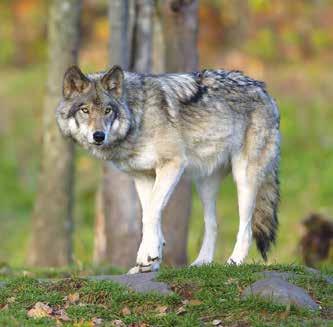
Trial set for Daniel man accused of gray wolf torture and torment
Under Wyoming Game and Fish Department (WGFD) regulations and state law, capturing and killing a gray wolf in its predator zone – outside of the protected Trophy Game Management Area (TGMA) around Yellowstone National Park – is allowed without a National Park hunting license.
The only requirements are to report the kill within 10 days to a WGFD warden or supervisor and to follow all relevant hunting regulations.
Through 2024, citizens reported killing 29 wolves in the predator zone, according to the WGFD’s annual gray wolf report. At the end of 2024, about 47 wolves remained in the predator area.
But only one wolf incident – taking place on Feb. 29, 2024 in Daniel –became so notorious people around the world began to rain hate on the hunter, his family, Sublette County and Wyoming.
The single incident led to almost two years of incredible public pressure on Sublette County law enforcement and the Sublette County Attorney’s Office to charge Cody Roberts of Daniel with animal cruelty.
But, then-existing animal cruelty law, Wyoming Statute 6-3-1008, did not apply to the “hunting, capturing, killing or destruction” of predator animals or to Roberts’ alleged actions.
Legislative intent
The Wyoming Legislature began amending the law to prohibit malicious or willful animal abuse or failure to provide humane treatment of wildlife.
Taking effect in 2025, the revised Wyoming Statute Ann. 6-3-1005 protects “the otherwise lawful actions of individuals as they relate to animals.”
This protects an animal’s humane destruction, rodeos and “industry accepted agri-
cultural and livestock practices on livestock.” It also protects ordinary fishing, trapping and hunting activities managed by the state.
Going to trial
In August 2025, with the new law in effect, Sublette County Attorney Clayton Melinkovich convened an anonymous grand jury in Pinedale to hear testimony and review evidence about Roberts’ actions
On Aug. 20, 2025, the grand jury’s majority called for Roberts’ indictment, alleging a new felony charge of “torture and torment” of the male gray wolf he took into the Daniel bar on Feb. 29, 2024.
Roberts pleaded not guilty before presiding Third District Judge Richard Lavery, whose home courtroom is in Green River.
The judge ordered video conference hearings leading up to Roberts’ March 9 trial. None of the parties have appeared in per-
Austin Snook • 307-290-2161
Taylor Snook • 307-290-2273
Craig Deveraux • 307-746-5690
Dan Catlin • 406-671-7715
Clint Snook • 307-290-4000
Cheyenne Seymour • 605-641-0638
son. Pinedale’s Ninth District Courtroom was opened for the public to observe the livestreamed hearings.
Motion to dismiss
Defense Attorney Robert Piper, who represents Roberts, filed a motion asking Lavery to dismiss the case.
He described Roberts’ 2025 felony charge as “ex post facto” – after the fact – saying the statute in place in February 2024 granted Roberts “blanket immunity” from prosecution.
“We need not collectively endorse Roberts’ actions,” Piper said, but his conduct did not justify the allegation of “torture and torment.”
“You’re saying there is a blanket license for predatory animals?” the judge asked.
Melinkovich countered the Wyoming Legislature’s amended statute was to clarify its original intent to address animal abuse or cruelty.
Kyle Kallhoff • 605-881-1526
Casey Sellers • 307-217-2614
Jim Forbes • 307-351-5932
Tye Curuchet • 307-351-8666
Daniel Escoz • 307-217-1440
Kade Kinghorn • 307-620-0525
"From the ring, to the video, and in the country, we market your livestock the competitive way."
February 4, 2026 • No Report
Thank you and we appreciate your business!
Roberts is not being prosecuted because he captured or killed the predator wolf but for alleged “willful infliction of pain and suffering,” causing torment or torture to an animal when a reasonable action could relieve it, he said.
“This prosecution is for the specific part of the law,” he stated. Not “immune”
Lavery hinted Roberts’ five-day trial would proceed March 9-13 in the Sublette County District Courtroom, filing his decision in writing on Feb. 3 after hearing pretrial motions.
Lavery was not convinced Roberts should be immune from prosecution due to previous lack of animal abuse protections for predators.
“I tend to think the defendant’s broad definition of broad exception for immunity goes too far,” he said. “It’s a bridge too far to say the state can’t pursue it.”
Jury pool of 100
Lavery asked if 90 to 100 potential jurors should appear on Feb. 12. The selection process will occur at the Sublette County Library in Pinedale and is open to the public.
“Toward 100 is probably better,” Piper said.
Melinkovich said he was cautiously optimistic a larger pool would be sufficient. Both were very concerned about finding unbiased jurors for Roberts’ trial.
“We don’t want to have to take people off of the streets, so to speak,” the judge said.
The two attorneys crafted a “surgical” questionnaire to “weed out” biases to ultimately seat 12 jurors and one alternate.
Background
Roberts had captured the adult male wolf in the state’s predator zone and took it to the Green River Bar in Daniel, where friends and customers recorded the barely moving animal brought into the bar with a leash attached to a thick “training collar.” Its muzzle was visibly ducttaped shut.
Even predator hunters must follow WGFD hunting regulations on state or public land.
Wyoming predators include coyotes, red foxes, jackrabbits, raccoons, porcupines, stray cats and “any
gray wolf in the state except in the TGMA.”
Roberts was cited after by an investigating game warden for illegal possession of live wildlife. He paid the $250 fine.
On March 4, 2024, WGFD officials released the following statement, “The WGFD investigated and cited an individual who was found to be in possession of a live wolf. The individual was cited for a misdemeanor violation of Wyoming Game and Fish Commission regulations, Chapter 10, Importation and Possession of Live WarmBlooded Wildlife.”
Videos released
Generally, information regarding any wolves taken in Wyoming was not public record, but this changed. Due to numerous public records requests, on March 10, 2024 WGFD released the game warden’s investigative report resulting in the citation and videos which initiated the investigation. The videos were instantly and widely circulated online internationally by media and shocking many who called for Roberts’ arrest – or worse, threatened violence. Roberts’ family and rancher friends have defended his actions.
“This incident does not represent Wyoming and overshadows our state’s proven track record and dedication to the conservation of wildlife resources,” WGFD concluded, adding there was no other legal avenue to pursue criminal charges at the time.
Wolf counts
At the end of 2024, an estimated 163 gray wolves were in WGFD’s TGMA, 47 in the predator area and 108 in Yellowstone, according to the 2024 Wyoming Gray Wolf Report, released in 2025.
More than 500 wolves are estimated in the Greater Yellowstone Ecosystem, which includes Wyoming, Montana and Idaho.
New numbers for Calendar Year 2025 will be released in the next Wyoming Gray Wolf report due in several months.
Joy Ufford is a corresponding writer for the Wyoming Livestock Roundup. Send comments on this article to roundup@wylr.net.
iala
Adobe Stock photo
Lee Pitts IT'S THE PITTS
Ma and Pa Hosegarden were on their way back home in their International pickup after selling their entire calf crop at the sale barn.
“Can you believe it Ma?” asked Pa, grinning like he just won the threelegged race at the family reunion. “We sold those calves for $2,200 apiece. I feel like we robbed a bank, inherited a fortune from a long-lost uncle, won the lottery or struck oil. You got the check don’t you Ma?”
“I sure do,” said Ma as she clutched her purse to her bosom in a death grip. “I wasn’t about to leave the auction barn without the money. I was afraid they’d say the clerk or the auctioneer made a mistake and they’d want their money back.”
“What do you think we should do with all that money, Ma?” Pa asked. “I was thinking it’s about time to buy a new pickup?”
“Are you outta your mind?” Ma replied. “This truck is a 1975 International pickup which is the last year they made ‘em. It’s a classic. By the way, slow down. You’re scaring me.”
“I’m only going 35 miles per hour which just so happens to be this relic’s top speed,” Pa said.
“How much does a new truck cost these days anyway?” asked Ma.
“Well, the one I want would cost about $65,000,” Pa said.
Ma nearly fainted.
“Now I know you have the brains of a windshield defroster, but that’s more than we paid for the ranch back in ʼ73,” Ma said. “I’m telling you right now you aren’t getting a new pickup, so get such crazy thoughts outta your head.”
They drove along in an awkward state of silence before Pa said, “Well, if I can’t have a new truck how about a new cow pony? I’m tired of being the laughing stock at every branding we go to just because I have a psychotic stud horse your brother pawned off on me. It’s downright embarrasin’.”
“How much would this new horse cost?” Ma asked.
“Well, to get a good one these days – one you can rope off of that doesn’t try to breed all of the other horses while their owners are still riding them – it would cost around $25,000,” Pa said.
Again, Ma clutched her purse to her chest even more tightly and said, “TWENTY-FIVE THOUSAND FOR A HORSE?”
“You can stand a lot of embarrassment for that much money,” she added. “Now I know you’re dumber than a brandin’
by
iron. What other impossible dreams are you havin’?”
“Well, if I can’t have a new truck or a new cow pony, how about a new hydraulic squeeze chute with lead up alley and a tub?” Pa asked.
“Listen buster, the only new tub we’re getting’ is a hot tub for my aching back I got from flanking calves and lifting heavy bales for 50 years,” Ma replied.
“Then how about we up our budget at bull sales?” asked Pa.
“Have you already forgotten how much we just got for our calves? I think we’re doing just fine breeding our cows to our own home-raised bull calves and buying our bulls out of the slaughter run,” Ma said.
“But didn’t you see how much more money the better calves brought at the sale. Just once before I die I’d like to get our name in the weekly market report for having calves amongst the top sellers,” Pa said.
“Can’t we do anything to celebrate our good fortune today?” he added. “How about we stop at that new steakhouse everyone is raving about and celebrate. I haven’t had a great steak that wasn’t out of one of our own cancer-eyed cows in forever.”
“You really think
they’re going to let us in the door? Look at us. We look like we live under a bridge,” Ma replied. “Besides, you know we aren’t going to get out of that steakhouse without dropping $100, and you’re going to feel like a bad hangover tomorrow when you realize what you’ve done.”
“No, instead we’ll celebrate like we always do,” she added. “You need to pull over and get fuel anyway, so I’ll treat you to a gas station sandwich and a bag of pork rinds and you can go next door to the 99 Cent Store and buy yourself a jug of tea.”
“Gee whiz. Thanks a lot, and tomorrow I think I’ll buy you a new padlock for your purse. I think the one you have is rusted shut,” Pa said.
Let’s Celebrate
continued from page A1
success.
“The move would bring professional rodeo’s premier organization to the Cowboy State, where rodeo is officially recognized as Wyoming’s professional sport by vote of the Wyoming Legislature,” reads the press release.
The association says the decision was a thorough process which included conversations from multiple locations and a proposal from leadership in Colorado Springs, Colo.
Each of the competing offers were ultimately turned down in favor of Cheyenne, who offered to build a hall of fame and an administrative building to host the national headquar-
ters with upgraded office space, first-class conference rooms and other amenities, according to the press release.
PRCA also cited Cheyenne’s “friendly business climate” and Wyoming’s lack of state income tax as two driving factors behind the relocation.
“This is a strategic decision positioning the PRCA for the future,” says PRCA Chief Executive Officer (CEO) Tom Glause. “Wyoming lives and breathes rodeo, and Cheyenne offers authenticity, visibility and alignment with our sport’s values.”
Glause also expresses excitement at the opportunity to build “a purpose-
driven campus” in the Cowboy State, which “celebrates rodeo’s history while supporting its growth.”
Future plans
The proposed PRCA campus is set to be constructed in a well-traveled area near the intersection of I-25 and I-80 and will encompass approximately 35 acres, according to the press release.
Envisioned as “an anchor of a new westernthemed entertainment, cultural and shopping district,” the site is meant to serve as a year-round destination for fans, families and visitors from around the world.
The decision to relocate has not been finalized, but if the plan does move forward, the transition is expected to occur in early 2029.
A final decision will be
“Rodeo has been a part of Wyoming since before we were a state. There is no better place on Earth than right here in the Cowboy State for the PRCA to be headquartered. We have the legacy, respect the tradition and will always honor the cowboy way and Code of the West.” – Gov. Mark Gordon
contingent upon approval of project funding by the Wyoming Legislature, which is set to begin debating 2026 budget decisions on Feb. 9.
The association also says additional public and private funding sources will be pursued, further noting in December 2025, the Cheyenne LEADS Board of Directors voted to commit $15 million from its reserves as matching funds toward the project.
The project is expected to reach roughly $60 million in total with city, county and private contributions,
according to a Feb. 2 Laramie Boomerang article. Wyomingites react Public response to the PRCA’s announcement has been varied. Although many Wyomingites have expressed excitement over the opportunity, others have called for caution, citing concerns over securing funds for the extensive project.
Supporters, including Gov. Mark Gordon and Cheyenne LEADS CEO Betsey Hale, have highlighted the Cowboy State’s deep connection to rodeo,
rich Western heritage and opportunities for tourism centered in Cheyenne as benefits of the proposed relocation.
“Rodeo has been a part of Wyoming since before we were a state,” says Gordon. “There is no better place on Earth than right here in the Cowboy State for the PRCA to be headquartered. We have the legacy, respect the tradition and will always honor the cowboy way and Code of the West.”
According to Hale, Cheyenne LEADS strongly believes in the opportunity to build up PRCA’s presence in Wyoming, calling the relocation “a natural fit,” which would benefit both the PRCA and the state.
“This announcement reflects both Wyoming’s legacy and its future,” says Hale. “Rodeo is woven into the fabric of our state, and welcoming the PRCA, its headquarters and the hall of fame to Cheyenne is a natural fit. We look forward to partnering with the city of Cheyenne and Laramie County, along with the PRCA and other stakeholders, to bring this visionary campus to life.”
A Jan. 30 article by the Associated Press acknowledges another side of the argument – funding concerns.
The article emphasizes the fate of the decision lies within the hands of lawmakers who may vote against government funding for private enterprise and shut down the $15 million in funding which would be needed to get the project off the ground.
State Rep. Rachel Rodriguez-Williams (R-HD50), chairwoman of the Wyoming Freedom Caucus, tells the Associated Press, as much as Wyomingites would welcome the opportunity to house the PRCA, she hopes the association will not rely on taxpayers for funding.
“We’re happy to welcome the PRCA to the Cowboy State, but would hope they’d come the cowboy way – on their own dime,” says Rodriguez-Williams.
Despite this concern, the same Associated Press article references a study which projected the PRCA could secure $253 million in economic benefits for Wyoming over a decade-long period, according to comments by Rachelle Zimmerman, director of business recruitment and retention for Cheyenne LEADS.
“We feel like this is the perfect project,” Zimmerman tells the Associated Press. “I think the majority of Wyoming supports this.” Grace Skavdahl is the editor of the Wyoming Livestock Roundup. Send comments on this article to roundup@wylr.net.
HB0061 would prohibit the manufacture, sale, offer for sale and distribution of “cultivated meat” for human consumption, while also providing clear definitions, penalties and effective dates.
In the bill, cultivated meat is defined as meat grown entirely in a lab from cultured animal cells rather than harvested from a living animal. Cultured animal cells are defined as those collected from a living or recently slaughtered animal grown in controlled environments for the purpose of creating cultivated meat.
Under the bill, cultivated meat would be classified as a prohibited product for human consumption
in Wyoming, and state regulators would have authority to summarily suspend food establishment licenses if cultivated meat is manufactured, sold and/or distributed, similar to actions taken in cases of other imminent health hazards.
Additionally, HB0061 outlines all retailers and wholesalers throughout the state of Wyoming must clearly label lab-grown meat products as “containing cell cultured products” or plant-based meat products as “vegetarian,” “veggie,” “vegan” or “plant based.”
An ongoing national debate
Lab-grown meat has become the latest topic in
the ongoing saga of alternative meat products.
After the rise and arguable fall of plant-based meat over the past few years, companies like Californiabased Good Meat, Inc. and Upside Foods, Inc. have been working diligently to get lab-cultivated meats on shelves and menus across the nation.
The companies succeeded in entering labgrown chicken into interstate commerce in July 2023, produced the first cell-cultivated beef shortly after and are in the midst of exploring cell cultivation of seafood and other meats.
Like its plant-based counterpart, lab-grown meat is a highly controversial category of the U.S. food industry and has caused widespread concern among
consumers, health officials and lawmakers alike about long-term health impacts, environmental issues and regulatory oversight.
To date, lab-grown meat is banned in seven states, including Alabama, Florida, Indiana, Mississippi, Montana, Nebraska and Texas – reflecting growing resistance, especially in livestock producing regions, where many argue the technology is unproven and could undermine traditional agriculture.
“Lab-grown meat is still an experimental product with many unknowns,” says Center for the Environment and Welfare (CEW) Research Director Will Coggin in a Jan. 30 press release. “We expect more and more lawmakers and consumers to question
whether these products are ready for the market, given the lack of long-term health studies.”
In addition to health concerns, critics of the technology also raise environ-
mental concerns, despite claims from cultivated meat supporters who promote it as a more sustainable alternative to conventional livestock production.
Production Sale Bidding
In 2023, scientists at the University of California, Davis (UC Davis) published research results suggesting lab-grown meat could have up to 25 times the environmental impact of farmraised meat largely due to the energy-intensive processes required to maintain sterile lab environments and grow animal cells at scale.
“If companies are having to purify growth media to pharmaceutical levels, it uses more resources, which then increases global warming potential,” says Lead Author and Doctoral Graduate Derrick Risner of the UC Davis Department of Food Science and Technology. “If this product continues to be produced using the ‘pharma’ approach, it’s going to be worse for the environment and more expensive than conventional beef production.”
Corresponding Author Edward Spang, associate professor in the UC Davis Department of Food Science and Technology, adds, “Our findings suggest cultured meat is not inherently better for the environment than conventional beef. It’s not a panacea. It’s possible we could reduce its environmental impact in the future, but it will require significant technical advancement to simultaneously increase the performance and decrease the cost of the cell-culture media.”
Overall, the study suggests, “Even the most efficient beef production systems reviewed in the study outperform cultured meat across all scenarios – both food and pharma – suggesting investments to advance more climate-friendly beef production may yield greater reductions in emissions more quickly than investments in cultured meat.”
Closer to home, livestock production remains a cornerstone of the economy and culture, and supporters of HB0061 believe the bill reinforces Wyoming’s commitment to animal agriculture while ensuring consumers know exactly what they are purchasing.
Hannah Bugas is the
editor of the Wyo-
Calvo
Adobe Stock photo
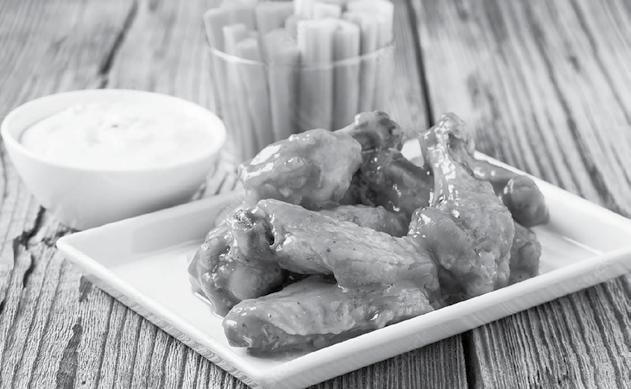
Football fans may notice the price of a Super Bowl staple – chicken wings – is lower than last year as they prepare for the big game.
In recent decades, chicken wings, which include flats and drumettes, have surged in popularity with demand peaking around major sporting events. But the Super Bowl is the biggest game of all, and more than one billion wings are consumed around the event each year.
Wings become staple of modern pop culture
Dr. David Anderson, Texas A&M AgriLife Extension Service econ-
omist and professor in the Texas A&M University (TAMU) Department of Agricultural Economics in Bryan-College Station, Texas, said the popularity of wings among sports fans isn’t expected to fade in the future.
“The Super Bowl and wings for snacking have melded pop culture, food and sports in a way which has elevated them from a castaway cut decades ago,” Anderson said. “The Super Bowl has become a sort of cultural holiday, and wings are part of this tradition now – just like hot dogs on the Fourth of July.”
The National Chicken Council estimates 1.48 billion chicken wings will be consumed when the New England Patriots and Seattle Seahawks vie for the Lombardi Trophy in Super Bowl LX.
To put this in perspective, if laid end to end, 1.48 billion wings would circle the Earth’s equator more than three times, according to the National Chicken Council release.
Wing prices lower despite high demand
The increased popularity for wings has transformed a once-upon-a-time afterthought cut of meat into
Big horn Basin
LIVESTOCK AUCTION LLC
bighornbasinlivestock.com
Worland, WY
Visit Cattle USA for broadcasting and online bidding –auctions.cattleusa.com
• Upcoming Sales •
Feb. 12 –
Feeder Cattle Special w/ Weigh-Up Special
Feb. 19 – Bred Cow & Heifer Special w/ All Class Cattle, Sheep & Goat
Feb. 26 – All Class Cattle
March 5 – Bred Cow & Heifer Special w/ All Class Cattle
March 12 –
Feeder Cattle Special w/ Weigh-Up Special
March 19 – Weigh-Up Special w/ All Class Cattle, Sheep & Goat
March 26 – All Class Cattle
Consignments • February 12
Feeder Special w/ Weigh-Up Special
Max Gifford – 2 corn fed, fat beef, on corn for 100 days, 1,300-1,400#. TD Farms, Inc. – 100 mixed black and red, 500-650#, two rounds of shots.
Kent Price – 100 hiefers, mostly black and BB, Bangs vacc, 500-600#, two rounds of shots, FerAppease and poured, high elevation, weaned Oct. 26.
George Sinn & Sons – 61 black steers; 43 black heifers, 750-800#, two rounds of shots, weaned November, on hay, silage and corn.
Casey Johnstone – 50 black heifers, 700-750#, two rounds of shots, Paint Rock and Redland bulls.
Nick and Shawna Harris – 40 mixed black, 550-700#, complete vacc. Double Dollar – 40 black heifers, 500-600#, shots at branding. Ash Whitt – 30 mixed black and Hereford, 450#, complete vacc, poured, weaned October.
Tim Ramsay – 28 mixed black, BWF and red, 500-800#, complete vacc, bunk broke, weaned mid-November.
Kenny and Karl Pierce – 20 mixed black, 300-500#, two rounds of shots, on Vitalix tubs weaned 45 days.
Frank Deede – 26 mixed HerefordX, 500-550#, two rounds of shots, weaned Nov. 8.
Mendez Brothers – 30 black steers, 500-600#; 45 black heifers, weaned Nov. 10, 600-650#, two rounds of shots.
Randall Jones – 36 mixed black and BB mostly steers, 700-800#, two rounds of shots, bunk broke, weaned Nov. 20.
Joel Undem – 17 AngusX steers, 700-750#; 3 AngusX heifers, 550600#, two rounds of shots, poured, weaned November, on alfalfa and hay barley.
Jake Nicholas – 200 mixed mostly black, 550-650#, two rounds of shots, weaned.
Holdeman Ranch – 100 mixed black, 600-700#, two rounds of shots, on light grow ration, weaned.
Livestock
one of the most sought-after items on menus during sporting events. The demand has also turned them into one of the most valuable poultry cuts by weight.
The rise of wings in culinary culture mirrors the evolution of the beef brisket, a previously undervalued cut which surged with the booming popularity of barbecue, Anderson said.
And, like the brisket, wing production is limited by animal physiology, as there are only two flats and two drumettes per chicken.
According to Anderson, this year, fans shopping at grocery stores should expect to pay less per pound for wings than previous years, with wholesale prices at $1.12 per pound, up from 99 cents per pound to begin 2026. This is compared to $1.99 per pound the same week last year and well below the $2.65 per pound in 2024 and $3.80 per pound in 2022.
Wings are more popular than ever, but the Super Bowl represents the pinnacle for their demand.
Based on production estimates, Anderson said about 17.5 billion wings
will be produced this year.
This means around 8.5 percent of U.S. production will be consumed during the Super Bowl.
“It’s almost 1.5 billion, which is a heck of a lot of chicken wings,” he said.
“Wings and the Super Bowl, they just go together. This year I am doing my part.
I’m making wings for the big game.”
Dr. David Anderson is a Texas A&M AgriLife Extension Service economist and professor in the TAMU Department of Agricultural Economics in Bryan-College Station, Texas. This article was originally published by TAMU on Feb. 3.
BLEVINS
New All Metal Stirrup Buckles
Blevins new all-metal stirrup buckle in 3”& 2-1/2” widths. The 3” and 2-12” widths have the posts set horizontally and fit standard holes while the 2” width has the posts set vertically. Made of stainless steel and heat-treated aluminum, the same as our leather-covered buckles.
Blevins Stirrup Buckles Improved
Sleeves same as on regular style buckle. The tongue has no hinge or strap. Available in 3” and 2-1/2” widths.
Easy to change stirrup lengths quickly and easy to install – won’t slip or stick. Made of stainless steel and heat-treated aluminum. Sleeves covered with leather. Order either improved, regular or four post buckles. Also new all-metal buckle in 3”, 2-1/2” and 2” widths. At your dealers or:
CALENDAR
Feb. 9 University of Nebraska-Lincoln Extension Calving College Hands-On Workshop, 5 p.m., Cherry County Extension Office, Valentine, Neb. For more information, contact Lindsay Waechter-Mead at 402-746-3417 or lindsay. waechter-mead@unl.edu. To register, visit cvent.me/GOYAra
Feb. 9-11 Top Producer Summit, Nashville, Tenn. For more information, visit events. farmjournal.com/top-producer-summit-2026
Feb. 10
University of Nebraska-Lincoln Extension Calving College Hands-On Workshop, 5 p.m., Tripp County 4-H Center, Winner, S.D. For more information, contact Lindsay Waechter-Mead at 402-746-3417 or lindsay.waechtermead@unl.edu. To register, visit cvent.me/GOYAra
Feb. 10-11 Precision Education in Spray Technologies Academy Session Four, Precision Application Technology Lab, West Central Research, Extension and Education Center, North Platte, Neb. For more information or to register, visit go.unl.edu/pestacademy
Feb. 10-12
Third Biennial Soil Health in the West Conference, Dixie Convention Center, St. George, Utah. For more information or to register, visit utahsoilhealth. org/events/soil-health-in-the-west
Feb. 11 University of Nebraska-Lincoln Extension Calving College Hands-On Workshop, 5 p.m., West Holt FFA Shop, Atkinson, Neb. For more information, contact Lindsay Waechter-Mead at 402-746-3417 or lindsay.waechtermead@unl.edu. To register, visit cvent.me/GOYAra
Feb. 11-12 42nd Annual Fremont County Farm and Ranch Days, 9 a.m.-2:45 p.m., Fremont County Fairgrounds, Riverton. For more information, visit wyoextension. org/fremontcounty
Feb. 12 University of Wyoming Ranching in the West Seminar Series, 5 p.m., Room 1032, Agriculture Building, University of Wyoming Campus, Laramie, in person and online. For more information or to register, visit uwyo.edu/uwag/ rmal/ranching-in-the-west-seminar-series.html
Feb. 12
University of Nebraska-Lincoln Extension Calving College Hands-On Workshop, 5 p.m., Northeast Community College, Norfolk, Neb. For more information, contact Lindsay Waechter-Mead at 402-746-3417 or lindsay. waechter-mead@unl.edu. To register, visit cvent.me/GOYAra
Feb. 13 The Essentials Budget: Protecting and Powering Wyoming’s Future Series, Gillette. For more information, visit governor.wyo.gov
Feb. 14 Montana Cowboy Hall of Fame Induction Ceremony, Heritage Inn, Great Falls, Mont. For more information or to register, call 406-650-7460.
Feb. 16 The Essentials Budget: Protecting and Powering Wyoming’s Future Series, Cody. For more information, visit governor.wyo.gov
Feb. 17 Beef Feedlot Roundtable, 10 a.m.-3 p.m., Prairie Winds Community Center, Bridgeport, Neb. For more information, contact Dr. Galen Erickson at gerickson4@nebraska.edu. To register, visit go.unl.edu/2026roundtable
Feb. 6-14
E-mail: cmarsha1@uwyo.edu
Calvo Family Red Angus Annual Production Sale, online on DVAuction, 605-830-2210, 402-760-1274, calvofamilyredangus.com
Feb. 9 Pilakowski Angus Annual Performance Tested Bull Sale, Lightning Valley Ranch, Arthur, Neb., 308-249-0885, pilakowskiangus.com
Feb. 9 Fawcett’s Elm Creek Ranch Annual Production Sale, at the ranch, Ree Heights, S.D., 605-870-6172, 605-478-0077, fawcettselmcreekranch.com
Feb. 10 G Bar H Genetics Angus Bull Sale, Torrington Livestock Market, Torrington, 307-575-5520, 307-575-0373
Feb. 11
Feb. 12
Feb. 13
Jindra Angus 26th Annual Production Sale, at the Bull Center near Clarkson, Neb., 402-920-3171, jindraangus.com
Booth’s Cherry Creek Angus 53rd Annual “Progress Through Performance” Bull Sale, at the ranch, Veteran, 307-534-5865, 307-532-1805, 307532-1532, boothscherrycreekranch.com
Powder River Angus Annual Production Sale, Buffalo Livestock Marketing, Buffalo, 307-680-7359, 307-680-8266, powderriverangus.com
Feb. 13 Rees Brothers 38th Annual Production Sale, at the ranch, Morgan, Utah, 801-668-8613, 801-949-8960, 801-913-5747, reescattle.com
Feb. 14
Feb. 14
Feb. 14
Ludvigson Stock Farms All American Bull Sale, Leachman’s Sale Facility, Meriden, 515-450-3124, ludvigsonstockfarms.com
Flying M Angus Seventh Annual Bull Sale, Southern Campbell County Ag Complex, Wright, 307-660-5755, 307-660-5756, 307-680-0235
CK Cattle and Wager Cattle Ninth Annual Production Sale, at the ranch, Highmore, S.D., 605-769-0142, 605-769-1211, 605-769-5010
Feb. 16 Weaver Ranch 41st Annual Production Sale, at the ranch, Fort Collins, Colo., 970-568-3898
Feb. 16
Feb. 17
Feb. 17
Feb. 20
Feb. 21
Feb. 22
Big Sky Salers 42nd Annual Salers Focus Bull Sale, Stockmen’s Livestock, Dickinson, N.D., 406-557-6259
McClun’s Lazy JM Ranch Angus and Polled Herefords Annual Production Sale, Torrington Livestock Market, Torrington, 307-575-3519, 307-5752113, 307-534-5141, mcclunranch,com
Stellpflug Cattle Company Spring Bull Sale, Hoffman Ranch Facility, Thedford, Neb., 307-351-1712, stellpflugcattle.com
Redland Redbank Angus Fourth Annual Live Auction, Big Horn Basin Livestock Auction, Worland, 307-250-1548
Mt. Rushmore Angus Ranch 60th Annual Production Sale, at the ranch, Rapid City, S.D., 605-342-2449, 605-484-6731, 605-381-7361, mtrushmoreangus.com
Lander Valley Stock Association decides to help Red Cross
Each member asked to donate one heifer calf for the Red Cross Society Herd
At the meeting of the Lander Valley Stock Association held in Lander on Tuesday afternoon to consider the matter of soliciting the donations of heifer calves to the Red Cross, County Chairman A.R. Kirkland briefly explained methods which have been successfully employed and made a number of suggestions for the benefit of the local association.
It was unanimously decided to ask each member of the Lander Valley Stock Association and each stockman residing in this section to make such a donation, regardless of his membership in any association.
In order to enable the cattlemen of the states of Colorado, Wyoming, New Mexico and Utah to assist in the support of the American Red Cross, the Mountain Division of the American Red Cross with headquarters in Denver has recorded the cattle brand ARC to be placed on the left side of the animal in Colorado.
All Red Cross chapters in the Mountain Division are authorized to accept heifer calves as contribu-
tions from cattlemen to the Red Cross, and these calves must be branded ARC and be cared for by the donor until next January when they will be delivered to various chapters and shipped to the National Western Stock Show in Denver.
At the stock show, they will be entered in competition for prizes to go to the counties where they were produced and the cattle sold and returns delivered to the Red Cross chapters to which the calves were donated.
It is expected the ARC brand of cattle will become well known. The cow herd without one or more ARC cattle will not be a strictly patriotic herd.
The ARC brand will be to the cattlemen what the Red Cross flag or other patriotic emblem is to people generally. It is expected during the
period of the war, a large percentage of the calves from these ARC heifers will themselves carry the ARC brand and continue to add their mite to the mercy fund of the U.S. to relieve the suffering on this great war.
After the awarding of premiums at the stock show, the calves will be sold at public auction to the highest bidder, each lot to be sold separately for the credit of the Red Cross chapter from which they were donated, the sale to be supervised by officials of the Mountain Division of the American Red Cross.
The ARC brand will also be recorded where possible in Wyoming, New Mexico and Utah, and this brand will continue the property of the American Red Cross during the period of the war.
Purchasers of these ARC cattle will have the privilege of rebranding the same or of continuing the brand for the benefit of the Red Cross chapter wherever such cattle may be located.
This article appeared in the Sept. 20, 1918 issue of the Wyoming State Journal in Lander.
Compared to last week slaughter wooled and shorn lambs sold steady. Slaughter ewes sold steady. All sheep sold per hundred weight (CWT) unless otherwise specified. Slaughter Lambs: Choice and Prime 1-3: San Angelo: No test.
Sioux Falls: 40-50 lbs 445.00; 50-60 lbs 405.00; 60-70 lbs 335.00-340.00; 70-80 lbs 325.00. Ft. Collins: No test. Replacement Ewes: Medium and Large 1-2: San Angelo: No test.
Billings: No test.
Ft. Collins: No test.
South Dakota: No test.
Sioux Falls: 4-6 year old WIN 180-210 lbs 360.00-450.00 per unit. Sheep and lamb slaughter under federal inspection for the week to date totaled 36,000 compared to 35,000 last week and 34,446 last year.
Source: USDA AMS LPG Market News, San Angelo, Texas National Wool Review As of January 30, 2026 Domestic
Source: USDA- CO Dept of Ag Market News Service, Greeley, CO
Wyoming Hay Summary
As of February 5, 2026
Compared to two weeks ago most hay sales sold steady, instances 10.00 higher on some large square bales in the eastern side of the state. Demand was moderate. Bulk of the contacts that contribute to this report are sold out of hay. Some still have some loads of Alfalfa and Teff grass left to sell in small and large squares. Some producers feel like with the exceptionally warm and dry weather the hay market could spike up soon. Time will tell. A lot of eyes are carefully watching the Wyoming-NRCS weekly snow report. For this week, the state’s SNOTELs are reading 85% of median with a basin high of 112% and a basin low of 4%. Last year the state was at 87%, and at 76% in 2024. As they are trying to figure out how much available irrigation water there may be within their districts..
Light snowfall is expected through the weekend. According to the drought monitor 18.19 of the state is in Moderate drought or worse, down 1.6% from 2 weeks ago. 8.08 of the state is in an Severe drought or worse, unchanged from 2 weeks ago. 1.46% of the state is in Extreme drought or worse, unchanged from 2 weeks ago. 0% of the state is in Expectational drought, unchanged from 2 weeks ago. Notably, 49.78% of the state is abnormally dry, down 1.61% from 2 weeks ago. N/A - Hay Conventional
Compared to last report(1-09-26): Hay sold mostly steady to 10.00 higher. Hay supplies continue to tighten across the state. Hay supplies in Northern and western Montana are extremely tight and many producers are trucking hay in from Central and southern Montana. Delivered hay prices are mostly north of 200.00/ton with many ranging from 210.00-235.00 per ton. Most producers in Western and Northern Montana report they are sold out of hay for the season. Some Central Montana hay producers are starting to report that they are sold out of hay as well. Hay across the state has seen increased demand due to tighter supplies. Demand for round bales is very good as many ranchers report that they are hard to find. Hay in rounds continues to bring a 10.00-20.00 premium to hay in squares. However, some ranchers are starting to buy hay in squares as round supplies are very tight. Extreme cold has returned to the state over the last few days which has spurred some buying.
The North American Limousin Foundation (NALF) presented the 2025 NALF Awards at the 2025 Annual Meeting in Denver.
The categories include Seedstock Producer of the Year, Promoter of the Year and Commercial Producer of the Year, and all award winners hail from South Dakota.
Seedstock Producer of the Year
The winner of the Seedstock Producer of the Year Award is Glenn Treftz of Treftz Limousin in Wetonka, S.D.
Treftz purchased his first Limousin bull and 13 three-eighths blood Limousin cows in 1983 and recalls his start in the breed saying, “When we brought our first Limousin bull home and put him in the pen with the Angus and Hereford bulls we had been using on our commercial cows, he did look pretty exotic. He was like a whole different animal species, but those first calves were an amazing cross. They were everything I had hoped they would be. I’ve been hooked on the breed ever since.”
From the beginning, Treftz has always placed intense selection pressure on heavy-muscled cattle. Sires like ROMN Justice, Jim Dandie, JYF Yieldmaster, Richmond Xander, TREF Zeus, ROMN Tow Truck, TREF Done Right, TREF Hardcore and others have helped him achieve his breeding goals.
Along with the bulls that built Treftz Limousin, most of his herd of 150 registered Limousin females go back to the original group he bought in the 1980s.
With the TZ brand on their hip, Treftz is proud of his cow families, and in recent years, he has grown his embryo transplant program to propagate his best genetics on both the bull and female sides.
Treftz sold bulls privately off of the farm for just over 20 years, prior to hosting an annual production sale. This year will mark his 37th year selling Limousin bulls.
From the beginning, Treftz Limousin’s annual production sale has been titled “Where Muscle Still Matters Production Sale.”
It’s not just a slogan, or something catchy for an ad or catalog cover – it is what they believe, eat, sleep and drink at Treftz Limousin.
In service to the breed, Treftz served nine years on the South Dakota Limousin Association (SDLA) Board, with four years as the SDLA president. He also served for six years on the Heartland Limousin Association board.
In recent years, Treftz has been experimenting on purchased commercial F1 black-baldy heifers and crossing them back to Limousin bulls to remind him of his start in the breed. These baldy cows are now the foundation of the recipient cow herd for the embryo program.
This “experiment” has grown from 20 head to keep for himself to developing 50 F1 baldy heifers artificially inseminated to Treftz bulls and offering them for sale.
The first year he offered bred F1s, it was by latenight Facebook post of what he had and to direct message him for details and price. The cattle were sold in less than two hours. This demand has led Treftz to offering these females on a special bred female sale
each December.
A little over a month ago, the top draft of his F1 baldies sold for $5,400 per head –the highest priced commercial bred heifers ever sold at Aberdeen Livestock.
Always one to lead by example, he backs up his claims to his customers by showing what is possible with Limousin and Limicross genetics.
Promoter of the Year
The Promoter of the Year Award recipient is the South Dakota State University (SDSU) Research Team including Dr. Warren Rusche and Zachary Smith.
Six years ago, the NALF Board began discussions with the team at SDSU about conducting a study more reflective of the commercial cattle feeding industry trend of feeding cattle to larger out weights and its impact on feed performance and carcass composition.
Those initial discussions led to the North American Limousin Research Foundation and SDSU research study conducted on two Montana commercial Angus cow ranches breeding cows to three different sire groups utilizing Angus, Limousin, and LimFlex sires.
Progeny were then shipped to the research facility at SDSU and fed to three different harvest groups with extended days on feed and larger out weights, more reflective of what is currently happening in the commercial cattle feeding industry.
This enabled SDSU to produce and analyze the results of “Effect of Extended Days on Feed on Growth Performance, Efficiency and Carcass Characteristics of Steers and Heifers of Different Proportions of Angus and Limousin Genetics.”
Rusche and Grace Olinger were then able to conduct an economic analysis using the actual individual cost of gain, feed conversion and actual carcass composition results reflected in actual harvest data.
The resulting premiums and discounts applied were on a standardized grid after the cattle were harvested in the fall of 2024. This enabled the team at SDSU to do a full economic analysis.
These results were presented at the Beef Improvement Federation meeting in Amarillo, Texas in June of 2025 by Rusche and Olinger, along with various other meetings around the country.
They will also present this information at the National Cattlemen’s Beef Association 2026 CattleCon in the Cattlemen’s College Sessions in Nashville, Tenn. Commercial Producer of the Year Roger and Carol Randall of Triple R Farms in Chamberlin, S.D. are the recipients of the Commercial Producer of the Year Award.
Seedstock Producer of the Year – Glenn Treftz of Treftz Limousin in Wetonka, S.D. was honored as the North American Limousin Foundation (NALF) Seedstock Producer of the Year during the organization’s annual meeting in Denver. NALF photo
The Randalls have a long-standing history in the Limousin breed which began early in their operation.
After watching Limousin calves perform in a neighbor’s pasture, they purchased their first Limousin bulls in 1977.
Because the Randalls feed their cattle out, they were quickly impressed by the breed’s higher dressing percentages and reduced number of Yield Grade fours and fives.
As their need for additional bulls increased, they purchased a set of higherpercentage Limousin cows and established Triple R Limousin. From this group of cows, they raised bulls for their own use as well as for a few neighboring operations.
Over time, as Limousin bulls became more readily available, they transitioned away from maintaining a registered herd and instead focused on sourcing the best bulls available to complement their commercial operation.
As their farming and feeding enterprise continued to grow, the Randalls reduced their registered division to devote more time to the commercial side of the business and their passion for feeding cattle.
Today, the operation has evolved into Triple R Ranches and Feeders and includes their two sons and
their families.
The operation consists of more than 1,300 commercial cows, a 4,500head feedlot capacity, custom silage harvesting and several other agriculturerelated enterprises.
The Randalls are continually seeking Limousin genetics to meet their goals of high cutability and feed efficiency.
Between Roger and his two sons, the family operates three separate feedlots.
Calves are processed at weaning and placed into the yard best suited for their performance potential. Cattle are marketed through a variety of branded beef programs as well as through traditional market channels, depending on individual cattle fit.
Because they feed out all of their cattle, the Randalls receive comprehensive carcass data at an aggregate level, allowing them to analyze performance and continually adjust their breeding and feeding programs based on real-world results.
The operation farms approximately 3,000 acres, producing feed for the feedlots as well as winter supplementation for the cow herd. They utilize primarily no-till farming practices to conserve moisture and have incorporated cover crops to improve soil health.
The Randalls’ longterm goal has always been
Elite Open Replacement Heifer Sale:
» Bousquet Farms, NE – 240 hd. Red Angus, Red-Char, Angus heifers
» Mills Ranch, NE – 112 hd. Red and Red Baldy heifers
» Blue River Cattle, NE – 70 hd. Blk Baldy heifers
» D&D Cattle, NE – 20 hd. Blk and Red Angus heifers
» Huwaldt Herefords, NE – 26 hd. Hereford heifers
» Maahs Herefords, NE – 15 hd. Hereford heifers
» Justin Nitsch, NE – 20 hd. Red-Char Cross heifers
» GDK Reds, NE – 6 Red Angus heifers
Kroese (402)
to maintain a balanced, sustainable approach to production. They are involved in every phase of the business – from calving and weaning to feeding and finishing cattle.
Cows are expected to calve unassisted, raise a vigorous calf that gets up and nurses quickly in all conditions and ultimately produce a high-quality car-
cass. Females must wean a heavy calf and breed back on time. The goal is to have as many cows bred as possible within a short breeding season while maintaining a high percentage of calves weaned.
The Randalls are members of NALF, the Brule County Livestock Improvement Association and the SDLA.
Montana Performance Bull Co-op™
They are also actively involved in their community, including long-time service with the United Church of Christ in Chamberlain, over 35 years of managing and coaching local amateur baseball and leadership within the Pony Hills Amateur Baseball League.
NALF is in the business of customer service and genetic evaluation while
providing tools to enhance members’ profitability and maintaining integrity of the herdbook. Through programs and services, it is NALF’s goal to have members’ products be the continental common denominator in progressive commercial beef producers’ crossbreeding programs for mainstream markets. For more information, visit nalf.org
U.S., Mexico agree to strengthen 1944 Water Treaty
On Jan. 31, the U.S. Department of Agriculture (USDA) and the U.S. Department of State welcomed a new commitment between the U.S. and Mexico to strengthen implementation of the 1944 Water Treaty, providing greater certainty for farmers, ranchers and producers in South Texas who rely on consistent water deliveries from the Rio Grande.
This announcement follows a call between U.S. President Donald Trump and Mexico President Clau-
dia Sheinbaum Pardo, during which both leaders reaffirmed their commitment to resolving longstanding water management challenges and supporting communities and producers on both sides of the border.
Under the negotiated outcome, Mexico committed to deliver a minimum of 350,000 acre-feet of water per year to the U.S. during the current five-year cycle, providing stability for agricultural producers and rural communities in the Lower Rio
Grande Valley. Mexico has also committed to a detailed plan to fully repay all outstanding water debt accrued during the previous cycle.
Additionally, both parties will hold monthly meetings to ensure timely, consistent deliveries and prevent future deficits. USDA, the Department of State and other federal partners will continue to work closely as implementation moves forward.
NCBA sets 2026 policy priorities
On Feb. 2, the National Cattlemen’s Beef Association (NCBA) announced its 2026 policy priorities following approval by the organization’s Executive Committee at CattleCon 2026.
NCBA’s focus centers on policies which directly impact producer profitability, including reducing regulatory costs, defending free markets, expanding trade opportunities and maintaining strong beef demand.
NCBA’s 2026 policy priorities include continuing to press the
Trump administration to roll back harmful regulations to keep working lands working, enhancing and strengthening U.S. mitigation measures against the incursion of New World screwworm, protecting the U.S. cattle herd from foreign animal diseases and pests through heightened awareness and preparedness actions, expanding market access for U.S. beef exports and holding trade partners accountable to ensure equivalent animal health and food safety standards for imported beef.
Additionally, NCBA will focus on promoting science-based nutrition policies and sound, fact-based information for consumers; pushing for further hours of service flexibility, increased truck weights and continuing to delay Electronic Logging Device requirements for livestock haulers and safeguarding the U.S cattle and beef supply chain by working with the administration to ensure there is a strong workforce to limit processing disruptions for producers.
RIVERTON 4 Heifer, 748# $355.00 WEST JORDAN, UT 4 Heifer, 785# $327.50 CASPER
7 Heifer, 825# $326.00 HEIFERETTES
OGDEN, UT
9 Heiferette, 863# $289.00 RAWLINS
2 Heiferette, 895# $262.50
OGDEN, UT 3 Heiferette, 1021# $227.50
RIVERTON
1 Heiferette, 1160# $217.50 COWS
SHOSHONI
4 Cow, 1167# $210.00
RIVERTON
1 Cow, 1065# $209.00
1 Cow, 1100# $195.00
LANDER
2 Cow, 1172# $185.00
4 Cow, 1325# $180.00
ARAPAHOE
1 Cow, 1320# $179.50
LANDER
9 Cow, 1163# $177.00
SHOSHONI
2 Cow, 1312# $176.00
LANDER
7 Cow, 1374# $175.00
5 Cow, 1219# $175.00
4 Cow, 1408# $174.50
7 Cow, 1347# $174.00
2 Cow, 1492# $173.50
4 Cow, 1320# $173.00
LANDER
4 Cow, 1517# $172.50
FARSON
2 Cow, 1357# $172.00
ARAPAHOE
3 Cow, 1341# $171.00
SHOSHONI
6 Cow, 1485# $170.50
FARSON
10 Cow, 1240# $170.00
LANDER
3 Cow, 1515# $169.00
OGDEN, UT
2 Cow, 1122# $168.50
SHOSHONI
2 Cow, 1250# $167.00
6 Cow, 1542# $166.50
5 Cow, 1428# $166.00
6 Cow, 1513# $165.00
ARAPAHOE
4 Cow, 1621# $164.50
FARSON
3 Cow, 1508# $164.00 BULLS
SHOSHONI
1 Bull, 2330# $192.50
RIVERTON
SHOSHONI
1 Bull, 1895# $189.50
2 Bull, 1950# $188.00
1 Bull, 1990#
CALVES
Lockhart Cattle Co- 22 Hereford Hfrs 350-400#.
TUESDAY, MARCH 10
TUESDAY,
Calves
Bartlett Livestock LLC- 42 Blk Ang Hfrs 600-700#. Rec Vision 7 + Spur, Stimulator 5 & Probac 4 @ branding & weaning (Nov). No implants. Raised @ 70008000’. Sired by Lucky 7 Black Angus bulls. Bunk Broke.
BRED COWS
Paul & Ginger Ward- 70 Blk Ang Bred Cows 3-10 yrs old. AI bred one round to Select Sires & ABS Blk Ang bulls. Cleaned up with Blk Ang bulls, to calve April/May (few in June). Spring shots Rec PregGuard 10, BoviShield 5, Multimin, Dectomax injection, & wormer. Pour on in Fall. Fancy set of one iron cows that have wintered out on range for years! Lots of AI genetics in cow herd. Martin Ranch- 40 Blk Ang ST Bred Cows. Bred to Blk Ang bulls, to calve March/April. Big. Stout. Fancy bred cows!