33rd Annual Ag Expo offers hands-on learning for Natrona County third graders Pages A12-13
Check your answers for this month’s crossword puzzle Page A19
International Year of the Woman Farmer kicks off during NASDA conference Page B1
U.S., Taiwan trade agreement expands market access for ag Page B6
Quick Bits A Look Inside
Snow Report
In the 10th snow report for Water Year 2026, the state’s snow telemetry data reads 79% of median, with a basin high of 110% and a basin low of 3%. Last year, the state was at 98% and at 86% in 2024. The report and a map displaying basin snow water equivalent percentages of median for the state may be found at wrds.uwyo.edu/wrds/nrcs/ nrcs.html
WORTH WORS
The Jay Kemmerer Wyoming Outdoor Recreation, Tourism and Hospitality (WORTH) Institute and the Wyoming Office of Outdoor Recreation will host the 2026 Wyoming Outdoor Recreation Summit (WORS) on April 30 through May 1 at the Platte Valley Community Center in Saratoga. The 2026 theme, “Building Capacity for Tomorrow,” emphasizes intergenerational knowledge exchange, strategic planning, community support and the importance of partnerships. Early registration is available until Feb. 28 for $150 per person, and regular registration runs from March 1 through April 30 for $200 per person. Registration fees include breakfast and lunch on both days, access to all sessions and optional field trip excursions. For more information, visit uwyo.edu/worth/events/ wors.html or contact Taylor Kruger at tkruger@uwyo.edu or 307-766-5019.
Scholarship
The Wyoming State Fair (WSF) Foundation is awarding $1,000 scholarships to graduating high school seniors who have exhibited at WSF for at least five years. Scholarships may be used for tuition, fees, books or other educational expenses at any accredited college, university or trade/technical school in the U.S. Applicants must submit a short two-minute vido sharing how WSF has shaped their future goals. Applications are due on April 1. For more information, contact Rindy West at rindywestwsff@gmail.com. To apply, visit forms.gle/gElaEYvL1dH42zP6
Rancher testifies in support of Grasslands Grazing Act
On Feb. 12, Fiddleback Ranch Owner and Operator and Association of National Grasslands President Ty Checketts of Newcastle testified before the Senate Energy and Natural Resources Subcommittee on Public Lands, Forestry and Mining in support
of the Grasslands Grazing Act of 2025.
The legislation, Senate Bill (S.2787) was introduced by U.S. Sen. John Barrasso (R-WY), who chairs the subcommittee, and a companion measure, House Resolution 6300, has been introduced in the House by U.S. Rep. Harriet Hageman (R-WY).
During his testimony, Checketts urged lawmakers to pass the bill, saying he believes it will bring long-overdue fairness and certainty to producers who graze livestock on national grasslands.
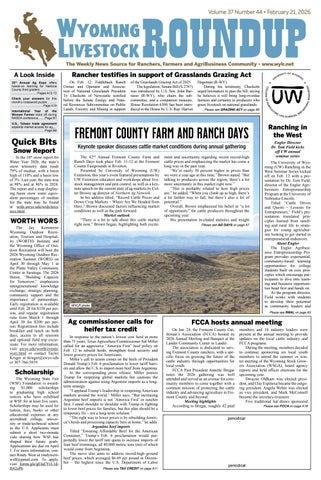
FREMONT COUNTY FARM AND RANCH DAYS
Keynote speaker discusses cattle market conditions during annual gathering
The 42nd Annual Fremont County Farm and Ranch Days took place Feb. 11-12 at the Fremont County Fairgrounds in Riverton.
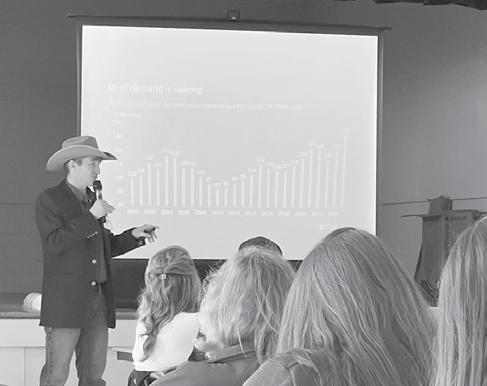
Presented by University of Wyoming (UW) Extension, this year’s event featured presentations by UW Extension educators and workshops about livestock management and pest control, as well as a keynote speech on the current state of ag markets by Colter Brown, ag director of Northern Ag Network
In his address titled, “Record Cattle Prices and Down Crop Markets – Where Are We Headed from Here,” Brown discussed factors influencing market conditions as well as the path forward.
Market outlook
“There is a lot to talk about this cattle market right now,” Brown began, highlighting both excite-
ment and uncertainty regarding recent record-high cattle prices and emphasizing the market has come a long way in the past year.
“We’re easily 30 percent higher in prices than we were a year ago at this time,” Brown stated. “But talking to producers across the region, there’s a lot more uncertainty in this market right now.”
“This is probably related to how high prices are,” he added. “When you climb up so high, there’s a lot farther way to fall, but there’s also a lot of potential.”
Overall, Brown emphasized his belief in “a lot of opportunity” for cattle producers throughout the upcoming year.
His presentation in-cluded statistics and insight
Please see AG DAYS on page A7
Ag commissioner calls for heifer tax credit
In response to the nation’s lowest cow herd in more than 75 years, Texas Agriculture Commissioner Sid Miller called for an aggressive “America First” beef policy on Feb. 12 to rebuild herds, strengthen food security and lower grocery prices for Americans.
Miller’s call to action comes on the heels of President Donald Trump’s Feb. 6 proclamation to lower tariff barriers and allow the U.S. to import more beef from Argentina.
In the corresponding press release, Miller praises Trump for reopening global markets but cautions the administration against using Argentine imports as a longterm strategy.
“I applaud Trump’s leadership in reopening American markets around the world,” Miller says. “But increasing Argentine beef imports is not ‘America First’ or rancher first. I stand shoulder to shoulder with Trump in fighting to lower beef prices for families, but this plan should be a temporary fix – not a long-term solution.”
“The right way to lower prices is by rebuilding America’s herds and processing capacity here at home,” he adds.
Argentine beef imports
Titled “Ensuring Affordable Beef for the American Consumer,” Trump’s Feb. 6 proclamation would purportedly lower the tariff rate quota to increase imports of lean beef trimmings, all 80,000 metric tons (mt) of which would come from Argentina.
The move also aims to address record-high ground beef prices, which averaged $6.69 per pound in December – the highest since the U.S. Department of Labor
On Jan. 24, the Fremont County Cattleman’s Association (FCCA) hosted its 2026 Annual Meeting and Banquet at the Lander Community Center in Lander.
The association is dedicated to serving Fremont County ranchers, with a specific focus on growing the future of the cattle industry through opportunities for local youth.
FCCA Past President Annette Bregar notes the 2026 gathering was well attended and served as an avenue for community members to come together with a common mission of protecting the cattle industry and advancing agriculture in Fremont County and beyond.
Meeting highlights
According to Bregar, roughly 42 paid
Ranching in the West
Engler Director
Dr. Tom Field kicks off UW annual seminar series
The University of Wyoming (UW) Ranching in the West Seminar Series kicked off on Feb. 12 with a presentation by Dr. Tom Field, director of the Engler Agribusiness Entrepreneurship Program at the University of Nebraska-Lincoln.
Titled “Cattle Drives and Quests – Lessons for Entrepreneurs,” Field’s presentation translated principles learned from ranching and rural life to strategies for young agriculturists looking to get started in entrepreneurial endeavors.
About Engler
The Engler Agribusiness Entrepreneurship Program provides experiential, community-based learning opportunities for college students built on core principles which encourage participants to dive into learning and business opportunities head first and hands on. As the program director, Field works with students to develop their potential as community leaders and
members and 18 industry leaders were present at the annual meeting to provide updates on the local cattle industry and FCCA programs.
During the meeting, members decided to continue sponsoring six local youth members to attend the summer or winter meeting of the Wyoming Stock Growers Association (WSGA), heard agency reports and held officer elections for the upcoming year.
Dwayne Oldham was elected president, and Clay Espinosa became the outgoing president. Angela Weber was elected as vice president, and Mark McConnell became the secretary-treasurer. Five traditional hat draws sponsored
WYLR photo
Since President Donald Trump announced the U.S is expanding the annual tariff rate quotas for Argentinian beef from 20,000 metric tons (mt) to 80,000 mt a year on Feb. 6, beef producers have been expressing their concerns.
On Oct. 5, 2025, Trump visited with reporters on the issue of high grocery prices while flying back to Washington, D.C.
He said, “And one of the things we’re thinking about doing is beef from Argentina, and if we buy some beef – I’m not talking that much from Argentina – it would help Argentina, which we consider a very good country, a very good ally.”
At the time, the president was talking about allowing 10,000 mt of duty-free beef trimmings a year into the U.S.
Earlier, Trump met with the President of Argentina, and they hit it off. They decided to allow more U.S. beef exports into Argentina.
Trump soon realized he faced backlash from beef producers and state politicians. After his announcement, the five-market average cash cattle price dropped 13 percent and feeder and live cattle futures dropped for several days.
Since then, nothing has really happened with Argentina and beef imports. A number of people said the amount wouldn’t change the price of ground beef at the grocery anyway.
However, the issue jumped back into the news on Feb. 6 when U.S. Trade Rep. Jamieson Greer and Argentina Minis ter of Foreign Affairs Pablo Quirno signed the U.S.-Argentina Agreement on Reciprocal Trade and Investment.
This agreement opened a tariff-rate quota which went even further, specifying an additional 80,000 mt limited to fresh, chilled or frozen boneless beef at 20,000 mt each quarter. These lean trim mings would be used to blend with U.S. fat – which we have plenty of – into ground beef, which will mostly go into fast-food burgers.
Trump’s order only grants the additional 80,000 mt for this year. The 100,000 mt would account for under five percent of U.S. beef imports and total around one percent of total beef consumption.
There are those in the international beef trade who are skepti cal of Argentina meeting their quota. They do raise a lot of cattle and some have some really good genetics from the U.S. I imagine their northern cattle are all Brahman, while English and other con tinental breeds may be in the southern half of the country.
Argentina’s ability to deliver 100,000 mt of beef trimmings to the U.S. this year sounds questionable.
U.S. beef imports from Argentina were around 33,357 mt through November 2025, as tight supplies and tariff-related dis ruption of imports from Brazil boosted demand for lean trim from Argentina.
Argentina’s total beef exports have jumped by 22 percent by value last year. By tonnage, the exports for the last three years have averaged almost 900,000 mt.
Per capita, Argentines are among the world’s biggest beef eaters, consuming about 75 percent of the country’s beef pro duction. So it sounds like they eat the steaks and roasts, and we get the trimmings.
GUEST OPINIONS
In the dark of night, my eyes open unexpectedly, blinking quickly as I try to focus through the darkness.
I glance over, reach for the nightstand and place a finger on my phone. The screen lights up. It’s 3:12 a.m. Again.
“I’ve got to break this cycle,” I think to myself.
Yet, my mind sets off again. Immediately, I’m engulfed in a whirlwind of thoughts.
“The wind won’t stop blowing, and it hasn’t rained or snowed in months,” I think. “It’s not cold enough to kill the bugs. Is my stored grain safe? The wind is blowing so hard, and now the dirt is moving. Are the roofs okay? What about the grain bins? Do I have enough insurance to cover my losses if one collapses? What about all the equipment? I think we can make it one more year if we can hold down expenses.”
By Ron Rabou
I go on, “Everything has just skyrocketed in price – parts, tires, steel, hoses, fuel, oils. If there’s a problem this year with a tractor or another piece of equipment, will there be enough revenue to pay for it? Hard to tell. I guess it depends if it rains – at all or at the right time. If the wind keeps blowing there’ll be nothing left in the subsoil. Is crop insurance enough to help us carry on if we can’t get a crop? The weather is causing our yields to slip nearly every year.
New research from the Kiel Institute for the World Economy found U.S. importers and consumers bear about 96 percent of the tariff burden, with exporters absorbing only about four percent.
“Everything we gained in the good years, we’ve more than lost in the past few. Should I negotiate harder on my grain contracts and risk losing them? At least it’s something, even though we’ll still lose money,” I continue.
“I think I left the shop door open. Maybe I need to get up and go check,” I go on. “I’ve got to get financials together this week and prepare for the banker’s visit. How can I justify doing this again? How long will they allow us to continue to eat away our equity. Maybe it’s time to sell. I can’t. It wouldn’t be fair to the kids. They love it here, and at least a couple of them want to eventually raise their families here. I’ve got to hold on. Things will get better, I hope. They have to, right? I’ll come up with something. I always do.”
I fold my hands and begin to pray, “Thank you, God, for blessing me with an amazing life. Grant me the wisdom to carry forward and to prosper what you have blessed me with and…”
Beep! Beep! Beep! I am awakened
Please see FARMERS on page A10
Ron Rabou Courtesy photo
Kinnear locals honored
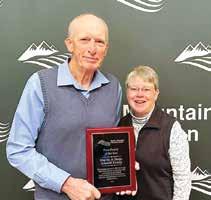
According to a Feb. 7 County 10 article, Marvin and Sheila Schmidt have been honored as the Rocky Mountain Farmers Union (RMFU) Farm Family of the Year for 2025.
RMFU is a general farm organization with members in Colorado, New Mexico and Wyoming. As a grassroots advocacy organization, RMFU focuses on providing a strong voice for farm and ranch families and rural communities.
Marvin’s grandparents, Henry and Sadie, homesteaded near Loveland, Colo. The Dust Bowl and Depression of the 1930s took its toll on the farm operation, and in 1936, the family moved to Central Wyoming to make the most of available water and irrigation systems.
Henry milked Shorthorns, then separated out the cream for grocery money. The skim milk was fed to hogs.
Marvin’s parents, Harold and Alma, continued farming and staying active in RMFU. They were chapter officers and attended RMFU conventions. Marvin took over the farm when Harold retired in 1984.
The Schmidts have grown sugarbeets, corn, beans, sunflowers and high-quality hay. The best hay was sold to a neighboring dairy, and what was left over was fed to Marvin’s sheep. This arrangement worked out until the dairy closed.
With no other immediate buyer of hay available, the Schmidts expanded their sheep operation to make up the difference. The Schmidts now raise 500 head of sheep, although at times this number can top 1,400.
The ranch is near Kinnear, where Marvin and Sheila are active in their Lutheran church. Sheila recently retired after teaching fourth grade for 45 years at the Wind River School. They are members of a rural electric cooperative and the Big Horn Cooperative. Marvin is a volunteer member of the fire department.
The two are regular participants at RMFU conventions.
Marvin has been on several National Farmers Union Fly-In trips to Washington, D.C. to meet with ag policy lawmakers. As lifetime members, he and Sheila keep their chapter active.
Scholarships available
Certified Angus Beef (CAB) will award over $100,000 to college students pursuing careers in food and agriculture from the Colvin Scholarship Fund.
Applications span three degree tracks and are open through April 1.
The 2026 Colvin Scholarship empowers the next generation of agricultural leaders who have chosen to dedicate their academic studies and future careers to strengthening the beef industry.
Applications for the scholarship undergo a comprehensive review process, which considers the applicants’ academic achievements, extracurricular involvement, communication skills and commitment to the beef industry.
A selection committee comprised of industry experts and CAB representatives then reviews each application to identify the most qualified candidates.
Scholarship recipients receive financial support, along with the opportunity to connect with industry leaders and mentors. First-place winners in each category earn $7,500.
Applications for the 2026 Colvin Scholarship will close on April 1. Interested students who live in the U.S. or Canada are eligible and encouraged to apply.
For more information or to apply, certifiedangusbeef.com/en/brand/colvin-scholarship
Scholarship applications open
The Trailing of the Sheep Festival is pleased to announce the second year of distribution of an annual scholarship in honor of John Peavey.
The 2026 John Peavey Legacy Fund Scholarship application is open through March 1 for interested and eligible students. The recipient of this scholarship will be awarded $750 for the 2026-27 academic year.
The recipient may use funds for college or trade school related expenses including tuition, fees, housing and books while pursuing a degree or certificate in the field of agriculture.
A committee made up of members of the Peavey family and the festival board will review the applications and choose the scholarship winner, and the selected recipient will be notified by April 1.
For more information or to apply, visit trailingofthesheep.org/john-peavey-legacy-scholarship
Enrollment encouraged
The U.S. Department of Agriculture (USDA) is encouraging dairy producers to enroll in Dairy Margin Coverage (DMC), an important safety net program to help offset milk and feed price differences.
This year’s DMC signup began on Jan. 12 and the deadline to enroll is Feb. 26.
The One Big Beautiful Bill Act (OBBBA), signed by President Donald Trump on July 4, 2025, reauthorized DMC for Calendar Years 2026-31 and provided substantial program improvements, including establishing new production history and increasing Tier One coverage.
The OBBBA increased DMC’s Tier One coverage level from five million pounds to six million pounds. All dairy operations electing to enroll in DMC for 2026 will establish a new production history.
Existing dairy operations that started marketing milk on or before Jan. 1, 2023 will use the higher of milk marketings for the years of 2021-23.
New dairy operations starting after Jan. 1, 2023 will use their first year of monthly milk marketings, even for a partial year.
Milk marketing statements or production evidence are required to establish a production history.
Dairy operations also have the option to lock-in coverage levels for six years – from 2026-31 – with premium fees discounted by 25 percent.
DMC offers different levels of coverage, including an option free to producers, minus a $100 annual administrative fee.
To determine the appropriate level of DMC coverage for a specific dairy operation, producers can use the online dairy decision tool.
For more information or to enroll, visit fsa.usda.gov/ resources/programs/dairy-margin-coverage-program-dmc
USDA seeks comment
The U.S. Department of Agriculture’s Animal and Plant Health Inspection Service (APHIS) invites public comment on a petition from Bayer CropScience LLC to deregulate a soybean developed using genetic engineering.
The soybean variety is resistant to damage caused by lepidopteran pests.
The public will have 60 days to review and comment on the petition and draft Plant Pest Risk Assessment (PPRA). APHIS encourages submission of scientific data, studies or research in support of comments.
Members of the public can submit comments through April 20 on the petition and draft PPRA by visiting regulations.gov/.
Marvin and Sheila Schmidt Courtesy photo
NEWS BRIEFS
Anthrax confirmed
The Idaho State Department of Agriculture (ISDA) has received confirmation of a positive anthrax case in a Cassia County, Idaho beef herd.
Anthrax is caused by Bacillus anthracis, a bacteria found naturally in soil which can affect livestock and wild animals.
The spores formed by this bacterium can survive in soil for decades and cause sporadic outbreaks, which commonly occur after periods of drought are followed with heavy rainfall.
Livestock and wild animals like antelope and deer can become infected when they breathe in, eat or drink spores from contaminated soil, plants or water.
Clinical signs of anthrax include sudden death, weakness, staggering, difficulty breathing, fever and bloody diarrhea.
Diagnosis is made through laboratory testing for anthrax bacteria or antibodies to anthrax in the blood of infected animals.
Although rare, humans can become infected by coming into contact with infected animals or contaminated animal products or through exposure to spores. Infection can occur through contact via a cut or scrape on the skin, through inhalation of the spores or consuming meat from an infected animal.
ISDA has announced they are working with the Idaho Department of Health and Welfare and “there are no confirmed human cases of anthrax at this time, none of the infected cattle entered the food supply and there is no threat to food safety associated with this detection.”
Producers who suspect anthrax within their herds should immediately contact their veterinarian.
Updated proposed
On Feb. 17, the U.S. Department of Agriculture (USDA) announced proposed updates to federal line speed regulations in poultry and pork establishments operating under modern inspection systems.
The changes would update outdated limits by allowing eligible establishments to operate at speeds supported by their processes, equipment and food safety performance.
The proposals maintain full federal oversight in every establishment and reaffirms the authority of inspectors to slow or stop operations whenever inspection cannot be performed effectively.
Together, these actions provide clarity and consistency for establishments which have operated for years under a patchwork of waivers, pilots and temporary measures, replacing uncertainty with predictable, long-term rules.
The updated regulations would also remove worker safety attestations falling outside USDA’s statutory authority, reducing redundant paperwork for industry.
USDA invites public comment on both of these proposed rules, and comments will be accepted for 60 days following publication in the Federal Register
For more information or to submit comments, visit regulations.gov/
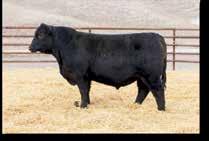
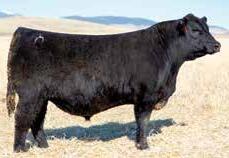
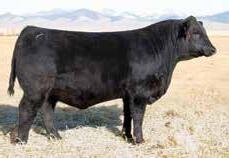
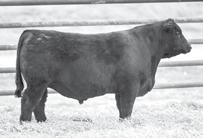
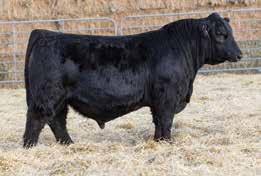
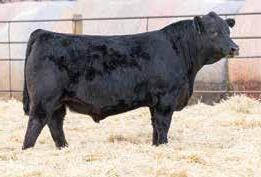
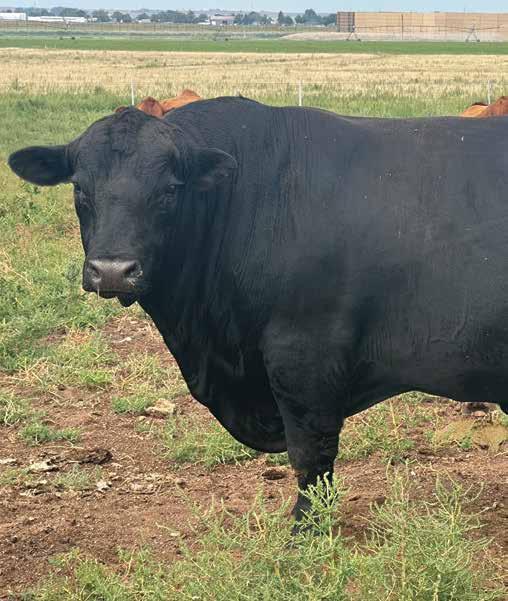
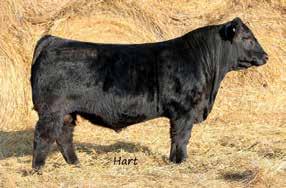
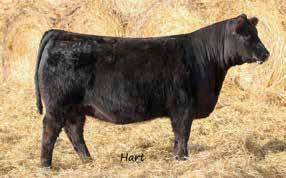
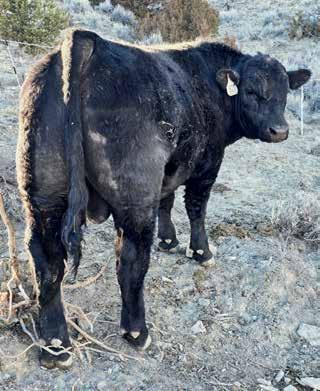
-1.6, WW 79, YW 126, ADG 0.30, DMI 1.02, MILK 28, ME12, HPG 14, CEM 6, STAY 17, MARB 0.52, YG 0.22, CW 31, REA -0.07, FAT 0.04
Kauf wins third Olympic silver
According to a Feb. 16 WyoFile article by Angus M. Thuermer Jr., Alta Mogul Skier Jaelin Kauf won her third Olympic silver medal – her second at the 2026 Milan-Cortina Olympics – in a thrilling series of head-to-head races. Kauf finished five points behind Australia’s Jakara Anthony in the inaugural Olympic event at Livigno, after fighting her way through earlier heats. She seemed all but doomed after taking a head-over-heels tumble in the semifinal against France’s Perrine Laffont, but she gamely picked herself up and continued down the course.
In the event, judges score the skiers on time, aerial maneuvers and skiing technique.
“It’s about the whole package, and Anthony has the whole package,” NBC Analyst Hannah Kearney said.
Kauf won silver in the singles moguls, her second silver following a similar finish at Beijing.
Additionally, Jackson native Breezy Johnson won the gold medal in the women’s downhill on Feb. 8, and Jackson native Anna Gibson is scheduled to race in the firstever Olympic ski mountaineering mixed team relay event on Feb. 21.
Seasonal employees sought
The Bighorn National Forest is hiring seasonal employees for the upcoming recreation season and is encouraging local residents to apply.
“We are looking forward to the skills and talent seasonal employees bring in keeping the Bighorn’s trails and recreation sites open, safe and welcoming for visitors,” said Bighorn National Forest Supervisor Andrew Johnson. “These positions often lead to life-long connections for people who are looking for a meaningful way to support their local community and public lands.”
The Bighorn National Forest is recruiting for a variety of roles, including recreation and visitor services, trail and facility maintenance and active resource management.
These positions are in addition to seasonal fire hire events already underway.
Bringing on seasonal employees will help improve trails, campgrounds and facilities for safer, reliable and enjoyable recreation experiences for all.
For more information or to apply, visit fs.usda.gov/ r02/bighorn/newsroom/releases/bighorn-national-forest-announces-seasonal-hiring-upcoming-recreation
Joint statement issued
On Feb. 13, Govs. Jared Polis, Mark Gordon, Michelle Lujan Grisham and Spencer Cox released a statement on the ongoing Colorado River negotiations.
“We, as Upper Basin states, remain committed to working to reach a solution that works for each of the seven states and all who rely on the Colorado River. We have come together in good faith throughout this process, and we are putting every tool on the table available to us, including releases from our upstream reservoirs, meaningful voluntary conservation both now and in the future and continued strict self-regulation of water supplies,” they wrote.
“Upper Basin water users live within the means of the river by adapting our uses every year based on available supplies. We continue pursuing a seven-state consensus, which would provide greater opportunity to pursue federal funding supporting conservation efforts and innovative water-saving technologies across the basin,” they continue. “Together, we can ensure a sustainable future for the river on which we all depend. We can and we must rise to this occasion.”
Petition filed
On Feb. 16, Gov. Mark Gordon announced the state of Wyoming, through the Attorney General’s Office, filed a petition for reconsideration to the Interior Board of Land Appeals (IBLA) asking to reverse its Jan. 15 decision which would block a 3,500 well expansion in the Jonah Gas Field.
The petition states IBLA improperly vacated the environmental impact statement’s record of decision based on Clean Air Act concerns, despite the objections of Wyoming’s Department of Environmental Quality (DEQ), which has primacy over the implementation. The bureau’s earlier decision properly relied on the DEQ’s air quality permits.
The Secretary of Interior assumed jurisdiction over the case and maintains IBLA’s decision until they have completed their review of the decision.
The expansion of this project is expected to create over 900 jobs over the life of the project. The state is expected to earn around $2 billion in severance taxes and $611 million in sales tax over the life of the project.
business owners.
He is passionate about free enterprise and cultivating opportunities for young people in agriculture and rural communities and has earned international recognition as an innovative educator who excels in connecting the dots between people, industries and ideas.
Gratitude and goals
Throughout his presentation, Field shared several principles of entrepreneurship which coincides with lessons learned from ranching and rural life.
His first recommendation to young entrepreneurs was to lead with gratitude when thinking about goals. To frame this concept, he shared an analogy of starting young horses.
“If you try to start out on a broncy horse with a bad attitude, neither one of you is going to have a good day,” Field stated. “When we start from a place of gratitude, we tend to do better.”
Field emphasized cultivating an attitude of gratitude can help make the hard days easier in the midst of tough conditions, in ranching as well as other industries.
Shaping perspective
Next, Field turned his comments to the importance of perspective. He emphasized the principles of business management and entrepreneurship comes down to understanding one’s personal worldview and approaching problems from new perspectives.
“Seeking to understand should be your first goal,” Field stated, adding accomplishing true understanding comes down to navigating two core principles – context and perspective.
According to Field, context sets the stage and defines the boundaries for approaching a problem, while perspective shapes the problemsolving process.
“Perspective is subjective,” Field emphasized. “We all have different expectations, and if we depend only on our own perspective, we are probably not going to find the truth.”
He encouraged attendees to take a holistic approach to problem solving, encouraging them to welcome opinions and perspectives of others while working towards a solution.
Mindset and motivation
Field also emphasized the importance of self-motivation and accountability in achieving goals.
He encouraged attendees to live by the exclamation point rather than the question mark, cultivating an attitude of action instead of endless theorizing.
He also encouraged attendees to set goals to aid in self-development and to allow flexibility along their career paths or “quests.”
“Those who complete a quest do not merely find something, they become something,” Field said.
“The question driving us should be who we are becoming, not what. What we do matters, but it’s not who we are.”
Field also shared advice on overcoming obstacles, including “slaying the dragons” of doubt, economic hardship and comparison through a willingness to learn from mistakes and persevere.
“Sooner or later, everybody runs into something bigger than they are,” Field stated. “We have to be able to adjust and learn from every wreck and try to minimize the next one.”
Team effort
Finally, Field emphasized the importance of building relationships with other people – in business and in life.
Relationships are crucial in providing moral support and accountability, Field stressed, which are both important aspects of building a business and achieving a full life.
He noted in cowboy culture, there is often a romanticized version of independence and solitude which can become dangerous when taken to extremes.
He reminded the audience there comes a time when bull riders depend on bull fighters, and bronc riders need the help of a pickup man.
“Every second spent developing relationships in real time will be important to your lives,” Field concluded. “Don’t go at it alone.”
Ranching in the West
The 2026 Ranching in the West Seminar Series is a four-part series organized under UW’s College of Agriculture, Life Sciences and Natural Resources Ranch Management and Leadership (RMAL) program.
The series invites college students and members of the public to explore topics including agricultural entrepreneurship, innovation and land stewardship through three evening seminars and a daylong conference.
The seminars last two hours and are available both in person and online, while the culminating conference will be held in person.
Remaining seminar speakers include Ben Hostetler and Ike Eastman, who will share their respective experiences working in wool processing and wildlife media during presentations scheduled for Feb. 26 and March 26.
The series will conclude on April 15 with the Rocky Mountain Land and Resource Management Conference, featuring presentations and a panel discussion on land use and resource management in the West, as well as a keynote address from Gov. Mark Gordon.
Grace Skavdahl is the editor of the Wyoming Livestock Roundup. Send comments on this article to roundup@wylr.net.
USDA aid available for specialty crops and sugar
On Feb. 13, U.S. Secretary of Agriculture Brooke Rollins announced the U.S. Department of Agriculture (USDA) is providing $1 billion in the Assistance for Specialty Crop Farmers (ASCF) Program for specialty crops and sugar –commodities not covered through the previously announced Farmer Bridge Assistance program.
These one-time bridge payments will help address market disruptions, elevated input costs, persistent inflation and market losses from foreign competitors engaging in unfair trade practices which impede exports.
Specialty crop producers have until March 13 to report 2025 acres to USDA’s Farm Service Agency (FSA).
The ASCF Program is authorized under the Commodity Credit Corporation Charter Act and will be administered by FSA.
Other eligible specialty crops include macadamia; mango; all types of melon; cultivated mushrooms; mustard and other greens; nectarines; okra; olives; onions; opuntia; papaya; parsley; parsnip; passionfruit; garden, English, edible pod or dry edible peas; peaches; pears;
pecans; peppers; persimmon; pineapple; pistachios; plums; pomegranates; potatoes; pumpkins; quince; all types of radish; raspberries; rhubarb; rutabaga; salsify; spinach; summer and winter squash; strawberries; Suriname cherries; sweet corn; sweet potatoes; Swiss chard; taro; tomatoes; turnips; walnuts and watermelon.
Eligible farmers should ensure their 2025 acreage reporting is factual and accurate by March 13. Commodity-specific payment rates will be released by the end of March.
Crop insurance linkage will not be required for the ASCF Program. However, USDA strongly urges producers to take advantage of the new One Big Beautiful Bill Act risk management tools to best protect against price risk and volatility in the future.
For more information, visit fsa. usda.gov/fba or contact a local FSA county office.
Prescribed burn planned in Big Horn County
The Wyoming Game and Fish Department (WGFD) is planning a prescribed burn on Yellowtail Wildlife Habitat Management Area in coming weeks to benefit migrating waterfowl. WGFD will work cooperatively
with the Bureau of Land Management and the National Park Service on the project. Crews plan to target approximately 100 acres of wetland vegetation around ponds one through four on Yellowtail north of the Shoshone River.
Prescribed burns may be conducted between Feb. 23 and April 30 and only when weather and fuel moisture conditions allow for a safe, effective operation. Smoke may be visible at times during the burn.
CHECK US OUT ON FACEBOOK @WYOLIVESTOCKROUNDUP
Falls Ranch 811 Blk Hfrs, 550-700#, Weaned a
Bunk Broke, Been on a Grower Ration, 3 Rounds of Shots, Bangs Vac., Home Raised, NO Replacements kept from the Wyoming Ranch (200 hd is from the Montana Ranch), Vermilion Genetics, Easy to handle
Table Mountain Ranch LLC 280 Blk Strs & Hfrs, 500-550#, Weaned a long time, Hay Fed Only (Grass/Alfalfa/Oat Mix), Complete Vac. Program (shots to be called in), No Implants, Producer All Natural
A & E Livestock 170 Blk Strs & Hfrs, 650-750#, Weaned a long time, Bunk Broke, Been on a Grower Ration, 3 Rounds of Shots, Steers were Implanted at weaning, Heifers are NOT Implanted, No Replacements Kept. Matt Haun 100 Blk Strs, 800-850#, Weaned a long time, Bunk Broke, Been on a Light Grower Ration, Complete Modified Live Vac, No Implants Doug Derouchey 100 Blk Strs & Hfrs, 500-700#, Weaned a long time, Been on a Light Grower Ration, 3 Rounds of Shots: Vision 7, One Shot BVD, Nasalgen 3, Poured w/Clean-up, No Implants, Wintered for grass Kruse Livestock LLC 75 Blk/Bwf/Rwf Strs & Hfrs, 500-600#, Weaned 90 days, Bunk Broke, Been on a Light Grower Ration to go back to grass, Free Choice Salt & Mineral Program, Branding & Precond. Shots: Pyramid 5+Presponse SQ, Vision 7/Somnus +Spur, Steers are Implanted with Synovex C and are Knife Cut, Heifers are NOT Implanted, Home Raised Cattlecorp LLC 75 Blk Hfrs, 400-500#, Weaned a long time, Running out, Hay Fed, 2 Rounds of Shots, Bangs Vac., No Implants Tom Rogers 70 Mx Strs & Hfrs, 650-750#, Weaned a long time, Been on a High Roughage Ration, Branding Shots, Booster Shots in Nov.: A Modified Live Vac. Program
S & T Farms/Scott & Blake Fegler 70 Char-x/Red Angus Strs & Hfrs, 770-950#. Heifers are Guaranteed Open, Weaned 90 days, Running out on Pasture,Strictly Hay Fed (mostly grass with some alfalfa), Purina Mineral Progarm, Shots at Birth: Vision 7, Once PMH, Branding and Pre-cond. Shots: Vision 7, Once PMH, Pyramid 5, Weaning Shots: Vision 7, Poured with Clean-up, January 15, 2026 Poured again with Clean-up, Heifers are Bangs Vac., Replacement Quality, Sired by Pieper Red Angus Bulls High Cliff Ranch 45 Mx Strs & Hfrs, 700-800#, Complete Vac. Program Don Grenemeyer 40 Mostly Blk Strs & Hfrs, 550-650#, Weaned 90 days, Been on Hay & Silage , Bunk Broke, Complete Vac. Program
Ed & Bev Allen 40 Mostly Bwf Strs & Hfrs, 600-650#, Weaned since December 5, Been on Alfalfa & Millet Hay and Extruded Corn, Branding Shots: Pyramid 5+Presponse SQ, Alpha 7, Pre-cond. Shots: Pyramid 5+Presponse SQ, Alpha 7, Weaning Shots: Pyramid 5+Presponse, Alpha 7, Poured w/Dectomax, Booster Shots on Dec. 26: Pyramid 5+Presponse, Poured w/Ivomec Beck Ranch/Dana Beck 40 Blk Strs, 400-500#, Weaned a long time, Running out, Strictly Hay Fed, Complete Modified Live Vac, No Implants K. Powd Boles 14 Blk/Bwf/Rd Strs, 500#, Weaned 30+ days, Running out on pasture supplemented with Hay and Cake, Branding
Vista Once SQ, Covexin 8, Weaning Shots: Vista Once SQ, Covexin 8 Lee Carpenter 4 Blk/Bwf Strs, 700-725#, Weaned a long time, Hay Fed, 2
Angus heifer Lot 90 – MC Georgina 64N – Price: $7,000 DOB: 2/13/25 Sire: Cherry Crk Behind The Scenes Dam’s Sire: MA Upward 0207 EPDs: BW: +1.1, WW: +71, YW: +123 and Milk: +31 Buyer: Boone and Melanie Herring, Veteran
Reported By: Curt Cox, WYLR Field Editor Feb. 12, 2026
Top Sellers
Lot 6 – Cherry Crk Advance M92 S – Price: $28,000
DOB: 9/2/24 Sire: Cherry Crk Advance G248 S Dam’s Sire:
SS Enforcer E812 EPDs: BW: +0, WW: +70, YW: +128 and Milk: +15 Buyer: Crow Valley Ranch, Carpenter Lot 8 – Cherry Crk Blue Collar M169S – Price: $22,000
DOB: 9/24/24 Sire: Cherry Crk Blue Collar G275 Dam’s Sire: KM Broken Bow 002 EPDs: BW: -1.7, WW: +72, YW: +127 and Milk: +22 Buyer: Dyer Ranch, Crawford, Neb. Lot 12 – Cherry Crk Blue Collar M88 S – Price: $21,000
DOB: 9/1/24 Sire: Cherry Crk Blue Collar G275 Dam’s Sire: Sitz Incentive 704H EPDs: BW: -0.1, WW: +65, YW: +119 and Milk: +27 Buyer: James LaRue, Pancha Springs, Colo. Lot 66 – Cherry Crk Command M245S – Price: $20,500
DOB: 10/17/24 Sire: Cherry Crk Command J506 S Dam’s Sire: Sitz Incentive 704H EPDs: BW: -2.1, WW: +62, YW: +119 and Milk: +35 Buyer: Cobb Cattle Company, Savery Lot 67 – Cherry Crk Command M285 M – Price: $20,500
DOB: 11/12/24 Sire: Cherry Crk Command J506 S Dam’s Sire: Circle L Gus EPDs: BW: -1.5, WW: +80, YW: +137 and Milk: +27 Buyer: Cobb Cattle Company, Savery
Reported By: Curt Cox, WYLR Field Editor Feb. 13, 2026 Buffalo Livestock Marketing, Buffalo Auctioneer: Mark McNamee
125 Yearling Angus Bulls Avg. $11,392
Top Sellers
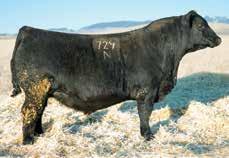
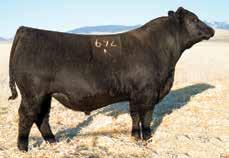
SINCLAIR MASS O688 REG: 21255004 DOB: 2/17/25
SINCLAIR JUSTIFIED O638 REG: 21383534
Reisig Longmire 8326
Sire: B Bar Black Mass 3045 MGS: Sinclair Timeless 8BA4
CHANGING SONS OF: N Bar Explosion TNT N Bar Jusrite 4324A Sinclair Grass Master
Grass Range J476 Sinclair Bond K007 Sinclair Plains Boss 5B02
Creek Cedar Ridge IV
Bob 7BX4
In Time 6BT39 Sinclair Justified K507
SINCLAIR LONGMIRE O185 REG: 21436491 DOB: 3/10/25
Sire: Sinclair Longmire K507 MGS: Sinclair Plains Boss 5B02
SINCLAIR GRASS RANGE O155 REG: 21436481 DOB: 3/7/25
Sire: Sinclair Grass Range J476 MGS: Vermilion Spur G3269.
Lot 6 – PRA Black Mass 5270 – Price: $17,000 DOB: 2/23/25 Sire: B Bar Black Mass 3045 Dam’s Sire: Kramers Apollo 317 EPDs: BW: +0.5, WW: +63, YW: +106 and Milk: +28 Buyer: Lund’s B Bar Angus, Wiboux, Mont.
Lot 21 – PRA Rock 5358 – Price: $23,500 DOB: 3/5/25 Sire: Coleman Rock 7200 Dam’s Sire: HF Tiger 5T EPDs: BW: -2.5, WW: +47, YW: +85 and Milk: +29 Buyer: Caleb Schlautman, Gillette
Lot 90 – PRA Bulldogger 5339 – Price: $20,000 DOB: 3/3/25 Sire: PRA Bulldogger 1197 Dam’s Sire: Apex Hero 3502 EPDs: BW: +0.3, WW: +47, YW: +91 and Milk: +36 Buyer: EB Ranch, Broadus, Mont.
Lot 50 – PRA Black Mass 503 – Price: $19,500 DOB: 1/15/25 Sire: B Bar Black Mass 3045 Dam’s Sire: NA Stunner 013 EPDs: BW: -1.9, WW: +65, YW: +103 and Milk: +34 Buyer: Childs Land and Livestock, Cheyenne
Lot 32 – PRA Infinity 5422 – Price: $18,500 DOB: 3/20/25 Sire: LAR Infinity 691I Dam’s Sire: Sitz Profound 680G EPDs: BW: +0.1, WW: +69, YW: +120 and Milk: +25 Buyer: Caleb Schlautman, Gillette Powder River Angus Annual Bull Sale
on factors influencing cattle market conditions including supply and demand, weather conditions and political risks.
Supply challenges
To begin, Brown shared comments on the current state of supply and demand in the cattle industry. He emphasized a heightened consumer demand for protein and American beef is driving cattle production in a positive direction, but record-low herd numbers continue to impact supply flow.
According to Brown, the two main factors at play in determining the length of the cattle cycle and profitability in the cattle market are weather and supplies.
“The cattle cycle is still the main driver of profitability in our industry,” Brown commented. “Profitability drives sales, and weather and supplies drive profitability.”
Brown noted periods of drought, particularly in 2021-22, impacted herd sizes across the nation, leading ranchers to cull
animals and resulting in a tightened supply.
“When we make money, we’ll retain heifers and keep cows a little longer, but when we don’t, we start looking at those cows as liabilities instead of assets,” Brown said.
Noting the inverted relationship between supply and prices, Brown explained prices have been supported as the supply of cattle has decreased.
Further, he noted beef cow inventory – especially in Wyoming – has continued to decline in spite of heightened prices.
According the U.S. Department of Agriculture’s most recent Cattle Inventory Report, Wyoming saw one of the steepest contractions of beef cow numbers in the country and currently sits at the lowest number of beef cows in the state since 1985.
Looking ahead, Brown admitted he expects “a slow path towards growing cow numbers” influenced negatively by limiting factors such as weather, input costs and lack of labor.
Demand impacts
Brown also admitted the demand for American beef continues to remain strong, even though a tightened beef supply may mean less availability and heightened expense to consumers.
Brown emphasized the main thing consumers look for is consistency, and he admitted producers and packers may have a tricky road to navigate while figuring out how to support beef production with lower fed cattle numbers.
He noted an increase in carcass size may help offset the impacts of reduced commercial fed cattle slaughter, but this solution runs the risk of producing cuts of meat which are too big to be marketed successfully to the average consumer.
At the end of the day, Brown acknowledged consumers still want beef despite higher retail prices.
“Probably the best news for producers is the demand we’re seeing for beef,” Brown said, noting a demand for home-raised beef continues to surge as
Americans prioritize protein in their diets.
“The amount of money being spent on our product has increased, which means more dollars added into this system,” Brown added, noting profit has also finally balanced out to benefit cow/calf producers in addition to meatpackers.
Brown attributes rise in consumer demand to increased quality, noting between 80 and 85 percent of carcasses today are routinely grading Choice Plus and Prime.
“The industry has focused in on quality from a seedstock and commercial level,” Brown said. “Focusing on the end experience for the customer has turned demand around.”
Political risks
Brown also acknowledged some political factors posing risks to the beef industry, particularly the ongoing conversation around imported beef.
“Political risk is high for the cattle industry right now,” Brown admitted, recalling instances where comments by President Donald Trump and trade uncertainty resulted in direct market impacts in 2025.
However, Brown emphasized both imports and exports are necessary components of the cattle industry, and he noted increased imports are a natural counterpart to heightened cattle prices.
He also acknowledged the ongoing threat of the New World screwworm which has shut down fed cattle imports from Mexico, cautioning producers to be wary of a potential turn in the markets once imports resume or if the fly makes its way across the border.
In closing, Brown
shared some key takeaways, overall predictions and hopes for the future, including a belief beef demand will stay high and a hope for packing capacity and herd numbers to align as consumers demand more meat.
“Political risks remain high, but I think the big takeaway here is the cow/calf producer has leverage in this market,” he concluded.
Grace Skavdahl is the editor of the Wyoming Livestock Roundup. Send comments on this article to roundup@wylr.net.
Wyoming Game and Fish Department announces Super Tag Raffle winners
The Wyoming Game and Fish Department announced 11 winners of the 2026 Super Tag Raffle.
A Super Tag offers hunters the chance to purchase a license allowing them to hunt in some of the most coveted areas in the state. This does not count against bag limits or oncein-a-lifetime limits, and winners keep any preference points they may have.
The Super Tag Trifecta recipient will have the opportunity to select three
The revenue generated from Super Tag ticket sales goes back to the departmentʼs priority conservation efforts. Projects range from habitat management to reducing wildlifevehicle collisions and are vital in maintaining healthy wildlife populations and providing optimal hunting opportunities throughout the state.
Sidney Railroad Salvage
separate species from the available list.
The 2026 winners are James Richardson of Louisiana for the Super Tag Trifecta; Phillip Kelley of Alabama for pronghorn; Jer-
emy Alberta of Wyoming for deer; Craig Shavlik of Wyoming for elk; Mike Booth of Idaho for Bighorn sheep; Gregory Norris of Montana for black bear; Brent Wareham of Colo-
rado for gray wolf; Daryl Somes of Ontario, Canada for moose; Andrew Kiehl of Wyoming for mountain goat; Sandra Green of Wyoming for mountain lion and Aaron Hamstra of Indiana for wild bison. Super Tag ticket sales for 2027 opened on Feb. 17. For more information or to enter, visit wgfd.wyo. gov/licenses-applications/ wyoming-super-tag-raffle
Industry update – Colter Brown, ag director of Northern Ag Network, discussed current cattle industry conditions during a keynote address delivered at the 42nd Annual Fremont County Farm and Ranch Days, held Feb. 11-12 in Riverton. WYLR photo
Gone Phishing by Lee Pitts IT'S THE PITTS
I don’t know about you, but I’m getting sick and tired of getting junk e-mails from a Nigerian prince with a convoluted get-rich scam.
In broken English and misspelled words, the prince says all he needs is a little seed money, and we’re both gonna get rich. Such e-mails have been floating around the internet for decades now, and the process has become known as “phishing.”
I used to think no sane person would fall for such a scheme, but I actually know someone who fell for a similar scam and ended up losing $450,000. And this person was a lawyer and a local politician, which makes me question the intelligence of our elected officials.
This Nigerian prince must be filthy rich by now, so I figured, who better to send my own phishing e-mail?
Here’s the e-mail I wrote to the prince, which
you might want to borrow.
Dear Beloved Friend Prince Badari Kumalo Surugala,
Please permit me of my desire to go into a business relationship with you. I’m writing to you because I know you are a trustworthy benefactor who has lots of money but no brains.
I am currently writing this e-mail from the county jail with tears in my eyes and a heavy heart. I swear on my mother’s grave I am being wrongly held against
my will, and I can’t afford a good lawyer – if there is such a thing. I don’t know if I can stand too much more abuse before I will hang myself with my own shoelaces.
We’re fed a mushy maggot-infested gruel once a day, forced to sleep on the concrete floor, they beat us incessantly and pipe rap music over the intercom 24 hours a day to drive us all crazy. I believe this violates the Geneva Convention as cruel and inhumane treatment.
You, my dearest friend, are my last and only hope.
I know you will be curious as to how I got your name. A fellow inmate told me about you and said you were so burdened with money, you use $100 bills to light your cigars, your net worth is more than most African countries and even your pedigreed pooch has its own mansion and chauffeur-driven Mercedes so he can chase cars anytime he wants.
Hearing how you acquired your wealth has inspired me and given me the idea you are a good man who might want to throw down a ladder to help a poor, wronglyaccused person.
The local sherif arrested me for rustling cattle, but I swear I am innocent.
I urgently need $50,000 to pay my bond and legally break out of this prison. If you would, please send $50,000 via wire transfer to my account at the Secret Bank of Switzerland (account number redacted).
I need this to happen immediately because once I am convicted of a crime – which I swear I did not commit – I will be locked up in a dungeon far worse than even my current abode.
Paying my bond would allow me some time to gather up all of my cattle, brand them and sell them to a cartel in Mexico looking for a backhaul for their drug smugglers and mules. I have dealt with these cartel members previously and found them to be reliable and reputable.
I, like you, am not a greedy person, and once the cattle are sold, I’ll split the proceeds with you on a 50/50 basis. I figure your share will easily come to more than $250,000.
To wire your share of the proceeds, I will need your bank name, account number, mother’s maiden name, name of your pet and your secret password.
I pray I have chosen wisely in selecting Your Highness as a business partner to benefit from this oncein-a-lifetime opportunity.
May you be blessed as you extend your helping hand to a needy person who is in the same dire straits as you were many years ago.
Your humble servant, Lee Pitts (prisoner number redacted) P.S. Please be advised it could take some time before I’m able to send your share of the money because I have to let the brands scab over before I can sell the cattle.
“The proposed legislation simply seeks to give national grasslands permittees the same due process rights the Bureau of Land Management (BLM) and national forest permittees currently enjoy,” Checketts states “S.2787 will provide for stable and secure 10-year grazing agreements and permits. The modification sought by this legislation will, in fact, create a more uniform, equitable and less confusing framework for the relationship between U.S. Forest Service (USFS) managers and their rancher partners across the western portion of the U.S. I thank you for your consideration and urge the committee to advance this bill.”
Federal grazing in the West
Prior to his testimony, Barrasso introduced Checketts to the subcommittee, noting he and his wife Becky own and operate Fiddleback Ranch, where they run roughly 1,000 head of Black Angus cattle on public and private land.
Based in Newcastle, the couple is located immediately adjacent to the Thunder Basin National Grassland, which encompasses more than half a million acres in northeast Wyoming.
“In Wyoming, cattle graze on the Thunder Basin National Grassland,” Barrasso states. “Ranchers across the West depend on access to grazing on our national grasslands. They deserve to have certainty their grazing permits will be approved in a timely manner. The Grasslands Grazing Act of 2025 will give Wyoming’s ranching families the stability they need to keep their operations running strong.”
Checketts echoes this sentiment, explaining in states like Wyoming – where the federal government owns or controls significant acreage – integrating federal grazing allotments is often the only way to sustain cattle and sheep production at scale.
“Without the ability to graze on national grasslands, there would not be enough forage for my livestock nor enough private land to access additional forage to be able to ranch in Wyoming,” he says.
Checketts goes on to note more than 60 percent of the beef herd and more than half of the breeding ewe population in the West spend time grazing on federal lands, and he argues national grasslands, which are managed by USFS, often boast some of the highest-quality forage in the federal land system.
Checketts also asserts well-managed livestock grazing supports ecosystem health.
“Grasslands are diverse ecosystems, and grazing is the best way to manage them,” he states. “As an ecosystem, grasslands cover approximately 25 percent of the Earth’s surface and store approximately 34 percent of the world’s carbon. The national grasslands managed
by USFS are no different, and grazing is the best way to ensure biodiversity and ecosystem resilience.”
“Grazing – and the way we manage our rotations –mimics historic management of the grasslands and promotes retention of native grasses, fights the encroachment of invasive species and reduces fire risk,” he adds.
Addressing a longstanding inequity
At the heart of the legislation is a change to the Federal Land Policy and Management Act of 1976 (FLPMA), which governs grazing permits and agreements on federal lands.
While FLPMA provides certain tools and due process protections to permittees grazing lands managed by BLM and USFS, those same protections were not extended to permittees on national grasslands.
As a result, ranchers operating on national grasslands have faced greater uncertainty in permit renewals and fewer legal safeguards.
Checketts explains the Grasslands Grazing Act of 2025 would amend FLPMA by replacing the words “lands within national forests” with “National Forest System lands,” effectively bringing national grasslands permittees under the same umbrella of protections.
These protections include the ability to hold a 10-year grazing permit, a preference position for renewal of permits upon expiration, written notice of violations and an opportunity to correct them before cancellation or suspension and a requirement for two years’ notice before permit cancellation, except in emergencies.
“The Grasslands Grazing Act of 2025 remedies a longstanding inequity among grazing permittees which currently limits the due process protections for ranching operations on national grasslands,” says Checketts. “This bill would simply extend legal tools available to other permittees to ranchers who steward the four million acres of national grasslands.”
“Without these tools, it is harder to pass the ranching operation down to the next generation. Providing certainty for grasslands permittees helps to ensure producers can carry on the American tradition of ranching,” he adds.
Planning for the future
In his testimony, Checketts also emphasizes longerterm, more secure permits are about more than paperwork – they are about longterm land stewardship and business viability.
A 10-year permit allows producers to plan investments in infrastructure such as fences, pipelines, water troughs and forage improvements. It also provides greater financial stability when seeking capital, as lenders view longer-term permits as a more secure asset.
“This business stabil-
ity is crucial for the health and sustainability of rangelands, grasslands and rural communities – each of these grazing agreements and permits are tied to management of a base property,” he says. “Without the ability to plan for a longer-term grazing rotation and business operations, permittees face challenges in whether to continue operations.”
“Loss of an allotment or grazing association permit puts increased pressure on their private land and can lead to a producer sell-
ing out,” Checketts continues. “Lack of predictability affects producer retention and even the ability to recruit additional, new permittees over time.”
Further, Checketts points to demographic realities within agriculture, noting the average age of U.S. ranchers is 58.1 years old, and more than 70 percent of farm and ranch land is expected to change hands in the next two decades.
“Without long-term predictability, many operations will face the decision of whether to sell or gamble on future forage availability,” he states. “Provid-
ing tools for grasslands permittees which are already available to BLM and USFS permittees will give young ranchers more confidence to continue the long legacy of stewardship and continue producing high-quality protein as part of our national food security.”
Clarifying intent
Before wrapping up his testimony, Checketts urged lawmakers to ensure the bill’s intent remains focused on extending due process protections without unintentionally altering other longstanding programs governing national grasslands.
He emphasizes exist-
ing conservation practices, exemptions under the Public Rangelands Improvement Act and the current system of grazing agreements for associations should remain intact.
“The modification sought by this legislation will, in fact, create a more uniform, equitable and less confusing framework for the relationship between USFS managers and their rancher partners across the western portion of the U.S.,” he says.
Hannah Bugas is the managing editor of the Wyoming Livestock Roundup. Send comments on this article to roundup@wylr.net.
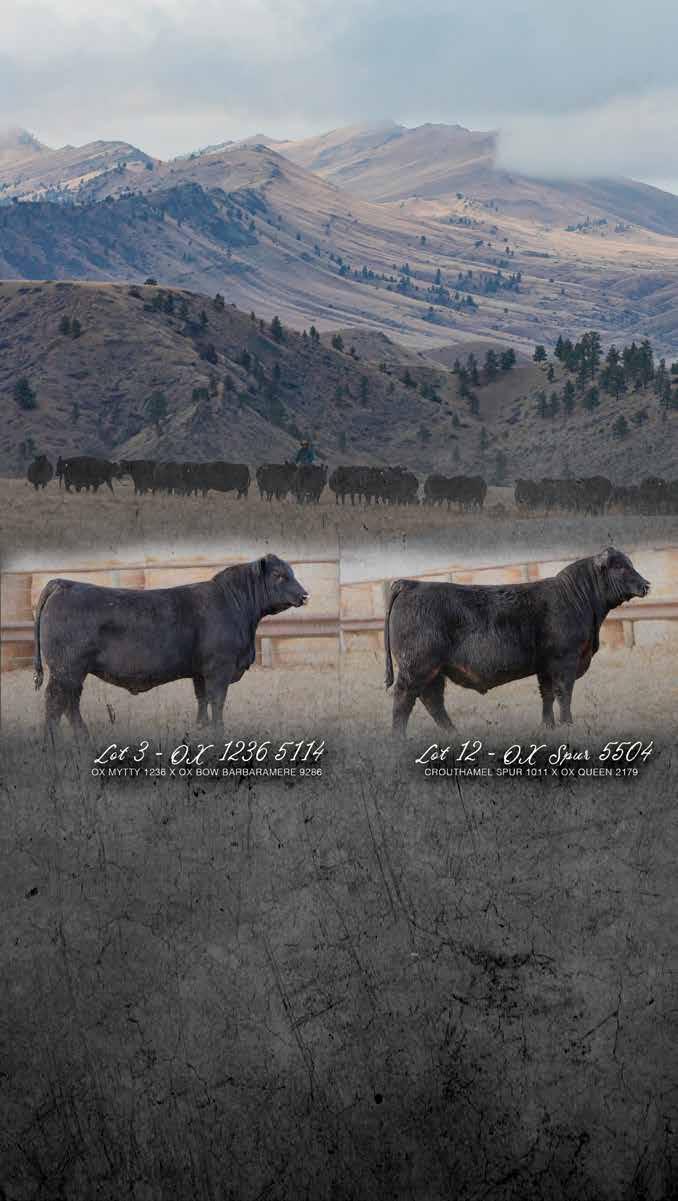
OX BOW RANCH Spring Bull Sale
by the alarm clock. It’s 6 a.m. Sighing, I think, “Dangit. I just got back to sleep. I’ve got to stop doing this.”
The plight of the American farmer is wrought with resiliency, stress, intense physical conditions, sleepless nights and uncontrollable circumstances.
Yet, despite facing daily challenges beyond their control and conditions which can rival insanity, they defy the odds and continue to produce the most abundant and safest food supply on planet earth.
Through it all, the
resounding legacy of American farms lives on. What other businesses can find a way to create multi-generational opportunities when the costs of doing business continue to escalate, all while revenue streams remain level or decline? A business where expenses necessary to produce are purchased at a retail level and goods are sold for wholesale prices. On top of that, the American farmer is stuck paying freight both ways.
It’s a business where millions of dollars are used
to generate hope that the rain will come. It requires immense faith God will provide a growing season allowing for the proper conditions to exist.
It’s a business where faith is placed in a small seed with hope it will sprout and eventually grow to become an environmentally-vulnerable plant, and despite uncontrollable factors, the plant will be resilient enough to survive through drought, hail, wind, downpours and massively variant temperatures to produce more than it cost to grow it.
It’s an anomaly most cannot understand, and it’s a leap
Bu Sale
of faith, depth of trust and hope most cannot fathom to attempt.
A quote written in jest reads, “Farming: noun. The art of losing money while working 400 hours a month to feed people who think you are trying to kill them.”
It’s not far from the truth, except 400 hours is a little light for some months during planting and harvesting.
The fact of the matter is no one cares for their land, livestock, crops and resources more than the American production agriculturalist.
I know this because I too am a farmer. Our resources are all we have.
MARCH
When I was young, my father told me over and again, “Son, if you take care of the ranch, it will take care of you.”
It’s true. When we rely on livestock, soil and the prosperity of our crops to satisfy our creditors and feed our families, the last thing we want to do is harm those resources in any way.
Furthermore, depleting those resources or adding unnecessary inputs or improper amounts of inputs, only harms our bottom line, and when the bottom line is most often razor thin and sometimes even negative, it would be completely senseless to make it worse.
In your own life, when was the last time you had to worry about food? When was the last time you went to the store or to a restaurant and there was no food?
the consumer pays the price.
Remarkably, in the face of adversity, consumer chatter, environmental constraints, political whirlwinds and the exponential rise in the cost of inputs, equipment and land, the American farmer still stands.
To many, it makes no sense why they remain steadfast, committed to their work, their land and their country. To the farmer, it makes no sense to have it any other way. The importance of consumer and legislative support for agriculture cannot be overstated, and our policies should always be a direct reflection of this support.
May we all, as American people, always remember to stand with the American farmer. After all, we meet him or her every day, at every meal.
I know prices have gone up, as many would proclaim. While this is true, the disparity between the cost of food to the consumer and the value of the product received by the farmer to produce the food only continues to widen.
The words of Paul Harvey strike at the heart of this massive, yet fragile industry known as agriculture, “And on the eighth day, God looked down on His planned paradise and said, ‘I need a caretaker,’ so God made a farmer.”
In 1975, the value of wheat in a loaf of whole wheat bread was about 11 cents. In 2025, 50 years later, the value of wheat in the same loaf of bread is about 1.7 cents. The farmer takes what he is given, the middlemen take what they want and
Developed on “THE
BULLS
Ron Rabou is president of Rabou Farms, Inc. in southeastern Wyoming, a nationally known author, speaker and co-host of the nationallysyndicated podcast AgInspo. For more information, visit raboufarms.com
Elizabeth Anne Tully Countryman
June 20, 1939 – Feb. 11, 2026
River. Over the years, the family moved to East Fork near Dubois, eventually settling at their cherished home on the Dinwoody.
PAP Tested - BVD Tested Performance Tested - RightChoice Verified
5 Registered Heifers 50 Commercial SimAngus Heifers - Sired by Black Summit Bulls from Kent and Shellie Haun, Riverton, WY.
Later in life, Elizabeth proudly earned her GED, accomplishing a goal that meant a great deal to her.
Together, Mace and Elizabeth raised three children – Valorie (Doug) Wilson, Monte (Sarah) Countryman and Ida (Wesley) Johnston.
Elizabeth Anne Tully Countryman passed away peacefully on Feb. 11. She will always be remembered as a strong ranch woman, a devoted wife and mother and a lifelong lover of animals and the Wyoming land she called home.
Elizabeth was born on June 20, 1939 in Three Forks – also known as Muddy Gap – to Robert and Alta Tully. She was raised alongside her beloved sister Roberta Mae Tully, who, being seven years older, cared for Elizabeth like a second mother.
As a young woman, Elizabeth met the love of her life Mace Warren Countryman. The two married when she was just 17 years old, beginning a lifelong partnership rooted in hard work, love and family. Elizabeth and Mace began their married life on the Drift Fence Ranch along the Sweetwater
Her legacy continues through her many grandchildren and great-grandchildren, including Erin (Anthony) Cobranchi and their children Vaughn and Rayne Hess; Kyle (Heidi) Wilson and their children Hallie and Jay; Justin (Tiffany) Johnston and their children Hunter (Jordann), Macen, Zane and Kandis; Morgan Johnston; Bridger (Marlene) Johnston and their children Julia (Dylan) Johnson and new greatgreat-granddaughter Brynlee Peyton Bauman and Shannon Johnston Goodsell and her daughter Alessandra Goodsell.
Elizabethʼs life was rooted in love. Her strength, kindness and laughter will be deeply missed but forever remembered by all who knew and loved her.
A celebration of life is planned for a future date.
TAX
began tracking the data in the 1980s.
The White House proclamation cites widespread drought in 2022, grazing lands damaged by wildfire and ongoing supply constraints as factors driving beef prices higher. As of July 2025, total U.S. cattle inventory stood at 94.1 million head – about one percent lower than 2023 – continuing a multi-year downward trend.
The proclamation also notes the U.S. has felt the effects of the New World screwworm outbreak in Mexico, which has restricted imports of live feeder cattle. Prior to the outbreak, the U.S. imported roughly one million feeder cattle annually from Mexico.
According to the U.S Department of Agriculture’s (USDA) Economic Research Service (ERS), Argentina shipped roughly 51,574 mt of beef to the U.S. as of November 2025, representing about 2.2 percent of total U.S. beef imports, which equates to 2.2 million mt or nearly 4.9 billion pounds of beef.
“If Argentina hits 80,000 mt of beef trimmings, it would still only equate to about 3.6 percent of all U.S. beef imports, based on USDA statistics,” writes DTN Ag Policy Editor Chris Clayton in a Feb. 9 article. “Australia, Canada, Mexico, Uruguay, Nicaragua, New Zealand and Brazil each export more beef and veal to the U.S. than Argentina.”
Widespread backlash
Despite this, Trump’s proclamation stirred up opposition from the ag industry, with several ag groups voicing their concerns.
North Dakota Farmers Union President Matt Perdue says he believes the move is misguided and argues increased imports are unlikely to significantly lower consumer prices.
“Economists – and, frankly, history – has shown us increasing these imports of Argentine beef or beef from any other country is not going to have a meaningful impact on consumer beef prices,” Perdue tells RFD-TV in a Feb. 13 article. “What it’s more likely to do is to lower the price producers are receiving for cattle, so we think this is the wrong approach.”
“We appreciate the administration’s focus on how we can work together to achieve affordable food prices for consumers, but I think the conversation really needs to focus on supporting the U.S. rancher, not our foreign competitors,” he adds.
Instead, Perdue emphasizes the need for fair markets, better access to credit and stronger support for young producers entering the industry.
Miller echoes these concerns, saying trade policy must align with domestic production goals, and he argues the long-term solution is not to increase imports but to rebuild the domestic herd and expand
U.S. processing capacity.
“While I understand Trump’s focus on shortterm solutions, we must pair it with a lasting ‘America First’ approach built on herd recovery, market fairness and real food security,” Miller says. “Short-term fixes matter, but the real win comes from a long-term ‘America First’ plan which rebuilds our herds, our markets and our independence.”
“Our ranchers are ready to rebuild,” Miller continues. “They just need the right tools and support. An ‘America First’ beef policy means producing safe, affordable, homegrown beef for American families and putting America’s producers back in control.”
“America First” beef policy
In response, Miller’s “America First” proposal calls for a Federal Heifer Retention Tax Credit, modeled after the Child Tax Credit, which would allow cow/calf producers to receive a federal tax credit for retaining heifers as breeding stock.
By incentivizing herd expansion, he believes producers would be better positioned to stabilize herd numbers over time, rather than selling replacements due to tight margins and drought pressure.
Deeming it a national “crisis,” Miller calls on Congress to include the tax credit in the next farm bill.
“This needs to be treated like the crisis it is, and we need immediate action,” Miller says. “Congress has a key opportunity for our next farm bill to send a clear message America has our producers’ backs. We need to treat American beef like the precious, life-giving resource it is and do everything we can to promote a strong supply, fueled by our great beef producers.”
“While we are still trying to recover from a $37 billion Biden-era agriculture trade deficit, we don’t need more foreign beef imports making it worse – we need more American beef,” he adds. “The next farm bill must stand firm with American ranchers. When we put American ranchers first, we put America first.”
In addition to the Federal Heifer Retention Tax, Miller’s policy includes several other priorities including expanding drought relief and grazing access by opening access to an additional 19 million acres of federal land, strengthening market transparency and reforming anticompetitive practices and enforcing mandatory country-of-origin labeling.
Miller argues consumers deserve to know exactly where their beef originates and the integrity of the “Product of USA” label must be protected.
He also credits USDA’s updated beef plan for making progress on processing capacity and market transparency but points out shifting trade policy shouldn’t
derail domestic rebuilding efforts.
Overall, Miller notes national food security – not just price stability – is at stake.
“This policy would be the most direct way to help rebuild our national herd, increase beef production and ultimately bring relief to American families at the grocery store,” he states.
Hannah Bugas is the managing editor of the Wyoming Livestock Roundup. Send comments on this article to roundup@wylr.net.
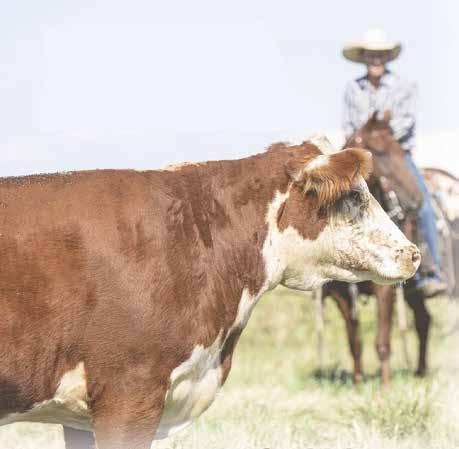
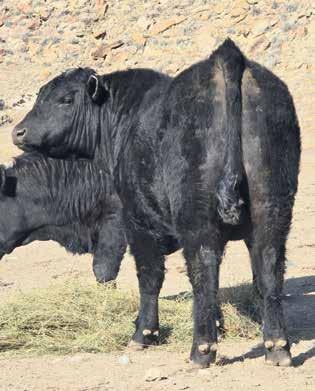
Herd rebuilding incentive – In response to the nation’s lowest cow herd numbers in more than 75 years, Texas Agriculture Commissioner Sid Miller called on Congress to include a Federal Heifer Retention Tax Credit in the next farm bill. He proposes a model similar to the Child Tax Credit, allowing cow/calf producers to receive a federal tax credit for retaining heifers as breeding stock instead of selling due to tight margins and drought conditions. WYLR photo
The 33rd Annual Casper Ag Expo was held Feb. 11-12 in the Industrial Building at the Central Wyoming Fairgrounds in Casper.
Organized by the Natrona County CowBelles, the event brings third-grade students from across Natrona County together for two days of hands-on agricultural education.
More than 800 third graders attended this year’s event, which featured 19 educational
stations focusing on all aspects of agriculture.
A host of volunteers including area ranchers, local businesses, 4-H members and leaders, FFA members and more provided educational opportunities for students, focusing on everything from crops and equipment to live animals.
Ag Expo Coordinator Katrena Crimm says the event serves an important purpose,
educating kids about where food comes from and the many influences of ag in their everyday lives.
“As our population generationally becomes more and more removed from ag, it’s increasingly important to have opportunities like this to connect kids with all the components of ag,” says Crimm. “The ability to learn hands on is huge, and we try to
include as many students as we can.”
The 34th Annual Casper Ag Expo is slated for Feb. 10-11, 2027. Crimm encourages interested volunteers or sponsors to visit the Natrona County Cow-Belles Facebook page for more information. Grace Skavdahl is the editor of the Wyoming Livestock Roundup. Send comments on this article to roundup@wylr.net.
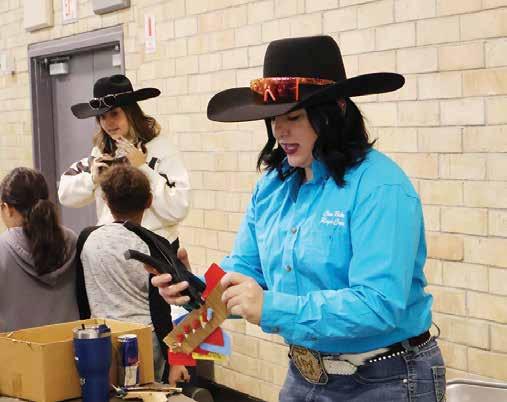
Tagging teacher – Natrona County Cow-Belles Member Matti Chandler demonstrates how to use an ear tagger. WYLR photo
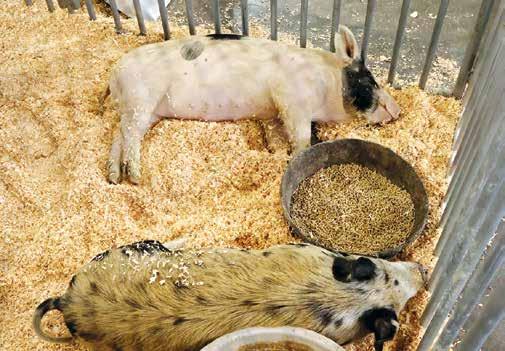
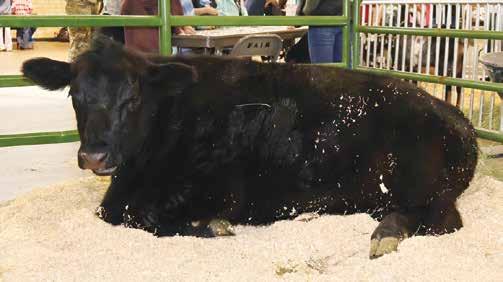
Hog tired – Here, a pair of pigs takes a break from helping Natrona County third graders learn about the ag industry during the 33rd Annual Casper Ag Expo. WYLR photo
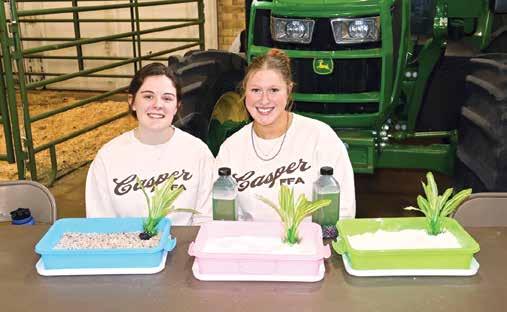
Soil school – Casper FFA Members Kadin Pollock and Landyn Markwardt taught third graders about soil science during the 33rd Annual Casper Ag Expo. WYLR photo
Livestock learning – The 33rd Annual Casper Ag Expo featured stations with live animals including cattle, chickens, horses, ducks and sheep to allow students an up-close learning experience with livestock. WYLR photo
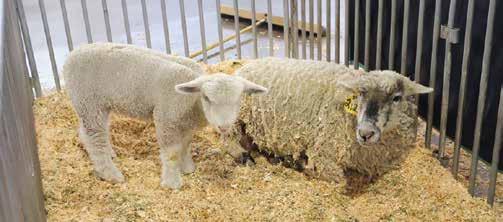
Furry friends – This lamb and ewe pair helped third graders learn about the sheep industry during the 33rd Annual Casper Ag Expo. WYLR photo
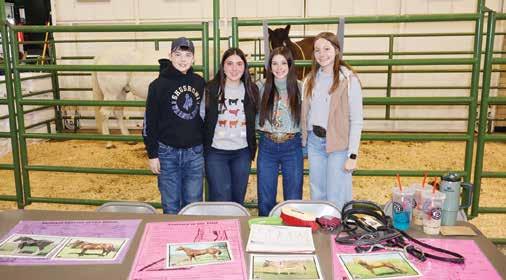
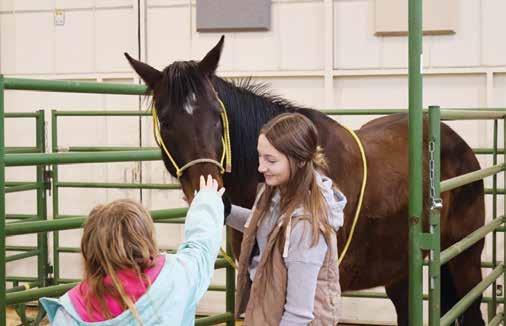
Equine education – Natrona County third graders learned about equine anatomy at a booth featuring live horses, saddles and educational posters. Pictured from left to right are Brogan Crimm of Shooting Stars 4-H Club and Teagan Campbell, Aubrey Lopez and Jillian Lopez of Casper FFA. WYLR photo
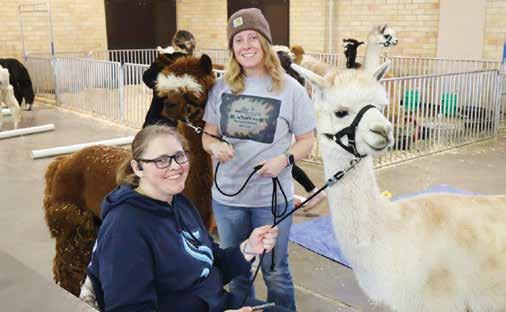
Alpaca agility – At a station run by members of the Barnyard Rebels 4-H Club, students got the opportunity to lead alpacas through an agility course. Pictured are Anndi Sparks and Danielle Zitterkopf, along with alpaca athletes Beasty and Jacey. WYLR photo
Unique opportunity – Students got the chance to experience hands-on ag education during the 33rd Annual Casper Ag Expo. Pictured is Casper FFA Member Jillian Lopez. WYLR photo
From Feb. 6-7, members of the Wyoming Farm Bureau Federation and Colorado Farm Bureau Federation gathered in Cheyenne for the 2026 Joint Young Farmers and Ranchers (YF&R) Lead ership Conference.
A series of breakout ses sions on Feb. 7 covered rel evant topics for young agri culturists, including a talk on budgeting, cost of liv ing and smart farm finances by Farm Credit Services of America (FCSAmerica) Developing Markets Officer
Alexander plays a key role in FCSAmerica’s Starting Gate program, an initiative which helps young and beginning farmers and ranchers get a foothold in
of taking control of finances through budgeting, noting creating a smart financial plan starts with asking questions about long-term priorities, assessing spending
operational income and offthe-farm income.
To put things in perspective, Alexander encouraged the audience to think about their money as a bucket of water. Once funds go in, he explained, it’s impossible to dip out of either side – it all becomes the same, regardless of its original source.
Without a budget in place, the temptation for impulse buys increases, which can be especially dangerous for producers who receive large cattle checks a few times a year rather than smaller, more evenly spaced income.
Alexander further added recent market conditions have been favorable for cattle producers, but markets always turn at some point.
Making a plan and putting away savings during the good times can help producers weather the storm of economic downturn.
“Our spending habits tend to increase with more income,” Alexander said. “If we don’t exercise control during good times, it makes things a lot harder when we start getting into bad times.”
Cost of living
Budgeting for cost of living is one of the most impactful ways a producer can exercise control over farm and ranch finances, according to Alexander.
He noted budgeting for cost of living is one of the most controllable parts of an operation, and since cost of living is a variable expense, having a plan in place and understanding financial abilities provides freedom and power when it comes to handling money.
“Cost of living is a variable expense that is always moving, and it has a major impact on your life and your future,” he stated.
With this, Alexander emphasized implementing good budgeting practices makes spending conscious and accountable, cutting down on uncertainty and anxiety surrounding individual purchases.
To emphasize the importance of budgeting cost of living intentionally, Alexander shared just $27.40 a day – or roughly $200 a week –of miscellaneous spending adds up to $10,000 which could have been allocated elsewhere over the course of a year.
“If you don’t start taking control of your money, spending will continue to creep up on you, and it just disappears,” Alexander said.
He also emphasized the importance of controlling family living expenses
when it comes to applying for loans, stating demonstrating smart money management in everyday living can aid in the process of getting approved for, and paying off, a loan.
Creating categories
To create budget categories, Alexander recommended looking at three months of transaction history to begin getting a feel for spending habits.
Apps and spreadsheets can help with separating categories, which individuals should then assess and rank from most to least necessary.
Cutting back on less necessary immediate expenses helps ensure funds for longterm goals, summarized by Alexander into three categories – farm, family and future.
Succcession planning is another area Alexander warned young producers not to overlook.
He encouraged individuals facing an opportunity to take over the family operation to take an in-depth look at their current cost of living and assess whether their lifestyle can continue to be supported on operational income alone.
“If you’re looking at succession planning, you need to start looking at how much your operation can support family living,” Alexander said. “Odds are, you’re going to have to come up with more cash than you’re thinking.” Tools and tips Alexander concluded his presentation by sharing some tools and tips to make budgeting and managing farm finances easier.
He noted there are several banking and budgeting apps available to make moving and tracking money easier and encouraged attendees to set up savings accounts and practice selfaccountability.
When planning for large life events and expenditures like weddings or starting a family, Alexander recommended factoring in room to save 10 to 20 percent more than anticipated costs.
In addition, Alexander cautioned against taking out lines of credit for longer than absolutely necessary, emphasizing paying off loans and closing lines of credit as soon as possible can help protect against runaway spending and a false sense of financial security. Grace Skavdahl is the editor of the Wyoming Livestock Roundup.
Adobe Stock photo
UNL provides irrigation water availability, risk management considerations for 2026 crops
Current snowpack in the headwaters of the North Platte River Basin continues to be below average.
Wyoming reservoir water levels on the North Platte River include Pathfinder at 33 percent full, requiring 722,530 acrefeet to fill, and Seminoe at 32 percent full, requiring 689,042 acre-feet to fill.
While initial weather forecasts indicate the potential for more moisture in the next few weeks, many farmers are concerned about irrigation water availability for the 2026 crop year.
Crop insurance
Crop insurance may play a critical role in supporting surface water irrigated producers in the North Platte Valley this year.
While irrigation districts have not yet finalized official water availability determinations, limited snowpack since March 15, 2025 may affect irrigation water availability for 2026
crops.
If the allocation letters from the irrigation districts indicate lower water availability and the letter comes out before planting, section four of the Preventative Planting Standards Handbook says, “When available information indicates the effects of drought prior to the insurance period for the current crop year are such that normal weather conditions within the Preventative Plant Standards insurance period would still not allow crop production – for example, irrigation water allocations remain below what is needed to irrigate 100 percent of historical acreage, even with normal weather – the loss would be attributable to events occurring outside of the Preventative Plant Standards insurance period for the current year and no Preventative Plant Standards payment could be made on such acreage.”
In other words, preventative planting would not
be available if there is official communication about reduced irrigation water before the insurance period.
Crop rotations
While planting typical crop rotations may still be feasible this season, producers may benefit from considering alternative crops.
To have planting flexibility, there are actions one can take ahead of the crop insurance sales closing date of March 15.
First, add crops to an insurance policy that one could plant if drought conditions persist. If a person does not plant these crops, there is no penalty.
Second, make sure dryland coverage is adequate. If there are reductions in irrigation allocation, one may end up with dryland practice in part of a surface water irrigated field. As limited irrigation water requires the insured acreage to reflect what can be properly watered.
Third, be in excellent communication with
a crop insurance agent to understand options, especially before the sales closing date of March 15.
University of NebraskaLincoln (UNL) encourages everyone to know cost of production and how it
relates to insurance guarantee across many crops and practices. If irrigation water is limited, find the right crops to plant at the right coverage levels.
The time is now to develop a strategy that will
evolve with new information. Cory
Gary
Jessica
and Xin Qiao are UNL Extension educators and specialists. For more information, visit extension. unl.edu
Wyoming County Commissioners Association celebrates anniversary
The Wyoming County Commissioners Association (WCCA) is celebrating its 50th anniversary in 2026, marking five decades of training, education, advocacy and resource-sharing to support strong local leadership and resilient communities across the state.
To commemorate the milestone, WCCA has released a special 50th anniversary logo. The commemorative logo will temporarily replace the organization’s traditional mark through Dec. 31.
present day. Together, these anniversaries honor the legacy of Wyoming’s local governments and reaffirm a commitment to effective, collaborative county leadership.
counties before state and federal policymakers. In 2025, WCCA expanded training for commissioners, strengthened key partnerships, improved
tools for county leaders and advocated for counties at both state and federal levels.
“Looking toward 2026, our focus is on equipping counties for the next 50 years and beyond by enhancing educational opportunities, developing communication resources and deepening our legislative and federal engagement,” Rieman said.
This year also marks 150 years of county commissioners guiding communities, from the territorial era to
“As we celebrate 150 years of county commissioners and the WCCA’s 50th anniversary, we honor every commissioner whose dedication has shaped our state and carry their legacy forward to build a strong and resilient future for every county we serve,” said WCCA Executive Director Jerimiah Rieman.
Founded in 1976, WCCA unites all 23 Wyoming counties through networking, education and unified action. The association is owned and governed by Wyoming’s county commissioners and represents the collective voice of
1 Red Cow, 1350# $17200 Shumway, Eddie - Thermopolis
• Upcoming Sales • Feb. 26 – All Class Cattle March 5 – Bred Cow & Heifer Special w/ All Class Cattle March 12 – Feeder Special w/ Weigh-Up Special March 19 – Weigh-Up Special w/ All Class Cattle, Sheep & Goat March 26 – All Class Cattle April 2 – Bred Cow & Heifer Special w/ All Class Cattle
Consignments • March 5 • Bred Cow Special w/ All Class Cattle
TD & Sons – 100 bred heifers, 1,100#, calve March 23-April 13 (20 day calving period), bred to front end Schaff Angus Valley bulls (sons of Magnify), bulls put in June 13 and pulled July 3. Bought off of Northern Livestock Video Auction September Video Sale, originating off of Topf Ranch, closed herd for 26 years. One iron, age branded, poured, two rounds of breeding shots, two rounds of Scourgaurd, first round of Scourguard put in Dec. 20 and second round put in March 2. Running out on Regrowth since Nov. 1 on Biomass
Walters,
Groskopf,
Stone
Water levels – Pictured is the Pathfinder Reservoir walkway along the top of the dam. Chabella Guzman photo
Celebrating local leadership – Pictured are past presidents of the Wyoming County Commissioners Association (WCCA) at the 50th celebration in the Capitol Auditorium. WCCA photo
CALENDAR
EVENTS SALES
Feb. 11-24
Feb. 22
Feb. 23 University of Wyoming Extension Pesticide Safety Education Program, 10 a.m.-2 p.m., Hot Springs County Weed and Pest Office, Thermopolis. For more information or to RSVP, contact the Park County Extension Office at mgetz@uwyo.edu or 307-754-8837.
Feb. 23-March 1 Wyoming Agriculture in the Classroom Second Online Auction, online. For more information or to preview auction items, visit WAIC2026.givesmart.com
Feb. 25 The Essentials Budget: Protecting and Powering Wyoming’s Future Series, Torrington. For more information, visit governor.wyo.gov
Feb. 25 University of Wyoming Extension Pesticide Safety Education Program 9:30 a.m.-1:30 p.m., Park County Complex, Cody. For more information or to RSVP, contact the Park County Extension Office at mgetz@uwyo.edu or 307754-8837.
Feb. 25-March 1 37th Annual Winnemucca Ranch Hand Rodeo Weekend, Winnemucca Events Complex, Winnemucca, Nev. For more information, visit ranchrodeonv. com or call 775-623-5071.
Feb. 26 2026 Governor’s Prayer Breakfast, 6:30 a.m., Little America Hotel and Resort, Cheyenne. For more information or to purchase tickets, visit wyoprayerbreakfast.org/
Feb. 26 University of Wyoming Extension Pesticide Safety Education Program, 12-4 p.m., Valley Community Center, Baggs. For more information or to RSVP, contact the Carbon County Weed and Pest Office at ccwpofficemanager@ gmail.com or 307-324-6584.
Feb. 26 University of Wyoming Ranching in the West Seminar Series, 5 p.m., Laramie, in person and online. For more information or to register, visit uwyo. edu/uwag/rmal/ranching-in-the-west-seminar-series.html
Feb. 26 2026 Governor’s Capitol Art Exhibition Awards Reception, 5-7 p.m. For more information, visit wyoming250.com/event/governors-capitol-art-exhibition-honoring-americas-250th/
Feb. 26 Wyoming Game and Fish Department Elk Feedground Management Action Plan Public Workshop, 6 p.m., Pinedale Regional Game and Fish Office, Pinedale. For more information, visit wgfd.wyo.gov
Feb. 26 U.S. Department of Agriculture Animal and Plant Health Inspection Service Biotechnology Regulatory Service Annual Stakeholder Meeting National Agricultural Library, Beltsville, Md. and online. For more information or to register, visit events.intellor.com/?do=register&t=7&p=513000
Feb. 27 University of Wyoming Extension Pesticide Safety Education Program, 9 a.m.-1 p.m., Carbon County Weed and Pest Office, Rawlins. For more information or to RSVP, contact the Carbon County Weed and Pest Office at ccwpofficemanager@gmail.com or 307-324-6584.
Feb. 27 University of Wyoming Extension Pesticide Safety Education Program, 12-4 p.m., Valley Community Center, Baggs. For more information or to RSVP, contact the Carbon County Weed and Pest Office at ccwpofficemanager@ gmail.com or 307-324-6584.
Feb. 27 University of Wyoming Extension Pesticide Safety Education Program, 1-5 p.m., Kaycee Branch Library, Kaycee. For more information or to RSVP, contact Micah Most at mmost@uwyo.edu or 307-684-7522.
Feb. 28 Wyoming Game and Fish Department Elk Feedground Management Action Plan Public Workshop, 1 p.m., Teton County Library, Jackson. For more information, visit wgfd.wyo.gov.
March 2 Uinta Veterinary Hospital Free 4-H Equine Class, 6-7 p.m., Uinta Veterinary Hospital, Fort Bridger. For more information, call 307-783-0570 or e-mail uinta@uwyo.edu.
March 2 The Essentials Budget: Protecting and Powering Wyoming’s Future Series, Rock Springs. For more information, visit governor.wyo.gov
March 3 University of Wyoming Extension Pesticide Safety Education Program, 8 a.m.-12 p.m., Natrona County Extension Office, Casper. For more information or to RSVP, contact Ann Cormican at acormican@natronacounty-wy.gov or 307-235-9400.
March 3 University of Wyoming Extension Pesticide Safety Education Program, 12-4 p.m., Uinta County Conservation District, Lyman. For more information or to RSVP, contact the Uinta County Extension Office at 307-783-0570.
March 3 University of Wyoming Extension Pesticide Safety Education Program, 1-5 p.m., Albany County Fairgrounds, Laramie. For more information or to RSVP, contact the Albany County Extension Office at 307-721-2571.
March 4 University of Wyoming Extension Pesticide Safety Education Program, 8 a.m.-12 p.m., The Event Center at Archer, Cheyenne. For more information or to RSVP, contact the Albany County Extension Office at 307-721-2571.
March 4 University of Wyoming Extension Pesticide Safety Education Program, 1-5 p.m., The Event Center at Archer, Cheyenne. For more information or to RSVP, contact the Albany County Extension Office at 307-721-2571.
February Farm and Construction Online Auction, 208-431-9300, 208-5958561, bigmountainauctions.com
Mt. Rushmore Angus Ranch 60th Annual Production Sale, at the ranch, Rapid City, S.D., 605-342-2449, 605-484-6731, 605-381-7361, mtrushmoreangus.com
Feb. 23 Reyes/Russell 35th Annual Sale, at the ranch, Wheatland, 307-331-1530, 970-371-7819, 307-331-1568, mrangusranch.com
Feb. 23
Feb. 23
Feb. 24
Feb. 24
Feb. 24
Feb. 25
Feb. 27
Circle L Angus Annual Production Sale, Dillon Livestock Auction, Dillon, Mont., 406-491-7363, circlelangus.com
Colyer Herefords and Angus 46th Annual Production Sale, at the ranch, Bruneau, Idaho, 208-845-2313, 208-599-0340, 208-250-3924, hereford.com
Barker Cattle Company Bull and Female Production Sale, Burley Livestock Auction, Burley, Idaho, 801-372-0996, 208-312-3085, barkercattle.com
JC Heiken Angus and Sons 19th Annual Production Sale, Miles City Livestock Commission, Miles City, Mont., 406-855-7839, jcheikenangusandsons.com
Haynes Cattle Company 18th Annual “Working Bull” Angus Sale, Ogallala Livestock Auction, Ogallala, Neb., 970-854-3310, 970-520-3374, haynescattleco.com
Hart Angus Farms 51st Annual Production Sale, at the ranch, Frederick, S.D., 605-380-0781, 605-329-7211, hartangusfarms.com
Wishbone Simmental Second Annual Sale, at the ranch, Frannie, 307-2724009, 406-690-3369
March 2-7 Loya/Wardell Angus Online Sale, online on DVAuction, 970-396-0035, 970396-1870, DVAuction.com, loyawardellangus.com
March 4 Ox Bow Ranch Spring Production Sale, at the ranch, Wolf Creek, Mont., 541-965-0088, oxbowranchangus.com
March 5 Grandview Angus Bull Sale, at the ranch, Rapid City, S.D., 605-391-7090, 605-391-6399, 605-430-3312, grandviewangus.com
March 5 Bieber Fever 51st Annual Performance Yearling Bull Sale, at the ranch, Leola, S.D., 605-439-3628, bieberredangus.com
March 5 Split Diamond Ranch 35th Annual Angus Bull Sale, Dillon Livestock Auction, Dillon, Mont., 406-498-3005, 406-581-0612, splitdiamond.com
POSTCARD from the Past
This headline in the Feb. 11, 1928 issue of the Wind River Mountaineer immediately grabbed my attention and prompted me to explore this further, thus the fodder for this week’s Postcard.
A feature article by Elmo Scott Watson in the Mountaineer reads: Abraham Lincoln, the first American president?
Yes, he was!
Now, this doesn’t mean an attempt is being made to upset commonly accepted history nor to deny George Washington, who was “First in War, First in Peace and First in the Hearts of his Countrymen” – the further honor usually accorded him of being the first chief executive of this republic.
But the fact is, Lincoln – not Washington –was the “first American president” for the following reason.
When a child is born, its nationality is that of its parents, regardless of its birthplace. The parents of all the presidents from Washington down to James Buchanan were born before the Declaration of Independence was signed and were therefore British subjects, even though they were born in America
Lincoln’s father and mother were the first parents of a president born after July 4, 1776, so he was the first chief executive born in the U.S. of American parents and, therefore, he was the first
real American president.
This characterization of Lincoln, however, is not based alone on a mere technicality in regard to the nationality of his parents.
More important is the fact there was blended in him the traits of two cultures which were such a vital force in the making of America. One was from New England and the other from Virginia.
Space does not allow for further information. However, those who are interested can search “Wyoming Newspaper Project” on their computer and pull up the Wind River Mountaineer’s Feb. 11, 1928 edition for the rest of the story. It’s fascinating.
In tribute to President’s Day, we offer the following presented in an editorial in the Feb. 15, 1928 issue of the Cody Enterprise
Abraham Lincoln
In the scroll of the illustrious men who have lived and died for America, no name shines more brightly than that of Abraham Lincoln, the rugged, typically American figure whose deeds and words are a light and inspiration for all the time to come.
For Lincoln was not born to pomp and power. Lincoln had no heritage of wealth or royal blood. Lincoln had no smooth road to tread. What he accomplished came from the sweat of his brow, the labor of his hands and the straining of every faculty, and at the last his life was
lost in the great causes for which he had fought with an ardor seldom equaled in history.
A poor boy was our Lincoln, without even the advantage of an easily accessible education. He trod miles to get a book, which he studied in the cabin firelight of his humble home. Tall and ungainly, a veritable tree of strength and courage, he strode from the log cabin to the White House.
Few men have inspired such reverence as he. Writers have split hairs about the qualities of the great of our land. The one unassailable figure, perhaps, is Lincoln. No one has split hairs about the character of the revered rail splitter. It shines through the ages with undiminished flame. His heartbeat is still echoing in the nation today.
Illustration from an advertisement in the June 10, 1921 issue of the Green River Star. Historical Reproductions by Perue
Compared to last week slaughter wooled and shorn lambs sold higher. Slaughter ewes sold firmer. All sheep sold per hundred weight (CWT) unless otherwise specified. Slaughter Lambs: Choice and Prime 1-3: San Angelo: 50-60 lbs 445.00; 60-70 lbs 400.00-447.00; 70-80 lbs 415.00-437.00.
Ft. Collins: No test. Replacement Ewes: Medium and Large 1-2: San Angelo: No test.
Billings: No test.
Ft. Collins: 1-6 years old families 100-160 lbs 280.00-450.00 per unit.
South Dakota: No test. Sioux Falls: 2-6 year old WIN/SPR 140-200 lbs 320.00-460.00 per unit. Sheep and lamb slaughter under federal inspection for the week to date totaled 39,000 compared to 38,000 last week and 36,269 last year.
Source: USDA AMS LPG Market News, San Angelo, Texas National Wool Review As of February 13, 2026
Source: USDA- CO Dept of Ag Market News Service, Greeley, CO
Wyoming Hay Summary
As of February 19, 2026
Compared to the last report hay sales sold fully steady. Demand was good especially from out of state buyers with hay going almost to the east coast. Drought conditions and snow pack was on the minds of all contacts. Some water shed districts have already said that they will limit days of water this summer with some districts may not run at this time. Unless, good Ole Mother Nature drops much needed snow or even some slow, soaking rain showers this spring. Per NRCS/WRDS, Currently the state’s SNOTELs are reading 79% of median with a basin high of 110% and a basin low of 3%. Last year the state was at 98%, and at 86% in 2024.
Compared to last report(1-23-26): Hay sold mostly steady. Very unseasonably warm, above average temperatures were seen across the state over the past two weeks. Many producers still have cows out grazing which has drastically reduced the use of hay. January-April are the months that usually see the most hay use but hay usage has been drastically down so far this year. Hay supplies remain tight in Western and Northern Montana. Delivered hay prices to far Northern and western Montana are mostly north of 200.00/ton with many ranging from 210.00 -235.00 per ton. Most producers in Western and Northern Montana report they are sold out of hay for the season, however southern producers still have hay to market. Demand for round bales is very good as many ranchers report that they are hard to find. Hay in rounds continues to bring a 10.00-20.00 premium to hay in squares. However some ranchers are starting to buy hay in squares as round supplies are very tight. According to the drought monitor 31.29 of the state is in Moderate drought or worse, up 13.10% from 2 weeks ago. 9.70 of the state is in an Severe drought or worse, up 1.62% from 2 weeks ago. 1.46% of the state is in Extreme drought or worse, unchanged
from 2 weeks ago. 0% of the state is in Expectational drought, unchanged from 2 weeks ago. Notably, 63.27% of the state is abnormally dry, up 13.49% from 2 weeks ago. N/A - Hay Conventional
AMS Livestock,
by local banks were given out during the meeting, and a drawing for preg-check services for 150 head donated by Dr. Jake Hall of High Country Veterinary Services was held at the end of the meeting.
The meeting adjourned at 5 p.m. and was followed by a social hour, silent auction, dinner and awards.
Banquet and awards
According to Bregar, roughly 270 dinner tickets were sold for the evening banquet, which featured a prime rib dinner by Kai Espresso and Gifts and a silent auction made possible through the generous contributions of several local donors.
Proceeds from the silent auction go toward supporting FCCA programs and sponsoring youth to attend WSGA annual meetings and related events.
Bregar says FCCA is grateful for the many ag businesses and community members throughout the county who stepped up to help provide these opportunities for youth.
The evening also featured entertainment by Andy Nelson, a high-spirited and energetic cowboy poet and humorist hailing from Pinedale, and an awards presentation honoring the winners of the Fremont County Fair Commercial Cow Contest and the recipients of the FCCA Lifetime Achievement and Ranch Woman of the Year awards.
Fair buckle winners
The winners of the 2025 Fremont County Fair Commercial Cow Contest received belt buckles in recognition of their accomplishments during the banquet.
In the Commercial Cow Contest, Kaylynn Weber won Phase One for her bred heifer project, and Treyson Thompson won Phase Two with his cow/calf pair.
Additionally, Beckham Jacobs won the Born and Raised Contest with his animal purchased from a Fremont County producer, and Hanson Foxworthy won the Rate of Gain Contest.
Weber, Foxworthy and Jacobs were present at the
banquet to receive their buckles.
Lifetime Achievement awards
WSGA President Reg
Phillips and WSGA Region
Five Vice President Joe Crofts were presented with Lifetime Achievement Awards in recognition of their longtime support for FCCA programs.
The pair received belt buckles from FCCA as a token of appreciation for their efforts in advancing the beef show at the Fremont County Fair and promoting agriculture and the
stockman’s way of life. “These two men have tirelessly pursued the promotion of our organization and have stepped up to encourage youth to be involved,” said Deana Crofts. “Leadership is about doing the right thing for the right reasons, being confident enough to take risks and responsible enough to think of those whom your decisions and risks may affect.”
Ranch Woman of the Year
Jean Armstrong was honored as the FCCA Ranch
Woman of the Year, in recognition of her dedication to ranching and impact upon the local ag community.
A lifelong citizen of Fre-
we recognize her contributions and honor her today,” he added
“Like all true ranch women, her days are filled
Austin Snook • 307-290-2161
Taylor Snook • 307-290-2273
Craig Deveraux • 307-746-5690
Dan Catlin • 406-671-7715
Clint Snook • 307-290-4000
Cheyenne Seymour • 605-641-0638
Kyle Kallhoff • 605-881-1526
Casey Sellers • 307-217-2614
Jim Forbes • 307-351-5932
Tye Curuchet • 307-351-8666
Daniel Escoz • 307-217-1440
Kade Kinghorn • 307-620-0525 "From
February 18, 2026
your business!
iala
Ranch Woman of the Year – The Fremont County Cattleman’s Association (FCCA) recognized Jean Armstrong as the FCCA Ranch Woman of the Year. Armstrong, pictured left, accepted the award from FCCA Outgoing President Clay Espinosa, pictured right, during the association’s annual meeting and banquet, held in Lander on Jan. 24. Courtesy photo
Lifetime Achievement Award – Joe Crofts and Reg Phillips received Lifetime Achievement Award belt buckles from the Fremont County Cattleman’s Association (FCCA) in recognition of their longtime support for
programs. Pictured from left to right are FCCA Outgoing President Clay Espinosa, Crofts and FCCA Past President Jacob Klaahsen. Courtesy photo
Fair buckle winners – During the Fremont County Cattleman’s Association Annual Meeting and Banquet, winners of the Fremont County Fair Commercial Cow Contest were presented with belt buckles. Pictured from left to right are Hanson Foxworthy, Amelia Weber, Kaylynn Weber and Beckham Jacobs. Courtesy photo
Beef Quality Assurance has high value for producers and consumers
Beef Quality Assurance
(BQA), a program developed by cattlemen in cooperation with the U.S. Department of Agriculture, is central to ensuring beef products are raised with animal welfare, food safety and responsible management in mind.
In Nebraska, veterinarians are directly involved in this work, helping producers apply research-based practices to their operations, which ultimately affects what reaches the consumer.
Animal care and consumer trust
Dr. Sierra Rush is one of those veterinarians. Through her work with feedlot and cow/calf operations through Rice Veterinarian Services in Broken Bow, Neb., Rush is involved in BQA training, which allows her to work directly with produc-
ers to improve cattle care and management practices.
“Veterinarians are the middlemen,” she said. “We work with producers and then we work with Nebraska BQA, and we’re given research on how best we can use husbandry skills to advance care at the production level.”
Rush said her involvement in BQA stems from seeing how closely animal care and consumer trust are connected.
“BQA boosts public confidence by letting consumers know we are doing everything we absolutely can at each operation to make sure welfare is top priority,” she said.
Research-backed knowledge and hands-on experience
As a veterinarian, Rush
Webinar scheduled
Low pregnancy rates in young cows can significantly impact herd replacement costs and long-term profitability for cow/calf producers. To address this challenge, University of Nebraska-Lincoln Extension will host a webinar titled “Considerations of Causes of Low Pregnancy Rates in Young Cows” on March 10.
An in-person webinar will be held at the Sheridan County Office in Rushville, Neb., where producers can engage and discuss with others. It will be hosted by Nebraska Extension Livestock Educator Brock Ortner.
The webinar will begin at 6:30 p.m. and will focus on key biological and management factors which influence reproductive success in young cows.
Topics and presenters include Dr. Rick Funston and Dr. Kacie McCarthy discussing heifer development, Dr. Matt Spangler discussing genetic selection, Dr. Karla Wilke discussing nutrition for the cow and Dr. Brian Vander Ley and Dr. Matt Hille discussing infectious diseases and infertility.
The first 40 minutes of the program will feature short presentations from each speaker, followed by a live question-and-answer session. Participants will have the opportunity to engage directly with Nebraska Extension specialists, veterinarians and educators.
The webinar is open to cow/calf producers, veterinarians and consultants. The goal of the program is to encourage discussion around low pregnancy rates in young cows and to provide research-based insights which can be applied in herd management decisions.
There is no cost to attend, but registration is requested. To register for the webinar or to attend the in-person session, e-mail Nebraska Extension Livestock Educator Aaron Berger at aberger2@unl.edu or 308-235-3122 by March 6.
A recording of the webinar will be made available to registered participants following the program.
CROSSWORD
Solution for the Feb. 14, 2026 crossword
brings research-backed knowledge and hands-on experience into BQA trainings. She uses research to explain why certain practices matter, while helping producers understand how those practices fit into daily operations.
By using research to support BQA practices, Rush helps producers understand the program is not about meeting minimum requirements but rather about improving consistency and accountability across the beef supply chain.
Rush’s trainings focus on key BQA areas including animal behavior and handling, herd health management, biosecurity, recordkeeping, emergency action planning and transportation.
She also incorporates mobility scoring and handling discussions which relate directly to cattle condition prior to transport –an important factor in both animal welfare and beef quality.
She often addresses BQA principles when visiting an operation, helping producers see how small changes can improve outcomes.
“When we’re working cattle, I’m not afraid to have conversations when cattle aren’t flowing down the alley very well,” said Rush.
This approach has helped build trust and has led to a strong number of producers returning to her BQA clinics. Many attend not only to maintain certi-
fication but also to better understand how researchbased practices could improve animal care.
Rush is especially focused on supporting young producers and employees who may be newer to the industry.
“When young producers think of BQA, they think of the general, typical things like where to give shots or hot shot use,” she said. “But there’s so much more to the program.”
Real-world implications
After BQA trainings, Rush often sees management changes reflecting the principles of BQA.
“Examples range from the smallest things like how to mix a vaccine to producers calling me to sit down
and help them create a biosecurity plan,” she said. Rush also serves as a trainer and member of the newly-formed Nebraska BQA Advisory Board.
She said the program has historically been more focused on feedlot operations, but she sees it continuing to expand across all sectors of the industry as operations switch over to younger people.
By connecting research to daily cattle care, veterinarians like Rush help ensure BQA remains an effective tool for producers and a source of confidence for consumers.
This article was originally published by the University of Nebraska-Lincoln on Feb. 17.
Ty H. / customer since 2013
Wyoming Livestock Roundup Crosswords, created by Myles Mellor.