Understanding the effects of untimely, severe freezes on trees
Trees, shrubs and other perennial plants must withstand cold temperatures to survive in Wyoming’s harsh climate. Cold hardiness is based on the plant’s ability to withstand the average annual minimum winter temperature in an area.
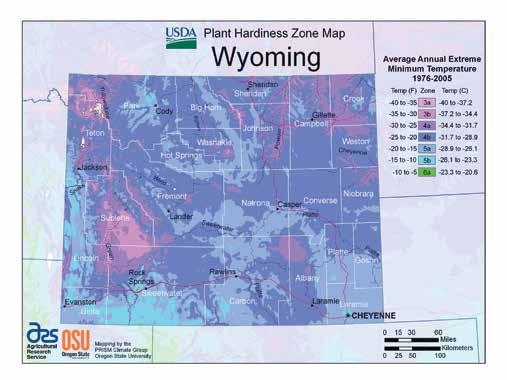
Wyoming hardiness zones run from 3a to 6a, with most areas rated as zones four or five, or negative 30 to negative 15 degrees Fahrenheit –as shown in Figure One.
Unfortunately, even selecting trees rated for the appropriate hardiness zone does not guarantee protection from cold injury.

Extreme, untimely freezes have become more common in the last couple decades, creating challenges for those seeking to cultivate healthy trees.
Fall freeze
The process of becoming cold hardy is known as acclimation. Acclimation occurs gradually, beginning in late summer and extending well into winter.
Decreasing day length followed by cool, then freezing temperatures allows trees and shrubs to develop cold hardiness.
For many plants, maximum cold hardiness is normally achieved in midwinter through January. If extremely cold temperatures occur early in the season, tree damage may result.
Moderate fall freezes with temperatures dipping into the 20s or teens are often of little concern. It is when temperatures in the single digits or below zero occur in fall or early winter – October, November and December – that tree health can be impacted.
Such freezes are most likely to cause damage if temperatures were unseasonably warm prior to the freeze.
Symptoms
Fall freeze damage symptoms often do not develop until warm temperatures arrive. Frozen needles of conifers, for example, remain green while the weather is cold, but turn brown during an extended winter thaw or as spring warming begins.
Sometimes the injury may escape notice until spring, when observers realize normal plant development is not occurring, as when buds killed by an untimely fall freeze fail to open.
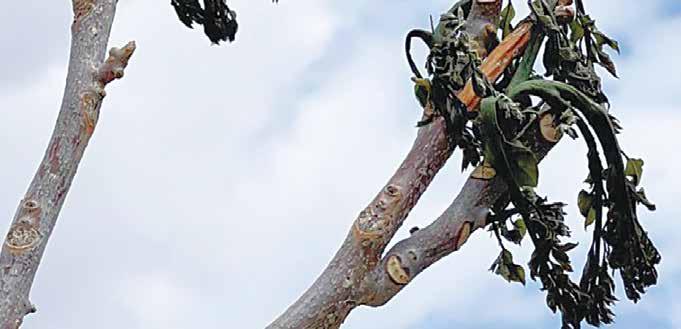
Some types of freeze injury take a year or more to show up. In the summer and fall of 2015, the trunks and limbs of ornamental pear trees in Wyoming cracked and large sheets of bark peeled and sloughed off.
Looking back at the weather of the previous year offered a clue – a severe cold wave enveloped much of the nation in mid-November of 2014. Temperatures across Wyoming dropped well below zero for multiple nights, and tissues below the bark that had not fully acclimated were damaged.
The following spring, trees leafed out poorly in many cases, but bark clung to their trunks and limbs for many months before falling away.
Cankers
Trees suffering from severe fall freeze damage are often more susceptible to pests. One such pest is a canker – a disease caused by a fungus which kills trunks, branches and twigs.
Similar to a virus lying dormant in humans, the canker fungus infects trees and remains quiescent until a stressful condition, such as an untimely severe freeze, allows it to take advantage of the weakened tissues.
Once again, the symptoms are delayed. Typically, affected trees flush with normal spring growth, but the spreading canker infection causes the new growth or branches to die. Cankers attacking the trunk of a small tree can kill the entire tree.
Spring freeze
Damaging spring freezes can occur any time after trees have emerged from dormancy and young leaves and flowers are beginning to develop.
Often this happens in late spring, but if a prolonged warm spell occurs in late winter or early spring, trees may be tricked into believing winter is over and
begin to deacclimate and push new growth.
Freezing spring temperatures kill new leaf and flower tissues, causing them to turn limp and brown in a day or two. Twigs and buds may be killed as well. New growth from adventitious buds may eventually occur, but the dead, bare twigs remain for weeks.
Leaf tatter
A delayed symptom of spring freeze is a condition known as leaf tatter –the presence of numerous ragged holes between leaf veins. Leaf tatter develops after buds break dormancy and the protective, papery
Thursday, April 6, 2023 Noon | Belle Fourche Livestock Craig and Deb Kukuchka & Family 605-892-2875 70 Powerful Yearling Angus Bulls 50 Fancy Commercial Replacement Heifers Selling sons of SITZ Stellar 726D, KG Justified 3023, FF Easy Money D217, Connealy National 390C, Musgrave 316 Exclusive, Connealy Dry Valley Videos and Catalog at BAR69Angus.com Bar 69 Stellar 2721 ACT BW: 82 ADJ WW: 698 WR: 103 CED 7 BW -1.0 WW 73 YW 135 Milk 23 Selling Sons by: Sitz Logo 8148 • Sitz Legacy 11508 KG Justified 3023 • Sitz Stellar 726D SAV Rainfall 6846 • SAV Bloodline 9578 Tehama Patriarch F028 • Raven Powerball 24th ANNUAL PRODUCTION SALE THURSDAY MARCH 16, 2023 SALE @ 1:00 PM LUNCH @ NOON At the Ranch in Pingree, Idaho • 160 Registered Angus Yearling Bulls • 50 Registered Angus Fall Bulls • 60 Open Commercial Angus Heifers VAL CARTER 208-390-4811• LEX CARTER 208-681-9711 COLTER CARTER 208-681-8859 E-MAIL- cartercattle@gmail.com • lex@breederlink.com • coltercarter5@gmail.com WEBSITE- WWW.CARTERCATTLECO.COM Sitz Logo 8148
Figure One – Plant hardiness zone map of Wyoming is shown. Courtesy photo Please see TREES on page B2
bud scales surrounding the delicate bud tissue begin to loosen.
Tiny areas of developing leaf tissue become exposed to cold temperatures and die. As the leaves unfold and expand over the next few weeks, the tiny dead areas develop into holes.
Because symptoms appear weeks after the freeze event, leaf tatter is often mistaken for insect feeding.
Winter sunscald
Sunscald is a type of freeze damage which occurs mid-winter. Characterized by long, vertical bark damage on the south or southwest side of the trunk, sunscald is common in trees with thin, smooth bark, especially young trees.
During very cold, winter weather on bright, sunny days, the southwest side of the trunk warms up. When the sun sets, the tissues quickly freeze. Affected bark may turn pink or reddish in


color and become rough or cracked. Dead areas may peel off. Often the bark splits and exposes the wood.






The loss of overhead branches or nearby trees which previously shaded the bark can lead to sunscald.

However, improper cultural practices strongly predispose trees to sunscald.



These include a lack of supplemental water in newly planted trees; poor pruning jobs, leaving a branch stub or cut too close to the trunk; trunk damage from mowers or string trimmers and root damage, for example, from trenching near the tree or from girdling roots.
Protecting trees from these types of damages is the key to preventing winter sunscald.
Managing for freeze damage
An individual can’t control the weather, but the following tips will improve the health of trees, allow-
ing them to properly prepare for freezing conditions and rebound from freeze damage.
These include selecting trees with a hardiness zone rating suited to the specific location and using organic mulch, such as wood chips or pine needles, to help

improve root health and provide some insulation from winter cold. Roots are the most cold-sensitive part of the tree, so when snow cover is absent, roots are at risk for injury.

Additionally, individuals should water trees during drought. Spring, summer
and fall are the most important seasons, but if soils are dry and unfrozen, watering in winter can provide some benefit.
Furthermore, avoid fertilizing with nitrogen or pruning trees in late summer. Nitrogen applications and pruning stimulate new growth, which will not have time to properly acclimate before winter.
Freeze-killed and cankered branches should be pruned back to a healthy main branch or the trunk. Extensively damaged trees may not be salvageable.
To avoid sunscald, supplemental water should be provided to newly planted trees, and proper pruning methods should be followed – neither cutting too close to the trunk nor leaving a branch stub. A ring of organic mulch helps keep mowers from damaging the trunk.
The trunk should be protected by erecting a board to the south and west of the tree to provide shade. Tree wrap is another option, but it must be removed in the spring.
Over time and with proper care, trees with sunscald damage may close the wound with new wood. However, the area may be structurally weak and prone to pest attacks.
Removal and replacement of young, severely damaged trees may be a better option.
Dr. Laurie Stepanek is the program director for the Division of Training, Workforce, Development and Diversity at the National Institute of General Medical Sciences. This article was reprinted from Barnyards & Backyards Magazine Winter 2023 issue. For more information, visit uwyo.edu/ barnbackyard/magazine/
For assistance in identifying and managing freeze damage, contact a local University of Wyoming Extension office at uwyo.edu.










Wyoming Livestock Roundup • Volume 34 No. 44 • February 25, 2023 B2 TRIANGLE J RANCH AND ALTENBURG SUPER BALDY SELECT Colorado Fort Collins, Colorado Centennial Livestock Auction MARCH 18, 2023 SATURDAY 1 PM MT TRIANGLE J RANCH Darby and Annette Line 35355 Arrow Rd., Miller, NE 68858 Phone: 308-457-2505 Cell: 308-627-5085 www.trianglejranch.com ALTENBURG SUPER BALDY Willie and Sharon Altenburg 570 E. County Rd. 64, Fort Collins, CO 80524 Cell: 970-481-2570 willie@rmi.net www.altenburgsuperbaldy.com Broadcasting Real-Time Auctions Bid Live Online SELLING 150 PAP-TESTED BULLS Black and Red Simmental and SimAngus™ TWO successful programs - ONE powerful offering. Triangle J was the #1 ASA registration herd in Nebraska in 2021. Altenburg Super Baldy was the #1 ASA registration herd in Colorado in 2021. Triangle J has purchased the Altenburg herd in it’s entirety and is bringing the 2023 bull sale to you in Fort Collins, Colorado. Don’t miss this event. K650 ASA# 4097725 3/4 SM TJ FROSTY 318E SON $API 123.3 $TI 78.7 610K ASA# 4065022 SimAngus™ TJ MAKERS MARK 215Y SON $API 137.4 $TI 86.9 1142K ASA# 4083498 PB SM SAS COPPERHEAD G354 SON $API 130.3 $TI 86.6 K703
HOOK`S
6E SON $API 149.6 $TI 96.4 509K
4065109
CLRS HOMELAND 327H SON $API 150.6 $TI 87.4 K712
3/4
TJ 50K 485H SON $API 145.8 $TI 82.6
ASA# 4028267 SimAngus™
EAGLE
ASA#
SimAngus™
ASA# 4028322
SM
TREES continued from
B1
page
Spring freeze – Damaging spring freezes can occur any time after trees have emerged from dormancy. Pictured is a coffeetree injury from a spring freeze in May 2022. University of Wyoming Ag News photo
During Kansas State University’s Agriculture
Today podcast, aired on Jan. 31, Host Samantha Bennett sat down with Dr. Randall Prather, University of Missouri curators’ distinguished professor in the Animal Sciences Research Center, to discuss new genetic engineering projects in the swine industry.
“In our conversation, Prather will share examples of how advanced technology could benefit the ag industry and explain outside-of-the-box thinking, which has led to numerous medical advancements in human medicine,” says Bennett.
Ag industry application


To begin, Prather shares he likes to think of cells as a factory with the ability to do a number of different things. He notes these “factories” have “blueprints,” which can be used to make new “factories.”
Through genetic modification, Prather explains pages of the blueprints –or a specific protein on a string of amino acids –can be taken out, added or switched with pages from blueprints of other factories – or species.
The act of adding, deleting and changing the blueprints of these factories has led to several real life applications in the agriculture industry.
“An estimate from a decade ago shows losses of $660 million a year in North America and 1.5 billion euros in Europe – the equivalent of $6 million a day between the two countries – from porcine reproductive and respiratory syndrome (PRRS),” Prather explains.
Because PRRS infects white blood cells through antibody-enhanced infection, vaccines do not work for the virus.
“If antibodies recognize the PRRS virus, where do they take it? Right to the white blood cells, which get infected. So, antibiotics don’t work,” he says. “There isn’t a good solution to this problem.”
“However, there is a molecule that sticks up on the cell surface called CD163, and it has a bunch of repeat domains,” Prather explains. “What we can do is change the letters of a three-billion letter genome and get rid of the mutation so it never gets made. It is kind of like ripping a page out of the blueprint and throwing it away.”
Prather notes since the virus uses this mutation to infect a cell, pigs become resistant to the virus without it.
He also shares, through the same technology, researchers have been able to knock out receptors for Senecavirus A, which presents itself as blisters on the coronary bands and snout.
“If an operation gets this, it will shut them down until they can prove it isn’t foot and mouth disease,” he
Expert offers insight into new swine genetics research
states. “Historically, there hasn’t been any solutions to a lot of these viruses, so it has been exciting to see what we can do through genetic engineering.”
Other projects Prather shares include a solution for mastitis in cattle and heart-healthy pigs, which can convert omega-six fatty acids to omega-three fatty acids.
Use in human medicine
In addition to the many applications in agriculture, swine research has also been integral in the advancement of human medicine.
“Swine are the optimal species for a lot of medical conditions where research on other species just won’t work,” Prather states. “A lot of research has been done on mice, but unfortunately they are not able to answer some important questions.”
He says one example of this shows up in cystic fibrosis research.
“Cystic fibrosis is caused by a mutation in the CFTR gene, and it pulls out a single amino acid in a long string. The chloride ion transport can be knocked out in mice, but we still get all of the symptoms of cystic fibrosis,” he explains.
“For example, 15 percent of people with cystic fibrosis have mucoviscidosis, which is a mucus plug in the intestine. This makes it so they can’t defecate, and the intestine has to be opened up for the patient to survive,” he adds. “There is also blockage of the gallbladder, bile duct and pancreatic duct, they have liver lesions, and males may have blocked vas deferens. On top of all of this, they usually get lung disease.”
Prather notes when this mutation occurs in pigs, 100 percent of them have the same symptoms as people.
“Now, physicians can go in invasively and monitor progression and development of disease in a way that just wasn't possible prior to this,” he says.
Another example where swine research has benefitted human medicine is through the use of green pigs, according to Prather.
He explains green pigs have been genetically modified by adding genes from jellyfish to make them selffluoresce, which makes them useful for tracking studies.
He gives the example of Baby Owen, a newborn from North Carolina who needed a valve replaced in his heart.
“A colleague from the Medical University of South Carolina came to us and said there is a problem when a baby is born and they need a new heart valve, because although they can transplant a heart valve for the baby, the valve doesn’t grow as the baby grows,” Prather shares. “So, babies with this issue have to have life-long repetitive surgeries.”
Prather continues, “They had this idea that if they took a bigger piece of
the heart – a partial heart transplant, in other words – with more tissue around the valve, the valves would grow with the baby. They used some of our green pigs so they could track which cells grew.”
Prather notes the research was successful, and Baby Owen was the first human in history to undergo this new partial heart transplant. The valve grew with him, and he never had to have another surgery.
“I got an e-mail right before Christmas from Baby Owenʼs family. He
got to celebrate his first Christmas this past year because of the work all of us had done,” Prather states. “It’s really exciting because we are impacting lives and improving quality of life.”
Hurdles and roadblocks
Although the same could be true for livestock through agriculture application, Prather says projects which have found solutions to many costly and animalwelfare related issues, like mastitis and PRRS, have been hung up in hurdles and roadblocks in the way of regulatory approval.
“The Food and Drug Administration regulates intentionally changing the letter of a genome in a pig, or any mammal, as they would a new drug. It costs an awful lot of money to get approved, which is the hold up for some of our projects,” he explains.
“It’s interesting when we put things into erspective, because at every fertilization there is one to 200 random mutations occurring in the genome, and nobody regulates that. Nobody perceives these mutations as a health risk,” he notes.
Prather further notes there is no regulation for mutagenesis of pigs through radiation or changing letters in the genome of mushrooms to increase their shelf life.
“We have a solution to a lot of the problems we see in agriculture, but when trying to get it through regulatory approval, there are a lot of hurdles to jump over,” he says.
Hannah Bugas is the managing editor for the Wyoming Livestock Roundup. Send comments on this article to roundup@ wylr.net.
B3 Wyoming Livestock Roundup • Volume 34 No. 44 • February 25, 2023
The University of Nebraska-Lincoln (UNL) BeefWatch podcast welcomed Dr. Brian Vander Ley, a Nebraska Extension veterinary epidemiologist, on Feb. 1 to discuss an article titled “Preparing for calving season” in the February UNL BeefWatch newsletter.
Key considerations
Vander Ley notes the window of calving for producers across the U.S. is relatively wide. Many producers may already be calving, so preparation in this case may look differently. But, regardless of when producers start
discusses calving season preparation considerations
calving, it is important their cows go into the season with adequate nutrition to make good colostrum.
“They need to have good body condition scores,” he says. “We want cows to successfully deliver a calf without complications, and then we want the calf to drink colostrum.”
He adds one of the most critical events in any animal’s life, especially cattle, is the ingestion of colostrum.
“Once a calf is born, we want the colostrum meal to happen quickly, and we want it to be an uninterrupted,
streamlined event to pack the calf full of protective antibodies,” he says. “A lot of things I think about in terms of prevention and management at calving time centers around making sure these events go smoothly.”
The article notes several other calving season preparation considerations.
These include paying attention to nutritional needs of bred heifers or cows prior to calving, reviewing a herd health plan with a veterinarian, examining calving facilities and making sure they are in good working order and
checking calving supplies and reviewing stages of parturition to understand when assistance is needed.
Additionally the article encourages producers to have colostrum or colostrum replacement products on hand, have a plan and equipment for warming calves when calving during cold weather and have a plan to provide wind protection along with a clean, dry environment.
Planning for complications
“Calves who have a difficult birth or experience hypothermia are at a much higher
The Program of Foundation Genetics For Generations!
Emulation genetics have stood the test of time since being first introduced to the public in 1955 at the N Bar Ranch.


For more information on management practices to improve calving success, visit beef.unl.edu.


risk for not being able to consume important colostrum,” says Vander Ley.
He notes identifying calves at risk is important. A quick test producers can do to figure out whether or not intervention is necessary is to stick a couple of fingers in a calf’s mouth to test their sucking reflex.
“With a normal calf, when we stick a couple of fingers in their mouth, they should suck pretty vigorously a few times. It’s a built-in reflex. They are not actively thinking about it and should just be able to do it – it’s how they are made. But, if they don’t, it’s usually a good indication there are some problems impairing their ability to nurse and absorb colostrum,” he explains.
In these situations, the best solution is to milk the cow and feed the colostrum to the calf by hand. If a producer is unable to milk a cow, Vander Ley explains using a high-quality colostrum replacement product is an option.
He advises producers to avoid using frozen colostrum from another source, because it’s a way to transmit disease.
Esophageal feeders or oral gastric tubes can be an effective way to get colostrum into a calf, but the best way, according to Vander Ley, is to use a bottle and nipple.
“The best way to deliver colostrum would be nursing from the dam, the second best would be from a bottle and the third best would delivering it via some kind of tube,” he shares.
He adds if calves are
unable to nurse, esophageal feeders or oral gastric tubes would be better than not delivering it at all. Choosing colostrum products
Vander Ley shares there are two big categories of colostrum products. They include colostrum supplements and colostrum replacers.
“Colostrum supplements tend to be a small dose of antibodies, and the source tends to be different,” he says. “Whereas high-quality colostrum replacement products have dried colostrum from a cow.”
He notes cows only make colostrum for a short period of time, so colostrum replacement products are typically more expensive. However, this is the ideal product to use.
Additionally, Vander Ley advises producers to pay attention to product labels as each product has dosage recommendations and mixing temperature directions.
A fresh crop of calves is something cow/calf producers look forward to. Having a plan and preparing ahead of time for the calving season can help to minimize calf loss and reduce stress.
“One of my best pieces of advice is to assess and make a plan,” concludes Vander Ley. “If the plan is not executable quickly, then quickly make a new plan and move on.”
Brittany Gunn is the editor of the Wyoming Livestock Roundup. Send comments on this article to roundup@ wylr.net.
Wyoming Livestock Roundup • Volume 34 No. 44 • February 25, 2023 B4
SINCLAIR CATTLE COMPANY, INC . Staying true to the Legacy Original N-Bar
FRED SAUNDERS 406-788-9331 LOGAN BAKER 307-254-1477 LANCE CLINE 785-564-1744 STEVE BLANKLEY II 240-625-5415 MIKE BAZZLE 540-421-7411 FOR MORE INFO ON THE SINCLAIR CATTLE CO PROGRAM GIVE US A CALL. WATCH FOR UPDATES ON FACEBOOK AND VISIT OUR WEBSITE AT WWW.SINCLAIRCATTLE.COM SINCLAIR
9P32 V149 REG: 16361084 N BAR KINOCHTRY BEAUTY 4317 REG: 10931974 “V149”
Kinochtry Beautys were one of the
N
POWER OF GENETICS STARTS HERE Selling Feature Sons at the 19th Annual Sinclair Cattle Co Production Sale on Sat. March 25th at Buffalo Livestock Marketing – Buffalo, WY. Sinclair Justified K011 Reg: 20553726 Sinclair Gary K007 Reg: 20559401 Sinclair Justified K013 Reg: 20553732 by “8XV12” Reg# 16026999
epidemiologist specialist
Genetics Working For You
K BTY 9P31 V149 REG: 16361083 SINCLAIR K BTY
The
original cow families from 1935 at the famous
Bar Ranch
Veterinary
Veseth Cattle, where the focus is on the Female. Lunch at 11:30 • Sale starts at 1:00 pm Glasgow Stockyards in Glasgow, MT March 6, 2023 17th Annual Sale Selling 55 Red Angus Composite Yearling Bulls 50 Red Bred Heifers 70 Red Heifer Calves 30 Short Term Red Cows Dale & Janet Veseth (406) 658-2504 • djvsth@itstriangle.com 22787 Midale Rd • Malta, MT 59538 www.VesethCattleCo.com
SALE REPORTS

Fawcett's Elm Creek Ranch
Pilakowski Angus Bull Sale


March 4, 2023
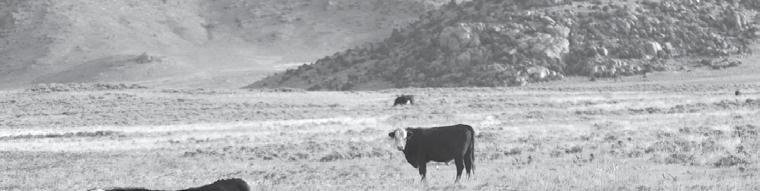
Top Sellers Yearling Hereford Bulls Lot 71 – ECR 9170 ENDURE 2178 – Price: $33,000 DOB: 03/01/2022 Sire: Pyramid Daybreak 9170 Dam’s Sire: NJW 79Z Z311 Endure 173D ET EPDs: BW: +2.6, WW: +72, YW: +116 and Milk: +31 Lot 66 – ECR 173 ENDURE 2175 ET – Price: $16,000 DOB: 03/02/22 Sire: NJW 79Z Z311 Endure 173D ET Dam’s Sire: TH 122 711 Victor 719T EPDs: BW: +3.5, WW: +69, YW: +112 and Milk: +33 Lot 32 – ECR 238 FORTIFIED 2113 – Price: $10,000 DOB: 02/27/22 Sire: NJW 84B 4040 Fortified 238F Dam’s Sire: AH JDH Cracker Jack 26U ET EPDs: BW: +1.4, WW: +55, YW: +82 and Milk: +25 Lot 34 – ECR 0136 DOMINO 2106 – Price: $10,000 DOB: 02/25/22 Sire: CL 1 Domino 0136H Dam’s Sire: ECR Extra Deep 4264 ET EPDs: BW: +2.8, WW: +63, YW: +100 and Milk: +24 Lot 47 – ECR 9170 EARLY RISER 2156 – Price: $9,500 DOB: 02/28/22 Sire: Pyramid Daybreak 9170 Dam’s Sire: NJW 84B 10W Journey 53D EPDs: BW: +2.9, WW: +67, YW: +109 and Milk: +29 Lot 68 – ECR 9170 EARLY RISER 2127 – Price: $9,500 DOB: 02/26/22 Sire: Pyramid Daybreak 9170 Dam’s Sire: NJW 79Z Z311 Endure 173D ET EPDs: BW: +4, WW: +73, YW: +119 and Milk: +28 Lot 41 – ECR 0136 DOMINO 2029 – Price: $9,000 DOB: 02/21/22 Sire: CL 1 Domino 0136H Dam’s Sire: HH Advance 2029Z ET EPDs: BW: +2.7, WW: +64, YW: +96 and Milk: +27 Lot 30 – ECR 238 FORTIFIED 2100 – Price: $8,500 DOB: 02/24/22 Sire: NJW 84B 4040 Fortified 238F Dam’s Sire: NJW 98S R117 Ribeye 88X ET EPDs: BW: +1.9, WW: +56, YW: +87 and Milk: +30 Lot 61 – ECR 0136 DOMINO 2107 – Price: $8,500 DOB: 02/26/22 Sire: CL 1 Domino 0136H Dam’s Sire: K&B Excel 5042 EPDs: BW: +2.7, WW: +57, YW: +87 and Milk: +26 Lot 74 – ECR 9170 EARLY RISER 2072 – Price: $8,500 DOB: 02/23/22 Sire: Pyramid Daybreak 9170 Dam’s Sire: CL 1 Domino 394A EPDs: BW: +1.8, WW: +64, YW: +103 and Milk: +25 Two-Year-Old Hereford Bulls Lot 93 – ECR 8014 ADVANCE 1336 – Price: $9,500 DOB: 03/31/21 Sire: ECR 628 Advance 8014 Dam’s Sire: Dakitch 127W Hwy 200 115B EPDs: BW: +3.6, WW: +59, YW: +95 and Milk: +24 Lot 87 – ECR 11E BAR NONE 1231 – Price: $8,500 DOB: 03/16/21 Sire: Innisfail 4013 11E Dam’s Sire: Bar JZ Sleep On 7338C EPDs: BW: +2.4, WW: +71, YW: +104 and Milk: +28 Lot 80 – ECR 893 ADVANCE 1683 – Price: $7,500 DOB: 05/05/21 Sire: ECR DM Advance 893 ET Dam’s Sire: CL 1 Domino 860U EPDs: BW: +3.1, WW: +65, YW: +104 and Milk: +23 Lot 89 – ECR 1628 ADVANCE 1504 – Price: $7,500 DOB: 04/14/21 Sire: MC Advance 955W 1628 ET Dam’s Sire: ECR 2296 Flo Sensation 4387 ET EPDs: BW: +2.7, WW: +62, YW: +103 and Milk: +29 Lot 99 – ECR 8014 ADVANCE 1255 – Price: $7,500 DOB: 03/18/21 Lot 112 – ECR 8454 LAMBEAU 1369 – Price: $7,500 DOB: 04/02/21 Lot 122 – ECR 326 WHITTY 1439 – Price: $7,500 DOB: 04/04/21 Lot 90 – ECR 893 ADVANCEREDEEM 1748 – Price: $7,000 DOB: 05/04/21 Lot 100 – ECR SPH 516 ENDURE 110 – Price: $7,000 DOB: 03/04/21 Lot 78 – ECR 6305 RIBS 1564 – Price: $6,500 DOB: 04/15/21 Open Heifers Lot 18 – ECR 8923 LADY SANCHO 2383 ET – Price: $20,000 DOB: 04/02/22 Lot 13 – ECR 8923 TATOR TOR 2453 ET – Price: $14,000 DOB: 04/04/22 Lot 11 – ECR 8194 MS NIGHTING GALE 2232 – Price: $5,250 DOB: 03/17/22 Lot 15 – ECR 8923 MISS ADVANCE 2392 ET – Price: $5,000 DOB: 04/01/22 Top Sellers Lot 4 – MMP Changemaker K88 – Price $11,500 DOB: 1/14/22 Sire: Rathbun ChangeMaker K541 Dam’s Sire: Sitz Top Game 561X EPDs: BW: +4.1, WW: +95, YW: +164 and Milk: +33 Buyer: Gordon Assman, Mission, S.D. Lot 16 – MMP Stellar K67 – Price: $11,000 DOB: 1/11/22 Sire: Sitz Stellar K67 Dam’s Sire: S A V Priority 7283 EPDs: BW: +2.6, WW: +94, YW: +170 and Milk: +24 Buyer: Ardissono Brothers, Oshkosh, Neb. Lot 17 – MMP Inuition K39 – Price: $11,000 DOB: 1/8/22 Sire: Sitz Intuition Dam’s Sire: Connealy Dry Valley EPDs: BW: +3.1, WW: +87, YW: +151 and Milk: +30 Buyer: Y6 Livestock, Arthur, Neb. Lot 2 – MPP Conclusion K81 – Price: $10,000 DOB: 1/12/22 Sire: FF Conclusion F83 Dam’s Sire: Visiontopline Royal Stockman EPDs: BW: +3.5, WW: +76, YW: +133 and Milk: +26 Buyer: Y6 Livestock, Arthur, Neb. Lot 5 – MPP Coalition K86 – Price: $10,000 DOB: 1/14/22 Sire: U-2 Coalition 206C Dam’s Sire: S A V Priority 7283 EPDs: BW: +0.3, WW: +68, YW: +123 and Milk: +22 Buyer: Whitewater Ranch, Sutherland, Neb. B7 Wyoming Livestock Roundup • Volume 34 No. 44 • February 25, 2023 ® Subscribe to the Wyoming Livestock Roundup for $50 per year by calling 307-234-2700
Reported By: Curt Cox, WYLR Field Editor Feb. 13, 2023 Lightning Valley Ranch, Arthur, Neb. Auctioneer: Matt Printz 52 Yearling Angus Bulls Avg. $6,105
Pound-Makin’ Genetics Bull sale -
Reported By: Calli Williams, WYLR Field Editor Feb. 13, 2023 Ree Heights, S.D. Auctioneer: Lynn Weishaar 42 Yearling Hereford Bulls Avg. $7,553 39 Two-Year-Old Hereford Bulls Avg. $5,634 23 Open Heifers Avg. $5,054 70 Commercial Replacement Heifers Avg. $1,600 73 F1 Baldy Yearling Heifers Avg. $1,886
NOTICE: Publication in this newspaper does not guarantee the legitimacy of any offer or solicitation. Take reasonable steps to evaluate an offer before you send money or provide personal/financial information to an advertiser. If you have questions or believe you have been the victim of fraud, contact the Wyoming Attorney General’s Office, Consumer Protection Unit, 109 Capitol Building, Cheyenne, WY 82002, 307-777-6397 TFN
Events
BLACK HILLS GUN SHOW
MARCH 10-12: The Lodge at Deadwood, in Deadwood, S.D. Call 605-641-0870 or 307-7511877 3/4
2023 CACHE VALLEY COWBOY RENDEZVOUS, MARCH 10-12: Welcomes Billy Dean and Jim Curry, singing the songs of John Denver. Free admission to Cowboy Poetry, Western Music, Vendors and Poetry Contests, etc. Fri. 3-10 p.m. and Sat. 10 a.m.-8 p.m. Cache County Event Center, Logan, UT. Go to www.cvcowboy.org or leave message 435-760-0160 3/4
Help
RANCH HAND WANTED: Cow work/calving, irrigating, haying, fixing fences. Wages based on experience. Call 307-250-8475 3/4
HOT SPRINGS COUNTY WEED & PEST DISTRICT IS ACCEPTING APPLICATIONS FOR THE POSITION OF WEED AND PEST DISTRICT MOSQUITO COORDINATOR/
RANGE MANAGER: The position is in Thermopolis, WY. Send letter of application, resume and 3 references by March 6 to: Hot Springs County Weed & Pest District, PO Box 543, Thermopolis, WY 82443. For additional information, call 307-864-2278 or e-mail hscwpcd@rtconnect.net. Hot Springs County Weed & Pest is an EOE 2/25

LOOKING FOR FULL-TIME EMPLOYEE TO HELP OVERSEE OUR HAYING OPERATION IN SOUTHWEST WYOMING: Must be mechanically sound and have a general understanding of pivots. Looking for a person that is highly motivated and a self-starter.

Ranch house, vehicle, beef and paid time off provided.
Ranch is located approximately 7 miles from Cokeville, WY. Pay DOE. Call 307-7277721 3/4
CALVING HELP NEEDED:
Experience preferred. Call 605-347-3403 or 605-4999088, Sturgis, S.D 3/4

HOT SPRINGS COUNTY
WEED & PEST DISTRICT IS ACCEPTING APPLICATIONS FOR THE POSITION OF WEED AND PEST DISTRICT
Help Wanted
Seasonal Position
Helena Agri-Enterprises, LLC is looking for Fertilizer


Loader/Operator
The Blender/Operator is responsible for unloading, loading and blending fertilizer. Pre-employment drug testing and a clean driving record is required. Strong customer service skills and willing to work all shifts including Saturdays. Able to lift at least 50 lbs. For more information or to apply, please go to the following link:
www.helenaagri.com/careers

JOIN THE USDA-APHIS
TO HELP PROTECT WYOMING’S AGRICULTURE AND NATURAL RESOURCES: Summer positions available, salary range $15-$16.57 DOE. Conduct insect and biological control surveys. Weekly travel required. Must be 18 years old. Contact USDA at 307-432-7979 or e-mail bruce.a.shambaugh@usda. gov for more information.
Application deadline March 12 2/25
EARN $60,000/YEAR, PARTTIME in the livestock or farm equipment appraisal business. Agricultural background required. Home study course available. 800-488-7570 or www. amagappraisers.com 2/25
FAMILY FARM IN SEARCH OF FULL-TIME, LONG-TERM CREW LEADER to direct and coordinate worker activities such as maintaining ditches, planting, irrigating, harvesting, etc. Leadership skills and experience managing small crew, team player. Must have valid driver’s license and prefer experience operating tractors. CDL a plus but not required. Position to be filled immediately. Salary based on experience. For questions/information Call Britt, 719-429-9934. Send resume to britt@colonorchards.com. Submit references when applying to www.colonorchards. com 2/25
SUPERVISOR: The position is in Thermopolis, WY. Send letter of application, resume and 3 references by March 6 to: Hot Springs County Weed & Pest District, PO Box 543, Thermopolis, WY 82443. For additional information, call 307-864-2278 or e-mail hscwpcd@rtconnect.net. Hot Springs County Weed & Pest is an EOE 2/25
WIGGINS FEEDYARD, LLC
HIRING FULL-TIME EM-


PLOYEE: Current driver’s license required. Call Sue Wiggins, 308-279-0924, e-mail sswiggins@wigginsfeedyard.com, 10077 U.S. 385, Bridgeport, NE 69336, provide references with phone numbers 2/25

AGRI-ONE FINANCIAL: Farm/ ranch and all commercial loans. RATES AS LOW AS 5%. We have been helping with all aspects of agricultural, commercial financing and management for years. LET US HELP YOU on a consulting level with management to increase profitability, deal with and fix credit problems and for all your financing needs. WE CARE AND HAVE WORKING PROGRAMS designed for the farmer/rancher and not the banker. Please call Steve, 303-773-3545, or check out our website www. agrionefinancial.com. I will come to you and get the job done!! 2/25
Brands
REGISTERED WYOMING BRAND: LRC, LTH. Current through Jan. 1, 2031. $2,500 OBO. Contact Gene at 307-331-1049 3/4
REGISTERED WYOMING BRAND: LRC. Current through Jan. 1, 2031. $2,500 OBO. Contact Gene at 307-331-1049 3/4
REGISTERED WYOMING BRAND: LRC, LSH. Current through Jan. 1, 2031. $2,500 OBO. Contact Gene at 307-331-1049 3/4
TEA KETTLE BRAND FOR SALE: One-iron, one strike brand for sale. LRC, LSS, LSH, LRB. Renewed through Jan. 1, 2033. Asking $9,000 OBO. Call 307-338-1529 or 307532-7524, if no answer please leave message 2/25


Brands
REGISTERED WYOMING BRAND FOR SALE: Lazy V Heart Lazy V. LRC, LTH. Expires January 2027. Includes electric and hot irons. Asking $3,500. Call 608-863-3959 2/25
OLD WYOMING BRAND FOR SALE: RHC, RHH. Dues paid to 2033. No irons. Call 605-662-6066 (home) or 605-890-0225 (cell), leave message 3/18
REGISTERED WYOMING BRAND FOR SALE: LRC, LTH, one electric branding iron included. $3,000. Call 307-851-5901 2/25
REGISTERED WYOMING BRAND: LRC, LSH. Current through Jan. 1, 2031. $2,500 OBO. Contact Gene at 307-331-1049 3/4
REGISTERED WYOMING BRAND FOR SALE: LSC, LHH. $3,000. Call 307-899-3754 2/25
Dogs
CORGI PUPPIES: AKC. Ranch raised. Males and females. Out of working parents. Affectionate. Good with kids and livestock. Fast, agile, fearless herders. Shots and wormed. Delivery available. Call for details, 719309-8864 2/25
GREAT PYRENEES LIVESTOCK GUARD PUPS: We have 4 females and 2 males who are ready to go now. They were born Oct. 17, 2022, to working parents. They have sweet, gentle personalities and are great with our kids. WE ALSO HAVE A NEW LITTER from our other female. Those pups will be ready in April. $600 a pup for both litters. For more information, contact Casey or Cristy Davis, 605-431-2067 or 605-206-0495. To view photos, go to www.wylr. net in the classifieds 3/11
AKC LAB PUPPIES: All colors available, whites, blacks, yellows, dark chocolates and dark reds. Excellent hunters, family companions. Full AKC registration. Shots, wormed, dewclaws removed. All puppies are cute, but it’s what they grow into that counts. Not all Labs are the same. Proud to own!! Been raising quality AKC Labradors for 25-plus years. Look at the rest but buy the best. Both parents on site for viewing. Will sell quickly!! $200 deposit, picking order is when the deposit is received. Doug Altman, Mitchell, S.D. Call/text 605-999-7149, click the our Labs tab on the website for pictures, www. southdakotayellowlabs.com WILL DISCOUNT!! 2/25
Dogs
ADORABLE AUGGIE PUPPIES: Mom registered Pembroke Welsh corgi 18 lbs., dad Toy Australian shepherd 10 lbs. ALSO, tiny toy Queensland heeler (mom 10 lbs.)/Toy Australian shepherd (dad 7 lbs.) cross puppies, 1 male and 1 female, born Sept. 27, 2022. MINIATURE AUSTRALIAN SHEPHERD PUPS. All pups bred for health/disposition/smarts, UTD pup vaccines, come with starter bag/information book, 1 year health guarantee. For more information, pricing and delivery options, call 406-581-7586. To view photos, go to www.wylr. net in the classifieds 3/4
WALKER HOUND PUPS: PKC and UKC registered, 6 months old. Nominated for money hunts. Out of outstanding dogs. ALSO, 10-month-old pointing Labs, AKC registered. Call for more information 801-9166161 3/18
GIVING AWAY!! PUREBRED
BORDER COLLIE PUPPIES: Out of excellent working parents. Extremely smart. All are traditional black and white. Call 307-6453322 3/4
CKC PEMBROKE WELSH CORGIS: Red coloring, males, $700. Call 307-217-9737 3/4
WORKING RANCH DOGS:
AUSTRALIAN SHEPHERD PUPPIES. Registered standard size. Foundation working bloodlines. Tails docked, dewclaws removed, current on vaccinations and worming. Ready now. Call 970-824-2348, leave message. To view photos go to www.wylr.net in the classifieds 3/4
GREAT PYRENEES PUPPIES
CURRENTLY WORKING WITH LIVESTOCK!! Proven bloodlines, parents onsite. Socialized. Males and females, 6 months old. $1,000. Have been raising these fantastic LGD for 48 years. For more information, call 406-2077674 2/25
SANDHILL BORDER COLLIES: Working border collies for ranchers. Reds, blacks, merles, mainly short hair. Thirty years experience. Shots appropriate to age, dewclaws removed, wormed weekly. Pups and ready-to-start pups available. Prices vary. Call us (texts are better) to set up delivery, 701770-2364 or e-mail sandhillbc@ yahoo.com. Visit our Facebook page: Sandhill Performance Horses and Border Collies. To view photos, go to www.wylr.net in the classifieds 5/6
YEARLING ANGUS BULLS: These bulls are grown, not fattened, will get out and cover cows. Many will work on heifers. We will deliver. Call Joe Buseman, 605-351-1535 3/11
Registered Angus Yearling Bulls Private Treaty Bridger, MT Opening Day Saturday Louis & Kathy Dubs •
Brands
REGISTERED WYOMING BRAND: LRC, RSH. Current through Jan. 1, 2031. $2,500 OBO. Contact Gene at 307-331-1049 3/4
REGISTERED WYOMING BRAND FOR SALE: LHC, LSS, LHH. Dues paid to Jan 1, 2029. Hot irons included. $2,500. Call 307-351-0242 3/18
REGISTERED WYOMING BRAND FOR SALE: LR&HC, LS&TH. Dues paid to Jan 1, 2031. Hot irons included. $3,500. Call 307351-0242 3/18
WYOMING BRAND REGISTERED BY GOELET GALLATIN IN 1912: LRC, BS, LSH. Irons available, seller will pay transfer fees. Renewed until 2033, $3,000. Call 307-272-4215 3/4


YEARLING BLACK ANGUS BULLS FOR SALE: Actual weaning weight 727 lbs. Cow herd AI’d since 1969, predominantly use ABS and Select Sires. Purebred but not papered. $2,000. If we feed till April 1, $2,500. Call 307366-2911 2/25

Wyoming Livestock Roundup • Volume 34 No. 44 • February 25, 2023 B8 February 25, 2023 2 307-234-2700 • 1-800-967-1647 • Fax: 307-472-1781 • E-mail: jodym@wylr.net or denise@wylr.net Website: www.wylr.net Weekly Deadline: Wednesday, 12:00 p.m. Place Your Auction Ad Here CLASSIFIEDS Clay Creek Angus Jim & Lori French 3334 Rd 14 Greybull, WY 82426 307-762-3541 • www.claycreek.net 120 Yearling Bulls • 80 Coming 2-Year-Old Bulls 120 Replacement Heifers by Popular Sires: S A V Bismarck, Rito 707, S A V Resource, Connealy Spur, Connealy Countdown and Coleman Charlo PRIVATE TREATY www.torringtonlivestock.com 307-532-3333 Torrington Livestock Markets
Auctions
Notice
THE ROUNDUP GETS RESULTS!
Wanted
Financial Services Help Wanted Services Services Solar Water Pumping Systems Water Well Services • Well & Pipeline Design Submersible Pump Specialist Scott Blakeley, Owner ppr@pronghornpump.com www.pronghornpump.com (307) 436-8513 • Cell: (307) 267-1022
• 406-208-8643
Billings, MT 406-652-7515
windingriverangus@gmail.com
Regiment • Wickwire • Niagara Emerald • Value Added • Full Measure • Party Top Many suitable for heifers. Performance and carcass data available.
Sires Include:
Lunch at Noon • Opens at 1:00 Angus Angus
March 18, 2023
Angus
Pasture Wanted
PASTURE WANTED FOR UP
TO 60 PAIRS: Northeast Wyoming or western South Dakota preferred. Please call 307-6604275 3/18
YEARLING PASTURE WANTED for 1,500 head steers/spayed heifers for 2023 and beyond. Take all or part, smaller places okay. CO, WY, OR and ID preferred. Competitive rates, reference available. Call or text Jon, 831-240-5795 7/1
PASTURE WANTED for 2,000 yearlings and 500 pairs. Can split into smaller bunches. 701-5231235 3/11
Red Angus
REGISTERED RED ANGUS
BULLS FOR SALE: Have 2-year-old bulls ready to go now and yearling bulls ready late spring. Delivery available. For more information, call CLR Red Angus, Dan Robertson, 307-431-1013 3/18
Hereford Hereford
CRR Herefords Good for your Business
Look to CRR Baldie Makers... ...Proven to Increase your Bottom Line.
Polled & Horned Hereford Bulls - Private Treaty Sale


See Bull Info & Videos on Website & Facebook

COYOTE RIDGE RANCH
Jane Evans Cornelius 970-371-0500
Hampton Cornelius 970-396-2935 18300 CO RD. 43 ~ La Salle, CO 80645

Katie Cornelius & Lee Mayo 970-396-8320
www.coyoteridgeherefords.com
Horses
HORSES: BUY, SELL, TRADE. Will pick up. Call Dennis Black, 307-690-0916 2/25
BEST OF THE BIG HORNS HORSE SALE, APRIL 15, Buffalo Livestock Marketing, 44 TW Rd., Buffalo, WY. Online bidding through www.cattleusa.com, register 3 days prior to sale. Contact Ellen Allemand, 307-7518969 or Kay Lynn Allen, 406697-5882. Visit us on Facebook for updates 4/1
STAY WARM!! Great prices!! WOOL CAPS, wool VESTS, WOOL socks, SILK SCARVES, KENETREK RIDING PACKS, THINSULATE BOULET ROPER style BOOTS. HONDO, BOULET, JUSTIN WORK BOOTS, TWISTED X (boots and shoes) and more!! WE CAN ship!! Shop Moss Saddles, Boots and Tack, 4648 West Yellowstone Highway, Casper, WY; 307-472-1872. Our family serving yours for 50 years!! Check us out on Facebook or our website 3/4

Leatherwork
LS CUSTOM LEATHER: Belts, tack, cell phone cases and much more!! Contact Lester, 307631-1053, leave a message. Located in Riverton, WY 3/11
Swine
Sheep
For sale sheepherders wagon. Queen sized bed, plenty of storage. Wheelwright services available. Also sheep wagon bows for sale. Call for price, 785-734-2663.

Hay &

ROUND BALED GRASS FOR
SALE: Cody, WY area, 1,000 lb. net-wrapped bales, $70/ bale. Call, don’t text, Anthony at 307-254-2645. To view photos, go to www.wylr.net in the classifieds 3/18

SHELL CORN FOR SALE: Very good feed value. ALSO, hay and straw for sale. For more information, call 307754-5864 3/18
Horses
HAY FOR SALE: 2022 first and second cutting alfalfa, alfalfa/grass, grass mix, straight grass, Haybet barley, straight millet and sorghum. ALSO, 2022 wheat straw and older hay for grinding. All in netwrapped round bales. Semi load delivery available. Call for pricing, 701-690-8116, please send a text if no answer or keep trying 3/18
SMALL SQUARES OF BROME GRASS/ALFALFA
MIX HAY: Covered, $10/bale. ALSO, second cutting alfalfa. Sheridan, WY. Call Drew, 307-752-5920 2/25
WE HAVE HAY FOR SALE!! Grass and mix still available. All sizes, all qualities and all quantities. Delivery available!! Call 307-630-3046 3/18
Sheep
FIFTH ANNUAL MID-STATES HAIR SHEEP SALE MARCH 25, at 11:30 a.m. Starting with equipment. Sheep to follow immediately after. NEW LOCATION!! WAHOO LIVESTOCK SALES 636 1st St., Wahoo, NE 68066. Looking for consignors and buyers. Healthy hair sheep only, all stock will be inspected upon arrival. No sheep with broken or missing teeth. All out of state sheep will need health papers. Veterinarians present to inspect and write outgoing health papers. Brucellosis testing must be done on rams over 6 months old to ship out of state. No more than 2 rams per producer. 10% commission. Sale order will be in order of consignment, call early!! NO consignments day of sale. REGISTER TO BID ONLINE minimum of 7 days in advance at www.dvauction.com and contact the barn for approval, 402443-3512. To consign sheep call Josh Kaster, 402-245-7391 or Neal Amsberry, 308-651-0327 3/18
MERINO EWES FOR SALE: CAMPBELL AND HANSMIRE GENETICS, 1,050 HEAD: 250 2-year-olds; 228 3-year-olds; 146 4-year-olds; balance 5- to 7-yearolds, 165-170 lbs. Good body condition. Supplementing on pasture. 19-20 Micron. Wormed and vaccinated 3 times in 2022. Hamp/Suffolk bucks turned in Nov. 22, 2022. Five Akbash dogs. For more information, call 308440-7999 3/4
BARLEY STRAW: Certified weed-free small squares, $4/ bale. ALSO, round bales. OATS, WHEAT AND BARLEY, $20/100 cwt. Greybull, WY area. Call 307-762-3878 or 307-202-0108, leave message 3/11
VALLEY VIDEO HAY MARKETS, LLC: Hay still available. Go to www.valleyvideohay. com or call Barry McRea, 308235-5386 3/11
GRASS HAY FOR SALE: 3x4 bales, 1,200 lbs., $250/ton. Lyman, WY. Call Kelly, 307-7807027 2/25

WYOMING CERTIFIED
GRASS SEED GROWER HAS GRASS HAY FOR SALE: 3x4x8 squares baled behind the combine. Bales have all the forage without the seed, $110/ton. Powell, WY area. Call Mike, 307-2020494 2/25
2022 LARGE ROUND BALES: Net wrapped, 1,550-1,650 lbs., tests done, nitrate free, Japanese and German millet, $130/ton. ALSO, large round bales of 2021 net wrapped and 2022 twine tied grass hay. Will deliver. Call 605224-6100 (home) or 605-2803879 (cell), if no answer leave message 2/25
Warner Ranch Seed

Serving Fremont County, Wyoming and the surrounding areas.
HarvXtra® alfalfa with Roundup Ready® technology, Roundup Ready® alfalfa and conventional varieties available! Plant the best!
Buffalo Brand Seed for annual forages, cover crops, pasture grasses, small grains and custom mixes. Call Today! Bryan Warner • 307-850-7668 (cell)


GRASS SEED FOR SALE: Manifest wheat grass, Manska wheat grass, Cache Meadow Brome, excellent germination, $3.90/lb. Call Big Horn Seed Company, 307-202-0704 or 307-645-3322 3/4
BEARMOUNTAIN BEEF INC, IN HAWK SPRINGS, WY NOW EXCEPTING USDA APPOINTMENTS FOR BOTH SHEEP AND GOATS IN ADDITION TO BEEF!! USDA and custom exempt processing slots available. All product is vacuum sealed for extended freezer life and quality appearance. Give us a call to book your slot at 307-3382751 or check out our website www.bearmountainbeef.com 2/25
LOOKING TO RENT OR LEASE PASTURE FOR 50-100 cow/calf pairs for 2023 season. Preferably northeastern Wyoming. Call 307-660-0294 and leave a message if no answer.
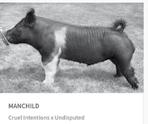
We have spring 4-H farrowed pigs by Manchild, Big and Nitro available. Farrowed November through January. Jackpot, state fair, and county fair quality. Delivery to Colorado and Wyoming available in late March. Call Brad for more information.
(712) 660-3173
Sheep
ARE YOU IN NEED OF A NEW HERDER CAMP OR A PERSONAL RANGE CAMP FOR YOUR FAMILY? Contact us at Western Range Camps and see what we can build for you. We specialize in quality, handcrafted camps built to your specifications. Contact us today to design the camp that is just right for you. Western Range Camps, 435-462-5300, heidi@ wrcamps.com, 1145 S. Blackhawk Blvd, Mt. Pleasant, UT 84647 2/25

HAY FOR SALE: Teff grass and alfalfa mix. Small square bales. Approximately 70 tons available. Located in Powell, WY. For more information, call 307-2548201 3/11
GOOD AVAILABILITY OF ROUND AND SQUARE HAY AND STRAW BALES FOR SALE: Low delivery charge at cost. Volume discounts available. Call/text 1-204-209-1066 anytime for pricing 3/11
FOR SALE: BODY FOR 2003 FORD 350 DIESEL SINGLE AXLE. Mint condition. Asking $1,750. Body was removed upon original purchase to accommodate Hydra-Lift. Call 719-320-5815. To view photos, go to www.wylr.net in the classifieds 3/18
WANTED!!! 1932, 1933 or 1934
Ford car project, restored or older restored one. Call 605290-3208 3/4
2007 DURAMAX 1 TON DUALLY WITH HYDRABED. 4WD, straight body, no rust, 210,000 miles, 4 new drive tires, $25,000. Call 307-5753763 2/25
Trucks
WANTED TO BUY: 1961 GMC
4000, Chevy C60, Viking truck or 1972 Chevy C60 motors 427 or 327. Whole or parts. Call 920-337-9315 or 920-471-7253. Leave message 2/25
FOR SALE: H&S 7+4 17’ chuckwagon with tandem 14 ton running gear. John Deere 714A and 716A chuckwagons with John Deere running gear and bunk feeding extensions, been shedded, nice condition. J&M 325 gravity box with 12 ton gear. Meyerink 12’ box scraper. Lorenz 16’x33’ 18 ton stack mover. Inland 102” snow blower with hydraulic spout. Farm King 8’ snow blower with hydraulic spout. All in very nice condition!! Call 605-9995482 3/18
EQUIPMENT FOR SALE: John Deere 8960 tractor with PTO; John Deere 5090e tractor with loader; CIH 1015 pick-up header; John Deere 455 30’ grain drill; White 30’ disk; Morris 53’ airdrill; Lawson 12x30 double drum land areator; Apache 2190 self propelled sprayer; New Holland 1075 balewagon; Freeman self propelled 3 string balers; Freeman pull type 3 string balers; Vermeer R23 rake; Massey Ferguson 2190 4x4 baler; Cat 950 loader; New Holland 359 grinder mixer; Modern Mill (mix mill) feed mill; Freightliner grain truck; IHC 80 bbl vac truck; Merritt 48’x102” cattle pot; Mobile Tech 9 yd. volumetric concrete mixer; Degelman 570 rock picker. Call 406-254-1254 3/4
B9 Wyoming Livestock Roundup • Volume 34 No. 44 • February 25, 2023 Wyoming Livestock Roundup 3 View Our Classifieds Online at www.wylr.net READ IT IN THE ROUNDUP Turn the page for more ADS Limousin Meat Processing Pasture Wanted Vehicles & Trailers Monday, March 27, 2023 at the ranch Arthur, NE
90 Head of Polled Hereford and Red Angus Bulls Bernie & Stacie Buzanowski 308-726-2138, 406-855-8288 Hay & Feed Seed Angus All AI bred by these breed leading sires: Timberline, Gus, Promontory, Resilient, Colorado, TJ Gold, Beacon, Dream On, TJ Rage. Also additional sires. Many bulls suitable for heifers. 15 Embryo Transplant Bulls. Backed by 45 years of AI & ET genetics. Including 5 solid Red SimAngus Bulls. PAP tested. Cattle Raised by Cattlemen for Cattlemen in a Real World Environment at 8,000’ - 9,000’ Elevation NEW SALE DATE: Monday, March 13, 2023 Cowboy Auction - 1 p.m. • Shoshoni, WY Pete & Lynnda Thompson Lynnda 307-709-8361 Big Piney & Riverton, WY P\T Livestock Annual High Country Genetics Performance Bull Sale Selling 60 Angus, SimAngus & Simmental Bulls Gelbvieh NINE BAR NINE GELBVIEH 307-351-6453 ninebar9@hotmail.com Yearling Gelbvieh Bulls Available: 1 Red Bull • 4 Black Bulls (Videos Available in Mid-March) , 1 Saddles & Tack Hay & Feed Seed
Annual Bull Sale
Equipment Wagyu WAGYU/BLACK ANGUS BULL CALF FOR SALE: Excellent future for your herd. $2,400. Call Drew, 307-7525920 3/4
Feed
WANTED, PASTURE FOR YEARLINGS, 200 to 1,500 head. Call 308-765-0300 2/25
Equipment Equipment
Irrigation
Irrigation
Killebrew Irrigation
Your one stop shop for all irrigation needs
Lander, WY • (307) 332-3044


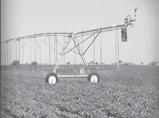
• Reinke center pivot sales and field design


• Parts for most major irrigation systems
• Underground and Surface PVC pipe and fittings

• Pumps and Motors
• Phase Converters
Property for Sale
Property for Sale
Property for Sale Property for Sale
307-532-1840 • CHUGWATER, WY
WANT TO BUY!! FORD 172
DIESEL 4 CYLINDER power unit. ALSO, other industrial applications wanted. Call Lloyd, 701-226-4055 3/4
EQUIPMENT FOR SALE: 310C gas Case crawler loader, $4,500; 95 John Deere combine round back, $6,200; 1999 4900 Hesston baler, $24,500; 2275 16’ Hesston pull type swather, $14,500. All machinery has been shedded. Call Ivan Policky, 307-629-0974 3/11
Livestock Equipment

Equipment Decals
Equipment
Restoration
DBL TREE TRACTOR RESTORATION LLC: Tractors, stock trailers and flatbeds, total repair, sandblast and paint. Please call Mike, 406-9300720 2/25


Heating Equipment
ELIMINATE ● RISING ● FUEL
COSTS: Clean, safe and efficient wood heat. Central Boiler Classic and E-Classic Outdoor Wood Furnace; heats multiple buildings with only 1 furnace, 25-year warranty available. Heat with wood, no splitting! Available in dual fuel ready models. www.CentralBoiler.com WE ALSO HAVE whole house pellet/corn/biomass furnaces. Load once per month with hopper. www. Maximheat.com A-1 Heating Systems. Instant rebates may apply! Call today! 307742-4442. To view photos, go to www.wylr.net in the classifieds TFN
Pipe
FOR SALE!! 2 7/8, 3 1/2
4” drill pipe, 4 1/2 casing, 5” casing, 7” casing. Rods 3/4, 7/8 and 1” located in Montana, can ship anywhere. Call Mike, 602-758-4447. To view
Pipe
“Picking A Fence Post” tab to see why folks choose our posts!! TFN
Hunting & Fishing
MARCH 2-4: PETSKA FUR WILL BE BUYING ALL RAW/DRY FUR DEER/ELK HIDES AND ANTLER, IN THE FOLLOWING TOWNS AND LOCATIONS: MARCH
2: Ft. Bridger 3:30-3:50 p.m., Cash Store; Evanston 4:305 p.m., Prairie Inn. MARCH
3: Kemmerer 7:20-7:40 a.m., Ham’s Fork Station/Sinclair; Cokeville 8:30-8:50 a.m., Fly -

p.m., Elkhorn Bar (drive thru); Bondurant 1:552:10 p.m., Post Office (drive thru); Daniel 2:30-2:50 p.m., The Den; Pinedale 3:10-3:40 p.m., Gannett Sports; Big Piney 4:15-4:30 p.m., Public RR Visitor Info. lot; La Barge
5:15-5:30 p.m., All American Fuel (drive thru); Fontenelle
6 p.m., drive thru call Greg on this day only; Green River 7 p.m., Hitching Post. MARCH Green River 7: 20-7:40 a.m., Hitching Post (drive thru); Rock Springs 8-8:30 a.m., WY Wool Warehouse; Wamsutter
9:30-9:45 a.m., Wamsutter Conoco (drive thru); Rawlins
10:30-10:50 a.m., Trails West Meat Processing; Saratoga
12-12:30 p.m., Saratoga Feed & Grain; Elk Mountain 1:10-
1:30 p.m., Conoco on I-80 (drive thru, call Greg); Hanna
1:40-1:50 p.m., Hometown Market (drive thru); Medicine Bow 2:30-2:40 p.m., JB’s (drive thru); Rock River 2:50-3 p.m., Rancher’s Supply (drive thru); Laramie 3:50-4:50 p.m., West Laramie Fly Shop. For more information, call Greg, 308-750-0700 or visit www. petskafur.net 2/25
Irrigation GOING, GOING, GONE. THAT'S WHAT YOU'LL SAY WITH ROUNDUP CLASSIFIEDS
Black Mountain Farm: Washakie County, Wyoming. 145+ acres along Highway 20 North between Worland and Thermopolis. 80+ acres under 2 newer Zimmatic Pivots irrigated out of the Bluff canal. 100’x50’ shop with concrete floor with large overhead doors and all the infrastructure for building improvements. This is a high quality farm currently in beet and barley production. Price: $1,299,000
MO. Flats Ranch: Hot Springs County, Wyoming. 655+ acre ranch with lots of Owl Creek Frontage as well as solar and electric wells. Approximately 195 adjudicated acres with sub-irrigated and dryland pasture. 3,360 sq. ft. newer shop with power and water on site. Excellent base for a livestock operation or stand alone unit. Price: $1,800,000
Mills Road Farm: Fremont County, Wyoming. 155+ acre farm in the Midvale Irrigation District. 101 irrigated acres with gated pipe. Near Ocean Lake off 8 mile road. 2,800 sq. ft. home with many recent upgrades. 3,000 sq. ft. shop with concrete floor and wood frame machine shop. Great location and super base property. Price: $775,000
Harvey East Sunnyside Farm: Hot Springs County, Wyoming. 135+ acre farm in alfalfa hay on the Lucerne Irrigation system. Located 6 miles from Thermopolis and overlooking the Big Horn River. Seller will divide in parcels of 35 acres or greater. Very nice farm in a great location. No improvements, county road access. Price: $1,440,000
Roy Ready - Broker
Frank Sanford - Sales Associate • Amy Ready - Sales Associate
Clay Schafer – Sales Associate • Rees Ready - Office Manager Office: 307-234-2211


Roy Ready - Broker: 307-921-0170
www.westernland.net

MARCH 9-12: PETSKA FUR WILL BE BUYING ALL RAW/ DRY FUR DEER/ELK HIDES AND ANTLER, IN THE FOLLOWING WYOMING TOWNS AND LOCATIONS: MARCH 9: Douglas 7:10-7:20 a.m., Douglas Feed (drive thru); Bill 8-8:10 a.m., Bill’s Store (drive thru, call Greg); Wright 8:50-9:20 a.m., Exxon Big D on S. 387; Newcastle 11:15 a.m.-11:45 p.m., Voelker’s Body Shop; Upton 12:30-12:45 p.m., Joe’s Grocery Store parking lot; Moorcroft 1:15-1:45 p.m., The Coffee Cup; Gillette 2:10-2:30 p.m., T&T Guns and Ammo; Gillette 3-3:30 p.m., Rocky Mountain Sports. MARCH 10: Gillette

7-7:20 a.m., Rocky Mountain Sports (drive thru, call Greg); Sheridan 9:30-10 a.m., Sportsman’s Warehouse; Buffalo 10:4511:15 a.m., Good 2 Go; Ten Sleep
12:45-1:15 p.m., Pony Express; Hyattville 1:45-2 p.m., Paint Rock
Processing; Manderson 2:40-
2:50 p.m., Hiway Bar (drive thru); Basin 3-3:20 p.m., Overland Express Mart (drive thru); Greybull
3:40-4 p.m., Overland Express Mart (drive thru); Lovell 4:30-4:50 p.m., Good 2 Go; Byron 5-5:15 p.m., Cardtrol (drive thru); Powell 5:30-5:50 p.m., Murdoch’s.
MARCH 11: Powell 7-7:20 a.m., Murdoch’s; Ralston 7:30 a.m., Good 2 Go (drive thru, call Greg); Cody 8-8:40 a.m., Nature’s Design Taxidermy; Meeteetse 9:20-
9:40 a.m., Elk Horn Bar; Worland
10:50-11:20 a.m., Coop One Stop; Thermopolis 11:50 a.m.-12:20 p.m., Renegade Guns; Shoshoni
1-1:15 p.m., rest area/bus stop (drive thru); Riverton 2-2:50 p.m., Vic’s Body Shop (behind the Dollar Tree); Hudson 3:10-3:20 p.m., Wyoming Custom Meats (drive thru); Lander 3:40-4:10 p.m., Zander’s One Stop; Jeffrey City 5:15-
5:30 p.m., Split Rock Cafe; Muddy Gap 5:50-6 p.m. (drive thru, call Greg). MARCH 12: Casper
7:20-8:20 a.m., Wagner Outdoor Sports; Glenrock 9-9:15 a.m., east exit on I-25; Douglas 10-10:20 a.m., Douglas Feed; Orin Junction 10:40-10:55 a.m., truck stop (drive thru); Lost Springs 11:10-11:20 a.m., truck pull off (drive thru, call Greg); Manville 11:20-11:30 a.m., truck stop (drive thru, call Greg); Lusk 12-12:20 p.m., Decker’s Grocery. For more information, call Greg, 308-750-0700 or visit www.petskafur.net 3/4
Wyoming Livestock Roundup • Volume 34 No. 44 • February 25, 2023 B10 February 25, 2023 4 Subscribe to the Wyoming Livestock Roundup and get 52 great editions throughout the year. Call 800-967-1647 or 307-234-2700. Advertise Your Property Here! Have Fencing Equipment to Sell? Advertise here! 320 ACRES WITH A MILE AND A HALF OF LIVE SPRING WATER: Alpine setting. Beautiful views. Located in the Dillon, MT area. REDUCED $1,200,000. Call Sidwell Land & Cattle Co., Richard Sidwell, 406861-4426, 406-322-4425 or e-mail sidwell@sidwell-land. com 3/25 Irrigation
Fencing LODGEPOLE PRODUCTS,
AGRI-BUSINESSES
US at
com and click our
PIPE
tubing,
307-742-6992, SERVING
SINCE 1975!! Treated posts, corral poles, buck-and-rail, western rail, fence stays, rough-sawn lumber, bedding. SEE
www.lodgepoleproducts.
10:20
Jct.
1:40-2
ing J Truck Stop; Afton 9:50-
a.m., Afton Country Village; Thayne 10:40-10:50 a.m., Farmer’s Feed (drive thru); Etna 10:50-11 a.m., Etna Trading Post (drive thru); Alpine 11:40 a.m.-12:10 p.m., Grey’s River Saloon; Hoback
12:40-1:10 p.m., Hoback Market/Exxon; Bondurant
Copper wire is being stolen from electrically powered pivot systems world-wide. Many growers have resorted to 24-hour guards, razor wire, floodlights and daily disassembly to protect themselves. T-L’s hydraulically powered pivot systems can be designed with little or no wire to steal. Stop theft and discover T-L’s reliability, simplicity and low maintenance cost. T-L irrigation systems are easier on you - for life. Irrigation Systems The choice is simple. Big Horn Truck and Equipment Manderson, WY rairdenjlw@tritel.net • 800-770-6280 No wire to steal! Easier On You. Curt Cox Specializing in all of your livestock advertising needs! (307) 234-2700 or (800) 967-1647 Livestock Field Services curt@wylr.net Hunting & Fishing Buy, Sell or Trade Your unwanted Items in the Roundup Classifieds!
By Micah Most, UW Extension Educator

January exited with a blast of arctic cold. About this time, many gestating ewes and cows entered the third trimester, marking the last phase of pregnancy in which the bulk of fetal growth occurs.
The energy demands of cold temperatures and pregnancy increase the nutritional requirements of ewes and cows, and this is especially true for yearling ewes or first-calf heifers which are still making gains toward their mature body size.
Nutritional requirements

The 2022 University of Wyoming (UW) Extension bulletin “Supplementation Considerations for Ewes Managed on Dormant Winter Pastures and Rangelands” contains an excellent overview of nutritional requirements of sheep during this period with critical environmental and physiological burdens.
On the beef cattle side, there is the 2015 University of Nebraska-Lincoln Extension bulletin “Supplementation Needs for Gestating and Lactating Beef Cows and Comparing the Prices of Supplement Sources.”

These publications can be found online at bit.ly/winter-ewe and bit.ly/wintercow, respectively.
Supplementing with alfalfa, distillers’ grains or range cake supplies rumen degradable protein (RDP) –formerly known as degradable intake protein (DIP) – and can be an excellent source of nutrition during critical environmental and physiological burdens.

This protein boosts rumen microbes which break down low-quality forages and helps the animal access energy which would otherwise be locked up in cellulose.
Energy needs and disease
When forage is low in quality, as it often is during winter and after drought, it can become physically impossible for animals to consume enough to meet their energy or protein needs – they simply run out of space in their digestive systems. The growing fetus and expanding uterus further restrict the rumen and capacity for feed intake.
Without proper management, the animal can go into a negative energy balance and begin to metabolize stored energy in the form of body fat reserves. This puts the body into a state of ketosis.
If sustained for long periods, ketosis can develop into the metabolic disease commonly known as pregnancy toxemia. This is not the result of a calcium deficiency, as in milk fever,
or a deficiency of magnesium, as in tetany, although these diseases should be ruled out when consulting with a veterinarian.















Pregnancy toxemia is most likely to present late in gestation in sheep and goats carrying multiple offspring or in obese individuals, due to the spatial restrictions imposed on the rumen.
Less frequently observed in cattle, pregnancy toxemia is most likely at or near peak lactation in high milking capacity individuals fed poor-quality diets which similarly enter a negative energy balance.
Common symptoms of pregnancy toxemia include an animal going off feed and showing lethargic behaviors, progressing to recumbency and death in severe cases.
Neurological signs such as head pressing or circling may also occur as a result of ketone buildup in the blood.
Routine observations and treatment




As ranchers make their daily animal checks, they should look closely for any individuals appearing depressed and “out of it.”
Are they tracking movement? Are their ears up and eyes bright? Are they keeping their heads up as the rancher approaches? Are they up and eating at feeding time?
These are routine livestock husbandry observations, but catching any problem animals early can lead to the best outcomes.
If pregnancy toxemia is suspected, work with a veterinarian to develop a treatment plan. Since the cause is a deficit in available energy, supplementation with rapidly available glucose is often the simplest and least invasive therapy.
Many over-the-counter oral drenches are available to counter the effects of ketosis, but be sure the product is labeled for use in the correct species. Something labeled for use in cattle may not be labeled for use in sheep and vice versa.
In extreme cases, a veterinarian can administer an intravenous glucose infusion. Watch affected animals closely for secondary infection during recovery from pregnancy toxemia.
While treatments are available, it is best to prevent pregnancy toxemia and/or ketosis from occurring in the first place. Ensure animals consume a high-quality, balanced diet and have access to clean water from late gestation to peak lactation.
Use body condition scoring (BCS) to maintain breeding females in moderate flesh – BCS three to four for sheep



and BCS five to six for cattle – avoiding both the thin and obese extremes of the scale.
Utilize grain or concentrate supplements as appropriate, especially to provide sufficient protein when grazing dormant winter range, as animals enter the third trimester of gestation – 100 to 150 days of gestation for sheep and seven to nine months for cattle – or to counter the effects of severe winter weather events.
For the rancher, nutritional management is one of the most powerful tools to prevent disease and enhance productivity. Producers can work with their local UW
Extension educator to answer questions about winter livestock rations.

Micah Most is the agri-









culture and natural resources educator with University of Wyoming Johnson County Extension. He can be reached
at mmost@uwyo.edu, 307684-7522 or on Facebook and Instagram @UWExtensionJohnsonCounty.
B11 Wyoming Livestock Roundup • Volume 34 No. 44 • February 25, 2023 The LaFollette Family Powell, Wyoming Quin 307-899-3553 Gavin 307-899-1764 info@blacksummitcattle.com Wh e ca le that p f m g the ribb . Marty Ropp 406-581-7835 Corey Wilkins 256-590-2487 Jared Murnin 406-321-1542 www.alliedgeneticresources.com Bu Sale Black Summit Cattle Sale Facility || 1476 Hwy 14A, Powell, WY 82435 FRIDAY 1:00 PM MARCH 17 ANNUAL 5/8 SM 3/8 AN $API 142.5 $TI 82.1 BSUM COUNTRY BOY 038H son. G+ ACE 210K ASA 4040301 5/8 SM 3/8 AN $API 176.5 $TI 98.2 CLRS HOMELAND 327H son. G+ 261K ASA 4040353 5/8 SM 3/8 AN $API 175.4 $TI 94.1 CLRS HOMELAND 327H son. G+ ATM 239K ASA 4040330 5/8 SM 3/8 AN $API 158 $TI 93.2 CLRS HOMELAND 327H son. G+ ATM 281K ASA 4040372 5/8 SM 3/8 AN $API 151 $TI 92.8 SOUTHERN 1050E son. G+ ATM 2120K ASA 4040412 70 SIMANGUS BULLS • 2 Great Working Dogs • PAP TESTED PERFORMANCE TESTED BVD TESTED RIGHT CHOICE VERIFIED O gu t y ha in s. FOR A SALEBOOK, EMAIL INFO@BLACKSUMMITCATTLE.COM EXTENSION EDUCATION
Late pregnancy, winter weather increase livestock energy demands Adobe Stock photo
by Lee Pitts
Burning Questions
I know the cowboy and cowgirl community looks to me as a stylish trendsetter who is always in fashion.
As a man of few fashion surprises who owns at least three pairs of jeans and a stack of T-shirts, some even without colorful pictures of cows or cars on them, I real-
ize I have a responsibility to share my insight as to what’s fashionable.
I’m constantly barraged with questions like, “What’s in style – shotgun chaps or chinks? Fringe or no fringe? Vest or no vest? Pendleton or polyester? A feather in one’s hat or a hat band? Belt

or suspenders? Wrist watch or pocket watch? Jinglebobs or no jinglebobs?”
As a leatherworker, I’m often asked if it’s fashionable to put a person’s name on the back of their belt or if “that style” went out with Lyndon Johnson. I prefer initials on the tip of a belt. And yes, people should wear a belt and pull up their pants.
Even though teenagers are often seen with their pants pulled down like they have $500 worth of nickels in the pockets, it’s not a style that will ever catch on with the cowboy crowd.
Can one imagine Trevor
Brazile getting off his horse after roping a calf and mooning the crowd in Las Vegas at the National Finals Rodeo (NFR)?
The top five questions I get from people who want to dress as stylish as myself are as followed.
Question number five: Levi or Wrangler?
I was a Levis man in my younger years, but this was before I learned Levi gives hundreds of millions of dollars to extremely liberal causes, while Wrangler sponsors the NFR. So, now I’m a Wrangler man.
Okay, okay. The fact Levis now cost $60 per pair
might have a little something to do with my fashion awakening. At any time, a person could add up the cost of everything I’m wearing and the total wouldn’t be near $60. Compromise position – Cinch jeans.
Question number four: square toe or pointy toe?

I notice a lot of rodeo cowboys and cowgirls are wearing square-toed boots these days. Call me oldfashioned, but I believe proper boots should have pointy toes so a person can get their foot out of the stirrup faster with less hang up.
Compromise position – my favorite boots have always been Justin Ropers with a round toe. Under no circumstance should a cowboy or cowgirl wear those silver toe caps on their boots which make them look like derelict rock and roll singers.
Question number three: outside or inside?
Because I also make spur leathers, people ask if the buckles should be on the outside or inside.
It depends on what part of the country a person is from. If they’re from California, the buckles should be on the inside so they can put a big, gaudy concho on the outside of their spur leathers.
If they live closer to Texas and Nebraska, it’s fashion forward to wear the buckles on the outside, which is more practical.
Compromise position –I really like the three piece spur leathers with a concho on the outside and the buck-
les in the middle.
Question number two: wild rag or bolo tie?
Wild rag for sure, unless one happens to be from Arizona. I’ve traveled this particular state extensively and have found only an Arizonian can wear a bolo tie and look good at it.
Arizona cowgirls are also the only ones who look good with big, old Native American Squash Blossoms around their neck. Maybe it’s the turquoise?
Compromise position –do like I do and don’t wear either, because neither a wild rag or bolo tie looks good with a T-shirt.
Question number one: black or white?
The number one question I get is, “Is it more fashionable to wear a white –actually grey – or black hat?”
I used to wear nothing but silver bellies, but I’ll admit nothing looks better than a properly shaped black hat, except under really dusty conditions. I’ve seen some auctioneers wear brown hats, but a person has to be really courageous and good looking to pull this look off.
Compromise position – just wear a straw hat all year-round. They’re a lot cheaper, and a person won’t care as much if one happens to blow away or get stepped on by a bull or horse.
I’ll admit straw hats don’t look good if theyʼre worn with a suit, but I tend to avoid any enterprise requiring me to wear one of those darn things.

Wyoming Livestock Roundup • Volume 34 No. 44 • February 25, 2023 B12
® 307-234-2700 • wylr.net coming soon! Midland
bull test edition
Deadline: March 10, 2023
Date: March 25, 2023 To advertise in the Midland Bull Test Edition, contact Calli at 605-695-1990 or calli@wylr.net Advertising Deadline: April 28, 2023 Insert Date: May 27, 2023 To advertise in the Rocky Mountain Horse Edition, contact Jody at 800-967-1647 or jodym@wylr.net
Rocky Mountain Horse Edition Advertising
Insert