The impact of suicide on those left behind, and the hope that trained ministry leaders can offer the bereaved. Fleming Rutledge and the vocation of biblical theology. Findings and insights from the Canadian Institute for Empirical Church Research (CIECR) study “‘Greatness’ in Canadian Congregations”.
Editorial Board
The Rev. Aidan Armstrong
Mr Jeffrey Hocking
Ms Renée James
Ms Shelley McLagan
Dr Marion Taylor
The Rev. Dr Lissa Wray Beal
Contributors
The Rev. Christopher Dow
Dr Stephen Hewko
Ms Renée James
Dr Kristen Deede Johnson
Dr Boram Lee
Dr Joseph Mangina
Dr Elizabeth Millar
Ms Patricia Paddey
Dr Justin Stratis
Design
Jennifer Au
Comments & Questions
Shelley D. McLagan Director of Development and Communications
Wycliffe College 5 Hoskin Avenue, Toronto, ON M5S 1H7 shelley.mclagan@ wycliffe.utoronto.ca 416-946-3524
wycliffecollege.ca
Your Contact Information
Wycliffe College Development Office alumni@wycliffe.utoronto.ca 416-946-3549
Discerning the Will of God
Dear Friends,
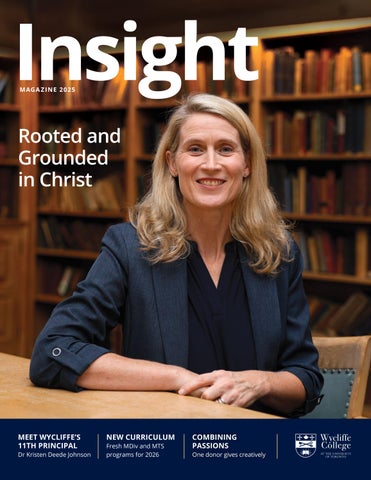
In the following pages, you will meet students and alumni who share how Wycliffe’s grounding in Scripture and scholarship impacts them even now; listen as faculty share their insights on how to do ministry with those affected by suicide; and learn about my first priorities at the College. You’ll have the opportunity to celebrate the faithful ministry of Principal Andrews and his wife, Fawna, who served Wycliffe with steadfastness and cheerfulness for the previous nine years. You will also be invited to thank God for the graduates who make up the class of 2025, and to pray for them as they embark upon their next season of life and ministry.
You will see that the faculty of Wycliffe College have been hard at work, revising the curricula for the MDiv and MTS programs alongside their ongoing engagement in teaching and scholarship. Through a process of careful listening to alumni, students, and other theological colleges and seminaries, the faculty have discerned how to preserve the theological heart of Wycliffe in these new curricula, which reflect the expertise and passions they bring, and attend to the changing needs of our student body.
At the heart of these curricula, which will be launched in 2026–2027, is Wycliffe’s enduring commitment to invite students to be deeply formed through Scripture and theology, chapel and field education, and our shared life together in community.
As I shared with incoming students during orientation earlier this fall, one way we can reflect on what we are trying to do in our life together at Wycliffe is to consider Romans 12:1–2. In these familiar words of Paul’s, we read: I appeal to you therefore, brothers and sisters, on the basis of God’s mercy, to present your bodies as a living sacrifice, holy and acceptable to God, which is your reasonable act of worship. Do not be conformed to this age, but be transformed by the renewing of your minds, so that you may discern what is the will of God—what is good and acceptable and perfect.
For our students, this step to begin seminary is part of how they are presenting their lives to God as a living sacrifice. After praying, conferring with wise and trusted people in their lives, and having a call to seminary confirmed, they have joined the Wycliffe community. While there are many ways to present your life to God that don’t involve seminary, we are grateful that these students have discerned that studying here is their next faithful step.
I hope and pray that during their time as Wycliffe students, they will be transformed by the renewing of their minds and live more and more in conformity with the will of God. This passage in Romans comes after 11 rich and dense chapters, some of the
most studied chapters within Christian tradition and theology, full of significant doctrine. In Paul, we see no disconnect between doctrine and ethics, between theology and its embodiment in the Christian life. So, we hope that the formation into which we are inviting students means that what they learn in the classroom will be embodied in their lives outside of the classroom.
This kind of formational education includes being attentive to the ways that we are shaped by the cultures of which we are a part and discerning together how to embody our faith within our present time and place. To put it in Paul’s words from Romans 12, part of our shared calling at Wycliffe College is to be attentive to the formation we are receiving at the hands of larger cultural forces so that we can resist being unwittingly conformed to the pattern of this age as we discern the will of God—what is good and acceptable, what we are called to embody as we are called to love here and now.
I hope you will join me in praying that through all they encounter in the classroom, in chapel, in field education, and in our shared life together in community, our students will be transformed by the renewing of their minds and be formed to love God more fully with their hearts, souls, minds, and strength. I am thankful for all that God is doing at and through Wycliffe College, and for continued partnership with those who support us by prayer and by gift, making it all possible. As you read these pages, please join us in gratitude for the ways God is at work in our midst.
Grace and peace,
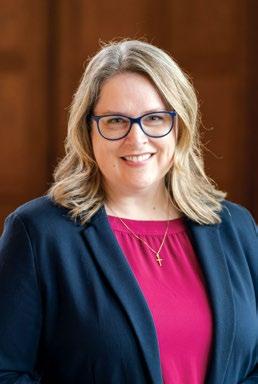
Dr Kristen Deede Johnson Principal and Helliwell Professor of Theology, Ministry, and Culture
Wycliffe College Announces
New Curriculum for MDiv and MTS Programs
AFTER MORE THAN A YEAR of gathering feedback from students, alumni, and faculty, as well as consultations with sister institutions throughout North America, Wycliffe College is pleased to unveil its newly revised curricula for the Master of Divinity and Master of Theological Studies programs for the 2026–2027 academic year.
The goal of the process was to build curricula that not only reflect the historic theological vision and heart of the College, but also the expertise and passions of its current faculty, all while being flexible and accessible enough to accommodate the changing needs of its student body.
Of course, the new curricula will continue to prioritize the key charisms that have marked a Wycliffe education for nearly 150 years: Scripture, including a strong focus on the theological interpretation of Scripture, systematic theology, mission, preaching, and worship, all framed within a generous evangelical ethos that is motivated by a deep love for the Church and is rooted in the historic Anglican tradition.
To this core, required courses in pastoral care, intercultural engagement, and world Christianity have been added, as well as a new foundational course, “The Word Abides,” which will offer a theological rationale for relating the disciplines the seminarian will encounter in the midst of their studies.
Vice Principal and Academic Dean, Dr Justin Stratis, noted that, “What really made this process exciting was talking through some of the proposed changes with students and watching them realize how their feedback was really taken to heart by their faculty.”
One example of this faculty/student engagement is field education. For several years, students, particularly those who pursued their degrees part time, struggled to integrate field education into their schedules. The new curricula allow for a bespoke approach, which recognizes the ministry contexts in which students are already engaged, and greatly reduces the amount of paperwork needed to fulfil program requirements.
Similarly, students had expressed a desire for more pastoral care courses. With our new required course, “Introduction to Pastoral Care,” all MDiv students will now receive practical and theological instruction in this uniquely ecclesial ministry, as well as have access to a host of new elective options should they sense a particular call to this area of ministry.
More information on the new curricula will be found on the Wycliffe College website, where the entire suite of courses for both the MDiv and the MTS programs is listed, along with different pathways to their completion.
Board of Trustees
WE ARE PLEASED to announce the appointment of William (Bill) Benson, ODT, as the Chair of the Board of Trustees. An active lay leader, Bill has seen firsthand the importance of excellent ordained leadership. He considers it a privilege to be part of the Wycliffe community and to participate in the long tradition of forming future Church leaders for the world.
We offer our deep gratitude to former Chair, Carol Boettcher. Carol served as Board Chair from 2019 until spring 2025, leading Wycliffe with a steady hand through the pandemic, the search process for a new Principal, and the appointment of Dr Kristen Deede Johnson as the College’s eleventh Principal.
Canadian Institute for Empirical Church Research (CIECR) Hosts National Gathering in December
ON DECEMBER 11, researchers, denominational leaders, students, and people interested in what is happening in the Canadian Church will gather at Wycliffe College for a one-day event hosted by CIECR. Through presentations, conversations, and shared learning, participants will explore emerging trends, new data, and questions shaping Christian communities today. Whether you conduct academic research, lead within a denomination, study in a classroom, or are simply curious about church and society, this gathering will provide both insight and connection.
Register by clicking the Get Involved button at wycliffecollege.ca.
Remembering Board Trustee and Treasurer Bob Boeckner
A VALUED TRUSTEE and member of the Wycliffe community, Bob Boeckner passed away in June. He was passionate about his work for the College. He brought a personal touch to that passion, often going out of his way to support senior staff charged with improving the College’s finances. He willingly gave time whenever needed and however it would best help the College. “He brought his curiosity, experience, and wisdom to all our work,” says Carol Boettcher, former Chair of the Board of Trustees. “He will be sadly missed.”
Saying Farewell
Bishop Stephen and Fawna Andrews
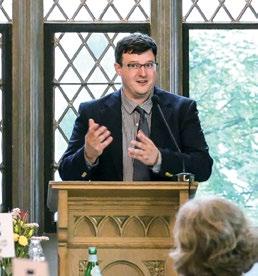
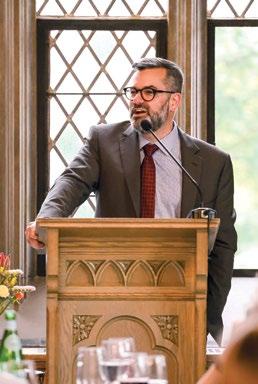
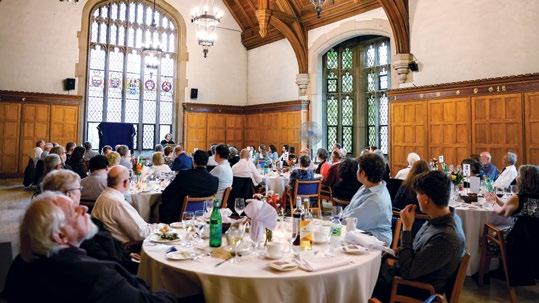
ON A MUGGY WEDNESDAY evening in June, Wycliffe College celebrated the ministry of outgoing Principal, the Rt Rev. Dr Stephen Andrews, and his wife, Fawna, as they wrapped up their tenure at Wycliffe College. Surrounded by family, faculty and staff past and present, Stephen and Fawna were toasted with warm words and benedictions.
“Stephen has modelled for us what it is to continue to believe, to continue to hope, and especially during the lockdown, to continue to pray—day in and day out, alone in the chapel—in the belief that God is always about the business of doing a new and redemptive thing in our midst.”
Justin Stratis, Vice Principal, Academic Dean and Professor of Systematic Theology
“I believe much of the impact of Stephen’s time here at Wycliffe will be felt in the years to come as our graduates continue to become the next wave of leaders in the Church in Canada and abroad.”
Paul Patterson, Chief Operating Officer
A special fund has been established to honour Bishop Stephen’s contribution to the College. Donations to the Bishop Stephen Andrews Chapel Fund can be made on the Wycliffe website.
“[Fawna] has undoubtedly become as much a part of the community here as Bishop Stephen, and we have been blessed by her ministry. She has contributed so much to this community, from participating in the chapel services to her legendary hospitality.”
Betsy Chester, Friend
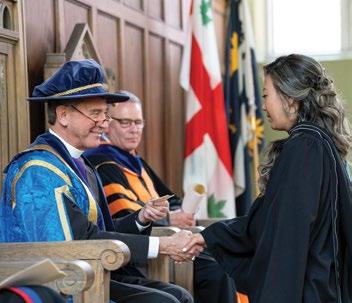
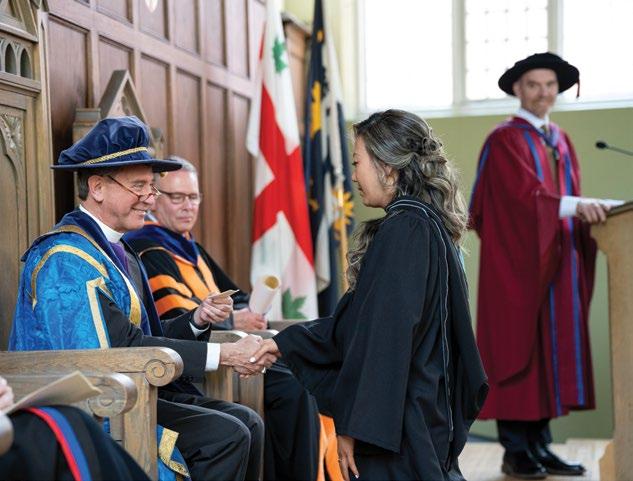
Convocation 2025
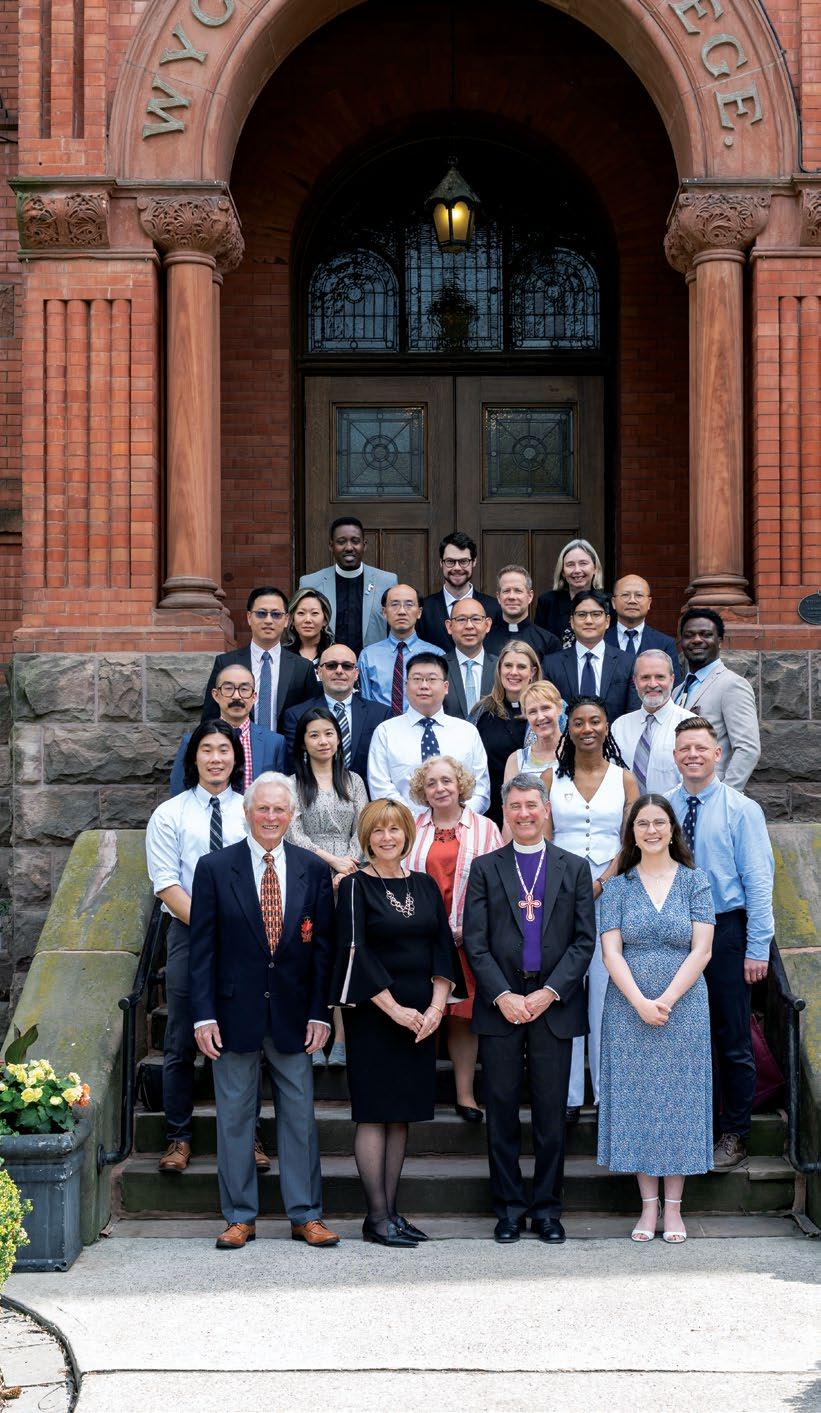
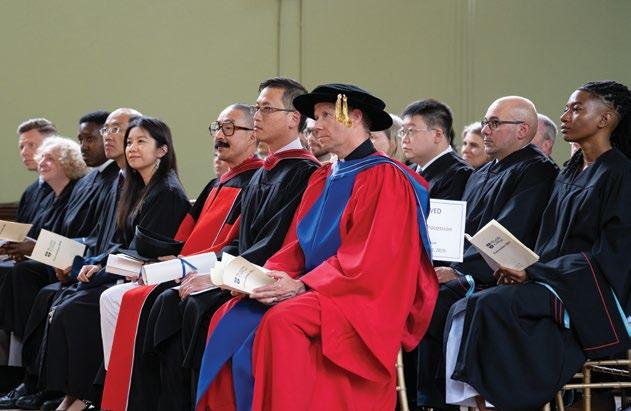
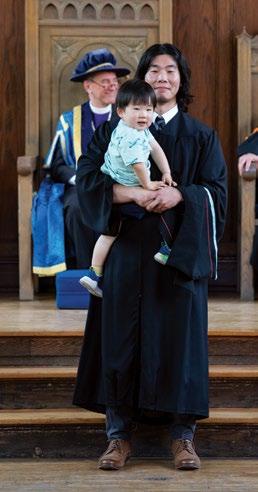
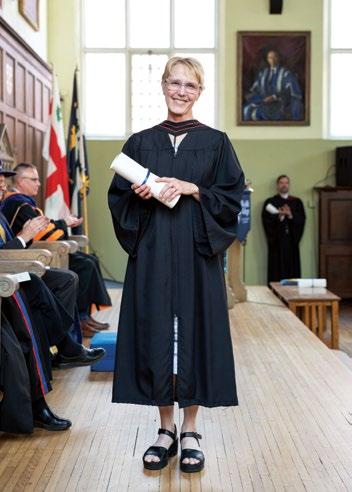
Congratulations to the Class of 2025
It has been a privilege to journey alongside you, and we pray that you will remain rooted and grounded in Him as you live out His purpose for your lives.
THE DEGREE OF MASTER OF DIVINITY
Janice Hong
Jin Sol Kim
Kathleen Alexandra Krynski Hanull Matthew Lee
Lutzen Andries Richard Riedstra
Janet Karen Ternes
Wei Wang
THE DEGREE OF MASTER OF THEOLOGICAL STUDIES IN DEVELOPMENT
Bashar Haitham Michael Haddaden
Brittany Venus Hudson
Bancha (Joe) Karonsontawong
Justin Park
THE DEGREE OF MASTER OF THEOLOGICAL STUDIES
Lucas Esteves Lima
Natania Claire Friesen
Jon Osmond
Catherine Mary Sprowl
Sulaimon Olubodun Sulaimon
THE DEGREE OF DOCTOR OF PHILOSOPHY
University of St. Michael’s College
Conferred November 2024
Stephen Douglas Hewko
Patrick Michael McManus
Renee Joan-Yie Monkman
THE DEGREE OF DOCTOR OF PHILOSOPHY
John Cyril Ernst Yoontack Han
Shih-En Kuo
Jason Nelson Yuh
THE DEGREE OF MASTER OF THEOLOGY
Zvi Belzer
Renwei Chi
Yu-Ju Lin
Chung Kin Wong
Liang Yu
THE DEGREE OF MASTER OF ARTS
Ayooluwa Samuel Adisa
Svetlana Kokurina
Jackson Douglas O’Brien
CERTIFICATE IN THEOLOGICAL STUDIES
Kwun Kit Allan Cheng
Nancy Victoria Fok
Sarah Elizabeth Groat
DIPLOMA IN CHRISTIAN STUDIES
Roland Tuck Chow Choo
THE DEGREE OF DOCTOR OF SACRED LETTERS
honoris causa
Mrs. Lorna Marie Dueck
Mr. Paul Henderson
HONORARY ALUMNUS
Dr Terry LeBlanc
PUBLICATIONS
Dr Joseph Mangina
Figural Reading and the Fleshly God: The Theology of Ephraim Radner
(Baylor University Press, 2025)
Dr Mangina co-edits this collection of essays. Dr Radner is Professor Emeritus of Historical Theology.
The Rev. Dr Stephen Chester
Paul Through the Eyes of the Reformers: Living Under Grace (Eerdmans Publishing Co, 2025)
Dr Chester offers this reappraisal of Protestant Reformers’ views on Paul.
The Rev. Dr Lissa Wray Beal
“Jezebel and Jehu”
(Oxford University Press, 2024)
In Oxford Handbook of the Books of Kings, edited by Steven L. McKenzie and Matthieu Richelle.
The Rev. Dr Catherine Sider-Hamilton
“Jesus and the Women: The Characterization of Jesus as King in Matthew’s Gospel” (Bloomsbury, 2024)
In Character Studies and the Gospel of Matthew, edited by Craig Evan Anderson and Matthew Ryan Hauge.
PAPERS
The Rev. Dr Ann Jervis
This fall, Dr Jervis was invited to speak at a centenary celebration of the work of J. Louis Martyn, held at Baylor University. Other invited speakers included John Barclay, Susan Eastman, and Martinus de Boer.
Dr Marion Taylor
In April, Dr Taylor was invited to present on the story of David, Jonathan, and Saul as expressed in the Old Testament. Her talk preceded Opera Atelier’s April production of Marc Antoine Charpentier’s “David and Jonathan,” held at Koerner Hall, Toronto.
The Rev. Dr Lissa Wray Beal
“Repaying Monstrous Babylon: Imprecation in a World of Tyrants” Plenary paper for The CanadianAmerican Theological Association Annual Meeting (2025).
“Defeating the Monster: Nebuchadnezzar and Babylon Receive Their Due in Jeremiah 50–51” Invited paper for Biblical Violence Research Group, Annual Meeting of the Institute of Biblical Research. (2024)
Well Done, Good and Faithful Servant
The Wycliffe community said goodbye to Dr David Demson in May
Dr Demson was a devoted and beloved professor for nearly 20 years. He began teaching at Wycliffe in 2007, offering courses on Karl Barth (under whom he had studied at the University of Basel), Luther, and Calvin. He taught his last course this past winter term. David loved teaching, and he loved his students. We shall greatly miss him.
PODCASTS
Dr Joseph Mangina
Et Al (July 2025)
Dr Mangina and Wycliffe alumnus
Dr David Ney discuss their compilation of essays: Figural Reading and the Fleshly God: the Theology of Ephraim Radner.
The Rev. Dr Lissa Wray Beal
The Pastorate (August 2025)
Why pastors need the Old Testament, faithfully preaching trauma texts, and the role of the seminary in a changing Church.
Created 2 Learn (March 2025)
Insights on liturgy in different traditions.
Ask a Scholar AWKNG School of Theology (February 2025)
Questions on Jeremiah.
Dr Marion Taylor
Scripture Untangled (Fall 2025)
Dr Taylor talks about how women interpreters from 320 to 2002 have shaped biblical understanding.
EVENTS
Radical Vocation (RADVO) Conference 2025
The Rev. Dr Ephraim Radner, Professor Emeritus of Historical Theology, was a keynote speaker, while Principal Dr Kristen Deede Johnson, Professor Joseph Mangina, and Professor Emeritus and former Chaplain Rev. Annette Brownlee all spoke at breakout sessions.
Center for Research in Global Christianity Church— Leaders Conference 2025
Founded by Dr Victor Ezigbo to support Christian leaders in Nigeria, the Center’s 2025 Conference held in Aba, Nigeria, hosted more than 300 leaders from diverse church traditions.
Meet Dr Kristen Deede Johnson
Aiming to help Wycliffe thrive
By Patricia Paddey
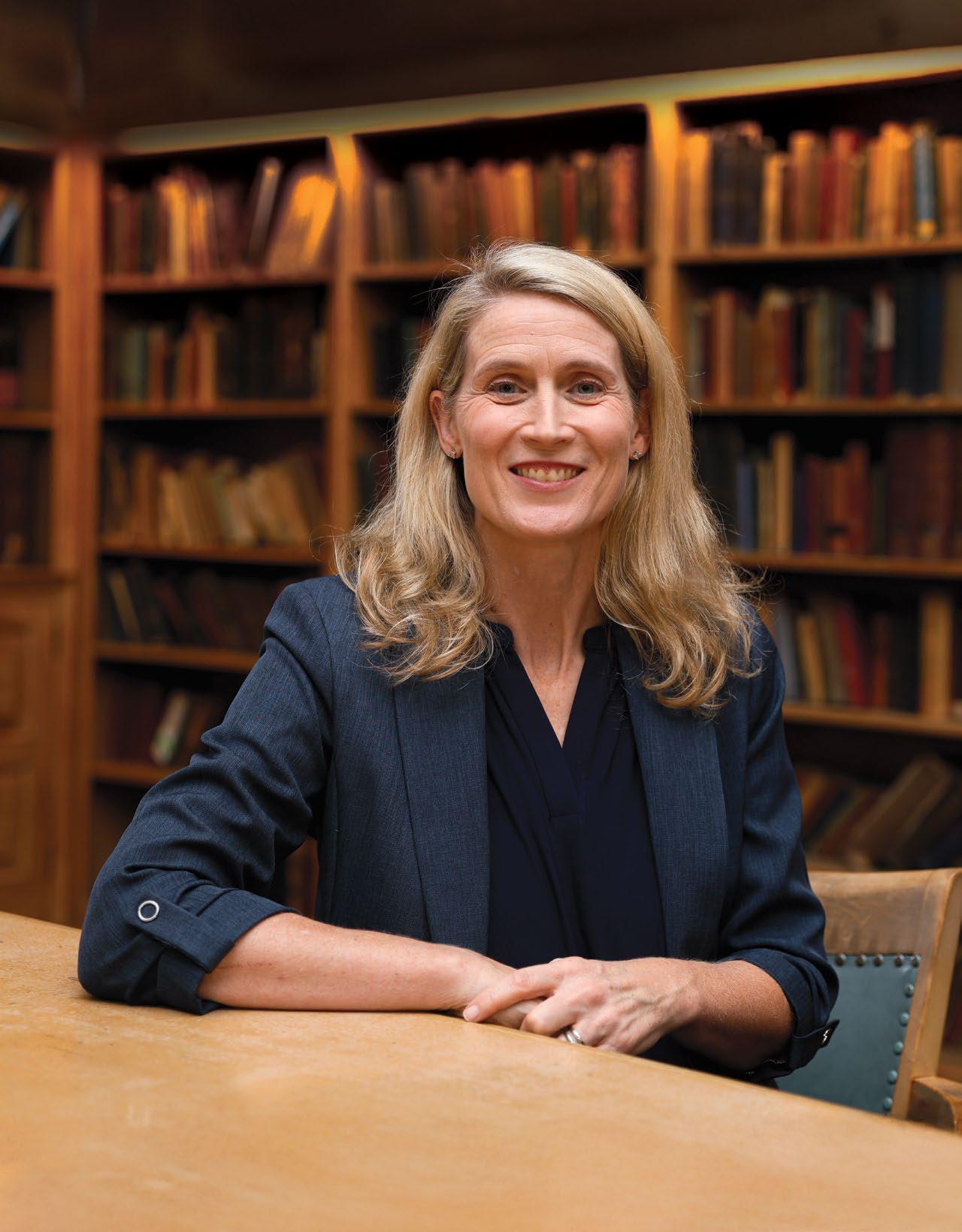
IT IS A FRAUGHT TIME for theological education, and indeed for the Church, and Wycliffe’s new Principal, Dr Kristen Deede Johnson, recognizes it. “I feel the weight of that,” she says, “and also responsibility as one who believes theological education matters, that our Church and our world are better served if these institutions thrive.”
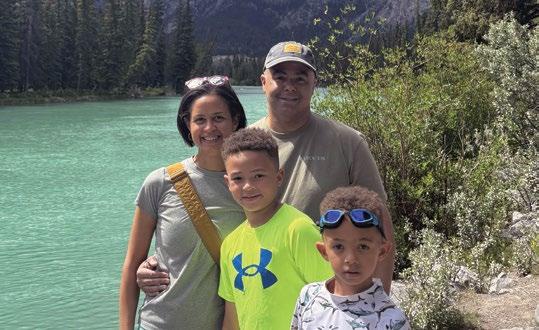
Speaking on a video call at the end of July, Johnson has not blurred her background, revealing a glimpse of the chaos in which her family is living out the final weeks before the move that will relocate their six lives. Kristen, her husband of 22 years, Tryg, their 16-year-old son, Trygve, and 13-year-old daughter, Ella, together with the family’s two dogs, will take up residence in the Principal’s Lodge.
“There is so much love for Wycliffe,” she goes on. “That is prominent. And I hear a sense of possibility. What can we imagine together?”
The value of careful listening when moving into a new situation is something she learned early in life. She was 10 when her family of origin moved to London for two years. “I’ve learned that you can’t assume that because we speak the same language, that we have the same culture,” she says. “I think in some ways you have to be more attentive to your own social location.”
“You cannot assume that because you operate one way, others do too,” she explains, professing a sensitivity, “to be very attentive to that.”
During those two years in England, Johnson began attending church with some of her new school friends. When her family returned to the United States, a friend from middle school invited her to a youth group at a local Episcopal church. Because of her church-going experiences overseas, “I was receptive to her invitation,” she says. She made new friends and stayed. At the beginning of grade 9, she describes “a more intentional giving of my life to Christ, and a more overt sense of living with Christ.”
For Johnson, living with Christ resulted in the pursuit of academic work. She completed her undergraduate studies at the University of Virginia (BA with High Distinction in Political and Social Thought, Minor, Religious Studies) and a PhD in Theology at the University of St. Andrews in Scotland (her thesis was titled From Tolerance to Difference: The Theological Turn of Political Theory).
She comes to Wycliffe on the heels of 12 years at Western Theological Seminary, most recently as Dean and Vice President of Academic Affairs. (And “no,” she says, political developments south of the border were not “a direct contributing factor” to her family’s decision to accept the call to Wycliffe.)
Amongst her early priorities as Principal, she says, is “to listen,”
She is the first woman and the first non-ordained person to hold the position of Principal at the College. Already she has been engaged in organizational restructuring, clarifying roles, changing titles, and creating an executive council to work closely with her on the College’s strategic priorities for this season—student recruitment and retention, finances and fundraising—laying the groundwork to begin work on a new strategic plan.
She mentions Wycliffe’s approaching 150th Anniversary. “We are preparing for that,” she says, “and we will start some early conversations around mission and vision.”
Johnson appears serene despite her surroundings, a serenity that speaks to qualities of character sure to serve her well at Wycliffe: openness, humility, and the ability to remain calm amid a storm.
Amongst her early priorities as Principal, she says, is “to listen,” something she has already begun, having completed one-on-one conversations with every available faculty and staff member. “I wanted to begin by listening,” she explains, “to get to know everyone’s story, to hear what they love about Wycliffe, and areas for growth. It’s been very illuminating and helpful.”
Ask what she is most looking forward to, and it is clear she feels both anticipation but also the gravity of all that lies ahead. “I am very much looking forward to entering into the community of Wycliffe that goes back so many generations,” she says. “To step into that story feels significant.”
“I feel the weight of it, but I also feel the possibility of coming together with my colleagues at Wycliffe to say, ‘How do we serve in this season?’ And, ‘What does faithfulness look like to carry this historic legacy into this moment, with its challenges and opportunities?’”
TODD WEBB
Following the Breadcrumbs
“THERE ARE SEMINARIES in Texas,” Todd Webb says, “but there’s something that pulled us here. And that’s God.” Webb is entering his second year of Wycliffe’s MDiv program, a program he applied to because he “wanted to spend his days with God.” For a practicing lawyer who understands that time is valuable, the journey to Wycliffe began long ago and he felt like it was time for him to start “following the breadcrumbs…but really, I’m following my calling,” he says.
When Webb researched Wycliffe, he decided that it was “Wycliffe or go bust” as far as his theological studies were concerned. “You come to a place like Wycliffe to get the word of God on a deeper level, and that takes time and instruction,” he reflects. “Why not take advantage of some of the finest professors in the world, and the Spirit working through them, to learn more? You can’t share the Gospel alone!”
One would think that being called to be a lawyer would be enough, particularly if, like Webb, you have wanted to be a lawyer since seeing the TV adaption of The Paper Chase movie as a young teenager. Not quite. Still a practicing lawyer, Webb came to Wycliffe not understanding the gifts he had. “Did I have any gifts?” he asked. One year in, he’s discovered that part of his calling is missiological. He wants to serve people and the community. He also appreciates that his experience representing different kinds of people as a lawyer has translated into a fluency with Toronto’s diverse front-lines ministry contexts. Summer 2025 saw him volunteering at The Dale, and through Christ Church St. James, at the Keele prison.
For Webb, there’s a commitment to the Gospel that permeates every aspect of life at Wycliffe. It’s always God-centered. Every conversation, every interaction is “about God, devoted to God.” This is no longer just about vocational calling. “It’s my entire life.”
Studying Because God Loves Me
WHAT ROBIN SHUGART THOUGHT would be a week of killing time in Toronto, because some dates didn’t line up during her sabbatical, became a week when God clearly invited her to start the MTS program at Wycliffe.
She remembers the evangelical Anglican roots of Wycliffe’s traditions jumping out at her on that weeklong visit. “It felt like an intersection of my primary faith communities,” she says. Shugart lives in Winnipeg, worships at an Anglican church there, and serves as campus director with InterVarsity Christian Fellowship (IVCF) for Manitoba and Northwestern Ontario.
Shugart began her MTS studies on a part-time basis, just before the pandemic started, with her father’s cancer diagnosis a sorrow that arrived the following year. The consistency and structure of having to do one course a semester became the container in which she began to engage God and to grow during a season when the world at large, and her personal world, were in flux.
Almost five years in, it is in that container that she has enlarged her understanding of how to learn academically and intellectually about God and His love for her. Indeed, studying at Wycliffe has affirmed her place at IVCF as she’s applied her theological learning to the pastoral teaching that marks much of her IVCF ministry.
Shugart was taking a course on Christian worship during the semester when her father passed away. In that course, she learned that her participation by presence in worship, no matter its liturgical form, was a profound invitation into community with the Trinity. “That was incredibly freeing to hear—that I could just show up. God was present even though all I could do at the time was go through the motions.”
For Shugart, her learning in this course underlines what her whole experience at Wycliffe has been and will continue to be—a sign of God’s love for her. “I’m studying because God loves me!”
ROBIN SHUGART
CHUKWUEBUKA CHUKWUEMEKA
Learning in Reverse
CHUKWUEBUKA CHUKWUEMEKA doesn’t mince words when he shares the challenge that studying in Canada posed. “I was scared because of the revisionist agenda and post-modernism sweeping across the Church,” he admits now. When he came across Wycliffe’s website and began reading the College’s vision and mission, he realized that there was “still an institution holding the lines and pointing the torch in the direction of God.”
Chukwuebuka isn’t easily scared. An ordained priest in the Anglican Church of Nigeria, he has spent the last 28 years of his life in full-time ministry, 18 of those years as ordained clergy. Much of that time he had devoted to rural ministry—planting and growing churches, mentoring and discipling others to plant churches, mentoring and discipling youth, missional activities— across three different dioceses. With a doctorate in mass communications from Ojukwu University, Igbariam in Anambra State, Nigeria, under his belt, he’d already had the best of education in Nigeria. In his words, “It made sense to consider more challenges and look for something new.”
Now in his second year of Wycliffe’s MDiv program, the “new” has encountered him. “I’m learning in reverse!” he says. “I feel like an examination student in the Great Hall, walking backwards from the answer to the problem.” His professors and his studies have given him the language for what he’s been doing on the ground for 28 years in Nigeria. Wycliffe has given him “a beautiful intersection between practical theology and academic scholarship,” and he’s loving it.
As he looks ahead to his third year at Wycliffe, his fears about postmodern culture have vanished. “There is still a place where prayer and worship are fundamental; Scripture is central, and students are taught Scripture,” he shares. “In a world that is in flux and in which there don’t seem to be theological boundaries anymore, here is Wycliffe.”
MARTIE MOOLMAN
Family, Faith, and Scholarship
MARTIE MOOLMAN realized Wycliffe College was a special place when she saw firsthand how Wycliffe had impacted her daughter, Kira, who completed her MDiv and PhD degrees at Wycliffe. “Watching Kira grow through her time there was a powerful experience,” Martie says, “especially seeing how her faith and scholarship intertwined so naturally.”
Faith and scholarship have always been intertwined for Moolman. For years, she found participating in Bible studies to be discouraging—either the leaders failed to provide answers to her questions, or the discussions lacked diversity, with participants seeming to offer identical answers. Neither of these responses worked for Moolman. Her desire to deepen her understanding of Scripture in a community she could trust took root. “I was in a church where culture trumped Scripture and sound answers,” she remembers. Witnessing Kira’s growth at Wycliffe, she finally felt “ready to go and study” under Wycliffe’s professors.
Moolman audited courses for six years while Kira studied at Wycliffe, and she considers her decision to formally enrol in the MTS program a great reflection of how Wycliffe’s environment invites lifelong learning and growth. Witnessing Kira’s development in such a rich academic and spiritual environment made her “appreciate the unique value” Wycliffe offered.
Now taking the MTS program part time, Moolman has entered her second year, and that “unique value” never ceases to amaze her.
“I am surprised by how big a difference it makes when you study Scripture with professors whose teaching is not limited to the syllabus,” she says. “Yes, there’s a ‘close dancing with the text’ as Dr Marion Taylor says. And with that attention to the text, we go back to basics. What is God saying? The professors don’t just lecture. They give life lessons.” For Moolman, professors serve as genuine role models. “As Christians, they don’t just talk the talk, they walk the walk,” and it is “this quality that distinguishes Wycliffe and grants it a special place in our family's journey.”
BEING
WITH
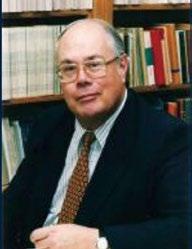
The Rev. Chris Dow, Chaplain and the Rev. Dr Boram Lee, Professor of Pastoral Care and Practice, reflect on suicide, its impact on those left behind, and the hope that trained ministry leaders can offer the bereaved.
INSIGHT | In your roles as ministers, chaplains, and counsellors, you have served communities impacted by suicide. What did you observe?
BORAM LEE (BL) | In my work as a psychotherapist and ordained minister, I have accompanied many who lost loved ones to suicide. Their grief was not only deep but complex, silenced by stigma, prolonged by guilt, and often exiled from community and language. One woman described her husband’s suicide as a “permanent abandonment,” leaving her suspended between guilt and anger—emotions she felt she wasn’t allowed to express.
CHRIS DOW (CD) | In 2019, Nunavut was reported as having a suicide rate almost 10 times higher than anywhere else in Canada, and the highest suicide rate in the world. But just before I arrived in Iqaluit in December 2021, local youth organized a public demonstration to advocate for improved mental health supports and to send a powerful message to youth everywhere: you are loved, it's okay not to be okay, and it's important to seek help when you're in despair.
INSIGHT | What was God doing, and wanting to do?
CD | Through the voices of these youth, I sensed God’s desire to break the silence and stigma surrounding suicide. When suicide reaches the epidemic level, as it has in Nunavut, the trauma touches everyone. Hearts can grow hard, numbed to the pain. Bitterness, cynicism, and defeatism take root.
BL | In those spaces of unspeakable sorrow, I sensed God’s presence not as explanation but as companionship. The God I encountered in those spaces did not offer quick answers. Instead, He came near—sometimes dwelling in silence, holding space for lament, and refusing to let shame have the final word. I believe God desires the Church to become a sanctuary where grief can breathe, and where the bereaved are not left alone.
INSIGHT | How did your respective theologies change because of having to minister in these particular circumstances?
CD | Having officiated at numerous funerals for persons who died by suicide, I’ve come to recognize two guiding principles when preparing homilies for these deeply sensitive services: 1. It’s important to acknowledge that the deceased took his or her own life, even though the word ‘suicide’ can be hard for people to hear. 2. Do not attempt in any way to rationalize or explain the suicide. Theological speculation on the eternal destiny of the deceased is also unhelpful. The only thing that seemed to help and comfort was simply pointing people to Christ crucified, who died in agony and forsakenness.
BL | I came to believe that sacred presence is sometimes more healing than any theology prematurely spoken. I teach my students that their calling is not to fix the problem or rush grief, but to be formed by the God who enters it.
In my experience, God often reveals Himself through the sacred willingness to remain present. It is in the quiet, patient accompaniment—in the choice to weep with those who weep without rushing them toward resolution—that we most faithfully bear witness to Christ. When words fall short, love listens. And in that listening, the Spirit moves.
INSIGHT | How did these experiences with your differing communities impact your teaching and counselling approach with Wycliffe students?
BL | These encounters have profoundly shaped how I train students in pastoral care. More than anything, I want them to know that love can hold space for sorrow. Romans 12:15 exhorts us to “weep with those who weep,” and I encourage students to take that seriously. We practice what I call the “ministry of being with”—a posture marked by active silence, compassion, and nonjudgmental presence. I ask students, “Are you prepared to sit with those overwhelmed by sorrow—not with a ready answer, but with a heart willing to be fully present?” In a world where many feel unheard and unseen, I teach that deep listening and compassionate presence are powerful forms of pastoral care.
CD | I am helping to arrange suicide prevention training for Wycliffe’s staff, student leaders, and residence team. Undergraduate students now make up most of our residents and this demographic is also at a heightened risk of suicide because of the pressures of academic life.
INSIGHT | Why is this such an important topic today?
CD | Many have noted that our society is experiencing an epidemic of loneliness with an increasing number of “deaths of despair.” Furthermore, eligibility criteria for “Medical Assistance in Dying” (MAiD) in Canada has expanded beyond just those with a terminal illness. In March 2027, it could expand further to include those whose sole underlying condition is mental illness. In such a context, the Church—as the family and household of God—is uniquely positioned to offer deep community and meaningful relationships rooted in the living hope “of the resurrection of Jesus Christ from the dead (1 Peter 1:3).”
BL | We are living in a time of escalating mental health crises. In such a world, the Church is called not only to speak of hope but to embody it. To be rooted and grounded in love (Ephesians 3:17) is to resist silence, confront shame, and bear witness to the God whose mercy reaches even the most devastated places.
Mission Statements
Part of the Church Growth Puzzle
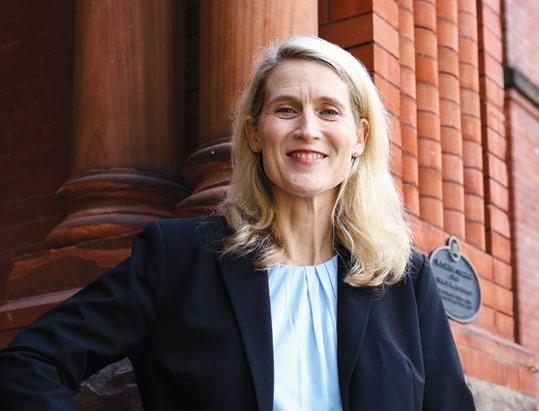
By Dr Elizabeth Millar
Findings and insights from the Canadian Institute for Empirical Church Research (CIECR) study “‘Greatness’ in Canadian Congregations”
WHAT MAKES CANADIAN CHURCHES GROW? Is it a charismatic leader? A strategic location? A strong prayer ministry?
Based on the findings from the “‘Greatness’ in Canadian Congregations1” research study, one of the puzzle pieces associated with church growth seems to be related to mission statements. An overwhelming majority of pastoral leaders express a general to clear sense of mission, which mostly converged around the fitting but somewhat vague notion of loving God and loving others. Pastoral leaders deem mission statements important as they provide a sense of direction and are a reminder of communal purpose.
When it comes to understanding mission, two things seemed to make a difference for growing churches. First, virtually all the pastoral leaders in the study place a high priority on the Gospel. However, growing churches are more likely to embody a deeper, more generous understanding of the Gospel that clearly guides their decision-making and propels them beyond the walls of their churches. The Gospel is more than a ticket to heaven. The Gospel is about another kingdom, another way of life, very much founded on Jesus, and driven by a love for the world that mirrors God’s love for the world. These growing churches are not only faithfully preaching the Word. They are living the Word as a congregation in their community.
statement, and it’s another thing to know how that sense of mission then influences leadership decisions and informs congregational life. Growing churches seem to know how to contextualize and implement their understanding of mission more specifically and more robustly for their geographical location, such as a focus on hospitality, or care for youth and children.
It’s one thing to articulate a mission statement, and it’s another thing to know how that sense of mission then influences leadership decisions and informs congregational life.
Second, there appears to be a correlation between church growth and churches who know how to unpack and implement their mission statement. This proves to be the more difficult task for pastoral leaders. It’s one thing to articulate a mission
Interestingly, some pastoral leaders point to core values or priorities as being helpful in terms of unpacking their mission statement. These core values or priorities, such as nurturing healthy families or prayer, provide a clarity that leads to specific programs, events, and emphases that can be directly linked to the sense of mission. Essentially, they provide a way forward.
Pastoral leaders of growing churches also seem to have more self-awareness on three levels. First, they know who they are as individuals and are familiar with their own strengths, weaknesses, and leadership style. Second, these leaders also understand the makeup, personality, and history of their congregation. Finally, they demonstrate an awareness of their community. They are familiar with the demographics and current needs of their community.
The research study found that although pastoral leaders value mission statements for the foundation they lay and the direction they give, the tricky piece of the church growth puzzle is knowing how to contextualize the mission statement, letting it permeate and inform all decisions, moving forward with the congregational makeup and the church’s specific context in mind. Growing churches seem to know this.
1 Part of the Divine Pulse Research Project, this is a qualitative research study exploring church growth through the lens of Jim Collins’ “Good to Great” principles as outlined in his bestseller book, Good to Great: Why Some Companies Make the Leap…And Others Don’t (2001). I conducted 31 semi-structured interviews with pastoral leaders across Canada, across community sizes, and across Christian faith traditions to learn what it means to be a “great” or growing church in Canada. The primary objective of the study is to determine if and how Collins’ framework can identify principles of “greatness” that may lead to church growth.
Grace in the Pulpit
Fleming Rutledge and the vocation of biblical theology
By Dr Joseph Mangina
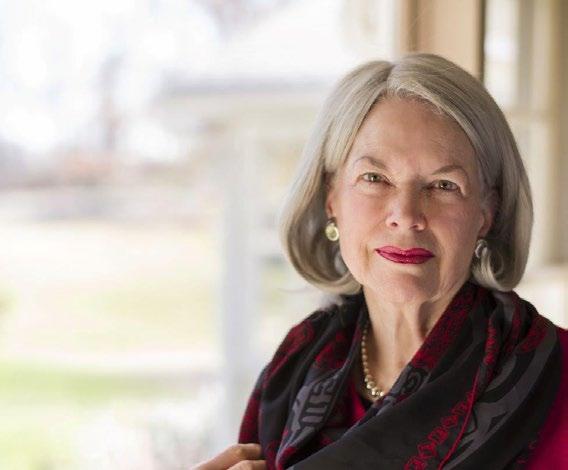
THE REV. FLEMING RUTLEDGE is a beloved preacher, author, lecturer, and priest-theologian. She has become known for her uncanny ability to combine seriousness about the Bible with keen-eyed social and cultural analysis, as evidenced in her many books and sermon collections, beginning with The Bible and the New York Times (1998). Her magisterial The Crucifixion: Understanding the Death of Jesus Christ was named a Christianity Today Book of the Year in 2017.
June 14 of this year marked the 50th anniversary of Rutledge’s ordination as Deacon in the Episcopal Church. She went on to become one of its first women priests. To honour the occasion, Wycliffe College, in conjunction with St. Barnabas Church in Greenwich, Connecticut, hosted a two-day conference, “A Celebration with Fleming Rutledge.” That Wycliffe should serve as co-host to this event is no accident, given her long history of association with the school, where she served as Visiting Instructor in Homiletics in 2008.
Not surprisingly, the art of preaching was high on the agenda. The Rev. Dr Jason Byassee, Senior Minister at Timothy Eaton Memorial Church in Toronto and a member of Wycliffe’s Board of Trustees, offered an anatomy of a typical Fleming Rutledge sermon. The key, he argued, lies in her insistence that it is God, not
human beings, who should be the subject of the most important verbs. This principle—“Rutledge’s Rule,” as Byassee called it—allows her to keep the focus firmly on grace, and to avoid the self-congratulatory moralism that marks too much contemporary preaching.
Another paper, by the Rev. Dr Katherine Sonderegger of Virginia Theological Seminary, explored the interplay of sacrificial and substitutionary motifs in The Crucifixion, Rutledge’s magnum opus. Byassee remarked that he was “moved by watching Fleming interact with Kate—two mothers in Israel, ammas of the church;
One of the high points of the Greenwich gathering was the announcement of a proposed Fleming Rutledge Chair of Biblical Theology at Wycliffe College.
one the brilliant preacher, the other the incandescent theologian.”
Other speakers examined the implications of Rutledge’s work for the realms of liturgy, proclamation, and pastoral care. These pieces and others will be published in More Anon: Essays in Honor of Fleming Rutledge, edited by Porter C. Taylor and Amy Peeler, plans for which were announced at the conference (forthcoming from Eerdmans Publishing Co.).
Happily, this was a celebration with Fleming Rutledge, and so we were treated to her own keen-eyed observations. She shared memories of her formative time at Union Seminary, New York, in the early 1970s; discussed her approach to sermonwriting; and spoke of the importance of reading the Bible with “apocalyptic” lenses, attuned to the God who “gives life to the dead and calls into existence the things that do not exist” (Romans 4:17).
Professor Dr Justin Stratis said that her remarks felt “less like a last will and testament, and more like the urging of a passionate fellow worker in the Gospel.” He also said that he felt encouraged by seeing so many young priests and pastors in attendance.
Wycliffe Principal Dr Kristen Deede Johnson likewise noted Rutledge’s “ministry of encouragement among younger theologians and clergy,” including not just Anglicans, but Baptists, Methodists, Lutherans, Calvinists, and Free Church Evangelicals.
One of the high points of the Greenwich gathering was the announcement of a proposed Fleming Rutledge Chair of Biblical Theology at Wycliffe College.
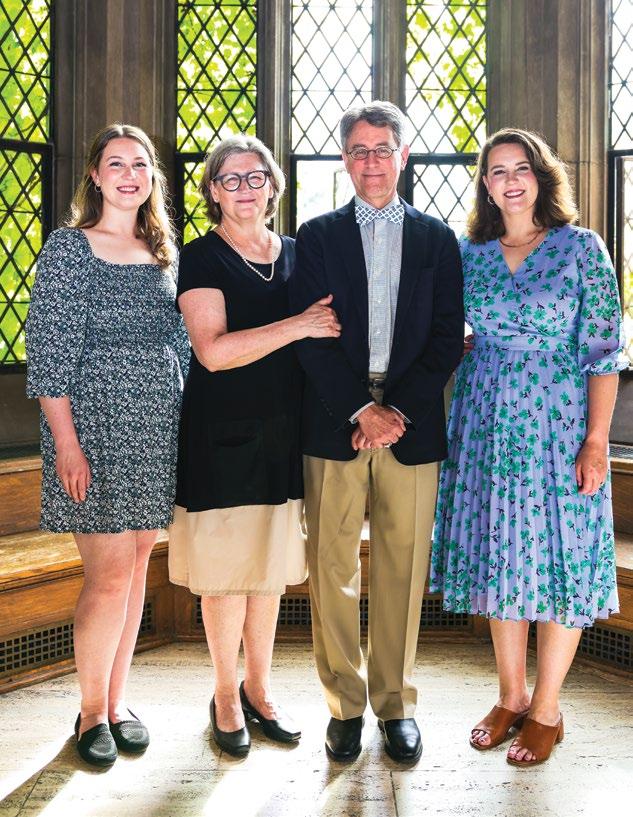
Rutledge has often voiced frustration at the inability of seminaries to train students in the sort of imaginative, theological exegesis of Scripture practiced by such masters as Augustine, Luther, Calvin, and Barth.
In an autobiographical sketch prepared for the conference, she writes that, “I came to the conclusion that of all things I would like to bequeath, my primary and overriding wish would be to support the teaching of robustly biblical theology, in the form of a [professorial] chair devoted to that end.”
Rutledge is convinced that Wycliffe College is by far the best seminary in North America for the realization of such a vision. She stresses the school’s evangelical convictions, outstanding faculty, ecumenical spirit, and location at the heart of a great university and cosmopolitan city.
Planning for the Rutledge Chair is underway. Anyone interested in supporting this initiative should contact Shelley McLagan, Wycliffe’s Director of Development and Communications.
DR SHIH-EN KUO PHD W25
Teaching Truth
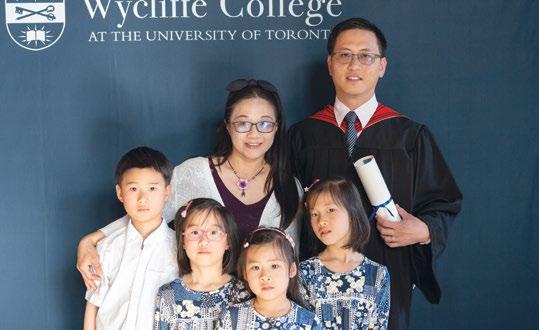
BY THE TIME YOU READ THIS, Dr Kuo (also known as Andy) will have had two months under his belt as a professor of Old Testament at China Lutheran Seminary in Hsinchu City, Taiwan. With his PhD focus on Old Testament, and particularly the minor prophets, this is no surprise.
During his MDiv years in Taiwan, Dr Kuo began to have a vision that people needed to learn more about the Old Testament. The Church did not devote as much time to teaching and preaching from the Old Testament as it did the New. This was especially true in Taiwan. “When the Old Testament is taught more fully, we give people a holistic view of the truth,” he says. “And the truth is this: in the Old Testament, God is portrayed as a holy God and a God who takes care of the needy and the orphans. There are a lot of things that are missed if we don’t teach and preach the Old Testament. God is a righteous God and a compassionate God.”
Wycliffe’s rigorously academic yet evangelical approach to Scripture helped Dr Kuo to “connect the dots” between the Old and New Testaments, and between the texts themselves and his spiritual life. “I got the training to academically engage with the text,” he says.
Equally important was the diversity that flourished at Wycliffe. “I could hold fast to my evangelical faith and at the same time encounter different traditions and theologies within the Toronto School of Theology,” he remembers. “This gave me a chance to be open and welcoming of other voices—even those with whom I disagreed. I could have conversations with them.” Dr Kuo recognizes that this diversity will be an important facet of his ministry as a seminary professor. “I will hear different voices and encounter different types of students, so being able to hold fast while remaining open will be helpful.”
AMIRA ELIAS MTS W24
Compelled By More
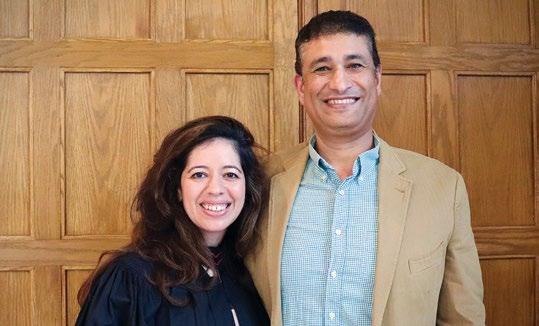
AMIRA ELIAS likes digging deep and having her perspectives challenged. Her MTS degree at Wycliffe, delivered. “Wycliffe introduced me to the Canadian Christian landscape—there were so many denominations represented in my classes—it was eye-opening. I did a course on Eastern Orthodoxy taught by a Greek Orthodox priest. I would never have had that lens if I’d kept solely to my ministry or just kept working.”
Growing up in a Coptic Orthodox church in the United Arab Emirates (UAE), Elias began “looking for more” when she turned 16. That “more” arrived out of the blue in the person of a missionary from Coptic Missions, an organization that served in several African countries. The missionary did Bible studies every day and talked about miracles as though they were everyday occurrences. When he called for youth to volunteer at the Mission, Elias signed up. Across Kenya, Tanzania, the Democratic Republic of the Congo, and the Zambia, Elias bore witness to liturgies and prayers that were different from the church rituals back home. Her perspectives changed. “I uncovered something about God— that He wasn’t a once-a-week ‘thing,’” she remembers. Here, there was joy, singing and praising the Lord. “I knew I wanted that.”
Back in the UAE, she led worship at a youth group where she shared about breaking the barriers between God and those who wanted to worship Him in Spirit and in truth. Joined in later years by her husband, when the youth group shut down, they were asked to leave.
Leave they did. They studied apologetics at Biola University, and then in 2022, they came to Canada. “I saw a golden bridge and a graduation hood when I was praying about this move,” she remembers.
Today, Elias applies her Wycliffe training volunteering with Hungry 4 Christ, a ministry birthed by a member of that UAE youth group. She does outreach, helps host a bi-weekly meeting, makes sure advertising gets done, and helps plan and deliver a simple 30-minute worship service that’s “less Christianese, more songs that people know.”
PASTOR (MAJOR) APRIL MCNEILLY MTS W24
An Elder at the Gate
MAJOR APRIL MCNEILLY credits her four Gen Z daughters for igniting in her a greater love for God’s Word and for the body of Christ. Their questions pushed her, and this led to her eventual enrollment in the MTS program at Wycliffe College. “Wycliffe grabbed me,” McNeilly remembers. “An evangelical Anglican seminary was just what I needed. In a day when truth is too often up for grabs, Wycliffe stands firm in 2,000 years of Christian orthodoxy.”
That grounding meant the MTS program gave McNeilly excellent language for her thoughts and what she was all about. Her “labour of love” thesis on the spiritual formation of Gen Zs in post-Christian Canada solidified her calling to remain an “elder at the gate,” mentoring Gen Zs in her circles. And as she sat in classes rubbing shoulders with Christians of all ages from different traditions, she felt stretched theologically and socially. “At the time I was in my mid 50s, and all this interaction gave me tremendous confidence to study, write, and think.”
She remembers Dr Marion Taylor’s encouragement: “You’re not too old, April. You want to get a PhD? Go for it. As a woman, you’re exactly the right age to be doing all this further education.” Amazing counsel for a Major in the Salvation Army who has almost exclusively pastored churches for 27 years throughout Ontario, Quebec, New Brunswick, and France. As she puts it: “God’s love met me in a rural Newfoundland church, and I felt His calling on my life to be a Salvation Army officer.” Today, McNeilly pastors a Salvation Army congregation in Burlington and leads its mission in that area.
With Wycliffe-nurtured gifts of communication, coupled with a deeper love for the Word of God, McNeilly remains open to what comes next.
HARRY ST. CLAIR HILCHEY AWARD
Nominate a Wycliffe Alumnus
The Archdeacon Harry St. Clair Hilchey Alumni Award for Distinguished Service is an honor bestowed annually upon a Wycliffe College alumnus who has made significant contributions to the Alumni Association, Wycliffe College, and/or the Church.
The 2024–2025 recipient of this prestigious award was the Rev. Canon James Robinson, MDiv W86. Ordained to the priesthood in 1987, he has served in parish ministry in the Diocese of Calgary for 34 years. He has also served numerous diocesan and national Church bodies, including the Council of General Synod for two three-year terms. He retired from active ministry in June 2020.
Nominations are now open and will be accepted until January 10, 2026. To learn more and submit your nomination, visit wycliffecollege.ca/alumni/awards
Calling All Alumni
To stay connected with Wycliffe and your fellow alumni, join the private Facebook group “Wycliffe College Alumni Association.” Created to foster a community of support and encouragement, this group welcomes all Wycliffe alumni to engage in discussions, share announcements, promote events, post job opportunities, and more.
Help Us Grow the Wycliffe Community
We’re excited to expand the reach of Wycliffe College and share what God is doing here. If you would like extra copies of this magazine to share with friends or your church, please email us at alumni@wycliffe.utoronto.ca, and we’ll gladly send them your way. Thank you for being a part of our community!
Ensure a legacy that reflects the life you’ve lived.
Wycliffe partners, Advisors with Purpose (AwP), helps you explore the connection between faith and finances, offering support for everything from simple to complex plans. They ensure your Will aligns with your life, faith, and values.
Through Wycliffe’s partnership with AwP, we can offer Wycliffe alumni, students, staff, donors, and faculty access to certified financial planners who can help you create a free, personalized plan for your Will.
AwP also offers free webinars throughout the year, covering all aspects of estate planning with expertise and sensitivity. These sessions address special circumstances such as talking to your family about your Will, incapacity planning strategies, and harmonizing your legacy within complex family situations like blended families, addiction, or estrangement. Additional planning services are available for newcomers to Canada, parents of children with exceptionalities, and those caring for aging parents.
Your conversation with AwP will be completely confidential, with no cost or obligation, and no one will try to sell you anything. Whether your estate is large or small, you can benefit from these services.
Don’t wait.
Create a plan that ensures a legacy that reflects the life you lived. Contact give@wycliffe.utoronto.ca for more information about this free service today.
A Poignant Purpose
THE REV. AYOOLUWA SAMUEL ADISA was recently writing a paper in one of his Wycliffe classes when he realized that birth and death had shaped his calling and given him purpose. At the age of 15, he had watched his mother anoint his dying father, offering him end-of-life care as he passed away at their family home in Nigeria. Almost 20 years later, and a Wycliffe student by then, he had welcomed his premature son, born at 26 weeks old at Mount Sinai Hospital, only minutes away from the College.
In a real sense though, large events have shaped Adisa’s journey to, and experience of, Wycliffe.
Trained at Immanuel College of Theology and Christian Education, Samonda, Ibadan in Nigeria, he was told to go home when COVID hit. During that time of home-based studying, “The LORD told me that I wasn’t going to be doing ministry in Nigeria, but rather outside the shore of the continent,” he remembers. He also knew that would only be possible through going to school abroad. Adisa trusted God for the next thing and applied to colleges, including Wycliffe. Wycliffe’s blend of evangelical Anglicanism, coupled with its relationship to the Toronto School of Theology (an ecumenical consortium), offered a good fit for him, an ordained priest in the Church of Nigeria (Anglican Communion).
Changing federal immigration laws for international students also played a role. Concordia University in Montreal had accepted Adisa, and on paper, studying there made sense—its program aligned with immigration timelines. Despite that fit, Adisa and his wife couldn’t shake a prayerful conviction that God wanted them at Wycliffe—a risky move considering the MA was only a one-year program.
“The Word of God, and God’s speaking to me at every point on this journey have been lifesavers,” he says. “And my wife has been exceptional. She left a lucrative job in Nigeria, left everything, to come over with me.”
Adisa works full time at The Hospital for Sick Children (SickKids) as a spiritual care provider, a job he’d applied for shortly before his son was born. In this role, he provides care and support to patients, parents, and staff members in the hospital. He plans to plant a church in the Durham region in 2026.
AYOOLUWA SAMUEL ADISA MA W25
DON KIBBLEWHITE
Supporting Wycliffe by Combining Passions
By Patricia Paddey
DON KIBBLEWHITE of Bond Head, Ontario, says that Wycliffe College has been a part of his life “from the beginning.”
But you could argue that the College has been a part of his life since long before that,
and that Don himself may not have been born were it not for Wycliffe. That’s because he represents the third generation in a family for which the College played a pivotal role, so pivotal that supporting the institution has become something of a passion for him.
His grandfather, William Edington Taylor, was a graduate of Wycliffe (class of 1903). After completing both his MA and his PhD at the University of Toronto, Taylor served as a missionary and professor at Shanghai University in China. He joined the Wycliffe faculty in 1923 as a professor and was named acting Principal from 1928 to 1930. During his tenure, Taylor lived in the College with his wife and daughter, Geraldine (Don’s mother), and it was during that time that Wycliffe became central for a second generation of Don’s family.
“My mother met my father at the College,” Don explains, “when he was a student there.”
Don’s father, popularly known as Billy Kibblewhite during his university years, represented Canada in the 1928 Summer Olympics in the men’s 5,000 metres event. In Anglican Church circles, he became the Rev. William E. Kibblewhite. He died young, leaving behind his wife and two young sons, Don and his brother Bill.
Bill also studied at Wycliffe, becoming the Rev. Canon Bill Kibblewhite. He died unexpectedly while on vacation with his
wife last year. While Don’s family seems replete with Wycliffe-trained clergy, Don himself chose a different path. “When I graduated from high school, I started at U of T, studying English and History,” he says. But Wycliffe must have felt like home, so he elected to make it his throughout his undergraduate degree. “I moved into residence there, in the fall of 1965,” he reflects. “Sixty years ago! I still have good friends whom I met in residence there.”
Don began his working life in the Canadian travel and tourism industry, but he has spent the majority of his career in the insurance field. He continues to run an extensive business, serving a wide swath of corporate clients as a group benefits consultant. His obvious enthusiasm as he discusses his ongoing work, even now at the age of 80, betrays his passion for his industry.
But his other passion is clearly Wycliffe. Years ago, he came up with an idea to combine his passions uniquely. “Wycliffe has a spot in my heart,” he concedes, “and from time to time I’ve made charitable contributions. A fair number of years ago, I took out a life insurance policy.…When I die, it will be a significant [tax-free] sum that goes to Wycliffe.”
“I know that Wycliffe does great work,” Don says, “and I think it’s important to support that work, so that it’s not just about the past. It’s about the future.”
Thank You for Your Support
Your generous support of Wycliffe College helps our students, faculty, and staff pursue our calling to serve Christ's Church. The many costs involved in running the College are partially covered by tuition and grants, but we could not fulfil our mission without the partnership of our donors, including alumni, churches, and other friends.
In His mysterious wisdom, God has ordained our interdependence—that none of us can move forward alone. Our faculty train and mentor students to serve the Church, while the Church in turn shares resources that strengthen the College. Thank you for sharing our urgency and passion for training the next generation of ministers and theologians. To make a year-end donation, please visit wycliffecollege.ca.
Thank you!
Shelley D. McLagan, Director of Development and Communications
OUR MISSION
To the glory of God, Wycliffe College educates people for practical ministry and theological scholarship in Christ’s global church and the world.
OUR VISION
Visionary leaders with Good News for a vibrant church and a changing world.