
Wilmslow Wells for Africa


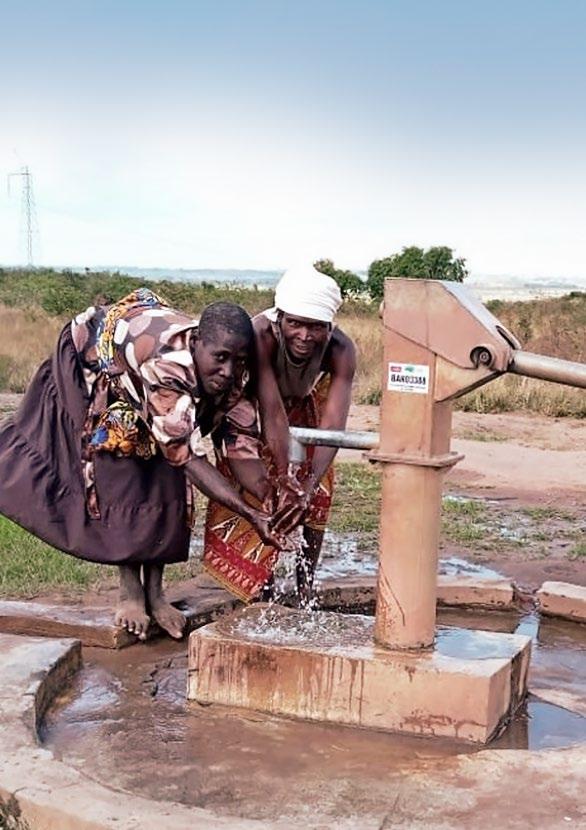
“Let us think of one hopeful thing…. a well of pure water in one small country…. in one dusty area”
Brenda Mottershead Founder of Wilmslow Wells for Africa


Foreword
Over the last forty years, Wilmslow Wells for Africa has raised more than £1.65 million and, because we are a totally volunteer-run organisation with minimal overheads, over 99.3% of this has been spent directly on the projects we have funded. These now total more than 360, providing fresh water to remote African communities who were previously dependent on a distant supply which was often contaminated. Collecting that water frequently involved a daily 2-3 hour round trip for women and children who carried the water on their heads, sometimes in dangerous situations.
As a result, the communities concerned have not only seen significant health and safety improvements, but they have also benefited through having more time available for activities such as education, agriculture and homemaking. More recently the charity has also funded projects to improve sanitation, often related to schools, by providing latrines and hand-washing facilities. These also bring great health benefits.
Since Wilmslow Wells began, a conservative estimate is that a safe supply of clean water has been provided to over 650,000 people, more than twenty-five times the population of Wilmslow. This works out at an average cost of less than £3 per person, an extraordinarily low figure - especially when compared to our own expenditure on water bills or other everyday items.
At an early meeting, our founder Brenda Mottershead, stressed that the most basic need in much of Africa was clean water. Wonderful as it is to celebrate the achievements of the last forty years, the need now remains every bit as great, if not greater, than it was in 1984. Our charity aims to keep pressing on with her original vision and its vital work for the foreseeable future.
Thank you for your interest in Wilmslow Wells. We trust that this booklet


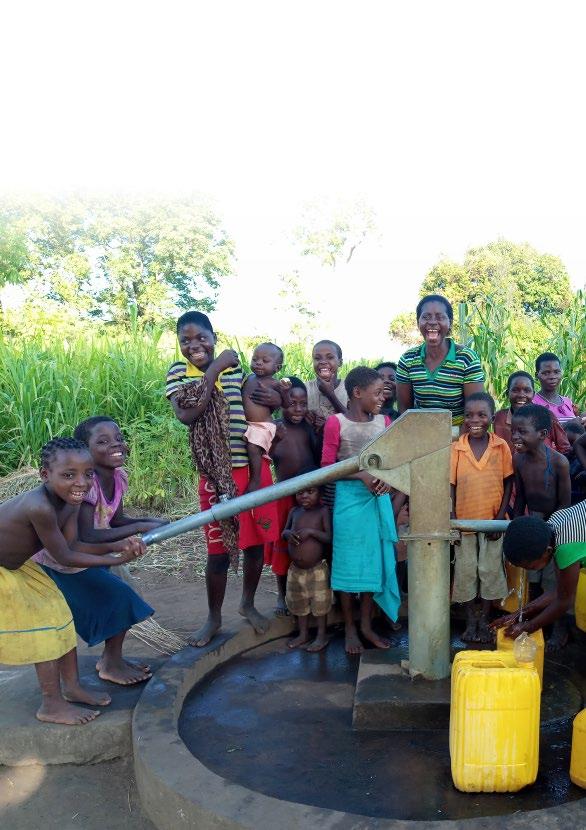
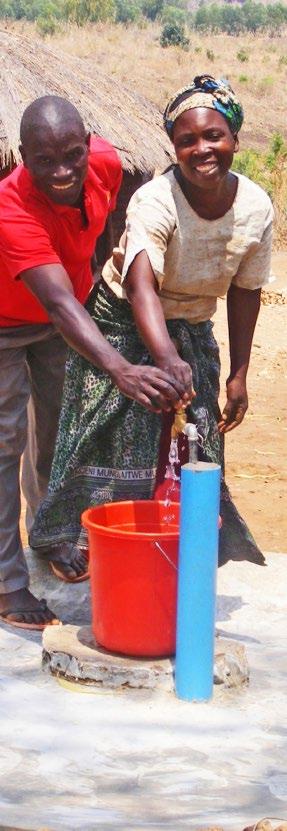
Front Cover. Community water pump in Muwawa village, Mozambique. Village Water.
Back Cover. Quilted wall-hanging crafted by Moira Rutherford based on artwork by Rosemary Stubbs for Wilmslow Wells.

How We Began
Although many people are now involved with Wilmslow Wells for Africa it began with just three people – a teacher, a maid and an aid worker. This is their story.
Brenda Mottershead
In 1980, Brenda and Keith Mottershead were happily settled in Wilmslow, Brenda teaching at Macclesfield High School, both of them members of the local church and active members of their community. However, unexpected events were about to change their lives completely when Keith‘s company offered him a choice of premature retirement or a post at their office in Johannesburg for three years. Brenda was well aware of the discrimination practised in South Africa and the hatred, bigotry and oppression of the apartheid regime.It was only after much soul-searching that they tried to see this huge change in their lives as a stimulating challenge and with great reluctance, they agreed to go. What they didn’t know was that this decision meant that Brenda would devote the rest of her life to improving the living conditions of whole communities across sub-Saharan Africa and saving the lives of thousands of people.
“Both my parents were liberals with a small and large ‘L’ and South Africa was just about the last place on earth that they would have chosen to make their home”, their daughter Catherine said many years later.
Brenda set out for Africa with her teaching skills, an ability to bring people together and a certainty of purpose. Once there, she took an unpaid job teaching English in an all-black secondary school and, motivated by her humanitarian principles and Christian faith, she quickly became involved in Soweto, visiting black townships and promoting racial integration and community projects among young people. Working tirelessly to address the injustice and social needs she saw everywhere, she quickly developed a keen understanding of the conditions in which most black Africans were forced to live. She became increasingly involved in racial justice activities, dangerous though this was.
In August 1981, she received the highest honour possible when her school made her an ‘Honorary African’. At a special ceremony, dressed in a blue and white African dress and Zulu beaded collar, Brenda was given the name ‘Masechaba’, a Sotho word meaning ‘Mother of the Nation’. Although she would later receive an MBE for her services to charity, this honour would be forever most dear to her and she would cherish it for the rest of her life.
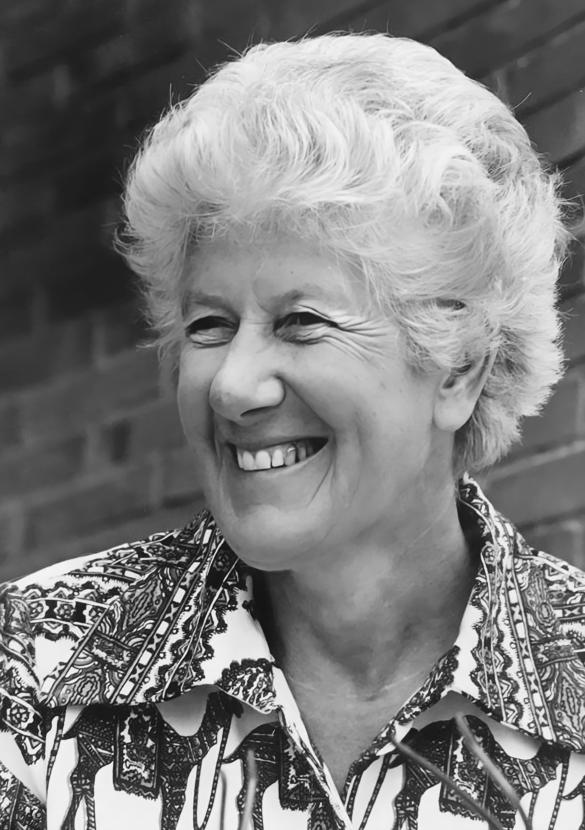

Emily Maloka
Emily Maloka was the first in the queue of men and women who came to offer their services when Brenda and Keith arrived at their new house in Johannesburg. Although Brenda felt she didn’t need a servant she knew that the job would give work and shelter to someone who needed it and Emily was engaged.
As trust grew between them, Emily would tell Brenda about her life at home in Jericho in the Bophuthatswana Homeland and during the two and a half years that followed would teach her so much about South Africa, its ways, its people and its injustices. They were unforgettable lessons that shocked and angered Brenda. In the early days, she had seen Emily searching for food scraps in the bin to take home to feed her children, five of whom had died, probably from the enteritis caused by contaminated water used to thin the porridge. It was then that Brenda realized that the “Third World” had come to her back yard.
In her book ‘A Story of Trust’, Brenda recalls the following exchange which clearly affected her profoundly:
”Another conversation about water took place in January 1981, when Emily and I greeted each other after the scorching Christmas holiday. She seemed troubled and did not smile. Then she asked, has the Madam any tablets for the pain?”
“What pain, Emily?” I enquired.
“It is here,” she said, indicating the back of her neck.
“Tell me what has happened.”
“It’s the water, Ma’am. Each day I go for the water and I take the buckets and it is far, very far. Then I go to the hole. We have to make the hole deeper and deeper to get the water and now the ladder is very long. I go down the ladder with my bucket on my head and when I get to the mud I scrape it into my bucket.” She bent double and scraped the tiled floor to show me.”
“Then I put the heavy bucket on my head and go up the ladder. And I do it with all my buckets. Then I put them down to rest. The mud will go down and the water will come. This much water.” She indicated about two inches. “I sit and wait a long time for the water to come. Then I put it in my last bucket, I take from all, and then I put it on my head. I take my water home. I do it every, every day. Has the Madam the tablets for the pain?”
It was a crucial moment in both their lives and, unbeknown to them, Wilmslow Wells’ story was about to begin.
Shortly before Brenda’s return to England, she drove Emily home. If she needed further evidence of the glaring inequalities between the lives of black and white, it came on that journey northwards. Johannesburg itself was a thriving city surrounded by rich and fertile farmland but this suddenly vanished and gave way to interminable, hostile, thorn-bush. After 20 miles they reached Emily’s home, a square mud creation with a corrugated tin roof - a cracked and crumbling hut.
This was Jericho. Here roofs leaked, walls were made of old curtains, there were a few mats to sleep on and any cooking was
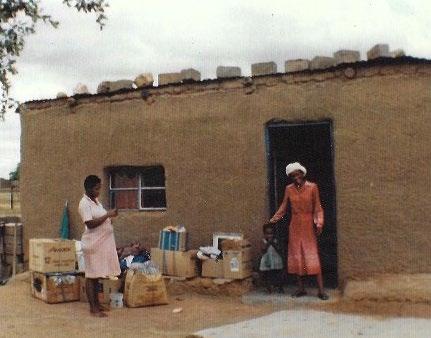
done on primus stoves. 10-12 relatives might live in one hut supported by a single old-age pension. A three or four-mile walk would fetch half a bucket of brackish water which was used for all domestic purposes. Living conditions were much worse than Brenda could ever have imagined. There was little comfort here and the need for clean water was desperate. The drought had lasted for four long years.
As Brenda said later, her journey to Jericho was “an enlightening experience”. However, the political situation in South Africa had become dangerously inflammable. As Brenda’s daughter Susan reported, after three years there Keith was certain that, had they not left, Brenda would have been imprisoned for activities banned by the state. It was time to go.
This was devastating news for Emily. As Brenda left South Africa, Emily’s anguished cry was still ringing in her ears. “Please will the madam think of something. There is nothing for us when you go”. Brenda knew she had to do something to help.
Once home, Brenda set to work to spread the word about the conditions in which people in the homelands were living and announced her intention to raise funds for Jericho. She quickly gathered around her a small group and began discussing plans to raise money to send to Africa.
Len Apfel
While in Soweto, Brenda had met 74-yearold Len Apfel through the church. A white Rhodesian aid-worker, he was spending his retirement trying to improve the lives of the poor in the over-crowded, povertystricken homelands. A man of great enthusiasm, energy and fellow-feeling, Len travelled miles into the drought-stricken bush to help with feeding schemes in schools, clinics and the deprived areas where malnutrition was rife. He had promised to call on Brenda when he next visited his son in England but little did either of them know that he would soon play a major part in Brenda’s plans, becoming a new charity’s ‘Man in Africa’.
When Len came to England, Brenda invited him to talk to her friends about education and conditions for children in the homelands. It was here, at this meeting, that the group suddenly realized:
“It’s not education they need most. It’s water! Water is the key to it all! Water is Life! Why don’t we build a well?”
Len’s response was immediate: “If you will find the money, I will see the well is built.” Marilyn Foster, a founder member of Wilmslow Wells for Africa, recalls: “A tap on my shoulder from the pew behind was my first introduction to Brenda Mottershead, a tall, quietly spoken, sincere
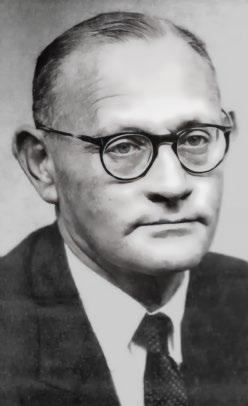
lady. She asked if I was interested in sponsoring someone in South Africa.”
She goes on to describe how, at a meeting in Brenda’s home, a small group of likeminded people were so moved by Brenda’s account of the desperate need in Africa they resolved to help. “A number of ideas were proposed in Brenda’s lounge that day including sending books to help with education but we realized the greatest and most basic need was for clean water.
As soon as the words were spoken, it was unanimously agreed – and Wilmslow Well was conceived. It was due to the foresight and insistence of St Bart’s minister, Rev. Peter Hunt, that it should be plural, that it very soon became Wilmslow Wells”.

The First Wells
Things moved quickly and Emily’s village of Jericho was chosen for the new well. April temperatures had reached 45° in the shade and the survival of those living there was now a matter of grave concern. The need for water was desperate.
‘Aim for £2,000’ wrote Len and that was it. Wilmslow Wells was born and in November 1984, the First Appeal Letter went out to churches, local firms, educational and charitable concerns and local dignitaries. An ecumenical team of workers was found and the project was accepted and adopted by the local Council of Churches.
As agent, Len made direct contact with all those working on the Jericho Well, consulted directly with World Vision International which was carrying out the work and reported back on progress to Brenda and the team in Wilmslow.
While Len liaised with all the individuals, organizations and government departments in Africa, Brenda was rallying her supporters and raising funds in Wilmslow.
“Initially” recalls Catherine, “our mother gave talks to many different groups, anyone who would have her: schools, church groups, WI meetings. She spent hours writing talks and making posters and would set off with her visual aids, including the vital bucket of dirty water. My sister and I are enormously proud of our mother’s achievements and are very humbled by the knowledge that the work she began still continues, with much the same ethos – simple fundraising activities, dedicated volunteer officers, minimal administration costs and
direct communication with the projects’ recipients.”
Soon £1,000 had been raised towards the £2,250 needed for the well.
“The funds from Wilmslow Wells have now been fully utilised’, wrote Len in June 1985. ”No overheads or expenses, travelling etc have been levied against the fund. The entire amount has been used for the purpose for which it was given.”
But progress was not easy. After two arduous attempts at drilling Len reported “Jericho itself has virtually no water… I am heartbroken”. However, within hours, news came from World Vision International that was “nothing short of a miracle”. On a desperate third attempt “a wonderful flow of water” had been found.
Eighteen months later - at Easter 1986 - unable to contain his excitement Len writes: “JERICHO TANK UP. NOW BEING FILLED. LOVE LEN.”
And on 9th April 1986: “Water from the borehole came into operation at 60 different points in the village. THIS IS TRULY A MIRACLE TO SEE SUCH A VOLUME OF WATER AVAILABLE TO THE WHOLE COMMUNITY.”
On Sunday 14th May 1986, The Dedication of the Well in Jericho took place. “It was a wonderful day, moving and impressive”, writes Len. “I did not believe that at my age I should shed tears, but as I drove through Jericho seeing groups clustered around the taps I actually did, at the thought of the culmination of a dream come true.”
Brenda’s reaction was immediate: “We need not stop at Jericho!” Plans for Well Number 2 were already beginning to take shape in Len’s mind too.
Len Apfel retired in January 1990. He had worked tirelessly to bring water to those in need out in the bush and in six years 12 water projects had been initiated in 8 of the 10 homelands, a major achievement which Brenda fully recognised.
The story of those wells and the first six years of Wilmslow Wells is told in the book ‘A Story of Trust’ and further on our website ‘how we started’. Dedicating the book to Len, Brenda expressed her gratitude in a moving tribute:
“Provision of water is only the beginning: education, training, community centres and clinics all follow naturally once there is a regular supply of pure water. Many thousands of people have been assisted, and their lives improved, through Len. He has also helped us, many, many miles away, to extend the hand of friendship to those in such dire need.”
The Enterprise Becomes A Charity
On 6th November 1989 Wilmslow Wells for Africa became registered as a Charity (No 328330). In the years that followed many more projects were successfully completed, all of which were documented in regular newsletters.
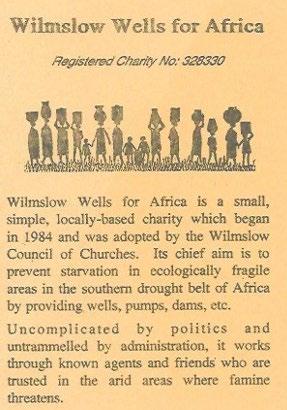
The extract shown from an early 1980s newsletter rather nicely sets out the vision, aims and ethos which have continued to guide and drive our Charity over these last 40 years and on into the future.
Len Apfel died in October 1994 and Brenda paid tribute to him “with great affection” in the Christmas Newsletter as “our co-founder, executive agent, initiator, indefatigable worker and friend of humanity”.
She herself continued to work tirelessly for the charity she loved, never deviating from her basic concept for Wilmslow Wells which was to remain a small, local charity run completely by volunteers, none of whom would be paid a penny. All gifts and services were to be given free of charge and projects were only undertaken when donations had sufficiently accrued to cover costs.
In the 1995 New Year’s Honours List Brenda received an MBE for Services to the Provision of Water in Developing Countries. It was an honour noted simply in two lines in the Summer Newsletter, the announcement given no more prominence than the thanks to a retiring secretary, a welcome to two new supporters, and an expression of great relief that a new secretary had been found! It simply read ”Congratulations to Brenda Mottershead, our President, who recently received an MBE at the Palace, in recognition for her work with Wilmslow Wells.“
Brenda Mottershead died in 1999. The Memorial Well dedicated to her memory was officially opened on 6th June 2001 in Duntumalang, in the Gambia, attended by local dignitaries and two representatives from Wilmslow Wells.
The plaque reads simply –
Helen’s Memories Of Duntumalang
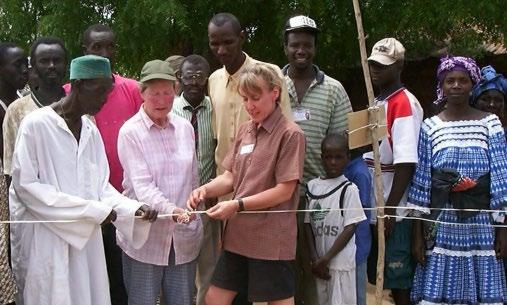
“I’d been involved with Wilmslow Wells for four years when an invitation came to visit Gambia in 2001. Our Trustees wished to remember Brenda by naming a new well in her honour and had chosen a project in Duntumalang, a very remote Gambian village, where UK partner-charity Schools for Gambia was working. There was to be an official opening and, enabled by logistical support from their field officer, representatives from Wilmslow Wells could fund themselves to make the arduous journey. So I signed up to go and was pleased to have the company of fellow Committee member, the late Joyce McClure.
It was a very wearying expedition to reach the village, but the joyous welcome from the local people running towards us with outstretched arms is never to be forgotten. We cut a ribbon together with the Village
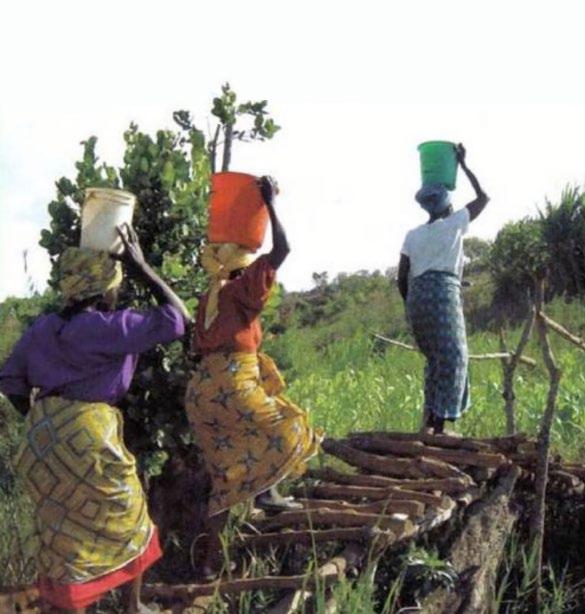
Collecting Water - The Road to Duntumalang
As can be seen, before the well the women had to make the long and somewhat dangerous journey across a difficult hillside and swamp, down to the river. This picture has come to capture the comparable stories of untold numbers of women and girls whose lives have revolved
around such journeys. And, of course, it resonates with some of our other pictures and graphics. A well in the village makes the key difference to the lives of countless women, making them safer and healthier, enabling education and fuller participation in the development of the community.
Chief (choosing to use the scissors from my first aid pack rather than the huge sharp knife we were offered!) and then followed several hours of celebratory dancing and speeches. But it was the reason for the celebrations that mattered: no longer would the village women need to walk 10 miles every day, wading through treacherous swamps, to collect fresh water. I saw with my own eyes that Wilmslow Wells had helped to make a dramatic difference to their lives, and that experience has kept me involved for the following 20+ years!”
Helen Battilana has continued to serve Wilmslow Wells in numerous activities, including leading the General Committee and organising numerous fundraising activities. She served as our Chair 2010 -2015 and continues to be very involved as a Trustee.
How We Have Evolved
Wilmslow Wells for Africa was formed as an ‘enterprise’ in November 1984 under the auspices of the Wilmslow Council of Churches. An appeal letter was sent out to fund the first well and a bank account was opened with NatWest. As the project work continued it was decided to formalise the enterprise and a trust deed was prepared in May 1989 which was registered with the Charity Commission in November of that year. The enterprise had become a registered charity.
The original Trustees were Brenda Mottershead, Geoffrey Brocklehurst (the first Treasurer), Harold Lomas (a retired barrister) and Freddie Robertson (a church warden). The charity was closely linked to the churches in Wilmslow with each church encouraged to nominate up to three people to be members of the General Committee. Its function was to organize the fundraising activities of the charity, reporting to the Trustees, while the Trustees focused on identifying, evaluating and approving projects on which the funds raised would be spent. This structure has continued largely unchanged up to the present day but the connections to the churches which helped form and support it in its early days have widened to embrace the whole local community and indeed far beyond. Whilst many of the Trustees and supporters over the years have church connections and many projects are carried out in conjunction with other church-based partners in the UK and Africa, the charity is a secular one, supported by, and working for, people of many backgrounds united in a desire to make a difference in rural Africa.
Past Trustees who have guided the charity in addition to the first ones are Marion Jones (one of the originators of the enterprise and later Chair), Derek Nightingale and David Eastwood (the second and third Treasurers), and Joanna
Southgate, Alan Parfett and Jenny Gibbs (the past Chairs of the charity).
The Trustees have been supported by a Secretary (initially Marion Jones, then Jilly Burrows, Ann Vaughan, Hilary Ross, Helen Battilana, David Lewis and now Ann Elphick). Howard Evans and Richard Elphick have particularly assisted with liaison and monitoring projects.
The work for the first project, Emily’s Well, was organized by Len Apfel. He then identified and supervised the next eleven projects, all of which were in South Africa. Len retired at the end of 1990, by which time Wilmslow Wells for Africa had been formally registered as a charity and a regular fundraising programme was in place. Without Len, however, finding a way to identify and run further projects became the key issue. A connection was made with a major national charity which undertook a number of well projects in Mozambique. Wilmslow Wells contributed £27,000 to these but was unhappy with the lack of detailed progress reports and clear financial accountability for the funds provided. As a result, the Wilmslow Wells Trustees ended this association and supported a different major charity for a large project in Kenya, offering £30,000 towards the budgeted cost of £105,000 for the whole scheme.
This arrangement nearly became the end of Wilmslow Wells. The General Committee had been fired up with enthusiasm for the original projects. However, working to raise money to part-fund a large scheme by others was less inspiring and the committee became less active. It turned out that funds to this large scheme had not yet been fully raised. Progress was poor, information not forthcoming and the scheme was under-delivering and running significantly over budget. In the end, this arrangement was terminated. This led to a fallow period for projects as little work had been done to find new ones.
The outcome of all of this was that membership was widened to include more non-church people and the Trustees developed new internal rules:
• Only engage with projects when we are assured that funds are available
• Focus on smaller projects rather than being part of large ones by others
• Aim to put our funds to use as promptly as possible
• Widen our contact base of partner organisations to ensure a steady flow of suitable projects where we are providing all the funds.
Since then, Wilmslow Wells has grown steadily, as the story unfolds in the next chapters. An ever-growing stream of new projects and contacts have made us ever more in touch with the need for fresh, safe water in many rural areas of SubSaharan Africa. The General Committee has set with renewed enthusiasm and vigour to find further and ingenious ways to raise funds, as described in Chapter 3. The pie chart shows a breakdown of the fundraising efforts described there.
Despite the substantial increase in activities over these 40 years, we are proud to continue to be run by volunteers with minimal operating costs.
We are so pleased that this means virtually all, over 99.3%, of the funds raised goes quickly and directly to the projects.
The work of Wilmslow Wells has also benefitted from numerous donations by supporters, legacies, churches, clubs, trusts and many others who have shared in our vision and aspirations. We take this opportunity to thank you all. We hope this book will convey something of the impact your contributions have made and the gratitude of those who have the gift of clean water.
Wilmslow Wells Timeline
Brenda Mottershead’s initial Appeal letter
Brenda becomes the founding Chair
First well completed at Jericho, South Africa
First ‘Auction of Talents & Services’ Wilmslow Wells for Africa registered as a charity
First Christmas cards designed and sold
First ‘Souperday’(at Birtles Vicarage)
Completion of the first 12 projects in South Africa
‘A Story of Trust’ book describes the early years
Marion Jones becomes Chair
First Gardens Day
First projects in Mozambique, Kenya and Uganda
10 Years - 16 projects completed in four countries
Len Apfel dies
Brenda awarded the MBE in the New Year Honours
First projects in Rwanda and Zimbabwe
First projects in Nigeria and Malawi
Joanna Southgate becomes Chair
First projects in Tanzania and Zambia
Brenda Mottershead died
Official opening of Brenda’s memorial well in Gambia
First projects in Ghana
20 Years - 68 projects in twelve countries
Website established
Joanna named Cheshire Woman of the Year for her Wilmslow Wells work
First projects in Burundi, Sudan and Togo
Alan Parfett becomes Chair
First project in Ethiopia
Helen Battilana becomes Chair
Newsletter produced in colour
30 Years - 186 projects in sixteen countries
Local celebrations in July as £1 million raised since inception
Jenny Gibbs becomes Chair
First projects in Burkina Faso
First Sanitation and Latrines Project
First project in Congo
Covid Emergency Water and Handwashing Projects
‘Virtual Gardens Day’ raises over £24,000
David Cash becomes Chair
First project in Sierra Leone
£1.5 million total now raised and over 500,000 beneficiaries
Celebrating 40 Years - over 360 projects in nineteen countries
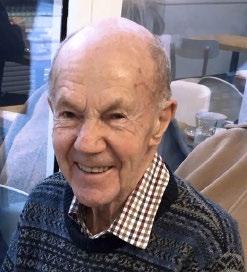
Joanna Southgate Recollects Alan Parfett
“I joined Wilmslow Wells for Africa in 1994, having heard Brenda Mottershead’s moving story at St. John’s Church, Lindow. I felt strongly that God was prompting me to get involved and to help the charity with its wonderful values.
Initially, I had expected to be making coffee and cakes for the occasional fundraisers, but it very quickly became apparent that Brenda expected me to take on a larger role as she was keen to spend more time concentrating on raising awareness of the need for clean water through her talks.
In those early days, I would communicate with our partners by letter with pen and ink but it became obvious that I would have to learn to send emails as by emailing contacts, especially those in Africa, the time taken from enquiry to support was
enormously reduced. I devised a system for keeping abreast of all the project developments which is still used today!
As I look back on those twenty-plus years when I was affiliated with Wilmslow Wells, I thank God for the opportunity to serve Him in this way, for His wisdom in helping me with all the decision making, for providing me with such an amazing team of committee members and helpers without whom I simply could not have managed, for all our wonderful, loyal supporters - and for helping me with the public speaking which gives me ‘butterflies’ to this day!”
Joanna Southgate, Wilmslow Wells Chair 1997 – 2008. During this time the charity developed greatly. Her outstanding contributions and leadership were recognized in 2005 when she was named ‘Cheshire Woman of the Year’.
Alan Parfett, along with his wife, Pat, was an early member of Wilmslow Wells for Africa and Chair from 2008 – 2010. He has been a great supporter in many ways including developing close relationships with our partner organisations. As Alan wasn’t able to make a personal contribution to this book we asked one of those organisations for some personal memories. This piece was submitted by Clare Wearden, for many years chair of Village Water and who worked with Alan before herself retiring last year:
“Alan was instrumental in bringing some security to Village Water in the early days before we had any staff, supporting the volunteer trustees with visits to Zambia to identify well-digging sites and to train the local partner teams.
Not only did he and Pat go on to support Village Water financially with ever larger donations, always unrestricted so it could be allocated where the need was greatest, but he also spoke about our work to friends, neighbours and kept his connections with the Wilmslow Wells community.
I met and spoke with Alan on many occasions.
His compassion and sense of justice shone through.
On one occasion he and Pat came to the House of Lords to a Village Water event and they were accidentally shown to the wrong room. Too polite to exit while talks were in progress, they eventually made it to our event, desperate for some food and drink!”
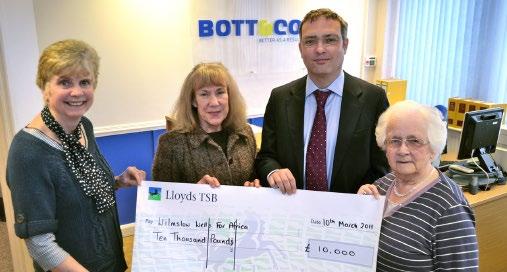
Joanna, with Helen and Marion receiving a very generous donation from Bott and Co, celebrating their 10th Anniversary, 2011.
How We Raise The Money Souperdays
The General Committee has organized many fundraising events over the years.
The original main source of income was the annual Auction of Talents which ran from 1985 to 1995 raising over £30,000. People would offer to garden, cook, decorate or make music, amongst other skills. Some supporters were able to offer homes as ‘holiday lets’. After 1995, this became an auction of holiday homes and ran in this form until 2014 raising a further £39,000.
Over the years there have also been talks, quizzes, barn dances, concerts and garden parties as well as sponsored walks, cycle rides and sales of Christmas cards. Nowadays, the main recurring events are the biannual Souperdays, the annual Gardens Day and the annual Bridge Drive.
In addition to our fundraising activities, we also receive both one-off and regular donations from individual supporters. Supportive organisations also donate regularly including many of the original churches who were involved in our formation. Looking back over the last forty years, donations have amounted to around £1.1m including Gift Aid tax refunds whilst fundraising activities have raised just over £500,000
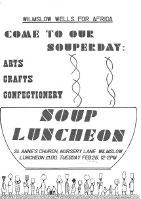
The first record of a Souperday was in the 1990/91 accounts when it raised £300.
Over the past 32 years, this activity has raised over £66,000. Sadly, we have no record of how many gallons of soup, pounds of jams or slices of cake have been consumed over this time!
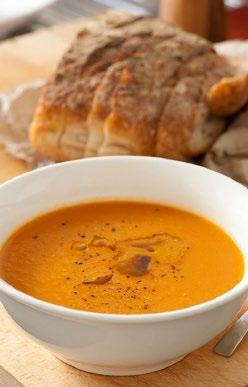
There are always four soups on offer, all vegetarian and all served with a choice of fresh home-made breads and a hot drink. Soup flavours vary, with an occasional ‘nod to the season’. Besides the more familiar leek and potato, mushroom or pea and mint, there may be something more exotic on the menu such as curried parsnip or Armenian (lentil). Good old carrot and coriander remains the most popular!
All ingredients are donated by the volunteer soup-makers and the current venues are local, St John’s Church Rooms and Wilmslow Methodist Church Hall.
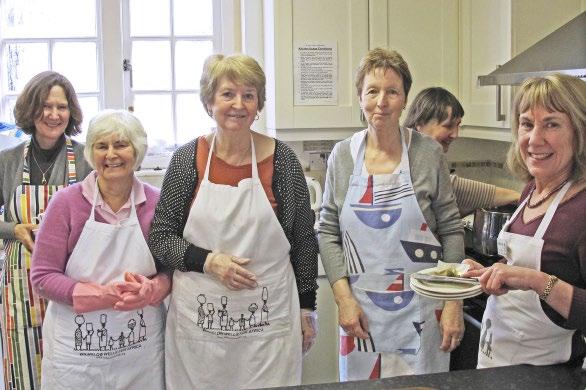
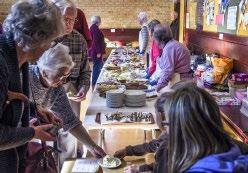
Early on the morning of a Souperday, the brigade of regular helpers will be at work setting up the tables for lunch or stirring the huge pans of soup in the kitchen. A long trestle-table holds home-made cakes for sale as well as jars of jams, marmalade, lemon-cheese and chutneys or sometimes, autumn apples.
Our Souperdays remain popular, not only for the soups themselves, but also for the convivial atmosphere, the opportunity to catch up with friends old and new and the ability to donate to Wilmslow Wells on the spot.
Gardens Day
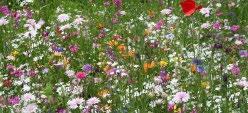
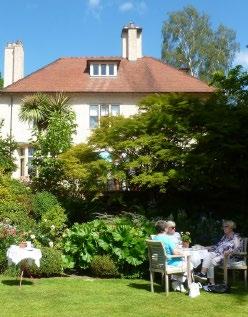
The last Saturday in June has become established as an important event in many people’s diaries because this is Gardens Day. Up to twenty private gardens across Wilmslow and the neighbouring area are open to the public who invariably spend a most enjoyable day out whilst contributing to Wilmslow Wells’ biggest fundraiser.
The first ‘Gardens Tour’ took place on 14th August 1993 and comprised fourteen gardens, one of which served refreshments. Nine were designated as ‘core’ gardens where tickets and a guide were available. About 200 people bought tickets and nearly £500 was raised. Since then the event has evolved, initially under Joanna Southgate’s guidance until 2009 when Shirley Baulkwill took over. Shirley continued development making the event ever stronger until 2019 when she handed the reins on to David Cash.
Gardens Day has grown in popularity to such an extent that nearly £20,000 is now raised annually with around 1,000 tickets sold to people drawn from an increasingly wide area. The record year was during the pandemic when gardens could not open and we offered short videos by our gardeners in exchange for a donation. This raised nearly £25,000 from supporters all over the world! In total, Gardens Day has raised over £258,000 for the charity.
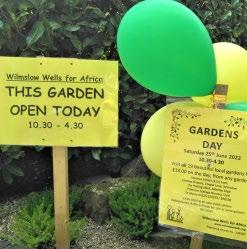
Much effort goes into planning and publicising the event under the auspices of the Gardens Day Committee. Potential gardeners are approached in early spring to see if they will participate, giving plenty of time for them to get everything ready and for the tickets to be prepared and printed. About a month before the day, all the gardeners are invited to a social gathering when they can exchange experiences and receive information packs for the day. In early summer promotional articles are placed in the local press and on social media. Then, about three weeks before the day, posters and banners are displayed across the neighbourhood.
There is always an interesting range of gardens on view including large and small, modern and traditional. Some are professionally designed and cared for whilst others are lovingly tended by their dedicated owners. Many have specialist plants such as varieties of roses, grasses, hostas, ferns, cacti and succulents or unusual and rare vegetables. There is usually at least one garden with a wild flower meadow and others have developed different types of water feature. Some gardens include unusual features such as a summerhouse, pergola, sculptures or a studio whilst others might be influenced by the topography with retaining walls and
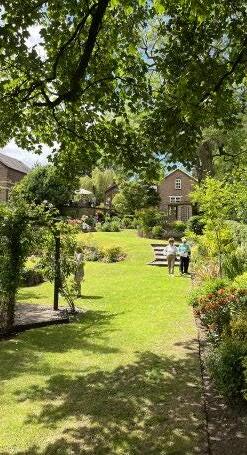
steps to address level changes. Visitors are often inspired with new ideas or enjoy having the opportunity to discuss horticultural matters with enthusiasts.
Teas, coffees, home-made cakes and even bacon butties are available at a number of the gardens. Some gardeners sell plants they have propagated which visitors will have spotted in their gardens whilst others may offer jars of honey from their hives.
Two of the gardens hold a prize draw for a planted display contributed by local garden centres or florists. All these ancillary activities are important because the income they generate collectively is nearly equivalent to the ticket sales.
Visitors move between the gardens by car, bicycle or on foot. They can either purchase their ticket in advance through
local shops or on the gate of the first garden visited. The ticket gives information about each garden and has a map so that people can plan their route, taking in the gardens which are of particular interest from the rich variety available.
“After Gardens Day, Paul and I went to Guernsey on a walking holiday. One day we met a lady tending her garden and got talking. We told her how we’d opened for Gardens Day in support of Wilmslow Wells for Africa and she immediately asked us to wait and rushed indoors, returning with a twenty-pound Guernsey banknote. She’d recently moved from South Africa and wanted to offer support because she knows how difficult life is for so many people living there without access to fresh water.” Janette Hopkins, Gardener.
Bridge Drives
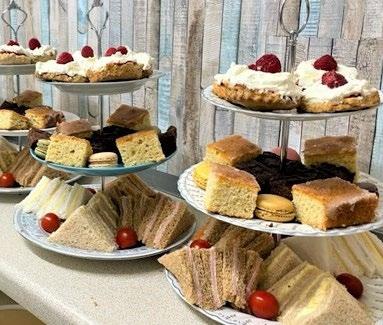
The first Bridge Drive took place in 2015 when two of our supporters, Jenny and Jim Morris, both of whom are Bridge teachers, offered to organise it. The event has since become firmly established in the calendar, taking place at Morley Green Club in November with up to twenty tables participating. At half time, the players’ efforts are always rewarded with a delicious spread!
Of course, home-made cakes, sandwiches and scones are one of the hallmarks of a Wilmslow Wells event, so during the Covid pandemic when the Bridge Drive couldn’t happen, an afternoon tea delivery to people’s homes was arranged instead. This not only provided a welcome treat for many people at a time when they were so restricted, but it also ensured that funds continued to come in.
Christmas Cards
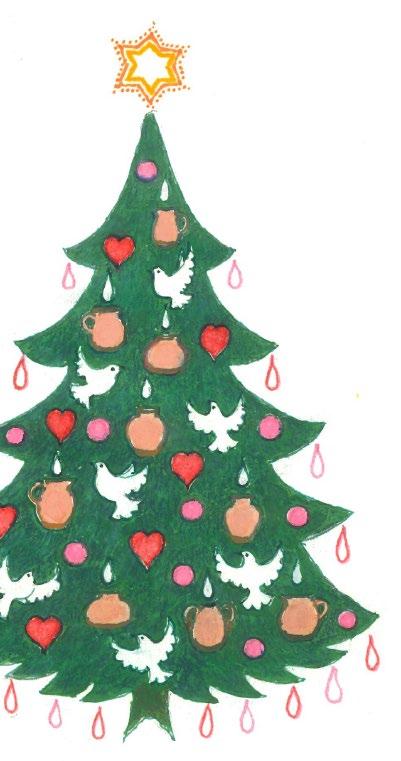
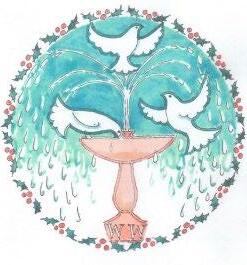
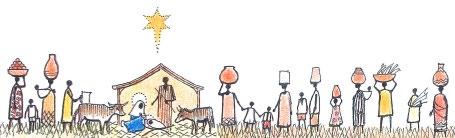
Rosemary Stubbs designed the first Wilmslow Wells artwork back in 1989. Since then, she has donated many designs for Christmas cards to raise funds for the charity. All of these have been printed by James Townsley’s Printforce at no charge to Wilmslow Wells. Rosemary has commented that James invariably manages to enhance her artwork through the printing process. As might be expected, many of her designs feature
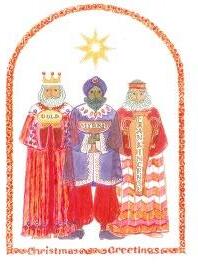
water but her subjects also vary from nativity scenes and the Magi, to fountains, birds and Christmas trees. A selection of her work is shown here. Beryl Jones also designed some attractive Christmas cards for us.
Wilmslow Wells Christmas cards invariably sell out quickly! They are usually available either by direct order or through the Charity Card Shop in Wilmslow Library.
Celebrating Our Volunteers
Brenda stipulated that all contributions to Wilmslow Wells should be given free of charge and this remains true today.
We are fortunate that over the last forty years we have always had a talented and creative group of volunteers who have contributed their services in many different ways. Their skills range from cooking to gardening, accounting, writing, IT skills, giving talks, visiting schools and organising events.
Our special thanks go to James Townsley who, through his company, Printforce, has printed without charge all the biannual newsletters, the tickets and promotional fliers for Gardens Day, the notelets, gift cards and Christmas cards.
The charity is always keen to recruit new volunteers and spread the word about the work Wilmslow Wells is doing. Our supporters contribute whatever they can, whether it’s time, energy, money, skills or ideas. All those contributions, whether large or small, are valued. Some make jam, chutney or a cake for Souperday or open their gardens on Gardens Day, possibly also preparing teas or propagating plants for sale. Others support the charity by attending the events or buying Christmas cards.
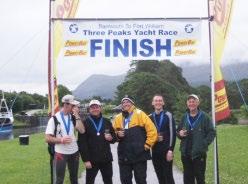
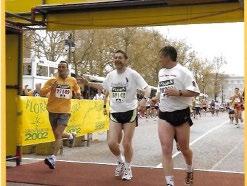
Some people have completed more adventurous challenges like:
• Abseiling down Chester Cathedral
• Running the London Marathon
• Cycling the Cambrian Bike Trail
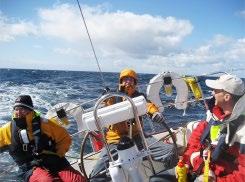
• Taking part in the 3 Peaks Yacht Race
• Walking the Alderley Edge By-Pass (pre-opening)
• Swimming sections of the English Channel
• Running the Joss Naylor Challenge (45 miles over 30 Lakeland summits in 19 hrs 37mins!)
• Walking the 190-mile Coast-to-Coast Route (Catherine and Susan Mottershead in memory of their mother).
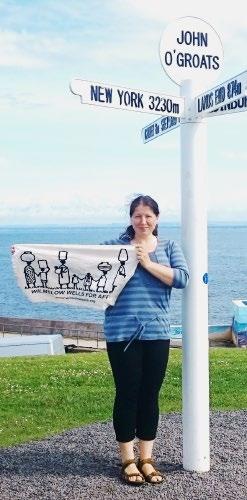
In 2015, Alex Jabore decided to walk solo from Land’s End to John O’Groats. She wanted all donations to go to a charity to aid women in developing countries so visited the local Oxfam shop to make enquiries.
“The lady there suggested Wilmslow Wells and told me all about the fabulous work they do. I researched more into it and loved the idea of raising money through my walk to help those in deprived African communities from having to walk miles for water, a resource I scarcely have to think about. I will be carrying water with me too, but in a specially designed light-weight water bladder. Hopefully my walk will save others walking to fetch water every day.”
Less energetic activities can be equally effective. Some years ago, Ann Vaughan gave a talk to children at Greenbank School in Cheadle Hulme about the need for water in many parts of Africa. Following this, Africa was chosen for their autumn project and the school adopted Wilmslow Wells as its charity for fund-raising. The children raised a magnificent £2,337 and this was immediately used to sink a well at a school in Mukoko, Uganda. This meant the 800 children there no longer had to carry water half a mile each day. The children at Greenbank were delighted when they heard how they had helped.
We close this chapter with a word of massive thanks and appreciation to the General Committee, the Gardens Day Committee and the Gardeners, and to all who have worked so hard to raise funds through the myriad of different activities. The beating heart of Wilmslow Wells is the volunteers who have brought their talents to these tasks. Too many to name but you know who you are!
How We Communicate
“It is contact which characterises Wilmslow Wells. Contact with people on the spot in Africa, contact with our donors who know how their money is being used and can follow its progress”.
Brenda Mottershead
Newsletters
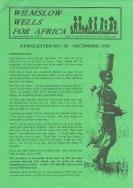
It was realised from the beginning that, as interesting letters came out of Africa about the progress of the first wells and the personalities involved, they should be shared with all those at home involved in raising money for the projects. From this idea, the Wilmslow Wells Newsletter was born.
The early newsletters are fascinating and give an insight into Brenda’s singleminded determination. Pounding away on coloured paper on her own typewriter, she is passionate, caring, articulate, knowledgeable and urgent. She informs and thanks her band of volunteer supporters whilst encouraging them ever forward. In 1985 she wrote: “PLEASE PASS ON THIS INFORMATION and talk about it. Remember, the idea of Wilmslow Wells is personal contact and mutual encouragement”.
In November 1985, the newsletters took on a new look. Still a personal letter from Brenda (now Chairman of the Appeal Committee) beginning “Dear Friends” and typed by her, but now with a wonderful logo. They continued to be a mix of news from Africa about ongoing projects, fundraising feed-back, statistics, future events and acknowledgements, but now there were occasional line-drawings or later, black and white photos which became clearer over the years.
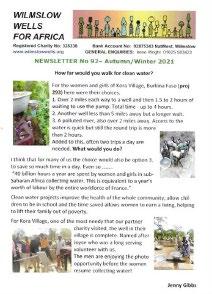
In 2012 came a single edition of a handier A5-sized newsletter, perhaps a practicepiece. In Spring /Summer 2013, Newsletter Number 75 was the first of the coloured newsletters we have today. Packed with interesting short articles as well as all the latest information about projects, people and activities, it is illustrated with colour photos.
The Chair of Wilmslow Wells has always taken the lead in preparing content for the twice-yearly newsletter which is then formatted by John Fallows. Whilst most people now receive their newsletters online, there is still a sizeable number who prefer to have a hard copy delivered through their letterbox. Thankfully, a team of individuals is still prepared to pound the streets of Wilmslow and the surrounding areas in order to ensure this happens without wasting money on postage!
Annual General Meetings Website
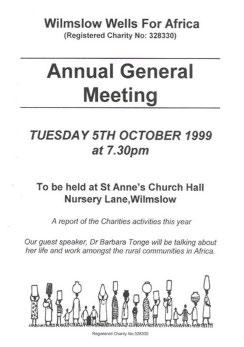
Another way of keeping in touch and maintaining contact is through our AGM.
As a registered charity, and in accordance with the constitution, an AGM is held each autumn to which all are invited, both our supporters and members of the public. It is held locally on a week-day evening to give maximum availability because we place particular emphasis on the importance of transparency.
Once the formal business has been completed, we welcome speakers from selected organisations whose projects we have funded. Their first-hand illustrated accounts graphically demonstrate the work that is being done to change lives in African communities and show how donations to Wilmslow Wells are reaching those in need.
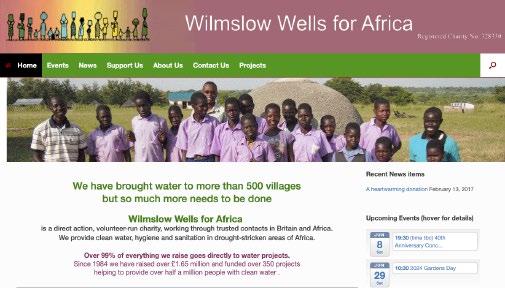
The Wilmslow Wells website was set up in 2004 by Ian Moffitt who became our first Webmaster. Ian continued in this role until 2012 when John Fallows took over, upgrading the look, the technology and adding new content. John has continued as our Webmaster ever since in spite of moving down south from Wilmslow in 2022.
As well as describing the charity’s work and providing information on upcoming events, the website contains a full schedule of all the projects we have funded to date. It is also a key way through which to donate in support of Wilmslow Wells’ work, either as a one-off or on a regular basis. Supporters can also sign up to be kept informed of our events by email.
“Somebody phoned up to donate saying they had been searching for a charity to support. They chose Wilmslow Wells because our website was the only one that
was up to date. It was very encouraging!” John Fallows, Webmaster.
The great value of our website was especially apparent during the Covid pandemic in 2020-21 as it enabled us to continue arranging events and communicating with our supporters who were confined to their homes. On-line talks were delivered (later available as recordings). As Gardens Day couldn’t take place in its usual format, a Virtual Gardens Day was created on YouTube, accessed via the website. The gardeners submitted a storyline along with photos and/or movie clips to John Fallows who did a wonderful job in editing and compiling the 18 short films. These were available for all to watch free of charge but each closed with an appeal to viewers for a donation to the charity. All this was so successful that fundraising in 2021 was better than ever before!
Talking To Others
“Please pass on this information and talk about it . Remember the idea of Wilmslow Wells is personal contact and mutual encouragement .”
Brenda Mottershead
We are always keen to talk about the work of Wilmslow Wells and the dire need for clean and fresh water in many areas of rural Africa. Many of our volunteers have given presentations at schools, churches, clubs and businesses. There is much information to share and indeed we welcome invitations.
Jenny Gibbs did just that, going tirelessly round schools talking to the children about Brenda and Emily and the need for clean water in Africa. On occasions, like Brenda, she took a bucket of dirty water with her. She also initiated mini-projects in schools based on the children washing their hands. She writes: -
“From the beginning, one of the threads running through Wilmslow Wells has been going out to talk to groups about the charity. As a result, our support base has grown not just numerically but also geographically by meeting with school and uniform groups, WIs and Mothers Unions,
Rotary and Inner Wheel Clubs and more; not just in Wilmslow but Manchester and beyond. Even Covid failed to break the thread, thanks to Zoom.
One of the changes has been the introduction of more technology. Using PowerPoint has enabled images from projects to be used more easily to illustrate our work and its impact. They speak powerfully of how the lives of a community can be changed by clean water, sanitation and/ or hygiene facilities.
So, is the purpose of the talks fundraising? Not solely. It is also to inform about the history and development of the charity illustrated by projects, to educate about the effects of not having these facilities and how many are affected, and to look to the future. For all groups, of whatever age, hopefully it means that there will be those who may decide to work alongside us now and take the work of the charity forward. But one’s eye must also be on the future and the hope that there will be those willing to step into our shoes.”
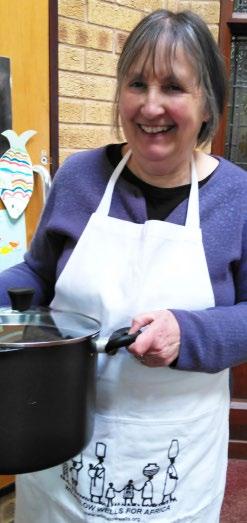
Jenny Gibbs was Chair of Wilmslow Wells for Africa, 2015-2021. Besides giving many talks and working in numerous fund-raising activities, she has ably led and inspired further growth and development of our Charity.
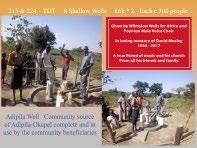
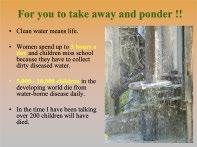
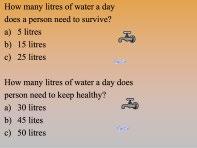
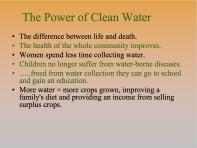
A few slides from presentations illustrate some of the information shared, together with stories of projects shown later on in this book.
Our Graphic Image
Local artist Rosemary Stubbs has been a dedicated supporter of Wilmslow Wells for many years. With her permission, we think of her now as our ‘Artist in Residence.’
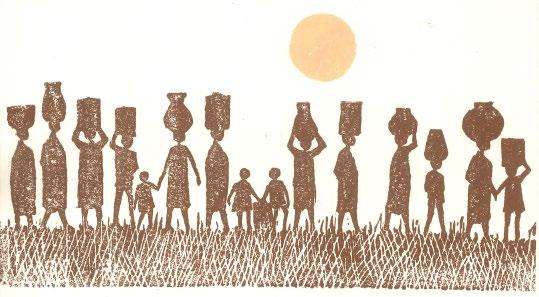
Rosemary vividly remembers the moment she met Brenda Mottershead in Wilmslow and heard from her about the plight of African communities and their dire need of pure water. Impressed by Brenda’s fire and enthusiasm for the work she was doing, she wondered what she herself could do to help the charity. This was the beginning of Rosemary’s long association with Wilmslow Wells for Africa.
She firstly designed a beautiful sepiacoloured lino-cut, which featured a group of water-carriers under a burning sun. This in its stark simplicity presented a powerful and moving message about the work of Wilmslow Wells. It has been used in our notelets and publicity from 1985 onwards.
This image gave rise to the charity’s much-loved logo. Along with Rosemary’s other designs of African life, it would be used in Brenda Mottershead’s book ‘A Story of Trust’ which described the early years. The logo is now used on all tickets, newsletters and other publicity material. It also features eye-catchingly on our everpopular cotton shopping-bags, tea-towels and aprons.
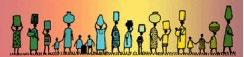
A coloured version of the logo also inspired a beautiful quilted wall-hanging which was crafted by Moira Rutherford who donated it to Wilmslow Wells. It is displayed at many of our events and features to great effect on our packs of notelets and also on this back cover.
Other variations of the logo have been utilised over the years and adapted to suit different events as can be seen on the illustrations. It is a testament to the strength of Rosemary Stubbs’ original design that our logo has been so adaptable, that it remains as fresh now as when she first conceived it and that it has come to represent the charity so well.
How We Spend The Money
Having raised over £1.65m since the start, what have we done with it? One of the principles established by the original trustees was that apart from spending on water projects, our only expenditure should be that which is absolutely necessary for running the organisation or holding an event. The only overheads we incur are the costs of insurance cover for the charity and bank charges, which have increased in recent years with the use of some donations websites for fundraising. We have no paid employees and the trustees don’t claim any expenses.
As
a result, since Wilmslow Wells started 40 years ago, our running costs have been minimal. Over 99% of all funds raised have been spent on our charitable objectives.
As we have no people on the ground in Africa, we work through partner organisations and contacts to identify possible projects. We have worked with many of these over a number of years and so have built up a good working relationship and level of trust with them. As a general rule, we work on smaller projects costing between £3,000 and £7,000 in areas where the larger aid organisations do not reach.
The projects are selected and overseen by the Wilmslow Wells Trustees, currently David Cash (Chair), Dave Tonks (Engineer
with specialist expertise in water wells), Roger Goddard (Treasurer) and Helen Battilana. In January 2024, Roger Goddard stood down as Treasurer after some 25 years’ service and has been succeeded by Nick Longson.
We receive numerous requests for support, some from organisations we know well, together with many new ones. When a project first comes to our attention the Trustees look at a number of factors including:
• Does this focus on our priorities area, the most vulnerable; women and children; the disabled, those least able or least likely to otherwise be supported?
• Do we know the organisation or group proposing it? If not, can we check out their bona fides and build a relationship?
• Can we be confident and verify that the project happens as planned?
• Is it value for money in terms of the number of people helped?
• Is it technically sound and sustainable?
• Do we have sufficient uncommitted funds available?
Where the project satisfies these criteria, we will liaise further with the organisation promoting it. We have a standard questionnaire which covers factors including their expertise and safeguarding procedures. Over many years’ experience of more than 360 projects, we have developed a good working knowledge of the costs of boreholes, hand dug wells, spring proection and water harvesting. We check the organisation’s financial standing and that we can securely send and monitor the necessary funds. We ask for suitably
detailed reports on each project including photographs and videos so that we can see the results and share them with our supporters.
The process of identifying, approving and monitoring projects has developed over the years. Originally everything was done by letter, often handwritten, a process that could take weeks. Completion reports would contain a photograph if we were lucky. Now we communicate by email and often receive stacks of digital photographs of the beneficiaries plus videos of the projects in progress. Whereas in the old days a project could take months to evaluate and longer to complete, now it can be identified and completed in a few weeks.
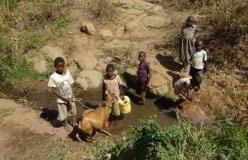
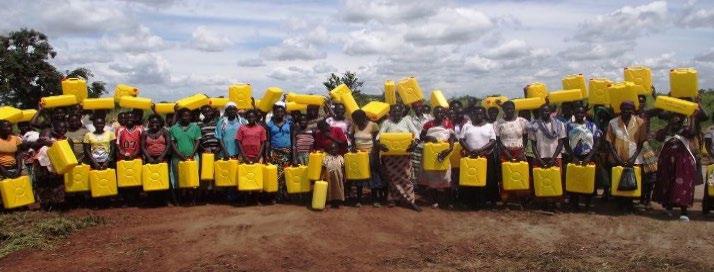
We have numerous pictures like this of children gathering water from unsafe places and people queueing for scarce and distant supplies. But we also have numerous photos and stories of new, safe water sources.
The growth in the number of projects through the years highlights the success of the charity. In its first ten years 16 projects were undertaken, in the next ten years 45 projects, in the third ten years 111 and in the last ten years 190 and counting. In effect we are now achieving more in one year than took ten years at the start of our story.
The annual expenditure on projects tells a similar story. This, of course, closely matches the monies that we have been able to raise. Our policy is to see the money well-spent as quickly as practical.
The long queue for water, Acimi, Uganda World in Need.
A local unprotected water source - Afrinspire 2018.
Projects Overview Project Locations
Over these last 40 years, Wilmslow Wells has funded more than 360 projects, bringing the benefits of fresh water and sanitation to over 650,000 people. We now support around 15-20 new undertakings each year, each of them a purposeful and sustainable development targeted at those most needy.
In keeping with our original ethos, we continue to focus on small projects which bring fresh water to remote rural areas. Websites and Virtual Maps take us direct to locations and we can go exploring on virtual tours, even to the edges of inaccessible jungle or vulnerable lands where safety and survival are everyday issues. Each project has its own particular story of communities transformed and the host of related benefits to health, security, education, agriculture and other aspects.
Innumerable poor villages still lack ‘basic water’, commonly defined as 15-20 litres of fresh water per person per day within a half hour collection time. By comparison, 10 times this amount is used in places where water is ‘on tap’.
The following extract from a recent proposal is rather typical and graphically illustrates the problem:
“Kitino Tima Village, Northern Uganda, has an estimated population of 1715 from 245 households. The community is undergoing unheard of human miseries due to limited access to safe drinking water. Most of the wells and springs in the area are seasonal, an indication that there is no constant water supply. People have to walk for 2-3 hours to get water, wasting time which they would have spent in other productive activities like farming and running small businesses.
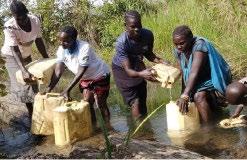
The villagers totally rely on contaminated water sources which are brownish, muddy, and smelly. The women and their small children bear the biggest burden. Due to the high demand and long queues, women sometimes do not return from fetching water until midnight, when they must battle with the darkness. In their efforts to help their mothers by fetching water, children usually sacrifice their study time. Lack of safe drinking water in the community has created high levels of domestic violence and has rendered women more vulnerable in the community.”
Obtaining water from an unsafe source, several hours journey, Amigos Uganda.
Locations of our projects
We are privileged to work with a wide network of tried and trusted partners, many of whom have attended our AGMs over the years and shared their experiences. The projects include wellestablished teams with deep local roots in their various operations. Many are small groups with great need but few resources or other ways of raising funds.
Technical issues relating to wells, drilling, harvesting and managing the water supply lie at the heart of our work. Fortunately, a vast amount of relevant information is now available through the internet. In addition to extensive technical data, there is much inspirational information about work being done on the provision of basic water and sanitation, as well as the vision of this and more becoming a reality for all in rural Africa.
Many projects encompass several wells and/or other works. Since 1984, we have enabled more than 1200 wells and other works. The types of projects that we fund, and their costs, are broadly categorised on the table below.
Shallow boreholes, spring protections and water harvesting with tanks constitute the majority, mostly serving villages of between 200 and 1000 people. All require community involvement and commitment to future management and maintenance. This includes checking water quality and preventing contamination which is carried out by community workers who need to be educated and trained. Many are linked with organisations, especially schools, churches and groups working with the most severely disadvantaged, including street kids and AIDS orphans.
It is hard to even begin to capture the myriad of uplifting stories we receive. The following examples serve for many thousands of words, to show the range of projects, partners and beneficiaries. Along with the facts, these convey the enormous gratitude of countless people whose lives have been transformed by the contributions Wilmslow Wells has made and continues to make.
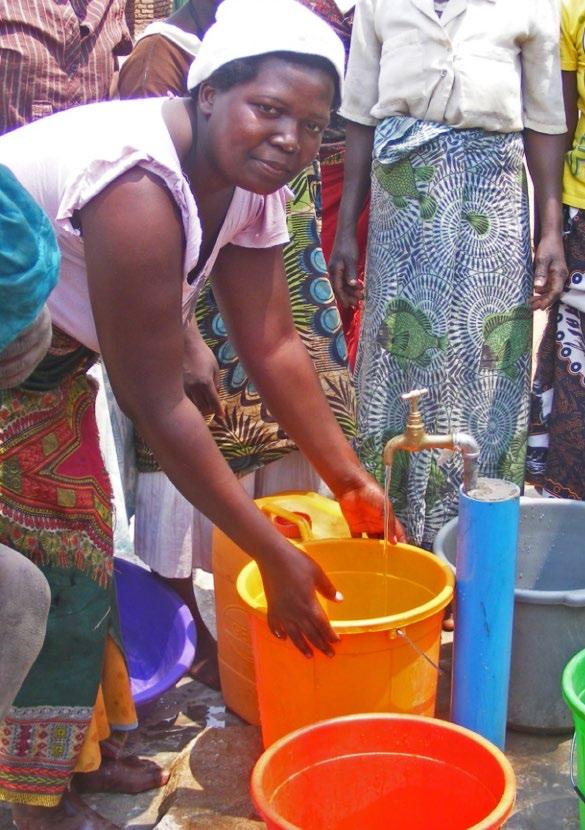
Shallow Wells For Rural Villages
Over the years, Wilmslow Wells has supported numerous shallow wells for village water projects. These tap fresh groundwater, commonly at 5 - 25m depth. The water is raised by robust mechanical handpumps which just take a minute or two of vigorous pumping to fill a jerry can. These are routinely maintained by local management groups with regular visits from local teams.
Our work with Busoga Trust in Uganda over many years gives great examples. BT has developed much expertise and is working closely with the government on a major programme to refurbish old wells and develop new ones. They have a strong Uganda team based in Jinja, adjacent to Lake Victoria, with particular expertise in effective and sustainable rural water supply.
sufficient in food and able to expand their variety and nutrition. Some farmers have braved bee-keeping (African bees are somewhat scarier than our British ones!). Making honey is a popular recent venture.
The work is planned to integrate with schools and clinics. The wells enable far more time to be spent in the classrooms, especially for the girls. The stories of these and many similar projects invariably end with the excited thanks of the villagers, often accompanied by music, singing and dancing.
To quote from one of the projects that Wilmslow Wells supported as the effects of Covid 19 were starting to be felt:
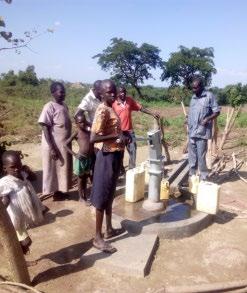
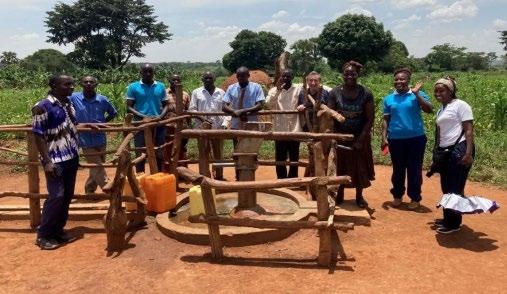
This recently completed well is typical of many in rural Uganda and elsewhere in Africa, providing a basic water supply.
The photograph is from a visit by Dave Tonks in September 2022 to some of the Uganda projects. The area around each well is secured to prevent contamination and misuse. The water is tested by BT to ensure it meets chemical and biological standards. BT’s community workers visit to train and help the people with associated sanitation, latrines, soap and hand washing. The incidence of disease is greatly reduced.
Having fresh water, so much else becomes possible including sustainable, small industries, including handcrafts, woodwork and sewing. The soil here is fertile and crops grow well in the rainy seasons, so that some regions have become self-
“The only line of defence for the vast majority of people, particularly in the rural areas, against Covid-19 is access to clean water for drinking and washing, soap and all the necessary accompanying messages relating to social distancing and handwashing etc.”
Busoga Bugle 2021
Similar stories could be told of many other projects such as those completed with Village Water, mainly in Zambia and, more recently, Mozambique (see the front cover picture). Wilmslow Wells has been supporting their work for many years through more than twenty projects. We share fond recollections and admire the way they have grown from small beginnings to become a powerful organisation for change and development.
New Well at Bugende Village, Uganda 2022.
Adipila Well, Community source of Adipila-Okapel.
Water And Sanitation For Schools
We have completed numerous projects associated with education including various vocational training. Education is the key to so much. We have been pleased to fund not only water provision but also sanitation for many schools.
Alice Gathoni has a leading role in the Department of Education in Kenya with focus on Special Educational Needs and the Disabled. We were introduced in 2018 whilst she was doing related research in Cambridge. She visited us in Wilmslow and spoke to many of our supporters. She has since visited and reported on several schools where we have been pleased to enable provision of water and latrines. This photograph shows one such project.
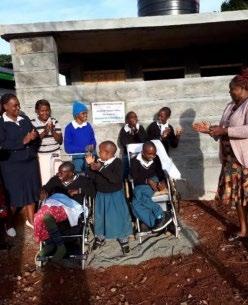
Help Uganda Schools (HUGS) is a Manchester-based charity with a focus on providing for the disabled. It recently opened the St Francis de Sales School which is named after the Patron Saint of the deaf. Before this school, there was nowhere for these young people to go and no safe place for the differently abled. HUGS worked tirelessly to enable this to happen and, amazingly, saw it built in just two years. Wilmslow Wells funded the water collection and a tank here, and now a toilet block for specialist teachers and pupils alike; small but vital parts of this wonderful enterprise.
During his 2022 visit to Uganda, Dave Tonks was pleased to accompany Dr Richard Bircher (Chair) and other HUGS Trustees to the opening of the school. The Uganda-style celebration lasted all day and involved the whole community; students, teachers, parents, choirs, musicians, dancers, church and other local leaders, politicians, aid workers, supporters and other guests, thankfully shaded from the burning midday sun.
Wilmslow Wells has also funded other similar projects including water and latrines for Little Shepherd School, Rutunguru and water points for a slum area in Kampala. The HUGS website offers inspiring and fascinating insights into the projects and their issues, including a powerful reflection about water, sustainability and global footprint.
We have enabled many projects in Zambia including the one pictured here, a deep borehole for a school at Sibanda with Kaloko Trust. The smiles and thanks say it all!
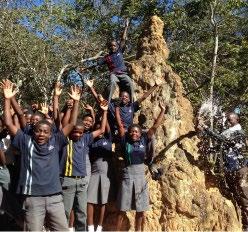
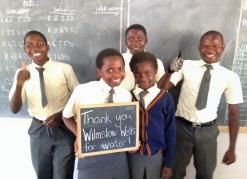
Meanwhile, in Tanzania we have been pleased to support boreholes at schools, using locally developed and manufactured rope pumps.
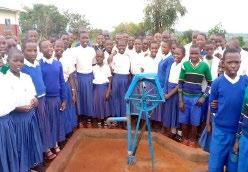
“Having water here has really helped the students and staff, and attendance has risen sharply. We are so grateful for this.” Headteacher, Murufiti School.
“Previously we had to spend many hours each day carrying water from the stream. We thank God we no longer have to do that and can concentrate better on our studies.” Student, Kazamwenda School.
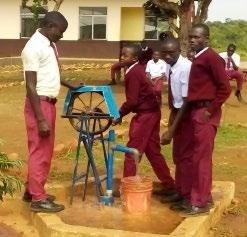
The head teacher said, “This kind of technology is real to help our community which suffers a lot of water issues. I brought these pupils here not only to know where they will collect water but also to tell them they should be the water solution in the future by learning and adapting such technology. We thank you and the donors who have made the borehole here possible.”
Opening Ceremony of Latrine Block, Kwanjura Special Needs School, Kenya
Hurray – we have fresh water! Kaloko Trust, Zambia.
Thanks for the new well. Kaloko Trust Zambia
Rope Pump Ishimwe Secondary School, Tanzania, 2022.
Rope Pumps for Schools. Tanzania Development Trust.
Rainwater Harvesting In Remote Areas
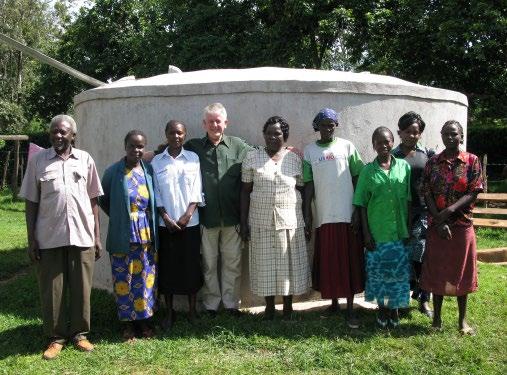
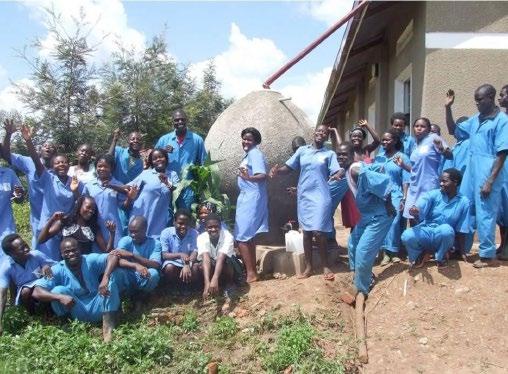
Wilmslow Wells has supported many projects to collect rainwater from suitable roofs and building tanks in which to store it. This is particularly valuable and costeffective in remote areas where there is no suitable groundwater. Tanks are constructed, based on calculations of the amounts of rainwater harvested from roofs and stored to get through the main dry season, normally lasting 3-4 months but nowadays increasingly erratic.
The Geoff and Diannah Charitable Trust provides many great examples. We got to know Geoff in 2006 following a visit by a team from the Church of England Crick
co-ordinator and ‘rapporteur’ for the projects. Her work includes evaluating and initiating projects, then visiting and monitoring these, sending reports, photos and enthusiastic videos including celebrations at opening ceremonies and interviews with villagers. Her report on the well at Kambini gives an example feedback video (on Wilmslow Wells website). The water projects have expanded to include wells and spring protections. Geoff has also founded a school for girls. Reports of his visits are inspiring catalogues of the benefits which have flowed to numerous villages.
Interestingly, we have also supported similar work nearby on the Uganda (western) side of Mount Elgon through the work of Afrinspire. Again, safe water is being provided from harvesting, tanks, springs and shallow wells at remarkably low cost. Often as little as £200 - £500 can provide water for an entire village of several hundred people.
Elsewhere, at Amigos training centre in Uganda students learn to construct tanks, with our support. They take these and many other new skills back into their villages and communities. And so the water and other benefits flow.
to Bungoma Diocese in Western Kenya. They saw at first hand the desperate need for fresh water and found ways to help.
The Trust was born and we gave particular advice and support as this grew. Some local ladies, led by the redoubtable Mama Rhoda, formed the Mapela Women’s Group and trained themselves to go about water harvesting. This self-help group has then taken their skills to neighbouring villages. Most are linked in with the local churches, which provide resources for training and sustainability.
One of the local women, Elizabeth, showed particular skills and soon became technical
Geoff Brown & Mapela Women’s Group in front of newly completed tank. Kenya.
Vocational students celebrating in front of their water harvesting tank. Amigos, Uganda.
On The Farm Safety, Security, Conflict Resolution
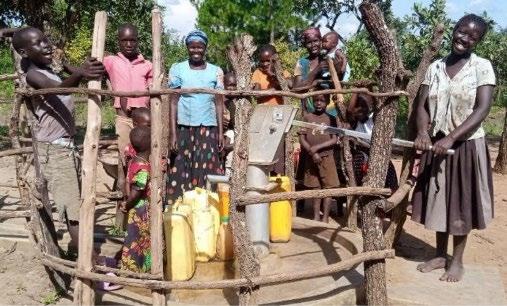
Wilmslow Wells has supported the work of Amigos since 2008, mainly in the development of water jars, wells and tanks. Their base at Kira Farm is about 1 hour’s journey north of Kampala. Each year the training centre takes in about 50 students and teaches them agricultural and other vocational skills. The students are carefully chosen to maximise the skills they can develop and the benefits they take back to their local villages all around Uganda. They remain in touch and become the links and contacts through which further developments flow, including water in the villages.
This photograph is of a recent Amigos’ well at Akang Dyam village in the Gulu area of Northern Uganda. The area has been badly affected by a long history of turbulence, thankfully now settled. It is afflicted by drought. The groundwater is deep and drill holes need to be to a depth of more than 50m. The only other water sources are distant, contaminated and unsafe for drinking.
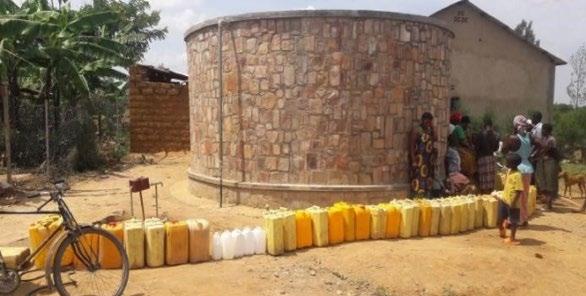
All projects improve safety and security, particularly for women and children who generally carry the burden of collecting water and can be at very significant risk. Some specifically address areas of conflict and the aftermath of fighting and insurgency, contributing to peacekeeping.
Wilmslow Wells has supported many such projects dating back to the 1990s, with Christian International Peace Service (CHIPS), Christian Engineers in Development (CED) and others.
Mayange, led by CED, provides a recent example. The history of conflict in Rwanda will be well-known to many. As the country moves forward, provision of fresh water is crucial to rebuilding shattered lives and communities. The Mayange project provides fresh water for a village of 950 refugees in desperate need having returned from bordering Tanzania. It includes water harvesting and the provision of tanks and water points around the village. A wonderful completion report and thank-you video on our website shows a transformed community, with water harvesting and tanks, able to start to feed themselves and become self-sufficient.
It gives a great insight into what CED and Wilmslow Wells are all about.
CED is led by engineers with extensive experience of water supply in Africa. Over many years, Wilmslow Wells has played an important support role by providing seed funding to get projects underway, so they are then able to attract further government grants and other funding. We have been pleased to support CED’s work on 20 projects to date, currently a project in Sierra Leone to provide water for a community recovering from civil war a decade ago.
In 2010, we supported a water project for ‘The Mighty Widows’. This self-help group had managed to start to rebuild their shattered lives after a particularly horrible destruction by militia which saw many of their menfolk brutally murdered. The widows’ harrowing story was brought to us by our good friend, John Miles, of Next Generation Missions. John has been working in Africa for most of his life and we have supported many other particularly deserving projects with him and Grace over more than 25 years
Queuing for water in the shade of the new water tank, Mayange, Rwanda.
Akang Dyam village Amigos’ well. Gulu, Uganda.
Conservation Natural Disasters – A Cry For Help
Three recent projects have supported the Joint Efforts for Green Mountain Initiative (JEGMI) through Wilmslow resident, Carol Bennetto. JEGMI works in Bwindi Impenetrable Jungle National Park Conservation Area of Western Uganda to conserve the biodiversity and combat malnutrition, hunger and poverty in communities bordering the protected area. The goal is to establish an environment where humans and nature prosper in harmony.
The protected spring sources help the villagers to retain and conserve this very special area which has become increasingly at risk as development expands into the surrounding hills and jungles. It is one of the few remaining habitats of mountain gorillas and many other species. Through this initiative, their population has stabilised and is now expanding. Locals can earn a better living through carefully managed eco-tourism. However, this was
greatly impacted by the Covid outbreak and associated restrictions which meant their situation became desperate.
The work is led by Luke Twinamasiko, a local specialist who organises the teams of workers and is diligent in monitoring the progress and quality of construction. The photograph shows the newly completed spring source at Mukono village with an elderly lady expressing her happiness and the gratitude of the villagers. She tells the people that they have worked hard to make a source of safe water; they share their habitat with the life of the mountains and impenetrable jungle.
Bringing water to impoverished rural areas in a way which conserves and protects the environment is important to our ethos. We are delighted to support such vital work.
To date, three projects have provided six spring protections bringing fresh water and the related benefits to over 3000 people at a cost of less than £3 per person.
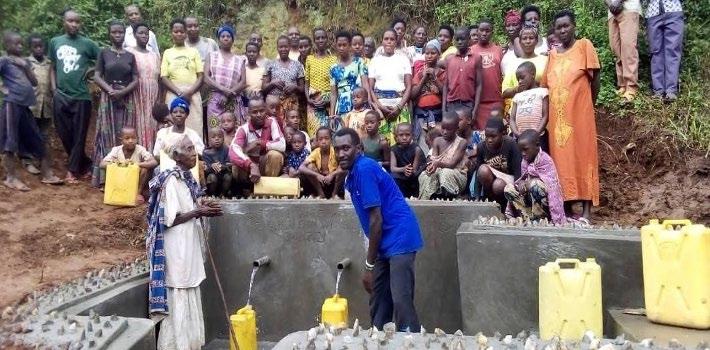
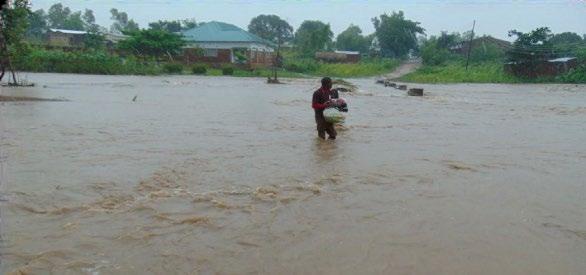
The incidence and severity of natural disasters in sub-Saharan Africa has been increasing in recent years, in part due to climate change. When they strike, there is little resilience and the suffering is dreadful. Here is just one recent story.
In March 2023, Cyclone Freddy devastated large areas of southern Africa in one of the strongest and longest-lasting storms ever recorded. Over 500 died, many were injured and millions suffered from flooding and mudslides.
We received this message from David and Lynda Mills of Aid Africa, who we have supported for many years and who were there at the time:
“Expect you’ve heard about the devastation caused by Cyclone Freddy last week here in Malawi. It’s left broken communities; houses and toilets have collapsed, flooding has destroyed bridges and water pipes so borehole pumps are the only source of safe water at this time. I’ve attached a breakdown for 7 pumps
that will change lives. We just need to start the process off…. Safe water and sanitation are an especially high priority at this time - we’re in the middle of a cholera outbreak that has already claimed over 1,600 lives so we’ll also be building toilets. We’re still assessing the local situation after the cyclone and some places are still impassable but plan to begin reconstruction next week when hopefully things will have dried out a bit. Anyway, any help you could offer would be greatly appreciated.”
Thanks to money generated from a Souperday the previous week, we could respond immediately. £3,000 was sent to get seven pumped wells back into action enabling nearly 4,000 people to start rebuilding their lives. A further £4,000 was contributed after Gardens Day to make another twelve wells operational.
Such disasters can be overwhelming. It is inspiring to see the work achieved by committed and courageous people in these situations.
source Green Mountain Uganda
Flooding and damage from Cyclone Freddy, Malawi
Difficult Places Water Is Life - Being Human
Some projects are in particularly remote and difficult places. One such area is Burkina Faso, a land-locked country in western Africa little-known to most people in the UK; neglected, near forgotten by much of the outside world. Finding water is challenging on the edge of the Sahel and life is led on the margins. Lawless gangs, some loosely affiliated to ISIS, roam the northern lands where the government is able to do little.
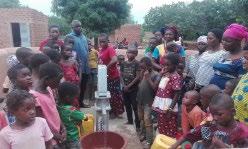
The amazing team from Myra’s Wells, have been able to provide deep wells here, working with local staff and contractors. Their website tells the heart-rending story of how Eddie Martin responded to the devastating loss of his beloved wife by founding the charity. We know of other small charities with similar foundation stories. Their wells are frequently named in memory of various supporters. Wilmslow Wells has funded Betty’s Well 2018; Beryl’s Well 2020; and Joyce’s Well 2021, in memory of some past supporters (and several others who have left donations but prefer not to be named.)
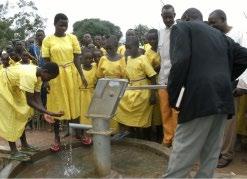
Another difficult place is Teso Soroti, Northern Uganda; an area afflicted by drought, now recovering from past insurgency and conflict. Over the years we have funded more than 50 wells with Teso Development Trust (TDT).
Recent feedback reports include:
“The construction has been completed and the community enjoys water drawn from the protected well. The well has a good yield and water is good for drinking. Community to be served is very happy because they had to walk many kilometres away to get drinking water but this one addresses the problem of water shortage, far distance and the risk of open well on children falling into it.”
“The Well has been completed. Key impacts for Omugura well include improved health due to safe and clean water, reduced distance to the protected water source, and good relationship within the community.”
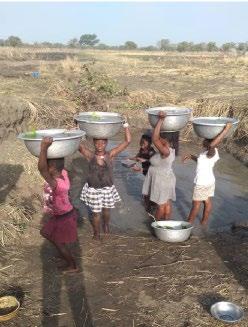
In 2020 Wilmslow Wells was contacted by Ghana Outlook; a local group with links to the Fire Services and Scouts. They have developed various water projects in the Wa area of northern Ghana and have particular expertise.
The Kuondodoble borehole was planned following appraisals of need in this remote area following similar projects involving the same team. This gave confidence that the challenging work could be done successfully. In early 2023, the deep well was successfully drilled to 60m and fitted with an Afridev handpump. The remarkable change the well has made to the lives of some 450 villagers is illustrated by the
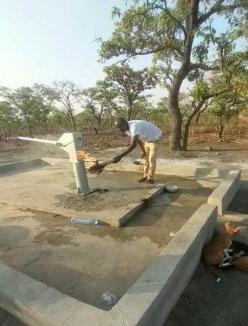
before and after photographs above. Most significant is the improvement in health as they no longer have to rely on polluted water from scrapes and water holes.
After the handover ceremony, a goat was presented as a token of the community’s appreciation! The village elder said,
“We were not counted among human beings. You people have through your generosity counted us among humans. We do not have to drink from that dugout, competing with goats, sheep and cows. Our children do not have to trek long distances again. Our thanks are not enough. May God continue to bless you so much.”
The well in Yoroko Feso Village, Burkina Faso.
New Well at Teso Soroti, Northern Uganda (TDT).
How We Work With Others
As we celebrate 40 years of Wilmslow Wells, we take this opportunity to acknowledge our deep appreciation of the wide network of tried and trusted partners with whom we have been privileged to work. We have developed much experience through working with them over the years. Many have spoken at our AGMs and other meetings. Almost all have well-established local teams who deliver our projects through small groups to communities with great need but few resources.
It is really heartening to see how many people are dedicated to building their communities in Africa, trained and training to develop a quality of life similar to that which we take for granted here in the UK. We have been privileged to support numerous groups who have developed extensive knowledge and skills. Locally led, their understanding of the needs and ability to address them has grown enormously. In many places better solutions with appropriate technologies are being found. It’s a case of working in partnership.
Although the challenges remain huge, real progress is being made with numerous projects across countless villages. We look forward to a time when everyone will have at least a basic supply of water and can safely access the benefits that flow from this.
Our main recent partner organisations are listed on the following page. Most have websites which give uplifting accounts of how their dedicated people are working to bring about extraordinary change to often quite desperate situations.
Recent Partner Organisations
Act4Africa
ACTS Africa Christian Teaching Services
Advantage Africa
Afrinspire
Africa Vision
African Revival
Aid Africa
Alice Gathoni
Amigos
Build Africa/ Street Child
Build It
Busoga Trust
Care International
CHIPS Christian International Peace Service
Christian Engineers for Development
Chazuka Project
Free to Be
Ghana Outlook
Geoff & Diannah Charitable Trust
HandsUp 4 Uganda
Help Uganda Schools
Joint Efforts Green Mountain Initiative
Kaloko Trust
Mulli Charitable Foundation
Mission 4 Water
Myra’s Wells
Practical Action
New Generation Missions
Self Help Africa
Teso Development Trust
Tanzania Development Trust
Transform Burkino Faso
Village Water
Village by Village
We Look To The Future
The story of Wilmslow Wells for Africa has been a remarkable journey and a source of inspiration for all involved. From small beginnings in the 1980s, it has grown to address the most basic of human needs in keeping with Brenda Mottershead’s original vision. At a conservative estimate, over 650,000 people have now benefitted from its work in many different ways. Over 1200 wells, tanks and related schemes have been constructed.
We expect to continue to focus on the most vulnerable and needy in Sub-Saharan Africa, particularly women and children, in remote areas without other sources of support.
Change has always come about through a process of gradual evolution. The charity was conceived to bring a single well to a specific township in one country, ‘one hopeful thing…. a well of pure water in one dusty area’. Although this soon developed into providing multiple wells across many communities, it was over a decade before the needs of countries other than South Africa were addressed. More time passed and experience was acquired of other ways of providing water, such as spring protection, harvesting and storage.
We are driven by the need and the local understandings, and their knowledge of the issues and solutions. In recent years we have been able to help with an increasing number of ‘WASH’ projects addressing Water, Sanitation, Health and related education, holistically. Sustainability is a key issue. We are increasingly supporting maintenance and refurbishment which can be extraordinarily cost-effective, frequently getting water back into communities for less than £1 per head.
Similarly, the various fundraising activities have adapted steadily over time. As times and tastes change, some events become less popular and are dropped
whilst others grow and generate a healthy income accordingly. As we are totally run by volunteers, it is important that our events appeal not only to our existing and future supporters but also to those who work so hard to make them happen. We always want to inform and ‘tell the stories’, increase awareness and engage more younger people in the charity. So we seek to introduce new ideas and new fundraising activities which appeal to younger age-groups.
The question arises how Wilmslow Wells may continue to evolve and change going forward. The Trustees have recently received several helpful messages on this topic, offering rather similar views:
“I have been ‘on the periphery’ for a number of years now and have observed how there has in fact in that time been a subtle change of approach, from ‘only wells’, to the provision of water tanks, latrines etc. and more recently, the support for refurbishments. However, this has come about because of (a) the requests from those on the ground and (b) the flexibility of the Trustees and their ability to understand those differing needs. Wilmslow Wells is not static, but moves quietly forward in its vital support for those in Africa who need it.”
“From a donor’s perspective, the model that you have developed has (to me) considerable appeal. I know that my money
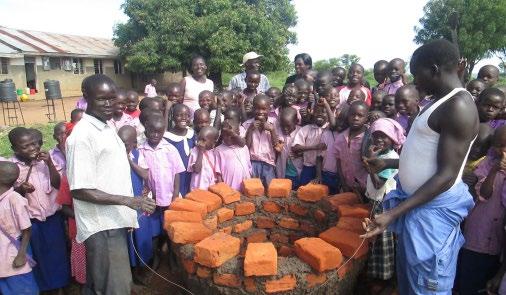
will be used for a clear purpose of which I approve (and who, incidentally, could not wish for a person to have access to clean water and sanitation?), that it will be applied promptly, to identifiable projects, and that almost every penny I give will achieve what I want it to. In anticipation of the status quo being maintained I look forward to remaining a regular supporter.”
The world has changed much over these 40 years. In Africa, many places and many lives have improved beyond recognition; thriving modern cities have grown, it’s a challenging but exciting time. However, in the villages and rural areas many still lack even a basic water supply. These are where most of the projects we fund are located and it would be good to do more. This would be possible if we could generate more money. We need more volunteers to help with both raising funds and administering the projects.
In preparing to celebrate our first 40 years, we have received many kind comments and testimonials from friends and partners, all of which are much appreciated. They pass on the thanks of the thousands of people who have safe, clean water through the hard work and generosity of all who have been associated with Wilmslow Wells. Where we go from here and what we can continue to do together depends very much on you, our readers, volunteers and supporters. We profoundly thank all who have shared the journey in so many ways over the years. Hopefully this booklet conveys something of the excitement and enormous gratitude of so many in subSaharan Africa.
To echo our founder’s original hope and vision:
Water is the key to it all! Water is Life!
What’s It All About?
A child contemplates his future. Tomorrow the drill may arrive and there may be water.
What will I become and what will become of me?
I have yet to know my name
I am a scrap of humanity on a journey called life
Seeking a cup of water from mother earth
Looking for a shirt to keep me from the sun
To hide my empty body from the passers-by.
Looking for a cloak to guard me from the night-time and the chill
I ask nothing of you except perhaps a drink
A drop of water from a fresh stream
A well might be a luxury too far
But one day I will stand proud beside you
And provide for children of my own.
Dave has written many poems related to his experiences working with water, inspired by and dedicated to the work of Wilmslow Wells for Africa. They are collated in a book, Africana, available on request davidm.tonks@btinternet.com.
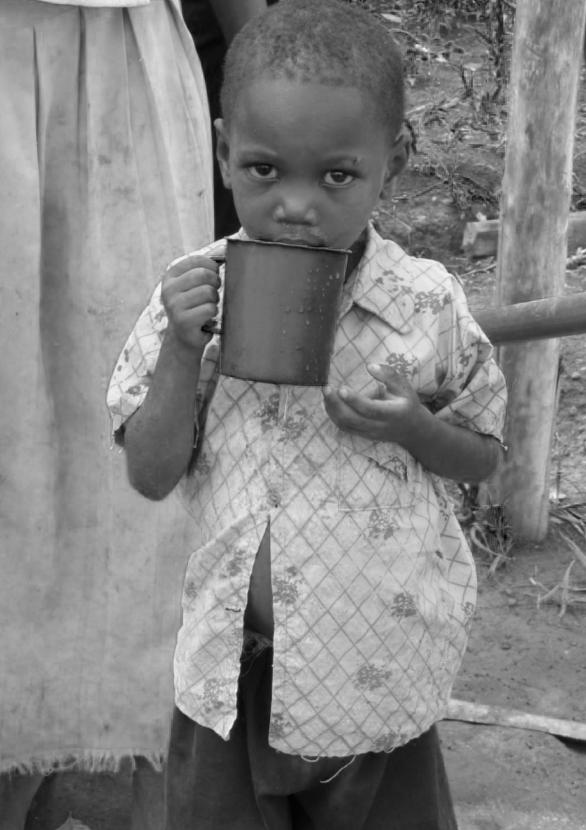
© Dave Tonks 2020.
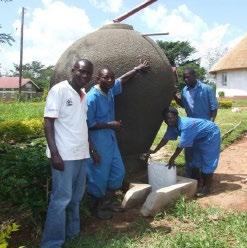
Acknowledgements
Things happen at Wilmslow Wells for Africa when enthusiastic people with complementary skills come together to form a team. The production of this book is no exception.
Helen Battilana who had the idea of producing a book to celebrate the fortieth anniversary of Wilmslow Wells and as a member of the editorial team has been able to recall many of the milestone events.
Liz Kempster who has researched our archive material, interviewed key individuals in order to piece together the story of the early days of Wilmslow Wells and described how many of our activities happen.
Dave Tonks who, with his valued engineering expertise, has drawn on his vast experience of Wilmslow Wells to describe some of the many and various types of water-related projects we have undertaken.
Roger Goddard who described how Wilmslow Wells is structured and why we have evolved in this way.
David Cash who contributed several sections and edited the content.
David Mottershead and James Smith of Little Greene Paint Company who gave of their time, resources and ideas in the graphic design and layout.
James Townsley and colleagues at Printforce who turned all the ideas into this printed book.
We would like to thank all those who have contributed insights or information and shared memories with us, many of whose voices you will hear in this book.

We thank you again for being a part of the Wilmslow Wells story.
You may be wondering how to respond to this! We would love to hear from you, to discuss the issues, to create tomorrow’s stories. We would like to tell more of what we do and see, including speaking to schools and other groups who may care and be interested to listen. We would of course welcome you getting involved, perhaps to help with existing or new fund-raisers.
The easiest way is to visit our website www.wilmslowwells.org
Please have a look at what is going on right now and then e-mail: helen@wilmslowwells.org or simply come along to one of our events and meet like-minded people, inspired by the knowledge that each in their own way can make a difference.
Amigos Water Jars
Wilmslow Wells for Africa
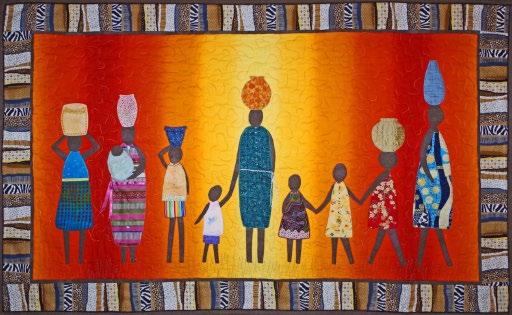
Over the last 40 years, this small local charity has raised over £1.65M for more than 360 projects, bringing fresh water and numerous associated benefits to over half a million people in some of the most deprived rural areas in Sub-Saharan Africa. This book shares the voices of the volunteers who have taken Wilmslow Wells from the original inspiration in 1984 to the present day. It also tells the stories of some of the people who now celebrate the gift of fresh, clean water.