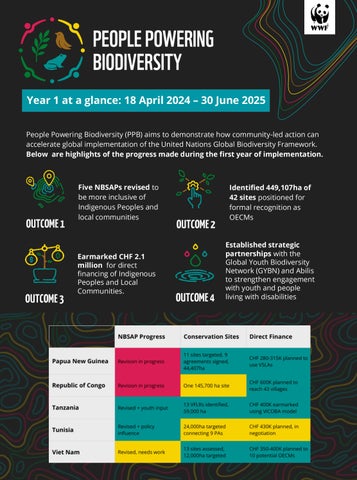
Year 1 at a glance: 18 April 2024 – 30 June 2025
People Powering Biodiversity (PPB) aims to demonstrate how community-led action can accelerate global implementation of the United Nations Global Biodiversity Framework. Below are highlights of the progress made during the first year of implementation.
OUTCOME 1
OUTCOME 3
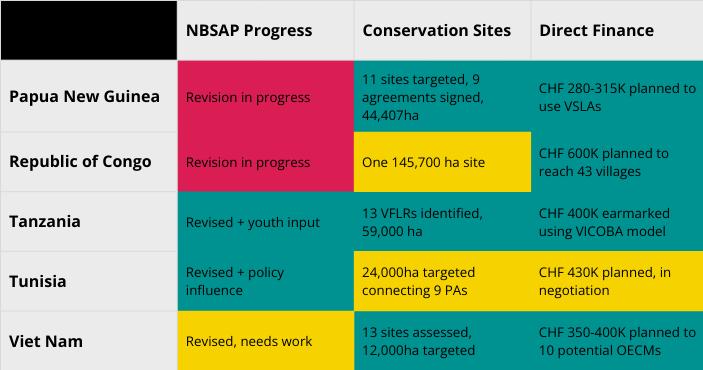
Five NBSAPs revised to be more inclusive of Indigenous Peoples and local communities
OUTCOME 2
Earmarked CHF 2.1 million for direct financing of Indigenous Peoples and Local Communities.
OUTCOME 4
Identified 449,107ha of 42 sites positioned for formal recognition as OECMs
Established strategic partnerships with the Global Youth Biodiversity Network (GYBN) and Abilis to strengthen engagement with youth and people living with disabilities

Background
People Powering Biodiversity (PPB) initiative is a flagship WWF initiative designed to accelerate the implementation of the KunmingMontreal Global Biodiversity Framework (KM-GBF) through community-led conservation in five biodiverse countries: Papua New Guinea, Republic of Congo, Tanzania, Tunisia, and Viet Nam.
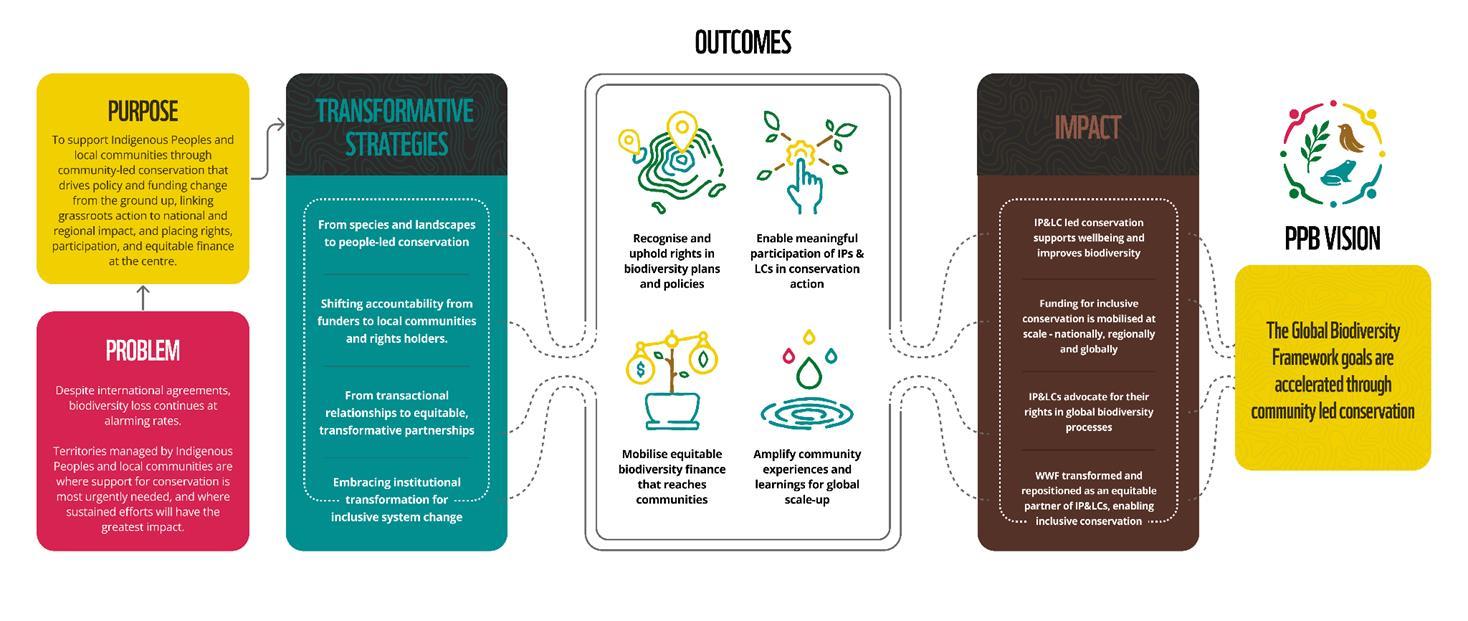
PPB aims to position Indigenous Peoples and Local Communities (IPs & LCs) as central actors in conservation, not just as beneficiaries but as rights-holders, stewards, and leaders. The initiative is grounded in four transformative strategies that reframe conservation through equity, accountability, and institutional change.
• Timeline: 18 April 2024 – July 2027
• Budget: CHF 18 million (CHF 15 million donor funding, CHF 3 million co-funding)
• Geographic Scope: National implementation in five countries, with policy engagement and amplification at regional and global levels (Pacific, Mekong, Congo Basin, East and Southern Africa, North Africa).
REVISED PPB THEORY OF CHANGE
PPB’s four transformative strategies:
• From species and landscapes to people-led conservation: Positioning IPs & LCs as central actors in biodiversity efforts, not just as beneficiaries, but as rights-holders, stewards, custodians and leaders, to ensure conservation is grounded in lived realities and traditional knowledge.
• Sharing accountability with funders and local communities and rights holders: Reorienting accountability from only prioritizing requirements of external donors and institutions to include voices and requirements of local communities and rightsholders, thereby strengthening local governance, ownership, and trust.
• From transactional relationships to equitable, transformative partnerships: Working towards more equitable relationships and human rights-based partnerships where communities have voice, decision-making power, and agency in all phases of conservation.
• Embracing institutional transformation for inclusive system change: Committing to internal reflection and organizational transformation within WWF, as well as in other International NGOs (INGOs), that embraces power shifts, centers justice and equity, and enables more meaningful inclusion across all levels of conservation policy and practice.