
BY SAM DANLEY
BY SAM DANLEY

EDITORIAL
VICE PRESIDENT EDITORIALFOOD, RETAIL, & HOSPITALITY
Danny Klein dklein@wtwhmedia.com
QSR EDITOR Ben Coley bcoley@wtwhmedia.com
FSR EDITOR Callie Evergreen cevergreen@wtwhmedia.com
ASSOCIATE EDITOR Sam Danley sdanley@wtwhmedia.com
ASSOCIATE EDITOR Satyne Doner sdoner@wthwmedia.com
SENIOR VICE PRESIDENT AUDIENCE GROWTH Greg Sanders gsanders@wtwhmedia.com
CONTENT STUDIO
VICE PRESIDENT, CONTENT STUDIO Peggy Carouthers pcarouthers@wtwhmedia.com
WRITER, CONTENT STUDIO Drew Filipski dfilipski@wtwhmedia.com
WRITER, CONTENT STUDIO Ya’el McLoud ymcloud@wtwhmedia.com
WRITER, CONTENT STUDIO Abby Winterburn awinterburn@wtwhmedia.com
ART & PRODUCTION
SENIOR ART DIRECTOR Tory Bartelt tbartelt@wtwhmedia.com
FSR ART DIRECTOR Erica Naftolowitz enaftolowitz@wtwhmedia.com
SALES & BUSINESS DEVELOPMENT
SVP, FOOD, RETAIL, HOSPITALITY SALES AND ACCOUNT MANAGEMENT Matt Waddell mwaddell@wtwhmedia.com 312-961-6840 VICE PRESIDENT, BUSINESS DEVELOPMENT Eugene Drezner edrezner@wtwhmedia.com 919-945-0705
NATIONAL SALES DIRECTOR Edward Richards erichards@wtwhmedia.com 216-956-6636
NATIONAL SALES DIRECTOR Amber Dobsovic adobsovic@wtwhmedia.com 757-637-8673
NATIONAL SALES MANAGER Guy Norcott gnorcott@wtwhmedia.com 854-200-5864
CUSTOMER SERVICE REPRESENTATIVE Tracy Doubts tdoubts@wtwhmedia.com 919-945-0704
CUSTOMER SERVICE REPRESENTATIVE Brandy Pinion bpinion@wtwhmedia.com 662-234-5481, EXT 127 FOUNDER Webb C. Howell
ADMINISTRATION
919-945-0704 / www.qsrmagazine.com/subscribe QSR is provided without charge upon request to individuals residing in






















THERE ARE SO MANY GREAT STORIES TO TELL!
BCOLEY@WTWHMEDIA.COM
Q SR MAGAZINE
With Valentine’s Day fast approaching, we are officially in the month of love.
So why not use this particular editorial letter to share a few reasons why I love and appreciate covering the restaurant industry.
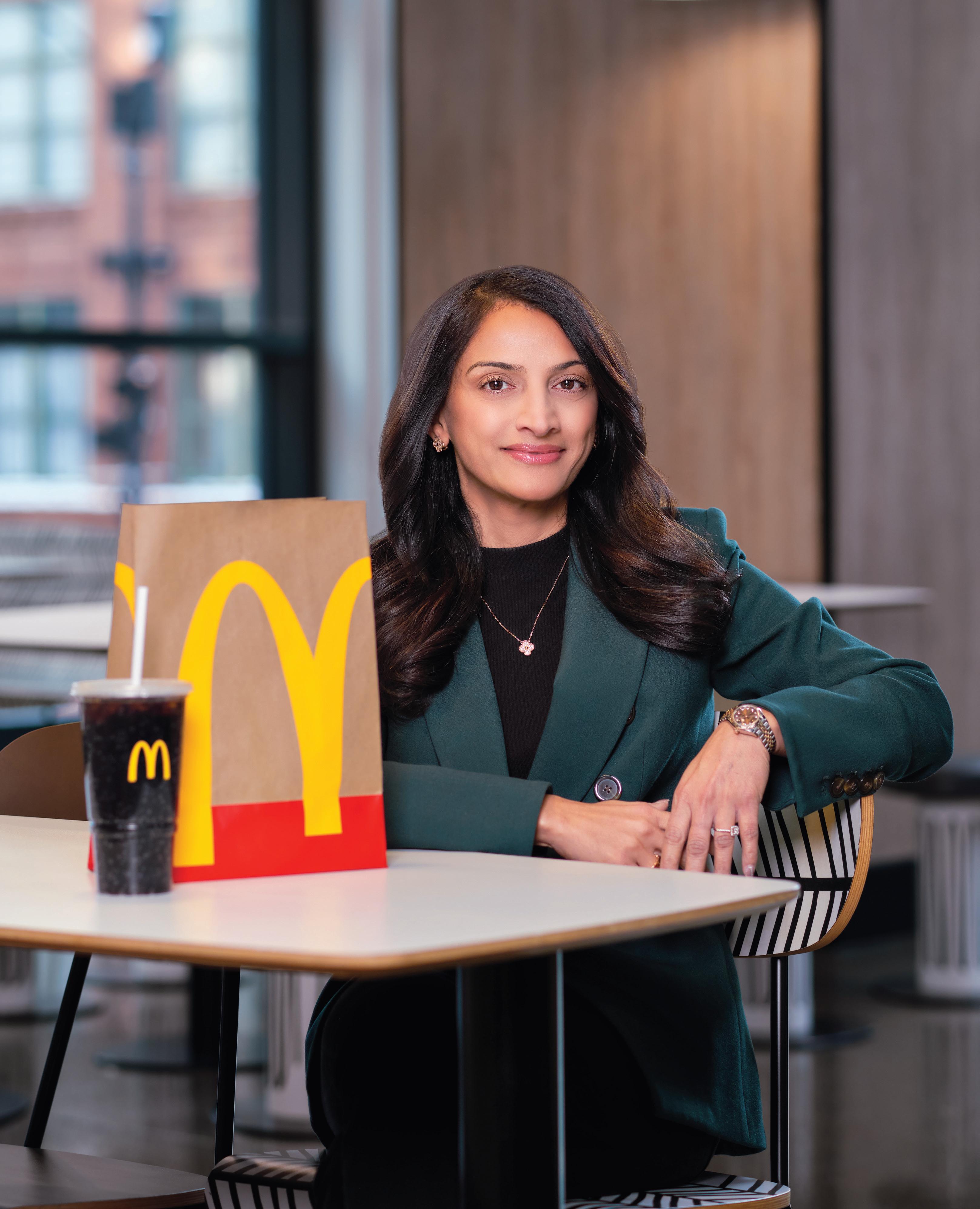
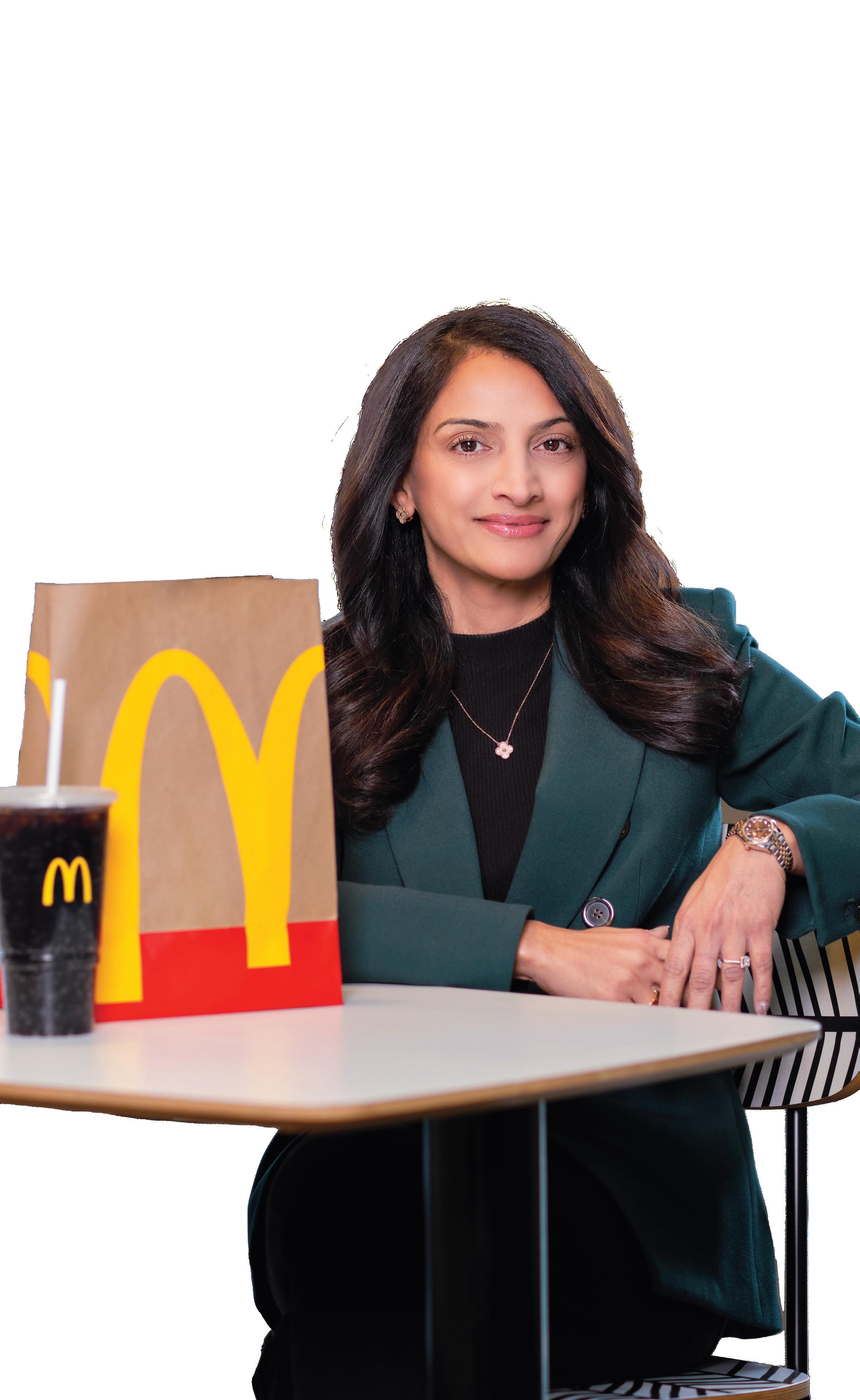
Let me begin with this magazine issue. I’m proud that QSR magazine has dedicated an entire edition to empowering women in restaurant leadership. The industry has improved in recent years, but it is still a male-dominated field where it’s undoubtedly tougher for women to have their voices heard or feel like they can have an impact. I hope the stories shared in this issue provide motivation to our readers of what’s possible. The magazine, of course, is just a preview of something grander coming later in the month—our annual Women in Restaurant Leadership Summit taking place in Charleston, South Carolina. Here, women from across food and beverage will come to share encouragement, ideas, and a path forward. Tabassum Zalotrawala, McDonald’s USA SVP and chief development officer, not only graces the cover of this magazine, but she will also be the keynote speaker at the upcoming conference.
Something else I love—a good comeback story. And I don’t just mean an existing restaurant trying to turn things around. I’m talking about an actual disappearance from existence and a complete revival. There have been a couple of examples this year. The first is Chi-Chi’s, a Mexican restaurant founded in the mid-1970s. The concept once reached over 200 locations, but for a variety of reasons—including a bankruptcy and hepatitis A outbreak—Chi-Chi’s shuttered completely in the mid-2000s. However, this year,
the brand came back to life in St. Louis Park, Minnesota, thanks to Michael McDermott, the son of cofounder Marno McDermott. More are on the way as well.
Another concept rising again is Sweet Tomatoes, a cult-favorite buffet chain. The classic concept had 97 restaurants across the U.S. a few years ago, but when COVID safety standards forced the closure of all stores, the brand went into Chapter 7 bankruptcy and shuttered all of its units at once. However, a new owner bought the intellectual property and decided to reopen Sweet Tomatoes in Tucson, Arizona, in 2024. The customer reception was incredible; the Arizona Republic reported that on the day of the grand opening, the line was around the block at 10:30 A M The company hopes to get the same reception when it opens this year in Fort Myers, Florida.
That kind of enthusiasm says a lot about how deeply restaurants can embed themselves into people’s lives. These brands aren’t just places to eat— they’re memory-makers. They’re where families celebrated birthdays, where kids learned what “going out to dinner” meant, and where traditions were built over decades. Watching a brand reemerge and reconnect with guests who never truly forgot it is one of the most rewarding parts of this job.
As we head into Valentine’s Day and continue through a month centered on connection, I’m grateful to be able to cover an industry built on bringing people together. It’s not always easy work, but it’s meaningful, and it’s constantly evolving. And that’s exactly why I love it.
Ben Coley EDITOR
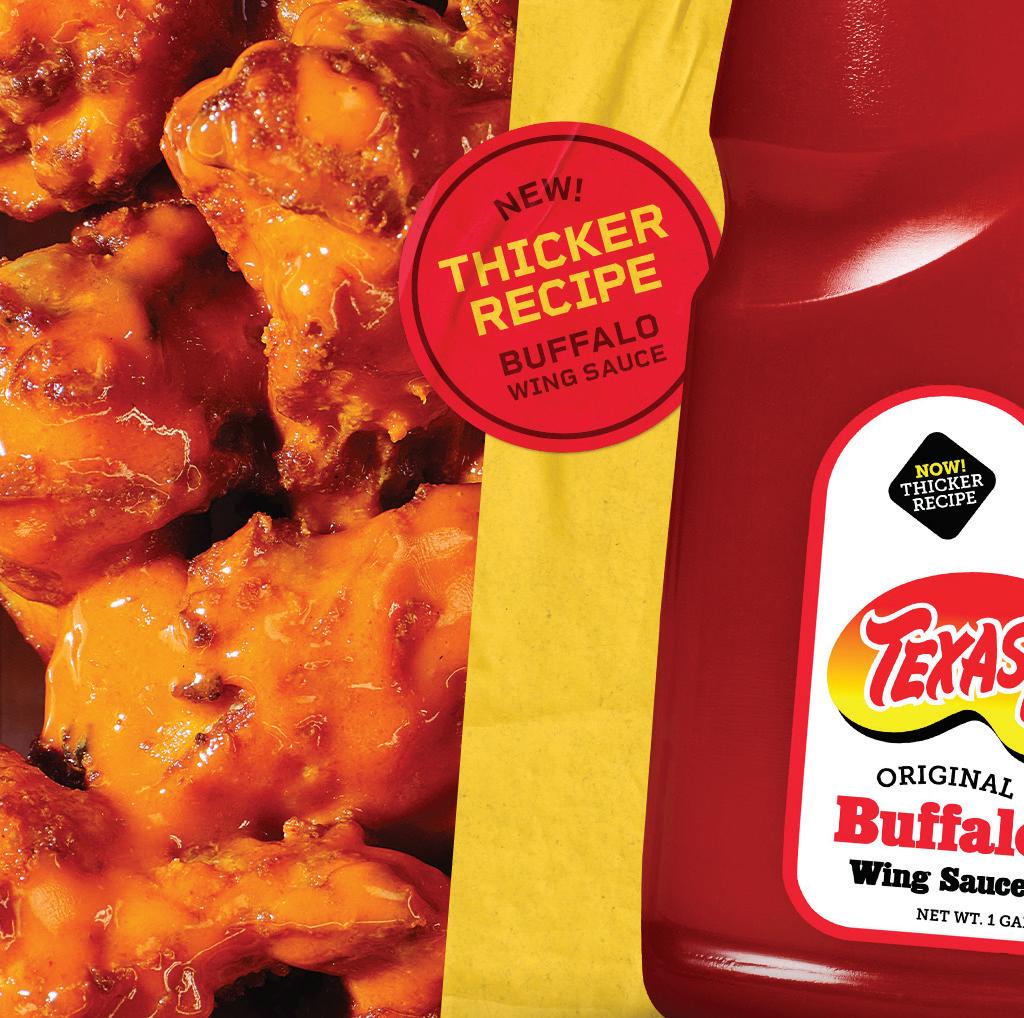
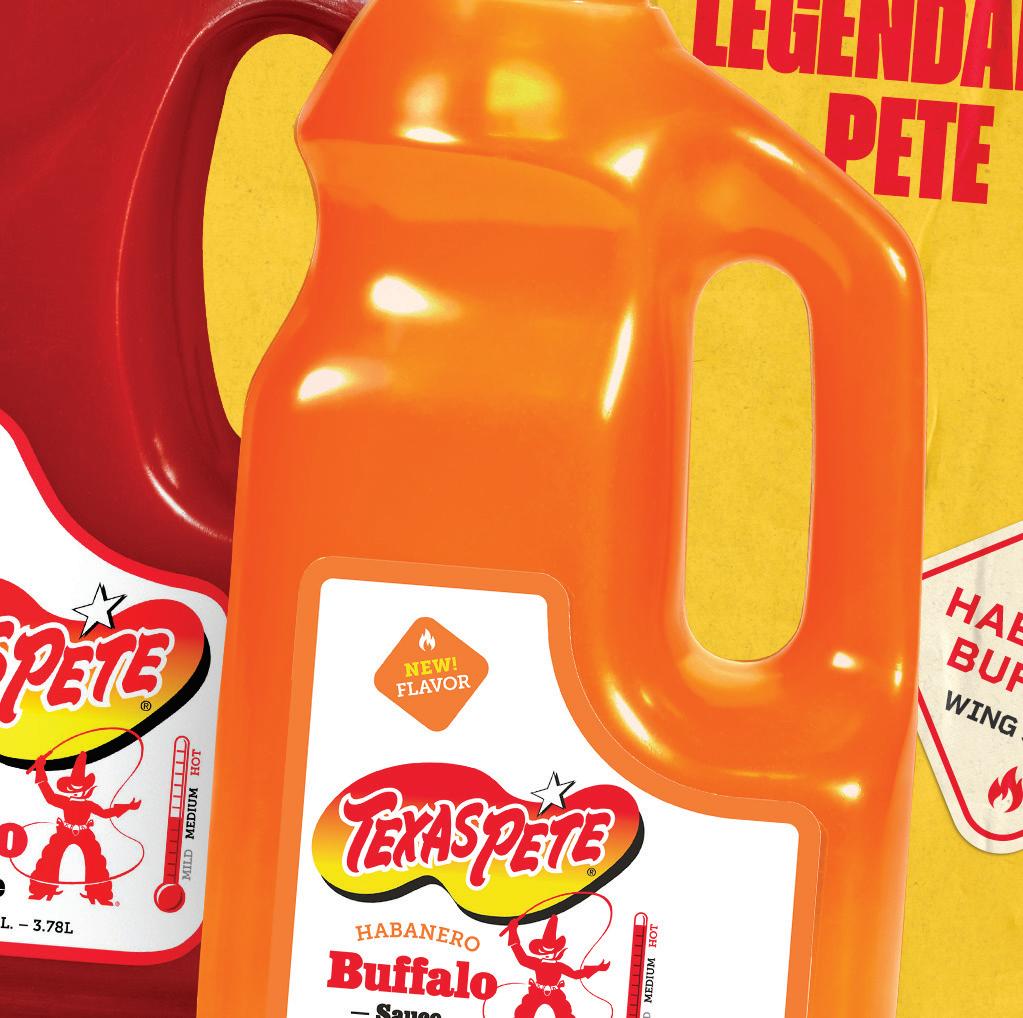


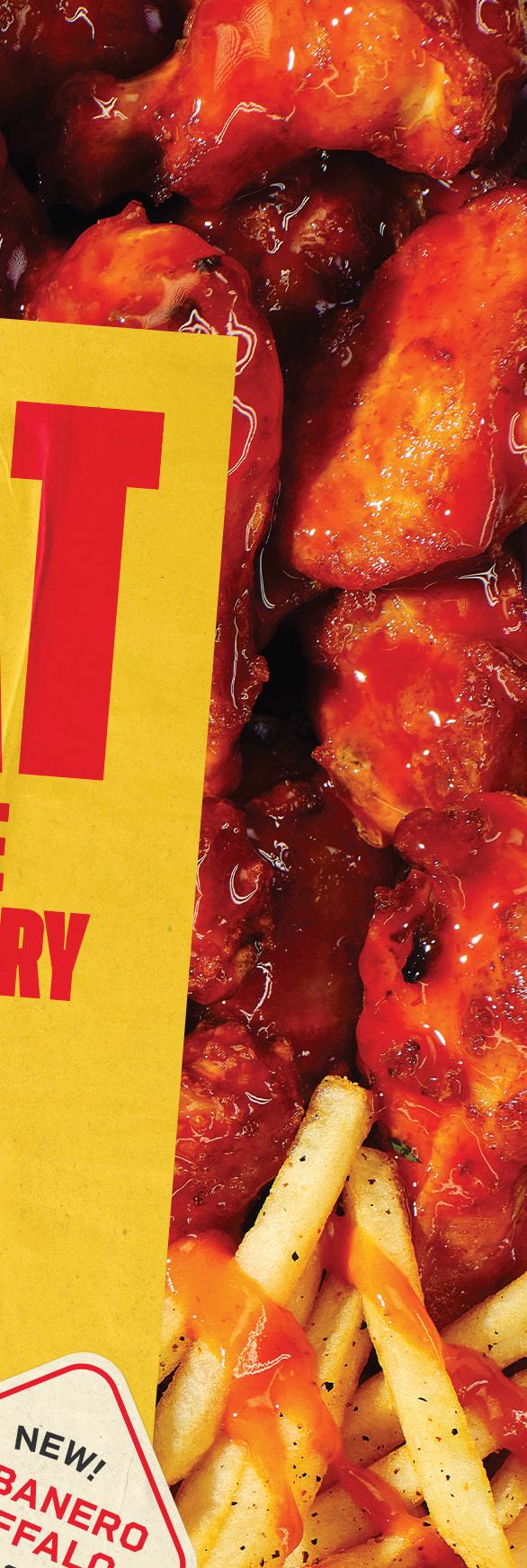
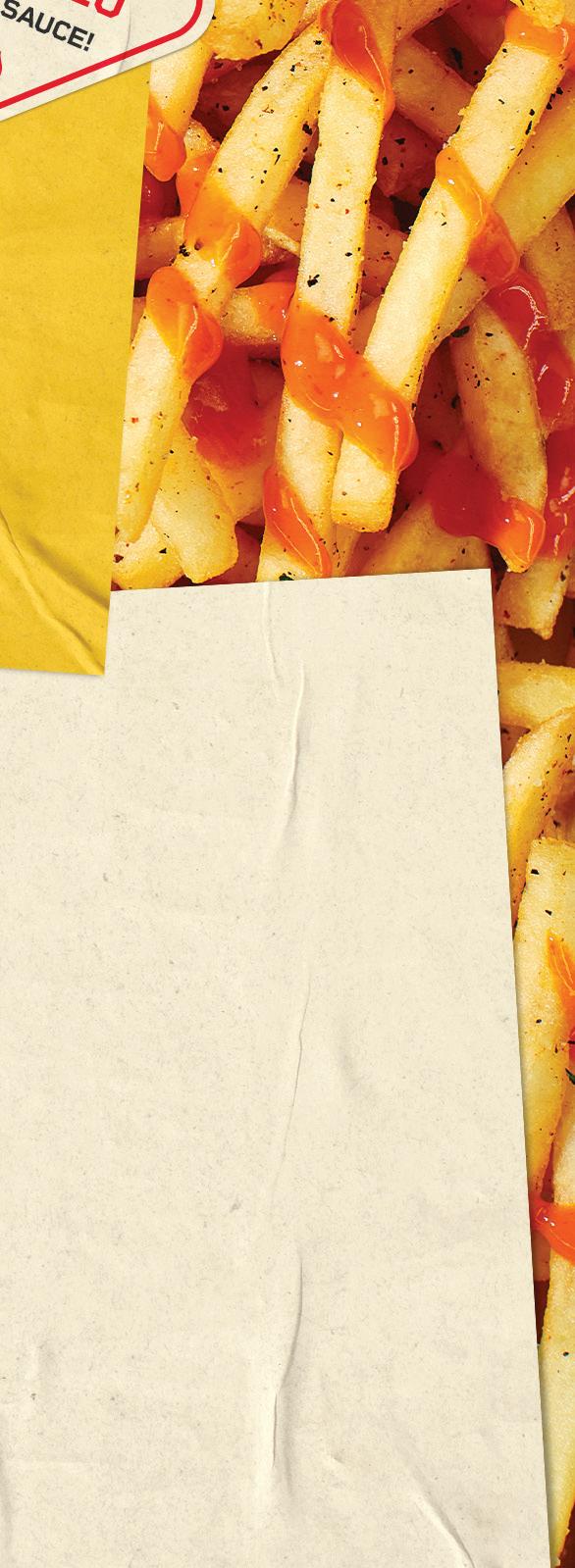
Wing Sauces.
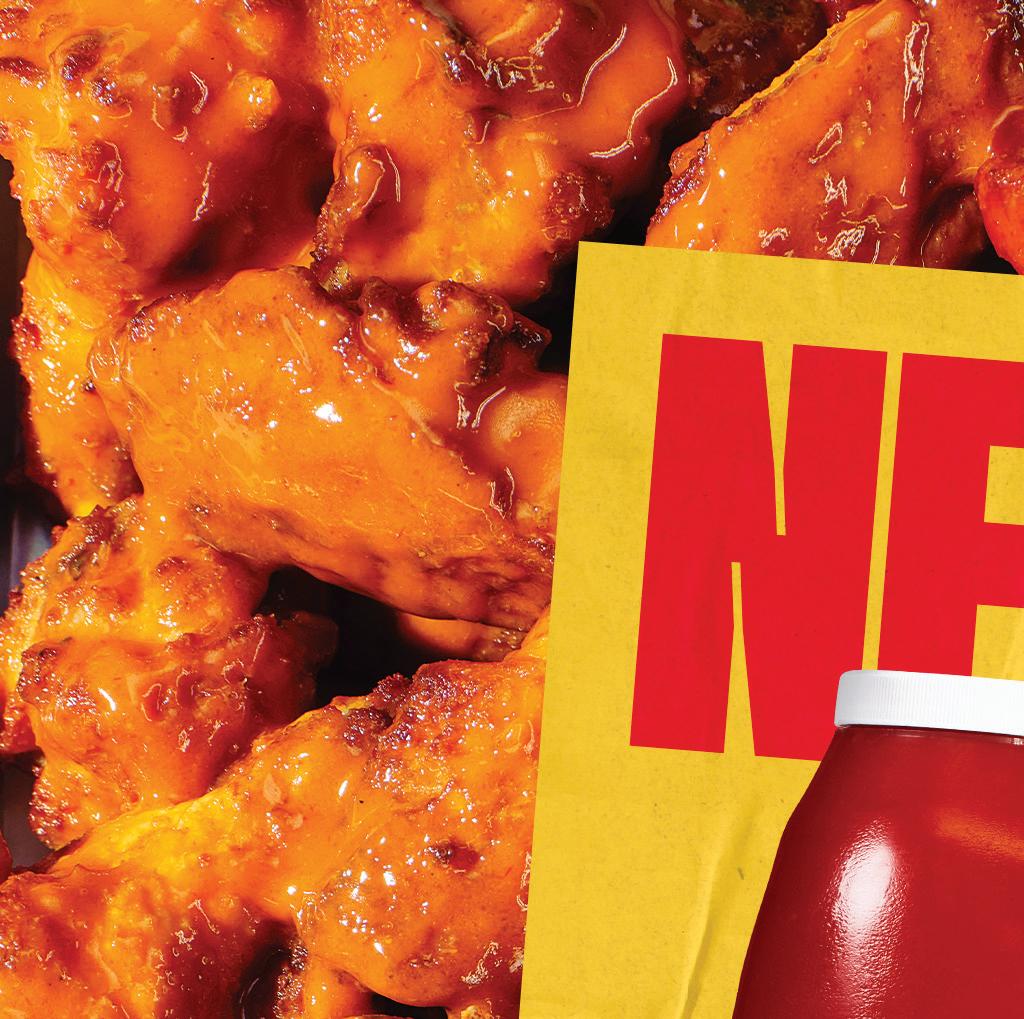
New Texas Pete® Habanero Bufalo Wing Sauce brings bold heat, deep favor, and the perfect cling for next-level Wings. Plus, we’ve reformulated our Hot Bufalo Sauce into the clingier Original Bufalo Wing Sauce, a thicker recipe for better results. Heat up your wing game with the sauce that heats up the wing game. Ask your distributor for the full line of Texas Pete® Buf




































QSR magazine hosted a webinar in December with thoughtful, engaging panelists.
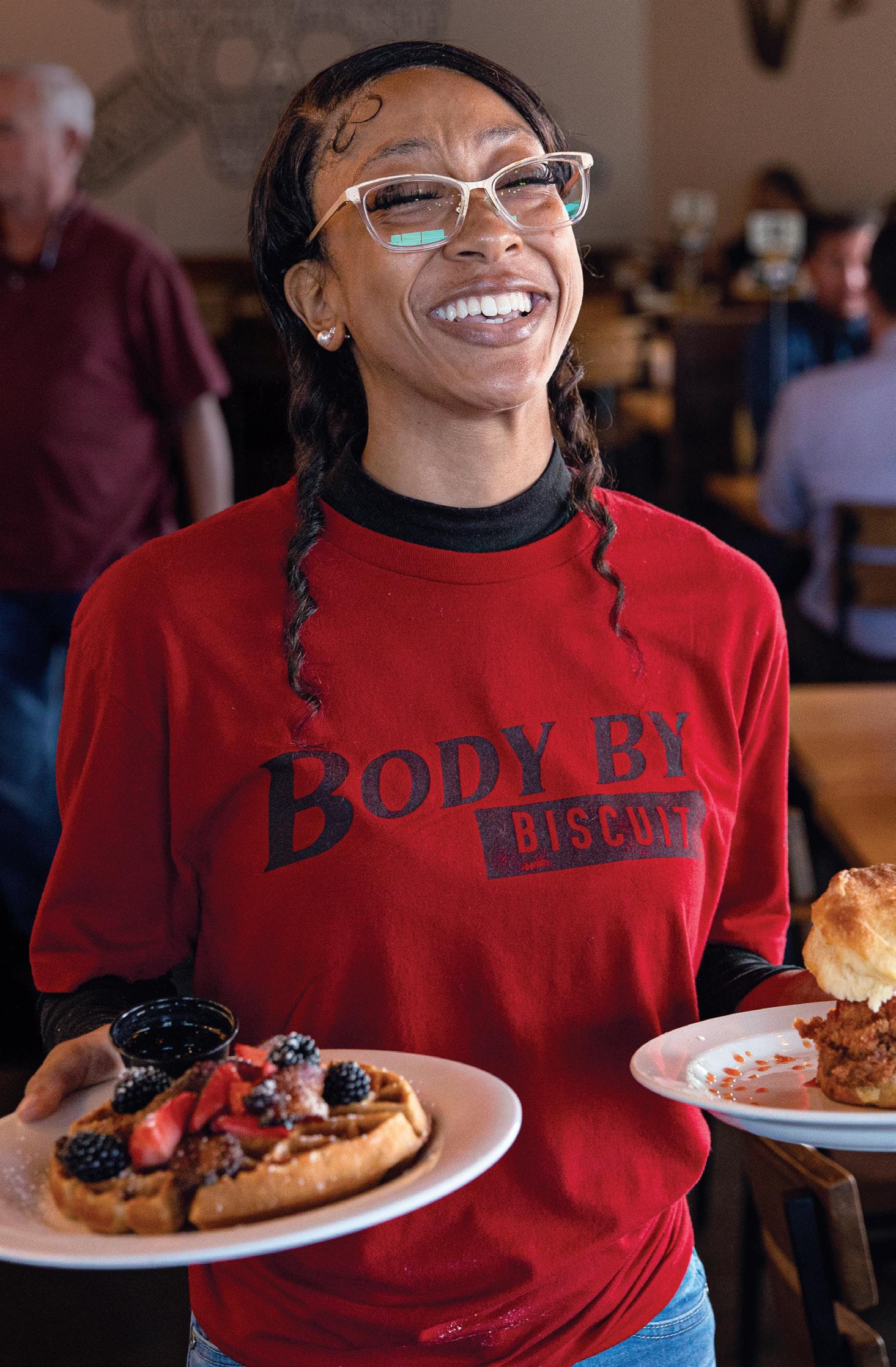

As competition for talent intensifies across the quick-service restaurant industry, building a workplace that attracts and retains employees has become a strategic imperative. QSR’s December webinar, Becoming a Best QSR Brand to Work For, explored how leading brands are rising to this challenge by investing in culture, leadership, and employee experience.
Featuring insights from Nate Hybl of gusto!, Katie DePoppe of Vicious Biscuit, and Lacey Navarrete of Scooter’s Coffee, the session underscored a clear takeaway: in today’s QSR environment, great guest experiences begin with great employee experiences.
Drawing from insights in QSR’s annual editorial report, the discussion highlighted the direct link between engaged employees, operational excellence, and guest satisfaction. Panelists emphasized that successful brands are rethinking frontline roles, positioning them as gateways to long-term career growth rather than short-term jobs. Robust training programs, clear advancement pathways, and leadership development initiatives were cited as critical tools for improving retention and building strong internal talent pipelines.
Recognition emerged as another key theme, with speakers noting that consistent, meaningful recognition helps reinforce culture and motivate teams in high-pressure environments. The webinar also addressed evolving workforce expectations, including the growing importance of flexible scheduling, diversity and inclusion efforts, and employee well-being.
Technology’s role in the modern restaurant workplace was framed as an enabler, not a replacement for human connection. When used effectively, digital tools can streamline scheduling, training, and communication, freeing managers to focus on coaching and team engagement.
The SpotOn 2026 Restaurant Outlook examines how independent restaurants can protect and grow profit amid sustained cost pressure, unpredictable tra c, and limited pricing flexibility. Rather than o ering trend-driven speculation, the report focuses on practical, operator-tested strategies grounded in contribution margins, workflow e ciency, and ownership of guest relationships.
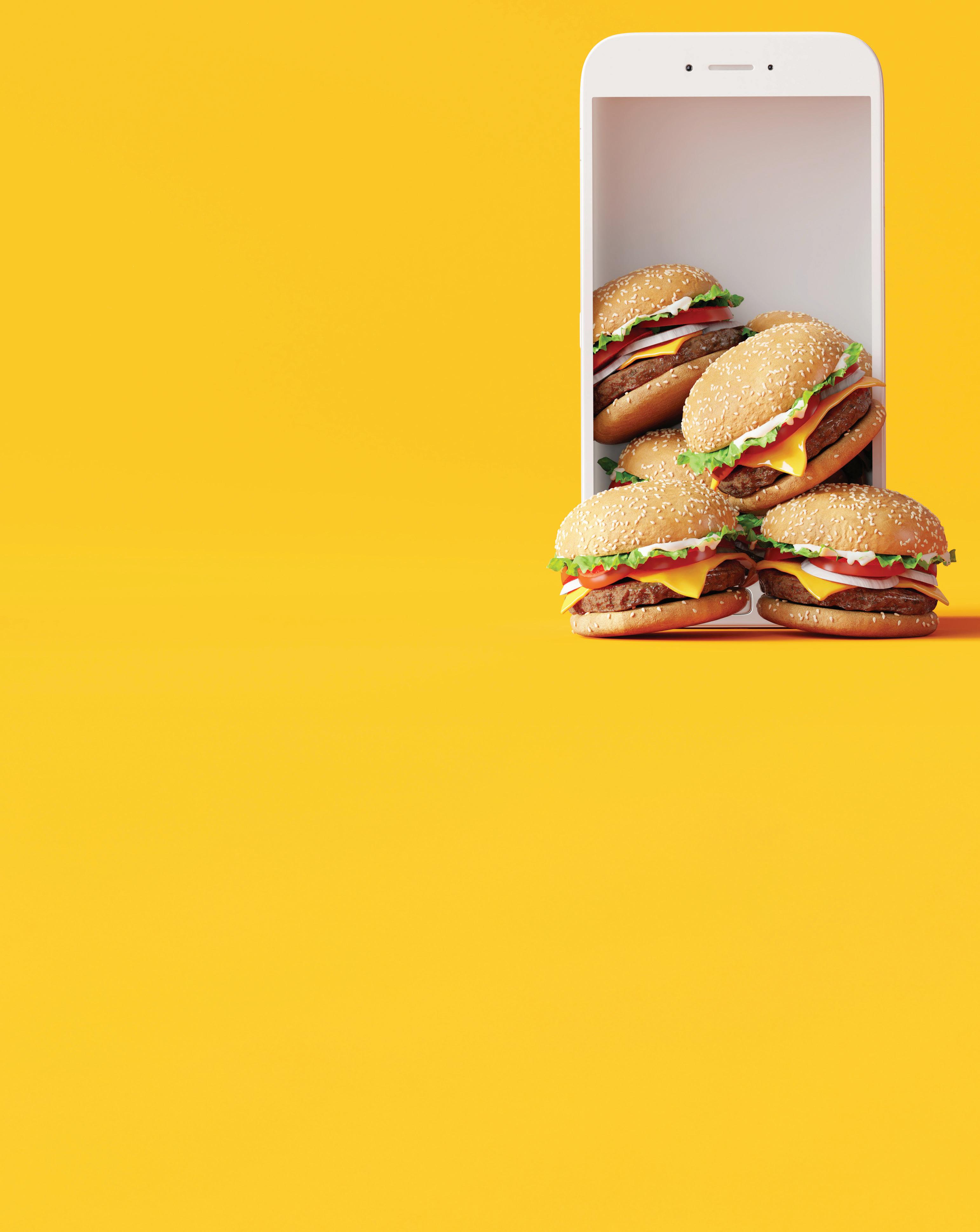
• Restaurants are shifting away from shrinkfation and opaque pricing toward transparent value that builds guest trust and repeat visits.
• Proftable value is achieved through smart bundling, tiered portions, and add-ons that protect contribution margins even when guests choose lower-priced options.
• Operators are increasingly relying on item-level data to identify high-margin sellers and quickly eliminate underperforming promotions.
• When value is clear and math-driven rather than discount-driven, both average check size and long-term loyalty tend to rise together.
Becomes a Competitive Imperative
• Consolidation among reservation and delivery marketplaces is making it harder for restaurants to access and control their own guest data.
• Winning operators are prioritizing frst-party systems that capture guest profles across reservations, ordering, payments, and on-premise interactions.
• Third-party platforms are still useful for demand generation, but only when paired with deliberate strategies to convert guests into owned relationships.
• Controlling guest data lowers acquisition costs, improves repeat visitation, and gives operators leverage over marketing spend and channel mix.
• Artifcial intelligence is increasingly embedded into everyday restaurant workfows rather than presented as standalone tools or dashboards.
• Practical AI applications include anomaly detection, schedule optimization, payout reconciliation, and surfacing next-best actions during service.
• The most effective implementations reduce errors and save time without adding training burden or operational complexity.
• When AI operates quietly in the background, it builds operator trust by consistently improving margins rather than chasing novelty.
Labor E ciency Through Time Recovery and Standardization
• Labor remains both scarce and expensive, making wasted minutes a direct threat to proftability.
• Operators are focusing on workfow simplifcation, automation, and cross-training to reduce operational fragility.
• Technology is being used to smooth peaks, protect service quality, and eliminate repetitive back-offce tasks.
• By treating time saved as a measurable margin input, restaurants can improve both employee morale and fnancial performance.
Payments, Beverages, and New Revenue Levers Gain Strategic Weight
• Faster payment rails and real-time payouts are improving cash fow while reducing friction for staff and guests.
• Restaurants are increasingly analyzing payment costs by channel and tender to route transactions more strategically.
• Beverage programs are expanding beyond alcohol, with low- and no-proof options, daypart drinks, and compliant THC beverages flling revenue gaps.
• Operators who manage payments and beverages as portfolios—testing, measuring, and scaling winners—are better positioned to offset softening alcohol sales.

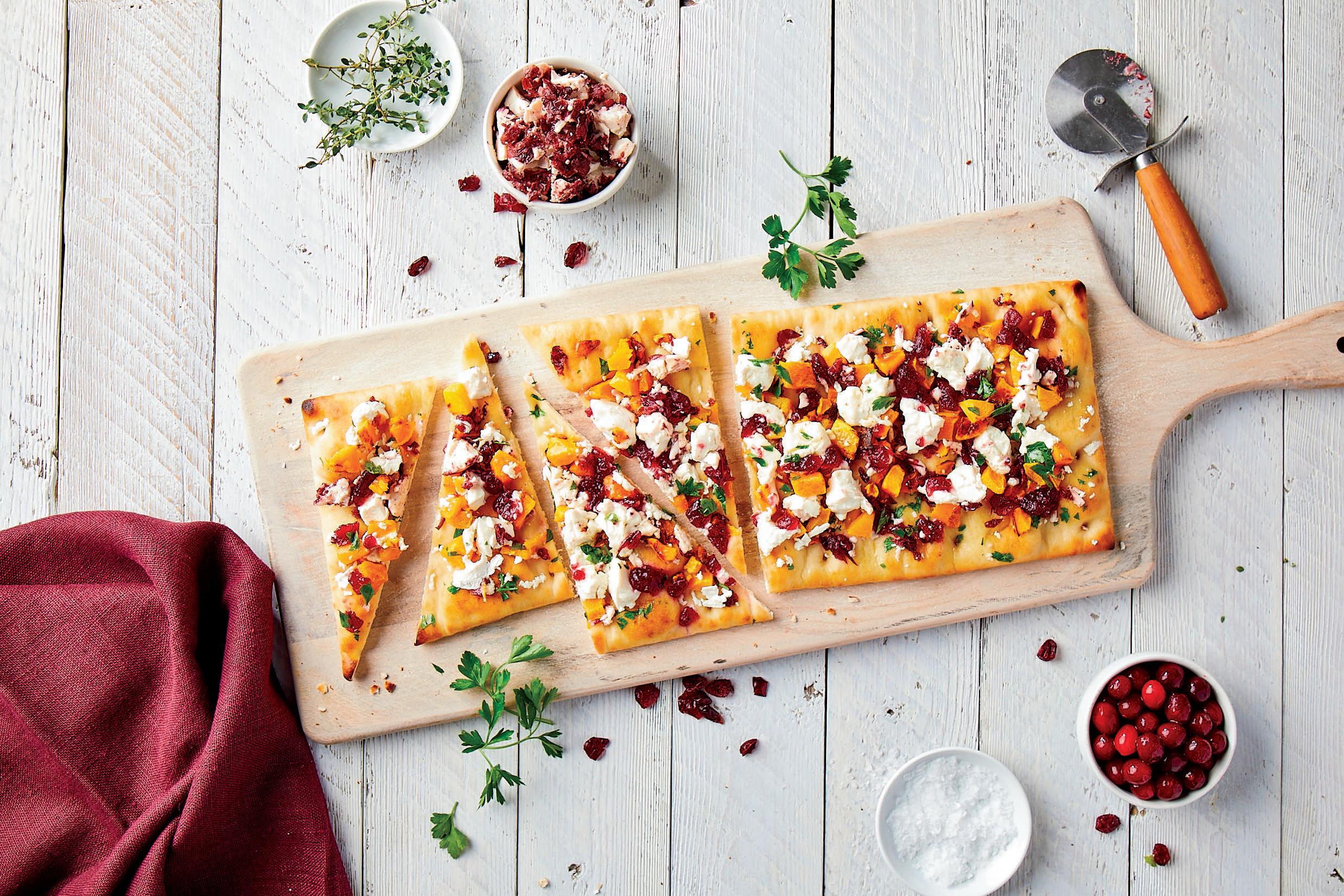
Crafted with care from fresh, high-quality goat’s milk, Montchevre® Goat Cheese brings rich, creamy flavor to every bite. Whether spread, crumbled, or sliced, it's the perfect addition to elevate your favorite recipes. Taste the tradition. Love the difference.
Learn Mo
Chicken tenders are booming. Here’s how three brands are carving out their share.
BY SAM DANLEY
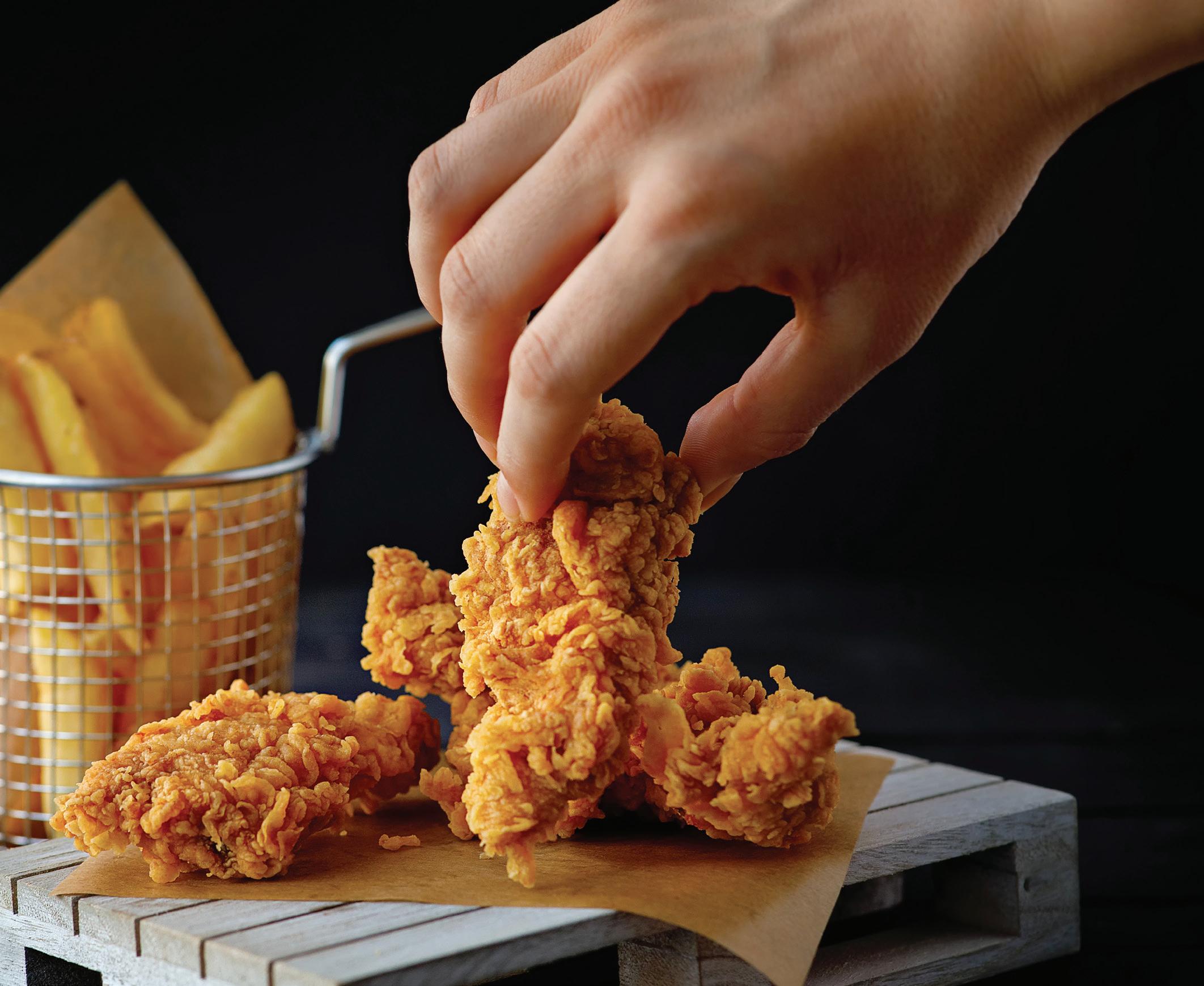
Chicken continues to outperform other center-of-the-plate proteins in quick service, and few formats have benefited more than chicken tenders. Once a side item or kids’ meal staple, tenders have become the foundation of fast-growing chains, new franchise models, and increasingly sophisticated real estate strategies.
The segment’s growth has also brought crowding, with new concepts entering the space and established players racing to scale. But while quality has become table stakes, brands are finding different ways to stand out—through development flexibility, premium positioning, or an unwavering focus on fundamentals.
Here’s a look at three chicken tender brands fighting for share of one of quick service’s hottest segments.
Andy Howard has spent nearly three decades across almost every corner of the poultry business, from rotisserie chicken to wings to boneless formats. That experience shapes how he views today’s tender boom—and why he believes Huey Magoo’s is well positioned.
Howard’s career spans nearly every part of chicken, from whole birds at Kenny Rogers Roasters to chicken breast at Ranch One. He joined Wingstop in the early 2000s, guiding its expansion from bonein wings into boneless offerings that fueled its next growth phase.
That journey led him to seek what he calls “the world’s greatest tender,” bringing him to Huey Magoo’s, a Florida-based fast-casual brand founded in 2004. In 2016, Howard purchased it with former Wingstop executives Michael Sutter, Wes Jablonski, and Bill Knight.
At the time, Huey Magoo’s had three Florida locations.
Today, the brand nears 100 units, closing 2025 with 87 stores across 12 states and several hundred more in development. Nearly all growth has been franchised, with just two corporate-owned units.
A key driver has been Huey Magoo’s development flexibility. Franchisees can choose from standalone drive-thrus, second-generation conversions, inline stores with or without drive-thrus, and express units in nontraditional spots like airports, stadiums, and casinos.
“We allow our franchisees to pick and choose how they want to develop,” Howard says. “They love the flexibility when you can get in cheaper and move faster.”
The brand recently finalized a smaller inline prototype and compact freestanding drivethru model to lower build costs. That flexibility has also allowed menu experimentation. Last year, Huey Magoo’s tested its first breakfast program at an airport, including bowls with eggs, potatoes, and tenders. Howard says a more upscale “breakfast 2.0” sandwich is in development.
Early results sparked interest in other nontraditional sites, including Las Vegas hotel casinos, but a broader rollout in traditional stores remains a much bigger decision.
quietly for much of its early life. That changed in 2021, when the brand began franchising in earnest and growth accelerated.
Layne’s entered 2025 with 19 locations and more than doubled its footprint over the year, reaching 40 stores by 2026. The brand now expects roughly 50 more openings this year.
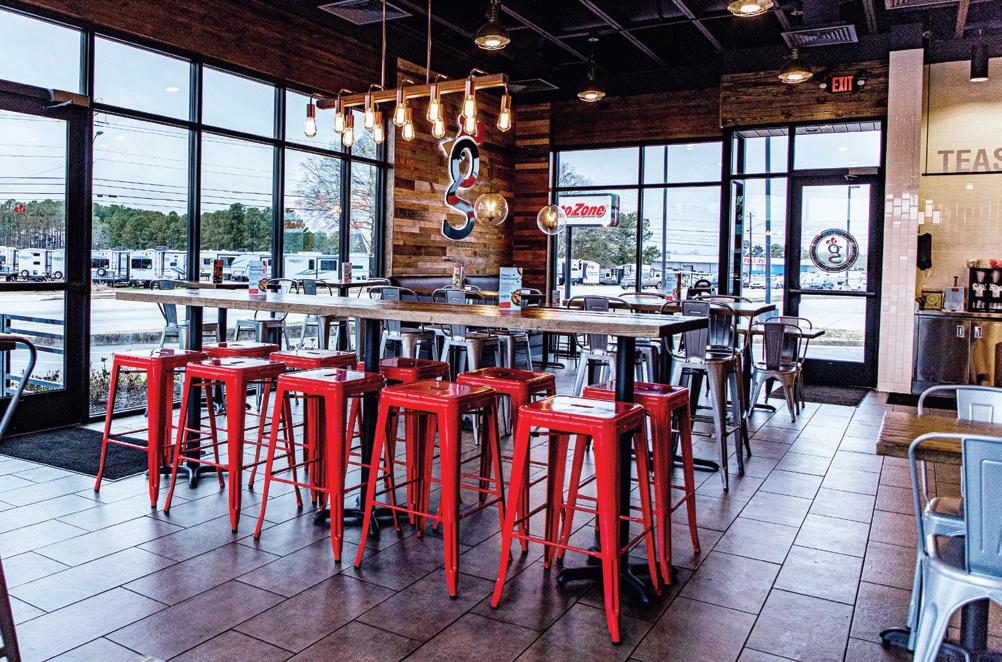
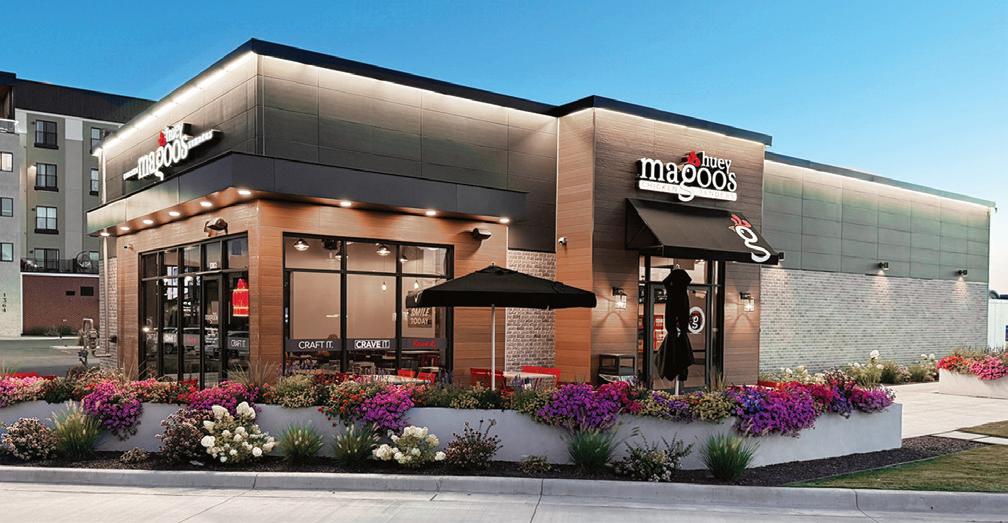
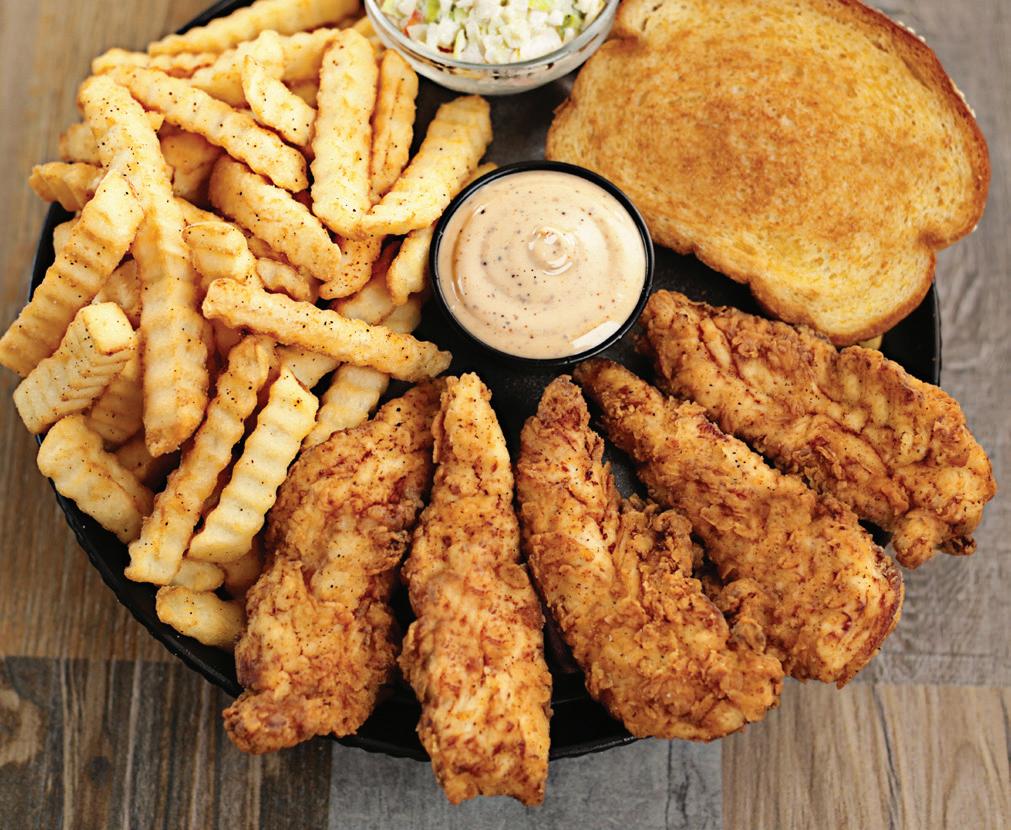
At the center of every test is the same core product: a tenderloin cut prepared from scratch, battered and breaded with a proprietary recipe, and served with signature Magoo’s sauce. The menu remains tight, focused on hand-breaded, grilled, or sauced tenders used across meals, sandwiches, wraps, and salads.
“Yes, we pay a little more than restaurants that are using breast meat, but when you talk about quality, that’s what it’s all about for us,” Howard says. “We don’t call ourselves the filet mignon of chicken for nothing. We stand behind that line.”
Founded in Texas in 1994, Layne’s Chicken Fingers grew slowly and
To CEO Garrett Reed, that pace may look sudden—but it’s anything but. Reed likens Layne’s trajectory to the “overnight millionaire” phenomenon. Years before unit counts surged, the company invested heavily in corporate infrastructure, building teams across real estate, construction, branding, marketing, and operations while the system was still small.
That approach raised eyebrows at the time. With only a handful of stores, Layne’s appeared overbuilt.
“It was always with an eye toward what it takes to open 100 to 150 stores a year,” Reed says. “Building the right infrastructure, policies, procedures, and keeping our culture relevant—that’s what’s given us the ability to grow and scale.”
He also believes broader consumer shifts are lifting premium tender brands. While chicken has long been a U.S. staple, he says boneless formats are increasingly dominant.
“Now that people see they can get a premium tender at a reasonable price, the flight to quality is overwhelming,” he says. “That’s why I’m so fired up about this category.”
In Reed’s view, the tender market splits into two camps: premium and non-premium. Price alone doesn’t define the difference— process does. Premium brands use actual tenderloins, marinate thoroughly, hand-batter, and cook to order, while much of the fastfood space relies on frozen or batched product.
Within the premium segment, Reed sees another divide: brands with bold flavor profiles, like hot chicken, and “blank canvas” providers, offering a high-quality base that stands alone or pairs with sauces. Layne’s sits in the latter group.
Despite new players, Reed argues the premium tender category
















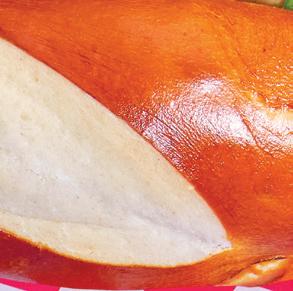









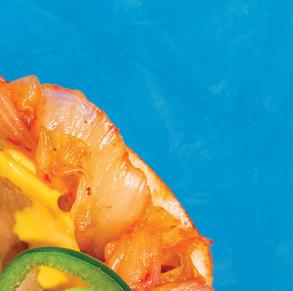
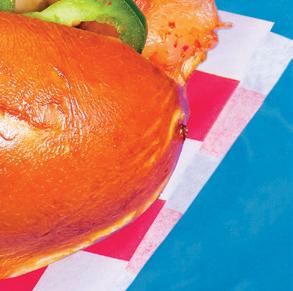





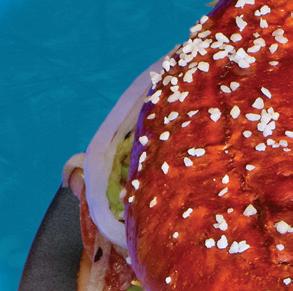








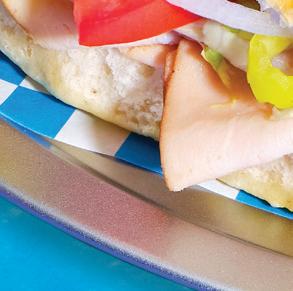







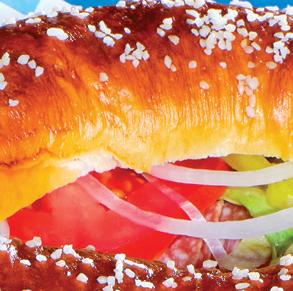
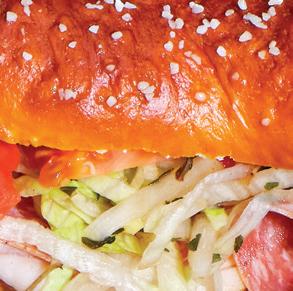
















is far from crowded. He believes true saturation won’t occur until thousands of premium tender restaurants operate nationwide, similar to burger chains decades ago.
“As a category, I think it’s probably fifteen years away from saturation,” he says. “The runway is really long for premium, highquality tender.”
Joe Kelly Guthrie grew up inside the restaurant that helped create the chicken tender category.
The son of founder Hal Guthrie, he remembers the early days at the original Guthrie’s in northwest Alabama, where the family experimented with everything from whole chicken and hamburgers to steaks and shrimp. The turning point came when his father decided to focus exclusively on chicken fingers. Hal tasked his kids with inventing a dipping sauce and Joe’s brother created what became Guthrie’s signature sauce in about half an hour.
Since then, Guthrie jokes that he’s cooked and eaten more chicken fingers than anyone alive. He traces the segment’s evolution to a time when tenderloins were largely ignored. Before the late 1960s and early 1970s, limited deboning technology kept menus focused on whole birds. In the early 1980s, Guthrie’s began using only tenderloins—then considered a throwaway cut.
In 1982, Guthrie’s opened what Guthrie says was the world’s first restaurant dedicated entirely to chicken fingers. Copycats followed locally at first, then nationwide. Despite that proliferation, Guthrie maintains his family’s brand remains the original.
As Guthrie’s expands into new markets—especially outside the South—name recognition can be both a hurdle and an advantage. He recalls opening a store in Cleveland 15 years ago, when the concept was still unfamiliar.
GUTHRIE’S IS A PIONEER OF THE CHICKEN TENDER MOVEMENT, OPENING IN 1982.
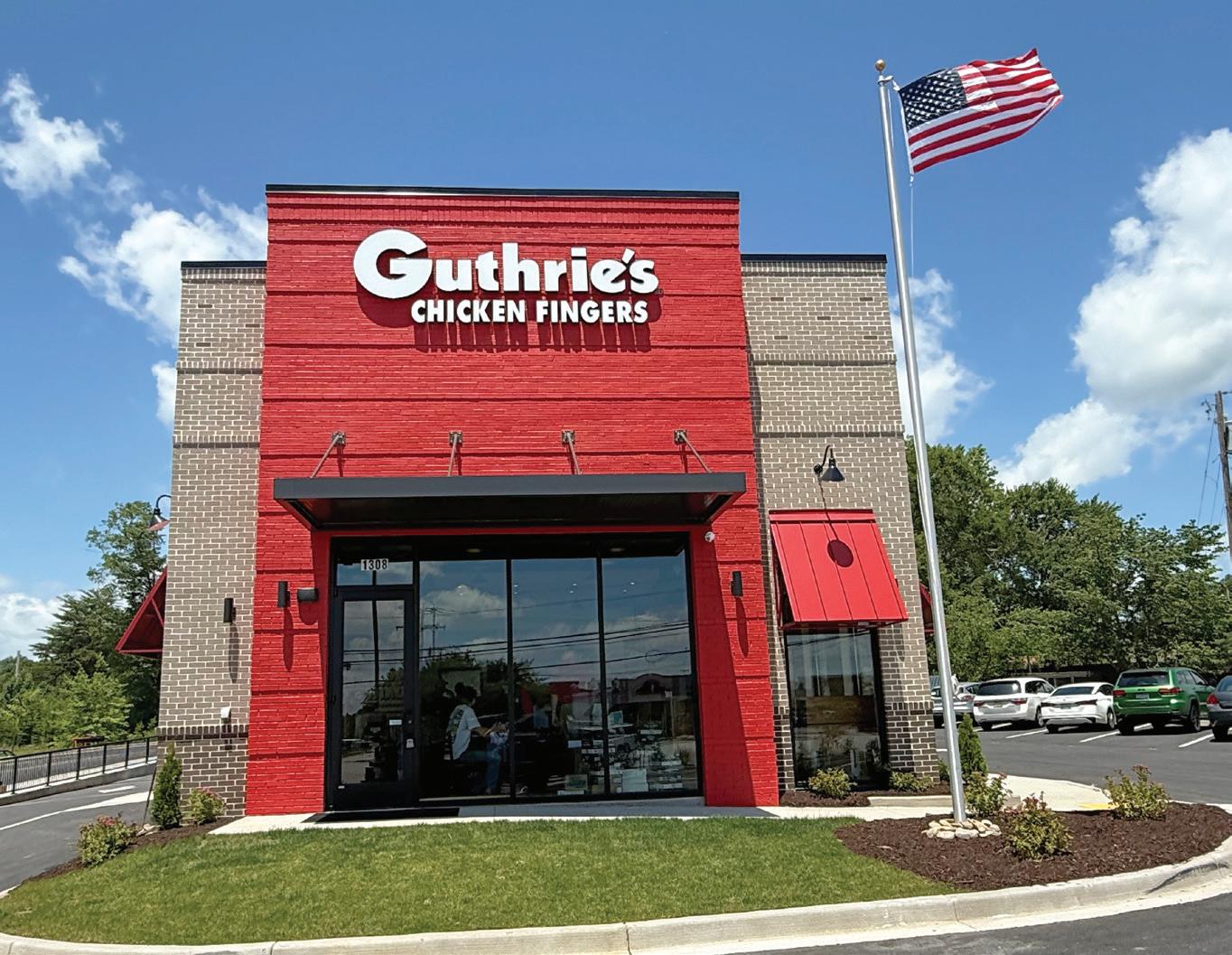
GUTHRIE’S PLANS TO OPEN ROUGHLY 25 LOCATIONS THIS YEAR.
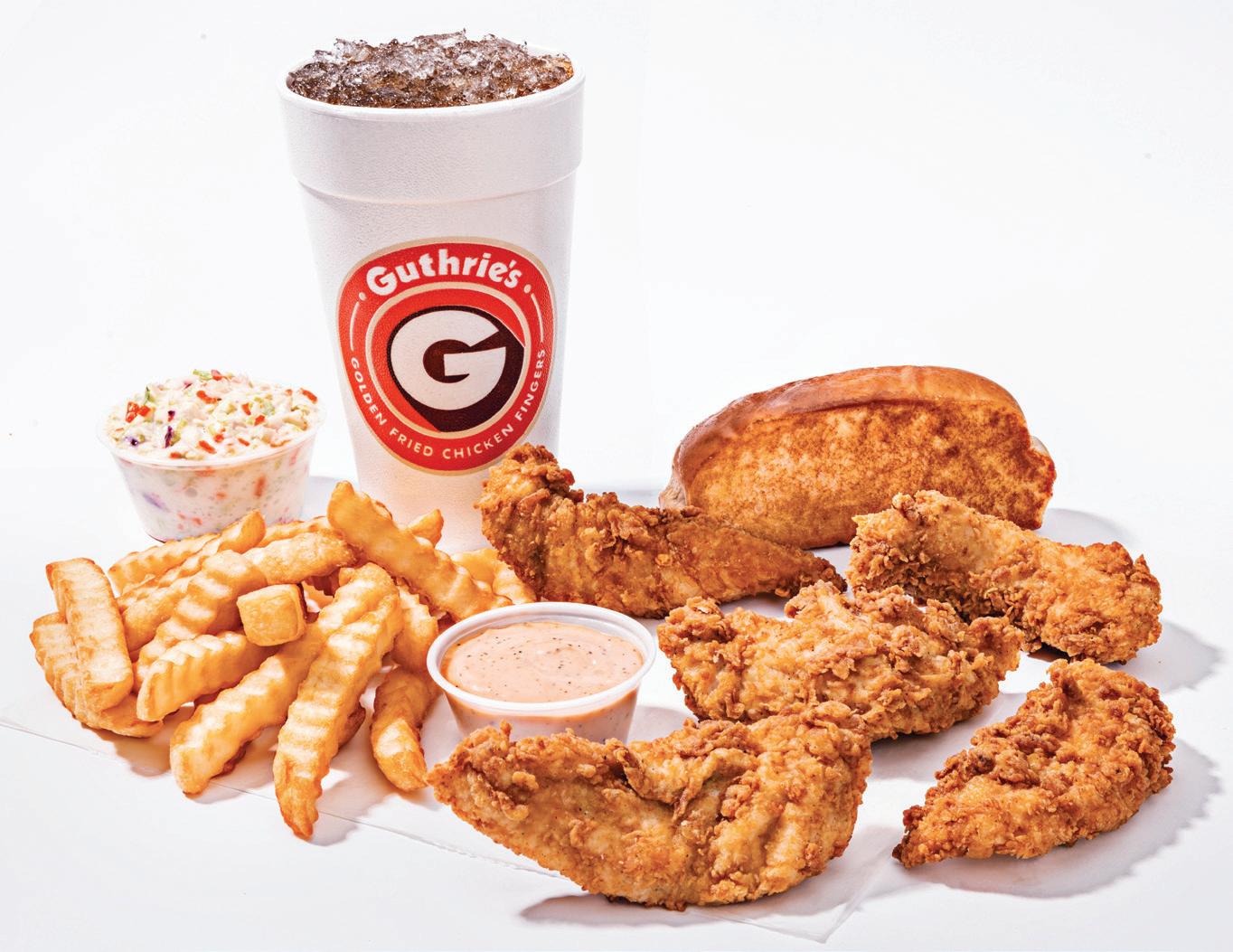
“People would go, ‘All you serve is chicken fingers? I’ll be back when you serve something real,’” he says. “They’re not laughing about it today. Chicken fingers are the hottest thing in the food segment, and I don’t see that changing anytime soon.”
One area where Guthrie’s has evolved is its physical footprint. Over the past five years, the brand has refined a new prototype informed by decades of operational learning. After once building 3,500-square-foot stores, Guthrie’s now typically opens units between 2,000 and 2,300 square feet, optimizing layouts for speed, volume, and drive-thru efficiency.
That flexibility is helping fuel expansion. Guthrie’s closed 2025 with roughly 75 to 80 stores, opened eight to 10 locations last year, and plans to open around 25 more in 2026.
“We should hit two stores a month on average at some point this year, and then we have plans that should double that the following year,” Guthrie says. “So, the next 24 months are going to be very big for us.”
Sam Danley is the associate editor of QSR. He can be reached at sdanley@ wthwmedia.com.
Each franchise location’s goal is to collaborate with the community it’s a part of, but still sticking to the brand’s core values.
/ BY EMMA SCHMALZ
FOUNDER(S): Lauren & Chad Townsend
HEADQUARTERS: Homestead, PA
YEAR STARTED: 2014
ANNUAL SALES: not disclosed
TOTAL UNITS: 8 territories open + 5 territories sold but not yet open = 13 total
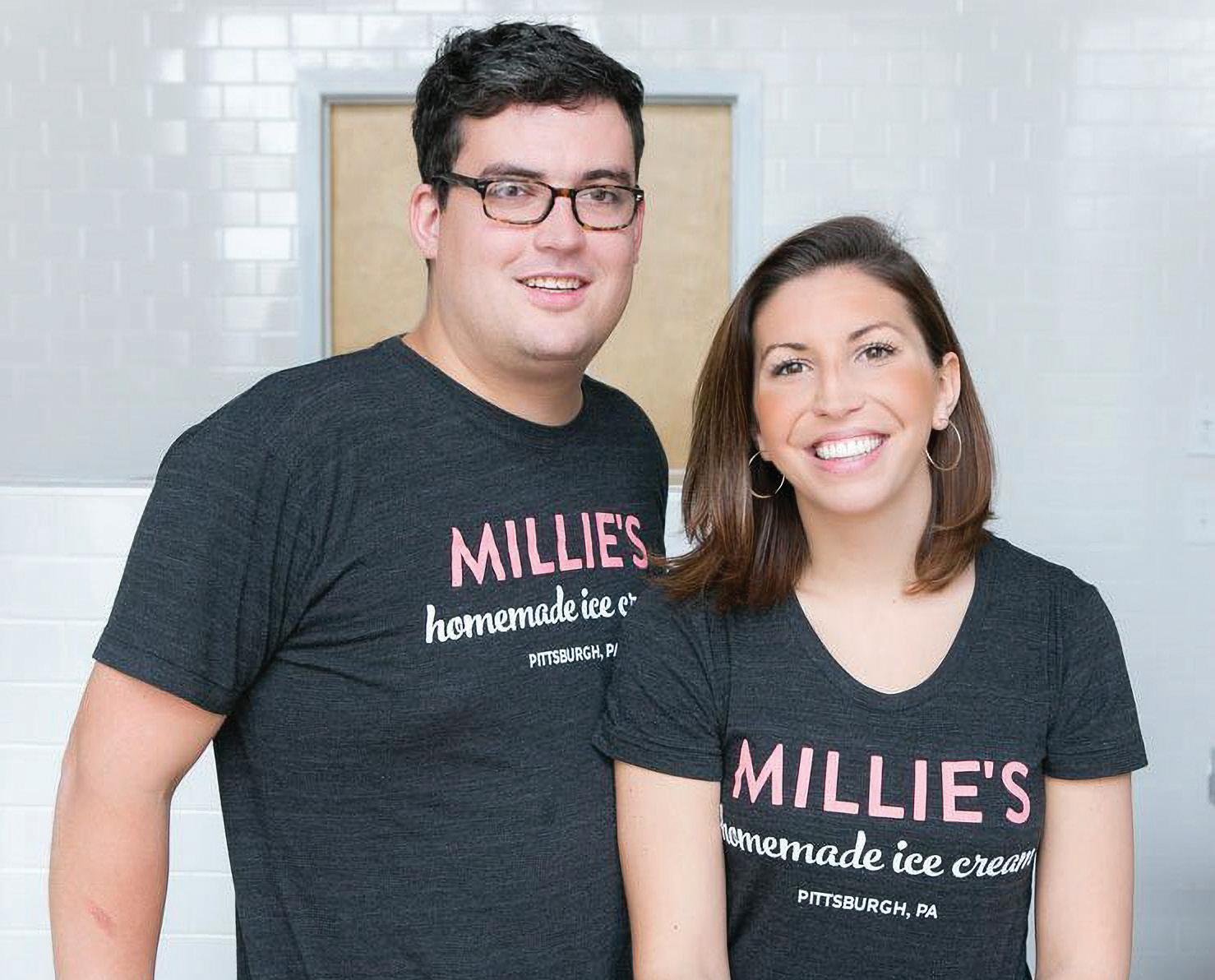
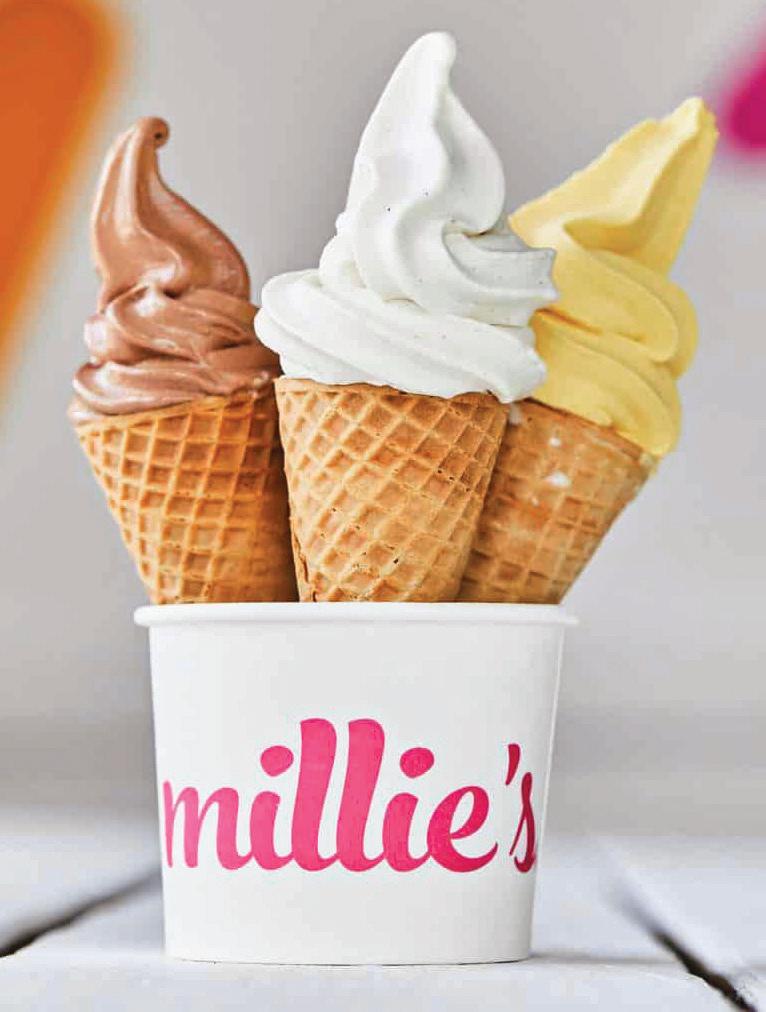
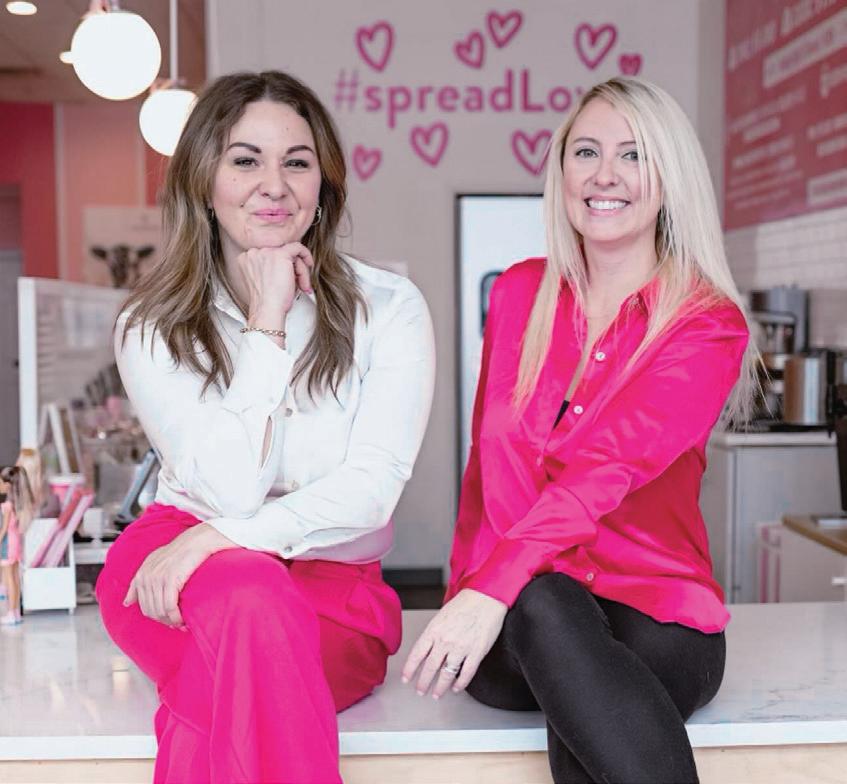
Starting Millie’s Homemade Ice Cream wasn’t the original plan. Instead, its creation “was by accident,” says Lauren Townsend, cofounder of the brand.
“We went out for ice cream to talk about our dream restaurant, and we had an underwhelming ice cream experience. And that was really the ‘aha moment’ that got us both interested in ice cream,” Townsend says.
The original idea was to open a French bistro, since Chad Townsend, Lauren’s husband, is a trained chef. However, after purchasing a rather pricey Pacojet frozen treat machine, the Millie’s brand was born. “He convinced me to put it on my credit card,” continues Townsend. “Here’s the deal. I’m going to buy this thing, but we have to pay it off by the end of the summer. And so we started selling ice cream behind our friend’s restaurant in a pop-up capacity to pay off that first very expensive purchase.”
Millie’s was founded in 2014, starting off as a subscription model business after realizing the pop-up was a success. The Townsends brought ice cream right to the doors of customers, gaining valuable insight.
“We would drive around town and
deliver pints to folks’ homes on the weekends, and we got a lot of great early feedback about flavor profiles through that,” Townsend says.
Through lots of trial and tribulation, Millie’s began to find its popular, core flavors. There were “plenty of flops,” Townsend says, as her husband worked with more experimental flavors, but an early success, coined “Chad’s Vanilla,” is one of the choices still offered today. “The thing about vanilla is there’s nothing to hide behind. It’s really kind of the true test of every ice
cream brand. Ours is just six ingredients, and the simpler, the better when it comes to vanilla,” Townsend says.
Loyal customers began to inquire about franchising after the first location in Pittsburgh was a hit. This wasn’t on the company’s radar at the beginning, but eventually, franchising started in 2021.
“We started Millie’s not really knowing much about franchising,” Townsend continues. “A lot of our early franchise partners are loyal customers of the brand. I think what makes a






















































































































































































































Like




































































































FRY | Twin Hospitality Group, Inc., KRISTEN CORRAL | Tacotarian, JENIFER KERN |
SRISHTI HANDA |
PRITZ |







12:15 PM - 1:15 PM Lunch and Learn 1:15 PM - 2:15 PM CHART’s


Burgers by Bobby Flay, ALICE CROWDER | Krispy Krunchy Chicken, LYNDSEY PATEL | Gastronauts Food Group | On Your Mark (OYM)





/ BY SATYNE DONER
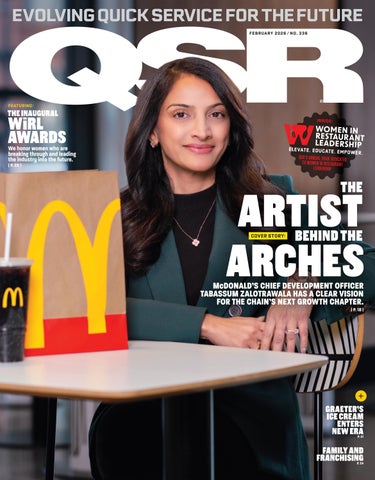
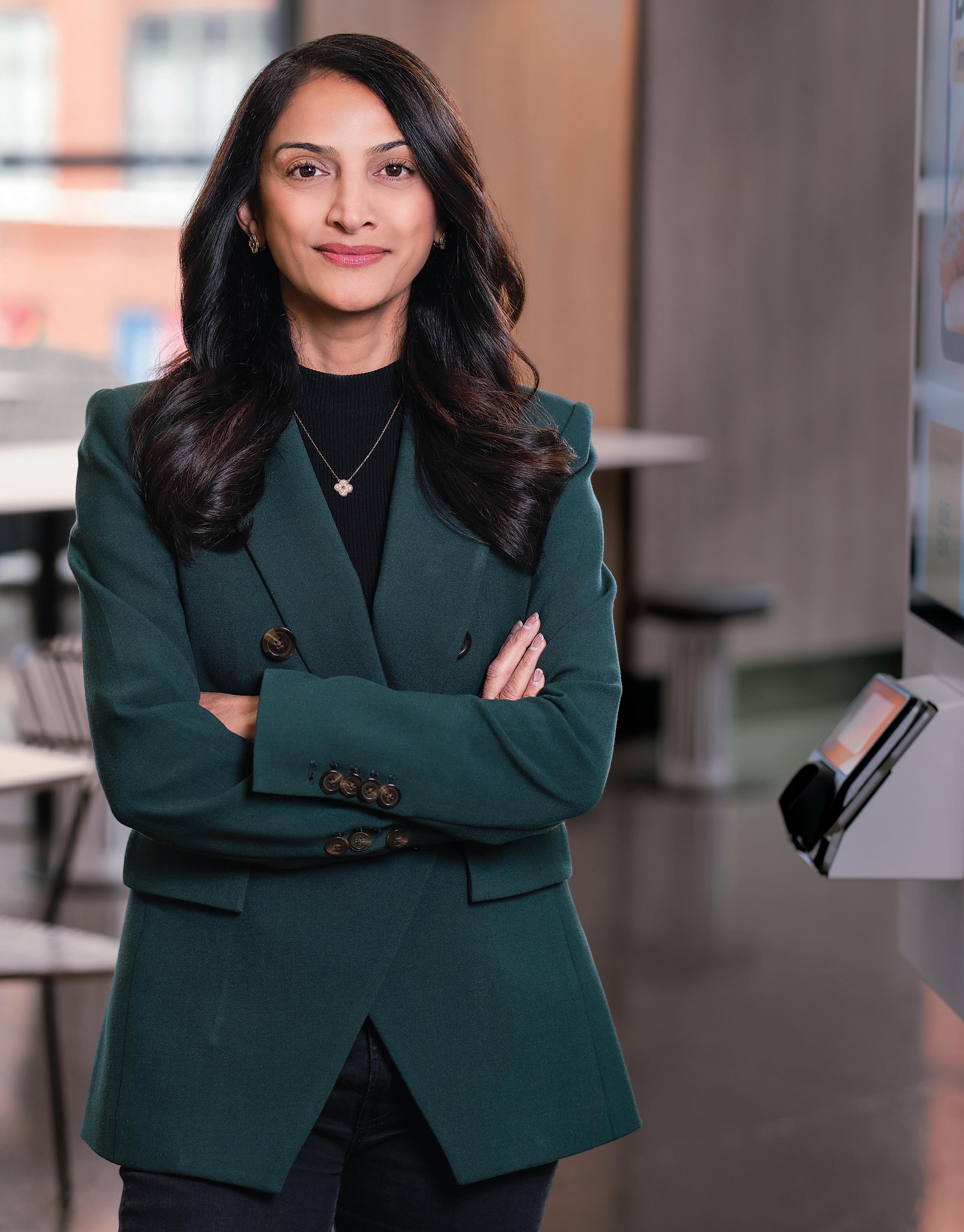
Tracing development executive Tabassum Zalotrawala’s journey from sketches and palaces to shaping the future of the burger giant’s 13,000-plus U.S. restaurants.
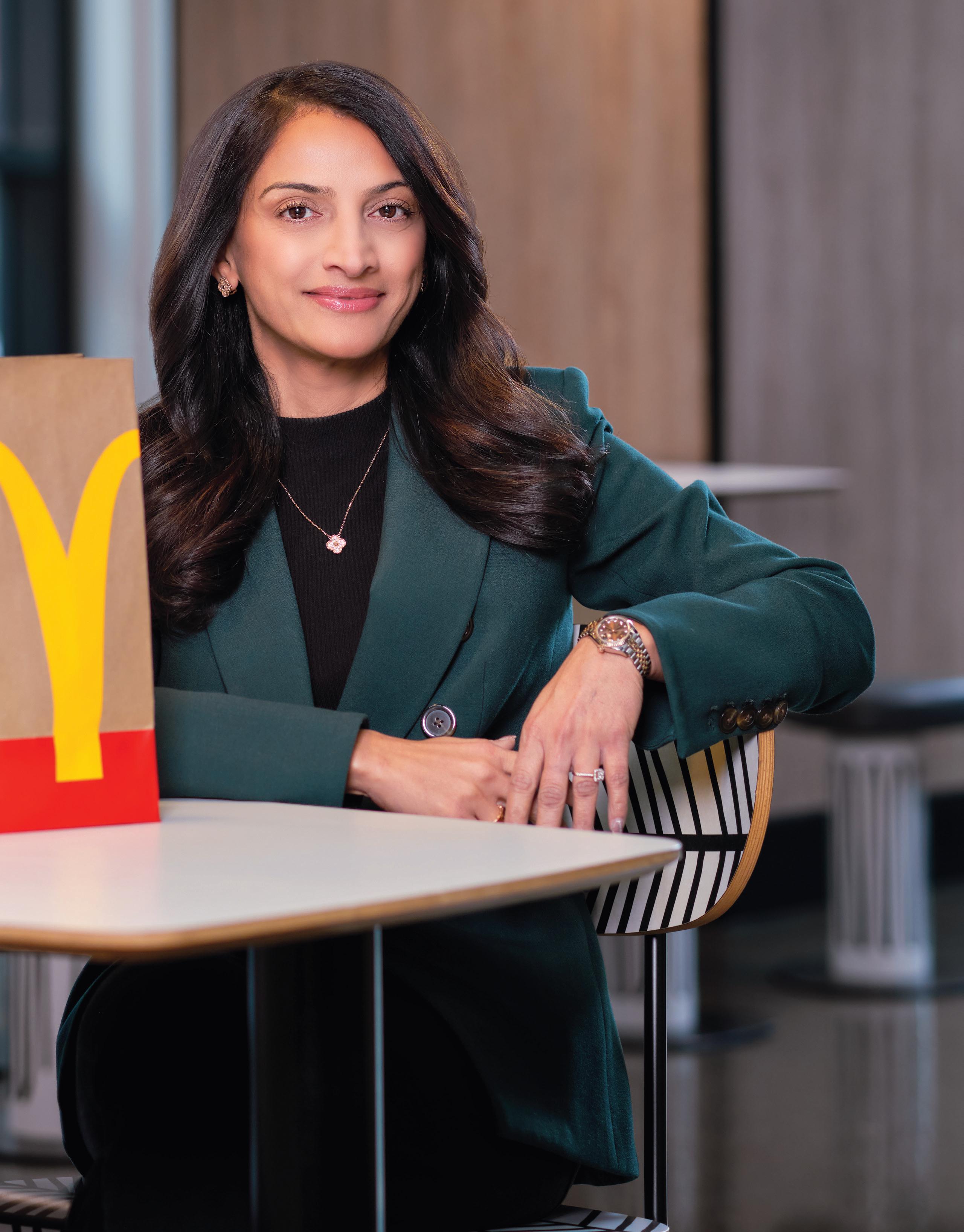
TABASSUM ZALOTRAWALA’S JOURNEY ISN’T A LEFT TURN FROM ART TO OPERATIONS—IT’S A CONTINUUM.
Her eye for design, space, narrative, and human emotion is the through-line that shaped her into the leader she is today. Each step of her career becomes a larger canvas: from Chipotle’s brand turnaround to Panda’s innovation reset to McDonald’s largest era of growth expansion.
McDONALD’S CHIEF
DEVELOPMENT
OFFICER TABASSUM ZALOTRAWALA JOINED THE McDONALD’S TEAM IN 2023.
As the senior vice president and chief development officer for McDonald’s USA, she oversees a portfolio of more than 13,000 restaurants, balancing the legacy of a 70-year-old iconic brand with its path toward modernization. But her career journey doesn’t start inside a restaurant—it begins in a palace.
Zalotrawala grew up in a conservative Indian family as a diligent, hard-working student. Looking back, she says she was hyperfocused on her grades and eager to fast-track her career, often wishing she had slowed down to savor time with friends, travel more freely, or nurture her creative interests.
She has long seen herself as a creative soul—someone who views the world through form, emotion, storytelling, and intention. As a child, this energy revealed itself through the sketching of dresses, designs, and spaces. Drawing was her way of imagining possibilities.
Her uncle, an architect, further ignited that spark. Watching him translate ideas from blueprint to building showed her the power of space and form—how environments influence the way people move, feel, and connect.
She went on to study fine arts in college, grounding her in the ability to look beyond the surface. Even then, she was attuned to how people experience spaces and how design can signal trust, shape behavior, or strengthen a sense of community.
Early signs suggested her creative instincts would one day guide her leadership. Creativity, for her, was never just about aesthetics—it was a way to solve problems. Even as a student, she found herself reimagining how something could feel or function better. That instinct to improve experiences evolved naturally into a leadership mindset.
Over time, she sharpened her creative toolbox to connect ideas to purpose and purpose to value. Her mind became trained to design with intention, to see possibilities where others see constraints, and to ask “Why not?” instead of “Why?”
“Design isn’t just about aesthetics. It’s about purpose and experience,” Zalotrawala says. “This perspective continues to shape how I lead and see the world. Whether it’s innovating customer experiences or reimagining how we connect with our communities, this approach of curiosity and creativity is what drew me to art in the first place.”
Zalotrawala began her professional career designing ultra–high-end projects in the Middle East, including the Grand Mosque and guest palaces of Sultan Qaboos in Oman. Her creative core translated naturally into development work: designing spaces guests enjoyed while using aesthetics as a strategic advantage.
When she felt ready for a change, she received a call for what she thought was a role at a hotel-affiliated restaurant. It turned out to be Arby’s—and suddenly Zalotrawala found herself transitioning from palaces to fast-food restaurants.
During this period, she realized the sheer scale of impact restaurants have, touching the lives of millions of people every
day. It was a revelation that changed her trajectory. She had found her niche—not simply building restaurants, but solving for flow, feeling, and brand identity.
“Creativity here means shaping everyday experiences for people everywhere,” she says. “Every decision we made—the way a restaurant looks, feels, and functions—has the potential to make someone’s day better. Guests and crewmembers must feel comfort and connection. Once I moved into QSR, I knew this was a place where creativity could thrive in a way that transcends design and makes a meaningful difference.”
She spent nearly a decade at Arby’s, first preparing store drawings and presentation boards and eventually working her way up to senior director of store planning. She touched everything from store design and development to global expansion, LEED construction, and franchisee support.
In 2011, she joined Panda Restaurant Group, overseeing architecture and design, strategic sourcing, and facilities maintenance. By 2014, she was chief development officer. It was a pivotal moment: the brand was building about 120 Panda Express restaurants a year and remodeling at an aggressive pace.
She helped develop the Innovation Kitchen concept and rolled out a new store prototype that launched in 2012—one with elevated ambiance, food options, and service.
“These turnaround moments have always energized me
because they demand bold thinking, decisive leadership, and problem-solving in the fire of transformation,” she says. “Creativity gave me the courage to challenge the mindset of ‘We’ll do what’s always worked’ and instead think about the art of the possible.”
At the end of 2018, she joined Chipotle as chief development officer, part of a leadership overhaul aimed at fueling the brand’s resurgence through digital integration, drive-thru expansion, and marketing modernization. The growth opportunity was immense—she had wide latitude to rethink access points, reduce friction, and redesign the physical experience.
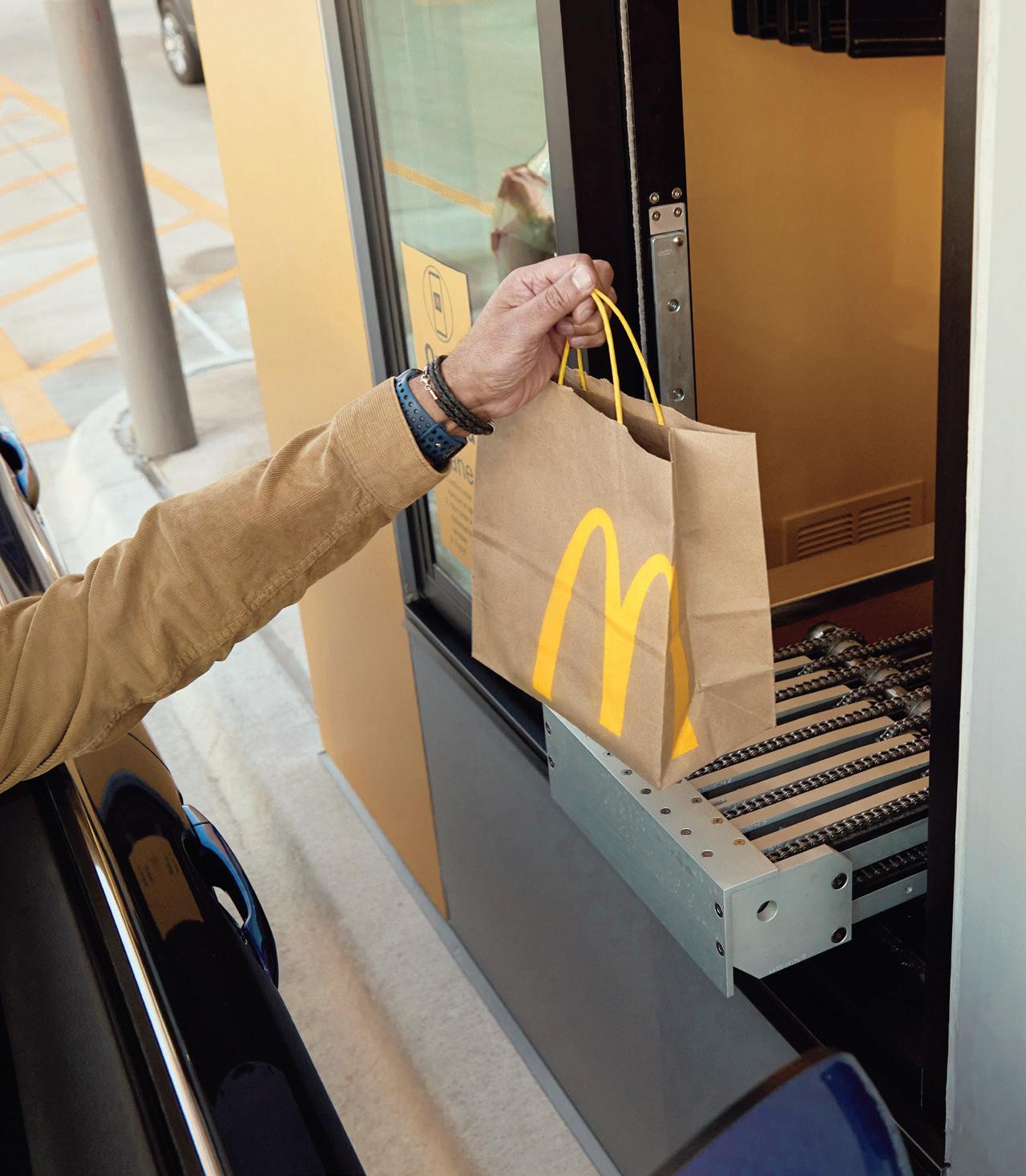
Chipotlanes, tech-enabled make lines, digital pickup shelves—these design and operational innovations transformed the brand experience and helped define what Chipotle is today. They allowed the company to meet guests where they were, proving that creativity can be a business multiplier and not an afterthought.
During her tenure, more than 750 restaurants opened, including over 550 Chipotlane drive-thru locations. The language of her designs scaped all aspects of real estate development for the U.S., Canada, and European markets. She also oversaw the Center of Excellence for Design and Construction, ensuring that every Chipotle felt intentional and true to the brand’s culture.
“At every brand I’ve worked with, the philosophy is clear:
design must be authentic, functional, and relentlessly customer-focused,” Zalotrawala says. “When you pair the voice of the customer with insights from employees, you solve for operational realities and elevate the experience. This isn’t a one-time strategy—it’s a mindset I’ve always believed. Purpose-driven design builds trust.”
Across every role, Zalotrawala has built environments that reflect brand DNA and deliver operational excellence—turning creative strategy into holistic development strategy. It’s the foundation of her leadership today and the lens through which she continues to shape the future of restaurant experiences.
When Zalotrawala was tapped by McDonald’s in 2023 to help accelerate restaurant openings in the U.S., she saw it as a chance to make a meaningful impact on an extraordinary scale—one few companies can match today.
“In North America alone, we’ve got more than 13,000 restaurants, and every decision we make has the power to touch millions of lives every day. I saw this as an opportunity to honor an iconic legacy and help shape the future for millions of guests,” Zalotrawala says.
She doesn’t see McDonald’s as simply a restaurant. To her, it represents something much larger: a cultural touchstone, a community anchor, and a force that supports more than a million jobs while providing upward of $25 million a year in tuition assistance. Few brands are as deeply woven into daily life, both domestically and around the world.
“This role is a chance to help define what McDonald’s will look like in the next 30 years and shape those experiences for others,” she adds. “I truly feel like this is a career pinnacle for me.”
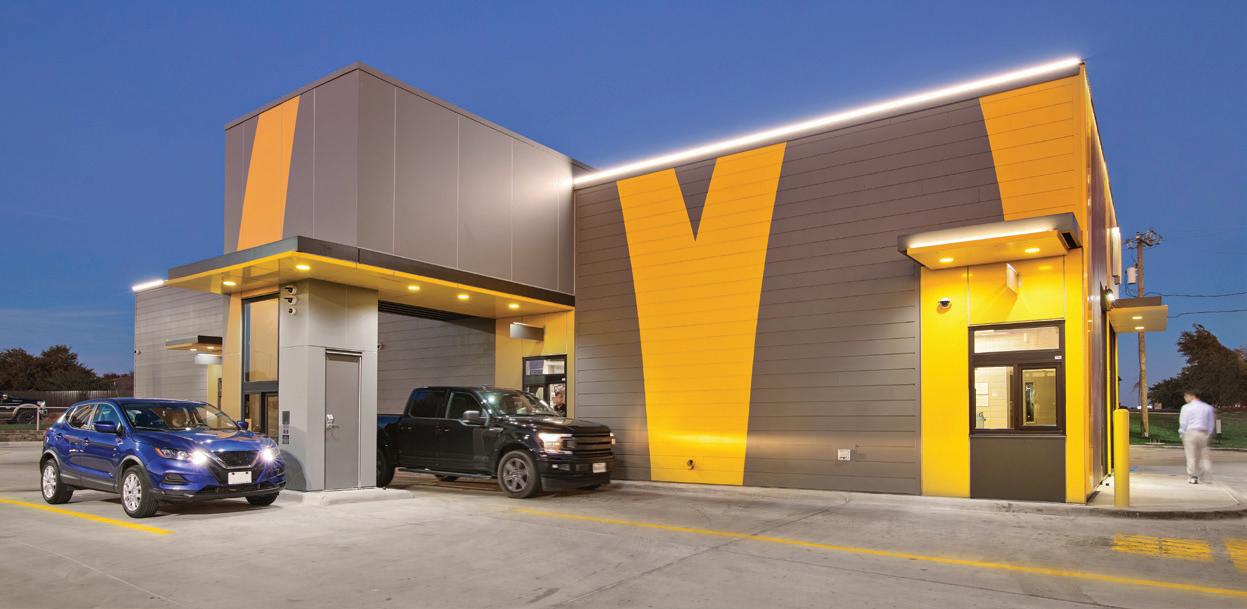
Brought on to advance the “Accelerate the Arches” strategy, unveiled in November 2020 and centered on digital, delivery, and drive-thru, Zalotrawala took charge of increasing the pace of restaurant openings in the U.S. She also oversees the Global Restaurant Design Strategy and Standards, leading the deployment of design standards across formats, facades, interior palettes, family and play areas, and signage worldwide.
It’s a heavy lift inside a system as large as McDonald’s. When she first moved into the quick-service world years ago, people often asked, “What could be so creative about it?” Many assumed creativity gets lost in the function and scale of a massive brand. She pushes back on this misunderstanding—scale, she says, can be intentional, personal, and deeply creative.
“Scale demands creativity. It doesn’t limit it,” she says. “Designing at scale is about balancing global consistency with local flexibility. It’s creating a framework that protects brand identity while allowing each restaurant to reflect its community. It can’t be a cookie-cutter approach.”
Every McDonald’s is a reflection of the people it serves, and the design must match. The challenge, she notes, is doing that while maintaining the brand’s identity and global cohesion.

“ This role is a chance to help define what McDonald’s will look like in the next 30 years and shape those experiences for others. I truly feel like this is a career pinnacle for me.”
Zalotrawala believes the company’s ability to experiment, learn, and innovate—with purpose and at scale—is unmatched. Balancing McDonald’s legacy with modernization begins with clarity: staying grounded in the principles of functionality, identity, and purpose. Layered on top of that is what today’s guests expect—digital ease, sustainability, and design that makes every visit seamless.
“Modernization, for me, isn’t about disruption. It’s about evolution—preserving what guests love while meeting their new expectations,” she says. “McDonald’s has been a trusted partner in communities for decades. We have a responsibility to honor that legacy while shaping spaces and experiences that feel relevant for decades to come. Reinvention is how we keep this iconic brand alive.”
For her, the biggest opportunities for innovation start with adaptability. Guest behavior is shifting faster than ever, so restaurant design must flex for future needs—new service models, emerging technologies, changing dining patterns. Technology is critical in transforming how guests interact with the brand and improving crew workflows, but she emphasizes it can’t be tech for the sake of tech.
“Technology must be wielded to shape better experiences—optimizing layouts for digital ordering or giving our
crew tools that help them feel more efficient,” she says. “The right tools let us deliver convenience, consistency, and speed at scale while staying flexible.”
A second major opportunity is sustainability. It’s not just a talking point—it’s a priority. She is focused on energy-efficient materials and practices that reduce environmental impact. At McDonald’s scale, building sustainably is essential to long-term growth.
From a real estate standpoint, she sees significant whitespace for expansion. “We still have 160 million people who live more than five miles from a McDonald’s restaurant. Proximity drives customer frequency, and frequency drives profitability. We have enormous potential to become more convenient.”
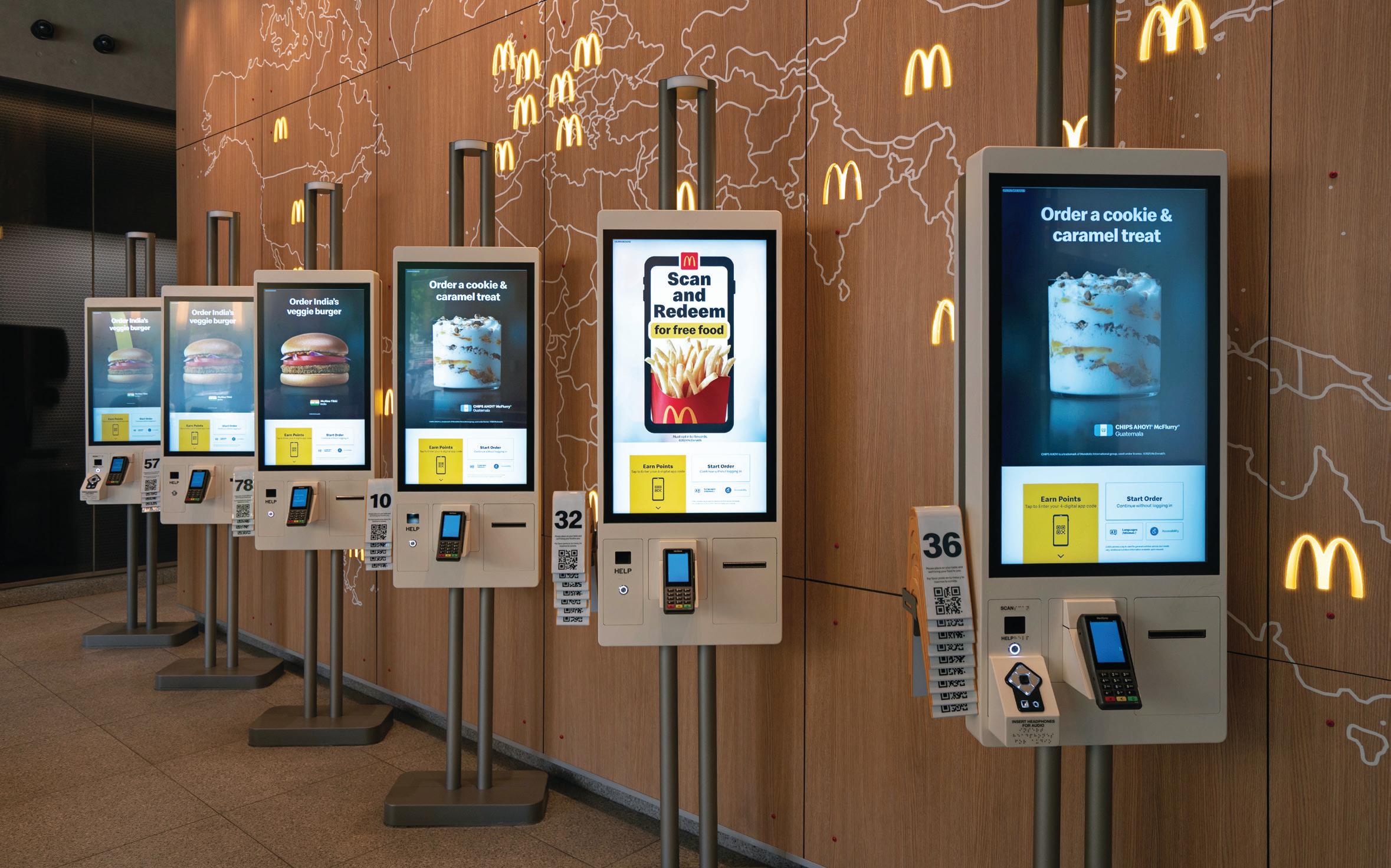
Her vision for the restaurant of the future blends physical and digital experiences seamlessly. Whether a guest orders at a kiosk, on the app, or at the counter, the space should feel intuitive and connected. It combines her core focus areas— technology, sustainability, proximity, and flexibility—into one effortless model.
“We design to meet guests where they are and where they want to meet us,” she says. “The restaurant of the future has sustainability embedded into every decision, from the materials to the environmentally responsible practices that enhance
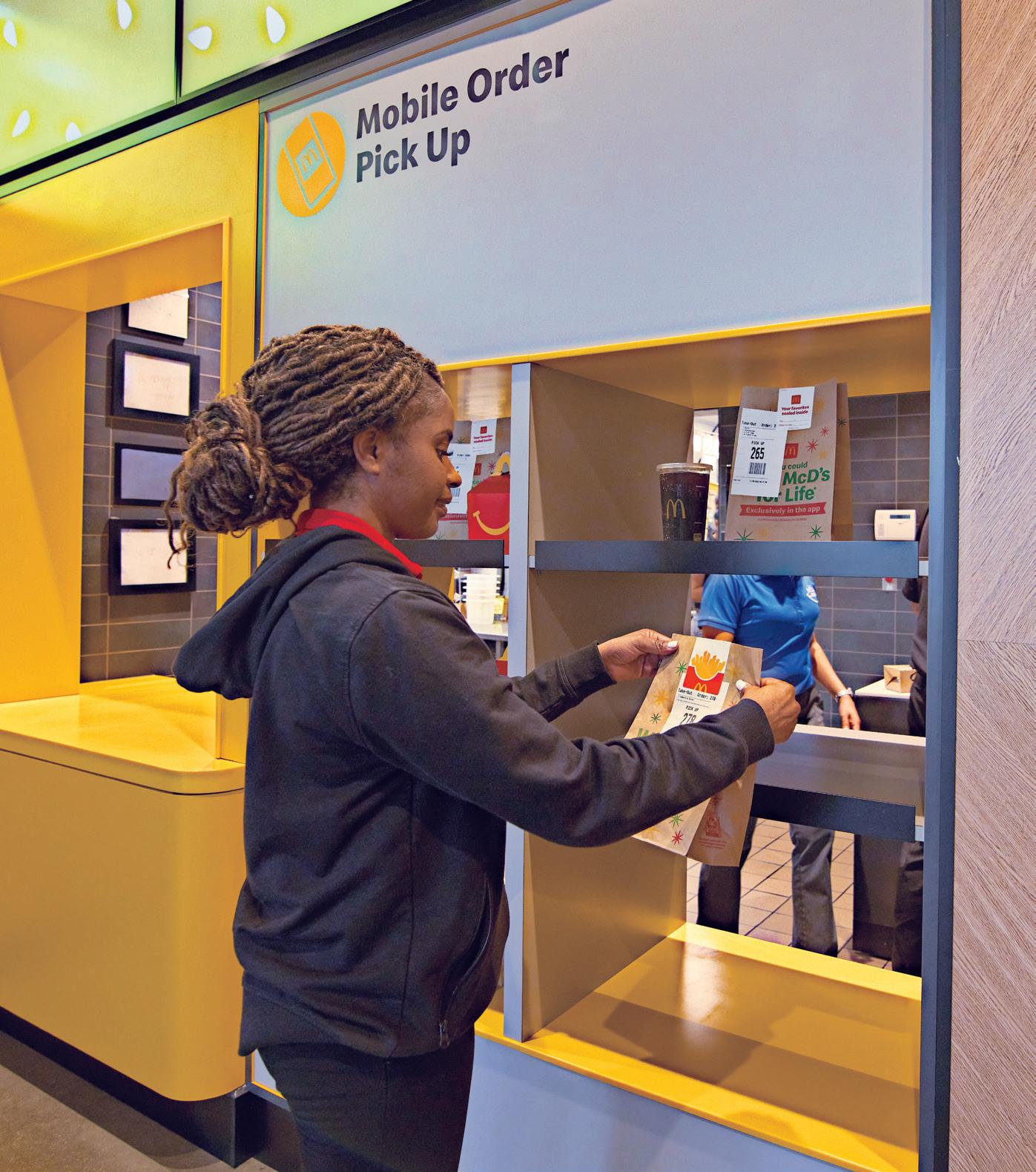
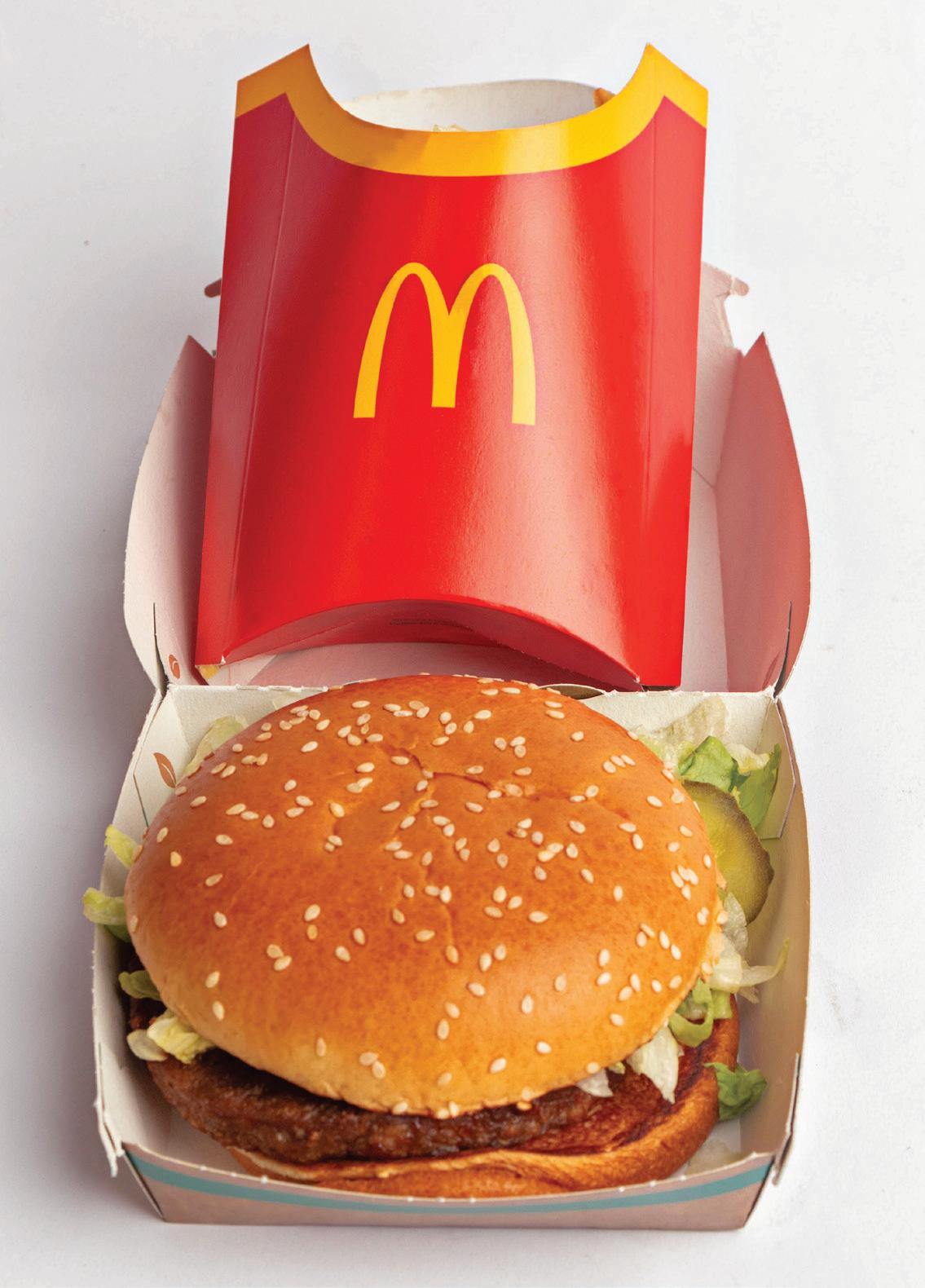
the guest experience. The future isn’t about technology replacing hospitality—it’s about using technology and design to make every interaction more human, more convenient, and more meaningful. That’s the vision we’re building toward at McDonald’s.”
Zalotrawala collaborates with global segments, markets, and cross-functional partners to leverage diverse perspectives. She brings together multidisciplinary teams—real estate, construction, facilities, architecture, analytics—under a shared purpose to create spaces that serve communities. In that environment, collaboration and creativity flourish.
“I encourage curiosity and cross-disciplinary learning because the best ideas often come from unexpected places,” she says. “Fostering honest and open dialogue—where assumptions can be challenged—is how you bring teams together. When you unite diverse perspectives under one vision, you spark innovation at scale, from teams to vendors to suppliers to owner-operators.”
She has cultivated a culture of trust, purpose, and what she calls a “license to fail,” because teams must feel safe to embrace change and challenge norms. Too often, she says, brands default to the same playbook in the name of safety, until they all start to look the same.
“As leaders, we must provide a safe space to experiment and fail fast. It’s not about blind risk—we’re backing every
decision with data, insights, and the voice of the customer,” she says. “That’s how you shift the mindset from fear of failure to excitement about possibility.”
Zalotrawala believes her creative upbringing has given her a unique ability to visualize the art of the possible—thinking big while connecting every detail back to the larger picture. She’s able to see patterns, anticipate needs, and approach challenges with curiosity rather than fear—whether she’s designing dresses, palaces, or restaurants. That early creative foundation has become a cornerstone of how she leads today.
“My creative mindset translates directly to leadership at scale, because when you’re managing thousands of restaurants and people, you need to think holistically while never losing sight of the details that shape the experience,” Zalotrawala says.
Just as McDonald’s continues to reinvent itself, Zalotrawala remains committed to continuous improvement, even at the pinnacle of her career. Her deep experience is matched by ongoing executive education, including completing the Harvard Business School Advanced Management Program—a
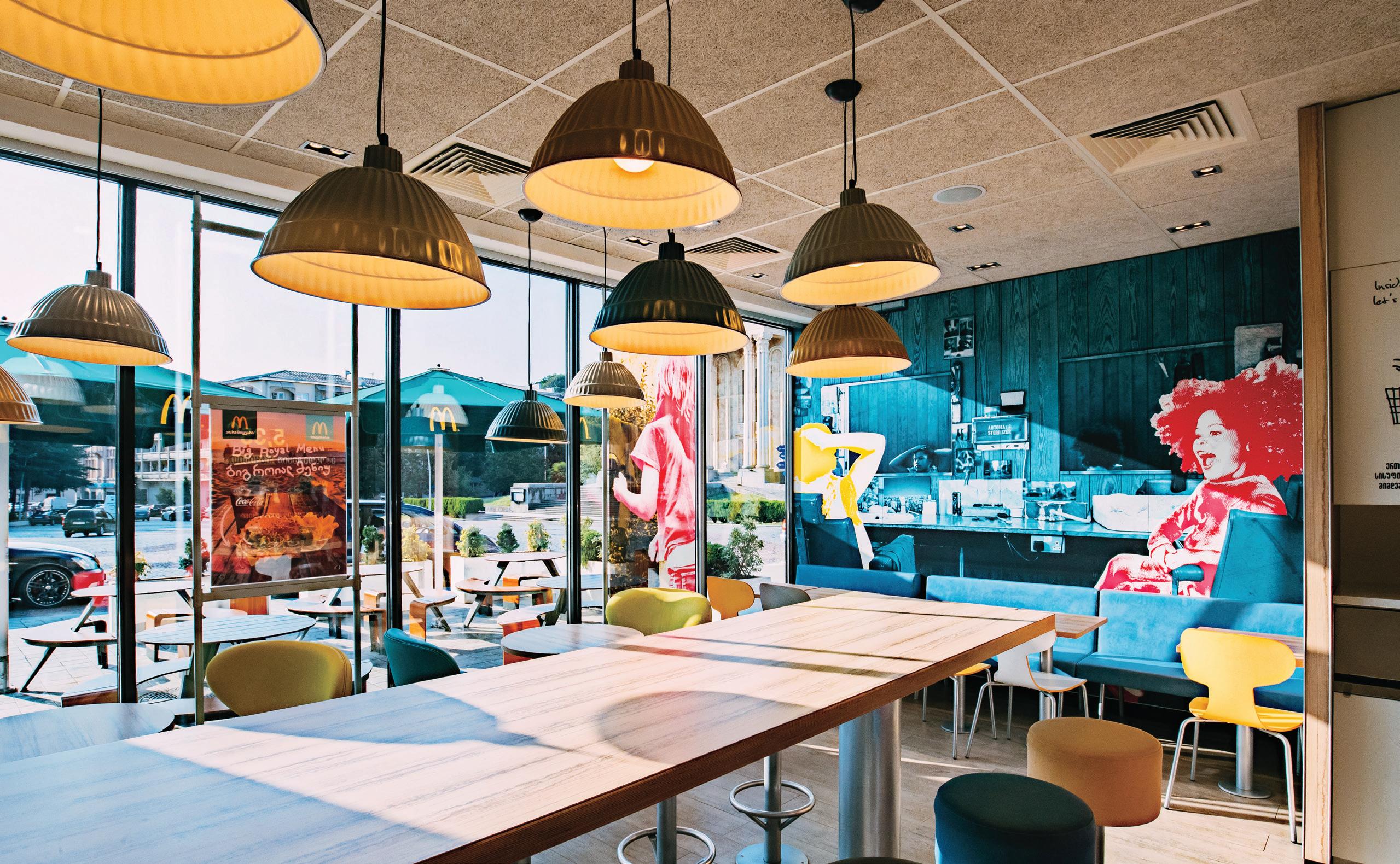
course designed to help leaders tackle their organization’s most complex challenges. It’s a reminder that even when you reach the height of your dreams, there is always more to learn.
“This was a pivotal experience for me because it broadened my perspective way beyond design and reinforced the importance of adaptability and strategic thinking in this fast-moving world,” Zalotrawala adds. “I gained a deeper understanding of overall business strategy and organizational culture, along with finance and operations, which gave me a deeper perspective on how my decisions touch the entire business.”
This experience also speaks to the power of networking— because even for Zalotrawala, building friendships on a global level has helped her deepen her leadership style and clarify where she wants to go next.
“The deeper perspective I gained informs every leadership decision I make,” she says. “From creating experiences to designing spaces, to aligning them with the overall business strategy, to ensuring operational efficiency and cultural values. This program and the leaders I met taught me how to connect the dots in ways I hadn’t seen before.”
For women in restaurant leadership, particularly those pursuing development and design tracks, Zalotrawala encourages them to recognize that courage matters. Courage appears in many forms—for her, it meant asking for opportunities to grow, even when others believed she wasn’t ready.
“At one point in my career, I was the sort of person who raised my hand and asked a CFO for real estate training that I didn’t formally have,” she says. “This ultimately opened the door to a leadership role. These experiences have reinforced that stepping up in leadership in times of change can’t be about playing it safe. It’s about inspiring the team and making the decisions that create lasting value for yourself and the brand you work for.”
She also emphasizes the importance of patience—thinking back to her younger self, eager to sprint into her professional life—and of standing firmly in your purpose. The gratification, she says, will come later. “Success doesn’t come to you overnight. You’ve got to have grit and the perseverance to stand behind purposedriven work. It won’t be the most popular thing, but you’ve got to do it,” Zalotrawala says.
Her final word of advice comes down to respect—for yourself and for others.
“For women in leadership roles, have the courage to stand up from a table where respect is not served. This has served me well,” Zalotrawala adds. “If my journey shows anything, it’s about learning how to lift others while you climb. It makes your life richer and more fulfilling … I hope the next generation can continue to do that.”
Satyne Doner is a staff writer for QSR. She can be reached at sdoner@wthwmedia.com.

The recognition celebrates three women whose leadership, service, and courage are reshaping the restaurant industry.
/ BY SATYNE DONER

The WiRL Awards—launched by QSR and FSR magazines in late 2025 and sponsored by Sandy Alexander—were created to advance WiRL’s mission of celebrating women who are driving progress across the restaurant industry, particularly those who haven’t yet been formally recognized. From more than a hundred nominees, three honorees were selected by the WiRL advisory board to represent this year’s categories: Trailblazer, Rising Star, and Community Champion.
CHICK - FIL - A
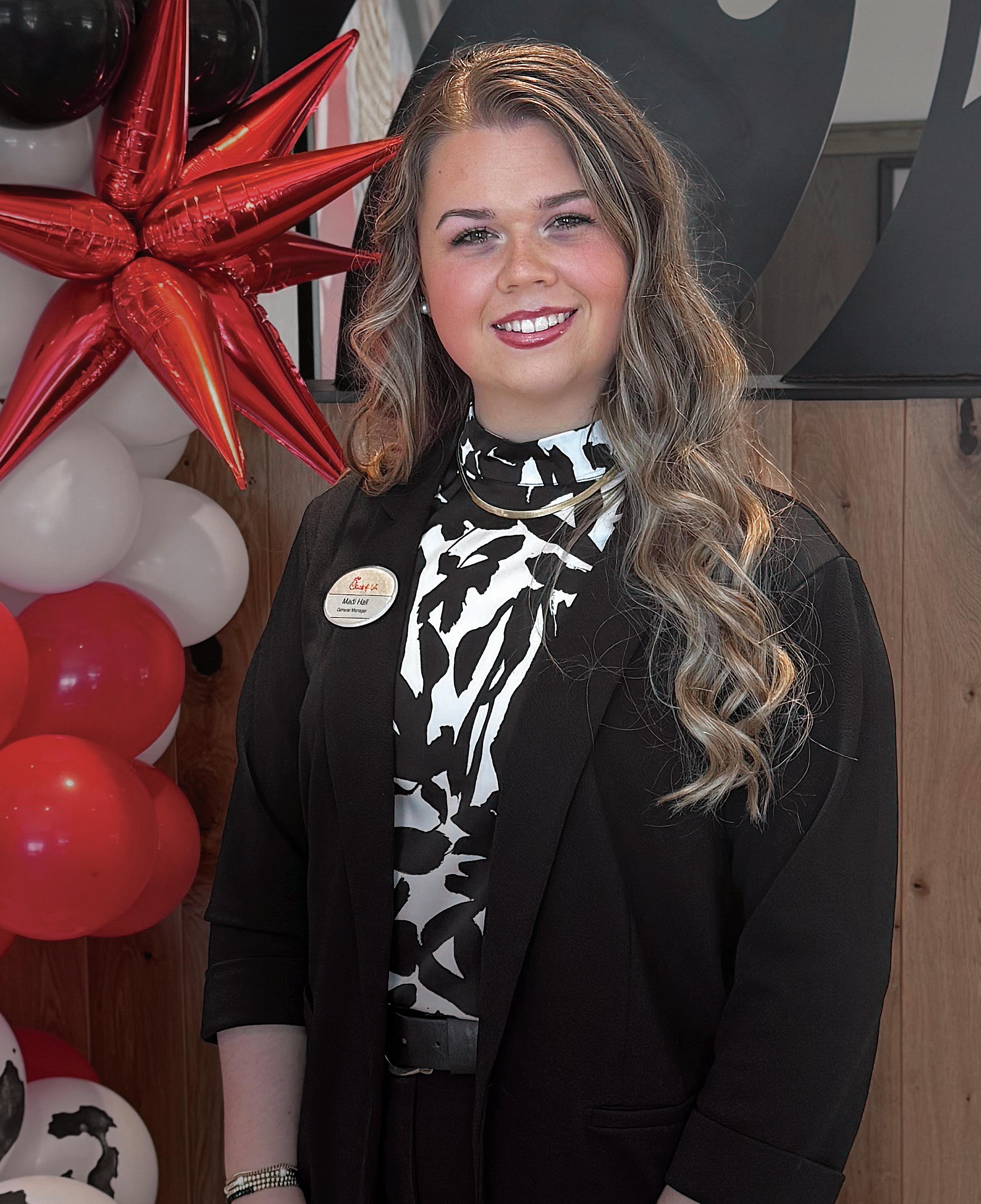
LEADING OFF THIS YEAR’S HONOREES IS WIRL’S RISING STAR, MADI HALL, general manager of a Chick-fil-A restaurant and a member of the corporate support center’s field talent staff. At just 21 years old, she has already led teams to recordbreaking results in speed, satisfaction, and efficiency—while championing gender parity on her leadership team, now 50 percent women.
Hall began her Chick-fil-A journey at age 15. What started as a way to earn gas and insurance money quickly became something more: her leaders recognized her drive, curiosity,
and natural leadership, and she rose just as quickly. She played a key role in helping her operator earn approval to open a second location, Chick-fil-A Mirror Lake in Georgia.
Before that grand opening, Hall stepped in to coordinate operations, onboard 130 team members, and prepare the site for launch—all while serving as an assistant director at her original high-volume restaurant.
“I had no idea what I was getting myself into, as I was just looking for a job while I was in high school,” Hall says. “Within two years, I had received my first promotion, followed by four more… When my operator opened a second location in August, he approached me to get it running from the ground up. I helped him open that location, and now I’m the general manager of it.”
Her success in multiple grand openings has earned her the attention of Chick-fil-A’s Grand Opening Supervisors (GOS), who now regularly seek her expertise to launch new restaurants and build high-performing teams.
The leap from floor-level team member to general manager taught Hall the value of trust—both receiving it and giving it. Her early leaders empowered her, and now she strives to be the kind of leader who creates the same opportunities for her own team.
“I love this new store. It was a completely brand-new team, and we’ve only been open for a couple of months, but I already feel like we’re a family,” she says. “I’ve learned that you can’t do anything by yourself. You need an army—whether it’s people to bounce ideas off of, take something off your plate, or be there to support you.”
Hall once planned on leaving for college and a career in the sports industry—but after being tapped to help open Chick-fil-A restaurants in Arizona, she saw the broader impact she could make.
“I was on the other side of the country for a month. Nobody knew me, and I went over there and trained their leadership. I helped them run their location, I connected with them, and even there, I realized the impact I could have within this company,” Hall says. “I thought, this can be more than a high school job. This can be something that I do forever.” ≥

202# W i RL HONOREE
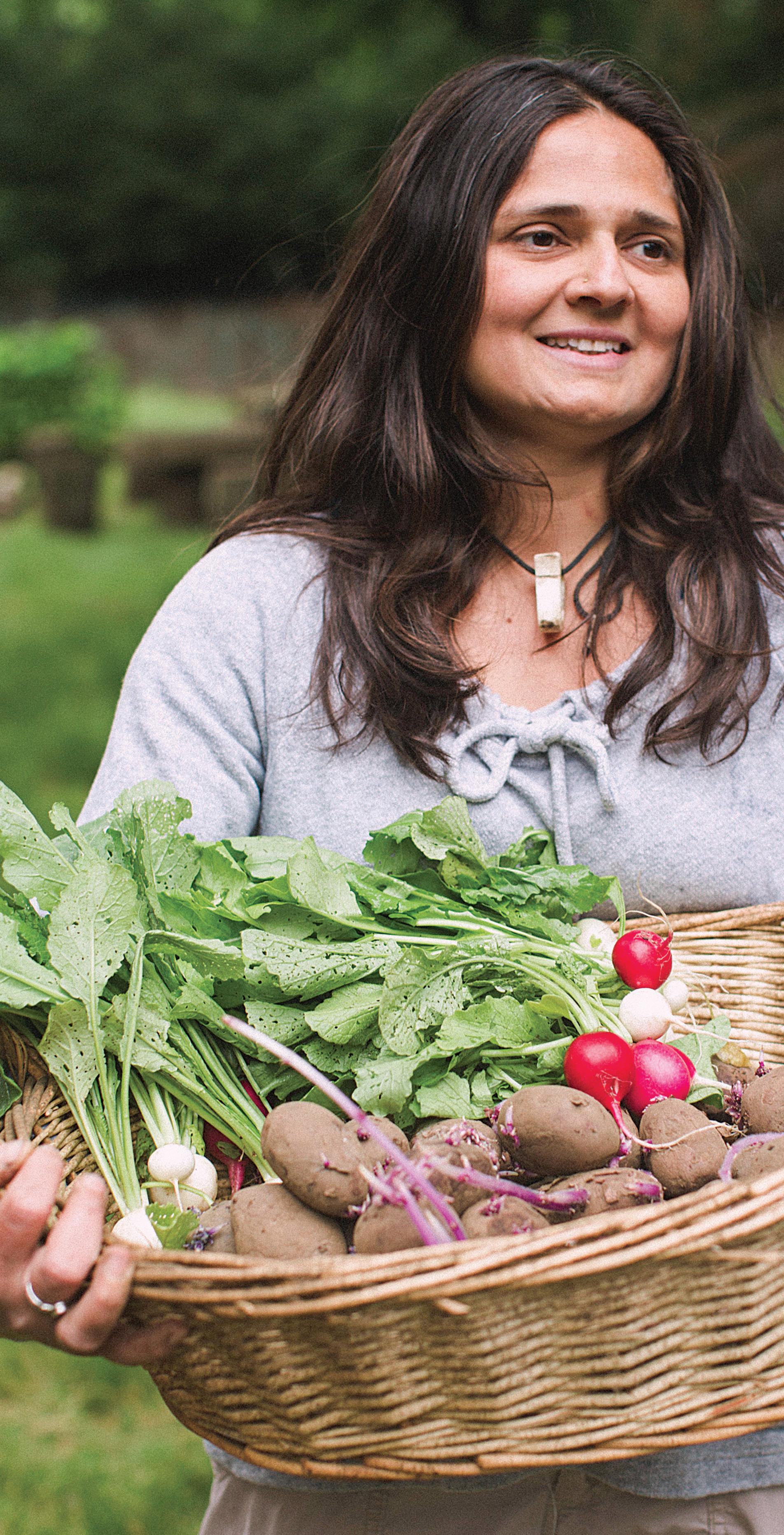
W i RL’S COMMUNITY CHAMPION IS FARAH MASANI, director of purchasing and sourcing for Barcelona Wine Bar—but her title is the last thing her team associates with her. To them, Masani is a compassionate force for equity, community, and respect: a well of wisdom and genuine care who has built a lasting lifeline for her restaurant community and everyone it touches.
Her story began in the fields and farmland of Bombay, where she watched people work with their hands, nurture the soil, and celebrate the Earth’s abundance. But from a young age, she realized the life she envisioned for herself didn’t align with the expectations of her family or culture.
“It became very clear that I was a woman child being raised in a country that didn’t value women, and that was the start of my fight,” Masani says. “At 15, I understood I was a victim of a culture and tradition that
FARAH MASANI
BARCELONA WINE
BAR
leads to inequality, and I told myself I’d break the cycle.”
So she left. She herded goats in the Himalayas. She worked in outdoor adventure education. She led expeditions and explored England. And just shy of 18, she enrolled at the University of Texas, earning a degree in social work and economics—fuel for her mission to uplift marginalized communities. She secured a $3 million grant from the Clinton administration to help administer safe and healthy schools in Texas, studying the connection between mental health and malnutrition. From there, she began practicing farming therapy, working to ensure communities could access healthy, nutritious food—because while shelf-stable products were
plentiful, truly fresh food was scarce.
Masani eventually landed in Connecticut as a farmer, selling produce to Barcelona Wine Bar by knocking on the restaurant’s back door with crates of vegetables. That’s where now-CEO Adam Halberg approached her with a proposition: she could join Barcelona and teach chefs about where their food comes from—and if she didn’t love it, she could always return to farming full-time.
“I thought, what kind of people take interest in nurturing, cultivating, and educating someone to work for them, and then let you go if you don’t like it?” Masani says. “These are the kinds of people I want to be around for the rest of my life. And that was 15 years ago.”
Today, Masani supports every Barcelona Wine Bar location, inspiring dishes and connecting farmers, kitchens, and communities. She champions ethical sourcing, moving seamlessly between activism, agriculture, and hospitality. She doesn’t just influence systems; she works to change how people think about food, fairness, and community.
“Having genuine relationships to source ingredients that are ethically sourced and made— supporting the families and communities where they’re produced—is extremely important to my work and to Barcelona Wine Bar,” she says. “Providing these products to our chefs empowers them to create phenomenal food that builds community within the restaurant and beyond.”
Masani has also launched numerous initiatives—including Wilton Pride, a local nonprofit supporting the LGBTQ+ community and allies. Then, what began as a pandemic-era GoFundMe for Barcelona team members has since grown into BLOVE, a 501(c)(3) providing critical aid to team members in need.
“I’ve always tried to figure out what the root cause is. That’s the social work background coming into play,” she says. “I ask myself what the root cause is, what needs to happen to fix it, how we mobilize those things, and how we advocate for them. We knew we had to create a safety net for our people who were falling through the cracks … and BLOVE has been extremely successful for us.”
Ultimately, community is Masani’s definition of happiness. Through her work—both personally and alongside Barcelona Wine Bar—she believes that when you build a strong community that takes care of one another, everyone thrives. And being a good villager, she says, means putting others’ needs first without compromising who you are—and ensuring no one is left behind. In an industry where isolation and loneliness can feel overwhelming, her work is much needed. ≥
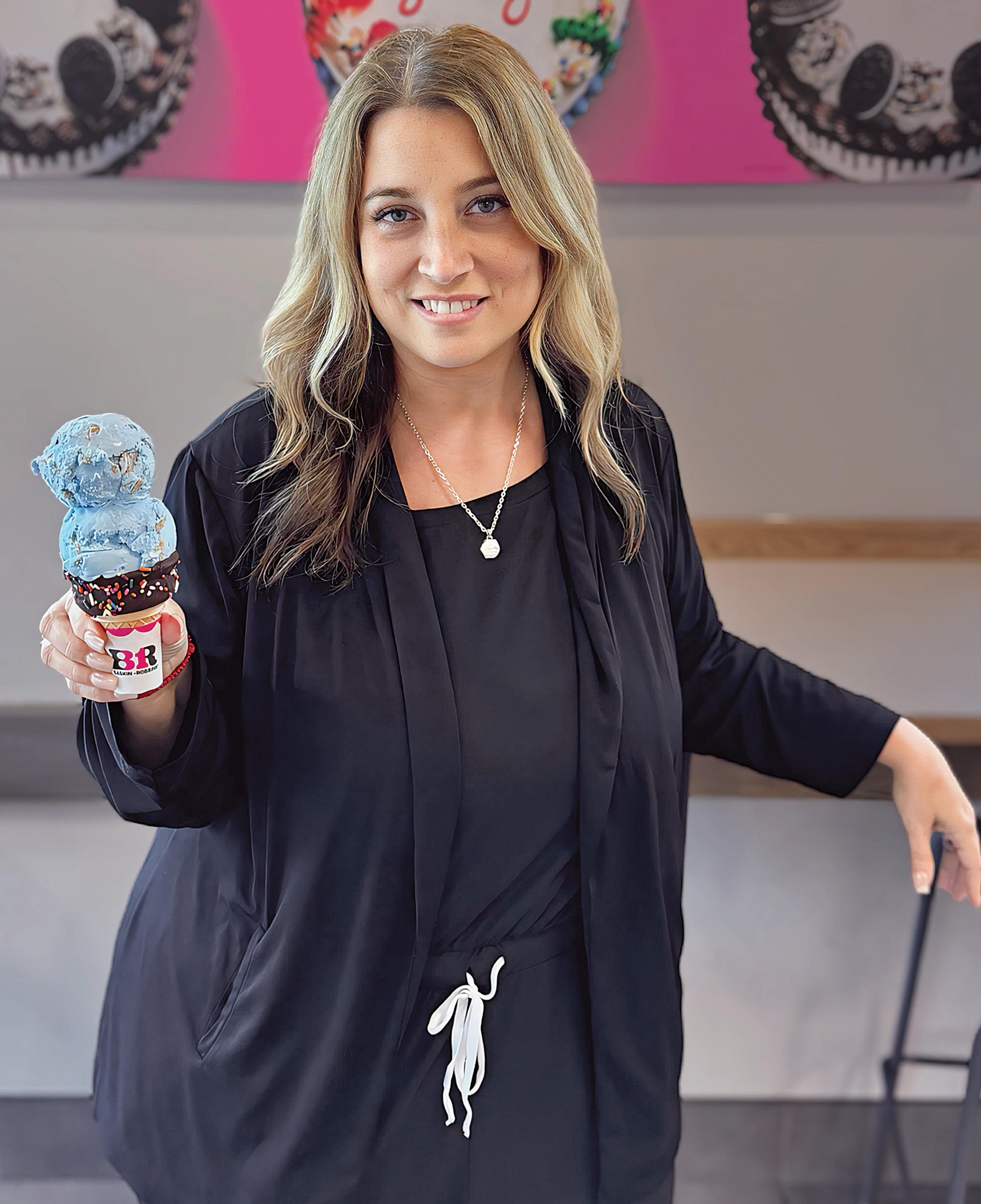
ROUNDING OUT THIS YEAR’S honorees is WiRL’s Trailblazer, Mandy Ristic, who started her career at 16 as an ice cream scooper at her hometown Baskin-Robbins and now serves as COO of OM Group, overseeing 81 restaurants in a multi-brand portfolio that includes Dunkin’, Baskin-Robbins, Jimmy John’s, QDOBA, Smoothie King, Auntie Anne’s, and Cinnabon.
What defines her story is confidence earned step by step, faith in her instincts, and the courage to move through fear without betraying her values.
In 2012, after nearly two decades as a BaskinRobbins franchisee alongside her husband—and shortly after the birth of her third daughter—Ristic was ready to expand beyond the single-store model. She pulled together a Word document with cake images and set out to become a cake decorator; it felt like a simple way to pay for karate classes or a new jacket without cutting into the household budget.
But Ristic’s path was far from linear. Looking back at the past 14 years, she realizes she became the leader who wasn’t afraid to do it first. She took on roles as a cake decorator, barista, general manager, multi-unit manager, and director of operations—even when she felt unprepared, lacked a degree, or doubted whether she belonged.
She learned to get gritty, to learn fast, and to keep moving. She rose quickly through the Dunkin’ Donuts franchise network. By the time she reached OM Group, she was exhausted and on the verge of giving up—but for the first time in her life, she bet on herself.
“I told the owners, you don’t know me, but I am different. I’m the best employee you’ll ever meet, and when you find out what kind of person I am, I want to be a minority partner in your Dunkin’ franchise,” Ristic says. “We shook hands, and that’s where my story takes off. It didn’t matter that I had no formal training; I started later in life, and I didn’t go to school. I stopped letting it get in my way. I realized I didn’t know how smart I was and what my potential could be.”
Ristic has built a career around challenging convention and redefining what’s possible in franchising. She has transformed how teams, brands, and communities connect—scaling across diverse concepts while cultivating next-generation leaders and creating opportunities that reach far beyond her restaurants.
She actively mentors emerging franchise leaders, especially women, through her “Own the Moment” culture, which turns everyday opportunities into impact. Her philosophy: leadership isn’t about control—it’s about building pathways for growth and elevating others through values-driven action.
“I learned to trust my instincts,” Ristic says. “I surrounded myself with people who share the same values and vision as me, because even to this day, if I have a roadblock, I lean on them. I have a responsibility to other women in leadership to empower them and create more opportunities to succeed. My advice is to lead with integrity, even when it’s hard. Your values will be tested. Don’t let them change who you are. Don’t let others diminish them. And don’t be afraid to move on your own path.”
These three pioneers of the restaurant industry will be honored at the inaugural WiRL Awards ceremony and reception in Charleston, South Carolina, on February 26, 2026, powered by Sandy Alexander.
“We’re honored to support the inaugural WiRL Awards dinner and celebrate the women whose leadership, creativity, and impact continue to shape the future of the restaurant industry,” Betsy Davis, CMO of Sandy Alexander, says.
Two second-generation franchisees share what it really takes to step into a parent’s business.
BY SAM DANLEY
For second-generation franchisees, stepping into leadership often means balancing loyalty to a parent’s legacy with the realities of running a modern operation. In the GoTo Foods system, two daughters of longtime operators have lived that dynamic firsthand, inheriting stores built by their families and ushering them into a new era.
These owners occupy a unique middle ground. They aren’t building from scratch, and they aren’t simply preserving what came before. Instead, they’re rethinking how culture, technology, and growth fit inside long-standing businesses. And they’re doing it while earning trust on the floor and holding onto the values that made the stores successful in the first place.


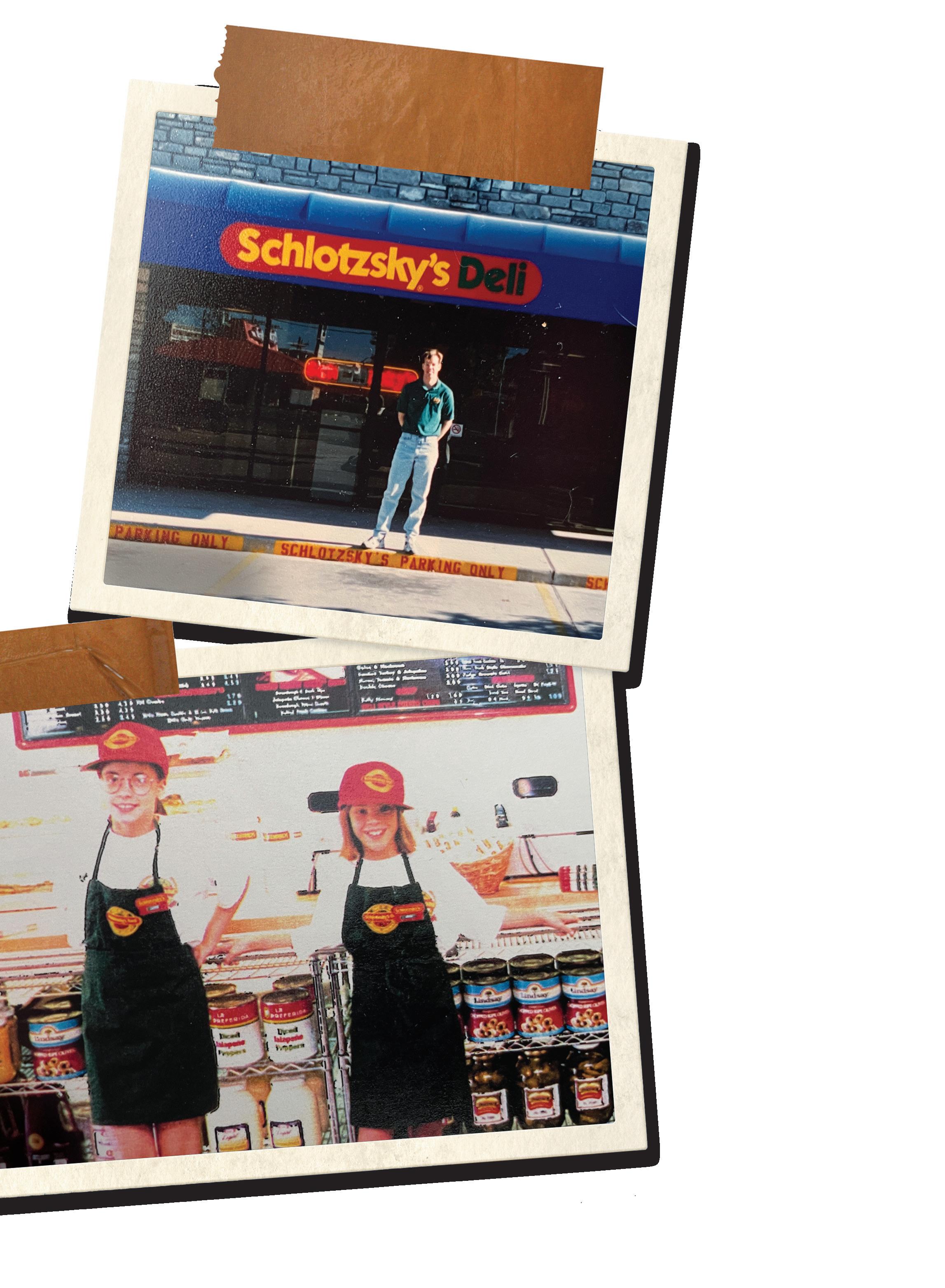
When Laura Wiginton talks about her earliest memories of the family business, she starts on the side of a road in Texas.
Her father opened his first Schlotzsky’s in 1994, shortly after leaving the Air Force and bringing the family back to Texas. He’d discovered the brand years earlier as a student at Texas A&M and was determined to build something of his own. Laura, then 12 years old, tagged along as he scouted locations.
“We’d have so many tools if I wanted to open a new store with Schlotzsky’s today, but no one had the technology that we have now in the 90s,” she says. “Back then, we were counting cars to pick a location. I remember my sister, my dad, and I sitting on the side of the road and doing that for hours.”
Those early days were as hands-on as it gets. Wiginton remembers her father and his franchise business consultant building tables late into the night before the store opened. While there may have been a cash register, most of the process relied on people and paper, with orders written by hand on tickets and walked back to the kitchen.


In 1998, after finding success with the original inline location, he purchased land in Kerrville, Texas, built a freestanding restaurant, and relocated the business. For years, Wiginton took a different path. She studied English in college and initially planned to attend law school before becoming a therapist. She lived in multiple places, earned a master’s degree in social work, and worked with at-risk youth in San Francisco. When she and her husband returned to Texas in 2013 after the birth of their daughter, the timing aligned with her father’s growing interest in transitioning toward retirement.
“The brand was getting bigger, the operation was getting more complex, and he needed to remodel, so he pitched the idea to me,” Wiginton says. “He was like, ‘I know it’s crazy, but I think you can do this. And I’ll teach you everything you need to know.’”
The transition was practical and hands-on, she adds, with her dad “literally teaching me how to do my own payroll at the kitchen table.”
She also completed brand training, including a month-long immersion at a company store.
“I was baking the bread and running the line and doing everything that our employees do for a month to really know the brand inside and out,” Wiginton says.
After completing her training, her first major responsibility was leading a remodel of the Kerrville store in 2014. She describes the learning curve as steep, but says the experience was rewarding and helped solidify her role as the business’s leader.
Although the physical store looked different following her transition into the ownership role, one thing remained constant: the internal culture her father worked hard to instill in the business.
“He always had a lot of respect for his employees, and he always ran his business that way,” Wiginton says. “That was really his emphasis when he was passing off the torch. And that’s really paid off for us.”
She points to her longtime general manager, who has been with the restaurant for 13 years, as an example.
Wiginton describes the store’s philosophy as “people first,” saying it guides how decisions are made. During the pandemic, the restaurant did not lay off or terminate staff, even when closures created significant uncertainty. Instead, she prioritized keeping the team intact and supporting employees without knowing how the situation would unfold.
“If you keep your values at the front of your decision making, it tends to pay off in the long run,” she says. “When things

Alongside running the restaurant, Wiginton maintains a small private psychotherapy practice. She says those skills carry over into the business through relationship-building and leadership development. Over time, she has coached her general manager, helping shape a management style focused on communication and people development.
Operationally, the store now looks different from when her father ran it. Inventory, scheduling, and other functions that were once handled informally are now managed through integrated systems supported by GoTo Foods.
She also points to how dramatically franchisee support has changed. Where her father once operated more independently, she now works within a highly connected system, a shift that has become increasingly important amid a more complex operating environment.
“I think we’re able to do so much more because we have so many resources,” Wiginton says. “We’re so connected to all the other franchisees, franchise business consultants, and the larger brand support. We’re able to be a lot more productive because we know about how other people are doing things and we can learn from each other.”
That level of connection, she says, has made it easier to navigate the ups and downs of today’s business landscape. Even so, she continually returns to the basics her father taught her.
“One mantra that I always repeat that my dad told me is ‘sales cure all ills.’ I think about that a lot with everything that’s going on in the world and all the complexity out there,” she says. “As long as we can keep our focus on making a good product, being nice to our customers, and bringing that extra level of being present and welcoming, everything else comes out in the wash.”

She points to recent challenges in Kerrville, including significant flooding over the summer, as reminders that guests, team members, and operators are often carrying stress into
“If we can have a guest experience that feels better than anywhere else, I think that makes a big difference in a competitive market,” she says. Looking ahead, Wiginton says expansion remains a possibility, but nothing has been finalized. The infrastructure and support are there, but the timing and direction are still being considered.
Her advice to second-generation franchisees centers on people: prioritize relationships with employees, family, and guests, and make decisions grounded in respect and consistency. For those considering franchising without a family connection, she recommends gaining firsthand experience and carefully evaluating every aspect of the brand before committing.
“Do some old-school research and go sit inside a store,” Wiginton says. “How does it feel to you? Do you like it? Does it feel good? Is this vibe your vibe? I think it all goes back to the way my dad started, which is just loving the brand.” ≥











Erica Allain’s story begins in Lancaster County, Pennsylvania, where Auntie Anne’s first took root. Her mother’s friends had opened a few locations, and she quickly fell in love with the concept and culture of the business and decided to open her own store in 1991.
That decision placed the family among the early fran chisees and one of the first to operate an Auntie Anne’s inside a mall. At the time, the idea was far from obvious.
“Back then, people were like, ‘pretzels in a mall? How is that going to work?’” Allain recalls. “Now, you can’t go to a mall without seeing pretzels.”
As a child, Allain helped hand out pretzel samples at her mother’s store and at locations owned by family friends. She worked behind the scenes squeezing lem ons and helping prepare drinks. Because the family lived more than an hour away, trips to the store often meant full days spent onsite, moving between tasks and watch ing how everything worked together.
She remembers mixing dough and helping with the baking process. At times, she even slept on bags of flour in the back room. High-traffic days like Black Friday were treated as family events, with everyone working together to keep up with demand.


natural when it finally happened a few years ago. Allain had already been living the responsibilities of the role.
Despite growing up in the store, Allain didn’t originally plan to take over the business.
“I definitely saw how hard it was,” she says. “And when you’re young, you don’t always understand that it’s worth it.”
After getting married and starting a family, she was a stay-at-home mom while her children were young. As they moved into school, her mother began thinking about moving away from the business. Allain stepped in to help manage the stores, originally assuming it would be temporary. Instead, it became a long-term commitment.
“There were about 10 years where I was managing the stores and in them all the time working really hard,” she says. “It definitely wasn’t always easy, but I’m glad I took that step, and I’m glad I didn’t listen to my 15-year-old self who didn’t want to own the business.”
“With being a second-generation franchisee, you feel the ownership aspect the same when you’re the daughter or the manager as the owner,” she says. “You care just as much. That doesn’t really change.”
Even so, the family chose not to handle the transition casually. They brought in a third-party professional to guide a formal succession plan so responsibilities, timelines, and expectations were clearly defined.
“I think that’s important with a family business—to not just write it on a napkin or a piece of paper, but to actually have somebody who’s knowledgeable in that area and is good at succession plans help make sure you are thinking through the needs of both parties now and through the next 10 years,” Allain says.
When she officially took over, the business included two Auntie Anne’s locations in the same mall. Last summer, she


added a third unit: a non-baking satellite kiosk where product is prepared in the main locations and transported to the kiosk. Allain is the franchise’s majority owner, and her mother remains a partial owner.
As an owner, Allain gravitates toward operations. She thrives in fast-paced, hands-on environments and prefers being on the floor with her team. She handles store operations, while her husband manages finances and accounting. She believes strongly in building roles around people’s strengths.
The most noticeable shift from her mother’s era, she says, has been technology. The business once ran on cash-only transactions, handwritten schedules, and paper coupons. Under her leadership, register systems have modernized, digital menu boards have been installed, and mobile apps and loyalty platforms now shape guest interactions. Paper schedules have been replaced with digital systems, and most transactions run through cards and mobile payments. Selfordering kiosks were recently added to both locations.
Allain embraces those tools and makes a point to stay current, seeing technology as a way to make work more efficient for employees and more convenient for guests.
At the same time, she relies heavily on the franchise network. She stays closely connected to the corporate office, serves on the Franchise Advisory Council, and regularly

ton from them,” Allain says. “That makes it a little bit easier to do things like put in the satellite kiosk because I had a lot of people I could talk to and learn from. And the thought of expanding in the future is always there as I learn from others and see what they’re doing.”
Despite all the operational change, the values she grew up with remain central. Caring for employees and giving back to the community are throughlines that connect her mother’s leadership to her own.
“Those are things that my mom started, and I try my hardest to carry them on and honor her in that way,” she says.
One of the biggest shifts for her personally came after formally becoming an owner: learning she didn’t have to do everything herself, and that strong leadership sometimes means stepping back.
“Sometimes, people will do a better job at certain things than you do. That’s OK, because it’s going to allow you to have a work-life balance while you continue to grow your business,” Allain says. “That was a really hard thing for me at first.”
She doesn’t have immediate plans for rapid expansion, but she stays open to growth, especially when she sees team members ready to take on more responsibility. Opening the satellite kiosk, she says, was driven in part by a desire to create new opportunities for her staff.

Today, her biggest focus is creating a workplace where people want to stay. Since COVID, she has leaned more heavily into retention and engagement through incentive programs, especially during the holidays. These include pointsbased challenges tied to participation, sales, and shift coverage, with rewards like gift cards and cash. She sees retention as both cultural and practical.
“When you have that high retention, you don’t have to constantly be training,” Allain says. “The person who has been with you for 10 years can do the work of three new people, so it’s worth it to invest in your team and create a culture that they want to stay with.”
That emphasis shapes her leadership style. She describes herself as a servant leader and prefers to work alongside her team, especially during highvolume periods. She steps in where needed and avoids asking employees to do tasks she wouldn’t do herself.
She also takes personal responsibility for the physical environment of the stores, prioritizing quick repairs and proactive maintenance so broken equipment never makes employees’ jobs harder.
For Allain, that hands-on approach connects directly to her advice for others inheriting a family franchise: don’t lead from a distance.
“It’s important to know every aspect of the business, to be on the floor learning and working,” she says. You don’t have to do every task forever, but you need to understand them.”
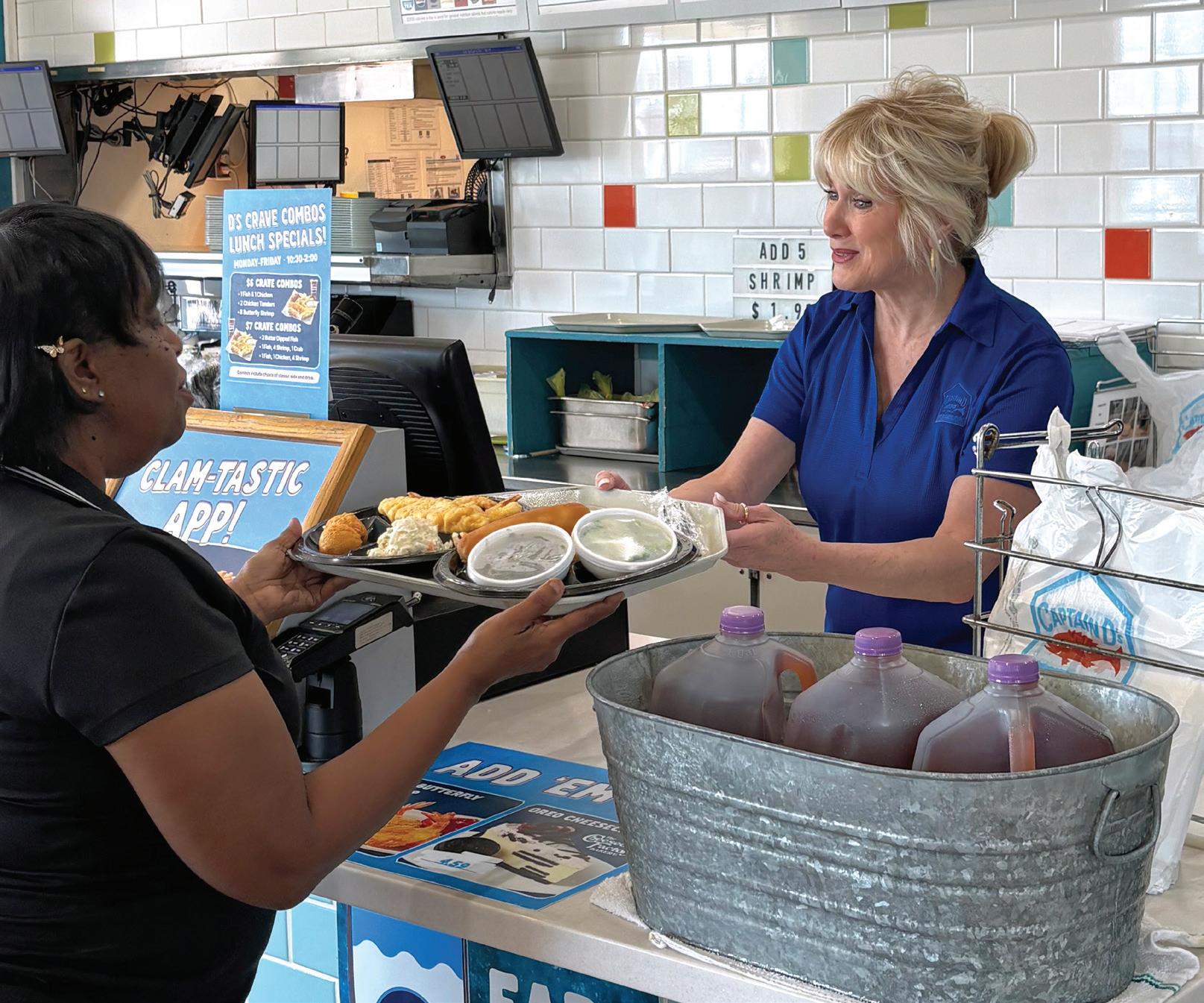
Starnes Holdings, Inc. CEO Lisa Starnes initially faced troubles, but pushed through to grow her Captain D’s business into a formidable franchise.
/ BY EMMA SCHMALZ
Lisa Starnes accidentally got into the restaurant business.
Her only prior work experience had been as a secretary, and it was not a smooth or easy transition. Her husband had bought 10 Captain D’s stores in 1994. Four closed in the following year. After that, six restaurants in the Dallas-Fort Worth, Texas, area ended up being her responsibility after her husband suffered a heart attack.
“We had not done well. We had lost a lot of money. And so when I walked into this, I owed everybody in the country. It
was difficult because I didn’t know the business, so I was learning the business,” Starnes continues. “Within six months, I’d lost all the managers and the supervision, but I didn’t blame them because I didn’t know what I was doing, but yet, I was in charge.”
Starnes says it took a lot of time, energy, and patience to get over that learning curve, pay off the hundreds of thousands of dollars of debt, and face the many challenges in her path.
Her Captain D’s locations are now a
$10 million business operation.
Keeping her and her husband’s integrity and reputations intact was a huge driving force during her journey as a business owner. She wanted her employees to trust her. Starnes calls her business style “servant leadership,” which means working and doing everything to support her team members.
“There’s a lot of people that depend on this for their livelihood, and I’m very grateful that I can be there and do what I can do, so that we all grow,” Starnes says.
Starnes describes Captain D’s culture as polite and respectful. Much of the brand’s leadership was once franchisees themselves, so they understand and have been in her spot before.
“If I call and I need something, then they’re there to do basically whatever we need,” she says. “This is my livelihood. I’ve got everything on the line for this. And I think they’re very aware of that. They know that we put everything we’ve got into this.”
Starnes has had employees that have worked with and for her for decades, and she thinks of them as family. This support system helped her overcome the adversity in her way.
When Starnes first took over the stores, she was a relatively young mother with children, one of which is on the autism spectrum. She believes that even though she has so many other things to worry about, she also has to keep herself healthy.
“I knew that if I didn’t take care of myself, I really was not going to be able to take care of anybody. There is a burnout… [however] we built up a team, and I had people that I could trust, and I would know that things were going to work,” Starnes says.
Starnes is not a micromanager and fully trusts her employees to help run her businesses. As long as she sets boundaries, she knows that her people will be there to help her with anything she needs.
“‘I’m gonna be nice
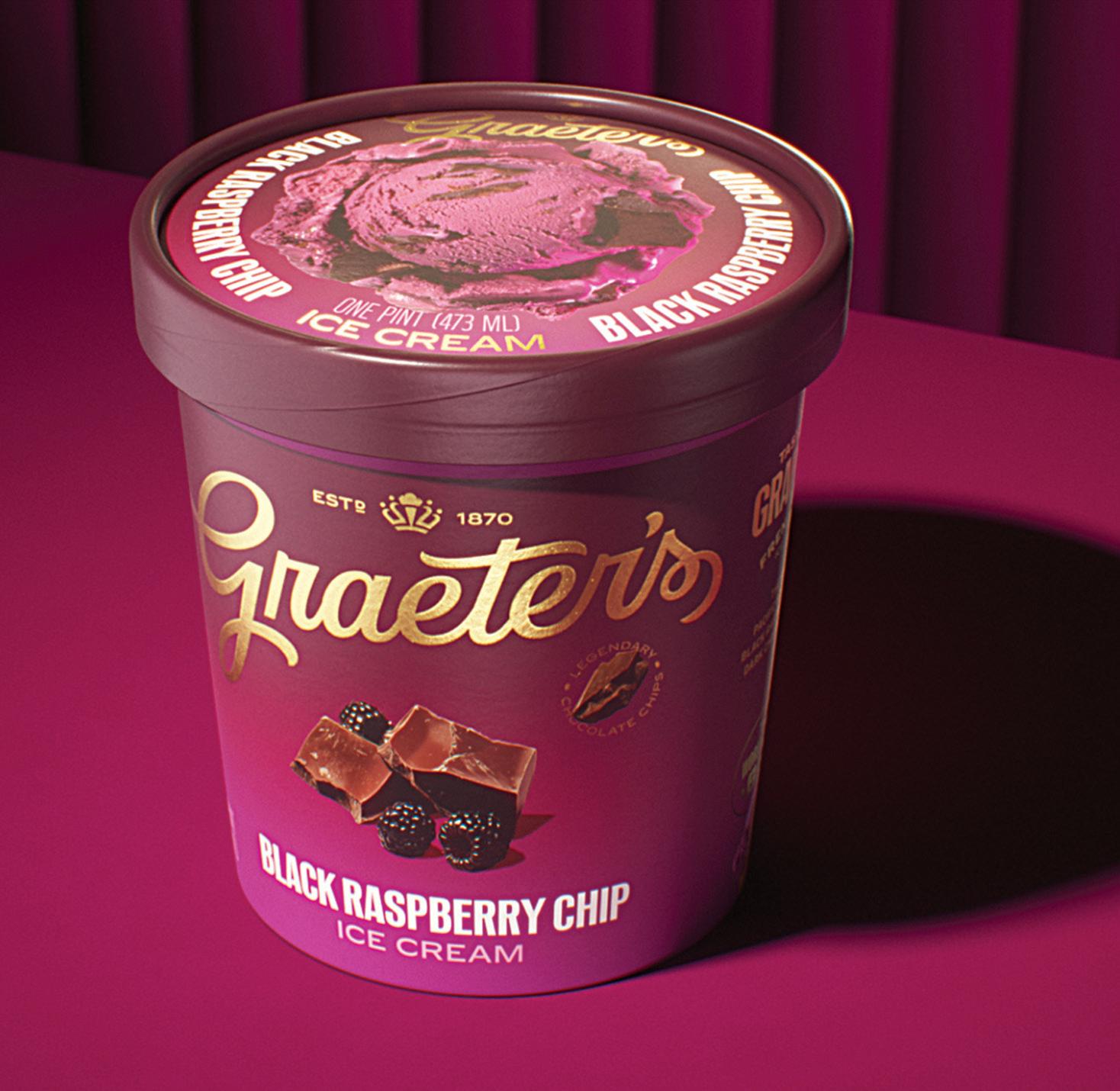
A century and a half in, Graeter’s Ice Cream is updating its look to honor its history and premium craft.
/ BY SAM DANLEY
Graeter’s Ice Cream is stepping into a new era with an updated look. The brand celebrated its 155th birthday last year with a refreshed design that honors its legacy while highlighting the premium, flavor-forward ice cream that has sustained it for more than a century and a half.
The story begins in 1870, when Louis Charles Graeter arrived in Cincinnati seeking opportunity and found it in ice cream. At the time, there was no mechanical refrig-
eration. Freezing meant muscle, patience, and a careful balance of ice, salt, and water.
Louis sold his ice cream at a street market, eventually opening a storefront after earning a loyal following.
The brand’s first big turning point came after his death when his wife, Regina, took the helm, says Richard Graeter, the fourthgeneration president and CEO of Graeter’s Ice Cream.
“If there is a hero in our story, it’s not the teenager who left home and decided
to make ice cream in an era where there’s no such thing as freezers,” he says. “It’s his wife. She did the thing her husband hadn’t managed to do in 50 years, and that’s open a second store.”
Assuming leadership was an uncommon move for a woman at the time, but she made a pivotal choice during her tenure. She expanded the business, opening new stores while steering it through the Spanish flu, the Great Depression, and World War II. At the same time, she resisted industry shifts that would have fundamentally altered the product.
In the late 1920s, competitors adopted continuous-process machines that pumped air into ice cream to cut costs and increase volume. Graeter’s refused, doubling down on the labor-intensive French Pot method. It’s a careful, hands-on process where a spinning metal pot surrounded by a freezing element churns ultra-small 2.5-gallon batches, slowly freezing a high-butterfat mix with almost no added air. Melted chocolate is poured directly into the pot, hardening and breaking naturally into chunks. Once frozen solid, every pint is hand-packed.
Even with a modern production facility that opened in 2010, Graeter’s still relies exclusively on French pots, now producing more than 250,000 small batches annually.
“Graeter’s is literally the last commercial ice cream manufacturer—not just in this country, but anywhere in the world— that uses the French Pot process to make ice cream at scale,” Graeter says.
Aside from modern food safety upgrades, the core method has remained unchanged for 155 years. All ice cream is made in Cincinnati and supplied to 57 company-owned shops across five Midwest states.
Graeter’s footprint has stayed in the middle of the country, where the company has concentrated growth and preserved quality control. After building up excess manufacturing capacity in the late 2000s with the new facility, the brand expanded into grocery stores, starting with Kroger in Cincinnati. Over subsequent years, it added distribution in Columbus, Louisville, and Indianapolis.
Around 70 percent
Why thoughtful site selection, queue management, and flexible prototypes determine whether a drive-thru location succeeds or stalls out.
/ BY MICHELE CARLSON
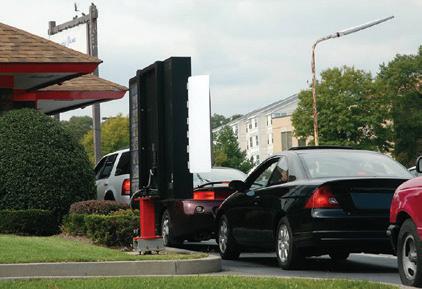
In today’s quick-service landscape, drivethru performance is everything. Every strong drive-thru looks effortless from behind the wheel. But long before the first customer orders a meal, hours of careful study have made that experience possible. Much of the success of a drive-thru comes down to the building design—QSR brands invest heavily in standardized prototypes that are engineered to keep cars moving—but location is also key and more complicated.
While the building may be consistent, the site never is. I help national QSR brands account for these differences, identifying sites that will support long-term growth across the Eastern Seaboard and Southeast. Even the strongest concepts still depend on what happens outside the four walls—the traffic patterns, circulation, and community context that shape the customer experience.
Brands that succeed are the ones who treat drive-thru siting as a strategic process: evaluating queuing capacity at the outset, collaborating early with municipalities, and approaching prototype placement with flexibility rather than rigidity. A poorly chosen site can undermine the best operations plan, which is why getting it right starts with understanding a few essential realities.
For QSRs, the most defining challenge is managing drive-thru queuing and traffic. A parcel can look ideal based on acreage, visibility, and access, yet become unworkable once peak-hour flow is mapped. Innovative operators have maximized the number of customers they can serve in a day, but no amount of operational efficiency can compensate for a site that isn’t physically capable of holding a queue.
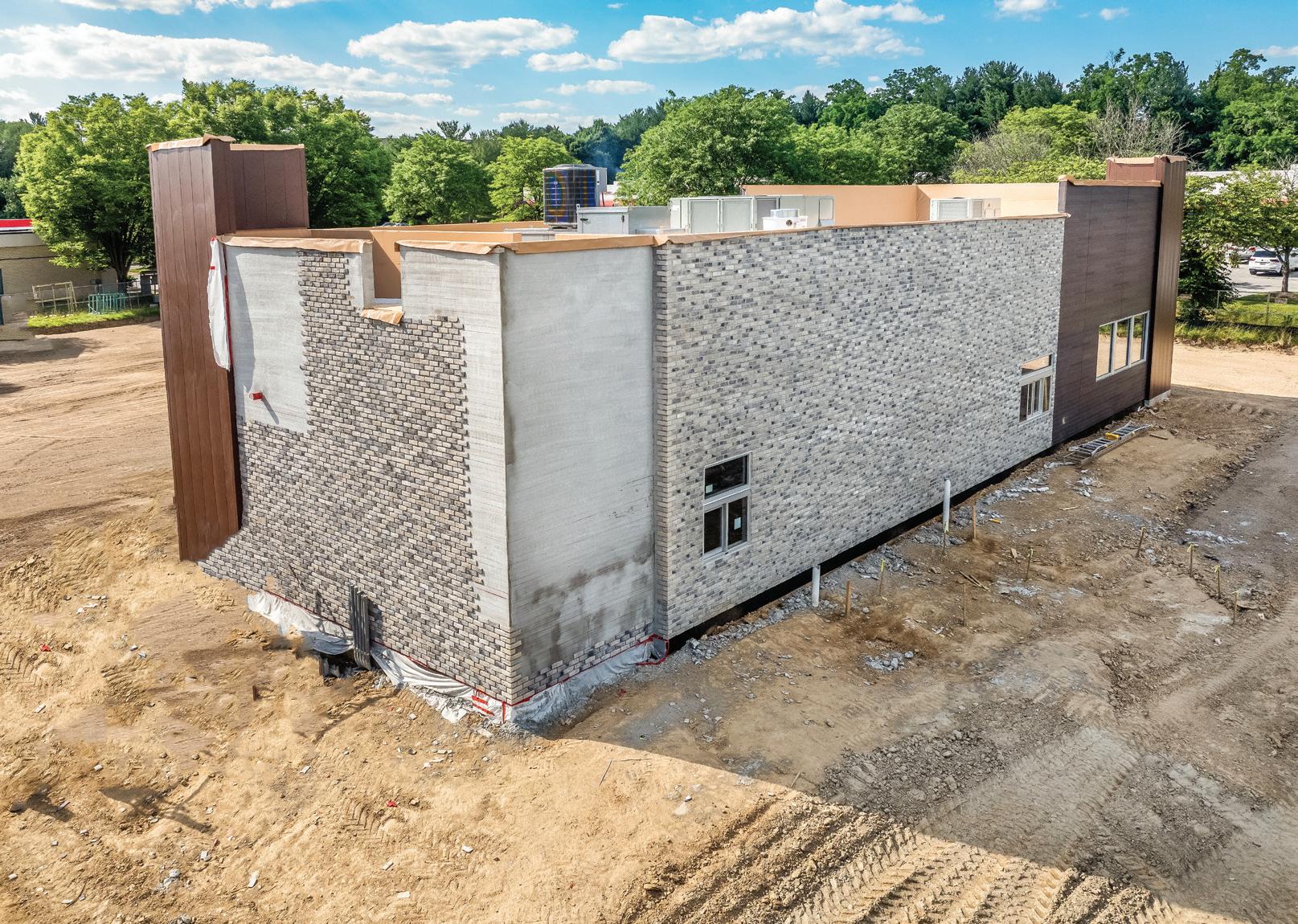
central test is whether all vehicles can be contained on site without spilling into public roads or shared drive aisles. That depends on the orientation of the building, the length and shape of the queue lane, how cars enter and circulate, and how local traffic behaves during peak periods. Two half-acre parcels may perform entirely differently depending on whether they sit on a sleepy rural corridor or a high-pressure suburban arterial.
Traffic context is as influential as geometry and failing to plan for queuing is the fastest way for a seemingly viable site to fall apart. It’s also the most common reason QSRs abandon parcels late in due diligence.
Many QSR concepts today are intentionally compact, but that doesn’t mean every compact site is viable. Parcels that look
workable on paper often suffer from subtle limitations. They are too shallow to wrap a drive-thru around the building, too narrow to accommodate circulation, or too irregularly shaped to create safe turning movements. Some are simply overwhelmed by adjacent traffic volumes, making entry and exit challenging during peak times.
These compact concepts are also ideal for pad sites carved from big-box parking lots, an increasingly common site for QSRs. These locations can offer several advantages: existing infrastructure, predictable access, and an opportunity to replace underused asphalt with something more visually engaging. When pad sites are selected and planned thoughtfully, they can create highperforming locations with a smaller footprint and a built-in customer base.
But the benefits of a pad site come with constraints. Shared
successful franchise partner is someone who wants to create that third place in their community.”
Each franchisee gets to make their Millie’s location unique in design and flavor, with each partner also getting an ice cream truck for community events and local collaborations with whatever new market the brand is a part of.
Successfully transitioning into franchising included listening to experts in the field and partnering with broad-line distributor Cisco. Millie’s headquarters is in Homestead, Pennsylvania, where all its products are self-manufactured. Every ingredient put into Millie’s ice cream is premium-grade and locally sourced. Raw, heritage-breed milk is received from local western Pennsylvania farms. The milk is then pasteurized and poured into different mixes depending on the flavor profile, and then, violà—Millie’s ice cream.
What makes Millie’s franchises different is that none of the ice cream is made on site; rather, it’s a “no-churn” franchise concept. This means that staff do not need to be hired to make the ice cream, and all of the product is sent straight from Millie’s team of chefs.
Townsend believes franchising Millie’s is a way to “clone the founders” in a sense. “Millie’s is our baby. What we’ve learned through franchising is that our franchise partners care just as much about their Millie’s baby as we would,” she says.
A core value is to use high-quality ingredients, which is why the price may seem a bit high to some people, says Townsend. “Our ice cream, as a result, is not going to be the cheapest around, but we are committed to not using anything artificial in our product.”
The tagline is “Millie’s makes moments,” and Townsend believes that this is not only true about how good the product tastes, but also how enjoyable the customer experience is.
2026 is going to be a banner year for Millie’s, since the brand is expanding into six new markets in Raleigh, North Carolina; Washington, D.C.; Buffalo, New York; Nashville, Tennessee; Lubbock, Texas; and Austin, Texas.
OUTSIDE INSIGHTS / CONTINUED FROM PAGE 43
access roads limit drive-thru placement. Internal drive aisles introduce additional queuing sensitivities. Utility lines may need relocation. Stormwater systems may already be at capacity. And any backup into the shared circulation affects not just the QSR but every tenant in the center.
Even when zoning permits a drive-thru, municipalities often scrutinize how the queue interacts with the streetscape. Many towns resist having lines of cars visible from the main road and expect QSRs to present a storefront-like appearance along public frontages. That expectation shapes how a building can be oriented and how the site must be screened.
We’ve permitted drive-thrus on the street-facing side of a building, but rarely without negotiation. Success often requires a blend of enhanced landscaping, discreet fencing, minor berming, or architectural adjustments that soften the presence of vehicles. Screening isn’t just aesthetic; it’s a way to satisfy community standards and maintain momentum through design review. Some QSR prototypes also face resistance on signage or corporate branding, especially when a town wants buildings to reflect local character. Flexibility early in the design process helps keep projects on track.
All of these considerations are reasons why early site review is indispensable. The sooner a development team knows what the site can and can’t support, the better their chances of staying on schedule and preventing surprises.
This includes an understanding of the land-development issues that impact any commercial endeavor, including grading, contamination, wetlands, stormwater, utility capacity, political approvals. These don’t go away in QSR. They simply compound more quickly. QSR timelines are fast, margins are narrow, and small sites offer less room to engineer around problems.
BY DREW FILIPSKI
What it takes to deliver clarity, accuracy, and speed when it ma ers most.
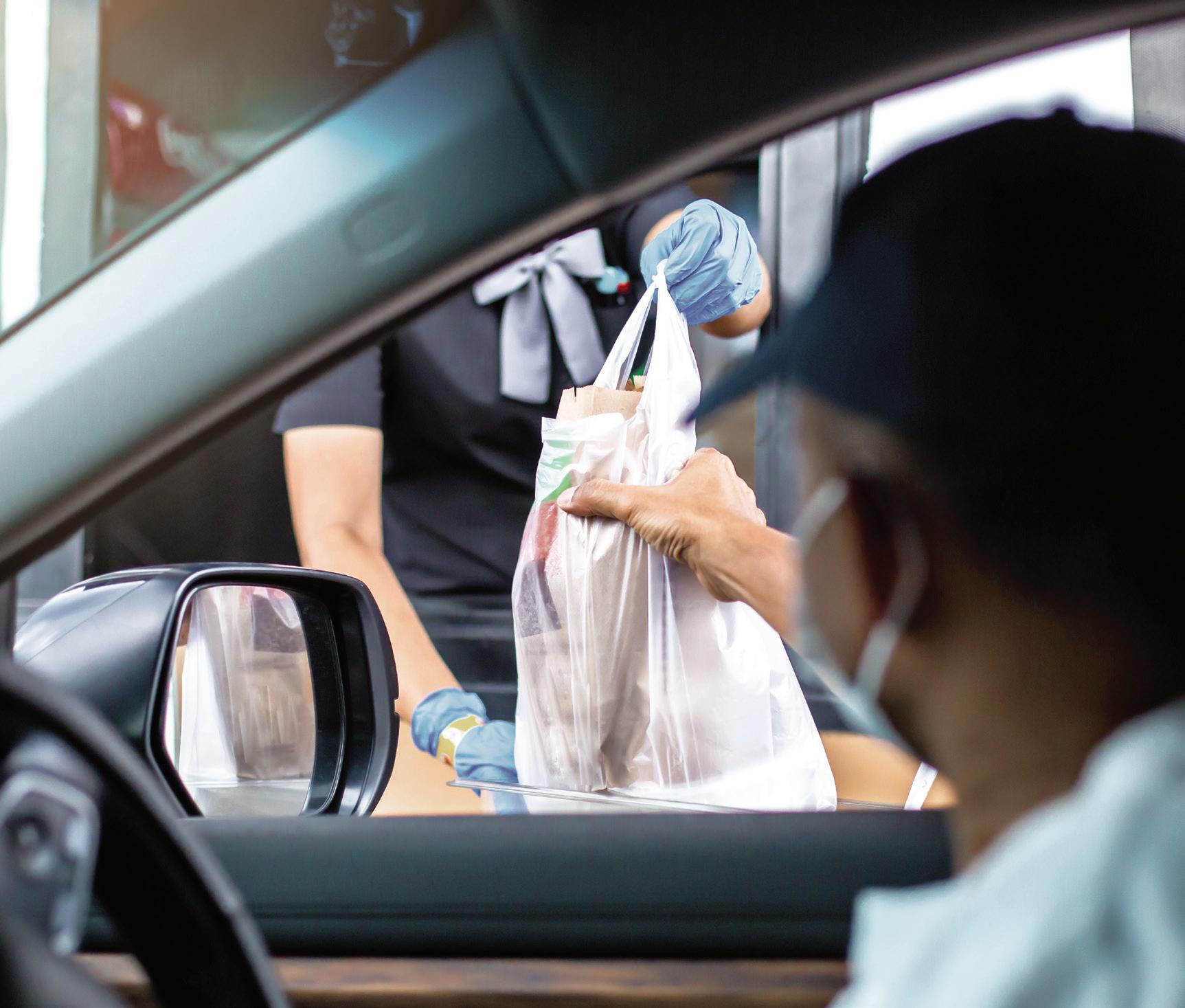
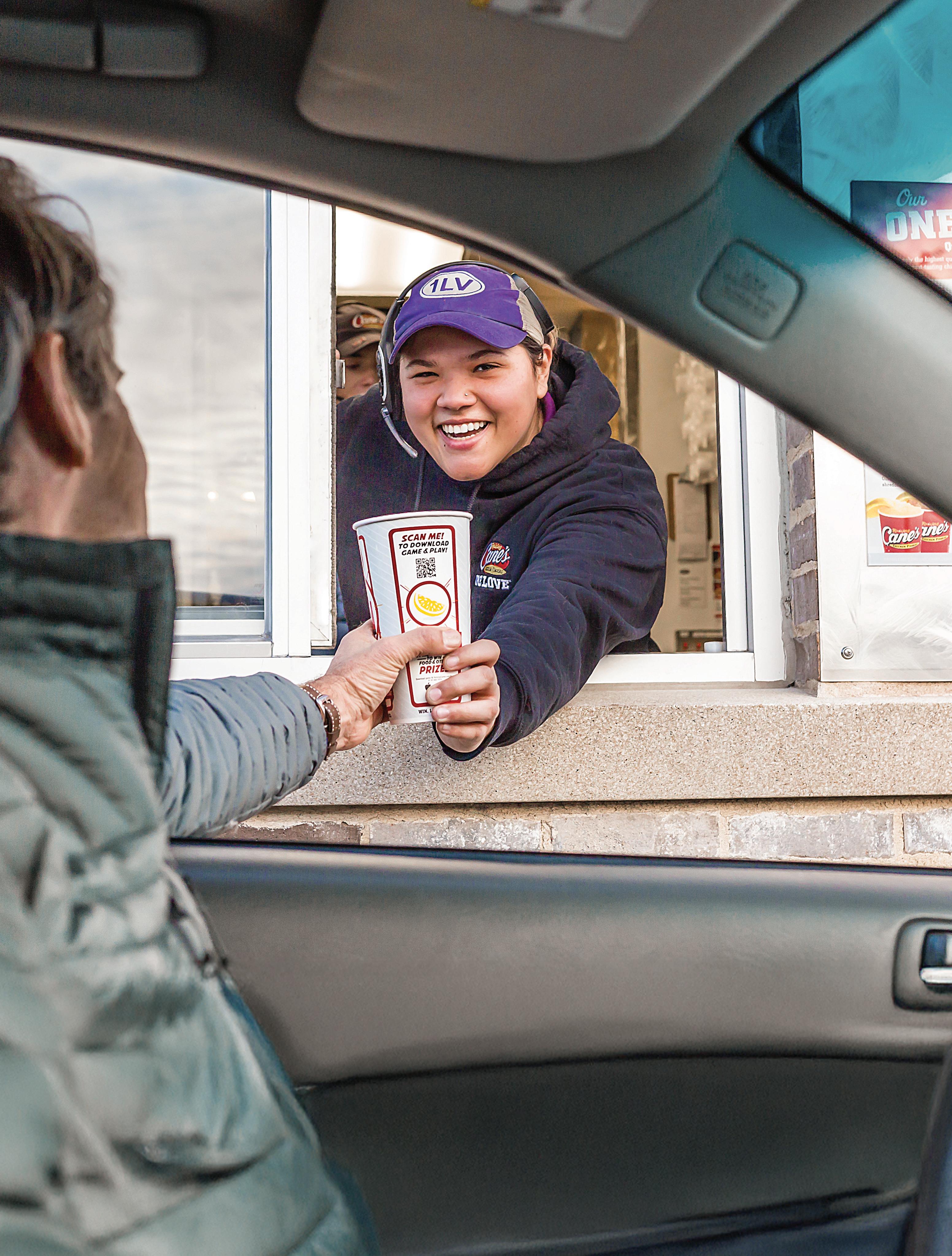
For today’s operators, the drive thru has become far more than a service lane. It’s where brand promises meet operational reality—handling rising order volume, multiple fulfillment channels, and increasingly complex menus, all under constant pressure to move faster without sacrificing accuracy.
Digital signage now sits at the center of that equation. What was once a static menu board is expected to function as a real-time system that reflects pricing, availability, promotions, and personalization instantly. When signage is disconnected from operations or treated as a creative layer alone, small inefciencies compound quickly, showing up as longer lines, order errors, and missed revenue.
The brands pulling ahead are approaching the drive thru diferently. They’re integrating digital menus with POS, inventory, loyalty, and data platforms to support clarity and decision-making at scale. As expectations continue to rise, success depends less on adding more screens and more on building systems that work together. The voices in this section explore how digital signage and drivethru technology are evolving into essential infrastructure that helps operators simplify complexity today while preparing for the demands of tomorrow.


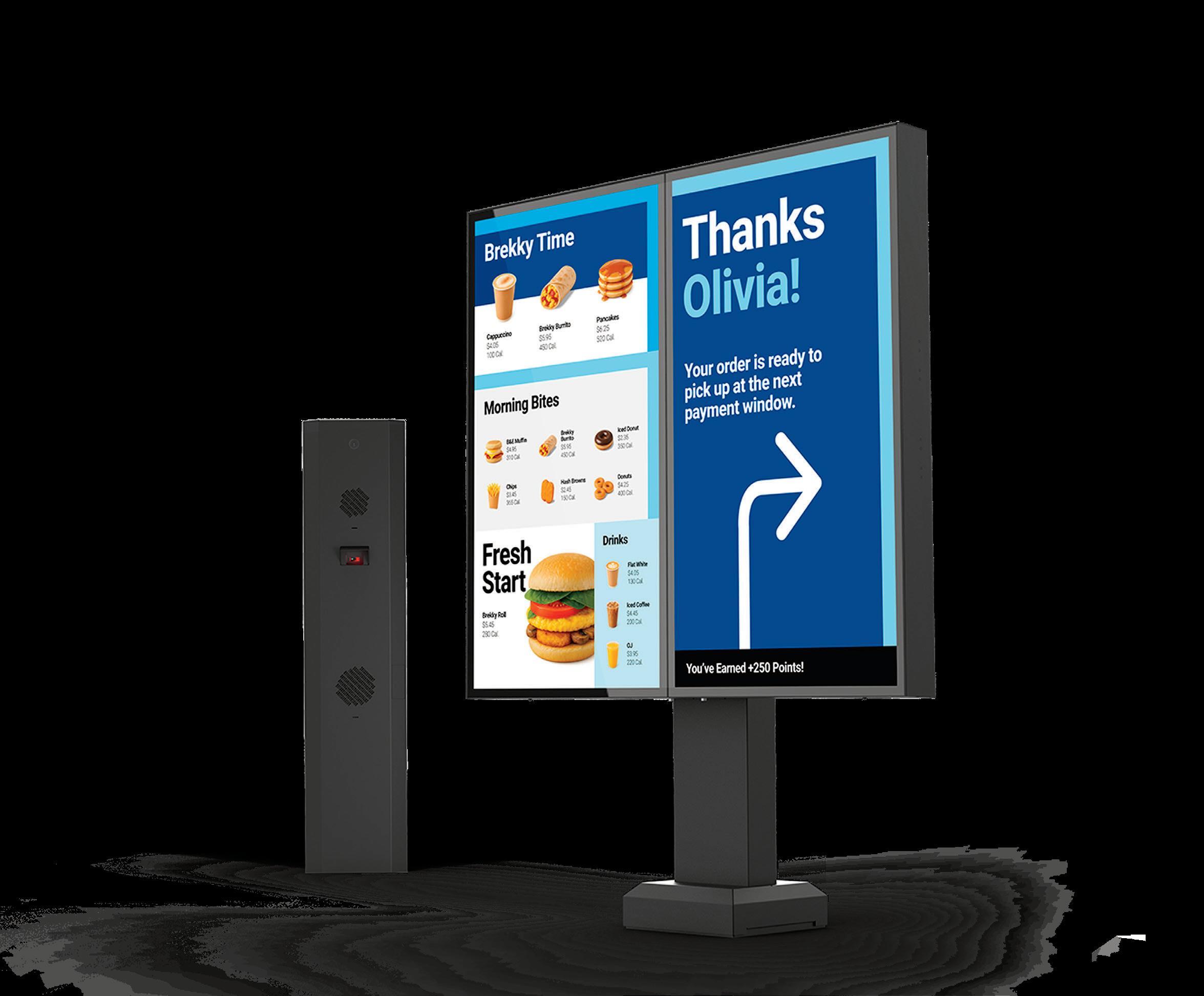

JEFF MILLER Chief Experience Officer
What are the biggest challenges for restaurants with digital signage and drive thru today?
The biggest challenge isn’t screens or lanes—it’s complexity. Operators are balancing speed, accuracy, labor pressure, menu inflation, and rising customer expectations, while working to keep restaurant systems integrated. Digital signage and drive thru are often treated as stand-
alone infrastructure, which limits visibility, adaptability, and impact at the most critical customer interaction points.
How are these challenges impacting the industry?
As drive thru volumes grow and multiple touchpoints require consistent alignment, even small inefciencies compound quickly. Delays reduce throughput, increase crew stress, and erode guest trust. Without real-time insight into device health, content performance, and ordering behavior, operators struggle to optimize experiences at scale.
What do you think will be the biggest challenges and opportunities in the next 10–20 years?
The future drive thru isn’t a lane; it’s a connected journey. Experiences will adapt in real time based on context, demand, and operations. The risk isn’t new technology—it’s adding complexity across diferent touchpoints without simplifying the experience.
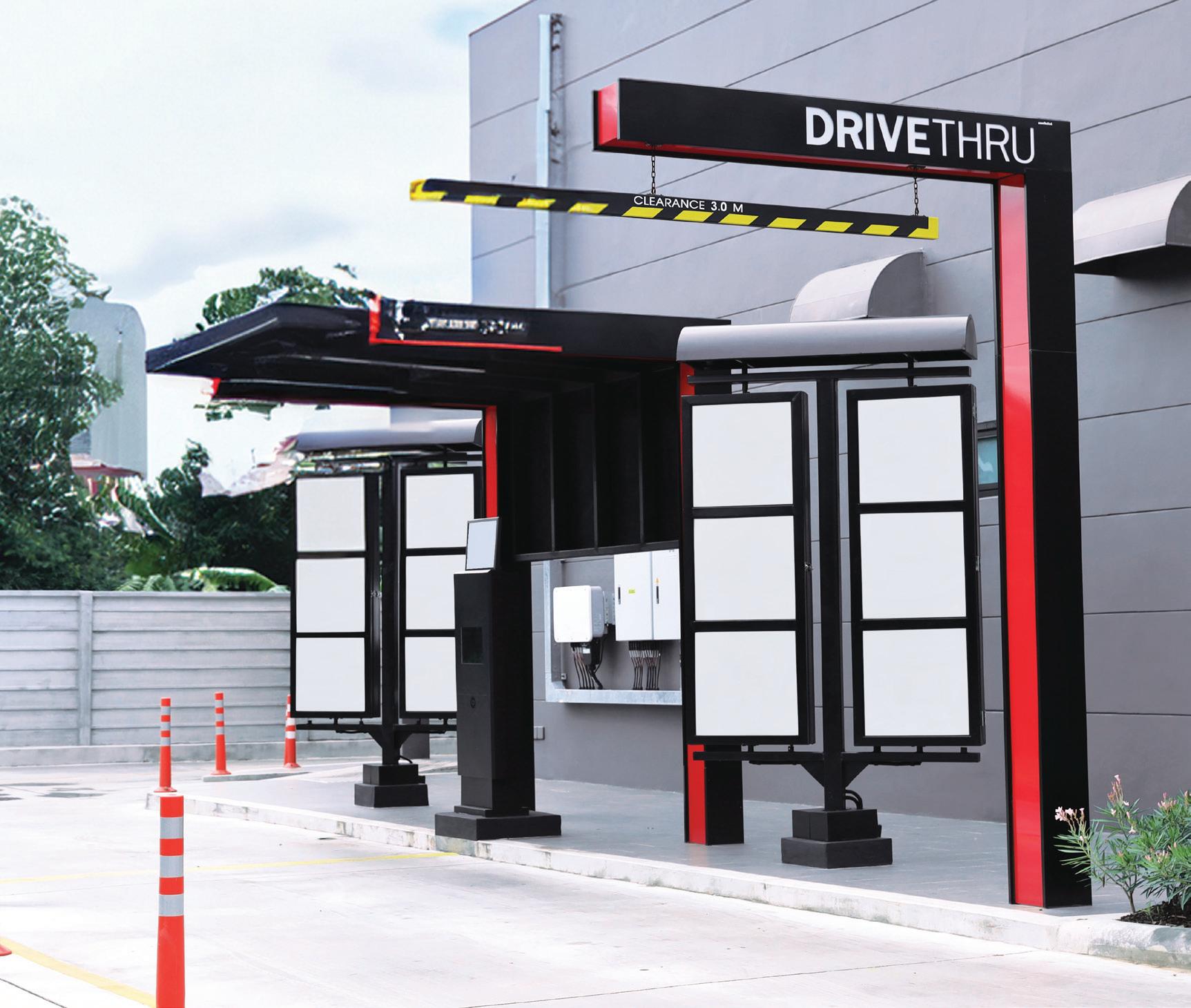


How are operators addressing these challenges efectively?
The most efective operators start with outcomes, not hardware. They focus on speed, accuracy, crew confidence, and guest trust, then work backward to platforms that unify content, data, monitoring, and services.
What mistakes do operators make with digital signage and drive thru?
The most common mistake is treating digital signage as stand-alone infrastructure rather than a living system. Screens alone don’t create value; continuous monitoring, testing, and orchestration across touchpoints does.
How have customer expectations changed in recent years?
Today’s guests expect more than speed; they expect confidence and ease. When experiences are clear, predictable, and responsive, they feel intuitive rather than stressful. The future of the drive thru isn’t louder or faster—it’s calmer, more human, and sometimes even enjoyable.
Is there anything else you would like
the audience to know?
The brands that win won’t just digitize experiences; they’ll design them intentionally, measure them consistently, operate them intelligently, and evolve them continuously.
VP of Strategy and Customer Engagement
What are the biggest challenges for quick-service restaurants with digital signage and drive-thru today?
The biggest challenges come down to accuracy, speed, and complexity. Operators are managing constant changes in pricing, inventory, promotions, and regional diferences, all of which must be reflected instantly across menus. When systems are not con-
nected, updates become manual and error prone. In the drive thru, speed and clarity are critical, yet many legacy layouts and tools were not built for today’s volume or expectations.
How are these challenges impacting the industry?
They directly impact throughput, revenue, and guest satisfaction. Inaccurate or poorly designed menus slow ordering and increase errors. Even small delays add up at scale. Operators also miss opportunities to optimize menus, promote high-margin items, or respond quickly to demand.
What mistakes do operators make with digital signage and drive thru?
A common mistake is treating digital signage as a content project instead of an operational system. Others optimize for short-term needs without planning for scale, reliability, or serviceability in high-trafc environments.
How have customer expectations changed in recent years?
Customers now expect speed, clarity, personalization, and consistency. They assume pricing and availability are accurate and that ordering is frictionless. Outdated or confusing experiences stand out immediately.
What misconceptions exist about digital signage and drive thru today?
Many still think it is just about adding screens. In reality, value comes from aligning creative strategy with operational goals. Digital signage should function like a teammate, continuously adapting and providing feedback rather than being static.
Is there anything else you would like the QSR audience to know?
The biggest gains come from thinking holistically. When creative strategy, physical design, and operations align, complexity decreases and experiences scale more easily. Digital signage and drive thru should simplify work, not add to it. Brands that treat these systems as core infrastructure will be best positioned to lead.
across hundreds or thousands of locations. Variability in site conditions, local contractors, and legacy infrastructure frequently leads to inconsistent performance and brand presentation.
How are these challenges impacting the industry?
Director of Sales ( Western U.S. and Canada)
What are the biggest challenges for quick-service restaurants with digital signage and drive thru today?
One of the biggest challenges continues to be scalability and consistency across multi-site rollouts. National and regional brands need signage solutions that can be deployed quickly, serviced easily, and updated consistently
When systems aren’t standardized, rollouts slow down, costs increase, and Construction, IT, and Operations teams end up supporting too many variations. That inconsistency shows up directly in the customer experience, from uneven brightness to delayed menu updates. At an industry level, the brands that win are the ones that treat digital signage like core infrastructure— designed to scale, easy to install and support, and ready for future technologies like AI-driven menus and POS integration.
What mistakes do operators make with digital signage and drive thru?
One of the biggest mistakes operators make is treating digital signage like a one-time AV install instead of long-term infrastructure. They opti-
mize for upfront cost rather than total cost of ownership, which leads to reliability issues, inconsistent performance, and higher service costs over time. Operators also underestimate harsh drive-thru environments, choosing displays or enclosures that aren’t truly outdoor rated.
How have customer expectations changed in recent years?
Guests now expect speed, accuracy, and continuity across channels— what they see on their phone needs to match what they see at the drive thru or pickup window. Digital signage is no
longer just marketing—it’s the visual confirmation layer that connects mobile, POS, and fulfillment into a single experience.
Is there anything else you would like the QSR audience to know?
The brands that succeed are the ones that invest in scalable, standardized infrastructure and choose partners who understand both technology and restaurant operations. When signage is reliable, consistent, and well integrated, it quietly does its job—driving speed, accuracy, and revenue without adding complexity.
Executive Vice President / General Manager
What are the biggest challenges for quick-service restaurants with digital signage and drive thru today?
Many restaurant operators still treat digital menu boards like static menus, failing to leverage the full potential of content management software for features like dayparting and optimizing displays to highlight highmargin items or quick-prep options that enhance speed of service. This underutilization results in missed opportunities for revenue growth and operational efciency. Additionally, integrating these systems with existing POS and inventory management software continues to pose a large hurdle, as there are no compatibility standards between the CMS and the POSsystem.
What do you think will be the biggest challenges and opportunities in the next 10–20 years?
In the next 10–20 years, the biggest challenges will come in how the drive thru is restructured around personalization and smaller staf resources. Brands that are already starting to
optimization that allows the customer to quickly order, leading to higher satisfaction through improved speed of service.
How have customer expectations changed in recent years?
embrace AI and systems that allow customers to order seamlessly from their own technology will be ahead of the game. As regulations on data privacy continue to evolve, operators will need to balance innovation with compliance.
What mistakes do operators make with digital signage and drive thru?
A common mistake is not choosing the right hardware for outdoor applications. Operators must also take full advantage of the CMS and its capabilities to improve the drive-thru experience through dayparting and content
Digital signage is no longer a novelty but a necessity. Customers expect an easy-to-process order experience and more relevant content, rather than static menu listings. More screen space should be given to what the customer is looking to order at that specific time, with imagery and limited options focused on speed of service.
What misconceptions exist about digital signage and drive thru today?
A common misconception is that all digital displays perform equally outdoors. In reality, investing in purposebuilt, high-brightness, weatherproof designs yields better ROI through longevity and performance.
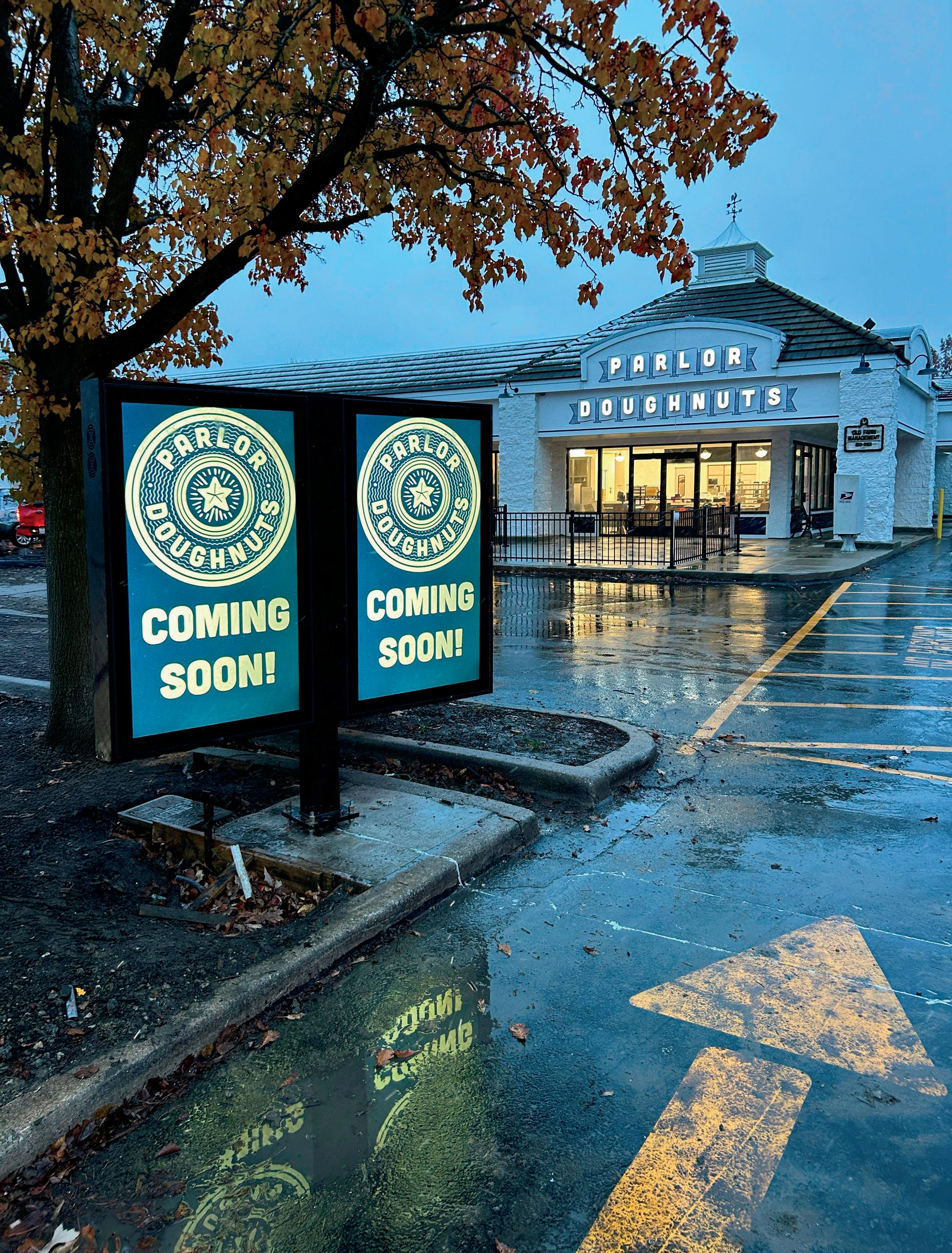

President and CEO
What are the biggest challenges for quick-service restaurants with digital signage and drive thru today?
The complexity of the customer ordering landscape (in store, drive thru, online, third party) and having software that integrates all of these ordering methods seamlessly throughout the operation, while maintaining high quality and customer experience.
How are these challenges impacting the industry?
Operators are having to figure out how to integrate legacy systems with
new add-on capabilities, or start over and develop one comprehensive platform that meets customers in all ordering channels.
What do you think will be the biggest challenges and opportunities in the next 10–20 years?
The biggest challenge will be managing technology and keeping up with consumer behavior as technology evolves. There are opportunities in using data and automation while delivering personalized experiences for customers.
How are operators addressing these challenges efectively?
There is a focus on integration and solutions that can grow and evolve with the brand strategy rather than being replaced.
What mistakes do operators make with digital signage and drive thru?
Treating digital signage as a static system, without using the benefits of order confirmation and pricing integration to deliver true ROI.
What key tasks are being enhanced through digital signage and drive thru?
Speed of service and order accuracy can be improved with order confir-
mation systems, and intelligent upselling can highlight high-margin items or suppress low-inventory items.
How have customer expectations changed in recent years?
Customers are less impressed by the novelty of digital signage and video content; they want their meals to be fresh, fast, and accurate, and for digital signage to highlight the best value options for their money.
Is there anything else you would like the QSR audience to know?
Technology alone doesn’t create advantage—incorporating it as part of a broader strategy to simplify operations and empower employees will help operators consistently serve customers better.
Senior Vice President
What are the biggest challenges for quick-service restaurants with digital signage and drive thru today?
One of the biggest challenges is recognizing that digital menus are not just static replacements—they’re dynamic tools that require a clear strategy and content plan. Another challenge is balancing personalization with efciency: menus must be relevant and
timely while still supporting fast, accurate ordering. The most successful operators align marketing, operations, and technology to deliver relevant content

QSR’s webinar series tackles hot topics in foodservice—and best of all, you can learn from the comfort of your own office.
Take a deep dive into our collection today!
that improves speed, accuracy, and the overall guest experience.
How are these challenges impacting the industry?
Without a clear strategy, digital menus can slow ordering and reduce drive-thru efciency, impacting throughput and customer satisfaction. Operators who use digital signage strategically—delivering relevant, personalized content that simplifies decisions—see faster service, greater accuracy, and higher check averages, widening the gap between leaders and laggards.
What do you think will be the biggest challenges and opportunities in the next 10–20 years?
Quick-service restaurants will face the challenge of scaling personalization while maintaining speed, consistency, and simplicity. Consumers will expect more relevant, data-driven experiences, requiring integration of digital signage, POS, AI, and inventory systems without adding complexity. At the same time, digital menus and drivethru technology can become intelligent platforms that influence orders, improve accuracy, and optimize labor and throughput.
What mistakes do operators make with digital signage and drive thru?
A common mistake is treating digital signage as static marketing rather than a real-time operational tool. Others underestimate the importance of content governance, ongoing support, and lifecycle management. Investing in hardware without a clear long-term content and support strategy often leads to underutilized systems.
How have customer expectations changed in recent years?
Customers now expect accuracy, clarity, and speed as a baseline. They also expect relevance—menus that reflect availability, time of day, or location. A slow or confusing drive-thru experience is no longer tolerated.
Is there anything else you would like the QSR audience to know?
Digital signage and drive-thru technology are foundational infrastructure. The brands that succeed will be those that view these systems as strategic assets and choose partners who can
evolve alongside them as consumer expectations continue to rise.
What are the biggest challenges for quick-service restaurants with digital signage and drive-thru today?
Today’s biggest challenges revolve around consistency, efciency, and maintaining relevance while content expectations are continuously evolving. Drive thrus and outdoor digital signage must perform reliably across multiple locations, long operating hours, and extreme weather conditions, all while
providing clear, customer-focused content at a rapid speed. The challenge is no longer simply displaying information, but ensuring it is engaging, personalized content that accurately reflects oferings and promotions across locations, channels, and times of day.
How are these challenges impacting the industry?
When signage falls short— whether due to operational issues, weather and visibility issues, or outdated information—it impairs order accuracy, team speed, and customer satisfaction. As margins tighten and competition increases, even small breakdowns in communication create friction that customers notice immediately, especially in the drive thru, which now accounts for a majority of transactions.
How are operators addressing these challenges efectively?
Operators are embracing
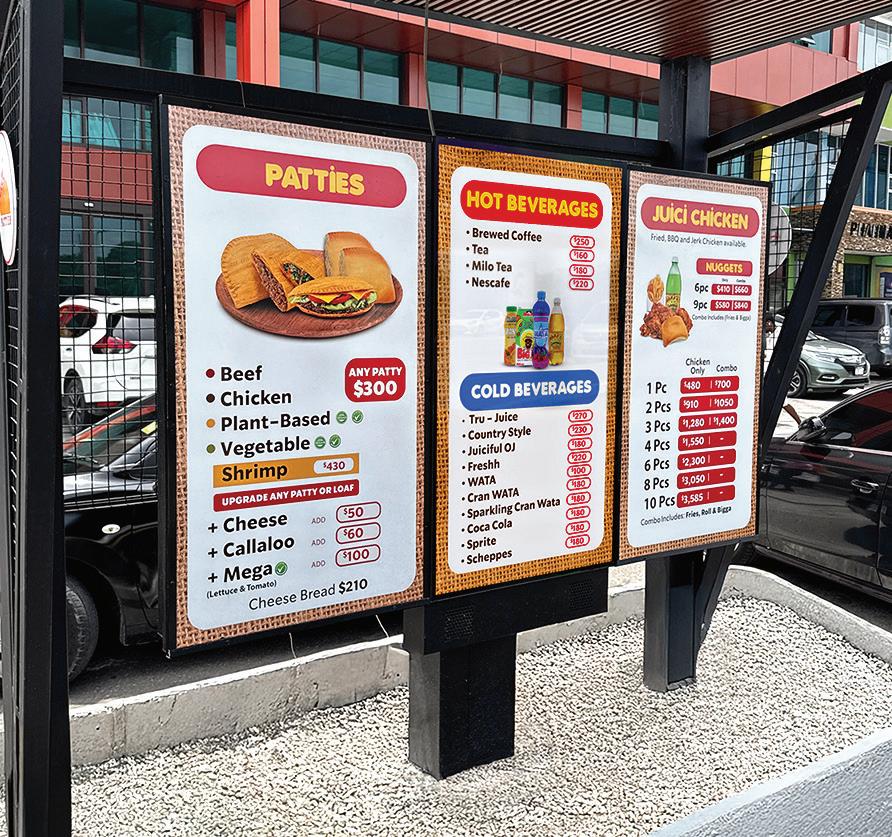
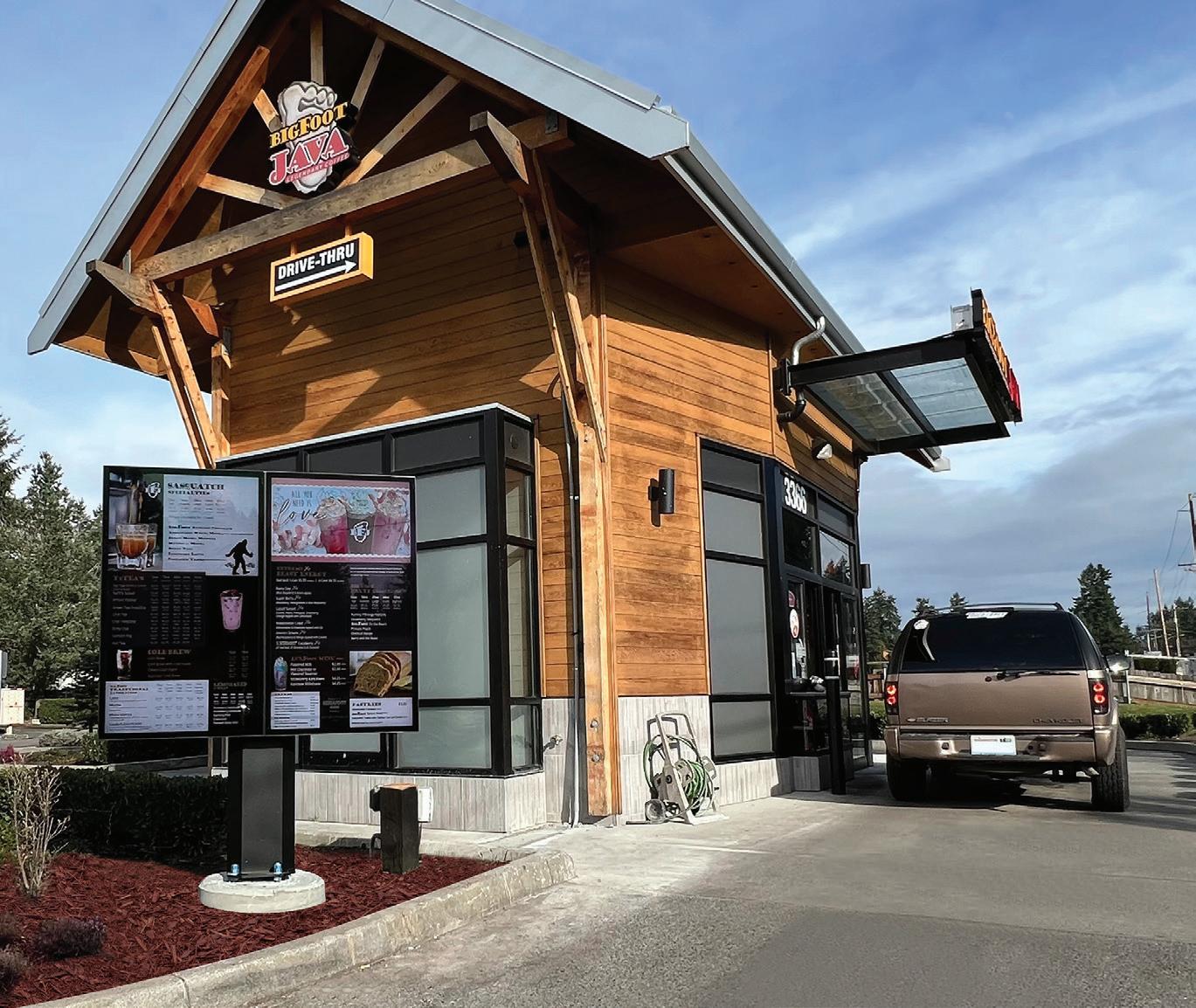

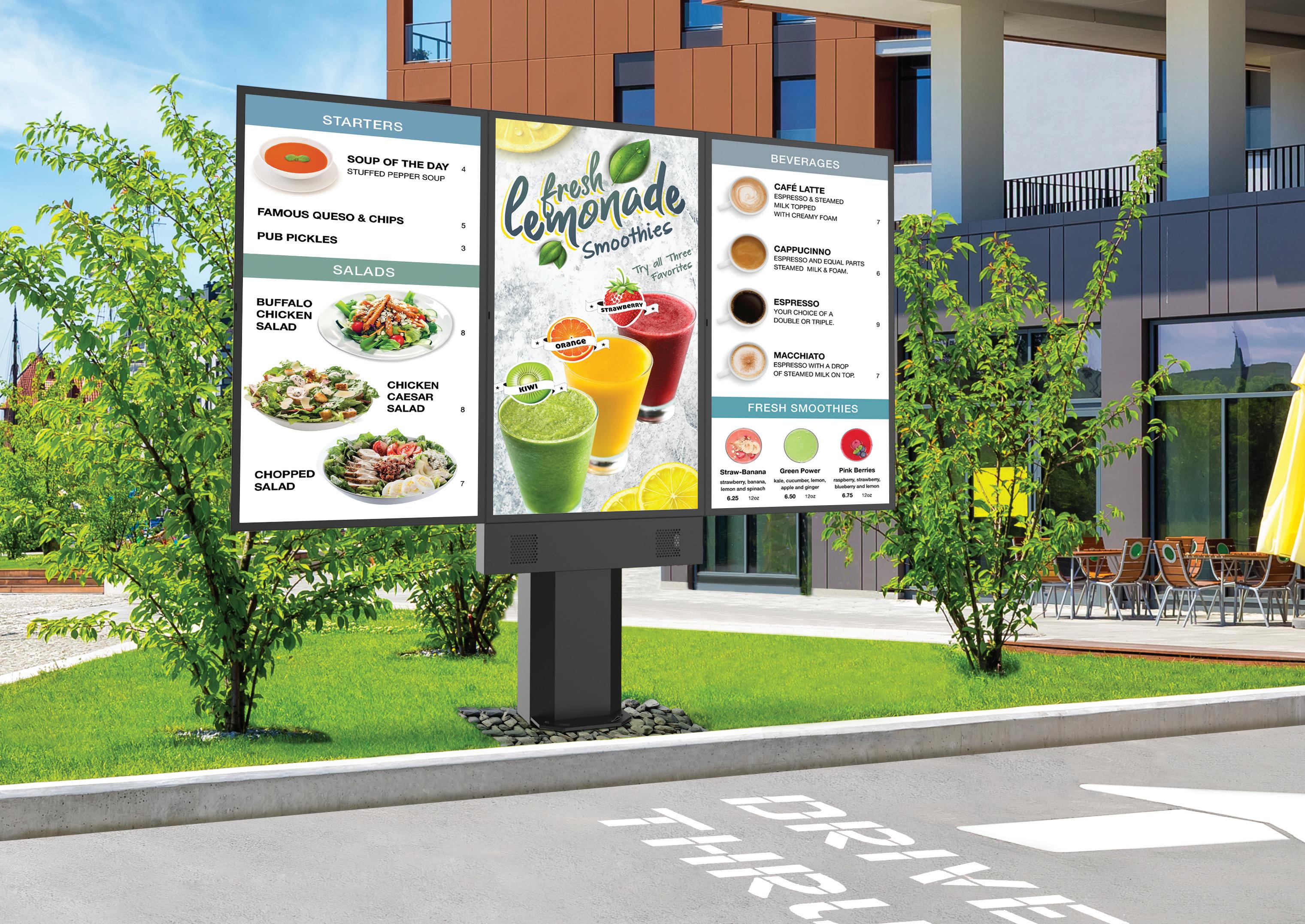


a digital signage ecosystem rather than isolated deployments, aligning signage with ordering systems, inventory data, and operational workflows so updates happen automatically rather than manually. Remote visibility is also top of mind, ensuring operators can access the status, performance, and accuracy of signage across every location in real time.
What mistakes do operators make with digital signage and drive thru?
A common mistake is underestimating environmental challenges such as sunlight, heat, cold, and moisture. Another misstep is overcrowding screens with too much information, which slows decision making and undermines efciency. Digital signage works best when treated as a precise communication tool, not just a digital version of a printed menu board.
Is there anything else you would like the QSR audience to know?
The drive thru is no longer just a service lane; it is the front door of the brand. As consumer expectations evolve and competition intensifies, quick-service restaurants that embrace digital signage and use it to create personalized, dynamic experiences will have a clear edge.
National Sales Director
What are the biggest challenges for quick-service restaurants with digital signage and drive-thru today?
As dine-in spaces contract by up to 30 percent, restaurants are investing heavily in drive-thrus, delivery, curbside, locker storage, and mobile pickup—solutions that have moved from convenience to expectation. Aligning capacity with customer demand requires the right investments in technology and dependable equipment to prevent operational slowdowns. Rising costs, particularly for food and
labor, combined with real estate constraints and workforce shortages, add another layer of complexity. Some brands are addressing these challenges by adopting drive-thru-only locations to improve accessibility while reducing dining space that fewer customers are using today.
How are these challenges impacting the industry?
The industry is increasingly data driven, with operators measuring everything from customer trafc to KPIs that drive profitability. Speed matters— but quick service only works when it’s accurate, high quality, and delivered with genuine hospitality. Operators are balancing investments in technology without losing the core values that keep customers coming back. AI is already improving order accuracy and efciency, with leading brands reporting reduced employee intervention in order taking, and its role is expected to continue expanding as wages rise and workforce shortages persist.
What do you think will be the biggest challenges and opportunities in the next 10–20 years?
The quick-service restaurant industry is expected to grow 7–9 percent over the next decade, bringing increased competition and a more fragmented landscape. Managing costs while maintaining quality and service standards will remain a challenge. Advancements in AI and automation will create opportunities to improve operational efciency, while smaller, drive-thru-only locations will allow brands to capitalize on underutilized real estate and meet demand for faster, more convenient service.
What mistakes do operators make with digital signage and drive thru?
One common misstep is failing to maintain efcient service delivery in the drive thru. Longer queues can deter customers, as many avoid using the drive thru if more than five to seven vehicles are already in line. Another mistake is not accommodating third-party delivery drivers, which can disrupt trafc flow and slow operations.
What misconceptions exist about digital signage and drive thru today?
A common misconception is undervaluing drive-thru customers, who

often represent 80 percent or more of overall business. Making the right investments in drive-thru design, signage, procedures, and reliable equipment is essential for long-term success.
What are the biggest challenges for quick-service restaurants with digital signage and drive thru today?
One of the biggest challenges today is managing the growing number of ordering channels at the drive thru. Guests can place orders from the drivethru lane, a mobile app, or a third-party delivery platform—all of which often converge at a single service window. This multi-channel demand puts pressure on operations, extending wait times and cre-
ating bottlenecks at pickup. To address this, many large brands are rethinking drive-thru design, shifting toward multiple service windows and dedicated walkup windows for mobile order pickup. Designs for the largest burger chains now include up to four pass-thru windows to separate payment, food handof, and mobile or delivery orders.
What do you think will be the biggest challenges and opportunities in the next 10–20 years?
One of the biggest opportunities
will be the continued evolution of chain-specific mobile apps, which will become faster, more intuitive, and increasingly personalized. However, highly customized digital orders also present operational challenges, disrupting kitchen workflows and extending service times. Separating pickup locations for longer lead time or highly customized orders—such as dedicated mobile order windows or zones—can help protect speed of service while delivering the convenience customers expect.
What mistakes do operators make with digital signage and drive thru?
One common mistake is cutting building costs too aggressively at the expense of long-term performance. With more than 75 percent of order volume flowing through the drive-thru window, investing in current technology and design pays dividends. Upgrading to insulated, Low-E glass improves energy efciency, enhances security, and increases staf comfort. Integrating smart window electronics, such as electromag-
netic hold-open systems, also supports faster, more ergonomic service.
Why is partnering with a trusted brand more crucial now than ever?
As drive-thru operations become more complex, trusted partners bring perspective, collaboration, and longterm experience. With more than 50 years of partnership with major chains, Ready Access has developed solutions driven by real-world needs and tailored to regional and regulatory requirements, helping brands future-proof investments while maintaining consistency across locations.
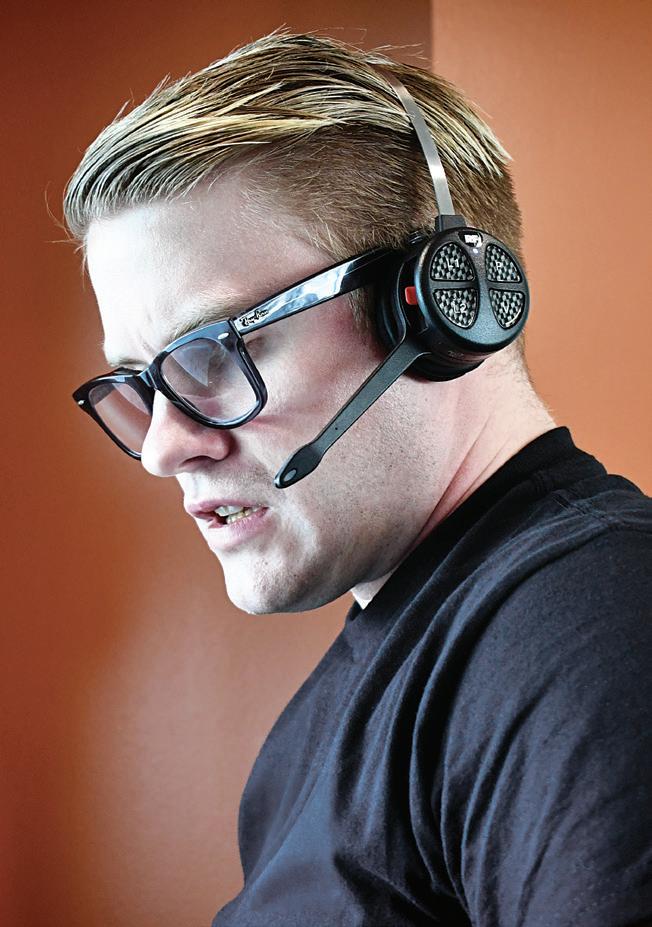
What are the biggest challenges for quick-service restaurants with digital signage and drive thru today?
The biggest challenges are maintaining system uptime, ensuring clear and accurate communication, managing increasingly complex content, and integrating digital signage and drive-thru systems seamlessly with POS, kitchen, and loyalty platforms.
How are these challenges impacting the industry?
These challenges are widening the performance gap between well-run operators and the rest, increasing the cost of downtime, and forcing brands to treat digital signage and drive thru as
mission-critical revenue systems rather than optional technology.
What do you think will be the biggest challenges and opportunities in the next 10–20 years?
Quick-service restaurants will face challenges around personalization, cybersecurity, infrastructure resilience, and labor simplification, while opportunities will emerge through AI-driven operations, smarter merchandising, and faster, more accurate drive-thru experiences.
How are operators addressing these challenges efectively?
Leading operators are standardizing their technology stack, investiang in remote monitoring and proactive support, simplifying content governance, and designing systems that align with real-world store operations and labor realities.
What mistakes do operators make with digital signage and drive thru?
Common mistakes include overloading menu boards with information, underinvesting in audio clarity, ignoring environmental conditions, deploying technology without clear KPIs, and treating digital signage as a display instead of a performance tool.
How have customer expectations changed in recent years?
Customers now expect digital signage and drive-thru systems to work flawlessly, deliver faster service with greater accuracy, and feel as seamless as mobile or in-app experiences.
What misconceptions exist about digital signage and drive thru today?
A common misconception is that success is driven by screen size or hardware alone, when long-term performance is determined by thoughtful content strategy, disciplined operations, reliable systems, and data-driven decision making.
Is there anything else you would like the QSR audience to know?
Digital signage and drive thru are operational platforms that directly influence revenue, guest trust, and brand loyalty, and operators who treat them with the same discipline as core restaurant systems will be best positioned to win.

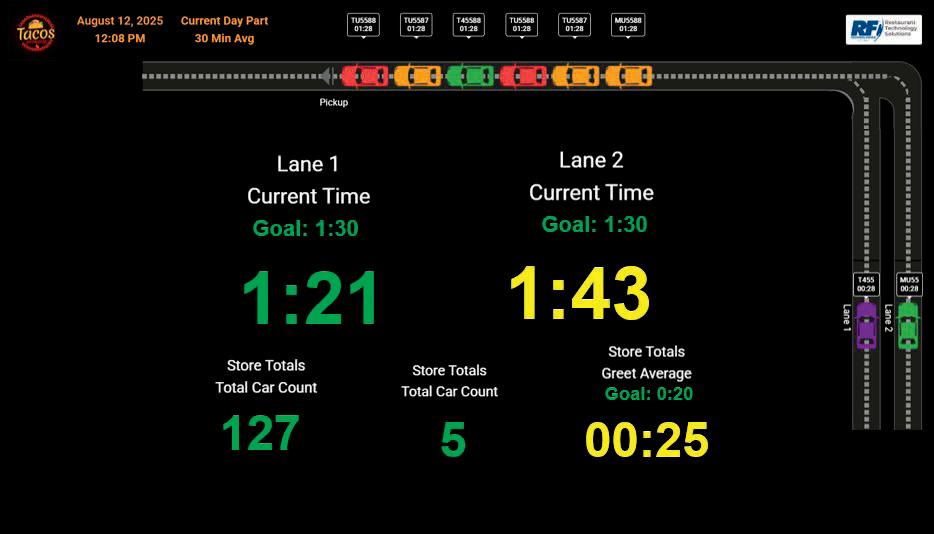
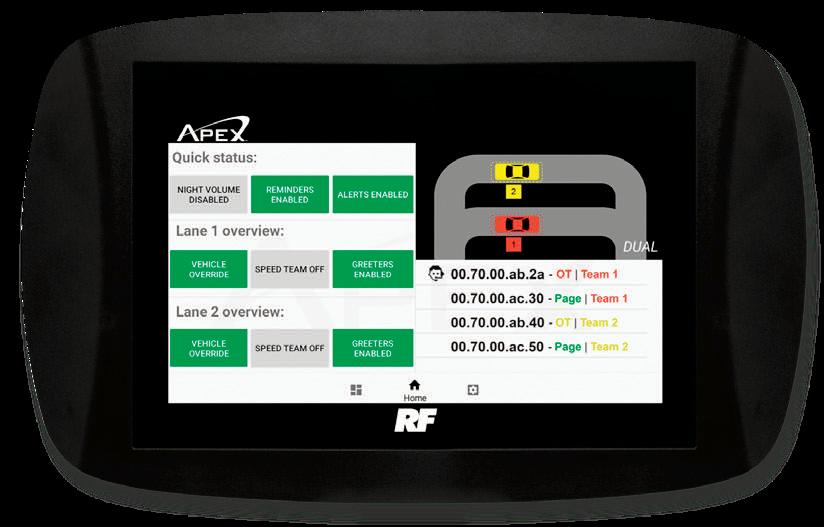


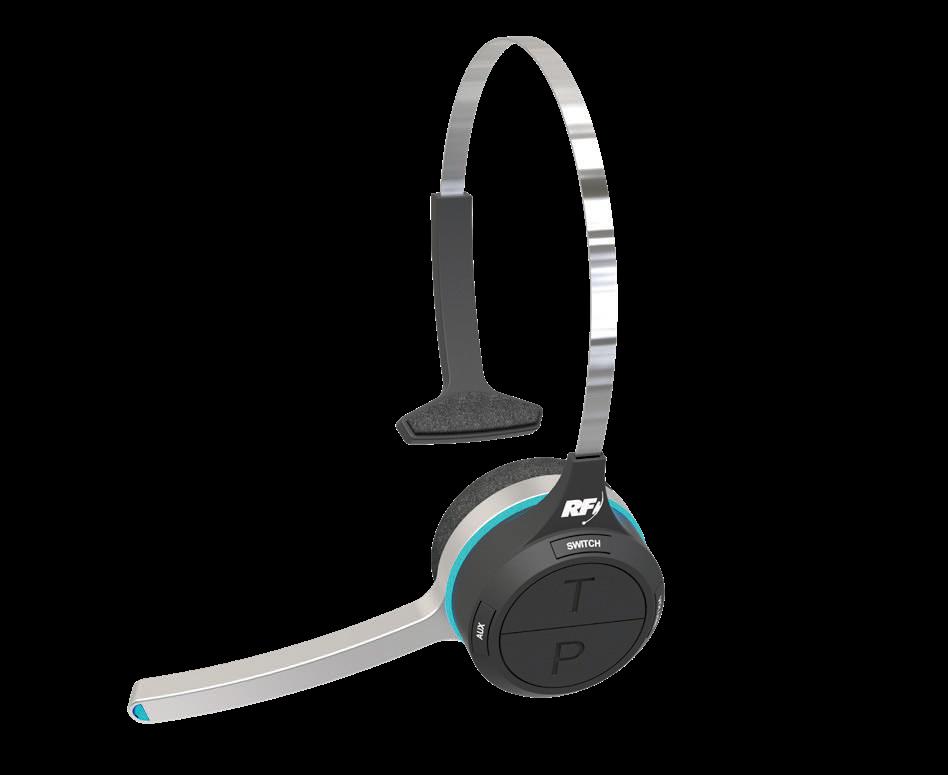

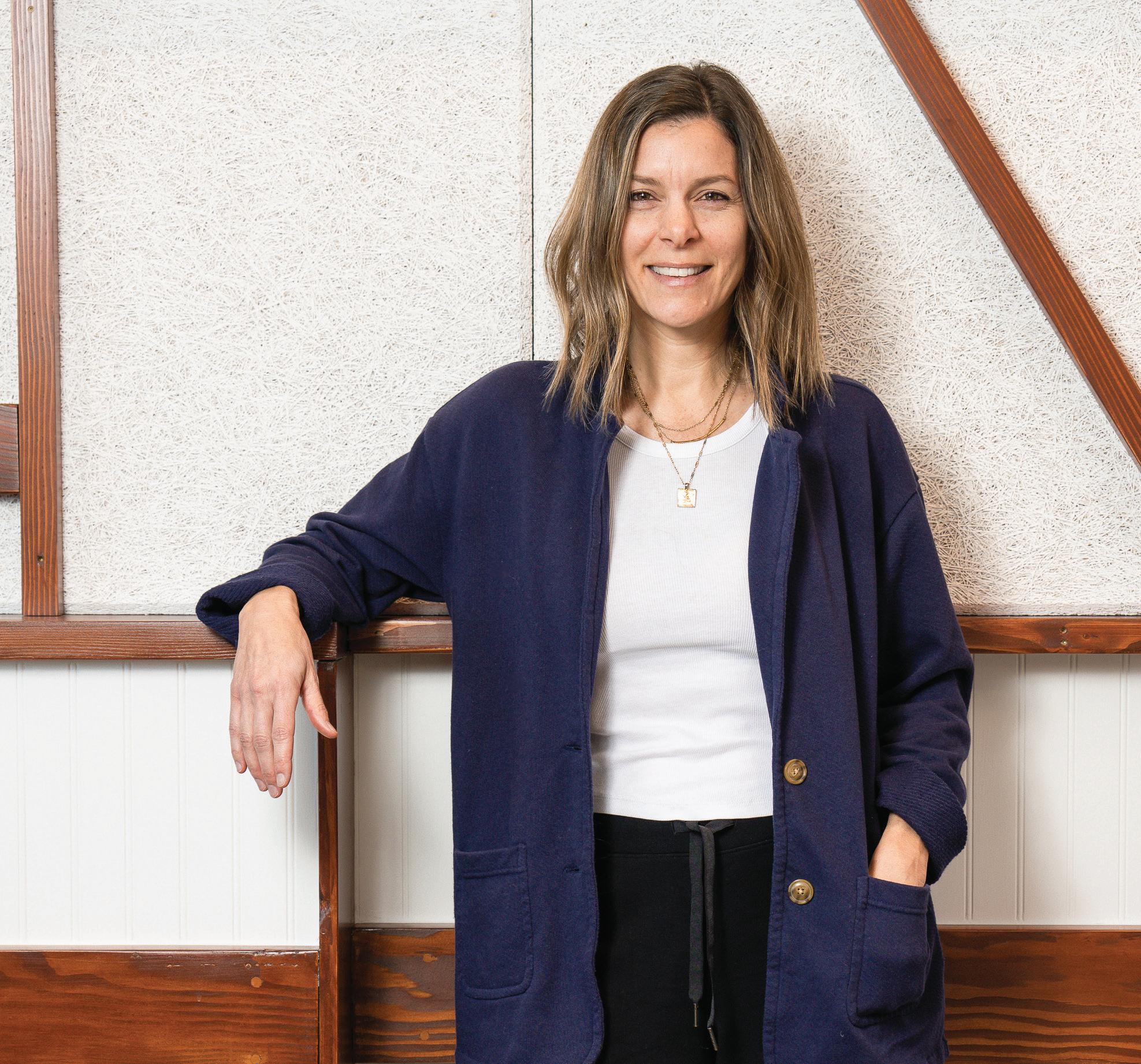
For as long as I can remember, I’ve been the friend or family member unwilling to settle for a sub-par meal. I was lucky to grow up during a period when restaurants were evolving, sourcing better ingredients, getting more creative, and becoming something closer to art than just sustenance. Looking back, my personal journey with food and wellness has closely mirrored the evolution of the restaurant industry itself.
After college, when I started competing in triathlons and later cycling, I began taking my health more seriously. I experimented with different ways of eating, with paleo being the most extreme and not my fondest memory. At one point, I realized my hands had actually turned slightly orange from eating so many carrots and sweet potatoes. Long endurance rides apparently demand a lot of carbs.
My career naturally paralleled that passion for movement and wellbeing. I’ve had the opportunity to help build consumer brands like vitaminwater, Muscle Milk, Honest Tea, and most
recently CAVA. The common thread across all of them was helping people feel better in their everyday lives, and I kept gravitating toward spaces where food, brand, and people intersected.
That path ultimately led to Farmside Kitchen. My co-founder, Ben Protheroe, and I shared a conviction that fast casual was entering a new phase—one shaped by more intentional eating and higher expectations for real food. We believed there was room for a modern American concept built around warm, satisfying meals made from whole ingredients, while still delivering real value, everyday convenience, and genuine hospitality.
In 2021, we launched Farmside Kitchen to fill that gap, opening our first location in Durham, North Carolina.
From the beginning, our bowls and salads were built around vegetables, grains, proteins, and house-made dressings, not because it was trendy, but because that’s how we like to eat and how many others do too.
What was your first job? A hostess at Parker’s American Grill in Bethesda, Maryland. It was my unofficial introduction to hospitality, culture, and reading people, along with learning how to smile through Saturday night chaos.
What’s your favorite menu item at Farmside Kitchen? That’s a tough one because I love them all. But if I had to choose one right now it would be the Root Veggie Bowl with roasted chicken breast or tofu.
Favorite cuisine beyond Farmside? I tend to eat close to nature, simple, real food. I’m no longer paleo, and I prefer my skin to stay its normal color. I focus on lots of vegetables, high quality proteins, and clean carbs. When I’m not eating at Farmside, I’m usually recreating a Farmbowl at home.
Who inspires your leadership? People who build lasting, unique cultures that support people and the planet without needing a spotlight. Danny Meyer for hospitality, Rose Marcario and Kris Tompkins for values-driven growth, and teachers like Lynne Twist, who remind me how much presence matters.
What’s one piece of advice restaurant executives need to hear? Invest in your people. Really get to know them. Look them in the eye, and genuinely tell them thank you.
Interests outside of work? Movement, including running, flow training and yoga. Adventures with my husband and daughters. Time in nature, travel, and singing in a band, which is pure joy on a very different kind of stage.

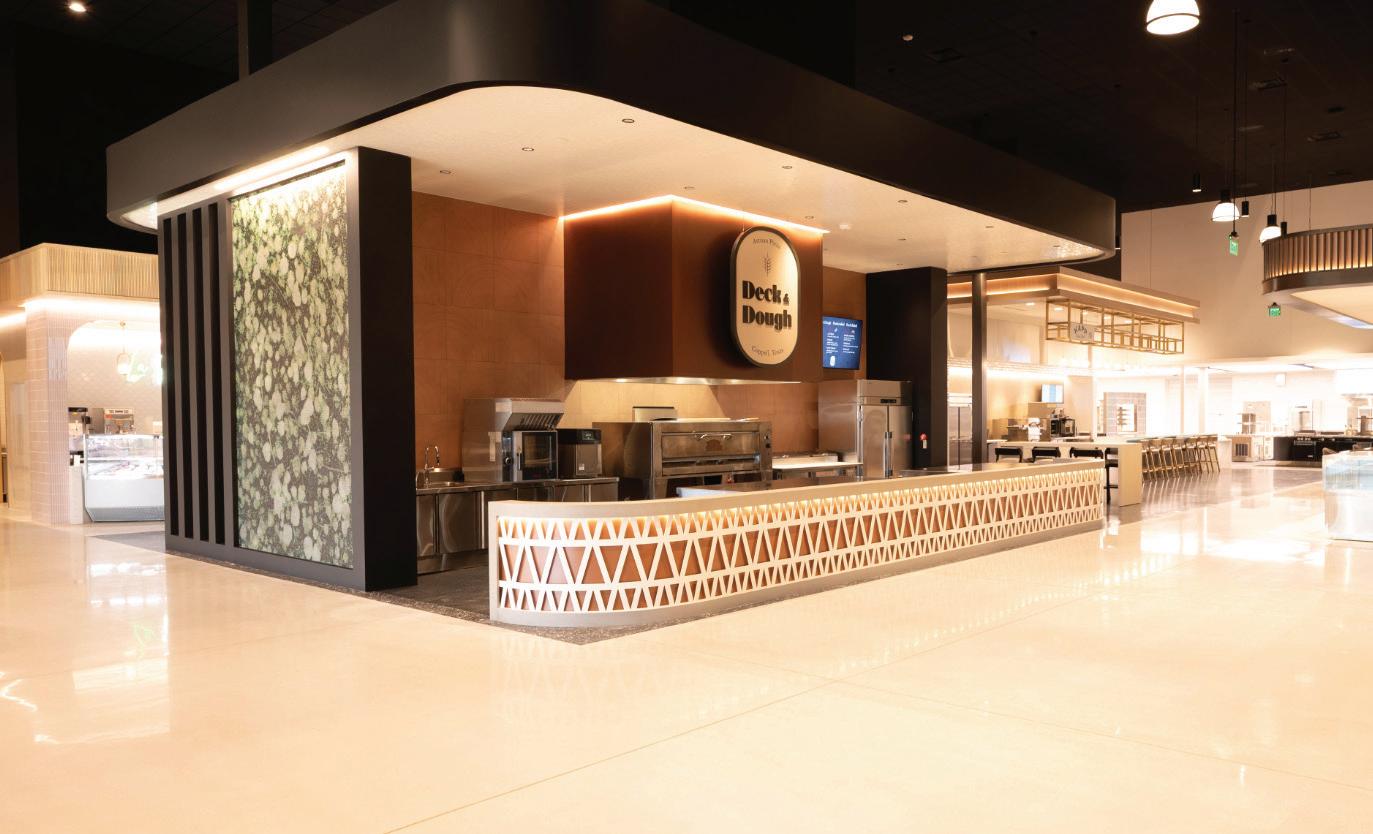

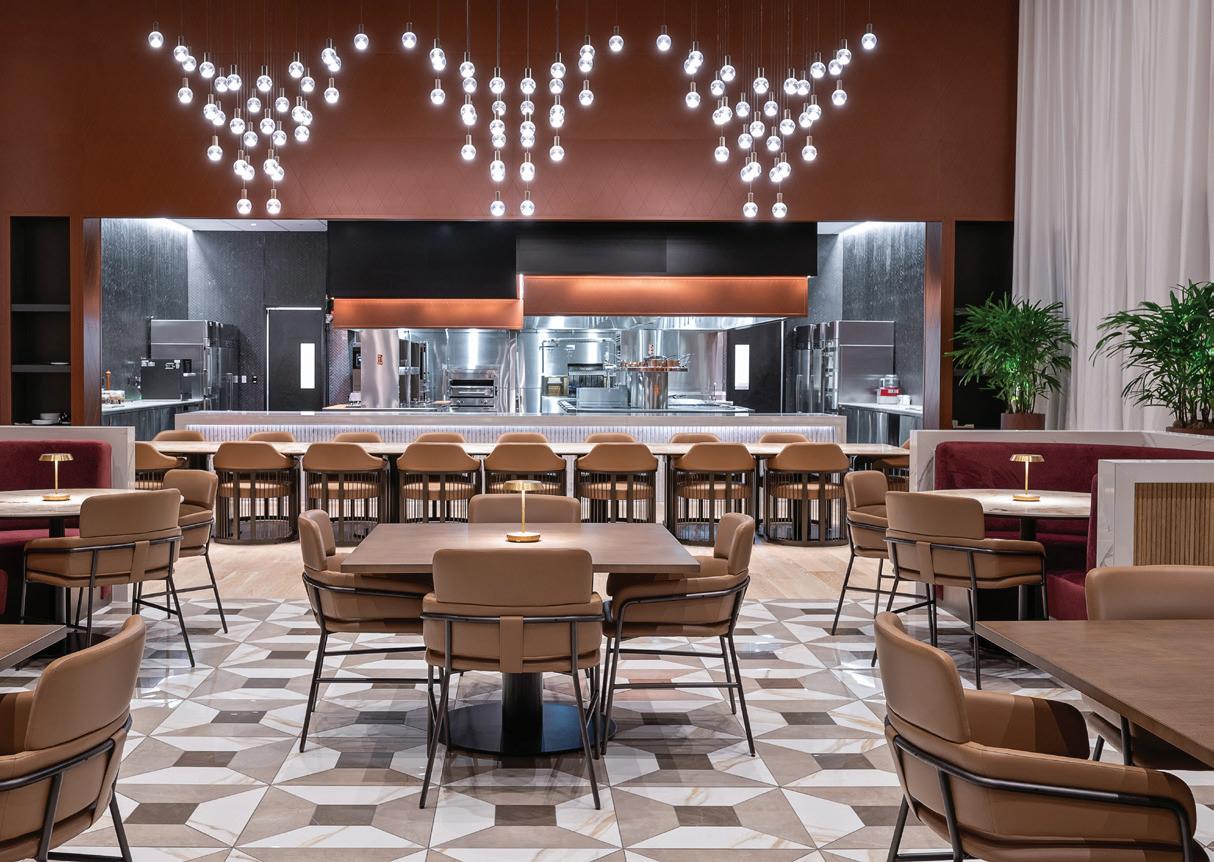
Operate your kitchen with pinpoint precision and boost profts.
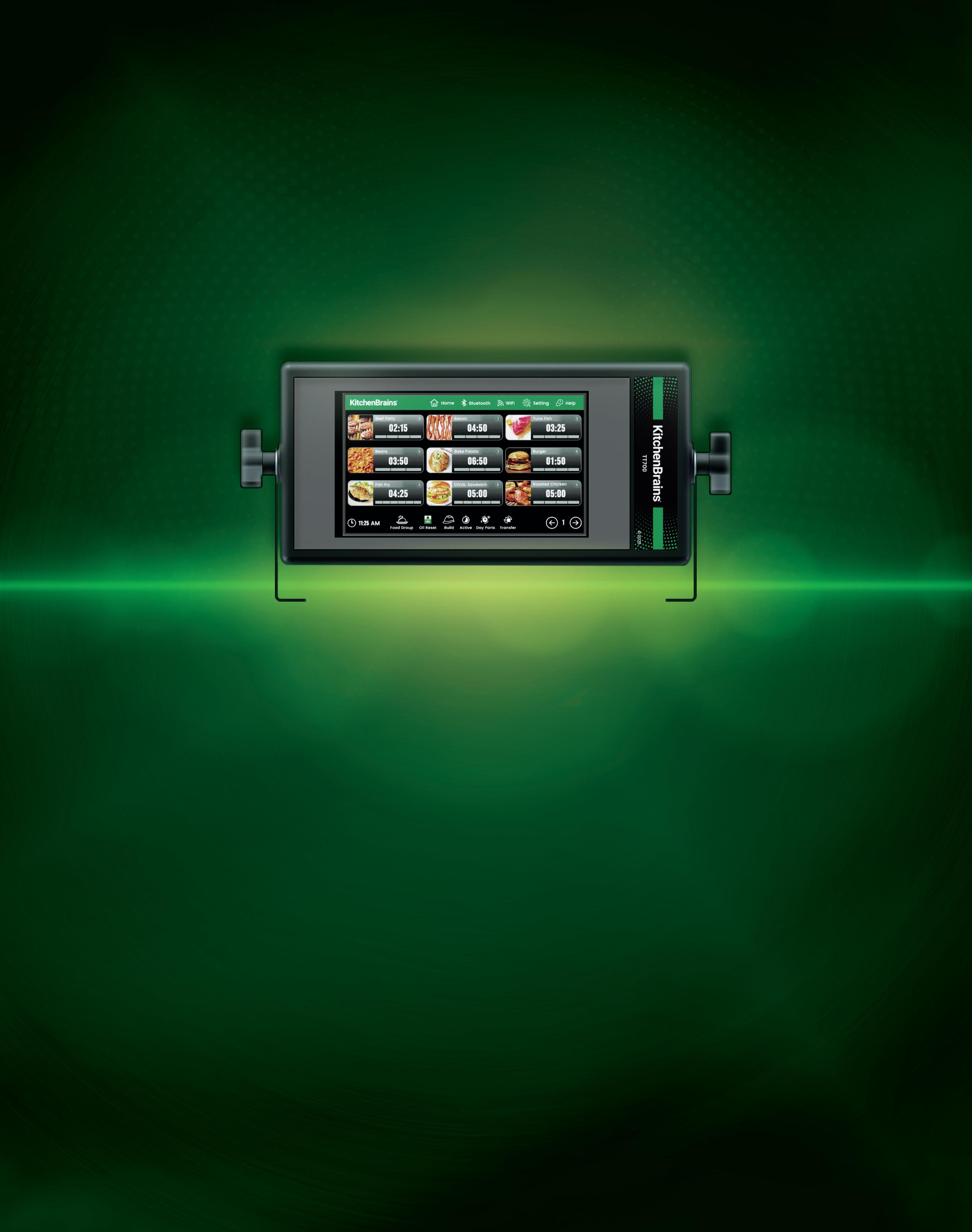
The TT-700 Touchscreen Timer transforms kitchen operations with cutting-edge technology and intuitive design.
• Conquer Peak Hour Chaos: Multi-product timing and clear alerts keep your line running smoothly, even at the busiest times.
• Ensure Food Quality & Safety: Consistent timing and temperature monitoring mean perfect dishes, every time.
• Minimize Waste: Precise control reduces food waste, directly impacting your bottom line.
• Maximize Speed: Intuitive 7” touchscreen with visual programming for fast, accurate operation.
• Real-Time Intelligence: Wireless tracking and instant “Cook More/Prep More” alerts for peak productivity.
Scan the QR code to discover how the TT-700 can revolutionize your kitchen. Coming Soon - Q1 2026