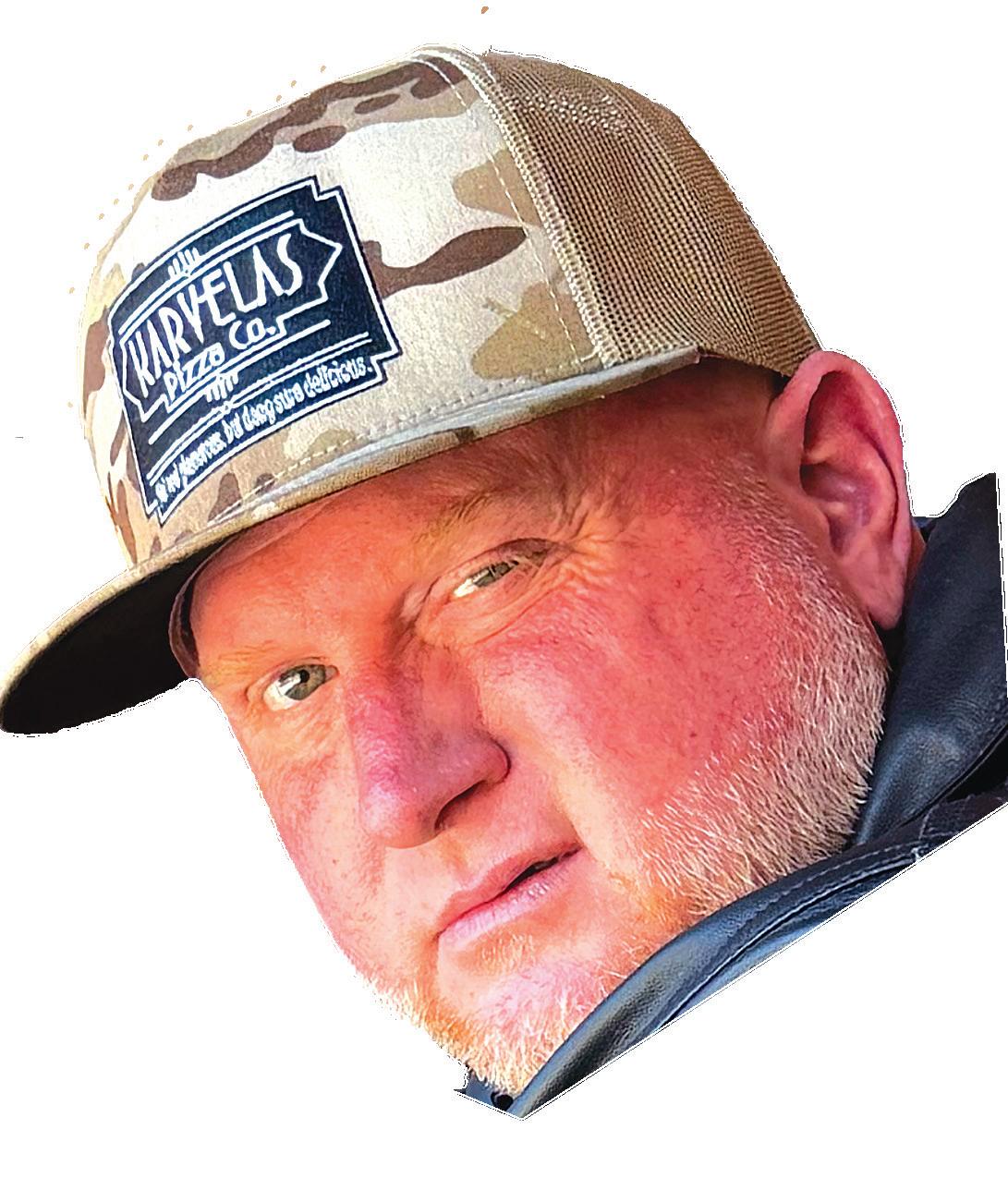
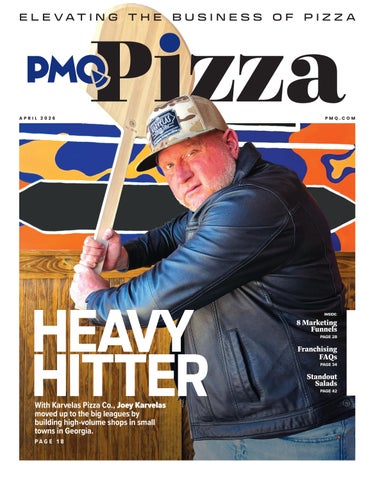
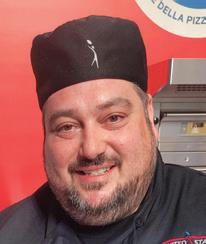
With Karvelas Pizza Co., Joey Karvelas moved up to the big leagues by building high-volume shops in small towns in Georgia.
PAGE 18

















































































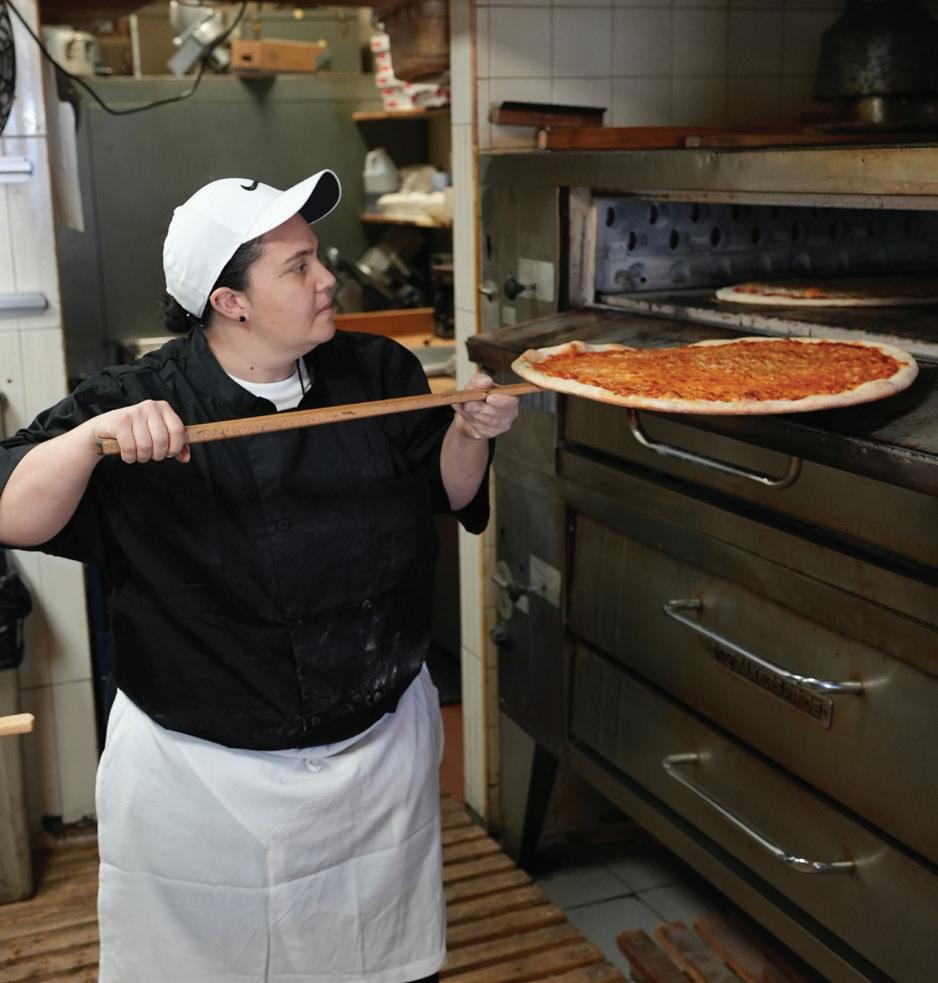
A former college softball coach, Victoria “Tori” Tiso, owner of Tori T’s Pizzeria in Malverne, New York, and 914 Pizza in Harrison, grew up in a pizza family—the co-owners of Bronx legend Louie & Ernie’s Pizza. After repeatedly getting overlooked for jobs and promotions in college sports, she wondered: “At what point do you hang up the cleats and go back to the apron?” Inspired by Giorgia Caporuscio of Kesté, Tiso pivoted back to pizza. “I’m seeing other [women] do it, and I’m, like, I could do it,” she told Peel: A PMQ Pizza Podcast. “My dad said, ‘Well, you’re kind of short [for] the oven,’ and I said, ‘I’ll stand on my toes.’ I don’t like being told no.” She returned to Louie & Ernie’s Pizza to better learn the business, then struck out on her own after 18 months. First came Tori T’s, where she broke with family tradition by adding Detroitand Sicilian-style pies alongside classic New York slices. She opened 914 Pizza in April 2024 and now oversees both shops. “I’m just hitting the gas pedal at 100 miles an hour, building a foundation for five or 10 years from now,” she says. “It will pay off.”
Listen to Peel: A PMQ Pizza Podcast on Apple, Spotify and SoundCloud.
Scan this code to subscribe or renew your subscription to PMQ! Or visit PMQ.com/subscribe
WTWH MEDIA, LLC
CEO Matt Logan mlogan@wtwhmedia.com
CONTENT
EDITOR IN CHIEF Rick Hynum rhynum@wtwhmedia.com
SENIOR EDITOR Charlie Pogacar cpogacar@wtwhmedia.com
ASSOCIATE EDITOR Tracy Morin tmorin@wtwhmedia.com
ASSOCIATE EDITOR/ USPT COORDINATOR Brian Hernandez bhernandez@wtwhmedia.com
VP, EDITORIAL DIRECTOR Danny Klein dklein@wtwhmedia.com
ART & PRODUCTION
ART DIRECTOR Eric Summers esummers@wtwhmedia.com
SENIOR ART DIRECTOR Tory Bartelt tbartelt@wtwhmedia.com
DIGITAL PRODUCTION COORDINATOR Mariam Sedrakyan msedrakyan@wtwhmedia.com
A Publication of WTWH Media, LLC
Volume 30, Issue 3 | April 2026
888-543-2447 ISSN 1940-2007 | Permit #5040
CONTENT STUDIO
VICE PRESIDENT Peggy Carouthers pcarouthers@wtwhmedia.com
WRITER Drew Filipski dfilipski@wtwhmedia.com
WRITER Ya’el McCloud ymccloud@wtwhmedia.com
WRITER Abby Winterburn awinterburn@wtwhmedia.com
SALES & BUSINESS DEVELOPMENT
SENIOR VICE PRESIDENT, FOOD, RETAIL, HOSPITALITY SALES AND ACCOUNT MANAGEMENT Matt Waddell mwaddell@wtwhmedia.com
NATIONAL SALES MANAGER Tom Boyles tboyles@wtwhmedia.com
VP, BUSINESS DEVELOPMENT Eugene Drezner edrezner@wtwhmedia.com
CUSTOMER SERVICE REPRESENTATIVE Brandy Pinion bpinion@wtwhmedia.com
CUSTOMER SERVICE REPRESENTATIVE
Tracy Doubts tdoubts@wtwhmedia.com
FOUNDER
Steve Green

PMQ PIZZA Issue 3 April 2026 (ISSN 1940-2007, Permit #5040) is published monthly in January, March, April, May, June, August, September, October, November and December by WTWH Media, LLC, 1111 Superior Ave #1120, Cleveland, OH 44114-2560.
Periodical postage pricing paid at Cleveland, OH. Additional mailing offices at Bolingbrook, IL.
POSTMASTER: Send address changes to PMQ PIZZA, 1111 Superior Ave #1120, Cleveland, OH 44114-2560.
Opinions expressed by the editors and contributing writers are strictly their own and not necessarily those of the advertisers. All rights reserved. No portion of PMQ PIZZA may be reproduced in whole or part without written consent.

Your Pizza Brand
Pizza companies that know they’re selling more than just pizza are the ones that always stay busy and have a large, dedicated following, says Michael LaMarca.
Consultant Matt Plapp’s step-by-step strategy lets you reel in customers, capture their data and take them on a journey they’ll want to experience again and again.
If you’re considering franchising, you probably have a lot of questions. We asked two experts to break down the basics you’ll need to know to get started.
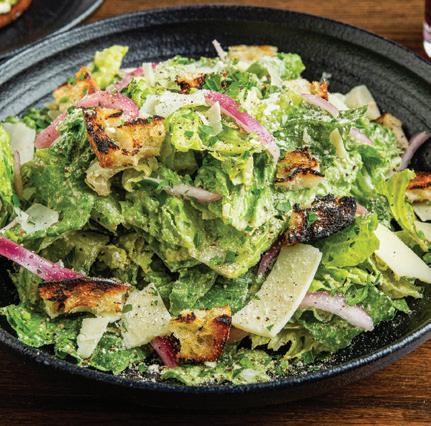
Spring has arrived, and you want your salads to grab attention rather than wilt into the background. Three operators share their top tips to maximize your sales.
Around the country, members of PMQ’s U.S. Pizza Team are adding locations and launching new concepts. Here, they share the reasoning behind each one.
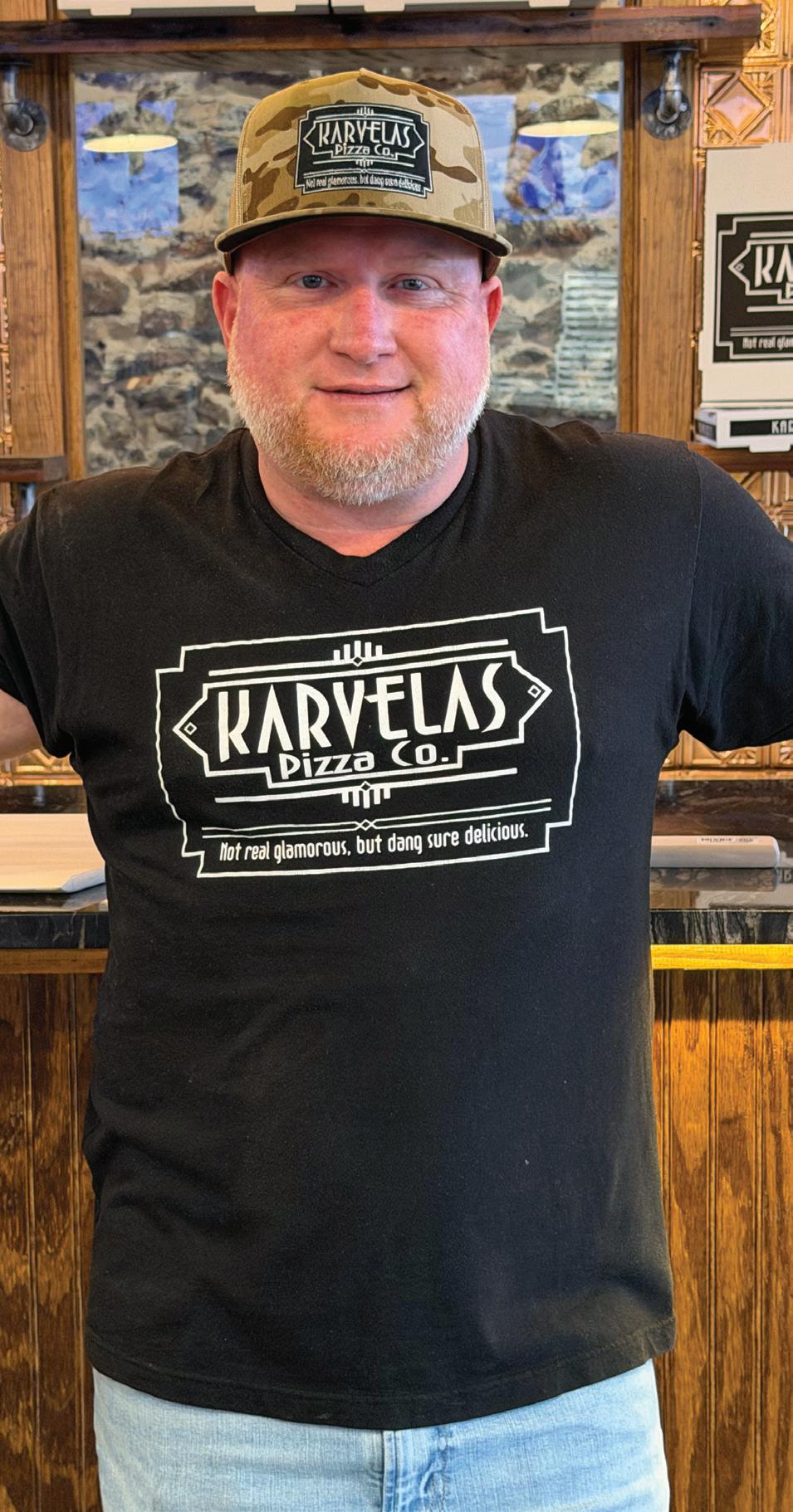
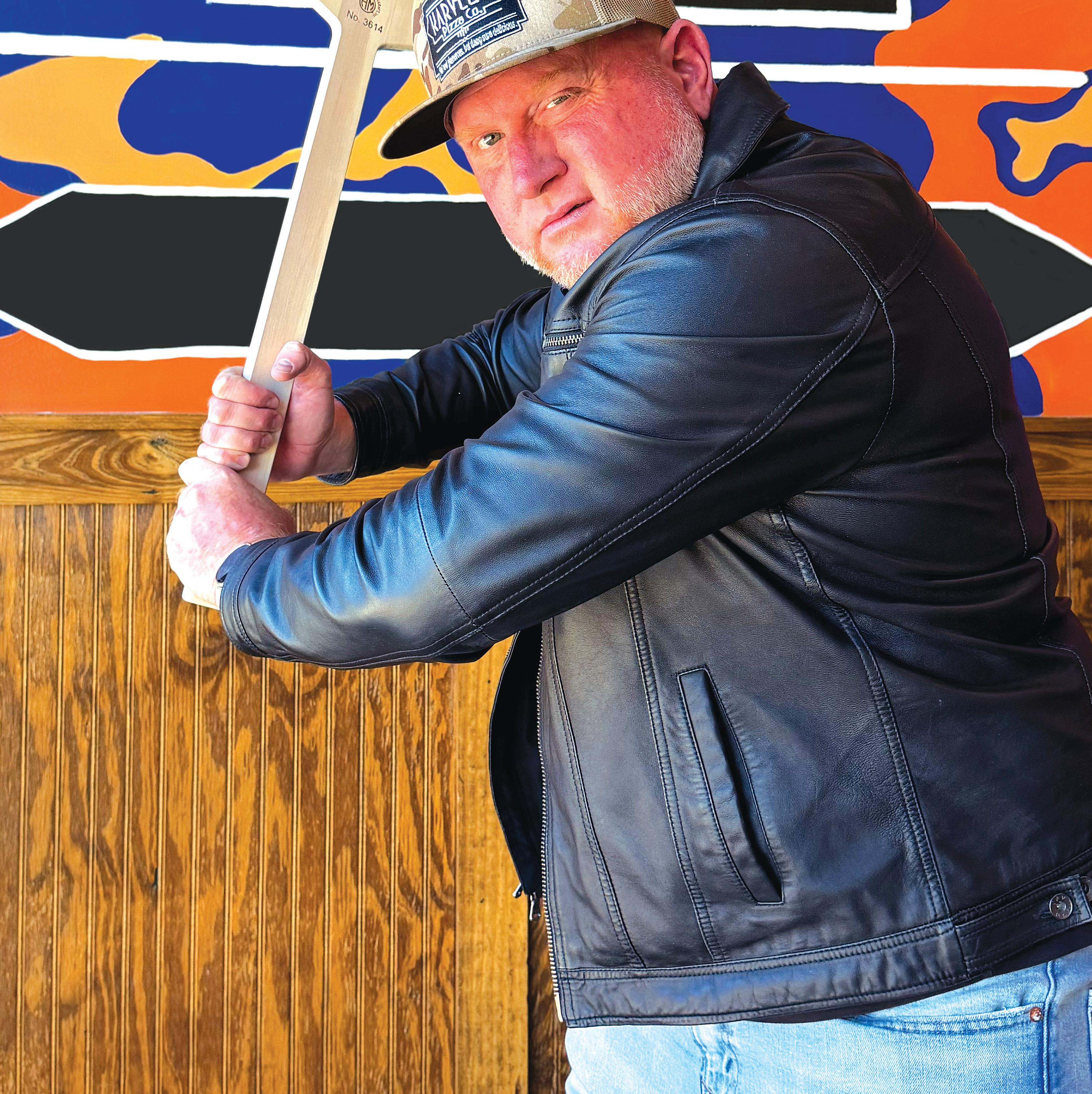
Joey Karvelas isn’t just whistling Dixie when he relates the humble beginnings of Karvelas Pizza Co. in Georgia. But $10 million in annual sales? That’s big-league growth.
BY RICK HYNUM

PMQ Pizza’s best pizzeria profiles often come directly from subscribers to our free e-newsletter, Pizza Pulse. So if you want to get your story told, sign up at PMQ.com/Pizza-Pulse to get our attention! Behind every print issue is a growing digital universe, and Pizza Pulse is the gateway. Print can only hold so much, but we can go bigger online: deep-dive profiles, videos, podcasts, social posts, webinars, reader surveys and more. Here’s a look at the latest:
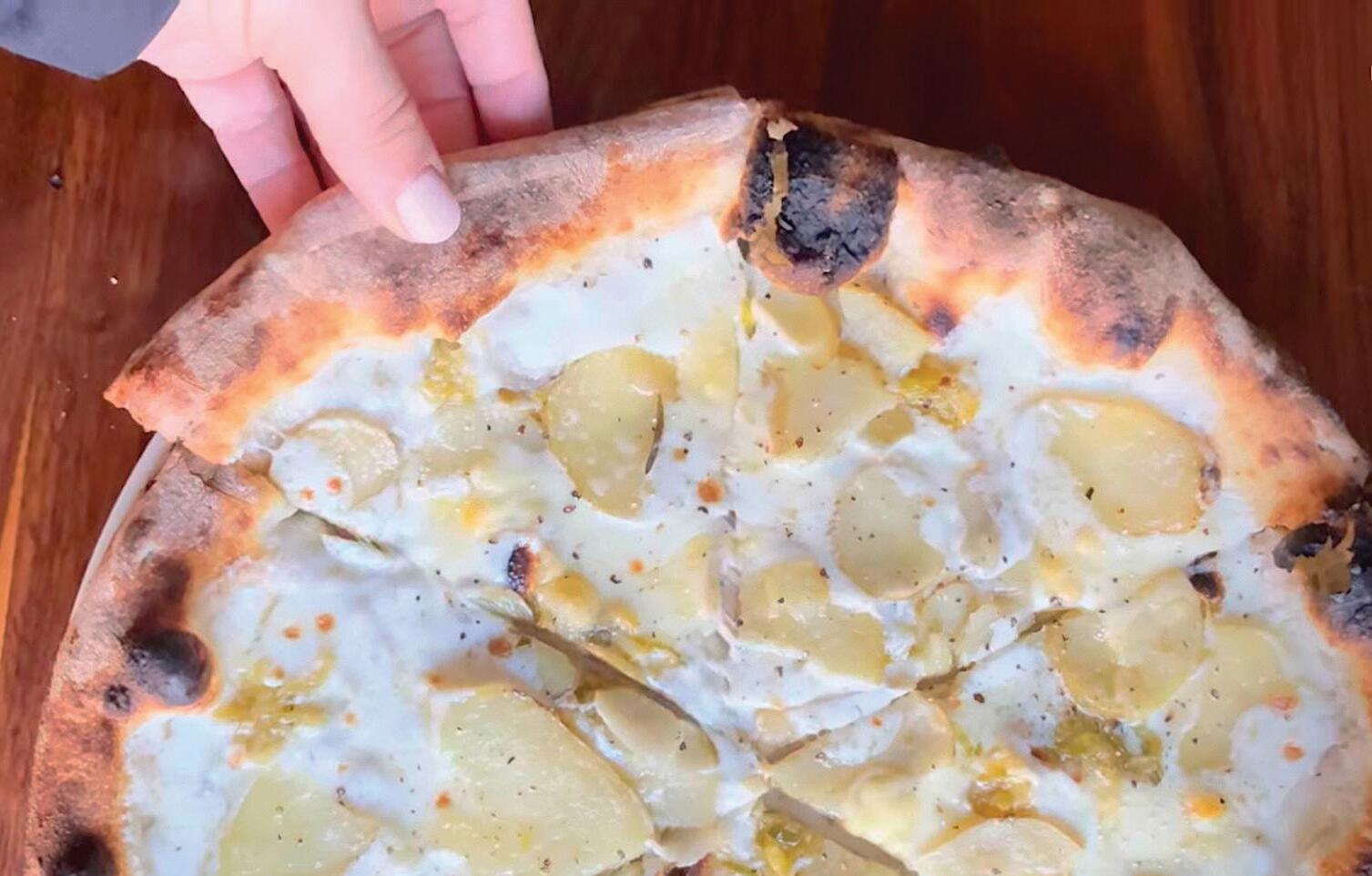
The Story Behind Dan Richer’s Cozy Potato Pie
It’s not the best-selling seasonal item at Razza Pizza Artigianale in Jersey City—that would be the Corn Pie— but guests have come to crave it during the cold months. Legendary pizzaiolo Dan Richer recently shared the secrets behind this winter staple with PMQ.
Read at PMQ.com/cozy-potato-pie
Vito Recchia’s 4-Hour RomanStyle Dough Recipe
Yes, it really is that fast. Chef Recchia, the master pizzaiolo behind Bella Napoli Pizzeria & Restaurant, has distilled the soul of Roman-style pizza into a quick, practical fermentation workflow that delivers surprisingly light and flavorful results in just a few hours.
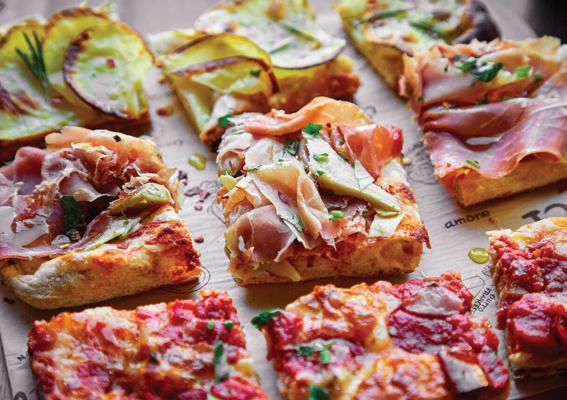
Read it at PMQ.com/4-hour-roman-dough
Subscribe to Pizza Pulse for free at PMQ.com/pizza-pulse!
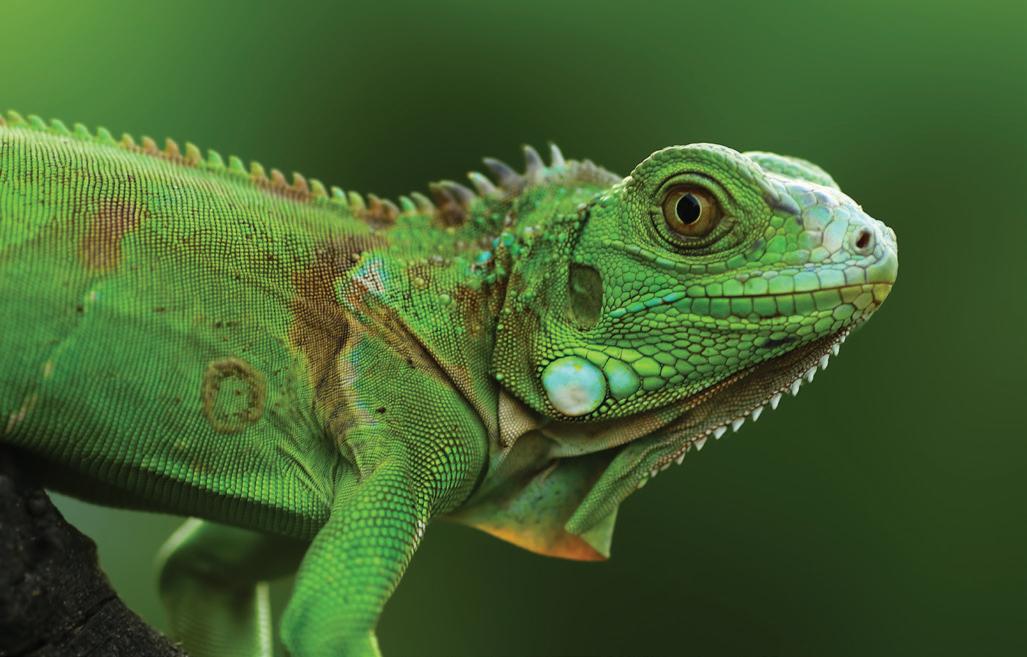
Florida Man Says He’s Made the World’s First Iguana Pizza
Iguanas were literally falling out of the trees in early February as Florida endured rare sub-freezing temperatures. So Frank Cecere, owner of Bucks Coal Fired Pizza, turned the invasive species into a delicacy that led to both high demand and controversy.
Read it at PMQ.com/iguana-pizza
How Cugino Forno Achieved Its Rapid-Fire Growth
Want to Get PMQ’s Attention? Try this!
Create a Reel on Instagram, tag @pmqpizzamag and tell us why we should feature your pizzeria.
Owned by a trio of cousins, this Neapolitan-inspired concept has a unique growth model that doesn’t require franchising or outside investors. Instead, Joseph Ozbey and his partners, Yilmaz and Adam Ozbey, offer an intriguing deal to their seasoned managers.
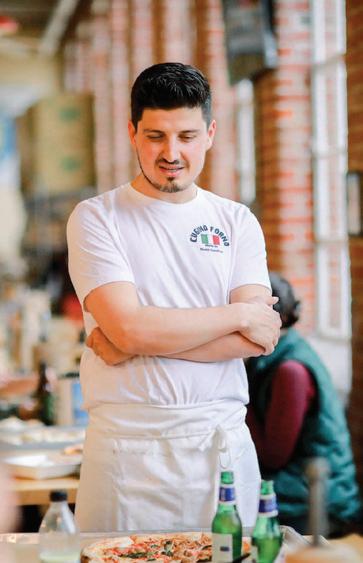
Read it at PMQ.com/cugino-forno
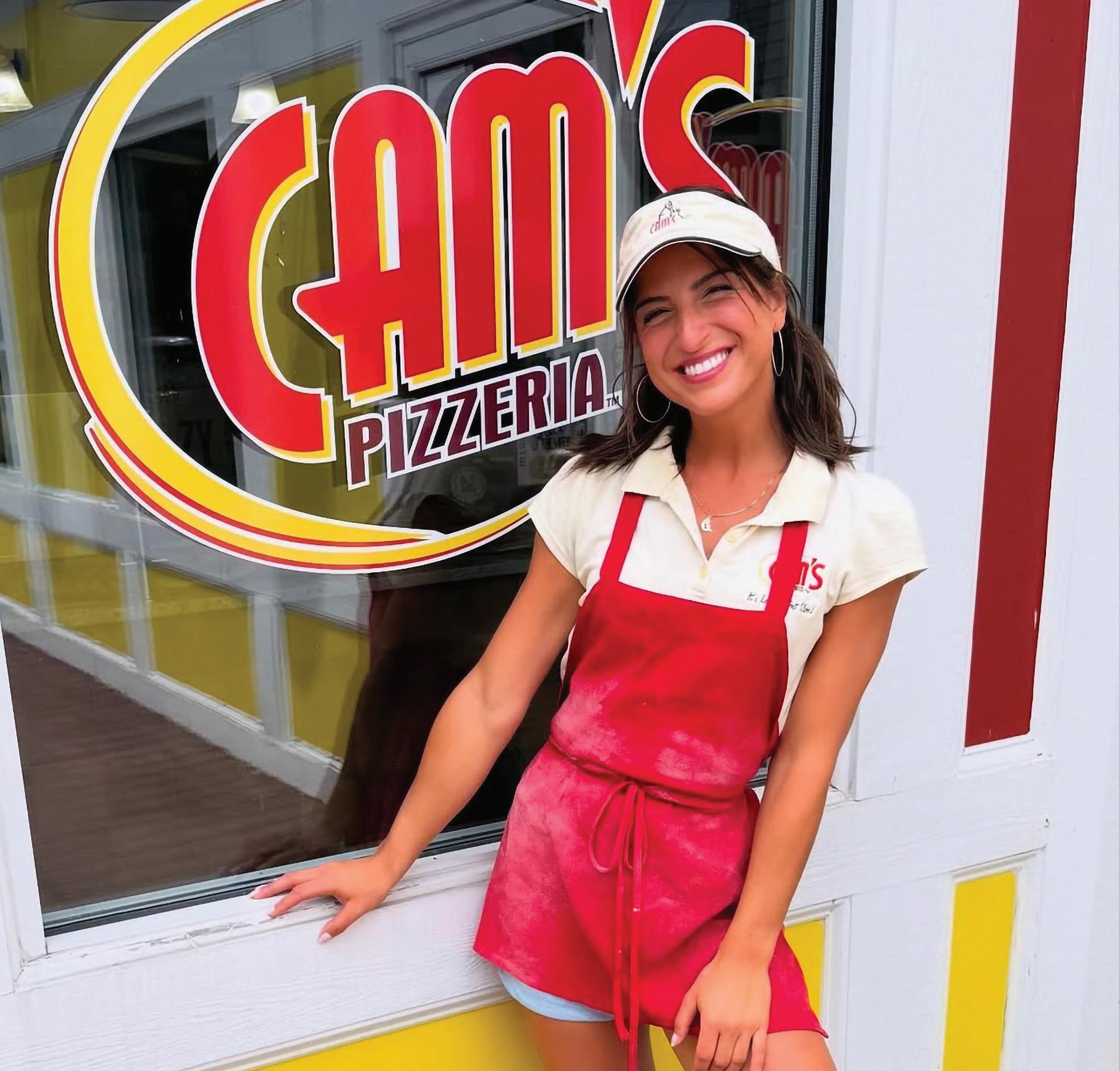
ON VALENTINE’S DAY WEEKEND, Cam’s Pizzeria general manager Giuliana Calascibetta—known to her 200,000 Twitch followers as Pizza Princess G—pulled off something few operators would even attempt: a 24-hour live stream to benefit the American Heart Association (AHA). Dubbed “Pizza From the Heart,” the marathon blended philanthropy and smart marketing. But it felt more like an online house party for those in Calascibetta’s colorful orbit—wild, noisy, chaotic, rich with laughter and music. Cam’s four Rochester, New York, locations donated 20% of their Valentine’s Day sales to
the AHA. Meanwhile, Calascibetta streamed virtually nonstop; when she wasn’t rapping with fellow Twitch star Thug Shells or overseeing a CPR class, she delivered pies to healthcare workers and auctioned off her own pizza-themed artwork. “This isn’t ‘charity for content.’ This is life sharing in service of something meaningful,” Calascibetta said. “When you know why you’re doing something, exhaustion feels different….I don’t just want to entertain people or make pizza all the time. I want to build something that outlives a stream and makes a real difference. And this feels like the start of that chapter!”
As a grade schooler learning to read and write, Rocco Pifferetti once had to answer questions on a worksheet for his teacher. Asked what he wanted to be when he grew up, he wrote “the pizza man.” In February, he celebrated the 20th anniversary of that childhood dream: Rocco’s Pizzeria in Youngwood, Pennsylvania, which he opened at age 25. The milestone wasn’t just about throwback pricing and giveaways. It was also about reinvestment. Prior to the anniversary, Pifferetti and his team tore out old booths and refreshed the dining room with new high-tops, a bar-top counter and a new TV—completing the overhaul in just a few hours. “I want people to see that we’re 20 years in and still working on the place,” he said. “We’re still trying to make it better.” The update sent a clear message: Longevity doesn’t mean complacency. Even as the shop tops $1 million in annual sales, Pifferetti continues to refine the experience for customers. After two decades, “The Pizza Man” is still doing exactly what he set out to do—and his former teacher would surely be proud.
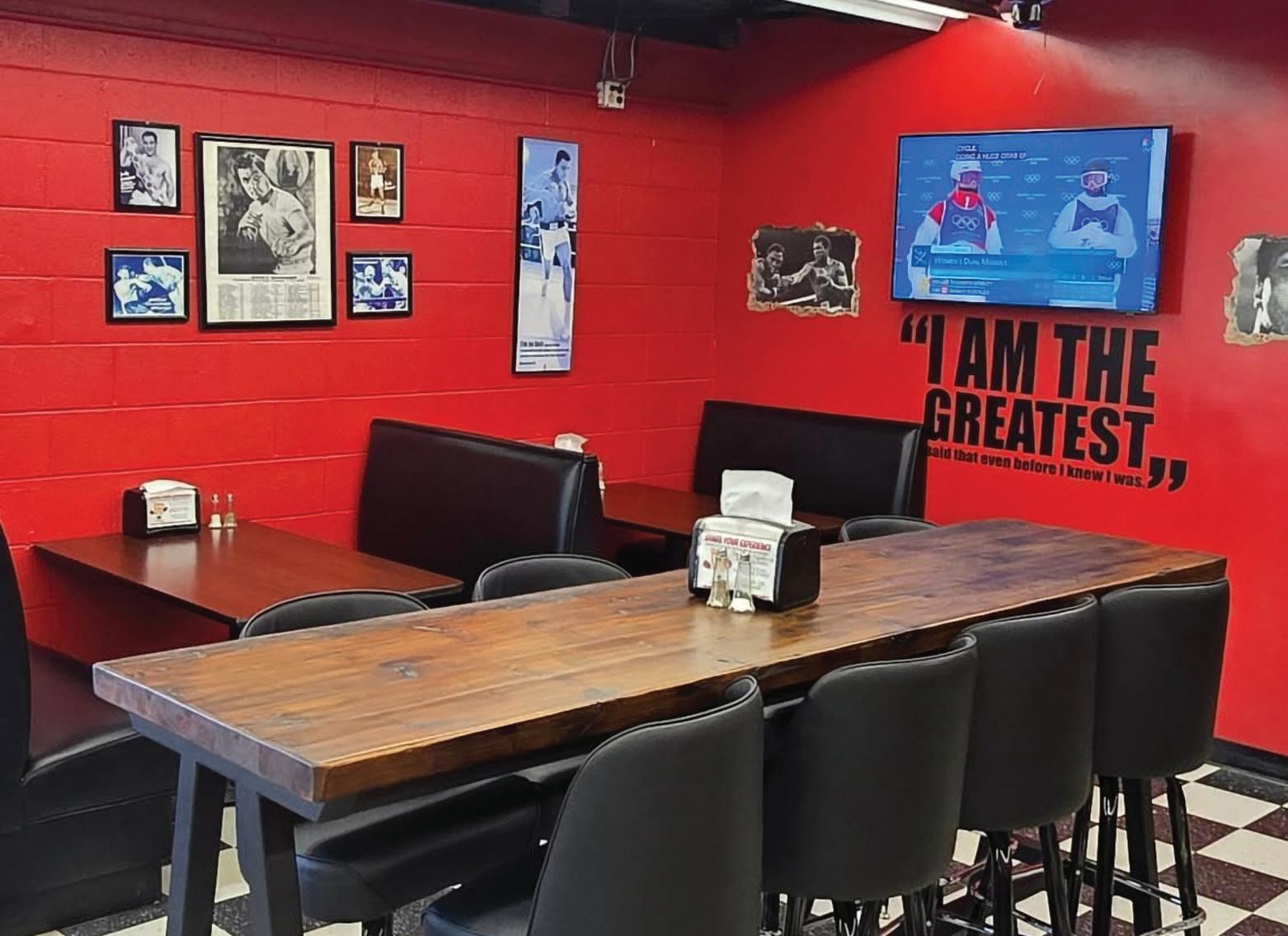
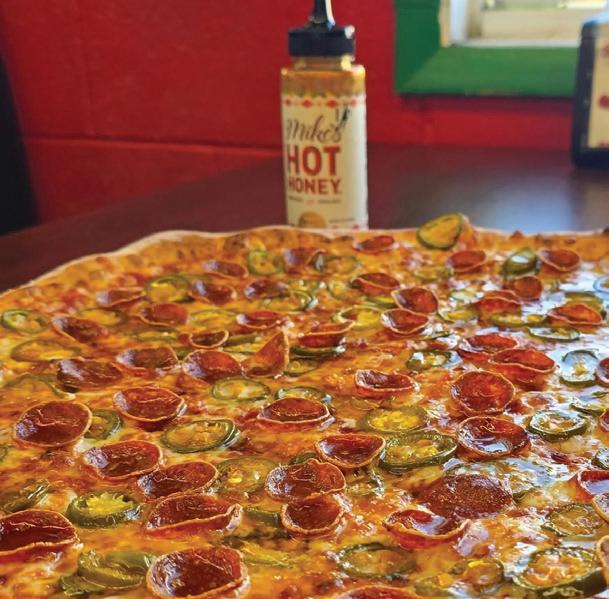
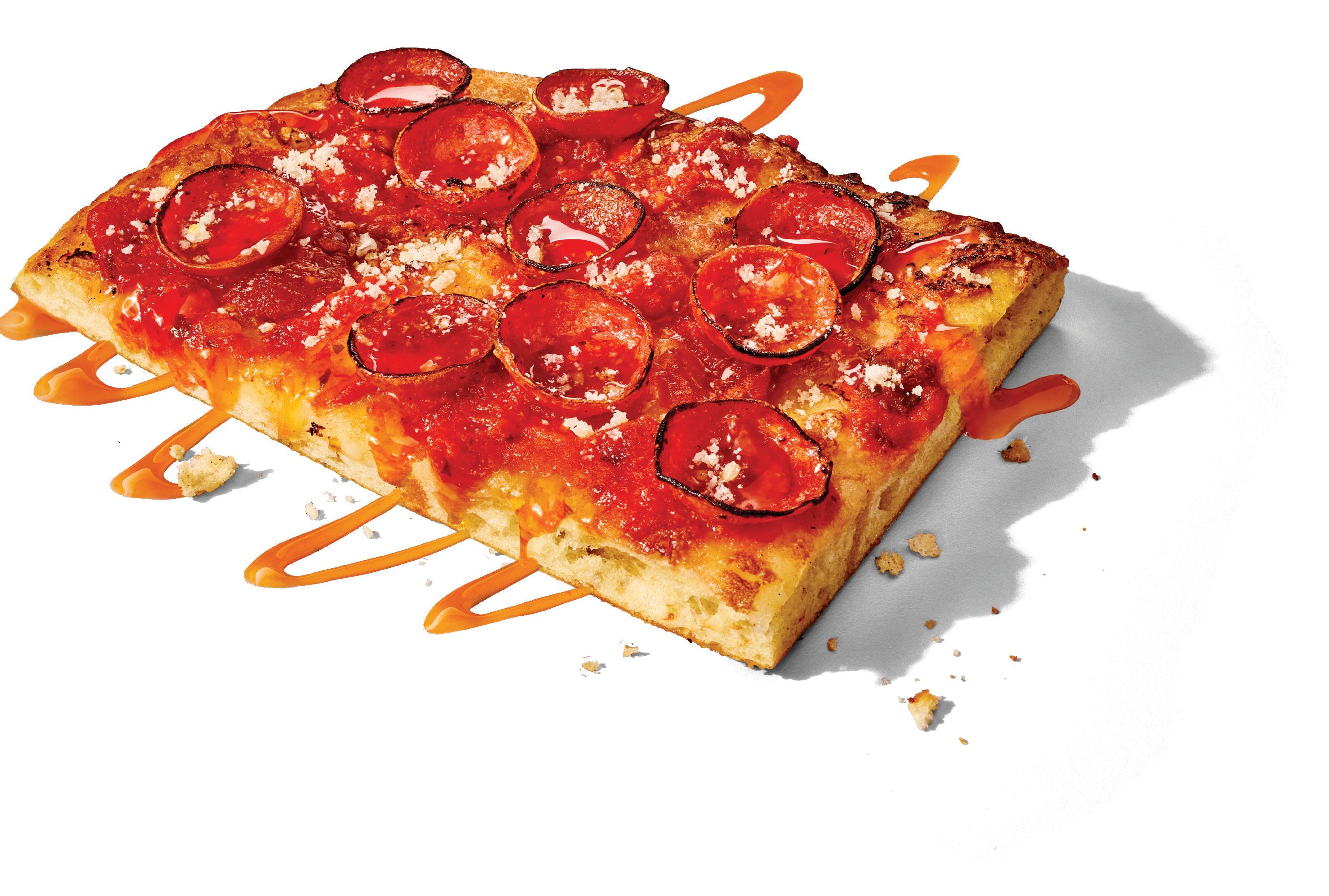
(Top to bottom) Owner Rocco Pifferetti wants customers to see that he’s always working to improve Rocco’s Pizzeria, including a recent dining-room refresh for its 20th-anniversary celebration; Rocco’s Pizzeria introduced a new pie in late January—the Spicy Cuperoni, featuring cup-and-crisp pepperoni and hot honey.
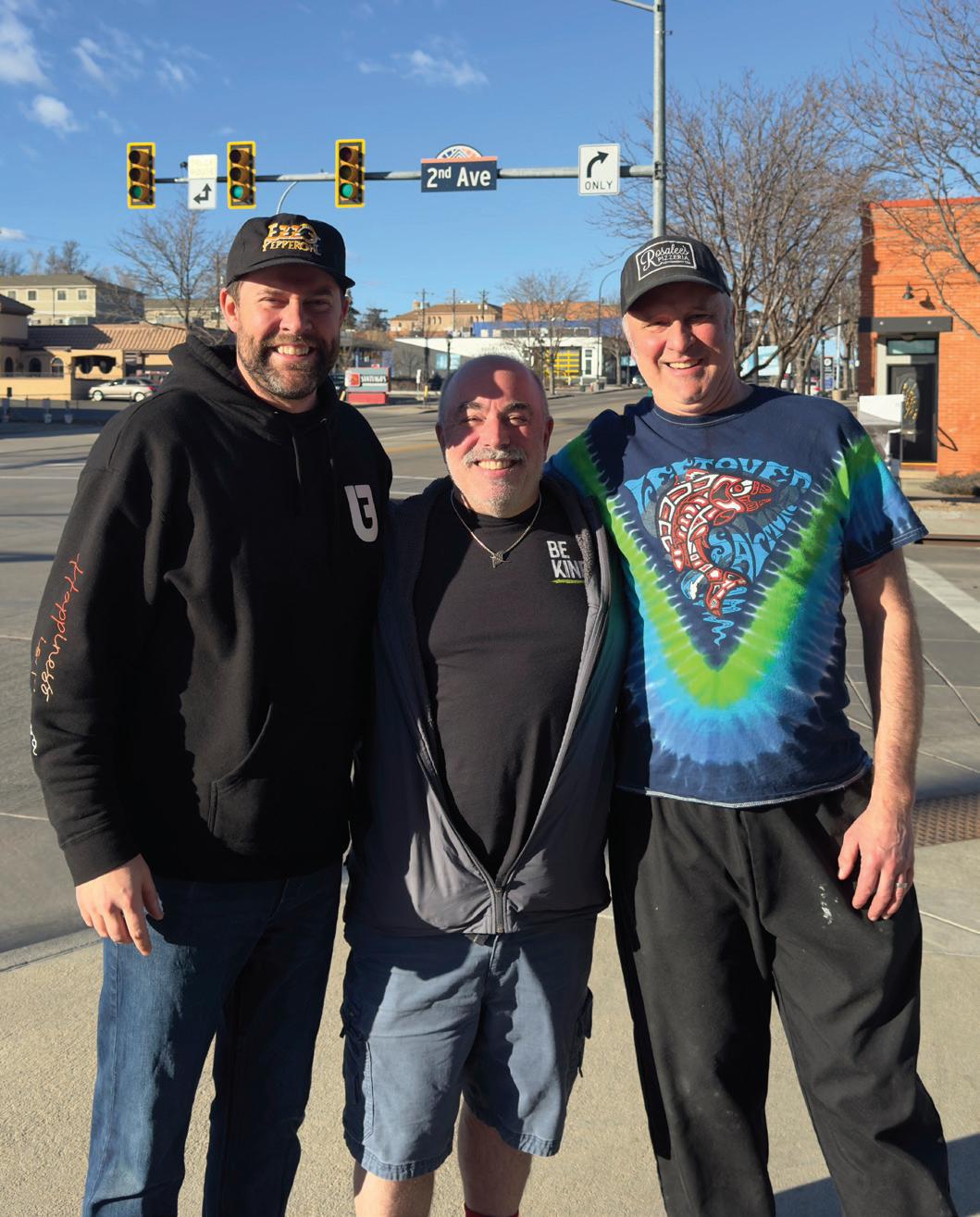
When government support for food-insecure families in Boulder County, Colorado, was cut, Longmont’s pizzeria owners didn’t just shake their heads in dismay—they fired up the ovens and started helping. Urban Field Pizza & Market co-founders Paul Nashak and Nick Swanson teamed up with Rosalee’s Pizzeria and Antonio’s Real New York Pizza to launch Pizza With Purpose, a new nonprofit created in partnership with Slice Out Hunger. The mission: unite Main Street pizzerias and hospitality pros to raise funds for local hunger-relief organizations. The initiative debuted on National Pizza Day (February 9) with a simple, effective hook—$1 from every cheese or pepperoni pizza sold during launch week went to Slice Out Hunger. It’s the kind of low-lift, high-impact promotion operators can replicate in their own markets. Next up: the Colorado Pizza Festival on September 5 in downtown Longmont, with 20-plus pizzerias, local breweries, live music, kids’ activities and even a playful “Pizza Olympics.” Proceeds will support organizations fighting food insecurity statewide. The takeaway? When competitors collaborate around a shared cause, everybody wins—especially the community.
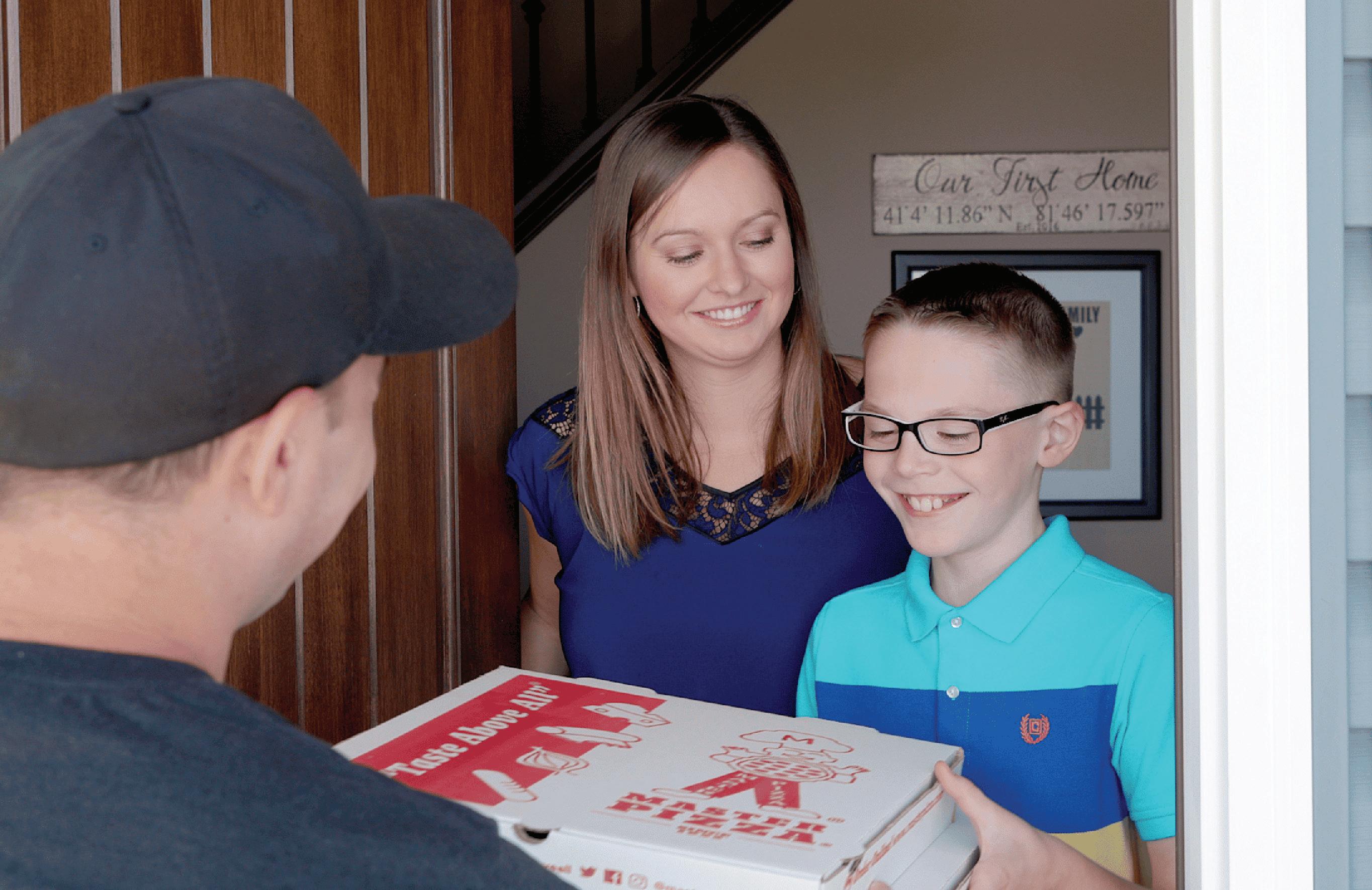
Pizza companies that know they’re selling more than just pizza stay busy and have a large, dedicated following. It all starts with a welldefined vision statement and mission statement.
BY MICHAEL P. LaMARCA
SO MUCH GOES INTO BUILDING YOUR BUSINESS and acquiring customers. Great food and great service are just two pieces of the puzzle that you need to constantly work on and develop to grow your business. Another piece—just as difficult—is developing and building your brand. What sets you apart from every other pizza company? What are you known for? What do you want to be known for? Do your customers know what you’re trying to portray about your brand? How will they hear about it?
Building your brand is about building your identity. The brand will most likely reflect you and your personality and extend into the culture of your organization, especially as your business is new or emerging. As you start building your team, people will be attracted to your organization by what you’re doing and how you’re doing it. This is the genesis of your company’s culture and identity.
It’s important to understand the difference between developing your brand and building your culture.


Increase revenue and lower cost
• No Busy Signals
• Call Recording
• Call Queuing / Auto Answering
• Multiple (random) start of call upsell messages
• On hold music/message loops
• Detailed reports—hold times, lost calls etc
• Callerid delivered to POS system
• Auto attendants— ”If you have arrived for curbside pickup press one ”


Protect against outages
• When your Internet fails our cellular backup router keeps your phones, credit card processing and web orders all working.
• The backup kicks in automatically in seconds. So quickly you will not even drop calls in progress when your primary Internet goes down!
• The same router can be used to create chain wide virtual private network to connect your locations.
• SD WAN LTE/LTE A (4G/5G) modems.


“Press one to receive a text message with links to our onlne ordering ”.
Manage bulk text message marketing from our system to drive increased revenue. As low as $0.01 per message. Group text messaging to communicate with your employees (drivers, bartenders, all staff etc).
Think of the brand as “what you say” and the culture as “what you do.” An alignment between both is essential for success.
Developing your brand is centered on the external commitment to customers regarding the value and experience they’ll receive, while building your culture focuses on the internal set of values, behaviors and beliefs that drive employees to deliver on that brand’s promises. Think of the brand as “what you say” and the culture as “what you do.” An alignment between both is essential for success.
Developing a well-defined vision statement and mission statement will help steer your organization. A vision statement describes where the organization wants to go and how to get there—a guiding light moving the business forward. A mission statement is what an organization uses for the immediate and day-to-day goals that help keep your team all rowing in the same direction. Let’s use my brand, Master Pizza, as an example.
Master Pizza Vision Statement:
We constantly work to earn our way to the forefront of the pizza industry by challenging ourselves to be the best leaders we can be.
Master Pizza Mission Statement:
Our mission is to become your neighborhood’s best pizzeria by winning every single order and elevating everything we do from good to great.
Pizza companies that know they’re selling more than just pizza are the companies that seem to be always busy and have a large, dedicated following. They have a cohesive visual, emotional and experience-driven brand. They understand that they’re attaching a sense of fun, comfort, nostalgia or something distinctively on-trend to their great pizza.
Think about monster brands like Red Bull, Nike, Coca-Cola, Apple and McDonald’s. Each is known for something other than their products. Red Bull is an energy drink that also sells extreme, high-adrenaline and adventure-based lifestyles. Nike focuses on athletic empowerment. Coca-Cola sells happiness and connection. Apple promotes innovation and user experience. McDonald’s uses nostalgia and retro characters to drive home their message to adults.
In addition to the products they sell, these companies focus on communicating a strong brand identity through their messaging. They want the customer to feel like an active participant in their lifestyle brand— not just someone who purchases their products. That’s how they earn customers for life rather than just attracting consumers seeking a less expensive or more convenient alternative.
A successful identity means successful messaging. You can have the best identity in the world, but if that does not get relayed to the public consistently and effectively, it won’t stick in customers’ minds. Your message must be clear, detailed, specific and immediate. All of this comes from the top and must be communicated to the rest of your organization and the public. Your message needs to be communicated internally every day through meetings, emails and chat groups.
Meanwhile, there are several vehicles for getting your word out to the public. Some of your best messengers are the people in your organization. A highly appreciated and energized staff can be your biggest advocates and ambassadors for your message. A staff that advocates for you will make sure your customers are aware of all the good work your company does.
Customers will become another group of advocates when they feel taken care of by a highly energized and appreciated staff. After a positive experience at your pizzeria, they will quickly jump on social media to post pictures of your pizzas and let everyone in their world know how amazing your business is.
And these posts always have the potential to go viral! Today, any post at any time can go viral. So it’s important to make sure your identity, your brand, your culture and your messaging are in line. It takes constant work and focus to make this happen. But this could be the difference between being a struggling pizza shop or the shop down the road that always has a line out the door.
Michael LaMarca is a veteran pizzeria owner/operator and owner/CEO of Master Pizza Franchise Group in Cleveland. To engage with him directly, follow him at @michaelplamarca on Instagram and Facebook.
From the POS system to online ordering, marketing, and loyalty, get a solution that fits your growing pizza brand’s needs.

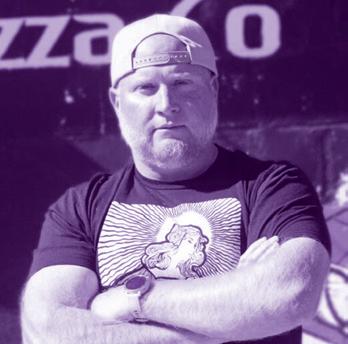
After overcoming addiction and a stint in prison, Joey Karvelas has achieved big-league growth with Karvelas Pizza Co. He says it comes down to faith— in God, his team and his dream.
BY RICK HYNUM

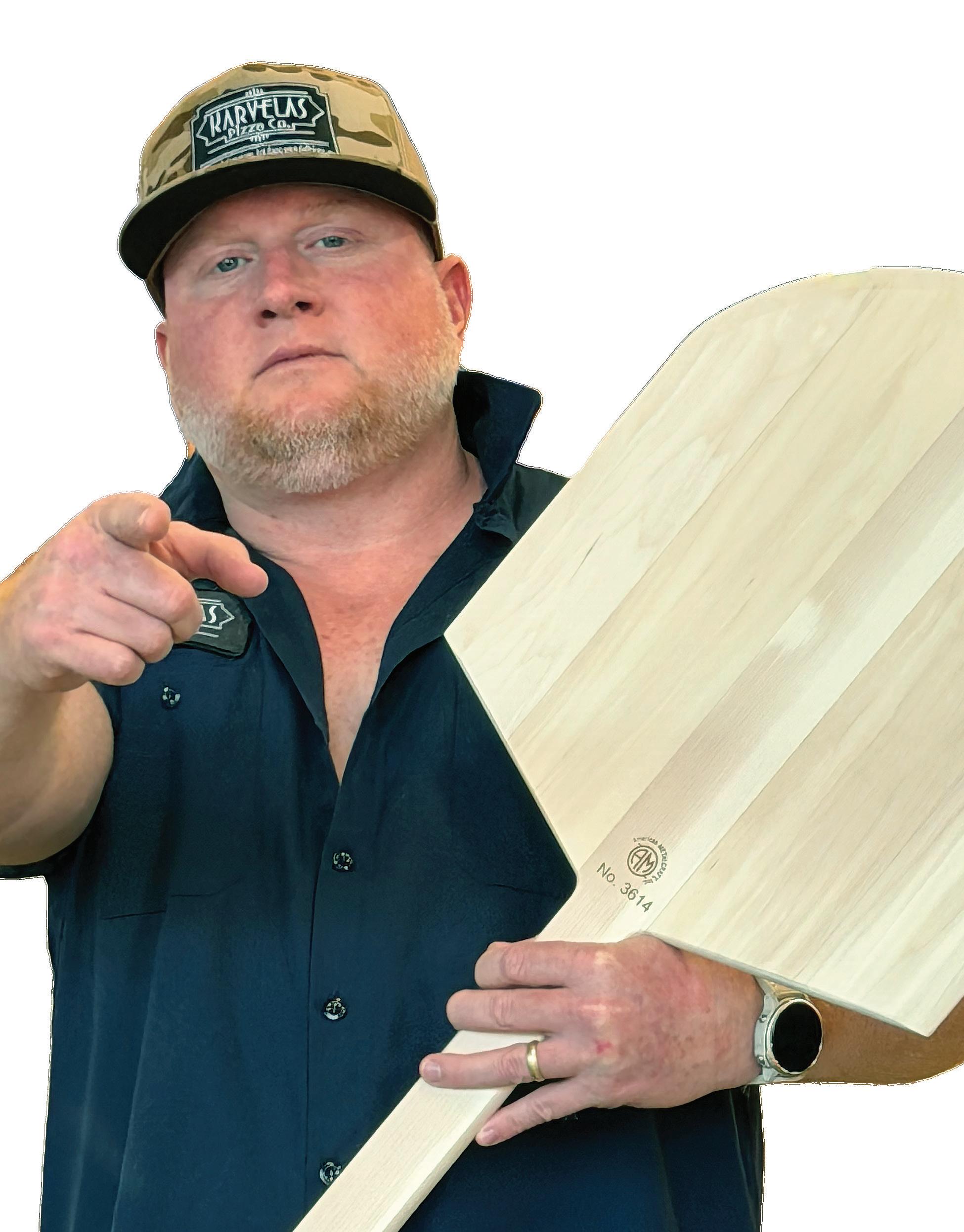

WHEN JOEY KARVELAS DESCRIBES HIS PIZZA BRAND’S humble beginnings in western Georgia, he’s not just whistling Dixie. Picture a ramshackle 900-square-foot shop squatting in the middle of a trailer park just 40 miles from the Alabama state line. Delivery and carryout only, with a few picnic tables for al fresco dining. And on a chilly winter’s day, perhaps a knife-wielding hunter nearby, skinning and gutting a deer.
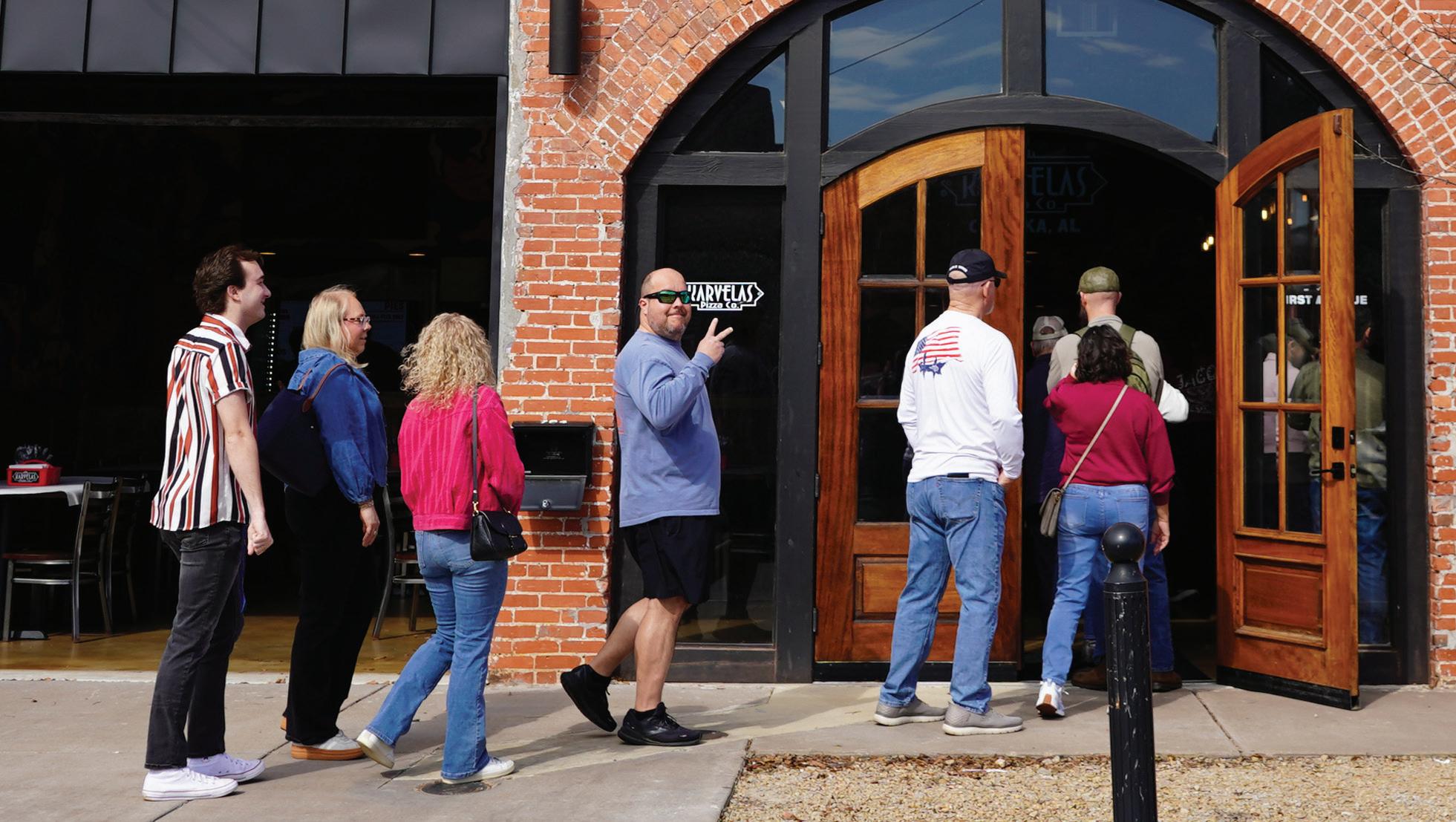
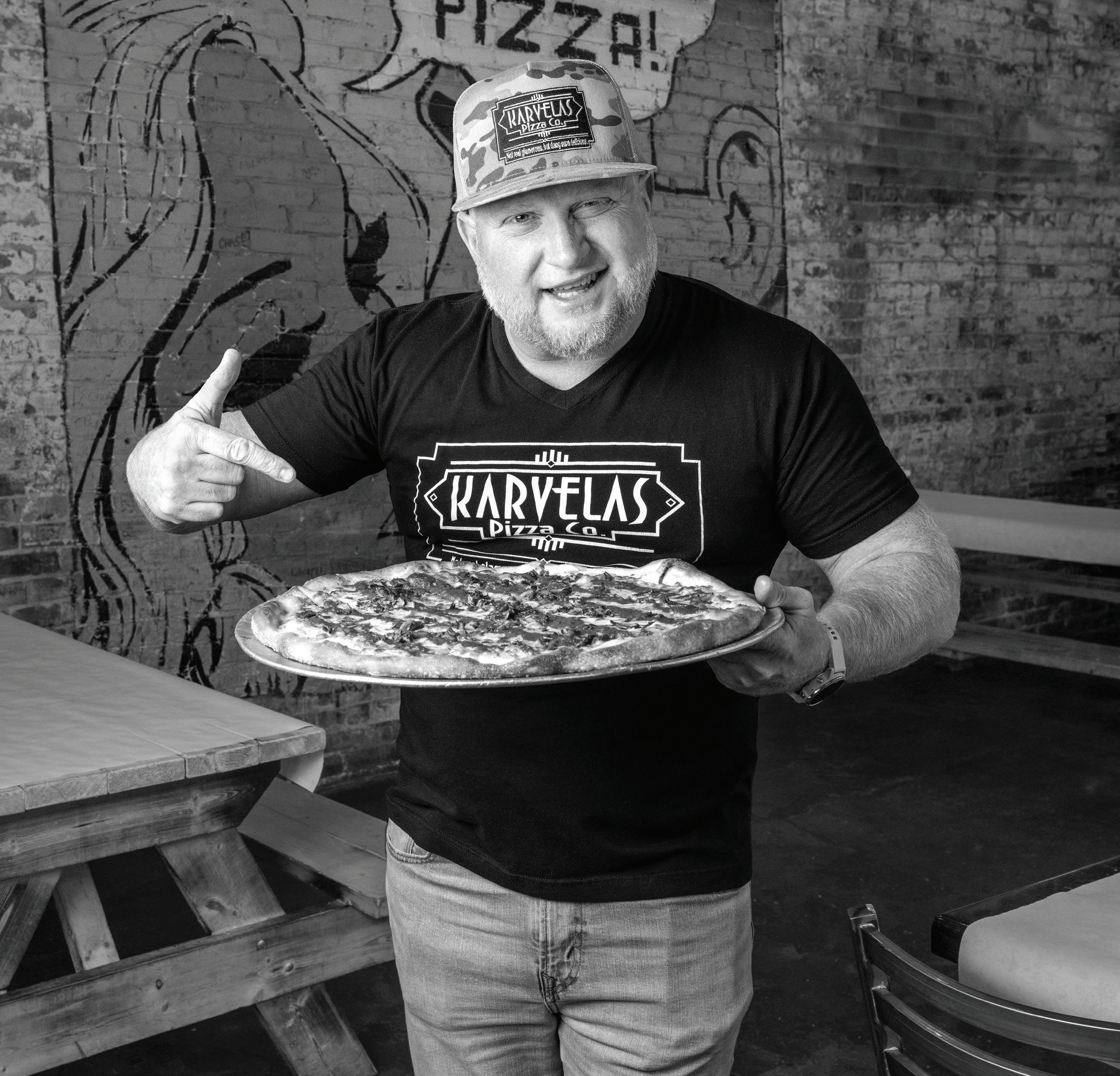
Now that’s humble. But Karvelas Pizza Co. has come a long way since 2014. And Karvelas himself has come even further, after a troubled youth that landed him in prison for three years. Today, he’s a family man with five kids, strong faith in God, an abundance of self-confidence and charisma—and a six-store company that reaps $10 million in annual sales.
At first glance, he’s the antithesis of the traditional pizzaiolo. He has a real-deal Southern drawl, wears a camo cap and puts on no airs. But he’s one of Georgia’s heavy hitters, building out high-volume shops in small towns you might be hardpressed to find on the map. And he came by it honestly. By
the age of 12 he was washing dishes in his dad’s pizzeria, called Pizza Stop, in Hogansville, Georgia, and, before long, making pies on his own.
“I’d see the pizzas getting tossed in the air and thrown in the brick oven, and I was just so intrigued,” Karvelas recalls. “Like, this is one of the coolest things I’ve ever seen, you know? My dad had an infatuation with pizza. He loved it, man. Everywhere we’d go, he’d stop at pizza shops and have conversations about it….And I’m, like, 16 years old, telling him, ‘Man, we should open up more shops.’ He’d say, ‘I can’t afford that.’ But he always wanted to.”
The dream of owning multiple locations was left to Karvelas, who
“We were in this little shack, with a trailer park around us. There was a hunter, and he would be gutting a big deer while customers sat out there, eating and watching him.”
Joey Karvelas, Karvelas Pizza Co.
might have seemed the least likely candidate to fulfill it. First, he had a demon to wrestle with—and hard lessons to learn.
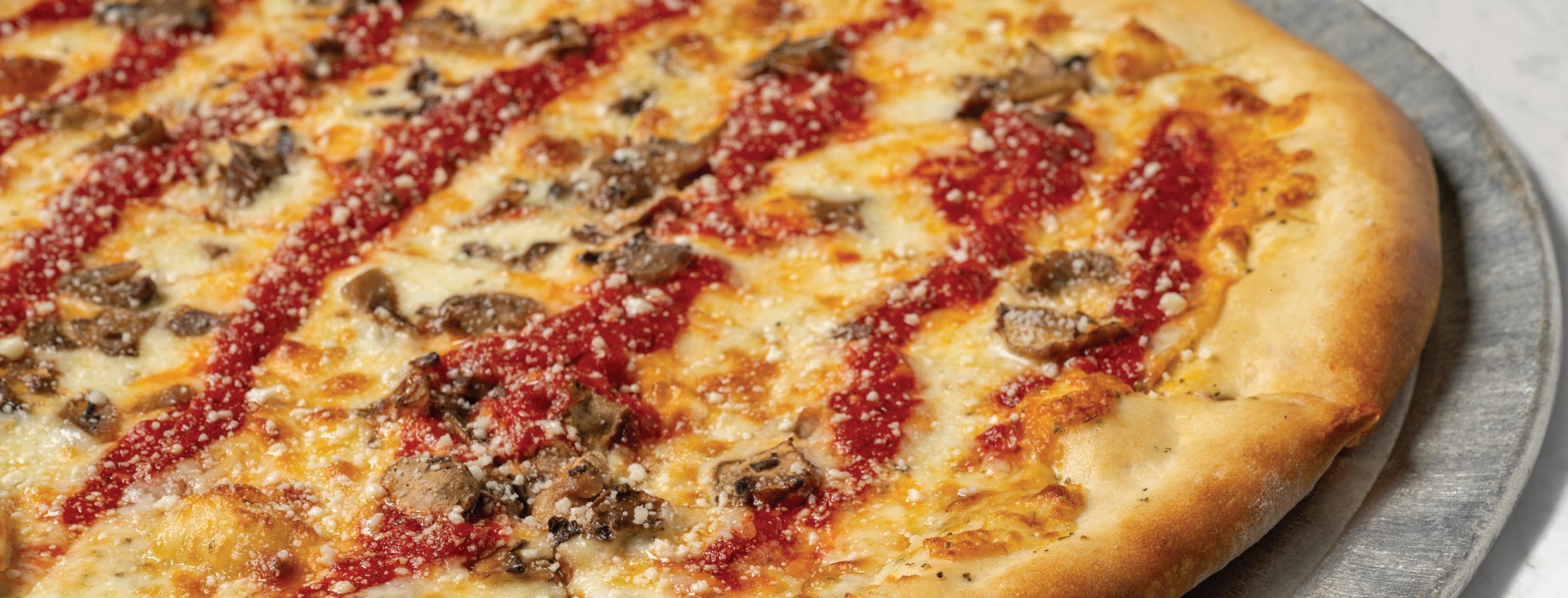





What's my Italian Inspiration? It’s choosing ingredients that work as hard as I do. After 10 years of using the leading premium Mozzarella, I took a closer look at my food costs and tested Galbani® Premio. The consistency is outstanding, the reheat is next level, and the butterfat gives me the melt and flavor I’m looking for. And when I saw the price, it sealed the deal.
Joey Karvelas, Owner, Karvelas Pizza Co.
Learn more at GalbaniPro.com





That demon was drugs. As a high schooler, Karvelas was an allstar athlete, but a laggard in the classroom. “I was a jokester,” he says. “I had a lot of friends, and I would just cut up….I got into a lot of trouble. I spent most of my time in in-school suspension.”
Karvelas’s mind tended to wander away from his studies…straight to pizza. “I draw, and I remember pretty vividly drawing up a menu for my future pizza place and everything that would be on that menu.” But algebra and history teachers don’t give out As for menu design. As his classwork suffered and the Fs proliferated, he got booted off the football and baseball teams. “I remember the coaches getting really mad at me. Like, ‘What are you doing? You’re throwing your life away.’ So I went down the wrong path.”
At 18, he gave drugs a try—and he liked them. “I was a party animal, man,” he says. “I’d spend all the money from one paycheck in one weekend, doing drugs, getting drunk, just partying.” Authorities busted him first for possession of ecstasy, a
felony. He was placed on five years’ probation, only to get caught again with methamphetamines—and that meant a stint in the slammer. He spent three years behind bars and earned his release. Lesson learned? Nope. Karvelas was arrested for drugs a third time. “I was facing going back to prison,” he says, “but my parole officer suggested rehab. That’s a long story. I was scared for my life. I thought it was over, man. But I got that mandate to go to Christian-based rehab [or return to prison], and, man, I took it. I bought into it 100%.
“It was an 18-month program. I wanted to change my life. I wanted to get married, have children and open a pizza shop. That’s where I met God and built a great relationship with Him and with a lot of good people. It just got me on track. I haven’t done drugs since.”
His dad, known as Big Jim, had sold his pizzeria by that time, so Karvelas didn’t have a job waiting for him. But when he learned that the pizzeria he grew up in was for sale, Karvelas took action. The current owner wanted $100,000. With a loan from a family friend—a doctor willing to take a risk on the amiable Karvelas—he scraped up $20,000 and made an offer, take it or leave it. Call it the good Lord working in mysterious ways, but, surprisingly, the owner took it, setting the stage for a remarkable comeback that began in 2014. Big Jim had passed away by then, so Karvelas was on his own. “I didn’t have any money, zero,” he remembers. “All the inventory that came with the business were ingredients that I was not going to use [over the long term]. For the first two or three weeks, I
“[Rehab was] where I met God and built a great relationship with Him and with a lot of good people. It just got me on track. I haven’t done drugs since.”
Joey Karvelas, Karvelas Pizza Co.
had to use them anyway just to make the money I needed to buy ingredients for my own recipes. But it worked out.”
Karvelas and his wife, Emily, ran that first little shop together. “We were in this little shack, with a trailer park around us. There was a hunter, and he would be gutting a big deer while customers sat out there, eating and watching him. It was a really bad [building], falling apart….But people loved it, man. They loved how janky it was.”
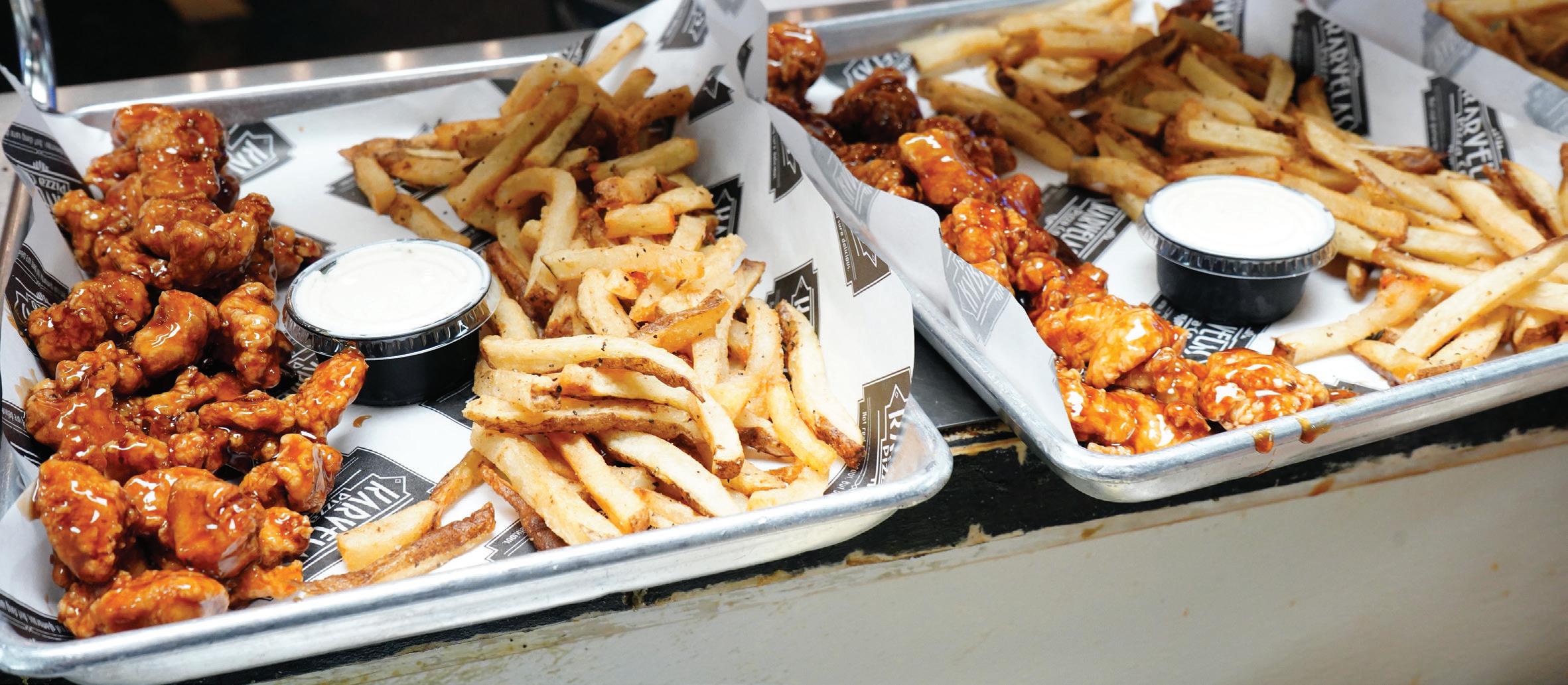
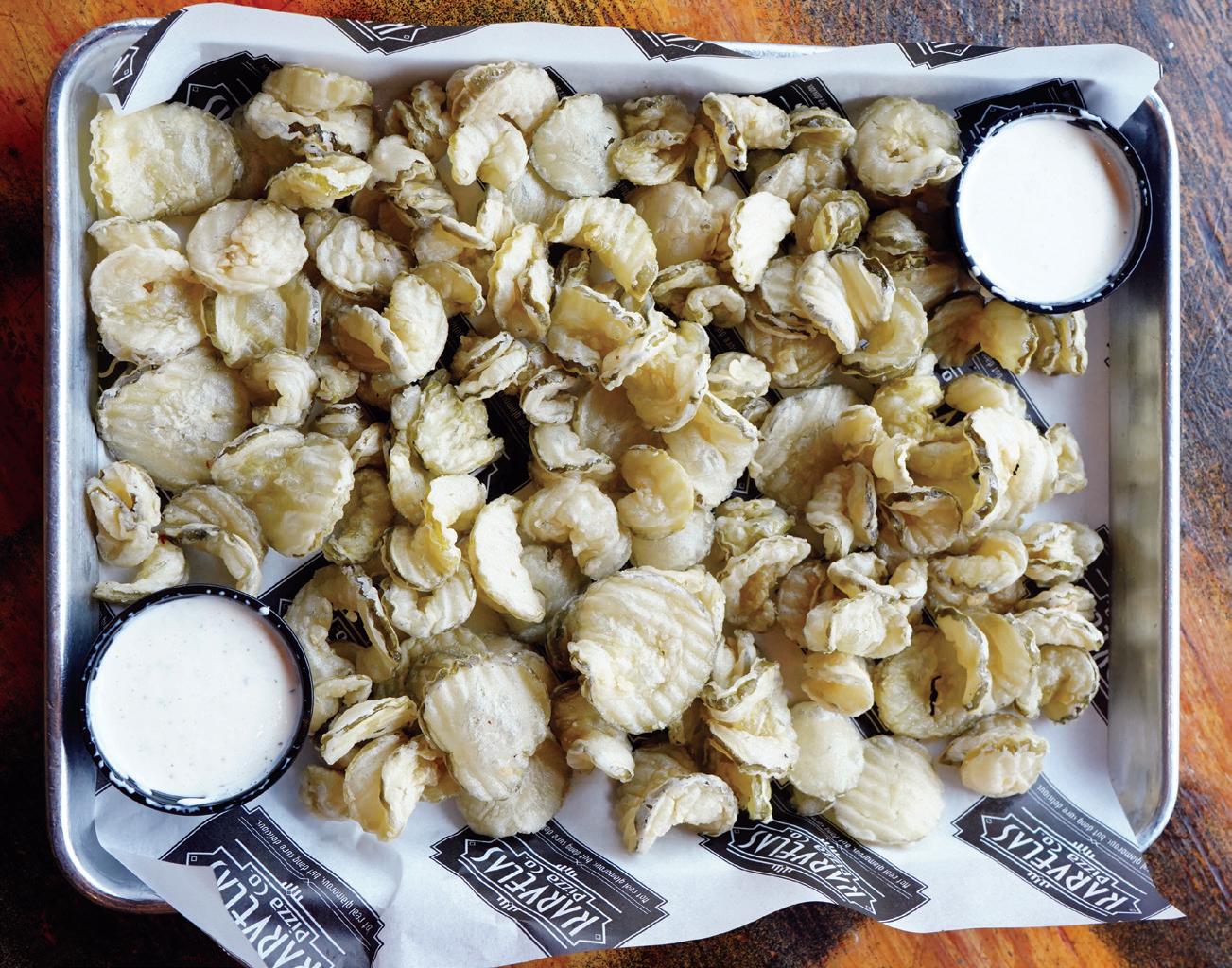
That’s when Emily dreamed up the motto that defines Karvelas Pizza Co. to this day: “Not Real Glamorous, but Dang Sure Delicious.” It’s funny, straightforward and unpretentious— just like Karvelas himself. In fact, he was more than happy to make top-notch New York-style pies five days a week, stay home on Sundays and Mondays, and raise babies with Emily. For a while, anyway.
“I was good with just making 40 grand a year,” he says. “But within a few years, I was making a lot more than that. I thought, this [concept] is really hot. I could take it to other towns, and I know it’ll hit. I’ve got a brand here that we could grow.”
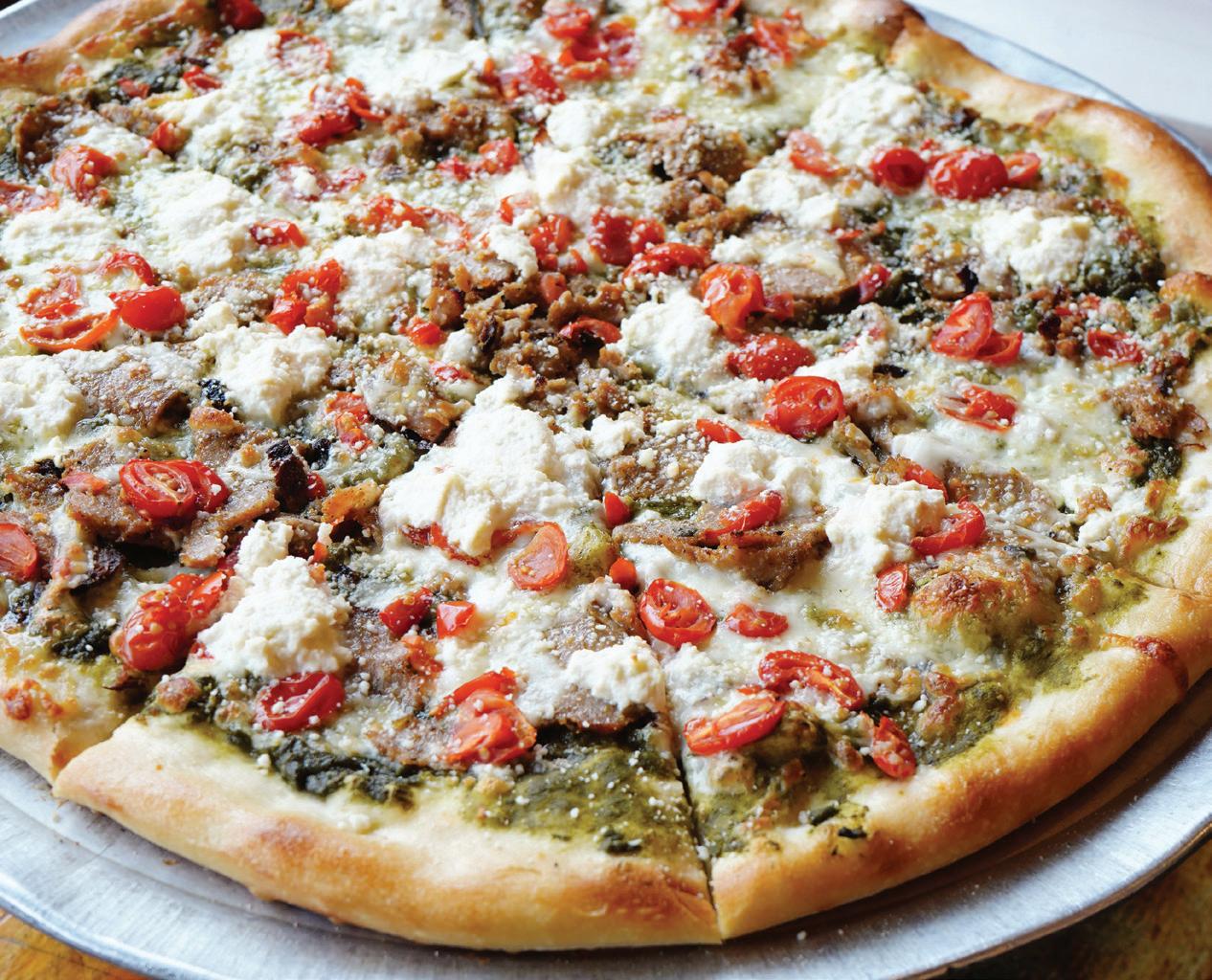
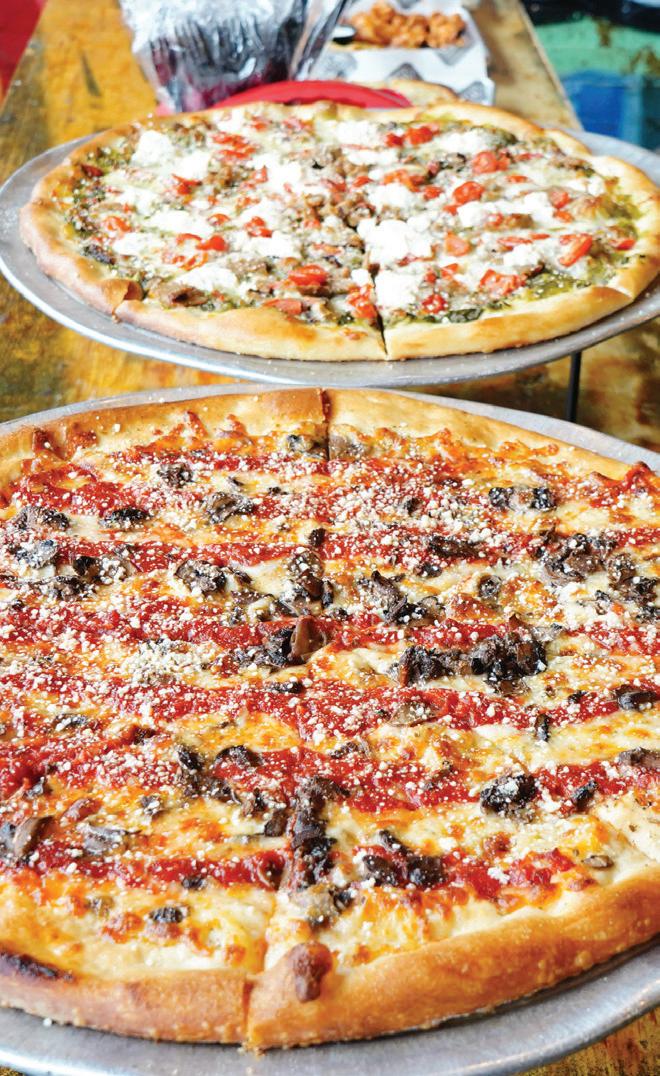
“If I’m in a grocery store in Opelika, people know who I am….They come up and say, ‘I just want to take a picture with you. I’ve been seeing you all over social media.’”
Joey Karvelas, Karvelas Pizza Co.
Soon, his oldest brother, Manny, a senior manager at FedEx, joined the business. “He was really good at developing people, building teams and trusting them,” Karvelas says. “And that’s something I didn’t really get. I was still rough around the edges. I ran people off….I’m an outspoken person, especially if I get frustrated. I’d just speak my mind, and it would rub people the wrong way. So I thought if I could just focus on the cooking, the finances, setting up the kitchen flow and fast service, and let Manny handle the employees and customers, we could do this.”
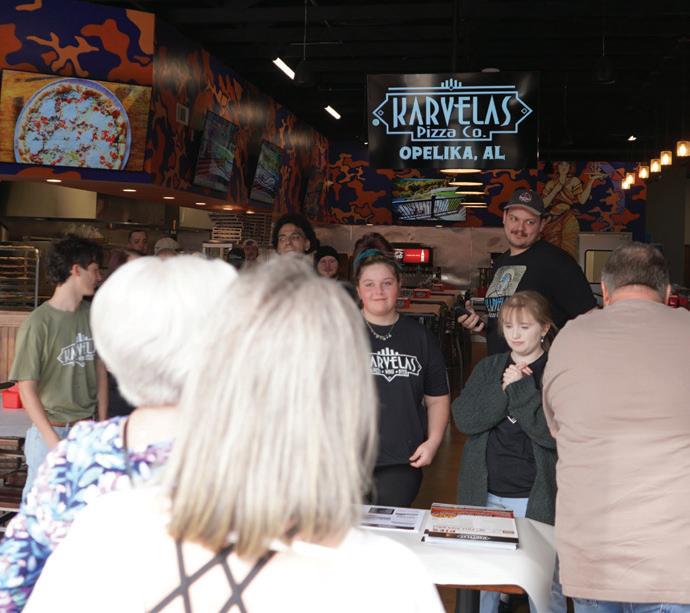
In 2018, Karvelas Pizza Co. moved out of the trailer park and into a larger—and far less “janky”—space in Hogansville. The next year brought store No. 2 in LaGrange, followed by a third store in Newnan in 2020. His younger brother, Charlie, signed on as well to focus on the customer experience, and new stores kept doing bang-up business. The latest opened in February, as Karvelas Pizza Co. leapt across the state line into Opelika, Alabama. Another Alabama store will open near Auburn University this fall.
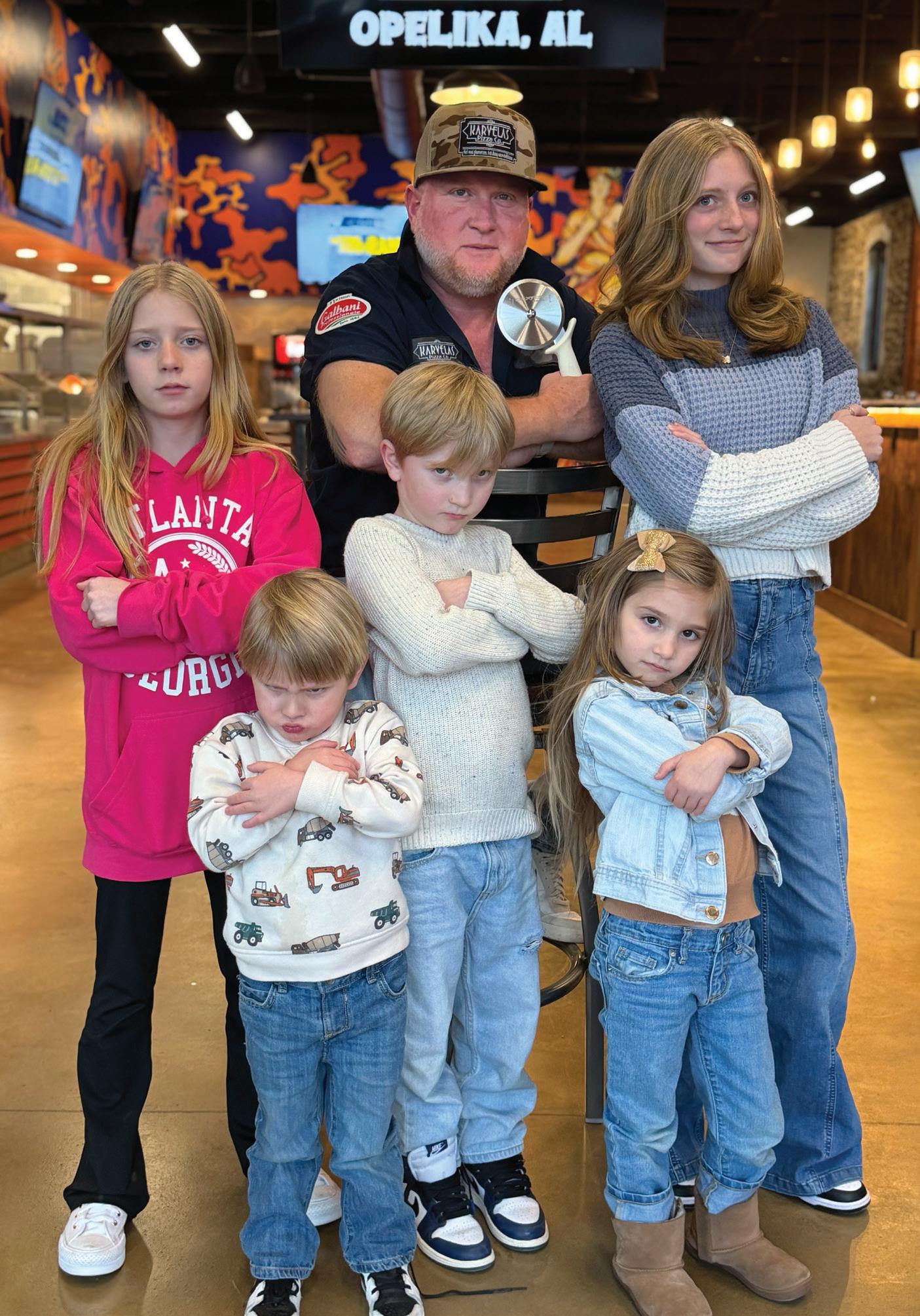
And whenever a store opens in a new town, many locals already know Karvelas by face and by name. He pioneered video marketing via social media with his first location, mostly, he says, because he didn’t have the time or the inclination to compose text-heavy posts, which were standard for Facebook in those days. Instead, he just spoke directly into the camera, using his folksy wit, warmth and authenticity to engage and entertain.
Karvelas’ video posts proved to be catnip for the algorithms. That formula still works for Karvelas
Pizza Co. to this day, especially when he’s ready to open a new location. The videos never feel scripted or rehearsed—just Karvelas being Karvelas. “I’d like to see a line down the street,” he says in a video promoting the Opelika store’s grand opening. “Let me tell ya something: We’re gonna throw down!”
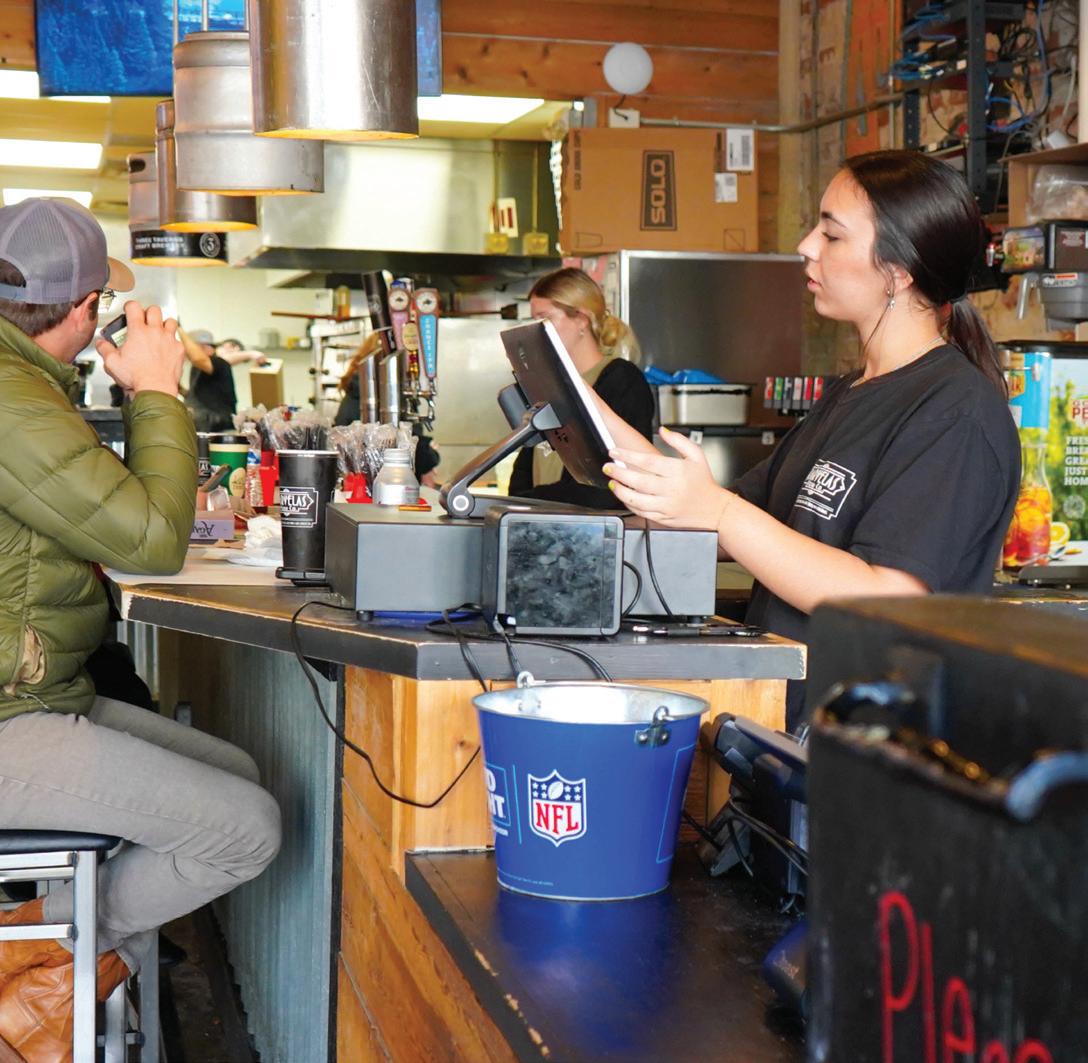
The “Micd Up” series might be Karvelas’s masterstroke. Sometimes it’s high-spirited teenage servers wearing the microphones, sometimes Karvelas himself, while the camera tags along to capture spontaneous behind-the-scenes humor. At the LaGrange store,

“I’ve built up what I need with the food and the recipes. Now let’s open more stores and build our revenue up. I’d like to get to $30 million in the next 10 years.”
Joey Karvelas, Karvelas
team members Lynsey and Hugo bicker hilariously—and with clear affection—in the kitchen. “She’s been on me all day, guys,” Hugo laments drily at one point. “It was supposed to be a good day.” To which Lynsey responds, “I literally asked him to sweep the floor. That’s it.” But later, Hugo describes Lynsey in one word: “Awesome-sauce.”
Another server, Merideth, walks up to a table of regulars and says, “Y’all, I’m miked up. Don’t say nothing crazy.” One customer calls out: “She goes to church, and she’s a good girl!” Later, Merideth bursts into song and says, “American Idol’s calling my name. Everywhere I go, they ask me that, but I’m, like, I gotta be at Karvelas, I can’t.”
Clip a mike on Karvelas, and he’ll go around joking with customers, teasing employees or peppering line cooks and servers with quick tips, from proper topping techniques to memorizing table numbers. In one video, he jumps on the make line during a rush period and tells his team, “See, if I hadn’t come in, y’all would have been over here crying.” As he’s slapping out dough for an order, someone hollers, “Don’t make it. She called back and said she didn’t want it.” Karvelas responds, “Call her back. Tell her, hell, naw.”


The “Micd Up” series is pizzeria marketing at its finest, not so much about promoting the food itself— other posts serve that function—but capturing the Karvelas Pizza Co. experience. What you’ve got here, the videos proclaim, is a fun place to work, to go for lunch or dinner, to just hang out. The positive energy is palpable. You want to meet these kids. You want them to wait on your table. You want them to make your pie.
And you want to meet Karvelas himself. “If I’m in a grocery store in Opelika, people know who I am,” he notes. “And I say that in a humble
way—I don’t think of myself as a celebrity at all. But they come up and say, ‘I just want to take a picture with you. I’ve been seeing you all over social media.’ It really hit home with the Opelika store. I was boosting video posts about the grand opening, and 100% of the people that came in said, ‘I saw your social media and had to see what you have going on here.’ I’m, like, damn, this is crazy.”
Crazy smart, actually. When it’s time to staff up for store No. 7, Karvelas will likely have his pick of the best, thanks to social media. And once they’re on board and fully trained, he will get back to
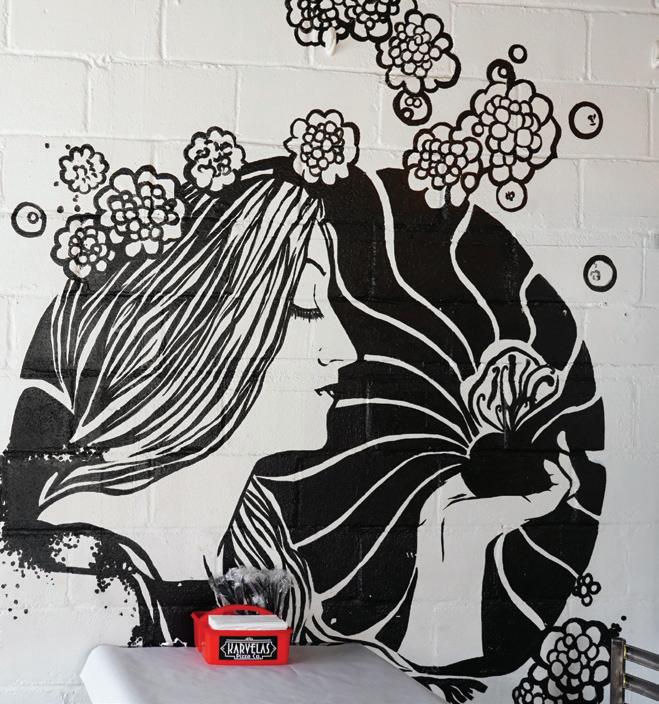
big-picture planning. The key to growth, he believes, is to let your team handle the day-to-day work. “You need to learn to trust people,” he says. “If you think you’re ready to open a second location, take a month off and don’t go into the restaurant at all. Just tell them to call you if they need you. If you open a second store, you’re not going to be at the first one as often, right? Maybe not for a whole month. So if you can take a month off and everything’s still good, you’re ready to go.”
That’s the thing about Karvelas. His faith in God is strong, yes, but he believes in people, too. “If you
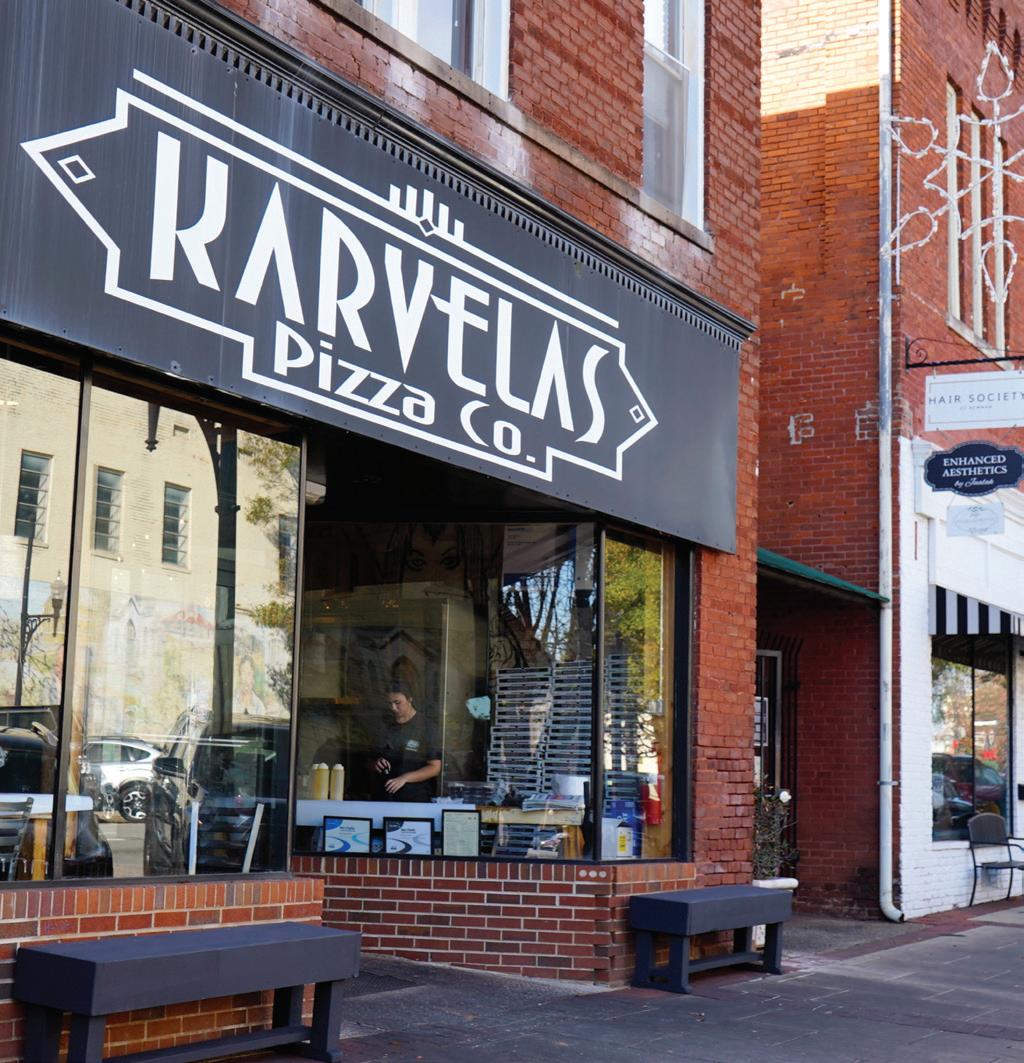
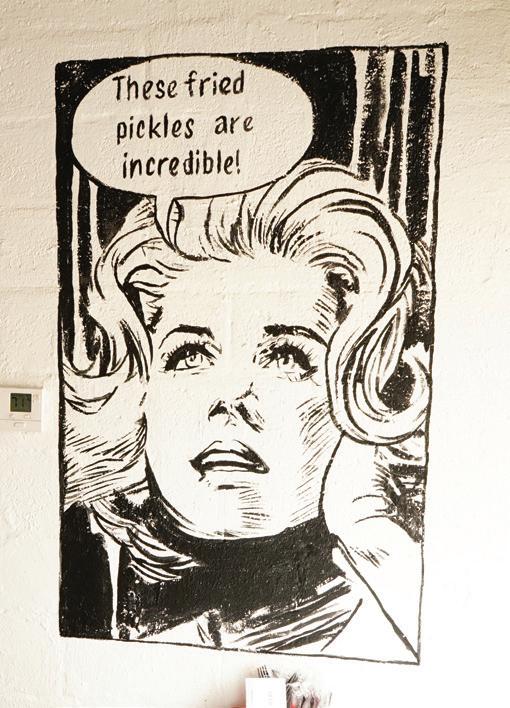
“You need to learn to trust people. If you’re ready to open a second location, take a month off and don’t go into the restaurant at all….If everything’s still good, you’re ready to go.”
Joey Karvelas, Karvelas Pizza Co.

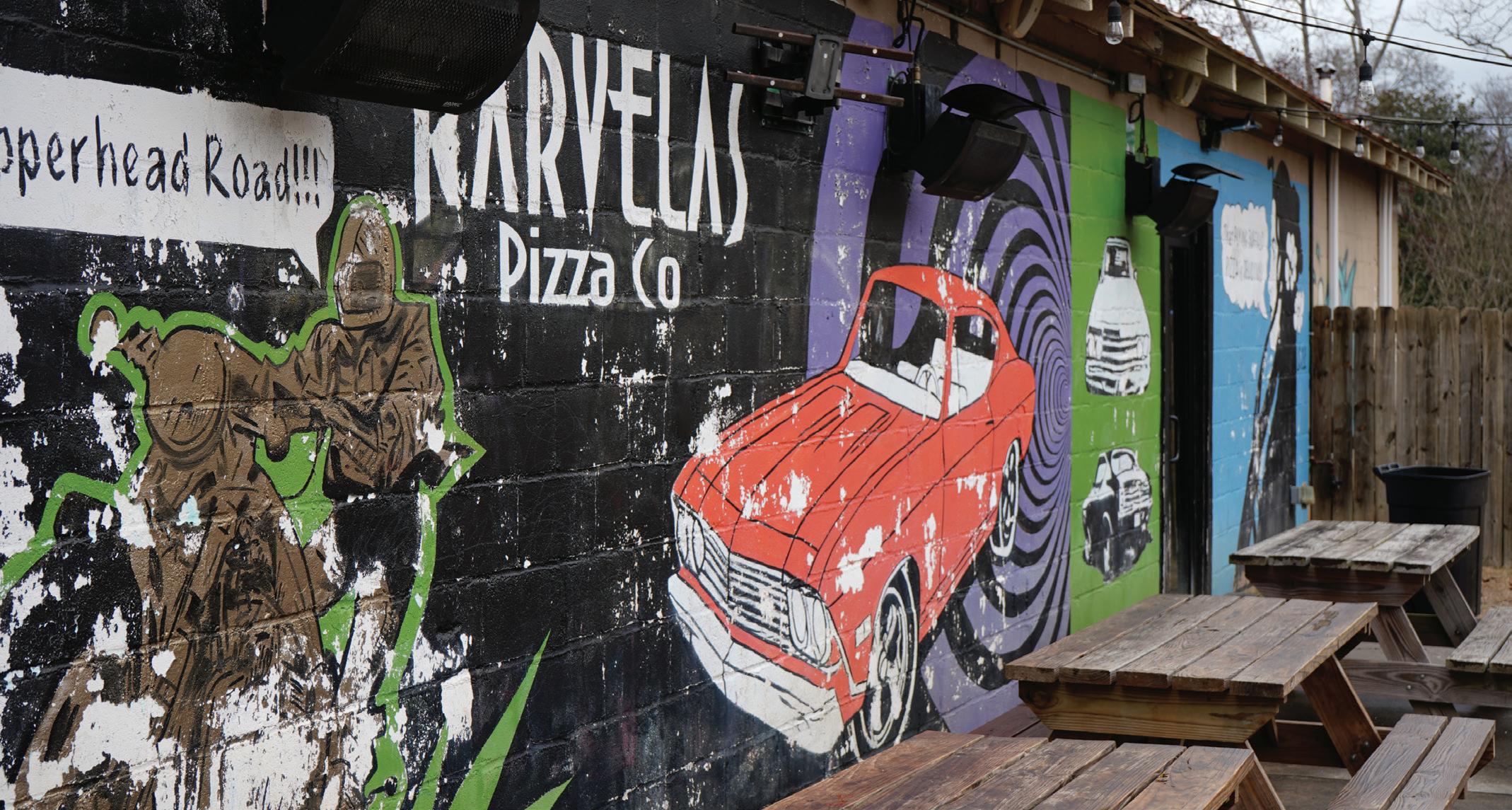
put them in the right place and the right atmosphere, they want to do a good job. When I talk to some restaurant owners who have one store, that’s usually the common thread: They don’t trust people. They think everyone’s out to get them or to steal from them. That’s just not true, man. Or they’re just not willing to walk away and say [to their staff], ‘I know you can do it. I’m going to let you do it.’ If it’s so hard to train somebody to do what you do, maybe you need to figure out how to make it easier. Make things more systematic, reduce your menu a little bit, get rid of things that are slowing you down.
Just make it easier on the people you have. If their job’s easy, you’re probably going to retain more people, too.”
With the Opelika store now open, Karvelas Pizza Co. has around 320 employees, most of whom work part-time (typically 15 hours a week). Even with the seventh store opening in October, Karvelas feels like he’s just getting started. “I really want to focus on growth,” he says. “I’ve built up what I need with the food and the recipes. Now let’s open more stores and build our revenue up. I’d like to get to $30 million in the next 10 years.”
Back in the long, dark days of his incarceration, did Karvelas imagine he’d ever achieve this kind of success? “I’m a dreamer, man,” he says. “That got me through those moments. Prison was a rough place to be. But I would envision myself marrying some pretty girl, having a nice house full of kids, owning a restaurant. If someone had told me then that one day I’d be where I am now, man, that would have just given me more to dream about.”
Rick Hynum is PMQ Pizza’s editor in chief.
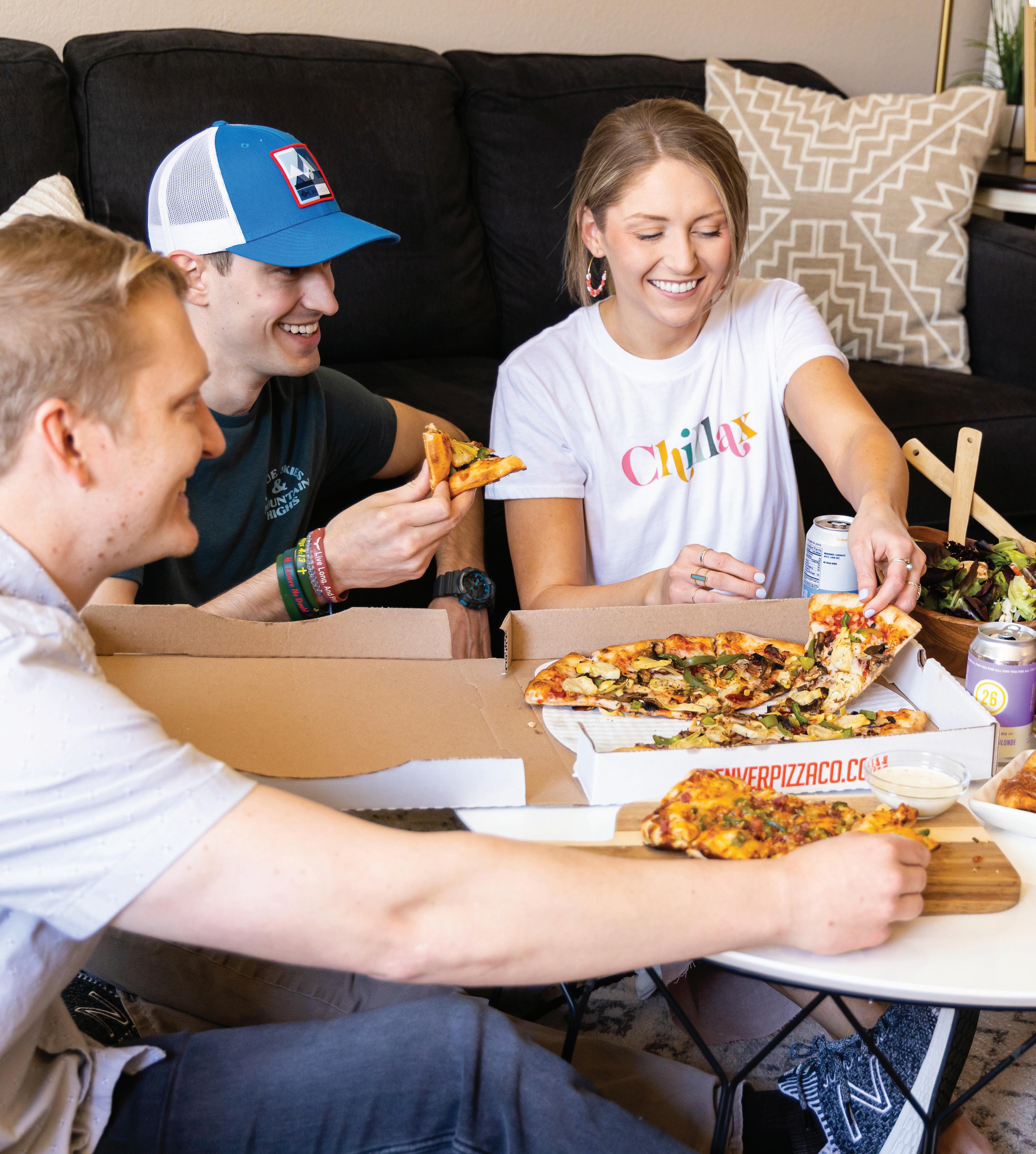
Denver Pizza Company lets customers get $5 off any $25 online order upon signing up for its loyalty program.
Put these systems in place, and you can start building the ultimate restaurant marketing plan for 2026.
BY MATT PLAPP
EVERY RESTAURANT OWNER DREAMS OF GOING VIRAL from a marketing campaign, whether their own or someone else’s. I’ve seen it happen many times— when Dave Portnoy walks through the door, Guy Fieri films at a restaurant, or restaurants are featured on our program, America’s Best Restaurants Roadshow. The rush is electric. Your customers are excited, new people are hearing about your shop for the first time through social media, and lines are out the door.
But what happens after the hype dies down? Too many operators ride the wave but fail to capture long-term momentum. If you don’t have a strategy in place, you’re missing out on turning that fleeting fame into forever customers. You can’t expect them to just keep showing up. The competition is too fierce, and there’s a chain with more money around every corner. To grow and take advantage of the spikes in attention, you need to be prepared.
Specifically, you need marketing funnels to gather customer information and take them on a journey— ideally, one that includes dining in your pizzeria way more often than just a few times. This systematic approach can turn strangers into regulars who rave about you. There are eight marketing funnels that every pizzeria needs, so let’s take a look at each one.
These are your foundations. If your restaurant isn’t acquiring, retaining and tracking customers, you’re falling behind.
1
The New Customer Funnel (Your Growth Engine)
Every day, you should be asking: “How am I getting new people into my database?” If you’re not adding
five to 10 new customers a day, you’re in trouble. This funnel includes:
• An irresistible offer (one they’d feel stupid saying no to)
• A data capture system (name, email, phone number, birthday)
• Automated follow-up (email, SMS, Facebook Messenger, retargeting ads)
Goal: Get new leads into your marketing system every day.
2
The Frequent Customer Funnel (Your VIPs and Regulars)
The sad truth? Most restaurants don’t even know their regulars. That’s insane. You need a system that tracks and engages your best customers, including:
• Personalized rewards for frequent visits
• Exclusive offers to increase visit frequency
• Surprise-and-delight campaigns (birthdays, anniversaries, favorite items)
Goal: Make sure your best customers stay engaged and keep spending.
3
The Lost Customer Funnel (Your Comeback Plan)
Customers will go missing—it’s inevitable. You need a plan to win them back before they’re gone for good.




• Automated “We Miss You” messages (sent after 60 to 90 days of inactivity)
• Special “return” offers to lure them back
• Tracking and segmentation (so you know when they stop visiting)
Goal: Identify and reactivate lost customers before they disappear forever.
4
The Birthday Funnel (The Easiest Moneymaker)
People love celebrating their birthday at a restaurant. If you’re not leveraging this, you’re losing thousands in sales. You need:
• A simple way to collect birthdays (opt-ins from new customers)
• An automated birthday offer (free meal, dessert or discount)
• Follow-up reminders (so they actually redeem it)
Goal: Bring in birthday groups who spend big and bring friends.
Tier 2 funnels are where you can make massive profits for your pizzeria. The loyalty, special events, charity and catering funnels should enormously impact your weekly sales.
5 The Loyalty Funnel (Not Just a Punch Card)
Loyalty programs aren’t just about points. They’re about habit creation. Your loyalty funnel should:
• Reward repeat visits and spending
• Use tiered incentives (which make customers want to reach the next level)
• Include automated engagement (so customers don’t forget about it)
Goal: Keep customers coming back without devaluing your brand.
6
The Special Interest Funnel (Hyper-Specific Marketing)
Your customers aren’t all the same—some are beer or wine lovers, some are families, and some are college students. Segment them!
• Identify niche groups (beer/cocktail drinkers, wine club members, sports fans)
• Send targeted offers based on interests
• Create exclusive events for these groups
Goal: Speak directly to the right customers at the right time.
7
The Charity and Community Funnel (Good for Business and Branding)
Want to attract new customers and build loyalty?
Support what they care about. A charity/community funnel includes:
• Fundraisers and donation programs
• School and sports team partnerships
• Cause-based marketing campaigns
Goal: Leverage community goodwill to attract new, engaged customers.
8
The Catering & Events Funnel (Big-Ticket Sales)
This one’s a biggie, so we’ll dig a little deeper here. We buy lunch for 30 to 40 people at our office every week. That’s 52 catering orders in a year. And yet, over the past year of doing this, not one restaurant has ever followed
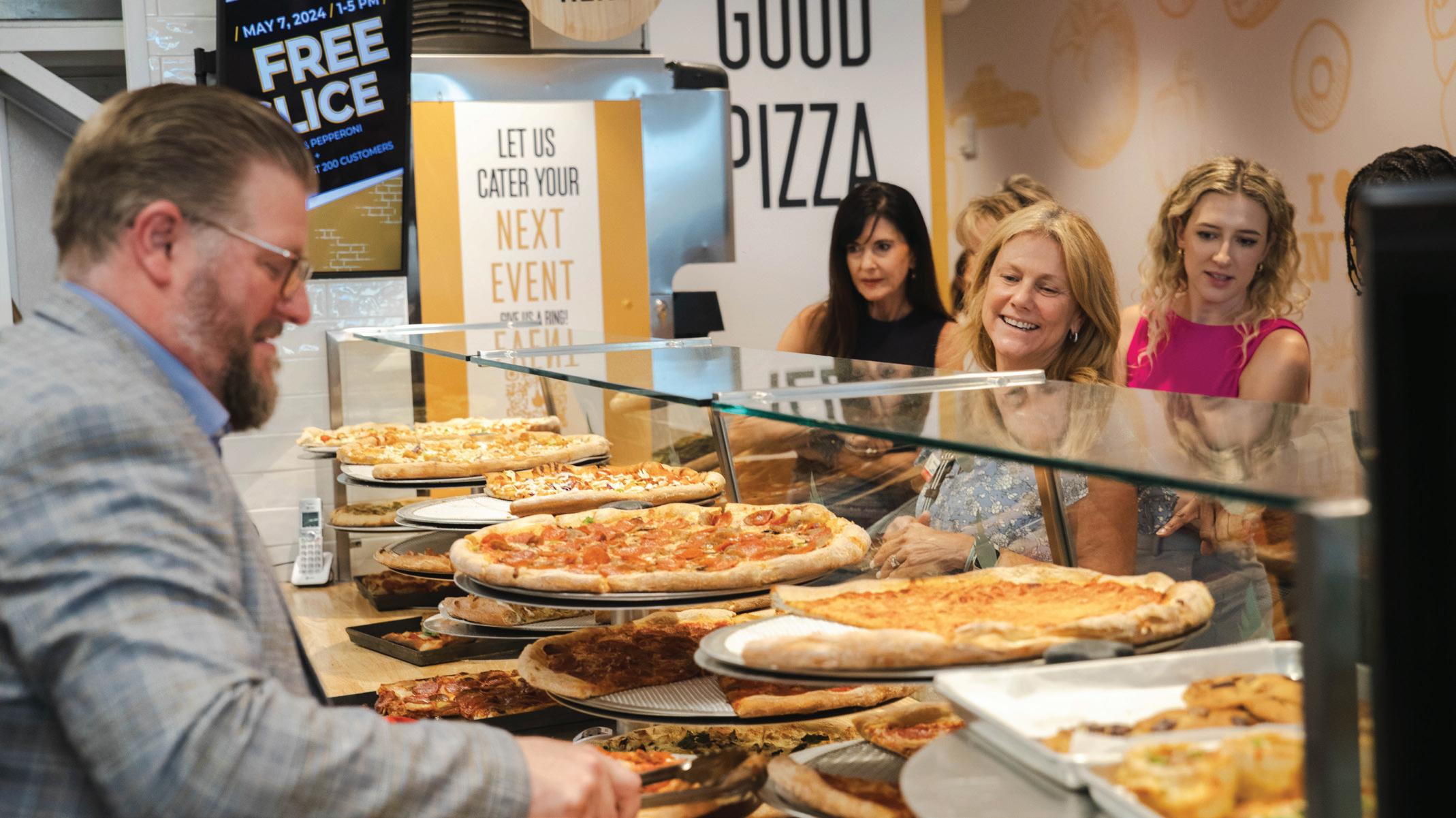
up with us. No calls. No thank-yous. No questions like, “Hey, how often do you order catering?” Nothing. And it’s happening everywhere. At an event in Las Vegas, I spoke with a restaurant owner who did $450,000 in catering in 2024. When I asked how many of those customers his team had followed up with, he answered, “Probably none.”
That’s a half-million-dollar opportunity left on the table. Literally. So here’s what needs to happen every time a catering order comes in to your restaurant:
When a client places a catering order, someone at your restaurant needs to ask a few simple questions: 1) How did you hear about us? 2) What’s the occasion? 3) Do you order catering regularly? That last one is crucial. If they say yes, you can start a conversation about becoming their go-to caterer.
Every catering order is an opportunity to turn one-time buyers into repeat customers. So send more than just the food. Include:
• A stack of bounce-back gift cards
• A personalized thank-you note
• A special offer for their next catering order
If you’re feeding 100 people at an office lunch, why not give all 100 of them an incentive to visit your restaurant? This is how you convert catering customers into dine-in guests.
One week after the order, follow up with the person who placed it. First ask, “Hey, just checking in—how was your catering order?” Then: “Would you be interested in setting up a recurring monthly or quarterly order?” If you make it easy for them, most businesses will jump at the chance to put their office lunches on autopilot.
Finally, if you don’t have a dedicated system to manage your catering leads, you’re making things way harder than they need to be. You need a part of your tech stack to specifically work for catering, and it should automate key steps, including:
• A thank-you message when they opt-in with an initial offer
• Biweekly nurture campaigns highlighting reasons for catered events this week or month
• A team member monitoring and managing relationships via email, text and phone calls
That’s not just something that’s nice to have—it’s essential if you want to maximize your catering revenue without chasing every order manually.
Own your marketing, own your future: That’s what I’m trying to tell you here. What is the difference between thriving and struggling restaurants? Systems. These funnels are the “systems” you must have in place to build the ultimate restaurant marketing plan.
Matt Plapp is the CEO of America’s Best Restaurants and a contributor to PMQ.com.
Thinking about investing in an established brand? Our experts answer your most frequently asked questions about how to ensure franchising success.
BY TRACY MORIN
IF YOU’RE CONSIDERING FRANCHISING, you probably have a lot of questions: Is franchising right for me? What are the benefits—and potential drawbacks? And how do I determine the right concept and growth plan?
PMQ asked two pizza industry experts, heading up their own successful franchise concepts, all of this and more. They break down the basics you need to know if you’re thinking of investing in—and growing—an existing brand.
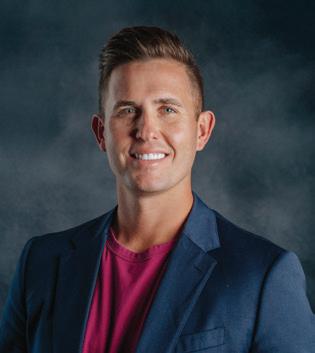
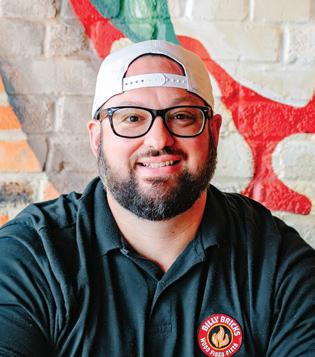
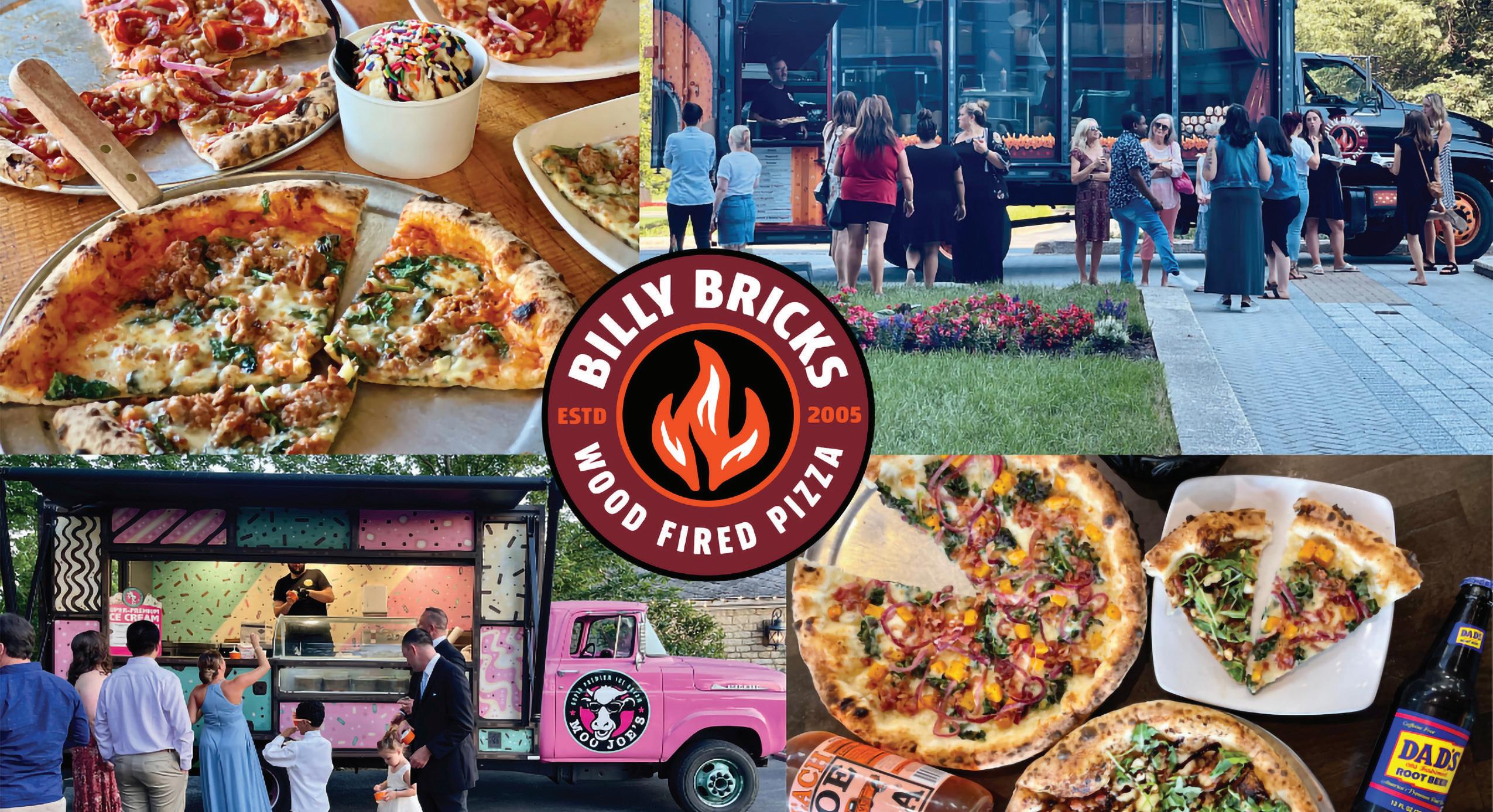
JR. CEO, Billy Bricks Restaurant Group, Lombard, IL
AUTONOMY VS. SCALE: How should an operator weigh the trade-off between giving up some control and gaining the benefits of a franchise system?
Comeaux: Franchising is a deliberate trade: You give up some autonomy in exchange for speed, leverage and fewer costly mistakes. The real question isn’t whether you can do things your own way, but whether the system helps you reach profitability faster and with more confidence than going it alone. The strongest operators don’t fight the guardrails—they use them to win locally while benefiting from scale.
Gruber: I think the first question is: What kind of control are you actually giving up? Because I’ve lived the downside of “control leaks.” Early on, we had situations where we had good people and good locations, but we gave up too much flexibility—and when you don’t have control, you can’t pivot when things go sideways.
The upside of franchising is scale through systems— speed to growth, playbooks, buying power, shared marketing and operational rhythm. But the cost is, you’re no longer building your way every day—you’re building the brand’s way. If you’re the kind of operator who needs to improvise constantly, franchising will feel restrictive. If you’re an operator who gets energy from executing a proven model and making it excellent, franchising can be a rocket ship.
Here’s my take: Systems don’t kill creativity—they protect consistency. The best brands still leave room for local nuance, but they’re not winging it on the fundamentals. Franchising isn’t the shortcut—systems are. If you’re wired for consistency, coaching and cashflow discipline, franchising can be the multiplier. If you need total autonomy, build a great independent and protect your freedom.
“Successful franchisees master the fundamentals first and earn the right to innovate later, not the other way around.”
Carl Comeaux, Crust Pizza Co.
FINANCIAL CONSIDERATIONS: What are the key costs—both up-front and ongoing—that someone should understand before buying into a franchise?
Comeaux: Before buying into a franchise, operators must understand the full capital picture, not just the franchise fee. That includes buildout costs, working capital, and how long it realistically takes to reach breakeven. Ongoing fees like royalties, marketing funds and technology costs should be viewed as investments in demand generation and operational efficiency—the real financial test is whether the system improves margins, cash flow and long-term enterprise value.
Gruber: I’m obsessed with financial health and cash flow, because cash flow is everything. It’s what lets you take care of your people, upgrade your spaces, and grow without being handcuffed by investors or lenders.
So when someone asks me about franchise costs, I tell them to map the full stack—not just the franchise fee.
Up-front, you’re usually looking at:
• Franchise fee, legal review and entity setup
• Buildout/leasehold improvements and equipment package
• Opening inventory, training travel and pre-opening payroll
• Working capital (this is the part people underestimate)
Ongoing, you’re evaluating:
• Royalties and brand fund/marketing fees
• Tech stack fees, required vendors and required programs
• Ongoing training, audits and refresh/remodel requirements
• Local marketing spend (because even great brands need local demand-generation)
The real question is: After all of that, does the model still leave you enough margin and cash to operate calmly? If the answer is “only if everything goes perfectly,” that’s not a plan—that’s hope.



“Systems don’t kill creativity—they protect consistency. The best brands still leave room for local nuance, but they’re not winging it on the fundamentals.”
Ric Gruber Jr., Billy Bricks Restaurant Group
FOLLOWING THE SYSTEM: How important is it for franchisees to strictly adhere to brand systems and standards? What challenges do operators typically face here?
Comeaux: Strict adherence to the brand system is critical, because those standards are built from real-world testing, iteration and hard-earned lessons. The most common challenge operators face is the temptation to take shortcuts when labor is tight or margins are pressured. Successful franchisees master the fundamentals first and earn the right to innovate later, not the other way around.
Gruber: If you’re buying a franchise, you’re buying a system—so adherence isn’t optional; it’s the deal. The brand lives or dies on consistency. That said, the challenge is psychological: A lot of strong operators are strong because they trust their instincts. I’m a gutinstinct person, and I’ve learned not to second-guess that instinct when something isn’t going to work.
The trick is knowing where instinct belongs. Instinct is great for local marketing, community relationships, leadership and hospitality. But standards are nonnegotiable for food quality, service execution, training, safety and the guest experience.
If a franchisor doesn’t clearly define what’s “locked” vs. what’s “flexible,” franchisees will naturally push boundaries—and that’s where friction starts.
SECURING SUPPORT: How can prospective franchisees evaluate whether a franchisor offers the level of support they need to succeed?
Comeaux: Prospective franchisees should evaluate support based on how it shows up at every phase— pre-opening, opening and ongoing operations—not just what’s promised in a sales presentation. Speaking directly with existing operators is essential to understand response times, field support quality and real problem-solving capability. The best franchisors act as true performance partners, not passive licensors collecting fees.
Gruber: I’d evaluate support the way I evaluate any operation: Show me the systems and the accountability behind them. At three units, you start needing systems and a team—or growth turns into chaos.
So I’d ask franchisors questions like:
• What does training look like—how long, where, and who runs it?
• Do you provide opening support on-site? For how many days?
• What are the operating rhythms—scorecards, audits, coaching cadence?
• Who answers the phone when something breaks on a Saturday night?

• What’s the marketing toolkit—and what’s required vs. optional?
• Can I talk to three franchisees who are not your top performers?
Support is not a PDF manual. Support is coaching plus accountability plus real infrastructure.
MARKET FIT: What factors should someone consider when determining whether a franchise concept will work in their specific market?
Comeaux: Determining market fit requires an honest assessment of demographics, traffic patterns, competition and local price sensitivity—personal enthusiasm alone isn’t enough. A strong franchise concept should adapt to local conditions without compromising its core brand promise. The best opportunities are in markets where the brand clearly fills a gap, not where it’s chasing short-term trends.
Gruber: I always start with community and demand: Is this concept something your market actually wants weekly—not once because it’s new? And is your market aligned with the brand’s positioning and price point?
I also believe in a balance between consistency and local preference. A principle I’ve shared is an “80/20” approach—keep 80% core brand consistency, but allow 20% adjustment for local preferences so you can serve the community without diluting the concept.
And then I get practical, evaluating:
• Traffic patterns, parking, visibility, delivery/catering demand
• Labor realities (wage pressures, management bench, seasonality)
• Competitive set (especially substitutes, not just pizza)
• Unit economics under local rent, local labor and local food costs
If the economics don’t work with realistic assumptions, no amount of brand hype will save it.
How should operators think about growth goals—one store vs. multiple units—when deciding if franchising is the right path?
Comeaux: Operators should be clear from the start whether their goal is a strong single-unit income or building a scalable multiunit platform. Franchising rewards those who think beyond running shifts and
focus on developing leaders, systems and infrastructure. The most successful franchisees operate with a fiveto 10-year horizon, building businesses designed for durability, growth and exit value.
Gruber: First, be honest about what you want. Some people want one great store and a great life. That’s a win. Others want the game of building—systems, leaders and scale.
I’ll say this: Having two is still manageable. At three, you start to need systems and a team. That’s the inflection point where your identity has to change—from operator to builder/coach. And one of the hardest lessons for owners is realizing you can’t do everything yourself— letting go of control and trusting others is tough.
If you want multiunit growth, franchising can be a path—but only if you love process, consistency, training and developing people. If you don’t, franchising will feel like paperwork with a paycheck attached.
One other angle: I’m a big believer in growth that builds brand awareness, not just square footage. And I see mobile as an “and,” not an “or”—meaning that brick-and-mortar brands should leverage mobile to reach more customers. That same mindset applies to franchising: Growth should make the brand stronger, not just bigger.
Tracy Morin is PMQ’s associate editor.
“I’m a big believer in growth that builds brand awareness….Growth should make the brand stronger, not just bigger.”
Ric Gruber Jr., Billy Bricks Restaurant Group

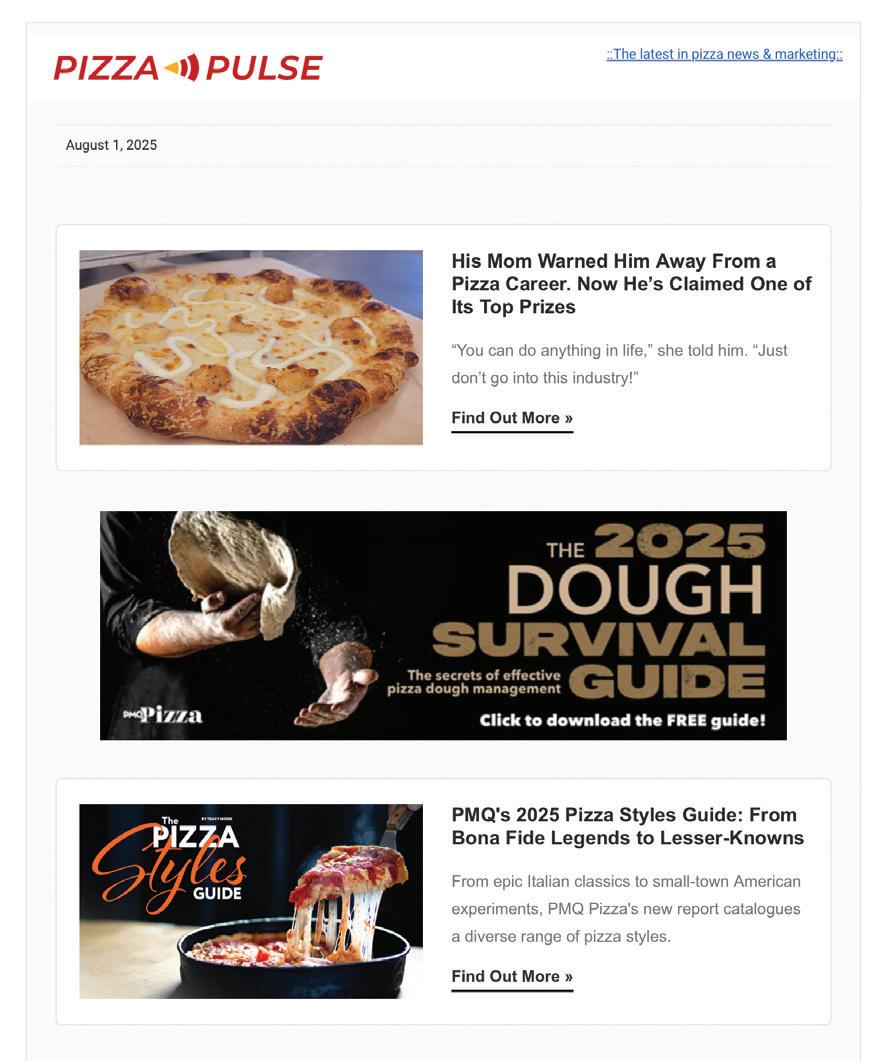
Craving the freshest insights into the pizza restaurant industry? Subscribe to PMQ’s e-newsletter, Pizza Pulse, and we’ll fill your inbox with:
• Hot-from-the-oven pizza industry news delivered three times a week (Mondays, Wednesdays and Fridays)
• Moneymaking promotions from leading independents and chains
• Proven marketing strategies to boost your pizzeria’s sales
• Pizzeria success stories and expert insights
Salads make natural sellers all summer long, but blending must-have basics with outside-the-box combinations will take them far beyond seasonal superstars.
BY TRACY MORIN
AS SUMMER APPROACHES, customers naturally gravitate toward lighter fare like salads. But salads are also perfect as shared starters, healthy mains and versatile to-go options, making them winning sales items year-round.
The key is to make your salads stand out rather than wilt into the background. Here, three operators who are serving up attention-grabbing greens share their top tips to maximize sales success in this essential menu category.

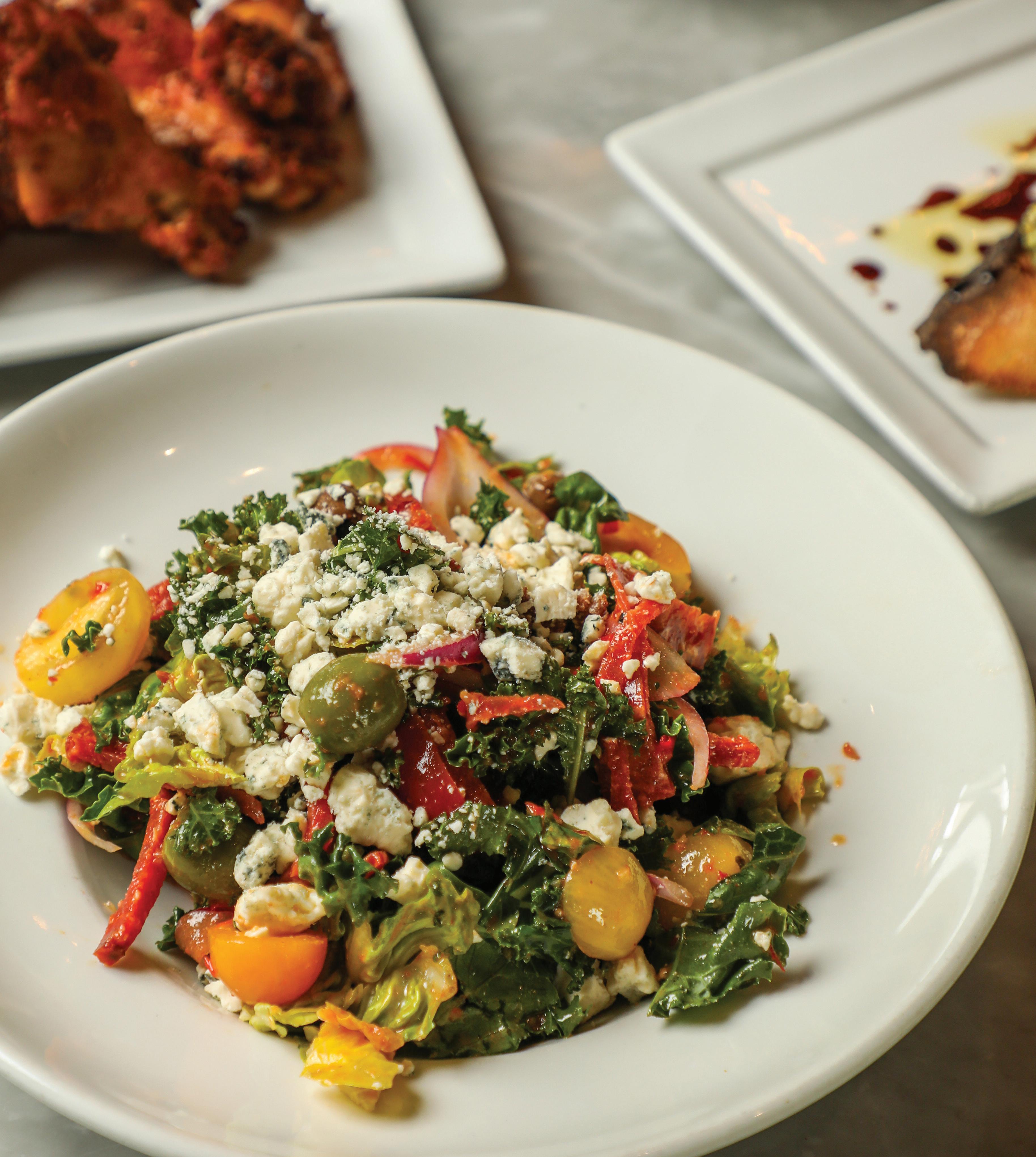
Nail the basics... While creativity is important, Phillip Mariano, executive chef at the two-location Pizza Domenica in New Orleans, emphasizes that a pizzeria should start with the standards. “Caesar salad is a must and dominates our salad sales, selling twice as much as any other salad,” he says. “We think of salads in three categories: a creamy dressing like blue cheese or ranch with a crisp lettuce such as romaine or Little Gem; a bright vinaigrette with leafy greens like arugula or spinach; and a classic Caesar. What you put on them is up to you, but it’s important to offer those three options.”
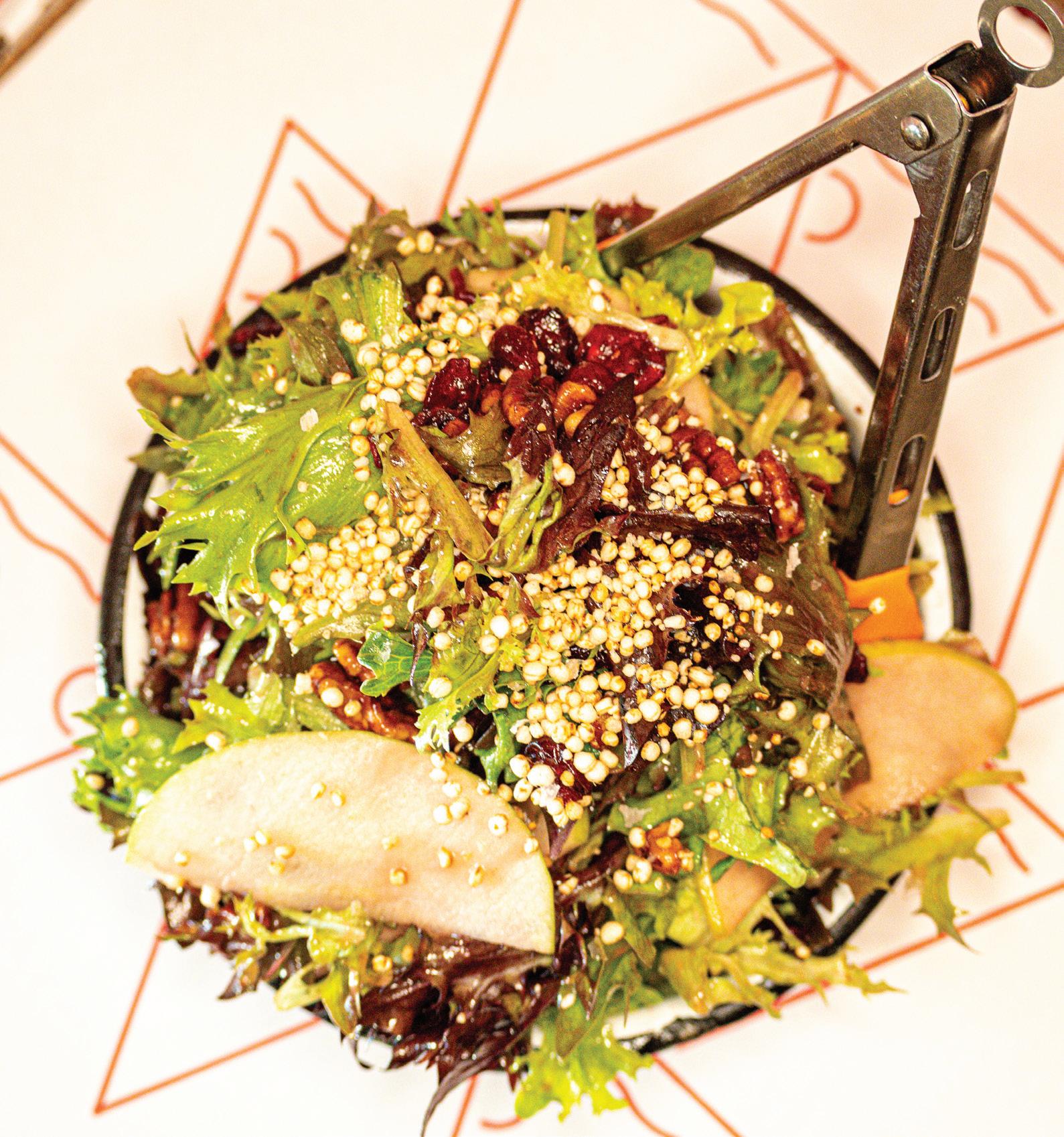
“Peruvian sweet peppers or nectarines, when in season, have really helped us stand out and created some of our most popular topping combinations.”
Similarly, at the 88-yearold Sally’s Apizza in New Haven, Connecticut (now with seven locations), familiar classics rule. “We want to play the hits that customers love but update them in a way that’s exciting,” says Bret Lunsford, executive chef and director of culinary. “We offer a house salad, Caesar salad, wedge salad and chopped salad. All of them are instantly recognizable on a menu but are presented in a way true to Sally’s: classic, iconic, but elevated in an approachable, inviting way.”
2...But think outside the box. When crafting salads, Chris Brady, co-owner and president of the nine-location Timber Pizza Co., based in Washington, D.C., believes in taking chances with less traditional ingredients. “Peruvian sweet peppers or nectarines, when in season, have really helped us
Chris Brady, Timber Pizza Co.
stand out and created some of our most popular topping combinations,” he says. “The combination of sweet, heat and salty shines through on many of our salads as well as our top pies.
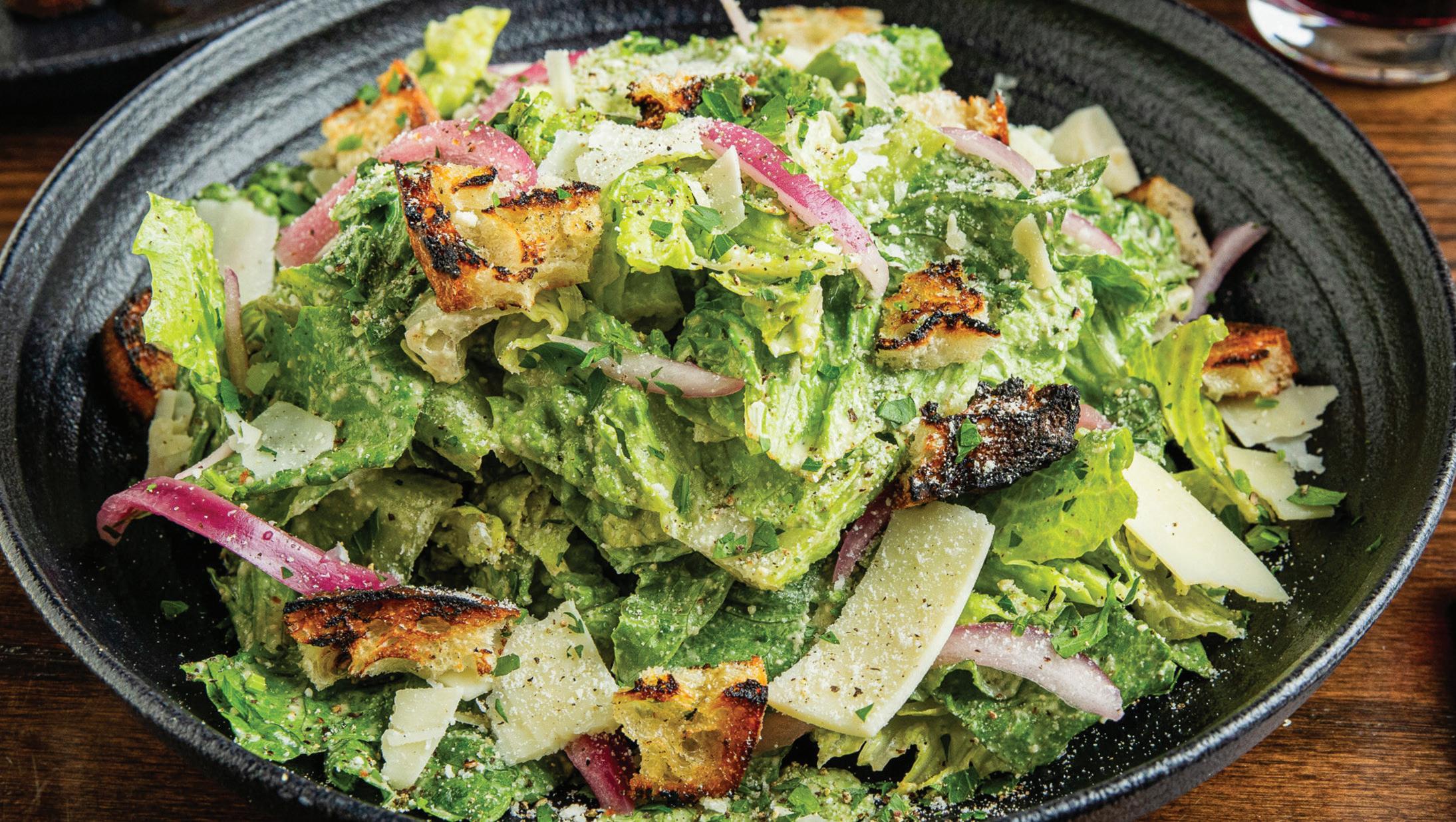
“Fresh and inventive salads have always been a differentiator for us,” Brady continues. “We’ve never been a ‘traditional pizza place’ with basic salads, so even our first rendition of a Caesar [which debuted in January] has a fun twist.” Timber’s version, The Little C (TLC), features a romaine/Tuscan kale blend, Tajín breadcrumbs, Peruvian peppers, Parmesan and Miso Caesar Dressing for a modern-day take that’s layered with flavor.

Conversations with pizza people. For pizza people.
Meet the Pizza Community's leaders and rising stars in our twice-a-month podcast. Past guests include:

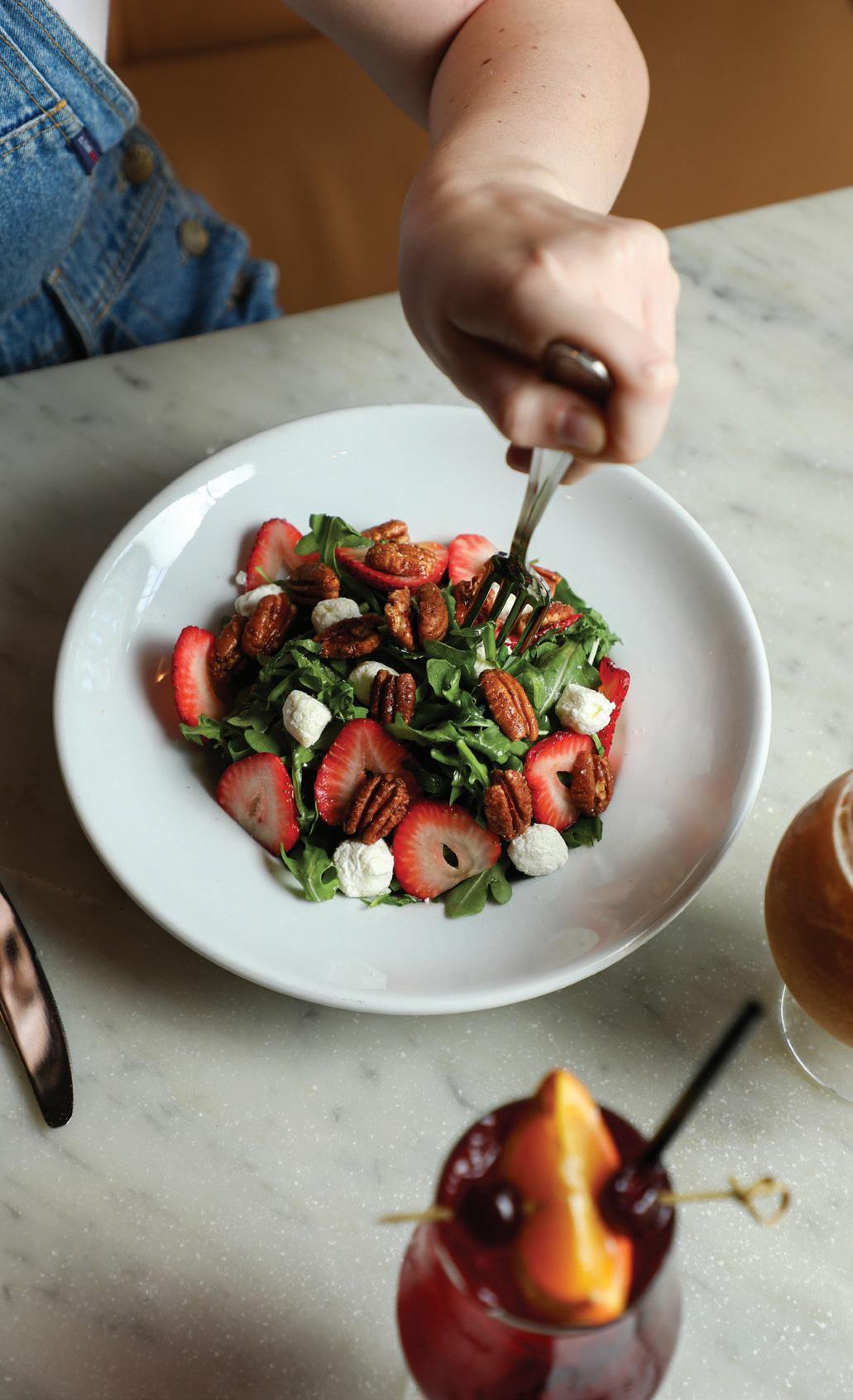
Create winning combinations. When you’re assembling salads, all of the ingredients should work together—in taste as well as texturally and visually. “Overall, think about the components that are in your salad,” Lunsford suggests. “They should tell a cohesive story and show different flavors, textures and sometimes temperatures to keep it interesting.”
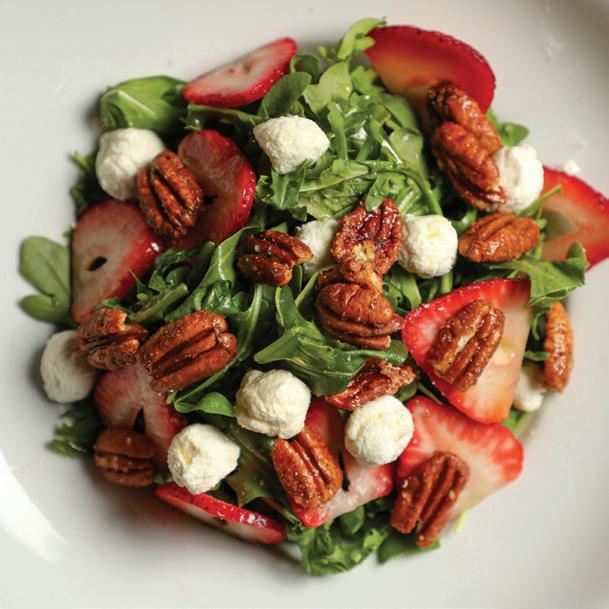
“In salads, I like to include something crunchy, like spiced nuts or croutons; something creamy, whether that’s the dressing or a cheese like chèvre; and something bright and bold in flavor, such as vinegars, peppers or tomatoes,” Mariano says. However, he doesn’t recommend letting customers take the wheel on createyour-own combos: “Unless you’re a buffet, giving customers too many options in a high-volume setting will only slow down your kitchen staff.”
Lunsford agrees with offering a set menu of specialty salads—it keeps operations flowing more smoothly and is more cost-effective, for the pizzeria and its customers— but you may choose to allow for modifications when feasible. And, because substandard ingredients have no place to hide on a salad plate, a set menu of salads helps ensure freshness.
“Unless you’re a buffet, giving customers too many options in a high-volume setting will only slow down your kitchen staff.”
Phillip Mariano, Pizza Domenica
Dress ’em down. Dressings: housemade or premade? Mariano highly recommends making your own. “Every premade dressing I’ve tried tastes dull and flat,” he says. “If making dressings consistently isn’t realistic for your staff, I recommend starting with a simple base [premade] dressing and improving it with a predetermined amount of acid, fresh herbs and salt.”
At Timber Pizza Co., housemade dressings win the day—an approach that reinforces its focus on high-quality ingredients. “Having gotten our start in local farmers markets and having a passion for local collaboration,” Brady says, “we always choose fresh and in-house.”
Making your own dressings also differentiates you from competitors. “Everything on the Sally’s menu is housemade—it’s a badge of honor for us, but it also echoes the artisanal process we take when making our apizza,” Lunsford says. “It certainly costs a bit more in both food purchasing and labor, but it gives us much more flexibility, seasonally as well as creatively. It also ensures that these offerings can only be had at Sally’s.”
Lunsford adds that, because salad-buying customers are often looking for a healthier option, it’s important to offer some healthier dressings and vinaigrettes—while making sure they’re also exciting and full-flavored.
5
Cross-utilize ingredients. Like any other menu item, maximize salad ingredients by using them for other dishes, including your pizzas. “At Pizza Domenica, our chopped salad includes many of our pizza toppings,” Mariano says. “A caprese salad with basil pesto and a pesto pizza using many of the same ingredients can easily coexist on the same menu. Almost anything you would put on a pizza can also make sense on a salad.”
“[Making our own dressings] certainly costs a bit more in both food purchasing and labor, but it gives us much more flexibility, seasonally as well as creatively.”
Bret Lunsford, Sally’s Apizza
Some salad ingredients may be difficult to repurpose for pizzas, but Timber Pizza Co. is up for the challenge. “It takes some creative combinations, especially on pizzas—sweet potato, nectarines and some of our top seasonal salad features aren’t traditional pizza toppings,” Brady admits. “But we’ve never been afraid to take chances and are proud to have a very strong fabric of cross-utilization throughout our menus, from empanadas to salad to our pizzas.”
At Sally’s, it’s common to use items from the pizza line—including tomatoes, olives, onions, mushrooms, pepperoni, bell peppers and mozzarella—for salads. “Cross-ultilization keeps your inventory and order guide under control,” Lunsford says. “But it’s always nice to have some specialty items specific for an individual dish,
so I’d recommend trying it to keep things interesting. And who knows—something you order for your salads might spark a moment of genius for your next pizza special!”
6Market for maximum sales success. As universally loved as pizza is, salads help you appeal to a wider audience, so let customers know about the option. “When a group decides where to eat, they usually start by naming categories—pizza, sushi, burgers, etc.,” Mariano says. “Once they agree on a category, they narrow it down to their favorite spots. Salads exist on our menu for the minority: the person who really wanted a poke bowl for lunch but knows they’ll be happy with our arugula salad with shrimp. It’s important to let customers know that even when they aren’t craving pizza, they’ll still find something to enjoy at Pizza Domenica.”
As part of your marketing, communicate to customers how your salads can fit in with their health and dietary needs. “Customers look for options that fit all sorts of dietary restrictions, allergies and personal preferences,” Lunsford says. “It can only help your business to cast a wider net and give options to a customer who might not have been able to eat there otherwise. Salads can also be a great addition to any order and bring in some extra sales as well. At Sally’s, we want to have a seat at the table ready for anyone.”
Tracy Morin is PMQ’s associate editor.
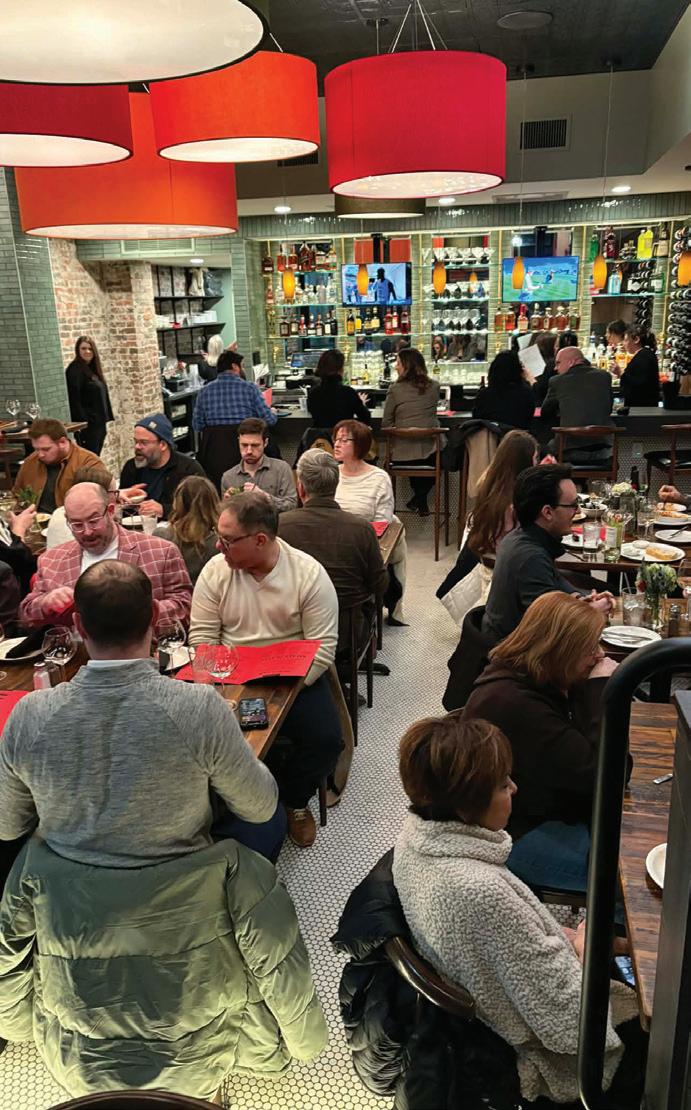
THERE COMES A MOMENT when the original four walls start feeling small. The ovens are humming, the systems are tight, the team knows all the dance steps. Then the question creeps in: Do we open another one? Over the past year and into 2026, several U.S. Pizza Team members have answered that question with a decisive yes. While this story doesn’t capture every project in motion, one thing is clear: Expansion is back on the table, and it’s being approached with intention, not impulse.
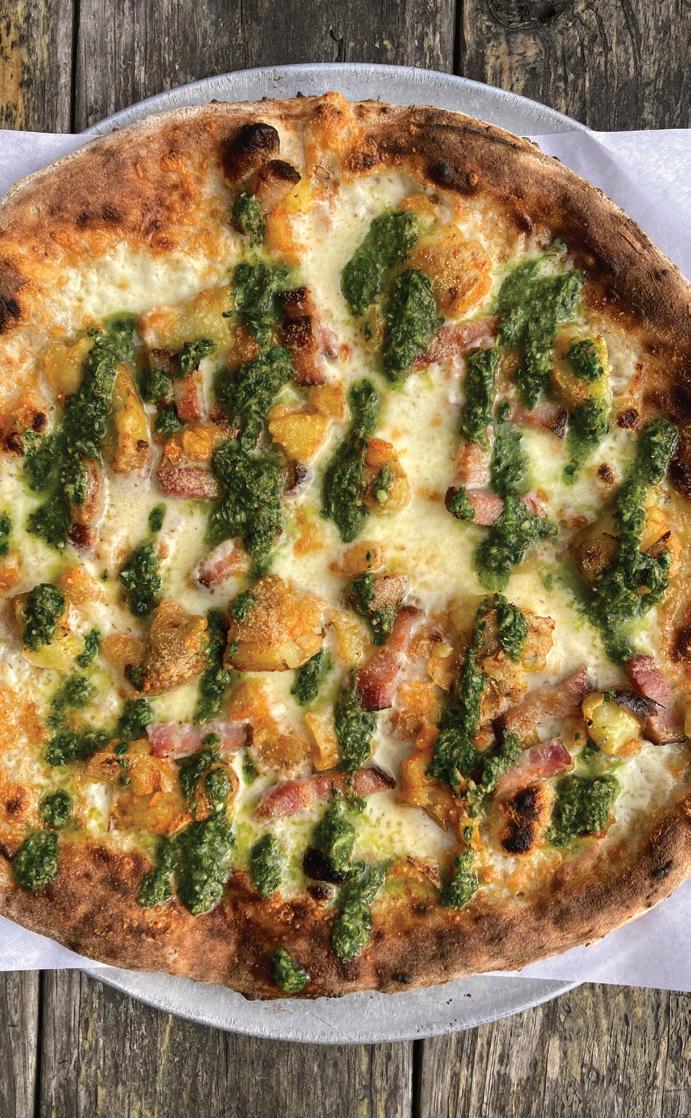
Let’s start with Rico Lunardi of Slice On Broadway in Pittsburgh. On February 11, he launched Lucatino, a full-service Italian tavern concept that’s more about the pace of a relaxed meal than the speed of a slice. “Opening Lucatino has been a big shift for me,” Lunardi says. “I’ve spent years building pizza shops where the focus is speed, consistency and dialing in the slice. Moving into a full restaurant forced me to think differently—not just about the food, but about flow, staffing, guest experience and how long people stay instead of how fast they move.”
Granted, Lunardi would have preferred a faster pace as far as getting the new restaurant ready for business. “Buildout delayed the opening quite a bit,” he admits. But what carried Lucatino out of the gate was identity. “One
BY BRIAN HERNANDEZ
thing that really helped us was giving guests something unique that told our story right away,” he explains. “For us, that’s the focaccia flights and our Tonda Romana pizzas. The focaccia flights let people try multiple flavors, start the table with something interactive, and buy us a little time in the kitchen. The Tonda Romana shows where I come from in pizza but also signals that this isn’t just another pizza shop. It’s a restaurant built around Italian food, not just slices.”
Lunardi leaned on longstanding community relationships and hosted a 65-person soft opening to test the flow. In full service, timing and touchpoints matter as much as the food.
“My biggest tip for anyone opening right now is this,” he says. “Don’t just open your doors. Open with an identity. People can feel when a place knows exactly what it is.”
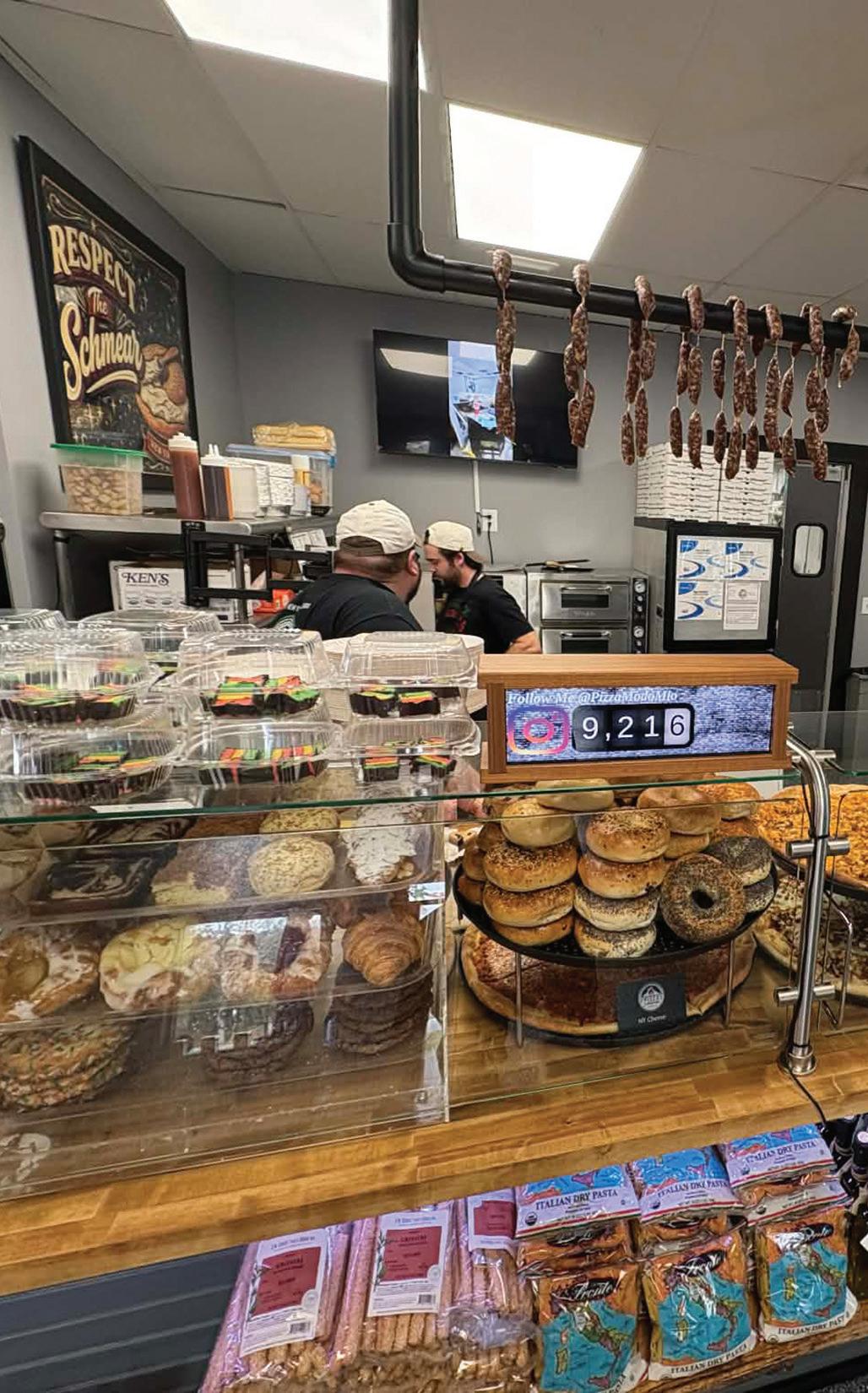
Mike Pitera understands scale. With Pizza a Modo Mio & Café opening in Charleston (also in February), he now operates a total of four units. The new concept expands beyond pizza into New York bagels, egg sandwiches and coffee, widening his reach into earlier dayparts. His biggest hurdle? “Finding the right staff to make sure you provide the service and quality you’re known for,” Pitera says.
Pitera opted for a soft launch. “I wanted to give my staff the opportunity to learn the flow and fix issues before the grand opening,” he says. Marketing for the new store included social media, direct mail and chamber of commerce partnerships. Nothing flashy, just consistent execution.
Danger von Dempsey’s
Sean Dempsey is preparing not to open a new store, but to reopen a previously closed Danger von Dempsey’s location in Aberdeen, South Dakota, in October. A brutal stretch of setbacks forced him to close that store last year. The brewery system in Watertown was kaput for six months. An oven failure shut down his Brookings store for a month. Road construction crushed traffic in Aberdeen. He finally pulled the plug on the latter and put the real estate on the market.
“The biggest hurdle was the decision to reopen,” Dempsey says. “With our second chance, we’re shifting the concept from a fullservice beer and pizza restaurant to a streamlined QSR with a tighter menu and leaner staffing.” That requires reeducating customers on what the brand is now. Meanwhile, mailers, social media teasers and local media interviews will support the relaunch. “It’s super rare that you get that proverbial do-over, so we’re taking full advantage of it,” he says.
Pizza Cassette
Jimmy Terwilliger opened Pizza Cassette in the San Diego area in March. An artisan-style woodfired pizzeria with a full bar, it’s his second unit. His biggest challenge was not equipment or permits. “Honestly, I had a lot of difficulty
Charles “Ray” Cullison Charlie and the Pizza Factory Kingman AZ
David Jacobson Cheezy's Artisan Pizza San Francisco CA
Damiano Trupiano Mangia e Bevi Oceanside CA
Salvatore Trupiano Mangia e Bevi Oceanside CA
Vittoria Trupiano Mangia e Bevi Oceanside CA
Kira Zabrowski Much Ado About Pizza Pleasanton CA
Mark Zabrowski Much Ado About Pizza Pleasanton CA
James Terwilliger Pizza Cassette San Diego CA
Vincent Sbarro Vinnie's Pizzeria and Forno Di Sbarro (Mobile) Martinez CA
Constantino Anezinos Zorba's Pizza San Francisco CA
Melina Piroso The Pizza Bandit Littleton CO
David Conti Red Planet Pizza Ansonia CT
Vitangelo Recchia Bella Napoli Pizzeria & Restaurant Port Charlotte FL
Alexander Fotiadis Corleone's Famous New York Pizza and Gyros Daytona Beach FL
Jose Ahmed Flores Crust Lovers St. Petersburg FL
Enrico Aguila Uncle Rico's Pizza Ft. Myers FL
Lenny Rago Panino's Pizzeria Evanston IL
Gino Rago Panino's Pizzeria Park Ridge IL
Derrick Tung Paulie Gee's Logan Square Chicago IL
Bruno Brunetti Panino’s Pizzeria Chicago IL
Giovanni Labbate Tievoli Pizza Bar Bloomingdale IL
Joshua Owens Mad Mushroom Lafayette IN Rick Wheeler Mad Mushroom Lafayette IN
David Sommers Mad Mushroom West Lafayette IN
Dan Uccello Flo's Pizzeria Grand Rapids MI
Brandon Davis Novella's Pizza New Hudson MI
Salvatore Passalacqua Marabella Old World Pizza Greenville NC
Massimo Mannino Nino's Cucina Italiana Greenville NC
Michael Wolf The Lamb and the Wolf Greenville NC
Chris Battiste Mia Ava East Coast Pizza Pahrump NV
Leonardo Giordano Mona Lisa Pizzeria Staten Island NY
Patti Taylor Taylors' Pizza House Endwell NY
George Taylor Taylors’ Pizza House Endwell NY
Kyle Rosch Brenz Pizza Co Columbus OH
Michael P. LaMarca Master Pizza Cleveland OH
Craig Allenbaugh Sauced Wood Fired Pizza Fairview Park OH
Deserai Satullo Sauced Wood Fired Pizza Fairview Park OH
Rico Lunardi Slice on Broadway Pittsburgh PA
John McCaffrey Yellow Bridge Brewing Greensburg PA
Nicholas Harper Peace of Pie On Hartwell Fair Play SC
Michael Pitera Pizza a Modo Mio Charleston SC
David Solum Danger Von Dempsey's ATY Watertown SD
Sean Dempsey Dempsey's Brewery, Pub & Restaurant Aberdeen SD
Gail Churinetz Gail's Pizza Parties Germantown TN
Jon Garland Saccone’s Pizza Austin TX
Patrick Maggi Maggi's Pizza Purcellville VA
Rob Ramirez Yeah Buddy Pizza Jackson WY
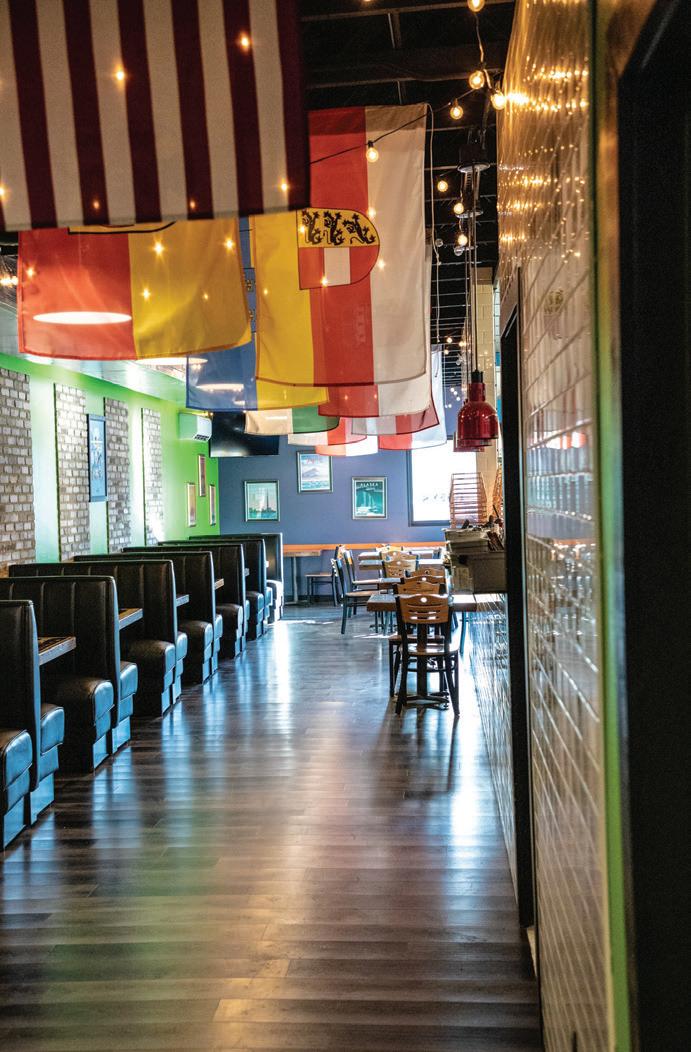
deciding on the interior design and how much to invest into it,” he says. After all, balancing esthetics with budget is its own kind of math. He plans a soft opening and has engaged local social media groups to build buzz before the official launch.
Giovanni Labbate is expanding Tievoli Pizza Bar, located in Palatine, Illinois, to two units as well. His biggest hurdle was staffing. “Staffing is everything,” he says. “You can have the best product in the world, but if the team isn’t ready, it shows.” He’s relying on text messaging, email blasts and social media to announce the new location and chose a soft opening to “gradually increase sales and attendance.”
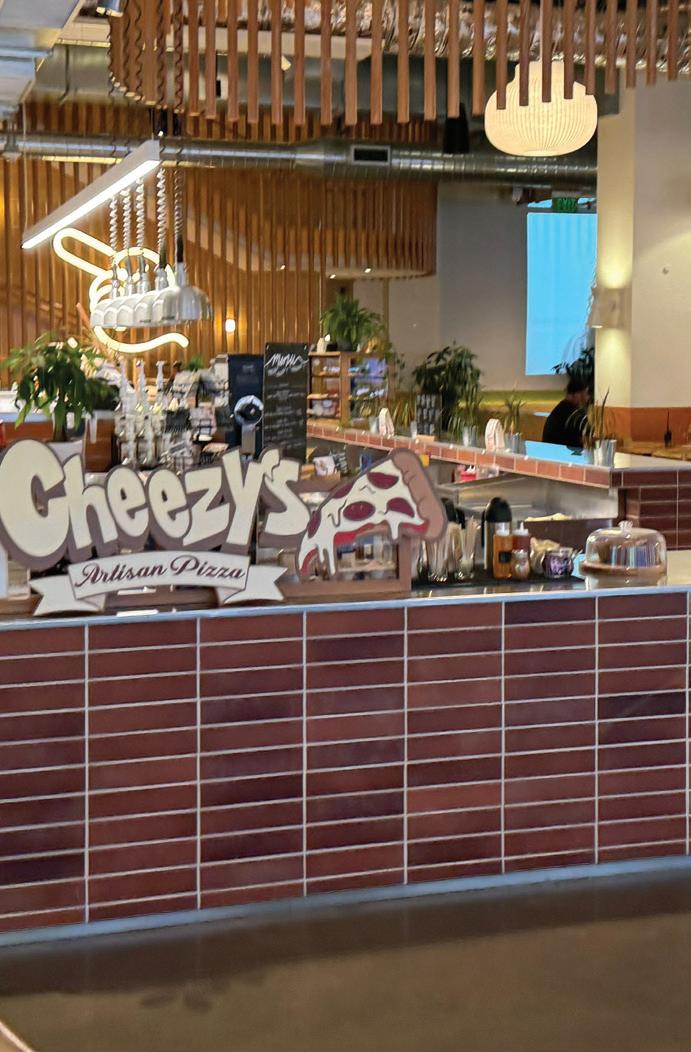
David Jacobson opened Cheezy’s in March 2025 in San Francisco. Alongside his brick-and-mortar, he operates an off-site setup for classes and events. “The biggest hurdle for me was simply getting it all done,” he adds. But as for marketing, he says, “If I’m being honest, we didn’t do nearly as much as we should have.” That honesty reflects the reality many operators face during an opening push.
Not every opening is polished. Some are scrappy. Others are exhausting. Most are both. What connects these stories is intentionality.
Lunardi built a new identity around Italian tavern culture. Pitera expanded into complementary dayparts
while guarding quality. Dempsey closed, recalibrated and will return smarter. Terwilliger shaped an esthetically distinct store No. 2. Labbate focused on steady staffing and rollout. And Jacobson pushed through the operational grind.
During a growth phase, the deeper question is often whether to replicate or reinvent. Replication leverages brand equity. Reinvention demands clarity but opens up additional moneymaking opportunities.
There is also strength in replication. Opening another unit of an existing concept allows you to lean on proven systems, experienced team leaders and brand equity that already resonates in the market. Vendors know your specs. Customers know what to expect. Your training manuals are battle-tested rather than theoretical. Replication does not equal lack of creativity, but it does require discipline.
On the other hand, launching a new concept, as Lunardi did, demands instant impact. “If you give them something memorable from day one, the word spreads fast,” he says.
Brian Hernandez is PMQ’s associate editor and director of the U.S. Pizza Team.
For more information about the U.S. Pizza Team, its members and sponsors, visit USPizzaTeam.com.
FROM REAL CALIFORNIA GOLD TO GALBANI CUP GLORY, AMERICA’S BEST ARE BOUND FOR PARMA.
On April 11 to 19, the U.S. Pizza Team steps onto one of the most prestigious stages in competitive pizza: the World Pizza Championship in Parma, Italy. It’s where global talent converges, tradition runs deep, and every detail—from fermentation to finish—matters. They will be joined by culinary and acrobatic champions from both the California Pizza Challenge sponsored by REAL California Milk and the Galbani Professionale Pizza Cup!
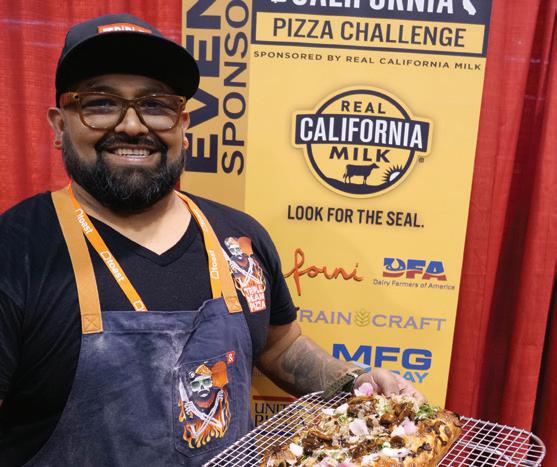
REAL California
Pizza Challenge Champion: Juan Robles
Triple Beam Pizza - Los Angeles, CA Juan earned his title against elite competition, showcasing technical precision, balance and creativity worthy of the international spotlight. Now he brings that championship form to Italy.
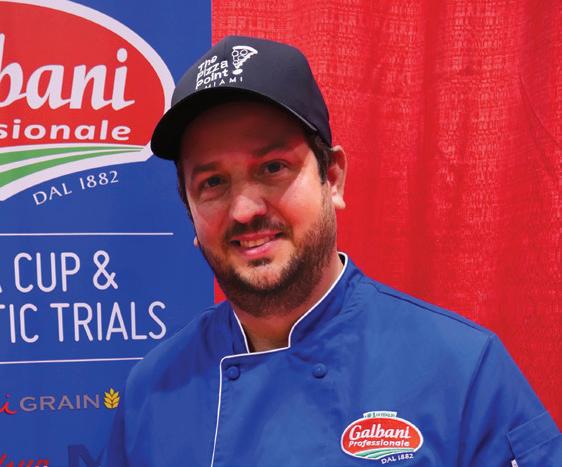
Galbani Professionale
Pizza Cup Culinary Champion: Alejandro Burgaleta
Pizza Point Miami - Miami, FL Alejandro captured the Galbani culinary title with standout flavor execution and competition composure. His win secured his place among America’s best as he prepares to compete on the world stage.
Also Representing the U.S. Pizza Team in Parma
Chef Vitangelo Recchia – Bella Napoli Pizzeria & Restaurant –
Port Charlotte, FL
David Sommers – Mad Mushroom – West Lafayette, IN
Damiano Trupiano – Mangia e Bevi – Oceanside, CA
Tore Trupiano – Mangia e Bevi – Oceanside, CA
Michael LaMarca – Master Pizza – Mayfield Village, OH
Mike Pitera – Pizza a Modo Mio – Charleston, SC
Rico Lunardi – Slice On Broadway – Pittsburgh, PA
Luca Lunardi – Slice On Broadway – Pittsburgh, PA
Brian Hernandez – U.S. Pizza Team – Batesville, MS
the journey. Support
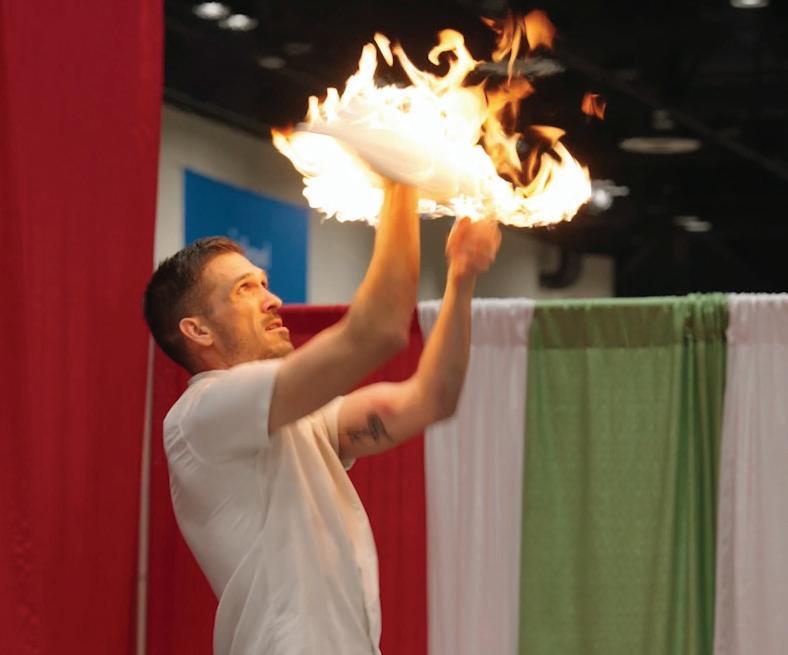
Galbani Professionale Pizza Cup Acrobatic Champion: Patt Miller
Pizza Patt’s - Columbus, OH
Patt’s precision, control and championship performance in the acrobatic division bring energy and artistry to the U.S. delegation in Parma.
We extend a final thank-you to all the sponsors of the U.S. Pizza Team—especially Galbani Professionale and REAL California Milk—whose unwavering support makes this journey to the World Pizza Championship possible and continues to champion the growth and excellence of American pizza on the global stage.
team.

















































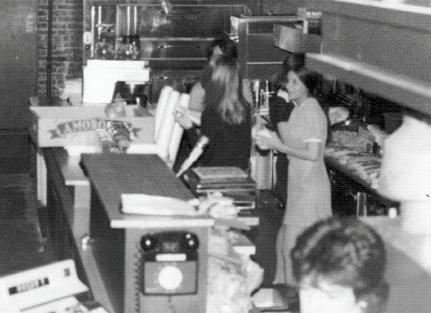



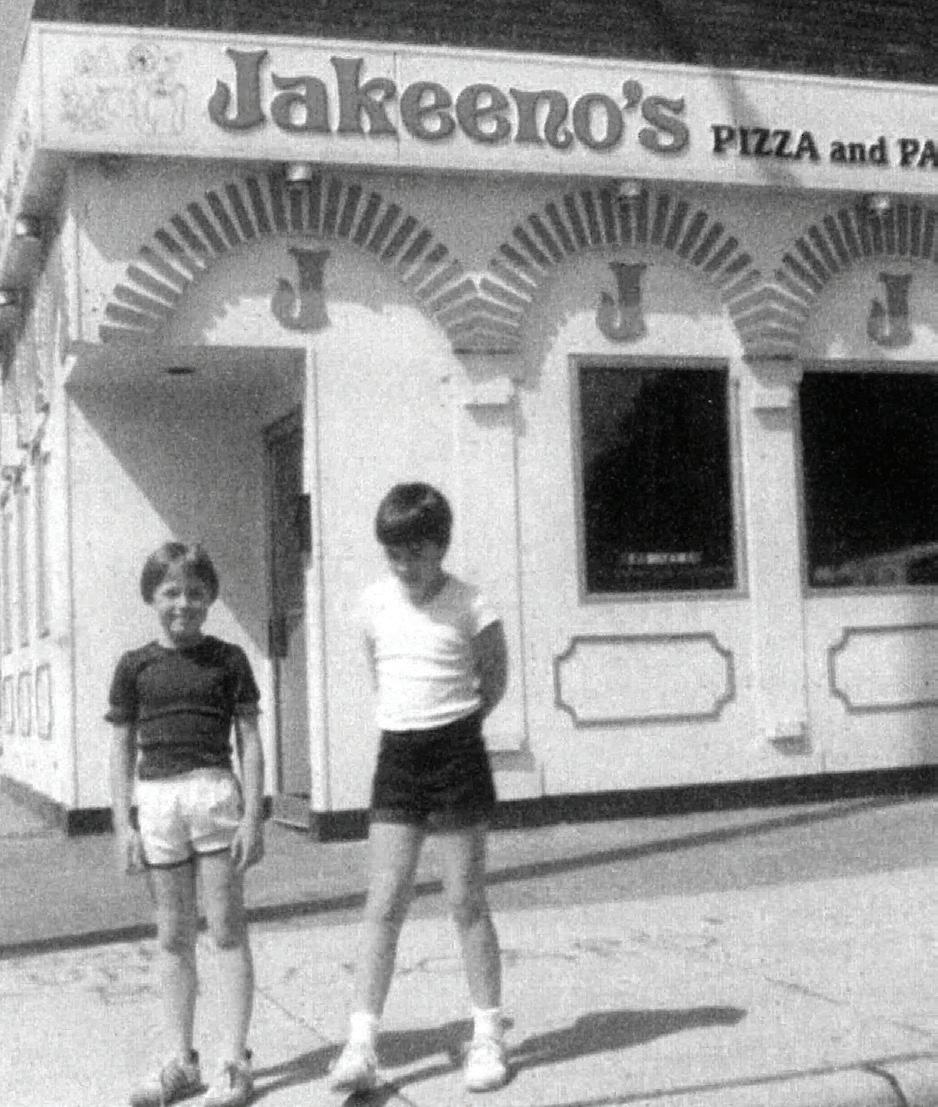
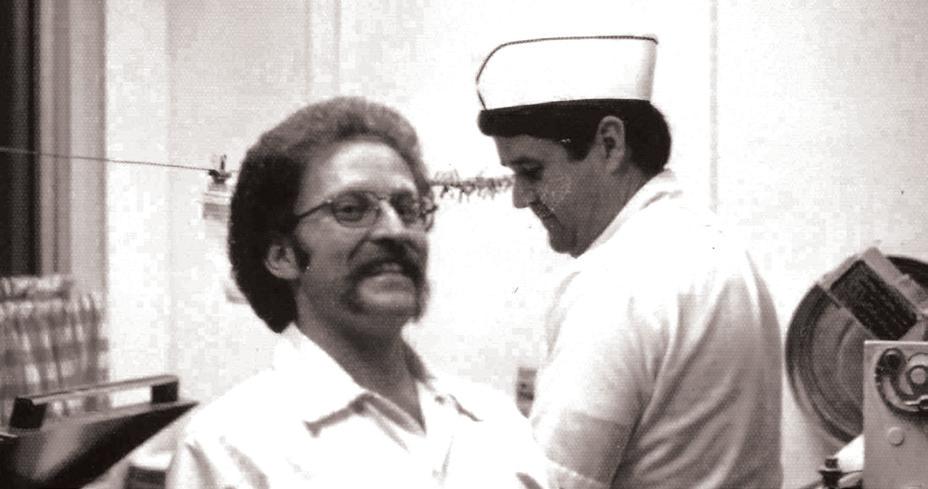
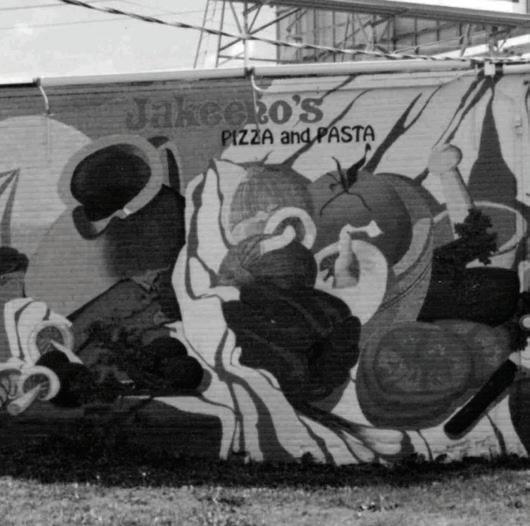
(Clockwise from top left) Amy and Patty Keegan visit Jakeeno’s in 1975; a building mural attracts diners; founder Jack Keegan rolls out dough balls; the dining room serves guests in 1975; an employee, Ray, and Jack work in the kitchen.
BY TRACY MORIN
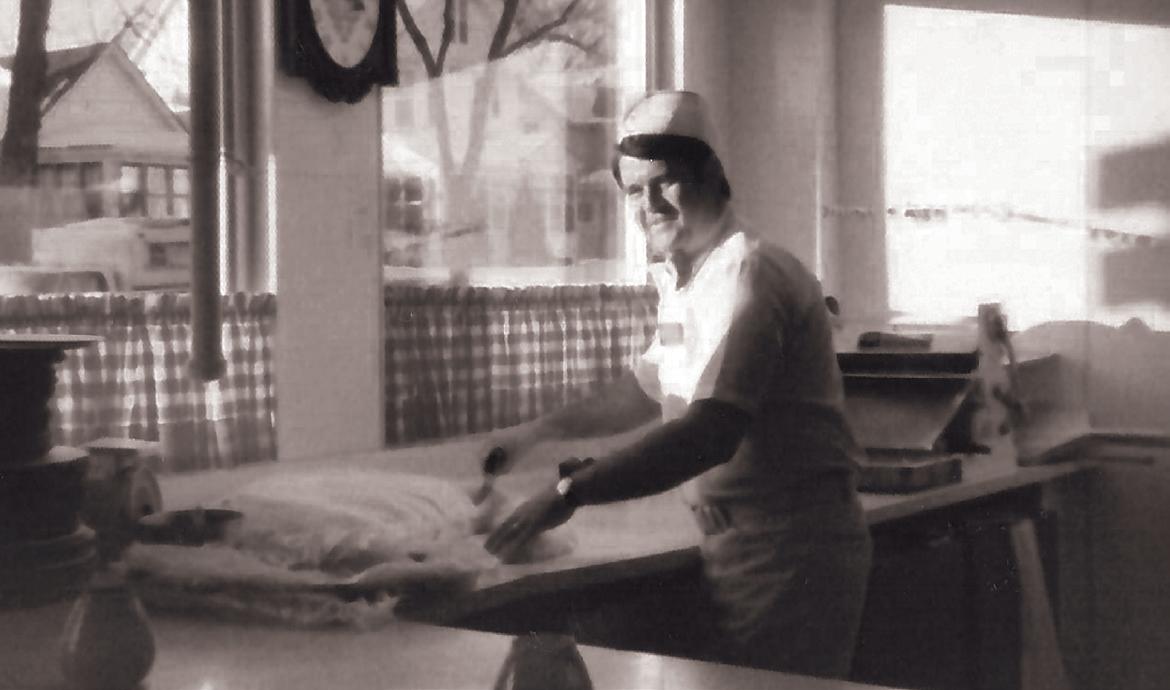

Patty and Amy Keegan were small children when their parents, Jack and Carol, opened up Jakeeno’s Pizza & Pasta in Minneapolis in 1975. Jack had been working so hard for a local independent pizzeria, he figured “he might as well do it on his own,” Amy recalls. “He found an existing pizza place with the basic structure he needed to get started, in South Minneapolis, then worked on his recipes for a basic red sauce, thin-crust pizzas and pastas.”
Though the couple’s daughters initially pursued different careers, they returned to the pizzeria and officially purchased the business in 2000. Jack (who passed away in October 2025 at age 89, just before the business celebrated 50 years in December) still showed up well into his 80s. But his daughters catapulted the family business into the new millennium: Over the years, they added a POS system, catering and a full bar; freshened the pizzeria’s interior; and purchased the building and expanded its footprint.
Their biggest expansion took the brand outside its four walls, as Jakeeno’s jarred sauces and frozen pizzas hit local bars and grocery store shelves around the Twin Cities and as far as Wisconsin. “The wholesale division spinoff was in response to our wanting to double down in South Minneapolis,” Amy says. “Post-COVID and being two
blocks from George Floyd Square, we needed to be more than a onetrick pony.”
Through these changes, Patty and Amy maintained their dad’s focus on old-fashioned customer service. “He remembered everybody—what you ordered, where you worked,” Patty recalls. “People want to go somewhere that feels like home, somewhere they’re appreciated. You take care of them, and they’ll take care of you.”
However, the sisters have changed their view on marketing. “Now, we do a lot,” Amy says. “We didn’t for a long time, but we found that was a mistake. What works today may not work tomorrow.” Patty adds, “And it’s constant. It’s just as important as turning on the ovens every day. Our parents dedicated their lives to this business, and we do, too.”
Amid so much growth, the pair has learned to share the workload. “You can’t do it all by yourself,” Amy says. “There can be a lot of ego in an independent (in a good way—people are passionate), but you start to think you’re the only one who can do it. Don’t overlook bringing people onboard who are better than you. Be open to hearing others’ advice and allowing them to help.”
Tracy Morin is PMQ’s associate editor.