Artwork - The Yarning Circle used within this publication originated from ‘Those Who Came Before Us’ - In 2020 and 2021 over 120 staff and students, Indigenous and non-Indigenous, contributed to this painting. This activity was co-facilitated by artist Allan McKenzie, a WiradjuriGamilaroi man from Griffith NSW.
‘Those Who Came Before Us’ is owned by none, yet owned by all, and is a great example of reconciliation in practice.
Acknowledgement
With respect for Aboriginal cultural protocol and out of recognition that its campuses occupy their traditional lands, Western Sydney University acknowledges the Darug, Dharawal, Gadigal, Gundungurra and Wiradjuri peoples and thanks them for their support of its work on their lands (Greater Western Sydney and beyond).
Disclaimers
The opinions expressed in these articles are those of the authors and contributors, and do not necessarily reflect those of the University or the organisation to which the authors are affiliated. Statements of fact are believed to be true as at the date of publication, and the University accepts no liability for the truth or accuracy of such statements.
Aboriginal and Torres Strait Islander readers are warned that the following Publication may contain images or names of deceased persons.
Publication Enquiries
Please contact Meg Flavell at m.flavell@westernsydney.edu.au
Students remain undefeated in annual Indigenous Students vs Staff basketball match
The annual Western Sydney University Indigenous Students vs Staff Basketball match returned for its third year on Friday 26 September 2025 at the Hills District Basketball Association, bringing together students, staff and community, for a spirited day of competition and connection.
The day began with a moving Acknowledgement of Country from second-year Juris Doctorate student Ivor Sebastian from the Nerinjjerri Tribe, who captivated the crowd with the deep
sounds of the Yidaki. Aunty Jean then tipped off the game to loud applause before play got underway.
The staff team, led by captain Kristy Bell, struck early, with Victor Simon scoring the first two baskets of the game. He and Zana Jabir worked in tandem, with Zana pulling off a memorable backwards shot. Ryan Blake, second-year medical student, answered back for the students with strong scoring and standout defensive play. At the end of the first quarter, staff were ahead 14-8.
(continued overleaf)
Summer 2025 | Edition #22
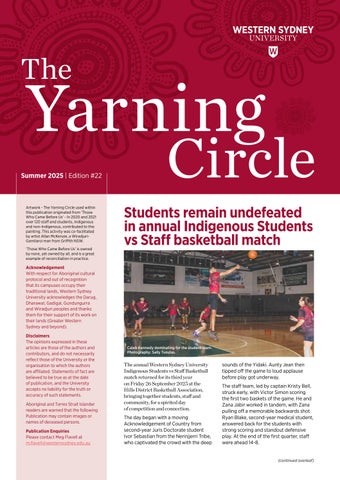
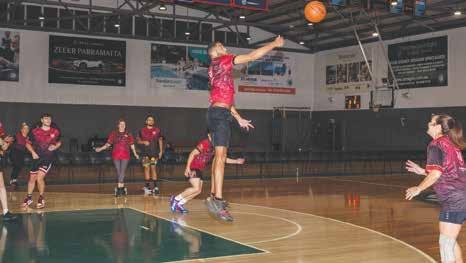
Caleb Kennedy dominating for the student team. Photography: Sally Tsoutas.
The staff continued their momentum into the second quarter, with Dr Sarah Kennedy, lecturer in Sport, Health & Physical Education, providing strong defensive support, assisting Victor to sink a three-pointer.
But the students, captained by Ace DeVera, with strong support from Caleb Kennedy, refused to be outdone and closed the gap.
At half time, the staff held a slim lead of 30-25, with Vice-Chancellor Distinguished Professor George Williams AO offering encouragement to both sides.
The third quarter was fiercely contested. Staff players Tyson Binge and Gabby Talbot-Mundine shone early, but the students managed to narrow the margin to just one point by the break, 40-39 in favour of staff.
Captain Kristy lifted the staff team in the final quarter, keeping spirits high and scoring opportunities alive.
Dr Kennedy extended the lead to five points, but the students rallied. Caleb stepped up in the closing minutes, sinking two crucial baskets that swung the momentum and secured a thrilling 55-50 win for the student side.
The crowd and cheer squad, led by Professor Susan Page, Pro Vice-Chancellor Indigenous Education, roared throughout the contest, ensuring the atmosphere was electric within the stadium.
After the game, Ace thanked everyone for their support, celebrating the spirit of the event and the student team’s undefeated streak. Referees named Kristy Bell as Best and Fairest player for staff and Caleb as Best and Fairest player for students.
The annual match once again showcased not just sporting skill, but also the unity, culture, and spirit at the heart of Western Sydney University Indigenous community.
MESSAGE FROM THE DEPUTY VICE-CHANCELLOR, INDIGENOUS LEADERSHIP
Welcome to the final edition of The Yarning Circle for 2025. As we reflect on the year that was, it’s clear that 2025 has been a remarkable chapter for the Indigenous community at Western Sydney University.
Throughout the year, we came together to celebrate culture, community, and achievements in many meaningful ways. Among the standout moments were the NAIDOC Awards and Gala Dinner, the Yarramundi Lecture, and the opening of The First Peoples Garden at our Campbelltown campus—each event a powerful reminder of our shared commitment to honouring culture and Country.
On the sporting front, our Indigenous students triumphed on the basketball court, while our staff team claimed victory in soccer. Whether participating or cheering from the sidelines, these events continue to foster connection and community spirit.
I am continually inspired by the achievements of our Indigenous students. As we close out the year, I’m proud to share that we now have 880 Indigenous students enrolled at Western Sydney University—the highest number of any university in Sydney, and among the largest in the nation.
Equally inspiring is the dedication of our exceptional Indigenous staff. Their passion, leadership, and unwavering commitment to our collective mission are second to none. I often say we have the best Indigenous team in the sector —and I wholeheartedly stand by that.
As we head into the holiday season, I wish you and your loved ones a safe, restful, and joyful break. I look forward to all that we will accomplish together in 2026.
Thank you for being such a vital part of this vibrant and dynamic community.
Deputy Vice-Chancellor Indigenous Leadership
Professor Michelle Trudgett (BA, MPS, EdD)
Professor Michelle Trudgett. Photography: Sally Tsoutas.
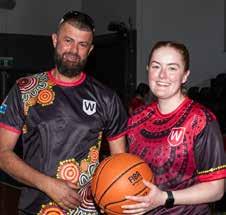
Warren Mundine Junior and Gabrielle Talbot-Mundine. Photography: Sally Tsoutas.
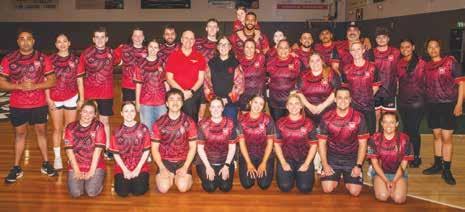
The Indigenous Staff and Student teams with Vice-Chancellor Distinguished Professor George Williams AO and Professor Michelle Trudgett. Photography: Sally Tsoutas.
BOLD conversations with Becky Wiibiigaa Chatfield
The Bold Conservation segment encourages Indigenous staff and students to share their ideas to promote discussions in a culturally safe environment. They reflect the authors personal views and not that of the University.
Becky Chatfield is a Kamilaroi yinarr living in the Blue Mountains on beautiful Dharug and Gundungurra lands. Becky is an Indigenous Engagement Project Officer in the Future Students Engagement Team at Western. She works with Aboriginal and Torres Strait Islander youth to strengthen culture and build relationships between communities and the university. In my role at Western, I have the privilege of sharing culture with our young people. Our team offers a range of cultural workshops for students to participate in.
One of the most popular workshops chosen by schools is Bush Medicine. Country offers such a diverse range of resources, so this is always a fun and engaging topic for us to teach, no matter the season. The children love learning about how to recognise bush medicines and foods and respectfully harvest them.
I think Bush Medicine delves deeper than this. I love to talk with the children about the concept of connection to Country and culture as medicine, that healing, growth and medicine is about more than what we put into our mouths and onto our skin.
As Aboriginal and Torres Strait Islander adults who hold care for our families and communities, I think we can forget how important it is that we include culture and Country in our selfcare, despite recommending it to our young people. I would love to share how I am healed and restored by my people, culture and Country. I hope it encourages you to share your cultural medicine with others too. I love to weave. There is something profoundly special about sitting and creating vessels and adornments with my hands, using the same stitches and techniques, working with the same fibres that my grandmothers and great grandmothers did. Weaving is a tonic. It is an ancestral strength that works its way from our hands, throughout our bodies and then back out into the pieces that we create. When we look at what we have made while sitting with others, we remember the conversations we had, the connections we made, all woven into our creations. Due to the harm forced
upon our people, a lot of us have been prevented from learning these cultural practices directly from our mothers and grandmothers, but when we weave, despite the interrupted handing down of knowledge, our Ancestors are talking to us through our hands, rebuilding our learning. That is medicine to me.
Cultural dance is a huge part of my life. The most rejuvenated that I ever feel is when I have spent the afternoon barefoot, ochred up and surrounded by women that I love in my favourite dance circle. Like weaving, a lot of our connections have been physically and intentionally pulled apart, but my body remembers how my Ancestors danced. Dancing is more than exercise, it is connection to people and place, it is language and storytelling, it is protection and cleansing. Cultural dance is a detox.
It flushes away things that hold us down and makes room for growth. I have the pleasure of teaching young ones to dance very often. My heart is nourished by watching their confidence grow, and then seeing them look to me to make sure I am watching and proud of them, which I always am. That is medicine to me.
Our families, communities and people are so vital to who we are as individuals. Our Elders are essential for healthy growth, they show us how to build strength and commitment. Our peers alleviate our discomfort by offering support and solidarity, together we challenge our weaknesses and turn them to abilities. And our children, they restore us in a way that is unmatched, giving us energy to push ever forward. Our people are remedies. I visited a primary school that is part of our Heartbeat program. We discussed role models and superheroes, and how people who support and protect others aren’t always in movies or books, they can be in our communities too. We discussed qualities that the children saw in themselves that make them role models and superheroes. We created superhero capes that were based on these qualities. One student used cultural symbols in different colours, he told me the blue represented his perseverance,
the black was him retracing his steps so he could remember, the orange was coming together, and the red was his sympathy. This same young man attended our Heartbeat Campus Day, and with a smile as big as the moon, he confidently said to me ‘Warimi! Budyari nhaadyunya Miss Becky!’ That is medicine to me.
People say the opposite of a trigger is a glimmer. For my mental health, I actively notice three glimmers every day. Without fail, my first glimmer is the golden shine that the sun puts on the leaves of a gum tree. If there is a stormy dark sky behind it, even better. Country gifts me endless glimmers.
The sound of a Gang Gang Cockatoo creaking away while crunching hakea seeds in my back yard. The rain settling on spiderwebs like precious tiny jewels. Rays of light that cut straight through smoke. My totem, Muraay, the White Cockatoo, bouncing joyfully in the front of my home, grooming each other and playfully snatching plant roots from each other. These are all glimmers, and they beautiful tools for mindfulness. Country is therapy.
With my hair smelling like camp smoke, my belly full of tea, there is nothing that I feel incapable of when I spend time on Country. Healing her also heals me, so we spend a lot of time together, always protecting one another. Before I came to the university, I was a remote area fire fighter, and during the 2019/2020 fires I experienced devastation of Country that devastated my soul. As the months went on, my body felt that devastation too. When the big rain came, after we tried for months to slow the fire, she laid down. So did we. In the aftermath, Pink Flannel Flowers bloomed on Narrowneck for the first time since the 1950s. This plant protected its seed below the surface for decades, its delicate little flower not possible without the conditions provided by the fires. It is likely that will be the only time I will see it in my lifetime. Country showed us that we can come back from anything, that it’s ok to take your time, that devastation doesn’t break us, that delicate does not mean weak. That is medicine to me.
Uncle David King receives Community Fellowship
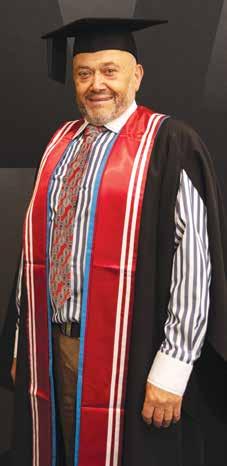
Western Sydney University has recognised Uncle David King with a Community Fellowship for his outstanding contribution to cultural leadership and environmental stewardship.
A Gundungurra Elder (Burragorang Clan) and respected cultural knowledge holder, Uncles David’s life and work are deeply rooted in the Blue Mountains and Greater Western Sydney region.
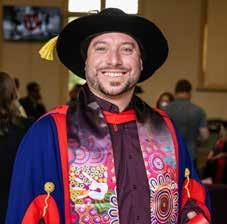
He was awarded an Honorary Fellowship on Wednesday, 29 October, in a ceremony presided over by Elizabeth Dibbs, Deputy Chancellor and Professor Michelle Trudgett, Deputy ViceChancellor, Indigenous Leadership, as part of the University’s October Graduation celebrations.
Professor Trudgett acknowledged Uncle David’s leadership, describing it as grounded in humility, wisdom, and a deep commitment to community.
“Uncle David has consistently worked to uplift others, preserve Gundungurra traditions, and foster respectful relationships between Indigenous and non-Indigenous communities. Through his lifelong dedication, Uncle David has guided generations to understand the importance of caring for land, water, and community,” said Professor Trudgett.
“Uncle David has worked closely with schools, TAFE NSW, and universities— including Western Sydney University— where he has co-led cultural learning programs, design studios, and environmental research initiatives.”
“His contributions to projects such as swamp restoration, water quality monitoring, and staff cultural education continue to enrich our collective
understanding of sustainability and reconciliation at Western Sydney University.”
With a career spanning over four decades and reflecting a deep commitment to cultural leadership, youth empowerment, and environmental stewardship, his professional and volunteer roles have consistently focused on restoring Country, supporting vulnerable communities, and promoting cultural education.
For many years Uncle David worked as a youth worker in Mt Druitt, supporting young people in one of Western Sydney’s most diverse and disadvantaged communities. He also worked for Sydney City Mission as a Senior Youth Worker.
Since 2007, Uncle David has operated Dingo Darbo, an Indigenous-owned business offering Welcome to Country and Smoking ceremonies, cultural education, guided walks, and storytelling. In his current role as Indigenous Engagement Officer at Scenic World Blue Mountains, he supports cultural training, tourism, and Indigenous supplier engagement.
As a Patient Transport Officer with HealthShare NSW, he received the 2020 Chief Executive Award for his heroic efforts during the 2019–2020 bushfires, ensuring the safe evacuation of vulnerable patients.
Uncle David contributes to Cultural Burns on Gundungurra Country in collaboration with Firestix, National Parks and Wildlife Services and the Rural Fire Service, restoring traditional fire management practices. His volunteer work includes over two decades with Bushcare in the
Blue Mountains and founding Garguree Swampcare in 2011.
Uncle David has played a central role in restoring the Garguree (The Gully) site, a place of profound cultural significance that has served as an Aboriginal campsite for thousands of years, transforming it into a vibrant space for cultural and environmental healing.
Empowering Indigenous Excellence: Indigenous Leadership Forum 2025
The Indigenous Leadership Forum 2025, was hosted on 16-17 September, by Western Sydney University Division of the Deputy Vice-Chancellor Indigenous Leadership, reaffirming its commitment to supporting and empowering Indigenous staff in leadership roles.
The Forum marked its third consecutive year as a cornerstone initiative under the Indigenous Strategy 2020-2025.
Held over two days, the Forum offered an immersive program that blended professional development with cultural connection and strategic insight.
The event opened with a Welcome to Country from Gundungurrra woman Kelsie King, Executive Officer in the
Division of Deputy Vice-Chancellor Indigenous Leadership.
Participants engaged in a range of tailored sessions including Leadership Decision Making: Challenging Scenarios, a Leadership Soundboard with senior university leaders, and strategic planning discussions focused on the 2026-2030 Indigenous Strategy.
The second day began with a cultural weaving session, grounding the experience in shared cultural practice. Sessions continued with updates on gender-based violence legislation, a Team Management Systems Workshop, and future-focused activities like Building the Next Generation of
Leaders and the reflective Letter to Our Future Self. The two-day event concluded with a strong vision for the future.
Throughout the Forum, Indigenous staff were provided with the tools, networks, and confidence to lead with impact.
The event nurtured a culture of excellence, innovation, and collective growth, ensuring Indigenous leadership remains central to the University’s strategic direction.
As Western Sydney University looks toward the next phase of its Indigenous Strategy, the Indigenous Leadership Forum remains a vital space for collaboration, reflection, and progress.
Uncle David King.
Photography: Sally Tsoutas.
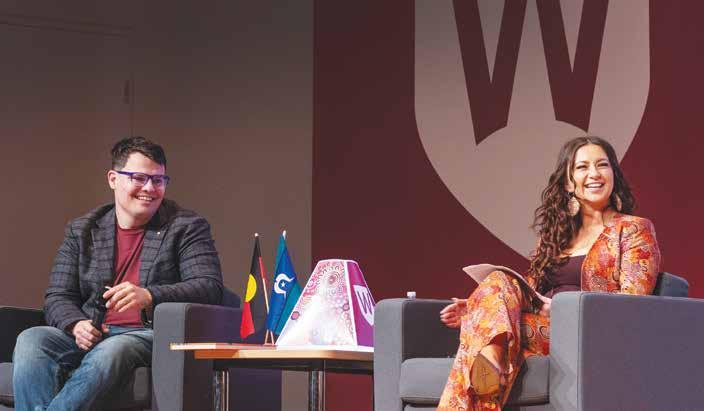
On Tuesday, 8 July 2025, Western Sydney University hosted it’s 27th Yarramundi Lecture at the Parramatta South campus. The gathering brought together students, staff, and community members to celebrate Indigenous leadership, culture, and the promise of future generations
This year’s lecture was aligned with the 2025 NAIDOC Week theme, The Next Generation: Strength, Vision & Legacy, commemorating the 50th anniversary of NAIDOC Week.
The event honoured the enduring wisdom of Elders, the vision of Indigenous communities, and the growing leadership of young Indigenous voices shaping our future.
Delivering his powerful keynote address, proud Kamilaroi man, Associate Professor Corey Tutt shared his journey as a scientist, educator, and advocate for Indigenous youth in STEM.
Associate Professor Tutt spoke of the vital role that representation, mentorship, and cultural pride play in empowering the next generation to pursue their ambitions with confidence.
The student address was presented by Postdoctoral Research Fellow, Wiradjuri woman Dr Matilda Harry, who reflected on leadership, identity, and the strength of cultural connection. Dr Harry’s words offered both inspiration and a call to action, highlighting the transformative power of education and the importance of community in nurturing our Indigenous futures.
Guided with warmth and energy by emcees Dr Michelle Locke and Kayden Edwards, both from the Darug nation, the lecture provided a welcoming space for learning, reflection, and celebration.
In her address, Professor Michelle Trudgett, Deputy Vice-Chancellor Indigenous Leadership, emphasised the event’s role in deepening community relationships and elevating Indigenous voices. “Public lectures like the Yarramundi Lecture are vital platforms for Indigenous celebration and empowerment,” she said. “They allow us to centre Indigenous voices, share knowledge, and inspire future generations to lead with strength and pride. This year’s theme reminds us that the legacy
of our Elders lives on through the vision and courage of our young leaders.”
For almost three decades, the Yarramundi Lecture has been a cornerstone of the University’s commitment to Aboriginal and Torres Strait Islander communities, providing a forum to explore issues of local and national importance. This year’s event was especially significant, with Aunty Pearl Wymarra in attendance. Aunty Pearl, Gudang Elder from Cape York Peninsula, Queensland, conceived and launched the Yarramundi Lecture series in 1997 at the Hawkesbury campus. The gathering not only honoured the past but also looked to the future with hope, strength, and determination.
Associate Professor Corey Tutt and Postdoctoral Research Fellow, Dr Matilda Harry.
Photography: Sally Tsoutas.
Aunty Fiona Towney and Professor Michelle Trudgett, Deputy Vice-Chancellor Indigenous Leadership. Photography: Sally Tsoutas.
Photography: Sally Tsoutas.
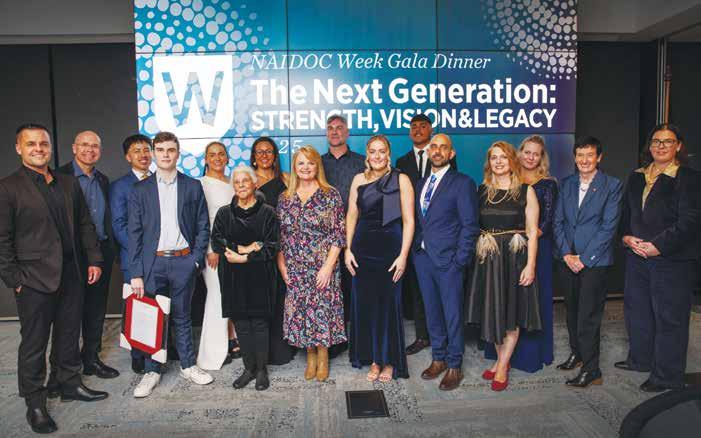
Western Sydney University is proud to announce the winners of the NAIDOC Awards 2025
In it’s second year, the NAIDOC Awards were established to recognise excellence across several categories, highlighting Mob’s exceptional achievements across academia, leadership, research, impact, professionalism and cultural contributions. The winners were announced at the NAIDOC Gala dinner, hosted by the Division of the Deputy Vice-Chancellor Indigenous Leadership, on Friday 11 July.
“Let us embrace the true spirit of NAIDOC Week. Let us honour our history, celebrate our present, and work together toward a future that reflects the strength and excellence of Indigenous People. Through unity, determination, and a shared vision, we continue to build a legacy at Western Sydney University, one that is bold, ambitious, and deeply embedded in pride and excellence,” said Professor Michelle Trudgett, Deputy Vice-Chancellor Indigenous Leadership.
In attendance at the awards were Chancellor Professor Jennifer Westacott AC and Vice-Chancellor and President, Distinguished Professor George Williams AO.
Professor Westacott said, “I am immensely proud to lead a University that is committed to Indigenous advancement. We are fortunate to have strong Indigenous leadership with Michelle and her team – as well as a community that puts their hard work and hearts into making a difference.”
The awards were part of Western Sydney University’s celebrations for NAIDOC Week, 6-13 July.
Celebrating 50 years of NAIDOC Week honouring Indigenous voices, this year’s theme, ‘The Next Generation:
Strength, Vision & Legacy’ celebrates the achievements of the past, whilst also looking forward to the bright futureempowered by the strength of our young leaders, vision of our communities and the legacy of those who’ve come before us.
Western Sydney University would like to congratulate the outstanding individuals and team members who were recognised:
→ Contributions to Indigenous Excellence Award: Uncle Greg Simms OAM
→ Indigenous Person of the Year Award: 1. Aunty Fiona Towney 2. Dr Sarah Kennedy
→ Indigenous Academic Excellence Award: Professor Donna Hartz
→ Indigenous Professional Staff Excellence Award: Gabrielle Talbot-Mundine
→ Indigenous Leadership Team Award: Badanami Centre for Indigenous Education, team consisting of: Josh Mason, Aunty Jean South, Wayne Clark, Luke Warren, Adrian Atkins, Janyne Chenhall, Kristy Bell, Victor Simon
→ Indigenous Trainee of the Year Award: Mitchell Regan
→ Outstanding Indigenous Student Award: Arzycki De Vera
→ Indigenous Student Stage One Academic Excellence Award: Breanna Raymond
→ Indigenous Student Stage Two Academic Excellence Award: Damian Rumphorst
→ Indigenous Student Stage Three Academic Excellence Award: Tiana Thompson
→ Indigenous Student Stage Four Academic Excellence Award: Emily Hogan
→ Indigenous Student Postgraduate Course Work Excellence Award: Abbey-Marie Zabielo
→ Indigenous Higher Degree Research Award: Mirritya Ebsworth
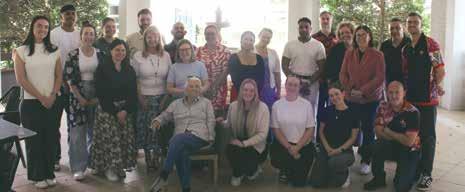
Held across two days, the 2025 DVCIL Divisional Staff Conference brought together staff and students to share ideas, and look ahead to how we can continue strengthening Indigenous student success at Western Sydney University.
This year’s theme, Advancing Indigenous Student Success, was reflected in every conversation, session, and story shared.
The conference opened with a warm Acknowledgement of Country by Wiradjuri woman Kristy Bell, setting the tone for what was to come.
Professor Michelle Trudgett welcomed attendees and highlighted the importance of coming together to listen, reflect, and collaborate.
A standout moment of the conference was the student panel, facilitated by Gamilaroi man, Senior Student Advancement Officer Wayne Clark.
The panel featured Medicine student, Shafay Farooni from the Bindjang nation, Gumbaynggirr and Dunghutti Paramedicine student Lily Booth and Ivor Sebastian, Juris Doctorate from the Ngarrindjeri nation.
They shared their pathway to university, what drew them to Western, and what’s helped them succeed. While each had unique experiences, all three praised the role Badanami has played in helping them feel at home on campus. From having a safe space to study and connect, to forming bonds with centre staff, they all agreed Badanami has been central to their success.
Subsequent sessions built directly on the themes raised by students, exploring new ideas and current initiatives in depth.
A hands-on weaving session led by Bundjalung scholar, Gabrielle TalbotMundine and Gundungurra woman, Kelsie King gave attendees a chance to reflect, create, and connect.
D’harawal scholar, Professor Gawaian Bodkin-Andrews delivered a thoughtful presentation on enhancing support for Indigenous HDR students, followed by Wiradjuri Elder, Aunty Fiona Towney’s powerful keynote, Walking Together: Lessons from a Career Journey. Aunty Fiona’s wisdom, humour, and honesty deeply resonated, offering insights drawn from a rich career and life lived in service to community.
Further sessions included an update on LGBTQI+ initiatives from Wayne and Tayla King from the Dharug nation followed by a conversation on supporting Indigenous students with disabilities and diverse needs by Burramattagal woman Heidi Duncan and Wayne.
The first day concluded with a showcase of the successful Ignite Traineeship program by Gabby and Kelsie before moving outside for lawn games and a relaxed dinner, a fitting way to end a day centred on connection.
On day two the focus turned toward future planning and strategy with an epic three-hour Strategic Events planning workshop led by Kelsie, where ideas for cultural activities, sporting events, community engagement, and student meet-and-greets were explored.
This was followed by key updates from across the unit: the 2026–2030 Indigenous Strategy by Professor Trudgett, an update on the Indigenous Centre of Excellence from Project Director Thomas Klobucar, and a discussion on Indigenous student retention led by Wayne and Wailwan man, Luke Warren.
From students’ stories to staff-led sessions, the conference was a reminder that Western’s strength lies in its people and in the spaces we create together. When Indigenous success is centred, supported and celebrated, everyone benefits.
Western Sydney University hosts 2025 Indigenous Research Symposium
On Thursday 11 September, Western Sydney University held its 2025 Indigenous Research Symposium, a celebration of Indigenous leadership, scholarship, and innovation.
The event brought together researchers, students, and community members to engage with the dynamic and growing field of Indigenous research.
A highlight of the day was the seventh Indigenous Professoriate Lecture, delivered by Professor Michelle Trudgett. Her keynote address, “Reimagining Higher Education: Embedding Indigenous Leadership in Australian Universities,” offered a powerful and insightful exploration of how higher education institutions can move beyond tokenistic inclusion to truly embed Indigenous leadership across their structures.
Drawing on both historical legacies and contemporary strategies, Professor Trudgett challenged attendees to envision a more equitable and inclusive future for Australian universities.
The afternoon program featured the flashpoint presentations, where Indigenous Higher Degree Research candidates and academic staff showcased their work across a wide range of disciplines and methodologies.
These presentations reflected the depth and diversity of Indigenous research excellence at Western.
Special recognition was given to three outstanding presenters: Dr Sarah Kennedy, recipient of the Deputy Vice-Chancellor Indigenous Leadership Choice Award; Bradley Burns, who received the Pro ViceChancellor Indigenous Education Choice Award; and Lindsay McCabe, winner of the People’s Choice Award.
The symposium affirmed the University’s commitment to Indigenous research leadership and provided a vital platform for sharing knowledge, fostering collaboration, and celebrating academic excellence.
Students
DRIVEN BY SOCIAL JUSTICE: GO Foundation Scholar Dana Patterson celebrates graduation
Dana Patterson has long held a deep curiosity about the social world and strong ties to her local community, which inspired her passion for social justice from a young age.
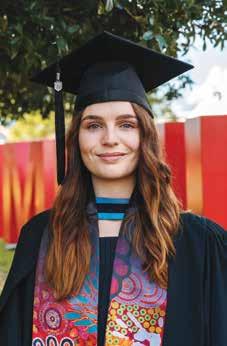
She recently graduated from Western Sydney University with a Bachelor of Social Science, a degree she pursued to expand her knowledge and create meaningful change.
Crossing the stage was a proud moment for Dana, marking the culmination of years of dedication and hard work.
“I decided to pursue a degree in Social Science because I wanted to continue making a difference, and to grow my understanding about why things are the way they are and how they can be changed for the better,” said Dana.
Her favourite HSC subjects – Aboriginal Studies, Ancient and Modern History, and Society and Culture – revealed early on the areas that would shape her path. After finishing high school, Dana worked in roles closely connected to Social Science, including community casework, cultural education, and contributing to her local Aboriginal Education Consultative Group (AECG).
“I also wanted to give voice to the fierce sense of empathy, justice, and obligation that I had been grappling with since I was a child. From the beginning to the end of my degree, what evolved most was my ability to critically reflect, and to understand Social Science as a science.”
As a proud recipient of a GO Foundation Scholarship, the 27-year-old credits this support as a key factor in helping her succeed and achieve her goals. The GO Foundation, founded by Sydney Swans legends, Adam Goodes (Adnyamathanha and Narungga man) and Michael O’Loughlin (Kaurna, Ngarrindjeri and Narungga man), empowers young Indigenous Australians through education, with a focus on culture and aspiration to help them reach their full potential.
“We have to be honest about the costof-living crisis and the fears that many young people hold regarding the financial impact when considering or starting their higher education journey,” she said.
“For me, the GO Foundation Scholarship helped to alleviate some of that concern, and it was easier to focus on the value of my studies as opposed to their cost. Equally important for me are the social and cultural opportunities provided through the GO Foundation. The GO scholars, alumni, and staff refer to our network as the GO Family and nothing could be truer. Their support and encouragement have helped to shape my journey into what it has been.
“The opportunities to connect to culture whilst being away from home have meant the world to me. I will always be grateful for GO and my donors, and I am sure that I will spend the rest of my life paying forward their kindness and generosity.”
Dana highlighted Western Sydney University’s commitment to creating an inclusive and supportive learning environment. “I truly appreciated the ways in which Western values diversity – I think this is so important given the assault on diversity that is beginning or continuing to occur across the globe.”
“As a student, Western challenged me to think outside of the box, to reflect often, and to always consider multiple perspectives and ways of approaching things. One of the things that I enjoyed most about studying Social Science was the cross-cutting and intersectional nature of it. So much about our world and lives is connected, and it was reaffirming to study in a field which recognises that.”
Dana now works as a Senior Policy Officer in the Closing the Gap space, a role that allows her to apply the knowledge and skills she gained during her studies.
“I cannot underscore how much my time at Western prepared me for this role - from strengthening my research and writing skills to expanding the way that I think about and approach complex matters that arise through my work on a daily basis.”
Looking ahead, Dana is considering postgraduate study to further her academic and professional journey.
“Ultimately, I hope to continue using my knowledge and skills to contribute to the closing of gaps for our people. In
whatever role and capacity I may have, I know that I will forever be seeking to empower myself and others, to incite necessary change, and to leave a positive legacy behind.”
Dana believes creating and seizing opportunities is key to progress toward better futures. Her advice:
“If you cannot create opportunities for others, take opportunities until you can. Always remember that empathy is not a weakness – it is a strength when we learn how to harness it. Be bold in everything you do, and if you can, pay forward any kindness that you receive on your journey.”
Ultimately, I hope to continue using my knowledge and skills to contribute to the closing of gaps for our people.
WESTERN SYDNEY UNIVERSITY’S INDIGENOUS STUDENTS ACHIEVE GREAT THINGS
I’m a proud Gumbainggirr/ Yuin woman. Twelve years ago, I moved here from a small country town named Kempsey to seek better education and employment opportunities. Who is your mob?
Gumbainggirr and Yuin
What community or cultural events have you been involved in lately or will engage in this year?
I have been involved in the 2026-2030 Indigenous Strategies meetings. I have also attended the Western Sydney University Indigenous brand photoshoot to take candidate photos that have been used to promote the Pathways to Dreaming program, Library Study Smart and Indigenous scholarships.
I hope to eventually gain permission from the Badamani Centre to provide a speech or program presentation at my old primary school. I would want to make this presentation to Indigenous year 6 students.
Why did you choose to study at Western Sydney University?
I chose to study at Western because of the Indigenous support and community that are within Western Sydney University.
Places like the Badanami Centre have created a space for Indigenous students to feel safe and comfortable, to connect with other Indigenous students and staff. Weighing out the many options that came after high school, I felt Western was best suited for me.
Have you faced any challenges as an Indigenous student? If so, how did you overcome them?
I faced many challenges, as every university student has in their study experience.
One of the biggest challenges I faced was being held back a whole year due to a physical injury. Staying
Photography: Sally Tsoutas.
behind whilst my classmates moved ahead was a true struggle, I had already made friends within my classes and formed connections.
I lost all of those connections and felt like I had to start all over again. Not only had I lost my classmates, I had also lost my program progression. How did I overcome this challenge? I reached out to the Badanami team to get myself back on track. I reached out for support letters and academic advice; they reached out to me with a quick reply and worked with me very closely to make sure my situation was resolved. When you graduate from Western Sydney University what do you hope to achieve?
I hope to further my studies and Master in Paediatric Care. However, once I complete my Masters, I’m happy to move back to my country town and advocate for the rural Indigenous communities, especially the children as that’s where most of the generational illnesses are rooted from. For example, middle ear disease is common in young Indigenous children; if prevention is utilised at an early age, we can prevent further complications like deafness and chronic ear infections.
You are clearly a busy person with lots of commitments, what are your top 5 tips towards success for other Indigenous Western Sydney University students?
Tip 1: Reach out for help.
Tip 2: Stay connected with the Badanami team, they are a strong support team!
Tip 3: Utilise all the Indigenous support services you can like Tutoring for Success and scholarships.
Tip 4: Stay connected with your Indigenous peers.
Tip 5: Stay organised!
Students INDIGENOUS PhD GRADUATES inspire the next generation of researchers
Western Sydney University celebrated the outstanding achievements of its Indigenous graduates at the recent October graduation ceremonies, which saw 26 Indigenous students cross the stage. This included four Indigenous scholars who received their PhD degrees – a remarkable outcome marking the University’s highest number of Indigenous PhD graduates this year.
Among the PhD graduates were Dr Paul Saunders, Dr Matilda Harry, Dr Madison Shakespeare, and Dr Phillip Good.
Professor Michelle Trudgett, Deputy Vice-Chancellor, Indigenous Leadership, said the cohort’s success highlights the University’s strong commitment to supporting Indigenous excellence and research.
“This nation only graduates around 50 to 60 Indigenous people with doctoral qualifications every year, so the fact that we just had four candidates graduate is a great moment for us to celebrate with our community,” said Professor Trudgett.
“I offer my warm congratulations to Drs Saunders, Harry, Shakespeare and Good, and look forward to seeing the impact these individuals will have in their communities, fields, and careers, inspiring us all.”
The cohort completed PhDs in fields including Indigenous Health and Wellbeing, Indigenous Medical Education, Indigenous Mentoring and Education, and Indigenous Art and Knowledges.
Pro Vice-Chancellor (Research and Innovation), Professor Ian Anderson, commended the graduates on their dedication and perseverance.
“It’s extremely pleasing to see Indigenous scholars excelling at the highest levels of research. Western Sydney University is deeply committed to advancing Indigenous-led research and education,” said Professor Anderson.
Dr Paul Saunders, a proud Biripi man, was among the graduating cohort. He said the milestone marked the culmination of years of research and dedication to improving Indigenous health and medical education.
His thesis, ‘Striving for Aboriginal intercultural development through medical education: A mixed-methods inquiry to understand student transformation’, explored the student experience and transformation within medical education.
“Aboriginal and Torres Strait Islander peoples are underrepresented not only in healthcare, but also within the academy itself,” said Dr Saunders.
“I saw my PhD as a way to change how Aboriginal and Torres Strait Islander health is perceived in medical education and to highlight the strength our communities bring to the healthcare space.”
The University’s 2024–2028 Indigenous Research Strategy and future Indigenous Centre of Excellence, are creating opportunities for Indigenous scholars and communities to lead research that is robust, ethical, and grounded in Country.
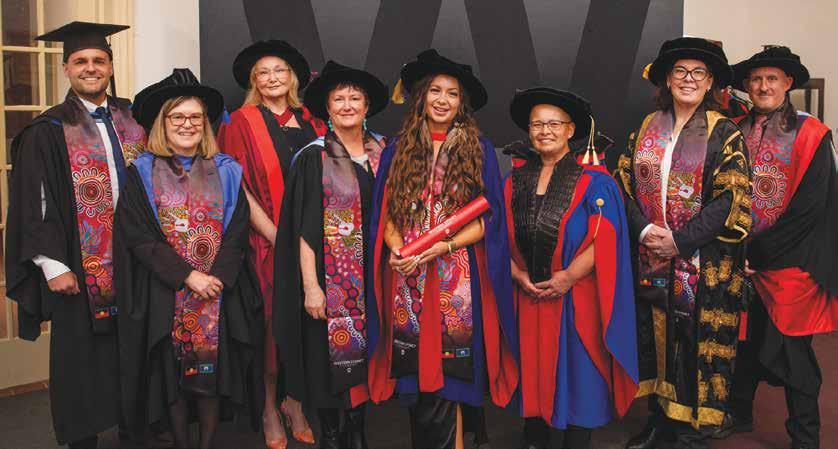
From left to right: Josh Mason, Professor Susan Page, Professor Corrinne Sullivan, Dr Michelle Locke, Dr Matilda Harry, Dr Madison Shakespeare, Professor Michelle Trudgett and Professor Gawaian Bodkin-Andrews at the recent October graduation ceremonies. Photography: Sally Tsoutas.
Dr Paul Saunders Photography: Sally Tsoutas.
WESTERN SYDNEY UNIVERSITY’S INDIGENOUS STUDENTS ACHIEVE GREAT THINGS
FROM STUDENT AMBASSADOR TO ADVOCATE: Law Graduate Leading with Heart
For recent graduate Jess Oehm, the path from campus to courtroom has been shaped by leadership and a deep commitment to her community.
A proud Ngunawal woman, Jess first connected with the University through the Pathways to Dreaming program as a high school student, later returning as a Student Ambassador to inspire others for more than seven years.
“I came on as a Student Ambassador after being involved in the Pathways to Dreaming program as a student in high school,” Jess said. “I loved giving back to the program that helped me succeed. Take every opportunity that you are given and never doubt yourself.”
Jess completed a Bachelor of Laws and a Bachelor of Business (Human Resource Management) double degree, and in 2024 was recognised with the Outstanding Indigenous Student Award at the University’s annual NAIDOC Awards. Alongside her studies, Jess contributed as a tutor with Western’s Badanami Centre for Indigenous Education, reflecting her passion for empowering the next generation.
Her professional journey has already included a cadetship with Gilbert + Tobin
as a paralegal and research assistant, the New South Wales Bar Association’s First Nations Clerkship, and now a graduate position with Legal Aid NSW in the Judge Bob Bellear graduate program.
Jess describes the clerkship as a pivotal experience. “I was honoured to undertake the First Nations Clerkship. It gave me clarity in what I wanted to do, as well as the chance to see some amazing advocates in practice. I spent a week at the Land and Environment Court, three days at the NSW Supreme Court, and two days at the Downing Centre District Court.”
Her inspiration to pursue law was sparked during a workshop with Senior Lecturer Francine Feld in the Moot Court at Campbelltown. “I loved listening to Francine speak about the law and how justice was achieved. From that moment on, I wanted to be a lawyer. I am most passionate about the impact I can have on community, and my degree has given me the knowledge to advocate fiercely for those in need.”
As she embarks on her legal career with ambitions of becoming a civil law barrister, Jess’s journey reflects the strength of education, mentorship, and community connection in shaping the next generation of Indigenous leaders.
PROUD, UNITED, STRONG:
Badanami was proud to support a strong and spirited Western Sydney University team at the 2025 Indigenous Nationals, held from 23 to 27 June 2025 at the University of Western Australia on Whadjuk Noongar Boodjar country.
This annual event, now in its 29th year, brings together Aboriginal and Torres Strait Islander university students from across the nation to celebrate culture, sport, and community.
The Nationals are more than just a sporting competition; they are a unique space for students to connect, build friendships, and express their identity through sport and shared experience.
Western was led by captains Billy Bent-Ngawaka and Louwanna CohenSiemsen, who inspired the team with
their leadership and passion. Competing against 32 universities from across Australia, the team demonstrated outstanding determination and sportsmanship, finishing in 8th place overall, a testament to their dedication and hard work.
Across the four mixed sports contested, basketball, volleyball, touch football, and netball, our students gave it their all.
The team placed 16th in Basketball, 12th in Touch Football, 7th in Netball, and achieved an exceptional 4th place in Volleyball. These results reflect not only athletic talent but also the commitment to working together as a team and representing their community with pride.
The 2025 Indigenous Nationals highlighted the power of sport to
Western students represent at 2025 Indigenous Nationals
strengthen leadership, connection, and belonging. For our students, it was also an opportunity to honour culture, support one another, and be part of a national celebration of Indigenous excellence in higher education.
My full name is Nikayla Rose Brown; coffee lover, cat paw-rent, and avid reader. Who is your mob?
I am proud to say that my mob is Dharawal from the Jervis Bay area.
I was born in Campbelltown but moved around a lot as a kid to Bomaderry, Gosford, Sanctuary Point, Gunnedah, Canterbury, and Camden.
I now live on Darug Country, another new location!
What community/Cultural events have you been involved in lately?
Since moving into my professional career around five years ago, I have mostly been involved in representing market stalls at ‘family and fun’ days within Aboriginal Health Clinics and Community Centres, as well as in primary and secondary schools around Western and SouthWestern Sydney.
This was a rewarding experience to meet other organisations that come together out in community to share knowledge amongst mob as valuable support.
I was also a Marketing and Communications member of a Staff Social Club to promote staff wellbeing, collaboration, and meaningful connections outside of corporate dynamics.
Presentation Sisters Wagga Wagga Award, I am excited to be back and continuing the Western journey.
Have you always aspired to work in tertiary education?
Within my degree area, I was technically aimed at social work and government policy. However, I like to see my studyto-career progression translated into helping communities in a variety of areas of education and human services. The ecosystem of a university has been enjoyable to learn and I hope to see myself become an expert in this space one day.
What is your favourite thing about working at Western Sydney University?
The locality of all the campuses as the forefront of skill growth in the Western Sydney region.
It is great to see mob and culturally and linguistically diverse communities see Western Sydney University as a fresh start to higher education.
I also love that we are a multi-campus institution, especially once you’ve finished the mission and seen them all.
Each campus features its own personality and culture that ties the Western cohort together.
It is great to see mob and culturally and linguistically diverse communities see Western Sydney University as a fresh start to higher education.
Within this position, it grew my skillset of effective communication and contributing to a healthy workplace for everyone. Otherwise, outside of my professional life, I have played netball for the past fifteen years for Bankstown, The Hills, and Camden districts.
Recently, I joined and played in a mixed social competition in Moore Park for the first time.
What is your current position at Western Sydney University and how long have you worked at the University?
I am a new starter at Western Sydney University at the Parramatta South campus as a Badanami Student Success Officer. Though, as an alumni in the School of Social Sciences and having been awarded with Distinction and the
Do you have any advice for Aboriginal and Torres Strait Islander people wanting to work at Western Sydney University?
Attend events, introduce yourself wherever possible, and strive for what works for you.
It is a vast world of teams within a university and all of them have the potential to align with your mindset and goals. I am by no means a super extrovert but by taking small acts of courage, my personal experience at university has transformed tremendously
As a prime example, in my first week as a Badanami Student Success Officer, I took the time to say ‘hello’ to someone standing alone at one of our NAIDOC events. Long story short, this person is now my fitness and café buddy!
WESTERN SYDNEY UNIVERSITY’S PASSIONATE INDIGENOUS STAFF
Empowering Communities Through Learning: MARCS Institute's Katarina Ferkula-Cohen Wins Major Award
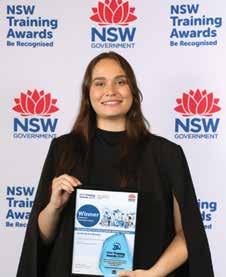
Katarina Ferkula-Cohen, Administration Officer within the MARCS Institute, has been named the 2025 Aboriginal and Torres Strait Islander Student of the Year at the recent NSW Training Awards - Western Sydney and Blue Mountains Region.
Katarina is a proud Dunghutti woman from the Mid-North Coast of NSW, born and raised on the ancestral lands of the Darug people.
Since joining Western Sydney University as an IgniteBusiness Trainee in 2024, Katarina has focused on cultural advocacy, actively contributing to many University events through the deliverance of Acknowledgements of Country and taken part in important cultural discussions from a School-based level.
Now, within the MARCS Institute, she continues to build upon meaningful initiatives that support and empower First Nations communities, “I’m incredibly honoured by this recognition. It means so much to me, not just personally, but as a reflection of the brilliance of our communities. I’m grateful for the support of those who have walked alongside me on this journey, I hope I continue to make you proud,” Ferkula-Cohen said.
Held annually by the NSW Department of Education, the NSW Regional Training
Research
Awards are the first stage in the NSW Training Awards, a program that has been designed to recognise outstanding achievements in vocational education and training throughout the state.
As one of the finalists in the category of Aboriginal and Torres Strait Islander Student of the Year, Katarina was recognised for her strong understanding of the vocational education and training system, demonstrating this learning for not only herself but the community.
The NSW Aboriginal and Torres Strait Islander Student of the Year Award recognises the achievement of an Aboriginal or Torres Strait Islander student who displays a strong understanding and knowledge of the vocational education and training system and demonstrates the relevance of lifelong learning for themselves and their community.
“Katarina’s dedication, creativity, and commitment to learning has made a powerful impact at Western Sydney University and beyond. Her achievements are a testament to her leadership and the strength of Indigenous excellence in vocational education. Please join us in congratulating Katarina on this outstanding recognition!” said Professor Michelle Trudgett, Deputy ViceChancellor Indigenous Leadership.
I’m grateful for the support of those who have walked alongside me on this journey, I hope I continue to make you proud.
Professor Donna Hartz leads $836K ARC-funded project to strengthen Indigenous midwifery pathways
Professor Donna Hartz from the School of Nursing and Midwifery has secured more than $836,000 in funding through the Australian Research Council (ARC) Linkage Projects scheme to lead the project, ‘A school-based vocational maternal-infant health education pathway’.
This project aims to implement and evaluate a new pathway into higher education Midwifery studies. A primary focus is Aboriginal and Torres Strait Islander high school students. The project aims to create the first school-based vocational Health Service Assistant
Certificate III in maternal-infant health offered in Australia. This project will lead to significant benefits in providing a new strategy to address current midwifery workforce deficits, provide school leavers with work-ready qualifications, and address inequities in education and workforce participation for Aboriginal and Torres Strait Islander people.
Professor Hartz will lead a multidisciplinary research team which includes Western’s Professor Hannah Dahlen and Dr Karen McLaughlin from the School of Nursing and Midwifery, Professor Susanne
Gannon from the School of Education and Wimbayi Musodza from the School of Nursing and Midwifery.
Congratulations to everyone involved in this funding success.
Research
WESTERN SYDNEY UNIVERSITY SCHOLARS BRING INDIGENOUS VOICES TO THE HEART OF AUSTRALIAN RESEARCH
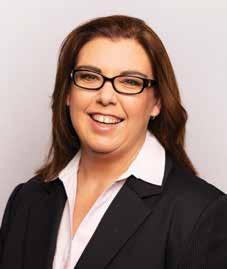
Upon learning of her appointment to the ARC’s College of Experts, Professor Corrinne Sullivan said, “I’m honoured to join the College of Experts. This is a powerful opportunity to contribute to the direction of research in Australia, and I’m excited by the learning, collaboration, and the chance to support research that makes a meaningful impact.”
Wiradjuri scholar Professor Sullivan has built her career exploring how identity, space and belonging shape Indigenous lives. She has written on sexuality, gender, and the everyday experiences of Indigenous people navigating a world that too often overlooks them.
In 2024, she was recognised as Western Sydney University’s Indigenous Person of the Year, honouring her leadership and mentorship.
Now, as part of the ARC College of Experts, Professor Sullivan will help assess which research projects across Australia will receive funding. The College plays a powerful role in shaping national research priorities. To have Indigenous voices at the table is more than symbolic, it can influence the kinds of projects that are valued and how success is defined.
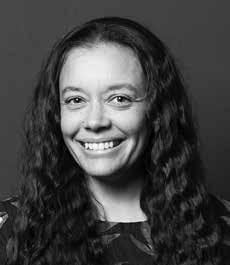
Joining her, is fellow Western Sydney academic, Professor Gawaian BodkinAndrews. A D’harawal man raised on Bidigal and Nattaimattagal Country, he brings a passion for Indigenous methodologies, education, and Indigenous Data Sovereignty.
His journey has not been an easy one, as a postgraduate student he almost left academia due to outside pressures. Instead, persevering he became a leading advocate for Indigenous-led research.
Professor Bodkin-Andrews has mentored countless students while pursuing projects that blend story-telling with statistical analysis. He is also a founding member of the Maiam nayri Wingara Indigenous Data Sovereignty Collective, which insists Aboriginal and Torres Strait Islander peoples must retain control over research from its conceptualisation to dissemination and beyond. His new role at the ARC College of Experts gives him a platform to bring those principles into national research policy.
For both academics, the appointment is about more than personal achievement.
It is about ensuring that Indigenous knowledge sits at the centre of decisionmaking in a system where it has long been marginalised.
Research on Indigenous communities has too often been judged against Western criteria alone, overlooking other ways of knowing.
Reflecting on his experience, Professor Bodkin-Andrews emphasised the critical role Indigenous scholars play in shaping equitable research assessment. “From my prior experience in the College of Experts, it is an opportunity for Indigenous scholars to not only ensure that Indigenous applicants, and their Indigenous methodologies, are respected, but also to counter-balance reviewers who may be ignorant (and even racist) towards approaches to ethically driven Indigenous research.”
Having Indigenous experts on the panel means projects that prioritise community collaboration, respect for Country, and relational knowledge are more likely to be recognised as valuable.
Western Sydney University has long championed Indigenous research and student pathways. Professors’ Sullivan and Bodkin-Andrews embody that mission. Both are deeply connected to community, both are committed mentors, and both insist that research should make a difference beyond the campus gates. Their success also sends a powerful message to Indigenous students. Seeing two Indigenous professors shaping the national research agenda shows that the world of academia is not closed off, but a space that Indigenous people can enter, reshape, and lead.
Representation alone cannot undo decades of exclusion, and Indigenous academics continue to shoulder heavy service and cultural responsibilities alongside their research. Serving on the ARC College of Experts adds to that load. Yet both scholars see it as worth the effort, a way to ensure that future generations inherit a more inclusive and respectful research system.
The ARC itself is changing too. It has recently recognised Indigenous studies as a distinct discipline and established an Indigenous Forum to advise its board, which Professor Michelle Trudgett is a
member of. Indigenous perspectives are moving from the margins to the centre of national knowledge-making.
For now, Sullivan and Bodkin-Andrews are among the few carrying that responsibility. Their voices will help decide what kinds of questions Australian researchers ask in the years ahead.
Indigenous people are not optional to the future of knowledge in this country (and Indigenous Countries), they are essential.
Professor Corrinne Sullivan Photography: Sally Tsoutas.
Professor Gawaian Bodkin-Andrews Photography: Sally Tsoutas.
Alumni
SEVEN DEADLY QUESTIONS: Introducing Jodie Towney
Who are you?
My name is Jodie Towney, a Wiradjuri woman. Although I am far from my ancestral Country, I have spent most of my life living on Dharug and Dharawal lands, places that have nurtured me and shaped my journey. Today, I write from Dharug Country.
What community or cultural events have you been involved in lately?
I recently attended the NAIDOC Day event run by Cumberland Council at Central Gardens.
It was a meaningful opportunity to connect with community, catch up with old friends, have a yarn, and celebrate culture. There were live cultural performances, sculpture painting, bead making and Bubble soccer. I took my grandson along, and we had a great day together.
What is your current position and why are you passionate about it?
As Manager of Aboriginal Outcomes at Transport for NSW, I lead a diverse portfolio of work that includes:
→ Aboriginal Cultural Advice – Providing guidance to ensure our projects and initiatives are culturally appropriate and respectful, including arranging Welcome to Country ceremonies.
→ Aboriginal Cultural Heritage –Managing and protecting cultural heritage sites, including fulfilling Connection with Country (CwC) requirements to preserve these places for future generations.
→ Aboriginal Land Interests – Ensuring Aboriginal land rights and interests are recognised and integrated into planning and delivery.
→ Aboriginal Procurement – Supporting the implementation of the Aboriginal Procurement Policy (APP) and Indigenous Procurement Policy (IPP), particularly in infrastructure projects and delivery partner contracts.
→ Aboriginal Transport Safety Programs –Developing and delivering behavioural programs aimed at improving transport safety outcomes for Aboriginal communities.
This is a role I truly value—no two days are ever the same. It involves deep community engagement, constant negotiation, and a strong focus on achieving visible, tangible outcomes for
Aboriginal communities across Sydney. I work hard to ensure that the voices of Aboriginal people are heard and respected, and that we deliver positive, lasting change.
What degree did you study at Western Sydney University?
I am currently completing a Graduate Certificate of Urban Management & Planning and I have completed a GC in marketing and an MBA
What has your experience at Western Sydney University given you that is unique compared to graduates from other universities?
Studying at Western Sydney University was a rewarding experience. It’s a modern, progressive university set on beautiful grounds, I always loved seeing the jacarandas in bloom, framed by the Parramatta River. The location suited my lifestyle perfectly as a mature-age student, the flexible class times and delivery methods were essential. I couldn’t attend classes during standard work hours, so having access to evening and online options made it possible for me to balance study, work, and family. What made the experience even more meaningful was the support I received from Badanami. It was a place where I felt welcome, and that cultural safety made all the difference.
Who is your role model and why do they inspire you?
Qualities I admire are service, strength, humour, wisdom, and a reflective and forgiving heart—which, to me, is the essence of grace.
Finding people with all these qualities can be difficult but all my siblings are role models and my daughter Kayla is a role model for me and a few fictional characters like Mr Darcy and Elizabeth Bennett and of course Atticus Finch. What would be your top 5 tips towards success for Indigenous graduates from Western Sydney University?
Tip 1: Find something you love and follow it. Your passion will guide you. Whether it’s culture, community, or career–choose a path that feels meaningful and stay true to it.
Tip 2: Understand things take time. Success doesn’t happen overnight. Be
Find something you love and follow it. Your passion will guide you. Whether it’s culture, community, or career–choose a path that feels meaningful and stay true to it.
patient with your journey and trust that growth comes with persistence.
Tip 3: Gather skills and knowledge along the way. Every job, challenge, and opportunity teaches you something. Build your strengths as you go.
Tip 4: Not all good advice is friendly. Some of the most useful guidance might be hard to hear. Some of my best managers were the toughest.
Tip 5: It’s good to rest and reflect. Take the time to pause, recharge, and reflect.
Elders
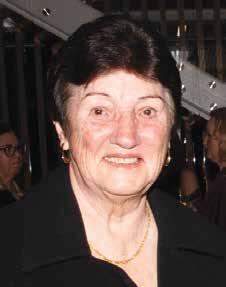
SEVEN DEADLY QUESTIONS: Aunty Terri Keating
After 17 years of dedicated service to Western Sydney University, Aunty Terri Keating retired in June 2025. Her retirement marked a new chapter as she joined the Elders Advisory Committee.
Aunty Terri began her career at the University as a Trainee Administration Assistant in the Human Resources department. Over the years, she progressed to the vital role of Community Engagement Officer, where she played a key part in supporting the traineeship program and the Elders on Campus initiative.
In this role, she coordinated Elders to deliver Welcome to Country and Acknowledgement of Country at numerous University events, fostering meaningful connections between the University and the broader community.
To honour Aunty Terri joining the Elders Advisory Committee we asked her 7 Deadly Questions.
Who are you?
My name is Terri Keating; I have been honoured to live on the land of the Darug people since 1975. I am a proud Wiradjuri woman from Narromine in the Central Western Slopes and Plains of NSW. As a child growing up in Narromine, I gained a deep respect for the community, in particular the Elders, who I give credit to for teaching me the standards and culture of our ancestors.
Who is your mob and where are you from? I was born and bred in Narromine. My Dad’s family came from Narrandera, where they lived on the sand hills near the Murrumbidgee River, it was an Aboriginal settlement. His two sisters and his brother were taken from the family in the early 1940s, however my Dad managed to escape and ended up living and working with the Corney family from Hartley near Lithgow. The Corney’s treated him like family, he was very lucky to have them. My Dad married my Mum in 1952 and began to set up our home in Narromine, where they had two children, me, and my brother Michael. Most of my mob is located in a part of Narromine named Frog Hollow where I visit on a regular basis.
What does it mean to be an Elder?
To help nurture a sense of community; I was with the University for 17 years, so the students came to mean a great deal to me. While I was mostly engaged with the Elders as part of the University’s Indigenous community, I also had a strong
connection to Badanami, which deepened my interest in supporting our students.
No two days were ever the same, and I’m so grateful for all the experiences I had along the way.
Who inspires you? My parents. My family and our community.
Why have you joined the Elders Advisory Committee of Western Sydney University? I was proud and deeply honoured to be asked to join the Elders Advisory Committee at Western. It means a lot to be acknowledged as an Elder. What’s really special is that we all come from different backgrounds and language groups, but we come together with a shared purpose, to support and nurture our community.
As part of the Committee, we’re consulted on strategies and projects that affect both students and staff, and we can make sure our students are being looked after.
There’s no room for racism, we want the University to be a safe and inclusive place for everyone. Whether you’re black or white, we all belong to one culture. You’re part of us too, part of our heritage and community. We’re all one mob.
What are your hopes for Aboriginal and Torres Strait Islander people in years to come? We’re strong now, but to continue to have that strength to go forward and be more accepted in the general community.
Do you have any advice for the next generation of Aboriginal and Torres Strait Islander people who are striving to make change in community? Be proud of who you are!