






By Frank Neill


This year’s Karori Karnival, organised by the Karori Lions Club, was once again a huge success.

More than 2,000 people descended on Ben Burn Park on Sunday 22 February to enjoy all the fun of the fair.
Continued on page 2.
to a great start.















Phone (04) 587 1660
www.independentherald.co.nz




REPORTER
Frank Neill
herald@wsn.co.nz 027 490 3916
NATIONAL
SALES
Les Whiteside
les@wsn.co.nz 021 360 008
SALES
Steve Maggs steve@wsn.co.nz 027 765 8303
SALES
Brenda Ingram-Johnson brenda@wsn.co.nz 021 640 152

CLASSIFIED SALES classifieds@wsn.co.nz
Continued from page 1.
The 55th Karnival the Lions have run, it attracted mainly Karori residents, but also people from the greater Wellington region, including as far north as K piti.
Karori Lion Trevor Anders said he received great appreciation from those attending that he spoke with.
“There was such positivity from people.
“Feedback from the stallholders and public was overwhelmingly positive, with many thank yous and compliments to the Lions.
“It was wonderful.
“That makes us [the Karori Lions] very satisfied.”
After the Karnival was opened by the President of the Karori Lions Club, Gina Smith, Wellington’s Red Hackle Pipe Band played as they marched around Ben Burn Park, getting the Karnival off to a great start.
Led by Ian MacKenzie, the band “again set the standard of entertainment getting the Karori Karnival off with a stirring start,” says Karori Lion Vaughan Crimmins, who organised the entertainment for the Karnival.
“A swirl of pipes combined with drum rolls they marched around our ‘Pop Up Village’ and could be heard over Ben Burn Park and further afield.”
It was, Vaughan says, “a great way to welcome Karori Karnival

visitors and stallholders alike and open Karori Karnival 2026.”
The Karnival featured nearly 80 stalls, many of them new, as well as entertainment throughout the five hours and a series of rides and activities for the younger ones.
This year’s event grossed almost $11,000 – a slight increase on last year’s gross take of just over $10,000.
“It was a successful day for the stallholders, the Karori Lions Club Treasurer Jo Cameron says.
“The weather, while not as nice in the morning, fined up in the afternoon.
“It turned into a lovely day out.” Jo says.
“After paying expenses we will be able to donate probably $4,000 to $5,000 to charity ... I’d like to say $5,000.
“All the money the club earns from the public goes back into the community,” Jo says.
Over the years major beneficiaries have included a mix of local community groups, greater Wellington regional charities, national charities and Lions initiatives – including The Lions Den at Ronald McDonald House, The Lions ‘Playscape’ therapeutic playground at the new Wellington Regional Children’s hospital, Wellington Free Ambulance, Wellington Riding for the Disbled, Lions fundraising for Life Flight Trust’s new aircraft, Lions-led projects at Zealandia, The Lions Otari Plant Conservation Labora-

tory at Otari-Wilton’s Bush and many more,” Jo says.
Raising money for good causes is not the main aim of the Karnival, however.
The main purpose of the Karnival is “to provide the Karori community and visitors from further afield with a great family day out, in a relaxed environment “with all the fun of the fair” – and this was certainly achieved,” Trevor Anders says.
Following the opening the Red Hackle Pipe Band, the on-stage entertainment was full of crowdpleasers.
Children enjoyed a variety of rides, a bouncy castle and other attractions and there were enough food stalls to satisfy the hungry.
Craft stalls and information stalls for other charitable organisations provided a mix of attractions.
“As always, the Lions book stall remained popular throughout, and queues were steady at the Lions barbecue trailer,” the club says.
One of the advantages of this Karori fair compared to similar events across the region is the layout of stalls and entertainment in the spacious park, providing the public with space to relax on the lawns with a variety of food and socialise or watch the entertainment.
The Karori Lions held a raffle at the event and the two winners were David Ross and Osias Tu’ipulotu, both from Karori.
“Family working for Families in Tasman”
The Homestead is in the heart of Wakefield Village. Helping to make a positive difference in people’s lives.
Wellington has become the butt of jokes around New Zealand since the failure of the Moa Point sewerage system resulted in waste pouring into the south coast.
I recently hosted a meeting which included local property developers and representatives from the City and Regional Councils. The background for the meeting was the need to ensure all people involved in providing more housing in our electorate, whether it be those building them or those regulating and permitting that building, understand the issues which govern the ability to build the houses everyone agrees we need.
This is looking like a big cost to ratepayers in the greater Wellington area, since our Three Waters, which had previously been centralised to become a Nationwide service, was returned to local ownership and control.

which is the United States, where ideas seemingly thought up in the middle of the night and communicated via social media are turning the world on its head.
Well informed observers, who understand economics and history are extremely concerned at the long-term implications, where those making the decisions will be well gone before the real damage becomes apparent.
There are essentially two types of development; greenfields and brownfields. Greenfields means building on currently undeveloped land, typically ex farmland on the edges of current urban areas, where infrastructure like sewers, water supply and other essential services don’t exist are usually built by the developer.
Of course, we are all wondering about the wisdom of that decision now, understanding why spreading the risk of such disasters nationally was a much better idea.
Other ideas, like building a massive storage battery in the way of a Central Otago Lake for when the electricity was short because of a lack of rainfall, wind and sun, another project which was cancelled, are also looking good now. Instead, we will import large quantities of gas from overseas to have in reserve for exactly the same reason.
Brownfields development means rebuilding on existing sites, and there has been considerable discussion in recent times around how much intensification should be allowed in existing suburbs, especially changing of height limits to allow for more apartments.
Both have their advantages and disadvantages; the Regional Council in particular see their role to prevent more
Such far-reaching decisions should be made for well researched and informed reasons, not political ones. We are watching the trainwreck
runoff and other material ending up in our harbours, especially the Porirua harbour in the case of development north of Johnsonville and Newlands. The Wellington City Council are concerned that the existing infrastructure cannot handle the pressure it comes under when new housing areas are developed. Existing infrastructure is aging and needs upgrading across our city, as evidenced by recent pipe failures. An advantage of intensification of existing areas means more people, therefore more ratepayers to pay for those upgrades.
Whenever confronted by individuals with extremely strong views on topics, I endeavour to find out where they got their information from. Sadly, in this social media age, such information can come from anywhere and is unverified.
Developers of course need to make a profit, and wish to keep their compliance costs as low as possible. Many believe the Resource Management Act is too cumbersome. We as government for our part have undertaken to rewrite that act.
As a detective, I was trained to corroborate everything I asserted, and I’d like to think it’s held me in good stead.
The feedback was good, but the success will be when there are sufficient affordable houses to meetdemand. That is certainly my goal as your MP.
That, and of course having a vibrant and functioning Johnsonville Shopping Centre we can all be proud of.
One good thing about social media is at least if we go looking, we can get contrasting views, which is better than taking as gospel anything which comes up on our feeds.
There’s plenty to be getting on with.
It’s the old ABC; accept nothing, believe no one, corroborate everything. It’s how we evaluate political decision making.
By Frank Neill
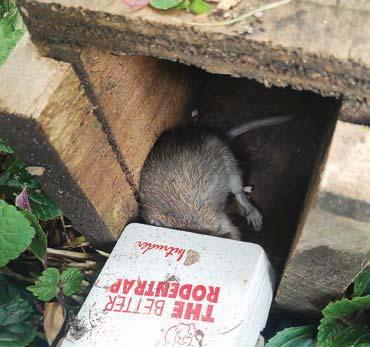
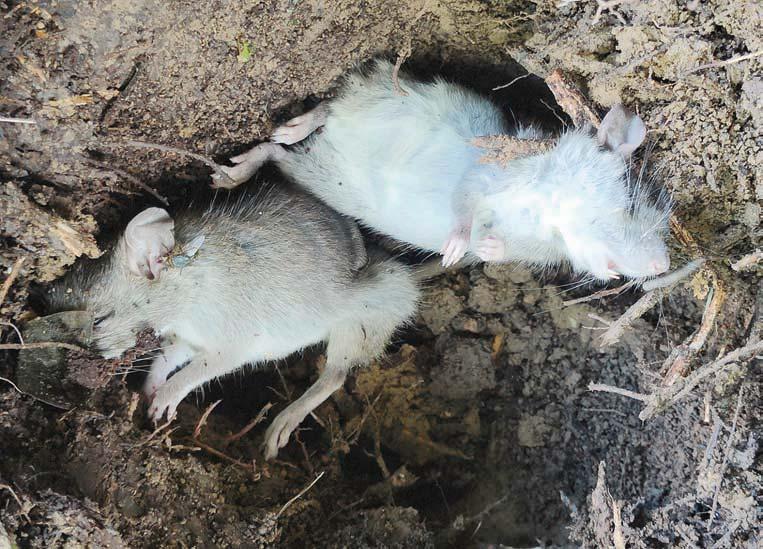
Greater Wellington Regional Councillor and Karori resident Simon Woolf is encouraging more people to start trapping rats. And free traps can be obtained from Predator Free Wellington.
Significantly reducing the rat population because more people are trapping them will have a significant positive impact on native wildlife.
“Rats don’t just predate on birds, eggs and chicks,” Simon says.
“They predate predominantly on easy targets, which are the lizards, cicadas and the insect life that we need for our biodiversity.
“In the insect world, rats are a major cause of their vulnerability.
“The smaller birds and invertibrates, they are at real risk.”
Thanks to the trapping that has already taken place “there’s a fair bit of wildlife around” but much more could be done.
“We are catching a fair few rats around here [in Karori] at the moment,” Simon says.
“There are a lot of rats around at the moment.
“I’m trapping continually and I caught two rats last night,” Simon told the ‘Independent Herald’ on 23 February.
“I’d encourage people to get out and trap.
“We really, really need the community to get active in trapping.”
One interesting food source for a local rat has been Simon’s lemon tree.
“They eat the rind of the lemon and leave the fruit.
“They’ve decimated my lemon tree,” he says.
Like Simon, Predator Free Wellington champion Kelvin Hastie would “absolutely” like to see many more people in the community trapping rats and other predators.
Kelvin established the first predator free community in New Zealand when he established Predator Free Crofton Downs in 2015.
He then brought the partners together to establish Predator Free Wellington and wrote the original plan for the organisation.
Now “pretty much every suburb in Wel-




lington” has its own predator free group “and now it’s across the whole country also,” Kelvin says.
Trapping “is a wonderful thing to be doing.
“If we can get the rats under 5% then the birds are going to be doing really well.
“That’s a positive goal to aim for.
“Trapping rats is really good for climate change also, because you are allowing new trees to grow that wouldn’t be able to because of the rats eating all the seeds.
“Forest and Bird, I think, worked out that by removing rats we could offset our emissions by 14%.”
“By contacting Predator Free Wellington people will be able to get a free trap for their own back yard,” Kelvin adds.
People can make contact by visiting the Predator Free Wellington website, www. pfw.org.nz, and then clicking on the link below “Get trapping in your backyard or community”.








Churton Park School will hold its Family Fun Night tomorrow evening, 27 February.
The fun night will take place from 5pm to 7pm at the school, 90 Churton Drive. It will feature food and refreshments, including a sausage sizzle sponsored by New World Churton Park and the Mao & Co Food Truck.
There will be entertainment, a raffle, an inflatable obstacle course and outdoor games at the fun night. People are welcome to bring their own picnic basket and blanket.

























Playcentre’s free Messy Play Week event for wh nau with children from birth to school age will come to playcentres from Monday 2 March to Friday 6 March.
Messy Play Week will take place at nearly 400 playcentres across Aotearoa, including those in the “Independent Herald” area.
Each playcentre will offer a variety of activities including paint, playdough, sand, water, clay, gloop and more, giving tamariki rich opportunities to explore and learn through play.
“Messy play is essential for early childhood development,” says Playcentre Aotearoa Chief Executive Nepia Winiata.
“Studies show that the benefits lie in the open-ended nature of play, as children follow their own creative processes, practice new skills, solve problems and share with others the wonder of exploring with their senses.
“For tamariki, messy play supports physical development and provides opportunities to be creative and develop social skills.
For adults, the event offers the opportunity to connect with other parents in their local com-
munity. But most importantly, it is a lot of fun,” Nepia says. Messy Play Week also offers wh nau an opportunity to discover the unique Playcentre environment.
In 2026, Playcentre celebrates 85 years of wh nau playing, learning and growing together, making it a fitting time for families to experience the magic of our wh nau led early learning community.
Every Playcentre provides three free visits before enrolment, allowing families to explore its approach to early learning.
There are no set fees to attend Playcentre. The organisation is partially funded by the Ministry of Education and, as a registered charity, relies on donations from parents and wh nau to support the rich, hands-on learning experiences offered to tamariki.
Families also gain access to Playcentre’s free adult education programme, which provides practical parenting and early learning support.
Wh nau can book a visit to their local Playcentre at any time by visiting www.playcentre.org.nz.



By Frank Neill
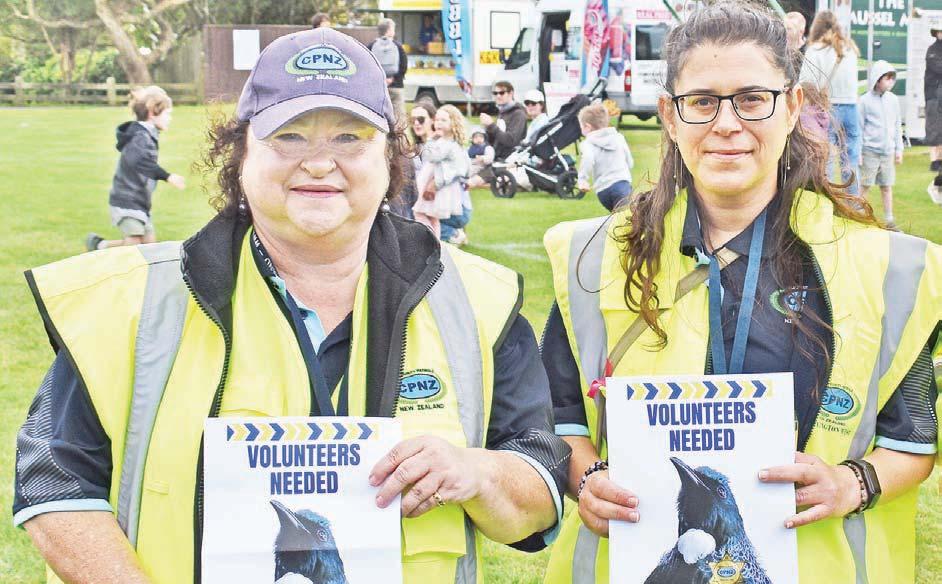
The Karori Community Patrol is actively seeking volunteers so it can provide enhanced coverage of Wellington’s western suburbs.
The Community Patrol aims to help keep neighbourhoods in its area safe.
The Karori patrol covers a big area.
As well as Karori, it also covers Makara, Wadestown, Northland, Thorndon, Wilton, Crofton Downs and the western area of Wellington city.
Volunteers are asked to commit to one or two evenings a month for up to four hours, or more if they wish.
To volunteer for the Karori Community Patrol, or for more information, email karori@cpnz.org.nz.
The main aim of community patrols is to deter crime – deterring and preventing things before they happen by having an active, visible presence.
They do this by being visible and
highly present.
“Criminals are less likely to break into somebody’s house if there is an active community patrol out and about,” says Andrea Skews, Coleader of the patrol.
“Patrollers are just as valuable on foot as well and walking patrols are encouraged during daylight hours around the business districts and villages, so volunteers don't have to have a driver's licence.
“It’s also a great way to get to know your area and community, with ongoing training and involvement in community events and service.
For example we also work with Wellington Free Ambulance to check their AEDs (Automatic External Defibrillator) in the western areas, to ensure their batteries are working and in good order"
People can volunteer at a time that works best for them and the time commitment is not big.
“Ideally we would have 40 plus patrollers and the patrol would be


out every day or night,” Andrea says.
The community patrols provide an “invaluable service” to the community, a Police spokesman says.
The service “works really well as the eyes and ears of the Police, to see what is going on in the community and to work towards making the area safe.
“When something happens they are often in the right place at the right time and can pass the information on to us.
“They are a good source of intelligence and can alert us to something we need to look at.
“With their intelligence and ringing us, they help us build a picture of who’s out and about.
“I think they are a great asset to have out there in the community.”
The Karori Community Patrol was one of the features at the 22 February Karori Karnival at Ben Burn Park. They had a stall at the Karnival, helping keep local people up to date with the initiative.


By Elizabeth (Biz) Bell*
As part of the wider long-term restoration plans for Glenside Reserve, Wildlife Management International Ltd. (WMIL) will be producing a strategy for creating a Safe Haven for Birds at the reserve, working closely with the Glenside Progressive Association, Ng ti Toa and Wellington City Council (WCC).
As a community-led initiative, this strategy will bring together expertise, local knowledge, and cultural connectionwhile aligning with local and national Government processes towards developing a plan to protect and enhance birdlife at the reserve.
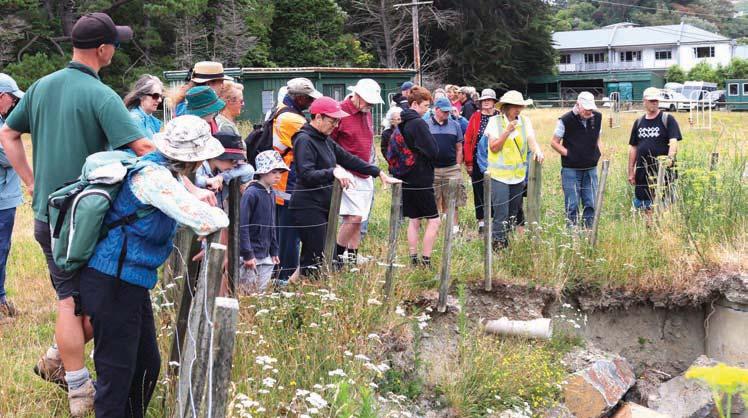
This reserve is recognised as a key site for locals to enjoy birds, plants and the waterway and this strategy aims to build on this relationship. WMIL, the Glenside Progressive Association, and WCC are holding two community workshops at Glenside Reserve to hear from
the local community about their historical information on the reserve and the birds recorded there, about their ideas and aspirations about birds,and to discuss the long-term restoration of Glenside Reserve.
This will also give the community the chance to hear from Morphum Environmental about their findings from the Water Plan for Glenside Reserve when they join WMIL for the Saturday workshop.
There are two days – Thursday 5 March and Saturday 7 March – available for the community to drop in and share their knowledge and learn about the strategy as well as explore and enjoy the Reserve.
The workshops run from 10am to 3pm on each of those days. We all look forward to sharing stories about birds, gathering information, and enjoying the reserve with everyone.
* Biz Bell is the Managing Director of Wildlife Management International Ltd.
By Frank Neill
Onslow College students are performing well ahead of the national average in both literacy and numeracy.
It “averages 5% better outcomes than comparable schools (schools with fewest economic barriers) and 9% higher attainment than the national average,” Onslow College’s Tumuaki/Principal Jono Wyeth says.
These results are “incredible,” he says.
Onslow College’ literacy for year 11 is 90.8, compared with the national average of 78.8.
For year 12 literacy Onslow has 95.3 compared with the national average of 87.7.
For year 13 literacy Onslow’s score is 97.0, compared with the national average of 92.1.
Onslow’s year 11 numeracy score is 92.6, compared with the national average of 78.1.
For year 12 numeracy it is 97, compared with the national average of 87.6 and for year 13 numeracy Onslow’s score is 98.2, compared with the national average of 92.6.
“This demonstrates the hard work of students and staff alike, and the deliberate,








































People are invited to join Wellington City Libraries as they celebrate and learn about Ramadan. This week there are events for the whole family and all are free to attend.
Family and Ramadan storytimes will be held at Te Takapū o Patukawenga Mervyn Kemp Tawa Library on Saturday 28 February


We all need to take medicines at some time during our lives - for some it is everyday, others only sometimes for a cold or headache.
Self Care pharmacists can provide you with the fact card Safe Use of Medicines, and help you with any questions you have about any medicines you are taking. Whether you buy medicines or get them on pre-
from 11am to 11:30am, and at Te M hanga Karori Library on Tuesday 3 March from 10:30am to 11am.
People at these story times will learn about Ramadan throughstories, songs and gentle activities. The sessions are recommended for children aged 2 to 4 years with their caregivers and wh nau.
Page Turners: a teen book club for ages 14 plus will be held at Te TakapŪ o Patukawenga Mervyn Kemp Tawa Library on Thursday 5 March from 3:30pm to 4:30pm.
Wellington City Libraries is calling all rangatahi (teens) for an afternoon of stories and k rero celebrating Muslim authors and
their work. Rangatahi are asked to emailtawa.library@wcc.govt. nzif they are keen and it’s their first time.
A reminder that Te Awe Library and Service Desk on Brandon Street will close permanently at 5pm on Sunday 1 March.
This is to prepare for the move
back to Te Matapihi ki te Ao Nui Central Library in Victoria Street, which reopens 14 March. Library services continue to be available at branch libraries around the city. Visit wcl.govt.nz/ news/te-awe-service-changes/ for details.
Nau mai r t tou katoa, everybody is welcome.
scription, Self Care pharmacists advise that they have some good suggestions for taking medicines properly, and for getting the best results from their use. Know what your medicines are for.
Even if your doctor has explained, when you collect your medicines discuss with your pharmacist what each medicine is for. Your pharmacist can give

Opening hours:
Monday - Friday 8am-5.30pm, Sat 9am-2pm
1 Upland Road, Kelburn
Phone 04 475 9512
Email: Kelburn@psl2022.nz

you information on the expected effects of each medicine and how to take or use them correctly, and whether they will interact with other medicines you have been prescribed or medicines that you have purchased.
Before taking any medicine, read the label carefully to confirm you are taking the correct medicine, the correct dose, at the correct time. This is especially important if you take many medicines at different times of the day. Labels have other important information such as when to take the medicines in relation to food (with food or on an empty stomach), whether the medicine must be swallowed whole, whether it has to be usedup by a certain date. Pharmacists can also advise you if you miss a dose and when to take the next one. Sometimes medication may be large and difficult to swallow. Not all tablets and capsules can be halved or crushed and your pharmacist can help you with this. Talk to your pharmacist if you develop any unusual symptoms after you start taking a medicine. It is best to get this checked out as it may be an allergic reaction or an unwanted side effect of the medicine.
Always measure liquid medicines accurately, using proper measures, to make sure you get the correct dose. A range of
reusable measuring devices are available from pharmacies and your pharmacist can advise you on the one most suitable for you and your family.
Drink a large glass of water as you swallow tablets or capsules. This will stop the medicine becoming stuck in your throat and help it get down to your stomach quickly to start working as soon as possible. It helps to lean forward as you swallow.
Only take medicines that have been prescribed for you, and those recommended for you by your pharmacist. Do not use other people’s medicines because they may not be suitable for your health condition. Other people’s medicines may interact with other medicines you are taking.
Store medicines correctly and dispose of them safely. Safe means out of reach of childrenpreferably in a locked cupboard. This is really vital when children come to your home only occasionally. Store medicines in a dry place, away from direct light or heat, so they don’t degrade. However, some medicines need to be kept in the fridge.
Don’t keep medicines that are no longer needed. Despite the wastage, there are safety concerns in keeping old medicines “just in case”. Don’t throw them out in general rubbish, instead,

Mon



talk to your pharmacist about safe disposal. Medicines returned to your pharmacist cannot be reused, and charges cannot be refunded.
Discuss with your pharmacist if your medicines look different from what you are expecting. It is best to be reassured that everything is as it should be. If you are having trouble managing your medicines, your pharmacist may be able to help with their packaging especially for your own individual medication needs. Talk to your Self Care pharmacist about your medicine, to get the best outcome for your health.










At the end of 2025, the Government announced it would be requiring builders to offer their clients a ten-year home warranty for work carried out on new builds or renovations worth more than $100,000.
It’s a big change to what has previously been required, but why have the changes been introduced and what will it mean for homeowners?
Joint and several liability vs proportional liability
Under the old system, if anything went wrong with a build once it was complete, anyone who was involved in the project –builders, architects, designers, councils – could be held liable. The problem with that system was that if any of these parties had ceased to operate – or simply couldn’t afford to pay – councils were often left to pick up the tab.
Not only did this mean that ratepayers would ultimately end up paying for faults, it also meant that councils were very risk averse when it came to issuing consents. This was to protect ratepayers as far as possible, but it had the effect of making it more expensive and time-consuming to get a building consent.
For these reasons, the Government is shifting to a new model called proportional liability. This means that the various companies or organisations involved in a build or major renovation can only be held responsible for the part of the work that they undertook.
So a builder can’t be held liable for
a faulty design, for example, and an architect can’t be held liable for incorrect advice received from a geotechnical engineer.
Why do we need building warranties?
If one of these entities is at fault but they’ve gone out of business by the time the fault emerges, who will cover the cost of putting things right?
Each entity will need to hold a form of insurance or warranty. For builders, this is where building warranties (also known as guarantees) come in.
As well as architects and other building experts being required to hold professional indemnity insurance, builders will be required to offer some form of warranty to cover any faults they might be responsible for.
From 2027, all new residential buildings three storeys and under, and renovations worth more than $100,000, have to be covered by a warranty that lasts at least ten years from the completion of the work. This warranty usually only covers the building work itself rather than the materials, although in certain circumstances these may be covered as well.
This means that if a builder goes out of business and a major fault emerges with a home they have previously built, the homeowner is protected. And because the warranty attaches to the building, and not the client who commissioned the work, someone who has bought the property in the interim will still be covered.
Source: New Zealand Certified Builders
If you’re looking to build or renew your fencing you’d be making a wise choice to invest in metal fencing. Metal is durable, looks smart and is easy to construct as it comes in panels and is very simple to assemble.
Metalcraft Fencing offers an attractive and high quality, yet cost effective fencing solution. Metalcraft fencing is suitable for domestic, rural and industrial applications. Metalcraft Fencing panels are manufactured from locally sourced steel from New Zealand Steel in COLORSTEEL® ENDURA®. The G550 high tensile steel is strong, robust and durable and low in maintenance.
Metalcraft doesn’t produce only fencing - their product range also includes roofing and cladding, metal tiles, metal guttering & spouting, purlins, girts & tophats, metal fencing, metal insulated panels and PV solar solutions.
COLORSTEEL® Prepainted Steel has been protecting Kiwi homes for more than 30 years. Designed to perform and look great. Metalcraft Fencing are members of the New Zealand Metal Manufacturers Association. Call them to get advice for the best solution on 04 566 2253 or see them at 201 Gracefield Rd, Seaview, Lower Hutt.














At Prime Doors we strive to be your ultimate garage door supplier and we work hard to bring you quality door solutions at affordable prices. Our guaranteed low prices and great service satisfaction mean you don’t have to wait to your next project. Prime Doors is a garage door service provider that provides comprehensive solutions for all your repair, installation, and maintenance needs. Whether it’s a completely new installation, a quick repair, or ongoing maintenance, Prime Doors is here to help you keep your door running properly and securely.

















































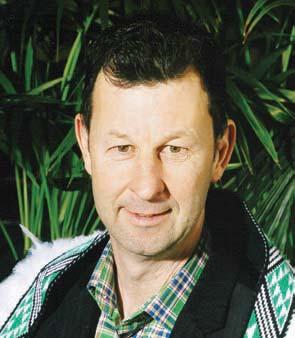


Queen Margaret College (QMC), an independent girls’ school in Thorndon, is a progressive learning environment for Years 1–13 where students flourish as passionate learners, resilient w hine, and future leaders. QMC includes a coeducational preschool.
QMC offers the International Baccalaureate (IB) programme, emphasising inquiry, global citizenship, and critical thinking.
Since 2017, Principal Jayne-Ann Young has led QMC with innovation and purpose,
expanding opportunities for young women and ensuring they develop the confidence and resilience to realise their potential.
“We nurture growth within a culture of unity and sisterhood. Our school is small enough for every student to feel known and valued, yet large enough to offer world-class learning, alongside vibrant sporting and cultural opportunities.”
The only all-girls’ boarding school in Wellington, QMC offers boarding for Years 7–13.
At Newlands Intermediate, the curriculum is designed to be challenging, relevant, and stimulating. By moving away from passive instruction, the school embraces an active, student-centred approach. We want students to be active, taking ownership of their learning journey.
We want learning to be rooted in real-world applications, ensuring that what is learned in the morning can be seen in action by the afternoon and sustained moving forward.
The school recognises that the “middle
years” are a unique developmental window, requiring a balance of intellectual rigor and emotional support. The transition through intermediate school is a “special time and place,” and it requires a specific kind of educator. The teaching staff at Newlands Intermediate are chosen for more than just their pedagogical skills, they are selected for their empathy and ability to build strong, relational bonds with their students.
“Our teachers are dedicated and relational, they understand that for a student to truly learn, they first need to feel known and
Experience the QUEENDOM. Book a Tuesday Tour at q mc.school.nz or contact enrolments@qmc.school.nz / 04 473 7160.
valued.”
As the school continues to evolve under my leadership, the goal remains clear: to ensure every student leaves as a well-rounded individual, ready to contribute to society in a positive way, “ A place to stand tall.”

I am extremely proud to be the Tumuaki of Raroa Normal Intermediate and I am fortunate to be part of an amazing learning community of students, staff and whanau.
Raroa kaiako are committed to meeting the diverse needs of akonga. We recognise that emerging adolescence is a time of significant personal, physiological and neurological change. We respond to these needs by providing an environment where they can thrive. The Intermediate/ Middle School education model provides opportunities to specifically cater to akonga at their age and stage of development. Raroa has a rich
history of excellence and innovation. It is a school culture that is defined by high-quality teaching and a strong emphasis on whanaungatanga, or building relationships, to enhance the learning experience and strengthen student engagement. We believe in personalised approaches and ensure that everyone is valued, respected, and cared for in safe and stimulating learning environments. Our programmes incorporate the best of both traditional and modern teaching pedagogy to create a vibrant, engaging and student-focused curriculum. Learning takes many forms at Raroa and we provide authentic learning experiences
Onslow College Principal, Jono Wyeth, wants every student to feel empowered to achieve their full potential and grow into confident, and valued members of Aotearoa.
Our school is built upon a clear vision and a strong set of values that are the foundation of everything we do: Manaakitanga, Pursuing Growth, Whanaungatanga, Valuing Diversity and Kaitiakitanga. These values underpin our commitment to academic excellence and holistic development. We are consistently among the top schools in New
Zealand for academic achievement, and celebrate the invaluable learning that occurs beyond the classroom. Our extensive pastoral care, coupled with sporting and cultural activities, ensures that students have every opportunity to develop their strengths and identities.
Onslow College has a long tradition of student empowerment. Our student leadership structure provides opportunities to contribute positively to the community and recognise their actions and voice have the potential to effect change.
As a leader, Jono embodies the Onslow College
T n koe, a warm welcome to St Benedict’s School
As Tumuaki/Principal, I am proud to lead our vibrant community where each tauira/student, kaimahi/staff member and matua/parent is valued for their contribution. St Benedict’s is a New-Entrant to Year 8 school offering a faithbased education, with a current roll of 220. Our curriculum is stimulating and challenging, supporting tamariki to become engaged, confident and active learners who enjoy school and proudly represent St Benedict’s. Our dedicated teachers encourage each student as individuals, providing extension and support for all learners. Our students are the heart of our school. They
are happy, respectful, enthusiastic and motivated to learn. They are the jewel in our crown and make us proud when achieving in academic, sporting and cultural activities. When they leave St Benedict’s, they are well prepared for the next stage of their journey.
As a Catholic school, our values are at the heart of everything we do. Through daily prayer, Religious Education programmes and shared liturgies, we actively live our ‘EPIC’ values, Empathy, Perseverance, Integrity and Creativity which influence all relationships within our school and into the wider community.
Our school motto, ‘Developing our Children’s Minds, Growing our Children’s Hearts’, reflects
to help students reach their full potential intellectually, socially, creatively and physically. As we seek to uphold the principles of Te Tiriti o Waitangi, we motivate students to become contributing, participating members of our learning community. Raroa is the leading choice for age and stage specific middle school education.

vision of meeting people where they are, nurturing them to thrive and supporting them to achieve their aspirations.
Website: https://onslow.school.nz/ Email: principal@onslow.school.nz

strong foundations where our students can truly become the best they can be, both now and in the future.
We are fortunate to have a supportive parent community and value parents and wider whanau as partners in their children’s learning. We offer tours every week, please contact us to start your journey towards joining our wonderful community.






Paula Wells is Principal of Samuel Marsden Collegiate School in Karori, where she leads with a clear focus: inspiring girls to aim high, think deeply and grow in confidence. A strategic and thoughtful educational leader, Paula also contributes nationally through governance roles with School Sport New Zealand and College Sport Wellington.
Set on 4.3 hectares of spacious grounds, Marsden offers a coeducational Preschool and a girls’ school from Years 1–13. Under
Paula’s leadership, the school continues to champion academic excellence, with consistently outstanding NCEA results and the recent re-introduction of Cambridge International.
At Marsden, every student is known, supported and encouraged to pursue their strengths. Small classes, exceptional teachers and a strong commitment to wellbeing create an environment where young people flourish.
Families are warmly invited to experience
Marsden in action at the Open Day on Friday 20 March. marsden.school.nz/register


Tim Kuipers is in his second year as principal of Wellington Hills Christian College, bringing 17 years of educational leadership experience and a deep passion for Christian education. He feels immensely privileged to be leading a school community with a strong commitment to faith and learning. Tim and his staff are committed to the Christian truth that each student is created in God’s image and is precious in His sight. This belief drives high expectations for academic and personal growth, supported by a dedicated and caring teaching staff.
He believes Christian education opens minds to a clear and compassionate understanding of the world, empowering students to use their gifts and talents to make a positive impact in the world.
WHCC is only in its second year. Establishing a new school requires two commitments. These are what motivate Tim each day. The first is ensuring each day is a rich learning experience for each child. The second is building systems that ensure the future growth and vision of the school. That vision is:
Michael Bain is a visionary educator with over 30 years of leadership experience, including 18 years as Principal of Te Mata School in Hawke’s Bay. Awarded the prestigious Woolf Fisher Fellowship in 2017, he gained global insights from schools in Thailand, India, Spain, Italy, and Germany, shaping his progressive approach to education.
At Wellesley, Michael fosters empathy, resilience, and curiosity in every boy. He believes learning is an adventure, extending
beyond textbooks into rich, hands-on experiences that challenge boys academically, creatively, and socially.
Under Michael’s leadership, boys are encouraged to take risks, explore passions, and push boundaries, guided by Wellesley’s core values: courage and curiosity in learning, perseverance for personal bests, and respect for self and others.
Wellesley is a place where boys find their feet and take the leap.
www.wellesley.school.nz | 04-562 8030
To be a thriving Christ-centred educational community that nurtures students in faith, character, wisdom, and excellence, impacting the world for the glory of God.


At Altum Classical Academy we narrow our focus down to the core, time-honoured educational disciplines which serve as the master keys to the doors of opportunity. Our year 7-10 ‘Grammar’ phase produces discerning, confident, and civic-minded young people who are thoroughly equipped to thrive as their choices expand. Our classical approach shapes not only our curriculum, but our entire approach to how best to teach, learn, and live. We structure our school day and week in a manner which
develops every aspect of what we know a successful, driven young person to embody.
Having experienced education across different continents, curricula, and within the state and private sectors; our school represents a dream-come-true for me, where we are empowered to offer an exceptional educational experience, completely feesfree and open to all.
Open for years 7-9 in 2026, we will be expanding our offering by one level each year until we welcome our first year
Jennifer Ioannou has been the Principal/ Tumuaki of St Brigid’s School, Johnsonville since July 2022 and feels blessed and privileged to lead the St Brigid’s community.
St Brigid’s School is a multicultural Catholic school situated in the heart of Johnsonville, catering for over 300 students from Years 1–8. The school’s vision, “Learning together with strength of character and gentleness of heart,” and its values of aroha (love), m ia (courage), whakapono (faith),
and kotahitanga (inclusiveness) underpin all aspects of school life and shape the strong culture of St Brigid’s. These guiding principles contribute to the school’s well-deserved reputation, with St Brigid’s students entering college as competent young people of good character.
Jennifer is passionate about fostering a school environment that is supportive, inclusive, and culturally connected, with a curriculum that is engaging, futurefocused, and integrates wellbeing education.
13 cohort in 2030. To find out more or book a tour, please head to our website, www.altum.school.nz, or email admin@altum.school.nz.
Web: www.stbrigids.school.nz
Phone: 04 478 6516

By Felicity Wong
Before 1951 when the motorway between Johnsonville and Tawa opened, travel was along the narrow winding Glenside Road (now called Middleton Road).
In its earliest days the road went past the house of Anthony and Suzannah Wall who allowed travellers to stay because it was halfway between Wellington and Porirua.
In 1849 an accommodation house was built where the carpark of ex-Twiglands Garden Centre is.
The “Halfway House” operated as a tavern and restaurant providing accommodation and stabling.
For five shillings for bed, breakfast and feed for his horse, Government land purchaser Donald McLean stayed at the “comfortable” Halfway House on his way to negotiations with Ngati Toa in 1850.
Land was taken for the 1885 private railway between Wellington and Paremata which cut across farms, seriously impacting them.
In the 1870s or 1880s the then owners of the Halfway House (the Browns) built themselves a two storey home to its rear (that house is now called “the Halfway House”).
The Browns sued the Wellington to Manawatu Railway Company for damages.
Three horses were run over and steam train sparks burnt native bush, gates and fences.
In 1891 a chimney fire burnt the Brown’s old Halfway House down.
Their remaining house and land was leased as a pig farm until sold to Charles and Stella Izard.
He was a “bird fancier”, lawyer and Wellington City Councillor (1898-1907), MP for Wellington North (1905-08), and member of the Legislative Council (1915-1925).
The pigs stayed and Izard sued his tenant for non payment of rent and uncontrolled gorse.
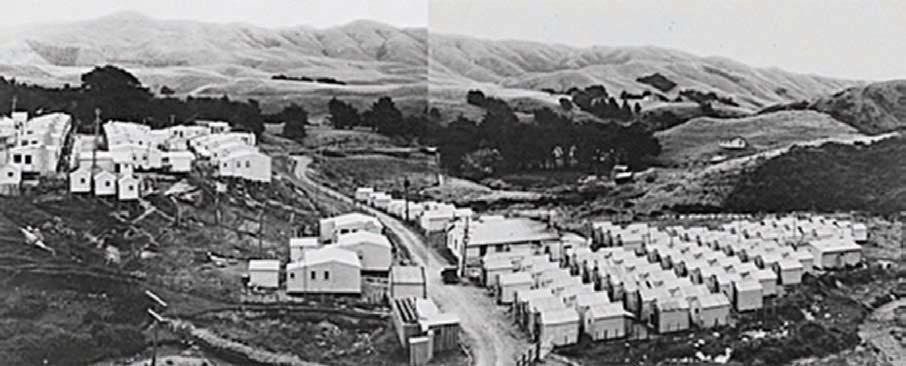
The area was sold in 1923 to builder Philip Watt and a public works camp
was set up in 1927 to house (in tents) hundreds of workers creating the “Tawa Deviation” - the tunnels permitting the main trunk line to shift away from Johnsonville’s steep grades.
Some Halfway House land was taken under the Public Works Act for the worker’s housing.
Until then the area was known as “Halfway” and had a store, post office, petrol pump and tearooms on the corner of Middleton Road and Glenside Road, also owned by Watt.
The area was subdivided and an original small public recreation reserve created.
In 1930 Mrs Watt won a community competition to rename it as “Glenside”.
Watt developed a nine hole golf course using the Halfway House as club rooms.
He died before he could develop his “resort” further and the golf club fizzled out.
During World War Two a New Zealand Army camp was set up nearby.
In 1951 the Wellington City Council purchased over 36 acres of the land from Watt’s son Charles as a “recreation reserve”.
The purchase was funded by Victoria University paying compensation for taking some of the Town Belt.
Next door were the stockyards (relocated from Johnsonville Town centre) and Downers Company vehicle base.
In 1960 part of the Council reserves land was sold in-house to a Council employee, who flicked it on, frustrating local plans for a children’s play area.
The Council considered various recreational uses for the bulk of the reserve, (sports stadium; Olympic sized swimming pool; caravan parking and a tennis complex), relying on getting a new railway station and car parking.
From 1962 the land was instead used for a sewage treatment plant, with treated sewage discharged into the Porirua Stream and out to Porirua
Glenside residents objected but by 1969 it was at full capacity (2,500 persons) and a second plant built.
In floods the stream left effluent on neighbours’ lawns.
By 1979 the plant was overloaded and effluent sludge could not be controlled.
The Glenside plant’s equipment was breaking down but limped on till 1989 when a new Porirua plant opened.
For 35 years after plant decommissioning, the land was leased to the Newlands Horse Riding Club.
In the meantime, Council next considered turning the “reserve” land into an industrial park, with nearby suburbs continuing to grow from farmland.
In 1990 the Audit Office criticised the Council for its development plans given the nature of the original funding.
The Glenside Reserve was then cut in two by the Westchester Drive extension, connecting the motorway with Churton Park.
More land was taken to widen Middleton Road.
When further proposals to sell parts of the reserve surfaced, Councillor Sarah Lysaght and Parks staff gazetted the reserve, ensuring its historic Halfway House, and com-

munity green space could no longer be quietly sold.
It’s now time to discuss restoring the bush and bringing back the birds:
public Open Days will be held at Glenside Reserve on Thursday 5 March and Saturday 7 March from 10am to 3pm.
Johnsonville Mall came alive last week with colour, music and celebration as local families gathered to welcome the Lunar New Year and the arrival of the Year of the Horse.
A six-day programme of daily events ran from Wednesday 11 February through to Monday 16 February, transforming the mall into a lively cultural hub.
Organised by Ekta NZ, the celebrations drew more than 200 attendees on Thursday 12 February.
“The festivities were not just for watching, they were hands-on, says Manjit Grewal, co-founder of Ekta NZ.
“Shoppers and residents took part in dumpling-making workshops, calligraphy classes, mahjong sessions and dance activities, offering a chance to experience traditions that are central to Lunar New Year celebrations across Asia.”
JC Chin, a local community leader, says that “2026 heralds the Year of the Horse — a symbol of energy, determination, independence and
forward momentum. In Chinese culture, those born in the Year of the Horse are said to be spirited, hard working and optimistic — qualities many in attendance said felt fitting for the year ahead”.
The highlight of the week was Thursday’s main performance programme.
The audience was treated to a rich tapestry of music and dance representing both Chinese and wider Asian traditions.
“Calligrapher Stanley Chan demonstrated his craft, painting the horse – the zodiac symbol of the coming year – in sweeping black ink strokes,” local community leader JC Chin says.
“The quiet strokes of brush on paper were a striking contrast to the rhythm and colour that followed”.
The Ekta Chinese Aroha group delivered a graceful dance performance, while musicians performed on the guzheng, an ancient 21-string instrument with a history stretching back some 2,500 years.
Mohammed from Ekta NZ says that “one of the other highlights was a mother-and-daughter duo who captivated the audience with a traditional Thai dance, and a duet featuring the pipa and ruan – two Chinese lute-like instruments – showcased intricate interplay between strings.
“The programme also featured vibrant Vietnamese and Chinese costume parades set to song, bringing splashes of silk and brocade to the mall.”
The event culminated in a traditional lion dance – a millennia-old custom performed to usher in fortune and good luck for the year ahead.
Accompanied by thunderous drumbeats and cymbals, the lions moved through the crowd, drawing applause.
“In Chinese tradition, the loud percussion is believed to scare away negative energy and invite prosperity. Judging by the smiles across Johnsonville Mall, it suc-
ceeded,” says Winsome Lam, another active community leader in the Wellington region.
The celebrations were attended by Wellington Deputy Mayor Ben McNulty, councillors Diane Calvert, Ray Chung, Tony Randle and Lower Hutt councillor Prabha Ravi, along with representatives from Finance Minister Nicola Willis’ office, the New Zealand China Friendship Society, the Confucius Institute and the Wellington Chinese Association.
“Their presence reflected the growing importance of Lunar New Year within Wellington’s multicultural calendar and the strong contribution of Asian communities to the capital’s social fabric,” says Kashmir Kaur from Ekta NZ.
“More than just a festival, the week’s events offered a window into traditions that have been observed for centuries, and a reminder that Johnsonville is home to a vibrant, diverse community,”
Sophie Wang, a member of the
Chinese Aroha group who came for all the events, says.
As the Year of the Horse begins, organisers expressed hope that the qualities associated with the zodiac — resilience, vitality and progress — will carry Wellington forward in 2026.
If the energy at Johnsonville Mall is any indication, the year is off to a spirited start.
Ekta NZ Inc (Ekta), incorporated in 2017 as a charity, believes in unity through action.
By fostering empowerment, collaboration and inclusivity, they strive to build a stronger, more connected and economically empowered New Zealand. Ekta is the only organisation in Wellington that cuts across faith, race, culture, ethnic, nationality, language and economic divides.
Their core focus areas are the five Hs: Hunger, Homes, Health, Human Capital and Harmony. They can be reached on contact-us@ ekta.nz






































The Community Noticeboard is for non-profit organisations. For $15.00 you can publish up to 25 words. No AGMS, sporting notices or special meetings. Community Notices must be pre-paid. phone (04) 587 1660 or email classifieds@wsn.co.nz









55. Expel from country. (5)
56. Old fashioned portable fire extinguisher; pump. (7)
57. First public appearance. (5)
58. Interpret. (9)
59. Withdraws (5,4) DOWN 1. Exterior (7) 2. Coach (5) 3. Attract (6) 4. Frequently. (5) 5. Simplicity. (4)
35. Maori dancing prop. (3) 36. Weeps. (5) 37. Tables ornamental centrepiece(7) 38. Overflow. (5) 39. Nevertheless. (3) 41. Sections of a year (6) 42. Cure for all ailments. (7)
44. Idiots. (4)
47. Right of Admission Reserved(Abr)(3) 49. Fineness. (10)
Artificially high-pitched voice (8)
Couple. (7) 7. Not tidy. (6) 8. Orchestral player (woodwind section) (12) 9. Plant. (5) 10. Absurd. (11) 15. Make a choice. (3) 16.
By Frank Neill
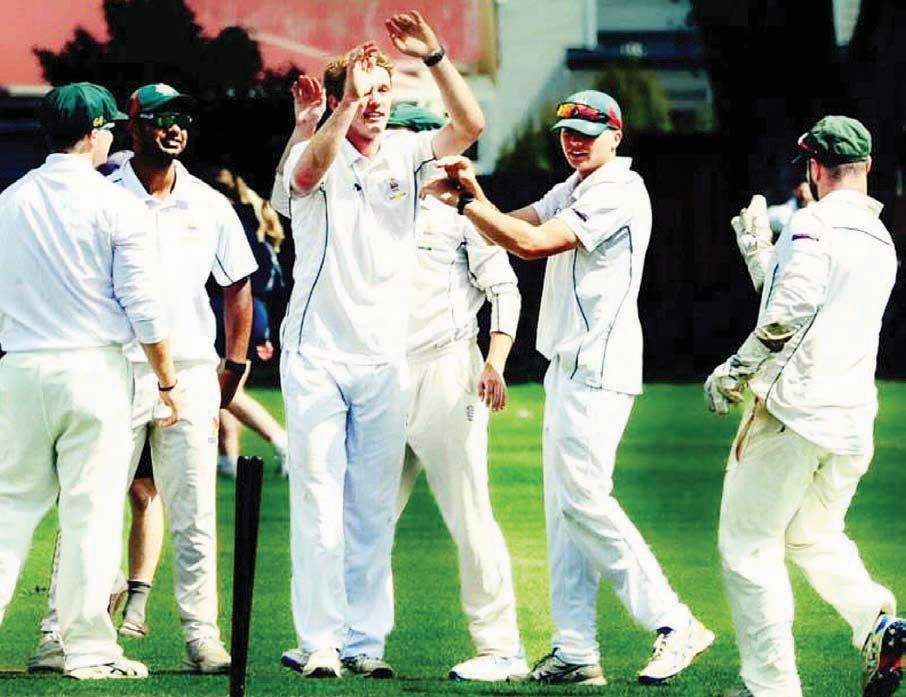
Onslow’s premier Cricketers collected first innings points on day one of their division one two-day match against Petone Riverside on 21 February.
In what was a very closely contested encounter, Onslow led by just four runs after both teams completed their first innings.
Batting first on the Petone Recreation Ground, Petone Riverside was all out for 113.
Onslow made 117 when they were bowled out, and then took four second innings Petone wickets at a cost of 88 runs.
Oscar Jackson took three first innings wickets, at a cost of 24 runs, and followed that up by taking two second innings wickets for 36 runs.
He was also in the runs when batting, scoring 26 runs.
In Petone’s first innings, George Holmes took two wickets for 26 runs, Matthew Scoble two wickets for 34 runs and Ryan Tsourgas one wicket for 21 runs.
As well as taking a wicket, Ryan chalked up a milestone when he made his 25th premier appearance for Onslow.
Elliot Seddon took one first innings wicket for 5 runs and two second innings wickets for seven runs from 10 overs.
Yash Vagadia was the best of the Onslow batters, scoring 30 runs.
Karori narrowly missed out on first innings points in their two-day division one match against Victoria University on 21 February.
Batting first on Karori Park, the home team was all out for 203.
Victoria University only just passed them by stumps, when they had reached 205 for the loss of nine wickets.
Kevin Weerasundara was the best of the Karori players with the bat, scoring 70 runs.
Louis Ayres scored 37 runs and Oscar Wilson 26 runs.
Louis followed up his good batting by taking three wickets at a cost of only 17 runs.
Yashraj Kalsi also took three wickets, and conceded 68 runs.
Wilkie Proudfoot took one wicket for 14 runs and Puvin Anthony one wicket for 31 runs.
Johnsonville have a battle on their hands in their two-day division two match against North City.
Batting first on Alex Moore Park, Norths scored 303 all out.
In reply, Johnsonville were 60 for the loss of three wickets at stumps.
Two Johnsonville bowlers took three wickets each – Brett Edgecombe at a cost of 70 runs and Maximus Petrie at a cost of 87 runs.
Sean Wakelin took two wickets for 53 runs and Reece Edgecombe one wicket for 30 runs.
The Johnsonville premier women’s team ended up with a tie on 21
February.
Both Johnsonville and Collegians were all out for 162 in the match, played at Anderson Park.
Anvi Verma batted outstandingly for Johnsonville. After notching up a half century, Anvi went on to score 70.
She followed up her great batting performance by taking three Collegians wickets for 23 runs.
Estella Wallace also took three wickets, at a cost of 32 runs.
Lucy Flatt took one wicket for 16,
By Frank Neill
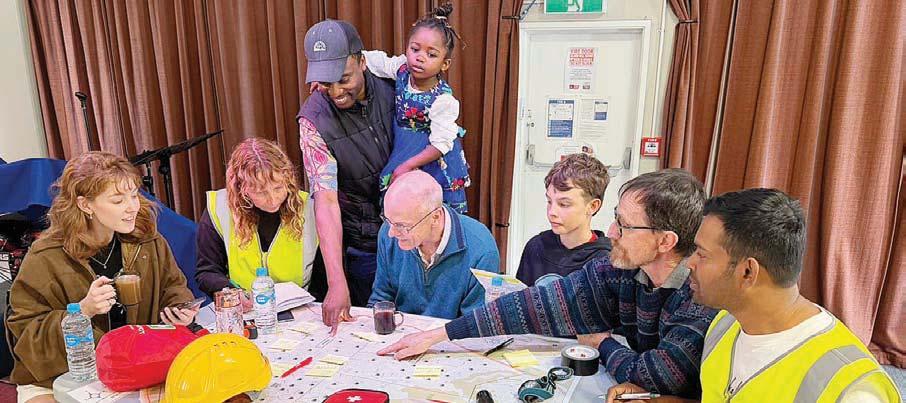
The Newlands Resilience Group (NRG) continues to seek residents to volunteer to be part of an exciting 19-month resilience project, starting in April.
The volunteers will be part of a ground-breaking community building and disaster resilience initiative.
“By participating, residents can directly contribute to shaping the future of Newlands, for everyone,” says Rodney Barber, founder of NRG and long-time advocate for community-led resilience.
“Together, we can prepare Newlands for whatever the future holds.”
Despite NRG’s communications to date, only a very small number of people have registered an interest.
“So far we only have about 15 residents register for the public meetings in mid to late March,” Rodney told the ‘Independent Herald’ on Sunday.
The NRG “really needs about 280 to come to the public meetings and register for specific roles by the end of March.” It is seeking people who can invest around three hours per week from April 2026 for an 18-month pilot. The NRG is asking people to visit the Register page (at https://newlandrg.weebly.com/register.html) to let them know which of the one-hour public meetings they would like to attend on 17, 21 or 24 March. For those who are keen to know more the draft manual is on the register page.
It explains the model, the roles, the support volunteers will receive and
how the NRG plans to implement the model.
Volunteers will receive training, quarterly meet ups, monthly mentoring, group professional supervision, guidance in facilitating groups and an app with the knowledge they will need.
The NRG is seeking volunteers to fill one of three following roles: Operations Team of 6; ornectors who love gathering people to strengthen social, economic and cultural cohesion; or supporting each member of the Board and Operations Team plus one mentor for each of 4 Community Connectors.
Aesha
and Annissa
for 33 runs.
Johnsonville’s next match is against Upper Hutt United at the Barton Oval on 28 February, starting at 11am.

Two Onslow College rowers, Kaine Goonan and Sam Harford won a gold medal at this month’s Wellington Rowing Championships. The year 13 students won gold in the men’s open coxless pairs championship.
Onslow College rowers were also in action at the College Sport Auckland Rowing Championships and Junior Regatta at Lake Karapiro a week later. Costin Eley and Louis Kelly
starred for Onslow College. The year 13 students took out third place in the final of the boys under 15 double sculls, gaining qualification for the Maadi Cup, as the New Zealand Secondary Schools Rowing Championship is known. Costin and Louis were members of the Onslow rowing squad that achieved 18 finals appearances from the 34 races they entered.


Imperial Park, Unit 81, 41 Bouverie Street, Petone, Lower Hutt.





Mon - Fri: 9:30am - 2:30pm Thursday: 9:30am - 4pm
Enter Imperial Park, turn right, go to the North end, and you ’ll see us.






Please come and see us instore with your
Please bring your bank details for payment. our ite ayment.









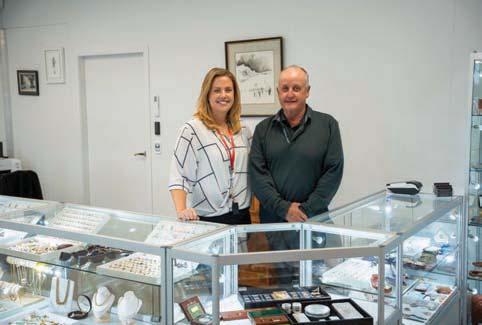
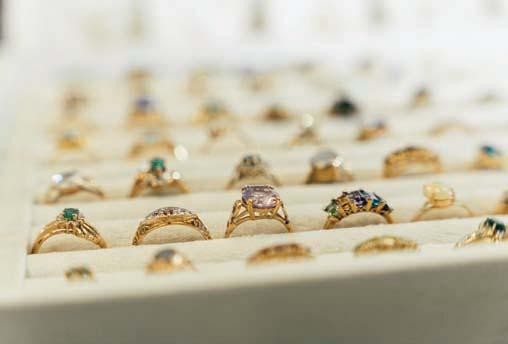
We Specialise in Buying & Selling all kinds of Jewellery, Bullion, Coins and Banknotes, Silver and Gold items, and Watches. Fully licenced with over 50 years industry experience. Visit us instore or online at www.heritagegold.nz