UPDATE
THE REFORMED STANDARDS IN THEOLOGICAL EDUCATION
WHAT MAKES SEMINARY WORTHWHILE by Daniel
WHAT IT MEANS TO BE A PASTORSCHOLAR AND WHY IT MATTERS by
“Beloved, although I was very eager to write to you about our common salvation, I found it necessary to write appealing to you to contend for the faith that was once for all delivered to the saints.”
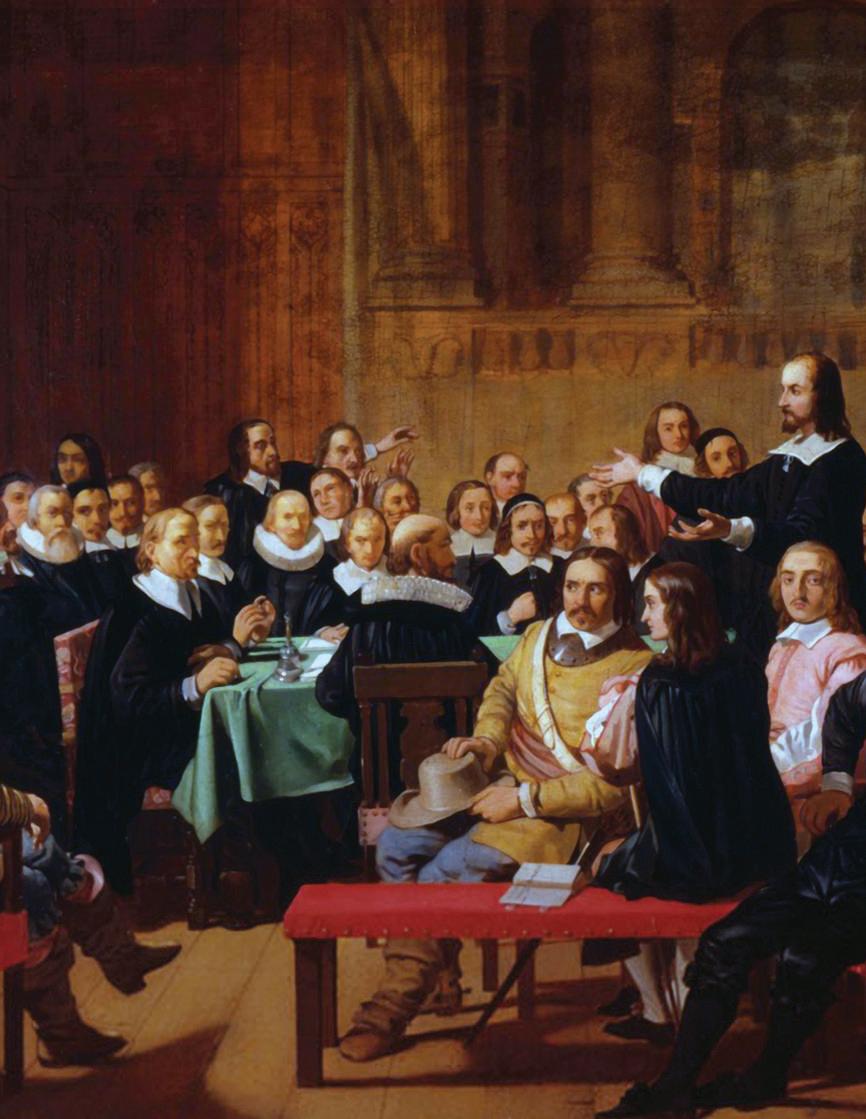
At Westminster Seminary California (WSC), biblical fidelity and theological unity aren't institutional formalities—they are the lifeblood of our mission. That's why, before any faculty member steps into the classroom or any trustee takes their seat on the Board, each must sign a commitment to uphold the Three Forms of Unity and the Westminster Standards. These Reformed confessions and catechisms are not relics of the past; they are faithful summaries of Scripture, which remains our ultimate authority—not only in the academy, but in all of life.
This issue of Update pulls back the curtain on how these historic "standards" continue to set the standard for theological education at WSC. Our three department chairs—Drs. Troxel, Estelle, and VanDrunen—explore how the Reformed confessions, catechisms, and commitments actively shape our curriculum (p. 4). Dr. Clark then turns his attention to the Heidelberg Catechism specifically, illuminating its unique role in forming men for faithful pastoral ministry (p. 8).
We also hear from graduating senior Daniel Tan, who reflects on the irreplaceable value of a rigorous seminary education — one that, in the great Reformed tradition, places a high premium on mastery of the original languages (p. 10). Alumnus Harrison Perkins carries that theme forward, making the case that genuine education doesn't end at graduation: every pastor is called to be a lifelong student of the Word (p. 16).
Beyond the classroom, this issue celebrates the life of our campus over the past year—conferences, seminars, and visits from special guests, all in service of training students in sound doctrine so that they can serve Christ, his gospel, and his church. We are confident the Lord has been faithful, and that these men and women go forth equipped to "contend for the faith once delivered to the saints" (Jude 3)—ready to meet the distinctive challenges their generation will face with an education built on God's Word and steeped in the Reformed standards.
Cordially in Christ,
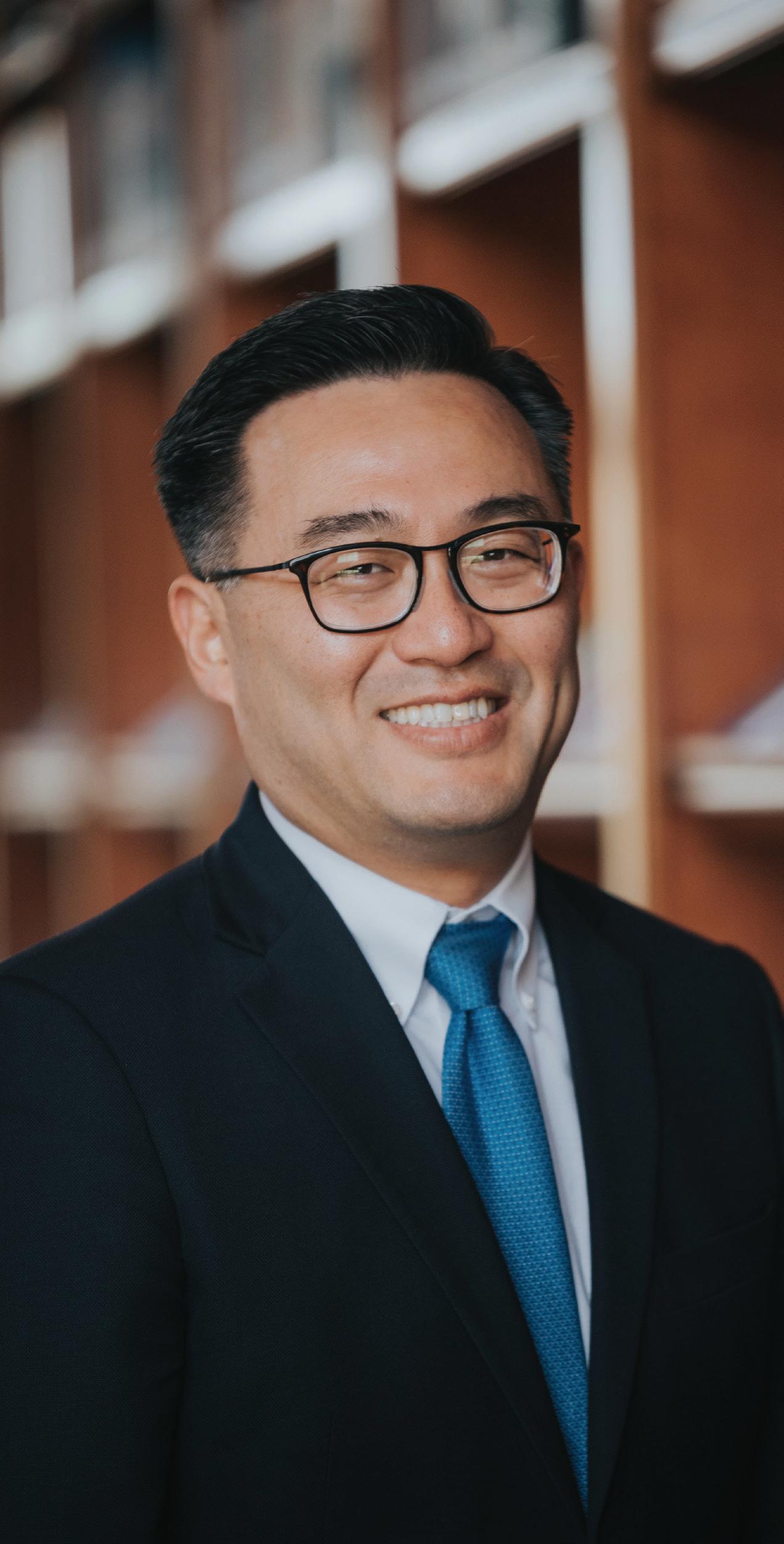
Joel E. Kim WSC President
UPDATE | SPRING 2026
PRESIDENT Joel E. Kim
EDITOR
Jonathan Cruse
DESIGNER
Karly Steenholdt
PRINTER
Streeter Printing
UPDATE magazine is a publication of Westminster Seminary California.
For address changes, duplicate mailings, or additional magazine requests, please write or call.
Westminster Seminary California 1725 Bear Valley Parkway Escondido, CA 92027
PHONE (888) 480-8474
FAX (760) 480-0252
development@wscal.edu
WEBSITE www.wscal.edu
PERMISSIONS: UPDATE grants permission for any original article to be photocopied and distributed, permitted that the wording is not altered in any way, no fee is charged beyond the cost of reproduction, and no more than 500 copies are made. Any exceptions to the above must be explicitly approved by Westminster Seminary California. Please include the following statement on any distributed copy: This article originally appeared in UPDATE, a publication of Westminster Seminary California (WSC), and is reprinted with permission. For more information about WSC, visit www.wscal. edu or call (888) 480-8474.
MISSION: The purpose of UPDATE is to showcase WSC’s distinctively Christcentered, graduate education through the work of its faculty, students and alumni who are serving as pastors, teachers, missionaries, and leaders worldwide in light of our over arching mission, “to glorify God through graduate theological study. . . for those who will serve in the Christian community and the larger society.”
Since 1979, WSC has offered a distinctly Reformed and rigorous education in order to glorify Christ, promote his gospel, and serve his church. The strength of our degree programs lies in our faculty’s unified commitment to the inerrant Scriptures and the Reformed confessions. WSC is the only dually accredited seminary in the Western United States serving confessionally Reformed churches.
2025-2026 BOARD OF TRUSTEES
Richard Brouwer
Dan Bryant
Will Chang
CJ den Dulk
Joel Fick
David Hall
Thomas Huyck
Solomon Jo
Lloyd Kim
Eric Landry
Steve Oeverman
Jim Paauw
Ron Prins
Roger Swets
Tim Townsend
Dale Van Dyke
Tom Vander Veen
Brian Vos
©2026 Westminster Seminary California
All rights reserved.
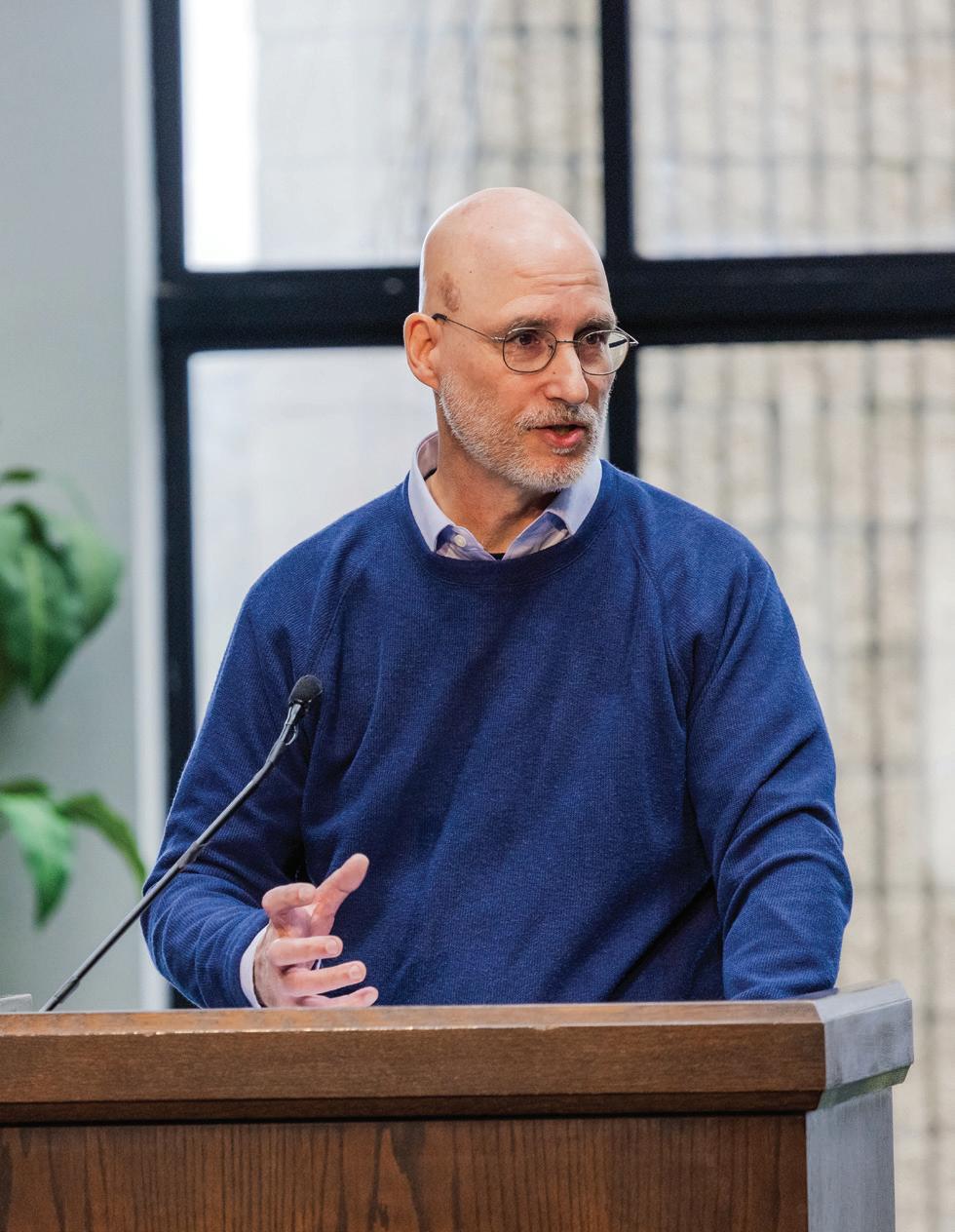

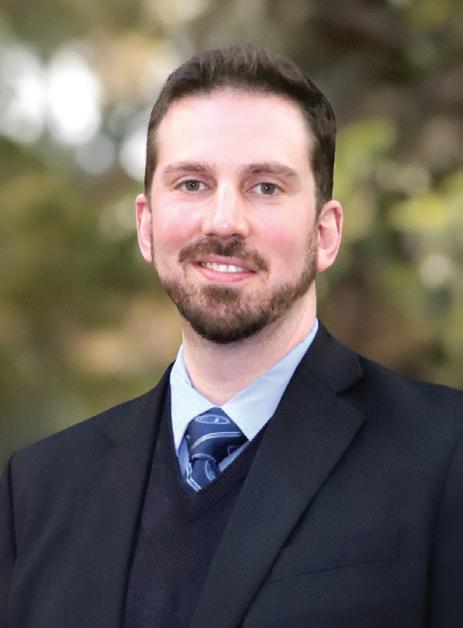
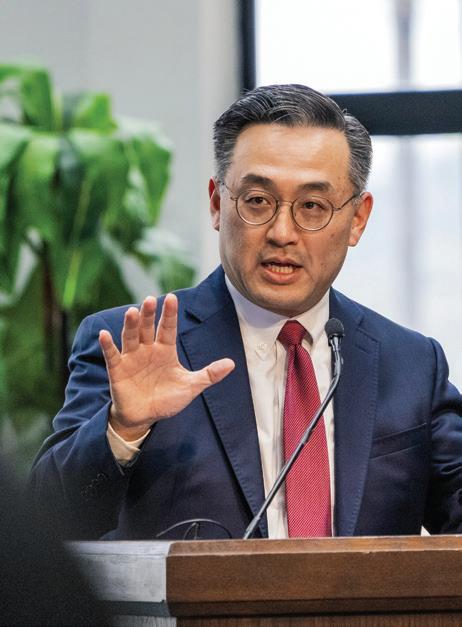
FOCUS ONCAMPUS
The Reformed Standards in Theological Education by Craig Troxel, Bryan Estelle, and David VanDrunen
What Use Is an Old Catechism for New Pastors? by R. Scott Clark 08
What Makes Seminary Worthwhile? by Daniel Tan
WSA Convocation J.V. Fesko
2026 Annual Conference Recap
Annual Missions Conference Dr. Brian DeVries What it Means to be a Pastor-Scholar and Why It Matters by Harrison Perkins
MISSION INPERSON & INPRINT
Alumni News Up Close With Roger Swets
Ligonier Ministries Announces Newest Teaching Fellow
Honorarium + Memorial Gifts 04 10 13 14 15 16 18 20 21 24
Practical Theology Department
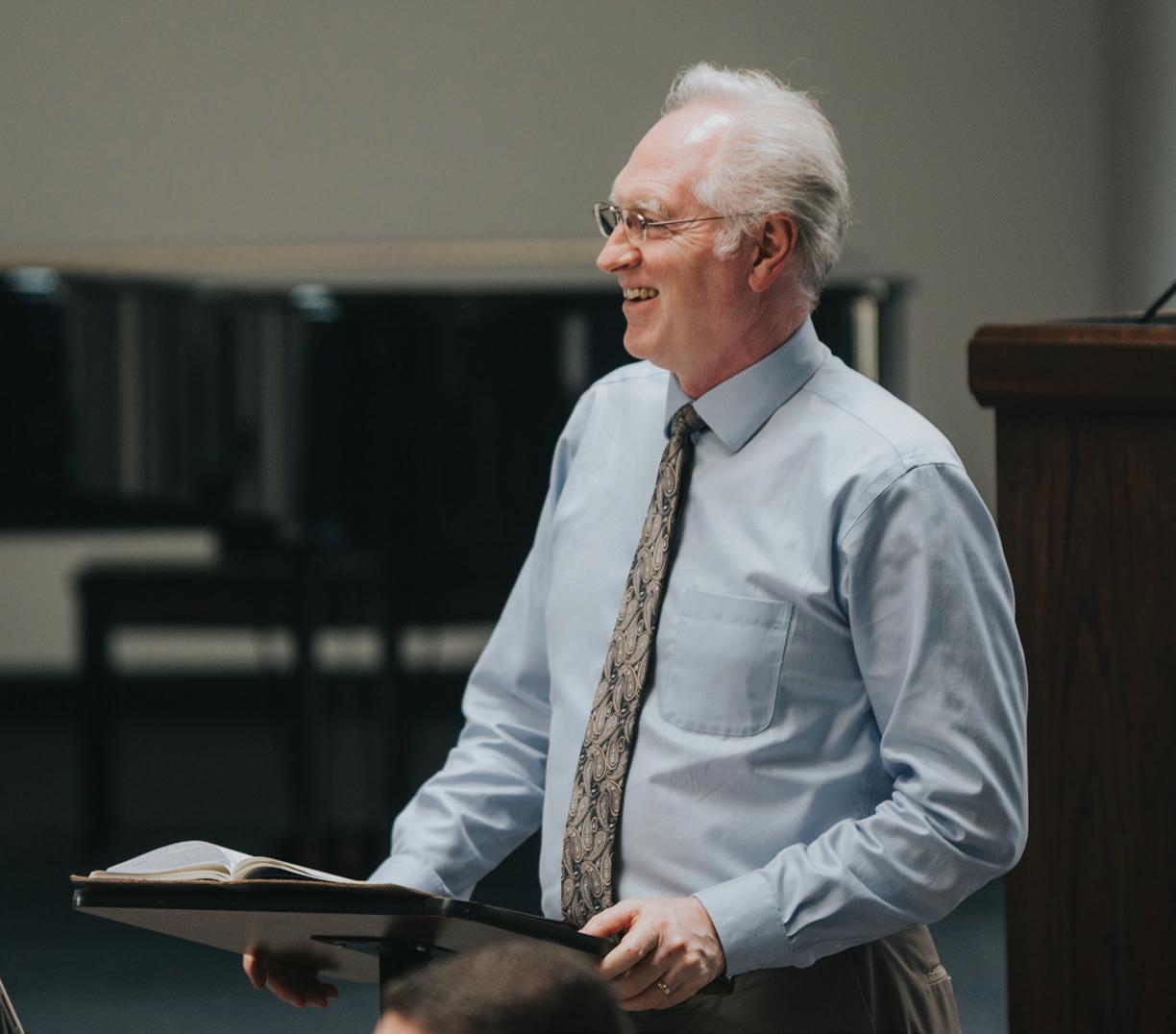
TEditor’s Note: In this issue we explore the role Reformed confessions and creeds play in the education of our students. To that end we asked each of our three department heads to discuss how our Reformed theological heritage helps shape and direct the curricula, as well as the philosophy of teaching, in their respective fields.
here was a college men’s choir that had achieved significant acclaim, even singing for the President of the United States. But one of its best performances was during a rehearsal, which happened to land on the birthday of one of its tenors. In one of the songs they were practicing, the volume increasingly rose as it advanced towards its booming crescendo, and just when the music reached the very note of the song’s height, every member of the choir suddenly stopped singing—except for one. The few seconds were sufficient for the poor victim—on his birthday—to give his most memorable solo.
In Westminster Seminary California’s practical theology classes, we warn students about singing theological solos. If they ever find themselves saying something that has never been said before and they alone are saying it, then they ought to be nervous. All of us need to be singing with
the choir—the voice of historic, biblical Christianity. This historic faith is witnessed to by the confessional symbols of the Reformed faith. All of our teaching in the practical theology department is grounded, first and foremost, in Scripture; and then supplemented by the collective voices of the Reformed creedal tradition.
For example, one foundational principle that our Reformed churches uphold is a commitment to the priority of the preaching of the Word of God. To be sure, in order to nurture well-rounded candidates for the ministry, the practical theology department introduces students to the array of disciplines required of Gospel ministers: steadfast under-shepherding, constant intercession in prayer, and faithful stewardship of “the mysteries of God” (1 Cor. 4:1). Nevertheless, we also teach that those who will be ministers of the Gospel must, above all else, proclaim the Word of God as trustworthy and effective ambassadors of Christ. We are compelled to say “above all else” because that is what the choir has been singing. Scripture and the history of Reformed thought teach that the preaching of Scripture is God’s chosen instrument to initiate, nurture, and complete our salvation.
Romans 10:14–15 states it this way: “How then will they call on him in whom they have not believed? And how are they to believe in him of whom they have never heard? And how are they to hear without someone preaching? And how are they to preach unless they are sent? As it is written, ‘How beautiful are the feet of those who preach the good news!’”
“We also teach that those who will be ministers of the Gospel must, above all else, proclaim the Word of God as trustworthy and effective ambassadors of Christ.”
He quickens; from being evil, disobedient, and refractory, He renders it good, obedient, and pliable” (III/IV, Article 11). The Second Helvetic Confession in its opening chapter affirms that the faithful proclamation of the Word of God is to be heard as “the very Word of God.”
Other members of the choir have followed the same score. John Owen (1616–83) wrote that preaching is God’s “great ordinance for conviction, conversion, and edification.”
Based upon this and other Biblical passages, the Reformed symbols have sung the same melody. For example, the Westminster Shorter Catechism 89 puts the question, “How is the Word made effectual to salvation?” and then answers, “The Spirit of God maketh the reading, but especially the preaching of the Word, an effectual means of convincing and converting sinners, and of building them up in holiness and comfort, through faith, unto salvation.” The Canons of Dordt states that through the preaching of the Word, the Holy Spirit “pervades the inmost recesses of the man; He opens the closed, and softens the hardened heart, and circumcises that which was uncircumcised, infuses new qualities into the will, which though heretofore dead,
Pierre-Charles Marcel (1910–92) stated that preaching functions “to gather together the children of God; to give occasion for their regeneration by the Holy Spirit.”
The centrality of preaching reflects the Reformer’s conviction that the preaching of the Word was actually the mark of the church.
To wit, Herman Bavinck (1854–1921) wrote, “Actually there is only one mark—the Word—which is variously administered and confessed in preaching, instruction, confession, sacrament, life, etc.”
Or as the Belgic Confession states: “The marks by which the true Church is known are these: if the pure doctrine of the gospel is preached therein; if she maintains the pure administration of the sacraments as instituted by Christ; if church discipline is exercised in punishing of sin; in short, if all things are managed according to the pure Word of God” (Art. 29.2).
The Reformed confessional witness has never been upheld as the church’s primary standard. That magisterial place belongs to Scripture and all creeds are subject to its infallible witness. But the collective corpus of Reformed symbols represent a mighty and beautiful chorus. All, not just students, would be wise to listen to the choir and steer clear of solos—at least in theology.
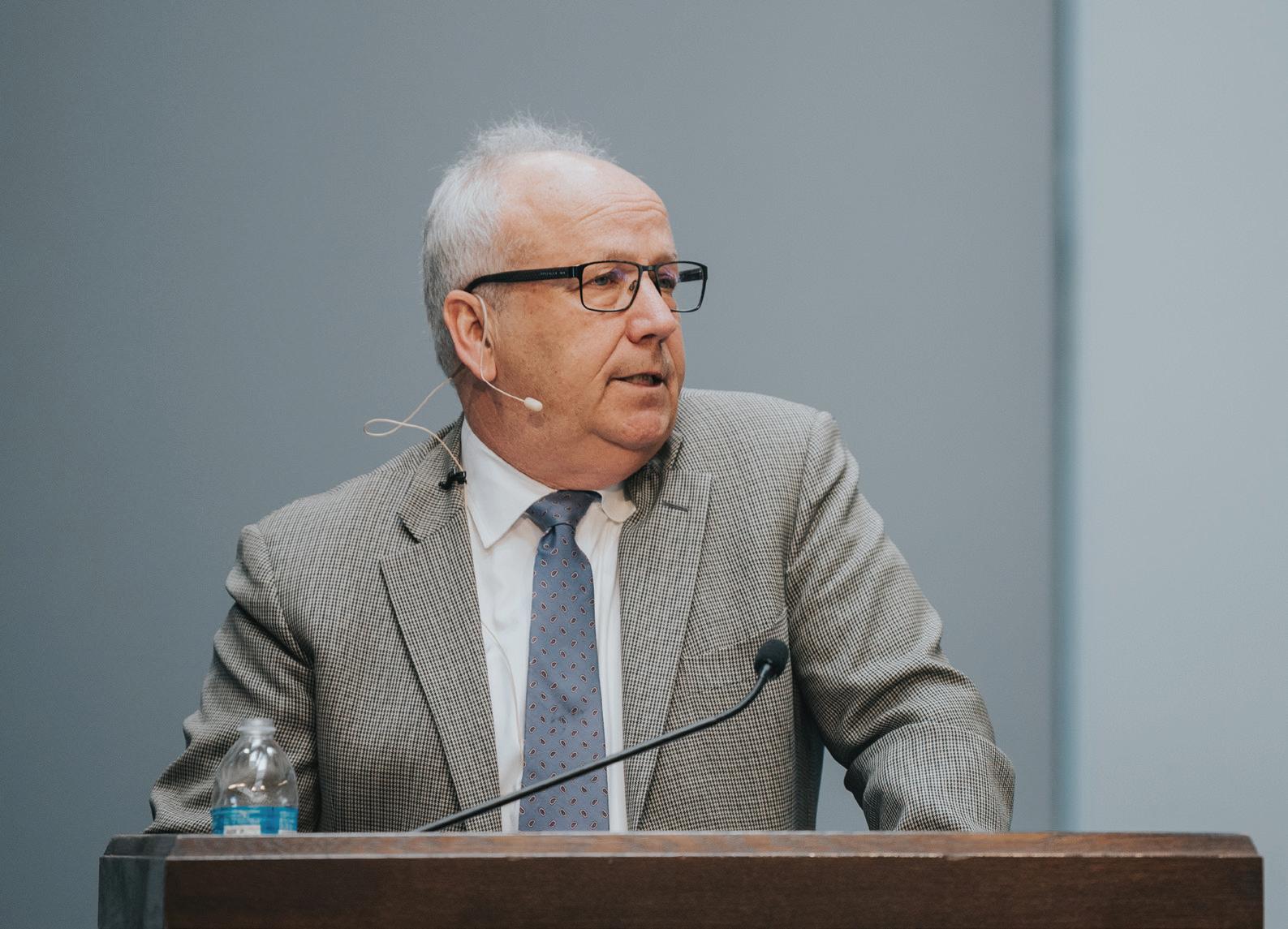
Some people may think that working within the bounds of confessional documents is an unnecessary constraint or straitjacket on academic freedom. I do not. Ironically, it is liberating. Let me explain.
I have a mantra that I constantly repeat among church members, outsiders, and even our faculty colleagues: confessional unity, exegetical diversity, without unanimity (I often add, “especially if you are trying to press your unanimity on my conscience”). What I love about our faculty is that we live this out. In other words, all the members of our faculty understand that we are men who are accountable to our vows. These vows include subscribing to the Westminster Standards and the Three Forms of Unity ex animo— “from the heart” or “sincerely.” We do not equivocate on that. We do not declare we believe one thing and cross our fingers behind our back, really believing something else.
The confessions to which we subscribe are a clear and sublime summation of Scriptural truth. In our view, perhaps no more sublime summing-up of Scriptural truth has occurred since Apostolic times! Yet, we also realize these amazing recapitulations of the Bible cannot say everything that needs to be said about exegetical teaching based upon the Bible. There are a lot of “white spaces” in the Scripture that allow for various exegetical conclusions. That keeps life interesting and conversations lively and spirited.
Subscribing to our confessions can positively generate illuminating exegesis. For example, WCF 7.5 says that the covenant of grace was “differently administered in the time of the law, and in the time of the gospel: under the
law, it was administered by promises, prophecies, sacrifices, circumcision, the paschal lamb, and other types and ordinances delivered to the people of the Jews, all foresignifying Christ to come.”
One of the prooftexts for this point is Hebrew 8–10. Not just one or two verses; rather, three whole chapters! That point incentivizes this Old Testament scholar to work hard to find out how Christ is foreshadowed in the Hebrew Bible.
Different conclusions can be reached (exegetically) on a whole host of issues among like-minded confessional brothers and sisters. For just a few examples: are the historical superscriptions in the Psalms divinely inspired?
What about the Hebrew preposition (lamed) when attached to David’s name in the Psalms: does it mean authorship, dedication to, or written for? What is the age of the earth according to biblical teaching? Is natural law and an “observation, reflection, moral conclusion” interpretive method legitimate for certain passages in Proverbs?
My point is that we should encourage a “hermeneutic of charity” or a gracious openness to exegetical conclusions which do not match our own if those fit within confession boundaries. Likewise, within this rubric we should not try to impose or demand our own conclusions on others if the other views are acceptable within confessional boundaries. That is the attitude we wish to model and inculcate in our students.
In our fractured age, perhaps now more than ever, the world is watching us. How shall we posture ourselves when so many are siloed in their own pastoral offices and studies, enamored with the latest self-professed “authority” on YouTube? Tribalized identity politics is fracturing our culture. Labeling others so you can attack them or cancel them is the custom of the day. Our goal is to produce the following kind of graduates: those who harness their knowledge of the languages—Greek, Hebrew, and Aramaic—for making the teaching of the Scriptures according to their ancient setting manifestly clear in our modern setting. We do not seek to train teachers and pastors who will posture themselves as “masters of the Word”; rather, we seek to train pastors and teachers who are “servants of the Word.” They need to recognize the high calling of discipling Christians on the way to entering the world to come. They need to posture themselves as exegetes trained to make clear the clarion call of Scripture: Repent and believe, be baptized, and live for the Lord of your life, namely Jesus Christ!
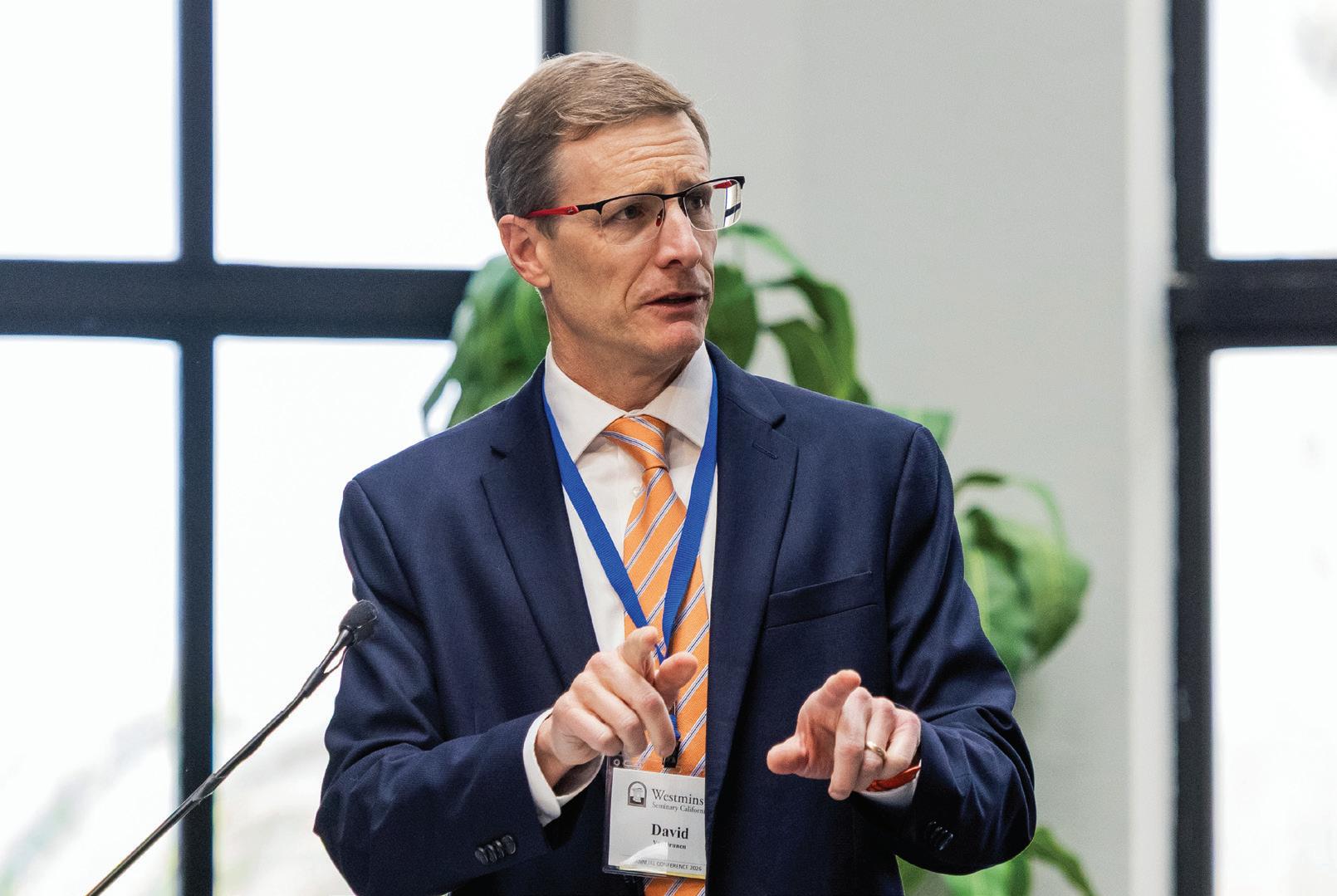
The Reformed catechisms and confessions probably play a more direct role in the curriculum of WSC’s Theological Studies Department than in the other two departments. The Theological Studies Department teaches a number of disciplines: systematic theology, church history, historical theology, apologetics, and ethics. Several examples illustrate the importance of the confessions in our department’s work.
First and most obviously, our department offers two courses on the Reformed confessions themselves, one on the Three Forms of Unity (the Heidelberg Catechism, the Belgic Confession, and the Canons of Dort) and the other on the Westminster Standards (the Westminster Confession of Faith and Larger and Shorter Catechisms). Almost all WSC students are required to take one of these courses as part of their degree requirements. While the latter is primarily designed for students in Presbyterian churches and the former primarily for students in historically Dutch Reformed churches, students can take either or both of them. Most students enroll for one of these courses in their final semester, so the courses serve as a sort of capstone for their WSC studies. They provide opportunity to focus on our confessions’ historical and theological background, their structure, and the reasons why they address the topics they do and why they put matters in particular ways. For students pursuing ordination in confessional Reformed and Presbyterian churches, these courses offer an excellent opportunity to sharpen their understanding of these documents that will play a prominent role in their upcoming ecclesiastical exams.
narrow sense, this refers to the adopting of confessions in an emerging international Reformed church. In a broad sense, it points to the confessional cultures that grew up around these religious identities.
The third and final example comes from my own experience teaching courses in systematic theology and ethics. When we begin a new doctrinal topic in these courses, I ordinarily start by summarizing what Reformed churches and theologians have traditionally taught about the topic. I introduce students to common Reformed terms and categories. The confessions and catechisms play an important role here, since in one place or another these documents encapsulate the consensus Reformed view on
A second example comes from our church history curriculum. The Reformation and Modern Age courses help students understand how our confessions emerged in the historical context of early Reformed Christianity. These courses consider, for example, the theological controversies in the Reformed churches in the Netherlands that led to the Synod of Dort and hence to the Canons of Dort. They also consider the Puritan movement in the Church of England and the English Civil War, during which the Westminster Assembly met and wrote the Westminster Confession and Catechisms. The first one-third of the Modern Age course, in fact, explores the process of confessionalization. In a
almost every important doctrine. After discussing these summaries of Reformed doctrine, as well as how other Christian traditions have understood the topic, I proceed to take students through the biblical and theological reasons why Reformed Christians believe what they do. Being confessionally Reformed isn’t merely a matter of knowing what the confessions say. Reformed churches confess the doctrines they do because they believe Scripture teaches them. Thus, exploring the biblical basis for confessional doctrine helps students become confessional on a deep, and not merely surface, level.
The composing and adopting of confessions is crucial to the identity of Reformed churches. Our Theological Studies Department tries to help students understand and appreciate this—and thus to become better servants of the church and its rich legacy—by exploring these confessions’ content, historical background, and basis in the Scriptures.
by R. SCOTT CLARK
What possible relevance could an old catechism, a little book of 129 questions and answers, written 463 years ago have for young pastors who are facing a brave new world dominated by artificial intelligence, a sexual revolution, and global instability? As it happens, an old catechism is just what we need. The catechism I have in mind is the Heidelberg Catechism, which was drafted mainly by a young man not much older than many of our students. Zacharias Ursinus (1534–83) was about 28 when he began drafting the catechism. His colleague, Caspar Olevianus (1536–87), who would contribute to the catechism, was 26.
Ursinus wrote the catechism during a turbulent time. Europe was in the midst of its own technological and religious revolution. The Gutenberg Press was a little more than a century old. Printed texts were disseminating information at what was then blinding speed. Just as our economy is being revolutionized, in the sixteenth century economies across Europe were being transformed by urbanization and by what economists call rationalization, i.e., people exchanging coins, instead of chickens, for goods. The Great Mortality of the fourteenth century had not been the end of the Bubonic Plague. It regularly visited cities bringing with it death and dislocation.
The Holy Roman Empire of the sixteenth century was in constant political and military turmoil. Emperor Charles V (1500–58), exhausted from fighting both France to his West and the Ottoman Empire to his East, abdicated the throne in 1556 and divided his holdings between his brother Ferdinand (1503–64), who became Holy Roman Emperor, and his son Philip II (1527–98), to whom he gave Spain.
On the religious front, beginning in 1517, an Augustinian monk in Wittenberg had successfully challenged the authority of the church and lived to tell about it and the Reformation he inaugurated gave opportunity for Anabaptists and other radicals to challenge not only the religion of Europe but the social order of the previous millennium. As a consequence of the Reformation and the wars that accompanied it, Europe was now divided between Evangelical and Catholic cities, and to add to the chaos, in the 1540s and 50s there had emerged a religious group that was accepted by neither the Lutherans nor the Roman Catholics: the Reformed. Under the Peace of Augsburg (1555)
the Reformed churches in the empire had no legal status. This was a pressing matter in Heidelberg because in 1559, Frederick III had not only succeeded the Lutheran Otto Heinrich (1505–59) as the Elector of the Palatinate (one of seven electoral districts in the Empire) but he had done so while affirming the Reformed faith. Both the Lutheran and Roman Catholic electors were troubled by this development and there was even a possibility that they might go to war against Frederick over it. It was not just the nobility and elite who were experiencing turmoil in the sixteenth century. Imagine being a Christian layman in the Palatinate in this period.
the devil; and so preserves me, that without the will of my Father in heaven not a hair can fall from my head; indeed, that all things must work together for my salvation. Wherefore, by his Holy Spirit, he also assures me of eternal life, and makes me heartily willing and ready from now on to live for him.
However quickly technology, economies, and even empires may have changed, the Christians in the Palatinate needed to know that they were accepted by God for Christ’s sake alone, that Christ had redeemed them, and that he would keep them.
The fundamental human needs of righteousness with God, salvation, the communion of the saints, and eternal life have not changed and will not change until Christ returns.
In the span of just a few years, one had awakened one morning to be Roman Catholic in 1555, Lutheran in 1556, and in 1559, Reformed.
It was no accident, therefore, that the catechism drafted by Ursinus and adopted by the Reformed Church in the German Palatinate began as it did by asking about comfort. “What is your only comfort in life and in death?”
The Elector and the pastors of the Palatinate wanted the people to know, to borrow a phrase from Olevianus, what was their firm foundation:
That I, with body and soul, both in life and in death, am not my own, but belong to my faithful Savior Jesus Christ, who with his precious blood has fully satisfied for all my sins, and redeemed me from all the power of
Seminary students preparing for ministry in 2026 are preparing to minister to believers and to evangelize the lost in a world that is only superficially different from that which existed when the catechism was first published. The fundamental human needs of righteousness with God, salvation, the communion of the saints, and eternal life have not changed and will not change until Christ returns.
Because those realities are unchanging, it is exceedingly useful that young pastors should be grounded in the historic grammar, way of thinking, and the way of speaking about the faith adopted by the churches. Every Christian needs to know the greatness of his sin and misery, how
he is redeemed from his sins, by grace alone, through faith alone, and how he ought to be thankful to God for such redemption (Heidelberg Catechism, 2). He needs to know the law of God, from which he not only learned his sin and misery but also the abiding norm of the Christian life. Just as in 1563, believers in 2026 need to know the good news, that God the Son has taken on a true human nature, has obeyed in our place, has satisfied God’s righteousness for us, has suffered in our place, died for us, been raised for our justification, and is ascended to the right hand where he intercedes for us, from where he will come to judge the nations. Not only that but young pastors need to learn about the church, her sacraments, what the law of God requires of those who believe, and how to pray so that they can lead congregations into the wonderful riches of the Christian faith as articulated in catechisms such as the Heidelberg Catechism.
Dr. R. Scott Clark was educated at the University of Nebraska, Westminster Seminary California, and St Anne’s College, Oxford University. He was ordained to the ministry in 1988 and he has been a minister in the United Reformed Churches in North America since 1998. He has taught church history and historical theology at Westminster Seminary California since 1997, where he served as academic dean (1997–2001). He also serves as president of the Heidelberg Reformation Association.
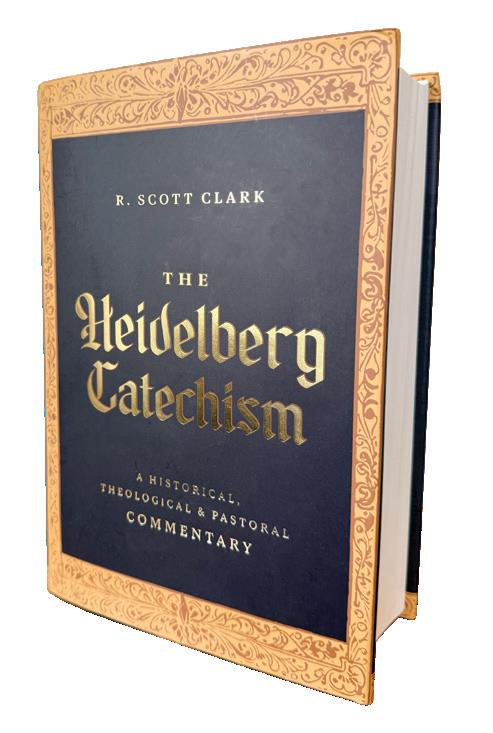
The Heidelberg Catechism: A Historical, Theological, and Pastoral Commentary (Lexham Press, 2025) by R. Scott Clark is a comprehensive 1,000+ page guide exploring the 1563 Reformed confession. It provides detailed commentary on all 129 questions, focusing on the historical context, theological nuances, and pastoral application of the text. Ligon Duncan says, “This book is an invaluable resource for pastors, teachers, seminarians, and church members seeking a deeper understanding of the Reformed faith.” Get Dr. Clark’s definitive work today!
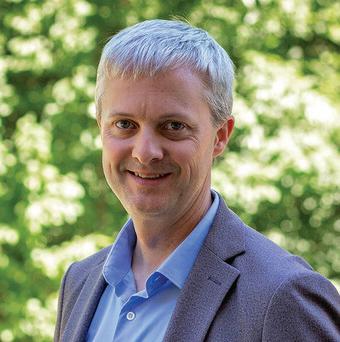
by DANIEL TAN

“Why go to seminary? There’s a wealth of resources readily available online and in print. Why not stick around, continue serving at church, and do some studies part time? Is it really worth it to spend so much time (and money!) to go to seminary? Is it worth it to step back from the frontlines of ministry to devote yourself to study?”
Do these questions resonate with you? Perhaps you, or someone you know, are asking the same or similar questions. Indeed, these are the very questions that I myself faced when weighing whether to go to seminary. And they are certainly valid questions. Seminary is a costly commitment—not only does it cost time and money on the part of the student (and his/her family), it usually also deprives a local church of a faithful member for a time. So, is seminary worth the cost (cf. Luke 14:28)?
Reflecting on my time at Westminster Seminary California, I can only conclude that my seminary education was a tremendous blessing. In my view, the training that one receives at WSC, particularly in the biblical languages and in historical theology (difficult disciplines though they may be), is worth it. I will explore why in this essay.
The ministry of the gospel is at its core a ministry of the Word. This is why Paul charges Timothy—in the presence of God and Jesus Christ, no less—to “preach the Word”
(2 Tim. 4:1–2). For this reason, one of the most important components of a seminary education is a good grounding in the biblical languages, so that one can be equipped to “rightly handle the Word of truth” (2 Tim. 2:15). While it is true that there is a wealth of resources available today in the shape of good English translations and commentaries, the pastor who does not have a good grasp of the Biblical languages is going to be completely reliant on someone else to understand what the Scripture says. And this could be problematic, especially as a translator or commentator will inevitably import his/her own presuppositions into the meaning of a text.
At WSC, every student learns Greek and Hebrew as a foundation for subsequent classes; I was expected to use Greek and Hebrew in my biblical studies and systematic theology classes. (English Bibles were not permitted in exams after the first year!) Although this was a demanding process, it was very valuable. As the saying goes with learning any new language: “If you don’t use it, you lose it.” WSC’s curriculum is designed so that we would not lose our Greek and Hebrew after the first year. More than that, the hope is that we keep using the biblical languages for many more years after graduation.
Speaking personally, perhaps the greatest blessing I’ve received from seminary is the ability to read the Scriptures in the original languages. Simply put, you see so much more when you read the text in the Greek or Hebrew. I have come to appreciate all the more that the Word of God is more precious than gold and sweeter than honey (Ps. 19:10). This has been worth it.
history of the Reformation, but little to no knowledge of anything prior to that. At WSC, I was introduced to the broad contours of the development of church doctrine from the 1st to 21st centuries. I also had the chance to engage with primary sources spanning this period (Augustine, Aquinas, Luther, Calvin, etc.). Not only will this help me to guard against erroneous doctrine in my future ministry, it has also been profoundly encouraging to see God’s faithfulness in preserving his church throughout the ages. We stand on the shoulders of a great cloud of witnesses (cf. Heb. 12:1), who have gone before us and who confess the same faith. This too has been worth it.
“In my view, the training that one receives at WSC, particularly in the biblical languages and in historical theology, is worth it.”
I’ve described two important prerequisites of a seminary education: languages and history. Is it possible to study these things on your own? Is it possible to do so part time while working a ministry job? Perhaps it’s not impossible, but it is very difficult. Although there are many resources available in our digital age, it is certainly difficult to receive a good grounding in the biblical languages and historical theology without seasoned professors to guide you along the way. It is even more difficult if you had to juggle studies alongside a job or ministry responsibilities.
Another important component of a seminary education is a good grounding in historical theology. By historical theology, I mean the study of how the church has understood Scripture throughout the ages. While Scripture is the ultimate norm, no one interprets Scripture in a vacuum; like it or not, we are all influenced by our historical contexts. Thus, historical theology helps us to hold fast to the doctrine which the church has confessed throughout her ages—the “faith once for all delivered to the saints” (Jude 3). It also helps us to guard against erroneous understandings of Scripture, which creep up in similar forms from time to time. False doctrine is rarely original! (See, for example, 4th-century Pelagianism, medieval Roman Catholic soteriology, and 17th century Arminianism.)
Before seminary, I had a vague understanding of the
In my view, a rigorous seminary education, of the kind offered by WSC, is worth the time and expense. It was costly for my wife and me to leave our jobs in Singapore and move to WSC; and it was costly for our home church to be deprived of our service for a season. But the three years at WSC have equipped me thoroughly for a lifetime of ministry. I couldn’t have received a good grounding in the languages and history on my own (not to mention systematic theology and pastoral theology!). And I will return to our home church much better equipped to serve the cause of the gospel for the long haul. Now as I look back on my years in Escondido, I thank God I can say WSC has been worth it.
Daniel Tan is in his final semester at Westminster Seminary California, where he pursued a double degree program (MABS and MATS). He and his wife Cheryl plan to return to Singapore, where they were born and raised, to serve the Lord and his church there.
by JASON PICKARD
During the January term, I had the privilege to teach a course on the life and theology of John Owen, who played a large role in my doctoral studies. Owen’s context is fascinating and complex, so we began the course looking at his biography and wider historical context. After setting the context, we next looked at Owen’s doctrine of God. Pulling from several of his academic treatises, such as Display of Arminianism and Evangelicae Vindicae. Then, we spent time uncovering the contours of his Christology focusing mainly on one of Owen’s richest works, Christologia. We also spent time looking at Owen’s magnum opus, the Hebrews Commentary. Spanning six volumes of
introductory essays, history of interpretation and exegesis, we certainly did not cover the entire commentary. We did, however, slow down to investigate Owen’s construction of the pactum salutis and his understanding of the Mosaic Covenant.
We closed the week by looking at one of Owen’s shorter works, Mediations on the Glory of Christ. This treatise is devotional in tone and was Owen’s last word to his congregation. Ever the pastor, Owen left his people with a glorious vision of the Savior and the hope of gazing upon Christ for eternity.
A good number of current students took the course for credit, but we were also blessed to have a room full of auditors including several alumni. It was a joy to interact with our graduates now serving the Lord in various ways and in various churches. One alumnus who joined us was Rev. David Nutting. Rev. Nutting recently took a sabbatical and read many of Owen’s works while on sabbatical. It was a joy at the end of the week to have David share how Meditations on the Glory of Christ ministered to his soul while on sabbatical.
on the Mission of the Church at Annual Missions Conference
Dr. Brian A. DeVries offered two lectures at the Westminster Seminary California November 2025 missions conference, entitled Reformed Missiology and the Church’s Witness. Dr. DeVries is the author of the award-winning book You Will Be My Witnesses: Theology for God’s Church Serving in God’s Mission (Crossway, 2024). He is also the president of Mukhanyo Theological College in South Africa, where one of our alumni, Antonio Coppola (MDiv, 2017), is currently serving as Academic Dean.
During his addresses, Dr. DeVries aimed to equip and educate seminary students on mission work. The first lecture, titled, “God's Two Missions and a Trinitarian Theology,” encouraged students to think of their missional work as flowing from God’s mission. As missionaries, they will be participating in what God already initiated through the Son and the Holy Spirit. “Mission is God's work. It is God who has done the sending,” Dr. DeVries said.
In Dr. DeVries’ second lecture in the series, titled “The Witness of God's People in God's Mission,” he helpfully rejected vague notions of what the church’s mission is, exhorting students to think of the Church’s mission as
primarily rooted in her witness. God’s people participate in His mission by bearing witness to His saving work through Jesus Christ. Dr. DeVries explained that, “The church's witness is subordinate within God's mission, God's mission is the overarching sovereign plan. The purposes before eternity will be accomplished in the end. What God has done and is doing, we are just a small little part of it really. God doesn't even need us, and yet, he's chosen to use us, not angels. Because angels in a certain sense can't be the witnesses that we can be. Angels haven't experienced grace like we have.”
This conference was the 2025 installment of the Dennis and Jane Johnson Lectures on Missions. Remembering their ministry, WSC has established this annual lecture series in missions in partnership with New Life Presbyterian Church, Escondido to invite distinguished and experienced missionaries on campus to teach and challenge the seminary community.
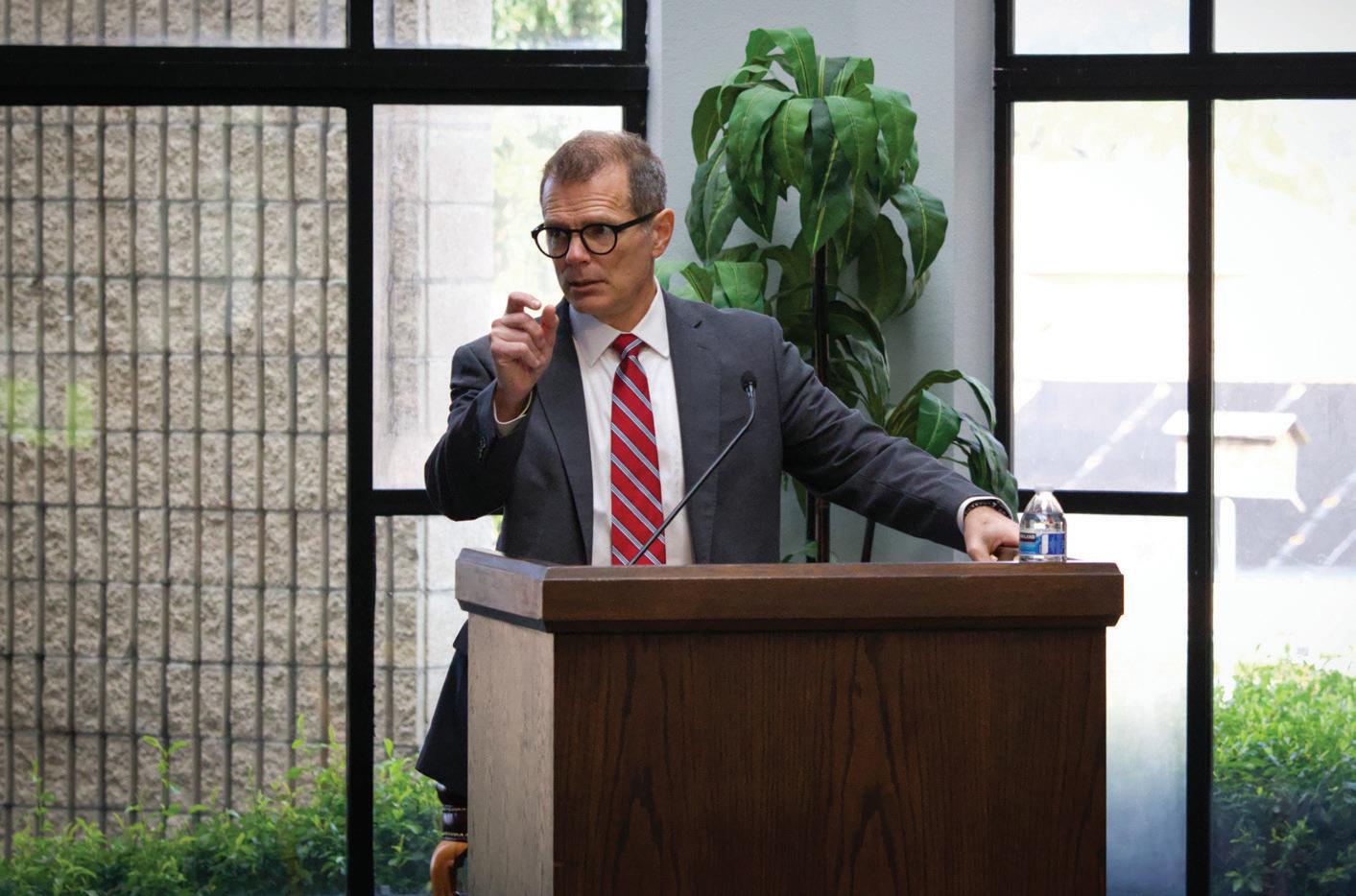
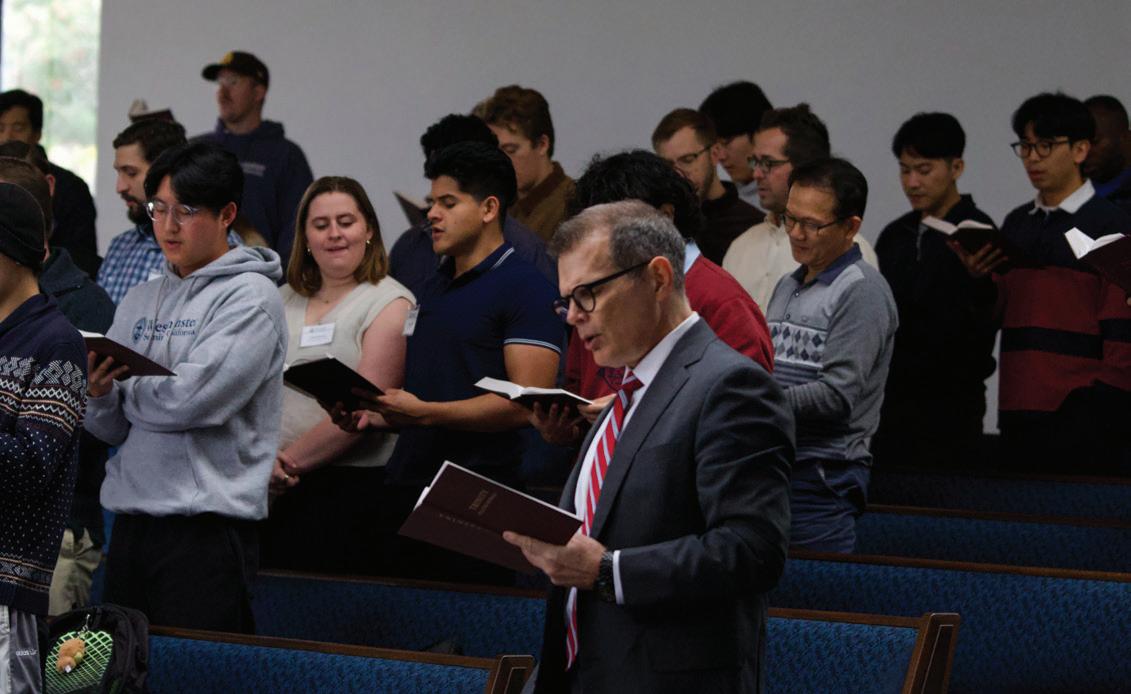
Dr. J. V. Fesko spoke at Westminster Seminary’s Spring Convocation in February at the invitation of the Westminster Student Association. Interest in the Nicene Creed rose last year, as many churches and institutions hosted conferences to commemorate 1700 years since its composition. To keep that interest alive, the WSA brought Dr. Fesko out to offer two lectures at the chapel on the importance of the Nicene Creed in theology and the Christian life.
The first lecture Dr. Fesko gave explored how the Nicene Creed offers a refutation of the thinkers of modernity who tried to separate virtue and wisdom. The Nicene Council’s theologians understood that humility, patience, and purity are discarded at the expense of sound doctrine. Dr. Fesko called for a sort of “Reformed Catholicity,” which remains faithful to the early Church fathers’ insights while pursuing a Reformed theology.
“We want to retrieve the catholic faith, lowercase ‘c,’ the truths that are shared by all Christians. And certainly the Nicene Creed would be part of that,” Dr. Fesko said. “But we want to engage in a ‘Reformed Catholicity,’ in other words we’re not trading Reformed theology for catholic theology, we are retrieving the very parts of the reformed tradition that are rooted in the ancient church.”
In his second lecture, Dr. Fesko extolled the creed for its
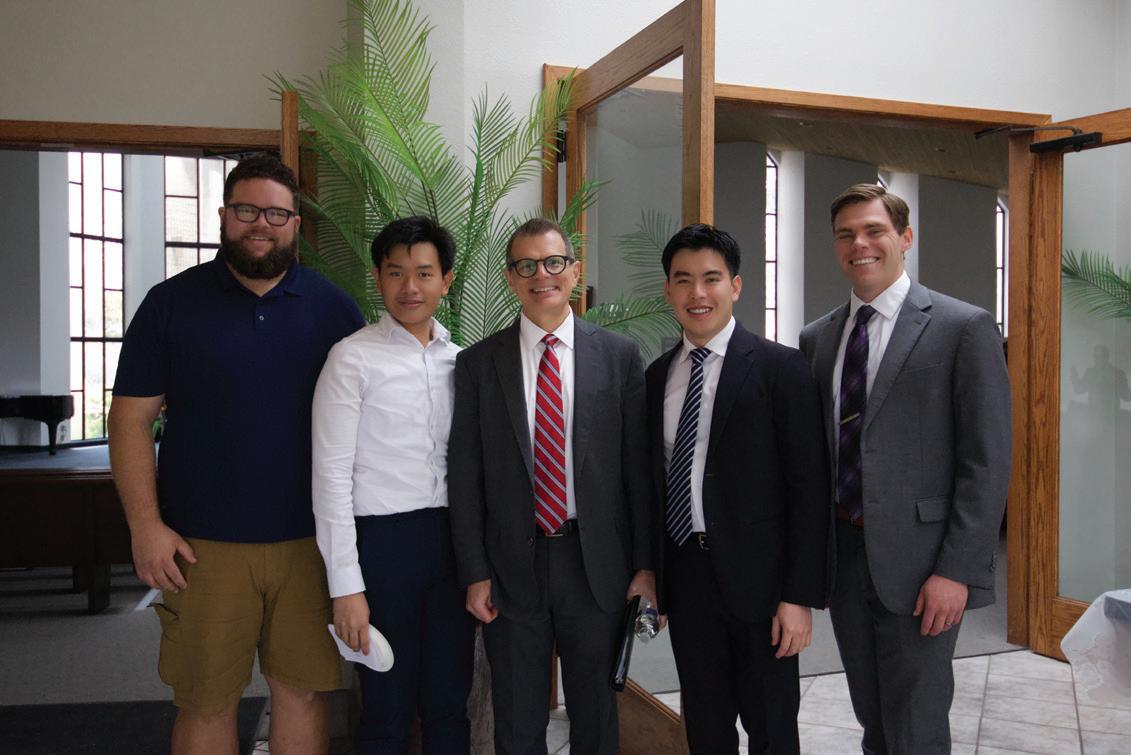
commitment to viewing all of Scripture as unified and consistent, its commitment to the doctrine of Creation, and its commitment to viewing Christ’s eternal divinity through a Christological reading of the Old Testament. “If it’s been proven that [the Nicene Creed] is a really sound doctrinal statement, the question we should ask is this: are we simply going to look at the statement and perhaps study its truths, profess them, or do we want to ask a more fundamental question? And that more fundamental question is how did the theologians at the council of Nicea come to these doctrinal conclusions?”
The seminary community was thrilled to have Dr. Fesko back on campus, as he served on faculty from 2009 to 2019. He fulfilled a variety of key roles during his time with us, particularly as Professor of Systematic and Historical Theology, VP for Academic Affairs, and Academic Dean. Dr. Fesko is currently the Harriet Barbour Professor of Systematic and Historical Theology at Reformed Theological Seminary in Jackson, MS. He is also an ordained minister in the Orthodox Presbyterian Church, having served as a church planter and pastor in northwest Atlanta before moving to Escondido to serve at Westminster Seminary California
“We want to engage in a ‘Reformed Catholicity,’ in other words we’re not trading Reformed theology for catholic theology, we are retrieving the very parts of the reformed tradition that are rooted in the ancient church.”
On the eve of the Reformation, men and women went to bed each night haunted by a question the church refused to answer with confidence: Am I saved? To claim certainty was considered presumptuous—even arrogant. The faithful were left to wonder whether they had confessed enough, suffered enough, or done enough to remain in God’s grace. The Reformation, therefore, was born out of a crisis of assurance. The doctrine of justification by faith alone broke through and suddenly, the ground of salvation was no longer the trembling believer’s performance but the perfect righteousness of Christ, received through faith and declared by God himself. Assurance wasn’t presumption—it was the natural fruit of the gospel.
problem is with the unbeliever, not with God. And the apostles never went around preaching, “Wait, wait, wait to see if something happens to you.” The apostle said, “Everyone, everyone who calls on the name of the Lord will be saved” (Rom. 10:13). Paul says that quoting Joel in the middle of his complicated discussion of election. And I think that quotation is very intentional. I think Paul is thinking to himself, “If some of my readers are getting confused, let me make one thing perfectly clear: everyone who calls on the name of the Lord will be saved.”
Dr. R. Scott Clark, Professor of Church History and Historical Theology, kicked off day two of the conference with The Christian Comforted: Loved by the Father, turning attention to the comforting aim of the Heidelberg Catechism, particularly in its opening question.
An inside out promise is filled with ifs, ands, and buts—where the act of faith trumps the object of faith.
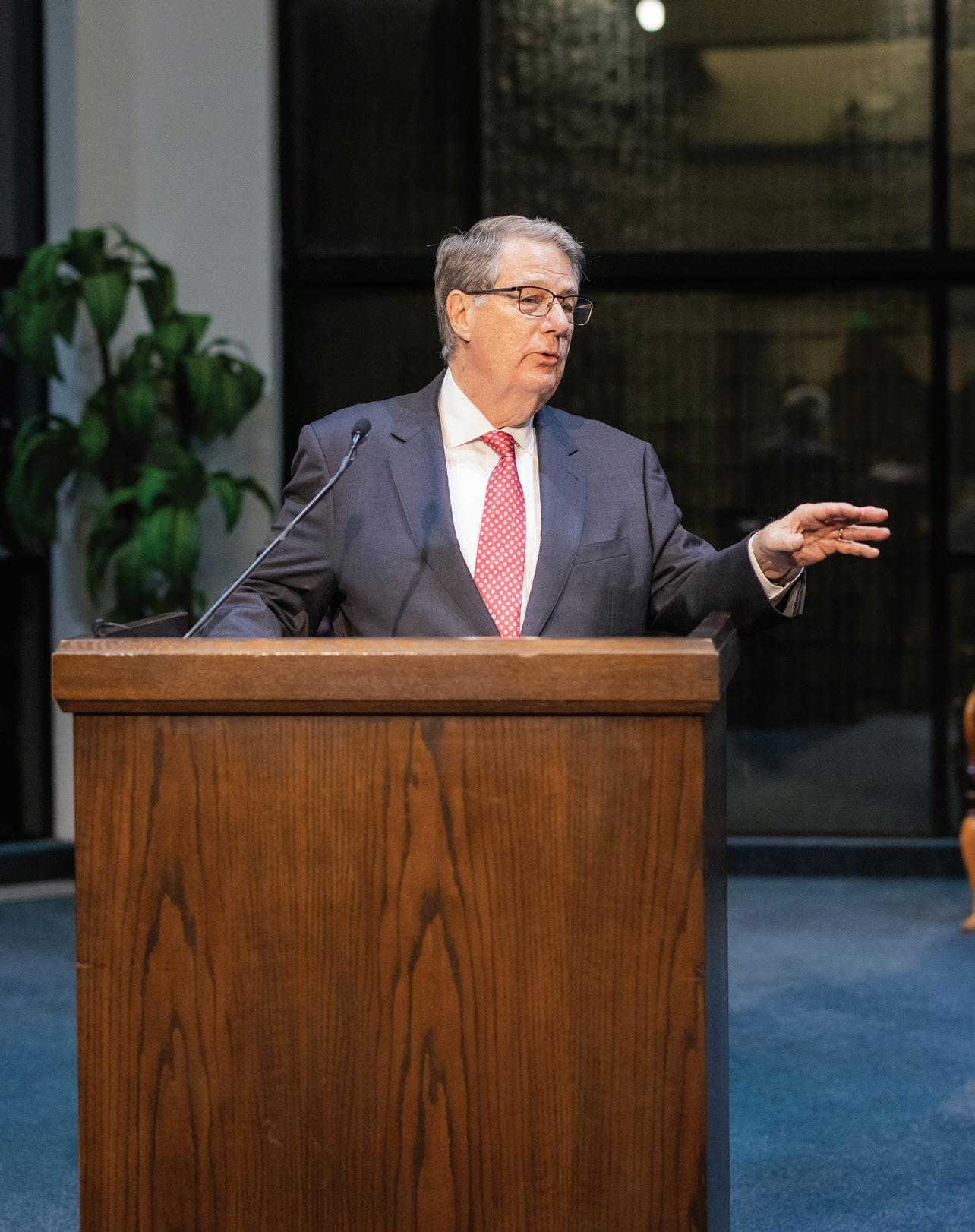
That recovery is not something any generation can afford to take for granted, which is exactly why Westminster Seminary California gathered believers from across the country to campus for its 21st Annual Conference in January, themed Blessed Assurance: Resting in the Promises of God. WSC’s own faculty took the platform across five plenary sessions, tracing assurance from its Reformation roots to its full systematic and eschatological dimensions.
Dr. W. Robert Godfrey, President Emeritus and Professor Emeritus of Church History, opened the conference with a lecture titled, The Christian Consoled: Real Good News and the Reformation. Dr. Godfrey helped explain how assurance is not antithetical to another hallmark of reformed doctrine, namely election. Some people (often dubbed “hyperCalvinists”) misapply the doctrine of election to the detriment of people’s assurance. Here’s how Dr. Godfrey explained it:
I heard a very distinguished reformed theologian once say, “Seek the Lord.” And then he said, “I have to say to you, you may seek and never find because you may not be elect.” You see, the danger of this movement in Reformed theology is it ends up blaming God for your unbelief. And the Scripture never lets you blame God for your unbelief. The
Dr. Michael S. Horton, J. Gresham Machen Professor of Systematic Theology and Apologetics, delivered the third plenary, The Christian Assured: Belonging to the Savior and Indwelt by the Holy Spirit. He implored us to prioritize—in defiance of cultural norms—not experience but objective realities—in his terminology, we need an “outside in” spirituality, not an “inside out” spirituality. Specifically, Horton highlighted the importance of an external redemptive history, an external promise, and external means of grace. Regarding the final point, Horton said:
Calvin said the whole force of the Lord’s Supper is packed into these two words: “for you.” “Given for you.” As surely as you take that bread in your hands and put it in your mouth, as surely as you drink that cup, so surely do you know that God is for you, not against you. It’s the blood of the new covenant shed for you. An inside out promise is filled with ifs, ands, and buts—where the act of faith trumps the object of faith. Inside out sacraments, the inner word and the inner communion with Jesus are separable from the external word and sacraments. But we believe as Reformed Christians that these pledges of God’s goodwill are not merely occasions for us to act, but they are occasions for God to act. and that we are merely recipients of his word of promise sealed to us.
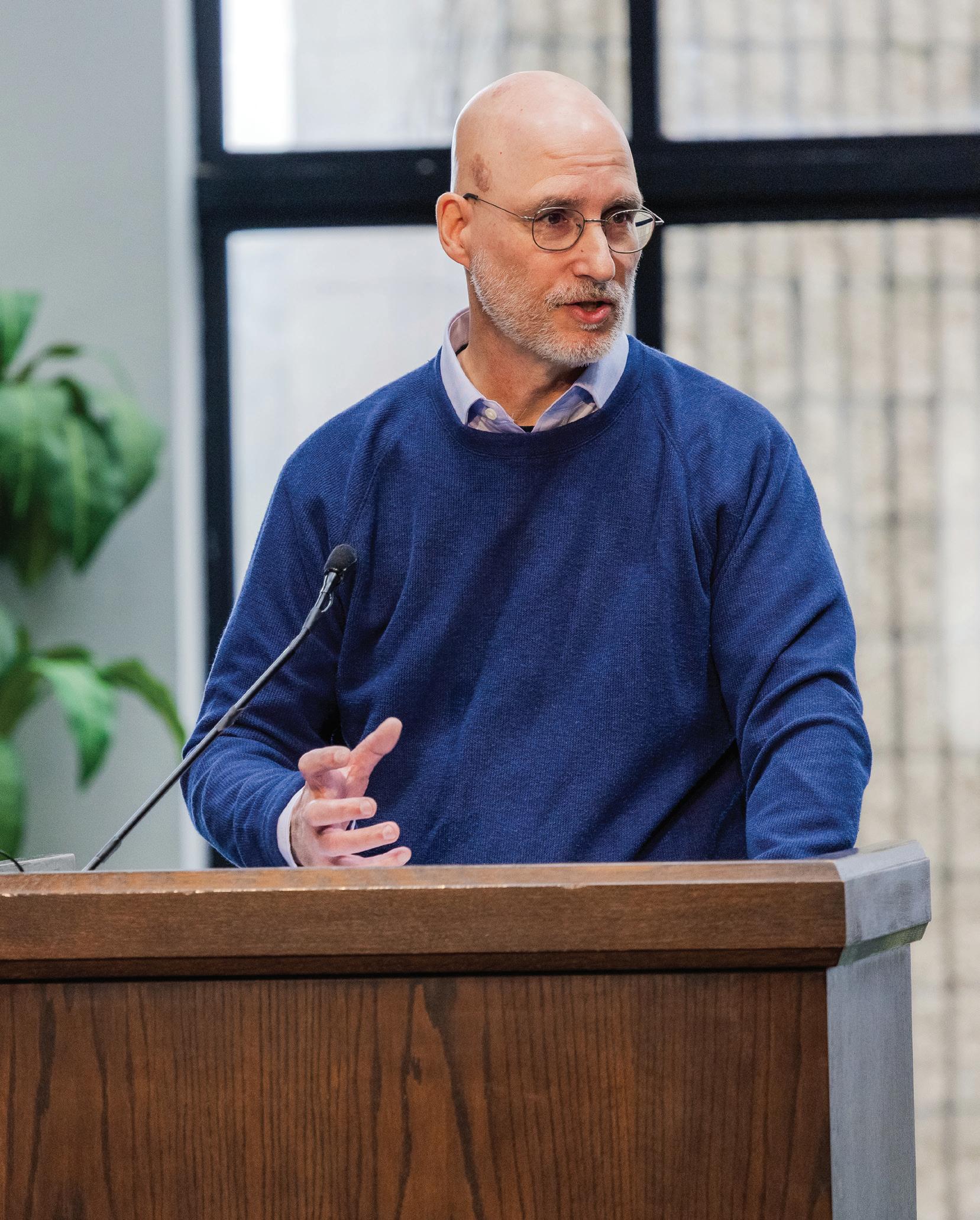
Dr. David VanDrunen, Robert B. Strimple Professor of Systematic Theology and Christian Ethics, offered the fourth lecture, The Christian Reassured: The Mature Reformed Understanding of Assurance in Westminster Confession of Faith
Chapter 18—unpacking what the confessional Reformed tradition has carefully and pastorally said on this subject.
Rev. Joel E. Kim, President and Assistant Professor of New Testament, brought the conference to its conclusion with The Christian Blessed: Resurrection Hope and Assurance, lifting eyes toward the horizon of resurrection and the ultimate vindication of all who rest in Christ.
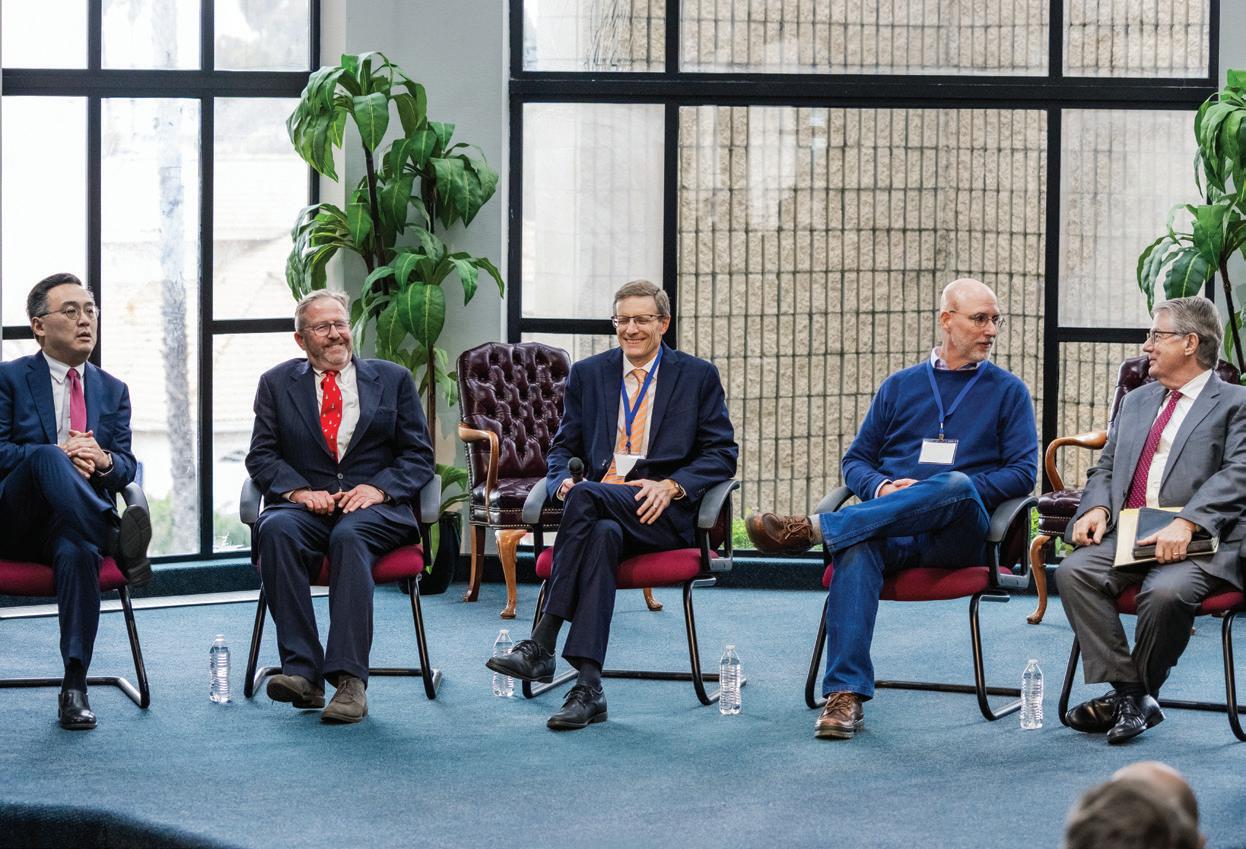
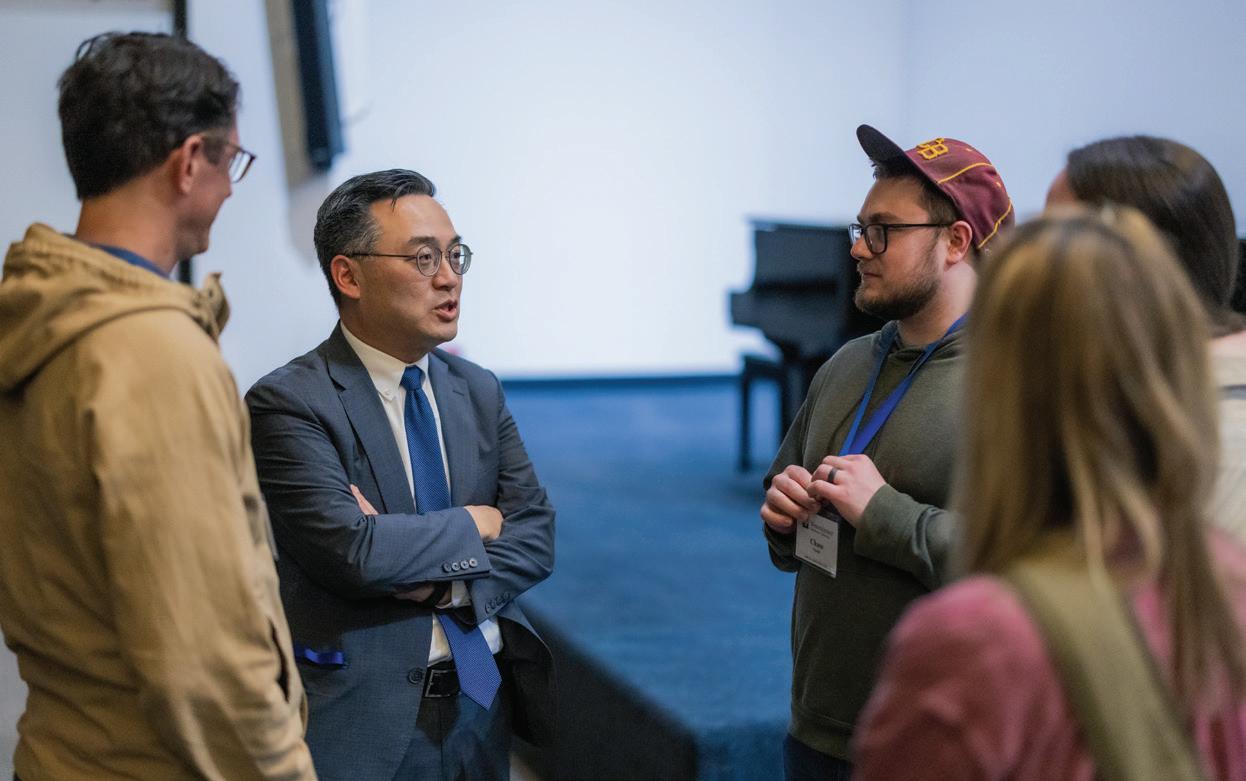
Rev. Chuck Tedrick, Dean of Students and Director of Alumni Relations, served as emcee throughout and facilitated a wide-ranging Q&A panel with all five speakers on Saturday afternoon. Two hundred and twenty-six people gathered—representing 17 states, stretching from Hawaii and Alaska in the west to Massachusetts in the east, with attendees making their way from Iowa, Kansas, South Dakota, and Nebraska to hear these lectures in person. Among them were 24 prospective students participating in Seminary For A Day, many of them discerning a call to ministry. Video recordings of the sessions accumulated over 4,800 views combined across the two days.
In a moment when many Christians still quietly wonder, but can I really be sure? WSC’s 21st Annual Conference offered the same answer the Reformers recovered five centuries ago. Not presumption. Not wishful thinking. Blessed assurance.
by HARRISON PERKINS
My wife and I purchased our first house just over a year ago, and two considerations about water were a big part of the motivating factor in purchasing it. Visually, a small side-stream from the Huron River runs down the back of our property, giving us a beautiful waterfront view. Functionally, our water supply comes from a well, which apparently is a major bonus among the “crunchy” crowd of which my wife is a partial but not overdone member. Both water features play their part in adding benefits to our home, and comparing them helps me reflect on the meaning and value of being a pastor-scholar.
One major difference between our water-front view and our water-supply well is depth. The side-stream that provides a stunning scene is right at the surface, whereas our well reaches deep into the earth. All the attention may be on the water with a view. The water in the well, however, is what is essential to life. You have to dig deep to have water that constantly supplies what you need.
Pastoral ministry is a funny thing. I’ve heard a wellknown Christian figure say that “preaching the gospel isn’t rocket science.” The claim is true in the sense that we have a message that—at least in the essentials—is uncomplicated and straightforward. To announce the free grace of God for salvation in Jesus Christ does not require you to work out any new formulas. At the same time, my sense of rocket science is that if you can do the time in computing the formulas, however hard, you can reach the conclusion of your task. By contrast, I know the formula of what I need to say in gospel proclamation but still often find myself without what I need for my task. The reserves of the soul can run low when you care for other people’s souls. I know that I need to explain a text of Scripture to apply it to people’s life and heart, but getting there at times seems beyond what I have in the tank.
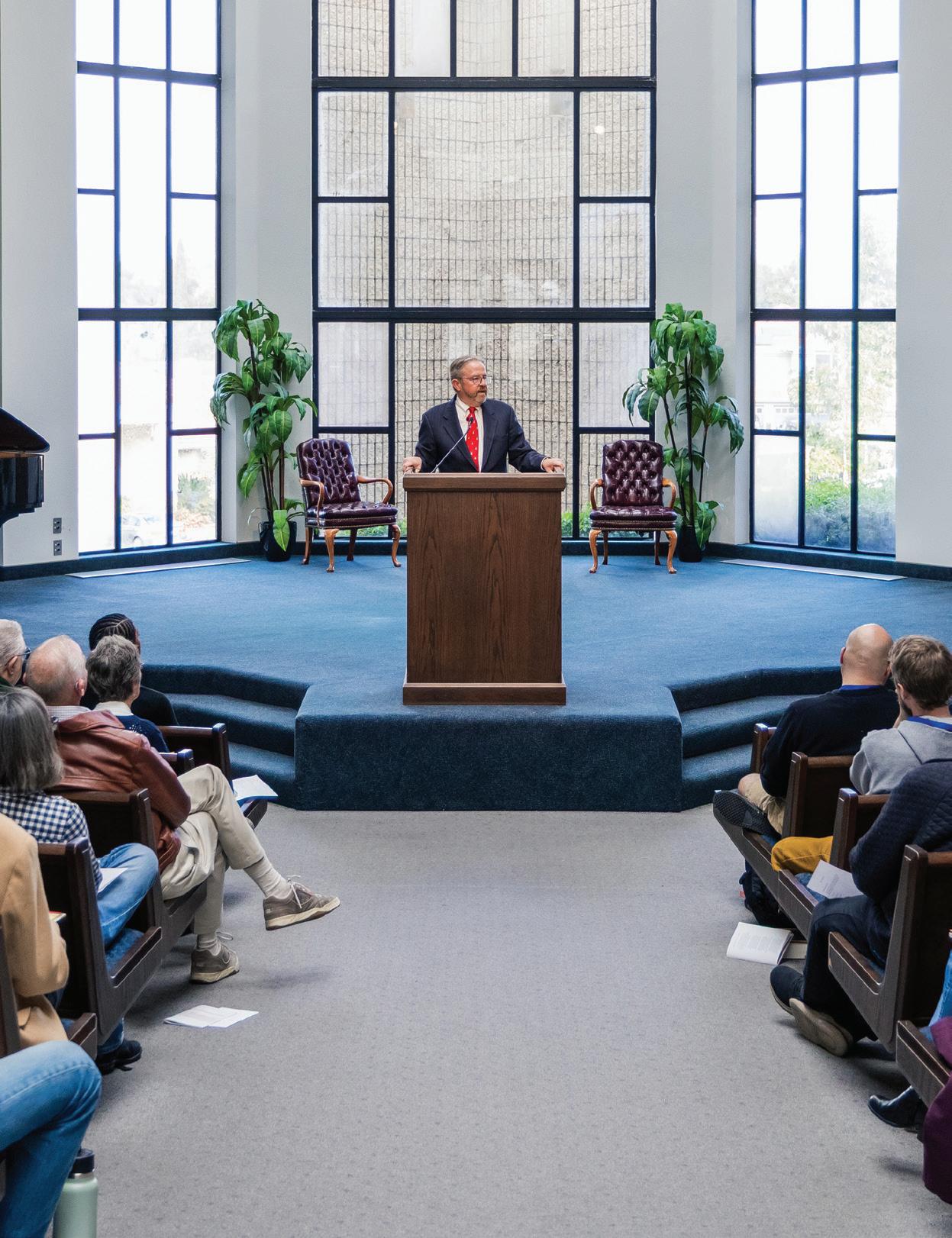
Dr. Perkins was invited by the WSA to give the April 2025 convocation lectures. He spoke to the student body twice on "The Non-Insistent Pastor."
One of the striking things about the stream in our yard is that it is pretty when it's flowing, but it often runs dry. The dam upstream from us shuts off the supply to create a private lake for a number of homes but leaves us with a stretch of outright mud. In addition, the water in the stream is clear and bright when it flows but is not fit for drinking. What seems pretty often has the least to give and runs out quickly. The deep well, however, has never let us down. We cannot see its supply, but only the head of the automatic well pump that sticks out of the ground. The taps in my house, which have never run dry, evidence its reliability. The tests on our water quality show that it is bacteria free. But what has a well to do at all with being a pastor-scholar?
Scholarship is about digging deep. So many times in pastoral ministry, I could have come up short and furnished my people with a sermon or counsel of outright mud rather than running water. Besides the full-bore grace of the Holy Spirit, what has kept the tap running is a deeply dug well in my own soul that acts as a full reservoir of truth. I cannot always see or feel it. When the need has come to bear, God’s grace has still let it flow from the tap to provide for his people.
Lest we get a cockeyed perspective on this issue, we need to think about what it means to be a pastor-scholar. Pastor-scholar is both a functional description and an identity question. I am a pastor because God through the processes of his church’s courts has called me to be one. Some count me a scholar, so I need to grapple with how that
perception might help you readers. I do not count myself a scholar because I have a PhD, nor because I teach classes at a few seminaries, nor because I have published a few books. When we are honest, we know that morons of the highest grade have managed to accomplish all these things at some point or another.
I am willing to own the label of “pastor-scholar” in the sense that I am always in the quest to understand truth at an increasingly deeper level as a way to be equipped to shepherd God’s people with a modicum of usefulness.
Self-satisfaction is the scourge of fruitful pastoring. Part of being a scholar is to have a greater sense of what you need to learn than what you have learned. If you are impressed with your own knowledge, then you are a failure as a scholar. Every pastor should be a scholar in the sense that you are never satisfied with what you do understand about God and what he has done for us in the Lord Jesus. We need to be on the continual quest to grasp this truth and whatever supports and explains it at a deeper and deeper lever.
Even so, self-satisfaction is one of our easiest temptations to indulge. It can feel like quite an achievement to complete an MDiv, especially at a well-respected school. Do you think that your people are supposed to take your word for it whatever you say because of your academic pedigree? Are people supposed to just accept your opinion because you passed ecclesiastical examinations in the past? The men who assume the affirmative answer—explicitly or even in the silent recesses of your heart—are not scholars. They might be the first to call themselves scholars though.
The pastor-scholar model is valuable because it reminds us that we are never enough in ourselves. A stream in that backyard is indeed beautiful. Appearance can have its usefulness but not as an end in itself. To be a pastorscholar is not about achieving outward accolades or even an educational pedigree. It is about the continual quest to fathom more of the riches of God’s revelation so that we can help others drink of those riches. It is about relentlessly searching to find more to be more useful because we are not satisfied to remain as we are.
At the same time, the pastor-scholar model is valuable because it leads to the sort of practices that resource us so that we do not easily run dry. Those who insatiably seek after more understanding of the truth inevitably store it up. Every well has a reservoir. If you dig a deep well into God’s truth, you will have a reservoir. When you feel empty from your own strength, the truth that you need to help God’s people will be on hand. You will not have to insist that anyone listen to you because the truth and its reason can flow out of you as you open the faucet. This fullness may not be obvious on the surface. The flow of living water will prove itself as you help God’s people.
The idea of the pastor-scholar has had many spins, interpretations, commendations, and criticisms. In the
end, it is fruitless to seek the moniker itself. If you chase activities, you will likely have the steam for very few of them, at least to do them all well. If you succeed in attaining the appearance without the waterflow and water quality, people will rightly fault you for trying to fly too close to the sun when you should have stayed on the ground. The practice of self-promotion is hardly ever received as anything other than shameless.
Great fruitfulness resides in the quest to mortify our self-satisfaction and to strive for deeper mastery of the truth. Whether people call you a pastor-scholar or something else, the Lord will see your desire to know him and his works with greater fullness. Accordingly, whatever people call you, you will be a fount of help to Christ’s sheep. They will be watered, and Christ will be honored. Dig deep, and see what flows forth.
“Every pastor should be a scholar in the sense that you are never satisfied with what you do understand about God and what he has done for us in the Lord Jesus. We need to be on the continual quest to grasp this truth and whatever supports and explains it at a deeper and deeper lever.”
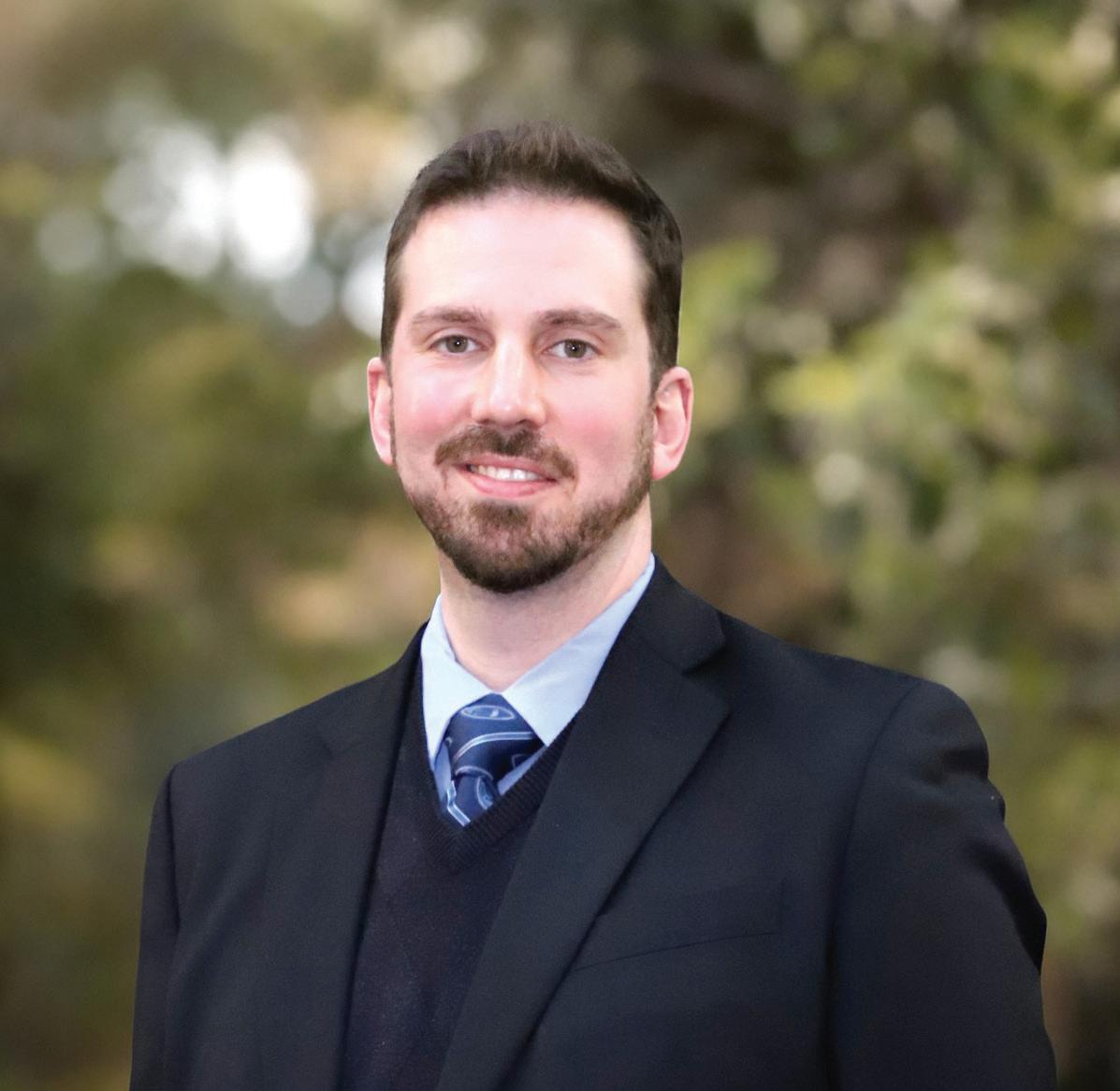
Harrison Perkins (PhD, Queen's University Belfast; MDiv 2015) is pastor of Oakland Hills Community Church (OPC), a Senior Research Fellow at the Craig Center for the Study of the Westminster Standards, online instructor in church history at Westminster Theological Seminary, visiting faculty at Birmingham Theological Seminary, a visiting lecturer in systematic theology at Edinburgh Theological Seminary, and author of several books including Reformed Covenant Theology: A Systematic Introduction.
If you have an update to share, we'd love to know! Email us at alumni@wscal. edu and be sure to include your name, graduation year, and degree received.
1989
Jim Newheiser (MAR, 1989; DMin, 1993) has several recent publications, including: Do I Need Boundaries? Seeking to Please God by Learning to Say No (New Growth Press), Help! I’ve Been Rejected (Shepherd Press), and a chapter entitled “The Redeemed Man Managing His Resources” in, The Redeemed Man, edited by Joel Beeke, Paul Smalley, and Richard Phillips (Reformation Heritage Books).
1993
Nick Ganas (MDiv, 1993; DMin, 2003) recently marked 20 years as Senior Pastor of Timonium Presbyterian Church (PCA) in Timonium, Maryland. In addition to his pastoral work, he has served for the past five years as an Online Instructor in Pastoral Theology and Counseling at Westminster Theological Seminary.
1994
David Edling (MAR, Former WSC Board Trustee, 1999–2004) has been designated an Elder Emeritus in the Presbyterian Church in America (PCA).
1998
Debbie Dewart (MAR) recently published Books All Over based on John 21:25 through her children’s ministry consisting of music, ventriloquism and books featuring Cherry the Resurrection Rabbit.
Dan McManigal (MABS) recently published Truth Spoken in Love: An Anthology of Quotations from J.C. Ryle (Banner of Truth).
2002
Susan Erikson (MAHT) recently published two books: Bones in the Womb: Living by Faith in an Ecclesiastes World (2024) and Imperishable: One Woman’s Journey Through Loss (2025).
David Barcelo (MABS) recently published a book on counseling in Spanish: Conforta Mi Alma: 31 Días de Aliento Siguiendo al Buen Pastor.
2004
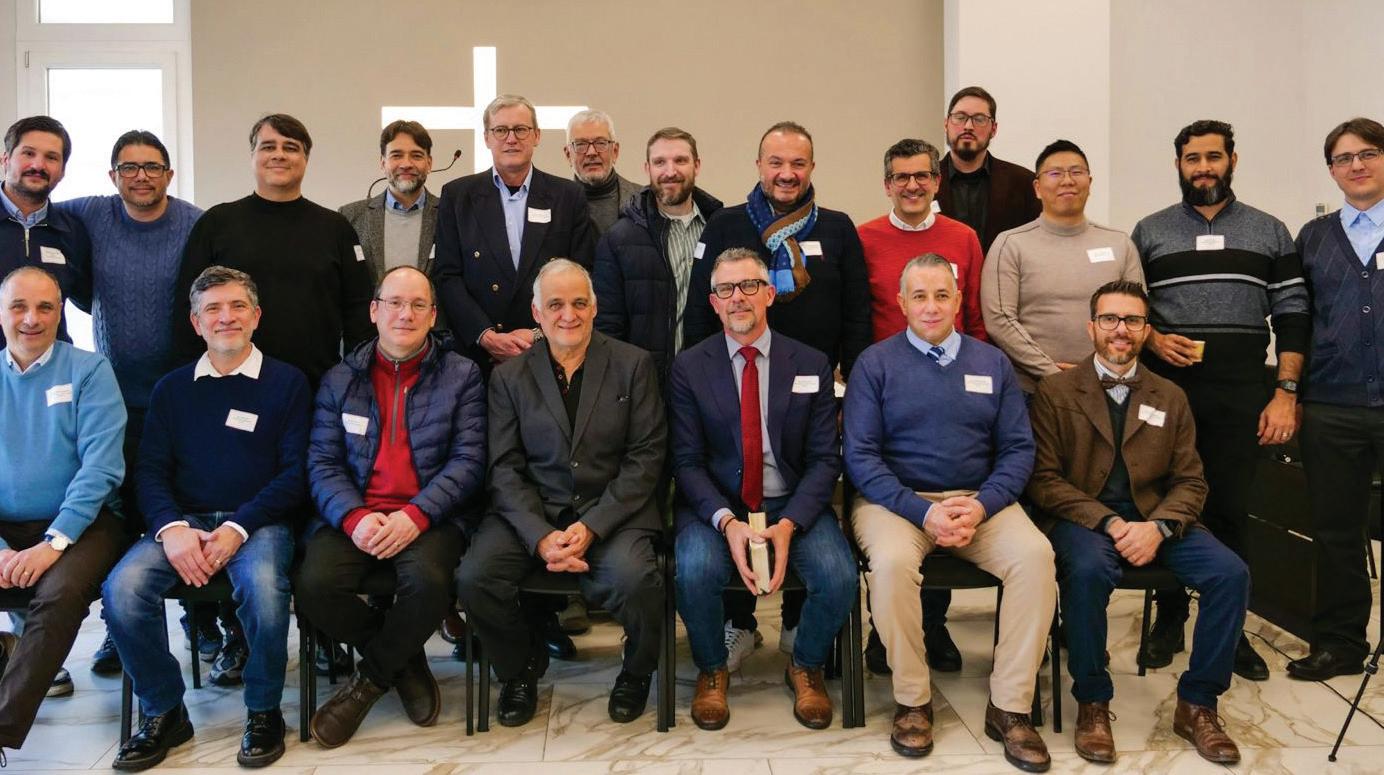
Michael Brown (MDiv; MAHT) rejoices in significant progress towards the formation of Italy’s only Reformed/ Presbyterian denomination. Recently, his church hosted a historic gathering of twenty-three ministers and elders representing ten confessional Reformed and Presbyterian churches from across Italy, including fellow WSC alumnus Vincenzo Coluccia (MDiv, 2019) and David Robbins.
Rolf Meintjes (MDiv) was installed as the pastor of Grace Community Presbyterian Church (PCA) in Fort Worth, TX on September 2, 2025.
Steve Oeverman (MDiv) was installed as the Minister of the Word & Sacraments at Oak Glen United Reformed Church in Lansing, IL. After 25 years of serving on the west coast, he is glad for the opportunity to serve closer to family in the Midwest.
Jody Morris (MDiv) recently began serving as the Staff Chaplain for the Pediatric Palliative Care unit at Kennedy Kreiger Institute in Baltimore, MD.
Brannon Ellis (MAHT) began serving as Academic Dean and Assistant Professor of Systematic Theology at Indianapolis Theological Seminary in April 2026.
Stephen Fix (MDiv) began serving as an Associate Professor of Old Testament and Biblical Languages and the Dean of Students at Westminster Theological Seminary in January 2026.
2009
Solomon Li (MDiv) recently began serving as a chaplain with Hospice of East Bay.
2012
Colby Painter (MDiv) began serving as a high school history teacher at
The Covenant School in Dallas, TX in August 2025 and he will be leading a workshop at the Society for Classical Learning’s annual conference in June 2026. He and his wife, Amy, were joined in marriage on October 12, 2024.
Ross (MDiv) and Joanna (MABS) Hodges and their four children moved to Athens, AL in August of 2025 so that Ross could begin serving as the Pastor of Grace Covenant Presbyterian Church (PCA).
Adriel Sanchez (MABS-MATS) has a forthcoming book (September 2026) entitled, Why We Worship: Experiencing Heaven on Earth at Church. The book is a biblical theology of liturgy and Lord’s Day worship that aims to help Christians of various traditions recover the beauty and transcendence of Christian worship.
2014
Joshua Schendel (MAHT) has served as Professor of Theology at Yellowstone Theological Institute since 2022 and recently began serving in 2025 as an adjunct professor at Carey Theological College as well as a philosophical consultant through the National Philosophical Counseling Association (NPCA).
2015
Luke Gossett (MABS) received a PhD in Ancient and Medieval Languages and Cultures from the Catholic University of America in January 2026.
Harrison Perkins (MDiv) recently published two books—A Penitent People: The Doctrine of Repentance (Christian Focus), and Take and Eat: Recovering the Regular Celebration of the Lord’s Supper (B&H Academic).
2016
Seung-Joo (John) Lee (MAHT) and his wife, Daisy, welcomed their first child, Noelle, in December 2025.
2018
M. Connor Underseth (MABS-MATS) began a church planting work in North County San Diego in March of 2025 and rejoices in the commencement of eve-
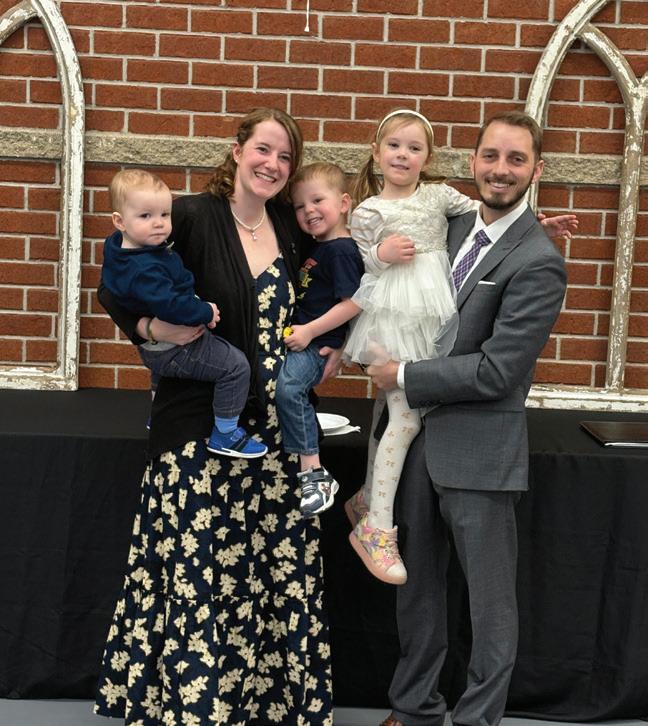
ning services for All Saints Presbyterian Church in October 2025.
Caleb Frens (MDiv) and his wife, Jenn, welcomed their third child, a baby boy named Shem Rogelio Frens, on February 2, 2026.
2021
Paul Kim (MDiv) recently began serving as the lead pastor at 1128 Ministry, an English Ministry affiliated with the Presbyterian Church in America (PCA).
Marc Scaturro (MDiv) was installed as the pastor of Spencer Mills Orthodox Presbyterian Church (OPC) in October 2025.
2021
Charles Vaughn (MABS-MATS) began serving as a teacher and the Student Affairs Director at Cedar Tree
Classical Christian School in Ridgefield, WA in August 2025.
2023
Monse Smolinski (née Santiago) (MABS-MATS) and her husband, Matt,
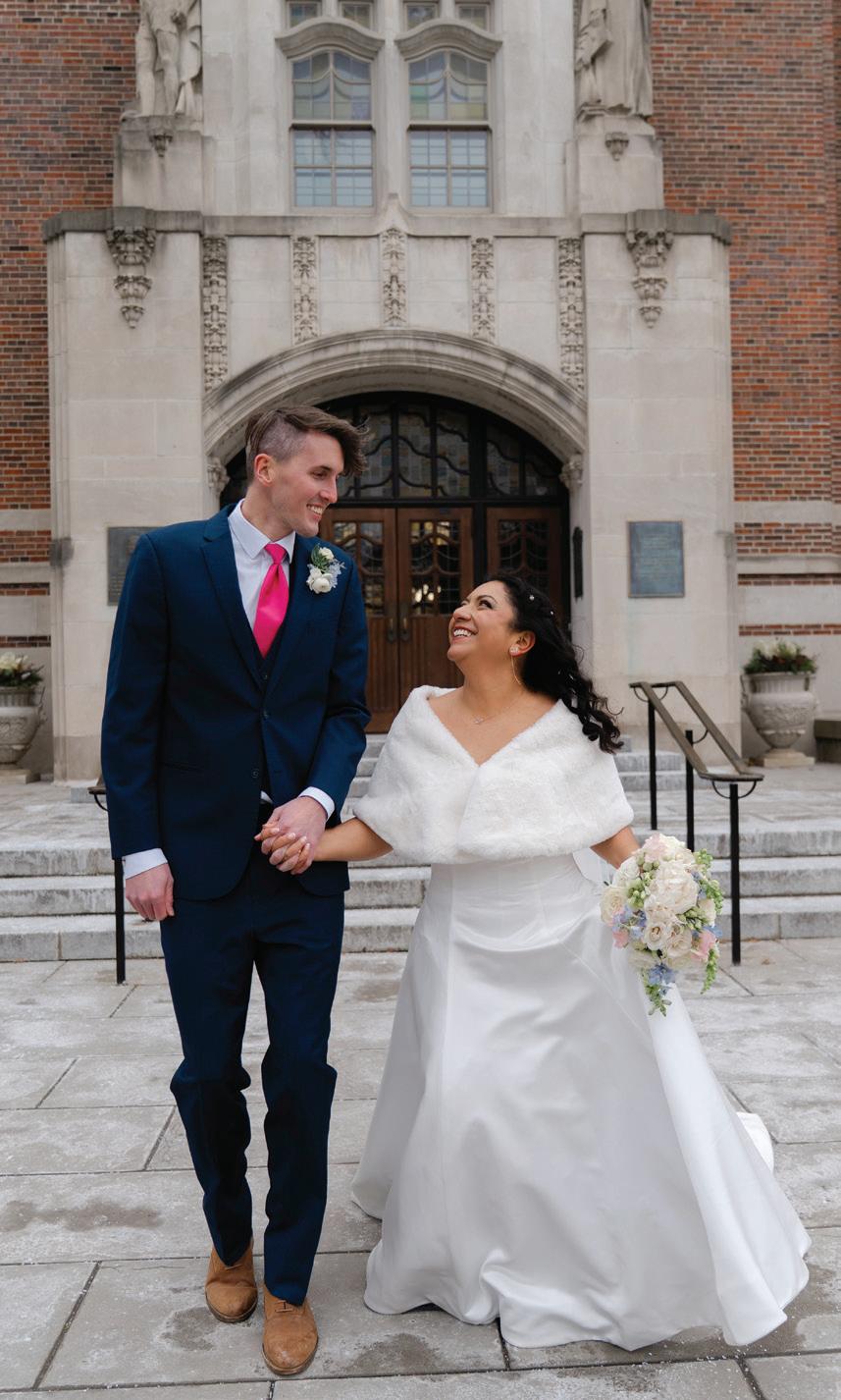
were joined in marriage on December 20, 2025.
Steve Yoo (MDiv) began serving as the College Pastor at Kindred Presbyterian Church (KAPC) in July 2025.
Josh Feil (MDiv) was installed as Minister of the Word and Sacraments at Grace United Reformed Church in Portland following the congregation’s bittersweet farewell to Rev. Steve Oeverman (MDiv, 2024) in July 2025 for his new call in Illinois.
Michael Xu (MDiv) began serving as an intern at Grace Orthodox Presbyterian Church (OPC) in Columbus, OH in October 2025 and has since begun a Chinese worship service and a weekday Chinese fellowship, in addition to participating in many missionary outreach activities to local Chinese people.
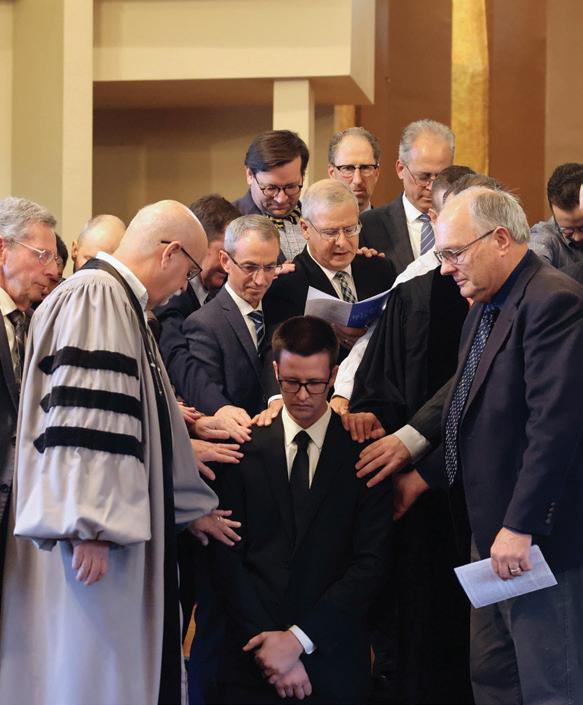
Seth Adams (MDiv) was ordained in the Siouxlands Presbytery of the Presbyterian Church in America (PCA) on February 8th after passing his ex-
ams in January. He has been serving as a campus minister with Reformed University Fellowship (RUF) at North Dakota State University (NDSU) since June 2025.
Koos Hagg (MDiv) was ordained in the South Coast Presbytery of the Presbyterian Church of America (PCA) on March 22, 2026.
Ben Phelps (MDiv) and his wife, Emma, welcomed their son, Soren Collings Phelps, on December 26, 2025. In addition, Ben sustained his candidacy exam at the Southwest Classis of the United Reformed Churches in North America (URCNA) in September 2025 and began serving as a pastoral intern at Zeltenreich Reformed Church in November 2025.
Jared Pine (MDiv) was ordained as a Minister of Word and Sacraments in the URCNA on January 17, 2026 at Christ Reformed Church (Anaheim, CA) and is currently engaged in the early work of planting a Spanish-speaking URCNA church in Mexicali.
PRESIDENT OF THE BOARD OF TRUSTEES
Editors note: The Board of Trustees of the seminary recently elected Mr. Roger Swets as their president. Roger has been on the board since May 2004. He is a member of Harvest OPC in Wyoming, MI, and works as a Bond Counsel/Public Finance Attorney in the Grand Rapids area. He and his wife Allison have two children and they live in Alto, MI. We had the opportunity to sit down with Roger and ask him about his time on the board.
How did you first become acquainted with WSC and then ultimately become a board member?
I first learned about WSC as a young boy when my father, who was a pastor, would take me along to conferences where I heard Dr. W. Robert Godfrey speak many times. Dr. Godfrey made a tremendous impression on me and I have been a supporter of the seminary ever since. I first visited the seminary when two of my college roommates, Rev. C.J. den Dulk and Rev. Tom Groelsema, went on to attend the seminary. It was much warmer in Escondido than it was at the University of Michigan in the wintertime, so I took advantage and made several trips to visit them! I supported the seminary over the years, and had the privilege of being asked to serve on the board in approximately 2005 and I have considered it a great privilege to serve a number of terms on the board for the past 20 years.
"
of the seminary and is ultimately a key part of insuring that the seminary remains faithful to the Scriptures and the Reformed Confessions which define the seminary’s mission. In my time on the board, the seminary has been richly blessed by faithful donors who have provided the resources the seminary needs to prosper in its mission and it is a great responsibility to make sure their gifts are used wisely. It is also a critical function of the board to work together with the faculty and the administration
the cause of the gospel. In the 20 plus years I have served on the board, I have witnessed countless graduates go out to serve the churches and the Christian community. When I have the opportunity to sit under the preaching of one of our graduates, or to see a graduate teaching in a school or university, or otherwise ministering to or counseling others, I am filled with such gratitude for WSC.
When I have the opportunity to sit under the preaching of one of our graduates, or to see a graduate teaching in a school or university, or otherwise ministering to or counseling others, I am filled with such gratitude for WSC. "
to make sure that teaching and ministry of the seminary remains faithful. The Lord has generously provided new professors and administrators to the seminary who have been a great resource in furthering the seminary’s mission into coming decades.
I am also very thankful for WSC’s Global Church Initiative and the response that I see it creating in our student body as they go and reach people all around the world. As I think of the picture we are given of heaven in Revelation 7, where we see countless numbers from every nation, tribe and tongue worshipping the Lamb, I am very grateful to know that WSC is being used by the Lord to fulfill this vision.
What do you see are the primary responsibilities of being a board member of WSC?
While it is a great privilege to serve on the board, it is also a great responsibility. The board has fiduciary oversight over both the financial health and the mission
What do you find is most meaningful in your service on the board?
The most meaningful thing to me about serving on the board is the privilege of seeing the students that the seminary is sending out into the world to further
You have supported student scholarships for many years. What led you partnering with WSC in this way?
In 2002, my wife, Allison, and I began supporting student scholarships at WSC and providing endowed funds to help ensure that this support will live on into the future. You may have heard the
phrase, “if you build it, they will come.” “Building it” is often a focus of capital campaigns and WSC has had very important capital campaigns to create a wonderful campus and the great blessing of residential housing for our students and their families. “Building it,” however, is only part of the picture. In our world where higher education is costly and seminary students are training for ministries which are not high paying careers, scholarship
support is critical in enabling students to come and study at the seminary and so that the students are not forced to turn to student loans to be able to attend seminary. Furthermore, God does not just call students to come serve in the ministry from upper class backgrounds which can afford these costs and part of that calling includes providing the resources to enable students from all backgrounds to come to WSC. Scripture states,
“how are they to hear without someone preaching?” (Rom. 10:14). In light of this, the question that we have asked is, Where do preachers come from? The answer for us has been to do what we can to help students come to WSC where we believe they can receive the best seminary education possible and go out to preach so that we can hear!
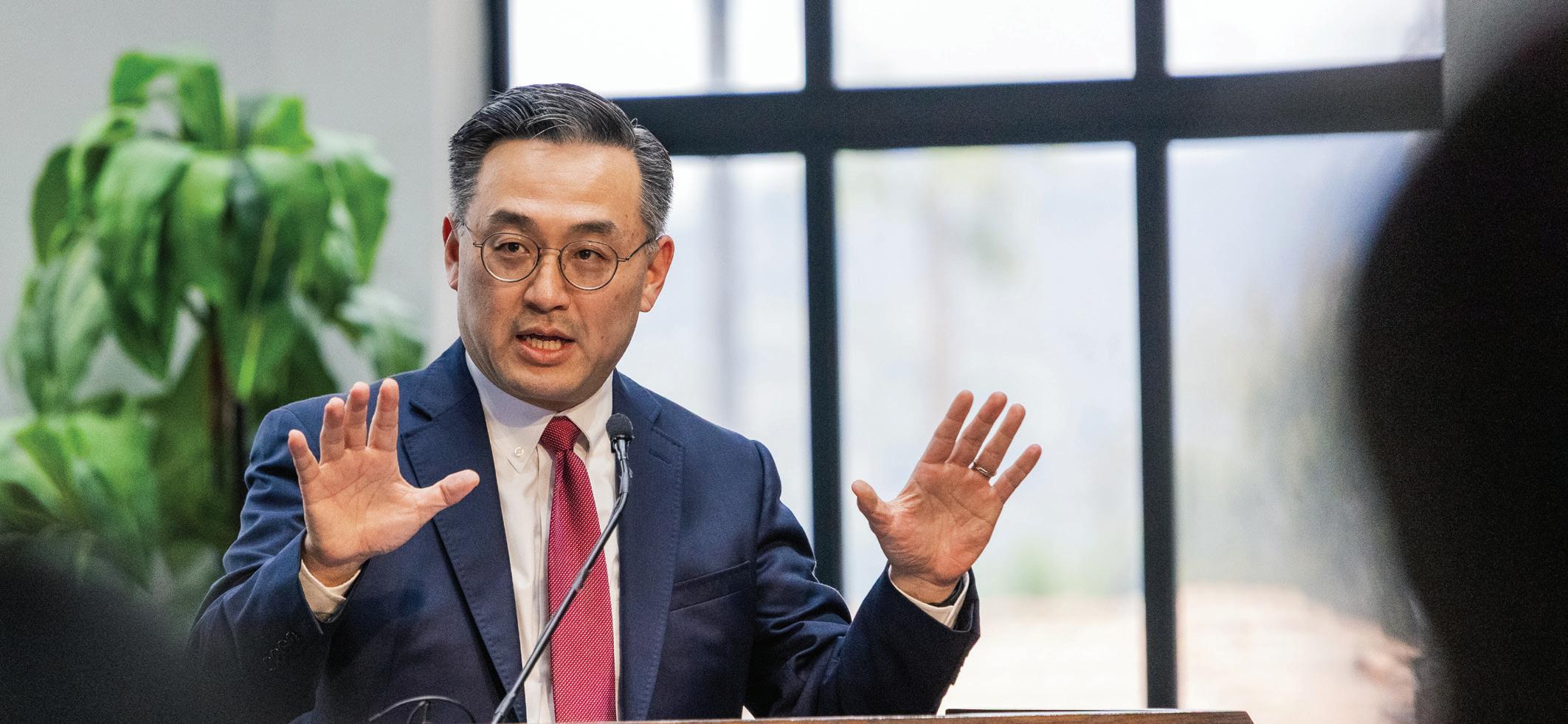
In January, Ligonier Ministries announced President Joel E. Kim as their newest Teaching Fellow, joining men like W. Robert Godfrey, Sinclair Ferguson, and Michael Reeves. Ligonier shared that in various seasons of ministry, the board asks some teachers to take on a more prominent role in advancing the mission. They now welcome President Kim to help Ligonier respond to its accelerating momentum. Ligonier’s teaching fellows serve as ambassadors for the historic Reformed faith, lending their voices and scholarship in service to the church through clear and faithful Bible teaching. President Kim commented, “The teachings of Dr. R.C. Sproul and the ministry of Ligonier have been constant companions in my pastoral and teaching ministries. I am especially grateful for Ligonier’s focus on supplying the global church with sound theological resources, and I
am honored and excited to participate in advancing this mission by serving as a teaching fellow.” WSC is thrilled to see the continued partnership between our two institutions. Pray for him as he undertakes this newest endeavor.
“I am especially grateful for Ligonier’s focus on supplying the global church with sound theological resources, and I am honored and excited to participate in advancing this mission by serving as a teaching fellow.”
The Philippian church is one of Paul's most beloved congregations. In response to their gift while he was imprisoned, the apostle writes this letter filled with life-giving words about Christian fellowship, grounded in a specific word about Christ. Indeed, every word flows in and out of Philippians 2:6–11, the Christological centerpiece that reveals who Christ is and how those who belong to him are to live.
The spiritual life of Westminster Seminary California is nurtured by Morning Devotions on Tuesdays and Thursdays. All devotional exercises are governed by the Word of God, which remains the true guide in Christian Worship and prayer, as well as in all other activities of the Christian life and life on campus.
LISTEN TO OUR PHILIPPIANS CHAPEL SERIES!
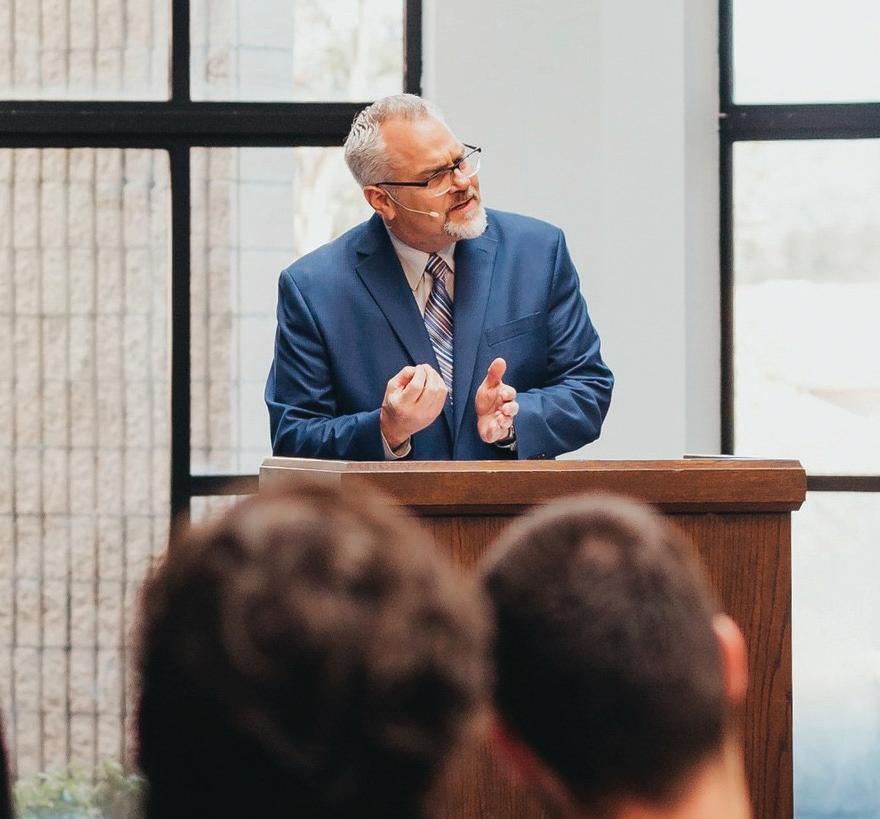
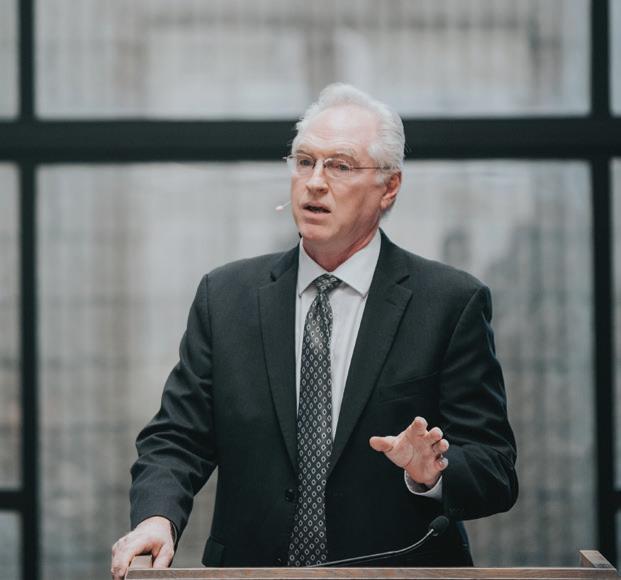

"We walk in humility as He walked in humility.... This is the winsome witness by which the Kingdom goes forth, by which the Gospel goes to the ends of the earth."
dr. jason w. barrie
"God is at work in you. Not just to do the right things, but to desire them."
dr. a. craig troxel
MAY
17 | President Joel E. Kim preaches at New Life Presbyterian Church of Orange County KPCA (Fullerton, CA)
17 | Dr. David VanDrunen preaches at the Taiwanese Lutheran Church of San Diego (San Diego, CA)
21 | Dr. Craig Troxel speaks at the OPC Ministerial Training Institute at the First Church of South Holland OPC (South Holland, IL)
22-24 | President Joel E. Kim speaks at conference at Yuong Sang KAPC (Horsham, PA)
24 | Dr. David VanDrunen preaches at Corona Presbyterian Church OPC (Corona, CA)
31 | Dr. Bryan Estelle preaches at Harvest OPC (San Marcos, CA)
JUNE
21 | Dr. David VanDrunen preaches at Thousand Oaks OPC (Thousand Oaks, CA)
27-30 | Dr. Craig Troxel speaks and preaches at the Evangelical and Reformed Family Conference at the Skogheim Conference Centre (South Africa)
28 | Dr. Brad Bitner preaches at London City Presbyterian Church (London, England)
28 | Dr. David VanDrunen preaches at the Taiwanese Lutheran Church of San Diego (San Diego, CA)
"God isn't waiting for us to have an experience to appropriate the gospel. Rather while we're dead, the Gospel is proclaimed by Christ to regenerate us."
dr. michael s. horton
1 | Dr. Craig Troxel speaks and preaches at the Evangelical and Reformed Family Conference at the Skogheim Conference Centre (South Africa)
6-10 | Dr. Craig Troxel lectures at Mukhanyo Theological College (Pretoria, South Africa)
12 | Dr. David VanDrunen preaches at Bayview OPC (Chula Vista, CA)
19 | Dr. David VanDrunen preaches at North Park PCA (San Diego, CA)
26 | Dr. David VanDrunen preaches at North Park PCA (San Diego, CA)
AUGUST
2 | Dr. David VanDrunen preaches at North Park PCA (San Diego, CA)
14-15 | Dr. David VanDrunen speaks at the Canon and Creed Conference (Sydney, Australia)
19 | Dr. David VanDrunen speaks at The Ferrie Lecture at Christ College (Sydney, Australia)
26 | Dr. David VanDrunen lectures at Adelaide University School of Law (Adelaide, Australia)
SEPTEMBER
13 | President Joel E. Kim preaches at Wintersburg Presbyterian Church EPC (Santa Ana, CA)
18-19 | Dr. David VanDrunen presents a paper at the Reason, Revelation, Reclamation, and Responsibility: Equipping the Church’s Public Witness with Natural Law Symposium at Southern Baptist Theological Seminary (Louisville, KY)
BRIONES
Review of Paul and Philosophy: Selected Essays, by Troels Engberg-Pedersen. Review of Biblical Literature.
“2 Corinthians.” In Commentary on the New Testament Use of the Old Testament, 2nd ed., edited by Greg K. Beale and D. A. Carson. Baker Academic, 2026. (Revised and updated from Peter Balla.)
“Theology at Work: A Pauline Vision of Vocation.” Reformed Faith & Practice 10, no. 2 (Fall 2026).
CLARK
“Social Trinitarianism Is Not a Bonanza for Catholic Christians.” In A Faithful Steward: Essays in Honor of Richard C. Barcellos, edited by James P. Butler et al. Broken Wharfe, 2026.
ESTELLE
Review of The Wisdom of the Aramaic Book of Ahiqar: Unravelling a Discourse of Uncertainty and Distress, by Seth A. Bledsoe. Review of Biblical Literature, 2021.
VANDRUNEN
Review of The Crisis of Civil Law: What the Bible Teaches about Law and What It Means Today, by Benjamin B. Saunders. Australian Journal of Law and Religion 6 (2025): 92–94.
Review of Hopeful Realism: Evangelical Natural Law and Democratic Politics, by Jesse Covington, Bryan T. McGraw, and Micah Watson. Journal of Church and State 68, no. 1 (Winter 2026).
“Psalm 119 Isn’t 176 Independent Statements.” The Gospel Coalition. January 2026.
“The Law as Mosaic Covenant? A Review Article of T. David Gordon on Galatians and Romans.” Ordained Servant. January 2026.
“What Exactly Does Infant Baptism Mean?” New Horizons. (January 2026): 3–4.
“Christian Sexual Ethics Between the Ages.” The Gospel Coalition. March 2026.
Review of Christian Natural Law and Religious Freedom: A Foundation Based on Love, the True, and the Good, by Alex Deagon. Ordained Servant. April 2026.
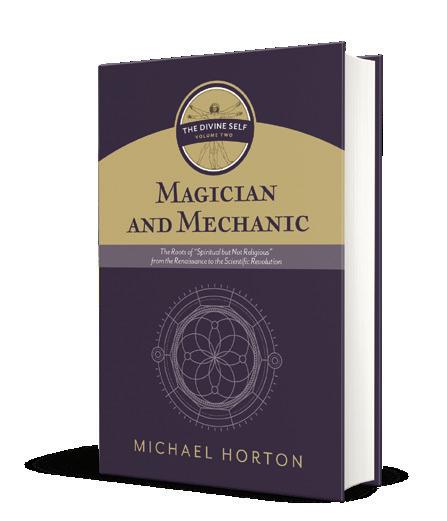
Magician and Mechanic occupies an important place in a monumental three volume study of the divine self. The first volume surveys antiquity through the late Middle Ages; the third volume (forthcoming) will span the eighteenth century through the present day. When the series is complete, The Divine Self will stand as the authoritative guide to the “spiritual but not religious” phenomenon in Western culture.
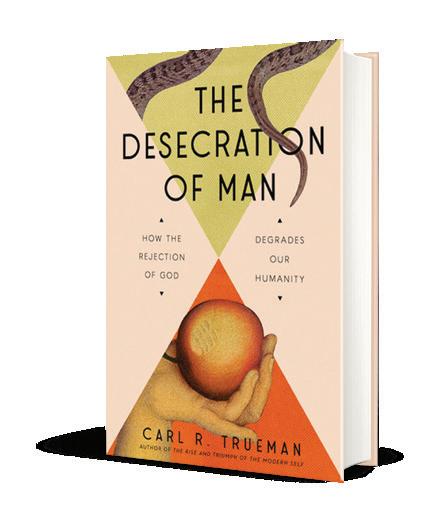
In The Desecration of Man, Carl Trueman (who has served as a Visiting Professor at WSC) argues that modern man’s crisis of meaning stems from a rejection of a simple fact—that he was made in the image of God. Unmoored from the basic moral fact that secures human dignity, we violently disrespect our own minds and bodies through abortion, pornography, casual sex, gender transitions, and more—and in this disrespect we blaspheme against God himself, with devastating practical and spiritual consequences.
Dr. Horton recently sat down with Dr. Trueman to discuss their latest books on the Sola Media podcast, "Know What You Believe".
Watch the interview on YouTube!
Why the Modern World Is at War with Human Nature - Carl Trueman and Michael Horton
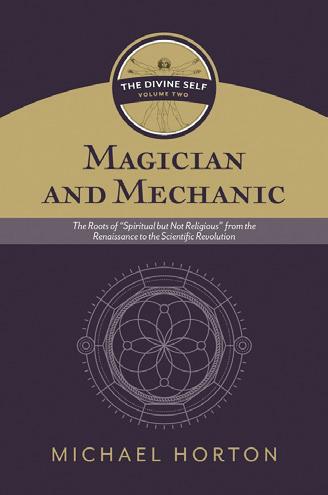
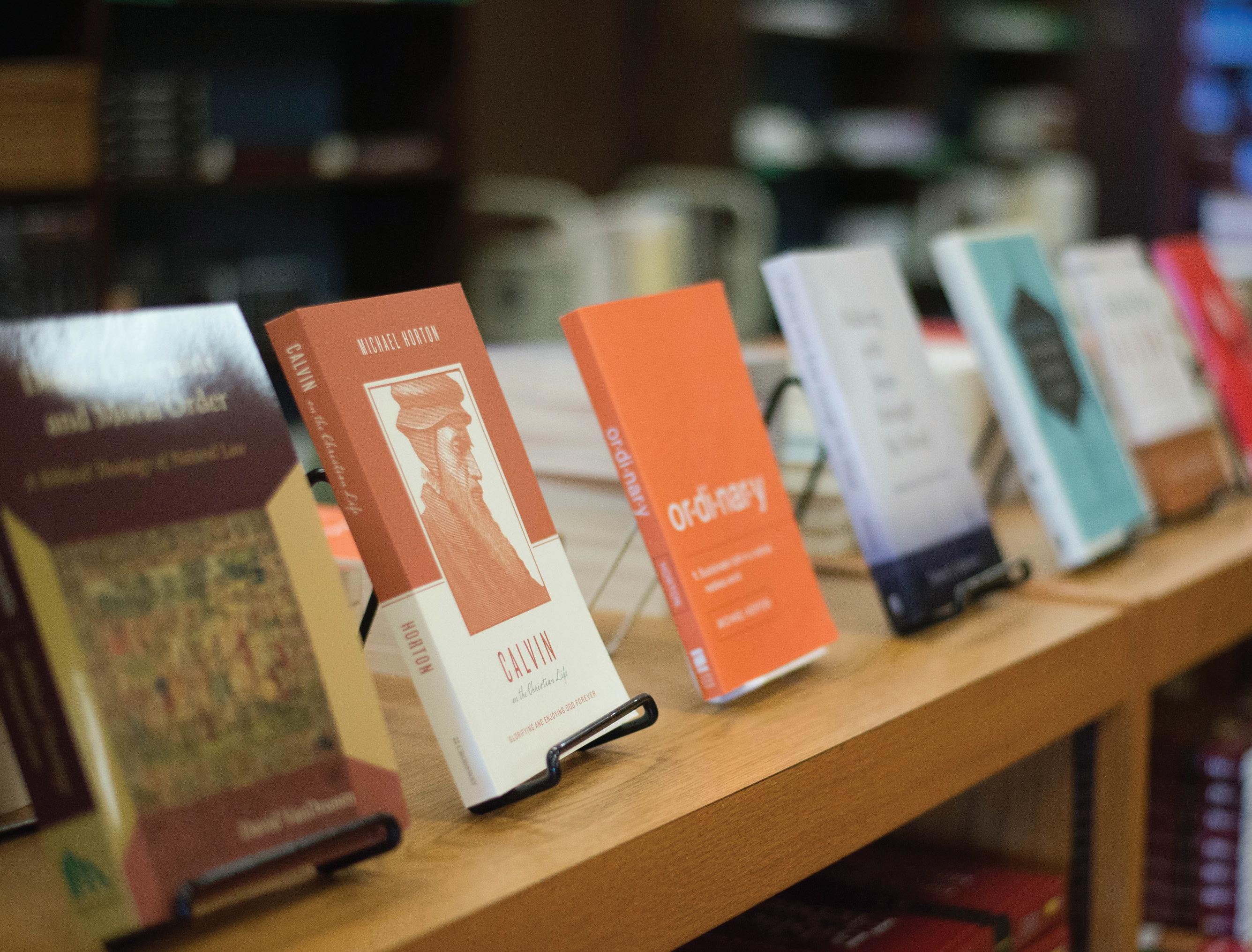
Magician and Mechanic
The Roots of "Spiritual but Not Religious" from the Renaissance to the Scientific Revolution by Michael S. Horton (Eerdmans, 2026)
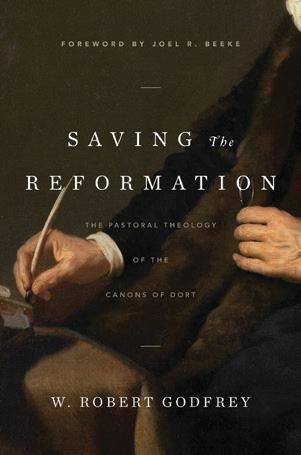
Saving the Reformation
The Pastoral Theology of the Canons of Dort by W. Robert Godfrey (Reformation Trust Publishing, 2019)
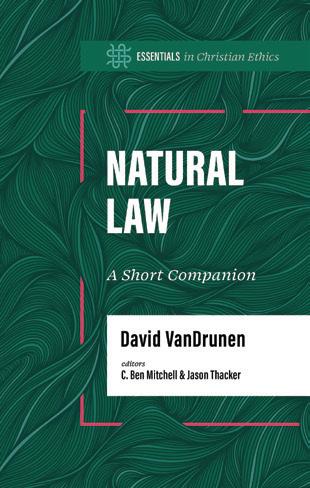
Natural Law
A Short Companion by David VanDrunen (B&H Academic, 2023)
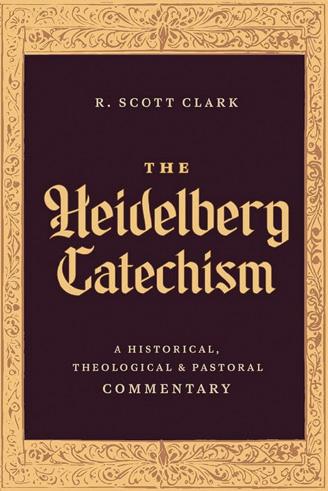
The Heidelberg Catechism
A Historical, Theological & Pastoral Commentary by R. Scott Clark (Lexham Press, 2025)
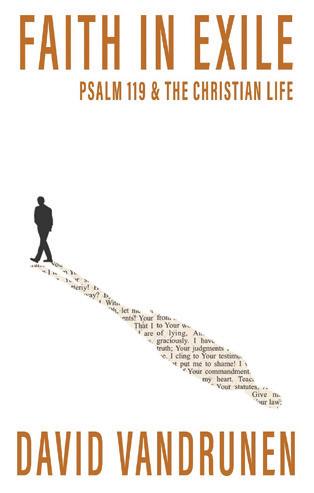
Faith in Exile
Psalm 119 & The Christian Life by David VanDrunen (Christian Focus Publications, 2025)
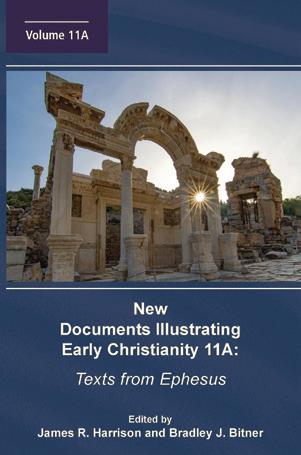
New Documents Illustrating Early Christianity 11A
Texts from Ephesus Co-edited by Bradley J. Bitner (Eerdmans Publishing, 2024)
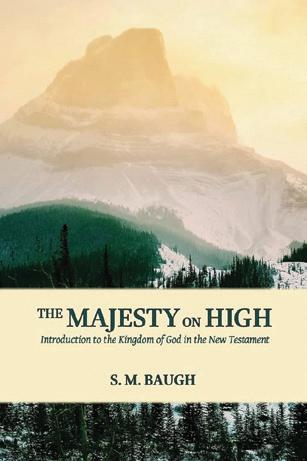
The Majesty on High Introduction to the Kingdom of God in the New Testament by S. M. Baugh (CreateSpace Independent Publishing Platform, 2017)
Justification
2-Volume Series, New Studies in Dogmatics by Michael S. Horton (Zondervan, 2018)
Shaman and Sage
The Roots of "Spiritual but Not Religious" in Antiquity by Michael S. Horton (Eerdmans, 2024)
Perfect Priest for Weary Pilgrams by Dennis E. Johnson (Crossway publishing, 2024)
Learning to Love the Psalms by W. Robert Godfrey (Reformation Trust, 2017)
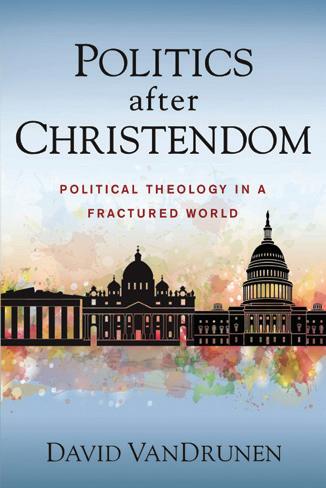
Politics after Christendom
Political Theology in a Fractured World by David VanDrunen (Zondervan, 2020)
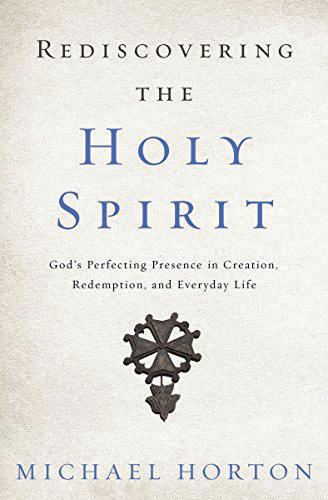
Rediscovering the Holy Spirit
God's Perfecting Presence in Creation, Redemption, and Everyday Life by Michael S. Horton (Zondervan, 2017)
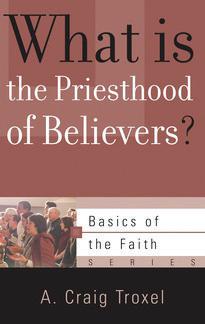
What is the Priesthood of Believers?
Basics of Faith Series by A. Craig Troxel (P&R, 2019)
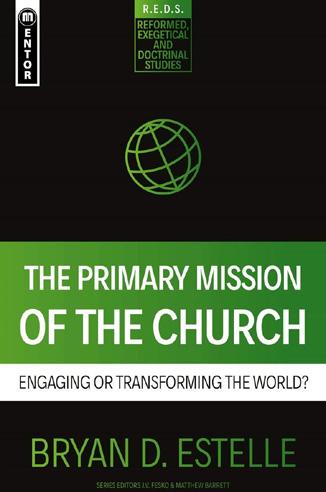
The Primary Mission of the Church Engaging or Transforming the World? by Bryan D. Estelle (Mentor, 2022)
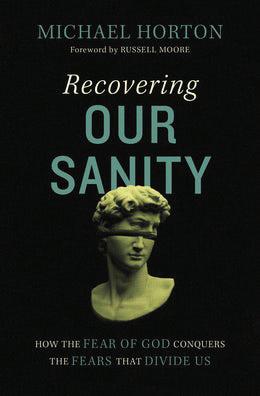
Recovering Our Sanity
How the Fear of God Conquers the Fears that Divide Us by Michael Horton (Zondervan, 2022)
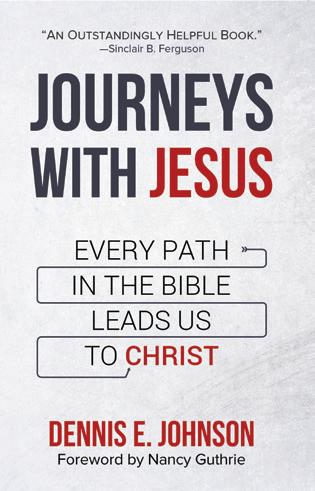
Journeys with Jesus
Every Path in the Bible Leads Us to Christ by Dennis E. Johnson (P&R, 2018)
Mrs. Doris Bergsma
Mr. and Mrs. Robert H. Buikema
Dr. Kelley Lovelace
Mrs. Diann Otten
Dr. Richard W. Bishop III
Mrs. Diane B. Bishop
Rev. Dr. R. Scott Clark
Rev. and Mrs. Robert M. Godfrey
Mr. and Mrs. Henry Doorn II
Dr. and Mrs. Richard W. Bishop III
Mr. and Mrs. Arnold H. Veldkamp
Mr. and Mrs. Richard A. Haan
Rev. Dr. and Mrs. W. Robert Godfrey
Mr. and Mrs. Richard A. Haan
Ms. Joan Heinen
Ms. Sandra J. Nonhof
Rev. Drew Hoekema
Dr. and Mrs. Jerome W. Bentz
Rev. Joel E. Kim
Rev. and Mrs. John C. Kong
Mr. and Mrs. Clyde P. Lems
Mr. and Mrs. Christopher J. Kuperus
Rev and Mrs. Chool Sun Suh
Rev. and Mrs. Sam Sun Suh
Rev. and Mrs. Charles and Michele Tedrick
Anonymous
Dr. and Mrs. Gregory L. Weigler
Mr. Tom Ball
Mr. and Mrs. Alex Watson-Wong
Mrs. Tammy Bennetts
Mrs. Debbie Denboer
Mr. John Boer
Rev. and Mrs. John Bales
Mrs. Debbie Denboer
Rev. Dr. and Mrs. W. Robert Godfrey
Ms. Rachel Kats
Mr. and Mrs. Arlan Memmelaar
Mrs. Mary Vanderbyl
Mr. Adam (Chau-Dung) Chang
Mrs. Su-Yin Chang
Dr. Robert G. den Dulk
Dr. Richard B. Gaffin, Jr.
Ms. Patty Gonzalez
Mr. Shawon Ybarra
Mrs. Trudy Goedhart
Mr. Ben Goedhart
Mr. Luke Kim
Rev. Emmanuel J. Kim
Mrs. Rachel Marie Lamfers
Rev. and Mrs. Michael J. Schout
Mrs. Mari MacVey
Rev. and Mrs. Robert M. Godfrey
Rev. William C. Godfrey
Mr. Alan Mallernee
Mr. and Mrs. Alex Watson-Wong
Mrs. Eleanor (Ellie) Maloney
Ms. Sandra J. Nonhof
Rev. Melvin B. and Mrs. Irene A. Nonhof
Mr. Murray L. Nonhof
Ms. Sandra J. Nonhof
Mr. Arnold Pretz Sr. and Mrs. Malinda
Jane Pretz
Ms. Sandra J. Nonhof
Has someone touched your life is a special way?
Gifts Received from October 21, 2025 through March 30, 2026
Mrs. Jane E. Prins
Mr. and Mrs. Jacob E. Brouwer
Rev. and Mrs. Dale A. Van Dyke
Mr. Arie Roest
Mrs. Thelma Roest
Mrs. Mary Jane Scherer
Mr. and Mrs. Alex Watson-Wong
Mr. Stephen M. Schout
Rev. and Mrs. Michael J. Schout
Mrs. Edith Schulz
Mr. John Hunt
Rev. Dr. Robert B. Strimple
Dr. Richard B. Gaffin, Jr.
Rev. and Mrs. Jae Sung Suh
Rev. and Mrs. Sam S. Suh
Mr. Jubilant Sykes
Ms. Sandra J. Nonhof
Mr. Gregory J. Tucker
Rev. Dr. and Mrs. Joshua Van Ee
Dr. James Urish
Anonymous
Mr. Andy Van Die
Rev. and Mrs. John Bales
Mr. and Mrs. Glen Brouwer
Mr. and Mrs. Koos Brouwer
Mrs. Debbie Denboer
Mr. and Mrs. Henry Doorn II
Mr. and Mrs. Lyle Faber
Mr. and Mrs. Stephen Gilmour
Rev. Dr. and Mrs. W. Robert Godfrey
Rev. and Mrs. Joel E. Kim
Mr. and Mrs. Arlan Memmelaar
Mrs. Mary Vanderbyl
Mr. Anthony Vander Stelt
Mr. and Mrs. Henry Doorn II
Mr. Earl Voskuil
Mr. and Mrs. James W. Onnink
Now you can remember that special someone through a tribute gift. Give now at wscal.edu/give or call
760-480-8474 ext. 102
HONORARIUM GIFTS provide an opportunity for you to celebrate a special occasion like an anniversary or birthday, wedding or graduation, to recognize an outstanding achievement, or simply to show your appreciation to that special friend, colleague, or loved one.
MEMORIAL GIFTS provide an opportunity to express sympathy to a family who has lost a loved one. The dictionary defines memorial as "something designed to keep rememberance alive."

Compared to other donor-advised funds, supporters of Westminster Seminary California often choose the Stewards Fund because of:
• Aligned Values. Grants can be made to both Christian and secular charities, so long as they are not in conflict with Barnabas Foundation’s published statements of Christian faith, principles and values.* Furthermore, you can issue grants to faith-led ministries that some secular foundations and donoradvised funds will no longer allow you to support.
• Customer Service. Real, “live” people are available to answer your calls and emails. They will quickly respond to your questions or concerns.
• Cost-Effective. There are no hidden fees and no required minimum balance to maintain after your initial gift of $10K or more.
*Learn more at BarnabasFoundation.org.
To learn more about setting up your Stewards Fund account, contact Westminster Seminary California at info@wscal.edu or call 760-480-8474.
Christian Values. Exceptional Service. Streamlined Giving. Streamline and simplify your tax-efficient giving!
Through the Stewards Fund (a donor-advised fund), you can give cash, stock, real estate, business interests or other appreciated assets into a single charitable giving account. Then, request grants be made to Westminster Seminary California and the other causes close to your heart.
Receive an immediate tax deduction at the time of your contribution. Then, at the time that works best for you, advise how you wish your gifts to be distributed.
Simplify your giving and record-keeping to Westminster Seminary California and all your favorite ministries by giving cash, stock or other appreciated assets into a single giving account.
Barnabas Foundation will manage and liquidate your non-cash asset gifts for the benefit of your favorite causes.
You can choose to make any or all grants anonymously.
Gifts that should NOT be contributed into the Stewards Fund: gifts from an IRA; securities held less than a year; securities or property that have declined in value since acquired.