The Hayward Area Recreation & Park District thanks the elected officials and public agency representatives who participated in the creation of this Parks Master Plan, including those listed below.
Louis M. Andrade, Board Member
Rick Hatcher, Board Member
Paul Hodges, Board Member
Minane Jameson, Board Member
Carol A. Pereira, Board Member
Kerri Ely, Recreation Superintendent
Paul McCreary, General Manager
Chris Peterson, Parks & Facilities Maintenance Director
Meghan Tiernan, Capital Planning & Development Director
James Wheeler, Recreation, Arts and Community Services Director
Karl Zabel, Operations & Development Supervisor
Ana Alvarez, East Bay Regional Park District
Stacey Bristol, Interim Director of Development Services, City of Hayward
Sara Buizer, Planning Manager, City of Hayward
Ginny DeMartini, Office of Alameda County Supervisor Richard Valle (District 2)
Barbara Halliday, Mayor, City of Hayward
Michelle Koo, Landscape Architect, City of Hayward
Kelly McAdoo, City Manager, City of Hayward
Marty Neideffer, Alameda County Sheriff’s Office
Karina Rivera, Office of Alameda County Supervisor Wilma Chan (District 3)
Pam Russo, HARD Foundation
Jill Stavosky, Citizens Advisory Committee
Ashley Strasburg, Citizens Advisory Committee
Matt Turner, Office of Alameda County Supervisor Nate Miley (District 4)
Most importantly, we thank the community members who bring life to our parks, and to whom we are devoted to serve.


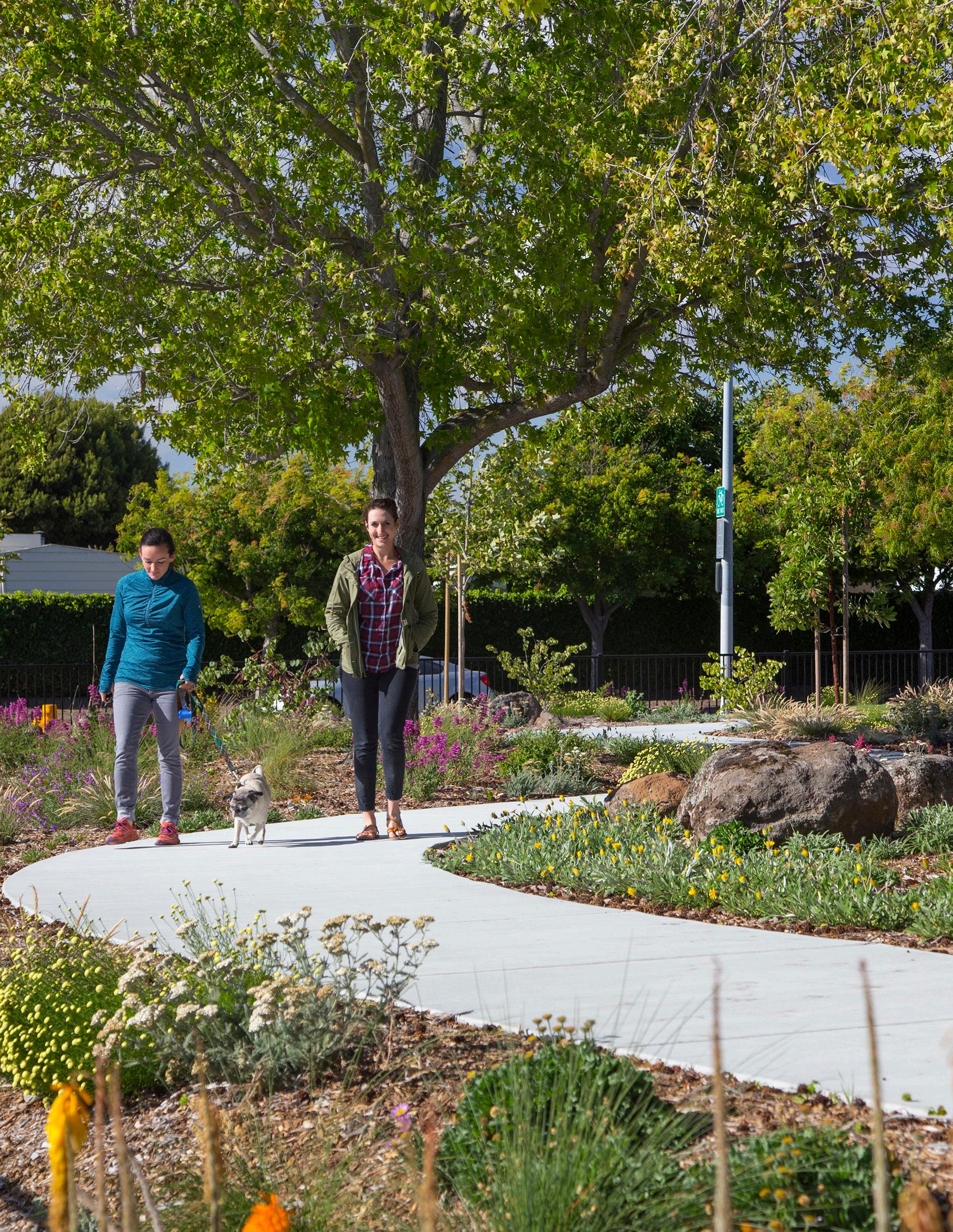
The HARD Parks Master Plan lays the groundwork for enhancing the parks and recreation system. This chapter describes the District’s setting and history and why parks and recreation are vital to the community’s well-being. It summarizes the key issues facing the District and the Master Plan’s goals and recommendations, and orients the reader to the rest of the document.
HARD’s park system includes 104 sites covering about 1,357 acres.
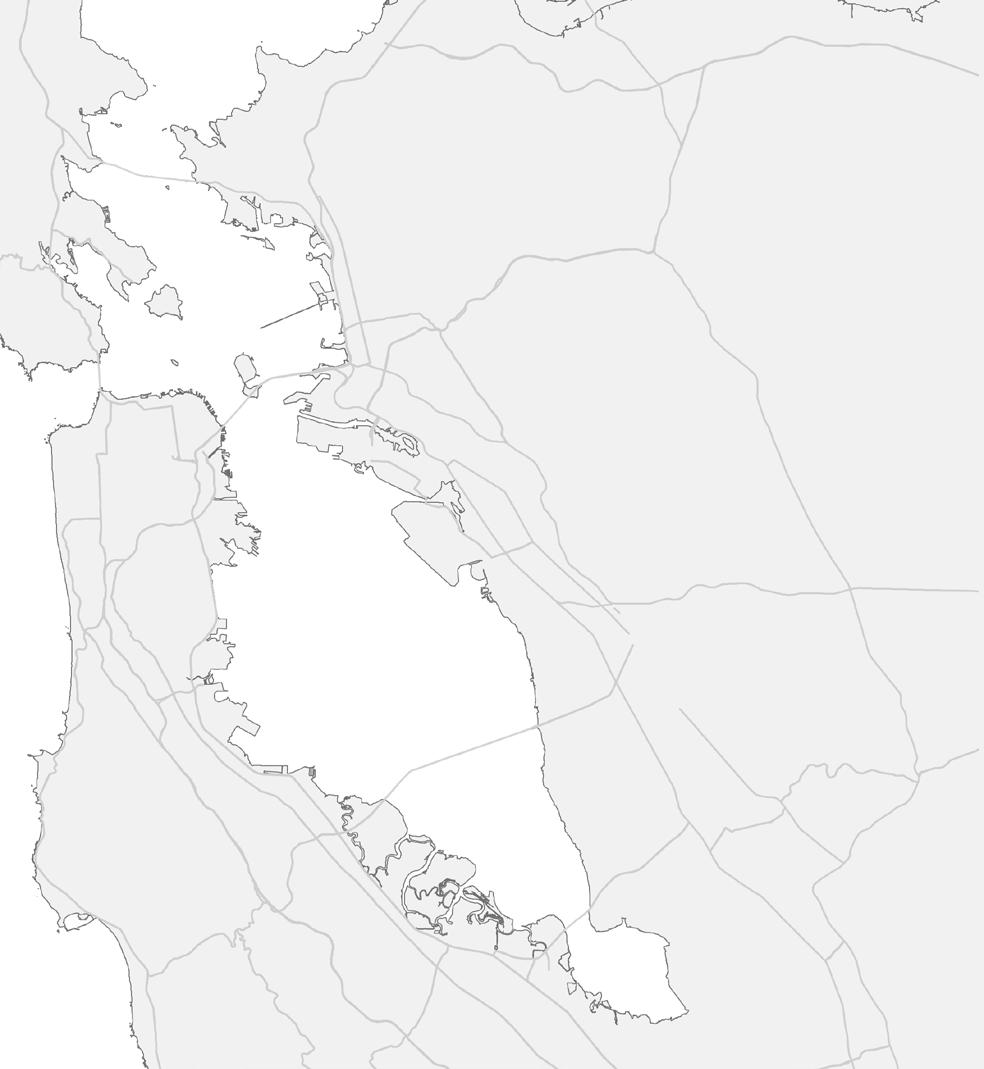
The Hayward Area Recreation and Park District (HARD) encompasses 104 square miles in Alameda County, with a mix of urbanized areas and protected regional open space. The District is located about 14 miles south of Oakland and 26 miles north of San Jose, stretching from the San Francisco Bay shoreline into the East Bay hills.
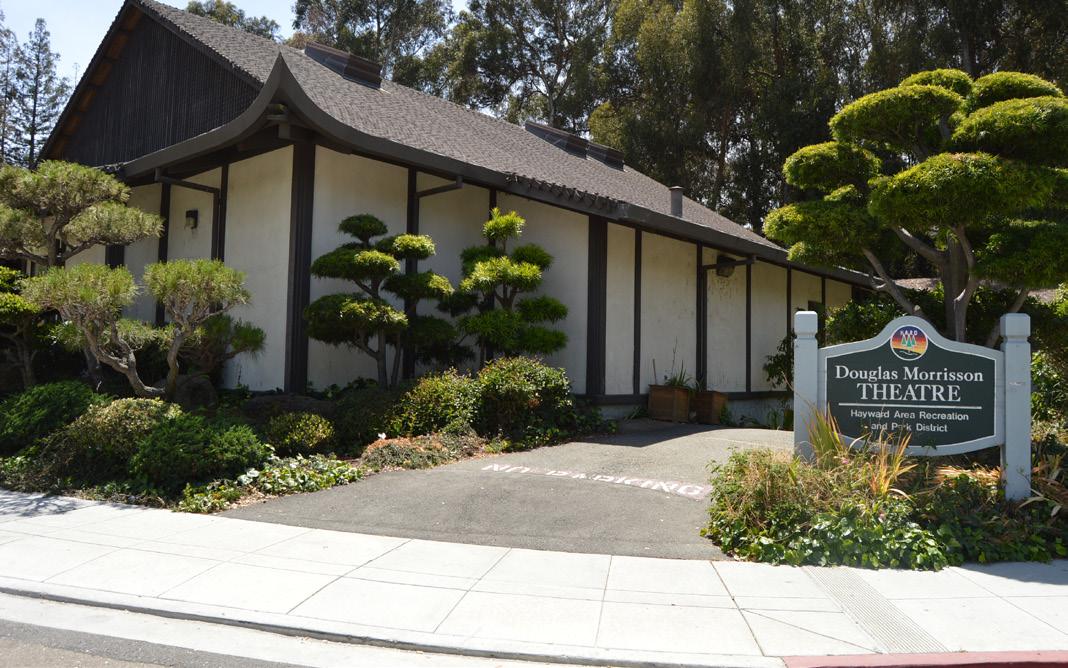
HARD’s park system includes some 104 sites covering 1,357 acres. The system includes local and community parks, school recreation sites, aquatic centers, golf courses, and other special facilities as diverse as the Hayward Shoreline Interpretive Center, Hayward Japanese Gardens, The Douglas Morrisson Theater, Sulphur Creek Nature Center, and the Rowell Ranch Rodeo Park. The District offers an array of programs including after-school programs, camps, arts classes, fitness classes, sports, and classes for seniors.
HARD provides park and recreation services to the City of Hayward and the unincorporated areas of Ashland, Castro Valley, Cherryland, Fairview, and San Lorenzo. Just over half (53 percent) of the population is in Hayward, with the remainder in Castro Valley (21.5 percent), San Lorenzo (8.5 percent), Ashland (8.3 percent), Cherryland (5.2 percent), and Fairview (3.7 percent.) An extensive network of freeways and bus lines, as well as three Bay Area Rapid Transit (BART) stations (Hayward, South Hayward, and Castro Valley), Amtrak and Greyhound serve the District.
The District contains a diverse group of urban and suburban areas. From turn-of-the century Victorians and Craftsman homes to 1960s apartments, 1980s subdivisions, and contemporary transit-oriented
development, the District includes a wide range of housing. Downtown Hayward has been the focus of higher-density development and revitalization, while the area west of I-880 is a major employment area for the larger region. Much of the future development within HARD’s jurisdiction is expected to occur in the Priority Development Areas (PDAs) identified by the City of Hayward. A smaller amount of development is projected for the unincorporated areas. Growth in the coming years will provide a greater diversity of housing types on increasingly scarce land, while contributing to walkable areas near transit. Infill development will also continue to take place in small pockets throughout the District’s urbanized communities.
The District has a diverse population. As of 2016, Latinos or people of Hispanic origin made up an estimated 37 percent of the population, with Asians, non-Hispanic Whites, and African Americans all well-represented.1 This cultural diversity extends throughout the District.
This setting provides unique opportunities and challenges for meeting current and future parks and recreation needs. The District will continue to face a growing demand for outdoor experiences including trail and bikeway opportunities, community facilities and recreational programming for all age groups. As new development areas are planned and built, the District will work with agency partners to promote park development, preservation of open space, and affordable recreation services for the full spectrum of our community.
In 1944, representatives of the City of Hayward, local school districts and civic organizations proposed the establishment of the Hayward Area Park, Recreation and Parkway District. When an initiative was placed on the ballot, residents voted overwhelmingly for the creation of this Special District, with the established purpose of providing recreation facilities and services for the residents of Hayward and the unincorporated areas around it. The District began operating in 1945.
Since 1958, HARD has been led by a five-member Board of Directors. Directors are elected to four-year terms. Board members govern HARD independently within the limits provided by the State’s constitution and laws for Special Districts. The Board determines the types of services to provide, sets policies and enacts regulations, and has the ability levy taxes to support operations and sell bonds to finance capital improvements. The Board sets policy on all matters relative to budgets, acquisitions, development, improvement, and maintenance of park and recreation facilities and programs.
At first, the District offered recreation programs at school playgrounds for the 43,125 residents of its community. The District’s offerings have grown tremendously over the years, as the District came to
1. US Census American Community Survey, 2012-16.
develop and manage its own parks and expand its recreational programming to reach a broader and increasingly diverse service population. Today HARD’s Board of Directors governs over 100 facilities and 1,360 acres of parkland serving nearly 300,000 residents. The District has been instrumental in bringing green space and recreation opportunities to Hayward and the unincorporated communities of Ashland, Castro Valley, Cherryland, Fairview and San Lorenzo. However, it has faced an uphill climb because much development occurred before the Quimby Act. Hayward was established in the 1880s, long before the District existed. Between 1940 and 1960, Hayward’s population exploded, growing from 6,736 to 72,700. Castro Valley grew from 4,145 to 32,975 over the same period. San Lorenzo, Ashland and Cherryland all began their growth trajectories in the immediate postwar years. During this time of dramatic growth in the area, HARD was getting off the ground, but had not fully established the capacity to acquire and develop adequate park land. The parks deficit dating to these early decades was especially pronounced in the unincorporated parts of the District, where Alameda County required limited parkland dedication prior to Quimby.
HARD’s Board of Directors adopted the District’s first Master Plan in 1958. The Plan has been periodically updated to reflect changes and address emerging needs, with updates adopted in 1967, 1974, 1990, and 2006. This 2019 Parks Master Plan represents the fifth update in a continuum in the planning processes that the District has used to effectively represent its constituents.
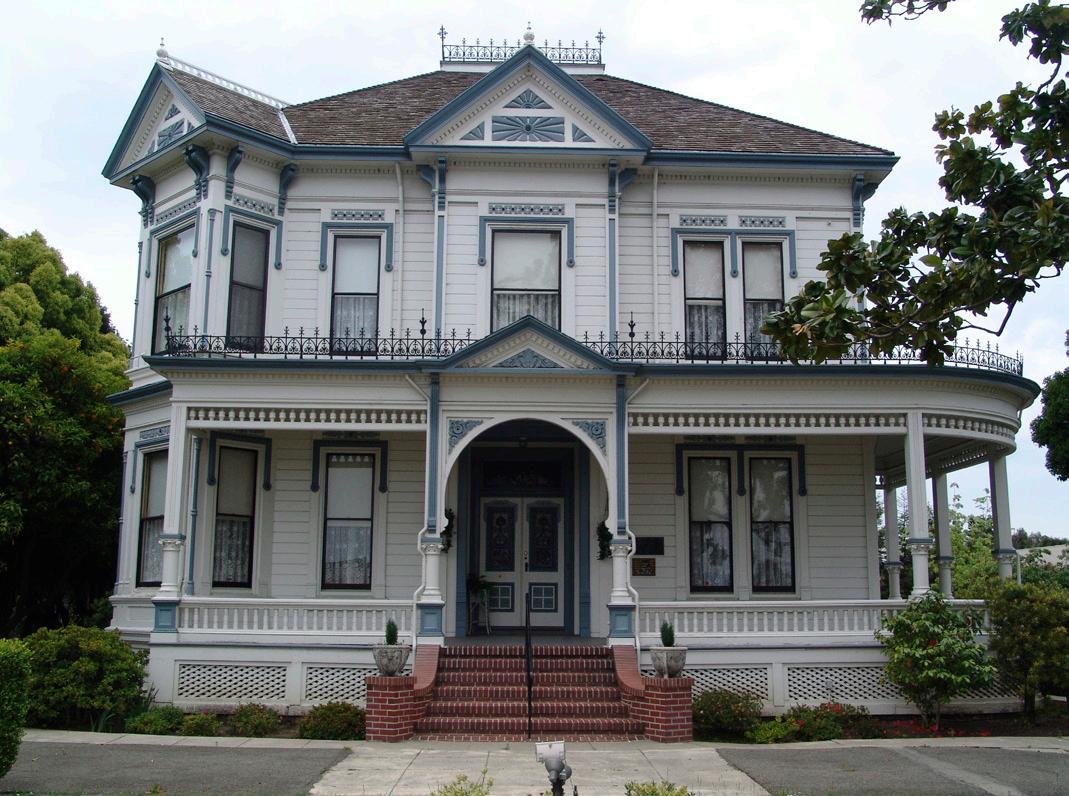
Top: The McConaghy House, built in 1886, dates to Hayward’s early days. Today it is owned by HARD and operated by the Hayward Area Historical Society.
Source: HARD.
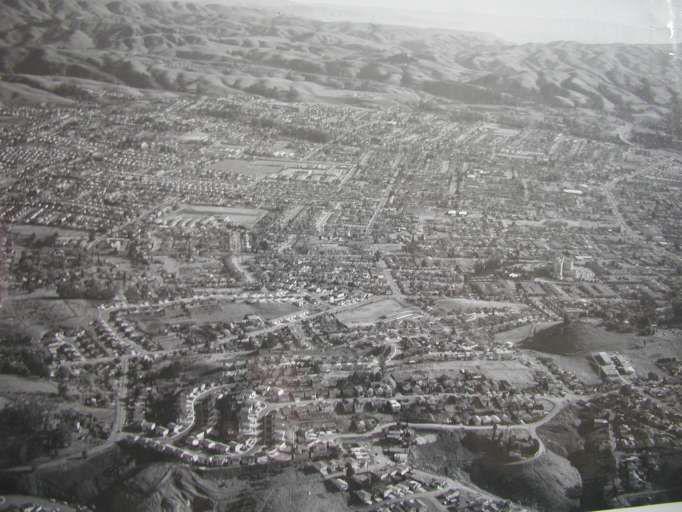
Bottom: Hayward and neighboring communities grew rapidly following World War II.
Source: www.mycastrovalley.com
Why do we need parks? What value does a recreation system provide? These are essential questions for us to reflect on as we embark on a new plan. There may be many responses to these questions. We start with a reflection on parks’ contribution to community health, community “cohesion,” providing a connection with the natural world, better air and water quality, and the way quality of life benefits translate to dollars and cents.
The Center for Disease Control and Prevention, along with other federal, state, and non-profit organizations, including the Trust for Public Land (TPL), the Robert Wood Johnson Foundation, and the National Recreation and Park Association (NRPA), have thoroughly documented the link between having access to places for physical activity and improved physical and mental health.
A good parks system increases opportunities for physical activity—and reduce the risk of chronic disease while improving brain function like learning and memory. Parks and recreation give people of all ages opportunities to walk, play, exercise, and participate in sports These activities promote not just physical fitness but also self-confidence and happiness. Parks can improve concentration for children with attention deficit disorder, enhance relaxation, and promote self-esteem and resilience.
The value of parks also encompasses social factors like strengthening communities and improving safety. Comfortable, attractive parks give people a place to spend time with neighbors, family, and friends, and to interact with their broader community in a common public space. Parks strengthen the connection we feel to our community. Parks are especially valuable “glue” in communities where many people have limited resources and fewer options for private gathering and recreation. Research has shown that parks can reduce violent crime, and counter stress and social isolation.
Investing in a better and more equitable parks system is a critical step toward ensuring that all District residents have access to resources that support quality of life. This Master Plan calls on the District to focus on maintaining existing parks and creating new opportunities in underserved areas.
HARD’s service area stretches from the East Bay hills to San Francisco Bay, and HARD’s parks can give residents opportunities to meaningfully experience these surroundings in their day-to-day lives. Parks and trails give people access to diverse natural environments— open hillsides, riparian creek corridors, the marshy Bayshore—and reinforce a sense of how people and nature are interrelated in our region. This Master Plan calls on the District to work closely with its regional partners to offer programming that takes advantage of open spaces, and to develop the trail system.
Parks and open spaces are also valuable for their ability to contribute to better air and water quality, promote water infiltration and reduce flood hazards, create a tree canopy that reduces the urban “heat island” effect, and provide habitat. Vegetation in parks absorbs carbon dioxide in the atmosphere, and can protect shoreline and upland environments that we need to help us adapt to a changing climate. The Master Plan guides the District to improve its practices to conserve water and energy. It calls for greater collaboration with other agencies to manage the Bay shoreline, with HARD focusing on opportunities for recreation and interpretation.
Quality parks and recreation systems also bring economic benefits in the form of increased property value, tourism dollars, and business attraction and retention. Home buyers want to live near attractive neighborhood parks, and businesses want to locate where skilled employees want to be. In addition, parks are major assets for the agencies that manage them. The Parks Master Plan calls for a business approach to asset management, by which there is financial incentive to make sure that parks and open space continue to be properly maintained so they continue to appreciate in value over time.
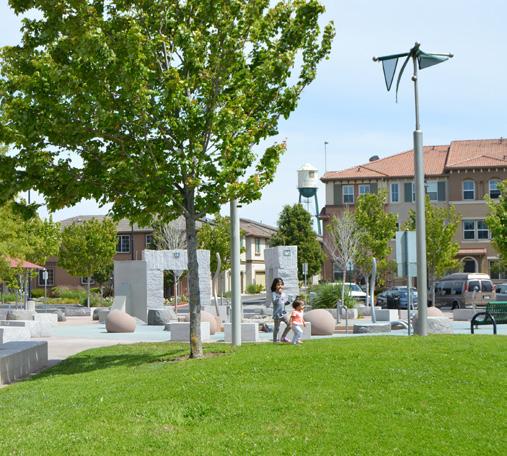
The Master Plan Update is needed to ensure that the District can continue to successfully meet the recreational needs of a growing a diversifying community. Indeed, HARD’s service area is projected to add another 23,270 residents by 2030—nearly the equivalent of another San Lorenzo. The community is growing, and the parks and recreation system needs to grow with it and ensure development pays to offset the impacts on the park system.
Perhaps more important still is the need to maintain and enhance the quality of the parks and recreation services the District has today. The update offers an important chance to check in with stakeholders and residents and get a refreshed understanding of the community’s desires and needs. It allows the District to use a current population baseline and projection to inform a more accurate assessment of facility needs. The Update takes place in the context of a growing awareness of the role of parks as a source of community cohesion and an important public health resource, and awareness of the need to not only protect natural resources but also prepare to adapt to a changing climate. The updated Plan reflects significant investments the District has made and is currently undertaking since the 2006 Master Plan, establishes a set of priorities for the ten years to come, and identifies strategies to leverage partnerships and financing to achieve these priorities.
Do a
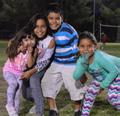
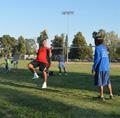
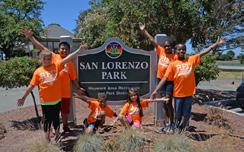
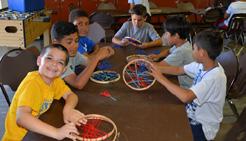
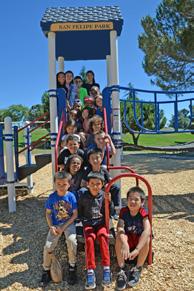



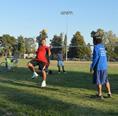
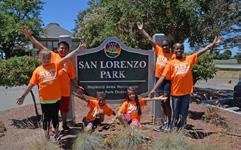
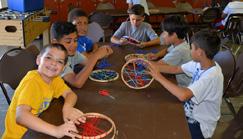
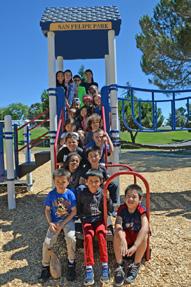


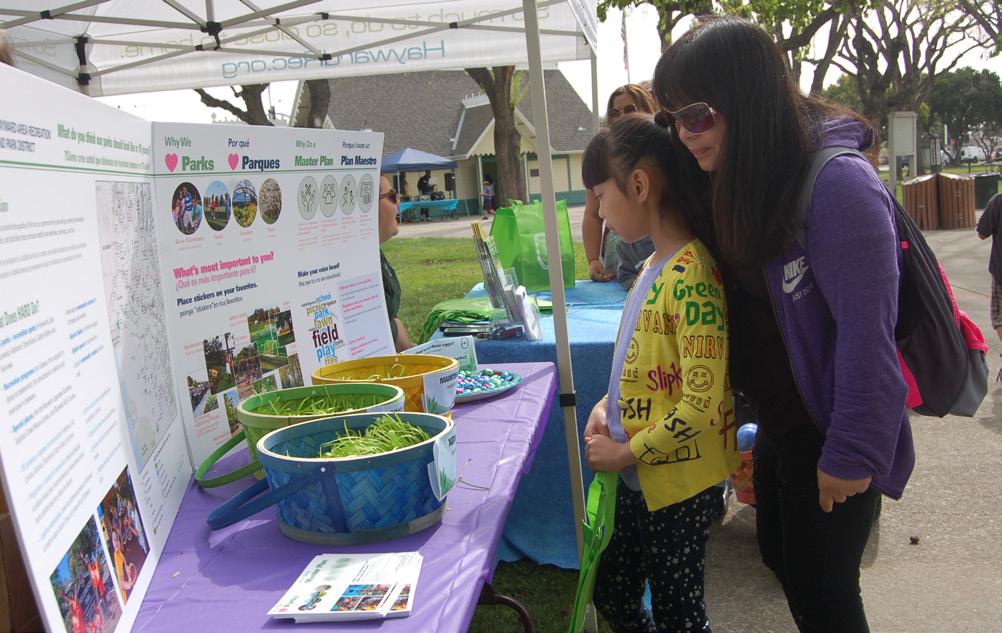
During the Master Plan Update process, HARD reached out to stakeholders and community members - including at the Kennedy Park Eggstravaganza.
Source: HARD
The HARD Master Plan Update got underway in Fall 2017. At the outset, HARD Staff and the Consultant team met with representatives from the HARD Foundation, the City of Hayward, Alameda County Board of Supervisors, Alameda County Sheriff’s Office, East Bay Regional Park District and others to understand—from a range of perspectives—the issues and opportunities for HARD. At the same time, the planning team analyzed the existing park system and recreation programs. The condition of each existing park was discussed with HARD staff who perform both planning and maintenance functions. Geographic analysis was conducted to evaluate where there are gaps in access to parks, and level of service analysis was conducted for overall park acreage and specific recreation amenities.
HARD and the Consultant Team also reached out to the broader community at events and public meetings.
The District placed a “pop-up” booth at the Cherryland Eggstravaganza in March and at the Kennedy Park Egg Hunt in April 2018, where information about the District, the value of parks, and the Parks Master Plan Update was provided. HARD staff collected names and email addresses, and had a simple activity involving placing eggs in baskets to indicate their preference for maintenance, upgrading existing parks, or creating new parks.
The Master Plan Update was presented to the Municipal Advisory Councils (MACs) for Fairview and Castro Valley. The planning team presented findings from the needs assessment and responded to questions from Council and the public. HARD Staff also participated in a My Eden Voice event and gathered feedback
about the community’s needs and desires in Ashland, Cherryland, and San Lorenzo including Hayward Acres.
The planning process proceeded with completion of an Existing Inventory and Trends Report in June 2018, and, with a series of meetings between Staff and the Consultant Team, the development of draft goals and recommendations. In collaboration with Chabot College, HARD created a video to describe what HARD does, why the Master Plan was being updated, and the Plan’s key recommendations. Feedback on the Draft Master Plan was solicited from the Alameda County Planning Department, the City of Hayward, and other partner agencies.
Maintaining and upgrading the District’s parks came through as high priorities in for community members and stakeholders across the board. Park-by-park analysis conducted for the Master Plan found that HARD’s parks have extensive needs, from basic lifecycle improvements (half of the parks) to more significant changes of program (about one quarter) or transformation (another quarter).
Parks are an important contributor for quality of life, and stakeholders described the need to address the needs of underserved communities and to design and program parks to provide a high quality of life and nurture community bonds.
Even as the community shows concern for the condition of existing parks, the District also lacks adequate overall park acreage. More parks are needed to serve the existing population, and this need will grow as
the population grows. At the same time, it is timely to reevaluate level of service standards, recognizing the value that access to regional park land plays, and the land constraints of a largely built-out area. By comparing HARD’s facilities to national guidelines, there is also a need for many specific recreation amenities, particularly group picnic areas, soccer fields, disc golf courses and swim centers.
Many neighborhoods in HARD’s service area are within walking distance of a local park or school recreation site. Still, there are many areas that lack reasonable access to a park. These gaps are most prevalent in Castro Valley and Fairview, San Lorenzo, central and downtown Hayward, and in parts of south Hayward. Gaps may be filled by creating new parks, but also by removing barriers to access, creating safer street crossings, protected bike lanes and trails. There was interest in creating a better trail system that connects HARD and its communities with the natural setting, including creeks, regional parks and open spaces.
HARD is already in the process of developing new parks and improving existing parks, boosted by $250 million in bond funding from Measure F1. Valley View and La Vista parks will provide major new facilities for the community, while smaller future parks on Via Toledo in San Lorenzo and in SoHay in Hayward will improve quality of life in specific neighborhoods. Many other potential park sites have been identified.
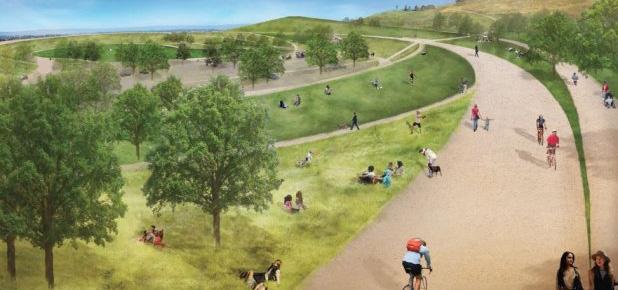
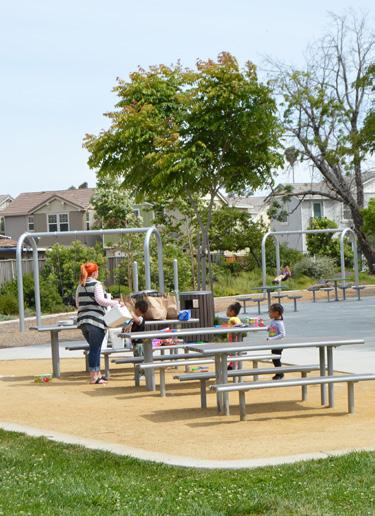
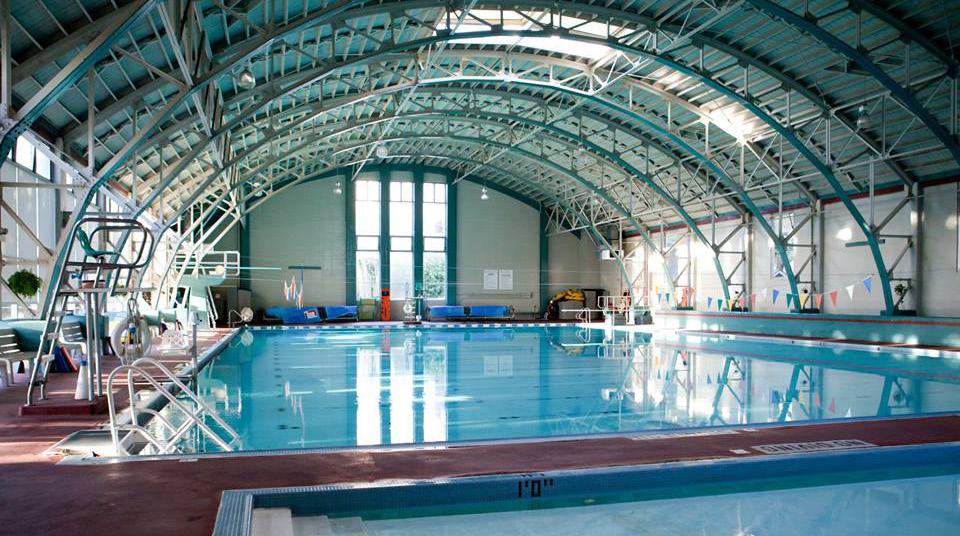
Geographic analysis was conducted to evaluate where there are gaps in access to parks (top). HARD is in the process of developing new parks, but there is a need for ongoing improvements and investments (middle and bottom). Source: HARD
This Master Plan sets out ten broad goals to guide the District toward achieving its mission to enrich quality of life. It follows with specific recommendations to guide the maintenance and enhancement of existing recreational facilities, the acquisition and development of new facilities, adaptation of programs to meet future needs, and effective management strategies, leveraging partners and using best practices. The Parks Master Plan goals should be used by the District as the first step of decision-making framework for capital projects and budgets. Master Plan recommendations, then, provide specific, detailed guidance on how the District should make decisions with regard to capital projects. The decision-making framework is described more fully in Chapter 6.
G1 Provide Safe and Attractive Parks and Facilities
HARD will continue to manage a diverse and growing suite of parks and recreation facilities that are safe, comfortable, attractive, and wellmaintained.
G2 Align Park Programs and Design with Community Demand
HARD will offer recreation facilities and programs that respond to changing community needs and preferences.
G3 Focus on Equity in Access to Parks and Recreation
HARD will strive to use its resources to increase equity. We will focus on areas where parks are scarce or needs are high as the highest priority for new facilities and access improvements.
G4 Provide Innovative Park Design and Programs
HARD will be innovative in its approach to park facilities and design, programming, and engagement to reflect the best in current practices.
G5 Elevate Sustainable Practices
HARD will manage its 1,300-plus acres of park land and its 16 community, recreation, arts and senior facilities in a way that reduces water and energy use and showcases sustainability.
G6 Connect with the Bay and Hillsides
HARD will create opportunities for community members to enjoy the District’s superb natural setting by enhancing the experience in HARD parks, developing the trail system, and partnering with other agencies.
G7 Improve Participation in and Visibility of HARD Services
HARD will work to increase participation in programs, use of parks, and the community’s engagement and satisfaction with the District.
G8 Enhance Partnerships to Leverage Resources
HARD will continue to coordinate with other organizations and agencies to optimize recreation opportunities in the community.
G9 Provide Effective Long-Term Management
HARD will work to develop expertise and capacity of staff, take a systematic approach to maintenance and operations, and plan for and fund the full lifecycle costs of facilities.
G10 Pursue Full Array of Funding Options
HARD will actively and creatively pursue available funding sources and make decisions about capital and operational investment that provide the greatest value.
The Plan also defines a set of specific, strategic recommendations in four categories: existing parks and facilities; developing the system; recreation programs; and operations and maintenance. Table 1-1 identifies these recommendations, and shows how they correspond with the broader set of goals. TABLE 1-1
RECOMMENDATIONS FOR EXISTING PARK LAND AND FACILITIES
E1 Prioritize Maintenance
E2 Upgrade Facilities: Making Places for Physical Activity and Community Life
E3 Improve Safety and Accessibility through Park Design
E4 Remove Barriers and Increase Connectivity to Close Access Gaps
E5 Help Achieve Safe Bike Access to Parks
E6 Enhance Existing Athletic Fields
E7 Develop a Strategy for Aquatics Facilities
E8 Develop a Strategy for Community Centers
E9 Develop a Strategy for Golf Facilities
E10 Identify Potential Excess Properties
E11 Conduct a Tree Inventory
E12 Align Parking with Need and Support Walking and Biking
E13 Complete Park Master Plans for Key Sites
E14 Enhance Access to and Experience of the Hayward Shoreline
E15 Enhance the Experience of Hillside Parks
E16 Guide Future Use of Rowell Ranch Rodeo Park
RECOMMENDATIONS FOR DEVELOPING THE SYSTEM
D1 Update the Park Classification System
D2 Update Park Acreage and Park Service Area Standards
D3 Park Dedication and Fees
D4 Complete Planned Parks and Park Improvements
D5 Pursue New Parks, School Recreation Sites, and Access Improvements in Priority Areas
TABLE 1-1
HARD MASTER PLAN RECOMMENDATIONS
D6 Identify and Pursue Specific Opportunities for Parkland Expansion
D7 Develop Recreation Amenities to Meet Needs
D8 Engage Partners in Facility Programming and Design
D9 Clarify and Enhance the Function of School Recreation Sites
D10 Plan for Greenways and Trails
RECOMMENDATIONS FOR RECREATION PROGRAMS
R1 Ensure the Right Core Program Mix, and Expand Programs and Services in the Areas of Greatest Demand
R2 Evaluate Program Areas
R3 Support Innovative Programming that Supports Social Cohesion
R4 Schedule Programs to Support Working Families
R5 Recreation Partnerships and Sponsorships
RECOMMENDATIONS FOR OPERATING A HIGH-QUALITY PARKS SYSTEM
O1 Integrate Safety into Operations
O2 Integrate Sustainability in Operations
O3 Current, Multilingual and Culturally Relevant Communication
O4 Maintain a Strong and Positive Image in the Community
O5 Volunteer Involvement
The Parks Master Plan has six chapters, described here.
This introductory chapter presents the context and summarizes the Master Plan’s goals and recommendations.
Chapter 2 reports on the District’s current population, population trends and projections, and demographic characteristics of the service area population. The chapter also covers broader recreation trends, and what they suggest for HARD.
Chapter 3 describes, classifies, and maps HARD’s current parks, recreation facilities, and amenities. It outlines the District’s program offerings and approach to operations and maintenance. The chapter also presents changes to the parks system since 2006— when the last Master Plan was adopted—and currently planned improvements.
Chapter 4 provides a discussion of the community’s recreation needs, based on survey findings, conversations with stakeholders, a park-by-park condition assessment, and level of service analysis. The needs assessment is the critical foundation for the recommendations in Chapter 5.
Chapter 5 lays out the Parks Master Plan’s goals and recommendations, which are intended to guide the District over the next ten years and beyond. The recommendations cover four areas: existing parks and facilities; developing the system with new facilities; recreation programs; and operations and maintenance.
Chapter 6 defines three types of park improvements— critical strategic, and visionary—and presents the findings of the park condition assessment to help set priorities. The chapter also outlines funding strategies to help the district achieve its goals.
The Plan is supported by two reports done in conjunction with the update process. The first, Demographic and Trend Analysis, is a more detailed analysis that supports Chapter 2. The second, Operations and Funding Considerations for the HARD Parks Master Plan, includes findings about how the District currently operates, and recommendations to improve its business model. These reports may be requested from HARD.
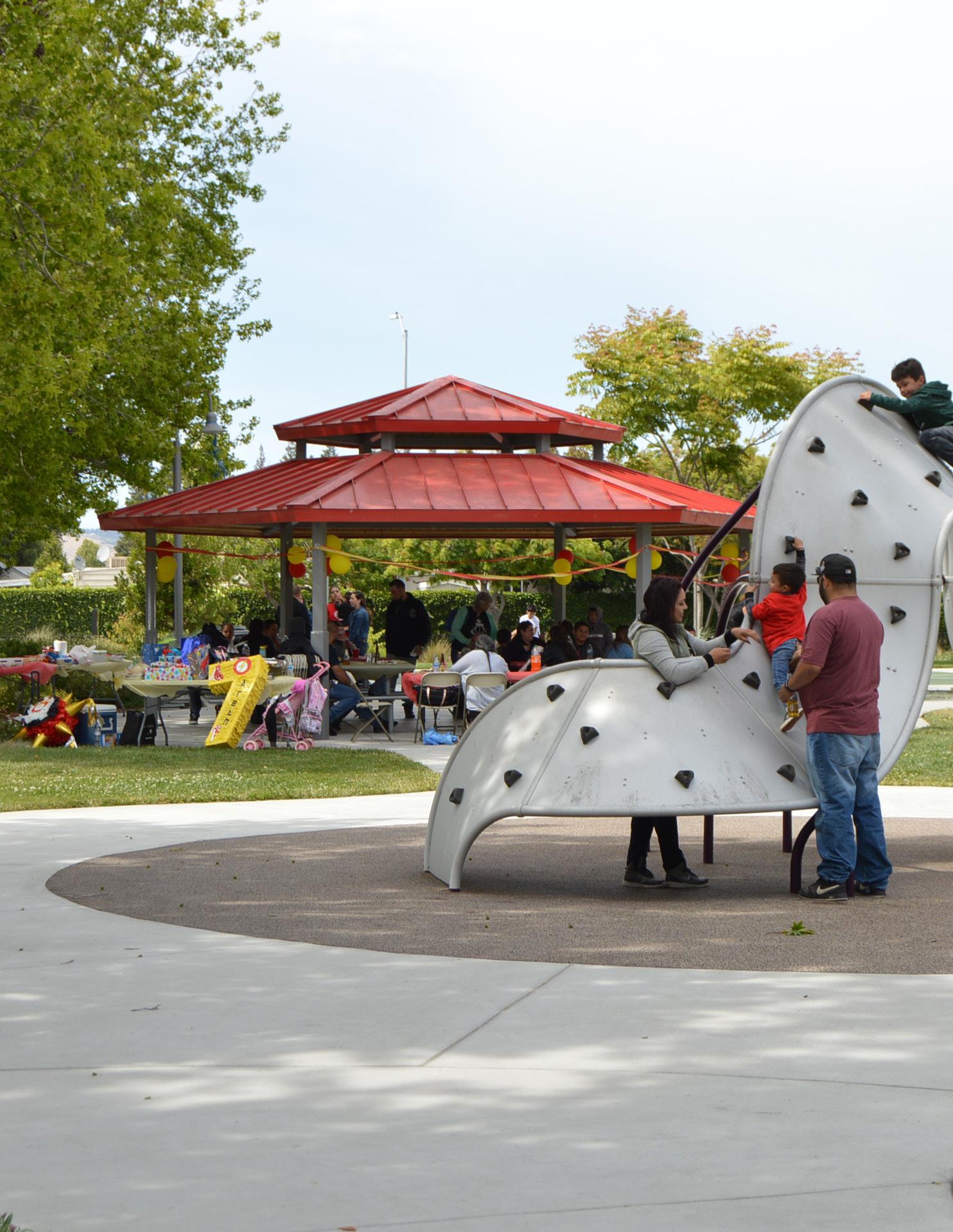
HARD’s service area spans some 104 square miles of Alameda County from the East Bay hills to the San Francisco Bay shore, an area with a diverse and growing population. This chapter reports on population projections and the demographic traits and trends that will affect us going forward. What people do to recreate and what they want from their parks departments is also changing: this is the subject of the second part of Chapter 2.
The HARD service area had an estimated population of 292,265 in 2016, including 154,507 in the City of Hayward and 137,758 in the unincorporated communities of Ashland, Castro Valley, Cherryland, Fairview and San Lorenzo. The population has grown by 11 percent since 2000.
The Association of Bay Area Governments (ABAG) makes population projections for all cities and counties in the Bay Area. According to ABAG, the HARD service area will grow at a slower rate in the coming years, growing by 8.0 percent between 2016 and 2030 to a total population of approximately 315,000 in 2030. See Table 2-1.
While the City of Hayward accounts for 53 percent of the District’s population today, 68 percent of the area’s population growth is projected to take place in Hayward between 2016 and 2030. Most of this growth is expected to take place in the City’s Priority Development Areas (PDAs)—areas with high-quality transit access and development potential. Hayward’s Housing Element reports that 79 percent of housing units built in Hayward between 2010 and 2040 will be in the City’s five PDAs (The Cannery, Downtown, South Hayward BART Corridor, South Hayward BART Neighborhood, and Mission Corridor).1
1.
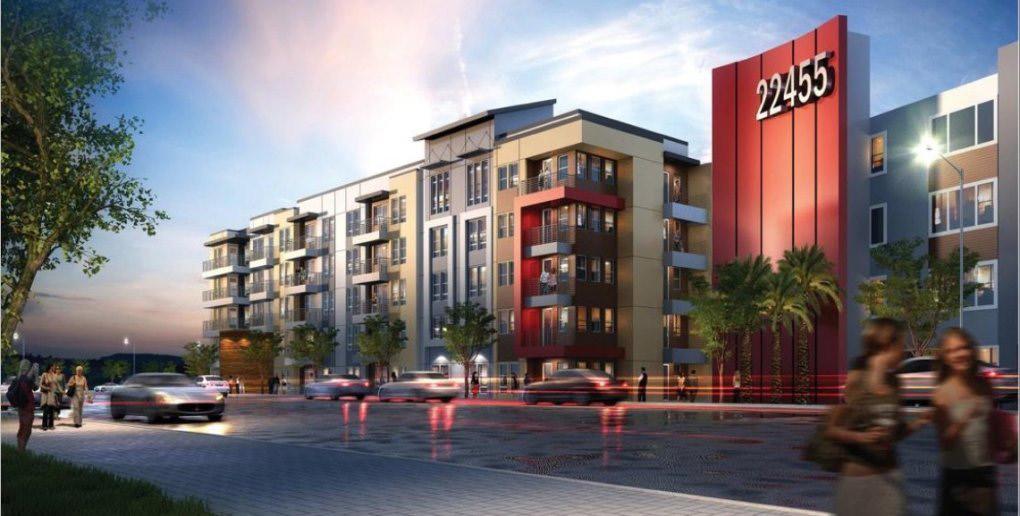
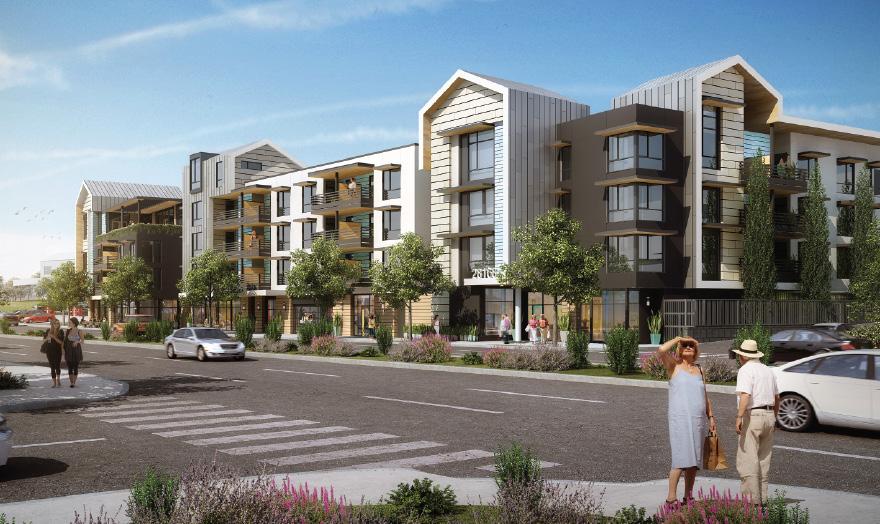
Significant new development is planned in downtown Hayward (top) and along Mission Boulevard in south Hayward (bottom).
PROJECTED GROWTH TO 2030
TABLE 2-1 POPULATION GROWTH
* Sources: US Census Bureau (2000, 2010, 2012-2016); Alameda County General Plan, 2015, ABAG Projections 2013.
While the District covers a large area, the population is concentrated. Population density ranges significantly among these communities, from approximately 12,000 people per square mile in Cherryland and Ashland to approximately 3,600 people per square mile in Castro Valley and Fairview and just under 3,500 people per square mile in Hayward. Hayward’s “effective” population density, however, is substantially higher, since the City includes a lot of undeveloped land in the hills and along the Bay.
Figure 2-1 shows population density by census tract. Two census tracts had over 20,000 people per square mile as of 2015: one in Ashland and one in south Hayward. Much of the rest of the urbanized “flats” had over 10,000 people per square mile, while areas in the hills and near the bay shore were typically less densely populated.
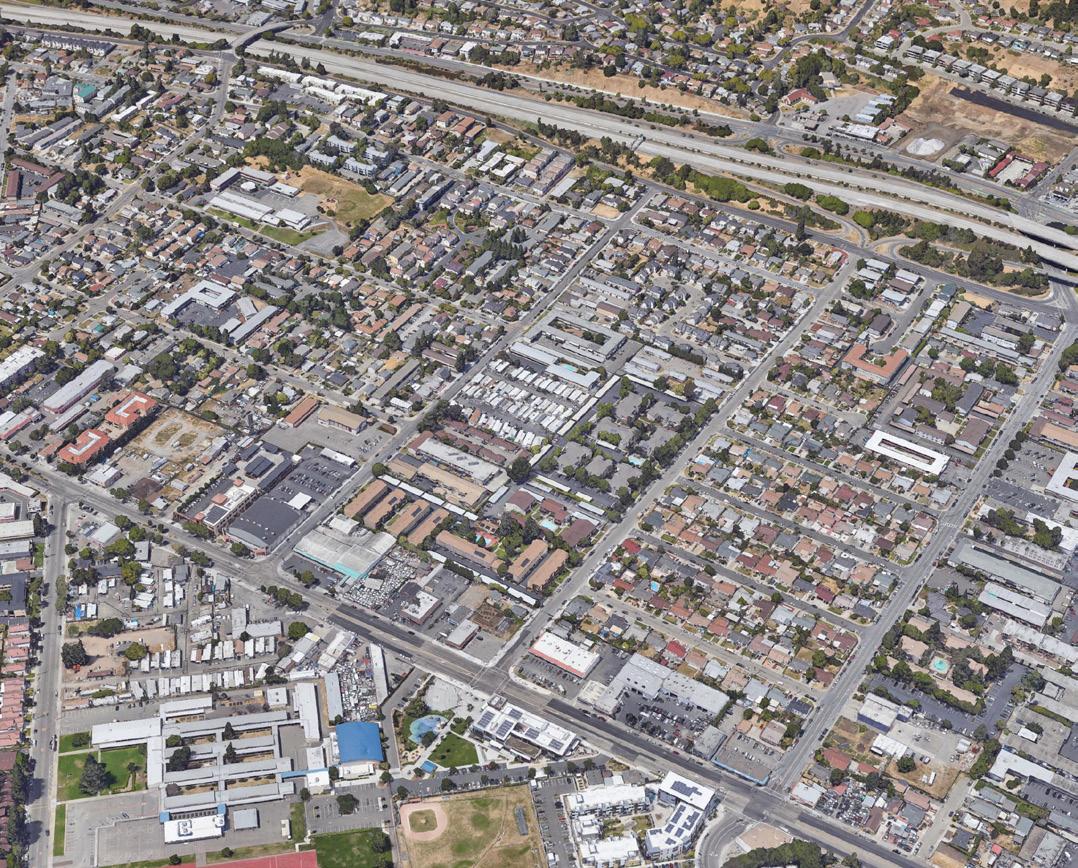
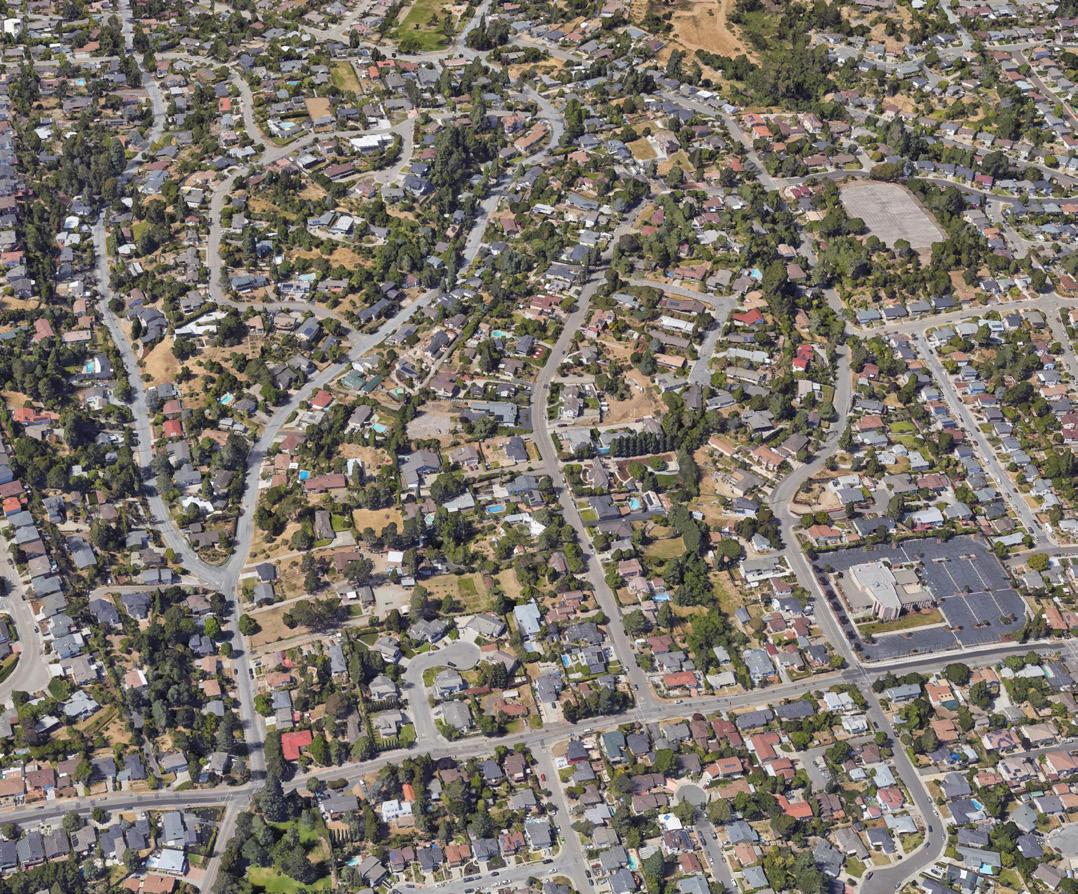
More dense (top) and less dense (bottom) neighborhoods in the HARD service area.
Figure 2-1
This section describes key characteristics of the people in the District: their age, income levels, race, and ethnicity, as well as future projections based on based on historical patterns.
The analysis presented here is a summary of the Demographic and Trend Analysis (PROS, 2018) included as Appendix A.
HARD’s service area population is balanced among age segments. Currently, the largest age segment is the 3554 segment, making up 27 percent of the population. The District’s population is projected to undergo a slight aging trend. While most of the younger age segments are expected to experience slight decreases in their share of the total population, those who are 55 and older are projected to increase over the next 15 years, making up 31 percent of the population by 2032 up from 25 percent today. As Figures 2-2 and 2-3 show, children and youth are somewhat more concentrated in neighborhoods in the “flats,” with seniors somewhat more concentrated in the foothill communities.
HARD uses a somewhat different breakdown in age
Sources: US Census Bureau (2012-2016 ACS); PROS Consulting, 2018.
groups: ages 1-5, 6-12, 13-27, 28-50, and 50+. These do not readily map onto the Census categories but are important to remember for programming purposes.
HARD’s service area is diverse. The largest racial group, White Alone, comprises an estimated 39 percent of the population, followed by Asian (23 percent), with other racial groups making up the remainder. Projections for 2032 show a population continuing to diversify, with the share of White Alone dropping to 35 percent while the Asian Alone population share increases to 30 percent.
As of 2017, 36 percent of HARD’s population identified
as Hispanic or Latino of any race. The Hispanic/Latino population is expected to grow slightly to comprise 37 percent by 2032.
Per capita income in HARD’s service area was $30,973 in 2010, close to both the State ($31,587) and national HOUSEHOLD INCOME
Source: ESRI, 2017.
Data Source: U.S. Census Bureau, 2012-2016 American Community Survey 5-Year Estimates.
($28,051) averages. HARD’s median household income of $68,541 was slightly higher than the State’s median ($64,500) and substantially higher than the national median ($55,775). Incomes tend to be higher in the hills and closer to the Bayshore. See Figure 2-4.
The Trends Analysis provides an understanding of national, regional, and local recreational trends. This analysis examines participation, activity levels, and programming.
The Sports & Fitness Industry Association’s (SFIA) Sports, Fitness & Recreational Activities Topline Participation Report 2018 was used to evaluate the following trends:
• National Trends in Sport and Fitness Participation
• Core vs. Casual Participation
• Activity by Generation
The study is based on findings from surveys carried out in 2017 and 2018 by the Physical Activity Council, from an interview sample size that is considered to have a high degree of statistical accuracy.
Participation trends in the HARD service area are expected to vary from national trends in ways that are summarized later in the chapter.
The sports most heavily participated in the United States were Golf and Basketball, which have participation figures well in excess of the other activities within the general sports category. Even though Golf has experienced a recent decrease in participation, it still continues to benefit from its wide age segment appeal and is considered a life-long sport. Basketball’s success can be attributed to the limited amount of equipment needed to participate and the limited space requirements necessary, which make basketball the only traditional sport that can be played at the majority of American dwellings as a driveway pickup game.
Since 2012, Rugby and other niche sports like Boxing, Lacrosse, and Roller Hockey have seen strong growth. Rugby has emerged as the overall fastest growing sport, as it has seen participation levels rise by 82.8 percent over the last five years. Based on the five-year trend, Boxing for Competition, Lacrosse, and Roller Hockey have also experienced significant growth.
During the last five years, the sports that are most rapidly declining include Ultimate Frisbee, Touch Football, Tackle Football, and Racquetball. In general, the most recent year shares a similar pattern with the five-year trends, suggesting that the increasing participation rates in certain activities have yet to
peak in sports like Rugby, Lacrosse, Field Hockey, and Competitive Boxing. However, some sports that increased rapidly over the past five years have experienced recent decreases in participation, including Squash, Ice Hockey, Roller Hockey and Sand/ Beach Volleyball. The reversal of the five-year trends in these sports may be due to a relatively low user base and could suggest that participation in these activities may have peaked.
Nationally, participation in fitness activities has experienced strong growth in recent years. Many of these activities have become popular due to an increased interest among Americans to improve their health and enhance quality of life by engaging in an active lifestyle. These activities also have very few barriers to entry, which provides a variety of options that are relatively inexpensive to participate in and can be performed by most individuals.
The most popular fitness activity, by far, is Fitness Walking. Other leading fitness activities based on total number of participants include Treadmill, Free Weights), Running/Jogging Weight/Resistance Machines, and Stationary Cycling.
Over the last five years, the activities growing most rapidly are Non-Traditional / Off-Road Triathlons, Trail Running, and Aerobics. Over the same time frame, the activities that have undergone the most decline include: Boot Camps Style Cross Training, Stretching, and Weight/Resistance Machines.
Results from the SFIA report demonstrate a contrast of
Notes: The sports shown above have a higher MPI in HARD's service area compared to the national average.
Pickleball is an emerging sport, but still does not have the wide age segment and national appeal for ESRI to be able to collect data and report its MPI.
Source: ESRI, 2018; PROS Consulting, 2018.
growth and decline in participation regarding outdoor/ adventure recreation activities. Much like the general fitness activities, these activities encourage an active lifestyle, can be performed individually or within a group, and are not as limited by time constraints.
In 2017, the most popular activities, in terms of total participants, from the outdoor / adventure recreation category include: Day Hiking, Road Bicycling, Freshwater Fishing, and Camping within ¼ mile of Vehicle/Home.
From 2012-2017, BMX Bicycling, Adventure Racing, Backpacking Overnight, and Day Hiking have undergone the largest increases in participation.
The five-year trend shows activities declining most rapidly were In-Line Roller Skating, Camping within ¼ mile of Home/Vehicle, and Birdwatching.
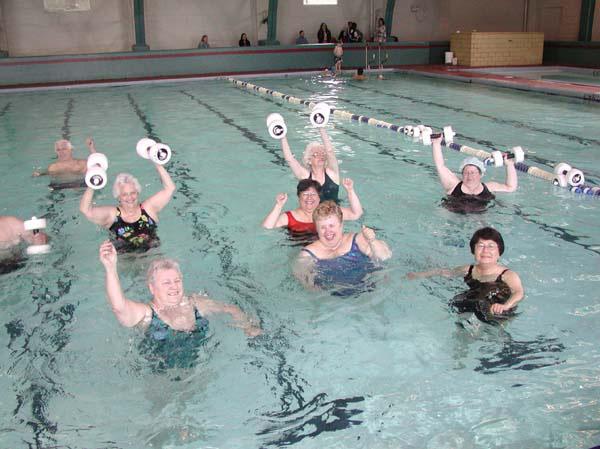
Swimming is unquestionably a lifetime sport, which is most likely why it has experienced such strong participation growth. In 2017, Fitness Swimming is the absolute leader in overall participation for aquatic activities, due in large part to its broad, multigenerational appeal. In the most recent year, Fitness Swimming reported the strongest growth among aquatic activities, while Aquatic Exercise and Competitive Swimming experienced decreases in participation.
Aquatic Exercise has a strong participation base, however it also has recently experienced a slight decrease in participants. Based on previous trends, this activity could rebound in terms of participation due largely to ongoing research that demonstrates the activity’s great therapeutic benefit coupled with
increased life expectancies and a booming senior population. Aquatic Exercise has paved the way as a less stressful form of physical activity, while allowing similar benefits as land-based exercises, such as aerobic fitness, resistance training, flexibility, and balance. Doctors are still recommending Aquatic Exercise for injury rehabilitation, mature patients, and patients with bone or joint problems. Compared to a standard workout, Aquatic Exercise can significantly reduce stress placed on weight-bearing joints, bones, and muscles, while also reducing swelling.
The most popular water sports / activities based on total participants in 2017 were Recreational Kayaking, Canoeing, and Snorkeling. Water activity participation tends to vary based on regional, seasonal, and environmental factors. A region with more water access and a warmer climate is more likely to have a higher participation rate in water activities than a region that has long winter seasons or limited water access. When assessing trends in water sports and activities, it is important to understand that fluctuations may be the result of environmental barriers which can greatly influence water activity participation.
Over the last five years, Stand-Up Paddling was by far the fastest growing water activity, followed by White
Water Kayaking, Recreational Kayaking, and Sea/Tour Kayaking. Although the five-year trends show water sport activities are getting more popular, the most recent year shows a different trend. From 2016-2017 Stand-Up Paddling Recreational Kayaking reflect much slower increases in participation, while White Water Kayaking and Sea/Tour Kayaking both show decreases in participation numbers.From 2012-2017, activities declining most rapidly were Jet Skiing, Water Skiing, and Wakeboarding.
PROGRAMS OFFERED BY PARK AND RECREATION
NRPA’s Agency Performance Review 2018 summarize key findings from NRPA Park Metrics, which is a benchmark tool that compares the management and planning of operating resources and capital facilities of park and recreation agencies. The report contains data from 1,069 park and recreation agencies across the U.S. as reported between 2015 and 2017.
The report shows that the typical agencies (i.e., those at the median values) offer 161 programs annually, with roughly 60 percent of those programs being fee-based activities/events. According to the information reported to the NRPA, the top five programming activities most frequently offered by park and recreation agencies,
both in the U.S. and in the Pacific Southwest region that includes California, are team sports, special events, social recreation events, fitness enhancement classes, and health and wellness education.
In general, park and recreation agencies in the Pacific Southwest region that includes HARD offered programs at a slightly higher rate than the national average. Pacific Southwest agencies are offering fitness enhancement classes, safety training, aquatics, martial arts, performing arts, and cultural crafts at a higher rate than the national average.
For a better understanding of targeted programs by age segment, the NRPA also tracks program offerings that cater specifically to children, seniors, and people with disabilities, on a national and regional basis. According to the 2018 NRPA Agency Performance Review, approximately 79 percent of agencies offer dedicated senior programming, while 62 percent
of park and recreation agencies provide inclusive programming for individuals with disabilities.
Based on information reported to the NRPA, the top three activities that target children, seniors, and/or people with disabilities most frequently offered by park and recreation agencies were summer camp, senior programs, and teen programs. Agencies in the Pacific Southwest tend to offer targeted programs at a significantly higher rate than the national average. This is especially evident when looking at specific teen programs, after school programs, and preschool school programs.
The charts on these pages show sport and leisure market potential data. A Market Potential Index (MPI) measures the probable demand for a product or service within a defined area. The MPI shows the likelihood that a resident of the target area will participate in certain activities when compared to the US average. Here, HARD’s service area is compared to the national average in three categories: general sports, fitness, and outdoor activity.
In the General Sports category, HARD’s service area population is expected to have a higher-thanaverage probable demand for soccer and volleyball; a substantially lower-than-average demand for golf; and
MARKET POTENTIAL INDEX FOR GENERAL FITNESS
9% above national average
7% above national average
4% above national average
MARKET POTENTIAL INDEX FOR OUTDOOR ACTIVITY
21% above national average
Note: The activities above have a higher MPI in HARD’s service area compared to the national average.
Source: ESRI, 2018; PROS Consulting, 2018.
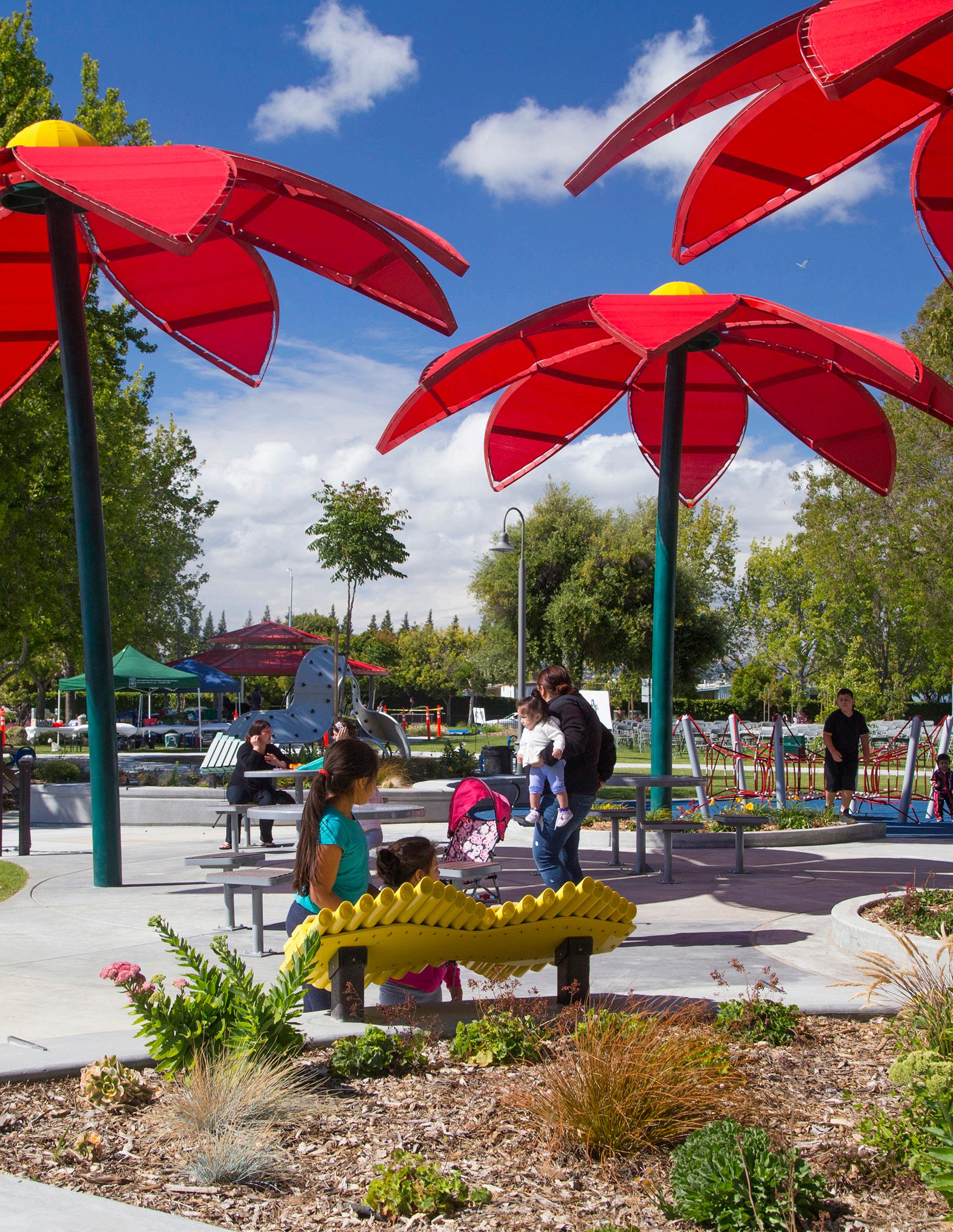
This chapter describes HARD’s extensive and diverse system of parks and facilities, spanning from the Hayward Shoreline Interpretive Center to the Rowell Ranch Rodeo Park and everything in between. HARD’s recreation amenities are quantified and mapped, and recreational programs and maintenance practices are summarized. The chapter ends with a summary of changes to the park system since 2006, and parks in the planning phase today.
The HARD system includes some 104 parks, playfields and special facilities covering approximately 1,357 acres. In addition to parks, the District has four aquatic centers, two golf courses, and special facilities including the Hayward Japanese Gardens, Douglas Morrisson Theater, Shoreline Interpretive Center, and Sulphur Creek Nature Center. The District includes school recreation sites, generally located on school district property and subject to joint-use agreements. The park inventory, including park type, location, and acreage, is provided as Table 3-1. The park system is shown geographically as Figure 3-1.
This Parks Master Plan establishes five park or facility categories: neighborhood park; school recreation site; community park; special use facility; and trail, linear park or greenway. Each park or facility is assigned to one category.
Local parks are combination playground and park areas designed primarily for non-supervised, non-organized recreation activities. At least 50 percent of the site should be level and usable for both active and passive recreation.
These parks are generally two to ten acres in size and serve an area of approximately one-quarter to one-half mile radius. However, to provide park equity in highly urbanized areas, the District may consider smaller, local sites that compensate for size (e.g. less than 3 acres) and distribution (e.g. number of parks) by being easily reachable on foot and bicycle without crossing major arterials or other physical barriers.
Currently, the District includes 47 local parks totaling approximately 225 acres.
Community parks are larger than local parks and provide a wider variety and higher intensity of recreational uses. The focus is on more active and structured activities for larger segments of the community. In general, community park facilities are designed for organized activities and sports, although individual and family activities are also encouraged. Their service area is roughly a two- to three-mile radius.
Currently, the District includes 12 community parks totaling approximately 169 acres. These include San Lorenzo Community Park, San Felipe Community Park, East Avenue Park, Weekes Park, Tennyson Park, and Mt. Eden Park, among others.
Greenwood Park
Source: HARD
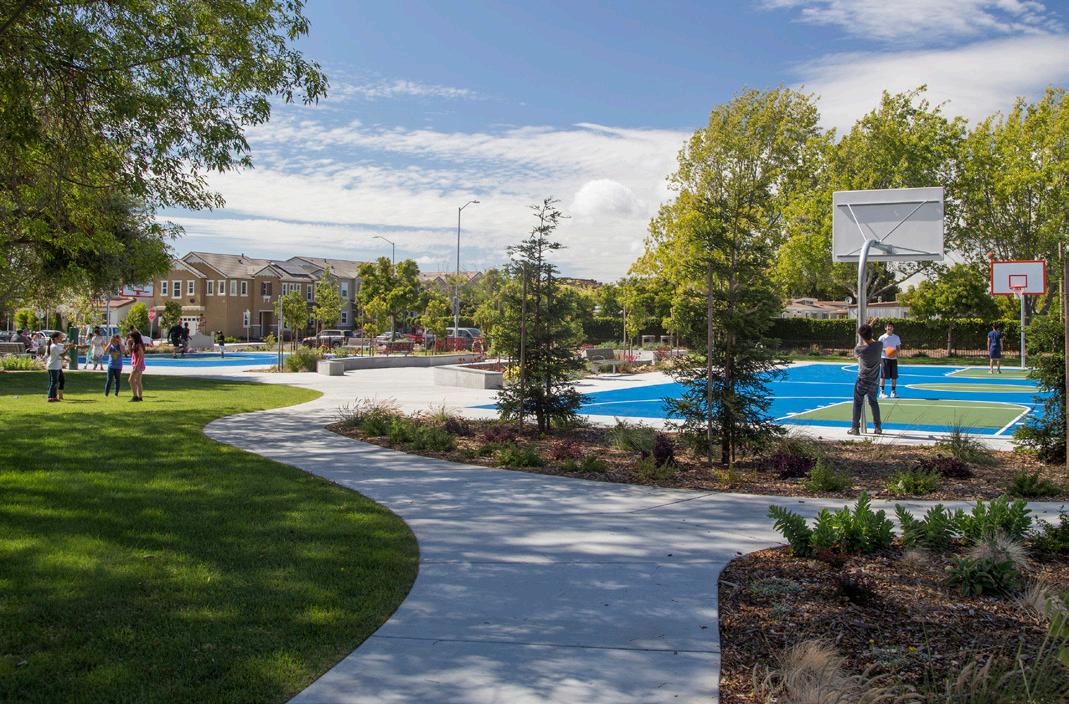
Mt Eden Park
Source: WRT
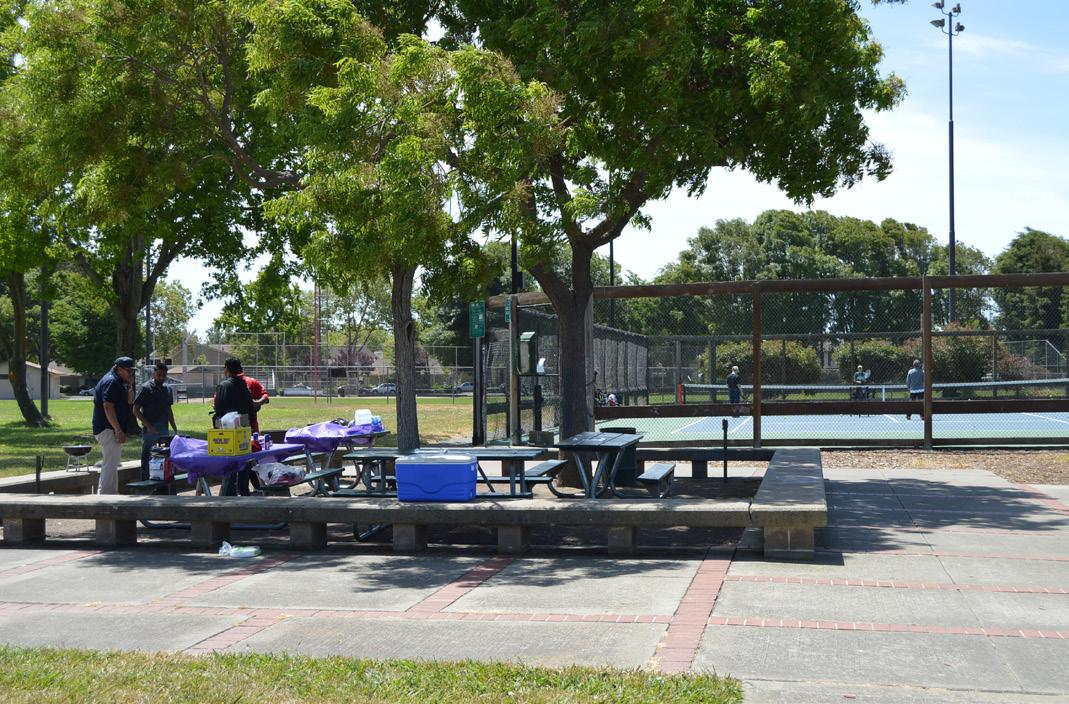
School recreation sites are facilities that are developed on school land and are available for use by the recreating public. School recreation sites may be jointly-owned and / or jointly developed. Ownership and management of school recreation sites within these school districts fall into three categories. Some are owned and managed by HARD. Some are owned by the school and managed by the District. Others are owned and managed by the school.
Public use of these school recreation sites is subject to use restrictions defined in specific joint-use agreements between the HARD and one of the four school districts within the HARD area boundaries. These areas supplement the active recreation areas available to HARD residents.
Currently, the District includes 8 school recreation sites totaling approximately 42 acres.
Special use facilities are unique public recreation amenities that play a significant role in the range of recreational opportunities provided by HARD. These include community centers; senior centers and recreation facilities for the disabled; cultural facilities such as theaters, auditoriums, and botanic gardens; single purpose sites that are used for golf, field sports, aquatics or other activities; and sites occupied by a historic structure.
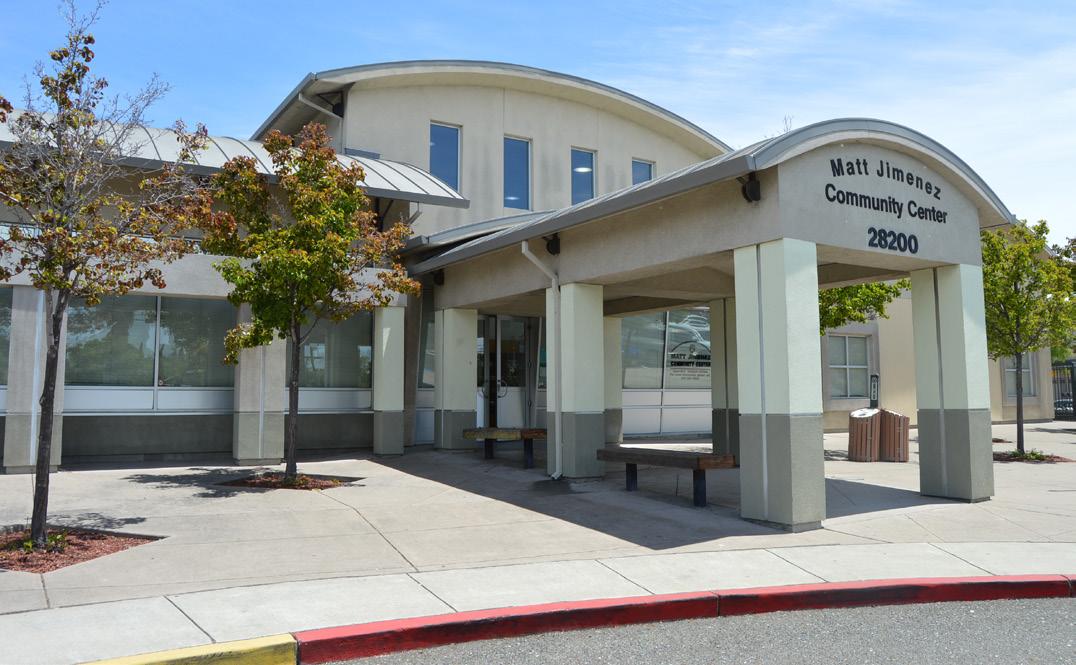
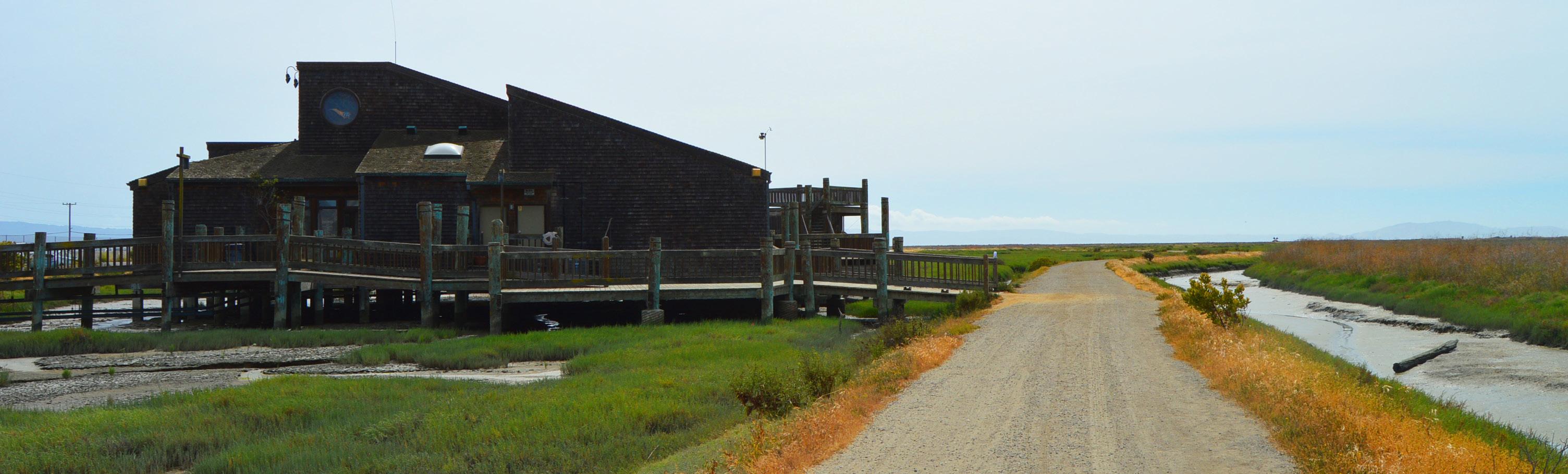
Currently, the District has 31 special use facilities on 318 acres of land. These include the Hayward Shoreline Interpretive Center; Sulphur Creek Nature Center; the Hayward Plunge; the Morrisson Theater; Hayward Japanese Gardens; Hayward Community Gardens; and several community centers.
Source: HARD
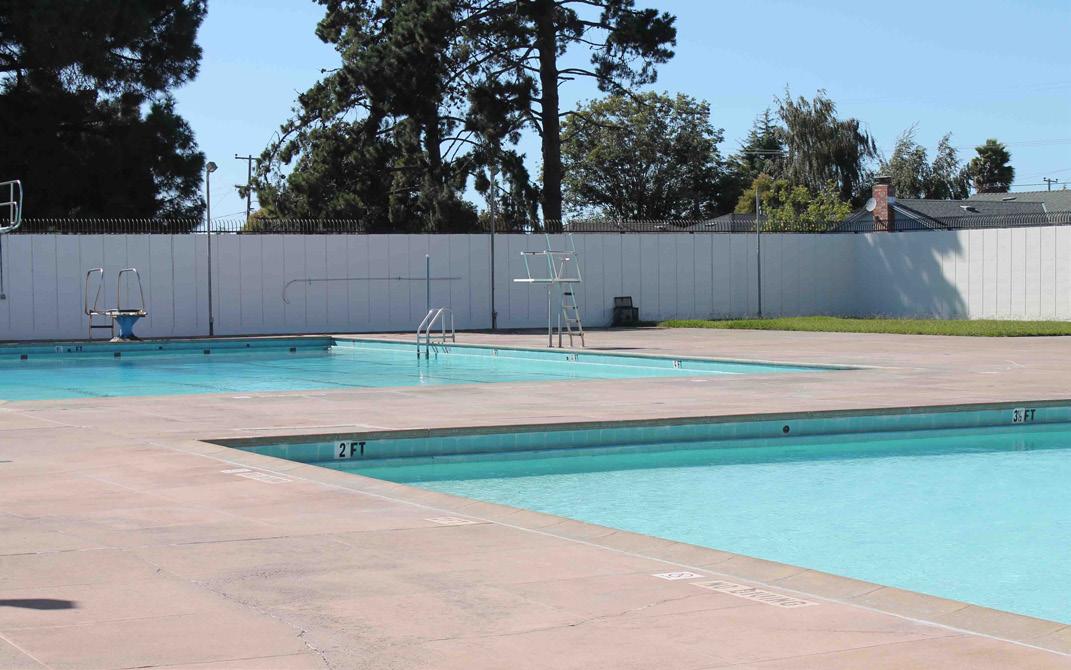
Source: WRT
Open space, greenways and trails are non-traditional parklands that provide a significant connection between the District and surrounding open spaces and between parks, schools, neighborhoods, transit facilities, business, and shopping areas.
This category contributes to a regional open space and trail system being developed by, and in conjunction with, several other agencies including East Bay Regional Park District, East Bay Municipal Utilities District, the City of Hayward and Alameda County.
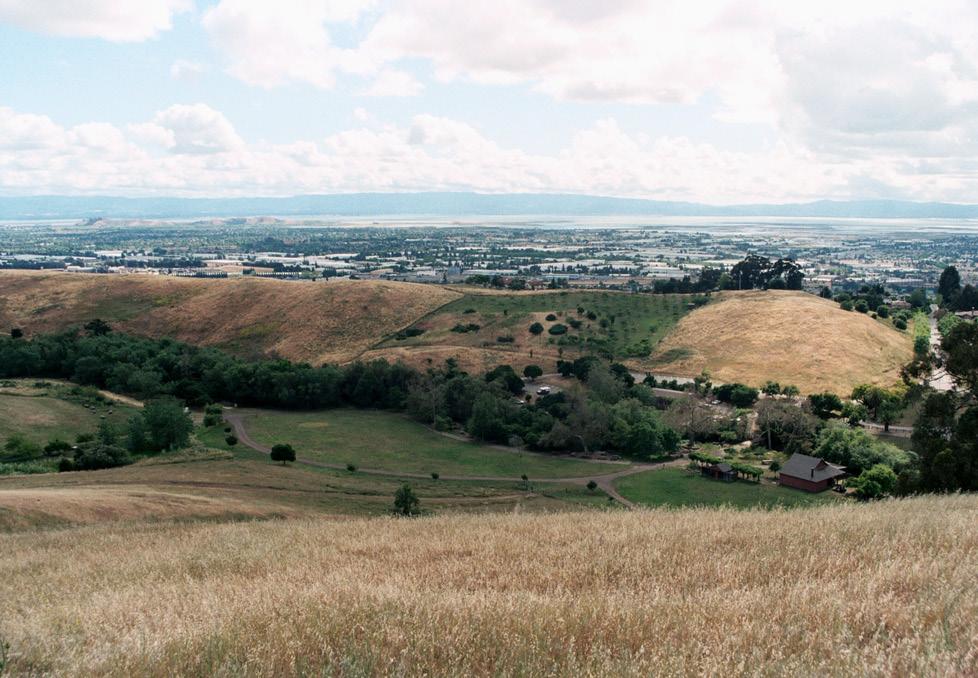
Currently, the District includes 6 open spaces, greenways and trails on 603 acres of land. These include the Hayward Shoreline, the Hayward Plunge Greenway and Trail, Eden Greenway, and the Greenbelt Riding and Hiking Trails.
Source: WRT
Note:
In addition to HARD’s parks, seven local parks and one greenway are located in HARD’s service area but operated by other agencies or organizations. These include Cannery Water Tower Park and its parkways; downtown park spaces at Hayward City Hall, the Library, Newman Park, and Portuguese Centennial Park; and the HOA-operated park in the Eden Shores neighborhood.
Two important special facilities not operated by HARD should also be identified because of their important contributions to recreation for District residents and because of their adjacency to HARD parks and facilities. These are the Eden Youth and Family Center and the REACH Ashland Youth Center.
There is an extensive regional parks and open space system in the hills and along the Bay shore. These include all or portions of ten East Bay Regional Park District units as well as the Cull Canyon Regional Recreation Area managed by the Alameda County Flood Control and Water Conservation District. Altogether, these regional parks cover over 10,300 acres within District boundaries.
Another 7,000 acres are within open space preserves not generally managed for recreation: California Department of Fish and Wildlife’s Eden Landing Ecological Reserve, and watershed lands belonging to East Bay Municipal Utility District.
Regional park land and trails are shown on Figure 3-2.
HARD parks with play areas; ballfields and soccer fields; basketball and tennis courts; community centers; aquatic centers; skate areas and dog parks are shown on FIgures 3-3 through 3-8 and summarized below.
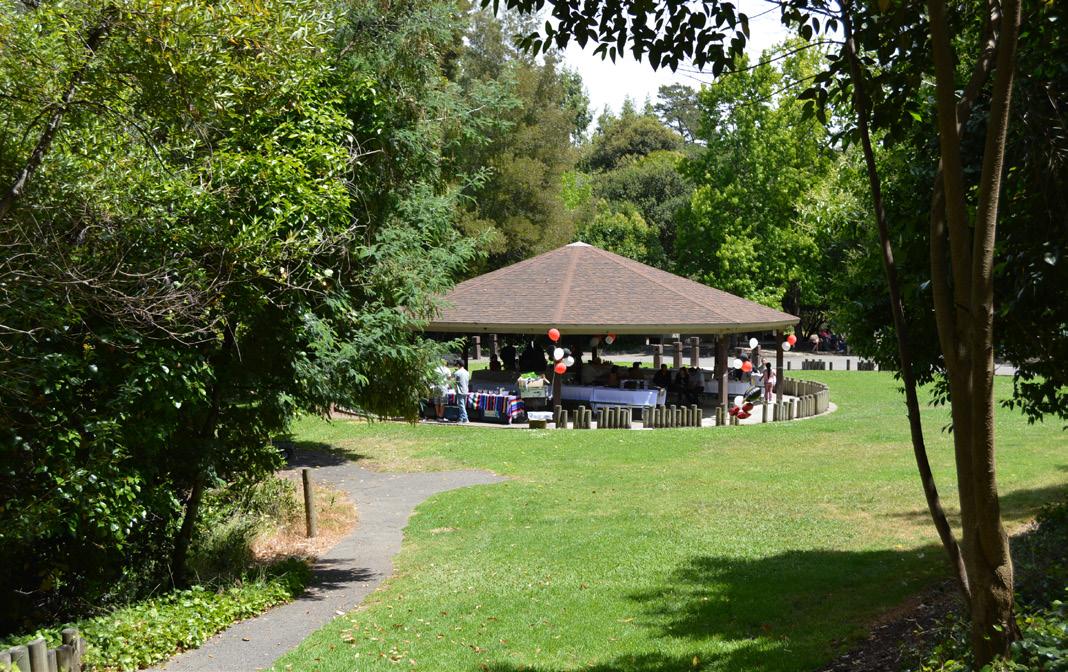
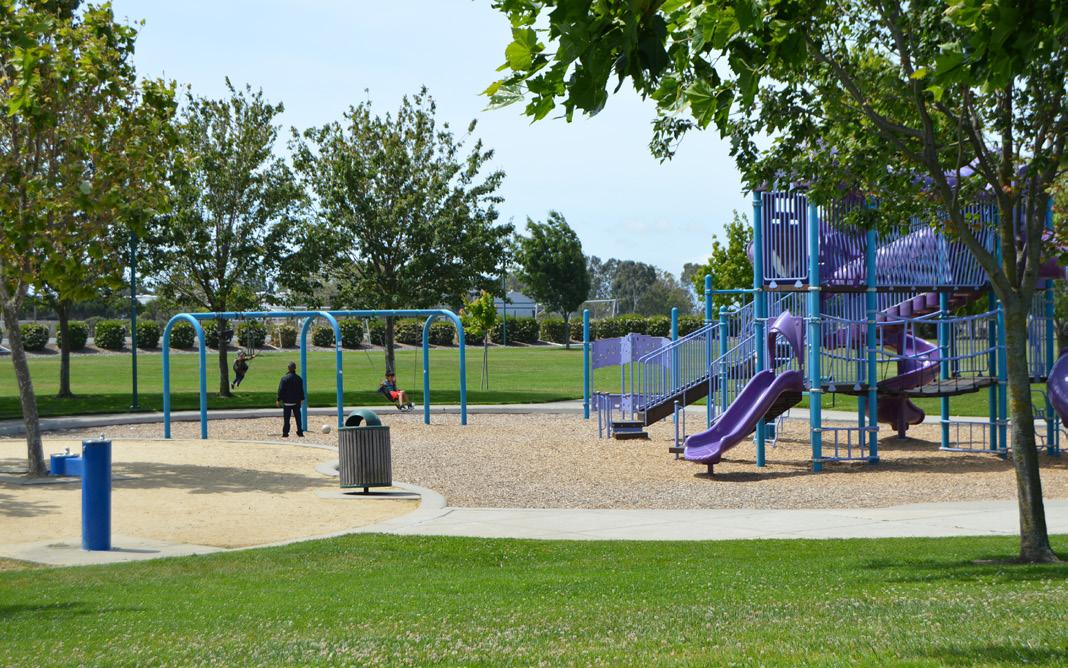
Children’s playgrounds and adjacent sitting areas are considered typical elements of both local and community parks. Playgrounds in community parks may include distinct areas for preschool and older children. Both local and community parks are also expected to have picnic tables and open lawn areas for informal activities; at community parks, shaded group picnic areas are desirable.
Currently, the HARD system includes some 74 play areas or playgrounds. Play areas are found in 66 of the District’s parks, with some parks having multiple playgrounds. Picnic tables are present in 69 parks, with group picnic areas at 24 parks.
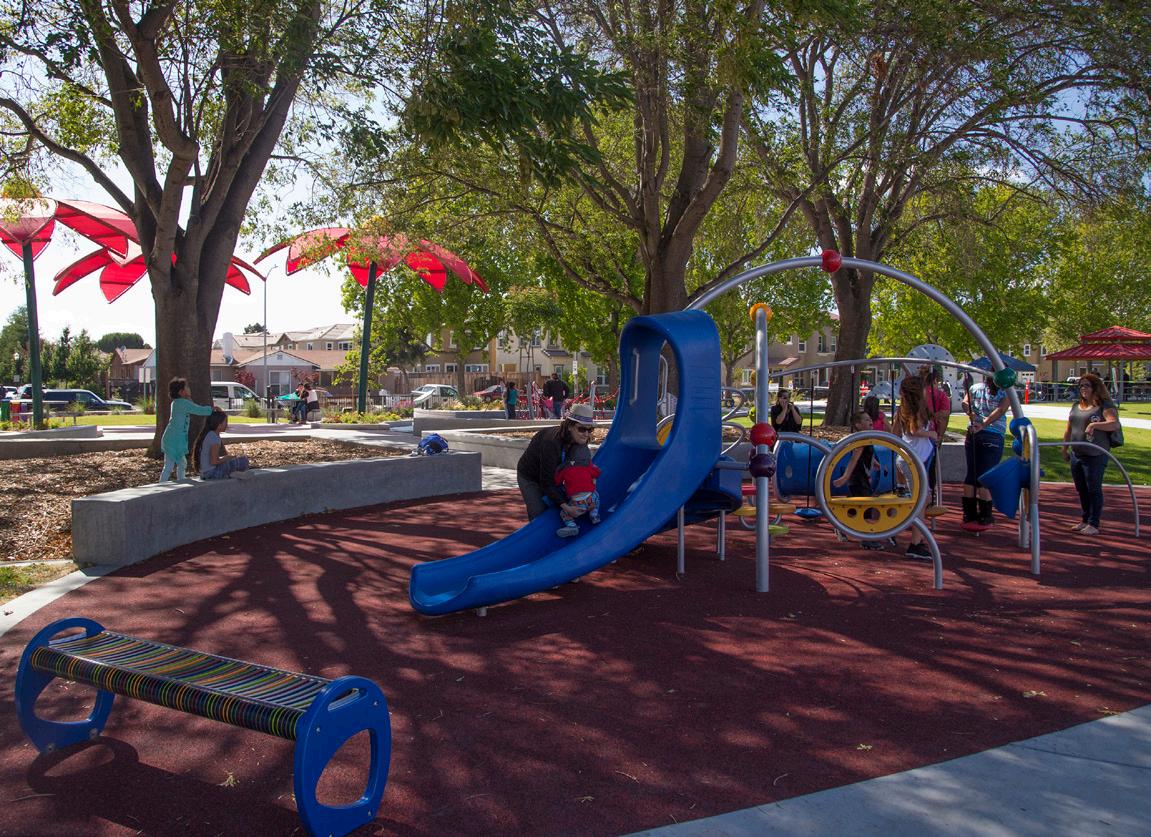
play areas/ playgrounds
parks with picnic tables
parks with group picnic areas
Play Area at Greenwood Park
Source: HARD
The parks system provides facilities for a broad range of recreational activities and is a critical resource for both youth and adult sports. These are summarized below.
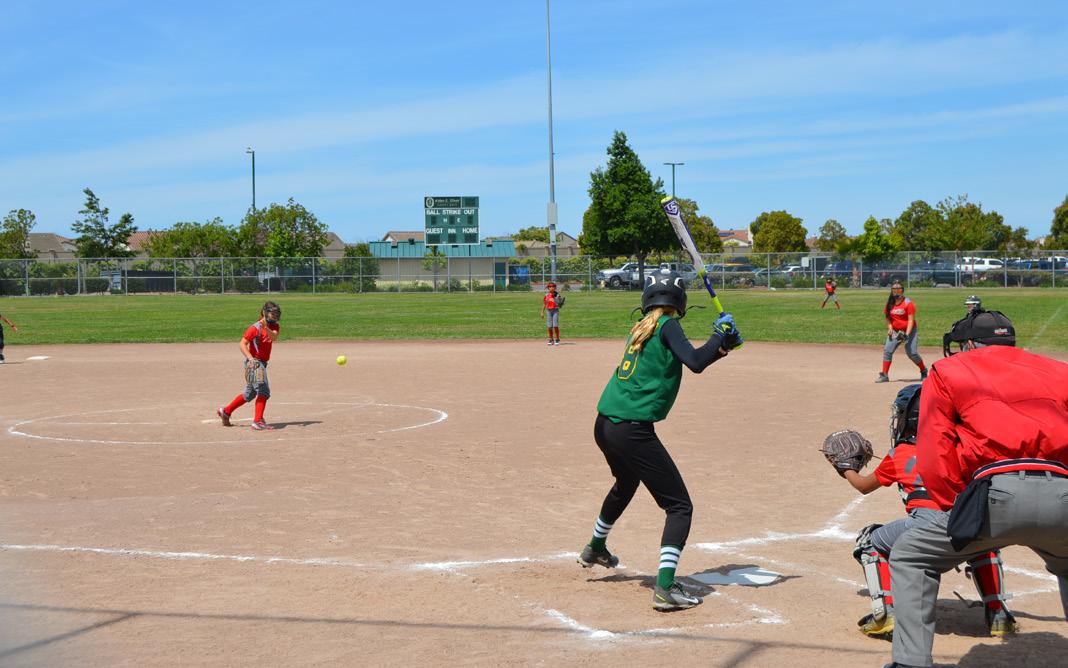
• HARD has 38 ballfields for softball and baseball at 19 parks. This includes four ballfields each at Alden E. Oliver Sports Park, San Lorenzo Community Park, and Sorensdale Park, and three at Sunset Park.
• HARD has 26 soccer (or rectangular) fields at 18 parks, including four fields at San Lorenzo Community Park, three at Bohannon Athletic Fields, and two each at Alden E. Oliver Sports Park, Mt. Eden Park, and Stonebrae Elementary.
• There are 65 basketball courts at 38 HARD parks, including seven at Bohannon, six at Rancho Arroyo, and four at Bret Harte.
• HARD has 31 tennis courts, concentrated at eight parks, with six courts each at Bay Trees and Mervin Morris, and four each at Mt. Eden and Weekes.
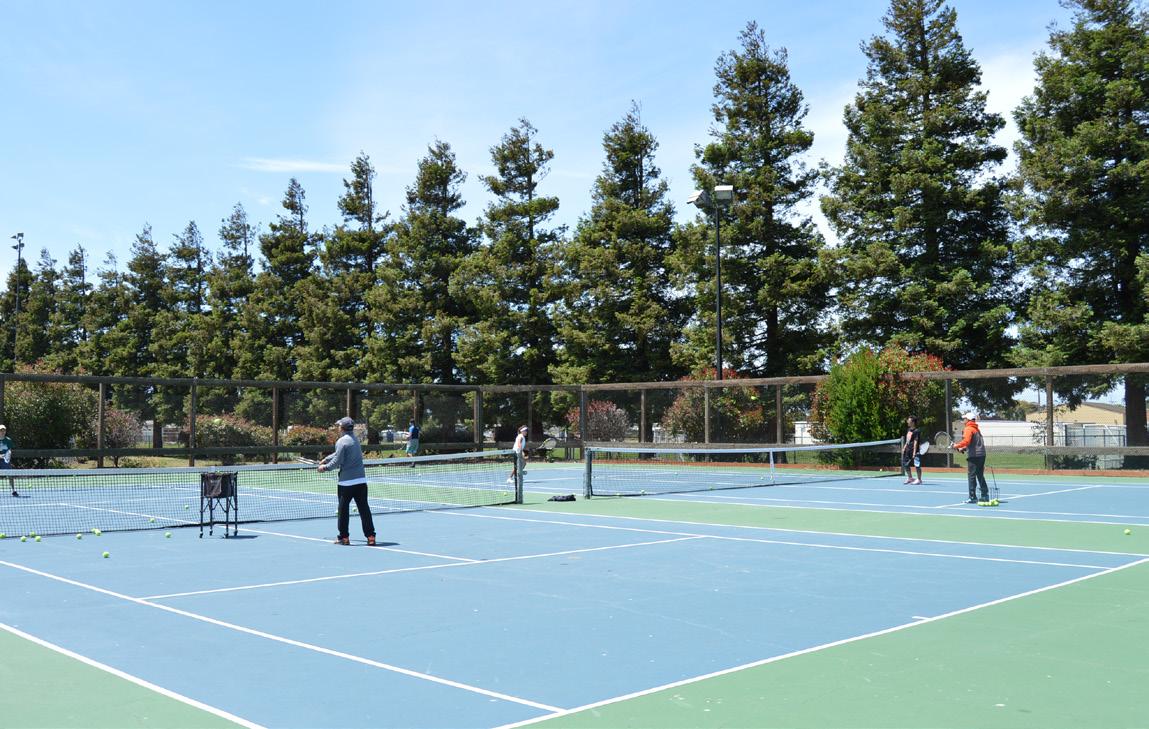
Source: WRT
65 basketball courts at 38 parks
ballfields for softball and baseball at 19 parks
tennis courts at 8 parks soccer fields at 18 parks
• The District operates four swim centers: Arroyo Swim Center in San Lorenzo; Castro Valley Swim Center in Castro Valley; Sunset Swim Center in Hayward; and the Hayward Plunge. (Only the Hayward Plunge is owned by HARD.)
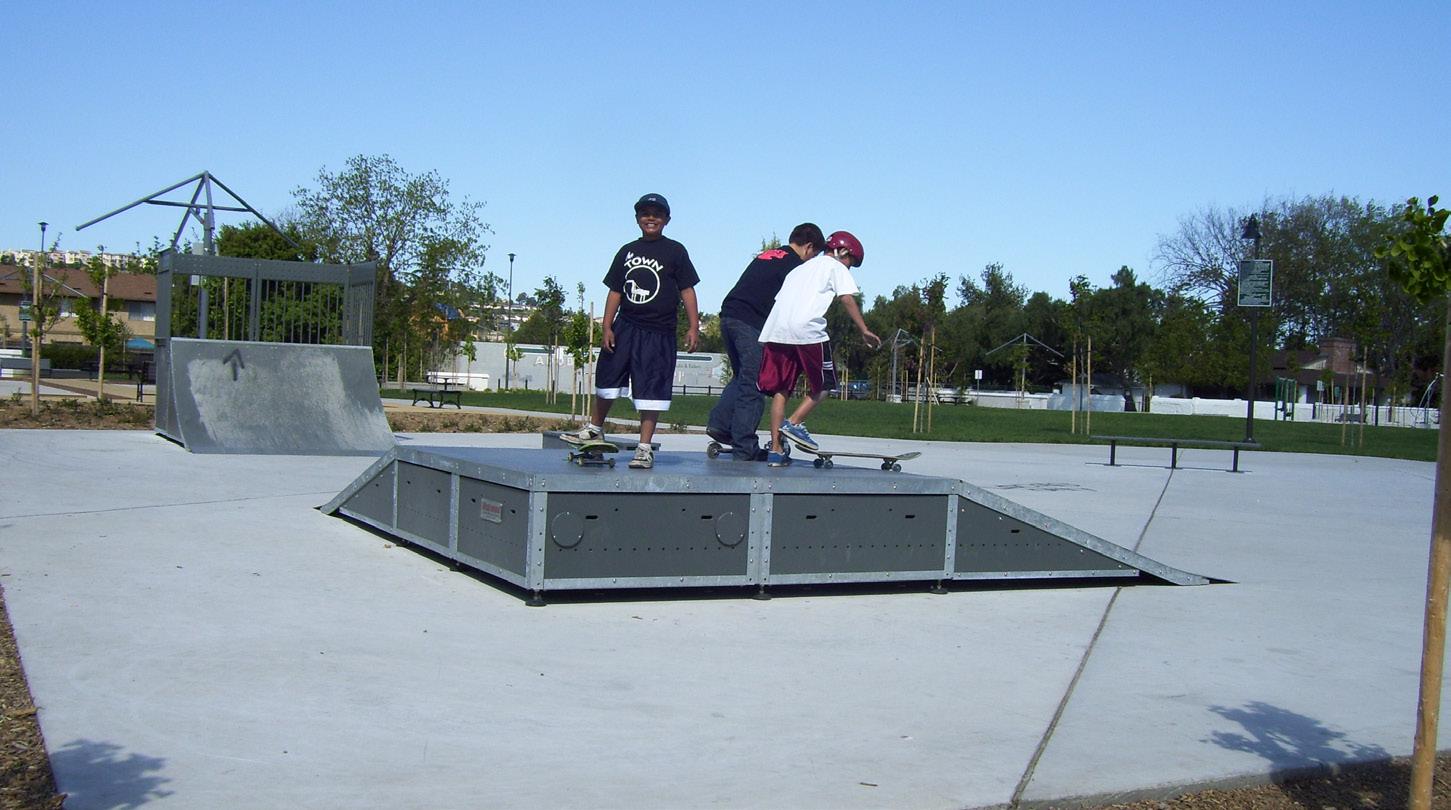
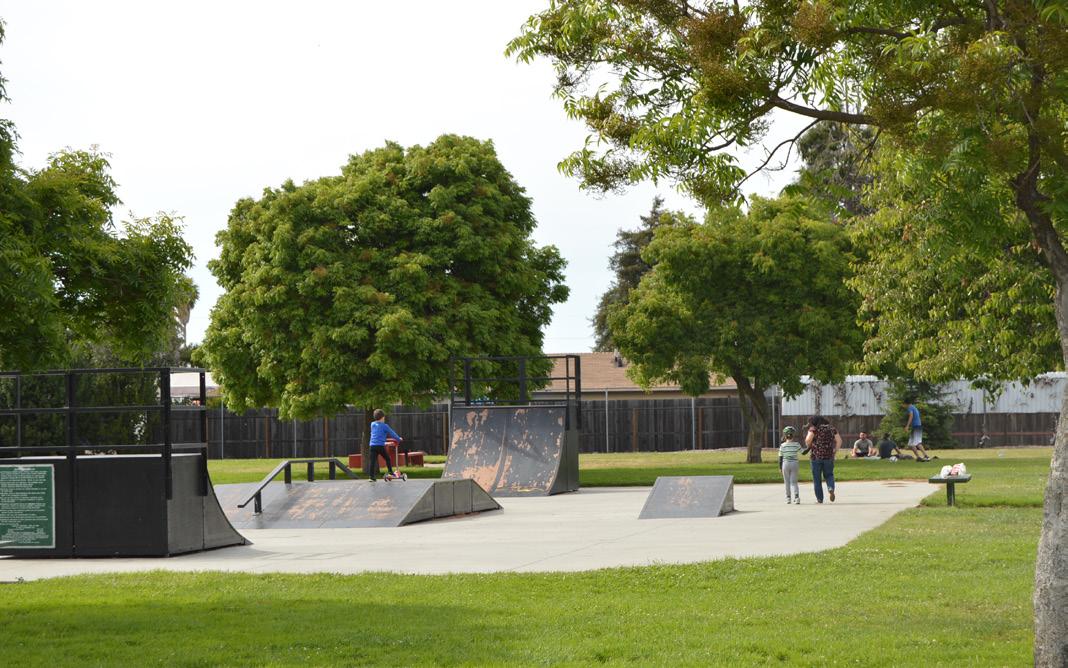
• Eight HARD parks have skate areas: Adobe, Cannery, Carlos Bee, Cherryland, Jack Holland Sr., Mervin Morris, Stratford Village, and Tennyson.
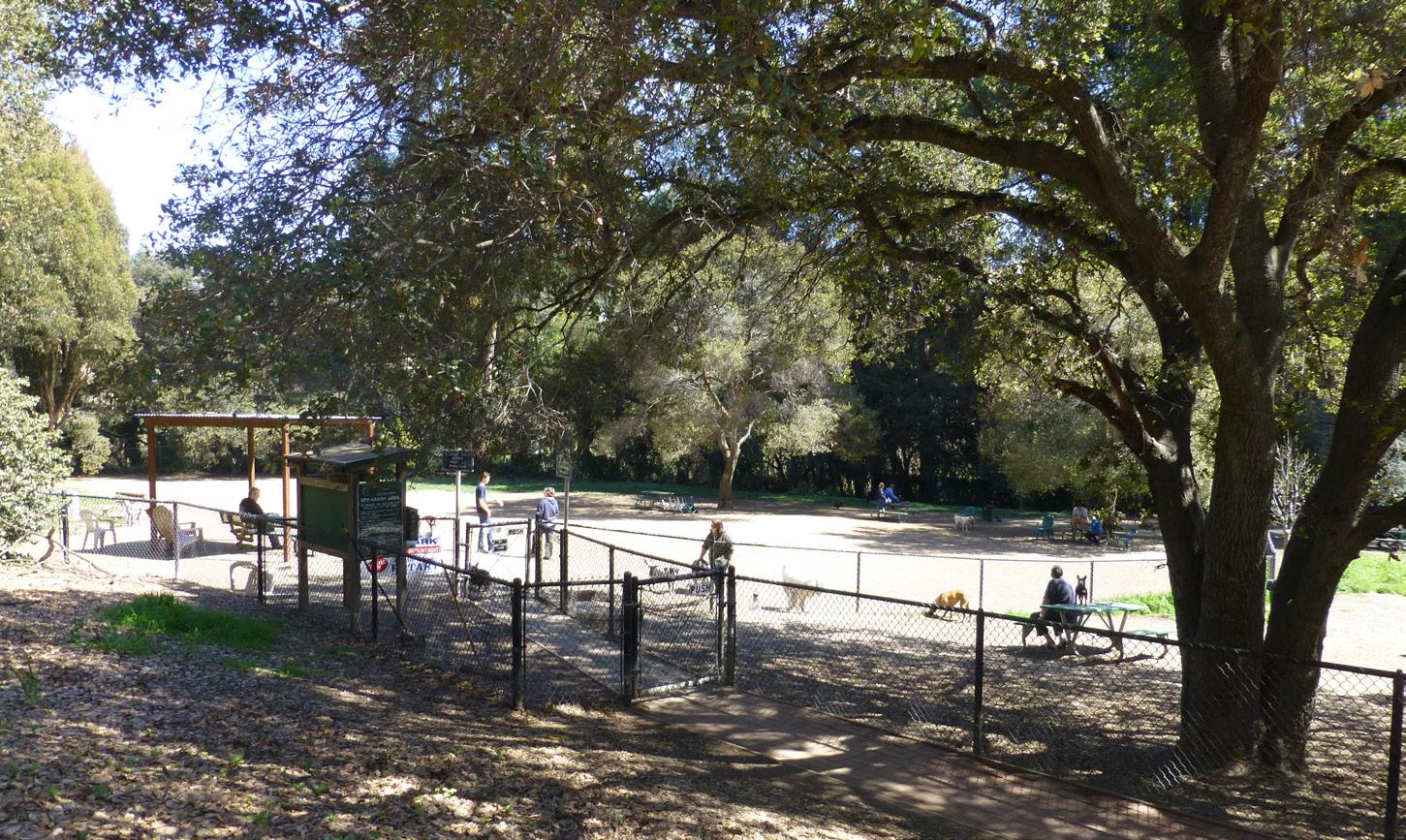
There are currently five dog parks at HARD facilities. These are located at Earl Warren Park (Castro Valley); Eden Greenway (Hayward); Edendale Park and San Lorenzo Community Park (San Lorenzo); and Old Creek Dog Park in Cherryland.
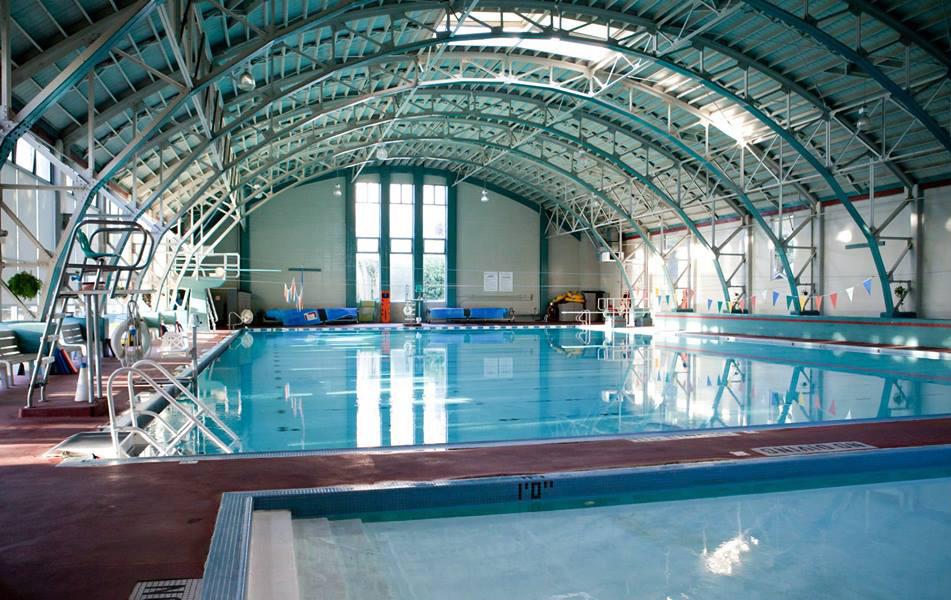
Figure 3-4
De er v iew Pa r k
Su n set Pa r k/ Sw im Ce nt er
Ca nn er y Pa r k
Ca r los Be e Pa r k Ruu s Pa r k
k
Ba y T re es Pa r k
Old Hig hla n d s Pa r k
De er v iew Pa r k

Ba y T re es Pa r k
Su n set Pa r k/ Sw im Ce nt er
Ca r los Be e Pa r k Ruu s Pa r k Boh
Ca nn er y Pa r k

k
Old Hig hla n d s Pa r k

Ca str o Va lle y Com

Ed e n Gr ee nw a y
Figure 3-8
De er v iew Pa r k


Su n set Pa r k/ Sw im Ce nt er
Ca nn er y Pa r k
Ca r los Be e Pa r k
Ba y T re es Pa r k
Ruu s Pa r k Boh
k
Old Hig hla n d s Pa r k


Source: HARD
The HARD district covers a large area including the City of Hayward and the unincorporated communities of Castro Valley, Fairview, Ashland, Cherryland, Hayward Acres and San Lorenzo. The latter four communities, together, are also known as the Eden Area. Figures 3-9 through 3-13 shows HARD parks and amenities at a larger scale, in each of five district “subareas.”
Source: HARD


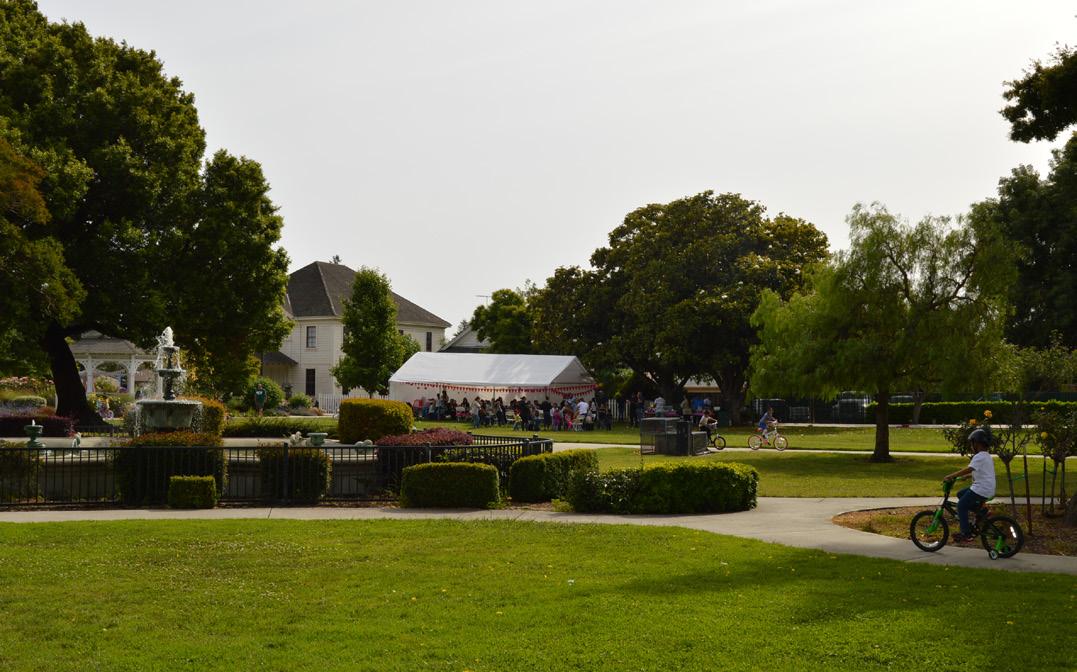

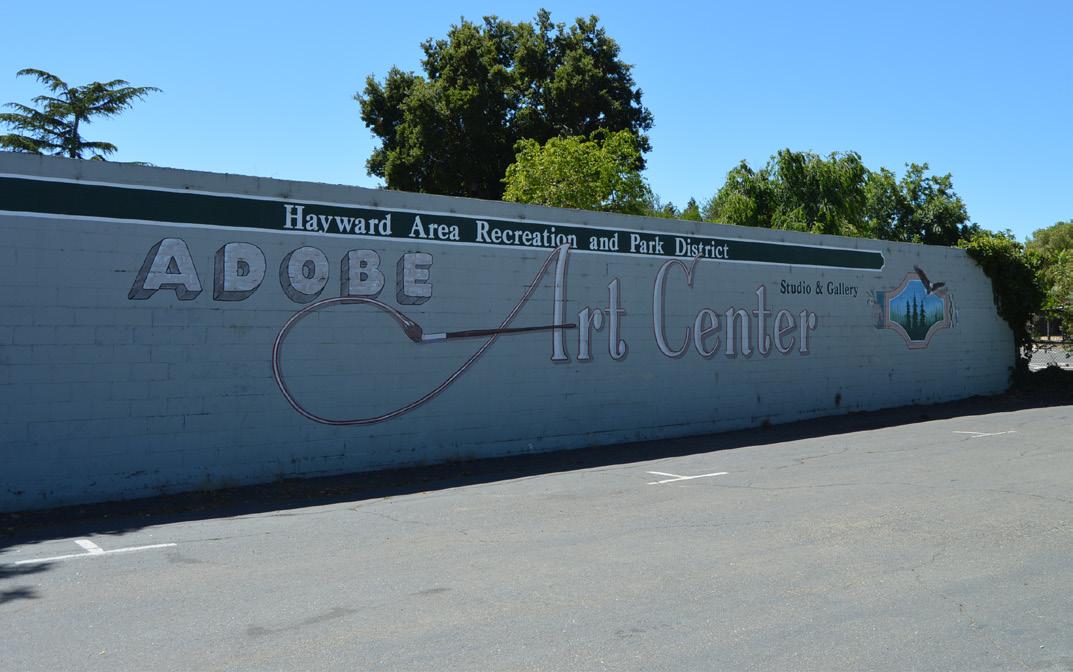
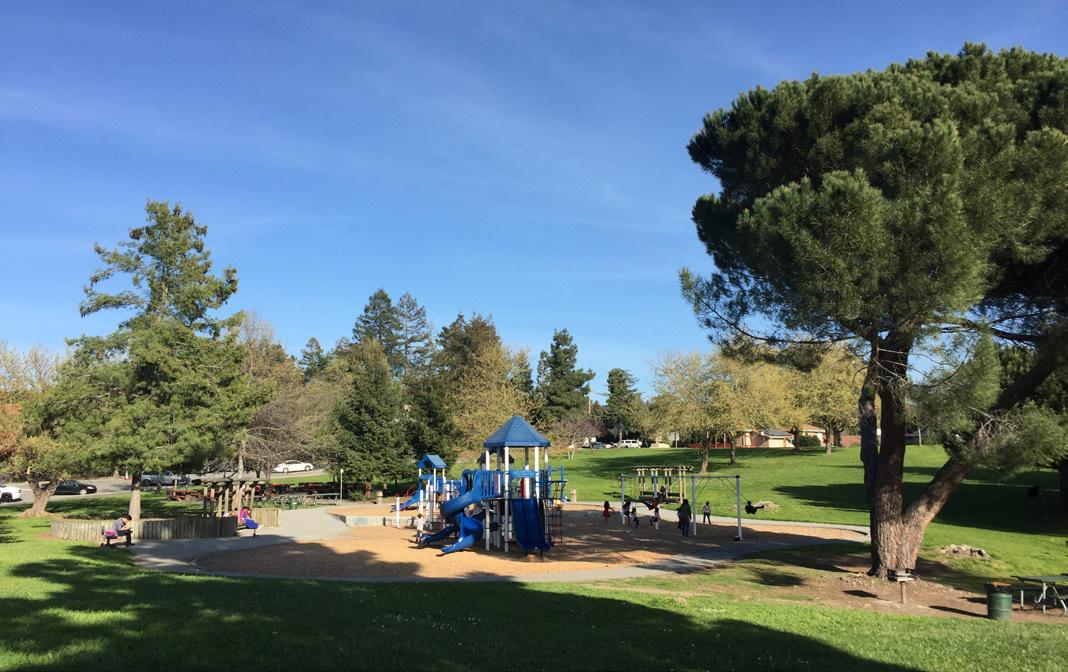
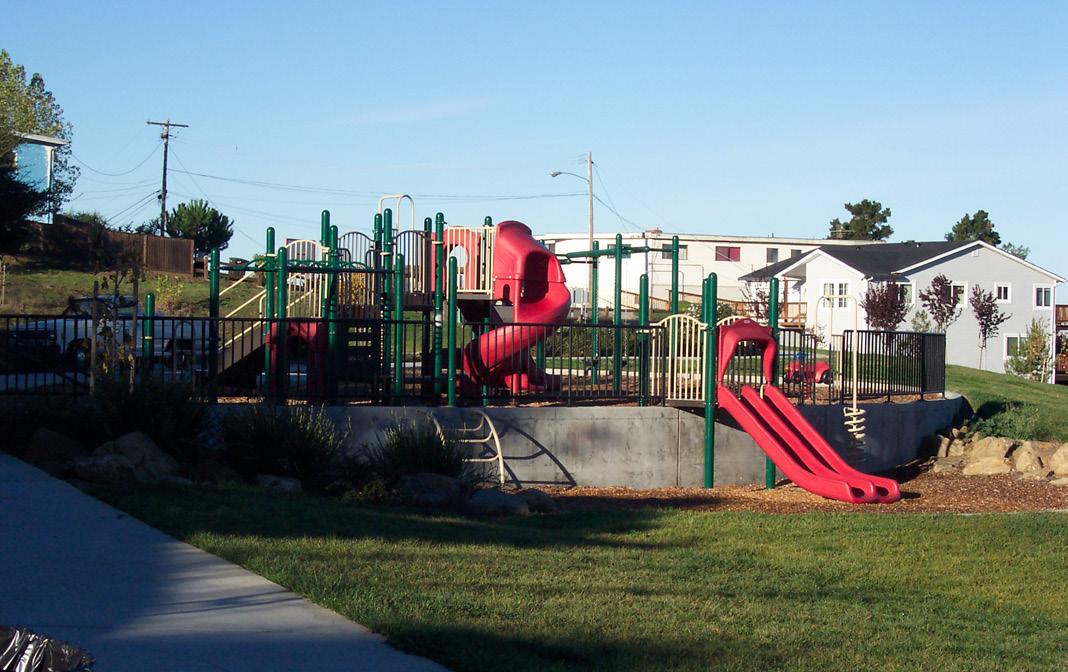
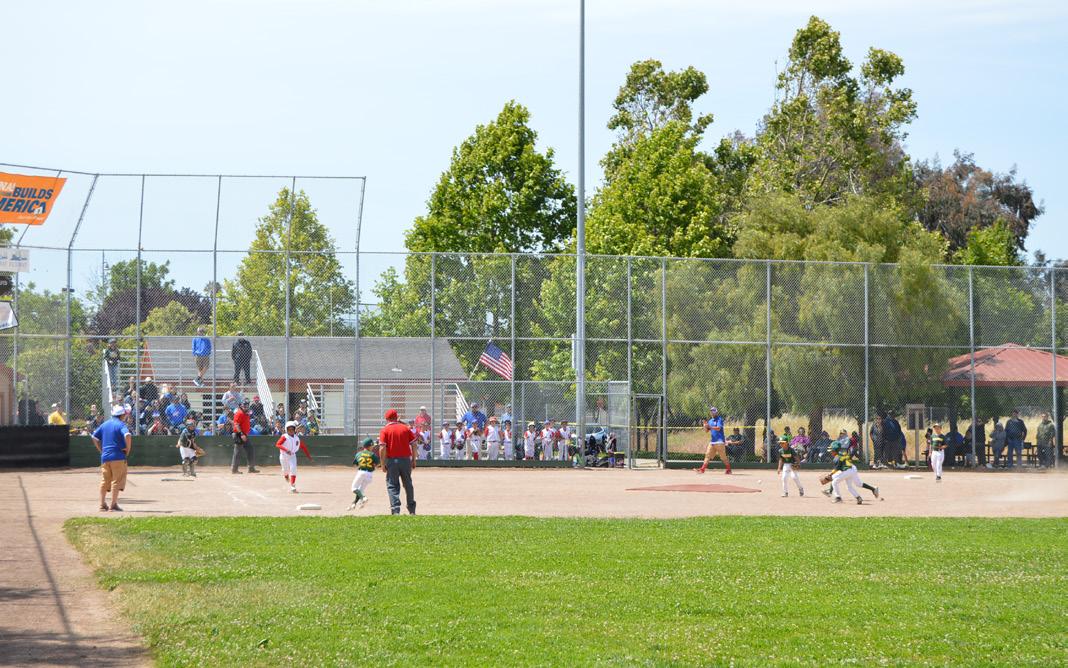
and services it offers.
HARD has a professional staff that annually delivers over 2,000 aquatic, recreation and special event programs in 19 core programs areas as shown in Table 3-2.
Enrollment in registered programs approaches capacity, though the District has not formally tracked participation year over year. HARD uses a variety of marketing tools to create awareness of the programs
TABLE 3-2 HARD’S CORE PROGRAM AREAS
Core Program Area
After School Programs
Aquatics
Arts
Camps
Dance & Music
Fitness
Gymnastics
Nature
PhotoCentral
Preschool (Pre-K Learn & Play)
Special Interest
Senior/ Active Adults ( 50 years +)
Special Needs
Sports
Golf Teens
Martial Arts
Mobile Recreation
Theatre Arts
Parks and amenities that are clean and functioning efficiently are a critical element to delivering high quality programs and services. The core lines of service (functions) performed by HARD’s maintenance operation are numerous and are as follows:
• Aquatic Maintenance. HARD performs the maintenance of the systems and infrastructure of the swimming pools and splash pads in the system including but not limited to water chemistry, backwashing, chemical management and landscaping. There is clear delineation of roles and responsibilities related to aquatic maintenance between parks staff and aquatic staff.
• Contract Management . HARD manages and oversees the work performed by third party contractors for the maintenance of parks and facilities. Strong oversight of these contracts has led to minimal incidents of non-compliance with the terms of the contracts.
• Equipment Maintenance. The division performs maintenance on the equipment that is used in the field.
• Furniture, Fixture and Amenity Maintenance
The division maintains all of the built environment within the parks system, including but not limited to, shelters, benches, fencing, water fountains and picnic tables. Minimal inspection and preventative
maintenance are performed which can reduce the lifecycles of the various assets.
• Integrated Pest Management (IPM). Pest infestations present significant risk to the environment, biodiversity, health and safety, public infrastructure, recreational opportunities and landscapes. The IPM program administered by the Parks Division is limited in scope and is focused primarily on turf management and landscaped beds.
• Irrigation Maintenance. Irrigation encompasses the application and conservation of water for environmental enhancement of turf grass, trees and landscape plants. This includes maintaining and monitoring technical irrigation systems, to optimize water usage and delivery.
• Landscape Maintenance. The parks division performs best practice maintenance to landscape beds throughout the parks system.
• Open Space/Wetland Maintenance. The management of open spaces and wetlands is one of the more scientific and complex functions performed by parks and recreation department. The primary functions of open space management are the protection of biodiversity through planning and policy, conservation, restoration and the monitoring and management of natural environments. The work in open spaces and wetlands is governed, and in some cases, restricted by a plethora of state and federal law. Currently, the Parks Division, as mentioned previously does not have the professional expertise on staff to manage and maintain these spaces, which, in turn, limits its ability to maintain these parklands at any level of significance.
• Playground Maintenance. The division maintains
all of the playground’s in the HARD parks system in accordance with the National Playground Safety Institute’s guidelines.
• Response to Citizen Inquiries: The staff of the parks division respond to, meet with and resolve citizen inquiries on an as needed basis in a professional, courteous and expeditious manner.
• Special Event Facilitation: The parks division is a major player in the successful delivery of special events to the community. They supply not only the resources needed to set up and tear down the events, but also provide or procure much of the necessary equipment needed to make the events possible.
• Special Projects: The parks division occasionally engages in small capital improvement projects throughout the system. These projects are often limited in scope and are funded through the annual operating budget. Larger capital improvements are contracted out.
• Turf Maintenance: Maintaining turf in an often drought-stricken environment is difficult to manage. Watering restrictions inhibit the healthy growth of turf and in many cases cause it to become dormant, die or infested with invasive weeds. The parks division makes every effort to manage turf by best practice standards, but the lack of rainfall and strict water conservation measures in place makes it difficult for the parks division to do so.
• Urban Forestry: A formalized urban forestry program that ensures the health of individual trees and shrubs and emphasizes the overall health of the entire tree population does not exist within the Parks Division. The division’s approach to urban forestry is reactive
in nature with the exception of ensuring safety clearances on pathways, trails and right of ways.
HARD has made numerous improvements to the system over the twelve years since the current Parks and Recreation Master Plan was adopted. These include eight new parks or special facilities; one park expansion; and two new school recreation sites, as follows. Changes are shown on Figure 3-14.
Jack Holland Sr. Park (Ashland). This 0.63-acre park opened in 2012 in the heart of Ashland on E. 14th Street. The park features a skate park, a play area, an open lawn area, picnic tables and restrooms.
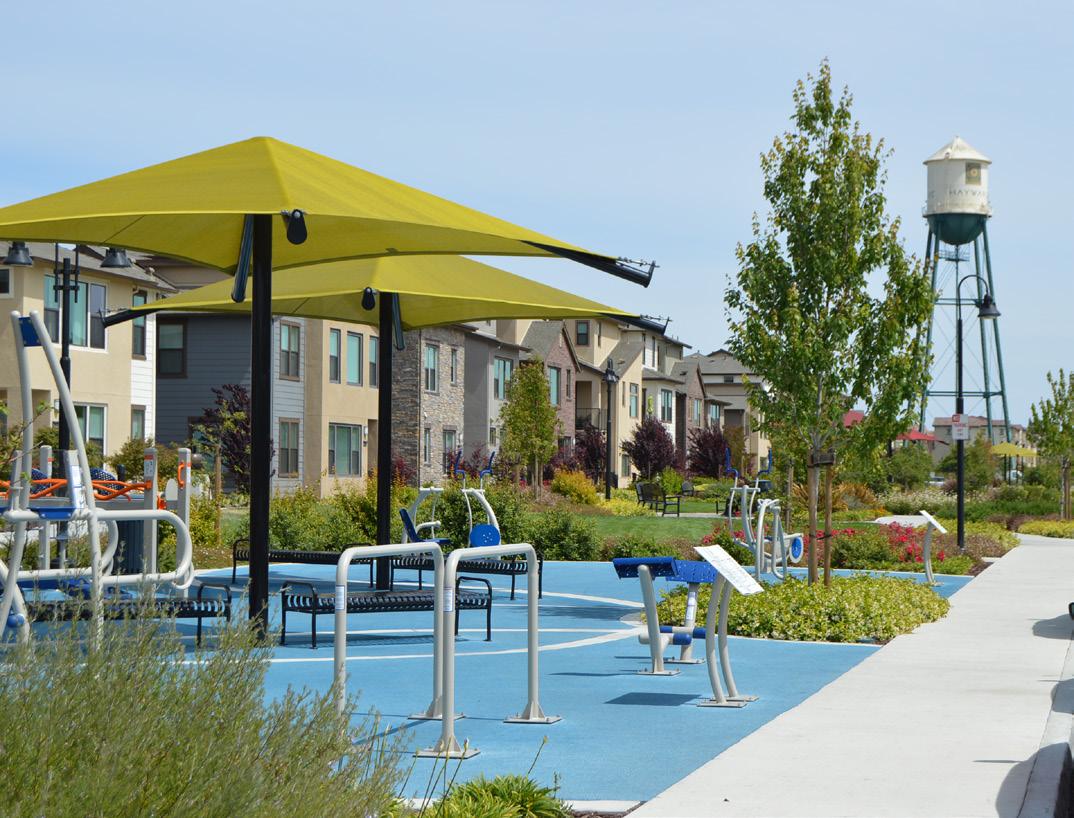
Cannery Water Tower Park (Hayward). The second park developed as part of the redevelopment of the Hunt’s Cannery site, this 2.1-acre park features a playground and open play area along with the namesake water tower standing at its center.
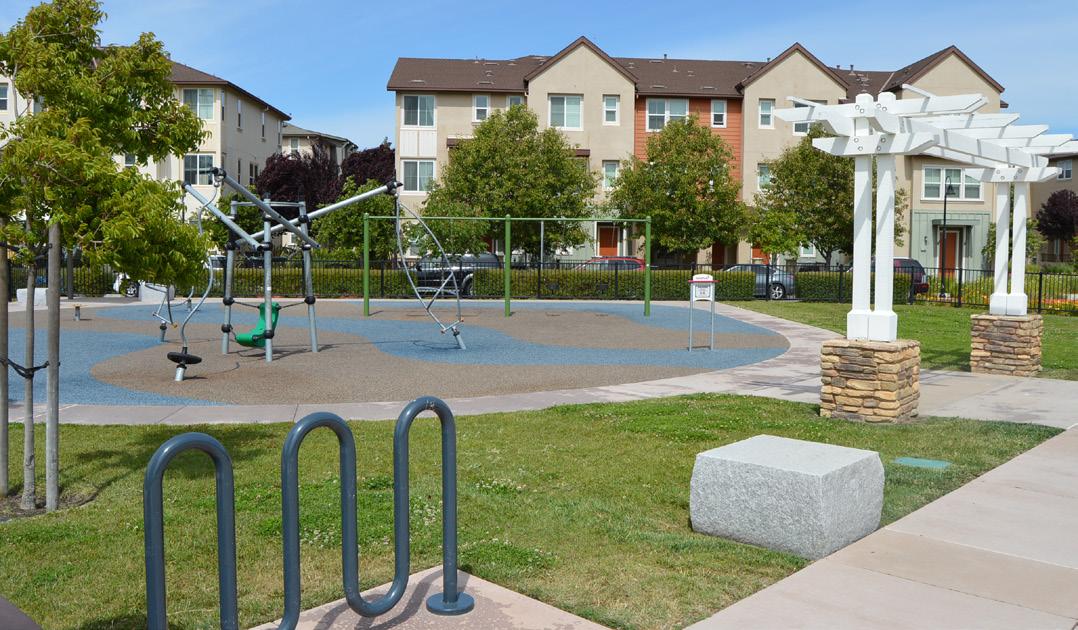
Cannery Water Tower Park
Source: WRT
Castro Valley Creek Park (Castro Valley). In 2007, the Alameda County Flood Control and Water Conservation District “daylighted” a 300-foot-long segment of Castro Valley creek, reconstructed a natural creek environment and added native plants along the banks. In a second phase completed in 2010, a trail, fencing, benches, trash receptacles, a pedestrian bridge, and interpretive signs were added, and HARD built a playground with rock-climbing structures, boulders, ropes, and concrete animals.
Children’s Park at Giuliani Plaza (Hayward). A small memorial plaza for Hayward police officer Alex Giuliani was dedicated at the corner of Mission Boulevard and D Street in 1999. Today, the memorial is joined by a playground operated by HARD.
Old Creek Dog Park (Cherryland). HARD’s new offleash dog park features separate dog runs for large and small dogs.
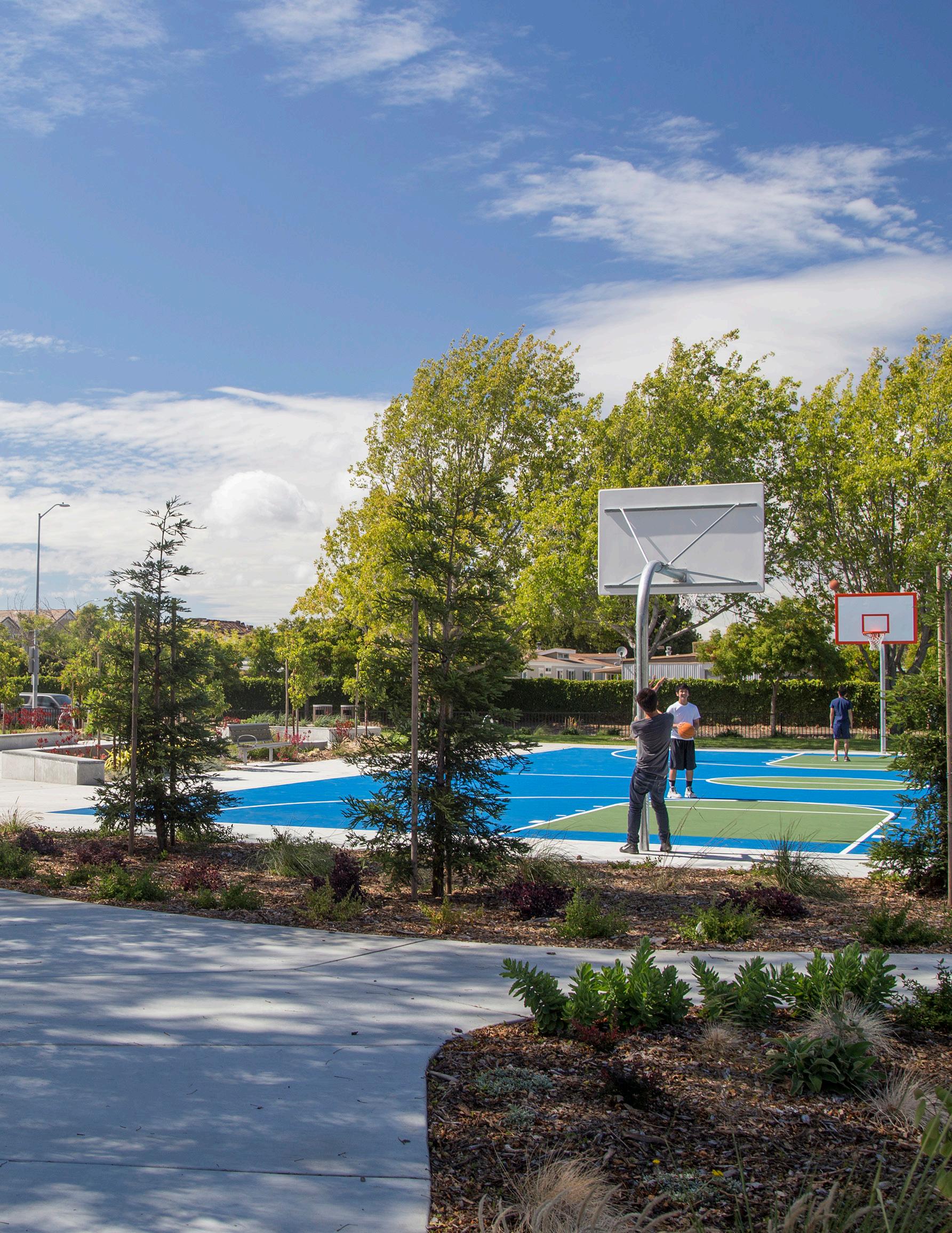
Greenwood Park extension (Hayward). Greenwood Park, in the Mt. Eden neighborhood, was enlarged and reconstructed between 2015 and 2016. The $2.38-million upgrade included a new interactive playground, restroom building, basketball courts, skateboard plaza, walkways, shaded group picnic structures and a community art piece. The project was funded using in-lieu developer fees.
Stonebrae Elementary School (Hayward). This new HUSD school opened with a joint-use agreement for recreational facilities.
Edendale Middle School (Ashland). HARD entered a joint-use agreement with Edendale, and helped to fund the synthetic turf field, which opened in 2011 along with a new gym, track, music building, and other campus improvements funded by Measure E and Measure O.
REACH Ashland Youth Center (Ashland). The REACH Ashland Youth Center opened in 2013 in a new 2-story, 31,500-square foot building on E. 14th Street. The building provides a gathering place for youth and includes a dance studio, a digital media arts center, a computer lab, a career development and employment center, a health and dental clinic, counseling services and library services. The facility is operated by Alameda County Health Care Services Agency. The Alameda County Deputy Sheriffs’ Activities League (DSAL) leads recreation programming. While this is not a HARD facility, it is an important complement to HARD’s recreational services.
Adjacent to the Meek Estate, the Cherryland Community Center will feature multi-use and community rooms, a Pre-K activity room, an Alameda County Library Annex, a catering kitchen and reception room. Groundbreaking took place in April 2018.
HARD has some 27 new parks or facility improvements in the planning pipeline. About half of these are receiving funding from Measure F1, the $250 million bond measure approved by voters by a large margin in November 2016. Two new parks will be created as part of development projects. Planned parks and improvements are summarized below and shown in Figure 3-15.
Valley View Park (Castro Valley). HARD acquired the 24-acre parcel in 2014 from the East Bay Municipal
Utility District (EBMUD) and began the park master planning process in 2015. Funding for improvements will come from Measure F1 bond proceeds.
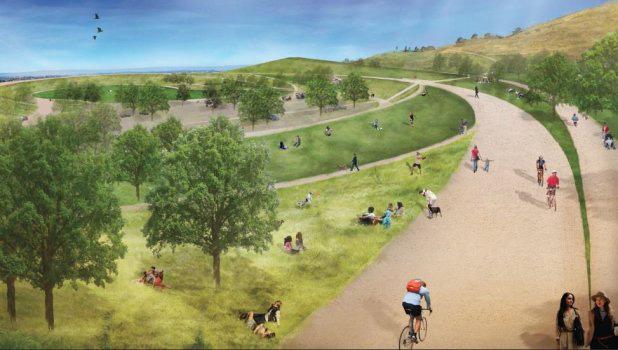
La Vista Park (Hayward). The nearly 50-acre La Vista Park is planned for a portion of the former La Vista quarry site. The park, required as part of an adjacent residential development, was initially planned as a “destination” park but has been reconceived with a greater focus on enjoyment of the natural setting.
Via Toledo Park (San Lorenzo). A park master plan for this 2-acre property was approved in 2016. Park development is programmed through Measure F1 and included in the current Capital Improvement Plan (CIP).
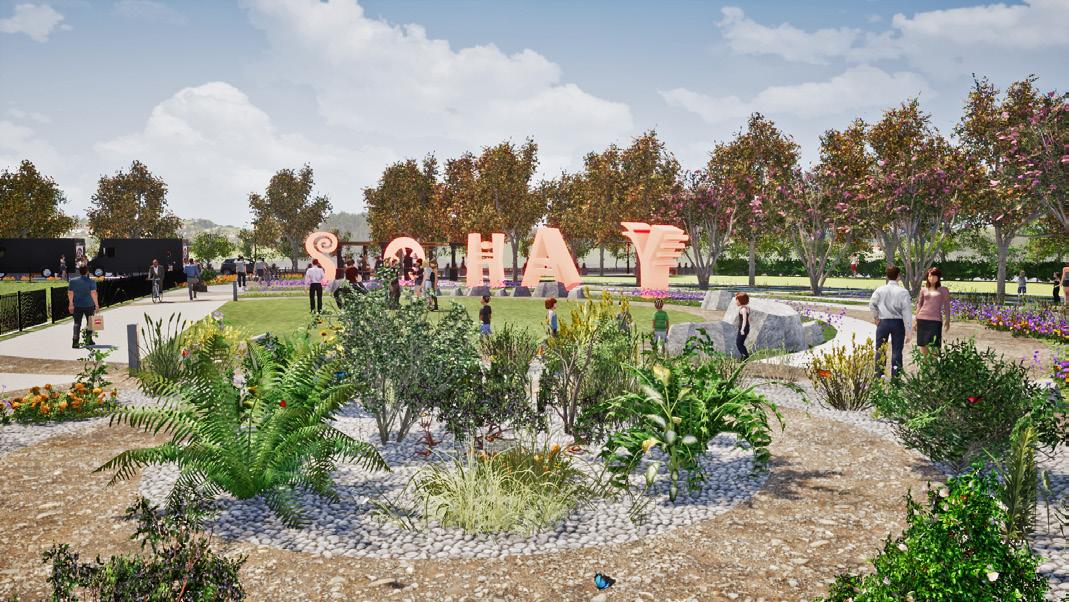
SoHay Park (Hayward). This 2.4-acre park will be created as part of the SoHay Mixed Use Development. The project features 402 townhomes, 72 apartments,
Source: City of Hayward
Source: Urban Arena
and 20,000 square foot of retail space along Mission Boulevard in South Hayward. The new park replaces the 1-acre Valle Vista Park.
Mission & Mattox Site (Ashland). The vacant 2.6-acre site along Mission Boulevard has been purchased by HARD for a future park.
Fairmont Terrace Park (Castro Valley). Fairmont Terrace Park is planned to be expanded onto undeveloped land to the west. Expansion and park improvements are funded by Mesaure F1 and programmed through the CIP.
Mateo Site (Ashland). HARD is currently purchasing three parcels on Mateo Street totaling 1.43-acres for a new neighborhood park. Other sites in Ashland are also being evaulated for potential future parks.
New Community Center (Ashland). HARD is pursuing in collaboration with Resources for Community Development (RCD) at 16060 E. 14th Street in Ashland. The opportunity to bring investment in affordable housing, affordable childcare, indoor community space, and outdoor recreation space as part of a large
community development project is unique and meets many different community needs.
The current Three-Year CIP (2017-2020) identifies park improvements or renovations for 16 HARD parks. Several of these projects will be funded by Measure F1. Improvements will take place at the following parks or facilities:
• Construction will begin in 2019 for the Kennedy Park Renovation, Mia’s Dream Come True Playground, Hayward Community Gardens - Phase 1, Edendale Park Renovation, East Avenue Park Renovation, and the new 2-acre Via Toledo Park.
• New park master plans are needed to guide improvements at Bidwell, Eden Greenway, El Rancho Verde, Hayward Plunge and Memorial Park, and Tennyson Park.
• Sports fields improvements at Canyon and Creekside middle schools is pending funding and operations agreements with Castro Valley Unified School District.
• Centennial Park is identified as a potential site for new facilities.
• Other parks slated for park improvements or renovations include San Felipe and San Lorenzo community parks; Weekes Park; Sunset Park; and Sulphur Creek Nature Center.
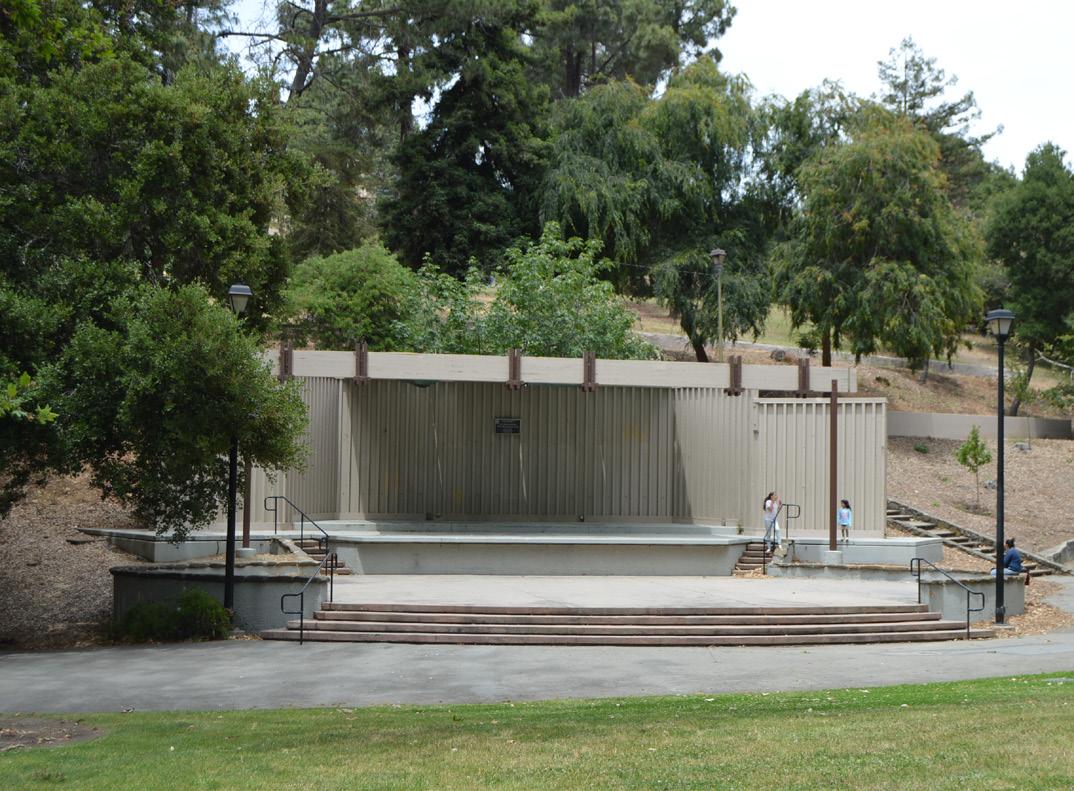
The current CIP also programs building modernizations at three HARD facilities: Douglas Morrisson Theater,
The Needs Assessment presents a picture of what HARD residents want and need in the way of recreation and parks, based on survey responses, stakeholder interviews, level of service analysis of park acreage and park access, and park-by-park analysis of conditions. The findings of this Needs Assessment are used to inform Parks Master Plan recommendations and site-specific decisions with regard to planning facilities and services.
The Needs Assessment includes the following elements:
Statistically-valid surveys conducted in 2016 to assess support for a $250 million parks bond (Measure F1);
One-on-one and small-group discussions with stakeholders, including community leaders and park and recreation user groups;
A park-by-park assessment to review (1) the physical condition and (2) the match between programming and site at each park;
A park land level of service analysis evaluating how well the District is serving its population in terms of park acreage and service area;
A recreation amenity level of servic e analysis evaluating HARD’s amenities compared to recommended standards;
As HARD prepared to bring Measure F1 to the voters in November 2016, the District commissioned a series of surveys to gauge support and understand priorities. Godbe Research conducted two surveys for HARD, in January 2016 and July 2016. The surveys used online and phone interviews in both English and Spanish and included statistically-significant sample sizes of likely voters in the District. The survey asked respondents about their opinion of HARD’s work; their level of support for a $250 million bond measure to improve and maintain local parks; and whether the inclusion of specific types of park improvements would make them more or less likely to support the measure. Finally, the survey tested a variety of statements about the bond measure to help guide the campaign.
The survey’s relevance in assessing people’s priorities for the park system overall is limited in two ways. First, it focused on improvements envisioned for the bond measure. Second, the survey reports the opinions only of likely voters, not all members of the service area population. Still, its findings are useful in helping create a qualitative understanding of community priorities.
A high-level assessment of current operations and maintenance practices
Averaging the January and July surveys, over threequarters of respondents had a favorable opinion of the job HARD was doing to provide quality parks and recreation facilities and services, while 59 percent felt HARD was effectively managing its funds. Specific potential improvements were tested; these are ranked in Table 4-1 by level of support.
The surveys showed strong support for safer and better-maintained local parks. Respondents placed the highest priority on maintenance, repair and renovation, to improve safety, quality, cleanliness and attractiveness.
Fairmont Terrace, Kennedy, San Felipe, San Lorenzo, Valley View, Via Toledo, and Weekes Parks
Sources: Godbe Research for HARD, 2016; WRT, 2018.
As part of the HARD Parks and Recreation Master Plan project initiation, meetings were conducted with representatives from the HARD Foundation, the City of Hayward, Alameda County Board of Supervisors, Alameda County Sheriff’s Office, East Bay Regional Park District and others.
HARD and the Consultant Team also reached out to the broader community, at parks, events, and community meetings, as described in Chapter 1.
During these discussions, there was broad support for the work HARD is doing, and a sense of personal connection with HARD and its parks and programs. The following provides a summary of themes, priorities, goals, opportunities, and challenges that emerged from HARD PMP stakeholder and community discussions.
Participants expressed a high level of satisfaction with HARD staff and management, noting high-quality customer service, good involvement in community events, good programming, and good management and coordination of playfield access. People commended HARD for its support for new facilities, including Kennedy Park, Mia’s Dream, Phase 1 of San Lorenzo Park, and Greenwood Park.
Maintenance
Participants stated the need to improve the appearance of HARD parks and facilities, noting the relationship between appearance and the perception of safety and other aspects of park experience. Some felt that an influx of new residents has resulted in higher expectations for maintenance and park design quality. Specific points included:
• Higher standard for landscape maintenance practices
• Establish maintenance standards
• Make parks more visually appealing and inviting
• Particular emphasis on mowing lawn, trash removal, and other measures that improve user experience and promote safety
• Multiple comments about the poor condition of the former duck pond in San Lorenzo Park
• Improve restroom maintenance
Source: WRT
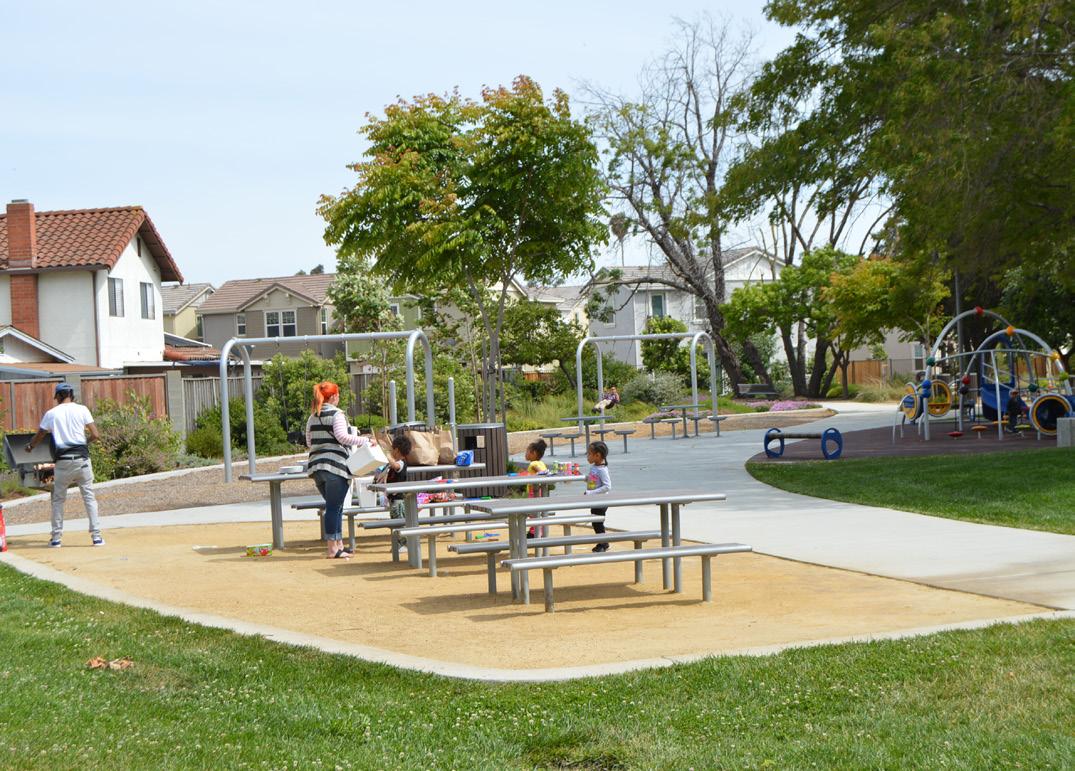
A comprehensive upgrade of Greenwood Park has recently been completed.
Source: WRT
Stakeholders identified the need for updated or upgraded facilities. They offered the following recommendations:
• Improve all playfields so they are functional, safe and accessible. Natural grass, if properly maintained, is preferred; artificial turf is acceptable if maintenance resources are not available.
• Expand and improve playgrounds, play facilities, and gymnasiums
• Incorporate more walking loops and exercise trails in parks
• Improve/ update restrooms
People expressed the need for parks to serve a wide range of user needs and be adaptable to changing trends. Some stated that if necessary, fewer and better facilities may be an appropriate strategy—for example, establishing flagship community parks. Some suggested that the District could achieve improvements one phase at a time. Others noted that the District should make regular updates and lifecycle replacements, recognizing that funding may be inadequate.
Several stakeholders supported expanding infrastructure that supports walking and biking, including “safe routes to school” and better bike and pedestrian access to parks. Trails must be safe, welldesigned, accessible, and inviting. Specifically, people were interested in opportunities to increase east-west linkages, and trail connections from the hills to the bay.
One stakeholder noted the community pride and use of the shoreline trail access at Grant Avenue.
Stakeholders identified some specific trail opportunities:
• Improvement of the informal trail beneath Castro Valley Boulevard and I-580 along Crow Creek, with a connection to Don Castro Regional Park;
• Pedestrian bridge connection between Carlos Bee Park and Morrison Theater;
• San Lorenzo Creek corridor.
Stakeholders felt the Parks Master Plan should emphasize equity in access to parks and recreation. They noted that the area has changed since the last Parks Master Plan, and we need to understand how that change affects recreation demand. People requested that the PMP include maps illustrating gaps in park access. People wanted to make sure that outreach is done for all communities and income levels. The following equity issues were noted:
• Shortage of facilities in Ashland, Castro Valley, and South Hayward dating to early development before formation of HARD;
• Shortage of gymnasiums, which are flexible and can serve variety of activities and ages
• Perception of poorer maintenance at parks in unincorporated communities
Suggested strategies to address park equity included:
• Establish a goal of one enhanced park in each area or community
• Establish park/amenity distribution targets of ½ mile
• Expand pocket parks and trails as a way to provide access to recreation where land is limited
• Figure out what facilities are underutilized, and convert them to use in greater demand
• Increase options for adolescents
Stakeholders identified several specific opportunities for potential new parks:
• Bidwell Elementary School/Park (Hayward)
• Bayfair Mall redevelopment site
• Caltrans land
• Property on southeast side of A Street along San Lorenzo Creek
• Parcel near Miramar and Page in El Portal neighborhood
• U-Haul site in Ashland
• Site for plaza at Bohannon property in San Lorenzo
• East of Mission Boulevard in south Hayward
• Sites that support new east-west connections
Identify Opportunities for Recreation Program Expansion
Stakeholders had numerous suggestions for expanding HARD’s recreation programs:
• Expand the reach of after-school and camp programs [HARD notes that after-school programs at school sites often compete with HARD programs.]
• Different program/rental events at the Rodeo –agricultural programs, parties, etc. – especially high revenue events
• More opportunities for active seniors
• Job skills and language classes
• Mothers’ groups, caretakers’ groups
• Expand aquatics program (lessons, lifeguards, etc.) [HARD staff note that this would likely require new aquatic facility.]
• Art programs (murals)
• Theater programs (not well attended, great facility)
• Ecological education at Sulfur Creek
It was suggested that the District analyze how many people are served per dollar spent on programming to get the greatest value. People acknowledged that program expansion would mean more staffing needs or re-allocation from under-utilized programs.

Some stakeholders suggested that HARD should expand aquatics programs, programs for active seniors, and more after-school and camp programs, among other ideas.
Source: HARD
Some stakeholders emphasized the role that poor street connectivity plays in limiting access to parks— especially where park land is already scarce. Specific sites where connectivity improvements could make a difference: the Fairview neighborhood below San Felipe Park, and connections to Carlos Bee Park and the Hayward Area Senior Center.
Stakeholders spoke about the value of collaborating with other agencies and organizations and leverage resources. HARD needs to think creatively about what kinds of opportunities and partnerships the District can make to serve diverse community.
• Several areas of overlap between HARD and City of Hayward Staff were noted: graffiti removal, landscape architecture, security, staff training, design review, GIS and mapping, fee administration, emergency repairs.
• HARD has agreements for joint use with several schools, but there is a need to resolve the terms of agreements or recognize the limitations of these sites for community use. [HARD notes a trend toward limiting community use.]
• Collaboration opportunities with East Bay Regional Park District were also discussed in detail. These included consideration of management and programming at the Shoreline Interpretive Center; regional trail connections from the Rodeo site; and opportunities to link more programming with
regional open spaces so that people can be more connected with their natural environment.
Other ideas included:
• Hospitals, for collaboration on “wellness”
• Community and neighborhood groups for collaboration on community gardens; online/social media communication
• Alameda County Sheriff’s Office and City of Hayward Police for shared resources and grants
• Alameda County Deputy Sheriff’s Office Activity League (DSAL)
• Community centers, in particular Ashland Youth Center and South Hayward Family Youth Center
• Hayward Area Historical Society
• East Bay Regional Park District (EBRPD)
• BART and AC Transit
• Religious institutions
• Chamber of Commerce
• PG&E,for linear park opportunities
• Alameda County Transportation Commission for trails
• Alameda County Public Works for implementation of Pedestrian and Bicycle Plan
People spoke about the need for HARD to be more nimble and try new programs and amenities. Ideas included fire pits, food trucks, outdoor classrooms, yoga in the park and movies in the park (which would require electricity access). Stakeholders noted that HARD has an important role in social cohesion, and that can mean non-traditional, low-cost recreation activities.
People proposed using current technology, with a smart phone or app-based reservation system, and app-based interpretation at natural and cultural/historic sites.
Stakeholders’ management ideas included cultivating a “deep bench” for leadership in the District; developing better data and maps; and streamlining to eliminate redundancies between HARD and the City of Hayward (for example, in administering in-lieu fees). On the financial side, stakeholders recommended:
• Providing more funding for maintenance so that things are taken care of before they break;
• Planning and funding lifecycle replacement, and taking lifecycle costs into account during design (the question of artificial vs. natural turf was called out specifically);
• Identifying more cost recovery programs;
• Maintaining a reserve fund;
• Prioritizing projects and funding.
HARD has an important role to play in creating a cohesive community.
Source: HARD
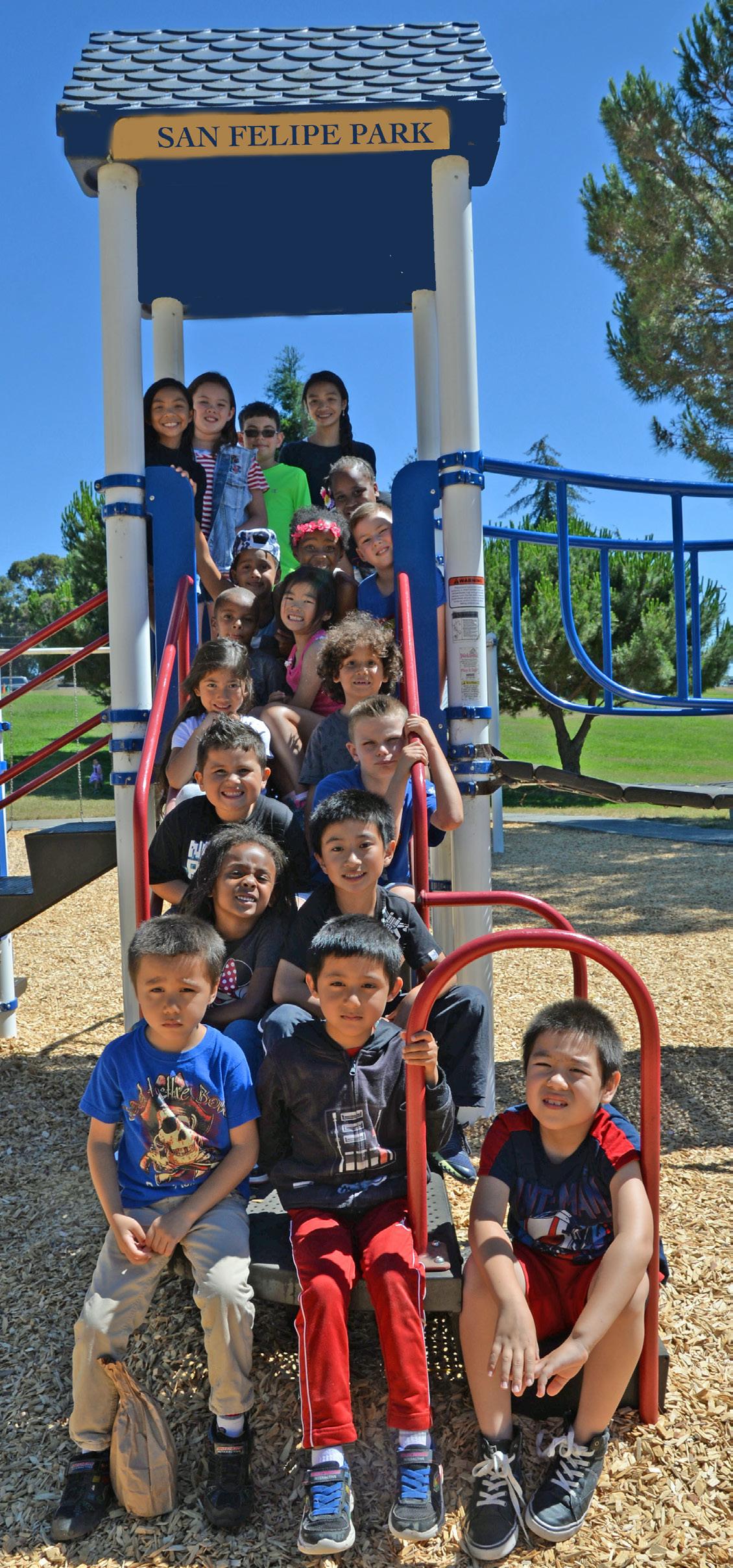
Participants spoke of the need to improve safety in parks. Specific ideas included:
• Implementing Crime Prevention Through Environmental Design (CPTED) measures
• Clarifying lighting policy. Low level lighting can provide safety and visibility. Motion sensing lights and variable level controls can provide winter evening use and overnight security.
• Clarifying the role of rangers and police, and improving their responsiveness;
• Better lighting, ranger program, cameras, antigraffiti measures, strategic fencing and gates
• Activation: programming and park use
One stakeholder saw investment in recreation as a critical quality of life issue for the community, as well as a way of preventing “downstream” issues and costs related to law enforcement. HARD has an important role to play in bringing a diverse community together in an active way.
Stakeholders saw the need to give HARD a stronger identity, and increase people’s understanding of all the things the agency does. People noted that HARD’s 75th anniversary in 2019 presents an opportunity to showcase the District. There was interest in the idea of preparing a history of the District, especially as a way to help the public see that HARD was created after development patterns had already created a parks shortage.
Conduct Nexus Study and Manage Funding from the City and County
Stakeholders called for updates to Development Impact Fee policies that set park land dedication and in-lieu fee requirements. People felt that funding and land dedication needs to be better aligned with the Parks Master Plan priorities, location, and design guidance.
HARD Staff and the WRT Team conducted a park-bypark assessment in February and March 2018. The Team went through the full list of HARD facilities, assessed the general condition of each one, and identified park improvement recommendations.
Overall, the greatest number of parks or park facilities (38) were found to be in “fair” condition, with 29 parks rated “good” and 17 rated “poor.” For 15 additional parks and facilities, no overall rating was made. (The team evaluated 100 facilities; including some undeveloped park sites.) See Figure 4-1.
Recommended improvements were classified in three categories. “Tier 1” represents lifecycle improvements needed to simply maintain parks and facilities in good and safe condition. “Tier 2” improvements are made to change programmatic elements of the park—for example, replacing an open lawn with a sports facility, or adding a parking lot. “Tier 3” improvements are those that fundamentally transform a park or facility. See Chapter 6 for a more detailed discussion of
improvement tiers.
The analysis found that about half of HARD’s parks need Tier 1 (lifecycle) improvements. Approximately a quarter of the system’s parks are identified for Tier 2 (re-programming) improvements, and another quarter for Tier 3 (visionary) improvements.
The assessment identified many specific potential improvements at each park. These are recorded in the Condition Assessment table, included in Chapter 5. The recommendations show some general themes:
• Many HARD facilities and amenities need upgrading and maintenance – lifecycle improvements.
• Turf reduction is recognized as an opportunity at many parks.
• Trees are important! HARD recognizes the need to inventory trees and plan for the safety and health of the urban forest maintained by the District.
• Playgrounds are a highly important feature of park use.
• The amount, location, and condition of parking areas at parks is quite inconsistent and should be evaluated site by site.
LIFECYCLE REPLACEMENT
TURF REDUCTION
IMPORTANCE OF TREES
IMPORTANCE OF PLAYGROUNDS
PARKING ISSUES
The Parks and Recreation Master Plan establishes acreage standards for each type of park. These standards set targets for how much park land of each type the District should have to adequately serve the local population. These standards help provide the basis for the City of Hayward’s and Alameda County’s park land dedication and Development Impact Fee requirements.
The National Recreation and Park Association most recently has described a range of 6.25 to 10.5 acres per 1,000 as appropriate for different types of cities and settings. HARD’s 2006 Recreation and Parks Master Plan endorses a goal of 8 to 12 acres of park land of all types—including regional parks—per 1,000 people. See Table 4-2.
As of 2019, the District does not meet current minimum standards for local parks, school parks, or district parks. The District exceeds its standard for regional park land – a category that District does not control but which nonetheless benefits people who live and work here.
This analysis indicates the need to rethink the relationship between park type and level of service, to set standards that are ambitious but attainable, and to match standards to current priorities. The new standards are provided in Chapter 5: Recommendations. The City’s and County’s park land standards should be reconsidered to remain consistent with the new HARD parks master plan.
Sources: HARD Parks Master Plan, 2006; WRT, 2019.
The City of Hayward General Plan features the following park land standards:
• 2 acres of local parks per 1,000 residents
• 2 acres of school parks per 1,000 residents
• 3 acres of regional parks per 1,000 residents
• 1 mile of trails and linear parks per 1,000 residents
• 5 acres of parks per 1,000 residents districtwide.
These standards are the basis for the City’s park land dedication standard and requirement for fees in-lieu of land dedication.
Alameda County’s General Plan does not have park land standards. However, current General Plans for Castro Valley (2012) and the Eden Area (2010) have the following standards:
Castro Valley General Plan:
• 2 acres of neighborhood parks per 1,000 residents
• 5 acres of neighborhood and community parks per 1,000 residents
Eden Area General Plan:
• 5 acres of local and community parks per 1,000 residents
Alameda County’s Code of Ordinances is consistent with these General Plans, establishing a land dedication standard of 5 acres per 1,000 residents, and providing an in-lieu fee option.
For more information on how park acreage standards are used, please refer to the Parks and Recreation Element of the City of Hayward General Plan (2014 or as updated); the Eden Area General Plan (2013); and the Castro Valley General Plan (2012), and the Alameda Code of Ordinances.
The 2006 Recreation & Parks Master Plan also establishes service area standards, indicating how close district residents should be to various types of parks and facilities. Geographic analysis based on service area standards can help identify “gaps:” areas where people are not adequately served by parks.
Table 4-3 identifies HARD’s 2006 park service area standards by park type.
Figure 4-2 applies 2006 standards to the park system today, revealing gaps in the service area for local and school parks. This analysis varies somewhat from 2006 Master Plan. First, we combine school parks (also called “school recreation sites”) with local parks rather than treating school parks as a stand-alone category. Second, we measure the service areas in terms of travel distance along streets, instead of as simple circles. This is important to understanding whether people are actually within walking distance of a park.
As Figure 4-2 shows, many parts of the district are wellserved by local parks and school recreation sites. The largest gaps in service coverage occur in Castro Valley and Fairview. Significant coverage gaps are also present in San Lorenzo; in Hayward south of A Street and west of I-880; in downtown Hayward and along the Jackson Street corridor; and in south Hayward east of Weekes Park in the Tyrrell Elementary School neighborhood. The new Master Plan adjusts the standard for local parks - see Chapter 5.
Figure 4-3 shows service area of 2 and 3 miles from district-wide parks, based on 2006 standards. Nearly all people in the district are within HARD’s standard service area for these parks.
HARD’s 2006 standards for access to open space, trails, and regional parks are inexact: half-hour driving time, and “as needed to provide linkages.” Figure 4-4 shows that, in fact, the great majority of HARD’s service population lives in neighborhoods that are within two miles of a trailhead that is part of a HARD park or a regional park.
The Hayward area is fortunate to have large regional parks and natural open spaces near at hand. However, it is notable that there is no unified trail system that links these spaces. While many Hayward residents are within a mile of Eden Greenway, the Hayward Plunge Trail or the Greenbelt Riding and Hiking Trails, these trails do not connect to large regional green spaces in the hills or along the bay.
Chapter 5 presents the updated park acreage and service area standards of this Master Plan.
As described in Chapter 5, the new Master Plan recommends a stricter service area for districtwide parks to ensure that most HARD residents are within ½ to 1 mile of at least some of the amenities associated with community parks and special facilities.
TABLE 4-3 PARK SERVICE AREA STANDARDS (2006 PARKS MASTER PLAN)
District-Wide Parksb
Regional Parklandc
to 3 miles
Open Space, Trails & Linear Parks As needed to provide linkages
Sources: HARD, 2006.
Notes:
a. Service area radii are generalized and must be evaluated on a case-by-case basis taking into account such variables as terrain, major man-made obstacles such as freeways, and general availability of open space.
b. Includes HARD properties only. Does not include open space owned or managed by other entities.
c. Includes East Bay Regional Park District land within HARD boundaries. Does not include regional open space managed by California Fish & Wildlife or EBMUD primarily for conservation.
Level of Service (LOS) standards are guidelines that define service areas based on population that support investment decisions related to parks, facilities and amenities. The 2006 HARD Parks Master Plan does not include level of service standards for specific types of amenities. This Needs Assessment evaluates recreation amenity LOS using a combination of resources:
• National Recreation and Park Association (NRPA) guidelines;
• Recreation activity participation rates reported by the Sports & Fitness Industry Association’s (SFIA) 2017 Study of Sports,
• Fitness, and Leisure Participation as it applies to activities that occur in the United States and the District;
• Community and stakeholder input; and general observations. This information allowed standards to be customized for HARD.
The LOS standards should be coupled with conventional wisdom and judgment related to the particular situation and needs of the community. These standards should be used to inform decisions when planning to develop new parks, facilities, and amenities. By applying these standards to the population of the District, gaps and surpluses in park and facility/amenity types are revealed.
Tables 4-4 and 4-5 detail the current and recommended LOS for HARD.
The District should pursue further development of recreation amenities that address the gaps in the system to increase the current level of service standard for the projected population in 2030. Figures 3-3 through 3-9 show where specific recreation amenities are located. HARD should seek to locate new amenities in parks and neighborhoods where they are currently missing. See Chapter 5 for more detailed recommendations.
TABLE 4-5
Level of service standards show that HARD will need an additional 6 rectangular fields and 4 diamond fields by 2030. At roughly 2 acres needed per field, the District would need to identify space within existing parks or acquire 20 acres of land for new fields. Increasing the number of synthetic fields and/or the combination of synthetic fields with lighting can help the District meet the demand more efficiently, by extending the hours of the day and days of the year fields are available for use.
As of 2018, HARD has six synthetic turf fields, with conversion of two additional fields to synthetic turf planned. Two of the current synthetic fields have lights. These fields are located both in HARD parks and school sites with mutually beneficial joint use agreements. HARD and the four school districts in its service area
(San Lorenzo, Castro Valley, Hayward, and New Haven Unified School Districts) have a long history of shared athletic facilities.
This Master Plan recommends evaluation processes to (1) identify potential sites for synthetic field conversions and new field locations and (2) identify potential sites for installation of athletic field lighting. Mitigation measures have been developed for sites where athletic field lighting is identified. Having both synthetic turf and lights provides the greatest number of hours of play; where candidate sites rise to the top for both processes, they will be given the highest level of consideration for getting synthetic turf and/or lighting.
See Chapter 5: Recommendations for criteria and standards for synthetic turf and field lighting.
Figure 4-4
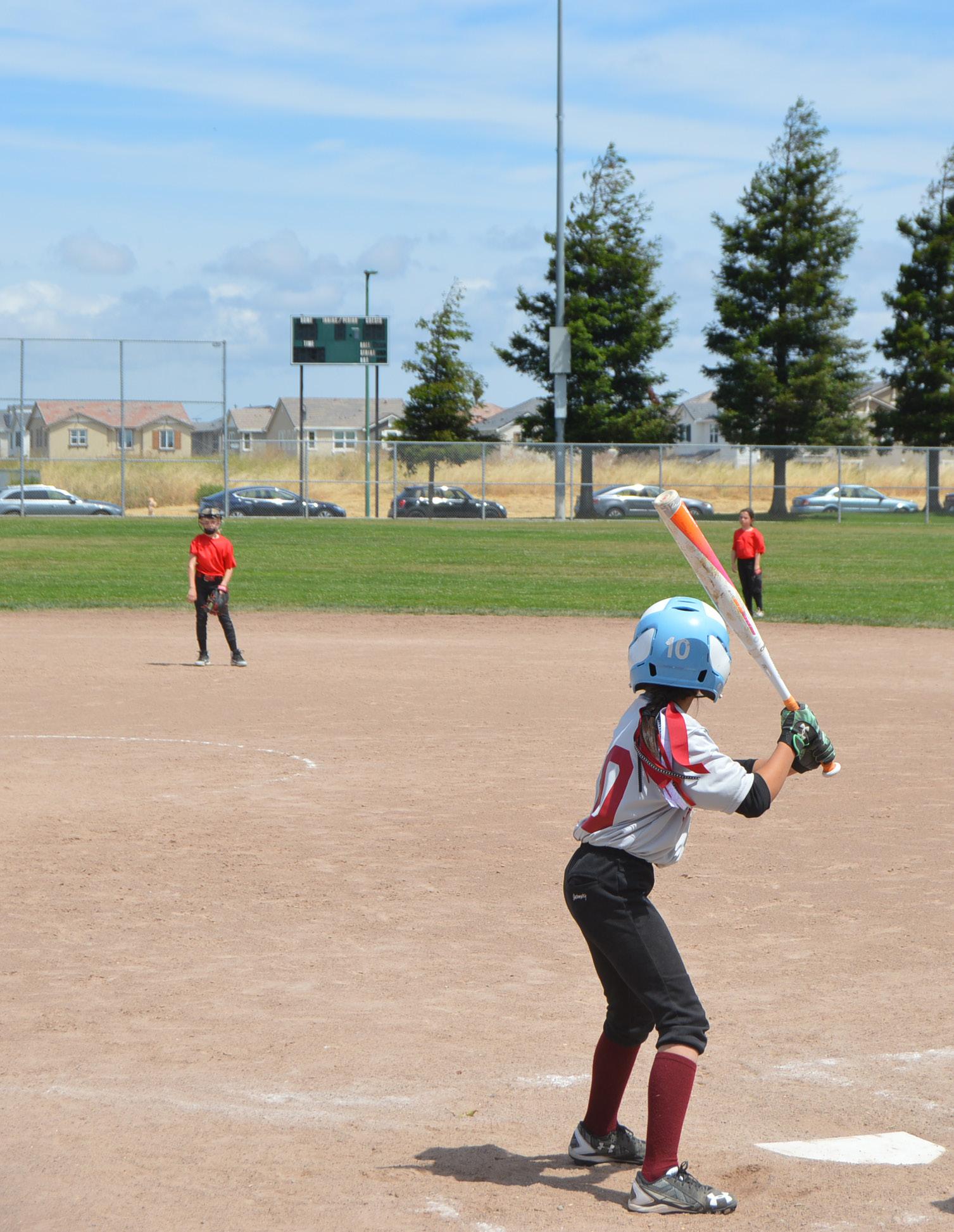
These goals and recommendations are identified to help HARD better achieve its mission to enrich quality of life by providing a variety of recreation activities, parks, and facilities that promote health and wellness, learning, and fun. Recommendations are organized by ten overarching goals. The guidance in this chapter grows out of the Needs Assessment described in Chapter 4, and is intended to guide decisionmaking by HARD over the next ten years and beyond.
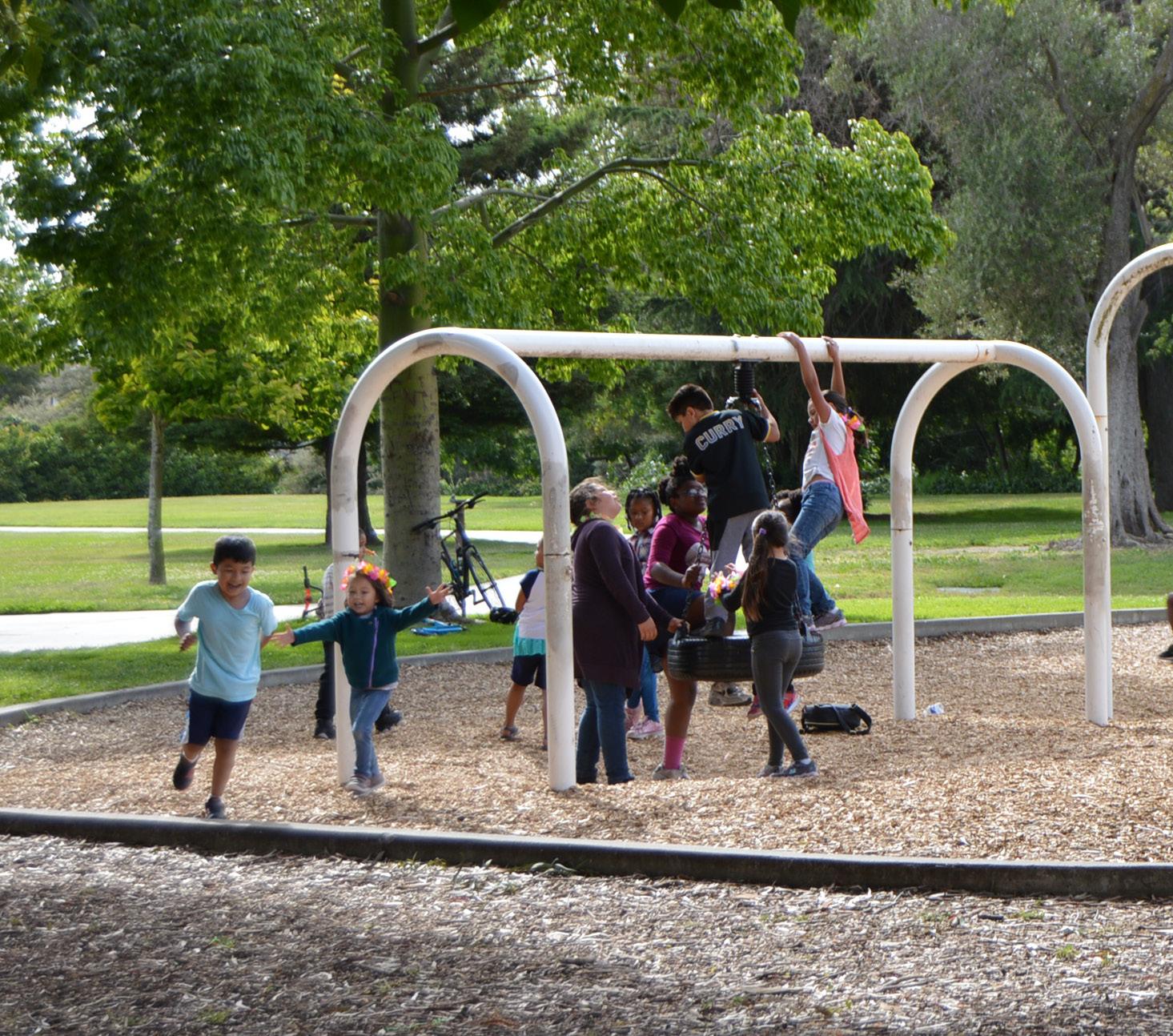
G1 Provide Safe and Attractive Parks and Facilities
HARD will continue to manage a diverse and growing suite of parks and recreation facilities that are safe, comfortable, attractive, and well-maintained.
G2 Align Park Programs and Design with Community Demand
HARD will offer recreation facilities and programs that respond to changing community needs and preferences.
G3 Focus on Equity in Access to Parks and Recreation
HARD will strive to use its resources to increase equity. We will focus on areas where parks are scarce or needs are high as the highest priority for new facilities and access improvements.
G4 Provide Innovative Park Design and Programs
HARD will be innovative in its approach to park facilities and design, programming, and engagement to reflect the best in current practices.
G5 Elevate Sustainable Practices
HARD will manage its 1,300-plus acres of park land and its 16 community, recreation, arts and senior facilities in a way that reduces water and energy use and showcases sustainability.
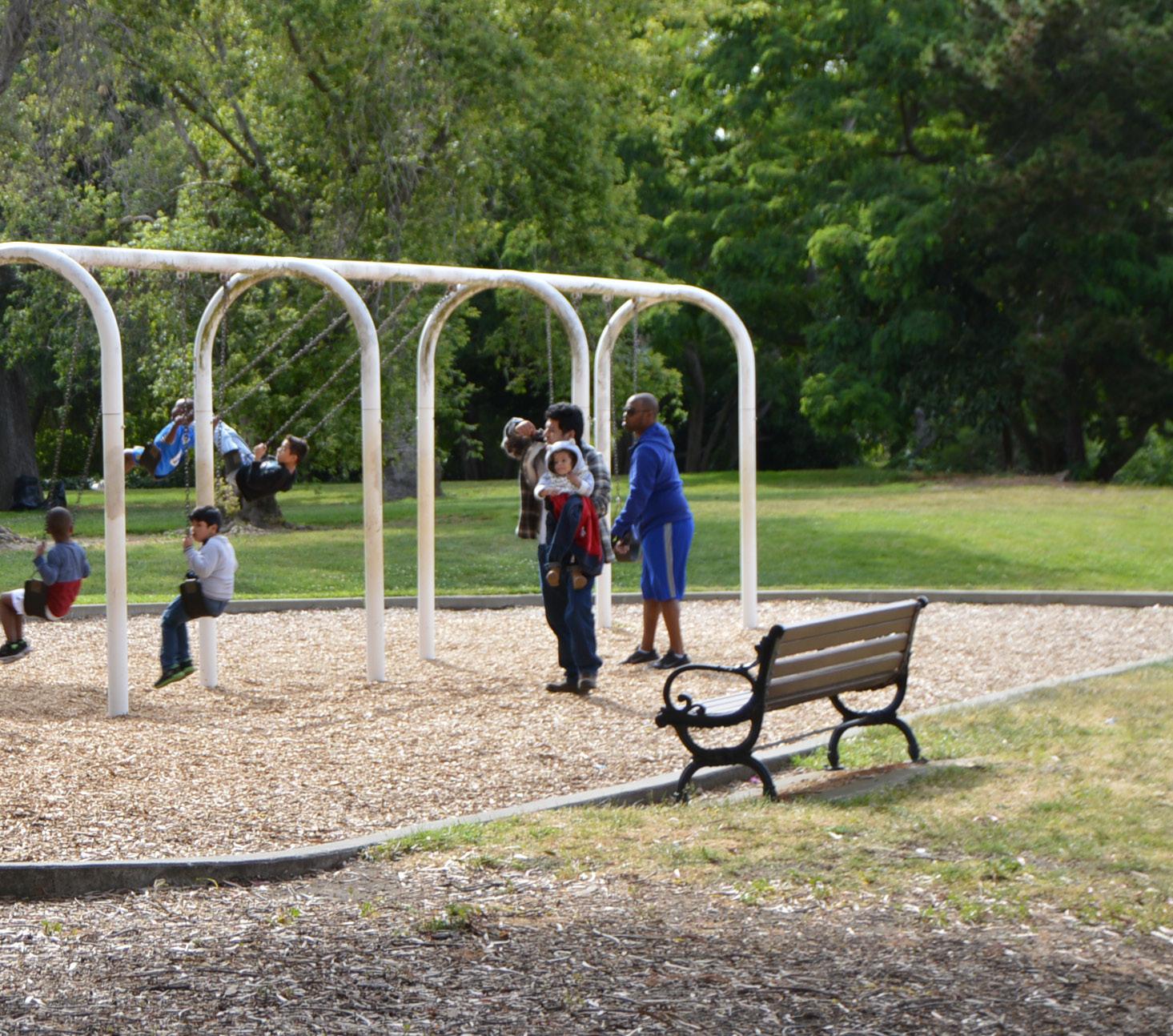
HARD will create opportunities for community members to enjoy the District’s superb natural setting by enhancing the experience in HARD parks, developing the trail system, and partnering with other agencies.
HARD will work to increase participation in programs, use of parks, and the community’s engagement and satisfaction with the District.
HARD will continue to coordinate with other organizations and agencies to optimize recreation opportunities in the community.
HARD will work to develop expertise and capacity of staff, take a systematic approach to maintenance and operations, and plan for and fund the full lifecycle costs of facilities.
HARD will actively and creatively pursue available funding sources and make decisions about capital and operational investment that provide the greatest value.
Improving the maintenance, cleanliness and attractiveness of existing local parks and recreation facilities ranked at the top in community members’ response to the survey the District conducted in 2016. The park-by-park analysis conducted for the Master Plan Update revealed many parks with lifecycle replacement needs. Better maintenance will positively affect satisfaction, the perception of safety, and the image of the District in the community.
Specific maintenance priorities should include the following:
• Establish level of service standards for landscape maintenance
• Make parks more visually appealing and inviting
• Emphasize mowing, trash removal, and other measures that improve user experience and promote safety
• Improve restroom maintenance
Priority facilities for maintenance are identified in the first of three park improvement tiers (Tier 1: Maintain), as described in Chapter 6.
See also Recommendation O12: District-wide Capital Maintenance Program.
HARD’s system features many parks and facilities where upgrades are needed to allow them to better serve the community. The District should attend to the following needs in particular:
• Where neighborhoods are only served by very small local parks (under 1.5 acres), those parks should be priorities for design changes to optimize usability.
• Expand and improve playgrounds and seek to place playgrounds within walking distance of all community members.
• Improve all playfields so they are functional, safe and accessible. Natural grass, if properly maintained, is preferred. However, synthetic turf can allow for more intensive use, especially if maintenance resources are not available. See Recommendation E6.
• Evaluate how to best serve demand for community and recreation centers. This may mean consolidation and emphasis on fewer but higher-quality facilities.
• Incorporate more walking loops and exercise trails in parks, recognizing the positive relationship with public health.
• Update restrooms in community parks with a focus on safety, comfort, and attractiveness.
Priority facilities for upgrades are identified in the second of three park improvement tiers (Tier 2: Enhance), as described in Chapter 6.
Safety in parks is an ongoing concern of community members. The District should evaluate specific safety concerns and determine whether physical changes can help address them. Crime Prevention through Environmental Design (CPTED) elements may include adding lighting, enhancing visibility through landscape or other changes, and changing access patterns. HARD will continue to evaluate all facilities for Americans with Disabilities Act (ADA) compliance and establish priorities for implementing universal design.
Park use may be the most important factor for safety. Where parks are not well-used, HARD should evaluate whether design should support new or different programs, whether it needs to be changed to create a more attractive place to spend time, or whether sites should be considered for surplus.
See also Recommendation O1: Integrate Safety into Operations.
In some areas, parks do not serve surrounding neighborhoods well because of fencing or undeveloped access routes. HARD should work with neighborhoods and other jurisdictions to evaluate removing barriers to access. Key opportunities include:
• Access to Sorensdale Park from Stanislaus Way;
• Access to Centennial Park from Ocie Way;
• Access to Weekes Park across the site of the closed Shepherd Elementary School;
• Access to an expanded San Felipe Park from Vermont Street;
• Access along Eden Greenway across the railroad and freeway.
• Connectivity between the southern end of Carlos Bee Park, Douglas Morrisson Theater, Hayward Area Senior Center, the Japanese Gardens, potential future open space along the Route 238 Bypass Corridor.
• A sense of entry on City Properties and access to Douglas Morrisson Theater, Hayward Area Senior Center and the Japanese Gardens.
Missing street connections and missing sidewalks limit people’s access to existing parks. HARD has a role to play in working with neighborhood
groups and jurisdictions to advocate for priority street improvements.
Trail connections will be addressed in more detail in the Greenways and Trails Master Plan (see D10).
HARD should advocate for a complete bike network that provides safe access to parks for people on bikes, including inexperienced riders. Buffered bike lanes and off-street paths are preferred along arterial corridors. Wellmarked bike boulevards are a good strategy for local streets. This will include coordination with other agencies as part of the development of a Greenways and Trails Master Plan (see D10).
Second, HARD should provide good bike facilities within parks.
HARD has some 38 fields for softball and baseball, 18 soccer fields, and other fields available for open play. Some of HARD’s fields use natural grass while others have synthetic turf. There are advantages to both. The District should use an evaluation process, as described below, to determine where to use natural and where to use synthetic turf, and where to provide lighting upgrades. In general, HARD should strive for natural grass fields on an appropriate soil base where feasible when undertaking upgrades. Due to the poor condition of natural grass fields today, synthetic turf fields are more in demand. These fields should be the focus of lighting upgrades to extend their usability.
Each athletic field (including those at school sites available to the HARD community through joint-use agreement) should be evaluated separately under the Synthetic Turf Criteria and Standards and the Athletic Field Lighting Criteria and Standards. Once the criteria and standards are applied, the fields may be organized into tiers based on the number of criteria they satisfactorily meet. The fields that fall into the highest tier will be given highest priority when considering conversion of existing fields. The criteria and standards will also be applied to potential new field locations. See also D7: Develop Recreation Amenities to Meet Needs.
TABLE 5-1
CRITERIA FOR SYNTHETIC TURF AND ATHLETIC FIELD LIGHTING
Category Synthetic Turf Criteria
Athletic Field Lighting Criteria
Size Does the field meet the minimum size requirement: 35,000 square feet for rectangular & diamond & 65,000 square feet for combination fields?
Location Is the field located in an area where access gaps exist for rectangular or diamond fields?
Site Amenities & Investment Does the site have existing or planned restroom facilities that are permanent structures or attached to buildings with an exterior facing entrance?
Are there existing or planned ADA accessible pathways to the field?
Does a mutually beneficial financial (cost sharing) partnership exist?
Is the field used for school sports programs or physical education classes?
Does the field provide benefits for programming both youth and adult sports leagues?
Is the field already lighted?
Does the field support both diamond and rectangular sports?
Where fields are converted to synthetic turf or where lighting is added, HARD will analyze the potential for disturbance to trees and other natural features and minimize any negative effects to the greatest extent feasible.
The following standards have been developed to minimize light intrusion while providing safe play for field users and safe viewing for spectators.
• In residential areas, field lighting will be designed and installed to ensure less than or equal to 0.5-foot candles increase at adjacent residential property lines.
• LED or any other advanced lighting system should be used to achieve efficiency, light uniformity and visual comfort while minimizing light spillage.
• Illuminance levels will adhere to the following guidelines for light source intensity or recreation, high school or stadium fields unless inconsistent with league rules:
• Rectangular Fields: 50 foot candles (fc)
• Diamond Fields: 100 fc (infield); 50 fc (outfield)
A variety of techniques may be used to minimize light intrusion, depending on the specific context. These include shielding, wattages, mounting height, aiming angles and dimming controls; plantings or physical buffers; and operational techniques such as curfews, programming limits, and seasonallyadjusted hours. As lighting technology improves, HARD will regularly review and update these standards.
The District currently operates four swim centers: the Hayward Plunge and the seasonal outdoor pools at Arroyo, Castro Valley, and Sunset. None of these pools can currently support modern competitive swimming. It would be optimal for the District to operate 2 to 3 facilities that can support lessons as well as higher-level use, and 2 to 3 other smaller, local pools or splash pads. The District should determine which aquatics facilities to upgrade and/or transform. Community engagement should be done to inform a more detailed understanding of community needs.
HARD’s nine community centers host a diverse set of programs and activities, but vary in their functionality, especially as rentable facilities for weddings and other large events. They are often limited by a lack of space; floor plans that aren’t flexible enough to meet multiple needs; competition from more attractive facilities, and other issues. HARD should evaluate the demand for community centers, and determine how to most successfully and efficiently meet that demand. This may include consolidation of facilities into fewer, more effective centers. The strategy should balance revenue-generating uses with the need to provide classes and programs that meet the District’s objectives. Community engagement should be done to inform a more detailed understanding of community needs.
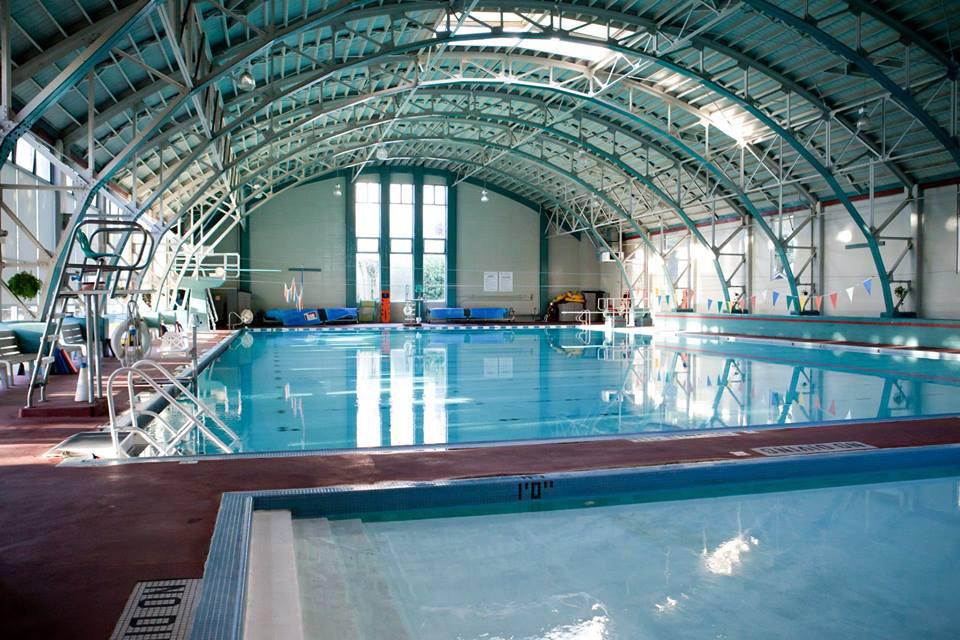
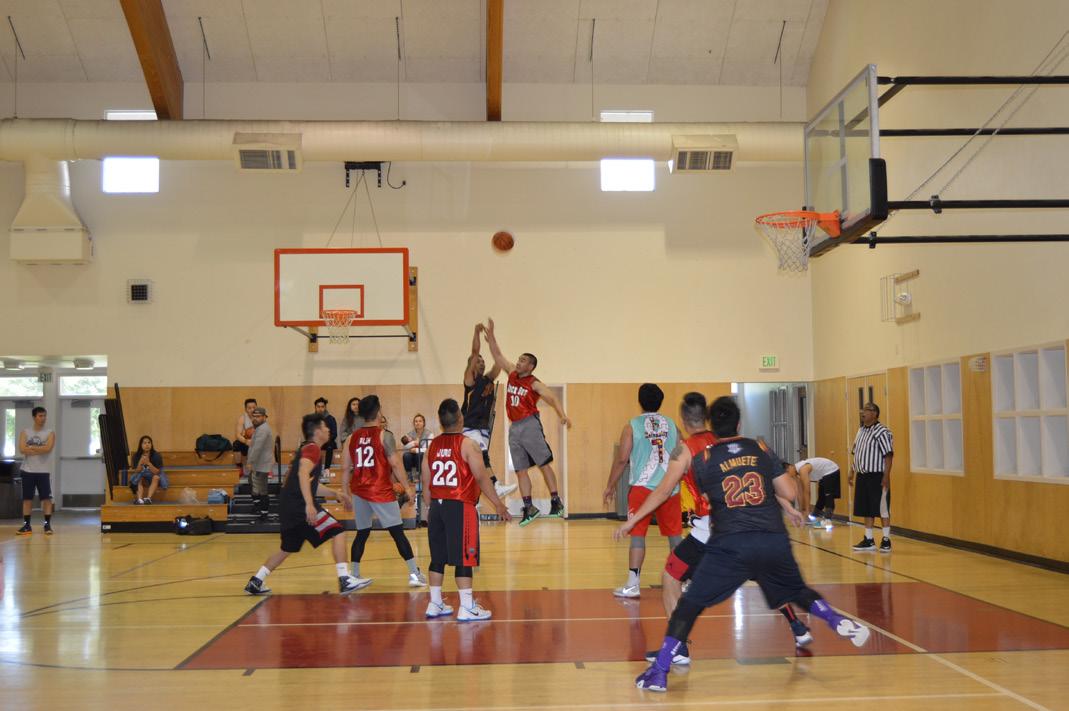
HARD operates two golf courses: the 18-hole Skywest Golf Course north of the airport and the 9-hole Mission Hills of Hayward Golf Course in south Hayward. Other publicly-available facilities are also available in the larger area. Demand analysis does not find the need for additional golf facilities. Meanwhile, use of golf courses has steadily declined for ten years and operating costs are expected to grow significantly with new lease terms. HARD should determine a course of action for golf in a way that aligns district resources with community demand. The District should look at alternatives for use of the Skywest site that work today and in the future.
While HARD needs more park land overall to adequately serve the community, the District has some properties that may not be suitable for good parks. The District should consider identifying surplus properties and using property sale proceeds as a source for making investments that better serve the District’s mission.
HARD does not currently have adequate information on the location, species, health, and hazard of its trees. The District should conduct a tree inventory and develop urban forest management policies to plan for the safety and health of the urban forest.
Currently, the amount, location, and condition of parking areas at HARD facilities is inconsistent. The District should conduct a site-by-site analysis comparing available parking with facility type and usage patterns. In general, local parks should not require on-site parking; there may be some locations where parking can be converted to recreational use. Elsewhere, some special facilities may need more parking to accommodate demand.
Several parks are identified for master plans to be funded with Measure F1 bond proceeds. Of these, three sites in particular offer potential to contribute to the District’s strategies for athletic fields (E6), aquatic facilities (E7), and community centers (E8) and to have a District-wide positive impact.
Memorial Park. The Hayward Plunge requires evaluation for structural stability and seismic safety. Evaluation should consider whether there could be an alternate use for this historic building, and should take place in the context of a larger study of the relationship between that facility, Memorial Park, and the greenway and Ward Creek trail extending up the canyon.
Source: WRT
Centennial Park. Centennial Park has a central location but lacks visibility and is not well-utilized. This site has the potential to accommodate a new pool and/or gymnasium serving the entire community. Access improvements should also be considered and include a wall along the railroad tracks to improve public safety.
Brenkwitz/Sunset Site. This site is owned by the Hayward Unified School District, which is building a new school adjacent to Brenkwitz High School to replace Cherryland Elementary School. HARD should pursue a new agreement with HUSD, and renovation and enhancement of athletic fields and other recreational amenities on the site.
HARD should evaluate how it can best highlight the Bay shoreline as a recreational asset, working with the State, East Bay Regional Park District (EBPRD) and others to advance overlapping goals for the shore. These include conservation of natural resources and interpretation of culture, infrastructure, ecology, and natural processes. The Hayward Area Shoreline Planning Agency (HASPA) is undertaking a shoreline master plan to adapt to sea level rise; HARD is contributing to this effort. The District should explore consolidating its land along a more limited stretch of shoreline with connectivity to inland HARD lands, to help strengthen the bay-to-hills connection. The District should also consider updating the interpretive program at the Shoreline Interpretive Center in partnership
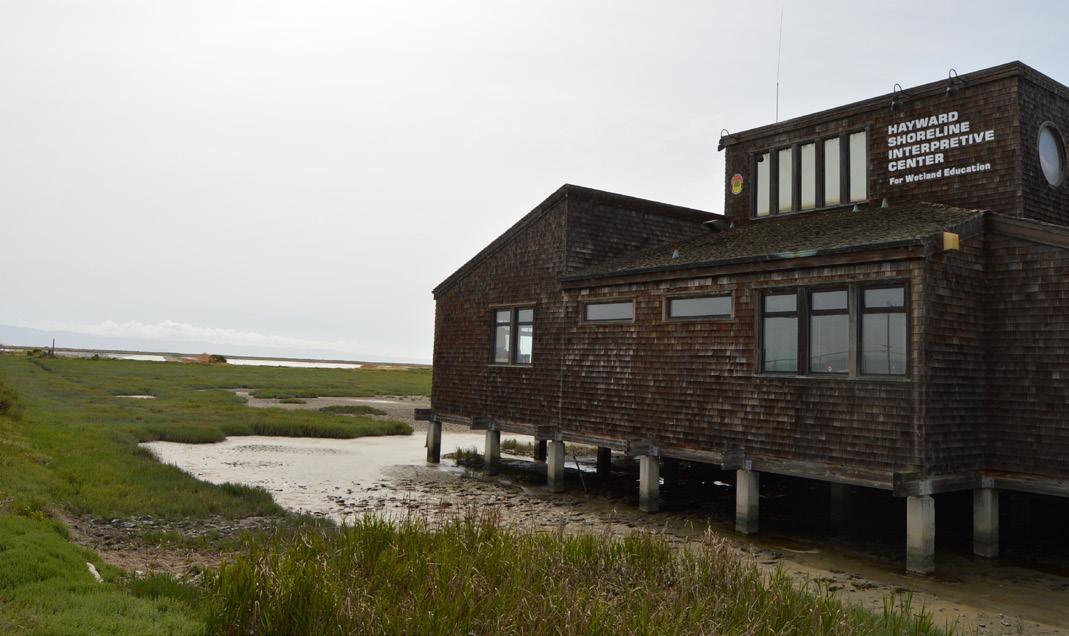
Source: WRT
with EBRPD to incorporate future sea level rise adaptation.
HARD has some unique, high-quality land on the hillsides offering exposure to natural landscapes and great views. The development of La Vista Park and Valley View Park over the coming years will be major steps. The District should also look for opportunities to enhance the hillside experience at San Felipe, Greenridge and other parks. One area of focus may be on opportunities for HARD parks to be successful gateways to the regional open space system that include trailhead amenities and connections. Another may be to interpret seismic activity along the Hayward Fault, with a new nature program in partnership with local colleges and seismic agencies.
Rowell Ranch Rodeo Park embodies a part of the area’s history and continues to bring that unique activity into the lives of people in the Bay Area. There are opportunities to make more of this site, in particular by enhancing trail connections to the regional open spaces and by exploring development of athletic fields as a potential revenue source with demand from fast-growing Tri-Valley communities.
This Master Plan also recommends new park acreage and service area standards, including a target to strive for overall and a standard for
The 2006 Recreation & Parks Master Plan classified most parks in more than one category. This Master Plan establishes a simpler system. If a facility is a school site, that is its class. If a park has a special facility in it, that facility is now treated separately from its host park. For example, the Hayward Plunge, Memorial Park, and the Hayward Plunge Greenway and Trail are now classified as three distinct facilities. With this system, HARD has 101 parks and facilities in five classes: local parks, community parks, school recreation sites, special use facilities, and linear parks, greenways and trails.
The park classification system is defined and mapped in Chapter 3.
Park level of service is often measured in terms of park acreage per 1,000 residents. This Master Plan also recommends new park acreage and service area standards, including a target to strive for overall (“optimal”) and a standard for acquisition and development (“desirable”).
This Master Plan groups school recreation sites together with community parks and special use facilities, recognizing that school sites primarily offer specific recreational opportunities but may not provide the amenities people need in local
parks. The desirable acreage standard is matched to current conditions and opportunities. It seeks to help the District leverage its existing park land and focus in particular on creating more local parks, matching community priorities.
The Master Plan recommends that HARD seek to provide a neighborhood or community park within one-quarter mile (optimal) walk of all residents. This standard recognizes that community parks typically have all that local parks do—and more—so being near a community park should count. The Master Plan recommends that a community park, special use facility or school recreation site be within 1/2 mile (optimal) or 1 mile (desirable) of all residents, a substantially improved standard compared to the 2006 Master Plan that supports a strong emphasis on access by foot and bike. This Master Plan adds a new service area standard for linear parks, greenways and trails, recognizing the great recreational value that regional open space trails provide.
TABLE 5-2
RECOMMENDED PARK ACREAGE AND SERVICE AREA STANDARDS
Notes:
1. Distance should be measured along streets and paths.
2. Acreage calculation does not include regional parks and trails. However, distance standard does include these, in recognition of the recreational value of regional parks.
Current park acreage level of service and park land needed by 2030 to meet the recommended standards are shown in Table 5-3. Level of service is shown for the District as a whole as well as for the City of Hayward and the Unincorporated Areas. Level of service is shown in red where it does not meet the desirable standard, and in green where the standard is exceeded.
As the table shows, HARD does not currently meet recommended standards for local parks or for community parks, special use facilities and school recreation sites (combined). However, because of the wealth of linear parks, greenways and trails in Hayward, the City exceeds the overall desirable park standard and nearly reaches the optimal standard.
HARD would need an additional 227 acres of local parks and 113 acres of community parks, special use facilities and school recreation sites to meet the desirable standards. However, the district exceeds the desirable standard and is very close to meeting the optimal standard for linear parks, greenways and trails.
Notes:
1. Not including regional parks and trails.
2. Estimated Population: 292,265 (HARD Overall), 154,507 (City of Hayward), 137,758 (Unincorporated Areas). Source: US Census Bureau, 2012-2016
3. Projected 2030 Population: 315,535 (Alameda County General Plan, 2015; City of Hayward, 2014.
Figure 5-2 maps ¼- and ½-mile walksheds from all local and community parks, showing how well the recommended service area standard is met today. Figure 5-2 shows the effect of adding planned parks and certain potential park sites. Both maps show population density.
While most residential neighborhoods are within a ½-mile walk of a local or community park today, there are gaps. Planned and potential park sites would fill several of those gaps.
Figure 5-3 maps 1/2-mile and 1-mile distances from community parks, special use facilities and school recreation sites, showing where gaps currently exist as well as how planned and potential park sites could begin to fill those gaps.
Figure 5-4 maps 1- and 2-mile distances from linear parks, greenways, and trails—including trailheads associated with regional parks. Hayward and Fairview have good access to HARD linear parks, greenways and trails. When trails operated by East Bay Regional Parks and others are included, Castro Valley and western San Lorenzo are also accessible. Gaps exist in parts of San Lorenzo and Cherryland. These could be addressed by trail development along the San Lorenzo Creek corridor.
Seneca site
Villareal
Seneca site
Seneca site
Grace Baptist Church Site
Seneca site
Page & Miramar
Villareal
Stanton Elmentary
Center & Heyer
Grace Baptist Church Site
Grace Baptist Church Site
Grace Baptist Church Site
Zamora
Zamora Site
Potential park sites in Lewelling Corridor
Potential park sites in Lewelling Corridor
Alameda County Site
Potential park sites in Lewelling Corridor
Potential park sites in Lewelling Corridor
San Lorenzo Village
San Lorenzo Village
Alameda County Site Banchero Site
San Lorenzo Village
San Lorenzo Village Cherryland Elementary
Mervin Morris Park expansion
Cherryland Elementary
Cherryland Elementary
Cherryland Elementary
Longwood Park expansion
Chabot College
Banchero Site Bohannon School U-haul Site
Chabot College Page &
Our Lady of Grace Catholic School Stanton Elmentary
Our Lady of Grace Catholic School
Chabot College
Center & Heyer
Redwood Christian
Chabot College Page & Miramar Center & Heyer Redwood Christian
Redwood Christian
Rite Aid Shopping Center
Eden Greeway extension
Rite Aid Shopping Center
Caltrans Property Laurel School
Rite Aid Shopping Center
Rite Aid Shopping Center
Ruby Street
Lincoln Landing
Ruby Street
Eden Greenway at Cypress
Lincoln Landing
San Felipe Park expansion & access improvement Eden Greeway extension
Lincoln Landing
San Felipe Park expansion & access improvement Eden Greeway
Theater & Japanese Gardens gateway improvement Ruby Street
Theater & Japanese Gardens gateway improvement Ruby Street
Eden Greenway Railroad crossing
Theater & Japanese Gardens gateway improvement
Theater & Japanese Gardens gateway improvement
Eden Greenway at Cypress
Lincoln Landing
Eden Greenway at Cypress
Eden Greenway at Cypress
Eden Greenway Railroad crossing
Eden Greenway Railroad crossing
Eden Greenway Railroad crossing
Sorenson Park access improvement
Eden Greeway I-880 crossing
Weekes Park access through Shepherd Elmementary Site Sorenson Park access improvement
Weekes Park access through Shepherd Elmementary Site Sorenson Park access improvement
Weekes Park access through Shepherd Elmementary Site Sorenson Park access improvement
Eden Greeway I-880 crossing Villareal
San Felipe Park expansion & access improvement Eden Greeway extension
Eden Greeway I-880 crossing
Eden Greeway I-880 crossing Villareal San Felipe Park expansion & access improvement
Weekes Park access through Shepherd Elmementary Site
HARD’s capacity to develop new parks and facilities will depend in large part on park land dedication and in lieu fees raised through development, following the Quimby Act. The level of service analysis and standards in this Parks Master Plan should be used by the City of Hayward and Alameda County to update and implement park land dedication and in lieu fee requirements. For more information, please refer to the Parks and Recreation Element of the Hayward General Plan and Municipal Code; the Eden Area General Plan; and the Castro Valley General Plan, and the Alameda Code of Ordinances.
HARD is currently undertaking a set of major park design and development projects. These include the new La Vista Park, Valley View Park, SoHay Park, Fairmont Terrace Expansion, and Via Toledo Park, as well as improvements or renovations to several existing parks. Many of these projects have funding through Measure F1, while others are programmed into the 2017-2020 Three-Year CIP. HARD should manage these projects to completion. Measure F-1 projects are summarized in Table 6-1 (Chapter 6).
HARD should continue to evaluate specific park opportunity sites, including those shown on Figure 5-1. These include opportunities for park expansion and enhancement; new parks; and new
school recreation sites. Specific opportunities include but are not limited to:
• Three potential park site options in Ashland, as well as the concept of expanding Ashland Park and relocating or re-purposing the community center;
• Two potential park sites along Lewelling Boulevard in Cherryland, explored in the Ashland and Cherryland Business District Specific Plan;
• The current site of Cherryland Elementary School, which is being relocated;
• The Bohannon property in San Lorenzo;
• The undeveloped property at Page and Miramar in Castro Valley.
• Undeveloped land east of Foothill Boulevard in Hayward (Parcel Groups 8 and 9 in the Route 238 Corridor Lands Master Plan and route of the Hayward Foothill Trail);
• Enhancements to provide a sense of entry on City properties and access to Douglas Morrisson Theater, Hayward Area Senior Center and the Japanese Gardens;
• Incorporation of a new park and potential trail segment as part of the Lincoln Landing development in Hayward;
• Creation of a new park connected to Eden Greenway, and addition of freeway and railroad crossings to link the greenway and make its amenities more accessible;
• Portions of the Redwood Christian site and the
Laurel School site in Castro Valley.
Other opportunities will come up over time. The District should actively pursue sites for new parks and facilities, using access, equity, and special site characteristics as criteria as described in D6. Trail development opportunities will be addressed in detail in the Greenways and Trails Master Plan (D10).
The District should refer to the City of Hayward General Plan, the Castro Valley General Plan, the Eden Area General Plan, Fairview Area Specific Plan, Ashland and Cherryland Business District Specific Plan, the San Lorenzo Village Center Specific Plan, and master plans for the Priority Development Areas (PDAs) in the City of Hayward as guides for park priority locations. For future parks at infill sites, it may be valuable to engage experts in brownfields redevelopment as needed.
Figure 5-1 also shows opportunities for access improvements. See Recommendation E4.
HARD should place the highest priority for new parks, facilities, school sites, and access improvements in locations that meet one or both of the following criteria.
1) Access. HARD should seek new local parks in areas more than a half-mile walk of a local park, and should seek new community parks, school recreation joint use agreements, or special facilities in areas more than a mile from one of these facilities, thus helping to fill service area
gaps. See Figures 5-2 and 5-3.
2) Equity. The District should focus on areas with higher population density and income challenges. Here, new gymnasiums, joint-use athletic fields, teen programs, upgrading existing parks to better match local demand, and investing in safe routes to parks for people on foot or using transit may all be good strategies.
3) Special Site Characteristics. These may include recreational value, accessibility, views and/or access to natural or cultural features.
Based on the demand analysis provided in Chapter 4, HARD should seek to develop four additional fields for diamond sports and six for soccer and other rectangular field sports. In addition, the District will need three 18-hole disc golf courses, three playgrounds, two swim centers, and some 300,000 square feet of indoor recreational facility space. There are also needs for passive recreation improvements including eight group picnic areas, three playgrounds, and a dog park.
There is some capacity to develop new recreation amenities in existing parks, including Bidwell and Tennyson. School partnerships may provide an option for others, notably Sunset. The remainder should be included in future parks. New recreation amenities should be located in areas where they can serve residents who are not currently well-served.
For parks and recreation facilities to serve their community well, they need to respond to community members’ values and priorities. HARD should work with the City of Hayward, Alameda County, Municipal Advisory Committees, the school districts, developers, homeowner associations, and others involved in future park development to ensure that future facility design and programming are well-matched with goals.
School sites can be a recreational asset for the community. HARD’s approach to school sites should have the three following elements.
1) Focus on what a successful partnership looks like, recognizing that HARD and each of the school districts in its service area have their own mission and priorities. Successful partnerships must be mutually beneficial. For HARD, school recreation sites should have clear public access during non-school hours, be well-maintained, and offer recreational resources or amenities the community will use.
2) Identify challenges in existing joint-use agreements and focus on resolving them.
3) Identify additional school sites that would provide the greatest benefit due to their location or the type or quality of their recreational facilities, and focus on entering agreements for these sites.
4) Participate in the design of school retrofits and new school sites so that recreational areas can most successfully meet the needs of both students and the community.
5) Be in good communication with the school district and be in a position to negotiate for transfer or closed school sites that could serve well as future parks.
The community supports developing a more extensive system of greenways and trails, including east-west and bay-to-hills connections. HARD will undertake a Greenways and Trails Master Plan. This will involve coordination with several agencies, including:
• City of Hayward, Alameda County, and Alameda County Flood Control and Water Conservation District to incorporate trails into the San Lorenzo Creek corridor;
• City and County to create the Hayward Foothill Trail on Route 238 Corridor Lands and other properties;
• PG&E for greenway and trail opportunities along Eden Greenway and other utility corridors;
• Alameda County Transportation Commission, Alameda County Public Works and City of Hayward to relate with the County’s and City’s Pedestrian and Bicycle Plans;
• Hayward Area Regional Shoreline Planning Agency (HASPA) for trails in the Bay lands and
Source: WRT to coordinate trail development with resiliency strategies.
• City, County and School Districts on Safe Routes to Parks and Schools efforts.
Trail and greenway development should be linked to environmental stewardship and management along creek corridors, sensitive hillside areas, and the Bay shoreline.
Greenways and trails should link new or enhanced parks, which can help fill park gaps in underserved neighborhoods. Specific opportunities include:
• The redesign of Memorial Park at the base of the Greenbelt Riding & Hiking Trails (see also Recommendation E13);
• The creation of a new local park nested within Eden Greenway, paired with new overcrossings enabling greater access to and along the greenway;
• The site between Lewelling Boulevard and San Lorenzo Creek directly north of Meek Estate Park, identified in the Ashland and Cherryland Business District Specific Plan.
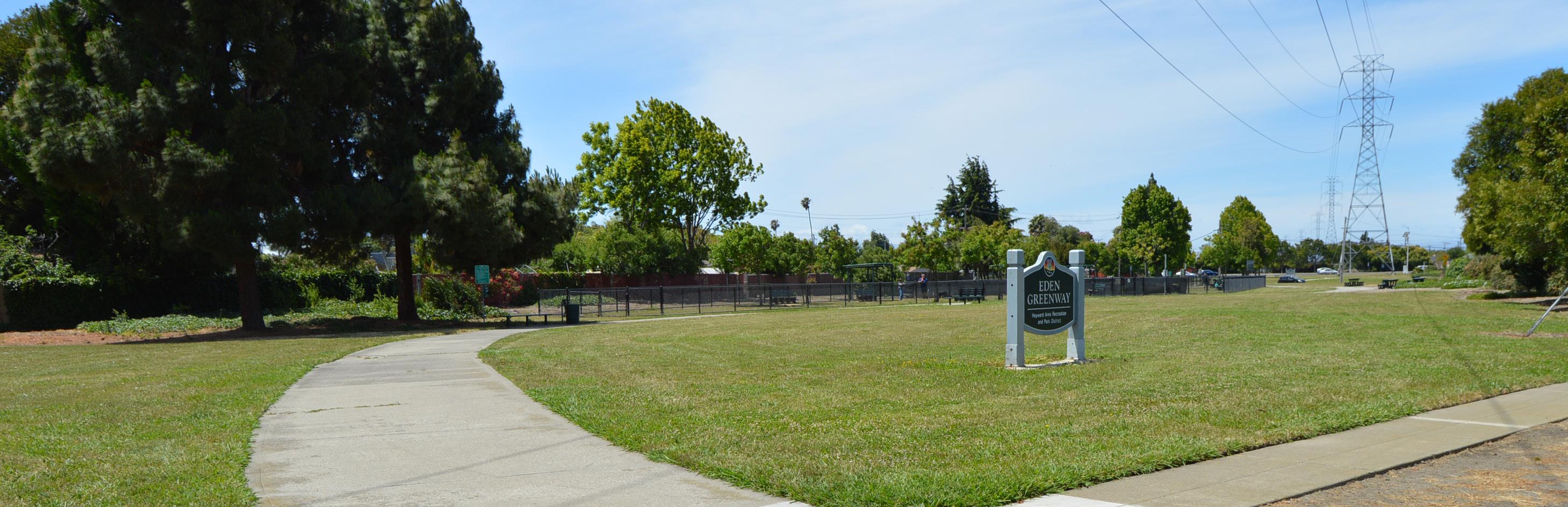
Additional recommendations for how HARD can optimize the value of its recreational programs may be found in the Operations and Funding Report developed in tandem with the Parks Master Plan.
HARD is a large and diverse district in terms of facilities, program offerings, land area, and population. HARD should undertake a focused, mission-based visioning exercise to identify the most important services, and then work to provide those at a high level.
HARD’s program mix must be evaluated to ensure that offerings align with changing leisure and recreation trends, demographics, and needs of residents. The District should identify and focus on programs and services in greatest demand, and reduce or eliminate programs and services where interest is declining. Potential areas of focus have been identified through the Recreation and Parks Master Plan process, as follows.
• Expand the reach of after-school and camp programs where programs are not offered by other organizations
• Provide more opportunities for active seniors
• Provide job skills and language classes
The National Recreation and Park Association (NRPA) recommends that six determinants be used to inform what programs and services are provided:
1. Conceptual foundations of play, recreation, and leisure. Programs and services should encourage and promote a degree of freedom, choice, and voluntary engagement in their structure and design. Programs should reflect positive themes aimed at improving quality of life for both individuals and the overall community.
2. Organizational philosophy, mission, and vision. Programs and services should support the District’s mission and vision statements, values, goals, and objectives. These generally center on promoting personal health, community well-being, social equality, environmental awareness, and economic vitality.
3. Constituent interests and desired needs. Districts should actively seek to understand the recreational needs and interests of their constituency. This not only ensures an effective use of taxpayer dollars, but also helps to make sure that programs perform well and are valued by residents.
4. Support of a constituent-centered culture. Programs and services reflect a District culture where constituents’ needs are the prime factor in creating and providing programs. This should be reflected not only in program design, but in terms of staff behaviors, architecture, furniture, technology, dress, forms of address, decision-making style, planning processes, and forms of communication.
5. Experiences desirable for clientele. Programs and services should be designed to provide the experiences desirable to meet the needs of the participants/ clients in a community and identified target markets. This involves not only identifying and understanding the diversity of needs in a community, but also applying recreation programming expertise and skills to design, implement, and evaluate a variety of desirable experiences for residents to meet those needs. Community opportunities. When planning programs and services, a District should consider the network of opportunities afforded by other organizations such as nonprofits, schools, other public agencies, and the private sector. Districts should also recognize where gaps in service provision occur and consider how unmet needs can be addressed.
• Support mothers’ groups and caretakers’ groups
• Expand the aquatics program (lessons, lifeguards, etc.)
• Expand art programs.
HARD should systematically evaluate program areas to determine how to best leverage its specific assets as well as assets managed by other agencies. Program areas may or may not rate highly based on core program area demand analysis or participation trends but may have positive revenue implications for the District or help distinguish the District. Ideas include:
• Evaluate the golf program, HARD golf facilities, and alternative concepts for both;
• Evaluate the theater program, and how to better leverage a high-quality facility;
• Evaluate ecological education opportunities at Sulphur Creek, Hayward Shoreline Interpretive Center, and elsewhere;
• Evaluate agricultural and community programs that could be offered at Rowell Ranch Rodeo Park.
HARD should facilitate the use of parks and facilities for new events and activities that bring people together. Where these activities align
with core services, it is appropriate for the District itself to establish new programs. In other cases, these activities may be run by others, with the District playing an incubation or facilitation role. Ideas include cultural festivals, outdoor classrooms, fire pits, food trucks, movies in the park, etc.
Many households in HARD’s service area are single parent or dual wage-earning parent families with children that may require outside support and greater flexibility. HARD should continue to monitor demand for programs and provide flexibility in scheduling to capture peak visitation opportunities. In particular, HARD should evaluate demand for before and afterschool programs, and work with partners as appropriate to provide needed services.
HARD should strengthen existing and explore new partnerships with the City of Hayward, East Bay Regional Parks District, Alameda County, school districts and others. Partnerships should support HARD’s determination of core service areas and should allow the district—and other agencies—to reduce operating costs. Partnerships should be memorialized in formal agreements.
Specific opportunities may include:
• Partner with the City of Hayward on graffiti removal, landscape architecture, security, staff
training, design review, GIS and mapping, fee administration, and emergency repairs.
• Collaborate with East Bay Regional Park District on management and programming at the Shoreline Interpretive Center; regional trail connections; and opportunities to link more programming with regional open spaces.
• Coordinate with school districts to provide multipurpose rooms and recreation facilities for after-school activities where needed;
• Collaborate with hospitals, for collaboration on wellness programs and sites;
• Collaborate with community and neighborhood groups on community gardens;
• Collaborate with Alameda County Deputy Sheriff’s Office Activity League (DSAL);
• Coordinate programs with community centers run by others, in particular Ashland REACH Center and South Hayward Family Youth Center
Additional recommendations for how HARD can improve its staffing and maintenance operations may be found in the Operations and Funding Report developed in tandem with the Parks Master Plan.
HARD recognizes that park design and operations play an important role in creating safe conditions for park users – and can contribute more broadly to building a safer community. HARD should continue to make safety a key metric by which operations decisions are evaluated. These decisions include:
• hours of operation for parks;
• anti-graffiti measures;
• clarifying the role of park rangers and police
• adding a “Park Watch” program to augment Neighborhood Watch,; and
• activating parks with programming.
Park activation, especially, can both make a specific park safer by bringing more park users, and contribute to safety more broadly by building community cohesion.
Park design features are also important. See R3 Improve Safety Through Park Design.
With its extensive lands and buildings, HARD has an important role to play in reducing the community’s greenhouse gas emissions, reducing energy and water use, offsetting air and noise pollution, and providing habitat. The District should build sustainability into all operational decisions. Specific areas of focus should include the following:
• Turf Reduction and Water Conservation. Natural grass is challenging to maintain and requires a lot of water. The District should identify locations where turf is not necessary to serve active use or other purposes and replace turf with a mix of turf and mulch or other plantings.
• Energy Conservation. Many of HARD’s buildings are aging and in need of lifecycle replacement and/or upgrades. The District should build in energy conservation as a core goal of all improvement and modernization projects. Strategies may include new, high-efficiency utilities, natural ventilation, on-site renewable energy generation, and others.
• Propagation and Tree Composting. The District can make sustainability gains by reusing plant materials as a nutrient source for the next generation of landscape.
Continue to improve HARD’s communiciations to make it easy to find and use the District’s services. This includes use of current technology platforms; multilingual communication and signage; and outreach developed in partnership with community-based organizations, and make use of community gathering places and events.
Greater public awareness of HARD’s parks and programs, and responsiveness to public engagement, can generate a “virtuous cycle” of participation, park activation, support for improvements, and ultimately better parks and recreation. HARD should place a new focus on building dialogue and visibility in the community.
Continue to nurture the tradition and excellent level of volunteer involvement in HARD’s services.
• ticket sales; permits for special use; reservation fees; and equipment rental fees.
• Grants. HARD may be eligible for grants through the Partnership Enhancement Monetary Grant Program and the federal Community Development Block Grant (CDBG)
program and Prop 68 Parks Grant Programs. An affiliated land trust may be helpful in attracting grant funding.
• Tax Support, through property taxes or other tax sources, or through the creation of special improvement districts.
• Franchises and Licenses. Catering permits, concession management, naming rights, utility easements, and interagency agreements are all potential sources of funding.
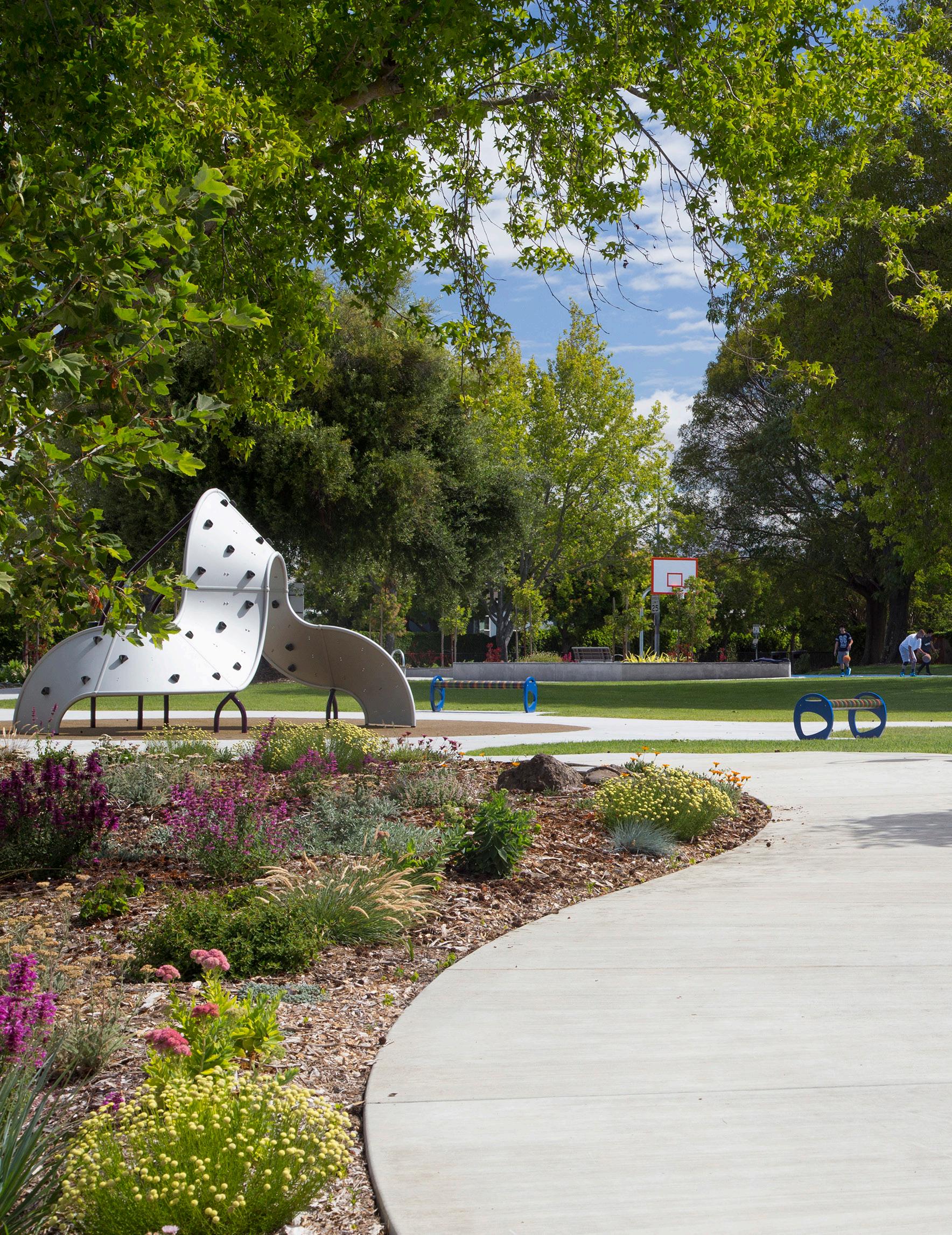
This chapter defines and categorizes park improvements and identifies funding and partnership opportunities. Measure F1 bond projects are summarized. Three “tiers” of park improvements are described, and HARD’s existing park needs are placed into this framework. The funding strategies that follow apply not just to capital improvements but to programming, maintenance and operations too.
In November 2016, voters residing within the Hayward Area Recreation & Park District passed Measure F1. Measure F1 is a $250 million bond measure that authorizes funding for needed repairs, upgrades, and new construction projects to the District’s parks and facilities. The District is in the process of carrying out these projects, which include the new La Vista Park, Valley View Park, SoHay Park, Fairmont Terrace Expansion and Via Toledo Park as well as improvements or renovations to several existing parks and facilities, shown in Table 6-1.
Table 6-1
MEASURE F1 BOND PROJECTS
This project provides for roof replacement and dry rot repair of the Adobe Art Center building. Construction is anticipated to begin in summer 2017 and be complete fall 2017.
This project provides for the replacement of the synthetic turf at two soccer fields at Oliver Sports Parks. Development of the construction drawings began in fall 2017. The project also includes the conversion of the existing sports field, parking and pathway lights to energy-saving LED light fixtures through a PG&E program that provides rebates and an interest free loan repaid with energy cost savings.
Bay Trees Park Tennis courts part of Bond money.
Bidwell Park
Bohannon Athletic Fields
Castro Valley Community Park
Centennial Park
Cherryland Community Center
Creekside Middle School Sports Fields
Douglas Morrisson Theater
This project provides for the development of a renovation master plan for the existing park site at Bidwell Elementary School. Improvements may include renovated sports fields, tot lot, and walking paths.
Potential for bond funded natural turf field renovations allocated in current CIP.
This project is in partnership with the Castro Valley Unified School District (CVUSD) and will provide for the design and construction of soccer and baseball fields at Canyon Middle School. CVUSD is leading the design and construction phases and contribute a portion of $3 million(to be determined) from their Measure G Bond to the project. A joint-use agreement between the District and CVUSD will be developed for the use and maintenance of the fields.
Buildings are bond-funded projects, renovation and expansion, second bond. 4.7 Million.
This project provides for the development of a renovation master plan for an existing 10-acre park site. Construction will be completed with future Bond proceeds.
Potential site for new swimming pool to replace the Hayward Plunge and/or new Gymnasium
$1M in bond funds for parking lot expansion
This project is in partnership with the Castro Valley Unified School District (CVUSD) and provides for the design and construction of soccer and baseball fields and a track at Creekside Middle School. CVUSD is leading the design and construction phases and contribute a portion of $3 million (to be determined) from their Measure G Bond to the project. A joint-use agreement between the District and CVUSD will be developed for the use and maintenance of the fields.
This project provides for a facilities condition assessment and development master plan for renovations to the Douglas Morrisson Theatre.
MEASURE F1 BOND PROJECTS
Eden Greenway
El Rancho Verde Park
Fairmont Terrace Park and Expansion
Gordon E. Oliver Eden Shores Park
HARD District Office
Hayward Area Senior Center
Hayward Community Garden
Kennedy Park
Kenneth C. Aitken Senior & Community Center
La Vista Park
Lakeridge Park
McConaghy Park
Meek Estate Park
Memorial Park
Mission Hills of Hayward Driving Range
Rowell Ranch
This project provides for renovation of greenways to improve pathways, planting and irrigation, and provide fencing and signage as needed.
This project provides for the design and construction of park improvements at an existing park site. Improvements may include renovated sports fields, planting and irrigation upgrades.
This project provides for the design and construction of park improvements and expansion of an existing 1.67-acre park. Improvements will include on-site ADA parking, new restroom building, renovated playground and basketball courts, group picnic shelters, dog park, fences and gates, informal lawn area, pathways and benches, and hillside trail. Reassess use in five years.
Synthetic Turf Replacement at 2 Soccer Fields: This project provides for the replacement of the synthetic turf at two soccer fields at Oliver Sports Parks. The project also includes the conversion of the existing sports field, parking and pathway lights to energy-saving LED light fixtures through a PG&E program that provides rebates and an interest free loan repaid with energy cost savings.
This project provides for a facilities condition assessment and development of a master plan for renovations to the District Administrative Office and Corporation Yard site and buildings.
This project provides for the renovation of the Hayward Senior Center. The project will include a facilities condition assessment, and design and construction of improvements to modernize the existing building.
This project provides for the development of a master plan and Phase 1 improvements for the community garden site located at Whitman Street and Berry Avenue.
This project provides for the design and construction of improvements to Kennedy Park. The renovation master plan was approved by the Board in 2013 and updated in 2016. The park improvements will include renovated picnic areas, group picnic shelters, new central play areas, new teacup amusement ride, renovated concession building, public restrooms, improved pathways with seating, and informal lawn areas. Development of the construction documents began in fall 2017. Construction is anticipated to begin in summer 2018 and be complete in 2020.
This project provides for renovation of the existing Kenneth Aitken Senior Center. Phase 1 will include a facilities condition assessment and development of a renovation master plan. Phase 2 will provide for design and construction to be funded with future bond proceeds.
This project provides for design and construction of Phase 2 of a new community park in Hayward. Phase 1 improvements will be provided by the developer. Phase 2 will include development of a park master plan for the remainder of the site. Design and construction will be funded with future Bond proceeds.
Surfacedesign Inc. presented the La Vista Park concept plan to a joint meeting of the Hayward Area Recreation and Park District Board of Directors and the Hayward City Council on October 30, 2017. See the Documents section for a copy of the presentation.
Bond funded project (landscape only, not mansion)
Parking lot improvements are bond funded
This project provides for the renovation of an existing 31-acre park and facilities. Phase 1 will include development of a renovation master plan. Phase 2 will include design and construction to be funded with future Bond proceeds
This project provides for the renovation of the Mission Hills Golf Course Driving Range including the replacement of the synthetic turf surfacing and vertical mesh netting. Development of the construction documents began in fall 2017. Construction is anticipated to be complete by late 2018. The project also includes the conversion of the existing driving range, pro shop and bunker lights to energy-saving LED light fixtures through a PG&E program that provides rebates and an interest free loan repaid with energy cost savings.
This project provides for renovations of existing structures at Rowell Ranch. Phase 1 will include a facilities condition assessment and development of construction plans. Phase 2 will include construction to be funded by future bond proceeds.
San Felipe Community Park
San Lorenzo Community Park
Shoreline Interpretive Center
Sulphur Creek Nature Center
Sunset Park and Swim Center
Park: This project provides for the renovation of an existing 10.75-acre park. The master plan is complete and includes a new amphitheater, basketball courts, bounce house pad, demonstration garden, dog par, plaza, outdoor classroom, fitness stations, picnic areas, play areas, trail, overlook and parking. Phase 1 provides for the development of construction documents. Phase 2 will include construction to be funded with future Bond proceeds.
Community Center: This project provides for the renovation of an existing 8,856 S.F. community center. Phase 1 includes a facilities condition assessment and development of the renovation plans and construction documents. Phase 2 will include construction to be funded by future bond proceeds.
Park: This project provides for the development of construction documents for the Phase 2 portion of the existing 31-acre community park. Phase 1 improvements were completed in 2017. Phase 2 improvements include a softball filed, three soccer fields, a dog park, community green and parking. Construction will be funded with future bond proceeds.
Community Center: This project provides for the renovation of an existing 8,236 S.F. community center. Phase 1 will include a facilities condition assessment, renovation master plan and development of construction documents. Phase 2 will include construction to be funded with future bond proceeds.
This project provides for the design and renovation of the existing Wetland Habitat Room at the Hayward Shoreline Interpretive Center.
This project provides for improved education space, renovated picnic areas and hawk run. Phase 1 will include a facilities condition assessment and development of a renovation master plan. Phase 2 will include development of construction documents and construction to be funded with future Bond proceeds.
This project provides for the renovation of existing sports fields. Phase 1 will include the development of a renovation master plan. Phase 2 will include the development of construction documents and construction to be funded with future Bond proceeds.
Tennyson Park Master Plan: This project provides for the design and construction of renovations to an existing 10-acre park. Improvements may include renovations to the existing ballfield and installation of a new soccer field.
Mia’s Dream All-Access Playground: This project provides for the design and construction of a 1-acre allaccess playground at Tennyson Park. Improvements may include a Music Therapy Zone, Kindness Arches, Sensory Wall, Water Tower Look-Out, swings and spinners, slides and rollers, and an Animal and Nature Center for temporary exhibits. The park will also provide accessible pathways, picnic areas, seating, and shade structures.
This project provides for the design and construction of a new 2-acre park. Proposed improvements include a multipurpose lawn, half-court basketball, play area, fitness, picnic, plaza and shade structure, pathways and seating. Development of the construction drawings will begin in winter 2017. Construction is anticipated to begin in fall 2018.
Park: This project provides for the design and development of construction documents for improvements to the 16.6-acre Weekes Community park. The park master plan has been completed and includes open lawn areas, restrooms, concession building, playground, half-court basketball, bocce courts, fitness plaza, central plaza, group picnic areas, pavilion, shade structure, bandstand, promenade and walking loop. Phase 1 includes development of construction documents. Phase 2 includes construction to be completed with future Bond proceeds.
Community Center: This project provides for the renovation of an existing 10,092 S.F. community center. The project includes a facilities condition assessment, and development of renovation plans and construction.
While Measure F1 has infused HARD with available funds for specified capital projects in the near term, the longer-term view will involve setting priorities for what capital improvements come next. This will require a balance between adequately maintaining existing facilities and adding new parks and facilities to keep up with a growing and densifiying community.
This Master Plan defines three “tiers” of park improvements.. The first tier is focused on maintenance, the second on strategic enhancements, and the third on new or wholly transformed parks.
Tier 1 includes park improvements critical to keep the park system functioning. They include routine maintenance, repairs, repainting, replanting, lifecycle replacement, and replacement of inaccessible amenities with accessible amenities to remove barriers to access for people with disabilities. The intention of this category is to make the most of existing resources with the primary goal being for the department to maintain services.
The actions associated with this category are expected to be funded through tax dollars and annual set-aside funds. Lifecycle replacement is considered an annual value to be included in HARD’s budget. Total replacement value is amortized over the life of the facility.
These park improvements are characterized as being strategic to make measured park enhancements to the existing system. Strategic improvements and redesign may include site, amenity, and facility upgrades. This includes strategically enhancing existing programs, beginning new alternative programs, adding new positions, or making other strategic changes that would require additional operational or capital funding.
HARD would evaluate and analyze potential sources of additional revenue for these improvements, including but not limited to capital bond funding, partnerships, program income, grants, and existing or new taxes.
These park improvements develop new opportunities, including complete site “re-dos” and new parks developed by HARD. Visionary park improvements include comprehensive park renovations, acquisitions, and the creation of new parks. This category represents the complete set of services and facilities desired by the community. It is fiscally unconstrained but can help provide policy guidance by illustrating the ultimate goals of the community, and by providing a long-range look to address future needs and deficiencies. Typically, Tier 3 improvements start with a master plan to analyze conditions, explore the needs of the community, and design a new park. Funding for visionary projects would be derived from partnerships, grants, private investments and new tax dollars.
HARD Staff and the WRT Team conducted a park-by-park condition assessment in February and March 2018. The Team went through the full list of HARD facilities, assessed the general condition of each one, and identified park improvement recommendations. The analysis found that about half of HARD’s parks need Tier 1 improvements. Approximately a quarter of the system’s parks are identified for Tier 2 improvements, and another quarter for Tier 3 improvements.
Table 6-2 provides a detailed matrix of parks, general condition assessment, improvement needs, and improvement tier. Parks are listed by tier (1, 2, 3) and then alphabetically.
HARD’s park system must also continue to grow, adding new facilities to better serve a growing community. Future HARD parks are, by definition, Tier 3 improvements.
Adobe Park Good
Birchfield Park Poor
Bret Harte Play Field Fair/Poor
Park Good
Canyon View Park Fair
HARD to confirm if the art center is included. Could account for acreage difference? Buildings need renovations and are covered in facilities assessment. Landscape needs renovation, project to be covered by students. Main park is new, around 5 years. Parking lot asphalt and drainage need renovation, as there is sub-base failure, etc.
Remotely located, older local park. Some neighborhood ownership. Not highly utilized. Consider new programming to activate. Frequent dumping, homeless nearby. Deter access over sound wall.
Great space, highly utilized. New restroom. Turf, play, concrete path needs renovation. Protective neighbors. Police department nearby. Move and improve picnic tables away from neighbors as the noise can be disturbing.
Good site, used year round. Basketball is part of school. Fencing needs repair. Cut wires need repair. Bleachers should be upgraded. Standard lifecycle replacement project. School takes ownership. Restrooms are new. Neighbor noise complaints led to change in football start times.
Great newer park, highly utilized, some homeless. Upper left portion of the site is older. Bottom right is new. Granite is graffitied. Splash pad has ongoing maintenance requirements. Wireless lighting system, only in HARD. Sand is not desirable in all parks.
Quiet local park, large lawn. Heavy summer use. One basketball court needs renovation. Drainage is issue and impacts ability to mow. Playground needs renovation. 1
Castro Valley Community Park Fair
Centrally located, highly utilized. Typical lifecycle replacement project. Additional restrooms are needed near picnic tables. Lots of picnicking reservations, should be renovated. Sand in play area is issue. Tennis courts are acceptable Basketball court very popular and had to be relocated away from the play area due to use conflicts. Consider adding additional basketball courts. Tree root uplift at concrete needs repair. EBMUD water is leaking. Cell phone tower near 76 gas station. Connection to veterans' memorial which is undergoing an expansion. Buildings needs a new roof and renovation. Chanticleer Theater is HARD facility but is leased. Play area is 15 years old. Fence needs updating. Parking lot is new. School nearby, utilizes parking, which can be problematic. Dumpster area needs enclosure.
Buildings need renovations and are covered in facilities assessment.
Castro Valley Creek Park Fair Small nature play area adjacent to Castro Valley Library. 1
High school joint use. HARD owns facility, school owns land. Possible pool renovation. Could be in second bond for $1.1 Million. Pump room and locker room renovated for $1.3 million. Improvements include concrete repair. Improvements were just completed on portions of the site.
Building needs renovation and is covered in facilities assessment.
College Heights Park
Darwin Park (formerly called Brenkwitz)
Deerview Park
Greenbelt Hiking and Riding Trail
in downtown Hayward. Poured-in-place surfacing has issues; gate latch needs to be replaced.
Park is lacking electrical power. After a deal with PGE was not formalized "Illegal" tap off power line was cut. Drainage is poor, exacerbated by shade. Solar on power to irrigation doesn't work due to shade and should be renovated. Large eucalyptus trees need to be maintained or assessed for removal.
Associated with charter school. Buildings and lawn area. Name has changed to Darwin Park. Site isn't rented frequently. Future improvement needs are unknown for HARD/School district. Possible improvements may include a soccer field which could be rented by HARD. Connection to Mount Eden. Irrigation system should be secured as it is frequently vandalized.
Nice local park. Restrooms are not needed and will not be part of improvements. Picnic area is under tree line. Shade structure. Exercise equipment would be desirable - near Franciscan. Old wood log area should be considered for a possible upgrade to match the
Local neighborhood park in upper portion. Redoing play area, parking, etc. as part of bond. Lower area has camping, trailhead, amphitheater. Camp area needs improved way-finding. Highly used. Lifecycle replacement at restroom, fencing, trees, ADA, etc. Existing cargo containers onsite. Needs additional maintenance structure. Consider combining maintenance structure and cargo containers into one building. Bridge to camp needs to be replaced urgently. Trails need ongoing repair. Evaluate large
Narrow small park. Homeless and undesirable use is an issue. Assess roadway, rails to trails, cycle trail, or development potential. Needs further assessment, consider possible relinquishment.
Small neighborhood local park. Multiuse green space, tot lot. Need to identify property lines through survey. Elements need replacement, generally a typical lifecycle replacement project. Consider small layout changes, such as relocation the swing.
FEMA work on-going (minor to major repairs) due to winter damage; some picnic areas not accessible due to obstacles on pathways; need new bridges.
Hillcrest Knolls
Water pumped up to water tank in park, no water pressureneed booster pump and easier access for maintenance; Park is worn but in fairly good condition; lots of dog walkers and weekend users; wild animal issues (rodents, wild pig); park connects to Crow Canyon Road; unused areas; Road needs renovation; upgrade RR; park has potential for more activation.
Placita
Lakeridge Park
Longwood Park
Mission Hills of
Small tot lot and lawn near school site; neighbor complaints about redwood trees; needs turf & irrigation renovation; school kids pass-thru park for
Neighborhood park with basketball, play area, picnic; potential pickleball site; no on-site parking; may need retaining wall
park and trail with Native American grinding stones; need interpretive signage; Good views of Bay area; Consider fence to keep out night use
Erosion issues at creek bank; specialized gardens; potential pond leaks - needs to be resealed within next 5-10 years; tea houses will need repair; needs wayfinding signage to park and garden; needs tree
Restrooms may not be ADA; Timberform playground needs replacement (soon); parking lot needs resurfacing; needs HVAC unit replacements; back-up EOC (#2); hillside planting - convert to Bay-Friendly for better appearance; we use goats for fire hazard reduction on hillside; flagpole - put in solar lights.
Building needs renovations and is covered in facilities assessment.
Small neighborhood park with playground; used to be drinking spot at night; basketball and picnic
Local neighborhood park. Dumping issue; use goats for fire breaks; people break fence to get into park - may need to provide access easement; undeveloped area; lots of trees
Good condition; trees may need to be removed; play equipment may need to be replace; renovate turf & irrigation; basketball court well-used (may need to be resurfaced); parcourse needs replacement;
Owned by City of Hayward. HARD may not continue to use for programming.
Drainage needs to be improved; Paving around Pro Shop needs to be replaced; Fence mesh needs to be replaced.
Highly utilized by neighbors during day, homeless by night and day. Great potential. Covered picnic area, play area, additional picnic area. Lots of mature trees, wooded, peaceful, creek through park. Could be better utilized. Cottage on premise with redwood logs - potential Ranger Station or Summer Day Camp. Potential for connection with Hayward Japanese Garden and future
Needs shade, upgrade at picnic tables. Restrooms are new but frequently close due to vandalism. Split park configuration lends to passive uses. Passive use is appropriate at this site, but a soccer field may be added if the site is reconfigured. Upper right is where soccer could be located. Parking is limited, on street only. Horseshoes are well utilized . Includes skate area. Walking path surrounds park. Good park, just needs updating. Consider reducing the amount of turf where not utilized.
Parking is on-street except for some on-site ADA stalls; overall a good park; people run dogs off-leash (but leash only park); adjacent property owned by COH - potential parking expansion; security camera in place; - illegal dumping on COH property - we clean up
Two tennis court needs renovation, four have been renovated. Improvements should include full replacement of asphalt, repair parking lot, update restroom. Update ADA and picnic center and restroom. Parking is lacking. Destination tennis facility. High vandalism. Located near a trail area. Nearby handball and volleyball courts are not highly utilized, this area might accommodate new pickleball courts. Reprogram creek areas. Consider potential dog park at spillway. Terrain is steep slopes and would need to be accommodated with ADA paths. Flat portions exist on the site and may be better utilized.
Small play area, new perimeter path. Lower ADA ramp is damaged and should be repaired. Park does not drain. Dog use is high, dog waste clean up is lacking. Home trash is put in garbage. Traffic around perimeter is safety issue. Consider adding pickleball, par course, and improving perimeter trail for exercise. Well utilized, but not cleaned up. Needs better stewardship. Firecrackers are lit during 4th of July. More shade needed.
Small park, two play areas. Mulberries rotted and were removed. Potholes at Parking Lot, which is too small. Parking lot could be reconfigured or removed. Associated with school. Improvements may include new turf, irrigation, and play structures. Drainage is concern at playground.
Adjacent to Creekside Middle School. Needs improvements at turf, irrigation, and parking lots, and retaining walls along entry. Existing bridge across creek. Includes small play area, older. Connection to school could be improved. New development is approved at top right corner. Dog park is large component. Lots of topography. New restroom.
Dog park not utilized, consider renovating into soccer field. New restroom just constructed. Next to Ashland School soccer field. Small play area. Highly utilized during soccer. Off times has undesirable use. Fence between field and park, access is provided. Safety is concern. Successful combination with school use is goal. Associated with Ashland Youth Center. Consider par course or other athletic use. Consider land swap for preferable site. 2
Baseball/softball fields, playground, basketball court, picnic and BBQ; Used by Castro Valley Little League; needs expanded parking lot (room at north end); basketball court used for parking (review this use); develop more walking trails; garbage gets dumped at entry; neighbor complains of noise, dog training happens but not a dog park; may need a second restroom closer to ball
neighborhood park with playground and picnic area; open lawn useable for soccer practice; no restroom; add picnic areas with shade for neighborhood use;
LLD site;
Building needs renovations and iscovered in facilities assessment. Need to address creekbank failure /
(misuse
Very popular destination park with amusement rides, petting zoo, group picnic areas, playground, and concession building. Need new train;
Enlarging parking lot as part of Cherryland CC project (2018); renovate lawn area and plantings; replace trees with "historic" trees; picnic area paving need renovation; could add new picnic in
(SE corner); discourage sports field use; need better maintenance storage in corp yard compatible with Mansion;
small linear park; sand volleyball court (remove sand); playground; 1/2 basketball court; linear trail (used by EBRPD
Ball fields could be renovated (used by LL); kids party behind ball fields (the grove); paving needs repair; replace RR/snack bar building; renovate landscape & irrigation.
Spring Grove Park Fair
Park Fair
Arroyo Swim Center Fair
Euc trees need attention, neighbor complains about on-street parking; small tot lot, basketball court; stream runs year-round, creates slipping hazards; we and the City have undeveloped parcels nearby
Has parking - needs repair due to tree roots; tennis courts (some could be converted to pickleball)
Older facility associated with a school site. Location is issue, as the park is in the back of the site. Integrate improvements with school site, façade, wayfinding, etc. If school is renovated, consider relocating.
Building interior needs complete renovation. Buildings need renovations and are covered in facilities assessment.
Ashland Park and Community Center Good
Play area is in good shape. Fire damaged the playground which has been demolished. Parking area is small, seniors attend fitness class and need ADA parking. Potential partnership with RDC to relocate and expand building, on different site. If the recreation center is relocated it would make room for more green space. Fencing is overgrown and needs renovation. Secluded portions of the park are not safe.
Building needs renovation and is covered in facilities assessment.
School considering long term lease or selling property. Project status to be finalized before investment occurs. High potential with large spaces for sports fields. Current field doesn't get rented. Lack of restroom results in undesirable activity, add restroom. Adult use not acceptable to most neighbors. Small tot lot operated by HARD, should be relocated. Upgrade lighting and pathways. Consider relocating entry. Parking occurs on street. Small parking lot, needs renovation and expansion. Board member interest.
HARD operates lower right corner. HARD is negotiating to include adjacent unused sports field behind the adult school and create sports park. Direct connection to Kennedy Park. Lighting needs renovation Consider synthetic fields, as geese are maintenance issue at natural lawn. Lots of potential. Irrigation is an is unknown, likely full renovation. Consider adding corp yard at this location.
Potential renovation to include (4) lighted U-13 soccer fields, 60' baseball and 70" baseball fields, football/soccer field, and running track.
Well water supplied. Needs renovation - at ball fields, adequate parking on average but need more in events. Not fully utilized. Central location. Consider for as a new pool and or gumnasium site. Needs Master Plan and programming. New sewer and restrooms. Older park, needs updating Narrow asphalt paths are challenging for maintenance vehicles and should be renovated. Top secluded area has drug use, etc. Baseball fields well used by softball league, it is their home field. Needs a 'gateway' improved entry from northern neighborhood.
Creekside Middle
Alameda County to build new 17,500 SF community center across the street from Meek Mansion. HARD to operate and maintain. Library will have use of one room. HARD will partner with other entities to provide programs.
(1) U-13 soccer field, 60' baseball and 70"
Needs Master Plan Frisbee golf would be a great use, also par course, and stormwater treatment areas. Consider replacing under utilized turf with native plants Used as dumping area. Place bollards to restrict vehicular access to reduce dumping. Cameras are an evolving topic. Assess the need to add security fencing. Existing community garden and dog park and wellutilized. High resource requirements. Not highly utilized due to barriers including 880. Not a complete corridor Homeless use is an issue. Consider partnering on this site. First irrigation water cut in drought conditions. More
Two baseball diamonds. Next to cemetery. Look at in conjunction with Bidwell which is similar use in close proximity. Consider if there are other needs at this location. Look at regional trail connection. Sewer backs up, bathroom is old. Clubhouse is in need of renovation. Little league use is high and very active. Flooding is common. Gravel roads. Dilapidated site. Parking in school district
a use conflict.
Historically significant, built in 1936. Covered pool. At trailhead. On Hayward fault. Pool may be relocated. Park layout is poor. Homeless and drug activity. Great potential. Girl scout cabin is near by. Consider additional picnic areas. Amphitheater is highly utilized, music in the park. New restrooms, have to be closed at times due to undesirable use. Care takers shed is undersized. Use includes hiking, dog walking, etc. Drainage and backup is an issue , perhaps due to location at Hayward fault. Building needs new roof urgently, locker rooms are also in need of renovation. Need more on the first floor. Consider adding a classroom off the pool deck. Staff locker room on first floor. Add space to store CPR equipment, etc. Deck can be under utilized. Newer ADA ramp. Internal circulation is narrow, and should be considered for widening. Community is very attached to park.
Buildings need renovations and are covered in facilities assessment.
New community park with views ot the Bay and beyond. Park will have soccer pratice field/biorentention area, extensive walking paths, picnic areas, play areas, 1 full and 1/2 baskerball courts, parking, restroom, connections to regional trails. Potential for disc golf and/or dog run at lower portion of park.
Renovating lawn area and providing small parking lot as part of Kennedy Park renovation project
Park needs new master plan; New restroom closed due to undesirable activities within park; needs better visual access into park to improve safety and security.
Need new master plan - better layout and adjacencies; Worn out; needs new RR; has lighted tennis - need resurfacing; needs new ball field fence; antiquated lighting system; Eucs near parking lot - need assessment; a lot of landscape area requiring maintenance; parking is limited; need maintenance storagesatellite area; potential for sports fields; has formal lawn/garden at historic Mansion
Buildings need renovations and are covered in facilities assessment. Needs a new master plan; opportunity to activate park; Well issue - need new well; 5 septic tanks; consider adding BBQ facilities; replace the 80 picnic tables and replace with something more durable (metal mesh); bleacher ADA upgrades and add shade, consider pavement; need to improve drainage at fields (add culverts); replace wood bleachers with aluminum (seats and floor boards)
Buildings need renovations and are covered in facilities assessment. Good views, great opportunities for renovation; lots of unused space that could be better developed; irrigation needs upgrades, low pressure, bad drainage - play area floods in winter
Phase 2 Park and Community Center renovations will be bond funded; potential funding grant fund for sports fields. Great views towards the west over Bay - site has a lot of potential. Buildings need renovations and are covered in facilities assessment.
Park needs a refresh - replace restroom, paving, turf.
Site nneds master plan update to improve outdoor education facilities. Need hawk run for raptor rehabilitation. Use goats on hillside - consider different landscape treatment; needs security camera on parking lot.
Discovery Museum needs renovation.
Buildings need renovations and are covered in facilities assessment.
Undeveloped park; hillside property with a level road that could be a walking trail; erosion due to weather needs lots of maintenance; has potential for dog run; High maintenance costs for the goats
Valley View Park
Laurel Park (Golden Oak Montessori School) Poor
Vista Park Poor
Sources: HARD, 2018; WRT, 2018.
Park will be master planned within the next 3 years. Mia's Dream All-Access Playground will start construction in 2018. Baseball and soccer fields to be upgraded, skatepark to remain. A lot of undesirable activies occur at the dark park edges.
The future South Haywrad Youth and Family Center may occupy western portion of park (on City owned property).
City considering potential expansion along Tennyson (purchasing retail properties) as a long-range plan.
Undeveloped park. Potential for short-term improvmentswalking trails. May be the last of the future bond funded projects.
New 2-acre park to start construction in 2018. Wiil have 1/2 court basketball, playground, picnic and shade structure, walk circuit with parcourse/exercise stations, and open lawn area.
Park has been master planned and will be renovated with bond funds. Trees need to be assessed prior to construction.
Larry Standley Ballfiled - needs refresh - turf, drainage, bleachers, but ballfiled improvment are not bond funded. Old wooden structure has many ADA access issues.
Weekes Community enter - stage has some flooring issues; house a cermaic studio and kiln. Building needs renovations and is covered in facilities assessment.
Play area is gone and not replaced; consider expanding use of school site.
This park will be replaced by the new SoHay Park
The Parks Master Plan goals should be used by the District as the first step of decision-making framework for capital projects and budgets. For capital projects, several of the goals can be translated to a series of questions:
• Does the project advance HARD’s commitment to providing safe, attractive, comfortable and wellmaintained parks and facilities?
• Are new facilities and access improvements focused in areas where parks are scarce or needs are high?
• Is the project innovative in its approach to park facilities, design and programming?
• Would the project preserve ecological resources, reduce water and energy use and showcase sustainability?
• Will the project create opportunities for community members to experience and enjoy the natural setting?
• Does the project optimize recreation opportunities by leveraging partnerships with other organizations?
• Does the project take advantage of available funding sources in order to provide the greatest value?
Not every project may be able to affirmatively respond to all of those questions. Still, overall responsiveness will be an important indicator of the project’s consistency with the Parks Master Plan.
Master Plan recommendations provide specific, detailed guidance on how the District should
make decisions with regard to capital projects. The recommendations form the second step of the decision-making framework.
Where the goals may be broadly applicable to all projects, different recommendations will be applicable to individual projects. For example, projects that involve maintaining parks should be guided by Recommendation E1: Prioritize Maintenance. Evaluation of this project should consider the specific guidance provided under E1:
• Does the project address priorities?
• higher standards for landscape maintenance,
• making parks more visually appealing and inviting,
• emphasizing mowing, trash removal and other measures that improve user experience and promote safety
• Does the project address facilities that are in fair or poor condition?
Projects that involve upgrading parks to allow them to more successfully meet community needs should consider guidance provided in Recommendation E2:
• Does the project serve a neighborhood currently only served by very small local parks?
• Does the project expand and improve playgrounds or place playgrounds within walking distance of more community members?
• Does the project improve all playfields so they are functional, safe and accessible? If so, has it followed the Plan’s guidance on synthetic turf and athletic lighting?
• Does the project create or improve gymnasiums, especially in areas where land is scarce?
• Does the project incorporate walking loops and exercise trails?
• Does the project include updating restrooms?
Projects that involve pursuing new parks, school recreation sites and access improvements should be guided by the criteria provided in Recommendation D6:
1. Access. HARD should seek new local parks in areas more than a half-mile walk of a local park, and should seek new community parks, school recreation joint use agreements, or special facilities in areas more than a mile from one of these facilities, thus helping to fill service area gaps. See Figures 5-2 and 5-3.
2. Equity. The District should focus on areas with higher population density and economic challenges. Here, new gymnasiums, joint-use athletic fields, teen programs, upgrading existing parks to better match local demand, and investing in safe routes to parks for people on foot or using transit may all be good strategies.
3. Special Site Characteristics. These may include recreational value, accessibility, views and/or access to natural or cultural features.
Projects that involve enhancing the function of school recreation sites should be guided by the criteria provided in Recommendation D9:
1. Identify challenges in existing joint-use agreements and focus on resolving them. School recreation sites should have clear public access during non-school hours, be well-maintained, and offer recreational resources or amenities the community will use.
2. Identify additional school sites that would provide the greatest benefit due to their location or the type or quality of their recreational facilities, and focus on entering agreements for these sites.
3. Participate in the design of school retrofits and new school sites so that recreational areas can most successfully meet the needs of both students and the community.
4. Be in good communication with the school district and be in a position to negotiate for transfer or closed school sites that could serve well as future parks.
HARD Staff may create a customized checklist based on Master Plan Recommendations for each proposed project.
Adequate, steady, sustainable funding sources are essential to implementing a capital improvement plan. In order to continue to build and maintain HARD’s parks and recreation system, additional funding must be pursued.
HARD’s funding sources include park facility fees, the general fund, grants, Measure F1 Bond funds, revenues from services provided, and picnic and facility rentals. The HARD Board approves operational and capital improvement plan budgets each year.
Park facility fees come from both City and County according to their respective ordinances. The fees collected are intended to be used only for the purpose of acquiring necessary land and developing new or rehabilitating existing park or recreational facilities reasonably related to serving the development. Please refer to the City of Hayward Municipal Code (Article 16) and the Alameda County Code of Ordinances (Chapter 12-20) for more information.
There is currently substantial potential for increasing funding and revenues for the parks and recreation system while still providing affordable recreation opportunities. Opportunities should be vetted as HARD develops its next capital improvement program.
• External Funding. Potential external funding sources include the HARD Foundation; corporate sponsorships; crowdfunding; partnerships with other agencies; gifts from non-profit foundations; private donations; irrevocable remainder trusts; volunteerism; and fundraisers.
• Capital Fees can include fees added to the cost of revenue-producing facilities; land dedication; in-lieu development fees; and impact fees.
• User Fees may include recreation service fees; ticket sales; permits for special use; reservation fees; and equipment rental fees.
• Grants. HARD may be eligible for grants through the Partnership Enhancement Monetary Grant Program and the federal Community Development Block Grant (CDBG) program and Prop 68 Parks Grant program. An affiliated land trust may be helpful in attracting grant funding.
• Tax Support, through property or parcel taxes or through the creation of special improvement districts.
• Franchises and Licenses. Catering permits, concession management, naming rights, utility easements, and interagency agreements are all potential sources of funding.
The Operations and Funding Report produced in parallel with the Parks Master Plan provides more detail on funding strategies.
Hayward Area Recreation and Park District, California
December 2018