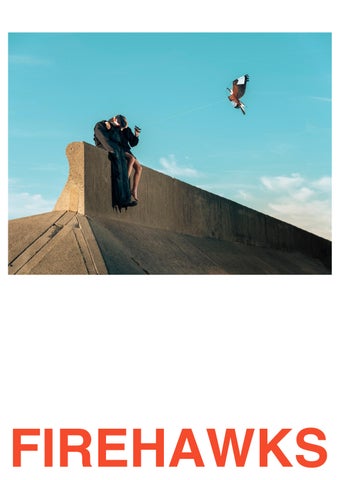
FIREHAWKS
Stephen King 2025
2020 brought back a memory I had almost forgotten. A difficult period in childhood had triggered a phase of firesetting — a brief deviation in the timeline that came and went, driven by little more than the momentary exhilaration it provided.
Forty years later, a chance encounter with the subject through a documentary reignited that memory. The clarity of adulthood demanded further examination and so began a five-year exploration into firesetting behaviours and the wider social impacts and responses surrounding them.
Much of this time was spent considering how these ideas might be ethically and effectively expressed through photography — a process emboldened by the Open Eye Gallery’s unwavering support and belief in commissioning an exhibition for what was, at the time, an unborn body of work.
This relationship, along with the wider collaborative network that supported me throughout the project, not only informed the work but ultimately underpinned my conviction that this creative response could be presented with integrity…
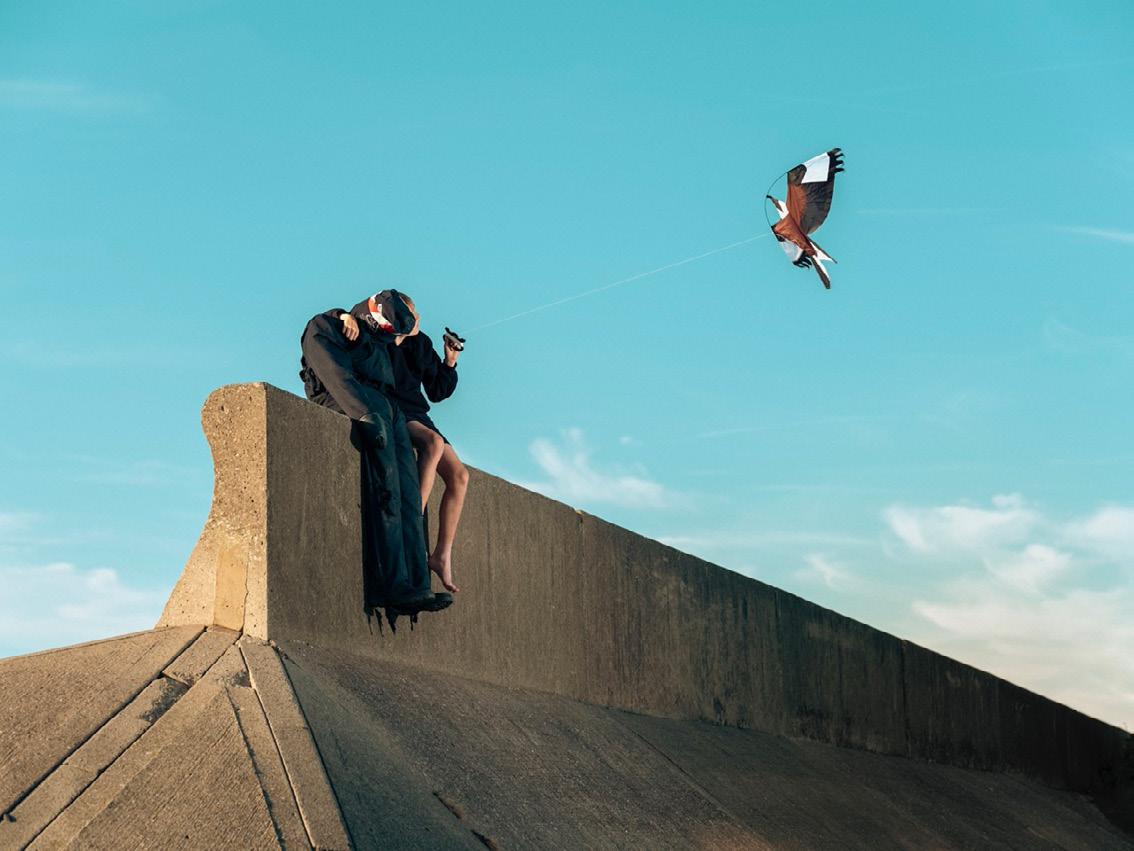
Across parts of Northern Australia, the Black Kite or Firehawk – a raptor species known for its startling intelligence – has been observed carrying burning sticks to new locations, deliberately spreading fire to flush prey from the undergrowth. This rare act of intentional ignition by a non-human species gestures toward something deeply instinctive, even ritualistic.
In our human world, a different kind of fire-making exists – less visible, rarely spoken of. Firesetting is a behaviour seen in some children and young people who, often alone and often in domestic or familiar surroundings, set fires not out of malice, nor accident, but as a response to experiences that defy articulation. It is not arson. It is not always criminal. It is frequently a silent language of survival.
In England, tens of thousands of deliberately set fires are recorded each year. Many are started by children. Behind these statistics lie untold stories – of chaos, care, escape, and, sometimes, healing.
The photographic series presented does not seek to diagnose or define. Instead, it invites the viewer to sit within the tension of fire – as both destruction, communication and renewal. It brings together voices from young people who have set fires, and those from fire and rescue services who work to understand, intervene, and care with courage, integrity, and compassion.
These images, the majority made on location with Northumberland Fire & Rescue Service and Merseyside Fire and Rescue Service at their state-of-the-art Training and Development Academy, are a quiet archive of lived experience. Within them are the scorched traces of memory, fragments of speech, the smouldering residue of untold stories.
Stephen King
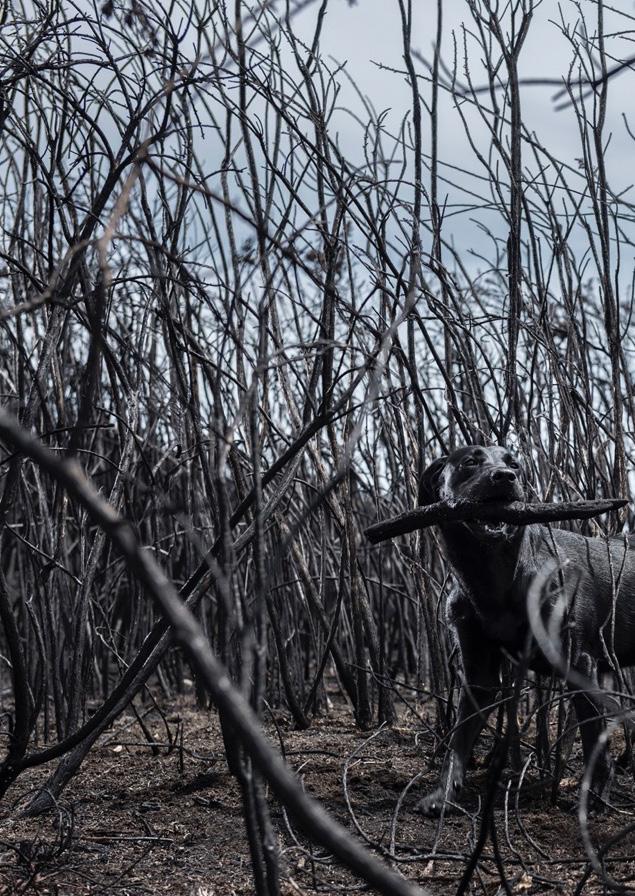
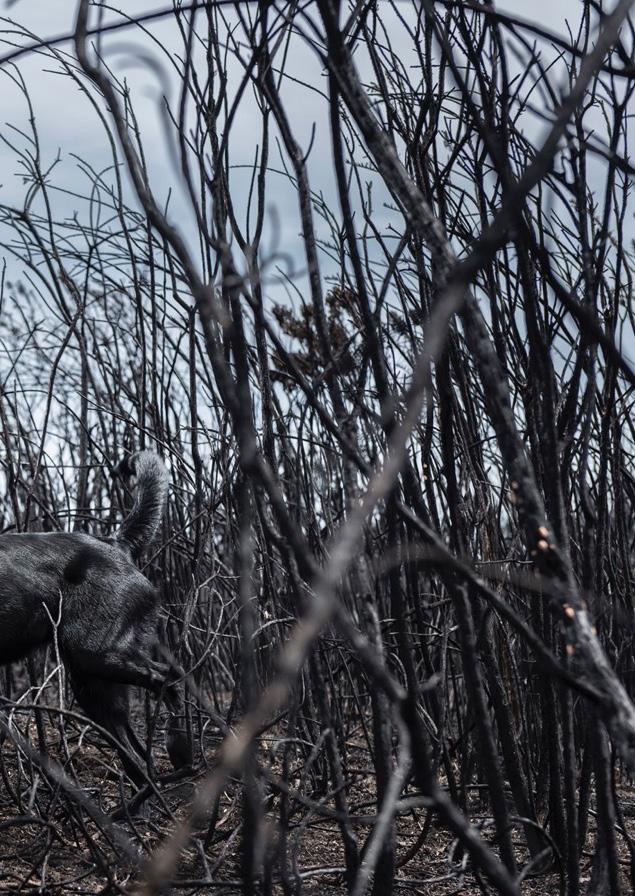
We meet our Narrator, The Black Dog (synonymous with trauma and depression), who leads us on a journey through the charred landscape of children’s stories, stories that they carry in their teeth. These are not classical fairy tales, though they borrow their familiar shapes. They flicker, crackle, and smoulder like the element at their core.
Children’s stories often cloak the unspeakable in play. Here, the line between fantasy and lived experience blurs: flames become a language, fire a companion, a compulsion, a release. The images do not attempt to explain; they invite.
Each photograph shares an amalgamation of stories that speak of the power and appeal of fire, so great we wish to ingest it and succumb to its sensory command, believing it can distract from loneliness and abandonment, and return to us some control.
As a species, we are inexplicably drawn to its light, we find fire mesmeric – warm, wild, safe and dangerous. In these photographs, the pull is both personal and collective, real and imagined.
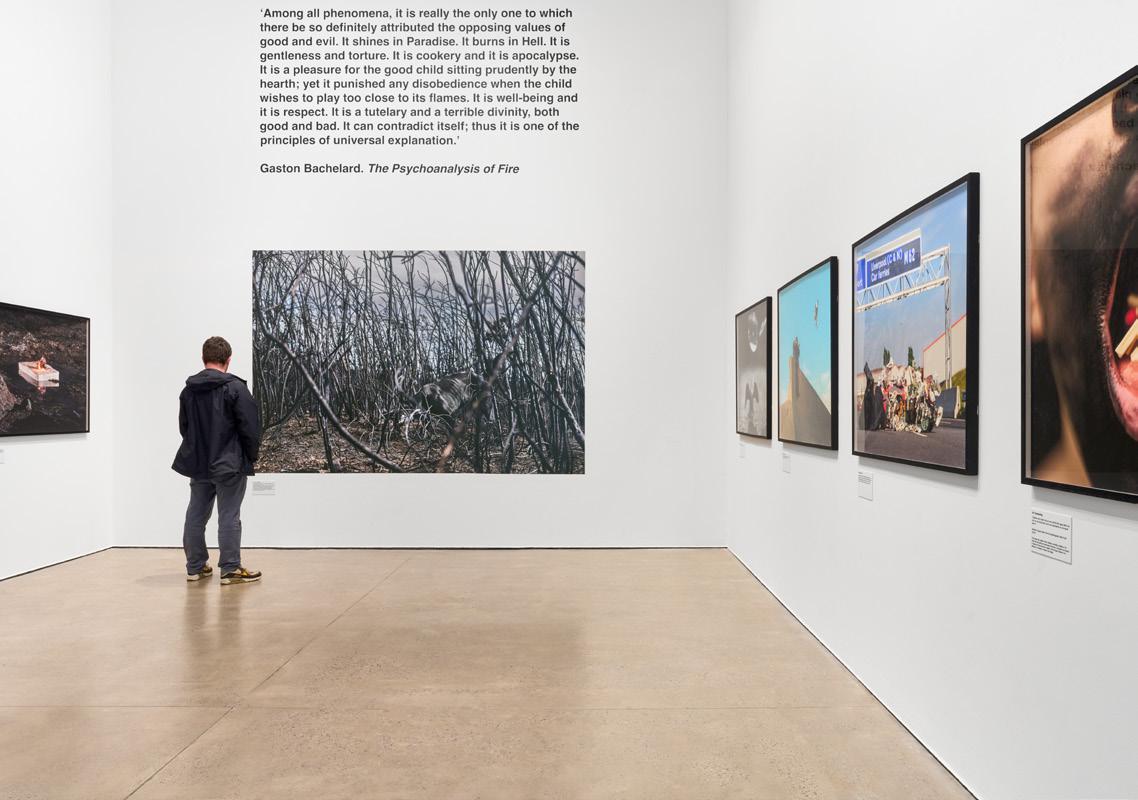
“Among all phenomena, it is really the only one to which there be so definitely attributed the opposing values of good and evil. It shines in Paradise. It burns in Hell. It is gentleness and torture. It is cookery and it is apocalypse.
It is a pleasure for the good child sitting prudently by the hearth; yet it punished any disobedience when the child wishes to play too close to its flames. It is well-being and it is respect. It is a tutelary and a terrible divinity, both good and bad. It can contradict itself; thus it is one of the principles of universal explanation.”
Gaston Bachelard
The Psychoanalysis of Fire
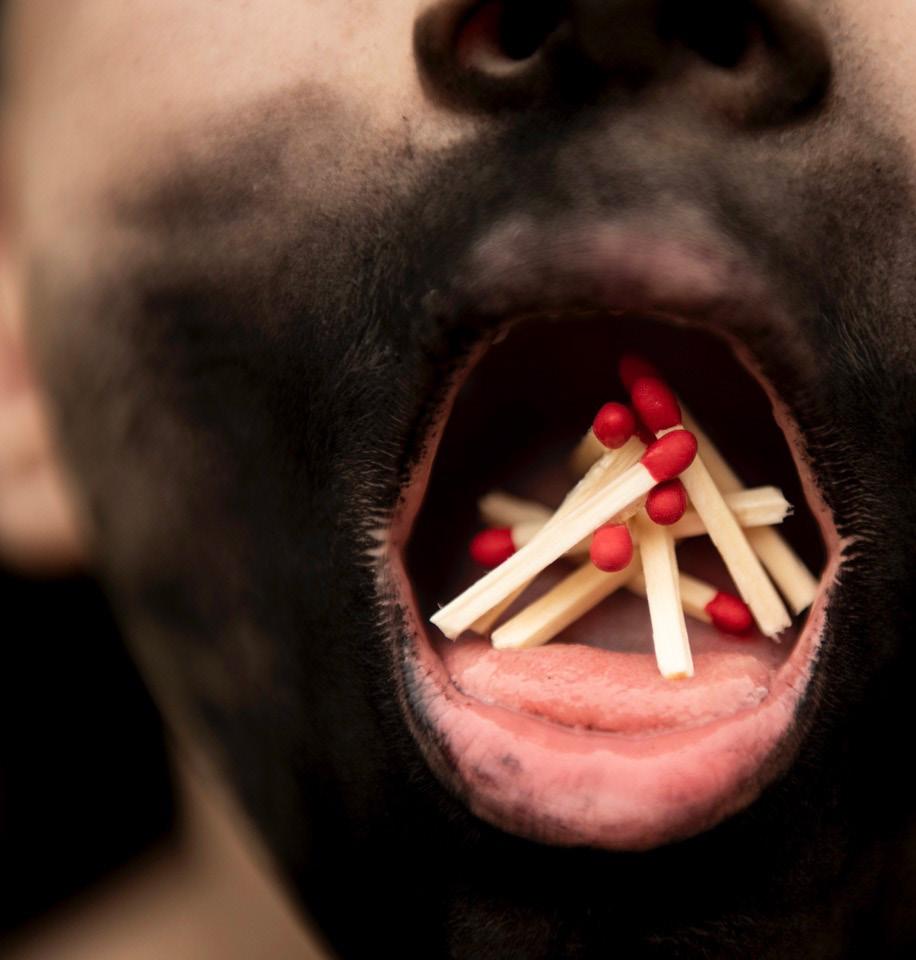
All Consuming
“Swallow each match one by one until the fire raged within me but no one would see it and more importantly no one would fear it”
Michael Cooper, taken from his autobiography ‘Mini & Me’ (2013)
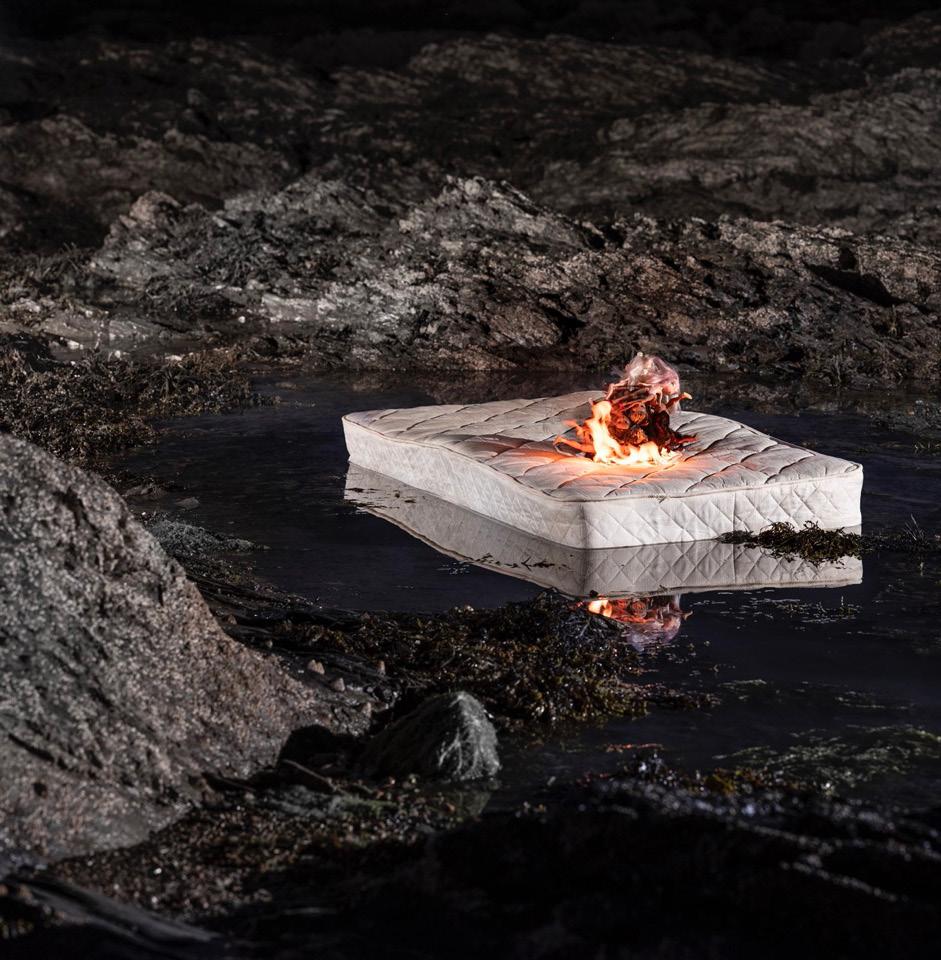
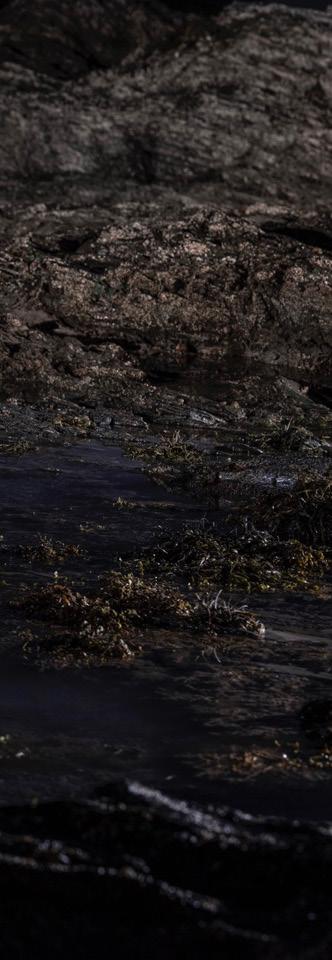
Tiny Tears
A silent witness, the mattress, becomes both container and confessor – absorbing what cannot be spoken, holding the weight of absence, and softening the echoes long after the room falls still.
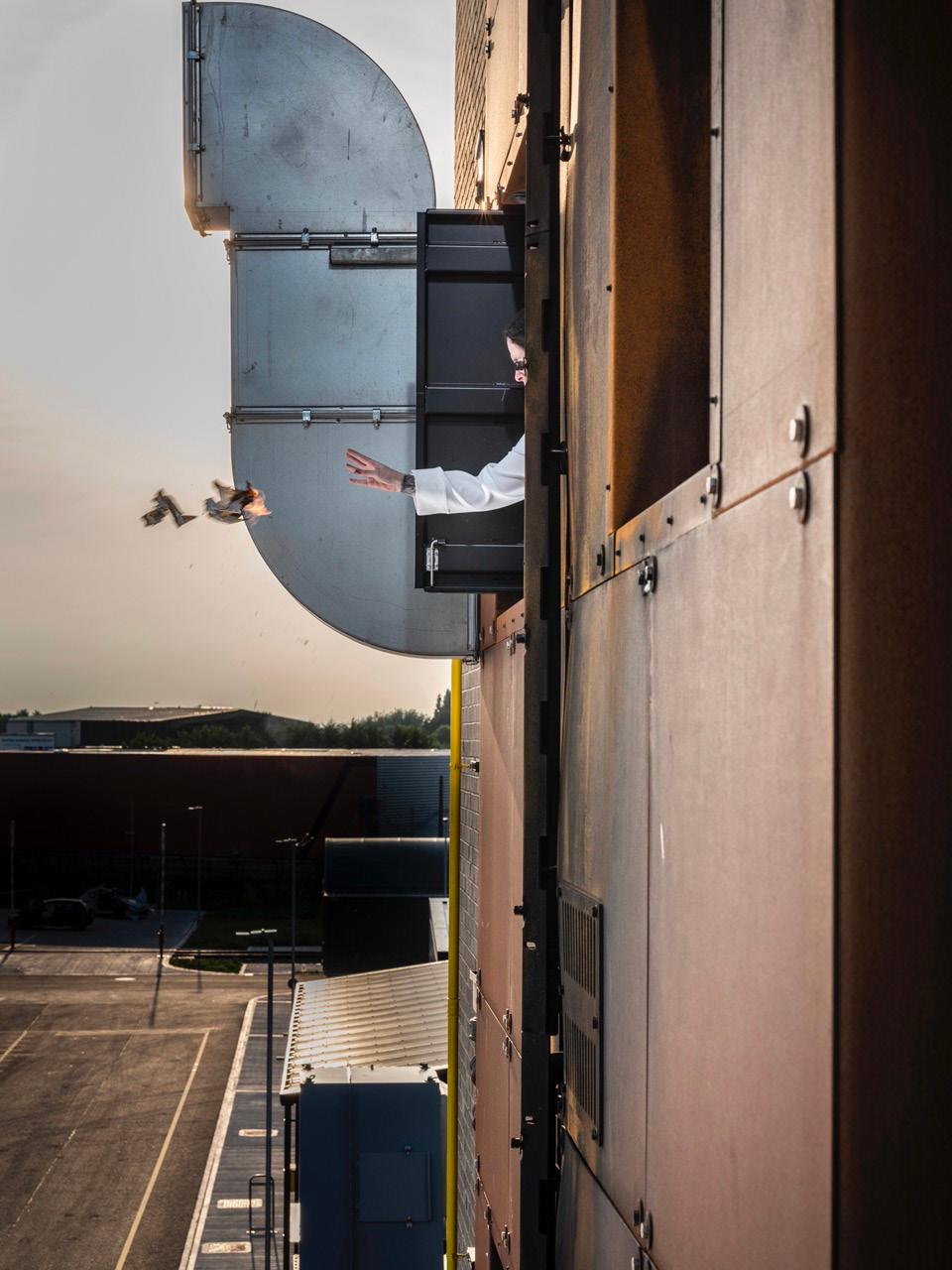
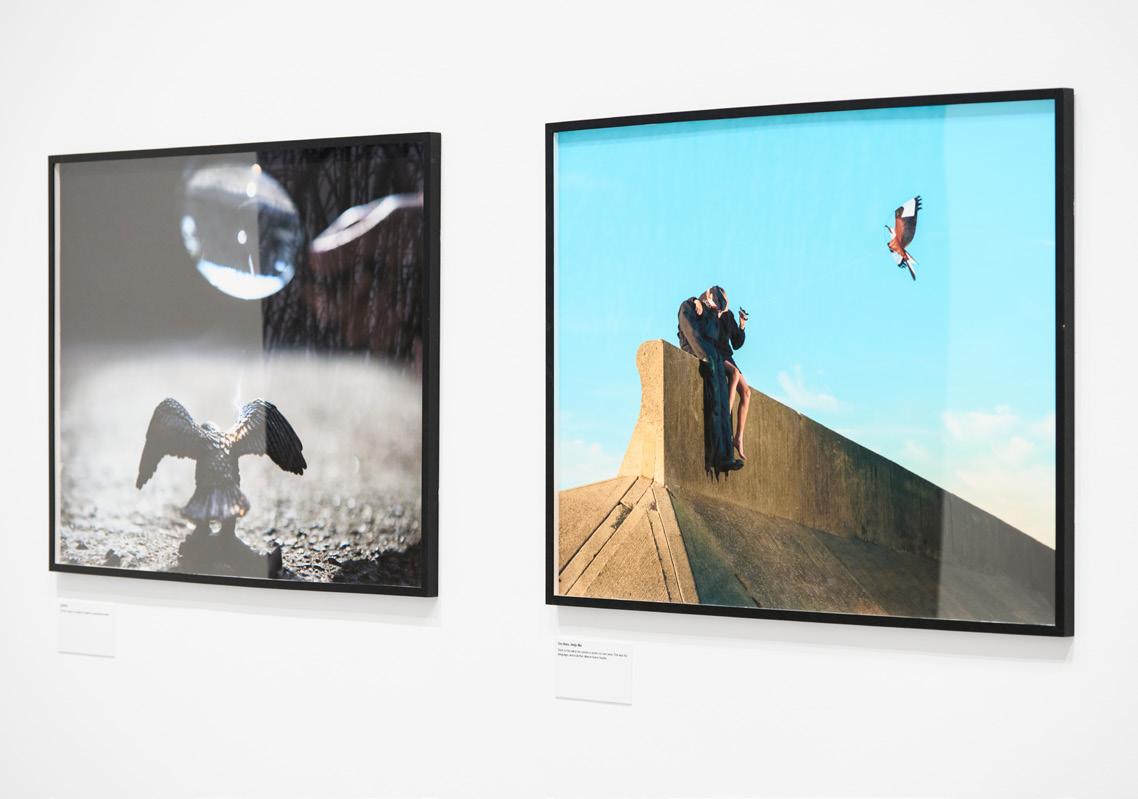
Fledging Signals
Her voice rises from concrete and silence, a fragile thread reaching out. The plea drifts, suspended in the air between floors.
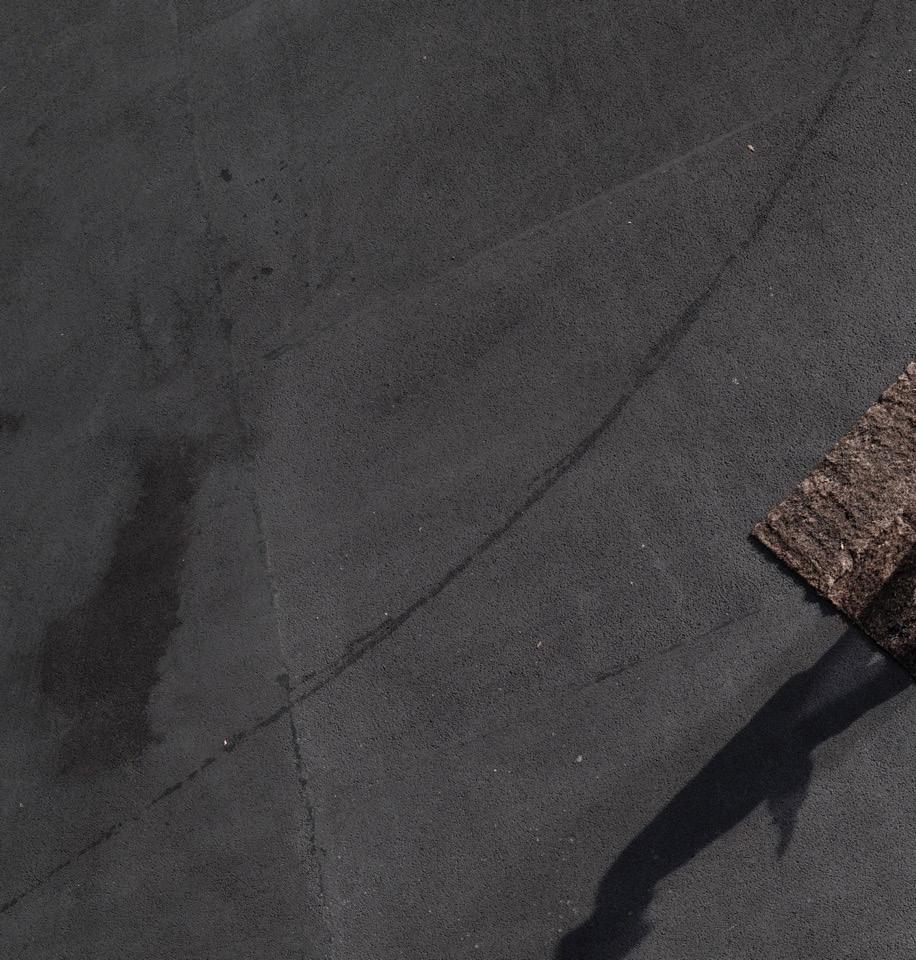

Memories Scorched, Cast the Longest Shadow
The scent of smoke clings, a quiet reminder of what was… not as a burden, but as a marker of growth, resilience, and the quiet strength drawn from experience to service.
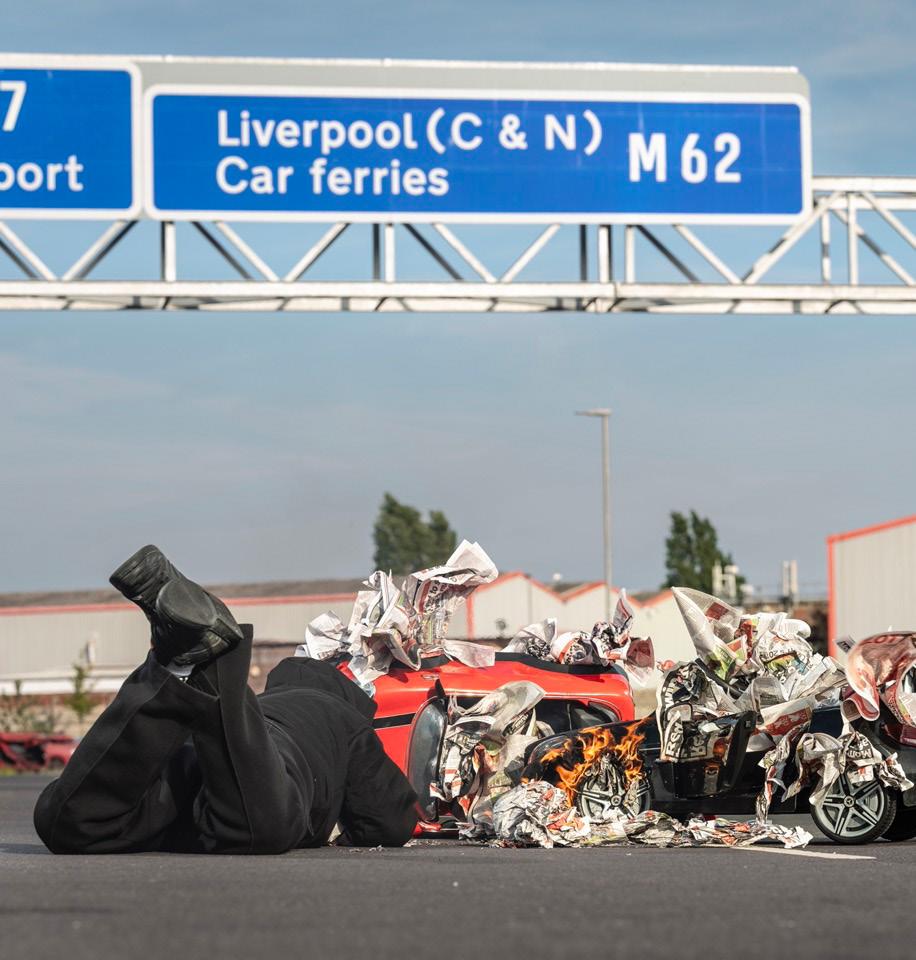

Crash and Burn
What once felt like play now flickers with deeper meaning – early rituals of control, and escape. Memory smoulders at the edges, where imagination collided with chaos, and the line between curiosity and destruction was drawn in smoke.
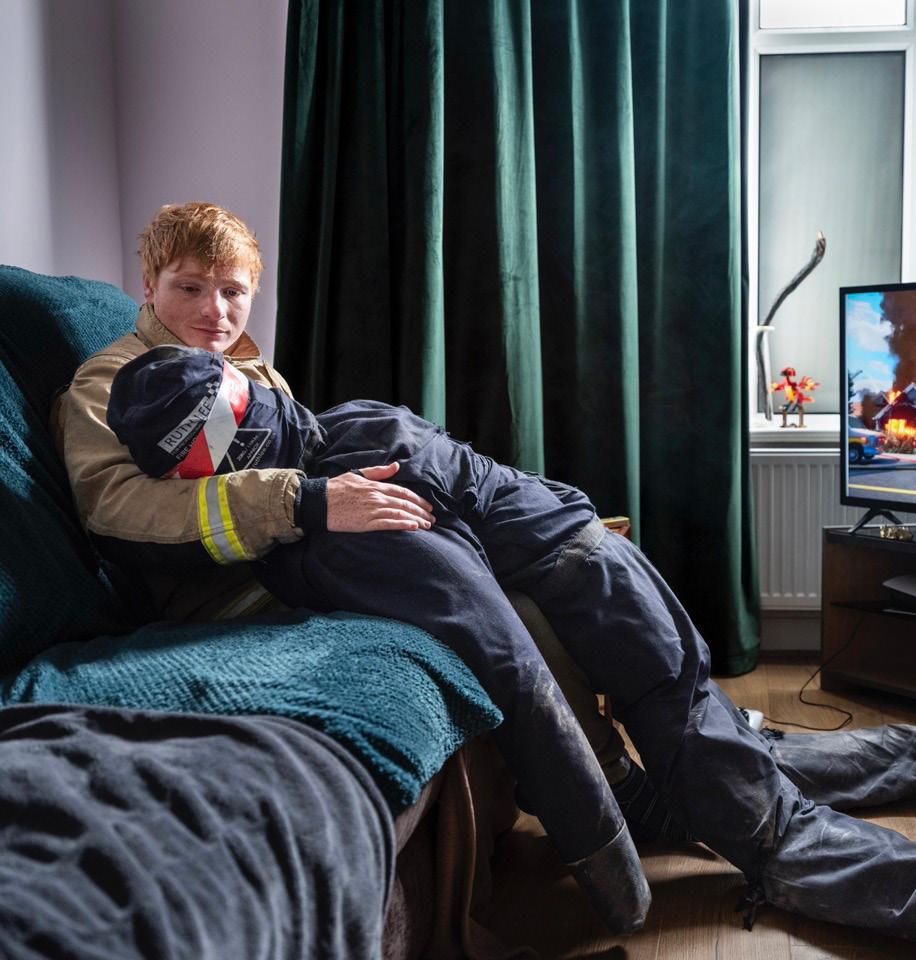

I’m Here, Ill Help You
An ache for purpose, for belonging, once close and now unreachable. In the glow of the screen, the dream still burns, not as ambition, but as a tether to something lost yet not entirely gone.
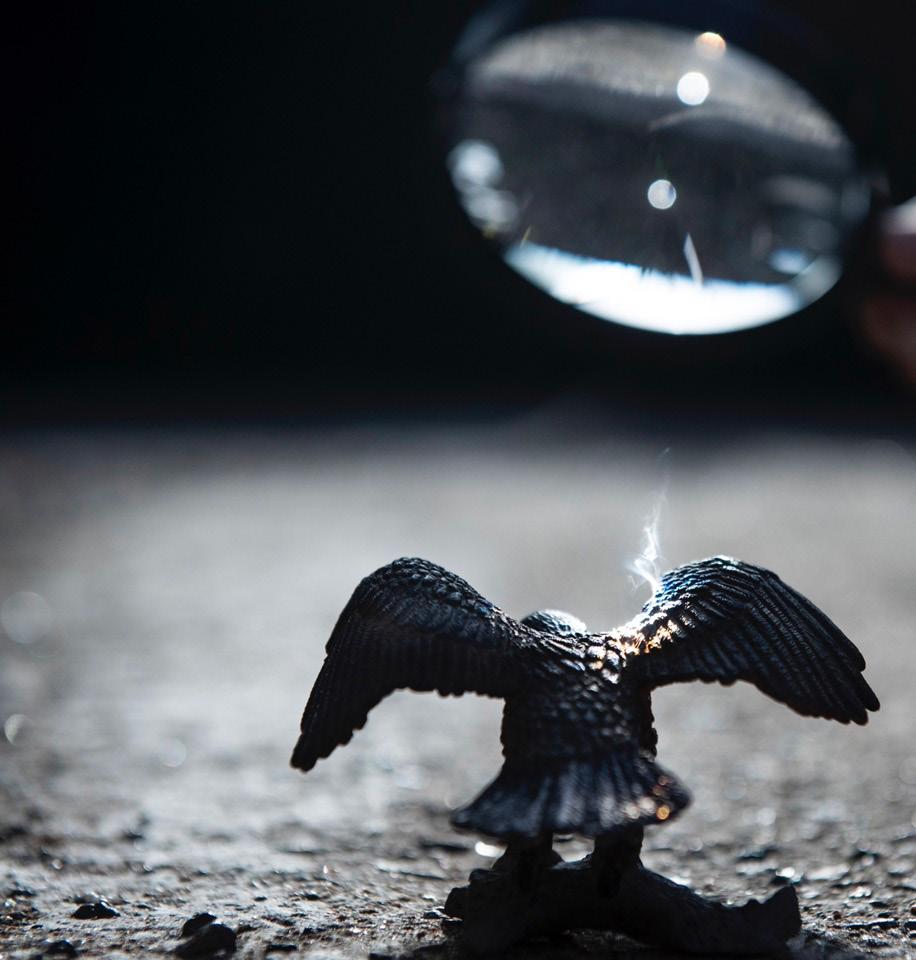

Ignition
The first spark is a miracle, to awaken an elemental wonder
I’m Here, Help Me
Back to the wind, he carries a storm no one sees. Fire was his language, and now the silence burns louder.
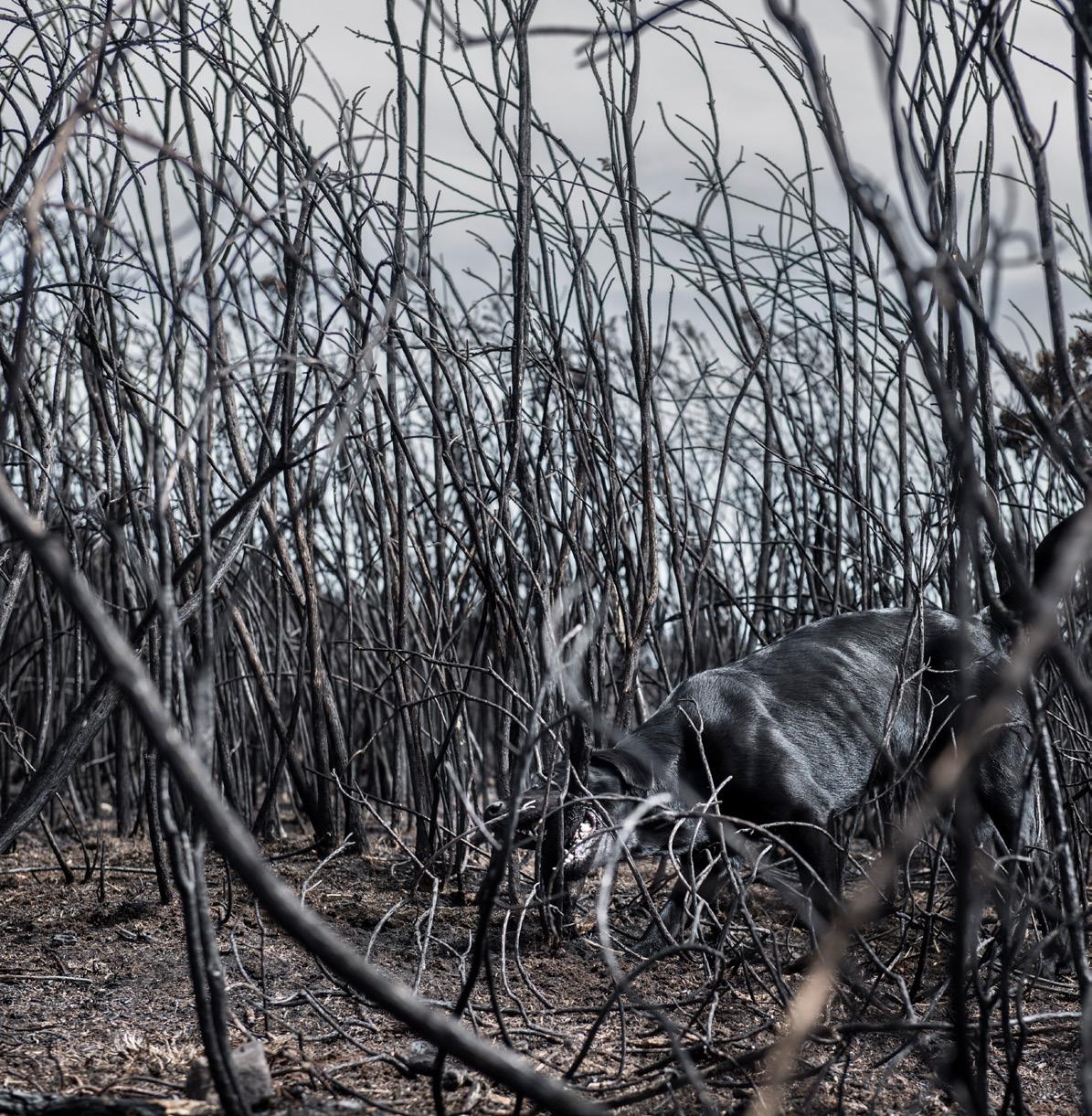
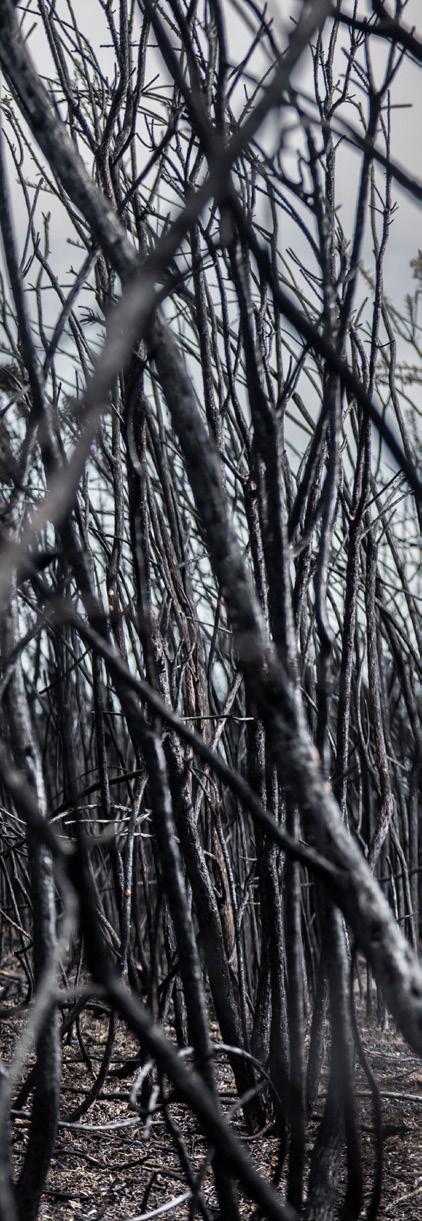
The Storm Before
The dog becomes part of the landscape, swallowed by the story it once tried to carry.
No longer a guide but a creature undone, its body frays at the edges – folded into scorched soil, splintered trees, and the soot-heavy air. The weight of the narrative bears down, fracturing its sense of self into a frantic, feral search for meaning. What was once witnessed is now residue haunted by the very truths it helped unearth.
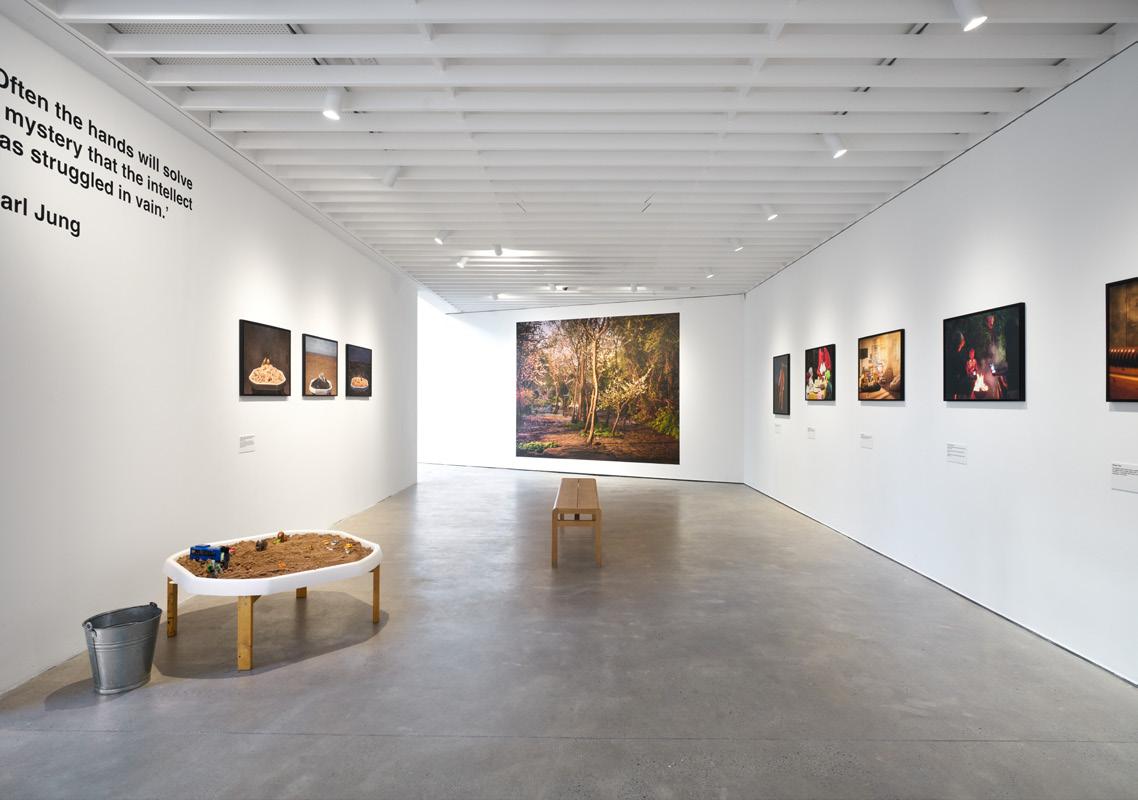
We explore the therapeutic and educative approaches fire services take when working with children and teenagers who set fires. People are long accustomed to the fire service responding to fires, floods and other emergencies that can befall communities, yet few are familiar with the role of the fire service in addressing the complexities and tragedies of child firesetting. Mirroring this often hidden behaviour, within fire services there are specialists who work quietly, determinedly and persistently; behind closed doors in a classroom, community centre or in someone’s home, they seek to provide a safe space for children and teenagers to share their stories through discursive and creative means.
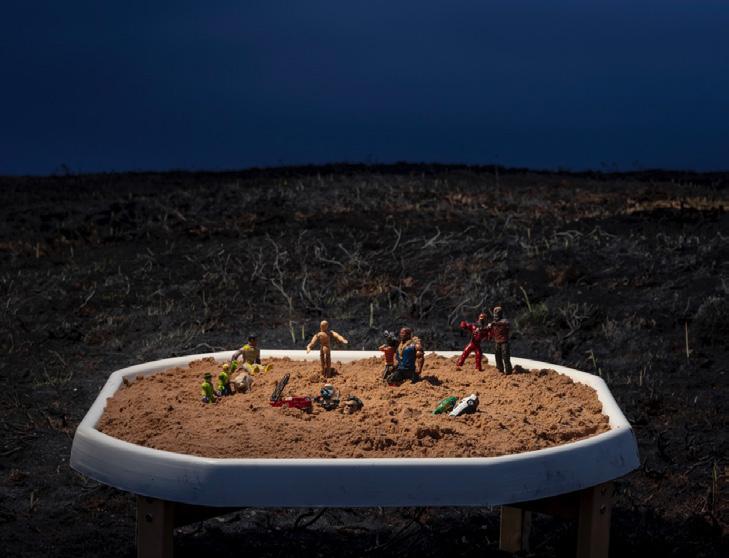
Methods such as sharing experiences through the use of Jungian sand trays, creating poetry or writing songs that take children on a journey of self-expression and understanding of what their behaviours are saying without words. Maybe the older child who has realised that setting fires brings them attention, for even negative attention is better than no attention at all, can finally be seen and heard as needing to be safe.
For teenagers, challenging their use of fire as controllable and exploring its potential, unintended impacts through fire science and the ripple effects of their actions can change thoughts, feelings and behaviours towards fire. They are empowered to learn that fire isn’t a safe way to overcome the trauma they have experienced, but realise instead the potential devastation and unintended harms that fire can bring into their lives.
Ultimately, these specialist fire service teams recognise that all behaviour is communication. By nurturing trusted spaces and using creative expression to allow for conversations with a purpose, they provide support through different means, an alternative voice to fire and hope for new beginnings.
Joanna Foster, Criminologist, Author of ‘Children and Teenagers who Set Fires: Why they do it and how to help’ and Founder and Managing Director of fabtic, which specialises in child firesetting behaviour.
“Often the hands will solve a mystery that the intellect has struggled in vain.”
Carl Jung
Family Dynamics
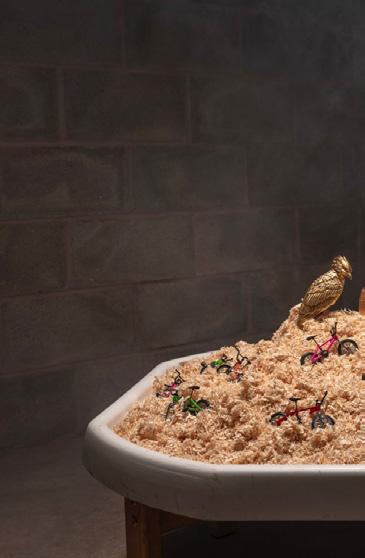
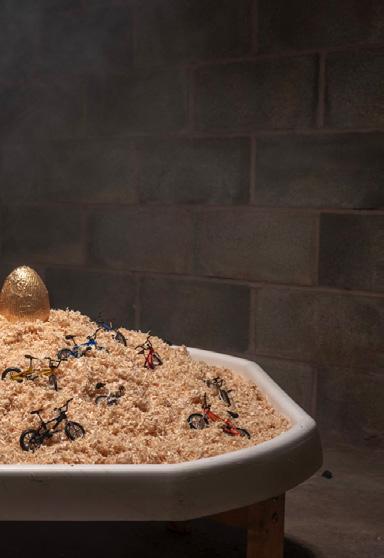
A Night on the Beach, A Stolen Bike and Easter Egg
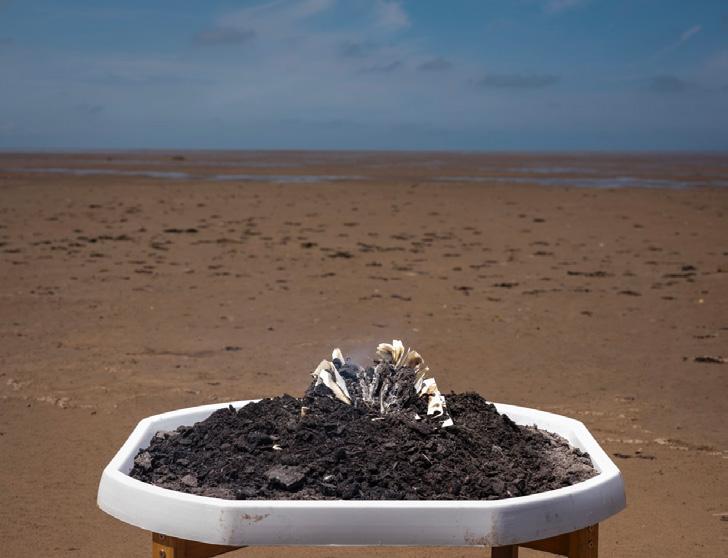
A Journal Burning Thoughts and Memories
The family often emerges first, not as a likeness but as a structure – an arrangement of symbols that speak of origin, roles and position. Each placement considered totemic. What seems still is alive with myth and memory, a psychological landscape drawn in dust.
Picture this
The headset sparks visions where cognition takes flame. On the digital horizon, thought ignites inner wildfires staged in virtual form… a simulation that shocks us into the volatile landscapes of the mind.

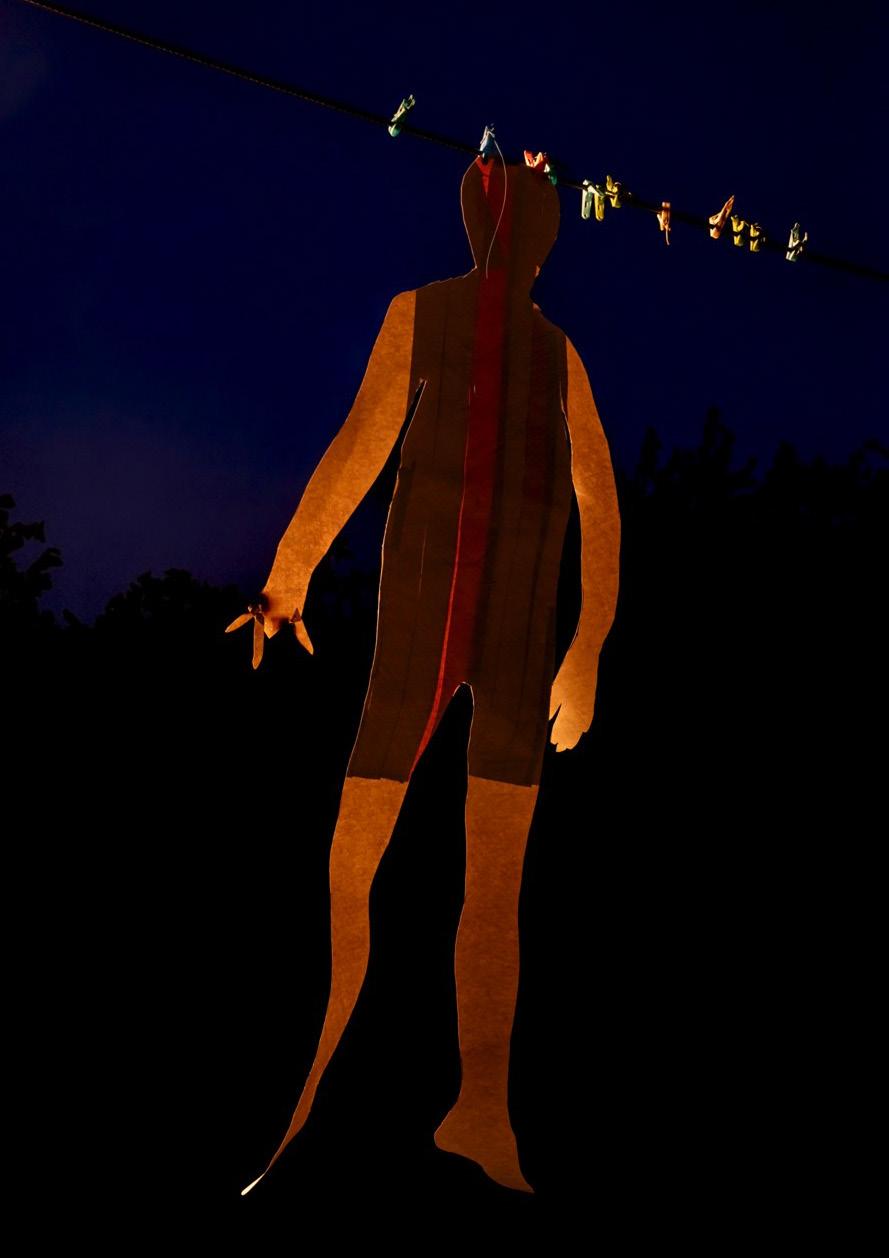
Consequence is not always ash – Benji shows us it can be silence, absence, the shape of what was lost. Lessons made into memory, starker than the flame itself.
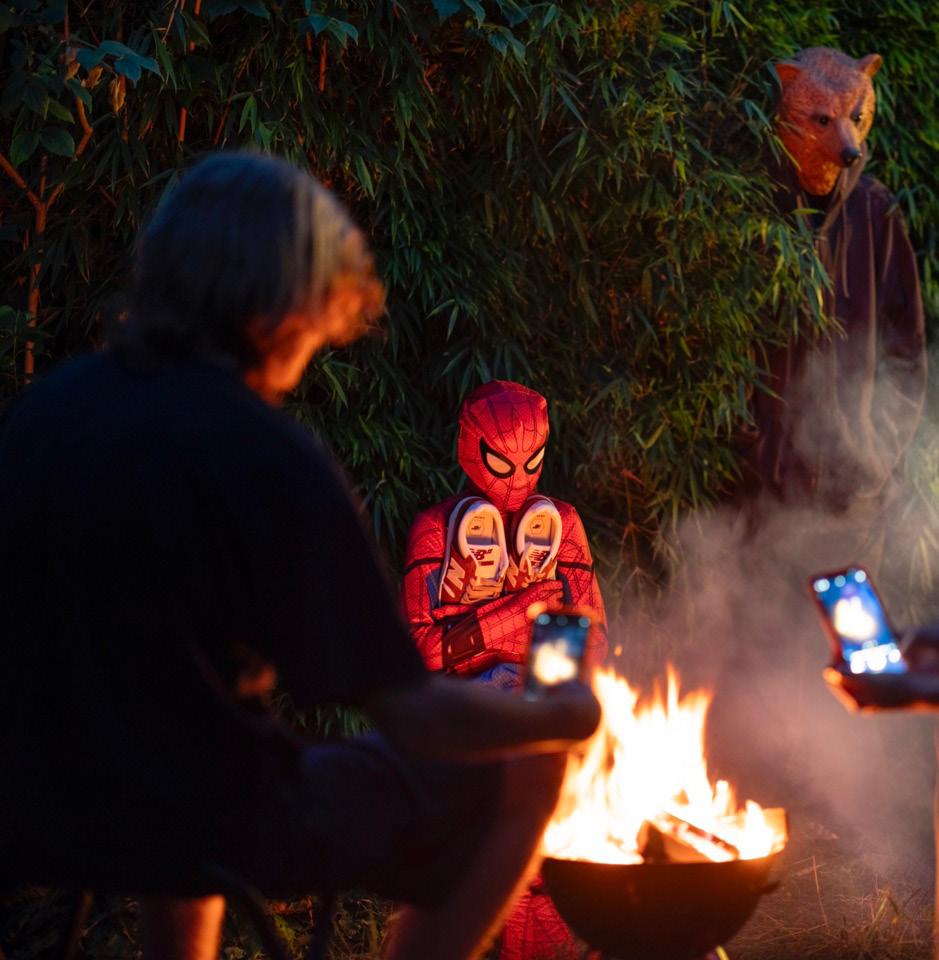
Good fire, bad fire
Good fire: “Campfire with grown-ups, gives light and keeps you safe from bears”
Bad Fire: “Teenagers… a bonfire in the park being filmed on phones”
Consequence: “Burnt new trainers, lose spiderman costume – dead dog’’
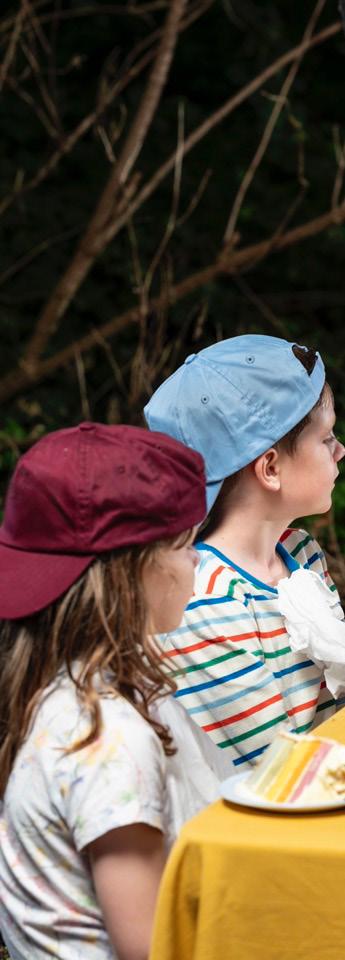
The Dragon Who Came to Tea
Your fire-breathing companion, mischievous and dazzling.
He lives at the edge of the storybook, the guest you long to invite to the tea party… though you’re never sure if he’ll pour the tea or burn the cake.

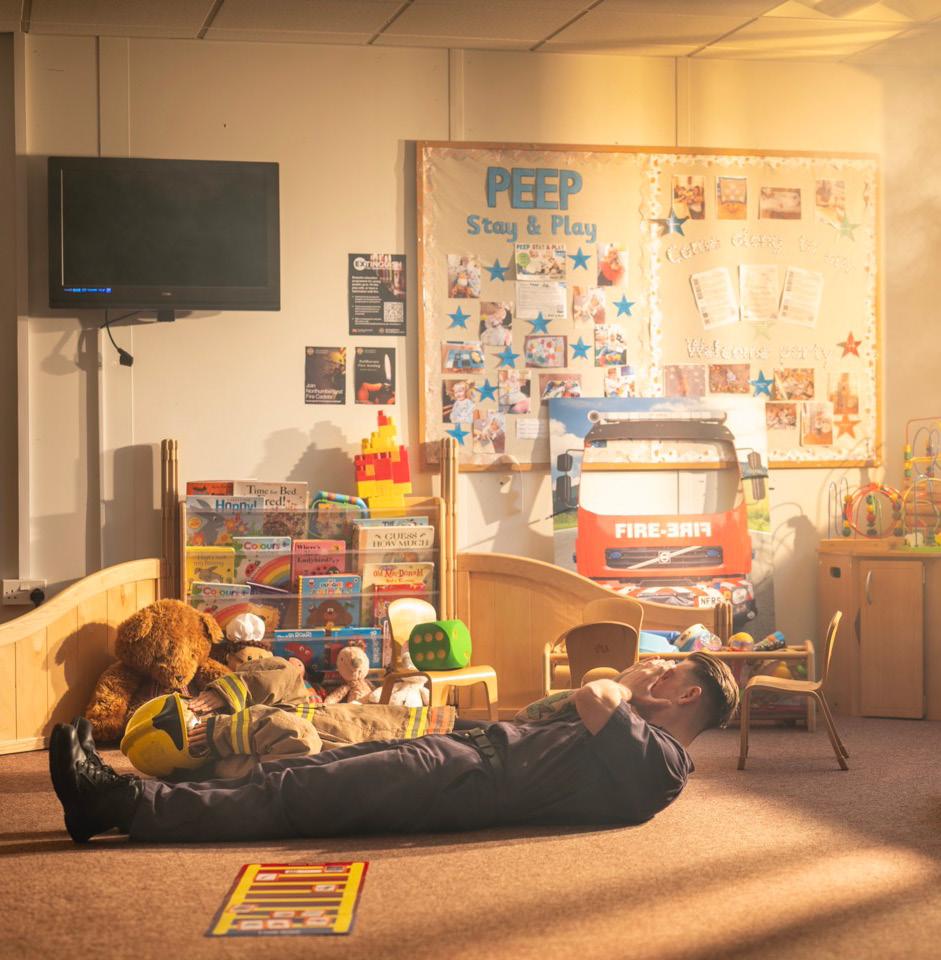
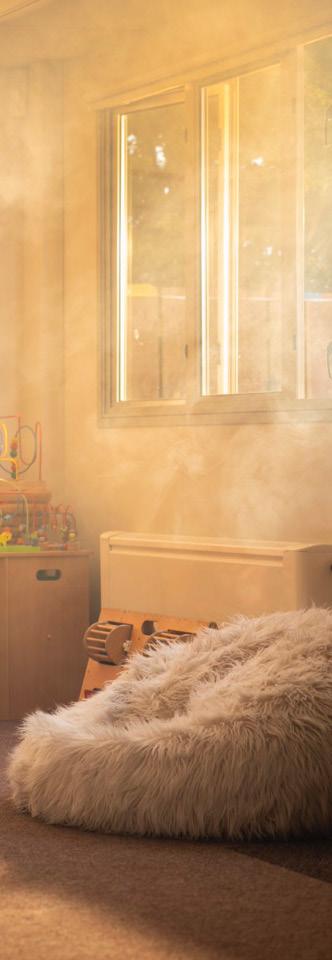
Stop, Drop and Roll
Stop, Drop, Roll – the choreography of survival, a rehearsal of disaster, played out in the theatre of imagination, where the body becomes both stage and extinguisher.
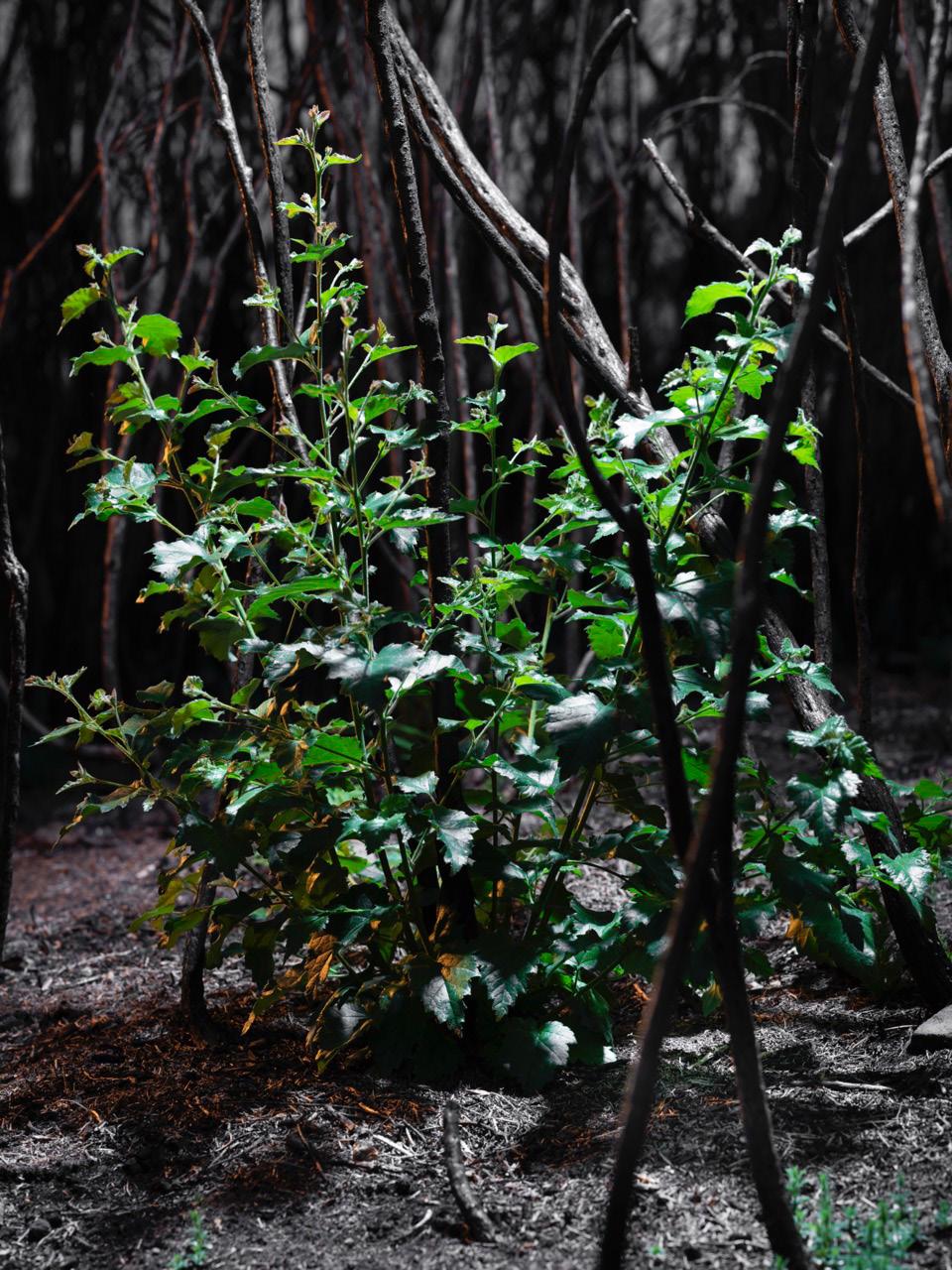
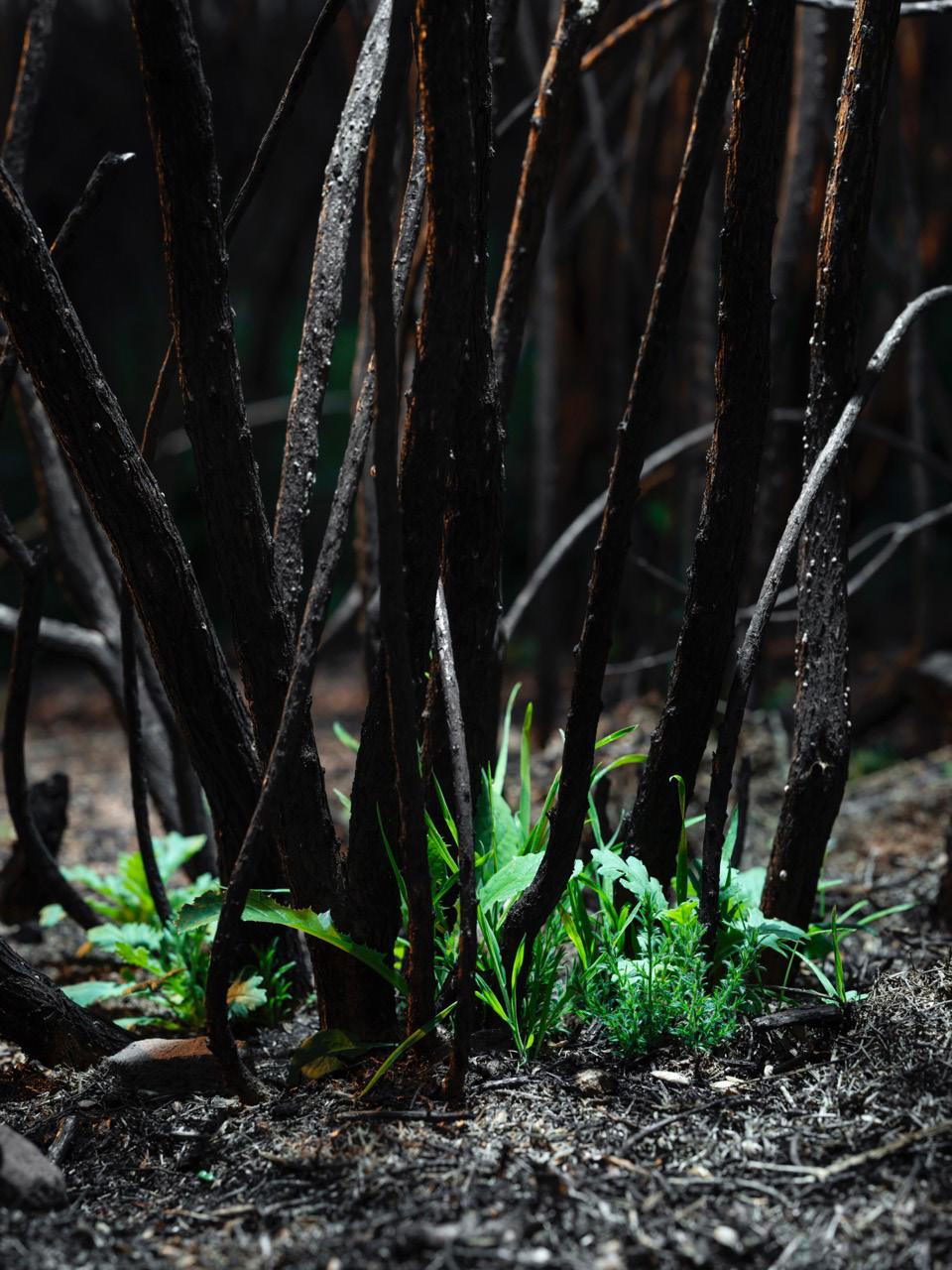
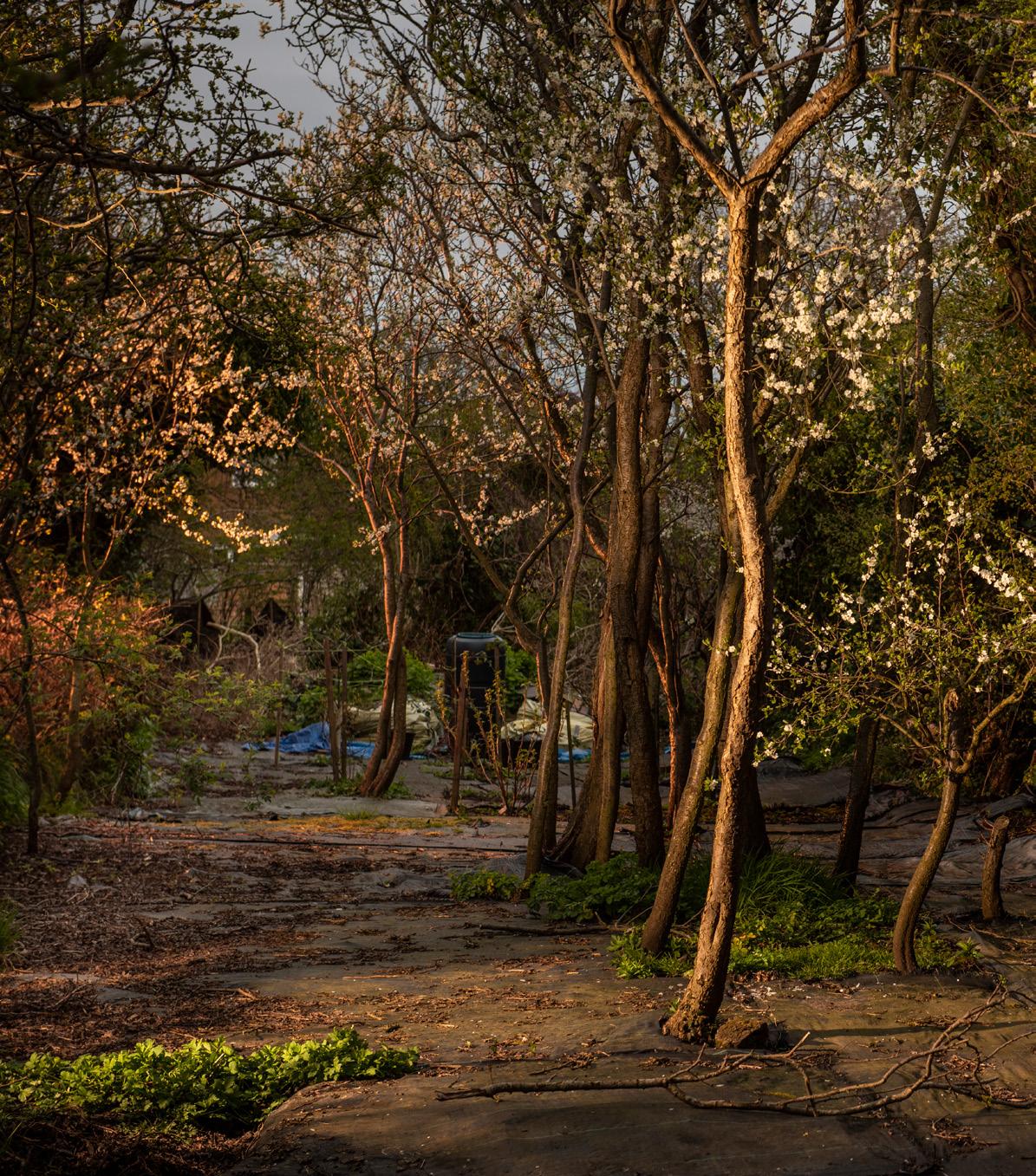
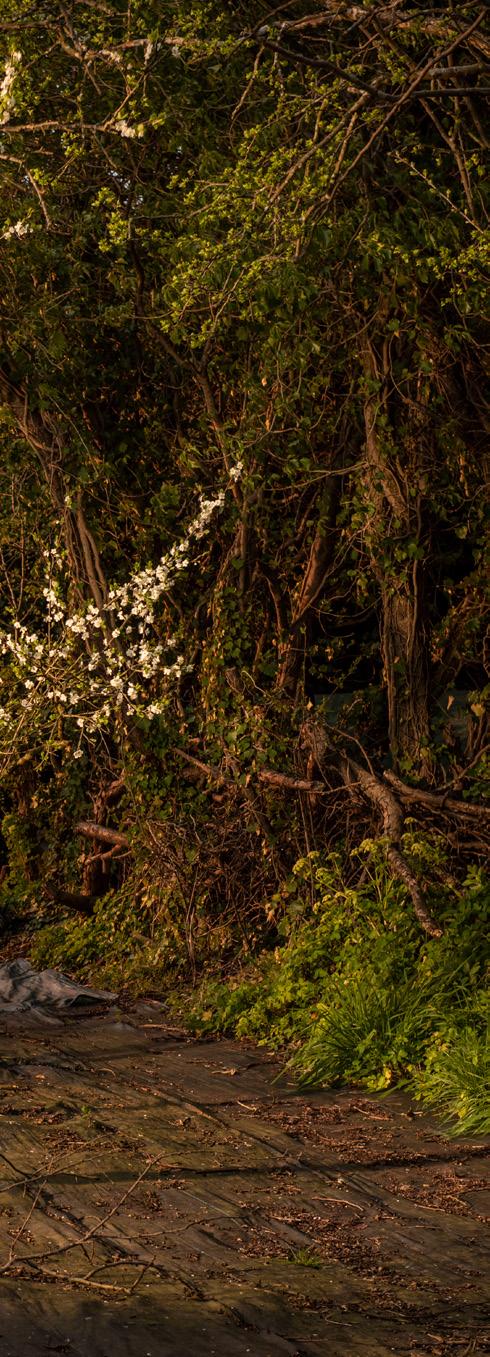
Years Later: An Orchard
A bird’s-eye view: a critical reflection
Dr Chrissie Tiller
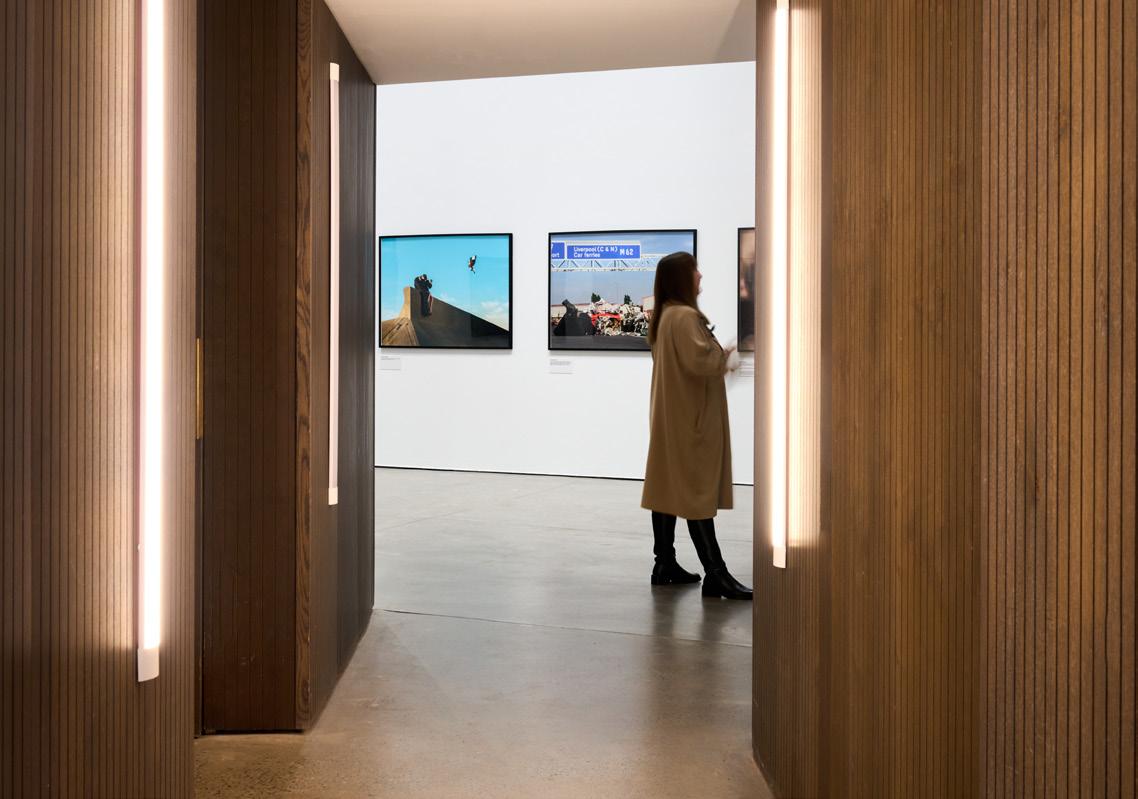
Stephen King’s Firehawks, recently exhibited at Open Eye Gallery, Liverpool, is a potent and affecting photographic exploration of a subject that is rarely spoken of - firesetting behaviour in children. A response to something that can often attract sensationalist or even voyeuristic media attention. Criminologist Joanna Foster explains, this exhibition draws instead on Stephen’s own experience of firesetting as a child and on the expertise and knowledge of those working on the frontline.
Exploring the trauma that so often informs these young people’s behaviour through a series of hauntingly metaphorical images the exhibition is moving, mesmerising and disturbing in equal measure. While describing the immediacy of the impact of individual images such as dolls alight on a mattress, which disrupts so many of our concepts of safety and home, visitors also spoke of the powerful effect of being invited to put aside any sense of judgement or the need to diagnose, to sit instead ‘within the tension of the fire’.
The exhibition is in many ways the stunning culmination of the Firehawks project. It is also the forward-facing product of over four years of intensive research and development that gave Stephen the possibility to work closely with others with lived experience of fire setting, an arts institution, crucial frontline fire services, and academia, to produce a piece of work that speaks eloquently, and with powerful resonance, to a subject that is still largely misunderstood.
It is also an inspiringly cogent model of the role socially engaged arts practice can play in raising awareness, provoking dialogue and offering audiences, participants and partners alike new insights into complex social issues. The strength of the collaborations that emerged from Stephen uncovering ways to bring what he names as his own ‘lifetime of trying to understand and heal’ into dialogue with more
recent experiences of ‘young people who have set fires, adults who used to and those who work to understand, intervene and care for them’ shines through the exhibition. From the riveting opening video in which we hear the voices and stories of members of the London Fire Brigade Firesetting Intervention Scheme and Northumberland Fire and Rescue Service who work with these young people every day, to the thoughtfully considered captions and quotations that sit beside the photographic images on the walls of the gallery there is a deep sense of reciprocity and a shared commitment to making change. The result, as Stephen himself explains, is not so much a study of this urgent topic ‘as a visual reckoning – born from experience, shaped by dialogue’ and ‘held in a collective space’.
Creating that collective space and developing the kinds of partnerships and conversations that invite collaboration and foster dialogue has always been one of the central tenets of socially engaged arts practice. Having a time frame that enables those partnerships to develop the level of trust and understanding needed to work closely with frontline services that are often so busy and so under resourced, is pivotal. When there is trust and mutual respect, collaboration can blossom, as Joanna notes in her reflections on the project, it not only allows for the sense of co-authorship that Stephen has created space for in this project, but it enables the work itself to ‘sing’.
Having the possibility to develop relationships that allow for a quality of process as well as the quality of any final product is something we often find ourselves speaking of in terms of social art projects. Recognising the depth of confidence this gives partnerships that are truly crosssectoral in the way Firehawks was, is something that impressed everyone involved. Although Open Eye Gallery were familiar with the quality of Stephen’s work as an independent artist, they realised this project gave them
permission to think differently about how they commission and work with socially engaged arts practices.
Like many cultural organisations, who find themselves often needing to take the lead on projects because of restricted and short-term funding streams, Firehawks was a gift, with the possibility to ‘slow down and be more risk-taking’. They also noted how important it might be to acknowledge as a sector that projects like this need that kind of space and time. As Head of Social Practice Elizabeth Wewiora, explained, ‘If we want to do this work, curatorially, in an ethical and meaningful way, where the work speaks for itself and the quality of the imagery is still strong it does take time.’
Placing a sensitive subject such as firesetting in a gallery space and exposing it to the scrutiny of the public eye for the first time, was not without its challenges. It required courage and bravery on everyone’s part. Not only, ‘the courage of Stephen, first and foremost, to say this was my story’ as Joanna describes, ‘but courage from all of us, all the fire services and myself, to just allow ourselves to say yes to this’ and for ‘the gallery to be brave enough to share the images created.’ For Open Eye Gallery this meant having to confront questions of safeguarding alongside its responses to the aesthetics of the exhibition. One of the most striking and arresting images, which many have spoken of as also being the most affecting, features the open, blackened mouth of a young person, with unlit matches inside. As Joanna explains, it is an image, which like the burning dolls on the mattress, has a very ‘real visceral impact’. Like firesetting itself enables children to say things that can’t be said through words, because those words are too big, too painful, and a child often doesn’t have those words.
While understanding the power of this image to speak to the role fire often plays in articulating children’s sense that things are not right with their lives, the gallery were concerned it might be a trigger for some viewers. It was only because of the many conversations that had taken place and the strong level of trust partners had built between them that facilitated involving everyone in the collective decision-making process that took place, and for the expertise, knowledge and experience of those working on the front line to be what ensured the image was central to the final exhibition. Often, as producer Angharad Williams observes, we imagine that we, as artists working collaboratively with other sectors, are the ones offering challenges to think differently and more open-mindedly, but ‘it was the fact it was the fire service that were able to articulate why we needed to be courageous in this case that wasso important.’
As the broad demographic and responses of audiences made clear it was the bravery of Stephen’s images in confronting the causes and results of this behaviour through metaphor and story that provoked them to think differently about these children. Many, including members of the gallery staff, also spoke of the ways in which the exhibition not only offered them insight into the young people who set fires but also prompted them to reflect on their own childhood and the less dangerous but often risky things we may all do as children to test boundaries. ‘A lot of people’ Elizabeth Wewiora observed ‘connected to it thematically in ways they hadn’t expected. The play therapy images were clearly key to that, because they put everybody back into the position of being a child, and how we all use play to work through our feelings.’
For Joanna and those working in frontline contexts there were other challenges. In Joanna’s case it began with realising that, while the proposal for the project made it clear Stephen would be approaching the subject from a trauma-informed lens and lived experience, the resulting artwork would not necessarily be the more usual
documentary response to a social issue. Again it was the depth of a relationship built over the period of research and development and pilot interventions that enabled her to trust that Stephen’s work would challenge them, and the subject matter, ‘in provocative, but not inappropriate ways’. Stephen’s images’, she notes, ‘while being so different ... almost fantastical’, were still ‘firmly rooted in experience’ in a ‘way that wasn’t sensationalist or portraying himself or others as victims.’ While she felt the danger of the behaviour remained real and present she also felt the metaphorical strength of the images took her own knowledge to a new level and made her reflect further.
Peter Fitzpatrick, Station Manager/Prevention at Greater Manchester Fire and Rescue Service speaks affectively of the insight it offered him both as someone working in the fire service and someone who had been involved in firesetting as a child. Describing his visit to an early sharing of some of the work as ‘a grounding and emotive experience’ Peter says ‘Stephen’s journey mirrored my own in so many ways - his resilience and impact is inspiring. I felt a real connection with all of the images on display’, describing how important it became to engage with the photographic process itself, as a frontline worker, as well as being part of one of the final images. The multilayered nature of the project opened up what he names as ‘a self-awareness I hadn’t been expecting’. Part of this, he goes on to explain, came from the ways in which the project draws on lived experience, which he believes is what gives it its deeply authentic voice, but also the ways in which Stephen’s images give voice to feelings and emotions that words are so often inadequate to explain.
This formal iteration of the project, through the exhibition, has left all those involved with a strong sense of its ability to challenge preconceptions, even for those on the frontline. It has also left all partners with a certainty that it now needs to go beyond the gallery and be seen and shared in a wide range of contexts. Joanna is already thinking of the ways in which it might go beyond
telling a different story about the reasons children set fires to professionals, other agencies and members of the public but might also offer parents themselves new understanding and insights. She is also rethinking how support services might harness and capture children’s own ability to express their thoughts and feelings through art making. Peter is considering how he might explore similar issues with the men he is working with in prisons, while the London Fire Brigade Firesetting Intervention Scheme are planning ways of sharing the work through peer networks.
It is the ability of socially engaged arts practice to create space for important conversations and bring different expertise together to create new knowledges that can make it such a powerful tool. Speaking of the impact she feels the Firehawks project has had on people’s attitudes towards firesetting, Joanna is unequivocal in her statement that: ‘I don’t know what people would have been expecting when they came to the show but I don’t think anybody could go away from having seen Stephen’s work with a negative attitude towards children who set fires.’ If one of the roles of art making is to change perceptions and challenge us to think differently about issues that matter then Firehawks has shown the importance of giving collaborative arts projects the time to build the partnerships, trust and reciprocal exchange they need.
With deep thanks to those who collaborated, shared their experiences and opened their spaces to this work, in particular: Jenny, Peter, Seth and Ty; Joanna Foster of fabtic, Christopher Hignett and Helen Russell (Northumberland Fire & Rescue Service),Helen LloydWilliams, Gilly Hibberd, Tanya Esat, Susan Brown, Katie Wright, Lorna Masters, Molly Mizon, Eva-May Griffiths, Sarah-Jane Gordon (London Fire Brigade Firesetting Intervention Scheme), the Prevention Team and Arson Team of Merseyside Fire and Rescue Service.
Additional thanks to Michael McKay, Andrew Highton and Richard Potter from Merseyside Fire and Rescue Service. Rachel Beeson (Photography Assistant 2025), Joe Lee (Photography Assistant 2021), Alan Dunn and Kora the dog, Cathy Cross, Ned Cross, Cecily Fazakerley, Sonny Houghton, Keir Houghton,Tony O’Neill, Poppy King, Ruby King, Seth Layton, Will Lockhart, Craig Starkey (Wirral Parks and Countryside Ranger), Mark Storor and Angharad Williams (Producer).
Thanks to the Open Eye Gallery team; Sarah Fisher, Executive Director, Liz Wewiora and Sophie Mahon, joint Head of Social Practice, Max Gorbatskyi, Head of Exhibitions, Declan Connoly, Talent and Design Coordinator, Maria Gulina, Communications and Content Producer, Alex Sheen and Natalie Meer, Operations Managers, Sorcha Boyle, Responsive Programme Coordinator, Bronwyn Andrews, Assistant Creative Producer, Anna Wijnhoven, Creative Producer for Schools and Young People, Susannah Fletcher, Audience and Gallery Supervisor, Open Eye Gallery front of house volunteers.
This project was supported by Merseyside Fire and Rescue Service.
© 2025 Stephen King www.stephenkingphotography.co.uk @skingphoto