2025 OUTCOMES
LAND CONSERVATION
So far in 2025 the Conservancy has protected 2,195 acres through purchases and conservation easements. These properties expanded state forests and game lands and protect watersheds and vulnerable wildlife habitat.
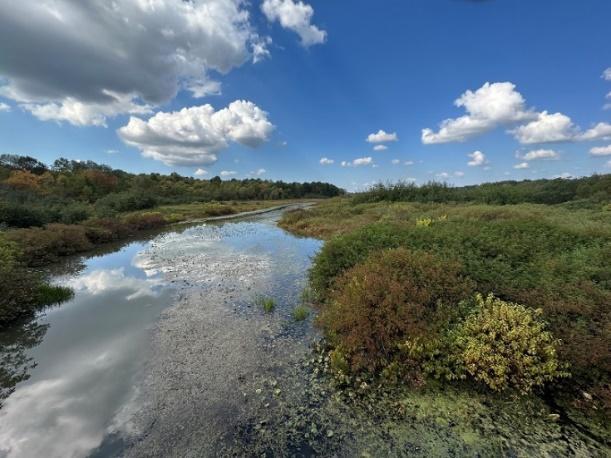
In May, the Conservancy expanded State Game Land 294 in Mercer County by 203 acres. This property is part of the Otter Creek Swamp Natural Heritage Area that includes swamp forest, mixed tree-shrub thicket and graminoid marsh, a wetland that supports a unique type of vegetation. Otter Creek, a tributary to Neshannock Creek, forms the eastern boundary of this property and is a popular fishing area. Conserving this parcel provides a connection to a smaller part of the existing game lands.

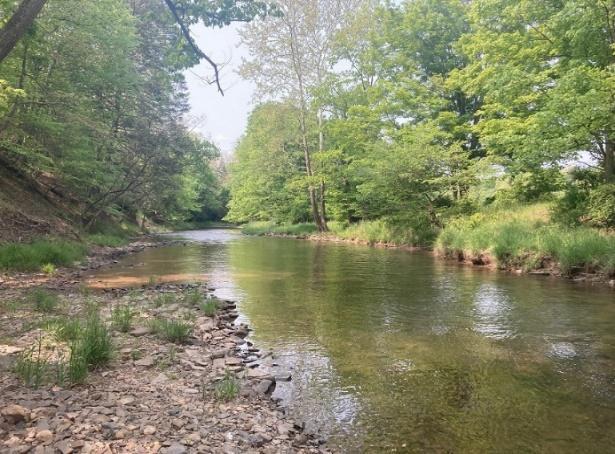
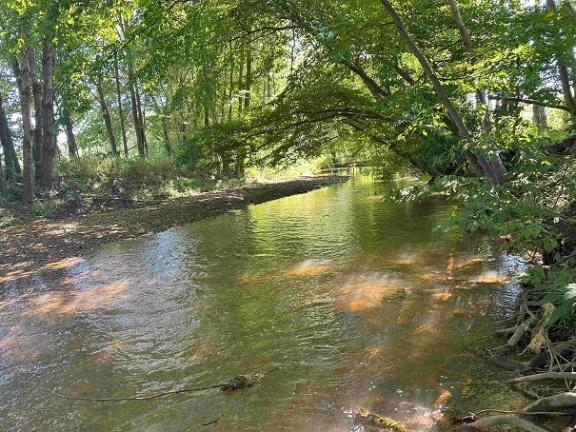
This summer, the Conservancy placed two properties under conservation easement in Southampton Township, Bedford County. The 725 acres are within a globally significant ecosystem, including a Virginia pine-mixed hardwood shale woodland. This habitat supports a wide variety of rare, uncommon, endangered or species of concern in the state. A three-quarter mile stretch of Town Creek, a High-Quality Cold Water Fishery and tributary of the Potomac River, flows through the properties. The landowners also conveyed a public fishing access easement along the creek.

A closing on two properties occurred early in the year, protecting more than 143 acres along the West Branch of the Susquehanna River in Northern Cambria Borough and Barr Township, Cambria County. The property includes a large grassland area and areas of upland forest.
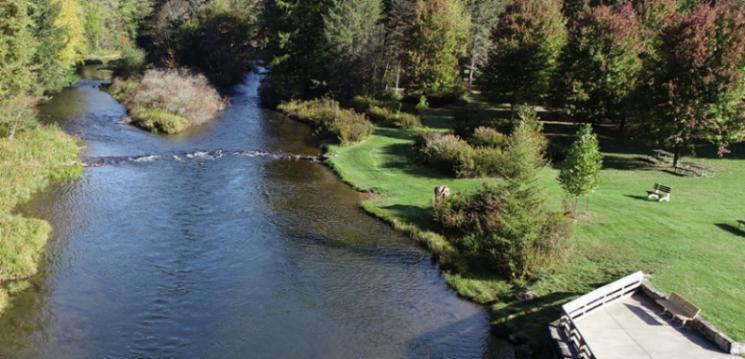
The larger tract of nearly 98 acres includes three-quarters of a mile along the West Branch, a section of river that had been heavily impacted by abandoned mine drainage until a treatment plant was constructed upstream in 2012. Since then, the water quality has improved dramatically and is now classified as a Class A Wild Trout Fishery. This parcel was conveyed directly from the owner to Northern Cambria Borough to be used as open space for community recreation, including a public fishing access.
Town Creek in Bedford County supports a critically imperiled damselfly, the Appalachian jewelwing, and the uncommon yellow lampmussel
This property along Otter Creek is a popular hunting and fishing area and links two game land parcels.
The 46-acre parcel, which is separated from the rest of the property, will be sold to a private buyer subject to a conservation easement that protects its forest value. The proceeds from this sale will fund future conservation work.
This section of the West Branch Susquehanna has benefited from an abandoned mine drainage treatment plant upstream.

A 653-acre property in Cherry and Clay Townships in Butler County was protected by the Conservancy and then conveyed to the Pennsylvania Game Commission (PGC) to become part of State Game Land 95 in April. The property includes part of The Glades Wildlife Natural Area, which is habitat for a federally threatened species and several sensitive species of concern. Protecting this property provides connectivity with PGC’s existing game lands and secures an additional section of the North Country Trail.
A private landowner made a generous donation of a conservation easement on a 379-acre property in Glade Township, Warren County. The parcel is a mix of forests, fields and riparian areas that are adjacent to a privately owned and sustainably managed forest. The easement includes forested riparian areas along the headwaters of Widdlefield Run and Hatch Run, classified as Wild Trout Waters. These streams flow into Conewango Creek, a major tributary of the Allegheny River.
The Conservancy is currently working on several other land protection projects that are anticipated to close by the end of this year in Cameron, Erie, Fayette and Westmoreland counties. These properties will expand protected landscapes in state forests, the Ligonier Valley and the West Branch French Creek region.
LAND STEWARDSHIP
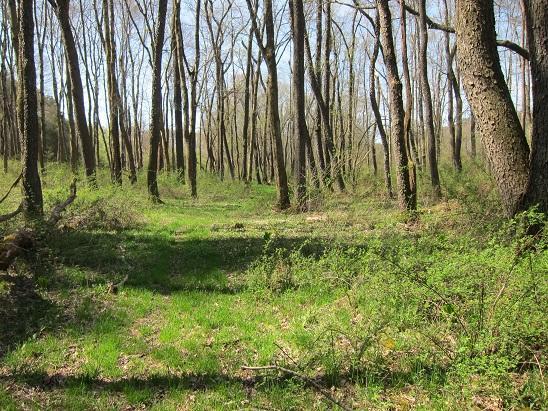

The Conservancy manages our preserves to restore and conserve ecological health and to provide opportunities for low-impact recreation. This year, the land stewardship team cared for 52 properties totaling more than 15,300 acres as well as monitored 228 conservation easement properties totaling more than 61,600 acres. While 45 of our preserves are open to the public, the rest are protected as habitat for sensitive or vulnerable species and are not maintained specifically for recreation.
In 2025, staff added parking areas and signage at Lake Pleasant Conservation Area and Oakford Park Nature Reserve to improve access to nature. Volunteers helped build or improve trails at five preserves this year, including Lower Elk Creek Nature Reserve, Plain Grove Fens Natural Area and Toms Run Nature Reserve. A volunteer work day at Lake Pleasant involved removing debris from a dump at the edge of the property, collecting about 2,500 pounds of metal and glass.
Planting native trees and plants and managing invasive species are integral to the health of our landscapes. This year forest ecosystems were enhanced through invasive plant control and/or tree plantings at six of our
This Butler County property connects game lands and protects a part of the North Country Trail
preserves. About four acres at Lake Pleasant and Cussewago Bottom Conservation Area in Crawford County were mulched to control exotic invasive honeysuckle as part of the site preparation to plant trees.
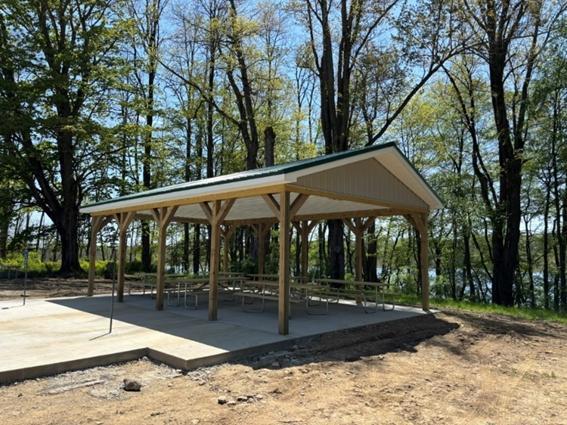
The Lake Pleasant Conservation Area in Erie County received significant improvements this year with the construction of a pavilion and parking area overlooking the eastern side of the lake as well as a second pavilion and storage building on the western side. These facilities allowed WPC to host more than 60 members this fall for a hike and paddle event. Staff and volunteers also added 11 picnic tables to Lake Pleasant and Oakford Park Nature Reserve in Westmoreland County.
WATERSHED CONSERVATION

The watershed conservation program incorporates a range of methods to improve water quality and aquatic habitat throughout Pennsylvania. Staff evaluates stream health and aquatic diversity through field surveys and sampling. The captured data directs proactive conservation work that includes removing obstacles for fish and other aquatic life to travel along streams, neutralizing sources of abandoned mine drainage and other pollutants, and using nature-based bioengineering methods like tree plantings and using fallen timber to stabilize streambanks and improve aquatic habitat. The result is that a successful restoration project looks completely natural.
So far this year, WPC’s watershed conservation team has conducted 160 biological surveys of streams and conserved or restored nearly 68 miles of stream. More than 44 miles of stream habitat were opened by removing aquatic organism passage barriers such as deficient culverts. Additionally, staff and volunteers planted 36 acres of riparian trees since last fall. Staff also provided 174 private landowners with technical assistance in best management practices to protect streams on their properties.
Middle Fork and East Branch Clarion River Restoration Work
WPC has been working in the Clarion River watershed on a wholescale restoration project since 2018. The Middle Fork in Elk County flows into the East Branch Clarion River just downstream of an Army Corps dam. This watershed contains about 13 miles of stream and is surrounded by Elk State Forest and PA State Game Land 25. It is adjacent to the nearly 19,900-acre Clarion River Junction property that WPC protected with a conservation easement in 2024.
WPC helped to assess the Middle Fork beginning in 2018 and found insufficient culverts, undercut banks from streambank erosion and sediment pollution concerns. After creating restoration and fundraising plans in 2019, WPC and partners began working in 2020, and by the end of 2024 had improved more than 6.5 miles of habitat, reconnected 11.8 miles of the 13-mile stream by replacing culverts with timber deck bridges and reconnected crucial floodplains. The project improved eight aquatic organism passage barriers, stabilized streambanks and repaired dirt and gravel roads.
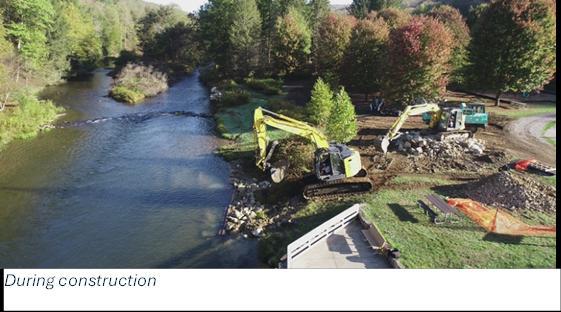
The second phase of this initiative improved aquatic habitat in the East Branch Clarion River, near Middle Fork’s confluence. Sections of this river had become over-widened by erosion, cutting into streambanks and creating shallow water conditions and decreasing flow. WPC and partners removed the remnants of
The new pavilion at Lake Pleasant Conservation Area
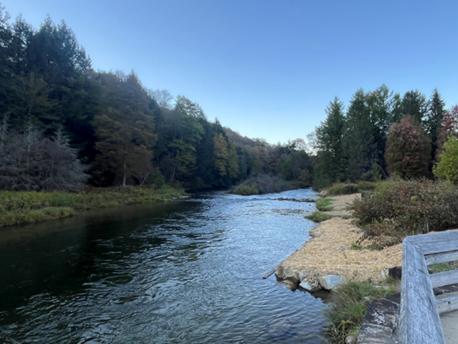
decades-old log structures that blocked the flow and then stabilized the banks along both sides with partially submerged logs, boulders and rootwads. These structures serve as deflectors to deepen the central channel and diversify the water flow, making it easily passable for kayaks and canoes. In all, six structures were replaced from 2023 to June 2025. The reinforced shoreline also serves as habitat for fish and resting areas for birds and fishermen. Staff planted cuttings of quick-rooting species such as willow, dogwood and elderberry in the riparian areas.
Bendigo State Park in Elk County, a popular fishing and paddling area, is just downstream from this site and was hindered by similar over-widening and stream bank problems. A dam had been removed from this section of the river in 2011, and the structure that replaced it had deteriorated. WPC worked with the PA Fish & Boat Commission and DCNR this year to install logs, rootwads and boulders in order to narrow parts of the stream and provide habitat for fish, as well as areas for people to fish from shore.
These recently completed projects complement the massive streambank restoration project completed last summer along the Clarion River at Clear Creek State Park in Jefferson County that stabilized 1,200 feet of eroded streambank with natural materials and plantings. This site now serves as an educational opportunity for WPC and the PA Department of Environmental Protection, who have hosted watershed conservation trainings here
Work in this watershed will continue in 2026 with the removal of the Callen Run Dam in Jefferson County. The cumulative result of these varied restoration projects has an exponential impact on the watershed and on water quality downstream.
FORESTRY EFFORTS ACROSS THE CONSERVANCY

The Conservancy works across several program areas to restore and sustain the health of the region’s tree canopy. Since 2008, the urban forestry effort has added more than 41,500 large landscape (about six to eight feet tall) trees to neighborhoods, parks, business districts and along trails and waterfronts. This effort includes TreeVitalize Pittsburgh, led by WPC and Tree Pittsburgh with other partners, working in 82 City of Pittsburgh neighborhoods and 59 municipalities across Allegheny County and towns including Ligonier, Erie, New Kensington, Jeannette, Monessen and Johnstown. The Conservancy’s watershed conservation program also undertakes largescale forestry work, including plantings along streams, primarily in rural or
The finished project at Bendigo State Park with stabilized shoreline and deflectors to channel the water.
The East Branch Clarion at Bendigo State Park was becoming shallow due to over-widened and eroded banks.
forested areas, to improve habitat, mitigate stormwater and reduce sediment from entering the waterways. This program has planted 107,884 restoration trees in riparian areas. Finally, the Conservancy’s land stewardship program has planted 113,428 trees on WPC-owned preserves
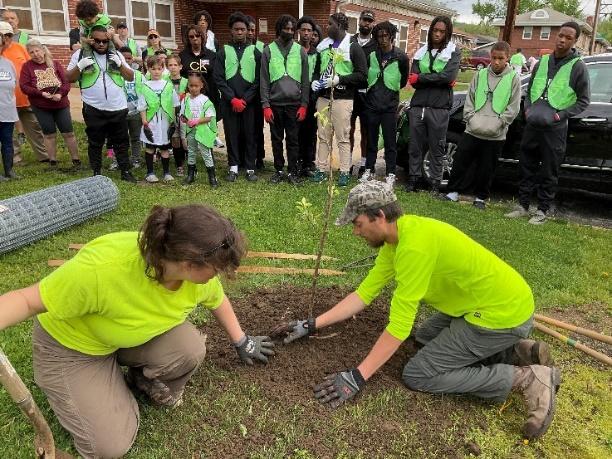
This year, hundreds of community volunteers helped staff plant nearly 800 trees during the spring and fall planting seasons The TreeVitalize program supported tree plantings in 23 communities across Allegheny and Armstrong counties.
A significant tree planting effort is helping to reduce nutrients like nitrogen and sediment from entering the headwaters of the Chesapeake Bay. Over the next couple years, about 75 acres of trees will be planted along streams and rivers in the Juniata, Potomac and West Branch Susquehanna watersheds, in addition to 300 larger landscape trees in community parks and along residential streets. As part of this joint initiative, 87 landscape trees were planted on residential streets and in parks in Hollidaysburg, Altoona and Bellwood in Blair County with support from the National Fish & Wildlife Federation.
The Conservancy has also been involved in tree planting efforts in Johnstown since 2016, consulting on best forestry practices and coordinating volunteer efforts. This year, 140 trees were planted in Johnstown in partnership with the Community Foundation for the Alleghenies and other partners

In order to monitor the health and survivability of Pittsburgh’s trees, the Conservancy and partners have managed street tree inventories to develop management plans and assess the environmental benefits provided by the trees. Conventional inventories, completed in Pittsburgh in 2004 and 2014, required a labor-intensive process of tree-by-tree data collection by consultants Now, WPC and partners can more efficiently and accurately monitor the urban forest as it grows. The Pittsburgh Smart Tree Inventory is a collaboration among the City of Pittsburgh, Pittsburgh Shade Tree Commission and the Conservancy to revolutionize how the city manages its urban forest. The project uses advanced LiDAR (laser light that measures distance) and point cloud technology to capture each public tree in 3-D, providing detailed insight into tree health, structure, ecological benefits and economic value. Davey Resource Group and Greehill Group recently completed the LiDAR inventory of 51,000 street trees. Davey is currently completing a ten-year management plan using the data and will provide the management plan and TreeKeeper® tree inventory software management tool to the city by the end of this year.
COMMUNITY GREENING
In 2025, staff, volunteers and community groups planted 130 community flower gardens to beautify streets and public areas, support wildlife and pollinators like insects and birds and provide green infrastructure benefits like stormwater absorption. This year our volunteers and staff planted 75,500 annual flowers over the course of the growing season. About 4,100 native perennials and shrubs were added to 27 of these
Staff lead planting demonstration to volunteers in Johnstown in May
gardens that burst into color each year. Additionally, 660 hanging flower baskets beautified downtown Pittsburgh and six neighboring communities, along with 590 downtown street planters, freshly planted throughout three growing seasons
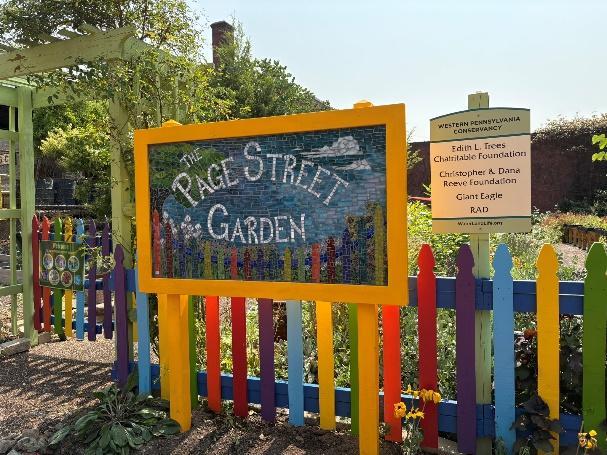
The garden at Grant Street and First Avenue in downtown Pittsburgh was completely refreshed this year. Boulders were set within the sloped landscape and the area was planted with perennials. The Page Street Garden in Pittsburgh’s Manchester neighborhood continues to be a dynamic space as a vegetable and flower garden that also serves as a program space for Pittsburgh Public School’s Conroy Early Childhood Center across the street. This year a local artist created a mosaic sign for the garden, and a solar-powered charging space for wheelchairs was added to this ADA-accessible space.
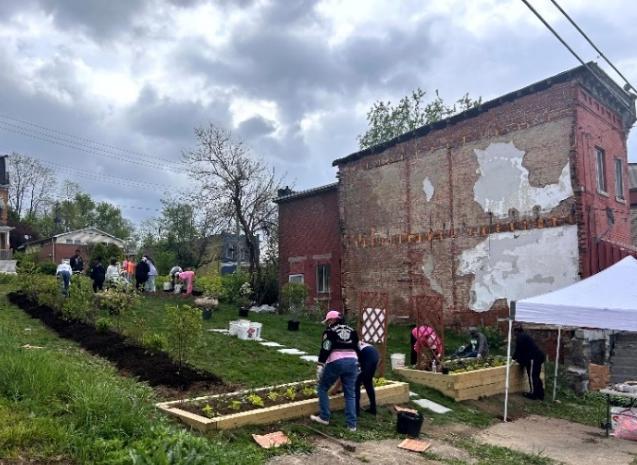
lot.

NATURAL HERITAGE
A new community garden was created this year to transform a blighted area into a peaceful greenspace. When two houses were torn down on Perry Street in Pittsburgh’s Hill District, the open space began attracting drug use and crime. A group of residents dedicated to improving the neighborhood, Amazing Grace Inside Outreach, decided to clean up the lot and approached WPC in 2023 about creating a garden space. The site was also intended to memorialize individuals the community had lost. After raising funds, the 2,200-square-foot lot was transformed by the group and WPC staff this spring. It’s now The Perry Street Memorial Garden, a welcoming greenspace with native flowering trees, shrubs and raised garden beds that volunteers will fill with annuals each spring.
The science staff in the Conservancy’s Pennsylvania Natural Heritage Program (PNHP) conduct extensive field surveys to learn how plants and animals are distributed throughout the state. This data is important for environmental planning and conservation. PNHP staff also participate in on-the-ground efforts to help maintain some of our rarest plant populations. Working in tandem with DCNR’s Pennsylvania Plant Conservation Network, they write recovery plans and conduct stewardship, such as removing invasives and moving native plants and propagules (cuttings, seeds or spores) to expand existing rare plant populations.
This year Conservancy biologists completed the second year of field work to update surveys in four south central counties: York, Franklin, Adams and Cumberland. This project will add natural heritage areas to an existing list of 350 areas that were inventoried more than 20 years ago.
Also this year, staff completed a two-year study focused on limestone-based habitats, which support a number of rare species. These sites vary by region and include grasslands in central valleys, which were originally maintained with fire by Native Americans; shaded cliffs containing limestone in the Laurel
The Perry Street Memorial Garden was made possible by the residents reimagining a blighted
A new mosaic sign welcomes visitors to this dynamic Manchester neighborhood garden.
Highlands; and woodlands perched on dry, convex slopes across the southern half of the state. Staff will now compare the data against a previous project, which had identified 36 state rare, threatened and endangered species, three species considered globally rare or threatened, and many other limestone indicator species. Based on this survey, staff drafted the first Habitat Recovery Plan for these unique species, providing insight into threats and offering recommendations for management, as these habitats are often overtaken by trees, woody vegetation or invasive species.
The Conservancy hired its first mycologist, Hannah Huber, who is a key part of WPC’s new focus on fungal conservation in Pennsylvania. Fungi are vital elements of any ecosystem, helping to improve soil health by acting as decomposers, among many other benefits. Hannah is compiling a list of the fungi found in the Commonwealth. While mushroom clubs throughout the region gather a lot of information, there has never been an official effort to document the fungi of the state. There is a current effort within the legislature to recognize a state mushroom, indicating a broader public interest in learning about our native fungi.
FALLINGWATER
World Heritage Preserved Initiative
Fallingwater’s major preservation initiative continued throughout the year, waterproofing and repairing the major building systems: stone walls, reinforced concrete, flat roofs, flagstone terraces and steel window and door frames.
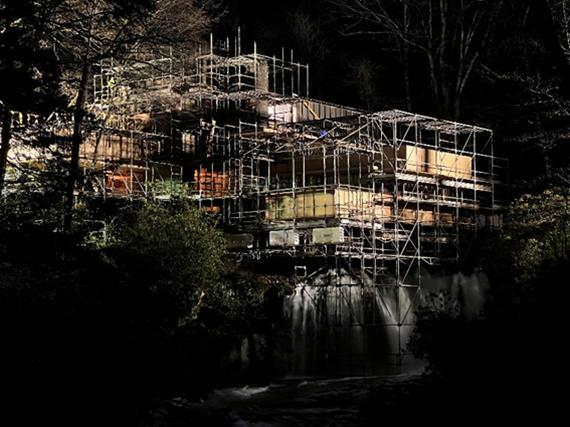
Throughout last winter until April, scaffolding covered the main house’s south and west elevations – the iconic view – extending from the bottom of the Bear Run falls to ten feet above the chimney. Fallingwater’s maintenance team constructed plywood enclosures around all work areas to create an insulated and heated environment to work. Contractors undertook roofing and waterproofing work and completed masonry repairs to concrete on parapets and along the rolled edges of the house’s roof slabs.


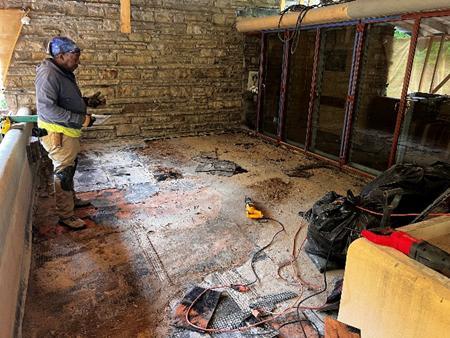
Smaller preservation projects began in April, such as waterproofing the second-floor terrace outside of Edgar Sr.’s Study and the third-floor terrace. The second-floor terrace work included a necessary rebuild of both sets of exterior steps due to deteriorated concrete.
Fallingwater was fully covered in scaffolding throughout last winter.
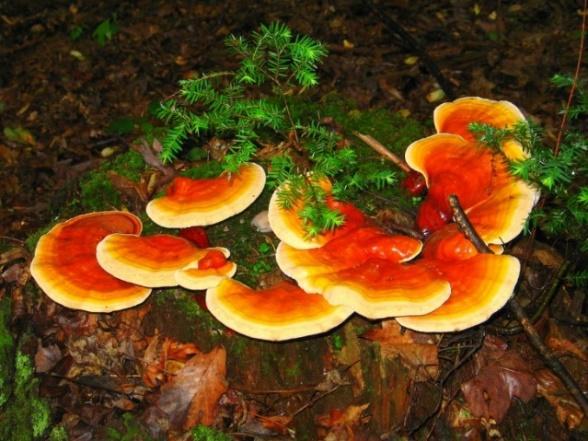
Hemlock reishi (Ganoderma tsugae), the proposed state mushroom
We reinstalled scaffolding around the north and east elevations of the house this November, allowing workers to conserve the steel window and door frames of the tower. During the upcoming months, crews will replace the waterproofing membranes on the slab roofs over the second and third floors, remove the flagstones on Liliane’s Terrace for new waterproofing and repair sections of deteriorated concrete in the parapet walls of Liliane’s Terrace and the living room’s West Terrace. While funds are still being secured, these final projects should be completed by early April, in time for the start of the 2026 tour season.
Fallingwater Institute
Additionally, Fallingwater’s maintenance staff is expanding the Collections Storage Building to house new climate control and fire suppression systems. This building holds irreplaceable objects and archival materials including Kaufmann family correspondence, photographs, original architectural drawings, books, textiles and furniture original to the house.
Preservation was a major theme in all education programs at Fallingwater in 2025, creating an opportunity to engage the more than 135,000 visitors in the extraordinary efforts that go into caring for this unique World Heritage site. The Fallingwater Institute hosts programs for people of all ages for creative collaboration and inspired thinking through immersive classes, workshops and residencies. This year, 85 college students lived and worked onsite, studying Fallingwater and working on open-ended design problems inspired by Fallingwater and Wright’s philosophy of organic architecture. Fallingwater Institute hosted 105 high school students during six weeklong, summer high school residencies and two weeklong virtual summer camps. Participants enjoyed after-hours access to and studio-based learning at the fully equipped Cheteyan Studio at High Meadow.
This year, 658 local Kindergarten through 12th-grade students visited Fallingwater for free field trips. An additional 2,723 students visited Fallingwater during virtual field trips via Zoom, including schools as far away as Thailand.
Fallingwater Institute also offers programming for adults. This year 125 adult professionals participated in sessions of Insight/Onsite, our immersive, multiday programs led by experts in fields like geology, studio art, musical composition and more.
This year also included the release of the photography and essay book Fallingwater: Living With and In Art, offering an in-depth exploration of art and objects collected by the Kaufmann family for the interiors of Fallingwater. Edited by Fallingwater Director and Vice President Justin Gunther and Senior Director of Preservation and Collections Scott W. Perkins, the book features photography by Dave Bryce and scholarly essays by art and design experts.
While preservation has been part of the Fallingwater experience for the last three years, it will conclude in time for the celebrations of Fallingwater’s 90th anniversary next year. Mark your calendar for a special gala on Saturday, August 29th. Look for more details on this and other events in coming months.
Flagstones were removed on Edgar jr.’s terrace to install new waterproofing membranes.