Deciphering Hydrocolloid Dressings: Benefits & Trends The niche of wound care dressings is rather exhaustive, with plenty of options on offer. However, few types of dressings have emerged as a global favourite. Hydrocolloid Dressings is one such example. Used in inpatient and outpatient environments, Hydrocolloid Dressings have emerged as a costeffective solution in healthcare settings. This is a discussion about Hydrocolloid Dressings, including different types of dressings, their defining features and some guidance about how to purchase medical dressings.
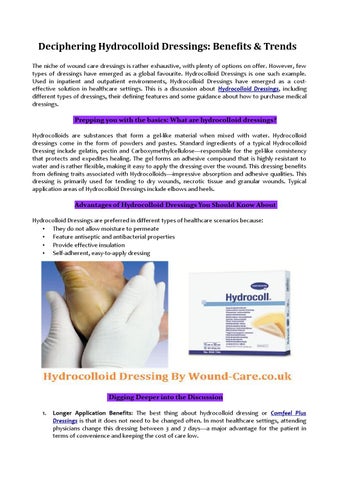
Prepping you with the basics: What are hydrocolloid dressings? Hydrocolloids are substances that form a gel-like material when mixed with water. Hydrocolloid dressings come in the form of powders and pastes. Standard ingredients of a typical Hydrocolloid Dressing include gelatin, pectin and Carboxymethylcellulose—responsible for the gel-like consistency that protects and expedites healing. The gel forms an adhesive compound that is highly resistant to water and is rather flexible, making it easy to apply the dressing over the wound. This dressing benefits from defining traits associated with Hydrocolloids—impressive absorption and adhesive qualities. This dressing is primarily used for tending to dry wounds, necrotic tissue and granular wounds. Typical application areas of Hydrocolloid Dressings include elbows and heels.
Advantages of Hydrocolloid Dressings You Should Know About Hydrocolloid Dressings are preferred in different types of healthcare scenarios because: • They do not allow moisture to permeate • Feature antiseptic and antibacterial properties • Provide effective insulation • Self-adherent, easy-to-apply dressing
Digging Deeper into the Discussion 1.
Longer Application Benefits: The best thing about hydrocolloid dressing or Comfeel Plus Dressings is that it does not need to be changed often. In most healthcare settings, attending physicians change this dressing between 3 and 7 days—a major advantage for the patient in terms of convenience and keeping the cost of care low.