Leatherbiz Market Intelligence executive summary:
• Geopolitical tensions are keeping energy, logistics and raw material costs high
• Buyers of leather remain cautious, focusing only on immediate orders
• Europe is struggling with weak demand and high production costs
• Pressures on China’s property and automotive markets are also affecting leather demand
• Even in luxury leathergoods consumers are buying more selectively
• Fashion-driven demand supports selected leather apparel segments
• Any recovery is unlikely before late summer 2026
MARKET INTELLIGENCE
In recent weeks, the number of questions in the leather pipeline has grown faster than the number of answers. That may be the best way to describe the current situation. There is still movement, individual markets are still functioning, and in certain areas demand can still be heard. Nevertheless, the overall picture has become noticeably more uncertain. The market does not feel like a market that is simply becoming seasonally quieter, but rather like a market that has to deal with a very large number of open issues at the same time.
The geopolitical situation, and especially the situation in the Persian Gulf, is currently playing the decisive role. This is not just a political crisis somewhere in the world, but a situation that can very quickly have direct effects on energy supply, energy prices, transport costs, raw material supply, inflation and ultimately also consumer sentiment. In addition, the situation in the Persian Gulf is also highly relevant for the availability of intermediate products used in the manufacture of many goods. This includes tanning materials, chemicals and other products required for the manufacture and finishing of many leather products. Any disruption in this area would therefore not only affect general industrial costs, but could also directly influence the availability, timing and pricing of materials needed within the leather pipeline, and so production itself.
So far, hope still dominates in many areas. The hope is that the situation will not escalate further, that energy supply will remain stable, that transport routes will not become even more expensive or slower, and that consumers will only postpone their purchasing decisions rather than cancel them altogether. This hope is understandable, but it is not a reliable market strategy. The clock is ticking because the leather industry has a
long pipeline. What is not ordered, produced or prepared today may be missing later exactly when certain articles are needed again. At the same time, almost nobody wants to take too much risk at the moment. This means that purchasing is becoming increasingly narrow, increasingly cautious and increasingly focused only on specific articles or existing orders.
Europe and Asia in particular are strongly affected by this situation. In Europe, the leather industry continues to suffer from high energy and production costs, weak consumer sentiment and a generally very cautious retail environment. From many of the European centres of leather production, feedback remains mostly negative. Order levels remain below average, and even though not everything has come to a standstill, the market lacks breadth. There are functioning supply chains, individual specialist markets and, of course, companies that can still serve their niches. But this does not change the fact that the general mood remains weak.
For consumers, the current focus is less on new furniture, a car, a high-quality bag or other major consumer wishes, and more on short-term spending and the summer holidays. This is particularly relevant for the coming months. If the current global situation also puts air travel, fuel prices or holiday budgets under pressure, the effect is negative in two ways. On the one hand, there is less money and less confidence for other consumer goods. On the other hand, tourism itself is an important driver of many leathergoods sales. If people travel less, or if travel becomes more expensive and more uncertain, this also affects demand for products that are closely linked to international consumption, including shopping at airports, in city centres and in tourist areas.
The officially available business results from the leather industry for 2025 delivered very
TUESDAY, MAY 12 2026
few positive signals. Many companies had a difficult year. The start of 2026 has not created the impression that a rapid and broad recovery is now ahead.
The picture in China also remains difficult. The weak real estate market has been weighing on demand for furniture and other durable consumer goods for some time. In addition, a weaker automotive market gives little reason for optimism regarding leather demand. When real estate and cars are both weak at the same time, two very important end markets for leather and leather-related materials are affected. As a supplier industry, the leather sector always feels such developments with a certain delay. That does not make the situation less serious; on the contrary, it often makes it harder to assess. Immediate demand may still be supported for some time by old orders, existing inventories or ongoing programmes, while the actual weakness only becomes visible later.
The market for luxury leathergoods is also weakening. Externally, many major brands continue to project strength, exclusivity and stability. That is, of course, part of this market. But internally, and among market insiders, it is clearly visible that demand for very highpriced products is no longer as self-evident as it was in recent years. The upper middle class in particular, which had been an important growth driver for many luxury brands in recent years, is buying more selectively. If the super-rich buy ten or 100, or even 1,000 handbags each, it may sound spectacular, but it would only change industry volumes to a limited extent. For the leather pipeline, the decisive factor is not how high an individual sales price is staged, but how broad and regular real demand is.
The fashionable mid-range segment can partly benefit from this. Brands that are strong in fashion terms but positioned below classic luxury have been able to absorb demand in some areas over the past few months. For leather, this is generally positive because fashion can still create demand. At the same time, this segment is much more price-sensitive. It does not accept rising raw material and processing costs without limits. It would be particularly critical if the market for second-hand and vintage products were also to weaken. As long as high-quality used products perform well, part of the consumer desire is satisfied outside new production. If this market loses momentum, pressure on new products could increase, but not automatically at prices that are satisfactory for manufacturers or raw material suppliers.
A central problem remains the increasing narrowing of demand to focus on very
specific raw materials, qualities and articles. Buyers are trying to purchase only what is directly needed for a concrete order or a concrete end product. From the buyer’s perspective, this is understandable, because nobody wants to build unnecessary inventory or price risks in this market environment. For a raw material such as hides and skins, however, this development is problematic.
The raw material does not arise according to a wish-list. Size, quality, substance, grain pattern and assortment structure are determined by nature, origin and slaughter. If downstream demand only looks for a very narrow selection, the rest of the assortment becomes harder to place. This is one of the biggest structural tensions in the industry. Without a solution for all hides, there can be no truly satisfactory outcome for the overall use of the raw material.
In this context, the possible shift in supply chains within the continental European meat industry should also be observed.
Netherlands-based meat company Vion has sold three large cattle slaughterhouses in Germany to different buyers. This does not necessarily change the fundamental balance between supply and demand for raw material immediately, but it may have a medium-term influence on goods flows, collection, sorting and marketing. At the same time, ownership structures among contract tanneries may also be changing.
Here too, the point is not that there would suddenly be more or less raw material. What matters much more is who controls the raw material, where it is processed and what role regional specialities, particular origins and high-quality hides will play within the processing chain in the future. Especially for special hides from the region, the place of processing may be more important than it appears at first glance. Nevertheless, it would clearly be too early today to draw concrete market consequences from this. The actual effects will probably only become clearer in
a few months, or possibly not until 2027. In addition, the use of hides, skins and byproducts continues to shift. The area of further protein production, meaning collagen, gelatine and related applications, continues to absorb volumes and is gaining importance. This helps in certain areas because it creates a use for raw materials that have become more difficult for leather production. At the same time, this sector has clear price limits.
Directly from the slaughterhouse, such use can make sense. However, as soon as additional collection, sorting, preservation, transport and preparation become necessary, the question very quickly arises as to whether it is really economically worthwhile. Of course, it will be argued that investment is being made in this area and that new capacities are being created. In the end, however, it is not the investment itself that decides, but the actual value creation that can be achieved with the raw material.
Excellent –Ultra low to zero BPS/BPF syntans.
In the United States, the current legal dispute over tariff policy has temporarily opened an interesting window for the import of high-quality leathers. For specialist markets such as aircraft interiors, high-quality furniture or other technical and demanding applications, this can certainly be relevant. Some importers could benefit in two ways: on the one hand through possible refunds of tariffs already paid, and on the other hand through pull-forward effects in the procurement of higher-quality European materials before new decisions may be taken again. However, this should not be confused with a genuine increase in demand from US consumers. It is more a matter of tactical procurement.


























The market for garment leather is also in a difficult situation. On the one hand, fashion trends are supporting demand for leather clothing. Certain articles, especially in sheep, lamb and goat, are in stronger demand again. On the other hand, many manufacturers have obviously still calculated on the basis of prices from previous years. These prices, however, were often not realistic. They were the result of extremely weak demand and the sale of inventories at prices that in some cases did not cover costs. The low prices of recent years did not necessarily reflect the real value or the actual preparation costs of the raw material.


Now several factors are coming together. Wool prices are rising, fashion demand is supporting certain qualities, and at the same time supply is not available in unlimited quantities at old prices. This means that many enquiries can be heard in the market, but they do not find real coverage in available supply. In other words, demand is there, but often not at prices at which sellers can or want to supply realistically. Buyers are still orienting themselves around the old deflationary prices, while sellers have to pay more attention to replacement costs and alternative uses. This makes the market active, but not necessarily healthy.
In the split market, the picture has changed little compared with recent months. The
market for collagen and gelatine continues to absorb satisfactory volumes, even though prices in China have recently been rather weaker owing to softer demand. For splits used in leather production, fashion continues to support certain articles, meaning that the price situation has changed only slightly. Nevertheless, a trend seems to be slowly emerging that could work more against split as a material. This is not yet an abrupt change, but it should be monitored. If certain end markets once again place greater emphasis on material perception, transparency or higher-quality alternatives, split could come under greater pressure in the medium term.
In addition, we are seasonally in a typical phase for spring and early summer. Demand for leather production is declining in many countries simply because of the calendar. Public holidays, shortened working weeks and then the summer holidays interrupt production and slow down decisions. China and India often run somewhat ahead because of longer lead times, but in general there is little reason to expect a real revival before August. This does not mean that the market will come to a standstill. But it does mean that the coming months are likely to be shaped more by caution, selective buying and risk limitation than by a broad recovery.
The decisive question is therefore not only whether there is demand somewhere. There is almost always demand in individual areas. The more important question is whether this demand is broad enough and realistic enough in terms of price. At the moment, there are doubts about that. Good qualities for specific technical, fashionable or highvalue applications remain in demand. Everything outside these narrower demand windows is becoming more difficult.
The leather industry continues to move, but it moves selectively. And the more geopolitical risk, energy prices, consumer uncertainty and narrow purchasing logic come together, the more difficult it becomes to achieve a real market recovery, even if there are individual positive signals.
US PERSPECTIVE
For the period ending April 30 there were exports from the US of 219,200 whole cattle hides. The destinations were primarily China (150,900 pieces), Thailand (21,000 pieces), Mexico (20,500 pieces), South Korea (11,00) and Brazil (10,000 pieces).
There were also exports of 166,900 wet blue hides. The destinations in this case were primarily Vietnam (65,000), Italy (50,200 unsplit) and China (26,600 unsplit).
The most recent reports on hide prices have shown butt-branded steer hides weighing 6264 pounds down slightly at $20 each, but heavy Texas steers weighing 60-62 pounds up slightly at $11 per piece. Cow hide prices were unchanged with northern dairy cows at $7.50, south-west dairy cows at $7, northern branded cows at $2 and south-west branded cows at $1.50, with weights of 50-52 pounds in each case.
Actual Slaughter Under Federal Inspection
The source of all these figures is the US Department of Agriculture. Please note that the prices quoted represent ‘ballpark’ figures.
Cattle markets USA
Texas and Kansas sold cattle from $256 to $258 this past week. In the north, most live sales were $258-$260 with dressed sales $400 to $405.
May often brings spring rains to enable pasture conditions in the plains to accommodate summer grazing programmes.
Many cattle, moved off winter grain fields in April, will likely create smaller movements in May. Many reports fail to separate placements into dairy-beef cross cattle or beef placements. Beef-dairy crosses are placed at lighter weights than beef yearlings. This is creating gaps in understanding of the rebuilding of the nation’s cow herd; placement of dairy heifers is camouflaging the decline in placement of beef heifers.
Corn prices recovered at week’s end. Transportation cost also are rising, causing
the basis on corn to increase. Corn basis levels in Guymon, Oklahoma, are at +$0.65, basis the July contract.
GERMAN PERSPECTIVE
This week: The beginning of May traditionally marks the start of a quieter period in our business. Holidays, a wait-andsee attitude among many market participants and the usual summer slowdown in consumption and production are beginning to leave increasingly visible traces.
This cannot be generalised completely, as some supply chains are still functioning more or less normally. Fundamentally, however, the market mechanisms and seasonal patterns have changed very little over the years, and this year is once again showing a very familiar picture. The market is not coming to a complete standstill, but its momentum is clearly slowing.
It remains clear that the weakest part of the
market is Europe. Elevated energy prices, geopolitical conflicts and the uncertainty associated with them are weighing not only on consumer sentiment, but also on the planning security of companies and consumers. The fact that the situation on the consumer side is continuing to deteriorate is also reflected, among other things, in another insolvency in the German furniture industry.
From the various centres of leather manufacturing in Europe, the feedback remains almost exclusively negative. Order levels are still well below average, and in many areas there is hardly any noticeable revival.
The only sector apart from the niches that continues to account for a substantial share of larger productions is the production and marketing of semi-finished products. This segment is still absorbing a notable portion of the raw material, while almost all other sales sectors are significantly underperforming.
In Europe, and particularly in Germany, the
main focus at present is less on short-term market movements and more on the fundamental structural changes in the supply chain from the slaughterhouse onwards, which we have already reported on several times in recent weeks. Even though the key decisions are now more or less publicly known, their actual effects will only become visible in the coming months, possibly even not until next year. At the moment, it is still merely the information about what is expected to happen, but not yet the full practical effect of what will happen. What consequences this will ultimately have for the many parties involved cannot yet be reliably assessed from today’s perspective.
This past week, too, the level of demand and actual business activity remained very limited. Interest from Asia was once again particularly quiet and also the currency movements did not support sales. From China and from the traditional tanning centres that usually show interest in European cow hides, the signals were essentially negative. Reports pointed to a weak order situation, cautious buying interest and further declining prices for splits. As a result, sales volumes this week were once again below average and were largely limited to individual specialties and special transactions. However, this had only a limited impact on the general price level, as no real effect on prices at the slaughterhouses or in the markets can currently be observed.
The kill: Slaughter and the meat market are in a similarly difficult situation to the market for by-products. Prices for live cattle continue to fall, while meat sales remain unsatisfactory. Of course, seasonality also plays a role here, as spring and summer are traditionally not the strongest demand periods for beef in this part of the world. At the same time, however, the consequences of the past months are now becoming more visible. Live cattle prices were very high in the first months of the year, while slaughterhouses were nevertheless looking for capacity utilisation. It is possible that too much was slaughtered during this phase, meaning that larger quantities of beef now appear to have to be placed in cold storage facilities, as they cannot currently be sold in full. Accordingly, the brakes are now being applied, and the familiar accordion effect in this market is once again taking hold.
What we expect: At present, there is hardly anything to be seen that could lead to a short-term change in the market situation. An actual resolution of the geopolitical conflicts would, of course, significantly improve the overall mood. However, the damage already caused by the various conflicts, as well as the high level of uncertainty that has resulted from them, is unlikely to be reduced within just a few days or weeks. Even so, peace in the Middle East and possibly also in Ukraine would certainly trigger an initially positive reaction among consumers and companies. However, we do not expect any major price changes in the coming week either.
LATEST HIDE AND SKIN PRICES FROM GERMANY
LONG READ
Leather and the Circular Economy: Thought Leadership
Economic pain can spur circularity
Even in the face of a tough trading environment, some brands have found ways to push ahead with sustainability initiatives, according to Euromonitor’s insight manager for fashion.
In spite of wars, tariffs, huge hikes in input prices, labour costs, energy bills and widespread market uncertainty, around 50% of fashion and luxury companies are currently investing in circularity initiatives. This is the estimate of the global insight manager for the fashion sector at market research firm Euromonitor, Marguerite Le Rolland. Her inclination is to take a glass-half-full attitude towards this; “I want to be hopeful,” she says. Governments in almost all parts of the world are worried about inflation and its effect on consumer confidence. Inflation surged as economies opened up again following the covid-19 pandemic. Interest rates rose, pushing mortgage payments up. Household energy prices also rose steeply. In the consumer confidence index that the Organisation for Economic Co-operation and Development (OECD) publishes, a figure above 100 indicates consumer optimism, while a figure below 100 suggests pessimism. The monthly average was last at or above the optimism threshold in 2021. Since then, the index has told a consistent tale of woe; the figure for October 2025 was 98.46. This is the same figure as the one the OECD quotes for January 1975. Optimism was in short supply in the global economy at the start of 1975 because oil prices had

quadrupled in the course of the previous year. Rising unemployment and high interest rates led the index’s figure to be at almost the same level again in November 1981; it reached 98.49. The OECD consumer confidence index did not go this low again until 2008 (when the global financial crisis began to hit). It went down further to 97.04 in February 2009. This was a record low, but the index went even lower in the high-inflation period after covid19, reaching a spend- numbing new record of 96.7 in July 2022.
Cost concerns
Things might have been even worse. Alongside the impact on consumers, Marguerite Le Rolland points out the effect that changes in the global economy have imposed on manufacturers. Euromonitor’s tracking of the situation suggests that the cost of goods sold in the troubled first half of this decade increased much more quickly than consumer prices. She insists that many consumer-facing companies, including
footwear brands that she tracks, “had to absorb a lot of extra cost and could not pass it on to end consumers, which has been impacting margins”. Euromonitor’s projection is that the economy is not yet at the end of this painful path and that it is going to continue to be “a challenging market environment”.
Market players are “very aware” that they cannot pass all of their extra costs on to consumers, the Euromonitor insight manager says. The risk of doing so, of course, is that consumers will stop buying their products. Even brands at the highest echelons have had to answer questions about this. In December, the Wall Street Journal asked the president of fashion at Chanel, Bruno Pavlovsky, about the wisdom of hiking up the price of a popular, quilted classic flap bag. Customers in the US had to pay $5,800 for this bag in 2019. The price now is $11,300. “People who continue to buy Chanel and love Chanel feel comfortable with the level of prices,” Mr Pavlovsky said. Nice work if you can get it.
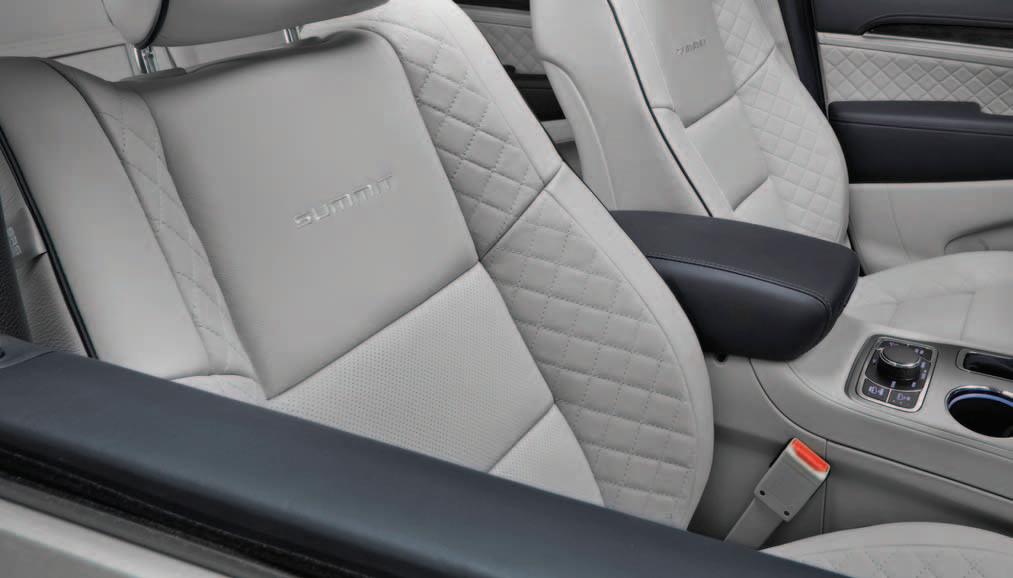
QUAKER COLOR A STEP AHEAD IN AUTOMOTIVE FINISHING
negative impact on the leather supply chain, in and beyond the EU, resulting in the loss of jobs and businesses, without making any difference to deforestation.
It said it recognises and supports the need to protect the world’s forests, but pointed out that the provenance of raw materials was a key concern for the leather industry long before the introduction of the EUDR.
“We remain committed to improving traceability through our supply chains,” the organisation continued. “However, the nature of the leather supply chain means that the necessary data is very often not available to tanners. As such, it cannot be right to make the leather industry responsible for issues and challenges that are outside our sphere of influence.”
It said it would continue to work with national associations, partners in the food sector and other relevant bodies and brands, to improve visibility along the supply chain and ensure that leather remains “a preferred choice for people and planet”.
Quaker Color is a division of McAdoo & Allen, with roots in the leather industry for over a century
UNIC welcomes EUDR decision but will keep its guard up
Italy’s main leather industry body UNIC has celebrated the exclusion of leather from the scope of the European Union Deforestation Regulation (EUDR), but has said it will not let up in its efforts to monitor all developments in Europe’s regulatory framework.
Following the announcement of leather’s exclusion, UNIC said the European Commission had based its decision on several points that are fundamental to the leather value chain. Principally, it cited a recognition that leather must be treated differently from the meat supply chain.
It also said there was an acceptance that trade flows and the limited share of the economic value of cattle hides gave leather manufacturers “limited leverage” to demand from their suppliers the data necessary for compliance with EUDR.
In its reaction to the ‘delegated act’ in which the Commission has explained changes it now wants to make to the legislation, UNIC also highlighted imbalances in the original
plan. This included leather in the scope of EUDR, but not finished leather products. The text of the delegated act shows and acceptance that this would have created “a fragmented and incoherent approach for the leather sector”.
The text goes as far as to say that this would have been more likely to result in businesses moving production away from the European Union than achieve the elimination of deforestation risk.
New postgrad programme to focus on leather finishing for automotive
The University of Lleida, which is the parent institution of the A3 Leather Innovation Centre in Igualada, is introducing a new postgraduate certificate in advanced leather finishes for automotive interiors.
It has developed the programme for the new certificate in partnership with chemicals group Stahl.
Another chemicals group, Henkel, has a formal agreement in place to acquire Stahl;
the deal is not yet complete and is still subject to regulatory approvals and consultation processes.
Before this, Stahl completed the spin-off of the wet-end leather chemicals part of its business, which now operates as Muno, a fully independent company.
What Stahl has retained, and will take forward into its acquisition by Henkel, includes its leather finishing chemicals division.
Stahl has said the programme it has worked on for the new postgraduate certificate will combine industry expertise with hands-on learning. It said the new programme will equip industry professionals with the skills “to lead in automotive leather finishing”.
It said it was “proud to collaborate with leading academic and industry experts to drive innovation and sustainability in automotive interiors”.
UK micro tannery sector to convene at new conference
The first UK Micro Tanners Conference will take place from June 15 to 17 at Great Cotmarsh Farm, bringing together a growing community of small-scale and craft-focused tanning practitioners.
The three-day programme begins with a pre-day on June 15 featuring farm and Cotmarsh Tannery CIC tours, followed by a session on “The great spread of leathers”. The evening will include a social gathering with food at The Hop Chapel & Gardens.
Day one, on June 16, opens with talks on the design and build of Cotmarsh Tannery, contemporary approaches to leather and sustainability in production systems. Speakers include James Allen, Jack Millington and Kerry Senior, alongside contributions from Karl Flower and Nina Conrad. A panel discussion will explore hide and skin sourcing and traceability, before the day concludes with a screening of Skin of The Land and a catered evening meal.
The final day, June 17, focuses on specialist techniques and regional material sourcing. Sessions include hair-on tanning, UK tannin sourcing and traditional Finnish bark tanning methods, with speakers such as Matt Richards, Jane Robertson and Hanna Nore. Further talks feature Sofie Kleppe on reindeer skin design applications and Jessie Watson Brown reflecting on more than a decade of smallscale bark tanning in Devon. The conference will conclude with an open discussion on the future of the micro tannery sector in the UK and beyond.
Leather removed from EUDR scope
The European Commission has now published a new draft of a ‘delegated act’ amending the European Union Deforestation Regulation (EUDR) legislation. The new draft is part of a review of EUDR that it promised to carry out before the end of April. Significantly, the new draft removes leather from the scope of the regulation.
A ‘delegated act’ allows the Commission to update EUDR legislation without going
through the full legislative process again. Removing leather from the list of products and by-products that need to comply with the regulation’s traceability requirements is something that Commission officials hinted at the end of April. Confirmation came on May 4 with the publication of the new draft.
The Commission said it had produced the new draft to reflect stakeholder feedback from a stakeholder consultation. The new draft will also be open for public feedback until June 1.
Leather industry figures have urged colleagues from all parts of the global industry to take part in the new feedback exercise and express support for leather’s removal from the scope of EUDR.
In the text, one paragraph makes clear that cattle hides at all stages of processing, from raw to finished bovine leather, “are deleted”.
Industry representative body COTANCE said: “This is more than just a regulatory adjustment. It is the formal recognition of a position COTANCE has held and defended, with evidence, since the EUDR’s inception.”
It said hides, skins and leather are “merely by-products” of the meat and dairy industries. They do not drive cattle farming. They do not drive deforestation. COTANCE argued that leather’s inclusion in the scope of EUDR had never been subject to an impact assessment. It added that the exclusion now of hides and leather was the correct thing for the Commission to do.
EUDR: Nothing definite, but leather may have won exclusion Reports from a number of sources suggest the global leather industry’s work to force change to the scope of the European Union Deforestation Regulation (regulation) may be about to pay off.
The regulation will impose strict traceability obligations on companies placing products linked to cocoa, coffee, cattle, palm oil, rubber, and wood on the EU market. They must be able to show that their products have no link to illegally deforested land.
EUDR was adopted almost three years ago, but its application, originally set for December 2024, has been delayed. The regulation is currently scheduled to come into application for large operators at the end of December this year, with an extension of six months for smaller companies.
Following protests in many quarters, the Commission agreed to carry out a review of EUDR and promised to make this review public before the end of April 2026. Just before the deadline, it said it would share the review’s findings in a five-part package.
One of these packages will be a ‘delegated act’, which will allow the European Commission to update the EUDR legislation, but without going through the full legislative process again. This means the main EUDR text will remain in place and the December 2026 timeline will hold.
But the delegated act will allow for important changes. For example, reports suggest that soap containing palm oil and
instant coffee, which were previously excluded from the scope of EUDR, will now be included. In contrast, leather may now be excluded.
News agency Reuters has said EU officials have told it leather’s exclusion is likely to be one of the changes. This would mark a significant success for the global leather industry, which has campaigned long and hard for leather to remain outside EUDR’s scope.
The industry’s main argument has always been that there is no link between leather and deforestation, calling on academic research from the Sant’Anna School of Advanced Studies at the University of Pisa to demonstrate this.
Industry leaders have warned that there is still no official confirmation of leather’s exclusion from the scope of EUDR and that, even if the review does include this welcome step, there would still be a long process ahead. The delegated act would need the approval from the EU Parliament and the EU
Council (made up of the heads of government or other senior ministers representing the 27 member states).
Most agree, though, that the noises coming from Brussels have been very encouraging.
Ferragamo reports progress on leather traceability
Italian luxury group Ferragamo says it can now map the country of origin for much of the leather used in its footwear and handbags, according to its 2025 sustainability report.
Chief product officer James Ferragamo said the company has improved visibility across its supply chain, with sustainability director Davide Triacca stating that more than 80% of its leather can now be traced through supplier declarations.
The update comes as new EU sustainability rules increase pressure on fashion brands to improve material traceability, although experts note that country-level mapping does not yet provide full chain of custody.
Ferragamo reported € 976.5 million ($1.1
billion) in revenue in 2025, with leather goods and footwear accounting for 86% of sales.
Aston Martin secures funding as Q1 losses narrow
UK
car manufacturer Aston Martin has reported narrower first-quarter losses and secured a £50m ( € 58m) funding package from chairman Lawrence Stroll’s Yew Tree consortium.
Pre-tax losses fell to £65.5m ( € 75.9m), compared with £79.6m ( € 92.3m) a year earlier, while revenue rose 16% to £270.4m (€313.7m). Wholesale volumes dipped 1% to 939 vehicles.
The performance was supported by a 17% rise in average selling prices to £252,000 (€292,000), driven by stronger sales of highervalue special models.
The company maintained its full-year guidance, expecting operating margins to improve towards breakeven, although it warned of ongoing macroeconomic and
geopolitical uncertainty.
Aston Martin also flagged US tariffs as a key risk. Under the current system, UK exports to the US are subject to a 10% tariff on the first 25,000 vehicles each quarter, rising to 27.5% beyond that threshold. With around a third of its revenue generated in the US, the group said the structure remains a significant external pressure point, despite no material direct impact in the first quarter.
Industry
prepares for FT summit Puglia will be the venue for the 2026 Financial Times Business of Luxury Summit.
The event will take place from May 17-19 at the Borgo Egnazia resort, 60 kilometres from Brindisi. Its theme will be ‘Building resilience into luxury brands’.
Among the speakers will be industry leaders well known to Leatherbiz readers. These will include the chief executive of Christian Dior Couture, Delphine Arnault, and her
www.aplf.com
counterpart at Tapestry, Joanne Crevoiserat.
Christian Dior’s creative director, Jonathan Anderson will also speak, as will senior partner and global head of fashion and luxury at consultancy Bain & Company, Claudia D’Arpizio.
Big fashion names, including Ermenegildo Zegna, Thom Browne and Victoria Beckham, will also take part.
We say goodbye and thank you to David Buirski
On April 30, we said a fond farewell to consultant editor, David Buirski, who is retiring from his role after working on our magazines and websites for exactly one-third of a century.
Mr Buirski studied law in his native city, Cape Town, before pivoting into public relations work. This change of career changed his life. He moved to London, met his wife, Lyn, and stayed.
His work included in-depth involvement in communications projects for prominent fashion brands and the fashion industry’s representative bodies in the UK. This, in turn, brought him into contact with World Leather. When the magazine needed a new editor in March 1993, the knowledgeable and well connected Mr Buirski was the ideal choice.
A trip to Hong Kong for that year’s APLF exhibition followed immediately and he began building strong connections to influential figures in the global leather industry right away. With typical modesty, he attributes a large share of his early success to the group of expert contributors World Leather had at the time: Walter Landmann, Richard Daniels and Hubert Wachsmann.
As parent company World Trades Publishing expanded its number of titles, David Buirski’s role diversified too, ending with his becoming consultant editor across the company. Chief executive, Simon Yarwood, said: “We will all miss David and wish him a very happy retirement. His ever-sharp eye, patience, generous advice and gentle encouragement have been an unshakeable support to me and to our entire team.”
Falls for footwear exports in France
Manufacturers in France exported footwear with a value of €813.4 million in the first two months of 2026, a fall of 5% compared to the same months a year earlier. Imports of footwear into France over the two-month period were worth €1.2 billion, a fall of 10% year on year.
Over the same period, exports of dress gloves had a value of just over €2.1 million, which was up by 5%. Imports of dress gloves over the same period were worth €2.6 million, down by 8% year on year.
Local, traceable hides help keep Mulberry’s manifesto on track Leathergoods brand Mulberry has launched a limited-edition collection of bags in partnership with British Pasture Leather. Founded in 2021, British Pasture Leather
sources hides from cattle that have had 100% pasture-fed diets and been raised on UK farms that follow pasture-based systems aligned with regenerative principles.
It then works with partner tanneries in the UK to process batches of hides using vegetable-tanning methods. British Pasture Leather collects traceability information on each batch of finished leather, detailing the group farms involved each time. Its work to mark the hides to achieve a single-hide traceability system through to finished leather is ongoing.
This new project with Mulberry uses leather from hides that originated from farms in south-west England. Tanning took place at Thomas Ware in Bristol, with finishing taking place at Blenkinsop Leathers in Northamptonshire.
The collection consists of four designs. There is a version of Mulberry’s Boston ban in a colour called ‘antique oak’. Also in the collection is a version, in ‘vintage ebony’, of the Bayswater bag. These are complemented by two clutch bags, the Darley Cosmetic Pouch and the Zipped Pouch.
Mulberry manufactures the products at its workshop in Somerset. It said the collection marked 55 years of the Mulberry brand and five years of a programme the company has called its Made To Last Manifesto. This programme involves what Mulberry has referred to as a “transformative approach to leather sourcing”, involving local supply with a high level of transparency.
Ecco introduces shoe using fibre from leather by-product
Danish leather footwear manufacturer Ecco has released a limited-edition BIOM 720 shoe incorporating a protein-based fibre made from leather by-products, developed with Spinnova.
The collaboration, which began in 2020, focuses on converting residual leather materials into textile fibres. Wet blue shavings are processed using a mechanical refining method to produce continuous filaments that can be cut into textile-grade fibres, without chemical dissolution.
According to the companies, the material has tensile strength comparable to wool and greater elongation than cotton, allowing use in different textile constructions.
Chief executive officer Janne Poranen of Spinnova said the launch follows several years of development work, while chief executive officer Thomas Gøgsig of Ecco said it forms part of efforts to explore alternative uses for existing materials.
The product represents the first commercial use of this fibre in Ecco footwear.
Chemical raw material supply becoming “increasingly critical”, TFL says
Interim chief executive of leather chemicals group TFL, Samer Al Jabi, has said the current conflict in the Middle East is causing serious disruption to the entire value chain. He said the situation was becoming more
challenging the longer the conflict goes on, with logistics routes, energy availability and raw material supply chains all suffering severe disruption. He warned that securing access to key ingredients was becoming increasingly challenging.
Among chemicals directly impacted by the disruption, he explained that sulphur, urea and ammonia, for example, were essential for beamhouse processes. He described phenol and other organic ingredients as “critical for the wet-end”, and acrylics, polyurethanes and crosslinkers as “key components in finishing”.
He then said: “Quite simply, you cannot produce a finished leather article without consistent access to these inputs. Securing reliable access to these materials is increasingly critical to ensure we can continue to serve our customers effectively.”
TFL introduced temporary surcharges on freight and product costs at the end of March. Mr Al Jabi said this was necessary “to maintain reliable operations” because securing critical raw materials in the current environment meant “significantly higher costs”.
He emphasised that the company would reduce or remove these surcharges “as soon as conditions stabilise”. He added: “We fully understand that surcharges are not welcome and can put pressure on customer relationships. However, acting early and transparently was the responsible decision to safeguard supply reliability.”
Mr Al Jabi joined TFL in March 2025 as chief commercial officer. He was named interim chief excecutive in March 2026 following the departure of André Lanning.
“PFAS-free”
claims under scrutiny at SLTC
Atthe Society of Leather Technologists and Chemists (SLTC) conference, Professor Will Wise of Eurofins Sustainability Services urged the leather industry to avoid using the term “PFAS-free”, warning that it does not reflect the reality of widespread environmental contamination.
He explained that PFAS, often referred to as “forever chemicals”, are now present globally, including in remote environments. As a result, trace background levels can be found almost everywhere, making absolute absence effectively impossible to guarantee.
He told delegates that while regulations are increasingly targeting intentionally added PFAS, low-level presence can still occur through environmental exposure or raw material inputs. This creates a risk for companies making absolute claims, particularly as scrutiny of green marketing intensifies.
Professor Wise said the industry should instead focus on robust management and verification, supported by appropriate testing strategies. He noted that approaches based on organic fluorine can offer a practical way to monitor PFAS presence, while more targeted analysis may be required to demonstrate compliance with specific regulations.
He also warned that relying on safety data sheets alone is insufficient, as they may not
fully disclose PFAS content in chemical formulations. Independent testing and supply chain control are therefore becoming increasingly important.
The presentation made clear that, rather than aiming for complete elimination, the industry must work to prevent further emissions while managing existing background levels, as PFAS will persist in the environment for the foreseeable future.
Kering prioritises hides from traceable origins or regenerative farms
Luxury group Kering has published the eighth edition of its Standards for Raw Materials and Manufacturing Processes.
In the report, it notes that leather is one of the "most important and noble" raw materials for many of Kering’s luxury products and that leathergoods are an “integral part” of its luxury houses’ identity.
However, it said hides and skins production can generate significant environmental, social, and animal welfare impacts. “Proactively addressing these challenges is essential not only to mitigate risks but also to enhance positive outcomes for people, nature, and animals, while strengthening the integrity of the leather value chain,” it said.
In the report, it states hides suppliers must provide, at a minimum, the name and location of all tanneries and slaughterhouses, the country where the farm is located, and traceability certification: ICEC (Institute of Quality Certification for the Leather Sector) or LWG (Leather Working Group) Audit Standard. If not available, suppliers must provide equivalent evidence through documented verification or audits.
It said it will prioritise suppliers who can provide additional information on the origin of hides, such as location of the farms, livestock food origin and use of digital or physical traceability systems, such as the Centre Technique du Cuir initiative.
In addition, it gives preference to suppliers certified under ICEC (Istituto di Certificazione della Qualità per l’Industria Conciaria) or those that source hides from producers implementing regenerative practices.
“Kering regularly evaluates the risks associated with leather sourcing across different regions, taking into account ecosystem conversion, water pollution and greenhouse gas emissions, risks of forced or child labour, land disputes, animal welfare and the level of traceability,” it said.
Earlier this month, we reported that group CEO Luca De Meo said the group will reduce its dependency on leather by 30% by 2028. A full report on Mr De Meo’s comments on this appears in the April-May issue of World Leather.
Slight dip for French leathergoods exports, but bags hold their own
The French leathergoods sector achieved export revenues of just over €2 billion in the first two months of 2026. This figure
represents a fall of 1% compared to the results for January and February 2025.
As always, handbags contributed by far the biggest share of the total, more than 72%, and brought in revenues of nearly €1.5 billion.
In isolation, export revenues from handbags was up by 2% year on year.
Small leathergoods brought in € 163.7 million, a fall of 20% year on year, while watch-straps accounted for revenues of €24.9 million, down by 6%.
Visitor growth for the Salone Del Mobile
The organisers of the 2026 edition of the Salone Del Mobile exhibition in Milan have confirmed that this year’s event, which ran from April 21-26, attracted a total of 316,342 visitors. This figure represents growth of 4.5% compared to the 2025 edition of the furniture exhibition.
President of the Salone Del Mobile, Maria Porro, said the 2026 event had reaffirmed that, “even in the most challenging times”, the furniture industry was determined to move forward.
She said the exhibition had provided “a concrete direction for the supply chain”, combining industrial continuity with the capacity for innovation. She added that the model under which the high-end furniture sector works in Italy was rooted in local communities and was “difficult to replicate elsewhere”. Nevertheless, she insisted Italian furniture was still competitive on international markets.
In her comments, Ms Porro also celebrated the recognition that the Salone Del Mobile received during the 2026 edition as an official global ambassador for Italian design.
In an article in the April-May 2026 issue of World Leather, Maria Porro has shared her thoughts on the furniture industry’s role in the wider Made In Italy phenomenon.
SLTC puts science and proof at centre of leather debate
The Society of Leather Technologists and Chemists conference on April 25 highlighted the growing importance of scientific validation, traceability and regulatory compliance in the leather sector.
In her welcome speech, SLTC president Deborah Taylor said tightening ESG legislation across Europe and beyond had made anecdotal claims and supply chain assurances insufficient, with companies now expected to support performance with verifiable data. “The modern leather industry must operate on verifiable data, radical transparency and undeniable scientific proof, and that is precisely why the SLTC matters more today than perhaps ever before.”
Presentations included leather’s role as a circular material, while stressing the need to substantiate this with measurable evidence. They also examined established processes, including chemical use, water and energy consumption and waste generation.
For this year’s keynote, The Procter Memorial Lecture, Dr Dietrich Tegtmeyer
warned that tanners may be missing a major opportunity to improve both profitability and sustainability through the fuller use of collagen.
He noted that while the industry has focused on cleaner processes and wastewater management, a significant proportion of collagen from hides still ends up as waste. Dr Tegtmeyer called for a zero-waste approach, highlighting the potential to convert byproducts such as fleshings and shavings into value-added materials, including animal feed, fertilisers, gelatine and advanced applications such as 3D printing.
Technical sessions covered circular economy research, including the use of byproducts such as hair waste for protein extraction and bio-based retanning systems. PFAS detection was another focus, outlining the limitations of current screening methods and the implications for compliance.
The programme also questioned existing standards, including whether D65 lighting remains suitable for modern colour assessment.
Traceability emerged as a central theme. A pilot digital system presented by WWF Pakistan showed how supply chain transparency is becoming a baseline requirement.
At brand level, Mulberry outlined its sustainability strategy, including product longevity and its B Corp certification achieved in 2024.
Further sessions addressed fibre-based upgrading technologies and leather conservation, reflecting activity across the value chain.
You can read a review article of the conference in the next issue of World Leather magazine.
Duty-free US beef returns to the UK
Duty-free
shipments of US beef are being sent to the UK for the first time in more than five years, following implementation of a new trade framework.
The UK has created a 13,000 metric ton duty-free quota for US beef, with the first products arriving last month.
When the UK departed from the European Union, US beef no longer had duty-free access to the UK. This increased costs for British importers and the US beef supply chain, making the UK market more difficult to serve.
Two events in London - the Beef Checkoff Programme and state beef councils from Nebraska, South Dakota and Texas - aim to raise awareness among prospective customers.
BFA appoints new chief executive
The British Footwear Association has appointed Ian Cartwright as chief executive officer, effective May 6, 2026. He will succeed Richard Shetliffe, who steps down in early June after two years in the role.
Mr Cartwright is currently chief operating officer at Mahabis and is a long-standing BFA member. Chair Jane Wilson said he brings
strong industry insight and an understanding of the challenges facing footwear businesses.
The BFA said the appointment supports its aim to strengthen its role as a credible industry voice and provide practical value to members. Mr Cartwright said he looks forward to working with members and partners during a period of change and opportunity.
Hubert Védrine to open Sustainable Leather Forum
The Sustainable Leather Forum has announced that Hubert Védrine will open the eighth edition of the event, which will take place on September 7 at the Maison de la Chimie in Paris, France.
A former minister of foreign affairs, he is widely known for his work in international relations and geopolitical analysis. His opening address is expected to examine current global realignments and their implications for economic flows and industrial production.
Organisers said his contribution will provide a broader perspective on the geopolitical factors shaping the leather sector, offering context for ongoing changes affecting supply chains and markets.
Positive start to the year for leather exports from France
France’s tanners exported leather with a value of € 38.3 million in the first two months of 2026, up by 10% year on year.
Semi-processed hides brought in € 5.7 million, an increase of 30% compared to the figures for January and February 2025.
Finished leather exports were worth €32.6 million, 7% more than the same months last year. Of this total, bovine hides brought in € 15.1 million, up by 21%. Calfskin exports were worth €8.8 million, an increase of 5%.
Shipments of sheepskins, had a value of €5.3 million, which represents a fall of 21% year on year.
Bentley Home notes shift towards material authenticity
Bentley Home has created a “sensory landscape" in its collection for Milan Design Week 2026 with a focus on “lowimpact materials” defined by tactility and longevity.
The Embrace sofa’s leather-upholstered outer shell marks a deliberate shift away from wood veneers, creating a more seamless and contemporary silhouette, said the designers.
The Brimham ottoman is inspired by natural landscapes, with a distinctive leather ‘saddle’ element.
Monique Zappala, creative director at Luxury Living Group, adds, “Rather than presenting the collection as a standalone product launch, Bentley Home frames this range as part of a wider evolution, one that aligns with a growing demand from our customers globally for interiors that prioritise comfort, material authenticity and long-term value over statement-driven design.”
A collaboration between Bentley’s design team and Luxury Living Group, Bentley Home’s collection is inspired by the flowing
lines of Bentley cars. Founded 13 years ago, it has more than 60 stores with flagships in Milan, Jeddah, Riyadh, Dubai, Shijiazhuang, Xi’An, Nanjing and Shanghai.
Anniversary celebration for Bata Shoe Group
The chief executive of the Bata Shoe Group, Panos Mytaros, has marked the 150 th anniversary of the birth of the company’s founder, Tomas Bata. The Czech industrialist was born in the city of Zlin in April 1876. He founded his now-famous footwear company in 1894 at the age of 18.
The founder’s son, Thomas J. Bata, took over after his father died in a plane crash in 1932.
Today the company has a presence in 56 countries worldwide and around 4,300 stores. It sells around 130 million pairs per year.
Panos Mytaros said he was proud to celebrate the founder’s birth and to be part of a company with such a long heritage.
Half of McQueen stores will close before the end of 2026
The McQueen brand will close 50% of its stores worldwide in the course of 2026. This message was part of the long presentation that the chief executive of parent group Kering, Luca De Meo, made at a capital markets day in Florence in mid-April.
He devoted part of the presentation to all of the group’s brands, outlining what “the next chapter” for each one will entail. When it came to McQueen, he said the brand’s edge had been diluted and that it had “drifted away from its core DNA”.
Kering reports McQueen’s results as part of a group it refers to as “other brands”. In its full-year results for 2025, it said these brands had brought in € 2.9 billion, down by 10% year on year. It said losses at McQueen had “weighed on profitability, despite ongoing deep restructuring efforts”.
Mr De Meo confirmed that by the end of 2026 McQueen will have 50% fewer stores than it had at the end of 2025. The total number of stores the brand has worldwide is around 130, including 22 in China.
The Kering chief executive described this as “right-sizing” the number of stores the brand has. He said the group wanted to the Londonbased brand to “reconnect with its essence”. He added that this should include leathergoods and shoes also reflecting “the bold McQueen identity and its uncompromising spirit”.
TFL launches AW 2027–28 colour forecast
for leather
TFL has released its Autumn/Winter 2027–28 colour trends for leather garments, footwear, accessories and upholstery.
The palette is split into “Wearing” and “Living”. The “Wearing” section features nubuck and reptile prints in deep burgundy, wine tones, blues, emerald greens and purples with a futuristic edge.
The “Living” section focuses on interior leathers, with nappa and micro-printed
surfaces in caramel shades, taupe neutrals and earth and spice-inspired tones.
TFL said the trends are designed to support future colour decisions by combining innovation, comfort and style.
FILK announce 14th Leather days program
The organisers of Freiberg Leather Days have published the program for the 2026 event, outlining a two-day agenda covering sustainability, regulation and leather processing technologies.
The conference, hosted by the FILK Freiberg Institute together with the VGCT, will take place on July 1–2 in Münster, Germany.
The keynote lecture will be delivered by Professor Thomas Scholten of Eberhard Karls University Tübingen. His presentation, titled “Global and regional nitrogen cycles and their influence on livestock farming”, will examine the environmental role of nitrogen cycles and their implications for livestock production.
The opening session will address sustainability, including a presentation by Deborah Taylor of the Sustainable Leather Foundation on impact assessment, alongside contributions on patented processing methods and isotope analysis for leather origin tracing.
A second session will focus on regulatory and chemical topics, covering EU legislation, biocides and contaminants in chemicals. Presentations will also examine bisphenols in leather, including alternative retanning systems and strategies for safer materials.
On the second day, a dedicated session will address PFAS in the leather industry, with contributions on regulatory frameworks, analytical methods and technical solutions.
Further sessions will explore process innovations such as collagen stabilisation, alternative unhairing technologies and polymeric fatliquors, as well as the conversion of leather waste into functional materials and the performance of finishing systems.
The programme concludes with sessions on digitalisation and traceability, including wireless process monitoring, data integration across the value chain and the use of artificial intelligence in grading and defect detection.
Training academy plans for Kering in Italy
Luxury group Kering is launching a new academy set-up in Italy to train newgeneration talent in leathergoods manufacturing and other artisan skills.
Kering said it had taken the decision to set the new academy up because the luxury sector is undergoing what it called “a profound transformation”. A first group of students will start their training in September.
The group said it had chosen Italy as the location for its new academy because it wanted to play a role in the renewal of the country’s “cultural and industrial excellence”. It said it wanted new-generation craftspeople to learn traditional techniques, but also to learn to interpret luxury “for their own times”
and shape the future of the industry.
The academy will have a base in Milan but will operate across multiple sites and centres of expertise in different parts of Italy. Kering said the new initiative would “consolidate and strengthen” training programmes that its brands have already set up. It said the new model would allow it to increase the number of new skilled artisans it can train to 1,000 per year, with this number increasing over time to 2,000 per year.
Every car from new project will be a masterpiece, design partners claim
Italian
automotive company Automobili
Pininfarina has launched a new initiative with specialist car designer Walter De Silva. The partners are calling their new programme Unicum.
As the name suggests, the aim of the project will be to produce one-off cars, designed and built to each customer’s specifications.
Walter De Silva spent 20 years as design director at Alfa Romeo. He then moved to SEAT before becoming director of design for the Audi Group in the early years of this century, and later director of design for the whole Volkswagen Group for nine years until 2016.
After leaving Volkswagen, he set up a design consultancy, Munich-based Walter De Silva Automotive Studio.
Unicum will work in what Pininfarina has described as a simple way. Clients will place a request for an exclusive car. The Walter De Silva Automotive Studio will design it, based on the “needs, desires, personality and preferences” of each customer.
Once the design is complete, Pininfarina will craft each unique car at its workshops in Cambiano, near Turin.
“The result will be not merely a bespoke car, but a masterpiece of automotive culture,” Pininfarina said, “conceived in the same spirit that defined the golden age of bespoke coachbuilding. Each car will have its own story, its own aesthetic language and its own identity.”
For his part, Mr De Siva said Unicum would lead to “a new era of luxury, where beauty and elegance engage in dialogue with the most advanced technology”.
Leather garment success at Jacquemus
The chief executive of Paris-based brand Jacquemus, Sarah Benady, has said leather apparel was one of the elements of a brand elevation strategy that has proved most effective.
In a recent interview with WWD, Ms Benady said she had been very interested to note that the most high-end components of its collections, “especially leather ready-to-wear”, was what had driven the business in recent months.
She said leather clothing items had sold out quickly. She went on to say that the most recent bags Jacquemus has introduced have
also proved popular, adding that leathergoods now accounted for almost half the brand’s revenues.
It is just over a year since Sarah Benady has taken up her current role. She said that one of the important changes she had made was to have all of Jacquemus’s leather products made by manufacturing partners in Italy.
Fatal accident at German tannery leaves four dead
Four people have died following an accident at a tannery in Runkel, northwest of Frankfurt, according to officials in the state of Hesse.
Three died at the scene and one later in hospital. One other person was injured and taken to hospital.
Authorities said the exact cause of the incident at the Beuleke tannery was not yet clear but that exposure to chemicals, possibly hydrogen sulfide, was a possible explanation. At the time of writing, the names of the people who died had not been made public.
European partners to collect tanneries’ social and environmental data
European leather partners have launched a joint "social dialogue" project aimed at delivering the 2026 Social and Environmental Report of the European Leather Industry (SER2026).
The initiative, supported by the European Commission, will run for 20 months and builds on the 2020 edition of the report, updated to reflect regulatory and sustainability developments.
It will collect data from a sample of European tanneries and trade unions, on around 40 social indicators and environmental parameters to provide benchmarks on performance.
Company data will be anonymised and aggregated at national level before being computed at European level.
Edoardo De Paola, secretary general of European tannery body COTANCE, said: “With SER2026, we are taking an essential step in strengthening transparency, credibility and data-driven decision making for the European leather industry. This report is truly by the industry, and for the industry. It will fill a critical gap where no national, European, or comparable international data exists.”
The initiative will conclude with a conference in Brussels, where the findings of SER2026 will be presented to stakeholders, policymakers, trade unions and industry representatives.
The partners are ACEXPIEL (Spain), APIC (Portugal), FFTM (France), MKSZ (Hungary), UNIC- Concerie Italiane (Italy) and VDL (Germany).
Pasubio adds textile specialist Luilor to UNICA group
Automotive leather group Pasubio has acquired 100% of Luilor S.p.A., an Italian producer of high-end textiles for luxury
furniture and fashion, as part of the development of its UNICA platform.
The Biagioni family, founders of Luilor, will become shareholders in Pasubio’s holding company alongside PAI Partners, the Pretto family and the founders of Antiba and SKIN –Paolo Balducci, Daniele Salassa and Arrigo Calorini.
The deal adds premium textile capabilities, including jacquard and technical fabrics, to Pasubio’s leather expertise, strengthening its position as a diversified supplier to luxury brands across automotive, fashion and interior design.
Luilor’s management will remain in place, with the Biagioni family joining UNICA’s management committee to support strategy focused on innovation, sustainability and traceability.
Pasubio said the move strengthens UNICA as an integrated platform for high-end materials built on Italian manufacturing expertise.
Hide exports from France fall in value in 2025
Full-year figures show that France exported raw hides with a value €197.4 million in 2025, a fall of 3% compared to the previous year.
Tanners in Italy were still by far the biggest buyers, spending €137.6 million on raw hides from France last year. But this was a downturn of 8% compared to the previous year.
This was offset only partially by an increase in the value of exports of French hides to China, where tanners spent €29.8 million on the material last year, up by 30% year on year.
Industry organization Alliance France Cuir pointed out that this was the third year in succession in which the value of raw hide exports from France had fallen.
Bader hosts leather seminar for design students
German
leather manufacturer Bader has hosted a group of transportation interior design students for an in-depth seminar and factory tour, offering insight into leather production and design.
The visit brought 20 students and their professor, colour, material and finish lecturer Katharina Jose, from Reutlingen University to the company’s sites in Ichenhausen and Göppingen.
At the Ichenhausen tannery, the group explored processes related to wastewater treatment, sustainability and animal welfare. The programme then continued at Bader’s Göppingen headquarters, where students were introduced to production methods and design possibilities across the leather value chain.
The seminar included a focus on CMF design, with practical sessions covering cutting, development and colour assessment. Students also visited the company’s innovation centre, where technologies such as laser processing and digital printing were presented.
The visit concluded with a design
presentation demonstrating a range of leather applications.
Bader said initiatives of this kind form part of its commitment to supporting and engaging the next generation of designers.
Mixed bag in Q1 but fundamentals remain a strength, Hermès says
Luxury leathergoods brand Hermès has reported revenues of just under € 4.1 billion for the first quarter of 2026. This is a fall of 1.4% compared to the same quarter last year.
Its leathergoods and saddlery division brought in more than €1.8 billion during the three-month period, growth of 2%.
Ready-to-wear and accessories was its second-biggest category with revenues of just over €1 billion, a fall of 6.4% year on year.
Across all categories, Hermès’s revenues in Europe were €885 million, up by 3.2%. This was in spite of a fall of 2.8% in France.
In Asia, the brand’s biggest geographical market, revenues were down by 4.5%, reaching just under €2.3 billion.
There was growth in The Americas, where revenues rose by 6.4% to reach €739 million, but there was a sharp fall in the Middle East where sales contributed €160 million to the Hermès total, down by 13.4%.
Executive chairman, Axel Dumas, said the company was determined to continue with its model of working, even in “a tense geopolitical environment”. He said long-term strategy was based on creativity, uncompromising quality and the loyalty of its customers.
“More than ever, these fundamentals are a differentiating strength,” he concluded.
Bentley publishes responsible sourcing policy
Bentley Motors has published a Responsible Raw Material Sourcing Policy Statement covering leather, wool and wood veneers as part of its Beyond100+ strategy.
The policy sets updated requirements on animal welfare, sustainable forestry and ethical supply chains, with a risk-based due diligence approach and stronger supplier traceability and transparency standards. It is aligned with the Volkswagen Group responsible sourcing framework.
For leather, suppliers must meet EU or equivalent animal welfare laws and use recognised certification and third-party verification. For wood, materials must comply with the EU Deforestation Regulation and UK Timber Regulations, with increased use of certified and lower-impact alternatives.
Bentley said the policy strengthens oversight across its supply chain and will continue to evolve alongside regulatory and industry expectations.
Zschimmer & Schwarz commits to SBTi targets
Leather chemicals manufacturer Zschimmer & Schwarz has submitted its Commitment Letter to the Science Based Targets initiative,
signalling its intention to align company-wide greenhouse gas reduction targets with the 1.5°C objective of the Paris Agreement.
The move commits the company to defining near-term emissions reduction targets in line with SBTi criteria. These will cover Scope 1 and 2 emissions, as well as Scope 3 impacts across the value chain.
Chief executive officer Dr Christoph Riemer said the transition towards sustainable and circular chemical production is a central part of the company’s strategy, adding that emissions reduction targets will be developed accordingly.
In a release, the company said it aims to complete its target-setting process by the end of the year, combining reduction pathways, energy efficiency measures and product carbon footprint tracking, while also advancing biodegradability and the use of renewable raw materials within its portfolio.
Hermès opens sixth regional workshop
French leathergoods brand Hermès has inaugurated a new leather goods workshop in Loupes, Gironde, marking its 25th production site in France.
The facility will eventually employ 260 artisan saddler-leatherworkers, trained through the École Hermès des savoir-faire. It is the company’s sixth leather goods and saddlery workshop in the Nouvelle-Aquitaine region and its second in Gironde.
Artisans at the site will produce established models such as the Kelly and Constance bags, as well as contributing to new product development. Hermès said the expansion supports continued demand for its leather goods and saddlery collections, which are manufactured exclusively in France.
The project is part of a broader investment programme that includes additional workshops planned in other regions, alongside a focus on training and skills transmission.
ASIA
War costs an extra $500 million per month and customers must pay, Maersk says
Logistics firm Maersk has said this year’s increases in fuel prices, provoked by the conflict in the Middle East, have added $500 million per month to its operating costs.
The shipping company’s chief executive, Vincent , said Maersk saw no alternative but to pass the additional costs on to customers. He said the company would try “to press the cost-saving agenda further”, but insisted Maersk had to protect its margins and its “operations integrity going forward”.
UAE tannery signs deals in automotive and culture sectors
Abu Dhabi-based Al Khaznah Leathers has signed two agreements during Make It in the Emirates 2026, covering automotive applications and cultural heritage initiatives.
A memorandum of understanding with automotive company ROX, sets out plans to explore automotive leather solutions, including finished leathers, cut parts and components for future mobility uses.
A second agreement with the UAE Ministry of Culture will support Emirati craftsmanship, including training, heritage-inspired leather products and the integration of traditional techniques into modern production.
Managing director and chief executive officer Shamsa Muaid Alahbabi said the agreements combine industrial development with efforts to preserve local craft traditions.
The deals form part of wider efforts in the UAE to support localisation, skills development and industrial diversification.
China reports growth in export and import of leather bags
Exports of leather bags from China had a positive start to the year.
Figures the China Leather Industry Association has shared put the value of exports for January and February 2026 at more than €5.3 billion, an increase of 18.4% year on year.
There was also an increase in the value of bags that importers brought into China over the same two months. The 2026 figure was just under €1 billion, up by 22.6% compared to the same period last year.
Leather and footwear part of Vietnamese growth plan
The Vietnamese province of Dong Nai has announced a plan to grow its supply chain business for the footwear, textiles and car industries, according to local press.
The local government said it will focus on technology and automation in production and to build business parks to attract international funding.
Supporting industries are expected to account for a quarter of province’s total industrial production between by 2030, with the aim of supporting around 1,200 businesses.
It currently has around 1,000 – 713 of which are foreign-owned – mainly in the textile and garment, leather and footwear, mechanical engineering, and electronics sectors.
China’s leather garment exports double in value
Figures for the first two months of 2026
show that manufacturers in China exported leather garments worth $28.3 million.
According to analysis by the China Leather Industry Association, this is double the value that leather apparel exports had in the same months in 2025.
Leather garments also proved popular in the domestic market, with imports increasing in value by 14.6% over the two-month period to reach $22 million.
Footwear exports up, imports down for China
Footwear manufacturers in China exported nearly 1.7 billion pairs in the first two months of 2026. These exports brought in revenues of $7.5 billion.
The China Leather Industry Association has reported that these figures represent increases of 12% in volume and 6,1% in value.
Leather footwear accounted for exports of 97 million pairs across the two-month period, with a value of $1.25 billion, increases of 12% and 6.1% respectively year on year.
Over the same period, China imported 25.5 million pairs of shoes and other footwear, with a value of $870 million, falls of 19.9% in volume and of 1.1% in value.
Of these, leather shoes accounted for 6.8 million pairs and a value of $340 million, down by 23.6% and 8.8% respectively.
Q1 revenues up for Stella International
Footwear group Stella International has reported revenues of $327.4 million for the first quarter of 2026, growth of 2.2% compared to the same period last year.
In terms of volume, the group shipped 11.9 million pairs over the three-month period. This figure represents a fall of 1.7% year on year. It said this fall in production volume was because of fewer working days at its factories in Bangladesh and Indonesia, where workers were celebrating the end of Ramadan.
Stella’s average price per pair in the January-March period in 2025 was $26.40. In the same period in 2026 was $27.40, an increase of 3.8%.
Chief executive, Chi Lo Jen, said the group expected demand from customers from categories including high-fashion to remain robust.
More raw hides, less wet blue and finished leather imports for China
The China Leather Industry Association (CLIA) has calculated export revenues of $14.7 billion for the wider industry in the first two months of 2026. This represents an increase of nearly 12% compared to the same months last year.
Leather manufacturers imported 237,000 tonnes of raw hides and skins in January and February, investing $190 million in this raw material. This is an increase of 1.9% in volume and a decrease of 5.3% in value year on year. They also brought into China 89,000 tonnes of semi-finished leather with a value of $120 million, down by 21.9% in volume and by 28.4% in.
Finished product manufacturers also brought in more than 4,400 tonnes on finished leather with a value of $70.3 million, reductions of 25.8% in volume and of 19.8% in value compared to the first two months of 2025.
PrimeAsia partners Ecco Indonesia as part of expansion plan
Tannery group PrimeAsia has signed a manufacturing partnership with Ecco
Indonesia to produce Primeasia leathers at its location in Surabaya, which will enable it to meet growing demand in Indonesia.
Primeasia Vietnam will also complete two major R&D and sample expansion projects in 2026. The first, scheduled for completion next month, will add 19 drums, increasing the retanning and colouring capacity by 30%. Later in the year, another 24 drums will be added. This will enable more than 900 sample runs per week.
It has also completed the rooftop solar installation at the Vietnam facility (pictured), working towards a target of 100% renewable energy at its facilities by 2040.
Group CEO Jon Clark said: “We are moving forward with strength by investing in our facilities to meet the growing needs of our customers — delivering greater reliability, speed, and efficiency, while maintaining strong focus on resource management, risk mitigation and cost control.
"We are also taking proactive steps to address the increasing complexity of our broad product mix and the shift in customer demand toward smaller, faster production batches that better reflect today’s consumer buying habits.”
Middle East conflict impacts LVMH sales
Luxury group LVMH Moët Hennessy Louis Vuitton recorded revenue of €19.1 billion in the first quarter of 2026, in an environment that “remained disrupted, amplified by the conflict in the Middle East”.
The US experienced a good start to the year. In Europe and Japan, resilient local demand helped to partly offset lower tourist spending. Asia saw strong growth, confirming the improvement in trends observed starting in the second half of 2025.
The Middle East was impacted by the conflict in March, following a positive start to the year. The conflict had a negative impact of around 1% on growth for the quarter.
The Fashion & Leather Goods sector was down 2%, impacted by the conflict in the Middle East.
The group said: “Amid a geopolitical and economic environment particularly disrupted by the conflict in the Middle East, LVMH remains vigilant yet confident at the start of the year. The group remains focused on the development of its brands, driven by a sustained policy of innovation and investment as well as by a constant quest for quality in its designs, their desirability and their selective distribution.”
THE AMERICAS
Mercosur-EU trade deal comes into provisional application
Atrade agreement between the European Union and Mercosur economic communities will come into provisional application on May 1.
The European Commission said the interim agreement will bring “immediate, tangible
benefits for EU businesses, workers, and citizens”.
The agreement will gradually eliminate import duties on over 91% of EU goods exported to the Mercosur countries, Argentina, Uruguay, Brazil and Paraguay.
EU farmers and agrifood producers will also see lower or eliminated duties, making their products more competitive in Mercosur, the Commission said.
Discussions are ongoing on full ratification of the trade deal.
Beef values up, but volumes down for Tyson
Meat
and wet blue processor Tyson has reported revenues of just under $28 billion for the first six months of its current business year, the period ending March 28, 2026.
This corresponds to an increase of 4.7% compared to the same period a year earlier.
Beef was by far the group’s biggest source of revenue, with sales of just under $11 billion, a rise of 4.2% year on year.
However, the group reported that the volume of beef it sold in the six-month period was down by more than 10%. It quoted US Department of Agriculture figures that suggest domestic production of beef will decrease by approximately 2% in the course of Tyson’s current financial year.
Wolverine revamps leadership in Work Group brands
Wolverine
World Wide has announced leadership appointments to accelerate product innovation and growth in its Work Group, which includes Wolverine, Cat Footwear, Merrell Work and Harley-Davidson Footwear.
Mike Maloney has been promoted to global general manager of the Wolverine brand, a newly created role for the largest brand.
Ryan Drew has joined as chief product officer of the Work Group, overseeing product strategies and direction. He brings more than 25 years of experience at global footwear and apparel brands such as Under Armour and Curry Brand.
Ben Harrison has been appointed as general manager of Cat Footwear International, leading its international business with a focus on accelerating global growth. He brings more than 15 years of experience at Wolverine Worldwide, most recently as general manager of Merrell Canada.
Justin Cupps, president of the Work Group, said: “By strengthening how we connect product, insight and storytelling, we’re positioning the Wolverine brand to build on the trust and credibility it has earned over generations and provide innovations for how people will work and live tomorrow.”
Brazil beef trade hit by China quota limits
Brazil’s beef exports are expected to fall by around 10% in 2026 compared with the previous year due to a 55% tariff imposed by China on imports exceeding quota levels,
Reuters reported, citing Roberto Perosa, president of industry lobby group ABIEC.
Perosa said beef production destined for China is expected to halt around June, with domestic consumption needing to absorb volumes that can no longer be shipped to the Asian market.
China, Brazil’s largest trading partner and the main destination for its beef exports, introduced the tariff this year in a move to protect its domestic cattle industry. The annual quota for Brazilian beef imports stands at 1.1 million metric tons, compared with 1.7 million tons shipped to China last year, according to ABIEC data.
The quota is already close to being filled as exporters accelerated shipments ahead of the higher tariffs, including volumes sent late in 2025 that entered China in early 2026.
“There is no market that can replace China,” Perosa said, though he noted hopes for potential access to Japan as a partial offset to declining shipments.
ABIEC, which represents major Brazilian meatpackers including JBS, MBRF and Minerva, previously expected more stable export performance based on alternative markets and trade diversification.
LHCA secures USDA funding for export promotion
TheLeather and Hide Council of America (LHCA) has been awarded $1.65 million ( € 1.52 million) in funding from the US Department of Agriculture (USDA) to support export promotion activities for US hides, skins and leather.
The funding has been allocated under a recently introduced USDA trade support initiative aimed at strengthening the global position of US agricultural products. The programme focuses on expanding access to new markets and reducing reliance on traditional export destinations.
LHCA said the investment will support efforts to diversify export markets and increase US market share in the global leather and hides sector. As a by-product of the US cattle industry, hides and skins form part of the broader agricultural value chain, with export demand contributing to overall sector returns.
President, Kerry Brozyna, said the organisation welcomed the continued partnership with USDA, noting that the funding would allow LHCA to expand its promotional activities in key international markets.
He said the initiative would help position US hides and leather as a preferred choice for manufacturers and brands, citing factors such as material quality, sustainability and heritage.
The USDA’s export promotion programmes are administered through its Foreign Agricultural Service and are designed to support industry groups in developing overseas demand through marketing, technical outreach and trade engagement.
LHCA said it supports the USDA’s approach to strengthening agricultural exports, particularly in the context of ongoing efforts
US pressure contributed to ‘massive victory’ over EUDR
Across the Atlantic, the Leather and Hide Council of America (LHCA) said leather’s exclusion from the scope of the European Union Deforestation Regulation (EUDR) marks “a massive geopolitical victory”.
It said the changes that the European Commission has made to exclude leather are the result of sustained lobbying by the LHCA, COTANCE and international government partners. It added that this had included “heavy diplomatic pressure from the current US administration”.
This exemption protects the US hides and leather supply chain from “crippling compliance costs” that would not address real deforestation problems, LHCA said.
Industry groups engaged directly with EU lawmakers and Commission officials over a number of years, it said, making a “definitive, data-backed case” for excluding leather and hides from the regulation.
LHCA said the global leather industry must not “let its guard down” during the new consultation period that will run until June 1. Instead, it must continue to present arguments explaining why the exclusion of leather and hides from the scope of EUDR is a fair and science-based decision.
“We are fighting a heavily entrenched narrative,” LHCA continued. “Environmental groups object fiercely to our exemption. Nongovernment organisations are already publicly attacking the decision, claiming the exclusion undermines the regulation’s credibility.”
Saddleback lowers prices to reflect falling outgoings
US leathergoods brand Saddleback is reducing its prices, reflecting falling costs of leather, hardware, thread and transport.
Founder Dave Munson said he started the brand to get “high-quality leather bags into the hands of regular people at an approachable price”, and falling outgoings meant he can now drop prices to 2018 levels.
He added: “Greed is a killer and if big corporations make lower profit for the quarter, then executives lose their bonuses. It’s a shame.
“If you are a business owner or if you have influence within a business and your costs have also dropped, then please join us and lower your prices too.”
Lear named LinkedIn Top Company in US for first time
Automotive seating developer Lear Corporation has been named one of LinkedIn’s Top Companies in the United States for 2026, marking its first appearance on the list. It is the only Tier 1 automotive supplier included.
The annual ranking recognises 50 organisations based on their ability to attract, develop and retain talent, considering factors such as company culture, skills development,
internal mobility and employee retention.
Lear said the recognition reflects its investment in employee development across all levels of the business. Programmes include the Foundry Fellowship Program, Engineering Innovation Challenges and leadership development initiatives, delivered both globally and regionally.
Duty-free US beef returns to the UK
Duty-free shipments of US beef are being sent to the UK for the first time in more than five years, following implementation of a new trade framework.
The UK has created a 13,000 metric ton duty-free quota for US beef, with the first products arriving last month.
When the UK departed from the European Union, US beef no longer had duty-free access to the UK. This increased costs for British importers and the US beef supply chain, making the UK market more difficult to serve.
Two events in London - the Beef Checkoff Programme and state beef councils from Nebraska, South Dakota and Texas - aim to raise awareness among prospective customers.
Worldly launches AI tool for supply chain compliance
Sustainability
and supply chain intelligence platform Worldly has launched a new AIpowered Supplier Compliance Management solution designed to help consumer goods brands manage social audits and supply chain risk.
The platform consolidates audit data from third-party assessments, brand-specific evaluations and the Higg Facility Social and Labor Module, governed by Cascale. It uses artificial intelligence to map findings to brand codes of conduct and recognised labour standards.
Worldly said the system allows brands to manage audits, remediation and corrective action tracking within a single platform, replacing fragmented manual processes.
The launch comes amid increased regulatory scrutiny of forced labour in global supply chains, including enforcement activity by US Customs and Border Protection and forthcoming European Union legislation due in 2027.
The company said the tool also aims to reduce duplicated audits across suppliers by using shared assessment data, including inputs aligned with the Social and Labor Convergence Program framework.
Chicago to host ALCA Congress 2026 in May
TheAmerican Leather Chemists Association (ALCA) will hold its 2026 Congress in Chicago from May 19–22, bringing together members of the leather science and tanning sectors for technical presentations and industry meetings.
The technical programme will include a keynote address by President and CEO of Nuti Ivo Group Fabrizio Nuti, who is also president
of UNIC - Concerie Italiane and vice president of COTANCE. His presentation will focus on developments and perspectives from the global tanning industry.
Other presentations include Cromogenia Units Leather Division presenting research titled “Blood Veins: Origin, resistance & control strategies”, which examines structural aspects of leather and approaches to process control and performance improvement.
The congress will also include events marking the 120th anniversary of ALCA, with an evening gathering held at Wrigley Field on May 20.
US wet-salted hide exports down in Q1, wet blue holds its own
The US Department of Agriculture (USDA) has reported volumes of US exports of wet-salted cattle hides at just over 4.3 million pieces at the end of March.
At the same point in the calendar in 2025, the total was 5 million pieces, which indicates a fall of 13.9% year on year.
There was better news for wet blue exports. In the first three months of this year, the total volume of wet blue reached 1.7 million pieces. This represents an increase of 1.2% compared to the same period last year.
Q1 figures flag up over-reliance on China for Brazil’s leather exports
Brazil’s exports of hides, skins and leather in the first quarter of 2026 had a total value of US$267 million. This is down by 10.6% compared to the same three-month period last year.
Tanning industry representative body CICB said China was the most important market for Brazil’s leather exports in the quarter, with its investment in the material down only slightly, while purchases from customers in the US and Italy showed heavier falls.
“Overall, the situation is one of weakening overseas demand, increased price pressure and increased dependence on the Chinese market,” CICB said. “This points to the need for us to diversify the export markets we ship to.”
AFRICA
Lagos Leather Fair 2026 announced
The Lagos Leather Fair (LLF) will hold its ninth edition from June 27 to June 28 at the Ecobank Pan African Centre in Lagos, with a VIP opening on June 26.
This year’s theme, “Beyond the Hide”, focuses on scaling value and strengthening Africa’s leather industry from production to export readiness.
Founded in 2017, the fair has grown into a continental platform with more than 25,000 visitors and over 300 exhibitors to date.
The 2026 edition is being held in partnership with Ecobank Nigeria and will feature exhibitions, workshops and industry
discussions on innovation, compliance and growth across the leather value chain.
Italian trio signs Kenya growth pact
SACE, SIMEST and Assomac have signed an agreement to support the international growth of Italian companies in Kenya and other African markets.
The deal was formalised during the Italy–Kenya Business Forum, organised by the Italian Ministry of Foreign Affairs and International Cooperation and the Italian Trade Agency. Discussions at the forum covered sectors including infrastructure, energy, agroindustry and leather.
The agreement focuses on companies producing technologies and components for footwear, leather goods and tanning. It aims to create export and investment opportunities while supporting the development of more structured and competitive production systems in Kenya and across Africa.
The three organisations will work together on joint initiatives, promotional activities and training sessions, alongside regular
information exchange. The objective is to strengthen the international competitiveness of Italian companies and improve access to new markets.
SACE Chief executive Michele Pignotti described Kenya as a strategic gateway to East Africa and linked the initiative to Italy’s Mattei Plan for Africa. Chairman Vittorio de Pedys, SIMEST, said the agreement supports longterm, responsible investment and the development of local production chains.
Assomac Chairman Mauro Bergozza, Assomac, added that the collaboration could serve as a model for strengthening leather supply chains across the African continent.
SACE is Italy’s export credit agency, providing financial support and insurance tools for companies operating internationally. SIMEST is part of the CDP Group and supports Italian businesses in their overseas expansion through investment and financing instruments.
SLF completes first ESG audit for leather chemicals supplier
The Sustainable Leather Foundation (SLF) has completed its first Environmental, Social and Governance audit for a leather chemical company, following an assessment at Rolfes Leather in Boksburg, South Africa.
The audit extends SLF’s ESG framework beyond tanneries and manufacturers to include upstream suppliers. Development of the adapted methodology began in January 2022, with input from chemical companies including Silvateam, Leder Chimica and Royal Smit & Zoon.
Founder and managing director Deborah Taylor, Sustainable Leather Foundation, said it was a “meaningful step forward” in the evolution of SLF standards. Managing director Quintin Marais, Rolfes Leather, described the milestone as “a sustainable future” achievement.
SLF said the audit confirms the applicability of its standards to chemical production and supports greater transparency across the leather value chain. The organisation plans to expand the programme to additional chemical suppliers and continue refining its certification framework.