• There is demand for specific qualities and end uses, but much of the market remains under pressure
• Consumers are prioritising quality and value over brand prestige
• Leather still needs to tell its story better
• The European industry faces a widening competitiveness gap with Asian producers
MARKET INTELLIGENCE
The leather supply chain has shown little additional momentum over the past few weeks. This can be seen in publicly available market reports as well as in daily conversations with customers and suppliers. We have an essentially unchanged market situation. When fundamentals hardly move, more space is inevitably taken up by interpretation and assumptions. That is exactly where the market currently stands.
In geopolitics, there are few signs of progress. Anyone who wants to understand the nervousness of the global situation only has to follow the daily movement in crude oil prices. It is there that the sensitivity of markets to tensions is most obvious. Risks to transport routes and uncertainty about future supply are particularly visible.
In the markets for raw material and leather products, what has been noticeable for months has intensified in recent weeks. In Europe, demand is almost exclusively concentrated on higher-quality leather, while in Asia the focus is mainly on leather suitable for the high-volume production of shoes, furniture or automotive interiors. Everything outside this narrowing window is not necessarily unsaleable, but it is becoming increasingly difficult to place.
A strategy of simply carrying on and hoping that, at some point, somewhere and somehow, the general demand for leather will rise strongly enough to clear existing inventories is not convincing. There is no shortage of isolated positive news, but there is a lack of breadth, depth and continuity in demand.
Only a small segment of iconic brands and products is still able to preserve the status of exclusivity and realise values derived from the idea of collectability, uniqueness or scarcity. Wherever one looks, identification and the idea of social advancement through luxury products is losing force. This does not mean that luxury is disappearing. It means that luxury must be justified differently. The sharp
price increases of the past have alienated many consumers. Especially in leathergoods, pressure in China has recently been particularly visible. Expectations for a recovery of the luxury segment as a whole remain cautious.
At the same time, products that are convincing in their quality are still capable of gaining market share and being sold at appropriate prices. The problem is not that the desire to consume has disappeared. The wish to treat oneself to something small or large does not vanish because of inflation fears, declining real incomes or geopolitical tensions. What has changed is the willingness to accept price increases merely because of a logo. The consumer has become more selective. Quality, material, durability and value for money are being examined more closely. For leather, this represents a risk and an opportunity.
What is already visible in leathergoods and bags could, in our view, also become a very real option in the footwear sector. Here, however, the influence of fashion and the ideas of shoe producers must be combined in such a way that leather once again appears as a natural, high-quality and deliberate material choice. We remain convinced that strong attention must be directed towards the properties of leather. For the consumer, shoes often look more or less the same. The challenge remains unchanged: how can we make consumers more aware of the benefits of choosing shoes made from leather?
With today’s communication possibilities, this should not be an unsolvable task. However, waiting solely for initiatives from brands, manufacturers or retailers is unlikely to be particularly successful. It is not necessary to convince every consumer. It would already be enough to set new trends and make leather visible on the finished product as a recognisable, explained and deliberately chosen material. But if leather remains invisible in the end product or is only mentioned in fine print, it cannot tell its story.
And as long as it does not tell its story, it will continue to lose differentiation in competition with substitute materials.
The furniture sector is traditionally very closely linked to real estate markets. Since furniture usually involves larger purchases, this sector is particularly exposed to macroeconomic pressure. High financing costs, uncertainty in property markets and more cautious consumers have a direct effect on demand. In the basic question of how much leather is used in furniture production, however, the mechanism is not completely different from footwear. There are few compelling arguments as to why a sofa or seating group necessarily has to be made of leather. In many cases a decision in favour of leather furniture is more a matter of emotion, taste and interior design preference than of strict functional necessity. The difficulty of the situation in this segment can be seen in the available results of large global brands.
In the automotive sector, the rumour persists that the Chinese car industry is increasingly opting for leather interiors, even in its extremely tough competitive environment. As is well known, interior design, software and in-car entertainment play a much more important role in China than in many other markets. It is therefore possible to see brands trying to benefit from the image of leather in vehicle interiors and placing it more prominently in their product descriptions. However, when looking at the Chinese car market, which has been slow for several months, with brutal competition and an ongoing price war, it is difficult to assume that leather can be much more in the short term than an attractive phrase in a sales brochure. The most recently available data again show a significant decline in passenger car sales in China, while competition remains particularly intense in electric and plug-in hybrid vehicles.
Unless leather in the finished automotive interior also reaches an appropriate price level, this trend is unlikely to bring much benefit to the leather industry. On the contrary, there is a risk that manufacturers advertise with leather, while the willingness to pay along the supply chain does not increase accordingly. Leather would then become a marketing argument at the endproduct level, but a procurement price argument at the supply level. For tanneries, this would be the most unfavourable combination: more requirements, more standardisation, more quality pressure, but no sufficient improvement in margins. What can easily be read from all this is that price pressure on leather is unlikely to ease in the
foreseeable future.
We have already written many times about the weak and further declining competitiveness of the European leather industry. Even if a definitive analysis of actual costs at the different production locations in the world may not be possible, it can nevertheless be stated with certainty that cost differences of easily more than 30% between Europe and Asia, starting with India, are visible without having to calculate with excessive precision. At the low level of raw material prices, the leverage on the final leather price has only increased further in recent years.
If one also considers that the further processing of leather has increasingly moved away and continues to move away, this gap widens even further. Raw material, tanning, finishing, manufacturing, further processing and the final product are moving further apart geographically and economically. Europe still has know-how, tradition, quality
understanding and, in some cases, specific raw material qualities. But know-how alone does not protect the industry if customers are unwilling or unable to pay the cost difference. Every market participant will have to draw their own conclusions from this for their own position and business.
In bovine raw material, we also need to discuss the fact that slaughter figures remain under pressure in origins that have traditionally supplied better raw material. Prices for live cattle and meat rose sharply until the beginning of the year, particularly in Europe and North America. Since leather production for medium and higher qualities is concentrated in these regions, the position of sellers has improved for many selections, without the position and prices of finished leather improving accordingly. Current market data from North America continue to point to a tight cattle supply situation, lower production volumes and significantly higher prices for cattle.
Into this already tense situation came the news from the US about New World screwworm, which was detected in a calf. This issue should not be dramatised, as such an infestation can be controlled and does not necessarily lead to an uncontrollable epidemic development. Nevertheless, we all know that such raw material issues can very quickly enter the consciousness of leather factories. Once a serious defect is seen as a possibility, other blemishes are often brought back into the discussion of raw material assessment. Buying restraint for reasons of risk limitation alone can therefore not be ruled out.
We are now entering the summer period. On the one hand, this leads regionally to lower the kill; on the other hand, it also coincides with the summer holidays of the European leather industry. Whether these two trends will compensate for each other over the next six to eight weeks, or whether they will create additional market distortions, will only become clear later. At present, much suggests that good raw material will remain relatively well supported, while weaker selections will be traded increasingly selectively and with price-sensitivity.
Excellent –Ultra low to zero BPS/BPF syntans.
The market for splits has calmed noticeably. Although there is certainly still sufficient interest in suede split, the heat has come out of demand. This does not mean that the market has collapsed. It means rather that the special momentum of recent months has calmed down. The same applies to the protein sector, where normality has returned to the markets. So far, this has not had any particularly serious impact in the various sectors, which may also be linked to the time of year and production cycles. Nevertheless, it is another sign that special movements currently lose momentum more quickly than they did some time ago.
In sheep, lamb and goat skins, the impression we have had for some time has strengthened further over the past few weeks. Good and usable wool is playing an increasingly important role in price and demand. Demand from China for Northern European lambskins, which had been almost neglected for years, continues to increase. This is still probably driven less by demand for nappa leather than by the value of the wool. For the producer of the skins, however, this is ultimately irrelevant. The decisive factor is not which component drives the value, but that a value can once again be realised.
At the same time, demand remains very good for specific, high-quality lamb and hair sheepskins, as well as for light and fine-wool lambs. Prices have, almost unnoticed, returned to a certain degree of normality. Unless something extraordinary happens, this trend could continue into the next season. In a market environment in which many leather segments are characterised by weakness, selectivity and restraint, this is remarkable. It shows that markets do not function everywhere in the same way and that individual qualities, origins and end uses can develop their own cycles.
For the coming weeks, we have little reason to assume that the situation described above will change significantly. We are at the end of the second quarter. The summer holiday season begins in the northern hemisphere, seasonal changes are prepared, more is planned than is actually produced, and relatively little tends to change until the end of September. Of course, surprises are always possible in today’s world. There will certainly be renewed speculation by the end of August as to whether the fairs in Shanghai and Milan might bring about the great market change.
In Europe, the focus will certainly increasingly be on whether all tanneries will still be producing at the end of the year. This question may sound harsh, but it is not unfounded. The combination of weak demand, high costs, structural competitive pressure, selective raw material availability and the absence of price improvement in leather is extremely challenging for many companies. Those with sufficient liquidity, specialised customers, clear product positioning and good access to raw material will get through this phase better. Those standing in general competition without clear differentiation will come under increasing pressure.
The overall assessment therefore remains sober. The market is not moving dramatically, but that is precisely part of the problem. A crisis that escalates quickly and visibly forces decisions. A slow, sticky and months-long weakness, by contrast, is often administered for too long. That is exactly what we are currently seeing in many parts of the leather supply chain. People manage, administer, maintain relationships and wait for better times. But waiting on its own will not be enough. Without new demand impulses, without clearer material communication, without more honest discussions along the supply chain and without a realistic assessment of cost structures, the market in the coming months will continue to be shaped more by adjustment than by renewal.
US PERSPECTIVE
For the period ending May 28 there were exports from the US of 243,000 whole cattle hides. The destinations were primarily China (119,200 pieces), Mexico (54,800 pieces) and Brazil (30,300 pieces).
There were also exports of 108,800 wet blue hides. The destinations in this case were primarily Vietnam (39,700), Thailand (28,500), Italy (16,100) and China (11,200).
The most recent reports on hide prices have shown heavy Texas steers weighing 60-62 pounds up slightly at $11.50 per piece. Cow hide prices had northern dairy cows at $8.50, south-west dairy cows at $8, northern branded cows at $2 and south-west branded cows at $1.50, with weights of 50-52 pounds in each case.
The source of all these figures is the US Department of Agriculture. Please note that the prices quoted represent ‘ballpark’ figures.
Actual Slaughter Under Federal Inspection
Cattle markets USA
Health
officials now find themselves with the number of four confirmed cases of cases of New World screwworm in Texas. This will widen the restricted area and interstate movement issues will challenge the entire state of Texas. Without animal ID, health officials are struggling for a consensus game plan.
Texas and Nebraska show lists were smaller, with Kansas lists larger, leaving totals near par with last week.
Kansas cattle owners were rewarded last week, following stubbornly passing on lower bids, by earning $258 on late sales. This also created a spread between Texas and Kansas. Trade last week ranged from $255 (the low early) to $258 in all areas. The bulk of earlyweek live sales were at $256 with many sellers passing. Dressed sales in the north have ranged from $405-$410 with most from $405-$407. Prices ended the week steady to $1 higher.
Processors are hoping to revive beef
demand as we enter favourable beef consumption periods. Retailers are hestitant to sell beef at a loss so their reluctance has slowed movement in the nation’s supermarkets. The backdrop for fed supplies will remain tight and cattle owners will hold some leverage as the industry transitions to increasing calf supplies in the coming year.
Corn prices were soft. Some believe the basis will adjust downward with the decline in oil prices but grain basis levels have moved higher, driven by increasing transportation costs. The competition for the last-mile trucks has increased because of demand for gravel for the nation’s many data centres. Corn basis levels in Guymon, Oklahoma, are at +$1, basis the July contract.
GERMAN PERSPECTIVE
The beginning of May traditionally marks the start of a quieter period in our business.
Holidays, a wait-and-see attitude among many market participants and the usual summer slowdown in consumption and production are beginning to leave traces. This cannot be generalised completely. Some supply chains are still functioning more or less normally. Fundamentally, however, the market mechanisms and seasonal patterns have changed very little over the years, and this year is once again showing a very familiar picture. The market is not coming to a complete standstill, but its momentum is clearly slowing.
The weakest part of the market is clearly in Europe. Elevated energy prices, geopolitical conflicts and the uncertainty associated with them are weighing not only on consumer sentiment, but also on the planning of companies. The fact that the situation on the consumer side is continuing to deteriorate is also reflected, among other things, in another insolvency in the German furniture industry.
From the various European tanning
centres, the feedback currently remains almost exclusively negative. Order levels are still well below average, and in many areas there is hardly any noticeable revival. The only sector apart from the niches that continues to account for a substantial share of larger volumes is the production and marketing of semi-finished products. This segment is still absorbing a notable portion of the raw material, while almost all other sales sectors are significantly underperforming.
In Europe, and particularly in Germany, the main focus at present is less on short-term market movements and more on the fundamental structural changes in the supply chain from the slaughterhouse onwards. Even though the key decisions are now more or less publicly known, their actual effects will only become visible in the coming months, and possibly not until next year.
At the moment, it is still merely the information about what is expected to happen, but not yet the full practical effect of what will actually happen. What consequences this will ultimately have for the many parties involved cannot yet be reliably assessed from today’s perspective.
This week, too, the level of demand and actual business activity remained very limited. Interest from Asia was once again particularly quiet and also the currency movements did not offer support. From China and from the traditional tanning centres that usually show interest in European cow hides, the signals were essentially negative. Reports pointed to a weak order situation, cautious buying interest, and further declining prices for splits. As a result, sales volumes this week were once again below average and were largely limited to individual specialties and special transactions. However, this had only a limited impact on the general price level, as no real effect on prices at the slaughterhouses or in the markets can currently be observed.
The kill: Slaughter and the meat market are in a similarly difficult situation to the market for by-products. Prices for live cattle continue to fall, while meat sales remain unsatisfactory. Of course, seasonality also plays a role here, as spring and summer are traditionally not the strongest demand periods for beef here. At the same time, however, the consequences of the past months are now becoming more visible. Live cattle prices were very high in the first months of the year, while slaughterhouses were nevertheless looking for capacity utilisation. It is possible that too much was slaughtered during this phase, meaning that larger quantities of beef have had to be held in cold storage facilities. Accordingly, the brakes are now being applied and the familiar accordion effect in this market is once again taking hold.
What we expect: At present, there is hardly anything to be seen that could lead to a short-term change in the market situation. Resolution of geopolitical conflicts would, of course, significantly improve the overall mood. However, the damage already caused
LATEST HIDE AND SKIN PRICES FROM GERMANY
by the various conflicts, as well as the high level of uncertainty that has resulted from them, is unlikely to be reduced within just a few days or weeks. Even so, peace in the Middle East and possibly also in Ukraine would certainly trigger an initially positive reaction among consumers and companies. However, we do not expect any major price changes in the coming week either.
LONG READ
Leather and the Circular Economy: Thought Leadership
Carbon-neutral leather is here
A new programme of data collection and supply chain collaboration can help leather make a fresh impression on brands.
There are now “documented cases” of tanners producing carbon-neutral leather. There are leather manufacturers who have the numbers and the analysis to show that the leather they produce, and the supply chain activity upstream of their operations, absorb more carbon dioxide than they emit. These are among the key findings of a new approach that tanners in Italy have led, working in partnership with Milan-based consultancy Spin 360. They say the work they have done and are continuing to do can be of benefit to the whole of the global leather industry.
Big, public-facing companies have openly declared ambitious-sounding emissions targets. Adidas wants to reduce its emissions by more than 40% by 2030. Nike says it will reduce its emissions by 65% by the same year. At luxury group LVMH, the stated goals are to halve greenhouse gas emissions across scopes one and two by the end of this year and
reduce its emissions “per unit of added value” by 55% across scope three by 2030. As a reminder, scope-one emissions are direct emissions from company-owned andcontrolled resources. Scope two covers indirect emissions from the energy an organisation consumes in its own facilities. Scope three expands this to indirect emissions from upstream and downstream supply-chain partners. Kering has a target of reducing the total amount of greenhouse gas the group emits, by 40%, but it is giving itself until 2035 to achieve this.
In automotive, BMW has said it will cut its emissions by at least 60 million tonnes of CO2-equivalent by 2035. Toyota is aiming to cut vehicle use emissions by 50% by the same date.
One voice
Leather manufacturers are going beyond this today. They are producing material that is climate-positive. Others in the industry can follow suit and offer high-quality, traceable,
circular leather to brands.
This was the clear position of the president of Italy’s national tanning industry body UNIC, Fabrizio Nuti, in opening remarks he made at a presentation at APLF in Hong Kong in March. Speaking to senior leather industry figures from all parts of the world, Mr Nuti said UNIC and its technical partner, Spin 360, have already put together “documented cases of zero emissions” in their work on a supply chain collaboration programme that they are calling Leather Leaders. “And with leather there is the potential to go below zero,” Mr Nuti said. “With synthetic materials, that potential is not there.”
Science and data are the keys to achieving and demonstrating climate-positive leather, Mr Nuti explains. He adds that new science emerging on biogenic carbon will help the global leather industry present itself in a positive light. This is based on the fact that emissions from natural materials such as wool, mohair, cashmere and leather are different from those that come from the production of
Leather leadership, worldw ide. worldwide.
Leather is a global business. is global business.
More than 95% of US hides are than 95% of US hides are exported, with value added across value added across the globe. A strong leather globe. A strong leather
Our International Sustainability Programme drives best practice raising global production standards.
Our Real Leather. Stay Different. competitions showcase young international talent, launching their careers as leather advocates. And our data-driven Life Cycle Assessment ensures leather is the most transparently studied natural material, countering misinformation from oil-derived ‘rivals’.
We work for the leather industry. Find out more at usleather.org
synthetic alternatives.
Use of fossil fuels puts into the atmosphere carbon that had been stored for millions of years. With biogenic carbon, living organisms, including livestock, absorb carbon from the plants they eat and return a high proportion of it to nature for it to be reabsorbed. Mr Nuti supports moves for developers and suppliers of natural fibres to “speak with one voice” on the importance of the distinction between emissions from fossil fuels and biogenic carbon. He also says there is a growing acceptance that commonly quoted lifecycle assessment figures underestimate the environmental impact of synthetic alternatives and, at the same time, some momentum is building up behind the easy-to- understand idea that calculations of a product’s impact ought to take into account the longevity of the material it is made from. “The only credible path to sustainability is for brands to buy materials that science and data prove are better,” he concludes.
Spin 360’s founder and chief executive, Federico Brugnoli, confirms that 13 tanners are already involved in the Leather Leaders programme and that leather chemicals suppliers support the initiative. He is keen for more to join them. The 13 tanners, whom he describes as the programme’s pioneers, are Nuti Ivo, Gruppo Dani, Rino Mastrotto, Gruppo Mastrotto, Montebello, Volpi, Incas, Masoni, Deviconcia, Antiba, BCN, Settebello and Russo di Casandrino.
Brand requirements
He views the work this group has done so far in a positive light. This is welcome, and in his view there is a much for the leather industry to be positive about even if, as he puts it, many luxury brands are restructuring and are in wait- and-see mode. “Some sports brands,” he adds, without naming names, “bought more leather than ever in 2025.”
Consumer opinion matters, but Mr Brugnoli says brands matter more because it is brands’ purchasing teams, pushed by their design colleagues, who choose the materials they put into their products. For Leather Leaders, 20 brands are going to form an advisory group and will approve a roadmap for taking the programme forward.
The names of the 20 brands are not yet in the public domain, but the roadmap is already in place, at least in draft form. It contains 29 criteria. Tanners can use data they collect from their supply chain partners and from their own manufacturing activity to show they comply with these 29 points. “We think it is complete,” Mr Brugnoli says, “and we have introduced it to the brands, but with 20 different brand headquarters involved in the approval process, it was always going to take time to reach agreement.”
What the roadmap will lead to, he hopes, is a clear method for showing that leather manufacturers can meet the challenges of regulation.
Passport requirements
There is no turning back on regulation, Mr Brugnoli argues. Nor is this a challenge solely
for companies working in or trading with the European Union (EU). He points out that China may activate measures such as a digital product passports faster than the EU. This would be a historical first, he notes (please see the separate article on this question in this issue of World Leather). Digital product passports will make details of a product’s materials, origin and environmental impact accessible to buyers. In the EU, digital product passports are part of a wider programme, the Ecodesign for Sustainable Products Regulation (ESPR). This came into force in July 2024, but, in typical fashion, roll-out is gradual. Leather, for example, will be part of wider digital product passport rules for textiles. Detailed rules may come this year, but will probably take until 2027. Compliance in the EU may not come into effect until late 2028.
Timelines are one thing. The Spin 360 founder points out that, sooner or later, action will be necessary and that supply chain partners are going to have to learn to share data better than they have done traditionally. “There are specific needs of retailers and brands that require a huge amount of data,” he says.
Changing landscape
The work will be hard, but the landscape is changing and many of the changes are favourable, according to the programme team. Federico Brugnoli has been working on methods for calculating leather’s carbon footprint for the best part of two decades now. He insists that the way the world measures environmental impact is undergoing significant change. He explains that planetary boundaries, a series of processes that define a safe operating space for humanity, encompass more than carbon emissions. In fact, they cover nine different areas, including land-system change and ocean acidification as well as climate change. “Planetary boundaries are playing a big role in universities now,” he says. “This is important. One of the nine areas of focus is called ‘novel elements’, which refers to humans putting into the environment substances whose longterm consequences we do not know. This includes microplastics. This is relevant for us because natural fibres don’t normally produce microplastics.”
In the land-system change area, the rise of regenerative agriculture is helping leather’s cause, improving the value of farm properties, producing good food and good materials. The Leather Leaders programme sees big potential in connections between the food industry and the sectors that use the natural fibres their farms generate.
As mentioned, climate change is part of the planetary boundaries model too. Federico Brugnoli says something else that will help the leather industry is last year’s finding from Cologne-based think-tank nova-Institute that there has been “a major underestimation” of methane emissions from oil and gas. “The scientific evidence is still building,” he says, “and, in this case, it is satellite imaging that is helping us.”
The nova-Institute specialises in
defossilisation and renewable carbon. It carried out analysis that shows global methane emissions from oil production are likely to be 15 times higher than the International Association of Oil & Gas Producers (IOGP) has claimed. For natural gas, the institute said emissions are up to 3.8 times higher in key producing countries than IOGP has estimated. It says downstream products such as polyethylene, polypropylene and polyethylene terephthalate, which are all types of plastic in use in consumer products, should now carry carbon footprints that are between 20% and 30% higher than previous lifecycle assessment figures have suggested. “Tanners want to take their share of responsibility, but we have to be fair,” Mr Brugnoli comments.
Next steps
What will happen next is that a pilot phase will launch, with all indications pointing to the middle of 2026 for this to begin. The 13 pioneering tanneries are those who will take
QUAKER COLOR
A STEP AHEAD IN AUTOMOTIVE
FINISHING
part in the pilot. It will not have escaped readers’ notice that all 13 of them operate in Italy. “What we want from the pilot is to be able to assess whether or not we are on the right track,” the Spin 360 chief executive explains. “The pilot will focus on Italy, but after that we will be able to scale. There is a lot of interest in this from tanners outside Italy, indeed from tanners outside Europe.” The idea is for leather manufacturers to gain certification under the Leather Leaders banner. For them to qualify, they will have to meet customers’ demands for the quality of their finished leather while fulfilling the rest of the programme’s 29 criteria. These include chemical compliance, environ- mental management, health and safety, traceability, animal welfare, durability and corporate social responsibility.
Consumer impact
It will be up to brands to work out how best to share progress on this with consumers. Most consumers want to respect the
Supplying innovative
Quaker Color is a division of McAdoo & Allen, with roots in the leather industry for over a century
environment and live responsibly, but Federico Brugnoli wonders out loud how much they really care about the detail behind a label claiming sustainability or circularity.
“The point is that we are in business- tobusiness (b2b),” he explains, “not in businessto-consumer. And brands really do care. What we want here is to create an opportunity to communicate well in the b2b context. If we had a budget of, say, $1.5 million and tried to use it to connect to consumers, the money would run out in half a day. But you could do a lot of b2b communication with that amount of money.”
Buy better
Summing the programme up, Fabrizio Nuti says its aim is to strengthen the scientific foundation of the leather sector through reliable, measurable, comparable methodologies. It is in Leather Leaders’ work on this so far that cases have come up showing that the upstream environmental impact of hides is zero, he insists and, through calculating biogenic carbon accurately, it can be less than zero.
“You have to keep in mind that 90% of the environmental impact that brands report derives from purchased goods,” Fabrizio Nuti says. “This means the materials they are buying. Buying better, and using science, data and supply chain collaboration and transparency to establish what really is better, is the only credible and sustainable way forward for brands. With Leather Leaders we are taking an important step, shaping a new strategy and a new, science-based approach for our sector.”
NEWS EUROPE
ADC president awarded Legion of Honour
Clémentine
Colin Richard, president of ADC and a leader at Paraboot, has been awarded the Legion of Honour, France’s highest national distinction.
Incubator body for leather-sector start-ups
in France Au Delà du Cuir (ADC) announced the award, describing it as recognition of Ms Colin Richard’s longstanding contribution to French entrepreneurship, industry and the leather and footwear sectors.
In addition to her role at Paraboot, she has represented the footwear industry through the French Footwear Federation and has also been involved with Medef, where she has supported initiatives aimed at strengthening the future of the sector.
ADC also noted her commitment to supporting younger generations through mentoring and knowledge-sharing activities.
The organisation said the award recognises both her professional achievements and her wider contribution to industry and society, adding that she serves as an inspiration to entrepreneurs and business leaders across France.
The Legion of Honour was established in 1802 and remains the highest French order of merit for military and civil achievements.
John Lobb confirms new
Northampton manufacture
Industry body Leather UK has published its review of 2025, which paints a picture of a continuing downward trend in terms of exports and imports in the leather sector.
The total value of exports fell by 14% compared with 2024, a marginally larger decrease than seen in 2023. Total export volumes also fell but only by 2%, confirming that demand had largely stabilised but prices remained under pressure.
Import values were also down compared with the previous year, but the total volume was greater than the decline in total value, implying that cost of imports had risen again.
As seen in 2024, the value of raw material exports fell while export volumes rose slightly, suggesting that there was an appetite for raw materials at lower prices. The increases in the value and volume of part-processed leather exports in 2024 were not sustained through 2025.
In terms of leathergoods, the UK was again a net importer with a trade deficit of just over £306 million. Total export values fell by 15% while volumes fell by 27%, suggesting an increase in per unit cost of exported items. Handbags and wallets were hardest hit with values down nearly 25% and volumes down nearly 42%. This fall can be linked to the ongoing impact of Brexit, said Leather UK, as well as “falling consumer confidence”.
The UK leather industry is comprised of specialist and high-end producers of automotive, upholstery, shoe upper and sole, gloving, chamois, equestrian leather and wet blue leather.
Kering doubles down on confusing ‘leather intensity’ target
Luxury group Kering has reiterated its intention to reduce what it calls the “leather intensity” of its products by 30% by 2028, with 2025 as the baseline.
It announced this target at a Capital Markets
Day presentation in Florence in April and repeated it on June 4 in a new impact report assessing its sustainability performance over the last ten years.
The group has explained that it will calculate “leather intensity” by the number of square-metres of finished leather it consumes to earn €1 million from sales of leathergoods and footwear. It said it wanted to “decouple growth” from its brands’ dependency on leather.
But at the same time, it said its ambitions for the group’s biggest brand, Gucci, include earning an additional € 1 billion from leathergoods by 2030. It wants Balenciaga to double its leathergoods business by the same year. It wants Bottega Veneta to continue to be “the ultimate symbol of luxury craftsmanship in leathergoods”, and describes leathergoods as “a strategic, key pillar for Saint Laurent”.
One of the potential shortcomings in the plan is that Kering will be able to achieve its “leather intensity” target simply by putting its prices up. If it sources the same squaremeterage of leather and makes the same number of bags from the material but charges 30% more, it will fulfil its pledge.
Limoges workshop now repairing nearly 10,000 pairs a year for JM Weston
High-end
footwear brand JM Weston is celebrating 80 years of producing its Mocassin 180 shoe.
The company has said it had always set out to produce footwear that would last for generations and has insisted that the quality, the construction and the repairability of this classic moccasin make it “the most faithful expression” of that principle.
Goodyear welting construction means each pair of 180s can be re-soled several times in the course of its life. JM Weston has hailed this as a way of renewing rather than replacing the shoes and, thus, of extending their useful life.
The company said the repair workshop it runs at its headquarters in Limoges is oneof-a-kind in France. The artisans who work there are now “breathing new life” into almost 10,000 pairs of shoes and boots each year.
Each repaired product goes through the different stages of production with exactly the same attention to detail with which the company constructed the products in the first place so that they come through the repair process as good as new.
“This is a circular-economy initiative that allows our designs to keep telling their story, step by step,” the footwear manufacturer said.
Germany to resubmit bisphenols restriction dossier in 2027
Germany is preparing to resubmit its EU
REACH restriction proposal on bisphenols next year after withdrawing the original dossier for a major overhaul following stakeholder feedback and new data.
The updated proposal is expected to be submitted to the European Chemicals Agency (ECHA) in 2027.
The restriction targets a group of bisphenols including BPA, BPS and BPF, with a focus on reducing environmental emissions from industrial and consumer uses. In the leather sector, the proposal is closely linked to syntan and polymer-based retanning agents where bisphenol derivatives are used as building blocks or may appear as residual monomers.
Industry sources indicate the revised dossier is likely to refine scope definitions and emission assumptions, particularly around bound versus free bisphenols in polymer systems. Once resubmitted, it will re-enter ECHA’s scientific evaluation process, including assessment by the Risk Assessment and SocioEconomic Analysis committees.
If adopted, the measure could reinforce pressure on chemical suppliers to accelerate bisphenol-free retanning and finishing systems already emerging in response to brand-level restrictions.
Twelve hours of craftsmanship for each
seat in new Bentley
Automotive company Bentley Motors
Bentley has unveiled the latest-generation version of its Flying Spur four-door sedan model.
It said the new vehicle offered customers “uncompromised handcrafted luxury and supercar performance”.
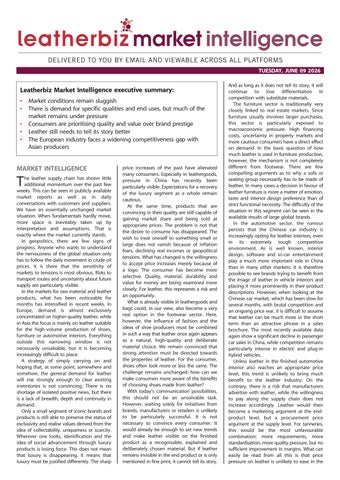
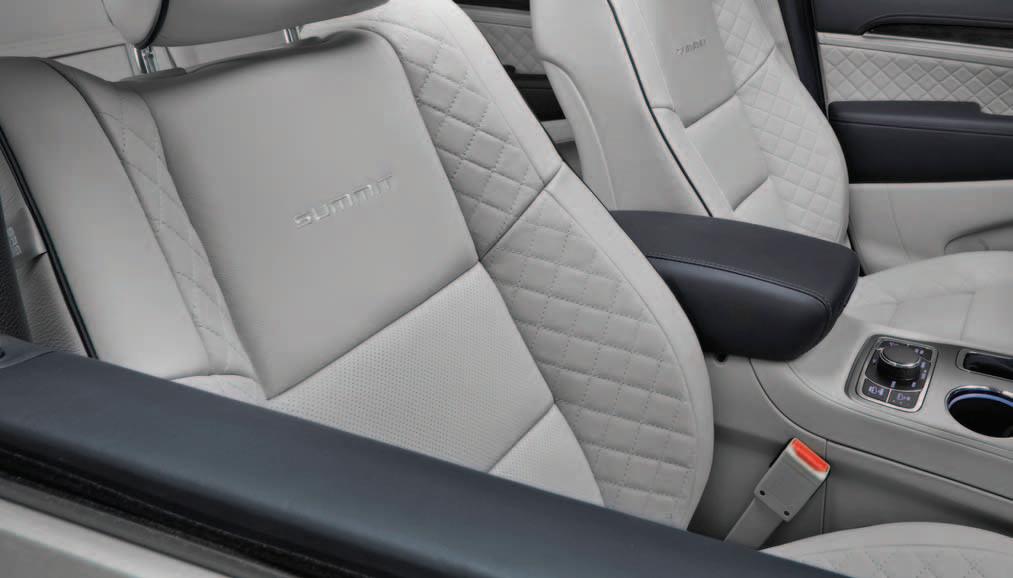
Buyers of the new car will be able to choose from five different seat styles. Bentley has said each seat will require 12 hours of handcraftsmanship from its team.
It will be the fourth quarter of 2026 before the first buyers can drive the new Flying Spur, but the company said customers can place orders and give details of their specifications from the start of June.
Final call for registration to FILK Leather Days
Organisers of the 14th Freiberger Leather Days, the FILK Freiberg Institute, have issued a final call for registrations, with the
At Muno, innovation is our starting point. We transcend chemistry to design advanced low-impact, wet-end solutions that shape the
deadline set for June 15.
The event will take place on July 1-2, 2026, at the Mövenpick Hotel in Münster, Germany, bringing together experts from research, industry and practice.
The programme will feature around 20 presentations and discussions on current developments in the leather sector. The keynote address will be delivered by Professor Thomas Scholten of the University of Tübingen, focusing on global and regional nitrogen cycles and their influence on livestock farming.
Alongside the conference sessions, delegates will also be able to join networking activities including a pedal boat rally on Lake Aasee and a group dinner on the evening of July 1.
World Leather Day deemed a success
Not-for-profit
Leather Naturally has cited the social media interest in this year’s
World Leather Day as evidence that interest in leather craftsmanship, sustainability and innovation, as well as quality and longevity in materials, is growing.
On April 29, the body organised its fifth World Leather Day, with the aim of uniting voices across the industry to champion leather’s role in fashion, interiors, automotive and design.
Campaign highlights included more than 150 social media posts, stories and PR features; 12,000 views of PR coverage; and engagement across industry and consumerfacing platforms.
“Thank you to everyone who supported, shared and participated in World Leather Day 2026 and helped make this year’s campaign a truly global success,” said organisers.
Q1 growth in leather export revenues for French tanners
Tannersin France exported finished leather with a value of € 52.1 million in the first
quarter of 2026, according to figures that Alliance France Cuir has shared. This represents an increase of 9% compared to the same quarter last year.
Finished bovine hides contributed € 22.7 million to the total, while the figure for calfskins was € 14.6 million. These figures denote growth of 15% and 11% year on year.
For sheepskin leather, the figure was down, with export revenues of €8.7 million for this material in the three-month period, a fall of 19%.
Exports of exotic leather also grew, though, bringing in €3.4 million, an increase of 10% compared to the first quarter of 2025.
Researchers seek industry views on future of UK leather
education
Researchers
at the Leather Conservation Centre are seeking input from across the leather sector as part of a project examining the future of leather education in the UK following the closure of the Institute for Creative Leather Technologies (ICLT) at the University of Northampton.
Interns Shony Chindawi and Elisabeth Lucetta began the project in April. Their research aims to assess the impact of the ICLT's closure and explore how the UK can continue to develop the next generation of leather chemists, technologists, craftspeople and sustainability specialists.
As part of the study, the researchers are conducting interviews with former ICLT staff and students, educators, craftspeople, employers and training providers. They are particularly interested in hearing from industry professionals experiencing skills shortages, leather craft tutors, heritage craft organisations and fashion or footwear educators.
The findings will be published in a research and consultation report examining the current state of leather education in the UK and providing recommendations for educators, industry organisations and policymakers.
The researchers are inviting interested participants to contribute through interviews or surveys, with responses able to remain anonymous if preferred.
Antonio Banderas helps Loewe celebrate 180 years
ActorAntonio Banderas has taken part in a project to celebrate an important anniversary for Spanish leathergoods brand Loewe.
Loewe took its name from German entrepreneur Enrique Loewe Roessberg arrived in Madrid and acquired an artisan leathergoods workshop in 1872. However, the company dates its origins to 1846, the year in which a group of local artisans set the workshop up.
This makes Loewe the second-oldest leathergoods brand in the world today; Delvaux was founded in Belgium (before it was called Belgium) in 1829.
To celebrate its 180th anniversary, the brand asked Antonio Banderas to narrate a short, animated film in which it celebrates the way the “intimate knowledge of leather” that
those original artisans had shaped the workshop’s fortunes.
“What has endured,” Antonio Banderas says of Loewe at the end of the film, “is the persistence of the idea that artisanship can be art and imagination can be a tool.”
Forestry students learn about timber sourcing at Silvateam
Italy based leather chemicals group Silvateam hosted forestry sciences students from the University of Turin at its headquarters in San Michele Mondovì, Italy, during a visit focused on forestry practices and resource management.
The company shared an overview of its work with chestnut wood, including how it sources timber and manages woodland areas. Staff also explained how forest resources are monitored and planned over time as part of its operations.
The visit centred on discussion and exchange between the students and the company team, focusing on how forestry practices are applied in practice and the skills involved in the sector.
SLG reports net zero manufacturing emissions
Scottish Leather Group (SLG) has announced that it has achieved net zero greenhouse gas emissions for Scope 1 and Scope 2 across its manufacturing operations.
The company said the milestone follows more than 20 years of investment and innovation through its “Journey to Zero” initiative, launched in 2004 to reduce the environmental impact of leather manufacturing through lower energy use, reduced waste and declining carbon intensity.
According to SLG, the reduction in emissions has been achieved while maintaining production levels, demonstrating that carbon emissions can be decoupled from manufacturing output in an energy-intensive industry.
The group said early work focused on energy efficiency and system optimisation, helping to reduce energy consumption by around 40% within the first five years. Later investments included the development of its patented Thermal Energy Plant (TEP), renewable energy projects including on-site solar generation and wider operational changes across the business.
SLG said its circular manufacturing model, which integrates energy, waste and material management within its own operations, has played a central role in reducing the environmental impact of leather production while supporting operational resilience.
Head of innovation and sustainability Dr Warren Bowden said the achievement demonstrated that it is possible to reduce carbon intensity while maintaining production volumes.
The company added that it will now continue to focus on reducing Scope 3 emissions in line with its Science Based Targets initiative (SBTi) commitments, including a targeted 48% reduction in Scope
3 Forest, Land and Agriculture (FLAG) emissions by 2034.
New owners for Radley
London-based leathergoods brand Radley has undergone a restructuring of its business and has now come under the ownership of US investment firm Gordon Brothers.
Insolvency firm FTI Consulting was appointed as the administrator of Radley in May 2026. Within days, it announced that it had sold the Radley brand and related intellectual property assets to an affiliate of Gordon Brothers.
Gordon Brothers has said it will invest in Radley and support the brand’s development, expanding its footprint in the US, UK, Australia and Asia.
A lawyer who advised Radley on the sale, James Davison, commented: “Radley is a wellloved British heritage brand, which we hope to see thrive under Gordon Brothers’ ownership, as many other global brands have done.”
Leather supplier prepares for Antwerp interior design event
Specialist interior design business and furniture leather wholesaler Stolz Leather will take part in a trends and innovation day in Antwerp on June 2. Materials library and interior design creative platform The Hub is hosting the event.
Stolz has said the event will provide “the perfect opportunity” for architects, designers and industry professionals to discover “fresh concepts for upcoming projects”.
It said it would offer interior design professionals a hands-on experience of its high-end leather collections, “selected for outstanding quality and craftsmanship”.
New leathergoods role at Givenchy
Frenchluxury brand Givenchy has appointed Marco De Vincenzo as head of leather goods design, working under creative director Sarah Burton.
The company confirmed the appointment after reports emerged in independent media outlet Miss Tweed. Givenchy said Mr De Vincenzo would work closely with Ms Burton to support the development of the maison’s leather goods category.
Mr De Vincenzo most recently served as creative director at Etro, leaving the business in March after four years in the role. He previously built experience in leather goods through consultancy work for Fendi.
Earlier this year, Givenchy introduced The Snatch handbag, alongside updated versions of its Antigona and Voyou bag collections under Ms Burton’s direction.
Store redevelopment complete for Hermès in Berlin
Luxury leathergoods brand Hermès has reopened its store on Berlin’s Kurfürstendamm. First opened in 1999, the store is in a historic, Gründerzeit-era building
on the German capital’s famous high-end shopping street.
All 16 of the company’s ranges are represented in the store, with shoes, equestrian and leathergoods collections all on the ground floor.
Hermès worked with Berlin-based artist Zora Mann on window installations for the redeveloped store and, as it usually does, the company has also put selected artworks from the Émile Hermès Collection on display there.
Buyers prepare for Madrid event
Organisers of the Momad accessories and footwear exhibition have invited 50 strategic buyers to the next edition of the event, which takes place in Madrid from July 23-25.
The buyers will represent major markets in Europe, Latin America and Asia.
They each have what the organisers referred to as “decision-making ability” and an active interest in incorporating new brands into their companies’ collections.
Long-term focus is paying off, Richemont says
Luxury group Richemont has posted fullyear revenues of €22.4 billion for the 12 months ending March 31, 2026, signalling growth of 5% compared to the previous year.
The group classifies its leathergoods brands, which include Delvaux, Serapian, Alaïa, Chloé, Dunhill and Montblanc, as ‘other business’ these days, highlighting in greater detail the performance of its jewellery and watch brands.
Jewellery brought in € 16.5 billion, increasing by 8% compared to the previous financial year. The watches division achieved revenues of €3.1 billion, which was down by 4% year on year. Other business contributed €2.7 billion, 2% down on the previous year.
Chairman, Johann Rupert, said Richemont had successfully navigated the fast evolving geopolitical and macroeconomic conditions and was intent on maintaining its brands’ long-term focus.
DNV awards ESG recognition to Dani
Italian tannery group Dani recently received ESG Recognition from DNV, an international testing, certification and technical advisory service to the energy value chain, becoming the first tannery in Italy to obtain the certification.
The recognition confirms that the company has implemented certified management systems supporting environmental, social and governance performance, and that these systems are embedded within its organisational structure.
The certification is based on internationally recognised standards, including ISO 14001 for environmental management, ISO 45001 for occupational health and safety and ISO 9001 for quality management. These frameworks are used to structure processes and support continuous improvement across operations.
The relationship between DANI and DNV spans nearly 30 years, beginning with the first certification in 1997. The collaboration has since developed through ongoing work in quality, sustainability, safety and innovation.
The ESG Recognition also provides a mechanism for verifying the company’s certified systems through a dedicated QR code, offering access to information on their scope and application.
The recognition was presented during a ceremony attended by local authorities, representatives of DNV, Acque del Chiampo and company management, reflecting engagement across institutional and industry stakeholders.
European Parliament hears analysis of leather’s circular credentials
Ameeting of a group called the Sustainable Livestock Intergroup took place in Strasbourg on May 21. The main topic of discussion at the meeting was to explore the ways in which leather and wool make positive contributions to the environment.
Scientific director of research and testing laboratory CTC ARS Tinctoria, Gustavo Adrián Defeo, was the leather sector’s main contributor at the event.
He explained to the members of the European Parliament that make up the bulk of the group’s membership the work that went into leather’s official recognition last year as a biobased material under the CEN/TC 411 standard.
He then pointed out that tests on prominent materials that manufacturers present as alternatives to leather have made it clear that leather, by a long way, is more circular and more sustainable.
CTC ARS Tinctoria has tested “vegan materials” that are 100% petrol-derived, Gustavo Defeo explained.
“In tests, a material that the manufacturers claim comes from cactus has turned out to have a composition that is 26% derived from natural materials and 74% from petrol-based polyurethane,” he added. “In contrast, our tests on the traditional, vegetable-tanned vacchetta leather from Tuscany have proved it to be 96% biobased.”
Commission commits to ‘unlocking the potential’ for biobased fertilisers
The European Commission has formally adopted a new action plan on fertilisers. It said its aim was to help farmers address the challenges of rising fertiliser costs.
The World Bank said recently that it expects fertiliser prices to increase by more than 30% this year. Production and transportation of fertilisers have been severely affected by the conflict in the Middle East and the war between Ukraine and Russia.
In the new action plan, the Commission has said it will help farmers cope with scarcity and high prices. It will also reinforce domestic production and reduce Europe's dependency on imports.
Commissioner for agriculture and food, Christophe Hansen (pictured), said policies to boost domestic production of fertilisers would include measures to “unlock the potential for the development of biobased fertilisers”.
A senior official at the Commission, Michael Losch, spoke about the action plan at a meeting of a group called the Sustainable Livestock Intergroup in Strasbourg on May 21. The main topic of discussion at the meeting was to explore the ways in which leather and wool make positive contributions to the environment.
Mr Losch said he thought the use of animalbased by-products in biobased fertilisers should be part of the Commission’s circular economy strategy.
Tod’s chairman calls for brands to set a good example
A16-monthproject to restore Palazzo Marino, Milan’s city hall, has finished, with 7,500 square metres of interior and exterior façades renewed through cleaning and protective treatments, as well as the renewal of plasterwork and pointing.
The work was funded by Italian leathergoods brand Tod’s Group, whose chairman has called on brands to act in a community-minded way.
Diego Della Valle said: “With this project, our group continues to support and promote Italian art and culture, invaluable resources recognised worldwide.
"It is a tangible form of civic engagement, based on collaboration between the public and private sectors to support initiatives that improve citizens’ quality of life and enhance the reputation of our country.
“Companies must become increasingly involved in meaningful and supportive projects for the benefit of our nation. It is important to set a good example.”
Growth for Chanel in 2025
Luxury brand Chanel has reported full-year revenues of $19.3 billion for 2025, growth of 2% compared to the previous year.
Chief executive, Leena Nair, said the company’s positive performance in 2025 was driven by its long-term approach, but she also said “unprecedented investment in our savoirfaire and a year of exceptional creative momentum” were important factors too.
She picked out the Chanel 25 handbag as one of the highlights, and paid tribute to artistic director, Matthieu Blazy, for “opening a new creative chapter”.
Chanel also reported that its carbon footprint decreased in 2025 for the third consecutive year. Its scope 1 and 2 emissions were down by 2.6% compared to 2024. Scope 3 emissions were down by 10%. And by the end of 2025, it achieved 100% renewable electricity in its own operations.
Natuzzi launches restructuring plan after wider Q4 losses
Italian leather sofa brand Natuzzi reported wider losses for the fourth quarter and full year 2025, citing ongoing macroeconomic
and geopolitical pressures and announcing a restructuring programme aimed at restoring financial stability and improving efficiency.
Fourth-quarter revenue rose by 3.4% yearon-year to €77.5 million, but gross margin fell to 30.2% from 38.1% in the same period of 2024. The company said the decline reflected production shifts, trade tariffs and a € 2.3 million impairment charge. Excluding the impairment, gross margin would have been 33.2%.
Operating loss widened to € 13.6 million from €2.7 million in Q4 2024, while net loss increased to €15.5 million compared to €3.9 million a year earlier. Operating expenses rose to € 37 million, representing 47.7% of revenue, and included € 5.3 million in nonrecurring impairments.
Natuzzi said it is reallocating lower-margin Italian production to facilities in Romania, China, Brazil and Vietnam as part of efforts to address what it described as unsustainable manufacturing costs in Italy.
The company has also initiated a negotiated crisis settlement procedure (CNC) under Italian law to support financial and operational rebalancing while maintaining business continuity.
During the quarter, €4.5 million was used in operating activities, although working capital improvements generated a € 2.5 million benefit, supported mainly by a € 13 million reduction in inventory.
New director general sets out priorities for CTC
The director general of leather and footwear research and testing institution CTC, Maud Rascle, has said she aims to build on the organisation’s strengths and open up new opportunities.
Ms Rascle has taken over as director general from Françoise Nicolas, who has retired. She joined CTC at the start of the year and worked alongside Ms Nicolas for several months before taking over.
“These months have given me an opportunity to see CTC’s wealth of expertise and breadth of activity,” the new director general said. “We have a unique position in the leather and footwear sector.”
She said she had seen a high level of trust in CTC from member companies trust and that this was based on the organisation’s “technical excellence” and on the commitment of its teams, in France and overseas.
She laid out a series of priorities for CTC in the months and years ahead, saying the institute would work to help companies speed up their adoption of sustainable practices. She said this would range from renewable energy projects to eco-design principles.
Secondly, Ms Rascle said CTC would aim to help companies become more digital, integrating new technologies, including artificial intelligence, into their production processes.
Helping the industry survive and thrive through strengthening the skills of the people who work in it is another of the main aims of
the new director general. She also said she wanted to help member companies reach new markets, while making sure their products comply with industry regulations.
Finally, she said she wanted to help the industry develop its communication skills
Profit growth for Dr Martens
Dr Martens has reported a 61.3% increase in adjusted profit before tax for the 52 weeks ended March 29, 2026, as the company continued its shift towards a consumer-first operating model.
Adjusted PBT reached £55 million (¤64.4 million), compared to £34.1 million (¤39.9 million) a year earlier, while revenue declined 2.9% to £764.9 million (¤895.3 million). Adjusted EBIT rose 30.6% to £79.3 million (¤92.8 million).
Chief executive officer Ije Nwokorie said the business had returned to profit growth while improving revenue quality, margins and cash generation.
The company said footwear categories including the Lowell, Buzz and Zebzag product families performed strongly during the year, while shoe revenues increased 19%. Wholesale growth in EMEA rose 7.6% at constant currency, supported by healthy order books.
Dr Martens said gross margin improved by 120 basis points to 66.2%, while nonmarketing operating costs fell 6%.
Looking ahead, the company said FY27 would mark the start of the “scale” phase of its strategy, with increased investment planned for brand marketing and retail store upgrades.
Full-year results mark “inflection point”, Burberry says
London-based brand Burberry has reported provisional full-year results of just over £2.4 billion for the 12 months ending March 28, 2026.
This represents a fall of 1.7% compared to the previous year. Burberry opened nine new stores over the 12-month period and closed 21 others. It calculated that its retail revenues from comparable stores was up by 2% year on year. Its wholesale revenues were down by 5%.
In terms of product, it said outerwear “outperformed in all regions”. Its accessories category achieved a positive result over the year, with scarves “outperforming throughout the year”. It said its leathergoods sales improved in the second half of the year.
Chief executive, Joshua Schulman, said the full-year result marked “a meaningful inflection point for Burberry”. He added: “Our strategy is working and there are clear opportunities for further growth.”
Assomac tour promotes Simac Tanning Tech
Machinery and technology manufacturers’ body Assomac has carried out a series of meetings in some of Italy’s main centres of leather and footwear production.
It held sessions in Vigevano, Santa Croce sull’Arno, Civitanova in Le Marche and
Arzignano. It said its aim was to support member companies “in an increasingly complex scenario”.
At the end of the series of meetings, Assomac president, Mauro Bergozza, said platforms such as the Simac Tanning Tech exhibition, which next takes place in Milan from September 15-17, could support company competitiveness.
He said the events were taking on an increasingly central role, not only as exhibitions, but as places “capable of bringing together the entire supply chain and enhancing Italian technological excellence”.
Beef campaign to continue after TV presenter’s complaint flops
The UK’s Agriculture and Horticulture Development Board (AHDB) has confirmed that an advertising campaign to highlight the health benefits of red meat and cow’s milk will continue, despite a complaint from a high-profile campaigner.
AHDB launched a campaign called ‘Let’s Eat Balanced’ in the autumn of 2024. This included advertisements on television, in the national press, on social media and on its own website.
On seeing the ads, a television presenter and environmental campaigner called Chris Packham submitted a formal complaint to the UK’s Advertising Standards Authority (ASA). The ASA launched an investigation into the content and, after 14 months, released its findings on May 13.
The authority summed up Mr Packham’s claims as saying the ads were misleading as they did not reflect “the full environmental impact of British meat and dairy”. He objected to claims that UK beef has a carbon footprint that is half the global average and that milk from the country’s dairy farms has a carbon footprint that is one-third lower than the global average.
He also claimed it was misleading for the campaign to imply that cows used to produce beef and milk in the UK are typically outdoorgrazed.
In its assessment, the ASA rejected almost all of Mr Packham’s complaint. It did say, though, that the campaigns claims about carbon footprint were likely to make consumers think emissions for consumption and disposal of products were included. AHDB explained that it had only taken into account farm-to-retail phases of meat and milk production.
In response to the findings, AHDB said it was preparing to rerun the campaign this autumn. It explained: “We are pleased to confirm our ‘Let’s Eat Balanced’ campaign will continue to inform consumers about the benefits of red meat and dairy as part of a healthy, balanced diet. We maintain that all information shared with consumers in the campaign is supported by robust scientific evidence.”
It said the only part of Chris Packham’s complaints to be upheld related to “a technical footnote” in two newspaper adverts. It added that the carbon-footprint
comparisons it made in its campaign were based on “highly respected scientific evidence”.
Birkenstock maintains growth momentum
Specialist footwear group Birkenstock has reported revenue growth of 14% in constant currency for the second quarter of fiscal 2026, reaching € 618 million, despite pressure from currency headwinds, tariffs, inflation and geopolitical disruption.
On a reported basis, revenue rose 8% year on year. Growth was recorded across all regions in constant currency, with the Americas up 14%, EMEA up 11% and APAC up 30%.
B2B revenue increased 9% on a reported basis and 15% in constant currency, while direct-to-consumer sales rose 4% and 12% respectively, supported by continued retail expansion.
Profitability declined over the period. Gross profit margin fell to 53.9% from 57.7% a year earlier, impacted by adverse currency effects, US tariffs and channel mix. Net profit dropped 22% to € 82 million, while adjusted EBITDA declined 1% to €198 million, with a margin of 32.1%.
The company said performance was driven by resilient global demand, with particularly strong growth in Asia-Pacific, and continued expansion of its own retail store network.
Leather Naturally highlights best practice in water management
Leather Naturally has published an educational resource exploring water management practices and the links to environmental sustainability and climate resilience.
The report, Sustainable Water Management in the Leather Industry, seeks to equip stakeholders with the tools to work together on water management.
It was developed using insights gathered through a public consultation last year, and draws on insights from a Life Cycle Assessment study conducted by Leather Naturally, supported technically by SPIN360.
This publication is intended for industry professionals, sustainability leaders, suppliers, brands and policymakers, and includes case studies from the Confederation of National Associations of Tanners and Dressers of the European Community (COTANCE), Igualadina de Depuració i Recuperació, ISA TanTec, JBS Couros and PrimeAsia Leather Company.
Irish food group confirms German acquisition
Asmentioned in the latest edition of our Market Intelligence newsletter, the Vion Food Group has agreed deals to sell assets in Germany.
In April, it sold plants at Crailsheim in Baden-Württemberg and at Waldkraiburg in Bavaria, to Boeser Frischfleisch GmbH and OSI Europe Foodworks GmbH, respectively.
It has now agreed the sale of another plant in Bavaria, its site at Buchloe, to Ireland-based ABP Group.
The Crailsheim site specialises in processing pigs, with a capacity for around 1 million head per year. But it also processes 95,000 head of cattle per year. The capacity at Waldkraiburg is of more than 160,000 cattle per year, while the Buchloe site has a capacity of 90,000 head of cattle per year.
Vion Food Group said each of these sales is subject to antitrust approval and that it was in negotiation to sell its remaining German locations and businesses as part of a “strategic realignment”.
Chief executive of ABP, Frank Stephenson, said: “We are delighted that the group is set to enter the German beef processing industry via the planned acquisition of Vion Buchloe. Over the coming months, we look forward to working with the team at Vion to ensure a smooth and seamless transition for farmer suppliers, colleagues and customers. Post acquisition, it will be very much business as usual with a commitment to building on Vion Buchloe’s well established tradition and reputation for high-quality Bavarian red meat products.”
Porsche to discontinue subsidiaries as part of ‘challenging transformation’
As part of carmaker Porsche’s “strategic realignment”, it will discontinue its subsidiaries Cellforce Group, Porsche eBike Performance and Cetitec, with more than 500 job losses.
CEO Dr Michael Leiters said: “Porsche must refocus on its core business. This is the indispensable foundation for a successful strategic realignment. This forces us to make painful cuts, including our subsidiaries.”
The group is also restructuring internal divisions. The Car-IT division will be suspended, and board member Sajjad Khan will contribute his expertise in the future as part of a software partnership model.
Chairman Dr Wolfgang Porsche said: “Porsche is in a challenging phase of transformation. We need to realign the company and are consistently adapting our structures under the leadership of Dr Michael Leiters to the changed circumstances, including at Executive Board level.”
The Car-IT division will continue to be managed by Sajjad Khan until 19 June and will then be integrated into the Research and Development division.
Electric vehicles are
making
an impact in Germany
The German automotive market registered 327,700 new electric passenger cars in the first four months of 2026, an increase of 33% compared to the same months last year.
New registrations of battery electric vehicles reached 224,000 across the four-month period, up by 41% year on year. There were also registrations of 103,700 plug-in hybrid electric vehicles, an increase of 18%.
Industry association VDA has said that the figures for April alone show that well over one in three new registrations was for an electric passenger car.
ASIA
China: bag imports see doubledigit growth
Figures from the China Leather Industry Association show that Chinese finished product manufacturers exported bags with a value of more than $9.5 billion in the first four months of this year, a fall of 4% compared to the same months last year.
Over the same period, brands and retailers imported into China bags with a value of nearly $2 billion, an increase of 18.6%.
When it came to leather garments, there were substantial jumps in the value of imports and exports. Chinese manufacturers shipped leather garments worth $38.6 million over the four-month period, up by 42.8% year on year.
Imports of leather garments over the same period reached $42.9 million in value, an increase of 31.5%.
China lifts beef import restrictions on Brazil
China has lifted restrictions linked to footand-mouth disease in northern Brazil and now recognises the country as free of the disease, Reuters reported, citing an official notice.
The move removes a barrier for Brazil, the world’s largest beef and chicken exporter, which sent more than half of its beef exports to China last year. China, the world’s biggest beef importer, bought nearly $3 billion of meat from Brazil in the first quarter of this year.
Brazil said the decision should expand exports of beef and pork products, including offal and bone-in meat, and said it followed more than 20 years of negotiations and recent diplomatic talks between the two countries.
China had previously tightened animal health controls after its own foot-and-mouth outbreaks earlier this year in Gansu and Xinjiang, which led to culling and vaccination measures.
Bangladesh TCLP leather traceability policy launched in Dhaka
Apolicylaunch event for the LeatherTrace Bangladesh: Traceable and Circular Leather Production (TCLP) project was recently held in Dhaka.
The initiative is being implemented by iDEA TREE in partnership with SERA Bangladesh, University of Northampton, Aston University, University of Hertfordshire and the Sustainable Leather Foundation, with support from FCDO and UNCTAD.
Md Abdur Rahim Khan, acting secretary at the Ministry of Commerce, attended as chief guest, alongside representatives from the Bangladesh Tanners Association, Bangladesh Finished Leather, Leather Goods and Footwear Exporters Association and Footwear Leather Goods and Accessories Exporter Association.
A policy brief titled A Strategic Roadmap for Enhancing the Adoption of Digital Traceability in Bangladesh's Leather Sector was presented by Dr Ebenezer Laryea of Aston University and
Deborah Taylor of the Sustainable Leather Foundation.
The brief outlined steps to expand digital traceability systems across the industry.
Speakers highlighted sustainability, circular production and stronger global supply chain compliance. The event concluded with remarks noting project outputs including baseline research, a carbon calculator and life cycle assessment work.
Footwear falls continue for China in first four
months
China’s footwear sector exported 2.75 billion pairs of shoes, boots, sandals and slippers in the first four months of 2026, bringing in revenues of $12.3 billion.
These figures represent decreases of 5.1% in volume and of 10.3% in value compared to the same period last year.
Exports of leather shoes accounted for 150 million pairs and revenue of almost $2 billion. This meant a fall of 1.7% in volume and of 10.8% in value.
Across all categories, China imported 48 million pairs of footwear in the January-April period, with a total value of nearly $1.7 billion, down by 21.1% in volume and by 2.9% in value.
Of these, almost 13 million pairs were leather footwear, with a value $690 million, falls of 17.4% and 2.3% respectively.
Imports of raw hides and skins still on the rise in China
Following the pattern of recent months, China’s imports of raw hides and skins went up in volume in the January-April period, but down in value compared to the same months last year.
The China Leather Industry Association has put the import volume of raw hides for the first four months of the year at 505,000 tonnes, up by 1.7% year on year. This raw material had a value of $400 million, down by 4.9% compared to the same period in 2025.
Imports of semi-finished hides reached 200,000 tonnes in volume and a value of $260 million, decreases of 10.8% and 20.1% respectively.
Finished product manufacturers brought 11,000 tonnes of finished leather into China over the same period, paying $170 million, falls of 9% in volume and of 5.1% in value year on year.
Savar hide arrivals pass 79,000
The Savar leather estate in Bangladesh has received more than 79,000 sacrificial animal hides by the evening of Eid-al-Adha, according to local media reports citing the Bangladesh Small and Cottage Industries Corporation (BSCIC).
Reports said 78,515 of the hides were from cattle or buffalo, while 703 were from goats or sheep. Officials said the number was expected to rise further overnight as bulk trading continued.
Local media also reported complaints from seasonal traders about low hide prices at warehouses, with some sellers claiming offers
were below government-fixed rates. Industry representatives reportedly linked the situation to cash shortages and difficult trading conditions.
According to local media reports, the Bangladesh Tanners Association expects the industry to collect around 10 million sacrificial hides during this year’s Eid season.
Positive start to 2026 for leather garments continues in China
Leathergoods manufacturers in China achieved exports of just over $7 billion in the first three months of 2026, a decrease of 1.1% compared to the same period in 2025.
Imported leathergoods fell much more steeply, reaching just under $1.5 billion, down by 20%.
Over the same period, though, leather garment manufacturers in China achieved strong growth. Exports of clothing made from leather were worth $33.5 million in the first quarter of 2026, up by more than 50% year on year.
An increase in the value of imports of leather garments over the first quarter show that leather clothing is also popular in the domestic market. Imports had a value of $34 million, up by 27.8% year on year.
Bangladesh commerce and industries minister Khandaker Abdul Muktadir has said the government will address deficiencies at the central effluent treatment plant (CETP) at the Savar Tannery Industrial Estate.
Speaking after a meeting with tannery owners and company officials during a visit to the estate, Mr Muktadir said the leather sector in Bangladesh had failed to reach its potential because of the way the industry was relocated from Hazaribagh and because of years of mismanagement.
He said the CETP currently treats between 14,000 and 18,000 cubic metres of waste, although volumes can rise to around 45,000 cubic metres during the Eid-ul-Azha period.
According to the minister, the government is considering allowing larger tanneries to establish their own effluent treatment plants (ETPs), while an EU-supported study is also examining how the CETP’s capacity and efficiency can be improved. An Italian company is expected to submit its report within the next one or two weeks.
Managing director of Dhaka Tannery Industrial Estate Waste Treatment Plant Company Md Golam Shahnewaz said the CETP still suffers from several design flaws, including the absence of a central sedimentation system, tertiary treatment facilities and a chrome recovery system.
However, promises to resolve problems at the Savar CETP are not new. Since the relocation of tanneries from Hazaribagh, government officials and industry representatives have repeatedly said upgrades, management changes and technical corrections would improve the system’s performance, while many of the
same concerns over capacity and functionality continue to be raised.
Increase in volume for China’s leather footwear exports
China exported 2.1 billion pairs of shoes in the first quarter of 2026, bringing in revenues of $9.4 billion.
These figures represent a decrease of 2.5% in volume and of 8% in value.
Leather shoes contributed 120 million pairs to the total export volume, with a value of more than $1.5 billion. This means the volume of leather footwear exports for the quarter was up by almost 10% compared to the same months in 2025. However, revenues from leather footwear exports in the first quarter of 2026 were down by nearly 10% year on year.
Total footwear imports into China over the quarter reached 38.9 million pairs in volume and $1.3 billion in value, falls of 20.4% and 2.8%. respectively. For leather shoes, imports reached 10.4 million pairs in volume, which had a value of $530 million, down by 18.4% and 5.6% respectively.
Import volumes of raw hides still going up in China
China’s imports of raw hides and skins increased in volume in the first quarter of 2026.
In the January-March period, tanners and traders in China brought 365,000 tonnes of raw hides and skins.
In terms of volume, this represents growth of 1.9% compared to the same period last year. In terms of value, these raw material imports cost $290 million, a decrease of 6.1% year on year.
Over the three-month period, 150,000 tonnes of semi-finished leather also came into China, with a value of $200 million. This represents falls of 10.3% in volume and of 20.2% in value.
Imports of finished leather reached volumes of just over 8,100 tonnes, costing $120 million, falls of 11.9% and 8%, respectively.
ICHSLTA launches new website
The International Council of Hides, Skins and Leather Traders’ Associations (ICHSLTA) has launched a new website aimed at improving communication with the global leather trade and providing updated information about the organisation’s activities.
The new platform includes details about ICHSLTA’s role in promoting and protecting international trade in hides, skins and leather, as well as information on its member associations, international contracts and industry initiatives. The organisation represents trade interests across more than 30 countries and has been active since 1929.
The launch follows a period of renewed activity for the association, which last year appointed Ms Micaela Topper (pictured), executive director of Australian company AI Topper, as president for a two-year term. During the organisation’s AGM in Hong Kong, ICHSLTA said it would continue to focus on issues including sustainability, traceability and
transparency across the leather supply chain.
Bangladesh Bank backs rawhide trade ahead of Eid
Bangladesh Bank has instructed all scheduled banks to ensure an adequate flow of working capital loans to rawhide traders ahead of Eid al-Adha 2026.
The central bank said the leather sector remains an important contributor to Bangladesh’s economy through employment, export earnings and value addition. It added that around half of the raw materials used by the industry each year come from the hides of sacrificial animals collected during Eid alAdha.
According to the circular issued on May 11, sufficient financing will help traders procure, preserve and market rawhides efficiently, reducing wastage of what it described as a national resource.
Banks have been instructed to sanction and disburse working capital loans to eligible traders in line with existing regulations and to ensure funds reach traders involved in rawhide collection at grassroots level.
Bangladesh Bank also said banks will not be required to realise compromised amounts on previously rescheduled loans until June 30, 2026, when extending fresh credit linked to Eid al-Adha rawhide purchases.
THE AMERICAS
Boost for Caleres in Q1 after Stuart Weitzman acquisition
Footwear group Caleres has reported revenues of $667 million for the first quarter of its current business year, the period ending May 2, 2026.
Caleres said this represented growth of 8.5% compared to the same quarter last year.
A significant factor was that Stuart Weitzman, which Caleres acquired on August 4, 2025, contributed extra revenue of $43.9 million to the group’s total for the first quarter.
Even excluding the Stuart Weitzman contribution, Caleres would have achieved growth in the first quarter, with an increase in revenues of 1.4%.
Chief executive, Jay Schmidt, commented: “The first quarter was an encouraging first step toward a build-back year for Caleres. We continue to expect modest sales growth and meaningful earnings growth in 2026.”
Leather, sustainability and design to feature in RLSD webinar
The Leather and Hide Council of America (LHCA) will host a webinar on June 5 to help a new cohort of students prepare entries for its Real Leather, Stay Different (RLSD) competition.
Speakers will be Dr Christine Anscombe, former chair of the training commission of the International Union of Leather Technologists and Chemists Societies, and Adrien Roberts, the international director for education at Italian fashion school Accademia Costume and Moda.
Their conversation will cover leather, sustainability and the future of design.
The event will also include an overview of the RLSD competition, with information on how students who want to enter the competition should prepare their portfolios.
The webinar will start at nine am, London time.
Entries for the 2026 International RLSD prize close on June 30.
Capri returns to profitability
Luxury group Capri Holdings Limited returned to profitability in fiscal 2026, which ended on March 28.
In the fourth quarter, Michael Kors revenue of $656 million decreased 6%, while Jimmy Choo revenue of $140 million increased 5%.
John Idol, Capri CEO and chairman, said: “We took deliberate actions to strengthen product innovation, brand desirability and consumer engagement and we see clear evidence that these efforts are resonating with consumers. Early validation of our strategic initiatives and improving trends across both brands reinforce our confidence in their return to revenue and earnings growth."
Following the US Supreme Court's February 2026 decision which held that tariffs imposed under the International Emergency Economic Powers Act were unlawful, the group expects a refund of $65 million.
Mr Idol added: "In fiscal 2027 we expect to return to low single digit revenue growth and approximately 40% earnings per share growth. Longer term we expect to grow Michael Kors revenue to $4 billion and Jimmy Choo revenue to $800 million while significantly increasing profitability.”
Tyson Foods names new CEO
Meat and leather producer Tyson Foods has announced that Jeff Schomburger will become president and chief executive officer on October 4, following a transition period beginning in July.
Mr Schomburger has served on the company’s board since 2016 and is currently lead independent director. He previously spent 35 years at Procter & Gamble, retiring in 2019 as global sales officer.
Chairman John H. Tyson said the board is confident in Schomburger’s ability to lead the company into its next phase of growth and support its strategic priorities.
Donnie King will remain on the board following his retirement as chief executive. He has been with Tyson Foods for 43 years, during which he led the company through the COVID-19 pandemic and oversaw improvements in execution, profitability and balance sheet strength.
His tenure as CEO also included efforts to accelerate innovation, drive efficiency and consolidate corporate functions at the company’s headquarters in Springdale, Arkansas.
Tyson Foods said it remains focused on delivering long term profitable growth and cash generation and has reaffirmed its fiscal 2026 guidance.
Drought affecting US hide availability
The Leather and Hide Council of America (LHCA) has said the sector is feeling the effects of drought in cattle-producing regions of the US.
It said that severe drought across the Central Plains and other important livestock farming regions of the US had degraded pasture conditions, reduced the availability of forage and has led to producers selling calves rather than retain them for breeding.
As a result, it said the US cattle herd was not increasing. LHCA said the impact on hides is that there is pressure on hide availability and on prices.
Strong growth in Brazil beef trade
Brazilianbeef exports have maintained strong momentum since last year, with monthly volumes above 200,000 tonnes since March 2025, according to data from Secex compiled by Cepea.
Exports totalled 953,606 tonnes in the first four months of 2026, up 15.2% year on year and nearly 30% higher than the same period in 2024.
April shipments reached a record 251,944 tonnes, with export revenues of $1.57 billion, up 29.4% year on year.
China remained the leading destination, importing 135,472 tonnes in April, while the United States ranked second with 37,469 tonnes.
New president elected at AQTCL Mexico’s
Association of Leather Chemists and Technicians of León (AQTCL) has elected Ernesto Martín Nache Rodríguez as its new president.
The election took place during the association’s assembly meeting on May 14. The organisation said it was confident his leadership would contribute to the strengthening and growth of the association.
AQTCL also thanked outgoing president Armando Jorge Escobedo Romo for his work and commitment during his two-year term in office, saying his efforts had supported the development and continuity of the association’s objectives.
Another record for Boot Barn as it continues store-opening spree
US shoe retailer Boot Barn opened 80 stores in fiscal 2026, which ended on March 28, and grew revenues 19% to $2.3 billion.
It specialises in western and work-related footwear, apparel and accessories, and is capitalising on boom in the trend (see World Leather February-March).
CEO John Hazen said: “I am very proud of our performance in Fiscal 2026, which marked a record year for Boot Barn and reflects the strength of our business and the dedication of our team.
“The broad-based strength across merchandise categories, channels, and geographic regions underscores the strong
appeal of the brand and the disciplined execution of our strategic initiatives.”
Gross profit was $858.4 million compared with $717 million the year before, primarily due to an increase in sales and merchandise margin, partially offset by the occupancy costs of new stores.
Over the next 12 months, the company aims to open 70 stores and grow revenues another 15%.
US
beef sector welcomes progress after China summit
The US Meat Export Federation (USMEF) has welcomed an increase in the number of packer plants that will be authorized to export beef to China. The changes have come in the wake of a state visit to Beijing in mid-May by US president, Donald Trump.
Customs authorities in China have given 425 operators in the US permission to resume exports of beef to China. USMEF said the renewal of earlier permits for these companies to ship beef to China was overdue.
In addition, 77 new beef producers in the US are now registered to send their products to China. However, USMEF said 38 US beef establishments “remain suspended”.
Its chief executive, Dan Halstrom, said: “USMEF greatly appreciates US beef access being prioritised at the summit meeting between President Trump and President Xi of China. Renewal of registrations is a critical step forward for US beef exports to China. We await more details.”
He said it was “excellent news for the US beef industry”.
LVMH agrees sale of Marc Jacobs
LVMH has agreed to sell Marc Jacobs to a joint venture between WHP Global and GIII Apparel Group, ending its nearly 30-year ownership of the US fashion brand.
The deal will see the two companies form a 50-50 venture to acquire the intellectual property, with up to $850m (¤780m) being raised to fund the transaction. Each partner is expected to contribute up to $425m (¤390m).
Financial terms were not disclosed, although regulatory filings confirmed the equal funding structure. The deal is expected to complete before the end of the year.
Marc Jacobs, who founded the brand in 1984, will remain creative director following the sale.
WHP Global said the brand will become a core part of its premium portfolio, while G-III Apparel Group will manage global operations.
LVMH acquired a majority stake in Marc Jacobs in 1997. The group is currently streamlining its portfolio as it focuses on profitability in a softer luxury market.
US footwear inflation outpaces wider
price growth
Footwear prices in the U.S. rose 4.2% year on year in April, the sharpest increase in 43 months, according to the Footwear Distributors and Retailers of America (FDRA).
The organisation said footwear inflation is now running ahead of broader U.S. inflation,
which reached 3.8% in April. FDRA linked the stronger rise in footwear prices to the impact of tariffs on imported products.
Senior vice-president and executive director of the Footwear Innovation Foundation at FDRA, Andy Polk, said higher tariffs are increasingly being passed through to consumers.
Women’s footwear prices recorded the largest rise in April, increasing 4.5%, while men’s and children’s footwear prices both climbed 3.9%.
FDRA chief economist Gary Raines said the average duty-paid import cost per pair of footwear increased 13.7% in the first quarter compared to the same period last year, with further pricing pressure expected through 2026.
JBS first-quarter profit drops 56% on North American pressures
Brazil-headquartered meat and leather group JBS reported a 56% year-on-year fall in first-quarter net profit, missing analyst expectations as weak North American operations offset stronger results in Brazil, according to Reuters.
Net profit fell to $221 million (¤203 million), below forecasts of $236 million (¤217 million), while adjusted EBITDA dropped 26% to $1.13 billion (¤1.04 billion).
The company cited high livestock prices, tight US cattle supply, weather disruption and a three-week strike in Colorado as key pressures on its North American beef and poultry businesses. The division posted a negative adjusted EBITDA of $267 million (¤246 million).
By contrast, Brazilian beef operations delivered stronger performance, with EBITDA up 28% to $168 million (¤155 million) on higher export demand and record first-quarter sales.
Brazilian shoe-makers feel relief from lower tariffs
Brazil exported 8.2 million pairs of shoes worth $73.5 million in April, a 9% increase in volume but a 7% decrease in revenue compared with the same month last year.
Excluding Argentina, exports to Latin American markets in April increased by 25% in value and 53% in volume.
From January to April, exports totalled 34.5 million pairs and $284.4 million, declines of 12% and 19%, respectively, according to Brazilian Footwear Industries Association (Abicalçados).
Abicalçados’ executive president, Haroldo Ferreira, said: “The increase in shipments to the US indicates not only a recovery, but also an anticipation of exports to the destination following the tariff relief, since the additional 50% tariff is no longer being applied and Brazilian footwear is now competing under an equal 10% tariff rate."
The year-to-date figures still reflect the impacts of the first quarter, marked by the US tariff shock, weaker momentum in traditional markets, and lower average prices associated
with changes in the export mix by product and destination.
Tandy Leather posts higher sales in first quarter
Tandy Leather Factory reported first-quarter results to March 31, 2026, with revenue growth but lower net income year on year.
Net sales rose 3.2% to $19.7 million (¤18.1 million), driven by sales campaigns, product mix improvements and stronger in-store engagement.
Gross margin improved to 61.0%, lifting gross profit to $12.0 million (¤11.0 million), while operating income was $0.4 million (¤0.37 million) after higher expenses.
Net income declined to $0.2 million (¤0.18 million) from $11.6 million (¤10.7 million) a year earlier, which included a one-off property sale gain.
The company operates 100 stores across the United States, Canada and Spain. It paid a $0.75 per share dividend and ended the quarter with $10.1 million (¤9.3 million) in cash.
Ongoing China ‘lockout’ affects US beef exports
New data from the US Department of Agriculture show that the US exported 275,355 tonnes of beef in the first quarter of the year, bringing in revenues of $2.3 billion. These figures represent a fall of 11% in volume and of 7% in value.
The US Meat Export Federation said lower results this year were largely because of the “ongoing lockout by China”.
Ferragamo’s turnaround bears fruit with growth in America
Italian leathergoods brand Salvatore Ferragamo has confirmed a “solid start to the year”, despite a complex landscape.
First-quarter revenues of €209 million were flat compared with the same quarter last year.
Its direct-to-consumer channel - which includes its own stores and ecommerce sites - saw double-digit growth in North and Latin America.
The group will prioritise this market, renovating its two flagship stores on New York’s Fifth Avenue and in Los Angeles Beverly Hills, alongside the openings of two temporary stores.
It said: “Despite the persistent global instability, exacerbated by the Middle East conflict and its potential short to medium-term consequences, Ferragamo remains focused on executing its strategic plan, leveraging its brand heritage and strengths to drive desirability, refining product mix and ensuring consistency of messaging across all channels.”
AFRICA
Lobatse SEZ secures $33.4 million investment commitments
According to local media reports, the Lobatse Meat and Leather City Special Economic Zone (SEZ) in Botswana has secured P437.1 million (US$33.4 million) in
commitments from three licensed investors, with a strong focus on leather processing, tannery operations and abattoir development.
One investor is already operating in the zone, having invested P89.3 million (US$6.8 million) in a vehicle wiring harness manufacturing facility that employs 303 people.
The remaining two investors are expected to inject P347.8 million (US$26.6 million), supporting an export-oriented abattoir, a leather processing facility and a tannery. Together, the new projects are projected to create 122 jobs, adding to existing employment in the zone.
The developments form part of plans to position Lobatse as a meat and leather valueaddition hub, reducing reliance on primary beef production and strengthening downstream processing capacity.
The SEZ is also linked to ongoing infrastructure work under Botswana’s National Development Plan 12, including phased development of industrial land for manufacturing investment.
Meanwhile, the town’s tannery revitalisation project is reported to be 94% complete and is expected to be finalised in September, which is seen as a key step in expanding local leather processing capabilities within the SEZ.
Footwear sector in Ghana issues cry for help
The Ghana Leather and Footwear Manufacturers Association (GLFMA) has called on its national government to take action to support the shoe industry. GLFMA said the domestic footwear sector was facing “imminent collapse”.
At a recent press conference, the association said more than 70% of the shoes sold in Ghana in 2024 and 2025 was imported from China.
GLFMA president, Gilbert Akwasi Ntim, said the government should impose higher tariffs on finished footwear imports from outside the African Continental Free Trade Area (AfCFTA). He also called for zero duties on imports of the raw materials Ghanaian footwear manufacturers use.
He said procure public-sector bodies in Ghana, including schools and the police, should procure footwear exclusively from certified local manufacturers.
Beyond that, Mr Ntim said the government should roll out a nationwide campaign to encourage people to buy footwear made in Ghana.
Fall in cattle slaughter in South Africa
Cattle slaughter in South Africa fell by more than 16% in the first quarter of 2026. Figures for the first three months of this year showed a total of 565,266 head of cattle going to slaughter, compared to 673,468 in the same months last year.
Annual cattle slaughter in South Africa reached almost 2.7 million head in 2025.
Rwanda changes location of planned tannery park
Rwanda will construct its planned national leather tannery park in Gicumbi District instead of Bugesera after a feasibility study found the original location unsuitable.
Prudence Sebahizi, Minister of Trade and Industry, told parliament’s Committee on State Budget and Patrimony that the relocation will not affect the project’s delivery timeline, with completion still targeted for 2029.
The decision follows a technical review that led the government to identify an alternative site after the Bugesera Special Economic Zone was deemed unable to host the facility.
The tannery park forms part of Rwanda’s broader garment and leather development programme, which includes support for exhibitions and industry promotion, and is intended to strengthen domestic production and exports across the leather value chain.
OCEANIA
Record quarter for Australian beef
Official figures from the Australian Bureau of Statistics (ABS) show that farmers across the country produced more than 730,000 tonnes of beef in the opening quarter of 2026.
Industry body Meat & Livestock Australia (MLA) has said this represents an increase of 2% on the last quarter of 2025 and growth of 8% compared to the first quarter of last year.
MLA said the figures mean Australia’s beef industry has begun 2026 with its strongest start on record. Cattle slaughter reached 2.30 million head over the three-month period, up by 3% on the same quarter last year.
It added that carcase weights also continue to trend upward, reaching an average of 317 kilos in the March quarter.
Report highlights social benefits of Australia-Indonesia cattle trade
Anew study commissioned by Australia’s Livestock Export Programme has highlighted significant social benefits from the country’s shipments of live cattle to Indonesia.
According to the report, exports of live cattle from Australia is responsible for keeping 8,500 people in jobs in Indonesia. People are employed in abattoirs, feedstock operations and smallholdings to look after the cattle.
It said the relationship between the two trading partners had brought volumes of beef from Australian-bred cattle coming onto the market in Indonesia to more than 80,000 tonnes per year. The report said this was enough to provide 28 million people with a reliable source of protein.
This trading relationships also benefit farmers in Australia, the study said, especially those in the Northern Territories. It said farms in that part of Australia are often too far from major domestic markets and that shipping livestock to Indonesia instead provided “an essential outlet”.