Leatherbiz Market Intelligence executive summary:
• Politics and geopolitics are driving volatility across the leather pipeline
• Energy shocks and logistics risks are likely to raise costs and uncertainty
• These challenges can spark a renewed debate about re-shoring and shortening supply chains
• Already, leather is visibly regaining some cultural and fashion relevance
• Consumer fatigue with synthetics supports renewed interest in authenticity
• Differentiation, character and quality can drive future growth
MARKET INTELLIGENCE
Slaughter volumes, raw material availability, tannery utilisation and downstream sellthrough still follow familiar patterns in many regions, but politics remains, more than ever, a key factor when assessing conditions across the entire leather pipeline.
Two events stand out and are influencing trade, logistics, energy prices, and finance. First, on February 20, the US Supreme Court ruled that the International Emergency Economic Powers Act (IEEPA) does not authorise President Trump to impose tariffs. At first glance, this is a relief for global trade because it limits the risk of sudden, broad “emergency tariffs” and should, in principle, improve predictability for pricing and contracting. Yet it is only partially reassuring, because it does not end protectionism.
Instead of abrupt tariff waves, companies may face more reliance on alternative legal bases, export controls, sanctions regimes, procurement preferences and non-tariff barriers. For the leather industry this is very tangible, because, depending on the region, different parts of the pipeline are exposed to imports such as chemicals, auxiliaries, machinery and parts, and to exports of raw hides, wet blue, crust, finished leather and byproducts. Removing one broad tariff lever may reduce immediate cost risk, but volatility remains high because uncertainty often materialises through stricter origin and declaration scrutiny, longer clearance times, more audits, disputes over HS codes and customs valuation. In short, the ruling improves legal clarity, but it does not replace the strategic need to build resilience.
The second event is far more immediate in its impact on pricing and logistics. On February 28, air strikes began against Iran, with retaliation following. In such situations the effects on global trade are clear and fast: oil prices, freight costs, insurance fees and lead times all increase. The expectation of
escalation increases the geopolitical risk premium, and market attention quickly turns to energy and transport infrastructure and to potential chokepoints.
As a consequence, working-capital requirements tend to increase as companies build buffers and finance longer cashconversion cycles, while credit conditions often become more restrictive in a higheruncertainty environment. Finally, the demand channel matters as well: an energy-driven cost shock dampens consumption and marginsensitive end markets—especially where leather competes intensely with alternatives and price tolerance remains fragile.
In such an environment, the debate around re-shoring, in leather production and in downstream processing, can regain importance, as companies reassess the balance between costs, availability, lead times and geopolitical exposure.
Against this political and logistical backdrop, we are leaning particularly far out of the window this time: leather is back. In many recent issues we have repeatedly reported on success in small areas, which we then, perhaps with a touch of understatement, called niches. That was not wrong, but it may have been more than that: the small seedling that eventually becomes a tree. Anyone who has listened carefully and looked closely over recent months could see a series of signals that, taken together, appear to be more than a brief flare-up. One of those signals has been a change in the public’s broader stance toward animal-based materials, leather included. In major cities, even materials that were once highly stigmatised have become visible again, initially through vintage or imitation products. This signals that the broader societal discussion around animal-based materials is moving. This is not a guarantee, but it is a catalyst that allows leather to move from defensive to more confident positioning.
We have repeatedly heard that major
fashion houses are no longer hiding leather and have regained the courage to show it openly. In some collections, exotic types have reappeared, some as genuine reptile articles, others using creative embossing techniques. This was already visible and tangible at Lineapelle in Milan and was confirmed again at further fairs over the past week. The interesting part is that it does not feel like a single, top-down dictated trend, but rather a broader rediscovery of material culture, driven by a desire for durability, fatigue with sterile uniform surfaces, and a renewed appetite for products that are allowed to have character, value and performance.
Of course, some campaign groups are raging. Their protests may become more aggressive as their impact in public opinion continues to weaken. But this has nothing to do with downplaying animal welfare. On the contrary: animal welfare must be ensured for domesticated species. For wild species the protections already widely embedded in CITES must be respected without exception. Anyone in our industry who ignores the legitimate core of these debates simply makes themselves vulnerable. Yet the public verdict is becoming more differentiated, and simplistic black-and-white narratives are losing traction, an empirical factor we cannot ignore. In the same context, another development, perhaps even more important for our pipeline, is gaining momentum: the often exaggerated demands for traceability, documentation, and proof, is beginning to weaken. We are not saying transparency is unimportant. But we do see “compliance fatigue” across many industries: ever more lists, seals, questionnaires, audit loops, and in the end the sense that paper has been produced, not necessarily better practice.
There is also an uncomfortable but logical point that matters: anyone speaking seriously about circularity cannot avoid leather as a byproduct of the meat industry. If animals are slaughtered anyway and hides exist, utilising that resource is not the problem; produced cleanly and responsibly, it can be part of the solution. It is no coincidence that wool has experienced a meaningful comeback and that something similar now appears to be emerging for leather. Both are natural materials, both represent “authenticity” and both fit a time in which many consumers still talk about sustainability while increasingly wanting products that do not fall apart after two seasons.
From our perspective, however, it is not as simple as it may sound. There are two fundamental trends that must be considered. Leather can only regain market share if it
becomes recognisable again for what it truly is. The classification and industrial mass use that have destroyed the material’s properties and character will not be successful. Leather can convince buyers through its intrinsic qualities. It can appear exceptional as a product, made and presented with the confidence it deserves. These are the classic core competencies of the leather industry. We need to put the industry back in a position to use them, to mobilise creativity and manufacturing competence.
Over recent decades, the trend has moved in the opposite direction. In brand offices, products were designed backwards on slides, and leather was then expected to fit the concept. This narrowed usage standardised the product further and further, and the more interchangeable a product becomes, the more price-sensitive it inevitably is. Today large volumes of leather can be produced in broadly similar quality in many places across the world. The situation was exacerbated by
a standardisation obsession and a certification frenzy: more constraints and less freedom of movement for the industry.
But if you remove from the producer the ability to develop, to adapt to the natural realities of the material and, most importantly, to integrate all quality grades, you prevent sensible, resource-efficient production and use of leather. Leather is, by definition, a material with a range. There is not only A-grade; there are scars, brand-marks, insect marks, structural differences, thickness variation, differences in dye uptake. In a healthy leather economy, this range is not a defect; it is raw material for different applications, designs and price points. If you standardise that range away, you end up with only a narrow strip of what is marketable, while the rest is devalued or pushed into channels that make little ecological or economic sense.
This is where we have arrived. And we believe that more and more players are recognising the hopelessness of these
Excellent –Bisphenol optimized syntans to achieve high leather quality
conditions. Whether and how change can be implemented now depends on the dialogue between producers and processors. Major hurdles have already been removed. One hears sentences again that have been absent for a long time. Brands want “We want “real materials” again, they want differentiation. They are willing to use materials that are “not perfect, but true.” Many consumers are tired of synthetics, tired of products that are sold as sustainable but do not feel like it. They want authenticity.
At the same time, this moment is fragile. The industry can waste it if it assumes that leather being back automatically means selling more. If leather returns, it returns differently. It returns as a material that must be explained. It returns as a material that must be shown, not as an interchangeable surface. It comes from a hide and a hide has a story. For too long we have justified leather instead of presenting it. Those who sell leather with eyes lowered will ultimately receive the price that matches that posture. Those who sell it with confidence, with facts, transparency, respect for animals and resources, but also with joy in aesthetics will find demand again. That demand does not have to be mass to create a new dynamic; it only needs to grow steadily, be visible, occur in the right segments and reward differentiation.
And then there is the logistics dimension, which may shape the coming months strongly. We have all seen how quickly a twoweek delay can shift an entire season, and how brutal pricing becomes when that happens. Precisely here, the re-shoring debate can intensify, not as a political slogan, but as a business calculus. When transport becomes expensive, unreliable or risky, and planning certainty declines, questions over having everything travel around the world become pressing again. Re-shoring can affect leather production and downstream processing. Capacity and know-how are not available at the push of a button, and cost structures are real. Yet the parameters are shifting: labour costs are no longer the only argument. Energy prices, risk, financing costs, lead time, carbon footprint, regulatory requirements and reputation all form part of the equation.
In sheepskins, the pickup in the apparel sector is clearly noticeable, and rising wool prices add a second driver. This has not yet translated into sharply higher raw material prices across the board, but the direction is visible. If the positive impressions from fairs and pre-showings translate into solid orders, higher prices must be expected. And then a reality returns that many have almost forgotten: availability is not guaranteed. In such a scenario, more than one tanner may suddenly realise that their preferred article is no longer available in the required volume, certainly not in the quality and selection needed for their programmes. Sheepskin materials are not a scalable industrial commodity; it depends on slaughter and shearing cycles, regional demand and sorting. If demand and the by-product logic tighten at the same time, apparel on the
wool on the fibre side, constraints can start quietly and then become expensive very quickly. Anyone who believes they may be affected should not treat this as a footnote, but address it concretely: which articles are critical, where are real alternatives, which specifications are realistic, and what is the sourcing strategy if material is no longer available on demand?
In splits, two factors play a weighty role: the fashion trend for suede and the collagen market. Suede currently looks more like a broader material movement than a short-lived look; it runs into multiple segments and changes how split material is valued in quality and volume compared to phases where “smooth and uniform” was the only dogma.
At the same time, the collagen market pulls material away. The market is not yet balanced because not all options for alternative use or substitution have been exhausted. Our expectation, however, is that this adjustment process will accelerate and, ultimately, cannot be avoided. The clearer demand shifts in leather articles toward differentiation, surface effect and material character, the less the old models work, those in which split material and by-streams were treated as residuals. Those who ignore this may not be “wrong” immediately, but they will be surprised when a material assumed to be safely available and price-stable suddenly competes with alternative uses and thereby develops a new price floor. In this context, our remarks on leather production are relevant: if value creation returns through character and variety, by-streams must be integrated systematically: not at the end, but from the beginning.
The next two weeks will be marked by the APLF exhibition in Hong Kong (March 12-14). After that, a final and more complete picture of the global leather pipeline will emerge before the second and third quarters of 2026, which traditionally bring weaker production. The only factor that could still materially change this seasonal pattern is the footwear industry and its material mix. If leather content returns there at scale, then “moderate pickup” turns into “real pressure” very quickly. It will be worth watching signals from this segment particularly closely over the coming weeks.
We hope that everyone can travel and travel safely to Hong Kong. At the time of writing this could become a problem for everyone coming from or travelling via the Gulf region.
US PERSPECTIVE
For the period ending February 19 there were exports from the US of 339,300 whole cattle hides. The destinations were primarily to China (217,300 pieces), Mexico (41,400 pieces), South Korea (28,000 pieces), Thailand (22,800 pieces) and Brazil (11,500 pieces).
There were also xports of 107,000 wet blue hides. The destinations were primarily to Italy (54,400 unsplit), Vietnam (17,500 unsplit), Hong Kong (16,200 unsplit), Brazil (10,000 unsplit) and China (4,000 unsplit).
Actual Slaughter Under Federal Inspection
The most recent reports on hide prices have shown Texas steers weighing 60-62 pounds up slightly at $12 per piece. Cow hide prices remained at the same levels, with northern dairy cows at $7.50, south-west dairy cows at $7, northern branded cows at $2.50 and south-west branded cows at $2, with weights of 50-52 pounds in each case.
The source of all these figures is the US Department of Agriculture. Please note that the prices quoted represent ‘ballpark’ figures.
Cattle markets USA
War in the Middle East will move oil prices higher. The implications for other aspects of our economies will require more time to assess. Cattle futures will also be front and centre following two days of sharp declines, influenced by two weeks of large cuts in the weekly slaughter rate.
Packers are deploying the only weapon they have to restore margins: sharply
downsizing slaughter. The sharp decline for two weeks running will send a jolt through the retail trade and has already set the stage for higher box prices. Margins were deep in the red for the processors but this week made the largest positive contribution to righting the ship this year.
Beef demand will now transition from a historically soft seasonal period to the spring period that has featured improved demand. Inevitably the higher the price, the increased risks of damage to demand. To date it has been slight but there can come a tipping point and everyone is on the lookout for that point. Beef must suffer a loss of market-share, not because of price, but simply because we are producing less beef.
Soybeans have rallied at the prospect of improving export sales and an end-of-March meeting between the US and China. The rally pulls acreage from corn to soybeans this spring. Analysts will begin to estimate the number of acres for this year’s corn crop.
Most expect a small decline in corn acres. Corn basis levels in Guymon, Oklahoma, are at +$0.45, basis the May contract.
GERMAN PERSPECTIVE
This week: We had certain expectations of a revival after the Lunar New Year holiday in mid-February. Unfortunately, we have to say that this did not happen. The offices in Asia were back in operation and the administration and logistics departments were back at work, but we saw very little business activity on the part of tanners. The only thing we noticed at all was interest in shoe upper leather, a trend that we have been seeing more and more clearly for some time now.
This applies not only to south-east Asia, but there are also increasing enquiries for heifers and ox, which are mainly used for shoe leather in their weight classes and ranges. All this is still happening with considerable price pressure, so that the buyers‘ ideas and the
possibilities of actually implementing them at the moment are almost impossible to realise. This resulted in a lively exchange, but in the end it did not lead to any actual sales.
This price pressure, which essentially originates from leather product manufacturers is spreading across all sectors, continues to be the main problem for the business. The weak dollar and general are turning all planning into a lottery at the moment anyway.
In Europe, too, there was no noticeable change in the market situation. The only thing that can be said with certainty at this point is that the pressure on heavy and male hides continues to increase. We cannot repeat often enough that it is not actually a problem to find enough buyers for these goods; it is only their valuation within the current situation in the leather markets.
When little is happening and there is little business activity, the rumour mill always flourishes. There are many rumours, and they are not really suitable for mention in a market report like this. Nevertheless, it should be noted that, at least in our opinion, there are increasing reports of noticeable delays in payments from European customers in isolated cases. This is, of course, not a good sign either, and if it does indeed prove to be true, it will not fail to leave its mark on the general market situation.
Some are slowly preparing for trips to customers in Asia and to the APLF exhibition in Hong Kong (March 12-14). This means that we will certainly have gathered more concrete facts by mid-March, enabling us to form a picture for the second quarter of 2026.
The few transactions that did take place mostly involved lighter male hides. In the coming weeks, new price negotiations will also be held in Europe, and these will certainly not be any easier.
The kill: The kill figures are not changing significantly. The extremely high livestock prices are slowly falling again, which is of course a clear symptom of the difficulties in implementing these prices in supermarkets. Whether a decline in the price of live cattle will encourage farmers to sell even more animals or, on the contrary, to hold them back, is something we will probably see in the coming weeks. We tend to think that volumes could increase again slightly for a few weeks.
What we expect: At the moment, we cannot foresee any significant developments on the markets other than slightly stronger demand from Asia. The focus will naturally be on the new negotiations in Europe and whether there will be any change in the prices for heavy male cattle. We maintain that a revaluation may not be welcome, but it is ultimately overdue. The split market will also play a certain role in price developments. For all other grades, developments in Asia will certainly be decisive, and here it is possible that buyers will wait for visits from suppliers and then for meetings at APLF in Hong Kong before making any further purchasing decisions. At the moment, buyers are really only interested in how much stock there is and how high the sales pressure is from the
LATEST HIDE AND SKIN PRICES FROM GERMANY
major suppliers in the Americas and Oceania and, to a certain extent, also from Europe.
LONG READ
Leather and the Circular Economy: Thought Leadership
Fruits of data
Efforts to collect supply chain and production data have begun to yield transparency, traceability and sustainability rewards for companies in the leather industry.
Italian footwear and leathergoods brand Tod’s has won the top prize in the ‘Craft and Artisanship’ category at Italy’s Sustainable Fashion Awards 2025. This is a competition that fashion industry body the Camera Nazionale della Moda Italiana runs. Tod’s won for a project it calls Passport, in which it has worked with partners to create digital passports for customised versions of two of its most iconic products, the Di Bag and the My Gommino shoe.
Digital passports allow customers who sign up for personalised purchases to track each step of the creation of the bags or shoes they have bought, from material selection to delivery. For this, Tod’s attaches a near-field communication (NFC) tag from Italian technology provider Temera to the product. An app on the owner’s smartphone will then supply information about the work Tod’s, its artisans and its suppliers have carried out to make the purchase possible.
Blockchain benefits
In addition, this information will also include authenticity, traceability and compliance certification. This means guarantees about quality, sustainability and transparency are available at the click of an icon. A blockchain consortium called Aura, set
up by companies in the luxury industry in 2021, is the source of the information. The blockchain technology works by matching information about an individual product to information about its buyer through a chain of secure, non-reproducible, digital blocks.
Tod’s creative director, Matteo Tamburini, said on accepting the Sustainable Fashion Award at a ceremony in Milan at the end of September that Passport celebrates the Florence- based company’s commitment to “merging traditional craftsmanship with sustainable innovation”. He called it the brand’s way of “looking to the future while never forgetting the roots of our tradition”.
Indirect connection
This connection between tradition and the technology- driven future is also a top-ofmind topic at one of Italy’s most famous leather manufacturers, Rino Mastrotto Group. Any connection it has to the Passport project is indirect: Prada, one of the companies, that launched the Aura blockchain project, recently
became an investor in Rino Mastrotto Group. Nevertheless, the leather manufacturing group’s manager for environment, social and governance (ESG), Alberto Gallina, is as passionate about collecting data and making full use of it as his counterparts at Tod’s.
For Mr Gallina, the ability to use data to show “in a measurable way” the authenticity and sustainability of materials and finished products is going to be one of the keys to success in the future. He says Rino Mastrotto Group is walking this road itself as a way of differentiating the business. “This takes investment,” he explains.
Requests for information
He tells World Leather that he arrived at Rino Mastrotto Group four years ago, after working for more than 20 years in the wider fashion industry and for more than 30 years in sustainability roles. When he started working at the leather manufacturer, he found that the company was already clearly committed to sustainability, but also that
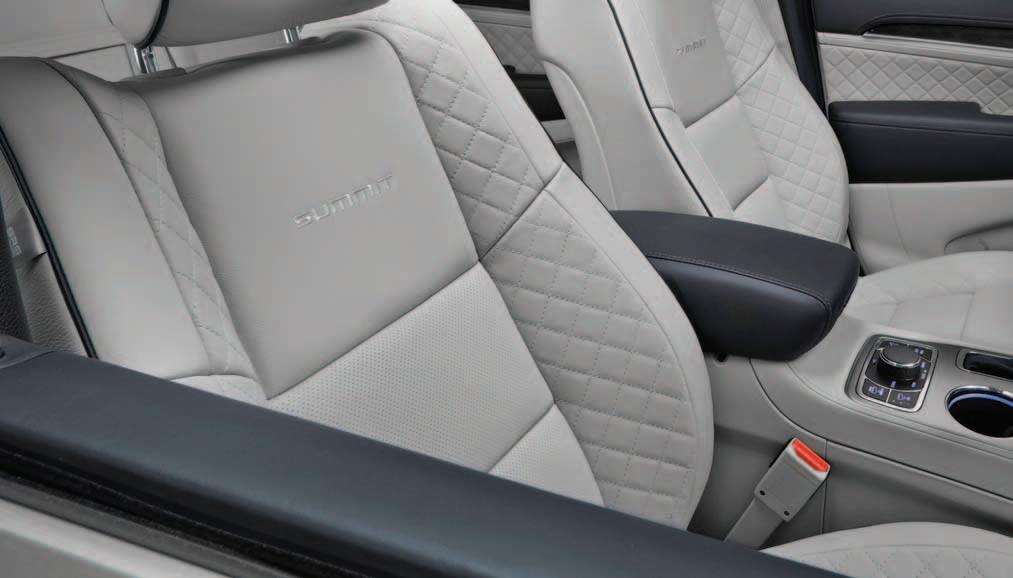
QUAKER COLOR A STEP AHEAD IN AUTOMOTIVE FINISHING
February that it had reached an agreement to buy Stahl from Wendel.
The companies said the deal gave Stahl an enterprise value of €2.1 billion. Wendel said on reporting its full-year results that, after debts and transaction costs, the sale of Stahl will net it €1.2 billion.
It said this represented a multiple of more than 6.5 times the money Wendel had invested in Stahl since 2006. Wet-end chemicals spin-off Muno was not part of the deal with Henkel and remains under Wendel’s ownership.
Aston Martin announces job cuts
UK car manufacturer, Aston Martin has announced plans to cut up to 20% of its workforce after reporting a 52% increase in annual losses, which reached £493.2m (€577.0m) last year.
Around 600 roles are expected to be affected, primarily in the UK, including positions across manufacturing and office functions at sites in Gaydon and St Athan.
Supplying innovative finishes to the automotive industry for over six decades
Quaker Color is a division of McAdoo & Allen, with roots in the leather industry for over a century
The company said the job reductions should deliver annual savings of around £40m (€46.8m). It cited weak demand in China and disruption from US tariffs as key challenges affecting performance. Aston Martin has also reduced its five-year capital investment plan to £1.7bn (€1.99bn), delaying some electric vehicle projects, while continuing to review organisational resources to ensure the business is positioned for future growth.
A spokesperson described the decision as a difficult but necessary step to align staffing with the company’s strategic priorities and secure its long-term financial stability. They previously reported a smaller round of job cuts in 2025, when Aston Martin reduced 5% of its workforce following a rise in pre-tax losses, highlighting the company’s ongoing efforts to restructure and strengthen its operations.
Business as usual at ‘very happy’ Spin 360
The sustainability and business development manager at consultancy Spin
360, Christian Baio, has said everyone at the Milan-based organisation is delighted at the prospect of becoming part of a much larger organisation, Bureau Veritas.
Speaking at the Micam exhibition, Mr Baio said Bureau Veritas’ move to acquire the company should make it possible to bring the knowledge and expertise Spin 360 has built up to a wider platform. “We are all very happy about this,” he said.
Meanwhile, though, it is business as usual. Spin 360 was present at Micam to continue promoting a project called VCS (Verified and Certified Steps), which offers sustainability certification specific to the footwear industry.
Deichmann invests in future with modern headquarters
Europe’s
largest footwear retail group, Deichmann, has officially opened its new headquarters at the Deichmann Campus in Essen. The building will accommodate around 1,500 employees and integrates sustainable energy solutions including photovoltaics,
geothermal energy, and green roofs.
Despite a challenging market in 2025, Deichmann recorded currency-adjusted revenue growth of over 2 per cent to € 8.9 billion and sold approximately 180 million pairs of shoes worldwide. The company operates around 4,700 stores and 40 online shops in more than 30 countries, with nearly 70 per cent of revenue generated abroad.
Chairman Heinrich Deichmann said the investment secures the long-term viability of the family business while creating modern and inspiring workspaces. NRW Minister President Hendrik Wüst and Essen Mayor Thomas Kufen attended the opening ceremony, highlighting the company’s commitment to the region.
The company plans continued investment in 2026, focusing on store modernisation, digital platforms, and IT infrastructure, alongside community support through the Deichmann Foundation and employee engagement initiatives.
The reason for Poland’s prominence
Asin previous years, the most important export destination for shoes from Germany was Poland.
According to new figures from Germany’s HDSL, Poland imported 72.9 million pairs of shoes from its neighbour to the west in the course of 2025. This figure represents an increase of 8.1% compared to the previous year.
HDSL managing director, Torben Schütz (pictured), explained: “Polish people buy German shoes, of course. But the explanation of this growth is also that lots of German companies have their main distribution centres across the border in Poland. That’s why the number is so high.”
Micam and Mipel come to their conclusion
TheMipel and Micam exhibitions closed in Milan on February 24 after three days.
Micam show director, Paolo Borghini, said support from Italy’s export promotions agency, ICE, had helped bring buyers from more than 120 countries to Milan for the event.
There were 795 brands exhibiting this time, 492 from outside Italy and 393 of them from the host nation.
“We know from these numbers that Micam is an important event for the industry,” Mr Borghini said. “It’s not only about business. We try also to provide good content to help these buyers to stay informed and keep up to date with the latest trends. All the main operators in the industry know that they have to come to Micam.”
The next edition of Micam and Mipel will take place from September 13-15.
Natuzzi withdraws job cuts, focuses on reshoring
Local media in southern Italy have reported that leather sofa brand Natuzzi has revised its 2026 to 2028 industrial plan, confirming
zero redundancies and setting out a relaunch strategy based on reshoring and targeted investment.
At a regional round table, the company withdrew the 476 job cuts announced in December. Instead, it confirmed voluntary redundancy incentives, with discussions continuing with trade unions over the terms.
In the Matera area, Natuzzi has proposed consolidating production by transferring workers from the Jesce 2 plant to the nearby Jesce 1 site, subject to agreement on revised shifts and working arrangements aimed at restoring productivity.
The group also indicated it will continue the process of bringing production back to Italy from Romania, while assessing access to national and regional support measures.
Over the 2026 to 2028 period, Natuzzi plans to invest €17.5 million, including €4.5 million in research and development, alongside marketing and training initiatives as part of a broader production and logistics reorganisation.
Seventies’ football boot inspires leather golf shoe
Adidas and Metalwood Studio have unveiled a limited golf range inspired by the Y2K fashion era.
The assortment focuses a polo, windbreaker, pant, hat, glove and MC70 golf footwear.
The MC70 footwear includes deco-stitched detail in the leather upper inspired by football boots from the 1970s.
Shaun Madigan, director of apparel at Adidas Golf, said: “We saw tremendous success when we combined the fashion and skateboarding communities with our Rolling Links collection in the fall of 2024. We wanted to dive deeper into these communities. The result is a perfect blend of adidas and Metalwood to inspire all golfers with additional ways to style their look for the course.”
Adidas is headquartered in Herzogenaurach, Germany. It employs more than 62,000 people and generated sales of €23.7 billion in 2024.
Footwear and leathergoods optimism in short supply in Germany
Germany’s footwear manufacturers achieved combined revenues of € 2.33 billion in 2025, an increase of 3.2% compared to 2024. The figures come from the German Footwear and Leathergoods Association, HDSL.
At a briefing at Micam in Milan on February 23, HDSL managing director, Torben Schütz, said sales in the domestic market for German shoe brands rose by 6% to reach €1.7 billion, while sales in export markets fell by 5.9% to reach €493 million.
In parallel, Germany imported footwear with a combined value of € 13.3 billion in 2025, an increase of 13.8% year on year.
Mr Schütz (pictured) said revenues for the
country’s leathergoods manufacturers reached €365.9 million in 2025, down by 6.6% year on year. Their sales in the domestic market were € 245.4 million, a decrease of 10.1%, while sales in export markets were up by 1.4%, reaching €120.5 million.
He said HDSL surveys of member companies show a high level of concern about the domestic market because, he said, “consumer behaviour is changing”, which is having a profound effect on retailers in Germany. As a result, he said, finding new customers in overseas markets had become important for German manufacturers.
“There was a huge wave of shop closures in December,” the HDSL managing director added, “but not because of bankruptcy; they were planned closures, and we think we will see more of them.”
In the surveys, he explained that 40% of companies expect revenues to be at the same level in 2026 as they reached in 2025. Most of the rest “think 2026 will be a rough year”.
Swiss firm Haelixa introduces product-level anti-counterfeit service
Swiss technology company Haelixa has launched a DNA-based Authenticity Service to help luxury brands verify products, including leather accessories and watch straps, and reduce counterfeit infiltration and fraudulent returns.
OECD analysis estimates that counterfeiting causes around $250 billion (€230 billion) in annual losses across the global luxury sector. Counterfeit goods increasingly enter legitimate channels such as repairs, resale and returns, creating operational and reputational risks for brands.
Haelixa’s system embeds a nano-sized, brand-specific DNA marker directly into materials during production. The marker is invisible, permanent and resistant to removal, copying or substitution, remaining with the product throughout its lifecycle.
Authentication is performed using a swab and qPCR test, providing a yes-or-no result
within 30 minutes. Compact devices allow onsite verification by retail and service teams without specialist training.
The system is intended for high-value products including watches, jewellery and leather accessories, and can complement Digital Product Passports and NFC systems to provide both physical and digital verification.
COTANCE to open membership up to leather sector’s ‘full spectrum’
Leather’s main representative body in the European Union, COTANCE, is to open up membership to a wider group of organisation. Its membership has always been made up of European leather manufacturers.
At an extraordinary general assembly at Lineapelle in Milan on February 13, COTANCE members approved a revision of the organisation’s statutes that will allow “a new category of members”. It said this revision had
come after a year-long review.
Now, organisations “connected to the leather ecosystem” will be able to become supporting members of COTANCE and formally participate in its activities, although they will not hold voting rights. Supporting members will include education and training providers, research and innovation bodies, leather industry clusters, suppliers and other stakeholders.
COTANCE said this would lead to a broader, more inclusive representation of the leather value chain.
Current COTANCE president, Manuel Ríos, said: “The decision taken in Milan signals not just an administrative update, but a structural step forward: a more open, collaborative and future-oriented confederation, ready to support a modern European leather ecosystem.”
Secretary general, Gustavo GonzálezQuijano, added that COTANCE would continue to represent the interests of European tanners,
www.aplf.com
but would now also cover the interests of “the full spectrum of actors shaping the future of leather”.
He said this would put COTANCE in a better position “to address today’s challenges”, including sustainability, traceability, skills, innovation and global competitiveness.
Green light at Mipel and Micam for ‘almost revolutionary’ recruitment plan
Edition 129 of leathergoods exhibition Mipel, and edition 101 of footwear event Micam opened together in Milan on February 22. The presidents of Italy’s associations for leathergoods manufacturer and footwear producers, Claudia Sequi and Giovanna Ceolini, welcomed exhibitors and visitors to the shows at a joint opening ceremony.
Italy’s minister for education, Giuseppe Valditara, was one of the guests of honour at the ceremony. The footwear, leathergoods and wider fashion sectors in Italy used his presence at Mipel and Micam as a platform for the formal signing of a new memorandum of understanding on education and training in their industries.
The aim of this agreement is to strengthen the links between Italy’s highschool-level technical institutes (ITS) and companies in leather and footwear. Footwear and leather companies believe this will make it easier for them to bring talented young people with digital skills into the workforce, which currently has an average age of around 55.
At the same time, these companies are committing to become more closely involved in the education ITS students receive, including sending their technicians into classrooms to contribute to the teaching programmes there.
“This memorandum of understanding is extraordinarily innovative,” Giuseppe Valditara said. “It is almost revolutionary.” He argued that, for too long, there had been a tendency to think that working with your hands was a sign of a lack of intelligence.
“This thinking has caused a lot of damage to our schools and to our companies,” the minister continued. “Handcraft is a wonderful expression of intelligence.”
April start for new COTANCE secretary general
Industry body COTANCE has confirmed that Edoardo De Paola will take over as secretary general in April. He is already part of the organisation, working currently as deputy secretary general.
He has large shoes to fill, replacing the long-serving Gustavo González-Quijano. Mr González-Quijano has been running COTANCE since 1986. He will retire this year after almost four decades of fighting the leather industry’s corner in Brussels and beyond.
Edoardo De Paola said he was committed to safeguarding the interest of COTANCE’s members and “the plurality of voices” that shape the leather industry in Europe.
Australian shoe brand takes next steps in London
Footwear company RM Williams is opening a UK flagship on Jermyn Street, London, at the end of March.
Founded in Australia in 1932, the company built its reputation on craftsmanship, with the shoes still hand made in its Adelaide workshop.
The store will feature a woven leather panel and stool, referencing the company’s history of leather plaiting, by London-based textile artist Aiveen Daly. Signature services include expert boot fitting, leather personalisation and ongoing care.
RM Williams operates 65 stores in Australia, as well as five in the UK: London, Edinburgh, Bath, Cambridge and Marlow.
Longchamp achieves B Corp certification
French leathergoods brand Longchamp has become a certified B Corp, recognising its social and environmental practices.
The certification evaluates companies against strict criteria, providing structure and accountability for ongoing improvements.
Longchamp said the recognition reflects its existing approach to design, which prioritises quality materials, repairability, recycling, and knowledge sharing across its teams and workshops. The brand emphasises long-term creativity, with a focus on sustaining artisanal expertise while supporting employee development.
The Maison added that B Corp certification formalises its long-standing commitment to sustainable practices, which have been part of the brand for 78 years.
Motorcycle-inspired collection wins Craft The Leather competition
Astudent from Chelsea College of Arts in London, Luca Greenway, has been announced as the winner of this year’s Craft The Leather student design competition.
Tuscany’s Consorzio Vera Pelle Italiana Conciata al Vegetale, the consortium of leather manufacturers in the region that are committed to Italian veg-tanning traditions, runs the competition. It picked out Luca Greenway as the winner this time for a footwear collection called Flat Tracker.
Mr Greenway has described the collection as an exploration of the aesthetics of motorcycle culture, “reinterpreting its codes” through vegetable-tanned leather. Flat Tracker has a pair of motorcycle boots as its centrepiece, complemented by a roll-top bag and a pair of gloves.
He said the competition had allowed him to develop new skills in design and craftsmanship that he will apply in his future career.
Craft The Leather finalists are invited to spend a week in Tuscany, visiting tanneries and taking part in workshops. Luca Greenway said he had found one of the workshops, led by Florence-based bespoke shoemaker Vivian Saskia Wittmer, to be “a defining moment” for him.
Collagen, circularity and innovation: SLTC conference returns to Glasgow
The 128th Society of Leather Technologists and Chemists International Conference will bring together leather industry professionals in Glasgow, hosted within the historic 1599 surroundings of The Royal College of Physicians. With spaces filling steadily, the event offers a forum for technical exchange and strategic discussion.
Dr Dietrich Tegtmeyer, leather industry expert and consultant, will deliver the keynote Procter Memorial Lecture on the value of collagen and its upcycling opportunities, exploring how this protein can be recovered and repurposed from leather side streams to reduce waste and create additional value.
The programme also features Prof Will Wise of Eurofins Sustainability Services on PFAS detection, Tanvi Maniyanghat of Scottish Leather Group and Anke Mondschein of FILK Freiberg Institute on valorising hair waste, Georges Fonseca of Stahl on leather upgrading, and Gustavo Adrián Defeo of Instrumenta SRL on D65 lighting. Adeel Younas of World Wide Fund for Nature will present Pakistan’s first digital leather traceability system, while Rosie Wollacott of Mulberry will outline the brand’s Made to Last strategy and B Corp journey.
The conference will close with a formal dinner dance at The Exchange, 29 Royal Exchange Square. A Friday tour to Scottish Leather Group’s new cutting plant will be available, with limited spaces, and a distillery visit on Friday or Sunday is also planned, with details to follow.
German meat sector calls for policy support
Germany’s livestock and meat industry is calling for stronger policy measures to meet growing global protein demand while maintaining high animal welfare and climate standards.
Dominik Wisser of the Food and Agriculture Organisation of the United Nations told the Parliamentary Evening of the Association of the Meat Industry (VDF) in Berlin that global demand for animal protein is expected to rise 20% by 2050. He highlighted the need for improved efficiency in husbandry, better feed, and targeted breeding to meet this demand sustainably.
VDF CEO Martin Müller said Germany is well placed to respond but needs practical licensing, federal support, and rapid implementation of the Ministry of Food and Agriculture’s export strategy. The association warned that reducing domestic animal husbandry could cause carbon leakage and a loss of expertise.
Milan shows to join under new umbrella
The leather-sector exhibitions that take place in Milan have announced a new joint identity.
From the upcoming editions of Mipel and Micam, (February 22-24), will be part of a
wider event identity called Fashion Link. Events for jewellery, outer wear and wedding collections will also be part of this.
However, from September, Lineapelle and Simac-Tanning Tech will also become components of Fashion Link.
Stahl recognised by adidas for ZDHC progress
Speciality coatings supplier Stahl has received the 2025 adiFORMULATOR Award from adidas for the second consecutive year.
The award recognises progress in advancing ZDHC MRSL, Manufacturing Restricted Substances List, conformance across Stahl’s leather finishing and performance coatings portfolios.
The company has focused on achieving and maintaining Level 3 performance in key product groups through reformulation work, the phase-out of restricted substances and tighter internal governance.
Stahl has also increased the number of products listed on the ZDHC Gateway and set interim targets within its 2030 ESG roadmap to further align its portfolio with updated ZDHC requirements.
Group director sustainability and marketing Laura Willemsen said the award reflected the team’s continued efforts to meet evolving industry standards.
Excluding leather from EUDR ‘remains unresolved’
Specialist European Union (EU)-focused news outlet Euractiv has reported that the possible exclusion of leather from the list of products that will have to comply with the EU Deforestation Regulation (EUDR) “remains unresolved”.
The regulation is due to come into application at the end of 2026, but the European Commission has promised a review in April.
In an exclusive report, Euractiv said a closed-door meeting between the European Commission, industry representatives and campaign groups took place in Brussels in mid-February.
It said that two participants in the meeting told it afterwards that the Commission will not review the main text of the regulation, but will consider amending the annex specifying which products fall under the rules.
This is in keeping with a message that industry body COTANCE shared with leather industry representatives in a pesentation at Lineapelle in Milan on February 12.
If there are proposed amendments to the annex, these will be open for public consultation in late March or early April, Euractiv said. It added that changes under consideration include the possible addition of products that are not currently covered by EUDR. These could include instant coffee and soap made from palm oil.
Then it said that the possible exclusion of leather, which some politicians in the European Parliament pushed for in December 2025, “remains unresolved” and will ultimately be a political decision.
Gareth Scott takes on new appointments at SLG
and QMS
Gareth Scott has been appointed Group Hide Procurement & By Products Sales Director at Scottish Leather Group (SLG), where he will focus on procurement and byproducts sales across the group.
He has also joined the board of Quality Meat Scotland (QMS), the organisation that supports the development of a sustainable and profitable Scottish red meat industry.
QMS promotes the Scotch Beef PGI, Scotch Lamb PGI and Specially Selected Pork brands, while raising awareness of the industry’s sustainability and animal welfare standards. The sector contributes over £2 billion annually to Scotland’s economy and supports around 50,000 jobs.
Having grown up on a family farm and gained experience in livestock auctions and abattoir operations, Scott brings a practical, end-to-end perspective of the supply chain. He said he was proud to be part of both Scottish Leather Group and QMS and thanked colleagues past and present for their guidance, according to his LinkedIn post.
ASIA
CICB takes Brazilian leather message to key Asian markets
Brazil’s tanning sector representative body
CICB was part of a wider business delegation that travelled with the country’s president to two important countries in Asia in February.
First, the delegation travelled to New Delhi to take part in the India-Brazil Business Forum on February 21.
A similar event, the Korea-Brazil Business Forum took place in Seoul two days later.
CICB said it was pleased to be part of Brazilian business efforts to build strong links in two important target markets for Brazilian hides and leather.
FMD in two provinces of Indonesia
The authorities in Indonesia’s Riau and East Java provinces have confirmed serious outbreaks of foot and mouth disease (FMD).
In the first two months of 2026, farmers in Riau reported 480 cases of FMD. In East Java, there were 839 confirmed cases in January alone. These provinces are in completely different parts of the country. East Java is the province with the largest cattle population.
Animal health authorities said that, in most of these cases, the animals affected had not been vaccinated. They are increasing efforts to increase vaccination levels.
Inescop outlines role in Mongolian yak leather initiative
Spanish research institute Inescop highlights its role in the Sustainable Yak Leather (SYL) project in Mongolia in the February/March issue of World Leather, available soon to subscribers.
The initiative aims to improve sustainability, traceability and the international market
positioning of vegetable-tanned yak leather.
The project worked with the Mongolian Vegetable Tanned Yak Leather Cluster and a network of local tanneries, introducing improvements in beamhouse operations, alternative tanning systems and lower-impact finishing techniques. Over 200 people received training in areas including raw material handling, occupational safety and sustainable production methods. SYL also helped develop traceability systems and guidance to meet international market requirements, supporting the adoption of cleaner, more efficient production practices and positioning yak leather as a high-quality, eco-friendly material.
Public thanks from industry leaders in Kanpur over tariff improvements
Senior figures from India’s leather industry have publicly thanked the country’s prime minister, Narendra Modi, for securing a new trade agreements with the US and the European Union (EU).
In total, seven industry leaders based in and around Kanpur joined forces to take out space in the Lucknow edition of daily business newspaper the Financial Express to pay tribute to the deals.
The US has cut tariffs on imports from India from 50% to 18%. Chairman of the Council for Leather Exports for the central region, Asad Iraqi, said this would provide “much-needed relief” for traders and exporters. He said there was optimism among leather and leathergoods manufacturers in the region that improved market access can lead to an expansion in production capacity.
With regard to shipments to the EU, the managing director of leather manufacturer Kings International, Taj Alam, said tariffs of around 17% at the moment could fall to zero in 2027 if the new trade agreement comes into force. Mr Alam said this would give Indian manufacturers a larger share of the European market.
THE AMERICAS
Wolverine Worldwide posts 2025 revenue growth
US shoe group Wolverine World Wide has recently reported a strong finish to fiscal 2025, with total revenue for the year rising to $1.874 billion, up 6.8% from $1.755 billion in 2024.
Active Group sales grew 13% to $1.408 billion, driven by Merrell and Saucony, while Work Group revenue declined 7.3% to $422.2 million. Direct-to-consumer sales were slightly down at $475.5 million, compared with $483.9 million the previous year.
The company’s gross margin improved to 47.3% from 44.3% in 2024, supported by product cost savings, a shift towards full-price sales, and recent price increases. Adjusted operating margin rose to 9.0%, and adjusted diluted earnings per share increased 53.4% to $1.35. Cash and cash equivalents reached
$206 million, up 35.6%, while net debt fell to $415 million.
For fiscal 2026, Wolverine Worldwide expects revenue between $1.960 billion and $1.985 billion, gross margin around 46%, and adjusted operating margin near 9.1%. Adjusted diluted earnings per share are forecast between $1.35 and $1.50.
Chris Hufnagel, president and CEO, said the company is progressing in its brand-building strategy, with improved direct-to-consumer performance and earnings growth.
Younger consumers’ demand for protein is shaping food market – JBS
JBS
CEO Gilberto Tomazoni has said the future of food lies in protein, with demand driven by health and wellness preferences as well as demographic shifts.
Speaking at the Consumer Analyst Group of New York conference, he said a deep understanding of how people eat is the starting point for all of the company’s actions.
“Protein plays a central role in everyday life, and JBS is strategically positioned at the intersection of three major macro trends: convenience, trust and nutrition,” he said.
"Today, demand is driven by the desire for balanced diets, muscle maintenance and healthy longevity, especially among younger consumers such as Generation Z, who demonstrate higher protein consumption intent than previous generations.”
Tariff blow for US president
The Supreme Court of the US has ruled that the tariffs President Donald Trump has imposed on trading partners around the world are illegal.
In a ruling on February 20, the court said President Trump had gone too far in imposing tariffs without a clear authorisation from the US Congress. On announcing sweeping tariffs on countries in all parts of the world in April 2025, the president said it was in keeping with a 1977 law, the International Emergency Economic Powers Act.
He argued that there was an emergency because, for decades, the US had been “looted by nations near and far”, leading to a loss of jobs and the demise of manufacturing there. But the Supreme Court said that if Congress had intended the power to impose tariffs to be part of the 1977 act, “it would have done so expressly”.
Immediately, trading partners around the world began asking if they might, now, be entitled to ask the US government to pay back the money they have paid since April in additional tariffs on exports to the US. The Supreme Court ruling did not address this.
President Trump did not take the news well. He said countries that have been “ripping us off for years are ecstatic”. He added that people in those countries were so happy about the Supreme Court decision, they were “dancing in the streets”.
He went on to say that he would impose a 10% global tariff, over and above tariffs already in place before April 2025.
New Balance continues global double-digit expansion
Athletic
footwear brand New Balance reported $9.2 billion in global sales for 2025, up 19% from 2024, marking five years of double-digit growth.
North America and Europe saw year-on-year increases above 20% and 30%, while global apparel and owned retail revenues each surpassed $1 billion.
The brand expanded domestic manufacturing with new facilities in Skowhegan, Maine, and Londonderry, New Hampshire, and opened a technology-driven distribution centre in Salt Lake City. Athlete partnerships and events, including the World Athletics Championships and the TCS New York City Marathon, supported brand visibility.
Community engagement continued through the New Balance Foundation, which contributed $17.3 million to more than 95 nonprofits in 12 countries.
Coach maintains leather supply amid tariffs and rising costs
US leathergoods brand Coach has maintained stable leather sourcing and manufacturing despite industry-wide concerns about tariffs and cattle shortages, according to an interview with Bloomberg.
The company’s long-standing relationships with tanneries and manufacturing partners, along with its scale and resources, have helped secure supply even as leather prices rise.
CEO Todd Kahn highlighted Coach’s strategic shift from “affordable luxury” to “expressive luxury,” a move aimed at younger consumers. Data indicates Gen Z spends around 20% more than other generations on non-essential items such as handbags and accessories. This focus has supported strong growth, particularly in international markets where tariffs have less impact.
To offset higher costs, Coach has reduced discounting while maintaining price points, increasing average unit retail. The Leather and Hide Council of America projects that basic leather prices will remain 7–10% higher than a year ago.
Mr Kahn noted that Coach is outperforming competitors at its price point, consolidating its position in accessible luxury.
The mayor who owns 90 pairs of Lucchese boots
The former mayor of El Paso, Texas, Oscar Leeser, has spoken of his devotion to one of the city’s most prominent companies, the Lucchese boot company.
In a feature in the Wall Street Journal, Mr Leeser, who was mayor of El Paso from 20132017 and again from 2021-2025, admitted to owning 90 pair of Lucchese boots and to wearing one of the pairs to every public function he attended in his two terms.
The Lucchese Boot Company was founded in San Antonio, Texas, in 1883, but moved to El Paso in 1986. Now, around 240 footwear artisans work at its factory there, making around 400 pairs per day.
Mr Leeser said that he still wears the
western-style boots every day, adding that if he were to attend an event or meeting wearing any other kind of footwear, everyone would think there was something wrong with him.
He said: “Without my boots, I wouldn’t feel like me any more.”
Cargill to close US beef plant
Cargill is closing its protein processing plant in Milwaukee with the loss of 220 jobs.
The company expects to begin the process of winding down operations, with production stopping by mid-April.
At the same time, it is expanding its investment in a Beijing plant to grow its focus in three high-growth segments: food service, beverages and convenience foods.
AFRICA
Lobatse tannery refurbishment nears completion
According to local media reports, the Botswana Meat Commission’s Lobatse tannery refurbishment is now 95 per cent complete, with final works expected by April 2026.
The project aims to boost local leather processing, create jobs, and support the planned Lobatse Leather Park.
The upgraded facility will process hides to the wet-blue stage and incorporates modern systems, including an on-site effluent
treatment plant, to manage waste and meet environmental standards. Officials highlight that the refurbishment addresses previous environmental concerns while promoting sustainable leather production. By adding value locally and reducing raw hide exports, the project is expected to enhance Botswana’s competitiveness in international leather markets while supporting downstream manufacturing, responsible resource use, and sustainable growth in the Lobatse region.
Cashew nuts provide tannins for leather in Tanzania
Amaterials scientist who has founded a company to develop tannins from waste from the cashew sector in Tanzania has also set up a non-governmental organisation to encourage girls to pursue science careers.
Dr Cecilia China undertook an African Development Bank-financed higher education programme at Nelson Mandela African Institution of Science and Technology in Arusha, and has since launched the AfriTech Organic Leather Company.
She said: “I found that almost 96% of people working in cashew processing are women. If we use cashew waste for leather processing, women can earn income by collecting and supplying that waste. We are creating a new industry that did not exist before.”
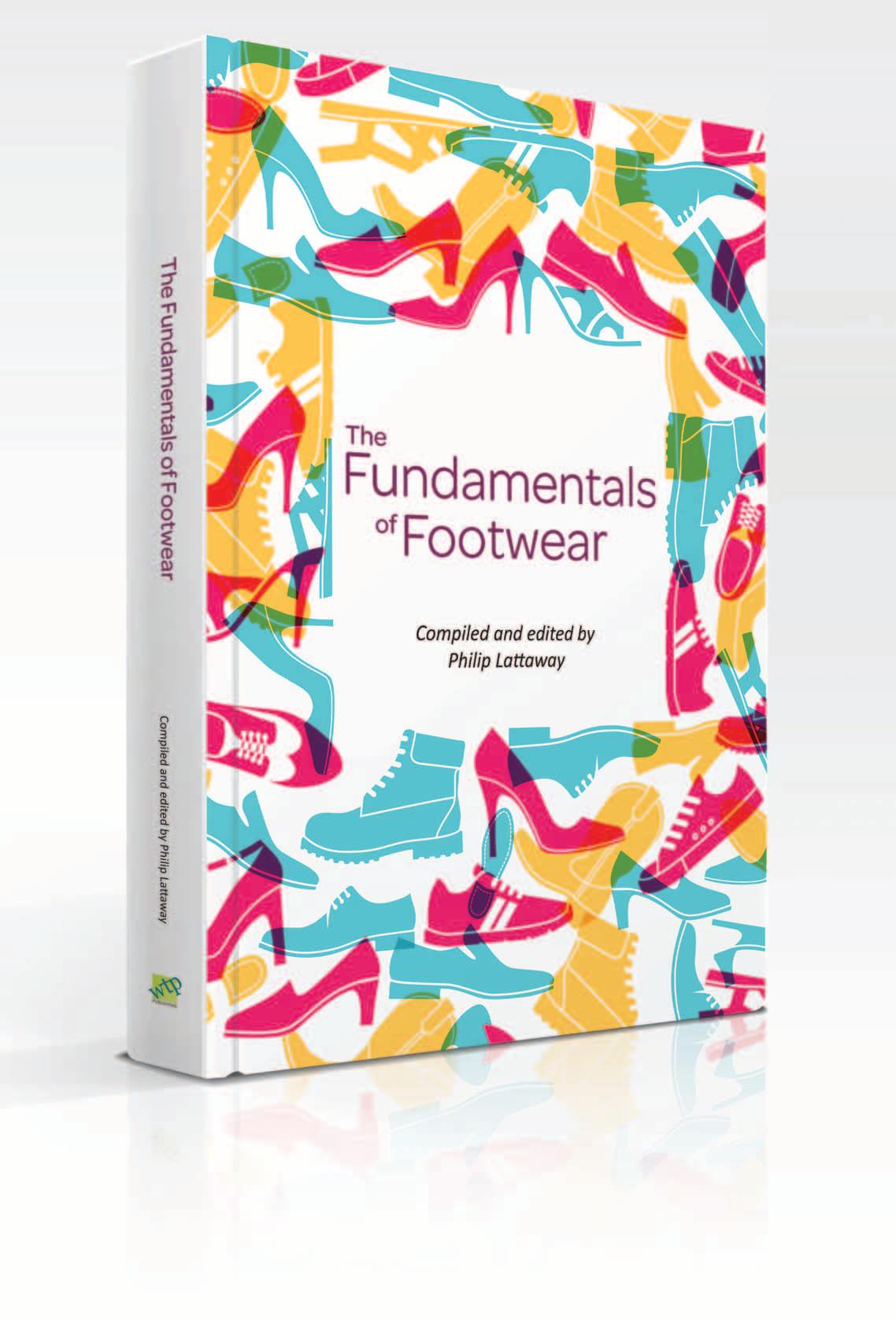
THE MUST-HAVE ESSENTIAL BOOK FOR THE FOOTWEAR DESIGNER